EP3058080B1 - Process for carbon capture in gas fermentation - Google Patents
Process for carbon capture in gas fermentation Download PDFInfo
- Publication number
- EP3058080B1 EP3058080B1 EP14853873.9A EP14853873A EP3058080B1 EP 3058080 B1 EP3058080 B1 EP 3058080B1 EP 14853873 A EP14853873 A EP 14853873A EP 3058080 B1 EP3058080 B1 EP 3058080B1
- Authority
- EP
- European Patent Office
- Prior art keywords
- culture
- gas
- reactor
- fermentation
- gaseous substrate
- Prior art date
- Legal status (The legal status is an assumption and is not a legal conclusion. Google has not performed a legal analysis and makes no representation as to the accuracy of the status listed.)
- Active
Links
Images




Classifications
-
- C—CHEMISTRY; METALLURGY
- C12—BIOCHEMISTRY; BEER; SPIRITS; WINE; VINEGAR; MICROBIOLOGY; ENZYMOLOGY; MUTATION OR GENETIC ENGINEERING
- C12P—FERMENTATION OR ENZYME-USING PROCESSES TO SYNTHESISE A DESIRED CHEMICAL COMPOUND OR COMPOSITION OR TO SEPARATE OPTICAL ISOMERS FROM A RACEMIC MIXTURE
- C12P7/00—Preparation of oxygen-containing organic compounds
- C12P7/02—Preparation of oxygen-containing organic compounds containing a hydroxy group
- C12P7/04—Preparation of oxygen-containing organic compounds containing a hydroxy group acyclic
- C12P7/06—Ethanol, i.e. non-beverage
- C12P7/065—Ethanol, i.e. non-beverage with microorganisms other than yeasts
-
- C—CHEMISTRY; METALLURGY
- C12—BIOCHEMISTRY; BEER; SPIRITS; WINE; VINEGAR; MICROBIOLOGY; ENZYMOLOGY; MUTATION OR GENETIC ENGINEERING
- C12P—FERMENTATION OR ENZYME-USING PROCESSES TO SYNTHESISE A DESIRED CHEMICAL COMPOUND OR COMPOSITION OR TO SEPARATE OPTICAL ISOMERS FROM A RACEMIC MIXTURE
- C12P7/00—Preparation of oxygen-containing organic compounds
- C12P7/02—Preparation of oxygen-containing organic compounds containing a hydroxy group
- C12P7/04—Preparation of oxygen-containing organic compounds containing a hydroxy group acyclic
- C12P7/06—Ethanol, i.e. non-beverage
- C12P7/08—Ethanol, i.e. non-beverage produced as by-product or from waste or cellulosic material substrate
-
- C—CHEMISTRY; METALLURGY
- C12—BIOCHEMISTRY; BEER; SPIRITS; WINE; VINEGAR; MICROBIOLOGY; ENZYMOLOGY; MUTATION OR GENETIC ENGINEERING
- C12P—FERMENTATION OR ENZYME-USING PROCESSES TO SYNTHESISE A DESIRED CHEMICAL COMPOUND OR COMPOSITION OR TO SEPARATE OPTICAL ISOMERS FROM A RACEMIC MIXTURE
- C12P7/00—Preparation of oxygen-containing organic compounds
- C12P7/02—Preparation of oxygen-containing organic compounds containing a hydroxy group
- C12P7/04—Preparation of oxygen-containing organic compounds containing a hydroxy group acyclic
- C12P7/18—Preparation of oxygen-containing organic compounds containing a hydroxy group acyclic polyhydric
-
- C—CHEMISTRY; METALLURGY
- C12—BIOCHEMISTRY; BEER; SPIRITS; WINE; VINEGAR; MICROBIOLOGY; ENZYMOLOGY; MUTATION OR GENETIC ENGINEERING
- C12P—FERMENTATION OR ENZYME-USING PROCESSES TO SYNTHESISE A DESIRED CHEMICAL COMPOUND OR COMPOSITION OR TO SEPARATE OPTICAL ISOMERS FROM A RACEMIC MIXTURE
- C12P7/00—Preparation of oxygen-containing organic compounds
- C12P7/40—Preparation of oxygen-containing organic compounds containing a carboxyl group including Peroxycarboxylic acids
- C12P7/54—Acetic acid
-
- Y—GENERAL TAGGING OF NEW TECHNOLOGICAL DEVELOPMENTS; GENERAL TAGGING OF CROSS-SECTIONAL TECHNOLOGIES SPANNING OVER SEVERAL SECTIONS OF THE IPC; TECHNICAL SUBJECTS COVERED BY FORMER USPC CROSS-REFERENCE ART COLLECTIONS [XRACs] AND DIGESTS
- Y02—TECHNOLOGIES OR APPLICATIONS FOR MITIGATION OR ADAPTATION AGAINST CLIMATE CHANGE
- Y02E—REDUCTION OF GREENHOUSE GAS [GHG] EMISSIONS, RELATED TO ENERGY GENERATION, TRANSMISSION OR DISTRIBUTION
- Y02E50/00—Technologies for the production of fuel of non-fossil origin
- Y02E50/10—Biofuels, e.g. bio-diesel
Definitions
- the invention relates to the field of microbial fermentation of gases, particularly to a process for improving carbon capture in the anaerobic fermentation of gaseous substrates.
- Ethanol is rapidly becoming a major hydrogen-rich liquid transport fuel around the world. Consumption of ethanol in 2013 was an estimated 13.18 billion gallons in the USA alone. The global market for the fuel ethanol industry has also been predicted to grow sharply in future, due to an increased interest in ethanol in Europe, Japan, the USA, and several developing nations.
- ethanol is used to produce E10, a 10% mixture of ethanol in gasoline.
- E10 blends the ethanol component acts as an oxygenating agent, improving the efficiency of combustion and reducing the production of air pollutants.
- ethanol satisfies approximately 30% of the transport fuel demand, as both an oxygenating agent blended in gasoline, and as a pure fuel in its own right.
- GOG Green House Gas
- EU European Union
- Catalytic processes may be used to convert gases consisting primarily of CO and/or CO 2 and H 2 into a variety of fuels and chemicals. Microorganisms may also be used to convert these gases into fuels and chemicals. These biological processes, although generally slower than chemical reactions, have several advantages over catalytic processes, including higher specificity, higher yields, lower energy costs and greater resistance to poisoning.
- Anaerobic bacteria such as those from the genus Clostridium, have been demonstrated to produce ethanol from CO, CO 2 and H 2 via the acetyl CoA biochemical pathway.
- various strains of Clostridium ljungdahlii that produce ethanol from gases are described in WO 1998/00558 , WO 2000/068407 , WO 2002/008438 , U.S. Patent 5,173,429 , U.S. Patent 5,593,886 , and U.S. Patent 6,368,819 .
- the bacterium Clostridium autoethanogenum is also known to produce ethanol from gases ( Abrini, Arch Microbiol, 161: 345-351, 1994 )
- US 2012/0309066 discloses the fact that the ratio of H2:CO in the gaseous substrate has an effect on the efficiency of carbon capture, wherein the presence of hydrogen in the substrate stream leads to an improvement in the efficiency of carbon capture.
- a ratio of H 2 :CO of 2:1 is disclosed.
- CO is the dominant carbon source utilized by carboxydotrophic microorganisms for production of ethanol
- CO 2 is largely unutilized by the microorganisms. Accordingly, there is a strong need for improved gas fermentation processes that convert even a portion of the CO 2 in a gaseous substrate to useful products, such as alcohols and/or acids.
- the invention provides a process for improving carbon capture in gas fermentation, the process comprising providing a gaseous substrate comprising CO, H 2 and CO 2 to a bacterial culture in a liquid nutrient medium and fermenting the culture, wherein at least a portion of the CO 2 in the gaseous substrate is converted to one or more products by the culture, the process characterized in that:
- the fermentation products include alcohols and/or acids.
- the products comprise one or more ethanol, acetic acid (or acetate), 2,3-butanediol, butanol, isopropanol, lactate, succinate, methyl ethyl ketone (MEK), propanediol, 2-propanol, acetoin, isobutanol, citramalate, butadiene, poly lactic acid, isobutylene, 3-hydroxy propionate (3HP), acetone, and fatty acids.
- MEK methyl ethyl ketone
- the CO 2 uptake by the culture is at least 500 mmol/L/ day of CO 2 .
- the amount of CO 2 exiting the reactor is at least 5% lower than an amount of CO 2 entering the reactor.
- the gaseous substrate comprises 30-90% H 2 .
- bacteria which may be carboxydotrophic, such as bacteria derived from one or more of Clostridium, Moorella, Oxobacter, Peptostreptococcus, Acetobacterium, Eubacterium, or Butyribacterium.
- bacteria which may comprise Clostridium autoethanogenum or Clostridium ljungdahlii, such as Clostridium autoethanogenum deposited under DSMZ accession number DSM23693 or bacteria derived therefrom.
- the process comprises recovering one or more products.
- Anaerobic bacteria have been demonstrated to produce ethanol and acetate from H 2 and CO via the acetyl-CoA biochemical pathway, which may involve a number of different reactions, depending on the reaction conditions and concentrations of substrates and products.
- acetate may be produced from the 1:1 uptake of H 2 and CO: 2CO + 2H 2 ⁇ CH 3 COOH.
- Ethanol and CO 2 may be produced from the 1:1 uptake of H 2 and CO: 3CO + 3H 2 ⁇ CH 3 CH 2 OH + CO 2 .
- Ethanol may be produced from the 2:1 uptake of H 2 and CO: 2CO + 4H 2 ⁇ CH 3 CH 2 OH + H 2 O.
- Acetate may be produced from consumption of CO without H 2 : 4CO + 2H 2 O ⁇ CH 3 COOH + 2CO 2 .
- Ethanol may be produced from the consumption of CO without H 2 : 6CO +3H 2 O ⁇ CH 3 CH 2 OH + 4CO 2 .
- anaerobic bacteria may utilize CO 2 to produce products.
- acetate may be formed from the 2:1 uptake of H 2 and CO 2 : 2CO 2 + 4H 2 ⁇ CH 3 COOH + 2H 2 O.
- Ethanol may be formed from the 3:1 uptake of H 2 and CO 2 : 2CO 2 + 6H 2 ⁇ CH 3 CH 2 OH + 3H 2 O.
- the amount of CO 2 consumed by the culture exceeds or is equal to the amount of CO 2 produced by the culture.
- the fermentation may result in net carbon capture.
- the gaseous substrate (“gas” or “feed gas” or “fermentation gas” or “substrate”) may be any gas which contains a compound or element used by a microorganism as a carbon and/or energy source in fermentation.
- the gaseous substrate will typically contain a significant proportion of H 2 , CO 2 , and/or CO, and may additionally contain N 2 or other gasses. In anaerobic fermentation, the gaseous substrate is typically free or substantially free of O 2 .
- the composition of the gaseous substrate may vary.
- the ratios of H 2 , CO 2 , and/or CO in the gaseous substrate may vary.
- the ratio to H 2 :CO in the gaseous substrate is at least 5:1 or at least 10:1.
- the gaseous substrate comprises CO and CO 2 at a ratio of between 1:1 and 4:1.
- the gaseous substrate may comprise or be adjusted to comprise an excess of H 2 .
- the gaseous substrate comprises 30-90% H 2 .
- the gaseous substrate may contain a substantially higher volume of H 2 than CO 2 and CO.
- the ratio of H 2 :CO 2 :CO in the gaseous substrate may be at least 5:1:1.
- a gas stream or gas source may be supplemented with H 2 (or CO 2 or CO) to obtain a gaseous substrate with a desired composition.
- the gaseous substrate may be sourced from an industrial process.
- the gaseous substrate may be a waste gas generated by an industrial process, such as ferrous metal product manufacturing (e.g., steel manufacturing), non-ferrous product manufacturing, petroleum refining, coal gasification, electric power production, carbon black production, ammonia production, methanol production, or coke manufacturing.
- ferrous metal product manufacturing e.g., steel manufacturing
- non-ferrous product manufacturing e.g., petroleum refining
- coal gasification e.g., electric power production
- carbon black production e.g., carbon black production
- ammonia production methanol production
- coke manufacturing e.g., methanol production
- the gaseous substrate may be sourced from the gasification of organic matter such as methane, ethane, propane, coal, natural gas, crude oil, low value residues from oil refinery (including petroleum coke or petcoke), solid municipal waste, or biomass.
- Biomass includes by-products obtained during the extraction and processing of foodstuffs, such as sugar from sugarcane, or starch from maize or grains, or non-food biomass waste generated by the forestry industry. Any of these carbonaceous materials may be gasified, i.e., partially combusted with oxygen, to produce synthesis gas (syngas).
- Syngas typically comprises mainly CO, H 2 , and/or CO 2 and may additionally contain amounts of methane, ethylene, ethane, or other gasses.
- the operating conditions of the gasifier can be adjusted to provide a substrate stream with a desirable composition for fermentation or blending with one or more other streams to provide an optimised or desirable composition for increased alcohol productivity and/or overall carbon capture in a fermentation process.
- the gaseous substrate may be sourced from a pressure swing adsorption (PSA) system.
- PSA tail gas may contain ⁇ 10-12% of the H 2 entering the PSA from a methane steam reformer, in addition to CO and CO 2 from the water-gas shift reactors in the methane steam reformer.
- CO in a gas exiting a primary methane reformer (at about 3 H 2 /CO) may be reacted with water to form H 2 and CO 2 using water-gas shift reactors (high temperature and low temperature).
- the reaction conditions may be tailored to control the amount of CO present in the PSA tail gas relative to the amount of CO 2 present in the PSA tail gas.
- the PSA will make very high purity H 2 product.
- the recovery of H 2 is mainly affected by the feed gas pressure to tail gas pressure ratio. Running the tail gas at the minimum pressure gives the highest H 2 recovery. Since the tail gas is usually sent to the fuel gas header (to be used anywhere in the refinery), it may be at a pressure of ⁇ 15 psig (pounds per square inch gauge). If it is burned in dedicated burners in the primary reformer, it may be at a pressure as low as 5 psig. If PSA tail gas is used as a feed gas source for a fermenter, the pressure of the tail gas may be adjusted to 30-45 psig to avoid the need for gas compression.
- the gaseous substrate may be directed, in whole or in part, to a fermentation by any suitable conduit means.
- piping or other transfer means may be connected to the waste gas stack from a steel mill to divert at least a portion of the waste gas to a fermentation system.
- One or more fans may be used to divert at least a portion of the waste gas into the fermentation system.
- steel mills can be adapted to substantially continuously produce steel (and subsequently waste gases), particular aspects of the process may be intermittent.
- the decarburisation of steel is a batch process lasting several minutes to several hours.
- a conduit means may be adapted to divert at least a portion of the waste gas to the fermentation system if it is determined the waste gas has a desirable composition.
- source gasses may be passed through water or otherwise filtered to remove particulate matter, long chain hydrocarbons, or tars.
- filtration or pre-treatment is not always required. It is sometimes possible to provide unfiltered, untreated gaseous substrate directly to the fermentation culture.
- the composition of the gaseous substrate may be altered to improve fermentation efficiency, product production, and/or overall carbon capture.
- the gaseous substrate may be altered to contain a higher or lower amount of H 2 , CO 2 , and/or CO by combining or blending streams from two or more sources.
- a stream comprising a high concentration of CO 2 such as the exhaust from a steel mill converter, may be combined or blended with a stream comprising high concentrations of H 2 and CO, such as the off-gas from a steel mill coke oven.
- an intermittent stream comprising CO 2 such as an exhaust stream from a steel mill converter, may be combined or blended with a substantially continuous stream comprising CO, CO 2 , and H 2 , such as syngas produced in a gasification process.
- a stream produced by a gasifier may be increased and/or decreased in accordance with the intermittent production of CO 2 from an industrial source in order to maintain a substantially continuous substrate stream with a desirable or optimised composition.
- the substrate streams will typically be gaseous, but may also be liquid or solid.
- CO 2 may be provided to a reactor as a liquid or as a CO 2 -saturated liquid.
- a microbubble dispersion generator such as that described in Hensirisak, Appl Biochem Biotechnol, 101: 211-227, 2002 ) may be used.
- Gas fermentation is a metabolic process by which a gaseous substrate is used as a carbon and/or energy source for the production of ethanol or other products or chemicals.
- the term “fermentation” encompasses both the growth phase and the product biosynthesis phase of the process.
- the gas fermentation is performed by a microorganism, typically bacteria.
- the bacteria may be any bacteria capable of fermenting a gaseous substrate comprising H 2 , CO 2 , and/or CO.
- the bacteria may be carboxydotrophic, such as bacteria derived from Clostridium , Moorella , Oxobacter , Peptostreptococcus , Acetobacterium , Eubacterium , or Butyribacterium.
- the bacteria may be Clostridium autoethanogenum , Clostridium ljungdahli, Clostridium carboxidivorans , Clostridium drakei , Clostridium scatologenes, Clostridium aceticum , Clostridium formicoaceticum , Clostridium magnum, Butyribacterium methylotrphoicum, Acetobacterium woodii , Alkalibaculum bacchi , Blautia producta , Eubacterium limosum , Moorella thermoacetica , Sporomusa ovata , Sporomusa silvacetica , Sporomusa sphaeroides , Oxobacter pfennigii and Thermoanaerobacter kiuvi.
- the bacteria may also be a strain derived from any of the aforementioned genus or species.
- the bacteria may be derived from the cluster of carboxydotrophic Clostridia comprising the species C . autoethanogenum , C. ljungdahlii , C. ragsdalei, and related isolates. These include but are not limited to strains C. autoethanogenum JAI-1T (DSM10061) ( Abrini, Arch Microbiol, 161: 345-351, 1994 ), C. autoethanogenum LBS1560 (DSM19630) ( WO 2009/064200 ), C. autoethanogenum LBS1561 (DSM23693), C.
- the species differentiate in substrate utilization of various sugars (e.g. rhamnose, arabinose), acids (e.g. gluconate, citrate), amino acids (e.g. arginine, histidine), or other substrates (e.g. betaine, butanol).
- acids e.g. gluconate, citrate
- amino acids e.g. arginine, histidine
- other substrates e.g. betaine, butanol
- Some of the species were found to be auxotrophic to certain vitamins (e.g. thiamine, biotin) while others were not.
- the organization and number of Wood-Ljungdahl pathway genes, responsible for gas uptake, has been found to be the same in all species, despite differences in nucleic and amino acid sequences ( Köpke, Curr Opin Biotechnol, 22: 320-325, 2011 ).
- the bacteria are Clostridium autoethanogenum or Clostridium ljungdahlii.
- the bacteria are Clostridium autoethanogenum having the identifying characteristics of the strains deposited under the German Resource Centre for Biological Material (DSMZ) accession number DSM10061 or DSM23693.
- the bacteria are Clostridium autoethanogenum deposited under DSMZ accession number DSM10061 or DSM23693 or bacteria derived from the Clostridium autoethanogenum deposited under DSMZ accession number DSM10061 or DSM23693.
- the uptake (“consumption”) and specific uptake (“specific consumption”) of the gaseous substrate by the bacterial culture may vary. Uptake is generally described in terms of unit of component gas (e.g., mmol of H 2 , CO 2 , or CO) consumed by unit of fermentation broth (e.g., L of fermentation broth) per unit time (e.g., day), for example mmol/L/day.
- the culture may uptake, for example, at least 1000 mmol/L/day of H 2 , at least 2000 mmol/L/day of H 2 , at least 4000 mmol/L/day of H 2 , or at least 6000 mmol/L/day of H 2 .
- the culture takes up at least 500 mmol/L/day of CO 2 , at least 1000 mmol/L/day of CO 2 , at least 2000 mmol/L/day of CO 2 , or at least 3000 mmol/L/day of CO 2 .
- Specific uptake is generally described in terms of unit of component gas (e.g., mmol of H 2 , CO 2 , or CO) consumed by unit of microorganism (e.g., gram of bacterial cells) per unit time (e.g., min), for example mmol/g/min.
- the specific uptake of H 2 by the culture exceeds the specific uptake of CO by the culture.
- the specific uptake ratio of H 2 :CO by the culture is at least 1.4:1, at least 1.6:1, at least 2:1, at least 3.1, at least 5:1, or at least 10:1.
- H 2 and/or CO 2 uptake may be impaired when the ethanol and/or acetate concentration in the fermentation broth is high, or at least above a certain threshold.
- H 2 uptake may be impaired when the acetate concentration exceeds about 10g/L or about 20g/L.
- the products produced by the bacterial culture may be continuously removed from the reactor or fermentation broth.
- Sufficiently high cell density may be required to achieve efficient consumption of H 2 by the culture.
- Uptake of CO 2 may be inhibited by unhealthy biomass, gas oversupply, high ethanol concentration, and/or the presence of contaminants.
- the bacterial culture may be grown in any liquid nutrient medium that provides sufficient resources to the culture.
- the liquid nutrient medium may contain, for example, vitamins, minerals, and water.
- suitable liquid nutrient media are known in the art, including anaerobic media suitable for the fermentation of ethanol or other products (see, e.g., U.S. Patent 5,173,429 , U.S. Patent 5,593,886 , and WO 2002/08438 ).
- the bacterial culture may be contained in a reactor (bioreactor).
- the reactor may be any fermentation device having one or more vessels and/or towers or piping arrangements for the growth of a bacterial culture.
- the reactor may be, for example, an immobilised cell reactor, a gas-lift reactor, a bubble column reactor (BCR), a circulated loop reactor, a membrane reactor, such as a hollow fibre membrane bioreactor (HFM BR), a continuous flow stirred-tank reactor (CSTR), or a trickle bed reactor (TBR).
- the reactor is typically adapted to receive a gaseous substrate comprising H 2 , CO 2 , and CO.
- the reactor may comprise multiple reactors (stages), either in parallel or in series.
- the reactor may comprise a first growth reactor in which the bacteria are cultured and a second fermentation reactor, to which fermentation broth from the growth reactor may be fed and in which most of the fermentation products may be produced.
- Embodiments of the invention are described by way of example.
- the substrate is gaseous.
- Particular stages may be coupled by suitable conduit means or be configurable to receive or pass streams throughout a system.
- a pump or compressor may be provided to facilitate delivery of the streams to particular stages.
- a compressor may be used to increase the pressure of gas provided to one or more stages.
- the systems or processes may optionally include means for regulating and/or controlling other parameters to improve overall efficiency of the process.
- One or more processors may be incorporated into the system to regulate and/or control particular parameters of the process.
- the system may comprise a determining means to monitor the composition of substrate and/or exhaust streams.
- particular examples may include a means for controlling the delivery of substrate streams to particular stages or elements within a particular system if the determining means determines the stream has a composition suitable for a particular stage. For example, in instances where a gaseous substrate stream contains low levels of CO 2 or H 2 or high levels of O 2 that may be detrimental to a fermentation reaction, the substrate stream may be diverted away from the bioreactor.
- the system may also include means for monitoring and controlling the destination of a substrate stream and/or the flow rate, such that a stream with a desired or suitable composition may be delivered to a particular stage.
- any known heating or cooling means may be used.
- heat exchangers may be employed to heat or cool the substrate streams.
- Reaction conditions may be monitored and adjusted to optimize bacterial growth rate and/or product production in the reactor.
- the fermentation should desirably be carried out under appropriate conditions for the desired fermentation to occur (e.g., CO 2 -to-alcohol).
- Such reactions conditions include pressure, temperature, gas flow rate, liquid flow rate, media pH, media redox potential, agitation rate (if using a continuous stirred tank reactor), inoculum level, substrate concentrations (to ensure that H 2 , CO 2 , and/or CO in the liquid phase does not become limiting), and product concentrations (to avoid product inhibition).
- Exemplary processes include those described, for example, in WO 2007/117157 , WO 2008/115080 , U.S. Patent 6,340,581 , U.S. Patent 6,136,577 , U.S. Patent 5,593,886 , U.S. Patent 5,807,722 and U.S. Patent 5,821,111 .
- the pH of the contents of the reactor may be adjusted as required.
- the appropriate pH will depend on the conditions required for a particular fermentation reaction, taking into account the liquid nutrition medium and the bacteria used.
- the pH may be adjusted to approximately 4.5 to 6.5, typically to approximately 5 to 5.5.
- Further examples include a pH 5.5 to 6.5 using Moorella thermoacetica for the production of acetic acid, a pH 4.5 to 6.5 using Clostridium acetobutylicum for the production of butanol, and a pH 7 using Carboxydothermus hygrogenaformans for the production of hydrogen.
- Means for adjusting and maintaining the pH of a reactor are well known in the art. Such means may include the use of aqueous bases, such as NaOH or NH 4 OH, and aqueous acids, such as H 2 SO 4 .
- the reactor is configured to provide enough mass transfer to allow the bacteria to access the gaseous substrate, particularly the H 2 in the gaseous substrate. Long gas residence times generate high gas uptake by the bacteria.
- the reactor is a circulated loop reactor comprising a riser segment and a downcomer segment through which the gaseous substrate and liquid nutrient media are circulated.
- the reactor may additionally include a wide range of suitable gas/liquid contact modules that can provide effective mass transfer.
- a contact module may provide a unique geometrical environment allowing gas and liquid to mix thoroughly along a set flow path, causing the entrained gas to dissolve in the liquid more uniformly.
- this contact module may include, but is not limited to, a matrix of structured corrugated metal packing, random packing, sieve plates, and/or static mixers.
- the mass transfer rate of the gaseous substrate to the bacterial culture may be controlled, so that the bacterial culture is supplied with gaseous substrate at or near an optimum supply rate.
- the mass transfer rate may be controlled by controlling the partial pressure of the gaseous substrate and/or by controlling the liquid flow rate or gas holdup.
- the rate of introduction of the gaseous substrate may be monitored to ensure that the concentration of H 2 , CO 2 , and/or CO in the liquid phase does not become limiting.
- the mass transfer is controlled by controlling the partial pressure of the gaseous substrate entering the reactor.
- the retention time (the liquid volume in the bioreactor divided by the input gas flow rate) may be reduced when the reactor is maintained at elevated pressure rather than atmospheric pressure.
- reactor volume can be reduced in linear proportion to increases in reactor operating pressure. For example, reactors operated at 10 atmospheres of pressure need only be one tenth the volume of those operated at 1 atmosphere of pressure. The benefits of conducting a gas-to-ethanol fermentation at elevated pressures have also been described elsewhere.
- WO 2002/08438 describes gas-to-ethanol fermentations performed under pressures of 30 psig and 75 psig, giving ethanol productivities of 150 g/L/day and 369 g/L/day respectively.
- example fermentations performed using similar media and input gas compositions at atmospheric pressure were found to produce between 10 and 20 times less ethanol per litre per day.
- the bacterial culture may produce one or more products. At least a portion of the CO 2 in the gaseous feed stock is converted to products, such that at least a portion of the carbon in the products is derived from carbon in CO 2 in the gaseous substrate. For example, at least 1%, at least 5%, at least 10%, at least 15%, at least 20%, at least 30%, at least 40%, at least 50%, at least 75%, or at least 90% of the carbon in the products may be derived from carbon in CO 2 in the gaseous substrate.
- the amount of CO 2 in the gas exiting the reactor is lower than the amount of CO 2 in the gas entering the reactor (i.e., lower than the amount of CO 2 in the gaseous substrate).
- the amount of CO 2 in the gas exiting the reactor is at least 5%, at least 10%, at least 15%, at least 20%, at least 30%, at least 40%, at least 50%, at least 75%, or at least 90% lower than the amount of CO 2 in the gas entering the reactor.
- Products may include alcohols, acids, or other chemicals. Such products may also include gases produced by the fermentation process.
- the culture may produce one or more of ethanol, acetic acid (or acetate), 2,3-butanediol, butanol, isopropanol, lactate, succinate, methyl ethyl ketone (MEK), propanediol, 2-propanol, acetoin, isobutanol, citramalate, butadiene, poly lactic acid, isobutylene, 3-hydroxy propionate (3HP), acetone, and fatty acids.
- MEK methyl ethyl ketone
- propanediol 2-propanol
- acetoin isobutanol
- citramalate butadiene
- poly lactic acid isobutylene
- 3-hydroxy propionate (3HP) 3-hydroxy propionate
- acetone and fatty acids.
- the inventors are the first to demonstrate high production of ethanol through consumption of CO 2
- the culture may produce ethanol and acetate in varying amounts.
- the culture may produce ethanol and acetate at a ratio of about 1:1.
- the culture produces ethanol and acetate at a ratio of at least 1.5:1, at least 2:1, at least 3:1, or at least 5:1.
- the culture may produce ethanol at a concentration of at least 10 g/L or at least 15 g/L.
- the culture may produce acetate or acetic acid at a concentration of 20 g/L or less or 10 g/L or less.
- the process or method may comprise recovering one or more products using any means known in the art. Exemplary methods are described in WO 2007/117157 , WO 2008/115080 , U.S. Patent 6,340,581 , U.S. Patent 6,136,577 , U.S. Patent 5,821,111 , U.S. Patent 5,807,722 and U.S. Patent 5,593,886 .
- Ethanol may be recovered from the fermentation broth, for example, by methods such as fractional distillation or evaporation or extractive fermentation. Distillation of ethanol from a fermentation broth yields an azeotropic mixture of ethanol and water (e.g., 95% ethanol and 5% water). Anhydrous ethanol can subsequently be obtained through the use of molecular sieve ethanol dehydration technology, which is well known in the art. Extractive fermentation involves the use of a water-miscible solvent that presents a low toxicity risk to the fermentation microorganism to recover the ethanol from the dilute fermentation broth. For example, oleyl alcohol may be used as a solvent in extractive fermentation.
- oleyl alcohol When oleyl alcohol is continuously introduced into a fermenter, it rises to form a layer at the top of the fermentation broth. This layer may then be extracted and fed through a centrifuge. Water and cells are then readily separated from the oleyl alcohol and returned to the fermenter, while the ethanol-laden solvent is fed into a flash vaporization unit. Most of the ethanol is vaporized and condensed while the non-volatile oleyl alcohol is recovered for re-use in fermentation.
- Acetate may also be recovered from the fermentation broth using methods known in the art.
- an adsorption system involving an activated charcoal filter may be used.
- microbial cells are typically first removed from the fermentation broth using a suitable separation method. Numerous filtration-based methods of generating a cell free fermentation broth for product recovery are known in the art.
- the cell-free permeate - containing ethanol and acetate - is then passed through a column containing activated charcoal to adsorb the acetate.
- Acetate in the acid form (acetic acid) rather than the salt (acetate) form is more readily adsorbed by activated charcoal. It is therefore preferred that the pH of the fermentation broth be reduced to less than about 3 before it is passed through the activated charcoal column to convert the majority of the acetate to the acetic acid form.
- the products of the fermentation reaction may be recovered from the fermentation broth by continuously removing a portion of the broth from the fermentation bioreactor, separating microbial cells from the broth, and recovering one or more products from the broth simultaneously or sequentially.
- the separated microbial cells may be returned to the fermentation reactor.
- the cell-free permeate remaining after the ethanol and acetate have been removed may also be returned to the fermentation reactor. Additional nutrients, such as B vitamins, may be added to replenish the cell-free permeate before it is returned to the reactor. If the pH of the broth was adjusted to enhance adsorption of acetic acid to the activated charcoal, the pH of the cell-free permeate may also need to be re-adjusted.
- the reactor may be integrated with a cell recycle system that provides a means for separating bacteria from the permeate so that the bacteria may be returned to the reactor for further fermentation.
- a cell recycle module may continuously draws broth permeate, while retaining cells.
- the cell recycle system may include, but is not limited to, cell recycle membranes and disc-stack centrifugal separators.
- This example demonstrates the preparation, inoculation, and fermentation of four bioreactors (reactors 1-4).
- the reactor was then inoculated with 200 ml of an actively growing Clostridium autoethanogenum culture.
- the culture comprised Clostridium autoethanogenum strain DSMZ23693.
- Reactors 1-4 were then fermented, as described below. The listed values are approximate, allowing ⁇ +/-0.5% wander between GC measurements.
- Reactor 1 Day Notes Gas 0 Startup feed gas composition 56.5% H 2 , 4.7% N 2 , 7.63% CO, and 30.92% CO 2 2.0 Hydrogen in the gas feed was swapped for nitrogen 1.1% H 2 , 72.6% N 2 , 18.1% CO, and 6.0% CO 2 7.01 Nitrogen in the gas feed was switched back to hydrogen 68.4% H 2 , 11.5% N 2 , 21.1% CO, and 6.9% CO 2 15 Media pump rate was increased to 2.4 RPM; gas feed was adjusted to replace mill gas 59.8% H 2 , 12.1% N 2 , 18.2% CO, and 13.7% CO 2 21 CO reduced to target CO 10% 59.6% H 2 , 20.6% N 2 , 10.7% CO, and 14.1% CO 2 27 CO reduced to target CO 7% 48.1% H 2 , 23.8% N 2 , 7.6% CO, and 16.8% CO 2
- H 2 , CO, and CO 2 consumption by cultures of Clostridium autoethanogenum was measured using standard methods.
- the flow rates of reactor inlet and outlet gasses were measured using a mass flow controller and the compositions of reactor inlet and outlet gasses were measured using gas chromatography (GC).
- GC gas chromatography
- the rates of consumption of H 2 , CO and, CO 2 expressed in units of mmol/L of broth/day, were calculated from the outlet gas flow.
- N 2 was not consumed by the culture, such that N 2 in the inlet gas was equivalent to N 2 in the outlet gas.
- the culture may consume CO 2 available in the inlet (feed) gas and/or CO 2 produced by the culture.
- Fig. 5 shows that CO 2 reacted with H 2 in a given ratio, and that the culture consumed not only the CO 2 produced via CO reaction, but also the CO 2 provided in the feed gas, as long as H 2 was available.
- Fig. 5 demonstrates that net consumption of CO 2 was achieved.
- the y-axis of Fig. 5 was calculated by dividing the net consumption (a negative number) or production (a positive number) of CO 2 by the consumption of CO (a negative number), and converting the fraction to a percentage value.
- the x-axis of Fig. 5 was calculated as the fractional ratio of the rate of H 2 consumed by the rate of CO consumed.
- Example 3 reference example
- This example demonstrates that increasing the percentage of H 2 in a gaseous substrate increases the ratio of ethanol:2,3-butanediol (BDO) produced by a fermentation culture.
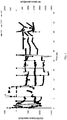
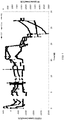
- Fig. 6 shows the metabolic products of a fermentation culture of Clostridium autoethanogenum .
- H 2 in the feed gas was increased from 5% to 34% and CO in the feed gas was decreased from 26% to 20%.
- BDO production dropped from 4.3 g/L to 0.9 g/L and the ratio of ethanol:BDO increased.
- H 2 utilization increased from 15% to 58%.
- Biomass decreased at a D waste of 0.7.
- H 2 in the feed gas can be consumed to a large extent (> 50%) when CO utilization is high, i.e., when dissolved CO is low.
- ATP balance it was predicted that cell growth rate would be slower when H 2 was a co-substrate along with CO.
- BDO production rate was decreased as a direct result of the concentration of dissolved CO 2 in the broth, and that dissolved CO 2 in the broth was linearly related to the CO 2 partial pressure (or linearly related to the outlet CO 2 concentration at a fixed atmospheric operating pressure), such that the rate of BDO production was inversely related to the consumption of CO 2 .
- D waste the residence time of the bacteria in the reactor, can be adjusted to maintain the concentration of bacteria in the reactor at an optimum value. As more H 2 is consumed, D waste can be decreased by pumping more broth through the cell membrane.
- This example demonstrates that the ratio of reacted H 2 /CO affects product production.
- this example demonstrates that biomass and BDO decrease as the ratio of H 2 :CO in the feed gas increases.
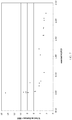
- Fig. 7 shows data points for a series of experiments similar to the experiment described in Example 3.
- the y-axis is the ratio of the rate of carbon converted to biomass and BDO to the rate of H 2 and CO consumption. If product production was not affected by the H 2 /CO consumption ratio, then the trend would not decrease with an increase in reacted H 2 /CO (i.e., a horizontal trend line would be observed).
Landscapes
- Organic Chemistry (AREA)
- Chemical & Material Sciences (AREA)
- Engineering & Computer Science (AREA)
- Zoology (AREA)
- Life Sciences & Earth Sciences (AREA)
- Wood Science & Technology (AREA)
- Chemical Kinetics & Catalysis (AREA)
- Microbiology (AREA)
- General Chemical & Material Sciences (AREA)
- Biotechnology (AREA)
- Health & Medical Sciences (AREA)
- Biochemistry (AREA)
- Bioinformatics & Cheminformatics (AREA)
- General Engineering & Computer Science (AREA)
- General Health & Medical Sciences (AREA)
- Genetics & Genomics (AREA)
- Preparation Of Compounds By Using Micro-Organisms (AREA)
- Micro-Organisms Or Cultivation Processes Thereof (AREA)
- Apparatus Associated With Microorganisms And Enzymes (AREA)
Priority Applications (1)
| Application Number | Priority Date | Filing Date | Title |
|---|---|---|---|
| PL14853873T PL3058080T3 (pl) | 2013-10-17 | 2014-10-16 | Proces wychwytywania węgla w fermentacji gazowej |
Applications Claiming Priority (2)
| Application Number | Priority Date | Filing Date | Title |
|---|---|---|---|
| US201361892405P | 2013-10-17 | 2013-10-17 | |
| PCT/US2014/060980 WO2015058011A1 (en) | 2013-10-17 | 2014-10-16 | Improved carbon capture in fermentation |
Publications (3)
| Publication Number | Publication Date |
|---|---|
| EP3058080A1 EP3058080A1 (en) | 2016-08-24 |
| EP3058080A4 EP3058080A4 (en) | 2017-06-21 |
| EP3058080B1 true EP3058080B1 (en) | 2019-05-01 |
Family
ID=52826503
Family Applications (1)
| Application Number | Title | Priority Date | Filing Date |
|---|---|---|---|
| EP14853873.9A Active EP3058080B1 (en) | 2013-10-17 | 2014-10-16 | Process for carbon capture in gas fermentation |
Country Status (15)
| Country | Link |
|---|---|
| US (1) | US10815502B2 (enExample) |
| EP (1) | EP3058080B1 (enExample) |
| JP (1) | JP6612744B2 (enExample) |
| KR (1) | KR102316945B1 (enExample) |
| CN (1) | CN107075531B (enExample) |
| AU (1) | AU2014337188B2 (enExample) |
| BR (1) | BR112016008659B1 (enExample) |
| CA (1) | CA2927823C (enExample) |
| EA (1) | EA033669B1 (enExample) |
| ES (1) | ES2734211T3 (enExample) |
| HU (1) | HUE045535T2 (enExample) |
| MY (1) | MY176532A (enExample) |
| PL (1) | PL3058080T3 (enExample) |
| PT (1) | PT3058080T (enExample) |
| WO (1) | WO2015058011A1 (enExample) |
Families Citing this family (22)
| Publication number | Priority date | Publication date | Assignee | Title |
|---|---|---|---|---|
| AU2016222565A1 (en) * | 2015-02-27 | 2017-09-28 | White Dog Labs, Inc. | Mixotrophic fermentation method for making acetone, isopropanol, butyric acid and other bioproducts, and mixtures thereof |
| JP6689729B2 (ja) * | 2016-10-25 | 2020-04-28 | 積水化学工業株式会社 | 有機組成物、有機組成物の製造方法および燃料 |
| CN110312558B (zh) * | 2017-03-20 | 2021-10-15 | 朗泽科技有限公司 | 用于产物回收和细胞再循环的方法和系统 |
| JP6943733B2 (ja) * | 2017-11-15 | 2021-10-06 | 積水化学工業株式会社 | 有機物質の製造方法 |
| CN111683731B (zh) * | 2018-02-12 | 2022-09-02 | 朗泽科技有限公司 | 用于提高碳转化效率的工艺 |
| EP3778909A4 (en) * | 2018-03-27 | 2022-04-20 | Sekisui Chemical Co., Ltd. | Method for producing ethanol and ethanol composition |
| US20220204997A1 (en) | 2019-01-28 | 2022-06-30 | Sekisui Chemical Co., Ltd. | Ethanol |
| JP2021004192A (ja) * | 2019-06-25 | 2021-01-14 | 積水化学工業株式会社 | エタノール |
| JP7323306B2 (ja) * | 2019-03-18 | 2023-08-08 | 積水化学工業株式会社 | エタノール |
| JP7339751B2 (ja) * | 2019-03-18 | 2023-09-06 | 積水化学工業株式会社 | エタノール |
| JP7323307B2 (ja) * | 2019-03-18 | 2023-08-08 | 積水化学工業株式会社 | エタノール |
| JP2021004191A (ja) * | 2019-06-25 | 2021-01-14 | 積水化学工業株式会社 | エタノール |
| JP2021004189A (ja) * | 2019-06-25 | 2021-01-14 | 積水化学工業株式会社 | エタノール |
| JP7323305B2 (ja) * | 2019-03-18 | 2023-08-08 | 積水化学工業株式会社 | エタノール |
| JP7339749B2 (ja) * | 2019-03-18 | 2023-09-06 | 積水化学工業株式会社 | エタノール |
| JP7339737B2 (ja) * | 2019-01-28 | 2023-09-06 | 積水化学工業株式会社 | エタノール |
| JP2021004190A (ja) * | 2019-06-25 | 2021-01-14 | 積水化学工業株式会社 | エタノール |
| JP7339750B2 (ja) * | 2019-03-18 | 2023-09-06 | 積水化学工業株式会社 | エタノール |
| EP3921433A4 (en) | 2019-02-08 | 2022-11-23 | Lanzatech, Inc. | PROCESS FOR RECOVERING NEAR BOILING POINT PRODUCTS |
| JP7004763B2 (ja) * | 2020-04-07 | 2022-01-21 | 積水化学工業株式会社 | 廃棄物由来エタノール溶液の製造方法、合成物の製造方法および燃料の製造方法 |
| CN117120623B (zh) * | 2021-04-09 | 2024-10-18 | 朗泽科技有限公司 | 用于改进二氧化碳转化为产物的灵活发酵平台 |
| CN113755534B (zh) * | 2021-08-13 | 2024-02-27 | 巨鹏生物(香港)有限公司 | 通过焦炉煤气发酵制备乙醇的方法和系统 |
Citations (1)
| Publication number | Priority date | Publication date | Assignee | Title |
|---|---|---|---|---|
| US20110236919A1 (en) * | 2010-03-24 | 2011-09-29 | James Allen Zahn | Process for restricting carbon monoxide dissolution in a syngas fermentation |
Family Cites Families (23)
| Publication number | Priority date | Publication date | Assignee | Title |
|---|---|---|---|---|
| US5173429A (en) | 1990-11-09 | 1992-12-22 | The Board Of Trustees Of The University Of Arkansas | Clostridiumm ljungdahlii, an anaerobic ethanol and acetate producing microorganism |
| US5807722A (en) | 1992-10-30 | 1998-09-15 | Bioengineering Resources, Inc. | Biological production of acetic acid from waste gases with Clostridium ljungdahlii |
| US6136577A (en) | 1992-10-30 | 2000-10-24 | Bioengineering Resources, Inc. | Biological production of ethanol from waste gases with Clostridium ljungdahlii |
| US5821111A (en) | 1994-03-31 | 1998-10-13 | Bioengineering Resources, Inc. | Bioconversion of waste biomass to useful products |
| US5593886A (en) | 1992-10-30 | 1997-01-14 | Gaddy; James L. | Clostridium stain which produces acetic acid from waste gases |
| JP4101295B2 (ja) | 1996-07-01 | 2008-06-18 | バイオエンジニアリング・リソーシズ・インコーポレーテツド | 廃ガスからの酢酸の生物学的生産 |
| UA72220C2 (uk) | 1998-09-08 | 2005-02-15 | Байоенджініерінг Рісорсиз, Інк. | Незмішувана з водою суміш розчинник/співрозчинник для екстрагування оцтової кислоти, спосіб одержання оцтової кислоти (варіанти), спосіб анаеробного мікробного бродіння для одержання оцтової кислоти (варіанти), модифікований розчинник та спосіб його одержання |
| PT1303629E (pt) * | 2000-07-25 | 2006-10-31 | Emmaus Foundation Inc | Metodos para aumentar a producao de etanol a partir da fermantacao microbiana |
| JP2008500053A (ja) * | 2004-05-26 | 2008-01-10 | ノヴァス エナジー リミテッド ライアビリティ カンパニー | 生物廃棄物からのエタノールの製造 |
| NZ546496A (en) | 2006-04-07 | 2008-09-26 | Lanzatech New Zealand Ltd | Gas treatment process |
| US7704723B2 (en) | 2006-08-31 | 2010-04-27 | The Board Of Regents For Oklahoma State University | Isolation and characterization of novel clostridial species |
| NZ560757A (en) * | 2007-10-28 | 2010-07-30 | Lanzatech New Zealand Ltd | Improved carbon capture in microbial fermentation of industrial gases to ethanol |
| CA2703622C (en) | 2007-11-13 | 2014-12-16 | Lanzatech New Zealand Limited | Clostridium autoethanogenum strain and methods of use thereof to produce ethanol and acetate |
| US20100120104A1 (en) | 2008-11-06 | 2010-05-13 | John Stuart Reed | Biological and chemical process utilizing chemoautotrophic microorganisms for the chemosythetic fixation of carbon dioxide and/or other inorganic carbon sources into organic compounds, and the generation of additional useful products |
| CN102803497A (zh) | 2009-04-29 | 2012-11-28 | 兰扎泰克新西兰有限公司 | 改善的发酵中的碳捕获 |
| JP5956927B2 (ja) * | 2009-11-06 | 2016-07-27 | キベルディ インコーポレーテッドKiverdi, Inc. | 二酸化炭素および/または他の無機炭素源の有機化合物への化学合成固定のために化学合成独立栄養微生物を利用する生物学的および化学的プロセス、および付加的有用生成物の産出 |
| CN102741417B (zh) * | 2010-01-14 | 2016-01-27 | 朗泽科技新西兰有限公司 | 醇的制备方法 |
| US8143037B2 (en) * | 2010-03-19 | 2012-03-27 | Coskata, Inc. | Ethanologenic Clostridium species, Clostridium coskatii |
| US20120045807A1 (en) * | 2010-08-19 | 2012-02-23 | Lanzatech New Zealand Limited | Process for producing chemicals using microbial fermentation of substrates comprising carbon monoxide |
| JP2012100547A (ja) * | 2010-11-08 | 2012-05-31 | Daicel Corp | 嫌気性微生物に気体資源を供給して有機物を生産するための方法及び装置 |
| US8663949B2 (en) * | 2010-12-20 | 2014-03-04 | Lanzatech New Zealand Limited | Fermentation method |
| JP2012205530A (ja) * | 2011-03-29 | 2012-10-25 | Mitsui Eng & Shipbuild Co Ltd | エタノール製造装置およびエタノール製造方法 |
| CN104136405A (zh) * | 2012-02-09 | 2014-11-05 | 新西兰郎泽科技公司 | 改善的发酵中的碳捕获 |
-
2014
- 2014-10-16 EP EP14853873.9A patent/EP3058080B1/en active Active
- 2014-10-16 PL PL14853873T patent/PL3058080T3/pl unknown
- 2014-10-16 CN CN201480057301.6A patent/CN107075531B/zh active Active
- 2014-10-16 ES ES14853873T patent/ES2734211T3/es active Active
- 2014-10-16 KR KR1020167011385A patent/KR102316945B1/ko active Active
- 2014-10-16 AU AU2014337188A patent/AU2014337188B2/en active Active
- 2014-10-16 MY MYPI2016701332A patent/MY176532A/en unknown
- 2014-10-16 US US14/516,564 patent/US10815502B2/en active Active
- 2014-10-16 WO PCT/US2014/060980 patent/WO2015058011A1/en not_active Ceased
- 2014-10-16 PT PT14853873T patent/PT3058080T/pt unknown
- 2014-10-16 HU HUE14853873A patent/HUE045535T2/hu unknown
- 2014-10-16 BR BR112016008659-7A patent/BR112016008659B1/pt active IP Right Grant
- 2014-10-16 CA CA2927823A patent/CA2927823C/en active Active
- 2014-10-16 EA EA201690646A patent/EA033669B1/ru not_active IP Right Cessation
- 2014-10-16 JP JP2016522808A patent/JP6612744B2/ja active Active
Patent Citations (1)
| Publication number | Priority date | Publication date | Assignee | Title |
|---|---|---|---|---|
| US20110236919A1 (en) * | 2010-03-24 | 2011-09-29 | James Allen Zahn | Process for restricting carbon monoxide dissolution in a syngas fermentation |
Also Published As
| Publication number | Publication date |
|---|---|
| BR112016008659B1 (pt) | 2022-07-05 |
| KR102316945B1 (ko) | 2021-10-26 |
| CA2927823C (en) | 2018-03-27 |
| CA2927823A1 (en) | 2015-04-23 |
| BR112016008659A2 (enExample) | 2017-08-01 |
| JP2016533175A (ja) | 2016-10-27 |
| KR20160072132A (ko) | 2016-06-22 |
| US10815502B2 (en) | 2020-10-27 |
| ES2734211T3 (es) | 2019-12-04 |
| EP3058080A4 (en) | 2017-06-21 |
| EP3058080A1 (en) | 2016-08-24 |
| EA201690646A1 (ru) | 2016-08-31 |
| CN107075531B (zh) | 2021-07-27 |
| CN107075531A (zh) | 2017-08-18 |
| EA033669B1 (ru) | 2019-11-14 |
| AU2014337188B2 (en) | 2018-12-13 |
| HUE045535T2 (hu) | 2019-12-30 |
| PT3058080T (pt) | 2019-07-25 |
| MY176532A (en) | 2020-08-13 |
| JP6612744B2 (ja) | 2019-11-27 |
| US20150111266A1 (en) | 2015-04-23 |
| AU2014337188A1 (en) | 2016-05-12 |
| WO2015058011A1 (en) | 2015-04-23 |
| PL3058080T3 (pl) | 2019-10-31 |
Similar Documents
| Publication | Publication Date | Title |
|---|---|---|
| EP3058080B1 (en) | Process for carbon capture in gas fermentation | |
| CN102317463B (zh) | 厌氧微生物发酵生产丁二醇 | |
| US8354269B2 (en) | Optimised media containing nickel for fermentation of carbonmonoxide | |
| EP3399019B1 (en) | Methods of sustaining culture viability | |
| US20120252082A1 (en) | Fermentation Process For Controlling Butanediol Production | |
| CN105051178B (zh) | 用于在微生物发酵中控制代谢物产生的系统和方法 | |
| CN104919049A (zh) | 一种避免co抑制产乙酸菌的方法 | |
| EP3146058B1 (en) | Fermentation process for the production and control of pyruvate-derived products | |
| US20110250629A1 (en) | Alcohol production process | |
| US9771603B2 (en) | Fermentation process | |
| AU2011255662B2 (en) | Alcohol production process |
Legal Events
| Date | Code | Title | Description |
|---|---|---|---|
| PUAI | Public reference made under article 153(3) epc to a published international application that has entered the european phase |
Free format text: ORIGINAL CODE: 0009012 |
|
| 17P | Request for examination filed |
Effective date: 20160513 |
|
| AK | Designated contracting states |
Kind code of ref document: A1 Designated state(s): AL AT BE BG CH CY CZ DE DK EE ES FI FR GB GR HR HU IE IS IT LI LT LU LV MC MK MT NL NO PL PT RO RS SE SI SK SM TR |
|
| AX | Request for extension of the european patent |
Extension state: BA ME |
|
| DAX | Request for extension of the european patent (deleted) | ||
| A4 | Supplementary search report drawn up and despatched |
Effective date: 20170522 |
|
| RIC1 | Information provided on ipc code assigned before grant |
Ipc: C12P 7/18 20060101ALI20170516BHEP Ipc: C12P 7/16 20060101ALI20170516BHEP Ipc: C12P 7/42 20060101ALI20170516BHEP Ipc: C12P 7/56 20060101ALI20170516BHEP Ipc: C12P 7/08 20060101ALI20170516BHEP Ipc: C12P 7/26 20060101ALI20170516BHEP Ipc: C12P 7/04 20060101AFI20170516BHEP Ipc: C12P 7/46 20060101ALI20170516BHEP Ipc: C12P 7/64 20060101ALI20170516BHEP Ipc: C12P 7/54 20060101ALI20170516BHEP Ipc: C12P 5/02 20060101ALI20170516BHEP |
|
| STAA | Information on the status of an ep patent application or granted ep patent |
Free format text: STATUS: EXAMINATION IS IN PROGRESS |
|
| 17Q | First examination report despatched |
Effective date: 20180323 |
|
| RIC1 | Information provided on ipc code assigned before grant |
Ipc: C12P 7/06 20060101AFI20181008BHEP Ipc: C12P 7/54 20060101ALI20181008BHEP Ipc: C12P 7/16 20060101ALI20181008BHEP Ipc: C12P 7/08 20060101ALI20181008BHEP |
|
| GRAP | Despatch of communication of intention to grant a patent |
Free format text: ORIGINAL CODE: EPIDOSNIGR1 |
|
| STAA | Information on the status of an ep patent application or granted ep patent |
Free format text: STATUS: GRANT OF PATENT IS INTENDED |
|
| INTG | Intention to grant announced |
Effective date: 20181127 |
|
| GRAS | Grant fee paid |
Free format text: ORIGINAL CODE: EPIDOSNIGR3 |
|
| GRAA | (expected) grant |
Free format text: ORIGINAL CODE: 0009210 |
|
| STAA | Information on the status of an ep patent application or granted ep patent |
Free format text: STATUS: THE PATENT HAS BEEN GRANTED |
|
| AK | Designated contracting states |
Kind code of ref document: B1 Designated state(s): AL AT BE BG CH CY CZ DE DK EE ES FI FR GB GR HR HU IE IS IT LI LT LU LV MC MK MT NL NO PL PT RO RS SE SI SK SM TR |
|
| REG | Reference to a national code |
Ref country code: GB Ref legal event code: FG4D |
|
| REG | Reference to a national code |
Ref country code: CH Ref legal event code: EP Ref country code: AT Ref legal event code: REF Ref document number: 1126922 Country of ref document: AT Kind code of ref document: T Effective date: 20190515 |
|
| REG | Reference to a national code |
Ref country code: DE Ref legal event code: R096 Ref document number: 602014045991 Country of ref document: DE |
|
| REG | Reference to a national code |
Ref country code: IE Ref legal event code: FG4D |
|
| REG | Reference to a national code |
Ref country code: CH Ref legal event code: NV Representative=s name: VENI GMBH, CH |
|
| REG | Reference to a national code |
Ref country code: PT Ref legal event code: SC4A Ref document number: 3058080 Country of ref document: PT Date of ref document: 20190725 Kind code of ref document: T Free format text: AVAILABILITY OF NATIONAL TRANSLATION Effective date: 20190718 |
|
| REG | Reference to a national code |
Ref country code: SE Ref legal event code: TRGR |
|
| REG | Reference to a national code |
Ref country code: NL Ref legal event code: FP |
|
| REG | Reference to a national code |
Ref country code: LT Ref legal event code: MG4D |
|
| REG | Reference to a national code |
Ref country code: NO Ref legal event code: T2 Effective date: 20190501 |
|
| PG25 | Lapsed in a contracting state [announced via postgrant information from national office to epo] |
Ref country code: LT Free format text: LAPSE BECAUSE OF FAILURE TO SUBMIT A TRANSLATION OF THE DESCRIPTION OR TO PAY THE FEE WITHIN THE PRESCRIBED TIME-LIMIT Effective date: 20190501 Ref country code: AL Free format text: LAPSE BECAUSE OF FAILURE TO SUBMIT A TRANSLATION OF THE DESCRIPTION OR TO PAY THE FEE WITHIN THE PRESCRIBED TIME-LIMIT Effective date: 20190501 Ref country code: HR Free format text: LAPSE BECAUSE OF FAILURE TO SUBMIT A TRANSLATION OF THE DESCRIPTION OR TO PAY THE FEE WITHIN THE PRESCRIBED TIME-LIMIT Effective date: 20190501 |
|
| PG25 | Lapsed in a contracting state [announced via postgrant information from national office to epo] |
Ref country code: GR Free format text: LAPSE BECAUSE OF FAILURE TO SUBMIT A TRANSLATION OF THE DESCRIPTION OR TO PAY THE FEE WITHIN THE PRESCRIBED TIME-LIMIT Effective date: 20190802 Ref country code: LV Free format text: LAPSE BECAUSE OF FAILURE TO SUBMIT A TRANSLATION OF THE DESCRIPTION OR TO PAY THE FEE WITHIN THE PRESCRIBED TIME-LIMIT Effective date: 20190501 Ref country code: BG Free format text: LAPSE BECAUSE OF FAILURE TO SUBMIT A TRANSLATION OF THE DESCRIPTION OR TO PAY THE FEE WITHIN THE PRESCRIBED TIME-LIMIT Effective date: 20190801 Ref country code: RS Free format text: LAPSE BECAUSE OF FAILURE TO SUBMIT A TRANSLATION OF THE DESCRIPTION OR TO PAY THE FEE WITHIN THE PRESCRIBED TIME-LIMIT Effective date: 20190501 |
|
| REG | Reference to a national code |
Ref country code: ES Ref legal event code: FG2A Ref document number: 2734211 Country of ref document: ES Kind code of ref document: T3 Effective date: 20191204 |
|
| REG | Reference to a national code |
Ref country code: HU Ref legal event code: AG4A Ref document number: E045535 Country of ref document: HU |
|
| PG25 | Lapsed in a contracting state [announced via postgrant information from national office to epo] |
Ref country code: IS Free format text: LAPSE BECAUSE OF FAILURE TO SUBMIT A TRANSLATION OF THE DESCRIPTION OR TO PAY THE FEE WITHIN THE PRESCRIBED TIME-LIMIT Effective date: 20190901 |
|
| PG25 | Lapsed in a contracting state [announced via postgrant information from national office to epo] |
Ref country code: DK Free format text: LAPSE BECAUSE OF FAILURE TO SUBMIT A TRANSLATION OF THE DESCRIPTION OR TO PAY THE FEE WITHIN THE PRESCRIBED TIME-LIMIT Effective date: 20190501 Ref country code: EE Free format text: LAPSE BECAUSE OF FAILURE TO SUBMIT A TRANSLATION OF THE DESCRIPTION OR TO PAY THE FEE WITHIN THE PRESCRIBED TIME-LIMIT Effective date: 20190501 Ref country code: RO Free format text: LAPSE BECAUSE OF FAILURE TO SUBMIT A TRANSLATION OF THE DESCRIPTION OR TO PAY THE FEE WITHIN THE PRESCRIBED TIME-LIMIT Effective date: 20190501 Ref country code: SK Free format text: LAPSE BECAUSE OF FAILURE TO SUBMIT A TRANSLATION OF THE DESCRIPTION OR TO PAY THE FEE WITHIN THE PRESCRIBED TIME-LIMIT Effective date: 20190501 |
|
| REG | Reference to a national code |
Ref country code: DE Ref legal event code: R097 Ref document number: 602014045991 Country of ref document: DE |
|
| PG25 | Lapsed in a contracting state [announced via postgrant information from national office to epo] |
Ref country code: SM Free format text: LAPSE BECAUSE OF FAILURE TO SUBMIT A TRANSLATION OF THE DESCRIPTION OR TO PAY THE FEE WITHIN THE PRESCRIBED TIME-LIMIT Effective date: 20190501 |
|
| PLBE | No opposition filed within time limit |
Free format text: ORIGINAL CODE: 0009261 |
|
| STAA | Information on the status of an ep patent application or granted ep patent |
Free format text: STATUS: NO OPPOSITION FILED WITHIN TIME LIMIT |
|
| PG25 | Lapsed in a contracting state [announced via postgrant information from national office to epo] |
Ref country code: TR Free format text: LAPSE BECAUSE OF FAILURE TO SUBMIT A TRANSLATION OF THE DESCRIPTION OR TO PAY THE FEE WITHIN THE PRESCRIBED TIME-LIMIT Effective date: 20190501 |
|
| 26N | No opposition filed |
Effective date: 20200204 |
|
| PG25 | Lapsed in a contracting state [announced via postgrant information from national office to epo] |
Ref country code: MC Free format text: LAPSE BECAUSE OF FAILURE TO SUBMIT A TRANSLATION OF THE DESCRIPTION OR TO PAY THE FEE WITHIN THE PRESCRIBED TIME-LIMIT Effective date: 20190501 Ref country code: SI Free format text: LAPSE BECAUSE OF FAILURE TO SUBMIT A TRANSLATION OF THE DESCRIPTION OR TO PAY THE FEE WITHIN THE PRESCRIBED TIME-LIMIT Effective date: 20190501 |
|
| PG25 | Lapsed in a contracting state [announced via postgrant information from national office to epo] |
Ref country code: LU Free format text: LAPSE BECAUSE OF NON-PAYMENT OF DUE FEES Effective date: 20191016 |
|
| PG25 | Lapsed in a contracting state [announced via postgrant information from national office to epo] |
Ref country code: IE Free format text: LAPSE BECAUSE OF NON-PAYMENT OF DUE FEES Effective date: 20191016 |
|
| REG | Reference to a national code |
Ref country code: AT Ref legal event code: UEP Ref document number: 1126922 Country of ref document: AT Kind code of ref document: T Effective date: 20190501 |
|
| PG25 | Lapsed in a contracting state [announced via postgrant information from national office to epo] |
Ref country code: CY Free format text: LAPSE BECAUSE OF FAILURE TO SUBMIT A TRANSLATION OF THE DESCRIPTION OR TO PAY THE FEE WITHIN THE PRESCRIBED TIME-LIMIT Effective date: 20190501 |
|
| PG25 | Lapsed in a contracting state [announced via postgrant information from national office to epo] |
Ref country code: MT Free format text: LAPSE BECAUSE OF FAILURE TO SUBMIT A TRANSLATION OF THE DESCRIPTION OR TO PAY THE FEE WITHIN THE PRESCRIBED TIME-LIMIT Effective date: 20190501 |
|
| PG25 | Lapsed in a contracting state [announced via postgrant information from national office to epo] |
Ref country code: MK Free format text: LAPSE BECAUSE OF FAILURE TO SUBMIT A TRANSLATION OF THE DESCRIPTION OR TO PAY THE FEE WITHIN THE PRESCRIBED TIME-LIMIT Effective date: 20190501 |
|
| P01 | Opt-out of the competence of the unified patent court (upc) registered |
Effective date: 20230516 |
|
| REG | Reference to a national code |
Ref country code: BE Ref legal event code: PD Owner name: LANZATECH NZ, INC.; US Free format text: DETAILS ASSIGNMENT: CHANGE OF OWNER(S), OTHER; FORMER OWNER NAME: LANZATECH NZ, INC. Effective date: 20231201 Ref country code: BE Ref legal event code: HC Owner name: LANZATECH NZ, INC.; NZ Free format text: DETAILS ASSIGNMENT: CHANGE OF OWNER(S), CHANGE OF OWNER(S) NAME; FORMER OWNER NAME: LANZATECH NEW ZEALAND LIMITED Effective date: 20231201 |
|
| PGFP | Annual fee paid to national office [announced via postgrant information from national office to epo] |
Ref country code: DE Payment date: 20241029 Year of fee payment: 11 |
|
| PGFP | Annual fee paid to national office [announced via postgrant information from national office to epo] |
Ref country code: NO Payment date: 20241021 Year of fee payment: 11 |
|
| PGFP | Annual fee paid to national office [announced via postgrant information from national office to epo] |
Ref country code: BE Payment date: 20241023 Year of fee payment: 11 Ref country code: PL Payment date: 20241003 Year of fee payment: 11 Ref country code: FI Payment date: 20241024 Year of fee payment: 11 |
|
| PGFP | Annual fee paid to national office [announced via postgrant information from national office to epo] |
Ref country code: GB Payment date: 20241022 Year of fee payment: 11 |
|
| PGFP | Annual fee paid to national office [announced via postgrant information from national office to epo] |
Ref country code: FR Payment date: 20241025 Year of fee payment: 11 Ref country code: AT Payment date: 20241018 Year of fee payment: 11 |
|
| PGFP | Annual fee paid to national office [announced via postgrant information from national office to epo] |
Ref country code: CZ Payment date: 20241003 Year of fee payment: 11 |
|
| PGFP | Annual fee paid to national office [announced via postgrant information from national office to epo] |
Ref country code: IT Payment date: 20241022 Year of fee payment: 11 Ref country code: ES Payment date: 20241118 Year of fee payment: 11 |
|
| PGFP | Annual fee paid to national office [announced via postgrant information from national office to epo] |
Ref country code: SE Payment date: 20241025 Year of fee payment: 11 |
|
| PGFP | Annual fee paid to national office [announced via postgrant information from national office to epo] |
Ref country code: CH Payment date: 20241101 Year of fee payment: 11 |
|
| REG | Reference to a national code |
Ref country code: CH Ref legal event code: U11 Free format text: ST27 STATUS EVENT CODE: U-0-0-U10-U11 (AS PROVIDED BY THE NATIONAL OFFICE) Effective date: 20251101 |
|
| PGFP | Annual fee paid to national office [announced via postgrant information from national office to epo] |
Ref country code: HU Payment date: 20251021 Year of fee payment: 12 |
|
| PGFP | Annual fee paid to national office [announced via postgrant information from national office to epo] |
Ref country code: NL Payment date: 20251024 Year of fee payment: 12 |
|
| PGFP | Annual fee paid to national office [announced via postgrant information from national office to epo] |
Ref country code: PT Payment date: 20251002 Year of fee payment: 12 |