EP3030229B1 - Anti-acne compositions comprising bile acid-fatty acid conjugates - Google Patents
Anti-acne compositions comprising bile acid-fatty acid conjugates Download PDFInfo
- Publication number
- EP3030229B1 EP3030229B1 EP14834482.3A EP14834482A EP3030229B1 EP 3030229 B1 EP3030229 B1 EP 3030229B1 EP 14834482 A EP14834482 A EP 14834482A EP 3030229 B1 EP3030229 B1 EP 3030229B1
- Authority
- EP
- European Patent Office
- Prior art keywords
- acid
- composition
- acne
- fabac
- use according
- Prior art date
- Legal status (The legal status is an assumption and is not a legal conclusion. Google has not performed a legal analysis and makes no representation as to the accuracy of the status listed.)
- Active
Links
Images
Classifications
-
- A—HUMAN NECESSITIES
- A61—MEDICAL OR VETERINARY SCIENCE; HYGIENE
- A61K—PREPARATIONS FOR MEDICAL, DENTAL OR TOILETRY PURPOSES
- A61K31/00—Medicinal preparations containing organic active ingredients
- A61K31/56—Compounds containing cyclopenta[a]hydrophenanthrene ring systems; Derivatives thereof, e.g. steroids
- A61K31/575—Compounds containing cyclopenta[a]hydrophenanthrene ring systems; Derivatives thereof, e.g. steroids substituted in position 17 beta by a chain of three or more carbon atoms, e.g. cholane, cholestane, ergosterol, sitosterol
-
- A—HUMAN NECESSITIES
- A61—MEDICAL OR VETERINARY SCIENCE; HYGIENE
- A61K—PREPARATIONS FOR MEDICAL, DENTAL OR TOILETRY PURPOSES
- A61K31/00—Medicinal preparations containing organic active ingredients
-
- A—HUMAN NECESSITIES
- A61—MEDICAL OR VETERINARY SCIENCE; HYGIENE
- A61K—PREPARATIONS FOR MEDICAL, DENTAL OR TOILETRY PURPOSES
- A61K31/00—Medicinal preparations containing organic active ingredients
- A61K31/185—Acids; Anhydrides, halides or salts thereof, e.g. sulfur acids, imidic, hydrazonic or hydroximic acids
- A61K31/19—Carboxylic acids, e.g. valproic acid
- A61K31/20—Carboxylic acids, e.g. valproic acid having a carboxyl group bound to a chain of seven or more carbon atoms, e.g. stearic, palmitic, arachidic acids
- A61K31/201—Carboxylic acids, e.g. valproic acid having a carboxyl group bound to a chain of seven or more carbon atoms, e.g. stearic, palmitic, arachidic acids having one or two double bonds, e.g. oleic, linoleic acids
-
- A—HUMAN NECESSITIES
- A61—MEDICAL OR VETERINARY SCIENCE; HYGIENE
- A61K—PREPARATIONS FOR MEDICAL, DENTAL OR TOILETRY PURPOSES
- A61K31/00—Medicinal preparations containing organic active ingredients
- A61K31/33—Heterocyclic compounds
- A61K31/395—Heterocyclic compounds having nitrogen as a ring hetero atom, e.g. guanethidine or rifamycins
- A61K31/41—Heterocyclic compounds having nitrogen as a ring hetero atom, e.g. guanethidine or rifamycins having five-membered rings with two or more ring hetero atoms, at least one of which being nitrogen, e.g. tetrazole
- A61K31/425—Thiazoles
- A61K31/426—1,3-Thiazoles
-
- A—HUMAN NECESSITIES
- A61—MEDICAL OR VETERINARY SCIENCE; HYGIENE
- A61K—PREPARATIONS FOR MEDICAL, DENTAL OR TOILETRY PURPOSES
- A61K31/00—Medicinal preparations containing organic active ingredients
- A61K31/33—Heterocyclic compounds
- A61K31/395—Heterocyclic compounds having nitrogen as a ring hetero atom, e.g. guanethidine or rifamycins
- A61K31/41—Heterocyclic compounds having nitrogen as a ring hetero atom, e.g. guanethidine or rifamycins having five-membered rings with two or more ring hetero atoms, at least one of which being nitrogen, e.g. tetrazole
- A61K31/425—Thiazoles
- A61K31/427—Thiazoles not condensed and containing further heterocyclic rings
-
- A—HUMAN NECESSITIES
- A61—MEDICAL OR VETERINARY SCIENCE; HYGIENE
- A61K—PREPARATIONS FOR MEDICAL, DENTAL OR TOILETRY PURPOSES
- A61K9/00—Medicinal preparations characterised by special physical form
- A61K9/0012—Galenical forms characterised by the site of application
- A61K9/0014—Skin, i.e. galenical aspects of topical compositions
-
- A—HUMAN NECESSITIES
- A61—MEDICAL OR VETERINARY SCIENCE; HYGIENE
- A61K—PREPARATIONS FOR MEDICAL, DENTAL OR TOILETRY PURPOSES
- A61K9/00—Medicinal preparations characterised by special physical form
- A61K9/0012—Galenical forms characterised by the site of application
- A61K9/0053—Mouth and digestive tract, i.e. intraoral and peroral administration
-
- A—HUMAN NECESSITIES
- A61—MEDICAL OR VETERINARY SCIENCE; HYGIENE
- A61P—SPECIFIC THERAPEUTIC ACTIVITY OF CHEMICAL COMPOUNDS OR MEDICINAL PREPARATIONS
- A61P17/00—Drugs for dermatological disorders
-
- A—HUMAN NECESSITIES
- A61—MEDICAL OR VETERINARY SCIENCE; HYGIENE
- A61P—SPECIFIC THERAPEUTIC ACTIVITY OF CHEMICAL COMPOUNDS OR MEDICINAL PREPARATIONS
- A61P17/00—Drugs for dermatological disorders
- A61P17/08—Antiseborrheics
-
- A—HUMAN NECESSITIES
- A61—MEDICAL OR VETERINARY SCIENCE; HYGIENE
- A61P—SPECIFIC THERAPEUTIC ACTIVITY OF CHEMICAL COMPOUNDS OR MEDICINAL PREPARATIONS
- A61P17/00—Drugs for dermatological disorders
- A61P17/10—Anti-acne agents
Definitions
- the present invention relates to pharmaceutical compositions comprising a bile acid fatty acid conjugate for use in treatment of conditions associated with altered skin sebum levels, such as Acne Vulgaris.
- Sebum is a mixture of relatively nonpolar lipids (such as triglycerides, oils, waxes and fats) which are mostly synthesized and secreted from the sebaceous glands.
- Human sebaceous glands are holocrine secreting tissues which are part of the pilosebaceous units (PSUs). Sebaceous glands are connected to hair follicles and are present in most of skin surfaces.
- Holocrine secretions result from the lysis of secretory cells in a gland. Holocrine secretions are first produced inside the secretory cells present in a gland. These secretory cells then rupture to release (secrete) the contents of these cells into the lumen, or interior space, of a gland.
- the sebum is normally emptied onto the skin surface through the opening of the follicle, commonly called a pore.
- Secreted sebum provides a coating for the exterior surface of the skin. Although sebum normally helps lubricate, moisturize and protect the skin, its production plays a pivotal role in the pathogenesis of skin conditions such as acne and seborrhea (an abnormally increased secretion and discharge of sebum). Abnormal sebum production is known to promote the formation of comedones and increased sebum production is one of the early events that can contribute to the onset of acne. An increase in sebum secretion occurs in many people starting at about 9 years of age and continues to increase up to 17 years of age at which point the adult level of sebum secretion is typically reached. This period of increased sebum production is when most cases of acne occur.
- Acne Vulgaris is one of the most treated skin condition in the United States and other countries. Acne vulgaris is a commonly referred to simply as "acne" even though many other different and clinically distinct forms of acne are known. Acne affects many adolescents and adults.
- Acne vulgaris is a disease of the pilosebaceous unit of the skin.
- the pathogenesis of acne is complex, incompletely understood and defined by the interplay of at least the following four factors: increased sebum production by the sebaceous glands, hyper-keratinization of the upper part of the follicle, colonization of the pilosebaceous unit by Propionibacteriumacnes (P. acnes), and release of inflammatory mediators into the follicle and the surrounding epidermis.
- a strategy for treating acne directed to treatment of at least one of the above-mentioned factors.
- One strategy is to correct an altered pattern of follicular keratinization that occurs as a result of acne.
- a second strategy is to decrease sebaceous gland activity and sebum production.
- a third strategy is to decrease the size of the follicular bacterial population and in particular to decrease the number of follicular P. acnes bacteria.
- a fourth strategy is to inhibit the production and/or effects of extracellular inflammatory mediators (such as cytokines and inflammatory cells). Importantly, the majority of these treatment strategies suffer from limited efficacy or undesirable side effects and thus several of these strategies may be combined for treatment.
- Isotretinoin and vitamin A derivatives represent one such category of compositions.
- Isotretinoin reduces sebaceous gland size by decreasing the proliferation of basal sebocytes, decreasing sebum production by up to 90% and inhibiting sebocyte differentiation.
- Isotretinoin is available in dosage forms suitable for either topical or oral administration. Oral administration of isotretinoin has revolutionized the treatment of severe acne. This is because isotretinoin is the first drug able to alter follicular keratinization, alter sebum production and produce anti-inflammatory effects. Unfortunately, isotretinoin is a known teratogen and can cause developmental defects.
- retinoic acid is known to be a primary irritant.
- Retinoids which are commonly used for treatment of acne, have been shown to be cytotoxic for fibroblasts and epithelial cells in the range of 0.6-3*10 5 M ( Varani et al. Journal of Investigative Dermatology (1993) 101, 839-842 ), and to increase epithelial cell death ( Ding et al. Invest Ophthalmol Vis Sci. 2013 Jun 26;54(6):4341-50 ).
- FABACs Fatty Acid Bile Acid or Bile Salt conjugates
- BAFACs Bile Acid Fatty Acid conjugates
- FABACs are believed to lower blood cholesterol concentration, reduce liver fat levels and dissolve gallstones ( Gilat et al., Hepatology 2003; 38: 436-442 ; and Gilat et al., Hepatology 2002; 35: 597-600 ).
- US Patents 6,384,024 , 6,395,722 , 6,589,946 disclose use of certain FABACs in dissolving cholesterol gallstones in bile and treating arteriosclerosis. These and additional FABACs were disclosed in US Patents 7,501,403 and US 8,110,564 as well as in US Application Publication US 2012/0214872 for use in treating fatty liver, in reducing blood cholesterol levels and in treating hyperglycemia, diabetes, insulin resistance and obesity. More recently, US Application No. 2012/0157419 disclosed FABACs as useful for treating brain diseases characterized by amyloid plaque deposits (e.g., Alzheimer's disease). Nowhere in the art is it disclosed or suggested that FABACs may be useful for prevention or treatment of skin conditions associated with altered sebum levels such as acne.
- FABACs may be useful for prevention or treatment of skin conditions associated with altered sebum levels such as acne.
- Canadian Patent Application 2,166,427 discloses use of bile acids chenodeoxycholic acid and/or ursodeoxycholic acid for the preparation of a medicament for treatment of atopic dermatitis.
- WO02/083147 discloses certain bile acid derivatives as Farnesoid X receptor (FXR) ligands for prevention or treatment of FXR-mediated diseases or conditions.
- FXR Farnesoid X receptor
- the present invention relates to compositions comprising fatty acid bile acid conjugates (FABACs) for use in a method of treating a skin condition associated with altered sebum levels including, but not limited to, acne.
- FABACs fatty acid bile acid conjugates
- the present invention is based in part on the unexpected discovery that FABACs are able to reduce gene expression levels of keratin 10 and keratin 1 in skin fibroblasts, as exemplified herein below. Without wishing to be bound by any theory or mechanism, reduced expression of keratin 1 and 10 may result in reduced keratinocyte differentiation, thus hyper keratinization and follicular clogging associated with conditions such as acne may be treated using FABACs.
- the present invention is further based on the surprising discovery that administration of FABACs does not result in a significant effect on viability of epidermal cells in contrast to administration of retinoids.
- FABAC fatty acid bile acid conjugate
- the composition is a pharmaceutical composition.
- the pharmaceutical composition is formulated for oral administration.
- the pharmaceutical composition is a topical composition formulated for topical administration.
- the pharmaceutical composition formulated for topical administration further comprises a cosmetically acceptable diluent, carrier or excipient.
- topical administration refers application to the skin of a subject afflicted with a skin condition associated with altered sebum levels.
- the composition is a topical composition formulated for cosmetic use.
- the topical composition formulated for cosmetic use is formulated for topical administration.
- topical administration refers to administration through body surfaces, preferably through skin.
- the topical composition formulated for cosmetic use comprises a cosmetically acceptable diluent, carrier or excipient in addition to or in place of the pharmaceutically acceptable diluent or carrier.
- administering relates to topical or oral administration. Each possibility represents a separate embodiment of the present invention. According to some embodiments, administering relates to oral administration.
- the disclosed composition is a pharmaceutical composition comprising at least one FABAC as an active ingredient and formulated for oral administration.
- the disclosed composition is a topical pharmaceutical composition formulated for topical administration, comprising at least one FABAC of the invention as an active ingredient.
- FABAC fatty acid bile acid conjugate
- W represents one or two fatty acid radicals having 6-22 carbon atoms
- the present disclosure provides at least one fatty acid bile acid conjugate (FABAC) for use in preparation of a medicament for treatment of a skin condition associated with altered sebum levels
- FBAC fatty acid bile acid conjugate
- the medicament is a topical medicament formulated for topical administration.
- the medicament further comprises at least one pharmaceutically acceptable or cosmetically acceptable diluent, carrier or excipient.
- Each possibility represents a separate embodiment of the present disclosure.
- the present disclosure provides a pharmaceutical composition comprising at least one FABAC as an active ingredient, wherein the pharmaceutical composition is a topical composition formulated for topical administration and further comprises at least one pharmaceutically acceptable diluent, carrier or excipient.
- the composition of the disclosure comprises at least one cosmetically acceptable diluent, carrier or excipient in addition to or in place of the at least one pharmaceutically acceptable diluent, carrier or excipient.
- the skin condition associated with altered sebum levels is selected from the group consisting of: acne, dandruff, seborrhea, seborrheic dermatitis, a sebaceous cyst, sebaceous hyperplasia and a combination thereof.
- acne dandruff
- seborrhea seborrheic dermatitis
- sebaceous cyst sebaceous hyperplasia
- a combination thereof a combination thereof.
- said skin condition associated with altered sebum levels is acne.
- said acne is acne vulgaris.
- the skin condition associated with altered sebum level is a skin condition associated with elevated sebum levels.
- a skin condition associated with elevated sebum levels is acne.
- W is independently a fatty acid radical having 6-22 carbon atoms
- said bonding member is NH.
- said one or two fatty acid radicals are independently selected from radicals of a fatty acid selected from the group consisting of: arachidylic acid, stearic acid, behenic acid, palmitic acid, arachidonic acid, eicosapentaenoic acid and oleic acid.
- a fatty acid selected from the group consisting of: arachidylic acid, stearic acid, behenic acid, palmitic acid, arachidonic acid, eicosapentaenoic acid and oleic acid.
- said bile acid is selected from the group consisting of: cholic acid, ursodeoxycholic acid, chenodeoxycholic acid, deoxycholic acid, lithocholic acid, and derivatives thereof. Each possibility represents a separate embodiment of the present invention. According to yet another embodiment, said bile acid is cholic acid.
- the term "bile salt radical” as used herein refers to a bile salt radical of a bile acid selected from the group consisting of: cholic acid, ursodeoxycholic acid, chenodeoxycholic acid, deoxycholic acid, lithocholic acid, and derivatives thereof. Each possibility represents a separate embodiment of the present invention.
- the bile salt radical is a bile salt radical of cholic acid.
- said FABAC is selected from the group consisting of:
- said FABAC is 3-beta arachidylamido,7 ⁇ ,12 ⁇ -dihydroxy-5-beta-cholan-24-oic acid (also referred to herein as "Aramchol").
- the composition of the invention is formulated for topical application.
- the composition of the invention is a pharmaceutical composition formulated for topical administration.
- the composition of the invention is a pharmaceutical composition formulated for oral administration.
- the pharmaceutical composition comprises at least one pharmaceutically acceptable diluent, carrier or excipient.
- the at least one pharmaceutically acceptable diluent, carrier or excipient is suitable for topical administration.
- the composition is a topical composition formulated in a form selected from the group consisting of: aqueous solution, cream, lotion, water in oil or oil in water emulsion, multiple emulsion, silicone emulsion, microemulsion, nanoemulsion, gel and an aqueous solution with a co-solvent.
- aqueous solution cream, lotion, water in oil or oil in water emulsion, multiple emulsion, silicone emulsion, microemulsion, nanoemulsion, gel and an aqueous solution with a co-solvent.
- the present invention relates to a bile acid fatty acid conjugates (FABAC), useful in treatment of skin conditions associated with altered sebum levels including but not limited to acne.
- FABAC bile acid fatty acid conjugates
- FBAC (synonym BAFAC) as used herein, refers to conjugates of the formula W - X - G (Formula I), wherein G represents a bile acid or bile salt radical thereof, W represents one or two fatty acid radical(s) having 6-22 carbon atoms, and X represents a bonding member between said bile acid and the fatty acid radical(s).
- the fatty acid radical(s) comprise specify 8-22 carbon atoms, 14-22 carbon atoms or 18-22 carbon atoms . Each possibility represents a separate embodiment of the present invention.
- the terms "FABACs”, “BAFACs”, “the FABACs” and “the FABACs of the invention” are used interchangeably.
- the composition of the invention comprises at least one FABAC as an active ingredient.
- bile acid is conjugated (e.g. using an amide bond, for example at position 3) with 1-2 fatty acids of any of a number of chain lengths.
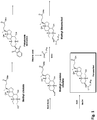
- the FABAC of the invention is 3 ⁇ -arachidylamido-7 ⁇ ,12 ⁇ , dihidroxy-5 ⁇ -cholan-24-oic acid (Arachidyl Amido Cholanoic Acid; an amide conjugate of cholic acid with arachidic acid; also known as “Aramchol” or “C20 FABAC”) or 3 ⁇ -stearylamido-7 ⁇ ,12 ⁇ , dihidroxy-5 ⁇ -cholan-24-oic acid (Stearyl Amido Cholanoic Acid; an amide conjugate of cholic acid with stearic acid; also known as "Steamchol” or "C18 FABAC”).
- the FABAC is Aramchol.
- G represents a radical of a bile acid.
- G represents a bile acid or a radical thereof
- W represents a fatty acid radical having 6-22 carbon atoms
- n is an integer 1 or 2.
- the heteroatom is selected from the group consisting of: NH, P, S and O.
- the term "heteroatom” includes atoms of any element other than carbon or hydrogen, preferred examples of which include nitrogen, oxygen, sulfur, and phosphorus.
- n is 1.
- the term "Direct bond” refers, to a C-C (single) bond.
- more than one direct bond is utilized in the FABAC of the invention.
- the bond between the bile acid and the fatty acid radical(s) is in the beta configuration.
- the bond between the bile acid and the fatty acid radical(s) is in the alpha configuration.
- the bonding member is other than an ester bond.
- the bile acid or bile acid radical of the FABAC is selected from the group consisting of: cholic acid, ursodeoxycholic acid, chenodeoxycholic acid, deoxycholic acid, lithocholic acid and derivatives thereof.
- Each type of bile acid or radical thereof represents a separate embodiment of the present invention.
- the term "radical” as used herein means a chemical moiety comprising one or more unpaired electrons.
- the bile acid or bile acid radical of the FABAC is cholic acid.
- the FABAC comprises a single fatty acid radical.
- the conjugation of the bile acid with the fatty acid radical may take place at various positions of the bile acid.
- the conjugation of the bile acid with the fatty acid radical is performed in a position of the bile acid nucleus selected from positions 3, 6, 7, 12 and 24. Each possibility represents a separate embodiment of the present invention. In one embodiment, said conjugation is performed in position 3 of the bile acid nucleus.
- the FABAC comprises two fatty acid radicals.
- the conjugation of each fatty acid radical to the bile acid nucleus is at two positions selected from the 3, 7, 12 and 24 positions of the bile acid nucleus. Each possibility represents a separate embodiment of the present invention. According to a particular embodiment, the conjugations are at position 3 and 7 of the bile acid nucleus.
- the fatty acid is saturated. In another embodiment, the fatty acid is unsaturated. In another embodiment, the fatty acid is mono-unsaturated. In another embodiment, the fatty acid is poly-unsaturated.
- the fatty acid(s) or fatty acid radical(s) of the FABAC are independently selected from the group consisting of: behenic acid, arachidylic acid, stearic acid, and palmitic acid.
- behenic acid arachidylic acid
- stearic acid stearic acid
- palmitic acid a group consisting of: behenic acid, arachidylic acid, stearic acid, and palmitic acid.
- the one or two fatty acids or fatty acid radicals of the FABACs of the invention are unsaturated fatty acids or fatty acid radicals.
- the unsaturated fatty acid(s) or unsaturated fatty acid radical(s) of the FABAC are independently selected from the group consisting of: linolenic acid, eicosapentaenoic acid, docosahexaenoic acid, arachidonic acid, palmipoleic acid, oleic acid and elaidic acid.
- a non-limiting example of FABAC comprising an unsaturated fatty acid is 3 ⁇ -oleylamido-7 ⁇ ,12 ⁇ -dihidroxy-5 ⁇ -cholan-24-oic acid, as depicted in Formula IV herein below.
- conjugated linoleic acid is utilized.
- conjugated linoleic acid is utilized.
- conjugated linoleic acid isomer is utilized.
- conjugated fatty acid also known as “CFA” refers to polyunsaturated fatty acids in which at least one pair of double bonds are separated by only one single bond.
- the fatty acid is a short-chain fatty acid. In another embodiment, the fatty acid chain length is 6-8 carbons. In another embodiment, the fatty acid is a medium chain fatty acid. In another embodiment, the fatty acid chain length is 8-14 carbons. In another embodiment, the fatty acid chain length is 14-22 carbons. In another embodiment, the fatty acid chain length is 16-22 carbons. In another embodiment, any other fatty acid chain length known in the art is utilized. Each type of fatty acid or fatty acid radical represents a separate embodiment of the present invention.
- the FABAC of methods and compositions of the present invention is selected from the group consisting of: 3 ⁇ -behenylamido-7 ⁇ ,12 ⁇ -dihydroxy-5 ⁇ -cholan-24-oic acid; 3 ⁇ -arachidylamido-7 ⁇ ,12 ⁇ -dihydroxy-5 ⁇ -cholan-24-oic acid; 3 ⁇ -stearylamido-7 ⁇ ,12 ⁇ -dihydroxy-5 ⁇ -cholan-24-oic acid; 3 ⁇ -palmitylamido-7 ⁇ ,12 ⁇ -dihydroxy-5 ⁇ -cholan-24-oic acid; 3 ⁇ -myristylamido-7 ⁇ ,12 ⁇ -dihydroxy-5 ⁇ -cholan-24-oic acid; and N-(-carboxymethyl)-3 ⁇ -stearylamido-7 ⁇ , 12 ⁇ -dihydroxy-5 ⁇ -cholane-24-amide.
- Each possibility represents a separate embodiment of the present invention.
- the FABAC of methods and compositions of the present invention is 3 ⁇ -arachidylamido-7 ⁇ ,12 ⁇ , dihidroxy-5 ⁇ -cholan-24-oic acid ("Aramchol”). According to another embodiment, the FABAC of methods and compositions of the present invention is 3 ⁇ -stearoylamido-7 ⁇ ,12 ⁇ -dihydroxy-5 ⁇ -cholan-24-oic acid (“Steamchol").
- the FABAC of methods and compositions of the present invention is selected from the group consisting of:
- the present invention provides pharmaceutical compositions for use in treating skin conditions associated with altered sebum levels. According to certain embodiments, the present invention provides topical compositions for use in treating skin conditions associated with altered sebum levels.
- altered sebum levels refers to increased sebum levels.
- the present invention provides a pharmaceutical composition formulated for oral administration for use in treating skin conditions associated with increased sebum levels comprising at least one FABAC as the active ingredient.
- the present invention provides topical pharmaceutical compositions for use in treating skin conditions associated with increased sebum levels comprising at least one FABAC as the active ingredient.
- the present disclosure provides a method of treating skin conditions which may benefit from attenuation, reduction or slowing of keratinocyte differentiation.
- a skin condition which may benefit from attenuation, reduction or slowing of keratinocyte differentiation is acne vulgaris.
- FABAC fatty acid bile acid conjugate
- the pharmaceutical composition is formulated for oral administration. According to other embodiments, the pharmaceutical composition is formulated as a topical composition.
- FABAC fatty acid bile acid conjugate
- the present disclosure provides a method of treating a skin condition associated with altered sebum levels, preferably increased sebum levels, the method comprises the step of orally administering to a subject in need thereof an effective amount of a composition comprising Aramchol as an active ingredient.
- the present disclosure provides a method of treating a skin condition associated with altered sebum levels, preferably increased sebum levels, the method comprises the step of topically administering to a subject in need thereof an effective amount of a composition comprising Steamchol as an active ingredient.
- FABAC fatty acid bile acid conjugate
- G represents a bile acid or a bile salt radical thereof
- W represents one or two fatty acid radicals having 6-22 carbon atoms
- the composition is a pharmaceutical composition formulated for oral administration and further comprises at least one carrier, diluent or excipient suitable for
- FABAC fatty acid bile acid conjugate
- the present disclosure provides use of a pharmaceutical composition comprising at least one FABAC for preparation of a medicament for treatment of a skin condition associated with altered sebum levels, preferably increased sebum levels.
- a pharmaceutical composition comprising at least one FABAC for preparation of a medicament for treatment of a skin condition associated with altered sebum levels, preferably increased sebum levels.
- Aramchol for preparation of a medicament for treatment of a skin condition associated with altered sebum levels, preferably increased sebum levels.
- Each possibility represents a separate embodiment of the present invention.
- the present disclosure provides use of a topical pharmaceutical composition comprising at least one FABAC for preparation of a medicament for treatment of a skin condition associated with altered sebum levels, preferably increased sebum levels.
- a topical pharmaceutical composition comprising Steamchol for preparation of a medicament for treatment of a skin condition associated with altered sebum levels, preferably increased sebum levels.
- the present disclosure provides a pharmaceutical composition comprising at least one FABAC of the invention as an active ingredient, wherein the pharmaceutical composition is formulated for topical administration.
- the present disclosure provides a pharmaceutical composition comprising Aramchol as an active ingredient, wherein the pharmaceutical composition is formulated for topical administration.
- the present disclosure provides a pharmaceutical composition comprising Steamchol as an active ingredient, wherein the pharmaceutical composition is formulated for topical administration.
- the pharmaceutical composition of the invention is provided for treatment of a condition associated with altered sebum level, preferably increased sebum level.
- the present disclosure provides a method of treating a condition associated with altered sebum level by orally or topically administering a pharmaceutical composition comprising at least one FABAC selected from Aramchol and Steamchol as an active ingredient.
- a pharmaceutical composition comprising at least one FABAC selected from Aramchol and Steamchol as an active ingredient.
- sebum over-production condition includes without limitation a condition in which a large amount of sebum is produced by the skin of a subject, thus resulting in a pathological condition or undesirable condition.
- sebum overproduction conditions include, but are not limited to, acne, seborrhea, seborrhoeic dermatitis, a sebaceous cyst and sebaceous hyperplasia and related conditions.
- a sebum overproduction condition is acne.
- acne refers to Acne Vulgaris. It is to be noted that although acne is a skin condition associated with altered or over-produced sebum level, the compositions of the invention may be suitable for treatment of acne which is not manifested by over-production or excess secretion of sebum.
- the condition associated with altered sebum levels is selected from the group consisting of: acne, seborrhea, seborrhoeic dermatitis, a sebaceous cyst, sebaceous hyperplasia and related conditions and a combination thereof.
- acne refers to severe acne.
- severe acne is cystic acne.
- the condition associated with altered sebum levels is other than atopic dermatitis.
- the acne is selected from the group consisting of: acne vulgaris, cystic acne, acne atrophica, bromide acne, chlorine acne, acne conglobata, acne cosmetica, acne detergicans, epidemic acne, acne estivalis, acne fulminans, halogen acne, acne indurata, iodide acne, acne keloid, acne mechanica, acne papulosa, pomade acne, premenstral acne, acne pustulosa, acne rosacea, acne scorbutica, acne scrofulosorum, acne urticata, acne varioliformis, acne venenata, propionic acne, acne excoriee, gram negative acne, steroid acne, nodulocystic acne and a combination thereof.
- acne vulgaris e.g., cystic acne, acne atrophica, bromide acne, chlorine acne, acne conglobata, acne cosmetica, acne detergicans, epidemic acne, acne estivalis, acne fulminans, halogen acne,
- Skin refers to any epidermal surface prone to acne and can also include, without limitation, the surface of the face and neck, hands, elbows, upper arm region, knees, thighs, legs, feet, breasts, chest, stomach, buttocks, and back area. Each possibility represents a separate embodiment of the present invention. According to a preferable embodiment, the term “skin” refers to the surface of the face and neck.
- the method of treatment according to the present disclosure results in at least one of: a reduction of sebum production, a reduction in hyperkeratinization, a reduction in colonization by P. acnes, a reduction in release of inflammatory mediators into the skin and a combination thereof.
- a reduction of sebum production results in at least one of: a reduction of sebum production, a reduction in hyperkeratinization, a reduction in colonization by P. acnes, a reduction in release of inflammatory mediators into the skin and a combination thereof.
- the disclosed method of treatment is effective to reduce a symptom of skin inflammation including, for example, redness, swelling, leukocyte infiltration, and/or lesion development.
- a separate embodiment of the present disclosure is effective to reduce a symptom of skin inflammation including, for example, redness, swelling, leukocyte infiltration, and/or lesion development.
- the disclosed method of treatment is effective to reduce the severity of a skin condition associated with acne including, for example, scaling, erythema, itching, burning, and/or stinging.
- a skin condition associated with acne including, for example, scaling, erythema, itching, burning, and/or stinging.
- the disclosed method of treatment is effective to reduce at least one of the size, redness and itchiness of acne lesions.
- Each possibility represents a separate embodiment of the present disclosure.
- the disclosed method of treatment results in a delay in recurrence of an acute acne outbreak in the subject.
- the disclosed method of treatment results in a reduction in the severity of a recurring acute acne outbreak in the subject.
- the disclosed method of treatment is effective in treating a condition associated with altered sebum levels, such as, but not limited to, acne at least by reducing expression level of keratin 10 (KRT 10) and/or keratin 1 (KRT 1) in skin cells.
- a condition associated with altered sebum levels such as, but not limited to, acne at least by reducing expression level of keratin 10 (KRT 10) and/or keratin 1 (KRT 1) in skin cells.
- KRT 10 keratin 10
- KRT 1 keratin 1
- the disclosed method of treatment is effective in treating a condition associated with altered sebum levels, such as, but not limited to, acne at least by increasing cholesterol efflux in skin cells.
- administration of the disclosed composition according to the method of the disclosure results in little to no effect on viability of skin cells.
- topical administration of the disclosed composition to the skin of a subject according to the method of the disclosure results in little to no effect on viability of skin cells.
- administration of the disclosed composition to a subject results in less than 5%, preferably less than 4% change in viability of cells in the skin following administration.
- a dermatologically effective amount of a composition refers to an amount sufficient to inhibit and/or treat and/or attenuate and/or reduce at least part of the symptoms of the skin condition associated with altered sebum levels upon topical or oral administration of the composition to the subject's skin.
- a therapeutically effective amount of a composition may be a composition comprising at least one FABAC as an active agent that improves or treats the symptoms of acne such as acne vulgaris.
- compositions administered according to the present invention will, of course, be determined by particular circumstances such as, but not limited to, the particular FABACs in the composition administered, the mode of administration, the physiological state of the subject and the severity of the pathological condition being treated.
- Therapeutically effective amounts, or doses, appropriate for an individual subject may be readily determined using routine clinical techniques well known to those skilled in the art (such as dose response plots).
- the disclosed composition is typically administered in several dosages over a prolonged time period until a sufficient response has been achieved.
- a sufficient response is inhibition and/or treatment and/or amelioration of at least part of the symptoms of the skin condition associated with altered sebum levels.
- an effective amount of the disclosed composition may be determined by methods such as, but not limited to, histology, staining skin samples using Hematoxylin and Eosin (H&E), immunostaining skin samples for keratin 1 and/or keratin 10 levels, observing abscess formation and combinations thereof.
- an effective amount of the disclosed composition is an amount sufficient to reduce expression of keratin 1 and/or keratin 10 in the subject's skin.
- an effective amount of the disclosed composition is an amount sufficient to induce at least a 2-fold reduction in the expression level of keratin 1 and/or keratin 10 in the subject's skin.
- administering the disclosed composition to a subject afflicted with a condition associated with elevated sebum levels may result in at least 2-fold decrease in expression of keratin 1 and/or 10 in the skin of the subject, thus treating said condition.
- compositions of the disclosure comprise therapeutically effective amounts of the active components, such as at least one FABAC.
- the methods of the disclosure comprise administering a therapeutically effective amount of the active agent (such as a FABAC), or a pharmaceutical composition containing it to a subject in need thereof.
- the active agent such as a FABAC
- a pharmaceutical composition containing it to a subject in need thereof.
- the pharmaceutical composition of the invention is formulated for topical administration.
- the composition is formulated for topical administration in a form such as, but not limited to, a solution, ointment, gel, cream, foam or any form for local application (such as subcutaneous injection).
- a drug eluting device such as gauze, a patch, pad, or a sponge.
- the active agent of the disclosed composition is at least one FABAC.
- the active agent of the disclosed composition is Aramchol.
- the frequency and duration of administration in order to treat a skin condition associated with altered sebum levels in a subject, as indicated, are those sufficient to achieve the desired treatment endpoint, such as, but not limited to, complete remission of acne.
- the desired treatment endpoint such as, but not limited to, complete remission of acne.
- One of ordinary skill in the art can readily determine a suitable course of treatment utilizing the compositions and methods according to the present disclosure.
- the composition comprises pharmaceutically acceptable or cosmetically acceptable media, excipients, carrier or additives.
- the pharmaceutically acceptable or cosmetically acceptable media, excipients, carrier or additives are suitable for topical administration.
- the pharmaceutically acceptable or cosmetically acceptable media, excipients, carrier or additives are suitable for oral administration.
- the pharmaceutically acceptable or cosmetically acceptable media, excipients, carrier or additives enhance follicular delivery and/or deposition.
- pharmaceutically acceptable or cosmetically acceptable media, excipients, carrier or additives do not pose a risk of toxicity, intolerance, instability, or allergic reaction to the skin.
- the pharmaceutically acceptable or cosmetically acceptable media, excipients, carrier or additives do not interact with the FABACs in a way which reduces the efficacy of the composition in treatment of a condition associated with altered sebum levels.
- the present disclosure provides a method of treating acne, preferably acne vulgaris, in a subject in need thereof, the method comprising administering a pharmaceutical composition comprising at least one FABAC as an active ingredient to said subject.
- the present disclosure provides a method of treating acne, preferably acne vulgaris, in a subject in need thereof, the method comprising administering a pharmaceutical composition comprising at least one FABAC selected from Aramchol and Steamchol as an active ingredient to said subject.
- a subject in need thereof refers to a subject afflicted with acne.
- administering is administering orally.
- administering is administering topically to the skin of the subject.
- the present invention provides a pharmaceutical composition formulated for topical or oral administration for treatment of a condition associated with increased sebum level, preferably acne, most preferably acne vulgaris, the composition comprising at least one FABAC as an active ingredient, preferably Aramchol.
- a pharmaceutical composition formulated for topical or oral administration for treatment of a condition associated with increased sebum level, preferably acne, most preferably acne vulgaris, the composition comprising at least one FABAC as an active ingredient, preferably Aramchol.
- An early sign of acne may be a plug which is produced by hair, sebum and keratinocytes which fill the hair follicle.
- the plug prevents sebum from reaching the surface of the skin through a pore.
- the mixture of oil and cells may allow the most common anaerobes living on the skin, Propionibacterium acnes (P. acnes), to grow in the plugged follicle.
- P. acnes Propionibacterium acnes
- These bacteria produce chemicals and enzymes and attract white blood cells that cause inflammation (e.g., swelling, redness, heat or pain).
- Propionibacterium acnes is associated with acne vulgaris and linked to certain cases of endocarditis, anaerobic arthritis, wound infections and abscesses.
- retinoids vitamin A derived compounds
- Topical application of all-trans-retinoic acid has been tried with some success, particularly against comedones or blackheads, but this condition frequently returns when the treatment is withdrawn. Additionally, retinoic acid applied topically can be highly irritating and its use can be painful for the patient depending on the concentration used and the frequency of application.
- vitamin A derivatives A number of side effects complicate the administration of large doses of vitamin A derivatives.
- hypervitaminosis A are weight loss, desquamation of the skin, hair loss, irritation of the oral and pharyngeal mucosa, and nose bleeds, headaches, bone pain, liver toxicity due to storage of vitamin A in the liver, papilledena, pseudotumor cerebri, demineralization, and periosteal thickening of the bones. Because of these and other side effects of oral treatment with vitamin A derivatives and all- trans-retinoic acid, which produces similar side effects, they are rarely recommended for dermatopathic conditions.
- retinoids have been shown to be cytotoxic for fibroblasts and epithelial cells in the range of 0.6-3*10 5 M ( Varani et al. Journal of Investigative Dermatology (1993) 101, 839-842 ), and to increase epithelial cell death ( Ding et al. Invest Ophthalmol Vis Sci. 2013 Jun 26;54(6):4341-50 ).
- Isotretinoin first marketed as Accutane (Roaccutane) by Hoffmann-La Roche, is a medication used mostly for cystic acne. Due to side-effects (advanced bone age and premature epiphyseal closure (stunted growth), decreased night vision, hyperostosis, inflammatory bowel disease, keloids , keratoconjunctivitis sicca (dry eyes), xeroderma (dry skin), teratogenicity (birth defects), depression, changes in brain) and high cost, isotretinoin is used primarily for severe cystic acne and acne that has not responded to other treatments.
- retinoids normalize keratinocytes differentiation.
- Other possible mechanisms of retinoids could include down regulation of desmosomal proteins, an anti-proliferative effect, regulation of lipid synthesis, growth factors and cytokines.
- Retinoids are thought to exert their multi- faceted array of effects through their receptors which are nuclear receptors.
- receptors which are nuclear receptors.
- retinoic acid receptors belonging to two families RARs and RXRs.
- Nuclear receptors expressed in keratinocytes include the retionid receptors RARs and RXRs, vitamin D3 receptor and thyroid hormone receptor, all can affect keratinocytes differentiation.
- RAR gamma receptor for retinoic acid plays an important role in the morphogenesis and differentiation of squamous epithelia. Both RAR alpha and RAR gamma are present in skin with RAR gamma being the predominant specie.
- Retinoic acid was shown to inhibit the activity of keratinocytes transgultaminase and the formation of the cornified envelope. Interestingly, not all differentiation markers are regulated by retinoic acid. Involucrin for example, is unaffected when cultured keratinocytes are treated by retinoic acid. Retinoic acid regulates the differentiation and proliferation of epidermal keratinocytes by acting as an antagonist of activating protein 1 (AP-1). AP-1 consists of combinations of fos and jun heterodimers, which are well-established regulators of keratinocytes differentiation. Both keratins 1 and 10 were shown to be down regulated when skin is treated with retinoic acid both in vitro and in vivo.
- FABAC's fatty acid-bile acid conjugates
- administration of FABACs or a composition comprising same results in at least one effect selected from the group consisting of: facilitation of ABCA1 activity in skin cells, inhibition of Stearoyl CoA- Desaturase -1 (SCD1) activity in skin cells, down-regulation of keratin 1 and/or 10 expression in skin cells and any combination thereof.
- facilitation of ABCA1 activity in skin cells inhibition of Stearoyl CoA- Desaturase -1 (SCD1) activity in skin cells
- SCD1 Stearoyl CoA- Desaturase -1
- down-regulation of kertain 1 and/or 10 expression is indicative of down-regulation of keratinocyte differentiation.
- down-regulation of keratinocytes differentiation by FABCAs as indicated by down regulation of keratin 1 and/or 10 provides an advantageous effect in preventing clogging of follicular opening, thus contributing to treatment of conditions of elevated sebum levels, such as, but not limited to, acne.
- SCD-1 is an enzyme that catalyzes the synthesis of monounsaturated fatty acids from saturated fatty acids.
- SCD1 is expressed in liver, adipose tissue, skeletal muscle and skin.
- mice deficient in SCD1 and SCD1 inhibition demonstrated the following effects on skin: Sebaceous gland hypoplasia (in SCD1 deficient mice), depletion in sebaceous lipids, dry skin and alopecia.
- the reduction in sebaceous lipids upon deletion of SCD1 may be of value in the treatment of disease such as acne vulgaris which is associated with increased sebaceous activity.
- SCD1 deletion has been additionally shown to be associated with hyperkeratosis and inflammation ( Sampath et al., J. Biol. Chem. 2009, 284:19961-19973 ).
- PPAR peroxisome proliferator-activated receptor
- RXR retinoid X receptor
- PPAR ⁇ is activated by the inflammatory mediators prostaglandins and leukotrienes and regulates the gene expression of proteins involved in the storage of fatty acids.
- PPAR ⁇ is weakly activated by fatty acids, prostaglandins, and leukotrienes (Fajas, L., et al, 2001). Decrease in PPAR activation ligands may lead to:
- Table 1 herein below summarizes key physiological conditions leading to acne. Without wishing to be bound by any theory or mechanism of action, table 1 further summarizes the activity of fatty acid-bile acid conjugates (FABACs) in treating acne, according to some embodiments, based on their structure and the experimental data generated from a gene expression study, as exemplified herein below. Table 1.
- FABACs fatty acid-bile acid conjugates
- FABAC may intercalate into the bacterial wall, create imbalance and partial perturbation of the barrier thereof and therefore may decrease bacterial population Cornification of the pilosebaceous duct that narrows the duct opening and restricts sebum drainage Sebum does not flow freely from the gland onto the surface therefore appropriate drainage of the gland is not achieved
- keratins 1 and 10 are markers for keratinocytes differentiation.
- the decrease in rate of differentiation can attenuate cornification rate of keratinocytes to corneocytes and provide relief of pore clogging of the pilosebaceous opening, thus allowing more effective sebum drainage Inflammation Humoral immune response to free fatty acids and toxins; recruitment of inflammatory immune cells and biomarkers that leads to skin damage and can cause scarring Depletion in sebum lipid and potential anti-microbial activity can lead to reduction in inflammation
- the composition of the invention is formulated as a pharmaceutical composition comprising at least one FABAC as an active agent.
- the composition of the invention is formulated for oral administration, comprising at least one FABAC as an active agent and further comprising at least one carrier, diluent or excipient suitable for oral administration.
- the composition of the invention is formulated as a topical composition comprising at least one FABAC as an active agent.
- the topical composition is formulated for topical administration to the skin of the subject.
- compositions of the present invention may be manufactured by processes well known in the art, e.g., by means of conventional mixing, dissolving, granulating, dragger-making, levigating, emulsifying, encapsulating, entrapping or lyophilizing processes.
- compositions for use in accordance with the present invention thus may be formulated in conventional manner using one or more physiologically acceptable carriers comprising excipients and auxiliaries, which facilitate processing of the active compounds into preparations which can be used pharmaceutically. Proper formulation is dependent upon the route of administration chosen.
- the topical compositions of the invention comprise a therapeutically, dermatologically or cosmetically acceptable carrier to act as a diluent, dispersant or vehicle for at least one FABAC, so as to facilitate its distribution when the composition is applied to the skin.
- Vehicles other than, or in addition to, water may include liquid or solid emollients, solvents, humectants, thickeners and powders. Each possibility represents a separate embodiment of the present invention.
- the composition of the present invention may be formulated for topical administration in the form of aqueous or non-aqueous solutions, lotions, creams, gels, ointments, foam, mousse, sprays, emulsions, microemulsions, adhesive patches, powders etc.
- the formulation may be oleaginous-based, occlusive composition comprising, for example, white petroleum and or mineral oil.
- the composition is non-greasy or substantially non-greasy and can be a water-based formulation.
- the present invention provides a therapeutic or dermopharmaceutical composition
- a therapeutic or dermopharmaceutical composition comprising at least one FABAC or a dermatological or pharmaceutically-acceptable salt or ester thereof, and further comprising a therapeutically, cosmetically or dermatologically acceptable diluent, carrier or excipient.
- the composition of the invention comprises at least one FABAC.
- the FABAC in the composition is in an effective amount to induce treatment and/or inhibition and/or attenuation of at least one symptom of the condition associated with altered sebum levels.
- the terms "effective amount” and “effective concentration” are used interchangeably.
- the effective concentration of the FABAC in the composition is between about 0.005 to 20% weight/volume, optionally between 0.01 to 10% weight/volume, possibly between 0.01 to 5% weight/volume, alternatively between 0.05 to 2% weight/volume.
- the weight/volume concentration of FABAC in the composition of the invention is 0.01%-2%, possibly 0.1%-2%, alternatively between 1%-2%.
- the weight/volume concentration of FABAC in the composition of the invention is at least 0.01%.
- the FABAC in the composition of the invention is Aramchol.
- the FABAC in the composition of the invention is Steamchol.
- the concentration of the FABAC in the composition is that which provides treatment and/or amelioration and/or prevention of at least one symptom of a condition associated with altered sebum level, preferably with an elevated sebum level.
- composition of the invention further comprises at least one additional active ingredient, other than the FABACs of the invention. In some embodiments, the composition of the invention further comprises at least one additional active ingredient, other than the FABACs of the invention, normally used for cosmetics or external skin treatments.
- Non-limiting examples of such additional active ingredients include, but are not limited to, the following classes of ingredients: whitening agent, moisture retainers, anti-oxidants, oil ingredients, UV absorbers, surfactants, thickeners, alcohols, powder components, coloring agents, aqueous ingredients, water, various skin nutrients, stabilizing agents, anti-inflammatory agents (non-steroidal and steroidal), anti-viral agent (such as benzoyl peroxide, octopirox, erythromycin, triclosan, azelaic acid and its derivatives, etc.), anti-psoroiatic agents, sebum miscible agents, other anti-acne agents (including desquamators, keratolytics, comedolytics and exfoliants), antibacterials (including antibiotics and antimicrobials), antifungals, anti-dandruff, antiprotozoals, and the like.
- whitening agent moisture retainers
- anti-oxidants oil ingredients
- UV absorbers surfactants
- thickeners alcohols
- the antibiotic is selected from the group consisting of: a penicillin, a polyketide antibiotic, a cephalosporin, a lincosamide, a quinolone, a folic acid synthesis inhibitor, a tetracycline, a rifamycin, a sulfonamide, an aminoglycoside, fusidic acid, a polypeptide antibiotic, a lipopeptide antibiotic, chloramphenicol and mupirocin.
- a penicillin a polyketide antibiotic
- cephalosporin a cephalosporin
- a lincosamide a quinolone
- a folic acid synthesis inhibitor a tetracycline
- a rifamycin a sulfonamide
- an aminoglycoside fusidic acid
- a polypeptide antibiotic a lipopeptide antibiotic
- chloramphenicol and mupirocin chloramphenicol and mupi
- the antibiotic is an antibiotic suitable for topical use. In some embodiments, which may be used or combined with any of the above or below mentioned embodiments, the antibiotic is an antibiotic suitable for oral use.
- the at least one additional active ingredient is an ingredient used and/or approved for the treatment of acne. In additional embodiments, the at least one additional active ingredient is an ingredient used and/or approved for the treatment of acne and suitable for topical administration. According to some embodiments, the at least one additional active ingredient is an ingredient suitable for topical administration which is used and/or approved for the treatment of acne including, but not limited to,, benzoyl peroxide, topical retinoids (e.g., tretinoin, adapalene, isotretinoin, tazarotene), and/or topical antibiotics (e.g., clindamycin, erythromycin, tetracycline). Each possibility represents a separate embodiment of the present invention.
- topical retinoids e.g., tretinoin, adapalene, isotretinoin, tazarotene
- topical antibiotics e.g., clindamycin, erythromycin, tetracycline
- Such topical treatment may include other topical therapies (e.g., salicylic acid, sulphur, resorcinol, sodium sulfacetamide, aluminium chloride, zinc, nicotinamide, triethyl citrate/ethyl linoleate, dapsone, taurine bromamine, azelaic acid, sodium sulfacetamide 10%/sulfur 5%) as well as combination topicals (e.g., combinations of topical treatments with different mechanisms of action).
- topical therapies e.g., salicylic acid, sulphur, resorcinol, sodium sulfacetamide, aluminium chloride, zinc, nicotinamide, triethyl citrate/ethyl linoleate, dapsone, taurine bromamine, azelaic acid, sodium sulfacetamide 10%/sulfur 5%
- combination topicals e.g., combinations of topical treatments with different mechanisms of action.
- the disclosed method further comprises administration of an additional active agent used and/or approved for the treatment of acne.
- the additional active agent used and/or approved for the treatment of acne is configured for topical administration.
- the additional active agent used and/or approved for the treatment of acne is configured for oral administration.
- the at least one additional active agent used and/or approved for the treatment of acne and administered as an oral treatment includes, but is not limited to, oral antibiotics (e.g., tetracyclines such as tetracycline, oxytetracycline, doxycycline, lymecycline or less preferably minocycline; cotrimoxazole; quinolones such as ciprofloxacin; aminoglycosides; chloramphenicol; clindamycin; macrolides such as erythromycin and azitromycin; trimethoprim), oral contraceptives (e.g., combined oral contraceptives that contain an estrogen such as ethinylestradiol and a progestogen; progestogen; estrogen), and/or oral isotretinoin.
- oral antibiotics e.g., tetracyclines such as tetracycline, oxytetracycline, doxycycline, lymecycline or less preferably min
- compositions of the present invention may be present in the forms of aqueous or hydroalcoholic solution, solubilized systems, emulsions, powders, oils, aqueous or anhydrous gels, serum, ointments, aerosols, water-oil two-phase systems, water-oil-powder three-phase systems, foams etc.
- aqueous or hydroalcoholic solution solubilized systems, emulsions, powders, oils, aqueous or anhydrous gels, serum, ointments, aerosols, water-oil two-phase systems, water-oil-powder three-phase systems, foams etc.
- the composition is applied in a form selected from the group consisting of: a facial cleanser, spray, salve, ointment, lotions, emulsions, creams, gels, essences (beauty lotions), packs patches and masks.
- a facial cleanser spray, salve, ointment, lotions, emul
- the composition is topical and may be used with a wide range of types of cosmetics such as foundations.
- the topical composition is applied in the form of a toiletry product, e.g., body soap, facial soap, etc.
- the composition may be formulated as a quasi-drug.
- the composition in the case of quasidrugs, can be formulated for a wide range of applications such as various ointments.
- compositions of the present invention are not limited to these forms and types. In any case, the person skilled in the art will ensure that additives, the amounts thereof and the selected formulation are selected so as not to be detrimental to the desired, advantageous properties of the composition according to the invention.
- the disclosed composition is a topical composition formulated in a form selected from the group consisting of: aqueous solution, cream, lotion, water in oil or oil in water emulsion, multiple emulsion, silicone emulsion, microemulsion, nanoemulsion, gel, serum and milk.
- aqueous solution cream, lotion, water in oil or oil in water emulsion, multiple emulsion, silicone emulsion, microemulsion, nanoemulsion, gel, serum and milk.
- Non-limiting examples of suitable topical formulations of the disclosed composition are as follows:
- the composition is formulated as a lotion.
- the lotions contain an effective concentration of one or more FABAC compound as described herein.
- the compositions of the present invention may also include at least one or more emollient, which can function as either or both a lubricating and thickening agent.
- the emollients can comprise in total from about 0.1% to about 50%, preferably from about 1% to about 10%, by weight of the composition.
- the emollients can comprise at least 0.01% by weight of the composition. Any emollients known to those of skill in the art as suitable for application to human skin may be used.
- hydrocarbon oils and waxes including mineral oil, petrolatum, paraffin, ceresin, ozokerite, microcrystalline wax, polyethylene, and perhydrosqualene; silicone oils; triglyceride fats and oils, including those derived from vegetable, animal and marine source; including jojoba oil and shea butter; acetoglyceride esters, such as acetylated monoglycerides; ethoxylated glycerides, such as ethoxylated glyceryl monostearate; fatty acids, fatty alcohols and derivatives thereof.
- hydrocarbon oils and waxes including mineral oil, petrolatum, paraffin, ceresin, ozokerite, microcrystalline wax, polyethylene, and perhydrosqualene
- silicone oils such as acetylated monoglycerides
- ethoxylated glycerides such as ethoxylated glyceryl monostearate
- fatty acids fatty alcohols and derivatives thereof.
- Suitable emollients include lanolin and lanolin derivatives; polyhydric alcohols and poly ether derivatives; polyhydric alcohol esters; wax esters; vegetable waxes; phospholipids, such as lecithin and derivatives; sterols, including, but not limited to, cholesterol and cholesterol fatty acid esters; amides, such as fatty acid amides, ethoxylated fatty acid amides, and solid fatty acid alkanolamides.
- lanolin and lanolin derivatives include polyhydric alcohols and poly ether derivatives; polyhydric alcohol esters; wax esters; vegetable waxes; phospholipids, such as lecithin and derivatives; sterols, including, but not limited to, cholesterol and cholesterol fatty acid esters; amides, such as fatty acid amides, ethoxylated fatty acid amides, and solid fatty acid alkanolamides.
- amides such as fatty acid amides, ethoxyl
- the lotions may further contain from about 1% to about 10%, more preferably from 2% to 5%, of an emulsifier.
- the emulsifiers may be nonionic, anionic, cationic or a mixture thereof.
- Suitable emulsifiers are known to those with skill in the art.
- Other conventional components of such lotions and creams may be included.
- One such additive is a thickening agent at a level from 1% to 10% of the composition.
- thickening agents include, but are not limited to: cross-linked carboxypolymethylene polymers, ethyl cellulose, polyethylene glycols, gum tragacanth, gum karaya, xanthan gums, bentonite and other clays, hydroxy ethyl cellulose, and hydroxypropyl cellulose.
- cross-linked carboxypolymethylene polymers ethyl cellulose, polyethylene glycols, gum tragacanth, gum karaya, xanthan gums, bentonite and other clays, hydroxy ethyl cellulose, and hydroxypropyl cellulose.
- the lotions and creams are formulated by simply admixing all of the components together.
- the FABAC is dissolved, suspended or otherwise uniformly dispersed in the mixture.
- the composition is formulated as a solution.
- the composition is formulated as a suspension.
- the solutions which may be aqueous or non-aqueous, are formulated to contain an effective concentration of one or more FABAC compound as disclosed herein.
- Suitable organic materials which may be useful as the solvent or a part of a solvent system in the solution are as follows: propylene glycol, polyethylene glycol, polypropylene glycol, glycerin, sorbitol esters, 1,2,6-hexanetriol, ethanol, isopropanol, diethyl tartrate, butanediol, and mixtures thereof. Each possibility represents a separate embodiment of the present invention.
- Such solvent systems can also contain water.
- the composition is formulated as an emulsion.
- the proportion of the fatty phase may range from about 5% to about 80% by weight, and preferably from about 5% to about 50% by weight, relative to the total weight of the composition.
- Oils, emulsifiers and co-emulsifiers incorporated in the composition in emulsion form are selected from among those known to those with skill in the cosmetic or dermatological field.
- compositions formulated as solutions or suspensions may be applied directly to the skin, or, may be formulated as an aerosol and applied to the skin as a spray, foam or mousse.
- the aerosol compositions may further contain from about 20% to 80%, preferably from 30% to 50%, of a suitable propellant.
- a suitable propellant may be, but are not limited to, the chlorinated, fluorinated and chlorofluorinated lower molecular weight hydrocarbons. Nitrous oxide, carbon dioxide, butane, and propane may also be used as propellant gases. These propellants are used as known in the art in a quantity and under a pressure suitable to expel the contents of the container. In the case of a pressurized aerosol, the dosage unit may be determined by providing a valve to deliver a metered amount.
- the composition is formulated as a gel.
- Gel compositions may be formulated by simply admixing a suitable thickening agent with the previously described solution or suspension compositions. Examples of suitable thickening agents have been described herein above with respect to lotions.
- the gelled compositions contain an effective concentration of at least one FABAC compound.
- the composition further comprises from about 5% to about 75% of an organic solvent as previously described; from about 0.5% to about 20% of a thickening agent, and the balance being water or other aqueous carrier.
- compositions formulated as solutions, suspensions lotions and gels of the present invention are formulated as a foam or mousse for dermal application.
- a foam or mousse for dermal application.
- Relevant carriers for formulation as a foam or mousse are taught, for example, in International Patent Application Publication No. WO 2004/037225 and US Patent No. 6,730,288 .
- the composition is formulated as a solid form.
- the composition is formulated as a semi-solid form.
- a semi-solid form is an emulsion or a microemulsion.
- Compositions of semi-solid forms may be formulated as stick-type compositions intended for application to the lips or other parts of the body.
- the solids may also contain from about 50% to about 98% of the previously described emollients.
- This composition may contain from about 0.1% to about 20% w/w, of a suitable thickening agent, and, if desired or needed, emulsifiers and water or buffers. Thickening agents previously described with respect to lotions may be suitably employed in the compositions in solid form.
- ingredients such as preservatives, including methyl-paraben or ethyl-paraben, perfumes, dyes or the like, that are known in the art to provide desirable stability, fragrance or color, or other desirable properties, may be further added to compositions for topical application to the skin.
- the composition of the invention is formulated for oral administration.
- the composition of the invention is a pharmaceutical composition formulated for oral administration, comprising at least one FABAC of the invention as an active ingredient.
- oral administration is in the form of hard or soft gelatin capsules, pills, capsules, tablets, including coated tablets, dragees, elixirs, suspensions, liquids, gels, slurries, syrups or inhalations and controlled release forms thereof.
- oral administration is in the form of hard or soft gelatin capsules, pills, capsules, tablets, including coated tablets, dragees, elixirs, suspensions, liquids, gels, slurries, syrups or inhalations and controlled release forms thereof.
- compositions for oral use may be made using a solid excipient, optionally grinding the resulting mixture, and processing the mixture of granules, after adding suitable auxiliaries as desired, to obtain tablets or dragee cores.
- suitable excipients include fillers such as sugars, including lactose, sucrose, mannitol, or sorbitol, cellulose preparations such as, maize starch, wheat starch, rice starch, potato starch, gelatin, gum tragacanth, methyl cellulose, hydroxypropylmethylcellulose, and sodium carbomethylcellulose, and/or physiologically acceptable polymers such as polyvinylpyrrolidone (PVP).
- PVP polyvinylpyrrolidone
- disintegrating agents such as cross-linked polyvinyl pyrrolidone, agar, or alginic acid or a salt thereof, such as sodium alginate, may be added to the composition.
- disintegrating agents such as cross-linked polyvinyl pyrrolidone, agar, or alginic acid or a salt thereof, such as sodium alginate
- Capsules and cartridges of, for example, gelatin for use in a dispenser may be formulated containing a powder mix of the at least one FABAC and a suitable powder base, such as lactose or starch.
- Solid dosage forms for oral administration may include capsules, tablets, pill, powders, and granules.
- the active ingredient may be admixed with at least one inert pharmaceutically acceptable carrier such as sucrose, lactose, or starch.
- Such dosage forms may also comprise additional substances other than inert diluents, e.g., lubricating, agents such as magnesium stearate.
- the dosage forms may also comprise buffering, agents. Tablets and pills may additionally be prepared with enteric coatings.
- enteric coating refers to a coating which controls the location of composition absorption within the digestive system.
- Liquid dosage forms for oral administration may further contain adjuvants, such as wetting agents, emulsifying and suspending agents, and sweetening, flavoring and perfuming agents.
- adjuvants such as wetting agents, emulsifying and suspending agents, and sweetening, flavoring and perfuming agents.
- the composition of the present invention further comprises at least one additive selected from the group consisting of: a diluent, a preservative, an abrasive, an anticaking agent, an antistatic agent, a binder, a buffer, a dispersant, an emollient, an emulsifier, a co-emulsifiers, a humectant or emollient agent, a fiberous material, a film forming agent, a fixative, a foaming agent, a foam stabilizer, a foam booster, a gellant, a lubricant, a moisture barrier agent, a plasticizer, a preservative, a propellant, a stabilizer, a surfactant, a suspending agent, a thickener, a chelating agent, a sequestering agent, a conditioning agent, a wetting agent, a liquefier and a combination thereof.
- a diluent a preservative, an a
- the dermatologically effective amount or dose may be estimated initially from cell culture assays.
- a dose can be formulated in animal models to achieve a circulating concentration range that includes the IC 50 as determined in cell culture (e.g., the concentration of the test compound, which achieves a half-maximal inhibition of the epidermal cells proliferation). Such information can be used to more accurately determine useful doses in humans.
- additives for topical compositions may include sunscreen agents and tanning agents.
- Sunscreen agents may include those materials commonly employed to block ultraviolet light.
- Illustrative compounds are the derivatives of PABA, cinnamate and salicylate.
- octyl methoxycinnamate and 2-hydroxy-4-methoxy benzophenone also known as oxybenzone
- Octyl methoxycinnamate and 2-hydroxy-4-methoxy benzophenone are also known as parsol MCX and benzophenone-3, respectively.
- the amount of sunscreen agents employed in the compositions can vary depending upon the degree of UV radiation protection desired.
- the sunscreen agent added to the composition must be compatible with the active compound (i.e., the at least one FABAC) but in general the composition may comprise from about 1% to about 20% of sunscreen agent. Exact amounts may vary depending upon the sunscreen agent chosen and the desired Sun Protection Factor (SPF).
- SPF Sun Protection Factor
- composition of the present invention may further comprise an antioxidant/radical scavenger.
- an anti-oxidant/radical scavenger may increase the benefits of the composition.
- the anti-oxidant/radical scavenger may be added to the compositions of the present invention in a concentration range of about 0.1% to about 10% total weight of the composition.
- Anti-oxidants/radical scavengers include, but are not limited to, ascorbic acid (vitamin C) and its salts, and tocopherol (vitamin E).
- composition of the present invention may further comprise at least one additional anti-acne agent other than the FABACs of the invention.
- additional anti-acne agents include: azaleic acid, salicylic acid, benzoylperoxide and sulphur compounds.
- Certain vitamin A metabolites, as well as agonists, derivatives and prodrugs of vitamin A may be incorporated into the compositions of the present invention.
- Examples of vitamin A agents that may be useful in the context of the present invention include, without limitation, the well-known variety of retinol, retinoic acid and retinoic acid receptor (RAR) agonists. Each possibility represents a separate embodiment of the present invention.
- RAR agonists may include, without limitation, chromans, thiochromans, tetrahydroquinolines, substituted tetrahydronaphthalenes, substituted dihydronaphthalenes, trisubstituted phenyls, aromatic tetracyclic compounds, substituted cyclohexanes, substituted cyclohexenes, substituted cyclohexanedienoic acids, substituted adamentanes, substituted diaryl, heteroaryl compounds, combinations thereof and many more. Each possibility represents a separate embodiment of the present invention.
- Vitamin C or ascorbic acid is a very potent antioxidant and may even be protective against UVA and UVB rays.
- topical vitamin E particularly alpha tocopherol (a form of vitamin E) cream decreased skin roughness, length of facial lines, and wrinkle depth.
- Vitamin K may also be useful for treating capillary damage.
- the composition further includes at least one of: vitamin C, vitamin E, vitamin K and any combination thereof. Each possibility represents a separate embodiment of the present invention.
- Green and black tea and extracts thereof may be suitable as additives to the composition of the invention.
- Other plant derived agents which may be used as additives to the composition include, but are not limited to, pomegranate and soy extracts, aloe, ginger, grape seed extract, and coral extracts.
- Certain copper containing compounds may both protect skin and help repair it.
- copper itself is a toxic metal and it should only be used in products that contain that bind to copper.
- Color correctors may be suitable additives to the topical compositions of the invention and may be desired when blemishes are prominent.
- green neutralizers may mask red lesions; yellow may camouflage dark circles and bruises; and white may help to minimize apparent wrinkles.
- Other possible additives include glycosaminoglycans, such as hyaluronic acid and the like.
- a small quantity of the topical composition for example from about 0.1 ml to about 100 ml, may be applied to exposed areas of the skin from a suitable container or applicator and, if necessary, it may then be spread over and/or rubbed into the skin using the hand, fingers or a suitable device.
- the composition may be specifically formulated for use as a hand or facial treatment.
- the composition When formulated the composition may be packaged in a suitable container to suit its viscosity and intended use by the consumer.
- a topical composition formulated as a lotion or cream can be packaged in a bottle, or a propellant-driven aerosol device or a container fitted with a pump suitable for finger operation.
- the composition When the composition is formulated as a cream, it may simply be stored in a non-deformable bottle or squeeze container, such as a tube or a lidded jar.
- the invention accordingly also provides, according to some embodiments, a closed container containing the composition as herein defined.
- the shape of the container is not limited in this invention, and can be a tube, a pump dispenser, a compressed dispenser, a bottle, a spray, a sachet or the like.
- the compounds or compositions of the invention are provided in packs in a form ready for administration. In other embodiments, the compounds or compositions are provided in concentrated form in packs, optionally with the diluent required to make final solution(s) for administration. In still other embodiments, the product contains a compound useful in the invention in solid form and, optionally, a separate container with a suitable solvent or carrier for the compound useful in the invention.
- the present invention provides a kit comprising the composition of the invention in a first suitable container.
- the present invention provides a kit comprising at least one FABAC of the invention in a first suitable container.
- the kit further comprises at least one container other than the first container.
- said at least one other container comprises at least one diluent, excipient, carrier, solvent or additive.
- the composition of the invention is formed by combining the content of a first container comprising at least one FABAC and the content of said at least one other container.
- the kit further comprises instructions for use and/or preparation of the composition of the invention. Each possibility represents a separate embodiment of the present invention.
- the above packs/kits include other components, e.g., instructions for dilution, mixing and/or administration of the product, other containers, syringes, needles, etc.
- components e.g., instructions for dilution, mixing and/or administration of the product, other containers, syringes, needles, etc.
- pack/kit components will be readily apparent to one of skill in the art.
- test material was provided as a powder.
- Test solutions were prepared by adding the appropriate amount of powdered material to 1 mL DMSO. Lower concentrations were made by serial dilution with 100% DMSO. The final test material concentrations and treatments were: 2% Steamchol (20,000 ug/mL); 1% Steamchol (10,000 ug/mL); 0.1% Steamchol (1000 ug/mL); 0.01% Steamchol (100 ug/mL); vehicle control (100% DMSO); and untreated control.
- EFT-400 Full-thickness skin cultures
- MatTek protocol Full-thickness skin cultures
- Test material was applied to the surface of each culture using sterile techniques (10 ⁇ L applied to each culture).
- Two cultures were assigned to each treatment group and the viability percentages presented below are avarages of viability of each two cultures.
- Two EFT cultures served as an untreated control (also referred to as negative control in Figure 2 ), and two other EFT cultures served as a positive control (100 ⁇ L 1% Triton X-100).
- the highly differentiated full-thickness in vitro skin culture model Epiderm FT (MatTek, MA) is used.
- Duplicates of skin cultures are treated with three different concentrations of Steamchol in DMSO and three different concentrations of Aramchol in DMSO.
- One of the tested concentrations is 0.5% (5000 ⁇ g/mL) which was efficient in reducing gene expression of KRT1 and KRT10.
- Two non-treated skin cultures and two cultures treated with vehicle alone (DMSO) are used as negative controls.
- Two skin cultures treated with retinoic acid are used as a positive control.
- the cells are collected 24 hours following application of the compositions to the surface of each test culture. Proteins are extracted from part the cells and subjected to Western Blot and ELISA analyses using primary antibodies specific for Keratin 1, Keratin 10, SCD1 and ABCA-1. Another part of the cells is fixated and subjected to immunohistochemical staining using primary antibodies specific for Keratin 1, Keratin 10, SCD1 and ABCA-1.
- Down-regulation in expression of Keratin 1 and/or Keratin 10 is indicative of a decrease in keratinocyte differentiation.
- Propionibacterium acnes is a commensal organism that thrives in the presence of excess sebum and plays a key role in acne vulgaris.
- An obstacle associated with the resistance of p.acne to treatment is its propensity to develop microfilm colonies.
- P. acnes strains isolated from acne patients form biofilms in vitro that are characterized by increased lipase activity as compared to planktonic organisms. Lipase may be, at least in part, responsible for the production of irritant fatty acids that promote inflammation and therefore for the itch sensation at the comedone.
- FABACs Steamchol and/or Aramchol
- MECTM Minimum Biofilm Eradication Concentration
- lipase activity As positive controls, the following substances are administered to corresponding bacterial cultures: erythromycin, clindamycin, tetracycline, salicylic acid and chlorhexidine.
- a highly differentiated full-thickness in vitro skin culture model (Epiderm FT, MatTek, MA) is used to examine the anti-inflammatory effect of FABACs.
- the skin cultures are treated with oxidized squalene or phorbol esters to induce inflammation and the inflammation is verified by examining IL-8 levels.
Landscapes
- Health & Medical Sciences (AREA)
- Chemical & Material Sciences (AREA)
- Medicinal Chemistry (AREA)
- Pharmacology & Pharmacy (AREA)
- Life Sciences & Earth Sciences (AREA)
- Animal Behavior & Ethology (AREA)
- General Health & Medical Sciences (AREA)
- Public Health (AREA)
- Veterinary Medicine (AREA)
- Epidemiology (AREA)
- Dermatology (AREA)
- Engineering & Computer Science (AREA)
- Bioinformatics & Cheminformatics (AREA)
- Chemical Kinetics & Catalysis (AREA)
- General Chemical & Material Sciences (AREA)
- Nuclear Medicine, Radiotherapy & Molecular Imaging (AREA)
- Organic Chemistry (AREA)
- Nutrition Science (AREA)
- Physiology (AREA)
- Pharmaceuticals Containing Other Organic And Inorganic Compounds (AREA)
- Cosmetics (AREA)
- Medicinal Preparation (AREA)
Applications Claiming Priority (2)
| Application Number | Priority Date | Filing Date | Title |
|---|---|---|---|
| US201361863454P | 2013-08-08 | 2013-08-08 | |
| PCT/IL2014/050718 WO2015019359A1 (en) | 2013-08-08 | 2014-08-07 | Anti-acne compositions comprising bile acid-fatty acid conjugates |
Publications (3)
| Publication Number | Publication Date |
|---|---|
| EP3030229A1 EP3030229A1 (en) | 2016-06-15 |
| EP3030229A4 EP3030229A4 (en) | 2017-03-22 |
| EP3030229B1 true EP3030229B1 (en) | 2019-03-13 |
Family
ID=52460753
Family Applications (1)
| Application Number | Title | Priority Date | Filing Date |
|---|---|---|---|
| EP14834482.3A Active EP3030229B1 (en) | 2013-08-08 | 2014-08-07 | Anti-acne compositions comprising bile acid-fatty acid conjugates |
Country Status (7)
| Country | Link |
|---|---|
| US (1) | US20160175324A1 (enExample) |
| EP (1) | EP3030229B1 (enExample) |
| JP (1) | JP2016527307A (enExample) |
| CN (1) | CN105611919A (enExample) |
| AU (1) | AU2014304079A1 (enExample) |
| CA (1) | CA2920457A1 (enExample) |
| WO (1) | WO2015019359A1 (enExample) |
Families Citing this family (10)
| Publication number | Priority date | Publication date | Assignee | Title |
|---|---|---|---|---|
| IL227890A0 (en) * | 2013-08-08 | 2014-01-30 | Galderm Therapeutics Ltd | Antiaging compounds containing bile acid and fatty acid conjugates |
| WO2016199137A1 (en) | 2015-06-10 | 2016-12-15 | Galmed Research And Development Ltd. | Low dose compositions of aramchol salts |
| US11571431B2 (en) | 2013-12-04 | 2023-02-07 | Galmed Research And Development Ltd | Aramchol salts |
| US10016456B2 (en) * | 2014-07-18 | 2018-07-10 | Dabney Patents, L.L.C. | Methods for treating acne vulgaris |
| IL243707A0 (en) | 2016-01-20 | 2016-05-01 | Galmed Res And Dev Ltd | Treatment to regulate the microbiota in the intestine |
| KR20180036580A (ko) | 2016-09-30 | 2018-04-09 | 주식회사 유스바이오팜 | 수가용화(水加溶化)된 우르소데옥시콜산을 함유하는 염증성 피부질환 또는 중증 소양증 예방 또는 치료용 조성물 |
| WO2018062922A1 (ko) * | 2016-09-30 | 2018-04-05 | 주식회사 유스바이오팜 | 수가용화된 우르소데옥시콜산을 함유하는 염증성 피부질환 또는 중증 소양증 예방 또는 치료용 조성물 |
| US11197870B2 (en) | 2016-11-10 | 2021-12-14 | Galmed Research And Development Ltd | Treatment for hepatic fibrosis |
| WO2019044852A1 (ja) * | 2017-08-31 | 2019-03-07 | 株式会社資生堂 | レチノイドの副作用に対する感受性の決定方法 |
| CN109503693B (zh) * | 2018-12-12 | 2021-04-06 | 合肥工业大学 | 一种利用胆酸为原料合成Aramchol的工艺 |
Family Cites Families (11)
| Publication number | Priority date | Publication date | Assignee | Title |
|---|---|---|---|---|
| US3860712A (en) * | 1973-04-16 | 1975-01-14 | Sterling Drug Inc | Composition and method for treatment of acne or seborrhea |
| IT8167097A0 (it) * | 1981-01-26 | 1981-01-26 | Unilever Nv | Composizione cosmetica per il trattamento della pelle o dei capelli |
| IL123998A (en) * | 1998-04-08 | 2004-09-27 | Galmed Int Ltd | Conjugates of bile salts and pharmaceutical preparations containing them |
| US7759348B2 (en) * | 2003-07-30 | 2010-07-20 | Xenon Pharmaceuticals Inc. | Pyridazine derivatives and their use as therapeutic agents |
| ES2296463B1 (es) * | 2005-07-13 | 2009-02-16 | Universidade De Santiago Compostela | Nuevos amidoderivados de acidos billares funcionalizados en la posicion 3 del anillo a. procedimientos para su obtencion y aplicaciones. |
| CN101821234B (zh) * | 2007-08-08 | 2014-06-25 | 格里斯威医药有限责任公司 | 苯氧基吡咯烷衍生物及其应用和组合物 |
| WO2009060452A2 (en) * | 2007-11-08 | 2009-05-14 | Galmed International Ltd. | Methods and compositions for treating biliary cholesterol crystallization and related conditions |
| FR2940281B1 (fr) * | 2008-12-22 | 2011-04-01 | Fabre Pierre Dermo Cosmetique | Ester de diol et d'acide gras polyinsature comme agent anti-acne |
| US8937194B2 (en) * | 2008-12-31 | 2015-01-20 | Nitromega Corp. | Topical compositions containing nitro fatty acids |
| US20120157419A1 (en) * | 2009-02-02 | 2012-06-21 | Tuvia Gilat | Methods and compositions for treating alzheimer's disease |
| IL227890A0 (en) * | 2013-08-08 | 2014-01-30 | Galderm Therapeutics Ltd | Antiaging compounds containing bile acid and fatty acid conjugates |
-
2014
- 2014-08-07 CN CN201480055619.0A patent/CN105611919A/zh active Pending
- 2014-08-07 WO PCT/IL2014/050718 patent/WO2015019359A1/en not_active Ceased
- 2014-08-07 EP EP14834482.3A patent/EP3030229B1/en active Active
- 2014-08-07 AU AU2014304079A patent/AU2014304079A1/en not_active Abandoned
- 2014-08-07 US US14/910,485 patent/US20160175324A1/en not_active Abandoned
- 2014-08-07 JP JP2016532792A patent/JP2016527307A/ja active Pending
- 2014-08-07 CA CA2920457A patent/CA2920457A1/en not_active Abandoned
Non-Patent Citations (1)
| Title |
|---|
| None * |
Also Published As
| Publication number | Publication date |
|---|---|
| JP2016527307A (ja) | 2016-09-08 |
| AU2014304079A1 (en) | 2016-02-25 |
| EP3030229A4 (en) | 2017-03-22 |
| CA2920457A1 (en) | 2015-02-12 |
| US20160175324A1 (en) | 2016-06-23 |
| WO2015019359A1 (en) | 2015-02-12 |
| EP3030229A1 (en) | 2016-06-15 |
| CN105611919A (zh) | 2016-05-25 |
Similar Documents
| Publication | Publication Date | Title |
|---|---|---|
| US20160175324A1 (en) | Anti-acne compositions comprising bile acid-fatty acid conjugates | |
| KR101443927B1 (ko) | 헥사미딘류 및 레티노이드류를 함유하는 피부 개선 조성물 | |
| US20160175223A1 (en) | Anti-aging compositions comprising bile acid-fatty acid conjugates | |
| US20150094370A1 (en) | Pharmaceutical compositions comprising dgla, 15-ohepa, and/or 15-hetre and methods of reducing sebum production using same | |
| JP2007537214A (ja) | 美容術及び皮膚科医学において有用なスポット適用配合物 | |
| CN102038672B (zh) | 一种用于治疗痤疮的药物组合物 | |
| US20240225985A1 (en) | Brightening compositions and methods of use | |
| WO2021236938A1 (en) | Compositions and methods relating to aging skin | |
| CA2798121C (en) | Topical composition and use thereof for the prophylaxis and the treatment of defects connected to inflammatory dermopathies | |
| HK1223297A1 (en) | Topical retinoid solutions | |
| US10022348B2 (en) | Topical solution of isotretinoin | |
| HK1224943A1 (en) | Anti-acne compositions comprising bile acid-fatty acid conjugates | |
| CN103327957B (zh) | 亮肤组合物 | |
| JP2014144929A (ja) | ビタミン類を含有するニキビの予防又は治療用組成物 |
Legal Events
| Date | Code | Title | Description |
|---|---|---|---|
| PUAI | Public reference made under article 153(3) epc to a published international application that has entered the european phase |
Free format text: ORIGINAL CODE: 0009012 |
|
| 17P | Request for examination filed |
Effective date: 20160201 |
|
| AK | Designated contracting states |
Kind code of ref document: A1 Designated state(s): AL AT BE BG CH CY CZ DE DK EE ES FI FR GB GR HR HU IE IS IT LI LT LU LV MC MK MT NL NO PL PT RO RS SE SI SK SM TR |
|
| AX | Request for extension of the european patent |
Extension state: BA ME |
|
| DAX | Request for extension of the european patent (deleted) | ||
| RAP1 | Party data changed (applicant data changed or rights of an application transferred) |
Owner name: GALMED RESEARCH AND DEVELOPMENT LTD. |
|
| A4 | Supplementary search report drawn up and despatched |
Effective date: 20170222 |
|
| RIC1 | Information provided on ipc code assigned before grant |
Ipc: A61P 17/00 20060101ALI20170216BHEP Ipc: A61K 31/201 20060101ALI20170216BHEP Ipc: A61K 31/426 20060101ALI20170216BHEP Ipc: A61K 31/575 20060101ALI20170216BHEP Ipc: A61P 17/10 20060101ALI20170216BHEP Ipc: A61K 31/00 20060101AFI20170216BHEP Ipc: A61K 31/427 20060101ALI20170216BHEP |
|
| GRAP | Despatch of communication of intention to grant a patent |
Free format text: ORIGINAL CODE: EPIDOSNIGR1 |
|
| STAA | Information on the status of an ep patent application or granted ep patent |
Free format text: STATUS: GRANT OF PATENT IS INTENDED |
|
| INTG | Intention to grant announced |
Effective date: 20180411 |
|
| GRAJ | Information related to disapproval of communication of intention to grant by the applicant or resumption of examination proceedings by the epo deleted |
Free format text: ORIGINAL CODE: EPIDOSDIGR1 |
|
| STAA | Information on the status of an ep patent application or granted ep patent |
Free format text: STATUS: REQUEST FOR EXAMINATION WAS MADE |
|
| INTC | Intention to grant announced (deleted) | ||
| GRAS | Grant fee paid |
Free format text: ORIGINAL CODE: EPIDOSNIGR3 |
|
| STAA | Information on the status of an ep patent application or granted ep patent |
Free format text: STATUS: GRANT OF PATENT IS INTENDED |
|
| GRAP | Despatch of communication of intention to grant a patent |
Free format text: ORIGINAL CODE: EPIDOSNIGR1 |
|
| INTG | Intention to grant announced |
Effective date: 20181004 |
|
| GRAA | (expected) grant |
Free format text: ORIGINAL CODE: 0009210 |
|
| STAA | Information on the status of an ep patent application or granted ep patent |
Free format text: STATUS: THE PATENT HAS BEEN GRANTED |
|
| AK | Designated contracting states |
Kind code of ref document: B1 Designated state(s): AL AT BE BG CH CY CZ DE DK EE ES FI FR GB GR HR HU IE IS IT LI LT LU LV MC MK MT NL NO PL PT RO RS SE SI SK SM TR |
|
| REG | Reference to a national code |
Ref country code: GB Ref legal event code: FG4D |
|
| REG | Reference to a national code |
Ref country code: AT Ref legal event code: REF Ref document number: 1106730 Country of ref document: AT Kind code of ref document: T Effective date: 20190315 Ref country code: CH Ref legal event code: EP |
|
| REG | Reference to a national code |
Ref country code: IE Ref legal event code: FG4D |
|
| REG | Reference to a national code |
Ref country code: DE Ref legal event code: R096 Ref document number: 602014042974 Country of ref document: DE |
|
| REG | Reference to a national code |
Ref country code: NL Ref legal event code: FP |
|
| REG | Reference to a national code |
Ref country code: LT Ref legal event code: MG4D |
|
| PG25 | Lapsed in a contracting state [announced via postgrant information from national office to epo] |
Ref country code: LT Free format text: LAPSE BECAUSE OF FAILURE TO SUBMIT A TRANSLATION OF THE DESCRIPTION OR TO PAY THE FEE WITHIN THE PRESCRIBED TIME-LIMIT Effective date: 20190313 Ref country code: SE Free format text: LAPSE BECAUSE OF FAILURE TO SUBMIT A TRANSLATION OF THE DESCRIPTION OR TO PAY THE FEE WITHIN THE PRESCRIBED TIME-LIMIT Effective date: 20190313 Ref country code: NO Free format text: LAPSE BECAUSE OF FAILURE TO SUBMIT A TRANSLATION OF THE DESCRIPTION OR TO PAY THE FEE WITHIN THE PRESCRIBED TIME-LIMIT Effective date: 20190613 Ref country code: FI Free format text: LAPSE BECAUSE OF FAILURE TO SUBMIT A TRANSLATION OF THE DESCRIPTION OR TO PAY THE FEE WITHIN THE PRESCRIBED TIME-LIMIT Effective date: 20190313 |
|
| PG25 | Lapsed in a contracting state [announced via postgrant information from national office to epo] |
Ref country code: BG Free format text: LAPSE BECAUSE OF FAILURE TO SUBMIT A TRANSLATION OF THE DESCRIPTION OR TO PAY THE FEE WITHIN THE PRESCRIBED TIME-LIMIT Effective date: 20190613 Ref country code: HR Free format text: LAPSE BECAUSE OF FAILURE TO SUBMIT A TRANSLATION OF THE DESCRIPTION OR TO PAY THE FEE WITHIN THE PRESCRIBED TIME-LIMIT Effective date: 20190313 Ref country code: GR Free format text: LAPSE BECAUSE OF FAILURE TO SUBMIT A TRANSLATION OF THE DESCRIPTION OR TO PAY THE FEE WITHIN THE PRESCRIBED TIME-LIMIT Effective date: 20190614 Ref country code: RS Free format text: LAPSE BECAUSE OF FAILURE TO SUBMIT A TRANSLATION OF THE DESCRIPTION OR TO PAY THE FEE WITHIN THE PRESCRIBED TIME-LIMIT Effective date: 20190313 Ref country code: LV Free format text: LAPSE BECAUSE OF FAILURE TO SUBMIT A TRANSLATION OF THE DESCRIPTION OR TO PAY THE FEE WITHIN THE PRESCRIBED TIME-LIMIT Effective date: 20190313 |
|
| REG | Reference to a national code |
Ref country code: AT Ref legal event code: MK05 Ref document number: 1106730 Country of ref document: AT Kind code of ref document: T Effective date: 20190313 |
|
| PG25 | Lapsed in a contracting state [announced via postgrant information from national office to epo] |
Ref country code: SK Free format text: LAPSE BECAUSE OF FAILURE TO SUBMIT A TRANSLATION OF THE DESCRIPTION OR TO PAY THE FEE WITHIN THE PRESCRIBED TIME-LIMIT Effective date: 20190313 Ref country code: PT Free format text: LAPSE BECAUSE OF FAILURE TO SUBMIT A TRANSLATION OF THE DESCRIPTION OR TO PAY THE FEE WITHIN THE PRESCRIBED TIME-LIMIT Effective date: 20190713 Ref country code: AL Free format text: LAPSE BECAUSE OF FAILURE TO SUBMIT A TRANSLATION OF THE DESCRIPTION OR TO PAY THE FEE WITHIN THE PRESCRIBED TIME-LIMIT Effective date: 20190313 Ref country code: CZ Free format text: LAPSE BECAUSE OF FAILURE TO SUBMIT A TRANSLATION OF THE DESCRIPTION OR TO PAY THE FEE WITHIN THE PRESCRIBED TIME-LIMIT Effective date: 20190313 Ref country code: RO Free format text: LAPSE BECAUSE OF FAILURE TO SUBMIT A TRANSLATION OF THE DESCRIPTION OR TO PAY THE FEE WITHIN THE PRESCRIBED TIME-LIMIT Effective date: 20190313 Ref country code: ES Free format text: LAPSE BECAUSE OF FAILURE TO SUBMIT A TRANSLATION OF THE DESCRIPTION OR TO PAY THE FEE WITHIN THE PRESCRIBED TIME-LIMIT Effective date: 20190313 Ref country code: EE Free format text: LAPSE BECAUSE OF FAILURE TO SUBMIT A TRANSLATION OF THE DESCRIPTION OR TO PAY THE FEE WITHIN THE PRESCRIBED TIME-LIMIT Effective date: 20190313 |
|
| PG25 | Lapsed in a contracting state [announced via postgrant information from national office to epo] |
Ref country code: SM Free format text: LAPSE BECAUSE OF FAILURE TO SUBMIT A TRANSLATION OF THE DESCRIPTION OR TO PAY THE FEE WITHIN THE PRESCRIBED TIME-LIMIT Effective date: 20190313 Ref country code: PL Free format text: LAPSE BECAUSE OF FAILURE TO SUBMIT A TRANSLATION OF THE DESCRIPTION OR TO PAY THE FEE WITHIN THE PRESCRIBED TIME-LIMIT Effective date: 20190313 |
|
| REG | Reference to a national code |
Ref country code: DE Ref legal event code: R097 Ref document number: 602014042974 Country of ref document: DE |
|
| PG25 | Lapsed in a contracting state [announced via postgrant information from national office to epo] |
Ref country code: IS Free format text: LAPSE BECAUSE OF FAILURE TO SUBMIT A TRANSLATION OF THE DESCRIPTION OR TO PAY THE FEE WITHIN THE PRESCRIBED TIME-LIMIT Effective date: 20190713 Ref country code: AT Free format text: LAPSE BECAUSE OF FAILURE TO SUBMIT A TRANSLATION OF THE DESCRIPTION OR TO PAY THE FEE WITHIN THE PRESCRIBED TIME-LIMIT Effective date: 20190313 |
|
| PLBE | No opposition filed within time limit |
Free format text: ORIGINAL CODE: 0009261 |
|
| STAA | Information on the status of an ep patent application or granted ep patent |
Free format text: STATUS: NO OPPOSITION FILED WITHIN TIME LIMIT |
|
| PG25 | Lapsed in a contracting state [announced via postgrant information from national office to epo] |
Ref country code: DK Free format text: LAPSE BECAUSE OF FAILURE TO SUBMIT A TRANSLATION OF THE DESCRIPTION OR TO PAY THE FEE WITHIN THE PRESCRIBED TIME-LIMIT Effective date: 20190313 |
|
| 26N | No opposition filed |
Effective date: 20191216 |
|
| PG25 | Lapsed in a contracting state [announced via postgrant information from national office to epo] |
Ref country code: SI Free format text: LAPSE BECAUSE OF FAILURE TO SUBMIT A TRANSLATION OF THE DESCRIPTION OR TO PAY THE FEE WITHIN THE PRESCRIBED TIME-LIMIT Effective date: 20190313 |
|
| PG25 | Lapsed in a contracting state [announced via postgrant information from national office to epo] |
Ref country code: TR Free format text: LAPSE BECAUSE OF FAILURE TO SUBMIT A TRANSLATION OF THE DESCRIPTION OR TO PAY THE FEE WITHIN THE PRESCRIBED TIME-LIMIT Effective date: 20190313 |
|
| PG25 | Lapsed in a contracting state [announced via postgrant information from national office to epo] |
Ref country code: LI Free format text: LAPSE BECAUSE OF NON-PAYMENT OF DUE FEES Effective date: 20190831 Ref country code: CH Free format text: LAPSE BECAUSE OF NON-PAYMENT OF DUE FEES Effective date: 20190831 Ref country code: LU Free format text: LAPSE BECAUSE OF NON-PAYMENT OF DUE FEES Effective date: 20190807 Ref country code: MC Free format text: LAPSE BECAUSE OF FAILURE TO SUBMIT A TRANSLATION OF THE DESCRIPTION OR TO PAY THE FEE WITHIN THE PRESCRIBED TIME-LIMIT Effective date: 20190313 |
|
| REG | Reference to a national code |
Ref country code: BE Ref legal event code: MM Effective date: 20190831 |
|
| PG25 | Lapsed in a contracting state [announced via postgrant information from national office to epo] |
Ref country code: IE Free format text: LAPSE BECAUSE OF NON-PAYMENT OF DUE FEES Effective date: 20190807 |
|
| PG25 | Lapsed in a contracting state [announced via postgrant information from national office to epo] |
Ref country code: BE Free format text: LAPSE BECAUSE OF NON-PAYMENT OF DUE FEES Effective date: 20190831 |
|
| PG25 | Lapsed in a contracting state [announced via postgrant information from national office to epo] |
Ref country code: CY Free format text: LAPSE BECAUSE OF FAILURE TO SUBMIT A TRANSLATION OF THE DESCRIPTION OR TO PAY THE FEE WITHIN THE PRESCRIBED TIME-LIMIT Effective date: 20190313 |
|
| PG25 | Lapsed in a contracting state [announced via postgrant information from national office to epo] |
Ref country code: MT Free format text: LAPSE BECAUSE OF FAILURE TO SUBMIT A TRANSLATION OF THE DESCRIPTION OR TO PAY THE FEE WITHIN THE PRESCRIBED TIME-LIMIT Effective date: 20190313 Ref country code: HU Free format text: LAPSE BECAUSE OF FAILURE TO SUBMIT A TRANSLATION OF THE DESCRIPTION OR TO PAY THE FEE WITHIN THE PRESCRIBED TIME-LIMIT; INVALID AB INITIO Effective date: 20140807 |
|
| PG25 | Lapsed in a contracting state [announced via postgrant information from national office to epo] |
Ref country code: MK Free format text: LAPSE BECAUSE OF FAILURE TO SUBMIT A TRANSLATION OF THE DESCRIPTION OR TO PAY THE FEE WITHIN THE PRESCRIBED TIME-LIMIT Effective date: 20190313 |
|
| P01 | Opt-out of the competence of the unified patent court (upc) registered |
Effective date: 20230524 |
|
| PGFP | Annual fee paid to national office [announced via postgrant information from national office to epo] |
Ref country code: DE Payment date: 20250611 Year of fee payment: 12 |
|
| PGFP | Annual fee paid to national office [announced via postgrant information from national office to epo] |
Ref country code: IT Payment date: 20250722 Year of fee payment: 12 |
|
| PGFP | Annual fee paid to national office [announced via postgrant information from national office to epo] |
Ref country code: GB Payment date: 20260622 Year of fee payment: 13 |
|
| PGFP | Annual fee paid to national office [announced via postgrant information from national office to epo] |
Ref country code: NL Payment date: 20260615 Year of fee payment: 13 |
|
| PGFP | Annual fee paid to national office [announced via postgrant information from national office to epo] |
Ref country code: FR Payment date: 20260608 Year of fee payment: 13 |