EP3029063B1 - Light-sensitive chimeric gpcr protein - Google Patents
Light-sensitive chimeric gpcr protein Download PDFInfo
- Publication number
- EP3029063B1 EP3029063B1 EP15201713.3A EP15201713A EP3029063B1 EP 3029063 B1 EP3029063 B1 EP 3029063B1 EP 15201713 A EP15201713 A EP 15201713A EP 3029063 B1 EP3029063 B1 EP 3029063B1
- Authority
- EP
- European Patent Office
- Prior art keywords
- mglur6
- light
- protein
- chimeric
- melanopsin
- Prior art date
- Legal status (The legal status is an assumption and is not a legal conclusion. Google has not performed a legal analysis and makes no representation as to the accuracy of the status listed.)
- Active
Links
Images
Classifications
-
- C—CHEMISTRY; METALLURGY
- C07—ORGANIC CHEMISTRY
- C07K—PEPTIDES
- C07K14/00—Peptides having more than 20 amino acids; Gastrins; Somatostatins; Melanotropins; Derivatives thereof
- C07K14/435—Peptides having more than 20 amino acids; Gastrins; Somatostatins; Melanotropins; Derivatives thereof from animals; from humans
- C07K14/705—Receptors; Cell surface antigens; Cell surface determinants
-
- A—HUMAN NECESSITIES
- A61—MEDICAL OR VETERINARY SCIENCE; HYGIENE
- A61K—PREPARATIONS FOR MEDICAL, DENTAL OR TOILETRY PURPOSES
- A61K38/00—Medicinal preparations containing peptides
- A61K38/16—Peptides having more than 20 amino acids; Gastrins; Somatostatins; Melanotropins; Derivatives thereof
-
- A—HUMAN NECESSITIES
- A01—AGRICULTURE; FORESTRY; ANIMAL HUSBANDRY; HUNTING; TRAPPING; FISHING
- A01K—ANIMAL HUSBANDRY; AVICULTURE; APICULTURE; PISCICULTURE; FISHING; REARING OR BREEDING ANIMALS, NOT OTHERWISE PROVIDED FOR; NEW BREEDS OF ANIMALS
- A01K67/00—Rearing or breeding animals, not otherwise provided for; New or modified breeds of animals
- A01K67/027—New or modified breeds of vertebrates
- A01K67/0275—Genetically modified vertebrates, e.g. transgenic
- A01K67/0278—Knock-in vertebrates, e.g. humanised vertebrates
-
- A—HUMAN NECESSITIES
- A61—MEDICAL OR VETERINARY SCIENCE; HYGIENE
- A61P—SPECIFIC THERAPEUTIC ACTIVITY OF CHEMICAL COMPOUNDS OR MEDICINAL PREPARATIONS
- A61P27/00—Drugs for disorders of the senses
- A61P27/02—Ophthalmic agents
-
- A—HUMAN NECESSITIES
- A61—MEDICAL OR VETERINARY SCIENCE; HYGIENE
- A61P—SPECIFIC THERAPEUTIC ACTIVITY OF CHEMICAL COMPOUNDS OR MEDICINAL PREPARATIONS
- A61P43/00—Drugs for specific purposes, not provided for in groups A61P1/00-A61P41/00
-
- A—HUMAN NECESSITIES
- A61—MEDICAL OR VETERINARY SCIENCE; HYGIENE
- A61P—SPECIFIC THERAPEUTIC ACTIVITY OF CHEMICAL COMPOUNDS OR MEDICINAL PREPARATIONS
- A61P9/00—Drugs for disorders of the cardiovascular system
- A61P9/10—Drugs for disorders of the cardiovascular system for treating ischaemic or atherosclerotic diseases, e.g. antianginal drugs, coronary vasodilators, drugs for myocardial infarction, retinopathy, cerebrovascula insufficiency, renal arteriosclerosis
-
- C—CHEMISTRY; METALLURGY
- C07—ORGANIC CHEMISTRY
- C07K—PEPTIDES
- C07K14/00—Peptides having more than 20 amino acids; Gastrins; Somatostatins; Melanotropins; Derivatives thereof
- C07K14/435—Peptides having more than 20 amino acids; Gastrins; Somatostatins; Melanotropins; Derivatives thereof from animals; from humans
- C07K14/705—Receptors; Cell surface antigens; Cell surface determinants
- C07K14/72—Receptors; Cell surface antigens; Cell surface determinants for hormones
- C07K14/723—G protein coupled receptor, e.g. TSHR-thyrotropin-receptor, LH/hCG receptor, FSH receptor
-
- A—HUMAN NECESSITIES
- A01—AGRICULTURE; FORESTRY; ANIMAL HUSBANDRY; HUNTING; TRAPPING; FISHING
- A01K—ANIMAL HUSBANDRY; AVICULTURE; APICULTURE; PISCICULTURE; FISHING; REARING OR BREEDING ANIMALS, NOT OTHERWISE PROVIDED FOR; NEW BREEDS OF ANIMALS
- A01K2207/00—Modified animals
- A01K2207/15—Humanized animals
-
- A—HUMAN NECESSITIES
- A01—AGRICULTURE; FORESTRY; ANIMAL HUSBANDRY; HUNTING; TRAPPING; FISHING
- A01K—ANIMAL HUSBANDRY; AVICULTURE; APICULTURE; PISCICULTURE; FISHING; REARING OR BREEDING ANIMALS, NOT OTHERWISE PROVIDED FOR; NEW BREEDS OF ANIMALS
- A01K2217/00—Genetically modified animals
- A01K2217/07—Animals genetically altered by homologous recombination
- A01K2217/072—Animals genetically altered by homologous recombination maintaining or altering function, i.e. knock in
-
- A—HUMAN NECESSITIES
- A01—AGRICULTURE; FORESTRY; ANIMAL HUSBANDRY; HUNTING; TRAPPING; FISHING
- A01K—ANIMAL HUSBANDRY; AVICULTURE; APICULTURE; PISCICULTURE; FISHING; REARING OR BREEDING ANIMALS, NOT OTHERWISE PROVIDED FOR; NEW BREEDS OF ANIMALS
- A01K2227/00—Animals characterised by species
- A01K2227/10—Mammal
- A01K2227/105—Murine
-
- A—HUMAN NECESSITIES
- A01—AGRICULTURE; FORESTRY; ANIMAL HUSBANDRY; HUNTING; TRAPPING; FISHING
- A01K—ANIMAL HUSBANDRY; AVICULTURE; APICULTURE; PISCICULTURE; FISHING; REARING OR BREEDING ANIMALS, NOT OTHERWISE PROVIDED FOR; NEW BREEDS OF ANIMALS
- A01K2227/00—Animals characterised by species
- A01K2227/40—Fish
-
- A—HUMAN NECESSITIES
- A61—MEDICAL OR VETERINARY SCIENCE; HYGIENE
- A61K—PREPARATIONS FOR MEDICAL, DENTAL OR TOILETRY PURPOSES
- A61K38/00—Medicinal preparations containing peptides
-
- C—CHEMISTRY; METALLURGY
- C07—ORGANIC CHEMISTRY
- C07K—PEPTIDES
- C07K2319/00—Fusion polypeptide
-
- C—CHEMISTRY; METALLURGY
- C07—ORGANIC CHEMISTRY
- C07K—PEPTIDES
- C07K2319/00—Fusion polypeptide
- C07K2319/01—Fusion polypeptide containing a localisation/targetting motif
- C07K2319/03—Fusion polypeptide containing a localisation/targetting motif containing a transmembrane segment
Definitions
- the invention lies in the field of medical therapeutics and medical therapy for the treatment of human or animal patients suffering from loss of vision and concerns treatments and the manufacture of medicaments for improving vision, in particular for treating loss of vision resulting from retinal photoreceptor degeneration with a light-sensitive chimeric GPCR protein.
- retinitis pigmentosa retinitis pigmentosa
- AMD age-related macular degeneration
- diabetic retinopathy retinitis pigmentosa
- RP retinitis pigmentosa
- AMD age-related macular degeneration
- RP retinitis pigmentosa
- the rate and severity of photoreceptor degeneration is variable and highly dependant on the mutation itself. Over fifty genes may be affected ( Hartong et al. Lancet 368:1795-1809; 2006 ). To date, little treatment is available for RP patients. Ongoing trials that focus on neuroprotective agents (e.g.
- ciliary neurotrophic factor or gene addition therapy (introducing the "non-mutated" gene), which aim to correct acquired or hereditary gene deficiencies to the natural functional gene, have so far shown only marginal success.
- gene addition therapy is only useful as long as photoreceptor loss is small and mainly slows down or stabilizes the early condition.
- a photoreceptive protein such as an opsin (including melanopsin) or cytochromes into the inner retinal neurons including amacrine, horizontal and bipolar cells of patients suffering from photoreceptor degeneration.
- ChR2 in inner retinal neurons holds considerable promise and is currently tested in non-human primates ( Fradot M et al. Human Gene Therapy 22(5), 587-593; 2011 ) and isolated human retinas ( Ivanova E et al. Opthalmol Vis Sci 51(10), 5288-5296, 2010 ), raising hope for clinical trials in the near future.
- RPE65 retinal pigment epithelium-specific 65-kDa protein gene
- Yamashita et al. J. Biochem. 130, 149-155, 2001 ) studied GPCR protein function and disclose a chimeric light-sensitive mutants of rhodopsin in which the second cytoplasmic loop of metabotropic glutamate receptor 6 replaces the third cytoplasmic loop of rhodopsin.
- ChR2 has a relatively high permeability to calcium, which might be toxic over the long term.
- the ChR2 response is inherently weak at natural light intensities as each captured photon can only activate a single protein.
- melanopsin is able to amplify light-signals by gating the activities of high-throughput enzymatic reactions, these enzymatic partners are not sufficiently available in inner retinal neurons.
- melanopsin in ganglion cells and ON- bipolar cells does not elicit an amplification of the light signal sufficient to restore functional vision at natural light intensities.
- the regulatory mechanisms that naturally control protein activity through changes in turnover and modulation are absent when expressing foreign proteins.
- the object of the current invention is to provide a light-sensitive chimeric protein, which, when expressed in inner retinal neurons, overcomes these deficiencies. That is, it is an object of the invention to provide a superior light-sensitive protein for the improvement and restoration of vision, particularly in patients with retinal photoreceptor degeneration. This chimeric protein will improve or restore light-sensitivity to a higher extent compared to the light-sensitivity that is obtainable by proteins proposed in the state of the art.
- Further objects of the invention include the genetic information encoding the chimeric light-sensitive protein and methods of expressing this chimeric protein in living cells and organisms. Yet further objects of the invention include the expression of the genetic information encoding the chimeric light-sensitive protein in inner retinal cells in vivo for therapeutic treatment and biomedical products comprising the light-sensitive protein or genetic information encoding the chimeric protein.
- a light-sensitive chimeric protein comprising domains from at least two members of the G-protein-coupled-receptor (GPCR) protein super family, which are fused to yield a light-sensitive GPCR chimera capable of coupling a light signal to the signaling cascade of the metabotropic glutamate receptor 6 (mGluR6).
- GPCR G-protein-coupled-receptor
- the G-protein-coupled-receptor (GPCR) protein super family members are transmembrane protein receptors transmitting signals from the cell surface to intracellular effectors. They have a structure, which typically comprises seven transmembrane domains (TM1 to TM7), three extracellular loops (EL1 to EL3), three intracellular loops (IL1 to IL3), an extracellular N-terminal domain (NT) and an intracellular C-terminal (CT) domain.
- the GPCR protein super family includes light-sensitive receptor proteins called photopigments such as opsins, for example rhodopsin and melanopsin.
- the GPCR super family also include ligand-gated metabotropic receptors, for example mGluR6.
- the metabotropic G-protein coupled receptors are indirectly linked to ion channels in the membrane via a signal transduction cascade mediated by specific G-proteins accomplishing an amplification of the signal. That is, activated G-proteins regulate the activity of enzymes, for example adenylate cyclase, which rapidly produce large quantities of product, for example cAMP, which may in turn activate large numbers of ion channels in the cell membrane.
- enzymes for example adenylate cyclase
- cAMP enzymes
- ionotropic receptors are directly linked to ion channels in the membrane. Therefore, ionotropic receptors like channelrhodopsin are not capable of signal amplification like metabotropic receptors.
- One aspect of the invention concerns a chimeric GPCR protein, comprising domains which are derived from at least two GPCR family members: A first of the at least two GPCR family members contributes domains which mediate the light sensitivity to the chimeric light-sensitive GPCR protein.
- This first member belongs to the family of light-sensitive GPCR proteins also called photopigments, and is melanopsin, in particular human melanopsin.
- a second of the at least two GPCR family members, namely mGluR6, contributes domains for coupling the light signal to the intracellular signalling cascade of mGluR6.
- mGluR6 is a native component of the cell membrane of ON-bipolar cells in the inner retina.
- these ON-bipolar cells are the target cells in which the light-sensitive chimeric GPCR protein will be expressed.
- the native ON-bipolar cell mGluR6 activates its intracellular signal cascade upon extracellular binding of glutamate.
- the ON bipolar cells naturally contain the specific intracellular components mediating the mGluR6 signaling cascade.
- light-activated healthy rod and cone photoreceptor cells respond to a decrease in light intensity with an increase in the level of glutamate released from their synaptic terminals, which then binds to mGluR6 on ON-bipolar cells, which in turn elicits an amplification of the light signal through the specific G-Protein coupled intracellular signaling cascade of mGluR6.
- the chimeric light-sensitive GPCR protein expressed in ON-bipolar cells of blind retinas transmits the light-signal to the still existing ( Kri ⁇ aj D et al., Vision Res. 50:2460-65, 2010 ) intracellular signal cascade of the mGluR6 receptor upon light activation.
- the ON-bipolar cells when complemented with the chimeric light-sensitive GPCR protein, directly perceive the light signal via the chimeric light-sensitive GPCR protein, bypassing the indirect glutamate signal that follows the light-stimulation of the photoreceptors.
- the chimeric light-sensitive GPCR protein is capable of directly coupling light activation to the mGluR6 signal cascade.
- light activation is independent of any functional rod or cone photoreceptor cells.
- the physiological amplification of the signal elicited by one photon is retained through the signalling cascade of the mGluR6.
- domain in the context of this patent application refers to the intracellular and extracellular loops, the N- and C-termini and the transmembrane regions of a member of the GPCR protein family.
- domain derived from such as domain derived from mGluR6 or a domain derived from an opsin includes any domain for which the physiologically relevant corresponding part has an identical amino acid sequence or a similar amino acid sequence to the sequence of such domain in the physiological counterpart of the GPCR family member.
- similar amino acid sequences or similar domains exhibit at least a 60% homology, preferably at least a 80% homology and most preferably at least a 90% homology.
- Similar domains also particularly include domains comprising relevant conserved amino acids, independent of whether a part of the remaining sequence is deviating or missing from the native counterpart or whether additional sequences are present in the chimeric protein that are not present in the native GPCR family member.
- the chimeric protein comprises a light-activatable extracellular domain which is derived from the bi-stable photopigment, melanopsin and not from rhodopsin for example.
- the advantage of bi-stable photopigments is that they are recycled after bleaching through recovery by light rather than by external cellular enzymes. The recovery rate is very fast and will sustain a high light-sensitivity even at high light intensities. With bi-stable photopigments, light bleaching and bleach recovery are increased equally at high light intensities, whereas rhodopsin, which is not bi-stable, looses its photosensitivity during illumination as more and more rhodopsins are bleached.
- Non-bi-stable photopigments such as rhodopsin
- the recovery rate could even be slower when a non-bi-stable photopigment such as rhodopsin is expressed in a foreign cell type, because the recovery enzymes are not necessarily available in proximity. In a healthy retina these enzymes are located in the retinal pigment epithelium.
- the choice of the domains of the first member of the chimeric GPCR, to be derived from a bi-stable photopigment renders the recovery of the chimeric GPCR after light-bleaching independent of the availability of bleach-recovery enzymes.
- the light-activatable domain of a bi-stable photoreceptor protein is selected from melanopsin of the opsin family, and most preferably, if used in human patients, it is selected from human melanopsin to avoid an immune reaction.
- the chimeric GPCR protein the first GPCR member contributes at least the domains containing the amino acid residues forming the Schiff base (linking the chromophore covalently to the GPCR), which are for melanopsin Tyrosine 149 (Y149) in TM3 and Lysine 321 (K321) in TM7, or all the domains derived from the domains which form the chromophore binding pocket in the physiological counterpart.
- the chromophore binding pocket refers to the binding site for the light pigment, which absorbs a photon such as for example 11-cis retinal in melanopsin ( Hermann et al., Neuroscience letters, Vol. 376 p76-80, 2004 .)
- the chimeric GPCR protein comprises all of the extracellular domains of the first GPCR member, which are the N-terminus and the three extracellular loops (EL1, EL2, EL3) and additionally all of the seven transmembrane domains (TM1 to TM7) from the first GPCR member.
- At least the intracellular domains IL2, IL3 and the C terminus of the chimeric GPCR protein are derived from the second GPCR, which is mGluR6.
- the domains which are necessary for coupling light activation to the mGluR6 signaling cascade must be capable of binding to the G-Protein specific for the mGluR6 pathway, Galpha(o).
- IL3 appears to be particularly relevant for the specific binding to the G-protein of the GPCR signal cascade.
- the other intracellular loops and the C-terminus enhance the specificity of G-protein binding.
- the light-sensitive domains are derived from human melanopsin.
- the light-sensitive chimeric GPCR protein is constructed by fusing the genetic information encoding domains of the GPCR members with the desired functionalities of light-sensitivity and coupling of the light activation to the signaling cascade of mGluR6 according to techniques known in the art. Identification of the desired domains and determination of suitable cutting and ligation sites at the N- and C-terminal ends of any particular domain are primarily based on 1) alignment of gene sequences/conserved residues and 2) computer modeling of the secondary and tertiary structure of the light-sensitive GPCR family member and mGluR6, using standard software available in the art. This approach has an inherent variability in the exact definition of the length of the individual domains and such variability is included within the scope of this invention when speaking of domains.
- all of the transmembrane and the extracellular domains are derived from the first GPCR member and at least one or all of the intracellular domains are replaced with corresponding domains derived from mGluR6, all feasible cutting and ligation sites for exchanging IL1, IL2, IL3 and the C-terminus are within the scope of the invention.
- Further aspects of the invention concern the genetic information of a light-activatable chimeric GPCR protein capable of coupling the light activation to the signaling cascade of mGluR6, vectors including viral vectors such as rAAVs comprising this genetic information, and cell culture cells comprising such genetic information or expressing light-activatable chimeric GPCR proteins capable of coupling the light activation to the signaling cascade of mGluR6, including in particular neuronal cell lines, inner retinal neuronal cell lines and bipolar cell lines in particular ON-bipolar cells.
- Yet a further aspect of the invention concerns the light-sensitive chimeric GPCR protein capable of coupling light-activation to the signaling cascade of mGluR6 or the genetic information encoding said chimeric protein and compositions comprising said protein or said genetic information as such or within vectors or cells for the purpose of medical therapy, in particular for improving vision, for the treatment of partial or complete blindness, for the treatment of retinitis pigmentosa (RP) and macular degeneration (ARMD) as well as other forms of photoreceptor degeneration.
- RP retinitis pigmentosa
- ARMD macular degeneration
- the metabotropic glutamate receptor of ON-bipolar cells in the inner nuclear layer of the retina is activated by the neurotransmitter glutamate in response to retinal photoreceptor cell activity.
- the light-sensitive chimeric GPCR protein is a variant of the native mGluR6 protein, which is activated by light directly whereas the native mGluR6 protein is activated indirectly via glutamate after stimulation of the photoreceptor cells by changes in light.
- patients suffering from photoreceptor degeneration can be treated by expressing a chimeric light-activatable protein comprising intracellular domains of mGluR6 capable of coupling the light activation to the signaling cascade of the mGluR6 in their ON-bipolar cells.
- IL2, IL3 and the CT or all of the intracellular components of melanopsin are substituted with the intracellular components of mGluR6, resulting in a chimeric protein comprising the photoreceptor domains of melanopsin, which is able to drive existing intracellular mGluR6 signaling cascades in inner retinal neurons, in particular in ON-bipolar cells.
- a chimeric light activatable mGluR6-melanopsin protein Due to artificial expression of a chimeric light activatable mGluR6-melanopsin protein in ON-bipolar cells, weak light signals are amplified by steering the physiological pre-existing fast enzymatic reactions regulated by native mGluR6. Also, such chimeric proteins will escape immune reactions, when extracellular domains of native photoreceptor proteins such as human melanopsin are used, because the only part accessible to the immune system will be identical to that of native human melanopsin.
- mGluR6 is expressed only in ON-bipolar cells in the retina. Therefore, transgenically expressed chimeric mGluR6-melanopsin will efficiently couple to the mGluR6 signaling cascade in ON bipolar cells only. Moreover, the degradation and modulation of the chimeric protein (e.g. arrestin binding) will occur through pre-existing mGluR6 pathways, allowing full self-control of protein activity.
- the ON-bipolar cells are depolarized and the surviving inner retina is effectively in an "extremely bright light" adaptive mode. In fact, the very slow degeneration of ON bipolar cells may be due to this sustained depolarization.
- Retinitis pigmentosa patients are not aware of the light adaptation of their retina, because the retinal output only signals spatial and temporal changes in light intensity. That is, if changes in intensity are not detected, the retina will effectively send no signal to the brain, although the retina is in the fully light adapted state.
- the ON-bipolar cells are permanently relatively depolarized.
- Channelrhodopsin-2 expressed in ON-bipolar cells will only depolarize these cells further and thus the signal difference between the light-ON and the light-OFF state is relatively small.
- the ON-bipolar cells expressing the chimeric light-sensitive mGluR6-GPCR protein according to the invention are hyperpolarized by light. Evidently, this increases signal difference and thus enhances output and accordingly light sensitivity.
- Identification of the desired domains and determination of suitable cutting and ligation sites at the N- and C-terminal ends of any particular domain are primarily based on 1) alignment of gene sequences/conserved residues and 2) computer modeling of the secondary and tertiary structure of the light-sensitive GPCR family member and mGluR6, using for example, CLC Protein Workbench, I-TASSER, MODELLER, QUARK or SWISS-Model ( Kiefer F et al., Nucleic Acids Res 37, D387-D392,2009 ).
- the first GPCR member is melanopsin, in particular human or mouse melanopsin
- the second GPCR member is human or mouse mGluR6.
- these embodiments of the chimeric light-sensitive GPCR proteins are called mGluR6-melanopsin.
- IL2 IL3 and CT are derived from mGluR6, while the rest of the chimera is derived from melanopsin.
- all three intracellular loops IL1 to IL3 and CT are derived from mGluR6 and all the transmembrane and extracellular domains are derived from melanopsin.
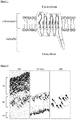
- Figure 1 schematically shows the domains and orientation across the cell membrane of an embodiment with the N-terminus (NT), transmembrane domains (TM1-TM7) and extracellular loops 1-3 (EL1-EL3) from melanopsin and the intracellular loops 1-3 (IL1-IL3) and the C-terminus (CT) from mGluR6. Seven splicing sites are indicated with the letters a-g. In principle, all feasible cutting and ligation sites for exchanging intracellular loops of melanopsin with intracellular loops of mGluR6 are within the scope of the invention.
- Table 1 discloses a number of particularly successful splicing sites for constructing mGluR6-melanopsin embodiments, which were chosen based on sequence alignment and 3D-modeling and found to be functionally active. Various combinations of alternative splicing options exist for the construction of functional mGluR6-melanopsin chimeras and are within the scope of the invention.
- Tested functional Splicing-Ligation Sites for human mGluR6-melanopsin Site Adjacent domains Amino Acid Sequence at the Splicing-Ligation Site a TM 1 and IL1 many possibilities according to the description b TM 2 and IL1 many possibilities according to the description c TM 3 and IL2 several tested possibilities according to the description d TM 4 and IL2 FISPTSQ VLLGVWL e TM5 and IL 3 2 tested versions: I) accord. to Seq. No 2: YIFIFRA RGVPETF II) accord. to Seq. No.4: YIFIFRA RGVPETF f TM6 and IL 3 ETFNEAK IMLLVIL g TM7 and C-Terminus IYAITHP EQNVQKR
- splicing sites d, e, f, g which are indicated in Table 1, yield loop replacements which are functional as tested according to the method of Example 1.
- splicing site e two splicing versions tested are functional and listed in the table as versions I and II.
- any splicing version yielding light-sensitive mGluR6-melanopsin capable of coupling light activation to the signalling cascade of mGluR6 is within the scope of the invention.
- IL1 of melanopsin is exchanged for IL1 of mGluR6
- additional gene splicing and ligation is also required between the transmembrane domains TM1 and TM2 and the intracellular loop IL1 at sites numbered a and b according to Figure 1 .
- the homology between the sequences of melanopsin and mGluR6 with regards to percentage of conserved amino acids and mainly with regards to 3D structural predictions is lower in the regions of splicing and ligation sites a and b compared to sites c to g, which broadens the choice of optimal splicing and ligation sites.
- a - E of the mGluR6-melanopsin chimeric protein the entire DNA gene and amino acid sequences are listed with indication of the coding sequences corresponding to the various domains such intracellular (IL) and extracellular (EL) loops, N-and C-terminal domain (NT, CT) and transmembrane domains (TM)
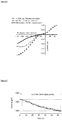
- mGluR6 couples intracellularly via a G-protein to the heteromeric Kir3.1/3.2 potassium channel (GIRK channel). Therefore, successful light-activation of the mGluR6-melanopsin chimera can be indirectly shown via activation of GIRK channels, resulting in K + -currents measurable in electrophysiological experiments, as shown in Fig. 2 and Fig.3 .
- Figure 2 shows whole-cell current responses to 1-s voltage ramps between -150 and +60 mV recorded from HEK293-GIRK cells transfected with chimera according to exemplary embodiment D (Seq. No. 7 / 8)
- mGluR6-melanopsin chimera is activated by blue (473 nm) light (dark grey trace)
- GIRK channels are activated.
- Currents were measured in the absence of light (no mGluR6-melanopsin activation, light grey triangles) and in the presence of light (with mGluR6-melanopsin activation, dark grey circles).
- the differential is shown as a thick black line and represents the current-voltage relationship of GIRK-channels.
- Figure 3 shows the results of whole-cell patch clamp experiments in HEK293-GIRK cells transfected with the same embodiment of mGluR6-melanopsin chimera according to exemplary embodiment D (Seq. No. 7 / 8).
- the outward K + -currents through GIRK channels become visible as hyperpolarizing currents during the 473 illumination period.
- Electroporation is a second example of an applicable approach known in the art: DNA coding for the chimeric protein under the control of an ON-bipolar cell-specific promoter are dissolved in a sterile saline solution and injected subretinally. The injection is followed by application of transretinal voltage pulses using one electrode behind the retina and one in front of the retina. The polarity of the voltages steps is positive at the ganglion cell side and negative at the photoreceptor side. The voltage pulses act to temporarily permeabilize the cell membrane, while at the same time pulling the negatively charged DNA towards the positive pole and into retinal cells ( Lagali PS et al. Nat Neurosci. 11(6):667-75, 2008 , Matsuda T and Cepko CL, PNAS 101(1):16-22, 2004 ).
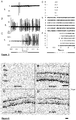
- the virus was injected subretinally six weeks prior to anatomical analysis. Expression of the transgene (mGluR6-melanopsin) and the reporter (TurboFP635) was driven by the mGluR6 enhancer sv40 basal promoter element ( Kim DS et el., J Neurosci 28(31):7748-64, 2008 ).
- nuclear staining with DAPI shows the outer nuclear layer (ONL), the inner nuclear layer (INL) and ganglion cell layer (GCL) of the retina.
- all rod ON bipolar cells were labeled using a PKC Alpha antibody.
- the last panel shows the TurboFP635 reporter gene, and therefore indicates successful transduction with the PRmGluR6/sv40-"mGluR6-melanopsin"-IRES-TurboFP635 construct.
- Electrophysiological methods as they are known in the art may be applied to test the proper function of mGluR6-melanopsin expressed in retinal ON-bipolar cells of blind rd1 (Pde6b rd1 ) FVB/N mice.
- Figure 5 shows three examples of light responses from different types of ganglion cells in retinal whole mounts of blind rd1 mice, which have been treated with rAAVs containing the mGluR6-melanopsin (chimera embodiment D Seq. No. 7) gene:
- the light responses were recorded from retinal ganglion cells in nine week old rd1 mouse retina (retina without photoreceptor cells), one month after introducing mGluR6-melanopsin into the retinal ON bipolar cells using a rAAV vector as detailed below:
- Extracellular responses from three cell types are shown, a transient ON cell (A) a transient OFF cell (B) and a sustained ON cell (C).
- Raster plots next to each trace (D-F) demonstrate that light responses to the same light stimulus were reproducible. 465-nm light was projected onto the retinal whole mounts for the duration indicated in grey below the extracellular traces.
- the sustained response (B) is unlikely to be that of a melanopsin ganglion cell, which are known to have a significantly slower spike onset (>2.5 sec; Schmidt TM et al., Neurophysiol 100(1):371-84, 2008 ) in the absence of photoreceptor input.
- Figures 4 and 5 show that:
- mGluR6-melanopsin is functional in its target cells, the bipolar cells of the retina.
- mGluR6-melanopsin hyperpolarizes the ON-bipolar cells upon light stimulation, as opposed to channelrhodopsin, which is depolarizing. Since ON bipolar cells in a blind rd1 mouse are already in a light-adapted (depolarized) state, mGluR6-melanopsin light activation results in a large differential light response.
- Figure 6 shows that the retina of a dark-adapted blind rd1 (Pde6b rd1 ) FVB/N mouse is in a light-adapted state.
- Panels A - D show sections through mouse retina of blind and wildtype mice immunolabeled with the rabbit anti-RablA antibody in order to show that the dark-adapted retina of a blind rd1 mouse is in fact in a "light-adapted” (depoliarized) state, which corresponds to the "light-adapted” state of a wildtype retina.
- the anti-Rab1A antibody labels ON bipolar cells of the inner retina (inner nuclear layer (INL), terminals in ganglion cell layer (GCL)) and its expression level depends, in a healthy retina, on the ambient light intensity ( Huang W et al., J Vis Neurosci 26(5-6):443-452, 2009 ).
- anti-RablA immunolabeling black structures was only visible in the light-adapted (B) and not in the dark-adapted (A) wildtype (BL6) mouse retina.
- anti-Rab1A expression levels were identical in dark- (C) and light-adapted (D) rd1 retinas, missing the outer nuclear layer (ONL) containing the photoreceptors, and anti-RablA expression levels were similar to the light-adapted healthy BL6 retina.
- the rdl retina of a blind mouse is permanently in a light-adapted (depolarized) state.
- the optimal light sensor should therefore hyperpolarize the ON bipolar cells upon light stimulation to guarantee a large differential light-signal, and so does mGluR6-melanopsin. Imaging exposure times of all panels were identical.
Landscapes
- Health & Medical Sciences (AREA)
- Life Sciences & Earth Sciences (AREA)
- Chemical & Material Sciences (AREA)
- Organic Chemistry (AREA)
- General Health & Medical Sciences (AREA)
- Medicinal Chemistry (AREA)
- Gastroenterology & Hepatology (AREA)
- Proteomics, Peptides & Aminoacids (AREA)
- Immunology (AREA)
- Zoology (AREA)
- Engineering & Computer Science (AREA)
- Molecular Biology (AREA)
- Biochemistry (AREA)
- Cell Biology (AREA)
- Biophysics (AREA)
- Toxicology (AREA)
- Genetics & Genomics (AREA)
- Veterinary Medicine (AREA)
- Bioinformatics & Cheminformatics (AREA)
- Animal Behavior & Ethology (AREA)
- Pharmacology & Pharmacy (AREA)
- Public Health (AREA)
- Endocrinology (AREA)
- Chemical Kinetics & Catalysis (AREA)
- General Chemical & Material Sciences (AREA)
- Nuclear Medicine, Radiotherapy & Molecular Imaging (AREA)
- Epidemiology (AREA)
- Environmental Sciences (AREA)
- Animal Husbandry (AREA)
- Cardiology (AREA)
- Vascular Medicine (AREA)
- Urology & Nephrology (AREA)
- Biotechnology (AREA)
- Ophthalmology & Optometry (AREA)
- Biodiversity & Conservation Biology (AREA)
- Heart & Thoracic Surgery (AREA)
- Peptides Or Proteins (AREA)
- Medicines That Contain Protein Lipid Enzymes And Other Medicines (AREA)
- Medicines Containing Material From Animals Or Micro-Organisms (AREA)
- Micro-Organisms Or Cultivation Processes Thereof (AREA)
Priority Applications (3)
| Application Number | Priority Date | Filing Date | Title |
|---|---|---|---|
| PL15201713T PL3029063T3 (pl) | 2011-06-24 | 2012-06-22 | Wrażliwe na światło chimeryczne białko GPCR |
| SI201231720T SI3029063T1 (sl) | 2011-06-24 | 2012-06-22 | Himerni GPCR protein občutljiv na svetlobo |
| HRP20200004TT HRP20200004T1 (hr) | 2011-06-24 | 2020-01-03 | Fotosenzitivan kimerni protein gpcr |
Applications Claiming Priority (3)
| Application Number | Priority Date | Filing Date | Title |
|---|---|---|---|
| US201161500863P | 2011-06-24 | 2011-06-24 | |
| EP12731288.2A EP2723767B8 (en) | 2011-06-24 | 2012-06-22 | Light-sensitive chimeric gpcr protein |
| PCT/CH2012/000138 WO2012174674A1 (en) | 2011-06-24 | 2012-06-22 | Light-sensitive chimeric gpcr protein |
Related Parent Applications (2)
| Application Number | Title | Priority Date | Filing Date |
|---|---|---|---|
| EP12731288.2A Division EP2723767B8 (en) | 2011-06-24 | 2012-06-22 | Light-sensitive chimeric gpcr protein |
| EP12731288.2A Division-Into EP2723767B8 (en) | 2011-06-24 | 2012-06-22 | Light-sensitive chimeric gpcr protein |
Publications (2)
| Publication Number | Publication Date |
|---|---|
| EP3029063A1 EP3029063A1 (en) | 2016-06-08 |
| EP3029063B1 true EP3029063B1 (en) | 2019-10-16 |
Family
ID=46456289
Family Applications (2)
| Application Number | Title | Priority Date | Filing Date |
|---|---|---|---|
| EP15201713.3A Active EP3029063B1 (en) | 2011-06-24 | 2012-06-22 | Light-sensitive chimeric gpcr protein |
| EP12731288.2A Active EP2723767B8 (en) | 2011-06-24 | 2012-06-22 | Light-sensitive chimeric gpcr protein |
Family Applications After (1)
| Application Number | Title | Priority Date | Filing Date |
|---|---|---|---|
| EP12731288.2A Active EP2723767B8 (en) | 2011-06-24 | 2012-06-22 | Light-sensitive chimeric gpcr protein |
Country Status (19)
| Country | Link |
|---|---|
| US (1) | US10112984B2 (https=) |
| EP (2) | EP3029063B1 (https=) |
| JP (1) | JP6240067B2 (https=) |
| KR (1) | KR102008538B1 (https=) |
| CN (2) | CN103814045B (https=) |
| AU (1) | AU2012272505B2 (https=) |
| BR (2) | BR112013033028A8 (https=) |
| CA (1) | CA2840458C (https=) |
| DK (1) | DK3029063T3 (https=) |
| ES (1) | ES2766398T3 (https=) |
| HR (1) | HRP20200004T1 (https=) |
| HU (1) | HUE047074T2 (https=) |
| LT (1) | LT3029063T (https=) |
| PL (2) | PL2723767T3 (https=) |
| PT (1) | PT3029063T (https=) |
| RU (1) | RU2637367C2 (https=) |
| SI (1) | SI3029063T1 (https=) |
| WO (1) | WO2012174674A1 (https=) |
| ZA (1) | ZA201308824B (https=) |
Families Citing this family (17)
| Publication number | Priority date | Publication date | Assignee | Title |
|---|---|---|---|---|
| US20140087463A1 (en) * | 2012-09-25 | 2014-03-27 | The Washington University | Optical control of cell signaling |
| EP3007730A1 (en) | 2013-06-11 | 2016-04-20 | Friedrich Miescher Institute for Biomedical Research | Retinal on bipolar cells-specific artificial promoter |
| GB201403260D0 (en) | 2014-02-25 | 2014-04-09 | Univ Manchester | Treatment of retinal degeneration using gene therapy |
| JP6779546B2 (ja) * | 2016-11-06 | 2020-11-04 | ナノスコープ テクノロジーズ エルエルシーNanoscope Technologies Llc | 視力回復のための多特性オプシンによる光遺伝学的調節及びその別の用途 |
| EP3318285A1 (en) * | 2016-11-08 | 2018-05-09 | Oxford University Innovation Limited | Treatment of eye disease |
| MX2020004643A (es) * | 2017-11-13 | 2021-01-29 | Univ California | Composiciones y metodos para mejorar la funcion visual. |
| EP3735572A1 (en) * | 2018-01-02 | 2020-11-11 | Signify Holding B.V. | Light melanopic activity indicator |
| WO2020221769A1 (en) | 2019-04-29 | 2020-11-05 | Confo Therapeutics N.V. | Screening methods and assays for use with transmembrane proteins, in particular with gpcrs |
| CN114729009A (zh) | 2019-10-31 | 2022-07-08 | 伯尔尼大学 | 用于眼部基因递送的aav载体变体 |
| US20240174743A1 (en) * | 2019-11-29 | 2024-05-30 | Universität Bern | Chimeric opsin gpcr proteins |
| WO2021140205A1 (en) * | 2020-01-10 | 2021-07-15 | Confo Therapeutics N.V. | Methods for generating antibodies and antibody fragments and libraries comprising same |
| CN114762723A (zh) * | 2020-12-31 | 2022-07-19 | 吴伯骥 | HrpZpst蛋白在识别激活多类受体和/或膜蛋白及其信号通路的制药中的应用 |
| CN112675293A (zh) * | 2020-12-31 | 2021-04-20 | 吴伯骥 | HrpNEcb蛋白在识别激活多类受体和/或膜蛋白及其信号通路的制药中的应用 |
| JP2025519378A (ja) * | 2022-06-07 | 2025-06-26 | アドヴェラム バイオテクノロジーズ, インコーポレイテッド | 視覚回復のためのメラノプシンバリアント |
| CN118791624B (zh) * | 2023-04-11 | 2026-04-03 | 苏州星明优健生物技术有限公司 | 用于治疗视网膜神经退行性疾病的新型gpcr嵌合视蛋白 |
| WO2026017073A1 (zh) * | 2024-07-16 | 2026-01-22 | 北京脑科学与类脑研究所 | 一种光敏蛋白及其应用 |
| CN120442622A (zh) * | 2024-09-23 | 2025-08-08 | 中眸医疗科技(武汉)有限公司 | 多种在on型双极细胞上高效靶定的启动子在基因治疗技术中的应用 |
Family Cites Families (9)
| Publication number | Priority date | Publication date | Assignee | Title |
|---|---|---|---|---|
| ES2308779T3 (es) * | 1995-07-26 | 2008-12-01 | Astrazeneca Ab | Receptores quimericos y metodos para identificar compuestos activos en los receptores de glutamato metabotropico y el uso de tales compuestos en el tratamiento de trastornos y enfermedades neurologicas. |
| WO2004009022A2 (en) | 2002-07-18 | 2004-01-29 | The General Hospital Corp. | Method for augmenting vision in persons suffering from photoreceptor cell degeneration |
| GB0426196D0 (en) | 2004-11-30 | 2004-12-29 | Imp College Innovations Ltd | Methods of treatment |
| CN101484005A (zh) | 2006-05-04 | 2009-07-15 | 韦恩州立大学 | 通过向体内递送视紫红质核酸恢复视觉响应 |
| EP1891976A1 (en) | 2006-08-23 | 2008-02-27 | Novartis Forschungsstiftung, Zweigniederlassung Friedrich Miescher Institute for Biomedical Research | Use of light sensitive genes |
| US8178496B2 (en) * | 2007-12-21 | 2012-05-15 | The Regents Of The University Of California | Photoreactive regulator of glutamate receptor function and methods of use thereof |
| WO2010011404A2 (en) * | 2008-05-20 | 2010-01-28 | Eos Neuroscience, Inc. | Vectors for delivery of light-sensitive proteins and methods of use |
| RU2374245C1 (ru) * | 2008-08-22 | 2009-11-27 | Андрей Александрович Иващенко | Лиганд с широким спектром одновременной рецепторной активности, фармацевтическая композиция, способ ее получения и лекарственное средство |
| NZ602416A (en) * | 2008-11-14 | 2014-08-29 | Univ Leland Stanford Junior | Optically-based stimulation of target cells and modifications thereto |
-
2012
- 2012-06-22 EP EP15201713.3A patent/EP3029063B1/en active Active
- 2012-06-22 WO PCT/CH2012/000138 patent/WO2012174674A1/en not_active Ceased
- 2012-06-22 KR KR1020147000648A patent/KR102008538B1/ko active Active
- 2012-06-22 RU RU2014101708A patent/RU2637367C2/ru active
- 2012-06-22 HU HUE15201713A patent/HUE047074T2/hu unknown
- 2012-06-22 LT LTEP15201713.3T patent/LT3029063T/lt unknown
- 2012-06-22 CN CN201280030926.4A patent/CN103814045B/zh active Active
- 2012-06-22 DK DK15201713.3T patent/DK3029063T3/da active
- 2012-06-22 CA CA2840458A patent/CA2840458C/en active Active
- 2012-06-22 PL PL12731288T patent/PL2723767T3/pl unknown
- 2012-06-22 BR BR112013033028A patent/BR112013033028A8/pt not_active Application Discontinuation
- 2012-06-22 EP EP12731288.2A patent/EP2723767B8/en active Active
- 2012-06-22 PL PL15201713T patent/PL3029063T3/pl unknown
- 2012-06-22 ES ES15201713T patent/ES2766398T3/es active Active
- 2012-06-22 AU AU2012272505A patent/AU2012272505B2/en active Active
- 2012-06-22 BR BR122022007044-2A patent/BR122022007044B1/pt active IP Right Grant
- 2012-06-22 PT PT152017133T patent/PT3029063T/pt unknown
- 2012-06-22 CN CN201710294286.2A patent/CN107383184A/zh active Pending
- 2012-06-22 JP JP2014516148A patent/JP6240067B2/ja active Active
- 2012-06-22 SI SI201231720T patent/SI3029063T1/sl unknown
- 2012-06-22 US US14/128,155 patent/US10112984B2/en active Active
-
2013
- 2013-11-22 ZA ZA2013/08824A patent/ZA201308824B/en unknown
-
2020
- 2020-01-03 HR HRP20200004TT patent/HRP20200004T1/hr unknown
Non-Patent Citations (1)
| Title |
|---|
| None * |
Also Published As
Similar Documents
| Publication | Publication Date | Title |
|---|---|---|
| EP3029063B1 (en) | Light-sensitive chimeric gpcr protein | |
| EP2968476B1 (en) | A plasmin for use in enhancing delivery of therapeutic compounds to the eyes or for improving vision | |
| US20100015095A1 (en) | Restoration of visual responses by in vivo delivery of rhodopsin nucleic acids | |
| CN110267673B (zh) | 利用chrimson来进行光遗传视觉恢复 | |
| AU2017372351B2 (en) | Optogenetic modulation by multi-characteristic opsins for vision restoration and other applications thereof | |
| US8734780B2 (en) | Methods for treating cardiac pacing conditions | |
| HK1220625B (en) | A plasmin for use in enhancing delivery of therapeutic compounds to the eyes or for improving vision |
Legal Events
| Date | Code | Title | Description |
|---|---|---|---|
| PUAI | Public reference made under article 153(3) epc to a published international application that has entered the european phase |
Free format text: ORIGINAL CODE: 0009012 |
|
| AC | Divisional application: reference to earlier application |
Ref document number: 2723767 Country of ref document: EP Kind code of ref document: P |
|
| AK | Designated contracting states |
Kind code of ref document: A1 Designated state(s): AL AT BE BG CH CY CZ DE DK EE ES FI FR GB GR HR HU IE IS IT LI LT LU LV MC MK MT NL NO PL PT RO RS SE SI SK SM TR |
|
| STAA | Information on the status of an ep patent application or granted ep patent |
Free format text: STATUS: REQUEST FOR EXAMINATION WAS MADE |
|
| RBV | Designated contracting states (corrected) |
Designated state(s): AL AT BE BG CH CY CZ DE DK EE ES FI FR GB GR HR HU IE IS IT LI LT LU LV MC MK MT NL NO PL PT RO RS SE SI SK SM TR |
|
| 17P | Request for examination filed |
Effective date: 20161207 |
|
| STAA | Information on the status of an ep patent application or granted ep patent |
Free format text: STATUS: EXAMINATION IS IN PROGRESS |
|
| 17Q | First examination report despatched |
Effective date: 20170213 |
|
| GRAP | Despatch of communication of intention to grant a patent |
Free format text: ORIGINAL CODE: EPIDOSNIGR1 |
|
| STAA | Information on the status of an ep patent application or granted ep patent |
Free format text: STATUS: GRANT OF PATENT IS INTENDED |
|
| INTG | Intention to grant announced |
Effective date: 20190322 |
|
| RAP1 | Party data changed (applicant data changed or rights of an application transferred) |
Owner name: ARCTOS MEDICAL AG |
|
| GRAJ | Information related to disapproval of communication of intention to grant by the applicant or resumption of examination proceedings by the epo deleted |
Free format text: ORIGINAL CODE: EPIDOSDIGR1 |
|
| STAA | Information on the status of an ep patent application or granted ep patent |
Free format text: STATUS: EXAMINATION IS IN PROGRESS |
|
| GRAR | Information related to intention to grant a patent recorded |
Free format text: ORIGINAL CODE: EPIDOSNIGR71 |
|
| GRAS | Grant fee paid |
Free format text: ORIGINAL CODE: EPIDOSNIGR3 |
|
| INTC | Intention to grant announced (deleted) | ||
| STAA | Information on the status of an ep patent application or granted ep patent |
Free format text: STATUS: GRANT OF PATENT IS INTENDED |
|
| GRAA | (expected) grant |
Free format text: ORIGINAL CODE: 0009210 |
|
| STAA | Information on the status of an ep patent application or granted ep patent |
Free format text: STATUS: THE PATENT HAS BEEN GRANTED |
|
| INTG | Intention to grant announced |
Effective date: 20190904 |
|
| AC | Divisional application: reference to earlier application |
Ref document number: 2723767 Country of ref document: EP Kind code of ref document: P |
|
| AK | Designated contracting states |
Kind code of ref document: B1 Designated state(s): AL AT BE BG CH CY CZ DE DK EE ES FI FR GB GR HR HU IE IS IT LI LT LU LV MC MK MT NL NO PL PT RO RS SE SI SK SM TR |
|
| REG | Reference to a national code |
Ref country code: GB Ref legal event code: FG4D |
|
| REG | Reference to a national code |
Ref country code: CH Ref legal event code: EP |
|
| REG | Reference to a national code |
Ref country code: DE Ref legal event code: R096 Ref document number: 602012064979 Country of ref document: DE |
|
| REG | Reference to a national code |
Ref country code: IE Ref legal event code: FG4D |
|
| REG | Reference to a national code |
Ref country code: AT Ref legal event code: REF Ref document number: 1191167 Country of ref document: AT Kind code of ref document: T Effective date: 20191115 |
|
| REG | Reference to a national code |
Ref country code: HR Ref legal event code: TUEP Ref document number: P20200004T Country of ref document: HR |
|
| REG | Reference to a national code |
Ref country code: RO Ref legal event code: EPE |
|
| REG | Reference to a national code |
Ref country code: FI Ref legal event code: FGE |
|
| REG | Reference to a national code |
Ref country code: DK Ref legal event code: T3 Effective date: 20200117 |
|
| REG | Reference to a national code |
Ref country code: PT Ref legal event code: SC4A Ref document number: 3029063 Country of ref document: PT Date of ref document: 20200122 Kind code of ref document: T Free format text: AVAILABILITY OF NATIONAL TRANSLATION Effective date: 20200115 |
|
| REG | Reference to a national code |
Ref country code: SE Ref legal event code: TRGR |
|
| REG | Reference to a national code |
Ref country code: NL Ref legal event code: FP |
|
| REG | Reference to a national code |
Ref country code: NO Ref legal event code: T2 Effective date: 20191016 |
|
| REG | Reference to a national code |
Ref country code: EE Ref legal event code: FG4A Ref document number: E018611 Country of ref document: EE Effective date: 20200116 |
|
| REG | Reference to a national code |
Ref country code: SK Ref legal event code: T3 Ref document number: E 33195 Country of ref document: SK |
|
| REG | Reference to a national code |
Ref country code: GR Ref legal event code: EP Ref document number: 20200400130 Country of ref document: GR Effective date: 20200415 |
|
| REG | Reference to a national code |
Ref country code: HU Ref legal event code: AG4A Ref document number: E047074 Country of ref document: HU |
|
| PG25 | Lapsed in a contracting state [announced via postgrant information from national office to epo] |
Ref country code: BG Free format text: LAPSE BECAUSE OF FAILURE TO SUBMIT A TRANSLATION OF THE DESCRIPTION OR TO PAY THE FEE WITHIN THE PRESCRIBED TIME-LIMIT Effective date: 20200116 |
|
| REG | Reference to a national code |
Ref country code: HR Ref legal event code: T1PR Ref document number: P20200004 Country of ref document: HR |
|
| PG25 | Lapsed in a contracting state [announced via postgrant information from national office to epo] |
Ref country code: RS Free format text: LAPSE BECAUSE OF FAILURE TO SUBMIT A TRANSLATION OF THE DESCRIPTION OR TO PAY THE FEE WITHIN THE PRESCRIBED TIME-LIMIT Effective date: 20191016 |
|
| REG | Reference to a national code |
Ref country code: ES Ref legal event code: FG2A Ref document number: 2766398 Country of ref document: ES Kind code of ref document: T3 Effective date: 20200612 |
|
| PG25 | Lapsed in a contracting state [announced via postgrant information from national office to epo] |
Ref country code: AL Free format text: LAPSE BECAUSE OF FAILURE TO SUBMIT A TRANSLATION OF THE DESCRIPTION OR TO PAY THE FEE WITHIN THE PRESCRIBED TIME-LIMIT Effective date: 20191016 |
|
| REG | Reference to a national code |
Ref country code: DE Ref legal event code: R097 Ref document number: 602012064979 Country of ref document: DE |
|
| PLBE | No opposition filed within time limit |
Free format text: ORIGINAL CODE: 0009261 |
|
| STAA | Information on the status of an ep patent application or granted ep patent |
Free format text: STATUS: NO OPPOSITION FILED WITHIN TIME LIMIT |
|
| PG25 | Lapsed in a contracting state [announced via postgrant information from national office to epo] |
Ref country code: SM Free format text: LAPSE BECAUSE OF FAILURE TO SUBMIT A TRANSLATION OF THE DESCRIPTION OR TO PAY THE FEE WITHIN THE PRESCRIBED TIME-LIMIT Effective date: 20191016 |
|
| 26N | No opposition filed |
Effective date: 20200717 |
|
| REG | Reference to a national code |
Ref country code: HR Ref legal event code: ODRP Ref document number: P20200004 Country of ref document: HR Payment date: 20201023 Year of fee payment: 9 |
|
| PG25 | Lapsed in a contracting state [announced via postgrant information from national office to epo] |
Ref country code: MC Free format text: LAPSE BECAUSE OF FAILURE TO SUBMIT A TRANSLATION OF THE DESCRIPTION OR TO PAY THE FEE WITHIN THE PRESCRIBED TIME-LIMIT Effective date: 20191016 |
|
| REG | Reference to a national code |
Ref country code: HR Ref legal event code: ODRP Ref document number: P20200004 Country of ref document: HR Payment date: 20210614 Year of fee payment: 10 |
|
| PG25 | Lapsed in a contracting state [announced via postgrant information from national office to epo] |
Ref country code: MT Free format text: LAPSE BECAUSE OF FAILURE TO SUBMIT A TRANSLATION OF THE DESCRIPTION OR TO PAY THE FEE WITHIN THE PRESCRIBED TIME-LIMIT Effective date: 20191016 Ref country code: CY Free format text: LAPSE BECAUSE OF FAILURE TO SUBMIT A TRANSLATION OF THE DESCRIPTION OR TO PAY THE FEE WITHIN THE PRESCRIBED TIME-LIMIT Effective date: 20191016 |
|
| PG25 | Lapsed in a contracting state [announced via postgrant information from national office to epo] |
Ref country code: MK Free format text: LAPSE BECAUSE OF FAILURE TO SUBMIT A TRANSLATION OF THE DESCRIPTION OR TO PAY THE FEE WITHIN THE PRESCRIBED TIME-LIMIT Effective date: 20191016 |
|
| REG | Reference to a national code |
Ref country code: DE Ref legal event code: R081 Ref document number: 602012064979 Country of ref document: DE Owner name: NOVARTIS AG, CH Free format text: FORMER OWNER: ARCTOS MEDICAL AG, BERN, CH |
|
| REG | Reference to a national code |
Ref country code: NO Ref legal event code: CHAD Owner name: NOVARTIS AG, CH |
|
| REG | Reference to a national code |
Ref country code: HR Ref legal event code: ODRP Ref document number: P20200004 Country of ref document: HR Payment date: 20220621 Year of fee payment: 11 |
|
| REG | Reference to a national code |
Ref country code: LU Ref legal event code: PD Owner name: NOVARTIS AG; CH Free format text: FORMER OWNER: ARCTOS MEDICAL AG Effective date: 20220706 |
|
| REG | Reference to a national code |
Ref country code: BE Ref legal event code: PD Owner name: NOVARTIS AG; CH Free format text: DETAILS ASSIGNMENT: CHANGE OF OWNER(S), ASSIGNMENT; FORMER OWNER NAME: ARCTOS MEDICAL AG Effective date: 20220708 Ref country code: GB Ref legal event code: 732E Free format text: REGISTERED BETWEEN 20220721 AND 20220727 |
|
| REG | Reference to a national code |
Ref country code: HU Ref legal event code: GB9C Owner name: NOVARTIS AG, CH Free format text: FORMER OWNER(S): ARCTOS MEDICAL AG, CH; NOVARTIS AG, CH Ref country code: HU Ref legal event code: FH1C Free format text: FORMER REPRESENTATIVE(S): DANUBIA SZABADALMI ES JOGI IRODA KFT., HU Representative=s name: DANUBIA SZABADALMI ES JOGI IRODA KFT., HU |
|
| REG | Reference to a national code |
Ref country code: FI Ref legal event code: PCE Owner name: NOVARTIS AG |
|
| REG | Reference to a national code |
Ref country code: ES Ref legal event code: PC2A Owner name: NOVARTIS AG Effective date: 20220930 |
|
| REG | Reference to a national code |
Ref country code: CH Ref legal event code: PK Free format text: BERICHTIGUNGEN |
|
| REG | Reference to a national code |
Ref country code: HR Ref legal event code: PPPP Ref document number: P20200004 Country of ref document: HR Owner name: NOVARTIS AG, CH |
|
| REG | Reference to a national code |
Ref country code: NL Ref legal event code: PD Owner name: NOVARTIS AG; CH Free format text: DETAILS ASSIGNMENT: CHANGE OF OWNER(S), ASSIGNMENT; FORMER OWNER NAME: ARCTOS MEDICAL AG Effective date: 20221102 |
|
| REG | Reference to a national code |
Ref country code: SK Ref legal event code: PC4A Ref document number: E 33195 Country of ref document: SK Owner name: NOVARTIS AG, BASEL, CH Free format text: FORMER OWNER: ARCTOS MEDICAL AG, BERN, CH Effective date: 20221103 |
|
| REG | Reference to a national code |
Ref country code: SI Ref legal event code: SP73 Owner name: NOVARTIS AG; CH Effective date: 20221020 |
|
| REG | Reference to a national code |
Ref country code: EE Ref legal event code: GB1A Ref document number: E018611 Country of ref document: EE Ref country code: AT Ref legal event code: PC Ref document number: 1191167 Country of ref document: AT Kind code of ref document: T Owner name: NOVARTIS AG, CH Effective date: 20221028 |
|
| P01 | Opt-out of the competence of the unified patent court (upc) registered |
Effective date: 20230517 |
|
| REG | Reference to a national code |
Ref country code: HR Ref legal event code: ODRP Ref document number: P20200004 Country of ref document: HR Payment date: 20230607 Year of fee payment: 12 |
|
| REG | Reference to a national code |
Ref country code: HR Ref legal event code: ODRP Ref document number: P20200004 Country of ref document: HR Payment date: 20240523 Year of fee payment: 13 |
|
| REG | Reference to a national code |
Ref country code: AT Ref legal event code: UEP Ref document number: 1191167 Country of ref document: AT Kind code of ref document: T Effective date: 20191016 |
|
| PGFP | Annual fee paid to national office [announced via postgrant information from national office to epo] |
Ref country code: NL Payment date: 20250526 Year of fee payment: 14 |
|
| PGFP | Annual fee paid to national office [announced via postgrant information from national office to epo] |
Ref country code: FI Payment date: 20250620 Year of fee payment: 14 |
|
| PGFP | Annual fee paid to national office [announced via postgrant information from national office to epo] |
Ref country code: PL Payment date: 20250527 Year of fee payment: 14 Ref country code: DE Payment date: 20250521 Year of fee payment: 14 |
|
| PGFP | Annual fee paid to national office [announced via postgrant information from national office to epo] |
Ref country code: GB Payment date: 20250522 Year of fee payment: 14 Ref country code: DK Payment date: 20250618 Year of fee payment: 14 |
|
| PGFP | Annual fee paid to national office [announced via postgrant information from national office to epo] |
Ref country code: LT Payment date: 20250519 Year of fee payment: 14 |
|
| PGFP | Annual fee paid to national office [announced via postgrant information from national office to epo] |
Ref country code: IS Payment date: 20250610 Year of fee payment: 14 Ref country code: NO Payment date: 20250610 Year of fee payment: 14 |
|
| PGFP | Annual fee paid to national office [announced via postgrant information from national office to epo] |
Ref country code: LU Payment date: 20250611 Year of fee payment: 14 Ref country code: IT Payment date: 20250528 Year of fee payment: 14 Ref country code: BE Payment date: 20250526 Year of fee payment: 14 |
|
| PGFP | Annual fee paid to national office [announced via postgrant information from national office to epo] |
Ref country code: HR Payment date: 20250528 Year of fee payment: 14 |
|
| PGFP | Annual fee paid to national office [announced via postgrant information from national office to epo] |
Ref country code: LV Payment date: 20250520 Year of fee payment: 14 Ref country code: PT Payment date: 20250623 Year of fee payment: 14 |
|
| PGFP | Annual fee paid to national office [announced via postgrant information from national office to epo] |
Ref country code: EE Payment date: 20250528 Year of fee payment: 14 Ref country code: FR Payment date: 20250523 Year of fee payment: 14 |
|
| REG | Reference to a national code |
Ref country code: HR Ref legal event code: ODRP Ref document number: P20200004 Country of ref document: HR Payment date: 20250528 Year of fee payment: 14 |
|
| PGFP | Annual fee paid to national office [announced via postgrant information from national office to epo] |
Ref country code: GR Payment date: 20250530 Year of fee payment: 14 |
|
| PGFP | Annual fee paid to national office [announced via postgrant information from national office to epo] |
Ref country code: RO Payment date: 20250604 Year of fee payment: 14 Ref country code: AT Payment date: 20250528 Year of fee payment: 14 |
|
| PGFP | Annual fee paid to national office [announced via postgrant information from national office to epo] |
Ref country code: TR Payment date: 20250619 Year of fee payment: 14 Ref country code: SK Payment date: 20250523 Year of fee payment: 14 |
|
| PGFP | Annual fee paid to national office [announced via postgrant information from national office to epo] |
Ref country code: CZ Payment date: 20250602 Year of fee payment: 14 |
|
| PGFP | Annual fee paid to national office [announced via postgrant information from national office to epo] |
Ref country code: IE Payment date: 20250523 Year of fee payment: 14 |
|
| PGFP | Annual fee paid to national office [announced via postgrant information from national office to epo] |
Ref country code: SI Payment date: 20250526 Year of fee payment: 14 Ref country code: SE Payment date: 20250528 Year of fee payment: 14 |
|
| PGFP | Annual fee paid to national office [announced via postgrant information from national office to epo] |
Ref country code: HU Payment date: 20250610 Year of fee payment: 14 |
|
| PGFP | Annual fee paid to national office [announced via postgrant information from national office to epo] |
Ref country code: ES Payment date: 20250707 Year of fee payment: 14 |
|
| PGFP | Annual fee paid to national office [announced via postgrant information from national office to epo] |
Ref country code: CH Payment date: 20250701 Year of fee payment: 14 |