EP3024801B1 - Procédé de fabrication de pièces en matériau composite par imprégnation a basse température de fusion - Google Patents
Procédé de fabrication de pièces en matériau composite par imprégnation a basse température de fusion Download PDFInfo
- Publication number
- EP3024801B1 EP3024801B1 EP14750567.1A EP14750567A EP3024801B1 EP 3024801 B1 EP3024801 B1 EP 3024801B1 EP 14750567 A EP14750567 A EP 14750567A EP 3024801 B1 EP3024801 B1 EP 3024801B1
- Authority
- EP
- European Patent Office
- Prior art keywords
- preform
- carbon
- boron
- infiltration
- fibers
- Prior art date
- Legal status (The legal status is an assumption and is not a legal conclusion. Google has not performed a legal analysis and makes no representation as to the accuracy of the status listed.)
- Active
Links
Images
Classifications
-
- C—CHEMISTRY; METALLURGY
- C04—CEMENTS; CONCRETE; ARTIFICIAL STONE; CERAMICS; REFRACTORIES
- C04B—LIME, MAGNESIA; SLAG; CEMENTS; COMPOSITIONS THEREOF, e.g. MORTARS, CONCRETE OR LIKE BUILDING MATERIALS; ARTIFICIAL STONE; CERAMICS; REFRACTORIES; TREATMENT OF NATURAL STONE
- C04B35/00—Shaped ceramic products characterised by their composition; Ceramics compositions; Processing powders of inorganic compounds preparatory to the manufacturing of ceramic products
- C04B35/71—Ceramic products containing macroscopic reinforcing agents
- C04B35/78—Ceramic products containing macroscopic reinforcing agents containing non-metallic materials
- C04B35/80—Fibres, filaments, whiskers, platelets, or the like
-
- C—CHEMISTRY; METALLURGY
- C04—CEMENTS; CONCRETE; ARTIFICIAL STONE; CERAMICS; REFRACTORIES
- C04B—LIME, MAGNESIA; SLAG; CEMENTS; COMPOSITIONS THEREOF, e.g. MORTARS, CONCRETE OR LIKE BUILDING MATERIALS; ARTIFICIAL STONE; CERAMICS; REFRACTORIES; TREATMENT OF NATURAL STONE
- C04B35/00—Shaped ceramic products characterised by their composition; Ceramics compositions; Processing powders of inorganic compounds preparatory to the manufacturing of ceramic products
- C04B35/515—Shaped ceramic products characterised by their composition; Ceramics compositions; Processing powders of inorganic compounds preparatory to the manufacturing of ceramic products based on non-oxide ceramics
- C04B35/56—Shaped ceramic products characterised by their composition; Ceramics compositions; Processing powders of inorganic compounds preparatory to the manufacturing of ceramic products based on non-oxide ceramics based on carbides or oxycarbides
- C04B35/565—Shaped ceramic products characterised by their composition; Ceramics compositions; Processing powders of inorganic compounds preparatory to the manufacturing of ceramic products based on non-oxide ceramics based on carbides or oxycarbides based on silicon carbide
- C04B35/573—Shaped ceramic products characterised by their composition; Ceramics compositions; Processing powders of inorganic compounds preparatory to the manufacturing of ceramic products based on non-oxide ceramics based on carbides or oxycarbides based on silicon carbide obtained by reaction sintering or recrystallisation
-
- C—CHEMISTRY; METALLURGY
- C04—CEMENTS; CONCRETE; ARTIFICIAL STONE; CERAMICS; REFRACTORIES
- C04B—LIME, MAGNESIA; SLAG; CEMENTS; COMPOSITIONS THEREOF, e.g. MORTARS, CONCRETE OR LIKE BUILDING MATERIALS; ARTIFICIAL STONE; CERAMICS; REFRACTORIES; TREATMENT OF NATURAL STONE
- C04B35/00—Shaped ceramic products characterised by their composition; Ceramics compositions; Processing powders of inorganic compounds preparatory to the manufacturing of ceramic products
- C04B35/622—Forming processes; Processing powders of inorganic compounds preparatory to the manufacturing of ceramic products
- C04B35/62227—Forming processes; Processing powders of inorganic compounds preparatory to the manufacturing of ceramic products obtaining fibres
- C04B35/62272—Forming processes; Processing powders of inorganic compounds preparatory to the manufacturing of ceramic products obtaining fibres based on non-oxide ceramics
-
- C—CHEMISTRY; METALLURGY
- C04—CEMENTS; CONCRETE; ARTIFICIAL STONE; CERAMICS; REFRACTORIES
- C04B—LIME, MAGNESIA; SLAG; CEMENTS; COMPOSITIONS THEREOF, e.g. MORTARS, CONCRETE OR LIKE BUILDING MATERIALS; ARTIFICIAL STONE; CERAMICS; REFRACTORIES; TREATMENT OF NATURAL STONE
- C04B35/00—Shaped ceramic products characterised by their composition; Ceramics compositions; Processing powders of inorganic compounds preparatory to the manufacturing of ceramic products
- C04B35/622—Forming processes; Processing powders of inorganic compounds preparatory to the manufacturing of ceramic products
- C04B35/626—Preparing or treating the powders individually or as batches ; preparing or treating macroscopic reinforcing agents for ceramic products, e.g. fibres; mechanical aspects section B
- C04B35/628—Coating the powders or the macroscopic reinforcing agents
- C04B35/62844—Coating fibres
-
- C—CHEMISTRY; METALLURGY
- C04—CEMENTS; CONCRETE; ARTIFICIAL STONE; CERAMICS; REFRACTORIES
- C04B—LIME, MAGNESIA; SLAG; CEMENTS; COMPOSITIONS THEREOF, e.g. MORTARS, CONCRETE OR LIKE BUILDING MATERIALS; ARTIFICIAL STONE; CERAMICS; REFRACTORIES; TREATMENT OF NATURAL STONE
- C04B35/00—Shaped ceramic products characterised by their composition; Ceramics compositions; Processing powders of inorganic compounds preparatory to the manufacturing of ceramic products
- C04B35/622—Forming processes; Processing powders of inorganic compounds preparatory to the manufacturing of ceramic products
- C04B35/626—Preparing or treating the powders individually or as batches ; preparing or treating macroscopic reinforcing agents for ceramic products, e.g. fibres; mechanical aspects section B
- C04B35/628—Coating the powders or the macroscopic reinforcing agents
- C04B35/62844—Coating fibres
- C04B35/62857—Coating fibres with non-oxide ceramics
- C04B35/6286—Carbides
-
- C—CHEMISTRY; METALLURGY
- C04—CEMENTS; CONCRETE; ARTIFICIAL STONE; CERAMICS; REFRACTORIES
- C04B—LIME, MAGNESIA; SLAG; CEMENTS; COMPOSITIONS THEREOF, e.g. MORTARS, CONCRETE OR LIKE BUILDING MATERIALS; ARTIFICIAL STONE; CERAMICS; REFRACTORIES; TREATMENT OF NATURAL STONE
- C04B35/00—Shaped ceramic products characterised by their composition; Ceramics compositions; Processing powders of inorganic compounds preparatory to the manufacturing of ceramic products
- C04B35/622—Forming processes; Processing powders of inorganic compounds preparatory to the manufacturing of ceramic products
- C04B35/626—Preparing or treating the powders individually or as batches ; preparing or treating macroscopic reinforcing agents for ceramic products, e.g. fibres; mechanical aspects section B
- C04B35/628—Coating the powders or the macroscopic reinforcing agents
- C04B35/62844—Coating fibres
- C04B35/62857—Coating fibres with non-oxide ceramics
- C04B35/62865—Nitrides
- C04B35/62868—Boron nitride
-
- C—CHEMISTRY; METALLURGY
- C04—CEMENTS; CONCRETE; ARTIFICIAL STONE; CERAMICS; REFRACTORIES
- C04B—LIME, MAGNESIA; SLAG; CEMENTS; COMPOSITIONS THEREOF, e.g. MORTARS, CONCRETE OR LIKE BUILDING MATERIALS; ARTIFICIAL STONE; CERAMICS; REFRACTORIES; TREATMENT OF NATURAL STONE
- C04B35/00—Shaped ceramic products characterised by their composition; Ceramics compositions; Processing powders of inorganic compounds preparatory to the manufacturing of ceramic products
- C04B35/622—Forming processes; Processing powders of inorganic compounds preparatory to the manufacturing of ceramic products
- C04B35/626—Preparing or treating the powders individually or as batches ; preparing or treating macroscopic reinforcing agents for ceramic products, e.g. fibres; mechanical aspects section B
- C04B35/628—Coating the powders or the macroscopic reinforcing agents
- C04B35/62844—Coating fibres
- C04B35/62857—Coating fibres with non-oxide ceramics
- C04B35/62873—Carbon
-
- C—CHEMISTRY; METALLURGY
- C04—CEMENTS; CONCRETE; ARTIFICIAL STONE; CERAMICS; REFRACTORIES
- C04B—LIME, MAGNESIA; SLAG; CEMENTS; COMPOSITIONS THEREOF, e.g. MORTARS, CONCRETE OR LIKE BUILDING MATERIALS; ARTIFICIAL STONE; CERAMICS; REFRACTORIES; TREATMENT OF NATURAL STONE
- C04B35/00—Shaped ceramic products characterised by their composition; Ceramics compositions; Processing powders of inorganic compounds preparatory to the manufacturing of ceramic products
- C04B35/622—Forming processes; Processing powders of inorganic compounds preparatory to the manufacturing of ceramic products
- C04B35/626—Preparing or treating the powders individually or as batches ; preparing or treating macroscopic reinforcing agents for ceramic products, e.g. fibres; mechanical aspects section B
- C04B35/628—Coating the powders or the macroscopic reinforcing agents
- C04B35/62844—Coating fibres
- C04B35/62878—Coating fibres with boron or silicon
-
- C—CHEMISTRY; METALLURGY
- C04—CEMENTS; CONCRETE; ARTIFICIAL STONE; CERAMICS; REFRACTORIES
- C04B—LIME, MAGNESIA; SLAG; CEMENTS; COMPOSITIONS THEREOF, e.g. MORTARS, CONCRETE OR LIKE BUILDING MATERIALS; ARTIFICIAL STONE; CERAMICS; REFRACTORIES; TREATMENT OF NATURAL STONE
- C04B35/00—Shaped ceramic products characterised by their composition; Ceramics compositions; Processing powders of inorganic compounds preparatory to the manufacturing of ceramic products
- C04B35/622—Forming processes; Processing powders of inorganic compounds preparatory to the manufacturing of ceramic products
- C04B35/626—Preparing or treating the powders individually or as batches ; preparing or treating macroscopic reinforcing agents for ceramic products, e.g. fibres; mechanical aspects section B
- C04B35/628—Coating the powders or the macroscopic reinforcing agents
- C04B35/62884—Coating the powders or the macroscopic reinforcing agents by gas phase techniques
-
- C—CHEMISTRY; METALLURGY
- C04—CEMENTS; CONCRETE; ARTIFICIAL STONE; CERAMICS; REFRACTORIES
- C04B—LIME, MAGNESIA; SLAG; CEMENTS; COMPOSITIONS THEREOF, e.g. MORTARS, CONCRETE OR LIKE BUILDING MATERIALS; ARTIFICIAL STONE; CERAMICS; REFRACTORIES; TREATMENT OF NATURAL STONE
- C04B35/00—Shaped ceramic products characterised by their composition; Ceramics compositions; Processing powders of inorganic compounds preparatory to the manufacturing of ceramic products
- C04B35/622—Forming processes; Processing powders of inorganic compounds preparatory to the manufacturing of ceramic products
- C04B35/626—Preparing or treating the powders individually or as batches ; preparing or treating macroscopic reinforcing agents for ceramic products, e.g. fibres; mechanical aspects section B
- C04B35/628—Coating the powders or the macroscopic reinforcing agents
- C04B35/62894—Coating the powders or the macroscopic reinforcing agents with more than one coating layer
-
- C—CHEMISTRY; METALLURGY
- C04—CEMENTS; CONCRETE; ARTIFICIAL STONE; CERAMICS; REFRACTORIES
- C04B—LIME, MAGNESIA; SLAG; CEMENTS; COMPOSITIONS THEREOF, e.g. MORTARS, CONCRETE OR LIKE BUILDING MATERIALS; ARTIFICIAL STONE; CERAMICS; REFRACTORIES; TREATMENT OF NATURAL STONE
- C04B35/00—Shaped ceramic products characterised by their composition; Ceramics compositions; Processing powders of inorganic compounds preparatory to the manufacturing of ceramic products
- C04B35/622—Forming processes; Processing powders of inorganic compounds preparatory to the manufacturing of ceramic products
- C04B35/626—Preparing or treating the powders individually or as batches ; preparing or treating macroscopic reinforcing agents for ceramic products, e.g. fibres; mechanical aspects section B
- C04B35/628—Coating the powders or the macroscopic reinforcing agents
- C04B35/62897—Coatings characterised by their thickness
-
- C—CHEMISTRY; METALLURGY
- C04—CEMENTS; CONCRETE; ARTIFICIAL STONE; CERAMICS; REFRACTORIES
- C04B—LIME, MAGNESIA; SLAG; CEMENTS; COMPOSITIONS THEREOF, e.g. MORTARS, CONCRETE OR LIKE BUILDING MATERIALS; ARTIFICIAL STONE; CERAMICS; REFRACTORIES; TREATMENT OF NATURAL STONE
- C04B35/00—Shaped ceramic products characterised by their composition; Ceramics compositions; Processing powders of inorganic compounds preparatory to the manufacturing of ceramic products
- C04B35/71—Ceramic products containing macroscopic reinforcing agents
- C04B35/78—Ceramic products containing macroscopic reinforcing agents containing non-metallic materials
- C04B35/80—Fibres, filaments, whiskers, platelets, or the like
- C04B35/83—Carbon fibres in a carbon matrix
-
- C—CHEMISTRY; METALLURGY
- C22—METALLURGY; FERROUS OR NON-FERROUS ALLOYS; TREATMENT OF ALLOYS OR NON-FERROUS METALS
- C22C—ALLOYS
- C22C47/00—Making alloys containing metallic or non-metallic fibres or filaments
- C22C47/02—Pretreatment of the fibres or filaments
- C22C47/06—Pretreatment of the fibres or filaments by forming the fibres or filaments into a preformed structure, e.g. using a temporary binder to form a mat-like element
-
- C—CHEMISTRY; METALLURGY
- C22—METALLURGY; FERROUS OR NON-FERROUS ALLOYS; TREATMENT OF ALLOYS OR NON-FERROUS METALS
- C22C—ALLOYS
- C22C47/00—Making alloys containing metallic or non-metallic fibres or filaments
- C22C47/08—Making alloys containing metallic or non-metallic fibres or filaments by contacting the fibres or filaments with molten metal, e.g. by infiltrating the fibres or filaments placed in a mould
-
- C—CHEMISTRY; METALLURGY
- C22—METALLURGY; FERROUS OR NON-FERROUS ALLOYS; TREATMENT OF ALLOYS OR NON-FERROUS METALS
- C22C—ALLOYS
- C22C49/00—Alloys containing metallic or non-metallic fibres or filaments
- C22C49/14—Alloys containing metallic or non-metallic fibres or filaments characterised by the fibres or filaments
-
- C—CHEMISTRY; METALLURGY
- C23—COATING METALLIC MATERIAL; COATING MATERIAL WITH METALLIC MATERIAL; CHEMICAL SURFACE TREATMENT; DIFFUSION TREATMENT OF METALLIC MATERIAL; COATING BY VACUUM EVAPORATION, BY SPUTTERING, BY ION IMPLANTATION OR BY CHEMICAL VAPOUR DEPOSITION, IN GENERAL; INHIBITING CORROSION OF METALLIC MATERIAL OR INCRUSTATION IN GENERAL
- C23C—COATING METALLIC MATERIAL; COATING MATERIAL WITH METALLIC MATERIAL; SURFACE TREATMENT OF METALLIC MATERIAL BY DIFFUSION INTO THE SURFACE, BY CHEMICAL CONVERSION OR SUBSTITUTION; COATING BY VACUUM EVAPORATION, BY SPUTTERING, BY ION IMPLANTATION OR BY CHEMICAL VAPOUR DEPOSITION, IN GENERAL
- C23C16/00—Chemical coating by decomposition of gaseous compounds, without leaving reaction products of surface material in the coating, i.e. chemical vapour deposition [CVD] processes
- C23C16/22—Chemical coating by decomposition of gaseous compounds, without leaving reaction products of surface material in the coating, i.e. chemical vapour deposition [CVD] processes characterised by the deposition of inorganic material, other than metallic material
-
- C—CHEMISTRY; METALLURGY
- C04—CEMENTS; CONCRETE; ARTIFICIAL STONE; CERAMICS; REFRACTORIES
- C04B—LIME, MAGNESIA; SLAG; CEMENTS; COMPOSITIONS THEREOF, e.g. MORTARS, CONCRETE OR LIKE BUILDING MATERIALS; ARTIFICIAL STONE; CERAMICS; REFRACTORIES; TREATMENT OF NATURAL STONE
- C04B2235/00—Aspects relating to ceramic starting mixtures or sintered ceramic products
- C04B2235/02—Composition of constituents of the starting material or of secondary phases of the final product
- C04B2235/30—Constituents and secondary phases not being of a fibrous nature
- C04B2235/38—Non-oxide ceramic constituents or additives
- C04B2235/3817—Carbides
-
- C—CHEMISTRY; METALLURGY
- C04—CEMENTS; CONCRETE; ARTIFICIAL STONE; CERAMICS; REFRACTORIES
- C04B—LIME, MAGNESIA; SLAG; CEMENTS; COMPOSITIONS THEREOF, e.g. MORTARS, CONCRETE OR LIKE BUILDING MATERIALS; ARTIFICIAL STONE; CERAMICS; REFRACTORIES; TREATMENT OF NATURAL STONE
- C04B2235/00—Aspects relating to ceramic starting mixtures or sintered ceramic products
- C04B2235/02—Composition of constituents of the starting material or of secondary phases of the final product
- C04B2235/30—Constituents and secondary phases not being of a fibrous nature
- C04B2235/38—Non-oxide ceramic constituents or additives
- C04B2235/3817—Carbides
- C04B2235/3821—Boron carbides
-
- C—CHEMISTRY; METALLURGY
- C04—CEMENTS; CONCRETE; ARTIFICIAL STONE; CERAMICS; REFRACTORIES
- C04B—LIME, MAGNESIA; SLAG; CEMENTS; COMPOSITIONS THEREOF, e.g. MORTARS, CONCRETE OR LIKE BUILDING MATERIALS; ARTIFICIAL STONE; CERAMICS; REFRACTORIES; TREATMENT OF NATURAL STONE
- C04B2235/00—Aspects relating to ceramic starting mixtures or sintered ceramic products
- C04B2235/02—Composition of constituents of the starting material or of secondary phases of the final product
- C04B2235/30—Constituents and secondary phases not being of a fibrous nature
- C04B2235/38—Non-oxide ceramic constituents or additives
- C04B2235/3817—Carbides
- C04B2235/3839—Refractory metal carbides
-
- C—CHEMISTRY; METALLURGY
- C04—CEMENTS; CONCRETE; ARTIFICIAL STONE; CERAMICS; REFRACTORIES
- C04B—LIME, MAGNESIA; SLAG; CEMENTS; COMPOSITIONS THEREOF, e.g. MORTARS, CONCRETE OR LIKE BUILDING MATERIALS; ARTIFICIAL STONE; CERAMICS; REFRACTORIES; TREATMENT OF NATURAL STONE
- C04B2235/00—Aspects relating to ceramic starting mixtures or sintered ceramic products
- C04B2235/02—Composition of constituents of the starting material or of secondary phases of the final product
- C04B2235/30—Constituents and secondary phases not being of a fibrous nature
- C04B2235/38—Non-oxide ceramic constituents or additives
- C04B2235/3817—Carbides
- C04B2235/3839—Refractory metal carbides
- C04B2235/3843—Titanium carbides
-
- C—CHEMISTRY; METALLURGY
- C04—CEMENTS; CONCRETE; ARTIFICIAL STONE; CERAMICS; REFRACTORIES
- C04B—LIME, MAGNESIA; SLAG; CEMENTS; COMPOSITIONS THEREOF, e.g. MORTARS, CONCRETE OR LIKE BUILDING MATERIALS; ARTIFICIAL STONE; CERAMICS; REFRACTORIES; TREATMENT OF NATURAL STONE
- C04B2235/00—Aspects relating to ceramic starting mixtures or sintered ceramic products
- C04B2235/02—Composition of constituents of the starting material or of secondary phases of the final product
- C04B2235/30—Constituents and secondary phases not being of a fibrous nature
- C04B2235/38—Non-oxide ceramic constituents or additives
- C04B2235/3852—Nitrides, e.g. oxynitrides, carbonitrides, oxycarbonitrides, lithium nitride, magnesium nitride
- C04B2235/3873—Silicon nitrides, e.g. silicon carbonitride, silicon oxynitride
-
- C—CHEMISTRY; METALLURGY
- C04—CEMENTS; CONCRETE; ARTIFICIAL STONE; CERAMICS; REFRACTORIES
- C04B—LIME, MAGNESIA; SLAG; CEMENTS; COMPOSITIONS THEREOF, e.g. MORTARS, CONCRETE OR LIKE BUILDING MATERIALS; ARTIFICIAL STONE; CERAMICS; REFRACTORIES; TREATMENT OF NATURAL STONE
- C04B2235/00—Aspects relating to ceramic starting mixtures or sintered ceramic products
- C04B2235/02—Composition of constituents of the starting material or of secondary phases of the final product
- C04B2235/30—Constituents and secondary phases not being of a fibrous nature
- C04B2235/40—Metallic constituents or additives not added as binding phase
- C04B2235/405—Iron group metals
-
- C—CHEMISTRY; METALLURGY
- C04—CEMENTS; CONCRETE; ARTIFICIAL STONE; CERAMICS; REFRACTORIES
- C04B—LIME, MAGNESIA; SLAG; CEMENTS; COMPOSITIONS THEREOF, e.g. MORTARS, CONCRETE OR LIKE BUILDING MATERIALS; ARTIFICIAL STONE; CERAMICS; REFRACTORIES; TREATMENT OF NATURAL STONE
- C04B2235/00—Aspects relating to ceramic starting mixtures or sintered ceramic products
- C04B2235/02—Composition of constituents of the starting material or of secondary phases of the final product
- C04B2235/30—Constituents and secondary phases not being of a fibrous nature
- C04B2235/42—Non metallic elements added as constituents or additives, e.g. sulfur, phosphor, selenium or tellurium
- C04B2235/421—Boron
-
- C—CHEMISTRY; METALLURGY
- C04—CEMENTS; CONCRETE; ARTIFICIAL STONE; CERAMICS; REFRACTORIES
- C04B—LIME, MAGNESIA; SLAG; CEMENTS; COMPOSITIONS THEREOF, e.g. MORTARS, CONCRETE OR LIKE BUILDING MATERIALS; ARTIFICIAL STONE; CERAMICS; REFRACTORIES; TREATMENT OF NATURAL STONE
- C04B2235/00—Aspects relating to ceramic starting mixtures or sintered ceramic products
- C04B2235/02—Composition of constituents of the starting material or of secondary phases of the final product
- C04B2235/30—Constituents and secondary phases not being of a fibrous nature
- C04B2235/42—Non metallic elements added as constituents or additives, e.g. sulfur, phosphor, selenium or tellurium
- C04B2235/422—Carbon
-
- C—CHEMISTRY; METALLURGY
- C04—CEMENTS; CONCRETE; ARTIFICIAL STONE; CERAMICS; REFRACTORIES
- C04B—LIME, MAGNESIA; SLAG; CEMENTS; COMPOSITIONS THEREOF, e.g. MORTARS, CONCRETE OR LIKE BUILDING MATERIALS; ARTIFICIAL STONE; CERAMICS; REFRACTORIES; TREATMENT OF NATURAL STONE
- C04B2235/00—Aspects relating to ceramic starting mixtures or sintered ceramic products
- C04B2235/02—Composition of constituents of the starting material or of secondary phases of the final product
- C04B2235/30—Constituents and secondary phases not being of a fibrous nature
- C04B2235/42—Non metallic elements added as constituents or additives, e.g. sulfur, phosphor, selenium or tellurium
- C04B2235/428—Silicon
-
- C—CHEMISTRY; METALLURGY
- C04—CEMENTS; CONCRETE; ARTIFICIAL STONE; CERAMICS; REFRACTORIES
- C04B—LIME, MAGNESIA; SLAG; CEMENTS; COMPOSITIONS THEREOF, e.g. MORTARS, CONCRETE OR LIKE BUILDING MATERIALS; ARTIFICIAL STONE; CERAMICS; REFRACTORIES; TREATMENT OF NATURAL STONE
- C04B2235/00—Aspects relating to ceramic starting mixtures or sintered ceramic products
- C04B2235/02—Composition of constituents of the starting material or of secondary phases of the final product
- C04B2235/30—Constituents and secondary phases not being of a fibrous nature
- C04B2235/48—Organic compounds becoming part of a ceramic after heat treatment, e.g. carbonising phenol resins
-
- C—CHEMISTRY; METALLURGY
- C04—CEMENTS; CONCRETE; ARTIFICIAL STONE; CERAMICS; REFRACTORIES
- C04B—LIME, MAGNESIA; SLAG; CEMENTS; COMPOSITIONS THEREOF, e.g. MORTARS, CONCRETE OR LIKE BUILDING MATERIALS; ARTIFICIAL STONE; CERAMICS; REFRACTORIES; TREATMENT OF NATURAL STONE
- C04B2235/00—Aspects relating to ceramic starting mixtures or sintered ceramic products
- C04B2235/02—Composition of constituents of the starting material or of secondary phases of the final product
- C04B2235/50—Constituents or additives of the starting mixture chosen for their shape or used because of their shape or their physical appearance
- C04B2235/52—Constituents or additives characterised by their shapes
- C04B2235/5208—Fibers
- C04B2235/5216—Inorganic
-
- C—CHEMISTRY; METALLURGY
- C04—CEMENTS; CONCRETE; ARTIFICIAL STONE; CERAMICS; REFRACTORIES
- C04B—LIME, MAGNESIA; SLAG; CEMENTS; COMPOSITIONS THEREOF, e.g. MORTARS, CONCRETE OR LIKE BUILDING MATERIALS; ARTIFICIAL STONE; CERAMICS; REFRACTORIES; TREATMENT OF NATURAL STONE
- C04B2235/00—Aspects relating to ceramic starting mixtures or sintered ceramic products
- C04B2235/02—Composition of constituents of the starting material or of secondary phases of the final product
- C04B2235/50—Constituents or additives of the starting mixture chosen for their shape or used because of their shape or their physical appearance
- C04B2235/52—Constituents or additives characterised by their shapes
- C04B2235/5208—Fibers
- C04B2235/5216—Inorganic
- C04B2235/524—Non-oxidic, e.g. borides, carbides, silicides or nitrides
-
- C—CHEMISTRY; METALLURGY
- C04—CEMENTS; CONCRETE; ARTIFICIAL STONE; CERAMICS; REFRACTORIES
- C04B—LIME, MAGNESIA; SLAG; CEMENTS; COMPOSITIONS THEREOF, e.g. MORTARS, CONCRETE OR LIKE BUILDING MATERIALS; ARTIFICIAL STONE; CERAMICS; REFRACTORIES; TREATMENT OF NATURAL STONE
- C04B2235/00—Aspects relating to ceramic starting mixtures or sintered ceramic products
- C04B2235/02—Composition of constituents of the starting material or of secondary phases of the final product
- C04B2235/50—Constituents or additives of the starting mixture chosen for their shape or used because of their shape or their physical appearance
- C04B2235/52—Constituents or additives characterised by their shapes
- C04B2235/5208—Fibers
- C04B2235/5216—Inorganic
- C04B2235/524—Non-oxidic, e.g. borides, carbides, silicides or nitrides
- C04B2235/5244—Silicon carbide
-
- C—CHEMISTRY; METALLURGY
- C04—CEMENTS; CONCRETE; ARTIFICIAL STONE; CERAMICS; REFRACTORIES
- C04B—LIME, MAGNESIA; SLAG; CEMENTS; COMPOSITIONS THEREOF, e.g. MORTARS, CONCRETE OR LIKE BUILDING MATERIALS; ARTIFICIAL STONE; CERAMICS; REFRACTORIES; TREATMENT OF NATURAL STONE
- C04B2235/00—Aspects relating to ceramic starting mixtures or sintered ceramic products
- C04B2235/02—Composition of constituents of the starting material or of secondary phases of the final product
- C04B2235/50—Constituents or additives of the starting mixture chosen for their shape or used because of their shape or their physical appearance
- C04B2235/52—Constituents or additives characterised by their shapes
- C04B2235/5208—Fibers
- C04B2235/5216—Inorganic
- C04B2235/524—Non-oxidic, e.g. borides, carbides, silicides or nitrides
- C04B2235/5248—Carbon, e.g. graphite
-
- C—CHEMISTRY; METALLURGY
- C04—CEMENTS; CONCRETE; ARTIFICIAL STONE; CERAMICS; REFRACTORIES
- C04B—LIME, MAGNESIA; SLAG; CEMENTS; COMPOSITIONS THEREOF, e.g. MORTARS, CONCRETE OR LIKE BUILDING MATERIALS; ARTIFICIAL STONE; CERAMICS; REFRACTORIES; TREATMENT OF NATURAL STONE
- C04B2235/00—Aspects relating to ceramic starting mixtures or sintered ceramic products
- C04B2235/02—Composition of constituents of the starting material or of secondary phases of the final product
- C04B2235/50—Constituents or additives of the starting mixture chosen for their shape or used because of their shape or their physical appearance
- C04B2235/52—Constituents or additives characterised by their shapes
- C04B2235/5208—Fibers
- C04B2235/5252—Fibers having a specific pre-form
-
- C—CHEMISTRY; METALLURGY
- C04—CEMENTS; CONCRETE; ARTIFICIAL STONE; CERAMICS; REFRACTORIES
- C04B—LIME, MAGNESIA; SLAG; CEMENTS; COMPOSITIONS THEREOF, e.g. MORTARS, CONCRETE OR LIKE BUILDING MATERIALS; ARTIFICIAL STONE; CERAMICS; REFRACTORIES; TREATMENT OF NATURAL STONE
- C04B2235/00—Aspects relating to ceramic starting mixtures or sintered ceramic products
- C04B2235/02—Composition of constituents of the starting material or of secondary phases of the final product
- C04B2235/50—Constituents or additives of the starting mixture chosen for their shape or used because of their shape or their physical appearance
- C04B2235/52—Constituents or additives characterised by their shapes
- C04B2235/5208—Fibers
- C04B2235/5252—Fibers having a specific pre-form
- C04B2235/5256—Two-dimensional, e.g. woven structures
-
- C—CHEMISTRY; METALLURGY
- C04—CEMENTS; CONCRETE; ARTIFICIAL STONE; CERAMICS; REFRACTORIES
- C04B—LIME, MAGNESIA; SLAG; CEMENTS; COMPOSITIONS THEREOF, e.g. MORTARS, CONCRETE OR LIKE BUILDING MATERIALS; ARTIFICIAL STONE; CERAMICS; REFRACTORIES; TREATMENT OF NATURAL STONE
- C04B2235/00—Aspects relating to ceramic starting mixtures or sintered ceramic products
- C04B2235/02—Composition of constituents of the starting material or of secondary phases of the final product
- C04B2235/50—Constituents or additives of the starting mixture chosen for their shape or used because of their shape or their physical appearance
- C04B2235/54—Particle size related information
- C04B2235/5418—Particle size related information expressed by the size of the particles or aggregates thereof
- C04B2235/5436—Particle size related information expressed by the size of the particles or aggregates thereof micrometer sized, i.e. from 1 to 100 micron
-
- C—CHEMISTRY; METALLURGY
- C04—CEMENTS; CONCRETE; ARTIFICIAL STONE; CERAMICS; REFRACTORIES
- C04B—LIME, MAGNESIA; SLAG; CEMENTS; COMPOSITIONS THEREOF, e.g. MORTARS, CONCRETE OR LIKE BUILDING MATERIALS; ARTIFICIAL STONE; CERAMICS; REFRACTORIES; TREATMENT OF NATURAL STONE
- C04B2235/00—Aspects relating to ceramic starting mixtures or sintered ceramic products
- C04B2235/02—Composition of constituents of the starting material or of secondary phases of the final product
- C04B2235/50—Constituents or additives of the starting mixture chosen for their shape or used because of their shape or their physical appearance
- C04B2235/54—Particle size related information
- C04B2235/5418—Particle size related information expressed by the size of the particles or aggregates thereof
- C04B2235/5445—Particle size related information expressed by the size of the particles or aggregates thereof submicron sized, i.e. from 0,1 to 1 micron
-
- C—CHEMISTRY; METALLURGY
- C04—CEMENTS; CONCRETE; ARTIFICIAL STONE; CERAMICS; REFRACTORIES
- C04B—LIME, MAGNESIA; SLAG; CEMENTS; COMPOSITIONS THEREOF, e.g. MORTARS, CONCRETE OR LIKE BUILDING MATERIALS; ARTIFICIAL STONE; CERAMICS; REFRACTORIES; TREATMENT OF NATURAL STONE
- C04B2235/00—Aspects relating to ceramic starting mixtures or sintered ceramic products
- C04B2235/60—Aspects relating to the preparation, properties or mechanical treatment of green bodies or pre-forms
- C04B2235/614—Gas infiltration of green bodies or pre-forms
-
- C—CHEMISTRY; METALLURGY
- C04—CEMENTS; CONCRETE; ARTIFICIAL STONE; CERAMICS; REFRACTORIES
- C04B—LIME, MAGNESIA; SLAG; CEMENTS; COMPOSITIONS THEREOF, e.g. MORTARS, CONCRETE OR LIKE BUILDING MATERIALS; ARTIFICIAL STONE; CERAMICS; REFRACTORIES; TREATMENT OF NATURAL STONE
- C04B2235/00—Aspects relating to ceramic starting mixtures or sintered ceramic products
- C04B2235/60—Aspects relating to the preparation, properties or mechanical treatment of green bodies or pre-forms
- C04B2235/616—Liquid infiltration of green bodies or pre-forms
-
- C—CHEMISTRY; METALLURGY
- C04—CEMENTS; CONCRETE; ARTIFICIAL STONE; CERAMICS; REFRACTORIES
- C04B—LIME, MAGNESIA; SLAG; CEMENTS; COMPOSITIONS THEREOF, e.g. MORTARS, CONCRETE OR LIKE BUILDING MATERIALS; ARTIFICIAL STONE; CERAMICS; REFRACTORIES; TREATMENT OF NATURAL STONE
- C04B2235/00—Aspects relating to ceramic starting mixtures or sintered ceramic products
- C04B2235/70—Aspects relating to sintered or melt-casted ceramic products
- C04B2235/72—Products characterised by the absence or the low content of specific components, e.g. alkali metal free alumina ceramics
Definitions
- the invention relates to infiltration compositions used in the production of parts made of ceramic matrix or at least partially ceramic composite material, hereinafter referred to as CMC material and parts made of carbon / carbon (C / C) composite material.
- One field of application of the invention is the production of parts intended to be exposed in service at high temperatures, in particular in the aeronautical and space fields, in particular parts of hot parts of aeronautical turbomachines, being noted that the invention can be applied in other fields, for example the field of industrial gas turbines.
- Composite materials CMC and C / C have good thermostructural properties, that is to say, high mechanical properties that make them able to constitute structural parts and the ability to maintain these properties at high temperatures.
- CMC or C / C materials in place of metallic materials for parts exposed at high temperatures is therefore recommended, especially since the CMC and C / C materials have a significantly lower density than the metallic materials to which they replace.
- a well-known method for manufacturing parts made of CMC material is to make a preform from fibrous strata of carbon fibers or silicon carbide (SiC) and to infiltrate the preform with a silicon-based composition so as to to form a ceramic matrix.
- a densification process is known as MI process ("Melt Infiltration").
- MI process Melt Infiltration
- documents may be referred to FR 983,193 , US 4,889,686 , US 4,944,904 or US 5,015,540 .
- the infiltration composition is mainly based on silicon because this element has a coefficient of thermal expansion close to that of the fibers of the preform.
- the infiltration composition may correspond to silicon alone or to a silicon alloy containing generally a small proportion of one or more other elements such as titanium, molybdenum, boron, iron, niobium, etc.
- the process densification MI has the advantage of being much faster and easier to implement than densification by chemical vapor infiltration (CVI).
- CVI chemical vapor infiltration
- the silicon-based infiltration composition used may have a melting point or temperature higher than the thermal stability temperature of the preform fibers (thermostability). In this case, the fibers may be degraded upon infiltration of the melt into the preform which can significantly reduce the mechanical properties of the fibers.
- the document FR 2 851 244 discloses, inter alia, an SiC / SiC material produced by infiltration of a fibrous reinforcement using a molten composition of silicon and germanium in atomic 50/50 proportions, the liquidus temperature of which is approximately 1250 ° C. vs.
- the document WO 2010/63946 discloses a surface smoothing method of a CMC part having a corrugated and rough surface.
- the object of the invention is in particular to provide a process for manufacturing a part made of composite material that does not have the aforementioned drawbacks.
- the infiltration composition comprises nickel, the proportion by mass of nickel in said composition being between 50% and 75%. With a proportion of nickel of between 50% and 75% in addition to silicon, an infiltration composition is obtained whose melting point is less than or equal to 1150 ° C.
- the infiltration composition comprises germanium, the proportion by weight of germanium in said composition being between 89% and 98%. With at least 89% germanium further silicon, there is obtained an infiltration composition whose melting point is less than or equal to 1150 ° C.
- the infiltration composition contains, in addition to the element able to lower the melting temperature of the infiltration composition at a temperature of less than or equal to 1150.degree. 10% (mass percentage) of at least one of the following elements: aluminum and boron.
- the addition of at least one of these constituents makes it possible to improve the deoxidation and / or the wettability of the infiltration composition on the substrate to be treated, as well as to confer particular properties on the treated material, such as an improved hold vis-à-vis -vis oxidation and corrosion.
- the fiber preform is formed from carbon fibers or silicon carbide (SiC).
- the fiber preform is formed by a fibrous structure made in one piece by three-dimensional weaving or multilayer or from a plurality of two-dimensional fibrous layers.
- the interphase is formed by at least one layer of one of the following materials: pyrolytic carbon (PyC), boron doped carbon (BC), boron nitride (BN).
- PyC pyrolytic carbon
- BC boron doped carbon
- BN boron nitride
- the interphase in PyC, BC or BN has a classical function of defragilating the composite material due to the PyC, BC, or BN sheet structure which favors the deflection of cracks reaching the interphase after having propagated in the matrix, preventing or delaying the breaking of fibers by such cracks.
- boron-doped carbon or BC
- BC boron-doped carbon
- Such a composition has a turbostratic structure, that is to say a disorientation between stacked sheets, which is favorable to the defragmentation function.
- the first matrix phase comprises at least one layer of a material chosen from at least one of the following materials: self-healing material, silicon nitride (Si 3 N 4 ) and silicon carbide (SiC).
- the self-healing material is selected from a ternary system Si-BC and boron carbide B 4 C.
- the first matrix layer may comprise a plurality of layers of self-healing material alternating with one or more layers of a material selected from pyrolytic carbon (PyC), boron doped carbon (BC) and a ceramic material not containing boron.
- a material selected from pyrolytic carbon (PyC), boron doped carbon (BC) and a ceramic material not containing boron selected from pyrolytic carbon (PyC), boron doped carbon (BC) and a ceramic material not containing boron.
- the first matrix phase is formed with a single layer of self-healing material or with several layers of self-healing material and comprises at least one layer of ceramic material containing no boron which is formed on the single layer or the last layer of self-healing material.
- Said ceramic material layer containing no boron may have a thickness of at least 500 nanometers.
- Said ceramic material layer containing no boron may be silicon carbide (SiC) or silicon nitride (Si 3 N 4 ).
- the invention proposes a method for manufacturing composite material parts, in particular ceramic matrix thermostructural composite materials (CMC), that is to say materials formed from a reinforcement made of carbon fibers or ceramic densified by an at least partially ceramic matrix but also thermostructural composite materials carbon / carbon (C / C), that is to say materials formed of a carbon fiber reinforcement densified by a carbon matrix.
- CMC ceramic matrix thermostructural composite materials
- C / C thermostructural composite materials
- the manufacturing method of the invention is remarkable in that it uses an infiltration composition which has a lower melting temperature than the silicon-based infiltration compositions usually used to densify the fiber preforms. More particularly, the infiltration composition used in the invention makes it possible to infiltrate fibrous preforms with a melted composition. a temperature below the temperature of thermal stability of the fibers (thermostability), that is to say at a sufficiently low temperature to prevent any degradation of the mechanical properties of the fibers of the preform during its infiltration, as is the case especially for first generation SiC fibers.
- the fibrous preform is infiltrated with an infiltration composition which is melted at a temperature of 1150 ° C or less.
- the infiltration composition contains, in addition to silicon, at least one other element capable of lowering the temperature or melting point of the composition at a temperature of less than or equal to 1150 ° C.
- This lowering of the melting point of the infiltration composition is obtained in particular by adding nickel (Ni) to the silicon.
- the infiltration composition contains between 50% and 75% (mass percentages) of nickel, which makes it possible to obtain a melting point of between 1000 ° C. (infiltration composition containing 50% Si and 50%). Ni) and 1150 ° C (infiltration composition containing 25% Si and 75% Ni).
- germanium the infiltration composition contains between 89% and 98% of germanium, which makes it possible to obtain a melting point of between 1000 ° C.
- SiC fibers SiC silicon carbide fibers
- the infiltration composition has all the other properties required to enable the manufacture of a good quality composite material. Indeed, the infiltration composition is chemically compatible with the elements present in the preform to be infiltrated. The infiltration composition also has good resistance to oxidizing or corrosive environments and excellent durability.
- the infiltration composition may also contain less than 10% (mass percentage) of at least one of the following elements: aluminum and boron.
- the addition of at least one of these constituents makes it possible to improve the deoxidation and / or the wettability of the infiltration composition on the substrate to be treated, as well as to confer particular properties on the treated material, such as an improved hold vis-à-vis -vis oxidation and corrosion.
- a first step 10 consists in producing a fibrous structure from which a fibrous preform having a shape close to that of a part to be manufactured will be produced.
- a fibrous structure can be obtained by multilayer or three-dimensional weaving from wires or cables. It is also possible to start from two-dimensional fibrous textures such as fabrics or sheets of yarns or cables to form layers which will then be draped over a shape and possibly linked together, for example by stitching or thread implantation.
- the constituent fibers of the fibrous structure are preferably ceramic fibers, for example fibers formed essentially of silicon carbide SiC (hereinafter referred to as SiC fibers) or of silicon nitride Si 3 N 4 .
- SiC fibers marketed under the names "Tyranno ZMI", “Tyranno Lox-M” and “Tyranno SA3” by the Japanese company Ube Industries, Ltd or "Nicalon", “Hi-Nicalon” and “Hi-Nicalon”. (S) "by the Japanese company Nippon Carbon. It is possible alternatively to use carbon fibers.
- a surface treatment of these fibers prior to the formation of an interphase coating is preferably carried out (step 20) to eliminate the size and a surface layer of oxide such as silica SiO 2 present on the fibers.
- Step 30 consists of shaping the fibrous structure by means of a tool to obtain a preform having a shape close to that of the part to be manufactured.
- an interphase of defragilization is formed by CVI on the fibers of the preform, this interphase being especially pyrolytic carbon or PyC, or boron nitride (BN), or boron-doped carbon, or BC (with 5% at 20% at boron) the rest being carbon) (step 40).
- the thickness of the interphase of PyC or BC is preferably between 10 nm and 1000 nm.
- a first matrix phase is formed by CVI, the matrix may contain at least one layer of self-healing material. It is possible to choose a self-healing material containing boron, for example a ternary system Si-BC or boron carbide B 4 C capable of forming, in the presence of oxygen, a borosilicate-type glass having self-healing properties.
- the thickness of the first matrix phase at least equal to 500 nm, preferably between 1 ⁇ m and 30 ⁇ m.
- the first matrix phase may comprise a single layer of a self-healing material or several layers of different self-healing materials. It is also possible to form the first matrix phase of several layers of alternating self-healing material with layers of PyC or BC or ceramic material containing no boron, for example SiC or Si 3 N 4 silicon nitride.
- boron for example SiC or Si 3 N 4
- this ceramic barrier barrier material layer may be at least 500 nm, typically one to several microns. Ceramic materials containing no boron and other than SiC or Si 3 N 4 may be used to form a reaction barrier, for example refractory carbides such as ZrC or HfC.
- the total thickness of the interphase and the first matrix phase is chosen to be sufficient to consolidate the fiber preform, that is to say to bond the fibers of the preform together sufficiently so that the preform can be handled in retaining its shape without maintenance tooling assistance. This thickness may be at least equal to 500 nm. After consolidation, the preform remains porous, the initial porosity being filled for example only for a minority part by the interphase and the first matrix phase.
- the step of forming the interphase by CVI may be carried out on the fibers of the fibrous structure before conformation thereof insofar as the interphase is thin enough not to affect the desired capacity of deformation of the fibrous structure.
- the porous consolidated preform is removed from its conformation tooling to continue densification by a MI-type process comprising modifying the porosity network in the preform and infiltrating it with an infiltration composition.
- the modification of the porosity network within the preform is carried out by dispersing a powder with the aid of an impregnating composition.
- the impregnating composition may be a slip containing the powder in suspension in a liquid vehicle, for example water.
- the powder can be retained in the preform by filtration or decantation possibly with the aid of a depression.
- a powder formed of particles having a mean size of less than 5 ⁇ m is preferably used.
- a consolidated preform is obtained in the porosity of which a carbon and / or ceramic powder is dispersed.
- Densification is continued (step 70) by infiltration of the preform with an infiltration composition, here a composition containing 46% (mass percentage) of silicon and 54% (mass percentage) of nickel, the melting of the composition being obtained at a temperature of about 1000 ° C.
- the infiltration is carried out under a non-oxidizing atmosphere, preferably under reduced pressure.
- the silicon reacts with it. to form silicon carbide SiC.
- the previously introduced powder is ceramic, in particular carbide, nitride or silicide, and in the case of presence of ceramic residue of a resin used for the impregnation of the consolidated preform, a partially binder silicon matrix is obtained. the ceramic powder. In all cases, the matrix is predominantly ceramic.
Landscapes
- Chemical & Material Sciences (AREA)
- Engineering & Computer Science (AREA)
- Ceramic Engineering (AREA)
- Manufacturing & Machinery (AREA)
- Materials Engineering (AREA)
- Organic Chemistry (AREA)
- Structural Engineering (AREA)
- Inorganic Chemistry (AREA)
- Chemical Kinetics & Catalysis (AREA)
- Mechanical Engineering (AREA)
- Metallurgy (AREA)
- Crystallography & Structural Chemistry (AREA)
- Composite Materials (AREA)
- General Chemical & Material Sciences (AREA)
- Nanotechnology (AREA)
- Ceramic Products (AREA)
- Chemical Vapour Deposition (AREA)
- Manufacture Of Alloys Or Alloy Compounds (AREA)
Description
- L'invention concerne les compositions d'infiltration utilisées dans la réalisation de pièces en matériau composite à matrice céramique ou au moins partiellement en céramique, désigné ci-après par matériau CMC et de pièces en matériau composite carbone/carbone (C/C).
- Un domaine d'application de l'invention est la réalisation de pièces destinées à être exposées en service à des températures élevées, notamment dans des domaines aéronautique et spatial, en particulier des pièces de parties chaudes de turbomachines aéronautiques, étant noté que l'invention peut être appliquée dans d'autres domaines, par exemple le domaine des turbines à gaz industrielles.
- Les matériaux composites CMC et C/C possèdent des bonnes propriétés thermostructurales, c'est-à-dire des propriétés mécaniques élevées qui les rendent aptes à constituer des pièces structurales et la capacité de conserver ces propriétés à hautes températures.
- L'utilisation de matériaux CMC ou C/C à la place de matériaux métalliques pour des pièces exposées en service à des températures élevées a donc été préconisée, d'autant que les matériaux CMC et C/C présentent une masse volumique sensiblement plus faible que les matériaux métalliques auxquels ils se substituent.
- Un procédé bien connu pour la fabrication de pièces en matériau CMC consiste à réaliser une préforme à partir de strates fibreuses de fibres de carbone ou de carbure de silicium (SiC) et à infiltrer la préforme avec une composition à base de silicium fondu de manière à former une matrice céramique. Un tel processus de densification est connu sous la désignation processus MI ("Melt Infiltration"). On pourra se référer par exemple aux documents
FR 983 193 US 4 889 686 ,US 4 944 904 ouUS 5 015 540 . La composition d'infiltration est principalement à base de silicium car cet élément présente un coefficient de dilatation thermique proche de celui des fibres de la préforme. La composition d'infiltration peut correspondre à du silicium seul ou à un alliage de silicium contenant généralement une faible proportion d'un ou plusieurs autres éléments tels que du titane, du molybdène, du bore, du fer, du niobium, etc. - La densification par processus MI présente l'avantage d'être bien plus rapide et aisée à mettre en oeuvre que la densification par infiltration chimique en phase vapeur (CVI). Toutefois, la composition d'infiltration à base de silicium utilisée peut présenter un point ou une température de fusion supérieur à la température de stabilité thermique des fibres de la préformes (thermostabilité). Dans ce cas, les fibres peuvent subir une dégradation lors de l'infiltration de la composition fondue dans la préforme qui peut réduire considérablement les propriétés mécaniques des fibres.
- Le document
FR 2 851 244 - Le document
WO 2010/63946 - L'invention a notamment pour but de fournir un procédé de fabrication de pièce en matériau composite ne présentant pas les inconvénients précités.
- Ce but est atteint grâce à un procédé de fabrication d'une pièce en matériau composite, comprenant les étapes de :
- réalisation d'une préforme fibreuse consolidée, les fibres de la préforme étant des fibres de carbone ou de céramique et étant revêtues d'une interphase,
- obtention d'une préforme fibreuse consolidée et partiellement densifiée, la densification partielle comprenant la formation sur l'interphase d'une première phase de matrice obtenue par infiltration chimique en phase gazeuse, et
- poursuite de la densification par infiltration de la préforme fibreuse avec une composition d'infiltration contenant au moins du silicium et au moins un autre élément apte à abaisser la température de fusion de la composition d'infiltration à une température inférieure ou égale à 1150°C. En effet, en ajoutant au silicium un élément permettant d'avoir une composition d'infiltration qui présente un point de fusion inférieure ou égale à 1150°C, on dispose d'une composition d'infiltration qui reste dans le domaine de température de stabilité thermique de la plupart des fibres, en particulier des fibres céramiques utilisées pour la réalisation d'un renfort fibreux d'un matériau CMC. Ainsi, le procédé de fabrication d'une pièce en matériau composite de l'invention utilisant un processus de densification de type MI peut être mis en oeuvre sans risque d'endommagement des fibres de la préforme.
- Selon l'invention, la composition d'infiltration comprend du nickel, la proportion en masse de nickel dans ladite composition étant comprise entre 50% et 75%. Avec une proportion de nickel comprise entre 50% et 75% en outre du silicium, on obtient une composition d'infiltration dont le point de fusion est inférieur ou égal à 1150°C.
- Selon un aspect du procédé ne faisant pas partie de l'invention, la composition d'infiltration comprend du germanium, la proportion en masse de germanium dans ladite composition étant comprise entre 89% et 98%. Avec au moins 89% de germanium en outre du silicium, on obtient une composition d'infiltration dont le point de fusion est inférieur ou égal à 1150°C.
- Selon un premier aspect du procédé de l'invention, la composition d'infiltration contient, en outre de l'élément apte à abaisser la température de fusion de la composition d'infiltration à une température inférieure ou égale à 1150°C, moins de 10% (pourcentage massique) d'au moins un des éléments suivants : aluminium et bore. L'ajout d'au moins un de ces constituants permet d'améliorer la désoxydation et/ou la mouillabilité de la composition d'infiltration sur le substrat à traiter ainsi que de conférer des propriétés particulières au matériau traité comme une tenue améliorée vis-à-vis de l'oxydation et de la corrosion.
- Selon un deuxième aspect du procédé de l'invention, la préforme fibreuse est formée à partir de fibres de carbone ou de carbure de silicium (SiC).
- Selon un troisième aspect du procédé de l'invention, la préforme fibreuse est formée par une structure fibreuse réalisée en une seule pièce par tissage tridimensionnel ou multicouche ou à partir d'une pluralité de strates fibreuses bidimensionnelles.
- Selon un quatrième aspect du procédé de l'invention, l'interphase est formée par au moins une couche d'un des matériaux suivants : carbone pyrolytique (PyC), carbone dopé au bore (BC), nitrure de bore (BN).
- L'interphase en PyC, BC ou BN a ici une fonction classique de défragilisation du matériau composite du fait de la structure en feuillets du PyC, BC, ou BN qui favorise la déviation de fissures parvenant à l'interphase après s'être propagées dans la matrice, empêchant ou retardant la rupture de fibres par de telles fissures.
- Par carbone dopé au bore, ou BC, on entend une composition contenant 5%at B à 20%at B, le reste étant du carbone. Une telle composition présente une structure turbostratique, c'est-à-dire une désorientation entre feuillets empilés, qui est favorable à la fonction de défragilisation.
- Selon un cinquième aspect du procédé de l'invention, la première phase de matrice comprend au moins une couche d'un matériau choisi parmi au moins un des matériaux suivants : matériau autocicatrisant, nitrure de silicium (Si3N4) et carbure de silicium (SiC). Le matériau autocicatrisant est choisi parmi un système ternaire Si-B-C et du carbure de bore B4C.
- La première couche de matrice peut comprendre plusieurs couches de matériau autocicatrisant alternant avec une ou plusieurs couches d'un matériau choisi parmi du carbone pyrolytique (PyC), du carbone dopé au bore (BC) et un matériau céramique ne contenant pas de bore.
- Selon un mode de mise en oeuvre du procédé, la première phase de matrice est formée avec une couche unique de matériau autocicatrisant ou avec plusieurs couches de matériau autocicatrisant et comprend au moins une couche de matériau céramique ne contenant pas de bore qui est formée sur la couche unique ou la dernière couche de matériau autocicatrisant.
- Ladite couche de matériau céramique ne contenant pas de bore peut avoir une épaisseur au moins égale à 500 nanomètres.
- Ladite couche de matériau céramique ne contenant pas de bore peut être en carbure de silicium (SiC) ou encore en nitrure de silicium (Si3N4).
- Selon un sixième aspect du procédé de l'invention, celui-ci comprend, après la densification partielle de la préforme fibreuse et avant la densification par infiltration de la préforme fibreuse avec une composition d'infiltration, une étape de modification du réseau de porosités au sein de la préforme fibreuse réalisée au moyen d'un des traitements suivants :
- dispersion au sein de la préforme de poudre d'au moins un des matériaux suivants : carbure de silicium (SiC), nitrure de silicium (Si3N4), carbone (C), bore (B), carbure de bore (B4C) et carbure de titane (TiC),
- introduction au sein de la préforme d'une phase céramique ou carbone par imprégnation de ladite préforme avec un polymère et pyrolyse dudit polymère,
- introduction au sein de la préforme d'une mousse de carbone ou de céramique par imprégnation de ladite préforme avec un polymère et pyrolyse dudit polymère.
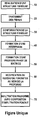
- L'invention sera mieux comprise à la lecture de la description faite ci-après, à titre indicatif mais non limitatif, en référence à la figure unique qui montre des étapes successives d'un procédé de fabrication de pièce en matériau CMC selon un mode de réalisation de l'invention.
- L'invention propose un procédé de fabrication de pièces en matériau composite, en particulier des matériaux composites thermostructuraux à matrice céramique (CMC), c'est-à-dire à des matériaux formés d'un renfort en fibres de carbone ou céramique densifié par une matrice au moins partiellement céramique mais également des matériaux composites thermostructuraux carbone/carbone (C/C), c'est-à-dire des matériaux formés d'un renfort en fibres de carbone densifié par une matrice carbone.
- Le procédé de fabrication de l'invention est remarquable en ce qu'il utilise une composition d'infiltration qui présente une température de fusion inférieure à celle des compositions d'infiltration à base de silicium habituellement utilisées pour densifier les préformes fibreuses. Plus particulièrement, la composition d'infiltration utilisée dans l'invention permet d'infiltrer des préformes fibreuses avec une composition fondue à une température inférieure à la température de stabilité thermique des fibres (thermostabilité), c'est-à-dire à une température suffisamment basse pour éviter toute dégradation des propriétés mécaniques des fibres de la préforme lors de son infiltration, comme c'est le cas en particulier pour les fibres SiC de première génération. Conformément à l'invention, la préforme fibreuse est infiltrée avec une composition d'infiltration qui est fondue à une température inférieure ou égale 1150°C.
- A cet effet, la composition d'infiltration contient, en outre du silicium, au moins un autre élément apte à abaisser la température ou point de fusion de la composition à une température inférieure ou égale à 1150°C. Cet abaissement du point de fusion de la composition d'infiltration est notamment obtenu en ajoutant au silicium du nickel (Ni). Plus précisément, la composition d'infiltration contient entre 50% et 75% (pourcentages massiques) de nickel, ce qui permet d'obtenir un point de fusion compris entre 1000°C (composition d'infiltration contenant 50% de Si et 50% de Ni) et 1150°C (composition d'infiltration contenant 25% de Si et 75% de Ni). Dans le cas de l'ajout de germanium, la composition d'infiltration contient entre 89% et 98% de germanium, ce qui permet d'obtenir un point de fusion compris entre 1000°C (composition d'infiltration contenant 2% de Si et 98% de Ge) et 1150°C (composition d'infiltration contenant 11% de Si et 89% de Ge). Ainsi, en ajoutant une proportion de nickel comprise entre 50% et 75% ou au moins 89% de germanium au silicium, on obtient un alliage de silicium qui présente une température de fusion inférieure ou égale à 1150°C qui est une température inférieure à la température de stabilité thermique des fibres de carbure de silicium SiC (désignées ci-après fibres SiC) comme par exemple des fibres SiC de type Tyranno ZMI®, Tyranno Lox-M® ou Nicalon® de première génération.
- En outre d'un point de fusion plus bas, la composition d'infiltration présente toutes les autres propriétés requises pour permettre la fabrication d'un matériau composite de bonne qualité. En effet, la composition d'infiltration est compatible chimiquement avec les éléments présents dans la préforme à infiltrer. La composition d'infiltration présente en outre une bonne résistance vis-à-vis des environnements oxydants ou corrosifs et une excellente tenue dans le temps.
- La composition d'infiltration peut contenir en outre moins de 10% (pourcentage massique) d'au moins un des éléments suivants : aluminium et bore. L'ajout d'au moins un de ces constituants permet d'améliorer la désoxydation et/ou la mouillabilité de la composition d'infiltration sur le substrat à traiter ainsi que de conférer des propriétés particulières au matériau traité comme une tenue améliorée vis-à-vis de l'oxydation et de la corrosion.
- Un premier mode de réalisation d'un matériau CMC conforme au procédé de l'invention sera décrit en référence à la figure unique.
- Une première étape 10 consiste à réaliser une structure fibreuse à partir de laquelle une préforme fibreuse ayant une forme voisine de celle d'une pièce à fabriquer sera réalisée. Une telle structure fibreuse peut être obtenue par tissage multicouches ou tridimensionnel à partir de fils ou câbles. Il est possible aussi de partir de textures fibreuses bidimensionnelles telles que des tissus ou des nappes de fils ou câbles pour former des strates qui seront ensuite drapées sur une forme et éventuellement liées entre elles par exemple par couture ou implantation de fils.
- Les fibres constitutives de la structure fibreuse sont de préférence des fibres en céramique, par exemple des fibres formées essentiellement de carbure de silicium SiC (désignées ci-après fibres SiC) ou de nitrure de silicium Si3N4. On peut notamment utiliser des fibres SiC commercialisées sous les dénominations « Tyranno ZMI », « Tyranno Lox-M » et « Tyranno SA3 » par la société japonais Ube Industries, Ltd ou « Nicalon », « Hi-Nicalon » et « Hi-Nicalon(S) » par la société japonaise Nippon Carbon. Il est possible en variante d'utiliser des fibres de carbone.
- De façon connue, dans le cas de fibres en céramique, notamment de fibres SiC, un traitement de surface de celles-ci préalablement à la formation d'un revêtement d'interphase est de préférence réalisé (étape 20) pour éliminer l'ensimage et une couche superficielle d'oxyde tel que de la silice SiO2 présents sur les fibres.
- L'étape 30 consiste à conformer la structure fibreuse au moyen d'un outillage pour obtenir une préforme ayant une forme voisine de celle de la pièce à fabriquer.
- La préforme étant maintenue dans son outillage de conformation, par exemple en graphite, une interphase de défragilisation est formée par CVI sur les fibres de la préforme, cette interphase étant notamment en carbone pyrolytique ou PyC, ou en nitrure de bore (BN), ou en carbone dopé au bore, ou BC (avec 5%at à 20%at de bore, le reste étant du carbone) (étape 40). L'épaisseur de l'interphase de PyC ou BC est de préférence comprise entre 10 nm et 1000 nm.
- Ensuite (étape 50), une première phase de matrice est formée par CVI, la matrice pouvant contenir au moins une couche de matériau autocicatrisant. On peut choisir un matériau autocicatrisant contenant du bore, par exemple un système ternaire Si-B-C ou du carbure de bore B4C capable de former, en présence d'oxygène, un verre de type borosilicate ayant des propriétés autocicatrisantes. L'épaisseur de la première phase de matrice au moins égale à 500 nm, de préférence comprise entre 1 µm et 30 µm.
- La première phase de matrice peut comprendre une couche unique d'un matériau autocicatrisant ou plusieurs couches de matériaux autocicatrisants différents. On peut aussi former la première phase de matrice de plusieurs couches de matériau autocicatrisant alternant avec des couches de PyC ou de BC ou de matériau céramique ne contenant pas de bore, comme par exemple du SiC ou du nitrure de silicium Si3N4.
- Une couche de matériau céramique ne contenant pas de bore, par exemple SiC ou Si3N4, est formée sur la couche de matériau autocicatrisant, lorsque la première phase de matrice ne comprend qu'une seule couche de matériau autocicatrisant, ou sur la dernière couche de matériau autocicatrisant, lorsque la première phase de matrice comprend plusieurs couches de matériau autocicatrisant, pour constituer une barrière de réaction entre le matériau autocicatrisant et le silicium fondu ou la composition liquide à base de silicium introduite ultérieurement.
- L'épaisseur de cette couche de matériau céramique formant barrière de réaction peut être au moins égale à 500 nm, typiquement de un à plusieurs microns. Des matériaux céramiques ne contenant pas de bore et autres que SiC ou Si3N4 peuvent être utilisés pour former barrière de réaction, par exemple des carbures réfractaires tels que ZrC ou HfC.
- L'épaisseur totale de l'interphase et la première phase de matrice est choisie suffisante pour consolider la préforme fibreuse, c'est-à-dire pour lier entre elles les fibres de la préforme de façon suffisante pour que la préforme puisse être manipulée en conservant sa forme sans assistance d'outillage de maintien. Cette épaisseur peut être au moins égale à 500 nm. Après consolidation, la préforme reste poreuse, la porosité initiale n'étant par exemple comblée que pour une partie minoritaire par l'interphase et la première phase de matrice.
- La réalisation de dépôts de PyC, BC, B4C, Si-B-C, Si3N4, BN et SiC par CVI est connue. On pourra notamment se référer aux documents
US 5 246 736 ,US 5 738 951 ,US 5 965 266 ,US 6 068 930 etUS 6 284 358 . - On notera que l'étape de formation de l'interphase par CVI pourra être réalisée sur les fibres de la structure fibreuse avant conformation de celle-ci dans la mesure où l'interphase est suffisamment mince pour ne pas affecter la capacité souhaitée de déformation de la structure fibreuse.
- La préforme consolidée poreuse est retirée de son outillage de conformation pour poursuivre la densification par un processus de type MI comprenant la modification du réseau de porosités dans la préforme et l'infiltration de celle-ci avec une composition d'infiltration.
- La modification du réseau de porosités au sein de la préforme (étape 60) est réalisée au moyen d'un des traitements suivants :
- dispersion au sein de la préforme de poudre d'au moins un des matériaux suivants : carbure de silicium (SiC), nitrure de silicium (Si3N4), carbone (C), bore (B), carbure de bore (B4C) et carbure de titane (TiC),
- introduction au sein de la préforme d'une phase céramique ou carbone par imprégnation de ladite préforme avec un polymère et pyrolyse dudit polymère,
- introduction au sein de la préforme d'une mousse de carbone ou de céramique par imprégnation de ladite préforme avec un polymère et pyrolyse dudit polymère.
- Dans l'exemple décrit ici, la modification du réseau de porosités au sein de la préforme est réalisée par dispersion d'une poudre à l'aide d'une composition d'imprégnation. La composition d'imprégnation peut être une barbotine contenant la poudre en suspension dans un véhicule liquide, par exemple de l'eau. La poudre peut être retenue dans la préforme par filtration ou par décantation éventuellement avec l'aide d'une dépression. On utilise de préférence une poudre formée de particules de dimension moyenne inférieure à 5 µm.
- Après séchage, on obtient une préforme consolidée dans la porosité de laquelle une poudre de carbone et/ou céramique est dispersée.
- La densification est poursuivie (étape 70) par infiltration de la préforme avec une composition d'infiltration, ici une composition contenant 46% (pourcentage massique) de silicium et 54% (pourcentage massique) de nickel, la fusion de la composition étant obtenue à une température d'environ 1000°C. L'infiltration est réalisée sous atmosphère non oxydante, de préférence sous pression réduite.
- Dans le cas où la poudre introduite préalablement est en carbone ou si le matériau contient une phase carbone accessible, et dans le cas de présence de résidu carbone d'une résine utilisée pour l'imprégnation de la préforme consolidée, le silicium réagit avec celui-ci pour former du carbure de silicium SiC. Dans le cas où la poudre introduite préalablement est en céramique, notamment carbure, nitrure ou siliciure, et dans le cas de présence de résidu céramique d'une résine utilisée pour l'imprégnation de la préforme consolidée, on obtient une matrice partiellement en silicium liant la poudre céramique. Dans tous les cas, la matrice est majoritairement en céramique.
Claims (9)
- Procédé de fabrication d'une pièce en matériau composite, comprenant les étapes de :- réalisation d'une préforme fibreuse consolidée, les fibres de la préforme étant des fibres de carbone ou de céramique et étant revêtues d'une interphase,- obtention d'une préforme fibreuse consolidée et partiellement densifiée, la densification partielle comprenant la formation sur l'interphase d'une première phase de matrice obtenue par infiltration chimique en phase gazeuse, et- poursuite de la densification par infiltration de la préforme fibreuse avec une composition d'infiltration contenant au moins du silicium et au moins un autre élément apte à abaisser la température de fusion de la composition d'infiltration à une température inférieure ou égale à 1150°C, la composition d'infiltration comprenant du nickel, la proportion en masse de nickel dans ladite composition étant comprise entre 50% et 75%.
- Procédé selon la revendication 1, caractérisé en que la composition d'infiltration contient, en outre dudit élément apte à abaisser la température de fusion de la composition d'infiltration à une température inférieure ou égale à 1150°C, moins de 10% en masse d'au moins un des éléments suivants : aluminium et bore.
- Procédé selon l'une quelconque des revendications 1 ou 2, caractérisé en ce que la préforme fibreuse est formée à partir de fibres de carbone ou de carbure de silicium (SiC).
- Procédé selon l'une quelconque des revendications 1 à 3, caractérisé en ce que la préforme fibreuse est formée par une structure fibreuse réalisée en une seule pièce par tissage tridimensionnel ou multicouche ou à partir d'une pluralité de strates fibreuses bidimensionnelles.
- Procédé selon l'une quelconque des revendications 1 à 4, caractérisé en ce que l'interphase est formée par au moins une couche d'un des matériaux suivants : carbone pyrolytique (PyC), carbone dopé au bore (BC), nitrure de bore (BN).
- Procédé selon la revendication 5, caractérisé en ce que la première phase de matrice comprend au moins une couche d'un matériau choisi parmi au moins un des matériaux suivants : matériau autocicatrisant, nitrure de silicium (Si3N4) et carbure de silicium (SiC).
- Procédé selon la revendication 6, caractérisé en ce que la première phase de matrice comprend au moins une couche de matériau autocicatrisant choisi parmi un système ternaire Si-B-C et du carbure de bore B4C.
- Procédé selon l'une quelconque des revendications 1 à 7, caractérisé en ce que la première phase de matrice comprend plusieurs couches de matériau autocicatrisant alternant avec une ou plusieurs couches d'un matériau choisi parmi du carbone pyrolytique (PyC), du carbone dopé au bore (BC) et un matériau céramique ne contenant pas de bore.
- Procédé selon l'une quelconque des revendications 1 à 8, caractérisé en ce qu'il comprend, après la densification partielle de la préforme fibreuse et avant la densification par infiltration de la préforme fibreuse avec une composition d'infiltration, une étape de modification du réseau de porosités au sein de la préforme fibreuse réalisée au moyen d'un des traitements suivants :- dispersion au sein de la préforme de poudre d'au moins un des matériaux suivants : carbure de silicium (SiC), nitrure de silicium (Si3N4), carbone (C), bore (B), carbure de bore (B4C) et carbure de titane (TiC),- introduction au sein de la préforme d'une phase céramique ou carbone par imprégnation de ladite préforme avec un polymère et pyrolyse dudit polymère,- introduction au sein de la préforme d'une mousse de carbone ou de céramique par imprégnation de ladite préforme avec un polymère et pyrolyse dudit polymère.
Applications Claiming Priority (2)
| Application Number | Priority Date | Filing Date | Title |
|---|---|---|---|
| FR1357238A FR3008968B1 (fr) | 2013-07-23 | 2013-07-23 | Procede de fabrication de pieces en materiau composite par impregnation a basse temperature de fusion |
| PCT/FR2014/051821 WO2015011371A1 (fr) | 2013-07-23 | 2014-07-15 | Procédé de fabrication de pièces en matériau composite par imprégnation a basse température de fusion |
Publications (2)
| Publication Number | Publication Date |
|---|---|
| EP3024801A1 EP3024801A1 (fr) | 2016-06-01 |
| EP3024801B1 true EP3024801B1 (fr) | 2019-09-25 |
Family
ID=49753292
Family Applications (1)
| Application Number | Title | Priority Date | Filing Date |
|---|---|---|---|
| EP14750567.1A Active EP3024801B1 (fr) | 2013-07-23 | 2014-07-15 | Procédé de fabrication de pièces en matériau composite par imprégnation a basse température de fusion |
Country Status (9)
| Country | Link |
|---|---|
| US (1) | US10011902B1 (fr) |
| EP (1) | EP3024801B1 (fr) |
| JP (1) | JP2016527173A (fr) |
| CN (1) | CN105408288A (fr) |
| BR (1) | BR112016001230A2 (fr) |
| CA (1) | CA2919590A1 (fr) |
| FR (1) | FR3008968B1 (fr) |
| RU (1) | RU2668431C2 (fr) |
| WO (1) | WO2015011371A1 (fr) |
Families Citing this family (16)
| Publication number | Priority date | Publication date | Assignee | Title |
|---|---|---|---|---|
| FR3045598B1 (fr) | 2015-12-21 | 2018-01-12 | Centre National De La Recherche Scientifique | Procede de fabrication d'une ceramique a partir d'une reaction chimique |
| JP6658897B2 (ja) | 2016-08-25 | 2020-03-04 | 株式会社Ihi | セラミックス基複合材料及びその製造方法 |
| DE102016119979B4 (de) * | 2016-10-20 | 2025-09-04 | Deutsches Zentrum für Luft- und Raumfahrt e.V. | Verfahren zur Herstellung eines keramischen Faserverbundwerkstoffs auf Basis von Kohlenstoff mit einem Anteil an Siliziumcarbid, oder auf Basis von Siliziumcarbid sowie entsprechende Faserverbundwerkstoffe und Bauteile |
| US9931818B1 (en) * | 2017-04-05 | 2018-04-03 | General Electric Company | Method for forming CMC article |
| FR3080373B1 (fr) * | 2018-04-19 | 2020-05-08 | Safran Ceramics | Procede de fabrication d'une piece en materiau composite |
| CN112313192A (zh) * | 2018-05-15 | 2021-02-02 | 赛峰集团 | Cmc零件的制造方法 |
| CN109095929B (zh) * | 2018-08-28 | 2021-06-08 | 北京天宜上佳高新材料股份有限公司 | 一种碳陶刹车盘制备方法 |
| US20220055955A1 (en) * | 2020-08-19 | 2022-02-24 | Rolls-Royce High Temperature Composites Inc. | Method of making a ceramic matrix composite that exhibits moisture and environmental resistance |
| EP3957619B1 (fr) * | 2020-08-19 | 2025-11-12 | Rolls-Royce High Temperature Composites Inc | Procédé de fabrication d'un composite à matrice céramique présentant une résistance chimique |
| FR3115295B1 (fr) * | 2020-10-16 | 2023-05-12 | Safran Ceram | Procédé de fabrication d’une pièce en matériau composite à matrice métallique renforcée avec des fibres courtes en SiC |
| CN112457020B (zh) * | 2020-11-23 | 2022-04-12 | 航天特种材料及工艺技术研究所 | 一种多功能超高温陶瓷基复合材料及其制备方法 |
| FR3125528A1 (fr) * | 2021-07-26 | 2023-01-27 | Safran Ceramics | Procédé de fabrication d’une pièce épaisse en matériau composite CMC |
| FR3128956B1 (fr) * | 2021-11-10 | 2023-11-03 | Safran Ceram | Procédé de densification par infiltration chimique en phase vapeur |
| FR3133624B1 (fr) | 2022-03-21 | 2024-03-15 | Safran Ceram | Installation de densification mixte de préformes poreuses |
| US20240044260A1 (en) * | 2022-08-05 | 2024-02-08 | Raytheon Technologies Corporation | Ceramic matrix composite article and method of making the same |
| CN117964372B (zh) * | 2023-12-28 | 2025-06-10 | 湖南省拓道新材料科技有限公司 | 一种SiC-TiC复相陶瓷及其制备方法和应用 |
Citations (1)
| Publication number | Priority date | Publication date | Assignee | Title |
|---|---|---|---|---|
| WO2010063946A1 (fr) * | 2008-12-04 | 2010-06-10 | Snecma Propulsion Solide | Procede pour le lissage de la surface d'une piece en materiau cmc |
Family Cites Families (21)
| Publication number | Priority date | Publication date | Assignee | Title |
|---|---|---|---|---|
| US5015540A (en) | 1987-06-01 | 1991-05-14 | General Electric Company | Fiber-containing composite |
| US4944904A (en) | 1987-06-25 | 1990-07-31 | General Electric Company | Method of obtaining a fiber-containing composite |
| US4889686A (en) | 1989-02-17 | 1989-12-26 | General Electric Company | Composite containing coated fibrous material |
| FR2668477B1 (fr) | 1990-10-26 | 1993-10-22 | Propulsion Ste Europeenne | Materiau composite refractaire protege contre la corrosion, et procede pour son elaboration. |
| FR2710635B1 (fr) | 1993-09-27 | 1996-02-09 | Europ Propulsion | Procédé de fabrication d'un matériau composite à interphase lamellaire entre fibres de renfort et matrice, et matériau tel qu'obtenu par le procédé. |
| FR2732338B1 (fr) | 1995-03-28 | 1997-06-13 | Europ Propulsion | Materiau composite protege contre l'oxydation par matrice auto-cicatrisante et son procede de fabrication |
| FR2741063B1 (fr) | 1995-11-14 | 1998-02-13 | Europ Propulsion | Procede pour l'introduction dans des substrats poreux d'une composition en fusion a base de silicium |
| FR2742433B1 (fr) | 1995-12-14 | 1998-03-13 | Europ Propulsion | Materiaux composites thermostructuraux avec renforts en fibres carbone ou revetues de carbone, ayant une resistance accrue a l'oxydation |
| FR2757848B1 (fr) | 1996-12-27 | 1999-03-26 | Europ Propulsion | Preformes fibreuses gainees d'un revetement bn original, composites les incorporant et leurs preparations |
| DE19711829C1 (de) * | 1997-03-21 | 1998-09-03 | Daimler Benz Ag | Verfahren zur Herstellung einer faserverstärkten Verbundkeramik |
| EP1200370B1 (fr) * | 1999-07-23 | 2005-10-19 | M Cubed Technologies Inc. | Procede pour la preparation de composites de carbure de silicium |
| US7378362B2 (en) * | 2000-09-29 | 2008-05-27 | Goodrich Corporation | Boron carbide based ceramic matrix composites |
| RU2194683C2 (ru) | 2001-01-09 | 2002-12-20 | Федеральное государственное унитарное предприятие "Институт Термохимии" | Способ изготовления изделий из силицированного углеродного композиционного материала с переменным содержанием карбида кремния |
| FR2851244B1 (fr) * | 2003-02-17 | 2005-06-17 | Snecma Propulsion Solide | Procede de siliciuration de materiaux composites thermostructuraux et pieces telles qu'obtenues par le procede |
| FR2869609B1 (fr) | 2004-05-03 | 2006-07-28 | Snecma Propulsion Solide Sa | Procede de fabrication d'une piece en materiau composite thermostructural |
| US8714932B2 (en) * | 2008-12-31 | 2014-05-06 | General Electric Company | Ceramic matrix composite blade having integral platform structures and methods of fabrication |
| JP2011011922A (ja) * | 2009-06-30 | 2011-01-20 | Hitachi Chem Co Ltd | カーボン/シリコンカーバイド系複合材料 |
| US20120076927A1 (en) * | 2010-02-01 | 2012-03-29 | United States Government As Represented By The Secretary Of The Army | Method of improving the thermo-mechanical properties of fiber-reinforced silicon carbide matrix composites |
| US8980435B2 (en) * | 2011-10-04 | 2015-03-17 | General Electric Company | CMC component, power generation system and method of forming a CMC component |
| FR2983193B1 (fr) * | 2011-11-30 | 2014-05-09 | Snecma Propulsion Solide | Procede de fabrication de piece en materiau cmc |
| US9523149B2 (en) * | 2013-03-14 | 2016-12-20 | Rolls-Royce Corporation | Rapid ceramic matrix composite production method |
-
2013
- 2013-07-23 FR FR1357238A patent/FR3008968B1/fr not_active Expired - Fee Related
-
2014
- 2014-07-15 CA CA2919590A patent/CA2919590A1/fr not_active Abandoned
- 2014-07-15 WO PCT/FR2014/051821 patent/WO2015011371A1/fr not_active Ceased
- 2014-07-15 CN CN201480041907.0A patent/CN105408288A/zh active Pending
- 2014-07-15 EP EP14750567.1A patent/EP3024801B1/fr active Active
- 2014-07-15 RU RU2016105679A patent/RU2668431C2/ru active
- 2014-07-15 US US14/906,959 patent/US10011902B1/en active Active
- 2014-07-15 BR BR112016001230A patent/BR112016001230A2/pt not_active IP Right Cessation
- 2014-07-15 JP JP2016528574A patent/JP2016527173A/ja active Pending
Patent Citations (1)
| Publication number | Priority date | Publication date | Assignee | Title |
|---|---|---|---|---|
| WO2010063946A1 (fr) * | 2008-12-04 | 2010-06-10 | Snecma Propulsion Solide | Procede pour le lissage de la surface d'une piece en materiau cmc |
Also Published As
| Publication number | Publication date |
|---|---|
| WO2015011371A1 (fr) | 2015-01-29 |
| CN105408288A (zh) | 2016-03-16 |
| RU2668431C2 (ru) | 2018-10-01 |
| FR3008968A1 (fr) | 2015-01-30 |
| JP2016527173A (ja) | 2016-09-08 |
| RU2016105679A (ru) | 2017-08-29 |
| BR112016001230A2 (pt) | 2017-09-05 |
| FR3008968B1 (fr) | 2016-12-09 |
| US10011902B1 (en) | 2018-07-03 |
| EP3024801A1 (fr) | 2016-06-01 |
| CA2919590A1 (fr) | 2015-01-29 |
Similar Documents
| Publication | Publication Date | Title |
|---|---|---|
| EP2785665B1 (fr) | Procede de fabrication de piece en materiau cmc | |
| WO2015011371A1 (fr) | Procédé de fabrication de pièces en matériau composite par imprégnation a basse température de fusion | |
| EP3416929B1 (fr) | Procede de fabrication d'une piece en materiau composite a matrice ceramique | |
| EP2414305B1 (fr) | Procede pour le lissage de la surface d'une piece en materiau cmc. | |
| EP2753595B1 (fr) | Procédé de formation sur un substrat en materiau composite a matrice céramique contenant du sic d'un revêtement lisse d'aspect glacé et pièce en matériau composite a matrice céramique munie d'un tel revêtement | |
| EP2900623B1 (fr) | Procede de fabrication d'une piece en cmc | |
| EP2483073B1 (fr) | Piece en materiau composite a matrice ceramique et procede pour sa fabrication | |
| WO2016009148A1 (fr) | Procédé de fabrication d'une pièce en matériau composite par synthèse par réaction auto-entretenue a haute température | |
| FR3053328A1 (fr) | Procede de fabrication d'une piece en materiau composite a matrice ceramique | |
| WO2022263740A1 (fr) | Revetement abradable a structure nid d'abeilles en materiau composite a matrice ceramique en fibres courtes | |
| EP3455192B1 (fr) | Pièce en matériau composite à matrice ceramique | |
| FR3118096A1 (fr) | Aube en materiau composite a matrice au moins partiellement ceramique | |
| FR3115533A1 (fr) | Procédé de fabrication d’une pièce en matériau composite | |
| EP4377278A1 (fr) | Procede de fabrication d'une piece epaisse en materiau composite cmc | |
| WO2021005280A1 (fr) | Procede de fabrication d'une piece en materiau composite a matrice de carbure de silicium | |
| EP4444672A1 (fr) | Procédé de fabrication d'une pièce en matériau composite sic/sic | |
| FR3141167A1 (fr) | Procédé de fabrication d’une pièce en matériau composite à matrice céramique | |
| FR3141170A1 (fr) | Procédé de fabrication d’une pièce en matériau composite à matrice céramique | |
| FR3141171A1 (fr) | Procédé de fabrication d’une pièce en matériau composite à matrice céramique | |
| FR3141169A1 (fr) | Procédé de fabrication d’une pièce en matériau composite à matrice céramique | |
| EP0960870A1 (fr) | Procédé d'élaboration d'un matériau d'interphase, matériau obtenu, procédé de traitement d'une fibre céramique de renfort avec ce matériau et procédé de fabrication d'un matériau thermostructural associé |
Legal Events
| Date | Code | Title | Description |
|---|---|---|---|
| PUAI | Public reference made under article 153(3) epc to a published international application that has entered the european phase |
Free format text: ORIGINAL CODE: 0009012 |
|
| 17P | Request for examination filed |
Effective date: 20160107 |
|
| AK | Designated contracting states |
Kind code of ref document: A1 Designated state(s): AL AT BE BG CH CY CZ DE DK EE ES FI FR GB GR HR HU IE IS IT LI LT LU LV MC MK MT NL NO PL PT RO RS SE SI SK SM TR |
|
| AX | Request for extension of the european patent |
Extension state: BA ME |
|
| DAX | Request for extension of the european patent (deleted) | ||
| RAP1 | Party data changed (applicant data changed or rights of an application transferred) |
Owner name: SAFRAN CERAMICS |
|
| STAA | Information on the status of an ep patent application or granted ep patent |
Free format text: STATUS: EXAMINATION IS IN PROGRESS |
|
| 17Q | First examination report despatched |
Effective date: 20180416 |
|
| GRAP | Despatch of communication of intention to grant a patent |
Free format text: ORIGINAL CODE: EPIDOSNIGR1 |
|
| STAA | Information on the status of an ep patent application or granted ep patent |
Free format text: STATUS: GRANT OF PATENT IS INTENDED |
|
| RIC1 | Information provided on ipc code assigned before grant |
Ipc: C04B 35/573 20060101AFI20190405BHEP Ipc: C22C 47/06 20060101ALI20190405BHEP Ipc: C22C 47/08 20060101ALI20190405BHEP Ipc: C22C 49/14 20060101ALI20190405BHEP Ipc: C04B 35/80 20060101ALI20190405BHEP Ipc: C04B 35/628 20060101ALI20190405BHEP |
|
| INTG | Intention to grant announced |
Effective date: 20190429 |
|
| GRAS | Grant fee paid |
Free format text: ORIGINAL CODE: EPIDOSNIGR3 |
|
| GRAA | (expected) grant |
Free format text: ORIGINAL CODE: 0009210 |
|
| STAA | Information on the status of an ep patent application or granted ep patent |
Free format text: STATUS: THE PATENT HAS BEEN GRANTED |
|
| AK | Designated contracting states |
Kind code of ref document: B1 Designated state(s): AL AT BE BG CH CY CZ DE DK EE ES FI FR GB GR HR HU IE IS IT LI LT LU LV MC MK MT NL NO PL PT RO RS SE SI SK SM TR |
|
| REG | Reference to a national code |
Ref country code: GB Ref legal event code: FG4D Free format text: NOT ENGLISH |
|
| REG | Reference to a national code |
Ref country code: CH Ref legal event code: EP |
|
| REG | Reference to a national code |
Ref country code: AT Ref legal event code: REF Ref document number: 1183681 Country of ref document: AT Kind code of ref document: T Effective date: 20191015 |
|
| REG | Reference to a national code |
Ref country code: IE Ref legal event code: FG4D Free format text: LANGUAGE OF EP DOCUMENT: FRENCH |
|
| REG | Reference to a national code |
Ref country code: DE Ref legal event code: R096 Ref document number: 602014054225 Country of ref document: DE |
|
| REG | Reference to a national code |
Ref country code: SE Ref legal event code: TRGR |
|
| REG | Reference to a national code |
Ref country code: NL Ref legal event code: MP Effective date: 20190925 |
|
| PG25 | Lapsed in a contracting state [announced via postgrant information from national office to epo] |
Ref country code: BG Free format text: LAPSE BECAUSE OF FAILURE TO SUBMIT A TRANSLATION OF THE DESCRIPTION OR TO PAY THE FEE WITHIN THE PRESCRIBED TIME-LIMIT Effective date: 20191225 Ref country code: NO Free format text: LAPSE BECAUSE OF FAILURE TO SUBMIT A TRANSLATION OF THE DESCRIPTION OR TO PAY THE FEE WITHIN THE PRESCRIBED TIME-LIMIT Effective date: 20191225 Ref country code: FI Free format text: LAPSE BECAUSE OF FAILURE TO SUBMIT A TRANSLATION OF THE DESCRIPTION OR TO PAY THE FEE WITHIN THE PRESCRIBED TIME-LIMIT Effective date: 20190925 Ref country code: HR Free format text: LAPSE BECAUSE OF FAILURE TO SUBMIT A TRANSLATION OF THE DESCRIPTION OR TO PAY THE FEE WITHIN THE PRESCRIBED TIME-LIMIT Effective date: 20190925 Ref country code: LT Free format text: LAPSE BECAUSE OF FAILURE TO SUBMIT A TRANSLATION OF THE DESCRIPTION OR TO PAY THE FEE WITHIN THE PRESCRIBED TIME-LIMIT Effective date: 20190925 |
|
| REG | Reference to a national code |
Ref country code: LT Ref legal event code: MG4D |
|
| PG25 | Lapsed in a contracting state [announced via postgrant information from national office to epo] |
Ref country code: RS Free format text: LAPSE BECAUSE OF FAILURE TO SUBMIT A TRANSLATION OF THE DESCRIPTION OR TO PAY THE FEE WITHIN THE PRESCRIBED TIME-LIMIT Effective date: 20190925 Ref country code: LV Free format text: LAPSE BECAUSE OF FAILURE TO SUBMIT A TRANSLATION OF THE DESCRIPTION OR TO PAY THE FEE WITHIN THE PRESCRIBED TIME-LIMIT Effective date: 20190925 Ref country code: GR Free format text: LAPSE BECAUSE OF FAILURE TO SUBMIT A TRANSLATION OF THE DESCRIPTION OR TO PAY THE FEE WITHIN THE PRESCRIBED TIME-LIMIT Effective date: 20191226 |
|
| REG | Reference to a national code |
Ref country code: AT Ref legal event code: MK05 Ref document number: 1183681 Country of ref document: AT Kind code of ref document: T Effective date: 20190925 |
|
| PG25 | Lapsed in a contracting state [announced via postgrant information from national office to epo] |
Ref country code: PT Free format text: LAPSE BECAUSE OF FAILURE TO SUBMIT A TRANSLATION OF THE DESCRIPTION OR TO PAY THE FEE WITHIN THE PRESCRIBED TIME-LIMIT Effective date: 20200127 Ref country code: ES Free format text: LAPSE BECAUSE OF FAILURE TO SUBMIT A TRANSLATION OF THE DESCRIPTION OR TO PAY THE FEE WITHIN THE PRESCRIBED TIME-LIMIT Effective date: 20190925 Ref country code: AL Free format text: LAPSE BECAUSE OF FAILURE TO SUBMIT A TRANSLATION OF THE DESCRIPTION OR TO PAY THE FEE WITHIN THE PRESCRIBED TIME-LIMIT Effective date: 20190925 Ref country code: EE Free format text: LAPSE BECAUSE OF FAILURE TO SUBMIT A TRANSLATION OF THE DESCRIPTION OR TO PAY THE FEE WITHIN THE PRESCRIBED TIME-LIMIT Effective date: 20190925 Ref country code: PL Free format text: LAPSE BECAUSE OF FAILURE TO SUBMIT A TRANSLATION OF THE DESCRIPTION OR TO PAY THE FEE WITHIN THE PRESCRIBED TIME-LIMIT Effective date: 20190925 Ref country code: AT Free format text: LAPSE BECAUSE OF FAILURE TO SUBMIT A TRANSLATION OF THE DESCRIPTION OR TO PAY THE FEE WITHIN THE PRESCRIBED TIME-LIMIT Effective date: 20190925 Ref country code: NL Free format text: LAPSE BECAUSE OF FAILURE TO SUBMIT A TRANSLATION OF THE DESCRIPTION OR TO PAY THE FEE WITHIN THE PRESCRIBED TIME-LIMIT Effective date: 20190925 Ref country code: RO Free format text: LAPSE BECAUSE OF FAILURE TO SUBMIT A TRANSLATION OF THE DESCRIPTION OR TO PAY THE FEE WITHIN THE PRESCRIBED TIME-LIMIT Effective date: 20190925 |
|
| PG25 | Lapsed in a contracting state [announced via postgrant information from national office to epo] |
Ref country code: IS Free format text: LAPSE BECAUSE OF FAILURE TO SUBMIT A TRANSLATION OF THE DESCRIPTION OR TO PAY THE FEE WITHIN THE PRESCRIBED TIME-LIMIT Effective date: 20200224 Ref country code: CZ Free format text: LAPSE BECAUSE OF FAILURE TO SUBMIT A TRANSLATION OF THE DESCRIPTION OR TO PAY THE FEE WITHIN THE PRESCRIBED TIME-LIMIT Effective date: 20190925 Ref country code: SK Free format text: LAPSE BECAUSE OF FAILURE TO SUBMIT A TRANSLATION OF THE DESCRIPTION OR TO PAY THE FEE WITHIN THE PRESCRIBED TIME-LIMIT Effective date: 20190925 Ref country code: SM Free format text: LAPSE BECAUSE OF FAILURE TO SUBMIT A TRANSLATION OF THE DESCRIPTION OR TO PAY THE FEE WITHIN THE PRESCRIBED TIME-LIMIT Effective date: 20190925 |
|
| REG | Reference to a national code |
Ref country code: DE Ref legal event code: R097 Ref document number: 602014054225 Country of ref document: DE |
|
| PG2D | Information on lapse in contracting state deleted |
Ref country code: IS |
|
| PG25 | Lapsed in a contracting state [announced via postgrant information from national office to epo] |
Ref country code: DK Free format text: LAPSE BECAUSE OF FAILURE TO SUBMIT A TRANSLATION OF THE DESCRIPTION OR TO PAY THE FEE WITHIN THE PRESCRIBED TIME-LIMIT Effective date: 20190925 Ref country code: IS Free format text: LAPSE BECAUSE OF FAILURE TO SUBMIT A TRANSLATION OF THE DESCRIPTION OR TO PAY THE FEE WITHIN THE PRESCRIBED TIME-LIMIT Effective date: 20200126 |
|
| PLBE | No opposition filed within time limit |
Free format text: ORIGINAL CODE: 0009261 |
|
| STAA | Information on the status of an ep patent application or granted ep patent |
Free format text: STATUS: NO OPPOSITION FILED WITHIN TIME LIMIT |
|
| PGFP | Annual fee paid to national office [announced via postgrant information from national office to epo] |
Ref country code: SE Payment date: 20200626 Year of fee payment: 7 |
|
| 26N | No opposition filed |
Effective date: 20200626 |
|
| PG25 | Lapsed in a contracting state [announced via postgrant information from national office to epo] |
Ref country code: SI Free format text: LAPSE BECAUSE OF FAILURE TO SUBMIT A TRANSLATION OF THE DESCRIPTION OR TO PAY THE FEE WITHIN THE PRESCRIBED TIME-LIMIT Effective date: 20190925 |
|
| PGFP | Annual fee paid to national office [announced via postgrant information from national office to epo] |
Ref country code: IT Payment date: 20200622 Year of fee payment: 7 |
|
| PG25 | Lapsed in a contracting state [announced via postgrant information from national office to epo] |
Ref country code: MC Free format text: LAPSE BECAUSE OF FAILURE TO SUBMIT A TRANSLATION OF THE DESCRIPTION OR TO PAY THE FEE WITHIN THE PRESCRIBED TIME-LIMIT Effective date: 20190925 |
|
| REG | Reference to a national code |
Ref country code: CH Ref legal event code: PL |
|
| REG | Reference to a national code |
Ref country code: BE Ref legal event code: MM Effective date: 20200731 |
|
| PG25 | Lapsed in a contracting state [announced via postgrant information from national office to epo] |
Ref country code: LU Free format text: LAPSE BECAUSE OF NON-PAYMENT OF DUE FEES Effective date: 20200715 Ref country code: CH Free format text: LAPSE BECAUSE OF NON-PAYMENT OF DUE FEES Effective date: 20200731 Ref country code: LI Free format text: LAPSE BECAUSE OF NON-PAYMENT OF DUE FEES Effective date: 20200731 |
|
| PG25 | Lapsed in a contracting state [announced via postgrant information from national office to epo] |
Ref country code: BE Free format text: LAPSE BECAUSE OF NON-PAYMENT OF DUE FEES Effective date: 20200731 |
|
| PG25 | Lapsed in a contracting state [announced via postgrant information from national office to epo] |
Ref country code: IE Free format text: LAPSE BECAUSE OF NON-PAYMENT OF DUE FEES Effective date: 20200715 |
|
| PG25 | Lapsed in a contracting state [announced via postgrant information from national office to epo] |
Ref country code: TR Free format text: LAPSE BECAUSE OF FAILURE TO SUBMIT A TRANSLATION OF THE DESCRIPTION OR TO PAY THE FEE WITHIN THE PRESCRIBED TIME-LIMIT Effective date: 20190925 Ref country code: SE Free format text: LAPSE BECAUSE OF NON-PAYMENT OF DUE FEES Effective date: 20210716 Ref country code: MT Free format text: LAPSE BECAUSE OF FAILURE TO SUBMIT A TRANSLATION OF THE DESCRIPTION OR TO PAY THE FEE WITHIN THE PRESCRIBED TIME-LIMIT Effective date: 20190925 Ref country code: CY Free format text: LAPSE BECAUSE OF FAILURE TO SUBMIT A TRANSLATION OF THE DESCRIPTION OR TO PAY THE FEE WITHIN THE PRESCRIBED TIME-LIMIT Effective date: 20190925 |
|
| PG25 | Lapsed in a contracting state [announced via postgrant information from national office to epo] |
Ref country code: MK Free format text: LAPSE BECAUSE OF FAILURE TO SUBMIT A TRANSLATION OF THE DESCRIPTION OR TO PAY THE FEE WITHIN THE PRESCRIBED TIME-LIMIT Effective date: 20190925 |
|
| PG25 | Lapsed in a contracting state [announced via postgrant information from national office to epo] |
Ref country code: IT Free format text: LAPSE BECAUSE OF NON-PAYMENT OF DUE FEES Effective date: 20210715 |
|
| PGFP | Annual fee paid to national office [announced via postgrant information from national office to epo] |
Ref country code: DE Payment date: 20250722 Year of fee payment: 12 |
|
| PGFP | Annual fee paid to national office [announced via postgrant information from national office to epo] |
Ref country code: GB Payment date: 20250724 Year of fee payment: 12 |
|
| PGFP | Annual fee paid to national office [announced via postgrant information from national office to epo] |
Ref country code: FR Payment date: 20250722 Year of fee payment: 12 |