EP3011037B2 - Resistenzgen gegen rizomania - Google Patents
Resistenzgen gegen rizomania Download PDFInfo
- Publication number
- EP3011037B2 EP3011037B2 EP14750139.9A EP14750139A EP3011037B2 EP 3011037 B2 EP3011037 B2 EP 3011037B2 EP 14750139 A EP14750139 A EP 14750139A EP 3011037 B2 EP3011037 B2 EP 3011037B2
- Authority
- EP
- European Patent Office
- Prior art keywords
- seq
- nucleic acid
- acid molecule
- plant
- sequence
- Prior art date
- Legal status (The legal status is an assumption and is not a legal conclusion. Google has not performed a legal analysis and makes no representation as to the accuracy of the status listed.)
- Active
Links
Images










Classifications
-
- C—CHEMISTRY; METALLURGY
- C12—BIOCHEMISTRY; BEER; SPIRITS; WINE; VINEGAR; MICROBIOLOGY; ENZYMOLOGY; MUTATION OR GENETIC ENGINEERING
- C12N—MICROORGANISMS OR ENZYMES; COMPOSITIONS THEREOF; PROPAGATING, PRESERVING, OR MAINTAINING MICROORGANISMS; MUTATION OR GENETIC ENGINEERING; CULTURE MEDIA
- C12N15/00—Mutation or genetic engineering; DNA or RNA concerning genetic engineering, vectors, e.g. plasmids, or their isolation, preparation or purification; Use of hosts therefor
- C12N15/09—Recombinant DNA-technology
- C12N15/63—Introduction of foreign genetic material using vectors; Vectors; Use of hosts therefor; Regulation of expression
- C12N15/79—Vectors or expression systems specially adapted for eukaryotic hosts
- C12N15/82—Vectors or expression systems specially adapted for eukaryotic hosts for plant cells, e.g. plant artificial chromosomes (PACs)
- C12N15/8241—Phenotypically and genetically modified plants via recombinant DNA technology
- C12N15/8261—Phenotypically and genetically modified plants via recombinant DNA technology with agronomic (input) traits, e.g. crop yield
- C12N15/8271—Phenotypically and genetically modified plants via recombinant DNA technology with agronomic (input) traits, e.g. crop yield for stress resistance, e.g. heavy metal resistance
- C12N15/8279—Phenotypically and genetically modified plants via recombinant DNA technology with agronomic (input) traits, e.g. crop yield for stress resistance, e.g. heavy metal resistance for biotic stress resistance, pathogen resistance, disease resistance
- C12N15/8283—Phenotypically and genetically modified plants via recombinant DNA technology with agronomic (input) traits, e.g. crop yield for stress resistance, e.g. heavy metal resistance for biotic stress resistance, pathogen resistance, disease resistance for virus resistance
-
- C—CHEMISTRY; METALLURGY
- C07—ORGANIC CHEMISTRY
- C07K—PEPTIDES
- C07K14/00—Peptides having more than 20 amino acids; Gastrins; Somatostatins; Melanotropins; Derivatives thereof
- C07K14/415—Peptides having more than 20 amino acids; Gastrins; Somatostatins; Melanotropins; Derivatives thereof from plants
-
- C—CHEMISTRY; METALLURGY
- C12—BIOCHEMISTRY; BEER; SPIRITS; WINE; VINEGAR; MICROBIOLOGY; ENZYMOLOGY; MUTATION OR GENETIC ENGINEERING
- C12Q—MEASURING OR TESTING PROCESSES INVOLVING ENZYMES, NUCLEIC ACIDS OR MICROORGANISMS; COMPOSITIONS OR TEST PAPERS THEREFOR; PROCESSES OF PREPARING SUCH COMPOSITIONS; CONDITION-RESPONSIVE CONTROL IN MICROBIOLOGICAL OR ENZYMOLOGICAL PROCESSES
- C12Q1/00—Measuring or testing processes involving enzymes, nucleic acids or microorganisms; Compositions therefor; Processes of preparing such compositions
- C12Q1/68—Measuring or testing processes involving enzymes, nucleic acids or microorganisms; Compositions therefor; Processes of preparing such compositions involving nucleic acids
- C12Q1/6876—Nucleic acid products used in the analysis of nucleic acids, e.g. primers or probes
- C12Q1/6888—Nucleic acid products used in the analysis of nucleic acids, e.g. primers or probes for detection or identification of organisms
- C12Q1/6895—Nucleic acid products used in the analysis of nucleic acids, e.g. primers or probes for detection or identification of organisms for plants, fungi or algae
-
- C—CHEMISTRY; METALLURGY
- C12—BIOCHEMISTRY; BEER; SPIRITS; WINE; VINEGAR; MICROBIOLOGY; ENZYMOLOGY; MUTATION OR GENETIC ENGINEERING
- C12Q—MEASURING OR TESTING PROCESSES INVOLVING ENZYMES, NUCLEIC ACIDS OR MICROORGANISMS; COMPOSITIONS OR TEST PAPERS THEREFOR; PROCESSES OF PREPARING SUCH COMPOSITIONS; CONDITION-RESPONSIVE CONTROL IN MICROBIOLOGICAL OR ENZYMOLOGICAL PROCESSES
- C12Q2600/00—Oligonucleotides characterized by their use
- C12Q2600/13—Plant traits
-
- C—CHEMISTRY; METALLURGY
- C12—BIOCHEMISTRY; BEER; SPIRITS; WINE; VINEGAR; MICROBIOLOGY; ENZYMOLOGY; MUTATION OR GENETIC ENGINEERING
- C12Q—MEASURING OR TESTING PROCESSES INVOLVING ENZYMES, NUCLEIC ACIDS OR MICROORGANISMS; COMPOSITIONS OR TEST PAPERS THEREFOR; PROCESSES OF PREPARING SUCH COMPOSITIONS; CONDITION-RESPONSIVE CONTROL IN MICROBIOLOGICAL OR ENZYMOLOGICAL PROCESSES
- C12Q2600/00—Oligonucleotides characterized by their use
- C12Q2600/156—Polymorphic or mutational markers
Definitions
- the present invention relates to a nucleic acid molecule which encodes a polypeptide which is capable of conferring resistance to a pathogen, in particular to "Beet Necrotic Yellow Vein Virus" in a plant, in particular of the genus Beta, in which the polypeptide is expressed.
- the invention further relates to a polypeptide which is capable of conferring resistance to a pathogen in a plant, in particular resistance to BNYVV in a plant of the genus Beta in which the polypeptide is expressed, and which is encoded by the nucleic acid molecule according to the invention.
- the invention further relates to a transgenic plant, plant cell, plant organ, plant tissue, plant part or a seed of a plant which comprise the nucleic acid molecule or parts thereof, and to methods for producing such a transgenic plant or plant cell.
- the invention also includes methods for detecting the resistance-conferring nucleic acid molecule and methods for selecting plants or plant cells which have the resistance-conferring nucleic acid molecule.
- Rhizomania is the most economically important sugar beet disease worldwide, and can cause yield losses of 50% or more.
- the disease which is also called “root beard”
- BNYVV Beet Necrotic Yellow Vein Virus
- a BNYVV infection manifests itself in an increased proliferation of the thin roots and lateral roots and in the formation of a greatly reduced root body with reduced sugar content. Infected plants show reduced water uptake and are therefore more sensitive to drought stress. If the infection spreads to the entire plant, the leaf veins turn yellow, necrotic lesions and yellow spots appear on the leaves.
- RZ-1 also known as "Holly"
- RZ-2 also known as "Holly”
- RZ-3 other, but less important rhizomania resistance genes are described in the literature.
- the resistance gene RZ-1 is already incorporated in most breeding lines (seed parent and/or pollen donor parent components). However, it has been shown that in heavily infected regions or in regions with various BNYVV pathotypes (e.g. Sohi & Maleki, 2004), the resistance conferred by RZ-1 is not sufficient.
- RZ-2 and RZ-3 come from Beta vulgaris subsp. maritima sources (WB42, WB41) and map genetically in the same region on chromosome 3 of the sugar beet genome, while RZ-1 maps south of RZ-2 and RZ-3 but also on chromosome 3.
- Scholten et al. (1999) determined a distance of 20-25 cM between the RZ major genes RZ-1 and RZ-2.
- Gidner et al. (2005) found a smaller distance of 5 cM between RZ-1 and RZ-2 and does not exclude the possibility that RZ-2 and RZ-3 map to the same locus.
- the present invention was made against the background of the prior art described above, the object of the present invention being to provide a nucleic acid molecule and/or a polypeptide which is capable of conveying resistance to rhizomania in a plant. Furthermore, the object is to provide a transgenic rhizomania-resistant plant and a method for producing the same. Furthermore, the object of the present invention is to provide methods for using and developing molecular markers which enable efficient breeding against rhizomania and the development of new resistant plant lines.
- Embodiments of the present invention which solve the problem are based on genetic fine mapping, Identification, isolation and characterization of a gene derived from the donor Beta vulgaris subsp. maritima and encoding a polypeptide or protein capable of conferring resistance to a pathogen in a plant in which the polypeptide is expressed.
- the term "about" in the context of specifying the length of a nucleotide sequence means a deviation of +/- 200 base pairs, preferably +/- 100 base pairs and particularly preferably +/- 50 base pairs.
- a "plant of the genus Beta” belongs to the family Amaranthaceae. These plants include plants of the species Beta macrocarpa, Beta vulgaris, Beta lomatogona, Beta macrorhiza, Beta corolliflora, Beta trigyna and Beta nana.
- a plant of the species Beta vulgaris is in particular a plant of the subspecies Beta vulgaris subsp. maritima (sea chard) or Beta vulgaris subsp. vulgaris. These include, for example , Beta vulgaris subsp. vulgaris var. altissima (sugar beet in the strict sense), Beta vulgaris ssp. vulgaris var. vulgaris (chard), Beta vulgaris ssp. vulgaris var. conditiva (beetroot), Beta vulgaris ssp. vulgaris var. crassa / alba (fodder beet).
- Hybridization or “hybridization” is understood to mean a process in which a single-stranded nucleic acid molecule attaches to a largely complementary nucleic acid strand, i.e. enters into base pairing with it.
- Standard methods for hybridization are described, for example, in Sambrook et al. 2001.
- the possibility of such an attachment depends on the stringency of the hybridization conditions.
- stringency refers to the hybridization conditions. High stringency is present when base pairing is difficult, low stringency when base pairing is easier.
- the stringency of the hybridization conditions depends, for example, on the salt concentration or ionic strength and the temperature. In general, the stringency can be increased by increasing the temperature and/or reducing the salt content.
- Stringency hybridization conditions are those conditions under which hybridization predominantly only takes place between homologous nucleic acid molecules.
- hybridization conditions refers not only to the conditions prevailing during the actual attachment of the nucleic acids, but also to the conditions prevailing during the subsequent washing steps.
- Stringent hybridization conditions are, for example, conditions under which predominantly only those nucleic acid molecules hybridize that have at least 70%, preferably at least 75%, at least 80%, at least 85%, at least 90% or at least 95% sequence identity.
- Stringent hybridization conditions are, for example: hybridization in 4 x SSC at 65 °C and subsequent multiple washing in 0.1 x SSC at 65 °C for a total of about 1 hour.
- the term "stringent hybridization conditions" used here can also mean: hybridization at 68 °C in 0.25 M sodium phosphate, pH 7.2, 7% SDS, 1 mM EDTA and 1% BSA for 16 hours and subsequent washing twice with 2 x SSC and 0.1% SDS at 68 °C.
- Hybridization preferably takes place under stringent conditions.
- isolated nucleic acid molecule is a nucleic acid molecule that has been separated from its natural or original environment.
- the term also includes a synthetically produced nucleic acid molecule.
- isolated polypeptide is a polypeptide that has been separated from its natural or original environment. The term also includes a synthetically produced polypeptide.
- a “molecular marker” is a nucleic acid that is polymorphic in a plant population. This enables such a marker to detect and distinguish between different allelic states (alleles). Well-known analytical methods such as RFLP, AFLP, SNP, SSR or KASP are used for this purpose.
- the term “molecular marker” also refers to nucleotide sequences that are complementary or at least largely complementary or homologous to genomic sequences, for example nucleic acids used as probes or primers. Markers that describe genetic polymorphisms can be detected using well-established methods.
- PCR-based sequence-specific amplification detection of restriction fragment length polymorphisms (RFLP), detection of polynucleotide polymorphisms using allele specific hybridization (ASH), detection of amplified variable sequences of the plant genome, detection of self-sustained sequence replication, detection of simple sequence repeats (SSRs), detection of single nucleotide polymorphisms (SNPs), or detection of amplified fragment length polymorphisms (AFLPs).
- RFLP restriction fragment length polymorphisms
- ASH allele specific hybridization
- SSRs simple sequence repeats
- SNPs detection of single nucleotide polymorphisms
- AFLPs amplified fragment length polymorphisms
- a “promoter” means a non-translated regulatory DNA sequence, typically upstream of a coding region, which contains the binding site for RNA polymerase and initiates transcription of DNA.
- pathogen is an organism that, when interacting with a plant, causes symptoms of disease in one or more organs of the plant. These pathogens include, for example, animal, fungal, bacterial or viral organisms or oomycetes.
- a "pathogen infection” is the earliest point in time at which a pathogen interacts with a plant host tissue.
- this is transmitted by the protozoan Polymyxa betae is transmitted.
- Polymyxa forms spores that can survive in the soil for many decades. The virus also survives in these spores. When these persistent spores germinate into mobile zoospores, the virus can enter cells of the plant host tissue and interact with the host there (Esser 2000).
- Plant “organs” include, for example, leaves, stems, roots, hypocotyls, vegetative buds, meristems, embryos, anthers, ovules or fruits.
- Plant “parts” include a combination of several organs, e.g. a flower or a seed, or a part of an organ, e.g. a cross-section through the shoot.
- Plant “tissues” include, for example, callus tissue, storage tissue, meristematic tissue, leaf tissue, shoot tissue, root tissue, plant tumor tissue or reproductive tissue.
- Plant “cells” include, for example, isolated cells with a cell wall or aggregates thereof or protoplasts.
- resistance is to be understood broadly and covers the range of protection from delaying to completely inhibiting the development of the disease.
- An example of a pathogen of interest is the Beet Necrotic Yellow Vein Virus (BNYW).
- BNYW Beet Necrotic Yellow Vein Virus
- a resistant plant cell of the invention or resistant plant of the invention achieves resistance to BNYW.
- Resistance to a pathogen is equivalent to resistance to the disease caused by that pathogen, for example resistance to BNYW is also resistance to rhizomania.
- Transgenic plant refers to a plant into whose genome at least one nucleic acid has been integrated. This can be a heterologous nucleic acid.
- the nucleic acid is stably integrated, which means that the integrated nucleic acid is stably maintained in the plant, can be expressed and can also be stably inherited by the offspring.
- the nucleic acid molecule can be an isolated nucleic acid molecule. It is preferably DNA, and particularly preferably cDNA (coding DNA).
- the polypeptide encoded by the nucleic acid molecule according to the invention preferably confers resistance to the viral pathogen "Beet Necrotic Yellow Vein Virus” (BNYVV), which causes the plant disease rhizomania.
- BNYVV Bacill Necrotic Yellow Vein Virus
- the polypeptide encoded by the nucleic acid molecule according to the invention confers resistance to a pathogen, particularly in a plant of the genus Beta.
- the plant is preferably a plant of the species Beta vulgaris, particularly preferably a plant of the subspecies Beta vulgaris subsp. maritima or Beta vulgaris subsp. vulgaris ; these include, for example, the cultivated species sugar beet, beetroot, fodder beet, leaf chard and chard.
- the nucleic acid molecule comprises the nucleotide sequence according to a).
- the amino acid sequence according to SEQ ID NO: 2 of the encoded polypeptide and/or according to SEQ ID NO: 3 of the encoded polypeptide represents the resistance protein of the RZ-3 gene.
- This is a resistance gene/protein of the NBS-LRR type, which is characterized by certain structural motifs.
- the general The structure of such resistance proteins in plants has already been well studied (Martin et al. 2003). However, the principle of the structural design, particularly of the so-called LRR domain, which is considered a potential recognition domain for mostly unknown pathogenic effectors, is not predictable.
- the identified resistance protein belongs to the NBS-LRR type and has a nucleotide-binding domain (NBS, also known as NB-ARC (nucleotide-binding adaptor shared by APAF-1, R proteins, and CED-4)) corresponding to amino acid positions 168-227 of SEQ ID NO: 2 or corresponding to amino acid positions 182-241 of SEQ ID NO: 3, a leucine-rich domain (LRR) corresponding to amino acid positions 591-613 of SEQ ID NO: 2 or corresponding to amino acid positions 605-627 of SEQ ID NO: 3 and at least one internal repetitive domain (IR; internal repeat domain) corresponding to amino acid positions 1013-1072 of SEQ ID NO: 2 or corresponding to amino acid positions 1027-1086 of SEQ ID NO: 3.
- NBS nucleotide-binding domain
- NB-ARC nucleotide-binding adaptor shared by APAF-1, R proteins, and CED-4
- LRR leucine-rich domain
- IR internal
- the NBS domain is encoded by nucleotides 2019-2882 of SEQ ID NO: 1, the LRR domain by nucleotides 3288-3356 of SEQ ID NO: 1, and the IR domain by nucleotides 4554-4871 of SEQ ID NO: 1.
- the NB-ARC domain is a central nucleotide-binding domain. It is likely a functional ATPase domain that is expected to regulate the activity of a resistance protein.
- the NB-ARC domain consists of three subdomains: NB, ARC1, and ARC2.
- the nucleic acid molecule comprises the nucleotide sequence according to b).
- the nucleotide sequence comprises the coding sequences of the DNA sequence according to SEQ ID NO: 1, which code for the amino acid sequences according to SEQ ID NO: 2 and 3.
- the nucleic acid molecule comprises the nucleotide sequence according to d).
- This nucleotide sequence encodes a polypeptide which is a derivative of the polypeptide which is encoded by the nucleotide sequence according to a) or b).
- a derivative of the polypeptide is a derived amino acid sequence which has at least one substitution, deletion or addition of one or more amino acids, whereby the functionality of the encoded polypeptide/protein is retained.
- a conservative exchange or “semiconservative exchange”.
- Examples of physicochemical properties of an amino acid are, for example, hydrophobicity or charge.
- the person skilled in the art knows which amino acid substitution represents a conservative or semiconservative exchange.
- General technical knowledge also allows the person skilled in the art to recognize, identify and demonstrate which amino acid deletions and additions are harmless to the functionality of the resistance protein RZ-3 and at which positions these are possible.
- the person skilled in the art is aware that in the case of the present NBS-LRR protein, for modifications to the amino acid sequence (substitutions, deletions or additions of one or more amino acids), the functionality of the conserved domains defined above in particular must be retained and that therefore only limited modifications are possible in these domains.
- the nucleotide sequence of this embodiment codes for a derivative or for a derived amino acid sequence if the nucleotide sequence is at least 80%, 85%, 90%, 92%, 94%, 96%, 97%, 98%, 99% homologous or identical to the nucleotide sequence according to a) or b).
- nucleotide sequences which encode a derivative or a derived amino acid sequence can be generated either directly or indirectly (for example via amplification or replication steps) from a starting nucleotide sequence which corresponds over its entire length or at least in part to SEQ ID NO: 1 or another sequence disclosed herein.
- the nucleic acid molecule comprises the nucleotide sequence according to e).
- This nucleotide sequence encodes a polypeptide which has an amino acid sequence which is at least 80%, 85%, 90%, 92%, 94%, 96%, 97%, 98%, 99% identical to an amino acid sequence which is encoded by the nucleotide sequence according to a) or b).
- the nucleic acid molecule comprises the nucleotide sequence according to f).
- the nucleotide sequence encodes a polypeptide which comprises at least one nucleotide-binding domain (NBS) corresponding to amino acid positions 168-227 of SEQ ID NO: 2 or corresponding to amino acid positions 182-241 of SEQ ID NO: 3, at least one leucine-rich domain (LRR) corresponding to amino acid positions 591-613 of SEQ ID NO: 2 or corresponding to amino acid positions 605-627 of SEQ ID NO: 3 and at least one internal repetitive domain (IR) corresponding to amino acid positions 1013-1072 of SEQ ID NO: 2 or corresponding to amino acid positions 1027-1086 of SEQ ID NO: 3.
- NBS nucleotide-binding domain
- LRR leucine-rich domain
- IR internal repetitive domain
- these domains are present in the polypeptide sequentially from the N- to the C-terminus in the order NBS - LRR - IR, whereby one or more
- the present invention further relates to a polypeptide which is capable of conferring resistance to a pathogen in a plant in which the polypeptide is expressed and which is encoded by the nucleic acid molecule according to the invention, wherein the pathogen is preferably BNYVV and/or the plant is preferably a plant of the genus Beta, in particular a plant of the species Beta vulgaris .
- the polypeptide particularly preferably has an amino acid sequence according to SEQ ID NO: 2 or according to SEQ ID NO: 3.
- the polypeptide can be an isolated polypeptide.
- the present invention relates to a vector which comprises the nucleic acid molecule according to the invention.
- the vector can be a plasmid, a cosmid, a phage or an expression vector, a transformation vector, shuttle vector or cloning vector, it can be double- or single-stranded, linear or circular or can transform a prokaryotic or eukaryotic host either by integration into its genome or extrachromosomally.
- the nucleic acid molecule according to the invention is operatively linked in an expression vector to one or more regulatory sequences which allow transcription and optionally expression in a prokaryotic or eukaryotic host cell.
- the nucleic acid molecule is under the control of a suitable promoter or a terminator.
- suitable promoters can be promoters which are constitutively induced (e.g.: 35S promoter from the " Cauliflower mosaic virus" (Odell et al. 1985 ), particularly suitable are promoters which are pathogen-inducible (e.g.: PR1 promoter from parsley (Rushton et al., 1996 ).
- Particularly suitable pathogen-inducible promoters are synthetic or chimeric promoters, which do not occur in nature, are composed of several elements and contain a minimal promoter and have at least one cis-regulatory element upstream of the minimal promoter, which serves as a binding site for specific transcription factors.
- Chimeric promoters are designed according to the desired requirements and are induced or repressed by different factors. Examples of such promoters can be found in WO 00/29592 , WO 2007/147395 and WO 2013/091612
- a suitable terminator is, for example, the nos terminator (Depicker et al., 1982).
- the present invention also provides a method comprising introducing a described vector into a host cell.
- the vector can be introduced, for example, by conjugation, mobilization, biolistic transformation, Agrobacterium-mediated transformation, transfection, transduction, vacuum infiltration or electroporation.
- conjugation, mobilization, biolistic transformation, Agrobacterium-mediated transformation, transfection, transduction, vacuum infiltration or electroporation Such methods as well as methods for preparing described vectors are familiar to those skilled in the art (Sambrook et al. 2001).
- the present invention relates to a host cell which comprises the nucleic acid molecule according to the invention or the vector of the present invention.
- a host cell within the meaning of the invention can be a prokaryotic (e.g. bacterial) cell or a yeast cell.
- the host cell is an Agrobacterium such as Agrobacterium tumefaciens or Agrobacterium rhizogenes , which comprises the nucleic acid molecule according to the invention or the vector of the present invention.
- the present invention relates to a transgenic plant cell which comprises the nucleic acid molecule according to the invention as a transgene or the vector of the present invention.
- a transgenic plant cell is, for example, a plant cell which is transformed, preferably stably, with the nucleic acid molecule according to the invention or with the vector of the present invention.
- the nucleic acid molecule is operatively linked to one or more regulatory sequences which allow transcription and optionally expression in the plant cell.
- the overall construct of the nucleic acid molecule according to the invention and the regulatory sequence(s) then represents the transgene.
- regulatory sequences are, for example, a promoter or a terminator.
- a transgenic plant cell of the present invention in particular a cell of a plant of the genus Beta, shows a higher resistance to a pathogen, in particular BNYVV, than a corresponding non-transformed plant cell (the plant cell without the transgene).
- the level of resistance for example against BNYVV, can be qualitatively determined in plants of the genus Beta by determining rating scores (rating schemes for plants of the genus Beta are known from the prior art, for example for sugar beet Mechelke (1997)).
- a higher resistance is shown by an improvement in resistance by at least one rating score, by at least two rating scores, by at least three or more rating scores.
- the present invention also relates to a method for producing a transgenic plant cell of the present invention, which comprises a step of introducing the nucleic acid molecule according to the invention or the vector of the present invention into a plant cell.
- the introduction can take place by transformation, preferably by stable transformation.
- suitable techniques for introduction such as biolistic transformation, Agrobacterium-mediated transformation or electroporation are known to the person skilled in the art (Sambrook et al. 2001).
- the present invention relates to a transgenic plant or a part thereof, comprising a transgenic plant cell as described above.
- a part can be a cell, a tissue, an organ or a combination of several cells, tissues or organs.
- a combination of several organs is, for example, a flower or a seed.
- the invention relates to a seed from the transgenic plant, wherein the seed comprises the nucleic acid molecule according to the invention as a transgene.
- a transgenic plant of the present invention in particular a plant of the genus Beta, shows a higher resistance to a pathogen, in particular BNYW, than a corresponding non-transformed plant (plant without the transgene).
- the level of resistance for example to BNYVV, can be determined qualitatively in plants of the genus Beta by determining rating scores (rating schemes for plants of the genus Beta are known from the prior art, for example for sugar beet Mechelke (1997)). A higher resistance is shown by an improvement in resistance by at least one rating, by at least two rating points, by at least three or more rating points.
- the invention further provides a method for producing a transgenic plant, which comprises a step of introducing the nucleic acid molecule according to the invention or the vector of the present invention into a plant cell and optionally a step of selecting a transgenic plant cell. Furthermore, such a method for producing a transgenic plant is characterized by a subsequent step which includes the regeneration of the transgenic plant from the transgenic plant cell produced in the first step. Methods for regeneration are known to the person skilled in the art from the prior art.
- the present invention also relates to a method for imparting or increasing resistance to a pathogen, in particular BNYVV, in a plant, preferably a plant of the genus Beta, which comprises a step of transforming a plant cell with the nucleic acid molecule according to the invention or the vector of the present invention.
- This method preferably leads to an improvement in resistance by at least one rating grade, particularly preferably to an improvement in resistance by at least two, three or more rating grades. Rating schemes for plants of the genus Beta are known from the prior art, for example for sugar beet Mechelke (1997).
- the present invention relates to a regulatory sequence of a promoter which controls the expression of a gene comprising the nucleic acid molecule according to the invention, characterized in that the regulatory sequence is capable of mediating or modulating the expression of a heterologous DNA sequence as a result of a pathogen infection, and the regulatory sequence comprises a nucleic acid molecule with a nucleotide sequence according to SEQ ID NO: 1 from nucleotides 1-1403.
- the heterologous DNA sequence is a nucleotide sequence which encodes a component of the plant pathogen defense (e.g.
- R genes resistance genes or genes which encode enzymes involved in signal transfer such as kinases or phosphatases as well as G protein) or which encodes a pathogenic effector (so-called avirulence genes (avr)).
- avirulence genes avirulence genes
- the present invention relates to a host cell which is transformed with the regulatory sequence described above or with the recombinant DNA molecule mentioned, and to a transgenic plant, plant tissue or plant cell which comprises the regulatory sequence or the recombinant DNA molecule as a transgene.
- the invention provides a method for producing a transgenic plant cell which comprises a step of introducing the regulatory sequence of the invention or the recombinant DNA molecule and optionally a step of selecting a transgenic plant cell.
- the invention provides a method for producing a transgenic plant which comprises a step of introducing the regulatory sequence of the invention or the recombinant DNA molecule into a plant cell and optionally a step of selecting a transgenic plant cell.
- such a method for producing a transgenic plant is characterized by a subsequent step which includes the regeneration of the transgenic plant from the transgenic plant cell produced in the first step.
- the identification of the RZ-3 resistance gene took place in the course of a map-based cloning process.
- the process carried out included, for example, the following steps: genetic fine mapping, physical mapping, establishment of a very large segregating population of over 8000 F2-segregating offspring, recombinant screening, marker development in the target region, comparative BAC sequencing in resistant and sensitive genotypes, bioinformatics analyses, protein predictions and comparison of the proteins.
- Such lengthy development work is always extremely costly and it is uncertain whether the gene will actually be identified.
- markers with good diagnostic value were developed for tracking the RZ-3 genome segment in fine mapping, which turned out to be particularly difficult because the target region is repetitive over large areas.
- markers with good diagnostic value were developed for tracking the RZ-3 genome segment in fine mapping, which turned out to be particularly difficult because the target region is repetitive over large areas.
- a few diagnostic markers were nevertheless developed, some of which could only be identified using a specific marker technique such as pyrosequencing. i.e. functioned as PSQ markers or were null allelic.
- the present invention relates to a method for identifying a nucleic acid molecule which encodes a protein capable of conferring resistance to the pathogen BNYVV in a plant of the genus Beta in which the protein is expressed.
- the method comprises detecting the absence of an insertion in the coding nucleotide sequence of the nucleic acid molecule.
- the method comprises detecting the absence of an insertion, in particular a retrotransposon, in the coding nucleotide sequence of the nucleic acid molecule.
- the retrotransposon can, for example, be about 500 bp, about 1000 bp, about 2000 bp, about 4000 bp, about 8000 bp or more than about 8000 bp long.
- the nucleic acid molecule is the nucleic acid molecule according to the invention as described above and encodes the resistance-conferring RZ-3 gene or a functional homolog of RZ-3.
- the plant of the genus Beta is Beta vulgaris subsp. maritima or Beta vulgaris subsp. vulgaris var. altissima (sugar beet).
- the person skilled in the art knows which methods are suitable for detecting the absence of the insertion.
- the person skilled in the art with knowledge of the nucleic acid molecules according to the invention disclosed here, can develop molecular markers which detect the presence or absence of an insertion in the region described above in the NBS-LRR gene (for an exemplary procedure, see examples).
- the present invention includes such markers and their use to detect the presence or absence of the insertion for the selection of resistant, in particular BNYVV-resistant, plants, in particular Beta vulgaris subsp. maritima or Beta vulgaris subsp. vulgaris var. altissima (sugar beet).
- markers describe loci at the insertion sites of the retrotransposon. Insertion sites mean transition sites between genomic DNA and retrotransposon on the 5' and/or 3' side of the insertion.
- Transition sites are to be defined broadly and marker loci can be located less than 1000 nucleotides, preferably less than 800 or 600 nucleotides, particularly preferably less than 400, 200, 150, 100, 50, 40, 30, 20 or 10 nucleotides upstream or downstream from an insertion site on the DNA.
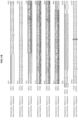
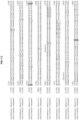
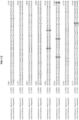
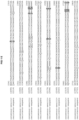
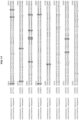
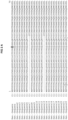
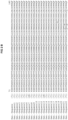
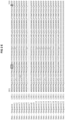
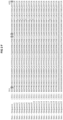
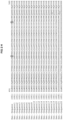
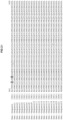
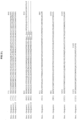
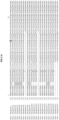
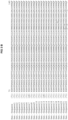
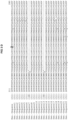
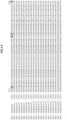
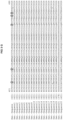
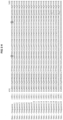
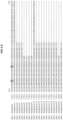
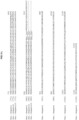
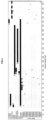
- the method may also comprise detecting at least one polymorphism according to Figure 1 , 2 and/or 3, preferably of at least two or three polymorphisms according to Figure 1 , 2 and/or 3, particularly preferably at least four, five or more polymorphisms according to Figure 1 , 2 and/or 3 in the coding nucleotide sequence of the nucleic acid molecule according to the invention using molecular markers which recognize the polymorphisms, in particular diagnostic polymorphisms.
- this detection takes place using at least one molecular marker per polymorphism, in particular per diagnostic polymorphism.
- the person skilled in the art knows which marker techniques are to be used to detect a corresponding polymorphism and how to construct molecular markers for this (literature). Furthermore, the present invention covers molecular markers which recognize a polymorphism according to Figure 1 , 2 and/or 3, as well as the use of a molecular marker to detect a polymorphism according to Figure 1 , 2 and/or 3. Furthermore, the above identification methods also represent methods for selecting a plant which has resistance to BNYVV. The method of selection comprises a final step of selecting a resistant plant.
- the present invention therefore relates to a method for selecting a plant which has resistance to BNYVV.
- the method for selection comprises the use of a molecular marker on a DNA sequence according to SEQ ID NO: 4 and/or on a DNA sequence according to SEQ ID NO: 5 and a final step of selecting a resistant plant.
- the person skilled in the art knows how to develop and use markers on the basis of the disclosed sequence information.
- the present invention also provides the following advantages for the breeding and development of new resistant plant lines of the genus Beta: Sequence information and the identified polymorphisms, which allow a distinction to be made between resistant RR and susceptible ss alleles of the disclosed gene, make marker development possible directly in the gene, which represents a significant relief for the plant breeder, particularly with regard to the development of optimized elite lines without "linkage drag".
- knowledge of the sequential structure can be used to identify further resistance genes, in particular against rhizomania, which are partially homologous, for example.
- resistant gene allele disclosed here in cis- or trans-genetic approaches opens up the possibility of developing new resistant varieties of the genus Beta, which have a higher resistance based on the dose effect or in which a break in resistance can be avoided and the resistance expression can be optimized by stacking the disclosed gene with other resistance genes. Furthermore, modifications of the gene by means of tilling or targeted engineering to develop new resistance alleles are conceivable.
- the present invention relates to the use of the identified resistant RZ3 gene allele in a genetic or molecular stack with other genetic elements that can impart agronomically advantageous properties in a plant.
- This can significantly increase the economic value of crops, for example by increasing yield or opening up new areas for a plant that were previously not accessible to the cultivation of this plant due to biotic factors such as strong pathogen pressure or abiotic factors such as drought.
- An agronomically advantageous property is, for example, tolerance to a herbicide such as glyphosate, glufosinate or ALS inhibitors.
- glyphosate glyphosate
- glufosinate or ALS inhibitors a herbicide
- Another example of an agronomically advantageous property is additional pathogen resistance, where pathogens can be, for example, insects, viruses, nematodes, bacteria or fungi. By combining different pathogen resistances/tolerances, a broad pathogen defense can be achieved for a plant, as genetic elements can have complementary effects. For this purpose, the expert is aware of numerous resistance genes as genetic elements.
- Another example of an agronomically advantageous property is cold or frost tolerance. Plants that have this property could be sown earlier in the year or could remain in the field for longer, for example during periods of frost, which could lead to increased yields. Here too, the expert can use the state of the art to find suitable genetic elements.
- Other examples of agronomically advantageous properties are water use efficiency, nitrogen use efficiency and yield. Genetic elements that can be used to impart such properties could be found in the state of the art.
- the expert is also aware of numerous modifications for pathogen defense.
- the Avr/R approach the Avr gene complementation ( WO 2013/127379 ), the autoactivation of an R gene ( WO 2006/128444 ), the HIGS (host induced gene silencing) approach (e.g. WO2013/050024 ) or the VIGS (virus induced gene silencing) approach can be used advantageously.
- the autoactivation of an R gene could be of importance for the present invention.
- a nucleic acid is to be created which encodes an autoactivated resistance protein for generating resistance to pathogens in plants.
- This nucleic acid then has only a limited part of an NBS-LRR resistance gene such as the RZ3 gene, which extends from the 5' end of the coding region of the NBS-LRR resistance gene downstream to the beginning of the NBS domain of the NBS-LRR resistance gene, wherein the NBS-LRR resistance gene is not a TIR-NBS-LRR resistance gene.
- an NBS-LRR resistance gene such as the RZ3 gene, which extends from the 5' end of the coding region of the NBS-LRR resistance gene downstream to the beginning of the NBS domain of the NBS-LRR resistance gene, wherein the NBS-LRR resistance gene is not a TIR-NBS-LRR resistance gene.
- the invention also includes the use of the resistant RZ3 gene allele identified by a method described above for combination with a modification as described above or with a genetic element as described above which can confer one or more agronomically advantageous traits in a plant.
- RZ-3 resistance also known as C48 resistance or C48
- C48 resistance also known as C48 resistance or C48
- C48 was mapped in several steps by means of mapping and fine mapping on chromosome 3 between 57.1 and 57.8 cM (internal reference map), i.e. at a genetic distance between two flanking markers of 0.0714 cM in the genetic map.
- a total of 8004 plants from the cross S504 (sensitive genotype) x T74 (resistant genotype) were examined for the mapping.
- new informative markers were developed in a targeted manner after each mapping step and used to restrict the C48 target region.
- the fine mapping coordinates were additionally confirmed by analyzing the offspring of the informative recombinants.
- Informative recombinant BC2S1 or BC2S2 plants were analyzed intensively with 90-180 offspring each. These offspring were genotyped individually and phenotyped in parallel.
- Statistical methods (t-test, power analysis) were used to detect the phenotypes of the informative recombinants (homozygous resistant-RR / heterozygous Rs / homozygous susceptible-ss) and thus draw conclusions about the genotype of the informative recombinants. If the homozygous classes of the offspring (RR versus ss) differ in resistance, the gene is in the heterozygous region (Rs) of the parent plant; otherwise in the homozygous region (RR or ss) of the parent plant.
- a physical map was generated for a rhizomania-sensitive genotype by projecting markers and their genetic positions onto the chromosome sequences. With the restriction of the C48 QTL region, new informative markers were developed based on the reference sequence and additional comparative sequencing in resistant genotypes (Next Generation Sequencing and Sanger Sequencing).
- the region identified by fine mapping covers a sequence length of 37,996 base pairs (positions of flanking SNP markers) in the sensitive reference sequence.
- the collinearity between the genetic and physical maps in the target region is consistent (sequence of 12 markers in the target region).
- a BAC library has been developed for a selected RZ-3 (C48) resistant genotype. This BAC Bank was screened with the applied markers in C48 QTL area. Several BAC clones were found for the target region identified above. Of these, three BAC clones of different lengths were selected for sequencing, which completely covered the target region. The BAC clones were sequenced and a "de novo" assembly was carried out based on the resulting sequence reads. Among the resulting resistant sequence contigs, the largest sequence had a length of 110909 bp (34537 reads) and completely covered the target region.
- the collinearity of the two ss and RR sequences was compared using different software tools.
- a gene annotation was carried out using the software Maker and Pedant.
- the gene annotation on both sequences showed the same sequence of putative genes. Surprisingly, however, a striking difference was found in one of these genes, namely in the gene of the present invention (RZ-3).
- RZ-3 the gene of the present invention
- a retrotransposon could be annotated in this identified NBS-LRR gene.
- the insertion of the retrotransposon occurred in the gene between the two domains of the LRR domain and the IR domain.
- the resistant genotype does not have this insertion and is shown in SEQ ID NO: 1.
- the predicted polypeptide sequences were subsequently compared and evaluated (partially shown in see Fig.2 and 3 ).
- the NB-ARC-LRR candidate gene was comparatively sequenced in two steps.
- the retrotransposon insertion site was verified in a genotype set with a total of 92 resistant and sensitive genotypes. This analysis showed that all resistant genotypes had no retrotransposon insertion. Of the sensitive genotypes, the insertion could be detected in more than 90% of cases. This means that the detection of the insertion appears to be coupled with the susceptible genotype. However, due to the inconsistencies found (about 10% of the remaining susceptible genotypes without insertion), the sequencing was extended in the second step to the entire gene upstream of the insertion site with the promoter region (SEQ ID NO: 1). A total of 31 selected resistant and susceptible genotypes, including the contradictory genotypes, were sequenced and compared.
- the first and second primer combinations are able to detect the insertion because one primer from each of the two primer pairs is located in the retrotransposon (left or right flank of the retrotransposon) and the second primer binds directly before or after the retrotransposon.
- a third primer pair detects the absence of the retrotransposon because the primers find a binding site before and after the retrotransposon.
- a PCR product under standard conditions can only be created if the retrotransposon is missing, otherwise the PCR product with the retrotransposon would be too large and no amplicon would be created.
- RNA interference a resistant standard sugar beet genotype was transformed with a DNA construct that encoded a double-stranded hairpin RNA. This dsRNA was able to cause post-transcriptional gene silencing, which would reduce or eliminate the effect of the resistant RZ-3 gene allele, making the previously resistant sugar beet genotype sensitive to rhizomania.
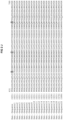
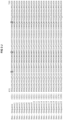
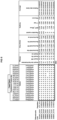
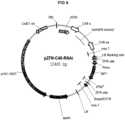
- a defined target sequence region of the resistant RZ3 gene allele of 434 base pairs in length (SEQ ID NO: 7; Figure 4 ), amplified by PCR and cloned in both sense and antisense directions into the vector pZFN, which is suitable for the synthesis of hairpin structures ( Fig.6 ).
- This vector has a double CaMV 35S promoter, a multiple cloning site, an intron from the gene AtAAP6, which encodes an amino acid permease in Arabidopsis thaliana , another multiple cloning site and a nos terminator.
- the transformation of the sugar beet with the vector provided was carried out according to the protocol of Lindsey & Gallois (1990) using the antibiotic kanamycin as a selection marker. After several selection steps, the successful transformation of transgenic shoots was checked via PCR by detecting the presence of the nptll gene, the AAP6 intron and the two t-DNA border sequences (LB/RB) and the absence of vir . Positive shoots were clonally propagated in vitro to 30 shoots each, rooted and transferred to soil in the greenhouse. About 2 weeks later, the transgenic sugar beet plants were pricked out into rhizomania-contaminated soil, in which they were cultivated for 8 to 10 weeks.
- Non-transformed plants from the same resistant genetic standard transformation background were used as controls under the same conditions.
- the roots of the sugar beet plants were harvested and the BNYVV infestation was quantified using an ELISA test, with a low ELISA value indicating resistance and a high value indicating sensitivity (Mechelke 1997, Clark & Adams 1977).
- the ELISA value of the transformed sugar beet was significantly higher with a mean value of 3.55 than the ELISA value of the still resistant control with a mean value of 1.27 and comparable to the sensitive standard D108_ss (Table 1).
Landscapes
- Life Sciences & Earth Sciences (AREA)
- Health & Medical Sciences (AREA)
- Chemical & Material Sciences (AREA)
- Genetics & Genomics (AREA)
- Organic Chemistry (AREA)
- Engineering & Computer Science (AREA)
- Molecular Biology (AREA)
- Biotechnology (AREA)
- Zoology (AREA)
- Wood Science & Technology (AREA)
- Proteomics, Peptides & Aminoacids (AREA)
- General Engineering & Computer Science (AREA)
- Bioinformatics & Cheminformatics (AREA)
- Biochemistry (AREA)
- General Health & Medical Sciences (AREA)
- Biophysics (AREA)
- Biomedical Technology (AREA)
- Analytical Chemistry (AREA)
- Microbiology (AREA)
- Physics & Mathematics (AREA)
- Botany (AREA)
- Virology (AREA)
- Cell Biology (AREA)
- Plant Pathology (AREA)
- Gastroenterology & Hepatology (AREA)
- Medicinal Chemistry (AREA)
- Mycology (AREA)
- Immunology (AREA)
- Breeding Of Plants And Reproduction By Means Of Culturing (AREA)
- Micro-Organisms Or Cultivation Processes Thereof (AREA)
- Measuring Or Testing Involving Enzymes Or Micro-Organisms (AREA)
- Peptides Or Proteins (AREA)
Priority Applications (5)
| Application Number | Priority Date | Filing Date | Title |
|---|---|---|---|
| EP18198740.5A EP3492595B1 (de) | 2013-06-17 | 2014-06-06 | Resistenzgen gegen rizomania |
| RS20190035A RS58268B2 (sr) | 2013-06-17 | 2014-06-06 | Gen otpornosti protiv rizomanije |
| HRP20182063TT HRP20182063T4 (hr) | 2013-06-17 | 2014-06-06 | Gen otpornosti na rizomaniju |
| PL14750139T PL3011037T3 (pl) | 2013-06-17 | 2014-06-06 | Gen oporności na rizomanię |
| SI201431034T SI3011037T1 (sl) | 2013-06-17 | 2014-06-06 | Gen, odporen proti rizomaniji |
Applications Claiming Priority (2)
| Application Number | Priority Date | Filing Date | Title |
|---|---|---|---|
| DE102013010026.7A DE102013010026A1 (de) | 2013-06-17 | 2013-06-17 | Resistenzgen gegen Rizomania |
| PCT/DE2014/000310 WO2014202044A1 (de) | 2013-06-17 | 2014-06-06 | Resistenzgen gegen rizomania |
Related Child Applications (3)
| Application Number | Title | Priority Date | Filing Date |
|---|---|---|---|
| EP18198740.5A Division EP3492595B1 (de) | 2013-06-17 | 2014-06-06 | Resistenzgen gegen rizomania |
| EP18198740.5A Division-Into EP3492595B1 (de) | 2013-06-17 | 2014-06-06 | Resistenzgen gegen rizomania |
| EP23217953.1 Division-Into | 2023-12-19 |
Publications (3)
| Publication Number | Publication Date |
|---|---|
| EP3011037A1 EP3011037A1 (de) | 2016-04-27 |
| EP3011037B1 EP3011037B1 (de) | 2018-10-10 |
| EP3011037B2 true EP3011037B2 (de) | 2024-06-26 |
Family
ID=51301097
Family Applications (2)
| Application Number | Title | Priority Date | Filing Date |
|---|---|---|---|
| EP14750139.9A Active EP3011037B2 (de) | 2013-06-17 | 2014-06-06 | Resistenzgen gegen rizomania |
| EP18198740.5A Active EP3492595B1 (de) | 2013-06-17 | 2014-06-06 | Resistenzgen gegen rizomania |
Family Applications After (1)
| Application Number | Title | Priority Date | Filing Date |
|---|---|---|---|
| EP18198740.5A Active EP3492595B1 (de) | 2013-06-17 | 2014-06-06 | Resistenzgen gegen rizomania |
Country Status (20)
| Country | Link |
|---|---|
| US (2) | US10017781B2 (pl) |
| EP (2) | EP3011037B2 (pl) |
| CN (2) | CN122012525A (pl) |
| CA (1) | CA2915902C (pl) |
| DE (1) | DE102013010026A1 (pl) |
| DK (1) | DK3011037T4 (pl) |
| EA (1) | EA034064B1 (pl) |
| ES (1) | ES2702903T5 (pl) |
| FI (1) | FI3011037T4 (pl) |
| HR (1) | HRP20182063T4 (pl) |
| HU (1) | HUE040732T2 (pl) |
| LT (1) | LT3011037T (pl) |
| NZ (1) | NZ715967A (pl) |
| PL (1) | PL3011037T3 (pl) |
| PT (1) | PT3011037T (pl) |
| RS (1) | RS58268B2 (pl) |
| SI (1) | SI3011037T1 (pl) |
| TR (1) | TR201819919T4 (pl) |
| UA (2) | UA120590C2 (pl) |
| WO (1) | WO2014202044A1 (pl) |
Families Citing this family (20)
| Publication number | Priority date | Publication date | Assignee | Title |
|---|---|---|---|---|
| DE102013010026A1 (de) † | 2013-06-17 | 2014-12-18 | Kws Saat Ag | Resistenzgen gegen Rizomania |
| US9402363B1 (en) | 2015-11-20 | 2016-08-02 | Rijk Zwaan Zaadteelt En Zaadhandel B.V. | Peronospora resistance in spinacia oleracea |
| WO2018059653A1 (en) * | 2016-09-30 | 2018-04-05 | Rijk Zwaan Zaadteelt En Zaadhandel B.V. | Peronospora resistance in spinacia oleracea |
| ES3049641T3 (en) * | 2016-08-10 | 2025-12-17 | Kws Saat Se & Co Kgaa | Resistance against rhizomania |
| EP3410845B1 (en) * | 2016-09-30 | 2026-04-29 | Rijk Zwaan Zaadteelt en Zaadhandel B.V. | Method for modifying the resistance profile of spinacia oleracea to downy mildew |
| WO2018059718A1 (en) * | 2016-09-30 | 2018-04-05 | Rijk Zwaan Zaadteelt En Zaadhandel B.V. | Peronospora resistance in spinacia oleracea |
| US10674688B2 (en) | 2017-09-29 | 2020-06-09 | Rijk Zwaan Zaadteelt En Zaadhandel B.V. | Peronospora resistance in spinacia oleracea |
| US10633670B2 (en) | 2017-09-29 | 2020-04-28 | Rijk Zwaan Zaadteelt En Zaadhandel B.V. | Method for modifying the resistance profile of spinacia oleracea to downy mildew |
| US20210017234A1 (en) * | 2018-03-16 | 2021-01-21 | SESVanderHave | Durable rhizomania resistance |
| PT3567111T (pt) | 2018-05-09 | 2025-10-23 | Kws Saat Se & Co Kgaa | Gene para resistência a um patógeno do género heterodera |
| EP3623379A1 (en) | 2018-09-11 | 2020-03-18 | KWS SAAT SE & Co. KGaA | Beet necrotic yellow vein virus (bnyvv)-resistance modifying gene |
| CN113573576B (zh) | 2018-12-21 | 2023-11-21 | 瑞克斯旺种苗集团公司 | 菠菜中的霜霉病抗性 |
| WO2020169178A1 (en) | 2019-02-18 | 2020-08-27 | KWS SAAT SE & Co. KGaA | Gene for resistance to plant disease |
| EP3696188A1 (en) | 2019-02-18 | 2020-08-19 | KWS SAAT SE & Co. KGaA | Gene for resistance to plant disease |
| US20230227841A1 (en) | 2019-02-18 | 2023-07-20 | KWS SAAT SE & Co. KGaA | Gene conferring resistance to cercospora beticola in beets |
| JP7753203B2 (ja) | 2019-11-12 | 2025-10-14 | カー・ヴェー・エス ザート エス・エー ウント コー. カー・ゲー・アー・アー | ヘテロデラ属の病原体に対する耐性遺伝子 |
| US20210282345A1 (en) | 2020-03-12 | 2021-09-16 | Rijk Zwaan Zaadteelt En Zaadhandel B.V. | Peronospora resistance in spinacia oleracea |
| EP3957168A1 (en) | 2020-08-17 | 2022-02-23 | KWS SAAT SE & Co. KGaA | Plant resistance gene and means for its identification |
| US11820993B2 (en) | 2020-10-30 | 2023-11-21 | Rijk Zwaan Zaadteelt En Zaadhandel B.V. | Peronospora resistance in Spinacia oleracea |
| US11473102B2 (en) | 2020-10-30 | 2022-10-18 | Rijk Zwaan Zaadteelt En Zaadhandel B.V. | Peronospora resistance in Spinacia oleracea |
Citations (2)
| Publication number | Priority date | Publication date | Assignee | Title |
|---|---|---|---|---|
| DE102013010026A1 (de) † | 2013-06-17 | 2014-12-18 | Kws Saat Ag | Resistenzgen gegen Rizomania |
| WO2020053313A1 (en) † | 2018-09-11 | 2020-03-19 | KWS SAAT SE & Co. KGaA | Beet necrotic yellow vein virus (bnyvv)-resistance modifying gene |
Family Cites Families (10)
| Publication number | Priority date | Publication date | Assignee | Title |
|---|---|---|---|---|
| DE3765449D1 (de) | 1986-03-11 | 1990-11-15 | Plant Genetic Systems Nv | Durch gentechnologie erhaltene und gegen glutaminsynthetase-inhibitoren resistente pflanzenzellen. |
| EP0552393B1 (en) | 1992-01-23 | 1997-05-28 | KWS KLEINWANZLEBENER SAATZUCHT Aktiengesellschaft vorm. Rabbethge & Giesecke | A method for identifying BNYV-Virus resistant beta beet plants or beet seeds as well as a RFLP probe for the accomplishment of said method |
| TR200101342T2 (tr) | 1998-11-12 | 2001-09-21 | Max-Planck-Gesellschaft Zur Foerderung Der Wissenschaften | Patojen enfeksiyonu üzerine bitkilerde gen ekspresyonuna aracılık edebilen şimerik promoterler |
| US7335816B2 (en) | 2003-02-28 | 2008-02-26 | Kws Saat Ag | Glyphosate tolerant sugar beet |
| DE102005026045A1 (de) | 2005-06-03 | 2007-06-14 | Kws Saat Ag | Nukleinsäure, die für ein autoaktiviertes Resistenzprotein zur Erzeugung einer Resistenz gegenüber Pathogenen bei Pflanzen codiert |
| DE102006029129A1 (de) | 2006-06-22 | 2007-12-27 | Kws Saat Ag | Pathogen induzierbarer synthetischer Promotor |
| EA036006B1 (ru) | 2010-10-15 | 2020-09-11 | Байер Интеллектуэль Проперти Гмбх | Мутанты beta vulgaris, толерантные к als-ингибиторным гербицидам |
| DE102011114914A1 (de) | 2011-10-06 | 2013-04-11 | Kws Saat Ag | Transgene pflanze der art beta vulgaris mit gesteigerter resistenz gegenüber cercospora |
| DE102011122267A1 (de) | 2011-12-23 | 2013-06-27 | Kws Saat Ag | Neue aus Pflanzen stammende cis-regulatorische Elemente für die Entwicklung Pathogen-responsiver chimärer Promotoren |
| DE102012003848A1 (de) | 2012-02-29 | 2013-08-29 | Kws Saat Ag | Pathogenresistente transgene Pflanze |
-
2013
- 2013-06-17 DE DE102013010026.7A patent/DE102013010026A1/de not_active Withdrawn
-
2014
- 2014-06-06 ES ES14750139T patent/ES2702903T5/es active Active
- 2014-06-06 FI FIEP14750139.9T patent/FI3011037T4/fi active
- 2014-06-06 EP EP14750139.9A patent/EP3011037B2/de active Active
- 2014-06-06 RS RS20190035A patent/RS58268B2/sr unknown
- 2014-06-06 EA EA201690011A patent/EA034064B1/ru not_active IP Right Cessation
- 2014-06-06 WO PCT/DE2014/000310 patent/WO2014202044A1/de not_active Ceased
- 2014-06-06 HR HRP20182063TT patent/HRP20182063T4/hr unknown
- 2014-06-06 CN CN202610219750.0A patent/CN122012525A/zh active Pending
- 2014-06-06 DK DK14750139.9T patent/DK3011037T4/da active
- 2014-06-06 US US14/899,416 patent/US10017781B2/en active Active
- 2014-06-06 UA UAA201512799A patent/UA120590C2/uk unknown
- 2014-06-06 UA UAA201907608A patent/UA122310C2/uk unknown
- 2014-06-06 CA CA2915902A patent/CA2915902C/en active Active
- 2014-06-06 TR TR2018/19919T patent/TR201819919T4/tr unknown
- 2014-06-06 CN CN201480045665.2A patent/CN105612256A/zh active Pending
- 2014-06-06 HU HUE14750139A patent/HUE040732T2/hu unknown
- 2014-06-06 EP EP18198740.5A patent/EP3492595B1/de active Active
- 2014-06-06 SI SI201431034T patent/SI3011037T1/sl unknown
- 2014-06-06 PT PT14750139T patent/PT3011037T/pt unknown
- 2014-06-06 NZ NZ715967A patent/NZ715967A/en unknown
- 2014-06-06 LT LTEP14750139.9T patent/LT3011037T/lt unknown
- 2014-06-06 PL PL14750139T patent/PL3011037T3/pl unknown
-
2018
- 2018-06-12 US US16/006,181 patent/US10731175B2/en active Active
Patent Citations (2)
| Publication number | Priority date | Publication date | Assignee | Title |
|---|---|---|---|---|
| DE102013010026A1 (de) † | 2013-06-17 | 2014-12-18 | Kws Saat Ag | Resistenzgen gegen Rizomania |
| WO2020053313A1 (en) † | 2018-09-11 | 2020-03-19 | KWS SAAT SE & Co. KGaA | Beet necrotic yellow vein virus (bnyvv)-resistance modifying gene |
Non-Patent Citations (29)
| Title |
|---|
| Abram, Mike, "Aggressive rhizomania resistance-beating strain found in Norfolk sugar beet" Web extract Farmers weekly dated, Feb. 15,2011, https://www.fwi.co.uk/arable/aggressive-rhizomania-resistance-beating-strain-found-innorfolk-sugar-beet † |
| ANONYMOUS: "2013 Sugarbeet Research and Extension Reports", NORTH DAKOTA STATE UNIVERSITY, vol. 44, 1 January 2014 (2014-01-01), pages 2pp, 249, 263, 272, 273 † |
| ANONYMOUS: "Abstract brochure Part A:Papers", FOURTH MEETING OF THE ECPGR WORKING GROUP ON BETA AND THE WORLD BETA NETWORK, 20 June 2012 (2012-06-20) - 22 June 2012 (2012-06-22), pages 9 † |
| Crop Production Magazine, Vol. 13, No. 5, June 2011 Issue; particular relevance : pages 46-54, https://www.cpm-magazme.co.uk/wp-content/uploads/2016/07/CPM_ June_ 2011.pdf † |
| CUI, Y. ET AL.: "Fine Mapping of the Bsrl Barley Stripe Mosaic Virus Resistance Gene in the Model Grass Brachypodium distachyon", PLOS ONE, vol. 7, no. 6, June 2012 (2012-06-01), pages e38333-1 - e38333-10 † |
| Data sequencing of the variety 36812 RR (cfr D15) from the external provider Eurofins Genomics and explanations on how the sequencing has been carried out † |
| DATABASE Nucleotide 2006, TIAN ET AL.: "Beta vulgaris clone cZR-7(f) NBS-LRR type resistance protein mRNA, complete cds", retrieved from NCBI Database accession no. DQ907612.1 † |
| Declaration of Dr. Harlene Hatterman-Valenti † |
| Declaration of Dr. Hendrik Tschoep † |
| Dohm et al, "GenBank AYZW01060923.1" 17.12.2013, [cited 14.02.2019] † |
| FRIEDRICH J. KOPISCH-OBUCH ET AL.,: "Maintaining High Levels of Rhizomania Resistance in Sugar Beet Cultivars", 76TH IIRB CONGRESS, 6 June 2018 (2018-06-06), pages 1 - 13 † |
| GINA G CAPISTRANO-GOSSMANN; ET AL: "Crop wild relative populations of Beta vulgaris allow direct mapping of agronomically important genes", NATURE COMMUNICATIONS, vol. 8, 2017, pages 1 - 8 † |
| HARJU VAL, ET AL: "Rhizomania P type - a new threat to growers?", BRITISH SUGAR BEET REVIEW, vol. 70, no. 3, 1 January 2002 (2002-01-01), pages 22 - 27, XP055889669 † |
| KWS SAAT SE: "KWS sees the Breeding Reservation weakened by a patent decision of the EPO", AGROPAGES, 13 December 2018 (2018-12-13), Retrieved from the Internet <URL:http://news.agropages.com/News/NewsDetail---28699.htm> † |
| KWS, "What is RZ2.0 Double Resistance? "Web extract from KWS. Dated by Google in 2011, https://www.kws.com/corp/en/products/sugarbeet/progress-made-by-innovation/r-d-andbreedinq/rz-2-0/ † |
| MEULEMANS ET AL.: "Interaction between different genes and influence of the genetic background in the expression of Rhizomania resistance", 1ST JOINT IIRB-ASSBT CONGRESS,, 2003, pages 161 - 173 † |
| PFERDMENGES F.: "Occurrence, spread and pathogenicity of different Beet necrotic yellow vein virus (BNYVV) isolates", DISSERTATION GEORG-AUGUST UNIVERSITÄT GÖTTINGEN, 1 September 2007 (2007-09-01), pages 1 - 111 † |
| Pferdmenges, Friederike et al., "Beet necrotic yellow vein virus (BNYW) P-type overcomes resistance in Rz1 x Rz2sugar beet hybrids after mechanical inoculation" 2006: poster † |
| RUSH CHARLES ET AL: "The Continuing Saga of Rhizomania of Sugar Beets in the United States", PLANT DISEASE, vol. 90, no. 1, 1 January 2006 (2006-01-01), pages 1 - 12 † |
| Scheme of the DNA extraction procedure performed at SESVANDERHAVE † |
| SES VanderHave, "SEQ ID NO:1 vs ARYA01032019.1" 13.05.2013, [cited 04.02.2019] † |
| SES VanderHave, "Sequence element from Capistrano et al around probe CAU38880", [cited 25.01.2019] † |
| SES VanderHave. "GenBank ARYA01032019.1" 13.06.2013, [cited 14.02.2019] † |
| SES VanderHave. "Rz2 Capistrano vs Rz3 KWS". [cited 25.01.2019] † |
| SES VanderHave. "SEQ ID NO:1 vs Capistrano", [cited 14,02.2019] † |
| SES VanderHave. "Rz2/3 vs shotgun", [cited 28.01.2019] † |
| TANDEM TECHNOLOGY: "Magistral leaflet", SES VANDERHAVE TECHNICAL BULLETIN, 8 August 2007 (2007-08-08) † |
| THIEL ET AL.: "Identification of Beet necrotic yellow vein virus P25 Pathogenicity Factor - Interacting Sugar Beet Proteins That Represent Putative Virus Targets or Components of Plant Resistance", MOLECULAR PLANT-MICROBE INTERACTIONS,, vol. 22, no. 8, 2009, pages 999 - 1010 † |
| WAN-SONG NI ET AL.: "Construction of a Plant Transformation-ready Expression cDNA Library for Thellungiella halophila Using Recombination Cloning", JOURNAL OF INTEGRATIVE PLANT BIOLOGY, vol. 49, no. 9, 2007, pages 1313 - 1319 † |
Also Published As
Similar Documents
| Publication | Publication Date | Title |
|---|---|---|
| EP3492595B1 (de) | Resistenzgen gegen rizomania | |
| WO2015032494A2 (de) | Helminthosporium turcicum-resistente pflanze | |
| WO2017178541A1 (de) | Kernkodierte männliche sterilität durch mutation in cytochrom p450 oxidase | |
| WO2013127379A1 (de) | Pathogenresistente transgene pflanze | |
| AU2025252593A1 (en) | Gene for resistance to plant disease | |
| DE102013014637A1 (de) | HELMlNTHOSPORlUM TURClCUM-RESlSTENTE PFLANZE | |
| EP3623379A1 (en) | Beet necrotic yellow vein virus (bnyvv)-resistance modifying gene | |
| EP3380618B1 (de) | Kühletolerante pflanze | |
| US20220403407A1 (en) | Resistance gene to rhizomania | |
| EP3567111B1 (en) | Gene for resistance to a pathogen of the genus heterodera | |
| US20220389443A1 (en) | Gene for resistance to a pathogen of the genus heterodera |
Legal Events
| Date | Code | Title | Description |
|---|---|---|---|
| PUAI | Public reference made under article 153(3) epc to a published international application that has entered the european phase |
Free format text: ORIGINAL CODE: 0009012 |
|
| 17P | Request for examination filed |
Effective date: 20160118 |
|
| AK | Designated contracting states |
Kind code of ref document: A1 Designated state(s): AL AT BE BG CH CY CZ DE DK EE ES FI FR GB GR HR HU IE IS IT LI LT LU LV MC MK MT NL NO PL PT RO RS SE SI SK SM TR |
|
| AX | Request for extension of the european patent |
Extension state: BA ME |
|
| DAX | Request for extension of the european patent (deleted) | ||
| STAA | Information on the status of an ep patent application or granted ep patent |
Free format text: STATUS: EXAMINATION IS IN PROGRESS |
|
| 17Q | First examination report despatched |
Effective date: 20170130 |
|
| TPAC | Observations filed by third parties |
Free format text: ORIGINAL CODE: EPIDOSNTIPA |
|
| GRAP | Despatch of communication of intention to grant a patent |
Free format text: ORIGINAL CODE: EPIDOSNIGR1 |
|
| STAA | Information on the status of an ep patent application or granted ep patent |
Free format text: STATUS: GRANT OF PATENT IS INTENDED |
|
| INTG | Intention to grant announced |
Effective date: 20180430 |
|
| GRAS | Grant fee paid |
Free format text: ORIGINAL CODE: EPIDOSNIGR3 |
|
| GRAA | (expected) grant |
Free format text: ORIGINAL CODE: 0009210 |
|
| STAA | Information on the status of an ep patent application or granted ep patent |
Free format text: STATUS: THE PATENT HAS BEEN GRANTED |
|
| AK | Designated contracting states |
Kind code of ref document: B1 Designated state(s): AL AT BE BG CH CY CZ DE DK EE ES FI FR GB GR HR HU IE IS IT LI LT LU LV MC MK MT NL NO PL PT RO RS SE SI SK SM TR |
|
| REG | Reference to a national code |
Ref country code: GB Ref legal event code: FG4D Free format text: NOT ENGLISH |
|
| REG | Reference to a national code |
Ref country code: AT Ref legal event code: REF Ref document number: 1051285 Country of ref document: AT Kind code of ref document: T Effective date: 20181015 Ref country code: CH Ref legal event code: EP |
|
| REG | Reference to a national code |
Ref country code: IE Ref legal event code: FG4D Free format text: LANGUAGE OF EP DOCUMENT: GERMAN |
|
| REG | Reference to a national code |
Ref country code: DE Ref legal event code: R096 Ref document number: 502014009725 Country of ref document: DE |
|
| REG | Reference to a national code |
Ref country code: CH Ref legal event code: NV Representative=s name: ISLER AND PEDRAZZINI AG, CH |
|
| REG | Reference to a national code |
Ref country code: HR Ref legal event code: TUEP Ref document number: P20182063 Country of ref document: HR |
|
| REG | Reference to a national code |
Ref country code: PT Ref legal event code: SC4A Ref document number: 3011037 Country of ref document: PT Date of ref document: 20181219 Kind code of ref document: T Free format text: AVAILABILITY OF NATIONAL TRANSLATION Effective date: 20181213 |
|
| REG | Reference to a national code |
Ref country code: RO Ref legal event code: EPE |
|
| REG | Reference to a national code |
Ref country code: SE Ref legal event code: TRGR |
|
| REG | Reference to a national code |
Ref country code: DK Ref legal event code: T3 Effective date: 20190128 |
|
| REG | Reference to a national code |
Ref country code: HR Ref legal event code: T1PR Ref document number: P20182063 Country of ref document: HR |
|
| REG | Reference to a national code |
Ref country code: NL Ref legal event code: MP Effective date: 20181010 |
|
| REG | Reference to a national code |
Ref country code: NO Ref legal event code: T2 Effective date: 20181010 |
|
| REG | Reference to a national code |
Ref country code: ES Ref legal event code: FG2A Ref document number: 2702903 Country of ref document: ES Kind code of ref document: T3 Effective date: 20190306 |
|
| REG | Reference to a national code |
Ref country code: EE Ref legal event code: FG4A Ref document number: E016821 Country of ref document: EE Effective date: 20190107 |
|
| REG | Reference to a national code |
Ref country code: NL Ref legal event code: NE Effective date: 20190314 |
|
| REG | Reference to a national code |
Ref country code: HU Ref legal event code: AG4A Ref document number: E040732 Country of ref document: HU |
|
| PG25 | Lapsed in a contracting state [announced via postgrant information from national office to epo] |
Ref country code: NL Free format text: LAPSE BECAUSE OF FAILURE TO SUBMIT A TRANSLATION OF THE DESCRIPTION OR TO PAY THE FEE WITHIN THE PRESCRIBED TIME-LIMIT Effective date: 20181010 |
|
| REG | Reference to a national code |
Ref country code: GR Ref legal event code: EP Ref document number: 20190400002 Country of ref document: GR Effective date: 20190422 |
|
| REG | Reference to a national code |
Ref country code: HR Ref legal event code: ODRP Ref document number: P20182063 Country of ref document: HR Payment date: 20190521 Year of fee payment: 6 |
|
| REG | Reference to a national code |
Ref country code: NL Ref legal event code: NG Ref country code: NL Ref legal event code: FP |
|
| REG | Reference to a national code |
Ref country code: DE Ref legal event code: R026 Ref document number: 502014009725 Country of ref document: DE |
|
| PLBI | Opposition filed |
Free format text: ORIGINAL CODE: 0009260 |
|
| PLAX | Notice of opposition and request to file observation + time limit sent |
Free format text: ORIGINAL CODE: EPIDOSNOBS2 |
|
| PG25 | Lapsed in a contracting state [announced via postgrant information from national office to epo] |
Ref country code: NL Free format text: LAPSE BECAUSE OF FAILURE TO SUBMIT A TRANSLATION OF THE DESCRIPTION OR TO PAY THE FEE WITHIN THE PRESCRIBED TIME-LIMIT Effective date: 20181010 |
|
| PGRI | Patent reinstated in contracting state [announced from national office to epo] |
Ref country code: NL Effective date: 20190612 |
|
| 26 | Opposition filed |
Opponent name: SES VANDERHAVE Effective date: 20190709 |
|
| PG25 | Lapsed in a contracting state [announced via postgrant information from national office to epo] |
Ref country code: SM Free format text: LAPSE BECAUSE OF FAILURE TO SUBMIT A TRANSLATION OF THE DESCRIPTION OR TO PAY THE FEE WITHIN THE PRESCRIBED TIME-LIMIT Effective date: 20181010 |
|
| RAP2 | Party data changed (patent owner data changed or rights of a patent transferred) |
Owner name: KWS SAAT SE & CO. KGAA |
|
| REG | Reference to a national code |
Ref country code: CH Ref legal event code: PFA Owner name: KWS SAAT SE AND CO. KGAA, DE Free format text: FORMER OWNER: KWS SAAT SE, DE |
|
| PLBB | Reply of patent proprietor to notice(s) of opposition received |
Free format text: ORIGINAL CODE: EPIDOSNOBS3 |
|
| PG25 | Lapsed in a contracting state [announced via postgrant information from national office to epo] |
Ref country code: MC Free format text: LAPSE BECAUSE OF FAILURE TO SUBMIT A TRANSLATION OF THE DESCRIPTION OR TO PAY THE FEE WITHIN THE PRESCRIBED TIME-LIMIT Effective date: 20181010 |
|
| PLAY | Examination report in opposition despatched + time limit |
Free format text: ORIGINAL CODE: EPIDOSNORE2 |
|
| REG | Reference to a national code |
Ref country code: HR Ref legal event code: ODRP Ref document number: P20182063 Country of ref document: HR Payment date: 20200525 Year of fee payment: 7 |
|
| PLBC | Reply to examination report in opposition received |
Free format text: ORIGINAL CODE: EPIDOSNORE3 |
|
| PG25 | Lapsed in a contracting state [announced via postgrant information from national office to epo] |
Ref country code: CY Free format text: LAPSE BECAUSE OF FAILURE TO SUBMIT A TRANSLATION OF THE DESCRIPTION OR TO PAY THE FEE WITHIN THE PRESCRIBED TIME-LIMIT Effective date: 20181010 |
|
| REG | Reference to a national code |
Ref country code: HR Ref legal event code: ODRP Ref document number: P20182063 Country of ref document: HR Payment date: 20210524 Year of fee payment: 8 |
|
| PG25 | Lapsed in a contracting state [announced via postgrant information from national office to epo] |
Ref country code: MT Free format text: LAPSE BECAUSE OF FAILURE TO SUBMIT A TRANSLATION OF THE DESCRIPTION OR TO PAY THE FEE WITHIN THE PRESCRIBED TIME-LIMIT Effective date: 20181010 |
|
| PLAB | Opposition data, opponent's data or that of the opponent's representative modified |
Free format text: ORIGINAL CODE: 0009299OPPO |
|
| R26 | Opposition filed (corrected) |
Opponent name: SES VANDERHAVE Effective date: 20190709 |
|
| REG | Reference to a national code |
Ref country code: HR Ref legal event code: ODRP Ref document number: P20182063 Country of ref document: HR Payment date: 20220524 Year of fee payment: 9 |
|
| APBM | Appeal reference recorded |
Free format text: ORIGINAL CODE: EPIDOSNREFNO |
|
| APBP | Date of receipt of notice of appeal recorded |
Free format text: ORIGINAL CODE: EPIDOSNNOA2O |
|
| APAH | Appeal reference modified |
Free format text: ORIGINAL CODE: EPIDOSCREFNO |
|
| APBQ | Date of receipt of statement of grounds of appeal recorded |
Free format text: ORIGINAL CODE: EPIDOSNNOA3O |
|
| PGFP | Annual fee paid to national office [announced via postgrant information from national office to epo] |
Ref country code: AL Payment date: 20220531 Year of fee payment: 9 |
|
| REG | Reference to a national code |
Ref country code: EE Ref legal event code: MM4A Ref document number: E016821 Country of ref document: EE Effective date: 20220630 |
|
| PG25 | Lapsed in a contracting state [announced via postgrant information from national office to epo] |
Ref country code: EE Free format text: LAPSE BECAUSE OF NON-PAYMENT OF DUE FEES Effective date: 20220630 |
|
| REG | Reference to a national code |
Ref country code: HR Ref legal event code: ODRP Ref document number: P20182063 Country of ref document: HR Payment date: 20230526 Year of fee payment: 10 |
|
| P01 | Opt-out of the competence of the unified patent court (upc) registered |
Effective date: 20230526 |
|
| REG | Reference to a national code |
Ref country code: EE Ref legal event code: TH4A Ref document number: E016821 Country of ref document: EE |
|
| PGFP | Annual fee paid to national office [announced via postgrant information from national office to epo] |
Ref country code: NO Payment date: 20230627 Year of fee payment: 10 Ref country code: EE Payment date: 20230626 Year of fee payment: 10 Ref country code: BG Payment date: 20230629 Year of fee payment: 10 |
|
| PGFP | Annual fee paid to national office [announced via postgrant information from national office to epo] |
Ref country code: SI Payment date: 20230526 Year of fee payment: 10 Ref country code: LV Payment date: 20230622 Year of fee payment: 10 Ref country code: IS Payment date: 20230608 Year of fee payment: 10 |
|
| APBU | Appeal procedure closed |
Free format text: ORIGINAL CODE: EPIDOSNNOA9O |
|
| PGFP | Annual fee paid to national office [announced via postgrant information from national office to epo] |
Ref country code: MK Payment date: 20230525 Year of fee payment: 10 |
|
| PUAH | Patent maintained in amended form |
Free format text: ORIGINAL CODE: 0009272 |
|
| STAA | Information on the status of an ep patent application or granted ep patent |
Free format text: STATUS: PATENT MAINTAINED AS AMENDED |
|
| REG | Reference to a national code |
Ref country code: HR Ref legal event code: ODRP Ref document number: P20182063 Country of ref document: HR Payment date: 20240604 Year of fee payment: 11 |
|
| 27A | Patent maintained in amended form |
Effective date: 20240626 |
|
| AK | Designated contracting states |
Kind code of ref document: B2 Designated state(s): AL AT BE BG CH CY CZ DE DK EE ES FI FR GB GR HR HU IE IS IT LI LT LU LV MC MK MT NL NO PL PT RO RS SE SI SK SM TR |
|
| REG | Reference to a national code |
Ref country code: DE Ref legal event code: R102 Ref document number: 502014009725 Country of ref document: DE |
|
| PGFP | Annual fee paid to national office [announced via postgrant information from national office to epo] |
Ref country code: PL Payment date: 20240529 Year of fee payment: 11 |
|
| REG | Reference to a national code |
Ref country code: DK Ref legal event code: T4 Effective date: 20240903 |
|
| REG | Reference to a national code |
Ref country code: NL Ref legal event code: FP |
|
| REG | Reference to a national code |
Ref country code: HR Ref legal event code: T4IZ Ref document number: P20182063 Country of ref document: HR |
|
| REG | Reference to a national code |
Ref country code: SE Ref legal event code: RPEO |
|
| REG | Reference to a national code |
Ref country code: SK Ref legal event code: TC4A Ref document number: E 29726 Country of ref document: SK Owner name: KWS SAAT SE & CO. KGAA, EINBECK, DE Effective date: 20240924 |
|
| REG | Reference to a national code |
Ref country code: HR Ref legal event code: PNAN Ref document number: P20182063 Country of ref document: HR Owner name: KWS SAAT SE & CO. KGAA, DE |
|
| REG | Reference to a national code |
Ref country code: NL Ref legal event code: PD Owner name: KWS SAAT SE & CO. KGAA; DE Free format text: DETAILS ASSIGNMENT: CHANGE OF OWNER(S), CHANGE OF LEGAL ENTITY; FORMER OWNER NAME: KWS SAAT SE Effective date: 20241011 |
|
| REG | Reference to a national code |
Ref country code: GR Ref legal event code: EP Ref document number: 20240401959 Country of ref document: GR Effective date: 20241007 |
|
| REG | Reference to a national code |
Ref country code: SK Ref legal event code: T5 Ref document number: E 29726 Country of ref document: SK |
|
| REG | Reference to a national code |
Ref country code: ES Ref legal event code: DC2A Ref document number: 2702903 Country of ref document: ES Kind code of ref document: T5 Effective date: 20241120 |
|
| REG | Reference to a national code |
Ref country code: BE Ref legal event code: PD Owner name: KWS SAAT SE & CO. KGAA; DE Free format text: DETAILS ASSIGNMENT: CHANGE OF OWNER(S), CHANGE OF LEGAL ENTITY; FORMER OWNER NAME: KWS SAAT SE Effective date: 20240902 |
|
| REG | Reference to a national code |
Ref country code: AT Ref legal event code: PC Ref document number: 1051285 Country of ref document: AT Kind code of ref document: T Owner name: KWS SAAT SE & CO. KGAA, DE Effective date: 20241030 |
|
| REG | Reference to a national code |
Ref country code: HU Ref legal event code: GB9C Owner name: KWS SAAT SE & CO. KGAA, DE Free format text: FORMER OWNER(S): KWS SAAT SE, DE Ref country code: HU Ref legal event code: FH1C Free format text: FORMER REPRESENTATIVE(S): SBGK SZABADALMI UEGYVIVOEI IRODA, HU Representative=s name: SBGK SZABADALMI UEGYVIVOEI IRODA, HU |
|
| PG25 | Lapsed in a contracting state [announced via postgrant information from national office to epo] |
Ref country code: NO Free format text: LAPSE BECAUSE OF FAILURE TO SUBMIT A TRANSLATION OF THE DESCRIPTION OR TO PAY THE FEE WITHIN THE PRESCRIBED TIME-LIMIT Effective date: 20240926 |
|
| PG25 | Lapsed in a contracting state [announced via postgrant information from national office to epo] |
Ref country code: LV Free format text: LAPSE BECAUSE OF NON-PAYMENT OF DUE FEES Effective date: 20240606 |
|
| PG25 | Lapsed in a contracting state [announced via postgrant information from national office to epo] |
Ref country code: NO Free format text: LAPSE BECAUSE OF FAILURE TO SUBMIT A TRANSLATION OF THE DESCRIPTION OR TO PAY THE FEE WITHIN THE PRESCRIBED TIME-LIMIT Effective date: 20240926 Ref country code: LV Free format text: LAPSE BECAUSE OF NON-PAYMENT OF DUE FEES Effective date: 20240606 |
|
| REG | Reference to a national code |
Ref country code: EE Ref legal event code: MM4A Ref document number: E016821 Country of ref document: EE Effective date: 20240630 |
|
| PGFP | Annual fee paid to national office [announced via postgrant information from national office to epo] |
Ref country code: SE Payment date: 20250304 Year of fee payment: 12 |
|
| PG25 | Lapsed in a contracting state [announced via postgrant information from national office to epo] |
Ref country code: EE Free format text: LAPSE BECAUSE OF NON-PAYMENT OF DUE FEES Effective date: 20240630 |
|
| REG | Reference to a national code |
Ref country code: HR Ref legal event code: ODRP Ref document number: P20182063 Country of ref document: HR Payment date: 20250523 Year of fee payment: 12 |
|
| PGFP | Annual fee paid to national office [announced via postgrant information from national office to epo] |
Ref country code: FI Payment date: 20250624 Year of fee payment: 12 |
|
| PGFP | Annual fee paid to national office [announced via postgrant information from national office to epo] |
Ref country code: DE Payment date: 20250630 Year of fee payment: 12 |
|
| PGFP | Annual fee paid to national office [announced via postgrant information from national office to epo] |
Ref country code: GB Payment date: 20250621 Year of fee payment: 12 Ref country code: DK Payment date: 20250620 Year of fee payment: 12 |
|
| PGFP | Annual fee paid to national office [announced via postgrant information from national office to epo] |
Ref country code: LT Payment date: 20250528 Year of fee payment: 12 |
|
| PGFP | Annual fee paid to national office [announced via postgrant information from national office to epo] |
Ref country code: RS Payment date: 20250522 Year of fee payment: 12 |
|
| PGFP | Annual fee paid to national office [announced via postgrant information from national office to epo] |
Ref country code: LU Payment date: 20250620 Year of fee payment: 12 Ref country code: NL Payment date: 20250621 Year of fee payment: 12 Ref country code: BE Payment date: 20250621 Year of fee payment: 12 |
|
| PGFP | Annual fee paid to national office [announced via postgrant information from national office to epo] |
Ref country code: HR Payment date: 20250523 Year of fee payment: 12 |
|
| PGFP | Annual fee paid to national office [announced via postgrant information from national office to epo] |
Ref country code: PT Payment date: 20250526 Year of fee payment: 12 |
|
| PGFP | Annual fee paid to national office [announced via postgrant information from national office to epo] |
Ref country code: HU Payment date: 20250530 Year of fee payment: 12 Ref country code: FR Payment date: 20250617 Year of fee payment: 12 |
|
| PGFP | Annual fee paid to national office [announced via postgrant information from national office to epo] |
Ref country code: GR Payment date: 20250623 Year of fee payment: 12 |
|
| PGFP | Annual fee paid to national office [announced via postgrant information from national office to epo] |
Ref country code: RO Payment date: 20250523 Year of fee payment: 12 Ref country code: AT Payment date: 20250618 Year of fee payment: 12 |
|
| PGFP | Annual fee paid to national office [announced via postgrant information from national office to epo] |
Ref country code: SK Payment date: 20250523 Year of fee payment: 12 Ref country code: TR Payment date: 20250526 Year of fee payment: 12 |
|
| PGFP | Annual fee paid to national office [announced via postgrant information from national office to epo] |
Ref country code: CZ Payment date: 20250522 Year of fee payment: 12 |
|
| PGFP | Annual fee paid to national office [announced via postgrant information from national office to epo] |
Ref country code: IE Payment date: 20250618 Year of fee payment: 12 |
|
| REG | Reference to a national code |
Ref country code: SI Ref legal event code: KO00 Effective date: 20240607 |
|
| PGFP | Annual fee paid to national office [announced via postgrant information from national office to epo] |
Ref country code: ES Payment date: 20250701 Year of fee payment: 12 |
|
| PGFP | Annual fee paid to national office [announced via postgrant information from national office to epo] |
Ref country code: IT Payment date: 20250627 Year of fee payment: 12 |
|
| PGFP | Annual fee paid to national office [announced via postgrant information from national office to epo] |
Ref country code: CH Payment date: 20250701 Year of fee payment: 12 |
|
| PG25 | Lapsed in a contracting state [announced via postgrant information from national office to epo] |
Ref country code: BG Free format text: LAPSE BECAUSE OF NON-PAYMENT OF DUE FEES Effective date: 20240927 |