EP3000888B1 - Process for converting ferulic acid into vanillin - Google Patents
Process for converting ferulic acid into vanillin Download PDFInfo
- Publication number
- EP3000888B1 EP3000888B1 EP14186796.0A EP14186796A EP3000888B1 EP 3000888 B1 EP3000888 B1 EP 3000888B1 EP 14186796 A EP14186796 A EP 14186796A EP 3000888 B1 EP3000888 B1 EP 3000888B1
- Authority
- EP
- European Patent Office
- Prior art keywords
- vdh
- amycolatopsis
- atcc
- vanillin
- fragment
- Prior art date
- Legal status (The legal status is an assumption and is not a legal conclusion. Google has not performed a legal analysis and makes no representation as to the accuracy of the status listed.)
- Not-in-force
Links
Images


Classifications
-
- C—CHEMISTRY; METALLURGY
- C12—BIOCHEMISTRY; BEER; SPIRITS; WINE; VINEGAR; MICROBIOLOGY; ENZYMOLOGY; MUTATION OR GENETIC ENGINEERING
- C12Y—ENZYMES
- C12Y102/00—Oxidoreductases acting on the aldehyde or oxo group of donors (1.2)
- C12Y102/01—Oxidoreductases acting on the aldehyde or oxo group of donors (1.2) with NAD+ or NADP+ as acceptor (1.2.1)
- C12Y102/01067—Vanillin dehydrogenase (1.2.1.67)
-
- C—CHEMISTRY; METALLURGY
- C12—BIOCHEMISTRY; BEER; SPIRITS; WINE; VINEGAR; MICROBIOLOGY; ENZYMOLOGY; MUTATION OR GENETIC ENGINEERING
- C12N—MICROORGANISMS OR ENZYMES; COMPOSITIONS THEREOF; PROPAGATING, PRESERVING, OR MAINTAINING MICROORGANISMS; MUTATION OR GENETIC ENGINEERING; CULTURE MEDIA
- C12N15/00—Mutation or genetic engineering; DNA or RNA concerning genetic engineering, vectors, e.g. plasmids, or their isolation, preparation or purification; Use of hosts therefor
- C12N15/09—Recombinant DNA-technology
- C12N15/63—Introduction of foreign genetic material using vectors; Vectors; Use of hosts therefor; Regulation of expression
- C12N15/74—Vectors or expression systems specially adapted for prokaryotic hosts other than E. coli, e.g. Lactobacillus, Micromonospora
-
- C—CHEMISTRY; METALLURGY
- C12—BIOCHEMISTRY; BEER; SPIRITS; WINE; VINEGAR; MICROBIOLOGY; ENZYMOLOGY; MUTATION OR GENETIC ENGINEERING
- C12N—MICROORGANISMS OR ENZYMES; COMPOSITIONS THEREOF; PROPAGATING, PRESERVING, OR MAINTAINING MICROORGANISMS; MUTATION OR GENETIC ENGINEERING; CULTURE MEDIA
- C12N15/00—Mutation or genetic engineering; DNA or RNA concerning genetic engineering, vectors, e.g. plasmids, or their isolation, preparation or purification; Use of hosts therefor
- C12N15/09—Recombinant DNA-technology
- C12N15/63—Introduction of foreign genetic material using vectors; Vectors; Use of hosts therefor; Regulation of expression
- C12N15/74—Vectors or expression systems specially adapted for prokaryotic hosts other than E. coli, e.g. Lactobacillus, Micromonospora
- C12N15/76—Vectors or expression systems specially adapted for prokaryotic hosts other than E. coli, e.g. Lactobacillus, Micromonospora for Actinomyces; for Streptomyces
-
- C—CHEMISTRY; METALLURGY
- C12—BIOCHEMISTRY; BEER; SPIRITS; WINE; VINEGAR; MICROBIOLOGY; ENZYMOLOGY; MUTATION OR GENETIC ENGINEERING
- C12N—MICROORGANISMS OR ENZYMES; COMPOSITIONS THEREOF; PROPAGATING, PRESERVING, OR MAINTAINING MICROORGANISMS; MUTATION OR GENETIC ENGINEERING; CULTURE MEDIA
- C12N9/00—Enzymes; Proenzymes; Compositions thereof; Processes for preparing, activating, inhibiting, separating or purifying enzymes
- C12N9/0004—Oxidoreductases (1.)
- C12N9/0008—Oxidoreductases (1.) acting on the aldehyde or oxo group of donors (1.2)
-
- C—CHEMISTRY; METALLURGY
- C12—BIOCHEMISTRY; BEER; SPIRITS; WINE; VINEGAR; MICROBIOLOGY; ENZYMOLOGY; MUTATION OR GENETIC ENGINEERING
- C12N—MICROORGANISMS OR ENZYMES; COMPOSITIONS THEREOF; PROPAGATING, PRESERVING, OR MAINTAINING MICROORGANISMS; MUTATION OR GENETIC ENGINEERING; CULTURE MEDIA
- C12N9/00—Enzymes; Proenzymes; Compositions thereof; Processes for preparing, activating, inhibiting, separating or purifying enzymes
- C12N9/88—Lyases (4.)
-
- C—CHEMISTRY; METALLURGY
- C12—BIOCHEMISTRY; BEER; SPIRITS; WINE; VINEGAR; MICROBIOLOGY; ENZYMOLOGY; MUTATION OR GENETIC ENGINEERING
- C12N—MICROORGANISMS OR ENZYMES; COMPOSITIONS THEREOF; PROPAGATING, PRESERVING, OR MAINTAINING MICROORGANISMS; MUTATION OR GENETIC ENGINEERING; CULTURE MEDIA
- C12N9/00—Enzymes; Proenzymes; Compositions thereof; Processes for preparing, activating, inhibiting, separating or purifying enzymes
- C12N9/93—Ligases (6)
-
- C—CHEMISTRY; METALLURGY
- C12—BIOCHEMISTRY; BEER; SPIRITS; WINE; VINEGAR; MICROBIOLOGY; ENZYMOLOGY; MUTATION OR GENETIC ENGINEERING
- C12P—FERMENTATION OR ENZYME-USING PROCESSES TO SYNTHESISE A DESIRED CHEMICAL COMPOUND OR COMPOSITION OR TO SEPARATE OPTICAL ISOMERS FROM A RACEMIC MIXTURE
- C12P7/00—Preparation of oxygen-containing organic compounds
- C12P7/24—Preparation of oxygen-containing organic compounds containing a carbonyl group
-
- C—CHEMISTRY; METALLURGY
- C12—BIOCHEMISTRY; BEER; SPIRITS; WINE; VINEGAR; MICROBIOLOGY; ENZYMOLOGY; MUTATION OR GENETIC ENGINEERING
- C12Y—ENZYMES
- C12Y402/00—Carbon-oxygen lyases (4.2)
- C12Y402/01—Hydro-lyases (4.2.1)
- C12Y402/01017—Enoyl-CoA hydratase (4.2.1.17), i.e. crotonase
-
- C—CHEMISTRY; METALLURGY
- C12—BIOCHEMISTRY; BEER; SPIRITS; WINE; VINEGAR; MICROBIOLOGY; ENZYMOLOGY; MUTATION OR GENETIC ENGINEERING
- C12Y—ENZYMES
- C12Y402/00—Carbon-oxygen lyases (4.2)
- C12Y402/01—Hydro-lyases (4.2.1)
- C12Y402/01101—Trans-feruloyl-CoA hydratase (4.2.1.101)
-
- C—CHEMISTRY; METALLURGY
- C12—BIOCHEMISTRY; BEER; SPIRITS; WINE; VINEGAR; MICROBIOLOGY; ENZYMOLOGY; MUTATION OR GENETIC ENGINEERING
- C12Y—ENZYMES
- C12Y602/00—Ligases forming carbon-sulfur bonds (6.2)
- C12Y602/01—Acid-Thiol Ligases (6.2.1)
- C12Y602/01034—Trans-feruloyl-CoA synthase (6.2.1.34)
Definitions
- the present invention belongs to the area of biotechnology and refers to an improved fermentation process for converting ferulic acid into vanillin by means of genetically engineered microorganisms.
- vanillin is one of the most important flavour compounds. It is widely used in various applications, such as the production of fragrances, pharmaceutics, foods and beverages.
- the vast majority (99%) of the industrially used vanillin is chemically synthesized from lignin and crude oil derivatives, since the extraction of vanillin from the pods of Vanilla planifolia is highly cost and labour intensive.
- chemically synthesized vanillin can be produced at a very attractive price, there is a growing interest in the production of natural vanillin, originated from biotechnical approaches. Due to the customers increasing concerns for 'natural', 'healthy' and 'bio' products, natural flavours have a higher economic value in comparison to the chemically generated versions. This has led to extensive research to produce valuable compounds in environmentally friendly processes based from renewable substrates.
- vanillin and other structurally related phenolic compounds exhibit antimicrobial and antioxidant properties and are therefore also used in various pharmaceutical applications and as preservatives. Especially such bioactive functions are dependent on the correct stereochemistry. Biocatalysis is highly stereo-, regio-, and chemospecific, while synthetic production may lead to racemic mixtures and unintended by-products. Furthermore, chemical approaches often face the problem of environmentally problematic reaction conditions and the production of hazardous waste materials.
- the actinomycete Amycolatopsis sp. ATCC 39116 has an outstanding tolerance towards vanillin in fermentation processes and is therefore used by the industry for the production of natural vanillin from ferulic acid and other structurally related compounds.
- Ferulic acid is the most abundant hydroxycinnamic acid in the plant world, as it is an important component of the cell wall of higher plants.
- vanillin can be labelled as 'natural flavour' since it is extracted from natural sources or "obtained by appropriate physical, enzymatic or microbiological processes from material of vegetable, animal or microbiological origin".
- vanillin production pathways in model organisms like E. coli or S . cerevisiae that are not able to degrade vanillin.
- these approaches did not lead to an industrial application, because of the bacteria's insufficient tolerance against the product.
- the problem underlying the present invention has been to develop an improved fermentation process that allows converting ferulic acid into vanillin with improved yields. More particularly the invention relates to improvements in the metabolisms of microorganisms of the Amycolatopsis species in order to engineer an efficient production strain for natural vanillin.
- a first object of the present invention is a culture of Amycolatopsis sp. ATCC 39116 - mutant Amycolatopsis sp. ATCC 39116 ⁇ vdh which is F33 or mutant Amycolatopsis sp. ATCC 39116 ⁇ vdh::permE*::echfcs which is F84 and converts ferulic acid into vanillin, wherein the mutant F33 is obtained by
- Another object of the present invention relates to a process for preparing vanillin comprising subjecting ferulic acid to Amycolatopsis sp.
- ATCC 39116 ⁇ vdh which is F33 as defined in Claim 1 or mutant Amycolatopsis sp.
- ATCC 39116 ⁇ vdh::permE*::echfcs which is F84 as defined in Claim 1 which converts ferulic acid into vanillin, for a period of time sufficient to convert said ferulic acid to vanillin, and recovering the vanillin thus formed.
- said ferulic acid is natural ferulic acid.
- microorganism is used to convert ferulic acid to vanillin and the microorganism is contained in a medium which comprises a carbon source.
- a carbon source selected from the group consisting of sugars, sugar alcohols, organic acids and complex mixtures. It is also helpful using a medium that further comprises a nitrogen source.
- Another object of the present invention refers to a process comprising using vanillin as a flavouring, wherein the improvement comprises using as said vanillin the vanillin produced by a process as described above, preferably involving vanillin that is produced from natural ferulic acid.
- the system represents a powerful tool to generate a knockout of the targeted gene without introduction of heterologous DNA.
- Such a gene deletion system is unknown so far and can be applied for the introduction of knockouts in Amycolatopsis sp. ATCC 39116.
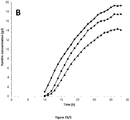
- vanillin was accumulated directly and with an enhanced rate by F33 ( Figure 2B ). While vanillic acid is the first overflow product of the ferulic acid catabolism of Amycolatopsis sp. ATCC 39116, the vdh deletion mutant F33 accumulates vanillin directly without an initial synthesis of vanillic acid. This relationship between initial vanillic acid synthesis and subsequent vanillin accumulation is known for the wild type from other studies, in which the strain was used in fermentation experiments or where vanillic acid was shown to enhance the synthesis of vanillin in flask experiments.
- the new strain F33 was further improved by integration of additional copies of the genes ech and fcs into the genome under the control of the constitutive promoter permE*.
- the genes encode the vanillin anabolism related enzymes feruloyl-CoA synthetase and enoyl-CoA hydratase/aldolase.
- the overexpression construct was integrated at the former vdh locus, employing the same strategy with the use of p6suigusA as mentioned before. Although some illegitimate integration events of the suicide plasmid took place, finally a mutant was generated, with an integration of fragment permE* :: ech :: fcs in the genome. The genomic organization was again verified by diagnostic PCR ( Figure 1 ) and sequencing of the yielded amplificate.
- the new mutant Amycolatopsis sp. ATCC 39116 ⁇ vdh::permE*::echfcs was consequently also tested under the same fermentation conditions like F33 and the wild type.
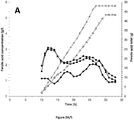
- the catabolism of ferulic acid by F84 was strongly enhanced, which was obvious due to considerably lower concentrations of the substrate in the medium, although ferulic was fed with a higher rate throughout the whole fermentation ( Figure 2A ). Thereby a higher amount of substrate can be fed within a shorter period, before the catabolism of ferulic acid ceases at the end of the fermentation.
- the total yield of the desired product could be increased to 19.3 g/l with a total molar vanillin yield of 92.0 %, with respect to added substrate.
- the strain metabolized the used substrate with a molar yield of 96.2%, which nearly approaches the theoretical possible value.
- the presented fermentation data constitute the best overall productivity for all shown strains, with regard to the final vanillin concentration, the molar product yield and the run time of the whole fermentation.
- a shorter runtime can be achieved, yielding comparable final concentrations, but lower molar product yields, considering the amount of ferulic acid, that was fed.
- higher molar yields of up to 96.4% can be reached using strain F84, if the desired final vanillin concentration and therefore the amount of supplied ferulic acid were lower.
- phenolic compounds like vanillin, have been shown to effect or even inhibit DNA, RNA and protein synthesis, the uptake of glucose, pH homeostasis and ion gradients as they most likely target the cytoplasmic membrane due to their hydrophobic nature.
- the aldehyde group was shown to even enhance this toxic effect, since it shows high reactivity and can form covalent bonds with DNA and proteins.
- a more increased vanillin formation is therefore thought to be limited to the viability of the cells.
- the enzymes might still be active at the end of the fermentation, further catabolism should be hampered due to the unavailability of cofactors.
- the extraction of vanillin in order to keep a non-toxic concentration was shown to enhance the overall yield of a production process and is suggested to overcome this problem.
- Two further embodiments of the present invention relate to processes for obtaining the Amycolatopisis mutants F33 and F84
- the first step which is common for both processes according to the present invention refers to the generation of a suicide plasmid for the generation of a markerless deletion mutant of Amycolatopsis sp. ATCC 39116, encompassing the following steps:
- the second step refers to the mutant construction F33 (including deletion of vanillin dehydrogenase gene vdh ) encompassing the following steps:
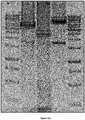
- FIGURE 1 A first figure.
- Lanes 1, 2 and 3 represent the amplificate using oligonucleotides vdh LF_for_diag and vdh RF_rev2, which show the difference between the wild type ( 1 , 3.7 kb), mutant F33 ( 2 , 2.4 kb) and mutant F84 ( 3 , 5.4 kb).
- the marked fragments were purified, and the amplificates were analyzed by sequencing to finally verify the correct homologous recombination.
- Lane 1 to 9 represent the amplificates using oligonucleotides ech _RT_for and fcs RT_rev and different templates: 1: cDNA, prepared from F33 sample prior to feeding; 2: RNA control for sample 1; 3: cDNA, prepared from F33 sample during feeding; 4: RNA control for sample 3; 5: cDNA, prepared from (F84) sample prior to feeding; 6: RNA control for sample 5; 7: cDNA, prepared from F84 sample during feeding; 8: RNA control for sample 7; 9: DNA-control for PCR.
- the arrow indicates the expected internal 624 bp-fragment of the transcript of ech and fcs.
- Cells of Escherichia coli were grown in Lysogeny Broth (LB) medium at 37 °C.
- Cells of Amycolatopsis sp. ATCC 39116 were grown at 45 °C in Caso medium (Merck, Darmstadt, Germany).
- antibiotics were added to the medium as follows: Ampicillin: 100 ⁇ g/ml for E. coli; Apramycin: 50 ⁇ g/ml for E. coli and Amycolatopsis. Cell growth was measured by determination of the optical density at 400 nm ( Amycolatopsis sp. ATCC 39116) or 600 nm ( E. coli ).
- Plasmid DNA was isolated from E. coli using the "peqGOLD Plasmid MiniPrep Kit I" (PEQLAB GmbH, Er Weg, Germany). DNA was digested by restriction endonucleases (Thermo Fisher Scientific GmbH, Schrö, Germany) under the conditions described by the manufacturer. Phusion Hot-Start II high-fidelity DNA polymerase, T4 DNA ligase, T4 DNA polymerase and RevertAid Reverse Transcriptase (Thermo Fisher Scientific GmbH, Schense, Germany) were used according to the instructions of the manufacturer. Oligonucleotides were purchased from Eurofins MWG Synthesis GmbH (Ebersberg, Germany). DNA fragments were isolated from agarose gels or reaction mixtures using the "peqGOLD Gel Extraction Kit” (PEQLAB GmbH, Er Weg, Germany).
- Plasmids were transferred into E. coli by employing the CaCl 2 -method, whereas the transfer of plasmids into Amycolatopsis sp. ATCC 39116 was performed by direct mycelia transformation as previously described.
- glucuronidase gene gusA was isolated as spe I/ Eco RV fragment from pSETGUS (21) and cloned into the Nhe I/ Dra I-linearized suicide plasmid p6sui resulting in p6suigusA.
- vdh A precise deletion of the vdh gene was accomplished via homologous recombination.
- the flanking regions upstream and downstream of vdh in the genome were amplified using the following oligonucleotides:
- the resulting amplificates were purified and combined in a subsequent fusion-PCR using primers vdh LF_for3 and vdh RF_rev3.
- the resulting fragment ⁇ vdh combined the upstream and downstream regions of vdh and was cloned into the Eco RV-site of the suicide plasmid p6suigusA.
- the vector was transferred to Amycolatopsis sp. ATCC 39116.
- Transformants of Amycolatopsis sp. ATCC 39116 were selected on solid Caso medium containing 50 ⁇ g/ml apramycin.
- Mutants that showed the desired phenotype were first screened for the correct genomic integration of the suicide plasmid by colony-PCR using primers vdh LF_for3 and vdh RF_rev3, which bind upstream and downstream of the recombination regions, respectively. Afterwards, mutants that showed the correct genotype were cultivated in liquid Caso medium to obtain a second recombination event. For this the cells were cultivated without antibiotics for at least 10 passages and were subsequently diluted and plated on Caso agar plates. Single colonies that did not show glucuronidase activity after overlaying with X-Gluc were picked on agar plates with and without apramycin.
- the PCR product was digested with Sac I and Xba I and subsequently cloned into the Sac I/ Xba I-linearized pBluescript SK - .
- the resulting plasmid pSK::echfcs was transferred to E. coli Mach-1 T1 and enzyme activity was observed in ferulic acid biotransformation experiments.
- pSK::echfcs was digested with Eco ICRI and Hin dIII , and the resulting fragment, which contained both genes, was ligated with the Fsp AI/HindIII-linearized expression vector p6permE, collinear to permE*.
- ATCC 39116 ⁇ vdh a fragment, comprising permE* and the genes ech and fcs, was amplified from the resulting plasmid p6permE:: echfcs using oligonucleotides p6apraMCS_for (5'-GCGAGCACCGGAGGCAGG-3') and p6apraMCS_rev (5'-CATTCATCCGGGGTCAGCAC-3').
- the blunt PCR product was cloned in the Hinc II-linearized suicide plasmid p6suigusA:: ⁇ vdh , to achieve an integration at the ⁇ vdh -locus.
- the resulting plasmid was designated p6sui ⁇ vdh :: permE* :: echfcs and transferred to Amycolatopsis sp. ATCC 39116 ⁇ vdh. Screening of transformants, generation of the second recombination event and verification of the correct integration of the overexpression construct at the ⁇ vdh -locus was performed as described above
- the cells were grown until they reached the stationary growth phase, whereupon the biotransformation was started through continuous feeding of ferulic acid (stock solution: 800ml, 55 g/l, pH 8.0 NaOH, 4g/l glucose, 4g/l yeast extract).
- the feeding of ferulic acid was adjusted between a rate of 1.9 and 3.5 g/h to ensure an appropriate substrate supply during the biotransformation.
- the substrate concentration, as well as the concentration of intermediates of the catabolism were analyzed by HPLC at the given time points.
- the fermentation was stopped after 20-24h of biotransformation when further synthesis of vanillin had ceased.
- RNA was isolated as previously described. Remaining DNA contaminations were removed by the use of DNAse I (Roche, Mannheim, Germany), and RNA was subsequently purified as described before.
- cDNA was prepared using the RevertAid Reverse Transcriptase (Thermo Fisher Scientific GmbH, Schrö, Germany) and oligonucleotides ech _RT_for (5'-GAACCCCACCCTGAACG-3') and ech _RT_rev (5'-GAGCTTCAGCGCCACCTC-3') for an internal fragment of ech.
- echfcs_ RT _ for 5'-GTACTACATCATGACCG GTGAGC-3'
- ech fcs _RT_rev 5'-CAGCGCGTGGTCCAGTTC-3'
- the vanillin dehydrogenase VDH ATCC 39116 has a substantial impact on the catabolism of vanillin in Amycolatopsis sp. ATCC 39116 and is therefore a promising target to engineer the strains metabolism towards an efficient accumulation.
- a suicide plasmid was constructed that allowed the introduction of a suitable deletion construct and the screening of resulting heterogenotes.
- the origin of replication for Amycolatopsis of the shuttle vector p6apra was removed by digestion, yielding the non-replicating plasmid p6sui.
- the suicide plasmid still contained the origin of replication for E.
- coli the apramycin resistance gene and several unique restriction sites for cloning of deletion constructs.
- the gusA gene of pSETGUS was inserted into p6sui, yielding p6suigusA.
- GusA encodes a ⁇ -glucuronidase, whose activity can easily be identified on agar plates, due to the strong blue colour of the colonies after overlaying them with X-Gluc. Homogenotes, which have lost the vector backbone, exhibited no colour.
- Colonies which did not turn blue after X-Gluc overlaying were picked on solid Caso medium with and without apramycin. Clones, which had lost the apramycin resistance, were further analysed in a PCR reaction to identify a deletion of vdh. For this a fragment of the vdh locus was amplified using oligonucleotides, which bind further upstream and downstream of the used flanking regions, respectively. The correct deletion was demonstrated through amplification of a 2.42-kb fragment, which distinguishes in size from the wild type as a consequence of the loss of vdh (1,461 bp, Figure 1 ).
- the fermentation was conducted in two stages. At first, the cells were grown until they reached the stationary growth phase, which was obvious due to a significant increase of the pO 2 . Following the biotransformation of ferulic acid to vanillin was started by continuous feeding of the substrate. The feeding rate was adjusted, depending on the concentration of ferulic acid in the medium, which was analysed by HPLC in intervals of 1 h. Due to the toxic properties of phenolic compounds it was intended to keep the substrate concentration beneath 5 g/l but not less than 1 g/l to ensure an appropriate supply for the cells. Glucose and yeast extract were added to the feeding solution, since the supplementation was shown to positively influence the biotransformation in previous test fermentations.
- the catabolism auf ferulic acid and therefore the accumulation of vanillin started after an initial phase of adaption by the wild type and F33, respectively ( Fig. 2 B) .
- the ferulic acid concentration increased due to a continuous supply.
- the substrate concentration decreased in both fermentations until it was kept constant between 2 and 3 g/l by adjusting the feeding rate.
- the feeding was stopped and the substrate concentration decreased to approximately 1 g/l during the fermentation of the wild type and the mutant.
- the ferulic acid catabolism was not affected by the vdh deletion as both processes proceeded in a comparable manner ( Figure 2A ).
- RT-PCR analyses were conducted to figure out, if this inducing effect occurs at the gene expression level. For this, samples of the fermentation broth from the F33 and wildtype experiment were taken (i) at the end of the growth phase prior to the substrate feeding and (ii) after 7 hours of biotransformation, after the rate of vanillin synthesis had reached its maximum. The cells were harvested by centrifugation and RNA was isolated as described in materials and methods.
- the enzymes feruloyl-CoA synthetase (Fcs) and enoyl-CoA hydratase/aldolase (Ech), which are responsible for the catabolism of ferulic acid to vanillin in Amycolatopsis sp. ATCC 39116, are encoded by the respective genes ech and fcs.
- the open reading frames of both genes are located adjacently in the genome of Amycolatopsis sp. ATCC 39116, whereby the start codon of fcs (GTG) overlaps with the stop codon (TGA) of ech.
- GTG start codon of fcs
- TGA stop codon
- RT-PCR analysis revealed a strong inducing effect of the ech-expression after supplementation of ferulic acid.
- a strong amplificate was observed for the sample, which was taken during the biotransformation phase of the fermentation (Fig. S1, lane 3).
- DNA contamination of the isolated RNA could be excluded in a control PCR experiment that was conducted with RNA as template without the previous reverse transcription reaction (Fig. S1, lane 2 and 4).
- an overexpression mutant for ech and fcs was generated.
- additional copies of both genes were integrated in the genome of F33 under the control of the strong constitutive promoter permE*.
- the former vdh -locus was chosen, since neither the deletion of vdh nor the replacement of the gene with a kanamycin resistance cassette led to negative polar effects.
- the suicide plasmid p6suigusA:: ⁇ vdh could be used for the targeted integration via homologous recombination.
- both genes were amplified together from the genome of Amycolatopsis sp. ATCC 39116 and cloned in the Amycolatopsis expression vector p6permE collinear to permE*.
- the genes were amplified together with the promoter, and the resulting fragment was cloned blunt in the vdh deletion construct of p6suigusA:: ⁇ vdh .
- the resulting plasmid p6sui ⁇ vdh :: permE* :: echfcs was used to transform strain F33.
- the integration of the suicide plasmid at the vdh -locus was analysed by amplification of the genomic area first. A correct integration of a 15.1-kb fragment, which comprised the flanking regions of vdh and the suicide plasmid, could be identified. After verifying the desired homologous recombination, the clone was further cultivated to achieve a second recombination event as described for the vdh deletion. The accurate integration of the overexpression construct could be achieved in one mutant and was confirmed by diagnostic PCR ( Figure 1 ) and also by sequencing of the PCR product. The new mutant Amycolatopsis sp. ATCC 39116 ⁇ vdh::permE*::echfcs (strain F84) should combine the beneficial impact of the vdh knockout with an increased ferulic acid catabolism rate.
- strain F84 was cultivated in fermentation experiments at the 2-liter scale, as well.
- the wild type Amycolatopsis sp. ATCC 39116 and the generated mutants F33 and F84 were cultivated in parallel experiments under the same conditions as described above.
- the effect of the enhanced expression of ech and fcs was obvious directly after the biotransformation phase was started by feeding the ferulic acid solution ( Figure 2A ).
- the new mutant F84 showed a comparable behaviour like F33. This was expected due to the deletion of vdh in both strains. Interestingly, F84 showed an even slightly decreased formation of vanillic acid, although more vanillin was generated during the cultivation of this mutant ( Figure 2C ).
Landscapes
- Chemical & Material Sciences (AREA)
- Organic Chemistry (AREA)
- Health & Medical Sciences (AREA)
- Life Sciences & Earth Sciences (AREA)
- Genetics & Genomics (AREA)
- Engineering & Computer Science (AREA)
- Zoology (AREA)
- Wood Science & Technology (AREA)
- Bioinformatics & Cheminformatics (AREA)
- General Engineering & Computer Science (AREA)
- General Health & Medical Sciences (AREA)
- Biochemistry (AREA)
- Biotechnology (AREA)
- Biomedical Technology (AREA)
- Microbiology (AREA)
- Molecular Biology (AREA)
- Medicinal Chemistry (AREA)
- Physics & Mathematics (AREA)
- Biophysics (AREA)
- Plant Pathology (AREA)
- Chemical Kinetics & Catalysis (AREA)
- General Chemical & Material Sciences (AREA)
- Micro-Organisms Or Cultivation Processes Thereof (AREA)
- Preparation Of Compounds By Using Micro-Organisms (AREA)
Priority Applications (4)
| Application Number | Priority Date | Filing Date | Title |
|---|---|---|---|
| EP14186796.0A EP3000888B1 (en) | 2014-09-29 | 2014-09-29 | Process for converting ferulic acid into vanillin |
| PL14186796T PL3000888T3 (pl) | 2014-09-29 | 2014-09-29 | Sposób przekształcania kwasu ferulowego do waniliny |
| CN201580049867.9A CN107075465A (zh) | 2014-09-29 | 2015-09-25 | 阿魏酸转化为香草醛的方法 |
| PCT/EP2015/072176 WO2016050654A1 (en) | 2014-09-29 | 2015-09-25 | Process for converting ferulic acid into vanillin |
Applications Claiming Priority (1)
| Application Number | Priority Date | Filing Date | Title |
|---|---|---|---|
| EP14186796.0A EP3000888B1 (en) | 2014-09-29 | 2014-09-29 | Process for converting ferulic acid into vanillin |
Publications (2)
| Publication Number | Publication Date |
|---|---|
| EP3000888A1 EP3000888A1 (en) | 2016-03-30 |
| EP3000888B1 true EP3000888B1 (en) | 2018-12-05 |
Family
ID=51625916
Family Applications (1)
| Application Number | Title | Priority Date | Filing Date |
|---|---|---|---|
| EP14186796.0A Not-in-force EP3000888B1 (en) | 2014-09-29 | 2014-09-29 | Process for converting ferulic acid into vanillin |
Country Status (4)
| Country | Link |
|---|---|
| EP (1) | EP3000888B1 (pl) |
| CN (1) | CN107075465A (pl) |
| PL (1) | PL3000888T3 (pl) |
| WO (1) | WO2016050654A1 (pl) |
Families Citing this family (7)
| Publication number | Priority date | Publication date | Assignee | Title |
|---|---|---|---|---|
| CN107881188B (zh) * | 2017-11-20 | 2021-04-09 | 上海交通大学 | 一种全细胞催化剂制备芳香醛和/或芳香醇的方法 |
| CN113088460B (zh) * | 2019-12-23 | 2023-07-28 | 波顿(上海)生物技术有限公司 | 一株拟无枝酸菌突变体及其应用 |
| WO2022133269A1 (en) * | 2020-12-18 | 2022-06-23 | Basf Se | Bioconversion of ferulic acid to vanillin |
| CN116670295A (zh) * | 2020-12-18 | 2023-08-29 | 巴斯夫欧洲公司 | 用于在抑制香草酸形成的情况下产生香草醛的拟无枝酸菌属菌株 |
| CN113637607B (zh) * | 2021-08-16 | 2022-07-12 | 陕西海斯夫生物工程有限公司 | 一株拟无枝酸菌及其应用 |
| CN115851803B (zh) * | 2022-09-30 | 2024-09-03 | 厦门大学 | 一种高产香草醇的光合细菌构建方法及其应用 |
| CN117417952B (zh) * | 2023-10-20 | 2024-05-24 | 陕西海斯夫生物工程有限公司 | 一种提高香兰素产量的重组拟无枝酸菌、其构建方法及应用 |
Family Cites Families (4)
| Publication number | Priority date | Publication date | Assignee | Title |
|---|---|---|---|---|
| DE19850242A1 (de) * | 1998-10-31 | 2000-05-04 | Haarmann & Reimer Gmbh | Konstruktion von Produktionsstämmen für die Herstellung von substituierten Phenolen durch gezielte Inaktivierung von Genen des Eugenol- und Ferulasäure-Katabolismus |
| WO2012172108A1 (en) * | 2011-06-17 | 2012-12-20 | Symrise Ag | Microorganisms and methods for producing substituted phenols |
| CN102321563B (zh) * | 2011-10-24 | 2013-04-03 | 江南大学 | 一株拟无枝酸菌及利用其全细胞转化制备香草醛的方法 |
| CN103060392A (zh) * | 2013-01-22 | 2013-04-24 | 江南大学 | 一种利用固定化拟无枝酸菌转化阿魏酸生产香草醛的方法 |
-
2014
- 2014-09-29 EP EP14186796.0A patent/EP3000888B1/en not_active Not-in-force
- 2014-09-29 PL PL14186796T patent/PL3000888T3/pl unknown
-
2015
- 2015-09-25 WO PCT/EP2015/072176 patent/WO2016050654A1/en not_active Ceased
- 2015-09-25 CN CN201580049867.9A patent/CN107075465A/zh active Pending
Non-Patent Citations (1)
| Title |
|---|
| None * |
Also Published As
| Publication number | Publication date |
|---|---|
| CN107075465A (zh) | 2017-08-18 |
| PL3000888T3 (pl) | 2019-05-31 |
| WO2016050654A1 (en) | 2016-04-07 |
| EP3000888A1 (en) | 2016-03-30 |
Similar Documents
| Publication | Publication Date | Title |
|---|---|---|
| EP3000888B1 (en) | Process for converting ferulic acid into vanillin | |
| JP7130284B2 (ja) | チロソール及びヒドロキシチロソールを生産する酵母及びその作製方法 | |
| EP2371952A1 (en) | Bacterium capable of producing 2-deoxy-scyllo-inosose (doi), and process for producing 2-deoxy-scyllo-inosose (doi) by using same | |
| CN105431520A (zh) | 利用表达昆虫天冬氨酸1-脱羧酶的重组酵母的3-羟基丙酸生产 | |
| EA024979B1 (ru) | Рекомбинантные бактерии и их применение для получения этанола | |
| KR102170444B1 (ko) | 세포 소기관이 변이된 재조합 효모 및 이를 이용한 아이소프레노이드 생산 방법 | |
| CN116323959A (zh) | 一种提高刺糖多孢菌多杀菌素产量的方法 | |
| EP2963110A1 (en) | Microorganisms and methods for producing vanillin | |
| CN113832041A (zh) | 高产赤霉素ga3的藤仓赤霉基因工程菌、构建方法及应用 | |
| EP3954768A2 (en) | Engineering bacteria for ferulic acid production, preparation method and use thereof | |
| JP5243546B2 (ja) | 植物由来原料から乳酸を生産する方法及び乳酸生産細菌 | |
| CN114686385A (zh) | 高产β-胡萝卜素的重组解脂亚罗酵母、其构建法与应用 | |
| JPWO2010032698A6 (ja) | 植物由来原料から乳酸を生産する方法及び乳酸生産細菌 | |
| EP3050971B1 (de) | Verfahren zur enzymatischen Herstellung eines 4-O-methylierten Zimtsäureamids | |
| WO2014156476A1 (ja) | 遺伝子改変クロストリジウム・サッカロパーブチルアセトニカム | |
| CN112218941A (zh) | 微生物和精细化学品生产 | |
| KR101541034B1 (ko) | D―갈락토네이트 고생산 대장균 균주 및 이의 용도 | |
| CN105874073B (zh) | 用于拟无枝菌酸菌的穿梭载体和表达载体 | |
| US9340809B2 (en) | Microbial conversion of sugar acids and means therein | |
| CN115820702A (zh) | 一种重组大肠杆菌静息细胞催化异戊烯醇高效制备冷杉醇的方法 | |
| JP5568562B2 (ja) | イソプロピルアルコール生産細菌及びイソプロピルアルコール生産方法 | |
| US20230002796A1 (en) | Method for inducing microbial mutagenesis to produce lactic acid | |
| US20250368695A1 (en) | Atranorin biosynthesis gene derived from lichens and uses thereof | |
| JP5858463B2 (ja) | 乳酸生産菌 | |
| CN121718563A (zh) | 一种提高黑曲霉中过氧化氢酶表达量的方法 |
Legal Events
| Date | Code | Title | Description |
|---|---|---|---|
| PUAI | Public reference made under article 153(3) epc to a published international application that has entered the european phase |
Free format text: ORIGINAL CODE: 0009012 |
|
| AK | Designated contracting states |
Kind code of ref document: A1 Designated state(s): AL AT BE BG CH CY CZ DE DK EE ES FI FR GB GR HR HU IE IS IT LI LT LU LV MC MK MT NL NO PL PT RO RS SE SI SK SM TR |
|
| AX | Request for extension of the european patent |
Extension state: BA ME |
|
| 17P | Request for examination filed |
Effective date: 20160927 |
|
| RBV | Designated contracting states (corrected) |
Designated state(s): AL AT BE BG CH CY CZ DE DK EE ES FI FR GB GR HR HU IE IS IT LI LT LU LV MC MK MT NL NO PL PT RO RS SE SI SK SM TR |
|
| STAA | Information on the status of an ep patent application or granted ep patent |
Free format text: STATUS: EXAMINATION IS IN PROGRESS |
|
| 17Q | First examination report despatched |
Effective date: 20170209 |
|
| REG | Reference to a national code |
Ref country code: DE Ref legal event code: R079 Ref document number: 602014037304 Country of ref document: DE Free format text: PREVIOUS MAIN CLASS: C12N0015760000 Ipc: C12P0007240000 |
|
| RIC1 | Information provided on ipc code assigned before grant |
Ipc: C12P 7/24 20060101AFI20180411BHEP |
|
| GRAP | Despatch of communication of intention to grant a patent |
Free format text: ORIGINAL CODE: EPIDOSNIGR1 |
|
| STAA | Information on the status of an ep patent application or granted ep patent |
Free format text: STATUS: GRANT OF PATENT IS INTENDED |
|
| INTG | Intention to grant announced |
Effective date: 20180627 |
|
| RIN1 | Information on inventor provided before grant (corrected) |
Inventor name: STEINBUECHEL, ALEXANDER Inventor name: FLEIGE, CHRISTIAN Inventor name: MEYER, FLORIAN Inventor name: PESARO, MANUEL |
|
| GRAS | Grant fee paid |
Free format text: ORIGINAL CODE: EPIDOSNIGR3 |
|
| GRAA | (expected) grant |
Free format text: ORIGINAL CODE: 0009210 |
|
| STAA | Information on the status of an ep patent application or granted ep patent |
Free format text: STATUS: THE PATENT HAS BEEN GRANTED |
|
| AK | Designated contracting states |
Kind code of ref document: B1 Designated state(s): AL AT BE BG CH CY CZ DE DK EE ES FI FR GB GR HR HU IE IS IT LI LT LU LV MC MK MT NL NO PL PT RO RS SE SI SK SM TR |
|
| REG | Reference to a national code |
Ref country code: GB Ref legal event code: FG4D |
|
| REG | Reference to a national code |
Ref country code: CH Ref legal event code: EP |
|
| REG | Reference to a national code |
Ref country code: AT Ref legal event code: REF Ref document number: 1073102 Country of ref document: AT Kind code of ref document: T Effective date: 20181215 |
|
| REG | Reference to a national code |
Ref country code: IE Ref legal event code: FG4D |
|
| REG | Reference to a national code |
Ref country code: DE Ref legal event code: R096 Ref document number: 602014037304 Country of ref document: DE |
|
| REG | Reference to a national code |
Ref country code: NL Ref legal event code: FP |
|
| REG | Reference to a national code |
Ref country code: AT Ref legal event code: MK05 Ref document number: 1073102 Country of ref document: AT Kind code of ref document: T Effective date: 20181205 |
|
| REG | Reference to a national code |
Ref country code: LT Ref legal event code: MG4D |
|
| PG25 | Lapsed in a contracting state [announced via postgrant information from national office to epo] |
Ref country code: FI Free format text: LAPSE BECAUSE OF FAILURE TO SUBMIT A TRANSLATION OF THE DESCRIPTION OR TO PAY THE FEE WITHIN THE PRESCRIBED TIME-LIMIT Effective date: 20181205 Ref country code: BG Free format text: LAPSE BECAUSE OF FAILURE TO SUBMIT A TRANSLATION OF THE DESCRIPTION OR TO PAY THE FEE WITHIN THE PRESCRIBED TIME-LIMIT Effective date: 20190305 Ref country code: LT Free format text: LAPSE BECAUSE OF FAILURE TO SUBMIT A TRANSLATION OF THE DESCRIPTION OR TO PAY THE FEE WITHIN THE PRESCRIBED TIME-LIMIT Effective date: 20181205 Ref country code: AT Free format text: LAPSE BECAUSE OF FAILURE TO SUBMIT A TRANSLATION OF THE DESCRIPTION OR TO PAY THE FEE WITHIN THE PRESCRIBED TIME-LIMIT Effective date: 20181205 Ref country code: NO Free format text: LAPSE BECAUSE OF FAILURE TO SUBMIT A TRANSLATION OF THE DESCRIPTION OR TO PAY THE FEE WITHIN THE PRESCRIBED TIME-LIMIT Effective date: 20190305 Ref country code: ES Free format text: LAPSE BECAUSE OF FAILURE TO SUBMIT A TRANSLATION OF THE DESCRIPTION OR TO PAY THE FEE WITHIN THE PRESCRIBED TIME-LIMIT Effective date: 20181205 Ref country code: HR Free format text: LAPSE BECAUSE OF FAILURE TO SUBMIT A TRANSLATION OF THE DESCRIPTION OR TO PAY THE FEE WITHIN THE PRESCRIBED TIME-LIMIT Effective date: 20181205 Ref country code: LV Free format text: LAPSE BECAUSE OF FAILURE TO SUBMIT A TRANSLATION OF THE DESCRIPTION OR TO PAY THE FEE WITHIN THE PRESCRIBED TIME-LIMIT Effective date: 20181205 |
|
| PG25 | Lapsed in a contracting state [announced via postgrant information from national office to epo] |
Ref country code: SE Free format text: LAPSE BECAUSE OF FAILURE TO SUBMIT A TRANSLATION OF THE DESCRIPTION OR TO PAY THE FEE WITHIN THE PRESCRIBED TIME-LIMIT Effective date: 20181205 Ref country code: AL Free format text: LAPSE BECAUSE OF FAILURE TO SUBMIT A TRANSLATION OF THE DESCRIPTION OR TO PAY THE FEE WITHIN THE PRESCRIBED TIME-LIMIT Effective date: 20181205 Ref country code: RS Free format text: LAPSE BECAUSE OF FAILURE TO SUBMIT A TRANSLATION OF THE DESCRIPTION OR TO PAY THE FEE WITHIN THE PRESCRIBED TIME-LIMIT Effective date: 20181205 Ref country code: GR Free format text: LAPSE BECAUSE OF FAILURE TO SUBMIT A TRANSLATION OF THE DESCRIPTION OR TO PAY THE FEE WITHIN THE PRESCRIBED TIME-LIMIT Effective date: 20190306 |
|
| PG25 | Lapsed in a contracting state [announced via postgrant information from national office to epo] |
Ref country code: IT Free format text: LAPSE BECAUSE OF FAILURE TO SUBMIT A TRANSLATION OF THE DESCRIPTION OR TO PAY THE FEE WITHIN THE PRESCRIBED TIME-LIMIT Effective date: 20181205 Ref country code: PT Free format text: LAPSE BECAUSE OF FAILURE TO SUBMIT A TRANSLATION OF THE DESCRIPTION OR TO PAY THE FEE WITHIN THE PRESCRIBED TIME-LIMIT Effective date: 20190405 Ref country code: CZ Free format text: LAPSE BECAUSE OF FAILURE TO SUBMIT A TRANSLATION OF THE DESCRIPTION OR TO PAY THE FEE WITHIN THE PRESCRIBED TIME-LIMIT Effective date: 20181205 |
|
| PG25 | Lapsed in a contracting state [announced via postgrant information from national office to epo] |
Ref country code: SM Free format text: LAPSE BECAUSE OF FAILURE TO SUBMIT A TRANSLATION OF THE DESCRIPTION OR TO PAY THE FEE WITHIN THE PRESCRIBED TIME-LIMIT Effective date: 20181205 Ref country code: EE Free format text: LAPSE BECAUSE OF FAILURE TO SUBMIT A TRANSLATION OF THE DESCRIPTION OR TO PAY THE FEE WITHIN THE PRESCRIBED TIME-LIMIT Effective date: 20181205 Ref country code: IS Free format text: LAPSE BECAUSE OF FAILURE TO SUBMIT A TRANSLATION OF THE DESCRIPTION OR TO PAY THE FEE WITHIN THE PRESCRIBED TIME-LIMIT Effective date: 20190405 Ref country code: RO Free format text: LAPSE BECAUSE OF FAILURE TO SUBMIT A TRANSLATION OF THE DESCRIPTION OR TO PAY THE FEE WITHIN THE PRESCRIBED TIME-LIMIT Effective date: 20181205 Ref country code: SK Free format text: LAPSE BECAUSE OF FAILURE TO SUBMIT A TRANSLATION OF THE DESCRIPTION OR TO PAY THE FEE WITHIN THE PRESCRIBED TIME-LIMIT Effective date: 20181205 |
|
| REG | Reference to a national code |
Ref country code: DE Ref legal event code: R097 Ref document number: 602014037304 Country of ref document: DE |
|
| PLBE | No opposition filed within time limit |
Free format text: ORIGINAL CODE: 0009261 |
|
| STAA | Information on the status of an ep patent application or granted ep patent |
Free format text: STATUS: NO OPPOSITION FILED WITHIN TIME LIMIT |
|
| PG25 | Lapsed in a contracting state [announced via postgrant information from national office to epo] |
Ref country code: DK Free format text: LAPSE BECAUSE OF FAILURE TO SUBMIT A TRANSLATION OF THE DESCRIPTION OR TO PAY THE FEE WITHIN THE PRESCRIBED TIME-LIMIT Effective date: 20181205 Ref country code: SI Free format text: LAPSE BECAUSE OF FAILURE TO SUBMIT A TRANSLATION OF THE DESCRIPTION OR TO PAY THE FEE WITHIN THE PRESCRIBED TIME-LIMIT Effective date: 20181205 |
|
| 26N | No opposition filed |
Effective date: 20190906 |
|
| PG25 | Lapsed in a contracting state [announced via postgrant information from national office to epo] |
Ref country code: TR Free format text: LAPSE BECAUSE OF FAILURE TO SUBMIT A TRANSLATION OF THE DESCRIPTION OR TO PAY THE FEE WITHIN THE PRESCRIBED TIME-LIMIT Effective date: 20181205 |
|
| REG | Reference to a national code |
Ref country code: DE Ref legal event code: R119 Ref document number: 602014037304 Country of ref document: DE |
|
| REG | Reference to a national code |
Ref country code: NL Ref legal event code: MM Effective date: 20191001 |
|
| PG25 | Lapsed in a contracting state [announced via postgrant information from national office to epo] |
Ref country code: MC Free format text: LAPSE BECAUSE OF FAILURE TO SUBMIT A TRANSLATION OF THE DESCRIPTION OR TO PAY THE FEE WITHIN THE PRESCRIBED TIME-LIMIT Effective date: 20181205 |
|
| REG | Reference to a national code |
Ref country code: CH Ref legal event code: PL |
|
| PG25 | Lapsed in a contracting state [announced via postgrant information from national office to epo] |
Ref country code: LI Free format text: LAPSE BECAUSE OF NON-PAYMENT OF DUE FEES Effective date: 20190930 Ref country code: CH Free format text: LAPSE BECAUSE OF NON-PAYMENT OF DUE FEES Effective date: 20190930 Ref country code: IE Free format text: LAPSE BECAUSE OF NON-PAYMENT OF DUE FEES Effective date: 20190929 Ref country code: NL Free format text: LAPSE BECAUSE OF NON-PAYMENT OF DUE FEES Effective date: 20191001 Ref country code: DE Free format text: LAPSE BECAUSE OF NON-PAYMENT OF DUE FEES Effective date: 20200401 Ref country code: LU Free format text: LAPSE BECAUSE OF NON-PAYMENT OF DUE FEES Effective date: 20190929 |
|
| REG | Reference to a national code |
Ref country code: BE Ref legal event code: MM Effective date: 20190930 |
|
| PG25 | Lapsed in a contracting state [announced via postgrant information from national office to epo] |
Ref country code: BE Free format text: LAPSE BECAUSE OF NON-PAYMENT OF DUE FEES Effective date: 20190930 |
|
| GBPC | Gb: european patent ceased through non-payment of renewal fee |
Effective date: 20190929 |
|
| PG25 | Lapsed in a contracting state [announced via postgrant information from national office to epo] |
Ref country code: FR Free format text: LAPSE BECAUSE OF NON-PAYMENT OF DUE FEES Effective date: 20190930 Ref country code: GB Free format text: LAPSE BECAUSE OF NON-PAYMENT OF DUE FEES Effective date: 20190929 |
|
| PG25 | Lapsed in a contracting state [announced via postgrant information from national office to epo] |
Ref country code: CY Free format text: LAPSE BECAUSE OF FAILURE TO SUBMIT A TRANSLATION OF THE DESCRIPTION OR TO PAY THE FEE WITHIN THE PRESCRIBED TIME-LIMIT Effective date: 20181205 |
|
| PG25 | Lapsed in a contracting state [announced via postgrant information from national office to epo] |
Ref country code: HU Free format text: LAPSE BECAUSE OF FAILURE TO SUBMIT A TRANSLATION OF THE DESCRIPTION OR TO PAY THE FEE WITHIN THE PRESCRIBED TIME-LIMIT; INVALID AB INITIO Effective date: 20140929 Ref country code: MT Free format text: LAPSE BECAUSE OF FAILURE TO SUBMIT A TRANSLATION OF THE DESCRIPTION OR TO PAY THE FEE WITHIN THE PRESCRIBED TIME-LIMIT Effective date: 20181205 |
|
| PG25 | Lapsed in a contracting state [announced via postgrant information from national office to epo] |
Ref country code: PL Free format text: LAPSE BECAUSE OF NON-PAYMENT OF DUE FEES Effective date: 20190929 |
|
| PG25 | Lapsed in a contracting state [announced via postgrant information from national office to epo] |
Ref country code: MK Free format text: LAPSE BECAUSE OF FAILURE TO SUBMIT A TRANSLATION OF THE DESCRIPTION OR TO PAY THE FEE WITHIN THE PRESCRIBED TIME-LIMIT Effective date: 20181205 |