EP2999033B1 - Wiederaufladbare lithiumbatterie - Google Patents
Wiederaufladbare lithiumbatterie Download PDFInfo
- Publication number
- EP2999033B1 EP2999033B1 EP15169979.0A EP15169979A EP2999033B1 EP 2999033 B1 EP2999033 B1 EP 2999033B1 EP 15169979 A EP15169979 A EP 15169979A EP 2999033 B1 EP2999033 B1 EP 2999033B1
- Authority
- EP
- European Patent Office
- Prior art keywords
- lithium battery
- weight
- rechargeable lithium
- parts
- electrolyte
- Prior art date
- Legal status (The legal status is an assumption and is not a legal conclusion. Google has not performed a legal analysis and makes no representation as to the accuracy of the status listed.)
- Active
Links
Images



Classifications
-
- H—ELECTRICITY
- H01—ELECTRIC ELEMENTS
- H01M—PROCESSES OR MEANS, e.g. BATTERIES, FOR THE DIRECT CONVERSION OF CHEMICAL ENERGY INTO ELECTRICAL ENERGY
- H01M10/00—Secondary cells; Manufacture thereof
- H01M10/05—Accumulators with non-aqueous electrolyte
- H01M10/056—Accumulators with non-aqueous electrolyte characterised by the materials used as electrolytes, e.g. mixed inorganic/organic electrolytes
- H01M10/0564—Accumulators with non-aqueous electrolyte characterised by the materials used as electrolytes, e.g. mixed inorganic/organic electrolytes the electrolyte being constituted of organic materials only
- H01M10/0566—Liquid materials
- H01M10/0567—Liquid materials characterised by the additives
-
- H—ELECTRICITY
- H01—ELECTRIC ELEMENTS
- H01M—PROCESSES OR MEANS, e.g. BATTERIES, FOR THE DIRECT CONVERSION OF CHEMICAL ENERGY INTO ELECTRICAL ENERGY
- H01M10/00—Secondary cells; Manufacture thereof
- H01M10/05—Accumulators with non-aqueous electrolyte
- H01M10/052—Li-accumulators
-
- H—ELECTRICITY
- H01—ELECTRIC ELEMENTS
- H01M—PROCESSES OR MEANS, e.g. BATTERIES, FOR THE DIRECT CONVERSION OF CHEMICAL ENERGY INTO ELECTRICAL ENERGY
- H01M10/00—Secondary cells; Manufacture thereof
- H01M10/05—Accumulators with non-aqueous electrolyte
- H01M10/052—Li-accumulators
- H01M10/0525—Rocking-chair batteries, i.e. batteries with lithium insertion or intercalation in both electrodes; Lithium-ion batteries
-
- H—ELECTRICITY
- H01—ELECTRIC ELEMENTS
- H01M—PROCESSES OR MEANS, e.g. BATTERIES, FOR THE DIRECT CONVERSION OF CHEMICAL ENERGY INTO ELECTRICAL ENERGY
- H01M10/00—Secondary cells; Manufacture thereof
- H01M10/05—Accumulators with non-aqueous electrolyte
- H01M10/056—Accumulators with non-aqueous electrolyte characterised by the materials used as electrolytes, e.g. mixed inorganic/organic electrolytes
- H01M10/0564—Accumulators with non-aqueous electrolyte characterised by the materials used as electrolytes, e.g. mixed inorganic/organic electrolytes the electrolyte being constituted of organic materials only
- H01M10/0566—Liquid materials
- H01M10/0568—Liquid materials characterised by the solutes
-
- H—ELECTRICITY
- H01—ELECTRIC ELEMENTS
- H01M—PROCESSES OR MEANS, e.g. BATTERIES, FOR THE DIRECT CONVERSION OF CHEMICAL ENERGY INTO ELECTRICAL ENERGY
- H01M4/00—Electrodes
- H01M4/02—Electrodes composed of, or comprising, active material
- H01M4/13—Electrodes for accumulators with non-aqueous electrolyte, e.g. for lithium-accumulators; Processes of manufacture thereof
- H01M4/131—Electrodes based on mixed oxides or hydroxides, or on mixtures of oxides or hydroxides, e.g. LiCoOx
-
- H—ELECTRICITY
- H01—ELECTRIC ELEMENTS
- H01M—PROCESSES OR MEANS, e.g. BATTERIES, FOR THE DIRECT CONVERSION OF CHEMICAL ENERGY INTO ELECTRICAL ENERGY
- H01M4/00—Electrodes
- H01M4/02—Electrodes composed of, or comprising, active material
- H01M4/13—Electrodes for accumulators with non-aqueous electrolyte, e.g. for lithium-accumulators; Processes of manufacture thereof
- H01M4/133—Electrodes based on carbonaceous material, e.g. graphite-intercalation compounds or CFx
-
- H—ELECTRICITY
- H01—ELECTRIC ELEMENTS
- H01M—PROCESSES OR MEANS, e.g. BATTERIES, FOR THE DIRECT CONVERSION OF CHEMICAL ENERGY INTO ELECTRICAL ENERGY
- H01M4/00—Electrodes
- H01M4/02—Electrodes composed of, or comprising, active material
- H01M4/13—Electrodes for accumulators with non-aqueous electrolyte, e.g. for lithium-accumulators; Processes of manufacture thereof
- H01M4/134—Electrodes based on metals, Si or alloys
-
- H—ELECTRICITY
- H01—ELECTRIC ELEMENTS
- H01M—PROCESSES OR MEANS, e.g. BATTERIES, FOR THE DIRECT CONVERSION OF CHEMICAL ENERGY INTO ELECTRICAL ENERGY
- H01M4/00—Electrodes
- H01M4/02—Electrodes composed of, or comprising, active material
- H01M4/36—Selection of substances as active materials, active masses, active liquids
- H01M4/362—Composites
-
- H—ELECTRICITY
- H01—ELECTRIC ELEMENTS
- H01M—PROCESSES OR MEANS, e.g. BATTERIES, FOR THE DIRECT CONVERSION OF CHEMICAL ENERGY INTO ELECTRICAL ENERGY
- H01M4/00—Electrodes
- H01M4/02—Electrodes composed of, or comprising, active material
- H01M4/36—Selection of substances as active materials, active masses, active liquids
- H01M4/38—Selection of substances as active materials, active masses, active liquids of elements or alloys
- H01M4/386—Silicon or alloys based on silicon
-
- H—ELECTRICITY
- H01—ELECTRIC ELEMENTS
- H01M—PROCESSES OR MEANS, e.g. BATTERIES, FOR THE DIRECT CONVERSION OF CHEMICAL ENERGY INTO ELECTRICAL ENERGY
- H01M4/00—Electrodes
- H01M4/02—Electrodes composed of, or comprising, active material
- H01M4/36—Selection of substances as active materials, active masses, active liquids
- H01M4/48—Selection of substances as active materials, active masses, active liquids of inorganic oxides or hydroxides
- H01M4/485—Selection of substances as active materials, active masses, active liquids of inorganic oxides or hydroxides of mixed oxides or hydroxides for inserting or intercalating light metals, e.g. LiTi2O4 or LiTi2OxFy
-
- H—ELECTRICITY
- H01—ELECTRIC ELEMENTS
- H01M—PROCESSES OR MEANS, e.g. BATTERIES, FOR THE DIRECT CONVERSION OF CHEMICAL ENERGY INTO ELECTRICAL ENERGY
- H01M4/00—Electrodes
- H01M4/02—Electrodes composed of, or comprising, active material
- H01M4/36—Selection of substances as active materials, active masses, active liquids
- H01M4/58—Selection of substances as active materials, active masses, active liquids of inorganic compounds other than oxides or hydroxides, e.g. sulfides, selenides, tellurides, halogenides or LiCoFy; of polyanionic structures, e.g. phosphates, silicates or borates
- H01M4/583—Carbonaceous material, e.g. graphite-intercalation compounds or CFx
- H01M4/587—Carbonaceous material, e.g. graphite-intercalation compounds or CFx for inserting or intercalating light metals
-
- H—ELECTRICITY
- H01—ELECTRIC ELEMENTS
- H01M—PROCESSES OR MEANS, e.g. BATTERIES, FOR THE DIRECT CONVERSION OF CHEMICAL ENERGY INTO ELECTRICAL ENERGY
- H01M10/00—Secondary cells; Manufacture thereof
- H01M10/05—Accumulators with non-aqueous electrolyte
- H01M10/056—Accumulators with non-aqueous electrolyte characterised by the materials used as electrolytes, e.g. mixed inorganic/organic electrolytes
- H01M10/0564—Accumulators with non-aqueous electrolyte characterised by the materials used as electrolytes, e.g. mixed inorganic/organic electrolytes the electrolyte being constituted of organic materials only
- H01M10/0566—Liquid materials
- H01M10/0569—Liquid materials characterised by the solvents
-
- H—ELECTRICITY
- H01—ELECTRIC ELEMENTS
- H01M—PROCESSES OR MEANS, e.g. BATTERIES, FOR THE DIRECT CONVERSION OF CHEMICAL ENERGY INTO ELECTRICAL ENERGY
- H01M4/00—Electrodes
- H01M4/02—Electrodes composed of, or comprising, active material
- H01M2004/026—Electrodes composed of, or comprising, active material characterised by the polarity
- H01M2004/027—Negative electrodes
-
- Y—GENERAL TAGGING OF NEW TECHNOLOGICAL DEVELOPMENTS; GENERAL TAGGING OF CROSS-SECTIONAL TECHNOLOGIES SPANNING OVER SEVERAL SECTIONS OF THE IPC; TECHNICAL SUBJECTS COVERED BY FORMER USPC CROSS-REFERENCE ART COLLECTIONS [XRACs] AND DIGESTS
- Y02—TECHNOLOGIES OR APPLICATIONS FOR MITIGATION OR ADAPTATION AGAINST CLIMATE CHANGE
- Y02E—REDUCTION OF GREENHOUSE GAS [GHG] EMISSIONS, RELATED TO ENERGY GENERATION, TRANSMISSION OR DISTRIBUTION
- Y02E60/00—Enabling technologies; Technologies with a potential or indirect contribution to GHG emissions mitigation
- Y02E60/10—Energy storage using batteries
Definitions
- a rechargeable lithium battery is disclosed.
- a lithium polymer battery may be manufactured to have various shapes, such as a thin film, and accordingly, may be applied to a small information technology (IT) device, such as a smart phone, a tablet PC, a net book, and the like.
- IT information technology
- the battery used therein is expected to have higher capacity.
- graphite as a negative active material may not realize sufficient or suitable high-capacity as expected for the rechargeable lithium battery.
- a silicon-based active material has drawn attention as a negative active material due to its higher charge and discharge capacity than the graphite.
- the silicon-based active material has a sharp cycle-life deterioration, since an electrolyte is exhausted due to a reaction of silicon in the negative electrode with the electrolyte as a result of the repeated charge and discharge cycles.
- US 2012/177988 relates to a non-aqueous liquid electrolyte.
- US 2009/068565 relates to a rechargeable lithium battery.
- One embodiment generally relates to a rechargeable lithium battery having excellent reversible characteristics by reducing irreversible capacity and cycle-life characteristics.
- the fluoroethylene carbonate may be included in the electrolyte in an amount of about 5 parts by weight to 20 parts by weight based on 100 parts by weight of the organic solvent. In some embodiments, the fluoroethylene carbonate may be included in the electrolyte in an amount of about 10 parts by weight to 20 parts by weight based on 100 parts by weight of the organic solvent.
- a weight ratio of the lithium triflate to the fluoroethylene carbonate may be about 1:2 to about 1:10.
- the Si-based material may include Si, SiO x , a Si-Y alloy, a Si-C composite, or a combination thereof, where 0 ⁇ x ⁇ 2 and Y is selected from an alkali metal, an alkaline-earth metal, Group 13 to 16 elements, a transition metal, a rare earth element, and a combination thereof, but not Si.
- a rechargeable lithium battery according to embodiment of the present disclosure has excellent reversible characteristics and cycle-life characteristics.
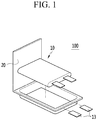
- FIG. 1 a rechargeable lithium battery according to one embodiment is described with reference to FIG. 1 .
- FIG. 1 is a schematic view showing a rechargeable lithium battery according to one embodiment.
- a rechargeable lithium battery 100 includes an electrode assembly 10, a battery case 20 housing the electrode assembly 10, and an electrode tab 13 playing a role of (e.g., providing) an electrical channel for externally inducing a current formed in the electrode assembly 10. Both sides of the battery case 20 are overlapped and sealed. In addition, an electrolyte is injected into the battery case 20 housing the electrode assembly 10.
- the electrode assembly 10 includes a positive electrode, a negative electrode facing the positive electrode and a separator interposed between the negative electrode and the positive electrode, wherein the electrolyte is impregnated in the positive electrode, the negative electrode and the separator.
- the electrolyte may include a lithium salt, an organic solvent, and an additive, but the electrolyte is not limited thereto in embodiments of the invention.
- the additive may include lithium triflate and fluoroethylene carbonate, but the additive is not limited thereto in embodiments of the invention.
- the lithium triflate may be represented by Chemical Formula 1.
- a stable SEI (solid electrolyte interface) film may be formed on a surface of the negative electrode.
- the SEI film may increase the amount of reversible lithium ions (e.g., lithium ions that can be reversibly intercalated and de-intercalated) and suppress, reduce, or prevent a reaction of the electrolyte with a Si-based material (Si-based active material) in the negative electrode and, resultantly, may improve battery performance, such as reversible characteristics and cycle-life characteristics.
- the reaction of a lithium salt in the electrolyte with the Si-based material of the negative electrode may occur on the surface of the Si-based material.
- the lithium salt is illustrated by using LiPF 6 as an example, and the Si-based material is illustrated by using SiO 2 as an example, but the kinds of lithium salt and Si-based material that may react with one another are not limited thereto in embodiments of the invention.
- the mechanisms through which the electrolyte reacts with the Si-based material of the negative electrode may deteriorate battery performance, but, in one embodiment, the above lithium triflate included in an electrolyte bonds to (or reacts with) HF in the electrolyte, and thus, may suppress, reduce, or prevent the Si-based material from bonding to (or reacting with) the HF, for example, as shown in the reactions 5) and 6), thereby improving reversible characteristics and cycle-life characteristics of a rechargeable lithium battery.
- the lithium triflate is included in the electrolyte in an amount of 3 parts by weight to about 5 parts by weight based on 100 parts by weight of the organic solvent.
- the lithium triflate may be more easily bonded with HF and better suppress, reduce, or prevent a reaction of the electrolyte with the Si-based material of the negative electrode.
- the fluoroethylene carbonate decomposes before other carbonates, such as ethylene carbonate, when used as an organic solvent, and the fluoroethylene carbonate may form a stable SEI film on the surface of the negative electrode, and thus, further improve performance of a rechargeable lithium battery.
- the fluoroethylene carbonate may be included in the electrolyte in an amount of about 5 parts by weight to 20 parts by weight, for example, 10 parts by weight to 20 parts by weight based on 100 parts by weight of the organic solvent.
- the fluoroethylene carbonate is included within any of the foregoing ranges, reversible characteristics and cycle-life characteristics of a rechargeable lithium battery may be improved.
- the additive may be prepared by mixing the lithium triflate and the fluoroethylene carbonate in a weight ratio of about 1:2 to about 1:10, for example, about 1:7 to about 1:10.
- a stable and firm SEI film is formed on the surface of the negative electrode, and thus, reversible characteristics and cycle-life characteristics of a rechargeable lithium battery may be largely or substantially improved.
- the additive may further include vinylethylene carbonate, propane sultone, succinonitrile, adiponitrile, LiBF 4 , or a combination thereof, in addition to the above-described components of the additive.
- the organic solvent of the electrolyte serves as a medium for transmitting ions taking part in the electrochemical reaction of a battery.
- the organic solvent may be selected from a carbonate-based (e.g., a linear carbonate and/or a cyclic carbonate), ester-based, an ether-based, a ketone-based, an alcohol-based and aprotic solvent, but the organic solvent is not limited thereto in embodiments of the invention.
- the carbonate based organic solvent may include, for example dimethyl carbonate (DMC), diethyl carbonate (DEC), dipropyl carbonate (DPC), methylpropyl carbonate (MPC), ethylpropyl carbonate (EPC), ethylmethyl carbonate (EMC), ethylene carbonate (EC), propylene carbonate (PC), butylene carbonate (BC), and/or the like.
- DMC dimethyl carbonate
- DEC diethyl carbonate
- DPC dipropyl carbonate
- MPC methylpropyl carbonate
- EPC ethylpropyl carbonate
- EMC ethylmethyl carbonate
- EMC ethylmethyl carbonate
- EC ethylene carbonate
- PC propylene carbonate
- BC butylene carbonate
- a solvent having a high dielectric constant and a low viscosity may be provided.
- the cyclic carbonate and the linear carbonate are mixed together in a volume ratio of about 1:1 to about 1:9.
- the ester-based organic solvent may include, for example, methylacetate, ethylacetate, n-propylacetate, dimethylacetate, methylpropionate, ethylpropionate, ⁇ -butyrolactone, decanolide, valerolactone, mevalonolactone, caprolactone, and/or the like.
- the ether-based organic solvent may include, for example, dibutylether, tetraglyme, diglyme, dimethoxyethane, 2-methyltetrahydrofuran, tetrahydrofuran, and/or the like.
- the ketone-based solvent may include, for example, cyclohexanone, and/or the like.
- the alcohol-based solvent may include, for example, ethyl alcohol, isopropyl alcohol, and/or the like.
- the organic solvent may be used singularly or in a mixture.
- the mixture ratio can be controlled in accordance with a suitable or desirable battery performance.
- the lithium salt of the electrolyte is dissolved in the organic solvent, supplies lithium ions in the rechargeable lithium battery, basically operates the rechargeable lithium battery, and improves lithium ion transportation between positive and negative electrodes therein.
- the lithium salt may include, for example, LiPF 6 , LiSbF 6 , LiAsF 6 , LiN(SO 3 C 2 F 5 ) 2 , LiC 4 F 9 SO 3 , LiClO 4 , LiAlO 2 , LiAlCl 4 , LiN(C x F 2x+1 SO 2 )(C y F 2y+1 SO 2 ) (where x and y are natural numbers, e.g., an integer from 1 to 20), LiCl, LiI, LiB(C 2 O 4 ) 2 (lithium bis(oxalato)borate (LiBOB)), or a combination or mixture thereof.
- the lithium salt may be used in a concentration of about 0.1 M to about 2.0 M.
- an electrolyte may have improved performance and lithium ion mobility due to suitable or optimal electrolyte conductivity and viscosity.
- the negative electrode includes a negative current collector and a negative active material layer thereon.
- the current collector may include a copper foil, a nickel foil, a stainless steel foil, a titanium foil, a nickel foam, a copper foam, a polymer substrate coated with a conductive metal, or a combination thereof, but the current collector is not limited thereto in embodiments of the invention.
- the negative active material layer may include a negative active material, and, optionally, a conductive material and/or a binder.
- the negative active material may include a Si-based material.
- a stable SEI film is formed on the surface of the negative electrode and suppresses, reduces, or prevents a reaction of the electrolyte with the Si-based material, and thus, may secure excellent reversible characteristics and cycle-life characteristics of a rechargeable lithium battery.
- the Si-based material may include Si, SiO x (0 ⁇ x ⁇ 2), a Si-Y alloy (where Y is an element selected from an alkali metal, an alkaline-earth metal, Group 13 to 16 elements, transition metal, a rare earth element, and a combination thereof, but not Si), a Si-C composite, or a combination thereof, but the Si-based material is not limited thereto in embodiments of the invention.
- the Y may be selected from Mg, Ca, Sr, Ba, Ra, Sc, Y, Ti, Zr, Hf, Rf, V, Nb, Ta, Db, Cr, Mo, W, Sg, Tc, Re, Bh, Fe, Pb, Ru, Os, Hs, Rh, Ir, Pd, Pt, Cu, Ag, Au, Zn, Cd, B, Al, Ga, Sn, In, Tl, Ge, P, As, Sb, Bi, S, Se, Te, Po and a combination thereof.
- the negative active material may further include a carbon-based material, a lithium metal alloy, a transition metal oxide, or a combination thereof, in addition to the Si-based material.
- the carbon-based material may include crystalline carbon, amorphous carbon, or a combination thereof.
- the crystalline carbon may include graphite. Examples of the graphite may include non-shaped, sheet-shaped, flake-shaped, spherical shaped, or fiber-shaped natural graphite or artificial graphite.
- the amorphous carbon may include soft carbon, hard carbon, a mesophase pitch carbonized product, fired coke, and/or the like.
- the lithium metal alloy may include an alloy of lithium and a metal selected from Na, K, Rb, Cs, Fr, Be, Mg, Ca, Sr, Si, Sb, Pb, In, Zn, Ba, Ra, Ge, Al and Sn.
- the transition metal oxide may include vanadium oxide, lithium vanadium oxide, and/or the like.
- the binder improves binding properties of negative active material particles with one another and with a current collector.
- the binder may include polyvinyl alcohol, carboxylmethyl cellulose, hydroxypropyl cellulose, polyvinylchloride, carboxylated polyvinylchloride, polyvinylfluoride, an ethylene oxide-containing polymer, polyvinylpyrrolidone, polyurethane, polytetrafluoroethylene, polyvinylidene fluoride, polyethylene, polypropylene, a styrene-butadiene rubber, an acrylated styrene-butadiene rubber, an epoxy resin, nylon, and/or the like, but the binder is not limited thereto in embodiments of the invention.
- the conductive material improves conductivity of an electrode.
- Any suitable electrically conductive material may be used as a conductive material, unless it causes a chemical change in the battery.
- the conductive material may include a carbon-based material, such as natural graphite, artificial graphite, carbon black, acetylene black, ketjen black, a carbon fiber and/or the like; a metal-based material, such as a metal powder or a metal fiber and/or the like of copper, nickel, aluminum, silver, and/or the like; a conductive polymer such as a polyphenylene derivative and/or the like; or a mixture thereof.
- the positive electrode may include a positive current collector and a positive active material layer on or formed on the positive current collector.
- the positive active material layer includes a positive active material, and, optionally, a binder and a conductive material.
- the positive current collector may include Al (aluminum), but the positive current collector is not limited thereto in embodiments of the invention.
- the positive active material may include a compound capable of intercalating and deintercalating lithium.
- a compound capable of intercalating and deintercalating lithium For example, at least one composite oxide of lithium and a metal of cobalt, manganese, nickel, or a combination thereof may be used.
- the positive active material may include a compound represented by one of the following chemical formulae:
- A is Ni, Co, Mn, or a combination thereof
- B is Al, Ni, Co, Mn, Cr, Fe, Mg, Sr, V, a rare earth element, or a combination thereof
- D is O, F, S, P, or a combination thereof
- E is Co, Mn, or a combination thereof
- F is F, S, P, or a combination thereof
- G is Al, Cr, Mn, Fe, Mg, La, Ce, Sr, V, or a combination thereof
- Q is Ti, Mo, Mn, or a combination thereof
- I is Cr, V, Fe, Sc, Y, or a combination thereof
- J is V, Cr, Mn, Co, Ni, Cu, or a combination thereof.
- the binder improves binding properties of positive active material particles with one another and with a current collector.
- the binder may include polyvinyl alcohol, carboxylmethyl cellulose, hydroxypropyl cellulose, diacetyl cellulose, polyvinylchloride, carboxylated polyvinylchloride, polyvinylfluoride, an ethylene oxide-containing polymer, polyvinylpyrrolidone, polyurethane, polytetrafluoroethylene, polyvinylidene fluoride, polyethylene, polypropylene, a styrene-butadiene rubber, an acrylated styrene-butadiene rubber, an epoxy resin, nylon, and/or the like, but the binder is not limited thereto in embodiments of the invention.
- the conductive material improves conductivity of an electrode.
- Any suitable electrically conductive material may be used as a conductive material, unless it causes a chemical change in the battery.
- the conductive material may include one or more of natural graphite, artificial graphite, carbon black, acetylene black, ketjen black, a carbon fiber, a metal powder, a metal fiber or the like of copper, nickel, aluminum, silver, and/or the like, and/or a conductive material (e.g., a conductive polymer) such as a polyphenylene derivative and/or the like.
- the negative electrode and the positive electrode may be manufactured by a method including mixing an active material, a conductive material, and a binder in a solvent to form an active material composition and coating the composition on a current collector.
- the electrode manufacturing method should be apparent to one of ordinary skill in the art, and thus, does not need to be described in further detail here.
- the solvent includes N-methylpyrrolidone and the like, but the solvent is not limited thereto in embodiments of the invention.
- the separator may include any suitable materials available in the art of lithium batteries as long as the separator separates the negative electrode from the positive electrode and provides a transporting passage for lithium ion.
- the separator may have a low resistance to ion transportation and excellent impregnation characteristics for an electrolyte solution.
- the separator may include one or more selected from a glass fiber, polyester, polyethylene, polypropylene, polytetrafluoroethylene (PTFE), or a combination thereof.
- the separator may have a form of a non-woven fabric or a woven fabric.
- a polyolefin-based polymer separator such as polyethylene, polypropylene or the like is mainly or primarily used for a lithium ion battery.
- a coated separator including a ceramic component or a polymer material may be used.
- the separator may have a mono-layered or multi-layered structure.
- LiCoO 2 , polyvinylidene fluoride (PVdF) and carbon black were mixed in a weight ratio of 92:4:4 and, then, dispersed into N-methyl-2-pyrrolidone to prepare a slurry.
- the slurry was coated on a 20 ⁇ m-thick aluminum foil and, then, dried and compressed to manufacture a positive electrode.
- a Si-Fe alloy (CV4, 3M) and polyvinylidene fluoride (PVdF) were mixed in a weight ratio of 92:8 and, then, dispersed into N-methyl-2-pyrrolidone to prepare a slurry.
- the slurry was coated on a 15 ⁇ m-thick copper foil and, then, dried and compressed to manufacture a negative electrode.
- An electrolyte solution was prepared by mixing ethylene carbonate (EC), ethylmethyl carbonate (EMC) and diethyl carbonate (DEC) in a volume ratio of 3:5:2 to obtain an organic solvent and dissolving 1.15 M LiPF 6 in the organic solvent and, then, adding thereto 10 parts by weight of fluoroethylene carbonate and 1 part by weight of lithium triflate based on 100 parts by weight of the organic solvent.
- EC ethylene carbonate
- EMC ethylmethyl carbonate
- DEC diethyl carbonate
- the positive and negative electrodes and a 20 ⁇ m-thick three-layered separator formed of polypropylene/polyethylene/polypropylene were spirally wound to manufacture an electrode assembly. Subsequently, the electrode assembly was housed in a battery case, and the electrolyte solution was injected into the battery case to manufacture a rechargeable lithium battery cell.
- a rechargeable lithium battery cell was manufactured according to the method of Reference Example 1 except for using 2 parts by weight of the lithium triflate instead of 1 part by weight of the lithium triflate to prepare the electrolyte solution.
- a rechargeable lithium battery cell was manufactured according to the method of Reference Example 1 except for using 3 parts by weight of the lithium triflate instead of 1 part by weight of the lithium triflate to prepare the electrolyte solution.
- a rechargeable lithium battery cell was manufactured according to the method of Reference Example 1 except for using 5 parts by weight of the lithium triflate instead of 1 part by weight of the lithium triflate to prepare the electrolyte solution.
- a rechargeable lithium battery cell was manufactured according to the method of Reference Example 1 except for using 7 parts by weight of the fluoroethylene carbonate and 5 parts by weight of the lithium triflate instead of 10 parts by weight of the fluoroethylene carbonate and 1 part by weight of the lithium triflate to prepare the electrolyte solution.
- a rechargeable lithium battery cell was manufactured according to the method of Reference Example 1 except for using 5 parts by weight of the fluoroethylene carbonate and 7 parts by weight of the lithium triflate instead of 10 parts by weight of the fluoroethylene carbonate and 1 part by weight of the lithium triflate to prepare the electrolyte solution.
- a rechargeable lithium battery cell was manufactured according to the method of Reference Example 1 except that no lithium triflate was added to prepare the electrolyte solution.
- a rechargeable lithium battery cell was manufactured according to the method of Reference Example 2 2 except that no fluoroethylene carbonate was added to prepare the electrolyte solution.
- a rechargeable lithium battery cell was manufactured according to the method of Reference Example 1 except that the negative electrode was manufactured as follows, instead of being manufactured as described with respect to Reference Example 1, and no lithium triflate was added to prepare the electrolyte solution.
- a rechargeable lithium battery cell was manufactured according to the method of Reference Example 1 except for using the negative electrode according to Comparative Example 3, instead of the negative electrode according to Reference Example 1, and no fluoroethylene carbonate was added to prepare the electrolyte solution.
- a rechargeable lithium battery cell was manufactured according to the method of Reference Example 1 except for using the negative electrode according to Comparative Example 3 instead of the negative electrode according to Reference Example 1.
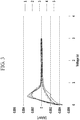
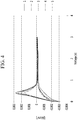
- Reversible characteristics of the negative electrodes according to Reference Example 1 and Comparative Examples 1, 3 and 5 were evaluated by using the respective negative electrodes as a working electrode and a lithium metal as a reference electrode and a counter electrode and performing a cyclic voltammetry analysis from 0 V to 3 V at a rate of 1 mV/s.
- the results of the cyclic voltammetry analyses are shown in FIGS. 2 to 5 .
- FIGS. 2 to 5 are graphs showing cyclic voltammetry analyses of the negative electrodes according to Reference Example 1, Comparative Examples 1, 3 and 5, respectively, using the lithium metal as the reference/counter electrode.
- a number from 1 to 5 in the legend indicates a cycle number.
- FIG. 2 which is relevant to Reference Example 1 shows that a current peak did not decrease in a region of about 0 V to 1 V as a result of the repeated cycles
- FIG. 3 which is relevant to Comparative Example 1 shows that a current peak decreased as a result of the repeated cycles.
- the electrolyte solution prepared by adding lithium triflate according to Reference Example 1 was observed to include more reversible lithium ions (e.g., lithium ions that can be reversibly intercalated and de-intercalated) than the electrolyte solution according to Comparative Example 1, which was prepared without adding lithium triflate (the electrolyte solution did not include lithium triflate).
- Comparative Example 5 when graphite was used instead of a Si-based material as a negative active material, Comparative Example 5, in which lithium triflate was added to the electrolyte solution, showed improved reversible characteristics as compared with Comparative Example 3, in which no lithium triflate was added to the electrolyte solution (the electrolyte solution did not include lithium triflate).
- Comparative Example 3 when a Si-based negative active material was used instead of graphite, an effect of improving reversible characteristics by addition of lithium triflate to the electrolyte solution was much larger.
- FIG. 6 is a graph showing cycle-life characteristics of the rechargeable lithium battery cells according to Reference Example 2 and Comparative Example 2
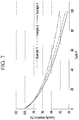
- FIG. 7 is a graph showing cycle-life characteristics of the rechargeable lithium battery cells according to Reference Example 1, and Examples 3 and 4
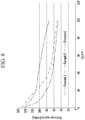
- FIG. 8 is a graph showing cycle-life characteristics of the rechargeable lithium battery cells according to Examples 3, 5 and Reference Example 6
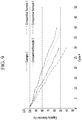
- FIG. 9 is a graph showing cycle-life characteristics of the rechargeable lithium battery cells according to Reference Example 1 and Comparative Examples 1, 3 and 5.
- Reference Example 2 which was manufactured by adding lithium triflate and fluoroethylene carbonate to the electrolyte solution, showed excellent cycle-life characteristics as compared with Comparative Example 2, which was manufactured without adding fluoroethylene carbonate to the electrolyte solution (the electrolyte solution did not include fluoroethylene carbonate).
- Reference Examples 1 and 6, and Examples 3 to 5 showed excellent cycle-life characteristics.
- an optimal or suitable amount of the lithium triflate may be obtained through comparison of Reference Example 1, and Examples 3 and 4, and an optimal or suitable mixture ratio of the lithium triflate and the fluoroethylene carbonate may be obtained through comparison of Examples 3, 5 and Reference Example 6.
- Reference Example 1 showed remarkably improved cycle-life characteristics as compared with Comparative Example 1, in which no lithium triflate was added to the electrolyte solution of the rechargeable lithium battery cell using the Si-based material as the negative active material.
- Comparative Example 5 in which lithium triflate and fluoroethylene carbonate were added to the electrolyte solution, showed a little improved cycle-life characteristics as compared with Comparative Example 3, in which no lithium triflate was added to the electrolyte solution of the rechargeable lithium battery cell using graphite as the negative active material.
- an electrolyte solution prepared by adding lithium triflate and fluoroethylene carbonate was applied to a battery cell using a Si-based material instead of graphite as a negative active material, an effect of improving cycle-life was much larger.
Landscapes
- Chemical & Material Sciences (AREA)
- Chemical Kinetics & Catalysis (AREA)
- Electrochemistry (AREA)
- General Chemical & Material Sciences (AREA)
- Engineering & Computer Science (AREA)
- Manufacturing & Machinery (AREA)
- Inorganic Chemistry (AREA)
- Physics & Mathematics (AREA)
- Condensed Matter Physics & Semiconductors (AREA)
- General Physics & Mathematics (AREA)
- Materials Engineering (AREA)
- Composite Materials (AREA)
- Secondary Cells (AREA)
- Battery Electrode And Active Subsutance (AREA)
Claims (10)
- Wiederaufladbare Lithiumbatterie, umfassend:eine negative Elektrode, die ein ein Si-basiertes Material umfassendes negatives Aktivmaterial umfasst;eine positive Elektrode undein Elektrolyt, das ein Lithiumsalz, ein organisches Lösungsmittel, und ein Lithiumtriflat und Fluorethylencarbonat umfassendes Zusatzmittel umfasst,dadurch gekennzeichnet, dassdas Lithiumtriflat im Elektrolyt in einer Menge von 3 Gew.-Teilen bis 5 Gew.-Teilen basierend auf 100 Gew.-Teilen des organischen Lösungsmittels enthalten ist.
- Wiederaufladbare Lithiumbatterie nach Anspruch 1, wobei das Fluorethylencarbonat im Elektrolyt in einer Menge von 5 Gew.-Teilen bis 20 Gew.-Teilen basierend auf 100 Gew.-Teilen des organischen Lösungsmittels enthalten ist.
- Wiederaufladbare Lithiumbatterie nach Anspruch 2, wobei das Fluorethylencarbonat im Elektrolyt in einer Menge von 10 Gew.-Teilen bis 20 Gew.-Teilen basierend auf 100 Gew.-Teilen des organischen Lösungsmittels enthalten ist.
- Wiederaufladbare Lithiumbatterie nach einem der Ansprüche 1 bis 3, wobei ein Gewichtsverhältnis des Lithiumtriflats zum Fluorethylencarbonat 1 : 2 bis 1 : 10 beträgt.
- Wiederaufladbare Lithiumbatterie nach Anspruch 4, wobei das Gewichtsverhältnis des Lithiumtriflats zum Fluorethylencarbonat 1 : 7 bis 1 : 10 beträgt.
- Wiederaufladbare Lithiumbatterie nach einem der Ansprüche 1 bis 5, wobei das Sibasierte Material Si, SiOx eine Si-Y-Legierung, ein Si-C-Verbundmaterial oder eine Kombination derselben umfasst, wobei 0<x≤2 and Y aus einem Alkalimetall, einem Erdalkalimetall, Elementen der Gruppen 13 bis 16, einem Übergangsmetall, einem Metall der seltenen Erden und einer Kombination derselben, jedoch nicht aus Si ausgewählt ist.
- Wiederaufladbare Lithiumbatterie nach einem der Ansprüche 1 bis 6, wobei das Zusatzmittel ferner Vinylethylencarbonat, Propansulton, Succinonitril, Adiponitril, LiBF4 oder eine Kombination derselben enthält.
- Wiederaufladbare Lithiumbatterie nach einem der Ansprüche 1 bis 7, wobei das organische Lösungsmittel ein carbonat-basiertes Lösungsmittel, ein ester-basiertes Lösungsmittel, ein ether-basiertes Lösungsmittel, ein keton-basiertes Lösungsmittel, ein alkohol-basiertes Lösungsmittel, ein aprotisches Lösungsmittel oder eine Kombination derselben umfasst.
- Wiederaufladbare Lithiumbatterie nach einem der Ansprüche 1 bis 8, wobei das Lithiumsalz LiPF6, LiBF4, LiSbF6, LiAsF6, LiN(SO3C2F5)2, LiC4F9SO3, LiClO4, LiAlO2, LiAlCl4, LiN(CxF2x+1SO2)(CyF2y+1SO2) (wobei x und y natürliche Zahlen sind), LiCl, LiI, LiB(C2O4)2 (Lithiumbisoxalatoborat (LiBOB)) oder eine Kombination oder ein Gemisch derselben enthält.
- Wiederaufladbare Lithiumbatterie nach einem der Ansprüche 1 bis 9, wobei das Lithiumsalz eine Konzentration von 0,1 M bis 2,0 M aufweist.
Applications Claiming Priority (1)
| Application Number | Priority Date | Filing Date | Title |
|---|---|---|---|
| KR1020140123030A KR102272271B1 (ko) | 2014-09-16 | 2014-09-16 | 리튬 이차 전지 |
Publications (2)
| Publication Number | Publication Date |
|---|---|
| EP2999033A1 EP2999033A1 (de) | 2016-03-23 |
| EP2999033B1 true EP2999033B1 (de) | 2018-04-04 |
Family
ID=53269372
Family Applications (1)
| Application Number | Title | Priority Date | Filing Date |
|---|---|---|---|
| EP15169979.0A Active EP2999033B1 (de) | 2014-09-16 | 2015-05-29 | Wiederaufladbare lithiumbatterie |
Country Status (4)
| Country | Link |
|---|---|
| US (1) | US9755275B2 (de) |
| EP (1) | EP2999033B1 (de) |
| KR (1) | KR102272271B1 (de) |
| CN (1) | CN105428712B (de) |
Families Citing this family (12)
| Publication number | Priority date | Publication date | Assignee | Title |
|---|---|---|---|---|
| EP3231024A4 (de) | 2014-12-12 | 2018-08-08 | Pellion Technologies Inc. | Elektrochemische zelle und verfahren zur herstellung davon |
| CN108886167B (zh) * | 2016-04-12 | 2022-03-08 | 大金工业株式会社 | 电解液、电化学装置、锂离子二次电池及组件 |
| CN109804487A (zh) * | 2016-08-12 | 2019-05-24 | 派立昂技术公司 | 用于高能量可再充电金属阳极电池的包含添加剂的电解质 |
| CN106099174A (zh) * | 2016-08-26 | 2016-11-09 | 东莞市凯欣电池材料有限公司 | 一种硅基负极高电压锂离子电池 |
| FI129573B (en) * | 2017-08-04 | 2022-05-13 | Broadbit Batteries Oy | Improved electrochemical cells for high energy battery use |
| KR102570117B1 (ko) * | 2017-11-07 | 2023-08-22 | 삼성에스디아이 주식회사 | 리튬 이차 전지용 전극 및 이를 포함하는 리튬 이차 전지 |
| CN112310475B (zh) * | 2019-07-31 | 2023-08-18 | 新亚杉杉新材料科技(衢州)有限公司 | 一种锂离子电池非水电解液及锂离子电池 |
| FI3913720T3 (fi) | 2020-03-31 | 2024-11-28 | Ningde Amperex Technology Ltd | Sähkökemiallinen laitteisto ja sen sisältävä sähkölaite |
| KR102874490B1 (ko) | 2020-11-30 | 2025-10-22 | 주식회사 엘지에너지솔루션 | 리튬 이차 전지용 비수 전해액 및 이를 포함하는 리튬 이차전지 |
| KR102660938B1 (ko) * | 2021-11-11 | 2024-04-25 | 주식회사 엘지에너지솔루션 | 리튬 이차전지 |
| CN121238020A (zh) * | 2024-06-27 | 2025-12-30 | 深圳泰科聚能新能源材料有限公司 | 电解质、锂离子电池及其制备方法 |
| CN120527462B (zh) * | 2025-07-15 | 2025-10-17 | 广州天赐高新材料股份有限公司 | 电池 |
Family Cites Families (11)
| Publication number | Priority date | Publication date | Assignee | Title |
|---|---|---|---|---|
| KR100349627B1 (ko) | 2000-05-17 | 2002-08-23 | 한국과학기술원 | 가교화된 폴리에틸렌옥사이드를 이용한 고분자 전해질조성물 및 제조방법 |
| US6841303B2 (en) | 2001-01-17 | 2005-01-11 | Skc Co., Ltd. | High ionic conductivity gel polymer electrolyte for rechargeable polymer batteries |
| US20060216612A1 (en) * | 2005-01-11 | 2006-09-28 | Krishnakumar Jambunathan | Electrolytes, cells and methods of forming passivation layers |
| KR100709838B1 (ko) * | 2005-07-07 | 2007-04-23 | 삼성에스디아이 주식회사 | 리튬 이차 전지용 전해액 및 이를 포함하는 리튬 이차 전지 |
| KR100726889B1 (ko) | 2005-07-22 | 2007-06-14 | 한국과학기술원 | 리튬 전지용 비수 전해액 및 이를 포함하는 리튬이차전지 |
| US8168330B2 (en) * | 2006-04-11 | 2012-05-01 | Enerdel, Inc. | Lithium titanate cell with reduced gassing |
| CN103259044B (zh) * | 2006-04-27 | 2016-02-10 | 三菱化学株式会社 | 非水电解液及非水电解质二次电池 |
| KR100898290B1 (ko) * | 2007-09-12 | 2009-05-18 | 삼성에스디아이 주식회사 | 리튬 이차 전지 |
| KR101050333B1 (ko) * | 2008-07-07 | 2011-07-19 | 삼성에스디아이 주식회사 | 리튬이차전지 |
| KR20110056150A (ko) * | 2009-11-20 | 2011-05-26 | 삼성에스디아이 주식회사 | 리튬 이차 전지용 난연성 전해액 및 이를 포함하는 리튬 이차 전지 |
| CN102074733A (zh) * | 2010-12-29 | 2011-05-25 | 珠海市赛纬电子材料有限公司 | 一种非水电解液及锂离子电池 |
-
2014
- 2014-09-16 KR KR1020140123030A patent/KR102272271B1/ko active Active
-
2015
- 2015-05-29 EP EP15169979.0A patent/EP2999033B1/de active Active
- 2015-06-02 US US14/729,000 patent/US9755275B2/en active Active
- 2015-07-21 CN CN201510430819.6A patent/CN105428712B/zh active Active
Non-Patent Citations (1)
| Title |
|---|
| None * |
Also Published As
| Publication number | Publication date |
|---|---|
| KR102272271B1 (ko) | 2021-07-02 |
| EP2999033A1 (de) | 2016-03-23 |
| KR20160032632A (ko) | 2016-03-24 |
| CN105428712B (zh) | 2020-11-03 |
| US20160079626A1 (en) | 2016-03-17 |
| US9755275B2 (en) | 2017-09-05 |
| CN105428712A (zh) | 2016-03-23 |
Similar Documents
| Publication | Publication Date | Title |
|---|---|---|
| US9755275B2 (en) | Rechargeable lithium battery | |
| US9196928B2 (en) | Electrolyte solution for rechargeable lithium battery, and rechargeable lithium battery including the same | |
| EP2503633B1 (de) | Elektrolyt für wiederaufladbare Lithium-Batterie und wiederaufladbare Lithium-Batterie, der diesen Elektrolyten enthält | |
| US9406976B2 (en) | Electrolyte for rechargeable lithium battery and rechargeable lithium battery including the same | |
| US9768471B2 (en) | Rechargeable lithium battery | |
| US9905854B2 (en) | Electrode for rechargeable lithium battery and rechargeable lithium battery including the same | |
| EP2757616B1 (de) | Positive Elektrode für eine wiederaufladbare Lithiumbatterie und wiederaufladbare Lithiumbatterie damit | |
| EP2704244B1 (de) | Elektrolyt für wiederaufladbare Lithiumbatterie und wiederaufladbare Lithiumbatterie damit | |
| US9461333B2 (en) | Electrolytes for rechargeable lithium battery and rechargeable lithium battery comprising same | |
| US20120237836A1 (en) | Electrolyte for rechargeable lithium battery, and rechargeable lithium battery including the same | |
| EP2869364A2 (de) | Wiederaufladbare Lithiumbatterie | |
| US9385375B2 (en) | Positive electrode for rechargeable lithium battery and rechargeable lithium battery including same | |
| US20140141340A1 (en) | Electrolyte for rechargeable lithium battery and rechargeable lithium battery including the same | |
| US10879524B2 (en) | Positive electrode for rechargeable lithium battery and rechargeable lithium battery including the same | |
| US20140205914A1 (en) | Electrolyte for lithium rechargeable battery and lithium rechargeable battery including the electrolyte | |
| EP2866292A1 (de) | Lithiumbatterie enthaltend tris-alkoxyzyan-borate als elektrolytadditive | |
| EP2693539B1 (de) | Positives Aktivmaterial für eine wiederaufladbare Lithiumbatterie, Verfahren zur Herstellung desselben und wiederaufladbare Lithiumbatterie dasselbe umfassend | |
| US20150140435A1 (en) | Rechargeable lithium battery | |
| US10205171B2 (en) | Negative electrode for rechargeable lithium battery and rechargeable lithium battery including same | |
| US10224543B2 (en) | Positive active material for rechargeable lithium battery, method of preparing the same and rechargeable lithium battery including the same |
Legal Events
| Date | Code | Title | Description |
|---|---|---|---|
| PUAI | Public reference made under article 153(3) epc to a published international application that has entered the european phase |
Free format text: ORIGINAL CODE: 0009012 |
|
| AK | Designated contracting states |
Kind code of ref document: A1 Designated state(s): AL AT BE BG CH CY CZ DE DK EE ES FI FR GB GR HR HU IE IS IT LI LT LU LV MC MK MT NL NO PL PT RO RS SE SI SK SM TR |
|
| AX | Request for extension of the european patent |
Extension state: BA ME |
|
| 17P | Request for examination filed |
Effective date: 20160909 |
|
| RBV | Designated contracting states (corrected) |
Designated state(s): AL AT BE BG CH CY CZ DE DK EE ES FI FR GB GR HR HU IE IS IT LI LT LU LV MC MK MT NL NO PL PT RO RS SE SI SK SM TR |
|
| GRAP | Despatch of communication of intention to grant a patent |
Free format text: ORIGINAL CODE: EPIDOSNIGR1 |
|
| RIC1 | Information provided on ipc code assigned before grant |
Ipc: H01M 10/052 20100101ALI20170918BHEP Ipc: H01M 10/0567 20100101ALI20170918BHEP Ipc: H01M 4/38 20060101AFI20170918BHEP Ipc: H01M 10/0569 20100101ALN20170918BHEP Ipc: H01M 10/0568 20100101ALI20170918BHEP |
|
| STAA | Information on the status of an ep patent application or granted ep patent |
Free format text: STATUS: GRANT OF PATENT IS INTENDED |
|
| INTG | Intention to grant announced |
Effective date: 20171026 |
|
| GRAS | Grant fee paid |
Free format text: ORIGINAL CODE: EPIDOSNIGR3 |
|
| GRAA | (expected) grant |
Free format text: ORIGINAL CODE: 0009210 |
|
| STAA | Information on the status of an ep patent application or granted ep patent |
Free format text: STATUS: THE PATENT HAS BEEN GRANTED |
|
| AK | Designated contracting states |
Kind code of ref document: B1 Designated state(s): AL AT BE BG CH CY CZ DE DK EE ES FI FR GB GR HR HU IE IS IT LI LT LU LV MC MK MT NL NO PL PT RO RS SE SI SK SM TR |
|
| REG | Reference to a national code |
Ref country code: GB Ref legal event code: FG4D |
|
| REG | Reference to a national code |
Ref country code: FR Ref legal event code: PLFP Year of fee payment: 4 |
|
| REG | Reference to a national code |
Ref country code: CH Ref legal event code: EP |
|
| REG | Reference to a national code |
Ref country code: AT Ref legal event code: REF Ref document number: 986520 Country of ref document: AT Kind code of ref document: T Effective date: 20180415 |
|
| REG | Reference to a national code |
Ref country code: IE Ref legal event code: FG4D |
|
| REG | Reference to a national code |
Ref country code: DE Ref legal event code: R096 Ref document number: 602015009454 Country of ref document: DE |
|
| REG | Reference to a national code |
Ref country code: NL Ref legal event code: MP Effective date: 20180404 |
|
| REG | Reference to a national code |
Ref country code: LT Ref legal event code: MG4D |
|
| PG25 | Lapsed in a contracting state [announced via postgrant information from national office to epo] |
Ref country code: NL Free format text: LAPSE BECAUSE OF FAILURE TO SUBMIT A TRANSLATION OF THE DESCRIPTION OR TO PAY THE FEE WITHIN THE PRESCRIBED TIME-LIMIT Effective date: 20180404 |
|
| PG25 | Lapsed in a contracting state [announced via postgrant information from national office to epo] |
Ref country code: NO Free format text: LAPSE BECAUSE OF FAILURE TO SUBMIT A TRANSLATION OF THE DESCRIPTION OR TO PAY THE FEE WITHIN THE PRESCRIBED TIME-LIMIT Effective date: 20180704 Ref country code: FI Free format text: LAPSE BECAUSE OF FAILURE TO SUBMIT A TRANSLATION OF THE DESCRIPTION OR TO PAY THE FEE WITHIN THE PRESCRIBED TIME-LIMIT Effective date: 20180404 Ref country code: BG Free format text: LAPSE BECAUSE OF FAILURE TO SUBMIT A TRANSLATION OF THE DESCRIPTION OR TO PAY THE FEE WITHIN THE PRESCRIBED TIME-LIMIT Effective date: 20180704 Ref country code: PL Free format text: LAPSE BECAUSE OF FAILURE TO SUBMIT A TRANSLATION OF THE DESCRIPTION OR TO PAY THE FEE WITHIN THE PRESCRIBED TIME-LIMIT Effective date: 20180404 Ref country code: SE Free format text: LAPSE BECAUSE OF FAILURE TO SUBMIT A TRANSLATION OF THE DESCRIPTION OR TO PAY THE FEE WITHIN THE PRESCRIBED TIME-LIMIT Effective date: 20180404 Ref country code: AL Free format text: LAPSE BECAUSE OF FAILURE TO SUBMIT A TRANSLATION OF THE DESCRIPTION OR TO PAY THE FEE WITHIN THE PRESCRIBED TIME-LIMIT Effective date: 20180404 Ref country code: ES Free format text: LAPSE BECAUSE OF FAILURE TO SUBMIT A TRANSLATION OF THE DESCRIPTION OR TO PAY THE FEE WITHIN THE PRESCRIBED TIME-LIMIT Effective date: 20180404 Ref country code: LT Free format text: LAPSE BECAUSE OF FAILURE TO SUBMIT A TRANSLATION OF THE DESCRIPTION OR TO PAY THE FEE WITHIN THE PRESCRIBED TIME-LIMIT Effective date: 20180404 |
|
| PG25 | Lapsed in a contracting state [announced via postgrant information from national office to epo] |
Ref country code: LV Free format text: LAPSE BECAUSE OF FAILURE TO SUBMIT A TRANSLATION OF THE DESCRIPTION OR TO PAY THE FEE WITHIN THE PRESCRIBED TIME-LIMIT Effective date: 20180404 Ref country code: HR Free format text: LAPSE BECAUSE OF FAILURE TO SUBMIT A TRANSLATION OF THE DESCRIPTION OR TO PAY THE FEE WITHIN THE PRESCRIBED TIME-LIMIT Effective date: 20180404 Ref country code: GR Free format text: LAPSE BECAUSE OF FAILURE TO SUBMIT A TRANSLATION OF THE DESCRIPTION OR TO PAY THE FEE WITHIN THE PRESCRIBED TIME-LIMIT Effective date: 20180705 Ref country code: RS Free format text: LAPSE BECAUSE OF FAILURE TO SUBMIT A TRANSLATION OF THE DESCRIPTION OR TO PAY THE FEE WITHIN THE PRESCRIBED TIME-LIMIT Effective date: 20180404 |
|
| REG | Reference to a national code |
Ref country code: CH Ref legal event code: PL |
|
| REG | Reference to a national code |
Ref country code: AT Ref legal event code: MK05 Ref document number: 986520 Country of ref document: AT Kind code of ref document: T Effective date: 20180404 |
|
| PG25 | Lapsed in a contracting state [announced via postgrant information from national office to epo] |
Ref country code: PT Free format text: LAPSE BECAUSE OF FAILURE TO SUBMIT A TRANSLATION OF THE DESCRIPTION OR TO PAY THE FEE WITHIN THE PRESCRIBED TIME-LIMIT Effective date: 20180806 |
|
| REG | Reference to a national code |
Ref country code: DE Ref legal event code: R097 Ref document number: 602015009454 Country of ref document: DE |
|
| REG | Reference to a national code |
Ref country code: BE Ref legal event code: MM Effective date: 20180531 |
|
| PG25 | Lapsed in a contracting state [announced via postgrant information from national office to epo] |
Ref country code: DK Free format text: LAPSE BECAUSE OF FAILURE TO SUBMIT A TRANSLATION OF THE DESCRIPTION OR TO PAY THE FEE WITHIN THE PRESCRIBED TIME-LIMIT Effective date: 20180404 Ref country code: RO Free format text: LAPSE BECAUSE OF FAILURE TO SUBMIT A TRANSLATION OF THE DESCRIPTION OR TO PAY THE FEE WITHIN THE PRESCRIBED TIME-LIMIT Effective date: 20180404 Ref country code: AT Free format text: LAPSE BECAUSE OF FAILURE TO SUBMIT A TRANSLATION OF THE DESCRIPTION OR TO PAY THE FEE WITHIN THE PRESCRIBED TIME-LIMIT Effective date: 20180404 Ref country code: EE Free format text: LAPSE BECAUSE OF FAILURE TO SUBMIT A TRANSLATION OF THE DESCRIPTION OR TO PAY THE FEE WITHIN THE PRESCRIBED TIME-LIMIT Effective date: 20180404 Ref country code: CZ Free format text: LAPSE BECAUSE OF FAILURE TO SUBMIT A TRANSLATION OF THE DESCRIPTION OR TO PAY THE FEE WITHIN THE PRESCRIBED TIME-LIMIT Effective date: 20180404 Ref country code: MC Free format text: LAPSE BECAUSE OF FAILURE TO SUBMIT A TRANSLATION OF THE DESCRIPTION OR TO PAY THE FEE WITHIN THE PRESCRIBED TIME-LIMIT Effective date: 20180404 Ref country code: SK Free format text: LAPSE BECAUSE OF FAILURE TO SUBMIT A TRANSLATION OF THE DESCRIPTION OR TO PAY THE FEE WITHIN THE PRESCRIBED TIME-LIMIT Effective date: 20180404 |
|
| PLBE | No opposition filed within time limit |
Free format text: ORIGINAL CODE: 0009261 |
|
| STAA | Information on the status of an ep patent application or granted ep patent |
Free format text: STATUS: NO OPPOSITION FILED WITHIN TIME LIMIT |
|
| REG | Reference to a national code |
Ref country code: IE Ref legal event code: MM4A |
|
| PG25 | Lapsed in a contracting state [announced via postgrant information from national office to epo] |
Ref country code: SM Free format text: LAPSE BECAUSE OF FAILURE TO SUBMIT A TRANSLATION OF THE DESCRIPTION OR TO PAY THE FEE WITHIN THE PRESCRIBED TIME-LIMIT Effective date: 20180404 Ref country code: IT Free format text: LAPSE BECAUSE OF FAILURE TO SUBMIT A TRANSLATION OF THE DESCRIPTION OR TO PAY THE FEE WITHIN THE PRESCRIBED TIME-LIMIT Effective date: 20180404 Ref country code: CH Free format text: LAPSE BECAUSE OF NON-PAYMENT OF DUE FEES Effective date: 20180531 Ref country code: LI Free format text: LAPSE BECAUSE OF NON-PAYMENT OF DUE FEES Effective date: 20180531 |
|
| 26N | No opposition filed |
Effective date: 20190107 |
|
| PG25 | Lapsed in a contracting state [announced via postgrant information from national office to epo] |
Ref country code: LU Free format text: LAPSE BECAUSE OF NON-PAYMENT OF DUE FEES Effective date: 20180529 |
|
| PG25 | Lapsed in a contracting state [announced via postgrant information from national office to epo] |
Ref country code: IE Free format text: LAPSE BECAUSE OF NON-PAYMENT OF DUE FEES Effective date: 20180529 |
|
| PG25 | Lapsed in a contracting state [announced via postgrant information from national office to epo] |
Ref country code: SI Free format text: LAPSE BECAUSE OF FAILURE TO SUBMIT A TRANSLATION OF THE DESCRIPTION OR TO PAY THE FEE WITHIN THE PRESCRIBED TIME-LIMIT Effective date: 20180404 Ref country code: BE Free format text: LAPSE BECAUSE OF NON-PAYMENT OF DUE FEES Effective date: 20180531 |
|
| PG25 | Lapsed in a contracting state [announced via postgrant information from national office to epo] |
Ref country code: MT Free format text: LAPSE BECAUSE OF NON-PAYMENT OF DUE FEES Effective date: 20180529 |
|
| PG25 | Lapsed in a contracting state [announced via postgrant information from national office to epo] |
Ref country code: TR Free format text: LAPSE BECAUSE OF FAILURE TO SUBMIT A TRANSLATION OF THE DESCRIPTION OR TO PAY THE FEE WITHIN THE PRESCRIBED TIME-LIMIT Effective date: 20180404 |
|
| PG25 | Lapsed in a contracting state [announced via postgrant information from national office to epo] |
Ref country code: CY Free format text: LAPSE BECAUSE OF FAILURE TO SUBMIT A TRANSLATION OF THE DESCRIPTION OR TO PAY THE FEE WITHIN THE PRESCRIBED TIME-LIMIT Effective date: 20180404 Ref country code: HU Free format text: LAPSE BECAUSE OF FAILURE TO SUBMIT A TRANSLATION OF THE DESCRIPTION OR TO PAY THE FEE WITHIN THE PRESCRIBED TIME-LIMIT; INVALID AB INITIO Effective date: 20150529 Ref country code: MK Free format text: LAPSE BECAUSE OF NON-PAYMENT OF DUE FEES Effective date: 20180404 |
|
| PG25 | Lapsed in a contracting state [announced via postgrant information from national office to epo] |
Ref country code: IS Free format text: LAPSE BECAUSE OF FAILURE TO SUBMIT A TRANSLATION OF THE DESCRIPTION OR TO PAY THE FEE WITHIN THE PRESCRIBED TIME-LIMIT Effective date: 20180804 |
|
| P01 | Opt-out of the competence of the unified patent court (upc) registered |
Effective date: 20230528 |
|
| PGFP | Annual fee paid to national office [announced via postgrant information from national office to epo] |
Ref country code: DE Payment date: 20250429 Year of fee payment: 11 |
|
| PGFP | Annual fee paid to national office [announced via postgrant information from national office to epo] |
Ref country code: GB Payment date: 20250501 Year of fee payment: 11 |
|
| PGFP | Annual fee paid to national office [announced via postgrant information from national office to epo] |
Ref country code: FR Payment date: 20250508 Year of fee payment: 11 |