EP2991663B1 - Beschleunigte heilung von augenverletzungen anhand von angiotensinpeptiden - Google Patents
Beschleunigte heilung von augenverletzungen anhand von angiotensinpeptiden Download PDFInfo
- Publication number
- EP2991663B1 EP2991663B1 EP14728744.5A EP14728744A EP2991663B1 EP 2991663 B1 EP2991663 B1 EP 2991663B1 EP 14728744 A EP14728744 A EP 14728744A EP 2991663 B1 EP2991663 B1 EP 2991663B1
- Authority
- EP
- European Patent Office
- Prior art keywords
- eye
- angiotensin peptide
- corneal
- injury
- seq
- Prior art date
- Legal status (The legal status is an assumption and is not a legal conclusion. Google has not performed a legal analysis and makes no representation as to the accuracy of the status listed.)
- Active
Links
Images
Classifications
-
- A—HUMAN NECESSITIES
- A61—MEDICAL OR VETERINARY SCIENCE; HYGIENE
- A61K—PREPARATIONS FOR MEDICAL, DENTAL OR TOILETRY PURPOSES
- A61K38/00—Medicinal preparations containing peptides
- A61K38/04—Peptides having up to 20 amino acids in a fully defined sequence; Derivatives thereof
- A61K38/08—Peptides having 5 to 11 amino acids
-
- A—HUMAN NECESSITIES
- A61—MEDICAL OR VETERINARY SCIENCE; HYGIENE
- A61K—PREPARATIONS FOR MEDICAL, DENTAL OR TOILETRY PURPOSES
- A61K38/00—Medicinal preparations containing peptides
- A61K38/04—Peptides having up to 20 amino acids in a fully defined sequence; Derivatives thereof
- A61K38/08—Peptides having 5 to 11 amino acids
- A61K38/085—Angiotensins
-
- A—HUMAN NECESSITIES
- A61—MEDICAL OR VETERINARY SCIENCE; HYGIENE
- A61K—PREPARATIONS FOR MEDICAL, DENTAL OR TOILETRY PURPOSES
- A61K45/00—Medicinal preparations containing active ingredients not provided for in groups A61K31/00 - A61K41/00
- A61K45/06—Mixtures of active ingredients without chemical characterisation, e.g. antiphlogistics and cardiaca
-
- A—HUMAN NECESSITIES
- A61—MEDICAL OR VETERINARY SCIENCE; HYGIENE
- A61K—PREPARATIONS FOR MEDICAL, DENTAL OR TOILETRY PURPOSES
- A61K47/00—Medicinal preparations characterised by the non-active ingredients used, e.g. carriers or inert additives; Targeting or modifying agents chemically bound to the active ingredient
- A61K47/30—Macromolecular organic or inorganic compounds, e.g. inorganic polyphosphates
- A61K47/36—Polysaccharides; Derivatives thereof, e.g. gums, starch, alginate, dextrin, hyaluronic acid, chitosan, inulin, agar or pectin
- A61K47/38—Cellulose; Derivatives thereof
-
- A—HUMAN NECESSITIES
- A61—MEDICAL OR VETERINARY SCIENCE; HYGIENE
- A61K—PREPARATIONS FOR MEDICAL, DENTAL OR TOILETRY PURPOSES
- A61K9/00—Medicinal preparations characterised by special physical form
- A61K9/0012—Galenical forms characterised by the site of application
- A61K9/0048—Eye, e.g. artificial tears
-
- A—HUMAN NECESSITIES
- A61—MEDICAL OR VETERINARY SCIENCE; HYGIENE
- A61K—PREPARATIONS FOR MEDICAL, DENTAL OR TOILETRY PURPOSES
- A61K9/00—Medicinal preparations characterised by special physical form
- A61K9/0012—Galenical forms characterised by the site of application
- A61K9/0048—Eye, e.g. artificial tears
- A61K9/0051—Ocular inserts or implants
-
- A—HUMAN NECESSITIES
- A61—MEDICAL OR VETERINARY SCIENCE; HYGIENE
- A61P—SPECIFIC THERAPEUTIC ACTIVITY OF CHEMICAL COMPOUNDS OR MEDICINAL PREPARATIONS
- A61P27/00—Drugs for disorders of the senses
- A61P27/02—Ophthalmic agents
Definitions
- Eye injury can occur as a result of a variety of insults, including surgical interventions, chemical exposure, trauma, infections or via foreign body injury to the eye. These injuries are very slow to heal, if they heal at all and the continuing injury is a portal for infection and other contamination that can lead to loss of visual acuity or blindness.
- the invention provides an angiotensin peptide consisting of at least 5 contiguous amino acids of Nle3-A(1-7) (SEQ ID NO: 14) for use in treating an eye injury, wherein the angiotensin peptide is administered to a subject with an eye injury an amount effective of an angiotensin peptide to treat the eye injury.
- the invention provides an angiotensin peptide comprising Nle3-A(1-7) (SEQ ID NO: 14) for use in treating an eye injury, wherein the angiotensin peptide is administered to a subject with an eye injury an amount effective of an angiotensin peptide to treat the eye injury.
- the angiotensin consists of Nle3-A(1-7) (SEQ ID NO: 14).
- the invention provides methods for treating an eye injury, comprising administering to a subject with an eye injury an amount effective of an angiotensin peptide to treat the eye injury.
- the eye injury is caused by trauma, light/radiation or chemical exposure, disease, or a surgical procedure.
- the eye injury comprises an injury selected from the group consisting of post-surgical inflammation, postoperative fibrosis, a post-surgical increase in intra-ocular pressure, a corneal injury, a cataract incision, laser-assisted in situ keratomileusis (LASIK) wounds, dry eye, and a photorefractive keratectomy (PRK) wound.
- an injury selected from the group consisting of post-surgical inflammation, postoperative fibrosis, a post-surgical increase in intra-ocular pressure, a corneal injury, a cataract incision, laser-assisted in situ keratomileusis (LASIK) wounds, dry eye, and a photorefractive keratectomy (PRK) wound.
- LASIK laser-assisted in situ keratomileusis
- PRK photorefractive keratectomy
- the eye injury is a corneal injury, wherein the corneal injury comprises penetration of the corneal epithelium, corneal endothelium, corneal Bowman's membrane, Descemet's membrane and/or anterior part of the corneal stroma.
- the corneal injury comprises a corneal abrasion or corneal laceration.
- the treating comprises reducing development and/or severity of a symptom selected from the group consisting of fibrosis, inflammation, edema, increases in intraocular pressure, eye pain, increased tearing compared to normal, blurred vision, sensitivity to light, altered visual acuity, and a sensation of something being stuck in the eye.
- the treating comprises reduced time to corneal healing and/or anterior chamber formation compared to control.
- the eye injury comprises dry eye.
- the injury is a corneal injury.
- the treating comprises reducing development and/or severity of a symptom selected from the group consisting of eye irritation, stinging, redness, grittiness, scratchiness, burning, conjunctival discharge, a feeling of something in the eyes, excess watering, and blurred vision.
- the eye injury results from ocular surgery.
- the ocular surgery is selected from the group consisting of keratomilleusis , laser-assisted in situ keratomilleusis (LASIK), automated lamellar keratoplasty (ALK), laser assisted sub-epithelial keratomileusis (LASEK), photorefractive keratectomy (PRK), laser thermal keratoplasty (LTK), conductive keratoplasty (CK), limbal relaxing incisions (LRI), astigmatic keratotomy (AK), radial keratotomy (RK), mini-asymmetric radial keratotomy (M.A.R.K.), hexagonal keratotomy (HK), implantable contact lenses, presbyopia reversal, anterior ciliary sclerotomy (ACS), laser reversal of presbyopia (LRP), scleral expansion bands, the Karmra inlay,
- LASIK laser-assisted in situ
- the treating comprises reducing development and/or severity of a symptom selected from the group consisting of postoperative fibrosis, postoperative inflammation, postoperative increases in intraocular pressure, lacerations, conjunctival discharge, punctures, eye pain, increased tearing compared to normal, blurred vision, sensitivity to light, altered visual acuity, and a sensation of something being stuck in the eye.
- a symptom selected from the group consisting of postoperative fibrosis, postoperative inflammation, postoperative increases in intraocular pressure, lacerations, conjunctival discharge, punctures, eye pain, increased tearing compared to normal, blurred vision, sensitivity to light, altered visual acuity, and a sensation of something being stuck in the eye.
- the angiotensin peptide comprises or consists of Nle3 A(1-7) (SEQ ID NO: 14).
- the angiotensin peptide is administered at a concentration of about 0.01 % to about 1% on a weight (mg)/volume (ml) basis, or on a weight/weight (mg) basis.
- the angiotensin peptide is administered at a concentration of about 0.03 % to about 0.3% on a weight (mg)/volume (ml) basis, or on a weight/weight (mg) basis.
- the angiotensin peptide is administered in a topical formulation.
- the topical formulation is selected from the group consisting of hydrogels, creams, viscoelastics, ointments, pastes, drops, nanoparticles, polymeric-based formulations and lotions.
- the formulation is administered via a delivery aid selected from the group consisting of a bandage contact lens, contact lens, formix-based implant, eye patch or patched eye, pressure patch, and eye shield.
- the topical formulation comprises about 0.5% to about 4% (or about 1% to about 3%) hydroxyethyl cellulose (HEC) on a weight (mg)/volume (ml) basis, or on a weight/weight (mg) basis.
- the method further comprises administering to the subject an amount effective to treat an eye injury of an active agent selected from the group consisting of artificial tears, antibiotics, antivirals, antifungals, analgesics, and anti-inflammatory drugs.
- an active agent selected from the group consisting of artificial tears, antibiotics, antivirals, antifungals, analgesics, and anti-inflammatory drugs.
- compositions comprising:
- the invention provides pharmaceutical composisions
- the active agent is selected from the group consisting of antibodies, antivirals, antifungals, analgesies and anti-inflammatory drugs.
- the angiotensin peptide comprises or consists of Nle3 A(1-7) (SEQ ID NO: 14).
- the angiotensin peptide is administered at a concentration of about 0.01 % to about 1% (or about 0.03% to about 0.3%) on a weight (mg)/volume (ml) basis, or on a weight/weight (mg) basis.
- the pharmaceutical composition is provided as a topical formulation.
- the topical formulation is selected from the group consisting of hydrogels, creams, viscoelastics, ointments, pastes, drops, nanoparticles, polymeric-based formulations and lotions.
- the topical formulation is provided on a delivery aid selected from the group consisting of a bandage contact lens, contact lens, formix-based implant, eye patch or patched eye, pressure patch, and eye shield.
- the topical formulation comprises about 0.5% to about 4% (or about 1% to about 3%) hydroxyethyl cellulose (HEC) on a weight (mg)/volume (ml) basis, or on a weight/weight (mg) basis.
- HEC hydroxyethyl cellulose
- the term "about” means +/- 5% of the relevant measurement or unit.
- the present invention provides an angiotensin peptide consisting of at least 5 contiguous amino acids of Nle3-A(1-7) (SEQ ID NO: 14) for use in treating an eye injury, wherein the angiotensin peptide is administered to a subject with an eye injury an amount effective of an angiotensin peptide to treat the eye injury.
- the present invention provides methods for treating an eye injury, comprising administering to a subject with an eye injury an amount effective of an angiotensin peptide to treat the eye injury.
- angiotensin peptides can be used to treat a variety of eye injuries to heal the injury with limited or no opacification of the cornea.
- angiotensin peptides as defined below
- sutures, adhesives or glues are only modalities under development to close injuries to the eye. These do not promote healing and are no longer effective once the device is removed.
- the inventors believe that the methods/uses of the invention promote avascular healing of eye injuries, which is unexpected to those of skill in the art, since tissue injury healing has always been associated with a vascular healing process (i.e., mediated by red and white blood cells as well as endothelial or vascular channels.)
- the methods/uses of the present invention accelerate eye healing without neovascularization or distortion of vision, and reduce inflammation and edema.
- the subject may be any subject that has suffered an eye injury, including but not limited to humans or other primates, goats, dogs, cats, horses, cattle, sheep, pigs, and other mammals.
- an "eye injury” is any injury to the eye that results in damage to the eye that could lead to reduced visual acuity or opacification of the cornea, inflammation and/or delayed healing.
- the methods/uses may be used with any such eye injury, including but not limited to lacerations of eye tissue, penetrations of eye tissue, postoperative inflammation, postoperative fibrosis, a postoperative increase in intra-ocular pressure, a corneal injury, a cataract incision, corneal opacification, laser-assisted in situ keratomileusis (LASIK) wounds, a photorefractive keratectomy (PRK) wound, radiation or chemical exposure, corneal transplantation, dry eye, or eye infection.
- LASIK laser-assisted in situ keratomileusis
- PRK photorefractive keratectomy
- the eye injuries may be caused by any means, including but not limited to surgical procedures, trauma (airborne sand, glass, wood, sand, dirt, military projectiles, metal, stone, or other materials; high speed objects such as baseballs, tennis balls, fists, BBs, firecrackers, etc.), chemical or radiation exposure, infection, ulceration, keratoconjunctivitis sicca (KCS), disease, autoimmune disorders, aging, and/or inflammation.
- trauma airborne sand, glass, wood, sand, dirt, military projectiles, metal, stone, or other materials
- high speed objects such as baseballs, tennis balls, fists, BBs, firecrackers, etc.
- KCS keratoconjunctivitis sicca
- the eye injury comprises a corneal injury.
- a "corneal injury” means any injury to the cornea.
- the cornea is the transparent tissue covering the front of the eye. It works with the lens of the eye to focus images on the retina.
- Any corneal injury can be treated by the methods/uses of the invention, including but not limited to corneal injuries comprising penetration of the corneal epithelium, corneal Bowman's membrane, corneal endothelium, Descemet's membrane and/or anterior part of the corneal stroma. Corneal healing is important, not only to reestablish the protective epithelium, but also for the restoration of corneal transparency and clear vision.
- the corneal healing response depends on various factors including the type, size, and extent of the injury; the nature of the injuring agent; the status of the eye; and the general status of the subject.
- the most common corneal injuries involve superficial penetration of the epithelium including incisions and excisions as well as abrasions, Bowman's membrane, and the anterior part of the stroma.
- Superficial corneal defects may be associated with trauma or diseases, such as dystrophies, neurotrophic, toxic, or infective keratitis including bacterial fungal, or viral, but also follow surgical procedures such as epithelial debridement, phototherapeutic keratectomy, photorefractive keratectomy, or laser in situ keratomileusis. Due to its exposed site and sheerness, corneal surface injuries are the most common ophthalmic complaint and recurrent erosions develop in a sub-population of patients with surface injuries as well as with individuals with alterations in the stem cells located in the limbus.
- the corneal injury comprises a corneal abrasion or a corneal laceration.
- the corneal abrasion or laceration may result from any cause, including but not limited to chemical irritation, overuse of contact lenses or use of poorly fitting contact lenses, scratches, foreign object in the eye, infection, or light-based corneal abrasions (sunlight, sun lamps, snow or water reflection of light, arc-welding, etc.).
- Corneal injury can occur as a result of surgical interventions or via foreign body injury to the eye. This injuries are very slow to heal, if they heal at allow and the continuing injury is a port to infection and other contamination that can lead to reduced visual acuity and/or blindness
- the eye injury is caused by ocular surgery.
- the method/use may be used to treat an eye injury resulting from any ocular surgery, including but not limited to refractive surgery (including but not limited to keratomilleusis, laser-assisted in situ keratomilleusis (LASIK), automated lamellar keratoplasty (ALK), laser assisted sub-epithelial keratomileusis (LASEK), photorefractive keratectomy (PRK), laser thermal keratoplasty (LTK), conductive keratoplasty (CK), limbal relaxing incisions (LRI), astigmatic keratotomy (AK), radial keratotomy (RK), mini-asymmetric radial keratotomy (M.A.R.K.), hexagonal keratotomy (HK), implantable contact lenses, presbyopia reversal, anterior ciliary sclerotomy (ACS), laser reversal of presbyopia (LRP), scleral
- the eye injury is dry eye.
- People with dry eyes may experience symptoms of irritated, stinging, redness, gritty, scratchy, or burning eyes, a feeling of something in their eyes, excess watering, and blurred vision. If left untreated, this condition can lead to pain, ulcers or scaring of the cornea. Dry eyes may be more prone to bacterial infections or inflammation. Advanced dry eyes may damage the front surface of the eye and impair vision.
- the dry eye may be the result of surgery, keratoconjunctivitis sicca (KCS), autoimmune disease, aging, and/or inflammation, and/or inability to adequately produce tears properly, or when tears are not of correct consistency and evaporate quickly.
- KCS keratoconjunctivitis sicca
- the angiotensin peptides for use in the invention comprise or consist of a sequence of at least four contiguous amino acids of groups R 1 -R 8 in the sequence of general formula I R 1 -R 2 -R 3 -R 4 -R 5 -R 6 -R 7- R 8 (SEQ ID NO: 1)
- AT2 agonists useful in the practice of the invention include the AII analogues set forth above subject to the restriction that R 6 is p-NH 2 -Phe.
- R 1 is selected from the group consisting of Asp and Glu, or is absent;
- R 2 is selected from the group consisting of Arg, Lys, and Ala;
- R 3 is selected from the group consisting of Val, Ala, Leu, norLeu, Ile, Gly, Lys, and Pro;
- R 4 is selected from the group consisting of Tyr and homoSer;
- R 5 is selected from the group consisting of Ile, Ala, Leu, norLeu, Val and Gly;
- R 6 is selected from the group consisting of His and Arg;
- R 7 is selected from the group consisting of Pro or Ala; and
- R 8 is selected from the group consisting of Phe, He, or is absent.
- AT2 agonists for use in the present invention include those disclosed in Wallinder, C, 2008. Design, Synthesis, and Biological Evaluation of Selective Nonpeptide AT2 Receptor Agonists and Antagonists. Acta Universitatis Upsaliensis. Digital Comprehensive Summaries of Uppsala Dissertations from the Faculty of Pharmacy 78. 96 pp. UPPSALA. ISBN 978-91-554-7263-4 .
- the angiotensin peptides comprise or consist of at least five, six, seven, or eight contiguous amino acids of groups R 1 -R 8 in the sequence of general formula I.
- the angiotensin peptides consist essentially of a sequence of at least four, five, six, seven, or eight contiguous amino acids of groups R 1 -R 8 in the sequence of general formula I.
- R 1 and R 2 are Asp-Arg, Asp-Lys, Glu-Arg and Glu-Lys.
- Particularly preferred embodiments of this class include the following: AIII or AII(2-8), Arg-Val-Tyr-Ile-His-Pro-Phe [SEQ ID NO:2]; AII(3-8), also known as des1-AIII or AIV, Val-Tyr-Ile-His-Pro-Phe [SEQ ID NO:3]; AII(1-7), Asp-Arg-Val-Tyr-Ile-His-Pro [SEQ ID NO:4]; AII(2-7).
- Arg-norLeu-Tyr-Ile-His-Pro-Phe [SEQ ID NO:11] and Arg-Val-Tyr-norLeu-His-Pro-Phe [SEQ ID NO:12].
- Still another preferred embodiment encompassed within the scope of the invention is a peptide having the sequence Asp-Arg-Pro-Tyr-Ile-His-Pro-Phe [SEQ ID NO:13].
- angiotensin peptides for use in the present invention consists of at least 5 contiguous amino acids of Nle3-A(1-7).
- Nle3-A(1-7) is a peptide consisting of the amino acid sequence Asp-Arg-Nle-Tyr-Ile-His-Pro (SEQ ID NO: 14).
- the peptide administered to the subject may be Asp-Arg-Nle-Tyr-Ile (SEQ ID NO: 16), Asp-Arg-Nle-Tyr-Ile-His (SEQ ID NO: 17), or Asp-Arg-Nle-Tyr-Ile-His-Pro (SEQ ID NO: 14).
- Other preferred embodiments comprise or consist of Asp-Arg-Val-Tyr-Val-His-Pro-Phe SEQ ID NO: 18 Asn-Arg-Val-Tyr-Val-His-Pro-Phe SEQ ID NO: 19 Ala-Pro-Gly-Asp-Arg-Ile-Tyr-Val-His-Pro-Phe SEQ ID NO: 20 Glu-Arg-Val-Tyr-Ile-His-Pro-Phe SEQ ID NO: 21 Asp-Lys-Val-Tyr-Ile-His-Pro-Phe SEQ ID NO: 22 Asp-Arg-Ala-Tyr-Ile-His-Pro-Phe SEQ ID NO: 23 Asp-Arg-Val-Thr-Ile-His-Pro-Phe SEQ ID NO: 24 Asp-Arg-Val-Tyr-Leu-His-Pro-Phe SEQ ID NO: 25 Asp-Arg-Val-Tyr-Ile-Arg-Pro-Phe SEQ
- angiotensin peptides of particular interest in accordance with the present invention are those of the general formula II: R 2 -R 3 -R 4 -R 5 -R 6 -R 7 -R 8 (SEQ ID NO: 34)
- a particularly preferred subclass of the compounds of general formula II has the formula: R 2 -R 3 -Tyr-R 5 -His-Pro-Phe [SEQ ID NO: 35] wherein R 2 , R 3 and R 5 are as previously defined.
- Particularly preferred is angiotensin III of the formula Arg-Val-Tyr-Ile-His-Pro-Phe [SEQ ID NO:2].
- Other preferred compounds include peptides having the structures Arg-Val-Tyr-Gly-His-Pro-Phe [SEQ ID NO:36] and Arg-Val-Tyr-Ala-His-Pro-Phe [SEQ ID NO:37].
- Analogues of particular interest include the following: TABLE 2 Angiotensin II Analogues AII Analogue Name Amino Acid Sequence Sequence Identifier Analogue 1 Asp-Arg-Val-Tyr-Val-His-Pro-Phe SEQ ID NO: 18 Analogue 2 Asn-Arg-Val-Tyr-Val-His-Pro-Phe SEQ ID NO: 19 Analogue 3 Ala-Pro-Gly-Asp-Arg-Ile-Tyr-Val-His-Pro-Phe SEQ ID NO: 20 Analogue 4 Glu-Arg-Val-Tyr-Ile-His-Pro-Phe SEQ ID NO: 21 Analogue 5 Asp-Lys-Val-Tyr-Ile-His-Pro-Phe SEQ ID NO: 22 Analogue 6 Asp-Arg-Ala-Tyr-Ile-His-Pro-Phe SEQ ID NO: 23 Analogue 7 Asp-Arg-V al-Thr-Ile-His-Pro-Phe SEQ ID
- angiotensin peptides may be any of those disclosed in US20100055146 , incorporated by reference herein in its entirety.
- the polypeptide is:
- the methods/uses comprise administering an agonist of the MAS receptor.
- Any suitable polypeptide or non-polypeptide agonist of the MAS receptor may be used, including but not limited to A(1-7) and analogues thereof, A779 (D-Ala A(1-7); available from Sigma Chemical Co.) and AVE0991, (see, for example, Pinheiro et al., Hypertension. 2004 Oct;44(4):490-6 . Epub 2004 Aug 23).
- angiotensin peptides for use in the present invention may be linear or cyclized in any suitable manner, such as those described in WO2008/018792 , including but not limited to polypeptides comprising a thioether bridge between positions 4 and 7, or other positions.
- angiotensin peptides may be recombinantly expressed or chemically synthesized using any suitable techniques, which are well within the level of those of skill in the art.
- treat or “treating” the eye injury means accomplishing one or more of the following: (a) reducing the severity of the eye injury; (b) limiting or preventing development of symptoms characteristic of the eye injury being treated; (c) inhibiting worsening of symptoms characteristic of the eye injury being treated; (d) limiting or preventing recurrence of the eye injury in patients that have previously had the disorder(s); and (e) limiting or preventing recurrence of symptoms in patients that were previously symptomatic for the eye injury.
- symptoms may include postoperative fibrosis, postoperative inflammation, postoperative increases in intraocular pressure, lacerations, punctures, eye pain, increased tearing compared to normal, blurred vision, sensitivity to light, altered visual acuity, and/or the sensation of something being stuck in the eye.
- the polypeptide may be administered in any suitable dose as determined in light of all relevant factors.
- the polypeptide, or salt thereof is administered in a pharmaceutical formulation at a concentration of about 0.001 % to about 3% on a weight (mg)/volume (ml) basis, or on a weight/weight (mg) basis.
- the polypeptide, or salt thereof is administered in a pharmaceutical formulation at a concentration of about 0.005% to about 3%; about 0.01% to about 3%; about 0.05% to about 3%; about 0.01% to about 3%; about 0.5% to about 3%; about 1% to about 3%; about 2% to about 3%; about 0.005% to about 2%; about 0.01% to about 2%; about 0.05% to about 2%; about 0.01% to about 2%; about 0.5% to about 2%; about 1% to about 2%; about 0.005% to about 1%; about 0.01% to about 1%; about 0.05% to about 1%; about 0.01% to about 1%; about 0.5% to about 1%; about 0.005% to about 0.75%; about 0.01% to about 0.75%; about 0.005% to about 0.75%; about 0.01% to about 0.75%; about 0.03% to about 1%; about 0.03% to about 0.75%; about 0.03 % to about 0.3%; about 0.0
- the polypeptide or salt thereof may be administered by any suitable route, such as systemic administration (including oral administration); preferably via topical administration, including but not limited to as a drop (i.e.: in suspension, in solution, or as an ointment), with a bandage contact lens, sustained delivery via contact lens, a fornix-based implant or with an eye patch or patched eye.
- the methods/uses of the invention can comprise administering a topical formulation as often as deemed appropriate, i.e.: once per day, twice per day, three times per day, four times per day, etc.
- the methods/uses may further comprise administration of the polypeptide, or salt thereof for as longed as deemed desirable by an attending physician.
- the topical administration comprises administration in a formulation selected from the group consisting of hydrogels, creams, viscoelastics, ointments, pastes, drops (suspension or in solution), nanoparticles, polymeric-based formulations and lotions.
- the formulations may be applied in any suitable manner, which may include any delivery aid (including but not limited to bandage contact lens, contact lens, formix-based implant, eye patch or patched eye, pressure patch or eye shield, etc.) as deemed appropriate by the human patient or caregiver.
- the angiotensin peptides may be formulated for slow or sustained release in any suitable manner known I the art.
- the peptides are formulated in gel, pellet, nanoparticle, polymeric delivery, cyclodextrin, or any form as a slow or sustained release formulation and placed in the fornix of the conjunctiva for slow or sustained release to the subject.
- the topical formulation comprises about 0.5% to about 4% hydroxyethyl cellulose (HEC) on a weight (mg)/volume (ml) basis, or on a weight/weight (mg) basis.
- HEC hydroxyethyl cellulose
- the topical formulation may comprise about 1% to about 3% HEC, or about 2% HEC, on a weight (mg)/volume (ml) basis, or on a weight/weight (mg) basis.
- the polypeptides, or salt thereof may be administered together with one or more (a) a lyoprotectant; (b) a surfactant; (c) a bulking agent; (d) a tonicity adjusting agent; (e) a stabilizer; (f) a preservative and/or (g) a buffer.
- the buffer in the pharmaceutical composition is a Tris buffer, a histidine buffer, a phosphate buffer, a citrate buffer or an acetate buffer.
- the peptides may be administered with a lyoprotectant, e.g. sucrose, sorbitol or trehalose.
- the peptides may be administered with a preservative e.g. benzalkonium chloride, benzethonium, chlorohexidine, phenol, m-cresol, benzyl alcohol, methylparaben, propylparaben, chlorobutanol, o-cresol, p-cresol, chlorocresol, phenylmercuric nitrate, thimerosal, benzoic acid, and various mixtures thereof.
- the peptides may be administered with a bulking agent, like glycine.
- the peptides may be administered with a surfactant e.g., polysorbate-20, polysorbate-40, polysorbate- 60, polysorbate-65, polysorbate-80 polysorbate-85, poloxamer-188, sorbitan monolaurate, sorbitan monopalmitate, sorbitan monostearate, sorbitan monooleate, sorbitan trilaurate, sorbitan tristearate, sorbitan trioleaste, or a combination thereof.
- the peptides may be administered with a tonicity adjusting agent, e.g., a compound that renders the formulation substantially isotonic or isoosmotic with human blood.
- Exemplary tonicity adjusting agents include sucrose, sorbitol, glycine, methionine, mannitol, dextrose, inositol, sodium chloride, arginine and arginine hydrochloride.
- the peptides may be administered with a stabilizer, e.g., a molecule which, when combined with the peptide substantially prevents or reduces chemical and/or physical instability of the protein of interest in lyophilized or liquid form.
- Exemplary stabilizers include sucrose, sorbitol, glycine, inositol, sodium chloride, methionine, arginine, and arginine hydrochloride, paraben, and combinations of methyl paraben and propyl paraben.
- suitable acids which are capable of forming salts with the polypeptides include, but are not limited to, inorganic acids such as hydrochloric acid, hydrobromic acid, perchloric acid, nitric acid, thiocyanic acid, sulfuric acid, phosphoric acid and the like; and organic acids such as formic acid, acetic acid, propionic acid, glycolic acid, lactic acid, pyruvic acid, oxalic acid, malonic acid, succinic acid, maleic acid, fumaric acid, anthranilic acid, cinnamic acid, naphthalene sulfonic acid, sulfanilic acid and the like.
- inorganic acids such as hydrochloric acid, hydrobromic acid, perchloric acid, nitric acid, thiocyanic acid, sulfuric acid, phosphoric acid and the like
- organic acids such as formic acid, acetic acid, propionic acid, glycolic acid, lactic acid, pyruvic acid, o
- Suitable bases capable of forming salts with the peptides include, but are not limited to, inorganic bases such as sodium hydroxide, ammonium hydroxide, potassium hydroxide and the like; and organic bases such as mono-, di- and tri-alkyl and aryl amines (e.g., triethylamine, diisopropyl amine, methyl amine, dimethyl amine and the like) and optionally substituted ethanol-amines (e.g., ethanolamine, diethanolamine and the like).
- inorganic bases such as sodium hydroxide, ammonium hydroxide, potassium hydroxide and the like
- organic bases such as mono-, di- and tri-alkyl and aryl amines (e.g., triethylamine, diisopropyl amine, methyl amine, dimethyl amine and the like) and optionally substituted ethanol-amines (e.g., ethanolamine, diethanolamine and the like).
- the polypeptides or salts thereof can further be derivatized to provide enhanced half-life, for example, by linking to polyethylene glycol.
- the peptides or salts thereof may comprise L-amino acids, D-amino acids (which are resistant to L-amino acid-specific proteases in vivo), a combination of D- and L-amino acids, and various "designer" amino acids (e.g., ⁇ -methyl amino acids, C ⁇ -methyl amino acids, and N ⁇ -methyl amino acids, etc.) to convey special properties.
- the polypeptides may be the sole active agent in the pharmaceutical composition, or the composition may further comprise one or more other active agents suitable for the desired treatment.
- Such other active agents may include, but are not limited to, one or more of artificial tears (such as Carmellose, Hydroxyethylcellulose, Hypromellose, Polyvinyl alcohol, cyclodextrin), antibiotics (such as Chloramphenicol, Ciprofloxacin, Gentamicin, Neomycin, Polymyxin B), antivirals (such as Acyclovir), antifungals (such as fluconazole), analgesics, and anti-inflammatory drugs (such as non-steroidal anti-inflammatory drugs, topical steroids, cyclosporine and anti-allergy drugs).
- artificial tears such as Carmellose, Hydroxyethylcellulose, Hypromellose, Polyvinyl alcohol, cyclodextrin
- antibiotics such as Chloramphenicol, Ciprofloxacin, Gentamicin, Neomycin, Polymyxin B
- compositions comprising:
- the active agent comprises artificial tears (such as Carmellose, Hydroxyethylcellulose, Hypromellose, Polyvinyl alcohol, cyclodextrin).
- artificial tears such as Carmellose, Hydroxyethylcellulose, Hypromellose, Polyvinyl alcohol, cyclodextrin.
- the angiotensin peptide comprises or consists of Nle3-A(1-7) (SEQ ID NO: 14).
- the angiotensin polypeptide may be present in the pharmaceutical composition in any suitable dose as determined in light of all relevant factors, including those disclosed above for the methods/uses of the invention.
- the pharmaceutical compositions may be prepared for administration by any suitable route, such as systemic administration (including oral administration); topical administration, including but not limited to as a drop (i.e.: in suspension, in solution, or as an ointment), with a bandage contact lens, sustained delivery via contact lens, a fornix-based implant or with an eye patch or patched eye.
- a topical pharmaceutical composition may comprise, for example, a formulation selected from the group consisting of hydrogels, creams, viscoelastics, ointments, pastes, drops (suspension or in solution), nanoparticles, polymeric-based formulations and lotions.
- the pharmaceutical compositions may be prepared for administration in any suitable manner, which may include any delivery aid (including but not limited to bandage contact lens, contact lens, formix-based implant, eye patch or patched eye, pressure patch or eye shield, etc.) as deemed appropriate by the human patient or caregiver.
- the pharmaceutical composition comprises a topical formulation comprising about 0.5% to about 4% hydroxyethyl cellulose (HEC) on a weight (mg)/volume (ml) basis, or on a weight/weight (mg) basis.
- the topical formulation may comprise about 1% to about 3% HEC, or about 2% HEC, on a weight (mg)/volume (ml) basis, or on a weight/weight (mg) basis.
- the pharmaceutical formulation may comprise one or more (a) a lyoprotectant; (b) a surfactant; (c) a bulking agent; (d) a tonicity adjusting agent; (e) a stabilizer; (f) a preservative and/or (g) a buffer, such as those described herein for the methods/uses of the invention.
- the methods/uses may be used in conjunction with other therapies suitable for treating the relevant disorder.
- compositions may include any other embodiments as disclosed in the example that follows. Such embodiments may be used in any combination in the methods/uses of the invention, unless the context clearly dictates otherwise.
- Corneal healing is important, not only to reestablish the protective epithelium, but also for the restoration of corneal transparency and clear vision.
- the corneal healing response depends on various factors including the type, size, and extent of the wound; the nature of the injuring agent; the status of the eye; and the general status of the subject.
- the most common corneal injuries involve superficial penetration of the epithelium, Bowman's membrane, and the anterior part of the stroma.
- Superficial corneal defects may be associated with trauma or diseases, such as dystrophies, neurotrophic, toxic, or infective keratitis, but also follow surgical procedures such as epithelial debridement, phototherapeutic keratectomy, photorefractive keratectomy, or laser in situ keratomileusis.
- the main therapeutic goal is to promote structural restoration with minimal scarring to provide the best possible optical outcome.
- Various mechanisms for corneal healing have been hypothesized and described including the role of different growth factors, their regulators, and receptors. Regardless of the depth of the injury, it appears that keratocytes are always involved in the process of healing and the challenge remains to promote healing via regeneration not fibrosis. Due to its exposed site and sheerness, corneal surface injuries are the most common ophthalmic complaint and recurrent erosions develop in a sub-population of patients with surface injuries. The purpose of this study is to evaluate the effects of a new topical drug on corneal re-epithelialization and stromal wound healing.
- the rabbits were anesthetized with a subcutaneous injection of a mixture of ketamine hydrochloride (50-80 mg/kg) and xylazine hydrochloride (5-9 mg/kg).
- the animal was prepared for sterile surgery conducted under aseptic conditions. Periorbital area was cleaned using 5% povidone iodine solution and a drop of this solution was instilled into the fornix and a speculum was used to hold the eyelids open.
- corneal blade Keratome 3.2 mm
- a clear corneal full-thickness tunnel was created in the same manner as in human phacoemulsification surgery.
- Anterior segment imaging includes red free picture and anterior segment fluorescein imaging using Spectralis (Heildelberg Engineering, Germany) where sequential photos are taken after one drop of 10% fluorescein (Akorn, Abit Springs, LA) was instilled in the conjunctival sac and a slight pressure was applied to the globe. This is more commonly known as Seidel's test in which fluorescein strip containing 10% fluorescein was applied topically to the affected area and was examined with a cobalt blue filter. At this point, the fluorescein appears green in color. Any changes in color or surface of the fluorescence area indicate the presence of corneal leakage. This imaging data were used to assess the degree of corneal wound healing as well as extent of wound leak. Measurement of the intraocular pressure was performed using Tonopen-AVIVA (TPA, Reichert Inc.).
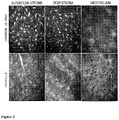
- the injury was also imaged using involved using a Heidelberg Retina Tomograph (HRT) instrument.
- HRT Human Retina Tomograph
- This is a confocal scanning laser ophthalmoscope which was converted into a confocal corneal microscope using an additional microscope lens which attached to the standard lens.
- This additional lens enabled the HRT to image cells and cell layers within the cornea to allow an in-life phase assessment of the healing and structure of the cornea to allow detailed views of the corneal structure and pathology.
- Nle3-A(1-7) Followinging full-thickness corneal incision resulted in faster resolution of edema and inflammation, reduction in the duration of corneal wound leakage, and healing with normal architecture and no fibrosis compared to vehicle control animals.
- Animals Male and female, pigmented rabbits, right eye only, 5/group, weighing 5-6 lbs.
- the rabbits were anesthetized with a subcutaneous injection of a mixture of ketamine hydrochloride (50-80 mg/kg) and xylazine hydrochloride (5-9 mg/kg).
- the animals were prepared for sterile surgery conducted under aseptic conditions.
- the periorbital area was cleaned using 5% povidone iodine solution and a drop of this solution was instilled into the fornix. A speculum was used to hold the eyelid open.
- a corneal blade Keratome 3.2 mm
- analgesia was administered followed by test article. Approximately 30 minutes to an hour later antibiotic ointment was administered.
- Seidel's test All animals had positive Seidel's test results on Day 5 with the exception of 3 animals, 2 at 0.3% Nle3-A(1-7)and 1 at 0.03% Nle3-A(1-7). On Day 10 all Nle3-A(1-7)-treated animals had negative Seidel's tests, while all vehicle-treated animals continued to have leakage with pressure. Further, the oblique light exam on Day 6 found no observed leakage in any animal in the 0.3% NorLeu 3 -A(1-7) group and none in three animals in the 0.03% Nle3-A(1-7) group.
- In vivo leakage pressure Three animals from each treatment group had in vivo pressure measurements taken. The mean pressure for animals receiving 0.3% or 0.03% Nle3-A(1-7) was 79.3 ⁇ 6 mmHg and 77.3 ⁇ 3.2 mmHg respectively. The mean pressure for vehicle-treated animals was 38.7 ⁇ 3.2 mmHg. Treatment with Nle3-A(1-7) increased the strength of healing in that it took approximately twice the amount of pressure to cause leakage in Nle3-A(1-7)-treated wounds compared with vehicle-treated wounds.
- Nle3-A(1-7) Following full-thickness corneal incision resulted in faster anterior chamber formation compared to vehicle control animals, Day 6, Day 8 and Day 14 respectively.
- Corneal healing measured by aqueous leakage in the Seidel's test, occurred by Day 10 in all Nle3-A(1-7)-treated animals with no vehicle control animals having a negative Seidel's test.
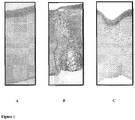
- the strength of healing was increased following 0.3% and 0.03% Nle3-A(1-7) treatment compared to vehicle control animals. Regular distribution of the keratocytes and lamellae indicate corneal healing in the Nle3-A(1-7)-treated animals.
Landscapes
- Health & Medical Sciences (AREA)
- Life Sciences & Earth Sciences (AREA)
- Chemical & Material Sciences (AREA)
- Medicinal Chemistry (AREA)
- Pharmacology & Pharmacy (AREA)
- Animal Behavior & Ethology (AREA)
- General Health & Medical Sciences (AREA)
- Public Health (AREA)
- Veterinary Medicine (AREA)
- Epidemiology (AREA)
- Engineering & Computer Science (AREA)
- Bioinformatics & Cheminformatics (AREA)
- Ophthalmology & Optometry (AREA)
- Gastroenterology & Hepatology (AREA)
- Immunology (AREA)
- Proteomics, Peptides & Aminoacids (AREA)
- Vascular Medicine (AREA)
- Chemical Kinetics & Catalysis (AREA)
- General Chemical & Material Sciences (AREA)
- Nuclear Medicine, Radiotherapy & Molecular Imaging (AREA)
- Organic Chemistry (AREA)
- Inorganic Chemistry (AREA)
- Medicines That Contain Protein Lipid Enzymes And Other Medicines (AREA)
- Medicinal Preparation (AREA)
- Peptides Or Proteins (AREA)
Claims (19)
- Angiotensin-Peptid, bestehend aus mindestens 5 kontinuierlichen Aminosäuren aus Nle3-A(1-7) (SEQ ID NO: 14) zur Verwendung in der Behandlung einer Augenverletzung, wobei das Angiotensin-Peptid an ein Subjekt mit einer Augenverletzung verabreicht wird, in einer Menge an Angiotensin-Peptid, die wirksam ist, um die Augenverletzung zu behandeln.
- Angiotensin-Peptid, umfassend Nle3-A(1-7) (SEQ ID NO: 14) zur Verwendung in der Behandlung einer Augenverletzung, wobei das Angiotesin-Peptid an ein Subjekt mit einer Augenverletzung verabreicht wird, in einer Menge an Angiotensin-Peptid, die wirksam ist, um die Augenverletzung zu behandeln.
- Angiotensin-Peptid zur Verwendung nach Anspruch 2, wobei das Angiotensin-Peptid aus Nle3-A(1-7) (SEQ ID NO: 14) besteht.
- Angiotensin-Peptid zur Verwendung nach einem der Ansprüche 1 bis 3, wobei die Augenverletzung durch ein Trauma, einer Licht/Strahlungs- oder chemischen Exposition, Erkrankung oder eines operativen Eingriffs verursacht ist.
- Angiotensin-Peptid zur Verwendung nach einem der Ansprüche 1 bis 4, wobei die Augenverletzung eine Verletzung umfasst, ausgewählt aus der Gruppe bestehend aus postoperativer Entzündung, postoperativer Fibrose, einem postoperativen Ansteigen des Augeninnendrucks, einer Hornhautverletzung, eines Katarakt Einschnitts, Laserunterstützen in situ Keratomileusis (LASIK) Verwundungen, Trockenes Auge und einer Photorefraktiven Keratektomie (PRK) Verwundung.
- Antiotensin-Peptid zur Verwendung nach einem der Ansprüche 1 bis 5, wobei die Augenverletzung eine Hornhautverletzung ist, und wobei die Hornhautverletzung die Penetration des Hornhautepithels, des Hornhautendothels, der Bowman Membran der Hornhaut, der Descement Membran und/oder des vorderen Teils des Hornhautstromas umfasst, oder wobei die Hornhautverletzung eine Hornhautabrasion oder eine Hornautlazeration umfasst.
- Antiotensin-Peptid zur Verwendung nach Anspruch 6, wobei die Behandlung die Reduzierung der Entwicklung und/oder des Schweregrads eines Symptoms umfasst, ausgewählt aus der Gruppe bestehend aus Fibrosis, Entzündung, Ödem, Anstieg des Augeninnendrucks, Augenschmerzen, erhöhtes Tränen im Vergleich zu normalem Tränen, verschwommene Sicht, Lichtempfindlichkeit, veränderte Sehschärfe, und eines Empfindens, etwas im Auge stecken zu haben.
- Antiotensin-Peptid zur Verwendung nach einem der Ansprüche 1 bis 6, wobei die Augenverletzung Trockenes Auge umfasst.
- Antiotensin-Peptid zur Verwendung nach einem der Ansprüche 1 bis 4, wobei die Verletzung eine Hornhautverletzung ist.
- Antiotensin-Peptid zur Verwendung nach einem der Ansprüche 1 bis 7, wobei die Augenverletzung aus einer Augenoperation resultiert.
- Antiotensin-Peptid zur Verwendung nach einem der Ansprüche 1 bis 10, wobei das Angiotensin-Peptid in einer Konzentration von ungefähr 0,01 % bis ungefähr 1 % einer Gewichts- (mg) / Volumen- (ml) Einheit oder einer Gewichts- / Gewichts- (mg) Einheit verabreicht wird.
- Antiotensin-Peptid zur Verwendung nach einem der Ansprüche 1 bis 11, wobei das Angiotensin in einer topischen Formulierung verabreicht wird.
- Antiotensin-Peptid zur Verwendung nach Anspruch 12, wobei die topische Formulierung ungefähr 0,5 % bis ungefähr 4 % Hydroxyehylcellulose (HEC) einer Gewichts- (mg) / Volumen- (ml) Einheit oder einer Gewichts- / Gewichts- (mg) Einheit umfasst.
- Pharmazeutische Zusammensetzung, umfassend:(a) ein Angiotensin-Peptid, bestehend aus mindestens 5 kontinuierlichen Aminosäuren aus Nle3-A(1-7) (SEQ ID NO: 14);(b) einen Wirkstoff, der künstliche Tränenflüssigkeit umfasst; und(c) einen pharmazeutisch verträglichen Zusatzstoff.
- Pharmazeutische Zusammensetzung, umfassend:(a) ein Angiotensin-Peptid, umfassend Nle3-A(1-7) (SEQ ID NO: 14);(b) einen Wirkstoff, der künstliche Tränenflüssigkeit umfasst; und(c) einen pharmazeutisch verträglichen Zusatzstoff.
- Pharmazeutische Zusammensetzung nach Anspruch 15, wobei das Angiotensin-Peptid aus Nle3-A(1-7) (SEQ ID NO: 14) besteht.
- Pharmazeutische Zusammensetzung nach einem der Ansprüche 14 bis 16, wobei das Angiotensin-Peptid in einer Konzentration von ungefähr 0.01 % bis ungefähr 1 % einer Gewichts- (mg) / Volumen- (ml) Einheit oder einer Gewichts- / Gewichts- (mg) Einheit vorhanden ist.
- Pharmazeutische Zusammensetzung nach einem der Ansprüche 14 bis 17, wobei die pharmazeutische Zusammensetzung als topische Formulierung bereitgestellt wird.
- Pharmazeutische Zusammensetzung nach Anspruch 18, wobei die topische Formulierung ungefähr 0,5 % bis ungefähr 4 % Hydroxyehylcellulose (HEC) einer Gewichts- (mg) / Volumen- (ml) Einheit oder einer Gewichts- / Gewichts- (mg) Einheit umfasst.
Applications Claiming Priority (3)
| Application Number | Priority Date | Filing Date | Title |
|---|---|---|---|
| US201361817596P | 2013-04-30 | 2013-04-30 | |
| US201461938851P | 2014-02-12 | 2014-02-12 | |
| PCT/US2014/036128 WO2014179440A1 (en) | 2013-04-30 | 2014-04-30 | Accelerated healing of eye injuries by angiotensin peptides |
Publications (2)
| Publication Number | Publication Date |
|---|---|
| EP2991663A1 EP2991663A1 (de) | 2016-03-09 |
| EP2991663B1 true EP2991663B1 (de) | 2017-09-13 |
Family
ID=50896533
Family Applications (1)
| Application Number | Title | Priority Date | Filing Date |
|---|---|---|---|
| EP14728744.5A Active EP2991663B1 (de) | 2013-04-30 | 2014-04-30 | Beschleunigte heilung von augenverletzungen anhand von angiotensinpeptiden |
Country Status (9)
| Country | Link |
|---|---|
| US (1) | US9844578B2 (de) |
| EP (1) | EP2991663B1 (de) |
| JP (1) | JP6472438B2 (de) |
| CN (1) | CN105377285B (de) |
| AU (1) | AU2014259948B2 (de) |
| CA (1) | CA2909956C (de) |
| ES (1) | ES2650746T3 (de) |
| RU (1) | RU2674148C2 (de) |
| WO (1) | WO2014179440A1 (de) |
Families Citing this family (11)
| Publication number | Priority date | Publication date | Assignee | Title |
|---|---|---|---|---|
| AU2014233185B2 (en) | 2013-03-15 | 2018-03-15 | University Of Southern California | Methods, compounds, and compositions for the treatment of angiotensin-related diseases |
| EP2968441A1 (de) | 2013-03-15 | 2016-01-20 | University of Southern California | Verfahren zur behandlung von multipler sklerose |
| AU2014284496A1 (en) | 2013-07-03 | 2016-01-21 | The Arizona Board Of Regents On Behalf Of The University Of Arizona | Method for treating cognitive dysfunction |
| EP3171886A4 (de) | 2014-07-21 | 2018-01-24 | The Arizona Board of Regents On Behalf of the University of Arizona | Ang-(1-7)derivat-oligopeptide und verfahren zur verwendung und herstellung davon |
| US10183055B2 (en) | 2014-07-21 | 2019-01-22 | Arizona Board Of Regents On Behalf Of The University Of Arizona | Ang-(1-7) derivative oligopeptides for the treatment of pain and other indications |
| WO2018165495A1 (en) * | 2017-03-10 | 2018-09-13 | Gaffney Kevin J | Cyclodextrin-nle3-a(1-7) compositions and their use |
| RU2676606C1 (ru) * | 2018-02-08 | 2019-01-09 | Христо Периклович Тахчиди | Способ профилактики макулярного разрыва у больных с витреомакулярным тракционным синдромом 1а-1б стадии при наличии макулярного разрыва на парном глазу |
| RU2700589C1 (ru) * | 2019-07-05 | 2019-09-18 | Федеральное государственное бюджетное учреждение "Национальный медицинский исследовательский центр реабилитации и курортологии" Министерства здравоохранения Российской Федерации (ФГБУ "НМИЦ РК" Минздрава России) | Способ ускорения заживления роговицы при ее механических травмах |
| RU2706715C1 (ru) * | 2019-07-10 | 2019-11-20 | Федеральное государственное бюджетное учреждение "Национальный медицинский исследовательский центр реабилитации и курортологии" Министерства здравоохранения Российской Федерации (ФГБУ "НМИЦ РК" Минздрава России) | Применение раствора оксиэтиламмония метилфеноксиацетата |
| US20240350402A1 (en) * | 2021-08-31 | 2024-10-24 | The Cleveland Clinic Foundation | Topical drug treatment to prevent or reduce corneal scarring |
| EP4371556A1 (de) * | 2022-11-15 | 2024-05-22 | Explicat Pharma GmbH | Pharmazeutische angiotensin(1-7)-zusammensetzungen zur inhalation |
Family Cites Families (5)
| Publication number | Priority date | Publication date | Assignee | Title |
|---|---|---|---|---|
| US5036048A (en) | 1986-03-07 | 1991-07-30 | Schering Corporation | Angiotensin II receptor blockers as antiglaucoma agents |
| CA2315266C (en) | 1997-12-12 | 2004-08-10 | University Of Southern California | Wound healing compositions |
| BRPI0105509B8 (pt) * | 2001-11-05 | 2021-05-25 | Univ Minas Gerais | formulações do peptídeo angiotensina-(1-7) usando as ciclodextrinas, lipossomas e o polímero plga |
| WO2009083203A2 (de) * | 2007-12-28 | 2009-07-09 | Heraeus Kulzer Gmbh | Topische anwendung und formulierung von erythropoietin für die wundheilung der haut |
| US20120264681A1 (en) * | 2010-11-08 | 2012-10-18 | Healor Ltd. | Buffered ophthalmic compositions and methods of use thereof |
-
2014
- 2014-04-30 EP EP14728744.5A patent/EP2991663B1/de active Active
- 2014-04-30 US US14/784,251 patent/US9844578B2/en active Active
- 2014-04-30 ES ES14728744.5T patent/ES2650746T3/es active Active
- 2014-04-30 RU RU2015144119A patent/RU2674148C2/ru active
- 2014-04-30 CN CN201480023406.XA patent/CN105377285B/zh not_active Expired - Fee Related
- 2014-04-30 CA CA2909956A patent/CA2909956C/en active Active
- 2014-04-30 AU AU2014259948A patent/AU2014259948B2/en not_active Ceased
- 2014-04-30 JP JP2016511835A patent/JP6472438B2/ja not_active Expired - Fee Related
- 2014-04-30 WO PCT/US2014/036128 patent/WO2014179440A1/en not_active Ceased
Non-Patent Citations (1)
| Title |
|---|
| None * |
Also Published As
| Publication number | Publication date |
|---|---|
| ES2650746T3 (es) | 2018-01-22 |
| CA2909956A1 (en) | 2014-11-06 |
| RU2674148C2 (ru) | 2018-12-05 |
| AU2014259948A1 (en) | 2015-11-05 |
| CN105377285B (zh) | 2020-04-21 |
| WO2014179440A1 (en) | 2014-11-06 |
| CN105377285A (zh) | 2016-03-02 |
| JP6472438B2 (ja) | 2019-02-20 |
| RU2015144119A (ru) | 2017-06-05 |
| AU2014259948B2 (en) | 2019-04-18 |
| JP2016519132A (ja) | 2016-06-30 |
| US9844578B2 (en) | 2017-12-19 |
| CA2909956C (en) | 2021-06-01 |
| US20160051622A1 (en) | 2016-02-25 |
| EP2991663A1 (de) | 2016-03-09 |
Similar Documents
| Publication | Publication Date | Title |
|---|---|---|
| US9844578B2 (en) | Accelerated healing of eye injuries by angiotensin peptides | |
| US6350442B2 (en) | Ocular treatment using cyclosporin-A derivatives | |
| US20230348534A1 (en) | Sap and peptidomimetics for treatment of eye disease | |
| RU2639393C2 (ru) | Состав пролонгированного действия циклоспорина формы 2 | |
| CN109996814B (zh) | 多激酶抑制剂及在眼部纤维化中的用途 | |
| CN102233132B (zh) | Vegf受体融合蛋白在制备抑制眼表新生血管生长的药物中的应用 | |
| KR20130099926A (ko) | 염증성 눈질환의 치료/예방용 화합물 | |
| JP2022546980A (ja) | ブドウ膜炎の治療のための眼科用組成物 | |
| US20150025511A1 (en) | Pharmaceutical compositions for intraocular administration and methods for fabricating thereof | |
| JP2019519597A (ja) | 軟骨細胞の細胞外基質由来ペプチド | |
| US20160101118A1 (en) | Pharmaceutical compositions for intraocular administration and methods for fabricating thereof | |
| US20170239330A1 (en) | Formulations for histatin therapeutics | |
| US20200030263A1 (en) | Methods and compositions for promoting wound healing with decreased scar formation after glaucoma filtration surgery | |
| US20250276038A1 (en) | Histatin combinations and methods for treating or inhibiting cell loss | |
| Everaert | Evaluation of newly developed HPMC ophthalmic inserts with sustained release properties as a carrier for thermolabile therapeutics | |
| WO2026103774A1 (zh) | 一种具有抗血管新生活性的多肽及其应用 | |
| WO2023160499A1 (zh) | 一种肽、含有所述肽的眼用药物组合物及其用途 | |
| Cheonga et al. | Intraocular Eyelash after an Uneventful Cataract Surgery: Case Report and | |
| Singh et al. | Wound infection after cataract surgery: a report of two cases | |
| CA3243814A1 (en) | Peptides and their methods of use in the treatment of eye disorders | |
| CN118103055A (zh) | 组氨素组合和治疗或抑制细胞损失的方法 | |
| WO2019246509A1 (en) | Methods and compositions for promoting wound healing with decreased scar formation after glaucoma filtration surgery |
Legal Events
| Date | Code | Title | Description |
|---|---|---|---|
| PUAI | Public reference made under article 153(3) epc to a published international application that has entered the european phase |
Free format text: ORIGINAL CODE: 0009012 |
|
| 17P | Request for examination filed |
Effective date: 20151021 |
|
| AK | Designated contracting states |
Kind code of ref document: A1 Designated state(s): AL AT BE BG CH CY CZ DE DK EE ES FI FR GB GR HR HU IE IS IT LI LT LU LV MC MK MT NL NO PL PT RO RS SE SI SK SM TR |
|
| AX | Request for extension of the european patent |
Extension state: BA ME |
|
| DAX | Request for extension of the european patent (deleted) | ||
| RIN1 | Information on inventor provided before grant (corrected) |
Inventor name: LOUIE, STAN Inventor name: RODGERS, KATHLEEN, E. Inventor name: HUMAYUN, MARK Inventor name: ABDALLAH, WALID, FOUAD, AHMED Inventor name: DIZEREGA, GERE, S. |
|
| 17Q | First examination report despatched |
Effective date: 20161114 |
|
| GRAP | Despatch of communication of intention to grant a patent |
Free format text: ORIGINAL CODE: EPIDOSNIGR1 |
|
| INTG | Intention to grant announced |
Effective date: 20170404 |
|
| GRAS | Grant fee paid |
Free format text: ORIGINAL CODE: EPIDOSNIGR3 |
|
| GRAA | (expected) grant |
Free format text: ORIGINAL CODE: 0009210 |
|
| AK | Designated contracting states |
Kind code of ref document: B1 Designated state(s): AL AT BE BG CH CY CZ DE DK EE ES FI FR GB GR HR HU IE IS IT LI LT LU LV MC MK MT NL NO PL PT RO RS SE SI SK SM TR |
|
| REG | Reference to a national code |
Ref country code: GB Ref legal event code: FG4D |
|
| REG | Reference to a national code |
Ref country code: CH Ref legal event code: EP |
|
| REG | Reference to a national code |
Ref country code: IE Ref legal event code: FG4D |
|
| REG | Reference to a national code |
Ref country code: AT Ref legal event code: REF Ref document number: 927511 Country of ref document: AT Kind code of ref document: T Effective date: 20171015 |
|
| REG | Reference to a national code |
Ref country code: DE Ref legal event code: R096 Ref document number: 602014014561 Country of ref document: DE |
|
| REG | Reference to a national code |
Ref country code: CH Ref legal event code: NV Representative=s name: OFFICE ERNEST T. FREYLINGER S.A., CH |
|
| REG | Reference to a national code |
Ref country code: NL Ref legal event code: MP Effective date: 20170913 |
|
| REG | Reference to a national code |
Ref country code: ES Ref legal event code: FG2A Ref document number: 2650746 Country of ref document: ES Kind code of ref document: T3 Effective date: 20180122 |
|
| REG | Reference to a national code |
Ref country code: LT Ref legal event code: MG4D |
|
| PG25 | Lapsed in a contracting state [announced via postgrant information from national office to epo] |
Ref country code: SE Free format text: LAPSE BECAUSE OF FAILURE TO SUBMIT A TRANSLATION OF THE DESCRIPTION OR TO PAY THE FEE WITHIN THE PRESCRIBED TIME-LIMIT Effective date: 20170913 Ref country code: HR Free format text: LAPSE BECAUSE OF FAILURE TO SUBMIT A TRANSLATION OF THE DESCRIPTION OR TO PAY THE FEE WITHIN THE PRESCRIBED TIME-LIMIT Effective date: 20170913 Ref country code: LT Free format text: LAPSE BECAUSE OF FAILURE TO SUBMIT A TRANSLATION OF THE DESCRIPTION OR TO PAY THE FEE WITHIN THE PRESCRIBED TIME-LIMIT Effective date: 20170913 Ref country code: FI Free format text: LAPSE BECAUSE OF FAILURE TO SUBMIT A TRANSLATION OF THE DESCRIPTION OR TO PAY THE FEE WITHIN THE PRESCRIBED TIME-LIMIT Effective date: 20170913 Ref country code: NO Free format text: LAPSE BECAUSE OF FAILURE TO SUBMIT A TRANSLATION OF THE DESCRIPTION OR TO PAY THE FEE WITHIN THE PRESCRIBED TIME-LIMIT Effective date: 20171213 |
|
| REG | Reference to a national code |
Ref country code: AT Ref legal event code: MK05 Ref document number: 927511 Country of ref document: AT Kind code of ref document: T Effective date: 20170913 |
|
| PG25 | Lapsed in a contracting state [announced via postgrant information from national office to epo] |
Ref country code: BG Free format text: LAPSE BECAUSE OF FAILURE TO SUBMIT A TRANSLATION OF THE DESCRIPTION OR TO PAY THE FEE WITHIN THE PRESCRIBED TIME-LIMIT Effective date: 20171213 Ref country code: GR Free format text: LAPSE BECAUSE OF FAILURE TO SUBMIT A TRANSLATION OF THE DESCRIPTION OR TO PAY THE FEE WITHIN THE PRESCRIBED TIME-LIMIT Effective date: 20171214 Ref country code: RS Free format text: LAPSE BECAUSE OF FAILURE TO SUBMIT A TRANSLATION OF THE DESCRIPTION OR TO PAY THE FEE WITHIN THE PRESCRIBED TIME-LIMIT Effective date: 20170913 Ref country code: LV Free format text: LAPSE BECAUSE OF FAILURE TO SUBMIT A TRANSLATION OF THE DESCRIPTION OR TO PAY THE FEE WITHIN THE PRESCRIBED TIME-LIMIT Effective date: 20170913 |
|
| PG25 | Lapsed in a contracting state [announced via postgrant information from national office to epo] |
Ref country code: NL Free format text: LAPSE BECAUSE OF FAILURE TO SUBMIT A TRANSLATION OF THE DESCRIPTION OR TO PAY THE FEE WITHIN THE PRESCRIBED TIME-LIMIT Effective date: 20170913 |
|
| REG | Reference to a national code |
Ref country code: FR Ref legal event code: PLFP Year of fee payment: 5 |
|
| PG25 | Lapsed in a contracting state [announced via postgrant information from national office to epo] |
Ref country code: PL Free format text: LAPSE BECAUSE OF FAILURE TO SUBMIT A TRANSLATION OF THE DESCRIPTION OR TO PAY THE FEE WITHIN THE PRESCRIBED TIME-LIMIT Effective date: 20170913 Ref country code: CZ Free format text: LAPSE BECAUSE OF FAILURE TO SUBMIT A TRANSLATION OF THE DESCRIPTION OR TO PAY THE FEE WITHIN THE PRESCRIBED TIME-LIMIT Effective date: 20170913 Ref country code: RO Free format text: LAPSE BECAUSE OF FAILURE TO SUBMIT A TRANSLATION OF THE DESCRIPTION OR TO PAY THE FEE WITHIN THE PRESCRIBED TIME-LIMIT Effective date: 20170913 |
|
| PG25 | Lapsed in a contracting state [announced via postgrant information from national office to epo] |
Ref country code: SM Free format text: LAPSE BECAUSE OF FAILURE TO SUBMIT A TRANSLATION OF THE DESCRIPTION OR TO PAY THE FEE WITHIN THE PRESCRIBED TIME-LIMIT Effective date: 20170913 Ref country code: SK Free format text: LAPSE BECAUSE OF FAILURE TO SUBMIT A TRANSLATION OF THE DESCRIPTION OR TO PAY THE FEE WITHIN THE PRESCRIBED TIME-LIMIT Effective date: 20170913 Ref country code: IS Free format text: LAPSE BECAUSE OF FAILURE TO SUBMIT A TRANSLATION OF THE DESCRIPTION OR TO PAY THE FEE WITHIN THE PRESCRIBED TIME-LIMIT Effective date: 20180113 Ref country code: EE Free format text: LAPSE BECAUSE OF FAILURE TO SUBMIT A TRANSLATION OF THE DESCRIPTION OR TO PAY THE FEE WITHIN THE PRESCRIBED TIME-LIMIT Effective date: 20170913 Ref country code: AT Free format text: LAPSE BECAUSE OF FAILURE TO SUBMIT A TRANSLATION OF THE DESCRIPTION OR TO PAY THE FEE WITHIN THE PRESCRIBED TIME-LIMIT Effective date: 20170913 |
|
| REG | Reference to a national code |
Ref country code: DE Ref legal event code: R097 Ref document number: 602014014561 Country of ref document: DE |
|
| PLBE | No opposition filed within time limit |
Free format text: ORIGINAL CODE: 0009261 |
|
| STAA | Information on the status of an ep patent application or granted ep patent |
Free format text: STATUS: NO OPPOSITION FILED WITHIN TIME LIMIT |
|
| PG25 | Lapsed in a contracting state [announced via postgrant information from national office to epo] |
Ref country code: DK Free format text: LAPSE BECAUSE OF FAILURE TO SUBMIT A TRANSLATION OF THE DESCRIPTION OR TO PAY THE FEE WITHIN THE PRESCRIBED TIME-LIMIT Effective date: 20170913 |
|
| 26N | No opposition filed |
Effective date: 20180614 |
|
| PG25 | Lapsed in a contracting state [announced via postgrant information from national office to epo] |
Ref country code: SI Free format text: LAPSE BECAUSE OF FAILURE TO SUBMIT A TRANSLATION OF THE DESCRIPTION OR TO PAY THE FEE WITHIN THE PRESCRIBED TIME-LIMIT Effective date: 20170913 Ref country code: MC Free format text: LAPSE BECAUSE OF FAILURE TO SUBMIT A TRANSLATION OF THE DESCRIPTION OR TO PAY THE FEE WITHIN THE PRESCRIBED TIME-LIMIT Effective date: 20170913 |
|
| REG | Reference to a national code |
Ref country code: BE Ref legal event code: MM Effective date: 20180430 |
|
| PG25 | Lapsed in a contracting state [announced via postgrant information from national office to epo] |
Ref country code: LU Free format text: LAPSE BECAUSE OF NON-PAYMENT OF DUE FEES Effective date: 20180430 |
|
| PG25 | Lapsed in a contracting state [announced via postgrant information from national office to epo] |
Ref country code: BE Free format text: LAPSE BECAUSE OF NON-PAYMENT OF DUE FEES Effective date: 20180430 |
|
| PG25 | Lapsed in a contracting state [announced via postgrant information from national office to epo] |
Ref country code: MT Free format text: LAPSE BECAUSE OF NON-PAYMENT OF DUE FEES Effective date: 20180430 |
|
| PG25 | Lapsed in a contracting state [announced via postgrant information from national office to epo] |
Ref country code: TR Free format text: LAPSE BECAUSE OF FAILURE TO SUBMIT A TRANSLATION OF THE DESCRIPTION OR TO PAY THE FEE WITHIN THE PRESCRIBED TIME-LIMIT Effective date: 20170913 |
|
| PG25 | Lapsed in a contracting state [announced via postgrant information from national office to epo] |
Ref country code: PT Free format text: LAPSE BECAUSE OF FAILURE TO SUBMIT A TRANSLATION OF THE DESCRIPTION OR TO PAY THE FEE WITHIN THE PRESCRIBED TIME-LIMIT Effective date: 20170913 |
|
| PG25 | Lapsed in a contracting state [announced via postgrant information from national office to epo] |
Ref country code: CY Free format text: LAPSE BECAUSE OF FAILURE TO SUBMIT A TRANSLATION OF THE DESCRIPTION OR TO PAY THE FEE WITHIN THE PRESCRIBED TIME-LIMIT Effective date: 20170913 Ref country code: HU Free format text: LAPSE BECAUSE OF FAILURE TO SUBMIT A TRANSLATION OF THE DESCRIPTION OR TO PAY THE FEE WITHIN THE PRESCRIBED TIME-LIMIT; INVALID AB INITIO Effective date: 20140430 Ref country code: MK Free format text: LAPSE BECAUSE OF NON-PAYMENT OF DUE FEES Effective date: 20170913 |
|
| PG25 | Lapsed in a contracting state [announced via postgrant information from national office to epo] |
Ref country code: AL Free format text: LAPSE BECAUSE OF FAILURE TO SUBMIT A TRANSLATION OF THE DESCRIPTION OR TO PAY THE FEE WITHIN THE PRESCRIBED TIME-LIMIT Effective date: 20170913 |
|
| P01 | Opt-out of the competence of the unified patent court (upc) registered |
Effective date: 20230524 |
|
| PGFP | Annual fee paid to national office [announced via postgrant information from national office to epo] |
Ref country code: IE Payment date: 20240322 Year of fee payment: 11 |
|
| PGFP | Annual fee paid to national office [announced via postgrant information from national office to epo] |
Ref country code: GB Payment date: 20240320 Year of fee payment: 11 |
|
| PGFP | Annual fee paid to national office [announced via postgrant information from national office to epo] |
Ref country code: IT Payment date: 20240320 Year of fee payment: 11 Ref country code: FR Payment date: 20240320 Year of fee payment: 11 |
|
| PGFP | Annual fee paid to national office [announced via postgrant information from national office to epo] |
Ref country code: DE Payment date: 20240320 Year of fee payment: 11 |
|
| PGFP | Annual fee paid to national office [announced via postgrant information from national office to epo] |
Ref country code: CH Payment date: 20240501 Year of fee payment: 11 |
|
| PGFP | Annual fee paid to national office [announced via postgrant information from national office to epo] |
Ref country code: ES Payment date: 20240502 Year of fee payment: 11 |
|
| REG | Reference to a national code |
Ref country code: DE Ref legal event code: R119 Ref document number: 602014014561 Country of ref document: DE |
|
| REG | Reference to a national code |
Ref country code: CH Ref legal event code: H13 Free format text: ST27 STATUS EVENT CODE: U-0-0-H10-H13 (AS PROVIDED BY THE NATIONAL OFFICE) Effective date: 20251125 |
|
| GBPC | Gb: european patent ceased through non-payment of renewal fee |
Effective date: 20250430 |
|
| PG25 | Lapsed in a contracting state [announced via postgrant information from national office to epo] |
Ref country code: DE Free format text: LAPSE BECAUSE OF NON-PAYMENT OF DUE FEES Effective date: 20251104 |
|
| PG25 | Lapsed in a contracting state [announced via postgrant information from national office to epo] |
Ref country code: GB Free format text: LAPSE BECAUSE OF NON-PAYMENT OF DUE FEES Effective date: 20250430 |
|
| PG25 | Lapsed in a contracting state [announced via postgrant information from national office to epo] |
Ref country code: FR Free format text: LAPSE BECAUSE OF NON-PAYMENT OF DUE FEES Effective date: 20250430 |
|
| PG25 | Lapsed in a contracting state [announced via postgrant information from national office to epo] |
Ref country code: CH Free format text: LAPSE BECAUSE OF NON-PAYMENT OF DUE FEES Effective date: 20250430 |
|
| PG25 | Lapsed in a contracting state [announced via postgrant information from national office to epo] |
Ref country code: IE Free format text: LAPSE BECAUSE OF NON-PAYMENT OF DUE FEES Effective date: 20250430 |
|
| PG25 | Lapsed in a contracting state [announced via postgrant information from national office to epo] |
Ref country code: IT Free format text: LAPSE BECAUSE OF NON-PAYMENT OF DUE FEES Effective date: 20250430 |