EP2970509B1 - Extracellular matrix-binding synthetic peptidoglycans - Google Patents
Extracellular matrix-binding synthetic peptidoglycans Download PDFInfo
- Publication number
- EP2970509B1 EP2970509B1 EP14764351.4A EP14764351A EP2970509B1 EP 2970509 B1 EP2970509 B1 EP 2970509B1 EP 14764351 A EP14764351 A EP 14764351A EP 2970509 B1 EP2970509 B1 EP 2970509B1
- Authority
- EP
- European Patent Office
- Prior art keywords
- collagen
- peptides
- hyaluronic acid
- binding peptide
- peptide
- Prior art date
- Legal status (The legal status is an assumption and is not a legal conclusion. Google has not performed a legal analysis and makes no representation as to the accuracy of the status listed.)
- Not-in-force
Links
Images


Classifications
-
- A—HUMAN NECESSITIES
- A61—MEDICAL OR VETERINARY SCIENCE; HYGIENE
- A61K—PREPARATIONS FOR MEDICAL, DENTAL OR TOILETRY PURPOSES
- A61K38/00—Medicinal preparations containing peptides
- A61K38/04—Peptides having up to 20 amino acids in a fully defined sequence; Derivatives thereof
- A61K38/14—Peptides containing saccharide radicals; Derivatives thereof, e.g. bleomycin, phleomycin, muramylpeptides or vancomycin
-
- A—HUMAN NECESSITIES
- A61—MEDICAL OR VETERINARY SCIENCE; HYGIENE
- A61K—PREPARATIONS FOR MEDICAL, DENTAL OR TOILETRY PURPOSES
- A61K47/00—Medicinal preparations characterised by the non-active ingredients used, e.g. carriers or inert additives; Targeting or modifying agents chemically bound to the active ingredient
- A61K47/50—Medicinal preparations characterised by the non-active ingredients used, e.g. carriers or inert additives; Targeting or modifying agents chemically bound to the active ingredient the non-active ingredient being chemically bound to the active ingredient, e.g. polymer-drug conjugates
- A61K47/51—Medicinal preparations characterised by the non-active ingredients used, e.g. carriers or inert additives; Targeting or modifying agents chemically bound to the active ingredient the non-active ingredient being chemically bound to the active ingredient, e.g. polymer-drug conjugates the non-active ingredient being a modifying agent
- A61K47/54—Medicinal preparations characterised by the non-active ingredients used, e.g. carriers or inert additives; Targeting or modifying agents chemically bound to the active ingredient the non-active ingredient being chemically bound to the active ingredient, e.g. polymer-drug conjugates the non-active ingredient being a modifying agent the modifying agent being an organic compound
- A61K47/545—Heterocyclic compounds
-
- A—HUMAN NECESSITIES
- A61—MEDICAL OR VETERINARY SCIENCE; HYGIENE
- A61K—PREPARATIONS FOR MEDICAL, DENTAL OR TOILETRY PURPOSES
- A61K47/00—Medicinal preparations characterised by the non-active ingredients used, e.g. carriers or inert additives; Targeting or modifying agents chemically bound to the active ingredient
- A61K47/50—Medicinal preparations characterised by the non-active ingredients used, e.g. carriers or inert additives; Targeting or modifying agents chemically bound to the active ingredient the non-active ingredient being chemically bound to the active ingredient, e.g. polymer-drug conjugates
- A61K47/51—Medicinal preparations characterised by the non-active ingredients used, e.g. carriers or inert additives; Targeting or modifying agents chemically bound to the active ingredient the non-active ingredient being chemically bound to the active ingredient, e.g. polymer-drug conjugates the non-active ingredient being a modifying agent
- A61K47/56—Medicinal preparations characterised by the non-active ingredients used, e.g. carriers or inert additives; Targeting or modifying agents chemically bound to the active ingredient the non-active ingredient being chemically bound to the active ingredient, e.g. polymer-drug conjugates the non-active ingredient being a modifying agent the modifying agent being an organic macromolecular compound, e.g. an oligomeric, polymeric or dendrimeric molecule
- A61K47/61—Medicinal preparations characterised by the non-active ingredients used, e.g. carriers or inert additives; Targeting or modifying agents chemically bound to the active ingredient the non-active ingredient being chemically bound to the active ingredient, e.g. polymer-drug conjugates the non-active ingredient being a modifying agent the modifying agent being an organic macromolecular compound, e.g. an oligomeric, polymeric or dendrimeric molecule the organic macromolecular compound being a polysaccharide or a derivative thereof
-
- A—HUMAN NECESSITIES
- A61—MEDICAL OR VETERINARY SCIENCE; HYGIENE
- A61P—SPECIFIC THERAPEUTIC ACTIVITY OF CHEMICAL COMPOUNDS OR MEDICINAL PREPARATIONS
- A61P17/00—Drugs for dermatological disorders
-
- A—HUMAN NECESSITIES
- A61—MEDICAL OR VETERINARY SCIENCE; HYGIENE
- A61P—SPECIFIC THERAPEUTIC ACTIVITY OF CHEMICAL COMPOUNDS OR MEDICINAL PREPARATIONS
- A61P17/00—Drugs for dermatological disorders
- A61P17/16—Emollients or protectives, e.g. against radiation
-
- A—HUMAN NECESSITIES
- A61—MEDICAL OR VETERINARY SCIENCE; HYGIENE
- A61P—SPECIFIC THERAPEUTIC ACTIVITY OF CHEMICAL COMPOUNDS OR MEDICINAL PREPARATIONS
- A61P19/00—Drugs for skeletal disorders
- A61P19/08—Drugs for skeletal disorders for bone diseases, e.g. rachitism, Paget's disease
-
- A—HUMAN NECESSITIES
- A61—MEDICAL OR VETERINARY SCIENCE; HYGIENE
- A61P—SPECIFIC THERAPEUTIC ACTIVITY OF CHEMICAL COMPOUNDS OR MEDICINAL PREPARATIONS
- A61P27/00—Drugs for disorders of the senses
- A61P27/02—Ophthalmic agents
-
- A—HUMAN NECESSITIES
- A61—MEDICAL OR VETERINARY SCIENCE; HYGIENE
- A61P—SPECIFIC THERAPEUTIC ACTIVITY OF CHEMICAL COMPOUNDS OR MEDICINAL PREPARATIONS
- A61P29/00—Non-central analgesic, antipyretic or antiinflammatory agents, e.g. antirheumatic agents; Non-steroidal antiinflammatory drugs [NSAID]
-
- A—HUMAN NECESSITIES
- A61—MEDICAL OR VETERINARY SCIENCE; HYGIENE
- A61P—SPECIFIC THERAPEUTIC ACTIVITY OF CHEMICAL COMPOUNDS OR MEDICINAL PREPARATIONS
- A61P43/00—Drugs for specific purposes, not provided for in groups A61P1/00-A61P41/00
-
- C—CHEMISTRY; METALLURGY
- C07—ORGANIC CHEMISTRY
- C07K—PEPTIDES
- C07K14/00—Peptides having more than 20 amino acids; Gastrins; Somatostatins; Melanotropins; Derivatives thereof
- C07K14/435—Peptides having more than 20 amino acids; Gastrins; Somatostatins; Melanotropins; Derivatives thereof from animals; from humans
- C07K14/46—Peptides having more than 20 amino acids; Gastrins; Somatostatins; Melanotropins; Derivatives thereof from animals; from humans from vertebrates
- C07K14/47—Peptides having more than 20 amino acids; Gastrins; Somatostatins; Melanotropins; Derivatives thereof from animals; from humans from vertebrates from mammals
- C07K14/4701—Peptides having more than 20 amino acids; Gastrins; Somatostatins; Melanotropins; Derivatives thereof from animals; from humans from vertebrates from mammals not used
- C07K14/4725—Proteoglycans, e.g. aggreccan
-
- C—CHEMISTRY; METALLURGY
- C07—ORGANIC CHEMISTRY
- C07K—PEPTIDES
- C07K9/00—Peptides having up to 20 amino acids, containing saccharide radicals and having a fully defined sequence; Derivatives thereof
Definitions
- This disclosure provides extracellular matrix-binding synthetic peptidoglycans comprised of one or more synthetic peptides conjugated to a glycan and methods of their use.
- ECM extracellular matrix
- proteins such as collagen, laminin, and fibronectin.
- the extracellular matrix in certain areas of the body e.g., in synovial joints, the vitreous humor, the spinal discs, the skin, etc.
- undesirable symptoms such as various forms of arthritis, loss of vision, and the like.
- Lubricin also known as superficial zone protein (SZP) or PRG4, is a mucinous glycoprotein secreted by tissues lining the interior surfaces of animal joints (see Schumacher, B.L., et al., Arch Biochem Biophys, 1994, 311(1): 144-52 ).
- SZP superficial zone protein
- Lubricin acts as a chondroprotective barrier against direct solid-to solid contact in joints when the kinematic conditions are conducive to surface sliding in the boundary lubrication regime, characterized by the formation of an adsorbed molecular layer conformal with the articular tissue surface topography (see Neu, C.P., K. Komvopoulos, and A.H. Reddi, Tissue Engineering, Part B: Reviews, 2008 ).
- vitreous humor a complex gel-like network which fills the posterior cavity of the eye, is composed of approximately 99 wt% water, 0.9 wt% salts, less than 0.1 wt% heterotypic collagen fibrils (type II, V/XI and IX), and a hyaluronan network. It serves several purposes (including developmental, optical, protective) and its degradation has been implicated in several ocular pathologies, such as retinal tear, retinal detachment, retinal edema, choroidal detachment, vitreous hemorrhage, and glaucoma.
- nucleus pulposus a gel-like substance is the inner core of the spinal disc, results in reduced ability of the spinal disc to transmit loads evenly and efficiently between vertebral bodies, and leads to damage in the annular region of the disc, known as the annulus fibrosis.
- the nucleus pulposus functions to distribute hydraulic pressure in all directions within each disc under compressive loads and is comprised of chondrocyte-like cells, collagen fibrils, and proteoglycan aggrecans that aggregate through hyaluronic chains. Fissures or tears in the annulus can translate into a disc that herniates or ruptures, resulting in impingement of the nerves in the region of the disc and finally lower back or leg pain.
- extracellular matrix-binding synthetic peptidoglycans for use in supplementing and/or replacing extracellular matrix fluids in the body, thus treating and/or preventing diseases or disorders resulting from the degradation thereof.
- WO 2012/162534 describes biomaterials for cartilage regeneration, such as synthetic peptidoglycans including a hyaluronic acid-binding peptide, for use in restoring damaged cartilage in an affected patient.
- WO 2009/120995 describes an engineered collagen matrix comprising a collagen matrix and a collagen-binding synthetic peptidoglycan.
- the invention provides an extracellular matrix-binding synthetic peptidoglycan comprising: a) a glycan; b) from 1 to 80 collagen binding peptide(s); and c) from 1 to 80 hyaluronic acid binding peptide(s); wherein the peptides of b) and c) are covalently bonded to the glycan.
- the invention also provides an extracellular matrix-binding synthetic peptidoglycan comprising: a) chondroitin sulfate; b) from 1 to 80 collagen binding peptide(s); and c) from 1 to 80 hyaluronic acid binding peptide(s); wherein the peptides of b) and c) are covalently bonded to the chondroitin sulfate; and further wherein the collagen binding peptide(s) is WYRGRLGC and the hyaluronic acid binding peptide(s) is GAHWQFNALTVRGGGC.
- the invention further provides an extracellular matrix-binding synthetic peptidoglycan comprising: a) chondroitin sulfate; b) from 5 to 20 collagen binding peptide(s); and c) from 5 to 20 hyaluronic acid binding peptide(s); wherein the peptides of b) and c) are covalently bonded to the chondroitin sulfate via N-[ ⁇ -maleimidopropionic acid]hydrazide (BMPH); and further wherein the collagen binding peptide(s) are WYRGRLGC and the hyaluronic acid binding peptide(s) are GAHWQFNALTVRGGGC.
- an extracellular matrix-binding synthetic peptidoglycan comprising: a) chondroitin sulfate; b) from 5 to 20 collagen binding peptide(s); and c) from 5 to 20 hyaluronic acid binding peptide(s); wherein the peptides of b) and
- the invention provides a pharmaceutical composition comprising the extracellular matrix-binding synthetic peptidoglycan of the invention.
- the invention also provides a pharmaceutical composition of the invention for use in a method of treating degradation of a hyaluronic acid rich tissue in a patient, the method comprising administering the pharmaceutical composition to a patient in need thereof, wherein the hyaluronic acid rich tissue is the skin.
- the invention further provides a pharmaceutical composition according to the invention for use in a method of treating and/or preventing cartilage degeneration in a patient, the method comprising: (a) administering the pharmaceutical composition to a patient in need thereof; or (b) injecting the pharmaceutical composition into a synovial cavity of a patient in need thereof.
- the invention provides a pharmaceutical composition according to the invention for use in a method of treating vitreous humor degeneration in a patient, the method comprising administering the pharmaceutical composition to a patient in need thereof.
- the invention also provides a pharmaceutical composition according to the invention for use in a method of treating nucleus pulposus degeneration in a patient, the method comprising administering the pharmaceutical composition to a patient in need thereof.
- an extracellular matrix-binding synthetic peptidoglycan wherein the extracellular matrix-binding synthetic peptidoglycan comprises a glycan; from about 1 to 60 collagen binding peptide(s); and from about 1 to 60 hyaluronic acid binding peptide(s).
- the extracellular matrix-binding synthetic peptidoglycan the collagen binding peptide(s) and the hyaluronic acid binding peptide(s) are covalently bonded to the glycan.
- the synthetic peptidoglycan can comprise any glycan, including, but not limited to, dextran, chondroitin, chondroitin sulfate, dermatan, dermatan sulfate, heparan, heparin, keratin, keratan sulfate, or hyaluronic acid.
- composition comprising an extracellular matrix-binding synthetic peptidoglycan comprising a glycan; from about 1 to 80 collagen binding peptide(s); and from about 1 to 80 hyaluronic acid binding peptide(s), wherein the collagen binding peptide(s) and the hyaluronic acid binding peptide(s) are covalently bonded to the glycan.
- Synthetic peptidoglycans as described herein may be useful in supplementing and/or protecting tissues that have both collagen and hyaluronic acid, such as cartilage, the nucleus pulposus, and the vitreous humor of the eye. Accordingly, described is a method of treating and/or preventing cartilage degeneration in a patient comprising administering to a patient in need thereof a pharmaceutical composition comprising the extracellular matrix-binding synthetic peptidoglycan described herein. In addition, described is a method of treating and/or preventing vitreous humor degeneration in a patient comprising administering to a patient in need thereof the pharmaceutical composition comprising the extracellular matrix-binding synthetic peptidoglycan described herein. Also described is a method of treating and/or preventing nucleus pulposus degeneration in a patient comprising administering to a patient in need thereof the pharmaceutical composition comprising the extracellular matrix-binding synthetic peptidoglycan described herein.
- the extracellular matrix-binding synthetic peptidoglycans and pharmaceutical compositions thereof can be used in vascular intervention procedures including, for example, to prevent any one or a combination of platelet binding to exposed collagen of the denuded endothelium, platelet activation, thrombosis, inflammation resulting from denuding the endothelium, intimal hyperplasia, and vasospasm.
- the extracellular matrix-binding synthetic peptidoglycans described herein can also be used to stimulate endothelial cell proliferation and can bind to collagen in a denuded vessel.
- compositions and methods are intended to mean that the compositions and methods include the recited elements, but not excluding others.
- Consisting essentially of' when used to define compositions and methods shall mean excluding other elements of any essential significance to the combination for the stated purpose. Thus, a composition consisting essentially of the elements as defined herein would not exclude other materials or steps that do not materially affect the basic and novel characteristic(s) claimed.
- Consisting of' shall mean excluding more than trace elements of other ingredients and substantial method steps. Embodiments defined by each of these transition terms are within the scope of this disclosure.
- synovial cavity refers to the space between the bones of a synovial joint that is filled with synovial fluid.
- treating and/or preventing refers to preventing, curing, reversing, attenuating, alleviating, minimizing, suppressing or halting the deleterious effects of a disease state, disease progression or other abnormal condition.
- the term "patient” refers to a subject (i.e., human) at risk for or suffering from a disease state, disease progression or other abnormal or deleterious condition.
- synthetic peptidoglycan refers to a synthetic conjugate that comprises a glycan and one or more synthetic peptides covalently bonded thereto.
- the glycan portion can be made synthetically or derived from animal sources.
- the synthetic peptides can be covalently bonded directly to the glycan or via a linker.
- hyaluronic acid binding peptides to glycans see, e.g., WO 2012/162534 .
- collagen binding peptides to glycans see, e.g., US 2013/0190246 , US 2012/0100106 , and US 2011/0020298 .
- covalently bonded refers to a bond in which one or more pairs of electrons are shared by two atoms.
- the term "glycan” refers a compounds consisting of a large number of monosaccharides linked glycosidically.
- the glycan is a glycosaminoglycans, which comprise 2-aminosugars linked in an alternating fashion with uronic acids, and include polymers such as heparin, heparan sulfate, chondroitin, keratin, and dermatan.
- non-limiting examples of glycans which can be used in the embodiments described herein include alginate, agarose, dextran, chondroitin, chondroitin sulfate, dermatan, dermatan sulfate, heparan, heparin, keratin, keratan sulfate, and hyaluronic acid.
- hyaluronic acid binding peptide refers to a synthetic peptide comprising a hyaluronic acid binding sequence.
- the peptide component of the synthetic peptidoglycan can comprise an amino acid sequence selected from the group consisting of: GAHWQFNALTVR, GAHWQFNALTVRGG, GDRRRRRMWHRQ, GKHLGGKHRRSR, RGTHHAQKRRS, RRHKSGHIQGSK, SRMHGRVRGRHE, RRRAGLTAGRPR, RYGGHRTSRKWV, RSARYGHRRGVG, GLRGNRRVFARP, SRGQRGRLGKTR, DRRGRSSLPKLAGPVEFPDRKIKGRR, RMRRKGRVKHWG, RGGARGRHKTGR, TGARQRGLQGGWGPRHLRGKDQPPGR, RQRRRDLTRVEG, STKDHNRGRRNVGPVSRSTLRDPIRR, RRIG
- Additional peptides that can be included as the peptide component of the hyaluronic acid binding synthetic peptidoglycans include peptides which have an Arg-Arg (R-R) motif, such as one or more peptides selected from the group consisting of RRASRSRGQVGL, GRGTHHAQKRRS, QPVRRLGTPVVG, ARRAEGKTRMLQ, PKVRGRRHQASG, SDRHRRRREADG, NQRVRRVKHPPG, RERRERHAVARHGPGLERDARNLARR, TRPGGKRGGQVGPPAGVLHGRRARS, NVRSRRGHRMNS, DRRRGRTRNIGN, KTAGHGRRWSRN, AKRGEGRREWPR, GGDRRKAHKLQA, RRGGRKWGSFEG and RQRRRDLTRVEG (see, e.g., Amemiya et al, Biochem.
- R-R Arg-Arg
- the peptide is selected from the group consisting of RDGTRYVQKGEYR, HREARSGKYK, PDKKHKLYGV, and WDKERSRYDV (see, e.g., Yang et al, EMBO Journal, 1994, 13, 286-296 , and Goetinck et al, J. Cell. Biol, 1987, 105, 2403-2408 ).
- collagen binding peptide refers to a synthetic peptide comprising a collagen binding sequence.
- the "collagen binding peptide” can have amino acid homology with a portion of a protein normally or not normally involved in collagen fibrillogenesis.
- the collagen binding peptide comprises from about 5 to about 40 amino acids, or from about 5 to about 20 amino acids, or from about 5 to about 10 amino acids.
- these peptides have homology or sequence identity to the amino acid sequence of a small leucine-rich proteoglycan, a platelet receptor sequence, or a protein that regulates collagen fibrillogenesis.
- the collagen binding peptide comprises an amino acid sequence selected from the group consisting of RRANAALKAGELYKSILY, RLDGNEIKR, AHEEISTTNEGVM, GELYKSILY, NGVFKYRPRYFLYKHAYFYPPLKRFPVQ, CQDSETRTFY, TKKTLRT, GLRSKSKKFRRPDIQYPDATDEDITSHM, SQNPVQP, SYIRIADTNIT, KELNLVYT, GSITTIDVPWNVGC, and GSITTIDVPWNV any peptide sequence comprising a sequence with at least about 80% sequence identity to the amino acid sequence.
- the collagen binding peptide comprises an amino acid sequence that has about 80%, about 85%, about 90%, about 95%, about 98%, or about 100% sequence identity with the collagen binding domain(s) of the von Willebrand factor or a platelet collagen receptor as described in Chiang, et al. J. Biol. Chem. 277: 34896-34901 (2002 ), Huizing a, et al., Structure 5: 1147-1156 (1997 ), Romijn, et al., J. Biol. Chem. 278: 15035-15039 (2003 ), and Chiang, et al., Cardio. & Haemato. Disorders-Drug Targets 7: 71-75 (2007 ).
- any one or more of the synthetic peptides may have a glycine-cysteine (GC) attached to the C-terminus of the peptide, and/or a glycine-cysteine-glycine (GCG) attached to the N-terminus of the peptide.
- GC glycine-cysteine
- GCG glycine-cysteine-glycine
- the collagen binding peptide may comprise an amino acid sequence selected from the group consisting of RRANAALKAGELYKSILYGC, RLDGNEIKRGC, AHEEISTTNEGVMGC, GCGGELYKSILY, NGVFKYRPRYFLYKHAYFYPPLKRFPVQGC, CQDSETRTFYGC, TKKTLRTGC, GLRSKSKKFRRPDIQYPDATDEDITSHMGC, SQNPVQPGC, SYIRIADTNITGC, KELNLVYTGC, GSITTIDVPWNVGC, GCGGELYKSILYGC and GELYKSILYGC.
- amino acid refers to either a natural and/or unnatural or synthetic amino acid, including glycine and both the D and L optical isomers, amino acid analogs and peptidomimetics. Single letter and three letter abbreviations of the naturally occurring amino acids are listed below in Table 1.
- a peptide of three or more amino acids is commonly called an oligopeptide if the peptide chain is short. If the peptide chain is long, the peptide is commonly called a polypeptide or a protein.
- a synthetic peptide (e.g., a hyaluronic acid binding peptide and/or a collagen binding peptide) comprises any amino acid sequence described in the preceding paragraph or an amino acid sequence with 80%, 85%, 90%, 95%, 98%, or 100% homology to any of these amino acid sequences.
- the peptide components of the synthetic peptidoglycan described herein can be modified by the inclusion of one or more conservative amino acid substitutions.
- homology refers to sequence similarity between two peptides or between two nucleic acid molecules. Homology can be determined by comparing a position in each sequence which may be aligned for purposes of comparison. When a position in the compared sequence is occupied by the same base or amino acid, then the molecules are homologous at that position. A degree of homology between sequences is a function of the number of matching or homologous positions shared by the sequences.
- a peptide (or a polypeptide or peptide region) has a certain percentage (for example, 60%, 65%, 70%, 75%, 80%, 85%, 90%, 95%, 98% or 99%) of "homology" or "sequence identity" to another sequence means that, when aligned, that percentage of bases (or amino acids) are the same in comparing the two sequences.
- This alignment and the percent homology or sequence identity can be determined using software programs known in the art (e.g., BLAST), and for example, those described in Ausubel et al. eds. (2007) Current Protocols in Molecular Biology .
- a "conservative substitution” of an amino acid or a “conservative substitution variant” of a peptide refers to an amino acid substitution which maintains: 1) the secondary structure of the peptide; 2) the charge or hydrophobicity of the amino acid; and 3) the bulkiness of the side chain or any one or more of these characteristics.
- hydrophilic residues relate to serine or threonine.
- Hydrodrophobic residues refer to leucine, isoleucine, phenylalanine, valine or alanine, or the like.
- “Positively charged residues” relate to lysine, arginine, ornithine, or histidine. "Negatively charged residues” refer to aspartic acid or glutamic acid. Residues having "bulky side chains” refer to phenylalanine, tryptophan or tyrosine, or the like. A list of illustrative conservative amino acid substitutions is given in Table 2.
- the synthetic peptidoglycans of the disclosure bind, either directly or indirectly to collagen and/or hyaluronic acid.
- binding or “bind” as used herein are meant to include interactions between molecules that may be detected using, for example, a hybridization assay, surface plasmon resonance, ELISA, competitive binding assays, isothermal titration calorimetry, phage display, affinity chromatography, rheology or immunohistochemistry.
- the terms are also meant to include “binding” interactions between molecules. Binding may be “direct” or “indirect”.
- Direct binding comprises direct physical contact between molecules.
- Indirect binding between molecules comprises the molecules having direct physical contact with one or more molecules simultaneously.
- synthetic peptidoglycans of the disclosure directly bind and interact with both hyaluronic acid and type II collagen, and can be used to restore the low friction properties of articular cartilage, thus protect the surface from mechanical wear.
- This binding can result in the formation of a "complex" comprising the interacting molecules.
- a “complex” refers to the binding of two or more molecules held together by covalent or non-covalent bonds, interactions or forces.
- the present disclosure provides an extracellular matrix-binding synthetic peptidoglycan comprising: a) a glycan; b) from about 1 to about 80 collagen binding peptide(s); and c) from about 1 to about 80 hyaluronic acid binding peptide(s); wherein the peptides of b) and c) are covalently bonded to the glycan.
- the glycan can be any glycan, or polysaccharide, including but not limited to, dextran, chondroitin, chondroitin sulfate, dermatan, dermatan sulfate, heparan, heparin, keratin, keratan sulfate, and hyaluronic acid.
- the glycan is chondroitin sulfate.
- the glycan is dermatan sulfate.
- the glycan is hyaluronic acid.
- the peptides can be bonded to the glycan directly or via a linker.
- the peptides are covalently bonded to the glycan via a linker.
- the linker can be any suitable bifunctional linker, e.g., 3-(2-pyridyldithio)propionyl hydrazide (PDPH), N-[ ⁇ -maleimidopropionic acid]hydrazide (BMPH), and the like.
- the sequence of the peptide may be modified to include a glycine-cysteine segment to provide an attachment point for a glycan.
- the linker is N-[ ⁇ -maleimidopropionic acid]hydrazide (BMPH).
- the total number of peptides bound to the glycan can be varied.
- the total number of peptides present in the synthetic peptidoglycan is from about 2 to about 160, from about 10 to about 160, from about 20 to about 160, from about 30 to about 160, from about 40 to about 160, from about 40 to about 150, from about 40 to about 140, from about 10 to about 120, or from about 20 to about 110, or from about 20 to about 100, or from about 20 to about 90, or from about 30 to about 90, or from about 40 to about 90, or from about 50 to about 90, or from about 50 to about 80, or from about 60 to about 80, or about 10, or about 20, or about 30, or about 40, or about 50, or about 60, or about 70, or about 80, or about 90, or about 100, or about 110, or about 120.
- the total number of peptides present in the synthetic peptidoglycan is less than about 50. In certain embodiments, the total number of peptides present in the synthetic peptidoglycan is from about 10 to about 40. In certain embodiments, the total number of peptides present in the synthetic peptidoglycan is about 22. In certain embodiments, the total number of collagen binding peptides is from about 5 to about 20, or about 10, or about 11. In certain embodiments, the total number of hyaluronic acid binding peptides is from about 5 to about 20, or about 10, or about 11.
- the collagen binding peptides present in the extracellular matrix-binding synthetic peptidoglycans described herein comprise have binding affinity to one or more of collagen types I, II, III, or IV.
- One or more collagen binding peptide having a specified binding affinity can be used in the extracellular matrix-binding synthetic peptidoglycans described herein.
- the extracellular matrix-binding synthetic peptidoglycans can comprise at least one collagen binding peptide which has binding affinity to type I collagen and at least one collagen binding peptide which has binding affinity to type II collagen.
- the collagen binding peptides have binding affinity to type I collagen.
- the collagen binding peptides have binding affinity to type II collagen.
- Suitable collagen binding peptides are known in the art (see, e.g., US 2013/0190246 , US 2012/0100106 , and US 2011/0020298 ).
- the collagen binding peptide comprises from about 5 to about 40 amino acids.
- these peptides have homology to the amino acid sequence of a small leucine-rich proteoglycan, a platelet receptor sequence, or a protein that regulates collagen fibrillogenesis.
- the collagen binding peptide comprises an amino acid sequence selected from the group consisting of WYRGRLGC, RRANAALKAGELYKSILYGC, RLDGNEIKRGC, AHEEISTTNEGVMGC , GCGGELYKSILY, NGVFKYRPRYFLYKHAYFYPPLKRFPVQGC, CQDSETRTFY, TKKTLRTGC, GLRSKSKKFRRPDIQYPDATDEDITSHMGC, SQNPVQPGC, SYIRIADTNITGC, SYIRIADTNIT, KELNLVYT, KELNLVYTGC, GSITTIDVPWNV, GELYKSILYGC and GSITTIDVPWNVGC, or any peptide sequence comprising a sequence with at least about 80% sequence identity, or at least about 85% sequence identity, or at least about 90% sequence identity, or at least about 95% sequence identity, or at least about 98% sequence identity.
- the collagen binding peptide is WYRGRLGC, or any peptide that has at least about 80% sequence identity, or at least about 85% sequence identity, or at least about 90% sequence identity, or at least about 95% sequence identity, or at least about 98% sequence identity.
- the collagen binding peptide is about 80%, about 85%, about 90%, about 95%, about 98%, or about 100% homologous with the collagen binding domain(s) of the von Willebrand factor or a platelet collagen receptor as described in Chiang, et al. J. Biol. Chem. 277: 34896-34901 (2002 ), Huizing a, et al., Structure 5: 1147-1156 (1997 ), Romijn, et al., J. Biol. Chem. 278: 15035-15039 (2003 ), and Chiang, et al., Cardio. & Haemato. Disorders-Drug Targets 7: 71-75 (2007 ).
- the peptide component of the synthetic peptidoglycan can comprise an amino acid sequence selected from the group consisting of GAHWQFNALTVRGG, GDRRRRRMWHRQ, GKHLGGKHRRSR, RGTHHAQKRRS, RRHKSGHIQGSK, SRMHGRVRGRHE, RRRAGLTAGRPR, RYGGHRTSRKWV, RSARYGHRRGVG, GLRGNRRVFARP, SRGQRGRLGKTR, DRRGRSSLPKLAGPVEFPDRKIKGRR, RMRRKGRVKHWG, RGGARGRHKTGR, TGARQRGLQGGWGPRHLRGKDQPPGR, RQRRRDLTRVEG, STKDHNRGRRNVGPVSRSTLRDPIRR, RRIGHQVGGRRN, RLESRAAGQRRA,
- Additional peptides that can be included as the peptide component of the hyaluronic acid binding synthetic peptidoglycans include peptides which have an Arg-Arg (R-R) motif, such as one or more peptides selected from the group consisting of RRASRSRGQVGL, GRGTHHAQKRRS, QPVRRLGTPVVG, ARRAEGKTRMLQ, PKVRGRRHQASG, SDRHRRRREADG, NQRVRRVKHPPG, RERRERHAVARHGPGLERDARNLARR, TRPGGKRGGQVGPPAGVLHGRRARS, NVRSRRGHRMNS, DRRRGRTRNIGN, KTAGHGRRWSRN, AKRGEGRREWPR, GGDRRKAHKLQA, RRGGRKWGSFEG and RQRRRDLTRVEG, or any peptide sequence comprising a sequence with at least about 80% sequence identity, or at least about 80% sequence identity, or at least about 85% sequence identity
- the collagen binding peptide is GAHWQFNALTVRGG, or any peptide sequence comprising a sequence with at least about 80% sequence identity, or at least about 85% sequence identity, or at least about 90% sequence identity, or at least about 95% sequence identity, or at least about 98% sequence identity.
- the peptide is selected from the group consisting of RDGTRYVQKGEYR, HREARSGKYK, PDKKHKLYGV, and WDKERSRYDV (see, e.g., Yang et al, EMBO Journal, 1994, 13, 286-296 , and Goetinck et al, J. Cell. Biol., 1987, 105, 2403-2408 ).
- the hyaluronic acid binding peptide may be selected from a group consisting of the B-X7-B homology, in which B is either lysine or arginine and X is any non-acidic amino acid residue (i.e., any amino acid other than aspartic acid or glutamic acid), where at least one of the 7 X residues is a basic residue (i.e., arginine, lysine, or histidine).
- Peptides may also be selected by phage display, utilizing positive selection for binding to hyaluronic acid.
- An hyaluronic acid binding peptide may be determined by its interaction with hyaluronic acid, and measured by any of the techniques used to evaluate molecular interactions.
- Peptides that are considered "hyaluronic acid binding" may interact with hyaluronic acid or hyaluronic acid-containing tissues such that the interaction is not attributed to known chemically reactive groups.
- the interaction may be due to hydrophobic and charge interactions resulting from the amino acid residues in the peptide.
- the interaction may be measured by immobilizing hyaluronic acid on a microplate and incubating with hyaluronic acid binding peptides followed by detection techniques such as biotin-avidin with the use of a chromophore.
- the interaction may also be measured by mechanical influence on hyaluronic acid-containing fluids, gels, or tissues that have been incubated with the hyaluronic acid binding peptide, or with a peptidoglycan containing an hyaluronic acid binding peptide or peptides.
- a peptide selected from phage display, or one that is identified from a hyaluronic acid binding motif in a protein can be synthesized and evaluated for its interaction with hyaluronic acid.
- a B-X7-B sequence could be synthesized with a biotin modification at the N-terminus and incubated on a hyaluronic acid coated microplate.
- a dose response binding curve can be generated to determine the ability of the peptide to bind to hyaluronic acid.
- a synthetic peptide derived from a phage display library selected for collagen binding can be generated.
- the peptide can be synthesized and evaluated for binding to collagen by any of the techniques such as SPR, ELISA, ITC, affinity chromatography, or others known in the art.
- An example could be a biotin modified peptide sequence that is incubated on a microplate containing immobilized collagen.
- a dose response binding curve can be generated using a streptavidin-chromophore to determine the ability of the peptide to bind to collagen.
- an extracellular matrix-binding synthetic peptidoglycan comprising:
- an extracellular matrix-binding synthetic peptidoglycan comprising:
- the peptides described herein can be modified by the inclusion of one or more conservative amino acid substitutions.
- altering any non-critical amino acid of a peptide by conservative substitution should not significantly alter the activity of that peptide because the side-chain of the replacement amino acid should be able to form similar bonds and contacts to the side chain of the amino acid which has been replaced.
- Non-conservative substitutions may too be possible, provided that they do not substantially affect the binding activity of the peptide (i.e., hyaluronic acid or collagen binding affinity).
- the synthetic peptidoglycan is resistant to aggrecanase.
- An aggrecanase is characterized in the art as any enzyme known to cleave aggrecan.
- the synthetic peptidoglycan does not contain a polymerizable group, such as methacrylates, ethacrylates, itaconates, acrylamides, thiols, peptides and aldehydes.
- the peptides used in the synthetic peptidoglycans described herein may be purchased from a commercial source or partially or fully synthesized using methods well known in the art (e.g., chemical and/or biotechnological methods).
- the peptides are synthesized according to solid phase peptide synthesis protocols that are well known in the art.
- the peptide is synthesized on a solid support according to the well-known Fmoc protocol, cleaved from the support with trifluoroacetic acid and purified by chromatography according to methods known to persons skilled in the art.
- the peptide is synthesized utilizing the methods of biotechnology that are well known to persons skilled in the art.
- a DNA sequence that encodes the amino acid sequence information for the desired peptide is ligated by recombinant DNA techniques known to persons skilled in the art into an expression plasmid (for example, a plasmid that incorporates an affinity tag for affinity purification of the peptide), the plasmid is transfected into a host organism for expression, and the peptide is then isolated from the host organism or the growth medium, e.g., by affinity purification.
- Recombinant DNA technology methods are described in Sambrook et al., "Molecular Cloning: A Laboratory Manual", 3rd Edition, Cold Spring Harbor Laboratory Press, (2001 ), and are well-known to the skilled artisan.
- the peptides are covalently bonded to the glycan directly (i.e., without a linker).
- the synthetic peptidoglycan may be formed by covalently bonding the peptides to the glycan through the formation of one or more amide, ester or imino bonds between an acid, aldehyde, hydroxy, amino, or hydrazo group on the glycan. All of these methods are known in the art or are further described in the Examples section of this application or in Hermanson G.T., Bioconjugate Techniques, Academic Press, pp. 169-186 (1996 ).
- the glycan (e.g., "CS") can be oxidized using a periodate reagent, such as sodium periodate, to provide aldehyde functional groups on the glycan (e.g., "ox-CS") for covalently bonding the peptides to the glycan.
- the peptides may be covalently bonded to a glycan by reacting a free amino group of the peptide with an aldehyde functional groups of the oxidized glycan, e.g., in the presence of a reducing agent, utilizing methods known in the art.
- the oxidized glycan (e.g., "ox-CS") can be reacted with a linker (e.g., any suitable bifunctional liker, such as 3-(2-pyridyldithio)propionyl hydrazide (PDPH) or N-[( ⁇ -maleimidopropionic acid]hydrazide (BMPH)) prior to contacting with the peptides.
- the linker typically comprises about 1 to about 30 carbon atoms, or about 2 to about 20 carbon atoms. Lower molecular weight linkers (i.e., those having an approximate molecular weight of about 20 to about 500) are typically employed.
- structural modifications of the linker are contemplated.
- amino acids may be included in the linker, including but not limited to, naturally occurring amino acids as well as those available from conventional synthetic methods, such as beta, gamma, and longer chain amino acids.
- the peptides are covalently bonded to the glycan (e.g., "CS") by reacting an aldehyde function of the oxidized glycan (e.g., "ox-CS") with 3-(2-pyridyldithio)propionyl hydrazide (PDPH) or N-[( ⁇ -maleimidopropionic acid]hydrazide (BMPH) to form an glycan intermediate (e.g., "BMPH-CS”) and further reacting the glycan intermediate with peptides containing at least one free thiol group (i.e., -SH group) to yield the synthetic peptidoglycan.
- a free thiol group i.e., -SH group
- sequence of the peptides may be modified to include an amino acid residue or residues that act as a spacer between the HA- or Collagen- binding peptide sequence and a terminating cysteine (C).
- C terminating cysteine
- a glycine-cysteine (GC) or a glycine-glycine-glycine-cysteine (GGGC) or glycine-serine-glycine-cysteine (GSGC) segment may be added to provide an attachment point for the glycan intermediate.
- the synthetic peptidoglycans described herein are provided by a) oxidizing at least one vicinal diol group of a glycan to provide a glycan having at least two aldehyde functional groups; b) optionally reacting the glycan with a linker; and reacting the glycan with from about 1 to about 80 collagen binding peptide(s); and from about 1 to about 80 hyaluronic acid binding peptide(s), such that the peptides are covalently bonded to the glycan.
- the synthetic peptidoglycan can be synthesized by sequentially adding the peptides having different binding affinities to the glycan (i.e., oxidized glycan or glycan intermediate), or alternatively, adding all peptides simultaneously.
- the synthetic peptidoglycans can be isolated and/or purified using known methods, such as size exclusion chromatography, at any point in the synthesis.
- composition comprising the extracellular matrix-binding synthetic peptidoglycan, wherein the synthetic peptidoglycan comprises a glycan having from about 1 to about 80 collagen binding peptide(s) and from about 1 to about 80 hyaluronic acid binding peptide(s) covalently bonded to the glycan.
- the pharmaceutical compositions may be for oral, topical or parenteral delivery, including intra-articular, intervertebral or intraocular delivery.
- the synthetic peptidoglycan can be administered alone or in combination with suitable pharmaceutical carriers or diluents. Diluent or carriers used in the pharmaceutical compositions can be selected so that they do not diminish the desired effects of the synthetic peptidoglycan.
- the pharmaceutical composition may be in any suitable form.
- Suitable dosage forms include aqueous solutions, for example, a solution in isotonic saline, 5% glucose or other well-known pharmaceutically acceptable liquid carriers such as alcohols, glycols, esters and amides.
- the pharmaceutical composition further comprises one or more pH buffering agent, one or more ionic strength modifying agent, and/or one or more viscosity modulating agent.
- the pharmaceutical composition further comprises a collagen binding peptidoglycan.
- Suitable "collagen binding peptidoglycans" are described in the art (see, e.g., US 2013/0190246 , US 2012/0100106 , and US 2011/0020298 ).
- the collagen binding peptidoglycan comprises chondroitin sulfate conjugated to from about 1 to about 20 collagen binding peptide(s) as described herein.
- the collagen binding peptide(s) of the collagen binding peptidoglycan is WYRGRLGC.
- the pharmaceutical composition further comprises a hyaluronic acid binding peptidoglycan.
- hyaluronic acid binding peptidoglycans are described in the art (see, e.g., WO 2012/162534 ).
- the hyaluronic acid binding peptidoglycan comprises chondroitin sulfate conjugated to from about 1 to about 20 hyaluronic acid binding peptide(s) as described herein.
- the hyaluronic acid binding peptide(s) of the hyaluronic acid binding peptidoglycan is GAHWQFNALTVRGGGC.
- Suitable pH buffering agents for use in the pharmaceutical compositions herein described include, for example, acetate, borate, carbonate, citrate, and phosphate buffers, as well as hydrochloric acid, sodium hydroxide, magnesium oxide, monopotassium phosphate, bicarbonate, ammonia, carbonic acid, hydrochloric acid, sodium citrate, citric acid, acetic acid, disodium hydrogen phosphate, borax, boric acid, sodium hydroxide, diethyl barbituric acid, and proteins, as well as various biological buffers, for example, TAPS, Bicine, Tris, Tricine, HEPES, TES, MOPS, PIPES, cacodylate, or MES.
- hydrochloric acid sodium hydroxide, magnesium oxide, monopotassium phosphate, bicarbonate, ammonia, carbonic acid, hydrochloric acid, sodium citrate, citric acid, acetic acid, disodium hydrogen phosphate, borax, boric acid, sodium hydroxide, diethyl
- Suitable ionic strength modifying agents include, for example, glycerin, propylene glycol, mannitol, glucose, dextrose, sorbitol, sodium chloride, potassium chloride, and other electrolytes.
- Suitable viscosity modulating agents include but are not limited to, ionic and non-ionic water soluble polymers; crosslinked acrylic acid polymers such as the "carbomer” family of polymers, e.g., carboxypolyalkylenes that may be obtained commercially under the CarbopolTM trademark; hydrophilic polymers such as polyethylene oxides, polyoxyethylene-polyoxypropylene copolymers, and polyvinylalcohol; cellulosic polymers and cellulosic polymer derivatives such as hydroxypropyl cellulose, hydroxyethyl cellulose, hydroxypropyl methylcellulose, hydroxypropyl methylcellulose phthalate, methyl cellulose, carboxymethyl cellulose, and etherified cellulose; gums such as tragacanth and xanthan gum; sodium alginate; gelatin, hyaluronic acid and salts thereof, chitosans, gellans or any combination thereof.
- non-acidic viscosity enhancing agents such
- the synthetic peptidoglycans can be combined with minerals, amino acids, sugars, peptides, proteins, vitamins (such as ascorbic acid), or laminin, collagen, fibronectin, hyaluronic acid, fibrin, elastin, or aggrecan, or growth factors such as epidermal growth factor, platelet-derived growth factor, transforming growth factor beta, or fibroblast growth factor, and glucocorticoids such as dexamethasone or viscoelastic altering agents, such as ionic and non-ionic water soluble polymers; acrylic acid polymers; hydrophilic polymers such as polyethylene oxides, polyoxyethylene-polyoxypropylene copolymers, and polyvinylalcohol; cellulosic polymers and cellulosic polymer derivatives such as hydroxypropyl cellulose, hydroxyethyl cellulose, hydroxypropyl methylcellulose, hydroxypropyl methylcellulose phthalate, methyl cellulose, carboxymethyl cellulose
- Parenteral formulations may be suitably formulated as a sterile non-aqueous solution or as a dried form to be used in conjunction with a suitable vehicle such as sterile, pyrogen-free water.
- a suitable vehicle such as sterile, pyrogen-free water.
- the preparation of parenteral formulations under sterile conditions, for example, by lyophilization, may readily be accomplished using standard pharmaceutical techniques well known in the art.
- the solubility of the synthetic peptidoglycan may need to be enhanced.
- the solubility may be increased by the use of appropriate formulation techniques, such as the incorporation of solubility-enhancing compositions such as mannitol, ethanol, glycerin, polyethylene glycols, propylene glycol, poloxomers, and others known in the art.
- the synthetic peptidoglycan may be sterilized to remove unwanted contaminants including, but not limited to, endotoxins and infectious agents. Sterilization techniques which do not adversely affect the structure and biotropic properties of the synthetic peptidoglycan can be used.
- the synthetic peptidoglycan can be disinfected and/or sterilized using conventional sterilization techniques including propylene oxide or ethylene oxide treatment, sterile filtration, gas plasma sterilization, gamma radiation, electron beam, and/or sterilization with a peracid, such as peracetic acid.
- the synthetic peptidoglycan can be subjected to one or more sterilization processes.
- the synthetic peptidoglycan may be wrapped in any type of container including a plastic wrap or a foil wrap, and may be further sterilized.
- the synthetic peptidoglycan can be administered intravenously or into muscle, for example.
- Suitable routes for parenteral administration include intravascular, intravenous, intraarterial, intramuscular, cutaneous, subcutaneous, percutaneous, intradermal, and intraepidermal delivery.
- Suitable means for parenteral administration include needle (including microneedle) injectors, infusion techniques, and catheter-based delivery.
- formulations for parenteral administration may be formulated to be for immediate and/or modified release.
- Modified release formulations include delayed, sustained, pulsed, controlled, targeted and programmed release formulations.
- a synthetic peptidoglycan may be formulated as a solid, semi-solid, or thixotropic liquid for administration as an implanted depot providing modified release of the active compound.
- Illustrative examples of such formulations include drug-coated stents and copolymeric (dl-lactic, glycolic)acid (PGLA) microspheres.
- the synthetic peptidoglycan or composition comprising the synthetic peptidoglycan may be continuously administered, where appropriate.
- the synthetic peptidoglycan or composition comprising the synthetic peptidoglycan can be administered intravascularly into the patient (e.g., into an artery or vein) in any suitable way.
- the synthetic peptidoglycan or composition comprising the synthetic peptidoglycan can be administered into a vessel of a patient prior to, during, or after vascular intervention.
- vascular interventions such as percutaneous coronary intervention (PCI)
- PCI percutaneous coronary intervention
- angioplasty such as balloon angioplasty.
- the vascular intervention can be one which involves temporarily occluding an artery, such as a coronary artery or a vein (e.g., balloon angioplasty), or it can be one which does not involve temporarily occluding an artery or a vein (e.g., non-balloon angioplasty procedures, stenting procedures that do not involve balloon angioplasty, etc.).
- Illustrative modes of delivery can include a catheter, parenteral administration, a coating on a balloon, through a porous balloon, a coated stent, and any combinations thereof or any other known methods of delivery of drugs during a vascular intervention procedure.
- the target vessel can include a coronary artery, e.g., any blood vessel which supplies blood to the heart tissue of a patient, including native coronary arteries as well as those which have been grafted into the patient, for example, in an earlier coronary artery bypass procedure.
- a coronary artery e.g., any blood vessel which supplies blood to the heart tissue of a patient, including native coronary arteries as well as those which have been grafted into the patient, for example, in an earlier coronary artery bypass procedure.
- Exemplary pharmaceutical compositions for use with the synthetic peptidoglycans for parenteral administration or catheter-based delivery may comprise: a) a synthetic peptidoglycan as described herein; b) a pharmaceutically acceptable pH buffering agent to provide a pH in the range of about pH 4.5 to about pH 9; c) an ionic strength modifying agent in the concentration range of about 0 to about 300 millimolar; and d) water soluble viscosity modifying agent in the concentration range of about 0.25% to about 10% total formula weight or any individual component a), b), c), or d) or any combinations of a), b), c) and d).
- Suitable dosages of the synthetic peptidoglycan can be determined by standard methods, for example by establishing dose-response curves in laboratory animal models or in clinical trials and can vary significantly depending on the patient condition, the disease state being treated, the route of administration and tissue distribution, and the possibility of co-usage of other therapeutic treatments.
- the effective amount to be administered to a patient is based on body surface area, patient weight or mass, and physician assessment of patient condition.
- an effective dose ranges from about 1 ng/kg to about 10 mg/kg, 100 ng/kg to about 1 mg/kg, from about 1 ⁇ g/kg to about 500 ⁇ g/kg, or from about 100 ⁇ g/kg to about 400 ⁇ g/kg.
- dose/kg refers to the dose per kilogram of patient mass or body weight.
- effective doses ranges from about 0.01 ⁇ g to about 1000 mg per dose, 1 ⁇ g to about 100 mg per dose, or from about 100 ⁇ g to about 50 mg per dose, or from about 500 ⁇ g to about 10 mg per dose or from about 1 mg to 10 mg per dose, or from about 1 to about 100 mg per dose, or from about 1 mg to 5000 mg per dose, or from about 1 mg to 3000 mg per dose, or from about 100 mg to 3000 mg per dose, or from about 1000 mg to 3000 mg per dose.
- effective doses ranges from about 0.01 ⁇ g to about 1000 mg per dose, 1 ⁇ g to about 100 mg per dose, about 100 ⁇ g to about 1.0 mg, about 50 ⁇ g to about 600 ⁇ g, about 50 ⁇ g to about 700 ⁇ g, about 100 ⁇ g to about 200 ⁇ g, about 100 ⁇ g to about 600 ⁇ g, about 100 ⁇ g to about 500 ⁇ g, about 200 ⁇ g to about 600 ⁇ g, or from about 100 ⁇ g to about 50 mg per dose, or from about 500 ⁇ g to about 10 mg per dose or from about 1 mg to 10 mg per dose.
- effective doses can be 1 ⁇ g, 10 ⁇ g, 25 ⁇ g, 50 ⁇ g, 75 ⁇ g, 100 ⁇ g, 125 ⁇ g, 150 ⁇ g, 200 ⁇ g, 250 ⁇ g, 275 ⁇ g, 300 ⁇ g, 350 ⁇ g, 400 ⁇ g, 450 ⁇ g, 500 ⁇ g, 550 ⁇ g, 575 ⁇ g, 600 ⁇ g, 625 ⁇ g, 650 ⁇ g, 675 ⁇ g, 700 ⁇ g, 800 ⁇ g, 900 ⁇ g, 1.0 mg, 1.5 mg, 2.0 mg, 10 mg, 100 mg, or 100 mg to 30 grams.
- any effective regimen for administering the synthetic peptidoglycan can be used.
- the synthetic peptidoglycan can be administered as a single dose, or as a multiple-dose daily regimen.
- a staggered regimen for example, one to five days per week can be used as an alternative to daily treatment.
- the patient is treated with multiple injections of the synthetic peptidoglycan.
- the patient is injected multiple times (e.g., about 2 up to about 50 times) with the synthetic peptidoglycan, for example, at 12-72 hour intervals or at 48-72 hour intervals. Additional injections of the synthetic peptidoglycan can be administered to the patient at an interval of days or months after the initial injections(s).
- the synthetic peptidoglycans described herein may be useful in replacing, rejuvenating, or supplementing tissues that have both collagen and hyaluronic acid, such as cartilage, synovial fluid, and the vitreous humor.
- a well-lubricated surface on articular cartilage leads to optimal functionality of synovial joints. As occurs in osteoarthritis, however, a reduced lubrication results in cartilage degradation and fibrillation; which in turn contribute to joint dysfunction and pain. Reduced lubrication also leads to joint dysfunction and pain in other forms of arthritis, including rheumatoid arthritis.
- the synthetic peptidoglycans provided herein can be used to mimic some of the functions of lubricin, a mucinous glycoprotein secreted by tissues lining the interior surfaces of animal joints.
- the synthetic peptidoglycan thus has the potential to enhance lubrication at an articular cartilage surface, thereby reducing wear-induced erosion of the cartilage.
- the synthetic peptidoglycan also has the potential to protect macromolecules, like hyaluronic acid and type II collagen, from enzyme-induced degradation.
- a method of treating and/or preventing cartilage degeneration in a patient comprising administering to a patient in need thereof a pharmaceutical composition comprising the extracellular matrix-binding synthetic peptidoglycan described herein.
- the patient is treated by injecting the pharmaceutical composition comprising the extracellular matrix-binding synthetic peptidoglycan into a synovial cavity.
- synthetic peptidoglycans can be used to treat and/or prevent articular cartilage disease by protecting the articular cartilage matrix from traumatic and cytokine-induced enzymatic degradation.
- vitreous humor is a viscoelastic, gel-like substance that fills the posterior cavity of the eye.
- Vitreous replacements have been used to replace a dysfunctional vitreous humor, for example in cases where opacification or the physical collapse and liquefaction of the vitreous has occurred, and as a temporary or permanent vitreous replacement during retinal surgery.
- a suitable vitreous replacement should be transparent, biocompatible, and they should have a density and refractive index close to the natural vitreous.
- a method of treating and/or preventing vitreous humor degeneration in a patient comprising administering to a patient in need thereof a pharmaceutical composition comprising the extracellular matrix-binding synthetic peptidoglycan described herein.
- the nucleus pulposus is a gel-like substance present in spinal discs, and functions to distribute hydraulic pressure in all directions within each disc under compressive loads and is comprised of chondrocyte-like cells, collagen fibrils, and proteoglycan aggrecans that aggregate through hyaluronic chains. Degeneration of the nucleus pulposus results in reduced ability of the disc to transmit loads evenly and efficiently between vertebral bodies, and leads to damage in the annular region of the disc, known as the annulus fibrosis. Fissures or tears in the annulus can translate into a disc that herniates or ruptures, resulting in impingement of the nerves in the region of the disc and finally lower back or leg pain.
- the synthetic peptidoglycans described herein will bind to and protect the annulus fibrosis. Accordingly, described is a method of treating and/or preventing annulus fibrosis degeneration in a patient comprising administering to a patient in need thereof a pharmaceutical composition comprising the extracellular matrix-binding synthetic peptidoglycan described herein. Also described is a method of treating and/or preventing nucleus pulposus degeneration in a patient comprising administering to a patient in need thereof a pharmaceutical composition comprising the extracellular matrix-binding synthetic peptidoglycan described herein. Table of abbreviations The following abbreviations used herein have the following meanings.
- the peptides GAHWQFNALTVRGGGC (GAH) and WYRGRLGC (WYRGRL) were purchased from Genscript (Piscataway, NJ).
- N [ ⁇ -maleimidopropionic acid] hydrazide, trifluoroacetic acid salt (BMPH) was purchased from Pierce (Rockford, IL).
- Chondroitin sulfate (10 mg/mL) was oxidized with sodium meta-periodate in 0.1 M sodium acetate buffer pH 5.5. The degree of oxidation was controlled by the concentration of sodium meta-periodate.
- Heterobifunctional crosslinker BMPH was conjugated to functionalized chondroitin sulfate by reacting about 40-fold molar excess BMPH to chondroitin sulfate in 1xPBS pH 7.2 buffer at room temperature for 2 hours. The degree of functionalization was determined by measuring the consumption of BMPH during purification of CS-BMPH from excess BMPH.
- peptides WYRGRLGC and GAHWQFNALTVRGGGC were dissolved in water and each was added at one-half molar equivalent to the number of BMPH reactive groups on chondroitin.
- chondroitin sulfate with an average of about 22 BMPH functional groups was conjugated with about 11 WYRGRLGC peptides and about 11 GAHWQFNALTVRGGGC peptides.
- the mixture containing both peptides was reacted for 2 hours at room temperature followed by purification in ultrapure water and lyophilization.
- the ability of the lubrican mimetic peptidoglycan to reduce the frictional force between cartilage surfaces was tested as follows. A cartilage plug was glued to the plate of a rheometer, and a second cartilage plug was glued to the rotating fixture of the rheometer. The two cartilage surfaces were put together with a 5N force, and then a shear was applied. The torque was measured and used to calculate the frictional force between the surfaces.
- Figure 1 shows the frictional force in the case of undamaged cartilage (with no aggrecan depletion) and shows that with the lubricin mimetic peptidoglycan according to the disclosure, the friction increases between the cartilage surfaces.
- Figure 2 shows the frictional force in the case of damaged cartilage (with aggrecan depletion to simulate osteoarthritis) and shows that when the lubricin mimetic peptidoglycan according to the disclosure is added to the cartilage, friction is lowered between the cartilage surfaces. Accordingly, when the lubrican mimetic synthetic peptidoglycan according to the disclosure was applied between the two cartilage surfaces, the frictional force was decreased at higher oscillatory shear, suggesting that it can protect the cartilage during rapid movements.
- the synthetic peptidoglycans according to the present disclosure can be tested as follows. Viscoelastic properties can be measured using a rheometer, for example the TAInstruments ARG2 rheometer. A cone and plate geometry or a parallel plate geometry can be used. Vitreous humor (e.g., bovine) can be placed within the geometry. The temperature can be controlled and frequency sweeps can be performed from ranges of about 0.1 Hz to about 100 Hz (e.g., 1 Hz) and storage, loss, and complex modulus can be measured at an oscillatory shear stress between about 0.1 Pa and about 10 Pa (e.g., 10 Pa). Temperature: 37 °C
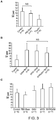
- Figure 3A shows the rheological measurements on bovine vitreous with no treatment (control), PBS buffer and trypsin, where the trypsin treated bovine vitreous exhibited a lower viscosity, thus mimicking the disease state.
- GAH is a synthetic peptidoglycan comprising chondroitin sulfate with hyaluronic acid binding peptide (i.e., GAHWQFNALTVRGGGC) covalently bonded thereto (via BMPH)
- WYR is a synthetic peptidoglycan comprising chondroitin sulfate with collagen II binding peptide (i.e., WYRGRLGC) covalently bonded thereto (via BMPH)
- WYRGAH is a mixture of the two synthetic peptidoglycans WYR and GAH just described.
- Figure 3B shows the restoration of the vitreous humor mechanical strength after treatment with the synthetic peptidoglycans.
- Figure 3C shows that the mechanical strength of the vitreous humor is sufficiently maintained in the presence of the synthetic peptidoglycans.
- the present synthetic peptidoglycans can be used to treat diseases and disorders affecting the vitreous humor.
Landscapes
- Health & Medical Sciences (AREA)
- Chemical & Material Sciences (AREA)
- Life Sciences & Earth Sciences (AREA)
- Medicinal Chemistry (AREA)
- General Health & Medical Sciences (AREA)
- Organic Chemistry (AREA)
- Pharmacology & Pharmacy (AREA)
- Animal Behavior & Ethology (AREA)
- Public Health (AREA)
- Veterinary Medicine (AREA)
- Engineering & Computer Science (AREA)
- Bioinformatics & Cheminformatics (AREA)
- Proteomics, Peptides & Aminoacids (AREA)
- Epidemiology (AREA)
- Biochemistry (AREA)
- Molecular Biology (AREA)
- Genetics & Genomics (AREA)
- Biophysics (AREA)
- Gastroenterology & Hepatology (AREA)
- Nuclear Medicine, Radiotherapy & Molecular Imaging (AREA)
- General Chemical & Material Sciences (AREA)
- Chemical Kinetics & Catalysis (AREA)
- Toxicology (AREA)
- Immunology (AREA)
- Zoology (AREA)
- Physical Education & Sports Medicine (AREA)
- Dermatology (AREA)
- Rheumatology (AREA)
- Orthopedic Medicine & Surgery (AREA)
- Pain & Pain Management (AREA)
- Ophthalmology & Optometry (AREA)
- Peptides Or Proteins (AREA)
- Medicines That Contain Protein Lipid Enzymes And Other Medicines (AREA)
- Marine Sciences & Fisheries (AREA)
Applications Claiming Priority (2)
| Application Number | Priority Date | Filing Date | Title |
|---|---|---|---|
| US201361798916P | 2013-03-15 | 2013-03-15 | |
| PCT/US2014/029596 WO2014144969A1 (en) | 2013-03-15 | 2014-03-14 | Extracellular matrix-binding synthetic peptidoglycans |
Publications (3)
| Publication Number | Publication Date |
|---|---|
| EP2970509A1 EP2970509A1 (en) | 2016-01-20 |
| EP2970509A4 EP2970509A4 (en) | 2016-11-02 |
| EP2970509B1 true EP2970509B1 (en) | 2020-05-13 |
Family
ID=51537842
Family Applications (1)
| Application Number | Title | Priority Date | Filing Date |
|---|---|---|---|
| EP14764351.4A Not-in-force EP2970509B1 (en) | 2013-03-15 | 2014-03-14 | Extracellular matrix-binding synthetic peptidoglycans |
Country Status (14)
Families Citing this family (19)
| Publication number | Priority date | Publication date | Assignee | Title |
|---|---|---|---|---|
| HRP20190691T1 (hr) | 2008-03-27 | 2019-07-12 | Purdue Research Foundation | Sintetički peptidoglikani koji vezuju kolagen, priprema, i postupci upotrebe |
| EP3208278B1 (en) | 2011-05-24 | 2018-10-31 | Symic IP, LLC | Hyaluronic acid-binding synthetic peptidoglycans, preparation, and methods of use |
| WO2014144969A1 (en) * | 2013-03-15 | 2014-09-18 | Purdue Research Foundation | Extracellular matrix-binding synthetic peptidoglycans |
| WO2015164822A1 (en) | 2014-04-25 | 2015-10-29 | Purdue Research Foundation | Collagen binding synthetic peptidoglycans for treatment of endothelial dysfunction |
| WO2015175565A2 (en) | 2014-05-12 | 2015-11-19 | Purdue Research Foundation | Selectin and icam/vcam peptide ligand conjugates |
| JP6516235B2 (ja) * | 2014-10-31 | 2019-05-22 | 国立大学法人富山大学 | キメラタンパク質及びそれを用いたミクログリア活性阻害剤 |
| JP6693728B2 (ja) * | 2014-11-14 | 2020-05-13 | 興和株式会社 | 新規な機能性ペプチド |
| WO2016100846A1 (en) | 2014-12-19 | 2016-06-23 | Northwestern University | Thromboresistant-anticoagulant extracellular matrix |
| WO2016161333A2 (en) * | 2015-04-01 | 2016-10-06 | Purdue Research Foundation | Compositions comprising bioconjugates |
| BR112017021970A2 (pt) * | 2015-04-17 | 2018-07-10 | Symic Ip Llc | bioconjugados e usos dos mesmos |
| EP3294312B1 (en) * | 2015-05-12 | 2020-07-08 | Northwestern University | Materials for tissue regeneration |
| MA46426A (fr) * | 2016-09-16 | 2019-07-24 | Glycologix Llc | Biomatériaux à base de glycosaminoglycanes sulfatés utilisés en tant que mimétiques de protéoglycanes |
| JP2020526493A (ja) * | 2017-07-07 | 2020-08-31 | サイミック アイピー, エルエルシー | 化学的に修飾された主鎖を有するバイオコンジュゲート |
| WO2019010485A1 (en) * | 2017-07-07 | 2019-01-10 | Symic Ip, Llc | TREATMENT OF FIBROSIS |
| AU2018298224B2 (en) | 2017-07-07 | 2024-08-15 | Symic Ip, Llc | Synthetic bioconjugates |
| WO2019075213A1 (en) | 2017-10-11 | 2019-04-18 | Northwestern University | HEPARIN CONJUGATED TO PEPTIDES BINDING TO COLLAGEN FOR TARGETING BIOLOGICAL AND SYNTHETIC FABRICS |
| WO2022256568A1 (en) * | 2021-06-02 | 2022-12-08 | Arizona Board Of Regents On Behalf Of The University Of Arizona | Methods and compositions for localization of growth factors |
| US12059430B2 (en) | 2022-09-29 | 2024-08-13 | Adora Animal Health Corporation | Storage stable formulations of sulfated glycosaminoglycans and fragments derived therefrom for the treatment of pain and other medical conditions |
| WO2024080183A1 (ja) * | 2022-10-14 | 2024-04-18 | 国立大学法人東海国立大学機構 | 糖鎖複合体、薬物担体、及びドラッグデリバリーシステム |
Family Cites Families (142)
| Publication number | Priority date | Publication date | Assignee | Title |
|---|---|---|---|---|
| US4683298A (en) | 1985-01-10 | 1987-07-28 | British Columbia Research Council | Process for the preparation of aminated polysaccharide derivatives |
| US5547936A (en) | 1985-06-17 | 1996-08-20 | La Jolla Cancer Research Foundation | Inhibition of cell migration with synthetic peptides |
| AU628910B2 (en) | 1988-12-20 | 1992-09-24 | La Jolla Cancer Research Foundation | Polypeptide-polymer conjugates active in wound healing |
| FR2644066B1 (fr) | 1989-03-09 | 1994-05-13 | Therapeutiques Substitutives | Compositions stabilisees comprenant des fgfs, leur procede d'obtention et leurs applications therapeutiques, chirurgicales et cosmetologiques |
| US5693625A (en) | 1989-03-09 | 1997-12-02 | Therapeutiques Substitutives | Method of regenerating cells and tissues using functionalized dextrans |
| DE69230136T2 (de) | 1991-01-14 | 2000-05-25 | New York University, New York | Cytokin-induziertes protein, tsg-6, seine dna und verwendung |
| JP2901787B2 (ja) | 1991-07-15 | 1999-06-07 | 日本メジフィジックス株式会社 | 核磁気共鳴造影剤 |
| FR2718023B1 (fr) | 1994-03-30 | 1996-08-14 | Paris Val Marne Universite | Médicament et composition pharmaceutique pour le traitement de lésions du tractus digestif. |
| WO1997022371A1 (en) | 1995-12-18 | 1997-06-26 | Collagen Corporation | Crosslinked polymer compositions and methods for their use |
| CA2299687C (en) | 1997-08-04 | 2009-10-27 | Bio Syntech Ltd. | Temperature-controlled ph-dependant formation of ionic polysaccharide gels |
| US5997895A (en) | 1997-09-16 | 1999-12-07 | Integra Lifesciences Corporation | Dural/meningeal repair product using collagen matrix |
| JP2002536958A (ja) | 1997-11-21 | 2002-11-05 | ジェンセット | Chlamydiapneumoniaeゲノム配列およびポリペプチド、それらのフラグメント、ならびに特に感染症の診断、予防および治療のためのそれらの使用 |
| US7691829B2 (en) | 1998-03-24 | 2010-04-06 | Petito George D | Composition and method for healing tissues |
| FR2781485B1 (fr) | 1998-07-21 | 2003-08-08 | Denis Barritault | Polymeres biocompatibles leur procede de preparation et les compositions les contenant |
| JP3103531B2 (ja) | 1998-09-30 | 2000-10-30 | 延也 柳内 | ヒト尿由来細胞接着糖蛋白質及びその製造方法 |
| US6822071B1 (en) | 1998-11-12 | 2004-11-23 | The Regents Of The University Of California | Polypeptides from Chlamydia pneumoniae and their use in the diagnosis, prevention and treatment of disease |
| US6703491B1 (en) | 1999-03-17 | 2004-03-09 | Exelixis, Inc. | Drosophila sequences |
| US6864235B1 (en) | 1999-04-01 | 2005-03-08 | Eva A. Turley | Compositions and methods for treating cellular response to injury and other proliferating cell disorders regulated by hyaladherin and hyaluronans |
| US20110214206A1 (en) | 1999-05-06 | 2011-09-01 | La Rosa Thomas J | Nucleic acid molecules and other molecules associated with plants |
| US20090087878A9 (en) | 1999-05-06 | 2009-04-02 | La Rosa Thomas J | Nucleic acid molecules associated with plants |
| FR2794976B1 (fr) | 1999-06-16 | 2004-05-07 | Solutions | Compositions pharmaceutiques a action cicatrisante ou anti-complementaire comprenant un derive de dextrane |
| DE60043736D1 (de) | 1999-09-15 | 2010-03-11 | Euclid Systems Corp | Zusammensetzung zur stabilisierung des corneagewebon kontaktlinsen |
| FR2799465B1 (fr) | 1999-10-12 | 2004-02-13 | Centre Nat Rech Scient | Peptides ayant une activite de stimulation de la reponse immunitaire et de regeneration tissulaire |
| ATE243049T1 (de) | 1999-12-09 | 2003-07-15 | Biosyntech Canada Inc | Mineral-polymer hybrid-zusammensetzung |
| US20030158302A1 (en) | 1999-12-09 | 2003-08-21 | Cyric Chaput | Mineral-polymer hybrid composition |
| US7671018B2 (en) | 2000-08-30 | 2010-03-02 | University Of Delaware | Delivery system for heparin-binding growth factors |
| WO2002018423A1 (en) | 2000-08-31 | 2002-03-07 | University Of Delaware | Bioactive peptide for cell adhesion |
| AU2002211517A1 (en) | 2000-10-04 | 2002-04-15 | California Institute Of Technology | Magnetic resonance imaging agents for in vivo labeling and detection of amyloid deposits |
| WO2002040070A2 (en) | 2000-11-15 | 2002-05-23 | Bio Syntech Canada Inc. | Method for restoring a damaged or degenerated intervertebral disc |
| AU2002359236A1 (en) | 2001-07-13 | 2003-04-14 | Advanced Research And Technology Institute | Peptidoglycan recognition protein encoding nucleic acids and methods of use thereof |
| EP1423133B1 (en) | 2001-08-15 | 2009-01-14 | Brown University Research Foundation | Treatment of muscular dystrophies and related disorders |
| EP1448607B1 (en) | 2001-11-15 | 2011-01-05 | Biosyntech Canada Inc. | Composition and method to homogeneously modify or cross-link chitosan under neutral conditions |
| US20090158452A1 (en) | 2001-12-04 | 2009-06-18 | Johnson Richard G | Transgenic plants with enhanced agronomic traits |
| US20090100536A1 (en) | 2001-12-04 | 2009-04-16 | Monsanto Company | Transgenic plants with enhanced agronomic traits |
| US20050108791A1 (en) | 2001-12-04 | 2005-05-19 | Edgerton Michael D. | Transgenic plants with improved phenotypes |
| US20030220253A1 (en) | 2002-03-08 | 2003-11-27 | Lasser Gerald W. | Inhibitors for use in hemostasis |
| US7666852B2 (en) | 2002-04-22 | 2010-02-23 | Agenta Biotechnologies, Inc. | Wound and cutaneous injury healing with a nucleic acid encoding a proteoglycan polypeptide |
| JP2005185101A (ja) | 2002-05-30 | 2005-07-14 | National Institute Of Agrobiological Sciences | 植物の全長cDNAおよびその利用 |
| US7862831B2 (en) | 2002-10-09 | 2011-01-04 | Synthasome, Inc. | Method and material for enhanced tissue-biomaterial integration |
| US8673333B2 (en) | 2002-09-25 | 2014-03-18 | The Johns Hopkins University | Cross-linked polymer matrices, and methods of making and using same |
| US20090183270A1 (en) | 2002-10-02 | 2009-07-16 | Adams Thomas R | Transgenic plants with enhanced agronomic traits |
| CA2501238A1 (en) | 2002-10-04 | 2004-04-22 | Regents Of The University Of Minnesota | Nucleic acid and polypeptide sequences from lawsonia intracellularis and methods of using |
| US20050069572A1 (en) | 2002-10-09 | 2005-03-31 | Jennifer Elisseeff | Multi-layered polymerizing hydrogels for tissue regeneration |
| FR2846659B1 (fr) | 2002-10-30 | 2005-02-18 | Centre Nat Rech Scient | Fragments peptidiques du facteur harp inhibant l'angiogenese |
| AU2003294318A1 (en) | 2002-11-15 | 2004-06-15 | Arizona Board Of Regents Arizona State University | Therapeutic bioconjugates |
| WO2004085418A2 (en) | 2003-03-24 | 2004-10-07 | Luitpold Pharmaceuticals, Inc. | Xanthones, thioxanthones and acridinones as dna-pk inhibitors |
| WO2005019429A2 (en) | 2003-08-22 | 2005-03-03 | Potentia Pharmaceuticals, Inc. | Compositions and methods for enhancing phagocytosis or phagocyte activity |
| CA2543530C (fr) | 2003-10-28 | 2014-02-04 | Denis Barritault | Utilisation de polymeres biocompatibles pour la preparation d'une composition ou d'un dispositif medical |
| FR2861308A1 (fr) | 2003-10-28 | 2005-04-29 | Organes Tissus Regeneration Re | Utilisation de polymeres biocompatibles pour la preparation d'une composition pharmaceutique, dermatologique ou cosmetique destinee a la prevention, au soulagement ou au traitement des genes, desagrements et douleurs |
| EP1694247A2 (en) | 2003-12-15 | 2006-08-30 | Technion Research And Development Foundation, Ltd. | Therapeutic drug-eluting endoluminal covering |
| EP1722834B1 (en) | 2003-12-22 | 2012-06-27 | Regentis Biomaterials Ltd. | Matrix comprising naturally-occurring crosslinked protein backbone |
| US7842667B2 (en) | 2003-12-22 | 2010-11-30 | Regentis Biomaterials Ltd. | Matrix composed of a naturally-occurring protein backbone cross linked by a synthetic polymer and methods of generating and using same |
| US7709439B2 (en) | 2004-02-20 | 2010-05-04 | Boston Scientific Scimed, Inc. | Biomaterials for enhanced healing |
| US20060041961A1 (en) | 2004-03-25 | 2006-02-23 | Abad Mark S | Genes and uses for pant improvement |
| EP1758931A1 (en) | 2004-05-31 | 2007-03-07 | National University of Singapore | Peptides derived from decorin leucine rich repeats and uses thereof |
| US20060075522A1 (en) | 2004-07-31 | 2006-04-06 | Jaclyn Cleveland | Genes and uses for plant improvement |
| EP1796690A4 (en) | 2004-09-22 | 2011-08-03 | Cartilix Inc | KNORPELFÜLLVORRICHTUNG |
| JP5042025B2 (ja) | 2004-09-29 | 2012-10-03 | ナショナル ユニヴァーシティー オブ シンガポール | 複合物、複合物の製造方法、およびその使用方法 |
| US20060241022A1 (en) | 2004-10-06 | 2006-10-26 | Bowen Benjamin P | Selectin targeting bioconjugates |
| US20080102438A1 (en) | 2004-10-27 | 2008-05-01 | Yannas Ioannis V | Novel Technique to Fabricate Molded Structures Having a Patterned Porosity |
| US8283414B2 (en) | 2004-11-23 | 2012-10-09 | The Johns Hopkins University | Compositions comprising modified collagen and uses therefor |
| WO2006089119A2 (en) | 2005-02-18 | 2006-08-24 | Cartilix, Inc. | Biological adhesive |
| EP1853278A4 (en) | 2005-02-18 | 2011-12-28 | Cartilix Inc | MATERIALS COMPRISING GLUCOSAMINE |
| WO2006096614A2 (en) | 2005-03-04 | 2006-09-14 | Northwestern University | Angiogenic heparin binding peptide amphiphiles |
| GB2424223C (en) | 2005-03-07 | 2011-02-02 | Massachusetts Inst Technology | Biomaterial. |
| US8431226B2 (en) | 2005-03-30 | 2013-04-30 | Biomet Manufacturing Corp. | Coated medical device |
| US7737131B2 (en) | 2005-03-31 | 2010-06-15 | University Of Delaware | Multifunctional and biologically active matrices from multicomponent polymeric solutions |
| US8415325B2 (en) | 2005-03-31 | 2013-04-09 | University Of Delaware | Cell-mediated delivery and targeted erosion of noncovalently crosslinked hydrogels |
| US8338390B2 (en) | 2005-03-31 | 2012-12-25 | University Of Delaware | Multifunctional and biologically active matrices from multicomponent polymeric solutions |
| US8367639B2 (en) | 2005-03-31 | 2013-02-05 | University Of Delaware | Hydrogels with covalent and noncovalent crosslinks |
| US7732427B2 (en) | 2005-03-31 | 2010-06-08 | University Of Delaware | Multifunctional and biologically active matrices from multicomponent polymeric solutions |
| EP2478760A1 (en) | 2005-05-10 | 2012-07-25 | Monsanto Technology LLC | Genes and uses for plant improvement |
| CA2610791C (en) | 2005-06-08 | 2015-12-01 | Cangene Corporation | Hyaluronic acid binding peptides enhance host defense against pathogenic bacteria |
| US20080069774A1 (en) | 2005-11-17 | 2008-03-20 | Lance Liotta | Proteomic antisense molecular shield and targeting |
| EP1996115B1 (en) | 2006-03-07 | 2014-11-26 | Axle International | Bioactive scaffold for therapeutic and adhesion prevention applications |
| US20070212385A1 (en) | 2006-03-13 | 2007-09-13 | David Nathaniel E | Fluidic Tissue Augmentation Compositions and Methods |
| US7919111B2 (en) | 2006-03-15 | 2011-04-05 | Surmodics, Inc. | Biodegradable hydrophobic polysaccharide-based drug delivery implants |
| CA2644273A1 (en) | 2006-04-05 | 2008-03-27 | Metanomics Gmbh | Process for the production of a fine chemical |
| GB0610395D0 (en) | 2006-05-25 | 2006-07-05 | Ge Healthcare Ltd | Novel imaging agents |
| US20090162436A1 (en) | 2006-06-14 | 2009-06-25 | Carson Daniel D | Compositions and methods for repair of tissues |
| PL2068918T5 (pl) | 2006-09-26 | 2024-12-02 | Access To Advanced Health Institute | Kompozycja szczepionki zawierająca syntetyczny adiuwant |
| US7592009B2 (en) | 2006-10-10 | 2009-09-22 | Ecole Polytechnique Federale De Lausanne (Epfl) | Polypeptide ligands for targeting cartilage and methods of use thereof |
| US8114834B2 (en) | 2006-11-09 | 2012-02-14 | Northwestern University | Self-assembling peptide amphiphiles |
| US8114835B2 (en) | 2006-11-09 | 2012-02-14 | Northwestern University | Self-assembling peptide amphiphiles for tissue engineering |
| WO2008066816A2 (en) | 2006-11-28 | 2008-06-05 | The Board Of Trustees Of The University Of Illinois | Derivatization or ligaton of peptides |
| WO2008136869A2 (en) | 2006-12-06 | 2008-11-13 | Burnham Institute For Medical Research | Methods and compositions related to targeting wounds, regenerating tissue, and tumors |
| WO2008070179A2 (en) | 2006-12-06 | 2008-06-12 | Monsanto Technology, Llc | Genes and uses for plant improvement |
| TR201809112T4 (tr) | 2007-04-16 | 2018-07-23 | Regentis Biomaterials Ltd | İskele oluşturmak i̇çi̇n bi̇leşi̇mler ve yöntemler. |
| US20100119577A1 (en) | 2007-05-06 | 2010-05-13 | Byoung-Hyun Min | Therapeutic composite for cartilage disorder using extracellular matrix (ecm) scaffold |
| WO2008152639A2 (en) | 2007-06-12 | 2008-12-18 | Bypass, Inc. | Pressure pulse actuating device for delivery systems |
| US20090075281A1 (en) | 2007-07-10 | 2009-03-19 | Regents Of The University Of California | Mtbe genes |
| US7993679B2 (en) | 2007-09-25 | 2011-08-09 | Integra Lifesciences Corporation | Flowable wound matrix and its preparation and use |
| WO2009048280A2 (en) | 2007-10-09 | 2009-04-16 | Postech Academy-Industry Foundation | Long acting hyaluronic acid - peptide conjugate |
| US9029636B2 (en) | 2008-02-05 | 2015-05-12 | Monsanto Technology Llc | Isolated novel nucleic acid and protein molecules from soy and methods of using those molecules to generate transgenic plants with enhanced agronomic traits |
| HRP20190691T1 (hr) | 2008-03-27 | 2019-07-12 | Purdue Research Foundation | Sintetički peptidoglikani koji vezuju kolagen, priprema, i postupci upotrebe |
| US8343942B2 (en) | 2008-04-04 | 2013-01-01 | University Of Utah Research Foundation | Methods for treating interstitial cystitis |
| AU2009231634B2 (en) | 2008-04-04 | 2014-05-15 | University Of Utah Research Foundation | Alkylated semi-synthetic glycosaminoglycosan ethers, and methods for making and using thereof |
| US20100004196A1 (en) | 2008-06-17 | 2010-01-07 | Hopitaux Universitaires De Geneve | Heparan sulfate proteoglycan composition and use thereof |
| WO2010011857A2 (en) | 2008-07-23 | 2010-01-28 | The Johns Hopkins University | Parenteral administration of a glucosamine |
| US20110269208A1 (en) | 2008-08-15 | 2011-11-03 | The Trustees Of The University Of Pennsylvania | Cross-linked polymer network formed by sequential cross-linking |
| US20130014292A1 (en) | 2008-09-17 | 2013-01-10 | Pennell Roger I | Transgenic plants having increased biomass |
| FR2936247B1 (fr) | 2008-09-24 | 2010-10-22 | Ct Hospitalier Universitaire De Dijon | Proteines recombinantes a activite hemostatique capables d'induire l'agregation plaquettaire. |
| US9072688B2 (en) | 2008-10-31 | 2015-07-07 | The Invention Science Fund I, Llc | Compositions and methods for therapeutic delivery with frozen particles |
| EP2358758B1 (de) | 2008-11-28 | 2012-09-05 | Zetascience GmbH | Bioaktives hydrogel |
| KR101062068B1 (ko) | 2008-12-01 | 2011-09-02 | 포항공과대학교 산학협력단 | 유착방지용 조성물 |
| IL195764A0 (en) | 2008-12-07 | 2009-11-18 | Technion Res & Dev Foundation | Compositions and methods for drug delivery |
| US9012723B2 (en) | 2009-01-16 | 2015-04-21 | Monsanto Technology Llc | Isolated novel acid and protein molecules from soy and methods of using those molecules to generate transgene plants with enhanced agronomic traits |
| CA2757444A1 (en) | 2009-03-30 | 2010-10-14 | Prometheus Laboratories Inc. | Citrullinated peptides for diagnosing and prognosing rheumatoid arthritis |
| US20110182862A1 (en) | 2009-04-03 | 2011-07-28 | Green Wayne A | Endophytic fungus and uses therefor |
| MX2011010780A (es) | 2009-04-13 | 2011-10-28 | Univ Northwestern | Andamios novedosos basados en peptido para la regeneracion de cartilagos y metodos para su uso. |
| FI20095452A0 (fi) | 2009-04-23 | 2009-04-23 | Suomen Punainen Risti Veripalv | Uudet haaraiset sokerianalyysit |
| US20120100106A1 (en) | 2009-05-04 | 2012-04-26 | Purdue Research Foundation | Collagen-binding synthetic peptidoglycans for wound healing |
| GB0909671D0 (en) | 2009-06-04 | 2009-07-22 | Xention Discovery Ltd | Compounds |
| EP2499167A4 (en) | 2009-11-09 | 2013-07-10 | Univ Drexel | COMPOSITIONS AND METHODS FOR TREATING AN ILLNESS OR MALFUNCTION IN SOFT TISSUE |
| CA2781309A1 (en) | 2009-12-04 | 2011-06-09 | Euclid Systems Corporation | Composition and methods for the prevention and treatment of macular degeneration, diabetic retinopathy, and diabetic macular edema |
| DK2513294T3 (en) | 2009-12-16 | 2016-06-06 | Regentis Biomaterials Ltd | SKELETS FOR POLYMER-PROTEIN CONJUGATES, PROCEDURES FOR GENERATION THEREOF AND APPLICATIONS THEREOF |
| WO2011094149A1 (en) | 2010-01-26 | 2011-08-04 | University Of Utah Research Foundation | Methods for treating or preventing the spread of cancer using semi-synthetic glycosaminoglycosan ethers |
| US9180161B2 (en) | 2010-02-26 | 2015-11-10 | Sanford Burnham Prebys Medical Discovery Institute | CAR peptide for homing, diagnosis and targeted therapy for pulmonary and fibrotic disorders |
| WO2011163492A1 (en) | 2010-06-23 | 2011-12-29 | Purdue Research Foundation | Collagen-binding synthetic peptidoglycans for use in vascular intervention |
| US9173919B2 (en) | 2011-02-16 | 2015-11-03 | Purdue Research Foundation | Collagen-targeted nanoparticles |
| US20130101628A1 (en) | 2011-04-29 | 2013-04-25 | Northwestern University | Novel vegf mimetic peptide-based scaffolds for therapeutic angiogenesis and methods for their use |
| EP3208278B1 (en) | 2011-05-24 | 2018-10-31 | Symic IP, LLC | Hyaluronic acid-binding synthetic peptidoglycans, preparation, and methods of use |
| EP2804586A4 (en) | 2012-01-19 | 2016-03-16 | Univ Johns Hopkins | BIOMATERIALS CONTAINING HYALURONIC ACID BINDING PEPTIDES AND BIFUNCTIONAL BIOPOLYMERMOLUCKS FOR HYALURONIC ACIDIC TREATMENT AND TISSUE RENEWAL APPLICATIONS |
| US9540428B2 (en) | 2012-07-03 | 2017-01-10 | Ecole Polytechnique Federale De Lausanne (Epfl) | Extracellular matrix heparin-binding domains |
| US9827321B2 (en) | 2012-08-14 | 2017-11-28 | The Trustees Of The University Of Pennsylvania | Stabilizing shear-thinning hydrogels |
| WO2014038866A1 (ko) | 2012-09-05 | 2014-03-13 | 아주대학교산학협력단 | 연골세포 유래 세포외 기질막을 이용한 신생혈관질환 치료용 조성물 및 각막 또는 결막 이식재 |
| DE102012108560B4 (de) | 2012-09-13 | 2018-12-20 | Leibniz-Institut Für Polymerforschung Dresden E.V. | Nichtkovalente selbstorganisierende Hydrogelmatrix für biotechnologische Anwendungen |
| WO2014063102A1 (en) | 2012-10-19 | 2014-04-24 | Cornell University | Biomimetic boundary lubricants for articular cartilage |
| US20150291672A1 (en) | 2012-11-01 | 2015-10-15 | The Johns Hopkins University | Contact Lens Surface Modification with Hyaluronic Acid (HA) Binding Peptide for HA Accumulation and Retention |
| TW201427989A (zh) | 2012-12-18 | 2014-07-16 | Novartis Ag | 長效性蛋白質之組合物及方法 |
| WO2014144969A1 (en) | 2013-03-15 | 2014-09-18 | Purdue Research Foundation | Extracellular matrix-binding synthetic peptidoglycans |
| US9543849B2 (en) | 2013-04-16 | 2017-01-10 | Panasonic Intellectual Property Management Co., Ltd. | Power conversion apparatus, power conversion method, motor system, and three-phase motor |
| WO2015022326A1 (en) | 2013-08-12 | 2015-02-19 | Xiber Science Gmbh | Peptides as active agents for treating primary graft dysfunction |
| DE102013113156A1 (de) | 2013-11-28 | 2015-05-28 | Freie Universität Berlin | Verbindung und Verfahren zur selektiven Radiomarkierung von Polypeptiden mittels Festphasensynthese |
| WO2015164822A1 (en) | 2014-04-25 | 2015-10-29 | Purdue Research Foundation | Collagen binding synthetic peptidoglycans for treatment of endothelial dysfunction |
| WO2015175565A2 (en) | 2014-05-12 | 2015-11-19 | Purdue Research Foundation | Selectin and icam/vcam peptide ligand conjugates |
| WO2016061147A1 (en) | 2014-10-13 | 2016-04-21 | John Eric Paderi | Luminal vessel coating for arteriovenous fistula |
| WO2016061145A1 (en) | 2014-10-13 | 2016-04-21 | Symic Biomedical, Inc. | Synthetic proteoglycans for preventing tissue adhesion |
| WO2016065083A1 (en) | 2014-10-21 | 2016-04-28 | Symic Biomedical, Inc. | Peptidoglycans comprising collagen-binding peptides for treating gastroesophageal injury |
| WO2016161333A2 (en) | 2015-04-01 | 2016-10-06 | Purdue Research Foundation | Compositions comprising bioconjugates |
| BR112017021970A2 (pt) | 2015-04-17 | 2018-07-10 | Symic Ip Llc | bioconjugados e usos dos mesmos |
| TW201718028A (zh) | 2015-10-13 | 2017-06-01 | 賽米克Ip有限責任公司 | Ve-鈣黏蛋白結合性生物結合物 |
-
2014
- 2014-03-14 WO PCT/US2014/029596 patent/WO2014144969A1/en not_active Ceased
- 2014-03-14 EA EA201591454A patent/EA201591454A1/ru unknown
- 2014-03-14 MX MX2015012608A patent/MX2015012608A/es unknown
- 2014-03-14 BR BR112015022917A patent/BR112015022917A2/pt not_active Application Discontinuation
- 2014-03-14 JP JP2016503156A patent/JP6603650B2/ja not_active Expired - Fee Related
- 2014-03-14 US US14/214,220 patent/US9200039B2/en active Active
- 2014-03-14 HK HK16108333.1A patent/HK1220217A1/zh unknown
- 2014-03-14 EP EP14764351.4A patent/EP2970509B1/en not_active Not-in-force
- 2014-03-14 KR KR1020157028095A patent/KR20150130419A/ko not_active Withdrawn
- 2014-03-14 AU AU2014233537A patent/AU2014233537A1/en not_active Abandoned
- 2014-03-14 SG SG11201506966RA patent/SG11201506966RA/en unknown
- 2014-03-14 CA CA2903450A patent/CA2903450A1/en not_active Abandoned
-
2015
- 2015-09-01 ZA ZA2015/06391A patent/ZA201506391B/en unknown
- 2015-09-02 IL IL241054A patent/IL241054A0/en unknown
- 2015-11-13 US US14/940,990 patent/US9872887B2/en active Active
-
2017
- 2017-12-18 US US15/845,955 patent/US20190022175A1/en not_active Abandoned
Non-Patent Citations (1)
| Title |
|---|
| None * |
Also Published As
| Publication number | Publication date |
|---|---|
| MX2015012608A (es) | 2016-07-06 |
| US9872887B2 (en) | 2018-01-23 |
| BR112015022917A2 (pt) | 2017-07-18 |
| EP2970509A1 (en) | 2016-01-20 |
| US20190022175A1 (en) | 2019-01-24 |
| CA2903450A1 (en) | 2014-09-18 |
| SG11201506966RA (en) | 2015-10-29 |
| HK1220217A1 (zh) | 2017-04-28 |
| ZA201506391B (en) | 2017-09-27 |
| EP2970509A4 (en) | 2016-11-02 |
| US20160129076A1 (en) | 2016-05-12 |
| WO2014144969A1 (en) | 2014-09-18 |
| KR20150130419A (ko) | 2015-11-23 |
| US9200039B2 (en) | 2015-12-01 |
| US20140288002A1 (en) | 2014-09-25 |
| JP6603650B2 (ja) | 2019-11-06 |
| AU2014233537A1 (en) | 2015-09-10 |
| IL241054A0 (en) | 2015-11-30 |
| JP2016516065A (ja) | 2016-06-02 |
| EA201591454A1 (ru) | 2015-12-30 |
Similar Documents
| Publication | Publication Date | Title |
|---|---|---|
| EP2970509B1 (en) | Extracellular matrix-binding synthetic peptidoglycans | |
| US20220313830A1 (en) | Heparin-peptide bioconjugates and uses thereof | |
| CN103732614B (zh) | 结合透明质酸的合成肽聚糖、制备和使用方法 | |
| EP2585112B1 (en) | Collagen-binding synthetic peptidoglycans for use in vascular intervention | |
| WO2016161333A2 (en) | Compositions comprising bioconjugates | |
| US10772931B2 (en) | Collagen binding synthetic peptidoglycans for treatment of endothelial dysfunction | |
| EP3294312A1 (en) | Materials for tissue regeneration | |
| CA2821715A1 (en) | Chimeric fibronectin matrix mimetics and uses thereof | |
| JP2024506265A (ja) | 分子系超構造及びその利用方法 | |
| HK1231093A1 (en) | Hyaluronic acid-binding synthetic peptidoglycans, preparation, and methods of use | |
| HK1196839B (en) | Hyaluronic acid-binding synthetic peptidoglycans, preparation, and methods of use | |
| HK1196839A (en) | Hyaluronic acid-binding synthetic peptidoglycans, preparation, and methods of use |
Legal Events
| Date | Code | Title | Description |
|---|---|---|---|
| PUAI | Public reference made under article 153(3) epc to a published international application that has entered the european phase |
Free format text: ORIGINAL CODE: 0009012 |
|
| 17P | Request for examination filed |
Effective date: 20150930 |
|
| AK | Designated contracting states |
Kind code of ref document: A1 Designated state(s): AL AT BE BG CH CY CZ DE DK EE ES FI FR GB GR HR HU IE IS IT LI LT LU LV MC MK MT NL NO PL PT RO RS SE SI SK SM TR |
|
| AX | Request for extension of the european patent |
Extension state: BA ME |
|
| RAP1 | Party data changed (applicant data changed or rights of an application transferred) |
Owner name: SYMIC IP, LLC |
|
| DAX | Request for extension of the european patent (deleted) | ||
| A4 | Supplementary search report drawn up and despatched |
Effective date: 20160929 |
|
| RIC1 | Information provided on ipc code assigned before grant |
Ipc: C07K 19/00 20060101AFI20160923BHEP Ipc: A61K 38/00 20060101ALI20160923BHEP |
|
| REG | Reference to a national code |
Ref country code: HK Ref legal event code: DE Ref document number: 1220217 Country of ref document: HK |
|
| RAP1 | Party data changed (applicant data changed or rights of an application transferred) |
Owner name: PURDUE RESEARCH FOUNDATION |
|
| STAA | Information on the status of an ep patent application or granted ep patent |
Free format text: STATUS: EXAMINATION IS IN PROGRESS |
|
| 17Q | First examination report despatched |
Effective date: 20180320 |
|
| REG | Reference to a national code |
Ref country code: DE Ref legal event code: R079 Ref document number: 602014065443 Country of ref document: DE Free format text: PREVIOUS MAIN CLASS: C07K0019000000 Ipc: C07K0014470000 |
|
| GRAP | Despatch of communication of intention to grant a patent |
Free format text: ORIGINAL CODE: EPIDOSNIGR1 |
|
| STAA | Information on the status of an ep patent application or granted ep patent |
Free format text: STATUS: GRANT OF PATENT IS INTENDED |
|
| RIC1 | Information provided on ipc code assigned before grant |
Ipc: A61K 47/54 20170101ALI20200108BHEP Ipc: C07K 9/00 20060101ALI20200108BHEP Ipc: A61K 38/14 20060101ALI20200108BHEP Ipc: C07K 14/47 20060101AFI20200108BHEP |
|
| INTG | Intention to grant announced |
Effective date: 20200211 |
|
| GRAS | Grant fee paid |
Free format text: ORIGINAL CODE: EPIDOSNIGR3 |
|
| GRAA | (expected) grant |
Free format text: ORIGINAL CODE: 0009210 |
|
| STAA | Information on the status of an ep patent application or granted ep patent |
Free format text: STATUS: THE PATENT HAS BEEN GRANTED |
|
| AK | Designated contracting states |
Kind code of ref document: B1 Designated state(s): AL AT BE BG CH CY CZ DE DK EE ES FI FR GB GR HR HU IE IS IT LI LT LU LV MC MK MT NL NO PL PT RO RS SE SI SK SM TR |
|
| REG | Reference to a national code |
Ref country code: GB Ref legal event code: FG4D |
|
| REG | Reference to a national code |
Ref country code: CH Ref legal event code: EP |
|
| REG | Reference to a national code |
Ref country code: DE Ref legal event code: R096 Ref document number: 602014065443 Country of ref document: DE |
|
| REG | Reference to a national code |
Ref country code: AT Ref legal event code: REF Ref document number: 1270148 Country of ref document: AT Kind code of ref document: T Effective date: 20200615 |
|
| REG | Reference to a national code |
Ref country code: LT Ref legal event code: MG4D |
|
| REG | Reference to a national code |
Ref country code: NL Ref legal event code: MP Effective date: 20200513 |
|
| PG25 | Lapsed in a contracting state [announced via postgrant information from national office to epo] |
Ref country code: PT Free format text: LAPSE BECAUSE OF FAILURE TO SUBMIT A TRANSLATION OF THE DESCRIPTION OR TO PAY THE FEE WITHIN THE PRESCRIBED TIME-LIMIT Effective date: 20200914 Ref country code: IS Free format text: LAPSE BECAUSE OF FAILURE TO SUBMIT A TRANSLATION OF THE DESCRIPTION OR TO PAY THE FEE WITHIN THE PRESCRIBED TIME-LIMIT Effective date: 20200913 Ref country code: SE Free format text: LAPSE BECAUSE OF FAILURE TO SUBMIT A TRANSLATION OF THE DESCRIPTION OR TO PAY THE FEE WITHIN THE PRESCRIBED TIME-LIMIT Effective date: 20200513 Ref country code: FI Free format text: LAPSE BECAUSE OF FAILURE TO SUBMIT A TRANSLATION OF THE DESCRIPTION OR TO PAY THE FEE WITHIN THE PRESCRIBED TIME-LIMIT Effective date: 20200513 Ref country code: NO Free format text: LAPSE BECAUSE OF FAILURE TO SUBMIT A TRANSLATION OF THE DESCRIPTION OR TO PAY THE FEE WITHIN THE PRESCRIBED TIME-LIMIT Effective date: 20200813 Ref country code: GR Free format text: LAPSE BECAUSE OF FAILURE TO SUBMIT A TRANSLATION OF THE DESCRIPTION OR TO PAY THE FEE WITHIN THE PRESCRIBED TIME-LIMIT Effective date: 20200814 Ref country code: LT Free format text: LAPSE BECAUSE OF FAILURE TO SUBMIT A TRANSLATION OF THE DESCRIPTION OR TO PAY THE FEE WITHIN THE PRESCRIBED TIME-LIMIT Effective date: 20200513 |
|
| PG25 | Lapsed in a contracting state [announced via postgrant information from national office to epo] |
Ref country code: LV Free format text: LAPSE BECAUSE OF FAILURE TO SUBMIT A TRANSLATION OF THE DESCRIPTION OR TO PAY THE FEE WITHIN THE PRESCRIBED TIME-LIMIT Effective date: 20200513 Ref country code: BG Free format text: LAPSE BECAUSE OF FAILURE TO SUBMIT A TRANSLATION OF THE DESCRIPTION OR TO PAY THE FEE WITHIN THE PRESCRIBED TIME-LIMIT Effective date: 20200813 Ref country code: RS Free format text: LAPSE BECAUSE OF FAILURE TO SUBMIT A TRANSLATION OF THE DESCRIPTION OR TO PAY THE FEE WITHIN THE PRESCRIBED TIME-LIMIT Effective date: 20200513 Ref country code: HR Free format text: LAPSE BECAUSE OF FAILURE TO SUBMIT A TRANSLATION OF THE DESCRIPTION OR TO PAY THE FEE WITHIN THE PRESCRIBED TIME-LIMIT Effective date: 20200513 |
|
| REG | Reference to a national code |
Ref country code: AT Ref legal event code: MK05 Ref document number: 1270148 Country of ref document: AT Kind code of ref document: T Effective date: 20200513 |
|
| PG25 | Lapsed in a contracting state [announced via postgrant information from national office to epo] |
Ref country code: NL Free format text: LAPSE BECAUSE OF FAILURE TO SUBMIT A TRANSLATION OF THE DESCRIPTION OR TO PAY THE FEE WITHIN THE PRESCRIBED TIME-LIMIT Effective date: 20200513 Ref country code: AL Free format text: LAPSE BECAUSE OF FAILURE TO SUBMIT A TRANSLATION OF THE DESCRIPTION OR TO PAY THE FEE WITHIN THE PRESCRIBED TIME-LIMIT Effective date: 20200513 |
|
| PG25 | Lapsed in a contracting state [announced via postgrant information from national office to epo] |
Ref country code: SM Free format text: LAPSE BECAUSE OF FAILURE TO SUBMIT A TRANSLATION OF THE DESCRIPTION OR TO PAY THE FEE WITHIN THE PRESCRIBED TIME-LIMIT Effective date: 20200513 Ref country code: EE Free format text: LAPSE BECAUSE OF FAILURE TO SUBMIT A TRANSLATION OF THE DESCRIPTION OR TO PAY THE FEE WITHIN THE PRESCRIBED TIME-LIMIT Effective date: 20200513 Ref country code: DK Free format text: LAPSE BECAUSE OF FAILURE TO SUBMIT A TRANSLATION OF THE DESCRIPTION OR TO PAY THE FEE WITHIN THE PRESCRIBED TIME-LIMIT Effective date: 20200513 Ref country code: AT Free format text: LAPSE BECAUSE OF FAILURE TO SUBMIT A TRANSLATION OF THE DESCRIPTION OR TO PAY THE FEE WITHIN THE PRESCRIBED TIME-LIMIT Effective date: 20200513 Ref country code: IT Free format text: LAPSE BECAUSE OF FAILURE TO SUBMIT A TRANSLATION OF THE DESCRIPTION OR TO PAY THE FEE WITHIN THE PRESCRIBED TIME-LIMIT Effective date: 20200513 Ref country code: RO Free format text: LAPSE BECAUSE OF FAILURE TO SUBMIT A TRANSLATION OF THE DESCRIPTION OR TO PAY THE FEE WITHIN THE PRESCRIBED TIME-LIMIT Effective date: 20200513 Ref country code: CZ Free format text: LAPSE BECAUSE OF FAILURE TO SUBMIT A TRANSLATION OF THE DESCRIPTION OR TO PAY THE FEE WITHIN THE PRESCRIBED TIME-LIMIT Effective date: 20200513 Ref country code: ES Free format text: LAPSE BECAUSE OF FAILURE TO SUBMIT A TRANSLATION OF THE DESCRIPTION OR TO PAY THE FEE WITHIN THE PRESCRIBED TIME-LIMIT Effective date: 20200513 |
|
| REG | Reference to a national code |
Ref country code: DE Ref legal event code: R097 Ref document number: 602014065443 Country of ref document: DE |
|
| PG25 | Lapsed in a contracting state [announced via postgrant information from national office to epo] |
Ref country code: SK Free format text: LAPSE BECAUSE OF FAILURE TO SUBMIT A TRANSLATION OF THE DESCRIPTION OR TO PAY THE FEE WITHIN THE PRESCRIBED TIME-LIMIT Effective date: 20200513 Ref country code: PL Free format text: LAPSE BECAUSE OF FAILURE TO SUBMIT A TRANSLATION OF THE DESCRIPTION OR TO PAY THE FEE WITHIN THE PRESCRIBED TIME-LIMIT Effective date: 20200513 |
|
| PLBE | No opposition filed within time limit |
Free format text: ORIGINAL CODE: 0009261 |
|
| STAA | Information on the status of an ep patent application or granted ep patent |
Free format text: STATUS: NO OPPOSITION FILED WITHIN TIME LIMIT |
|
| 26N | No opposition filed |
Effective date: 20210216 |
|
| PG25 | Lapsed in a contracting state [announced via postgrant information from national office to epo] |
Ref country code: SI Free format text: LAPSE BECAUSE OF FAILURE TO SUBMIT A TRANSLATION OF THE DESCRIPTION OR TO PAY THE FEE WITHIN THE PRESCRIBED TIME-LIMIT Effective date: 20200513 |
|
| REG | Reference to a national code |
Ref country code: DE Ref legal event code: R119 Ref document number: 602014065443 Country of ref document: DE |
|
| PG25 | Lapsed in a contracting state [announced via postgrant information from national office to epo] |
Ref country code: MC Free format text: LAPSE BECAUSE OF FAILURE TO SUBMIT A TRANSLATION OF THE DESCRIPTION OR TO PAY THE FEE WITHIN THE PRESCRIBED TIME-LIMIT Effective date: 20200513 |
|
| REG | Reference to a national code |
Ref country code: CH Ref legal event code: PL |
|
| GBPC | Gb: european patent ceased through non-payment of renewal fee |
Effective date: 20210314 |
|
| REG | Reference to a national code |
Ref country code: BE Ref legal event code: MM Effective date: 20210331 |
|
| PG25 | Lapsed in a contracting state [announced via postgrant information from national office to epo] |
Ref country code: DE Free format text: LAPSE BECAUSE OF NON-PAYMENT OF DUE FEES Effective date: 20211001 Ref country code: FR Free format text: LAPSE BECAUSE OF NON-PAYMENT OF DUE FEES Effective date: 20210331 Ref country code: IE Free format text: LAPSE BECAUSE OF NON-PAYMENT OF DUE FEES Effective date: 20210314 Ref country code: GB Free format text: LAPSE BECAUSE OF NON-PAYMENT OF DUE FEES Effective date: 20210314 Ref country code: CH Free format text: LAPSE BECAUSE OF NON-PAYMENT OF DUE FEES Effective date: 20210331 Ref country code: LI Free format text: LAPSE BECAUSE OF NON-PAYMENT OF DUE FEES Effective date: 20210331 Ref country code: LU Free format text: LAPSE BECAUSE OF NON-PAYMENT OF DUE FEES Effective date: 20210314 |
|
| PG25 | Lapsed in a contracting state [announced via postgrant information from national office to epo] |
Ref country code: BE Free format text: LAPSE BECAUSE OF NON-PAYMENT OF DUE FEES Effective date: 20210331 |
|
| PG25 | Lapsed in a contracting state [announced via postgrant information from national office to epo] |
Ref country code: HU Free format text: LAPSE BECAUSE OF FAILURE TO SUBMIT A TRANSLATION OF THE DESCRIPTION OR TO PAY THE FEE WITHIN THE PRESCRIBED TIME-LIMIT; INVALID AB INITIO Effective date: 20140314 |
|
| PG25 | Lapsed in a contracting state [announced via postgrant information from national office to epo] |
Ref country code: CY Free format text: LAPSE BECAUSE OF FAILURE TO SUBMIT A TRANSLATION OF THE DESCRIPTION OR TO PAY THE FEE WITHIN THE PRESCRIBED TIME-LIMIT Effective date: 20200513 |
|
| REG | Reference to a national code |
Ref country code: HK Ref legal event code: WD Ref document number: 1220217 Country of ref document: HK |
|
| PG25 | Lapsed in a contracting state [announced via postgrant information from national office to epo] |
Ref country code: MK Free format text: LAPSE BECAUSE OF FAILURE TO SUBMIT A TRANSLATION OF THE DESCRIPTION OR TO PAY THE FEE WITHIN THE PRESCRIBED TIME-LIMIT Effective date: 20200513 |
|
| PG25 | Lapsed in a contracting state [announced via postgrant information from national office to epo] |
Ref country code: TR Free format text: LAPSE BECAUSE OF FAILURE TO SUBMIT A TRANSLATION OF THE DESCRIPTION OR TO PAY THE FEE WITHIN THE PRESCRIBED TIME-LIMIT Effective date: 20200513 |
|
| PG25 | Lapsed in a contracting state [announced via postgrant information from national office to epo] |
Ref country code: MT Free format text: LAPSE BECAUSE OF FAILURE TO SUBMIT A TRANSLATION OF THE DESCRIPTION OR TO PAY THE FEE WITHIN THE PRESCRIBED TIME-LIMIT Effective date: 20200513 |