EP2967019B1 - Strahlungssysteme zur beeinflussung des verhaltens von insekten - Google Patents
Strahlungssysteme zur beeinflussung des verhaltens von insekten Download PDFInfo
- Publication number
- EP2967019B1 EP2967019B1 EP14770965.3A EP14770965A EP2967019B1 EP 2967019 B1 EP2967019 B1 EP 2967019B1 EP 14770965 A EP14770965 A EP 14770965A EP 2967019 B1 EP2967019 B1 EP 2967019B1
- Authority
- EP
- European Patent Office
- Prior art keywords
- insect
- vessel
- chemical compound
- wavelengths
- energy source
- Prior art date
- Legal status (The legal status is an assumption and is not a legal conclusion. Google has not performed a legal analysis and makes no representation as to the accuracy of the status listed.)
- Active
Links
- 241000238631 Hexapoda Species 0.000 title claims description 112
- 150000001875 compounds Chemical class 0.000 claims description 73
- 230000005284 excitation Effects 0.000 claims description 45
- 238000010521 absorption reaction Methods 0.000 claims description 29
- 230000005670 electromagnetic radiation Effects 0.000 claims description 23
- 239000003016 pheromone Substances 0.000 claims description 18
- 230000000739 chaotic effect Effects 0.000 claims description 3
- 230000004044 response Effects 0.000 claims description 3
- 230000005855 radiation Effects 0.000 description 23
- 239000000463 material Substances 0.000 description 13
- 239000000126 substance Substances 0.000 description 8
- 241000607479 Yersinia pestis Species 0.000 description 7
- 238000000695 excitation spectrum Methods 0.000 description 5
- 230000006870 function Effects 0.000 description 5
- 238000000034 method Methods 0.000 description 5
- 238000003860 storage Methods 0.000 description 5
- 238000000862 absorption spectrum Methods 0.000 description 4
- 229920001903 high density polyethylene Polymers 0.000 description 4
- 239000004700 high-density polyethylene Substances 0.000 description 4
- 238000002955 isolation Methods 0.000 description 4
- 239000000443 aerosol Substances 0.000 description 3
- 239000005667 attractant Substances 0.000 description 3
- 230000031902 chemoattractant activity Effects 0.000 description 3
- 230000001965 increasing effect Effects 0.000 description 3
- 239000007788 liquid Substances 0.000 description 3
- 229920001684 low density polyethylene Polymers 0.000 description 3
- 239000004702 low-density polyethylene Substances 0.000 description 3
- 230000003287 optical effect Effects 0.000 description 3
- 239000000758 substrate Substances 0.000 description 3
- 241000256856 Vespidae Species 0.000 description 2
- 230000003542 behavioural effect Effects 0.000 description 2
- 230000008901 benefit Effects 0.000 description 2
- 238000003958 fumigation Methods 0.000 description 2
- 230000001939 inductive effect Effects 0.000 description 2
- 238000002329 infrared spectrum Methods 0.000 description 2
- 239000002917 insecticide Substances 0.000 description 2
- 230000007774 longterm Effects 0.000 description 2
- 230000013011 mating Effects 0.000 description 2
- 230000007246 mechanism Effects 0.000 description 2
- 230000035515 penetration Effects 0.000 description 2
- 239000000575 pesticide Substances 0.000 description 2
- 239000007787 solid Substances 0.000 description 2
- 238000001228 spectrum Methods 0.000 description 2
- 241000256867 Dolichovespula arenaria Species 0.000 description 1
- 206010061217 Infestation Diseases 0.000 description 1
- 241001465754 Metazoa Species 0.000 description 1
- 241000595629 Plodia interpunctella Species 0.000 description 1
- 239000000877 Sex Attractant Substances 0.000 description 1
- 239000011358 absorbing material Substances 0.000 description 1
- 230000009471 action Effects 0.000 description 1
- 239000000853 adhesive Substances 0.000 description 1
- 230000001070 adhesive effect Effects 0.000 description 1
- 230000002776 aggregation Effects 0.000 description 1
- 238000004220 aggregation Methods 0.000 description 1
- 229910045601 alloy Inorganic materials 0.000 description 1
- 239000000956 alloy Substances 0.000 description 1
- 230000003321 amplification Effects 0.000 description 1
- 239000012298 atmosphere Substances 0.000 description 1
- 230000003416 augmentation Effects 0.000 description 1
- 230000004888 barrier function Effects 0.000 description 1
- 230000008859 change Effects 0.000 description 1
- 239000003795 chemical substances by application Substances 0.000 description 1
- 230000001427 coherent effect Effects 0.000 description 1
- 230000007423 decrease Effects 0.000 description 1
- 230000001419 dependent effect Effects 0.000 description 1
- 239000003989 dielectric material Substances 0.000 description 1
- 238000009792 diffusion process Methods 0.000 description 1
- 238000009826 distribution Methods 0.000 description 1
- 230000000694 effects Effects 0.000 description 1
- 238000000295 emission spectrum Methods 0.000 description 1
- 238000002189 fluorescence spectrum Methods 0.000 description 1
- 235000013305 food Nutrition 0.000 description 1
- 239000002316 fumigant Substances 0.000 description 1
- -1 gaseous Substances 0.000 description 1
- 238000010438 heat treatment Methods 0.000 description 1
- 230000036039 immunity Effects 0.000 description 1
- 230000000749 insecticidal effect Effects 0.000 description 1
- 238000004920 integrated pest control Methods 0.000 description 1
- 206010025482 malaise Diseases 0.000 description 1
- 229910052751 metal Inorganic materials 0.000 description 1
- 239000002184 metal Substances 0.000 description 1
- 150000002739 metals Chemical class 0.000 description 1
- 229910052755 nonmetal Inorganic materials 0.000 description 1
- 150000002843 nonmetals Chemical class 0.000 description 1
- 238000003199 nucleic acid amplification method Methods 0.000 description 1
- 230000003389 potentiating effect Effects 0.000 description 1
- 230000009467 reduction Effects 0.000 description 1
- 239000005871 repellent Substances 0.000 description 1
- 230000002940 repellent Effects 0.000 description 1
- 230000001846 repelling effect Effects 0.000 description 1
- 238000011160 research Methods 0.000 description 1
- 238000012827 research and development Methods 0.000 description 1
- 238000007789 sealing Methods 0.000 description 1
- 238000005507 spraying Methods 0.000 description 1
- 238000003892 spreading Methods 0.000 description 1
- 230000007480 spreading Effects 0.000 description 1
- 229920002994 synthetic fiber Polymers 0.000 description 1
- 231100000331 toxic Toxicity 0.000 description 1
- 230000002588 toxic effect Effects 0.000 description 1
Images

Classifications
-
- A—HUMAN NECESSITIES
- A01—AGRICULTURE; FORESTRY; ANIMAL HUSBANDRY; HUNTING; TRAPPING; FISHING
- A01M—CATCHING, TRAPPING OR SCARING OF ANIMALS; APPARATUS FOR THE DESTRUCTION OF NOXIOUS ANIMALS OR NOXIOUS PLANTS
- A01M1/00—Stationary means for catching or killing insects
- A01M1/02—Stationary means for catching or killing insects with devices or substances, e.g. food, pheronones attracting the insects
-
- A—HUMAN NECESSITIES
- A01—AGRICULTURE; FORESTRY; ANIMAL HUSBANDRY; HUNTING; TRAPPING; FISHING
- A01M—CATCHING, TRAPPING OR SCARING OF ANIMALS; APPARATUS FOR THE DESTRUCTION OF NOXIOUS ANIMALS OR NOXIOUS PLANTS
- A01M1/00—Stationary means for catching or killing insects
- A01M1/02—Stationary means for catching or killing insects with devices or substances, e.g. food, pheronones attracting the insects
- A01M1/04—Attracting insects by using illumination or colours
-
- A—HUMAN NECESSITIES
- A01—AGRICULTURE; FORESTRY; ANIMAL HUSBANDRY; HUNTING; TRAPPING; FISHING
- A01M—CATCHING, TRAPPING OR SCARING OF ANIMALS; APPARATUS FOR THE DESTRUCTION OF NOXIOUS ANIMALS OR NOXIOUS PLANTS
- A01M1/00—Stationary means for catching or killing insects
- A01M1/10—Catching insects by using Traps
-
- A—HUMAN NECESSITIES
- A01—AGRICULTURE; FORESTRY; ANIMAL HUSBANDRY; HUNTING; TRAPPING; FISHING
- A01M—CATCHING, TRAPPING OR SCARING OF ANIMALS; APPARATUS FOR THE DESTRUCTION OF NOXIOUS ANIMALS OR NOXIOUS PLANTS
- A01M1/00—Stationary means for catching or killing insects
- A01M1/14—Catching by adhesive surfaces
- A01M1/145—Attracting and catching insects using combined illumination or colours and adhesive surfaces
-
- A—HUMAN NECESSITIES
- A01—AGRICULTURE; FORESTRY; ANIMAL HUSBANDRY; HUNTING; TRAPPING; FISHING
- A01M—CATCHING, TRAPPING OR SCARING OF ANIMALS; APPARATUS FOR THE DESTRUCTION OF NOXIOUS ANIMALS OR NOXIOUS PLANTS
- A01M1/00—Stationary means for catching or killing insects
- A01M1/22—Killing insects by electric means
- A01M1/223—Killing insects by electric means by using electrocution
-
- A—HUMAN NECESSITIES
- A01—AGRICULTURE; FORESTRY; ANIMAL HUSBANDRY; HUNTING; TRAPPING; FISHING
- A01M—CATCHING, TRAPPING OR SCARING OF ANIMALS; APPARATUS FOR THE DESTRUCTION OF NOXIOUS ANIMALS OR NOXIOUS PLANTS
- A01M29/00—Scaring or repelling devices, e.g. bird-scaring apparatus
- A01M29/06—Scaring or repelling devices, e.g. bird-scaring apparatus using visual means, e.g. scarecrows, moving elements, specific shapes, patterns or the like
-
- A—HUMAN NECESSITIES
- A01—AGRICULTURE; FORESTRY; ANIMAL HUSBANDRY; HUNTING; TRAPPING; FISHING
- A01M—CATCHING, TRAPPING OR SCARING OF ANIMALS; APPARATUS FOR THE DESTRUCTION OF NOXIOUS ANIMALS OR NOXIOUS PLANTS
- A01M29/00—Scaring or repelling devices, e.g. bird-scaring apparatus
- A01M29/06—Scaring or repelling devices, e.g. bird-scaring apparatus using visual means, e.g. scarecrows, moving elements, specific shapes, patterns or the like
- A01M29/08—Scaring or repelling devices, e.g. bird-scaring apparatus using visual means, e.g. scarecrows, moving elements, specific shapes, patterns or the like using reflection, colours or films with specific transparency or reflectivity
-
- A—HUMAN NECESSITIES
- A01—AGRICULTURE; FORESTRY; ANIMAL HUSBANDRY; HUNTING; TRAPPING; FISHING
- A01M—CATCHING, TRAPPING OR SCARING OF ANIMALS; APPARATUS FOR THE DESTRUCTION OF NOXIOUS ANIMALS OR NOXIOUS PLANTS
- A01M29/00—Scaring or repelling devices, e.g. bird-scaring apparatus
- A01M29/24—Scaring or repelling devices, e.g. bird-scaring apparatus using electric or magnetic effects, e.g. electric shocks, magnetic fields or microwaves
- A01M29/28—Scaring or repelling devices, e.g. bird-scaring apparatus using electric or magnetic effects, e.g. electric shocks, magnetic fields or microwaves specially adapted for insects
-
- A—HUMAN NECESSITIES
- A01—AGRICULTURE; FORESTRY; ANIMAL HUSBANDRY; HUNTING; TRAPPING; FISHING
- A01M—CATCHING, TRAPPING OR SCARING OF ANIMALS; APPARATUS FOR THE DESTRUCTION OF NOXIOUS ANIMALS OR NOXIOUS PLANTS
- A01M31/00—Hunting appliances
- A01M31/06—Decoys
Definitions
- Embodiments of the present invention are directed to electromagnetic radiation systems for affecting insect behavior.
- IPM Integrated Pest Management
- Stored grain is transported all over the world by ship, truck, and plane.
- the distribution of grain is dependent on short to long-term storage ranging from a few days to more than a year.
- the long-term storage of grain has encouraged the exponential growth of many insects and other pests that infest stored grain.
- One example pest is the Indian meal moth. Augmentation of pest populations are facilitated by the virtually unlimited food source found in storage grain bins or warehouses. Estimated losses caused by pests in temperate climates come to approximately 10-15%, but in tropical countries, the figure can be as high as 60%.
- An alternative to chemical management is the use of insect traps that contain artificially produced molecules called pheromones. These artificial pheromones may also be deployed in agriculture in order to confuse the insects or disrupt mating. Typically in nature, these molecules are released into the atmosphere by the insects and are used to locate a mate or to aggregate.
- Current pheromone traps have many limitations. One limitation includes the relatively small number of insects trapped over a given period of time relative to the actual insect population. There are no reliable figures to specify the percentage of insects that can be successively trapped in a given area. Therefore, the traps are more frequently used to simply determine the presence of a given insect population so that some other method of population control can be deployed, which is usually insecticidal in nature.
- a second limitation is the reduced longevity of the pheromone source or lure in conventional traps, aerosols, or lures.
- the longevity of the typical pheromone lure is estimated to be approximately six weeks, based on written information provided by the pheromone manufacturers.
- US2003/0151006A1 discloses a system and method to control the amplification of natural frequencies emanating from molecules, specifically insect sex pheromones.
- the pheromone molecules are deposited in a resonant cavity that allows the generation of coherent and/or semi-coherent radiation.
- the molecular emissions are amplified in the resonant cavity and allowed to escape through a small circular opening on top of the resonant cavity.
- US7412797B1 discloses a trap particularly for yellowjacket wasps.
- the trap includes an outer enclosure with a funnel therein dividing the enclosure into a first chamber and a second chamber.
- a tip of the funnel has an opening which allows yellowjackets to pass from the first chamber to a second chamber, where the yellowjackets become trapped.
- the enclosure includes legs which allow the trap to rest upon an underlying surface. Entry holes extend into the first chamber. These entry holes are at least partially visible from a side of the trap.
- An attractant is provided within a cartridge which is removably attached through a port in the enclosure, so that the cartridge can be replaced when original attractant is depleted.
- an insect decoy in an embodiment of the present invention, includes a vapor-isolated vessel, a chemical compound disposed within the vapor-isolated vessel, and a naturally occurring or artificially produced excitation energy source.
- the chemical compound may have one or more absorption bands at a set of absorption wavelengths and have one or more emission bands at a set of emission wavelengths.
- the excitation energy source may be configured to produce electromagnetic radiation at the absorption wavelengths so as to fluoresce the chemical compound and release photons at the emission wavelengths.
- the vapor-isolated vessel may be configured with at least one infrared transmissive window that is substantially transparent to the released photons at the emission wavelengths of the chemical compound.
- an insect trap in another embodiment, includes an outer vessel and a closed, vapor-isolated inner vessel within the outer vessel.
- the outer vessel may include a housing and at least one infrared transmissive window.
- the housing may include an opening configured to allow one or more insects to enter the outer vessel while preventing the one or more insects from exiting the outer vessel.
- the closed, vapor-isolated inner vessel may include at least one infrared transmissive window aligned with the infrared transmissive window in the outer vessel and a chemical compound disposed within the vapor-isolated inner vessel.
- the chemical compound may have one or more absorption bands at a set of absorption wavelengths and have one or more emission bands at a set of emission wavelengths.
- the infrared transmissive window is substantially transparent to electromagnetic radiation at the absorption wavelengths and electromagnetic radiation at the emission wavelengths of the chemical compound.
- the chemical compound fluoresces and releases photons at the emission wavelengths when electromagnetic radiation at the absorption wavelengths is received by the chemical compound.
- Embodiments of the present invention provide a radiating insect decoy system for inducing behavioral changes in various types of insects. Inducing behavioral changes may be in the form of producing attractive, repulsive, or chaotic movement responses in various insects with respect to the embodiments of the present invention.
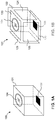
- FIG. 1A illustrates an insect decoy system 100 according to an embodiment of the present invention.
- System 100 includes a vapor-isolated vessel 101.
- Vapor-isolated vessel 101 may include a window 104, and a chemical compound 106.
- Vessel 101 may include sides 120, 122, 124, 126, 128, and 130, as illustrated in Fig. 1B in an exploded view of system 100.
- Vapor-isolation may be provided, for example, by hermetically sealing vessel 101 or by placing vessel 101 under vacuum.
- the term "vapor-isolated" does not require 100% vapor isolation.
- a vapor-isolated vessel may be substantially vapor-isolated, such as 90-95% vapor-isolated if, for example, sides 120, 122, 124, 126, 128, or 130 exhibit some degree of vapor porosity. 100% vapor isolation is referred to herein as "completely vapor-isolated.”
- Vessel 101 may be configured to be weather resistant and capable of being mounted or portably deployed in agricultural and stored grain environments.
- chemical compound 106 emits infrared electromagnetic radiation by means of fluorescence. Fluorescence occurs when energy (e.g., light) from an excitation energy source is absorbed by a body (or molecule) at one or more frequency range(s) and is re-emitted at one or more different frequency ranges. The photonic emission is generally of a longer wavelength than the excitation source.
- An absorption spectrum of a body is a plot of the absorption intensity of the fraction of incident radiation absorbed by that body as a function of wavelengths covering the electronic energy levels of the molecules in the body. While absorption spectra can be recorded for any absorbing material, excitation spectra can be recorded only for fluorescent materials apart from their usual absorption spectra.
- Emission spectra can be recorded by fixing an excitation wavelength at a particular wavelength, while intensity of emission wavelengths is scanned. The recorded emission wavelengths are obtained due to radiative relaxations of molecules from a higher energy level to which molecules are excited with energy at the fixed excitation wavelength to various lower energy levels.
- excitation spectra can be recorded by scanning intensity of excitation wavelengths while an emission wavelength is kept constant. In other words, an excitation spectrum will provide all the wavelengths absorbed by molecule that will result in a particular emission wavelength. All the excitation spectra corresponding to all the emission wavelengths can provide a spectrum which is almost the same as the absorption spectrum, but which differs somewhat since a signature of absorption is not obtained if that absorption does not yield fluorescence emission.
- Chemical compound 106 may be characterized as having one or more absorption bands at different absorption wavelengths and one or more emission bands at different emission wavelengths.
- the behavior of different types of insects may be affected by different emission wavelengths. These different wavelengths may include different fluorescence wavelengths of the same chemical compound, or the different wavelengths may include fluorescence wavelengths of multiple chemical compounds. Therefore, one chemical compound 106 may be used as an attractant, repellent, or disruptive agent for different types of insects. One or more chemical compounds 106 with different absorption and emission bands may be used in decoy system 100 to target different types of insects.
- Chemical compound 106 may include pheromone molecules.
- the fluorescence characteristics of the pheromone molecules results in the emission of electromagnetic radiation at various wavelengths in the infrared spectrum, referred to herein as the emission wavelengths. These wavelengths may be detected by insects and cause a change in their behavior. If an insect is sensitive to the emission wavelengths, such as those insects targeted by a specific pheromone, there are several types of behavior that may result from the insect's exposure to the emission wavelengths.
- a first type of behavior is an attraction behavior.
- the emission wavelengths correspond to those produced by a sex or aggregation pheromone
- an insect that detects the emission wavelengths may be attracted or lured to the pheromone as if it were a mating signal or a call to aggregate, respectively.
- a second type of behavior is a repelling behavior. If the emission wavelengths are too strong or are representative of something the insect would perceive as a threat, an insect may be overwhelmed and repelled by the signal, or seek evasive action or cover in the event of a perceived threat.
- a third type of behavior is confusion or chaotic response, which results when the emission wavelengths disrupt the insect from its normal behavior. Tests have shown that when some insects are exposed to certain emission wavelengths, their behavior is disrupted.
- insects may, for example, become abnormally active, using up their own energy resources such that they are unable to properly mate, or such that they die sooner than expected.
- the depletion of their energy resources may also produce unhealthy offspring, eventually resulting in an overall reduction in the insect population.
- the infrared fluorescence of the pheromone molecules allows the use of pheromone molecules even though they are housed in vapor-isolated vessel 101.
- the vapor-isolation of the pheromone molecules in vessel 101 may enable greater longevity of the molecules than the current methods used for deployment, including traps and aerosols, which diffuse pheromone molecules into open space. Dissipation, spreading, diffusion, or releasing of pheromone molecules into the open environment can cause a decline in parts-per-million concentration and radiation release rates as a function of time, such that their effectiveness in prompting insect behavior is also reduced.
- chemical compound 106 is deposited on or adhered to a single one of sides 120, 122, 124, 126, 128, and 130. In another example embodiment, chemical compound 106 is deposited onto a plurality of interior sides of vessel 101. Each side of vessel 101 may have deposited the same or a different chemical compound. As mentioned above, different types of chemical compounds may be used to enable decoy system 100 to affect behavior in a variety of insects. In another example of this embodiment, chemical compound 106 may be deposited or adhered onto one or more substrates placed in vessel 101, instead of being deposited directly onto a side of vessel 101. Other mechanisms, methodologies, and techniques can be employed to introduce chemical compound 106 into vessel 101, and are deemed to be within the scope of the present invention.
- the chemical compound may be in liquid, gaseous, or solid form.
- the chemical compound may be a gas or liquid that fills a separate vial located within vessel 101, said vial being transmissive to the absorption and emission wavelengths of interest specific to the chemical compound.
- the gas may be inserted directly into vessel 101, such that it disperses throughout vessel 101.
- the chemical compound is a liquid or solid disposed on an interior surface of vessel 101 or a surface of a separate substrate, which substrate is then placed within vessel 101. Any other number of mechanisms may be employed to contain the chemical compound in insect decoy system 100.
- FIGS 1A and 1B show vessel 101 as a cuboid shape having sides 120, 122, 124, 126, 128, and 130, according to an example embodiment.
- vessel 101 is not restricted to being cuboid in shape or having other straight-sided shapes.
- Vessel 101 may be configured to be any type of geometric shape, such as but not limited to cylindrical, spherical, or elliptical.
- Vessel 101 may be constructed from a variety of materials that are configured to prevent substantial penetration of vapor or electromagnetic radiation from chemical compound 106 through sides 120, 122, 124, 126, 128, and 130.
- one or more sides may be made of a material that prevents substantial penetration of vapor, but which is transmissive to electromagnetic radiation at the absorption and/or emission wavelengths.
- Vessel 101 materials may include natural or synthetic materials, such as but not limited to metals, non-metals, and/or alloys.
- vessel 101 may be made from, for example and without limitation, high density polyethylene (HDPE) or low-density polyethylene (LDPE).
- HDPE high density polyethylene
- LDPE low-density polyethylene
- Such materials may have transmissivity through 20 microns, for example, to allow passage of infrared radiation while restricting other types of electromagnetic radiation.
- the inner surface of one or more sides of vessel 101 may be partially or fully covered with a reflective surface.
- chemical compound 106 may be deposited on or adhered to one or more sides having reflective surfaces.
- a reflective surface may include a mirror or like material that prevents, for example, absorption of radiation from chemical compound 106 or passing of radiation from chemical compound 106 through vessel 101.
- the surface may be, for example, a first surface mirror.
- the reflective surface may be reflective to electromagnetic radiation at wavelengths of the absorption band, emission band, or both the absorption and emission bands of chemical compound 106, according to examples of this embodiment.
- Window 104 may be transmissive to infrared radiation according to an example embodiment. Window 104 may be transmissive specifically to wavelengths in the emission bands of chemical compound 106. Window 104 may also be transmissive to wavelengths in the absorption bands of chemical compound 106. Infrared transmissive window 104 may be slightly porous, thereby making vessel 101 less than 100% vapor-isolated. For example, infrared transmissive window 104 may be made from a material that is approximately 5% porous (95% vapor-isolated). HDPE is one such material.
- window 104 may be strategically positioned to allow emission of electromagnetic radiation from chemical compound 106 through window 104.
- window 104 is illustrated as being located on top of vessel 101, window 104 may additionally or alternatively be located at other sides of vessel 101, as long as emission of radiation from chemical compound 106 can be released into the environment external to vessel 101.
- Fig. 1A and 1B illustrate vessel 101 having a window 104 of a circular shape.
- vessel 101 may include windows in various shapes and sizes.
- vessel 201 of insect decoy system 200 may include a rectangular shaped window 204 that forms a side of vessel 201, according to an embodiment of the present invention.
- Window 204 may have similar transmissive properties as window 104.
- vessel 201 may include a plurality of windows with transmissive properties similar to windows 104 and 204.
- the plurality of windows may form a vessel 301, as illustrated in Fig. 3 .
- Fig. 3 illustrates insect decoy system 300 as a vessel 301 having a substantially flat, straight-sided window on each side
- a window of vessel 301 may take any geometric shape, such as but not limited to cylindrical, spherical, or elliptical.
- window 104 may be directional or omnidirectional.
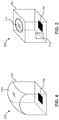
- vessel 401 of insect decoy system 400 may include a lens, such as a concave lens, as window 404.
- Window 404 may be capable of focusing infrared radiation emitted by chemical compound 106.
- directionality may be additionally or alternatively facilitated with an internal or external reflector (not shown).
- Fig. 5 illustrates an insect decoy system 500.
- Insect decoy system 500 is similar to insect decoy system 100 of Fig. 1 , but includes an excitation energy source 516 within vapor-isolated vessel 501.
- Excitation energy source 516 may be an isolated system located within vessel 501, or it may be an integrated part of vessel 501. Examples of excitation energy source elements include, without limitation, heating elements, capacitive elements, and solar energy elements. If the excitation energy source is an integrated part of vessel 501, then excitation energy source 516 is a part of vessel 501.
- excitation energy source 516 is integrated into one or more sides of vessel 501.
- a side of vessel 501 may be made of a dielectric material that builds up energy as a capacitive charge. This energy can then be transferred to chemical compound 106.
- Excitation energy source 516 may be configured to produce electromagnetic radiation in the absorption bands of chemical compound 106. Exciting chemical compound 106 with radiation produced by excitation energy source 516 may result in the fluorescence of compound 106. This fluorescence releases photons having wavelengths in the emission bands of compound 106.
- the electromagnetic radiation from excitation energy source 516 may be produced by various means, such as but not limited to thermal, electrical, or optical, according to various embodiments.
- excitation energy source 516 is configured to modulate the electromagnetic radiation. Such modulation may be electrically or manually induced, depending on, for example, whether the excitation energy source is actively produced, naturally occurring, or a function of re-radiation.
- Increasing the amount of fluorescing energy that acts upon chemical compound 106, using excitation energy source 516, may increase the emission of radiation from chemical compound 106, which in turn may increase the corresponding volumetric area in which insects' behavior may be affected.
- the infrared emission from chemical compound 106 may be increased, for example, by increasing the amount of chemical compound 106 in vessels 101, 201, 301, 401, or 501.
- the desired level of emission radiation is a function of the amount of the chemical compound and the amount of energy provided by the excitation energy source, taking into consideration variables such as the cost of the chemical compound, the desired volumetric size of the effective area, and efficiency of the excitation energy source, among other things.
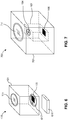
- Fig. 6 illustrates an insect decoy system 600.
- Insect decoy system 600 is similar to insect decoy system 100 of Fig. 1 , but includes an additional window 617 in vessel 101 and an excitation energy source 616 located external to vapor-isolated vessel 101.
- Excitation energy source 616 may be configured to perform similar functions as excitation energy source 516.
- Window 617 may be transmissive to wavelengths produced by excitation energy source 616.
- window 617 may be placed strategically with respect to excitation energy source 616 and chemical compound 106 to allow radiation from excitation energy source 616 to enter vessel 101 and excite chemical compound 106.
- excitation of chemical compound 106 with excitation energy source 616 may result in chemical compound 106 fluorescing radiation at wavelengths in the infrared spectrum, which are then released through window 104. Insects responsive to or influenced by radiation from chemical compound 106 may be attracted, repelled, or confused depending on the fluorescing wavelength, depending on the intensity of the radiation emitting from compound 106.
- the window allowing radiation from excitation energy source 616 to enter vessel 101 is the same window that allows radiation emitted by the chemical compound to exit vessel 101.
- Fig. 6 illustrates insect decoy system 600 having one substantially flat and straight-sided window 617 that may be transmissive to radiation from an external excitation energy source.
- system 600 may have windows in varying numbers and in varying shapes that are similar to window 617 in their transmissive properties.
- Windows 104 and 617 of system 600 may be placed in different orientations with respect to each other and may not necessarily be placed as illustrated in Fig. 6 .
- vessel 101 of system 600 may have windows transmissive to both wavelengths entering vessel 101 from excitation energy source 616 and leaving vessel 101 from chemical compound 106.
- Fig. 7 illustrates an insect trap system 700 comprising an insect decoy system 100 and an insect trap vessel 701, according to an embodiment of the present invention.
- Insect trap vessel 701 includes an aperture 704.
- insect decoy system 100 may be enclosed within trap vessel 701.
- System 100 may be strategically positioned in trap vessel 701 such that window 104 and aperture 704 are optically aligned. This optical alignment may enable infrared radiation from chemical compound 106 to exit insect trap system 700 through window 104 and aperture 704 to the surrounding environment.
- Trap vessel 701 may be configured similarly to vessel 101 as previously discussed. That is, trap vessel 701 may be impermeable to radiation from chemical compound 106. In that case, trap system 700 may not be effective without optical alignment of window 104 and aperture 704. When window 104 and aperture 704 are aligned, the released radiation from chemical compound 106 may attract insects into trap system 700 through aperture 704.
- aperture 704 is a circular opening on a side of trap vessel 701, as illustrated in Fig. 7 .
- the diameter of aperture 740 may be varied to adjust for insect size and may be designed to allow for insect entry while prohibiting insect escape once inside trap vessel 701, as is common in the art.
- aperture 704 is illustrated as being circular, aperture 704 may form other geometric shapes, or may be located at other positions, such as on sides of trap vessel 701.
- aperture 704 may be attached to a barrier (not shown) that permits insects attracted by the emission from chemical compound 106 to enter aperture 704, but may prevent insects from escaping trap vessel 701.
- Aperture 704 may be, for example, a one-way bristle-type opening. Multiple apertures similar to aperture 740 may be strategically formed in trap vessel 701. A sticky substance may be disposed inside of trap vessel 701 that may prevent trapped insects from exiting trap vessel 701.
- insect decoy system 100 may be located near, but external to, trap vessel 701.
- insect decoy system 100 may be located within a screen mesh forming an enclosed trap that allows the released radiation from chemical compound 106 to pass through the screen, the screen mesh further allowing insects to enter but not escape.
- insect decoy system 100 may be located in near proximity to an electrostatic device that stuns or kills the insect.
- insect trap systems may be configured by integrating trap vessel 701 with other insect decoy systems, such as but not limited to systems 500 and 600 as described above.
- Trap vessel 701 may be configured to enclose systems 500 and 600 in a manner as illustrated for system 100 in Fig. 7 .
- One example structure uses solar radiation-absorptive materials that nocturnally reradiate, serving as an excitation energy source.
- two intersecting triangles of solar radiation-absorptive materials may be combined to form a tent-like structure.
- This tent-like structure of re-radiating material constitutes the excitation energy source of the insect decoy system.
- a vapor-isolated vessel containing the chemical compound of interest is disposed in the interior of the tent-like structure.
- a vessel wall surrounding the excitation energy source is made from flexible LDPE or HDPE material. The vessel wall is doped with adhesive bands to capture insects attracted to the chamber.
Landscapes
- Life Sciences & Earth Sciences (AREA)
- Pest Control & Pesticides (AREA)
- Insects & Arthropods (AREA)
- Engineering & Computer Science (AREA)
- Wood Science & Technology (AREA)
- Zoology (AREA)
- Environmental Sciences (AREA)
- Birds (AREA)
- Catching Or Destruction (AREA)
Claims (19)
- Insektenköder (100, 200, 300, 400, 500, 600), umfassend:ein dampfisoliertes Gefäß (101, 201, 301, 401, 501) mit mindestens einem infrarotdurchlässigen Fenster (104, 204, 404);eine chemische Verbindung (106), die innerhalb des Gefäßes angeordnet ist, wobei die chemische Verbindung (106) eine oder mehrere Absorptionsbanden bei einer Menge von Absorptionswellenlängen und eine oder mehrere Emissionsbanden bei einer Menge von Emissionswellenlängen aufweist; undeine Anregungsenergiequelle (516, 616), wobei die Anregungsenergiequelle (516, 616) dafür konfiguriert ist, elektromagnetische Strahlung bei den Absorptionswellenlängen zu erzeugen, um dadurch die chemische Verbindung (106) fluoreszieren zu lassen und Photonen bei den Emissionswellenlängen freizusetzen,worin das mindestens eine infrarotdurchlässige Fenster (104, 204, 404) für die freigesetzten Photonen bei den Emissionswellenlängen im Wesentlichen transparent ist.
- Insektenköder nach Anspruch 1, worin die Anregungsenergiequelle (516, 616) innerhalb des Gefäßes angeordnet ist.
- Insektenköder nach Anspruch 1, worin die Anregungsenergiequelle (516, 616) außerhalb des Gefäßes angeordnet ist.
- Insektenköder nach Anspruch 1, worin die chemische Verbindung (106) ein Pheromon ist, das für eine bestimmte Art von Insekt spezifisch ist.
- Insektenköder nach Anspruch 1, worin das dampfisolierte Gefäß (101, 201, 301, 401, 501) zu 100% dampfisoliert ist.
- Insektenköder nach Anspruch 1, worin das dampfisolierte Gefäß (101, 201, 301, 401, 501) zu weniger als 100% dampfisoliert ist.
- Insektenköder nach Anspruch 1, worin das dampfisolierte Gefäß (101, 201, 301, 401, 501) mindestens eine innere reflektierende Oberfläche umfasst.
- Insektenköder nach Anspruch 7, worin die chemische Verbindung (106) an der mindestens einen inneren reflektierenden Oberfläche haftet.
- Insektenköder nach Anspruch 7, worin die mindestens eine innere reflektierende Oberfläche für mindestens eines von Folgendem reflektierend ist: elektromagnetische Strahlung bei den Absorptionswellenlängen oder elektromagnetische Strahlung bei den Emissionswellenlängen.
- Insektenköder nach Anspruch 1, worin die Anregungsenergiequelle (516, 616) einen aktiven elektromagnetischen Strahler umfasst.
- Insektenköder nach Anspruch 10, worin die Anregungsenergiequelle (516, 616) dafür konfiguriert ist, moduliert zu werden.
- Insektenköder nach Anspruch 1, worin das mindestens eine infrarotdurchlässige Fenster (104, 204, 404) richtungsabhängig ist.
- Insektenköder nach Anspruch 1, worin das mindestens eine infrarotdurchlässige Fenster (104, 204, 404) richtungsunabhängig ist.
- Insektenköder nach Anspruch 1, worin das mindestens eine infrarotdurchlässige Fenster (104, 204, 404) eine Linse ist.
- Insektenköder nach Anspruch 1, worin elektromagnetische Strahlung bei den Emissionswellenlängen eine bestimmte Art von Insekt anzieht, eine bestimmte Art von Insekt abstößt oder bei einer bestimmten Art von Insekt eine chaotische Reaktion hervorruft.
- Insektenköder nach Anspruch 1, ferner eine Falle umfassend, die dafür konfiguriert ist, ein oder mehrere Insekten festzuhalten.
- Insektenfalle (700), umfassend:ein Außengefäß, umfassend (701):ein Gehäuse mit einer Öffnung, die dafür konfiguriert ist, einem oder mehreren Insekten zu ermöglichen, in das Außengefäß einzudringen, während sie das eine oder die mehreren Insekten am Verlassen des Außengefäßes hindert; undmindestens ein infrarotdurchlässiges Fenster (704);ein geschlossenes, dampfisoliertes Innengefäß (101), das innerhalb des Außengefäßes angeordnet ist und mindestens ein infrarotdurchlässiges Fenster (104) umfasst, das auf das infrarotdurchlässige Fenster (704) im Außengefäß ausgerichtet ist; undeine chemische Verbindung (106), die innerhalb des dampfisolierten Innengefäßes angeordnet ist, wobei die chemische Verbindung (106) eine oder mehrere Absorptionsbanden bei einer Menge von Absorptionswellenlängen und eine oder mehrere Emissionsbanden bei einer Menge von Emissionswellenlängen aufweist,worin das infrarotdurchlässige Fenster (104, 704) für elektromagnetische Strahlung bei den Absorptionswellenlängen und elektromagnetische Strahlung bei den Emissionswellenlängen im Wesentlichen transparent ist, undworin die chemische Verbindung (106) fluoresziert und Photonen bei den Emissionswellenlängen freisetzt, wenn elektromagnetische Strahlung bei den Absorptionswellenlängen durch die chemische Verbindung (106) empfangen wird.
- Insektenfalle nach Anspruch 17, ferner umfassend:
eine Anregungsenergiequelle, die dafür konfiguriert ist, elektromagnetische Strahlung bei den Absorptionswellenlängen zu erzeugen. - Insektenfalle nach Anspruch 18, worin die Anregungsenergiequelle innerhalb des Außengefäßes (701) oder innerhalb des Innengefäßes (101) angeordnet ist.
Applications Claiming Priority (2)
| Application Number | Priority Date | Filing Date | Title |
|---|---|---|---|
| US13/839,636 US8984800B2 (en) | 2013-03-15 | 2013-03-15 | Radiating systems for affecting insect behavior |
| PCT/US2014/023480 WO2014150519A1 (en) | 2013-03-15 | 2014-03-11 | Radiating systems for affecting insect behavior |
Publications (3)
| Publication Number | Publication Date |
|---|---|
| EP2967019A1 EP2967019A1 (de) | 2016-01-20 |
| EP2967019A4 EP2967019A4 (de) | 2016-11-23 |
| EP2967019B1 true EP2967019B1 (de) | 2019-11-13 |
Family
ID=51520790
Family Applications (1)
| Application Number | Title | Priority Date | Filing Date |
|---|---|---|---|
| EP14770965.3A Active EP2967019B1 (de) | 2013-03-15 | 2014-03-11 | Strahlungssysteme zur beeinflussung des verhaltens von insekten |
Country Status (8)
| Country | Link |
|---|---|
| US (3) | US8984800B2 (de) |
| EP (1) | EP2967019B1 (de) |
| CN (1) | CN105246326B (de) |
| AU (1) | AU2014237064B2 (de) |
| BR (1) | BR112015023526A2 (de) |
| CA (1) | CA2907076A1 (de) |
| RU (1) | RU2654643C2 (de) |
| WO (1) | WO2014150519A1 (de) |
Families Citing this family (26)
| Publication number | Priority date | Publication date | Assignee | Title |
|---|---|---|---|---|
| US20120317868A1 (en) * | 2011-06-15 | 2012-12-20 | Ecolab Usa Inc. | Flying insect attraction station |
| JP5938653B2 (ja) * | 2012-05-11 | 2016-06-22 | パナソニックIpマネジメント株式会社 | 害虫防除照明システム |
| IL229708B (en) * | 2012-11-28 | 2019-09-26 | Itzhak Shefer | Transparent sewer cover |
| US8984800B2 (en) * | 2013-03-15 | 2015-03-24 | Technology Sg, L.P. | Radiating systems for affecting insect behavior |
| US20150051882A1 (en) * | 2013-08-16 | 2015-02-19 | Technology S.G., Lp | Artificially Simulating Emissions of a Chemical Compound |
| US9999211B2 (en) * | 2015-02-13 | 2018-06-19 | Delta Five, Llc | Insect traps and monitoring system |
| US9664813B2 (en) | 2015-02-13 | 2017-05-30 | Delta Five, Llc | Automated insect monitoring system |
| US9999212B2 (en) * | 2015-02-13 | 2018-06-19 | Delta Five, Llc | Insect traps and monitoring system |
| WO2017058759A1 (en) * | 2015-10-01 | 2017-04-06 | Ipm Products Manufacturing, Inc | Insect control device and method of using the same |
| US10028501B2 (en) * | 2016-05-03 | 2018-07-24 | Eco-Solutions | Insect repellant apparatus with imprinted glass marbles and associated methods |
| CN106234332A (zh) * | 2016-09-11 | 2016-12-21 | 于卫华 | 力敏触发蟑螂诱捕器 |
| US9642351B1 (en) * | 2016-09-13 | 2017-05-09 | Kenneth Reese | Cockroach bait station |
| DE102017114261A1 (de) * | 2017-06-27 | 2018-12-27 | Priedemann Facade-Lab GmbH | Vogel-Vergrämvorrichtung und Anordnung |
| WO2020051441A1 (en) | 2018-09-07 | 2020-03-12 | Dykstra Thomas M | Determining odorant detection in arthropods |
| ES2769601A1 (es) * | 2018-12-26 | 2020-06-26 | Zobele Espana Sa | Dispositivo para atrapar insectos |
| CN109919796B (zh) * | 2019-02-27 | 2021-08-03 | 北京农业智能装备技术研究中心 | 虫情测报系统 |
| WO2020206089A1 (en) * | 2019-04-03 | 2020-10-08 | Dow Agrosciences Llc | Adaptive active infrared sensor hardware and software in the detection of pests with pest detection station |
| DE102019121833A1 (de) * | 2019-06-25 | 2020-12-31 | Rutronik Elektronische Bauelemente Gmbh | Verfahren zum Beeinflussen von Gliederfüßern |
| MX2022002370A (es) | 2019-08-26 | 2022-03-29 | Pestroniks Innovations Pte Ltd | Se?uelo o repelente para artropodos, trampa para artropodos y dispositivo de iluminacion. |
| CN110521675B (zh) * | 2019-09-18 | 2020-12-22 | 清华大学 | 用于蜜蜂行为学研究实验的y型迷宫 |
| US12290060B2 (en) | 2019-10-15 | 2025-05-06 | S. C. Johnson & Son, Inc. | Insect trap device |
| US11484022B2 (en) | 2019-10-15 | 2022-11-01 | S. C. Johnson & Son, Inc. | Insect trap device |
| WO2022015190A1 (ru) * | 2020-07-17 | 2022-01-20 | Шамиль Шимагомедович ХАРХАРОВ | Многофункциональное устройство для обеденного столика |
| USD1010060S1 (en) | 2022-02-09 | 2024-01-02 | S. C. Johnson & Son, Inc. | Substrate |
| USD1031910S1 (en) | 2022-02-09 | 2024-06-18 | S. C. Johnson & Son, Inc. | Insect trap |
| CN120113648B (zh) * | 2025-04-22 | 2025-12-05 | 贵州大学 | 基于混合led阵列与动态光谱时空耦合的杀虫装置及方法 |
Family Cites Families (78)
| Publication number | Priority date | Publication date | Assignee | Title |
|---|---|---|---|---|
| BE357219A (de) * | 1929-01-09 | |||
| US2059835A (en) * | 1936-01-29 | 1936-11-03 | Archie G Worthing | Destruction of living organisms |
| US2645877A (en) * | 1951-12-01 | 1953-07-21 | William A Pohlman | Insect trap |
| US2731762A (en) * | 1954-06-01 | 1956-01-24 | James F Jones | Bug and mosquito catcher |
| US3653145A (en) * | 1969-12-10 | 1972-04-04 | Whitmire Research Lab Inc | Art of controlling houseflies |
| US3997785A (en) * | 1975-09-24 | 1976-12-14 | The United States Of America As Represented By The Secretary Of Agriculture | Insect antenna vibrating frequency modulator and resonating maserlike IR emitter |
| US4018530A (en) * | 1975-11-18 | 1977-04-19 | Block Engineering, Inc. | Fluorescence spectrometry employing excitation of bleaching intensity |
| US4127961A (en) * | 1976-03-29 | 1978-12-05 | Pestolite Inc. | Apparatus for entrapping insects |
| US4069615A (en) * | 1976-11-22 | 1978-01-24 | Gilbert Donald E | Screen for deterring flying insects |
| US4282673A (en) * | 1979-06-21 | 1981-08-11 | Focks Dana A | Flying insect trap |
| DD159567B1 (de) * | 1981-06-10 | 1986-08-13 | Akad Wissenschaften Ddr | Spektralfluorometer |
| US4411093A (en) * | 1981-06-17 | 1983-10-25 | Whitmire Research Laboratories, Inc. | Insect lure |
| US4982100A (en) * | 1983-06-14 | 1991-01-01 | Harding Jr Norman T | Method and apparatus for repelling insects |
| US4675300A (en) * | 1985-09-18 | 1987-06-23 | The Board Of Trustees Of The Leland Stanford Junior University | Laser-excitation fluorescence detection electrokinetic separation |
| CN87204558U (zh) * | 1987-08-28 | 1988-03-30 | 杨建设 | 远红外线电磁波式驱蚊器 |
| US5247933A (en) | 1991-10-07 | 1993-09-28 | Callahan Philip S | Photonic ionic cloth radio amplifier |
| US5424551A (en) * | 1993-09-15 | 1995-06-13 | Richard J. Fox | Frequency emitter for control of insects |
| US5528049A (en) * | 1993-09-15 | 1996-06-18 | Fox Investment Company | Frequency emitter for control of insects |
| US5634292A (en) * | 1993-10-29 | 1997-06-03 | Kitterman; Roger L. | Apparatus and method for attracting and trapping insects |
| US6088949A (en) | 1995-11-13 | 2000-07-18 | Nicosia And Reinhardt, Inc. | Insect control apparatus and method |
| ID16787A (id) * | 1996-03-29 | 1997-11-13 | Sumitomo Chemical Co | Alat dan metode untuk mengumpan rayap |
| CA2251055C (en) * | 1996-04-08 | 2005-04-12 | Ecolab Inc. | Fly trap with two or more directional light patterns |
| US5896695A (en) * | 1996-07-01 | 1999-04-27 | Walker; Robert T. | Device for controlling crawling or flying insects |
| US5766617A (en) * | 1996-08-23 | 1998-06-16 | The United States Of America As Represented By The Secretary Of Agriculture | Trapping system for mediterranean fruit flies |
| GB9619185D0 (en) | 1996-09-13 | 1996-10-23 | Pest West Electronics Ltd | Insect catching device |
| US5801828A (en) * | 1996-11-14 | 1998-09-01 | Detections Unlimited, Inc. | Apparatus and method for fluorescence spectroscopy of remote sample |
| SE512111C2 (sv) * | 1997-03-26 | 2000-01-24 | Silvandersson Miljoe Ab | Anordning vid insektsfångare |
| US6199315B1 (en) * | 1997-08-25 | 2001-03-13 | Earth Chemical Co., Ltd. | Method and apparatus for catching fleas |
| US6965205B2 (en) * | 1997-08-26 | 2005-11-15 | Color Kinetics Incorporated | Light emitting diode based products |
| US6178687B1 (en) * | 1997-09-19 | 2001-01-30 | Atlantic Paste & Glue Co., Inc. | Insect trap |
| US6795568B1 (en) | 1998-07-17 | 2004-09-21 | Torsana Laser Technologies A/S | Method and an apparatus for severing or damaging unwanted plants |
| US6301194B1 (en) | 1999-04-26 | 2001-10-09 | Charles J. Cauchy | Self-powered insect and rodent repellent device |
| US6515539B1 (en) * | 2000-04-12 | 2003-02-04 | Yissum Research Development Company Of The Hebrew University Of Jerusalem | Microwave devices based on chemically induced dynamic electron spin polarization |
| US7415313B2 (en) | 2000-07-07 | 2008-08-19 | New Vectors Llc | Spatial coordination system |
| US6298011B1 (en) | 2001-01-03 | 2001-10-02 | Michael H. Nyberg | Method for killing mosquito larvae |
| US20020125419A1 (en) * | 2001-02-06 | 2002-09-12 | Callahan Philip S. | Solid-state organic maser |
| US6928769B2 (en) * | 2001-08-07 | 2005-08-16 | Bugjammer, Inc. | Disposable insect-control member |
| US8893428B2 (en) * | 2002-02-11 | 2014-11-25 | Technology S.G., L.P. | System for trapping insects |
| US6662489B2 (en) | 2002-02-19 | 2003-12-16 | Lentek International, Inc. | Insect trapping apparatus |
| US6655080B2 (en) | 2002-02-19 | 2003-12-02 | Lentek International, Inc. | Insect trapping apparatus with laminar air flow |
| US20030178616A1 (en) | 2002-03-25 | 2003-09-25 | Prevenslik Thomas V. | Cavity QED devices |
| US7599731B2 (en) * | 2002-07-16 | 2009-10-06 | Xenogen Corporation | Fluorescent light tomography |
| AU2002950621A0 (en) | 2002-08-07 | 2002-09-12 | J I Peston Pty Ltd | Near-field antenna array with signal processing |
| US6998133B2 (en) * | 2002-12-12 | 2006-02-14 | Integrated Pest Management Technologies, Inc. | Adhesive device for capturing insects |
| US7038201B2 (en) * | 2002-12-13 | 2006-05-02 | Nichols Applied Technology, Llc | Method and apparatus for determining electrical contact wear |
| GB0329849D0 (en) * | 2003-12-23 | 2004-01-28 | Precisense As | Fluorometers |
| US7412797B1 (en) | 2004-05-25 | 2008-08-19 | Hiscox William C | Free-standing flying insect trap with removable cartridge |
| US7286056B2 (en) * | 2005-03-22 | 2007-10-23 | Lawrence Kates | System and method for pest detection |
| NZ539860A (en) * | 2005-05-06 | 2007-11-30 | Black Mantis Ltd | An insect trap and a method of attracting insects using variable infra-red emission |
| JP2007043915A (ja) * | 2005-08-08 | 2007-02-22 | Tsugunori Uchiyama | 飛翔昆虫の飛来抑制フィルム |
| US7698853B2 (en) * | 2005-09-27 | 2010-04-20 | Mississippi State University Research And Technology Corporation | Termite control methods and apparatus |
| WO2007059075A1 (en) | 2005-11-14 | 2007-05-24 | S.C. Johnson & Son, Inc. | Use of electromagnetic fields to affect insect movement |
| US7541936B2 (en) | 2005-12-13 | 2009-06-02 | Wijenberg Rosanna M | Use of wing-fanning sounds to affect cockroach movement |
| NL1030763C2 (nl) * | 2005-12-23 | 2007-06-26 | Paul Hendrik Van Bers | Inrichting voor het vangen en verzamelen van insecten. |
| US8111164B2 (en) | 2006-09-28 | 2012-02-07 | The United States Of America As Represented By The Secretary Of The Air Force | Employing millimeter-wave electromagnetic energy in collision avoidance |
| US7784215B2 (en) * | 2006-11-09 | 2010-08-31 | Lee William Cohnstaedt | Methods and compositions for improved light traps |
| US7892528B2 (en) | 2007-01-12 | 2011-02-22 | Siljander Eric D | Controlling bedbugs with synthetic pheromones and/or infrared radiation |
| US7623625B2 (en) * | 2007-04-11 | 2009-11-24 | Searete Llc | Compton scattered X-ray visualization, imaging, or information provider with scattering event locating |
| US7660385B2 (en) * | 2007-09-28 | 2010-02-09 | Searete Llc | Time of flight aspects for X-Ray fluorescence visualizer, imager, or information provider |
| EP2257790B1 (de) * | 2008-03-03 | 2016-12-07 | University Of Maryland Baltimore County | Verfahren und systeme für spannungsgesteuerte metallverstärkte fluoreszenz, chemilumineszenz oder biolumineszenz |
| CN102036554B (zh) * | 2008-05-23 | 2015-05-27 | 埃科莱布有限公司 | 捕虫器 |
| CN101661864B (zh) | 2008-08-27 | 2011-05-18 | 梁朝巍 | 智能型杀虫灯 |
| US20100071257A1 (en) * | 2008-09-20 | 2010-03-25 | Shang-Chieh Tsai | Illuminating Device and system for Killing and/or Intefering with Pests, and Method for Killing and/or Interfering with Pests |
| RU97245U1 (ru) * | 2009-01-11 | 2010-09-10 | Федеральное государственное образовательное учреждение высшего профессионального образования "Челябинский государственный агроинженерный университет" | Световая ловушка для насекомых |
| CN102325443B (zh) * | 2009-02-24 | 2014-06-18 | 松下电器产业株式会社 | 害虫防除装置 |
| WO2010151362A1 (en) * | 2009-04-16 | 2010-12-29 | Columbia University | Optical barrier to pests |
| CA2762886A1 (en) * | 2009-05-22 | 2010-11-25 | British Columbia Cancer Agency Branch | Selective excitation light fluorescence imaging methods and apparatus |
| RU2427132C2 (ru) * | 2009-10-02 | 2011-08-27 | Владимир Николаевич Рубочкин | Способ защиты человека (животных) от укусов кровососущих насекомых |
| CN102770525B (zh) * | 2010-02-26 | 2015-12-09 | 夏普株式会社 | 用于检测空中漂浮的生物粒子的检测设备和方法 |
| WO2012010238A1 (en) * | 2010-07-17 | 2012-01-26 | Merck Patent Gmbh | Enhancement of penetration and action |
| US8677677B2 (en) | 2011-01-24 | 2014-03-25 | Sterling International Inc. | Illuminated insect trap |
| GB201113138D0 (en) * | 2011-07-29 | 2011-09-14 | Univ East Anglia | Method, system and device for detecting insects and other pests |
| US9538740B2 (en) * | 2011-11-25 | 2017-01-10 | United Arab Emirates University | Red palm weevil sensing and control system |
| US20130283671A1 (en) * | 2012-04-27 | 2013-10-31 | Darek Czokajlo | Devices and methods for detecting and trapping pests |
| RU120851U1 (ru) * | 2012-06-08 | 2012-10-10 | Федеральное государственное бюджетное учреждение науки Главный ботанический сад им. Н.В. Цицина Российской академии наук | Устройство для отлова грибных комариков |
| FR2996411B1 (fr) * | 2012-10-04 | 2014-12-19 | Commissariat Energie Atomique | Piege pour frelons |
| IL229708B (en) * | 2012-11-28 | 2019-09-26 | Itzhak Shefer | Transparent sewer cover |
| US8984800B2 (en) * | 2013-03-15 | 2015-03-24 | Technology Sg, L.P. | Radiating systems for affecting insect behavior |
-
2013
- 2013-03-15 US US13/839,636 patent/US8984800B2/en not_active Expired - Fee Related
-
2014
- 2014-03-11 CN CN201480026989.1A patent/CN105246326B/zh not_active Expired - Fee Related
- 2014-03-11 WO PCT/US2014/023480 patent/WO2014150519A1/en not_active Ceased
- 2014-03-11 BR BR112015023526A patent/BR112015023526A2/pt not_active IP Right Cessation
- 2014-03-11 AU AU2014237064A patent/AU2014237064B2/en not_active Ceased
- 2014-03-11 EP EP14770965.3A patent/EP2967019B1/de active Active
- 2014-03-11 CA CA2907076A patent/CA2907076A1/en not_active Abandoned
- 2014-03-11 RU RU2015138799A patent/RU2654643C2/ru not_active IP Right Cessation
-
2015
- 2015-03-23 US US14/665,906 patent/US9173388B2/en active Active
- 2015-11-02 US US14/930,421 patent/US10226035B2/en not_active Expired - Fee Related
Non-Patent Citations (1)
| Title |
|---|
| None * |
Also Published As
| Publication number | Publication date |
|---|---|
| WO2014150519A1 (en) | 2014-09-25 |
| BR112015023526A2 (pt) | 2017-07-18 |
| AU2014237064B2 (en) | 2017-07-20 |
| US9173388B2 (en) | 2015-11-03 |
| US20160050900A1 (en) | 2016-02-25 |
| US20140259858A1 (en) | 2014-09-18 |
| AU2014237064A1 (en) | 2015-10-01 |
| US8984800B2 (en) | 2015-03-24 |
| CN105246326A (zh) | 2016-01-13 |
| CN105246326B (zh) | 2019-08-20 |
| RU2015138799A (ru) | 2017-04-21 |
| RU2015138799A3 (de) | 2018-03-14 |
| RU2654643C2 (ru) | 2018-05-21 |
| CA2907076A1 (en) | 2014-09-25 |
| EP2967019A4 (de) | 2016-11-23 |
| US20150196019A1 (en) | 2015-07-16 |
| US10226035B2 (en) | 2019-03-12 |
| EP2967019A1 (de) | 2016-01-20 |
Similar Documents
| Publication | Publication Date | Title |
|---|---|---|
| EP2967019B1 (de) | Strahlungssysteme zur beeinflussung des verhaltens von insekten | |
| AU2003210970B2 (en) | System for trapping insects | |
| TWI789530B (zh) | 捕蟲器 | |
| US20080196296A1 (en) | Fruit-Shaped Fruit Fly Trap | |
| US20190133105A1 (en) | Selectively tunable attraction device | |
| WO2002058461A2 (en) | Liquid gravity feed ant elimination system and method | |
| AU2002234071A1 (en) | Liquid gravity feed ant elimination system and method | |
| US20100088948A1 (en) | Device for catching phototaxis flying insects | |
| Marchioro et al. | Light traps in shipping containers: a new tool for the early detection of insect alien species | |
| US20020116864A1 (en) | Non-chemical fly repellant device | |
| US20230014533A1 (en) | Trapping method, light source device, and trapping device for adult moths belonging to indoor phycitinae subfamily | |
| KR20170037741A (ko) | Uv led가 적용된 포충기 | |
| US20040055207A1 (en) | Device for extending duration of volatile liquid lures | |
| KR20190063011A (ko) | 큐브형 포충기 | |
| Aman et al. | Modern Technologies of Insect Trapping | |
| US20020125419A1 (en) | Solid-state organic maser | |
| KR20160027829A (ko) | 해충 포획 장치 | |
| WO2024046568A1 (en) | Device to attract, capture and/or kill mosquitoes and/or biting insects, method fur assembling and using a device and use of a device | |
| WO1996029875A1 (en) | Insect monitoring systems and traps | |
| CN115460914A (zh) | 捕虫器 | |
| JP2002272342A (ja) | ゴキブリ等歩行性昆虫の駆除具 | |
| JP2003000124A (ja) | ムカデを捕獲或いは駆除する装置 | |
| KR20180032313A (ko) | 개미류 기피효과를 가지는 천적곤충 방사장치 |
Legal Events
| Date | Code | Title | Description |
|---|---|---|---|
| PUAI | Public reference made under article 153(3) epc to a published international application that has entered the european phase |
Free format text: ORIGINAL CODE: 0009012 |
|
| 17P | Request for examination filed |
Effective date: 20151014 |
|
| AK | Designated contracting states |
Kind code of ref document: A1 Designated state(s): AL AT BE BG CH CY CZ DE DK EE ES FI FR GB GR HR HU IE IS IT LI LT LU LV MC MK MT NL NO PL PT RO RS SE SI SK SM TR |
|
| AX | Request for extension of the european patent |
Extension state: BA ME |
|
| DAX | Request for extension of the european patent (deleted) | ||
| REG | Reference to a national code |
Ref country code: DE Ref legal event code: R079 Ref document number: 602014056796 Country of ref document: DE Free format text: PREVIOUS MAIN CLASS: A01M0001020000 Ipc: A01M0001040000 |
|
| A4 | Supplementary search report drawn up and despatched |
Effective date: 20161021 |
|
| RIC1 | Information provided on ipc code assigned before grant |
Ipc: A01M 1/02 20060101ALI20161017BHEP Ipc: A01M 29/28 20110101ALI20161017BHEP Ipc: A01M 1/14 20060101ALI20161017BHEP Ipc: A01M 29/08 20110101ALI20161017BHEP Ipc: A01M 1/04 20060101AFI20161017BHEP Ipc: A01M 1/10 20060101ALI20161017BHEP Ipc: A01M 1/22 20060101ALI20161017BHEP |
|
| GRAP | Despatch of communication of intention to grant a patent |
Free format text: ORIGINAL CODE: EPIDOSNIGR1 |
|
| STAA | Information on the status of an ep patent application or granted ep patent |
Free format text: STATUS: GRANT OF PATENT IS INTENDED |
|
| INTG | Intention to grant announced |
Effective date: 20181212 |
|
| GRAS | Grant fee paid |
Free format text: ORIGINAL CODE: EPIDOSNIGR3 |
|
| GRAA | (expected) grant |
Free format text: ORIGINAL CODE: 0009210 |
|
| STAA | Information on the status of an ep patent application or granted ep patent |
Free format text: STATUS: THE PATENT HAS BEEN GRANTED |
|
| AK | Designated contracting states |
Kind code of ref document: B1 Designated state(s): AL AT BE BG CH CY CZ DE DK EE ES FI FR GB GR HR HU IE IS IT LI LT LU LV MC MK MT NL NO PL PT RO RS SE SI SK SM TR |
|
| REG | Reference to a national code |
Ref country code: CH Ref legal event code: EP Ref country code: AT Ref legal event code: REF Ref document number: 1200719 Country of ref document: AT Kind code of ref document: T Effective date: 20191115 |
|
| REG | Reference to a national code |
Ref country code: DE Ref legal event code: R096 Ref document number: 602014056796 Country of ref document: DE |
|
| REG | Reference to a national code |
Ref country code: IE Ref legal event code: FG4D |
|
| REG | Reference to a national code |
Ref country code: NL Ref legal event code: MP Effective date: 20191113 |
|
| REG | Reference to a national code |
Ref country code: LT Ref legal event code: MG4D |
|
| PG25 | Lapsed in a contracting state [announced via postgrant information from national office to epo] |
Ref country code: PL Free format text: LAPSE BECAUSE OF FAILURE TO SUBMIT A TRANSLATION OF THE DESCRIPTION OR TO PAY THE FEE WITHIN THE PRESCRIBED TIME-LIMIT Effective date: 20191113 Ref country code: NO Free format text: LAPSE BECAUSE OF FAILURE TO SUBMIT A TRANSLATION OF THE DESCRIPTION OR TO PAY THE FEE WITHIN THE PRESCRIBED TIME-LIMIT Effective date: 20200213 Ref country code: GR Free format text: LAPSE BECAUSE OF FAILURE TO SUBMIT A TRANSLATION OF THE DESCRIPTION OR TO PAY THE FEE WITHIN THE PRESCRIBED TIME-LIMIT Effective date: 20200214 Ref country code: NL Free format text: LAPSE BECAUSE OF FAILURE TO SUBMIT A TRANSLATION OF THE DESCRIPTION OR TO PAY THE FEE WITHIN THE PRESCRIBED TIME-LIMIT Effective date: 20191113 Ref country code: LT Free format text: LAPSE BECAUSE OF FAILURE TO SUBMIT A TRANSLATION OF THE DESCRIPTION OR TO PAY THE FEE WITHIN THE PRESCRIBED TIME-LIMIT Effective date: 20191113 Ref country code: PT Free format text: LAPSE BECAUSE OF FAILURE TO SUBMIT A TRANSLATION OF THE DESCRIPTION OR TO PAY THE FEE WITHIN THE PRESCRIBED TIME-LIMIT Effective date: 20200313 Ref country code: LV Free format text: LAPSE BECAUSE OF FAILURE TO SUBMIT A TRANSLATION OF THE DESCRIPTION OR TO PAY THE FEE WITHIN THE PRESCRIBED TIME-LIMIT Effective date: 20191113 Ref country code: SE Free format text: LAPSE BECAUSE OF FAILURE TO SUBMIT A TRANSLATION OF THE DESCRIPTION OR TO PAY THE FEE WITHIN THE PRESCRIBED TIME-LIMIT Effective date: 20191113 Ref country code: FI Free format text: LAPSE BECAUSE OF FAILURE TO SUBMIT A TRANSLATION OF THE DESCRIPTION OR TO PAY THE FEE WITHIN THE PRESCRIBED TIME-LIMIT Effective date: 20191113 Ref country code: BG Free format text: LAPSE BECAUSE OF FAILURE TO SUBMIT A TRANSLATION OF THE DESCRIPTION OR TO PAY THE FEE WITHIN THE PRESCRIBED TIME-LIMIT Effective date: 20200213 |
|
| PG25 | Lapsed in a contracting state [announced via postgrant information from national office to epo] |
Ref country code: RS Free format text: LAPSE BECAUSE OF FAILURE TO SUBMIT A TRANSLATION OF THE DESCRIPTION OR TO PAY THE FEE WITHIN THE PRESCRIBED TIME-LIMIT Effective date: 20191113 Ref country code: HR Free format text: LAPSE BECAUSE OF FAILURE TO SUBMIT A TRANSLATION OF THE DESCRIPTION OR TO PAY THE FEE WITHIN THE PRESCRIBED TIME-LIMIT Effective date: 20191113 Ref country code: IS Free format text: LAPSE BECAUSE OF FAILURE TO SUBMIT A TRANSLATION OF THE DESCRIPTION OR TO PAY THE FEE WITHIN THE PRESCRIBED TIME-LIMIT Effective date: 20200313 |
|
| PG25 | Lapsed in a contracting state [announced via postgrant information from national office to epo] |
Ref country code: AL Free format text: LAPSE BECAUSE OF FAILURE TO SUBMIT A TRANSLATION OF THE DESCRIPTION OR TO PAY THE FEE WITHIN THE PRESCRIBED TIME-LIMIT Effective date: 20191113 |
|
| PG25 | Lapsed in a contracting state [announced via postgrant information from national office to epo] |
Ref country code: ES Free format text: LAPSE BECAUSE OF FAILURE TO SUBMIT A TRANSLATION OF THE DESCRIPTION OR TO PAY THE FEE WITHIN THE PRESCRIBED TIME-LIMIT Effective date: 20191113 Ref country code: EE Free format text: LAPSE BECAUSE OF FAILURE TO SUBMIT A TRANSLATION OF THE DESCRIPTION OR TO PAY THE FEE WITHIN THE PRESCRIBED TIME-LIMIT Effective date: 20191113 Ref country code: DK Free format text: LAPSE BECAUSE OF FAILURE TO SUBMIT A TRANSLATION OF THE DESCRIPTION OR TO PAY THE FEE WITHIN THE PRESCRIBED TIME-LIMIT Effective date: 20191113 Ref country code: CZ Free format text: LAPSE BECAUSE OF FAILURE TO SUBMIT A TRANSLATION OF THE DESCRIPTION OR TO PAY THE FEE WITHIN THE PRESCRIBED TIME-LIMIT Effective date: 20191113 Ref country code: RO Free format text: LAPSE BECAUSE OF FAILURE TO SUBMIT A TRANSLATION OF THE DESCRIPTION OR TO PAY THE FEE WITHIN THE PRESCRIBED TIME-LIMIT Effective date: 20191113 |
|
| REG | Reference to a national code |
Ref country code: DE Ref legal event code: R097 Ref document number: 602014056796 Country of ref document: DE |
|
| REG | Reference to a national code |
Ref country code: AT Ref legal event code: MK05 Ref document number: 1200719 Country of ref document: AT Kind code of ref document: T Effective date: 20191113 |
|
| PG25 | Lapsed in a contracting state [announced via postgrant information from national office to epo] |
Ref country code: SK Free format text: LAPSE BECAUSE OF FAILURE TO SUBMIT A TRANSLATION OF THE DESCRIPTION OR TO PAY THE FEE WITHIN THE PRESCRIBED TIME-LIMIT Effective date: 20191113 Ref country code: SM Free format text: LAPSE BECAUSE OF FAILURE TO SUBMIT A TRANSLATION OF THE DESCRIPTION OR TO PAY THE FEE WITHIN THE PRESCRIBED TIME-LIMIT Effective date: 20191113 |
|
| PLBE | No opposition filed within time limit |
Free format text: ORIGINAL CODE: 0009261 |
|
| STAA | Information on the status of an ep patent application or granted ep patent |
Free format text: STATUS: NO OPPOSITION FILED WITHIN TIME LIMIT |
|
| REG | Reference to a national code |
Ref country code: DE Ref legal event code: R119 Ref document number: 602014056796 Country of ref document: DE |
|
| 26N | No opposition filed |
Effective date: 20200814 |
|
| PG25 | Lapsed in a contracting state [announced via postgrant information from national office to epo] |
Ref country code: MC Free format text: LAPSE BECAUSE OF FAILURE TO SUBMIT A TRANSLATION OF THE DESCRIPTION OR TO PAY THE FEE WITHIN THE PRESCRIBED TIME-LIMIT Effective date: 20191113 |
|
| REG | Reference to a national code |
Ref country code: CH Ref legal event code: PL |
|
| PG25 | Lapsed in a contracting state [announced via postgrant information from national office to epo] |
Ref country code: SI Free format text: LAPSE BECAUSE OF FAILURE TO SUBMIT A TRANSLATION OF THE DESCRIPTION OR TO PAY THE FEE WITHIN THE PRESCRIBED TIME-LIMIT Effective date: 20191113 Ref country code: AT Free format text: LAPSE BECAUSE OF FAILURE TO SUBMIT A TRANSLATION OF THE DESCRIPTION OR TO PAY THE FEE WITHIN THE PRESCRIBED TIME-LIMIT Effective date: 20191113 |
|
| REG | Reference to a national code |
Ref country code: BE Ref legal event code: MM Effective date: 20200331 |
|
| PG25 | Lapsed in a contracting state [announced via postgrant information from national office to epo] |
Ref country code: LU Free format text: LAPSE BECAUSE OF NON-PAYMENT OF DUE FEES Effective date: 20200311 |
|
| PG25 | Lapsed in a contracting state [announced via postgrant information from national office to epo] |
Ref country code: IT Free format text: LAPSE BECAUSE OF FAILURE TO SUBMIT A TRANSLATION OF THE DESCRIPTION OR TO PAY THE FEE WITHIN THE PRESCRIBED TIME-LIMIT Effective date: 20191113 Ref country code: CH Free format text: LAPSE BECAUSE OF NON-PAYMENT OF DUE FEES Effective date: 20200331 Ref country code: DE Free format text: LAPSE BECAUSE OF NON-PAYMENT OF DUE FEES Effective date: 20201001 Ref country code: FR Free format text: LAPSE BECAUSE OF NON-PAYMENT OF DUE FEES Effective date: 20200331 Ref country code: LI Free format text: LAPSE BECAUSE OF NON-PAYMENT OF DUE FEES Effective date: 20200331 Ref country code: IE Free format text: LAPSE BECAUSE OF NON-PAYMENT OF DUE FEES Effective date: 20200311 |
|
| PG25 | Lapsed in a contracting state [announced via postgrant information from national office to epo] |
Ref country code: BE Free format text: LAPSE BECAUSE OF NON-PAYMENT OF DUE FEES Effective date: 20200331 |
|
| GBPC | Gb: european patent ceased through non-payment of renewal fee |
Effective date: 20200311 |
|
| PG25 | Lapsed in a contracting state [announced via postgrant information from national office to epo] |
Ref country code: GB Free format text: LAPSE BECAUSE OF NON-PAYMENT OF DUE FEES Effective date: 20200311 |
|
| PG25 | Lapsed in a contracting state [announced via postgrant information from national office to epo] |
Ref country code: TR Free format text: LAPSE BECAUSE OF FAILURE TO SUBMIT A TRANSLATION OF THE DESCRIPTION OR TO PAY THE FEE WITHIN THE PRESCRIBED TIME-LIMIT Effective date: 20191113 Ref country code: MT Free format text: LAPSE BECAUSE OF FAILURE TO SUBMIT A TRANSLATION OF THE DESCRIPTION OR TO PAY THE FEE WITHIN THE PRESCRIBED TIME-LIMIT Effective date: 20191113 Ref country code: CY Free format text: LAPSE BECAUSE OF FAILURE TO SUBMIT A TRANSLATION OF THE DESCRIPTION OR TO PAY THE FEE WITHIN THE PRESCRIBED TIME-LIMIT Effective date: 20191113 |
|
| PG25 | Lapsed in a contracting state [announced via postgrant information from national office to epo] |
Ref country code: MK Free format text: LAPSE BECAUSE OF FAILURE TO SUBMIT A TRANSLATION OF THE DESCRIPTION OR TO PAY THE FEE WITHIN THE PRESCRIBED TIME-LIMIT Effective date: 20191113 |