EP2964780B1 - Unterscheidung von bluttypvarianten - Google Patents
Unterscheidung von bluttypvarianten Download PDFInfo
- Publication number
- EP2964780B1 EP2964780B1 EP14703082.9A EP14703082A EP2964780B1 EP 2964780 B1 EP2964780 B1 EP 2964780B1 EP 14703082 A EP14703082 A EP 14703082A EP 2964780 B1 EP2964780 B1 EP 2964780B1
- Authority
- EP
- European Patent Office
- Prior art keywords
- rhd
- seq
- rhce
- nucleotide sequence
- primer
- Prior art date
- Legal status (The legal status is an assumption and is not a legal conclusion. Google has not performed a legal analysis and makes no representation as to the accuracy of the status listed.)
- Active
Links
Images




Classifications
-
- C—CHEMISTRY; METALLURGY
- C12—BIOCHEMISTRY; BEER; SPIRITS; WINE; VINEGAR; MICROBIOLOGY; ENZYMOLOGY; MUTATION OR GENETIC ENGINEERING
- C12Q—MEASURING OR TESTING PROCESSES INVOLVING ENZYMES, NUCLEIC ACIDS OR MICROORGANISMS; COMPOSITIONS OR TEST PAPERS THEREFOR; PROCESSES OF PREPARING SUCH COMPOSITIONS; CONDITION-RESPONSIVE CONTROL IN MICROBIOLOGICAL OR ENZYMOLOGICAL PROCESSES
- C12Q1/00—Measuring or testing processes involving enzymes, nucleic acids or microorganisms; Compositions therefor; Processes of preparing such compositions
- C12Q1/68—Measuring or testing processes involving enzymes, nucleic acids or microorganisms; Compositions therefor; Processes of preparing such compositions involving nucleic acids
- C12Q1/6876—Nucleic acid products used in the analysis of nucleic acids, e.g. primers or probes
- C12Q1/6881—Nucleic acid products used in the analysis of nucleic acids, e.g. primers or probes for tissue or cell typing, e.g. human leukocyte antigen [HLA] probes
-
- C—CHEMISTRY; METALLURGY
- C12—BIOCHEMISTRY; BEER; SPIRITS; WINE; VINEGAR; MICROBIOLOGY; ENZYMOLOGY; MUTATION OR GENETIC ENGINEERING
- C12Q—MEASURING OR TESTING PROCESSES INVOLVING ENZYMES, NUCLEIC ACIDS OR MICROORGANISMS; COMPOSITIONS OR TEST PAPERS THEREFOR; PROCESSES OF PREPARING SUCH COMPOSITIONS; CONDITION-RESPONSIVE CONTROL IN MICROBIOLOGICAL OR ENZYMOLOGICAL PROCESSES
- C12Q2600/00—Oligonucleotides characterized by their use
- C12Q2600/156—Polymorphic or mutational markers
-
- C—CHEMISTRY; METALLURGY
- C12—BIOCHEMISTRY; BEER; SPIRITS; WINE; VINEGAR; MICROBIOLOGY; ENZYMOLOGY; MUTATION OR GENETIC ENGINEERING
- C12Q—MEASURING OR TESTING PROCESSES INVOLVING ENZYMES, NUCLEIC ACIDS OR MICROORGANISMS; COMPOSITIONS OR TEST PAPERS THEREFOR; PROCESSES OF PREPARING SUCH COMPOSITIONS; CONDITION-RESPONSIVE CONTROL IN MICROBIOLOGICAL OR ENZYMOLOGICAL PROCESSES
- C12Q2600/00—Oligonucleotides characterized by their use
- C12Q2600/16—Primer sets for multiplex assays
Definitions
- the invention relates to methods for genotyping and blood cell antigen determination, which in particular may discriminate the RHD*r's or RHD*r's -like blood type variants, which encode C +W antigen and no D antigen, from RHD*DIIIa, RHD*DIVa-2 and other blood type variants.
- the invention also relates to products, in particular, probes, primers and kits for use in such methods.
- the success of blood transfusion often depends on the degree of compatibility between donor and recipient.
- the degree of compatibility is a function of the similarity in Red Blood Cell (RBC) antigen content between donor and recipient.
- RBC Red Blood Cell
- Expression of many RBC antigens in an individual can be predicted from the analysis of their genomic DNA. Therefore, analysis of donor and/or recipient DNA can be used to facilitate blood matching and thus enable proper blood transfusion practice.
- SCD Sickle Cell Disease
- RHD*DIIIa-CE(4-7)-D also known as RHD-CE-D S , RHD-CE(4-7)-D, (C)ce S , or r' S , ( RHD*r' S henceforth) can be found in up to 5-10% of the African-American population, but is extremely rare in Caucasians.
- This variant poses a special challenge to blood transfusion because it encodes a rather complex antigen profile, which includes absence of D antigen, altered forms of C (C +W ) and e antigens, expression of low-frequency VS antigen, no expression of V antigen, and absence of the high-frequency hr B antigen.
- D and C antigens are the clinically most relevant ones.
- RHD*r' S correlates with its genetic complexity, which includes a substitution of part of RHD exon 3, RHD exons 4-7, and the intervening introns by their RHCE counterparts, a G>T substitution at position 186 (exon 2), a C>T substitution at position 410 (hybrid exon 3), a C>G substitution at position 733 (exon 5), and a G>T substitution at position 1006 (exon 7).
- RHD*r' S occurs in cis with RHCE*ce S 1006T, an RHCE gene that also encodes substitutions C>G at position 733 (exon 5) and G>T at position 1006 (exon 7).
- RHD*r' S To add to the antigenic and genetic complexity, knowledge about the molecular basis of RHD*r' S is incomplete. For instance, the precise points of RHCE / RHD recombination have not been reported to date. Furthermore, two types of RHD*r' S variant have been described and named Type 1 and Type 2, which differ not only in their genetic composition but also in their antigen profiles.
- RHD*r' S has uncovered the genetic similarity between RHD*r' S and other RHD variants, in particular RHD*DIIIa and RHD*DIVa / RHD*DIVa-2 (RHD*DIVa-2 henceforth).
- RHD*DIVa-2 henceforth.
- a number of molecular methods for the specific detection of RHD*r' S rely on the detection of polymorphisms located in D-CE hybrid exon 3 locus of RHD.
- EP1780217 describes the detection of RHD positive haplotypes in D-negative individuals. Silvy et al., British Journal of Haematology, (2012 Dec 30) doi: 10.1111/bjh. 12179 [Epub ahead of print], describe identification of a polymorphism said to be restricted to the (C)ce S type 1 haplotype.
- WO2012/171990 describes discrimination of blood type variants in a method making use of polymorphisms in intron 7 of the RHD gene and/or intron 7 of the RHCE gene.
- EP2471949 describes a method for the identification by molecular techniques of genetic variants that encode no D antigen (D-) and altered C antigen (C +W ).
- EP2471949A1 describes a method for the identification by molecular techniques of genetic variants that encode no D antigen (D-) and altered C antigen (C +W ).
- WO 01/77384 A2 describes detection of SNPs and cytosine-methylations.
- WO2012/171990 describes a method for detecting the presence or absence of, or for discriminating between, blood type variants, the method comprising genotyping a sample obtained from a human subject at one or more positions in intron 7 of the RHD gene and/or intron 7 of the RHCE gene.
- Antibody reagents commonly used to detect C antigen do not discriminate between C +W and C + . Therefore, the phenotype is often reported as C + .
- the antibody reagent does discriminate between C +W and C + but the sample contains a normal RHCE*C allele in trans to a RHD*r' S allele, C +W is obscured by C + , resulting in a C + phenotype for the sample. Therefore, RHCE*C needs to be tested for and shown absent prior to assignment of a C +W phenotype to a sample. Accordingly, there remains a need for further methods for distinguishing RHD*r' S from RHD*DIIIa and RHD*DIVa-2. The present invention addresses these and other objects.
- the present inventors have surprisingly found that methods and, in particular, PCR primers as described herein are able to amplify a portion of intron 3 of the RHD gene found in r' S samples in a specific manner, and that this specificity is retained even under multiplex PCR conditions.
- Considerable disadvantages of previously-described primers and reaction methods are addressed by the methods and primers of the present invention, as demonstrated by the examples herein.
- the present invention mitigates false positive readings displayed by previously-described methods and primers, and is advantageously able to discriminate r' S from closely-related alleles, including a newly-described variant of RHD*DIIIa.
- oligonucleotide polymerase chain reaction (PCR) primer comprising a nucleotide sequence which is of the formula: X-Y-Z wherein:
- the primer of this and other aspects of the invention is such that X 1 is the nucleotide sequence of AAATTTGATCATGT (SEQ ID NO: 3) or ATGT. That is to say, n may, in some cases, be 14 or 4. In certain cases, n may be 2, 3, 4, 5, 6, 7, 8, 9, 10, 11, 12, 13, 14, 15, 16, 17, 18, 19 or 20.
- Y 1 is selected from the group consisting of: ACTAATCATAC (SEQ ID NO: 4); ACTAATGATAC (SEQ ID NO: 5); and AGTAATCATAC (SEQ ID NO: 6).
- S 1 is G
- S 2 is C
- S 1 is C
- S 2 is preferably C.
- the selection of S 1 and S 2 may be chosen to keep the number of mismatches with the intended target template sequence to not more than one nucleotide mismatch.
- the number of mismatches may be more than one.
- both S 1 and S 2 may be G.
- the number of nucleotide mismatches may be zero.
- both S 1 and S 2 may be C.
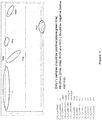
- the primer of the invention may have no Z, with the result that the last nucleotide in Y (which is a C that corresponds to the C/A polymorphic nucleotide at position 3046 of RHD intron 3, as numbered in Figure 7 ) is the 3' nucleotide of the primer of the invention.
- Y which is a C that corresponds to the C/A polymorphic nucleotide at position 3046 of RHD intron 3, as numbered in Figure 7
- m may be 1, 2, 3, 4 or 5.
- the primer is not more than 30, 29, 28, 27, 26, 25, 24, 23, 22, 21 or 20 nucleotides in length. In some cases, the primer may be at least 13, 14, 15, 16, 17, 18, 19, 20, 21, 22, 23, 24 or at least 25 nucleotides in length. In certain cases the primer may be between 15 and 25 nucleotides in length. Particular cases include a primer in accordance with the first aspect of the invention which has a length of exactly 13, 14, 15, 16, 17, 18, 19, 20, 21, 22, 23, 24, 25, 26, 27, 28, 29 or 30 nucleotides.
- the primer may be DNA or RNA.
- the primer is preferably DNA.
- the primer may include one or more, e.g. 1, 2, 3, 4 or 5 altered or non-natural bases and/or derivatised or modified nucleotide bases.
- one or more bases e.g. a 5' or a 3' base
- one or more bases may be locked nucleic acid (LNA) bases.
- the nucleotide sequence of the primer consists of a nucleotide sequence selected from the group consisting of:
- the primer is suitable for use as a forward PCR primer in a PCR amplification of a portion of the r' S allele of intron 3 of the RHD gene.
- the present invention provides a plurality of oligonucleotide primers comprising:
- said reverse primer (ii) hybridises to the reverse complement of a portion of the r' S intron 3 sequence that is shown in Figure 7 and which lies 3' of position 3050, as numbered in Figure 7 .
- said reverse primer hybridises to a portion of intron 3 of r' S , or its complement, which portion includes the G/A polymorphism position 3189 of intron 3 of the RHD gene, said numbering being as shown in Figure 7 .
- the plurality of primers comprises:
- the plurality of oligonucleotide primers comprise at least:
- the plurality of oligonucleotide primers comprise at least the primer pair:
- the present invention provides a kit for assessing a subject's blood type, said kit comprising:
- the present invention provides a system for use in determining a subject's blood type, the system comprising:
- the present invention provides a method for determining the presence or absence of, or for discriminating between, blood type alleles in a DNA-containing sample, which method comprises amplification by polymerase chain reaction (PCR) of at least a portion of intron 3 of the RHD gene, wherein said PCR employs at least a forward primer and a reverse primer each capable of hybridising to the r' S sequence set forth in SEQ ID NO: 31 ( Figure 7 ), or its complement, and wherein said forward primer is the primer of the first aspect of the invention.
- PCR polymerase chain reaction
- the blood type alleles are alleles that comprise an RHD / RHCE hybrid exon 3.
- the blood type alleles may be selected from the group consisting of: RHD*r' S ; RHD*r' S -like; RHD*r' S Type 1; RHD*r' S Type 2; RHD*DIIIa; RHD*DIIIa IVS3+3100G; RHD*DIII_FN; RHD*DIVa-2; RHD*DIVa; RHD*DIII-type4; RHD*DIII-type6; RHD*DIII-type7; RHD*DIII-type8; RHCE*ce S ; RHCE*ce S 1006T ; RHCE*ce S 1006C; RHCE*ce733G; RHCE*ce48C,733G,1025T; RHCE*ce48C,697G,733G; RHCE*ce340T,
- the PCR amplifies r' S , but does not amplify one or more of: RHD; RHCE*ce; RHD*DIIIa; RHD*DIIIa IVS3+3100G; and RHD*DIVa.
- said PCR may in certain cases amplify r' S , but not any of RHD; RHCE*ce; RHD*DIIIa; RHD*DIIIa IVS3+3100G; and RHD*DIVa.
- the method is for discriminating r' S from RHD*DIIIa IVS3+3100G.
- the newly-described variant, "RHD*DIIIa IVS3+3100G” comprises the same RHD intron 3 position 3100 A to G polymorphism that has previously been reported to be specific for r' S (see Silvy et al., 2012).
- the method in accordance with this and other aspects of the present invention utilises a forward primer of the first aspect of the invention.
- a forward primer of the first aspect of the invention includes a primer that consists of the nucleotide sequence AAATTTGATCATGTACTAATCATAC (SEQ ID NO: 7).
- the method further utilises a suitable reverse primer, which may be any reverse primer capable of yielding a PCR product when used in combination with the forward primer of the first aspect of the invention.
- the reverse primer is capable of hybridising to a portion of intron 3 of r' S , or its complement, which portion includes at least one position of single nucleotide polymorphism (SNP) that differs between r' S and RHD.
- SNP single nucleotide polymorphism
- said position of SNP comprises the G/A polymorphism at position 3189 of intron 3 of the RHD gene, said numbering being as shown in Figure 7 (see also SEQ ID NO: 31).
- the reverse primer is of between 26 and 30 nucleotides in length and comprises the nucleotide sequence GGAAAAGGTTTGAGAGGAATTATATT (SEQ ID NO: 11). In certain cases, the reverse primer consists of the nucleotide sequence GGAAAAGGTTTGAGAGGAATTATATT (SEQ ID NO: 11).
- the PCR is multiplex PCR.
- the multiplex PCR may further comprise amplification of one or more RHD and/or RHCE gene segments other than RHD intron 3.
- the one or more RHD and/or RHCE gene segments are selected from the group consisting of: RHCE c; RHCE C; RHCE exon 1; RHCE exon 5; and RHCE exon 7.
- the method may employ additional PCR primers to be used in multiplex with the above-described PCR primers.
- the multiplex PCR further comprises employing 1, 2, 3, 4, 5, 6, 7, 8, 9 or all 10 of the following primers:
- the sample is a sample which has previously been determined to comprise an RHD-RHCE hybrid exon 3.
- the sample may be suspected to comprise an RHD-RHCE hybrid exon 3 or be an unknown sample.
- the method may therefore further comprise a preceding step of determining whether the sample contains an RHD-RHCE hybrid exon 3.
- the method further comprises determining the presence or absence of an RHCE*C allele in the sample. In some cases the method further comprises genotyping the sample at one or more positions of polymorphisms in the RHD and/or RHCE gene loci. In certain cases, the method comprises genotyping the sample at position 410 of the RHD exon 3. In certain cases, the method comprises genotyping the sample at position 602 of the RHD exon 4. In certain cases, method comprises genotyping the sample at position 1048 of the RHD exon 7. In certain cases, the method comprises genotyping the sample at position 1006 of the RHCE exon 7. In certain cases, the method comprises genotyping the sample at position 3100 of the RHD intron 3.
- the method comprises genotyping not more than 50, 40, 30, 25, 20, 15, or not more than 10, single nucleotide polymorphic positions in the RHD gene locus and/or the RHCE gene locus.
- the method further comprises predicting an RHD phenotype and/or an RHCE phenotype for the subject based on, at least, the degree of amplification by PCR of said at least one portion of intron 3 of the RHD gene.
- This may, for example, include a visual or computer-aided inspection of the intensity of a band on a gel where the intensity is related to the degree of amplification of the PCR product.
- the skilled person will of course be readily able to make us of suitable techniques to evaluate the degree of PCR amplification, e.g., for classification of a sample as containing r' S .
- Such techniques include, without limitation, real time PCR (qPCR), Luminex bead-based detection and agarose gel-based evaluation.
- the method may comprise detecting a positive result for r' S -specific PCR amplification and thereby classifying a sample as containing an r' S allele.
- the phenotype prediction is further based on:
- the sample is found to contain r' S and is therefore predicted to have C +W serology.
- the sample is preferably obtained or has been previously obtained from a human subject.
- the subject is undergoing, or is a candidate for, blood transfusion or bone marrow transplantation.
- the subject has sickle cell disease (SCD) or Thalassemia major.
- the subject has non-Caucasian ancestry.
- the subject has African ancestry.
- the sample may be any suitable biological sample from which it is possible to obtain nucleic acid, particularly genomic DNA, for use in a PCR reaction.
- suitable samples include any material of bodily origin (liquid, solid or aspirate) such as blood, hair, cheek cells and skin cells.
- the sample may be subjected to one or more treatments to extract a nucleic acid prior to or as part of said amplification by PCR.
- the method may comprise Allele-Specific Polymerase Chain Reaction (ASP).
- ASP Allele-Specific Polymerase Chain Reaction
- the method may comprise labelling a nucleic acid obtained from the sample or labelling the amplicon produced by said PCR amplification.
- the method may further comprise carrying out serological analysis on a blood sample that has been obtained from the subject. This may be particularly useful to corroborate or clarify a phenotype prediction made. Combining the genotype-based prediction of blood type with a serological-based prediction may be useful, e.g., to improve accuracy or to resolve ambiguous results.
- the method of this and other aspects of the present invention may not comprise carrying out serological analysis. Removing the need to carry out serological analysis provides considerable savings in terms of time, cost and/or resources.
- the present invention provides a method of blood matching, the method comprising:
- the subject may be undergoing, or may be a candidate for, blood transfusion.
- the subject may have SCD, or any other disease requiring repeated blood transfusions, such as Thalassemia major or certain blood cell malignancies.
- the subject may be of non-Caucasian race.
- the subject may be of African ancestry (e.g. "Black persons").
- the subject may have an ancestral origin in a Mediterranean country.
- the sample may be any suitable biological sample from which it is possible to amplify at least a portion of intron 3 of the RHD gene locus and/or from which it is possible to determine the genotype of the subject at one or more polymorphic positions in the RHD gene and/or the RHCE gene.
- the sample may conveniently take the form of a blood sample.
- the method may comprise carrying out an Allele-Specific Polymerase Chain Reaction (ASP) and/or Allele-Specific Hybridization (ASH).
- ASP Allele-Specific Polymerase Chain Reaction
- ASH Allele-Specific Hybridization
- the method may comprise labelling a nucleic acid obtained from the sample or labelling an amplicon derived from a nucleic acid obtained from the sample.
- the label is preferably a detectable label.
- DNA derived from the sample e.g. PCR product resulting from use of the DNA from the sample as template, may be labelled using a fluorescent label or dye (e.g. by conjugating said fluorescent label or dye to the PCR product before or after fragmentation of the PCR product).
- the method in accordance with the sixth aspect of the invention may be carried out for a plurality of recipient subjects and a plurality of potential donor subjects.
- the present invention finds use in the determination of the clinically relevant RHD- and RHCE- encoded antigen phenotypes of a blood sample.
- the invention provides a method for detecting the presence or absence of, or for discriminating between, blood type variants, which method comprises amplification by polymerase chain reaction (PCR) of at least a portion of intron 3 of the RHD gene, wherein said PCR employs at least a forward primer and a reverse primer each capable of hybridising to the r' S sequence set forth in SEQ ID NO: , or its complement, and wherein said forward primer nucleotide sequence is of the formula: X-Y-Z wherein:
- the method of the present invention may further comprise determining the presence or absence of an RHD / RHCE hybrid exon 3 in said sample and/or genotyping a sample obtained from a human subject at one or more positions in intron 7 of the RHD gene and/or in intron 7 of the RHCE gene.
- Blood typing by making use of intron 7 polymorphisms is described in WO2012/171990 .
- Blood typing by making use of a combination of polymorphisms in the RHD gene and/or the RHCE gene are described in US2012/0172239 and EP2471949 .
- Rh blood group D antigen is encoded by the RHD gene, which comprises 10 exons.
- the complete RHD gene sequence is available at NCBI Reference Sequence: NG_007494.1 No. NG_007494.1, GI:171184448, (SEQ ID NO: 22.
- Rh blood group C antigen is encoded by the RHCE gene, which comprises 10 exons.
- the complete RHCE gene sequence is available at NCBI Reference Sequence: NG_009208.2, GI:301336136, (SEQ ID NO: 23).
- sample as used herein is intended to encompass any material (solid, liquid or aspirate) obtained directly or indirectly from a human subject and from which the identity of one or more nucleotides in a relevant genomic locus (e.g. intron 7 or the RHD locus and/or intron 7 of the RHCE locus) can be determined.
- sample includes any biological fluid such as blood, plasma, urine, saliva, cerebrospinal fluid and interstitial fluid, any solid matter, such as tissue, bone and hair, any cell or cell extract, any derived cell line, such as an immortalised tumour cell line and stem cell line, an extract of any of the preceding sample types, such as fixed or paraffin-embedded tissue.
- the sample is an extract of human genomic DNA, optionally amplified and/or purified.
- genotyping is intended to encompass any method for determining the identity of the nucleotide at a particular position such as a polymorphic position at a specified locus. Thus, genotyping includes identifying one or both alleles of a particular gene. Genotyping may employ any of a variety of techniques, including but not limited to, allele-specific hybridisation, allele-specific PCR, sequencing of all or part of a gene.
- nucleic acid sequences such as primer sequences, are set forth herein in the direct 5' to 3'.
- primer sequence AAATTTGATCATGTACTAATCATAC (SEQ ID NO: 7) may equally be written as 5'-AAATTTGATCATGTACTAATCATAC-3' (SEQ ID NO: 7).
- blood type alleles are less common and a typically referred to as “variants,” (e.g. RHD*r' S ) .
- Variant blood type alleles are in some cases referred to herein simply as “blood type variants”.
- the present invention provides methods and products for the identification by molecular techniques of genetic variants RHD*r' S or RHD*r' S -like, which encode no D antigen (D-), an altered form of D antigen (partial D), altered forms of C (C +W ) and e antigens, expression of low-frequency VS antigen, no expression of V antigen, and/or no hr B antigen (hr B- ) in blood cells.
- D- D antigen
- partial D altered forms of C
- C +W C +W
- e antigens e antigens
- expression of low-frequency VS antigen no expression of V antigen
- hr B- hr B antigen
- the method of the invention provides considerable efficiency savings in comparison with, for example, full DNA sequencing, or genotyping of a large number of polymorphisms, or determining the phenotype by serological methods. Nevertheless, it is specifically contemplated that the method of the invention may, in some cases, involve DNA sequencing in order to genotype the sample obtained from the subject.
- Allele-specific oligonucleotides for example, used in a competitive or non-competitive PCR (ASP henceforth), can also be used to detect genetic variants.
- functional segments or their portions may be amplified, for example by PCR, using as a template genomic DNA.
- Amplified functional segments or their portions can be labelled (e.g. with a fluorescent label) to allow for their detection, and optionally fragmented to facilitate their pairing with oligonucleotide probes.
- labelled and fragmented functional segments or their portions may be incubated under conditions that maximize the sensitivity and specificity of pairing with probes attached to the solid support.
- the presence of probe-paired functional segments or their portions may be determined indirectly from the measurement of label, usually a fluorochrome, attached to the solid support. This measurement is referred to herein as signal intensity.
- the fluorescence emitted by the fluorochrome may be collected by means of a fluorescence detection device, such as a confocal scanner.
- the following example relates to a method of discriminating among RHD / RHCE hybrid exon 3 variants RHD*r's, RHD*DIIIa and RHD*DIVa-2 and a newly-discovered variant designated herein as "RHD*DIIIa IVS3+3100G".
- Genomic DNA was extracted from nucleated cells in a blood sample by cell lysis. Extracted DNA was purified on an affinity column. Both, cell lysis and DNA purification are performed with a QIAamp Blood kit (Qiagen, Germany) by following manufacturer protocols and recommendations. Purity of DNA was determined by spectrophotometry on a Nanodrop instrument (Nanodrop, DE). Only DNA solutions with an OD 260 /OD 280 1.8 ⁇ 0.2 proceeded to subsequent analysis.
- Cycling conditions consist of a denaturation/polymerase activation step at 95°C for 15 min, followed by 40 cycles of denaturation at 95°C for 30 sec, annealing at 60°C for 30 sec, extension at 72°C for 80 sec, and a final extension step at 72°C for 7 min.
- Amplified DNA was separated by electrophoresis on a 2% agarose gel, stained with SYBR Safe dye (Invitrogen, OR), and photographed under UV illumination. Amplification vs. no amplification of a segment was determined visually by a trained laboratory technician.
- primers for amplification of HgH were also employed.
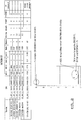
- the PCR reaction products were run on an agarose gel (see Figure 1 ).
- a single probe may be used to determine presence or absence of the intron 3 amplicon because the PCR is allele-specific (due to the design of the forward primer). In other words, it is not necessary for the detection probe itself to interrogate a sequence that is specific to r' S .
- PCR products must be labeled immediately after hybridization. The process cannot be stopped after the hybridization step.
- Proprietary software (Progenika Biopharma S.A.) is used to transform fluorescence intensity values for the particular allelic variants detected, singly or in combination, into blood group genotypes, and from genotypes into predicted blood group phenotypes.
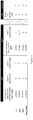
- Figure 2 shows the output and graphical representation (vertical axis is "normalised intensity") of a Luminex assay for r' S samples, the newly-discovered variant "RHD*DIIIa IVS3+3100G", and other non-r' S samples following multiplex PCR using the r' S -specific primers shown in Table 1 and one or more primer pairs shown in Tables 2 and 3.
- the data shown in Figure 2 confirm that the r' S samples are successfully amplified by PCR in multiplex and that the Luminex normalised intensity signal is markedly higher for the r' S samples than for non-r' S samples, including the newly-discovered variant "RHD*DIIIa IVS3+3100G".
- the ability of the r' S -specific primers of the present invention to work in multiplex with primers for amplification of other segments of the RHD gene and/or RHCE gene loci allows for efficient use of sample, e.g., to interrogate other polymorphisms relevant to the classification of blood type variants.
- segments including all or part of one or more RHD and/or RHCE exons and/or introns may be amplified and the amplification products interrogated by allele-specific probes in order to detect the presence or absence of, and/or identity of: an RHCE c; an RHCE C; RHCE exon 1; RHCE exon 5; RHCE exon 7; an RHD/RHCE hybrid exon 3 allele; a G/C polymorphism at position 602 of RHD exon 4; a C/G polymorphism at position 1048 of RHD exon 7; presence or absence of an RHCE*C allele; a G/T polymorphism at position 1006 of RHCE exon 7; and/or a G/A polymorphism at position 3100 of RHD intron 3.
- the specificity is achieved by means of the intersection of the two specific primers, RHD-for and RHCE-rev, rather than either primer itself being specific for r' S .
- RHD-for primer also hybridises to other RHD sequence-containing template, including RHD*DIIIa and RHD*DIVa2.
- the forward primer of Silvy et al. will anneal to all of the following: RHD, r' S , DIVa, DIIIa and the newly-described "RHD*DIIIa IVS3+3100G" sample.
- RHD-for the forward primer of Silvy et al.
- the forward primer of the present invention is specific only to r' S .
- the inventors sought to mitigate the drawbacks associated with the forward primer disclosed in Silvy et al.
- Figure 4 shows the results of using the RHD-for primer of Silvy et al. having the sequence GCAAATATGGAAATTTGATCATGTA (SEQ ID NO: 25) together with the RHCE-specific reverse primer having the sequence GGAAAAGGTTTGAGAGGAATTATATT (SEQ ID NO: 11) under PCR conditions suitable for multiplex PCR.
- the upper band shows the amplification control (HgH), while the lower band is, theoretically, an amplicon which is specific for r' S .
- Lane 1 shows that the sample "BGG-10-656", which is a known r' S sample is indeed amplified by the above primer combination.
- lane 2 which is the sample “BGG-10-628”, being a known DIIIa sample
- lane 3 which is "L22”, a known RhD+ sample
- results demonstrate that the forward primer RHD-for of Silvy et al. results in false positive results under the conditions tested.
- results may be contrasted with the results obtained when using a forward primer of the present invention, in which case no such false positive results were found.
- the present inventors sought to provide primers that contain sequence modifications compared with the "reference" forward primer having the sequence AAATTTGATCATGTACTAATCATAC (SEQ ID NO: 7).
- the following changes were made to the "reference” forward primer sequence, while retaining r' S -specificity.
- the reference primer was shortened by deleting 10 nucleotides at the 5' end, in order to decrease annealing temperature for the PCR.
- This modification results in the forward primer of the invention having the following nucleotide sequence:
- the reference primer was altered by introducing one nucleotide substitution (replacing a C with a G) to increase specificity.
- This modification results in the forward primer of the invention having the following nucleotide sequence (the substitution position being underlined):
- the reference primer was altered by introducing one nucleotide substitution that differs from the substitution described above in relation to the second modification. This substitution was also a replacement of a C with a G to increase specificity, but was at a different position.
- This modification results in the forward primer of the invention having the following nucleotide sequence (the substitution position being underlined):
- Figure 6 shows PCR results obtained using: the reference forward primer of the invention AAATTTGATCATGTACTAATCATAC (SEQ ID NO: 7); the "inspecific" forward primer of Silvy et al. GCAAATATGGAAATTTGATCATGTA (SEQ ID NO: 25); the variant primer of the invention having modification 1 ATGTACTAATCATAC (SEQ ID NO: 8); the variant primer of the invention having modification 2 AAATTTGATCATGTACTAATGATAC (SEQ ID NO: 9); the variant primer of the invention having modification 3 AAATTTGATCATGTAGTAATCATAC (SEQ ID NO: 10); and a modified version of the inspecific" forward primer of Silvy et al. having the sequence G G CAAATATGGAAATTTGATCATGTA (SEQ ID NO: 28).
- the reverse primer used was GGAAAAGGTTTGAGAGGAATTATATT (SEQ ID NO: 11).
- Figure 6 shows the PCR amplification results of the above-described primers.
- the top band is a control and the lower band is intended to be an r' S -specific amplification product, to the extent that the primers used in fact amplify in an r' S -specific manner under the conditions employed.
- the reference forward primer (upper panel) exhibits r' S -specific amplification (positive for three known r's samples (lanes 1, 2 and 6) and negative for non-r' S (RhD+ in lane 3, RhD- in lane 4 and DIIIa in lane 5).
- the negative control of lane 7 shows no amplification.
- the inspecific forward primer in box 1 (second panel down; left hand side) exhibits positive r' S band presence of not only r' S samples, but also RhD+ and DIIIa (see lanes 3 and 5), thus confirming false positive results.
- the primer modification 1 results are shown in box 2 (spanning the second panel, right hand side and third panel, left hand side).
- the r' S band although somewhat less bright than the upper control band, is clearly visible in all r' S samples (lanes 1, 2 and 6), while all other lanes (RhD+, RhD-, DIIIa and negative control) are without any r' S band.
- the primer modification 2 results are shown in box 3 (third panel, centre).
- the r' S band is clearly visible in all r' S samples (lanes 1, 2 and 6), while all other lanes (RhD+, RhD-, DIIIa and negative control) are without any r' S band.
- the primer modification 3 results are shown in box 4 (spanning the third panel, right hand side and fourth panel, left hand side).
- the r' S band is clearly visible in all r' S samples (lanes 1, 2 and 6), while all other lanes (RhD+, RhD-, DIIIa and negative control) are without any r' S band.
- the inspecific forward primer in box 5 exhibits positive r' S band presence of not only r' S samples, but also RhD+ and DIIIa (see lanes 3 and 5), thus confirming false positive results. There is even a faint r' S band visible in the RhD- sample (lane 4).
- the present results demonstrate that the reference forward primer of the present invention exhibits superior performance compared with that of the Silvy et al. RHD-for primer and that the forward primer of the present invention is tolerant to a number of sequence modifications, including a 5' truncation of 10 nucleotides (i.e. reducing the value of n in the formula X-Y-Z as defined herein) and nucleotide substitutions that result in mismatches with the target sequence (i.e. selection of S 1 , S 2 and/or changes reflected in the substitution possibilities of X 2 and/or Y 2 of the formula X-Y-Z as defined herein.
- the present invention therefore provides, inter alia, a genus of related forward PCR primer designs that address the need for r' S -specific amplification and mitigate the drawbacks associated with a previously-described primer.
Landscapes
- Life Sciences & Earth Sciences (AREA)
- Chemical & Material Sciences (AREA)
- Proteomics, Peptides & Aminoacids (AREA)
- Health & Medical Sciences (AREA)
- Organic Chemistry (AREA)
- Zoology (AREA)
- Analytical Chemistry (AREA)
- Wood Science & Technology (AREA)
- Immunology (AREA)
- Engineering & Computer Science (AREA)
- Biotechnology (AREA)
- Microbiology (AREA)
- Molecular Biology (AREA)
- Biophysics (AREA)
- Physics & Mathematics (AREA)
- Cell Biology (AREA)
- Biochemistry (AREA)
- Bioinformatics & Cheminformatics (AREA)
- General Engineering & Computer Science (AREA)
- General Health & Medical Sciences (AREA)
- Genetics & Genomics (AREA)
- Measuring Or Testing Involving Enzymes Or Micro-Organisms (AREA)
Claims (15)
- Oligonukleotid-Polymerase-Kettenreaktions- (PCR-) Primer, umfassend eine Nukleotidsequenz der Formel:
X-Y-Z
worin:X X1 oder X2 ist, wobei:X1 für die letzten n Nukleotide der Nukleotidsequenz ATATGGAAATTTGATCATGT (Seq.-ID Nr. 1) steht, worin n für eine Zahl zwischen 2 und 20 (Grenzen eingeschlossen) steht; undX2 eine Variante von X1 ist, die sich um nicht mehr als eine Nukleotidsubstitution davon unterscheidet;YY1 oder Y2 ist, wobei:Y1 für die Nukleotidsequenz AS1TAATS2ATAC (Seq.-ID Nr. 2) steht, wobei S1 und S2 unabhängig voneinander aus G und C ausgewählt sind; undY2 eine Variante von Y1 ist, die sich um nicht mehr als eine Nukleotidsubstitution davon unterscheidet, mit der Maßgabe, dass die Nukleotidsubstitution nicht eine Substitution des ersten A oder letzten C von Y1 ist;Z für die ersten n Nukleotide in der Nukleotidsequenz TAAAG steht, wobei m für eine Zahl wischen 0 und 5 (Grenzen eingeschlossen) steht. - Primer nach Anspruch 1, wobei die Nukleotidsequenz des Primers aus einer Nukleotidsequenz besteht, die aus der aus folgenden bestehenden Gruppe ausgewählt ist:(i) AAATTTGATCATGTAGTAATCATAC (Seq.-ID Nr. 10);(ii) AAATTTGATCATGTACTAATCATAC (Seq.-ID Nr. 7);(iii) ATGTACTAATCATAC (Seq.-ID Nr. 8); und(iv) AAATTTGATCATGTACTAATGATAC (Seq.-ID Nr. 9).
- Primer nach Anspruch 1, wobei X1 für die Nukleotidsequenz AAATTTGATCATGT (Seq.-ID Nr. 3) oder ATGT steht.
- Primer nach Anspruch 1 oder 3, wobei Y1 ausgewählt ist aus der aus Folgendem bestehenden Gruppe ausgewählt ist: ACTAATCATAC (Seq.-ID Nr. 4); ACTAATGATAC (Seq.-ID Nr. 5); und AGTAATCATAC (Seq.-ID Nr. 6).
- Primer nach einem der vorhergehenden Ansprüche, wobei der Primer zur Verwendung als Vorwärts-PCR-Primer in einer PCR-Amplifizierung eines Abschnitts des r'S-Allels von Intron 3 des RHD-Gens geeignet ist.
- Vielzahl von Oligonukleotidprimern, umfassend:(i) einen Oligonukleotidprimer, wie in einem der Ansprüche 1 bis 5 definiert; und(ii) zumindest einen Primer, ausgewählt aus der aus folgenden bestehenden Gruppe:(a) einem Rückwärtsprimer, der an einen Abschnitt von Intron 3 von r'S oder ein Komplement davon hybridisiert, wobei der Abschnitt die G/A-Polymorphismusposition 3189 von Intron 3 des RHD-Gens umfasst, wobei die Nummerierung wie in Fig. 7 gezeigt ist;(b) einem Oligonukleotidprimer von 26 bis 30 Nukleotiden Länge, umfassend die Nukleotidsequenz GGAAAAGGTTTGAGAGGAATTATATT (Seq.-ID Nr. 11) oder eine Variante davon, die sich um nicht mehr als 3 Nukleotidsubstitutionen von der Nukleotidsequenz von Seq.-ID Nr. 11 unterscheidet, mit der Maßgabe, dass die Substitutionen keine Substitution des letzten T der Nukleotidsequenz von Seq.-ID Nr. 11 umfassen;(c) einem Oligonukleotidprimer, der aus der Nukleotidsequenz GGAAAAGGTTTGAGAGGAATTATATT (Seq.-ID Nr. 11) besteht;(d) dem RHCE-c-Vorwärtsprimer, der aus der Nukleotidsequenz TGGGCTTCCTCACCTCAAA (Seq.-ID Nr. 12) besteht;(e) dem RHCE-c-Rückwärtsprimer, der aus der Nukleotidsequenz TGATGACCACCTTCCCAGG (Seq.-ID Nr. 13) besteht;(f) dem RHCE-c-Vorwärtsprimer, der aus der Nukleotidsequenz GGCCACCACCATTTGAA (Seq.-ID Nr. 14) besteht;(g) dem RHCE-c-Rückwrärtsprimer, der aus der Nukleotidsequenz GGTAGCAGGCGTCTGTAAAAA (Seq.-ID Nr. 15) besteht;(h) dem RHCE-Exon-1-Vorwrärtsprimer, der aus der Nukleotidsequenz CATAGACAGGCCAGCACAG (Seq.-ID Nr. 16) besteht;(i) dem RHCE-Exon-1-Rückwrärtsprimer, der aus der Nukleotidsequenz TGCCCCTGGAGAACCAT (Seq.-ID Nr. 17) besteht;(j) dem RHCE-Exon-5-Vorwärtsprimer, der aus der Nukleotidsequenz AAATTAAAATAAGCATTTGACCATC (Seq.-ID Nr. 18) besteht;(k) dem RHCE-Exon-5-Rückwärtsprimer, der aus der Nukleotidsequenz CCTGAGATGGCTGTCACCAC (Seq.-ID Nr. 19) besteht;(l) dem RHCE-Exon-7-Vorwrärtsprimer, der aus der Nukleotidsequenz ACATGCCATTGCCGTTC (Seq.-ID Nr. 20) besteht; und(m) dem RHCE-Exon-7-Rückwrärtsprimer, der aus der Nukleotidsequenz TCTCACCTGCCAATCTGCT (Seq.-ID Nr. 21) besteht.
- Vielzahl von Olignonukleotidprimern nach Anspruch 6, wobei die Primer das PrimerpaarAAATTTGATCATGTACTAATCATAC (Seq.-ID Nr. 7); undGGAAAAGGTTTGAGAGGAATTATATT (Seq.-ID Nr. 11) umfassen.
- Set zur Bewertung der Blutgruppe eines Individuums, wobei das Set folgendes umfasst:eine Vielzahl von Primern, wie in einem der Ansprüche 6 und 7 definiert;gegebenenfalls eine(n) oder mehrere Sonden und/oder Primer, die sich über eine oder mehrere polymorphen Positionen in Intron 3, Exon 3, Exon 4, Intron 7 und/ oder Exon 7 des RHC-Genorts erstrecken; undgegebenenfalls eine(n) oder mehrere Sonden und/oder Primer, die sich über eine oder mehrere polymorphen Positionen in Exon 7 des RHCE-Genorts erstrecken.
- System zur Verwerdung bei der Bestimmung der Blutgruppe eines Individuums, wobei das System folgendes umfasst:ein Set, wie in Anspruch 8 definiert;zumindest einen Detektor, der so angeordnet ist, dass er ein Signal von detektierbar markierter, vom Individuum erhaltener DNA oder einem detektierbar markierten Amplicon, das durch an von dem Individuum erhaltener DNA durchgeführter PCR-Amplifizierung erzeugt wurde, detektiert;zumindest eine Steuerung in Kommunikation mit dem zumindest einen Detektor, wobei die Steuerung mit computerlesbaren Befehlen programmiert ist, das Signal in vorhergesagte Blutgruppenhaplotypen zu transformieren und gegebenenfalls die vorhergesagten Blutgruppenhaplotypen in einen vorhergesagten Blutgruppenphänotyp zu transformieren.
- Verfahren zur Bestimmung der Gegenwart oder Anwesenheit oder zur Unterscheidung von Blutgruppenallelen in einer DNA-haltigen Probe, wobei das Verfahren die Amplifizierung durch Polymerase-Kettenreaktion (PCR) von zumindest einem Abschnitt von Intron 3 des RHD-Gens umfasst, wobei in der PCR zumindest ein Vorwärtsprimer und ein Rückwärtsprimer eingesetzt werden, die jeweils in der Lage sind, an den in Seq.-ID Nr. 31 dargestellten Abschnitt der r's-Intron-3-Sequenz oder ein Komplement davon zu hybridisieren, und wobei der Vorwärtsprimer wie in einem der Ansprüche 1 bis 5 definiert ist.
- Verfahren nach Anspruch 10, wobei die Blutgruppenallele ausgewählt sind aus der aus folgenden bestehenden Gruppe: RHD*r's; RHD*r's-ähnlich; RHD*r's-Typ-1; RHD*r's-Typ 2; RHD*DIIIa; RHD*DIIIa IVS3+3100G; RHD*DIII_FN; RHD*DIVa-2; RHD*DIVa; RHD*DIII-Typ 4; RHD*DIII-Typ 6; RHD*DIII-Typ 7; RHD*DIII-Typ 8; RHCE*ces; RHCE*ces1006T; RHCE*ces1006C; RHCE*ce733G; RHCE*ce48C, 733G, 1025T; RHCE*ce48C, 697G, 733G; RHCE*ce340T, 733G; und RHCE*ce48C, 733G, 748A.
- Verfahren nach Anspruch 10 oder 11, wobei:(a) die PCR r's amplifiziert, aber eines oder mehrere der Folgenden nicht amplifiziert: RHD; RHCE*ce; RHD*DIIIa; RHD*DIIIa IVS3+3100G; und RHD*DIVa;(b) die PCR r's amplifiziert, aber keines der Folgenden amplifiziert: RHD; RHCE*ce; RHD*DIIIa; RHD*DIIIa IVS3+3100G; und RHD*DIVa; oder(c) das Verfahren zur Unterscheidung von r's von RHD*DIIIa IVS3+3100G dient.
- Verfahren nach einem der Ansprüche 10 bis 12, wobei:(a) der Vorwärtsprimer aus der Nukleotidsequenz AAATTTGATCATGTAGTAATCATAC (Seq.-ID Nr. 10) oder AAATTTGATCATGTACTAATCATAC (Seq.-ID Nr. 7) besteht;(b) der Rückwärtsprimer an einen Abschnitt von Intron 3 von r's oder ein Komplement davon hybridisiert, wobei der Abschnitt zumindest eine Position mit Einzelnukleotid-Polymorphismus (SNP) umfasst, die bei r's und bei RHD unterschiedlich ist, wobei gegebenenfalls die SNP-Position den G/A-Polymorphismus an Position 3189 von Intron 3 des RHD-Gens umfasst, wobei die Nummerierung wie in Fig. 7 gezeigt ist;(c) der Rückwärtsprimer 26 bis 30 Nukleotide lang ist und die Nukleotidsequenz GGAAAAGGTTTGAGAGGAATTATATT (Seq.-ID Nr. 11) umfasst; oder(d) die PCR Multiplex-PCR ist, die weiteres die Amplifizierung von einem oder mehreren RHD- und/oder RHCE-Gensegmenten umfasst.
- Verfahren nach Anspruch 13(d), wobei(a) das eine oder die mehreren anderen RHD- und/oder RHCE-Gensegmente aus der aus Folgendem bestehenden Gruppe ausgewählt ist/sind: RHCE-c; RHCE-C; RHCE-Exon-1; RHCE-Exon-5; und RHCE-Exon-7; oder(b) die Multiplex-PCR weiteres den Einsatz von 1, 2, 3, 4, 5, 6, 7, 8, 9 oder allen 10 der folgenden Primer umfasst:(i) dem RHCE-c-Vorwärtsprimer, der aus der Nukleotidsequenz TGGGCTTCCTCACCTCAAA (Seq.-ID Nr. 12) besteht;(ii) dem RHCE-c-Rückwrärtsprimer, der aus der Nukleotidsequenz TGATGACCACCTTCCCAGG (Seq.-ID Nr. 13) besteht;(iii) dem RHCE-c-Vorwärtsprimer, der aus der Nukleotidsequenz GGCCACCACCATTTGAA (Seq.-ID Nr. 14) besteht;(iv) dem RHCE-c-Rückwrärtsprimer, der aus der Nukleotidsequenz GGTAGCAGGCGTCTGTAAAAA (Seq.-ID Nr. 15) besteht;(v) dem RHCE-Exon-1-Vorwärtsprimer, der aus der Nukleotidsequenz CATAGACAGGCCAGCACAG (Seq.-ID Nr. 16) besteht;(vi) dem RHCE-Exon-1-Rückwärtsprimer, der aus der Nukleotidsequenz TGCCCCTGGAGAACCAT (Seq.-ID Nr. 17) besteht;(vii) dem RHCE-Exon-5-Vorwärtsprimer, der aus der Nukleotidsequenz AAATTAAAATAAGCATTTGACCATC (Seq.-ID Nr. 18) besteht;(viii) dem RHCE-Exon-5-Rückwärtsprimer, der aus der Nukleotidsequenz CCTGAGATGGCTGTCACCAC (Seq.-ID Nr. 19) besteht;(ix) dem RHCE-Exon-7-Vorwärtsprimer, der aus der Nukleotidsequenz ACATGCCATTGCCGTTC (Seq.-ID Nr. 20) besteht; und(x) dem RHCE-Exon-7-Rückwärtsprimer, der aus der Nukleotidsequenz TCTCACCTGCCAATCTGCT (Seq.-ID Nr. 21) besteht.
- Verfahren zur Blutabgleichung, wobei das Verfahren folgendes umfasst:Durchführen eines Verfahrens nach einem der Ansprüche 10 bis 14 an einer Empfängerprobe von einem Empfängerindividuum, das Spenderbluts bedarf, und an einer Spenderprobe von einem potenziellen Spenderindividuum;Vergleichen der in der Empfängerprobe vorhandenen Blutgruppenallele mit den im Spenderindividuum vorhandenen. Um dadurch festzustellen, ob der Empfang von Blut des potenziellen Spenderindividuums von dem Empfängerindividuum vertragen wird.
Applications Claiming Priority (2)
| Application Number | Priority Date | Filing Date | Title |
|---|---|---|---|
| US13/791,284 US9359643B2 (en) | 2013-03-08 | 2013-03-08 | Discrimination of blood type variants |
| PCT/EP2014/052411 WO2014135331A1 (en) | 2013-03-08 | 2014-02-07 | Discrimination of blood type variants |
Publications (2)
| Publication Number | Publication Date |
|---|---|
| EP2964780A1 EP2964780A1 (de) | 2016-01-13 |
| EP2964780B1 true EP2964780B1 (de) | 2018-04-11 |
Family
ID=50069000
Family Applications (1)
| Application Number | Title | Priority Date | Filing Date |
|---|---|---|---|
| EP14703082.9A Active EP2964780B1 (de) | 2013-03-08 | 2014-02-07 | Unterscheidung von bluttypvarianten |
Country Status (4)
| Country | Link |
|---|---|
| US (2) | US9359643B2 (de) |
| EP (1) | EP2964780B1 (de) |
| ES (1) | ES2674518T3 (de) |
| WO (1) | WO2014135331A1 (de) |
Families Citing this family (7)
| Publication number | Priority date | Publication date | Assignee | Title |
|---|---|---|---|---|
| CN106967808B (zh) * | 2017-04-11 | 2020-11-27 | 青岛市中心血站(青岛市公民义务献血办公室青岛市输血医学研究所) | 一种用于检测RhD阴性血型的引物组及其应用 |
| CN108103204B (zh) * | 2017-12-15 | 2018-10-02 | 东莞博奥木华基因科技有限公司 | 基于多重PCR及二代测序的Rh血型分型方法及装置 |
| CN108681661B (zh) * | 2018-05-16 | 2022-02-18 | 杭州迈迪科生物科技有限公司 | 一种伴随实验生成样本id的方法 |
| CN110942806A (zh) * | 2018-09-25 | 2020-03-31 | 深圳华大法医科技有限公司 | 一种血型基因分型方法和装置及存储介质 |
| CN111304211B (zh) * | 2020-03-10 | 2020-12-01 | 无锡市第五人民医院 | Rhd-t268a突变体及其检测 |
| CN114496209B (zh) * | 2022-02-18 | 2022-09-27 | 青岛市中心血站 | 一种献血智能决策方法及系统 |
| CN118932038A (zh) * | 2024-10-12 | 2024-11-12 | 青岛大学 | 一种用于检测rhd血型突变位点的snp标记及应用 |
Family Cites Families (6)
| Publication number | Priority date | Publication date | Assignee | Title |
|---|---|---|---|---|
| US5846727A (en) * | 1996-06-06 | 1998-12-08 | Board Of Supervisors Of Louisiana State University And Agricultural & Mechanical College | Microsystem for rapid DNA sequencing |
| EP1780217B1 (de) | 1999-11-02 | 2010-03-31 | DRK-Blutspendedienst Baden-Württemberg-Hessen gemeinnützige GmbH | Molekularstruktur des RHD-negativ Genortes |
| EP1268856A2 (de) | 2000-04-07 | 2003-01-02 | Epigenomics AG | Detektion von snp's und cytosin-methylierungen |
| JP2004512851A (ja) | 2000-11-10 | 2004-04-30 | アグリカルチュア ビクトリア サービシーズプロプライエトリー リミティッド | ラウソニア種による感染を処置する新規な治療用組成物 |
| ES2445709T3 (es) | 2010-12-31 | 2014-03-04 | Progenika Biopharma, S.A. | Método para la identificación por técnicas moleculares de variantes genéticas que no codifican antígeno D (D-) y codifican antígeno C alterado (C+W) |
| US9637788B2 (en) | 2011-06-17 | 2017-05-02 | Progenika Biopharma, S.A. | Discrimination of blood type variants |
-
2013
- 2013-03-08 US US13/791,284 patent/US9359643B2/en active Active
-
2014
- 2014-02-07 EP EP14703082.9A patent/EP2964780B1/de active Active
- 2014-02-07 WO PCT/EP2014/052411 patent/WO2014135331A1/en not_active Ceased
- 2014-02-07 ES ES14703082.9T patent/ES2674518T3/es active Active
-
2016
- 2016-04-29 US US15/142,881 patent/US10253366B2/en active Active
Also Published As
| Publication number | Publication date |
|---|---|
| US20140255923A1 (en) | 2014-09-11 |
| WO2014135331A1 (en) | 2014-09-12 |
| EP2964780A1 (de) | 2016-01-13 |
| US10253366B2 (en) | 2019-04-09 |
| US20160244830A1 (en) | 2016-08-25 |
| ES2674518T3 (es) | 2018-07-02 |
| US9359643B2 (en) | 2016-06-07 |
Similar Documents
| Publication | Publication Date | Title |
|---|---|---|
| US10253366B2 (en) | Discrimination of blood type variants | |
| CN108913757B (zh) | 一种染色体非整倍体数目异常的引物组与检测试剂盒及其应用 | |
| CN110484621B (zh) | 一种肝癌早期预警的方法 | |
| US9637788B2 (en) | Discrimination of blood type variants | |
| CN104152556B (zh) | 一种判断曲妥珠单抗辅助治疗乳腺癌疗效的试剂盒及应用 | |
| EP2821503B1 (de) | Verfahren zur erkennung eines hla-a*31:01-allels | |
| US20160053333A1 (en) | Novel Haplotype Tagging Single Nucleotide Polymorphisms and Use of Same to Predict Childhood Lymphoblastic Leukemia | |
| US9139881B2 (en) | Method for assessing breast cancer susceptibility | |
| CN102827834A (zh) | 甲亢疾病的易感基因及其应用 | |
| US20120202708A1 (en) | Complement factor h copy number variants found in the rca locus | |
| Zacarias et al. | Frequency of RHD variants in Brazilian blood donors from Parana State, Southern Brazil | |
| CN104131101B (zh) | 一种检测p53基因snp位点的试剂及其应用 | |
| EP1741791A9 (de) | Verfahren und kit zur genotypisierung von hla-b27 auf echtzeit-pcr-basis | |
| KR20230036504A (ko) | 근감소증 진단용 마커 및 이의 용도 | |
| EP3458603B1 (de) | Penta-e-polymorphismen zur menschlichen identifizierung | |
| Zhao et al. | Common variation in the CYP17A1 and IFIT1 genes on chromosome 10 does not contribute to the risk of endometriosis | |
| KR20160040677A (ko) | B 형 간염의 만성화 소인의 검출 방법 | |
| CN105765077B (zh) | 测定抗甲状腺药物诱导的粒细胞缺乏症风险的检测方法以及测定用试剂盒 | |
| US7432362B2 (en) | Assay for human DNA for gender determination | |
| RU2352641C1 (ru) | Способ диагностики наследственной предрасположенности к тромбофилии | |
| Sebastian-delaCruz et al. | A fast, cheap, and easy protocol for celiac disease HLA haplotype typing using buccal swabs | |
| US7074567B2 (en) | Assay for human DNA for gender determination | |
| US20080145853A1 (en) | Methods and Kits for Detection of Chromosome Aneuploidy by High Performance Liquid Chromatography with Post-Column Fluorescence Detection | |
| JP4533979B2 (ja) | アレルギー疾患の遺伝的素因マーカーとしてのヒトトル様レセプター3遺伝子多型およびその使用 | |
| JP2021073993A (ja) | イヌ白内障の検査方法、イヌ白内障の検査をするための試薬、及びイヌ白内障の検査キット |
Legal Events
| Date | Code | Title | Description |
|---|---|---|---|
| PUAI | Public reference made under article 153(3) epc to a published international application that has entered the european phase |
Free format text: ORIGINAL CODE: 0009012 |
|
| 17P | Request for examination filed |
Effective date: 20150902 |
|
| AK | Designated contracting states |
Kind code of ref document: A1 Designated state(s): AL AT BE BG CH CY CZ DE DK EE ES FI FR GB GR HR HU IE IS IT LI LT LU LV MC MK MT NL NO PL PT RO RS SE SI SK SM TR |
|
| AX | Request for extension of the european patent |
Extension state: BA ME |
|
| DAX | Request for extension of the european patent (deleted) | ||
| 17Q | First examination report despatched |
Effective date: 20160714 |
|
| STAA | Information on the status of an ep patent application or granted ep patent |
Free format text: STATUS: EXAMINATION IS IN PROGRESS |
|
| GRAP | Despatch of communication of intention to grant a patent |
Free format text: ORIGINAL CODE: EPIDOSNIGR1 |
|
| STAA | Information on the status of an ep patent application or granted ep patent |
Free format text: STATUS: GRANT OF PATENT IS INTENDED |
|
| INTG | Intention to grant announced |
Effective date: 20171215 |
|
| GRAS | Grant fee paid |
Free format text: ORIGINAL CODE: EPIDOSNIGR3 |
|
| GRAA | (expected) grant |
Free format text: ORIGINAL CODE: 0009210 |
|
| STAA | Information on the status of an ep patent application or granted ep patent |
Free format text: STATUS: THE PATENT HAS BEEN GRANTED |
|
| AK | Designated contracting states |
Kind code of ref document: B1 Designated state(s): AL AT BE BG CH CY CZ DE DK EE ES FI FR GB GR HR HU IE IS IT LI LT LU LV MC MK MT NL NO PL PT RO RS SE SI SK SM TR |
|
| REG | Reference to a national code |
Ref country code: GB Ref legal event code: FG4D |
|
| REG | Reference to a national code |
Ref country code: CH Ref legal event code: EP |
|
| REG | Reference to a national code |
Ref country code: AT Ref legal event code: REF Ref document number: 988088 Country of ref document: AT Kind code of ref document: T Effective date: 20180415 |
|
| REG | Reference to a national code |
Ref country code: IE Ref legal event code: FG4D |
|
| REG | Reference to a national code |
Ref country code: DE Ref legal event code: R096 Ref document number: 602014023646 Country of ref document: DE |
|
| REG | Reference to a national code |
Ref country code: ES Ref legal event code: FG2A Ref document number: 2674518 Country of ref document: ES Kind code of ref document: T3 Effective date: 20180702 |
|
| REG | Reference to a national code |
Ref country code: NL Ref legal event code: MP Effective date: 20180411 |
|
| REG | Reference to a national code |
Ref country code: LT Ref legal event code: MG4D |
|
| PG25 | Lapsed in a contracting state [announced via postgrant information from national office to epo] |
Ref country code: NL Free format text: LAPSE BECAUSE OF FAILURE TO SUBMIT A TRANSLATION OF THE DESCRIPTION OR TO PAY THE FEE WITHIN THE PRESCRIBED TIME-LIMIT Effective date: 20180411 |
|
| PG25 | Lapsed in a contracting state [announced via postgrant information from national office to epo] |
Ref country code: FI Free format text: LAPSE BECAUSE OF FAILURE TO SUBMIT A TRANSLATION OF THE DESCRIPTION OR TO PAY THE FEE WITHIN THE PRESCRIBED TIME-LIMIT Effective date: 20180411 Ref country code: BG Free format text: LAPSE BECAUSE OF FAILURE TO SUBMIT A TRANSLATION OF THE DESCRIPTION OR TO PAY THE FEE WITHIN THE PRESCRIBED TIME-LIMIT Effective date: 20180711 Ref country code: AL Free format text: LAPSE BECAUSE OF FAILURE TO SUBMIT A TRANSLATION OF THE DESCRIPTION OR TO PAY THE FEE WITHIN THE PRESCRIBED TIME-LIMIT Effective date: 20180411 Ref country code: PL Free format text: LAPSE BECAUSE OF FAILURE TO SUBMIT A TRANSLATION OF THE DESCRIPTION OR TO PAY THE FEE WITHIN THE PRESCRIBED TIME-LIMIT Effective date: 20180411 Ref country code: NO Free format text: LAPSE BECAUSE OF FAILURE TO SUBMIT A TRANSLATION OF THE DESCRIPTION OR TO PAY THE FEE WITHIN THE PRESCRIBED TIME-LIMIT Effective date: 20180711 Ref country code: SE Free format text: LAPSE BECAUSE OF FAILURE TO SUBMIT A TRANSLATION OF THE DESCRIPTION OR TO PAY THE FEE WITHIN THE PRESCRIBED TIME-LIMIT Effective date: 20180411 Ref country code: LT Free format text: LAPSE BECAUSE OF FAILURE TO SUBMIT A TRANSLATION OF THE DESCRIPTION OR TO PAY THE FEE WITHIN THE PRESCRIBED TIME-LIMIT Effective date: 20180411 |
|
| PG25 | Lapsed in a contracting state [announced via postgrant information from national office to epo] |
Ref country code: RS Free format text: LAPSE BECAUSE OF FAILURE TO SUBMIT A TRANSLATION OF THE DESCRIPTION OR TO PAY THE FEE WITHIN THE PRESCRIBED TIME-LIMIT Effective date: 20180411 Ref country code: HR Free format text: LAPSE BECAUSE OF FAILURE TO SUBMIT A TRANSLATION OF THE DESCRIPTION OR TO PAY THE FEE WITHIN THE PRESCRIBED TIME-LIMIT Effective date: 20180411 Ref country code: GR Free format text: LAPSE BECAUSE OF FAILURE TO SUBMIT A TRANSLATION OF THE DESCRIPTION OR TO PAY THE FEE WITHIN THE PRESCRIBED TIME-LIMIT Effective date: 20180712 Ref country code: LV Free format text: LAPSE BECAUSE OF FAILURE TO SUBMIT A TRANSLATION OF THE DESCRIPTION OR TO PAY THE FEE WITHIN THE PRESCRIBED TIME-LIMIT Effective date: 20180411 |
|
| REG | Reference to a national code |
Ref country code: AT Ref legal event code: MK05 Ref document number: 988088 Country of ref document: AT Kind code of ref document: T Effective date: 20180411 |
|
| PG25 | Lapsed in a contracting state [announced via postgrant information from national office to epo] |
Ref country code: PT Free format text: LAPSE BECAUSE OF FAILURE TO SUBMIT A TRANSLATION OF THE DESCRIPTION OR TO PAY THE FEE WITHIN THE PRESCRIBED TIME-LIMIT Effective date: 20180813 |
|
| REG | Reference to a national code |
Ref country code: DE Ref legal event code: R097 Ref document number: 602014023646 Country of ref document: DE |
|
| PG25 | Lapsed in a contracting state [announced via postgrant information from national office to epo] |
Ref country code: SK Free format text: LAPSE BECAUSE OF FAILURE TO SUBMIT A TRANSLATION OF THE DESCRIPTION OR TO PAY THE FEE WITHIN THE PRESCRIBED TIME-LIMIT Effective date: 20180411 Ref country code: RO Free format text: LAPSE BECAUSE OF FAILURE TO SUBMIT A TRANSLATION OF THE DESCRIPTION OR TO PAY THE FEE WITHIN THE PRESCRIBED TIME-LIMIT Effective date: 20180411 Ref country code: AT Free format text: LAPSE BECAUSE OF FAILURE TO SUBMIT A TRANSLATION OF THE DESCRIPTION OR TO PAY THE FEE WITHIN THE PRESCRIBED TIME-LIMIT Effective date: 20180411 Ref country code: DK Free format text: LAPSE BECAUSE OF FAILURE TO SUBMIT A TRANSLATION OF THE DESCRIPTION OR TO PAY THE FEE WITHIN THE PRESCRIBED TIME-LIMIT Effective date: 20180411 Ref country code: EE Free format text: LAPSE BECAUSE OF FAILURE TO SUBMIT A TRANSLATION OF THE DESCRIPTION OR TO PAY THE FEE WITHIN THE PRESCRIBED TIME-LIMIT Effective date: 20180411 Ref country code: CZ Free format text: LAPSE BECAUSE OF FAILURE TO SUBMIT A TRANSLATION OF THE DESCRIPTION OR TO PAY THE FEE WITHIN THE PRESCRIBED TIME-LIMIT Effective date: 20180411 |
|
| PLBE | No opposition filed within time limit |
Free format text: ORIGINAL CODE: 0009261 |
|
| STAA | Information on the status of an ep patent application or granted ep patent |
Free format text: STATUS: NO OPPOSITION FILED WITHIN TIME LIMIT |
|
| PG25 | Lapsed in a contracting state [announced via postgrant information from national office to epo] |
Ref country code: SM Free format text: LAPSE BECAUSE OF FAILURE TO SUBMIT A TRANSLATION OF THE DESCRIPTION OR TO PAY THE FEE WITHIN THE PRESCRIBED TIME-LIMIT Effective date: 20180411 Ref country code: IT Free format text: LAPSE BECAUSE OF FAILURE TO SUBMIT A TRANSLATION OF THE DESCRIPTION OR TO PAY THE FEE WITHIN THE PRESCRIBED TIME-LIMIT Effective date: 20180411 |
|
| 26N | No opposition filed |
Effective date: 20190114 |
|
| PG25 | Lapsed in a contracting state [announced via postgrant information from national office to epo] |
Ref country code: SI Free format text: LAPSE BECAUSE OF FAILURE TO SUBMIT A TRANSLATION OF THE DESCRIPTION OR TO PAY THE FEE WITHIN THE PRESCRIBED TIME-LIMIT Effective date: 20180411 |
|
| REG | Reference to a national code |
Ref country code: CH Ref legal event code: PL |
|
| PG25 | Lapsed in a contracting state [announced via postgrant information from national office to epo] |
Ref country code: LU Free format text: LAPSE BECAUSE OF NON-PAYMENT OF DUE FEES Effective date: 20190207 Ref country code: MC Free format text: LAPSE BECAUSE OF FAILURE TO SUBMIT A TRANSLATION OF THE DESCRIPTION OR TO PAY THE FEE WITHIN THE PRESCRIBED TIME-LIMIT Effective date: 20180411 |
|
| REG | Reference to a national code |
Ref country code: BE Ref legal event code: MM Effective date: 20190228 |
|
| REG | Reference to a national code |
Ref country code: IE Ref legal event code: MM4A |
|
| PG25 | Lapsed in a contracting state [announced via postgrant information from national office to epo] |
Ref country code: LI Free format text: LAPSE BECAUSE OF NON-PAYMENT OF DUE FEES Effective date: 20190228 Ref country code: CH Free format text: LAPSE BECAUSE OF NON-PAYMENT OF DUE FEES Effective date: 20190228 |
|
| PG25 | Lapsed in a contracting state [announced via postgrant information from national office to epo] |
Ref country code: IE Free format text: LAPSE BECAUSE OF NON-PAYMENT OF DUE FEES Effective date: 20190207 |
|
| PG25 | Lapsed in a contracting state [announced via postgrant information from national office to epo] |
Ref country code: BE Free format text: LAPSE BECAUSE OF NON-PAYMENT OF DUE FEES Effective date: 20190228 |
|
| PG25 | Lapsed in a contracting state [announced via postgrant information from national office to epo] |
Ref country code: TR Free format text: LAPSE BECAUSE OF FAILURE TO SUBMIT A TRANSLATION OF THE DESCRIPTION OR TO PAY THE FEE WITHIN THE PRESCRIBED TIME-LIMIT Effective date: 20180411 |
|
| PG25 | Lapsed in a contracting state [announced via postgrant information from national office to epo] |
Ref country code: MT Free format text: LAPSE BECAUSE OF NON-PAYMENT OF DUE FEES Effective date: 20190207 |
|
| PG25 | Lapsed in a contracting state [announced via postgrant information from national office to epo] |
Ref country code: CY Free format text: LAPSE BECAUSE OF FAILURE TO SUBMIT A TRANSLATION OF THE DESCRIPTION OR TO PAY THE FEE WITHIN THE PRESCRIBED TIME-LIMIT Effective date: 20180411 |
|
| PG25 | Lapsed in a contracting state [announced via postgrant information from national office to epo] |
Ref country code: IS Free format text: LAPSE BECAUSE OF FAILURE TO SUBMIT A TRANSLATION OF THE DESCRIPTION OR TO PAY THE FEE WITHIN THE PRESCRIBED TIME-LIMIT Effective date: 20180811 |
|
| PG25 | Lapsed in a contracting state [announced via postgrant information from national office to epo] |
Ref country code: HU Free format text: LAPSE BECAUSE OF FAILURE TO SUBMIT A TRANSLATION OF THE DESCRIPTION OR TO PAY THE FEE WITHIN THE PRESCRIBED TIME-LIMIT; INVALID AB INITIO Effective date: 20140207 |
|
| PG25 | Lapsed in a contracting state [announced via postgrant information from national office to epo] |
Ref country code: MK Free format text: LAPSE BECAUSE OF FAILURE TO SUBMIT A TRANSLATION OF THE DESCRIPTION OR TO PAY THE FEE WITHIN THE PRESCRIBED TIME-LIMIT Effective date: 20180411 |
|
| P01 | Opt-out of the competence of the unified patent court (upc) registered |
Effective date: 20230509 |
|
| PGFP | Annual fee paid to national office [announced via postgrant information from national office to epo] |
Ref country code: GB Payment date: 20260227 Year of fee payment: 13 |
|
| PGFP | Annual fee paid to national office [announced via postgrant information from national office to epo] |
Ref country code: ES Payment date: 20260302 Year of fee payment: 13 |
|
| PGFP | Annual fee paid to national office [announced via postgrant information from national office to epo] |
Ref country code: DE Payment date: 20260227 Year of fee payment: 13 |
|
| PGFP | Annual fee paid to national office [announced via postgrant information from national office to epo] |
Ref country code: FR Payment date: 20260225 Year of fee payment: 13 |