EP2963830B1 - Decodierungsverfahren, decodierungsvorrichtung und kommunikationssystem - Google Patents
Decodierungsverfahren, decodierungsvorrichtung und kommunikationssystem Download PDFInfo
- Publication number
- EP2963830B1 EP2963830B1 EP13881405.8A EP13881405A EP2963830B1 EP 2963830 B1 EP2963830 B1 EP 2963830B1 EP 13881405 A EP13881405 A EP 13881405A EP 2963830 B1 EP2963830 B1 EP 2963830B1
- Authority
- EP
- European Patent Office
- Prior art keywords
- information
- level component
- hard
- output
- demapping
- Prior art date
- Legal status (The legal status is an assumption and is not a legal conclusion. Google has not performed a legal analysis and makes no representation as to the accuracy of the status listed.)
- Active
Links
Images





Classifications
-
- H—ELECTRICITY
- H03—ELECTRONIC CIRCUITRY
- H03M—CODING; DECODING; CODE CONVERSION IN GENERAL
- H03M13/00—Coding, decoding or code conversion, for error detection or error correction; Coding theory basic assumptions; Coding bounds; Error probability evaluation methods; Channel models; Simulation or testing of codes
- H03M13/27—Coding, decoding or code conversion, for error detection or error correction; Coding theory basic assumptions; Coding bounds; Error probability evaluation methods; Channel models; Simulation or testing of codes using interleaving techniques
- H03M13/2792—Interleaver wherein interleaving is performed jointly with another technique such as puncturing, multiplexing or routing
-
- H—ELECTRICITY
- H03—ELECTRONIC CIRCUITRY
- H03M—CODING; DECODING; CODE CONVERSION IN GENERAL
- H03M13/00—Coding, decoding or code conversion, for error detection or error correction; Coding theory basic assumptions; Coding bounds; Error probability evaluation methods; Channel models; Simulation or testing of codes
- H03M13/37—Decoding methods or techniques, not specific to the particular type of coding provided for in groups H03M13/03 - H03M13/35
- H03M13/3784—Decoding methods or techniques, not specific to the particular type of coding provided for in groups H03M13/03 - H03M13/35 for soft-output decoding of block codes
-
- H—ELECTRICITY
- H03—ELECTRONIC CIRCUITRY
- H03M—CODING; DECODING; CODE CONVERSION IN GENERAL
- H03M13/00—Coding, decoding or code conversion, for error detection or error correction; Coding theory basic assumptions; Coding bounds; Error probability evaluation methods; Channel models; Simulation or testing of codes
- H03M13/37—Decoding methods or techniques, not specific to the particular type of coding provided for in groups H03M13/03 - H03M13/35
- H03M13/45—Soft decoding, i.e. using symbol reliability information
-
- H—ELECTRICITY
- H04—ELECTRIC COMMUNICATION TECHNIQUE
- H04L—TRANSMISSION OF DIGITAL INFORMATION, e.g. TELEGRAPHIC COMMUNICATION
- H04L1/00—Arrangements for detecting or preventing errors in the information received
- H04L1/004—Arrangements for detecting or preventing errors in the information received by using forward error control
- H04L1/0045—Arrangements at the receiver end
-
- H—ELECTRICITY
- H04—ELECTRIC COMMUNICATION TECHNIQUE
- H04L—TRANSMISSION OF DIGITAL INFORMATION, e.g. TELEGRAPHIC COMMUNICATION
- H04L1/00—Arrangements for detecting or preventing errors in the information received
- H04L1/004—Arrangements for detecting or preventing errors in the information received by using forward error control
- H04L1/0045—Arrangements at the receiver end
- H04L1/0047—Decoding adapted to other signal detection operation
- H04L1/005—Iterative decoding, including iteration between signal detection and decoding operation
-
- H—ELECTRICITY
- H04—ELECTRIC COMMUNICATION TECHNIQUE
- H04L—TRANSMISSION OF DIGITAL INFORMATION, e.g. TELEGRAPHIC COMMUNICATION
- H04L1/00—Arrangements for detecting or preventing errors in the information received
- H04L1/004—Arrangements for detecting or preventing errors in the information received by using forward error control
- H04L1/0056—Systems characterized by the type of code used
- H04L1/007—Unequal error protection
-
- H—ELECTRICITY
- H03—ELECTRONIC CIRCUITRY
- H03M—CODING; DECODING; CODE CONVERSION IN GENERAL
- H03M13/00—Coding, decoding or code conversion, for error detection or error correction; Coding theory basic assumptions; Coding bounds; Error probability evaluation methods; Channel models; Simulation or testing of codes
- H03M13/03—Error detection or forward error correction by redundancy in data representation, i.e. code words containing more digits than the source words
- H03M13/05—Error detection or forward error correction by redundancy in data representation, i.e. code words containing more digits than the source words using block codes, i.e. a predetermined number of check bits joined to a predetermined number of information bits
- H03M13/11—Error detection or forward error correction by redundancy in data representation, i.e. code words containing more digits than the source words using block codes, i.e. a predetermined number of check bits joined to a predetermined number of information bits using multiple parity bits
- H03M13/1102—Codes on graphs and decoding on graphs, e.g. low-density parity check [LDPC] codes
- H03M13/1105—Decoding
- H03M13/1111—Soft-decision decoding, e.g. by means of message passing or belief propagation algorithms
-
- H—ELECTRICITY
- H03—ELECTRONIC CIRCUITRY
- H03M—CODING; DECODING; CODE CONVERSION IN GENERAL
- H03M13/00—Coding, decoding or code conversion, for error detection or error correction; Coding theory basic assumptions; Coding bounds; Error probability evaluation methods; Channel models; Simulation or testing of codes
- H03M13/29—Coding, decoding or code conversion, for error detection or error correction; Coding theory basic assumptions; Coding bounds; Error probability evaluation methods; Channel models; Simulation or testing of codes combining two or more codes or code structures, e.g. product codes, generalised product codes, concatenated codes, inner and outer codes
- H03M13/2957—Turbo codes and decoding
-
- H—ELECTRICITY
- H04—ELECTRIC COMMUNICATION TECHNIQUE
- H04L—TRANSMISSION OF DIGITAL INFORMATION, e.g. TELEGRAPHIC COMMUNICATION
- H04L27/00—Modulated-carrier systems
- H04L27/02—Amplitude-modulated carrier systems, e.g. using on-off keying; Single sideband or vestigial sideband modulation
- H04L27/06—Demodulator circuits; Receiver circuits
Definitions
- the present invention relates to coding technologies in the field of information processing technologies, and in particular, to a decoding method, a decoding apparatus, and a communications system based on a modulation and decoding system.
- a high-order modulation manner may be used to obtain higher spectral efficiency.
- frequency-shift keying Frequency-Shift Keying
- DPSK differential phase shift keying
- QAM Quadrature amplitude modulation
- another high-order modulation manner may be used.
- modulation manners of on-off keying OOK, On-Off Keying
- QPSK Quadrature Phase Shift Keying
- a forward error correction coding (FEC, Forward Error Correction) process and a modulation process in a transmitter are separately performed, so are decoding and demodulation performed in a receiver.
- FEC Forward Error Correction
- coding and modulation must be treated as an entirety, and therefore, a modulation and coding technology that is designed by combining high-order modulation and FEC coding becomes a critical technology in a high-speed optical system.
- Multi-level coding MLC, Multi-Level Coding
- MLC Multi-level coding
- a coding apparatus in a transmit end classifies bits of information into different levels, where FEC with a different bit rate is used for coding protection on each level, and then information obtained by mapping is sent to a receive end after each level is mapped to a high-order modulation constellation diagram.
- a decoding apparatus in the receive end separately performs FEC decoding on the different levels for bits that are obtained by demapping the received information.
- MSD Medium Specific Decoding
- information that is obtained by decoding low order bits is transferred to a demapping unit of next-level decoding, which reduces a BER of the next-level demapping, and then the next-level decoding is performed.
- SD FEC Soft-Decision Forward Error Correction
- US2003/039318 discloses a system and method for performing quadrature amplitude modulation by combining co-sets and strongly coded co-set identifiers.
- embodiments of the present invention provide a decoding method, a decoding apparatus, and a communications system, so as to reduce complexity of implementation.
- the embodiments of the present invention provide a decoding apparatus for decoding multi-level coded information comprising different information bits protected using component codes with different bit rates
- the decoding apparatus comprises: a primary demapping unit, a soft-decision error correction decoder, a first demapping unit, a first deinterleaver, a first hard-decision error correction decoder, and an output unit;
- the primary demapping unit is configured to demap information received by the decoding apparatus, and output obtained soft information of a first-level component to the soft-decision error correction decoder;
- the soft-decision error correction decoder is configured to perform decoding according to the received soft information of the first-level component, and output the decoded soft information of the first-level component;
- the first demapping unit is configured to demap, by using the soft information of the first-level component that is output by the soft-decision error correction decoder as prior information, the information received by the decoding apparatus, and output, to the first deinterleaver,
- the decoding apparatus further includes a first interleaver
- the decoding apparatus further includes: a first interleaver, a second demapping unit, a second deinterleaver, and a second hard-decision error correction decoder;
- the decoding apparatus further includes a second interleaver
- the decoding apparatus further includes: a first interleaver and a second demapping unit;
- the embodiments of the present invention provide a communications system, where the communications system includes a coding apparatus and the decoding apparatus according to the foregoing first aspect.
- the coding apparatus includes: a soft-decision error correction coder, a first hard-decision error correction coder, a first interleaver, and a mapping unit;
- the coding apparatus further includes: a second hard-decision error correction coder and a second interleaver;
- an object on which the mapping unit performs the modulation mapping includes a third-level component of the to-be-processed information.
- the embodiments of the present invention provide a coding method for decoding multi-level coded information comprising different information bits protected using component codes with different bit rates, where the coding method includes:
- the method further includes:
- step S4 and before step S5 the method further includes:
- the method further includes:
- step S4 and before step S5 the method further includes:
- the method further includes:
- the second-level component is a less significant bit relative to the third-level component.
- multi-level coding is implemented in a manner combining soft-decision error correction coding and hard-decision error correction coding
- multi-level decoding is implemented in a manner combining soft-decision error correction decoding and hard-decision error correction decoding, so as to integrate advantages of the two manners: compared with a manner in which soft-decision error correction coding and decoding are performed on multiple levels, a manner in which soft-decision error correction coding and decoding are performed on only one level reduces system complexity and resource overhead; and performing hard-decision error correction coding and decoding on other levels on a basis of performing soft-decision error correction coding and decoding on one level ensures gain performance, thereby meeting a gain requirement of a high-speed optical transmission system.
- a coding apparatus in a communications system codes a first-level component of to-be-processed information in a manner of soft-decision error correction coding, codes a second-level component of the to-be-processed information in a manner of hard-decision error correction coding, and then maps and outputs all levels of coded components.
- Information output by the coding apparatus is transmitted through a channel and arrives at a decoding apparatus; and the decoding apparatus demaps and decodes, in a manner of soft-decision error correction decoding, the first-level component of the information received by the decoding apparatus, demaps and decodes, in a manner of hard-decision error correction decoding, the second-level component of the information received by the decoding apparatus, and uses a decoding result of another level of component as prior information during demapping of each level of component.
- the to-be-processed information may be further classified into more levels, for example, there may be a third-level component and a fourth-level component.
- another level of component is coded and decoded both in a hard-decision error correction manner; or is not coded and decoded but is only mapped in the coding apparatus and demapped in the decoding apparatus.
- High-order modulation mapping causes different bit error rates to bits at different locations in a symbol.
- a bit error rate (BER, Bit Error Rate) of least significant bits (LSB, Least Significant Bit) b0b2 is twice that of most significant bits (BER, Most Significant Bit) b1b3.
- BER Bit Error Rate
- a core idea of MLC is to protect different information bits by using component codes with different rates, thereby implementing optimization of overall performance.
- LSBs that are prone to error are protected by using low-bit-rate FEC having a higher error correction capability; and MSBs are protected by using high-bit-rate FEC having a lower error correction capability because a larger Euclidean distance exists between the MSBs.
- each 4-bit symbol in to-be-processed information is classified into two levels, and every two bits are classified into one level.
- bit classification is related to a modulation mapping manner.
- a mapping relationship in the embodiment is shown in FIG. 2 , where b0, b1, b2, and b3 are in a low-to-high bit sequence.
- a first-level component is a less significant bit having a higher bit error rate relative to a second-level component
- the second-level component is a less significant bit having a higher bit error rate relative to a third-level component
- this principle is used in all subsequent embodiments, and details are not described again. Therefore, in the embodiment, the first-level component is bits b0 and b2, which is subsequently represented by using b0/b2, and the second-level component is bits b1 and b3, which is subsequently represented by using b1/b3.
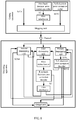
- FIG. 1 is a schematic diagram of a communications system based on a modulation and coding system according to Embodiment 1 of the present invention, where a coding apparatus may be disposed at a transmit end of information, and a decoding apparatus may be disposed at a receive end of information.
- the coding apparatus includes: a soft-decision error correction coder, a hard-decision error correction coder, an interleaver, and a mapping unit.
- a bit classification unit may also be included in the coding apparatus, and is configured to perform bit classification on to-be-processed information, and in the embodiment, to classify the information into a first component b0/b2 and a second component b1l/b3, and then respectively sends them to the soft-decision error correction coder and the hard-decision error correction coder.
- the bit classification unit may also be an independent unit that is located outside the coding apparatus, the bit classification unit is not shown in FIG. 1 . This is true in all subsequent embodiments, and bit classification performed on to-be-processed information by a bit classification unit differs from the embodiment only in the number of levels, and details are not described in the subsequent embodiments again.
- Processing on the first-level component b0/b2 of the to-be-processed information is that: the soft-decision error correction coder codes b0/b2 of the to-be-processed information, where the soft-decision error correction coder uses SD FEC coding, and may use, but is not limited to, an LDPC coder, a Turbo coder, or the like; then, the soft-decision error correction coder outputs b0/b2 that is obtained by coding to the mapping unit.
- Processing on the second-level component b1/b3 of the to-be-processed information is that: the hard-decision error correction coder codes b1/b3 of the to-be-processed information, where the hard-decision error correction coder used in the embodiment of the present invention uses HD FEC coding, and may use, but is not limited to, an RS coder, a BCH coder, or the like; then the hard-decision error correction coder outputs the coded b1/b3 to the interleaver; and the interleaver performs interleaving processing on b1/b3 to reduce bit error diffusion when decoding is performed, and outputs b1/b3 that is obtained by means of the interleaving processing to the mapping unit.
- the hard-decision error correction coder codes b1/b3 of the to-be-processed information, where the hard-decision error correction coder used in the embodiment of the present invention uses HD FEC coding, and may use, but is not limited to, an RS coder,
- the mapping unit performs modulation mapping on the received components of levels (which are grouped based on a same symbol), that is, b0/b2 and b1l/b3, and outputs information that is obtained after the modulation mapping.
- the mapping unit is a 16QAM mapping unit, and as shown in FIG. 2 , 16QAM modulation mapping may be performed in a mapping manner based on natural segmentation.
- FIG. 3 A flowchart of a coding method of the foregoing coding apparatus is shown in FIG. 3 , steps in two dashed-line boxes in FIG. 3 separately perform processing on two levels of components, which are generally executed concurrently.
- the transmit end in which the coding apparatus is located can transmit the information output by the mapping unit through, for example, a channel to the receive end, and the decoding apparatus at the receive end performs processing.
- the decoding apparatus includes: a primary demapping unit, a soft-decision error correction decoder, a first demapping unit, a deinterleaver, a hard-decision error correction decoder, and an output unit.
- Processing on the first-level component b0/b2 received by the decoding apparatus is that: the primary demapping unit performs b0/b2 demapping on the information received by the decoding apparatus to obtain soft information of b0/b2, and outputs the soft information of b0/b2 to the soft-decision error correction decoder, where in the embodiment of the present invention, soft information refers to log likelihood ratio (LLR, Log Likelihood Ratro) information; and the soft-decision error correction decoder performs decoding by using the soft information of b0/b2, and outputs the decoded soft information of b0/b2.
- LLR log likelihood ratio
- Processing on the second-level component b1/b3 received by the decoding apparatus is that: an input end of the first demapping unit has a connection relationship with an output end of the soft-decision error correction decoder; the first demapping unit performs, by using the soft information of b0/b2 that is output by the soft-decision error correction decoder as prior information (which may be used as known correct information to correct or participate in demodulation calculation), b1/b3 demapping on the information received by the foregoing decoding apparatus, and outputs hard information of b1/b3 that is obtained by means of the demapping to the deinterleaver, where the demapping performed herein actually is calculating, in an auxiliary manner, posterior probabilities of b1 and b3 by using an LLR of b0 and an LLR of b2 as prior information, so as to obtain bit information of b1/b3 by means of demodulation, and hard information involved in the embodiment of the present invention is bit information; and then the deinterleaver deinter
- a specific algorithm in the primary demapping unit may be as follows:
- LLR(b0) and LLR(b2) Soft information of b0/b2 after demapping is LLR(b0) and LLR(b2), that is, log likelihood ratios of bits b0 and b2.
- a specific algorithm in the first demapping unit is as follows:
- decoding processing ends here.
- content output by the output unit is determined by output of the soft-decision error correction decoder and output of the hard-decision error correction decoder, that is, the output of the hard-decision error correction decoder and content after performing decision on the output of the soft-decision error correction decoder.
- decision that is performed on the output of the soft-decision error correction decoder may be executed by the output unit, or may be executed by an additional existing decision unit, which is true in all the following embodiments, and details are not described again.
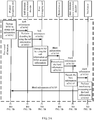
- FIG. 4 A corresponding signaling diagram of the decoding apparatus is shown in FIG. 4 .
- a preset threshold for the number of iterations is a value greater than 1, and multiple iterations need to be performed until the number of iterations reaches the preset threshold for the number of iterations.
- an interleaver may be included in the decoding apparatus in this case, and the interleaver outputs, after performing interleaving processing on the hard information of b1/b3 that is output by the hard-decision error correction decoder, the hard information of b1/b3 and that is obtained by means of the interleaving processing to the primary demapping unit, so that the primary demapping unit performs demapping of a next iteration until the number of iterations reaches a preset threshold.
- a process of a second iteration is as follows:
- the first demapping unit performs, by using the soft information of b0/b2 that is output by the soft-decision error correction decoder as prior information, b1/b3 demapping on the information received by the foregoing decoding apparatus, and outputs hard information of b1/b3 that is obtained by means of the demapping to the deinterleaver; then the deinterleaver deinterleaves the hard information of b1/b3, and outputs the deinterleaved hard information of b1/b3 to the hard-decision error correction decoder; the hard-decision error correction decoder decodes the hard information of b1l/b3, and outputs the decoded hard information of b1/b3; and the interleaver performs interleaving processing on the hard information of b1/b3 that is output by the hard-decision error correction decoder, and outputs the hard information of b1/b3 that is obtained by means of the interleaving processing to the primary demapping unit, so that the primary dem
- FIG. 5A and FIG. 5B a signaling diagram of decoding executed by the decoding apparatus is shown in FIG. 5A and FIG. 5B .
- a process of a subsequent round of iteration is the same as the second round, which is neither described herein again nor shown in FIG. 5A and FIG. 5B again.
- the output unit uses output of the hard-decision error correction decoder and content after performing decision on output of the soft-decision error correction decoder as content output by the decoding apparatus.
- Embodiment 1 may be applied to a system upgraded from QPSK to 16QAM, where only a soft-decision error correction decoder (for example, an LDPC decoder) is used in a case of QPSK modulation, and when the system is upgraded to 16QAM, the system can be compatible with the soft-decision error correction decoder that is used in the case of QPSK, with only hard-decision resources added, and therefore, throughout is doubled while complexity is not, and upgrade costs are saved.
- a soft-decision error correction decoder for example, an LDPC decoder
- each 5-bit symbol in to-be-processed information may be classified into 3 levels, where a first-level component is bits b0 and b1, which is subsequently represented by using b0/b1; a second-level component is bit b2; and a third-level component is bits b3 and b4, which is subsequently represented by using b3/b4.
- b0, b1, b2, b3, and b4 are in a low-to-high bit sequence.
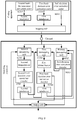
- FIG. 6 is a schematic diagram of a communications system according to Embodiment 2 of the present invention.
- a coding apparatus may be disposed at a transmit end of information
- a decoding apparatus may be disposed at a receive end of information.
- the coding apparatus includes: a soft-decision error correction coder, a first hard-decision error correction coder, a first interleaver, a second hard-decision error correction coder, a second interleaver, and a mapping unit.
- Processing on the first-level component b0/b1 of the to-be-processed information is that: the soft-decision error correction coder codes b0/b1 of the to-be-processed information, where the soft-decision error correction coder uses SD FEC coding, and may use, but is not limited to, an LDPC coder, a Turbo coder, or the like; and then, the soft-decision error correction coder outputs b0/b1 that is obtained by coding to the mapping unit.
- Processing on the second-level component b2 of the to-be-processed information is that: the first hard-decision error correction coder codes b2 of the to-be-processed information, where the first hard-decision error correction coder and the second hard-decision error correction coder that are used in the embodiment of the present invention use HD FEC coding, and may use, but is not limited to, an RS coder, a BCH coder, or the like; then the first hard-decision error correction coder outputs the coded b2 to the first interleaver, and the interleaver performs interleaving processing on b2 to reduce bit error diffusion when decoding is performed, and outputs b2 that is obtained by means of the interleaving processing to the mapping unit.
- the first hard-decision error correction coder codes b2 of the to-be-processed information where the first hard-decision error correction coder and the second hard-decision error correction coder that are used in the embodiment of the present invention use HD FEC
- Processing on the third-level component b3/b4 of the to-be-processed information is that: the second hard-decision error correction coder codes b3/b4 of the to-be-processed information, then the second hard-decision error correction coder outputs the coded b3/b4 to the second interleaver, and the second interleaver performs interleaving processing on b3/b4 to reduce bit error diffusion when decoding is performed, and outputs b3/b4 that that is obtained by means of the interleaving processing to the mapping unit.
- the mapping unit performs modulation mapping on the received components of levels (which are grouped based on a same symbol), that is, b0/b1, b2, and b3/b4, and outputs information that is obtained after the modulation mapping.
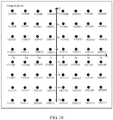
- the mapping unit is a 32QAM mapping unit; and 32QAM modulation mapping may be performed in a mapping manner based on natural segmentation, and a mapping diagram in this case may be that shown in FIG. 7 .
- the transmit end in which the coding apparatus is located can transmit the information output by the mapping unit through, for example, a channel to the receive end, and the decoding apparatus at the receive end performs processing.
- the decoding apparatus includes: a primary demapping unit, a soft-decision error correction decoder, a first demapping unit, a first deinterleaver, a first hard-decision error correction decoder, a first interleaver, a second demapping unit, a second deinterleaver, a second hard-decision error correction decoder, and an output unit.
- Processing on the first-level component b0/b1 received by the decoding apparatus is that: the primary demapping unit performs b0/b1 demapping on the information received by the decoding apparatus to obtain soft information of b0/b1, and outputs the soft information of b0/b1 to the soft-decision error correction decoder, where in the embodiment of the present invention, soft information refers to LLR information; and the soft-decision error correction decoder performs decoding by using the soft information of b0/b1, and outputs the decoded soft information of b0/b1.
- Processing on the second-level component b2 received by the decoding apparatus is that: an input end of the first demapping unit has a connection relationship with an output end of the soft-decision error correction decoder; the first demapping unit performs, by using the soft information of b0/b1 that is output by the soft-decision error correction decoder as prior information, b2 demapping on the information received by the foregoing decoding apparatus, and outputs hard information of b2 that is obtained by means of the demapping to the first deinterleaver, where the demapping performed herein actually is calculating, in an auxiliary manner, a posterior probability of b2 by using an LLR of b0 and an LLR of b1 as prior information, so as to obtain bit information of b2 by means of demodulation, and hard information involved in the embodiment of the present invention is bit information; then the deinterleaver deinterleaves the hard information of b2, and outputs the deinterleaved hard information of b2 to the first hard
- Processing on the third-level component b3/b4 received by the decoding apparatus is that: input of the first demapping unit has a connection relationship with both output of the soft-decision error correction decoder and output of the first interleaver; the second demapping unit performs, by using the hard information of b2 that is output by the first interleaver and the soft information of b0/b1 that is output by the soft-decision error correction decoder as prior information, b3/b4 demapping on the information received by the foregoing decoding apparatus, and outputs hard information of b3/b4 that is obtained by means of demapping to the second deinterleaver; and then the deinterleaver deinterleaves the hard information of b3/b4, and outputs the deinterleaved hard information of b3/b4 to the second hard-decision error correction decoder; and the second hard-decision error correction decoder decodes the hard information of b3/b4, and outputs the decoded hard information of b3/
- Content output by the output unit is output of the first hard-decision error correction decoder, output of the second hard-decision error correction decoder, and content after performing decision on output of the soft-decision error correction decoder.
- a preset threshold for the number of iterations is a value greater than 1, and multiple iterations need to be performed until the number of iterations reaches the preset threshold for the number of iterations.
- a second interleaver may also be included in the decoding apparatus, and the second interleaver outputs, after performing interleaving processing on the hard information of b3/b4 that is output by the second hard-decision error correction decoder, the hard information of b3/b4 that is obtained by means of the interleaving processing to the primary demapping unit and the first demapping unit, so that the primary demapping unit and the first demapping unit perform demapping of a next iteration until the number of iterations reaches a preset threshold.
- the first interleaver further outputs the hard information of b2 that is obtained by means of the interleaving processing to the primary demapping unit, so that the primary demapping unit performs demapping of a next iteration until the number of iterations reaches the preset threshold.
- a process of a second iteration is as follows:
- the first demapping unit performs, by using the hard information of b3/b4 that is output by the second interleaver in the previous round and soft information of b0/b1 that is output by the soft-decision error correction decoder in a current round as prior information, b2 demapping of the current round on the information received by the foregoing decoding apparatus, and outputs hard information of b2 that is obtained by means of the demapping to the first deinterleaver; then the first deinterleaver deinterleaves the hard information of b2, and outputs the deinterleaved hard information of b2 to the first hard-decision error correction decoder; and the first hard-decision error correction decoder decodes the hard information of b2, and outputs the decoded hard information of b2; and the first interleaver performs interleaving on the hard information of b2 that is output by the first hard-decision error correction decoder, and outputs the hard information of b2 that is obtained by means
- the second demapping unit performs, by using the hard information of b2 that is output by the first interleaver and the soft information of b0/b1 that is output by the soft-decision error correction decoder as prior information, b3/b4 demapping on the information received by the foregoing decoding apparatus, and outputs hard information of b3/b4 that is obtained by means of the demapping to the second deinterleaver; then the second deinterleaver deinterleaves the hard information of b3/b4, and outputs the deinterleaved hard information of b3/b4 to the second hard-decision error correction decoder; the second hard-decision error correction decoder decodes the hard information of b3/b4, and outputs the decoded hard information of b3/b4; and the second interleaver performs interleaving processing on the hard information of b3/b4 that is output by the second hard-decision error correction decoder, and outputs the hard information of b3/b4 that is obtained
- each demapping unit has two inputs (that is, information fed back after another two levels of components are decoded) that are used as prior information.
- decoding processing ends.
- Output of the first hard-decision error correction decoder, output of the second hard-decision error correction decoder, and content after performing decision on output of the soft-decision error correction decoder are used as content output by the output unit.
- each 5-bit symbol in to-be-processed information is still classified into 3 levels, where a first-level component is bits b0 and b1, which is subsequently represented by using b0/b1; a second-level component is bit b2; and a third-level component is bits b3 and b4, which is subsequently represented by using b3/b4.
- b0, b1, b2, b3, and b4 are in a low-to-high bit sequence.
- Embodiment 3 uses different implementation manners to perform coding and decoding on the third-level component.
- FIG. 8 is a schematic diagram of a communications system according to Embodiment 3 of the present invention.
- a coding apparatus includes: a soft-decision error correction coder, a first hard-decision error correction coder, a first interleaver, and a mapping unit.
- processing in the soft-decision error correction coder, the first hard-decision error correction coder, the first interleaver, and the mapping unit is the same as that described in Embodiment 2, that is, processing on the first-level component b0/b1 and the second-level component b2 of the to-be-processed information is the same as that described in Embodiment 2, which is not described herein again.
- processing on the third-level component b3/b4 of the to-be-processed information is that: the third-level component b3/b4 of the to-be-processed information is directly input into the mapping unit, that is, b3/b4 is not coded.
- the decoding apparatus includes: a primary demapping unit, a soft-decision error correction decoder, a first demapping unit, a first deinterleaver, a first hard-decision error correction decoder, a first interleaver, a second demapping unit, and an output unit.
- processing in the primary demapping unit, the soft-decision error correction decoder, the first demapping unit, the first deinterleaver, the first hard-decision error correction decoder, the first interleaver, and the second demapping unit is the same as that described in Embodiment 2, that is, processing on the first-level component b0/b1 and the second-level component b2 that are received by the decoding apparatus is the same as that described in Embodiment 2.
- Processing on the third-level component b3/b4 received by the decoding apparatus is that: the second demapping unit performs, by using the hard information of b2 that is output by the first interleaver and the soft information of b0/b1 that is output by the soft-decision error correction decoder as prior information, b3/b4 demapping on the information received by the foregoing decoding apparatus, and outputs hard information of b3/b4 that is obtained by means of the demapping.
- content output by the output unit is output of the first hard-decision error correction decoder, output of the second demapping unit, and content after performing decision on output of the soft-decision error correction decoder.
- Embodiment 3 differs from Embodiment 2 in that: the second demapping unit outputs the hard information of b3/b4 that is obtained by means of the demapping to the primary demapping unit and the first demapping unit, so that the primary demapping unit and the first demapping unit perform demapping of a next iteration until the number of iterations reaches a preset threshold.
- the primary demapping unit performs, by using hard information of b2 that is output by the first interleaver in a previous round and hard information of b3/b4 that is output by the second demapping unit in the previous round, b0/b1 demapping of a current iteration on the information received by the decoding apparatus to obtain soft information of b0/b1; and the first demapping unit performs, by using the hard information of b3/b4 that is output by the second demapping unit in the previous round and soft information of b0/b1 that is output by the soft-decision error correction decoder in a current round as prior information, b2 demapping of the current round on the information received by the foregoing decoding apparatus.
- Other processing is the same as the processing process in the first round, which is not described again.
- each 6-bit symbol in to-be-processed information may also be classified into three levels.
- a schematic diagram of a communications system in the embodiment is shown in FIG. 9 , where structures of a coding apparatus and a decoding apparatus in the system are similar to those in Embodiment 2, and a manner of processing each level of component is also similar to that in Embodiment 2.
- Embodiment 4 if a modulation mapping manner based on natural segmentation mapping shown in FIG.
- a first-level component is bits b0 and b3, which is represented in the figure by using b0/b3;
- a second-level component is bits b1 and b4, which is represented in the figure by using b1/b4;
- a third-level component is bits b2 and b5, which is represented in the figure by using b2/b5.
- b0, b1, b2, b3, b4, and b5 are in a low-to-high bit sequence. That is, the first-level component is less significant bits having a higher bit error rate relative to the second-level component, and the second-level component is less significant bits having a higher bit error rate relative to the third-level component.
- each 6-bit symbol in to-be-processed information may also be classified into three levels.
- a schematic diagram of a communications system in the embodiment is shown in FIG. 11 , where structures of a coding apparatus and a decoding apparatus in the system are similar to those in Embodiment 3, and a manner of processing each level of component is also similar to that in Embodiment 3.
- Embodiment 5 if a modulation mapping manner based on natural segmentation shown in FIG.
- a first-level component is bits b0 and b3, which is represented in the figure by using b0/b3;
- a second-level component is bits b1 and b4, which is represented in the figure by using b1/b4;
- a third-level component is bits b2 and b5, which is represented in the figure by using b2/b5.
- b0, b1, b2, b3, b4, and b5 are in a low-to-high bit sequence. That is, the first-level component is less significant bits having a higher bit error rate relative to the second-level component, and the second-level component is less significant bits having a higher bit error rate relative to the third-level component.
- the present invention may further include a processing manner for four levels, five levels, or even more levels.
- each symbol includes eight bits, and may be classified into four levels of components, where a first-level component is b0 and b4, a second-level component is b1 and b5, a third-level component is b2 and b6, and a fourth-level component is b3 and b7.
- low-level components are coded and decoded by using SD FEC
- high-level components are coded and decoded by using HD FEC
- coding is not performed but decoding is performed in a multi-level decoding manner combining SD FEC and HD FEC.
- the method used is similar to that in the foregoing embodiments, where more levels are processed based on the foregoing embodiments in the same implementation manner, and details are not described herein again.
- the units described as separate parts may or may not be physically separate, and parts displayed as units may or may not be physical units, and may be located in one position, or may be distributed on a plurality of network units. Some or all of the units may be selected according to actual needs to achieve the objectives of the solutions of the embodiments.
- functional units in the embodiments of the present invention may be integrated into one processing unit, or each of the units may exist alone physically, or two or more units are integrated into one unit.
- the integrated unit may be implemented in a form of hardware, or may be implemented in a form of hardware in addition to a software functional unit.
- the integrated unit may be stored in a computer-readable storage medium.
- the software functional unit is stored in a storage medium and includes several instructions for instructing a computer device (which may be a personal computer, a server, or a network device) or a processor (processor) to perform a part of the steps of the methods described in the embodiments of the present invention.
- the foregoing storage medium includes: any medium that can store program code, such as a USB flash drive, a removable hard disk, a read-only memory (Read-Only Memory, ROM), a random access memory (Random Access Memory, RAM), a magnetic disk, or an optical disc.
Landscapes
- Engineering & Computer Science (AREA)
- Computer Networks & Wireless Communication (AREA)
- Signal Processing (AREA)
- Physics & Mathematics (AREA)
- Probability & Statistics with Applications (AREA)
- Theoretical Computer Science (AREA)
- Error Detection And Correction (AREA)
- Detection And Prevention Of Errors In Transmission (AREA)
Claims (15)
- Decodierungsvorrichtung zum Decodieren von mehrschichtig codierten Informationen, umfassend verschiedene Informationsbits, geschützt unter Verwendung von Komponentencodes mit verschiedenen Bitraten, wobei die Decodierungsvorrichtung umfasst: eine primäre Abbildungsaufliebungseinheit, einen Weichentscheidung-Fehlerkorrektur-Decodierer, eine erste Abbildungsaufliebungseinheit, einen ersten Entschachteler, einen ersten Hartentscheidung-Fehlerkorrektur-Decodierer und eine Ausgabeeinheit;
wobei die primäre Abbildungsaufhebungseinheit konfiguriert ist, die Abbildung der von der Decodierungsvorrichtung empfangenen Informationen aufzuheben und erhaltene weiche Informationen einer Komponente der ersten Schicht zu dem Weichentscheidung-Fehlerkorrektur-Decodierer auszugeben;
wobei der Weichentscheidung-Fehlerkorrektur-Decodierer konfiguriert ist, Decodieren gemäß den empfangenen weichen Informationen der Komponente der ersten Schicht durchzuführen und die decodierten weichen Informationen der Komponente der ersten Schicht auszugeben;
wobei die erste Abbildungsaufhebungseinheit konfiguriert ist, die Abbildung der von der Decodierungsvorrichtung empfangenen Informationen unter Verwendung der weichen Informationen der Komponente der ersten Schicht, die von dem Weichentscheidung-Fehlerkorrektur-Decodierer als Vorinformationen ausgegeben werden, aufzuheben und harte Informationen einer Komponente der zweiten Schicht an den ersten Entschachteler auszugeben;
wobei der erste Entschachteler konfiguriert ist, die empfangenen harten Informationen der Komponente der zweiten Schicht zu entschachteln und die entschachtelten harten Informationen der Komponente der zweiten Schicht an den ersten Hartentscheidung-Fehlerkorrektur-Decodierer auszugeben;
wobei der erste Hartentscheidung-Fehlerkorrektur-Decodierer konfiguriert ist, die entschachtelten harten Informationen der Komponente der zweiten Schicht zu decodieren und die decodierten harten Informationen der Komponente der zweiten Schicht auszugeben; und
wobei die Ausgabeeinheit konfiguriert ist, die harten Informationen der Komponente der ersten Schicht, die nach Durchführung der Entscheidung über die Ausgabe des Weichentscheidung-Fehlerkorrektur-Decodierers erhalten werden, auszugeben und die harten Informationen der Komponente der zweiten Schicht, die von dem ersten Hartentscheidung-Fehlerkorrektur-Decodierer ausgegeben werden, auszugeben; wobei
die Komponente der ersten Schicht ein niederwertigeres Bit mit einer höheren Bitfehlerrate relativ zu der Komponente der zweiten Schicht ist. - Decodierungsvorrichtung nach Anspruch 1, wobei, wenn die von der Decodierungsvorrichtung verwendete Anzahl der Decodierungsiterationen größer als 1 ist, die Decodierungsvorrichtung ferner einen ersten Verschachteler umfasst; wobei der erste Verschachteler konfiguriert ist, Verschachtelungsverarbeitung der harten Informationen der Komponente der zweiten Schicht, die von dem ersten Hartentscheidung-Fehlerkorrektur-Decodierer ausgegeben werden, durchzuführen und die harten Informationen der Komponente der zweiten Schicht, die mittels der Verschachtelungsverarbeitung erhalten werden, an die primäre Abbildungsaufhebungseinheit auszugeben, so dass die primäre Abbildungsaufhebungseinheit Aufheben der Abbildung einer nächsten Iteration durchführt, bis die Anzahl der Iterationen einen im Voraus eingestellten Schwellenwert erreicht; und
wobei die primäre Abbildungsaufhebungseinheit ferner konfiguriert ist, unter Verwendung von harten Informationen der Komponente der zweiten Schicht, die von dem ersten Verschachteler in einer vorherigen Iteration als Vorinformationen ausgegeben werden, Aufheben der Abbildung einer gegenwärtigen Iteration an der Komponente der ersten Schicht der von der Decodierungsvorrichtung empfangenen Informationen durchzuführen. - Decodierungsvorrichtung nach Anspruch 1, wobei die Decodierungsvorrichtung ferner umfasst: einen ersten Verschachteler, eine zweite Abbildungsaufliebungseinheit, einen zweiten Entschachteler und einen zweiten Hartentscheidung-Fehlerkorrektur-Decodierer;
wobei der erste Verschachteler konfiguriert ist, Verschachtelungsverarbeitung an den harten Informationen der Komponente der zweiten Schicht, die von dem ersten Hartentscheidung-Fehlerkorrektur-Decodierer ausgegeben werden, durchzuführen und die harten Informationen der Komponente der zweiten Schicht, die mittels der Verschachtelungsverarbeitung erhalten werden, an die zweite Abbildungsaufhebungseinheit auszugeben;
wobei die zweite Abbildungsaufhebungseinheit konfiguriert ist, unter Verwendung der weichen Informationen der Komponente der ersten Schicht, die von dem Weichentscheidung-Fehlerkorrektur-Decodierer ausgegeben werden, und der harten Informationen der Komponente der zweiten Schicht, die von dem ersten Verschachteler als Vorinformationen ausgegeben werden, die Abbildung der von der Decodierungsvorrichtung empfangenen Informationen aufzuheben und harte Informationen einer Komponente der dritten Schicht, die mittels des Aufhebens der Abbildung erhalten werden, auszugeben;
wobei der zweite Entschachteler konfiguriert ist, die harten Informationen der Komponente der dritten Schicht, die von der zweiten Abbildungsaufhebungseinheit ausgegeben werden, zu entschachteln und die entschachtelten harten Informationen der Komponente der dritten Schicht an den zweiten Hartentscheidung-Fehlerkorrektur-Decodierer auszugeben;
wobei der zweite Hartentscheidung-Fehlerkorrektur-Decodierer konfiguriert ist, die entschachtelten harten Informationen der Komponente der dritten Schicht zu decodieren und die decodierten harten Informationen der Komponente der dritten Schicht auszugeben; und
wobei die Ausgabeeinheit ferner konfiguriert ist, die harten Informationen der Komponente der dritten Schicht, die von dem zweiten Hartentscheidung-Fehlerkorrektur-Decodierer ausgegeben werden, auszugeben; wobei die Komponente der zweiten Schicht ein niederwertigeres Bit mit einer höheren Bitfehlerrate relativ zu der Komponente der dritten Schicht ist. - Decodierungsvorrichtung nach Anspruch 3, wobei, wenn die von der Decodierungsvorrichtung verwendete Anzahl der Decodierungsiterationen größer als 1 ist, die Decodierungsvorrichtung ferner umfasst: einen zweiten Verschachteler; wobei der zweite Verschachteler konfiguriert ist, Verschachtelungsverarbeitung der harten Informationen der Komponente der dritten Schicht, die von dem zweiten Hartentscheidung-Fehlerkorrektur-Decodierer ausgegeben werden, durchzuführen und die harten Informationen der Komponente der dritten Schicht, die mittels der Verschachtelungsverarbeitung erhalten werden, an die primäre Abbildungsaufhebungseinheit und die erste Abbildungsaufhebungseinheit auszugeben, so dass die primäre Abbildungsaufhebungseinheit und die erste Abbildungsaufhebungseinheit Aufheben der Abbildung einer nächsten Iteration durchführen, bis die Anzahl der Iterationen einen im Voraus eingestellten Schwellenwert erreicht;
wobei der erste Verschachteler ferner konfiguriert ist, die harten Informationen der Komponente der zweiten Schicht, die mittels der Verschachtelungsverarbeitung erhalten werden, an die primäre Abbildungsaufhebungseinheit auszugeben, so dass die primäre Abbildungsaufhebungseinheit Aufheben der Abbildung einer nächsten Iteration durchführt, bis die Anzahl der Iterationen den im Voraus eingestellten Schwellenwert erreicht;
wobei die primäre Abbildungsaufhebungseinheit unter Verwendung der harten Informationen der Komponente der zweiten Schicht, die von dem ersten Verschachteler in einer vorherigen Iteration ausgegeben werden, und der harten Informationen der Komponente der dritten Schicht, die von dem zweiten Verschachteler in der vorherigen Iteration als Vorinformationen ausgegeben werden, Aufheben der Abbildung einer gegenwärtigen Iteration an der Komponente der ersten Schicht der von der Decodierungsvorrichtung empfangenen Informationen durchführt; und
wobei die erste Abbildungsaufhebungseinheit unter Verwendung der harten Informationen der Komponente der dritten Schicht, die von dem zweiten Verschachteler in der vorherigen Iteration ausgegeben werden, und der weichen Informationen der Komponente der ersten Schicht, die von dem Weichentscheidung-Fehlerkorrektur-Decodierer in einer gegenwärtigen Iteration als Vorinformationen ausgegeben werden, Aufheben der Abbildung der gegenwärtigen Iteration an der Komponente der zweiten Schicht der von der Decodierungsvorrichtung empfangenen Informationen durchführt. - Decodierungsvorrichtung nach Anspruch 1, wobei die Decodierungsvorrichtung ferner umfasst: einen ersten Verschachteler und eine zweite Abbildungsaufhebungseinheit;
wobei der erste Verschachteler konfiguriert ist, Verschachtelungsverarbeitung an den harten Informationen der Komponente der zweiten Schicht, die von dem ersten Hartentscheidung-Fehlerkorrektur-Decodierer ausgegeben werden, durchzuführen und die harten Informationen der Komponente der zweiten Schicht, die mittels der Verschachtelungsverarbeitung erhalten werden, an die zweite Abbildungsaufhebungseinheit auszugeben;
wobei die zweite Abbildungsaufhebungseinheit konfiguriert ist, unter Verwendung der weichen Informationen der Komponente der ersten Schicht, die von dem Weichentscheidung-Fehlerkorrektur-Decodierer ausgegeben werden, und der harten Informationen der Komponente der zweiten Schicht, die von dem ersten Verschachteler als Vorinformationen ausgegeben werden, die Abbildung der von der Decodierungsvorrichtung empfangenen Informationen aufzuheben und harte Informationen der Komponente der dritten Schicht, die mittels des Aufhebens der Abbildung erhalten werden, auszugeben; und
wobei die Ausgabeeinheit ferner konfiguriert ist, die harten Informationen der Komponente der dritten Schicht, die von der zweiten Abbildungsaufhebungseinheit ausgegeben werden, auszugeben;
wobei die Komponente der zweiten Schicht ein niederwertigeres Bit mit einer höheren Bitfehlerrate relativ zu der Komponente der dritten Schicht ist. - Decodierungsvorrichtung nach Anspruch 5, wobei, wenn die Anzahl der von der Decodierungsvorrichtung verwendeten Iterationen größer als 1 ist,
der erste Verschachteler ferner konfiguriert ist, die harten Informationen der Komponente der zweiten Schicht, die mittels der Verschachtelungsverarbeitung erhalten werden, an die primäre Abbildungsaufhebungseinheit auszugeben, so dass die primäre Abbildungsaufhebungseinheit Aufheben der Abbildung einer nächsten Iteration durchführt, bis die Anzahl der Iterationen einen im Voraus eingestellten Schwellenwert erreicht; und
die zweite Abbildungsaufhebungseinheit ferner konfiguriert ist, die harten Informationen der Komponente der dritten Schicht, die mittels des Aufhebens der Abbildung erhalten werden, an die primäre Abbildungsaufhebungseinheit und die erste Abbildungsaufhebungseinheit auszugeben, so dass die primäre Abbildungsaufhebungseinheit und die erste Abbildungsaufhebungseinheit Aufheben der Abbildung einer nächsten Iteration durchführen, bis die Anzahl der Iterationen den im Voraus eingestellten Schwellenwert erreicht;
die primäre Abbildungsaufhebungseinheit unter Verwendung der harten Informationen der Komponente der zweiten Schicht, die von dem ersten Verschachteler in einer vorherigen Iteration ausgegeben werden, und der harten Informationen der Komponente der dritten Schicht, die von der zweiten Abbildungsaufhebungseinheit in der vorherigen Iteration als Vorinformationen ausgegeben werden, Aufheben der Abbildung einer gegenwärtigen Iteration der Komponente der ersten Schicht der von der Decodierungsvorrichtung empfangenen Informationen durchführt; und
die erste Abbildungsaufhebungseinheit unter Verwendung der harten Informationen der Komponente der dritten Schicht, die von der zweiten Abbildungsaufhebungseinheit in der vorherigen Iteration ausgegeben werden, und der weichen Informationen der Komponente der ersten Schicht, die von dem Weichentscheidung-Fehlerkorrektur-Decodierer in einer gegenwärtigen Iteration als Vorinformationen ausgegeben werden, Aufheben der Abbildung der gegenwärtigen Iteration an der Komponente der zweiten Schicht der von der Decodierungsvorrichtung empfangenen Informationen durchführt. - Kommunikationssystem, wobei das Kommunikationssystem eine Codierungsvorrichtung und die Decodierungsvorrichtung nach einem der Ansprüche 1 bis 6 umfasst.
- Kommunikationssystem nach Anspruch 7, wobei die Codierungsvorrichtung umfasst: einen Weichentscheidung-Fehlerkorrektur-Codierer, einen ersten Hartentscheidung-Fehlerkorrektur-Codierer, einen ersten Verschachteler und eine Abbildungseinheit;
wobei der Weichentscheidung-Fehlerkorrektur-Codierer konfiguriert ist, eine Komponente der ersten Schicht der zu verarbeitenden Informationen zu codieren und die codierte Komponente der ersten Schicht der zu verarbeitenden Informationen an die Abbildungseinheit auszugeben;
wobei der Hartentscheidung-Fehlerkorrektur-Codierer konfiguriert ist, eine Komponente der zweiten Schicht der zu verarbeitenden Informationen zu codieren und die codierte Komponente der zweiten Schicht der zu verarbeitenden Informationen an den ersten Verschachteler auszugeben;
wobei der erste Verschachteler konfiguriert ist, Verschachtelungsverarbeitung an der empfangenen Komponente der zweiten Schicht durchzuführen und die Komponente der zweiten Schicht, die mittels der Verschachtelungsverarbeitung erhalten wird, an die Abbildungseinheit auszugeben; und
wobei die Abbildungseinheit konfiguriert ist, Modulationsabbildung an empfangenen Komponenten von Schichten durchzuführen und Informationen, die nach der Modulationsabbildung erhalten werden, auszugeben. - Kommunikationssystem nach Anspruch 8, wobei, wenn die Decodierungsvorrichtung nach Anspruch 3 oder 4 verwendet wird, die Codierungsvorrichtung ferner umfasst:einen zweiten Hartentscheidung-Fehlerkorrektur-Codierer und einen zweiten Verschachteler;wobei der zweite Hartentscheidung-Fehlerkorrektur-Codierer konfiguriert ist, eine Komponente der dritten Schicht der zu verarbeitenden Informationen zu codieren und die codierte Komponente der dritten Schicht der zu verarbeitenden Informationen an den zweiten Verschachteler auszugeben; undwobei der zweite Verschachteler konfiguriert ist, Verschachtelungsverarbeitung an der empfangenen Komponente der dritten Schicht durchzuführen und die Komponente der dritten Schicht, die mittels der Verschachtelungsverarbeitung erhalten wird, an die Abbildungseinheit auszugeben.
- Kommunikationssystem nach Anspruch 8, wobei ein Objekt, an dem die Abbildungseinheit die Modulationsabbildung durchführt, eine Komponente der dritten Schicht der zu verarbeitenden Informationen umfasst.
- Decodierungsverfahren zum Decodieren mehrschichtig codierter Informationen, umfassend verschiedene Informationsbits, geschützt unter Verwendung von Komponentencodes mit verschiedenen Bitraten, wobei das Decodierungsverfahren umfasst:S1: Aufheben der Abbildung von empfangenen Informationen, um weiche Informationen einer Komponente der ersten Schicht zu erhalten;S2: Durchführen von Decodieren gemäß den empfangenen weichen Informationen der Komponente der ersten Schicht undAusgeben der decodierten Informationen der Komponente der ersten Schicht;S3: Aufheben der Abbildung der empfangenen Informationen unter Verwendung der decodierten weichen Informationen der Komponente der ersten Schicht, um harte Informationen einer Komponente der zweiten Schicht zu erhalten;S4: Entschachteln und dann Decodieren der harten Informationen der Komponente der zweiten Schicht, um die decodierten harten Informationen der Komponente der zweiten Schicht zu erhalten; undS5: Ausgeben von harten Informationen der Komponente der ersten Schicht, die nach Durchführen von Entscheidung an den decodierten weichen Informationen der Komponente der ersten Schicht erhalten werden, und Ausgeben der decodierten harten Informationen der Komponente der zweiten Schicht; wobei die Komponente der ersten Schicht ein niederwertigeres Bit mit einer höheren Bitfehlerrate relativ zu der Komponente der zweiten Schicht ist.
- Decodierungsverfahren nach Anspruch 11, wobei, wenn die Anzahl von in dem Decodierungsverfahren verwendeten Decodierungsiterationen größer als 1 ist, das Verfahren nach Schritt S4 und vor Schritt S5 ferner umfasst:S6: nach Durchführen von Verschachtelungsverarbeitung an den decodierten harten Informationen der Komponente der zweiten Schicht Gehen zu Schritt S1, um eine nächste Iteration zu starten, bis die Anzahl der Iterationen einen im Voraus eingestellten Schwellenwert erreicht; wobeiwährend jeder Iteration beginnend von einer zweiten Iteration der Schritt S1 durch Durchführen von Aufheben der Abbildung einer gegenwärtigen Iteration an den empfangenen Informationen unter Verwendung harter Informationen der Komponente der zweiten Schicht, die mittels der Verschachtelungsverarbeitung in einer vorherigen Iteration als Vorinformationen erhalten werden, ausgeführt wird.
- Decodierungsverfahren nach Anspruch 11, wobei das Verfahren nach Schritt S4 und vor Schritt S5 ferner umfasst:S7: Durchführen von Verschachtelungsverarbeitung an den decodierten harten Informationen der Komponente der zweiten Schicht;S8: Aufheben der Abbildung der empfangenen Informationen unter Verwendung der decodierten weichen Informationen der Komponente der ersten Schicht und der harten Informationen der Komponente der zweiten Schicht, die nach der Verschachtelungsverarbeitung in Schritt S7 als Vorinformationen erhalten werden, um harte Informationen einer Komponente der dritten Schicht zu erhalten; undS9: Entschachteln und dann Decodieren, durch einen zweiten Entschachteler, der harten Informationen der Komponente der dritten Schicht, die von der zweiten Abbildungsaufhebungseinheit ausgegeben werden, um die decodierten harten Informationen der Komponente der dritten Schicht zu erhalten, wobei:die decodierten harten Informationen der Komponente der dritten Schicht ferner in Schritt S5 ausgegeben werden; unddie Komponente der zweiten Schicht ein niederwertigeres Bit mit einer höheren Bitfehlerrate relativ zu der Komponente der dritten Schicht ist.
- Decodierungsverfahren nach Anspruch 11, wobei das Verfahren nach Schritt S4 und vor Schritt S5 ferner umfasst:S11: Durchführen von Verschachtelungsverarbeitung an den decodierten harten Informationen der Komponente der zweiten Schicht; undS 12: Aufheben der Abbildung der empfangenen Informationen unter Verwendung der decodierten weichen Informationen der Komponente der ersten Schicht und der harten Informationen der Komponente der zweiten Schicht, die nach der Verschachtelungsverarbeitung in Schritt S11 als Vorinformationen erhalten werden, um harte Informationen einer Komponente der dritten Schicht zu erhalten; wobei die decodierten harten Informationen der Komponente der dritten Schicht ferner in Schritt S5 ausgegeben werden; undwobei die Komponente der zweiten Schicht ein niederwertigeres Bit mit einer höheren Bitfehlerrate relativ zu der Komponente der dritten Schicht ist.
- Decodierungsverfahren nach Anspruch 14, wobei, wenn die Anzahl von in dem Decodierungsverfahren verwendeten Decodierungsiterationen größer als 1 ist, das Verfahren nach Schritt S 12 und vor Schritt S5 ferner umfasst:Gehen zu Schritt S1, um eine nächste Iteration zu starten, bis die Anzahl der Iterationen einen im Voraus eingestellten Schwellenwert erreicht; wobei während jeder Iteration beginnend von einer zweiten Iteration Schritt S1 durch Durchführen von Aufheben der Abbildung einer gegenwärtigen Iteration an den empfangenen Informationen unter Verwendung harter Informationen der Komponente der zweiten Schicht, die mittels Verschachtelungsverarbeitung in einer vorherigen Iteration erhalten werden, und harter Informationen der Komponente der dritten Schicht, die in Schritt S12 in der vorherigen Iteration als Vorinformationen erhalten werden, ausgeführt wird; undSchritt S3 durch Durchführen von Aufheben der Abbildung der gegenwärtigen Iteration an den empfangenen Informationen unter Verwendung von harten Informationen der Komponente der dritten Schicht, die in Schritt S12 einer vorherigen Iteration erhalten werden, und decodierter weicher Informationen der Komponente der ersten Schicht, die in einer gegenwärtigen Iteration als Vorinformationen erhalten werden, ausgeführt wird.
Applications Claiming Priority (1)
| Application Number | Priority Date | Filing Date | Title |
|---|---|---|---|
| PCT/CN2013/073699 WO2014161171A1 (zh) | 2013-04-03 | 2013-04-03 | 一种译码方法、译码装置和通信系统 |
Publications (3)
| Publication Number | Publication Date |
|---|---|
| EP2963830A1 EP2963830A1 (de) | 2016-01-06 |
| EP2963830A4 EP2963830A4 (de) | 2016-02-24 |
| EP2963830B1 true EP2963830B1 (de) | 2017-06-14 |
Family
ID=49866746
Family Applications (1)
| Application Number | Title | Priority Date | Filing Date |
|---|---|---|---|
| EP13881405.8A Active EP2963830B1 (de) | 2013-04-03 | 2013-04-03 | Decodierungsverfahren, decodierungsvorrichtung und kommunikationssystem |
Country Status (5)
| Country | Link |
|---|---|
| US (1) | US9941904B2 (de) |
| EP (1) | EP2963830B1 (de) |
| CN (1) | CN103503319B (de) |
| ES (1) | ES2633186T3 (de) |
| WO (1) | WO2014161171A1 (de) |
Families Citing this family (21)
| Publication number | Priority date | Publication date | Assignee | Title |
|---|---|---|---|---|
| CN105191305A (zh) * | 2014-04-01 | 2015-12-23 | 华为技术有限公司 | 一种自适应调制编码的方法、装置及系统 |
| EP3171520A4 (de) * | 2014-07-31 | 2017-08-02 | Huawei Technologies Co. Ltd. | Decodierungsverfahren und decodierer |
| CN113225091B (zh) * | 2015-07-08 | 2025-08-19 | 北京忆芯科技有限公司 | Ldpc解码方法及其装置 |
| CN109417435B (zh) | 2016-07-29 | 2020-08-14 | 华为技术有限公司 | 编码设备和方法以及相应的解码设备和方法 |
| CN106254031A (zh) * | 2016-08-01 | 2016-12-21 | 北京邮电大学 | 一种编译码方法和装置 |
| CN107565982B (zh) * | 2017-09-20 | 2020-11-17 | 上海东软载波微电子有限公司 | Turbo迭代译码的输出控制方法、装置及译码设备 |
| CN107682122B (zh) * | 2017-10-20 | 2020-09-04 | 中国人民解放军海军航空大学 | 一种无线光通信多级编码调制系统的迭代解调译码方法 |
| US10511326B2 (en) * | 2017-11-14 | 2019-12-17 | Nyquist Semiconductor Limited | Systems and methods for decoding error correcting codes |
| CN113396547B (zh) * | 2019-08-01 | 2022-08-26 | 华为技术有限公司 | 支持前向纠错比特和功率加载的装置及方法 |
| CN110572243B (zh) * | 2019-09-17 | 2021-05-14 | 天地信息网络研究院(安徽)有限公司 | 一种级联系统及其信息传输方法、解调译码方法及其装置 |
| CN113131947B (zh) * | 2019-12-30 | 2023-11-10 | 华为技术有限公司 | 译码方法、译码器和译码装置 |
| CN110996309A (zh) * | 2019-12-31 | 2020-04-10 | 大唐半导体科技有限公司 | 一种蓝牙5.0协议的分段译码方法 |
| US11876622B2 (en) * | 2020-03-20 | 2024-01-16 | Intel Corporation | LDPC encoder and decoder for multi-mode higher speed passive optical networks |
| CN111669186A (zh) * | 2020-05-30 | 2020-09-15 | 上海师范大学 | 利用Turbo方法实现卷积+交织+RS的译码方法、系统及介质 |
| CN113949453B (zh) * | 2020-07-15 | 2023-04-11 | 华为技术有限公司 | 调制编码、解调译码的方法、装置、设备及通信系统 |
| CN115622661B (zh) * | 2021-07-14 | 2024-12-10 | 大唐移动通信设备有限公司 | 一种信号传输方法及装置 |
| CN113612484B (zh) * | 2021-07-27 | 2024-12-03 | 深圳市德明利技术股份有限公司 | 一种硬判决和软判决相结合的高效ldpc纠错算法的实现方法 |
| US11621726B1 (en) * | 2021-09-10 | 2023-04-04 | Huawei Technologies Co., Ltd. | Multidimensional multilevel coding encoder and decoder |
| CN115225202B (zh) * | 2022-03-01 | 2023-10-13 | 南京大学 | 一种级联译码方法 |
| CN118677566A (zh) * | 2023-03-17 | 2024-09-20 | 华为技术有限公司 | 一种数据传输方法及相关装置 |
| CN118677535B (zh) * | 2023-03-20 | 2025-10-31 | 上海交通大学 | 相干光通信数字多载波系统中联合调制编码方法及系统 |
Family Cites Families (12)
| Publication number | Priority date | Publication date | Assignee | Title |
|---|---|---|---|---|
| JP2978792B2 (ja) * | 1996-10-31 | 1999-11-15 | 株式会社次世代デジタルテレビジョン放送システム研究所 | 軟判定方式及び受信装置 |
| FI104133B1 (fi) | 1997-11-28 | 1999-11-15 | Nokia Mobile Phones Ltd | Koodaus- ja modulointimenetelmä ja laite sen soveltamiseksi |
| EP0998045A1 (de) * | 1998-10-30 | 2000-05-03 | Lucent Technologies Inc. | Verfahren und System zur digitalen Übertragung |
| JP2001086008A (ja) * | 1999-09-16 | 2001-03-30 | Matsushita Electric Ind Co Ltd | ターボ符号復号装置およびこれを用いた受信装置 |
| KR101389593B1 (ko) * | 2001-08-23 | 2014-04-29 | 애플 인크. | Co-set와 강하게 코딩된 co-set 식별자를조합하여 직교 진폭 변조를 행하기 위한 시스템 및 방법 |
| US7383487B2 (en) | 2004-01-10 | 2008-06-03 | Broadcom Corporation | IPHD (iterative parallel hybrid decoding) of various MLC (multi-level code) signals |
| CN1863000A (zh) * | 2005-05-10 | 2006-11-15 | 上海无线通信研究中心 | 空时格码发射、接收装置及其对应的信息发射、接收方法 |
| CN101494462B (zh) * | 2009-03-03 | 2012-02-22 | 东南大学 | Rs乘积码级联卷积码系统的迭代译码方法 |
| US8352827B2 (en) | 2009-06-25 | 2013-01-08 | Nec Laboratories America, Inc. | LDPC hard decision decoder for high-speed wireless data communications |
| JP5299130B2 (ja) * | 2009-07-03 | 2013-09-25 | 富士通セミコンダクター株式会社 | 受信データ処理回路及び受信データ処理切り替え方法 |
| US8532229B2 (en) | 2009-08-24 | 2013-09-10 | Trellis Phase Communications, Lp | Hard iterative decoder for multilevel codes |
| GB2499050A (en) * | 2012-02-06 | 2013-08-07 | British Broadcasting Corp | Non-uniform QAM constellations with constellation points at positions of maximum capacity for a selected signal to noise ratio |
-
2013
- 2013-04-03 EP EP13881405.8A patent/EP2963830B1/de active Active
- 2013-04-03 WO PCT/CN2013/073699 patent/WO2014161171A1/zh not_active Ceased
- 2013-04-03 ES ES13881405.8T patent/ES2633186T3/es active Active
- 2013-04-03 CN CN201380000291.8A patent/CN103503319B/zh active Active
-
2015
- 2015-10-02 US US14/873,502 patent/US9941904B2/en active Active
Also Published As
| Publication number | Publication date |
|---|---|
| CN103503319A (zh) | 2014-01-08 |
| CN103503319B (zh) | 2016-12-14 |
| ES2633186T3 (es) | 2017-09-19 |
| EP2963830A1 (de) | 2016-01-06 |
| EP2963830A4 (de) | 2016-02-24 |
| US20160028417A1 (en) | 2016-01-28 |
| WO2014161171A1 (zh) | 2014-10-09 |
| US9941904B2 (en) | 2018-04-10 |
Similar Documents
| Publication | Publication Date | Title |
|---|---|---|
| EP2963830B1 (de) | Decodierungsverfahren, decodierungsvorrichtung und kommunikationssystem | |
| US12009839B2 (en) | Capacity achieving multicarrier modulation and coding systems and methods | |
| JP5955481B2 (ja) | 軟判定値生成装置及び軟判定値生成方法 | |
| EP3706379A1 (de) | Probabilistische amplitudenformung | |
| CN110071895B (zh) | 接收设备和接收方法 | |
| EP3442189B1 (de) | Codierungs- und modulationsvorrichtung unter verwendung von ungleichförmiger konstellation | |
| KR20220085049A (ko) | 멀티-레벨 인코딩을 위한 장치 | |
| WO2017077945A1 (en) | Method and receiver for decoding symbol transmitted over channel | |
| ES2362759B1 (es) | Procedimiento y dispositivo de comunicaciones digitales para la recepción de datos usando simbolos qam. | |
| EP3193453B1 (de) | Drahtloskommunikationsvorrichtung und -verfahren | |
| WO2019015742A1 (en) | APPARATUS AND METHOD FOR ENCODING A MESSAGE WITH TARGET PROBABILITY OF CODE SYMBOLS | |
| US20150244394A1 (en) | Ternary line code design for controlled decision feedback equalizer error propagation | |
| JP2010504653A (ja) | 復調方法 | |
| US12341558B2 (en) | Modulation and encoding method and apparatus, demodulation and decoding method and apparatus, device, and communication system | |
| WO2018133938A1 (en) | An apparatus and method for arranging bits for inputting to a channel encoder | |
| JP5859147B2 (ja) | ビット尤度演算装置およびビット尤度演算方法 | |
| EP3413488B1 (de) | Modulationsverfahren und -vorrichtung | |
| US7388522B2 (en) | Sequentially decoded low density parity coding (LDPC) forward error correction (FEC) in orthogonal frequency division modulation (OFDM) systems | |
| US10903855B2 (en) | Convolutional LDPC decoding method and apparatus, decoder, and system | |
| WO2020234185A1 (en) | A method of marking bits, a method of decoding bits, a bit marking device, a decoder, a receiver and a chip | |
| KR101702235B1 (ko) | M-psk 및 m-qam 방식에 대한 연판정 비트 계산 방법 | |
| JP6308654B2 (ja) | トレリス構造に基づく信号制御のための方法およびその方法を使った無線装置 | |
| Liu et al. | A soft-detector based on multiple symbol detection for double differential modulation | |
| Odabasioglu et al. | Multilevel turbo coded–continuous phase frequency shift keying (MLTC–CPFSK) | |
| WO2018196976A1 (en) | Transmitter and receiver for delayed bit-interleaved code modulation |
Legal Events
| Date | Code | Title | Description |
|---|---|---|---|
| PUAI | Public reference made under article 153(3) epc to a published international application that has entered the european phase |
Free format text: ORIGINAL CODE: 0009012 |
|
| 17P | Request for examination filed |
Effective date: 20150929 |
|
| AK | Designated contracting states |
Kind code of ref document: A1 Designated state(s): AL AT BE BG CH CY CZ DE DK EE ES FI FR GB GR HR HU IE IS IT LI LT LU LV MC MK MT NL NO PL PT RO RS SE SI SK SM TR |
|
| AX | Request for extension of the european patent |
Extension state: BA ME |
|
| A4 | Supplementary search report drawn up and despatched |
Effective date: 20160121 |
|
| RIC1 | Information provided on ipc code assigned before grant |
Ipc: H04L 1/00 20060101AFI20160115BHEP Ipc: H03M 13/11 20060101ALN20160115BHEP Ipc: H04L 27/06 20060101ALN20160115BHEP Ipc: H03M 13/29 20060101ALN20160115BHEP |
|
| DAX | Request for extension of the european patent (deleted) | ||
| REG | Reference to a national code |
Ref country code: DE Ref legal event code: R079 Ref document number: 602013022435 Country of ref document: DE Free format text: PREVIOUS MAIN CLASS: H03M0013290000 Ipc: H04L0001000000 |
|
| GRAP | Despatch of communication of intention to grant a patent |
Free format text: ORIGINAL CODE: EPIDOSNIGR1 |
|
| RIC1 | Information provided on ipc code assigned before grant |
Ipc: H03M 13/29 20060101ALN20161027BHEP Ipc: H03M 13/11 20060101ALN20161027BHEP Ipc: H04L 1/00 20060101AFI20161027BHEP Ipc: H04L 27/06 20060101ALN20161027BHEP |
|
| RIC1 | Information provided on ipc code assigned before grant |
Ipc: H03M 13/11 20060101ALN20161115BHEP Ipc: H03M 13/29 20060101ALN20161115BHEP Ipc: H04L 27/06 20060101ALN20161115BHEP Ipc: H04L 1/00 20060101AFI20161115BHEP |
|
| INTG | Intention to grant announced |
Effective date: 20161201 |
|
| GRAS | Grant fee paid |
Free format text: ORIGINAL CODE: EPIDOSNIGR3 |
|
| GRAA | (expected) grant |
Free format text: ORIGINAL CODE: 0009210 |
|
| AK | Designated contracting states |
Kind code of ref document: B1 Designated state(s): AL AT BE BG CH CY CZ DE DK EE ES FI FR GB GR HR HU IE IS IT LI LT LU LV MC MK MT NL NO PL PT RO RS SE SI SK SM TR |
|
| REG | Reference to a national code |
Ref country code: GB Ref legal event code: FG4D |
|
| REG | Reference to a national code |
Ref country code: CH Ref legal event code: EP Ref country code: AT Ref legal event code: REF Ref document number: 901888 Country of ref document: AT Kind code of ref document: T Effective date: 20170615 |
|
| REG | Reference to a national code |
Ref country code: IE Ref legal event code: FG4D |
|
| REG | Reference to a national code |
Ref country code: DE Ref legal event code: R096 Ref document number: 602013022435 Country of ref document: DE |
|
| REG | Reference to a national code |
Ref country code: ES Ref legal event code: FG2A Ref document number: 2633186 Country of ref document: ES Kind code of ref document: T3 Effective date: 20170919 |
|
| REG | Reference to a national code |
Ref country code: NL Ref legal event code: MP Effective date: 20170614 |
|
| REG | Reference to a national code |
Ref country code: LT Ref legal event code: MG4D |
|
| PG25 | Lapsed in a contracting state [announced via postgrant information from national office to epo] |
Ref country code: FI Free format text: LAPSE BECAUSE OF FAILURE TO SUBMIT A TRANSLATION OF THE DESCRIPTION OR TO PAY THE FEE WITHIN THE PRESCRIBED TIME-LIMIT Effective date: 20170614 Ref country code: HR Free format text: LAPSE BECAUSE OF FAILURE TO SUBMIT A TRANSLATION OF THE DESCRIPTION OR TO PAY THE FEE WITHIN THE PRESCRIBED TIME-LIMIT Effective date: 20170614 Ref country code: LT Free format text: LAPSE BECAUSE OF FAILURE TO SUBMIT A TRANSLATION OF THE DESCRIPTION OR TO PAY THE FEE WITHIN THE PRESCRIBED TIME-LIMIT Effective date: 20170614 Ref country code: NO Free format text: LAPSE BECAUSE OF FAILURE TO SUBMIT A TRANSLATION OF THE DESCRIPTION OR TO PAY THE FEE WITHIN THE PRESCRIBED TIME-LIMIT Effective date: 20170914 Ref country code: GR Free format text: LAPSE BECAUSE OF FAILURE TO SUBMIT A TRANSLATION OF THE DESCRIPTION OR TO PAY THE FEE WITHIN THE PRESCRIBED TIME-LIMIT Effective date: 20170915 |
|
| REG | Reference to a national code |
Ref country code: AT Ref legal event code: MK05 Ref document number: 901888 Country of ref document: AT Kind code of ref document: T Effective date: 20170614 |
|
| PG25 | Lapsed in a contracting state [announced via postgrant information from national office to epo] |
Ref country code: NL Free format text: LAPSE BECAUSE OF FAILURE TO SUBMIT A TRANSLATION OF THE DESCRIPTION OR TO PAY THE FEE WITHIN THE PRESCRIBED TIME-LIMIT Effective date: 20170614 Ref country code: SE Free format text: LAPSE BECAUSE OF FAILURE TO SUBMIT A TRANSLATION OF THE DESCRIPTION OR TO PAY THE FEE WITHIN THE PRESCRIBED TIME-LIMIT Effective date: 20170614 Ref country code: LV Free format text: LAPSE BECAUSE OF FAILURE TO SUBMIT A TRANSLATION OF THE DESCRIPTION OR TO PAY THE FEE WITHIN THE PRESCRIBED TIME-LIMIT Effective date: 20170614 Ref country code: RS Free format text: LAPSE BECAUSE OF FAILURE TO SUBMIT A TRANSLATION OF THE DESCRIPTION OR TO PAY THE FEE WITHIN THE PRESCRIBED TIME-LIMIT Effective date: 20170614 Ref country code: BG Free format text: LAPSE BECAUSE OF FAILURE TO SUBMIT A TRANSLATION OF THE DESCRIPTION OR TO PAY THE FEE WITHIN THE PRESCRIBED TIME-LIMIT Effective date: 20170914 |
|
| PG25 | Lapsed in a contracting state [announced via postgrant information from national office to epo] |
Ref country code: EE Free format text: LAPSE BECAUSE OF FAILURE TO SUBMIT A TRANSLATION OF THE DESCRIPTION OR TO PAY THE FEE WITHIN THE PRESCRIBED TIME-LIMIT Effective date: 20170614 Ref country code: RO Free format text: LAPSE BECAUSE OF FAILURE TO SUBMIT A TRANSLATION OF THE DESCRIPTION OR TO PAY THE FEE WITHIN THE PRESCRIBED TIME-LIMIT Effective date: 20170614 Ref country code: AT Free format text: LAPSE BECAUSE OF FAILURE TO SUBMIT A TRANSLATION OF THE DESCRIPTION OR TO PAY THE FEE WITHIN THE PRESCRIBED TIME-LIMIT Effective date: 20170614 Ref country code: CZ Free format text: LAPSE BECAUSE OF FAILURE TO SUBMIT A TRANSLATION OF THE DESCRIPTION OR TO PAY THE FEE WITHIN THE PRESCRIBED TIME-LIMIT Effective date: 20170614 Ref country code: SK Free format text: LAPSE BECAUSE OF FAILURE TO SUBMIT A TRANSLATION OF THE DESCRIPTION OR TO PAY THE FEE WITHIN THE PRESCRIBED TIME-LIMIT Effective date: 20170614 |
|
| PG25 | Lapsed in a contracting state [announced via postgrant information from national office to epo] |
Ref country code: IS Free format text: LAPSE BECAUSE OF FAILURE TO SUBMIT A TRANSLATION OF THE DESCRIPTION OR TO PAY THE FEE WITHIN THE PRESCRIBED TIME-LIMIT Effective date: 20171014 Ref country code: PL Free format text: LAPSE BECAUSE OF FAILURE TO SUBMIT A TRANSLATION OF THE DESCRIPTION OR TO PAY THE FEE WITHIN THE PRESCRIBED TIME-LIMIT Effective date: 20170614 Ref country code: SM Free format text: LAPSE BECAUSE OF FAILURE TO SUBMIT A TRANSLATION OF THE DESCRIPTION OR TO PAY THE FEE WITHIN THE PRESCRIBED TIME-LIMIT Effective date: 20170614 |
|
| REG | Reference to a national code |
Ref country code: DE Ref legal event code: R097 Ref document number: 602013022435 Country of ref document: DE |
|
| PLBE | No opposition filed within time limit |
Free format text: ORIGINAL CODE: 0009261 |
|
| STAA | Information on the status of an ep patent application or granted ep patent |
Free format text: STATUS: NO OPPOSITION FILED WITHIN TIME LIMIT |
|
| PG25 | Lapsed in a contracting state [announced via postgrant information from national office to epo] |
Ref country code: DK Free format text: LAPSE BECAUSE OF FAILURE TO SUBMIT A TRANSLATION OF THE DESCRIPTION OR TO PAY THE FEE WITHIN THE PRESCRIBED TIME-LIMIT Effective date: 20170614 |
|
| 26N | No opposition filed |
Effective date: 20180315 |
|
| PG25 | Lapsed in a contracting state [announced via postgrant information from national office to epo] |
Ref country code: SI Free format text: LAPSE BECAUSE OF FAILURE TO SUBMIT A TRANSLATION OF THE DESCRIPTION OR TO PAY THE FEE WITHIN THE PRESCRIBED TIME-LIMIT Effective date: 20170614 |
|
| PG25 | Lapsed in a contracting state [announced via postgrant information from national office to epo] |
Ref country code: MC Free format text: LAPSE BECAUSE OF FAILURE TO SUBMIT A TRANSLATION OF THE DESCRIPTION OR TO PAY THE FEE WITHIN THE PRESCRIBED TIME-LIMIT Effective date: 20170614 |
|
| REG | Reference to a national code |
Ref country code: CH Ref legal event code: PL |
|
| REG | Reference to a national code |
Ref country code: BE Ref legal event code: MM Effective date: 20180430 |
|
| REG | Reference to a national code |
Ref country code: IE Ref legal event code: MM4A |
|
| PG25 | Lapsed in a contracting state [announced via postgrant information from national office to epo] |
Ref country code: LU Free format text: LAPSE BECAUSE OF NON-PAYMENT OF DUE FEES Effective date: 20180403 |
|
| PG25 | Lapsed in a contracting state [announced via postgrant information from national office to epo] |
Ref country code: BE Free format text: LAPSE BECAUSE OF NON-PAYMENT OF DUE FEES Effective date: 20180430 Ref country code: CH Free format text: LAPSE BECAUSE OF NON-PAYMENT OF DUE FEES Effective date: 20180430 Ref country code: LI Free format text: LAPSE BECAUSE OF NON-PAYMENT OF DUE FEES Effective date: 20180430 |
|
| PG25 | Lapsed in a contracting state [announced via postgrant information from national office to epo] |
Ref country code: FR Free format text: LAPSE BECAUSE OF NON-PAYMENT OF DUE FEES Effective date: 20180430 Ref country code: IE Free format text: LAPSE BECAUSE OF NON-PAYMENT OF DUE FEES Effective date: 20180403 |
|
| PG25 | Lapsed in a contracting state [announced via postgrant information from national office to epo] |
Ref country code: MT Free format text: LAPSE BECAUSE OF NON-PAYMENT OF DUE FEES Effective date: 20180403 |
|
| PG25 | Lapsed in a contracting state [announced via postgrant information from national office to epo] |
Ref country code: TR Free format text: LAPSE BECAUSE OF FAILURE TO SUBMIT A TRANSLATION OF THE DESCRIPTION OR TO PAY THE FEE WITHIN THE PRESCRIBED TIME-LIMIT Effective date: 20170614 |
|
| PG25 | Lapsed in a contracting state [announced via postgrant information from national office to epo] |
Ref country code: PT Free format text: LAPSE BECAUSE OF FAILURE TO SUBMIT A TRANSLATION OF THE DESCRIPTION OR TO PAY THE FEE WITHIN THE PRESCRIBED TIME-LIMIT Effective date: 20170614 |
|
| PG25 | Lapsed in a contracting state [announced via postgrant information from national office to epo] |
Ref country code: HU Free format text: LAPSE BECAUSE OF FAILURE TO SUBMIT A TRANSLATION OF THE DESCRIPTION OR TO PAY THE FEE WITHIN THE PRESCRIBED TIME-LIMIT; INVALID AB INITIO Effective date: 20130403 Ref country code: CY Free format text: LAPSE BECAUSE OF FAILURE TO SUBMIT A TRANSLATION OF THE DESCRIPTION OR TO PAY THE FEE WITHIN THE PRESCRIBED TIME-LIMIT Effective date: 20170614 Ref country code: MK Free format text: LAPSE BECAUSE OF NON-PAYMENT OF DUE FEES Effective date: 20170614 |
|
| PG25 | Lapsed in a contracting state [announced via postgrant information from national office to epo] |
Ref country code: AL Free format text: LAPSE BECAUSE OF FAILURE TO SUBMIT A TRANSLATION OF THE DESCRIPTION OR TO PAY THE FEE WITHIN THE PRESCRIBED TIME-LIMIT Effective date: 20170614 |
|
| PGFP | Annual fee paid to national office [announced via postgrant information from national office to epo] |
Ref country code: DE Payment date: 20250305 Year of fee payment: 13 |
|
| PGFP | Annual fee paid to national office [announced via postgrant information from national office to epo] |
Ref country code: ES Payment date: 20250509 Year of fee payment: 13 |
|
| PGFP | Annual fee paid to national office [announced via postgrant information from national office to epo] |
Ref country code: GB Payment date: 20260310 Year of fee payment: 14 |
|
| PGFP | Annual fee paid to national office [announced via postgrant information from national office to epo] |
Ref country code: IT Payment date: 20260320 Year of fee payment: 14 |