EP2947123B1 - Vergussmasse mit korrosionsinhibitor für elektronische bauelemente, sowie elektronisches bauelement und getriebe mit einer solchen - Google Patents
Vergussmasse mit korrosionsinhibitor für elektronische bauelemente, sowie elektronisches bauelement und getriebe mit einer solchen Download PDFInfo
- Publication number
- EP2947123B1 EP2947123B1 EP15165837.4A EP15165837A EP2947123B1 EP 2947123 B1 EP2947123 B1 EP 2947123B1 EP 15165837 A EP15165837 A EP 15165837A EP 2947123 B1 EP2947123 B1 EP 2947123B1
- Authority
- EP
- European Patent Office
- Prior art keywords
- inhibitor
- potting compound
- sulfur
- matrix polymer
- compound
- Prior art date
- Legal status (The legal status is an assumption and is not a legal conclusion. Google has not performed a legal analysis and makes no representation as to the accuracy of the status listed.)
- Not-in-force
Links
Images

Classifications
-
- C—CHEMISTRY; METALLURGY
- C09—DYES; PAINTS; POLISHES; NATURAL RESINS; ADHESIVES; COMPOSITIONS NOT OTHERWISE PROVIDED FOR; APPLICATIONS OF MATERIALS NOT OTHERWISE PROVIDED FOR
- C09D—COATING COMPOSITIONS, e.g. PAINTS, VARNISHES OR LACQUERS; FILLING PASTES; CHEMICAL PAINT OR INK REMOVERS; INKS; CORRECTING FLUIDS; WOODSTAINS; PASTES OR SOLIDS FOR COLOURING OR PRINTING; USE OF MATERIALS THEREFOR
- C09D5/00—Coating compositions, e.g. paints, varnishes or lacquers, characterised by their physical nature or the effects produced; Filling pastes
- C09D5/08—Anti-corrosive paints
- C09D5/082—Anti-corrosive paints characterised by the anti-corrosive pigment
- C09D5/086—Organic or non-macromolecular compounds
-
- C—CHEMISTRY; METALLURGY
- C09—DYES; PAINTS; POLISHES; NATURAL RESINS; ADHESIVES; COMPOSITIONS NOT OTHERWISE PROVIDED FOR; APPLICATIONS OF MATERIALS NOT OTHERWISE PROVIDED FOR
- C09D—COATING COMPOSITIONS, e.g. PAINTS, VARNISHES OR LACQUERS; FILLING PASTES; CHEMICAL PAINT OR INK REMOVERS; INKS; CORRECTING FLUIDS; WOODSTAINS; PASTES OR SOLIDS FOR COLOURING OR PRINTING; USE OF MATERIALS THEREFOR
- C09D7/00—Features of coating compositions, not provided for in group C09D5/00; Processes for incorporating ingredients in coating compositions
- C09D7/40—Additives
- C09D7/48—Stabilisers against degradation by oxygen, light or heat
-
- F—MECHANICAL ENGINEERING; LIGHTING; HEATING; WEAPONS; BLASTING
- F16—ENGINEERING ELEMENTS AND UNITS; GENERAL MEASURES FOR PRODUCING AND MAINTAINING EFFECTIVE FUNCTIONING OF MACHINES OR INSTALLATIONS; THERMAL INSULATION IN GENERAL
- F16H—GEARING
- F16H57/00—General details of gearing
- F16H57/02—Gearboxes; Mounting gearing therein
- F16H57/032—Gearboxes; Mounting gearing therein characterised by the materials used
-
- C—CHEMISTRY; METALLURGY
- C08—ORGANIC MACROMOLECULAR COMPOUNDS; THEIR PREPARATION OR CHEMICAL WORKING-UP; COMPOSITIONS BASED THEREON
- C08K—Use of inorganic or non-macromolecular organic substances as compounding ingredients
- C08K5/00—Use of organic ingredients
- C08K5/02—Halogenated hydrocarbons
-
- C—CHEMISTRY; METALLURGY
- C08—ORGANIC MACROMOLECULAR COMPOUNDS; THEIR PREPARATION OR CHEMICAL WORKING-UP; COMPOSITIONS BASED THEREON
- C08K—Use of inorganic or non-macromolecular organic substances as compounding ingredients
- C08K5/00—Use of organic ingredients
- C08K5/04—Oxygen-containing compounds
- C08K5/07—Aldehydes; Ketones
-
- C—CHEMISTRY; METALLURGY
- C08—ORGANIC MACROMOLECULAR COMPOUNDS; THEIR PREPARATION OR CHEMICAL WORKING-UP; COMPOSITIONS BASED THEREON
- C08K—Use of inorganic or non-macromolecular organic substances as compounding ingredients
- C08K5/00—Use of organic ingredients
- C08K5/56—Organo-metallic compounds, i.e. organic compounds containing a metal-to-carbon bond
- C08K5/57—Organo-tin compounds
Definitions
- the invention relates to a potting compound for coating, sealing and / or bonding of electronic components, comprising a matrix polymer and an inhibitor which inhibits corrosion of the components by sulfur and its compounds. Furthermore, the invention relates to an electronic component and a transmission each having such a potting compound.
- Electronic components such as control units, are often embedded in potting compounds for protection against mechanical impact.
- potting compounds are frequently produced on the basis of elastomers, in particular silicones. These potting compounds can also protect the electronic component to a limited extent against the harmful effects of liquids.
- known potting compounds allow diffusion of gases.
- sulfur-containing gases such as CS 2 , COS, H 2 S, thiols, thioethers and some polysulfides, for example, are able to diffuse into silicones and can corrosively affect them upon contact with metallic components of the electronic components.
- Particularly affected by the corrosion by sulfur-containing gases are copper, silver and their alloys.
- gear oils are often used as a lubricant that can release reactive and gaseous sulfur components.
- Transmission control units are often designed as integrated or attached control units and thus arranged in an area in which they can come into contact with the transmission oil. If the gear oil in turn in contact with the control unit or with a potting compound surrounding the control unit, sulfur components can reach the surface of the control unit and cause corrosion of metallic components there.
- gear oils are often mixed with so-called corrosion inhibitors, which in particular protect non-ferrous metals and silver from a chemical reaction with sulfur from the gear oil.
- corrosion inhibitors which in particular protect non-ferrous metals and silver from a chemical reaction with sulfur from the gear oil.
- a group of corrosion inhibitors coordinate the metal atoms of the surface of the metallic component and thus deactivate it for reaction with sulfur.
- the disadvantage is that due to low volatility such corrosion inhibitors, in contrast to corrosive sulfur compounds, do not reach the surfaces to be protected.
- WO 2014/172004 A1 discloses a potting compound comprising a matrix polymer, such as an epoxy resin, and a corrosion inhibitor.
- a fluid for coating mechanical components comprising a matrix polymer (polymerized turpentine) and an inhibitor which inhibits corrosion of the components by sulfur and its compounds.
- the inhibitor is an organic compound based on ⁇ - or ⁇ -terpinol, ⁇ -pinene or p-cymene.
- JP 2009 215 477 A describes a potting compound for current-carrying metallic components made of polyurethane which contains a corrosion inhibitor, for example a Thiadiazolderivat.
- the corrosion inhibitor serves to neutralize sulfur compounds such as hydrogen sulfide, sulfuric acid gas and others.
- JP 2005 206 947 A The originating from Kansai Paint Co Ltd JP 2005 206 947 A .
- JP 2003 105 554 A and EP 1 524 332 A1 describe a potting compound for coating galvanized steel elements, comprising an epoxy-based matrix polymer, a reactive component, and a chromium-free antirust additive which inhibits corrosion of the steel elements. This corroded metal ions are bound by binding to the epoxy matrix and the additive.
- a layer comprising the corrosion inhibitor is applied to the surface of the electronic component before a layer which is permeable to corrosive substances is applied.
- the invention is based on the object of providing a potting compound which, in comparison with the prior art, has increased corrosion protection for electronic components, ensures, especially when component and / or potting compound with sulfur-containing oils or gases in contact.
- n is a natural number in the range of 1 to 10.
- X is a halogen.
- R 1 and R af are independently a hydrogen atom, a covalent bond to the matrix polymer or a linear or cyclic, branched or unbranched, aromatic or aliphatic organic group comprising 1 to 25 carbon atoms.
- R 2 is an oligomer of from 3 to 10 repeat units or a polymer wherein the oligomer or polymer is of the same class of plastic as the matrix polymer or has the same repeating units as this one.
- the inhibitor according to the invention binds sulfur and its compounds, in particular hydrogen sulfide (H 2 S), carbon disulfide (CS 2 ), carbonyl sulfide (COS), thiols, thioethers or polysulfides, ie elemental and / or molecular sulfur, into its own molecular structure.
- the thus fixed sulfur is removed from the reaction system between materials of the surface, such as non-ferrous metals, especially silver and copper, of the electronic component and its surroundings, and no longer has a corrosive effect.
- the reactant for the component decomposing reaction is withdrawn in inventive inhibitor with the inclusion of sulfur in the molecular structure of the inhibitor. It is irrelevant whether the inhibitors according to the invention are arranged on the surface of the component.
- the inhibitor is mixed with the potting compound. Furthermore, it is preferred, but not mandatory, to ensure diffusion of the inhibitor within the potting compound.
- An inhibitor is an inhibitor, a substance that influences one or more reactions - chemical, biological or physical - that slow, inhibit or prevent them.
- the inhibitor is designed to incorporate sulfur and / or sulfur compounds in the molecular structure of the inhibitor by chain extension reactions, addition reactions and / or substitution reactions.
- chain extension reactions addition reactions and / or substitution reactions.
- such reactions produce solid, in particular covalent, chemical bonds between sulfur and the inhibitor.
- chemical radicals R 1 , R 2 , R af independently of one another denote a hydrogen atom, a covalent bond to the matrix polymer or an organic group which comprises up to 25 carbon atoms. These are arranged linearly or cyclically and form aliphatic and / or aromatic groups. Moreover, they are branched or unbranched and may be substituted.
- the organic group R preferably has atoms of other elements, in particular heteroatoms.
- the sulfur to be inhibited and / or its compounds are represented by the general formula R 3 -SR 3 '.
- the inhibitor is described by the general chemical formula R 1 -S n -R 2 , wherein R 1 is preferably a substituted or unsubstituted 5- to 7-membered heteroaromatic group or a carbamate group and n is a natural number, in particular in Range from 1 to 10, is.
- R 1 is preferably a substituted or unsubstituted 5- to 7-membered heteroaromatic group or a carbamate group and n is a natural number, in particular in Range from 1 to 10, is.
- Such compounds are designed to incorporate sulfur atoms in the SR 2 bond and / or an SS bond through the formation of SS bonds.
- the underlying mechanism corresponds to an SS chain extension reaction and can be described, for example, for corrosive sulfur compounds containing sulfur in oxidation state 0, as shown in (1): R 1 - S n -R 2 + R 3 - S-R 3 ' ⁇ R 1 - S n + 1 - R 2 + R 3 --R 3' (1)
- the groups R 3 and / or R 3 ' are optionally cleaved in the course of the reaction with the bond of a hydrogen atom.
- the radical R 1 is a substituted or unsubstituted thiadiazole group.
- R ad is the radical R 2 .
- Suitable for incorporation into the molecular structure of the inhibitor are symmetrical or unsymmetrical, at least diatomic sulfur compounds of the form R 3 -SR 3 ', in particular of the form R 3 -SH.
- at least one of R ad is a hydrogen atom.
- the inhibitor is an ⁇ -halogenated carbonyl compound, an imine, a condensate of an aldehyde and an amine or a hexahydro-1,3,5-triazine derivative, the general form (R 2 - ) (R a -) (- R b ) C (-R leaving ) , where the leaving group R leaving is a compound of the form N (R a ) (- R b ) or a halogen X.
- These compounds are advantageously reactants for substitution reaction with sulfur compounds, in particular for hydrogen sulfide (H 2 S) and thiols, as well as their tautomers.
- the substitution refers to a chemical reaction in which atoms or groups of atoms in one molecule by another atom or a other functional group (or substituent) are replaced.
- the attacking sulfur-containing compound, R 3 -SR 3 ' displaces the group to be replaced (or leaving group R leaving ) from the compound of the inhibitor. This is accomplished firstly by the fact that the attacking sulfur-containing compound R 3 is -SR 3 'the binding partner of reimbursable group R disposal passes successively (and the new bond is formed), at the same time, the binding of the displaced group R disposal is increasingly weakened. In this type of reaction, two molecules are always involved simultaneously. In the present embodiment, the reaction scheme shown in (3) essentially results. R 2 - (R a ) (R b ) -CR leaving + S- R 3 ⁇ R 2 - (R a ) (R b ) -CS- R 3 + R leaving (3)
- the unit represented by (3) - (Ra) (Rb) -C may be referred to as R1.
- the leaving group R leaving possibly assisted by an auxiliary reagent, leaves the molecular structure and leaves in the molecule a gap that is quickly occupied by the attacking group R 3 -SR 3 '.
- the rate-determining step here is the decay of the starting compound.
- the leaving group is preferably an amine.
- the position of the radical R 2 in the molecule is indicated in the embodiments described above, otherwise at least one of the groups R ad corresponds to the radical R 2 .
- the inhibitor has the chemical group R 2 , which is positioned as indicated in the individual embodiments in the inhibitor molecule. If the inhibitor molecule has no radical R 2 in the abovementioned embodiments, then at least one of the chemical groups R ad corresponds to the group R 2 .
- the group R 2 influences the physical properties of the inhibitor. These include, for example, the miscibility of the inhibitor with the potting compound. If R 2 represents, for example, a covalent bond to the matrix polymer of the potting compound, then the inhibitor is particularly readily miscible with the matrix polymer and thus exists uniformly in the potting compound.
- the inhibitor has more than one radical R 2 , wherein the radicals R 2 are arranged in a star shape and / or in the form of dendrimers on a main group R 1 .
- the main group R 1 represents that organic moiety of the inhibitor which is linked to the group capable of sulfur-binding.
- the branched or unbranched group of the radical R 2 is an oligomer having 3 to 10 repeating units or a polymer.
- the inhibitor has a radical R 2 in the form of a branched or unbranched oligomer or polymer. This may preferably be a copolymer or cooligomer or a homopolymer or homo-oligomer.
- the radical R 2 is preferably formed as a lipophilic group. This offers the advantage that the miscibility between inhibitor and matrix polymer is increased in comparison to especially short aliphatic chains.
- the radical R 2 has similar polarities to the matrix polymer as it does when the monomer units of the matrix polymer and monomer units of the radical R 2 in a polymerization Plastics of the same plastic class form.
- the radical R 2 comprises the same or similar monomer units as the matrix polymer.
- Plastics are composed of repeating units, the repeating units, which are derived from the monomers used. The "blueprint" of the monomers shows how they can react with each other and which substances are formed from them. Therefore, the plastics may be classified into classes after the monomers or the resulting compounds. In a plastics class plastics with special chemical and / or physical properties are summarized. Examples of plastic classes are duromers, elastomers and thermoplastics. If the matrix polymer and the radical R 2 belong to the same class of plastic, the chemical similarity increases, which in turn increases the miscibility and / or diffusibility of the inhibitor in the potting compound.
- the potting compound according to the invention comprises a matrix polymer and the sulfur-binding inhibitor.
- the matrix polymer preferably represents the basis of the potting compound. That is, it forms at least 60% by weight, in particular at least 80% by weight, preferably at least 85% by weight, of the potting compound.
- the inhibitor according to the invention in one of the embodiments described above is admixed in a proportion in the range of 0.05 to 20 wt .-%, in particular in the range of 0.5 to 15 wt .-%, preferably 1 to 10 wt .-%.
- the matrix polymer in a preferred embodiment of the invention is a duromer, an elastomer, a thermoplastic elastomer or a mixture of these. These substances are particularly well-suited as masses used to cover, mechanically reinforce, and protect semiconductors and assemblies to fill cavities and protect components from chemicals, moisture, mechanical stress, and vibration. As their representatives, preferably silicones, polyurethanes, epoxy resins and / or polyacrylates are used as the matrix polymer.
- the group of thermosets, such as epoxy resin is particularly suitable for heavy duty static applications.
- the potting compound has further sulfur-binding and / or film-forming compounds.
- Sulfur-binding inhibitors act analogously to the above-described embodiments of the inhibitor according to the invention by chemical or physical binding of the sulfur and / or the sulfur compounds.
- Film-forming inhibitors are organic compounds which deposit on the surface of the device and by adsorption on the surface material
- Preferred examples of corrosion inhibitors which are added as additives to the potting compound according to the invention are: triazole, a benzotriazole, a toluyltriazole, a thiazole, a thiocarbamate, an imidazoline, an imidazole, a pyradine, a quinoline, a morpholine, a triazine, a glyoxal, an ethanolamine, a methyldiethanolamine, iron salts of the ⁇ -hydroxy acid, especially iron gluconate, an imine, a dithiophosphate, a dithiocarbamate and / or a tannin compound.
- these compounds have a radical R 2 according to the definitions described above.
- the compounding ie the mixing of the matrix polymer and the inhibitor or the inhibitors preferably takes place before the curing of the potting compound.
- the attachment of the residue R 2 to the inhibitor and / or the inhibitors is carried out either before compounding or in the course of curing of the potting compound.
- Another aspect of the invention relates to an electronic component comprising a potting compound according to the invention.
- An arrangement of the potting compound according to the invention advantageously makes it possible to arrange the device as an integrated component in a harmful environment for the device.
- control units equipped with the potting compound according to the invention can be arranged as crop-control devices in a sulfur atmosphere.
- the component is in particular a transmission control for controlling a transmission of a motor vehicle, which comprises a potting compound according to the invention.
- the transmission control is in particular an integrated transmission control.
- Another aspect of the invention is a transmission which has such a transmission control equipped with a potting compound according to the invention.
- FIG. 1 shows a designated 100 schematically illustrated motor vehicle, in which a transmission 40 and designed as a transmission control 50 electronic component are arranged.
- the transmission 40 is usually lubricated with lubricants.
- the lubricants used may include or form sulfur and / or sulfur compounds such as CS 2 , COS, H 2 S, thiols and polysulfides.
- a transmission control 50 is integrated into the transmission or arranged in the immediate vicinity thereof.
- a surface 51 of the transmission control 50 is coated with a potting compound 10 according to the invention, which comprises a matrix polymer 20 and at least one inhibitor 31, 32 for inhibiting sulfur corrosion.
- the potting compound 10 surrounds the transmission control 50 in the illustration shown over the entire surface, that is, the entire surface 51 of the transmission control 50 is coated with the potting compound 10.
- the potting compound 10 itself comprises the matrix polymer 20.
- the matrix polymer 20 forms the basic structure of the potting compound 10 and is thus present as the main component in a range of 60 to 99.5% by weight in the potting compound 10.
- the potting compound 10 is preferably a hydrophobic plastic. Silicone (polysiloxane), or epoxy resin, polyacrylate or polyurethane are preferably used as the matrix polymer.
- the potting compound 10 further comprises at least one inhibitor 31, 32 comprising at least one sulfur-binding inhibitor 31 according to the invention. This is miscible with the matrix polymer 20 and is evenly distributed in the after polymerization of the matrix polymer Potting compound 10 before.
- the sulfur-binding inhibitor 31 may be chemically bound to the matrix polymer 20 or may diffuse freely or nearly freely within the potting compound 10.
- the potting compound 10 may also have further sulfur-binding inhibitors 31 and / or film-forming inhibitors 32.
- the film-forming inhibitors 32 are deposited as in FIG. 1 indicated, preferably on the surface 51 of the transmission control 50 at.
- Potting compound 10 shown The function of in FIG. 1 Potting compound 10 shown is to protect the surface 51 of the transmission controller 50 from corrosion with sulfur and / or its compounds, which diffuse from the lubricant through the potting compound 10 associated therewith.
- the sulfur-binding inhibitors 31 incorporate the sulfur into its own molecular structure. It is irrelevant whether the inhibitors 31 are present directly on the surface 51, or are fixed within the volume of the potting compound 10.
- the sulfur which contacts and diffuses through a surface of the potting compound 10 is incorporated into the structure of the inhibitor 31 as soon as the two compounds meet.
- One possible mechanism is in FIG. 3 specified.
- the film-forming inhibitors 32 deposit on the surface 51 of the transmission controller 50 and form a film which blocks the diffusion of sulfur and its compounds.
- One possible mechanism for this is in FIG. 4 specified.
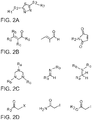
- FIG. 2 Figure 4 shows chemical structural formulas of preferred inhibitors 31 which are sulfur binding.
- R 2 is an organic radical R 2 which may be a hydrogen atom, a branched or unbranched organic group, or a covalent bond to the matrix polymer.
- the radical R 2 is in particular an oligomer having 3 to 10 repeating units or a polymer.
- R 2 has monomer units or is composed of monomer units which also form the monomer units of the matrix polymer or at least belong to the same plastic class as the matrix polymer.
- R ad also represents branched or unbranched organic groups or hydrogen.
- R ad represents the radical R 2 .
- Partial Figure 2A shows the structural formula of a 2,5-dihydrocarbyldithio-1,3,4-dithiazole.
- the structural formula shown is an exemplary compound for a sulfur-binding inhibitor which sulfur via an SS chain extension reaction (see mechanism FIG. 3 ) is able to incorporate into its own molecular structure.
- Thiazoles or trithiazoles can likewise be used as derivatives of the compound shown, with the heteroatoms S and N of the five-membered hetreoaromatic each occupying three of the five positions in any desired manner.
- Such compounds are each occupied on at least one of the carbon atoms within the five-membered ring by an R 2 -S n group, where n is a natural number between 1 and 10.
- Partial Figure 2B shows structural formulas for ⁇ , ⁇ -unsaturated carbonyl compounds (from left to right) in the general structure (see Equation (2)), as well as in preferred embodiments as acrolein and as maleimide.
- ⁇ , ⁇ -unsaturated carbonyl compounds and their derivatives have at least one C-C double bond which can be broken up in the course of an addition reaction by a symmetrical or unsymmetrical sulfur compound.
- a bond of the sulfur compound in question is separated and the two parts of the sulfur compound bind instead of the C-C double bond to the inhibitor.
- Partial representation 2C shows chemical structural formulas of sulfur-binding inhibitors which are capable of incorporating sulfur and its compounds into the molecular structure as part of a substitution reaction. In each case, with the elimination of amines C-N bonds are broken. Instead of the broken C-N bond, a C-S bond with an attacking sulfur compound forms. Shown are the basic structures of hexahydro-1,3,5-triazine, imines, and a condensate of aldehydes and amines (from left to right).
- Partial representation 2D shows structures of ⁇ -halogenated carbonyl compounds which are capable of incorporating sulfur and its compounds into the molecular structure as part of a substitution reaction. These substituted sulfur compounds are formed with elimination of hydrogen halides. In addition to the general structural formula, two iodinated derivatives are shown.
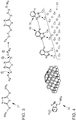
- FIG. 3 shows a possible mechanism of SS chain extension exemplified by 2,5-dihydrocarbyldithio-1,3,4-dithiazole.
- the sulfur attacks an existing SS or SH or SC binding on.
- the sulfur is incorporated under SS chain extension and a 2,5-dihydrocarbyltrithio-1,3,4-dithiazole is formed.
- one possible mechanism for filming film-forming inhibitors 32 is shown on the example of N, N-bis-alkyl-1H-tolyltriazole-1-methylamine, a tolyltriazole derivative, on a copper surface.
- nitrogen atoms of the triazole ring form coordinative bonds to the metal, in this case copper.
- the film-forming inhibitor is characterized by extended heteroatoms and sterically unhindered hydrogen atoms. In the coordination on the metal surface then form hydrogen bonds. As a result, as a consequence, the metal atoms are blocked in such a way that sulfur atoms can not break the bonds formed.
- the matrix polymer in the form of trimethoxysiloxy-terminated polydimethylsiloxane having a viscosity of 700 mPa * s and 13.9 parts of methyl-terminated polydimethylsiloxane having a viscosity of 300 mPa * s with part of the sulfur-binding inhibitor, namely 2,5-bis ( octyldithio) -1,3,4, -thiadiazole and 0.1 part of titanium (ethylacetoacetate) mixed into a potting compound.
- the inhibitors has an oligomeric or polymeric radical R 2 .
- a thiadiazole is bound to an acrylic oligomer and used in an acrylate-based potting compound.
- a benzotriazole may be attached to an acrylate oligomer and co-treated with an iron acrylate-based ironloconate Matrix polymer beigemsicht. The iron gluconate is not bound to a polymer in this example.
- 2,5-bis (alkyldithio) -1,3,4-thiadiazole-functionalized alkyltrimethoxysilane is used for the functionalization of polydimethylsiloxane prepolymers.
- the thiadiazole-based corrosion inhibitor is bound to the polymer network of the matrix polymer.
- a thiadiazole derivative can be bonded to an epoxide-based matrix polymer as it cures.
- a polysiloxane matrix polymer is admixed a mixture of four inhibitors, namely two benzotriazole-based film-forming inhibitors, one of which is substituted by oligomeric siloxane, and a thiadiazole also attached to the matrix polymer and an unbound iron (II) gluconate.
- four inhibitors namely two benzotriazole-based film-forming inhibitors, one of which is substituted by oligomeric siloxane, and a thiadiazole also attached to the matrix polymer and an unbound iron (II) gluconate.
Landscapes
- Chemical & Material Sciences (AREA)
- Engineering & Computer Science (AREA)
- Life Sciences & Earth Sciences (AREA)
- Materials Engineering (AREA)
- Wood Science & Technology (AREA)
- Organic Chemistry (AREA)
- General Engineering & Computer Science (AREA)
- Mechanical Engineering (AREA)
- Preventing Corrosion Or Incrustation Of Metals (AREA)
- Paints Or Removers (AREA)
Description
- Die Erfindung betrifft eine Vergussmasse zur Beschichtung, Abdichtung und/oder zum Verbinden elektronischer Bauelemente, umfassend ein Matrixpolymer sowie einen Inhibitor, der eine Korrosion der Bauelemente durch Schwefel und seine Verbindungen hemmt. Ferner betrifft die Erfindung ein elektronisches Bauelement sowie ein Getriebe jeweils aufweisend eine solche Vergussmasse.
- Elektronische Bauelemente, wie Steuergeräte, werden zum Schutz vor mechanischer Einwirkung häufig in Vergussmassen eingebettet. Bekannte Vergussmassen sind häufig auf Basis von Elastomeren, insbesondere Silikonen hergestellt. Diese Vergussmassen können das Elektronikbauteil zudem in begrenztem Maße auch vor der schädlichen Einwirkung von Flüssigkeiten schützen. Jedoch erlauben bekannte Vergussmassen eine Diffusion von Gasen. Insbesondere schwefelhaltige Gase wie CS2, COS, H2S, Thiole, Thioether und einige Polysulfide sind beispielsweise in der Lage, in Silikonen zu diffundieren, und können bei Kontakt mit metallischen Komponenten der elektronischen Bauelemente korrodierend auf diese wirken. Besonders von der Korrosion durch schwefelhaltige Gase betroffen sind Kupfer, Silber sowie deren Legierungen.
- In Getriebeanwendungen, beispielsweise in Kraftfahrzeugen, werden häufig Getriebeöle als Schmierstoff eingesetzt, welche reaktive und gasförmige Schwefelkomponenten freisetzen können. Getriebesteuergeräte sind häufig als integrierte bzw. Anbausteuergeräte ausgeführt und somit in einem Bereich angeordnet, in welchem sie mit dem Getriebeöl in Kontakt kommen können. Ist das Getriebeöl wiederum mit dem Steuergerät bzw. mit einer das Steuergerät umgebenden Vergussmasse in Kontakt, so können Schwefelkomponenten auf die Oberfläche des Steuergeräts gelangen und dort Korrosion an metallischen Komponenten verursachen.
- Um Korrosion zu reduzieren, sind Getriebeölen häufig sogenannte Korrosionsinhibitoren beigemischt, welche insbesondere Buntmetalle und Silber vor einer chemischen Reaktion mit Schwefel aus dem Getriebeöl schützen. Eine Gruppe von Korrosionsinhibitoren koordiniert beispielsweise die Metallatome der Oberfläche der metallischen Komponente und deaktiviert sie somit für eine Reaktion mit Schwefel. Nachteilig ist jedoch, dass aufgrund geringer Volatilität solche Korrosionsinhibitoren, im Gegensatz zu korrosiven Schwefelverbindungen, nicht an die zu schützenden Oberflächen gelangen.
- Ein weiterer Ansatz ist in
EP 1295905 B1 undUS 20090043029 A1 beschrieben, wobei der Vergussmasse Metallpartikel beigemischt werden. Diese sollen als Opfermaterial wirken und die durch die Vergussmasse diffundierenden Schwefelmoleküle abfangen. -
WO 2014/172004 A1 offenbart hierzu eine Vergussmasse umfassend ein Matrixpolymer, wie beispielsweise ein Epoxidharz, und einen Korrosionsinhibitor. - In
WO 2010/104516 A1 ist eine Flüssigkeit zur Beschichtung mechanischer Bauelemente beschrieben, umfassend ein Matrixpolymer (polymerisiertes Terpentin) sowie einen Inhibitor, der eine Korrosion der Bauelemente durch Schwefel und seine Verbindungen hemmt. Der Inhibitor ist eine organische Verbindung auf der Basis von α- oder β-Terpinol, β-Pinen oder p-Cymen. -
JP 2009 215 477 A - Die auf Kansai Paint Co Ltd zurückgehenden
JP 2005 206 947 A JP 2003 105 554 A EP 1 524 332 A1 beschreiben eine Vergussmasse zur Beschichtung von verzinkten Stahlelementen, umfassend ein Matrixpolymer auf Basis eines Epoxidharzes, eine reaktive Komponente sowie ein chromfreies Antirost-Additiv, welches eine Korrosion der Stahlelemente hemmt. Dabei werden korrodierte Metallionen durch Bindung an die Epoxidmatrix und das Additiv gebunden. - In
WO 9967029 A1 - In
DE 10322507 A1 ist ferner beschrieben, ein Salz eines filmbildenden Korrosionsinhibitors einem Polymer beizumischen, welches bei Kontakt mit einem protischen Lösungsmittel innerhalb des Polymers diffundieren kann. - Der Erfindung liegt nun die Aufgabe zugrunde, eine Vergussmasse bereitzustellen, welche im Vergleich zum Stand der Technik einen erhöhten Korrosionsschutz für elektronische Bauelemente, sicherstellt, insbesondere dann, wenn Bauelement und/oder Vergussmasse mit schwefelhaltigen Ölen bzw. Gasen in Kontakt sind.
- Diese Aufgabe ist durch eine Vergussmasse zur Beschichtung, Abdichtung und/oder zum Verbinden elektronischer Bauelemente mit den Merkmalen des ersten unabhängigen Anspruchs gelöst. Somit betrifft ein Teil der Erfindung eine Vergussmasse zur Beschichtung, Abdichtung und/oder zum Verbinden elektronischer Bauelemente, welche ein Matrixpolymer sowie einen Inhibitor umfasst. Der Inhibitor hemmt eine Schwefelkorrosion der Bauelemente durch Schwefel und seine Verbindungen. Erfindungsgemäß ist der Inhibitor eine organische Verbindung, die korrosionsaktiven Schwefel und/oder Schwefelverbindungen durch Einbau derselben in die Molekülstruktur des Inhibitors bindet und ist mindestens eine aus folgender Gruppe ausgewählte Verbindung:
- eine Verbindung der allgemeinen chemischen Formel R1-Sn-R2
- eine α,β-ungesättigte Carbonylverbindung der allgemeinen chemischen Formel (Ra-)(Rb-)C=C(-Rc)-C(=O)(-Rd), wobei zumindest einer der Reste Ra-d ein Rest R2 ist,
- eine α-halogenierte Carbonylverbindung der allgemeinen chemischen Formel R2-C(=O)C(-Ra)(-Rb)-(-X) und/oder
- eine Verbindung der allgemeinen chemischen Formel (R2-)(Rc-)(Rd-)C-N(-Re)(-Rf).
- In den allgemeinen Formeln ist n eine natürliche Zahl im Bereich von 1 bis 10. X ist ein Halogen. R1 und Ra-f sind unabhängig voneinander ein Wasserstoffatom, eine kovalente Bindung zu dem Matrixpolymer oder eine lineare oder cyclische, verzweigte oder unverzweigte, aromatische oder aliphatische organische Gruppe umfassend 1 bis 25 Kohlenstoffatome. R2 ist ein Oligomer mit 3 bis 10 Wiederholeinheiten oder ein Polymer, wobei das Oligomer oder Polymer der gleichen Kunststoffklasse wie das Matrixpolymer angehört oder gleiche Wiederholungseinheiten wie dieses aufweist.
- Der erfindungsgemäße Inhibitor bindet Schwefel und seine Verbindungen, insbesondere Schwefelwasserstoff (H2S), Kohlenstoffdisulfid (CS2), Carbonylsulfid (COS), Thiole, Thioether oder Polysulfide, also elementaren und/oder molekularen Schwefel, in die eigene Molekülstruktur ein. Der somit fixierte Schwefel wird aus dem Reaktionssystem zwischen Materialien der Oberfläche, wie Buntmetalle, insbesondere Silber und Kupfer, des elektronischen Bauelements und dessen Umgebung entfernt und wirkt nicht mehr korrodierend. Im Vergleich zu blockierend wirkenden Inhibitoren, beispielsweise Filmbildnern, wird bei erfindungsgemäßem Inhibitor mit der Einbindung des Schwefels in die Molekülstruktur des Inhibitors der Reaktant für die das Bauelement zersetzende Reaktion entzogen. Dabei ist es unerheblich, ob die erfindungsgemäßen Inhibitoren an der Oberfläche des Bauelements angeordnet sind. Somit liegt der Inhibitor mit der Vergussmasse vermischt vor. Ferner ist es bevorzugt, aber nicht zwingend, eine Diffusion des Inhibitors innerhalb der Vergussmasse sicherzustellen.
- Ein Inhibitor ist ein Hemmstoff, also eine Substanz, die eine oder mehrere Reaktionen - chemischer, biologischer oder physikalischer Natur- so beeinflusst, dass diese verlangsamt, gehemmt oder verhindert werden.
- In bevorzugter Ausgestaltung der Erfindung ist vorgesehen, dass der Inhibitor ausgebildet ist, Schwefel und/oder Schwefelverbindungen in die Molekülstruktur des Inhibitors durch Kettenverlängerungsreaktionen, Additionsreaktionen und/oder Substitutionsreaktionen einzubauen. Vorteilhafterweise werden durch derartige Reaktionen feste, insbesondere kovalente, chemische Bindungen zwischen Schwefel und dem Inhibitor erzeugt. Diese Reaktionen zeichnen sich dadurch aus, dass sie bei Betriebsbedingungen der Bauelemente nicht reversibel sind. Der Schwefel wird somit nicht wieder freigesetzt.
- Vorliegend wird unter chemischen Resten R1, R2, Ra-f (weiterhin auch als chemische Gruppe R bezeichnet) unabhängig voneinander ein Wasserstoffatom, eine kovalente Bindung zum Matrixpolymer oder eine organische Gruppe verstanden, welche bis zu 25 Kohlenstoffatome umfasst. Diese sind linear oder cyclisch angeordnet und bilden dabei aliphatische und/oder aromatische Gruppen. Darüber hinaus liegen sie verzweigt oder unverzweigt vor und sind können substituiert sein. Die organische Gruppe R weist neben Kohlenstoff- und Wasserstoffatomen vorzugsweise Atome anderer Elemente, insbesondere Heteroatome, auf.
- Im folgenden werden der zu inhibierende Schwefel und/oder seine Verbindungen durch die allgemeine Formel R3-S-R3' beschrieben. Hierbei bedeuten R3 und R3' unabhängig voneinander eine an Schwefel gebundene anorganische oder organische Gruppe (z. B. =C=O), ein Wasserstoffatom oder zumindest ein Elektronenpaar, wobei die Gruppen R3 und R3' cyclisch miteinander verbunden sein können.
- Mit besonderem Vorteil wird der Inhibitor durch die allgemeine chemische Formel R1-Sn-R2 beschrieben, wobei R1 vorzugsweise eine substituierte oder unsubstituierte 5- bis 7-gliedrige hetero-aromatische Gruppe oder eine Carbamatgruppe und n eine natürliche Zahl, insbesondere im Bereich von 1 bis 10, ist. Derartige Verbindungen sind ausgebildet, durch die Ausbildung von S-S-Bindungen Schwefelatome in die S-R2-Bindung und/oder eine S-S-Bindung einzubauen. Der zugrundeliegende Mechanismus entspricht einer S-S-Kettenverlängerungsreaktion und kann beispielsweise für korrosive Schwefelverbindungen, die Schwefel in der Oxidationsstufe 0 enthalten, wie in (1) dargestellt beschrieben werden:
R1-Sn -R2 + R3-S-R3' → R1-Sn+1- R2 + R3--R3' (1)
- Die Gruppen R3 und/oder R3' werden im Zuge der Reaktion optional unter Bindung eines Wasserstoffatoms abgespalten.
- Der besondere Vorteil von Verbindungen der Formel R1-Sn -R2 liegt darin, dass der Inhibitor nach dem Einbau des Schwefels nicht deaktiviert ist. Vielmehr werden durch den Einbau weitere S-S-Bindungen geschaffen, in welche über denselben Mechanismus weitere Schwefelatome in den Inhibitor einbaubar sind.
- In besonders bevorzugter Ausgestaltung der Erfindung ist vorgesehen, dass der Rest R1 eine substituierte oder unsubstituierte Thiadiazolgruppe ist. Insbesondere ist die Verbindung R1-Sn -R2 2,5-Bis(octyldithio)-1,3,4,-thiadiazol. Letzteres verfügt über zwei -S-S-(CH2)7-CH3Gruppen (mit n = 2 und R2 = (CH2)7-CH3) und ist somit im Vergleich zu schwefelbindenden Inhibitoren mit nur einem Angriffspunkt für S-S-Kettenverlängerungen, doppelt effektiv
- In alternativer Ausgestaltung der Erfindung ist vorgesehen, dass der Inhibitor eine α,β-ungesättigte Carbonylverbindung der allgemeinen Form (Ra-)(Rb-)C=C(-Rc)-C(=O)(-Rd) ist, wobei zumindest einer der Reste Ra, Rb, Rc, Rd (nachfolgend auch Ra-d)der Rest R2 ist. Derartige Verbindungen sind befähigt, Schwefel im Zuge einer Additionsreaktion, beispielsweise einer Michael-Addition, durch Aufspaltung der Doppelbindung in die Molekülstruktur einzubauen. Zum Einbau in die Molekülstruktur des Inhibitors geeignet sind symmetrische oder unsymmetrische, mindestens zweiatomige Schwefelverbindungen der Form R3-S-R3', insbesondere der Form R3-S-H . Der Einbau des Schwefels kann beispielsweise durch (2) beschrieben werden:
(Ra-)(Rb-)C =C(-Rc)-C(=O)(-Rd) + R3-S-R3' → R3-S-C(-Ra)(-Rb)CR3 (-Rc)-C(=O)(-Rd) (2)
wobei die chemischen Gruppen Ra, Rb und Rc, Rd in besonderer Ausgestaltung cyclisch miteinander verbunden sind. In bevorzugten Ausführungen ist mindestens einer der Reste Ra-d ein Wasserstoffatom. - In weiter bevorzugter Ausgestaltung der Erfindung ist vorgesehen, dass der Inhibitor eine α-halogenierte Carbonylverbindung, ein Imin, ein Kondensat aus einem Aldehyd und einem Amin oder ein Hexahydro-1,3,5-Triazin-Derivat, der allgemeinen Form (R2-)(Ra-)(-Rb) C(-RAbgang) ist, wobei die Abgangsgruppe RAbgang eine Verbindung der Form N(Ra)(-Rb) oder ein Halogen X ist. Diese Verbindungen stellen vorteilhafterweise Reaktionspartner für Substitutionsreaktion mit Schwefelverbindungen, insbesondere für Schwefelwasserstoff (H2S) und Thiole, sowie deren Tautomere dar. In der Chemie bezeichnet die Substitution eine chemische Reaktion, bei der Atome oder Atomgruppen in einem Molekül durch ein anderes Atom oder eine andere funktionelle Gruppe (oder auch Substituent) ersetzt werden.
- Die angreifende schwefelhaltige Verbindung, R3-S-R3' verdrängt die zu ersetzende Gruppe (oder Abgangsgruppe RAbgang) aus der Verbindung des Inhibitors. Dies erfolgt zum einen dadurch, dass sich die angreifende schwefelhaltige Verbindung R3-S-R3' dem Bindungspartner der zu ersetzenden Gruppe RAbgang sukzessiv nähert (und die neue Bindung bildet), wobei gleichzeitig die Bindung der verdrängten Gruppe RAbgang zunehmend geschwächt wird. Bei diesem Reaktionstyp sind immer zwei Moleküle gleichzeitig beteiligt. In vorliegender Ausgestaltung ergibt sich im Wesentlichen das in (3) gezeigte Reaktionsschema.
R2-(Ra)(Rb)-C-RAbgang + S-R3 → R2-(Ra)(Rb)-C-S-R3 + RAbgang (3)
- Die in (3) dargestellte Einheit -(Ra)(Rb)-C kann als R1 bezeichnet werden.
- Da im entscheidenden (geschwindigkeitsbestimmenden) Schritt zwei Moleküle beteiligt sind, spricht man von einer bimolekularen Substitution. Alternativ verlässt die Abgangsgruppe RAbgang, ggf. unterstützt durch ein Hilfsreagenz, den Molekülverband und hinterlässt im Molekül eine Lücke, die schnell von der angreifenden Gruppe R3-S-R3' besetzt wird. Der geschwindigkeitsbestimmende Schritt ist hier der Zerfall der Ausgangsverbindung. Bei der Verwendung der in dieser Ausgestaltung genannten Inhibitoren ist die Abgangsgruppe vorzugsweise ein Amin.
- Die Position des Rests R2 im Molekül ist in den oben beschriebenen Ausgestaltungen jeweils angegeben, andernfalls entspricht zumindest eine der Gruppen Ra-d dem Rest R2.
- Der Inhibitor weist die chemische Gruppe R2 auf, der wie in den einzelnen Ausführungen angegeben im Inhibitormolekül positioniert ist. Weist das Inhibitormolekül in den genannten Ausführungsformen keinen Rest R2 auf, so entspricht zumindest eine der chemischen Gruppen Ra-d der Gruppe R2. Die Gruppe R2 beeinflusst unter anderem die physikalischen Eigenschaften des Inhibitors. Dazu zählt beispielsweise die Mischbarkeit des Inhibitors mit der Vergussmasse. Stellt R2 beispielsweise eine kovalente Bindung zum Matrixpolymer der Vergussmasse dar, so ist der Inhibitor mit dem Matrixpolymer besonders gut mischbar und liegt somit gleichmäßig in der Vergussmasse vor.
- Besonders bevorzugt weist der Inhibitor mehr als einen Rest R2 auf, wobei die Reste R2 sternförmig und/oder in Form von Dendrimeren an einer Hauptgruppe R1 angeordnet sind. Die Hauptgruppe R1 stellt dabei diejenige organische Einheit des Inhibitors dar, welche mit der zur Schwefelbindung befähigten Gruppe verbunden ist.
- Erfindungsgemäß ist die verzweigte oder unverzweigte Gruppe des Rests R2 ein Oligomer mit 3 bis 10 Wiederholeinheiten oder ein Polymer. Mit anderen Worten weist der Inhibitor einen Rest R2 in Form eines verzweigten oder unverzweigten Oligomers oder Polymers auf. Dabei kann es sich vorzugsweise um ein Copolymer bzw. Cooligomer oder ein Homopolymer bzw. Homooligomer handeln. In dieser Ausgestaltung ist der Rest R2 bevorzugt als lipophile Gruppe ausgebildet. Dies bietet den Vorteil, dass die Mischbarkeit zwischen Inhibitor und Matrixpolymer im Vergleich zu insbesondere kurzen aliphatischen Ketten erhöht wird.
- Der Rest R2 weist ähnliche Polaritäten wie das Matrixpolymer auf, wie es der Fall ist, wenn die Monomereinheiten des Matrixpolymers und Monomereinheiten des Rests R2 bei einer Polymerisation Kunststoffe der gleichen Kunststoffklasse bilden. Somit umfasst der Rest R2 gleiche oder ähnliche Monomer-einheiten wie das Matrixpolymer.
- Kunststoffe sind aus sich wiederholenden Bausteinen, den Wiederholeinheiten zusammengesetzt, welche sich aus den eingesetzten Monomeren ableiten. Durch den "chemischen Bauplan" der Monomere ergibt sich, wie sie miteinander reagieren können, und welche Stoffe daraus entstehen. Daher können die Kunststoffe nach den Monomeren oder den entstandenen Verbindungen in Klassen eingeteilt werden. In einer Kunststoffklasse sind Kunststoffe mit besonderen chemischen und/oder physikalischen Eigenschaften zusammengefasst. Beispiele für Kunststoffklassen sind Duromere, Elastomere und Thermoplasten. Gehören das Matrixpolymer und der Rest R2 der gleichen Kunststoffklasse an, so erhöht sich die chemische Ähnlichkeit, was wiederum die Mischbarkeit und/oder die Diffusionsfähigkeit des Inhibitors in der Vergussmasse erhöht.
- Die erfindungsgemäße Vergussmasse umfasst ein Matrixpolymer und den schwefelbindenden Inhibitor. Das Matrixpolymer stellt hierbei bevorzugt die Basis der Vergussmasse dar. Das heißt, es bildet zumindest 60 Gew.-%, insbesondere zumindest 80 Gew.-%, vorzugsweise zumindest 85 Gew.-% der Vergussmasse. Der erfindungsgemäße Inhibitor in einer der oben beschriebenen Ausgestaltungen ist zu einem Anteil im Bereich von 0,05 bis 20 Gew.-%, insbesondere im Bereich von 0,5 bis 15 Gew.-%, bevorzugt 1 bis 10 Gew.-% beigemischt.
- Das Matrixpolymer ist in bevorzugter Ausgestaltung der Erfindung ein Duromer, ein Elastomer, ein thermoplastisches Elastomer oder eine Mischung von diesen. Diese Substanzen eignen sich besonders gut als Massen, die zur Abdeckung, mechanischen Verstärkung und zum Schutz von Halbleitern und Baugruppen verwendet werden, um Hohlräume zu verfüllen und Komponenten vor Chemikalien, Feuchtigkeit, mechanischer Beanspruchung und Vibrationen zu schützen. Als deren Vertreter werden vorzugsweise Silikone, Polyurethane, Epoxidharze und/oder Polyacrylate als Matrixpolymer eingesetzt. Die Gruppe der Duromere, wie Epoxidharz eignet sich insbesondere für hochbelastbare statische Anwendungen.
- In besonders bevorzugter Ausgestaltung der Erfindung ist vorgesehen, dass die Vergussmasse weitere schwefelbindende und/oder filmbildende Verbindungen aufweist. Schwefelbindende Inhibitoren wirken analog zu den oben beschriebenen Ausgestaltungen des erfindungsgemäßen Inhibitors durch chemische oder physikalische Bindung des Schwefels und/oder der Schwefelverbindungen. Filmbildende Inhibitoren sind organische Verbindungen, welche sich auf der Oberfläche des Bauelements ablagern und durch Adsorption an dem Oberflächenmaterial
- (z. B. Kupfer und/oder Silber) einen chemischen Angriff durch oxidierende Substanzen blockieren.
- Bevorzugte Beispiele für Korrosionsinhibitoren, die der erfindungsgemäßen Vergussmasse als Additive zugesetzt werden sind: Triazol-, eine Benzotriazol-, eine Toluyltriazol-, eine Thiazol-, eine Thiocarbamat-, eine Imidazolin-, eine Imidazol-, eine Pyradin-, eine Quinolin-, eine Morpholin-, eine Triazin-, eine Glyoxal-, eine Ethanolamin-, eine Methyldiethanolamin-, Eisensalze der α-Hydroxysäure, insbesondere Eisengluconat-, eine Imin-, eine Dithiophosphat-, eine Dithiocarbamat- und/oder eine Tannin-Verbindung. Mit besonderem Vorteil weisen diese Verbindungen einen Rest R2 gemäß oben beschriebenen Definitionen auf.
- Die Compoundierung, also das Vermischen von Matrixpolymer und dem Inhibitor bzw. den Inhibitoren findet bevorzugt vor dem Aushärten der Vergussmasse statt. Die Anbindung des Rests R2 an den Inhibitor und/oder die Inhibitoren erfolgt entweder vor der Compoundierung oder im Zuge der Aushärtung der Vergussmasse.
- Ein weiterer Aspekt der Erfindung betrifft ein elektronisches Bauelement umfassend eine erfindungsgemäße Vergussmasse. Eine Anordnung der erfindungsgemäßen Vergussmasse ermöglicht es vorteilhafterweise, das Bauelement als integriertes Bauelement in einer für das Bauelement schädlichen Umgebung anzuordnen. Somit können beispielsweise mit der erfindungsgemäßen Vergussmasse ausgestattete Steuergeräte als Anbausteuergeräte in einer Schwefelatmosphäre angeordnet werden.
- Das Bauelement ist insbesondere eine Getriebesteuerung zur Steuerung eines Getriebes eines Kraftfahrzeugs, welche eine erfindungsgemäße Vergussmasse umfasst. Bei der Getriebesteuerung handelt es sich insbesondere um eine integrierte Getriebesteuerung.
- Ein weiterer Aspekt der Erfindung ist ein Getriebe, welches eine solche mit einer erfindungsgemäßen Vergussmasse ausgestattete Getriebesteuerung aufweist.
- Die verschiedenen in dieser Anmeldung genannten Ausführungsformen der Erfindung sind, sofern im Einzelfall nicht anders ausgeführt, mit Vorteil miteinander kombinierbar.
- Die Erfindung wird nachfolgend in Ausführungsbeispielen anhand der zugehörigen Zeichnungen erläutert. Es zeigen:
- Figur 1
- eine schematische Skizze einer erfindungsgemäßen Getriebesteuerung in einer bevorzugten Ausführungsform,
- Figur 2
- die chemische Struktur des Grundgerüsts des Inhibitors in bevorzugten Ausführungen,
- Figur 3
- einen möglichen Mechanismus der Wirkweise eines schwefelbindenden Inhibitors in einer bevorzugten Ausgestaltung der Erfindung, und
- Figur 4
- einen möglichen Mechanismus der Wirkweise eines filmbildenden Inhibitors nach dem Stand der Technik.
-
Figur 1 zeigt ein mit 100 bezeichnetes schematisch dargestelltes Kraftfahrzeug, in welchem ein Getriebe 40 und ein als Getriebesteuerung 50 ausgeführtes elektronisches Bauelement angeordnet sind. - Das Getriebe 40 ist üblicherweise mit Schmiermitteln geschmiert. Die verwendeten Schmiermittel (z. B. Getriebeöl) können Schwefel und/oder Schwefelverbindungen wie beispielsweise CS2, COS, H2S, Thiole und Polysulfide aufweisen oder bilden. Zur Steuerung des Getriebes 40 ist eine Getriebesteuerung 50 in das Getriebe integriert oder in unmittelbarer Nähe zu diesem angeordnet. Eine Oberfläche 51 der Getriebesteuerung 50 ist mit einer erfindungsgemäßen Vergussmasse 10 beschichtet, welche ein Matrixpolymer 20 sowie zumindest einen Inhibitor 31, 32 zur Hemmung von Schwefelkorrosion umfasst.
- Die Vergussmasse 10 umschließt die Getriebesteuerung 50 in der gezeigten Darstellung vollflächig, das heißt, die gesamte Oberfläche 51 der Getriebesteuerung 50 ist mit der Vergussmasse 10 beschichtet. Die Vergussmasse 10 selbst umfasst das Matrixpolymer 20. Das Matrixpolymer 20 bildet die Grundstruktur der Vergussmasse 10 und liegt somit als Hauptkomponente in einem Bereich von 60 bis 99,5 Gew.% in der Vergussmasse 10 vor. Bei der Vergussmasse 10 handelt es sich bevorzugt um einen hydrophoben Kunststoff. Bevorzugt werden insbesondere Silikon (Polysiloxan), oder Epoxidharz, Polyacrylat oder Polyurethan als Matrixpolymer eingesetzt.
- Die Vergussmasse 10 umfasst ferner zumindest einen Inhibitor 31, 32, der zumindest einen schwefelbindenden Inhibitor 31 gemäß der Erfindung umfasst. Dieser ist mit dem Matrixpolymer 20 mischbar und liegt nach der Polymerisation des Matrixpolymers gleichmäßig verteilt in der Vergussmasse 10 vor. Der schwefelbindende Inhibitor 31 kann chemisch an das Matrixpolymer 20 gebunden vorliegen oder innerhalb der Vergussmasse 10 frei oder nahezu frei diffundieren.
- Die Vergussmasse 10 kann darüber hinaus weitere schwefelbindende Inhibitoren 31 und/oder filmbildende Inhibitoren 32 aufweisen. Die filmbildenden Inhibitoren 32 lagern sich, wie in
Figur 1 angedeutet, bevorzugt an der Oberfläche 51 der Getriebesteuerung 50 an. - Die Funktion der in
Figur 1 dargestellten Vergussmasse 10 liegt darin, die Oberfläche 51 der Getriebesteuerung 50 vor einer Korrosion mit Schwefel und/oder seinen Verbindungen zu schützen, die aus dem Schmiermittel durch die damit in Verbindung stehende Vergussmasse 10 diffundieren. Hierzu bauen die schwefelbindenden Inhibitoren 31 den Schwefel in die eigene Molekülstruktur ein. Dabei ist es unerheblich, ob die Inhibitoren 31 an der Oberfläche 51 direkt vorliegen, oder innerhalb des Volumens der Vergussmasse 10 fixiert sind. Der Schwefel, welcher mit einer Oberfläche der Vergussmasse 10 in Verbindung kommt und durch diese diffundiert, wird in die Struktur des Inhibitors 31 eingebaut, sobald die beiden Verbindungen aufeinander treffen. Ein möglicher Mechanismus ist inFigur 3 angegeben. - Die filmbildenden Inhibitoren 32 hingegen lagern sich an der Oberfläche 51 der Getriebesteuerung 50 an und bilden einen Film aus, welcher die Diffusion von Schwefel und seinen Verbindungen blockiert. Ein möglicher Mechanismus hierfür ist in
Figur 4 angegeben. -
Figur 2 zeigt chemische Strukturformeln bevorzugter Inhibitoren 31, die schwefelbindend wirken. Hierbei ist jeweils der Teil der Struktur gezeigt, welcher den Inhibitor 31 befähigt, Schwefel in die Molekülstruktur einzubauen. In den gezeigten Strukturformeln steht R2 für einen organischen Rest R2, welcher ein Wasserstoffatom, eine verzweigte oder unverzweigte organische Gruppe oder eine kovalente Bindung zum Matrixpolymer sein kann. Der Rest R2 ist insbesondere ein Oligomer mit 3 bis 10 Wiederholeinheiten oder ein Polymer. R2 weist Monomereinheiten auf oder istaus Monomereinheiten aufgebaut, welche ebenfalls die Monomereinheiten des Matrixpolymers bilden oder zumindest der gleichen Kunststoffklasse angehören wie das Matrixpolymer. - Ra-d steht ebenfalls für verzweigte oder unverzweigte organische Gruppen oder Wasserstoff. Zudem stellt in den einzelnen Strukturformeln jeweils zumindest eine der Gruppen Ra-d den Rest R2 dar.
- Teildarstellung 2A zeigt die Strukturformel eines 2,5- Dihydrocarbyldithio-1,3,4-dithiazols. Die gezeigte Strukturformel ist eine Beispielverbindung für einen schwefelbindenden Inhibitor, welcher Schwefel über eine S-S-Kettenverlängerungsreaktion (Mechanismus siehe
Figur 3 ) in die eigene Molekülstruktur einzubauen vermag. Als Derivate der gezeigten Verbindung können ebenso Thiazole oder Trithiazole verwendet werden, wobei die Heteroatome S und N des fünfgliedrigen Hetreoaromaten jeweils drei der fünf Positionen beliebig besetzen. Derartige Verbindungen sind jeweils an zumindest einem der Kohlenstoffatome innerhalb des fünfgliedrigen Rings durch eine R2-Sn-Gruppe besetzt, wobei n eine natürliche Zahl zwischen 1 und 10 ist. - Teildarstellung 2B zeigt Strukturformeln für α,β-ungesättigte Carbonylverbindungen (von links nach rechs) in der allgemeinen Struktur (vgl. Gleichung (2)), sowie in bevorzugten Ausgestaltungen als Acrolein und als Maleimid.
- α,β-ungesättigte Carbonylverbidnungen und ihre Derivate weisen zumindest eine C-C-Doppelbindung auf, welche im Zuge einer Additionsreaktion von einer symmetrischen oder unsymmetrischen Schwefelverbindung aufgebrochen werden kann. Dabei wird eine Bindung der betreffenden Schwefelverbindung getrennt und die beiden Teile der Schwefelverbindung binden anstelle der C-C-Doppelbindung an den Inhibitor.
- Teildarstellung 2C zeigt chemische Strukturformeln von schwefelbindenden Inhibitoren, welche befähigt sind, Schwefel und seine Verbindungen im Zuge einer Substitutionsreaktion in die Molekülstruktur einzubauen. Dabei werden jeweils unter Abspaltung von Aminen C-N-Bindungen gebrochen. Anstelle der gebrochenen C-N-Bindung bildet sich eine C-S-Bindung mit einer angreifenden Schwefelverbindung aus. Gezeigt sind die Grundstrukturen von Hexahydro-1,3,5-Triazin, von Iminen sowie von einem Kondensat aus Aldehyden und Aminen (von links nach rechts).
- Teildarstellung 2D zeigt Strukturen von α-halogenierten Carbonylverbindungen, welche befähigt sind, Schwefel und seine Verbindungen im Zuge einer Substitutionsreaktion in die Molekülstruktur einzubauen. Diese substituieren Schwefelverbindungen entstehen unter Abspaltung von Halogenwasserstoffen. Neben der allgemeinen Strukturformel sind zwei jodierte Derivate dargestellt.
-
Figur 3 zeigt einen möglichen Mechanismus einer S-S-Kettenverlängerung am Beispiel eines 2,5-Dihydrocarbyldithio-1,3,4-dithiazols. Der Schwefel greift eine bestehende S-S- oder S-H- oder S-C-Bindung an. Der Schwefel wird unter S-S-Kettenverlängerung eingebaut und ein 2,5-Dihydrocarbyltrithio-1,3,4-dithiazol wird gebildet. - In
Figur 4 ist ein möglicher Mechanismus zur Filmbildung von filmbildenden Inhibitoren 32 am Beispiel von N,N-Bis-alkyl-1 H-tolyltriazol-1-methylamin, einem Tolyltriazolderivat, auf einer Kupferoberfläche gezeigt. Hierbei bilden Stickstoffatome des Triazolrings koordinative Bindungen zum Metall, in diesem Falle Kupfer aus. Der filmbildende Inhibitor zeichnet sich neben den Metall-koordinierenden Stickstoffatomen dadurch aus, dass erweitere Heteroatome und sterisch ungehinderte Wasserstoffatome aufweist. Bei der Koordination an der Metalloberfläche bilden sich dann Wasserstoffbrückenbindungen aus. In der Gesamtheit sind infolgedessen die Metallatome derart blockiert, dass Schwefelatome die entstandenen Bindungen nicht aufbrechen können. - Im Folgenden werden detaillierte Beispiele für erfindungsgemäße Vergussmassen beschrieben.
- Es werden 85 Gewichtsteile des Matrixpolymers in Form von Trimethoxysiloxy-terminiertes Polydimethylsiloxan mit einer Viskosität von 700 mPa*s und 13,9 Teile methylterminiertes Polydimethylsiloxan mit einer Viskosität von 300 mPa*s mit einem Teil des schwefelbindenden Inhibitors, nämlich 2,5-Bis(octyldithio)-1,3,4,-thiadiazol und 0,1 Teilen Titan(ethylacetoacetat) zu einer Vergussmasse vermengt. In diesem Ausführungsbeispiel weist keiner der Inhibitoren einen oligomeren oder polymeren Rest R2 auf.
- Es wird 1,3,5-Thiadiazol-2,5-dithiol zunächst durch Oxidation in einem organischen Lösungsmittel mit einem Unterschuss an thiofunktionalisiertem Polysiloxan (z. B. SMS 042 von der Firma Gelest®) zur Reaktion gebracht. Dabei verbinden sich je ein Molekül des Thiazols mit zwei Polysiloxanmolekülen unter Ausbildung einer S-S-Bindung zu einem zweifach durch Polysiloxan substituierten Thiadiazolderivat. Dieses wird dann mit einem Matrixpolymer auf Polysiloxanbasis vermischt.
- In diesem Ausführungsbeispiel wird ein Thiadiazol an ein Acryloligomer gebunden und in einer acrylatbasierten Vergussmasse eingesetzt. Alternativ oder zusätzlich kann eine Benztriazol an ein Acrylatoligomer gebunden werden und gemeinsam mit Eisengloconat einem acrylatbasierten Matrixpolymer beigemsicht werden. Das Eisengluconat ist in diesem Beispiel nicht an ein Polymer gebunden.
- 2,5-Bis(alkyldithio)-1,3,4-thiadiazol-funktionalisiertes Alkyltrimethoxysilan wird zur Funktionalisierung von Polydimethylsiloxanpräpolymeren eingesetzt. Nach einer anschließenden Aushärtung der Polymermischung ist der Korrosionsinhibitor auf Thiadiazolbasis an das Polymernetzwerk des Matrixpolymers gebunden. Alternativ kann ein Thiadiazolderivat im Zuge der Aushärtung an ein epoxidbasiertes Matrixpolymer gebunden werden.
- Einem Polysiloxan-Matrixpolymer wird eine Mischung aus vier Inhibitoren beigemischt, nämlich zwei filmbildende Inhibitoren auf Benzotriazolbasis, wobei eine der Verbindungen durch oligomeres Siloxan substituiert ist, sowie einem ebenfalls an das Matrixpolymer gebundenem Thiadiazol und einem ungebundenen Eisen(II)gluconat.
-
- 10
- Vergussmasse
- 20
- Matrixpolymer
- 31
- schwefelbindender Inhibitor
- 32
- filmbildender Inhibitor
- 40
- Getriebe
- 50
- Getriebesteuerung
- 51
- Oberfläche der Getriebesteuerung
- 100
- Kraftfahrzeug
Claims (7)
- Vergussmasse zur Beschichtung, Abdichtung und/oder zum Verbinden elektronischer Bauelemente, umfassend ein Matrixpolymer sowie einen Inhibitor, der eine Schwefelkorrosion der Bauelemente durch Schwefel und seine Verbindungen hemmt, wobei der Inhibitor eine organische Verbindung ist, die Schwefel und/oder Schwefelverbindungen durch Einbau in die Molekülstruktur des Inhibitors bindet, und wobei der Inhibitor mindestens eine aus folgender Gruppe ausgewählte Verbindung ist:- eine Verbindung der allgemeinen chemischen Formel R1-Sn-R2,- eine α,β-ungesättigte Carbonylverbindung der allgemeinen chemischen Formel (Ra-)(Rb-)C=C(-Rc)-C(=O)(-Rd), wobei zumindest einer der Reste Ra-d ein Rest R2 ist,- eine α-halogenierte Carbonylverbindung der allgemeinen chemischen Formel R2-C(=O)C(-Ra)(-Rb)-(-X) und/oder- eine Verbindung der allgemeinen chemischen Formel (R2-)(Rc-)(Rd-)C-N(-Re)(-Rf),wobei n eine natürliche Zahl im Bereich von 1 bis 10 ist, X ein Halogen ist und R1 und Ra-f unabhängig voneinander ein Wasserstoffatom, eine kovalente Bindung zu dem Matrixpolymer oder eine lineare oder cyclische, verzweigte oder unverzweigte, aromatische oder aliphatische organische Gruppe umfassend 1 bis 25 Kohlenstoffatome sind und R2 ein Oligomer mit 3 bis 10 Wiederholeinheiten oder ein Polymer ist, wobei das Oligomer oder Polymer der gleichen Kunststoffklasse wie das Matrixpolymer angehört oder gleiche Wiederholungseinheiten wie dieses aufweist.
- Vergussmasse nach Anspruch 1, dadurch gekennzeichnet, dass der Inhibitor ausgebildet ist, Schwefel und/oder Schwefelverbindungen in die Molekülstruktur des Inhibitors durch Kettenverlängerungsreaktionen, Additionsreaktionen und/oder Substitutionsreaktionen einzubauen.
- Vergussmasse nach einem der vorhergehenden Ansprüche, dadurch gekennzeichnet, dass der Rest R1 ein substituiertes oder unsubstituiertes Thiadiazol ist.
- Vergussmasse nach einem der vorhergehenden Ansprüche, dadurch gekennzeichnet, dass das Matrixpolymer ein Duromer, ein Elastomer, ein thermoplastisches Elastomer oder eine Mischung von diesen ist.
- Vergussmasse nach einem der vorhergehenden Ansprüche, dadurch gekennzeichnet, dass die Vergussmasse einen oder mehrere weitere schwefelbindende Inhibitoren und/oder filmbildende Inhibitoren umfasst.
- Elektronisches Bauelement umfassend eine Vergussmasse nach einem der Ansprüche 1 bis 8.
- Getriebe für ein Kraftfahrzeug, umfassend eine Getriebesteuerung mit einer Oberfläche und eine Vergussmasse nach einem der Ansprüche 1 bis 5, welche auf der Oberfläche der Getriebesteuerung angeordnet ist.
Applications Claiming Priority (1)
| Application Number | Priority Date | Filing Date | Title |
|---|---|---|---|
| DE102014209445.3A DE102014209445A1 (de) | 2014-05-19 | 2014-05-19 | Vergussmasse mit Korrosionsinhibitor für elektronische Bauelemente, sowie elektronisches Bauelement und Getriebe mit einer solchen |
Publications (2)
| Publication Number | Publication Date |
|---|---|
| EP2947123A1 EP2947123A1 (de) | 2015-11-25 |
| EP2947123B1 true EP2947123B1 (de) | 2017-08-02 |
Family
ID=53199786
Family Applications (1)
| Application Number | Title | Priority Date | Filing Date |
|---|---|---|---|
| EP15165837.4A Not-in-force EP2947123B1 (de) | 2014-05-19 | 2015-04-30 | Vergussmasse mit korrosionsinhibitor für elektronische bauelemente, sowie elektronisches bauelement und getriebe mit einer solchen |
Country Status (3)
| Country | Link |
|---|---|
| EP (1) | EP2947123B1 (de) |
| CN (1) | CN105176094B (de) |
| DE (1) | DE102014209445A1 (de) |
Families Citing this family (1)
| Publication number | Priority date | Publication date | Assignee | Title |
|---|---|---|---|---|
| WO2023086863A1 (en) * | 2021-11-12 | 2023-05-19 | Boston Scientific Scimed, Inc. | Coating compositions and related devices and methods |
Family Cites Families (11)
| Publication number | Priority date | Publication date | Assignee | Title |
|---|---|---|---|---|
| US6368671B1 (en) | 1998-06-22 | 2002-04-09 | Mccormick David R. | Treating solid, especially aluminum, surfaces |
| BR0112023A (pt) * | 2000-06-30 | 2003-05-20 | Prc De Soto International Inc | Formulações vedantes e de envase que incluem polìmeros de terminação mercapto produzidos,pela reação entre um politiol e um monÈmero de éter de polivinila |
| JP4189136B2 (ja) * | 2000-07-14 | 2008-12-03 | 新日本製鐵株式会社 | 表面被覆金属材 |
| JP2005206947A (ja) * | 2001-07-23 | 2005-08-04 | Jfe Steel Kk | 耐白錆性に優れた表面処理鋼板及びその製造方法 |
| JP3665046B2 (ja) * | 2001-07-23 | 2005-06-29 | Jfeスチール株式会社 | 耐白錆性に優れた表面処理鋼板及びその製造方法 |
| JP4114037B2 (ja) | 2001-09-25 | 2008-07-09 | 信越化学工業株式会社 | 電気・電子部品の硫化防止又は遅延用シリコーンゴム封止・シール材及び硫化防止又は遅延方法 |
| TWI259216B (en) * | 2002-07-23 | 2006-08-01 | Kansai Paint Co Ltd | Surface-treated steel sheet excellent in resistance to white rust and method for production thereof |
| DE10322507A1 (de) | 2003-05-19 | 2004-12-16 | Fraunhofer-Gesellschaft zur Förderung der angewandten Forschung e.V. | Korrosionsschutzmittel zum Schutz von Leichtmetallen |
| JP2009215477A (ja) * | 2008-03-12 | 2009-09-24 | Fuji Electric Holdings Co Ltd | 金属製導電部の保護剤、保護構造及び保護方法 |
| KR101629753B1 (ko) * | 2009-03-13 | 2016-06-13 | 그린 소스 에너지 엘엘씨 | 탄화수소 함유 재료로부터 탄화수소를 추출 및/또는 탄화수소 함유 재료를 가공하는 방법 |
| US9771483B2 (en) * | 2013-04-19 | 2017-09-26 | The Boeing Company | Systems, compositions, and methods for corrosion inhibition |
-
2014
- 2014-05-19 DE DE102014209445.3A patent/DE102014209445A1/de not_active Withdrawn
-
2015
- 2015-04-30 EP EP15165837.4A patent/EP2947123B1/de not_active Not-in-force
- 2015-05-19 CN CN201510254868.9A patent/CN105176094B/zh not_active Expired - Fee Related
Non-Patent Citations (1)
| Title |
|---|
| None * |
Also Published As
| Publication number | Publication date |
|---|---|
| DE102014209445A1 (de) | 2015-11-19 |
| CN105176094B (zh) | 2018-03-06 |
| EP2947123A1 (de) | 2015-11-25 |
| CN105176094A (zh) | 2015-12-23 |
Similar Documents
| Publication | Publication Date | Title |
|---|---|---|
| DE102009022284A1 (de) | Entschwefelung von Kohlenwasserstoffen durch ionische Flüssigkeiten und Herstellungsverfahren | |
| CA3006730C (en) | Architectured materials as additives to reduce or inhibit solid formation and scale deposition and improve hydrogen sulfide scavenging | |
| DE502006009092D1 (de) | Zweikomponenten-korrosionsschutzlack, dessen verwendung und verfahren zu dessen herstellung | |
| DE102004037542A1 (de) | Verfahren zum Schützen einer metallischen Oberfläche mit einer korrosionsinhibierenden Beschichtung | |
| DE1645027A1 (de) | Verfahren zur Umsetzung von Organosiloxanen,die an Silizium gebundene Hydroxylgruppen besitzen,mit alkoxysubstituierten Silanen | |
| EP2371782A3 (de) | Chemische Zweikomponenten-Mörtelmasse mit verbesserter Haftung an der Oberfläche von halbgereinigten und/oder feuchten Bohrlöchern in mineralischem Untergrund und ihre Verwendung | |
| DE102012217020B4 (de) | Herstellverfahren eines Kettenelements mit einer Bor und Vanadium enthaltenden Randschicht | |
| EP2947123A1 (de) | Vergussmasse mit korrosionsinhibitor für elektronische bauelemente, sowie elektronisches bauelement und getriebe mit einer solchen | |
| WO2009121327A1 (de) | Kraftfahrzeug-türschloss | |
| DE102008044396A1 (de) | Hochhydrophobe Beschichtungen | |
| DE202010018274U1 (de) | Geteilter Deckel für einen Behälter und Behälter mit einem geteilten Deckel | |
| CN1664025A (zh) | 耐腐蚀有机涂层的改进方法 | |
| DE2434879C3 (de) | Schwermetallentferner | |
| DE10341137A1 (de) | Verwendung von hydroxyfunktionellen Polyalkylorganosiloxanen als Lösungsmittel für kationische Photoinitiatoren für die Verwendung in strahlenhärtbaren Siliconen | |
| EP1721941A3 (de) | Wasserbasierende Pigmentpräparationen | |
| DE102006002224A1 (de) | Anordnung zum Schutz eines Substrates vor Korrosion, Verfahren zu dessen Herstellung sowie Riemenscheibe | |
| DE112007002568T5 (de) | Reibungsminderndes verschleisshemmendes Schmiermitteladditiv | |
| EP1749874A3 (de) | Mineralöle mit verbesserter Leitfähigkeit und Kältefliessfähigkeit | |
| US11155479B2 (en) | Methods and compositions for removing contaminants from wastewater streams | |
| EP1785405A3 (de) | Ettringitbildende Bindemittelkomponente | |
| EP3455301B1 (de) | Korrosionsschutz | |
| DE102006059741A1 (de) | Modularer Sensorträgeraufbau | |
| DE102014105219A1 (de) | Analysebehältnis sowie Analysesystem | |
| EP1400553A3 (de) | Polyalkylenpolysulfide | |
| DE3421507A1 (de) | Verfahren zum entfernen von schwefelverbindungen aus gasgemischen |
Legal Events
| Date | Code | Title | Description |
|---|---|---|---|
| PUAI | Public reference made under article 153(3) epc to a published international application that has entered the european phase |
Free format text: ORIGINAL CODE: 0009012 |
|
| AK | Designated contracting states |
Kind code of ref document: A1 Designated state(s): AL AT BE BG CH CY CZ DE DK EE ES FI FR GB GR HR HU IE IS IT LI LT LU LV MC MK MT NL NO PL PT RO RS SE SI SK SM TR |
|
| AX | Request for extension of the european patent |
Extension state: BA ME |
|
| RIN1 | Information on inventor provided before grant (corrected) |
Inventor name: LOTZ, ALEXANDER Inventor name: SEURING, JAN |
|
| 17P | Request for examination filed |
Effective date: 20160525 |
|
| RBV | Designated contracting states (corrected) |
Designated state(s): AL AT BE BG CH CY CZ DE DK EE ES FI FR GB GR HR HU IE IS IT LI LT LU LV MC MK MT NL NO PL PT RO RS SE SI SK SM TR |
|
| 17Q | First examination report despatched |
Effective date: 20160617 |
|
| GRAP | Despatch of communication of intention to grant a patent |
Free format text: ORIGINAL CODE: EPIDOSNIGR1 |
|
| STAA | Information on the status of an ep patent application or granted ep patent |
Free format text: STATUS: GRANT OF PATENT IS INTENDED |
|
| INTG | Intention to grant announced |
Effective date: 20170217 |
|
| GRAJ | Information related to disapproval of communication of intention to grant by the applicant or resumption of examination proceedings by the epo deleted |
Free format text: ORIGINAL CODE: EPIDOSDIGR1 |
|
| STAA | Information on the status of an ep patent application or granted ep patent |
Free format text: STATUS: EXAMINATION IS IN PROGRESS |
|
| GRAR | Information related to intention to grant a patent recorded |
Free format text: ORIGINAL CODE: EPIDOSNIGR71 |
|
| GRAS | Grant fee paid |
Free format text: ORIGINAL CODE: EPIDOSNIGR3 |
|
| STAA | Information on the status of an ep patent application or granted ep patent |
Free format text: STATUS: GRANT OF PATENT IS INTENDED |
|
| GRAA | (expected) grant |
Free format text: ORIGINAL CODE: 0009210 |
|
| STAA | Information on the status of an ep patent application or granted ep patent |
Free format text: STATUS: THE PATENT HAS BEEN GRANTED |
|
| INTC | Intention to grant announced (deleted) | ||
| AK | Designated contracting states |
Kind code of ref document: B1 Designated state(s): AL AT BE BG CH CY CZ DE DK EE ES FI FR GB GR HR HU IE IS IT LI LT LU LV MC MK MT NL NO PL PT RO RS SE SI SK SM TR |
|
| INTG | Intention to grant announced |
Effective date: 20170627 |
|
| REG | Reference to a national code |
Ref country code: CH Ref legal event code: EP Ref country code: AT Ref legal event code: REF Ref document number: 914446 Country of ref document: AT Kind code of ref document: T Effective date: 20170815 |
|
| REG | Reference to a national code |
Ref country code: IE Ref legal event code: FG4D Free format text: LANGUAGE OF EP DOCUMENT: GERMAN |
|
| REG | Reference to a national code |
Ref country code: DE Ref legal event code: R096 Ref document number: 502015001537 Country of ref document: DE |
|
| REG | Reference to a national code |
Ref country code: NL Ref legal event code: MP Effective date: 20170802 |
|
| REG | Reference to a national code |
Ref country code: LT Ref legal event code: MG4D |
|
| PG25 | Lapsed in a contracting state [announced via postgrant information from national office to epo] |
Ref country code: SE Free format text: LAPSE BECAUSE OF FAILURE TO SUBMIT A TRANSLATION OF THE DESCRIPTION OR TO PAY THE FEE WITHIN THE PRESCRIBED TIME-LIMIT Effective date: 20170802 Ref country code: FI Free format text: LAPSE BECAUSE OF FAILURE TO SUBMIT A TRANSLATION OF THE DESCRIPTION OR TO PAY THE FEE WITHIN THE PRESCRIBED TIME-LIMIT Effective date: 20170802 Ref country code: HR Free format text: LAPSE BECAUSE OF FAILURE TO SUBMIT A TRANSLATION OF THE DESCRIPTION OR TO PAY THE FEE WITHIN THE PRESCRIBED TIME-LIMIT Effective date: 20170802 Ref country code: NL Free format text: LAPSE BECAUSE OF FAILURE TO SUBMIT A TRANSLATION OF THE DESCRIPTION OR TO PAY THE FEE WITHIN THE PRESCRIBED TIME-LIMIT Effective date: 20170802 Ref country code: LT Free format text: LAPSE BECAUSE OF FAILURE TO SUBMIT A TRANSLATION OF THE DESCRIPTION OR TO PAY THE FEE WITHIN THE PRESCRIBED TIME-LIMIT Effective date: 20170802 Ref country code: NO Free format text: LAPSE BECAUSE OF FAILURE TO SUBMIT A TRANSLATION OF THE DESCRIPTION OR TO PAY THE FEE WITHIN THE PRESCRIBED TIME-LIMIT Effective date: 20171102 |
|
| PG25 | Lapsed in a contracting state [announced via postgrant information from national office to epo] |
Ref country code: LV Free format text: LAPSE BECAUSE OF FAILURE TO SUBMIT A TRANSLATION OF THE DESCRIPTION OR TO PAY THE FEE WITHIN THE PRESCRIBED TIME-LIMIT Effective date: 20170802 Ref country code: IS Free format text: LAPSE BECAUSE OF FAILURE TO SUBMIT A TRANSLATION OF THE DESCRIPTION OR TO PAY THE FEE WITHIN THE PRESCRIBED TIME-LIMIT Effective date: 20171202 Ref country code: ES Free format text: LAPSE BECAUSE OF FAILURE TO SUBMIT A TRANSLATION OF THE DESCRIPTION OR TO PAY THE FEE WITHIN THE PRESCRIBED TIME-LIMIT Effective date: 20170802 Ref country code: BG Free format text: LAPSE BECAUSE OF FAILURE TO SUBMIT A TRANSLATION OF THE DESCRIPTION OR TO PAY THE FEE WITHIN THE PRESCRIBED TIME-LIMIT Effective date: 20171102 Ref country code: GR Free format text: LAPSE BECAUSE OF FAILURE TO SUBMIT A TRANSLATION OF THE DESCRIPTION OR TO PAY THE FEE WITHIN THE PRESCRIBED TIME-LIMIT Effective date: 20171103 Ref country code: RS Free format text: LAPSE BECAUSE OF FAILURE TO SUBMIT A TRANSLATION OF THE DESCRIPTION OR TO PAY THE FEE WITHIN THE PRESCRIBED TIME-LIMIT Effective date: 20170802 Ref country code: PL Free format text: LAPSE BECAUSE OF FAILURE TO SUBMIT A TRANSLATION OF THE DESCRIPTION OR TO PAY THE FEE WITHIN THE PRESCRIBED TIME-LIMIT Effective date: 20170802 |
|
| PG25 | Lapsed in a contracting state [announced via postgrant information from national office to epo] |
Ref country code: RO Free format text: LAPSE BECAUSE OF FAILURE TO SUBMIT A TRANSLATION OF THE DESCRIPTION OR TO PAY THE FEE WITHIN THE PRESCRIBED TIME-LIMIT Effective date: 20170802 Ref country code: CZ Free format text: LAPSE BECAUSE OF FAILURE TO SUBMIT A TRANSLATION OF THE DESCRIPTION OR TO PAY THE FEE WITHIN THE PRESCRIBED TIME-LIMIT Effective date: 20170802 Ref country code: DK Free format text: LAPSE BECAUSE OF FAILURE TO SUBMIT A TRANSLATION OF THE DESCRIPTION OR TO PAY THE FEE WITHIN THE PRESCRIBED TIME-LIMIT Effective date: 20170802 |
|
| REG | Reference to a national code |
Ref country code: FR Ref legal event code: PLFP Year of fee payment: 4 |
|
| REG | Reference to a national code |
Ref country code: DE Ref legal event code: R097 Ref document number: 502015001537 Country of ref document: DE |
|
| PG25 | Lapsed in a contracting state [announced via postgrant information from national office to epo] |
Ref country code: SM Free format text: LAPSE BECAUSE OF FAILURE TO SUBMIT A TRANSLATION OF THE DESCRIPTION OR TO PAY THE FEE WITHIN THE PRESCRIBED TIME-LIMIT Effective date: 20170802 Ref country code: IT Free format text: LAPSE BECAUSE OF FAILURE TO SUBMIT A TRANSLATION OF THE DESCRIPTION OR TO PAY THE FEE WITHIN THE PRESCRIBED TIME-LIMIT Effective date: 20170802 Ref country code: EE Free format text: LAPSE BECAUSE OF FAILURE TO SUBMIT A TRANSLATION OF THE DESCRIPTION OR TO PAY THE FEE WITHIN THE PRESCRIBED TIME-LIMIT Effective date: 20170802 Ref country code: SK Free format text: LAPSE BECAUSE OF FAILURE TO SUBMIT A TRANSLATION OF THE DESCRIPTION OR TO PAY THE FEE WITHIN THE PRESCRIBED TIME-LIMIT Effective date: 20170802 |
|
| PLBE | No opposition filed within time limit |
Free format text: ORIGINAL CODE: 0009261 |
|
| STAA | Information on the status of an ep patent application or granted ep patent |
Free format text: STATUS: NO OPPOSITION FILED WITHIN TIME LIMIT |
|
| REG | Reference to a national code |
Ref country code: DE Ref legal event code: R082 Ref document number: 502015001537 Country of ref document: DE |
|
| 26N | No opposition filed |
Effective date: 20180503 |
|
| PG25 | Lapsed in a contracting state [announced via postgrant information from national office to epo] |
Ref country code: SI Free format text: LAPSE BECAUSE OF FAILURE TO SUBMIT A TRANSLATION OF THE DESCRIPTION OR TO PAY THE FEE WITHIN THE PRESCRIBED TIME-LIMIT Effective date: 20170802 |
|
| PG25 | Lapsed in a contracting state [announced via postgrant information from national office to epo] |
Ref country code: MT Free format text: LAPSE BECAUSE OF FAILURE TO SUBMIT A TRANSLATION OF THE DESCRIPTION OR TO PAY THE FEE WITHIN THE PRESCRIBED TIME-LIMIT Effective date: 20170802 |
|
| PG25 | Lapsed in a contracting state [announced via postgrant information from national office to epo] |
Ref country code: MC Free format text: LAPSE BECAUSE OF FAILURE TO SUBMIT A TRANSLATION OF THE DESCRIPTION OR TO PAY THE FEE WITHIN THE PRESCRIBED TIME-LIMIT Effective date: 20170802 |
|
| REG | Reference to a national code |
Ref country code: CH Ref legal event code: PL |
|
| REG | Reference to a national code |
Ref country code: BE Ref legal event code: MM Effective date: 20180430 |
|
| REG | Reference to a national code |
Ref country code: IE Ref legal event code: MM4A |
|
| PG25 | Lapsed in a contracting state [announced via postgrant information from national office to epo] |
Ref country code: LU Free format text: LAPSE BECAUSE OF NON-PAYMENT OF DUE FEES Effective date: 20180430 |
|
| PG25 | Lapsed in a contracting state [announced via postgrant information from national office to epo] |
Ref country code: CH Free format text: LAPSE BECAUSE OF NON-PAYMENT OF DUE FEES Effective date: 20180430 Ref country code: LI Free format text: LAPSE BECAUSE OF NON-PAYMENT OF DUE FEES Effective date: 20180430 Ref country code: BE Free format text: LAPSE BECAUSE OF NON-PAYMENT OF DUE FEES Effective date: 20180430 |
|
| PG25 | Lapsed in a contracting state [announced via postgrant information from national office to epo] |
Ref country code: IE Free format text: LAPSE BECAUSE OF NON-PAYMENT OF DUE FEES Effective date: 20180430 |
|
| PG25 | Lapsed in a contracting state [announced via postgrant information from national office to epo] |
Ref country code: TR Free format text: LAPSE BECAUSE OF FAILURE TO SUBMIT A TRANSLATION OF THE DESCRIPTION OR TO PAY THE FEE WITHIN THE PRESCRIBED TIME-LIMIT Effective date: 20170802 |
|
| PG25 | Lapsed in a contracting state [announced via postgrant information from national office to epo] |
Ref country code: PT Free format text: LAPSE BECAUSE OF FAILURE TO SUBMIT A TRANSLATION OF THE DESCRIPTION OR TO PAY THE FEE WITHIN THE PRESCRIBED TIME-LIMIT Effective date: 20170802 |
|
| PG25 | Lapsed in a contracting state [announced via postgrant information from national office to epo] |
Ref country code: HU Free format text: LAPSE BECAUSE OF FAILURE TO SUBMIT A TRANSLATION OF THE DESCRIPTION OR TO PAY THE FEE WITHIN THE PRESCRIBED TIME-LIMIT; INVALID AB INITIO Effective date: 20150430 Ref country code: MK Free format text: LAPSE BECAUSE OF NON-PAYMENT OF DUE FEES Effective date: 20170802 Ref country code: CY Free format text: LAPSE BECAUSE OF FAILURE TO SUBMIT A TRANSLATION OF THE DESCRIPTION OR TO PAY THE FEE WITHIN THE PRESCRIBED TIME-LIMIT Effective date: 20170802 |
|
| PG25 | Lapsed in a contracting state [announced via postgrant information from national office to epo] |
Ref country code: AL Free format text: LAPSE BECAUSE OF FAILURE TO SUBMIT A TRANSLATION OF THE DESCRIPTION OR TO PAY THE FEE WITHIN THE PRESCRIBED TIME-LIMIT Effective date: 20170802 |
|
| REG | Reference to a national code |
Ref country code: AT Ref legal event code: MM01 Ref document number: 914446 Country of ref document: AT Kind code of ref document: T Effective date: 20200430 |
|
| PG25 | Lapsed in a contracting state [announced via postgrant information from national office to epo] |
Ref country code: AT Free format text: LAPSE BECAUSE OF NON-PAYMENT OF DUE FEES Effective date: 20200430 |
|
| P01 | Opt-out of the competence of the unified patent court (upc) registered |
Effective date: 20230523 |
|
| PGFP | Annual fee paid to national office [announced via postgrant information from national office to epo] |
Ref country code: FR Payment date: 20230421 Year of fee payment: 9 Ref country code: DE Payment date: 20230430 Year of fee payment: 9 |
|
| PGFP | Annual fee paid to national office [announced via postgrant information from national office to epo] |
Ref country code: GB Payment date: 20240423 Year of fee payment: 10 |
|
| REG | Reference to a national code |
Ref country code: DE Ref legal event code: R119 Ref document number: 502015001537 Country of ref document: DE |
|
| PG25 | Lapsed in a contracting state [announced via postgrant information from national office to epo] |
Ref country code: DE Free format text: LAPSE BECAUSE OF NON-PAYMENT OF DUE FEES Effective date: 20241105 |
|
| PG25 | Lapsed in a contracting state [announced via postgrant information from national office to epo] |
Ref country code: FR Free format text: LAPSE BECAUSE OF NON-PAYMENT OF DUE FEES Effective date: 20240430 |
|
| PG25 | Lapsed in a contracting state [announced via postgrant information from national office to epo] |
Ref country code: FR Free format text: LAPSE BECAUSE OF NON-PAYMENT OF DUE FEES Effective date: 20240430 Ref country code: DE Free format text: LAPSE BECAUSE OF NON-PAYMENT OF DUE FEES Effective date: 20241105 |
|
| GBPC | Gb: european patent ceased through non-payment of renewal fee |
Effective date: 20250430 |
|
| PG25 | Lapsed in a contracting state [announced via postgrant information from national office to epo] |
Ref country code: GB Free format text: LAPSE BECAUSE OF NON-PAYMENT OF DUE FEES Effective date: 20250430 |