EP1524332A1 - Surface-treated steel sheet excellent in resistance to white rust and method for production thereof - Google Patents
Surface-treated steel sheet excellent in resistance to white rust and method for production thereof Download PDFInfo
- Publication number
- EP1524332A1 EP1524332A1 EP03705145A EP03705145A EP1524332A1 EP 1524332 A1 EP1524332 A1 EP 1524332A1 EP 03705145 A EP03705145 A EP 03705145A EP 03705145 A EP03705145 A EP 03705145A EP 1524332 A1 EP1524332 A1 EP 1524332A1
- Authority
- EP
- European Patent Office
- Prior art keywords
- steel sheet
- resin
- white rust
- treated steel
- film
- Prior art date
- Legal status (The legal status is an assumption and is not a legal conclusion. Google has not performed a legal analysis and makes no representation as to the accuracy of the status listed.)
- Granted
Links
Images

Classifications
-
- C—CHEMISTRY; METALLURGY
- C23—COATING METALLIC MATERIAL; COATING MATERIAL WITH METALLIC MATERIAL; CHEMICAL SURFACE TREATMENT; DIFFUSION TREATMENT OF METALLIC MATERIAL; COATING BY VACUUM EVAPORATION, BY SPUTTERING, BY ION IMPLANTATION OR BY CHEMICAL VAPOUR DEPOSITION, IN GENERAL; INHIBITING CORROSION OF METALLIC MATERIAL OR INCRUSTATION IN GENERAL
- C23C—COATING METALLIC MATERIAL; COATING MATERIAL WITH METALLIC MATERIAL; SURFACE TREATMENT OF METALLIC MATERIAL BY DIFFUSION INTO THE SURFACE, BY CHEMICAL CONVERSION OR SUBSTITUTION; COATING BY VACUUM EVAPORATION, BY SPUTTERING, BY ION IMPLANTATION OR BY CHEMICAL VAPOUR DEPOSITION, IN GENERAL
- C23C22/00—Chemical surface treatment of metallic material by reaction of the surface with a reactive liquid, leaving reaction products of surface material in the coating, e.g. conversion coatings, passivation of metals
- C23C22/05—Chemical surface treatment of metallic material by reaction of the surface with a reactive liquid, leaving reaction products of surface material in the coating, e.g. conversion coatings, passivation of metals using aqueous solutions
- C23C22/06—Chemical surface treatment of metallic material by reaction of the surface with a reactive liquid, leaving reaction products of surface material in the coating, e.g. conversion coatings, passivation of metals using aqueous solutions using aqueous acidic solutions with pH less than 6
- C23C22/07—Chemical surface treatment of metallic material by reaction of the surface with a reactive liquid, leaving reaction products of surface material in the coating, e.g. conversion coatings, passivation of metals using aqueous solutions using aqueous acidic solutions with pH less than 6 containing phosphates
- C23C22/08—Orthophosphates
-
- C—CHEMISTRY; METALLURGY
- C23—COATING METALLIC MATERIAL; COATING MATERIAL WITH METALLIC MATERIAL; CHEMICAL SURFACE TREATMENT; DIFFUSION TREATMENT OF METALLIC MATERIAL; COATING BY VACUUM EVAPORATION, BY SPUTTERING, BY ION IMPLANTATION OR BY CHEMICAL VAPOUR DEPOSITION, IN GENERAL; INHIBITING CORROSION OF METALLIC MATERIAL OR INCRUSTATION IN GENERAL
- C23C—COATING METALLIC MATERIAL; COATING MATERIAL WITH METALLIC MATERIAL; SURFACE TREATMENT OF METALLIC MATERIAL BY DIFFUSION INTO THE SURFACE, BY CHEMICAL CONVERSION OR SUBSTITUTION; COATING BY VACUUM EVAPORATION, BY SPUTTERING, BY ION IMPLANTATION OR BY CHEMICAL VAPOUR DEPOSITION, IN GENERAL
- C23C22/00—Chemical surface treatment of metallic material by reaction of the surface with a reactive liquid, leaving reaction products of surface material in the coating, e.g. conversion coatings, passivation of metals
- C23C22/05—Chemical surface treatment of metallic material by reaction of the surface with a reactive liquid, leaving reaction products of surface material in the coating, e.g. conversion coatings, passivation of metals using aqueous solutions
- C23C22/06—Chemical surface treatment of metallic material by reaction of the surface with a reactive liquid, leaving reaction products of surface material in the coating, e.g. conversion coatings, passivation of metals using aqueous solutions using aqueous acidic solutions with pH less than 6
-
- B—PERFORMING OPERATIONS; TRANSPORTING
- B05—SPRAYING OR ATOMISING IN GENERAL; APPLYING FLUENT MATERIALS TO SURFACES, IN GENERAL
- B05D—PROCESSES FOR APPLYING FLUENT MATERIALS TO SURFACES, IN GENERAL
- B05D7/00—Processes, other than flocking, specially adapted for applying liquids or other fluent materials to particular surfaces or for applying particular liquids or other fluent materials
- B05D7/50—Multilayers
- B05D7/56—Three layers or more
-
- C—CHEMISTRY; METALLURGY
- C08—ORGANIC MACROMOLECULAR COMPOUNDS; THEIR PREPARATION OR CHEMICAL WORKING-UP; COMPOSITIONS BASED THEREON
- C08G—MACROMOLECULAR COMPOUNDS OBTAINED OTHERWISE THAN BY REACTIONS ONLY INVOLVING UNSATURATED CARBON-TO-CARBON BONDS
- C08G59/00—Polycondensates containing more than one epoxy group per molecule; Macromolecules obtained by polymerising compounds containing more than one epoxy group per molecule using curing agents or catalysts which react with the epoxy groups
- C08G59/18—Macromolecules obtained by polymerising compounds containing more than one epoxy group per molecule using curing agents or catalysts which react with the epoxy groups ; e.g. general methods of curing
- C08G59/40—Macromolecules obtained by polymerising compounds containing more than one epoxy group per molecule using curing agents or catalysts which react with the epoxy groups ; e.g. general methods of curing characterised by the curing agents used
- C08G59/4007—Curing agents not provided for by the groups C08G59/42 - C08G59/66
- C08G59/4014—Nitrogen containing compounds
- C08G59/4035—Hydrazines; Hydrazides
-
- C—CHEMISTRY; METALLURGY
- C09—DYES; PAINTS; POLISHES; NATURAL RESINS; ADHESIVES; COMPOSITIONS NOT OTHERWISE PROVIDED FOR; APPLICATIONS OF MATERIALS NOT OTHERWISE PROVIDED FOR
- C09D—COATING COMPOSITIONS, e.g. PAINTS, VARNISHES OR LACQUERS; FILLING PASTES; CHEMICAL PAINT OR INK REMOVERS; INKS; CORRECTING FLUIDS; WOODSTAINS; PASTES OR SOLIDS FOR COLOURING OR PRINTING; USE OF MATERIALS THEREFOR
- C09D163/00—Coating compositions based on epoxy resins; Coating compositions based on derivatives of epoxy resins
-
- C—CHEMISTRY; METALLURGY
- C09—DYES; PAINTS; POLISHES; NATURAL RESINS; ADHESIVES; COMPOSITIONS NOT OTHERWISE PROVIDED FOR; APPLICATIONS OF MATERIALS NOT OTHERWISE PROVIDED FOR
- C09D—COATING COMPOSITIONS, e.g. PAINTS, VARNISHES OR LACQUERS; FILLING PASTES; CHEMICAL PAINT OR INK REMOVERS; INKS; CORRECTING FLUIDS; WOODSTAINS; PASTES OR SOLIDS FOR COLOURING OR PRINTING; USE OF MATERIALS THEREFOR
- C09D5/00—Coating compositions, e.g. paints, varnishes or lacquers, characterised by their physical nature or the effects produced; Filling pastes
- C09D5/08—Anti-corrosive paints
-
- C—CHEMISTRY; METALLURGY
- C23—COATING METALLIC MATERIAL; COATING MATERIAL WITH METALLIC MATERIAL; CHEMICAL SURFACE TREATMENT; DIFFUSION TREATMENT OF METALLIC MATERIAL; COATING BY VACUUM EVAPORATION, BY SPUTTERING, BY ION IMPLANTATION OR BY CHEMICAL VAPOUR DEPOSITION, IN GENERAL; INHIBITING CORROSION OF METALLIC MATERIAL OR INCRUSTATION IN GENERAL
- C23C—COATING METALLIC MATERIAL; COATING MATERIAL WITH METALLIC MATERIAL; SURFACE TREATMENT OF METALLIC MATERIAL BY DIFFUSION INTO THE SURFACE, BY CHEMICAL CONVERSION OR SUBSTITUTION; COATING BY VACUUM EVAPORATION, BY SPUTTERING, BY ION IMPLANTATION OR BY CHEMICAL VAPOUR DEPOSITION, IN GENERAL
- C23C22/00—Chemical surface treatment of metallic material by reaction of the surface with a reactive liquid, leaving reaction products of surface material in the coating, e.g. conversion coatings, passivation of metals
- C23C22/05—Chemical surface treatment of metallic material by reaction of the surface with a reactive liquid, leaving reaction products of surface material in the coating, e.g. conversion coatings, passivation of metals using aqueous solutions
- C23C22/06—Chemical surface treatment of metallic material by reaction of the surface with a reactive liquid, leaving reaction products of surface material in the coating, e.g. conversion coatings, passivation of metals using aqueous solutions using aqueous acidic solutions with pH less than 6
- C23C22/07—Chemical surface treatment of metallic material by reaction of the surface with a reactive liquid, leaving reaction products of surface material in the coating, e.g. conversion coatings, passivation of metals using aqueous solutions using aqueous acidic solutions with pH less than 6 containing phosphates
- C23C22/08—Orthophosphates
- C23C22/12—Orthophosphates containing zinc cations
-
- C—CHEMISTRY; METALLURGY
- C23—COATING METALLIC MATERIAL; COATING MATERIAL WITH METALLIC MATERIAL; CHEMICAL SURFACE TREATMENT; DIFFUSION TREATMENT OF METALLIC MATERIAL; COATING BY VACUUM EVAPORATION, BY SPUTTERING, BY ION IMPLANTATION OR BY CHEMICAL VAPOUR DEPOSITION, IN GENERAL; INHIBITING CORROSION OF METALLIC MATERIAL OR INCRUSTATION IN GENERAL
- C23C—COATING METALLIC MATERIAL; COATING MATERIAL WITH METALLIC MATERIAL; SURFACE TREATMENT OF METALLIC MATERIAL BY DIFFUSION INTO THE SURFACE, BY CHEMICAL CONVERSION OR SUBSTITUTION; COATING BY VACUUM EVAPORATION, BY SPUTTERING, BY ION IMPLANTATION OR BY CHEMICAL VAPOUR DEPOSITION, IN GENERAL
- C23C22/00—Chemical surface treatment of metallic material by reaction of the surface with a reactive liquid, leaving reaction products of surface material in the coating, e.g. conversion coatings, passivation of metals
- C23C22/05—Chemical surface treatment of metallic material by reaction of the surface with a reactive liquid, leaving reaction products of surface material in the coating, e.g. conversion coatings, passivation of metals using aqueous solutions
- C23C22/06—Chemical surface treatment of metallic material by reaction of the surface with a reactive liquid, leaving reaction products of surface material in the coating, e.g. conversion coatings, passivation of metals using aqueous solutions using aqueous acidic solutions with pH less than 6
- C23C22/07—Chemical surface treatment of metallic material by reaction of the surface with a reactive liquid, leaving reaction products of surface material in the coating, e.g. conversion coatings, passivation of metals using aqueous solutions using aqueous acidic solutions with pH less than 6 containing phosphates
- C23C22/08—Orthophosphates
- C23C22/18—Orthophosphates containing manganese cations
-
- C—CHEMISTRY; METALLURGY
- C23—COATING METALLIC MATERIAL; COATING MATERIAL WITH METALLIC MATERIAL; CHEMICAL SURFACE TREATMENT; DIFFUSION TREATMENT OF METALLIC MATERIAL; COATING BY VACUUM EVAPORATION, BY SPUTTERING, BY ION IMPLANTATION OR BY CHEMICAL VAPOUR DEPOSITION, IN GENERAL; INHIBITING CORROSION OF METALLIC MATERIAL OR INCRUSTATION IN GENERAL
- C23C—COATING METALLIC MATERIAL; COATING MATERIAL WITH METALLIC MATERIAL; SURFACE TREATMENT OF METALLIC MATERIAL BY DIFFUSION INTO THE SURFACE, BY CHEMICAL CONVERSION OR SUBSTITUTION; COATING BY VACUUM EVAPORATION, BY SPUTTERING, BY ION IMPLANTATION OR BY CHEMICAL VAPOUR DEPOSITION, IN GENERAL
- C23C22/00—Chemical surface treatment of metallic material by reaction of the surface with a reactive liquid, leaving reaction products of surface material in the coating, e.g. conversion coatings, passivation of metals
- C23C22/05—Chemical surface treatment of metallic material by reaction of the surface with a reactive liquid, leaving reaction products of surface material in the coating, e.g. conversion coatings, passivation of metals using aqueous solutions
- C23C22/06—Chemical surface treatment of metallic material by reaction of the surface with a reactive liquid, leaving reaction products of surface material in the coating, e.g. conversion coatings, passivation of metals using aqueous solutions using aqueous acidic solutions with pH less than 6
- C23C22/07—Chemical surface treatment of metallic material by reaction of the surface with a reactive liquid, leaving reaction products of surface material in the coating, e.g. conversion coatings, passivation of metals using aqueous solutions using aqueous acidic solutions with pH less than 6 containing phosphates
- C23C22/08—Orthophosphates
- C23C22/20—Orthophosphates containing aluminium cations
-
- C—CHEMISTRY; METALLURGY
- C23—COATING METALLIC MATERIAL; COATING MATERIAL WITH METALLIC MATERIAL; CHEMICAL SURFACE TREATMENT; DIFFUSION TREATMENT OF METALLIC MATERIAL; COATING BY VACUUM EVAPORATION, BY SPUTTERING, BY ION IMPLANTATION OR BY CHEMICAL VAPOUR DEPOSITION, IN GENERAL; INHIBITING CORROSION OF METALLIC MATERIAL OR INCRUSTATION IN GENERAL
- C23C—COATING METALLIC MATERIAL; COATING MATERIAL WITH METALLIC MATERIAL; SURFACE TREATMENT OF METALLIC MATERIAL BY DIFFUSION INTO THE SURFACE, BY CHEMICAL CONVERSION OR SUBSTITUTION; COATING BY VACUUM EVAPORATION, BY SPUTTERING, BY ION IMPLANTATION OR BY CHEMICAL VAPOUR DEPOSITION, IN GENERAL
- C23C22/00—Chemical surface treatment of metallic material by reaction of the surface with a reactive liquid, leaving reaction products of surface material in the coating, e.g. conversion coatings, passivation of metals
- C23C22/05—Chemical surface treatment of metallic material by reaction of the surface with a reactive liquid, leaving reaction products of surface material in the coating, e.g. conversion coatings, passivation of metals using aqueous solutions
- C23C22/06—Chemical surface treatment of metallic material by reaction of the surface with a reactive liquid, leaving reaction products of surface material in the coating, e.g. conversion coatings, passivation of metals using aqueous solutions using aqueous acidic solutions with pH less than 6
- C23C22/07—Chemical surface treatment of metallic material by reaction of the surface with a reactive liquid, leaving reaction products of surface material in the coating, e.g. conversion coatings, passivation of metals using aqueous solutions using aqueous acidic solutions with pH less than 6 containing phosphates
- C23C22/08—Orthophosphates
- C23C22/22—Orthophosphates containing alkaline earth metal cations
-
- C—CHEMISTRY; METALLURGY
- C23—COATING METALLIC MATERIAL; COATING MATERIAL WITH METALLIC MATERIAL; CHEMICAL SURFACE TREATMENT; DIFFUSION TREATMENT OF METALLIC MATERIAL; COATING BY VACUUM EVAPORATION, BY SPUTTERING, BY ION IMPLANTATION OR BY CHEMICAL VAPOUR DEPOSITION, IN GENERAL; INHIBITING CORROSION OF METALLIC MATERIAL OR INCRUSTATION IN GENERAL
- C23C—COATING METALLIC MATERIAL; COATING MATERIAL WITH METALLIC MATERIAL; SURFACE TREATMENT OF METALLIC MATERIAL BY DIFFUSION INTO THE SURFACE, BY CHEMICAL CONVERSION OR SUBSTITUTION; COATING BY VACUUM EVAPORATION, BY SPUTTERING, BY ION IMPLANTATION OR BY CHEMICAL VAPOUR DEPOSITION, IN GENERAL
- C23C22/00—Chemical surface treatment of metallic material by reaction of the surface with a reactive liquid, leaving reaction products of surface material in the coating, e.g. conversion coatings, passivation of metals
- C23C22/05—Chemical surface treatment of metallic material by reaction of the surface with a reactive liquid, leaving reaction products of surface material in the coating, e.g. conversion coatings, passivation of metals using aqueous solutions
- C23C22/06—Chemical surface treatment of metallic material by reaction of the surface with a reactive liquid, leaving reaction products of surface material in the coating, e.g. conversion coatings, passivation of metals using aqueous solutions using aqueous acidic solutions with pH less than 6
- C23C22/34—Chemical surface treatment of metallic material by reaction of the surface with a reactive liquid, leaving reaction products of surface material in the coating, e.g. conversion coatings, passivation of metals using aqueous solutions using aqueous acidic solutions with pH less than 6 containing fluorides or complex fluorides
-
- C—CHEMISTRY; METALLURGY
- C23—COATING METALLIC MATERIAL; COATING MATERIAL WITH METALLIC MATERIAL; CHEMICAL SURFACE TREATMENT; DIFFUSION TREATMENT OF METALLIC MATERIAL; COATING BY VACUUM EVAPORATION, BY SPUTTERING, BY ION IMPLANTATION OR BY CHEMICAL VAPOUR DEPOSITION, IN GENERAL; INHIBITING CORROSION OF METALLIC MATERIAL OR INCRUSTATION IN GENERAL
- C23C—COATING METALLIC MATERIAL; COATING MATERIAL WITH METALLIC MATERIAL; SURFACE TREATMENT OF METALLIC MATERIAL BY DIFFUSION INTO THE SURFACE, BY CHEMICAL CONVERSION OR SUBSTITUTION; COATING BY VACUUM EVAPORATION, BY SPUTTERING, BY ION IMPLANTATION OR BY CHEMICAL VAPOUR DEPOSITION, IN GENERAL
- C23C22/00—Chemical surface treatment of metallic material by reaction of the surface with a reactive liquid, leaving reaction products of surface material in the coating, e.g. conversion coatings, passivation of metals
- C23C22/05—Chemical surface treatment of metallic material by reaction of the surface with a reactive liquid, leaving reaction products of surface material in the coating, e.g. conversion coatings, passivation of metals using aqueous solutions
- C23C22/06—Chemical surface treatment of metallic material by reaction of the surface with a reactive liquid, leaving reaction products of surface material in the coating, e.g. conversion coatings, passivation of metals using aqueous solutions using aqueous acidic solutions with pH less than 6
- C23C22/40—Chemical surface treatment of metallic material by reaction of the surface with a reactive liquid, leaving reaction products of surface material in the coating, e.g. conversion coatings, passivation of metals using aqueous solutions using aqueous acidic solutions with pH less than 6 containing molybdates, tungstates or vanadates
- C23C22/42—Chemical surface treatment of metallic material by reaction of the surface with a reactive liquid, leaving reaction products of surface material in the coating, e.g. conversion coatings, passivation of metals using aqueous solutions using aqueous acidic solutions with pH less than 6 containing molybdates, tungstates or vanadates containing also phosphates
-
- B—PERFORMING OPERATIONS; TRANSPORTING
- B05—SPRAYING OR ATOMISING IN GENERAL; APPLYING FLUENT MATERIALS TO SURFACES, IN GENERAL
- B05D—PROCESSES FOR APPLYING FLUENT MATERIALS TO SURFACES, IN GENERAL
- B05D2202/00—Metallic substrate
- B05D2202/10—Metallic substrate based on Fe
-
- B—PERFORMING OPERATIONS; TRANSPORTING
- B05—SPRAYING OR ATOMISING IN GENERAL; APPLYING FLUENT MATERIALS TO SURFACES, IN GENERAL
- B05D—PROCESSES FOR APPLYING FLUENT MATERIALS TO SURFACES, IN GENERAL
- B05D2350/00—Pretreatment of the substrate
- B05D2350/60—Adding a layer before coating
- B05D2350/65—Adding a layer before coating metal layer
-
- C—CHEMISTRY; METALLURGY
- C23—COATING METALLIC MATERIAL; COATING MATERIAL WITH METALLIC MATERIAL; CHEMICAL SURFACE TREATMENT; DIFFUSION TREATMENT OF METALLIC MATERIAL; COATING BY VACUUM EVAPORATION, BY SPUTTERING, BY ION IMPLANTATION OR BY CHEMICAL VAPOUR DEPOSITION, IN GENERAL; INHIBITING CORROSION OF METALLIC MATERIAL OR INCRUSTATION IN GENERAL
- C23C—COATING METALLIC MATERIAL; COATING MATERIAL WITH METALLIC MATERIAL; SURFACE TREATMENT OF METALLIC MATERIAL BY DIFFUSION INTO THE SURFACE, BY CHEMICAL CONVERSION OR SUBSTITUTION; COATING BY VACUUM EVAPORATION, BY SPUTTERING, BY ION IMPLANTATION OR BY CHEMICAL VAPOUR DEPOSITION, IN GENERAL
- C23C2222/00—Aspects relating to chemical surface treatment of metallic material by reaction of the surface with a reactive medium
- C23C2222/20—Use of solutions containing silanes
-
- Y—GENERAL TAGGING OF NEW TECHNOLOGICAL DEVELOPMENTS; GENERAL TAGGING OF CROSS-SECTIONAL TECHNOLOGIES SPANNING OVER SEVERAL SECTIONS OF THE IPC; TECHNICAL SUBJECTS COVERED BY FORMER USPC CROSS-REFERENCE ART COLLECTIONS [XRACs] AND DIGESTS
- Y10—TECHNICAL SUBJECTS COVERED BY FORMER USPC
- Y10T—TECHNICAL SUBJECTS COVERED BY FORMER US CLASSIFICATION
- Y10T428/00—Stock material or miscellaneous articles
- Y10T428/12—All metal or with adjacent metals
- Y10T428/12493—Composite; i.e., plural, adjacent, spatially distinct metal components [e.g., layers, joint, etc.]
- Y10T428/12535—Composite; i.e., plural, adjacent, spatially distinct metal components [e.g., layers, joint, etc.] with additional, spatially distinct nonmetal component
- Y10T428/12556—Organic component
- Y10T428/12569—Synthetic resin
-
- Y—GENERAL TAGGING OF NEW TECHNOLOGICAL DEVELOPMENTS; GENERAL TAGGING OF CROSS-SECTIONAL TECHNOLOGIES SPANNING OVER SEVERAL SECTIONS OF THE IPC; TECHNICAL SUBJECTS COVERED BY FORMER USPC CROSS-REFERENCE ART COLLECTIONS [XRACs] AND DIGESTS
- Y10—TECHNICAL SUBJECTS COVERED BY FORMER USPC
- Y10T—TECHNICAL SUBJECTS COVERED BY FORMER US CLASSIFICATION
- Y10T428/00—Stock material or miscellaneous articles
- Y10T428/12—All metal or with adjacent metals
- Y10T428/12493—Composite; i.e., plural, adjacent, spatially distinct metal components [e.g., layers, joint, etc.]
- Y10T428/12535—Composite; i.e., plural, adjacent, spatially distinct metal components [e.g., layers, joint, etc.] with additional, spatially distinct nonmetal component
- Y10T428/12611—Oxide-containing component
-
- Y—GENERAL TAGGING OF NEW TECHNOLOGICAL DEVELOPMENTS; GENERAL TAGGING OF CROSS-SECTIONAL TECHNOLOGIES SPANNING OVER SEVERAL SECTIONS OF THE IPC; TECHNICAL SUBJECTS COVERED BY FORMER USPC CROSS-REFERENCE ART COLLECTIONS [XRACs] AND DIGESTS
- Y10—TECHNICAL SUBJECTS COVERED BY FORMER USPC
- Y10T—TECHNICAL SUBJECTS COVERED BY FORMER US CLASSIFICATION
- Y10T428/00—Stock material or miscellaneous articles
- Y10T428/12—All metal or with adjacent metals
- Y10T428/12493—Composite; i.e., plural, adjacent, spatially distinct metal components [e.g., layers, joint, etc.]
- Y10T428/12736—Al-base component
- Y10T428/1275—Next to Group VIII or IB metal-base component
- Y10T428/12757—Fe
-
- Y—GENERAL TAGGING OF NEW TECHNOLOGICAL DEVELOPMENTS; GENERAL TAGGING OF CROSS-SECTIONAL TECHNOLOGIES SPANNING OVER SEVERAL SECTIONS OF THE IPC; TECHNICAL SUBJECTS COVERED BY FORMER USPC CROSS-REFERENCE ART COLLECTIONS [XRACs] AND DIGESTS
- Y10—TECHNICAL SUBJECTS COVERED BY FORMER USPC
- Y10T—TECHNICAL SUBJECTS COVERED BY FORMER US CLASSIFICATION
- Y10T428/00—Stock material or miscellaneous articles
- Y10T428/12—All metal or with adjacent metals
- Y10T428/12493—Composite; i.e., plural, adjacent, spatially distinct metal components [e.g., layers, joint, etc.]
- Y10T428/12771—Transition metal-base component
- Y10T428/12785—Group IIB metal-base component
- Y10T428/12792—Zn-base component
- Y10T428/12799—Next to Fe-base component [e.g., galvanized]
-
- Y—GENERAL TAGGING OF NEW TECHNOLOGICAL DEVELOPMENTS; GENERAL TAGGING OF CROSS-SECTIONAL TECHNOLOGIES SPANNING OVER SEVERAL SECTIONS OF THE IPC; TECHNICAL SUBJECTS COVERED BY FORMER USPC CROSS-REFERENCE ART COLLECTIONS [XRACs] AND DIGESTS
- Y10—TECHNICAL SUBJECTS COVERED BY FORMER USPC
- Y10T—TECHNICAL SUBJECTS COVERED BY FORMER US CLASSIFICATION
- Y10T428/00—Stock material or miscellaneous articles
- Y10T428/12—All metal or with adjacent metals
- Y10T428/12493—Composite; i.e., plural, adjacent, spatially distinct metal components [e.g., layers, joint, etc.]
- Y10T428/12771—Transition metal-base component
- Y10T428/12861—Group VIII or IB metal-base component
- Y10T428/12951—Fe-base component
-
- Y—GENERAL TAGGING OF NEW TECHNOLOGICAL DEVELOPMENTS; GENERAL TAGGING OF CROSS-SECTIONAL TECHNOLOGIES SPANNING OVER SEVERAL SECTIONS OF THE IPC; TECHNICAL SUBJECTS COVERED BY FORMER USPC CROSS-REFERENCE ART COLLECTIONS [XRACs] AND DIGESTS
- Y10—TECHNICAL SUBJECTS COVERED BY FORMER USPC
- Y10T—TECHNICAL SUBJECTS COVERED BY FORMER US CLASSIFICATION
- Y10T428/00—Stock material or miscellaneous articles
- Y10T428/24—Structurally defined web or sheet [e.g., overall dimension, etc.]
- Y10T428/24942—Structurally defined web or sheet [e.g., overall dimension, etc.] including components having same physical characteristic in differing degree
- Y10T428/2495—Thickness [relative or absolute]
- Y10T428/24967—Absolute thicknesses specified
-
- Y—GENERAL TAGGING OF NEW TECHNOLOGICAL DEVELOPMENTS; GENERAL TAGGING OF CROSS-SECTIONAL TECHNOLOGIES SPANNING OVER SEVERAL SECTIONS OF THE IPC; TECHNICAL SUBJECTS COVERED BY FORMER USPC CROSS-REFERENCE ART COLLECTIONS [XRACs] AND DIGESTS
- Y10—TECHNICAL SUBJECTS COVERED BY FORMER USPC
- Y10T—TECHNICAL SUBJECTS COVERED BY FORMER US CLASSIFICATION
- Y10T428/00—Stock material or miscellaneous articles
- Y10T428/26—Web or sheet containing structurally defined element or component, the element or component having a specified physical dimension
- Y10T428/263—Coating layer not in excess of 5 mils thick or equivalent
- Y10T428/264—Up to 3 mils
- Y10T428/265—1 mil or less
-
- Y—GENERAL TAGGING OF NEW TECHNOLOGICAL DEVELOPMENTS; GENERAL TAGGING OF CROSS-SECTIONAL TECHNOLOGIES SPANNING OVER SEVERAL SECTIONS OF THE IPC; TECHNICAL SUBJECTS COVERED BY FORMER USPC CROSS-REFERENCE ART COLLECTIONS [XRACs] AND DIGESTS
- Y10—TECHNICAL SUBJECTS COVERED BY FORMER USPC
- Y10T—TECHNICAL SUBJECTS COVERED BY FORMER US CLASSIFICATION
- Y10T428/00—Stock material or miscellaneous articles
- Y10T428/31504—Composite [nonstructural laminate]
- Y10T428/31511—Of epoxy ether
- Y10T428/31529—Next to metal
-
- Y—GENERAL TAGGING OF NEW TECHNOLOGICAL DEVELOPMENTS; GENERAL TAGGING OF CROSS-SECTIONAL TECHNOLOGIES SPANNING OVER SEVERAL SECTIONS OF THE IPC; TECHNICAL SUBJECTS COVERED BY FORMER USPC CROSS-REFERENCE ART COLLECTIONS [XRACs] AND DIGESTS
- Y10—TECHNICAL SUBJECTS COVERED BY FORMER USPC
- Y10T—TECHNICAL SUBJECTS COVERED BY FORMER US CLASSIFICATION
- Y10T428/00—Stock material or miscellaneous articles
- Y10T428/31504—Composite [nonstructural laminate]
- Y10T428/31652—Of asbestos
- Y10T428/31663—As siloxane, silicone or silane
-
- Y—GENERAL TAGGING OF NEW TECHNOLOGICAL DEVELOPMENTS; GENERAL TAGGING OF CROSS-SECTIONAL TECHNOLOGIES SPANNING OVER SEVERAL SECTIONS OF THE IPC; TECHNICAL SUBJECTS COVERED BY FORMER USPC CROSS-REFERENCE ART COLLECTIONS [XRACs] AND DIGESTS
- Y10—TECHNICAL SUBJECTS COVERED BY FORMER USPC
- Y10T—TECHNICAL SUBJECTS COVERED BY FORMER US CLASSIFICATION
- Y10T428/00—Stock material or miscellaneous articles
- Y10T428/31504—Composite [nonstructural laminate]
- Y10T428/31678—Of metal
Definitions
- the present invention relates to surface-treated steel sheets most suitable for application to vehicles, electric and electronic appliances for household use and construction materials, and in particular to environment-friendly, surface-treated steel sheets for which the surface-treating composition as well as the surface treatment film contains no chromium, and to a method for producing them.
- chromate-treated steel sheets that are fabricated by treating the surfaces of zinc-plated steel sheets or aluminium-plated steel sheets with a surface-treating agent comprising, as the essential ingredient, chromic acid, bichromic acid or its salt for improving the corrosion resistance (white rust resistance, red rust resistance) of the steel sheets.
- the chromate treatment is a relatively simple and economical method for forming films of good corrosion resistance.
- hexavalent chromium a substance of which the use is controlled for antipollution.
- the hexavalent chromium is post-treated in a closed system, in which it is completely reduced and collected, and is therefore not discharged out into the natural world, and, in addition, the chromium release from chromate films can be almost zero owing to the sealing action of the organic films. Accordingly, the environment and human bodies are not substantially polluted by hexavalent chromium.
- a tendency toward self-imposed restraints on the use of heavy metals including hexavalent chromium is increasing.
- a movement of not using as much as possible heavy metals or reducing them in products has begun.
- steel sheets are treated with an aqueous solution that comprises a polyphenol-carboxylic acid, a silane coupling agent and optionally a metal ion.
- an aqueous solution that comprises a polyphenol-carboxylic acid, a silane coupling agent and optionally a metal ion.
- JP-A 7-216268 One example of the method is described in JP-A 7-216268. The method ensures good adhesiveness of the film to steel sheets, but is defective in that the corrosion resistance of the film is not enough.
- JP-A 8-325760 discloses a method of processing steel sheets with a processing solution that comprises a polyphenol-carboxylic acid, an organic resin and a metal ion.
- JP-A 2000-34578 discloses a method of dipping steel sheets in a processing solution that comprises an organic resin and a phosphoric acid compound, or applying the processing solution to steel sheets, followed by drying the thus-processed steel sheets.
- the protective films formed from these processing solutions could be effective in some degree for improving the corrosion resistance of steel, but they could not attain high-level corrosion resistance like chromate treatment.
- JP-A 10-80664 discloses a method of applying a processing solution that is prepared by mixing an organic resin and a silane coupling agent, to steel to thereby form a film thereon.
- the silane coupling agent is not satisfactorily active on an inert metal surface and therefore the adhesiveness and the corrosion resistance of the film formed are unsatisfactory.
- An object of the invention is to solve the problems with related art mentioned above, and to provide a surface-treated steel sheet which does not contain a heavy metal such as chromium in the surface treatment film and which has excellent corrosion resistance.
- Another object of the invention is to provide a method of economically and stably producing a surface-treated steel sheet, in which the surface-treated steel sheet produced has excellent corrosion resistance as above.
- the coating film is so designed as to have any of the following:
- the present inventors have found that, when the film structure is realized in a single-layered film formed in one coating, not in the two-layered film that is formed through coating separately with the barrier layer-coating composition and with the reaction layer-coating composition, as in the related art, concretely when the barrier layer ⁇ 1> (this is an organic resin matrix layer to be mentioned hereinunder) is formed in the upper part of the film and the reaction layer ⁇ 2> (this is an amorphous compound layer to be mentioned hereinunder) is formed in the lower part thereof, more preferably when a substance that may act for self-repairing in the film is additionally deposited in the film, then the film ensures remarkably-improved corrosion resistance owing to the synergistic effects of these therein.
- the barrier layer ⁇ 1> this is an organic resin matrix layer to be mentioned hereinunder
- the reaction layer ⁇ 2> this is an amorphous compound layer to be mentioned hereinunder
- the single-layered film of the type is defined as a pseudo-two-layered film, there is no definite interface between the barrier layer and the reaction layer in the pseudo-two-layered film, as in the two-layered film formed through ordinary two coating operations. It is rather believed that, when the two are specifically modified to have an inclined composition profile therein, then the pseudo-two-layered film may exhibit high-level corrosion resistance which ordinary single-layer coating could not attain.
- the present inventors have assiduously studied and, as a result, have further found that the above-mentioned pseudo-two-layered film may be formed by applying a surface-treating composition, which is prepared by adding a silane coupling agent and a specific acid component (phosphoric acid and/or hexafluoro-metal acid) to a water-dispersible resin and/or a water-soluble resin obtained through reaction of an epoxy group-containing resin with an active hydrogen-containing compound a part or all of which is an active hydrogen-containing hydrazine derivative, to a zinc-plated or aluminium-plated steel sheet followed by drying it.
- a surface-treating composition which is prepared by adding a silane coupling agent and a specific acid component (phosphoric acid and/or hexafluoro-metal acid) to a water-dispersible resin and/or a water-soluble resin obtained through reaction of an epoxy group-containing resin with an active hydrogen-containing compound a part or all of which is an active hydrogen-containing hydra
- a silane coupling agent is effective for improving the adhesiveness between an organic compound and an inorganic compound, and the agent can increase the adhesiveness of a water-dispersible or water-soluble resin to a plating metal.
- the effect of the silane coupling agent in the invention will differ from the known effect thereof as above.
- the acid component in the surface-treating composition etches the metal film.surface to activate it, and the silane coupling agent therein chemically bonds to both the activated plating metal and the film-forming resin, to thereby ensure extremely excellent adhesiveness of the film-forming resin to the plating metal.
- both a silane coupling agent and a specific acid component are added to the surface-treating composition in the invention, and it is believed that the adhesiveness between the plating metal and the film-forming resin may be thereby remarkably increased to improve the corrosion resistance of the plating metal, as compared with the case of single addition of a silane coupling agent alone to the surface-treating composition.
- the mechanism of forming the pseudo-two-layered film having the film structure as above is not completely clarified as yet, but there is a probability that the reaction between the acid component in the surface-treating composition with the surface of the metal film may participate in the film formation.
- the following effect of the silane coupling agent in the composition may be taken into consideration. Specifically, since the silane coupling agent having hydrolyzed in an aqueous solution has a silanol group (Si-OH), the hydrogen-bonding adsorption of the silane coupling agent to the surface of the metal activated by the acid component is thereby promoted, and the silane coupling agent is concentrated in the surface of the plating metal.
- the corrosion-resisting mechanism of the pseudo-two-layered film is not also completely clarified as yet, but the individual corrosion-resisting mechanism may be as follows: (a) The barrier layer ⁇ 1> is of a dense, organic polymer film formed of an epoxy group-containing resin and a hydrazine derivative added thereto, and this prevents the penetration of corrosive factors (oxygen, water, chloride ion, etc.) through it to effectively inhibit the cathodic reaction that causes corrosion; (b) the free hydrazine derivative in the film traps the metal ions having been released from the metal film through corrosion reaction to thereby form a stable insoluble chelate compound layer; (c) the reaction layer ⁇ 2> inactivates the metal film surface layer to thereby effectively inhibit the anode reaction that causes corrosion; (d) the self-constructed compounds having deposited in the film dissolves under a corrosive environment to form an acid component (phosphate ion, etc.), and the acid component exhibits self-repairing to trap the metal i
- the present inventors have further found that, when an aqueous dispersion of a modified epoxy resin that is obtained through reaction with a specific hydrophilic organic component is combined with the epoxy group-containing resin and the active hydrogen-containing hydrazine derivative for the water-dispersible resin to be added to the surface-treating composition, more preferably when the aqueous epoxy resin dispersion further contains an aqueous dispersion of an urethane resin along with the silane coupling agent and the specific acid component mentioned above, then the film formed of the composition ensures especially excellent white rust resistance.
- the present invention has been made on the basis of the above-mentioned findings, and includes surface-treated steel sheets of the following three basic aspects [1] to [3]:
- the surface treatment film in these surface-treated steel sheets [1] to [3] contains no Cr.
- Preferred embodiments of the surface treatment film (and the surface-treating composition to form it) in these surface-treated steel sheets are mentioned below.
- the hydrophilic organic component (C) for the surface-treated steel sheets [2] and [3] is especially preferably the following:
- the surface-treating composition to form the surface treatment film preferably contains from 1 to 30 parts by mass, relative to 100 parts by mass of the solid content of the organic resin therein, a silane coupling agent, and from 0.1 to 80 parts by mass, relative to 100 parts by mass of the solid content of the organic resin therein, a phosphoric acid and/or a hexafluoro-metal acid.
- the surface-treating composition preferably contains from 0.1 to 60 parts by mass, relative to 100 parts by mass of the solid content of the organic resin therein, a water-soluble inorganic component.
- a water-soluble inorganic component is one or more selected from Mg, Ca, Y, Ti, Zr, Nb, Zn, Mn, Co, Ni, Zn, Al, In, Ce and La; and the anion thereof is one or more selected from nitrate, sulfate, acetate, carbonate, phosphate and chloride.
- the surface-treating composition preferably contains from 0.1 to 50 parts by mass, relative to 100 parts by mass of the solid content of the organic resin therein, a chromium-free antirust additive. More preferably, the chromium-free antirust additive is one or more selected from the following groups (e1) to (e5):
- calcium ion-exchanged silica for the chromium-free antirust additive.
- the surface-treating composition preferably contains from 1 to 50 parts by mass, relative to 100 parts by mass of the solid content of the organic resin therein, a solid lubricant.
- the silane coupling agent to be in the surface-treating composition has a reactive functional amino group, as highly reactive with aqueous resins.
- the hexafluoro-metal acid to be in the surface-treating composition contains at least one element selected from Ti, Si and Zr.
- the epoxy group-containing resin (A) for the aqueous resin (a) and (a1) to be the base resin in the surface-treating composition is preferably a bisphenol A-type epoxy resin having a number-average molecular weight of from 1500 to 10000 and an epoxy equivalent of from 150 to 5000.
- the aqueous resin is an aqueous epoxy resin dispersion, it preferably contains a curing agent that has a group capable of crosslinking with a hydroxyl group.
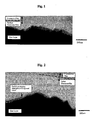
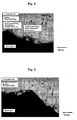
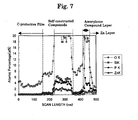
- the film structure of the surface treatment film to be formed on the surface of a zinc-plated or aluminium-plated steel sheet is composed of an amorphous compound layer that contains P, Zn and/or Al, and O, and an organic resin matrix layer which overlies it and of which the matrix is a hydrazine derivative-modified, epoxy group-containing resin or a combination of the modified epoxy group-containing resin and an urethane resin.
- the surface treatment film contains a silane compound that is derived from the silane coupling agent in the surface-treating composition.
- the surface treatment film preferably contains self-constructed compounds that contains P, Zn and/or Al, and O, more preferably a self-constructed compounds that contains P, Zn and/or Al, Si, and O.
- the molar ratio of Zn to P, [Zn]/[P] in the amorphous compound layer of the surface treatment film falls between 0.9 and 1.4.
- the molar ratio of Zn to P, [Zn]/[P] in the self-constructed compounds in the surface treatment film generally falls between 0.9 and 1.4.
- the white rust resistance of the film may be further better.
- the surface treatment film When containing the above-mentioned chromium-free antirust additive and solid lubricant, the surface treatment film ensures better white rust resistance and better workability.
- the surface-treated steel sheets of the invention may have an organic resin film formed on the above-mentioned surface treatment film.
- the thickness of the surface treatment film is from 0.02 ⁇ m to smaller than 5 ⁇ m
- the thickness of the overlying organic resin film is from 0.02 ⁇ m to smaller than 5 ⁇ m
- the total thickness of the surface treatment film and the organic resin film is at most 5 ⁇ m, from the viewpoint of the electroconductivity and the workability of the steel sheets.
- One preferred method of fabricating the surface-treated steel sheets of the invention comprises controlling the pH of the surface-treating composition as above to fall between 0.5 and 6, applying the composition to a zinc-plated or aluminium-plated steel sheet, and, not washing it with water, drying it under heat at an ultimate sheet temperature of from 50°C to 300°C to thereby form thereon a surface treatment film having a thickness of from 0.02 to 5 ⁇ m.
- the surface treatment film having a thickness of from 0.02 ⁇ m to smaller than 5 ⁇ m is first formed on the surface of a plated steel sheet, and then an organic resin film having a thickness of from 0.02 ⁇ m to smaller than 5 ⁇ m is formed thereon so that the total thickness of the two films may be at most 5 ⁇ m.
- the surface-treated steel sheets of the invention have extremely excellent corrosion resistance and their film appearance and adhesiveness to paint are also good.
- the zinc-plated steel sheet which is the base of the surface-treated steel sheets of the invention includes zinc alone-plated steel sheets, Zn-Ni alloy-plated steel sheets, Zn-Fe alloy-plated steel sheets (electroplated steel sheets and alloying hot zinc-plated steel sheets), Zn-Cr alloy-plated steel sheets, Zn-Mn alloy-plated steel sheets, Zn-Co alloy-plated steel sheets, Zn-Co-Cr alloy-plated steel sheets, Zn-Cr-Ni alloy-plated steel sheets, Zn-Cr-Fe alloy-plated steel sheets, Zn-Al alloy-plated steel sheets (e.g., Zn-5 % Al alloy-plated steel sheets, Zn-55 % Al alloy-plated steel sheets), An-Mg alloy-plated steel sheets, Zn-Al-Mg alloy-plated steel sheets (e.
- Zn-6 % Al-3 % Mg alloy-plated steel sheets Zn-11 % Al-3 % Mg alloy-plated steel sheets
- other zinc composite-plated steel sheets in which the plating film contains any of metal oxides, polymers and others dispersed therein e.g., Zn-SiO 2 dispersion-plated steel sheets, etc.
- multi-layer-plated steel sheets with two or more of the same or different layers as above.
- the aluminium-plated steel sheet which is also the base of the surface-treated steel sheets of the invention includes aluminium alone-plated steel sheets, Al-Si alloy-plated steel sheets, etc.
- nude steel sheets may be pre-plated with thin Ni, and then plated in the manner as above to give the plated steel sheets.
- an electroplating method in an aqueous solution or in an non-aqueous solution
- a hot-dip plating method in an aqueous solution
- a vapor-phase plating method for plating steel sheets, employable is any practicable method of an electroplating method (in an aqueous solution or in an non-aqueous solution), a hot-dip plating method and a vapor-phase plating method.
- the plating film may have from 0.1 to 2000 ppm or so of at least one minor element of Ni, Co and Fe deposited therein, or its surface may be processed with an aqueous alkaline or acidic solution that contains at least one of Ni, Co and Fe to thereby make the element deposit in its surface.
- an aqueous solution comprising, as the essential ingredient, a condensed phosphoric acid, Nihon Parkerizing's CL-342 (trade name) may be used, and the content of at least one of Ni, Co and Fe in the aqueous solution is preferably from 0.5 to 50 ppm, more preferably at least from 1 to 20 ppm.
- the concentration of the agent, CL-342 is from 5 to 50 g/liter, more preferably from 10 to 30 g/liter.
- the surface treatment film formed on the surface of the zinc-plated or aluminium-plated steel sheet to be the surface-treated steel sheets of the invention is one formed by applying a surface-treating composition that contains:
- epoxy group-containing resin (A) and the active hydrogen-containing compound (B) that are to form the water-dispersible or water-soluble resin for the component (a).
- the epoxy group-containing resin (A) has at least one epoxy group in the molecule, including, for example, epoxy resins, modified epoxy resins, acrylic copolymer resins obtained through copolymerization of an epoxy group-containing monomer with any other monomer, epoxy group-having polybutadiene resins, epoxy group-having polyurethane resins and adducts and condensates of these resins.
- epoxy resins modified epoxy resins
- acrylic copolymer resins obtained through copolymerization of an epoxy group-containing monomer with any other monomer epoxy group-having polybutadiene resins, epoxy group-having polyurethane resins and adducts and condensates of these resins.
- epoxy group-containing resin (A) has at least one epoxy group in the molecule, including, for example, epoxy resins, modified epoxy resins, acrylic copolymer resins obtained through copolymerization of an epoxy group-containing monomer with any other monomer, epoxy group-having polybutadiene resin
- the epoxy resins includes aromatic epoxy resins that are prepared by reacting a polyphenol such as bisphenol A, bisphenol F or novolak-type phenol with an epihalohydrin such as epichlorohydrin to introduce a glycidyl group into the resulting reaction products, or by further reacting the glycidyl group-introduced reaction product with a polyphenol to thereby increase the molecular weight of the product; and aliphatic epoxy resins, alicyclic epoxy resins, etc. One or more of these may be used herein either singly or as combined. Especially when the film-forming composition is required to form films at low temperatures, it is desirable that the epoxy resins to be therein have a number-average molecular weight of at least 1500.
- the modified epoxy resins are, for example, those modified by reacting various modifying agents with the epoxy group or the hydroxyl group in the above-mentioned epoxy resins. Concretely, they include epoxy-ester resins reacted with drying oil fatty acids; epoxy-acrylate resins modified with polymerizing unsaturated monomers that contain acrylic acid, methacrylic acid or the like; urethane-modified epoxy resins reacted with isocyanate compounds, etc.
- the acrylic copolymer resins include those prepared through solution polymerization, emulsion polymerization or suspension polymerization of a polymerizing unsaturated monomer component that indispensably comprises an epoxy group-having unsaturated monomer and an acrylate or methacrylate.
- the polymerizing unsaturated monomer component includes, for example, C1-24 alkyl esters of acrylic acid or methacrylic acid such as methyl(meth)acrylate, ethyl(meth)acrylate, propyl(meth)acrylate, n-, iso- or tert-butyl (meth)acrylate, hexyl(meth)acrylate, 2-ethylhexyl (meth)acrylate, decyl(meth)acrylate, lauryl(meth)acrylate; acrylic acid, methacrylic acid, styrene, vinyltoluene, acrylamide, acrylonitrile, N-methylol(meth)acrylamide, C1-4 alkyl ethers of N-methylol(meth)acrylamide; N,N-diethylaminoethyl methacrylate, etc.
- C1-24 alkyl esters of acrylic acid or methacrylic acid such as methyl(meth)acrylate,
- the epoxy group-having unsaturated monomer may be any one having an epoxy group and a polymerizing unsaturated group, and it includes glycidyl methacrylate, glycidyl acrylate, 3,4-epoxycyclohexyl-1-methyl (meth)acrylate, etc.
- the acrylic copolymer resins may be modified with any of polyester resins, epoxy resins, phenol resins, etc.
- the epoxy resins are reaction products of bisphenol A and epihalohydrin that are typically represented by the following chemical formula. These are especially favorable as having good corrosion resistance.
- q indicates an integer of from 0 to 50, preferably an integer of from 1 to 40, more preferably an integer of from 2 to 20.
- the bisphenol A-type epoxy resins may be obtained in any method well known in the art.
- the active hydrogen-containing compound (B) a part or all of which is an active hydrogen-containing hydrazine derivative is an indispensable component for making the surface treatment film have high-level corrosion resistance. Specific examples of the active hydrogen-containing hydrazine derivative are mentioned below.
- pyrazole compounds and triazole compounds having a 5-membered or 6-membered cyclic structure and having a nitrogen atom in the cyclic structure, in view of their good corrosion resistance.
- any other active hydrogen-containing compounds than such hydrazine derivatives may be used as a part of the active hydrogen-containing compound (B).
- active hydrogen-containing compounds except hydrazine derivatives are, for example, the following compounds. One or more of these may be used herein.
- the hydrazine derivative having no active hydrogen atom or the tertiary amine is not reactive with an epoxy group by itself, and therefore it is mixed with an acid so that the resulting mixture may be reactive with an epoxy group.
- the quaternating agent reacts with an epoxy group optionally in the presence of water to thereby form a quaternary salt with an epoxy group-having resin.
- the acid used for forming the quaternating agent may be any of an organic acid such as acetic acid or lactic acid, or an inorganic acid such as hydrochloric acid.
- the hydrazine derivative having no active hydrogen, which is used for forming the quaternating agent may be, for example, 3,6-dichloropyridazine; and the tertiary amine includes, for example, dimethylethanolamine, triethylamine, trimethylamine, triisopropylamine and methyldiethanolamine.
- the water-dispersible or water-soluble resin (a), which is a reaction product of the epoxy group-containing resin (A) with the active hydrogen-containing compound (B) a part or all of which is an active hydrogen-containing hydrazine derivative, may be obtained by reacting the epoxy group-containing resin (A) with the specific active hydrogen-containing compound (B) at 10 to 300°C, preferably at 50 to 150°C for about 1 to 8 hours or so.
- the reaction may be effected in the presence of an organic solvent, and the type of the organic solvent to be used is not specifically defined.
- an organic solvent includes ketones such as acetone, methyl ethyl ketone, methyl isobutyl ketone, dibutyl ketone, cyclohexanone; hydroxyl group-having alcohols and ethers such as ethanol, butanol, 2-ethylhexyl alcohol, benzyl alcohol, ethylene glycol, ethylene glycol monoisopropyl ether, ethylene glycol monobutyl ether, ethylene glycol monohexyl ether, propylene glycol, propylene glycol monomethyl ether, diethylene glycol, diethylene glycol monoethyl ether, diethylene glycol monobutyl ether; esters such as ethyl acetate, butyl acetate, ethylene glycol monobutyl ether acetate; and aromatic hydrocarbons such as toluene,
- the blend ratio of the active hydrogen-containing compound (B) a part or all of which is an active hydrogen-containing hydrazine derivative to the epoxy group-containing resin (A) preferably falls between 0.01 and 10, more preferably between 0.1 and 8, even more preferably between 0.2 and 4, in terms of the ratio of the number of the active hydrogen groups of the former to the number of the epoxy groups of the latter, [number of active hydrogen groups/number of epoxy groups], in view of the corrosion resistance and the water dispersibility of the resin mixture.
- the ratio of the active hydrogen-containing hydrazine derivative in the active hydrogen-containing compound (B) is preferably from 10 to 100 mol%, more preferably from 30 to 100 mol%, even more preferably from 40 to 100 mol%. If the ratio of the active hydrogen-containing hydrazine derivative is smaller than 10 mol%, the surface treatment film could not have a satisfactory antirust function, and its antirust effect will not significantly differ from the antirust effect of a mere mixture of a film-forming organic resin and a hydrazine derivative.
- one and the same type or two or more different types of the above-mentioned water-dispersible or water-soluble resins which are the reaction products of the epoxy group-containing resin (A) with the active hydrogen-containing compound (B) a part or all of which is an active hydrogen-containing hydrazine compound, and are obtained in the manner as above, may be used either singly or as combined.
- a curing agent is added to the resin composition so that the film may be cured under heat to be a dense barrier film.
- the curing agent may be a polyisocyanate compound, an amino resin compound or the like.
- the polyisocyanate compound has at least two isocyanate groups in one molecule, including, for example, aliphatic isocyanate compounds, alicyclic isocyanate compounds (including heterocyclic compounds), aromatic isocyanate compounds; and their derivatives obtained by partially reacting these isocyanate compounds with polyalcohols. Apart or all of the isocyanate groups in these polyisocyanate compounds may be blocked with a blocking agent.
- polyisocyanate compounds may be used herein either singly or as combined.
- the blocking agent usable herein is, for example, as follows:
- One or more of these may be reacted with the above-mentioned polyisocyanate compounds to obtain polyisocyanate compounds that are stably protected at least at room temperature.
- the amino resin compounds may be methylolated amino resins that are obtained through reaction of an amino component such as melamine, urea, benzoguanamine, acetoguanamine, steroguanamine, spiroguanamine or dicyandiamide, with an aldehyde.
- the aldehyde includes formaldehyde, paraformaldehyde, acetaldehyde and benzaldehyde.
- the methylolated amino resins may be etherified with suitable alcohol for use in the invention.
- Examples of the alcohol for etherification are methyl alcohol, ethyl alcohol, n-propyl alcohol, i-propyl alcohol, n-butyl alcohol, i-butyl alcohol, 2-ethylbutanol, 2-ethylhexanol.
- methylolated melamine resins of which at least a part of the methylol groups are alkyl-etherified are especially preferred.
- the blend ratio of the water-dispersible and/or water-soluble resin (a) to the curing agent (E), (a)/(E) preferably falls between 95/5 and 55/45, more preferably between 90/10 and 65/35 in terms of the solid content ratio by mass, in view of the adhesiveness and the top coat acceptability of the film.
- the water-dispersible and/or water-soluble resin (a) may well crosslink in the presence of the above-mentioned crosslinking agent (curing agent), but for further enhancing its low-temperature crosslinkability, it is desirable that a known curing promoter catalyst is added to the resin.
- the curing promoter catalyst for them may be, for example, any of N-ethylmorpholine, dibutyl tin dilaurate, cobalt naphthenate, stannous chloride, zinc naphthenate and bismuth nitrate.
- the curing promoter catalyst for them is preferably any of phosphoric acid, sulfonic acid compounds or amine-neutralized derivatives of sulfonic acid compounds.
- Typical examples of the sulfonic acid compounds are p-toluenesulfonic acid, dodecylbenzenesulfonic acid, dinonylnaphthalenesulfonic acid, dinonylnaphthalenedisulfonic acid.
- the amine for the amine-neutralized derivatives of sulfonic acid compounds may be any of primary amines, secondary amines or tertiary amines.
- any known acrylic, alkyd or polyester resin may be added to the epoxy group-containing resin.
- the surface-treating composition may additionally contain one or more other water-dispersible and/or water-soluble resins of, for example, acrylic resins, urethane resins, polyester resins, epoxy resins, ethylene resins, alkyd resins, phenolic resins and olefin resins, of which, however, the additional resin content must be at most 25 % by mass of the overall solid resin content.
- acrylic resins urethane resins
- polyester resins epoxy resins
- ethylene resins ethylene resins
- alkyd resins alkyd resins
- phenolic resins and olefin resins of which, however, the additional resin content must be at most 25 % by mass of the overall solid resin content.
- an aqueous dispersion (a1) of a modified epoxy resin (aqueous epoxy resin dispersion) that is obtained through reaction of the epoxy group-containing resin (A) with the active hydrogen-containing compound (B) a part or all of which is an active hydrogen-containing hydrazine derivative, and further with a specific hydrophilic organic component (C) may be used for the water-dispersible resin (a) to be in the surface-treating composition, and it produces especially better white rust resistance.
- the hydrophilic organic component (C) includes, for example, a specific polyalkylene glycol-modified epoxy resin (C1), and a primary amine compound and/or a secondary amine compound (C2).
- the polyalkylene glycol-modified epoxy resin (C1) is obtained through reaction of a polyalkylene glycol having a number-average molecular weight of from 400 to 20000, a bisphenol-type epoxy resin, an active hydrogen-containing compound, and a polyisocyanate compound.
- the polyalkylene glycol includes, for example, polyethylene glycol, polypropylene glycol, polybutylene glycol. Of those, especially preferred is polyethylene glycol.
- the number-average molecular weight of the polyalkylene glycol is preferably from 400 to 20000, more preferably from 500 to 10000 in view of the water-dispersibility and the storability of the resin to be produced.
- the bisphenol-type epoxy resin is a bisphenol compound having at least one epoxy group in one molecule.
- bisphenol diglycidyl ethers that are obtained through condensation of bisphenol compounds with epihalohydrins (e.g., epichlorohydrin) as they give films of good flexibility and corrosion resistance.
- Typical examples of the bisphenol compounds that are used for preparing the bisphenol-type epoxy resin are bis (4-hydroxyphenyl)-2,2-propane, bis(4-hydroxyphenyl)-1,1-ethane, bis(4-hydroxyphenyl)methane, 4,4'-dihydroxydiphenyl ether, 4,4'-dihydroxydiphenyl sulfone, bis (4-hydroxyphenyl)-1,1-isobutane, bis(4-hydroxy-3-t-butylphenyl)-2,2-propane.
- bisphenol A-type epoxy resins are especially preferred as giving films of good flexibility and corrosion resistance.
- the bisphenol-type epoxy resins have a number-average molecular weight of from approximately 310 to 10000, more preferably from approximately 320 to 2000 and have an epoxy equivalent of from approximately 155 to 5000, more preferably from approximately 160 to 1000, in view of the production stability in producing the polyalkylene glycol-modified epoxy resins.
- the active hydrogen-containing compound is used for blocking the isocyanate group in the polyalkylene glycolmodified epoxy resin (C1).
- C1 polyalkylene glycolmodified epoxy resin
- monoalcohols such as methanol, ethanol, diethylene glycol monobutyl ether
- monocarboxylic acids such as acetic acid, propionic acid
- monothiols such as ethylmercaptan.
- the other blocking agents are secondary amines such as diethylamine; aldimines, ketimines, oxazolines and imidazolines obtained through thermal modification of amine compounds having one secondary amino group or hydroxyl group and one or more primary amino groups, such as diethylenetriamine and monoethanolamine, at their primary amino group with any of ketones, aldehydes or carboxylic acids, for example, at a temperature of from 100 to 230°C or so; oximes such as methylethyl ketoxime; and phenols such as phenol, nonylphenol.
- these compounds have a number-average molecular weight of from 30 to 2000, more preferably from 30 to 200.
- the polyisocyanate compound has at least 2, preferably 2 or 3 isocyanate groups in one molecule, and it may be any and every one generally used in production of polyurethane resins.
- the polyisocyanate compound of the type includes aliphatic, alicyclic and aromatic polyisocyanate compounds.
- aliphatic polyisocyanate compounds such as hexamethylene diisocyanate (HMDI), biuret compound of HMDI, isocyanurate compound of HMDI; alicyclic polyisocyanate compounds such as isophorone diisocyanate (IPDI), biuret compound of IPDI, isocyanurate compound of IPDI, hydrogenated xylylene diisocyanate, hydrogenated 4,4'-diphenylmethane diisocyanate; and aromatic polyisocyanate compounds such as tolylene diisocyanate, xylylene diisocyanate.
- HMDI hexamethylene diisocyanate
- IPDI isocyanurate compound of HMDI
- IPDI isophorone diisocyanate
- IPDI isocyanurate compound of IPDI
- hydrogenated xylylene diisocyanate hydrogenated 4,4'-diphenylmethane diisocyanate
- the blend ratio of the components in producing the polyalkylene glycol-modified epoxy resin (C1) is preferably as follows:
- the equivalent ratio of the hydroxyl group in the polyalkylene glycol to the isocyanate group in the polyisocyanate compound preferably falls between 1/1.2 and 1/10, more preferably between 1/1.5 and 1/5, even more preferably between 1/1.5 and 1/3.
- the equivalent ratio of the hydroxyl group in the active hydrogen-containing compound to the isocyanate group in the polyisocyanate compound preferably falls between 1/2 and 1/100, more preferably between 1/3 and 1/50, even more preferably between 1/3 and 1/20.
- the equivalent ratio of the total amount of the hydroxyl groups in the polyalkylene glycol, the bisphenol-type epoxy resin and the active hydrogen-containing compound to the isocyanate group in the polyisocyanate compound is preferably at most 1/1.5, more preferably between 1/0.1 and 1/1.5, even more preferably between 1/0.1 and 1/1.1.
- the polyalkylene glycol, the bisphenol-type epoxy resin, the active hydrogen-containing compound and the polyisocyanate compound may be reacted in any known method.
- the modified epoxy resin for the aqueous epoxy resin dispersion (a1) may be obtained by reacting the epoxy group-containing resin (A), the polyalkylene glycol-modified epoxy resin (C1) and the active hydrogen-containing compound (B) a part or all of which is an active hydrogen-containing hydrazine derivative, and it is desirable that the reaction is effected generally at a temperature falling between 10 and 300°C, more preferably between 50 and 150°C, for about 1 to 8 hours or so.
- epoxy group-containing resin (A) and the active hydrogen-containing compound (B) a part or all of which is an active hydrogen-containing hydrazine derivative, referred to are the same as those mentioned hereinabove.
- the reaction may be effected in the presence of an organic solvent, and the type of the organic solvent to be used is not specifically defined.
- the organic solvent includes ketones such as acetone, methyl ethyl ketone, methyl isobutyl ketone, dibutyl ketone, cyclohexanone; hydroxyl group-having alcohols and ethers such as ethanol, butanol, 2-ethylhexyl alcohol, benzyl alcohol, ethylene glycol, ethylene glycol monoisopropyl ether, ethylene glycol monobutyl ether, ethylene glycol monohexyl ether, propylene glycol, propylene glycol monomethyl ether, diethylene glycol, diethylene glycol monoethyl ether, diethylene glycol monobutyl ether; esters such as ethyl acetate, butyl acetate, ethylene glycol monobutyl ether acetate; and aromatic hydrocarbons such,as toluen
- the blend ratio of polyalkylene glycol-modified epoxy resin (C1), the epoxy group-containing resin (A) and the active hydrogen-containing compound (B) a part or all of which is an active hydrogen-containing hydrazine derivative is preferably so controlled that the equivalent ratio of the active hydrogen group in the hydrazine derivative in the active hydrogen-containing compound (B) to the epoxy group in the polyalkylene glycol-modified epoxy resin (C1) and the epoxy group-containing resin (A) falls between 0.01 and 10, more preferably between 0.1 and 8, even more preferably between 0.2 and 4, in view of the corrosion resistance of the film and the dispersibility in water of the resin.
- Two or more different types of the modified epoxy resins that are obtained through reaction of the above-mentioned components (A), (B) and (C1) or the aqueous epoxy resin dispersions that are prepared by dispersing the resins may be used herein as combined.
- the primary or secondary amine compound are primary amine compounds such as monoethylamine, mono-n- or iso-propylamine, mono-n- or iso-butylamine, monoethanolamine, neopentanolamine, 2-aminopropanol, 3-aminopropanol, 2-hydroxy-2'-(aminopropoxy)ethyl ether; and secondary amines such as diethylamine, dibutylamine, methylethylamine, diethanolamine, di-n- or iso-propanolamine, N-methylethanolamine, N-ethylethanolamine.
- primary amine compounds and secondary amine compounds may be used either singly or as combined. Of those, especially preferred is diethanolamine in view of the easiness in controlling its reaction and of its dispersibility in water.
- the modified epoxy resin for the aqueous epoxy resin dispersion (a1) may be prepared by reacting the epoxy group-containing resin (A), the primary amine compound and/or the secondary amine compound (C2), and the active hydrogen-containing compound (B) a part or all of which is an active hydrogen-containing hydrazine derivative, and it is desirable that the reaction is effected generally at 10 to 300°C, but preferably at 50 to 150°C, for about 1 to 8 hours or so.
- the epoxy group-containing resin (A) and he active hydrogen-containing compound (B) a part or all of which is an active hydrogen-containing hydrazine derivative, referred to are the same as those mentioned hereinabove.
- the reaction may be effected in an organic solvent, for which referred to are the same as those mentioned hereinabove for the reaction of (A), (B) and (C1).
- the blend ratio of the epoxy group-containing resin (A) and the primary amine compound and/or the secondary amine compound (B) is preferably so controlled that the primary amine compound and/or the secondary amine compound (B) is from 20 to 80 mol%, more preferably from 30 to 70 mol%, even more preferably from 40 to 60 mol% relative to the epoxy group in the epoxy group-containing resin (A), and it is advantageous that the remaining epoxy group after the reaction is reacted with its corresponding amount of the active hydrogen-containing hydrazine derivative, in view of the corrosion resistance of the film and of the dispersibility in water of the resin.
- the amount of the active hydrogen-containing hydrazine derivative to be blended is preferably from 20 to 80 mol%, more preferably from 30 to 70 mol%, even more preferably from 40 to 60 mol% relative to the epoxy group in the epoxy group-containing resin (A).
- a method is effective of neutralizing the modified epoxy resin with an ordinary neutralizing agent well known for the amino group in the resin, such as acetic acid, formic acid or phosphoric acid, followed by dispersing the resulting resin in water.
- the neutralization equivalence is not specifically defined, but is preferably from 0.2 to 0.8 equivalents, more preferably from 0.3 to 0.7 equivalents, even more preferably from 0.4 to 0.6 equivalents relative to the amino group in the resin, in view of the properties and the water resistance of the resulting dispersion.
- Two or more different types of the modified epoxy resins that are obtained through reaction of the components (A), (B) and (C2) or the aqueous epoxy resin dispersions prepared by dispersing them in water may be used herein as combined.
- the aqueous epoxy resin dispersion (a1) may form good films of high adhesiveness to metal films, but it is desirable to add a curing agent to the aqueous epoxy resin dispersion (a1) and the organic film formed is cured under heat in order that it may be a denser barrier film.
- the curing agent may be any of the above-mentioned polyisocyanate compounds and amino resin compounds.
- the blend ratio of the modified epoxy resin (D) to the curing agent (E) in the aqueous epoxy resin dispersion (a1), (D)/(E) by mass of the solid content thereof, preferably falls between 95/5 and 55/45, more preferably between 90/10 and 65/35 in view of the adhesiveness and the top coat acceptability of the film.
- any known acrylic, alkyd or polyester resin may be added to the epoxy group-containing resin.
- the silane coupling agent includes, for example, vinylmethoxysilane, vinylethoxysilane, vinyltrichlorosilane, vinyltrimethoxysilane, vinyltriethoxysilane, ⁇ -(3,4-epoxycyclohexyl)ethyltrimethoxysilane, ⁇ -glycidoxypropyltrimethoxysilane, ⁇ -glycidoxypropylmethyldiethoxysilane, ⁇ -glycidoxypropyltriethoxysilane, N- ⁇ -(aminoethyl)- ⁇ -aminopropylmethyldimethoxysilane, N- ⁇ -(aminoethyl)- ⁇ -aminopropyltrimethoxysilane, N- ⁇ -(aminoethyl)- ⁇ -aminopropyltriethoxysilane, ⁇ -aminopropyltrimethoxysilane, ⁇ -aminopropyl
- the surface-treating composition contains a silane coupling agent along with a specific acid component to improve its white rust resistance, and the reason will be as described hereinabove.
- silane coupling agents especially preferred are those having, as the reactive functional group, an amino group, since the reactivity of their functional group with the water-dispersible and/or water-soluble resins (a), (a1) is high.
- the silane coupling agent of the type includes, for example, N- ⁇ -(aminoethyl)- ⁇ -aminopropylmethyldimethoxysilane, N- ⁇ -(aminoethyl)- ⁇ -aminopropyltrimethoxysilane, N- ⁇ -(aminoethyl)- ⁇ -aminopropyltriethoxysilane, ⁇ -aminopropyltrimethoxysilane, and ⁇ -aminopropyltriethoxysilane.
- Shin-etsu Chemical's KBM-903, KBE-903, KBM-603, KBE-602 and KBE 603 are usable.
- the amount of the silane coupling agent (b) to be in the surface-treating composition is preferably from 1 to 300 parts by weight, more preferably from 5 to 100 parts by weight, even more preferably from 15 to 50 parts by weight relative to 100 parts by weight of the solid content of the organic resin therein. If the amount of the silane coupling agent is smaller than 1 part by weight, the corrosion resistance of the film will be poor; but if larger than 300 parts by weight, good film could not be formed, and, if so, the silane coupling agent could not exhibit its effect of increasing the adhesiveness to the plating metal and the barrier property of the water-dispersible and/or water-soluble resins (a), (a1), and the corrosion resistance of the film will lower.
- the phosphoric acid and/or hexafluoro-metal acid of the component (c) acts on the surface of an inert plating metal to activate the metal surface.
- the phosphoric acid and the hexafluoro-metal acid may be used either singly or as combined.
- the type of the hexafluoro-metal acid is not specifically defined.
- the acid contains at least one element selected from Ti, Si and Zr, and includes, for example, fluorotitanic acid, fluorozirconic acid and hydrosilicofluoric acid. One or more of these may be used herein.
- the amount of the phosphoric acid and/or hexafluoro-metal acid (c) to be in the surface-treating composition is preferably from 0.1 to 80 parts by weight, more preferably from 1 to 60 parts by weight, even more preferably from 5 to 50 parts by weight in total, relative to 100 parts by weight of the solid content of the organic resin therein. If the amount of the phosphoric acid and/or hexafluoro-metal acid (c) in the composition is smaller than 0.1 parts by weight, the corrosion resistance of the film will be poor; but if larger than 80 parts by weight, the outward appearance of the film will be uneven.
- the surface-treating composition contains an aqueous urethane resin dispersion (d) along with the aqueous epoxy resin dispersion (a1), the silane coupling agent (b) and the phosphoric acid and/or hexafluoro-metal acid (c).
- the aqueous urethane resin dispersion (d) is an urethane emulsion of a product obtained through reaction of a polyisocyanate compound with a polyhydroxy compound such as polyether-diol or polyester-diol.
- the urethane emulsion may be readily obtained by reacting a polyisocyanate compound with a polyhydroxy compound in the presence or absence of a hydrophilic organic solvent not having an active hydrogen that is reactive with an isocyanate group in the molecule, in such a controlled manner that the isocyanate group in the polyisocyanate compound is excessive over the hydroxyl group in the polyhydroxy compound.
- the reaction product polymer
- the reaction product may be mixed with an amine and water for amine extension reaction, and thereafter it is mixed with a nonionic or ionic emulsifier along with water for emulsification and dispersion, and optionally the organic solvent, if used, is evaporated away.
- the urethane emulsion does not require an emulsifier in preparing it.
- the polyisocyanate compound includes organic diisocyanates, for example, aliphatic diisocyanates such as hexamethylene diisocyanate, trimethylhexamethylene diisocyanate; cycloaliphatic diisocyanates such as hydrogenated xylylene diisocyanate, isophorone diisocyanate; aromatic diisocyanates such as tolylene diisocyanate, 4,4'-diphenylmethane diisocyanate; cyclized polymers of the organic diisocyanates, as well as isocyanurates and biurets of the organic diisocyanates. One or more of these may be used herein.
- organic diisocyanates for example, aliphatic diisocyanates such as hexamethylene diisocyanate, trimethylhexamethylene diisocyanate; cycloaliphatic diisocyanates such as hydrogenated xylylene diisocyanate, isophorone diisocyanate; aromatic diiso
- aqueous urethane dispersion (d) especially preferred are nonionic or cationic polyurethane emulsions in view of the blend stability thereof with the aqueous epoxy resin dispersion (a1).
- the surface-treating composition may form a film of significantly improved white rust resistance.
- the film-forming ability of the surface-treating composition that contains a suitable amount of such an aqueous urethane dispersion may be improved, and, as a result, the ability of the film to prevent penetration of corrosive factors therethrough may be improved and, in addition, the antirust component of the film may be prevented from flowing away.
- the blend ratio of the aqueous epoxy resin dispersion (a1) to the aqueous urethane resin dispersion (d) in the surface-treating composition, (a1)/(d) preferably falls between 95/5 and 5/95, more preferably between 75/25 and 25/75 in terms of the solid content ratio by mass. If the blend ratio of the aqueous urethane resin dispersion (b) to the aqueous epoxy resin dispersion (a) is smaller than the defined range as above, the urethane resin-derived film-forming ability is unsatisfactory, and if so, the ability of the film to repel corrosive factors will be unsatisfactory and the white rust resistance of the film will be therefore low.
- the blend ratio of the aqueous urethane resin dispersion (b) to the aqueous epoxy resin dispersion (a) is larger than the defined range as above, the ratio of the active hydrogen-containing compound that comprises an active hydrogen-containing hydrazine derivative in the surface-treating composition lowers. In this case, therefore, the white rust resistance of the film will also lower.
- the surface-treating composition may additionally contain one or more other water-dispersible and/or water-soluble resins of, for example, acrylic resins, polyester resins, epoxy resins, ethylene resins, alkyd resins, phenolic resins and olefin resins, of which, however, the additional resin content must be at most about 25 % by mass of the overall solid resin content.
- the surface-treating composition for use in the invention additionally contains a water-soluble inorganic component for further improving the corrosion resistance of the film formed of the composition.
- the cation is preferably one or more selected from Mg, Ca, Y, Ti, Zr, Nb, Zn, Mn, Co, Ni, Al, In, Ce and La
- the anion is preferably one or more selected from nitrate, sulfate, acetate, carbonate, phosphate and chloride.
- the inorganic component includes Mg nitrate, Co nitrate, Ti sulfate, Ni sulfate, Zn acetate, Ce acetate, and Mn carbonate. One or more of these may be used herein.
- the cation of the water-soluble inorganic component is especially preferably any of Al, Mn, Zr, Co or Mg. Concretely, it is desirable that a water-soluble inorganic component which contains one or more elements selected from these cations is used in the surface-treating composition.
- the amount of the water-soluble inorganic component to be in the surface-treating composition is preferably from 0.1 to 60 parts by mass, more preferably from 0.5 to 40 parts by mass, even more preferably from 1 to 30 parts by mass in terms of the solid content thereof relative to 100 parts by mass of the solid content of the organic resin therein. If the amount of the water-soluble inorganic component is smaller than 0.1 parts by mass, the corrosion resistance of the film will be unsatisfactory; but if larger than 60 parts by mass, the reactivity of the treating liquid will increase too much and the outward appearance of the film will be uneven.
- the water-soluble organic component to be added to the composition is a water-soluble phosphate
- one or more of metal salts of orthophosphoric acid, pyrophosphoric acid, polyphosphoric acid and metaphosphoric acid may be used for it.
- one or more salts of organic phosphoric acids e.g., phytic acid, phytic acid salts, phosphonic acid, phosphonic acid salts, and their metal salts
- the morphology of the phosphate in the film is not also specifically defined, and the salt may be crystalline or amorphous.
- the ionicity and the solubility of the phosphate in the film are not also specifically defined. The reason why the water-soluble phosphate added may improve the corrosion resistance of the film will be because the water-soluble phosphate may form a hardly-soluble compound in the film formed.
- the surface-treating composition may optionally contain a chromium-free antirust additive for further improving the corrosion resistance of the film formed of the composition. Containing such a chromium-free antirust additive, the surface-treating composition may form a film of better corrosion resistance (self-repairing ability).
- the chromium-free antirust additive is preferably at least one selected from the following groups (e1) to (e5):
- the component (e1) usable is fine particulate silica that includes colloidal silica and fumed silica.
- colloidal silica for example, usable are Nissan Chemical's Snowtex O, 20, 30, 40, C and S (all trade names).
- fumed silica usable are Nippon Aerosil's AEROSIL R971, R812, R811, R974, R202, R805, 130, 200, 300 and 300CF (all trade manes).
- calcium ion-exchanged silica usable are W. R. Grace & Company's SHIELDEX C303, SHIELDEX AC3, SHIELDEX AC5 (all trade names), and Fuji Silysia Chemical's SHIELDEX, SHIELDEX SY710 (both trade names).
- These silicas contribute to forming dense and stable zinc corrosion products, and the corrosion products spread on the metal surface to retard the promotion of metal surface corrosion.
- the components (e2) and (e3) exhibits excellent corrosion resistance (self-repairing ability) owing to their deposition capability.
- the calcium compound of the component (e2) may be any of calcium oxides, calcium hydroxides and calcium salts, and one or more of these may be used herein.
- the calcium salts are not specifically defined in point of their type, and they may be any of simple salts that have calcium alone as the cation, such as calcium silicate, calcium carbonate, calcium phosphate; and double salts that have calcium and another cation except calcium, such as calcium zinc phosphate, calcium magnesium phosphate.
- the component (e2) its calcium that is baser than the plating metal, zinc or aluminium predominantly dissolves out in corrosive environments, and this form a dense and hardly-soluble product with OH - that has been formed in the cathode reaction and seals up the defects to prevent corrosive reaction.
- the component is added to the composition along with silica mentioned above, calcium ions adhere to the metal surface and electrically neutralize the surface charges to deposit. As a result, a dense and hardly-soluble protective film is formed and it prevents corrosive reaction.
- the hardly-soluble phosphates include salts of all types such as simple salts and double salts.
- the metal cation to form them is not specifically defined, and may be any and every one.
- the salts include zinc phosphate, magnesium phosphate, calcium phosphate, and aluminium phosphate.
- the skeleton and the degree of condensation of the phosphate ion are not also specifically defined.
- the salts may be any of normal salts, dihydrogen salts, monohydrogen salts or phosphite.
- the normal salts include orthophosphates and other all condensed phosphates such as polyphosphates.
- the plating metal, zinc or aluminium having been released through corrosion reacts in a mode of complexation with the phosphate ion that has been dissociated from the compounds through hydrolysis, to thereby form a dense and hardly-soluble protective film, and the film blocks the corrosion start points to prevent corrosive reaction.
- molybdic acid compound (e4) for example, usable are molybdates.
- the molybdates are not specifically defined in point of their skeleton and degree of condensation, and include, for example, orthomolybdates, paramolybdates and metamolybdates. They include all salts such as simple salts and double salts. Examples of the double salts are phosphate molybdates.
- the molybdic acid compounds Owing to their passivation effect, the molybdic acid compounds exhibit their self-repairing activity. Specifically, in corrosive environments, they form dense oxide along with dissolved oxygen on the film surface to thereby block the corrosive start points to prevent corrosive reaction.
- the organic compound (e5) includes, for example, triazoles such as 1,2,4-triazole, 3-amino-1,2,4-triazole, 3-mercapto-1,2,4-triazole, 5-amino-3-mercapto-1,2,4-triazole, 1H-benzotriazole; thiols such as 1,3,5-triazine-3,4,6-trithiol, 2-mercaptobenzimidazole; thiadiazoles such as 5-amino-2-mercapto-1,3,4-thiadiazole, 2,5-dimercapto-1,3,4-thiadiazole; thiazoles such as 2-N,N-diethylthiobenzothiazole, 2-mercaptobenzothiazole; thiurams such as tetraethylthiuram disulfide.
- triazoles such as 1,2,4-triazole, 3-amino-1,2,4-triazole, 3-mercapto-1,2,4-triazole,
- the organic compounds exhibit their self-repairing activity. Specifically, zinc or aluminium that has been released through corrosion adsorbs the sulfur-containing polar group of the organic compound to form an inactive film, and this blocks the corrosion start points to prevent corrosive reaction.
- the amount of the chromium-free antirust additive to be in the surface-treating composition is from 0.1 to 50 parts by mass, more preferably from 0.5 to 30 parts by mass, even more preferably from 1 to 20 parts by mass in terms of its solid content relative to 100 parts by mass of the solid content of the organic resin therein. If the amount of the chromium-free antirust additive is smaller than 0.1 parts by mass, the corrosion resistance of the metal film after degreasing with alkali will be poor; but if larger than 50 parts by mass, it is unfavorable since not only the coatability and workability of the plated steel sheets but also the corrosion resistance thereof will lower.
- Two or more different types of the above-mentioned antirust additives (e1) to (e5) may be added to the composition. Such their combination use is preferred since the anticorrosive effects intrinsic to the individual components are synergistically combined to produce higher-level corrosion resistance.
- calcium ion-exchanged silica is used for the component (e1), it is preferably combined with at least one of the components (e3), (e4) and (e5), more preferably all of the components (e3) to (e5) to attain excellent corrosion resistance.
- the surface-treating composition may contain a solid lubricant for improving the workability (scratch resistance) and continuous grindability of the film.
- the solid lubricant includes the following:
- fatty acid amide compounds e.g., stearamide, palmitamide, methylenebisstearamide, ethylenebisstearamide, oleamide, esylamide, alkylenebis-fatty acid amide
- fatty acid ester waxes which are esters of polyol compounds and fatty acids
- silicone wax fluorine-containing wax, lanolin wax, montan wax, microcrystalline wax, carnauba wax, metal soaps (e.g., calcium stearate, zinc stearate, calcium laurate, calcium palmitate), metal sulfides (e.g., molybdenum disulfide, tungsten disulfide), graphite, fluorographite, boron nitride, polyalkylene glycols, alkali metal sulfates, etc.
- silicone wax e.g., fluorine-containing wax, lanolin wax, montan wax, microcrystalline wax, carnauba wax, metal soaps (e.g.,
- fluororesin compounds in particular, polytetrafluoroethylene resin particles.
- polyethylene wax usable are Hoechst's Ceridust 9615A, 3715, 3620 and 3910 (all trade names), Sanyo Kasei's Sunwax 131-P and 161-P (both trade names), and Mitsui Petrochemical's Chemipearl W-100, W-200, W-500, W-800 and W-950 (all trade names).
- fluororesin particles especially preferred are tetrafluoroethylene particles, for which concretely preferred are Daikin Industry's Rublon L-2 and 1-5 (both trade names), Mitsui-DuPont's MP 1100 and 1200 (both trade names), Asahi ICI Fluoropolymers' Fluon Dispersion AD1, AD2, Fluon L140J, L150J and L155J (all trade names).
- a combination of polyolefin wax and tetrafluoroethylene may give more excellent lubrication.
- the amount of the solid lubricant to be in the surface-treating composition is preferably from 1 to 50 parts by mass, more preferably from 3 to 30 parts by mass relative to 100 parts by mass of the solid content of the organic resin therein. If the amount of the solid lubricant is smaller than 1 part by mass, the lubrication will be poor; but is larger than 80 parts by mass, the coatability of the metal film will worsen.
- the surface treatment film (and the surface-treating composition) may contain, as a corrosion inhibitor, one or more of any other oxide particles (e.g., aluminium oxide, zirconium oxide, titanium oxide, cerium oxide, antimony oxide), phosphoromolybdates (e.g., aluminium phosphoromolybdate), organic phosphoric acids and their salts (e.g., phytic acid, phytic acid salts, phosphonic acid, phosphonic acid salts, and their metal salts, alkaline metal salts, alkaline earth metal salts), and organic inhibitors (e.g., hydrazine and its derivatives, thiol compounds, thiocarbamates).
- oxide particles e.g., aluminium oxide, zirconium oxide, titanium oxide, cerium oxide, antimony oxide
- phosphoromolybdates e.g., aluminium phosphoromolybdate
- organic phosphoric acids and their salts e.g., phytic acid, phytic
- the surface treatment film (and the surface-treating composition) may contain one or more of organic color pigments (e.g., condensed polycyclic organic pigments, phthalocyanine organic pigments), color dyes (e.g., water-soluble azo-metal dyes), inorganic pigments (e.g., titanium oxide), electroconductive pigments (e.g., metal powder such as zinc, aluminium or nickel, iron phosphide antimony-doped tin oxide), coupling agents (e.g., titanium coupling agents), and melamine-cyanuric acid adducts.
- organic color pigments e.g., condensed polycyclic organic pigments, phthalocyanine organic pigments
- color dyes e.g., water-soluble azo-metal dyes
- inorganic pigments e.g., titanium oxide
- electroconductive pigments e.g., metal powder such as zinc, aluminium or nickel, iron phosphide antimony-doped tin oxide
- the surface treatment film formed of the surface-treating composition that comprises the components mentioned above may have a dry thickness of from 0.02 to 5 ⁇ m, preferably from 0.05 to 5 ⁇ m, more preferably from 0.3 to 3 ⁇ m, even more preferably from 0.5 to 2 ⁇ m. If its dry thickness is smaller than 0.02 ⁇ m, the corrosion resistance of the film will be poor; but if larger than 5 ⁇ m, the electroconductivity and the workability thereof will worsen.
- a second organic resin film may be formed on the surface treatment film. It is desirable that the thickness of the second organic resin film is from 0.02 ⁇ m to smaller than 5 ⁇ m, more preferably from 0.05 ⁇ m to smaller than 5 ⁇ m, the thickness of the first film, the surface treatment film is from 0.02 ⁇ m to smaller than 5 ⁇ m, more preferably from 0.05 ⁇ m to smaller than 5 ⁇ m, and the total thickness of the two films is not over 5 ⁇ m.
- the film structure of the surface treatment film is described concretely.
- the surface treatment film to be formed on the surface of the zinc-plated or aluminium-plated steel sheet in the invention comprises an amorphous compound layer that contains P, Zn and/or Al, and O, and an overlying organic resin matrix layer that comprises, as the matrix, a hydrazine derivative-modified, epoxy group-containing resin or a combination of the modified epoxy group-containing resin and an urethane resin.
- the film amorphous compound layer and/or organic resin matrix layer
- the surface treatment film contains no Cr.
- the upper organic resin matrix layer acts as a high-performance barrier layer (having the activity ⁇ 1> as above), and the lower amorphous compound layer acts to inactivate the metal layer (having the activity ⁇ 2> as above), and more preferably, the self-constructed compounds in the film is self-repairing (having the activity ⁇ 3> as above).
- the surface treatment film makes the surface-treated steel sheet have high-level corrosion resistance.
- the amorphous compound layer is a thick layer or film of the amorphous compound that is formed through chemical reaction of the surface-treating composition and the metal layer, and this is formed of a compound that contains Zn and/or Al derived from Zn and/or Al of the plating component.
- the composition of the amorphous compound is characterized in that it contains the same molar amount of Zn and P, more concretely the molar ratio of Zn to P, [Zn]/[P] in the compound falls between 0.9 and 1.4.
- the compound will be a secondary phosphate (e.g., ZnHPO 4 ⁇ 2H 2 O).
- the amorphous compound layer formed ensures excellent white rust resistance will be, as so mentioned hereinabove, because the amorphous compound layer may inactivate the metal layer, and even when corrosive factors may penetrate through the overlying barrier layer (organic resin matrix layer) to reach the surface of the metal film, the anode reaction that participates in white rust formation may be thereby prevented.
- the thickness of the amorphous compound layer is preferably at least 10 nm in view of the corrosion resistance.
- the steel sheet is, after coated with surface-treating composition, heated in an induction heating system (induction heater).
- induction heating system accelerates the reaction between the metal film and the surface-treating composition that are heated from the side of the steel sheet, and is therefore advantageous for the formation of the amorphous compound layer.
- the surface treatment film generally contains a silane compound that is derived from the silane coupling agent in the surface-treating composition.
- the silane compound in the film may have the composition of the silane coupling agent itself.
- the surface treatment film contains specific self-constructed compounds in order that it may have better white rust resistance.
- the self-constructed compounds is an amorphous compound that contains P, Zn and/or Al, and O. More preferably, the self-constructed compounds additionally contain Si for ensuring more improved white rust resistance.
- Zn and Al in the self-constructed compounds are derived from the plating component Zn and Al, and Si is from the silane coupling agent in the surface-treating composition.
- the self-constructed compounds may be a reaction product (compound) of the metal that is released from the metal film and essentially an acid component that is in the surface-treating composition, and it may be formed (deposited) in the film by adding a suitable amount of an acid component (phosphoric acid, etc.) in the surface-treating composition.
- an acid component phosphoric acid, etc.
- the self-constructed compounds that contains Si is one that has taken therein the silane coupling agent component of the surface-treating composition, and it may also be formed (deposited) in the film by suitably controlling the amount of the silane coupling agent to be in the surface-treating composition (the amount is made relatively large).
- the reason why the white rust resistance of the surface treatment film that contains the self-constructed compounds is better will be because the acid component such as phosphate ions and others released from the self-constructed compounds may bond to the metal ions such as zinc ions released from the metal film during the process of corrosion to form an insoluble compound and the compound may form a stable precipitate protective film to prevent corrosion (the surface treatment film may exhibit a self-repairing property).
- the reason why the self-constructed compounds containing Si ensures better white rust resistance will be because Si therein may increase the solubility of the self-constructed compounds in corrosive environments and because Si in the self-constructed compounds may be taken in the amorphous compound layer and the reaction product with metal ions such as zinc ions released from the metal film during corrosion may be more stabilized.
- the self-constructed compounds in the surface treatment film generally contain the same molar amount of Zn and P. More concretely, the molar ratio of Zn to P in the compound, [Zn]/[P] falls between 0.9 and 1.4, and the compound will be a secondary phosphate (e.g., ZnHPO 4 ⁇ 2H 2 O).
- the self-constructed compounds in which the molar ratio of Zn to P, [Zn]/[P] is smaller than 1.0 is deposited in the surface treatment film, it further improves the white rust resistance of the film as compared with the case where the self-constructed compounds deposited the film contains the same molar amount of Zn and P.
- the self-constructed compounds in which the molar ration [Zn]/[P] is smaller than 1.0 will be a compound consisting essentially of a water-soluble primary phosphate (e.g., Zn(H 2 PO 4 ) 2 ⁇ H 2 O).
- the reason why the self-constructed compounds of the type ensures further better white rust resistance will be because it may react with the metal ions such as zinc ions to be released from the defective part of the amorphous compound layer, thereby forming a hardly-soluble secondary phosphate (e.g., zinc secondary phosphate) to exhibit a high-level function as a self-repairing substance.
- a hardly-soluble secondary phosphate e.g., zinc secondary phosphate
- the thickness of the surface treatment film may be from 0.02 to 5 ⁇ m, preferably from 0.05 to 5 ⁇ m, more preferably from 0.3 to 3 ⁇ m, even more preferably from 0. 5 to 2 ⁇ m.
- the surface treatment film may contain a chromium-free antirust additive and a solid lubricant.
- the surface-treating composition to form the surface treatment film must form an aqueous solvent system in order that it may form the compound layer (amorphous compound layer) and the self-constructed compounds mentioned above. Therefore, the organic resin to be in the composition is also a water-dispersible resin and/or a water-soluble resin.
- a method of using a transmission electronic microscope and an energy dispersive X-ray spectrometer is widely used to determine the local composition of a cross section of a film.
- its data often vary depending on the method of preparing the cross-sectional sample, the condition for data measurement, the method of data processing and the method for correcting and calculating the data.
- ⁇ 1> it is substantially impossible to prepare every standard sample for elementary analysis suitable for unknown samples that may be observed with a transmission electronic microscope, and therefore it is inevitable to employ a quantification method that is based on theoretical calculation not using standard samples, and various calculation models for the method must be prepared, and ⁇ 2> a method of quantitative calculation of the relative content of heavy elements over Na to light elements lower than Na is not globally established.
- the method of handling the characteristic X rays from the site except the subject to be analyzed that is caused by the shape of the cross-sectional sample and the support for the cross-sectional sample, significantly influences the quantification data.
- a method mentioned below is used for analyzing the film composition.
- a microsampling function fitted to a focused ion beam processor, Hitachi's Focused Ion Beam, FIB 2000A.
- the surface of the surface-treated steel sheet sample from which the cross-sectional sample is prepared is coated with a protective film of C having a thickness of about 200 nm through flash evaporation and further with another protective film of Au having a thickness of about 100 nm through sputtering, for protecting it from damage by ion beam irradiation.
- the surface of the steel sheet sample from which the cross-sectional sample is cut out and which has been set in the FIB processor is coated with a protective film of C having a thickness of about 500 nm by the use of a chemical vapor deposition (CVD) function of the FIB processor, and the cross-sectional sample is cut out of it.
- CVD chemical vapor deposition
- a transmission electron microscope Philips' CM20FEG
- an energy dispersive X-ray spectrometer EDAX's Phoenix equipped with a detector, Super-UTW Model and fitted to the microscope.
- the accelerating voltage is 200 kV both in the microscopic image observation and the data analysis.
- the composition of the amorphous compound layer and that of the self-constructed compounds are obtained through background removal and peak separation from the spectral data obtained in the determined position followed by data correction and calculation.
- the background processing is automatically carried out, the net intensity (energy intensity) in the light element range could not be suitably calculated. Therefore, the energy sites giving no peak are designated by manual operation, and the data are processed in a manual background system of connecting them.
- the characteristic X-rays for Mo and Au that are caused by the Mo mesh for the sample support and the Au protective layer, and also Ga that is caused by FIB processing are also taken into consideration.
- the data calculation is all based on the K-series characteristic X-rays for the elements in the chemical treatment film.
- the corrective calculation is effected through thin film approximation, for which a Zaluzec's model is used for the corrective factor (K AB factor).
- the molar ratio of Zn to P in the amorphous compound layer and the self-constructed compounds in the surface treatment film may be in terms of the ratio of the atomic concentration of Zn to P obtained in the manner as above.
- a surface-treating composition (processing solution) having the composition mentioned above is applied to the surface of the plated steel sheet so that the dry film thickness could fall within the range as above, and, not washed with water, it is dried under heat.
- the surface-treating composition (processing solution) is controlled to have a pH of from 0.5 to 6, more preferably from 2 to 4. If the pH of the surface-treating composition is lower than 0.5, the processing solution is too reactive and therefore causes outward appearance unevenness; but if higher than 6, the processing solution is poorly reactive, and the bonding of the film to the plating metal is unsatisfactory, and the corrosion resistance of the metal film lowers.
- the surface-treating composition For applying the surface-treating composition to the plated steel sheet, employable is any method of coating, dipping or spraying.
- usable is any of roll coater (3-roll coater, 2-roll coater), squeeze coater, die coater, etc. After coating, dipping or spraying by the use of a squeeze coater or the like, the coated amount may be controlled, the appearance may be unified and the film thickness may be unified according to an air-knife method or a roll-squeezing method.
- the plated steel sheet is thus coated with the surface-treating composition, it is dried under heat, not washed with water.
- usable are driers, hot air furnaces, high-frequency induction heating furnaces, IR furnaces, etc.
- the ultimate temperature of the sheet preferably falls between 30 and 300°C, more preferably between 50 and 300°C, even more preferably between 60 and 250°C. If the drying temperature under heat is lower than 30°C, much water will remain in the film and the corrosion resistance of the film will be low. However, if the temperature is higher than 300°C, it is uneconomical and, in addition, defects will be formed in the film and the corrosion resistance of the film will be low.
- the treating composition for the second film is applied to the surface of the surface treatment film so that its layer may have the defined thickness as above, and then this is dried under heat.
- the method of applying the treating composition and drying it under heat referred to are the same as those mentioned hereinabove for forming the surface treatment film.
- the surface treatment film may be formed on one or both surfaces of a plated steel sheet, and the combination of the film morphology on the two surfaces of the plated steel sheet may be any desired one, including, for example, single-layered film (surface treatment film)/non-treated; two-layered film (surface treatment film + organic resin film)/non-treated; single-layered film (surface treatment film) /two-layered film (surface treatment film + organic resin film); two-layered film (surface treatment film + organic resin film)/two-layered film (surface treatment film + organic resin film), etc.
- a water-dispersible resin as in Table 2 was used for the resin composition for surface-treating compositions.
- a silane coupling agent (Table 3), a phosphoric acid or hexafluoro-metal acid (Table 4), a water-soluble inorganic component (Table 5), a chromium-free antirust additive (Table 6) and a solid lubricant (Table 7) were suitably added to it, and stirred for a predetermined period of time with a disperser for paint (sand grinder) to prepare surface-treating compositions.
- Plated steel sheets as in Table 1 were processed herein. These are plated steel sheets for electric and electronic appliances for household use, construction materials and automobile parts, and their base is a cold-rolled steel sheet.
- the thickness of each steel sheet was defined in accordance with the object of evaluation.
- the surface of the plated steel sheet was degreased with alkali, washed with water, dried, and then coated with the above-mentioned, surface-treating composition by the use of a roll coater, and then dried under heat at a predetermined temperature.
- the thickness of the film was controlled by varying the solid content (heating residue) of the surface-treating composition or the coating condition (rolling reduction, revolving speed, etc.).
- the film composition and the quality (film appearance, white rust resistance, electroconductivity, paint adhesiveness) of the thus-obtained surface-treated steel sheets were evaluated, and the results are given in Table 8 to Table 19.
- the quality evaluation was effected as follows:
- An aqueous epoxy resin dispersion as in Table 20 was used for the resin composition for surface-treating compositions.
- a silane coupling agent (Table 3), a phosphoric acid or hexafluoro-metal acid (Table 4), a water-soluble inorganic component (Table 21), a chromium-free antirust additive (Table 6) and a solid lubricant (Table 7) were suitably added to it, then controlled to have a pH of from 0.5 to 6 with any of aqueous ammonia, nitric acid, acetic acid, sulfuric acid, phosphoric acid, hexafluoro-metal acid or the like added thereto, and stirred for a predetermined period of time with a disperser for paint (sand grinder) to prepare surface-treating compositions.
- Plated steel sheets as in Table 1 were processed herein. These are plated steel sheets for electric and electronic appliances for household use, construction materials and automobile parts, and their base is a cold-rolled steel sheet.
- the thickness of each steel sheet was defined in accordance with the object of evaluation.
- the surface of the plated steel sheet was degreased with alkali, washed with water, dried, and then coated with the above-mentioned, surface-treating composition by the use of a roll coater, and then dried under heat at a predetermined temperature.
- the thickness of the film was controlled by varying the solid content (heating residue) of the surface-treating composition or the coating condition (rolling reduction, revolving speed, etc.).
- the film composition and the quality (film appearance, white rust resistance, electroconductivity, paint adhesiveness) of the thus-obtained surface-treated steel sheets were evaluated, and the results are given in Table 22 to Table 33.
- the quality evaluation was effected in the same manner as in [Example 1], but the white rust resistance was evaluated on the basis of the white rust surface after 168 hours.
- An aqueous epoxy resin dispersion as in Table 34 was used for the resin composition for surface-treating compositions.
- An aqueous urethane resin dispersion (Table 35), a silane coupling agent (Table 3), a phosphoric acid or hexafluoro-metal acid (Table 4), a water-soluble inorganic component (Table 36), a chromium-free antirust additive (Table 37) and a solid lubricant (Table 38) were suitably added to it, then controlled to have a pH of from 0.5 to 6 with any of aqueous ammonia, nitric acid, acetic acid, sulfuric acid, phosphoric acid, hexafluoro-metal acid or the like added thereto, and stirred for a predetermined period of time with a disperser for paint (sand grinder) to prepare surface-treating compositions.
- aqueous epoxy resin dispersion F1 having a solid content of 20 %.
- aqueous epoxy resin dispersion F2 having a solid content of 20 %.
- a modified epoxy resin was produced in the same manner as in Production Example 1, for which, however, the amount of diethanolamine was varied to 12.4 g and that of 3-amino-1,2,4-triazole to 23.1 g. Water was mixed with the modified epoxy resin to give an aqueous epoxy resin dispersion F3 having a solid content of 20 %.
- a modified epoxy resin was produced in the same manner as in Production Example 1, for which, however, 14.7 g of N-methyl-ethanolamine was used in place of 16.5 g of 3-amino-1,2,4-triazole. Water was mixed with the modified epoxy resin to give an aqueous epoxy resin dispersion F5 having a solid content of 20 %.
- Plated steel sheets as in Table 1 were processed herein. These are plated steel sheets for electric and electronic appliances for household use, construction materials and automobile parts, and their base is a cold-rolled steel sheet.
- the thickness of each steel sheet was defined in accordance with the object of evaluation.
- the surface of the plated steel sheet was degreased with alkali, washed with water, dried, and then coated with the above-mentioned, surface-treating composition by the use of a roll coater. Then, not washed with water, this was dried under heat at a predetermined temperature.
- the thickness of the film was controlled by varying the solid content (heating residue) of the surface-treating composition or the coating condition (rolling reduction, revolving speed, etc.).
- the film composition and the quality (film appearance, white rust resistance, electroconductivity, paint adhesiveness) of the thus-obtained surface-treated steel sheets were evaluated, and the results are given in Table 39 to Table 50.
- the quality evaluation for the film appearance, the white rust resistance, the electroconductivity and the paint adhesiveness of each sample was effected in the same manner as in [Example 1], but the white rust resistance was evaluated on the basis of the white rust surface after 168 hours and after 192 hours.
- the white rust resistance after degreasing with alkali was evaluated as follows:
- each sample is tested according to a salt spray test (JIS-Z-2371), and evaluated based on the white rust area after 72 hours.
- the evaluation criteria are as follows:
- An aqueous epoxy resin dispersion as in Table 51 was used for the resin composition for surface-treating compositions.
- An aqueous urethane resin dispersion (Table 35), a silane coupling agent (Table 3), a phosphoric acid or hexafluoro-metal acid (Table 4), a water-soluble inorganic component (Table 36), a chromium-free antirust additive (Table 37) and a solid lubricant (Table 38) were suitably added to it, then controlled to have a pH of from 0.5 to 6 with any of aqueous ammonia, nitric acid, acetic acid, sulfuric acid, phosphoric acid, hexafluoro-metal acid or the like added thereto, and stirred for a predetermined period of time with a disperser for paint (sand grinder) to prepare surface-treating compositions.
- Plated steel sheets as in Table 1 were processed herein. These are plated steel sheets for electric and electronic appliances for household use, construction materials and automobile parts, and their base is a cold-rolled steel sheet.
- the thickness of each steel sheet was defined in accordance with the object of evaluation.
- the surface of the plated steel sheet was degreased with alkali, washed with water, dried, and then coated with the above-mentioned, surface-treating composition by the use of a roll coater. Then, not washed with water, this was dried under heat at a predetermined temperature.
- the thickness of the film was controlled by varying the solid content (heating residue) of the surface-treating composition or the coating condition (rolling reduction, revolving speed, etc.).
- samples 1 to 3 of the invention used was a surface-treating composition that had been prepared by adding the silane coupling agent No. 1 in Table 3 and phosphoric acid to the aqueous epoxy resin dispersion No. 1 in Table 20.
- the aqueous epoxy resin dispersion No. 1 in Table 20 alone was used for the surface-treating composition.
- the surface of the plated steel sheet No. 1 in Table 1 was degreased with alkali, washed with water, and dried, and the surface-treating composition was applied to it with a roll coater, and dried under heat at 140°C to form thereon a surface treatment film having a thickness of 0.5 ⁇ m.
- the surface-treated steel sheet was tested according to a salt spray test (JIS Z 2371). Based on the time taken until the white rust area became 5 %, the white rust resistance of each sample was evaluated according to the evaluation criteria mentioned below. The result is given in Table 64 along with the constitution of the surface-treating composition used.
- the surface-treated steel sheets, the samples 1 to 3 of the invention and the comparative sample were analyzed for the film structure, and the result is mentioned below.
- the condition for sample preparation and measurement is the same as that mentioned hereinabove.
- FIG. 1 An electromicroscopic picture (bright field image) of the cross section of the surface treatment film of the comparative sample is in Fig. 1. Since the surface treatment film of the comparative sample is the barrier layer alone of organic resin, its white rust resistance is unsatisfactory as in Table 64.
- FIG. 2 An electromicroscopic picture (bright field image) of the cross section of the surface treatment film of sample 1 of the invention is in Fig. 2; and the data of the composition analysis of the cross section of the film (line analysis: the vertical axis indicates the atomic percentage; since the C concentration is almost over-scale, its description is omitted; the same shall apply to Fig. 5 and Fig. 7 to be mentioned hereinunder.) is in Fig. 3.
- the lower layer part is a compound layer (amorphous compound layer) containing P, Zn and O in the same molar ratio of Zn/P, and the upper layer part is an organic resin matrix layer.
- the electronic diffraction pattern shows that the compound layer is amorphous.
- the reason why the ratio of Zn/P in the compound layer is away from the same molar ratio toward the Zn-rich side on the side of the zinc layer is because the probe diameter of the electron beam has a limited size (because the zinc plate layer and the compound layer are both within the probe diameter in the interface of compound layer/plate layer).
- the corrosion resistance of sample 1 of the invention is higher by at least 3 times than that of the comparative sample in terms of the time taken before the growth of white rust.
- FIG. 4 An electromicroscopic picture (bright field image) of the cross section of the surface treatment film of sample 2 of the invention is in Fig. 4 (the arrows indicate the self-constructed compounds, and the inclined dotted line corresponds to the line analysis position in Fig. 5); and the data of the composition analysis of the cross section of the film (the downward arrows correspond to the position of the self-constructed compounds) is in Fig. 5.
- a compound layer amorphous compound layer
- a self-constructed compounds containing P, Zn and O are deposited in the surface treatment film.
- the electronic diffraction pattern shows that the compound layer and the self-constructed compounds are both amorphous.
- the corrosion resistance of sample 2 of the invention is higher by at least 4 times than that of the comparative sample in terms of the time taken before the growth of white rust.
- FIG. 6 An electromicroscopic picture (bright field image) of the cross section of the surface treatment film of sample 3 of the invention is in Fig. 6 (the arrows indicate the self-constructed compounds, and the inclined dotted line corresponds to the line analysis position in Fig. 7); and the data of the composition analysis of the cross section of the film (the downward arrows correspond to the position of the self-constructed compounds) is in Fig. 7.
- a compound layer amorphous compound layer
- self-constructed compounds containing Zn, P, Si and O is deposited in the surface treatment film.
- the molar ratio of Zn/P, [Zn]/[P] is smaller than 1.0.
- the electronic diffractio pattern shows that the compound layer and the self-constructe compounds are both amorphous.
- the corrosion resistance of sample 3 o the invention is higher by at least 7 times than that of th comparative sample in terms of the time taken before the growt of white rust.
- the surface-treated steel sheet of the invention is usable, for example, as materials for automobiles, electric and electronic appliances for household use, constructions, etc.
Landscapes
- Chemical & Material Sciences (AREA)
- Organic Chemistry (AREA)
- Engineering & Computer Science (AREA)
- Materials Engineering (AREA)
- Chemical Kinetics & Catalysis (AREA)
- General Chemical & Material Sciences (AREA)
- Mechanical Engineering (AREA)
- Metallurgy (AREA)
- Wood Science & Technology (AREA)
- Life Sciences & Earth Sciences (AREA)
- Medicinal Chemistry (AREA)
- Polymers & Plastics (AREA)
- Health & Medical Sciences (AREA)
- Other Surface Treatments For Metallic Materials (AREA)
- Laminated Bodies (AREA)
- Application Of Or Painting With Fluid Materials (AREA)
- Chemical Treatment Of Metals (AREA)
Abstract
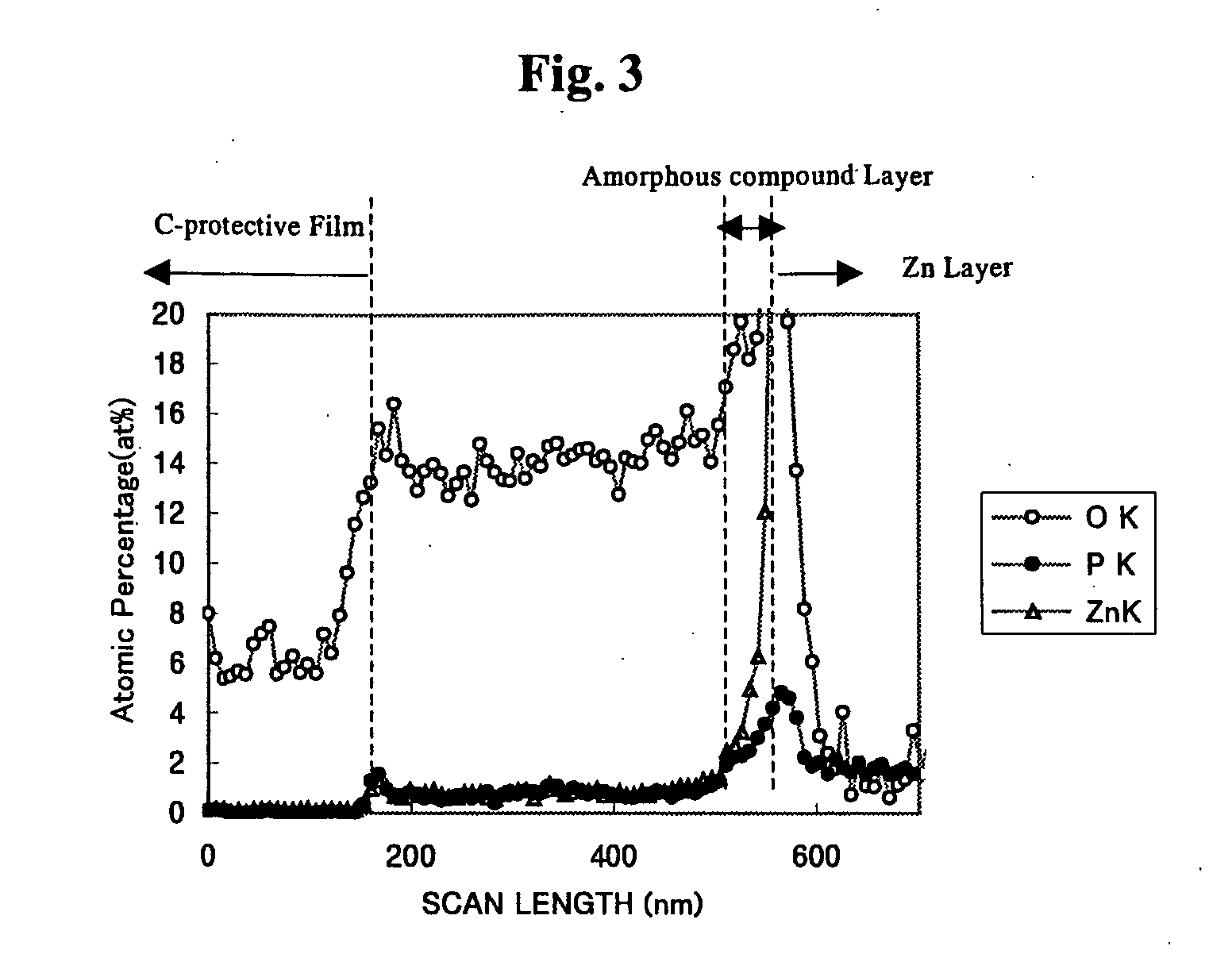
Description

- Active hydrogen-containing, primary or secondary amine compounds.
- Ammonia and organic acids such as carboxylic acids.
- Hydrogen halides such as hydrogen chloride.
- Alcohols, and thiols.
- A quaternating agent of a mixture of a hydrazine derivative having no active hydrogen or a tertiary amine with an acid.
More preferably, the following is further effective.
and has a controlled pH of from 0.5 to 6, onto the surface of a zinc-plated or aluminium-plated steel sheet, and not washing it with water, drying it under heat at an ultimate sheet temperature of from 50°C to 300°C to thereby form thereon a surface treatment film having a thickness of from 0.02 to 5 µm.
wherein the aqueous epoxy resin dispersion further contains a curing agent that has a group capable of crosslinking with a hydroxyl group.
wherein the surface treatment film is formed to have a thickness of from 0.02 µm to smaller than 5 µm, and an organic resin film having a thickness of from 0. 02 µm to smaller than 5 µm is formed on the surface treatment film so that the total thickness of the two films may be at most 5 µm.
| No. | Plated Steel Sheet | Deposit Amount (g/m2) |
| 1 | | 20 |
| 2 | Hot-dip zinc-plated steel sheet | 60 |
| 3 | Alloying hot-dip zinc-plated steel sheet (Fe: 10 mass %) | 60 |
| 4 | Zn-Ni alloy-plated steel sheet (Ni: 12 mass %) | 20 |
| 5 | Zn-Co alloy-plated steel sheet (Co: 0.5 mass %) | 20 |
| 6 | Zn-Cr alloy-plated steel sheet (Cr: 12 mass %) | 20 |
| 7 | Hot-dip Zn-Al alloy-plated steel sheet (al: 55 mass %) | 90 |
| 8 | Hot-dip Zn-5%Al-0.5%Mg alloy-plated steel sheet | 90 |
| 9 | Zn-SiO2 dispersion-electroplated | 20 |
| 10 | Hot-dip aluminium-plated steel sheet (Al-Si alloy, Si: 6 mass %) | 60 |
| 11 | Al-Mn alloy-electroplated steel sheet (Mn: 30 mass %) | 40 |
| 12 | Aluminium-electroplated steel sheet | 40 |
| 13 | Hot-dip Zn-Mg alloy-plated steel sheet (Mg: 0.5 mass %) | 150 |
| 14 | Zn-Al-Mg alloy-plated steel sheet (Al: 6 mass %, Mg: 3 mass %) | 120 |
| No. | Water-Dispersible Resin |
| 1 | Water-dispersible resin of a reaction product obtained by reacting an epoxy resin with an active hydrogen-containing hydrazine resin, dispersed in |
| 2 | Epoxy resin |
| No. | Silane Coupling Agent | Commercial Product |
| 1 | γ-aminopropyltriethoxysilane | Shin-etsu Chemical's KBE-903 |
| 2 | γ-aminopropyltrimethoxysilane | Shin-etsu Chemical's KBM-903 |
| 3 | N-β-(aminoethyl)-γ-aminopropylmethyldimethoxysilane | Shin-etsu Chemical's KBM-602 |
| 4 | N-β-(aminoethyl)-γ-aminopropyltrimethoxysilane | Shin-etsu Chemical's KBM-603 |
| 5 | N-β-(aminoethyl)-γ-aminopropyltriethoxysilane | Shin-etsu Chemical's KBE-603 |
| 6 | γ-glycidoxypropyltrimethoxysilane | Shin-etsu Chemical's KBM-403 |
| 7 | γ-glycidoxypropylmethyldiethoxysilane | Shin-etsu Chemical's KBE-402 |
| 8 | γ-glycidoxypropyltriethoxysilane | Shin-etsu Chemical's KBE-403 |
| No. | Phosphoric Acid, Hexafluoro-Metal Acid |
| 1 | |
| 2 | Hexafluorosilicic acid: H2SiF6 |
| 3 | Hexafluorotitanic acid: H2TiF6 |
| 4 | Hexafluorozirconic acid: H2ZrF6 |
| No. | Water-Soluble Inorganic Component |
| 1 | |
| 2 | Mn phosphate |
| 3 | Mg phosphate |
| 4 | Ni phosphate |
| 5 | Co nitrate |
| 6 | Al sulfate |
| 7 | An |
| 8 | Mn carbonate |
| 9 | |
| 10 | Ti sulfate |
| 11 | |
| 12 | Ni sulfate |
| 13 | |
| 14 | Zr chloride |
| 15 | La acetate |
| No. | Chromium-Free Antirust Additive |
| 1 | Calcium ion-exchanged |
| 2 | Colloidal silica |
| 3 | Fumed silica |
| 4 | Aluminium dihydrogen tripolyphosphate |
| 5 | Aluminium phosphomolybdate |
| 6 | Tetraethylthiuram disulfide |
| No. | Solid Lubricant | Commercial Product |
| 1 | Polyethylene wax | Nippon Seiro's LUVAX 1151 |
| 2 | Polyethylene wax | Ceridust's 3620 |
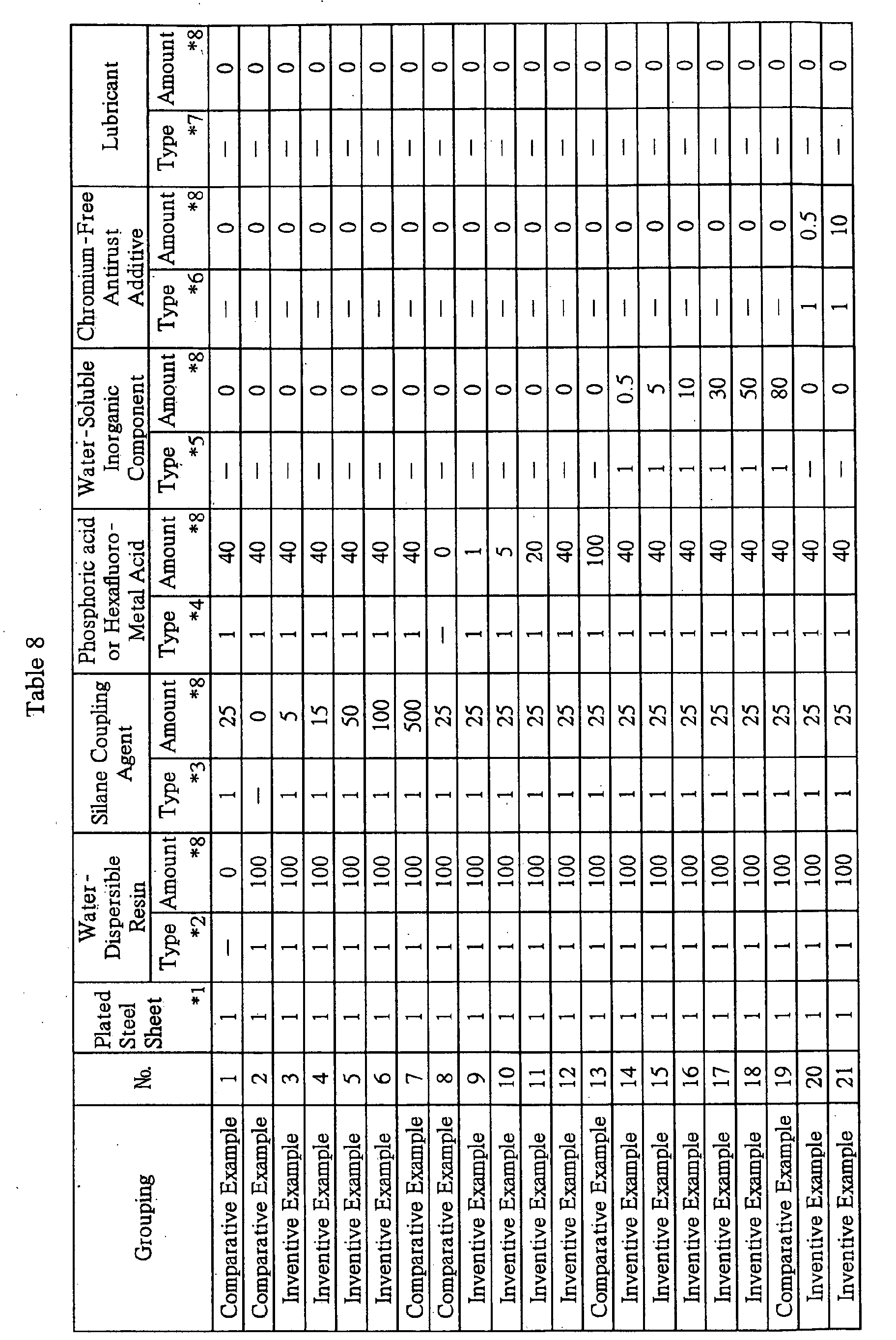
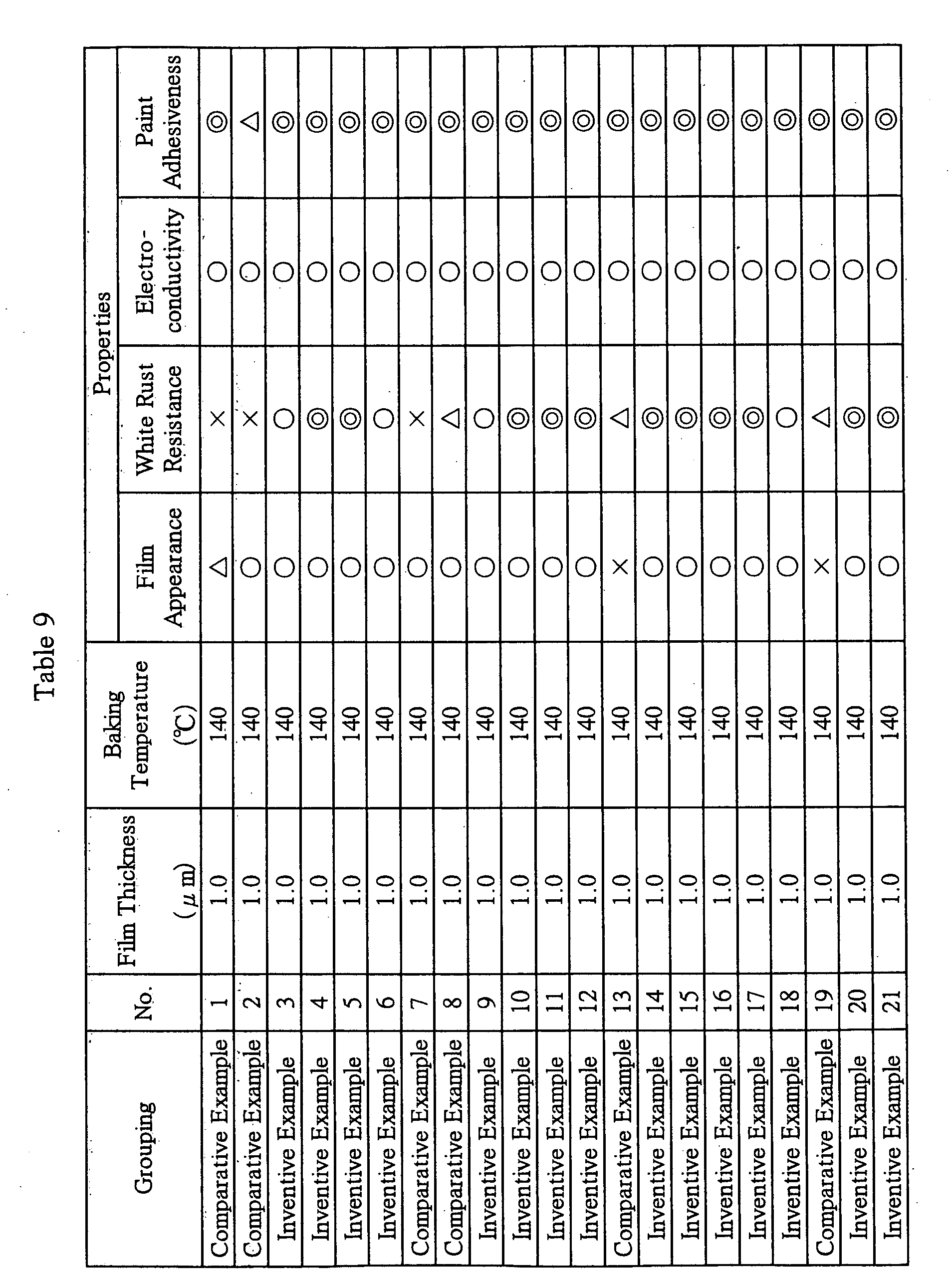
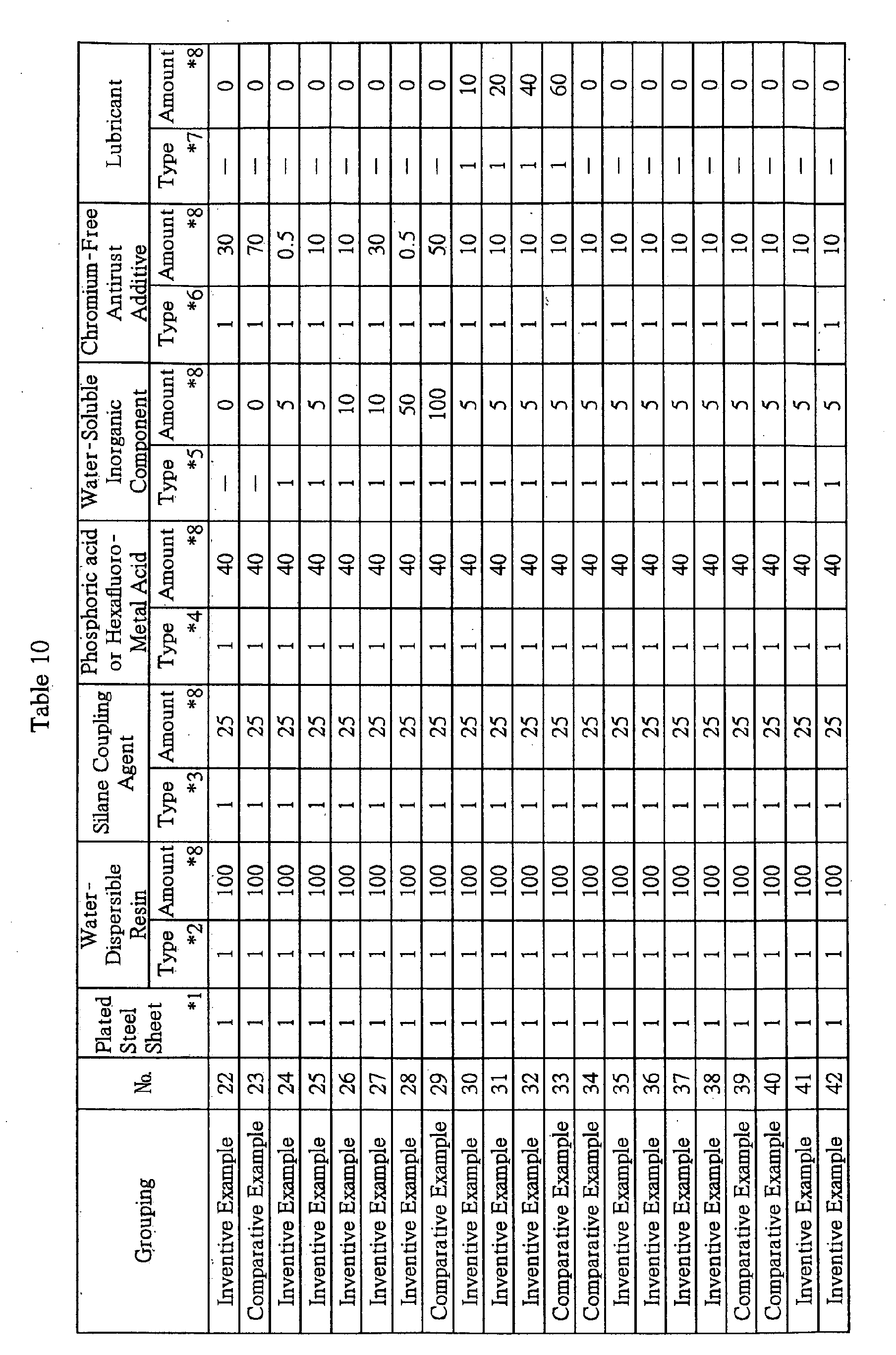


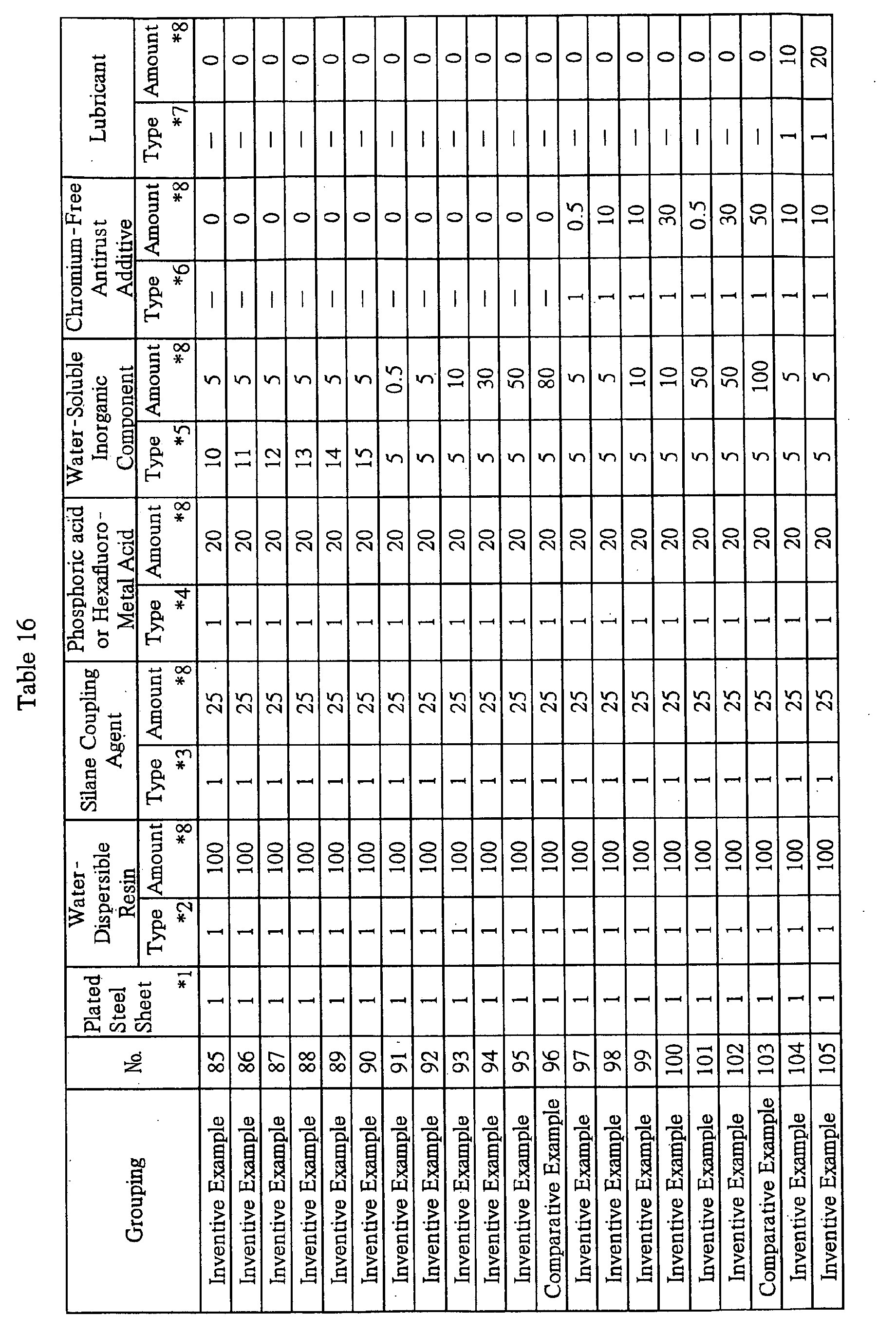


| No. | Aqueous Epoxy Resin Dispersion |
| 1 | E1 described in the text of the specification (Production Example 2) |
| 2 | A1 described in the text of the specification (Production Example 1) |
| 3 | D2 described in the text of the specification (Production Example 3) |
| 4 | E2 described in the text of the specification (Production Example 3) |
| No. | Water-Soluble Inorganic Component |
| 1 | |
| 2 | Mn phosphate |
| 3 | Mg phosphate |
| 4 | Ni phosphate |
| 5 | Co nitrate |
| 6 | Al sulfate |
| 7 | |
| 8 | Mn carbonate |
| 9 | |
| 10 | Ti sulfate |
| 11 | |
| 12 | Ni sulfate |
| 13 | |
| 14 | Zr chloride |
| 15 | La acetate |


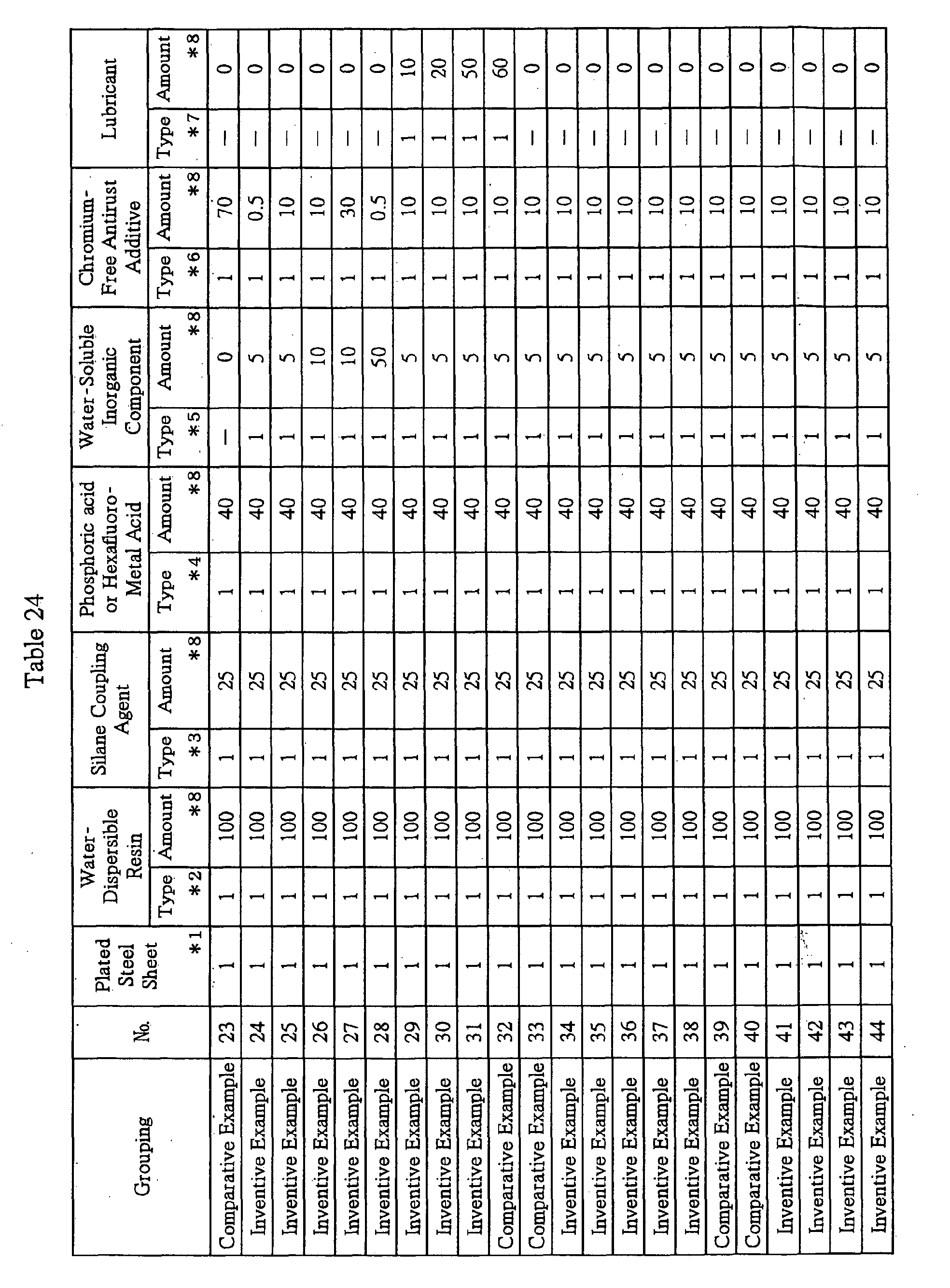

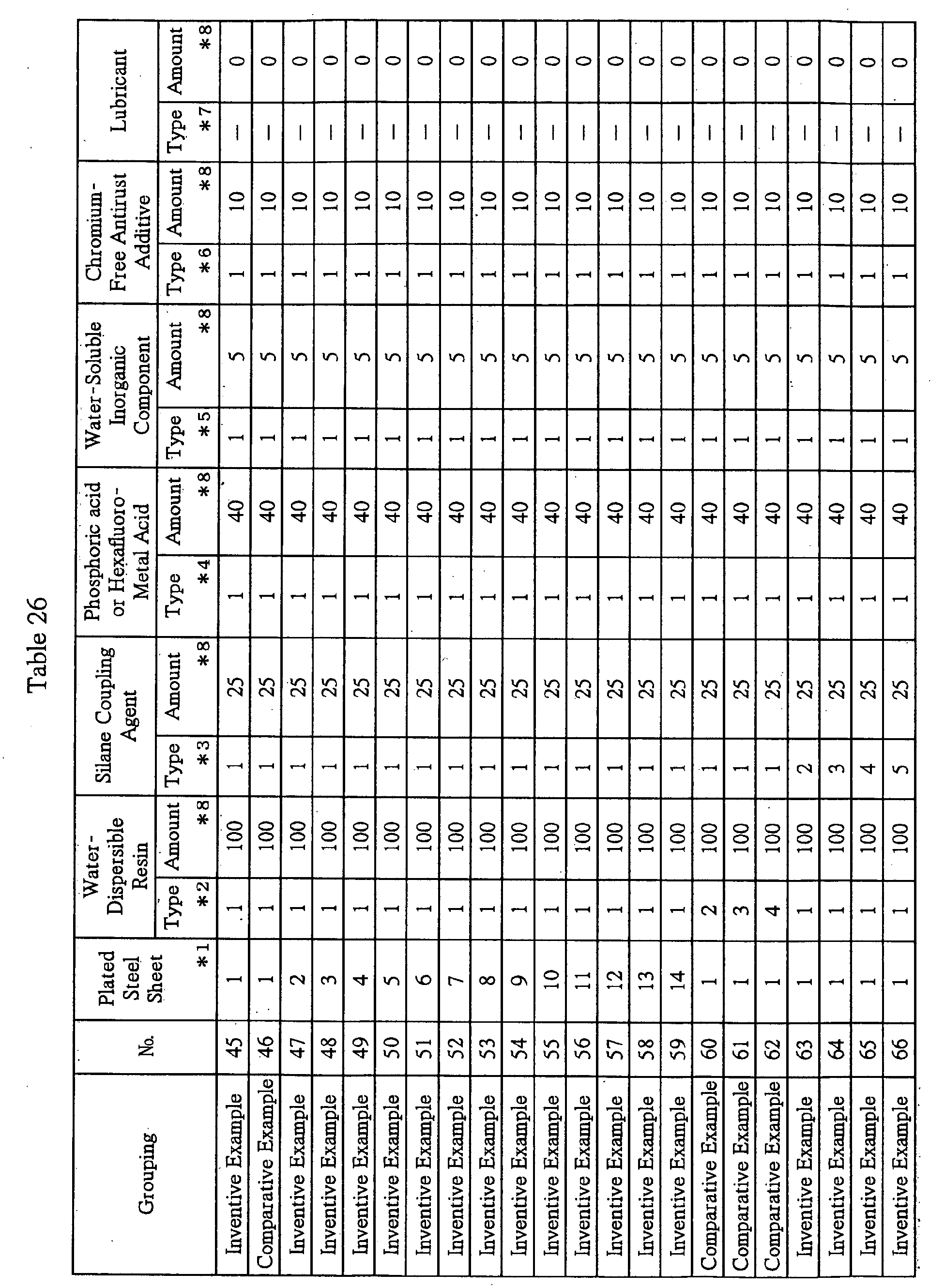


| No. | Aqueous Epoxy Resin Dispersion |
| 1 | F1 described in the text of the specification (Production Example 1) |
| 2 | F2 described in the text of the specification (Production Example 2) |
| 3 | F3 described in the text of the specification (Production Example 3) |
| 4 | F4 described in the text of the specification (Production Example 4) |
| 5 | F5 described in the text of the specification (Production Example 5) |
| No. | Aqueous Urethane Resin Dispersion (commercial name) | Ionicity |
| 1 | Sanyo Kasei's Yucoat UX-2505 | |
| 2 | Daiichi Kogyo Seiyaku's Superflex E2500 | nonionic |
| 3 | Asahi Denka Kogyo's Adekabontiter UX206 | nonionic |
| 4 | Mitsui Takeda Chemical's Takelac W-635 | nonionic |
| 5 | Daiichi Kogyo Seiyaku's | cationic |
| 6 | Sanyo Kasei's Permarine UC-20 | cationic |
| No. | Water-Soluble Inorganic Component |
| 1 | |
| 2 | Al sulfate |
| 3 | Zn acetate |
| 4 | Mn carbonate |
| 5 | Mg nitrate |
| 6 | Ti sulfate |
| 7 | |
| 8 | Ni sulfate |
| 9 | |
| 10 | Ce acetate |
| 11 | |
| 12 | La acetate |
| 13 | Al phosphate |
| No. | Chromium-Free Antirust Additive |
| 1 | Calcium ion-exchanged |
| 2 | Colloidal silica |
| 3 | Fumed silica |
| 4 | Aluminium dihydrogen tripolyphosphate |
| 5 | Tetraethylthiuram disulfide |
| No. | Lubricant |
| 1 | |
| 2 | Montan wax |


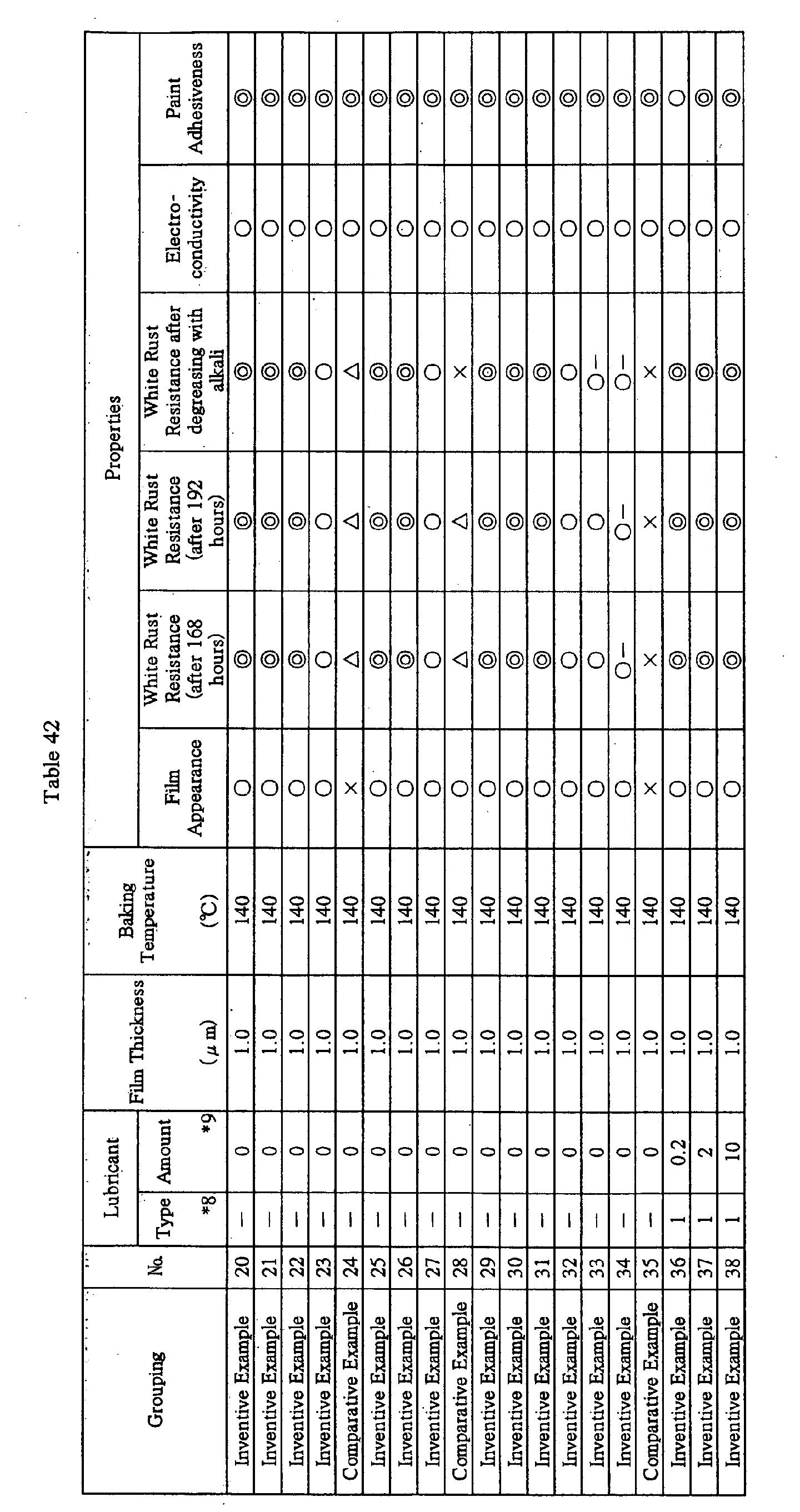
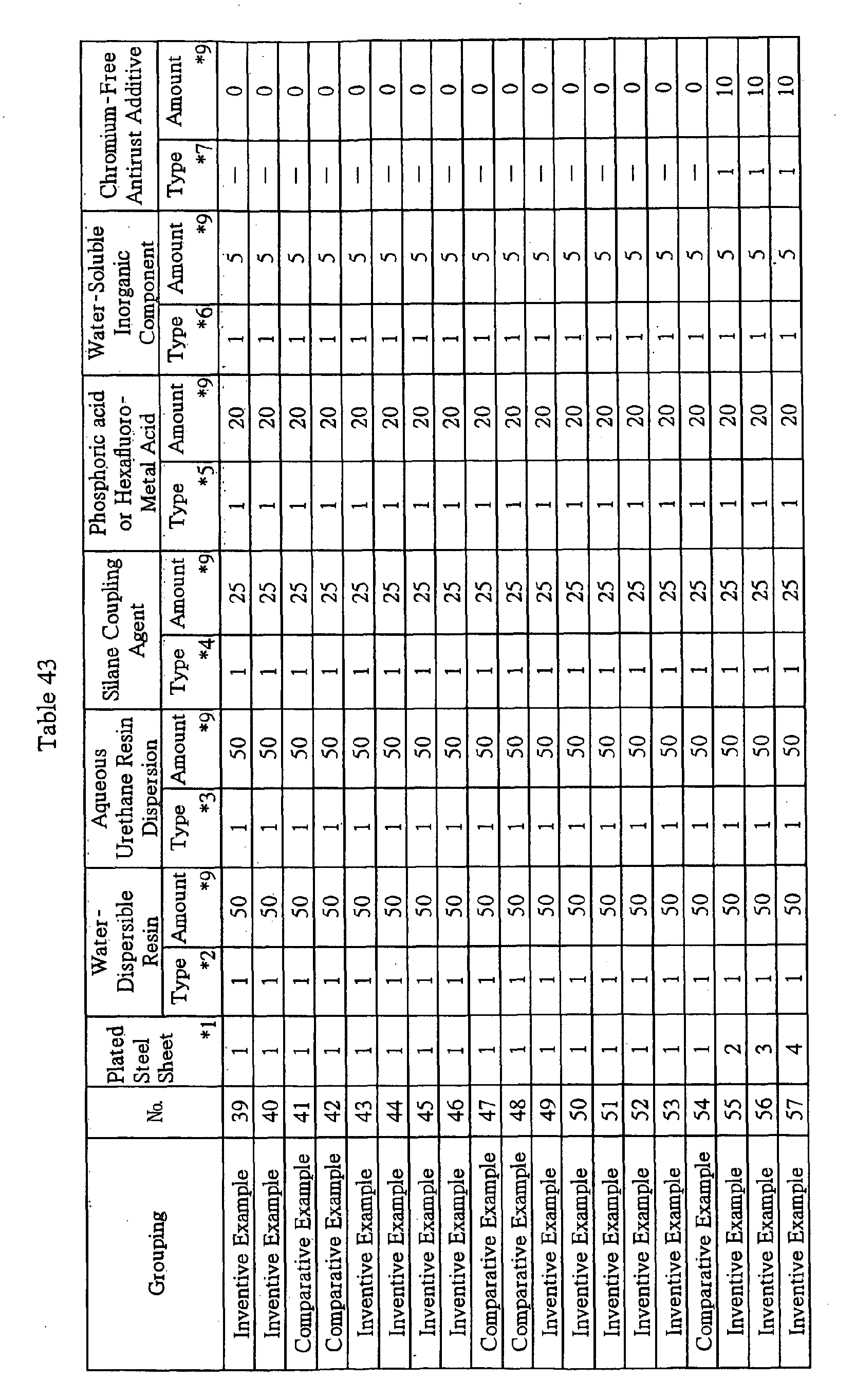


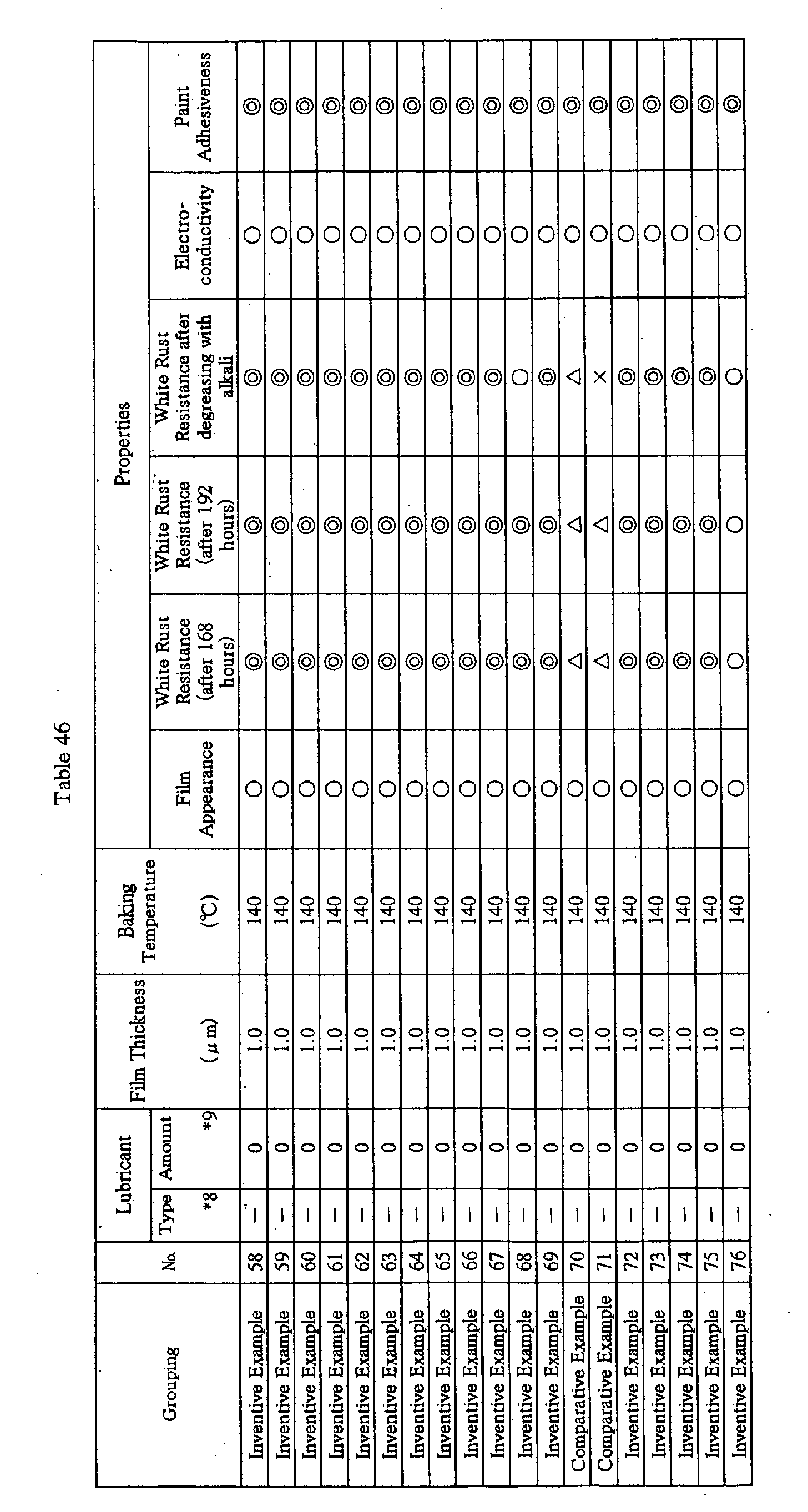

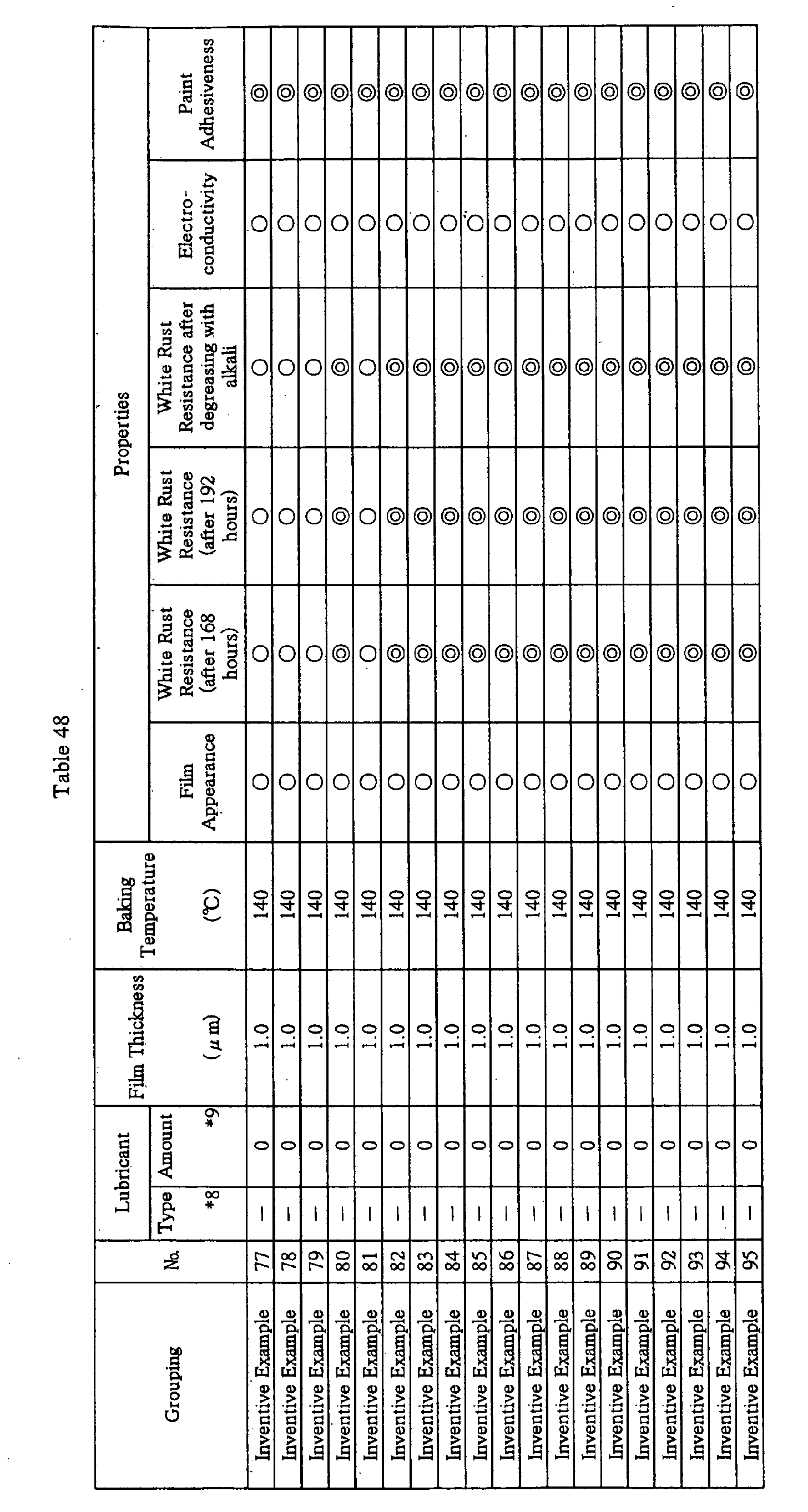

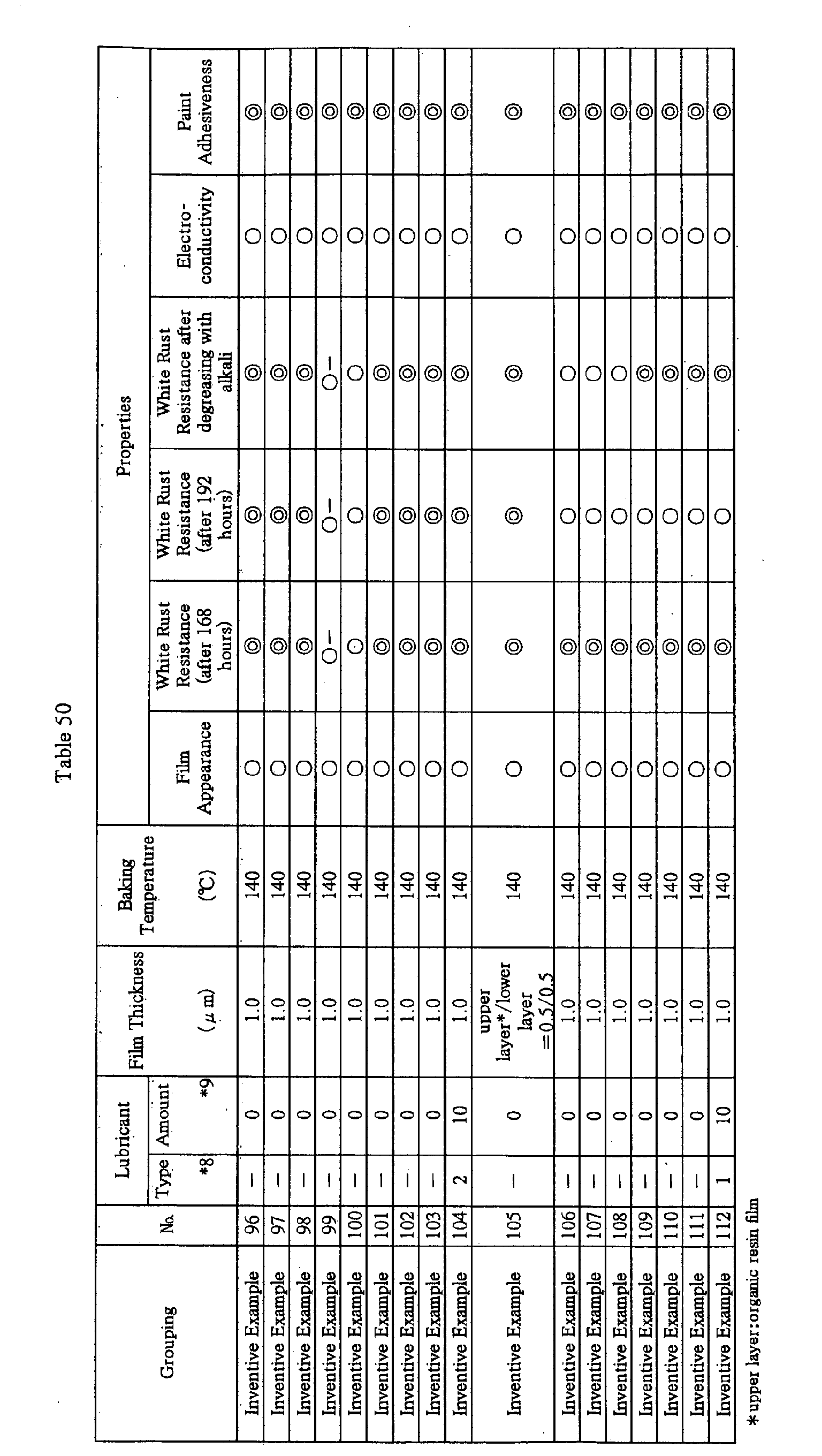
| No. | Aqueous Epoxy Resin Dispersion |
| 1 | G1 described in the text of the specification (Production Example 1) |
| 2 | G2 described in the text of the specification (Production Example 2) |
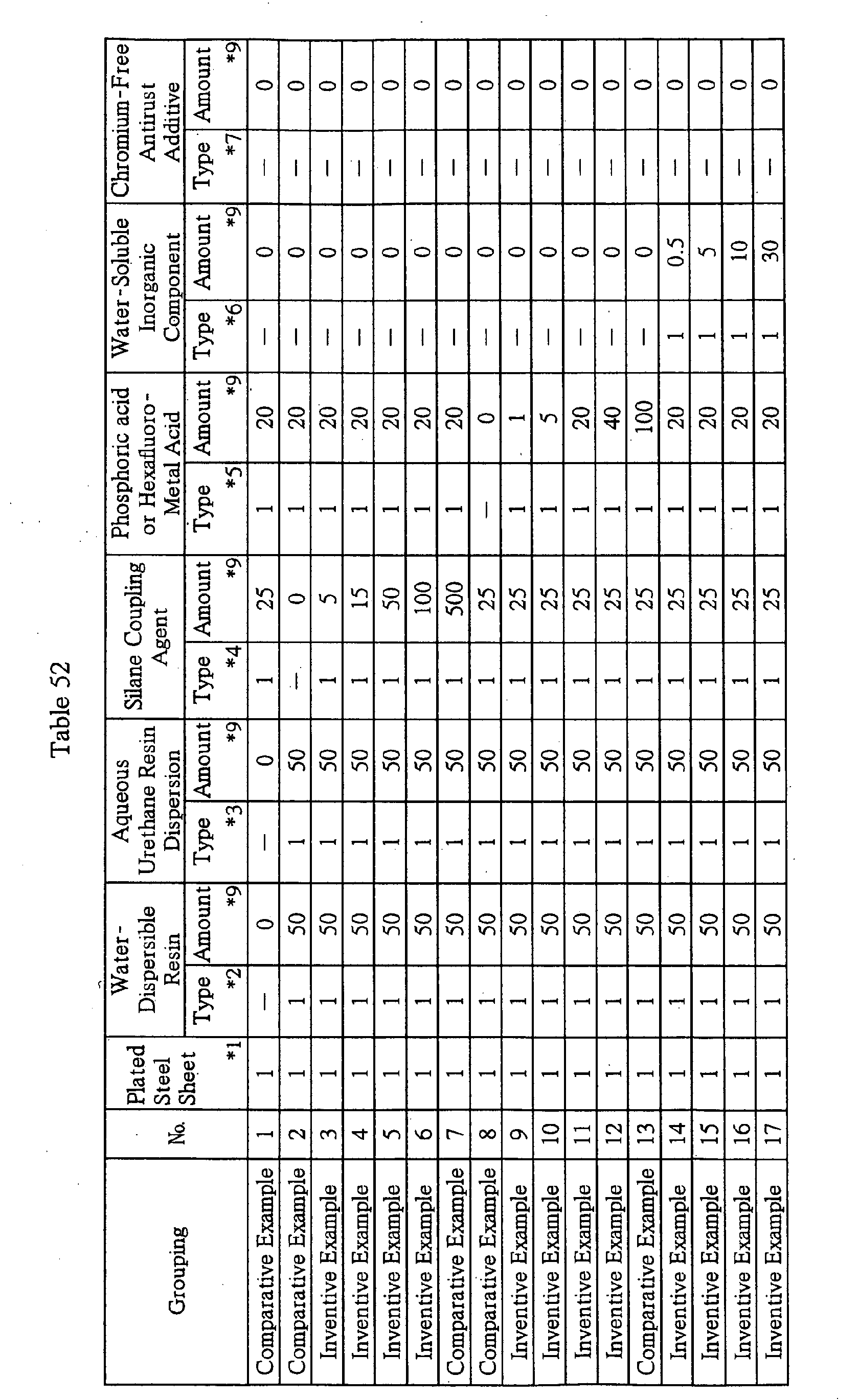
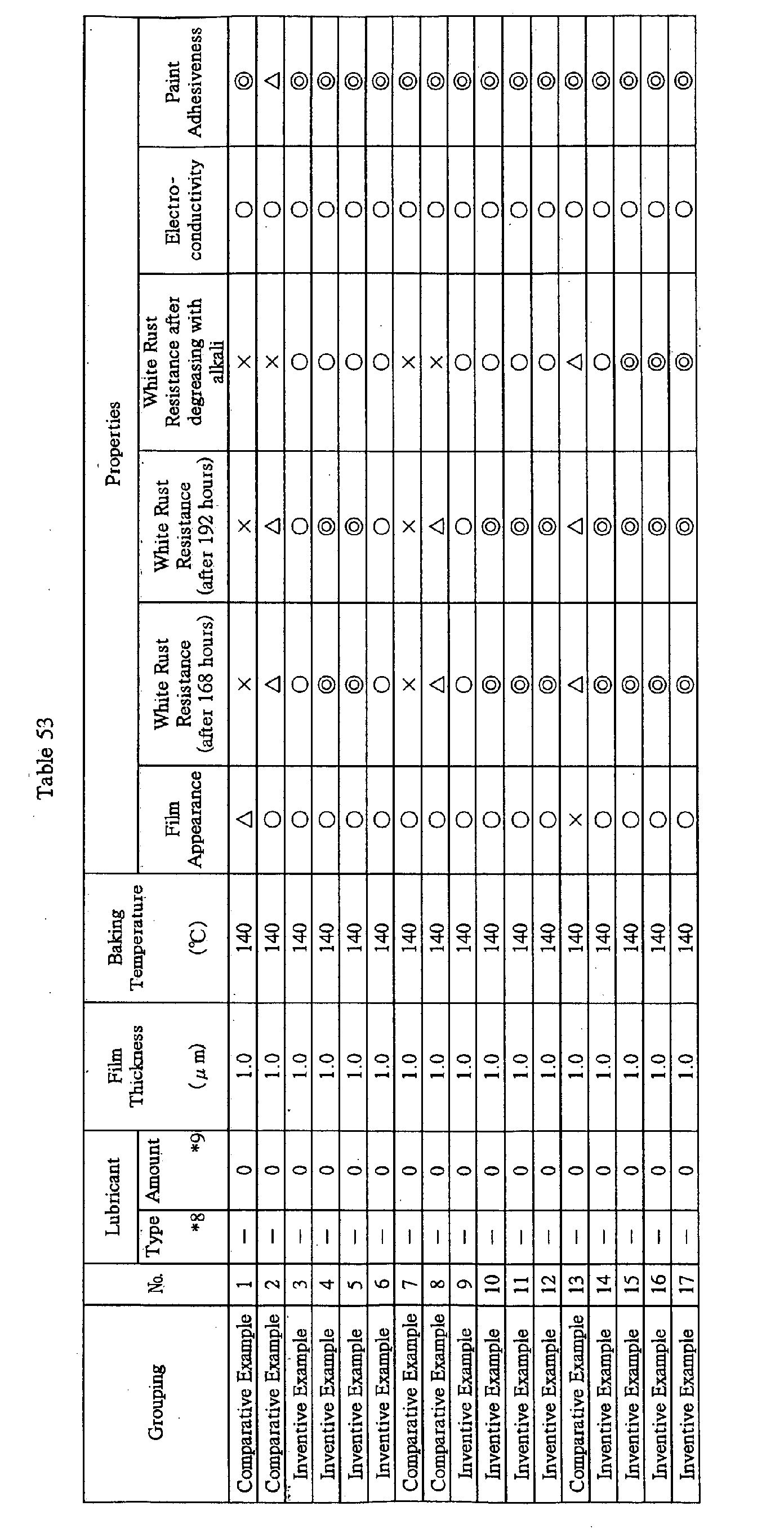
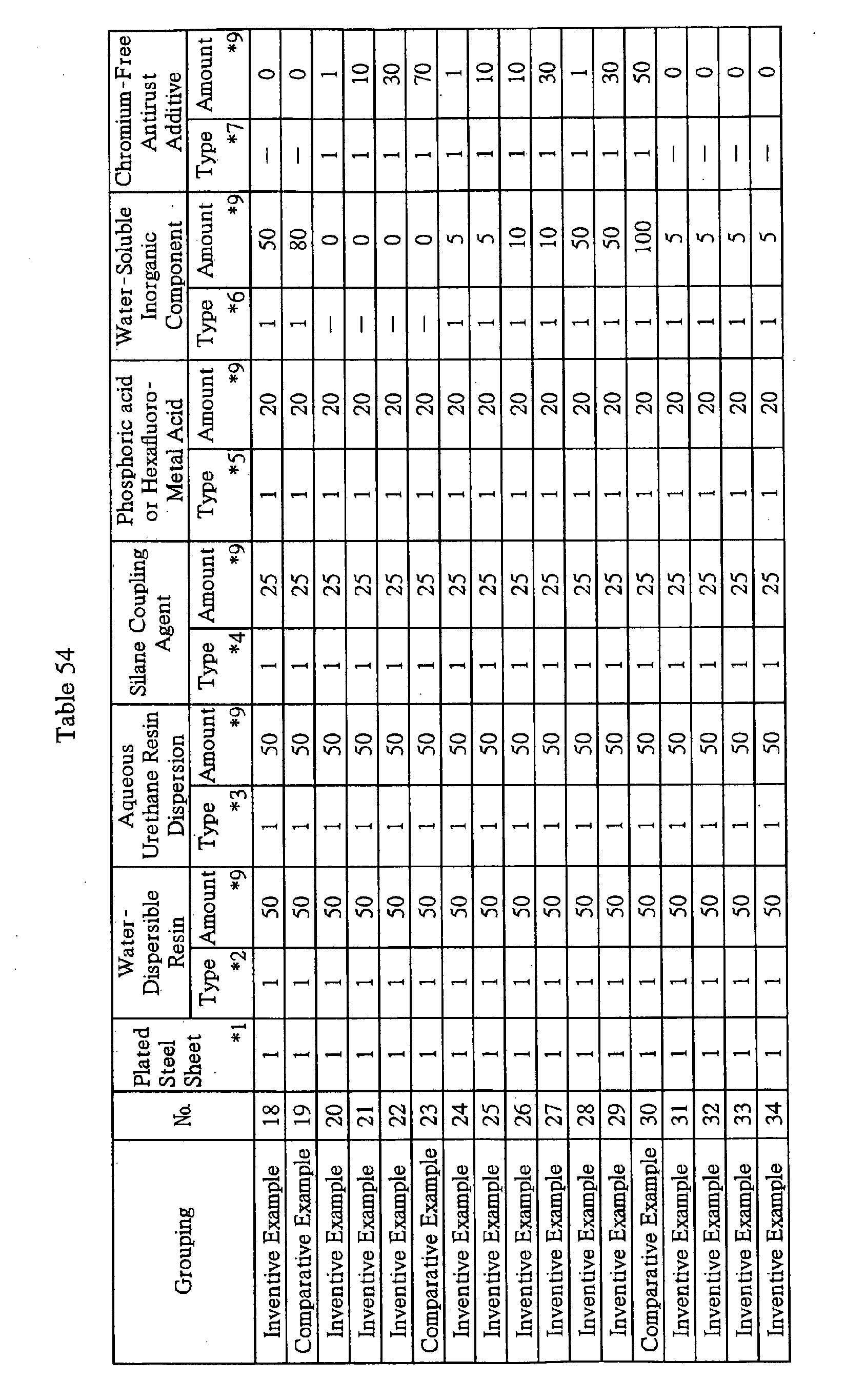
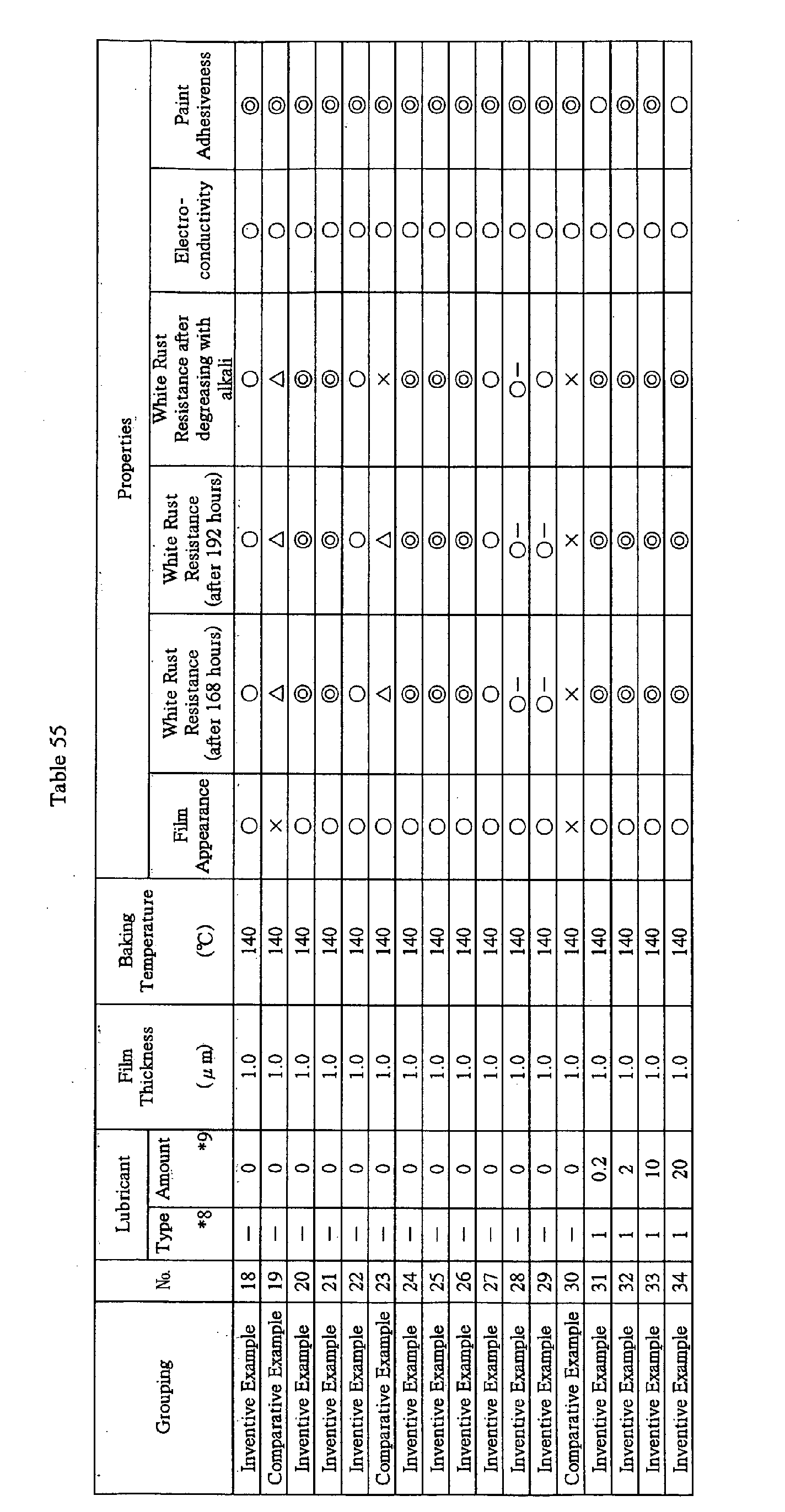

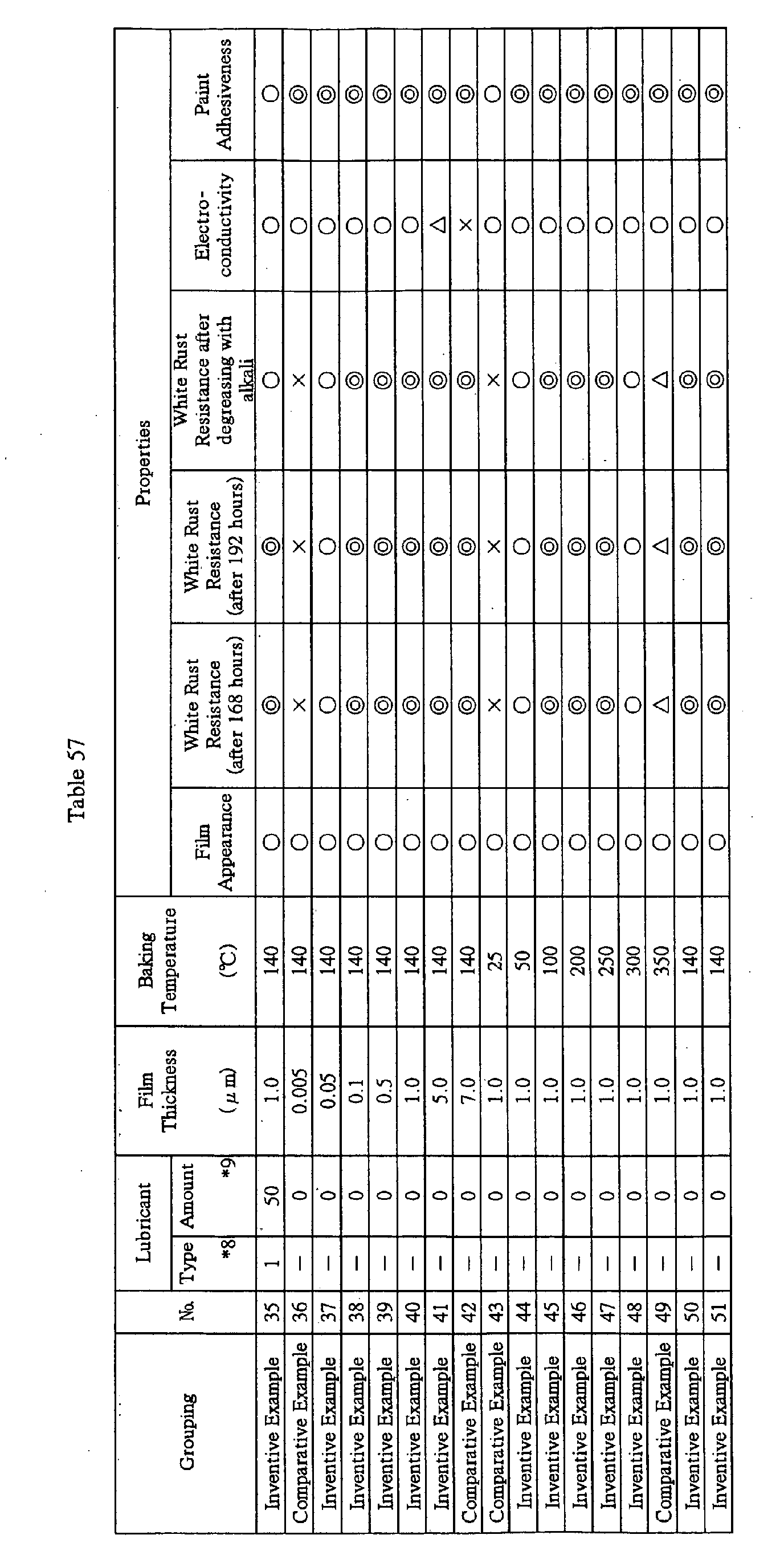


| Grouping | Water-Dispersible Resin | Silane Coupling Agent | Phosphoric Acid or Hexafluoro-Metal Acid | Film Thickness (µm) | White Rust Resistance | |||
| Type *1 | Amount *4 | Type *2 | Amount *4 | Type *3 | Amount *4 | |||
| Comparative Sample | 1 | 100 | - | 0 | - | 0 | 0.5 | × |
| Sample 1 of the Invention | 1 | 100 | 1 | 1 | 1 | 5 | 0.5 | ○- |
| | 1 | 100 | 1 | 1 | 1 | 20 | 0.5 | ○ |
| Sample 3 of the Invention | 1 | 100 | 1 | 25 | 1 | 20 | 0.5 | o ○ |
Claims (32)
- A surface-treated steel sheet of good white rust resistance, which is fabricated by applying a surface-treating composition that contains:(a) a water-dispersible resin and/or a water-soluble resin obtained through reaction of an epoxy group-containing resin (A) with an active hydrogen-containing compound (B) a part or all of which is an active hydrogen-containing hydrazine derivative,(b) a silane coupling agent, and(c) a phosphoric acid and/or a hexafluoro-metal acid, to a zinc-plated or aluminium-plated steel sheet followed by drying it to form thereon a surface treatment film having a thickness of from 0.02 to 5 µm.
- A surface-treated steel sheet of good white rust resistance, which is fabricated by applying a surface-treating composition that contains:(a1) an aqueous epoxy resin dispersion of a modified epoxy resin dispersed in water, in which the modified epoxy resin is prepared by reacting an epoxy group-containing resin (A), an active hydrogen-containing compound (B) a part or all of which is an active hydrogen-containing hydrazine derivative, and a hydrophilic organic component (C),(b) a silane coupling agent, and(c) a phosphoric acid and/or a hexafluoro-metal acid, to a zinc-plated or aluminium-plated steel sheet followed by drying it to form thereon a surface treatment film having a thickness of from 0.02 to 5 µm.
- A surface-treated steel sheet of good white rust resistance, which is fabricated by applying a surface-treating composition that contains:(a1) an aqueous epoxy resin dispersion of a modified epoxy resin dispersed in water, in which the modified epoxy resin is prepared by reacting an epoxy group-containing resin (A), an active hydrogen-containing compound (B) a part or all of which is an active hydrogen-containing hydrazine derivative, and a hydrophilic organic component (C),(b) a silane coupling agent,(c) a phosphoric acid and/or a hexafluoro-metal acid, and(d) an aqueous dispersion of an urethane resin, to a zinc-plated or aluminium-plated steel sheet followed by drying it to form thereon a surface treatment film having a thickness of from 0.02 to 5 µm.
- The surface-treated steel sheet of good white rust resistance as claimed in claim 2 or 3, wherein the hydrophilic organic component (C) is a polyalkylene glycol-modified epoxy resin prepared by reacting a polyalkylene glycol having a number-average molecular weight of from 400 to 20000, a bisphenol-type epoxy resin, an active hydrogen-containing compound, and a polyisocyanate compound.
- The surface-treated steel sheet of good white rust resistance as claimed in claim 2 or 3, wherein the hydrophilic organic component [C] is a primary amine compound and/or a secondary amine compound.
- The surface-treated steel sheet of good white rust resistance as claimed in claim 1, 2, 3, 4 or 5, wherein the surface-treating composition contains from 1 to 300 parts by mass of a silane coupling agent relative to 100 parts by mass of the solid content of the organic resin and contains from 0.1 to 80 parts by mass of a phosphoric acid and/or a hexafluoro-metal acid relative to 100 parts by mass of the solid content of the organic resin.
- The surface-treated steel sheet of good white rust resistance as claimed in claim 1, 2, 3, 4, 5 or 6, wherein the surface-treating composition further contains from 0.1 to 60 parts by mass, in terms of the solid content thereof and relative to 100 parts by mass of the solid content of the organic resin, of a water-soluble inorganic component.
- The surface-treated steel sheet of good white rust resistance as claimed in claim 7, wherein the cation of the water-soluble inorganic component is one or more selected from Mg, Ca, Y, Ti, Zr, Nb, Zn, Mn, Co, Ni, Al, In, Ce and La and the anion thereof is one or more selected from nitrate, sulfate, acetate, carbonate, phosphate and chloride.
- The surface-treated steel sheet of good white rust resistance as claimed in claim 1, 2, 3, 4, 5, 6, 7 or 8, wherein the surface-treating composition further contains from 0.1 to 50 parts by mass, in terms of the solid content thereof and relative to 100 parts by mass of the solid content of the organic resin, of a chromium-free antirust additive.
- The surface-treated steel sheet of good white rust resistance as claimed in claim 9, wherein the surface-treating composition contains at least one chromium-free antirust additive selected from the following (e1) to (e5):(e1) silicon oxide,(e2) calcium and/or calcium compounds,(e3) hardly-soluble phosphoric acid compounds,(e4) molybdic acid compounds,(e5) one or more, S atom-containing organic compounds selected from triazoles, thiols, thiadiazoles, thiazoles and thiurams.
- The surface-treated steel sheet of good white rust resistance as claimed in claim 1, 2, 3, 4, 5, 6, 7, 8, 9 or 10, wherein the surface-treating composition further contains from 1 to 50 parts by mass, in terms of its solid content and relative to 100 parts by mass of the solid content of the organic resin, of a solid lubricant.
- The surface-treated steel sheet of good white rust resistance as claimed in claim 1, 2, 3, 4, 5, 6, 7, 8, 9, 10 or 11, wherein the surface-treating composition contains at least one silane coupling agent with a reactive functional amino group.
- The surface-treated steel sheet of good white rust resistance as claimed in claim 1, 2, 3, 4, 5, 6, 7, 8, 9, 10, 11 or 12, wherein the surface-treating composition contains at least one hexafluoro-metal acid with at least one or more elements selected from Ti, Si and Zr.
- The surface-treated steel sheet of good white rust resistance as claimed in claim 9, 10, 11, 12 or 13, wherein the surface-treating composition contains calcium ion-exchanged silica as the chromium-free antirust additive.
- The surface-treated steel sheet of good white rust resistance as claimed in claim 1, 2, 3, 4, 5, 6, 7, 8, 9, 10, 11, 12, 13 or 14, wherein the epoxy group-containing resin (A) is a bisphenol A-type epoxy resin having a number-average molecular weight of from 1500 to 10000 and an epoxy equivalent of from 150 to 5000.
- The surface-treated steel sheet of good white rust resistance as claimed in claim 1, 2, 3, 4, 5, 6, 7, 8, 9, 10, 11, 12 , 13, 14 or 15, wherein the aqueous epoxy resin dispersion further contains a curing agent that has a group capable of crosslinking with a hydroxyl group.
- A surface-treated steel sheet of good white rust resistance, which has a surface treatment film formed on the surface of a zinc-plated or aluminium-plated steel sheet and in which the surface treatment film comprises an amorphous compound layer containing P, Zn and/or Al, and O, and an overlying organic resin matrix layer with a hydrazine derivative-modified epoxy group-containing resin or the epoxy group-containing resin and an urethane resin as the matrix, and has a thickness of from 0.02 to 5 µm.
- The surface-treated steel sheet of good white rust resistance as claimed in claim 17, wherein the surface treatment film further contains a silane compound.
- The surface-treated steel sheet of good white rust resistance as claimed in claim 17 or 18, wherein the surface treatment film contains the self-constructed compounds with P, Zn and/or Al, and O.
- The surface-treated steel sheet of good white rust resistance as claimed in claim 17, 18 or 19, wherein the surface treatment film contains the self-constructed compounds with P, Zn and/or Al, Si, and O.
- The surface-treated steel sheet of good white rust resistance as claimed in claim 17, 18, 19 or 20, which has a surface treatment film on the surface of a zinc-plated steel sheet and in which the molar ratio of Zn to P in the amorphous compound layer, [Zn]/[P] falls between 0.9 and 1.4.
- The surface-treated steel sheet of good white rust resistance as claimed in claim 19, 20 or 21, which has a surface treatment film on the surface of a zinc-plated steel sheet and in which the molar ratio of Zn to P in the self-constructed compounds in the surface treatment film, [Zn] / [P] falls between 0.9 and 1.4.
- The surface-treated steel sheet of good white rust resistance as claimed in claim 19, 20 or 21, which has a surface treatment film on the surface of a zinc-plated steel sheet and in which the molar ratio of Zn to P in the self-constructed compounds in the surface treatment film, [Zn] / [P] is smaller than 1.0.
- The surface-treated steel sheet of good white rust resistance as claimed in claim 17, 18, 19, 20, 21, 22 or 23, wherein the surface treatment film contains from 0.1 to 50 parts by mass, in terms of the solid content thereof and relative to 100 parts by mass of the solid content of the organic resin, of a chromium-free antirust additive.
- The surface-treated steel sheet of good white rust resistance as claimed in claim 24, wherein the surface treatment film contains at least one chromium-free antirust additive selected from the following (e1) to (e5):(e1) silicon oxide,(e2) calcium and/or calcium compounds,(e3) hardly-soluble phosphoric acid compounds,(e4) molybdic acid compounds,(e5) one or more, S atom-containing organic compounds selected from triazoles, thiols, thiadiazoles, thiazoles and thiurams.
- The surface-treated steel sheet of good white rust resistance as claimed in claim 25, wherein the surface treatment film contains calcium ion-exchanged silica as the chromium-free antirust additive.
- The surface-treated steel sheet of good white rust resistance as claimed in claim 17, 18, 19, 20, 21, 22, 23, 24, 25 or 26, wherein the surface treatment film further contains from 1 to 50 parts by mass, in terms of its solid content and relative to 100 parts by mass of the solid content of the organic resin, of a solid lubricant.
- The surface-treated steel sheet of good white rust resistance as claimed in claim 1, 2, 3, 4, 5, 6, 7, 8, 9, 10, 11, 12, 13, 14, 15, 16, 17, 18, 19, 20, 21, 22, 23, 24, 25, 26 or 27, wherein the surface treatment film has a thickness of from 0.02 µm to smaller than 5 µm, it is coated with an upper organic resin film having a thickness of from 0.02 µm to smaller than 5 µm, and the total thickness of the organic resin film and the surface treatment film is at most 5 µm.
- A method for producing a surface-treated steel sheet of good white rust resistance, which comprises applying a surface-treating composition that contains:(a) a water-dispersible resin and/or a water-soluble resin obtained through reaction of an epoxy group-containing resin (A) with an active hydrogen-containing compound (B) a part or all of which is an active hydrogen-containing hydrazine derivative,(b) a silane coupling agent, and(c) a phosphoric acid and/or a hexafluoro-metal acid, and has a controlled pH of from 0.5 to 6, onto the surface of a zinc-plated or aluminium-plated steel sheet, and not washing it with water, drying it under heat at an ultimate sheet temperature of from 50°C to 300°C to thereby form thereon a surface treatment film having a thickness of from 0.02 to 5 µm.
- A method for producing a surface-treated steel sheet of good white rust resistance, which comprises applying a surface-treating composition that contains:(a1) an aqueous epoxy resin dispersion of a modified epoxy resin dispersed in water, in which the modified epoxy resin is prepared by reacting an epoxy group-containing resin (A), an active hydrogen-containing compound (B) a part or all of which is an active hydrogen-containing hydrazine derivative, and a hydrophilic organic component (C),(b) a silane coupling agent, and(c) a phosphoric acid and/or a hexafluoro-metal acid, and has a controlled pH of from 0.5 to 6, onto the surface of a zinc-plated or aluminium-plated steel sheet, and not washing it with water, drying it under heat at an ultimate sheet temperature of from 50°C to 300°C to thereby form thereon a surface treatment film having a thickness of from 0.02 to 5 µm.
- A method for producing a surface-treated steel sheet of good white rust resistance, which comprises applying a surface-treating composition that contains:(a1) an aqueous epoxy resin dispersion of a modified epoxy resin dispersed in water, in which the modified epoxy resin is prepared by reacting an epoxy group-containing resin (A), an active hydrogen-containing compound (B) a part or all of which is an active hydrogen-containing hydrazine derivative, and a hydrophilic organic component (C),(b) a silane coupling agent,(c) a phosphoric acid and/or a hexafluoro-metal acid, and(d) an aqueous dispersion of an urethane resin,
and has a controlled pH of from 0.5 to 6, onto the surface of a zinc-plated or aluminium-plated steel sheet, and not washing it with water, drying it under heat at an ultimate sheet temperature of from 50°C to 300°C to thereby form thereon a surface treatment film having a thickness of from 0.02 to 5 µm. - A method for producing a surface-treated steel sheet of good white rust resistance, which comprises further forming an organic resin film on the surface of the surface treatment film of the surface-treated steel sheet obtained by the manufacturing method described in claim 29, 30 or 31, and in which the upper organic resin film has a thickness of from 0.02 to smaller than 5 µm, the lower surface treatment film has a thickness of from 0.02 µm to smaller than 5 µm, and the total thickness of the organic resin film and the surface treatment film is at most 5 µm.
Applications Claiming Priority (3)
| Application Number | Priority Date | Filing Date | Title |
|---|---|---|---|
| JP2002214579A JP3665046B2 (en) | 2001-07-23 | 2002-07-23 | Surface-treated steel sheet excellent in white rust resistance and method for producing the same |
| JP2002214579 | 2002-07-23 | ||
| PCT/JP2003/001531 WO2004009870A1 (en) | 2002-07-23 | 2003-02-14 | Surface-treated steel sheet excellent in resistance to white rust and method for production thereof |
Publications (3)
| Publication Number | Publication Date |
|---|---|
| EP1524332A1 true EP1524332A1 (en) | 2005-04-20 |
| EP1524332A4 EP1524332A4 (en) | 2005-10-26 |
| EP1524332B1 EP1524332B1 (en) | 2011-09-14 |
Family
ID=30767887
Family Applications (1)
| Application Number | Title | Priority Date | Filing Date |
|---|---|---|---|
| EP20030705145 Expired - Lifetime EP1524332B1 (en) | 2002-07-23 | 2003-02-14 | Surface-treated steel sheet excellent in resistance to white rust and method for production thereof |
Country Status (6)
| Country | Link |
|---|---|
| US (1) | US7291402B2 (en) |
| EP (1) | EP1524332B1 (en) |
| KR (1) | KR100776811B1 (en) |
| CN (1) | CN100374618C (en) |
| TW (1) | TWI259216B (en) |
| WO (1) | WO2004009870A1 (en) |
Cited By (8)
| Publication number | Priority date | Publication date | Assignee | Title |
|---|---|---|---|---|
| WO2010117757A1 (en) * | 2009-03-31 | 2010-10-14 | Cytec Technology Corp. | Water based non-chromated primers for structural bonding applications |
| CN102220577A (en) * | 2011-06-29 | 2011-10-19 | 安徽工业大学 | Organic and inorganic composite aqueous surface treatment liquid for color coating pretreatment of galvanized sheet |
| WO2012156176A1 (en) * | 2011-05-19 | 2012-11-22 | Kovinoplastika Loz Industrija Kovinskih In Plasticnih Izdelkov D.D. | A process of electrolytic galvanizing with an enhanced anti-corrosive protection |
| EP2653507A1 (en) * | 2012-04-19 | 2013-10-23 | Hitachi, Ltd. | Corrosion-proof aluminum material and method for producing the same |
| WO2014082287A1 (en) | 2012-11-30 | 2014-06-05 | Henkel (China) Company Limited | Concentrate for use in corrosion resistant treatment of metal surfaces |
| EP2947123A1 (en) * | 2014-05-19 | 2015-11-25 | Volkswagen AG | Mouldable material with corrosion inhibitor for electronic components, and electronic component and gearbox with same |
| EP2692900B1 (en) | 2011-03-28 | 2017-08-09 | Posco | Film formation composition for preventing blackening of steel sheet, and steel sheet having film formed by composition |
| EP4265818A4 (en) * | 2020-12-18 | 2024-02-21 | POSCO Co., Ltd | COMPOSITE PLATED STEEL SHEET HAVING EXCELLENT CORROSION RESISTANCE AFTER FORMING AND PRODUCTION PROCESS THEREOF |
Families Citing this family (49)
| Publication number | Priority date | Publication date | Assignee | Title |
|---|---|---|---|---|
| ES2316707T3 (en) * | 2002-12-24 | 2009-04-16 | Chemetall Gmbh | CHEMICAL CONVERSION AND METAL CONVERSION AGENT TREATED ON SURFACE. |
| JP2004339259A (en) * | 2003-05-13 | 2004-12-02 | Oiles Ind Co Ltd | Solid lubricant and sliding member |
| JP4500113B2 (en) * | 2003-06-16 | 2010-07-14 | Jfeスチール株式会社 | High corrosion resistance surface-treated steel sheet and method for producing the same |
| DE10349728A1 (en) * | 2003-10-23 | 2005-05-25 | Basf Ag | Essentially chromium-free process for passivating metallic surfaces of Zn, Zn alloys, Al or Al alloys |
| WO2006069376A2 (en) * | 2004-12-22 | 2006-06-29 | University Of Cincinnati | Improved superprimer |
| ATE554201T1 (en) * | 2004-12-23 | 2012-05-15 | Posco | CHROME-FREE COMPOSITION FOR METAL SURFACE TREATMENT AND SURFACE-TREATED METAL SHEET |
| JP4157522B2 (en) * | 2004-12-28 | 2008-10-01 | サクラテック株式会社 | High corrosion resistance / high workability plated steel wire, plating bath composition, high corrosion resistance / high workability plated steel wire manufacturing method, and wire mesh product |
| US20060234085A1 (en) * | 2005-03-29 | 2006-10-19 | Tdk Corporation | Bonded magnet and process for its manufacture |
| ES2523645T3 (en) * | 2005-07-08 | 2014-11-28 | Henkel Corporation | Priming compositions for adhesive bonding systems |
| JP4822892B2 (en) * | 2005-09-09 | 2011-11-24 | 信越化学工業株式会社 | Coating agent |
| JP5203927B2 (en) * | 2006-03-07 | 2013-06-05 | 東邦化学工業株式会社 | Water-based resin composition |
| TWI405917B (en) * | 2006-09-06 | 2013-08-21 | Tsubakimoto Chain Co | Water rust paint, water rust coating and high corrosion resistant surface treatment chain |
| JP5239570B2 (en) | 2007-09-04 | 2013-07-17 | Jfeスチール株式会社 | Galvanized steel sheet |
| US20090087671A1 (en) * | 2007-09-27 | 2009-04-02 | Ppg Industries Ohio, Inc. | Coating compositions exhibiting corrosion resistance properties and methods of coil coating |
| JP5108820B2 (en) * | 2008-04-17 | 2012-12-26 | 日本パーカライジング株式会社 | Water-based surface treatment agent for precoat metal material, surface treatment metal material, and precoat metal material |
| US9123921B2 (en) * | 2008-05-13 | 2015-09-01 | GM Global Technology Operations LLC | Hydrolytically-stable hydrophilic coatings for PEMFC bipolar plate |
| KR101103669B1 (en) * | 2009-08-26 | 2012-01-11 | 주식회사 유니코정밀화학 | Steel sheet coating composition and steel sheet |
| TWI395833B (en) * | 2009-12-18 | 2013-05-11 | China Steel Corp | A steel sheet and its preparation method |
| JP5168332B2 (en) * | 2010-09-24 | 2013-03-21 | Jfeスチール株式会社 | Surface treatment liquid for galvanized steel sheet, galvanized steel sheet and method for producing the same |
| JP5410466B2 (en) * | 2011-03-01 | 2014-02-05 | 株式会社神戸製鋼所 | Stainless steel flux cored wire |
| CN102251239B (en) * | 2011-06-29 | 2013-07-24 | 安徽工业大学 | Composite color-coating chromium-free passivating solution based on waterborne epoxy resin for galvanized sheet |
| KR101271965B1 (en) * | 2011-07-13 | 2013-06-07 | 주식회사 노루코일코팅 | Resin composition for surface treatment and steel sheet coated by the same |
| JP5957913B2 (en) * | 2012-01-31 | 2016-07-27 | 凸版印刷株式会社 | Secondary battery electrode terminals |
| CN104718312B (en) | 2012-08-29 | 2017-03-15 | Ppg工业俄亥俄公司 | Zirconium pretreatment composition containing molybdenum, related method for treating metal substrates and related coated metal substrates |
| SG11201501406SA (en) | 2012-08-29 | 2015-03-30 | Ppg Ind Ohio Inc | Zirconium pretreatment compositions containing lithium, associated methods for treating metal substrates, and related coated metal substrates |
| WO2014181593A1 (en) * | 2013-05-08 | 2014-11-13 | 関西ペイント株式会社 | Aluminum wheel primer coat composition |
| CN105492545B (en) * | 2013-08-12 | 2018-04-20 | 巴斯夫涂料有限公司 | Dip coating composition for conductive substrates comprising sol-gel composition |
| KR101448818B1 (en) * | 2014-02-05 | 2014-10-08 | 한국남부발전(주) | Coating layer and method for preparing the same |
| WO2015146188A1 (en) * | 2014-03-27 | 2015-10-01 | 日新製鋼株式会社 | Chemical conversion-treated steel sheet and method for producing same, and chemical conversion treatment solution |
| WO2015150848A1 (en) | 2014-03-31 | 2015-10-08 | Arcelormittal Investigación Y Desarrollo Sl | Method of producing press-hardened and -coated steel parts at a high productivity rate |
| KR101666367B1 (en) * | 2014-12-03 | 2016-10-17 | 코오롱글로텍주식회사 | Adhesive for applying to hydrophobic or water-repellent substrate and manufactuting method thereof |
| US20160168724A1 (en) * | 2014-12-15 | 2016-06-16 | The Boeing Company | Polyvinylbutyral coating containing thiol corrosion inhibitors |
| JP6545520B2 (en) | 2015-04-27 | 2019-07-17 | 日本パーカライジング株式会社 | Water-based lubricating film agent for metal material, surface-treated metal material, and method for forming lubricating film of metal material |
| CN107488847B (en) * | 2016-06-12 | 2019-10-25 | 宝山钢铁股份有限公司 | Surface treatment agent, enamelled steel and parts coated with the surface treatment agent |
| CN106147463B (en) * | 2016-06-29 | 2018-03-09 | 余姚市弘顺机械有限公司 | A kind of steel anti-corrosive erosion resisting coating and its preparation method and application technique |
| JP2018028115A (en) * | 2016-08-15 | 2018-02-22 | 国立大学法人広島大学 | Plating substrate restoration agent and method, and plating substrate |
| KR20190043155A (en) | 2016-08-24 | 2019-04-25 | 피피지 인더스트리즈 오하이오 인코포레이티드 | Alkaline compositions for treating metal substrates |
| CN108383972B (en) * | 2018-02-02 | 2020-12-08 | 福建农林大学 | A kind of preparation method of cellulose-based self-healing gel |
| CN110172696B (en) * | 2019-06-06 | 2021-07-06 | 扬州市顺腾不锈钢照明器材有限公司 | Corrosion-resistant steel plate for container |
| CN111019508A (en) * | 2019-12-31 | 2020-04-17 | 江南大学 | A kind of water-based sealing protective agent and preparation method thereof |
| CN111304641A (en) * | 2020-02-21 | 2020-06-19 | 攀钢集团攀枝花钢铁研究院有限公司 | Hot-dip aluminum-zinc plate chromium-free passivation solution and preparation method of hot-dip aluminum-zinc fingerprint-resistant plate |
| JP7836764B2 (en) | 2020-03-27 | 2026-03-27 | エコラボ ユーエスエー インコーポレイティド | Composition and method of use for corrosion inhibitors on zinc-plated metals |
| US20230203335A1 (en) * | 2020-06-22 | 2023-06-29 | Nippon Paint Industrial Coatings Co., Ltd. | Water-based anticorrosive coating composition |
| CN111876763B (en) * | 2020-07-16 | 2021-10-29 | 武汉迪赛环保新材料股份有限公司 | Chromium-free surface treatment liquid for zinc-aluminum-magnesium coated steel plate and preparation method thereof |
| CN111850532B (en) * | 2020-07-16 | 2021-10-29 | 武汉迪赛环保新材料股份有限公司 | Chromium-free surface treatment liquid for electro-galvanized steel plate and preparation method thereof |
| CN112226753B (en) * | 2020-09-03 | 2021-12-21 | 余姚市永林机械科技有限公司 | Passivation solution for hot galvanizing treatment process and preparation method thereof |
| JP7641726B2 (en) * | 2020-11-13 | 2025-03-07 | 日本製鉄株式会社 | Surface-treated metal plate |
| TWI864496B (en) * | 2021-11-22 | 2024-12-01 | 日商日本製鐵股份有限公司 | Surface treated steel |
| CN119061405B (en) * | 2024-09-03 | 2025-12-19 | 首钢集团有限公司 | Corrosion inhibitor for zinc-aluminum-magnesium plated steel plate, preparation method and composite protective film |
Family Cites Families (25)
| Publication number | Priority date | Publication date | Assignee | Title |
|---|---|---|---|---|
| US5449415A (en) | 1993-07-30 | 1995-09-12 | Henkel Corporation | Composition and process for treating metals |
| JPH07216268A (en) | 1994-02-03 | 1995-08-15 | Nippon Parkerizing Co Ltd | Surface treatment agent for zinc-containing metal plated steel sheets with excellent corrosion resistance and paint adhesion |
| JPH08325760A (en) | 1995-05-25 | 1996-12-10 | Nippon Parkerizing Co Ltd | Surface treatment agent for zinc-containing metal-plated steel sheet with excellent corrosion resistance |
| JP3713830B2 (en) | 1996-09-06 | 2005-11-09 | 住友金属工業株式会社 | Surface lubricated metal material with excellent film adhesion and scratch resistance |
| US5693371A (en) * | 1996-10-16 | 1997-12-02 | Betzdearborn Inc. | Method for forming chromium-free conversion coating |
| JP3898302B2 (en) | 1997-10-03 | 2007-03-28 | 日本パーカライジング株式会社 | Surface treatment agent composition for metal material and treatment method |
| JPH11256096A (en) | 1998-03-12 | 1999-09-21 | Nippon Parkerizing Co Ltd | Surface treatment agent composition for metal material and treatment method |
| JP2000034578A (en) | 1998-04-22 | 2000-02-02 | Toyobo Co Ltd | Surface treated metallic material |
| JP3383596B2 (en) | 1998-10-15 | 2003-03-04 | 日本鋼管株式会社 | Organic coated steel sheet with excellent corrosion resistance |
| JP4300607B2 (en) | 1998-11-08 | 2009-07-22 | Jfeスチール株式会社 | Manufacturing method of surface-treated steel sheet with excellent corrosion resistance |
| JP3397149B2 (en) * | 1998-11-08 | 2003-04-14 | 日本鋼管株式会社 | Organic coated steel sheet with excellent corrosion resistance |
| EP1050603B1 (en) | 1998-11-08 | 2007-01-10 | JFE Steel Corporation | Surface treated steel sheet having excellent corrosion resistance |
| JP4165943B2 (en) * | 1998-11-18 | 2008-10-15 | 日本ペイント株式会社 | Rust-proof coating agent for zinc-coated steel and uncoated steel |
| JP3381647B2 (en) * | 1998-11-20 | 2003-03-04 | 日本鋼管株式会社 | Organic coated steel sheet with excellent corrosion resistance |
| JP3904358B2 (en) | 1998-12-28 | 2007-04-11 | 新日本製鐵株式会社 | Rust-proof coating steel that does not contain chromium |
| JP2000248380A (en) | 1998-12-29 | 2000-09-12 | Nippon Steel Corp | Manufacturing method of non-chrome type treated galvanized steel sheet |
| JP2000199076A (en) | 1999-01-07 | 2000-07-18 | Kawasaki Steel Corp | Surface treatment agent for galvanized steel sheet and galvanized steel sheet |
| JP3740884B2 (en) | 1999-03-30 | 2006-02-01 | Jfeスチール株式会社 | Zinc-based plated steel or aluminum-based plated steel sheet coating composition and organic-coated steel sheet |
| US6509099B1 (en) * | 1999-08-02 | 2003-01-21 | Nkk Corporation | Phosphate-treated steel plate |
| JP2001214283A (en) * | 1999-11-15 | 2001-08-07 | Kawasaki Steel Corp | Surface treated galvanized steel sheet |
| JP4449126B2 (en) | 1999-11-30 | 2010-04-14 | Jfeスチール株式会社 | Metal surface treatment composition |
| WO2001092602A1 (en) | 2000-05-30 | 2001-12-06 | Nkk Corporation | Organic coating covered steel sheet |
| JP2001335954A (en) | 2000-05-31 | 2001-12-07 | Nippon Parkerizing Co Ltd | Metal surface treatment agent, metal surface treatment method and surface treated metal material |
| ATE327291T1 (en) * | 2000-10-11 | 2006-06-15 | Chemetall Gmbh | METHOD FOR COATING METAL SURFACES WITH AN AQUEOUS COMPOSITION, THE AQUEOUS COMPOSITION AND USE OF THE COATED SUBSTRATES |
| FR2829208B1 (en) * | 2001-09-05 | 2003-12-05 | Hutchinson | ANTI-VIBRATORY ASSEMBLY AND ANTI-VIBRATORY SUPPORT BEING PART OF THIS ASSEMBLY |
-
2003
- 2003-02-14 TW TW92103114A patent/TWI259216B/en not_active IP Right Cessation
- 2003-02-14 CN CNB038176874A patent/CN100374618C/en not_active Expired - Lifetime
- 2003-02-14 KR KR1020047017310A patent/KR100776811B1/en not_active Expired - Lifetime
- 2003-02-14 WO PCT/JP2003/001531 patent/WO2004009870A1/en not_active Ceased
- 2003-02-14 EP EP20030705145 patent/EP1524332B1/en not_active Expired - Lifetime
- 2003-02-14 US US10/515,303 patent/US7291402B2/en not_active Expired - Fee Related
Cited By (16)
| Publication number | Priority date | Publication date | Assignee | Title |
|---|---|---|---|---|
| US8779035B2 (en) | 2009-03-31 | 2014-07-15 | Cytec Technology Corp. | Water based non-chromated primers for structural bonding applications |
| WO2010117757A1 (en) * | 2009-03-31 | 2010-10-14 | Cytec Technology Corp. | Water based non-chromated primers for structural bonding applications |
| EP2692900B1 (en) | 2011-03-28 | 2017-08-09 | Posco | Film formation composition for preventing blackening of steel sheet, and steel sheet having film formed by composition |
| WO2012156176A1 (en) * | 2011-05-19 | 2012-11-22 | Kovinoplastika Loz Industrija Kovinskih In Plasticnih Izdelkov D.D. | A process of electrolytic galvanizing with an enhanced anti-corrosive protection |
| EA024221B1 (en) * | 2011-05-19 | 2016-08-31 | Ковинопластика Лоз Индустрия Ковинских Ин Пластичних Изделков Д.Д. | Process of electrolytic galvanizing with an enhanced anti-corrosive protection |
| CN102220577A (en) * | 2011-06-29 | 2011-10-19 | 安徽工业大学 | Organic and inorganic composite aqueous surface treatment liquid for color coating pretreatment of galvanized sheet |
| CN102220577B (en) * | 2011-06-29 | 2013-09-04 | 安徽工业大学 | Organic and inorganic composite aqueous surface treatment liquid for color coating pretreatment of galvanized sheet |
| EP2653507A1 (en) * | 2012-04-19 | 2013-10-23 | Hitachi, Ltd. | Corrosion-proof aluminum material and method for producing the same |
| CN103374718B (en) * | 2012-04-19 | 2015-12-23 | 株式会社日立制作所 | Antiseptic aluminium and manufacture method thereof |
| CN103374718A (en) * | 2012-04-19 | 2013-10-30 | 株式会社日立制作所 | Corrosion-proof aluminum material and method for producing the same |
| WO2014082287A1 (en) | 2012-11-30 | 2014-06-05 | Henkel (China) Company Limited | Concentrate for use in corrosion resistant treatment of metal surfaces |
| EP2941495A4 (en) * | 2012-11-30 | 2016-11-02 | Henkel Ag & Co Kgaa | CONCENTRATE FOR USE IN TREATING CORROSION RESISTANCE OF METALLIC SURFACES |
| US9963788B2 (en) | 2012-11-30 | 2018-05-08 | Henkel Ag & Co. Kgaa | Concentrate for use in corrosion resistant treatment of metal surfaces |
| EP2947123A1 (en) * | 2014-05-19 | 2015-11-25 | Volkswagen AG | Mouldable material with corrosion inhibitor for electronic components, and electronic component and gearbox with same |
| EP4265818A4 (en) * | 2020-12-18 | 2024-02-21 | POSCO Co., Ltd | COMPOSITE PLATED STEEL SHEET HAVING EXCELLENT CORROSION RESISTANCE AFTER FORMING AND PRODUCTION PROCESS THEREOF |
| US12448674B2 (en) | 2020-12-18 | 2025-10-21 | Posco Co., Ltd | Composite plated steel sheet having excellent post-formation corrosion resistance, and manufacturing method therefor |
Also Published As
| Publication number | Publication date |
|---|---|
| TW200401843A (en) | 2004-02-01 |
| KR100776811B1 (en) | 2007-11-19 |
| KR20050028912A (en) | 2005-03-23 |
| US7291402B2 (en) | 2007-11-06 |
| CN100374618C (en) | 2008-03-12 |
| EP1524332A4 (en) | 2005-10-26 |
| CN1671885A (en) | 2005-09-21 |
| TWI259216B (en) | 2006-08-01 |
| WO2004009870A1 (en) | 2004-01-29 |
| US20050147832A1 (en) | 2005-07-07 |
| EP1524332B1 (en) | 2011-09-14 |
Similar Documents
| Publication | Publication Date | Title |
|---|---|---|
| US7291402B2 (en) | Surface-treated steel sheets of good white rust resistance, and method for producing them | |
| JP4500113B2 (en) | High corrosion resistance surface-treated steel sheet and method for producing the same | |
| KR100347449B1 (en) | Surface treated steel sheet having excellent corrosion resistance and method for producing the same | |
| JP3665046B2 (en) | Surface-treated steel sheet excellent in white rust resistance and method for producing the same | |
| JP2004263252A (en) | Chrome-free chemical treated steel sheet with excellent white rust resistance | |
| JP3977756B2 (en) | Surface-treated steel sheet excellent in white rust resistance and method for producing the same | |
| KR20020070460A (en) | Organic coating covered steel sheet | |
| JP4940577B2 (en) | High corrosion resistance surface-treated steel sheet and method for producing the same | |
| JP4457819B2 (en) | High corrosion resistance surface-treated steel sheet and method for producing the same | |
| JP2010201353A (en) | High corrosion resistance surface-treated steel sheet | |
| JP4099218B2 (en) | High corrosion-resistant surface-treated steel sheet and manufacturing method thereof | |
| JP4879792B2 (en) | High corrosion resistance surface-treated steel sheet | |
| JP4534592B2 (en) | Weldable high corrosion-resistant surface-treated steel sheet for automobiles and method for producing the same | |
| JP2004156081A (en) | Surface-treated steel sheet excellent in electromagnetic wave shielding characteristics and corrosion resistance and method for producing the same | |
| JP4457820B2 (en) | High corrosion resistance surface-treated steel sheet and method for producing the same | |
| JP4844128B2 (en) | High corrosion resistance surface-treated steel sheet and manufacturing method thereof | |
| JP4457821B2 (en) | High corrosion resistance surface-treated steel sheet and method for producing the same | |
| KR100727694B1 (en) | Surface Treatment Metal Plates and Surface Treatment Agents | |
| JP2008000910A (en) | High corrosion-resistant surface-treated steel sheet and manufacturing method thereof | |
| JP2006009065A (en) | Phosphate composite coated steel sheet with excellent white rust resistance and paintability | |
| JP2005206947A (en) | Surface-treated steel sheet excellent in white rust resistance and method for producing the same | |
| JP5098157B2 (en) | High corrosion resistance surface-treated steel sheet and method for producing the same | |
| JP2006176845A (en) | Surface-treated steel sheet and manufacturing method thereof | |
| JP5441102B2 (en) | High corrosion resistance surface-treated steel sheet | |
| JP3259580B2 (en) | Organic composite coated steel sheet with excellent rust resistance |
Legal Events
| Date | Code | Title | Description |
|---|---|---|---|
| PUAI | Public reference made under article 153(3) epc to a published international application that has entered the european phase |
Free format text: ORIGINAL CODE: 0009012 |
|
| 17P | Request for examination filed |
Effective date: 20041108 |
|
| AK | Designated contracting states |
Kind code of ref document: A1 Designated state(s): AT BE BG CH CY CZ DE DK EE ES FI FR GB GR HU IE IT LI LU MC NL PT SE SI SK TR |
|
| A4 | Supplementary search report drawn up and despatched |
Effective date: 20050913 |
|
| RIC1 | Information provided on ipc code assigned before grant |
Ipc: 7C 09D 5/08 B Ipc: 7C 23C 22/36 B Ipc: 7C 23C 22/07 A Ipc: 7C 08G 59/40 B Ipc: 7C 09D 163/00 B |
|
| RBV | Designated contracting states (corrected) |
Designated state(s): DE GB |
|
| 17Q | First examination report despatched |
Effective date: 20071121 |
|
| GRAP | Despatch of communication of intention to grant a patent |
Free format text: ORIGINAL CODE: EPIDOSNIGR1 |
|
| GRAS | Grant fee paid |
Free format text: ORIGINAL CODE: EPIDOSNIGR3 |
|
| GRAA | (expected) grant |
Free format text: ORIGINAL CODE: 0009210 |
|
| AK | Designated contracting states |
Kind code of ref document: B1 Designated state(s): DE GB |
|
| REG | Reference to a national code |
Ref country code: GB Ref legal event code: FG4D |
|
| REG | Reference to a national code |
Ref country code: DE Ref legal event code: R096 Ref document number: 60338354 Country of ref document: DE Effective date: 20111110 |
|
| PLBE | No opposition filed within time limit |
Free format text: ORIGINAL CODE: 0009261 |
|
| STAA | Information on the status of an ep patent application or granted ep patent |
Free format text: STATUS: NO OPPOSITION FILED WITHIN TIME LIMIT |
|
| 26N | No opposition filed |
Effective date: 20120615 |
|
| REG | Reference to a national code |
Ref country code: DE Ref legal event code: R097 Ref document number: 60338354 Country of ref document: DE Effective date: 20120615 |
|
| PGFP | Annual fee paid to national office [announced via postgrant information from national office to epo] |
Ref country code: GB Payment date: 20140212 Year of fee payment: 12 |
|
| PGFP | Annual fee paid to national office [announced via postgrant information from national office to epo] |
Ref country code: DE Payment date: 20140417 Year of fee payment: 12 |
|
| REG | Reference to a national code |
Ref country code: DE Ref legal event code: R119 Ref document number: 60338354 Country of ref document: DE |
|
| GBPC | Gb: european patent ceased through non-payment of renewal fee |
Effective date: 20150214 |
|
| PG25 | Lapsed in a contracting state [announced via postgrant information from national office to epo] |
Ref country code: DE Free format text: LAPSE BECAUSE OF NON-PAYMENT OF DUE FEES Effective date: 20150901 Ref country code: GB Free format text: LAPSE BECAUSE OF NON-PAYMENT OF DUE FEES Effective date: 20150214 |