EP2945641B1 - Cycloalkyne derivatized saccharides - Google Patents
Cycloalkyne derivatized saccharides Download PDFInfo
- Publication number
- EP2945641B1 EP2945641B1 EP14700602.7A EP14700602A EP2945641B1 EP 2945641 B1 EP2945641 B1 EP 2945641B1 EP 14700602 A EP14700602 A EP 14700602A EP 2945641 B1 EP2945641 B1 EP 2945641B1
- Authority
- EP
- European Patent Office
- Prior art keywords
- saccharide
- group
- conjugate
- azide
- disclosure
- Prior art date
- Legal status (The legal status is an assumption and is not a legal conclusion. Google has not performed a legal analysis and makes no representation as to the accuracy of the status listed.)
- Active
Links
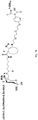
- 0 C*(C1)*(CCC=*2)=C2C#CC2C1=*C=CC2 Chemical compound C*(C1)*(CCC=*2)=C2C#CC2C1=*C=CC2 0.000 description 3
Images



Classifications
-
- A—HUMAN NECESSITIES
- A61—MEDICAL OR VETERINARY SCIENCE; HYGIENE
- A61K—PREPARATIONS FOR MEDICAL, DENTAL OR TOILETRY PURPOSES
- A61K47/00—Medicinal preparations characterised by the non-active ingredients used, e.g. carriers or inert additives; Targeting or modifying agents chemically bound to the active ingredient
- A61K47/50—Medicinal preparations characterised by the non-active ingredients used, e.g. carriers or inert additives; Targeting or modifying agents chemically bound to the active ingredient the non-active ingredient being chemically bound to the active ingredient, e.g. polymer-drug conjugates
- A61K47/51—Medicinal preparations characterised by the non-active ingredients used, e.g. carriers or inert additives; Targeting or modifying agents chemically bound to the active ingredient the non-active ingredient being chemically bound to the active ingredient, e.g. polymer-drug conjugates the non-active ingredient being a modifying agent
- A61K47/54—Medicinal preparations characterised by the non-active ingredients used, e.g. carriers or inert additives; Targeting or modifying agents chemically bound to the active ingredient the non-active ingredient being chemically bound to the active ingredient, e.g. polymer-drug conjugates the non-active ingredient being a modifying agent the modifying agent being an organic compound
- A61K47/55—Medicinal preparations characterised by the non-active ingredients used, e.g. carriers or inert additives; Targeting or modifying agents chemically bound to the active ingredient the non-active ingredient being chemically bound to the active ingredient, e.g. polymer-drug conjugates the non-active ingredient being a modifying agent the modifying agent being an organic compound the modifying agent being also a pharmacologically or therapeutically active agent, i.e. the entire conjugate being a codrug, i.e. a dimer, oligomer or polymer of pharmacologically or therapeutically active compounds
-
- A—HUMAN NECESSITIES
- A61—MEDICAL OR VETERINARY SCIENCE; HYGIENE
- A61K—PREPARATIONS FOR MEDICAL, DENTAL OR TOILETRY PURPOSES
- A61K39/00—Medicinal preparations containing antigens or antibodies
- A61K39/02—Bacterial antigens
- A61K39/09—Lactobacillales, e.g. aerococcus, enterococcus, lactobacillus, lactococcus, streptococcus
- A61K39/092—Streptococcus
-
- A—HUMAN NECESSITIES
- A61—MEDICAL OR VETERINARY SCIENCE; HYGIENE
- A61K—PREPARATIONS FOR MEDICAL, DENTAL OR TOILETRY PURPOSES
- A61K47/00—Medicinal preparations characterised by the non-active ingredients used, e.g. carriers or inert additives; Targeting or modifying agents chemically bound to the active ingredient
- A61K47/50—Medicinal preparations characterised by the non-active ingredients used, e.g. carriers or inert additives; Targeting or modifying agents chemically bound to the active ingredient the non-active ingredient being chemically bound to the active ingredient, e.g. polymer-drug conjugates
- A61K47/51—Medicinal preparations characterised by the non-active ingredients used, e.g. carriers or inert additives; Targeting or modifying agents chemically bound to the active ingredient the non-active ingredient being chemically bound to the active ingredient, e.g. polymer-drug conjugates the non-active ingredient being a modifying agent
- A61K47/54—Medicinal preparations characterised by the non-active ingredients used, e.g. carriers or inert additives; Targeting or modifying agents chemically bound to the active ingredient the non-active ingredient being chemically bound to the active ingredient, e.g. polymer-drug conjugates the non-active ingredient being a modifying agent the modifying agent being an organic compound
-
- A—HUMAN NECESSITIES
- A61—MEDICAL OR VETERINARY SCIENCE; HYGIENE
- A61K—PREPARATIONS FOR MEDICAL, DENTAL OR TOILETRY PURPOSES
- A61K47/00—Medicinal preparations characterised by the non-active ingredients used, e.g. carriers or inert additives; Targeting or modifying agents chemically bound to the active ingredient
- A61K47/50—Medicinal preparations characterised by the non-active ingredients used, e.g. carriers or inert additives; Targeting or modifying agents chemically bound to the active ingredient the non-active ingredient being chemically bound to the active ingredient, e.g. polymer-drug conjugates
- A61K47/51—Medicinal preparations characterised by the non-active ingredients used, e.g. carriers or inert additives; Targeting or modifying agents chemically bound to the active ingredient the non-active ingredient being chemically bound to the active ingredient, e.g. polymer-drug conjugates the non-active ingredient being a modifying agent
- A61K47/62—Medicinal preparations characterised by the non-active ingredients used, e.g. carriers or inert additives; Targeting or modifying agents chemically bound to the active ingredient the non-active ingredient being chemically bound to the active ingredient, e.g. polymer-drug conjugates the non-active ingredient being a modifying agent the modifying agent being a protein, peptide or polyamino acid
- A61K47/64—Drug-peptide, drug-protein or drug-polyamino acid conjugates, i.e. the modifying agent being a peptide, protein or polyamino acid which is covalently bonded or complexed to a therapeutically active agent
- A61K47/646—Drug-peptide, drug-protein or drug-polyamino acid conjugates, i.e. the modifying agent being a peptide, protein or polyamino acid which is covalently bonded or complexed to a therapeutically active agent the entire peptide or protein drug conjugate elicits an immune response, e.g. conjugate vaccines
-
- A—HUMAN NECESSITIES
- A61—MEDICAL OR VETERINARY SCIENCE; HYGIENE
- A61P—SPECIFIC THERAPEUTIC ACTIVITY OF CHEMICAL COMPOUNDS OR MEDICINAL PREPARATIONS
- A61P37/00—Drugs for immunological or allergic disorders
- A61P37/02—Immunomodulators
- A61P37/04—Immunostimulants
-
- C—CHEMISTRY; METALLURGY
- C08—ORGANIC MACROMOLECULAR COMPOUNDS; THEIR PREPARATION OR CHEMICAL WORKING-UP; COMPOSITIONS BASED THEREON
- C08B—POLYSACCHARIDES; DERIVATIVES THEREOF
- C08B37/00—Preparation of polysaccharides not provided for in groups C08B1/00 - C08B35/00; Derivatives thereof
- C08B37/006—Heteroglycans, i.e. polysaccharides having more than one sugar residue in the main chain in either alternating or less regular sequence; Gellans; Succinoglycans; Arabinogalactans; Tragacanth or gum tragacanth or traganth from Astragalus; Gum Karaya from Sterculia urens; Gum Ghatti from Anogeissus latifolia; Derivatives thereof
Definitions
- This invention is in the field of saccharide derivatives, conjugates including saccharides and methods for producing the saccharide derivatives and conjugates.
- the conjugates are useful for immunisation.
- the capsular saccharides of bacteria have been used for many years in vaccines against capsulated bacteria. As saccharides are T-independent antigens, however, they are poorly immunogenic. Conjugation to a carrier can convert T-independent antigens into T-dependent antigens, thereby enhancing memory responses and allowing protective immunity to develop.
- click chemistry approach has been described as a method for the formation of complex substances by joining small subunits together in a modular fashion [2, 3].
- Various forms of click chemistry reaction are known in the art, such as the Huisgen 1,3- dipolar cycloaddition copper catalyzed reaction [4], which is often referred to as the "click reaction”.
- Other alternatives include cycloaddition reactions such as the Diels-Alder, nucleophilic substitution reactions (especially to small strained rings like epoxy and aziridine compounds), carbonyl chemistry formation of urea compounds and reactions involving carbon-carbon double bonds, such as alkynes in thiol-yne reactions.
- the azide-alkyne Huisgen cycloaddition reaction uses a copper catalyst in the presence of a reducing agent to catalyze the reaction of a terminal alkyne group attached to a first molecule.
- a second molecule comprising an azide moiety
- the azide reacts with the activated alkyne to form a 1,4-di-substituted 1,2,3-triazole.
- the copper catalyzed reaction occurs at room temperature and is sufficiently specific that purification of the reaction product is often not required [5].
- the azide and alkyne functional groups are largely inert towards biomolecules in aqueous medium, allowing the reaction to occur in complex solutions.
- the triazole formed is chemically stable and is not subject to enzymatic cleavage, making the click chemistry product highly stable in biological systems.
- the copper catalyst is toxic to living cells, precluding biological applications.
- a copper-free click reaction has been proposed [6], which uses ring strain (in a cyclooctyne ring) in place of the copper catalyst to promote a [3 + 2] azide-alkyne cycloaddition reaction.
- the closed ring structure induces a substantial bond angle deformation of the acetylene, which is highly reactive with azide groups to form a triazole.
- the inventors have developed new processes for derivatizing saccharides and for conjugation of such saccharide derivatives to other moieties.
- the inventors have also produced novel saccharide derivatives and conjugates which have improved properties over saccharide derivatives and conjugates known in the art.
- the conjugates of the disclosure may have improved immunological properties.
- the disclosure provides a method of derivatizing a saccharide comprising attaching an eight-membered cycloalkyne group to the saccharide.
- the disclosure also provides a saccharide derivative comprising an eight-membered cycloalkyne group.
- the saccharide derivative comprising an eight-membered cycloalkyne group may be obtained or obtainable by the method of derivatizing a saccharide.
- the disclosure provides a method of conjugating a saccharide derivative to an azide-containing moiety, comprising reacting the eight-membered cycloalkyne group with the azide to form a triazole linkage.
- the disclosure also provides a conjugate of a saccharide derivative and an azide-containing moiety, wherein the conjugate has the formula R-S-T, wherein R comprises a residue of the saccharide derivative, S is a triazole group fused to an eight-membered cycloalkyl group and T comprises a residue of the moiety azide-containing moiety.
- the conjugate may be obtained or obtainable by the method of conjugating a saccharide derivative to an azide-containing moiety of the disclosure.
- the present disclosure also relates to pharmaceutical compositions comprising a conjugate of the disclosure in combination with a pharmaceutically acceptable carrier.
- the present disclosure further relates to methods for raising an immune response in a mammal, comprising administering a conjugate or pharmaceutical composition of the disclosure to the mammal.
- the disclosure involves methods of derivatizing a saccharide and methods of conjugating a saccharide derivative to an azide-containing moiety.
- the disclosure also involves novel saccharide derivatives and conjugates. The features of these methods, saccharide derivatives and conjugates are described in detail below.
- the disclosure is based on novel saccharide derivatives and methods of producing such saccharide derivatives.
- the saccharide used in the methods of the disclosure may be any capsular saccharide, particularly a saccharide from a pathogenic organism. Exemplary saccharides for use in the methods of the disclosure are described below.
- the saccharide may be a bacterial saccharide, e.g. a bacterial capsular saccharide.
- the saccharides may be used in the form of oligosaccharides. These are conveniently formed by fragmentation of purified polysaccharide ( e.g . by hydrolysis), which will usually be followed by purification of the fragments of the desired size. Saccharides may be purified from natural sources. As an alternative to purification, saccharides may be obtained by total or partial synthesis.
- Preferred bacterial capsular saccharides include those from Streptococcus agalactiae ("GBS").
- the capsular saccharide is covalently linked to the peptidoglycan backbone of GBS, and is distinct from the group B antigen, which is another saccharide that is attached to the peptidoglycan backbone.
- GBS is a leading cause of severe bacterial infections in early 3 months of life among newborns and of septic morbidity among mothers [7]. GBS is also an important cause of morbidity and mortality among non-pregnant adults, particularly among old people and adults with underlying medical conditions. All GBS strains possess a capsular polysaccharide (CPS) on their surface, which is a major virulence factor.
- CPS capsular polysaccharide
- GBS capsular saccharides are chemically related, but are antigenically very different. All GBS capsular saccharides share the following trisaccharide core: ⁇ -D-Gl cp NAc(1 ⁇ 3) ⁇ -D-Gal p (1 ⁇ 4) ⁇ -D-Gl cp
- the various GBS serotypes differ by the way in which this core is modified.
- GBS-related disease arises primarily from serotypes la, Ib, II, III, IV, V, VI, VII, and VIII, with over 85% being caused by five serotypes: la, Ib, III & V.
- the disclosure may use a saccharide from any serotype, in particular serotypes la, Ib, II, III & V.
- Saccharides used in the methods of the disclosure may be in their native form, or may have been modified.
- the saccharide may be shorter than the native capsular saccharide, or may be chemically modified.
- the serotype V capsular saccharide used in the disclosure may be modified as described in refs. 9 and 10.
- a serotype V capsular saccharide that has been substantially desialylated Desialylated GBS serotype V capsular saccharide may be prepared by treating purified GBS serotype V capsular saccharide under mildly acidic conditions (e.g . 0.1M sulphuric acid at 80°C for 60 minutes) or by treatment with neuraminidase, as described in reference 9.
- the saccharide used according to the disclosure may be a substantially full-length capsular polysaccharide, as found in nature, or it may be shorter than the natural length.
- Full-length polysaccharides may be depolymerised to give shorter fragments for use with the disclosure e.g . by hydrolysis in mild acid, by heating, by sizing chromatography, etc.
- the serotype II and/or III capsular saccharides used in the disclosure may be depolymerised as described in refs. 11 and 12.
- the saccharide may be chemically modified relative to the capsular saccharide as found in nature.
- the saccharide may be de-O-acetylated (partially or fully), de-N-acetylated (partially or fully), N-propionated (partially or fully), etc.
- De-acetylation may occur before, during or after conjugation, but preferably occurs before conjugation.
- de-acetylation may or may not affect immunogenicity.
- O-acetylation on GBS saccharides in various serotypes is discussed in reference 13, and in some embodiments O-acetylation of sialic acid residues at positions 7, 8 and/or 9 is retained before, during and after conjugation e.g.
- the GBS saccharide used in the present disclosure has substantially no O-acetylation of sialic acid residues at positions 7, 8 and/or 9.
- O-acetylation is typically lost. The effect of de-acetylation etc. can be assessed by routine assays.
- Capsular saccharides can be purified by known techniques, as described in 14.
- a typical process involves base extraction, centrifugation, filtration, RNase/DNase treatment, protease treatment, concentration, size exclusion chromatography, ultrafiltration, anion exchange chromatography, and further ultrafiltration.
- Treatment of GBS cells with the enzyme mutanolysin, which cleaves the bacterial cell wall to free the cell wall components, is also useful.
- the purification process described in reference 15 can be used. This involves base extraction, ethanol/CaCl 2 treatment, CTAB precipitation, and re-solubilisation. A further alternative process is described in reference 16.
- the saccharide may be a bacterial capsular saccharide.
- Exemplary bacterial capsular saccharides include those from N.meningitidis. Based on the organism's capsular polysaccharide, various serogroups of N.meningitidis have been identified, including A, B, C, H, I, K, L, 29E, W135, X, Y & Z.
- the saccharide in the disclosure may be from any of these serogroups.
- the saccharide is from one of the following meningococcal serogroups: A, C, W135 and Y.
- the capsular saccharides will generally be used in the form of oligosaccharides. These are conveniently formed by fragmentation of purified capsular polysaccharide ( e.g . by hydrolysis), which will usually be followed by purification of the fragments of the desired size.
- Fragmentation of polysaccharides is typically performed to give a final average degree of polymerisation (DP) in the oligosaccharide of less than 30 ( e.g. between 10 and 20, preferably around 10 for serogroup A; between 15 and 25 for serogroups W135 and Y, preferably around 15-20; between 12 and 22 for serogroup C; etc. ) .
- DP can conveniently be measured by ion exchange chromatography or by colorimetric assays [17].
- the hydrolysate will generally be sized in order to remove short-length oligosaccharides [18]. This can be achieved in various ways, such as ultrafiltration followed by ion-exchange chromatography. Oligosaccharides with a degree of polymerisation of less than or equal to about 6 are preferably removed for serogroup A, and those less than around 4 are preferably removed for serogroups W135 and Y.
- Chemical hydrolysis of saccharides generally involves treatment with either acid or base under conditions that are standard in the art. Conditions for depolymerisation of capsular saccharides to their constituent monosaccharides are known in the art.
- One depolymerisation method involves the use of hydrogen peroxide [19]. Hydrogen peroxide is added to a saccharide (e.g. to give a final H 2 O 2 concentration of 1%), and the mixture is then incubated (e.g . at around 55°C) until a desired chain length reduction has been achieved. The reduction over time can be followed by removing samples from the mixture and then measuring the (average) molecular size of saccharide in the sample. Depolymerization can then be stopped by rapid cooling once a desired chain length has been reached
- a more preferred process [21] involves polysaccharide precipitation followed by solubilisation of the precipitated polysaccharide using a lower alcohol.
- Precipitation can be achieved using a cationic detergent such as tetrabutylammonium and cetyltrimethylammonium salts (e.g. the bromide salts), or hexadimethrine bromide and myristyltrimethylammonium salts.
- cetyltrimethylammonium bromide 'CTAB' is particularly preferred [22].
- Solubilisation of the precipitated material can be achieved using a lower alcohol such as methanol, propan-1-ol, propan-2-ol, butan-1-ol, butan-2-ol, 2-methyl-propan-1-ol, 2-methyl-propan-2-ol, diols, etc., but ethanol is particularly suitable for solubilising CTAB-polysaccharide complexes.
- Ethanol may be added to the precipitated polysaccharide to give a final ethanol concentration (based on total content of ethanol and water) of between 50% and 95%.
- the polysaccharide may be further treated to remove contaminants. This is particularly important in situations where even minor contamination is not acceptable (e.g. for human vaccine production). This will typically involve one or more steps of filtration e.g . depth filtration, filtration through activated carbon may be used, size filtration and/or ultrafiltration.
- the polysaccharide may be precipitated for further treatment and/or processing. This can be conveniently achieved by exchanging cations (e.g . by the addition of calcium or sodium salts).
- capsular saccharides of the present disclosure may be obtained by total or partial synthesis e.g . Hib synthesis is disclosed in ref. 24, and MenA synthesis in ref. 25.
- the saccharide may be chemically modified e.g. it may be O-acetylated or de-O-acetylated. Any such de-O-acetylation or hyper-acetylation may be at specific positions in the saccharide. For instance, most serogroup C strains have O-acetyl groups at position C-7 and/or C-8 of the sialic acid residues, but about 15% of clinical isolates lack these O-acetyl groups [26,27].
- the acetylation does not seem to affect protective efficacy (e.g. unlike the MenjugateTM product, the NeisVac-CTM product uses a de-O-acetylated saccharide, but both vaccines are effective).
- the serogroup W135 saccharide is a polymer of sialic acid-galactose disaccharide units.
- the serogroup Y saccharide is similar to the serogroup W135 saccharide, except that the disaccharide repeating unit includes glucose instead of galactose.
- the MenW135 and MenY saccharides have variable O-acetylation, but at sialic acid 7 and 9 positions [28].
- the method may include a serogroup A capsular saccharide antigen.
- the saccharide can be purified and conjugated in the same way as for serogroups C, W135 and Y (see above), although it is structurally different - whereas the capsules of serogroups C, W135 and Y are based around sialic acid ( N -acetyl-neuraminic acid, NeuAc), the capsule of serogroup A is based on N -acetyl-mannosamine, which is the natural precursor of sialic acid.
- the serogroup A saccharide is particularly susceptible to hydrolysis, and its instability in aqueous media means that (a) the immunogenicity of liquid vaccines against serogroup A declines over time, and (b) quality control is more difficult, due to release of saccharide hydrolysis products into the vaccine.
- Native MenA capsular saccharide is a homopolymer of ( ⁇ 1 ⁇ 6)-linked N -acetyl-D-mannosamine-1- -phosphate, with partial O-acetylation at C3 and C4.
- the principal glycosidic bond is a 1-6 phosphodiester bond involving the hemiacetal group of C1 and the alcohol group of C6 of the D-mannosamine.
- the average chain length is 93 monomers. It has the following formula:
- a modified saccharide antigen has been prepared which retains the immunogenic activity of the native serogroup A saccharide but which is much more stable in water. Hydroxyl groups attached at carbons 3 and 4 of the monosaccharide units are replaced by a blocking group [refs. 29 and 30].
- the number of monosaccharide units having blocking groups in place of hydroxyls can vary. For example, all or substantially all the monosaccharide units may have blocking groups. Alternatively, at least 10%, 20%, 30%, 40%, 50%, 60%, 70%, 80% or 90% of the monosaccharide units may have blocking groups. At least 1, 2, 3, 4, 5, 6, 7, 8, 9, 10, 11, 12, 13, 14, 15, 16, 17, 18, 19, 20, 21, 22, 23, 24, 25, 26, 27, 28, 29 or 30 monosaccharide units may have blocking groups.
- the number of blocking groups on a monosaccharide unit may vary.
- the number of blocking groups on any particular monosaccharide unit may be 1 or 2.
- Blocking groups to replace hydroxyl groups may be directly accessible via a derivatizing reaction of the hydroxyl group i.e. by replacing the hydrogen atom of the hydroxyl group with another group.
- Suitable derivatives of hydroxyl groups which act as blocking groups are, for example, carbamates, sulfonates, carbonates, esters, ethers (e.g. silyl ethers or alkyl ethers) and acetals.
- Some specific examples of such blocking groups are allyl, Aloc, benzyl, BOM, t-butyl, trityl, TBS, TBDPS, TES, TMS, TIPS, PMB, MEM, MOM, MTM, THP, etc.
- blocking groups that are not directly accessible and which completely replace the hydroxyl group include C 1-12 alkyl, C 3-12 alkyl, C 5-12 aryl, C 5 - 12 aryl-C 1-6 alkyl, NR 1 R 2 (R 1 and R 2 are defined in the following paragraph), H, F, Cl, Br, CO 2 H, CO 2 (C 1-6 alkyl), CN, CF 3 , CCl 3 , etc.
- Typical blocking groups are of the formula: -O-X-Y or -OR 3 wherein: X is C(O), S(O) or SO 2 ; Y is C 1 - 12 alkyl, C 1 - 12 alkoxy, C 3 - 12 cycloalkyl, C 5 - 12 aryl or C 5 - 12 aryl-C 1-6 alkyl, each of which may optionally be substituted with 1, 2 or 3 groups independently selected from F, Cl, Br, CO 2 H, CO 2 (C 1-6 alkyl), CN, CF 3 or CCl 3 ; or Y is NR 1 R 2 ; R 1 and R 2 are independently selected from H, C 1 - 12 alkyl, C 3 - 12 cycloalkyl, C 5 - 12 aryl, C 5 - 12 aryl-C 1-6 alkyl; or R 1 and R 2 may be joined to form a C 3 - 12 saturated heterocyclic group; R 3 is C 1 - 12 alkyl or C
- R 3 is C 1 - 12 alkyl or C 3 - 12 cycloalkyl, it is typically substituted with 1, 2 or 3 groups as defined above.
- R 1 and R 2 are joined to form a C 3 - 12 saturated heterocyclic group, it is meant that R 1 and R 2 together with the nitrogen atom form a saturated heterocyclic group containing any number of carbon atoms between 3 and 12 ( e.g. C 3 , C 4 , C 5 , C 6 , C 7 , C 8 , C 9 , C 10 , C 11 , C 12 ).
- the heterocyclic group may contain 1 or 2 heteroatoms (such as N, O or S) other than the nitrogen atom.
- Examples of C 3 - 12 saturated heterocyclic groups are pyrrolidinyl, piperidinyl, morpholinyl, piperazinyl, imidazolidinyl, azetidinyl and aziridinyl.
- Blocking groups -O-X-Y and -OR 3 can be prepared from -OH groups by standard derivatizing procedures, such as reaction of the hydroxyl group with an acyl halide, alkyl halide, sulfonyl halide, etc.
- the oxygen atom in -O-X-Y is usually the oxygen atom of the hydroxyl group
- the -X-Y group in -O-X-Y usually replaces the hydrogen atom of the hydroxyl group.
- the blocking groups may be accessible via a substitution reaction, such as a Mitsonobu-type substitution.
- a substitution reaction such as a Mitsonobu-type substitution.
- Specific blocking groups for use in the disclosure are -OC(O)CF 3 [31] and a carbamate group OC(O)NR 1 R 2 , where R 1 and R 2 are independently selected from C 1-6 alkyl. Typically, R 1 and R 2 are both methyl i.e. the blocking group is -OC(O)NMe 2 .
- Carbamate blocking groups have a stabilizing effect on the glycosidic bond and may be prepared under mild conditions.
- a particularly preferred blocking group is -OC(O)CH 3 [30].
- the proportion of 4- and/or 3-positions in the modified Neisseria meningitidis serogroup A saccharide that have this blocking group may vary.
- the proportion of 4-positions that have blocking groups may be about 0%, at least 10%, 20%, 30%, 40%, 50%, 60%, 70%, 80%, 90%, 95% or about 100%, with at least 80% and about 100% being preferred.
- the proportion of 3-positions that have blocking groups may be about 0%, at least 10%, 20%, 30%, 40%, 50%, 60%, 70%, 80%, 90%, 95% or about 100%, with at least 80% and about 100% being preferred.
- the proportion of 4- and 3-positions that have blocking groups is about the same at each position.
- the ratio of 4-positions that have blocking groups to 3-positions that have blocking groups is about 1:1.
- the proportion of 4-positions that have blocking groups may vary relative to the proportion of 3-positions that have blocking groups.
- the ratio of 4-positions that have blocking groups to 3-positions that have blocking groups may be 1:20, 1:19, 1:18, 1:17, 1:16, 1:15, 1:14, 1:13, 1:12, 1:11, 1:10, 1:9, 1:8, 1:7, 1:6, 1:5, 1:4, 1:3 or 1:2.
- the ratio of 3-positions that have blocking groups to 4-positions that have blocking groups may be 1:20, 1:19, 1:18, 1:17, 1:16, 1:15, 1:14, 1:13, 1:12, 1:11, 1:10, 1:9, 1:8, 1:7, 1:6, 1:5, 1:4, 1:3 or 1:2.
- Typical modified MenA saccharides contain n monosaccharide units, where at least h% of the monosaccharide units do not have -OH groups at both of positions 3 and 4.
- the value of h is 24 or more ( e.g. 25, 26, 27, 28, 29, 30, 35, 40, 45, 50, 55, 60, 65, 70, 75, 80, 85, 90, 95, 98, 99 or 100) and is usually 50 or more.
- the absent -OH groups are blocking groups as defined above.
- Other typical modified MenA saccharides comprise monosaccharide units, wherein at least s of the monosaccharide units do not have -OH at the 3 position and do not have -OH at the 4 position.
- the value of s is at least 1 (e.g. 2, 3, 4, 5, 6, 7, 8, 9, 10, 11, 12, 13, 14, 15, 16, 17, 18, 19, 20, 21, 22, 23, 24, 25, 26, 27, 28, 29, 30, 35, 40, 45, 50, 60, 70, 80, 90).
- the absent -OH groups are blocking groups as defined above.
- Suitable modified MenA saccharides for use with the disclosure have the formula: wherein
- Each of the n+2 Z groups may be the same or different from each other.
- each of the n + 2 Q groups may be the same or different from each other.
- All the Z groups may be OH.
- at least 10%, 20, 30%, 40%, 50% or 60% of the Z groups may be OAc.
- about 70% of the Z groups are OAc, with the remainder of the Z groups being OH or blocking groups as defined above.
- At least about 7% of Q groups are blocking groups.
- at least 10%, 20%, 30%, 40%, 50%, 60%, 70%, 80%, 90% or even 100% of the Q groups are blocking groups.
- the saccharide may be a glucan.
- Glucans are glucose-containing polysaccharides found inter alia in fungal cell walls.
- the ⁇ -glucans include one or more ⁇ -linkages between glucose subunits, whereas ⁇ -glucans include one or more ⁇ -linkages between glucose subunits.
- the glucan used in accordance with the disclosure includes ⁇ linkages, and may contain only ⁇ linkages ( i.e. no ⁇ linkages).
- the glucan may comprise one or more ⁇ -1,3-linkages and/or one or more ⁇ -1,6-linkages. It may also comprise one or more ⁇ -1,2-linkages and/or ⁇ -1,4-linkages, but normally its only ⁇ linkages will be ⁇ -1,3-linkages and /or ⁇ -1,6-linkages.
- the glucan may be branched or linear.
- soluble glucans are insoluble and have a molecular weight in the megadalton range. It is preferred to use soluble glucans in conjugates of the disclosure. Solubilisation may be achieved by fragmenting long insoluble glucans. This may be achieved by hydrolysis or, more conveniently, by digestion with a glucanase ( e.g . with a ⁇ -1,3-glucanase or a ⁇ -1,6-glucanase). As an alternative, short glucans can be prepared synthetically by joining monosaccharide building blocks.
- Low molecular weight glucans are preferred, particularly those with a molecular weight of less than 100 kDa (e.g. less than 80, 70, 60, 50, 40, 30, 25, 20, or 15 kDa). It is also possible to use oligosaccharides e.g. containing 60 or fewer ( e.g. 59, 58, 57, 56, 55, 54, 53, 52, 51, 50, 49, 48, 47, 46, 45, 44, 43, 42, 41, 40 39, 38, 37, 36, 35, 34, 33, 32, 31, 30, 29, 28, 27, 26, 25, 24, 23, 22, 21, 20, 19, 18, 17, 16, 15, 14, 13, 12, 11, 10, 9, 8, 7, 6, 5, 4) glucose monosaccharide units. Within this range, oligosaccharides with between 10 and 50 or between 20 and 40 monosaccharide units are preferred.
- the glucan may be a fungal glucan.
- a 'fungal glucan' will generally be obtained from a fungus but, where a particular glucan structure is found in both fungi and non-fungi ( e.g . in bacteria, lower plants or algae) then the non-fungal organism may be used as an alternative source.
- the glucan may be derived from the cell wall of a Candida, such as C.albicans, or from Coccidioides immitis, Trichophyton verrucosum, Blastomyces dermatidis, Cryptococcus neoformans, Histoplasma capsulatum, Saccharomyces cerevisiae, Paracoccidioides brasiliensis, or Pythiumn insidiosum.
- ⁇ -glucans there are various sources of fungal ⁇ -glucans.
- pure ⁇ -glucans are commercially available e.g. pustulan (Calbiochem) is a ⁇ -1,6-glucan purified from Umbilicaria papullosa.
- ⁇ -glucans can be purified from fungal cell walls in various ways.
- Reference 32 discloses a two-step procedure for preparing a water-soluble ⁇ -glucan extract from Candida, free from cell-wall mannan, involving NaClO oxidation and DMSO extraction.
- the resulting product ('Candida soluble ⁇ -D-glucan' or 'CSBG') is mainly composed of a linear ⁇ -1,3-glucan with a linear ⁇ -1,6-glucan moiety.
- reference 33 discloses the production of GG-zym from Calbicans.
- Such glucans from C.albicans include (a) ⁇ -1,6-glucans with ⁇ -1,3-glucan lateral chains and an average degree of polymerisation of about 30, and (b) ⁇ -1,3-glucans with ⁇ -1,6-glucan lateral chains and an average degree of polymerisation of about 4.
- the glucan is a ⁇ -1,3 glucan with some ⁇ -1,6 branching, as seen in e.g . laminarins.
- Laminarins are found in brown algae and seaweeds.
- the ⁇ (1-3): ⁇ (1-6) ratios of laminarins vary between different sources e.g. it is as low as 3:2 in Eisenia bicyclis laminarin, but as high as 7:1 in Laminaria digititata laminarin [34].
- the glucan used with the disclosure may have a ⁇ (1-3): ⁇ (1-6) ratio of between 1.5:1 and 7.5:1 e.g. about 2:1, 3:1, 4:1, 5:1, 6:1 or 7:1.
- the glucan may have a terminal mannitol subunit, e.g . a 1,1- ⁇ -linked mannitol residue [35].
- the glucan may also comprise mannose subunits.
- the glucan has exclusively or mainly ⁇ -1,3 linkages, as seen in curdlan. These glucans may elicit better protection than glucans comprising other linkages, particularly glucans comprising ⁇ -1,3 linkages and a greater proportion of ⁇ -1,6 linkages.
- the glucan may be made solely of ⁇ -1,3-linked glucose residues ( e.g . linear ⁇ -D-glucopyranoses with exclusively 1,3 linkages).
- the glucan may include monosaccharide residues that are not ⁇ -1,3-linked glucose residues e.g. it may include ⁇ -1,6-linked glucose residues.
- the ratio of ⁇ -1,3-linked glucose residues to these other residues should be at least 8:1 ( e.g. ⁇ 9:1, ⁇ 10:1, ⁇ 11:1, ⁇ 12:1, ⁇ 13:1, ⁇ 14:1, ⁇ 15:1, ⁇ 16:1, ⁇ 17:1, ⁇ 18:1, ⁇ 19:1, ⁇ 20:1, ⁇ 25:1, ⁇ 30:1, ⁇ 35:1, ⁇ 40:1, ⁇ 45:1, ⁇ 50:1, ⁇ 75:1, ⁇ 100:1, etc. ) and/or there are one or more (e.g. ⁇ 1, ⁇ 2, ⁇ 3, ⁇ 4, ⁇ 5, ⁇ 6, ⁇ 7, ⁇ 8, ⁇ 9, ⁇ 10, ⁇ 11, ⁇ 12, etc.
- sequences of at least five e.g. ⁇ 5, ⁇ 6, ⁇ 7, ⁇ 8, ⁇ 9, ⁇ 10, ⁇ 11, ⁇ 12, ⁇ 13, ⁇ 14, ⁇ 15, ⁇ 16, ⁇ 17, ⁇ 18, ⁇ 19, ⁇ 20, ⁇ 30, ⁇ 40, ⁇ 50, ⁇ 60, etc.
- adjacent non-terminal residues linked to other residues only by ⁇ -1,3 linkages.
- non-terminal it is meant that the residue is not present at a free end of the glucan.
- the adjacent non-terminal residues may not include any residues at which the cyclooctyne group is attached.
- the presence of five adjacent non-terminal residues linked to other residues only by ⁇ -1,3 linkages may provide a protective antibody response, e.g . against C.albicans.
- a conjugate may include two different glucans e.g. a first glucan having a ⁇ (1-3): ⁇ (1-6) ratio of between 1.5:1 and 7.5:1, and a second glucan having exclusively or mainly ⁇ -1,3 linkages.
- a conjugate may include both a laminarin glucan and a curdlan glucan.
- a ⁇ -glucan includes both ⁇ -1,3 and ⁇ -1,6 linkages at a desired ratio and/or sequence
- this glucan may be found in nature (e.g. a laminarin), or it may be made artificially. For instance, it may be made by chemical synthesis, in whole or in part. Methods for the chemical synthesis of ⁇ -1,3/ ⁇ -1,6 glucans are known, for example from references 36-46.
- ⁇ -glucan including both ⁇ -1,3 and ⁇ -1,6 linkages at a desired ratio may also be made starting from an available glucan and treating it with a ⁇ -1,6-glucanase (also known as glucan endo-1,6- ⁇ -glucosidase, 1,6- ⁇ -D-glucan glucanohydrolase, etc.; EC 3.2.1.75) or a ⁇ -1,3-glucanase (such as an exo-1,3-glucanase (EC 3.2.1.58) or an endo-1,3-glucanase (EC 3.2.1.39) until a desired ratio and/or sequence is reached.
- a ⁇ -1,6-glucanase also known as glucan endo-1,6- ⁇ -glucosidase, 1,6- ⁇ -D-glucan glucanohydrolase, etc.; EC 3.2.1.75
- a ⁇ -1,3-glucanase such as an exo-1
- ⁇ -1,6-glucanase treatment may be pursued to completion, as ⁇ -1,6-glucanase will eventually yield pure ⁇ -1,3 glucan. More conveniently, however, a pure ⁇ -1,3-glucan may be used. These may be made synthetically, by chemical and/or enzymatic synthesis e.g . using a (1 ⁇ 3)- ⁇ -D-glucan synthase, of which several are known from many organisms (including bacteria, yeasts, plants and fungi). Methods for the chemical synthesis of ⁇ -1,3 glucans are known, for example from references 47-50.
- a natural ⁇ -1,3-glucan may be used, such as a curdlan (linear ⁇ -1,3-glucan from an Agrobacterium previously known as Alcaligenes faecalis var. myxogenes ; commercially available e.g. from Sigma-Aldrich catalog C7821) or paramylon ( ⁇ -1,3-glucan from Euglena ) .
- Organisms producing high levels of ⁇ -1,3-glucans are known in the art e.g. the Agrobacterium of refs. 51 & 52, or the Euglena gracilis of ref. 53.
- Laminarin and curdlan are typically found in nature as high molecular weight polymers e.g . with a molecular weight of at least 100kDa. They are often insoluble in aqueous media. In their natural forms, therefore, they are not well suited to immunisation. Thus the disclosure may use a shorter glucan e.g. those containing 60 or fewer glucose monosaccharide units (e.g.
- a glucan having a number of glucose residues in the range of 2-60 may be used e.g. between 10-50 or between 20-40 glucose units.
- a glucan with 25-30 glucose residues is particularly useful.
- Suitable glucans may be formed e.g. by acid hydrolysis of a natural glucan, or by enzymatic digestion e.g.
- glucanase such as a ⁇ -1,3-glucanase.
- a glucan with 11-19, e.g. 13-19 and particularly 15 or 17, glucose monosaccharide units is also useful.
- glucans with the following structures (A) or (B) are specifically envisaged for use in the present disclosure: wherein n+2 is in the range of 2-60, e.g . between 10-50 or between 2-40. Preferably, n+2 is in the range of 25-30 or 6-19, e.g. 6 or 13-17.
- n is in the range of 3-4 or 1-3.
- the glucan is a single molecular species.
- all of the glucan molecules are identical in terms of sequence. Accordingly, all of the glucan molecules are identical in terms of their structural properties, including molecular weight etc.
- this form of glucan is obtained by chemical synthesis, e.g . using the methods described above.
- reference 48 describes the synthesis of a single ⁇ -1,3 linked species.
- the glucan may be obtained from a natural glucan, e.g. a glucan from L.digitata, Agrobacterium or Euglena as described above, with the glucan being purified until the required single molecular species is obtained.
- Natural glucans that have been purified in this way are commercially available.
- a glucan that is a single molecular species may be identified by measuring the polydispersity (Mw/Mn) of the glucan sample. This parameter can conveniently be measured by SEC-MALLS, for example as described in reference 54.
- Suitable glucans for use in this embodiment of the disclosure have a polydispersity of about 1, e.g. 1.01 or less.
- Solubility of natural glucans can be increased by introducing ionic groups (e.g. by sulfation, particularly at O-6 in curdlan). Such modifications may be used with the disclosure, but are ideally avoided as they may alter the glucan's antigenicity.
- the saccharide When the saccharide is a glucan, it is typically a laminarin.
- the saccharide may also be a bacterial capsular saccharide.
- Further exemplary bacterial capsular saccharides include those from S.pneumoniae.
- the saccharide is a capsular saccharides from S.pneumoniae, it is typically from one of the following pneumococcal serotypes: 1, 2, 3, 4, 5, 6A, 6B, 7F, 8, 9N, 9V, 10A, 11A, 12F, 14, 15B, 17F, 18C, 19A, 19F, 20, 22F, 23F and 33F, preferably from 1, 5, 6B, 14, 19F and 23F.
- Capsular polysaccharides from S.pneumoniae comprise repeating oligosaccharide units which may contain up to 8 sugar residues. The oligosaccharide units for the main S.pneumoniae serotypes are described in refs 55 and 56.
- exemplary bacterial capsular saccharides include those from S.aureus, particularly the capsular polysaccharides of S.aureus type 5 and type 8.
- the structures of type 5 and type 8 capsular polysaccharides were described in references 57 and 58 as:
- the polysaccharide may be chemically modified relative to the capsular polysaccharide as found in nature.
- the polysaccharide may be de-O-acetylated (partially or fully), de-N-acetylated (partially or fully), N-propionated (partially or fully), etc.
- De-acetylation may occur before, during or after conjugation, but typically occurs before conjugation.
- the effect of de-acetylation etc. can be assessed by routine assays.
- the relevance of O-acetylation on S.aureus type 5 or type 8 capsular polysaccharides is discussed in reference 60.
- the native polysaccharides are said in this document to have 75% O-acetylation.
- polysaccharides with 0% O-acetylation still elicited antibodies to the polysaccharide backbone. Both types of antibody were opsonic against S.aureus strains that varied in their O-acetyl content. Accordingly, the type 5 or type 8 capsular polysaccharides used in the present disclosure may have between 0 and 100% O-acetylation.
- the degree of O-acetylation of the polysaccharide can be determined by any method known in the art, for example, by proton NMR ( e.g. as described in references 61, 62, 63 or 64). A further method is described in reference 65. Similar methods may be used to determine the degree of N-acetylation of the polysaccharide.
- O-acetyl groups may be removed by hydrolysis, for example by treatment with a base such as anhydrous hydrazine [66] or NaOH [60]. Similar methods may be used to remove N-acetyl groups.
- treatments that lead to hydrolysis of the O-acetyl groups are minimised, e.g . treatments at extremes of pH.
- Capsular polysaccharides can be purified by known techniques, as described in the references herein.
- a typical process involves phenol-ethanol inactivation of S.aureus cells, centrifugation, lysostaphin treatment, RNase/DNase treatment, centrifugation, dialysis, protease treatment, further dialysis, filtration, precipitation with ethanol/CaCl 2 , dialysis, freeze-drying, anion exchange chromatography, dialysis, freeze-drying, size exclusion chromatography, dialysis and freeze-drying [67].
- An alternative process involves autoclaving S.aureus cells, ultrafiltration of the polysaccharide-containing supernatant, concentration, lyophilisation, treatment with sodium metaperiodate to remove teichoic acid, further ultrafiltration, diafiltration, high performance size exclusion liquid chromatography, dialysis and freeze-drying [68].
- the disclosure is not limited to polysaccharides purified from natural sources, however, and the polysaccharides may be obtained by other methods, such as total or partial synthesis.
- exemplary bacterial capsular saccharides include those from Haemophilus influenzae Type b, Salmonella enterica Typhi Vi and Clostridium difficile.
- S.pyogenes Group A Streptococcus or GAS carbohydrate
- the disclosure may also use non-capsular bacterial saccharides.
- An exemplary non-capsular bacterial saccharides is the S. pyogenes GAS carbohydrate (also known as the GAS cell wall polysaccharide, or GASP).
- This saccharide features a branched structure with an L-rhamnopyranose (Rha p ) backbone consisting of alternating alpha-(1 ⁇ 2) and alpha-(1 ⁇ 3) links and D-N-acetylglucosamine (Glc p NAc) residues beta-(1 ⁇ 3)-connected to alternating rhamnose rings ([69]).
- the GAS carbohydrate will generally be in its native form, but it may have been modified.
- the saccharide may be shorter than the native GAS carbohydrate, or may be chemically modified.
- the saccharide used according to the disclosure may be a substantially full-length GAS carbohydrate, as found in nature, or it may be shorter than the natural length.
- Full-length polysaccharides may be depolymerised to give shorter fragments for use with the disclosure e.g. by hydrolysis in mild acid, by heating, by sizing chromatography, etc.
- a short fragment thought to correspond to the terminal unit on the GAS carbohydrate has been proposed for use in a vaccine [70]. Accordingly, short fragments are envisaged in the present disclosure.
- the GAS carbohydrate typically has a molecular weight of about 10, in particular about 7.5-8.5 kDa. Molecular masses can be measured by HPLC, for example SEC-HPLC using a TSK Gel G3000SW column (Sigma) relative to pullulan standards, such as those available from Polymer Standard Service [71].
- the saccharide may be chemically modified relative to the GAS carbohydrate as found in nature.
- the saccharide may be de-N-acetylated (partially or fully), N-propionated (partially or fully), etc.
- the effect of de-acetylation etc., for example on immunogenicity, can be assessed by routine assays.
- the present disclosure relates in part to a method of derivatizing a saccharide comprising attaching an eight-membered cycloalkyne group to the saccharide.
- the eight-membered cycloalkyne group is attached to the saccharide by a covalent linkage.
- the eight-membered cycloalkyne group is attached via a spacer.
- the eight-membered cycloalkyne group is typically at a terminus of the spacer.
- the other terminus of the spacer has a functional group for attachment to the saccharide.
- the nature of the functional group will depend on the saccharide, in particular on the group or groups available on the saccharide for attachment. Attachment of the eight-membered cycloalkyne group can be carried out using any suitable method depending on the nature of the saccharide and, when a spacer is used, the functional group on the spacer.
- the spacer can include any functional group that allows attachment to an amine (e.g. a succinimidyl ester).
- the saccharide contains an aldehyde
- the spacer can include any functional group that allows attachment to an aldehyde (e.g. an amine).
- the eight-membered cycloalkyne group includes one or more nitrogen atoms, such as 1, 2 or 3 nitrogen atoms. In some embodiments, the eight-membered cycloalkyne group is fused to one or more other ring systems, such as cyclopropane or benzene. In one preferred embodiment, the eight-membered cycloalkyne group is fused to a cyclopropane group. In another preferred embodiment, the eight-membered cycloalkyne group is fused to two benzene groups. In most preferred embodiments, the eight-membered cycloalkyne group is a cyclooctyne group.
- the attachment is carried out using a compound having the formula X 1 -L-X 2 , where X 1 is the eight-membered cycloalkyne group and X 2 -L is the spacer.
- X 2 may be any group that can react with a functional group on the saccharide, and L is a linking moiety in the spacer.
- X 2 is N-oxysuccinimide. This group is suitable for attachment to an amine on a saccharide. In other embodiments, X 2 may be an amine group, which is suitable for attachment to an aldehyde on a saccharide. L may be a straight chain alkyl with 1 to 10 carbon atoms ( e.g. C 1 , C 2 , C 3 , C 4 , C 5 , C 6 , C 7 , Cs, C 9 , C 10 ) e.g. -(CH 2 ) 4 - or -(CH 2 ) 3 -.
- L typically has formula - L 3 -L 2 -L 1 -, in which L 1 is carbonyl, L 2 is a straight chain alkyl with 1 to 10 carbon atoms ( e.g. C 1 , C 2 , C 3 , C 4 , C 5 , C 6 , C 7 , C 8 , C 9 , C 10 ) e.g. -(CH 2 ) 4 - or -(CH 2 ) 5 - or L 2 is absent, and L 3 is -NHC(O)-, carbonyl or -O(CH 3 )-.
- L 1 is carbonyl
- L 2 is a straight chain alkyl with 1 to 10 carbon atoms ( e.g. C 1 , C 2 , C 3 , C 4 , C 5 , C 6 , C 7 , C 8 , C 9 , C 10 ) e.g. -(CH 2 ) 4 - or -(CH 2 ) 5 - or L 2
- L 1 is carbonyl
- L 2 is -(CH 2 ) 5 - and L 3 is -NHC(O)-.
- L 1 is carbonyl
- L 2 is -(CH 2 ) 4 - and L 3 is carbonyl.
- L 1 is carbonyl
- L 2 is absent and L 3 is -O(CH 3 )-.
- X 1 is:
- X 1 is:
- X 1 is:
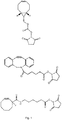
- a preferred compound having the formula X 1 -L-X 2 is:
- Another preferred compound having the formula X 1 -L-X 2 is:
- a particularly preferred compound having the formula X 1 -L-X 2 is:
- Derivatization of the saccharide may be required to introduce functional groups such as amines and aldehydes.
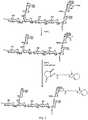
- attachment of the eight-membered cycloalkyne group to the saccharide is preceded by oxidation of the saccharide in order to introduce an aldehyde group into at least one saccharide residue in the saccharide. This step may involve the introduction of more than one aldehyde group into the saccharide.
- GBS capsular saccharides do not include an aldehyde group in their natural form, and so it is typically generated before attachment of the cyclooctyne group by oxidation (e.g . periodate oxidation) of a portion ( e.g . between 5 and 40%, particularly between 10 and 30%, preferably about 20%) of the saccharide's sialic acid residues [72].
- oxidation e.g . periodate oxidation
- an aldehyde group may be generated in this saccharide before attachment of the eight-membered cycloalkyne group by oxidation ( e.g . periodate oxidation) of a portion ( e.g . between 5 and 40%, particularly between 10 and 30%, preferably about 20%) of the saccharide's galactose residues [10].
- Typical reactions to produce aldehydes include the use of periodate salts, and particularly meta-periodates (e.g. sodium or potassium meta-periodate e.g. NaIO 4 ), to oxidise hydroxyl groups [73].
- periodate salts e.g. sodium or potassium meta-periodate e.g. NaIO 4
- meta-periodates e.g. sodium or potassium meta-periodate e.g. NaIO 4
- Oxidation of the saccharide may be followed by a step of reductive amination, for example if it is desirable to provide an amine on the saccharide for attachment to a spacer.
- Reductive amination is a standard technique in organic chemistry.
- an aldehyde group in the saccharide residue reacts with an amine group in the spacer. This can conveniently be achieved by combining the polysaccharide with the spacer in the presence of an appropriate reducing agent (e.g . cyanoborohydrides, such as sodium cyanoborohydride NaBH 3 CN; borane-pyridine; sodium triacetoxyborohydride; borohydride exchange resin; etc. ) .
- an aldehyde group is converted into an amine group by reductive amination to provide an amine group for attachment of the spacer.
- the reductive amination involves either ammonia or a primary amine (NH 2 R).
- ammonium salt e.g . ammonium chloride
- an appropriate reducing agent e.g. as listed above.
- the skilled person would be capable of identifying suitable conditions for reductive amination.
- the inventors have found that treatment of polysaccharide at 10mg/ml with carrier protein at a 4:1 polysaccharide:protein ratio (w/w) and NaBH 3 CN at a 2:1 polysaccharide:NaBH 3 CN ratio is suitable.
- the saccharide derivative When a spacer is used, the saccharide derivative will comprise a spacer moiety.
- the spacer moiety may include atoms such as carbon, hydrogen, oxygen and/or nitrogen. Spacers that comprise carbon and hydrogen are typical, and spacers that further comprise oxygen and/or nitrogen are also typically used. Spacers that include nitrogen atoms may include a carbon atom bonded to a nitrogen atom, which in turn is bonded to a second carbon atom (-C-N-C-). Spacers that include an oxygen atom typically include it as part of a carbonyl group. Spacer moieties with a molecular weight of between 30-500 Da are typical. Spacers containing two carbonyl groups are also typical.
- a useful spacer moiety may be -NH-C(O)-(CH 2 ) n -NH-C(O)-, wherein n is 1, 2, 3, 4, 5, 6, 7, 8, 9 or 10. The value of n is typically 5.
- the terminal -NH- in this spacer is usually attached to a carbon atom from the polysaccharide moiety.
- the terminal -C(O)- in this spacer is usually attached to the cyclooctyne group.
- a preferred spacer moiety can conveniently be introduced by a process involving: reductive amination of the aldehyde in the oxidised saccharide residue; reaction of the resulting -NH 2 group with a bifunctional spacer that is a diester (e.g. a disuccinimidyl ester) of a dioic acid ( e.g. of adipic acid, HOOC-(CH 2 ) 4 -COOH); and reductive amination of the product ([74]).
- chemistries that can be used to attach a spacer to a -NH 2 group in the saccharide, include:
- the method of derivatizing a saccharide according to the disclosure may give the saccharide as described below.
- the disclosure provides a saccharide derivative comprising an eight-membered cycloalkyne group.
- the saccharide derivative may include any saccharide and, where appropriate, spacer, as outlined above.
- the disclosure also provides a saccharide derivative obtained or obtainable by the method outlined above.
- the saccharide derivative is not a naturally occurring saccharide.
- Preferred saccharide derivatives include a capsular saccharide from Streptococcus agalactiae ("GBS").
- the saccharide is a capsular saccharide from Streptococcus agalactiae ("GBS") serotype II or V.
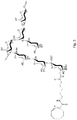
- the saccharide derivative is a GBS derivative having the following structure:
- the saccharide derivative is a GBS derivative having the following structure:
- the disclosure relates in part to a method of conjugating a saccharide derivative as defined above to an azide-containing moiety, comprising reacting the eight-membered cycloalkyne group with the azide to form a triazole linkage.
- the saccharide derivative used in the method of conjugation is produced according to the methods described above.
- the saccharide derivative may be produced by attaching an eight-membered cycloalkyne group to the saccharide.
- the method of conjugation is typically carried out in the absence of a metal catalyst, such as a copper catalyst.
- a suitable conjugation method involves mixing protein (typically at a concentration of 5 mg/ml) in phosphate buffered saline (PBS), with saccharide (typically solubilized in water at a concentration of about 25-30 mg/ml). Typically, the mixture of protein and saccharide will be stirred for about 6-12 hours at room temperature.
- PBS phosphate buffered saline
- the method of conjugating a saccharide derivative to an azide-containing moiety occurs via a [3+2] cycloaddition reaction.
- This reaction is facilitated by the ring strain in the eight-membered cycloalkyne, which promotes the azide-alkyne cycloaddition reaction in the absence of a copper catalyst.
- the inventors have found that this method of conjugation is particularly efficient, and is capable of producing conjugates in higher than were achievable using classical conjugation methods.
- General methods for conjugation using a [3+2] cycloaddition reaction are known in the art and are disclosed in reference 77.
- the method of conjugating a saccharide derivative to an azide-containing moiety may give a conjugate as described below.
- the azide-containing moiety is a carrier molecule, such as a protein.
- the azide-containing moiety can be made according to methods known in the art, for example the methods disclosed in reference 78.
- Useful carrier proteins include bacterial toxins or toxoids, such as diphtheria toxoid or tetanus toxoid. Fragments of toxins or toxoids can also be used e.g . fragment C of tetanus toxoid [79].
- the CRM197 mutant of diphtheria toxin [80-82] is a useful with the disclosure.
- carrier proteins include the N.meningitidis outer membrane protein [83], synthetic peptides [84,85], heat shock proteins [86,87], pertussis proteins [88,89], cytokines [90], lymphokines [90], hormones [90], growth factors [90], human serum albumin (preferably recombinant), artificial proteins comprising multiple human CD4 + T cell epitopes from various pathogen-derived antigens [91] such as N19 [92], protein D from H.influenzae [93,94], pneumococcal surface protein PspA [95], pneumolysin [96], iron-uptake proteins [97], toxin A or B from C.difficile [98], recombinant Pseudomonas aeruginosa exoprotein A (rEPA) [99], a GBS protein [100], etc.
- the carrier protein is a GBS protein, such as GBS67 and GBS80 [101].
- the azide-containing moiety includes a spacer.
- the azide is typically present as a terminal group in the azide-containing moiety, such that it is available to take part in the conjugation reactions as described herein.
- Spacers are used to attach an azide group to the moiety.
- Methods for attaching a spacer to a carrier molecule, such as a protein, are known in the art (see e.g. reference 78).
- the spacer may be a straight chain alkyl with 1 to 10 carbon atoms ( e.g. C 1 , C 2 , C 3 , C 4 , C 5 , C 6 , C 7 , C 8 , C 9 , C 10 ) e.g. -(CH2) 4 - or -(CH2) 3 -.
- the spacer has the formula -[(CH 2 ) 2 O] n -, where n is 1, 2, 3, 4, 5, 6, 7, 8, 9 or 10.
- n is 3.
- the azide-containing moiety will comprise a spacer moiety.
- the spacer moiety may include atoms such as carbon, hydrogen, oxygen and/or nitrogen. Spacers that comprise carbon and hydrogen are typical, and spacers that further comprise oxygen and/or nitrogen are also typically used. Spacers that include nitrogen atoms may include a carbon atom bonded to a nitrogen atom, which in turn is bonded to a second carbon atom (-C-N-C-). Spacers that include an oxygen atom typically include it as part of a carbonyl group. Spacer moieties with a molecular weight of between 30-500 Da are typical. Spacers containing two carbonyl groups are also typical.
- a particularly useful spacer moiety includes -[(CH 2 ) 2 O] n -, where n is 1, 2, 3, 4, 5, 6, 7, 8, 9 or 10. Suitably, n is 3.
- the azide-containing moiety contains one or more derivatized amino acids, such as one or more derivatized tyrosine residues. Suitable methods for derivatizing tyrosine residues are described in PCT/US2012/045549 .
- the azide-containing moiety is a carrier protein in which the azide is attached to the protein via a spacer.
- the azide-containing moiety may be a carrier protein in which the azide is attached to a derivatized tyrosine residue on the protein via a spacer. The inventors have found that attaching the azide to a carrier protein via a tyrosine residue on the protein is particularly preferred.
- the azide-containing moiety is a carrier protein containing at least one derivatized tyrosine residue having the following structure, wherein the azide is attached via the 3H-1,2,4-triazole-3,5(4H)-dione:
- the azide-containing moiety may be a carrier protein containing at least one derivatized tyrosine residue having the following structure:
- the disclosure also provides azide-containing moieties as described herein.
- the disclosure relates in part to a conjugate of a saccharide derivative as defined above and an azide-containing moiety as defined above, wherein the conjugate has the formula R-S-T, wherein R comprises a residue of the saccharide derivative, S is a triazole group fused to an eight-membered cycloalkyl group and T comprises a residue of the azide-containing moiety.
- the eight-membered cycloalkyl group includes one or more nitrogen atoms, such as 1, 2 or 3 nitrogen atoms. In some embodiments, the eight-membered cycloalkyl group is fused to one or more other ring systems in addition to the triazole group, such as cyclopropane or benzene. In one preferred embodiment, the eight-membered cycloalkyne group is fused to a cyclopropane group in addition to the triazole group. In another preferred embodiment, the eight-membered cycloalkyne group is fused to two benzene groups in addition to the triazole group.
- R-S-T is:
- R-S-T is:
- the moiety is typically a carrier molecule, such as a protein. Suitable carrier proteins are described above.
- the conjugate may include a spacer in the residue of the saccharide derivative between the saccharide and S.
- the spacer can be a spacer as described above for the saccharide derivative.
- the conjugate may include a spacer in the residue of the azide-containing moiety between the moiety and S.
- the spacer can be a spacer as described above for the azide-containing moiety.
- the conjugate will include a spacer in the residue of the saccharide derivative between the saccharide and S and a spacer in the residue of the azide-containing moiety between the moiety and S.
- the conjugate includes GBS serotype V saccharide conjugated to GBS80 protein. In another particularly preferred embodiment, the conjugate includes GBS serotype II saccharide conjugated to GBS80 protein. In another particularly preferred embodiment, the conjugate includes GBS serotype V saccharide conjugated to GBS67 protein. In another particularly preferred embodiment, the conjugate includes GBS serotype II saccharide conjugated to GBS67 protein.
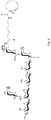
- the conjugate may have the following structure:
- the conjugate may be obtained or obtainable by the method of conjugating a saccharide derivative to an azide-containing moiety as described above.
- conjugates may have excess carrier protein (w/w) or excess saccharide (w/w) e.g. in the ratio range of 1:5 to 5:1.
- the conjugate may include small amounts of free (i.e. unconjugated) carrier protein.
- the unconjugated form is preferably no more than 5% of the total amount of the carrier protein in the composition as a whole, and more preferably present at less than 2% (by weight).
- the conjugate is comprised within a pharmaceutical composition of the disclosure, the composition may also comprise free carrier protein as immunogen [102]. After conjugation, free and conjugated antigens can be separated. There are many suitable methods e.g . hydrophobic chromatography, tangential ultrafiltration, diafiltration, etc. [see also refs. 103, 104 etc. ] .
- the disclosure provides a composition comprising a conjugate of the disclosure and one or more further antigens.
- the composition is typically an immunogenic composition.
- compositions of the disclosure may further comprise one or more further antigens, including additional bacterial, viral or parasitic antigens. These may be selected from the following:
- a saccharide or carbohydrate antigen is used, it is preferably conjugated to a carrier in order to enhance immunogenicity. Conjugation of Hinfluenzae B, meningococcal and pneumococcal saccharide antigens is well known.
- Toxic protein antigens may be detoxified where necessary (e.g . detoxification of pertussis toxin by chemical and/or genetic means [126]).
- diphtheria antigen is included in the composition it is preferred also to include tetanus antigen and pertussis antigens. Similarly, where a tetanus antigen is included it is preferred also to include diphtheria and pertussis antigens. Similarly, where a pertussis antigen is included it is preferred also to include diphtheria and tetanus antigens.
- Antigens may be adsorbed to an aluminium salt. Where there is more than one conjugate in a composition, not all conjugates need to be adsorbed.
- Antigens in the composition will typically be present at a concentration of at least 1 ⁇ g/ml each. In general, the concentration of any given antigen will be sufficient to elicit an immune response against that antigen.
- nucleic acid encoding the antigen may be used [ e.g. refs. 151 to 159]. Protein components of the compositions of the disclosure may thus be replaced by nucleic acid (preferably DNA e.g. in the form of a plasmid) that encodes the protein.
- nucleic acid preferably DNA e.g. in the form of a plasmid
- the number of antigens in a composition of the disclosure may be less than 20, less than 19, less than 18, less than 17, less than 16, less than 15, less than 14, less than 13, less than 12, less than 11, less than 10, less than 9, less than 8, less than 7, less than 6, less than 5, less than 4, or less than 3.
- the number of antigens in a composition of the disclosure may be less than 6, less than 5, or less than 4.
- the disclosure provides processes for preparing pharmaceutical compositions, comprising the steps of mixing conjugate of the disclosure with a pharmaceutically acceptable carrier.
- Typical 'pharmaceutically acceptable carriers' include any carrier that does not itself induce the production of antibodies harmful to the individual receiving the composition.
- Suitable carriers are typically large, slowly metabolised macromolecules such as proteins, saccharides, polylactic acids, polyglycolic acids, polymeric amino acids, amino acid copolymers, lactose, and lipid aggregates (such as oil droplets or liposomes).
- lipid aggregates such as oil droplets or liposomes.
- the vaccines may also contain diluents, such as water, saline, glycerol, etc.
- auxiliary substances such as wetting or emulsifying agents, pH buffering substances, and the like, may be present.
- Sterile pyrogen-free, phosphate-buffered physiologic saline is a typical carrier. A thorough discussion of pharmaceutically acceptable excipients is available in reference 160.
- compositions of the disclosure may be in aqueous form (i.e. solutions or suspensions) or in a dried form (e.g . lyophilised). If a dried vaccine is used then it will be reconstituted into a liquid medium prior to injection. Lyophilisation of conjugate vaccines is known in the art e.g. the MenjugateTM product is presented in lyophilised form, whereas NeisVac-CTM and MeningitecTM are presented in aqueous form. To stabilise conjugates during lyophilisation, it may be typical to include a sugar alcohol (e.g. mannitol) or a disaccharide (e.g. sucrose or trehalose) e.g. at between 1mg/ml and 30mg/ml ( e.g. about 25 mg/ml) in the composition.
- a sugar alcohol e.g. mannitol
- a disaccharide e.g. sucrose or trehalose
- the pharmaceutical compositions may be packaged into vials or into syringes.
- the syringes may be supplied with or without needles.
- a syringe will include a single dose of the composition, whereas a vial may include a single dose or multiple doses.
- Aqueous compositions of saccharides of the disclosure are suitable for reconstituting other vaccines from a lyophilised form.
- the disclosure provides a process for reconstituting such a lyophilised vaccine, comprising the step of mixing the lyophilised material with an aqueous composition of the disclosure.
- the reconstituted material can be used for injection.
- compositions of the disclosure may be packaged in unit dose form or in multiple dose form.
- vials are preferred to pre-filled syringes.
- Effective dosage volumes can be routinely established, but a typical human dose of the composition has a volume of 0.5ml e.g. for intramuscular injection.
- the pH of the composition is typically between 6 and 8, e.g. about 7. Stable pH may be maintained by the use of a buffer. If a composition comprises an aluminium hydroxide salt, it is typical to use a histidine buffer [161].
- the composition may be sterile and/or pyrogen-free. Compositions of the disclosure may be isotonic with respect to humans.
- compositions of the disclosure are immunogenic, and are more preferably vaccine compositions.
- Vaccines according to the disclosure may either be prophylactic ( i.e. to prevent infection) or therapeutic ( i.e. to treat infection), but will typically be prophylactic.
- Immunogenic compositions used as vaccines comprise an immunologically effective amount of antigen(s), as well as any other components, as needed.
- 'immunologically effective amount' it is meant that the administration of that amount to an individual, either in a single dose or as part of a series, is effective for treatment or prevention. This amount varies depending upon the health and physical condition of the individual to be treated, age, the taxonomic group of individual to be treated (e.g . non-human primate, primate, etc.
- the capacity of the individual's immune system to synthesise antibodies the capacity of the individual's immune system to synthesise antibodies, the degree of protection desired, the formulation of the vaccine, the treating doctor's assessment of the medical situation, and other relevant factors. It is expected that the amount will fall in a relatively broad range that can be determined through routine trials.
- the quantity of an individual saccharide antigen will generally be between 1-50 ⁇ g (measured as mass of saccharide) e.g . about 1 ⁇ g, about 2.5 ⁇ g, about 4 ⁇ g, about 5 ⁇ g, or about 10 ⁇ g.
- compositions of the disclosure may be prepared in various forms.
- the compositions may be prepared as injectables, either as liquid solutions or suspensions.
- the composition may be prepared for pulmonary administration e.g . as an inhaler, using a fine powder or a spray.
- the composition may be prepared as a suppository or pessary.
- the composition may be prepared for nasal, aural or ocular administration e.g. as spray, drops, gel or powder [ e.g. refs 162 & 163].
- compositions of the disclosure may include an antimicrobial, particularly when packaged in multiple dose format.
- compositions of the disclosure may comprise detergent e.g. a Tween (polysorbate), such as Tween 80.
- Detergents are generally present at low levels e.g. ⁇ 0.01%.
- compositions of the disclosure may include sodium salts (e.g . sodium chloride) to give tonicity.
- sodium salts e.g . sodium chloride
- a concentration of 10 ⁇ 2mg/ml NaCl is typical.
- compositions of the disclosure will generally include a buffer.
- a phosphate buffer is typical.
- compositions of the disclosure will generally be administered in conjunction with other immunoregulatory agents.
- compositions will usually include one or more adjuvants.
- adjuvants include, but are not limited to:
- Mineral containing compositions suitable for use as adjuvants in the disclosure include mineral salts, such as aluminium salts and calcium salts.
- the disclosure includes mineral salts such as hydroxides (e.g. oxyhydroxides), phosphates ( e.g. hydroxyphosphates, orthophosphates), sulphates, etc. [ e.g. chapters 8 & 9 of ref. 169], or mixtures of different mineral compounds ( e.g. a mixture of a phosphate and a hydroxide adjuvant, optionally with an excess of the phosphate), with the compounds taking any suitable form ( e.g. gel, crystalline, amorphous, etc. ) , and with adsorption to the salt(s) being typical.
- the mineral containing compositions may also be formulated as a particle of metal salt [170].
- Aluminum salts may be included in vaccines of the disclosure such that the dose of Al 3+ is between 0.2 and 1.0 mg per dose.
- a typical aluminium phosphate adjuvant is amorphous aluminium hydroxyphosphate with PO 4 /Al molar ratio between 0.84 and 0.92, included at 0.6mg Al 3+ /ml.
- Adsorption with a low dose of aluminium phosphate may be used e.g . between 50 and 100 ⁇ g Al 3+ per conjugate per dose.
- an aluminium phosphate it used and it is desired not to adsorb an antigen to the adjuvant, this is favoured by including free phosphate ions in solution ( e.g . by the use of a phosphate buffer).
- Oil emulsion compositions suitable for use as adjuvants in the disclosure include squalene-water emulsions, such as MF59 (5% Squalene, 0.5% Tween 80, and 0.5% Span 85, formulated into submicron particles using a microfluidizer) [Chapter 10 of ref. 169; also refs. 171-173]. MF59 is used as the adjuvant in the FLUADTM influenza virus trivalent subunit vaccine.
- MF59 5% Squalene, 0.5% Tween 80, and 0.5% Span 85, formulated into submicron particles using a microfluidizer
- Particularly useful adjuvants for use in the compositions are submicron oil-in-water emulsions.
- Preferred submicron oil-in-water emulsions for use herein are squalene/water emulsions optionally containing varying amounts of MTP-PE, such as a submicron oil-in-water emulsion containing 4-5% w/v squalene, 0.25-1.0% w/v Tween 80 (polyoxyelthylenesorbitan monooleate), and/or 0.25-1.0% Span 85 (sorbitan trioleate), and, optionally, N-acetylmuramyl-L-alanyl-D-isogluatminyl-L-alanine-2-(1'-2'-dipalmitoyl-sn-glycero-3-hydroxyphosphophoryloxy)-ethylamine (MTP-PE).
- MTP-PE N-acetylmuramyl-L-alany
- CFA Complete Freund's adjuvant
- IFA incomplete Freund's adjuvant
- Saponin formulations may also be used as adjuvants in the disclosure.
- Saponins are a heterologous group of sterol glycosides and triterpenoid glycosides that are found in the bark, leaves, stems, roots and even flowers of a wide range of plant species. Saponins isolated from the bark of the Quillaia saponaria Molina tree have been widely studied as adjuvants. Saponin can also be commercially obtained from Smilax ornata (sarsaprilla), Gypsophilla paniculata (brides veil), and Saponaria officianalis (soap root).
- Saponin adjuvant formulations include purified formulations, such as QS21, as well as lipid formulations, such as ISCOMs.
- Saponin compositions have been purified using HPLC and RP-HPLC. Specific purified fractions using these techniques have been identified, including QS7, QS17, QS18, QS21, QH-A, QH-B and QH-C.
- the saponin is QS21.
- a method of production of QS21 is disclosed in ref. 176.
- Saponin formulations may also comprise a sterol, such as cholesterol [177].
- ISCOMs immunostimulating complexs
- phospholipid such as phosphatidylethanolamine or phosphatidylcholine.
- Any known saponin can be used in ISCOMs.
- the ISCOM includes one or more of QuilA, QHA and QHC. ISCOMs are further described in refs. 177-179.
- the ISCOMS may be devoid of additional detergent(s) [180].
- Virosomes and virus-like particles can also be used as adjuvants in the disclosure.
- These structures generally contain one or more proteins from a virus optionally combined or formulated with a phospholipid. They are generally non-pathogenic, non-replicating and generally do not contain any of the native viral genome.
- the viral proteins may be recombinantly produced or isolated from whole viruses.
- viral proteins suitable for use in virosomes or VLPs include proteins derived from influenza virus (such as HA or NA), Hepatitis B virus (such as core or capsid proteins), Hepatitis E virus, measles virus, Sindbis virus, Rotavirus, Foot-and-Mouth Disease virus, Retrovirus, Norwalk virus, human Papilloma virus, HIV, RNA-phages, Q ⁇ -phage (such as coat proteins), GA-phage, fr-phage, AP205 phage, and Ty (such as retrotransposon Ty protein p1).
- VLPs are discussed further in refs. 183-188.
- Virosomes are discussed further in, for example, ref. 189.
- Adjuvants suitable for use in the disclosure include bacterial or microbial derivatives such as non-toxic derivatives of enterobacterial liposaccharide (LPS), Lipid A derivatives, immunostimulatory oligonucleotides and ADP-ribosylating toxins and detoxified derivatives thereof.
- LPS enterobacterial liposaccharide
- Lipid A derivatives Lipid A derivatives
- immunostimulatory oligonucleotides and ADP-ribosylating toxins and detoxified derivatives thereof.
- Non-toxic derivatives of LPS include monophosphoryl lipid A (MPL) and 3-O-deacylated MPL (3dMPL).
- 3dMPL is a mixture of 3 de-O-acylated monophosphoryl lipid A with 4, 5 or 6 acylated chains.
- a preferred "small particle" form of 3 De-O-acylated monophosphoryl lipid A is disclosed in ref. 190. Such "small particles" of 3dMPL are small enough to be sterile filtered through a 0.22 ⁇ m membrane [190].
- Other non-toxic LPS derivatives include monophosphoryl lipid A mimics, such as aminoalkyl glucosaminide phosphate derivatives e.g . RC-529 [191,192].
- Lipid A derivatives include derivatives of lipid A from Escherichia coli such as OM-174.
- OM-174 is described for example in refs. 193 & 194.
- Immunostimulatory oligonucleotides suitable for use as adjuvants in the disclosure include nucleotide sequences containing a CpG motif (a dinucleotide sequence containing an unmethylated cytosine linked by a phosphate bond to a guanosine). Double-stranded RNAs and oligonucleotides containing palindromic or poly(dG) sequences have also been shown to be immunostimulatory.
- the CpG's can include nucleotide modifications/analogs such as phosphorothioate modifications and can be double-stranded or single-stranded.
- References 195, 196 and 197 disclose possible analog substitutions e.g . replacement of guanosine with 2'-deoxy-7-deazaguanosine.
- the adjuvant effect of CpG oligonucleotides is further discussed in refs. 198-203.
- the CpG sequence may be directed to TLR9, such as the motif GTCGTT or TTCGTT [204].
- the CpG sequence may be specific for inducing a Th1 immune response, such as a CpG-A ODN, or it may be more specific for inducing a B cell response, such a CpG-B ODN.
- CpG-A and CpG-B ODNs are discussed in refs. 205-207.
- the CpG is a CpG-A ODN.
- the CpG oligonucleotide is constructed so that the 5' end is accessible for receptor recognition.
- two CpG oligonucleotide sequences may be attached at their 3' ends to form "immunomers" (e.g . refs. 204 & 208-210).
- Bacterial ADP-ribosylating toxins and detoxified derivatives thereof may be used as adjuvants in the disclosure.
- the protein is derived from E.coli ( E.coli heat labile enterotoxin "LT"), cholera ("CT"), or pertussis ("PT").
- LT E.coli heat labile enterotoxin
- CT cholera
- PT pertussis
- the use of detoxified ADP-ribosylating toxins as mucosal adjuvants is described in ref. 211 and as parenteral adjuvants in ref. 212.
- the toxin or toxoid is preferably in the form of a holotoxin, comprising both A and B subunits.
- the A subunit contains a detoxifying mutation; preferably the B subunit is not mutated.
- the adjuvant is a detoxified LT mutant such as LT-K63, LT-R72, and LT-G192.
- LT-K63 LT-K63
- LT-R72 LT-G192.
- ADP-ribosylating toxins and detoxified derivaties thereof, particularly LT-K63 and LT-R72, as adjuvants can be found in refs. 213-220.
- Numerical reference for amino acid substitutions is preferably based on the alignments of the A and B subunits of ADP-ribosylating toxins set forth in ref. 221, specifically incorporated herein by reference in its entirety.
- Human immunomodulators suitable for use as adjuvants in the disclosure include cytokines, such as interleukins (e.g. IL-1, IL-2, IL-4, IL-5, IL-6, IL-7, IL-12 [222], etc.) [223], interferons (e.g. interferon- ⁇ ), macrophage colony stimulating factor, and tumor necrosis factor.
- cytokines such as interleukins (e.g. IL-1, IL-2, IL-4, IL-5, IL-6, IL-7, IL-12 [222], etc.) [223], interferons (e.g. interferon- ⁇ ), macrophage colony stimulating factor, and tumor necrosis factor.
- Bioadhesives and mucoadhesives may also be used as adjuvants in the disclosure.
- Suitable bioadhesives include esterified hyaluronic acid microspheres [224] or mucoadhesives such as cross-linked derivatives of poly(acrylic acid), polyvinyl alcohol, polyvinyl pyrollidone, polysaccharides and carboxymethylcellulose. Chitosan and derivatives thereof may also be used as adjuvants in the disclosure [225].
- Microparticles may also be used as adjuvants in the disclosure.
- Microparticles i.e. a particle of ⁇ 100nm to ⁇ 150 ⁇ m in diameter, more preferably ⁇ 200nm to ⁇ 30 ⁇ m in diameter, and most preferably ⁇ 500nm to ⁇ 10 ⁇ m in diameter
- materials that are biodegradable and non-toxic e.g. a poly( ⁇ -hydroxy acid), a polyhydroxybutyric acid, a polyorthoester, a polyanhydride, a polycaprolactone, etc.
- a negatively-charged surface e.g. with SDS
- a positively-charged surface e.g. with a cationic detergent, such as CTAB
- liposome formulations suitable for use as adjuvants are described in refs. 226-228.
- Adjuvants suitable for use in the disclosure include polyoxyethylene ethers and polyoxyethylene esters [229]. Such formulations further include polyoxyethylene sorbitan ester surfactants in combination with an octoxynol [230] as well as polyoxyethylene alkyl ethers or ester surfactants in combination with at least one additional non-ionic surfactant such as an octoxynol [231].
- Preferred polyoxyethylene ethers are selected from the following group: polyoxyethylene-9-lauryl ether (laureth 9), polyoxyethylene-9-steoryl ether, polyoxytheylene-8-steoryl ether, polyoxyethylene-4-lauryl ether, polyoxyethylene-35-lauryl ether, and polyoxyethylene-23-lauryl ether.
- PCPP Polyphosphazene
- PCPP formulations are described, for example, in refs. 232 and 233.
- muramyl peptides suitable for use as adjuvants in the disclosure include N-acetyl-muramyl-L-threonyl-D-isoglutamine (thr-MDP), N-acetyl-normuramyl-L-alanyl-D-isoglutamine (nor-MDP), and N-acetylmuramyl-L-alanyl-D-isoglutaminyl-L-alanine-2-(1'-2'-dipalmitoyl-s n -glycero-3-hydroxyphosphoryloxy)-ethylamine MTP-PE).
- thr-MDP N-acetyl-muramyl-L-threonyl-D-isoglutamine
- nor-MDP N-acetyl-normuramyl-L-alanyl-D-isoglutamine
- imidazoquinolone compounds suitable for use adjuvants in the disclosure include Imiquamod and its homologues ( e,g . "Resiquimod 3M"), described further in refs. 234 and 235.
- thiosemicarbazone compounds as well as methods of formulating, manufacturing, and screening for compounds all suitable for use as adjuvants in the disclosure include those described in ref. 236.
- the thiosemicarbazones are particularly effective in the stimulation of human peripheral blood mononuclear cells for the production of cytokines, such as TNF- ⁇ .
- tryptanthrin compounds as well as methods of formulating, manufacturing, and screening for compounds all suitable for use as adjuvants in the disclosure include those described in ref. 237.
- the tryptanthrin compounds are particularly effective in the stimulation of human peripheral blood mononuclear cells for the production of cytokines, such as TNF- ⁇ .
- the disclosure may also comprise combinations of aspects of one or more of the adjuvants identified above.
- the following combinations may be used as adjuvant compositions in the disclosure: (1) a saponin and an oil-in-water emulsion [238]; (2) a saponin (e.g . QS21) + a non-toxic LPS derivative ( e.g. 3dMPL) [239]; (3) a saponin ( e.g. QS21) + a non-toxic LPS derivative ( e.g. 3dMPL) + a cholesterol; (4) a saponin ( e.g .
- RibiTM adjuvant system (RAS), (Ribi Immunochem) containing 2% squalene, 0.2% Tween 80, and one or more bacterial cell wall components from the group consisting of monophosphorylipid A (MPL), trehalose dimycolate (TDM), and cell wall skeleton (CWS), preferably MPL + CWS (DetoxTM); and (8) one or more mineral salts (such as an aluminum salt) + a non-toxic derivative of LPS (such as 3dMPL).
- MPL monophosphorylipid A
- TDM trehalose dimycolate
- CWS cell wall skeleton
- LPS such as 3dMPL
- aluminium salt adjuvants are particularly useful, and antigens are generally adsorbed to such salts.
- the MenjugateTM and NeisVacTM conjugates use a hydroxide adjuvant, whereas MeningitecTM uses a phosphate adjuvant. It is possible in compositions of the disclosure to adsorb some antigens to an aluminium hydroxide but to have other antigens in association with an aluminium phosphate. Typically, however, only a single salt is used, e.g. a hydroxide or a phosphate, but not both. Not all conjugates need to be adsorbed i.e. some or all can be free in solution.
- the disclosure also provides a method for raising an immune response in a mammal, comprising administering a pharmaceutical composition of the disclosure to the mammal.
- the immune response is preferably protective and preferably involves antibodies.
- the method may raise a booster response.
- the mammal is preferably a human.
- the human is preferably a child (e.g. a toddler or infant) or a teenager; where the vaccine is for therapeutic use, the human is preferably an adult.
- a vaccine intended for children may also be administered to adults e.g. to assess safety, dosage, immunogenicity, etc.
- a preferred class of humans for treatment are patients at risk of nosocomial infection, particularly those with end-stage renal disease and/or on haemodialysis. Other patients at risk of nosocomial infection are also preferred, e.g. immunodeficient patients or those who have undergone surgery, especially cardiac surgery, or trauma. Another preferred class of humans for treatment are patients at risk of bacteremia.
- the disclosure also provides a composition of the disclosure for use as a medicament.
- the medicament is preferably able to raise an immune response in a mammal ( i.e. it is an immunogenic composition) and is more preferably a vaccine.
- the disclosure also provides the use of a conjugate of the disclosure in the manufacture of a medicament for raising an immune response in a mammal.
- These uses and methods are preferably for the prevention and/or treatment of a disease caused by S.agalactiae e.g. neonatal sepsis or bacteremia, neonatal pneumonia, neonatal meningitis, endometritis, osteomyelitis, septic arthritis, etc.
- a disease caused by S.agalactiae e.g. neonatal sepsis or bacteremia, neonatal pneumonia, neonatal meningitis, endometritis, osteomyelitis, septic arthritis, etc.
- a conjugate may be administered to a female (before or during pregnancy) in order to protect offspring (so-called 'maternal immunisation' [242-244]).
- One way of checking efficacy of therapeutic treatment involves monitoring GBS infection after administration of the composition of the disclosure.
- One way of checking efficacy of prophylactic treatment involves monitoring immune responses against the GBS antigens after administration of the composition.
- compositions of the disclosure can confer an antibody titre in a patient that is superior to the criterion for seroprotection for each antigenic component for an acceptable percentage of human subjects.
- Antigens with an associated antibody titre above which a host is considered to be seroconverted against the antigen are well known, and such titres are published by organisations such as WHO.
- Preferably more than 80% of a statistically significant sample of subjects is seroconverted, more preferably more than 90%, still more preferably more than 93% and most preferably 96-100%.
- compositions of the disclosure will generally be administered directly to a patient.
- Direct delivery may be accomplished by parenteral injection (e.g . subcutaneously, intraperitoneally, intravenously, intramuscularly, or to the interstitial space of a tissue), or by rectal, oral, vaginal, topical, transdermal, intranasal, ocular, aural, pulmonary or other mucosal administration.
- Intramuscular administration to the thigh or the upper arm is preferred.
- Injection may be via a needle (e.g. a hypodermic needle), but needle-free injection may alternatively be used.
- a typical intramuscular dose is 0.5 ml.
- the disclosure may be used to elicit systemic and/or mucosal immunity.
- Dosage treatment can be a single dose schedule or a multiple dose schedule. Multiple doses may be used in a primary immunisation schedule and/or in a booster immunisation schedule. A primary dose schedule may be followed by a booster dose schedule. Suitable timing between priming doses ( e.g. between 4-16 weeks), and between priming and boosting, can be routinely determined.
- composition “comprising” encompasses “including” as well as “consisting” e.g . a composition “comprising” X may consist exclusively of X or may include something additional e.g . X + Y.
- the term “comprising” refers to the inclusion of the indicated active agent, such as recited polypeptides, as well as inclusion of other active agents, and pharmaceutically acceptable carriers, excipients, emollients, stabilizers, etc., as are known in the pharmaceutical industry.
- the term “consisting essentially of' refers to a composition, whose only active ingredient is the indicated active ingredient(s), however, other compounds may be included which are for stabilizing, preserving, etc.
- the disclosure can also provide a process involving less than the total number of steps.
- the different steps can be performed at very different times by different people in different places ( e.g. in different countries).
- sugar rings can exist in open and closed form and that, whilst closed forms are shown in structural formulae herein, open forms are also encompassed by the disclosure.
- sugars can exist in pyranose and furanose forms and that, whilst pyranose forms are shown in structural formulae herein, furanose forms are also encompassed.
- Different anomeric forms of sugars are also encompassed.
- GBS serotype II and V saccharides were reacted with NaIO 4 to effect oxidation of sialic acid residues to aldehyde groups.
- the extent of oxidation of the sialyl moieties was controlled by varying the amount of NaIO 4 used.
- Reductive amination of the aldehydes provided amine groups for the insertion of different spacers, facilitating attachment of the cyclooctyne group to the saccharides.
- Various cyclooctyne-containing compounds were tested to establish the optimal length for the spacer, as shown in Figure 1 .
- Figure 2 shows a general reaction scheme for the attachment of a cyclooctyne group to a GBS serotype II saccharide.
- the amount of each reactant used in the synthesis of GBS serotype V saccharide with cyclooctyne group attached was as follows: Compound MW mg mmol NH 2 eq ml GBS serotype V saccharide-NH2 1323 30 0.00453 Cyclooctyne-N-hydroxysuccinimide ester spacer 380 13 10 Triethylamine 0.05 DMSO 3
- Saccharide derivatives were also synthesized using the other two cycloalkyne systems shown in Figure 1 .
- Conjugation was carried out at a saccharide:protein ratio of 6:1 (w/w) for conjugates A-B and at a saccharide:protein ration of 4:1 (w/w) for conjugates C-D.
- Conjugates were purified using a hydroxyapatite column to remove free protein (with a 2mM NaPi, pH 7.2 mobile phase buffer followed by a 400mM NaPi, pH 7.2 mobile phase buffer) and free saccharide (with a 2mM NaPi, 550mM NaCl, pH 7.2 mobile phase buffer followed by a 10mM NaPi, pH 7.2 mobile phase buffer followed by a 35mM NaPi, pH 7.2 mobile phase buffer followed by a 400mM NaPi, pH 7.2 mobile phase buffer).
- the conjugates had the following properties: Conjugate Protein Saccharide/protein (w/w) Free saccharide (%) Total protein (mg) Saccharide/protein used for conjugation (w/w) Yield (% final protein)
- Conjugate Protein Saccharide/protein w/w
- Free saccharide % Total protein (mg) Saccharide/protein used for conjugation (w/w) Yield (% final protein)
- Conjugation was carried out using 60 equivalents of saccharide derivative (2.1 mg) and 1.5 mg of protein. SDS-PAGE was used to confirm formation of the conjugate. The results of the SDS-PAGE characterization for conjugate E are shown in Figure 11 .
- mice The immunogenicity of various antigens was tested in mice as outlined below.
- Groups of eight CD1 mice were immunised by intraperitoneal injection with a 1.0 ⁇ g dose of saccharide in an injection volume of 200 ⁇ l with AlumOH as adjuvant. Injections were carried out at 1, 21 and 35 days, with bleeding performed at 1, 35 and 49 days. Immunisations were carried out in groups of eight mice with the following antigens: (i) PBS, (ii) CRM197-GBS serotype V saccharide, (iii) TT- GBS serotype V saccharide, (iv) GBS80-GBS serotype V saccharide and (v) GBS80-Y-N 3 -GBS serotype V saccharide (conjugate A).
- Conjugates (i) to (iv) were prepared using classical conjugation methodologies (e.g . as disclosed in reference [253]), whereas conjugate (v) was prepared using click chemistry. The neonates were challenged with type V strains. Results are shown below: Antigen Protection/treated % Protection PBS 19/40 47 CRM197-GBS serotype V saccharide 61/70 87 TT-GBS serotype V saccharide - - GBS80-GBS serotype V saccharide 54/57 95 GBS80-Y-N 3 -GBS serotype V saccharide A 23/70 33
- Groups of eight CD1 mice were immunised by intraperitoneal injection with a 1.0 ⁇ g dose of saccharide in an injection volume of 200 ⁇ 1 with AlumOH as adjuvant. Injections were carried out at 1, 21 and 35 days, with bleeding performed at 1, 35 and 49 days. Immunisations were carried out in groups of eight mice with the following antigens: (i) PBS, (ii) CRM197-GBS serotype II saccharide, (iii) TT- GBS serotype II saccharide, (iv) GBS80-GBS serotype II saccharide and (v) GBS80-Y-N 3 -GBS serotype II saccharide (conjugate B).
- Conjugates (i) to (iv) were prepared using classical conjugation methodologies, whereas conjugate (v) was prepared using click chemistry. The neonates were challenged with type II strains. Results are shown below: Antigen Protection/treated % Protection PBS 18/60 30 CRM197-GBS serotype II saccharide 32/50 64 TT-GBS serotype II saccharide 19/30 63 GBS80-GBS serotype II saccharide 37/70 53 GBS80-Y-N 3 -GBS serotype II saccharide B 58/65 89
- IgG titers against GBS serotype II saccharide in the sera from immunized animals were measured as follows. Microtiter plates were coated with antigens (e.g. GBS80-Y-N 3 -GBS serotype II saccharide B) and the plates were incubated overnight at room temperature and then washed three times in washing buffer (0.05% Tween 20 in PBS). After dispensing 250 ⁇ l of PBS, 2% BSA, 0.05% Tween 20 per well, plates were incubated 90 minutes at 37°C and then aspirated to remove the post-coating solution. Test sera were diluted 1:400 in PBS, 2% BSA, 0.05% Tween 20.
- antigens e.g. GBS80-Y-N 3 -GBS serotype II saccharide B
- Standard serum was prepared by pooling hyper immune sera and initial dilutions of standard pools were chosen to obtain an optical density (OD) of about 2.000 at 405 nm.
- the plates were incubated for 1 hour at 37°C and then washed with washing buffer and 100 ⁇ L of Alkaline Phosphatase-Conjugated antimouse IgG 1:1000 in dilution buffer were dispensed in each well.
- the plates were incubated 90 minutes at 37°C and then washed with washing buffer. 100 ⁇ L of a solution of p-NitroPhenylPhosphate (p-NPP) 4.0 mg/mL in substrate buffer were dispensed in each well.
- p-NPP p-NitroPhenylPhosphate
- the plates were incubated 30 minutes at room temperature and then 100 ⁇ L of a solution of EDTA 7% (w/v) disodium salt plus Na 2 HPO 4 3.5% pH 8.0, were added to each well to stop the enzymatic reaction.
- the optical density (OD) at 405 nm was measured.
- Total IgG titres against GBS serotype II saccharide antigen were calculated by using the Reference Line Assay Method and results were expressed as arbitrary ELISA Units/mL (EU/mL).
- EU/mL ELISA Units/mL
- the standard serum IgG titer was arbitrarily assigned a value of 1.0 EU/mL.
- the IgG titer of each serum was estimated by interpolating the obtained ODs with the titration curve (bias and slope) of the standard pool.
- the opsonophagocytosis assay was performed using GBS strains as target cells and HL-60 cell line (ATCC; CCL-240), differentiated into granulocyte-like cells, by adding 100 mM N,N dimethylformamide (Sigma) to the growth medium for 4 days. Mid-exponential bacterial cells were incubated at 37 °C for 1 h in the presence of phagocytic cells, 10% baby rabbit complement (Cedarlane), and heat-inactivated mouse antisera. Negative controls consisted of reactions either with preimmune sera, or without HL-60, or with heat-inactivated complement.
- GBS80-Y-N 3 -GBS serotype II saccharide B OPKA and IgG titers are statistically comparable to the CRM197 and GBS80 conjugates obtained using classical conjugation methods. OPKA and IgG titers show good correlation with % of survival in challenge animal model.
- a construct was prepared via tyrosine selective conjugation of a MenY dimer to CRM197 ( Figure 18 ). Low levels of antibodies directed to the linker were found.
Landscapes
- Health & Medical Sciences (AREA)
- Life Sciences & Earth Sciences (AREA)
- Engineering & Computer Science (AREA)
- Chemical & Material Sciences (AREA)
- Bioinformatics & Cheminformatics (AREA)
- Medicinal Chemistry (AREA)
- General Health & Medical Sciences (AREA)
- Veterinary Medicine (AREA)
- Public Health (AREA)
- Pharmacology & Pharmacy (AREA)
- Animal Behavior & Ethology (AREA)
- Epidemiology (AREA)
- Molecular Biology (AREA)
- Immunology (AREA)
- Proteomics, Peptides & Aminoacids (AREA)
- Chemical Kinetics & Catalysis (AREA)
- Organic Chemistry (AREA)
- Materials Engineering (AREA)
- Polymers & Plastics (AREA)
- Virology (AREA)
- Biochemistry (AREA)
- Microbiology (AREA)
- Mycology (AREA)
- Nuclear Medicine, Radiotherapy & Molecular Imaging (AREA)
- General Chemical & Material Sciences (AREA)
- Medicines Containing Antibodies Or Antigens For Use As Internal Diagnostic Agents (AREA)
- Saccharide Compounds (AREA)
- Polysaccharides And Polysaccharide Derivatives (AREA)
- Peptides Or Proteins (AREA)
- Medicinal Preparation (AREA)
- Preparation Of Compounds By Using Micro-Organisms (AREA)
- Pharmaceuticals Containing Other Organic And Inorganic Compounds (AREA)
Priority Applications (3)
| Application Number | Priority Date | Filing Date | Title |
|---|---|---|---|
| HRP20200351TT HRP20200351T1 (hr) | 2013-01-15 | 2014-01-13 | Cikloalkinski derivati saharida |
| SI201431496T SI2945641T1 (sl) | 2013-01-15 | 2014-01-13 | S cikloalkinom derivatizirani saharidi |
| PL14700602T PL2945641T3 (pl) | 2013-01-15 | 2014-01-13 | Cykloalkinowe pochodne sacharydów |
Applications Claiming Priority (2)
| Application Number | Priority Date | Filing Date | Title |
|---|---|---|---|
| GBGB1300707.5A GB201300707D0 (en) | 2013-01-15 | 2013-01-15 | Compounds and processes |
| PCT/EP2014/050483 WO2014111344A1 (en) | 2013-01-15 | 2014-01-13 | Cycloalkyne derivatized saccharides |
Publications (2)
| Publication Number | Publication Date |
|---|---|
| EP2945641A1 EP2945641A1 (en) | 2015-11-25 |
| EP2945641B1 true EP2945641B1 (en) | 2020-01-01 |
Family
ID=47758014
Family Applications (1)
| Application Number | Title | Priority Date | Filing Date |
|---|---|---|---|
| EP14700602.7A Active EP2945641B1 (en) | 2013-01-15 | 2014-01-13 | Cycloalkyne derivatized saccharides |
Country Status (16)
| Country | Link |
|---|---|
| US (2) | US11135300B2 (pl) |
| EP (1) | EP2945641B1 (pl) |
| JP (3) | JP6719209B2 (pl) |
| CN (1) | CN105377282B (pl) |
| BR (1) | BR112015016817B1 (pl) |
| CA (1) | CA2897348C (pl) |
| CY (1) | CY1122822T1 (pl) |
| DK (1) | DK2945641T3 (pl) |
| ES (1) | ES2774729T3 (pl) |
| GB (1) | GB201300707D0 (pl) |
| HR (1) | HRP20200351T1 (pl) |
| LT (1) | LT2945641T (pl) |
| PL (1) | PL2945641T3 (pl) |
| PT (1) | PT2945641T (pl) |
| SI (1) | SI2945641T1 (pl) |
| WO (1) | WO2014111344A1 (pl) |
Cited By (3)
| Publication number | Priority date | Publication date | Assignee | Title |
|---|---|---|---|---|
| US11951165B2 (en) | 2016-12-30 | 2024-04-09 | Vaxcyte, Inc. | Conjugated vaccine carrier proteins |
| US11998599B2 (en) | 2016-12-30 | 2024-06-04 | Vaxcyte, Inc. | Polypeptide-antigen conjugates with non-natural amino acids |
| US12252454B2 (en) | 2020-08-19 | 2025-03-18 | Vaxcyte, Inc. | Carrier-protein polysaccharide conjugation methods |
Families Citing this family (7)
| Publication number | Priority date | Publication date | Assignee | Title |
|---|---|---|---|---|
| GB201300707D0 (en) * | 2013-01-15 | 2013-02-27 | Novartis Ag | Compounds and processes |
| SG11201807430WA (en) * | 2016-03-04 | 2018-09-27 | Euglena Co Ltd | Antiviral agent and antiviral food |
| JP7295571B2 (ja) * | 2018-02-05 | 2023-06-21 | 国立大学法人 宮崎大学 | 細胞標識剤及び細胞標識キット |
| KR20250044932A (ko) | 2018-06-14 | 2025-04-01 | 모찌다 세이야쿠 가부시끼가이샤 | 신규 가교 알긴산 |
| WO2020010016A1 (en) | 2018-07-04 | 2020-01-09 | Sutrovax, Inc. | Self-adjuvanted immunogenic conjugates |
| US20220387613A1 (en) * | 2021-05-28 | 2022-12-08 | Pfizer Inc. | Immunogenic compositions comprising conjugated capsular saccharide antigens and uses thereof |
| JP2024075506A (ja) * | 2022-11-22 | 2024-06-03 | ファイザー・インク | コンジュゲートさせた莢膜糖抗原を含む免疫原性組成物およびその使用 |
Family Cites Families (14)
| Publication number | Priority date | Publication date | Assignee | Title |
|---|---|---|---|---|
| BR0308768A (pt) * | 2002-03-26 | 2005-02-15 | Chiron Srl | Sacarìdeos modificados possuindo estabilidade melhorada em água |
| MX2007005202A (es) * | 2004-11-01 | 2007-07-09 | Brigham & Womens Hospital | Polisacaridos de estreptococo modificados y usos de los mismos. |
| GB0502095D0 (en) * | 2005-02-01 | 2005-03-09 | Chiron Srl | Conjugation of streptococcal capsular saccharides |
| EP2222341B1 (en) * | 2007-11-21 | 2015-02-25 | University Of Georgia Research Foundation, Inc. | Alkynes and methods of reacting alkynes with 1,3-dipole-functional compounds |
| ITVI20090234A1 (it) * | 2009-09-25 | 2011-03-26 | Termotecniche Fraccaro S R L Off | Dispositivo per il riscaldamento di ambienti ad alta efficienza energetica, nonche' sistema riscaldante comprendente tale dispositivo |
| CA2785410A1 (en) | 2009-12-23 | 2011-06-30 | Carlos F. Barbas, Iii | Tyrosine bioconjugation through aqueous ene-like reactions |
| EP2563753B9 (en) * | 2010-04-27 | 2016-07-06 | SynAffix B.V. | Fused cyclooctyne compounds and their use in metal-free click reactions |
| WO2012017701A1 (ja) * | 2010-08-05 | 2012-02-09 | 株式会社ミュージックゲート | いびき防止マスク |
| GB201101665D0 (en) * | 2011-01-31 | 2011-03-16 | Novartis Ag | Immunogenic compositions |
| US9315468B2 (en) | 2010-09-27 | 2016-04-19 | University Of Georgia Research Foundation, Inc. | Methods including latent 1,3-dipole-functional compounds and materials prepared thereby |
| US20120208722A1 (en) * | 2010-10-19 | 2012-08-16 | Richard Dluhy | Surface enhanced raman spectroscopy platforms and methods |
| PL2721045T3 (pl) * | 2011-06-20 | 2017-11-30 | Radiomedix Inc. | Kompozycie, metody syntezy i zastosowanie węglowodanowych środków ukierunkowanych |
| JP2015500800A (ja) * | 2011-12-01 | 2015-01-08 | アンジオケム インコーポレーテッド | 標的化イズロン酸−2−スルファターゼ化合物 |
| GB201300707D0 (en) * | 2013-01-15 | 2013-02-27 | Novartis Ag | Compounds and processes |
-
2013
- 2013-01-15 GB GBGB1300707.5A patent/GB201300707D0/en not_active Ceased
-
2014
- 2014-01-13 HR HRP20200351TT patent/HRP20200351T1/hr unknown
- 2014-01-13 EP EP14700602.7A patent/EP2945641B1/en active Active
- 2014-01-13 JP JP2015552077A patent/JP6719209B2/ja active Active
- 2014-01-13 BR BR112015016817-5A patent/BR112015016817B1/pt active IP Right Grant
- 2014-01-13 WO PCT/EP2014/050483 patent/WO2014111344A1/en not_active Ceased
- 2014-01-13 ES ES14700602T patent/ES2774729T3/es active Active
- 2014-01-13 SI SI201431496T patent/SI2945641T1/sl unknown
- 2014-01-13 PL PL14700602T patent/PL2945641T3/pl unknown
- 2014-01-13 CN CN201480012960.8A patent/CN105377282B/zh active Active
- 2014-01-13 LT LTEP14700602.7T patent/LT2945641T/lt unknown
- 2014-01-13 PT PT147006027T patent/PT2945641T/pt unknown
- 2014-01-13 DK DK14700602.7T patent/DK2945641T3/da active
- 2014-01-13 CA CA2897348A patent/CA2897348C/en active Active
- 2014-01-13 US US14/760,916 patent/US11135300B2/en active Active
-
2018
- 2018-12-28 JP JP2018246761A patent/JP2019073528A/ja not_active Withdrawn
-
2020
- 2020-03-13 CY CY20201100223T patent/CY1122822T1/el unknown
- 2020-03-23 JP JP2020050828A patent/JP7036854B2/ja active Active
-
2021
- 2021-05-14 US US17/320,482 patent/US12409231B2/en active Active
Non-Patent Citations (1)
| Title |
|---|
| None * |
Cited By (3)
| Publication number | Priority date | Publication date | Assignee | Title |
|---|---|---|---|---|
| US11951165B2 (en) | 2016-12-30 | 2024-04-09 | Vaxcyte, Inc. | Conjugated vaccine carrier proteins |
| US11998599B2 (en) | 2016-12-30 | 2024-06-04 | Vaxcyte, Inc. | Polypeptide-antigen conjugates with non-natural amino acids |
| US12252454B2 (en) | 2020-08-19 | 2025-03-18 | Vaxcyte, Inc. | Carrier-protein polysaccharide conjugation methods |
Also Published As
| Publication number | Publication date |
|---|---|
| PT2945641T (pt) | 2020-03-26 |
| SI2945641T1 (sl) | 2020-03-31 |
| DK2945641T3 (da) | 2020-03-09 |
| US11135300B2 (en) | 2021-10-05 |
| US20160166704A1 (en) | 2016-06-16 |
| CA2897348A1 (en) | 2014-07-24 |
| CN105377282B (zh) | 2020-07-17 |
| US12409231B2 (en) | 2025-09-09 |
| JP2016506905A (ja) | 2016-03-07 |
| CN105377282A (zh) | 2016-03-02 |
| BR112015016817A2 (pt) | 2017-07-11 |
| BR112015016817B1 (pt) | 2020-11-10 |
| PL2945641T3 (pl) | 2020-06-15 |
| BR112015016817A8 (pt) | 2019-10-29 |
| JP2019073528A (ja) | 2019-05-16 |
| HRP20200351T1 (hr) | 2020-06-12 |
| ES2774729T3 (es) | 2020-07-22 |
| JP6719209B2 (ja) | 2020-07-08 |
| WO2014111344A1 (en) | 2014-07-24 |
| CY1122822T1 (el) | 2021-05-05 |
| JP7036854B2 (ja) | 2022-03-15 |
| LT2945641T (lt) | 2020-02-25 |
| EP2945641A1 (en) | 2015-11-25 |
| GB201300707D0 (en) | 2013-02-27 |
| JP2020114839A (ja) | 2020-07-30 |
| US20210268116A1 (en) | 2021-09-02 |
| CA2897348C (en) | 2022-09-27 |
Similar Documents
| Publication | Publication Date | Title |
|---|---|---|
| US12409231B2 (en) | Cycloalkyne derivatized saccharides | |
| US10188719B2 (en) | Conjugation of Streptococcal capsular saccharides | |
| RU2636350C2 (ru) | МОЛЕКУЛА, СОДЕРЖАЩАЯ SPR0096 и SPR2021 | |
| ES2812523T3 (es) | Conjugación de polisacáridos capsulares de Staphylococcus aureus de tipo 5 y de tipo 8 | |
| EP3482770B1 (en) | Immunogenic compositions | |
| US20130315959A1 (en) | Compounds |
Legal Events
| Date | Code | Title | Description |
|---|---|---|---|
| PUAI | Public reference made under article 153(3) epc to a published international application that has entered the european phase |
Free format text: ORIGINAL CODE: 0009012 |
|
| 17P | Request for examination filed |
Effective date: 20150805 |
|
| AK | Designated contracting states |
Kind code of ref document: A1 Designated state(s): AL AT BE BG CH CY CZ DE DK EE ES FI FR GB GR HR HU IE IS IT LI LT LU LV MC MK MT NL NO PL PT RO RS SE SI SK SM TR |
|
| AX | Request for extension of the european patent |
Extension state: BA ME |
|
| RAP1 | Party data changed (applicant data changed or rights of an application transferred) |
Owner name: GLAXOSMITHKLINE BIOLOGICALS S.A. |
|
| DAX | Request for extension of the european patent (deleted) | ||
| STAA | Information on the status of an ep patent application or granted ep patent |
Free format text: STATUS: EXAMINATION IS IN PROGRESS |
|
| 17Q | First examination report despatched |
Effective date: 20180103 |
|
| RIC1 | Information provided on ipc code assigned before grant |
Ipc: A61K 38/00 20060101AFI20181203BHEP Ipc: C08B 37/00 20060101ALI20181203BHEP |
|
| GRAP | Despatch of communication of intention to grant a patent |
Free format text: ORIGINAL CODE: EPIDOSNIGR1 |
|
| STAA | Information on the status of an ep patent application or granted ep patent |
Free format text: STATUS: GRANT OF PATENT IS INTENDED |
|
| INTG | Intention to grant announced |
Effective date: 20190111 |
|
| GRAJ | Information related to disapproval of communication of intention to grant by the applicant or resumption of examination proceedings by the epo deleted |
Free format text: ORIGINAL CODE: EPIDOSDIGR1 |
|
| STAA | Information on the status of an ep patent application or granted ep patent |
Free format text: STATUS: EXAMINATION IS IN PROGRESS |
|
| INTC | Intention to grant announced (deleted) | ||
| GRAP | Despatch of communication of intention to grant a patent |
Free format text: ORIGINAL CODE: EPIDOSNIGR1 |
|
| STAA | Information on the status of an ep patent application or granted ep patent |
Free format text: STATUS: GRANT OF PATENT IS INTENDED |
|
| INTG | Intention to grant announced |
Effective date: 20190724 |
|
| GRAS | Grant fee paid |
Free format text: ORIGINAL CODE: EPIDOSNIGR3 |
|
| GRAA | (expected) grant |
Free format text: ORIGINAL CODE: 0009210 |
|
| STAA | Information on the status of an ep patent application or granted ep patent |
Free format text: STATUS: THE PATENT HAS BEEN GRANTED |
|
| AK | Designated contracting states |
Kind code of ref document: B1 Designated state(s): AL AT BE BG CH CY CZ DE DK EE ES FI FR GB GR HR HU IE IS IT LI LT LU LV MC MK MT NL NO PL PT RO RS SE SI SK SM TR |
|
| REG | Reference to a national code |
Ref country code: GB Ref legal event code: FG4D |
|
| REG | Reference to a national code |
Ref country code: CH Ref legal event code: EP Ref country code: AT Ref legal event code: REF Ref document number: 1218930 Country of ref document: AT Kind code of ref document: T Effective date: 20200115 |
|
| REG | Reference to a national code |
Ref country code: IE Ref legal event code: FG4D |
|
| REG | Reference to a national code |
Ref country code: DE Ref legal event code: R096 Ref document number: 602014059228 Country of ref document: DE |
|
| REG | Reference to a national code |
Ref country code: HR Ref legal event code: TUEP Ref document number: P20200351 Country of ref document: HR |
|
| REG | Reference to a national code |
Ref country code: DK Ref legal event code: T3 Effective date: 20200304 |
|
| REG | Reference to a national code |
Ref country code: FI Ref legal event code: FGE Ref country code: RO Ref legal event code: EPE |
|
| REG | Reference to a national code |
Ref country code: NO Ref legal event code: T2 Effective date: 20200101 |
|
| REG | Reference to a national code |
Ref country code: SE Ref legal event code: TRGR |
|
| REG | Reference to a national code |
Ref country code: NL Ref legal event code: FP |
|
| REG | Reference to a national code |
Ref country code: PT Ref legal event code: SC4A Ref document number: 2945641 Country of ref document: PT Date of ref document: 20200326 Kind code of ref document: T Free format text: AVAILABILITY OF NATIONAL TRANSLATION Effective date: 20200316 |
|
| REG | Reference to a national code |
Ref country code: CH Ref legal event code: NV Representative=s name: ISLER AND PEDRAZZINI AG, CH |
|
| REG | Reference to a national code |
Ref country code: GR Ref legal event code: EP Ref document number: 20200400596 Country of ref document: GR Effective date: 20200511 |
|
| REG | Reference to a national code |
Ref country code: HR Ref legal event code: ODRP Ref document number: P20200351 Country of ref document: HR Payment date: 20200320 Year of fee payment: 7 |
|
| REG | Reference to a national code |
Ref country code: SK Ref legal event code: T3 Ref document number: E 33633 Country of ref document: SK |
|
| REG | Reference to a national code |
Ref country code: HR Ref legal event code: T1PR Ref document number: P20200351 Country of ref document: HR |
|
| REG | Reference to a national code |
Ref country code: EE Ref legal event code: FG4A Ref document number: E018908 Country of ref document: EE Effective date: 20200310 |
|
| REG | Reference to a national code |
Ref country code: ES Ref legal event code: FG2A Ref document number: 2774729 Country of ref document: ES Kind code of ref document: T3 Effective date: 20200722 |
|
| REG | Reference to a national code |
Ref country code: HU Ref legal event code: AG4A Ref document number: E048400 Country of ref document: HU |
|
| PG25 | Lapsed in a contracting state [announced via postgrant information from national office to epo] |
Ref country code: RS Free format text: LAPSE BECAUSE OF FAILURE TO SUBMIT A TRANSLATION OF THE DESCRIPTION OR TO PAY THE FEE WITHIN THE PRESCRIBED TIME-LIMIT Effective date: 20200101 |
|
| REG | Reference to a national code |
Ref country code: DE Ref legal event code: R097 Ref document number: 602014059228 Country of ref document: DE |
|
| REG | Reference to a national code |
Ref country code: AT Ref legal event code: UEP Ref document number: 1218930 Country of ref document: AT Kind code of ref document: T Effective date: 20200101 |
|
| PG25 | Lapsed in a contracting state [announced via postgrant information from national office to epo] |
Ref country code: SM Free format text: LAPSE BECAUSE OF FAILURE TO SUBMIT A TRANSLATION OF THE DESCRIPTION OR TO PAY THE FEE WITHIN THE PRESCRIBED TIME-LIMIT Effective date: 20200101 Ref country code: MC Free format text: LAPSE BECAUSE OF FAILURE TO SUBMIT A TRANSLATION OF THE DESCRIPTION OR TO PAY THE FEE WITHIN THE PRESCRIBED TIME-LIMIT Effective date: 20200101 |
|
| PLBE | No opposition filed within time limit |
Free format text: ORIGINAL CODE: 0009261 |
|
| STAA | Information on the status of an ep patent application or granted ep patent |
Free format text: STATUS: NO OPPOSITION FILED WITHIN TIME LIMIT |
|
| 26N | No opposition filed |
Effective date: 20201002 |
|
| REG | Reference to a national code |
Ref country code: HR Ref legal event code: ODRP Ref document number: P20200351 Country of ref document: HR Payment date: 20210107 Year of fee payment: 8 |
|
| REG | Reference to a national code |
Ref country code: HR Ref legal event code: ODRP Ref document number: P20200351 Country of ref document: HR Payment date: 20220111 Year of fee payment: 9 |
|
| PG25 | Lapsed in a contracting state [announced via postgrant information from national office to epo] |
Ref country code: MK Free format text: LAPSE BECAUSE OF FAILURE TO SUBMIT A TRANSLATION OF THE DESCRIPTION OR TO PAY THE FEE WITHIN THE PRESCRIBED TIME-LIMIT Effective date: 20200101 Ref country code: AL Free format text: LAPSE BECAUSE OF FAILURE TO SUBMIT A TRANSLATION OF THE DESCRIPTION OR TO PAY THE FEE WITHIN THE PRESCRIBED TIME-LIMIT Effective date: 20200101 |
|
| REG | Reference to a national code |
Ref country code: HR Ref legal event code: ODRP Ref document number: P20200351 Country of ref document: HR Payment date: 20221229 Year of fee payment: 10 |
|
| REG | Reference to a national code |
Ref country code: HR Ref legal event code: ODRP Ref document number: P20200351 Country of ref document: HR Payment date: 20231228 Year of fee payment: 11 |
|
| PGFP | Annual fee paid to national office [announced via postgrant information from national office to epo] |
Ref country code: LT Payment date: 20241218 Year of fee payment: 12 |
|
| PGFP | Annual fee paid to national office [announced via postgrant information from national office to epo] |
Ref country code: NO Payment date: 20241219 Year of fee payment: 12 |
|
| PGFP | Annual fee paid to national office [announced via postgrant information from national office to epo] |
Ref country code: DK Payment date: 20241218 Year of fee payment: 12 |
|
| PGFP | Annual fee paid to national office [announced via postgrant information from national office to epo] |
Ref country code: BE Payment date: 20241218 Year of fee payment: 12 Ref country code: NL Payment date: 20241219 Year of fee payment: 12 Ref country code: PL Payment date: 20241223 Year of fee payment: 12 Ref country code: PT Payment date: 20241219 Year of fee payment: 12 Ref country code: GR Payment date: 20241220 Year of fee payment: 12 Ref country code: FI Payment date: 20241218 Year of fee payment: 12 Ref country code: LU Payment date: 20241218 Year of fee payment: 12 |
|
| PGFP | Annual fee paid to national office [announced via postgrant information from national office to epo] |
Ref country code: GB Payment date: 20241224 Year of fee payment: 12 |
|
| PGFP | Annual fee paid to national office [announced via postgrant information from national office to epo] |
Ref country code: FR Payment date: 20241220 Year of fee payment: 12 Ref country code: BG Payment date: 20241223 Year of fee payment: 12 |
|
| PGFP | Annual fee paid to national office [announced via postgrant information from national office to epo] |
Ref country code: LV Payment date: 20241218 Year of fee payment: 12 Ref country code: EE Payment date: 20241219 Year of fee payment: 12 |
|
| PGFP | Annual fee paid to national office [announced via postgrant information from national office to epo] |
Ref country code: IS Payment date: 20241227 Year of fee payment: 12 |
|
| PGFP | Annual fee paid to national office [announced via postgrant information from national office to epo] |
Ref country code: IE Payment date: 20241220 Year of fee payment: 12 Ref country code: CZ Payment date: 20241219 Year of fee payment: 12 |
|
| PGFP | Annual fee paid to national office [announced via postgrant information from national office to epo] |
Ref country code: SK Payment date: 20241223 Year of fee payment: 12 |
|
| PGFP | Annual fee paid to national office [announced via postgrant information from national office to epo] |
Ref country code: SE Payment date: 20241219 Year of fee payment: 12 |
|
| REG | Reference to a national code |
Ref country code: HR Ref legal event code: ODRP Ref document number: P20200351 Country of ref document: HR Payment date: 20250107 Year of fee payment: 12 |
|
| PGFP | Annual fee paid to national office [announced via postgrant information from national office to epo] |
Ref country code: SI Payment date: 20241227 Year of fee payment: 12 |
|
| PGFP | Annual fee paid to national office [announced via postgrant information from national office to epo] |
Ref country code: HU Payment date: 20250114 Year of fee payment: 12 |
|
| PGFP | Annual fee paid to national office [announced via postgrant information from national office to epo] |
Ref country code: DE Payment date: 20241218 Year of fee payment: 12 Ref country code: HR Payment date: 20250107 Year of fee payment: 12 |
|
| PGFP | Annual fee paid to national office [announced via postgrant information from national office to epo] |
Ref country code: RO Payment date: 20250113 Year of fee payment: 12 |
|
| PGFP | Annual fee paid to national office [announced via postgrant information from national office to epo] |
Ref country code: ES Payment date: 20250203 Year of fee payment: 12 |
|
| PGFP | Annual fee paid to national office [announced via postgrant information from national office to epo] |
Ref country code: CH Payment date: 20250201 Year of fee payment: 12 Ref country code: AT Payment date: 20241220 Year of fee payment: 12 |
|
| PGFP | Annual fee paid to national office [announced via postgrant information from national office to epo] |
Ref country code: IT Payment date: 20250107 Year of fee payment: 12 |
|
| PGFP | Annual fee paid to national office [announced via postgrant information from national office to epo] |
Ref country code: TR Payment date: 20250102 Year of fee payment: 12 Ref country code: MT Payment date: 20250107 Year of fee payment: 12 |
|
| PGFP | Annual fee paid to national office [announced via postgrant information from national office to epo] |
Ref country code: CY Payment date: 20241219 Year of fee payment: 12 |