EP2944204A1 - Synthetische Gewürznelkenpartikel - Google Patents
Synthetische Gewürznelkenpartikel Download PDFInfo
- Publication number
- EP2944204A1 EP2944204A1 EP14167854.0A EP14167854A EP2944204A1 EP 2944204 A1 EP2944204 A1 EP 2944204A1 EP 14167854 A EP14167854 A EP 14167854A EP 2944204 A1 EP2944204 A1 EP 2944204A1
- Authority
- EP
- European Patent Office
- Prior art keywords
- weight
- starch
- aqueous preparations
- particles
- water
- Prior art date
- Legal status (The legal status is an assumption and is not a legal conclusion. Google has not performed a legal analysis and makes no representation as to the accuracy of the status listed.)
- Granted
Links
Images

Classifications
-
- A—HUMAN NECESSITIES
- A24—TOBACCO; CIGARS; CIGARETTES; SIMULATED SMOKING DEVICES; SMOKERS' REQUISITES
- A24B—MANUFACTURE OR PREPARATION OF TOBACCO FOR SMOKING OR CHEWING; TOBACCO; SNUFF
- A24B15/00—Chemical features or treatment of tobacco; Tobacco substitutes, e.g. in liquid form
- A24B15/18—Treatment of tobacco products or tobacco substitutes
- A24B15/28—Treatment of tobacco products or tobacco substitutes by chemical substances
- A24B15/30—Treatment of tobacco products or tobacco substitutes by chemical substances by organic substances
-
- A—HUMAN NECESSITIES
- A23—FOODS OR FOODSTUFFS; TREATMENT THEREOF, NOT COVERED BY OTHER CLASSES
- A23L—FOODS, FOODSTUFFS OR NON-ALCOHOLIC BEVERAGES, NOT OTHERWISE PROVIDED FOR; PREPARATION OR TREATMENT THEREOF
- A23L27/00—Spices; Flavouring agents or condiments; Artificial sweetening agents; Table salts; Dietetic salt substitutes; Preparation or treatment thereof
- A23L27/20—Synthetic spices, flavouring agents or condiments
-
- A—HUMAN NECESSITIES
- A23—FOODS OR FOODSTUFFS; TREATMENT THEREOF, NOT COVERED BY OTHER CLASSES
- A23L—FOODS, FOODSTUFFS OR NON-ALCOHOLIC BEVERAGES, NOT OTHERWISE PROVIDED FOR; PREPARATION OR TREATMENT THEREOF
- A23L27/00—Spices; Flavouring agents or condiments; Artificial sweetening agents; Table salts; Dietetic salt substitutes; Preparation or treatment thereof
- A23L27/20—Synthetic spices, flavouring agents or condiments
- A23L27/204—Aromatic compounds
-
- A—HUMAN NECESSITIES
- A24—TOBACCO; CIGARS; CIGARETTES; SIMULATED SMOKING DEVICES; SMOKERS' REQUISITES
- A24B—MANUFACTURE OR PREPARATION OF TOBACCO FOR SMOKING OR CHEWING; TOBACCO; SNUFF
- A24B15/00—Chemical features or treatment of tobacco; Tobacco substitutes, e.g. in liquid form
- A24B15/18—Treatment of tobacco products or tobacco substitutes
- A24B15/28—Treatment of tobacco products or tobacco substitutes by chemical substances
- A24B15/30—Treatment of tobacco products or tobacco substitutes by chemical substances by organic substances
- A24B15/302—Treatment of tobacco products or tobacco substitutes by chemical substances by organic substances by natural substances obtained from animals or plants
Definitions
- the invention is in the field of tobacco products and relates to synthetic particles corresponding in shape, color and properties of shredded cloves.
- clove cigarettes also known as Kretek .
- these shredded cloves contain herbs and fruit extracts, depending on the region.
- Kreteks were first produced around 1880 by Haji Jamahri in the city of Kudu.
- the active substance eugenol which is contained in cloves, should relieve his asthma.
- Jamahri's lung problems stopped and he began marketing his invention in his village.
- Well-known crete brands available in Europe are Gudang Garam (with cinnamon and sweetened filter), Djarum and Sampoerna.
- clove cigarettes are also characterized by the fact that they clearly release cracking noises when they burn off - the so-called "crackling" - which makes them unmistakable as tobacco products.
- Cloves are an expensive commodity, so just in times when manufacturers struggle to keep tobacco costs constant with tobacco prices rising, there is a great deal of interest in alternative products that can be synthetically produced and purchased at significantly lower cost. However, the main focus here is that these alternatives are at least equivalent in comparison to the original cracked cloves.
- the object of the present invention has thus been to provide a substitute for carnation chips, which not only comes close to them in terms of shape, color and in particular the properties of burning ("crackling" [0006]) , but at least equal is.
- Another task has been to develop in particular those alternative products that come when burning the crackling of cracked cloves same, but must contain neither vegetable oils nor flavors.
- a particular advantage of the invention is that the products do not require the presence of oils and / or flavors. Nevertheless, these substances may be present if, for application reasons, for example, to avoid further sauteing of the cigarettes, this seems to make sense.
- the invention encompasses particles which are obtained by first preparing an aqueous preparation or slurry of the ingredients and then drying them in a defined manner and optionally comminuting them either simultaneously or subsequently.
- the aqueous preparations contain starches.
- Potatoes contain about 75% water, 21% starch and 4% other substances.
- potato starch they are traditionally ground as finely as possible on rapidly rotating, saw-toothed cylinders with the addition of water. Then you wash the porridge, in which the cells as completely as possible torn, the starch grains should be so exposed, from a metal sieve, on the brush slowly rotate, with water.
- one uses continuous-acting apparatus in which the porridge is transported by a chain gradually over a long, inclined lying sieve and thereby washed out and on the already almost exhausted porridge flowing water, which absorbs so only very little starch, even on fresh porridge is passed.
- the washed out pulp contains 80-95% water, in the dry matter but still about 60% strength and is used as cattle feed, also for starch sugar, brandy and paper; the washing water was used to sprinkle the meadows, but it was also possible to use the nitrogenous components of the potato fruit water as cattle feed. Since the pulp still contains a lot of starch, they are rubbed between rollers to open all the cells and washed again.
- Another method involves slicing the potatoes, removing them from their juice by maceration in water, and stacking them with logs or hordes, in which they are completely rotted at a temperature of 30-40 ° C in about eight days a loose, mushy mass are transformed, from which the starch can be easily washed out.
- the effluent from the sieves contains the juice components of the potatoes dissolved and suspended in the starch and fine fibers that have passed through the sieve.
- This water is stirred in vats, allowed to stand for a short time to allow sand and small stones to fall to the bottom, then allowed to flow through a fine sieve to retain coarser fibers, and then placed in a vat, in which the Strength and on it the fiber deposits.
- the top layer of the sediment is therefore removed after draining the water and used as sludge starch directly or further purified by washing them on a shaker screen of fine silk gauze, through the stitches of the starch, but not the fibers go through, with plenty of water.
- the bulk of the starch is repeatedly stirred in the tub with pure water and freed after each settling of the upper impure starch. It is also possible to pour the raw starch with water through a very slightly inclined groove, in the upper part of which the heavy pure starch settles, while the lighter fibers are carried on by the water.
- Centrifugal machines are often used, in which the heavy starch first deposits on the vertical wall of the rapidly rotating sieve drum, while the light fiber remains suspended in the water. However, the water escapes through the sieve wall, and finally one can lift out the starch from the centrifugal machine in solid blocks whose inner layer forms the fiber.
- the moist (green) starch which contains about 33-45% of water, is readily processed into glucose, but for all other purposes on filter presses or on slabs of calcined gypsum, which eagerly aspirate water, also dewatered using the air pump and at a temperature below 60 ° C dried. They are brought into chunks or crushed and sifted between rolls and sold as flour. Sometimes the damp starch is kneaded with some paste and driven through a perforated iron plate, whereupon the stems obtained dries on trays. To mask a yellowish tone of starch, add some ultramarine to it before the last wash.
- Wheat starch is made from white, thin-bodied, floury wheat. This contains about 58-64% starch, also about 10% glue and 3-4% pulp, which mainly forms the pods of the grain.
- the properties of the adhesive cause the deviations of wheat starch production from the extraction of potato starch. After the traditional Halleschen or sour process, the wheat is soaked in water, crushed between rollers and leaves him, doused with water, the fermentation, which is initiated by sour water from an earlier process and acetic and lactic acid, in which dissolves the adhesive or at least loses its tenacious texture so far that one can deposit the starch after 10-20 days in a sieve-like perforated washing drum.
- the water flowing out of the drum first sets starch in a tub, then an intimate mixture of starch with glue and particles of paste (size, sludge thickness), finally a muddy mass consisting predominantly of adhesive.
- This raw starch is purified similar to the potato starch and then dried, whereby it disintegrates into powder or, if it still contains small amounts of adhesive, provides the so-called radiant intensity, which is mistaken by ordinary consumers for being particularly pure.
- Rice contains 70-75% starch in addition to 7-9% insoluble, proteinaceous substances, which are largely solved by soaking the rice in very weak sodium hydroxide solution.
- the rice is then ground in a mill with constant infusion of weak liquor, treated in a vat with brine and water, allowed to settle for a short time, so that coarser parts sink to the bottom, and draws the water, in which pure starch is suspended , from.
- From the dregs the starch is washed out in a rotating screen cylinder by water, whereupon they are freed from the adhesive by treatment with alkali and slurries.
- the first pure starch obtained is allowed to settle, removes the upper impure layer, treats the rest on the centrifugal machine and dries the pure starch.
- Corn is softened four to five times every 24 hours in water at 35 ° C, washed and then passed through two grinding cycles.
- the flour falls into a water-filled blade with a paddle stirrer and out of this on silk fabric, which retains only the coarse bran.
- the starch-laden water passing through the tissue passes into troughs, then through two fine tissues and finally to a little inclined, 80-100 m long Slates on which the starch is deposited.
- the effluent, containing only traces of starch water is left standing and pressed the paragraph to cake to use it as cattle feed.
- Starch can also be obtained from horse chestnuts, but this can only be used for technical purposes since it can hardly be removed completely by treatment with sodium carbonate. The yield is 19-20%.
- the commercial starch contains about 80-84% pure starch, 14-18% water and in the cheaper varieties up to 5% glue, 2.5% fibers and 1.3% ash, while the ash content in the best varieties is only 0, 01%.
- the starches are preferably present in amounts of from about 25 to about 65 weight percent, and more preferably from about 30 to about 40 weight percent.
- the aqueous preparations contain dextrins or maltodextrins. These are starch degradation products whose molecular size is between oligosaccharides and starch. They usually occur in the form of white or light yellow powder. They are obtained mainly from wheat, potato, tapioca or maize starch by dry heating (> 150 ° C) or by acid action. In nature, dextrin is produced by, for example, Bacterium macerans . Dextrins can also be caused by the enzymatic breakdown of starch by amylase. Preference is given to dextrins having 1 to 20 and in particular 2 to 10 dextrose equivalents (DE units). The dextrins are preferably present in amounts of from about 1 to about 25 weight percent, and more preferably from about 5 to about 15 weight percent.
- dextrins are starch degradation products whose molecular size is between oligosaccharides and starch. They usually occur in the form of white or light yellow powder. They are obtained mainly
- the aqueous preparations contain, as component (c), polyols which may be selected from the group consisting of sugar alcohols, glycerol, ethylene glycol, propylene glycol, diethylene glycol and dipropylene glycol, and mixtures thereof. Particularly preferred here is the use of glycerol.
- the polyols are preferably present in amounts of from about 3 to about 10 weight percent.
- the aqueous preparations may contain triglycerides as further component (d).
- triglycerides as further component (d).
- all vegetable oils having an iodine value above 50 such as, for example, rapeseed oil, soybean oil, thistle oil, sunflower oil, linseed oil, olive oil and the like, are suitable for this purpose.
- the triglycerides may be present in amounts of from about 0 to about 25 weight percent, preferably from about 1 to about 20 weight percent, and most preferably from about 2 to about 10 weight percent.
- the aqueous preparations may contain dyes as further component (e).
- dyes as further component (e).
- the selection of these substances is largely uncritical and is based solely on their admissibility for the appropriate application and the desired color effect. Particularly preferred are tea extract and sugarish because of the similarity to cloves and the price.
- the formulations may contain the dyes in amounts of about 0.1 to 5 weight percent, and preferably about 0.5 to about 2.5 weight percent.
- the aqueous preparations may contain flavors as further component (f).
- flavors as further component (f).
- the selection of these additives is also not critical and depends solely on the desired odor experience.
- the formulations may contain the flavors in amounts of about 0.01 to about 40 weight percent, and preferably about 0.5 to about 20 weight percent.
- ingredients (a) to (c) and optionally (d) to (f) are slurried in water to give a homogeneous mixture. Typically, they will then contain from about 5 to about 60 weight percent, and preferably from about 8 to about 45 weight percent water.
- the aqueous preparations can be dehydrated after homogenization by an Ultraturrax or the like, for example by spray drying, vacuum belt drying, drum drying or extrusion.
- Drying does not mean that the water is completely removed. Rather, a residual water content of from about 1 to about 20 weight percent, preferably from about 2 to about 15 weight percent, and more preferably from about 3 to about 10 weight percent, is set which is critical to the properties of the particles. It has been found in terms of cracking intensity to be preferred, particles with levels of oils and / or aromas rather in Direction of about 5 to about 9 wt .-% to adjust water, while particles that do without oil and flavors, can have significantly less water.
- the particles are adjusted to an average particle size in the range of about 0.01 to 10 mm.
- the D50 value is in the range of about 0.8 to about 5.5 mm. This means that 50% of all particles in a homogeneous sample are within this diameter range.
- Spray-dried products generally do not require comminution, since they are already produced as granules. Here, however, screening may be useful to set the preferred size distribution.
- the dried masses can optionally be comminuted mechanically, for example by a subsequent milling or when extruded through a nozzle with the aid of rotating knives.
Landscapes
- Chemical & Material Sciences (AREA)
- Health & Medical Sciences (AREA)
- Life Sciences & Earth Sciences (AREA)
- Engineering & Computer Science (AREA)
- General Health & Medical Sciences (AREA)
- Toxicology (AREA)
- General Chemical & Material Sciences (AREA)
- Nutrition Science (AREA)
- Chemical Kinetics & Catalysis (AREA)
- Food Science & Technology (AREA)
- Polymers & Plastics (AREA)
- Agronomy & Crop Science (AREA)
- Botany (AREA)
- Cosmetics (AREA)
- Fats And Perfumes (AREA)
Abstract
Description
- Die Erfindung befindet sich auf dem Gebiet der Tabakprodukte und betrifft synthetische Partikel, die in Form, Farbe und Eigenschaften zerkleinerten Gewürznelkenstückchen entsprechen.
- Zu den bekanntesten und beliebtesten Rauchwaren, die im südostasiatischen Raum, besonders in Indonesien verbreitet sind, gehören Nelkenzigaretten, die auch als Kretek bezeichnet werden. Neben Tabak enthalten diese geschrotete Gewürznelken sowie je nach Region zusätzlich auch Kräuter und Fruchtextrakte.
- Kreteks wurden um 1880 von Haji Jamahri in der Stadt Kudus erstmals produziert. Der Wirkstoff Eugenol, der in Gewürznelken enthalten ist, sollte sein Asthma lindern. Tatsächlich hörten Jamahris Lungenprobleme auf und er begann damit, seine Erfindung in seinem Dorf zu vermarkten. Heutzutage beschäftigen Kretek-Hersteller allein in Indonesien über 180.000 Menschen. Bekannte, in Europa erhältliche Kretekmarken sind Gudang Garam (mit Zimt und gezuckertem Filter), Djarum und Sampoerna.
- Neben dem speziellen Aroma zeichnen sich Nelkenzigaretten vor allem auch dadurch aus, dass sie beim Abbrennen vernehmlich Knackgeräusche - das so genannte "Crackling"-abgeben, das sie als Tabakwaren unverwechselbar macht.
- Gewürznelken sind ein teurer Rohstoff, so dass gerade in Zeiten, in denen Hersteller Schwierigkeiten haben bei steigenden Tabakpreisen die Herstellungskosten für Rauchwaren konstant zu halten, ein großes Interesse an Alternativprodukten besteht, die auf synthetischem Wege zu deutlich niedrigeren Kosten hergestellt und eingekauft werden können. Hauptaugenmerk dabei ist jedoch, dass diese Alternativen im Vergleich mit den originalen geschroteten Gewürznelken zumindest gleichwertig abschneiden.
- Aus der
EP 1252831 B1 (GIVAUDAN ) sind Ersatzprodukte für geschrotete Gewürznelken bekannt, die ebenfalls in Kreteks eingesetzt werden können, bei denen es sich um Pflanzenöle oder Aromen handelt, die in einer Kohlenhydratmatrix eingeschlossen sind. Für viele Anwendungen ist die Anwesenheit von Ölen und Aromen jedoch unerwünscht, da man diese wenn überhaupt dem Tabak vorzugsweise separat zumischt. Andererseits werden gemäß der vorliegenden Lehre diese Komponenten jedoch benötigt, um überhaupt ein Crackling zu bewirken. - Das Problem, Partikel zu entwickeln, die ein Crackling beim Abbrennen hervorrufen, wird auch in der
GB 12884151 A US 3,540,456 (NCR) ebenfalls verkapselte Geschmacksstoffe in einer Polysaccharidmatrix vorgeschlagen. In beiden Fällen ist jedoch die Anwesenheit von Aromen obligatorisch; außerdem zeigen vergleichsversuche, dass die Crackling-Intensität mit der von originalen Nelkenstückchen nicht zu vergleichen ist. - Die Aufgabe der vorliegenden Erfindung hat somit darin bestanden, einen Ersatzstoff für Nelkenstückchen zur Verfügung zu stellen, der diesen im Hinblick auf Form, Farbe und insbesondere den Eigenschaften beim Verbrennen ("Crackling" siehe [0006]) nicht nur nahe kommt, sondern mindestens ebenbürtig ist. Eine weitere Aufgabe hat darin bestanden, insbesondere auch solche Alternativprodukte zu entwickeln, die beim Verbrennen dem Crackling von geschroteten Gewürznelken gleich kommen, jedoch weder pflanzliche Öle noch Aromen enthalten müssen.
- Gegenstand der Erfindung sind synthetische Gewürznelkenpartikel, die dadurch erhältlich sind, dass man wässrige Zubereitungen enthaltend
- (a) etwa 25 bis etwa 65 Gew.-% Stärke,
- (b) etwa 1 bis etwa 25 Gew.-% Dextrine und
- (c) etwa 3 bis etwa 10 Gew.-% Polyole,
- Überraschenderweise wurde gefunden, dass Zubereitungen, die im Wesentlichen aus Stärke, Dextrinen und einer geringen Menge Polyolen bestehen und dabei einen Mindestgehalt an Wasser aufweisen Produkte erzeugen welche infolge ihres definierten Restwassergehaltes beim Verbrennen ein Crackling generieren, dass dem von Kretek nicht nur gleich kommt, sondern sogar deutlich übertrifft.
- Ein besonderer Vorteil der Erfindung besteht darin, dass die Produkte die Anwesenheit von Ölen und/oder Aromen nicht erfordern. Nichtsdestotrotz können diese Stoffe anwesend sein, wenn dies aus anwendungstechnischen Gründen, beispielsweise um ein weiteres Saucieren der Zigaretten zu vermeiden, sinnvoll erscheint.
- Die Erfindung umfasst Partikel, die dadurch erhalten werden, dass man zunächst eine wässrige Zubereitung oder Aufschlämmung der Inhaltsstoffe herstellt und diese dann definiert trocknet und entweder gleichzeitig oder anschließend gegebenenfalls zerkleinert.
- Als Komponente (a) enthalten die wässrigen Zubereitungen Stärken.
- Kartoffeln enthalten etwa 75 % Wasser, 21 % Stärke und 4 % andere Substanzen. Zur Herstellung von Kartoffelstärke werden sie traditionell auf schnell rotierenden, mit Sägezähnen besetzten Zylindern unter Zufluss von Wasser möglichst fein zerrieben. Daraufhin wäscht man den Brei, in welchem die Zellen möglichst vollständig zerrissen, die Stärkekörner also bloßgelegt sein sollten, aus einem Metallsieb, auf dem Bürsten langsam rotieren, mit Wasser aus. Bei größeren Betrieben benutzt man kontinuierlich wirkende Apparate, bei denen der Brei durch eine Kette allmählich über ein langes, geneigt liegendes Sieb transportiert und dabei ausgewaschen und das auf den schon fast erschöpften Brei fließende Wasser, welches also nur sehr wenig Stärkemehl aufnimmt, auch noch auf frischen Brei geleitet wird. Der ausgewaschene Brei (Pülpe) enthält 80-95 % Wasser, in der Trockensubstanz aber noch etwa 60 % Stärke und dient als Viehfutter, auch zur Stärkezucker-, Branntwein- und Papierherstellung; das Waschwasser hat man zum Berieseln der Wiesen benutzt, doch gelang es auch, die stickstoffhaltigen Bestandteile des Kartoffelfruchtwassers als Viehfutter zu verwerten. Da die Pülpe noch sehr viel Stärke enthält, zerreibt man sie zwischen Walzen, um alle Zellen zu öffnen, und wäscht sie noch einmal aus. Nach einer anderen Methode schneidet man die Kartoffeln in Scheiben, befreit sie durch Mazeration in Wasser von ihrem Saft und schichtet sie mit Reisigholz oder Horden zu Haufen, in welchen sie bei einer Temperatur von 30-40 °C in etwa acht Tagen vollständig verrotten und in eine lockere, breiartige Masse verwandelt werden, aus welcher die Stärke leicht ausgewaschen werden kann. Das von den Sieben abfließende Wasser enthält die Saftbestandteile der Kartoffeln gelöst und Stärke und feine Fasern, die durch das Sieb gegangen sind, suspendiert. Man rührt dieses Wasser in Bottichen auf, lässt es kurze Zeit stehen, damit Sand und kleine Steinchen zu Boden fallen können, lässt es dann durch ein feines Sieb fließen, um gröbere Fasern zurückzuhalten, und bringt es dann in einen Bottich, in welchem sich die Stärke und auf ihr die Faser ablagert. Die obere Schicht des Bodensatzes wird deshalb nach dem Ablassen des Wassers entfernt und als Schlammstärke direkt verwertet oder weiter gereinigt, indem man sie auf einem Schüttelsieb aus feiner Seidengaze, durch deren Maschen die Stärke, aber nicht die Fasern hindurchgehen, mit viel Wasser auswäscht. Die Hauptmasse der Stärke wird im Bottich wiederholt mit reinem Wasser angerührt und nach jedesmaligem Absetzen von der oberen unreinen Stärke befreit. Man kann auch die rohe Stärke mit Wasser durch eine sehr schwach geneigte Rinne fließen lassen, in deren oberem Teil sich die schwere reine Stärke ablagert, während die leichteren Fasern von dem Wasser weiter fortgeführt werden.
- Oft benutzt man auch Zentrifugalmaschinen, in welchen sich die schwere Stärke zunächst an der senkrechten Wand der schnell rotierenden Siebtrommel ablagert, während die leichte Faser noch im Wasser suspendiert bleibt. Das Wasser aber entweicht durch die Siebwand, und man kann schließlich die Stärke aus der Zentrifugalmaschine in festen Blöcken herausheben, deren innere Schicht die Faser bildet. Die feuchte (grüne) Stärke, welche etwa 33-45 % Wasser enthält, wird ohne weiteres zu Traubenzucker verarbeitet, für alle anderen Zwecke aber auf Filterpressen oder auf Platten aus gebranntem Gips, die begierig Wasser einsaugen, auch unter Anwendung der Luftpumpe entwässert und bei einer Temperatur unter 60 °C getrocknet. Man bringt sie in Brocken oder, zwischen Walzen zerdrückt und gesiebt, als Mehl in den Handel. Bisweilen wird die feuchte Stärke mit etwas Kleister angeknetet und durch eine durchlöcherte eiserne Platte getrieben, worauf man die erhaltenen Stängel auf Horden trocknet. Um einen gelblichen Ton der Stärke zu verdecken, setzt man ihr vor dem letzten Waschen etwas Ultramarin zu.
- Weizenstärke wird aus weißem, dünnhülsigem, mehligem Weizen hergestellt. Dieser enthält etwa 58-64 % Stärke, außerdem etwa 10 % Kleber und 3-4 % Zellstoff, welcher hauptsächlich die Hülsen des Korns bildet. Die Eigenschaften des Klebers bedingen die Abweichungen der Weizenstärkefabrikation von der Gewinnung der Stärke aus Kartoffeln. Nach dem traditionellen Halleschen oder Sauerverfahren weicht man den Weizen in Wasser, zerquetscht ihn zwischen Walzen und überlässt ihn, mit Wasser übergossen, der Gärung, die durch Sauerwasser aus einem früheren Prozess eingeleitet wird und Essig- und Milchsäure liefert, in welcher sich der Kleber löst oder wenigstens seine zähe Beschaffenheit so weit verliert, dass man nach 10-20 Tagen in einer siebartig durchlöcherten Waschtrommel die Stärke abscheiden kann. Das aus der Trommel abfließende Wasser setzt in einem Bottich zunächst Stärke, dann eine innige Mischung von Stärke mit Kleber und Hülsenteilchen (Schlichte, Schlammstärke), zuletzt eine schlammige, vorwiegend aus Kleber bestehende Masse ab. Diese Rohstärke wird ähnlich wie die Kartoffelstärke gereinigt und dann getrocknet, wobei sie zu Pulver zerfällt oder, wenn sie noch geringe Mengen Kleber enthält, die so genannte Strahlenstärke liefert, die von den Normalverbrauchern irrtümlich für besonders rein gehalten wird.
- Nach dem traditionellen Elsässer Verfahren wird der gequollene Weizen durch aufrechte Mühlsteine unter starkem Wasserzufluss zerquetscht und sofort ausgewaschen. Das abfließende Wasser enthält neben Stärke viel Kleber und Hülsenteilchen und wird entweder der Gärung überlassen und dann wie beim vorigen Verfahren weiter verarbeitet, oder direkt in Zentrifugalmaschinen gebracht, wo viel Kleber abgeschieden und eine Rohstärke erhalten wird, die man durch Gärung etc. weiter reinigt. Die bei diesem Verfahren erhaltenen Rückstände besitzen beträchtlich höheren landwirtschaftlichen Wert als die bei dem Halleschen Verfahren entstehenden. Will man aber den Kleber noch vorteilhafter verwerten, so macht man aus Weizenmehl einen festen, zähen Teig und bearbeitet diesen nach etwa einer Stunde in Stücken von 1 kg in einem rinnenförmigen Trog unter Zufluss von Wasser mit einer leicht kannelierten Walze. Hierbei wird die Stärke aus dem Kleber ausgewaschen und fließt mit dem Wasser ab, während der Kleber als zähe, fadenziehende Masse zurück bleibt.
- Reis enthält 70-75 % Stärke neben 7-9 % unlöslichen, eiweißartigen Stoffen, die aber durch Einweichen des Reises in ganz schwacher Natronlauge größtenteils gelöst werden. Man zerreibt den Reis dann in einer Mühle unter beständigem Zufluss schwacher Lauge, behandelt den Brei in einem Bottich anhaltend mit Lauge und Wasser, lässt kurze Zeit absetzen, damit sich gröbere Teile zu Boden senken, und zieht das Wasser, in welchem reine Stärke suspendiert ist, ab. Aus dem Bodensatz wird die Stärke in einem rotierenden Siebzylinder durch Wasser ausgewaschen, worauf man sie durch Behandeln mit Lauge und Abschlämmen vom Kleber befreit. Die zuerst erhaltene reinere Stärke lässt man absetzen, entfernt die obere unreine Schicht, behandelt das Übrige auf der Zentrifugalmaschine und trocknet die reine Stärke.
- Mais weicht man vier- bis fünfmal je 24 Stunden in Wasser von 35 °C, wäscht ihn und lässt ihn dann durch zwei Mahlgänge gehen. Das Mehl fällt in eine mit Wasser gefüllte Kufe mit Flügelrührer und gelangt aus dieser auf Seidengewebe, das nur die grobe Kleie zurückhält. Das mit der Stärke beladene, durch das Gewebe hindurchgegangene Wasser gelangt in Tröge, dann durch zwei feine Gewebe und endlich auf wenig geneigte, 80-100 m lange Schiefertafeln, auf welchen sich die Stärke ablagert. Das abfließende, nur noch Spuren von Stärke enthaltende Wasser lässt man stehen und presst den Absatz zu Kuchen, um ihn als Viehfutter zu verwenden.
- Auch aus Rosskastanien kann Stärke gewonnen werden, doch ist diese nur für technische Zwecke verwendbar, da ein ihr anhaftender Bitterstoff durch Behandeln mit Natriumcarbonat kaum vollständig entfernt werden kann. Die Ausbeute beträgt 19-20 %. Die handelsübliche Stärke dagegen enthält etwa 80-84 % reine Stärke, 14-18 % Wasser und in den billigeren Sorten bis 5 % Kleber, 2,5 % Fasern und 1,3 % Asche, während der Aschengehalt in den besten Sorten nur 0,01 % beträgt.
- Besonders bevorzugt ist der Einsatz von Reisstärke oder Maisstärke. Die Stärken sind vorzugsweise in Mengen von etwa 25 bis etwa 65 Gew.-% und insbesondere etwa 30 bis etwa 40 Gew.-% zugegen.
- Als Komponente (b) enthalten die wässrigen Zubereitungen Dextrine bzw. Maltodextrine. Dabei handelt es sich um Stärkeabbauprodukte, die von ihrer Molekülgröße her zwischen Oligosacchariden und Stärke liegen. Üblicherweise kommen sie in Form von weißem bzw. hellgelbem Pulver vor. Sie werden hauptsächlich aus Weizen-, Kartoffel-, Tapioka-oder Maisstärke durch trockene Erhitzung (>150 °C) oder unter Säureeinwirkung gewonnen. In der Natur wird Dextrin zum Beispiel von Bacterium macerans erzeugt. Dextrine entstehen auch durch den enzymatischen Abbau von Stärke durch Amylase können. Bevorzugt sind Dextrine mit 1 bis 20 und insbesondere 2 bis 10 Dextrose-Äquivalenten (DE-Einheiten). Die Dextrine sind vorzugsweise in Mengen von etwa 1 bis etwa 25 Gew.-% und insbesondere etwa 5 bis etwa 15 Gew.-% zugegen.
- Schließlich enthalten die wässrigen Zubereitungen als Komponente (c) Polyole, die ausgewählt sein können aus der Gruppe, die gebildet wird von Zuckeralkoholen Glycerin, Ethylenglykol, Propylenglykol, Diethylenglykol und Dipropylenglykol sowie deren Gemischen. Besonders bevorzugt ist hier der Einsatz von Glycerin. Die Polyole sind vorzugsweise in Mengen von etwa 3 bis etwa 10 Gew.-% zugegen.
- In einer bevorzugten Ausführungsform können die wässrigen Zubereitungen als weitere Komponente (d) Triglyceride enthalten. Für diesen Zweck eignen sich grundsätzlich alle Pflanzenöle, die eine Jodzahl oberhalb von 50 aufweisen, wie beispielsweise Rapsöl, Sojaöl, Distelöl, Sonnenblumenöl, Leinöl, Olivenöl und dergleichen. Die Triglyceride können in Mengen von etwa 0 bis etwa 25 Gew.-%, vorzugsweise etwa 1 bis etwa 20 Gew.-% und insbesondere etwa 2 bis etwa 10 Gew.-% - enthalten sein.
- In einer nächsten bevorzugten Ausführungsform können die wässrigen Zubereitungen als weitere Komponente (e) Farbstoffe enthalten. Die Auswahl dieser Stoffe ist weitgehend unkritisch und orientiert sich ausschließlich an ihrer Zulässigkeit für die entsprechende Anwendung sowie dem gewünschten Farbeffekt. Besonders bevorzugt sind wegen der Ähnlichkeit zu Gewürznelken und des Preises Tee-Extrakt und Zuckercouleur.
- Die Zubereitungen können die Farbstoffe in Mengen von etwa 0,1 bis 5 Gew.-% und vorzugsweise etwa 0,5 bis etwa 2,5 Gew.-% enthalten.
- In einer nächsten bevorzugten Ausführungsform können die wässrigen Zubereitungen als weitere Komponente (f) Aromen enthalten. Die Auswahl dieser Zusatzstoffe ist ebenfalls unkritisch und richtet sich allein nach dem angestrebten Geruchserlebnis.
- In Betracht kommen beispielsweise: Acetophenon, Allylcapronat, alpha-Ionon, betalonon, Anisaldehyd, Anisylacetat, Anisylformiat, Benzaldehyd, Benzothiazol, Benzylacetat, Benzylalkohol, Benzylbenzoat, beta-Ionon, Butylbutyrat, Butylcapronat, Butylidenphthalid, Carvon, Camphen, Caryophyllen, Cineol, Cinnamylacetat, Citral, Citronellol, Citronellal, Citronellylacetat, Cyclohexylacetat, Cymol, Damascon, Decalacton, Dihydrocumarin, Dimethylanthranilat, Dimethylanthranilat, Dodecalacton, Ethoxyethylacetat, Ethylbuttersäure, Ethylbutyrat, Ethylcaprinat, Ethylcapronat, Ethylcrotonat, Ethylfuraneol, Ethylguajakol, Ethylisobutyrat, Ethylisovalerianat, Ethyllactat, Ethylmethylbutyrat, Ethylpropionat, Eucalyptol, Eugenol, Eugenylacetat, Ethylheptylat, 4-(p-Hydroxyphenyl)-2-butanon, gamma-Decalacton, Geraniol, Geranylacetat, Geranylacetat, Grapefruitaldehyd, Methyldihydrojasmonat (z.B. Hedion®), Heliotropin, 2-Heptanon, 3-Heptanon, 4-Heptanon, trans-2-Heptenal, cis-4-Heptenal, trans-2-Hexenal, cis-3-Hexenol, trans-2-Hexensäure, trans-3-Hexensäure, cis-2-Hexenylacetat, cis-3-Hexenylacetat, cis-3-Hexenylcapronat, trans-2-Hexenylcapronat, cis-3-Hexenylformiat, cis-2-Hexylacetat, cis-3-Hexylacetat, trans-2-Hexylacetat, cis-3-Hexylformiat, para-Hydroxybenzylaceton, Isoamylalkohol, Isoamylisovalerianat, Isobutylbutyrat, Isobuty-raldehyd, Isoeugenolmethylether, Isopropylmethylthiazol, Laurinsäure, Leavulinsäure, Lina-lool, Linalooloxid, Linalylacetat, Menthol, Menthofuran, Methylanthranilat, Methylbutanol, Methylbuttersäure, 2-Methylbutylacetat, Methylcapronat, Methylcinnamat, 5-Methylfurfural, 3,2,2-Methylcyclopentenolon, 6,5,2-Methylheptenon, Methyldihydrojasmonat, Methyljasmonat, 2-Methylmethylbutyrat, 2-Methyl-2-Pentenolsäure, Methylthiobutyrat, 3,1-Methylthiohexanol, 3-Methylthiohexylacetat, Nerol, Nerylacetat, trans,trans-2,4-Nonadienal, 2,4-Nonadienol, 2,6-Nonadienol, 2,4-Nonadienol, Nootkaton, delta Octalacton, gamma Octalacton, 2-Octanol, 3-Octanol, 1,3-Octenol, 1-Octylacetat, 3-Octylacetat, Palmitinsäure, Paraldehyd, Phellandren, Pentandion, Phenylethylacetat, Phenylethylalkohol, Phenylethylalkohol, Phenylethylisovalerianat, Piperonal, Propionaldehyd, Propylbutyrat, Pulegon, Pulegol, Sinensal, Sulfurol, Terpinen, Terpineol, Terpinolen, 8,3-Thiomenthanon, 4,4,2-Thiomethylpentanon, Thymol, delta-Undecalacton, gamma-Undecalacton, Valencen, Valeriansäure, Vanillin, Acetoin, Ethylvanillin, Ethylvanillinisobutyrat (= 3-Ethoxy-4-isobutyryloxybenzaldehyd), 2,5-Dimethyl-4-hydroxy-3(2H)-furanon und dessen Abkömmlinge (dabei vorzugsweise Homofuraneol (= 2-Ethyl-4-hydroxy-5-methyl-3(2H)-furanon), Homofuronol (= 2-Ethyl-5-methyl-4-hydroxy-3(2H)-furanon und 5-Ethyl-2-methyl-4-hydroxy-3(2H)-furanon), Maltol und Maltol-Abkömmlinge (dabei vorzugsweise Ethylmaltol), Cumarin und Cumarin-Abkömmlinge, gamma-Lactone (dabei vorzugsweise gamma-Undecalacton, gamma-Nonalacton, gamma-Decalacton), delta-Lactone (dabei vorzugsweise 4-Methyldeltadecalacton, Massoilacton, Deltadecalacton, Tuberolacton), Methylsorbat, Divanillin, 4-Hydroxy-2(oder 5)-ethyl-5(oder 2)-methyl-3(2H)furanon, 2-Hydroxy-3-methyl-2-cyclopentenon, 3-Hydroxy-4,5-dimethyl-2(5H)-furanon, Essigsäureisoamylester, Buttersäureethylester, Buttersäure-n-butylester, Buttersäureisoamylester, 3-Methylbuttersäureethylester, n-Hexansäureethylester, n-Hexansäureallylester, n-Hexansäure-n-butylester, n-Octansäureethylester, Ethyl-3-methyl-3-phenylglycidat, Ethyl-2-trans-4-cis-decadienoat, 4-(p-Hydroxyphenyl)-2-butanon, 1,1-Dimethoxy-2,2,5-trimethyl-4-hexan, 2,6-Dimethyl-5-hepten-1-al und Phenylacetaldehyd, 2-Methyl-3-(methylthio)furan, 2-Methyl-3-furanthiol, bis(2-Methyl-3-furyl)disulfid, Furfurylmercaptan, Methional, 2-Acetyl-2-thiazolin, 3-Mercapto-2-pentanon, 2,5-Dimethyl-3-furanthiol, 2,4,5-Trimethylthiazol, 2-Acetylthiazol, 2,4-Dimethyl-5-ethylthiazol, 2-Acetyl-1-pyrrolin, 2-Methyl-3-ethylpyrazin, 2-Ethyl-3,5-dimethylpyrazin, 2-Ethyl-3,6-dimethylpyrazin, 2,3-Diethyl-5-methylpyrazin, 3-Isopropyl-2-methoxypyrazin, 3-Isobutyl-2-methoxypyrazin, 2-Acetylpyrazin, 2-Pentylpyridin, (E,E)-2,4-Decadienal, (E,E)-2,4-Nonadienal, (E)-2-Octenal, (E)-2-Nonenal, 2-Undecenal, 12-Methyltridecanal, 1-Penten-3-on, 4-Hydroxy-2,5-dimethyl-3(2H)-furanon, Guajakol, 3-Hydroxy-4,5-dimethyl-2(5H)-furanon, 3-Hydroxy-4-methyl-5-ethyl-2(5H)-furanon, Zimtaldehyd, Zimtalkohol, Methylsalicylat, Isopulegol sowie (hier nicht explizit genannte) Stereoisomere, Enantiomere, Stellungsisomere, Diastereomere, cis/trans-Isomere bzw. Epimere dieser Substanzen.
- Wegen der geruchlichen Ähnlichkeit zu Gewürznelken ist vor allem der Einsatz von Eugenol, Eugenylacetat und Caryophyllen bevorzugt. Diese sind als Hauptbestandteile des etherischen Öls der Gewürznelke bekannt.
- Die Zubereitungen können die Aromen in Mengen von etwa 0,01 bis etwa 40 Gew.-% und vorzugsweise etwa 0,5 bis etwa 20 Gew.-% enthalten.
- Die Bestandteile (a) bis (c) sowie gegebenenfalls (d) bis (f) werden in Wasser aufgeschlämmt um eine homogene Mischung zu ergeben. Üblicherweise enthalten sie dann etwa 5 bis etwa 60 Gew.-% und vorzugsweise etwa 8 bis etwa 45 Gew.-% Wasser.
- Typischerweise setzen sich die wässrige Zubereitungen in Summe wie folgt zusammen:
- (a) etwa 25 bis etwa 65 Gew.-%, vorzugsweise etwa 25 bis etwa 50 Gew.-% und insbesondere etwa 30 bis etwa 40 Gew.-% Stärke;
- (b) etwa 1 bis etwa 25 Gew.-%, vorzugsweise etwa 5 bis etwa 20 Gew.-% und insbesondere etwa 5 bis etwa 15 Gew.-% Dextrine;
- (c) etwa 3 bis etwa 10 Gew.-% und vorzugsweise etwa 4 bis etwa 6 Gew.-% Polyole;
- (d) etwa 0 bis etwa 25 Gew.-%, vorzugsweise etwa 1 bis etwa 20 Gew.-% und insbesondere etwa 2 bis etwa 10 Gew.-% Triglyceride;
- (e) etwa 0,1 bis etwa 5 Gew.-%, vorzugsweise etwa 0,5 bis 2,5 Gew.-% Farbstoffe; und
- (f) etwa 0 bis etwa 40 Gew.-%, vorzugsweise etwa 0,5 bis 20 Gew.-% Aromen,
- wobei sich die Mengenangaben mit mindestens 5-60 Gew.-% und je nach Trocknungsart vorzugsweise etwa 8 bis etwa 45 Gew.-% Wasser sowie weiteren Bestandteilen zu 100 Gew.-% ergänzen.
- Die trockenen Zubereitungen in Partikelform setzen sich vorzugsweise wie folgt zusammen:
- (a) etwa 45 bis etwa 70 Gew.-% Stärke;
- (b) etwa 5 bis etwa 30 Gew.-% Dextrine;
- (c) etwa 5 bis etwa 15 Gew.-% Polyole;
- (d) 0 bis etwa 25 Gew.-% Triglyceride;
- (e) 0 bis etwa 5 Gew.-% Farbstoffe;
- (f) 0 bis etwa 40 Gew.-% Aromen;
wobei sich Mengenangaben mit Wasser zu 100 Gew.-% ergänzen. - Ein weiterer Gegenstand der Erfindung betrifft Verfahren zur Herstellung von synthetische Gewürznelkenpartikeln, welches sich dadurch auszeichnet, dass man wässrige Zubereitungen enthaltend
- (a) etwa 25 bis etwa 65 Gew.-% Stärke,
- (b) etwa 1 bis etwa 25 Gew.-% Dextrine und
- (c) etwa 3 bis etwa 10 Gew.-% Polyole,
- Die wässrigen Zubereitungen können nach der Homogenisierung durch einen Ultraturrax oder dergleichen, beispielsweise durch Sprühtrocknung, Vakuumbandtrocknung, Walzentrocknung oder Extrusion entwässert werden.
- Trocknung bedeutet dabei nicht, dass das Wasser vollständig entzogen wird. Es wird vielmehr ein Restwassergehalt von etwa 1 bis etwa 20 Gew.-%, vorzugsweise von etwa 2 bis etwa 15 Gew.-% und insbesondere von etwa 3 bis etwa 10 Gew.-% eingestellt, der für die Eigenschaften der Partikel kritisch ist. Dabei hat es sich im Hinblick auf die Crackling-Intensität als bevorzugt erwiesen, Partikel mit Gehalten an Ölen und/oder Aromen eher in Richtung von etwa 5 bis etwa 9 Gew.-% Wasser einzustellen, während Partikel, die ohne Öl und Aromen auskommen, deutlich weniger Wasser aufweisen können.
- Die angesprochenen Trockenverfahren stellen Standardverfahren der technischen Chemie dar und bedürfen daher keiner detaillierten Erläuterung, da sie dem Fachmann hinreichend geläufig sind. Im Hinblick auf die Charakteristik der Partikel haben sich jedoch spezielle Trockentemperaturen als vorteilhaft erwiesen; es sind dies:
- Sprühtrocknung bei 90 bis 200 °C
- Vakuumbandtrocknung bei 60 bis 160 °C
- Walzentrockung bei 100 bis 150 °C
- Extrusion bei 80 bis 140 °C
- Nach der Trocknung werden die Teilchen auf eine mittlere Partikelgröße im Bereich von etwa 0,01 bis 10 mm eingestellt. Vorzugsweise liegt der D50-Wert im Bereich von etwa 0,8 bis etwa 5,5 mm. Dies bedeutet, dass 50 % aller Teilchen in einer homogenen Probe innerhalb dieses Durchmesserbereiches liegen. Sprühgetrocknete Produkte bedürfen in der Regel keiner Zerkleinerung, da sie bereits als Granulate anfallen. Hier kann jedoch eine Siebung nützlich sein, um die bevorzugte Größenverteilung einzustellen. Bei den übrigen Verfahren können die getrockneten Massen gegebenenfalls mechanisch zerkleinert werden, beispielsweise durch ein nachgeschaltetes Vermahlen oder aber bei Extrusion durch eine Düse mit Hilfe von rotierenden Messern.
- Verschiedene wässrige Zubereitungen mit und ohne Öle und/oder Aromen wurden durch Vermischen der Bestandteile hergestellt und anschließend nach unterschiedlichen Verfahren entwässert:
- Rezeptur 1 : Vakuumbandtrocknung bei 60 bis 160°C
- Rezeptur 2: Sprühtrocknung bei 90 bis 200 °C
- Rezeptur 3 und 4: Walzentrockung bei 100 bis 150 °C
- Rezeptur 5: Extrusion bei 80 bis 140 °C
- Die Rezepturen 1, 3 und 4 wurden anschließend vermahlen und wiesen einen D50 von etwa 3,5 mm auf. Die Zusammensetzungen sind Tabelle 1 zu entnehmen. Als Vergleich V1 dienen originale zerkleinerte Gewürznelkenstückchen.
Tabelle 1 Zusammensetzung der zu trocknenden Slurries und Eigenschaften der Partikel - Mengenangaben als Gew.-% Komponente 1 2 3 4 5 V1* Zusammensetzung der Slurries vor der Trocknung Rapsöl - - 5,0 - - Nelkenaroma - 6,9 - 10,0 10 Schwarzteeextrakt - - - - 4,0 Glycerin - - 5,0 5,0 8,5 Zuckercouleur 1,5 1,5 1,5 1,5 - Dextrin 10,0 6,9 10,0 10,0 10,0 Stärke 10,0 6,9 32,7 37,2 62,5 Maltodextrin 22,7 15,6 - - - Wasser Ad 100 Partikel nach Trocknung und Zerkleinerung Wassergehalt [Gew.-%] 6,9 3,1 2,7 8,9 8,8 n. b. Crackling +++ + ++ +++ ++ + *) original zerkleinerte Gewürznelkenstückchen - Anschließend wurden die getrockneten und gegebenenfalls zerkleinerten Partikel bezüglich ihrer akustischen Eigenschaften beim Verbrennen beurteilt. Dies erfolgte zum einen durch subjektive Begutachtung auf einer Skala von (+) = Standard von Original-Kreteks, (++) = leichte Verbesserung gegenüber dem Standard und (+++) = deutliche Verbesserung gegenüber dem Standard.
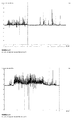
- Zum anderen wurden die Proben mit einem Texture-Analyser TA.XT.plus inklusive Acoustic Envelope Detector aus dem Hause Stable Micro Systems vermessen. Die Abbildungen 1 bis 5 zeigen Akustik Analysenreports, wobei die Intensität und Häufigkeit des Crackling während des Abbrennens der Probe wiedergespiegelt wird.
- Wie zu erkennen, zeigen alle synthetischen Partikel ein Crackling das dem natürlicher Gewürznelkenstückchen nicht nur gleich kommt, sondern dies sogar übertrifft.
Claims (15)
- Synthetische Gewürznelkenpartikel, enthaltend(a) etwa 45 bis etwa 70 Gew.-% Stärke;(b) etwa 5 bis etwa 30 Gew.-% Dextrine;(c) etwa 5 bis etwa 15 Gew.-% Polyole;(d) 0 bis etwa 25 Gew.-% Triglyceride;(e) 0 bis etwa 5 Gew.-%Farbstoffe;(f) 0 bis etwa 40 Gew.-% Aromen;
wobei sich Mengenangaben mit Wasser zu 100 Gew.-% ergänzen. - Synthetische Gewürznelkenpartikel, dadurch erhältlich, dass man wässrige Zubereitungen, enthaltend(a) etwa 25 bis etwa 65 Gew.-% Stärke,(b) etwa 1 bis etwa 25 Gew.-% Dextrine und(c) etwa 3 bis etwa 10 Gew.-% Polyole
wobei sich die Mengenangaben mit mindestens 5 bis 60 Gew.-% Wasser und eventuell weiteren Bestandteilen zu 100 Gew.-% ergänzen, trocknet und gegebenenfalls zerkleinert. - Partikel nach Anspruch 1 und/oder 2, dadurch gekennzeichnet, dass die wässrigen Zubereitungen als Stärke beispielsweise, jedoch nicht ausschließlich Reis- und/oder Maisstärke enthalten.
- Partikel nach mindestens einem der Ansprüche 1 bis 3, dadurch gekennzeichnet, dass die wässrigen Zubereitungen Dextrine mit DE-Werten im Bereich von 2 bis 10 enthalten.
- Partikel nach mindestens einem der Ansprüche 1 bis 4, dadurch gekennzeichnet, dass die wässrigen Zubereitungen Polyole enthalten, die ausgewählt sind aus der Gruppe, die gebildet wird von Zuckeralkoholen, Glycerin, Ethylenglykol, Propylenglykol, Diethylenglykol und Dipropylenglykol sowie deren Gemischen.
- Partikel nach mindestens einem der Ansprüche 1 bis 5, dadurch gekennzeichnet, dass die wässrigen Zubereitungen als weitere Komponente (d) Triglyceride enthalten.
- Partikel nach den Ansprüchen 6 und/oder 7, dadurch gekennzeichnet, dass die wässrigen Zubereitungen die Triglyceride in Mengen von etwa 0 bis etwa 25 Gew.-% enthalten.
- Partikel nach mindestens einem der Ansprüche 1 bis 7, dadurch gekennzeichnet, dass die wässrigen Zubereitungen als weitere Komponente (e) Farbstoffe enthalten.
- Partikel nach Anspruch 8, dadurch gekennzeichnet, dass die wässrigen Zubereitungen die Farbstoffe in Mengen von etwa 0,1 bis etwa 5 Gew.-% enthalten.
- Partikel nach mindestens einem der Ansprüche 1 bis 9, dadurch gekennzeichnet, dass die wässrigen Zubereitungen als weitere Komponente (g) Aromen enthalten.
- Partikel nach Anspruch 10, dadurch gekennzeichnet, dass die wässrigen Zubereitungen die Aromen in Mengen von etwa 0 bis etwa 40 Gew.-% enthalten.
- Verfahren zur Herstellung von synthetische Gewürznelkenpartikeln, dadurch gekennzeichnet, dass man wässrige Zubereitungen enthaltend(a) etwa 25 bis etwa 65 Gew.-% Stärke,(b) etwa 1 bis etwa 25 Gew.-% Dextrine und(c) etwa 3 bis etwa 10 Gew.-% Polyole
wobei sich die Mengenangaben mit 5 bis 60 Gew.-% Wasser und eventuell weiteren Bestandteilen zu 100 Gew.-% ergänzen, trocknet und gegebenenfalls zerkleinert. - Verfahren nach Anspruch 14, dadurch gekennzeichnet, dass man die wässrigen Zubereitungen durch Sprühtrocknung, Vakuumbandtrocknung, Walzentrocknung oder Extrusion entwässert.
- Verfahren nach den Ansprüchen 12 und/oder 13, dadurch gekennzeichnet, dass man die Partikel beim Trocknen auf eine Restfeuchte von etwa 1 bis etwa 20 Gew.-% Wasser einstellt.
- Verfahren nach mindestens einem der Ansprüche 12 bis 14, dadurch gekennzeichnet, dass man die Partikel auf eine mittlere Partikelgröße D50 im Bereich von etwa 0,01 bis etwa 10 mm einstellt.
Priority Applications (2)
| Application Number | Priority Date | Filing Date | Title |
|---|---|---|---|
| EP14167854.0A EP2944204B1 (de) | 2014-05-12 | 2014-05-12 | Synthetische Gewürznelkenpartikel |
| PCT/EP2015/060184 WO2015173138A1 (de) | 2014-05-12 | 2015-05-08 | Synthetische gewürznelkenpartikel |
Applications Claiming Priority (1)
| Application Number | Priority Date | Filing Date | Title |
|---|---|---|---|
| EP14167854.0A EP2944204B1 (de) | 2014-05-12 | 2014-05-12 | Synthetische Gewürznelkenpartikel |
Publications (2)
| Publication Number | Publication Date |
|---|---|
| EP2944204A1 true EP2944204A1 (de) | 2015-11-18 |
| EP2944204B1 EP2944204B1 (de) | 2022-07-20 |
Family
ID=50679956
Family Applications (1)
| Application Number | Title | Priority Date | Filing Date |
|---|---|---|---|
| EP14167854.0A Active EP2944204B1 (de) | 2014-05-12 | 2014-05-12 | Synthetische Gewürznelkenpartikel |
Country Status (2)
| Country | Link |
|---|---|
| EP (1) | EP2944204B1 (de) |
| WO (1) | WO2015173138A1 (de) |
Citations (5)
| Publication number | Priority date | Publication date | Assignee | Title |
|---|---|---|---|---|
| US3540456A (en) | 1969-05-29 | 1970-11-17 | Ncr Co | Processes for incorporating encapsulated flavors and the like in reconstituted tobacco sheet |
| GB1284151A (en) | 1969-08-18 | 1972-08-02 | Int Flavors & Fragrances Inc | Tobacco containing encapsulated flavor |
| US4785833A (en) * | 1986-02-05 | 1988-11-22 | Firmenich S.A. | Process for the aromatization of tobacco |
| WO1990000019A2 (en) * | 1988-06-30 | 1990-01-11 | Gbe International Plc | Improvements in or relating to the preparation of cigarette fillings |
| EP1252831A2 (de) | 2001-04-26 | 2002-10-30 | Givaudan SA | Partikel für Tabakwaren |
-
2014
- 2014-05-12 EP EP14167854.0A patent/EP2944204B1/de active Active
-
2015
- 2015-05-08 WO PCT/EP2015/060184 patent/WO2015173138A1/de not_active Ceased
Patent Citations (5)
| Publication number | Priority date | Publication date | Assignee | Title |
|---|---|---|---|---|
| US3540456A (en) | 1969-05-29 | 1970-11-17 | Ncr Co | Processes for incorporating encapsulated flavors and the like in reconstituted tobacco sheet |
| GB1284151A (en) | 1969-08-18 | 1972-08-02 | Int Flavors & Fragrances Inc | Tobacco containing encapsulated flavor |
| US4785833A (en) * | 1986-02-05 | 1988-11-22 | Firmenich S.A. | Process for the aromatization of tobacco |
| WO1990000019A2 (en) * | 1988-06-30 | 1990-01-11 | Gbe International Plc | Improvements in or relating to the preparation of cigarette fillings |
| EP1252831A2 (de) | 2001-04-26 | 2002-10-30 | Givaudan SA | Partikel für Tabakwaren |
Also Published As
| Publication number | Publication date |
|---|---|
| WO2015173138A1 (de) | 2015-11-19 |
| EP2944204B1 (de) | 2022-07-20 |
Similar Documents
| Publication | Publication Date | Title |
|---|---|---|
| JP2837482B2 (ja) | 穀物繊維およびその製造法 | |
| DE2636597A1 (de) | Verbessertes rauchmaterial | |
| DE60004952T2 (de) | In kaltem wasser quellbare stärke mit verzögerter viskositätsentwicklung, ihre herstellung und ihre verwendung | |
| DE2922247A1 (de) | Verfahren zur herstellung von produkten aus gemuesen | |
| US5183677A (en) | Beta-glucane enriched alimentary fiber | |
| DE1632151C3 (de) | Tabakfolie | |
| DE19921860C2 (de) | Mit heißen, wässrigen Flüssigkeiten zu Obst- und Gemüsepulpen rekonstituierbares Trockenprodukt und Verfahren zu seiner Herstellung | |
| DE60204501T2 (de) | Verfahren zur Herstellung von Tannin und seine Verwendung | |
| EP0680490B1 (de) | Verfahren zur herstellung eines polysaccharid enthaltenden produktes sowie polysaccharidzusammensetzungen | |
| FI86952C (fi) | Foerfarande foer framstaellning av en cellulosahaltig finfiberprodukt och finfiberprodukt | |
| EP3599901A1 (de) | Verfahren zur desintegration/separation sowie aufschluss von pflanzlichen hüllmaterialien und konstituenten zur gewinnung und herstellung von pflanzeninhaltsstoffen und pflanzlichen faserprodukten | |
| DE202017003521U1 (de) | Trester enthaltende Materialien und deren Verwendung | |
| EP2944204B1 (de) | Synthetische Gewürznelkenpartikel | |
| EP2866581B1 (de) | Thermisch inhibierte stärke und stärkehaltige mehle | |
| DE1948151A1 (de) | Verfahren zur Herstellung kuenstlich hergestellter Tabakprodukte | |
| EP1399486B1 (de) | Verfahren zur herstellung von stärke oder stärkehaltigen produkten aus stärkehaltigen pflanzlichen rohstoffen | |
| DE202022102873U1 (de) | Lebensmittelprodukt | |
| DE2922787A1 (de) | Fruchtsaftpulver und verfahren zu seiner herstellung | |
| EP2106408B1 (de) | Verfahren zur herstellung von stärke | |
| DE2936455A1 (de) | Dehydratisierte verzehrbare erzeugnisse und verfahren zu ihrer herstellung | |
| DE4301586C2 (de) | Verfahren zur Herstellung eines Amylose enthaltenden Produktes sowie thermoplastisches Produkt | |
| EP3941210A1 (de) | Verfahren zur herstellung eines lebensmittelerzeugnisses mit hohem ballaststoffgehalt und geringer belastung | |
| DE102012023136A1 (de) | Olivenpaste | |
| DE60021672T2 (de) | Isolierung und Verwendung von Pentosane aus Nebenprodukten der Stärke-Industrie | |
| DE69117168T2 (de) | Pulver aus grünen Pflanzensäften und Verfahren zu ihrer Herstellung |
Legal Events
| Date | Code | Title | Description |
|---|---|---|---|
| PUAI | Public reference made under article 153(3) epc to a published international application that has entered the european phase |
Free format text: ORIGINAL CODE: 0009012 |
|
| AK | Designated contracting states |
Kind code of ref document: A1 Designated state(s): AL AT BE BG CH CY CZ DE DK EE ES FI FR GB GR HR HU IE IS IT LI LT LU LV MC MK MT NL NO PL PT RO RS SE SI SK SM TR |
|
| AX | Request for extension of the european patent |
Extension state: BA ME |
|
| 17P | Request for examination filed |
Effective date: 20160513 |
|
| RBV | Designated contracting states (corrected) |
Designated state(s): AL AT BE BG CH CY CZ DE DK EE ES FI FR GB GR HR HU IE IS IT LI LT LU LV MC MK MT NL NO PL PT RO RS SE SI SK SM TR |
|
| STAA | Information on the status of an ep patent application or granted ep patent |
Free format text: STATUS: EXAMINATION IS IN PROGRESS |
|
| 17Q | First examination report despatched |
Effective date: 20171212 |
|
| REG | Reference to a national code |
Ref country code: DE Ref legal event code: R079 Ref document number: 502014016321 Country of ref document: DE Free format text: PREVIOUS MAIN CLASS: A24B0015300000 Ipc: A23L0027200000 |
|
| GRAP | Despatch of communication of intention to grant a patent |
Free format text: ORIGINAL CODE: EPIDOSNIGR1 |
|
| STAA | Information on the status of an ep patent application or granted ep patent |
Free format text: STATUS: GRANT OF PATENT IS INTENDED |
|
| RIC1 | Information provided on ipc code assigned before grant |
Ipc: A24B 15/30 20060101ALI20220202BHEP Ipc: A23L 27/20 20160101AFI20220202BHEP |
|
| INTG | Intention to grant announced |
Effective date: 20220302 |
|
| GRAS | Grant fee paid |
Free format text: ORIGINAL CODE: EPIDOSNIGR3 |
|
| GRAA | (expected) grant |
Free format text: ORIGINAL CODE: 0009210 |
|
| STAA | Information on the status of an ep patent application or granted ep patent |
Free format text: STATUS: THE PATENT HAS BEEN GRANTED |
|
| AK | Designated contracting states |
Kind code of ref document: B1 Designated state(s): AL AT BE BG CH CY CZ DE DK EE ES FI FR GB GR HR HU IE IS IT LI LT LU LV MC MK MT NL NO PL PT RO RS SE SI SK SM TR |
|
| REG | Reference to a national code |
Ref country code: GB Ref legal event code: FG4D Free format text: NOT ENGLISH |
|
| REG | Reference to a national code |
Ref country code: CH Ref legal event code: EP |
|
| REG | Reference to a national code |
Ref country code: DE Ref legal event code: R096 Ref document number: 502014016321 Country of ref document: DE |
|
| REG | Reference to a national code |
Ref country code: AT Ref legal event code: REF Ref document number: 1504973 Country of ref document: AT Kind code of ref document: T Effective date: 20220815 |
|
| REG | Reference to a national code |
Ref country code: IE Ref legal event code: FG4D Free format text: LANGUAGE OF EP DOCUMENT: GERMAN |
|
| REG | Reference to a national code |
Ref country code: LT Ref legal event code: MG9D |
|
| REG | Reference to a national code |
Ref country code: NL Ref legal event code: MP Effective date: 20220720 |
|
| PG25 | Lapsed in a contracting state [announced via postgrant information from national office to epo] |
Ref country code: SE Free format text: LAPSE BECAUSE OF FAILURE TO SUBMIT A TRANSLATION OF THE DESCRIPTION OR TO PAY THE FEE WITHIN THE PRESCRIBED TIME-LIMIT Effective date: 20220720 Ref country code: RS Free format text: LAPSE BECAUSE OF FAILURE TO SUBMIT A TRANSLATION OF THE DESCRIPTION OR TO PAY THE FEE WITHIN THE PRESCRIBED TIME-LIMIT Effective date: 20220720 Ref country code: PT Free format text: LAPSE BECAUSE OF FAILURE TO SUBMIT A TRANSLATION OF THE DESCRIPTION OR TO PAY THE FEE WITHIN THE PRESCRIBED TIME-LIMIT Effective date: 20221121 Ref country code: NO Free format text: LAPSE BECAUSE OF FAILURE TO SUBMIT A TRANSLATION OF THE DESCRIPTION OR TO PAY THE FEE WITHIN THE PRESCRIBED TIME-LIMIT Effective date: 20221020 Ref country code: NL Free format text: LAPSE BECAUSE OF FAILURE TO SUBMIT A TRANSLATION OF THE DESCRIPTION OR TO PAY THE FEE WITHIN THE PRESCRIBED TIME-LIMIT Effective date: 20220720 Ref country code: LV Free format text: LAPSE BECAUSE OF FAILURE TO SUBMIT A TRANSLATION OF THE DESCRIPTION OR TO PAY THE FEE WITHIN THE PRESCRIBED TIME-LIMIT Effective date: 20220720 Ref country code: LT Free format text: LAPSE BECAUSE OF FAILURE TO SUBMIT A TRANSLATION OF THE DESCRIPTION OR TO PAY THE FEE WITHIN THE PRESCRIBED TIME-LIMIT Effective date: 20220720 Ref country code: FI Free format text: LAPSE BECAUSE OF FAILURE TO SUBMIT A TRANSLATION OF THE DESCRIPTION OR TO PAY THE FEE WITHIN THE PRESCRIBED TIME-LIMIT Effective date: 20220720 Ref country code: ES Free format text: LAPSE BECAUSE OF FAILURE TO SUBMIT A TRANSLATION OF THE DESCRIPTION OR TO PAY THE FEE WITHIN THE PRESCRIBED TIME-LIMIT Effective date: 20220720 |
|
| PG25 | Lapsed in a contracting state [announced via postgrant information from national office to epo] |
Ref country code: PL Free format text: LAPSE BECAUSE OF FAILURE TO SUBMIT A TRANSLATION OF THE DESCRIPTION OR TO PAY THE FEE WITHIN THE PRESCRIBED TIME-LIMIT Effective date: 20220720 Ref country code: IS Free format text: LAPSE BECAUSE OF FAILURE TO SUBMIT A TRANSLATION OF THE DESCRIPTION OR TO PAY THE FEE WITHIN THE PRESCRIBED TIME-LIMIT Effective date: 20221120 Ref country code: HR Free format text: LAPSE BECAUSE OF FAILURE TO SUBMIT A TRANSLATION OF THE DESCRIPTION OR TO PAY THE FEE WITHIN THE PRESCRIBED TIME-LIMIT Effective date: 20220720 Ref country code: GR Free format text: LAPSE BECAUSE OF FAILURE TO SUBMIT A TRANSLATION OF THE DESCRIPTION OR TO PAY THE FEE WITHIN THE PRESCRIBED TIME-LIMIT Effective date: 20221021 |
|
| REG | Reference to a national code |
Ref country code: DE Ref legal event code: R097 Ref document number: 502014016321 Country of ref document: DE |
|
| PG25 | Lapsed in a contracting state [announced via postgrant information from national office to epo] |
Ref country code: SM Free format text: LAPSE BECAUSE OF FAILURE TO SUBMIT A TRANSLATION OF THE DESCRIPTION OR TO PAY THE FEE WITHIN THE PRESCRIBED TIME-LIMIT Effective date: 20220720 Ref country code: RO Free format text: LAPSE BECAUSE OF FAILURE TO SUBMIT A TRANSLATION OF THE DESCRIPTION OR TO PAY THE FEE WITHIN THE PRESCRIBED TIME-LIMIT Effective date: 20220720 Ref country code: DK Free format text: LAPSE BECAUSE OF FAILURE TO SUBMIT A TRANSLATION OF THE DESCRIPTION OR TO PAY THE FEE WITHIN THE PRESCRIBED TIME-LIMIT Effective date: 20220720 Ref country code: CZ Free format text: LAPSE BECAUSE OF FAILURE TO SUBMIT A TRANSLATION OF THE DESCRIPTION OR TO PAY THE FEE WITHIN THE PRESCRIBED TIME-LIMIT Effective date: 20220720 |
|
| PLBE | No opposition filed within time limit |
Free format text: ORIGINAL CODE: 0009261 |
|
| STAA | Information on the status of an ep patent application or granted ep patent |
Free format text: STATUS: NO OPPOSITION FILED WITHIN TIME LIMIT |
|
| PG25 | Lapsed in a contracting state [announced via postgrant information from national office to epo] |
Ref country code: SK Free format text: LAPSE BECAUSE OF FAILURE TO SUBMIT A TRANSLATION OF THE DESCRIPTION OR TO PAY THE FEE WITHIN THE PRESCRIBED TIME-LIMIT Effective date: 20220720 Ref country code: EE Free format text: LAPSE BECAUSE OF FAILURE TO SUBMIT A TRANSLATION OF THE DESCRIPTION OR TO PAY THE FEE WITHIN THE PRESCRIBED TIME-LIMIT Effective date: 20220720 |
|
| 26N | No opposition filed |
Effective date: 20230421 |
|
| PG25 | Lapsed in a contracting state [announced via postgrant information from national office to epo] |
Ref country code: AL Free format text: LAPSE BECAUSE OF FAILURE TO SUBMIT A TRANSLATION OF THE DESCRIPTION OR TO PAY THE FEE WITHIN THE PRESCRIBED TIME-LIMIT Effective date: 20220720 |
|
| PG25 | Lapsed in a contracting state [announced via postgrant information from national office to epo] |
Ref country code: SI Free format text: LAPSE BECAUSE OF FAILURE TO SUBMIT A TRANSLATION OF THE DESCRIPTION OR TO PAY THE FEE WITHIN THE PRESCRIBED TIME-LIMIT Effective date: 20220720 |
|
| REG | Reference to a national code |
Ref country code: DE Ref legal event code: R119 Ref document number: 502014016321 Country of ref document: DE |
|
| REG | Reference to a national code |
Ref country code: CH Ref legal event code: PL |
|
| PG25 | Lapsed in a contracting state [announced via postgrant information from national office to epo] |
Ref country code: MC Free format text: LAPSE BECAUSE OF FAILURE TO SUBMIT A TRANSLATION OF THE DESCRIPTION OR TO PAY THE FEE WITHIN THE PRESCRIBED TIME-LIMIT Effective date: 20220720 |
|
| GBPC | Gb: european patent ceased through non-payment of renewal fee |
Effective date: 20230512 |
|
| REG | Reference to a national code |
Ref country code: BE Ref legal event code: MM Effective date: 20230531 |
|
| PG25 | Lapsed in a contracting state [announced via postgrant information from national office to epo] |
Ref country code: MC Free format text: LAPSE BECAUSE OF FAILURE TO SUBMIT A TRANSLATION OF THE DESCRIPTION OR TO PAY THE FEE WITHIN THE PRESCRIBED TIME-LIMIT Effective date: 20220720 Ref country code: LU Free format text: LAPSE BECAUSE OF NON-PAYMENT OF DUE FEES Effective date: 20230512 Ref country code: LI Free format text: LAPSE BECAUSE OF NON-PAYMENT OF DUE FEES Effective date: 20230531 Ref country code: CH Free format text: LAPSE BECAUSE OF NON-PAYMENT OF DUE FEES Effective date: 20230531 |
|
| REG | Reference to a national code |
Ref country code: IE Ref legal event code: MM4A |
|
| PG25 | Lapsed in a contracting state [announced via postgrant information from national office to epo] |
Ref country code: IE Free format text: LAPSE BECAUSE OF NON-PAYMENT OF DUE FEES Effective date: 20230512 |
|
| PG25 | Lapsed in a contracting state [announced via postgrant information from national office to epo] |
Ref country code: IE Free format text: LAPSE BECAUSE OF NON-PAYMENT OF DUE FEES Effective date: 20230512 Ref country code: DE Free format text: LAPSE BECAUSE OF NON-PAYMENT OF DUE FEES Effective date: 20231201 Ref country code: GB Free format text: LAPSE BECAUSE OF NON-PAYMENT OF DUE FEES Effective date: 20230512 |
|
| PG25 | Lapsed in a contracting state [announced via postgrant information from national office to epo] |
Ref country code: IT Free format text: LAPSE BECAUSE OF FAILURE TO SUBMIT A TRANSLATION OF THE DESCRIPTION OR TO PAY THE FEE WITHIN THE PRESCRIBED TIME-LIMIT Effective date: 20220720 Ref country code: BE Free format text: LAPSE BECAUSE OF NON-PAYMENT OF DUE FEES Effective date: 20230531 Ref country code: FR Free format text: LAPSE BECAUSE OF NON-PAYMENT OF DUE FEES Effective date: 20230531 |
|
| REG | Reference to a national code |
Ref country code: AT Ref legal event code: MM01 Ref document number: 1504973 Country of ref document: AT Kind code of ref document: T Effective date: 20230512 |
|
| PG25 | Lapsed in a contracting state [announced via postgrant information from national office to epo] |
Ref country code: AT Free format text: LAPSE BECAUSE OF NON-PAYMENT OF DUE FEES Effective date: 20230512 |
|
| PG25 | Lapsed in a contracting state [announced via postgrant information from national office to epo] |
Ref country code: AT Free format text: LAPSE BECAUSE OF NON-PAYMENT OF DUE FEES Effective date: 20230512 |
|
| PG25 | Lapsed in a contracting state [announced via postgrant information from national office to epo] |
Ref country code: BG Free format text: LAPSE BECAUSE OF FAILURE TO SUBMIT A TRANSLATION OF THE DESCRIPTION OR TO PAY THE FEE WITHIN THE PRESCRIBED TIME-LIMIT Effective date: 20220720 |
|
| PG25 | Lapsed in a contracting state [announced via postgrant information from national office to epo] |
Ref country code: BG Free format text: LAPSE BECAUSE OF FAILURE TO SUBMIT A TRANSLATION OF THE DESCRIPTION OR TO PAY THE FEE WITHIN THE PRESCRIBED TIME-LIMIT Effective date: 20220720 |
|
| PG25 | Lapsed in a contracting state [announced via postgrant information from national office to epo] |
Ref country code: CY Free format text: LAPSE BECAUSE OF FAILURE TO SUBMIT A TRANSLATION OF THE DESCRIPTION OR TO PAY THE FEE WITHIN THE PRESCRIBED TIME-LIMIT; INVALID AB INITIO Effective date: 20140512 |
|
| PG25 | Lapsed in a contracting state [announced via postgrant information from national office to epo] |
Ref country code: HU Free format text: LAPSE BECAUSE OF FAILURE TO SUBMIT A TRANSLATION OF THE DESCRIPTION OR TO PAY THE FEE WITHIN THE PRESCRIBED TIME-LIMIT; INVALID AB INITIO Effective date: 20140512 |
|
| PG25 | Lapsed in a contracting state [announced via postgrant information from national office to epo] |
Ref country code: TR Free format text: LAPSE BECAUSE OF FAILURE TO SUBMIT A TRANSLATION OF THE DESCRIPTION OR TO PAY THE FEE WITHIN THE PRESCRIBED TIME-LIMIT Effective date: 20220720 |