EP2923641A1 - Atmungsvorrichtungssteuereinheit und software zur bestimmung einer veränderung des transpulmonalen drucks - Google Patents
Atmungsvorrichtungssteuereinheit und software zur bestimmung einer veränderung des transpulmonalen drucks Download PDFInfo
- Publication number
- EP2923641A1 EP2923641A1 EP15165344.1A EP15165344A EP2923641A1 EP 2923641 A1 EP2923641 A1 EP 2923641A1 EP 15165344 A EP15165344 A EP 15165344A EP 2923641 A1 EP2923641 A1 EP 2923641A1
- Authority
- EP
- European Patent Office
- Prior art keywords
- peep
- pressure
- expiratory
- level
- patient
- Prior art date
- Legal status (The legal status is an assumption and is not a legal conclusion. Google has not performed a legal analysis and makes no representation as to the accuracy of the status listed.)
- Granted
Links
Images






Classifications
-
- A—HUMAN NECESSITIES
- A61—MEDICAL OR VETERINARY SCIENCE; HYGIENE
- A61B—DIAGNOSIS; SURGERY; IDENTIFICATION
- A61B5/00—Measuring for diagnostic purposes; Identification of persons
- A61B5/08—Measuring devices for evaluating the respiratory organs
- A61B5/085—Measuring impedance of respiratory organs or lung elasticity
-
- A—HUMAN NECESSITIES
- A61—MEDICAL OR VETERINARY SCIENCE; HYGIENE
- A61B—DIAGNOSIS; SURGERY; IDENTIFICATION
- A61B5/00—Measuring for diagnostic purposes; Identification of persons
- A61B5/08—Measuring devices for evaluating the respiratory organs
-
- A—HUMAN NECESSITIES
- A61—MEDICAL OR VETERINARY SCIENCE; HYGIENE
- A61B—DIAGNOSIS; SURGERY; IDENTIFICATION
- A61B5/00—Measuring for diagnostic purposes; Identification of persons
- A61B5/08—Measuring devices for evaluating the respiratory organs
- A61B5/087—Measuring breath flow
- A61B5/0871—Peak expiratory flowmeters
-
- A—HUMAN NECESSITIES
- A61—MEDICAL OR VETERINARY SCIENCE; HYGIENE
- A61B—DIAGNOSIS; SURGERY; IDENTIFICATION
- A61B5/00—Measuring for diagnostic purposes; Identification of persons
- A61B5/08—Measuring devices for evaluating the respiratory organs
- A61B5/091—Measuring volume of inspired or expired gases, e.g. to determine lung capacity
-
- A—HUMAN NECESSITIES
- A61—MEDICAL OR VETERINARY SCIENCE; HYGIENE
- A61B—DIAGNOSIS; SURGERY; IDENTIFICATION
- A61B5/00—Measuring for diagnostic purposes; Identification of persons
- A61B5/08—Measuring devices for evaluating the respiratory organs
- A61B5/097—Devices for facilitating collection of breath or for directing breath into or through measuring devices
-
- A—HUMAN NECESSITIES
- A61—MEDICAL OR VETERINARY SCIENCE; HYGIENE
- A61B—DIAGNOSIS; SURGERY; IDENTIFICATION
- A61B5/00—Measuring for diagnostic purposes; Identification of persons
- A61B5/48—Other medical applications
- A61B5/4836—Diagnosis combined with treatment in closed-loop systems or methods
-
- A—HUMAN NECESSITIES
- A61—MEDICAL OR VETERINARY SCIENCE; HYGIENE
- A61B—DIAGNOSIS; SURGERY; IDENTIFICATION
- A61B5/00—Measuring for diagnostic purposes; Identification of persons
- A61B5/72—Signal processing specially adapted for physiological signals or for diagnostic purposes
- A61B5/7225—Details of analogue processing, e.g. isolation amplifier, gain or sensitivity adjustment, filtering, baseline or drift compensation
-
- A—HUMAN NECESSITIES
- A61—MEDICAL OR VETERINARY SCIENCE; HYGIENE
- A61B—DIAGNOSIS; SURGERY; IDENTIFICATION
- A61B5/00—Measuring for diagnostic purposes; Identification of persons
- A61B5/72—Signal processing specially adapted for physiological signals or for diagnostic purposes
- A61B5/7271—Specific aspects of physiological measurement analysis
- A61B5/7278—Artificial waveform generation or derivation, e.g. synthesizing signals from measured signals
-
- A—HUMAN NECESSITIES
- A61—MEDICAL OR VETERINARY SCIENCE; HYGIENE
- A61B—DIAGNOSIS; SURGERY; IDENTIFICATION
- A61B5/00—Measuring for diagnostic purposes; Identification of persons
- A61B5/72—Signal processing specially adapted for physiological signals or for diagnostic purposes
- A61B5/7271—Specific aspects of physiological measurement analysis
- A61B5/7282—Event detection, e.g. detecting unique waveforms indicative of a medical condition
-
- A—HUMAN NECESSITIES
- A61—MEDICAL OR VETERINARY SCIENCE; HYGIENE
- A61M—DEVICES FOR INTRODUCING MEDIA INTO, OR ONTO, THE BODY; DEVICES FOR TRANSDUCING BODY MEDIA OR FOR TAKING MEDIA FROM THE BODY; DEVICES FOR PRODUCING OR ENDING SLEEP OR STUPOR
- A61M16/00—Devices for influencing the respiratory system of patients by gas treatment, e.g. ventilators; Tracheal tubes
- A61M16/0003—Accessories therefor, e.g. sensors, vibrators, negative pressure
-
- A—HUMAN NECESSITIES
- A61—MEDICAL OR VETERINARY SCIENCE; HYGIENE
- A61M—DEVICES FOR INTRODUCING MEDIA INTO, OR ONTO, THE BODY; DEVICES FOR TRANSDUCING BODY MEDIA OR FOR TAKING MEDIA FROM THE BODY; DEVICES FOR PRODUCING OR ENDING SLEEP OR STUPOR
- A61M16/00—Devices for influencing the respiratory system of patients by gas treatment, e.g. ventilators; Tracheal tubes
- A61M16/0057—Pumps therefor
-
- A—HUMAN NECESSITIES
- A61—MEDICAL OR VETERINARY SCIENCE; HYGIENE
- A61M—DEVICES FOR INTRODUCING MEDIA INTO, OR ONTO, THE BODY; DEVICES FOR TRANSDUCING BODY MEDIA OR FOR TAKING MEDIA FROM THE BODY; DEVICES FOR PRODUCING OR ENDING SLEEP OR STUPOR
- A61M16/00—Devices for influencing the respiratory system of patients by gas treatment, e.g. ventilators; Tracheal tubes
- A61M16/0057—Pumps therefor
- A61M16/0066—Blowers or centrifugal pumps
- A61M16/0069—Blowers or centrifugal pumps the speed thereof being controlled by respiratory parameters, e.g. by inhalation
-
- A—HUMAN NECESSITIES
- A61—MEDICAL OR VETERINARY SCIENCE; HYGIENE
- A61M—DEVICES FOR INTRODUCING MEDIA INTO, OR ONTO, THE BODY; DEVICES FOR TRANSDUCING BODY MEDIA OR FOR TAKING MEDIA FROM THE BODY; DEVICES FOR PRODUCING OR ENDING SLEEP OR STUPOR
- A61M16/00—Devices for influencing the respiratory system of patients by gas treatment, e.g. ventilators; Tracheal tubes
- A61M16/021—Devices for influencing the respiratory system of patients by gas treatment, e.g. ventilators; Tracheal tubes operated by electrical means
- A61M16/022—Control means therefor
- A61M16/024—Control means therefor including calculation means, e.g. using a processor
- A61M16/026—Control means therefor including calculation means, e.g. using a processor specially adapted for predicting, e.g. for determining an information representative of a flow limitation during a ventilation cycle by using a root square technique or a regression analysis
-
- A—HUMAN NECESSITIES
- A61—MEDICAL OR VETERINARY SCIENCE; HYGIENE
- A61M—DEVICES FOR INTRODUCING MEDIA INTO, OR ONTO, THE BODY; DEVICES FOR TRANSDUCING BODY MEDIA OR FOR TAKING MEDIA FROM THE BODY; DEVICES FOR PRODUCING OR ENDING SLEEP OR STUPOR
- A61M16/00—Devices for influencing the respiratory system of patients by gas treatment, e.g. ventilators; Tracheal tubes
- A61M16/06—Respiratory or anaesthetic masks
-
- A—HUMAN NECESSITIES
- A61—MEDICAL OR VETERINARY SCIENCE; HYGIENE
- A61M—DEVICES FOR INTRODUCING MEDIA INTO, OR ONTO, THE BODY; DEVICES FOR TRANSDUCING BODY MEDIA OR FOR TAKING MEDIA FROM THE BODY; DEVICES FOR PRODUCING OR ENDING SLEEP OR STUPOR
- A61M16/00—Devices for influencing the respiratory system of patients by gas treatment, e.g. ventilators; Tracheal tubes
- A61M16/20—Valves specially adapted to medical respiratory devices
- A61M16/201—Controlled valves
- A61M16/202—Controlled valves electrically actuated
- A61M16/203—Proportional
- A61M16/204—Proportional used for inhalation control
-
- A—HUMAN NECESSITIES
- A61—MEDICAL OR VETERINARY SCIENCE; HYGIENE
- A61M—DEVICES FOR INTRODUCING MEDIA INTO, OR ONTO, THE BODY; DEVICES FOR TRANSDUCING BODY MEDIA OR FOR TAKING MEDIA FROM THE BODY; DEVICES FOR PRODUCING OR ENDING SLEEP OR STUPOR
- A61M16/00—Devices for influencing the respiratory system of patients by gas treatment, e.g. ventilators; Tracheal tubes
- A61M16/20—Valves specially adapted to medical respiratory devices
- A61M16/201—Controlled valves
- A61M16/202—Controlled valves electrically actuated
- A61M16/203—Proportional
- A61M16/205—Proportional used for exhalation control
-
- A—HUMAN NECESSITIES
- A61—MEDICAL OR VETERINARY SCIENCE; HYGIENE
- A61M—DEVICES FOR INTRODUCING MEDIA INTO, OR ONTO, THE BODY; DEVICES FOR TRANSDUCING BODY MEDIA OR FOR TAKING MEDIA FROM THE BODY; DEVICES FOR PRODUCING OR ENDING SLEEP OR STUPOR
- A61M16/00—Devices for influencing the respiratory system of patients by gas treatment, e.g. ventilators; Tracheal tubes
- A61M16/20—Valves specially adapted to medical respiratory devices
- A61M16/208—Non-controlled one-way valves, e.g. exhalation, check, pop-off non-rebreathing valves
-
- A—HUMAN NECESSITIES
- A61—MEDICAL OR VETERINARY SCIENCE; HYGIENE
- A61M—DEVICES FOR INTRODUCING MEDIA INTO, OR ONTO, THE BODY; DEVICES FOR TRANSDUCING BODY MEDIA OR FOR TAKING MEDIA FROM THE BODY; DEVICES FOR PRODUCING OR ENDING SLEEP OR STUPOR
- A61M16/00—Devices for influencing the respiratory system of patients by gas treatment, e.g. ventilators; Tracheal tubes
- A61M16/10—Preparation of respiratory gases or vapours
- A61M16/12—Preparation of respiratory gases or vapours by mixing different gases
-
- A—HUMAN NECESSITIES
- A61—MEDICAL OR VETERINARY SCIENCE; HYGIENE
- A61M—DEVICES FOR INTRODUCING MEDIA INTO, OR ONTO, THE BODY; DEVICES FOR TRANSDUCING BODY MEDIA OR FOR TAKING MEDIA FROM THE BODY; DEVICES FOR PRODUCING OR ENDING SLEEP OR STUPOR
- A61M16/00—Devices for influencing the respiratory system of patients by gas treatment, e.g. ventilators; Tracheal tubes
- A61M16/0003—Accessories therefor, e.g. sensors, vibrators, negative pressure
- A61M2016/0015—Accessories therefor, e.g. sensors, vibrators, negative pressure inhalation detectors
- A61M2016/0018—Accessories therefor, e.g. sensors, vibrators, negative pressure inhalation detectors electrical
- A61M2016/0021—Accessories therefor, e.g. sensors, vibrators, negative pressure inhalation detectors electrical with a proportional output signal, e.g. from a thermistor
-
- A—HUMAN NECESSITIES
- A61—MEDICAL OR VETERINARY SCIENCE; HYGIENE
- A61M—DEVICES FOR INTRODUCING MEDIA INTO, OR ONTO, THE BODY; DEVICES FOR TRANSDUCING BODY MEDIA OR FOR TAKING MEDIA FROM THE BODY; DEVICES FOR PRODUCING OR ENDING SLEEP OR STUPOR
- A61M16/00—Devices for influencing the respiratory system of patients by gas treatment, e.g. ventilators; Tracheal tubes
- A61M16/0003—Accessories therefor, e.g. sensors, vibrators, negative pressure
- A61M2016/0027—Accessories therefor, e.g. sensors, vibrators, negative pressure pressure meter
-
- A—HUMAN NECESSITIES
- A61—MEDICAL OR VETERINARY SCIENCE; HYGIENE
- A61M—DEVICES FOR INTRODUCING MEDIA INTO, OR ONTO, THE BODY; DEVICES FOR TRANSDUCING BODY MEDIA OR FOR TAKING MEDIA FROM THE BODY; DEVICES FOR PRODUCING OR ENDING SLEEP OR STUPOR
- A61M16/00—Devices for influencing the respiratory system of patients by gas treatment, e.g. ventilators; Tracheal tubes
- A61M16/0003—Accessories therefor, e.g. sensors, vibrators, negative pressure
- A61M2016/003—Accessories therefor, e.g. sensors, vibrators, negative pressure with a flowmeter
- A61M2016/0033—Accessories therefor, e.g. sensors, vibrators, negative pressure with a flowmeter electrical
- A61M2016/0039—Accessories therefor, e.g. sensors, vibrators, negative pressure with a flowmeter electrical in the inspiratory circuit
-
- A—HUMAN NECESSITIES
- A61—MEDICAL OR VETERINARY SCIENCE; HYGIENE
- A61M—DEVICES FOR INTRODUCING MEDIA INTO, OR ONTO, THE BODY; DEVICES FOR TRANSDUCING BODY MEDIA OR FOR TAKING MEDIA FROM THE BODY; DEVICES FOR PRODUCING OR ENDING SLEEP OR STUPOR
- A61M16/00—Devices for influencing the respiratory system of patients by gas treatment, e.g. ventilators; Tracheal tubes
- A61M16/0003—Accessories therefor, e.g. sensors, vibrators, negative pressure
- A61M2016/003—Accessories therefor, e.g. sensors, vibrators, negative pressure with a flowmeter
- A61M2016/0033—Accessories therefor, e.g. sensors, vibrators, negative pressure with a flowmeter electrical
- A61M2016/0042—Accessories therefor, e.g. sensors, vibrators, negative pressure with a flowmeter electrical in the expiratory circuit
-
- A—HUMAN NECESSITIES
- A61—MEDICAL OR VETERINARY SCIENCE; HYGIENE
- A61M—DEVICES FOR INTRODUCING MEDIA INTO, OR ONTO, THE BODY; DEVICES FOR TRANSDUCING BODY MEDIA OR FOR TAKING MEDIA FROM THE BODY; DEVICES FOR PRODUCING OR ENDING SLEEP OR STUPOR
- A61M2205/00—General characteristics of the apparatus
- A61M2205/33—Controlling, regulating or measuring
- A61M2205/3331—Pressure; Flow
-
- A—HUMAN NECESSITIES
- A61—MEDICAL OR VETERINARY SCIENCE; HYGIENE
- A61M—DEVICES FOR INTRODUCING MEDIA INTO, OR ONTO, THE BODY; DEVICES FOR TRANSDUCING BODY MEDIA OR FOR TAKING MEDIA FROM THE BODY; DEVICES FOR PRODUCING OR ENDING SLEEP OR STUPOR
- A61M2210/00—Anatomical parts of the body
- A61M2210/10—Trunk
- A61M2210/1042—Alimentary tract
- A61M2210/105—Oesophagus
-
- A—HUMAN NECESSITIES
- A61—MEDICAL OR VETERINARY SCIENCE; HYGIENE
- A61M—DEVICES FOR INTRODUCING MEDIA INTO, OR ONTO, THE BODY; DEVICES FOR TRANSDUCING BODY MEDIA OR FOR TAKING MEDIA FROM THE BODY; DEVICES FOR PRODUCING OR ENDING SLEEP OR STUPOR
- A61M2230/00—Measuring parameters of the user
- A61M2230/40—Respiratory characteristics
- A61M2230/46—Resistance or compliance of the lungs
Definitions
- This invention pertains in general to the field of breathing apparatuses. More particularly the invention relates determination of transpulmonary pressure in a patient connected to such a breathing apparatus. Even more particularly the present invention relates to a system, computer program and method for direct determination of transpulmonary pressure without the use of oesophageal pressure measurements.
- the mechanical properties of the total respiratory system was hitherto determined by the combined effect of stiffness of the lungs and the stiffness of the chest wall/diaphragm working in series.
- the lung is a compliant unit within another compliant unit, namely the chest wall and the diaphragm.
- knowledge of the stiffness of the chest wall in relation to the stiffness of the lung is of outmost importance.
- the risk of inducing damage to the sensitive lung tissue by the ventilator treatment is increasing when the lung is very stiff and the chest wall/diaphragm is very soft, where most of the airway pressure generated by the ventilator during inspiration acts solely on the lung, i.e. a high transpulmonary pressure is present. Very little of the pressure applied by the ventilator to the patient is transmitted to the surrounding chest wall and diaphragm.
- a measurement of the oesophageal pressure is used as a surrogate of pleural pressure instead of measuring pleural pressure directly.
- the oesophageal pressure is used as an indirect measure of how much airway pressure is transferred through the lung to the chest wall and diaphragm during assisted controlled ventilation. This makes it possible to give an estimate of the stiffness of the chest wall/diaphragm based on the oesophageal pressure.
- the combined stiffness of the lungs and chest wall/diaphragm, total respiratory system stiffness (Etot), is the sum of the lung stiffness and the chest wall/diaphragm stiffness.
- the stiffness of the lung may thus indirectly determined by subtraction of Ec from Etot.
- the calculation of chest wall and lung compliance is based on the tidal difference in end-expiratory and end inspiratory oesophageal and airway pressures ( ⁇ Poes, ⁇ Paw).
- Oesophageal pressure is measured by means of catheter like elongate pressure monitoring devices, such as disclosed in United States Patent No. 4,214,593 .
- the device comprises a nasogastric tube provided with an oesophageal balloon cuff.
- oesophageal balloon as a transmitter of oesophageal pressure is influenced by how much it is preinflated and how much mediastinal weight, i.e. weight of the heart is superimposed on the balloon.
- mediastinal weight i.e. weight of the heart is superimposed on the balloon.
- oesophageal pressure is a substitute measure of pleural pressures, which are different in different places, due to gravitational forces and its proximity to the diaphragm, where abdominal pressure and diaphragmatic stiffness have a greater impact.
- an oesophagal balloon measurement provides a pressure measurement only for the horizontal plane in which the measurement is done.
- different measurement values will be obtained e.g. due to gravitational forces acting on the patient body and in particular the lung, directly or indirectly via the weight if other organs in the thorax of the patient.
- An improved or alternative system, computer program and/or method for determination of transpulmonary pressure without the use of indirect measures, such as oesophageal pressure measurements would be advantageous.
- it would be advantageous and to provide such a system, computer program and/or method allowing for increased flexibility when using existing breathing apparatuses, cost-effectiveness by avoiding purchase and use of additional equipment needed for the transpulmonary pressure determination, and user friendliness thereof would be advantageous.
- embodiments of the present invention preferably seek to mitigate, alleviate or eliminate one or more deficiencies, disadvantages or issues in the art, such as the above-identified, singly or in any combination by providing a breathing apparatus, computer program, and method according to the appended patent claims.
- a breathing apparatus having an inspiratory pressure sensor and flow sensor, an expiratory pressure sensor and flow sensor, inspiratory valve, an expiratory valve, and a control unit that is adapted to determine a transpulmonary pressure in a patient when connected to the breathing apparatus.
- the control unit is operable to a) set the breathing apparatus in a first mode of operation for ventilating the patient with a first Positive End Expiratory Pressure (PEEP) level; b) set the breathing apparatus in a second mode of operation for ventilating the patient with a second PEEP level starting from the first PEEP level, wherein the second PEEP level is based on a target PEEP level different from the first PEEP level; c) determine a change in end-expiratory lung volume ( ⁇ EELV) from a difference of end-expiratory lung volume (EELV) present at the first PEEP level and the second PEEP level; and determine the transpulmonary pressure (Ptp) based on the change in end-expiratory lung volume ( ⁇ EELV) and a difference between the first PEEP level and the second PEEP level ( ⁇ PEEP).
- PEEP Positive End Expiratory Pressure
- a computer-readable medium having embodied thereon a computer program for processing by a computer.
- the computer program comprises a plurality of code segments for determining a transpulmonary pressure (Ptp) in a patient connected to a breathing apparatus.
- Ptp transpulmonary pressure
- the code segments comprise a first code segment for establishing a first Positive End Expiratory Pressure (PEEP) level; a second code segment for changing a target PEEP level from the first PEEP level to a second PEEP level, different from the first PEEP level, and a third code segment for establishing the second PEEP level starting from the first PEEP level; a fourth code segment for determining a change in end-expiratory lung volume ( ⁇ EELV) from a difference of end-expiratory lung volume (EELV) present at the first PEEP level and the second PEEP level; and a fifth code segment for determining the transpulmonary pressure (Ptp) based on the change in end-expiratory lung volume ( ⁇ EELV) and a difference between the first PEEP level and the second PEEP level ( ⁇ PEEP).
- PEEP Positive End Expiratory Pressure
- a method of internally in a breathing apparatus for determining a transpulmonary pressure (Ptp) in a patient connected to a breathing apparatus.
- the method comprises establishing a first Positive End Expiratory Pressure (PEEP) level; changing a target PEEP level from the first PEEP level to a second PEEP level, different from the first PEEP level, and establishing the second PEEP level starting from the first PEEP level; determining a change in end-expiratory lung volume ( ⁇ EELV) from a difference of end-expiratory lung volume (EELV) present at the first PEEP level and the second PEEP level; and determining the transpulmonary pressure (Ptp) based on the change in end-expiratory lung volume ( ⁇ EELV) and a difference between the first PEEP level and the second PEEP level ( ⁇ PEEP).
- PEEP Positive End Expiratory Pressure
- the above computer program is preferably provided for enabling carrying out of the above method.
- Embodiments of the invention avoid the use of indirect measurements of transpulmonary pressure, such as based on oesophagal pressure measurements.
- Embodiments of the invention also provide for a user friendly way of determining transpulmonary pressure.
- Embodiments of the invention may be implemented with existing breathing apparatuses without adding additional sensor units to the apparatus.
- Embodiments of the invention provide for a measure of the transpulmonary pressure without measuring the pleural pressure.
- Embodiments of the invention provide for patient safe and non-hazardous way of determining the transpulmonary pressure.
- Embodiments of the invention provide for automated determination of transpulmonary pressure.
- Embodiments of the invention provide for deflection points at non-linear compliances. A lower inflection point and/or an upper deflection point may be determined.
- the transpulmonary pressure is determined during assisted and/or controlled ventilation of a patient.
- the patient is not spontaneously breathing.
- Some embodiments provide for determination of the transpulmonary pressure in a system and method when the patient is connected to the breathing apparatus non-invasively, e.g. via breathing tubing and a face mask. Leakage should be kept at a minimum or can be detected and suitably compensated in volume and pressure measurements in ways known to use by the skilled person when reading the present description.
- Transpulmonary pressure determined by such embodiments may be used to adapt a ventilation strategy of the patient.
- Adaptation of ventilation strategy may be made in an automated way, upon user selection and based on the determined transpulmonary pressure.
- lung injury of the patient may be effectively avoided.
- the transpulmonary pressure (Ptp) can be defined as the pressure that keeps the lung, when inflated in a distended condition, stretched against the inner of the chest wall and the diaphragm.
- the transpulmonary pressure (Ptp) is the difference between the pressure in the trachea, also called lung pressure (Pl), and the pleural pressure in the pleura, located inside the chest wall and outside of the lung, (PCW).
- Transpulmonary pressure determined by embodiments is a mean value for the transpulmonary pressure, denoted Ptp hereinafter is thus Ptp(mean). This is an advantageous measure representative of all transpulmonary pressures irrespective of the position thereof in relation to the lung.
- ⁇ EELV/ ⁇ PEEP provides a calculation value for CL. This is provided for the pressure/volume range in which a PEEP step is performed. A most advantageous measurement is based on spirometric determination of the ingoing calculation parameters. At small PEEP steps and volumes, the value is at an optimum. Small PEEP steps are in this context up to 3 cmH 2 O ⁇ PEEP. A clinically preferable range is 2-3 cmH 2 O. Small volumes include ⁇ EELV being in the range of total tidal volume at 0 PEEP. In absolute measures this is for instance 6 ml/kg predicted body weight for adult patients, which is about 400 ml for a 70kg adult. This provides for the most accurate determination of PTP while providing a lung protective strategy.
- the following description describes an embodiment applicable to a breathing apparatus and in particular to a respiratory ventilator in use connected to sources of pressurized gas.
- the invention is not limited to this application but may be applied to many other breathing apparatuses, including for example fan driven breathing apparatuses.
- the embodiment described is a breathing apparatus in form of an intensive care respiratory ventilator.
- other embodiments may comprise anaesthetic vaporizers, breathing circles, etc. connected to the breathing apparatus without deviating from the invention.
- the invention is suited for all groups of patients, including adult/paediatric patients or neonatal patients.
- Fig. 1 is a schematic illustration of an embodiment of a breathing apparatus 1.
- a first source of pressurized gas 101 such as for air
- further sources of pressurized gas 102 such as for oxygen and/or nitrous oxide
- a suitable mixture of gas is by means of one or more inspiratory gas valves 110 controllably delivered to a patient 125 via an inspiratory branch 116.
- the inspiratory branch 116 comprises suitable tubing for conveying the gas mixture via a Y-piece 120 and a patient connection 121, such as a face mask, laryngeal mask, a tracheal cannula, or an endotracheal tube, to the patient 125 during an inspiratory phase.
- a patient connection 121 such as a face mask, laryngeal mask, a tracheal cannula, or an endotracheal tube, to the patient 125 during an inspiratory phase.
- Inspiratory pressure is measured by means of a pressure transducer 113, e.g. at an inspiratory sampling point 111.
- Inspiratory flow towards the patient is measured by means of an inspiratory flow transducer 112.
- An expiratory branch 126 comprises suitable tubing for conveying the gas from the Y-piece 120.
- the gas in the expiratory branch may comprise exhaled gas from the patient 125 during an expiratory phase, and/or a bias flow from the inspiratory branch 116 passing the Y-piece 120 directly without entering the patient 125.
- An expiratory valve 130 controls the gas flow in the expiratory branch. During inspiration it is usually closed. Expiratory pressure is measured by means of a pressure transducer 131, e.g. at an expiratory sampling point 131. Expiratory flow to the expiratory valve 130 is measured by means of an expiratory flow transducer 132. Gas passing the expiratory valve 140 is conveyed further to the surrounding environment or an evacuation system 141 via an exhaust 140.
- a control unit 105 provides for inspiratory breathing patterns to the patient 125 during the inspiratory phase and expiratory control of release of patient gas from the patient during the expiratory phase.
- the control unit is provided with signals from the inspiratory and expiratory pressure and flow meters via lines 114, 115, 134, and 135, respectively.
- the control unit 105 is adapted to determine a transpulmonary pressure Ptp in a patient 125 connected to the breathing apparatus 1.
- the control unit 105 is adapted to control the breathing apparatus suitably by controlling the inspiratory valve 110 and the expiratory valve 130. Feedback and measurements of inspiratory flow and pressure, as well as expiratory flow and pressure are provided by the pressure transducers 113, 133 and flow transducers 112, 132, respectively. Measurement values are collected and stored in a memory circuit (not shown) for access by the control unit 105. Ptp is then calculated as described in more detail below. The obtained Ptp value may be used for adapting a continued ventilation strategy of the patient 125.
- the breathing apparatus 1 establishes an initial, first Positive End Expiratory Pressure (PEEP) level.
- the first PEEP level may be at ambient pressure, i.e. "0" relative to ambient pressure, or a positive pressure above ambient pressure.
- This first PEEP pressure is the starting PEEP pressure for the manoeuvre now initiated to provide measurement values for determining the Ptp.
- a target PEEP level is changed from the first PEEP level to a second PEEP level, which is different from the first PEEP level. Based on this target PEEP level, subsequent inspiratory and expiratory phases are adjusted to establish the second PEEP level starting from the first PEEP level. This transition is elucidated in more detail below with reference to Figs. 4 , 5A-5F , and Fig. 6 .
- a change in end-expiratory lung volume ⁇ EELV is determined from a difference of end-expiratory lung volume (EELV) present at the first PEEP level and the second PEEP level.
- the transpulmonary pressure Ptp is determined based on the change in end-expiratory lung volume ⁇ EELV and a difference between the first PEEP level and the second PEEP level, ⁇ PEEP. At every PEEP level, an end-expiratory pressure equilibrium is present, which means that ⁇ PEEP is equal to ⁇ Ptp, which implies that CL is ⁇ EELV divided by ⁇ PEEP. This determination is elucidated in more detail below.
- Ptp is determined without the need for and oesophageal pressure measurement, or another sensor to be inserted into the patient thorax for indirect measurement thereof.
- Ptp is determined solely from transducers commonly present in a breathing apparatus. Measurement values thereof at determined stages of the aforementioned PEEP level change manoeuvre are processed and the value for Ptp is provided for further processing.
- control unit 105 for both controlling the ventilatory modes of the breathing apparatus 1 and the transpulmonary pressure determination, several control units may be provided, each having a dedicated specific task, and which are suitably operatively connected.
- the method 2 is a method of determining a transpulmonary pressure Ptp in a patient connected to a breathing apparatus.
- the method comprises a number of steps. Initially, a first Positive End Expiratory Pressure (PEEP) level is determined as an existing PEEP level, or it is established in a step 23 to a desired first PEEP level.
- the target PEEP level is then changed in a step 24 from the first PEEP level to a second PEEP level, which is different from the first PEEP level. Based on this target PEEP level, the second PEEP level is established in a step 25 starting from the first PEEP level.
- PEEP Positive End Expiratory Pressure
- a change in end-expiratory lung volume ⁇ EELV is calculated in step 26 from a difference of end-expiratory lung volume EELV present at the first PEEP level and the second PEEP level.
- the transpulmonary pressure ⁇ Ptp is then calculated in step 27 based on the change in end-expiratory lung volume ⁇ EELV and a difference between the first PEEP level and the second PEEP level ⁇ PEEP.
- a computer program 3 is illustrated stored on a computer readable medium 30 for executing by a processing device, such as the control unit 105.
- the computer program comprises a plurality of code segments for determining a transpulmonary pressure (Ptp) in a patient connected to a breathing apparatus.
- Ptp transpulmonary pressure
- the code segments comprise a first code segment 33 for establishing a first Positive End Expiratory Pressure (PEEP) level; a second code segment 34 for changing a target PEEP level from the first PEEP level to a second PEEP level, different from the first PEEP level, and a third code segment 35 for establishing the second PEEP level starting from the first PEEP level; a fourth code segment 36 for determining a change in end-expiratory lung volume ( ⁇ EELV) from a difference of end-expiratory lung volume (EELV) present at the first PEEP level and the second PEEP level; and a fifth code segment 37 for determining the transpulmonary pressure (Ptp) based on the change in end-expiratory lung volume ( ⁇ EELV) and a difference between the first PEEP level and the second PEEP level ( ⁇ PEEP).
- PEEP Positive End Expiratory Pressure
- the afore mentioned PEEP transition manoeuvre is now described in more detail.
- the manoeuvre is described as a method. It is understood that the method may be implemented by the afore described breathing apparatus 1 and the control unit 105 thereof, and/or a computer program.
- a method of direct measurement of transpulmonary pressure is now described based on the assumption that the magnitude of the end-expiratory volume change following an end-expiratory pressure (PEEP) change is determined by the magnitude of the PEEP change and the compliance of the lung, i.e. the transpulmonary pressure Ptp change during a PEEP change equals the PEEP change.
- PEEP end-expiratory pressure
- a stepwise change in end-expiratory pressure ( ⁇ PEEP) level results in a change in end-expiratory lung volume ⁇ EELV.
- the preferential method is to use a spirometric determination of the ⁇ EELV by measuring the cumulative difference in inspiratory and expiratory tidal volumes between the first and the second PEEP level, i.e. from a first PEEP level of equal inspiratory and expiratory volume until a second PEEP level equilibrium of inspiratory and expiratory tidal volumes are reached. This is implemented by using measurement signals from the inspiratory flow transducer 112 and the expiratory flow transducer of the breathing apparatus 1.
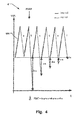
- Fig. 4 is a graph 4 illustrating an example of such a change in PEEP and resulting volume changes over time.
- the second PEEP level is lower than the first PEEP level.
- the schematic graph 4 shows inspiratory (continuous line) and expiratory (dotted line) tidal volume measurements 101 over time t before.
- Curve segments a-f are reference signs for expiratory flow segments of expiratory phases of subsequent breathing cycles.
- An expiratory phase a is shown prior to the PEEP change.
- Expiratory phases after a release of PEEP (marked at the PEEP arrow in the figure) are shown at curve segments b, c, d, e and f during assisted and/or controlled mechanical ventilation of the breathing apparatus 1, here volume controlled ventilation.
- ⁇ EELV can be determined by a number of other methods, such as CT scan before and after the PEEP change, FRC/EELV measurement by inert gas dilution technique before and after the PEEP change or by respiratory inductive plethysmography (RIP) or electric impedance tomography (EIT), or any other suitable method.
- CT scan before and after the PEEP change
- FRC/EELV measurement by inert gas dilution technique before and after the PEEP change or by respiratory inductive plethysmography (RIP) or electric impedance tomography (EIT), or any other suitable method.
- RIP respiratory inductive plethysmography
- EIT electric impedance tomography
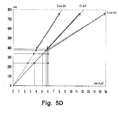
- Fig.5A-5K are pressure/volume graphs illustrating various stages of the course of lung filling following a step increase in PEEP.
- the patient has a C TOT of 40, Ccw of 95 and CL of 67 ml/cmH 2 O.
- the total respiratory system course is illustrated by line 50 at C TOT in Figs. 5
- the chest wall course is illustrated by line 51 at Ccw in Figs. 5
- the lung course is illustrated by line 52 at CL in Figs. 5 .
- Fig. 5A ventilation is shown with a tidal volume of 400 ml and an airway pressure of 10 cmH 2 O and an end-expiratory (PEEP) pressure of 0 cmH 2 O.
- the tidal chest wall pressure variations ( ⁇ Pcw) is just above 4 cmH 2 O resulting in a tidal transpulmonary pressure difference ( ⁇ Ptp) just below 6 cmH 2 O.
- Fig. 5D The following breaths will continue to expand the lung until a new equilibrium is reached, i.e., until as much volume has been added to the lung as determined by the compliance of the lung (67 ml/cmH 2 O) and magnitude of the PEEP increase (6 cmH 2 O), in this case 400 ml.
- Fig. 5E The first breath is shown after the volume/pressure equilibrium is reached at the new PEEP level of 6 cmH 2 O.
- the total transpulmonary difference at that PEEP level is the ⁇ Ptp + PEEP over atmospheric pressure.
- Fig. 5F The tidal ventilation at new lung volume level is presented, showing that the ratio between the difference in lung volume between the second and first lung volume and the difference in end-expiratory pressure between the second and first PEEP levels are ⁇ EELV/ ⁇ PEEP which corresponds to the lung compliance, CL.
- the lung compliance CL is thus determined as ⁇ EELV/ ⁇ PEEP.
- the transpulmonary pressure difference ( ⁇ Ptp) between end of inspiration and end of expiration is the difference between the total respiratory system driving pressure ( ⁇ Paw) and the chest wall pressure difference ( ⁇ Pcw) between end of inspiration and end of expiration.
- ⁇ Ptp ⁇ Paw - ⁇ Pcw
- Total respiratory system compliance is the ratio of the tidal volume VT to the total respiratory system driving pressure, namely the above airway pressure difference ⁇ Paw:
- C TOT V T / ⁇ Paw
- the chest wall compliance is the ratio of the tidal volume VT to the plural/chest wall pressure difference ⁇ PCW:
- C CW V T / ⁇ Pcw
- the lung elastance or compliance cannot be determined without measuring the oesophageal pressure and then only indirectly calculated as the difference between total respiratory system stiffness and chest wall/diaphragmatic stiffness.
- the mechanical properties of the lung especially, but also the chest wall and diaphragm may change between two PEEP-levels as indicated by a change in C TOT between the first and the second PEEP level.
- inflection and deflection points may be determined or calculated as described below.
- ⁇ Paw1 is the inspiratory plateau pressure minus the end-expiratory pressure at the first PEEP level and ⁇ Paw2 is the inspiratory plateau pressure minus the end-expiratory pressure at the second PEEP level.
- ⁇ PEEP is directly determined from measurements of the expiratory pressure transducer 133 at the first and second PEEP level.
- ⁇ EELV is also determinable from spirometric measurements as described above, preferably by spirometry based on measurements of the breathing apparatus' flow transducers.
- CL is determined from equation (12).
- ⁇ Paw is advantageously in embodiments determined from measurements of the breathing apparatus, namely the inspiratory pressure transducer 113.
- ETOT is also determined from measurements of the breathing apparatus, see equations (3) and (6), namely the inspiratory flow transducer 112 and the inspiratory pressure transducer 113.
- ⁇ PTP is determined based on these calculations without the need of measuring oesophagal pressure. Determining CL, such as by equation 12, and thus ⁇ PTP has hitherto not been possible in such an advantageous, convenient, patient safe and cost-effective way.
- Fig. 6 is a schematic pressure/volume graph of an example of a patient with non-linear compliance conditions and are given as illustrative examples when implementing the above described system and method.
- Fig. 6 is a schematic graph 7 of a patient with linear chest-wall compliance (here 100 ml/cmH 2 O) and a non-linear lung compliance, with a CL of 26 ml/cmH 2 O below 5 cmH 2 O, the lower inflection point 70 and a CL of 66 ml/cmH 2 O between 5 and 15 cmH 2 O, and a CL of 26 ml/cmH 2 O above 15 cmH 2 O, the upper inflection point 71.
- Corresponding total compliance values are 20, 40 and 20 ml/cmH 2 O in the three ranges, respectively.
- the PEEP should be increased until ⁇ EELV is equal to the tidal volume (450 ml), which in this case would have been achieved increasing PEEP to just above 9 cmH 2 O.
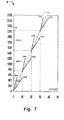
- Fig. 7 is a pressure/volume graph 6 of the total respiratory system (CTOT) and chest wall (CCW) at different PEEP levels.
- CTOT total respiratory system
- CCW chest wall
- the schematic graph 6 of tidal P/V curves of the total respiratory system and chest wall is shown at 0, 10, 20 and 30 cmH 2 O PEEP.
- the start of tidal P/V curves are positioned along the P/V curve of the lung.
- a method of online adjusting a PEEP level based on a transpulmonary pressure (Ptp) determined according to the above method comprises limiting PEEP to a lower level when lower transpulmonary pressures to protect the lung from injury.
- the ventilator 1 may supply a higher concentration of oxygen in order to provide proper blood oxygenation.
- the ventilator 1 may supply an adjusted positive end-expiratory pressure (PEEP) to maintain airways open, based on the aforementioned determined transpulmonary pressure. For instance, by increasing the transpulmonary pressure, collapsed air sacs will start to recruit. When the collapsed air sacs start to open up, they are again available for alveolar gas exchange and the pressure at which the recruitment happens is called the critical opening pressure.
- the PEEP level is selected to prevent collapse during expiration by identifying a lower inflection point as described above. It is avoided to increase the transpulmonary pressure such that overinflation is avoided. Overinflation may be dangerous for the patient since it may cause undesired lesions in the lung tissues.
- a desired transpulmonary pressure may be adjusted accordingly and controlled by repeating the afore described PEEP step manoeuvre.
- Setting said breathing apparatus in the second mode of operation may be selectable from a user interface of said breathing apparatus.
- the control unit may be adapted to automatically determine said transpulmonary pressure upon said user initiation. Further, the automatic determination may be made during assisted and/or controlled ventilation of said patient by said apparatus. This automatic determination may be made intermittently during the assisted and/or controlled ventilation.
- the manoeuver may be made at pre-defined time intervals.
Landscapes
- Health & Medical Sciences (AREA)
- Life Sciences & Earth Sciences (AREA)
- Engineering & Computer Science (AREA)
- General Health & Medical Sciences (AREA)
- Animal Behavior & Ethology (AREA)
- Biomedical Technology (AREA)
- Heart & Thoracic Surgery (AREA)
- Veterinary Medicine (AREA)
- Public Health (AREA)
- Pulmonology (AREA)
- Molecular Biology (AREA)
- Biophysics (AREA)
- Physics & Mathematics (AREA)
- Pathology (AREA)
- Medical Informatics (AREA)
- Surgery (AREA)
- Hematology (AREA)
- Emergency Medicine (AREA)
- Anesthesiology (AREA)
- Physiology (AREA)
- Signal Processing (AREA)
- Artificial Intelligence (AREA)
- Computer Vision & Pattern Recognition (AREA)
- Psychiatry (AREA)
- Power Engineering (AREA)
- Measurement Of The Respiration, Hearing Ability, Form, And Blood Characteristics Of Living Organisms (AREA)
- Percussion Or Vibration Massage (AREA)
Applications Claiming Priority (5)
| Application Number | Priority Date | Filing Date | Title |
|---|---|---|---|
| US35658910P | 2010-06-19 | 2010-06-19 | |
| EP10166587A EP2397074B1 (de) | 2010-06-19 | 2010-06-19 | System und computerlesbares Medium zur Speicherung eines Programmes zur Bestimmung des transpulmonalen Drucks in einem Patienten, der an einem Beatmungsgerät angeschlossen ist |
| US201161469100P | 2011-03-30 | 2011-03-30 | |
| PCT/EP2011/060264 WO2011157855A1 (en) | 2010-06-19 | 2011-06-20 | A system and method for determination of transpulmonary pressure in a patient connected to a breathing apparatus |
| EP11738174.9A EP2582292B1 (de) | 2010-06-19 | 2011-06-20 | Bestimmung des transpulmonalen drucks bei einem an ein beatmungsgerät angeschlossen patienten |
Related Parent Applications (2)
| Application Number | Title | Priority Date | Filing Date |
|---|---|---|---|
| EP11738174.9A Division EP2582292B1 (de) | 2010-06-19 | 2011-06-20 | Bestimmung des transpulmonalen drucks bei einem an ein beatmungsgerät angeschlossen patienten |
| EP11738174.9A Division-Into EP2582292B1 (de) | 2010-06-19 | 2011-06-20 | Bestimmung des transpulmonalen drucks bei einem an ein beatmungsgerät angeschlossen patienten |
Publications (2)
| Publication Number | Publication Date |
|---|---|
| EP2923641A1 true EP2923641A1 (de) | 2015-09-30 |
| EP2923641B1 EP2923641B1 (de) | 2019-09-11 |
Family
ID=43003420
Family Applications (3)
| Application Number | Title | Priority Date | Filing Date |
|---|---|---|---|
| EP10166587A Active EP2397074B1 (de) | 2010-06-19 | 2010-06-19 | System und computerlesbares Medium zur Speicherung eines Programmes zur Bestimmung des transpulmonalen Drucks in einem Patienten, der an einem Beatmungsgerät angeschlossen ist |
| EP15165344.1A Active EP2923641B1 (de) | 2010-06-19 | 2011-06-20 | Atmungsvorrichtungssteuereinheit und software zur bestimmung einer veränderung des transpulmonalen drucks |
| EP11738174.9A Active EP2582292B1 (de) | 2010-06-19 | 2011-06-20 | Bestimmung des transpulmonalen drucks bei einem an ein beatmungsgerät angeschlossen patienten |
Family Applications Before (1)
| Application Number | Title | Priority Date | Filing Date |
|---|---|---|---|
| EP10166587A Active EP2397074B1 (de) | 2010-06-19 | 2010-06-19 | System und computerlesbares Medium zur Speicherung eines Programmes zur Bestimmung des transpulmonalen Drucks in einem Patienten, der an einem Beatmungsgerät angeschlossen ist |
Family Applications After (1)
| Application Number | Title | Priority Date | Filing Date |
|---|---|---|---|
| EP11738174.9A Active EP2582292B1 (de) | 2010-06-19 | 2011-06-20 | Bestimmung des transpulmonalen drucks bei einem an ein beatmungsgerät angeschlossen patienten |
Country Status (6)
| Country | Link |
|---|---|
| US (3) | US8701663B2 (de) |
| EP (3) | EP2397074B1 (de) |
| JP (3) | JP5864562B2 (de) |
| CN (1) | CN103002802B (de) |
| BR (1) | BR112012032557A2 (de) |
| WO (1) | WO2011157855A1 (de) |
Cited By (1)
| Publication number | Priority date | Publication date | Assignee | Title |
|---|---|---|---|---|
| CN113350637A (zh) * | 2020-03-06 | 2021-09-07 | 德尔格制造股份两合公司 | 呼吸设备 |
Families Citing this family (50)
| Publication number | Priority date | Publication date | Assignee | Title |
|---|---|---|---|---|
| EP2397074B1 (de) * | 2010-06-19 | 2012-10-24 | M Stenqvist AB | System und computerlesbares Medium zur Speicherung eines Programmes zur Bestimmung des transpulmonalen Drucks in einem Patienten, der an einem Beatmungsgerät angeschlossen ist |
| EP2588176B1 (de) * | 2010-07-02 | 2016-08-24 | Koninklijke Philips N.V. | System zur durchführung von atemdiagnosen |
| CN108814598A (zh) * | 2012-01-27 | 2018-11-16 | 斯威斯托姆公开股份有限公司 | 电阻抗测量带及其使用方法 |
| DE102012215662A1 (de) * | 2012-09-04 | 2014-03-06 | Hamilton Medical Ag | System zur automatisierten Einstellung eines durch eine Beatmungseinrichtung vorgegebenen Drucks |
| US20150114395A1 (en) * | 2013-10-29 | 2015-04-30 | General Electric Company | Method and arrangement for determining a ventilation need specific for a patient |
| CN104001249B (zh) * | 2014-06-13 | 2016-06-15 | 北京易世恒电子技术有限责任公司 | 呼吸末正压的控制方法及装置 |
| WO2016032375A1 (en) * | 2014-08-27 | 2016-03-03 | Maquet Critical Care Ab | Method and apparatus for prediction of fluid responsiveness in mechanically ventilated subjects |
| NL2013551B1 (en) * | 2014-10-01 | 2016-10-03 | Medwear B V | Device and method for assessing respiratory data in a monitored subject. |
| CN105982378B (zh) * | 2015-03-06 | 2018-10-30 | 陈金连 | 一种智能口罩 |
| SE538864C2 (sv) * | 2015-05-25 | 2017-01-10 | The Lung Barometry Sweden AB | Method System and Software for Protective Ventilation |
| DE102016011161A1 (de) * | 2016-09-16 | 2018-03-22 | Drägerwerk AG & Co. KGaA | Vorrichtung zur Verarbeitung und Visualisierung von Daten eines Elektro-lmpedanz-Tomographie-Gerätes zu einer Ermittlung und Visualisierung von regionalen Eigenschaften der Ventilation der Lunge |
| JP2018057600A (ja) * | 2016-10-05 | 2018-04-12 | 株式会社デンソー | 肺コンプライアンス測定装置 |
| JP6980776B2 (ja) * | 2016-10-07 | 2021-12-15 | コーニンクレッカ フィリップス エヌ ヴェKoninklijke Philips N.V. | 全ての呼吸筋反動生成圧が消失することを可能にするための、圧力制御された呼吸を用いた肺コンプライアンス及び肺抵抗の推定 |
| DE102016012824A1 (de) * | 2016-10-25 | 2018-04-26 | Drägerwerk AG & Co. KGaA | Verfahren und Vorrichtung zum adaptiven Regeln eines positiv endexspiratorischen Drucks (PEEP) |
| DE102017101645A1 (de) * | 2017-01-27 | 2018-08-02 | Ventinova Technologies B.V. | Vorrichtungen und Verfahren zur Beatmung eines Patienten |
| EP3585465B1 (de) * | 2017-02-22 | 2023-07-05 | Koninklijke Philips N.V. | Automatische peep-auswahl für mechanische beatmung |
| WO2018215483A1 (en) * | 2017-05-24 | 2018-11-29 | Koninklijke Philips N.V. | Expiratory flow limitation detection using pressure perturbations |
| CN110892486B (zh) * | 2017-07-18 | 2024-01-09 | 皇家飞利浦有限公司 | 经由虚拟压力触发机制的通气机气体递送吸入 |
| US20190125994A1 (en) * | 2017-10-27 | 2019-05-02 | OrangeMed, Inc. | Ventilators and systems for performing automated ventilation procedures |
| CN110049799B (zh) | 2017-11-14 | 2022-04-26 | 柯惠有限合伙公司 | 用于驱动压力自发通气的方法和系统 |
| DE102019102218A1 (de) * | 2018-01-31 | 2019-08-01 | Löwenstein Medical Technology S.A. | System zur Erfassung von Atemanstrengungen eines Patienten |
| CN111683708B (zh) * | 2018-02-06 | 2023-09-22 | 马奎特紧急护理公司 | 通气机设备 |
| EP3793656A1 (de) | 2018-05-14 | 2021-03-24 | Covidien LP | Systeme und verfahren zur erfassung der atemleistung unter verwendung von signalverzerrung |
| US11298485B2 (en) * | 2019-07-17 | 2022-04-12 | Convergent Engineering, Inc. | Esophageal pressure clinical decision support system |
| US20210315469A1 (en) * | 2018-08-07 | 2021-10-14 | Rostrum Medical Innovations Inc. | System and method for monitoring a blood flow that does not interact with ventilated lungs of a patient |
| US11752287B2 (en) | 2018-10-03 | 2023-09-12 | Covidien Lp | Systems and methods for automatic cycling or cycling detection |
| CN109718445B (zh) * | 2018-12-29 | 2020-04-21 | 北京谊安医疗系统股份有限公司 | 医疗呼吸设备p/v环拐点的确定方法及装置 |
| CN113438923B (zh) * | 2019-02-20 | 2024-10-11 | 马奎特紧急护理公司 | 食道球囊导管的填充量的自动评估 |
| CN110237375B (zh) * | 2019-04-18 | 2022-07-08 | 北京雅果科技有限公司 | 一种呼吸机和负压排痰机 |
| CN110623668A (zh) * | 2019-09-18 | 2019-12-31 | 中国科学院武汉物理与数学研究所 | 一种用于肺顺应性定量评价的快速磁共振成像方法 |
| EP4025122A1 (de) * | 2019-10-07 | 2022-07-13 | Timpel Medical B.V. | Vorrichtungen, systeme und verfahren zur beurteilung von lungencharakteristika durch regionale impedanz und patientenpositionierung |
| WO2021109001A1 (zh) * | 2019-12-03 | 2021-06-10 | 深圳迈瑞生物医疗电子股份有限公司 | 一种患者通气监测装置及其通气监测方法 |
| US11844610B2 (en) * | 2019-12-23 | 2023-12-19 | Koninklijke Philips N.V. | System and method for monitoring gas exchange |
| CN111383764B (zh) * | 2020-02-25 | 2024-03-26 | 山东师范大学 | 一种机械通气驱动压与呼吸机相关事件的相关性检测系统 |
| CN115297916A (zh) * | 2020-03-23 | 2022-11-04 | 深圳迈瑞生物医疗电子股份有限公司 | 一种呼吸监测装置及方法 |
| US20210322691A1 (en) * | 2020-04-17 | 2021-10-21 | Covidien Lp | Systems and methods for detecting respiratory mechanics |
| DE102020114209B3 (de) * | 2020-05-27 | 2021-07-29 | Ventinova Technologies B.V. | Beatmungsvorrichtung und Verfahren zur Bestimmung zumindest der gewebsrelatierten Resistance im Atemweg |
| DE102020120900A1 (de) * | 2020-08-07 | 2022-02-10 | Drägerwerk AG & Co. KGaA | Vorrichtung und Verfahren zur Messung der Lungen-Compliance |
| US12086980B2 (en) * | 2020-10-27 | 2024-09-10 | Vida Diagnostics, Inc. | Pulmonary analysis using transpulmonary pressure |
| CN112535471B (zh) * | 2020-11-06 | 2022-05-03 | 北京航空航天大学 | 一种基于肺的静态吸气压强-容积曲线估计肺复张特性的方法 |
| DE102021102886A1 (de) * | 2021-02-08 | 2022-08-11 | Hamilton Medical Ag | Verfahren und Beatmungsvorrichtung zur Bestimmung eines Atemtraktinhalts an Atemgas während einer künstlichen Beatmung |
| CN113425279B (zh) * | 2021-05-27 | 2022-12-20 | 中国人民解放军总医院第八医学中心 | 一种用于呼吸窘迫综合征的动物实验方法 |
| CN117500552A (zh) * | 2021-06-18 | 2024-02-02 | 德尔格制造股份两合公司 | 用于测定患者的状况的设备、方法和计算机程序 |
| CN113598750B (zh) * | 2021-08-09 | 2023-08-08 | 中国人民解放军空军特色医学中心 | 一种用于实验猪的呼气监测方法 |
| CN117651580A (zh) * | 2021-12-01 | 2024-03-05 | 深圳迈瑞生物医疗电子股份有限公司 | 一种通气设备及其扩展模块、压力监测方法 |
| DE102021134348A1 (de) * | 2021-12-22 | 2023-06-22 | Drägerwerk AG & Co. KGaA | Verfahren und System mit einer Messvorrichtung und einer Analysevorrichtung zu einer Verarbeitung von Daten |
| CN114732710A (zh) * | 2022-04-20 | 2022-07-12 | 肖继来 | 一种肺复张系统 |
| US20240100290A1 (en) * | 2022-09-23 | 2024-03-28 | Covidien Lp | Expiratory flow control |
| EP4724124A1 (de) * | 2023-06-08 | 2026-04-15 | The Lung Barometry Sweden AB | Schnelle bestimmung des transpulmonalen drucks bei einem an ein atemgerät angeschlossenen patienten |
| CN116869510B (zh) * | 2023-07-10 | 2024-09-27 | 南京航空航天大学 | 基于生物阻抗谱的肺容积测量方法 |
Citations (3)
| Publication number | Priority date | Publication date | Assignee | Title |
|---|---|---|---|---|
| US4214593A (en) | 1978-09-18 | 1980-07-29 | Mallinckrodt, Inc. | Esophageal pressure monitoring device |
| EP1295620A1 (de) * | 2001-09-25 | 2003-03-26 | Siemens-Elema AB | Verfahren zur Untersuchung der Atmungsmechanik und Beatmungssystem |
| WO2007082384A1 (en) * | 2006-01-19 | 2007-07-26 | Maquet Critical Care Ab | Method and system for determining dynamically respiratory features in spontaneously breathing patients receiving mechanical ventilatory assist |
Family Cites Families (20)
| Publication number | Priority date | Publication date | Assignee | Title |
|---|---|---|---|---|
| US5340742A (en) | 1988-09-07 | 1994-08-23 | Omegatech Inc. | Process for growing thraustochytrium and schizochytrium using non-chloride salts to produce a microfloral biomass having omega-3-highly unsaturated fatty acids |
| SE501560C2 (sv) * | 1994-02-14 | 1995-03-13 | Siemens Elema Ab | Ventilator/Respirator |
| BR9907228A (pt) * | 1998-01-23 | 2000-10-24 | Nat Jewish Med & Res Center | Uso de uma proteìna de choque térmico, processo para proteger um mamìfero de uma doença, formulação para proteger um mamìfero de desenvolver uma doença, uso de uma molécula de ácido nucleico, e processo para prescrever um tratamento para hiper-sensibilidade das vias aéreas ou limitação do fluxo de ar associado com uma doença envolvendo resposta inflamatória |
| JP2000176016A (ja) * | 1998-12-14 | 2000-06-27 | Nippon Koden Corp | 換気データ処理方法および装置 |
| US6610043B1 (en) * | 1999-08-23 | 2003-08-26 | Bistech, Inc. | Tissue volume reduction |
| US8178098B2 (en) * | 2001-04-03 | 2012-05-15 | National Jewish Health | Method to inhibit airway hyperresponsiveness using aerosolized T cell receptor antibodies |
| SE0102221D0 (sv) * | 2001-06-19 | 2001-06-19 | Siemens Elema Ab | Method for assessing pulmonary stress and a breathing apparatus |
| US6942625B1 (en) * | 2002-05-11 | 2005-09-13 | Terry Keith Bryant | Incentive spirometry devices by the employment of verbal simulated humanlike voices |
| JP5053083B2 (ja) * | 2004-06-24 | 2012-10-17 | コンヴァージェント エンジニアリング インコーポレイティッド | 人工呼吸器支持を受けている患者の終末呼気陽圧(PEEPi)を非侵襲的に予測するための方法及び機器 |
| WO2006127573A2 (en) * | 2005-05-20 | 2006-11-30 | Vivometrics, Inc. | Methods and systems for determining dynamic hyperinflation |
| US20070062533A1 (en) * | 2005-09-21 | 2007-03-22 | Choncholas Gary J | Apparatus and method for identifying FRC and PEEP characteristics |
| US7530353B2 (en) * | 2005-09-21 | 2009-05-12 | The General Electric Company | Apparatus and method for determining and displaying functional residual capacity data and related parameters of ventilated patients |
| EP1972274B1 (de) * | 2007-03-20 | 2015-12-30 | Drägerwerk AG & Co. KGaA | Verfahren und Vorrichtung zur Bestimmung des Widerstandes des Atmungssystems eines Patienten |
| US20080295839A1 (en) * | 2007-06-01 | 2008-12-04 | Habashi Nader M | Ventilator Apparatus and System of Ventilation |
| CN101468219B (zh) * | 2007-12-28 | 2012-10-31 | 北京谊安医疗系统股份有限公司 | 气路系统及其操作方法以及采用该系统的呼吸机和麻醉机 |
| BRPI0916920A2 (pt) * | 2008-08-22 | 2015-11-24 | Sanofi Aventis | 4-(5-aminometil-2-fluoro-fenil)-piperidin-1-il]-[7-fluoro-1-(2-metóxi-etil)-4-trifluorometóxi-1h-indol-3-il]-metanona como inibidor de triptase de mastócito, seu uso e método de preparação, bem como forma cristalina |
| JP5181291B2 (ja) * | 2008-12-22 | 2013-04-10 | 日本光電工業株式会社 | 呼吸機能測定装置 |
| JP5665869B2 (ja) | 2009-09-01 | 2015-02-04 | コーニンクレッカ フィリップス エヌ ヴェ | 自己換気をする被験者における肺コンプライアンスを定量化するシステム及び方法 |
| EP2397074B1 (de) * | 2010-06-19 | 2012-10-24 | M Stenqvist AB | System und computerlesbares Medium zur Speicherung eines Programmes zur Bestimmung des transpulmonalen Drucks in einem Patienten, der an einem Beatmungsgerät angeschlossen ist |
| US8703697B2 (en) * | 2011-06-24 | 2014-04-22 | Luc QUINTIN | Method for treating early severe diffuse acute respiratory distress syndrome |
-
2010
- 2010-06-19 EP EP10166587A patent/EP2397074B1/de active Active
-
2011
- 2011-06-20 US US13/704,836 patent/US8701663B2/en active Active
- 2011-06-20 EP EP15165344.1A patent/EP2923641B1/de active Active
- 2011-06-20 WO PCT/EP2011/060264 patent/WO2011157855A1/en not_active Ceased
- 2011-06-20 BR BR112012032557A patent/BR112012032557A2/pt not_active IP Right Cessation
- 2011-06-20 JP JP2013515843A patent/JP5864562B2/ja active Active
- 2011-06-20 EP EP11738174.9A patent/EP2582292B1/de active Active
- 2011-06-20 CN CN201180030254.2A patent/CN103002802B/zh active Active
-
2014
- 2014-04-01 US US14/231,768 patent/US9655544B2/en active Active
-
2015
- 2015-12-24 JP JP2015252450A patent/JP6162785B2/ja active Active
-
2017
- 2017-05-01 US US15/583,308 patent/US11154217B2/en active Active
- 2017-06-15 JP JP2017117320A patent/JP6657143B2/ja active Active
Patent Citations (3)
| Publication number | Priority date | Publication date | Assignee | Title |
|---|---|---|---|---|
| US4214593A (en) | 1978-09-18 | 1980-07-29 | Mallinckrodt, Inc. | Esophageal pressure monitoring device |
| EP1295620A1 (de) * | 2001-09-25 | 2003-03-26 | Siemens-Elema AB | Verfahren zur Untersuchung der Atmungsmechanik und Beatmungssystem |
| WO2007082384A1 (en) * | 2006-01-19 | 2007-07-26 | Maquet Critical Care Ab | Method and system for determining dynamically respiratory features in spontaneously breathing patients receiving mechanical ventilatory assist |
Non-Patent Citations (3)
| Title |
|---|
| MOLS G ET AL: "Volume-dependent compliance in ARDS: proposal of a new diagnostic concept.", INTENSIVE CARE MEDICINE, vol. 25, no. 10, October 1999 (1999-10-01) - October 1999 (1999-10-01), pages 1084 - 1091, XP002607679, ISSN: 0342-4642, Retrieved from the Internet <URL:http://www.springerlink.com/content/hda4xb71ur1lmhvm/fulltext.pdf> [retrieved on 20101101] * |
| TALMOR DANIEL ET AL: "Mechanical Ventilation Guided by Esophageal Pressure in Acute Lung Injury", NEW ENGLAND JOURNAL OF MEDICINE, vol. 359, no. 20, November 2008 (2008-11-01) - November 2008 (2008-11-01), pages 2095 - 2104, XP002607678, ISSN: 0028-4793, Retrieved from the Internet <URL:http://www.nejm.org/doi/pdf/10.1056/NEJMoa0708638> [retrieved on 20101101] * |
| TALMOR ET AL., NEJM, vol. 359, no. 20, 2008, pages 2095 - 2104 |
Cited By (4)
| Publication number | Priority date | Publication date | Assignee | Title |
|---|---|---|---|---|
| CN113350637A (zh) * | 2020-03-06 | 2021-09-07 | 德尔格制造股份两合公司 | 呼吸设备 |
| DE102020001440A1 (de) | 2020-03-06 | 2021-09-09 | Drägerwerk AG & Co. KGaA | Beatmungsvorrichtung |
| US11925757B2 (en) | 2020-03-06 | 2024-03-12 | Drägerwerk AG & Co. KGaA | Ventilator |
| CN113350637B (zh) * | 2020-03-06 | 2024-04-12 | 德尔格制造股份两合公司 | 呼吸设备 |
Also Published As
| Publication number | Publication date |
|---|---|
| US20170332943A1 (en) | 2017-11-23 |
| CN103002802B (zh) | 2015-03-25 |
| CN103002802A (zh) | 2013-03-27 |
| JP2013534844A (ja) | 2013-09-09 |
| US8701663B2 (en) | 2014-04-22 |
| JP2016104186A (ja) | 2016-06-09 |
| JP6162785B2 (ja) | 2017-07-12 |
| EP2582292A1 (de) | 2013-04-24 |
| JP2017196438A (ja) | 2017-11-02 |
| EP2397074B1 (de) | 2012-10-24 |
| JP6657143B2 (ja) | 2020-03-04 |
| US20130174846A1 (en) | 2013-07-11 |
| EP2397074A1 (de) | 2011-12-21 |
| JP5864562B2 (ja) | 2016-02-17 |
| US9655544B2 (en) | 2017-05-23 |
| EP2923641B1 (de) | 2019-09-11 |
| EP2582292B1 (de) | 2020-08-12 |
| US11154217B2 (en) | 2021-10-26 |
| US20140296730A1 (en) | 2014-10-02 |
| WO2011157855A1 (en) | 2011-12-22 |
| BR112012032557A2 (pt) | 2016-09-20 |
Similar Documents
| Publication | Publication Date | Title |
|---|---|---|
| EP2397074B1 (de) | System und computerlesbares Medium zur Speicherung eines Programmes zur Bestimmung des transpulmonalen Drucks in einem Patienten, der an einem Beatmungsgerät angeschlossen ist | |
| US12303244B2 (en) | System for recording the breathing efforts of a patient | |
| CN108513540B (zh) | 用于保护性换气的方法、系统和软件 | |
| CN107405107B (zh) | 呼吸器及其控制方法 | |
| JP2011502611A (ja) | 人工呼吸器のトリガ方法 | |
| US20150217069A1 (en) | System for automated adjustment of a pressure set by a ventilation device | |
| AU2866500A (en) | Method and apparatus for controlling a medical ventilator | |
| EP3655965B1 (de) | Einleitung der ventilatorgaszufuhr über einen virtuellen druckauslösemechanismus | |
| US20240335631A1 (en) | Respiration monitoring method and respiration monitoring apparatus | |
| CN111543999B (zh) | 用于感测病人的呼吸努力的系统 | |
| EP4243903B1 (de) | Automatisches manöver zur lungenvolumenrekrutierung (lvr) | |
| US20230081811A1 (en) | Method and system for filling an esophagus balloon | |
| CN114126694B (zh) | 一种患者通气监测装置及其通气监测方法 | |
| Ranallo et al. | 683: TIDAL VOLUME DISPLAYED ERROR WITH THE USE OF INHALED NITRIC OXIDE IN SMALL TIDAL VOLUMES | |
| Stewart et al. | 681: A MULTI-CENTER STUDY OF HFOV IN IMMUNOCOMPETENT AND IMMUNOCOMPROMISED CHILDREN |
Legal Events
| Date | Code | Title | Description |
|---|---|---|---|
| PUAI | Public reference made under article 153(3) epc to a published international application that has entered the european phase |
Free format text: ORIGINAL CODE: 0009012 |
|
| AC | Divisional application: reference to earlier application |
Ref document number: 2582292 Country of ref document: EP Kind code of ref document: P |
|
| AK | Designated contracting states |
Kind code of ref document: A1 Designated state(s): AL AT BE BG CH CY CZ DE DK EE ES FI FR GB GR HR HU IE IS IT LI LT LU LV MC MK MT NL NO PL PT RO RS SE SI SK SM TR |
|
| 17P | Request for examination filed |
Effective date: 20160304 |
|
| RBV | Designated contracting states (corrected) |
Designated state(s): AL AT BE BG CH CY CZ DE DK EE ES FI FR GB GR HR HU IE IS IT LI LT LU LV MC MK MT NL NO PL PT RO RS SE SI SK SM TR |
|
| STAA | Information on the status of an ep patent application or granted ep patent |
Free format text: STATUS: EXAMINATION IS IN PROGRESS |
|
| 17Q | First examination report despatched |
Effective date: 20170601 |
|
| GRAP | Despatch of communication of intention to grant a patent |
Free format text: ORIGINAL CODE: EPIDOSNIGR1 |
|
| STAA | Information on the status of an ep patent application or granted ep patent |
Free format text: STATUS: GRANT OF PATENT IS INTENDED |
|
| INTG | Intention to grant announced |
Effective date: 20190429 |
|
| GRAS | Grant fee paid |
Free format text: ORIGINAL CODE: EPIDOSNIGR3 |
|
| GRAA | (expected) grant |
Free format text: ORIGINAL CODE: 0009210 |
|
| STAA | Information on the status of an ep patent application or granted ep patent |
Free format text: STATUS: THE PATENT HAS BEEN GRANTED |
|
| AC | Divisional application: reference to earlier application |
Ref document number: 2582292 Country of ref document: EP Kind code of ref document: P |
|
| AK | Designated contracting states |
Kind code of ref document: B1 Designated state(s): AL AT BE BG CH CY CZ DE DK EE ES FI FR GB GR HR HU IE IS IT LI LT LU LV MC MK MT NL NO PL PT RO RS SE SI SK SM TR |
|
| REG | Reference to a national code |
Ref country code: GB Ref legal event code: FG4D |
|
| REG | Reference to a national code |
Ref country code: CH Ref legal event code: EP |
|
| REG | Reference to a national code |
Ref country code: AT Ref legal event code: REF Ref document number: 1177438 Country of ref document: AT Kind code of ref document: T Effective date: 20190915 |
|
| REG | Reference to a national code |
Ref country code: DE Ref legal event code: R096 Ref document number: 602011062078 Country of ref document: DE Ref country code: IE Ref legal event code: FG4D |
|
| REG | Reference to a national code |
Ref country code: NL Ref legal event code: MP Effective date: 20190911 |
|
| REG | Reference to a national code |
Ref country code: LT Ref legal event code: MG4D |
|
| PG25 | Lapsed in a contracting state [announced via postgrant information from national office to epo] |
Ref country code: BG Free format text: LAPSE BECAUSE OF FAILURE TO SUBMIT A TRANSLATION OF THE DESCRIPTION OR TO PAY THE FEE WITHIN THE PRESCRIBED TIME-LIMIT Effective date: 20191211 Ref country code: HR Free format text: LAPSE BECAUSE OF FAILURE TO SUBMIT A TRANSLATION OF THE DESCRIPTION OR TO PAY THE FEE WITHIN THE PRESCRIBED TIME-LIMIT Effective date: 20190911 Ref country code: LT Free format text: LAPSE BECAUSE OF FAILURE TO SUBMIT A TRANSLATION OF THE DESCRIPTION OR TO PAY THE FEE WITHIN THE PRESCRIBED TIME-LIMIT Effective date: 20190911 Ref country code: NO Free format text: LAPSE BECAUSE OF FAILURE TO SUBMIT A TRANSLATION OF THE DESCRIPTION OR TO PAY THE FEE WITHIN THE PRESCRIBED TIME-LIMIT Effective date: 20191211 Ref country code: FI Free format text: LAPSE BECAUSE OF FAILURE TO SUBMIT A TRANSLATION OF THE DESCRIPTION OR TO PAY THE FEE WITHIN THE PRESCRIBED TIME-LIMIT Effective date: 20190911 Ref country code: SE Free format text: LAPSE BECAUSE OF FAILURE TO SUBMIT A TRANSLATION OF THE DESCRIPTION OR TO PAY THE FEE WITHIN THE PRESCRIBED TIME-LIMIT Effective date: 20190911 |
|
| PG25 | Lapsed in a contracting state [announced via postgrant information from national office to epo] |
Ref country code: RS Free format text: LAPSE BECAUSE OF FAILURE TO SUBMIT A TRANSLATION OF THE DESCRIPTION OR TO PAY THE FEE WITHIN THE PRESCRIBED TIME-LIMIT Effective date: 20190911 Ref country code: LV Free format text: LAPSE BECAUSE OF FAILURE TO SUBMIT A TRANSLATION OF THE DESCRIPTION OR TO PAY THE FEE WITHIN THE PRESCRIBED TIME-LIMIT Effective date: 20190911 Ref country code: GR Free format text: LAPSE BECAUSE OF FAILURE TO SUBMIT A TRANSLATION OF THE DESCRIPTION OR TO PAY THE FEE WITHIN THE PRESCRIBED TIME-LIMIT Effective date: 20191212 Ref country code: ES Free format text: LAPSE BECAUSE OF FAILURE TO SUBMIT A TRANSLATION OF THE DESCRIPTION OR TO PAY THE FEE WITHIN THE PRESCRIBED TIME-LIMIT Effective date: 20190911 Ref country code: AL Free format text: LAPSE BECAUSE OF FAILURE TO SUBMIT A TRANSLATION OF THE DESCRIPTION OR TO PAY THE FEE WITHIN THE PRESCRIBED TIME-LIMIT Effective date: 20190911 |
|
| REG | Reference to a national code |
Ref country code: AT Ref legal event code: MK05 Ref document number: 1177438 Country of ref document: AT Kind code of ref document: T Effective date: 20190911 |
|
| PG25 | Lapsed in a contracting state [announced via postgrant information from national office to epo] |
Ref country code: RO Free format text: LAPSE BECAUSE OF FAILURE TO SUBMIT A TRANSLATION OF THE DESCRIPTION OR TO PAY THE FEE WITHIN THE PRESCRIBED TIME-LIMIT Effective date: 20190911 Ref country code: EE Free format text: LAPSE BECAUSE OF FAILURE TO SUBMIT A TRANSLATION OF THE DESCRIPTION OR TO PAY THE FEE WITHIN THE PRESCRIBED TIME-LIMIT Effective date: 20190911 Ref country code: IT Free format text: LAPSE BECAUSE OF FAILURE TO SUBMIT A TRANSLATION OF THE DESCRIPTION OR TO PAY THE FEE WITHIN THE PRESCRIBED TIME-LIMIT Effective date: 20190911 Ref country code: AT Free format text: LAPSE BECAUSE OF FAILURE TO SUBMIT A TRANSLATION OF THE DESCRIPTION OR TO PAY THE FEE WITHIN THE PRESCRIBED TIME-LIMIT Effective date: 20190911 Ref country code: NL Free format text: LAPSE BECAUSE OF FAILURE TO SUBMIT A TRANSLATION OF THE DESCRIPTION OR TO PAY THE FEE WITHIN THE PRESCRIBED TIME-LIMIT Effective date: 20190911 Ref country code: PL Free format text: LAPSE BECAUSE OF FAILURE TO SUBMIT A TRANSLATION OF THE DESCRIPTION OR TO PAY THE FEE WITHIN THE PRESCRIBED TIME-LIMIT Effective date: 20190911 Ref country code: PT Free format text: LAPSE BECAUSE OF FAILURE TO SUBMIT A TRANSLATION OF THE DESCRIPTION OR TO PAY THE FEE WITHIN THE PRESCRIBED TIME-LIMIT Effective date: 20200113 |
|
| PG25 | Lapsed in a contracting state [announced via postgrant information from national office to epo] |
Ref country code: CZ Free format text: LAPSE BECAUSE OF FAILURE TO SUBMIT A TRANSLATION OF THE DESCRIPTION OR TO PAY THE FEE WITHIN THE PRESCRIBED TIME-LIMIT Effective date: 20190911 Ref country code: SK Free format text: LAPSE BECAUSE OF FAILURE TO SUBMIT A TRANSLATION OF THE DESCRIPTION OR TO PAY THE FEE WITHIN THE PRESCRIBED TIME-LIMIT Effective date: 20190911 Ref country code: IS Free format text: LAPSE BECAUSE OF FAILURE TO SUBMIT A TRANSLATION OF THE DESCRIPTION OR TO PAY THE FEE WITHIN THE PRESCRIBED TIME-LIMIT Effective date: 20200224 Ref country code: SM Free format text: LAPSE BECAUSE OF FAILURE TO SUBMIT A TRANSLATION OF THE DESCRIPTION OR TO PAY THE FEE WITHIN THE PRESCRIBED TIME-LIMIT Effective date: 20190911 |
|
| REG | Reference to a national code |
Ref country code: DE Ref legal event code: R097 Ref document number: 602011062078 Country of ref document: DE |
|
| PLBE | No opposition filed within time limit |
Free format text: ORIGINAL CODE: 0009261 |
|
| STAA | Information on the status of an ep patent application or granted ep patent |
Free format text: STATUS: NO OPPOSITION FILED WITHIN TIME LIMIT |
|
| PG2D | Information on lapse in contracting state deleted |
Ref country code: IS |
|
| PG25 | Lapsed in a contracting state [announced via postgrant information from national office to epo] |
Ref country code: DK Free format text: LAPSE BECAUSE OF FAILURE TO SUBMIT A TRANSLATION OF THE DESCRIPTION OR TO PAY THE FEE WITHIN THE PRESCRIBED TIME-LIMIT Effective date: 20190911 Ref country code: IS Free format text: LAPSE BECAUSE OF FAILURE TO SUBMIT A TRANSLATION OF THE DESCRIPTION OR TO PAY THE FEE WITHIN THE PRESCRIBED TIME-LIMIT Effective date: 20200112 |
|
| 26N | No opposition filed |
Effective date: 20200615 |
|
| PG25 | Lapsed in a contracting state [announced via postgrant information from national office to epo] |
Ref country code: SI Free format text: LAPSE BECAUSE OF FAILURE TO SUBMIT A TRANSLATION OF THE DESCRIPTION OR TO PAY THE FEE WITHIN THE PRESCRIBED TIME-LIMIT Effective date: 20190911 |
|
| PG25 | Lapsed in a contracting state [announced via postgrant information from national office to epo] |
Ref country code: MC Free format text: LAPSE BECAUSE OF FAILURE TO SUBMIT A TRANSLATION OF THE DESCRIPTION OR TO PAY THE FEE WITHIN THE PRESCRIBED TIME-LIMIT Effective date: 20190911 |
|
| REG | Reference to a national code |
Ref country code: CH Ref legal event code: PL |
|
| PG25 | Lapsed in a contracting state [announced via postgrant information from national office to epo] |
Ref country code: LU Free format text: LAPSE BECAUSE OF NON-PAYMENT OF DUE FEES Effective date: 20200620 |
|
| REG | Reference to a national code |
Ref country code: BE Ref legal event code: MM Effective date: 20200630 |
|
| PG25 | Lapsed in a contracting state [announced via postgrant information from national office to epo] |
Ref country code: IE Free format text: LAPSE BECAUSE OF NON-PAYMENT OF DUE FEES Effective date: 20200620 Ref country code: CH Free format text: LAPSE BECAUSE OF NON-PAYMENT OF DUE FEES Effective date: 20200630 Ref country code: LI Free format text: LAPSE BECAUSE OF NON-PAYMENT OF DUE FEES Effective date: 20200630 |
|
| PG25 | Lapsed in a contracting state [announced via postgrant information from national office to epo] |
Ref country code: BE Free format text: LAPSE BECAUSE OF NON-PAYMENT OF DUE FEES Effective date: 20200630 |
|
| PG25 | Lapsed in a contracting state [announced via postgrant information from national office to epo] |
Ref country code: TR Free format text: LAPSE BECAUSE OF FAILURE TO SUBMIT A TRANSLATION OF THE DESCRIPTION OR TO PAY THE FEE WITHIN THE PRESCRIBED TIME-LIMIT Effective date: 20190911 Ref country code: MT Free format text: LAPSE BECAUSE OF FAILURE TO SUBMIT A TRANSLATION OF THE DESCRIPTION OR TO PAY THE FEE WITHIN THE PRESCRIBED TIME-LIMIT Effective date: 20190911 Ref country code: CY Free format text: LAPSE BECAUSE OF FAILURE TO SUBMIT A TRANSLATION OF THE DESCRIPTION OR TO PAY THE FEE WITHIN THE PRESCRIBED TIME-LIMIT Effective date: 20190911 |
|
| PG25 | Lapsed in a contracting state [announced via postgrant information from national office to epo] |
Ref country code: MK Free format text: LAPSE BECAUSE OF FAILURE TO SUBMIT A TRANSLATION OF THE DESCRIPTION OR TO PAY THE FEE WITHIN THE PRESCRIBED TIME-LIMIT Effective date: 20190911 |
|
| PGFP | Annual fee paid to national office [announced via postgrant information from national office to epo] |
Ref country code: DE Payment date: 20250624 Year of fee payment: 15 |
|
| PGFP | Annual fee paid to national office [announced via postgrant information from national office to epo] |
Ref country code: GB Payment date: 20250605 Year of fee payment: 15 |
|
| PGFP | Annual fee paid to national office [announced via postgrant information from national office to epo] |
Ref country code: FR Payment date: 20250506 Year of fee payment: 15 |