EP2916857B1 - Reconstituted hdl formulation - Google Patents
Reconstituted hdl formulation Download PDFInfo
- Publication number
- EP2916857B1 EP2916857B1 EP13851610.9A EP13851610A EP2916857B1 EP 2916857 B1 EP2916857 B1 EP 2916857B1 EP 13851610 A EP13851610 A EP 13851610A EP 2916857 B1 EP2916857 B1 EP 2916857B1
- Authority
- EP
- European Patent Office
- Prior art keywords
- apolipoprotein
- rhdl
- sucrose
- lipid
- formulation according
- Prior art date
- Legal status (The legal status is an assumption and is not a legal conclusion. Google has not performed a legal analysis and makes no representation as to the accuracy of the status listed.)
- Active
Links
Images





Classifications
-
- A—HUMAN NECESSITIES
- A61—MEDICAL OR VETERINARY SCIENCE; HYGIENE
- A61K—PREPARATIONS FOR MEDICAL, DENTAL OR TOILETRY PURPOSES
- A61K38/00—Medicinal preparations containing peptides
- A61K38/16—Peptides having more than 20 amino acids; Gastrins; Somatostatins; Melanotropins; Derivatives thereof
- A61K38/17—Peptides having more than 20 amino acids; Gastrins; Somatostatins; Melanotropins; Derivatives thereof from animals; from humans
-
- A—HUMAN NECESSITIES
- A61—MEDICAL OR VETERINARY SCIENCE; HYGIENE
- A61K—PREPARATIONS FOR MEDICAL, DENTAL OR TOILETRY PURPOSES
- A61K38/00—Medicinal preparations containing peptides
- A61K38/16—Peptides having more than 20 amino acids; Gastrins; Somatostatins; Melanotropins; Derivatives thereof
- A61K38/17—Peptides having more than 20 amino acids; Gastrins; Somatostatins; Melanotropins; Derivatives thereof from animals; from humans
- A61K38/1703—Peptides having more than 20 amino acids; Gastrins; Somatostatins; Melanotropins; Derivatives thereof from animals; from humans from vertebrates
- A61K38/1709—Peptides having more than 20 amino acids; Gastrins; Somatostatins; Melanotropins; Derivatives thereof from animals; from humans from vertebrates from mammals
-
- A—HUMAN NECESSITIES
- A61—MEDICAL OR VETERINARY SCIENCE; HYGIENE
- A61K—PREPARATIONS FOR MEDICAL, DENTAL OR TOILETRY PURPOSES
- A61K47/00—Medicinal preparations characterised by the non-active ingredients used, e.g. carriers or inert additives; Targeting or modifying agents chemically bound to the active ingredient
- A61K47/06—Organic compounds, e.g. natural or synthetic hydrocarbons, polyolefins, mineral oil, petrolatum or ozokerite
- A61K47/08—Organic compounds, e.g. natural or synthetic hydrocarbons, polyolefins, mineral oil, petrolatum or ozokerite containing oxygen, e.g. ethers, acetals, ketones, quinones, aldehydes, peroxides
- A61K47/10—Alcohols; Phenols; Salts thereof, e.g. glycerol; Polyethylene glycols [PEG]; Poloxamers; PEG/POE alkyl ethers
-
- A—HUMAN NECESSITIES
- A61—MEDICAL OR VETERINARY SCIENCE; HYGIENE
- A61K—PREPARATIONS FOR MEDICAL, DENTAL OR TOILETRY PURPOSES
- A61K47/00—Medicinal preparations characterised by the non-active ingredients used, e.g. carriers or inert additives; Targeting or modifying agents chemically bound to the active ingredient
- A61K47/06—Organic compounds, e.g. natural or synthetic hydrocarbons, polyolefins, mineral oil, petrolatum or ozokerite
- A61K47/24—Organic compounds, e.g. natural or synthetic hydrocarbons, polyolefins, mineral oil, petrolatum or ozokerite containing atoms other than carbon, hydrogen, oxygen, halogen, nitrogen or sulfur, e.g. cyclomethicone or phospholipids
-
- A—HUMAN NECESSITIES
- A61—MEDICAL OR VETERINARY SCIENCE; HYGIENE
- A61K—PREPARATIONS FOR MEDICAL, DENTAL OR TOILETRY PURPOSES
- A61K47/00—Medicinal preparations characterised by the non-active ingredients used, e.g. carriers or inert additives; Targeting or modifying agents chemically bound to the active ingredient
- A61K47/06—Organic compounds, e.g. natural or synthetic hydrocarbons, polyolefins, mineral oil, petrolatum or ozokerite
- A61K47/26—Carbohydrates, e.g. sugar alcohols, amino sugars, nucleic acids, mono-, di- or oligo-saccharides; Derivatives thereof, e.g. polysorbates, sorbitan fatty acid esters or glycyrrhizin
-
- A—HUMAN NECESSITIES
- A61—MEDICAL OR VETERINARY SCIENCE; HYGIENE
- A61K—PREPARATIONS FOR MEDICAL, DENTAL OR TOILETRY PURPOSES
- A61K9/00—Medicinal preparations characterised by special physical form
- A61K9/0012—Galenical forms characterised by the site of application
- A61K9/0019—Injectable compositions; Intramuscular, intravenous, arterial, subcutaneous administration; Compositions to be administered through the skin in an invasive manner
-
- A—HUMAN NECESSITIES
- A61—MEDICAL OR VETERINARY SCIENCE; HYGIENE
- A61K—PREPARATIONS FOR MEDICAL, DENTAL OR TOILETRY PURPOSES
- A61K9/00—Medicinal preparations characterised by special physical form
- A61K9/14—Particulate form, e.g. powders, Processes for size reducing of pure drugs or the resulting products, Pure drug nanoparticles
- A61K9/19—Particulate form, e.g. powders, Processes for size reducing of pure drugs or the resulting products, Pure drug nanoparticles lyophilised, i.e. freeze-dried, solutions or dispersions
-
- A—HUMAN NECESSITIES
- A61—MEDICAL OR VETERINARY SCIENCE; HYGIENE
- A61P—SPECIFIC THERAPEUTIC ACTIVITY OF CHEMICAL COMPOUNDS OR MEDICINAL PREPARATIONS
- A61P3/00—Drugs for disorders of the metabolism
-
- A—HUMAN NECESSITIES
- A61—MEDICAL OR VETERINARY SCIENCE; HYGIENE
- A61P—SPECIFIC THERAPEUTIC ACTIVITY OF CHEMICAL COMPOUNDS OR MEDICINAL PREPARATIONS
- A61P3/00—Drugs for disorders of the metabolism
- A61P3/02—Nutrients, e.g. vitamins, minerals
-
- A—HUMAN NECESSITIES
- A61—MEDICAL OR VETERINARY SCIENCE; HYGIENE
- A61P—SPECIFIC THERAPEUTIC ACTIVITY OF CHEMICAL COMPOUNDS OR MEDICINAL PREPARATIONS
- A61P3/00—Drugs for disorders of the metabolism
- A61P3/06—Antihyperlipidemics
-
- A—HUMAN NECESSITIES
- A61—MEDICAL OR VETERINARY SCIENCE; HYGIENE
- A61P—SPECIFIC THERAPEUTIC ACTIVITY OF CHEMICAL COMPOUNDS OR MEDICINAL PREPARATIONS
- A61P3/00—Drugs for disorders of the metabolism
- A61P3/08—Drugs for disorders of the metabolism for glucose homeostasis
- A61P3/10—Drugs for disorders of the metabolism for glucose homeostasis for hyperglycaemia, e.g. antidiabetics
-
- A—HUMAN NECESSITIES
- A61—MEDICAL OR VETERINARY SCIENCE; HYGIENE
- A61P—SPECIFIC THERAPEUTIC ACTIVITY OF CHEMICAL COMPOUNDS OR MEDICINAL PREPARATIONS
- A61P9/00—Drugs for disorders of the cardiovascular system
-
- A—HUMAN NECESSITIES
- A61—MEDICAL OR VETERINARY SCIENCE; HYGIENE
- A61P—SPECIFIC THERAPEUTIC ACTIVITY OF CHEMICAL COMPOUNDS OR MEDICINAL PREPARATIONS
- A61P9/00—Drugs for disorders of the cardiovascular system
- A61P9/10—Drugs for disorders of the cardiovascular system for treating ischaemic or atherosclerotic diseases, e.g. antianginal drugs, coronary vasodilators, drugs for myocardial infarction, retinopathy, cerebrovascula insufficiency, renal arteriosclerosis
-
- C—CHEMISTRY; METALLURGY
- C07—ORGANIC CHEMISTRY
- C07K—PEPTIDES
- C07K14/00—Peptides having more than 20 amino acids; Gastrins; Somatostatins; Melanotropins; Derivatives thereof
- C07K14/435—Peptides having more than 20 amino acids; Gastrins; Somatostatins; Melanotropins; Derivatives thereof from animals; from humans
- C07K14/775—Apolipopeptides
Definitions
- the present invention relates to reconstituted high density lipoprotein formulations, and in particular to formulations with suitable stability and biological properties for pharmaceutical use.
- High-density lipoproteins form a range of lipoprotein particles found in normal serum.
- Mature HDL particles are present in the form of a globular structure containing proteins and lipids. Within the outer layer of these particles are the more polar lipids, phospholipids and free cholesterol, all having charged groups orientated outwards, towards the aqueous environment. The more hydrophobic lipids, such as esterified cholesterol and triglycerides, reside in the core of the particle. Newly formed or nascent HDL particles lack the lipid and are discoidal in shape. Protein components are embedded in the outer layer.
- the main protein component is apolipoprotein A-I (Apo A-I) with smaller amounts of Apo A-II, Apo A-IV, Apo CIII, Apo D, Apo E and Apo J.
- Various other proteins reside on the HDL particle, such as lecithin-cholesterol acetyl transferase, PAF acetylhydrolase and paraoxonase.
- rHDL reconstituted HDL
- the artificial particles contain components of the natural particles, in particular Apo A-I and lipids.
- rHDL reconstituted HDL
- lipids e.g. 1,2-dipalmitoyl- sn -glycero-3-[phospho- rac -(1-glycerol)] (DPPG)).
- rHDL formulations It is convenient for rHDL formulations to be lyophilized (freeze-dried) before use. Lyophilization is a commonly used method for preparing solid protein pharmaceuticals. However, this process generates a variety of freezing and drying stresses, such as concentration of the solubilized protein, formation of ice crystals, pH changes, etc. All of these stresses can denature proteins to various degrees. Thus, stabilizers are often required in a protein formulation to protect protein stability both during freezing and drying processes. In order to maintain the stability of rHDL formulations during lyophilization, stabilizers like sugars and sugar alcohols have been used.
- US 5,089,602 discloses plasma-derived lipoproteins that are stabilized with 10% sucrose or a mixture of 10% sucrose and 5% mannitol.
- WO 2012/000048 discloses sugar and sugar alcohol stabilizers used at a concentration from about 65 to 85 g/L of rHDL formulation (equivalent to about 6.5 to 8.5% w/w).
- WO 2012/109162 discloses sucrose and mannitol as stabilizers, used in a mixture at 4% w/w and 2% w/w respectively.
- An investigation into the manufacturing and shelf stability of rHDL was carried out in Kim et al, Biotechnology and Bioprocess Engineering 16, 785-792 (2011 ).
- rHDL with an Apo A-I: soybean PC ratio of 1:150 could not be sufficiently stabilized with 1 or 5% sucrose, whereas 10% sucrose was described as optimal.
- US5652339 discloses a method of producing reconstituted HDL formulations with an apolipoprotein-lipid-detergent mixture where the detergent is at least partially removed.
- the resultant particles have an apolipoprotein to the lipid ratio of 1:100 to 1:150 and are stabilized with a disaccharide (sucrose), monosaccharide or mannitol in amounts of 2-10%.
- EP0663407 similarly relates to the manufacture of rHDL formulations with a molar ratio of apolipoprotein to the lipid of 1:50 to 1:180 and stabilised by a disaccharide (5-15%) or a monosaccharide (2-10%).
- rHDL formulations of these documents are intended for infusion therapy, but high sugar concentrations in infusion products may cause or exacerbate renal problems. This is a particular problem in the target patient population for rHDL, because these patients are often renally impaired.
- an object of the present invention was to provide alternative or improved rHDL formulations compared to these previous formulations.
- the inventors sought stable rHDL formulations with reduced renal toxicity.
- the rHDL formulation of claim 1 shows good long-term stability. By containing less lyophilization stabilizer than previous formulations, the formulation also presents less risk of renal toxicity.
- the low lyophilization stabilizer concentration may also allow the rHDL to perform better in functional assays of rHDL function.
- amino acids, particularly proline are useful lyophilization stabilizers for rHDL formulations.
- the invention provides an rHDL formulation comprising an apolipoprotein, a lipid and a lyophilization stabilizer, wherein the ratio between the apolipoprotein and the lipid is from about 1:20 to about 1:120 (mol:mol).
- the lyophilization stabilizer is present in a concentration from about 1.0% to about 6.0% (w/w of rHDL formulation), e.g. from 1.0, 1.1, 1.2 or 1.3 to 5.5, 5.6, 5.7, 5.8, 5.9, or 6.0.
- This low amount of lyophilization stabilizer may reduce the risk of renal toxicity. It is also particularly suitable for patients receiving contrast agents during acute coronary syndrome therapy (ACS), since these agents may compete with lyophilization stabilizer for clearance in the kidneys.
- the lyophilization stabilizer is present in a concentration from about 1.0% to less than 6.0% e.g. from about 1.0% to 5.9%.
- the lyophilization stabilizer is present in a concentration from about 3.0 to less than 6.0%, e.g. from about 3.0 to 5.9%. More preferably, the lyophilization stabilizer is present in a concentration from about 4.0 to 5.5%, particularly 4.3 to 5.3%, more particularly 4.3 to 5.0%, and most preferably 4.6 to 4.8% (w/w).
- Such formulations show good stability and low renal toxicity.
- the ratio between the apolipoprotein and the lyophilization stabilizer is from about 1:1 to about 1:3 (w:w) .
- the ratio between the apolipoprotein and the lyophilization stabilizer is from about 1:1 to about 1:2.4 (w:w), e.g. less than 1:2 (w:w).
- the ratio between the apolipoprotein and the lyophilization stabilizer may be less than this, e.g. from about 1:1 to about 1:7, and in particular from about 1:1 to about 1:5 (w:w).
- the present disclosure also provides an rHDL formulation comprising an apolipoprotein, a lipid and a lyophilization stabilizer, wherein the lyophilization stabilizer comprises an amino acid.
- the amino acid is proline.
- the inventors have found that amino acids are good lyophilization stabilizers for rHDL formulations, particularly when in a mixture with low amounts of other stabilizers.
- the present disclosure also provides the aforementioned rHDL formulation for preventing or treating a disease, disorder or condition in a human.
- the disease, disorder or condition is responsive to prophylactic or therapeutic administration of the rHDL formulation.
- reconstituted HDL (rHDL) formulation means any artificially-produced lipoprotein formulation or composition that is functionally similar to, analogous to, corresponds to, or mimics, high density lipoprotein (HDL), typically present in blood plasma.
- rHDL formulations include within their scope “HDL mimetics” and “synthetic HDL particles”.
- lyophilization stabilizer means a substance that stabilizes protein during lyophilization. Such lyophilization stabilizers are well known in the art and are reviewed in, for example, Wang (2000) International Journal of Pharmaceuticals 203:1-60 .
- a preferred lyophilization stabilizer for use in the disclosure comprises a sugar, a sugar alcohol, an amino acid, or a mixture thereof.
- disaccharides such as sucrose are particularly suitable sugars for use as the lyophilization stabilizer.
- Other disaccharides that may be used include fructose, trehalose, maltose and lactose.
- trisaccharides like raffinose and maltotriose may be used.
- Larger oligosaccharides may also be suitable, e.g. maltopentaose, maltohexaose and maltoheptaose.
- monosaccharides like glucose, mannose and galactose may be used. These mono-, di-, tri- and larger oligo-saccharides may be used either alone or in combination with each other.
- lyophilization stabilizers that are sugar alcohols may also be used. These sugar alcohols may also be used either alone or in combination.
- a particular sugar alcohol for use in the present disclosure is mannitol.
- sugar alcohols that may be used include inositol, xylitol, galactitol, and sorbitol.
- Other polyols like glycerol may also be suitable.
- Amino acids that may be used as lyophilization stabilizers include proline, glycine, serine, alanine, and lysine. Modified amino acids may also be used, for example 4-hydroxyproline, L-serine, sodium glutamate, sarcosine, and ⁇ -aminobutyric acid. The inventors have found that proline is a particularly suitable amino acid for use as a lyophilization stabilizer.
- the lyophilization stabilizer comprises a mixture of a sugar and a sugar alcohol.
- a mixture of sucrose and mannitol may be used.
- the sugar and the sugar alcohol may be mixed in any suitable ratio, e.g. from about 1:1 (w:w) to about 3:1 (w:w), and in particular about 2:1 (w:w).
- Ratios less than 2:1 are particularly envisaged, e.g. less than 3:2.
- the ratio is greater than 1:5, e.g. greater than 1:2 (w:w).
- the formulation comprises less than 4% sucrose and 2% mannitol (w/w of rHDL formulation), for example 3% sucrose and 2% mannitol.
- the formulation comprises 4% sucrose and less than 2% mannitol. In some embodiments the formulation comprises less than 4% sucrose and less than 2% mannitol e.g. about 1.0% to 3.9% sucrose and about 1.0% to 1.9% (w/w) mannitol.
- the lyophilization stabilizer comprises a mixture of a sugar and an amino acid.
- a mixture of sucrose and proline may be used.
- the sugar and the amino acid may be mixed in any suitable ratio, e.g. from about 1:1 to about 3:1 (w:w), and in particular about 2:1 (w:w). Ratios less than 2:1 are particularly envisaged, e.g. less than 3:2 (w:w). Typically, the ratio is greater than 1:5, e.g. greater than 1:2 (w:w) .
- the amino acid is present in a concentration of from about 1.0 to about 2.5% e.g.
- the formulation comprises 1.0% sucrose and 2.2% proline, or 3.0% sucrose and 1.5% proline, or 4% sucrose and 1.2% proline.
- the amino acid may be added to the sugar to maintain an isotonic solution. Solutions with an osmolality of greater than 350 mosmol/kg are typically hypertonic, while those of less than 250 mosmol/kg are typically hypotonic. Solutions with an osmolality of from 250 mosmol/kg to 350 mosmol/kg are typically isotonic.
- the lyophilization stabilizer comprises a mixture of a sugar alcohol and an amino acid.
- the lyophilization stabilizer may comprise a mixture of a sugar, a sugar alcohol, and an amino acid.
- the apolipoprotein may be any apolipoprotein which is a functional, biologically active component of naturally-occurring HDL or of a reconstituted high density lipoprotein/rHDL.
- the apolipoprotein is either a plasma-derived or recombinant apolipoprotein such as Apo A-I, Apo A-II, Apo A-V, pro-Apo A-I or a variant such as Apo A-I Milano.
- the apolipoprotein is Apo A-I. More preferably the Apo A-I is either recombinantly derived comprising a wild type sequence or the Milano sequence or alternatively it is purified from human plasma.
- the apolipoprotein may be in the form of a biologically-active fragment of apolipoprotein. Such fragments may be naturally-occurring, chemically synthetized or recombinant.
- a biologically-active fragment of Apo A-I preferably has at least 50%, 60%, 70%, 80%, 90% or 95% to 100% or even greater than 100% of the lecithin-cholesterol acyltransferase (LCAT) stimulatory activity of Apo A-I.
- LCAT lecithin-cholesterol acyltransferase
- the molar ratio of apolipoprotein:lipid is typically from about 1:20 to about 1:120, and preferably from about 1:20 to about 1:100, more preferably from about 1:20 to about 1:75 (mol:mol), and in particular from 1:45 to 1:65.
- This range includes molar ratios such as about 1:25, 1:30, 1:35, 1:40, 1:45, 1:50, 1:55, 1:60, 1:65, 1:70, 1:75, 1:80, 1:85, 1:90, 1:95 and 1:100.
- a particularly advantageous ratio of apolipoprotein:lipid is from 1:40 to 1:65 (mol:mol). This ensures that the rHDL formulation according to the present disclosure comprises a lipid at a level which does not cause liver toxicity.
- the molar ratio of apolipoprotein:lipid may be in a range from about 1:80 to about 1:120.
- the ratio may be from 1:100 to 1:115, or from 1:105 to 1:110.
- the molar ratio may be for example from 1:80 to 1:90, from 1:90 to 1:100, or from 1:100 to 1:110.
- the rHDL formulation according to the present invention comprises additionally a detergent in order to further stabilize the rHDL particles.
- the detergent may be any ionic (e.g. cationic, anionic, zwitterionic) detergent or non-ionic detergent, inclusive of bile acids and salts thereof, suitable for use in rHDL formulations.
- Ionic detergents may include bile acids and salts thereof, polysorbates (e.g. PS80), 3-[(3-Cholamidopropyl)dimethylammonio]-1-propane-sulfonate-(CHAPS), 3-[(3-Cholamidopropyl)dimethylammonio]-2-hydroxy-1-propanesulfonate (CHAPSO), cetyl trimethyl-ammonium bromide, lauroylsarcosine, tert-octyl phenyl propanesulfonic acid and 4'-amino-7-benzamido-taurocholic acid.
- polysorbates e.g. PS80
- CHPS 3-[(3-Cholamidopropyl)dimethylammonio]-1-propane-sulfonate-(CHAPS)
- CHAPSO 3-[(3-Cholamidopropyl)dimethylammonio]-2-hydroxy-1-propanesulfonate
- Bile acids are typically dihydroxylated or trihydroxylated steroids with 24 carbons, including cholic acid, deoxycholic acid, chenodeoxycholic acid or ursodeoxycholic acid.
- the detergent is a bile salt such as a cholate, deoxycholate, chenodeoxycholate or ursodeoxycholate salt.
- a particularly preferred detergent is sodium cholate.
- the concentration of the detergent, in particular of sodium cholate is preferably 0.3 to 1.5 mg/mL.
- the bile acid concentration can be determined using various methods including colorimetric assay (for example, see Lerch et. al., 1996, Vox Sang. 71:155-164 ; Sharma, 2012, Int. J. Pharm Biomed.
- the rHDL formulation comprises cholate levels of 0.5 to 1.5 mg/mL as determined by colorimetric assay and a lyophilization stabilizer in a concentration from about 4.0 to 5.5%, particularly 4.3 to 5.3%, more particularly 4.3 to 5.0%, and most preferably 4.6 to 4.8% (w/w).
- the lyophilization stabilizer is sucrose. Such formulations show good stability and low renal and liver toxicity.
- the ratio between the apolipoprotein and the lyophilization stabilizer is usually adjusted so this ratio is from about 1:1 to about 1:7 (w:w). More preferably, the ratio is from about 1:1 to about 1:3, in particular about 1:1.1 to about 1:2. In specific embodiments the rHDL formulations thus have ratios of 1:1.1, 1:1.2, 1:1.3, 1:1.4, 1:1.5, 1:1.6, 1:1.7, 1:1.8, 1:1.9 or 1:2 (w:w) . It is however contemplated that for particular embodiments where there are low amounts of protein (e.g. ⁇ 20mg/mL) that the ratio between the apolipoprotein and the lyophilization stabilizer can be extended to as much as about 1:7 (w:w), e.g. about 1:4.5 (w:w) .
- the apolipoprotein is at a concentration from about 5 to about 50 mg/ml. This includes 5, 8, 10, 15, 20, 25, 30, 35, 40, 45 and 50 mg/ml and any ranges between these amounts.
- the apolipoprotein is, preferably, at a concentration from about 25 to 45 mg/ml. In other embodiments, the apolipoprotein may be at a concentration of from about 5 to 20 mg/ml, e.g. about 8 to 12 mg/ml.
- the lipid may be any lipid which is a functional, biologically active component of naturally occurring HDL or of reconstituted high density lipoprotein (rHDL).
- lipids include phospholipids, cholesterol, cholesterol-esters, fatty acids and/or triglycerides.
- the lipid is at least one charged or non-charged phospholipid or a mixture thereof.
- the rHDL formulation according to the present disclosure comprises a combination of a detergent and a non-charged phospholipid.
- the rHDL formulation comprises a charged phospholipid but no detergent at all.
- the rHDL formulation comprises charged and non-charged lipids as well as a detergent.
- non-charged phospholipids also called neutral phospholipids
- neutral phospholipids are phospholipids that have a net charge of about zero at physiological pH.
- Non-charged phospholipids may be zwitterions, although other types of net neutral phospholipids are known and may be used.
- Charge phospholipids are phospholipids that have a net charge at physiological pH.
- the charged phospholipid may comprise a single type of charged phospholipid, or a mixture of two or more different, typically like-charged phospholipids. In some examples, the charged phospholipids are negatively charged glycophospholipids.
- the formulation according to the present disclosure may also comprise a mixture of different lipids, such as a mixture of several non-charged lipids or of a non-charged lipid and a charged lipid.
- phospholipids include phosphatidylcholine (lecithin), phosphatidic acid, phosphatidylethanolamine (cephalin), phosphatidylglycerol (PG), phosphatidylserine (PS), phosphatidylinositol (PI) and sphinogomyelin (SM) or natural or synthetic derivatives thereof.
- Natural derivatives include egg phosphatidylcholine, egg phosphatidylglycerol, soy bean phosphatidylcholine, hydrogenated soy bean phosphatidylcholine, soy bean phosphatidylglycerol, brain phosphatidylserine, sphingolipids, brain sphingomyelin, egg sphingomyelin, galactocerebroside, gangliosides, cerebrosides, cephalin, cardiolipin and dicetylphospate.
- Synthetic derivatives include dipalmitoylphosphatidylcholine (DPPC), didecanoylphosphatidylcholine (DDPC), dierucoylphosphatidylcholine (DEPC), dimyristoylphosphatidylcholine (DLPC), palmitoyloleoylphosphatidylcholine (PMPC), palmitoylstearoylphosphatidylcholine (PSPC), dioleoylphosphatidylethanolamine (DOPE), dilauroylphosphatidylglycerol (DLPG), distearoylphosphatidylglycerol (DSPG), dioleoylphosphatidylglycerol (DOPG), palmitoyloleoylphosphatidylglycerol (POPG), dimyrstolyphosphatidic acid (DMPA), dipalmitoylphosphatidic acid (DPPA), distearoylphosphatidic acid (DSPA), dipalmitoy
- the phospholipid can also be a derivative or analogue of any of the above phospholipids. Best results could be obtained with phosphatidylcholine.
- the lipids in the formulation according to the present disclosure are sphingomyelin and a negatively charged phospholipid, such as phosphatidylglycerol (e.g. DPPG).
- DPPG phosphatidylglycerol
- a mixture of sphingomyelin and phosphatidylglycerol (particularly DPPG) is specifically envisaged for use in the present disclosure.
- the sphingomyelin and the phosphatidylglycerol may be present in any suitable ratio, e.g. from 90:10 to 99:1 (w:w), typically 95:5 to 98:2 and most typically 97:3.
- the formulation according to the present disclosure typically has a lyophilization stabilizer concentration from about 1.0% to about 6.0% e.g. from 1.0, 1.1, 1.2 or 1.3% to 5.5, 5.6, 5.7, 5.8, 5.9, or 6.0%, preferably from about 1.0% to less than 6.0%, e.g. from about 1.0% to 5.9% (w/w of rHDL formulation). Preferably from about 3.0% to less than 6.0%, e.g.
- the lyophilization stabilizer is preferably a sugar (e.g. sucrose), optionally in combination with a sugar alcohol such as mannitol or sorbitol, or an amino acid such as proline.
- the rHDL formulation according to the present disclosure has a pH in the range of 6 to 8, preferably within the range of 7 to 8. Even more preferably the pH is in the range of 7.3 to 7.7.
- the formulation is lyophilized. Due to the presence of lyophilization stabilizer, preferably of sucrose, sucrose and mannitol, or sucrose and proline, in combination with the apolipoprotein:lipid ratio, the lyophilisation yields in a stable powder having a long shelf life. This powder may be stored, used directly or after storage as a powder or used after rehydration to form the reconstituted high density lipoprotein formulation.
- lyophilization stabilizer preferably of sucrose, sucrose and mannitol, or sucrose and proline
- the invention may be used for large scale production of reconstituted high density lipoprotein.
- the lyophilized product may be prepared for bulk preparations, or alternatively, the mixed protein/lipid solution may be apportioned in smaller containers (for example, single dose units) prior to lyophilization, and such smaller units may be used as sterile unit dosage forms.
- the lyophilized formulation can be reconstituted in order to obtain a solution or suspension of the protein-lipid complex, that is the reconstituted high density lipoprotein.
- the lyophilized powder is rehydrated with an aqueous solution to a suitable volume.
- Preferred aqueous solutions are water for injection (WFI), phosphate-buffer saline or a physiological saline solution.
- the mixture can be agitated to facilitate rehydration.
- the reconstitution step is conducted at room temperature.
- the present disclosure provides a method of producing a rHDL formulation including the step of adding the lyophilization stabilizer to the solution comprising the lipid, and the apolipoprotein until a concentration of from about 1.0% to about 6.0% (w/w of rHDL formulation) is reached, e.g. from 1.0, 1.1, 1.2 or 1.3 to 5.5, 5.6, 5.7, 5.8, 5.9, or 6.0.
- the lyophilization stabilizer is added until a concentration from about 1.0% to less than 6.0% e.g. from about 1.0% to 5.9% is reached.
- lyophilization stabilizer is added until a concentration from about 3.0 to less than 6.0%, e.g.
- the lyophilization stabilizer is added until a concentration from about 4.0 to 5.5%, particularly 4.3 to 5.3%, more particularly 4.3 to 5.0%, and most preferably 4.6 to 4.8% (w/w) is reached.
- the solution may already contain stabilizer.
- the solution additionally includes a detergent such as sodium cholate.
- a detergent such as sodium cholate.
- the rHDL formulation is manufactured by combining Apo A-I purified from plasma, with phosphatidylcholine (PC) in the presence of sodium cholate and sucrose at a concentration from about 1.0% to about 6.0%, preferably from about 1.0% to less than 6.0% w/w to produce disc shaped, non-covalently associated particles (MW approximately 144 kDa).
- the rHDL formulation is comprised of an Apo A-I (recombinant or purified from plasma) and phoshatidylcholine stabilized by cholate and sucrose at a concentration from about 1.0% to about 6.0% w/w, preferably from about 1.0% to less than 6.0%.
- the cholate levels are from about 0.5 to about 1.5 mg/mL.
- the recombinant Apo A-I comprises either a wild type sequence or the Milano sequence (which when expressed forms dimers).
- the lyophilized rHDL formulation of the present invention may be formed using any method of lyophilization known in the art, including freeze drying, i.e. the apolipoprotein/lipid-containing solution is subjected to freezing followed by reduced pressure evaporation.
- the lyophilized rHDL formulations that are provided can retain substantially their original stability characteristics for at least 2, 4, 6, 8, 10, 12, 18, 24, 36 or more months.
- lyophilized rHDL formulations stored at 2-8°C or 25 °C can typically retain substantially the same molecular size distribution as measured by HPLC-SEC when stored for 6 months or longer.
- Particular embodiments of the rHDL formulation can be stable and suitable for commercial pharmaceutical use for at least 6 months, 12 months, 18 months, 24 months, 36 months or even longer when stored at 2-8°C and/or room temperature.
- the rHDL formulation according to the present invention may be used in preventing or treating a disease, disorder or condition in a human.
- the disease, disorder or condition is responsive to prophylactic or therapeutic administration of the rHDL formulation according to the present disclosure.
- diseases, disorders or conditions include atherosclerosis; cardiovascular disease (e.g. acute coronary syndrome (ACS) such as angina pectoris and myocardial infarction); or diseases, disorders or conditions such as diabetes that predispose to ACS; hypercholesterolaemia (e.g. elevated serum cholesterol or elevated LDL cholesterol) and hypocholesterolaemia resulting from reduced levels of high-density lipoprotein (HDL), such as being symptomatic of Tangier disease.
- ACS acute coronary syndrome
- HDL high-density lipoprotein
- rHDL formulations according to the present invention may be administered by any route of administration known in the art.
- rHDL formulations are administered parenterally, such as by intravenous (IV) infusion or injection.
- the rHDL formulation comprises Apo A-I (recombinant or purified from plasma) which has been reconstituted to form particles suitable for IV infusion.
- the administered dosage of the rHDL formulation may be in the range of from about 1 to about 120 mg/kg body weight.
- the dosage is in the range of from about 5 to about 80 mg/kg inclusive of 8 mg/kg, 10 mg/kg, 12 mg/kg, 20 mg/kg, 30 mg/kg, 40 mg/kg, 50 mg/kg, 60 mg/kg, and 70 mg/kg dosages.
- delivery can be achieved by fixed dosages of rHDL, that is, in an amount independent of patient body weight.
- Preferred fixed dosages include 0.1-15g, 0.5-12g, 1-10g, 2-9g, 3-8g, 4-7g or 5-6g of apolipoprotein.
- a vial preferably comprises the lyophilized rHDL formulation with a protein content of 0.25g, 0.5g, 1, 2, 2.5, 3, 3.5, 4, 4.5, 5, 5.5, 6, 6.5, 7, 8 or 10 g per vial. More preferably the protein content is either 0.5, 1, 2, 4, 6, 8, or 10 g per vial.
- the present disclosure also provides an apolipoprotein kit comprising one or more unit doses of the apolipoprotein formulation disclosed herein and one or more other kit components.
- the kit is for prophylactically or therapeutically treating a disease, disorder or condition in a human, as hereinbefore described.
- kits for use examples include instructions for use; vials, containers or other storage vessels containing each of the unit doses; delivery devices such as needles, catheters, syringes, tubing and the like; and/or packaging suitable for safely and conveniently storing and/or transporting the kit.
- the instructions for use are a label or package insert, wherein the label or package insert indicates that the apolipoprotein formulation may be used to treat a disease or condition such as cardiovascular disease by administering a fixed dose amount to a human subject in need thereof.
- a 'package insert' refers to instructions included in commercial packages of the apolipoprotein formulations, that contains information about the indications, usage, dosage, administration, contraindications and/or warnings concerning the use of such apolipoprotein formations.
- a 'vial' refers to a container which holds an apolipoprotein formulation.
- the vial may be sealed by a stopper pierceable by a syringe.
- the vial is formed from a glass material.
- the apolipoprotein formulation in the vial can be in various states including liquid, lyophilized, frozen etc.
- the fixed dosage apolipoprotein formulation is preferably stable as turbidity is a preferred measure. A turbidity level of below about 5, 10, 15, 20, or 30 NTU can generally be considered a stable dosage apolipoprotein formulation.
- Turbidity measurements can be taken by incubating the apolipoprotein formulations over time periods such as 0 hr, 2 hr, 4hr, 6 hr, 12 hr, 18 hr, 24 hr, 36 hr, 72 hr, 7 days and 14 days at storage temperatures such as room temperature or 2 to 8°C.
- the apolipoprotein formulation is considered to be stable as a liquid when it is stored for 14 days at room temperature and exhibits a turbidity of less than about 15 NTU.
- the kit may facilitate administration of the apolipoprotein formulation by a health professional or self-administration by a patient or caregiver.
- the term “comprising” encompasses “including” as well as “consisting” e.g. a formulation or a component of a formulation that is described as “comprising” X may consist exclusively of X or may include something additional e.g. X + Y.
- the invention can also provide a process involving less than the total number of steps.
- the different steps can be performed at very different times by different people in different places (e.g. in different countries).
- a process comprising a step of mixing two or more components does not require any specific order of mixing.
- components can be mixed in any order. Where there are three components then two components can be combined with each other, and then the combination may be combined with the third component, etc.
- sodium cholate (New Zealand Pharmaceuticals) was dissolved in buffer (10 mM NaCl, 1 mM EDTA, 10 mM TRIS, pH 8.0) and stirred until clear. Soybean phosphatidylcholine (Phospholipid GmbH) was added to an appropriate volume of the cholate and stirred for 16 h at room temperature.
- the Apo A-I solution was diluted to a protein concentration of 9.0 mg/mL (determined by OD280) with 10 mM NaCl and mixed with an appropriate volume of the lipid solution to obtain protein to lipid ratio in the range of 1:45 to 1:65. The mixture was stirred at 2-8°C for 30 min to 16 h.
- the HDL mimetics were prepared by cholate dialysis using 1% sucrose as a diafiltration buffer. The eluate was concentrated to a protein concentration of 33 to 38 g protein /L. Sucrose was added to obtain the desired concentration (1%, 2%, 3%, 4%, 5%, 6.5%, 7%, 10% w/w). The pH of the solution was adjusted, with 0.2 M NaOH to pH 7.50 ⁇ 0.1 after which WFI (water for injection) was added to obtain a protein concentration of 30 mg/mL. The final formulations were then sterile filtered through a 0.2 + 0.1 ⁇ m filter and filled into 100 mL glass vials at 1.7 g protein per vial and lyophilized.
- proline was added to the desired concentration. Proline maintains an isotonic formulation.
- HPLC-SEC Size exclusion chromatography
- Figure 1 shows a complete chromatogram of (1) internal control, 2: 5% w/w sucrose, 3: 6.5% w/w sucrose, 4: 7.5% w/w sucrose and 5: 10% w/w sucrose.
- Figures 2B and 2C show the results for sucrose concentrations 1, 2, 3, and 4% (w/w) and formulations comprising sucrose and proline.
- HDL particles are capable of sequestering cholesterol from plaques formed along artery walls or cells by interaction with the ATP-binding cassette transporter A1 (ABCA1).
- ABCA1 ATP-binding cassette transporter A1
- LCAT Lecithin-cholesterol acyltransferase
- a plasma enzyme converts the free cholesterol into cholesteryl ester (a more hydrophobic form of cholesterol), which is then sequestered into the core of the HDL particle before being transported to the liver to be metabolized. If the sucrose content in the final formulation affected the efficacy of the rHDL particle, LCAT activity would decrease.
- LCAT lecithin-cholesterol acyltransferase
- the cholesterol and cholesteryl ester is extraction by liquid liquid extraction with n-hexane.
- the cholesteryl ester was separated from unesterified cholesterol using a solid phase extraction column (SampliQ Amino, Agilent) and measured by scintillation counting.
- the count rate of the sample stored at 4°C is subtracted from the count rate of the sample stored at 37°C.
- the same procedure is also performed with a reference sample.
- the LCAT activity is expressed as % of the Reference sample.
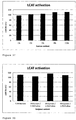
- Figures 3A and 3B show LCAT activity for 4-10% w/w sucrose formulations.
- Figure 3C shows LCAT activity for 1-4% w/w sucrose formulations. Very little difference is seen in LCAT activity when the sucrose ranges from 5-10% w/w in the final formulation ( Figure 3A ), however a slight decreasing trend is evident when the sucrose is further reduced to 4% w/w ( Figure 3B ).
- Figure 3D shows LCAT activity for formulations comprising sucrose and proline. No apparent trend in LCAT activity is observed for formulations containing sucrose and proline. Thus the efficacy of the HDL particle in sucrose/proline formulations is maintained.
- Reverse cholesterol transport is a pathway by which accumulated cholesterol is transported from the vessel wall to the liver for excretion.
- Cells efflux free cholesterol to lipid-poor Apo A-I via the ABCA1 pathway.
- the cholesterol efflux assay measures the capacity of HDL to accept cholesterol released from cells. It is anticipated that if sucrose content affected particle formation and/or integrity, differences would affect cholesterol efflux.
- RAW264.7 cells were obtained from the American Type Culture Collection (ATCC). Cells were cultured in DMEM (Dulbecco's modified Eagle's medium, Gibco) supplemented with 10% (v/v) foetal calf serum (FCS, Gibco), 2 mM glutamine, 100 units/mL penicillin and 100 ⁇ g/mL streptomycin in a humidified CO 2 incubator at 37°.
- ATCC American Type Culture Collection
- cells were seeded into 24-well plates at a density of 0.35 x 10 6 cells per well. The following day, cells were labeled with [1,2- 3 H]cholesterol (1 ⁇ Ci/mL, GE) in DMEM supplemented with 5% (v/v) FCS.
- Radioactivity in cell supernatants was measured by liquid scintillation counting.
- Total cell-associated [ 3 H]cholesterol was determined after extraction of cells in control wells for at least 30 minutes with 0.1 M Triton X-100. Cholesterol efflux was expressed as the percentage of the radioactivity released from cells into the medium relative to the total radioactivity in cells and medium. The difference in efflux between control and 8Br-cAMP-stimulated cells was taken as a measure of ABCA1-dependent efflux.
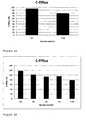
- Figures 4A and 4B show that as sucrose concentration decreases from 7.5% w/w to 4% w/w the cholesterol efflux increased. No apparent difference in cholesterol efflux was observed between the proline containing formulations and the 7.5% sucrose formulation ( Figure 4C ).
- turbidity is used to describe the cloudiness or haze in a solution. Strictly, turbidity arises from the multiple scattering events of visible light by elements present in the solution. Since turbidity arises from the net scattered light, it depends on the sample path length, protein concentration and size of the protein/aggregates/particles. Given that all reduced sucrose formulations contained the same protein concentration upon reconstitution and were measured with the same path length, differences in turbidity can be attributed to differences in the size and/or number of protein/aggregates/particles resulting from the various sucrose formulations.
- Turbidity was determined with a LED nephelometer (Hach 2100AN Turbiditimeter, Loveland, CO.) using formacin as a standard. Results are given as relative light scattering (NTU).
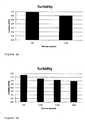
- Formulations containing 4 - 10% w/w sucrose produced similar turbid solutions upon reconstitution ( Figures 5A & 5B ). Sucrose concentrations of less than 4% showed increased turbidity ( Figures 5E and 5G ). Based on turbidity, sucrose concentrations of 4% (w/w) and above are optimum.
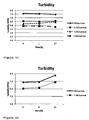
- lyophilized rHDL formulations prepared as per Example 1 was examined before and after storage (protected from light) at 40°C for 12 weeks. Parameters tested included pH, turbidity, LCAT activation, HPLC-SEC (aggregate content, % lipoprotein in single peak and its relative retention time) and cholesterol efflux (C-efflux) (Tables 1 & 2). The results indicate that the formulations remain stable over the storage period.
Landscapes
- Health & Medical Sciences (AREA)
- Life Sciences & Earth Sciences (AREA)
- Chemical & Material Sciences (AREA)
- Medicinal Chemistry (AREA)
- General Health & Medical Sciences (AREA)
- Veterinary Medicine (AREA)
- Public Health (AREA)
- Animal Behavior & Ethology (AREA)
- Pharmacology & Pharmacy (AREA)
- Engineering & Computer Science (AREA)
- Epidemiology (AREA)
- Bioinformatics & Cheminformatics (AREA)
- Chemical Kinetics & Catalysis (AREA)
- General Chemical & Material Sciences (AREA)
- Organic Chemistry (AREA)
- Molecular Biology (AREA)
- Nuclear Medicine, Radiotherapy & Molecular Imaging (AREA)
- Diabetes (AREA)
- Oil, Petroleum & Natural Gas (AREA)
- Proteomics, Peptides & Aminoacids (AREA)
- Gastroenterology & Hepatology (AREA)
- Zoology (AREA)
- Biophysics (AREA)
- Hematology (AREA)
- Obesity (AREA)
- Biochemistry (AREA)
- Immunology (AREA)
- Marine Sciences & Fisheries (AREA)
- Genetics & Genomics (AREA)
- Toxicology (AREA)
- Dermatology (AREA)
- Cardiology (AREA)
- Heart & Thoracic Surgery (AREA)
- Nutrition Science (AREA)
- Emergency Medicine (AREA)
- Endocrinology (AREA)
- Urology & Nephrology (AREA)
- Vascular Medicine (AREA)
- Medicinal Preparation (AREA)
- Medicines That Contain Protein Lipid Enzymes And Other Medicines (AREA)
Priority Applications (3)
| Application Number | Priority Date | Filing Date | Title |
|---|---|---|---|
| EP13851610.9A EP2916857B1 (en) | 2012-11-02 | 2013-10-31 | Reconstituted hdl formulation |
| PL13851610T PL2916857T3 (pl) | 2012-11-02 | 2013-10-31 | Odtworzona formulacja HDL |
| EP19151328.2A EP3502131A1 (en) | 2012-11-02 | 2013-10-31 | Reconstituted hdl formulation |
Applications Claiming Priority (6)
| Application Number | Priority Date | Filing Date | Title |
|---|---|---|---|
| US201261721771P | 2012-11-02 | 2012-11-02 | |
| EP13153903 | 2013-02-04 | ||
| US13/803,863 US9125943B2 (en) | 2012-11-02 | 2013-03-14 | Reconstituted HDL formulation |
| AU2013205684A AU2013205684B2 (en) | 2012-11-02 | 2013-04-10 | Reconstituted hdl formulation |
| EP13851610.9A EP2916857B1 (en) | 2012-11-02 | 2013-10-31 | Reconstituted hdl formulation |
| PCT/AU2013/001260 WO2014066943A1 (en) | 2012-11-02 | 2013-10-31 | Reconstituted hdl formulation |
Related Child Applications (1)
| Application Number | Title | Priority Date | Filing Date |
|---|---|---|---|
| EP19151328.2A Division EP3502131A1 (en) | 2012-11-02 | 2013-10-31 | Reconstituted hdl formulation |
Publications (3)
| Publication Number | Publication Date |
|---|---|
| EP2916857A1 EP2916857A1 (en) | 2015-09-16 |
| EP2916857A4 EP2916857A4 (en) | 2016-05-25 |
| EP2916857B1 true EP2916857B1 (en) | 2019-01-16 |
Family
ID=47665977
Family Applications (2)
| Application Number | Title | Priority Date | Filing Date |
|---|---|---|---|
| EP13851610.9A Active EP2916857B1 (en) | 2012-11-02 | 2013-10-31 | Reconstituted hdl formulation |
| EP19151328.2A Pending EP3502131A1 (en) | 2012-11-02 | 2013-10-31 | Reconstituted hdl formulation |
Family Applications After (1)
| Application Number | Title | Priority Date | Filing Date |
|---|---|---|---|
| EP19151328.2A Pending EP3502131A1 (en) | 2012-11-02 | 2013-10-31 | Reconstituted hdl formulation |
Country Status (15)
| Country | Link |
|---|---|
| US (6) | US9125943B2 (enExample) |
| EP (2) | EP2916857B1 (enExample) |
| JP (1) | JP6340372B2 (enExample) |
| KR (1) | KR102263810B1 (enExample) |
| CN (2) | CN104755096B (enExample) |
| AU (1) | AU2013205684B2 (enExample) |
| BR (1) | BR112015009748B1 (enExample) |
| CA (1) | CA2889785C (enExample) |
| IL (1) | IL238504B (enExample) |
| MX (1) | MX364587B (enExample) |
| NZ (1) | NZ631131A (enExample) |
| PL (1) | PL2916857T3 (enExample) |
| RU (1) | RU2669568C2 (enExample) |
| SG (1) | SG11201503083UA (enExample) |
| WO (1) | WO2014066943A1 (enExample) |
Families Citing this family (8)
| Publication number | Priority date | Publication date | Assignee | Title |
|---|---|---|---|---|
| DK3178481T3 (en) | 2010-06-30 | 2019-04-08 | Csl Ltd | FORMULATION WITH RECONSTITUTED HIGH DENSITY LIPOPROTEIN AND PROCEDURE FOR PREPARING THEREOF |
| US9125943B2 (en) * | 2012-11-02 | 2015-09-08 | Csl Limited | Reconstituted HDL formulation |
| DK3004160T3 (da) | 2013-06-05 | 2023-01-23 | Csl Ltd | Fremgangsmåde til fremstilling af apolipoprotein a-i (apo a-i) |
| AU2014305646C1 (en) | 2013-08-08 | 2019-01-17 | Csl Limited | Contaminant removal method |
| WO2018019911A1 (en) | 2016-07-27 | 2018-02-01 | Hartis-Pharma Sarl | Therapeutic combinations to treat red blood cell disorders |
| IL266428B2 (en) * | 2016-11-10 | 2024-12-01 | Csl Ltd | High-density lipoprotein (HDL) is restored to treat myocardial infarction |
| CN112546201A (zh) * | 2019-09-26 | 2021-03-26 | 中国科学院生物物理研究所 | 人工脂蛋白颗粒apoA-Ⅳ脂肪体在治疗和/或预防糖尿病中的应用 |
| WO2025185021A1 (zh) * | 2024-03-05 | 2025-09-12 | 维康平生(北京)生物科技有限公司 | 一种脂肪体的冷冻干燥方法 |
Family Cites Families (13)
| Publication number | Priority date | Publication date | Assignee | Title |
|---|---|---|---|---|
| CA1335077C (en) * | 1988-02-08 | 1995-04-04 | Henri Isliker | Process for the manufacture of apolipoproteins from human blood plasma or serum |
| US5652339A (en) | 1993-12-31 | 1997-07-29 | Rotkreuzstiftung Zentrallaboratorium | Method of producing reconstituted lipoproteins |
| MXPA04002848A (es) | 2001-09-28 | 2005-06-06 | Esperion Therapeutics Inc | Prevencion y tratamiento de restenosis por administracion local de medicamento. |
| US20040067873A1 (en) | 2002-05-17 | 2004-04-08 | Dasseux Jean-Louis H. | Method of treating dyslipidemic disorders |
| NZ537006A (en) | 2002-05-17 | 2008-01-31 | Esperion Therapeutics Inc | The use of apolipoprotein A-I Milano, for the manufacture ofa composition for treating preventing or reducing ischemic reperfusion injury in a tissue or organ |
| PE20050438A1 (es) | 2003-10-20 | 2005-06-14 | Esperion Therapeutics Inc | Formulas farmaceuticas, metodos y regimenes de dosificacion para el tratamiento y la prevencion de sindromes coronarios agudos |
| US20070254832A1 (en) * | 2006-02-17 | 2007-11-01 | Pressler Milton L | Methods for the treatment of macular degeneration and related eye conditions |
| KR100992488B1 (ko) | 2006-12-29 | 2010-11-05 | 주식회사 녹십자 | ApoA-I의 정제방법 및 정제된ApoA-I을 이용한재구축 HDL의 생산 방법 |
| WO2009025754A2 (en) | 2007-08-17 | 2009-02-26 | Csl Behring Gmbh | Methods for purification of alpha-1-antitrypsin and apolipoprotein a-i |
| WO2010057203A2 (en) | 2008-11-17 | 2010-05-20 | The Board Of Regents Of The University Of Texas System | Hdl particles for delivery of nucleic acids |
| DK3178481T3 (en) * | 2010-06-30 | 2019-04-08 | Csl Ltd | FORMULATION WITH RECONSTITUTED HIGH DENSITY LIPOPROTEIN AND PROCEDURE FOR PREPARING THEREOF |
| PT2673296T (pt) * | 2011-02-07 | 2019-01-31 | Cerenis Therapeutics Holding Sa | Complexos de lipoproteínas e sua fabricação e utilização |
| US9125943B2 (en) | 2012-11-02 | 2015-09-08 | Csl Limited | Reconstituted HDL formulation |
-
2013
- 2013-03-14 US US13/803,863 patent/US9125943B2/en active Active
- 2013-04-10 AU AU2013205684A patent/AU2013205684B2/en active Active
- 2013-10-31 SG SG11201503083UA patent/SG11201503083UA/en unknown
- 2013-10-31 JP JP2015539998A patent/JP6340372B2/ja active Active
- 2013-10-31 WO PCT/AU2013/001260 patent/WO2014066943A1/en not_active Ceased
- 2013-10-31 EP EP13851610.9A patent/EP2916857B1/en active Active
- 2013-10-31 NZ NZ631131A patent/NZ631131A/en unknown
- 2013-10-31 EP EP19151328.2A patent/EP3502131A1/en active Pending
- 2013-10-31 CA CA2889785A patent/CA2889785C/en active Active
- 2013-10-31 CN CN201380057007.0A patent/CN104755096B/zh active Active
- 2013-10-31 PL PL13851610T patent/PL2916857T3/pl unknown
- 2013-10-31 CN CN201711141045.0A patent/CN108057023B/zh active Active
- 2013-10-31 KR KR1020157014530A patent/KR102263810B1/ko active Active
- 2013-10-31 RU RU2015120808A patent/RU2669568C2/ru active
- 2013-10-31 BR BR112015009748-0A patent/BR112015009748B1/pt active IP Right Grant
- 2013-10-31 US US14/439,094 patent/US9925236B2/en active Active
- 2013-10-31 MX MX2015004546A patent/MX364587B/es active IP Right Grant
-
2015
- 2015-04-28 IL IL238504A patent/IL238504B/en active IP Right Grant
-
2018
- 2018-02-12 US US15/894,397 patent/US10603355B2/en active Active
-
2020
- 2020-03-23 US US16/826,585 patent/US11464828B2/en active Active
-
2022
- 2022-09-02 US US17/902,580 patent/US11957731B2/en active Active
-
2024
- 2024-04-12 US US18/634,576 patent/US20250099537A1/en active Pending
Non-Patent Citations (1)
| Title |
|---|
| None * |
Also Published As
Similar Documents
| Publication | Publication Date | Title |
|---|---|---|
| US11957731B2 (en) | Reconstituted HDL formulation | |
| AU2011274238B2 (en) | A reconstituted high density lipoprotein formulation and production method thereof | |
| US20240216467A1 (en) | Dosage regime for apolipoprotein formulations | |
| DK2916857T3 (en) | RECONSTITUTED HDL FORMULATION | |
| HK40010383A (en) | Reconstituted hdl formulation | |
| HK1212599B (en) | Reconstituted hdl formulation | |
| RU2776110C2 (ru) | Схема дозирования для составов аполипопротеина | |
| HK1199813B (en) | Dosage regime for apolipoprotein formulations | |
| NZ624558B2 (en) | Dosage regime for apolipoprotein formulations |
Legal Events
| Date | Code | Title | Description |
|---|---|---|---|
| PUAI | Public reference made under article 153(3) epc to a published international application that has entered the european phase |
Free format text: ORIGINAL CODE: 0009012 |
|
| 17P | Request for examination filed |
Effective date: 20150602 |
|
| AK | Designated contracting states |
Kind code of ref document: A1 Designated state(s): AL AT BE BG CH CY CZ DE DK EE ES FI FR GB GR HR HU IE IS IT LI LT LU LV MC MK MT NL NO PL PT RO RS SE SI SK SM TR |
|
| AX | Request for extension of the european patent |
Extension state: BA ME |
|
| DAX | Request for extension of the european patent (deleted) | ||
| RA4 | Supplementary search report drawn up and despatched (corrected) |
Effective date: 20160428 |
|
| RIC1 | Information provided on ipc code assigned before grant |
Ipc: C07K 14/775 20060101AFI20160421BHEP Ipc: A61P 9/10 20060101ALI20160421BHEP |
|
| REG | Reference to a national code |
Ref country code: HK Ref legal event code: DE Ref document number: 1212599 Country of ref document: HK |
|
| STAA | Information on the status of an ep patent application or granted ep patent |
Free format text: STATUS: EXAMINATION IS IN PROGRESS |
|
| 17Q | First examination report despatched |
Effective date: 20171127 |
|
| REG | Reference to a national code |
Ref country code: DE Ref legal event code: R079 Ref document number: 602013050039 Country of ref document: DE Free format text: PREVIOUS MAIN CLASS: A61K0038170000 Ipc: C07K0014775000 |
|
| GRAP | Despatch of communication of intention to grant a patent |
Free format text: ORIGINAL CODE: EPIDOSNIGR1 |
|
| STAA | Information on the status of an ep patent application or granted ep patent |
Free format text: STATUS: GRANT OF PATENT IS INTENDED |
|
| RIC1 | Information provided on ipc code assigned before grant |
Ipc: A61P 9/10 20060101ALI20180928BHEP Ipc: C07K 14/775 20060101AFI20180928BHEP |
|
| INTG | Intention to grant announced |
Effective date: 20181022 |
|
| GRAS | Grant fee paid |
Free format text: ORIGINAL CODE: EPIDOSNIGR3 |
|
| GRAA | (expected) grant |
Free format text: ORIGINAL CODE: 0009210 |
|
| STAA | Information on the status of an ep patent application or granted ep patent |
Free format text: STATUS: THE PATENT HAS BEEN GRANTED |
|
| AK | Designated contracting states |
Kind code of ref document: B1 Designated state(s): AL AT BE BG CH CY CZ DE DK EE ES FI FR GB GR HR HU IE IS IT LI LT LU LV MC MK MT NL NO PL PT RO RS SE SI SK SM TR |
|
| REG | Reference to a national code |
Ref country code: GB Ref legal event code: FG4D |
|
| RIN1 | Information on inventor provided before grant (corrected) |
Inventor name: VUCICA, YVONNE Inventor name: WARREN, GARY LEE |
|
| RIN2 | Information on inventor provided after grant (corrected) |
Inventor name: WARREN, GARY LEE Inventor name: VUCICA, YVONNE |
|
| REG | Reference to a national code |
Ref country code: CH Ref legal event code: EP |
|
| REG | Reference to a national code |
Ref country code: IE Ref legal event code: FG4D |
|
| REG | Reference to a national code |
Ref country code: DE Ref legal event code: R096 Ref document number: 602013050039 Country of ref document: DE |
|
| REG | Reference to a national code |
Ref country code: AT Ref legal event code: REF Ref document number: 1089633 Country of ref document: AT Kind code of ref document: T Effective date: 20190215 |
|
| REG | Reference to a national code |
Ref country code: DK Ref legal event code: T3 Effective date: 20190408 |
|
| REG | Reference to a national code |
Ref country code: SE Ref legal event code: TRGR |
|
| REG | Reference to a national code |
Ref country code: NL Ref legal event code: FP |
|
| REG | Reference to a national code |
Ref country code: LT Ref legal event code: MG4D |
|
| REG | Reference to a national code |
Ref country code: ES Ref legal event code: FG2A Ref document number: 2719275 Country of ref document: ES Kind code of ref document: T3 Effective date: 20190709 |
|
| REG | Reference to a national code |
Ref country code: HU Ref legal event code: AG4A Ref document number: E042620 Country of ref document: HU |
|
| PG25 | Lapsed in a contracting state [announced via postgrant information from national office to epo] |
Ref country code: LT Free format text: LAPSE BECAUSE OF FAILURE TO SUBMIT A TRANSLATION OF THE DESCRIPTION OR TO PAY THE FEE WITHIN THE PRESCRIBED TIME-LIMIT Effective date: 20190116 Ref country code: PT Free format text: LAPSE BECAUSE OF FAILURE TO SUBMIT A TRANSLATION OF THE DESCRIPTION OR TO PAY THE FEE WITHIN THE PRESCRIBED TIME-LIMIT Effective date: 20190516 Ref country code: NO Free format text: LAPSE BECAUSE OF FAILURE TO SUBMIT A TRANSLATION OF THE DESCRIPTION OR TO PAY THE FEE WITHIN THE PRESCRIBED TIME-LIMIT Effective date: 20190416 |
|
| PG25 | Lapsed in a contracting state [announced via postgrant information from national office to epo] |
Ref country code: HR Free format text: LAPSE BECAUSE OF FAILURE TO SUBMIT A TRANSLATION OF THE DESCRIPTION OR TO PAY THE FEE WITHIN THE PRESCRIBED TIME-LIMIT Effective date: 20190116 Ref country code: RS Free format text: LAPSE BECAUSE OF FAILURE TO SUBMIT A TRANSLATION OF THE DESCRIPTION OR TO PAY THE FEE WITHIN THE PRESCRIBED TIME-LIMIT Effective date: 20190116 Ref country code: BG Free format text: LAPSE BECAUSE OF FAILURE TO SUBMIT A TRANSLATION OF THE DESCRIPTION OR TO PAY THE FEE WITHIN THE PRESCRIBED TIME-LIMIT Effective date: 20190416 Ref country code: GR Free format text: LAPSE BECAUSE OF FAILURE TO SUBMIT A TRANSLATION OF THE DESCRIPTION OR TO PAY THE FEE WITHIN THE PRESCRIBED TIME-LIMIT Effective date: 20190417 Ref country code: IS Free format text: LAPSE BECAUSE OF FAILURE TO SUBMIT A TRANSLATION OF THE DESCRIPTION OR TO PAY THE FEE WITHIN THE PRESCRIBED TIME-LIMIT Effective date: 20190516 |
|
| REG | Reference to a national code |
Ref country code: DE Ref legal event code: R097 Ref document number: 602013050039 Country of ref document: DE |
|
| PG25 | Lapsed in a contracting state [announced via postgrant information from national office to epo] |
Ref country code: AL Free format text: LAPSE BECAUSE OF FAILURE TO SUBMIT A TRANSLATION OF THE DESCRIPTION OR TO PAY THE FEE WITHIN THE PRESCRIBED TIME-LIMIT Effective date: 20190116 Ref country code: EE Free format text: LAPSE BECAUSE OF FAILURE TO SUBMIT A TRANSLATION OF THE DESCRIPTION OR TO PAY THE FEE WITHIN THE PRESCRIBED TIME-LIMIT Effective date: 20190116 Ref country code: SK Free format text: LAPSE BECAUSE OF FAILURE TO SUBMIT A TRANSLATION OF THE DESCRIPTION OR TO PAY THE FEE WITHIN THE PRESCRIBED TIME-LIMIT Effective date: 20190116 Ref country code: RO Free format text: LAPSE BECAUSE OF FAILURE TO SUBMIT A TRANSLATION OF THE DESCRIPTION OR TO PAY THE FEE WITHIN THE PRESCRIBED TIME-LIMIT Effective date: 20190116 |
|
| PLBE | No opposition filed within time limit |
Free format text: ORIGINAL CODE: 0009261 |
|
| STAA | Information on the status of an ep patent application or granted ep patent |
Free format text: STATUS: NO OPPOSITION FILED WITHIN TIME LIMIT |
|
| PG25 | Lapsed in a contracting state [announced via postgrant information from national office to epo] |
Ref country code: SM Free format text: LAPSE BECAUSE OF FAILURE TO SUBMIT A TRANSLATION OF THE DESCRIPTION OR TO PAY THE FEE WITHIN THE PRESCRIBED TIME-LIMIT Effective date: 20190116 |
|
| 26N | No opposition filed |
Effective date: 20191017 |
|
| PG25 | Lapsed in a contracting state [announced via postgrant information from national office to epo] |
Ref country code: SI Free format text: LAPSE BECAUSE OF FAILURE TO SUBMIT A TRANSLATION OF THE DESCRIPTION OR TO PAY THE FEE WITHIN THE PRESCRIBED TIME-LIMIT Effective date: 20190116 |
|
| REG | Reference to a national code |
Ref country code: AT Ref legal event code: UEP Ref document number: 1089633 Country of ref document: AT Kind code of ref document: T Effective date: 20190116 |
|
| PG25 | Lapsed in a contracting state [announced via postgrant information from national office to epo] |
Ref country code: MC Free format text: LAPSE BECAUSE OF FAILURE TO SUBMIT A TRANSLATION OF THE DESCRIPTION OR TO PAY THE FEE WITHIN THE PRESCRIBED TIME-LIMIT Effective date: 20190116 |
|
| PG25 | Lapsed in a contracting state [announced via postgrant information from national office to epo] |
Ref country code: CY Free format text: LAPSE BECAUSE OF FAILURE TO SUBMIT A TRANSLATION OF THE DESCRIPTION OR TO PAY THE FEE WITHIN THE PRESCRIBED TIME-LIMIT Effective date: 20190116 |
|
| PG25 | Lapsed in a contracting state [announced via postgrant information from national office to epo] |
Ref country code: MT Free format text: LAPSE BECAUSE OF FAILURE TO SUBMIT A TRANSLATION OF THE DESCRIPTION OR TO PAY THE FEE WITHIN THE PRESCRIBED TIME-LIMIT Effective date: 20190116 |
|
| PG25 | Lapsed in a contracting state [announced via postgrant information from national office to epo] |
Ref country code: MK Free format text: LAPSE BECAUSE OF FAILURE TO SUBMIT A TRANSLATION OF THE DESCRIPTION OR TO PAY THE FEE WITHIN THE PRESCRIBED TIME-LIMIT Effective date: 20190116 |
|
| P01 | Opt-out of the competence of the unified patent court (upc) registered |
Effective date: 20230517 |
|
| PGFP | Annual fee paid to national office [announced via postgrant information from national office to epo] |
Ref country code: NL Payment date: 20250912 Year of fee payment: 13 Ref country code: PL Payment date: 20250912 Year of fee payment: 13 Ref country code: IT Payment date: 20250922 Year of fee payment: 13 |
|
| PGFP | Annual fee paid to national office [announced via postgrant information from national office to epo] |
Ref country code: BE Payment date: 20250917 Year of fee payment: 13 Ref country code: GB Payment date: 20250911 Year of fee payment: 13 |
|
| PGFP | Annual fee paid to national office [announced via postgrant information from national office to epo] |
Ref country code: FR Payment date: 20250908 Year of fee payment: 13 |
|
| PGFP | Annual fee paid to national office [announced via postgrant information from national office to epo] |
Ref country code: SE Payment date: 20250910 Year of fee payment: 13 |
|
| PGFP | Annual fee paid to national office [announced via postgrant information from national office to epo] |
Ref country code: IE Payment date: 20250909 Year of fee payment: 13 |
|
| PGFP | Annual fee paid to national office [announced via postgrant information from national office to epo] |
Ref country code: LV Payment date: 20250903 Year of fee payment: 13 |
|
| REG | Reference to a national code |
Ref country code: CH Ref legal event code: U11 Free format text: ST27 STATUS EVENT CODE: U-0-0-U10-U11 (AS PROVIDED BY THE NATIONAL OFFICE) Effective date: 20251101 |
|
| PGFP | Annual fee paid to national office [announced via postgrant information from national office to epo] |
Ref country code: HU Payment date: 20250929 Year of fee payment: 13 |
|
| PGFP | Annual fee paid to national office [announced via postgrant information from national office to epo] |
Ref country code: LU Payment date: 20251016 Year of fee payment: 13 |
|
| PGFP | Annual fee paid to national office [announced via postgrant information from national office to epo] |
Ref country code: DE Payment date: 20250902 Year of fee payment: 13 |
|
| PGFP | Annual fee paid to national office [announced via postgrant information from national office to epo] |
Ref country code: AT Payment date: 20250925 Year of fee payment: 13 |
|
| PGFP | Annual fee paid to national office [announced via postgrant information from national office to epo] |
Ref country code: FI Payment date: 20251014 Year of fee payment: 13 Ref country code: DK Payment date: 20251014 Year of fee payment: 13 |
|
| PGFP | Annual fee paid to national office [announced via postgrant information from national office to epo] |
Ref country code: TR Payment date: 20251024 Year of fee payment: 13 |
|
| PGFP | Annual fee paid to national office [announced via postgrant information from national office to epo] |
Ref country code: CH Payment date: 20251101 Year of fee payment: 13 |
|
| PGFP | Annual fee paid to national office [announced via postgrant information from national office to epo] |
Ref country code: CZ Payment date: 20251021 Year of fee payment: 13 |
|
| PGFP | Annual fee paid to national office [announced via postgrant information from national office to epo] |
Ref country code: ES Payment date: 20251105 Year of fee payment: 13 |