EP2912437B1 - Texturanalyse einer lackierten oberfläche mit spiegelnden winkeldaten - Google Patents
Texturanalyse einer lackierten oberfläche mit spiegelnden winkeldaten Download PDFInfo
- Publication number
- EP2912437B1 EP2912437B1 EP13783435.4A EP13783435A EP2912437B1 EP 2912437 B1 EP2912437 B1 EP 2912437B1 EP 13783435 A EP13783435 A EP 13783435A EP 2912437 B1 EP2912437 B1 EP 2912437B1
- Authority
- EP
- European Patent Office
- Prior art keywords
- spectral reflectance
- type
- data
- pigmentation effect
- curve
- Prior art date
- Legal status (The legal status is an assumption and is not a legal conclusion. Google has not performed a legal analysis and makes no representation as to the accuracy of the status listed.)
- Active
Links
Images
Classifications
-
- G—PHYSICS
- G01—MEASURING; TESTING
- G01N—INVESTIGATING OR ANALYSING MATERIALS BY DETERMINING THEIR CHEMICAL OR PHYSICAL PROPERTIES
- G01N21/00—Investigating or analysing materials by the use of optical means, i.e. using sub-millimetre waves, infrared, visible or ultraviolet light
- G01N21/17—Systems in which incident light is modified in accordance with the properties of the material investigated
- G01N21/25—Colour; Spectral properties, i.e. comparison of effect of material on the light at two or more different wavelengths or wavelength bands
-
- G—PHYSICS
- G01—MEASURING; TESTING
- G01J—MEASUREMENT OF INTENSITY, VELOCITY, SPECTRAL CONTENT, POLARISATION, PHASE OR PULSE CHARACTERISTICS OF INFRARED, VISIBLE OR ULTRAVIOLET LIGHT; COLORIMETRY; RADIATION PYROMETRY
- G01J3/00—Spectrometry; Spectrophotometry; Monochromators; Measuring colours
- G01J3/46—Measurement of colour; Colour measuring devices, e.g. colorimeters
- G01J3/50—Measurement of colour; Colour measuring devices, e.g. colorimeters using electric radiation detectors
- G01J3/504—Goniometric colour measurements, for example measurements of metallic or flake based paints
-
- G—PHYSICS
- G01—MEASURING; TESTING
- G01J—MEASUREMENT OF INTENSITY, VELOCITY, SPECTRAL CONTENT, POLARISATION, PHASE OR PULSE CHARACTERISTICS OF INFRARED, VISIBLE OR ULTRAVIOLET LIGHT; COLORIMETRY; RADIATION PYROMETRY
- G01J3/00—Spectrometry; Spectrophotometry; Monochromators; Measuring colours
- G01J3/02—Details
- G01J3/0264—Electrical interface; User interface
-
- G—PHYSICS
- G01—MEASURING; TESTING
- G01N—INVESTIGATING OR ANALYSING MATERIALS BY DETERMINING THEIR CHEMICAL OR PHYSICAL PROPERTIES
- G01N21/00—Investigating or analysing materials by the use of optical means, i.e. using sub-millimetre waves, infrared, visible or ultraviolet light
- G01N21/17—Systems in which incident light is modified in accordance with the properties of the material investigated
- G01N21/55—Specular reflectivity
-
- G—PHYSICS
- G01—MEASURING; TESTING
- G01N—INVESTIGATING OR ANALYSING MATERIALS BY DETERMINING THEIR CHEMICAL OR PHYSICAL PROPERTIES
- G01N21/00—Investigating or analysing materials by the use of optical means, i.e. using sub-millimetre waves, infrared, visible or ultraviolet light
- G01N21/17—Systems in which incident light is modified in accordance with the properties of the material investigated
- G01N21/55—Specular reflectivity
- G01N21/57—Measuring gloss
-
- G—PHYSICS
- G01—MEASURING; TESTING
- G01N—INVESTIGATING OR ANALYSING MATERIALS BY DETERMINING THEIR CHEMICAL OR PHYSICAL PROPERTIES
- G01N21/00—Investigating or analysing materials by the use of optical means, i.e. using sub-millimetre waves, infrared, visible or ultraviolet light
- G01N21/84—Systems specially adapted for particular applications
- G01N21/8422—Investigating thin films, e.g. matrix isolation method
Definitions
- the present invention generally relates to a method and apparatus for identifying physical property attributes of cured complex coating (e.g., paint) mixtures using specular angle data retrieved from a spectrophotometer.
- cured complex coating e.g., paint
- the specular angle is defined in relation to a spectrophotometer as the angle of reflectance equal and opposite to the angle of incident, illuminant light based on the normal line to the surface coating being measured.
- the specular angle is also referred to as the gloss angle.
- the specular angle is denoted as "45as0,” or 45 aspecular 0, where the incident light is at 45 degrees to the normal of the target and the reflected light data is gathered at 0 degrees from specular or the equal and opposite 45 degrees from normal, thereby specular itself.
- WO 2006/096521 A2 discloses a measurement method of four major contributing factors that lead to a reduction of transparency utilizing a diffuse sphere spectrophotometer. Specifically, the four factors are: Haze, Scatter, Gloss and Bronze.
- US 2006/0245632 A1 discloses methods and apparatuses for measuring and/ or analysing a spatially under-sampled Bidirectional Reflectance Distribution Function (BRDF) of a surface.
- BRDF Bidirectional Reflectance Distribution Function
- the BRDF of a surface is an expression of the intensity of this reflectance over all wavelengths and reflectance directions as a function of illumination angle and other variables (e.g., polarization).
- the BRDF of a surface is spatially under-sampled by measuring the intensity of reflectance at only a discrete number of reflectance directions.
- the discrete reflectance directions may be non-coplanar.
- the measured reflectance may then be processed to derive appearance properties of the surface under observation.The appearance properties may reflect directional variation in the appearance of the surface, as captured by the measured reflectance.
- the present invention generally relates to a method and apparatus for identifying physical property attributes of cured complex coating (e.g., paint) mixtures using specular angle data retrieved from a spectrophotometer.
- cured complex coating e.g., paint
- the present invention is directed to computer implemented method.
- the method includes obtaining, using a processor, spectral reflectance data from a spectrophotometric measurement of a target coating on a surface, wherein the measurement was taken at a specular angle, and removing, using the processor, at least a portion of the specular reflectance data that is attributable to a glossy coating of the surface.
- the method also includes constructing, using the processor, at least one spectral reflectance curve, and identifying, using the processor, at least one type of pigmentation effect of the target coating based at least in part on the at least one spectral reflectance curve.
- the present invention is directed to a system.
- the system includes a spectrophotometer and a processor configured to communicate with the spectrophotometer.
- the processor is programmed to obtain spectral reflectance data from a spectrophotometric measurement of a target coating on a surface, wherein the measurement was taken at a specular angle using the spectrophotometer, and remove at least a portion of the specular reflectance data that is attributable to a glossy coating of the surface.
- the processor is also programmed to construct at least one spectral reflectance curve, and identify at least one type of pigmentation effect of the target coating based at least in part on the at least one spectral reflectance curve.
- the present invention is directed to an apparatus.
- the apparatus includes means for obtaining spectral reflectance data from a spectrophotometric measurement of a target coating on a surface, wherein the measurement was taken at a specular angle, and means for removing at least a portion of the specular reflectance data that is attributable to a glossy coating of the surface.
- the apparatus also includes means for constructing at least one spectral reflectance curve, and means for identifying at least one type of pigmentation effect of the target coating based at least in part on the at least one spectral reflectance curve.
- the present invention is directed to a non-transitory computer readable medium including software for causing a processor to:
- embodiments of the invention include a spectrophotometer and a method that may be used to identify bulk effects that are present in a coating composition on a target sample.
- Various embodiments of the invention include an apparatus that has a device for capturing information for a target sample and a processor for identifying bulk effects that can be used to produce a paint having a texture that is similar to the target sample.
- An output device may be used for conveying the bulk effect information to a user.
- Embodiments of the invention may be used with or incorporated in a computer system that may be a stand alone unit or include one or more remote terminals or devices in communication with a central computer via a network such as, for example, the Internet or an intranet.
- a network such as, for example, the Internet or an intranet.
- the computer or "processor" and related components described herein may be a portion of a local computer system or a remote computer or an on-line system or combinations thereof.
- the database and software described herein may be stored in computer internal memory or in a non-transitory computer readable medium.
- specular angle data is used to identify a target coating's composition.
- the raw (spectral reflectance) data does not generally provide enough information about the target coating composition, so the data may be manipulated to obtain satisfactory results.
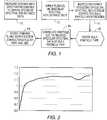
- Fig. 1 illustrates a flow diagram of an embodiment of a process that uses specular angle data obtained from a spectrophotometer.
- the following assumptions may be employed:
- Embodiments of the present invention transform the raw spectral reflectance data from the specular angle into distinctive, useable information.
- the resulting information yields a modified spectral reflectance curve (i.e., the curve is modified or treated by removing the specular reflectance that is due to gloss, and is thus a "gloss removed" curve).
- the spectral reflectance curve can be used on its own for effect identification purposes, and may be used to calculate tristimulus and other colorimetric data and information for analysis purposes.
- a filter is applied to the specular spectral reflectance data.
- a glossy black surface may be a solid black paint, coated to opacity, which is then coated with a clear, glossy topcoat or a sample of a polished black glass. It is desirable that the clearcoat match that used on the target coating.
- polished black glass may be used, or the process may be completed using multiple glossy black standard measurements and choosing the average of the most closely aligned results.
- the specular angle reflectance data for the target coating is also measured.
- the "gloss only" specular reflectance is then subtracted from the target coating's specular reflectance as shown in equation (1) below: R t w ⁇ R s w where R t is the specular spectral reflectance of the target coating at given wavelength w, and R s is the specular spectral reflectance of the standard black measurement at given wavelength w.
- the remaining, resulting spectral reflectance curve has now removed the "gloss" component.
- the subtraction of the gloss component may be completed using weighting factors on specific or all wavelengths.
- a plot of the resulting "gloss removed” spectral reflectance curve for the specular angle at step 14 in Fig. 1 allows for classification of the types of pigment contained in the target coating at step 16.
- the evaluation of the "gloss removed” spectral reflectance curve may include an understanding of the maximum and average magnitudes of "gloss removed” reflectance across all wavelengths and the overall shapes and/or slopes of the entire specular angle spectral reflectance curve.
- the maximum and average magnitude of reflectance across all measured wavelengths is an indicator of the type of pigmentation contained in the target coating.
- a specular angle spectral reflectance curve with a maximum and/or average magnitude of approximately 1 or less indicates a high probability of only dispersed pigments in the target coating, meaning the target coating does not include gonioapparent pigments such as aluminums or pearls, as illustrated in Fig. 2 .
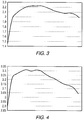
- a specular angle spectral reflectance curve with a maximum and/or average magnitude much greater than 1 would indicate a high probability of the use of a gonioapparent pigment, as illustrated in Fig. 3 .
- a maximum and/or average magnitude near 2 indicates a high probability of the use of an aluminum-type pigment, while a maximum and/or average magnitude near or much greater than 3 indicates a high probability of the use of a pearl-type pigment, as illustrated in Fig. 4 .
- Figures 2 , 3, and 4 are all examples of masstone, single-pigment colors.
- the overall shape and/or slopes of the entire specular angle spectral reflectance curve is also indicative of characteristics of the target coating.
- the specular angle spectral reflectance curve may be used with standard Kulbelka Munk theory to define which dispersed pigments can be used at concentrations to match the spectral curve.
- the shape of the entire reflectance curve indicates the color of the primary pearl or aluminum flake in the target coating.
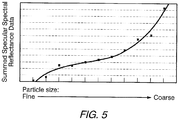
- the slope of any relatively straight line reflectance curves may be correlated to the flake size of the primary gonioapparent pigment in the target coating.
- the treated specular spectral reflectance data may be empirically correlated to known characteristics in order to identify primary flake types in complex coating mixtures.
- Statistical data may be calculated from the treated specular spectral reflectance, such as sum, average, standard deviation, etc., or new colorimetric information may be calculated from the treated specular spectral reflectance data.
- the new data points are then calculated from an empirical dataset, representative of the expected mixtures and colors that will need to be handled in everyday situations.
- primary flake type is solid, pearl, or aluminum
- f(x) is some function of x's, where x is one or multiple variables using the statistical data from the treated specular spectral reflectance or the newly calculated colorimetric information from the treated specular spectral reflectance.
- the resulting function can be linear or non-linear as defined by the empirical data set.
- the treated specular spectral reflectance data may be compared to other angular spectral data as described in U.S. Patent Application No. 13/832,088 entitled “Multi-Angular Color, Opacity, Pigment Characterization, and Texture Analysis of a Painted Surface Via Visual And/Or Instrumental Techniques,” filed on March 15, 2013.
- the rough average particle size of the primary effect flake may be determined from the data at the specular angle.
- the prediction may be useful for aluminum flakes and correlations may be achieved in masstone aluminum situations.
- any flake type may be correlated to flake size using data from the specular angle.
- an empirical data set may be employed to create a correlation between the specular data and the flake size.
- the empirical data set may be varied both in color space as well as flake type and may be segmented by primary flake type.
- the flake size information for each data point within the data set, or segmented data sets, is fixed. This can be achieved in one of several ways.
- embodiments of methods include: (i) the use of qualitative categorical data such as “Fine,” “Medium,” or “Coarse,” (ii) the use of quantitative continuous numerical data such as D10, D50, D90, or (iii) the use of quantitative or qualitative ordinal data such as ranked flake size buckets where one side of the scale indicates a small flake size which gradually increases to the other side of the scale, which indicates a large flake size.
- the flake size may be attributable to the primary flake within the coating.
- the specular angle spectral reflectance data may be statistically gathered into a single result for each data point.
- the correlation may be non-linear, however in various embodiments it may be desirable to not over-fit the data points.
- the R 2 of the correlation may be improved upon by including additional known variables, such as angular colorimetric data, maximum treated specular spectral reflectance, etc.
- the process may be repeated for each segmented set of the original data set until there is a correlation per primary flake type.
- correlations may overlap or be similar to one another, thus allowing for interpolation between correlations, if desired.
- An example of a resulting correlation for aluminums is illustrated in Fig. 5 .
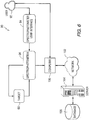
- Fig. 6 illustrates an embodiment of a system 90 which may be used to identify physical property attributes of a coating mixture of a target sample.
- a user 92 may utilize a user interface 94, such as a graphical user interface, to operate a spectrophotometer 96 to measure the properties of a target sample 98.
- the data from the spectrophotometer 96 may be transferred to a computer 100, such as a personal computer, a mobile device, or any type of processor.
- the computer 100 may be in communication, via a network 102, with a server 104.
- the network 102 may be any type of network, such as the Internet, a local area network, an intranet, or a wireless network.
- the server 104 is in communication with a database 106 that may store the data and information that is used by the methods of embodiments of the present invention for comparison purposes. Various steps of the methods of embodiments of the present invention may be performed by the computer 100 and/or the server 106.
- the invention may be implemented as a non-transitory computer readable medium containing software for causing a computer or computer system to perform the method described above.
- the software can include various modules that are used to enable a processor and a user interface to perform the methods described herein.
Landscapes
- Physics & Mathematics (AREA)
- General Physics & Mathematics (AREA)
- Spectroscopy & Molecular Physics (AREA)
- Chemical & Material Sciences (AREA)
- Life Sciences & Earth Sciences (AREA)
- Analytical Chemistry (AREA)
- Biochemistry (AREA)
- General Health & Medical Sciences (AREA)
- Health & Medical Sciences (AREA)
- Immunology (AREA)
- Pathology (AREA)
- Mathematical Physics (AREA)
- Engineering & Computer Science (AREA)
- Human Computer Interaction (AREA)
- Investigating Or Analysing Materials By Optical Means (AREA)
- Spectrometry And Color Measurement (AREA)
Claims (15)
- Ein computerimplementiertes Verfahren umfassend:Erhalten, unter Verwendung eines Prozessors, von spektralen Reflexionsdaten aus einer spektrophotometrischen Messung einer Zielbeschichtung auf einer Oberfläche, wobei die Messung bei einem Reflexionswinkel aufgenommen wurde,Entfernen, unter Verwendung des Prozessors, von wenigstens einem Teil der spektralen Reflexionsdaten, der einer glänzenden Beschichtung auf der Oberfläche zurechenbar ist,Konstruieren, unter Verwendung des Prozessors, von wenigstens einer spektralen Reflexionskurve aus den verbleibenden spektralen Reflexionsdaten, undIdentifizieren, unter Verwendung des Prozessors, von wenigstens einem Typ von Pigmentierungseffekt der Zielbeschichtung, basierend wenigstens zum Teil auf der wenigstens einen spektralen Reflexionskurve.
- Das Verfahren gemäß Anspruch 1, wobei das Identifizieren des wenigstens einen Typs von Pigmentierungseffekt ein Identifizieren wenigstens eines Typs von Pigmentierungseffekt, basierend auf einem Reflexionswert der wenigstens einen spektralen Reflexionskurve, beinhaltet.
- Das Verfahren gemäß Anspruch 2, wobei das Identifizieren wenigstens eines Typs von Pigmentierungseffekt, basierend auf einem Reflexionswert der wenigstens einen spektralen Reflexionskurve, ein Identifizieren wenigstens eines Typs von Pigmentierungseffekt, basierend auf einem maximalen Reflexionswert der wenigstens einen spektralen Reflexionskurve über eine Mehrzahl an Wellenlängen, beinhaltet.
- Das Verfahren gemäß Anspruch 2, wobei das Identifizieren wenigstens eines Typs von Pigmentierungseffekt, basierend auf einem Reflexionswert der wenigstens einen spektralen Reflexionskurve, ein Identifizieren wenigstens eines Typs von Pigmentierungseffekt, basierend auf einem mittleren Reflexionswert der wenigstens einen spektralen Reflexionskurve über eine Mehrzahl an Wellenlängen, beinhaltet.
- Das Verfahren gemäß Anspruch 2, wobei das Identifizieren wenigstens eines Typs von Pigmentierungseffekt, basierend auf einem Reflexionswert der wenigstens einen spektralen Reflexionskurve ein Identifizieren wenigstens eines Typs von Pigmentierungseffekt, basierend auf einer Steigung der wenigstens einen spektralen Reflexionskurve, beinhaltet.
- Das Verfahren gemäß Anspruch 2, wobei das Identifizieren wenigstens eines Typs von Pigmentierungseffekt, basierend auf einem Reflexionswert der wenigstens einen spektralen Reflexionskurve, ein Identifizieren wenigstens eines Typs von Pigmentierungseffekt, basierend auf einer Form der wenigstens einen spektralen Reflexionskurve, beinhaltet.
- Das Verfahren gemäß Anspruch 1, des Weiteren umfassend ein Berechnen von Tristimulus-Daten, basierend auf der wenigstens einen spektralen Reflexionskurve.
- Ein System umfassend:ein Spektrophotometer undeinen Prozessor, der konfiguriert ist, um mit dem Spektrophotometer zu kommunizieren, und der programmiert ist, um:spektrale Reflexionsdaten aus einer spektrophotometrischen Messung einer Zielbeschichtung auf einer Oberfläche zu erhalten, wobei die Messung bei einem Reflexionswinkel unter Verwendung des Spektrophotometers aufgenommen wurde,wenigstens einen Teil der spektralen Reflexionsdaten, der einer glänzenden Beschichtung der Oberfläche zurechenbar ist, zu entfernen, wenigstens eine spektrale Reflexionskurve aus den verbleibenden spektralen Reflexionsdaten zu konstruieren, undwenigstens einen Typ von Pigmentierungseffekt der Zielbeschichtung, basierend wenigstens zum Teil auf der wenigstens einen spektralen Reflexionskurve, zu identifizieren.
- Das System gemäß Anspruch 8, des Weiteren umfassend eine Datenbank, die in Kommunikationsverbindung mit dem Prozessor steht.
- Das System gemäß Anspruch 8, des Weiteren umfassend eine Benutzeroberfläche, die in Kommunikationsverbindung mit dem Spektrophotometer steht.
- Das System gemäß Anspruch 8, wobei der Prozessor konfiguriert ist, den wenigstens einen Typ von Pigmentierungseffekt durch Identifizieren wenigstens eines Typs von Pigmentierungseffekt, basierend auf einem Reflexionswert der wenigstens einen spektralen Reflexionskurve, zu identifizieren.
- Ein Apparat umfassend:Mittel, die ausgestaltet sind, spektrale Reflexionsdaten aus einer spektrophotometrischen Messung einer Zielbeschichtung auf einer Oberfläche zu erhalten, wobei die Messung bei einem Reflexionswinkel aufgenommen wurde,Mittel, die ausgestaltet sind, wenigstens einen Teil der spektralen Reflexionsdaten, der einer glänzenden Beschichtung der Oberfläche zuzurechnen ist, zu entfernen,Mittel, die ausgestaltet sind, wenigstens eine spektrale Reflexionskurve aus den verbleibenden spektralen Reflexionsdaten zu konstruieren, undMittel, die ausgestaltet sind, wenigstens einen Typ von Pigmentierungseffekt der Zielbeschichtung, basierend wenigstens zum Teil auf der wenigstens einen spektralen Reflexionskurve, zu identifizieren.
- Der Apparat gemäß Anspruch 12, wobei die Mittel, die ausgestaltet sind, wenigstens einen Typ von Pigmentierungseffekt zu identifizieren, Mittel, die ausgestaltet sind, wenigstens einen Typ des Pigmentierungseffekts, basierend auf einem Reflexionswert der wenigstens einen spektralen Reflexionskurve, zu identifizieren, beinhalten.
- Ein nichtflüchtiges computerlesbares Medium enthaltend Software zum Bewirken, dass ein Prozessor:spektrale Reflexionsdaten aus einer spektrophotometrischen Messung einer Zielbeschichtung auf einer Oberfläche erhält, wobei die Messung bei einem Reflexionswinkel unter Verwendung des Spektrophotometers aufgenommen wurde,wenigstens einen Teil der spektralen Reflexionsdaten, der einer glänzenden Beschichtung der Oberfläche zuzurechnen ist, entfernt,wenigstens eine spektrale Reflexionskurve aus den verbleibenden spektralen Reflexionsdaten konstruiert, undwenigstens einen Typ von Pigmentierungseffekt der Zielbeschichtung, basierend wenigstens zum Teil auf der wenigstens einen spektralen Reflexionskurve, identifiziert.
- Das computerlesbare Medium gemäß Anspruch 14, des Weiteren umfassend Software zum Bewirken, dass der Prozessor wenigstens einen Typ von Pigmentierungseffekt, basierend auf einem Reflexionswert der wenigstens einen spektralen Reflexionskurve, identifiziert.
Applications Claiming Priority (3)
| Application Number | Priority Date | Filing Date | Title |
|---|---|---|---|
| US201261718729P | 2012-10-26 | 2012-10-26 | |
| US13/832,116 US8879066B2 (en) | 2012-10-26 | 2013-03-15 | Texture analysis of a painted surface using specular angle data |
| PCT/US2013/064092 WO2014066045A1 (en) | 2012-10-26 | 2013-10-09 | Texture analysis of a painted surface using specular angle data |
Publications (2)
| Publication Number | Publication Date |
|---|---|
| EP2912437A1 EP2912437A1 (de) | 2015-09-02 |
| EP2912437B1 true EP2912437B1 (de) | 2020-06-10 |
Family
ID=49488662
Family Applications (1)
| Application Number | Title | Priority Date | Filing Date |
|---|---|---|---|
| EP13783435.4A Active EP2912437B1 (de) | 2012-10-26 | 2013-10-09 | Texturanalyse einer lackierten oberfläche mit spiegelnden winkeldaten |
Country Status (15)
| Country | Link |
|---|---|
| US (1) | US8879066B2 (de) |
| EP (1) | EP2912437B1 (de) |
| JP (1) | JP6185072B2 (de) |
| KR (1) | KR101725700B1 (de) |
| CN (1) | CN104838253B (de) |
| AR (1) | AR093150A1 (de) |
| AU (1) | AU2013335072B2 (de) |
| BR (1) | BR112015009390A2 (de) |
| CA (1) | CA2889667C (de) |
| HK (1) | HK1208726A1 (de) |
| MX (1) | MX345998B (de) |
| NZ (1) | NZ631130A (de) |
| SG (1) | SG11201503288WA (de) |
| TW (1) | TWI497052B (de) |
| WO (1) | WO2014066045A1 (de) |
Families Citing this family (19)
| Publication number | Priority date | Publication date | Assignee | Title |
|---|---|---|---|---|
| DE112013001067T5 (de) * | 2012-02-21 | 2014-11-06 | Coatings Foreign Ip Co. Llc | Vorrichtung zur Vorhersage der Menge von groben Flakes in Beschichtungszusammensetzungen durch Nasslack-Farbmessung (Wet Color Measurement) |
| US9606055B2 (en) * | 2013-01-09 | 2017-03-28 | Ppg Industries Ohio, Inc. | Systems and methods for statistical measurement control of spectrophotometric data |
| US10147043B2 (en) | 2013-03-15 | 2018-12-04 | Ppg Industries Ohio, Inc. | Systems and methods for texture assessment of a coating formulation |
| US10586162B2 (en) | 2013-03-15 | 2020-03-10 | Ppg Industries Ohio, Inc. | Systems and methods for determining a coating formulation |
| NZ631047A (en) | 2013-11-08 | 2015-10-30 | Ppg Ind Ohio Inc | Texture analysis of a coated surface using kepler’s planetary motion laws |
| NZ631063A (en) | 2013-11-08 | 2015-10-30 | Ppg Ind Ohio Inc | Texture analysis of a coated surface using cross-normalization |
| NZ631068A (en) * | 2013-11-08 | 2015-10-30 | Ppg Ind Ohio Inc | Texture analysis of a coated surface using electrostatics calculations |
| US9818205B2 (en) * | 2016-02-19 | 2017-11-14 | Ppg Industries Ohio, Inc. | Simplified texture comparison engine |
| US10613727B2 (en) | 2016-02-19 | 2020-04-07 | Ppg Industries Ohio, Inc. | Color and texture match ratings for optimal match selection |
| US10871888B2 (en) | 2018-04-26 | 2020-12-22 | Ppg Industries Ohio, Inc. | Systems, methods, and interfaces for rapid coating generation |
| US11874220B2 (en) | 2018-04-26 | 2024-01-16 | Ppg Industries Ohio, Inc. | Formulation systems and methods employing target coating data results |
| US10970879B2 (en) | 2018-04-26 | 2021-04-06 | Ppg Industries Ohio, Inc. | Formulation systems and methods employing target coating data results |
| US11119035B2 (en) | 2018-04-26 | 2021-09-14 | Ppg Industries Ohio, Inc. | Systems and methods for rapid coating composition determinations |
| KR200489450Y1 (ko) * | 2018-05-28 | 2019-06-19 | 주식회사 유니온커뮤니티 | 차량의 도장 상태를 검사하기 위한 휴대용 자외선 검사 장치 |
| CN109872295B (zh) * | 2019-02-20 | 2020-05-15 | 北京航空航天大学 | 基于光谱视频数据的典型目标材质属性提取方法和装置 |
| AU2020224331B2 (en) * | 2019-02-22 | 2023-05-18 | Basf Coatings Gmbh | Method and device for identifying interference pigments in a coating |
| US12148146B2 (en) | 2019-09-19 | 2024-11-19 | Ppg Industries Ohio, Inc. | Systems and methods for mapping coatings to a spatial appearance space |
| US12231830B2 (en) * | 2019-10-01 | 2025-02-18 | University Of Washington | System and method for analyzing surface features using a low-dimensional color space camera |
| KR20250064730A (ko) | 2023-11-02 | 2025-05-12 | 한국유나이티드제약 주식회사 | 제1캡슐제 내부에 제2캡슐제가 위치하는 경구용 복합제 |
Family Cites Families (20)
| Publication number | Priority date | Publication date | Assignee | Title |
|---|---|---|---|---|
| JP2524691B2 (ja) * | 1984-02-21 | 1996-08-14 | 住友化学工業株式会社 | 着色結果の予測方法 |
| US4711580A (en) * | 1985-01-28 | 1987-12-08 | Hunter Associates Laboratory, Inc. | Modeling properties of flake finishes using directional resolution and statistical flake orientation distribution function |
| DE8704679U1 (de) * | 1987-03-30 | 1987-05-27 | Fa. Carl Zeiss, 7920 Heidenheim | Meßgerät für Oberflächen mit bunten Glanzeffekten |
| US5231472A (en) * | 1991-09-16 | 1993-07-27 | Ppg Industries, Inc. | Color matching and characterization of surface coatings |
| US5464986A (en) * | 1994-02-08 | 1995-11-07 | Minnesota Mining And Manufacturing Company | Fluorescent spectral differential measurement of a substrate coating |
| JP4039470B2 (ja) * | 1997-05-09 | 2008-01-30 | 日清紡績株式会社 | メタリック・パール系塗料のコンピュータ調色における着色材と光輝材の配合比又は光輝材の配合量を求める方法 |
| US6166814A (en) * | 1997-09-30 | 2000-12-26 | Georgia Tech Research Corp. | Method and apparatus for color matching paints |
| JP2003294622A (ja) * | 2002-04-02 | 2003-10-15 | Nippon Paint Co Ltd | 光輝材含有塗膜の光輝材種類の識別方法 |
| FR2843197B1 (fr) * | 2002-08-01 | 2005-08-05 | Usinor | Procede et dispositif de mesure en ligne de caracteristiques d'un revetement de surface d'un produit metallurgique. |
| US7430316B2 (en) * | 2004-01-29 | 2008-09-30 | Datacolor Holding Ag | Method for visually accurately predicting color matches on different materials |
| JP2005326389A (ja) * | 2004-11-11 | 2005-11-24 | Kansai Paint Co Ltd | メタリツク塗膜の光学的性質を決定する方法 |
| WO2006096521A2 (en) | 2005-03-04 | 2006-09-14 | Sun Chemical Corporation | Method and apparatus for measuring the transparency of a film |
| JP4846787B2 (ja) * | 2005-04-25 | 2011-12-28 | エックス−ライト、インコーポレイテッド | 空間的にアンダーサンプリングされた双方向反射率分布関数を用いた表面の外観特性の測定 |
| US8345252B2 (en) * | 2005-04-25 | 2013-01-01 | X-Rite, Inc. | Method and system for enhanced formulation and visualization rendering |
| KR20080100431A (ko) | 2006-02-24 | 2008-11-18 | 아크조노벨코팅스인터내셔널비.브이. | 효과 안료로 페인트 필름을 분석하는 방법 |
| US20070200337A1 (en) * | 2006-02-27 | 2007-08-30 | Aaron Henry Johnson | Method for creating a decoy exhibiting realistic spectral reflectance |
| WO2008156147A1 (ja) * | 2007-06-20 | 2008-12-24 | Kansai Paint Co., Ltd. | 塗色データベースの作成方法及びそのデータベースを用いた検索方法、並びにそれらのシステム、プログラム及び記録媒体 |
| US8330991B2 (en) * | 2009-03-03 | 2012-12-11 | Columbia Insurance Company | Method for managing metamerism of color merchandise |
| MX2012006870A (es) * | 2009-12-18 | 2012-06-27 | Du Pont | Metodo para medir un revestimiento. |
| US8340937B2 (en) * | 2010-05-11 | 2012-12-25 | Xerox Corporation | Characterization of a model-based spectral reflectance sensing device |
-
2013
- 2013-03-15 US US13/832,116 patent/US8879066B2/en active Active
- 2013-10-09 CN CN201380063102.1A patent/CN104838253B/zh active Active
- 2013-10-09 EP EP13783435.4A patent/EP2912437B1/de active Active
- 2013-10-09 AU AU2013335072A patent/AU2013335072B2/en active Active
- 2013-10-09 KR KR1020157013696A patent/KR101725700B1/ko not_active Expired - Fee Related
- 2013-10-09 MX MX2015005320A patent/MX345998B/es active IP Right Grant
- 2013-10-09 SG SG11201503288WA patent/SG11201503288WA/en unknown
- 2013-10-09 NZ NZ631130A patent/NZ631130A/en not_active IP Right Cessation
- 2013-10-09 BR BR112015009390A patent/BR112015009390A2/pt not_active Application Discontinuation
- 2013-10-09 JP JP2015539631A patent/JP6185072B2/ja not_active Expired - Fee Related
- 2013-10-09 CA CA2889667A patent/CA2889667C/en not_active Expired - Fee Related
- 2013-10-09 HK HK15109285.8A patent/HK1208726A1/xx unknown
- 2013-10-09 WO PCT/US2013/064092 patent/WO2014066045A1/en not_active Ceased
- 2013-10-25 TW TW102138774A patent/TWI497052B/zh not_active IP Right Cessation
- 2013-10-25 AR ARP130103899A patent/AR093150A1/es unknown
Non-Patent Citations (1)
| Title |
|---|
| None * |
Also Published As
| Publication number | Publication date |
|---|---|
| CN104838253A (zh) | 2015-08-12 |
| US20140118736A1 (en) | 2014-05-01 |
| CA2889667A1 (en) | 2014-05-01 |
| CN104838253B (zh) | 2017-09-01 |
| AU2013335072B2 (en) | 2016-09-01 |
| EP2912437A1 (de) | 2015-09-02 |
| JP6185072B2 (ja) | 2017-08-23 |
| KR20150074172A (ko) | 2015-07-01 |
| TW201423082A (zh) | 2014-06-16 |
| BR112015009390A2 (pt) | 2017-07-04 |
| TWI497052B (zh) | 2015-08-21 |
| KR101725700B1 (ko) | 2017-04-10 |
| AU2013335072A1 (en) | 2015-05-21 |
| HK1208726A1 (en) | 2016-03-11 |
| CA2889667C (en) | 2018-01-02 |
| AR093150A1 (es) | 2015-05-20 |
| MX345998B (es) | 2017-02-28 |
| NZ631130A (en) | 2016-01-29 |
| MX2015005320A (es) | 2015-08-13 |
| WO2014066045A1 (en) | 2014-05-01 |
| JP2015536458A (ja) | 2015-12-21 |
| SG11201503288WA (en) | 2015-06-29 |
| US8879066B2 (en) | 2014-11-04 |
Similar Documents
| Publication | Publication Date | Title |
|---|---|---|
| EP2912437B1 (de) | Texturanalyse einer lackierten oberfläche mit spiegelnden winkeldaten | |
| EP2000794B1 (de) | Vorrichtung und Verfahren zum Bestimmen einer spektral aufgelösten bi-direktionalen Erscheinungseigenschaft einer Oberfläche | |
| US8345252B2 (en) | Method and system for enhanced formulation and visualization rendering | |
| US10178351B2 (en) | Multi-angular color, opacity, pigment characterization and texture analysis of a painted surface via visual and/or instrumental techniques | |
| CN105899919B (zh) | 使用开普勒行星运动定律的涂层表面纹理分析 | |
| JP6282345B2 (ja) | エフェクト顔料を有する複合コーティング混合物の調合 | |
| KR101939887B1 (ko) | 피벗-정규화를 사용하는 코팅된 표면의 텍스처 분석 | |
| EP3066436B1 (de) | Texturanalyse einer beschichteten oberfläche mittels elektrostatikberechnungen | |
| EP2972156B1 (de) | Systeme und verfahren zur multi-flux-farbabstimmung | |
| Medina et al. | Classification of batch processes in automotive metallic coatings using principal component analysis similarity factors from reflectance spectra | |
| Medina et al. | Fractal dimension of sparkles in automotive metallic coatings by multispectral imaging measurements | |
| Medina et al. | Characterization of reflectance variability in the industrial paint application of automotive metallic coatings by using principal component analysis | |
| Medina et al. | Reflectance variability of surface coatings reveals characteristic eigenvalue spectra |
Legal Events
| Date | Code | Title | Description |
|---|---|---|---|
| PUAI | Public reference made under article 153(3) epc to a published international application that has entered the european phase |
Free format text: ORIGINAL CODE: 0009012 |
|
| 17P | Request for examination filed |
Effective date: 20150511 |
|
| AK | Designated contracting states |
Kind code of ref document: A1 Designated state(s): AL AT BE BG CH CY CZ DE DK EE ES FI FR GB GR HR HU IE IS IT LI LT LU LV MC MK MT NL NO PL PT RO RS SE SI SK SM TR |
|
| AX | Request for extension of the european patent |
Extension state: BA ME |
|
| DAX | Request for extension of the european patent (deleted) | ||
| GRAP | Despatch of communication of intention to grant a patent |
Free format text: ORIGINAL CODE: EPIDOSNIGR1 |
|
| STAA | Information on the status of an ep patent application or granted ep patent |
Free format text: STATUS: GRANT OF PATENT IS INTENDED |
|
| INTG | Intention to grant announced |
Effective date: 20191205 |
|
| GRAJ | Information related to disapproval of communication of intention to grant by the applicant or resumption of examination proceedings by the epo deleted |
Free format text: ORIGINAL CODE: EPIDOSDIGR1 |
|
| STAA | Information on the status of an ep patent application or granted ep patent |
Free format text: STATUS: REQUEST FOR EXAMINATION WAS MADE |
|
| GRAJ | Information related to disapproval of communication of intention to grant by the applicant or resumption of examination proceedings by the epo deleted |
Free format text: ORIGINAL CODE: EPIDOSDIGR1 |
|
| GRAP | Despatch of communication of intention to grant a patent |
Free format text: ORIGINAL CODE: EPIDOSNIGR1 |
|
| INTC | Intention to grant announced (deleted) | ||
| GRAR | Information related to intention to grant a patent recorded |
Free format text: ORIGINAL CODE: EPIDOSNIGR71 |
|
| GRAS | Grant fee paid |
Free format text: ORIGINAL CODE: EPIDOSNIGR3 |
|
| STAA | Information on the status of an ep patent application or granted ep patent |
Free format text: STATUS: GRANT OF PATENT IS INTENDED |
|
| GRAJ | Information related to disapproval of communication of intention to grant by the applicant or resumption of examination proceedings by the epo deleted |
Free format text: ORIGINAL CODE: EPIDOSDIGR1 |
|
| GRAP | Despatch of communication of intention to grant a patent |
Free format text: ORIGINAL CODE: EPIDOSNIGR1 |
|
| GRAS | Grant fee paid |
Free format text: ORIGINAL CODE: EPIDOSNIGR3 |
|
| GRAA | (expected) grant |
Free format text: ORIGINAL CODE: 0009210 |
|
| STAA | Information on the status of an ep patent application or granted ep patent |
Free format text: STATUS: THE PATENT HAS BEEN GRANTED |
|
| INTG | Intention to grant announced |
Effective date: 20200429 |
|
| AK | Designated contracting states |
Kind code of ref document: B1 Designated state(s): AL AT BE BG CH CY CZ DE DK EE ES FI FR GB GR HR HU IE IS IT LI LT LU LV MC MK MT NL NO PL PT RO RS SE SI SK SM TR |
|
| REG | Reference to a national code |
Ref country code: GB Ref legal event code: FG4D |
|
| REG | Reference to a national code |
Ref country code: AT Ref legal event code: REF Ref document number: 1279580 Country of ref document: AT Kind code of ref document: T Effective date: 20200615 Ref country code: CH Ref legal event code: NV Representative=s name: FIAMMENGHI-FIAMMENGHI, CH Ref country code: CH Ref legal event code: EP |
|
| REG | Reference to a national code |
Ref country code: DE Ref legal event code: R096 Ref document number: 602013069792 Country of ref document: DE |
|
| REG | Reference to a national code |
Ref country code: IE Ref legal event code: FG4D |
|
| REG | Reference to a national code |
Ref country code: NL Ref legal event code: FP |
|
| REG | Reference to a national code |
Ref country code: LT Ref legal event code: MG4D |
|
| PG25 | Lapsed in a contracting state [announced via postgrant information from national office to epo] |
Ref country code: FI Free format text: LAPSE BECAUSE OF FAILURE TO SUBMIT A TRANSLATION OF THE DESCRIPTION OR TO PAY THE FEE WITHIN THE PRESCRIBED TIME-LIMIT Effective date: 20200610 Ref country code: SE Free format text: LAPSE BECAUSE OF FAILURE TO SUBMIT A TRANSLATION OF THE DESCRIPTION OR TO PAY THE FEE WITHIN THE PRESCRIBED TIME-LIMIT Effective date: 20200610 Ref country code: LT Free format text: LAPSE BECAUSE OF FAILURE TO SUBMIT A TRANSLATION OF THE DESCRIPTION OR TO PAY THE FEE WITHIN THE PRESCRIBED TIME-LIMIT Effective date: 20200610 Ref country code: NO Free format text: LAPSE BECAUSE OF FAILURE TO SUBMIT A TRANSLATION OF THE DESCRIPTION OR TO PAY THE FEE WITHIN THE PRESCRIBED TIME-LIMIT Effective date: 20200910 Ref country code: GR Free format text: LAPSE BECAUSE OF FAILURE TO SUBMIT A TRANSLATION OF THE DESCRIPTION OR TO PAY THE FEE WITHIN THE PRESCRIBED TIME-LIMIT Effective date: 20200911 |
|
| PG25 | Lapsed in a contracting state [announced via postgrant information from national office to epo] |
Ref country code: RS Free format text: LAPSE BECAUSE OF FAILURE TO SUBMIT A TRANSLATION OF THE DESCRIPTION OR TO PAY THE FEE WITHIN THE PRESCRIBED TIME-LIMIT Effective date: 20200610 Ref country code: LV Free format text: LAPSE BECAUSE OF FAILURE TO SUBMIT A TRANSLATION OF THE DESCRIPTION OR TO PAY THE FEE WITHIN THE PRESCRIBED TIME-LIMIT Effective date: 20200610 Ref country code: HR Free format text: LAPSE BECAUSE OF FAILURE TO SUBMIT A TRANSLATION OF THE DESCRIPTION OR TO PAY THE FEE WITHIN THE PRESCRIBED TIME-LIMIT Effective date: 20200610 Ref country code: BG Free format text: LAPSE BECAUSE OF FAILURE TO SUBMIT A TRANSLATION OF THE DESCRIPTION OR TO PAY THE FEE WITHIN THE PRESCRIBED TIME-LIMIT Effective date: 20200910 |
|
| REG | Reference to a national code |
Ref country code: AT Ref legal event code: MK05 Ref document number: 1279580 Country of ref document: AT Kind code of ref document: T Effective date: 20200610 |
|
| PG25 | Lapsed in a contracting state [announced via postgrant information from national office to epo] |
Ref country code: AL Free format text: LAPSE BECAUSE OF FAILURE TO SUBMIT A TRANSLATION OF THE DESCRIPTION OR TO PAY THE FEE WITHIN THE PRESCRIBED TIME-LIMIT Effective date: 20200610 |
|
| PG25 | Lapsed in a contracting state [announced via postgrant information from national office to epo] |
Ref country code: AT Free format text: LAPSE BECAUSE OF FAILURE TO SUBMIT A TRANSLATION OF THE DESCRIPTION OR TO PAY THE FEE WITHIN THE PRESCRIBED TIME-LIMIT Effective date: 20200610 Ref country code: SM Free format text: LAPSE BECAUSE OF FAILURE TO SUBMIT A TRANSLATION OF THE DESCRIPTION OR TO PAY THE FEE WITHIN THE PRESCRIBED TIME-LIMIT Effective date: 20200610 Ref country code: EE Free format text: LAPSE BECAUSE OF FAILURE TO SUBMIT A TRANSLATION OF THE DESCRIPTION OR TO PAY THE FEE WITHIN THE PRESCRIBED TIME-LIMIT Effective date: 20200610 Ref country code: IT Free format text: LAPSE BECAUSE OF FAILURE TO SUBMIT A TRANSLATION OF THE DESCRIPTION OR TO PAY THE FEE WITHIN THE PRESCRIBED TIME-LIMIT Effective date: 20200610 Ref country code: RO Free format text: LAPSE BECAUSE OF FAILURE TO SUBMIT A TRANSLATION OF THE DESCRIPTION OR TO PAY THE FEE WITHIN THE PRESCRIBED TIME-LIMIT Effective date: 20200610 Ref country code: CZ Free format text: LAPSE BECAUSE OF FAILURE TO SUBMIT A TRANSLATION OF THE DESCRIPTION OR TO PAY THE FEE WITHIN THE PRESCRIBED TIME-LIMIT Effective date: 20200610 Ref country code: PT Free format text: LAPSE BECAUSE OF FAILURE TO SUBMIT A TRANSLATION OF THE DESCRIPTION OR TO PAY THE FEE WITHIN THE PRESCRIBED TIME-LIMIT Effective date: 20201012 Ref country code: ES Free format text: LAPSE BECAUSE OF FAILURE TO SUBMIT A TRANSLATION OF THE DESCRIPTION OR TO PAY THE FEE WITHIN THE PRESCRIBED TIME-LIMIT Effective date: 20200610 |
|
| PG25 | Lapsed in a contracting state [announced via postgrant information from national office to epo] |
Ref country code: IS Free format text: LAPSE BECAUSE OF FAILURE TO SUBMIT A TRANSLATION OF THE DESCRIPTION OR TO PAY THE FEE WITHIN THE PRESCRIBED TIME-LIMIT Effective date: 20201010 Ref country code: SK Free format text: LAPSE BECAUSE OF FAILURE TO SUBMIT A TRANSLATION OF THE DESCRIPTION OR TO PAY THE FEE WITHIN THE PRESCRIBED TIME-LIMIT Effective date: 20200610 Ref country code: PL Free format text: LAPSE BECAUSE OF FAILURE TO SUBMIT A TRANSLATION OF THE DESCRIPTION OR TO PAY THE FEE WITHIN THE PRESCRIBED TIME-LIMIT Effective date: 20200610 |
|
| REG | Reference to a national code |
Ref country code: DE Ref legal event code: R097 Ref document number: 602013069792 Country of ref document: DE |
|
| PLBE | No opposition filed within time limit |
Free format text: ORIGINAL CODE: 0009261 |
|
| STAA | Information on the status of an ep patent application or granted ep patent |
Free format text: STATUS: NO OPPOSITION FILED WITHIN TIME LIMIT |
|
| PG25 | Lapsed in a contracting state [announced via postgrant information from national office to epo] |
Ref country code: DK Free format text: LAPSE BECAUSE OF FAILURE TO SUBMIT A TRANSLATION OF THE DESCRIPTION OR TO PAY THE FEE WITHIN THE PRESCRIBED TIME-LIMIT Effective date: 20200610 |
|
| 26N | No opposition filed |
Effective date: 20210311 |
|
| PG25 | Lapsed in a contracting state [announced via postgrant information from national office to epo] |
Ref country code: SI Free format text: LAPSE BECAUSE OF FAILURE TO SUBMIT A TRANSLATION OF THE DESCRIPTION OR TO PAY THE FEE WITHIN THE PRESCRIBED TIME-LIMIT Effective date: 20200610 |
|
| PG25 | Lapsed in a contracting state [announced via postgrant information from national office to epo] |
Ref country code: MC Free format text: LAPSE BECAUSE OF FAILURE TO SUBMIT A TRANSLATION OF THE DESCRIPTION OR TO PAY THE FEE WITHIN THE PRESCRIBED TIME-LIMIT Effective date: 20200610 Ref country code: LU Free format text: LAPSE BECAUSE OF NON-PAYMENT OF DUE FEES Effective date: 20201009 |
|
| REG | Reference to a national code |
Ref country code: BE Ref legal event code: MM Effective date: 20201031 |
|
| PG25 | Lapsed in a contracting state [announced via postgrant information from national office to epo] |
Ref country code: FR Free format text: LAPSE BECAUSE OF NON-PAYMENT OF DUE FEES Effective date: 20201031 |
|
| PG25 | Lapsed in a contracting state [announced via postgrant information from national office to epo] |
Ref country code: BE Free format text: LAPSE BECAUSE OF NON-PAYMENT OF DUE FEES Effective date: 20201031 |
|
| PG25 | Lapsed in a contracting state [announced via postgrant information from national office to epo] |
Ref country code: IE Free format text: LAPSE BECAUSE OF NON-PAYMENT OF DUE FEES Effective date: 20201009 |
|
| PG25 | Lapsed in a contracting state [announced via postgrant information from national office to epo] |
Ref country code: TR Free format text: LAPSE BECAUSE OF FAILURE TO SUBMIT A TRANSLATION OF THE DESCRIPTION OR TO PAY THE FEE WITHIN THE PRESCRIBED TIME-LIMIT Effective date: 20200610 Ref country code: MT Free format text: LAPSE BECAUSE OF FAILURE TO SUBMIT A TRANSLATION OF THE DESCRIPTION OR TO PAY THE FEE WITHIN THE PRESCRIBED TIME-LIMIT Effective date: 20200610 Ref country code: CY Free format text: LAPSE BECAUSE OF FAILURE TO SUBMIT A TRANSLATION OF THE DESCRIPTION OR TO PAY THE FEE WITHIN THE PRESCRIBED TIME-LIMIT Effective date: 20200610 |
|
| PG25 | Lapsed in a contracting state [announced via postgrant information from national office to epo] |
Ref country code: MK Free format text: LAPSE BECAUSE OF FAILURE TO SUBMIT A TRANSLATION OF THE DESCRIPTION OR TO PAY THE FEE WITHIN THE PRESCRIBED TIME-LIMIT Effective date: 20200610 |
|
| P01 | Opt-out of the competence of the unified patent court (upc) registered |
Effective date: 20230524 |
|
| REG | Reference to a national code |
Ref country code: CH Ref legal event code: U11 Free format text: ST27 STATUS EVENT CODE: U-0-0-U10-U11 (AS PROVIDED BY THE NATIONAL OFFICE) Effective date: 20251101 |
|
| PGFP | Annual fee paid to national office [announced via postgrant information from national office to epo] |
Ref country code: NL Payment date: 20251026 Year of fee payment: 13 |
|
| PGFP | Annual fee paid to national office [announced via postgrant information from national office to epo] |
Ref country code: DE Payment date: 20251029 Year of fee payment: 13 |
|
| PGFP | Annual fee paid to national office [announced via postgrant information from national office to epo] |
Ref country code: GB Payment date: 20251027 Year of fee payment: 13 |
|
| PGFP | Annual fee paid to national office [announced via postgrant information from national office to epo] |
Ref country code: CH Payment date: 20251101 Year of fee payment: 13 |