EP2909351B1 - Verfahren zur herstellung eines vakuumkammerelements aus aluminiumlegierung - Google Patents
Verfahren zur herstellung eines vakuumkammerelements aus aluminiumlegierung Download PDFInfo
- Publication number
- EP2909351B1 EP2909351B1 EP13792051.8A EP13792051A EP2909351B1 EP 2909351 B1 EP2909351 B1 EP 2909351B1 EP 13792051 A EP13792051 A EP 13792051A EP 2909351 B1 EP2909351 B1 EP 2909351B1
- Authority
- EP
- European Patent Office
- Prior art keywords
- thickness
- vacuum chamber
- plate
- temperature
- solution
- Prior art date
- Legal status (The legal status is an assumption and is not a legal conclusion. Google has not performed a legal analysis and makes no representation as to the accuracy of the status listed.)
- Active
Links
Images


Classifications
-
- H—ELECTRICITY
- H01—ELECTRIC ELEMENTS
- H01J—ELECTRIC DISCHARGE TUBES OR DISCHARGE LAMPS
- H01J37/00—Discharge tubes with provision for introducing objects or material to be exposed to the discharge, e.g. for the purpose of examination or processing thereof
- H01J37/32—Gas-filled discharge tubes
- H01J37/32431—Constructional details of the reactor
- H01J37/32458—Vessel
- H01J37/32467—Material
-
- C—CHEMISTRY; METALLURGY
- C22—METALLURGY; FERROUS OR NON-FERROUS ALLOYS; TREATMENT OF ALLOYS OR NON-FERROUS METALS
- C22C—ALLOYS
- C22C21/00—Alloys based on aluminium
- C22C21/02—Alloys based on aluminium with silicon as the next major constituent
-
- B—PERFORMING OPERATIONS; TRANSPORTING
- B01—PHYSICAL OR CHEMICAL PROCESSES OR APPARATUS IN GENERAL
- B01J—CHEMICAL OR PHYSICAL PROCESSES, e.g. CATALYSIS OR COLLOID CHEMISTRY; THEIR RELEVANT APPARATUS
- B01J3/00—Processes of utilising sub-atmospheric or super-atmospheric pressure to effect chemical or physical change of matter; Apparatus therefor
- B01J3/006—Processes utilising sub-atmospheric pressure; Apparatus therefor
-
- C—CHEMISTRY; METALLURGY
- C22—METALLURGY; FERROUS OR NON-FERROUS ALLOYS; TREATMENT OF ALLOYS OR NON-FERROUS METALS
- C22C—ALLOYS
- C22C21/00—Alloys based on aluminium
- C22C21/06—Alloys based on aluminium with magnesium as the next major constituent
- C22C21/08—Alloys based on aluminium with magnesium as the next major constituent with silicon
-
- C—CHEMISTRY; METALLURGY
- C22—METALLURGY; FERROUS OR NON-FERROUS ALLOYS; TREATMENT OF ALLOYS OR NON-FERROUS METALS
- C22F—CHANGING THE PHYSICAL STRUCTURE OF NON-FERROUS METALS AND NON-FERROUS ALLOYS
- C22F1/00—Changing the physical structure of non-ferrous metals or alloys by heat treatment or by hot or cold working
- C22F1/002—Changing the physical structure of non-ferrous metals or alloys by heat treatment or by hot or cold working by rapid cooling or quenching; cooling agents used therefor
-
- C—CHEMISTRY; METALLURGY
- C22—METALLURGY; FERROUS OR NON-FERROUS ALLOYS; TREATMENT OF ALLOYS OR NON-FERROUS METALS
- C22F—CHANGING THE PHYSICAL STRUCTURE OF NON-FERROUS METALS AND NON-FERROUS ALLOYS
- C22F1/00—Changing the physical structure of non-ferrous metals or alloys by heat treatment or by hot or cold working
- C22F1/04—Changing the physical structure of non-ferrous metals or alloys by heat treatment or by hot or cold working of aluminium or alloys based thereon
- C22F1/05—Changing the physical structure of non-ferrous metals or alloys by heat treatment or by hot or cold working of aluminium or alloys based thereon of alloys of the Al-Si-Mg type, i.e. containing silicon and magnesium in approximately equal proportions
-
- C—CHEMISTRY; METALLURGY
- C25—ELECTROLYTIC OR ELECTROPHORETIC PROCESSES; APPARATUS THEREFOR
- C25D—PROCESSES FOR THE ELECTROLYTIC OR ELECTROPHORETIC PRODUCTION OF COATINGS; ELECTROFORMING; APPARATUS THEREFOR
- C25D11/00—Electrolytic coating by surface reaction, i.e. forming conversion layers
- C25D11/02—Anodisation
- C25D11/04—Anodisation of aluminium or alloys based thereon
- C25D11/06—Anodisation of aluminium or alloys based thereon characterised by the electrolytes used
- C25D11/10—Anodisation of aluminium or alloys based thereon characterised by the electrolytes used containing organic acids
-
- C—CHEMISTRY; METALLURGY
- C25—ELECTROLYTIC OR ELECTROPHORETIC PROCESSES; APPARATUS THEREFOR
- C25D—PROCESSES FOR THE ELECTROLYTIC OR ELECTROPHORETIC PRODUCTION OF COATINGS; ELECTROFORMING; APPARATUS THEREFOR
- C25D11/00—Electrolytic coating by surface reaction, i.e. forming conversion layers
- C25D11/02—Anodisation
- C25D11/04—Anodisation of aluminium or alloys based thereon
- C25D11/16—Pretreatment, e.g. desmutting
-
- C—CHEMISTRY; METALLURGY
- C25—ELECTROLYTIC OR ELECTROPHORETIC PROCESSES; APPARATUS THEREFOR
- C25D—PROCESSES FOR THE ELECTROLYTIC OR ELECTROPHORETIC PRODUCTION OF COATINGS; ELECTROFORMING; APPARATUS THEREFOR
- C25D11/00—Electrolytic coating by surface reaction, i.e. forming conversion layers
- C25D11/02—Anodisation
- C25D11/04—Anodisation of aluminium or alloys based thereon
- C25D11/18—After-treatment, e.g. pore-sealing
- C25D11/24—Chemical after-treatment
-
- H—ELECTRICITY
- H01—ELECTRIC ELEMENTS
- H01J—ELECTRIC DISCHARGE TUBES OR DISCHARGE LAMPS
- H01J37/00—Discharge tubes with provision for introducing objects or material to be exposed to the discharge, e.g. for the purpose of examination or processing thereof
- H01J37/32—Gas-filled discharge tubes
- H01J37/32431—Constructional details of the reactor
- H01J37/32458—Vessel
- H01J37/32477—Vessel characterised by the means for protecting vessels or internal parts, e.g. coatings
- H01J37/32495—Means for protecting the vessel against plasma
-
- H—ELECTRICITY
- H10—SEMICONDUCTOR DEVICES; ELECTRIC SOLID-STATE DEVICES NOT OTHERWISE PROVIDED FOR
- H10P—GENERIC PROCESSES OR APPARATUS FOR THE MANUFACTURE OR TREATMENT OF DEVICES COVERED BY CLASS H10
- H10P14/00—Formation of materials, e.g. in the shape of layers or pillars
- H10P14/40—Formation of materials, e.g. in the shape of layers or pillars of conductive or resistive materials
- H10P14/46—Formation of materials, e.g. in the shape of layers or pillars of conductive or resistive materials using a liquid
Definitions
- the invention relates to methods for manufacturing vacuum chamber elements, in particular for the manufacture of integrated electronic circuits based on semiconductors, flat display screens and photovoltaic panels and their method of manufacture.
- Vacuum chamber elements for the fabrication of integrated electronic circuits based on semiconductors, flat display screens as well as photovoltaic panels, can typically be obtained from aluminum alloy sheets.
- the vacuum chamber elements are elements for the manufacture of vacuum chamber structures and internal vacuum chamber components including vacuum chamber bodies, valve bodies, flanges, connection elements, elements sealing, passages, diffusers, electrodes. They are obtained in particular by machining and surface treatment of aluminum alloy sheets.
- the aluminum alloy sheets must have certain properties.
- the sheets must first have satisfactory mechanical characteristics to make by machining parts having the desired dimensions and rigidity so as to be able to reach, without deformation, a vacuum generally at least at the level of the mean vacuum (10 ). 3 - 10 -5 Torr).
- the desired breaking strength (R m ) is generally at least 260 MPa and even more so if possible.
- the sheets to be machined in the mass must have homogeneous properties in the thickness and have a low density of stored elastic energy from the residual stresses.
- the level of porosity of the sheets must also be sufficiently low to reach if necessary the high-vacuum (10 -6 - 10 -8 Torr).
- the gases used in the vacuum chambers are frequently very corrosive and so as to avoid the risk of pollution of silicon wafers or liquid crystal devices by particles. or substances from the vacuum chamber elements and / or frequent replacement of these elements, it is important to protect the surfaces of the vacuum chamber elements.
- Aluminum proves to be an advantageous material from this point of view because it is possible to perform a surface treatment generating an oxide layer resistant to reactive gases. This surface treatment comprises an anodizing step and the oxide layer obtained is generally called anodic layer.
- corrosion resistance the resistance of the anodized aluminum corrosive gases used in the vacuum chambers and corresponding tests.
- the corrosion resistance is evaluated in particular by the test called “bubble test” which consists of measuring the duration of appearance of hydrogen bubbles on the surface of the anodized product when in contact with a dilute hydrochloric acid solution.
- bubble test The known times in the state of the art are of the order of tens of minutes to a few hours.
- vacuum chamber elements can be improved aluminum sheets and / or the surface treatment performed.
- the patent US 6,713,188 discloses an alloy suitable for the manufacture of semiconductor manufacturing chambers of composition (in% by weight) Si: 0.4 - 0.8; Cu: 0.15-0.30; Fe: 0; 001 - 0; 20; Mn 0.001 - 0.14; Zn 0.001 - 0.15; Cr: 0.04 - 0.28; Ti 0.001 - 0.06; Mg: 0.8 - 1.2.
- the pieces are obtained by extrusion or machining to the desired shape.
- the composition makes it possible to control the size of the impurity particles, which improves the performance of the anodic layer.
- the patent US 7,033,447 claims an alloy suitable for the manufacture of semiconductor manufacturing chambers of composition (in% by weight) Mg: 3.5 - 4.0; Cu: 0.02 - 0.07; Mn: 0; 005-0; 015; Zn 0.08 - 0.16; Cr 0.02 - 0.07; Ti: 0 - 0.02; If ⁇ 0.03; Fe ⁇ 0.03.
- the parts are anodized in a solution comprising 10% to 20% by weight of sulfuric acid, 0.5 to 3% by weight of oxalic acid at a temperature of 7 to 21 ° C. The best result obtained in the bubble test is 20 hours.
- composition alloy in% by weight
- Mg 0.1 - 2.0
- Mn 0.1 - 2.0
- the very low content of iron, chromium and copper leads to a significant additional cost for the metal used.
- composition alloy (in% by weight) Mg: 0.1 - 2.0; If: 0.1 - 2.0; Mn: 0.1 - 2.0; Fe, Cr, and Cu ⁇ 0.03, the alloy being homogenized at a temperature of greater than 550 ° C to 600 ° C or less.
- Patent applications US 2001/019777 and JP2001 220637 describe an alloy for chambers comprising (in% by weight) Si: 0.1 - 2.0, Mg: 0.1 - 3.5, Cu: 0.02 - 4.0 and impurities, the Cr content being less than 0.04%.
- these documents disclose products obtained by performing a hot rolling step prior to dissolving.
- the patent US 7,005,194 discloses an improved surface treatment method for vacuum chamber elements in which the anodized film is composed of a porous layer and a non-porous layer whose structure is at least in part boehmite or pseudo-boehmite.
- the static mechanical characteristics in other words the ultimate tensile strength Rm, the conventional yield stress at 0.2% elongation Rp0.2 and the elongation at break A%, are determined by a tensile test according to ISO 6892-1, the sampling and the direction of the test being defined by EN 485-1.
- the hardness is measured according to EN ISO 6506.
- the grain sizes are measured according to ASTM E112.
- the breakdown voltage is measured according to EN ISO 2376: 2010.
- vacuum chamber elements having very advantageous properties, especially in terms of corrosion resistance, uniformity of properties and machinability, are obtained for an aluminum alloy of the specific 6xxx series.
- a method of manufacturing a vacuum chamber element comprising an advantageous surface treatment for these products and in particular making it possible to improve the homogeneity of the properties in the thickness and the corrosion resistance of the vacuum chamber elements has also been improved. invented.
- Particularly advantageous properties are obtained by combining the alloy according to the invention and the advantageous surface treatment method.
- the composition of the aluminum alloy sheets for obtaining the vacuum chamber elements according to the invention is in% by weight, Si: 0.4 - 0.7; Mg: 0.4 - 0.7; Ti 0.01 - ⁇ 0.15, Fe ⁇ 0.25; Cu ⁇ 0.04; Mn ⁇ 0.4; Cr 0.01 - ⁇ 0.1; Zn ⁇ 0.04; other elements ⁇ 0.05 each and ⁇ 0.15 in total, remains aluminum.
- the control of the maximum levels of certain elements is important because these elements can if they are present at levels higher than those recommended degrade the properties of the anodic oxide layer and / or contaminate the products manufactured in the vacuum chambers.
- the manganese content is less than 0.4% by weight, preferably less than 0.04% by weight and preferably less than 0.02% by weight.
- the copper content is less than 0.04% by weight, preferably less than 0.02% by weight and preferably less than 0.01% by weight.
- the zinc content is less than 0.04% by weight, preferably less than 0.02% by weight and preferably less than 0.001% by weight. Too much chromium can also have a detrimental effect on the properties of the anodic oxide layer. Thus the chromium content is less than 0.1% by weight. However the addition of a small amount of chromium has a favorable effect on the structure granular, so the chromium content is at least 0.01% by weight. In an advantageous embodiment of the invention, the chromium content is from 0.01 to 0.04% by weight and preferably from 0.01 to 0.03% by weight.
- the iron content is less than 0.25% by weight.
- the addition of a small amount of iron has a favorable effect on the flowability of the products.
- the iron content is from 0.05 to 0.2% by weight and preferably from 0.1 to 0.2% by weight. Too high a quantity of titanium can also have a detrimental effect on the properties of the anodic oxide layer.
- the titanium content is less than 0.15% by weight.
- the addition of a small amount of titanium has a favorable effect on the granular structure and its homogeneity, so the titanium content is at least 0.01% by weight.
- the titanium content is 0.01 to 0.1% by weight and preferably 0.01 to 0.05% by weight.
- the titanium content is at least 0.02% by weight and preferably at least 0.03% by weight.
- the simultaneous addition of chromium and titanium is advantageous because it makes it possible in particular to improve the granular structure and in particular to reduce the anisotropy index of the grains.
- Magnesium and silicon are the major additive elements in the alloy products according to the invention. Their content has been chosen with precision so as to achieve sufficient mechanical properties, including a tensile strength in the TL direction of at least 260 MPa and / or a yield strength in the TL direction of at least 200 MPa. and also a homogeneous granular structure in the thickness.
- the silicon content is between 0.4 and 0.7% by weight and preferably between 0.5% and 0.6% by weight.
- the magnesium content is between 0.4 and 0.7% by weight and preferably between 0.5% and 0.6% by weight.
- the aluminum alloy sheets according to the invention have a thickness of at least 10 mm. Typically, the aluminum alloy sheets according to the invention have a thickness of between 10 and 60 mm. However, the present inventors have found that aluminum alloy sheets according to the invention are advantageous when a thickness of at least 60 mm is desired.
- the sheet thus obtained has a particularly homogeneous grain size in the thickness.
- the variation in the thickness of the average linear intercept length in the L / TC plane, named l l (90 °) according to ASTM standard E112 said sheet is less than 30% and preferably less than 20% and even more preferably less than 15%.
- the change in grain size is calculated by taking the difference between the maximum value and the minimum value at 1 ⁇ 2 thickness, 1 ⁇ 4 thickness and area and dividing by the mean values to 1 ⁇ 2 thickness, 1 ⁇ 4 thickness and area.
- the homogeneity of the granular structure, which comes from the combination between the selected composition and the transformation range performed is particularly advantageous because the properties of the vacuum chamber element obtained after machining are very homogeneous in every respect.
- the granular structure of the sheets according to the invention is more isotropic than that of the sheets of the prior art, whatever the position in the thickness which is advantageous for the properties of corrosion resistance, homogeneity of properties in thickness and machinability for making vacuum chamber elements.
- the sheet thus obtained is particularly suitable for machining.
- the stored elastic energy density W tot the measurement of which is described in Example 1, in a sheet according to the invention whose thickness is between 10 and 60 mm is advantageously less than 0.04 kJ / m. 3 .
- a vacuum chamber element is obtained by machining and surface treatment of a sheet of thickness at least equal to 10 mm aluminum alloy according to the invention.
- the surface treatment comprises an anodizing treatment to obtain an anodic layer whose thickness is typically between 20 and 80 microns.
- the surface treatment preferably comprises, before anodizing, degreasing and / or pickling with known products, typically alkaline products.
- the degreasing and / or pickling may comprise a neutralization operation especially in the case of alkaline pickling, typically with an acidic product such as nitric acid, and / or at least one rinsing step.
- the anodization is carried out using an acid solution. It is advantageous for the surface treatment to include, after anodization, a hydration (also called “sealing") of the anodic layer thus obtained.
- the variation between the duration of appearance of hydrogen bubbles in a 5% hydrochloric acid solution ("bubble test") between 1 ⁇ 2 thickness and surface is advantageously less than 20%, especially when the thickness of the sheet is between 10 and 60 mm.
- the vacuum chamber elements treated with the advantageous surface treatment method and obtained from sheets whose thickness is between 10 and 60 mm easily reach a duration of appearance of hydrogen bubbles in an acid solution.
- hydrochloric acid 5% ("bubble test") of at least about 1500 min and even at least about 2000 min, at least for the portion corresponding to the surface of the sheet.
- the vacuum chamber elements obtained from an alloy sheet according to the invention, the thickness of which is between 10 and 60 mm, and with the advantageous surface treatment method have, at mid-thickness of the sheet, a duration of the appearance of hydrogen bubbles in a 5% hydrochloric acid solution greater than 1800 min, ie 30 hours.
- the vacuum chamber elements obtained from an alloy sheet according to the invention, the thickness of which is greater than 60 mm, and with the advantageous surface treatment method have, on the surface of the sheet, a duration of appearance of bubbles. of hydrogen in a 5% hydrochloric acid solution of at least 180 min and preferably at least 300 min.
- vacuum chamber elements according to the invention in vacuum chambers is particularly advantageous because their properties are very homogeneous and moreover, especially for the anodized elements with the advantageous surface treatment method, the corrosion resistance is high which makes it possible to avoid the pollution of the products manufactured in the chambers such as, for example, microprocessors or flat panel slabs.
- the plates were homogenized at a temperature above 540 ° C (A to C) or 575 ° C (D), hot rolled to a thickness of 35 mm (A to C) or 20 mm (D) and then in solution, tempered and tractionned.
- the sheets obtained have a suitable income to reach a T651 state.
- the average grain sizes measured in the L / TC plane using the intercepts method of the standard are presented in Table 3.
- the mean linear intercept length is given in the longitudinal direction l l (0 °) and the transverse direction l l (90 °) .
- the anisotropy index AI l l l (0 °) / l l (90 °) is also calculated.
- ⁇ l ⁇ l 90 ° max l ⁇ l 90 ° s , / 1 2 Ep , / 1 4 Ep - min l ⁇ l 90 ° s , / 1 2 Ep , / 1 4 Ep / Avg l ⁇ l 90 ° s , / 1 2 Ep , / 1 4 Ep where S: means Surface, 1 ⁇ 2 Ep means mid-thickness and 1 ⁇ 4 Ep means quarter-thickness.
- the product according to the invention has a grain size more isotropic and more homogeneous in thickness than that of other alloys. These characteristics are very favorable for the homogeneity of the machining and properties after machining.
- Sample D for which no chromium addition has been carried out has in particular a higher anisotropy index than sample A.
- This method applies mainly to plates whose length and width are significantly greater than the thickness and for which the residual stress state can be reasonably considered to be biaxial with its two principal components in the L and T directions ( ie no residual stress in the direction S) and such that the level of residual stresses varies only in the S direction.
- This method is based on the measurement of the deformation of two full-thickness rectangular bars which are cut in the plate along L and TL directions. These bars are machined down in the S direction step by step, and at each step the boom is measured, as well as the thickness of the machined bar.
- the width of the bar was 30 mm. The bar should be long enough to avoid any edge effects on the measurements. A length of 400 mm was used. Measurements are made after each machining pass.
- the bar is removed from the vice, and a stabilization time is observed before the deformation measurement is performed, so as to obtain a uniform temperature in the bar after machining.
- the thickness h (i) of each bar and the arrow f (i) of each bar are collected.
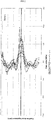
- the stress profile in the thickness for the L direction is given in the figure 2 .
- the measured total energy W tot was 0.03 kJ / m 3 for sample A, 0.04 kJ / m 3 for sample B and 0.05 kJ / m 3 for sample C.
- Sample A according to the invention therefore has a lower level of internal stresses which is advantageous for machining parts.
- the products have been characterized in the L - TL plane at the surface (or after slight machining) or after machining to mid - thickness.
- treatment I the product is defatted, pickled with an alkaline solution and then neutralized with a nitric acid solution before undergoing anodization at a temperature of between 0 and 5 ° C. in a sulpho-oxalic bath. (sulfuric acid 180 g / l + oxalic acid 14 g / l).
- a hydration treatment of the anodic layer is carried out in two stages: 20 min at 50 ° C in deionized water and then about 80 min in deionized water to boiling in the presence of a derivative anti-dust additive Anodal-SH1® triazine.
- the anode layer obtained had a thickness of about 40 microns.
- the product is defatted, pickled with an alkaline solution and then neutralized with a nitric acid solution before undergoing anodization at a temperature of about 20 ° C. in a sulpho-oxalic bath ( sulfuric acid 160 g / l + oxalic acid 20 g / l + 15 g / l glycerol).
- a hydration treatment of the anodic layer is carried out in two stages: 20 min at 50 ° C in deionized water and then about 80 min in deionized water to boiling in the presence of a derivative anti-dust additive Anodal-SH1® triazine.
- the anode layer obtained had a thickness of about 35 or 50 microns.
- the anode layers were characterized by the following tests.
- the breakdown voltage characterizes the voltage at which a first electrical current passes through the anode layer.
- the measurement method is described in EN ISO 2376: 2010. The values are given in absolute value after DC measurement.
- the "bubble test” is a corrosion test that makes it possible to characterize the quality of the anodic layer by measuring the duration of appearance of the first bubbles in a hydrochloric acid solution.
- a 20 mm diameter flat surface of the sample is contacted at room temperature with a 5% by weight solution of HCl.
- the characteristic time is the time from which a continuous flow of gas bubbles from at least one discrete point of the surface of the anodized aluminum is visible.
- Table 4 - characterization of products after anodization Position anodizing Alloy Target layer thickness ( ⁇ m) Bubble test (min) Breakdown voltage (KV) Area Type I AT 40 50 1.5 B 40 25 2.2 VS 40 180 2.6 Type II AT 35 2400 2.0 AT 50 3000 2.3 B 35 1980 3.0 VS 35 2700 2.8 D 30 > 1440 2.4 Medium thickness Type I AT 40 50 1.8 B 40 135 2.0 VS 40 75 2.3 Type II AT 35 2900 2.1 AT 50 3000 2.2 B 35 720 2.8 VS 35 1700 2.8
- the product according to the invention has, whatever the surface treatment, a high homogeneity of properties between surface and mid-thickness. Bubble test times are particularly high with the anodization according to the invention.
- the corrosion resistance of alloy thick plates according to the invention was evaluated in comparison with a reference 6061 alloy sheet.
- An alloy sheet A having a thickness of 102 mm was prepared according to the method described in Example 1.
- a reference 6061 alloy sheet was also prepared to a thickness of 100 mm.
- the sheets obtained were then treated with the type II surface treatment described in Example 1.
- the products thus obtained were characterized by the bubble test described in Example 1.
- the duration of appearance of bubbles of Hydrogen was 60 minutes for 6061 alloy sheets while it was 320 minutes for Alloy sheets.
Landscapes
- Chemical & Material Sciences (AREA)
- Engineering & Computer Science (AREA)
- Organic Chemistry (AREA)
- Materials Engineering (AREA)
- Metallurgy (AREA)
- Chemical Kinetics & Catalysis (AREA)
- Mechanical Engineering (AREA)
- Electrochemistry (AREA)
- Physics & Mathematics (AREA)
- Thermal Sciences (AREA)
- Crystallography & Structural Chemistry (AREA)
- Analytical Chemistry (AREA)
- Plasma & Fusion (AREA)
- General Chemical & Material Sciences (AREA)
- ing And Chemical Polishing (AREA)
- Cleaning And De-Greasing Of Metallic Materials By Chemical Methods (AREA)
- Heat Treatment Of Articles (AREA)
- Chemical Vapour Deposition (AREA)
- Fuel Cell (AREA)
Claims (6)
- Verfahren zur Herstellung eines Vakuumkammerelementes, bei dem nacheinandera. ein Walzbarren aus einer Aluminiumlegierung folgender Zusammensetzung (in Gew.-%) gegossen wird: Si: 0,4 - 0,7 ; Mg: 0,4 - 0,7 ; Ti: 0,01 - <0,15 ; Fe < 0,25 ; Cu < 0, 04 ; Mn < 0,4 ; Cr: 0,01 - < 0,1 ; Zn < 0,04 ; weitere Elemente jeweils < 0,05 und insgesamt < 0,15, Rest Aluminium,b. der Walzbarren wahlweise homogenisiert wird,c. der Walzbarren bei einer Temperatur oberhalb 450 °C zu einem Blech von mindestens 10 mm Dicke gewalzt wird,d. das Blech lösungsgeglüht und abgeschreckt wird,e. das lösungsgeglühte und abgeschreckte Blech durch kontrolliertes Recken mit einer bleibenden Dehnung von 1 bis 5 % spannungsarm gemacht wird,f. das so gereckte Blech einer Auslagerungsbehandlung unterworfen wird,g. das ausgelagerte Blech zu einem Vakuumkammerelement verarbeitet wird,h. das erhaltene Vakuumkammerelement einer Oberflächenbehandlung unterworfen wird, welche vorzugsweise ein Anodisieren bei einer Temperatur zwischen 10 und 30 °C mit einer Lösung enthaltend 100 bis 300 g/l Schwefelsäure und 10 bis 30 g/l Oxalsäure und 5 bis 30 g/l mindestens eines Polyols umfasst.
- Verfahren zur Herstellung eines Vakuumkammerelementes, bei dem nacheinander- ein Blech aus einer Aluminiumlegierung der Serie 5XXX oder der Serie 6XXX von mindestens 10 mm Dicke bereitgestellt wird,- das Blech zu einem Vakuumkammerelement verarbeitet wird,- das Vakuumkammerelement entfettet und/oder gebeizt wird,- bei einer Temperatur zwischen 10 und 30 °C mit einer Lösung enthaltend 100 bis 300 g/l Schwefelsäure und 10 bis 30 g/l Oxalsäure und 5 bis 30 g/l mindestens eines Polyols anodisiert wird,- das so anodisierte Erzeugnis in entionisiertem Wasser bei einer Temperatur von mindestens 98 °C vorzugsweise für eine Dauer von mindestens 1 h wahlweise hydratisiert wird.
- Verfahren nach Anspruch 2, bei dem mindestens ein Polyol unter Ethylenglykol, Propylenglykol oder Glyzerin ausgewählt wird.
- Verfahren nach Anspruch 2 oder Anspruch 3, bei dem das Anodisieren mit einer Stromdichte zwischen 1 und 5 A/dm2 erfolgt.
- Verfahren nach irgendeinem der Ansprüche 2 bis 4, bei dem das Hydratisieren in zwei Schritten erfolgt, einem ersten Schritt für eine Dauer von mindestens 10 min bei einer Temperatur von 20 bis 70 °C und einem zweiten Schritt für eine Dauer von mindestens 1 h bei einer Temperatur von mindestens 98 °C.
- Verfahren nach irgendeinem der Ansprüche 2 bis 5, bei dem die Dicke der erhaltenen Anodenschicht zwischen 20 und 80 µm beträgt.
Priority Applications (1)
| Application Number | Priority Date | Filing Date | Title |
|---|---|---|---|
| EP16205240.1A EP3168316B1 (de) | 2012-10-17 | 2013-10-15 | Vakuumkammerelement aus aluminiumlegierung |
Applications Claiming Priority (3)
| Application Number | Priority Date | Filing Date | Title |
|---|---|---|---|
| FR1202766A FR2996857B1 (fr) | 2012-10-17 | 2012-10-17 | Elements de chambres a vide en alliage d'aluminium |
| US201261728021P | 2012-11-19 | 2012-11-19 | |
| PCT/FR2013/000271 WO2014060660A1 (fr) | 2012-10-17 | 2013-10-15 | Eléments de chambres à vide en alliage d'aluminium |
Related Child Applications (2)
| Application Number | Title | Priority Date | Filing Date |
|---|---|---|---|
| EP16205240.1A Division-Into EP3168316B1 (de) | 2012-10-17 | 2013-10-15 | Vakuumkammerelement aus aluminiumlegierung |
| EP16205240.1A Division EP3168316B1 (de) | 2012-10-17 | 2013-10-15 | Vakuumkammerelement aus aluminiumlegierung |
Publications (2)
| Publication Number | Publication Date |
|---|---|
| EP2909351A1 EP2909351A1 (de) | 2015-08-26 |
| EP2909351B1 true EP2909351B1 (de) | 2017-02-01 |
Family
ID=47901155
Family Applications (2)
| Application Number | Title | Priority Date | Filing Date |
|---|---|---|---|
| EP13792051.8A Active EP2909351B1 (de) | 2012-10-17 | 2013-10-15 | Verfahren zur herstellung eines vakuumkammerelements aus aluminiumlegierung |
| EP16205240.1A Active EP3168316B1 (de) | 2012-10-17 | 2013-10-15 | Vakuumkammerelement aus aluminiumlegierung |
Family Applications After (1)
| Application Number | Title | Priority Date | Filing Date |
|---|---|---|---|
| EP16205240.1A Active EP3168316B1 (de) | 2012-10-17 | 2013-10-15 | Vakuumkammerelement aus aluminiumlegierung |
Country Status (11)
| Country | Link |
|---|---|
| US (1) | US20150255253A1 (de) |
| EP (2) | EP2909351B1 (de) |
| JP (1) | JP6438400B2 (de) |
| KR (2) | KR102032686B1 (de) |
| CN (1) | CN104797726B (de) |
| FR (2) | FR2996857B1 (de) |
| MX (1) | MX2015004667A (de) |
| MY (1) | MY173510A (de) |
| SG (1) | SG11201503003YA (de) |
| TW (1) | TWI615480B (de) |
| WO (1) | WO2014060660A1 (de) |
Cited By (1)
| Publication number | Priority date | Publication date | Assignee | Title |
|---|---|---|---|---|
| WO2022260839A1 (en) * | 2021-06-09 | 2022-12-15 | Applied Materials, Inc. | Gas quench for diffusion bonding |
Families Citing this family (14)
| Publication number | Priority date | Publication date | Assignee | Title |
|---|---|---|---|---|
| CN105734640A (zh) * | 2014-12-12 | 2016-07-06 | 富泰华工业(深圳)有限公司 | 铝合金件阳极氧化和表面处理方法,及其阳极氧化处理液 |
| CA3032261A1 (en) | 2016-08-26 | 2018-03-01 | Shape Corp. | Warm forming process and apparatus for transverse bending of an extruded aluminum beam to warm form a vehicle structural component |
| CN110114498A (zh) | 2016-10-24 | 2019-08-09 | 形状集团 | 用于生产车辆零件的多阶段铝合金形成与热加工方法 |
| FR3063740B1 (fr) * | 2017-03-10 | 2019-03-15 | Constellium Issoire | Elements de chambres a vide en alliage d’aluminium stables a haute temperature |
| CN108220706B (zh) * | 2018-01-02 | 2020-03-13 | 山东友升铝业有限公司 | 一种改善挤压型材圧溃性能用变形铝合金 |
| KR102434345B1 (ko) * | 2018-03-08 | 2022-08-19 | 베이징 나우라 마이크로일렉트로닉스 이큅먼트 씨오., 엘티디. | 반응 챔버 부재 및 그 제조 방법, 반응 챔버 |
| CN110246738A (zh) * | 2018-03-08 | 2019-09-17 | 北京北方华创微电子装备有限公司 | 反应腔室部件结构及其制备方法、反应腔室 |
| JP7248399B2 (ja) * | 2018-09-14 | 2023-03-29 | 株式会社Lixil | アルミニウム形材、建具及びアルミニウム形材の製造方法 |
| FR3101641B1 (fr) | 2019-10-04 | 2022-01-21 | Constellium Issoire | Tôles de précision en alliage d’aluminium |
| JP7507562B2 (ja) * | 2020-01-08 | 2024-06-28 | 川崎重工業株式会社 | 水素ガス用のバルブブロック、及びその製造方法 |
| EP3922743B1 (de) * | 2020-06-10 | 2024-07-24 | Novelis Koblenz GmbH | Verfahren zur herstellung einer aluminiumlegierungsplatte für vakuumkammerelemente |
| KR102467268B1 (ko) * | 2020-10-29 | 2022-11-17 | 주식회사 영광와이케이엠씨 | 옥살산 전해액에서 전류밀도 변화에 따른 아노다이징 처리 방법 |
| FR3136242B1 (fr) | 2022-06-01 | 2024-05-03 | Constellium Valais | Tôles pour éléments de chambres à vide en alliage d’aluminium |
| TWI830452B (zh) | 2022-10-21 | 2024-01-21 | 財團法人工業技術研究院 | 鋁合金材料與鋁合金物件及其形成方法 |
Family Cites Families (32)
| Publication number | Priority date | Publication date | Assignee | Title |
|---|---|---|---|---|
| US3524799A (en) * | 1969-06-13 | 1970-08-18 | Reynolds Metals Co | Anodizing aluminum |
| SU466298A1 (ru) * | 1969-12-08 | 1975-04-05 | Предприятие П/Я Р-6209 | Способ анодировани алюмини и его сплавов |
| US3647649A (en) * | 1970-02-24 | 1972-03-07 | Alcor Chem | Method and composition for sealing anodized aluminum surfaces |
| IT1163151B (it) * | 1983-03-18 | 1987-04-08 | Italia Alluminio | Lega di alluminio per elementi di serramenti blindati antiproiettile |
| US4526660A (en) * | 1984-02-06 | 1985-07-02 | Garriga Eliseo B | Anodizing method |
| US5225068A (en) * | 1989-05-26 | 1993-07-06 | Gebr. Happich Gmbh | Method of compacting an anodically produced layer of oxide on parts of aluminum or aluminum alloy |
| US5674371A (en) * | 1989-11-08 | 1997-10-07 | Clariant Finance (Bvi) Limited | Process for electrolytically treating aluminum and compositions therefor |
| US6027629A (en) | 1994-11-16 | 2000-02-22 | Kabushiki Kaisha Kobe Seiko Sho | Vacuum chamber made of aluminum or its alloys, and surface treatment and material for the vacuum chamber |
| JPH11140690A (ja) | 1997-11-14 | 1999-05-25 | Kobe Steel Ltd | 耐熱割れ性および耐食性に優れたAl材料 |
| JP3919996B2 (ja) * | 2000-02-04 | 2007-05-30 | 株式会社神戸製鋼所 | プラズマ処理装置用アルミニウム合金、プラズマ処理装置用アルミニウム合金部材およびプラズマ処理装置 |
| US6521046B2 (en) * | 2000-02-04 | 2003-02-18 | Kabushiki Kaisha Kobe Seiko Sho | Chamber material made of Al alloy and heater block |
| JP2001288527A (ja) * | 2000-02-04 | 2001-10-19 | Kobe Steel Ltd | プラズマ処理装置用アルミニウム合金およびヒータブロック |
| CN1109768C (zh) * | 2000-04-13 | 2003-05-28 | 上海稀土材料中心 | 一种耐腐蚀铝合金型材及其制造方法 |
| US6613167B2 (en) * | 2001-06-01 | 2003-09-02 | Alcoa Inc. | Process to improve 6XXX alloys by reducing altered density sites |
| JP2003034894A (ja) | 2001-07-25 | 2003-02-07 | Kobe Steel Ltd | 耐腐食性に優れたAl合金部材 |
| US7033447B2 (en) * | 2002-02-08 | 2006-04-25 | Applied Materials, Inc. | Halogen-resistant, anodized aluminum for use in semiconductor processing apparatus |
| US6565984B1 (en) | 2002-05-28 | 2003-05-20 | Applied Materials Inc. | Clean aluminum alloy for semiconductor processing equipment |
| JP2004225113A (ja) | 2003-01-23 | 2004-08-12 | Kobe Steel Ltd | 耐腐食性及び耐プラズマ性に優れたAl合金部材 |
| CA2637273C (en) * | 2006-03-31 | 2014-02-25 | Kabushiki Kaisha Kobe Seiko Sho (Kobe Steel, Ltd.) | Aluminum alloy forging member and method for producing the same |
| JP4174526B2 (ja) * | 2006-05-18 | 2008-11-05 | 株式会社神戸製鋼所 | アルミニウム合金厚板の製造方法およびアルミニウム合金厚板 |
| CN100585023C (zh) * | 2006-07-25 | 2010-01-27 | 台山市金桥铝型材厂有限公司 | 一种铝型材的硬质阳极氧化膜的制备工艺 |
| JP4168066B2 (ja) | 2006-08-11 | 2008-10-22 | 株式会社神戸製鋼所 | プラズマ処理装置に用いられる陽極酸化処理用アルミニウム合金およびその製造方法、陽極酸化皮膜を有するアルミニウム合金部材、ならびにプラズマ処理装置 |
| CN100564608C (zh) * | 2006-12-21 | 2009-12-02 | 上海交通大学 | 两步电化学制备铝基复合材料表面防护涂层的方法 |
| JP4231529B2 (ja) * | 2007-03-30 | 2009-03-04 | 株式会社神戸製鋼所 | アルミニウム合金厚板の製造方法およびアルミニウム合金厚板 |
| FR2919307B1 (fr) * | 2007-07-27 | 2009-10-02 | Alcan Rhenalu Sa | Produit file en alliage d'aluminium ai-mg-si a resistance a la corrosion amelioree |
| JP5064935B2 (ja) * | 2007-08-22 | 2012-10-31 | 株式会社神戸製鋼所 | 耐久性と低汚染性を兼備した陽極酸化処理アルミニウム合金 |
| JP5626956B2 (ja) * | 2009-10-22 | 2014-11-19 | 日本碍子株式会社 | 析出硬化型合金薄帯の製造装置、冷却ロール及び析出硬化型合金薄帯の製造方法 |
| FR2955336B1 (fr) * | 2010-01-20 | 2013-02-15 | Alcan Rhenalu | Procede de fabrication de produits en alliage 6xxx pour chambre a vide |
| CN105063522B (zh) * | 2010-09-08 | 2018-09-28 | 奥科宁克公司 | 改进的6xxx铝合金及其生产方法 |
| FR2969177B1 (fr) * | 2010-12-20 | 2012-12-21 | Alcan Rhenalu | Alliage aluminium cuivre lithium a resistance en compression et tenacite ameliorees |
| KR101193571B1 (ko) * | 2011-12-23 | 2012-10-25 | (주)아인스 | 알루미늄 피막 형성을 위한 전해액 및 이를 이용한 알루미늄 피막 형성방법 |
| CN102492877B (zh) * | 2011-12-31 | 2013-06-19 | 辽宁忠旺集团有限公司 | 一种大径铝合金管材挤压加工工艺 |
-
2012
- 2012-10-17 FR FR1202766A patent/FR2996857B1/fr not_active Expired - Fee Related
-
2013
- 2013-03-12 FR FR1300548A patent/FR2996859B1/fr active Active
- 2013-10-15 KR KR1020197010212A patent/KR102032686B1/ko active Active
- 2013-10-15 MX MX2015004667A patent/MX2015004667A/es unknown
- 2013-10-15 EP EP13792051.8A patent/EP2909351B1/de active Active
- 2013-10-15 KR KR1020157010279A patent/KR101970043B1/ko active Active
- 2013-10-15 US US14/434,465 patent/US20150255253A1/en not_active Abandoned
- 2013-10-15 SG SG11201503003YA patent/SG11201503003YA/en unknown
- 2013-10-15 MY MYPI2015701191A patent/MY173510A/en unknown
- 2013-10-15 WO PCT/FR2013/000271 patent/WO2014060660A1/fr not_active Ceased
- 2013-10-15 CN CN201380054223.XA patent/CN104797726B/zh active Active
- 2013-10-15 JP JP2015537319A patent/JP6438400B2/ja active Active
- 2013-10-15 EP EP16205240.1A patent/EP3168316B1/de active Active
- 2013-10-16 TW TW102137365A patent/TWI615480B/zh active
Non-Patent Citations (1)
| Title |
|---|
| None * |
Cited By (2)
| Publication number | Priority date | Publication date | Assignee | Title |
|---|---|---|---|---|
| WO2022260839A1 (en) * | 2021-06-09 | 2022-12-15 | Applied Materials, Inc. | Gas quench for diffusion bonding |
| US11905583B2 (en) | 2021-06-09 | 2024-02-20 | Applied Materials, Inc. | Gas quench for diffusion bonding |
Also Published As
| Publication number | Publication date |
|---|---|
| MY173510A (en) | 2020-01-30 |
| FR2996859B1 (fr) | 2015-06-05 |
| CN104797726A (zh) | 2015-07-22 |
| SG11201503003YA (en) | 2015-05-28 |
| EP2909351A1 (de) | 2015-08-26 |
| US20150255253A1 (en) | 2015-09-10 |
| MX2015004667A (es) | 2015-07-23 |
| CN104797726B (zh) | 2017-10-24 |
| KR20190040378A (ko) | 2019-04-17 |
| WO2014060660A8 (fr) | 2015-05-14 |
| TW201422821A (zh) | 2014-06-16 |
| EP3168316A1 (de) | 2017-05-17 |
| EP3168316B1 (de) | 2018-12-26 |
| FR2996857A1 (fr) | 2014-04-18 |
| FR2996857B1 (fr) | 2015-02-27 |
| JP2016500757A (ja) | 2016-01-14 |
| KR102032686B1 (ko) | 2019-10-15 |
| FR2996859A1 (fr) | 2014-04-18 |
| WO2014060660A1 (fr) | 2014-04-24 |
| TWI615480B (zh) | 2018-02-21 |
| KR20150067211A (ko) | 2015-06-17 |
| KR101970043B1 (ko) | 2019-04-17 |
| JP6438400B2 (ja) | 2018-12-12 |
Similar Documents
| Publication | Publication Date | Title |
|---|---|---|
| EP3168316B1 (de) | Vakuumkammerelement aus aluminiumlegierung | |
| EP3592875B1 (de) | Bei hoher temperatur stabile vakuumkammerelemente aus aluminiumlegierung | |
| EP2526216B1 (de) | Verfahren zur herstellung von 6xxx-legierungsmaterialien für vakuumkammern | |
| EP2984195B1 (de) | Verfahren zur umformung von blechen aus al-cu-li-legierung für verbesserte formbarkeit und korrosionsbeständigkeit | |
| EP3526358B1 (de) | Dünne bleche aus aluminium-magnesium-scandium-legierung für anwendungen in der luft- und raumfahrt | |
| EP2652163B1 (de) | Dicke produkte aus 7xxx-legierungen und deren herstellungsverfahren | |
| CN104471091B (zh) | 阳极氧化处理性优异的铝合金和阳极氧化处理铝合金构件 | |
| EP4038214B1 (de) | Präzisionsplatten aus aluminiumlegierung | |
| EP3728667B1 (de) | Verbessertes verfahren zur herstellung von blechen aus einer aluminium-kupfer-lithium-legierung für die herstellung von flugzeugrümpfen und entsprechendem blech | |
| TW201710521A (zh) | 具有陽極氧化被膜且外觀品質良好的鋁合金擠製材料及其製造方法 | |
| EP3122912B1 (de) | Extrudiertes produkt aus legierung 6xxx geeignet für automatendrehen und mit einer geringen rauhigkeit nach der anodisierung | |
| WO2023233090A1 (fr) | Toles pour elements de chambres a vide en alliage d'aluminium | |
| CN101103130A (zh) | 用作电解电容器电极的铝材料,电解电容器电极材料的制造方法,铝电解电容器的阳极材料,以及铝电解电容器 |
Legal Events
| Date | Code | Title | Description |
|---|---|---|---|
| PUAI | Public reference made under article 153(3) epc to a published international application that has entered the european phase |
Free format text: ORIGINAL CODE: 0009012 |
|
| 17P | Request for examination filed |
Effective date: 20150507 |
|
| AK | Designated contracting states |
Kind code of ref document: A1 Designated state(s): AL AT BE BG CH CY CZ DE DK EE ES FI FR GB GR HR HU IE IS IT LI LT LU LV MC MK MT NL NO PL PT RO RS SE SI SK SM TR |
|
| AX | Request for extension of the european patent |
Extension state: BA ME |
|
| RIN1 | Information on inventor provided before grant (corrected) |
Inventor name: VAN KAPPEL JOOST MICHEL Inventor name: DAVO GUTIERREZ MARIA BELEN Inventor name: PIPPIG SCHMID KRISTIN Inventor name: GASQUERES CEDRIC |
|
| DAX | Request for extension of the european patent (deleted) | ||
| RAP1 | Party data changed (applicant data changed or rights of an application transferred) |
Owner name: CONSTELLIUM FRANCE Owner name: CONSTELLIUM VALAIS SA (AG, LTD) |
|
| 17Q | First examination report despatched |
Effective date: 20160208 |
|
| RAP1 | Party data changed (applicant data changed or rights of an application transferred) |
Owner name: CONSTELLIUM ISSOIRE Owner name: CONSTELLIUM VALAIS SA (AG, LTD) |
|
| GRAP | Despatch of communication of intention to grant a patent |
Free format text: ORIGINAL CODE: EPIDOSNIGR1 |
|
| INTG | Intention to grant announced |
Effective date: 20160824 |
|
| GRAS | Grant fee paid |
Free format text: ORIGINAL CODE: EPIDOSNIGR3 |
|
| GRAA | (expected) grant |
Free format text: ORIGINAL CODE: 0009210 |
|
| AK | Designated contracting states |
Kind code of ref document: B1 Designated state(s): AL AT BE BG CH CY CZ DE DK EE ES FI FR GB GR HR HU IE IS IT LI LT LU LV MC MK MT NL NO PL PT RO RS SE SI SK SM TR |
|
| REG | Reference to a national code |
Ref country code: GB Ref legal event code: FG4D Free format text: NOT ENGLISH |
|
| REG | Reference to a national code |
Ref country code: CH Ref legal event code: EP Ref country code: AT Ref legal event code: REF Ref document number: 865667 Country of ref document: AT Kind code of ref document: T Effective date: 20170215 |
|
| REG | Reference to a national code |
Ref country code: IE Ref legal event code: FG4D Free format text: LANGUAGE OF EP DOCUMENT: FRENCH |
|
| REG | Reference to a national code |
Ref country code: NL Ref legal event code: FP |
|
| REG | Reference to a national code |
Ref country code: DE Ref legal event code: R096 Ref document number: 602013017114 Country of ref document: DE |
|
| REG | Reference to a national code |
Ref country code: LT Ref legal event code: MG4D |
|
| REG | Reference to a national code |
Ref country code: AT Ref legal event code: MK05 Ref document number: 865667 Country of ref document: AT Kind code of ref document: T Effective date: 20170201 |
|
| PG25 | Lapsed in a contracting state [announced via postgrant information from national office to epo] |
Ref country code: IS Free format text: LAPSE BECAUSE OF FAILURE TO SUBMIT A TRANSLATION OF THE DESCRIPTION OR TO PAY THE FEE WITHIN THE PRESCRIBED TIME-LIMIT Effective date: 20170601 Ref country code: GR Free format text: LAPSE BECAUSE OF FAILURE TO SUBMIT A TRANSLATION OF THE DESCRIPTION OR TO PAY THE FEE WITHIN THE PRESCRIBED TIME-LIMIT Effective date: 20170502 Ref country code: HR Free format text: LAPSE BECAUSE OF FAILURE TO SUBMIT A TRANSLATION OF THE DESCRIPTION OR TO PAY THE FEE WITHIN THE PRESCRIBED TIME-LIMIT Effective date: 20170201 Ref country code: FI Free format text: LAPSE BECAUSE OF FAILURE TO SUBMIT A TRANSLATION OF THE DESCRIPTION OR TO PAY THE FEE WITHIN THE PRESCRIBED TIME-LIMIT Effective date: 20170201 Ref country code: LT Free format text: LAPSE BECAUSE OF FAILURE TO SUBMIT A TRANSLATION OF THE DESCRIPTION OR TO PAY THE FEE WITHIN THE PRESCRIBED TIME-LIMIT Effective date: 20170201 Ref country code: NO Free format text: LAPSE BECAUSE OF FAILURE TO SUBMIT A TRANSLATION OF THE DESCRIPTION OR TO PAY THE FEE WITHIN THE PRESCRIBED TIME-LIMIT Effective date: 20170501 |
|
| PG25 | Lapsed in a contracting state [announced via postgrant information from national office to epo] |
Ref country code: ES Free format text: LAPSE BECAUSE OF FAILURE TO SUBMIT A TRANSLATION OF THE DESCRIPTION OR TO PAY THE FEE WITHIN THE PRESCRIBED TIME-LIMIT Effective date: 20170201 Ref country code: BG Free format text: LAPSE BECAUSE OF FAILURE TO SUBMIT A TRANSLATION OF THE DESCRIPTION OR TO PAY THE FEE WITHIN THE PRESCRIBED TIME-LIMIT Effective date: 20170501 Ref country code: LV Free format text: LAPSE BECAUSE OF FAILURE TO SUBMIT A TRANSLATION OF THE DESCRIPTION OR TO PAY THE FEE WITHIN THE PRESCRIBED TIME-LIMIT Effective date: 20170201 Ref country code: PL Free format text: LAPSE BECAUSE OF FAILURE TO SUBMIT A TRANSLATION OF THE DESCRIPTION OR TO PAY THE FEE WITHIN THE PRESCRIBED TIME-LIMIT Effective date: 20170201 Ref country code: AT Free format text: LAPSE BECAUSE OF FAILURE TO SUBMIT A TRANSLATION OF THE DESCRIPTION OR TO PAY THE FEE WITHIN THE PRESCRIBED TIME-LIMIT Effective date: 20170201 Ref country code: SE Free format text: LAPSE BECAUSE OF FAILURE TO SUBMIT A TRANSLATION OF THE DESCRIPTION OR TO PAY THE FEE WITHIN THE PRESCRIBED TIME-LIMIT Effective date: 20170201 Ref country code: PT Free format text: LAPSE BECAUSE OF FAILURE TO SUBMIT A TRANSLATION OF THE DESCRIPTION OR TO PAY THE FEE WITHIN THE PRESCRIBED TIME-LIMIT Effective date: 20170601 Ref country code: RS Free format text: LAPSE BECAUSE OF FAILURE TO SUBMIT A TRANSLATION OF THE DESCRIPTION OR TO PAY THE FEE WITHIN THE PRESCRIBED TIME-LIMIT Effective date: 20170201 |
|
| REG | Reference to a national code |
Ref country code: FR Ref legal event code: PLFP Year of fee payment: 5 |
|
| PG25 | Lapsed in a contracting state [announced via postgrant information from national office to epo] |
Ref country code: SK Free format text: LAPSE BECAUSE OF FAILURE TO SUBMIT A TRANSLATION OF THE DESCRIPTION OR TO PAY THE FEE WITHIN THE PRESCRIBED TIME-LIMIT Effective date: 20170201 Ref country code: RO Free format text: LAPSE BECAUSE OF FAILURE TO SUBMIT A TRANSLATION OF THE DESCRIPTION OR TO PAY THE FEE WITHIN THE PRESCRIBED TIME-LIMIT Effective date: 20170201 Ref country code: EE Free format text: LAPSE BECAUSE OF FAILURE TO SUBMIT A TRANSLATION OF THE DESCRIPTION OR TO PAY THE FEE WITHIN THE PRESCRIBED TIME-LIMIT Effective date: 20170201 Ref country code: CZ Free format text: LAPSE BECAUSE OF FAILURE TO SUBMIT A TRANSLATION OF THE DESCRIPTION OR TO PAY THE FEE WITHIN THE PRESCRIBED TIME-LIMIT Effective date: 20170201 Ref country code: IT Free format text: LAPSE BECAUSE OF FAILURE TO SUBMIT A TRANSLATION OF THE DESCRIPTION OR TO PAY THE FEE WITHIN THE PRESCRIBED TIME-LIMIT Effective date: 20170201 |
|
| REG | Reference to a national code |
Ref country code: DE Ref legal event code: R097 Ref document number: 602013017114 Country of ref document: DE |
|
| PG25 | Lapsed in a contracting state [announced via postgrant information from national office to epo] |
Ref country code: DK Free format text: LAPSE BECAUSE OF FAILURE TO SUBMIT A TRANSLATION OF THE DESCRIPTION OR TO PAY THE FEE WITHIN THE PRESCRIBED TIME-LIMIT Effective date: 20170201 Ref country code: SM Free format text: LAPSE BECAUSE OF FAILURE TO SUBMIT A TRANSLATION OF THE DESCRIPTION OR TO PAY THE FEE WITHIN THE PRESCRIBED TIME-LIMIT Effective date: 20170201 |
|
| PLBE | No opposition filed within time limit |
Free format text: ORIGINAL CODE: 0009261 |
|
| STAA | Information on the status of an ep patent application or granted ep patent |
Free format text: STATUS: NO OPPOSITION FILED WITHIN TIME LIMIT |
|
| 26N | No opposition filed |
Effective date: 20171103 |
|
| PG25 | Lapsed in a contracting state [announced via postgrant information from national office to epo] |
Ref country code: SI Free format text: LAPSE BECAUSE OF FAILURE TO SUBMIT A TRANSLATION OF THE DESCRIPTION OR TO PAY THE FEE WITHIN THE PRESCRIBED TIME-LIMIT Effective date: 20170201 |
|
| PG25 | Lapsed in a contracting state [announced via postgrant information from national office to epo] |
Ref country code: MC Free format text: LAPSE BECAUSE OF FAILURE TO SUBMIT A TRANSLATION OF THE DESCRIPTION OR TO PAY THE FEE WITHIN THE PRESCRIBED TIME-LIMIT Effective date: 20170201 |
|
| REG | Reference to a national code |
Ref country code: IE Ref legal event code: MM4A |
|
| PG25 | Lapsed in a contracting state [announced via postgrant information from national office to epo] |
Ref country code: LU Free format text: LAPSE BECAUSE OF NON-PAYMENT OF DUE FEES Effective date: 20171015 |
|
| PG25 | Lapsed in a contracting state [announced via postgrant information from national office to epo] |
Ref country code: MT Free format text: LAPSE BECAUSE OF FAILURE TO SUBMIT A TRANSLATION OF THE DESCRIPTION OR TO PAY THE FEE WITHIN THE PRESCRIBED TIME-LIMIT Effective date: 20170201 |
|
| REG | Reference to a national code |
Ref country code: FR Ref legal event code: PLFP Year of fee payment: 6 |
|
| PG25 | Lapsed in a contracting state [announced via postgrant information from national office to epo] |
Ref country code: IE Free format text: LAPSE BECAUSE OF NON-PAYMENT OF DUE FEES Effective date: 20171015 |
|
| PG25 | Lapsed in a contracting state [announced via postgrant information from national office to epo] |
Ref country code: HU Free format text: LAPSE BECAUSE OF FAILURE TO SUBMIT A TRANSLATION OF THE DESCRIPTION OR TO PAY THE FEE WITHIN THE PRESCRIBED TIME-LIMIT; INVALID AB INITIO Effective date: 20131015 |
|
| PG25 | Lapsed in a contracting state [announced via postgrant information from national office to epo] |
Ref country code: CY Free format text: LAPSE BECAUSE OF FAILURE TO SUBMIT A TRANSLATION OF THE DESCRIPTION OR TO PAY THE FEE WITHIN THE PRESCRIBED TIME-LIMIT Effective date: 20170201 |
|
| PG25 | Lapsed in a contracting state [announced via postgrant information from national office to epo] |
Ref country code: MK Free format text: LAPSE BECAUSE OF FAILURE TO SUBMIT A TRANSLATION OF THE DESCRIPTION OR TO PAY THE FEE WITHIN THE PRESCRIBED TIME-LIMIT Effective date: 20170201 |
|
| PG25 | Lapsed in a contracting state [announced via postgrant information from national office to epo] |
Ref country code: TR Free format text: LAPSE BECAUSE OF FAILURE TO SUBMIT A TRANSLATION OF THE DESCRIPTION OR TO PAY THE FEE WITHIN THE PRESCRIBED TIME-LIMIT Effective date: 20170201 |
|
| PG25 | Lapsed in a contracting state [announced via postgrant information from national office to epo] |
Ref country code: AL Free format text: LAPSE BECAUSE OF FAILURE TO SUBMIT A TRANSLATION OF THE DESCRIPTION OR TO PAY THE FEE WITHIN THE PRESCRIBED TIME-LIMIT Effective date: 20170201 |
|
| P01 | Opt-out of the competence of the unified patent court (upc) registered |
Effective date: 20230411 |
|
| PGFP | Annual fee paid to national office [announced via postgrant information from national office to epo] |
Ref country code: DE Payment date: 20241029 Year of fee payment: 12 |
|
| REG | Reference to a national code |
Ref country code: DE Ref legal event code: R084 Ref document number: 602013017114 Country of ref document: DE |
|
| PGFP | Annual fee paid to national office [announced via postgrant information from national office to epo] |
Ref country code: BE Payment date: 20241028 Year of fee payment: 12 |
|
| PGFP | Annual fee paid to national office [announced via postgrant information from national office to epo] |
Ref country code: GB Payment date: 20241028 Year of fee payment: 12 |
|
| PGFP | Annual fee paid to national office [announced via postgrant information from national office to epo] |
Ref country code: FR Payment date: 20241025 Year of fee payment: 12 |
|
| REG | Reference to a national code |
Ref country code: GB Ref legal event code: 746 Effective date: 20250305 |
|
| REG | Reference to a national code |
Ref country code: CH Ref legal event code: U11 Free format text: ST27 STATUS EVENT CODE: U-0-0-U10-U11 (AS PROVIDED BY THE NATIONAL OFFICE) Effective date: 20251101 |
|
| PGFP | Annual fee paid to national office [announced via postgrant information from national office to epo] |
Ref country code: NL Payment date: 20251026 Year of fee payment: 13 |
|
| PGFP | Annual fee paid to national office [announced via postgrant information from national office to epo] |
Ref country code: CH Payment date: 20251101 Year of fee payment: 13 |