EP2906341B1 - Bindemittelfreie kompakte zeolithische formkörper und verfahren zu deren herstellung - Google Patents
Bindemittelfreie kompakte zeolithische formkörper und verfahren zu deren herstellung Download PDFInfo
- Publication number
- EP2906341B1 EP2906341B1 EP13774164.1A EP13774164A EP2906341B1 EP 2906341 B1 EP2906341 B1 EP 2906341B1 EP 13774164 A EP13774164 A EP 13774164A EP 2906341 B1 EP2906341 B1 EP 2906341B1
- Authority
- EP
- European Patent Office
- Prior art keywords
- zeolite
- compact
- preforms
- water
- precursor components
- Prior art date
- Legal status (The legal status is an assumption and is not a legal conclusion. Google has not performed a legal analysis and makes no representation as to the accuracy of the status listed.)
- Revoked
Links
Images

Classifications
-
- B—PERFORMING OPERATIONS; TRANSPORTING
- B01—PHYSICAL OR CHEMICAL PROCESSES OR APPARATUS IN GENERAL
- B01J—CHEMICAL OR PHYSICAL PROCESSES, e.g. CATALYSIS OR COLLOID CHEMISTRY; THEIR RELEVANT APPARATUS
- B01J20/00—Solid sorbent compositions or filter aid compositions; Sorbents for chromatography; Processes for preparing, regenerating or reactivating thereof
- B01J20/02—Solid sorbent compositions or filter aid compositions; Sorbents for chromatography; Processes for preparing, regenerating or reactivating thereof comprising inorganic material
- B01J20/10—Solid sorbent compositions or filter aid compositions; Sorbents for chromatography; Processes for preparing, regenerating or reactivating thereof comprising inorganic material comprising silica or silicate
- B01J20/16—Alumino-silicates
- B01J20/18—Synthetic zeolitic molecular sieves
-
- B—PERFORMING OPERATIONS; TRANSPORTING
- B01—PHYSICAL OR CHEMICAL PROCESSES OR APPARATUS IN GENERAL
- B01D—SEPARATION
- B01D53/00—Separation of gases or vapours; Recovering vapours of volatile solvents from gases; Chemical or biological purification of waste gases, e.g. engine exhaust gases, smoke, fumes, flue gases, aerosols
- B01D53/02—Separation of gases or vapours; Recovering vapours of volatile solvents from gases; Chemical or biological purification of waste gases, e.g. engine exhaust gases, smoke, fumes, flue gases, aerosols by adsorption, e.g. preparative gas chromatography
-
- B—PERFORMING OPERATIONS; TRANSPORTING
- B01—PHYSICAL OR CHEMICAL PROCESSES OR APPARATUS IN GENERAL
- B01J—CHEMICAL OR PHYSICAL PROCESSES, e.g. CATALYSIS OR COLLOID CHEMISTRY; THEIR RELEVANT APPARATUS
- B01J20/00—Solid sorbent compositions or filter aid compositions; Sorbents for chromatography; Processes for preparing, regenerating or reactivating thereof
- B01J20/02—Solid sorbent compositions or filter aid compositions; Sorbents for chromatography; Processes for preparing, regenerating or reactivating thereof comprising inorganic material
- B01J20/10—Solid sorbent compositions or filter aid compositions; Sorbents for chromatography; Processes for preparing, regenerating or reactivating thereof comprising inorganic material comprising silica or silicate
- B01J20/16—Alumino-silicates
- B01J20/18—Synthetic zeolitic molecular sieves
- B01J20/186—Chemical treatments in view of modifying the properties of the sieve, e.g. increasing the stability or the activity, also decreasing the activity
-
- B—PERFORMING OPERATIONS; TRANSPORTING
- B01—PHYSICAL OR CHEMICAL PROCESSES OR APPARATUS IN GENERAL
- B01J—CHEMICAL OR PHYSICAL PROCESSES, e.g. CATALYSIS OR COLLOID CHEMISTRY; THEIR RELEVANT APPARATUS
- B01J20/00—Solid sorbent compositions or filter aid compositions; Sorbents for chromatography; Processes for preparing, regenerating or reactivating thereof
- B01J20/28—Solid sorbent compositions or filter aid compositions; Sorbents for chromatography; Processes for preparing, regenerating or reactivating thereof characterised by their form or physical properties
- B01J20/28014—Solid sorbent compositions or filter aid compositions; Sorbents for chromatography; Processes for preparing, regenerating or reactivating thereof characterised by their form or physical properties characterised by their form
- B01J20/28042—Shaped bodies; Monolithic structures
-
- B—PERFORMING OPERATIONS; TRANSPORTING
- B01—PHYSICAL OR CHEMICAL PROCESSES OR APPARATUS IN GENERAL
- B01J—CHEMICAL OR PHYSICAL PROCESSES, e.g. CATALYSIS OR COLLOID CHEMISTRY; THEIR RELEVANT APPARATUS
- B01J20/00—Solid sorbent compositions or filter aid compositions; Sorbents for chromatography; Processes for preparing, regenerating or reactivating thereof
- B01J20/28—Solid sorbent compositions or filter aid compositions; Sorbents for chromatography; Processes for preparing, regenerating or reactivating thereof characterised by their form or physical properties
- B01J20/28014—Solid sorbent compositions or filter aid compositions; Sorbents for chromatography; Processes for preparing, regenerating or reactivating thereof characterised by their form or physical properties characterised by their form
- B01J20/28042—Shaped bodies; Monolithic structures
- B01J20/28045—Honeycomb or cellular structures; Solid foams or sponges
-
- B—PERFORMING OPERATIONS; TRANSPORTING
- B01—PHYSICAL OR CHEMICAL PROCESSES OR APPARATUS IN GENERAL
- B01J—CHEMICAL OR PHYSICAL PROCESSES, e.g. CATALYSIS OR COLLOID CHEMISTRY; THEIR RELEVANT APPARATUS
- B01J20/00—Solid sorbent compositions or filter aid compositions; Sorbents for chromatography; Processes for preparing, regenerating or reactivating thereof
- B01J20/30—Processes for preparing, regenerating, or reactivating
- B01J20/3007—Moulding, shaping or extruding
-
- B—PERFORMING OPERATIONS; TRANSPORTING
- B01—PHYSICAL OR CHEMICAL PROCESSES OR APPARATUS IN GENERAL
- B01J—CHEMICAL OR PHYSICAL PROCESSES, e.g. CATALYSIS OR COLLOID CHEMISTRY; THEIR RELEVANT APPARATUS
- B01J20/00—Solid sorbent compositions or filter aid compositions; Sorbents for chromatography; Processes for preparing, regenerating or reactivating thereof
- B01J20/30—Processes for preparing, regenerating, or reactivating
- B01J20/3042—Use of binding agents; addition of materials ameliorating the mechanical properties of the produced sorbent
-
- B—PERFORMING OPERATIONS; TRANSPORTING
- B01—PHYSICAL OR CHEMICAL PROCESSES OR APPARATUS IN GENERAL
- B01J—CHEMICAL OR PHYSICAL PROCESSES, e.g. CATALYSIS OR COLLOID CHEMISTRY; THEIR RELEVANT APPARATUS
- B01J20/00—Solid sorbent compositions or filter aid compositions; Sorbents for chromatography; Processes for preparing, regenerating or reactivating thereof
- B01J20/30—Processes for preparing, regenerating, or reactivating
- B01J20/3071—Washing or leaching
-
- B—PERFORMING OPERATIONS; TRANSPORTING
- B01—PHYSICAL OR CHEMICAL PROCESSES OR APPARATUS IN GENERAL
- B01J—CHEMICAL OR PHYSICAL PROCESSES, e.g. CATALYSIS OR COLLOID CHEMISTRY; THEIR RELEVANT APPARATUS
- B01J20/00—Solid sorbent compositions or filter aid compositions; Sorbents for chromatography; Processes for preparing, regenerating or reactivating thereof
- B01J20/30—Processes for preparing, regenerating, or reactivating
- B01J20/3078—Thermal treatment, e.g. calcining or pyrolizing
-
- B—PERFORMING OPERATIONS; TRANSPORTING
- B01—PHYSICAL OR CHEMICAL PROCESSES OR APPARATUS IN GENERAL
- B01J—CHEMICAL OR PHYSICAL PROCESSES, e.g. CATALYSIS OR COLLOID CHEMISTRY; THEIR RELEVANT APPARATUS
- B01J29/00—Catalysts comprising molecular sieves
- B01J29/04—Catalysts comprising molecular sieves having base-exchange properties, e.g. crystalline zeolites
- B01J29/06—Crystalline aluminosilicate zeolites; Isomorphous compounds thereof
- B01J29/08—Crystalline aluminosilicate zeolites; Isomorphous compounds thereof of the faujasite type, e.g. type X or Y
- B01J29/082—X-type faujasite
-
- B—PERFORMING OPERATIONS; TRANSPORTING
- B01—PHYSICAL OR CHEMICAL PROCESSES OR APPARATUS IN GENERAL
- B01J—CHEMICAL OR PHYSICAL PROCESSES, e.g. CATALYSIS OR COLLOID CHEMISTRY; THEIR RELEVANT APPARATUS
- B01J29/00—Catalysts comprising molecular sieves
- B01J29/04—Catalysts comprising molecular sieves having base-exchange properties, e.g. crystalline zeolites
- B01J29/06—Crystalline aluminosilicate zeolites; Isomorphous compounds thereof
- B01J29/08—Crystalline aluminosilicate zeolites; Isomorphous compounds thereof of the faujasite type, e.g. type X or Y
- B01J29/084—Y-type faujasite
-
- B—PERFORMING OPERATIONS; TRANSPORTING
- B01—PHYSICAL OR CHEMICAL PROCESSES OR APPARATUS IN GENERAL
- B01J—CHEMICAL OR PHYSICAL PROCESSES, e.g. CATALYSIS OR COLLOID CHEMISTRY; THEIR RELEVANT APPARATUS
- B01J29/00—Catalysts comprising molecular sieves
- B01J29/04—Catalysts comprising molecular sieves having base-exchange properties, e.g. crystalline zeolites
- B01J29/06—Crystalline aluminosilicate zeolites; Isomorphous compounds thereof
- B01J29/70—Crystalline aluminosilicate zeolites; Isomorphous compounds thereof of types characterised by their specific structure not provided for in groups B01J29/08 - B01J29/65
- B01J29/7003—A-type
-
- B—PERFORMING OPERATIONS; TRANSPORTING
- B01—PHYSICAL OR CHEMICAL PROCESSES OR APPARATUS IN GENERAL
- B01J—CHEMICAL OR PHYSICAL PROCESSES, e.g. CATALYSIS OR COLLOID CHEMISTRY; THEIR RELEVANT APPARATUS
- B01J37/00—Processes, in general, for preparing catalysts; Processes, in general, for activation of catalysts
-
- B—PERFORMING OPERATIONS; TRANSPORTING
- B01—PHYSICAL OR CHEMICAL PROCESSES OR APPARATUS IN GENERAL
- B01J—CHEMICAL OR PHYSICAL PROCESSES, e.g. CATALYSIS OR COLLOID CHEMISTRY; THEIR RELEVANT APPARATUS
- B01J37/00—Processes, in general, for preparing catalysts; Processes, in general, for activation of catalysts
- B01J37/0009—Use of binding agents; Moulding; Pressing; Powdering; Granulating; Addition of materials ameliorating the mechanical properties of the product catalyst
-
- B—PERFORMING OPERATIONS; TRANSPORTING
- B01—PHYSICAL OR CHEMICAL PROCESSES OR APPARATUS IN GENERAL
- B01J—CHEMICAL OR PHYSICAL PROCESSES, e.g. CATALYSIS OR COLLOID CHEMISTRY; THEIR RELEVANT APPARATUS
- B01J37/00—Processes, in general, for preparing catalysts; Processes, in general, for activation of catalysts
- B01J37/06—Washing
-
- B—PERFORMING OPERATIONS; TRANSPORTING
- B01—PHYSICAL OR CHEMICAL PROCESSES OR APPARATUS IN GENERAL
- B01J—CHEMICAL OR PHYSICAL PROCESSES, e.g. CATALYSIS OR COLLOID CHEMISTRY; THEIR RELEVANT APPARATUS
- B01J37/00—Processes, in general, for preparing catalysts; Processes, in general, for activation of catalysts
- B01J37/08—Heat treatment
-
- B—PERFORMING OPERATIONS; TRANSPORTING
- B01—PHYSICAL OR CHEMICAL PROCESSES OR APPARATUS IN GENERAL
- B01D—SEPARATION
- B01D2253/00—Adsorbents used in seperation treatment of gases and vapours
- B01D2253/10—Inorganic adsorbents
- B01D2253/106—Silica or silicates
- B01D2253/108—Zeolites
- B01D2253/1085—Zeolites characterized by a silicon-aluminium ratio
-
- B—PERFORMING OPERATIONS; TRANSPORTING
- B01—PHYSICAL OR CHEMICAL PROCESSES OR APPARATUS IN GENERAL
- B01J—CHEMICAL OR PHYSICAL PROCESSES, e.g. CATALYSIS OR COLLOID CHEMISTRY; THEIR RELEVANT APPARATUS
- B01J35/00—Catalysts, in general, characterised by their form or physical properties
- B01J35/50—Catalysts, in general, characterised by their form or physical properties characterised by their shape or configuration
- B01J35/56—Foraminous structures having flow-through passages or channels, e.g. grids or three-dimensional [3D] monoliths
- B01J35/57—Honeycombs
Definitions
- the invention relates to compact zeolite shaped bodies according to claim 1 and a method for producing compact zeolite shaped bodies according to claim 4.
- Another aspect of the present invention relates to the use of such compact zeolite shaped bodies for adsorption processes or thermal-chemical applications, for example in energy storage or as a catalyst or part of a catalyst or as a support material for zeolite membranes according to claim 15.
- the compact zeolite shaped bodies are characterized by high adsorption capacities which are not impaired by an adsorptively inert binder or other adsorptively inert materials additionally contained in the compact zeolite shaped body.
- Zeolites belong to the class of crystalline aluminosilicates and were originally discovered as a natural mineral.
- the composition of the zeolite group of substances can be described by the following formula (I): MnO Al 2 O 3 x Si02 y H20 (I) where the factor n indirectly determines the charge of the cation M, which is typically present as an alkali or alkaline earth cation.
- the factor y indicates how many water molecules are contained in the crystal.
- the molar ratio of SiO 2 to Al 2 O 3 in the empirical formula is referred to as module (x). Due to the Löwenstein rule 1, the module cannot be smaller than 2.
- Mainly synthetic zeolites with a faujasite structure which, depending on their chemical composition, are divided into two types, have gained economic interest.
- Products with a corresponding framework and a module of ⁇ 2, but below 3.0, are referred to as X-zeolites, while those with a module> 3.0 are referred to as Y-zeolites.
- Another important zeolite is that with Linde Type A structure, which has a chemical composition of the zeolite framework characterized by a module of 2.
- the freely selectable cations can influence the pore size and accessibility of the zeolite framework and change the polar properties of the zeolite type.
- zeolites Due to their high chemical and thermal resistance, the existing regular pore system with pore openings in the subnanometer range and the possibility of forming specific interactions with adsorbed molecules, among other things due to a variable cation composition, zeolites are ideal adsorbents and are proven in static, i.e. non-regenerative (e.g. Drying of the intermediate pane volume in insulating glass windows 2 ) as well as in dynamic, ie regenerative (drying and cleaning of gases and liquids as well as for material separation 2 ) adsorption processes.
- non-regenerative e.g. Drying of the intermediate pane volume in insulating glass windows 2
- dynamic ie regenerative (drying and cleaning of gases and liquids as well as for material separation 2 ) adsorption processes.
- zeolites can also be used for heat storage and conversion and thus contribute to active environmental protection 3 .
- the amount of heat absorbed in the process of desorption can practically be released almost completely as heat of adsorption after any length of time 4,5 .
- the described effect can also be used to generate cold 6 .
- zeolites are used as catalyst 7 or catalyst component 8 or component for zeolite membranes 9 .
- adsorbers filled with adsorbent beds are used in the corresponding process technology.
- zeolite moldings of a certain minimum size is unavoidable.
- the known methods for gas or liquid treatment 10 as well as for catalysis 11 or heat storage 12 and conversion, already used in practice, work with beds of mostly very small bodies, such as zeolite pellets or strands.
- the volume-related adsorption capacity of such a zeolite bed depends on its bulk density, and this in turn depends on the same material the space filling / packing density:
- the maximum space filling for spheres of a uniform size is 74% (closest packing of spheres).
- a higher space filling (more active material per volume) would be desirable. Theoretically, this can be achieved by using mixtures of perfectly matched ball sizes.
- honeycomb bodies are an alternative. Already with a ratio of web width to channel diameter of 1, hexagonal and triangular honeycomb geometries can be filled with more than 80% space (Table 1). From geometric considerations, it follows that with a ratio of web width to channel diameter of 3 to 1, all geometries achieve space fillings of approx. 95%. Honeycomb bodies can easily be flowed through. By alternately closing honeycomb channels, a forced flow through the webs and thus a further increase in efficiency can be achieved.
- these compact zeolite shaped bodies can also be used for size- or adsorption-selective separation (membrane separation).
- Table 1 Space filling for a ball bed and different honeycomb geometries.
- ⁇ /b> geometry Channel size Web width Space filling Packing of balls - - 74% Multi-channel pipe (round) 1 1 72% Square honeycomb 1 1 75% Hexagonal honeycomb 1 1 82% Triangular honeycomb 1 1 85% Multi-channel pipe (round) 0.5 1.5 93% Square honeycomb 0.5 1.5 94% Hexagonal honeycomb 0.5 1.5 95% Triangular honeycomb 0.5 1.5 96%
- adsorption capacity of zeolite beds or solid bodies depends on the proportion of adsorption-active zeolite substance.
- zeolite powder product of classical zeolite synthesis
- adsorption-inert excipients for the production of compact moldings 13,14 or granules 15 are used.
- the introduction of the binder mentioned causes a "dilution" of the active component and thus leads to lower adsorption capacities.
- the use of an adsorptively inert binder - at least without the use of additional auxiliaries such as pore formers - can impair the actually desired adsorption and desorption processes on the pure zeolite component, since compression often takes place in the process of shaping through build-up granulation, extrusion, etc. and thereby a transport pore system which is disadvantageous for the application is formed 15 .
- binder-containing zeolite moldings must be highly porous in order to impede the mobility of the adsorbing and desorbing molecules as little as possible.
- Highly porous shaped bodies are obtained, for example, by adding pore patterns to the zeolite powder / binder mixture prior to shaping binder-containing zeolite shaped bodies.
- the added pore formers are burned out during the subsequent thermal activation of the shaped bodies, leaving behind a corresponding pore system 16, 17 .
- water-soluble pore formers 18 There is also the possibility of using water-soluble pore formers 18 .
- zeolite-containing, compact moldings Another possibility for the production of zeolite-containing, compact moldings is what is known as "washcoating".
- adsorptively or catalytically active powders are used applied as an outer zeolite layer on inert or active low, compact base body (for example honeycomb), this also using a non-zeolitic binder 19,20.
- the prior art describes classically produced compact moldings based on binders, the proportion of which leads to a considerable reduction in the adsorptively or catalytically active proportion.
- These can be produced by extrusion from a mixture consisting of zeolite, a mixture of two- and three-layer clay minerals, inorganic fiber materials (e.g. glass fiber 28 , zirconium dioxide 29 ) and glucans 328 .
- the equilibrium water adsorption capacity is reduced by the proportion of the adsorptively inert binder used.
- the obviously insufficient porosity of the transport pore system is evident from the very slow water absorption.
- Siloxane compounds are also described as suitable binders for the production of zeolite 3A, 4A, 5A or X honeycomb bodies 30 .
- the solvent contained in the siloxane derivatives - albeit in small quantities - which can only be removed under solvent-specific safety regulations, is considered to be disadvantageous for this process .
- the low activation temperature of a maximum of 280 ° C which is also described for this process, speaks for an energy-saving activation process, but the required activation state of the finished molded body at these temperatures can only be achieved within very long activation times, if at all.
- Activation describes in the present work a temperature treatment of the zeolite material in which the zeolite is put into the activation state required for the application of the compact zeolite shaped bodies, ie, it retains a residual moisture content that is negligible for the application.
- the use of pore formers is described 31 .
- the disadvantage here are the high temperatures (up to 850 ° C.) required to remove the pore-forming agents and solidify the binder. In this case too, the adsorption capacity is reduced by the proportion of adsorption-inert binder.
- the EP 2 527 296 A2 discloses a binder-free zeolitic granulate and a method for producing such a binder-free zeolitic granulate.
- a binder-free zeolitic granulate According to the solution there is an intensive mixing of powdery zeolite of the NaY type with a molar SiO 2 / Al 2 O 3 ratio of> 3.0 with a powdery, thermally treated kaolin or metakaolin with subsequent addition of a solution consisting of sodium silicate and preferably caustic soda, which is again followed by intensive mixing.
- This mixture is then shaped into granules in the usual way with the addition of water, dried, preferably watered and treated with a solution consisting of sodium silicate and sodium hydroxide.
- the material is then separated from the solution, washed, dried and tempered.
- the object is therefore to create compact zeolitic shaped bodies which do not have the disadvantages of the prior art.
- compact zeolite shaped bodies which do not contain any additional binders or solidifying materials and which thus have the highest possible proportion of zeolite in a defined volume.
- the compact zeolite shaped bodies produced should preferably have a maximum content of active zeolite material, for example in the form of the zeolites with a faujasite structure (includes both zeolite X and zeolite Y) or Linde type A structure.
- water absorption capacity is used in the following text, it is the equilibrium adsorption capacity for water determined on materials thermally treated at 450 ° C. over a period of two hours at a temperature of 20 ° C. and a relative humidity of 55% meant.
- a first aspect of the present invention relates to compact zeolite shaped bodies which are characterized in that they have a zeolite content of at least 90% and preferably at least 95%, determined by means of suitable adsorption methods.
- the compact zeolite shaped bodies according to the invention are preferably based on zeolite Y, preferably with a modulus greater than 4.9, particularly preferably in the range from 4.9 to 5.5, or zeolite X or zeolite A or a mixture of zeolite types.
- a compact zeolitic shaped body is a shaped body which preferably has a space filling of 80% or more, particularly preferably 85% or more and most preferably 90% or more.
- Shaped bodies from which conventional adsorbent or catalyst beds can be generated are not shaped bodies in the context of the present invention.
- Ball granules, the ball sizes of which are optimally matched to one another, as described above, also do not fall under the definition of a compact zeolitic shaped body. It is crucial that the compact zeolitic shaped body is used as such, and not in the form of a bed of a large number of bodies which overall have the properties of a bed.
- the compact zeolitic shaped bodies according to the present invention are not subject to any relevant restrictions.
- the compact zeolitic shaped bodies according to the invention can, for example, have the shape of a plate, a tube, a solid cylinder or a honeycomb. However, it is preferred that they have as much space as possible with at the same time comparatively very good permeability, which is the case, for example, in the case of a honeycomb shape with wide webs and narrow channels.
- compact zeolitic shaped bodies according to this invention are essentially free of non-zeolitic constituents.
- zeolites with a faujasite or linden type A structure or mixtures of both zeolite types or their use in the process described below, are preferred.
- the compact zeolite shaped bodies according to the invention if they were produced on the basis of zeolite with Linde type A structure, preferably have a water absorption capacity of at least 22% by weight, particularly preferably at least 24% by weight. If the compact zeolite shaped bodies according to the invention were produced from zeolite X, they have a water absorption capacity of at least 27% by weight, particularly preferably at least 29% by weight and most preferably at least 30% by weight. If, on the other hand, the compact zeolite shaped bodies according to the invention are based on zeolite Y, they preferably have a water absorption capacity of at least 27% by weight, particularly preferably at least 28% by weight and most preferably at least 29% by weight.
- Another aspect of the present invention relates to a method for producing compact zeolite shaped bodies, which is characterized in that a) a moldable mixture comprising zeolite and one or more zeolite precursor components and optionally water and optionally one or more organic additives to form shaped bodies is processed, b) the moldings obtained in this way are subjected to a thermal treatment, and c) the thermally treated moldings are watered, aged and brought into contact with a further component from which zeolite can be produced in combination with the zeolite precursor components and Are exposed to conditions under which zeolite is formed from the further component and the zeolite precursor components.
- the starting material used is preferably powdered zeolite, which, due to its structural structure, cannot, however, be plasticized in its pure form and is therefore not a preferred starting material for plastic molding processes.
- This zeolite is mixed with one or more zeolite precursor components.
- the main zeolite precursor component is preferably clay minerals with the chemical composition Al 2 Si 2 H 4 O 9 , such as kaolinite or halloysite.
- Further zeolite precursor components can be, for example, sodium hydroxide solution or sodium silicate. Since the zeolite precursor components are to be converted into zeolite in the process according to the invention, they must essentially consist of chemical elements / compounds that are also contained in the corresponding zeolite.
- kaolin which contains kaolinite as its main component, can only be used with great difficulty as a binder in mixtures of substances intended for extrusion, for example, since these mixtures may be significantly more difficult to plasticize than other systems.
- water and / or organic components with a temporary binding effect and / or lubricants can be added in suitable amounts as additives to the starting mixture consisting of zeolite and the zeolite precursor components.
- the mass obtained is then processed into shaped bodies in step a) by a suitable process, i.e. brought into the desired shape.
- a suitable process i.e. brought into the desired shape.
- the preferred methods used are extrusion, pressing or casting.
- the processing into shaped bodies takes place by extrusion.
- the units known in the prior art can be used in the extrusion.
- the plastic mixture produced in a twin-screw kneader is preferably extruded into continuous strands with a vacuum screw extruder, the strands then being shortened to a manageable length and then preferably dried to 5 to 20% dryness loss, particularly preferably 5 to 10% dryness loss. Loss on dryness is understood as the amount of water that the examined sample loses within one hour during treatment at 105 ° C.
- the processing into shaped bodies takes place by pressing a mixture of zeolite, zeolite precursor components and / or water and / or one or more organic additives, preferably a polyvinyl alcohol solution.
- a granulate made of a kaolin-zeolite mixture preferably by means of a thermal granulation process according to the prior art, particularly preferably by means of a mechanical granulation process according to the prior art by adding a solution consisting of one or more organic components with temporary binding effect in a mixer which contains the kaolin-zeolite mixture. After homogenization, the granulate obtained in this way can be dried and pressed into shaped bodies on a drying press.
- the processing to form molded bodies takes place by pouring a zeolite-kaolin-water mixture (optionally with the addition of further components) into a dry plaster of paris mold.
- the kaolin-zeolite mixture with deionized water and a dispersant is processed in a grinding drum with the aid of grinding balls to form a homogeneous, pourable slip.
- the slip produced in this way is poured into a porous mold.
- the mold removes the water from the zeolite-kaolin-water mixture, whereby a so-called shard is formed, which is removed from this mold after a certain standing time and then dried.
- the starting material used in the process according to the invention is preferably a dried zeolite powder of the type 4A or X or Y, this preferably with a module greater than 4.9, particularly preferably in the range from greater than 4.9 to 5.5.
- the zeolite powders described can also be used as a filter cake or as a slurry, the corresponding moisture content having to be taken into account in the production of the mass to be deformed.
- the main zeolite precursor component does not exceed an amount of non-zeolite-convertible ingredients, such as mica or quartz, of 5% by weight, and preferably 1% by weight.
- the zeolite and the zeolite precursor components are preferably used in a weight ratio of 10: 1 to 1:10, particularly preferably 1: 1 to 6: 1, in the moldable mixture in step a) of the process described. If required, organic components with a temporary binding effect and / or lubricants and / or water, as described for similar systems in the prior art, can additionally be incorporated into the mixture.
- step b) of the method described above the molded bodies obtained from step a) are subjected to a thermal treatment. It is preferred here if the shaped bodies are heated to temperatures of 550.degree. C. to 850.degree. C., preferably 550.degree. C. to 650.degree. For this thermal treatment, it is useful if the Moldings are first dried before the thermal treatment, preferably to a drying loss of 5-10%. During the thermal treatment, any organic constituents that may still be present are removed, the zeolite precursor components are subjected to a structural transformation and the base bodies are solidified. The shaped bodies obtained in this way are then cooled without cracks.
- the moldings can, if necessary, be cut to the desired shape.
- the thermally treated shaped bodies Before the thermally treated shaped bodies are brought into contact with a further component, they are preferably subjected to rinsing in step c).
- the thermally treated shaped bodies are treated with water or a dilute sodium hydroxide solution (between 0.5% and 5%, preferably between 1% and 2% NaOH solution).
- the further component which is also brought into contact with the thermally treated shaped bodies during step c), is a component which, if appropriate, contains chemical elements or compounds in their type or amount which the zeolite precursor components compared to Zeolite to be produced in step c) is absent.
- the further component is preferably an alkali silicate or alkali aluminate solution, particularly preferably a sodium silicate or a sodium aluminate solution.
- step c) it is further preferred that, if zeolite with a faujasite structure is to be formed in the course of step c), an alkali silicate solution is used as a further component, whereas it is preferred for the intended production of zeolite with Linde type A structure in step c) when an alkali aluminate solution is used as a further component.
- the thermally treated shaped bodies are preferably brought into contact with the further component in step c) at a temperature in the range from 75.degree. C. to 100.degree. C. and particularly preferably in the range from 80.degree. C. to 95.degree.
- the further component is brought into contact with the zeolite precursor components over a period of 1 to 48 hours, preferably 8 to 24 hours.
- the further component is brought into contact with the zeolite precursor components
- this temperature treatment is preceded by aging, which is carried out at a temperature of 15 ° C. to 60 ° C., preferably 20 ° C.
- a solution of the further component is used for the aging and the temperature treatment, or whether a first solution of the further component is used for the aging, while a second solution is used for the temperature treatment.
- the composition of the second solution can be the same as or different from the first solution.
- washing solutions are preferably water, particularly preferably deionized water and / or sodium hydroxide solutions, the latter preferably with a concentration of 0.01 to 10%, and particularly preferably with a concentration of 0.5 to 5%.
- the product can also be washed with water, preferably deionized water, then dried and then activated.
- the compact zeolitic shaped bodies according to the invention are treated as follows in the context of step c):
- the compact moldings obtained in step b) are first subjected to "washing” .
- washing water or a dilute sodium hydroxide solution (between 0.5% and 5%, preferably between 1 and 2% NaOH solution) is continuously flowed through the material in a stirred vessel or in a column filled with compact shaped bodies.
- the weight ratio of fully demineralized water or sodium hydroxide solution to compact raw moldings is 5: 1 to 50: 1, preferably between 8: 1 and 18: 1.
- the washing takes place at a temperature between 15 ° C and 40 ° C, preferably at room temperature.
- the washing process is completed within 3 minutes to 120 minutes, preferably from 15 minutes to 60 minutes.
- the compact, watered Shaped bodies are preferably in an aqueous reaction solution consisting of sodium silicate and sodium hydroxide solution in the case of the conversion of non-zeolite material into zeolite with a faujasite structure and in an aqueous reaction solution consisting of sodium aluminate and sodium hydroxide solution in the case of the conversion of non-zeolite components into zeolite with linden type A-structure aged, ie the material is aged at 15 ° C. to 60 ° C., preferably between 20 ° C. and 35 ° C.
- the subsequent conversion of the non-zeolitic constituents into zeolite can be carried out in a suitable vessel, preferably a stirred vessel or in a column filled with the compact moldings, continuously flowing through with the reaction solution of a similar concentration or the same solution as was used for aging, be performed.
- the weight ratio of the reaction solution to compact moldings is between 5: 1 to 50: 1, preferably 8: 1 to 18: 1.
- the reaction temperature should be chosen between 75 ° C and 100 ° C, preferably between 80 ° C and 95 ° C.
- the time until compact moldings are completely made up of zeolite is between 8 hours and 48 hours.
- the compact zeolite moldings are washed with deionized water until the pH is below 12.
- the amount of washing water can be reduced by a preceding washing step with dilute sodium hydroxide solution with a concentration between 0.01% and 10%, preferably between 0.5 and 5% NaOH solution.
- reaction solution used up from the conversion step can be worked up and reused for a subsequent treatment step with new compact moldings.
- compact shaped bodies consisting entirely of zeolite, hereinafter referred to as compact zeolite shaped bodies, which can be obtained by a method as described above.
- These compact zeolite shaped bodies preferably have a zeolite content, determined by means of suitable adsorption methods, of at least 90% and preferably at least 95%.
- the compact zeolite shaped bodies according to the invention preferably consist of zeolite Y, preferably with a module greater than 4.9, particularly preferably in the range from greater than 4.9 to 5.5, or zeolite X or zeolite A.
- the compact zeolitic shaped bodies that can be produced by this process can be in the form of a honeycomb structure, a single or multi-channel pipe, a plate or a solid cylinder, for example.
- Another aspect of the present invention relates to the use of the compact zeolitic shaped bodies described above as adsorbents, for example for gas processing in industrial adsorption processes. Further preferred uses of the molded bodies according to the invention relate to processes for thermal-chemical energy storage, for example in heat pumps or for cold generation, as a catalyst or catalyst component or as a carrier for zeolite membranes.
- the compact zeolite moldings according to the invention show a zeolite content, determined by X-ray, between 86 and 100%. Since the equilibrium adsorption capacities are only slightly below those of the starting zeolite powder used, it can be assumed that the compact zeolite Moldings consist of approximately 100% zeolite, but, as already described in 23 , part of this zeolite cannot be determined by X-ray. Obviously, similar phenomena occur in both processes in spite of different production methods.
- the various ceramic shaping technologies make the manufacturing process flexible in the sense that precisely the shape of the shaped body can be produced which appears to be most advantageous for the subsequent application.
- zeolite X K ⁇ STROLITH® NaMSX, Chemiewerk Bad Köstritz GmbH
- RPA Water absorption capacity 30.8% dso 3.6 ⁇ m Loss on ignition 21.1%
- zeolite Y (CBV100, Zeolyst International) with the following properties was used: Module (RFA) 5.3 Water absorption capacity 29.1% dso 4.5 ⁇ m Loss on ignition 25.2%
- a honeycomb continuous strand made of a plastic mass produced in a twin-screw kneader consisting of 78% by weight of zeolite 4A and 18% by weight of bentonite (Ceratosil; inorganic binder), 2% by weight of organic components with a temporary binding effect (Tylose CER 40600) and 2 wt% glycerin and water produced by extrusion with a vacuum screw extruder.
- the strand is cut into honeycomb pieces approx. 300 mm long and dried at 60 ° C.
- the honeycombs are cut into 9 cm long pieces and then thermally treated at 600 ° C. During this temperature treatment, the organic substances and water are removed and the structure of the honeycomb is solidified by the inorganic binder.
- Comparative material 1 Zeolite 3A powder
- the commercially available zeolite 3A powder (Luoyang Jianlong Chemical Industrial Co., LTD.) Has the following properties: Degree of ion exchange /% Water absorption capacity /% 58 25.7
- Ion exchange wheel X-ray fluorescence spectrometer "S4 EXPLORER” from Bruker-AXS GmbH, Düsseldorf, software package "SPECplus”
- Comparative material 2 (Zeolite 5A powder)
- the zeolite 5A powder (Chemiewerk Bad Köstritz GmbH) has the following properties: Degree of ion exchange /% Water absorption capacity /% 74 22.8
- a plastic mass is produced in a twin-screw kneader using 5% by weight of the organic component with temporary binding effect MHPC 20000, 2% glycerine and water.
- the plasticized mass is shaped in a vacuum screw extruder.
- the mass is vented in the vacuum chamber of the extruder and pressed into a honeycomb shape by means of a press screw using a shaping tool.
- the honeycomb formed arises as a compact, continuously molded body. After extrusion, it is cut to a length of 100 mm suitable for the subsequent technological steps, dried to a drying loss of 5% and then, lying on the kiln furniture, tempered at 550 ° C.
- the compact, tempered honeycombs are dry cut to a length of 9 cm using diamond cutting discs.
- the non-zeolite components of the honeycomb are converted into zeolite with a Linde type A structure.
- honeycombs with a total weight of 50 g are soaked with 300 ml of deionized water, ie left in water for 30 minutes. After the specified time has elapsed, most of the water is poured off and replaced by the reaction solution. This consists of 500 ml of deionized water, 38 g of 50% sodium hydroxide solution and 8.5 g of sodium aluminate (20% Na 2 O, 20% Al 2 O 3 ).
- the honeycombs are aged in this solution for 1 h at room temperature and then heated to 85 ° C. and kept at this temperature for 16 h.
- the material is cooled and the supernatant solution is removed by decanting.
- the honeycombs are washed three times with 200 ml of deionized water each time, filtered through a Buchner funnel as dry as possible using negative pressure, then completely dried under an IR lamp and finally activated at 450 ° C. within 2 hours.
- the material produced in this way shows a crystallinity (XRD) based on the starting zeolite powder of 92% and a static water absorption capacity of 24.7%.
- the zeolite content determined by the water adsorption capacity is 99.6%.
- the material produced in this way has a residual moisture content of 0.8% by mass (determined by means of Karl Fischer titration (700 ° C.)).
- honeycombs of zeolite type 5A show the following characteristics: Comparative material 1 (zeolite 5A powder) Binder-free honeycomb (zeolite 5A, example 3) Degree of ion exchange /% 74 76 Water absorption capacity /% 22.8 22.7
- zeolite X powder Starting from 1.7 kg of zeolite X powder (starting material 2), 850 g of kaolin (starting material 4) and 25 g of sodium hydroxide solution (50%), 5% of the organic component with temporary binding effect MHPC 20000, 2% glycerine, lubricant and Water produced a plastic mass in a twin-shaft kneader.
- the plasticized mass is shaped in a vacuum screw extruder.
- the mass in the vacuum chamber of the extruder is vented and pressed through a 7-channel pipe tool by means of a press screw.
- the 7-channel pipe that is formed is created as a compact, continuously molded body.
- the non-zeolite components of the 7-channel pipes are converted into zeolite with a faujasite structure.
- 7-channel pipes with a total weight of 30 g are soaked with 200 ml of deionized water, ie left in water for 60 minutes. After the specified time has elapsed, most of the water is poured off and replaced by the reaction solution. This consists of 240 ml of deionized water, 54 g of 50% sodium hydroxide solution and 15 g of sodium water glass (8% Na 2 O, 27% SiO 2 ).
- the watered 7-channel pipes are aged in this solution for 2 hours at room temperature, then heated to 85 ° C. and kept at this temperature for 16 hours.
- the material is cooled and the supernatant solution is removed by decanting.
- the 7-channel pipes are washed three times with 200 ml of deionized water each time, filtered as dry as possible using negative pressure through a Buchner funnel and then completely dried under an IR lamp.
- the material produced in this way shows a crystallinity (XRD) based on the starting zeolite powder of 90% and a static water absorption capacity of 29.2%.
- the zeolite content determined by the water adsorption capacity is 94.8%.
- Table 3 Comparison between zeolite powder and binder-free zeolite 7 sewer pipes with faujasite structure.
- Zeolite X powder (starting material 2) Binder-free compact molded body of the faujasite structure and zeolite X composition (Example 4) Crystallinity (water absorption capacity; based on the zeolite 4A starting powder) /% 100 94.8 Crystallinity (XRD based on the zeolite X starting powder) /% 100 90 module 2.34 2.35 Water absorption capacity /% by mass 30.8 29.2 Mean pore diameter of the transport pore system / ⁇ m 0.89 static CO 2 adsorption capacity at 25 ° C / cm 3 / g at 1.8 torr 35.0 28.9 at 34 torr 81.7 74.8 at 250 torr 120.7 112.1 static N 2 adsorption capacity at 30 ° C, 750 mbar / cm 3 / g 10.7 9.8 Micropore volume / cm 3 / g 0.33 0.31
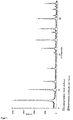
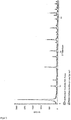
- Figure 2 are the diffractograms of zeolite X powder (broken line, starting material 2) and the produced zeolite 7-channel pipe with faujasite structure and Zeolite X composition (solid line, Example 4). These are almost identical.
- a plastic compound is produced in a twin-shaft kneader.
- the plasticized compound is shaped in a vacuum screw extruder.
- the compound in the vacuum chamber of the extruder is vented and pressed through a 1-channel pipe using a press screw.
- the 1-channel pipe is produced as an endless strand. Er After extrusion, it is cut to a length of 500 mm suitable for the subsequent technological steps, dried to a drying loss of 5% and then heated lying on kiln furniture at 550 ° C.
- the tempered 1-channel pipes are cut dry to a length of 200 mm using diamond cutting discs.
- the non-zeolite components of the 1-channel pipes are converted into zeolite with a faujasite structure.
- 1-channel pipes with a total weight of 30 g are watered with 200 ml of 1% sodium hydroxide solution, ie left in 1% sodium hydroxide solution for 60 minutes. After the specified time has elapsed, the sodium hydroxide solution is largely poured off and replaced by the reaction solution. This consists of 190 ml of deionized water, 8 g of 50% sodium hydroxide solution and 60 g of sodium water glass (8% Na 2 O, 27% SiO 2 ).
- the watered 1-channel pipes are aged in this solution for 2 hours at room temperature and then heated to 90 ° C. and kept at this temperature for 20 hours.
- the 1-channel pipes are washed in 150 ml of a 1% sodium hydroxide solution and washed twice with 150 ml of deionized water each time, filtered as dry as possible using negative pressure through a Buchner funnel and then completely dried under an IR lamp.
- the material produced in this way shows a crystallinity (XRD) based on the starting zeolite powder of 96% and a static water absorption capacity of 28.0%.
- the zeolite content determined with the aid of the water adsorption capacity is 96.2%.
- Table 4 Comparison between zeolite powder and binder-free zeolite I sewer pipes of the faujasite structure and zeolite Y composition.
- the 1-channel pipes are produced analogously to Example 5.
- 1-channel pipes After tempering, the non-zeolite components of the 1-channel pipes are converted into zeolite with a faujasite structure.
- 1-channel pipes with a total weight of 30 g are mixed with a reaction solution consisting of 190 ml of deionized water, 8 g of 50% sodium hydroxide solution and 60 g of sodium silicate (8% Na 2 O, 27% SiO 2 ), then heated to 90 ° C heated and held at this temperature for 20 h.
- the material is cooled and the supernatant solution is removed by decanting.
- the 1-channel pipes are washed three times with 200 ml of deionized water each time, filtered as dry as possible using a vacuum through a Buchner funnel and then completely dried under an IR lamp.
- the material produced in this way shows a crystallinity (XRD) based on the starting zeolite powder of 81%, a modulus of 5.3 and a static water absorption capacity of 26.9%.
- the zeolite content determined by the water adsorption is 92.4%.
- the 1-channel pipes are produced analogously to Example 5.
- the non-zeolite components are converted into zeolite with a faujasite structure.
- 1-channel pipes with a total weight of 30 g are mixed with a solution consisting of 190 ml of deionized water, 8 g of 50% sodium hydroxide solution and 60 g of sodium silicate (8% Na 2 O, 27% SiO 2 ) and the mixture is mixed for two 2 hours aged at room temperature, then the mixture is heated to 90 ° C and held at this temperature for 20 h.
- the material is cooled and the supernatant solution is removed by decanting.
- the 1-channel pipes are washed three times with 200 ml of deionized water each time, filtered as dry as possible using a vacuum through a Buchner funnel and then completely dried under an IR lamp.
- the material produced in this way shows a crystallinity (XRD) based on the starting zeolite powder of 84%, a modulus of 5.3 and a static water absorption capacity of 27.5%.
- the zeolite content determined by water adsorption is 94.5%.
- zeolite with Linde type A structure (starting material 1), kaolin (starting material 4) and sodium hydroxide solution in a ratio of 30 parts by mass of kaolin (dry) to 70 parts by mass of zeolite 4A (dry) to 3.5 parts by mass of a 50%
- a moist mixture is prepared in a mixer at 1000 rpm with the dropwise addition of a 2% 10% Mowiol binder solution in a mixer at 1000 rpm.
- the mixture is stored covered for 24 hours to homogenize the moisture.
- the mixture is then rubbed through a sieve with a mesh size of 1 mm and the granulate sieve thus obtained is dried to a dryness loss of 6%.
- the granulate is pre-pressed on a drying press with a pressure of 600 MPa to form cylinders with a diameter of 18 mm and a thickness of 10 mm.
- a drying press with a pressure of 600 MPa to form cylinders with a diameter of 18 mm and a thickness of 10 mm.
- Moldings with a diameter of 60 mm and a thickness of 3 mm are then produced from these granules on the dry press with a specific pressure of 1000 MPa.
- These panes are tempered lying on burnt plates made of engobed SiC at 500 ° C.
- the plate is removed from the mold and dried to a loss on drying of 5%.
- the dried plates are tempered lying on burning plates made of engobed SiC at 500 ° C.
Landscapes
- Chemical & Material Sciences (AREA)
- Chemical Kinetics & Catalysis (AREA)
- Organic Chemistry (AREA)
- Analytical Chemistry (AREA)
- Engineering & Computer Science (AREA)
- Materials Engineering (AREA)
- Crystallography & Structural Chemistry (AREA)
- Inorganic Chemistry (AREA)
- Physics & Mathematics (AREA)
- Thermal Sciences (AREA)
- Oil, Petroleum & Natural Gas (AREA)
- General Chemical & Material Sciences (AREA)
- Solid-Sorbent Or Filter-Aiding Compositions (AREA)
- Silicates, Zeolites, And Molecular Sieves (AREA)
- Catalysts (AREA)
Applications Claiming Priority (2)
| Application Number | Priority Date | Filing Date | Title |
|---|---|---|---|
| DE102012020217.2A DE102012020217A1 (de) | 2012-10-15 | 2012-10-15 | Bindemittelfreie kompakte zeolithische Formkörper und Verfahren zu deren Herstellung |
| PCT/EP2013/070957 WO2014060246A1 (de) | 2012-10-15 | 2013-10-08 | Bindemittelfreie kompakte zeolithische formkörper und verfahren zu deren herstellung |
Publications (2)
| Publication Number | Publication Date |
|---|---|
| EP2906341A1 EP2906341A1 (de) | 2015-08-19 |
| EP2906341B1 true EP2906341B1 (de) | 2021-06-16 |
Family
ID=49322372
Family Applications (1)
| Application Number | Title | Priority Date | Filing Date |
|---|---|---|---|
| EP13774164.1A Revoked EP2906341B1 (de) | 2012-10-15 | 2013-10-08 | Bindemittelfreie kompakte zeolithische formkörper und verfahren zu deren herstellung |
Country Status (5)
| Country | Link |
|---|---|
| US (1) | US20150298096A1 (enExample) |
| EP (1) | EP2906341B1 (enExample) |
| JP (1) | JP6539207B2 (enExample) |
| DE (1) | DE102012020217A1 (enExample) |
| WO (1) | WO2014060246A1 (enExample) |
Cited By (1)
| Publication number | Priority date | Publication date | Assignee | Title |
|---|---|---|---|---|
| EP4523791A1 (en) | 2023-09-13 | 2025-03-19 | Technische Universität München | Kits and methods for preservation of biological samples |
Families Citing this family (7)
| Publication number | Priority date | Publication date | Assignee | Title |
|---|---|---|---|---|
| JP6895783B2 (ja) * | 2017-03-28 | 2021-06-30 | 古河電気工業株式会社 | 蓄熱装置 |
| CN109647329A (zh) * | 2019-01-29 | 2019-04-19 | 大连理工大学盘锦产业技术研究院 | 一种无粘结剂复合分子筛制备方法及其在油品吸附脱硫中的应用 |
| FR3103393B1 (fr) * | 2019-11-27 | 2022-07-01 | Arkema France | Séparation des gaz de l’air |
| CN111036187B (zh) * | 2019-12-23 | 2021-03-30 | 中国科学院过程工程研究所 | 一种蜂窝载体及其制备方法与应用 |
| FR3117379A1 (fr) | 2020-12-15 | 2022-06-17 | IFP Energies Nouvelles | Procede de preparation d'un materiau microporeux zeolithique contenant plus de 95% de zeolithe x et ayant une bonne resistance mecanique |
| DE102023135343A1 (de) * | 2023-12-15 | 2025-06-18 | Volkswagen Aktiengesellschaft | Verfahren zur Herstellung eines Sorbentelements zur Abtrennung von einem Gas und/oder Luftfeuchte aus einer fluiden Phase |
| DE102024107287A1 (de) * | 2024-03-14 | 2025-09-18 | Volkswagen Aktiengesellschaft | Zeolithisches Granulat, Verfahren zu dessen Herstellung und dessen Verwendung als Adsorptionsmittel |
Citations (12)
| Publication number | Priority date | Publication date | Assignee | Title |
|---|---|---|---|---|
| US3119660A (en) | 1960-09-26 | 1964-01-28 | Union Carbide Corp | Process for producing molecular sieve bodies |
| US4013566A (en) | 1975-04-07 | 1977-03-22 | Adsorbex, Incorporated | Flexible desiccant body |
| US4424144A (en) | 1981-11-16 | 1984-01-03 | W. R. Grace & Co. | Preparation of binderless 3A adsorbents |
| US4818508A (en) | 1985-08-20 | 1989-04-04 | Uop | Process for preparing molecular sieve bodies |
| WO1999010096A1 (fr) | 1997-08-21 | 1999-03-04 | Ceca S.A. | Adsorbants zeolitiques agglomeres leur procede d'obtention et leur utilisation pour l'adsorption de paraxylene a partir de coupes de c8 aromatiques |
| US6478854B1 (en) | 1999-11-25 | 2002-11-12 | Tosoh Corporation | High purity, low silica X-type zeolite binderless shaped product and gas separation method employing it |
| US20110105301A1 (en) | 2008-01-31 | 2011-05-05 | Huiguo Wang | Agglomerated zeolite adsorbents and process for producing the same |
| US20110104494A1 (en) | 2008-03-03 | 2011-05-05 | Chemiewerk Bad Kostritz Gmbh | Adsorbent granulate and method for the manufacture thereof |
| US20120010070A1 (en) | 2008-11-14 | 2012-01-12 | Bluecher Hasso Von | Adsorptive structures and the use thereof |
| US20120202680A1 (en) | 2009-03-26 | 2012-08-09 | Universidad Del Pais Vasco-Euskal Herriko Unibertsitatea | Method for the preparation of a zeolite-based monolithic structure |
| EP2527296A2 (de) | 2011-05-25 | 2012-11-28 | Chemiewerk Bad Köstritz GmbH | Bindemittelfreies zeolithisches Granulat mit Faujasitstruktur und Verfahren zur Herstellung eines derartigen bindemittelfreien zeolithischen Granulats nebst Verwendung |
| WO2014055546A1 (en) | 2012-10-01 | 2014-04-10 | Multisorb Technologies, Inc. | Sorbent article |
Family Cites Families (22)
| Publication number | Priority date | Publication date | Assignee | Title |
|---|---|---|---|---|
| DE2016838C3 (de) | 1970-04-09 | 1983-03-24 | Bayer Ag, 5090 Leverkusen | Verfahren zur Herstellung von granulierten, abriebfesten, bindemittelfreien Molekularsiebzeolithen |
| JPS52109498A (en) * | 1976-03-11 | 1977-09-13 | Agency Of Ind Science & Technol | Production of granulated zeolite |
| US4381256A (en) | 1981-01-14 | 1983-04-26 | W. R. Grace & Co. | Method of producing binderless zeolite extrudates |
| US4582815A (en) * | 1984-07-06 | 1986-04-15 | Mobil Oil Corporation | Extrusion of silica-rich solids |
| JPH0674136B2 (ja) | 1986-06-03 | 1994-09-21 | 日本化学工業株式会社 | ゼオライト成形体およびその製造法 |
| GB8829710D0 (en) * | 1988-12-20 | 1989-02-15 | Unilever Plc | Improved zeolite compositions |
| JP3123057B2 (ja) * | 1990-04-11 | 2001-01-09 | 東ソー株式会社 | X型ゼオライト成形体の製造方法 |
| DE69115030T2 (de) | 1991-01-07 | 1996-04-18 | Mizusawa Industrial Chem | Verfahren zur formgebung und zum brennen von zeolith-pulver. |
| GB9101456D0 (en) * | 1991-01-23 | 1991-03-06 | Exxon Chemical Patents Inc | Process for producing substantially binder-free zeolite |
| US5190903A (en) | 1991-03-31 | 1993-03-02 | Uop | Low acidity Y zeolite |
| JP3066850B2 (ja) * | 1992-12-22 | 2000-07-17 | 東ソー株式会社 | バインダーレスx型ゼオライト成形体およびその製造方法 |
| US5441557A (en) | 1993-12-14 | 1995-08-15 | Praxair Technology, Inc. | Enhanced gas separations and zeolite compositions therefor |
| US5518678A (en) | 1994-01-26 | 1996-05-21 | Kawata Manufacturing Co., Ltd. | Adsorptive honeycomb-shaped ceramic structure and method for its production |
| DE19647290A1 (de) | 1996-11-15 | 1998-05-28 | Bayer Ag | Verfahren zur Herstellung eines mit Lithium-Ionen ausgetauschten, bindemittelfreien Zeolithgranulats und dessen Verwendung zur adsorptiven Lufttrennung |
| DE19815564A1 (de) | 1998-03-31 | 1999-10-07 | Grace Gmbh | Formkörper aus Zeolith, Verfahren zu seiner Herstellung und dessen Verwendung |
| JP2000327327A (ja) * | 1999-05-24 | 2000-11-28 | Kubota Corp | ゼオライト成形体の製造方法 |
| US6759358B2 (en) | 2001-08-21 | 2004-07-06 | Sud-Chemie Inc. | Method for washcoating a catalytic material onto a monolithic structure |
| WO2004113227A1 (ja) | 2003-06-20 | 2004-12-29 | Mitsubishi Chemical Corporation | ゼオライト、その製造方法、該ゼオライトを含む吸着材、熱利用システム、吸着ヒートポンプ、蓄冷熱システム及び調湿空調装置 |
| JP4589073B2 (ja) * | 2004-10-07 | 2010-12-01 | 日本碍子株式会社 | ゼオライト成形体の製造方法 |
| CN101952224B (zh) | 2007-11-30 | 2013-08-21 | 康宁股份有限公司 | 沸石基蜂窝体 |
| US20090318283A1 (en) | 2008-06-20 | 2009-12-24 | General Electric Company | Catalyst composition and method |
| US7812208B2 (en) * | 2008-09-22 | 2010-10-12 | Uop Llc | Binderless adsorbents with improved mass transfer properties and their use in the adsorptive separation of para-xylene |
-
2012
- 2012-10-15 DE DE102012020217.2A patent/DE102012020217A1/de not_active Ceased
-
2013
- 2013-10-08 US US14/435,948 patent/US20150298096A1/en not_active Abandoned
- 2013-10-08 JP JP2015536100A patent/JP6539207B2/ja not_active Expired - Fee Related
- 2013-10-08 WO PCT/EP2013/070957 patent/WO2014060246A1/de not_active Ceased
- 2013-10-08 EP EP13774164.1A patent/EP2906341B1/de not_active Revoked
Patent Citations (12)
| Publication number | Priority date | Publication date | Assignee | Title |
|---|---|---|---|---|
| US3119660A (en) | 1960-09-26 | 1964-01-28 | Union Carbide Corp | Process for producing molecular sieve bodies |
| US4013566A (en) | 1975-04-07 | 1977-03-22 | Adsorbex, Incorporated | Flexible desiccant body |
| US4424144A (en) | 1981-11-16 | 1984-01-03 | W. R. Grace & Co. | Preparation of binderless 3A adsorbents |
| US4818508A (en) | 1985-08-20 | 1989-04-04 | Uop | Process for preparing molecular sieve bodies |
| WO1999010096A1 (fr) | 1997-08-21 | 1999-03-04 | Ceca S.A. | Adsorbants zeolitiques agglomeres leur procede d'obtention et leur utilisation pour l'adsorption de paraxylene a partir de coupes de c8 aromatiques |
| US6478854B1 (en) | 1999-11-25 | 2002-11-12 | Tosoh Corporation | High purity, low silica X-type zeolite binderless shaped product and gas separation method employing it |
| US20110105301A1 (en) | 2008-01-31 | 2011-05-05 | Huiguo Wang | Agglomerated zeolite adsorbents and process for producing the same |
| US20110104494A1 (en) | 2008-03-03 | 2011-05-05 | Chemiewerk Bad Kostritz Gmbh | Adsorbent granulate and method for the manufacture thereof |
| US20120010070A1 (en) | 2008-11-14 | 2012-01-12 | Bluecher Hasso Von | Adsorptive structures and the use thereof |
| US20120202680A1 (en) | 2009-03-26 | 2012-08-09 | Universidad Del Pais Vasco-Euskal Herriko Unibertsitatea | Method for the preparation of a zeolite-based monolithic structure |
| EP2527296A2 (de) | 2011-05-25 | 2012-11-28 | Chemiewerk Bad Köstritz GmbH | Bindemittelfreies zeolithisches Granulat mit Faujasitstruktur und Verfahren zur Herstellung eines derartigen bindemittelfreien zeolithischen Granulats nebst Verwendung |
| WO2014055546A1 (en) | 2012-10-01 | 2014-04-10 | Multisorb Technologies, Inc. | Sorbent article |
Non-Patent Citations (2)
| Title |
|---|
| DONALD W. BRECK: "The synthetic zeolites", ZEOLITE MOLECULAR SIEVES, 1974, pages 314 - 319, XP055906321 |
| DONALD W. BRECK: "zeolite molecular sieves", 1974, article "chapter9", pages: 725 - 753, XP055906331 |
Cited By (2)
| Publication number | Priority date | Publication date | Assignee | Title |
|---|---|---|---|---|
| EP4523791A1 (en) | 2023-09-13 | 2025-03-19 | Technische Universität München | Kits and methods for preservation of biological samples |
| WO2025056716A1 (en) | 2023-09-13 | 2025-03-20 | Technische Universität München, in Vertretung des Freistaates Bayern | Kits and methods for preservation of biological samples |
Also Published As
| Publication number | Publication date |
|---|---|
| JP6539207B2 (ja) | 2019-07-03 |
| US20150298096A1 (en) | 2015-10-22 |
| EP2906341A1 (de) | 2015-08-19 |
| JP2015536288A (ja) | 2015-12-21 |
| DE102012020217A1 (de) | 2014-04-17 |
| WO2014060246A1 (de) | 2014-04-24 |
Similar Documents
| Publication | Publication Date | Title |
|---|---|---|
| DE69935209T2 (de) | Zeolith-formkörper, verfahren zu seiner herstellung und seine verwendung | |
| EP2249961B1 (de) | Adsorptionsmittelgranulat und verfahren zu dessen herstellung | |
| WO2014060246A1 (de) | Bindemittelfreie kompakte zeolithische formkörper und verfahren zu deren herstellung | |
| EP2527296B1 (de) | Bindemittelfreies zeolithisches Granulat mit Faujasitstruktur und Verfahren zur Herstellung eines derartigen bindemittelfreien zeolithischen Granulats nebst Verwendung | |
| EP0516949B1 (de) | Formkörper enthaltend dealuminierten Zeolith Y und das Verfahren zu ihrer Herstellung | |
| DE69917041T2 (de) | Molekularsiebadsorbens zur gasreinigung und seine herstellung | |
| EP2536497B1 (de) | Agglomerate von adsorberpartikeln und methoden zur herstellung solcher adsorberpartikel | |
| DE3231498A1 (de) | Verfahren zur herstellung von harten, bruchfesten katalysatoren aus zeolith-pulver | |
| EP2160355B1 (de) | Verfahren zur herstellung eines heteroatom enthaltenden silikates | |
| DE2912269C2 (enExample) | ||
| EP1737791B1 (de) | Mikroporöses gerüstsilikat und verfahren zu seiner herstellung | |
| EP1468731B1 (de) | Verfahren zur Herstellung von verformten Zeolithen und Verfahren zur Entfernung von Verunreinigungen aus einem Gasstrom | |
| EP1937594B1 (de) | Verfahren zur herstellung eines silikates | |
| EP0229261B1 (de) | Zeolithformkörper | |
| DE102016202516A1 (de) | Hierarchisierter ZSM-58 Zeolith | |
| DE19826209A1 (de) | Formkörper aus Zeolith, Verfahren zu seiner Herstellung und dessen Verwendung | |
| EP0057416B1 (de) | Zeolithisches Molekularsieb und Verfahren zu seiner Herstellung | |
| DE19815564A1 (de) | Formkörper aus Zeolith, Verfahren zu seiner Herstellung und dessen Verwendung | |
| DE69100534T2 (de) | Absorbent und Reinigungsmethode von organische Ketonlösungsmittel enthaltenden Abgasen. | |
| DE4100253C2 (de) | Adsorptionsmittel auf Molekularsiebbasis | |
| US6680271B1 (en) | Solid zeolite granulates having improved abrasion resistance, and methods of making them | |
| EP1464633A1 (de) | Verfahren zur Herstellung slikatischer Formkörper | |
| DE1944912A1 (de) | Adsorptionsmittel insbesondere zur Verwendung bei Mehrscheibenisolierglas | |
| WO2001068527A1 (de) | Formkörper amorpher, poröser (metall-)silikate | |
| WO2025190995A1 (de) | Zeolithischer formkörper, verfahren zu seiner herstellung und seine verwendung als sorptionselement |
Legal Events
| Date | Code | Title | Description |
|---|---|---|---|
| PUAI | Public reference made under article 153(3) epc to a published international application that has entered the european phase |
Free format text: ORIGINAL CODE: 0009012 |
|
| 17P | Request for examination filed |
Effective date: 20150513 |
|
| AK | Designated contracting states |
Kind code of ref document: A1 Designated state(s): AL AT BE BG CH CY CZ DE DK EE ES FI FR GB GR HR HU IE IS IT LI LT LU LV MC MK MT NL NO PL PT RO RS SE SI SK SM TR |
|
| AX | Request for extension of the european patent |
Extension state: BA ME |
|
| DAX | Request for extension of the european patent (deleted) | ||
| STAA | Information on the status of an ep patent application or granted ep patent |
Free format text: STATUS: EXAMINATION IS IN PROGRESS |
|
| 17Q | First examination report despatched |
Effective date: 20170602 |
|
| GRAP | Despatch of communication of intention to grant a patent |
Free format text: ORIGINAL CODE: EPIDOSNIGR1 |
|
| STAA | Information on the status of an ep patent application or granted ep patent |
Free format text: STATUS: GRANT OF PATENT IS INTENDED |
|
| INTG | Intention to grant announced |
Effective date: 20210112 |
|
| GRAS | Grant fee paid |
Free format text: ORIGINAL CODE: EPIDOSNIGR3 |
|
| GRAA | (expected) grant |
Free format text: ORIGINAL CODE: 0009210 |
|
| STAA | Information on the status of an ep patent application or granted ep patent |
Free format text: STATUS: THE PATENT HAS BEEN GRANTED |
|
| AK | Designated contracting states |
Kind code of ref document: B1 Designated state(s): AL AT BE BG CH CY CZ DE DK EE ES FI FR GB GR HR HU IE IS IT LI LT LU LV MC MK MT NL NO PL PT RO RS SE SI SK SM TR |
|
| REG | Reference to a national code |
Ref country code: GB Ref legal event code: FG4D Free format text: NOT ENGLISH |
|
| REG | Reference to a national code |
Ref country code: CH Ref legal event code: EP |
|
| REG | Reference to a national code |
Ref country code: DE Ref legal event code: R096 Ref document number: 502013015779 Country of ref document: DE |
|
| REG | Reference to a national code |
Ref country code: AT Ref legal event code: REF Ref document number: 1401858 Country of ref document: AT Kind code of ref document: T Effective date: 20210715 |
|
| REG | Reference to a national code |
Ref country code: IE Ref legal event code: FG4D Free format text: LANGUAGE OF EP DOCUMENT: GERMAN |
|
| REG | Reference to a national code |
Ref country code: LT Ref legal event code: MG9D |
|
| PG25 | Lapsed in a contracting state [announced via postgrant information from national office to epo] |
Ref country code: HR Free format text: LAPSE BECAUSE OF FAILURE TO SUBMIT A TRANSLATION OF THE DESCRIPTION OR TO PAY THE FEE WITHIN THE PRESCRIBED TIME-LIMIT Effective date: 20210616 Ref country code: FI Free format text: LAPSE BECAUSE OF FAILURE TO SUBMIT A TRANSLATION OF THE DESCRIPTION OR TO PAY THE FEE WITHIN THE PRESCRIBED TIME-LIMIT Effective date: 20210616 Ref country code: LT Free format text: LAPSE BECAUSE OF FAILURE TO SUBMIT A TRANSLATION OF THE DESCRIPTION OR TO PAY THE FEE WITHIN THE PRESCRIBED TIME-LIMIT Effective date: 20210616 Ref country code: BG Free format text: LAPSE BECAUSE OF FAILURE TO SUBMIT A TRANSLATION OF THE DESCRIPTION OR TO PAY THE FEE WITHIN THE PRESCRIBED TIME-LIMIT Effective date: 20210916 |
|
| REG | Reference to a national code |
Ref country code: NL Ref legal event code: MP Effective date: 20210616 |
|
| PG25 | Lapsed in a contracting state [announced via postgrant information from national office to epo] |
Ref country code: NO Free format text: LAPSE BECAUSE OF FAILURE TO SUBMIT A TRANSLATION OF THE DESCRIPTION OR TO PAY THE FEE WITHIN THE PRESCRIBED TIME-LIMIT Effective date: 20210916 Ref country code: RS Free format text: LAPSE BECAUSE OF FAILURE TO SUBMIT A TRANSLATION OF THE DESCRIPTION OR TO PAY THE FEE WITHIN THE PRESCRIBED TIME-LIMIT Effective date: 20210616 Ref country code: SE Free format text: LAPSE BECAUSE OF FAILURE TO SUBMIT A TRANSLATION OF THE DESCRIPTION OR TO PAY THE FEE WITHIN THE PRESCRIBED TIME-LIMIT Effective date: 20210616 Ref country code: GR Free format text: LAPSE BECAUSE OF FAILURE TO SUBMIT A TRANSLATION OF THE DESCRIPTION OR TO PAY THE FEE WITHIN THE PRESCRIBED TIME-LIMIT Effective date: 20210917 Ref country code: LV Free format text: LAPSE BECAUSE OF FAILURE TO SUBMIT A TRANSLATION OF THE DESCRIPTION OR TO PAY THE FEE WITHIN THE PRESCRIBED TIME-LIMIT Effective date: 20210616 |
|
| PG25 | Lapsed in a contracting state [announced via postgrant information from national office to epo] |
Ref country code: EE Free format text: LAPSE BECAUSE OF FAILURE TO SUBMIT A TRANSLATION OF THE DESCRIPTION OR TO PAY THE FEE WITHIN THE PRESCRIBED TIME-LIMIT Effective date: 20210616 Ref country code: CZ Free format text: LAPSE BECAUSE OF FAILURE TO SUBMIT A TRANSLATION OF THE DESCRIPTION OR TO PAY THE FEE WITHIN THE PRESCRIBED TIME-LIMIT Effective date: 20210616 Ref country code: SK Free format text: LAPSE BECAUSE OF FAILURE TO SUBMIT A TRANSLATION OF THE DESCRIPTION OR TO PAY THE FEE WITHIN THE PRESCRIBED TIME-LIMIT Effective date: 20210616 Ref country code: SM Free format text: LAPSE BECAUSE OF FAILURE TO SUBMIT A TRANSLATION OF THE DESCRIPTION OR TO PAY THE FEE WITHIN THE PRESCRIBED TIME-LIMIT Effective date: 20210616 Ref country code: PT Free format text: LAPSE BECAUSE OF FAILURE TO SUBMIT A TRANSLATION OF THE DESCRIPTION OR TO PAY THE FEE WITHIN THE PRESCRIBED TIME-LIMIT Effective date: 20211018 Ref country code: NL Free format text: LAPSE BECAUSE OF FAILURE TO SUBMIT A TRANSLATION OF THE DESCRIPTION OR TO PAY THE FEE WITHIN THE PRESCRIBED TIME-LIMIT Effective date: 20210616 Ref country code: RO Free format text: LAPSE BECAUSE OF FAILURE TO SUBMIT A TRANSLATION OF THE DESCRIPTION OR TO PAY THE FEE WITHIN THE PRESCRIBED TIME-LIMIT Effective date: 20210616 Ref country code: ES Free format text: LAPSE BECAUSE OF FAILURE TO SUBMIT A TRANSLATION OF THE DESCRIPTION OR TO PAY THE FEE WITHIN THE PRESCRIBED TIME-LIMIT Effective date: 20210616 |
|
| PGFP | Annual fee paid to national office [announced via postgrant information from national office to epo] |
Ref country code: DE Payment date: 20211029 Year of fee payment: 9 |
|
| PG25 | Lapsed in a contracting state [announced via postgrant information from national office to epo] |
Ref country code: PL Free format text: LAPSE BECAUSE OF FAILURE TO SUBMIT A TRANSLATION OF THE DESCRIPTION OR TO PAY THE FEE WITHIN THE PRESCRIBED TIME-LIMIT Effective date: 20210616 |
|
| REG | Reference to a national code |
Ref country code: DE Ref legal event code: R026 Ref document number: 502013015779 Country of ref document: DE |
|
| PLBI | Opposition filed |
Free format text: ORIGINAL CODE: 0009260 |
|
| PLAX | Notice of opposition and request to file observation + time limit sent |
Free format text: ORIGINAL CODE: EPIDOSNOBS2 |
|
| 26 | Opposition filed |
Opponent name: ARKEMA FRANCE Effective date: 20220316 |
|
| PG25 | Lapsed in a contracting state [announced via postgrant information from national office to epo] |
Ref country code: DK Free format text: LAPSE BECAUSE OF FAILURE TO SUBMIT A TRANSLATION OF THE DESCRIPTION OR TO PAY THE FEE WITHIN THE PRESCRIBED TIME-LIMIT Effective date: 20210616 |
|
| REG | Reference to a national code |
Ref country code: CH Ref legal event code: PL |
|
| PG25 | Lapsed in a contracting state [announced via postgrant information from national office to epo] |
Ref country code: AL Free format text: LAPSE BECAUSE OF FAILURE TO SUBMIT A TRANSLATION OF THE DESCRIPTION OR TO PAY THE FEE WITHIN THE PRESCRIBED TIME-LIMIT Effective date: 20210616 |
|
| REG | Reference to a national code |
Ref country code: BE Ref legal event code: MM Effective date: 20211031 |
|
| GBPC | Gb: european patent ceased through non-payment of renewal fee |
Effective date: 20211008 |
|
| PG25 | Lapsed in a contracting state [announced via postgrant information from national office to epo] |
Ref country code: MC Free format text: LAPSE BECAUSE OF FAILURE TO SUBMIT A TRANSLATION OF THE DESCRIPTION OR TO PAY THE FEE WITHIN THE PRESCRIBED TIME-LIMIT Effective date: 20210616 |
|
| PG25 | Lapsed in a contracting state [announced via postgrant information from national office to epo] |
Ref country code: LU Free format text: LAPSE BECAUSE OF NON-PAYMENT OF DUE FEES Effective date: 20211008 Ref country code: IT Free format text: LAPSE BECAUSE OF FAILURE TO SUBMIT A TRANSLATION OF THE DESCRIPTION OR TO PAY THE FEE WITHIN THE PRESCRIBED TIME-LIMIT Effective date: 20210616 Ref country code: GB Free format text: LAPSE BECAUSE OF NON-PAYMENT OF DUE FEES Effective date: 20211008 Ref country code: BE Free format text: LAPSE BECAUSE OF NON-PAYMENT OF DUE FEES Effective date: 20211031 |
|
| PG25 | Lapsed in a contracting state [announced via postgrant information from national office to epo] |
Ref country code: LI Free format text: LAPSE BECAUSE OF NON-PAYMENT OF DUE FEES Effective date: 20211031 Ref country code: CH Free format text: LAPSE BECAUSE OF NON-PAYMENT OF DUE FEES Effective date: 20211031 |
|
| PG25 | Lapsed in a contracting state [announced via postgrant information from national office to epo] |
Ref country code: FR Free format text: LAPSE BECAUSE OF NON-PAYMENT OF DUE FEES Effective date: 20211031 |
|
| PG25 | Lapsed in a contracting state [announced via postgrant information from national office to epo] |
Ref country code: IE Free format text: LAPSE BECAUSE OF NON-PAYMENT OF DUE FEES Effective date: 20211008 |
|
| RDAF | Communication despatched that patent is revoked |
Free format text: ORIGINAL CODE: EPIDOSNREV1 |
|
| REG | Reference to a national code |
Ref country code: DE Ref legal event code: R103 Ref document number: 502013015779 Country of ref document: DE Ref country code: DE Ref legal event code: R064 Ref document number: 502013015779 Country of ref document: DE |
|
| REG | Reference to a national code |
Ref country code: AT Ref legal event code: MM01 Ref document number: 1401858 Country of ref document: AT Kind code of ref document: T Effective date: 20211008 |
|
| PG25 | Lapsed in a contracting state [announced via postgrant information from national office to epo] |
Ref country code: AT Free format text: LAPSE BECAUSE OF NON-PAYMENT OF DUE FEES Effective date: 20211008 |
|
| RDAG | Patent revoked |
Free format text: ORIGINAL CODE: 0009271 |
|
| STAA | Information on the status of an ep patent application or granted ep patent |
Free format text: STATUS: PATENT REVOKED |
|
| REG | Reference to a national code |
Ref country code: CH Ref legal event code: PL |
|
| 27W | Patent revoked |
Effective date: 20221212 |
|
| REG | Reference to a national code |
Ref country code: AT Ref legal event code: MA03 Ref document number: 1401858 Country of ref document: AT Kind code of ref document: T Effective date: 20221212 |
|
| PG25 | Lapsed in a contracting state [announced via postgrant information from national office to epo] |
Ref country code: CY Free format text: LAPSE BECAUSE OF FAILURE TO SUBMIT A TRANSLATION OF THE DESCRIPTION OR TO PAY THE FEE WITHIN THE PRESCRIBED TIME-LIMIT Effective date: 20210616 |
|
| P01 | Opt-out of the competence of the unified patent court (upc) registered |
Effective date: 20230629 |
|
| PG25 | Lapsed in a contracting state [announced via postgrant information from national office to epo] |
Ref country code: HU Free format text: LAPSE BECAUSE OF FAILURE TO SUBMIT A TRANSLATION OF THE DESCRIPTION OR TO PAY THE FEE WITHIN THE PRESCRIBED TIME-LIMIT; INVALID AB INITIO Effective date: 20131008 |
|
| PG25 | Lapsed in a contracting state [announced via postgrant information from national office to epo] |
Ref country code: MK Free format text: LAPSE BECAUSE OF FAILURE TO SUBMIT A TRANSLATION OF THE DESCRIPTION OR TO PAY THE FEE WITHIN THE PRESCRIBED TIME-LIMIT Effective date: 20210616 |
|
| PG25 | Lapsed in a contracting state [announced via postgrant information from national office to epo] |
Ref country code: MT Free format text: LAPSE BECAUSE OF FAILURE TO SUBMIT A TRANSLATION OF THE DESCRIPTION OR TO PAY THE FEE WITHIN THE PRESCRIBED TIME-LIMIT Effective date: 20210616 |
|
| PG25 | Lapsed in a contracting state [announced via postgrant information from national office to epo] |
Ref country code: TR Free format text: LAPSE BECAUSE OF FAILURE TO SUBMIT A TRANSLATION OF THE DESCRIPTION OR TO PAY THE FEE WITHIN THE PRESCRIBED TIME-LIMIT Effective date: 20210616 |