EP2902821A1 - Film mirror, and composite film for use in same - Google Patents
Film mirror, and composite film for use in same Download PDFInfo
- Publication number
- EP2902821A1 EP2902821A1 EP13842030.2A EP13842030A EP2902821A1 EP 2902821 A1 EP2902821 A1 EP 2902821A1 EP 13842030 A EP13842030 A EP 13842030A EP 2902821 A1 EP2902821 A1 EP 2902821A1
- Authority
- EP
- European Patent Office
- Prior art keywords
- coating layer
- surface coating
- film mirror
- fluorine
- resin
- Prior art date
- Legal status (The legal status is an assumption and is not a legal conclusion. Google has not performed a legal analysis and makes no representation as to the accuracy of the status listed.)
- Granted
Links
- 239000002131 composite material Substances 0.000 title claims description 32
- 239000002345 surface coating layer Substances 0.000 claims abstract description 119
- 229920005989 resin Polymers 0.000 claims abstract description 107
- 239000011347 resin Substances 0.000 claims abstract description 107
- 239000010410 layer Substances 0.000 claims abstract description 76
- 238000011084 recovery Methods 0.000 claims abstract description 28
- 125000004432 carbon atom Chemical group C* 0.000 claims abstract description 16
- 239000002344 surface layer Substances 0.000 claims abstract description 16
- 125000001153 fluoro group Chemical group F* 0.000 claims abstract description 14
- 239000000178 monomer Substances 0.000 claims description 87
- 239000000758 substrate Substances 0.000 claims description 73
- 239000011737 fluorine Substances 0.000 claims description 56
- 229910052731 fluorine Inorganic materials 0.000 claims description 56
- YCKRFDGAMUMZLT-UHFFFAOYSA-N Fluorine atom Chemical compound [F] YCKRFDGAMUMZLT-UHFFFAOYSA-N 0.000 claims description 53
- 239000004593 Epoxy Substances 0.000 claims description 26
- 229910052751 metal Inorganic materials 0.000 claims description 26
- 239000002184 metal Substances 0.000 claims description 26
- 238000006116 polymerization reaction Methods 0.000 claims description 24
- AHHWIHXENZJRFG-UHFFFAOYSA-N oxetane Chemical compound C1COC1 AHHWIHXENZJRFG-UHFFFAOYSA-N 0.000 claims description 22
- 125000002947 alkylene group Chemical group 0.000 claims description 21
- NIXOWILDQLNWCW-UHFFFAOYSA-M Acrylate Chemical compound [O-]C(=O)C=C NIXOWILDQLNWCW-UHFFFAOYSA-M 0.000 claims description 20
- QVGXLLKOCUKJST-UHFFFAOYSA-N atomic oxygen Chemical compound [O] QVGXLLKOCUKJST-UHFFFAOYSA-N 0.000 claims description 19
- 239000001301 oxygen Substances 0.000 claims description 19
- 229910052760 oxygen Inorganic materials 0.000 claims description 19
- 229920000642 polymer Polymers 0.000 claims description 17
- 238000000016 photochemical curing Methods 0.000 claims description 7
- 230000005855 radiation Effects 0.000 claims description 6
- 125000002915 carbonyl group Chemical group [*:2]C([*:1])=O 0.000 claims description 5
- 125000001033 ether group Chemical group 0.000 claims description 5
- 125000004435 hydrogen atom Chemical group [H]* 0.000 claims description 5
- 125000001183 hydrocarbyl group Chemical group 0.000 claims 2
- 239000000428 dust Substances 0.000 abstract description 16
- 239000004576 sand Substances 0.000 abstract 1
- 238000005406 washing Methods 0.000 abstract 1
- 238000012360 testing method Methods 0.000 description 35
- KFZMGEQAYNKOFK-UHFFFAOYSA-N Isopropanol Chemical compound CC(C)O KFZMGEQAYNKOFK-UHFFFAOYSA-N 0.000 description 33
- 238000000576 coating method Methods 0.000 description 30
- 239000011248 coating agent Substances 0.000 description 28
- 239000000463 material Substances 0.000 description 24
- -1 polyethylene Polymers 0.000 description 24
- VYPSYNLAJGMNEJ-UHFFFAOYSA-N Silicium dioxide Chemical compound O=[Si]=O VYPSYNLAJGMNEJ-UHFFFAOYSA-N 0.000 description 18
- VNWKTOKETHGBQD-UHFFFAOYSA-N methane Chemical compound C VNWKTOKETHGBQD-UHFFFAOYSA-N 0.000 description 18
- 229920003229 poly(methyl methacrylate) Polymers 0.000 description 18
- 239000004926 polymethyl methacrylate Substances 0.000 description 18
- 229910000831 Steel Inorganic materials 0.000 description 17
- 150000001875 compounds Chemical class 0.000 description 17
- 239000007788 liquid Substances 0.000 description 17
- 238000000034 method Methods 0.000 description 17
- 239000010959 steel Substances 0.000 description 17
- 210000002268 wool Anatomy 0.000 description 17
- 230000000052 comparative effect Effects 0.000 description 15
- 239000003550 marker Substances 0.000 description 15
- 125000000217 alkyl group Chemical group 0.000 description 14
- 238000007790 scraping Methods 0.000 description 14
- 239000004925 Acrylic resin Substances 0.000 description 13
- 150000002430 hydrocarbons Chemical group 0.000 description 13
- 238000005488 sandblasting Methods 0.000 description 12
- 229920000178 Acrylic resin Polymers 0.000 description 10
- 238000004140 cleaning Methods 0.000 description 9
- 238000011156 evaluation Methods 0.000 description 8
- 239000010419 fine particle Substances 0.000 description 8
- 239000000377 silicon dioxide Substances 0.000 description 7
- 239000000126 substance Substances 0.000 description 7
- IISBACLAFKSPIT-UHFFFAOYSA-N bisphenol A Chemical compound C=1C=C(O)C=CC=1C(C)(C)C1=CC=C(O)C=C1 IISBACLAFKSPIT-UHFFFAOYSA-N 0.000 description 6
- UHESRSKEBRADOO-UHFFFAOYSA-N ethyl carbamate;prop-2-enoic acid Chemical compound OC(=O)C=C.CCOC(N)=O UHESRSKEBRADOO-UHFFFAOYSA-N 0.000 description 6
- 239000011521 glass Substances 0.000 description 6
- 238000005259 measurement Methods 0.000 description 6
- 230000000704 physical effect Effects 0.000 description 6
- 125000003118 aryl group Chemical group 0.000 description 5
- GYZLOYUZLJXAJU-UHFFFAOYSA-N diglycidyl ether Chemical class C1OC1COCC1CO1 GYZLOYUZLJXAJU-UHFFFAOYSA-N 0.000 description 5
- 150000002170 ethers Chemical class 0.000 description 5
- 238000007373 indentation Methods 0.000 description 5
- 229920000058 polyacrylate Polymers 0.000 description 5
- QNODIIQQMGDSEF-UHFFFAOYSA-N (1-hydroxycyclohexyl)-phenylmethanone Chemical compound C=1C=CC=CC=1C(=O)C1(O)CCCCC1 QNODIIQQMGDSEF-UHFFFAOYSA-N 0.000 description 4
- BQCADISMDOOEFD-UHFFFAOYSA-N Silver Chemical compound [Ag] BQCADISMDOOEFD-UHFFFAOYSA-N 0.000 description 4
- 239000000853 adhesive Substances 0.000 description 4
- 230000001070 adhesive effect Effects 0.000 description 4
- 239000003999 initiator Substances 0.000 description 4
- 239000000203 mixture Substances 0.000 description 4
- 239000004645 polyester resin Substances 0.000 description 4
- 229920001225 polyester resin Polymers 0.000 description 4
- 229910052709 silver Inorganic materials 0.000 description 4
- 239000004332 silver Substances 0.000 description 4
- IAYPIBMASNFSPL-UHFFFAOYSA-N Ethylene oxide Chemical compound C1CO1 IAYPIBMASNFSPL-UHFFFAOYSA-N 0.000 description 3
- PEDCQBHIVMGVHV-UHFFFAOYSA-N Glycerine Chemical compound OCC(O)CO PEDCQBHIVMGVHV-UHFFFAOYSA-N 0.000 description 3
- DNIAPMSPPWPWGF-UHFFFAOYSA-N Propylene glycol Chemical compound CC(O)CO DNIAPMSPPWPWGF-UHFFFAOYSA-N 0.000 description 3
- GOOHAUXETOMSMM-UHFFFAOYSA-N Propylene oxide Chemical class CC1CO1 GOOHAUXETOMSMM-UHFFFAOYSA-N 0.000 description 3
- 238000003848 UV Light-Curing Methods 0.000 description 3
- 238000005299 abrasion Methods 0.000 description 3
- NIXOWILDQLNWCW-UHFFFAOYSA-N acrylic acid group Chemical group C(C=C)(=O)O NIXOWILDQLNWCW-UHFFFAOYSA-N 0.000 description 3
- 229920000800 acrylic rubber Polymers 0.000 description 3
- 239000003795 chemical substances by application Substances 0.000 description 3
- 238000001723 curing Methods 0.000 description 3
- 125000004122 cyclic group Chemical group 0.000 description 3
- 239000000945 filler Substances 0.000 description 3
- 125000002887 hydroxy group Chemical group [H]O* 0.000 description 3
- 239000004615 ingredient Substances 0.000 description 3
- 239000002245 particle Substances 0.000 description 3
- 125000001997 phenyl group Chemical group [H]C1=C([H])C([H])=C(*)C([H])=C1[H] 0.000 description 3
- 229920006122 polyamide resin Polymers 0.000 description 3
- 230000000379 polymerizing effect Effects 0.000 description 3
- 229920005672 polyolefin resin Polymers 0.000 description 3
- 229920001289 polyvinyl ether Polymers 0.000 description 3
- 239000002904 solvent Substances 0.000 description 3
- 125000001424 substituent group Chemical group 0.000 description 3
- 150000005846 sugar alcohols Polymers 0.000 description 3
- 229920002803 thermoplastic polyurethane Polymers 0.000 description 3
- XLYOFNOQVPJJNP-UHFFFAOYSA-N water Substances O XLYOFNOQVPJJNP-UHFFFAOYSA-N 0.000 description 3
- UNMJLQGKEDTEKJ-UHFFFAOYSA-N (3-ethyloxetan-3-yl)methanol Chemical compound CCC1(CO)COC1 UNMJLQGKEDTEKJ-UHFFFAOYSA-N 0.000 description 2
- HECLRDQVFMWTQS-RGOKHQFPSA-N 1755-01-7 Chemical group C1[C@H]2[C@@H]3CC=C[C@@H]3[C@@H]1C=C2 HECLRDQVFMWTQS-RGOKHQFPSA-N 0.000 description 2
- SZNYYWIUQFZLLT-UHFFFAOYSA-N 2-methyl-1-(2-methylpropoxy)propane Chemical compound CC(C)COCC(C)C SZNYYWIUQFZLLT-UHFFFAOYSA-N 0.000 description 2
- RVZDEQWZAZJWHK-UHFFFAOYSA-N 3-ethyl-3-[[1,1,1,2,4,5,5,5-octafluoro-3-(1,1,1,2,3,3,3-heptafluoropropan-2-yl)-4-(trifluoromethyl)pentan-2-yl]oxymethyl]oxetane Chemical compound CCC1(COC(F)(C(C(F)(C(F)(F)F)C(F)(F)F)C(F)(C(F)(F)F)C(F)(F)F)C(F)(F)F)COC1 RVZDEQWZAZJWHK-UHFFFAOYSA-N 0.000 description 2
- LMIOYAVXLAOXJI-UHFFFAOYSA-N 3-ethyl-3-[[4-[(3-ethyloxetan-3-yl)methoxymethyl]phenyl]methoxymethyl]oxetane Chemical compound C=1C=C(COCC2(CC)COC2)C=CC=1COCC1(CC)COC1 LMIOYAVXLAOXJI-UHFFFAOYSA-N 0.000 description 2
- NLHHRLWOUZZQLW-UHFFFAOYSA-N Acrylonitrile Chemical compound C=CC#N NLHHRLWOUZZQLW-UHFFFAOYSA-N 0.000 description 2
- IJGRMHOSHXDMSA-UHFFFAOYSA-N Atomic nitrogen Chemical compound N#N IJGRMHOSHXDMSA-UHFFFAOYSA-N 0.000 description 2
- SOGAXMICEFXMKE-UHFFFAOYSA-N Butylmethacrylate Chemical compound CCCCOC(=O)C(C)=C SOGAXMICEFXMKE-UHFFFAOYSA-N 0.000 description 2
- RTZKZFJDLAIYFH-UHFFFAOYSA-N Diethyl ether Chemical compound CCOCC RTZKZFJDLAIYFH-UHFFFAOYSA-N 0.000 description 2
- LCGLNKUTAGEVQW-UHFFFAOYSA-N Dimethyl ether Chemical compound COC LCGLNKUTAGEVQW-UHFFFAOYSA-N 0.000 description 2
- JOYRKODLDBILNP-UHFFFAOYSA-N Ethyl urethane Chemical compound CCOC(N)=O JOYRKODLDBILNP-UHFFFAOYSA-N 0.000 description 2
- MHAJPDPJQMAIIY-UHFFFAOYSA-N Hydrogen peroxide Chemical compound OO MHAJPDPJQMAIIY-UHFFFAOYSA-N 0.000 description 2
- 101000618467 Hypocrea jecorina (strain ATCC 56765 / BCRC 32924 / NRRL 11460 / Rut C-30) Endo-1,4-beta-xylanase 2 Proteins 0.000 description 2
- XEEYBQQBJWHFJM-UHFFFAOYSA-N Iron Chemical compound [Fe] XEEYBQQBJWHFJM-UHFFFAOYSA-N 0.000 description 2
- 239000004640 Melamine resin Substances 0.000 description 2
- 229920000877 Melamine resin Polymers 0.000 description 2
- BAPJBEWLBFYGME-UHFFFAOYSA-N Methyl acrylate Chemical compound COC(=O)C=C BAPJBEWLBFYGME-UHFFFAOYSA-N 0.000 description 2
- UFWIBTONFRDIAS-UHFFFAOYSA-N Naphthalene Chemical compound C1=CC=CC2=CC=CC=C21 UFWIBTONFRDIAS-UHFFFAOYSA-N 0.000 description 2
- PXHVJJICTQNCMI-UHFFFAOYSA-N Nickel Chemical compound [Ni] PXHVJJICTQNCMI-UHFFFAOYSA-N 0.000 description 2
- KDLHZDBZIXYQEI-UHFFFAOYSA-N Palladium Chemical compound [Pd] KDLHZDBZIXYQEI-UHFFFAOYSA-N 0.000 description 2
- ISWSIDIOOBJBQZ-UHFFFAOYSA-N Phenol Chemical compound OC1=CC=CC=C1 ISWSIDIOOBJBQZ-UHFFFAOYSA-N 0.000 description 2
- 239000004698 Polyethylene Substances 0.000 description 2
- 239000002202 Polyethylene glycol Substances 0.000 description 2
- PPBRXRYQALVLMV-UHFFFAOYSA-N Styrene Chemical compound C=CC1=CC=CC=C1 PPBRXRYQALVLMV-UHFFFAOYSA-N 0.000 description 2
- 238000004833 X-ray photoelectron spectroscopy Methods 0.000 description 2
- MPIAGWXWVAHQBB-UHFFFAOYSA-N [3-prop-2-enoyloxy-2-[[3-prop-2-enoyloxy-2,2-bis(prop-2-enoyloxymethyl)propoxy]methyl]-2-(prop-2-enoyloxymethyl)propyl] prop-2-enoate Chemical compound C=CC(=O)OCC(COC(=O)C=C)(COC(=O)C=C)COCC(COC(=O)C=C)(COC(=O)C=C)COC(=O)C=C MPIAGWXWVAHQBB-UHFFFAOYSA-N 0.000 description 2
- 238000007754 air knife coating Methods 0.000 description 2
- 125000003342 alkenyl group Chemical group 0.000 description 2
- 229910052782 aluminium Inorganic materials 0.000 description 2
- XAGFODPZIPBFFR-UHFFFAOYSA-N aluminium Chemical compound [Al] XAGFODPZIPBFFR-UHFFFAOYSA-N 0.000 description 2
- MWPLVEDNUUSJAV-UHFFFAOYSA-N anthracene Chemical group C1=CC=CC2=CC3=CC=CC=C3C=C21 MWPLVEDNUUSJAV-UHFFFAOYSA-N 0.000 description 2
- 125000003710 aryl alkyl group Chemical group 0.000 description 2
- PXKLMJQFEQBVLD-UHFFFAOYSA-N bisphenol F Chemical compound C1=CC(O)=CC=C1CC1=CC=C(O)C=C1 PXKLMJQFEQBVLD-UHFFFAOYSA-N 0.000 description 2
- 239000011247 coating layer Substances 0.000 description 2
- 238000007766 curtain coating Methods 0.000 description 2
- 125000000753 cycloalkyl group Chemical group 0.000 description 2
- 230000007423 decrease Effects 0.000 description 2
- 238000007607 die coating method Methods 0.000 description 2
- ATUOYWHBWRKTHZ-UHFFFAOYSA-N dimethylmethane Natural products CCC ATUOYWHBWRKTHZ-UHFFFAOYSA-N 0.000 description 2
- ZUOUZKKEUPVFJK-UHFFFAOYSA-N diphenyl Chemical compound C1=CC=CC=C1C1=CC=CC=C1 ZUOUZKKEUPVFJK-UHFFFAOYSA-N 0.000 description 2
- 238000001035 drying Methods 0.000 description 2
- 238000009713 electroplating Methods 0.000 description 2
- 239000003822 epoxy resin Substances 0.000 description 2
- 238000007756 gravure coating Methods 0.000 description 2
- QSHDDOUJBYECFT-UHFFFAOYSA-N mercury Chemical compound [Hg] QSHDDOUJBYECFT-UHFFFAOYSA-N 0.000 description 2
- 125000002496 methyl group Chemical group [H]C([H])([H])* 0.000 description 2
- 238000002156 mixing Methods 0.000 description 2
- 229920003986 novolac Polymers 0.000 description 2
- 229920000647 polyepoxide Polymers 0.000 description 2
- 229920000573 polyethylene Polymers 0.000 description 2
- 229920001223 polyethylene glycol Polymers 0.000 description 2
- 229920001451 polypropylene glycol Polymers 0.000 description 2
- 239000004800 polyvinyl chloride Substances 0.000 description 2
- 229920000915 polyvinyl chloride Polymers 0.000 description 2
- 239000001294 propane Substances 0.000 description 2
- 229920002050 silicone resin Polymers 0.000 description 2
- 229920001187 thermosetting polymer Polymers 0.000 description 2
- 238000004506 ultrasonic cleaning Methods 0.000 description 2
- 238000009281 ultraviolet germicidal irradiation Methods 0.000 description 2
- MRIKSZXJKCQQFT-UHFFFAOYSA-N (3-hydroxy-2,2-dimethylpropyl) prop-2-enoate Chemical compound OCC(C)(C)COC(=O)C=C MRIKSZXJKCQQFT-UHFFFAOYSA-N 0.000 description 1
- CCYZSFPSPHPQPQ-UHFFFAOYSA-N 1,3,4,5,6,8-hexamethyl-2,7-bis(oxiran-2-ylmethoxy)-9-phenyl-9h-xanthene Chemical compound CC1=C2C(C=3C=CC=CC=3)C=3C(C)=C(OCC4OC4)C(C)=C(C)C=3OC2=C(C)C(C)=C1OCC1CO1 CCYZSFPSPHPQPQ-UHFFFAOYSA-N 0.000 description 1
- UWFRVQVNYNPBEF-UHFFFAOYSA-N 1-(2,4-dimethylphenyl)propan-1-one Chemical compound CCC(=O)C1=CC=C(C)C=C1C UWFRVQVNYNPBEF-UHFFFAOYSA-N 0.000 description 1
- VXNZUUAINFGPBY-UHFFFAOYSA-N 1-Butene Chemical group CCC=C VXNZUUAINFGPBY-UHFFFAOYSA-N 0.000 description 1
- DURPTKYDGMDSBL-UHFFFAOYSA-N 1-butoxybutane Chemical compound CCCCOCCCC DURPTKYDGMDSBL-UHFFFAOYSA-N 0.000 description 1
- 125000001637 1-naphthyl group Chemical group [H]C1=C([H])C([H])=C2C(*)=C([H])C([H])=C([H])C2=C1[H] 0.000 description 1
- KWVGIHKZDCUPEU-UHFFFAOYSA-N 2,2-dimethoxy-2-phenylacetophenone Chemical compound C=1C=CC=CC=1C(OC)(OC)C(=O)C1=CC=CC=C1 KWVGIHKZDCUPEU-UHFFFAOYSA-N 0.000 description 1
- HFNPKDDYCOMYLN-UHFFFAOYSA-N 2-(1,1,2,2-tetrafluoroethoxymethyl)oxirane Chemical compound FC(F)C(F)(F)OCC1CO1 HFNPKDDYCOMYLN-UHFFFAOYSA-N 0.000 description 1
- WUKHWLIEBSRTRH-UHFFFAOYSA-N 2-(2,2,3,3,4,4,5,5,5-nonafluoropentyl)oxirane Chemical compound FC(F)(F)C(F)(F)C(F)(F)C(F)(F)CC1CO1 WUKHWLIEBSRTRH-UHFFFAOYSA-N 0.000 description 1
- KGYUZRBIQCDOCN-UHFFFAOYSA-N 2-(2,2,3,3,4,4,5,5,6,6,7,7,7-tridecafluoroheptyl)oxirane Chemical compound FC(F)(F)C(F)(F)C(F)(F)C(F)(F)C(F)(F)C(F)(F)CC1CO1 KGYUZRBIQCDOCN-UHFFFAOYSA-N 0.000 description 1
- BUSYHRRDAMGPJN-UHFFFAOYSA-N 2-(2,2,3,3,4,4,5,5,6,6,7,7-dodecafluoroheptoxymethyl)oxirane Chemical compound FC(F)C(F)(F)C(F)(F)C(F)(F)C(F)(F)C(F)(F)COCC1CO1 BUSYHRRDAMGPJN-UHFFFAOYSA-N 0.000 description 1
- NABHRPSATHTFNS-UHFFFAOYSA-N 2-(2,2,3,3,4,4,5,5-octafluoropentoxymethyl)oxirane Chemical compound FC(F)C(F)(F)C(F)(F)C(F)(F)COCC1CO1 NABHRPSATHTFNS-UHFFFAOYSA-N 0.000 description 1
- DATKALAKXGFGPI-UHFFFAOYSA-N 2-(2,2,3,3-tetrafluoropropoxymethyl)oxirane Chemical compound FC(F)C(F)(F)COCC1CO1 DATKALAKXGFGPI-UHFFFAOYSA-N 0.000 description 1
- SMZOUWXMTYCWNB-UHFFFAOYSA-N 2-(2-methoxy-5-methylphenyl)ethanamine Chemical compound COC1=CC=C(C)C=C1CCN SMZOUWXMTYCWNB-UHFFFAOYSA-N 0.000 description 1
- SLWOPZBLNKPZCQ-UHFFFAOYSA-N 2-(naphthalen-1-ylmethyl)oxirane Chemical compound C=1C=CC2=CC=CC=C2C=1CC1CO1 SLWOPZBLNKPZCQ-UHFFFAOYSA-N 0.000 description 1
- UKFXIJGSHYFEJE-UHFFFAOYSA-N 2-(naphthalen-2-ylmethyl)oxirane Chemical compound C=1C=C2C=CC=CC2=CC=1CC1CO1 UKFXIJGSHYFEJE-UHFFFAOYSA-N 0.000 description 1
- GJKGAPPUXSSCFI-UHFFFAOYSA-N 2-Hydroxy-4'-(2-hydroxyethoxy)-2-methylpropiophenone Chemical compound CC(C)(O)C(=O)C1=CC=C(OCCO)C=C1 GJKGAPPUXSSCFI-UHFFFAOYSA-N 0.000 description 1
- HDPLHDGYGLENEI-UHFFFAOYSA-N 2-[1-(oxiran-2-ylmethoxy)propan-2-yloxymethyl]oxirane Chemical compound C1OC1COC(C)COCC1CO1 HDPLHDGYGLENEI-UHFFFAOYSA-N 0.000 description 1
- KVSHGEMJMXSNTB-UHFFFAOYSA-N 2-[2,2,3,3,4,4,5,5-octafluoro-6-(oxiran-2-yl)hexyl]oxirane Chemical compound C1OC1CC(F)(F)C(F)(F)C(F)(F)C(F)(F)CC1CO1 KVSHGEMJMXSNTB-UHFFFAOYSA-N 0.000 description 1
- FIOCEWASVZHBTK-UHFFFAOYSA-N 2-[2-(2-oxo-2-phenylacetyl)oxyethoxy]ethyl 2-oxo-2-phenylacetate Chemical compound C=1C=CC=CC=1C(=O)C(=O)OCCOCCOC(=O)C(=O)C1=CC=CC=C1 FIOCEWASVZHBTK-UHFFFAOYSA-N 0.000 description 1
- WTYYGFLRBWMFRY-UHFFFAOYSA-N 2-[6-(oxiran-2-ylmethoxy)hexoxymethyl]oxirane Chemical compound C1OC1COCCCCCCOCC1CO1 WTYYGFLRBWMFRY-UHFFFAOYSA-N 0.000 description 1
- XILAHTKSHOZAMU-UHFFFAOYSA-N 2-[[1,5,6-tris(oxiran-2-ylmethyl)naphthalen-2-yl]methyl]oxirane Chemical compound C=1C=C2C(CC3OC3)=C(CC3OC3)C=CC2=C(CC2OC2)C=1CC1CO1 XILAHTKSHOZAMU-UHFFFAOYSA-N 0.000 description 1
- LHIWDXPDEOCBIG-UHFFFAOYSA-N 2-[[1-(oxiran-2-ylmethyl)naphthalen-2-yl]methyl]oxirane Chemical compound C=1C=C2C=CC=CC2=C(CC2OC2)C=1CC1CO1 LHIWDXPDEOCBIG-UHFFFAOYSA-N 0.000 description 1
- VZBFXRYOJIKXMH-UHFFFAOYSA-N 2-[[2,6-dibromo-4-[9-[3,5-dibromo-4-(oxiran-2-ylmethoxy)phenyl]fluoren-9-yl]phenoxy]methyl]oxirane Chemical compound BrC1=CC(C2(C3=CC=CC=C3C3=CC=CC=C32)C=2C=C(Br)C(OCC3OC3)=C(Br)C=2)=CC(Br)=C1OCC1CO1 VZBFXRYOJIKXMH-UHFFFAOYSA-N 0.000 description 1
- YJSBPKQGSJZBPT-UHFFFAOYSA-N 2-[[2,6-dichloro-4-[9-[3,5-dichloro-4-(oxiran-2-ylmethoxy)phenyl]fluoren-9-yl]phenoxy]methyl]oxirane Chemical compound ClC1=CC(C2(C3=CC=CC=C3C3=CC=CC=C32)C=2C=C(Cl)C(OCC3OC3)=C(Cl)C=2)=CC(Cl)=C1OCC1CO1 YJSBPKQGSJZBPT-UHFFFAOYSA-N 0.000 description 1
- QCSHPAPQQZOXBP-UHFFFAOYSA-N 2-[[2-bromo-4-[9-[3-bromo-4-(oxiran-2-ylmethoxy)phenyl]fluoren-9-yl]phenoxy]methyl]oxirane Chemical compound BrC1=CC(C2(C3=CC=CC=C3C3=CC=CC=C32)C=2C=C(Br)C(OCC3OC3)=CC=2)=CC=C1OCC1CO1 QCSHPAPQQZOXBP-UHFFFAOYSA-N 0.000 description 1
- DQCPUCXBKBDLRM-UHFFFAOYSA-N 2-[[2-chloro-4-[9-[3-chloro-4-(oxiran-2-ylmethoxy)phenyl]fluoren-9-yl]phenoxy]methyl]oxirane Chemical compound ClC1=CC(C2(C3=CC=CC=C3C3=CC=CC=C32)C=2C=C(Cl)C(OCC3OC3)=CC=2)=CC=C1OCC1CO1 DQCPUCXBKBDLRM-UHFFFAOYSA-N 0.000 description 1
- AZFLIBQNJOEAIU-UHFFFAOYSA-N 2-[[2-fluoro-4-[9-[3-fluoro-4-(oxiran-2-ylmethoxy)phenyl]fluoren-9-yl]phenoxy]methyl]oxirane Chemical compound FC1=CC(C2(C3=CC=CC=C3C3=CC=CC=C32)C=2C=C(F)C(OCC3OC3)=CC=2)=CC=C1OCC1CO1 AZFLIBQNJOEAIU-UHFFFAOYSA-N 0.000 description 1
- FQKKCMIFQVOVJM-UHFFFAOYSA-N 2-[[2-methoxy-4-[9-[3-methoxy-4-(oxiran-2-ylmethoxy)phenyl]fluoren-9-yl]phenoxy]methyl]oxirane Chemical compound COC1=CC(C2(C3=CC=CC=C3C3=CC=CC=C32)C=2C=C(OC)C(OCC3OC3)=CC=2)=CC=C1OCC1CO1 FQKKCMIFQVOVJM-UHFFFAOYSA-N 0.000 description 1
- ABXGZTBEQZOCEE-UHFFFAOYSA-N 2-[[2-methyl-4-[9-[3-methyl-4-(oxiran-2-ylmethoxy)phenyl]fluoren-9-yl]phenoxy]methyl]oxirane Chemical compound CC1=CC(C2(C3=CC=CC=C3C3=CC=CC=C32)C=2C=C(C)C(OCC3OC3)=CC=2)=CC=C1OCC1CO1 ABXGZTBEQZOCEE-UHFFFAOYSA-N 0.000 description 1
- ZSAICLUIVSNXGW-UHFFFAOYSA-N 2-[[4-[4-(oxiran-2-ylmethyl)phenyl]phenyl]methyl]oxirane Chemical group C=1C=C(C=2C=CC(CC3OC3)=CC=2)C=CC=1CC1CO1 ZSAICLUIVSNXGW-UHFFFAOYSA-N 0.000 description 1
- VXYWVWDSXOKCAR-UHFFFAOYSA-N 2-[[4-[5-[4-(oxiran-2-ylmethoxy)phenyl]-1-tricyclo[3.3.1.13,7]dec-2-enyl]phenoxy]methyl]oxirane Chemical compound C(C1CO1)OC1=CC=C(C=C1)C12CC3(C=C(CC(C1)C3)C2)C2=CC=C(C=C2)OCC2CO2 VXYWVWDSXOKCAR-UHFFFAOYSA-N 0.000 description 1
- OCOLKPHPPUVUMZ-UHFFFAOYSA-N 2-[[4-[9-[3,5-dimethyl-4-(oxiran-2-ylmethoxy)phenyl]fluoren-9-yl]-2,6-dimethylphenoxy]methyl]oxirane Chemical compound CC1=CC(C2(C3=CC=CC=C3C3=CC=CC=C32)C=2C=C(C)C(OCC3OC3)=C(C)C=2)=CC(C)=C1OCC1CO1 OCOLKPHPPUVUMZ-UHFFFAOYSA-N 0.000 description 1
- LCSAOPVSVLGDLE-UHFFFAOYSA-N 2-[[4-[9-[4-(oxiran-2-ylmethoxy)phenyl]fluoren-9-yl]phenoxy]methyl]oxirane Chemical compound C1OC1COC(C=C1)=CC=C1C1(C2=CC=CC=C2C2=CC=CC=C21)C(C=C1)=CC=C1OCC1CO1 LCSAOPVSVLGDLE-UHFFFAOYSA-N 0.000 description 1
- YQAYPSKEWNBJHH-UHFFFAOYSA-N 2-[[5-(oxiran-2-ylmethyl)naphthalen-1-yl]methyl]oxirane Chemical compound C=1C=CC2=C(CC3OC3)C=CC=C2C=1CC1CO1 YQAYPSKEWNBJHH-UHFFFAOYSA-N 0.000 description 1
- JENBVMYWZLPMNV-UHFFFAOYSA-N 2-[[5-(oxiran-2-ylmethyl)naphthalen-2-yl]methyl]oxirane Chemical compound C=1C=C2C(CC3OC3)=CC=CC2=CC=1CC1CO1 JENBVMYWZLPMNV-UHFFFAOYSA-N 0.000 description 1
- HKIITRNSRXSLTO-UHFFFAOYSA-N 2-[[7-(oxiran-2-ylmethyl)naphthalen-1-yl]methyl]oxirane Chemical compound C=1C=C2C=CC=C(CC3OC3)C2=CC=1CC1CO1 HKIITRNSRXSLTO-UHFFFAOYSA-N 0.000 description 1
- RTGRMEPDCLTWID-UHFFFAOYSA-N 2-[[7-(oxiran-2-ylmethyl)naphthalen-2-yl]methyl]oxirane Chemical compound C=1C=C2C=CC(CC3OC3)=CC2=CC=1CC1CO1 RTGRMEPDCLTWID-UHFFFAOYSA-N 0.000 description 1
- UHFFVFAKEGKNAQ-UHFFFAOYSA-N 2-benzyl-2-(dimethylamino)-1-(4-morpholin-4-ylphenyl)butan-1-one Chemical compound C=1C=C(N2CCOCC2)C=CC=1C(=O)C(CC)(N(C)C)CC1=CC=CC=C1 UHFFVFAKEGKNAQ-UHFFFAOYSA-N 0.000 description 1
- XMLYCEVDHLAQEL-UHFFFAOYSA-N 2-hydroxy-2-methyl-1-phenylpropan-1-one Chemical compound CC(C)(O)C(=O)C1=CC=CC=C1 XMLYCEVDHLAQEL-UHFFFAOYSA-N 0.000 description 1
- OMIGHNLMNHATMP-UHFFFAOYSA-N 2-hydroxyethyl prop-2-enoate Chemical compound OCCOC(=O)C=C OMIGHNLMNHATMP-UHFFFAOYSA-N 0.000 description 1
- LWRBVKNFOYUCNP-UHFFFAOYSA-N 2-methyl-1-(4-methylsulfanylphenyl)-2-morpholin-4-ylpropan-1-one Chemical compound C1=CC(SC)=CC=C1C(=O)C(C)(C)N1CCOCC1 LWRBVKNFOYUCNP-UHFFFAOYSA-N 0.000 description 1
- 125000001622 2-naphthyl group Chemical group [H]C1=C([H])C([H])=C2C([H])=C(*)C([H])=C([H])C2=C1[H] 0.000 description 1
- ZXIWCHWEZLZMQD-UHFFFAOYSA-N 3-(1,1,1,3,4,4,4-heptafluorobut-2-en-2-yloxymethyl)-3-methyloxetane Chemical compound CC1(COC(=C(F)C(F)(F)F)C(F)(F)F)COC1 ZXIWCHWEZLZMQD-UHFFFAOYSA-N 0.000 description 1
- GLOPQWQBLTZHFR-UHFFFAOYSA-N 3-(1,1,2,3,3,3-hexafluoropropoxymethyl)-3-methyloxetane Chemical compound FC(F)(F)C(F)C(F)(F)OCC1(C)COC1 GLOPQWQBLTZHFR-UHFFFAOYSA-N 0.000 description 1
- GNSLJETZNIMMAJ-UHFFFAOYSA-N 3-[[1,1,1,4,5,5,5-heptafluoro-3-(1,1,1,2,3,3,3-heptafluoropropan-2-yl)-4-(trifluoromethyl)pent-2-en-2-yl]oxymethyl]-3-methyloxetane Chemical compound CC1(COC(=C(C(F)(C(F)(F)F)C(F)(F)F)C(F)(C(F)(F)F)C(F)(F)F)C(F)(F)F)COC1 GNSLJETZNIMMAJ-UHFFFAOYSA-N 0.000 description 1
- VWMWSTUEQXFDHV-UHFFFAOYSA-N 3-ethyl-3-(1,1,1,3,4,4,4-heptafluorobut-2-en-2-yloxymethyl)oxetane Chemical compound CCC1(COC(=C(F)C(F)(F)F)C(F)(F)F)COC1 VWMWSTUEQXFDHV-UHFFFAOYSA-N 0.000 description 1
- YPHCBCPKYVAFHB-UHFFFAOYSA-N 3-ethyl-3-(1,1,2,3,3,3-hexafluoropropoxymethyl)oxetane Chemical compound C(C)C1(COC1)COC(C(C(F)(F)F)F)(F)F YPHCBCPKYVAFHB-UHFFFAOYSA-N 0.000 description 1
- LQKCFCLYISQBEQ-UHFFFAOYSA-N 3-ethyl-3-(1,2,3,3,3-pentafluoroprop-1-enoxymethyl)oxetane Chemical compound C(C)C1(COC1)COC(=C(C(F)(F)F)F)F LQKCFCLYISQBEQ-UHFFFAOYSA-N 0.000 description 1
- BIDWUUDRRVHZLQ-UHFFFAOYSA-N 3-ethyl-3-(2-ethylhexoxymethyl)oxetane Chemical compound CCCCC(CC)COCC1(CC)COC1 BIDWUUDRRVHZLQ-UHFFFAOYSA-N 0.000 description 1
- JUXZNIDKDPLYBY-UHFFFAOYSA-N 3-ethyl-3-(phenoxymethyl)oxetane Chemical compound C=1C=CC=CC=1OCC1(CC)COC1 JUXZNIDKDPLYBY-UHFFFAOYSA-N 0.000 description 1
- QJBWGYPORUZICX-UHFFFAOYSA-N 3-ethyl-3-[[1,1,1,2,2,3,5,5,5-nonafluoro-4-(trifluoromethyl)pentan-3-yl]oxymethyl]oxetane Chemical compound C(C)C1(COC1)COC(C(C(F)(F)F)(F)F)(F)C(C(F)(F)F)C(F)(F)F QJBWGYPORUZICX-UHFFFAOYSA-N 0.000 description 1
- NLYOUKDAAWPKBG-UHFFFAOYSA-N 3-ethyl-3-[[1,1,1,4,4,5,5,5-octafluoro-2-(trifluoromethyl)pent-2-en-3-yl]oxymethyl]oxetane Chemical compound FC(F)(F)C(C(F)(F)F)=C(C(F)(F)C(F)(F)F)OCC1(CC)COC1 NLYOUKDAAWPKBG-UHFFFAOYSA-N 0.000 description 1
- WFFZQVAGWDLJBH-UHFFFAOYSA-N 3-ethyl-3-[[1,1,1,4,5,5,5-heptafluoro-3-(1,1,1,2,3,3,3-heptafluoropropan-2-yl)-4-(trifluoromethyl)pent-2-en-2-yl]oxymethyl]oxetane Chemical compound CCC1(COC(=C(C(F)(C(F)(F)F)C(F)(F)F)C(F)(C(F)(F)F)C(F)(F)F)C(F)(F)F)COC1 WFFZQVAGWDLJBH-UHFFFAOYSA-N 0.000 description 1
- DCOXQQBTTNZJBI-UHFFFAOYSA-N 3-ethyl-3-[[4-[4-[(3-ethyloxetan-3-yl)methoxymethyl]phenyl]phenyl]methoxymethyl]oxetane Chemical group C=1C=C(C=2C=CC(COCC3(CC)COC3)=CC=2)C=CC=1COCC1(CC)COC1 DCOXQQBTTNZJBI-UHFFFAOYSA-N 0.000 description 1
- SETRSSZHUXLDQD-UHFFFAOYSA-N 3-methyl-3-(1,2,3,3,3-pentafluoroprop-1-enoxymethyl)oxetane Chemical compound CC1(COC1)COC(=C(C(F)(F)F)F)F SETRSSZHUXLDQD-UHFFFAOYSA-N 0.000 description 1
- KNLXBOKBOCQJTG-UHFFFAOYSA-N 3-methyl-3-(2,2,2-trifluoroethoxymethyl)oxetane Chemical compound FC(F)(F)COCC1(C)COC1 KNLXBOKBOCQJTG-UHFFFAOYSA-N 0.000 description 1
- XCBUJZSDVFFWHE-UHFFFAOYSA-N 3-methyl-3-(2,2,3,3,4,4,5,5,6,6,7,7,8,8,8-pentadecafluorooctoxymethyl)oxetane Chemical compound FC(F)(F)C(F)(F)C(F)(F)C(F)(F)C(F)(F)C(F)(F)C(F)(F)COCC1(C)COC1 XCBUJZSDVFFWHE-UHFFFAOYSA-N 0.000 description 1
- HJHRTXGGWZVINS-UHFFFAOYSA-N 3-methyl-3-[[1,1,1,2,2,3,5,5,5-nonafluoro-4-(trifluoromethyl)pentan-3-yl]oxymethyl]oxetane Chemical compound CC1(COC1)COC(C(C(F)(F)F)(F)F)(F)C(C(F)(F)F)C(F)(F)F HJHRTXGGWZVINS-UHFFFAOYSA-N 0.000 description 1
- XZQSHPISDDXCOX-UHFFFAOYSA-N 3-methyl-3-[[1,1,1,4,4,5,5,5-octafluoro-2-(trifluoromethyl)pent-2-en-3-yl]oxymethyl]oxetane Chemical compound CC1(COC(=C(C(F)(F)F)C(F)(F)F)C(F)(F)C(F)(F)F)COC1 XZQSHPISDDXCOX-UHFFFAOYSA-N 0.000 description 1
- VPWNQTHUCYMVMZ-UHFFFAOYSA-N 4,4'-sulfonyldiphenol Chemical compound C1=CC(O)=CC=C1S(=O)(=O)C1=CC=C(O)C=C1 VPWNQTHUCYMVMZ-UHFFFAOYSA-N 0.000 description 1
- JTHZUSWLNCPZLX-UHFFFAOYSA-N 6-fluoro-3-methyl-2h-indazole Chemical compound FC1=CC=C2C(C)=NNC2=C1 JTHZUSWLNCPZLX-UHFFFAOYSA-N 0.000 description 1
- GJEZBVHHZQAEDB-UHFFFAOYSA-N 6-oxabicyclo[3.1.0]hexane Chemical compound C1CCC2OC21 GJEZBVHHZQAEDB-UHFFFAOYSA-N 0.000 description 1
- CUXGDKOCSSIRKK-UHFFFAOYSA-N 7-methyloctyl prop-2-enoate Chemical compound CC(C)CCCCCCOC(=O)C=C CUXGDKOCSSIRKK-UHFFFAOYSA-N 0.000 description 1
- 229920002799 BoPET Polymers 0.000 description 1
- XGKVQDJTCWBVKN-UHFFFAOYSA-N C(C1CO1)OC1=CC=C(C=C1)C1(C2=CC3CC(CC1C3)C2)C1=CC=C(C=C1)OCC1CO1 Chemical compound C(C1CO1)OC1=CC=C(C=C1)C1(C2=CC3CC(CC1C3)C2)C1=CC=C(C=C1)OCC1CO1 XGKVQDJTCWBVKN-UHFFFAOYSA-N 0.000 description 1
- RYGMFSIKBFXOCR-UHFFFAOYSA-N Copper Chemical compound [Cu] RYGMFSIKBFXOCR-UHFFFAOYSA-N 0.000 description 1
- 229920000089 Cyclic olefin copolymer Polymers 0.000 description 1
- BRLQWZUYTZBJKN-UHFFFAOYSA-N Epichlorohydrin Chemical compound ClCC1CO1 BRLQWZUYTZBJKN-UHFFFAOYSA-N 0.000 description 1
- JIGUQPWFLRLWPJ-UHFFFAOYSA-N Ethyl acrylate Chemical compound CCOC(=O)C=C JIGUQPWFLRLWPJ-UHFFFAOYSA-N 0.000 description 1
- 244000043261 Hevea brasiliensis Species 0.000 description 1
- VQTUBCCKSQIDNK-UHFFFAOYSA-N Isobutene Chemical group CC(C)=C VQTUBCCKSQIDNK-UHFFFAOYSA-N 0.000 description 1
- CERQOIWHTDAKMF-UHFFFAOYSA-M Methacrylate Chemical compound CC(=C)C([O-])=O CERQOIWHTDAKMF-UHFFFAOYSA-M 0.000 description 1
- 241000428199 Mustelinae Species 0.000 description 1
- CTQNGGLPUBDAKN-UHFFFAOYSA-N O-Xylene Chemical compound CC1=CC=CC=C1C CTQNGGLPUBDAKN-UHFFFAOYSA-N 0.000 description 1
- 239000004952 Polyamide Substances 0.000 description 1
- 239000004695 Polyether sulfone Substances 0.000 description 1
- 239000004734 Polyphenylene sulfide Substances 0.000 description 1
- 239000004743 Polypropylene Substances 0.000 description 1
- 239000004793 Polystyrene Substances 0.000 description 1
- 239000006087 Silane Coupling Agent Substances 0.000 description 1
- UCKMPCXJQFINFW-UHFFFAOYSA-N Sulphide Chemical compound [S-2] UCKMPCXJQFINFW-UHFFFAOYSA-N 0.000 description 1
- BZHJMEDXRYGGRV-UHFFFAOYSA-N Vinyl chloride Chemical compound ClC=C BZHJMEDXRYGGRV-UHFFFAOYSA-N 0.000 description 1
- 229920002433 Vinyl chloride-vinyl acetate copolymer Polymers 0.000 description 1
- QYKIQEUNHZKYBP-UHFFFAOYSA-N Vinyl ether Chemical compound C=COC=C QYKIQEUNHZKYBP-UHFFFAOYSA-N 0.000 description 1
- 125000003647 acryloyl group Chemical group O=C([*])C([H])=C([H])[H] 0.000 description 1
- 239000000654 additive Substances 0.000 description 1
- 125000001931 aliphatic group Chemical group 0.000 description 1
- 125000003545 alkoxy group Chemical group 0.000 description 1
- HSFWRNGVRCDJHI-UHFFFAOYSA-N alpha-acetylene Natural products C#C HSFWRNGVRCDJHI-UHFFFAOYSA-N 0.000 description 1
- PNEYBMLMFCGWSK-UHFFFAOYSA-N aluminium oxide Inorganic materials [O-2].[O-2].[O-2].[Al+3].[Al+3] PNEYBMLMFCGWSK-UHFFFAOYSA-N 0.000 description 1
- 125000003277 amino group Chemical group 0.000 description 1
- 239000002518 antifoaming agent Substances 0.000 description 1
- 239000003963 antioxidant agent Substances 0.000 description 1
- 230000003078 antioxidant effect Effects 0.000 description 1
- 239000002216 antistatic agent Substances 0.000 description 1
- 239000011230 binding agent Substances 0.000 description 1
- 235000010290 biphenyl Nutrition 0.000 description 1
- 239000004305 biphenyl Substances 0.000 description 1
- HEYYMASVKJXRDV-UHFFFAOYSA-N bis[(3-ethyloxetan-3-yl)methyl] benzene-1,4-dicarboxylate Chemical compound C=1C=C(C(=O)OCC2(CC)COC2)C=CC=1C(=O)OCC1(CC)COC1 HEYYMASVKJXRDV-UHFFFAOYSA-N 0.000 description 1
- CQEYYJKEWSMYFG-UHFFFAOYSA-N butyl acrylate Chemical compound CCCCOC(=O)C=C CQEYYJKEWSMYFG-UHFFFAOYSA-N 0.000 description 1
- CREMABGTGYGIQB-UHFFFAOYSA-N carbon carbon Chemical compound C.C CREMABGTGYGIQB-UHFFFAOYSA-N 0.000 description 1
- 239000011203 carbon fibre reinforced carbon Substances 0.000 description 1
- 125000003178 carboxy group Chemical group [H]OC(*)=O 0.000 description 1
- 238000010538 cationic polymerization reaction Methods 0.000 description 1
- 229920002301 cellulose acetate Polymers 0.000 description 1
- 239000012461 cellulose resin Substances 0.000 description 1
- 239000007795 chemical reaction product Substances 0.000 description 1
- 239000000470 constituent Substances 0.000 description 1
- 238000010276 construction Methods 0.000 description 1
- 238000011109 contamination Methods 0.000 description 1
- 238000007796 conventional method Methods 0.000 description 1
- 229920001577 copolymer Polymers 0.000 description 1
- 229910052802 copper Inorganic materials 0.000 description 1
- 239000010949 copper Substances 0.000 description 1
- 125000006165 cyclic alkyl group Chemical group 0.000 description 1
- 125000002993 cycloalkylene group Chemical group 0.000 description 1
- ZWAJLVLEBYIOTI-UHFFFAOYSA-N cyclohexene oxide Chemical compound C1CCCC2OC21 ZWAJLVLEBYIOTI-UHFFFAOYSA-N 0.000 description 1
- FWFSEYBSWVRWGL-UHFFFAOYSA-N cyclohexene oxide Natural products O=C1CCCC=C1 FWFSEYBSWVRWGL-UHFFFAOYSA-N 0.000 description 1
- 125000000596 cyclohexenyl group Chemical group C1(=CCCCC1)* 0.000 description 1
- 125000000113 cyclohexyl group Chemical group [H]C1([H])C([H])([H])C([H])([H])C([H])(*)C([H])([H])C1([H])[H] 0.000 description 1
- 125000004956 cyclohexylene group Chemical group 0.000 description 1
- 125000002433 cyclopentenyl group Chemical group C1(=CCCC1)* 0.000 description 1
- 125000001511 cyclopentyl group Chemical group [H]C1([H])C([H])([H])C([H])([H])C([H])(*)C1([H])[H] 0.000 description 1
- 125000004979 cyclopentylene group Chemical group 0.000 description 1
- BZDWENUBDLILHM-UHFFFAOYSA-N dehydroadamantane Chemical group C1C(C2)CC3CC2=CC1C3 BZDWENUBDLILHM-UHFFFAOYSA-N 0.000 description 1
- BQQUFAMSJAKLNB-UHFFFAOYSA-N dicyclopentadiene diepoxide Chemical compound C12C(C3OC33)CC3C2CC2C1O2 BQQUFAMSJAKLNB-UHFFFAOYSA-N 0.000 description 1
- 239000000539 dimer Substances 0.000 description 1
- 239000004205 dimethyl polysiloxane Substances 0.000 description 1
- 235000013870 dimethyl polysiloxane Nutrition 0.000 description 1
- SZXQTJUDPRGNJN-UHFFFAOYSA-N dipropylene glycol Chemical compound OCCCOCCCO SZXQTJUDPRGNJN-UHFFFAOYSA-N 0.000 description 1
- 239000002270 dispersing agent Substances 0.000 description 1
- 230000000694 effects Effects 0.000 description 1
- 238000010894 electron beam technology Methods 0.000 description 1
- 239000000839 emulsion Substances 0.000 description 1
- 150000002148 esters Chemical class 0.000 description 1
- 125000005677 ethinylene group Chemical group [*:2]C#C[*:1] 0.000 description 1
- 125000001495 ethyl group Chemical group [H]C([H])([H])C([H])([H])* 0.000 description 1
- 125000000816 ethylene group Chemical group [H]C([H])([*:1])C([H])([H])[*:2] 0.000 description 1
- 238000002474 experimental method Methods 0.000 description 1
- 125000003983 fluorenyl group Chemical group C1(=CC=CC=2C3=CC=CC=C3CC12)* 0.000 description 1
- 150000002222 fluorine compounds Chemical class 0.000 description 1
- 230000004927 fusion Effects 0.000 description 1
- 150000002334 glycols Chemical class 0.000 description 1
- PCHJSUWPFVWCPO-UHFFFAOYSA-N gold Chemical compound [Au] PCHJSUWPFVWCPO-UHFFFAOYSA-N 0.000 description 1
- 229910052737 gold Inorganic materials 0.000 description 1
- 239000010931 gold Substances 0.000 description 1
- LNEPOXFFQSENCJ-UHFFFAOYSA-N haloperidol Chemical compound C1CC(O)(C=2C=CC(Cl)=CC=2)CCN1CCCC(=O)C1=CC=C(F)C=C1 LNEPOXFFQSENCJ-UHFFFAOYSA-N 0.000 description 1
- 238000013007 heat curing Methods 0.000 description 1
- 238000010438 heat treatment Methods 0.000 description 1
- PGFXOWRDDHCDTE-UHFFFAOYSA-N hexafluoropropylene oxide Chemical compound FC(F)(F)C1(F)OC1(F)F PGFXOWRDDHCDTE-UHFFFAOYSA-N 0.000 description 1
- XXMIOPMDWAUFGU-UHFFFAOYSA-N hexane-1,6-diol Chemical compound OCCCCCCO XXMIOPMDWAUFGU-UHFFFAOYSA-N 0.000 description 1
- 229920001519 homopolymer Polymers 0.000 description 1
- 229930195733 hydrocarbon Natural products 0.000 description 1
- 239000001257 hydrogen Substances 0.000 description 1
- 229910052739 hydrogen Inorganic materials 0.000 description 1
- 230000001771 impaired effect Effects 0.000 description 1
- 238000007733 ion plating Methods 0.000 description 1
- 229910052742 iron Inorganic materials 0.000 description 1
- 125000000959 isobutyl group Chemical group [H]C([H])([H])C([H])(C([H])([H])[H])C([H])([H])* 0.000 description 1
- 239000012948 isocyanate Substances 0.000 description 1
- 150000002513 isocyanates Chemical class 0.000 description 1
- 125000001972 isopentyl group Chemical group [H]C([H])([H])C([H])(C([H])([H])[H])C([H])([H])C([H])([H])* 0.000 description 1
- 125000001449 isopropyl group Chemical group [H]C([H])([H])C([H])(*)C([H])([H])[H] 0.000 description 1
- 238000005304 joining Methods 0.000 description 1
- 150000002576 ketones Chemical class 0.000 description 1
- 239000004611 light stabiliser Substances 0.000 description 1
- 239000007769 metal material Substances 0.000 description 1
- 150000002739 metals Chemical class 0.000 description 1
- 125000001570 methylene group Chemical group [H]C([H])([*:1])[*:2] 0.000 description 1
- 239000011259 mixed solution Substances 0.000 description 1
- 125000004108 n-butyl group Chemical group [H]C([H])([H])C([H])([H])C([H])([H])C([H])([H])* 0.000 description 1
- 125000001280 n-hexyl group Chemical group C(CCCCC)* 0.000 description 1
- 125000000740 n-pentyl group Chemical group [H]C([H])([H])C([H])([H])C([H])([H])C([H])([H])C([H])([H])* 0.000 description 1
- 125000004123 n-propyl group Chemical group [H]C([H])([H])C([H])([H])C([H])([H])* 0.000 description 1
- 125000001624 naphthyl group Chemical group 0.000 description 1
- 229920003052 natural elastomer Polymers 0.000 description 1
- 229920001194 natural rubber Polymers 0.000 description 1
- 229910052759 nickel Inorganic materials 0.000 description 1
- 229910052757 nitrogen Inorganic materials 0.000 description 1
- 231100000989 no adverse effect Toxicity 0.000 description 1
- 239000004843 novolac epoxy resin Substances 0.000 description 1
- 239000003960 organic solvent Substances 0.000 description 1
- 150000002921 oxetanes Chemical class 0.000 description 1
- 239000007800 oxidant agent Substances 0.000 description 1
- 229910052763 palladium Inorganic materials 0.000 description 1
- WXZMFSXDPGVJKK-UHFFFAOYSA-N pentaerythritol Chemical compound OCC(CO)(CO)CO WXZMFSXDPGVJKK-UHFFFAOYSA-N 0.000 description 1
- PNJWIWWMYCMZRO-UHFFFAOYSA-N pent‐4‐en‐2‐one Natural products CC(=O)CC=C PNJWIWWMYCMZRO-UHFFFAOYSA-N 0.000 description 1
- 150000004965 peroxy acids Chemical class 0.000 description 1
- 239000000049 pigment Substances 0.000 description 1
- 239000004014 plasticizer Substances 0.000 description 1
- 238000007747 plating Methods 0.000 description 1
- 229920000435 poly(dimethylsiloxane) Polymers 0.000 description 1
- 229920003207 poly(ethylene-2,6-naphthalate) Polymers 0.000 description 1
- 229920002239 polyacrylonitrile Polymers 0.000 description 1
- 229920001515 polyalkylene glycol Polymers 0.000 description 1
- 229920002647 polyamide Polymers 0.000 description 1
- 229920005668 polycarbonate resin Polymers 0.000 description 1
- 239000004431 polycarbonate resin Substances 0.000 description 1
- 229920000728 polyester Polymers 0.000 description 1
- 229920006393 polyether sulfone Polymers 0.000 description 1
- 239000011112 polyethylene naphthalate Substances 0.000 description 1
- 229920000139 polyethylene terephthalate Polymers 0.000 description 1
- 239000005020 polyethylene terephthalate Substances 0.000 description 1
- 229920001721 polyimide Polymers 0.000 description 1
- 239000009719 polyimide resin Substances 0.000 description 1
- 239000002952 polymeric resin Substances 0.000 description 1
- 239000003505 polymerization initiator Substances 0.000 description 1
- 229920000193 polymethacrylate Polymers 0.000 description 1
- 229920001955 polyphenylene ether Polymers 0.000 description 1
- 229920000069 polyphenylene sulfide Polymers 0.000 description 1
- 229920001155 polypropylene Polymers 0.000 description 1
- 229920001296 polysiloxane Polymers 0.000 description 1
- 229920002223 polystyrene Polymers 0.000 description 1
- 229920002635 polyurethane Polymers 0.000 description 1
- 239000004814 polyurethane Substances 0.000 description 1
- 238000010248 power generation Methods 0.000 description 1
- 238000002360 preparation method Methods 0.000 description 1
- KCTAWXVAICEBSD-UHFFFAOYSA-N prop-2-enoyloxy prop-2-eneperoxoate Chemical compound C=CC(=O)OOOC(=O)C=C KCTAWXVAICEBSD-UHFFFAOYSA-N 0.000 description 1
- PNXMTCDJUBJHQJ-UHFFFAOYSA-N propyl prop-2-enoate Chemical compound CCCOC(=O)C=C PNXMTCDJUBJHQJ-UHFFFAOYSA-N 0.000 description 1
- 125000004805 propylene group Chemical group [H]C([H])([H])C([H])([*:1])C([H])([H])[*:2] 0.000 description 1
- 238000010926 purge Methods 0.000 description 1
- 125000005581 pyrene group Chemical group 0.000 description 1
- 238000003847 radiation curing Methods 0.000 description 1
- 229930195734 saturated hydrocarbon Natural products 0.000 description 1
- 150000003384 small molecules Chemical class 0.000 description 1
- 239000000243 solution Substances 0.000 description 1
- 238000004544 sputter deposition Methods 0.000 description 1
- 125000005156 substituted alkylene group Chemical group 0.000 description 1
- 229920003051 synthetic elastomer Polymers 0.000 description 1
- 239000005061 synthetic rubber Substances 0.000 description 1
- 238000012719 thermal polymerization Methods 0.000 description 1
- 239000002562 thickening agent Substances 0.000 description 1
- ZIBGPFATKBEMQZ-UHFFFAOYSA-N triethylene glycol Chemical compound OCCOCCOCCO ZIBGPFATKBEMQZ-UHFFFAOYSA-N 0.000 description 1
- 239000006097 ultraviolet radiation absorber Substances 0.000 description 1
- 229930195735 unsaturated hydrocarbon Natural products 0.000 description 1
- 238000001771 vacuum deposition Methods 0.000 description 1
- 229920002554 vinyl polymer Polymers 0.000 description 1
- 230000000007 visual effect Effects 0.000 description 1
- 125000001834 xanthenyl group Chemical group C1=CC=CC=2OC3=CC=CC=C3C(C12)* 0.000 description 1
- 239000008096 xylene Substances 0.000 description 1
Images

Classifications
-
- G—PHYSICS
- G02—OPTICS
- G02B—OPTICAL ELEMENTS, SYSTEMS OR APPARATUS
- G02B19/00—Condensers, e.g. light collectors or similar non-imaging optics
- G02B19/0004—Condensers, e.g. light collectors or similar non-imaging optics characterised by the optical means employed
- G02B19/0019—Condensers, e.g. light collectors or similar non-imaging optics characterised by the optical means employed having reflective surfaces only (e.g. louvre systems, systems with multiple planar reflectors)
- G02B19/0023—Condensers, e.g. light collectors or similar non-imaging optics characterised by the optical means employed having reflective surfaces only (e.g. louvre systems, systems with multiple planar reflectors) at least one surface having optical power
-
- F—MECHANICAL ENGINEERING; LIGHTING; HEATING; WEAPONS; BLASTING
- F24—HEATING; RANGES; VENTILATING
- F24S—SOLAR HEAT COLLECTORS; SOLAR HEAT SYSTEMS
- F24S40/00—Safety or protection arrangements of solar heat collectors; Preventing malfunction of solar heat collectors
- F24S40/40—Preventing corrosion; Protecting against dirt or contamination
-
- B—PERFORMING OPERATIONS; TRANSPORTING
- B05—SPRAYING OR ATOMISING IN GENERAL; APPLYING FLUENT MATERIALS TO SURFACES, IN GENERAL
- B05D—PROCESSES FOR APPLYING FLUENT MATERIALS TO SURFACES, IN GENERAL
- B05D3/00—Pretreatment of surfaces to which liquids or other fluent materials are to be applied; After-treatment of applied coatings, e.g. intermediate treating of an applied coating preparatory to subsequent applications of liquids or other fluent materials
- B05D3/06—Pretreatment of surfaces to which liquids or other fluent materials are to be applied; After-treatment of applied coatings, e.g. intermediate treating of an applied coating preparatory to subsequent applications of liquids or other fluent materials by exposure to radiation
- B05D3/061—Pretreatment of surfaces to which liquids or other fluent materials are to be applied; After-treatment of applied coatings, e.g. intermediate treating of an applied coating preparatory to subsequent applications of liquids or other fluent materials by exposure to radiation using U.V.
- B05D3/065—After-treatment
- B05D3/067—Curing or cross-linking the coating
-
- B—PERFORMING OPERATIONS; TRANSPORTING
- B32—LAYERED PRODUCTS
- B32B—LAYERED PRODUCTS, i.e. PRODUCTS BUILT-UP OF STRATA OF FLAT OR NON-FLAT, e.g. CELLULAR OR HONEYCOMB, FORM
- B32B15/00—Layered products comprising a layer of metal
- B32B15/04—Layered products comprising a layer of metal comprising metal as the main or only constituent of a layer, which is next to another layer of the same or of a different material
- B32B15/08—Layered products comprising a layer of metal comprising metal as the main or only constituent of a layer, which is next to another layer of the same or of a different material of synthetic resin
-
- B—PERFORMING OPERATIONS; TRANSPORTING
- B32—LAYERED PRODUCTS
- B32B—LAYERED PRODUCTS, i.e. PRODUCTS BUILT-UP OF STRATA OF FLAT OR NON-FLAT, e.g. CELLULAR OR HONEYCOMB, FORM
- B32B15/00—Layered products comprising a layer of metal
- B32B15/04—Layered products comprising a layer of metal comprising metal as the main or only constituent of a layer, which is next to another layer of the same or of a different material
- B32B15/08—Layered products comprising a layer of metal comprising metal as the main or only constituent of a layer, which is next to another layer of the same or of a different material of synthetic resin
- B32B15/082—Layered products comprising a layer of metal comprising metal as the main or only constituent of a layer, which is next to another layer of the same or of a different material of synthetic resin comprising vinyl resins; comprising acrylic resins
-
- B—PERFORMING OPERATIONS; TRANSPORTING
- B32—LAYERED PRODUCTS
- B32B—LAYERED PRODUCTS, i.e. PRODUCTS BUILT-UP OF STRATA OF FLAT OR NON-FLAT, e.g. CELLULAR OR HONEYCOMB, FORM
- B32B27/00—Layered products comprising a layer of synthetic resin
- B32B27/30—Layered products comprising a layer of synthetic resin comprising vinyl (co)polymers; comprising acrylic (co)polymers
-
- F—MECHANICAL ENGINEERING; LIGHTING; HEATING; WEAPONS; BLASTING
- F24—HEATING; RANGES; VENTILATING
- F24S—SOLAR HEAT COLLECTORS; SOLAR HEAT SYSTEMS
- F24S23/00—Arrangements for concentrating solar-rays for solar heat collectors
- F24S23/70—Arrangements for concentrating solar-rays for solar heat collectors with reflectors
-
- F—MECHANICAL ENGINEERING; LIGHTING; HEATING; WEAPONS; BLASTING
- F24—HEATING; RANGES; VENTILATING
- F24S—SOLAR HEAT COLLECTORS; SOLAR HEAT SYSTEMS
- F24S23/00—Arrangements for concentrating solar-rays for solar heat collectors
- F24S23/70—Arrangements for concentrating solar-rays for solar heat collectors with reflectors
- F24S23/82—Arrangements for concentrating solar-rays for solar heat collectors with reflectors characterised by the material or the construction of the reflector
-
- G—PHYSICS
- G02—OPTICS
- G02B—OPTICAL ELEMENTS, SYSTEMS OR APPARATUS
- G02B1/00—Optical elements characterised by the material of which they are made; Optical coatings for optical elements
- G02B1/04—Optical elements characterised by the material of which they are made; Optical coatings for optical elements made of organic materials, e.g. plastics
-
- G—PHYSICS
- G02—OPTICS
- G02B—OPTICAL ELEMENTS, SYSTEMS OR APPARATUS
- G02B1/00—Optical elements characterised by the material of which they are made; Optical coatings for optical elements
- G02B1/10—Optical coatings produced by application to, or surface treatment of, optical elements
-
- G—PHYSICS
- G02—OPTICS
- G02B—OPTICAL ELEMENTS, SYSTEMS OR APPARATUS
- G02B1/00—Optical elements characterised by the material of which they are made; Optical coatings for optical elements
- G02B1/10—Optical coatings produced by application to, or surface treatment of, optical elements
- G02B1/14—Protective coatings, e.g. hard coatings
-
- G—PHYSICS
- G02—OPTICS
- G02B—OPTICAL ELEMENTS, SYSTEMS OR APPARATUS
- G02B1/00—Optical elements characterised by the material of which they are made; Optical coatings for optical elements
- G02B1/10—Optical coatings produced by application to, or surface treatment of, optical elements
- G02B1/18—Coatings for keeping optical surfaces clean, e.g. hydrophobic or photo-catalytic films
-
- G—PHYSICS
- G02—OPTICS
- G02B—OPTICAL ELEMENTS, SYSTEMS OR APPARATUS
- G02B19/00—Condensers, e.g. light collectors or similar non-imaging optics
- G02B19/0033—Condensers, e.g. light collectors or similar non-imaging optics characterised by the use
- G02B19/0038—Condensers, e.g. light collectors or similar non-imaging optics characterised by the use for use with ambient light
- G02B19/0042—Condensers, e.g. light collectors or similar non-imaging optics characterised by the use for use with ambient light for use with direct solar radiation
-
- G—PHYSICS
- G02—OPTICS
- G02B—OPTICAL ELEMENTS, SYSTEMS OR APPARATUS
- G02B5/00—Optical elements other than lenses
- G02B5/08—Mirrors
- G02B5/0808—Mirrors having a single reflecting layer
-
- B—PERFORMING OPERATIONS; TRANSPORTING
- B05—SPRAYING OR ATOMISING IN GENERAL; APPLYING FLUENT MATERIALS TO SURFACES, IN GENERAL
- B05D—PROCESSES FOR APPLYING FLUENT MATERIALS TO SURFACES, IN GENERAL
- B05D5/00—Processes for applying liquids or other fluent materials to surfaces to obtain special surface effects, finishes or structures
- B05D5/06—Processes for applying liquids or other fluent materials to surfaces to obtain special surface effects, finishes or structures to obtain multicolour or other optical effects
- B05D5/067—Metallic effect
-
- Y—GENERAL TAGGING OF NEW TECHNOLOGICAL DEVELOPMENTS; GENERAL TAGGING OF CROSS-SECTIONAL TECHNOLOGIES SPANNING OVER SEVERAL SECTIONS OF THE IPC; TECHNICAL SUBJECTS COVERED BY FORMER USPC CROSS-REFERENCE ART COLLECTIONS [XRACs] AND DIGESTS
- Y02—TECHNOLOGIES OR APPLICATIONS FOR MITIGATION OR ADAPTATION AGAINST CLIMATE CHANGE
- Y02E—REDUCTION OF GREENHOUSE GAS [GHG] EMISSIONS, RELATED TO ENERGY GENERATION, TRANSMISSION OR DISTRIBUTION
- Y02E10/00—Energy generation through renewable energy sources
- Y02E10/40—Solar thermal energy, e.g. solar towers
-
- Y—GENERAL TAGGING OF NEW TECHNOLOGICAL DEVELOPMENTS; GENERAL TAGGING OF CROSS-SECTIONAL TECHNOLOGIES SPANNING OVER SEVERAL SECTIONS OF THE IPC; TECHNICAL SUBJECTS COVERED BY FORMER USPC CROSS-REFERENCE ART COLLECTIONS [XRACs] AND DIGESTS
- Y10—TECHNICAL SUBJECTS COVERED BY FORMER USPC
- Y10T—TECHNICAL SUBJECTS COVERED BY FORMER US CLASSIFICATION
- Y10T428/00—Stock material or miscellaneous articles
- Y10T428/31504—Composite [nonstructural laminate]
- Y10T428/31551—Of polyamidoester [polyurethane, polyisocyanate, polycarbamate, etc.]
- Y10T428/31573—Next to addition polymer of ethylenically unsaturated monomer
-
- Y—GENERAL TAGGING OF NEW TECHNOLOGICAL DEVELOPMENTS; GENERAL TAGGING OF CROSS-SECTIONAL TECHNOLOGIES SPANNING OVER SEVERAL SECTIONS OF THE IPC; TECHNICAL SUBJECTS COVERED BY FORMER USPC CROSS-REFERENCE ART COLLECTIONS [XRACs] AND DIGESTS
- Y10—TECHNICAL SUBJECTS COVERED BY FORMER USPC
- Y10T—TECHNICAL SUBJECTS COVERED BY FORMER US CLASSIFICATION
- Y10T428/00—Stock material or miscellaneous articles
- Y10T428/31504—Composite [nonstructural laminate]
- Y10T428/31855—Of addition polymer from unsaturated monomers
- Y10T428/31909—Next to second addition polymer from unsaturated monomers
Definitions
- the present invention relates to a film mirror for solar power generation and a composite film for use therein.
- Sunlight reflectors are exposed to ultraviolet light and heat from sunlight, weather, sandy dust and the like, and therefore glass mirrors have conventionally been used therefor.
- film mirrors In order to solve such problems, it has been proposed in recent years to replace glass mirrors by reflective resin sheets (hereinafter also referred to as "film mirrors").
- the surface layer of a film mirror is required to have stain-proof properties and scratch resistance.
- the scratch resistance the surface is required to be resistant to scratches in collision with sandy dust grain aggregates in a sandstorm and is also required to be resistant to scratches upon cleaning with a brush.
- a composite film which protects against scratches upon collision with sandy dust by forming a soft resin layer having self-repairing properties as the surface layer of a resin substrate.
- the surface layer made of soft resin had the following problem: Scratches due to impact of fine objects such as sandy dust do not occur but permanent scratches occur due to cleaning with a brush which involves hard scraping to such an extent that the elastic limit is exceeded.
- Patent Literature 1 describes a low reflection film which can protect against reflection due to outside light and is also excellent in dust resistance and which particularly has sufficient abrasion resistance to prevent the transparency from being impaired by abrasion due to friction and is also excellent in contamination resistance.
- the abrasion resistance is tested in order to evaluate the scratch resistance by scraping the film back and forth using white flannel and the performance required for the film mirror to be protected against surface scratches that may be caused by collision with sandy dust grain aggregates is not examined.
- Patent Literature 1 JP 2004-314408 A
- An object of the present invention is to provide a film mirror which has stain-proof properties and which has scratch resistance so that the surface is resistant to scratches in collision with sandy dust and is also resistant to scratches upon cleaning with a brush, these properties having been difficult to achieve at the same time in the conventional technique.
- the invention provides the following.
- the present invention provides a film mirror which has stain-proof properties and which has scratch resistance so that the surface is resistant to scratches in collision with sandy dust and is also resistant to scratches upon cleaning with a brush.
- a film mirror according to a first aspect of the invention is a film mirror including a resin substrate, a metal reflective layer and a surface coating layer, wherein the ratio of the number of fluorine atoms to the number of carbon atoms in a surface layer portion of resin making up the surface coating layer as expressed by F/C (hereinafter often referred to as "surface fluorine content") is 0.21 to 1.00 and wherein the surface coating layer has a surface hardness of more than 100 N/mm 2 and an elastic recovery rate of 60% or more.
- the surface layer portion refers to a portion to a measurement depth of about 10 nm when measured with an X-ray photoelectron spectrometer.
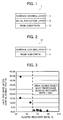
- FIG. 1 illustrates a film mirror 1 which includes a resin substrate 2, a metal reflective layer 6 and a surface coating layer 3 formed in this order.
- the number of each of these layers may be one or more than one, and these layers may be formed in any order.
- Layers such as a primer layer and an adhesion layer may be formed between the respective layers and layers other than these may be formed therebetween.
- a back coat layer may be formed on a surface of the resin substrate 1 on the side opposite to the side on which the metal reflective layer 2 and the surface coating layer 3 are formed.
- a second aspect of the invention provides a composite film 10.
- the composite film 10 is used in a film mirror 30 according to a third aspect which will be described later.
- the present invention is described with reference to a preferred embodiment of the composite film 10 of the invention shown in FIG. 2.
- FIG. 2 illustrates a case of the composite film 10 including a resin substrate 2 and a surface coating layer 3.
- the number of each of these layers may be one or more than one, and these layers may be formed in any order. Layers such as a primer layer and an adhesion layer may be formed between the respective layers and layers other than these may be formed therebetween.
- the third aspect of the invention provides the film mirror 30.
- the film mirror 30 is one having a first resin substrate and a second resin substrate.
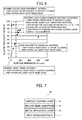
- FIG. 7 shows a preferred example of the film mirror 30.
- the film mirror 30 shown in FIG. 7 is one including a first resin substrate 11, a metal reflective layer 12, a second resin substrate 13 and a surface coating layer 14, wherein a resin making up the surface coating layer has a surface fluorine content of 0.21 to 1.00 and wherein the surface coating layer has a surface hardness of more than 100 N/mm 2 and an elastic recovery rate of 60% or more.
- a primer layer or an adhesion layer may be formed between the first resin substrate and the metal reflective layer or between the metal reflective layer and the second resin substrate. Layers other than these may be formed therebetween.
- a primer layer or an adhesion layer may be formed between the second resin substrate and the surface coating layer. Layers other than these may be formed therebetween.
- a back coat layer may be formed between the second resin substrate and the metal reflective layer.
- the materials of the first resin substrate and the second resin substrate may be the same as or different from each other but the second resin substrate preferably has a thickness which is up to half the thickness of the first resin substrate. The thickness within this range is preferable because the transparency is ensured while also achieving flatness and mechanical strength of the film mirror.
- the third aspect of the invention also includes a film mirror obtained by joining the resin substrate of the composite film of the invention to a separately manufactured laminate having a metal reflective layer on a first resin substrate through an adhesion layer or by means of direct thermal fusion bonding.
- the elastic recovery rate of a surface coating layer and the haze value rise rate of a composite film after having undergone sand blasting test were shown in FIG. 3 to evaluate the sandy dust resistance.
- the results of FIG. 3 revealed that the haze value rise rate after the sandy dust resistance test correlates with the elastic recovery rate of the surface coating layer. Since collision between sandy dust with a small weight and the surface layer is less likely to cause deformation exceeding an elastic limit point and more likely to ensure the cushioning properties of the surface coating layer, the elastic recovery rate was found to act more effectively than the surface hardness of the surface coating layer.
- the surface hardness of the surface coating layer and the haze value rise rate after scraping with steel wool were shown in FIG. 4 to evaluate the resistance to brush cleaning.
- a steel wool scraping test is often carried out to evaluate the resistance to scraping as in cleaning with a brush.
- the results of FIG. 4 revealed that the steel wool resistance test correlates with the surface hardness of the surface coating layer.
- a forced scraping test in which an external force exceeding an elastic limit point is easily applied revealed that the surface hardness which is simpler than the elastic recovery rate acts effectively.
- a line was drawn on a surface of a composite film with a black marker and repellency was visually checked.
- the stain-proof properties against mud can be simply evaluated by the marker repellency test.
- the surface fluorine content (F/C) in the surface coating layer and the marker repellency were shown in FIG. 5 to evaluate the stain-proof properties of the surface coating layer.
- the marker repellency was found to correlate with the surface fluorine content (F/C).
- An excessive surface fluorine content (F/C) was found to deteriorate the visual surface state.
- the surface fluorine content expressed by F/C is preferably in a range of 0.25 or more but up to 1.00 and more preferably 0.30 to 0.5. This is because when the surface fluorine content is too low, the stain-proof properties are not sufficient, whereas when the surface fluorine content is increased too much, unevenness occurs during application due to excessive addition of a fluorine monomer.
- the surface hardness is preferably in a range of 130 to 600 N/mm 2 and more preferably 180 to 600 N/mm 2 . This is because the haze value rise rate after the steel wool scraping test decreases with increasing surface hardness.
- the elastic recovery rate is preferably in a range of 60 to 100% and more preferably 75 to 100%. This is because the haze value rise rate after the sandy dust resistance test decreases with increasing elastic recovery rate.
- the hardness of the surface coating layer refers to the Martens hardness as measured according to ISO 14577-1 (instrumented indentation hardness) and can be measured with an ultra-microhardness tester (DUH-201S manufactured by Shimadzu Corporation).
- the maximum indentation depth hmax and the indentation depth after load removal hf are measured according to ISO 14577-1 (instrumented indentation hardness) to obtain the elastic recovery amount (hmax - hf) and the elastic recovery rate of the surface coating layer can be calculated from (hmax - hf) / hmax. Measurement can be made using, for example, an ultra-microhardness tester (DUH-201S manufactured by Shimadzu Corporation).
- Materials of the resin substrate, the metal reflective layer and surface coating layer that may be used in each of the film mirror according to the first aspect of the invention, the composite film according to the second aspect of the invention and the film mirror according to the third aspect of the invention are not limited as long as they have the above-described physical properties after having been applied onto the substrate and cured. Materials and dimensions to be described below can be preferably used.
- the resin substrate for use in the invention is not particularly limited and exemplary materials to form the resin substrate include polyolefin resins such as polyethylene and polypropylene; polyester resins such as polyethylene terephthalate and polyethylene naphthalate; polycarbonate resins; acrylic resins such as polymethyl methacrylate; polyamide resins; polyimide resins; polyvinyl chloride resins; polyphenylene sulfide resins; polyether sulfone resins; polyethylene sulfide resins; polyphenylene ether resins; styrene resins; and cellulose resins such as cellulose acetate.
- polyolefin resins such as polyethylene and polypropylene
- polyester resins such as polyethylene terephthalate and polyethylene naphthalate
- polycarbonate resins acrylic resins such as polymethyl methacrylate
- polyamide resins polyimide resins
- polyvinyl chloride resins polyphenylene sulfide resins
- acrylic resins are preferable for the resin substrate because of high transparency and weather resistance of the composite film.
- the shape of the resin substrate is not particularly limited.
- the resin substrate may have any of a planar surface, a diffusing surface, a concave surface and a convex surface, for example.
- the thickness of the resin substrate is not particularly limited because it also depends on the shape of the resin substrate. In general, however, the resin substrate preferably has a thickness of 25 to 200 ⁇ m when having a planar shape.
- the resin making up the surface coating layer of the invention is not limited and preferably contains a polymer of monomers including at least one type of fluorine-containing monomer. More specifically, use can be more preferably made of (1) a polymer of monomers including at least one type of fluorine-containing acrylate monomer and at least one type of non-fluorine-containing polyfunctional acrylate monomer; (2) a polymer of monomers including at least one type of fluorine-containing epoxy and/or oxetane monomer and at least one type of non-fluorine-containing epoxy and/or oxetane monomer; and (3) a polymer containing a polymerizable monomer of which the polymerization is less inhibited by oxygen.
- the ratio between the various monomers in these resins and the exposure conditions can be changed to adjust the surface hardness of the cured surface coating layer to more than 100 N/mm 2 , the elastic recovery rate to 60% or more and the surface fluorine content expressed by the F/C ratio in the range according to the invention, thereby preparing a coating liquid for the surface coating layer.
- a case where the polymerization shrinkage of the acrylic monomer for use in the surface coating layer is at approximately the same level as the heat shrinkage of the resin substrate is preferable because these shrinkages are canceled each other to reduce curling of the film mirror.
- the expression: [(heat shrinkage of resin substrate) - (polymerization shrinkage of surface coating layer)] ⁇ 10% is preferably satisfied because the curling resistance is excellent when the difference is within this range.
- the difference is preferably up to 5% and more preferably up to 3%.
- the curling resistance refers to a resistance to shape warping deformation of a laminate which is a composite film or a film mirror, as a result of thermal history. The curling resistance is measured by the method to be described later in Examples and Comparative Examples.
- the resin making up the surface coating layer of the invention preferably contains a polymer of monomers including at least one type of fluorine-containing monomer.
- the fluorine-containing monomer include a fluorine-containing acrylate monomer, a fluorine-containing olefinic monomer, a fluorine-containing acetylene monomer, a fluorine-containing epoxy monomer, a fluorine-containing oxetane monomer and a fluorine-containing vinyl ether monomer.
- the following compounds can be illustrated as (1) the polymer of monomers including at least one type of fluorine-containing acrylate monomer and at least one type of non-fluorine-containing polyfunctional acrylate monomer.
- the fluorine-containing acrylate monomer that may be used in the surface coating layer of the invention is not particularly limited.
- the compounds f-1 to f-10 described in paragraph number [0018] and X-1 to X-32 described in paragraph numbers [0023] to [0027] of JP 2006-28409 A as well as the following compounds (X-33), (X-34) and (X-35) can also be preferably used.
- the non-fluorine-containing polyfunctional acrylate monomer that may be used is a compound containing two or more (meth)acryloyl groups in one molecule.
- Specific examples thereof include (meth)acrylic acid diesters of alkylene glycols such as neopentyl glycol acrylate, 1,6-hexanediol (meth)acrylate, and propylene glycol di(meth)acrylate;
- (meth)acrylic acid diesters of polyoxyalkylene glycols such as triethylene glycol di(meth)acrylate, dipropylene glycol di(meth)acrylate, polyethylene glycol di(meth)acrylate and polypropylene glycol di(meth)acrylate;
- (meth)acrylic acid diesters of polyhydric alcohols such as pentaerythritol di(meth)acrylate; and (meth)acrylic acid diesters of ethylene oxide or propylene oxide adducts such as 2,2-bis
- the following compounds can be illustrated as (1) the polymer of monomers including at least one type of fluorine-containing epoxy and/or oxetane monomer and at least one type of non-fluorine-containing epoxy and/or oxetane monomer.
- Exemplary epoxy compounds that may be used in the invention include an aromatic epoxide, an alicyclic epoxide and an aliphatic epoxide to be illustrated below.
- the aromatic epoxide include di- or polyglycidyl ethers of bisphenol A or alkylene oxide adducts thereof, di- or polyglycidyl ethers of hydrogenated bisphenol A or alkylene oxide adducts thereof, and novolac epoxy resins.
- Examples of the alkylene oxide as used herein include ethylene oxide and propylene oxide.
- An example of the alicyclic epoxide includes a cyclohexene oxide or cyclopentene oxide-containing compound as obtained by epoxidizing a compound having at least one cycloalkane ring such as cyclohexene ring or cyclopentene ring with a suitable oxidizing agent such as hydrogen peroxide or a peracid.
- the aliphatic epoxide is preferably a di- or polyglycidyl ether of an aliphatic polyhydric alcohol or an alkylene oxide adduct thereof and typical examples thereof include diglycidyl ethers of alkylene glycols such as ethylene glycol diglycidyl ether, propylene glycol diglycidyl ether and 1,6-hexanediol diglycidyl ether; polyglycidyl ethers of polyhydric alcohols such as di- or triglycidyl ethers of glycerol or alkylene oxide adducts thereof; and diglycidyl ethers of polyalkylene glycols such as diglycidyl ethers of polyethylene glycol or alkylene oxide adducts thereof and diglycidyl ethers of polypropylene glycol or alkylene oxide adducts thereof.
- alkylene oxide as used herein include ethylene oxide and propylene oxide.
- the aromatic epoxy monomer is not particularly limited and examples thereof include bisphenol skeleton-containing epoxy monomers such as bisphenol A, bisphenol F and bisphenol S epoxy monomers; dicyclopentadiene skeleton-containing epoxy monomers such as dicyclopentadiene dioxide and dicyclopentadiene skeleton-containing phenol novolac epoxy monomers; naphthalene skeleton-containing epoxy monomers such as 1-glycidyl naphthalene, 2-glycidyl naphthalene, 1,2-diglycidyl naphthalene, 1,5-diglycidyl naphthalene, 1,6-diglycidyl naphthalene, 1,7-diglycidyl naphthalene, 2,7-diglycidyl naphthalene, triglycidyl naphthalene, and 1,2,5,6-tetraglycidyl naphthalene; adamantene skeleton-containing epoxy monomers such as 1,3
- the oxetane monomer that may be used in the surface coating layer of the invention is not particularly limited and, for example, monofunctional or difunctional oxetane monomers may also be used.
- monofunctional or difunctional oxetane monomers may also be used.
- 3-ethyl-3-hydroxymethyl oxetane (trade name: OXT101 and the like manufactured by Toagosei Co., Ltd.), di(1-ethyl-3-oxetanyl)methyl ether (OXT221 and the like manufactured by Toagosei Co., Ltd.), and 3-ethyl-3-(2-ethylhexyloxymethyl)oxetane (OXT212 and the like manufactured by Toagosei Co., Ltd.) can be preferably used.
- aromatic oxetane monomer examples include 1,4-bis[(3-ethyl-3-oxetanyl)methoxymethyl]benzene (OXT121 and the like manufactured by Toagosei Co., Ltd.), 3-ethyl-3-(phenoxymethyl)oxetane (OXT211 and the like manufactured by Toagosei Co., Ltd.), 4,4'-bis[(3-ethyl-3-oxetanyl)methoxymethyl]biphenyl, 1,4-benzenedicarboxylic acid bis[(3-ethyl-3-oxetanyl)methyl]ester, 1,4-bis[(3-ethyl-3-oxetanyl)methoxymethyl]benzene and oxetanized phenol novolac.
- These oxetane monomers may be used alone or in combination of two or more thereof. These are described in detail in JP 2012-163691 A .
- the oxetane monomer is not particularly limited as long as it is a fluorine-containing oxetane compound that can be cured by a cationic polymerization initiator, and a conventionally known compound can be used.
- the oxetane monomer is also not particularly limited in its molecular structure and molecular weight.
- the fluorine-containing oxetane monomer that may be used in the invention is most preferably a compound in which some or all of hydrogen atoms in the molecule are substituted with fluorine, and examples thereof include 3-methyl-3-[[(3,3,4,4,5,5,6,6,7,7,8,8,8, tridecafluorooctyl)oxy]methyl] oxetane, 3-methyl-3-[[(2,2,3,3,4,4,5,5,6,6,7,7,8,8,8-pentadecafluorooctyl)oxy]methyl]oxetane, and 3-methyl-3-[(2,2,2-trifluoroethoxy)methyl]oxetane.
- These oxetane monomers may be used alone or in combination of two or more thereof.
- the fluorine-containing oxetane compound is not particularly limited and specific examples thereof include 3-ethyl-3-[1-pentafluoroethyl-2,2-bis(trifluoromethyl)ethenyloxymethyl]oxetane, 3-methyl-3-[1-pentafluoroethyl-2,2-bis(trifluoromethyl)ethenyloxymethyl]oxetane, 3-ethyl-3-[1,2-difluoro-2-trifluoromethylethenyloxymethyl]oxetane, 3-methyl-3-[1,2-difluoro-2-trifluoromethylethenyloxymethyl]oxetane, 3-ethyl-3-[1-trifluoromethyl-2,2-bis(heptafluoroisopropyl)ethenyloxymethyl]oxetane, 3-methyl-3-[1-trifluoromethyl-2,2-bis(heptafluoroisoprop
- the fluorine-containing epoxy compound that may be used in the invention is not limited but is a reaction product of a fluorine compound and an epoxy compound such as epichlorohydrin.
- examples thereof include fluorine-containing glycidyl ethers such as glycidyl 1,1,2,2-tetrafluoroethyl ether, glycidyl 2,2,3,3-tetrafluoropropyl ether, glycidyl 2,2,3,3,4,4,5,5-octafluoropentyl ether, and 3-(1H,1H,7H-dodecafluoroheptyloxy)-1,2-epoxypropane.
- fluorine-containing epoxy compound examples include hexafluoropropylene oxide, 3-perfluorobutyl-1,2-epoxypropane, 3-perfluorohexyl-1,2-epoxypropane, 1,4-bis(2',3'-epoxypropyl)-perfluoro-n-butane, and 1,6-bis(2',3'-epoxypropyl)-perfluoro-n-hexane. These are described in detail in JP 2009-224109 A .
- the following compounds can be illustrated as (1) the polymer containing a polymerizable monomer of which the polymerization is less inhibited by oxygen.
- the surface coating layer contains as its constituent resin a polymer containing a polymerizable monomer of which the polymerization is less inhibited by oxygen is suitable to form the surface coating layer through photo-curing in the presence of oxygen or in the air.
- the polymerizable monomer for use in the invention of which the polymerization is less inhibited by oxygen during curing is not limited and an acrylic monomer derivative having a structural unit represented by general formula (1) or general formula (2) shown below is preferably polymerized.
- R 1 represents a hydrogen atom or a hydrocarbon group
- R 2 to R 4 each independently represent a hydrocarbon group
- R 5 represents an alkylene group which may have an ether group inserted in the chain
- X 1 to X 3 each independently represent a single bond or a carbonyl group.
- the hydrocarbon group that may be taken by R 1 to R 4 may be a saturated hydrocarbon group or an unsaturated hydrocarbon group and may have a substituent.
- the hydrocarbon group include an alkyl group, an alkenyl group, an aralkyl group, and an aryl group. Among these, an alkyl group is preferable.
- the alkyl group as used herein may be linear, branched or cyclic. Exemplary linear alkyl groups include methyl group, ethyl group, n-propyl group, n-butyl group, n-pentyl group and n-hexyl group. Exemplary branched alkyl groups include isopropyl group, isobutyl group and isopentyl group.
- Exemplary cyclic alkyl groups include cyclopentyl group and cyclohexyl group.
- the alkyl group is preferably a linear alkyl group or a branched alkyl group and more preferably a linear alkyl group.
- the linear alkyl group preferably contains 1 to 6 carbon atoms and more preferably 1 to 4 carbon atoms.
- Specific examples of the alkenyl group include the foregoing alkyl groups in which some of carbon-carbon single bonds are replaced by double bonds.
- Specific examples of the aryl group include phenyl group, 1-naphthyl group, and 2-naphthyl group.
- aralkyl group examples include the foregoing specific examples of the alkyl group substituted with any of the specific examples of the aryl group.
- exemplary substituents of the hydrocarbon groups that may be taken by R 1 to R 4 include an alkoxy group and hydroxyl group, and hydroxyl group is preferable.
- This case also includes a case where R 1 groups in general formula (1) may be taken together to form a dimer structure.
- R 3 and R 4 in general formula (2) may be the same or different and a case where R 3 and R 4 are the same is preferable. More preferably X 2 and X 3 in general formula (2) are both carbonyl groups.
- R 5 is an alkylene group which may have an ether group inserted in the chain and has a structure represented by general formula (5) shown below. [Chemical Formula 4] General formula (5) -R 11 -(O-R 12 )n-
- R 11 and R 12 each independently represent an optionally substituted alkylene group.
- the alkylene group may be linear, branched or cyclic.
- Exemplary linear alkyl groups include methylene group, ethylene group, n-propylene group, n-butylene group, n-pentylene group and n-hexylene group.
- Exemplary branched alkyl groups include isopropylene group, isobutylene group and isopentylene group.
- Exemplary cyclic alkylene groups (cycloalkylene groups) include cyclopentylene group and cyclohexylene group.
- the alkylene group is preferably a linear alkylene group or a branched alkylene group and more preferably a linear alkylene group.
- the linear alkylene group preferably contains 1 to 6 carbon atoms and more preferably 1 to 4 carbon atoms.
- Exemplary substitutents of the alkylene group include those illustrated as the substituents of the hydrocarbon groups.
- n represents an integer of 0 or more. n is preferably 0 to 6 and more preferably 0 to 4. When n is 2 or more, R 12 s whose number is n may be the same or different.
- a plurality of types of or only one type of structure represented by general formula (1) or general formula (2) may be included in the surface coating layer.
- a plurality of types of structures are included, a plurality of types of structures represented by general formula (1) may be included, a plurality of types of structures represented by general formula (2) may be included, or one or more types of structures represented by general formula (1) and one or more types of structures represented by general formula (2) may coexist.
- the polymer making up the surface coating layer is preferably manufactured by polymerizing a monomer mixture containing at least one type of monomer represented by general formula (3) or general formula (4) shown below.
- R 1 represents a hydrogen atom or a hydrocarbon group
- R 2 to R 4 each independently represent a hydrocarbon group
- R 5 represents an alkylene group which may have an ether group inserted in the chain
- X 1 to X 3 each independently represent a single bond or a carbonyl group.
- Detailed description and preferable ranges of R 1 to R 5 and X 1 to X 3 are the same as those given for general formula (1) and general formula (2).
- a filler such as particulate silica may be used in the surface coating layer of the invention when necessary. Addition of the filler holds promise for improving the hardness while reducing polymerization shrinkage.
- the filler that may be used in the invention is not particularly limited and examples thereof include inorganic fine particles and organic fine particles.
- the inorganic fine particles are not particularly limited, and silica fine particles, alumina fine particles, ZnO fine particles and the like are preferable, and silica fine particles are preferable.
- the organic fine particles are not particularly limited. Acrylic resin, acrylonitrile resin, polyurethane, polyvinyl chloride, polystyrene, polyacrylonitrile, polyamide and the like can be used, and acrylic resin is preferable.
- a solvent, a plasticizer and the like may be used in the surface coating layer of the invention when necessary.
- solvents such as hydrocarbons, hydrogen halides, ethers, esters and ketones.
- solvents such as hydrocarbons, hydrogen halides, ethers, esters and ketones.
- xylene and dibutyl ether can be suitably used.
- additives examples include a photopolymerization initiator, an antistatic agent, a leveling agent, an ultraviolet absorber, a light stabilizer, an antioxidant, an antifoaming agent, a thickener, an antisettling agent, a pigment, a dispersant, and a silane coupling agent.
- the method used for polymerizing the monomers is not particularly limited, and exemplary methods that may be preferably used include thermal polymerization, photopolymerization (by ultraviolet light, visible light), electron beam polymerization, plasma polymerization, and combinations thereof. Among these, photopolymerization is most preferable. When photopolymerization is performed, a photopolymerization initiator is used in combination.
- Exemplary photopolymerization initiators include Irgacure series (for example, Irgacure 651, Irgacure 754, Irgacure 184, Irgacure 2959, Irgacure 907, Irgacure 369, Irgacure 379, and Irgacure 819), Darocure series (for example, Darocure TPO and Darocure 1173), and Quantacure PDO commercially available from Ciba Specialty Chemicals Inc., and Ezacure series (for example, Ezacure TZM and Ezacure TZT) commercially available from Sartomer.
- Irgacure series for example, Irgacure 651, Irgacure 754, Irgacure 184, Irgacure 2959, Irgacure 907, Irgacure 369, Irgacure 379, and Irgacure 819
- Light used for irradiation is typically ultraviolet light from a high pressure mercury vapor lamp or a low pressure mercury vapor lamp.
- the irradiation energy is preferably at least 95 mJ/cm 2 , and more preferably at least 100 mJ/cm 2 .
- polymerization of acrylate and methacrylate is inhibited by oxygen in the air, and therefore the oxygen concentration or the oxygen partial pressure during the polymerization is preferably reduced.
- the oxygen concentration is preferably up to 50%, more preferably up to 30%, and most preferably up to 21% which is the concentration of oxygen usually contained in the air.
- the surface coating layer preferably has a thickness of 0.1 to 50 ⁇ m and more preferably 0.1 to 10 ⁇ m in terms of stain-proof properties and scratch resistance.
- the metal reflective layer for use in the invention is a layer formed on a front surface or a back surface of the resin substrate in terms of its use in a film mirror.
- the material used to form the metal reflective layer is not particularly limited as long as it is a metallic material which may reflect visible light and infrared light. Specific examples thereof include silver and aluminum.
- the thickness of the metal reflective layer is not particularly limited and is preferably 50 to 500 nm and more preferably 100 to 300 nm in terms of reflectance and the like.
- the method of forming the metal reflective layer is not particularly limited and any of a wet process and a dry process may be applied.
- An example of the wet process includes a process which is known as a so-called metal plating process.
- Examples of the dry process include a vacuum deposition process, a sputtering process and an ion plating process.
- the primer layer for use in the invention is an optional layer formed in terms of the adhesion between the resin substrate and the surface coating layer, between the resin substrate and the metal reflective layer, between the metal reflective layer and the surface coating layer or between any layers other than the above combinations.
- the material used to form the primer layer is not particularly limited as long as the material is capable of improving the adhesion between the resin substrate and the surface coating layer.
- resin materials such as polyester resin, urethane resin, acrylic resin, urethane acrylic resin, polyamide resin, and cycloolefin polymer resin.
- a hydrophilic group-containing resin is preferably used to form the primer layer because the adhesion between the resin substrate and the metal reflective layer or the surface coating layer is further improved while suppressing cure shrinkage of the surface coating layer and improving the curling resistance.
- urethane acrylate; epoxy acrylate; polyester acrylate; and polyacrylates having hydrophilic groups such as hydroxyl group, carboxy group and amino group are more preferable.
- the thickness of the primer layer is not particularly limited and is preferably 0.1 to 50 ⁇ m and more preferably 1 to 30 ⁇ m.
- the method of forming the primer layer is not particularly limited, and for example in a case where urethane acrylic resin is used to form the primer layer, an exemplary method involves applying a mixed solution of urethane acrylate (e.g., EBECRYL 8402 manufactured by Daicel-Cytec Co., Ltd.) and a photopolymerization initiator (e.g., Irgacure 184 manufactured by Ciba Specialty Chemicals Inc.) to the surface of the resin substrate and then photo-curing under exposure to ultraviolet radiation.
- urethane acrylate e.g., EBECRYL 8402 manufactured by Daicel-Cytec Co., Ltd.
- a photopolymerization initiator e.g., Irgacure 184 manufactured by Ciba Specialty Chemicals Inc.
- the resin used as the binder in the adhesion layer is not particularly limited as long as conditions on the above-described adhesion, the heat resistance and the smoothness are satisfied.
- Polyester resin, acrylate resin, melamine resin, epoxy resin, polyamide resin, vinyl chloride resin, vinyl chloride - vinyl acetate copolymer resin and the like can be used alone or as a resin mixture thereof.
- Acrylate resin and a resin mixture of polyester resin and melamine resin are preferable in terms of weather resistance, and thermosetting resins obtained by mixing a curing agent such as an isocyanate thereinto are more preferable.
- acrylate resin It is particularly preferable to use acrylate resin.
- acrylates resin include polyacrylates and polymethacrylates such as poly(methyl methacrylate) ("PMMA" acrylic resin).
- the adhesion layer preferably has a thickness of 0.01 to 5 ⁇ m and more preferably 0.1 to 2 ⁇ m in terms of adhesion, smoothness, reflectance and the like.
- the material making up the adhesion layer can be selected from among a natural rubber material, a synthetic rubber material, an acrylic resin material, a silicone resin material, a polyolefin resin material, a polyvinyl ether resin material, a urethane resin material and the like, and an acrylic resin material, a polyolefin resin and a silicone resin are preferably used.
- An emulsion material including an adhesive ingredient dispersed in water may also be used but an organic solvent material is preferably used in terms of transparency and reduction of the remaining adhesive.
- Specific examples include homopolymers or copolymers of methyl acrylate, acrylic acid, ethyl acrylate, butyl acrylate, propyl acrylate, butyl methacrylate, acrylonitrile, hydroxyethyl acrylate, isononyl acrylate, stearyl acrylate and the like.
- Specific examples of the polyvinyl ether resin material include polyvinyl ether and polyvinyl isobutyl ether.
- Specific examples of the silicone material that may be used include dimethylpolysiloxane and fluorosilicone.
- the back coat layer for use in the invention is an optional layer formed on a surface of the resin substrate on the side opposite to the side on which the surface coating layer is formed in terms of adjusting curling of the film mirror or the composite film.
- the back coat layer preferably has a cure shrinkage of within ⁇ 30% with respect to the cure shrinkage in the surface coating layer for the reason that curling of the film mirror or the composite film can be adjusted.
- the material used to form the back coat layer as described above is not particularly limited and examples thereof include urethane resin, and monomers and resins that may be used in the above-described surface coating layer.
- the back coat layer may contain an adhesive ingredient because the adhesion and the adhesiveness of the back coat layer to its adjoining materials (resin substrate and metal reflective layer) are good.
- the thickness of the back coat layer is not particularly limited and is preferably 0.5 to 50 ⁇ m and more preferably 1 to 30 ⁇ m.
- the method of forming the back coat layer is not particularly limited.
- an exemplary method includes a method which involves applying a curable composition containing a low molecular weight compound (e.g., urethane acrylate) that may produce any of these resins onto the back surface of the resin substrate and then photo-curing under exposure to ultraviolet radiation or heat-curing under heating.
- a curable composition containing a low molecular weight compound e.g., urethane acrylate
- a PMMA film (ACRYPLEN HBS010 with a thickness of 75 ⁇ m) or an acrylic rubber film (ACRYPLEN HBS006 with a thickness of 50 ⁇ m) was used for the resin substrate and coating liquids OC-1, OC-2, OC-3 and OC-5 for forming the surface coating layer as shown in Table 2 were prepared under the following conditions.
- OC-4 that was used is commercially available as a photocurable urethane acrylate coating liquid (trade name: UV Self-Healing; Natoco Co., Ltd.).
- each of the coating liquids for the surface coating layer as prepared above was applied onto the resin substrate by a coating bar, dried at 80°C for 1 minute and then cured by exposure to ultraviolet radiation to form a surface coating layer with a thickness of about 7 ⁇ m, thereby preparing composite films in Examples 1 to 6 and Comparative Examples 1, 2, 6 and 7.
- the monomer ratio and the exposure conditions were changed to prepare the surface coating layer so that the surface hardness and the elastic recovery rate of the surface coating layer had values shown in Table 2 satisfying the ranges of more than 100 N/mm 2 and 60% or more, respectively.
- the photocurable urethane acrylate-containing coating liquid OC-4 was applied onto the resin substrate by an applicator and dried at 80°C for 5 minutes. The coating liquid was then cured by exposure to ultraviolet radiation to form a surface coating layer with a thickness of about 15 ⁇ m.
- a PMMA film HBS010; thickness: 75 ⁇ m was used for the resin substrate and the coating liquid for surface coating layer OC-4 was used for the surface coating layer.
- the haze value rise rate after sand blasting test was low but the haze value rise rate after scraping test using steel wool was high.
- a glass substrate (thickness: 0.7 mm) was used for the substrate instead of the PMMA, the surface coating layer was not formed and the substrate was only evaluated. UV curing was not performed and hence UV curing condition was indicated by hyphen (-) in Table 2.
- a PMMA film (HBS010 with a thickness of 75 ⁇ m) was used for the resin substrate, the surface coating layer was not formed and the substrate was only evaluated.
- UV curing condition was indicated by hyphen (-) in Table 2.
- the surface hardness, the elastic recovery rate, and the surface fluorine content in the surface coating layer were determined, and haze values were measured before and after the sand blasting test and before and after the steel wool test to determine the haze value rise rates (%).
- the composite films were evaluated for the marker repellency, the curling resistance and the surface properties by the methods described below and the results are shown in Tables 2 and 3 below.
- the amount of indentation formed by an indenter pressed into a sample and the surface recovery rate of the sample just after the indenter was pressed thereinto were measured with an ultra-microhardness tester (DUH-201S manufactured by Shimadzu Corporation) to calculate the microhardness (surface hardness) and the elastic recovery rate.
- the surface as used in the surface hardness and the elastic recovery rate refers to a portion to a measurement depth of about 10 nm.
- the haze ratio (%) under C illuminant was measured with a haze meter (Nippon Denshoku Industries Co., Ltd.).
- the sand blasting test was performed according to the "wear testing method by means of sand blasting" specified in JIS H 8503:1989. More specifically, each of the prepared composite films was cut into a size of 3 cm square and fixed so that SiC particles collide at an angle of 45°. Then, 200 g of SiC particles were made to fall freely from a height of 100 cm to collide against the composite film. This step was repeated five times. Then, each sample was subjected to ultrasonic cleaning in pure water to remove particles attached thereto. A sample of which the haze value difference ( ⁇ H) between before and after the sand blasting test is within 2.0% can be rated as having excellent scratch resistance.
- ⁇ H haze value difference
- Steel wool (#0000) was moved back and forth ten times under a weight of 500 g to scrape the surface of each sample. Then, each sample was subjected to ultrasonic cleaning in pure water to remove the steel wool attached thereto.
- a sample of which the haze value difference ( ⁇ H) between before and after the scraping test using steel wool is within 1.0% can be rated as having excellent scratch resistance.
- the number of fluorine atoms and the number of carbon atoms at the surface of each sample were measured by ESCA (XPS) to determine the ratio of the number of fluorine atoms to the number of carbon atoms in the surface layer portion as expressed by F/C.
- a line was drawn on a surface of each composite film sample with a black marker and repellency was visually checked. A sample which completely repelled was rated “A,” a sample which partially repelled was rated “B” and a sample which did not repel at all was rated “C.”
- the curling resistance was evaluated by the following curling test.
- Each composite film was put on a horizontal board and a sample having an average height to the upwardly curved portions at the four corners of less than 10 mm was rated "A,” a sample having an average height exceeding 10 mm was rated “C” and a sample having an average height of around 10 mm was rated “B.”
- the surface fluorine content is sufficient and not excessive, and the surface hardness and the elastic recovery rate take predetermined values. Accordingly, the stain-proof properties and the surface properties are excellent and the scratch resistance is also high.
- the measurement result of the difference between the heat shrinkage of the resin substrate at 100°C and the polymerization shrinkage of the surface coating layer in Example 2 was 4.6%.
- Example 5 showed a relatively low surface fluorine content and the marker repellency was therefore rated as partial repellency.
- Example 6 the difference between the heat shrinkage of the resin substrate at 100°C and the polymerization shrinkage of the surface coating layer was larger than that in Examples 1 to 4 and the curling resistance was therefore rated "B.”
- Comparative Example 1 adopts curing conditions under which the UV irradiation amount is small and the surface fluorine content is reduced and hence the marker repellency is rated as no repellency and the stain-proof properties are poor.
- Comparative Example 2 the coating liquid for surface coating layer OC-3 free from a fluorine-containing monomer is used and hence the marker repellency is rated as no repellency and the stain-proof properties are poor.
- Comparative Example 3 the surface hardness was low and hence the haze value rise rate after the scraping test using steel wool was high and the marker repellency was rated as no repellency, thus resulting in poor scratch resistance and stain-proof properties.
- Comparative Example 4 the glass substrate makes up the surface layer and the haze value rise rate after the scraping test using steel wool was low but the haze value rise rate after the sand blasting test was high and the scratch resistance was not sufficient. Curling occurs in Comparative Example 6 because of a large difference between the heat shrinkage of the substrate and the polymerization shrinkage of the surface coating layer, and the curling resistance is poor. In Comparative Example 7, surface unevenness occurred due to excessive addition of a fluorosurfactant, resulting in poor surface properties.
- a silver-containing metal reflective layer was formed by electroplating between the resin substrate and the surface coating layer in Example 1 and between the resin substrate and the surface coating layer in Example 6, thereby preparing film mirrors of the invention.
- the film mirror in Example 7 was prepared by mixing a polymer obtained by polymerizing Monomer R-1 represented by general formula (3) into the surface coating layer in Example 1 in an amount of 60 wt% and photopolymerizing in the presence of 25% oxygen.
- the reflectance of the prepared film mirrors was measured with a spectrophotometer (UV-3100PC manufactured by Shimadzu Corporation) and the film mirrors were found to have high reflective performance at wavelengths ranging from visible to near infrared.
- Composite films including the surface coating layer-bearing resin substrates as described in Examples 1 and 6, respectively, provided that the PMMA films each had a thickness of 35 ⁇ m were bonded to a silver-containing metal reflective layer formed by electroplating on a PET film with a thickness of 70 ⁇ m by thermocompression bonding using an adhesive under conditions of 120°C and a load of 0.5 Pa, thereby preparing film mirrors of the invention.
- the reflectance of the prepared film mirrors was measured with a spectrophotometer (UV-3100PC manufactured by Shimadzu Corporation) and the film mirrors were found to have high reflective performance at wavelengths ranging from visible to near infrared.
Landscapes
- Physics & Mathematics (AREA)
- Engineering & Computer Science (AREA)
- Optics & Photonics (AREA)
- General Physics & Mathematics (AREA)
- Life Sciences & Earth Sciences (AREA)
- Sustainable Development (AREA)
- Chemical & Material Sciences (AREA)
- Mechanical Engineering (AREA)
- Combustion & Propulsion (AREA)
- General Engineering & Computer Science (AREA)
- Thermal Sciences (AREA)
- Sustainable Energy (AREA)
- Health & Medical Sciences (AREA)
- Toxicology (AREA)
- Plasma & Fusion (AREA)
- Chemical Kinetics & Catalysis (AREA)
- Laminated Bodies (AREA)
- Optical Elements Other Than Lenses (AREA)
Abstract
Description
- The present invention relates to a film mirror for solar power generation and a composite film for use therein.
- Sunlight reflectors are exposed to ultraviolet light and heat from sunlight, weather, sandy dust and the like, and therefore glass mirrors have conventionally been used therefor.
- When using such glass mirrors, however, there have been a problem of breakage during transportation and a problem of increased construction cost because of high strength required for mounts on which the mirrors are to be mounted.
- In order to solve such problems, it has been proposed in recent years to replace glass mirrors by reflective resin sheets (hereinafter also referred to as "film mirrors").
- The surface layer of a film mirror is required to have stain-proof properties and scratch resistance. As for the scratch resistance, the surface is required to be resistant to scratches in collision with sandy dust grain aggregates in a sandstorm and is also required to be resistant to scratches upon cleaning with a brush.
- A composite film is known which protects against scratches upon collision with sandy dust by forming a soft resin layer having self-repairing properties as the surface layer of a resin substrate.
- The surface layer made of soft resin had the following problem: Scratches due to impact of fine objects such as sandy dust do not occur but permanent scratches occur due to cleaning with a brush which involves hard scraping to such an extent that the elastic limit is exceeded.
-
Patent Literature 1 describes a low reflection film which can protect against reflection due to outside light and is also excellent in dust resistance and which particularly has sufficient abrasion resistance to prevent the transparency from being impaired by abrasion due to friction and is also excellent in contamination resistance. However, the abrasion resistance is tested in order to evaluate the scratch resistance by scraping the film back and forth using white flannel and the performance required for the film mirror to be protected against surface scratches that may be caused by collision with sandy dust grain aggregates is not examined. - Patent Literature 1:
JP 2004-314408 A - An object of the present invention is to provide a film mirror which has stain-proof properties and which has scratch resistance so that the surface is resistant to scratches in collision with sandy dust and is also resistant to scratches upon cleaning with a brush, these properties having been difficult to achieve at the same time in the conventional technique.
- Specifically, the invention provides the following.
- (1) A film mirror comprising: a resin substrate; a metal reflective layer; and a surface coating layer, wherein a ratio of a number of fluorine atoms to a number of carbon atoms in a surface layer portion of the surface coating layer as expressed by F/C is 0.21 to 1.00 and wherein the surface coating layer has a surface hardness of more than 100 N/mm2 and an elastic recovery rate of 60% or more.
- (2) The film mirror according to (1), wherein a resin making up the surface coating layer contains a polymer of monomers including at least one type of fluorine-containing monomer.
- (3) The film mirror according to (1) or (2), wherein a resin making up the surface coating layer contains a polymer of monomers including at least one type of fluorine-containing acrylate monomer and at least one type of non-fluorine-containing polyfunctional acrylate monomer.
- (4) The film mirror according to any one of (1) to (3), wherein a resin making up the surface coating layer contains a polymer of monomers including at least one type of fluorine-containing epoxy and/or oxetane monomer and at least one type of non-fluorine-containing epoxy and/or oxetane monomer.
- (5) The film mirror according to any one of (1) to (4), comprising a step of forming the surface coating layer by photo-curing under exposure to ultraviolet radiation at an accumulated light quantity of 95 mJ/cm2 or more.
- (6) The film mirror according to any one of (1) to (5), comprising a step of forming the surface coating layer by photo-curing in presence of oxygen.
- (7) The film mirror according to any one of (1) to (6), wherein a resin making up the surface coating layer contains a polymerizable monomer of which polymerization is less inhibited by oxygen.
- (8) The film mirror according to any one of (1) to (7), wherein a resin making up the surface coating layer contains a polymerizable monomer of which polymerization is less inhibited by oxygen, the polymerizable monomer represented by general formula (1) or general formula (2) shown below:


- (9) The film mirror according to any one of (1) to (8), wherein a difference between heat shrinkage of the resin substrate at 100°C and polymerization shrinkage of the surface coating layer as represented by [(heat shrinkage of resin substrate) - (polymerization shrinkage of surface coating layer)] is within 10%.
- (10) A film mirror comprising: a first resin substrate; a metal reflective layer; a second resin substrate; and a surface coating layer, wherein a ratio of a number of fluorine atoms to a number of carbon atoms in a surface layer portion of the surface coating layer as expressed by F/C is 0.21 to 1.00 and wherein the surface coating layer has a hardness of more than 100 N/mm2 and an elastic recovery rate of 60% or more.
- (11) The film mirror according to any one of (1) to (9) for use in concentration of sunlight.
- (12) A composite film comprising: a surface coating layer formed on a resin substrate, wherein a ratio of a number of fluorine atoms to a number of carbon atoms in a surface layer portion of the surface coating layer as expressed by F/C is 0.21 to 1.00 and wherein the surface coating layer has a surface hardness of more than 100 N/mm2 and an elastic recovery rate of 60% or more.
- (13) The composite film according to (12), comprising a primer layer between the resin substrate and the surface coating layer.
- The present invention provides a film mirror which has stain-proof properties and which has scratch resistance so that the surface is resistant to scratches in collision with sandy dust and is also resistant to scratches upon cleaning with a brush.
-
- [
FIG. 1] FIG. 1 is a cross-sectional view schematically showing an embodiment of a film mirror of the invention. - [
FIG. 2] FIG. 2 is a cross-sectional view schematically showing an embodiment of a composite film of the invention. - [
FIG. 3] FIG. 3 is a graph showing the elastic recovery rate of a surface coating layer in the horizontal axis and the haze value rise rate (%) of a composite film after having undergone sand blasting test in the vertical axis. - [
FIG. 4] FIG. 4 is a graph showing the surface hardness of the surface coating layer in the horizontal axis and the haze value rise rate (%) after scraping with steel wool in the vertical axis. - [
FIG. 5] FIG. 5 is a graph showing the ratio (F/C) of the number of fluorine atoms to the number of carbon atoms in a surface layer portion of the surface coating layer in the horizontal axis and the marker repellency in the vertical axis. - [
FIG. 6] FIG. 6 is a graph showing a physical property area where performance necessary to the film mirror is achieved at the same time. - [
FIG. 7] FIG. 7 is a cross-sectional view schematically showing another embodiment of the film mirror of the invention. - A film mirror according to a first aspect of the invention is a film mirror including a resin substrate, a metal reflective layer and a surface coating layer, wherein the ratio of the number of fluorine atoms to the number of carbon atoms in a surface layer portion of resin making up the surface coating layer as expressed by F/C (hereinafter often referred to as "surface fluorine content") is 0.21 to 1.00 and wherein the surface coating layer has a surface hardness of more than 100 N/mm2 and an elastic recovery rate of 60% or more.
- The surface layer portion refers to a portion to a measurement depth of about 10 nm when measured with an X-ray photoelectron spectrometer.
- The present invention is described below with reference to a preferred embodiment of the film mirror shown in
FIG. 1. FIG. 1 illustrates afilm mirror 1 which includes aresin substrate 2, a metalreflective layer 6 and asurface coating layer 3 formed in this order. According to the invention, however, the number of each of these layers may be one or more than one, and these layers may be formed in any order. Layers such as a primer layer and an adhesion layer may be formed between the respective layers and layers other than these may be formed therebetween. A back coat layer may be formed on a surface of theresin substrate 1 on the side opposite to the side on which the metalreflective layer 2 and thesurface coating layer 3 are formed. - A second aspect of the invention provides a
composite film 10. Thecomposite film 10 is used in afilm mirror 30 according to a third aspect which will be described later. The present invention is described with reference to a preferred embodiment of thecomposite film 10 of the invention shown inFIG. 2. FIG. 2 illustrates a case of thecomposite film 10 including aresin substrate 2 and asurface coating layer 3. According to the composite film of the invention, however, the number of each of these layers may be one or more than one, and these layers may be formed in any order. Layers such as a primer layer and an adhesion layer may be formed between the respective layers and layers other than these may be formed therebetween. - The third aspect of the invention provides the
film mirror 30. Thefilm mirror 30 is one having a first resin substrate and a second resin substrate.FIG. 7 shows a preferred example of thefilm mirror 30. Thefilm mirror 30 shown inFIG. 7 is one including afirst resin substrate 11, a metalreflective layer 12, asecond resin substrate 13 and asurface coating layer 14, wherein a resin making up the surface coating layer has a surface fluorine content of 0.21 to 1.00 and wherein the surface coating layer has a surface hardness of more than 100 N/mm2 and an elastic recovery rate of 60% or more. - A primer layer or an adhesion layer may be formed between the first resin substrate and the metal reflective layer or between the metal reflective layer and the second resin substrate. Layers other than these may be formed therebetween.
- A primer layer or an adhesion layer may be formed between the second resin substrate and the surface coating layer. Layers other than these may be formed therebetween.
- A back coat layer may be formed between the second resin substrate and the metal reflective layer.
- The materials of the first resin substrate and the second resin substrate may be the same as or different from each other but the second resin substrate preferably has a thickness which is up to half the thickness of the first resin substrate. The thickness within this range is preferable because the transparency is ensured while also achieving flatness and mechanical strength of the film mirror.
- The third aspect of the invention also includes a film mirror obtained by joining the resin substrate of the composite film of the invention to a separately manufactured laminate having a metal reflective layer on a first resin substrate through an adhesion layer or by means of direct thermal fusion bonding.
- In the present invention, the following experiments have been carried out to examine the stain-proof properties and the scratch resistance required for the film mirror and to determine a physical property area where the performance necessary to the film mirror is achieved at the same time, thus reaching the present invention.
- As for the scratch resistance required for the surface coating layer of the film mirror, It is necessary to achieve the following two properties at the same time:
- (1) Resistance to scratches in collision with sandy dust in a sandstorm; and
- (2) resistance to scratches upon cleaning with a brush.
- In order to find conditions satisfying (1) and (2) above and physical properties satisfying the scratch resistance, a composite film as shown in
FIG. 2 was prepared as will be shown later in Examples and Comparative Examples. Prepared samples were used to carry out the tests shown in the table below. The results are shown in graphs ofFIGS. 3 to 5 and the respective evaluation items were examined.[Table 1] Evaluation item Test Result Evaluation of sandy dust resistance Sand blasting test FIG. 3 Evaluation of resistance to brush cleaning Steel wool test FIG. 4 Evaluation of stain-proof properties Marker repellency test FIG. 5 - The elastic recovery rate of a surface coating layer and the haze value rise rate of a composite film after having undergone sand blasting test were shown in
FIG. 3 to evaluate the sandy dust resistance. The results ofFIG. 3 revealed that the haze value rise rate after the sandy dust resistance test correlates with the elastic recovery rate of the surface coating layer. Since collision between sandy dust with a small weight and the surface layer is less likely to cause deformation exceeding an elastic limit point and more likely to ensure the cushioning properties of the surface coating layer, the elastic recovery rate was found to act more effectively than the surface hardness of the surface coating layer. - The surface hardness of the surface coating layer and the haze value rise rate after scraping with steel wool were shown in
FIG. 4 to evaluate the resistance to brush cleaning. - A steel wool scraping test is often carried out to evaluate the resistance to scraping as in cleaning with a brush. The results of
FIG. 4 revealed that the steel wool resistance test correlates with the surface hardness of the surface coating layer. A forced scraping test in which an external force exceeding an elastic limit point is easily applied revealed that the surface hardness which is simpler than the elastic recovery rate acts effectively. - A line was drawn on a surface of a composite film with a black marker and repellency was visually checked. The stain-proof properties against mud can be simply evaluated by the marker repellency test. The surface fluorine content (F/C) in the surface coating layer and the marker repellency were shown in
FIG. 5 to evaluate the stain-proof properties of the surface coating layer. The marker repellency was found to correlate with the surface fluorine content (F/C). An excessive surface fluorine content (F/C) was found to deteriorate the visual surface state. - The above considerations revealed that physical properties allowing both of the scratch resistance and the stain-proof properties which are necessary to the film mirror include a surface hardness and an elastic recovery rate lying in an area shown in
FIG. 6 and a surface fluorine content F/C of 0.21 or more but up to 1.00, and that it is necessary to form such a surface coating layer that these physical properties are satisfied. - The surface fluorine content expressed by F/C is preferably in a range of 0.25 or more but up to 1.00 and more preferably 0.30 to 0.5. This is because when the surface fluorine content is too low, the stain-proof properties are not sufficient, whereas when the surface fluorine content is increased too much, unevenness occurs during application due to excessive addition of a fluorine monomer.
- The surface hardness is preferably in a range of 130 to 600 N/mm2 and more preferably 180 to 600 N/mm2. This is because the haze value rise rate after the steel wool scraping test decreases with increasing surface hardness.
- The elastic recovery rate is preferably in a range of 60 to 100% and more preferably 75 to 100%. This is because the haze value rise rate after the sandy dust resistance test decreases with increasing elastic recovery rate.
- The hardness of the surface coating layer (hereinafter referred to also as "surface hardness") as used herein refers to the Martens hardness as measured according to ISO 14577-1 (instrumented indentation hardness) and can be measured with an ultra-microhardness tester (DUH-201S manufactured by Shimadzu Corporation).
- The maximum indentation depth hmax and the indentation depth after load removal hf are measured according to ISO 14577-1 (instrumented indentation hardness) to obtain the elastic recovery amount (hmax - hf) and the elastic recovery rate of the surface coating layer can be calculated from (hmax - hf) / hmax. Measurement can be made using, for example, an ultra-microhardness tester (DUH-201S manufactured by Shimadzu Corporation).
- Materials of the resin substrate, the metal reflective layer and surface coating layer that may be used in each of the film mirror according to the first aspect of the invention, the composite film according to the second aspect of the invention and the film mirror according to the third aspect of the invention are not limited as long as they have the above-described physical properties after having been applied onto the substrate and cured. Materials and dimensions to be described below can be preferably used.
- The resin substrate for use in the invention is not particularly limited and exemplary materials to form the resin substrate include polyolefin resins such as polyethylene and polypropylene; polyester resins such as polyethylene terephthalate and polyethylene naphthalate; polycarbonate resins; acrylic resins such as polymethyl methacrylate; polyamide resins; polyimide resins; polyvinyl chloride resins; polyphenylene sulfide resins; polyether sulfone resins; polyethylene sulfide resins; polyphenylene ether resins; styrene resins; and cellulose resins such as cellulose acetate.
- Among these, acrylic resins are preferable for the resin substrate because of high transparency and weather resistance of the composite film.
- According to the invention, the shape of the resin substrate is not particularly limited. The resin substrate may have any of a planar surface, a diffusing surface, a concave surface and a convex surface, for example.
- Likewise, the thickness of the resin substrate is not particularly limited because it also depends on the shape of the resin substrate. In general, however, the resin substrate preferably has a thickness of 25 to 200 µm when having a planar shape.
- The resin making up the surface coating layer of the invention is not limited and preferably contains a polymer of monomers including at least one type of fluorine-containing monomer. More specifically, use can be more preferably made of (1) a polymer of monomers including at least one type of fluorine-containing acrylate monomer and at least one type of non-fluorine-containing polyfunctional acrylate monomer; (2) a polymer of monomers including at least one type of fluorine-containing epoxy and/or oxetane monomer and at least one type of non-fluorine-containing epoxy and/or oxetane monomer; and (3) a polymer containing a polymerizable monomer of which the polymerization is less inhibited by oxygen. The ratio between the various monomers in these resins and the exposure conditions can be changed to adjust the surface hardness of the cured surface coating layer to more than 100 N/mm2, the elastic recovery rate to 60% or more and the surface fluorine content expressed by the F/C ratio in the range according to the invention, thereby preparing a coating liquid for the surface coating layer.
- A case where the polymerization shrinkage of the acrylic monomer for use in the surface coating layer is at approximately the same level as the heat shrinkage of the resin substrate is preferable because these shrinkages are canceled each other to reduce curling of the film mirror.
- The expression: [(heat shrinkage of resin substrate) - (polymerization shrinkage of surface coating layer)] ≤ 10% is preferably satisfied because the curling resistance is excellent when the difference is within this range. The difference is preferably up to 5% and more preferably up to 3%. The curling resistance refers to a resistance to shape warping deformation of a laminate which is a composite film or a film mirror, as a result of thermal history. The curling resistance is measured by the method to be described later in Examples and Comparative Examples.
- The resin making up the surface coating layer of the invention preferably contains a polymer of monomers including at least one type of fluorine-containing monomer. Examples of the fluorine-containing monomer include a fluorine-containing acrylate monomer, a fluorine-containing olefinic monomer, a fluorine-containing acetylene monomer, a fluorine-containing epoxy monomer, a fluorine-containing oxetane monomer and a fluorine-containing vinyl ether monomer.
- To be more specific, the following compounds can be illustrated as (1) the polymer of monomers including at least one type of fluorine-containing acrylate monomer and at least one type of non-fluorine-containing polyfunctional acrylate monomer.
- The fluorine-containing acrylate monomer that may be used in the surface coating layer of the invention is not particularly limited. To be more specific, the compounds f-1 to f-10 described in paragraph number [0018] and X-1 to X-32 described in paragraph numbers [0023] to [0027] of
JP 2006-28409 A 
- The compounds described in paragraph numbers [0135] to [0149] of
WO 2005/059601 and the compounds described in paragraph numbers [0014] to [0028] ofJP 2006-291077 A - The non-fluorine-containing polyfunctional acrylate monomer that may be used is a compound containing two or more (meth)acryloyl groups in one molecule. Specific examples thereof include (meth)acrylic acid diesters of alkylene glycols such as neopentyl glycol acrylate, 1,6-hexanediol (meth)acrylate, and propylene glycol di(meth)acrylate; (meth)acrylic acid diesters of polyoxyalkylene glycols such as triethylene glycol di(meth)acrylate, dipropylene glycol di(meth)acrylate, polyethylene glycol di(meth)acrylate and polypropylene glycol di(meth)acrylate; (meth)acrylic acid diesters of polyhydric alcohols such as pentaerythritol di(meth)acrylate; and (meth)acrylic acid diesters of ethylene oxide or propylene oxide adducts such as 2,2-bis{4-(acryloxy·diethoxy)phenyl}propane and 2,2-bis{4-(acryloxy·polypropoxy)phenyl}propane. These are described in detail in
JP 2010-061044 A - To be more specific, the following compounds can be illustrated as (1) the polymer of monomers including at least one type of fluorine-containing epoxy and/or oxetane monomer and at least one type of non-fluorine-containing epoxy and/or oxetane monomer.
- Exemplary epoxy compounds that may be used in the invention include an aromatic epoxide, an alicyclic epoxide and an aliphatic epoxide to be illustrated below. Examples of the aromatic epoxide include di- or polyglycidyl ethers of bisphenol A or alkylene oxide adducts thereof, di- or polyglycidyl ethers of hydrogenated bisphenol A or alkylene oxide adducts thereof, and novolac epoxy resins. Examples of the alkylene oxide as used herein include ethylene oxide and propylene oxide.
- An example of the alicyclic epoxide includes a cyclohexene oxide or cyclopentene oxide-containing compound as obtained by epoxidizing a compound having at least one cycloalkane ring such as cyclohexene ring or cyclopentene ring with a suitable oxidizing agent such as hydrogen peroxide or a peracid. The aliphatic epoxide is preferably a di- or polyglycidyl ether of an aliphatic polyhydric alcohol or an alkylene oxide adduct thereof and typical examples thereof include diglycidyl ethers of alkylene glycols such as ethylene glycol diglycidyl ether, propylene glycol diglycidyl ether and 1,6-hexanediol diglycidyl ether; polyglycidyl ethers of polyhydric alcohols such as di- or triglycidyl ethers of glycerol or alkylene oxide adducts thereof; and diglycidyl ethers of polyalkylene glycols such as diglycidyl ethers of polyethylene glycol or alkylene oxide adducts thereof and diglycidyl ethers of polypropylene glycol or alkylene oxide adducts thereof. Examples of the alkylene oxide as used herein include ethylene oxide and propylene oxide.
- The aromatic epoxy monomer is not particularly limited and examples thereof include bisphenol skeleton-containing epoxy monomers such as bisphenol A, bisphenol F and bisphenol S epoxy monomers; dicyclopentadiene skeleton-containing epoxy monomers such as dicyclopentadiene dioxide and dicyclopentadiene skeleton-containing phenol novolac epoxy monomers; naphthalene skeleton-containing epoxy monomers such as 1-glycidyl naphthalene, 2-glycidyl naphthalene, 1,2-diglycidyl naphthalene, 1,5-diglycidyl naphthalene, 1,6-diglycidyl naphthalene, 1,7-diglycidyl naphthalene, 2,7-diglycidyl naphthalene, triglycidyl naphthalene, and 1,2,5,6-tetraglycidyl naphthalene; adamantene skeleton-containing epoxy monomers such as 1,3-bis(4-glycidyloxyphenyl)adamantene, and 2,2-bis(4-glycidyloxyphenyl)adamantene; fluorene skeleton-containing epoxy monomers such as 9,9-bis(4-glycidyloxyphenyl)fluorene, 9,9-bis(4-glycidyloxy-3-methylphenyl)fluorene, 9,9-bis(4-glycidyloxy-3-chlorophenyl)fluorene, 9,9-bis(4-glycidyloxy-3-bromophenyl)fluorene, 9,9-bis(4-glycidyloxy-3-fluorophenyl)fluorene, 9,9-bis(4-glycidyloxy-3-methoxyphenyl)fluorene, 9,9-bis(4-glycidyloxy-3,5-dimethylphenyl)fluorene, 9,9-bis(4-glycidyloxy-3,5-dichlorophenyl)fluorene, and 9,9-bis(4-glycidyloxy-3,5-dibromophenyl)fluorene; biphenyl skeleton-containing epoxy resins such as 4,4'-diglycidylbiphenyl, and 4,4'-diglycidyl-3,3'5,5'-tetramethylbiphenyl; bi(glycidyloxyphenyl)methane skeleton-containing epoxy monomers such as 1,1'-bi(2,7-glycidyloxynaphthyl)methane, 1,8'-bi(2,7-glycidyloxynaphthyl)methane, 1,1'-bi(3,7-glycidyloxynaphthyl)methane, 1,8'-bi(3,7-glycidyloxynaphthyl)methane, 1,1'-bi(3,5-glycidyloxynaphthyl)methane, 1,8'-bi(3,5-glycidyloxynaphthyl)methane, 1,2'-bi(2,7-glycidyloxynaphthyl)methane, 1,2'-bi(3,7-glycidyloxynaphthyl)methane, and 1,2'-bi(3,5-glycidyloxynaphthyl)methane; xanthene skeleton-containing epoxy monomers such as 1,3,4,5,6,8-hexamethyl-2,7-bis-oxiranylmethoxy-9-phenyl-9H-xanthene; and anthracene skeleton- or pyrene skeleton-containing epoxy monomers. These epoxy monomers may be used alone or in combination of two or more thereof.
- The oxetane monomer that may be used in the surface coating layer of the invention is not particularly limited and, for example, monofunctional or difunctional oxetane monomers may also be used. For example, 3-ethyl-3-hydroxymethyl oxetane (trade name: OXT101 and the like manufactured by Toagosei Co., Ltd.), di(1-ethyl-3-oxetanyl)methyl ether (OXT221 and the like manufactured by Toagosei Co., Ltd.), and 3-ethyl-3-(2-ethylhexyloxymethyl)oxetane (OXT212 and the like manufactured by Toagosei Co., Ltd.) can be preferably used. In particular, compounds such as 3-ethyl-3-hydroxymethyl oxetane and di(1-ethyl-3-oxetanyl)methyl ether, and any known functional or difunctional oxetane compounds as described in
JP 2001-220526 A JP 2001-310937 A - Examples of the aromatic oxetane monomer include 1,4-bis[(3-ethyl-3-oxetanyl)methoxymethyl]benzene (OXT121 and the like manufactured by Toagosei Co., Ltd.), 3-ethyl-3-(phenoxymethyl)oxetane (OXT211 and the like manufactured by Toagosei Co., Ltd.), 4,4'-bis[(3-ethyl-3-oxetanyl)methoxymethyl]biphenyl, 1,4-benzenedicarboxylic acid bis[(3-ethyl-3-oxetanyl)methyl]ester, 1,4-bis[(3-ethyl-3-oxetanyl)methoxymethyl]benzene and oxetanized phenol novolac. These oxetane monomers may be used alone or in combination of two or more thereof. These are described in detail in
JP 2012-163691 A - The oxetane monomer is not particularly limited as long as it is a fluorine-containing oxetane compound that can be cured by a cationic polymerization initiator, and a conventionally known compound can be used. The oxetane monomer is also not particularly limited in its molecular structure and molecular weight.
- The fluorine-containing oxetane monomer that may be used in the invention is most preferably a compound in which some or all of hydrogen atoms in the molecule are substituted with fluorine, and examples thereof include 3-methyl-3-[[(3,3,4,4,5,5,6,6,7,7,8,8,8, tridecafluorooctyl)oxy]methyl] oxetane, 3-methyl-3-[[(2,2,3,3,4,4,5,5,6,6,7,7,8,8,8-pentadecafluorooctyl)oxy]methyl]oxetane, and 3-methyl-3-[(2,2,2-trifluoroethoxy)methyl]oxetane. These oxetane monomers may be used alone or in combination of two or more thereof.
- The fluorine-containing oxetane compound is not particularly limited and specific examples thereof include 3-ethyl-3-[1-pentafluoroethyl-2,2-bis(trifluoromethyl)ethenyloxymethyl]oxetane, 3-methyl-3-[1-pentafluoroethyl-2,2-bis(trifluoromethyl)ethenyloxymethyl]oxetane, 3-ethyl-3-[1,2-difluoro-2-trifluoromethylethenyloxymethyl]oxetane, 3-methyl-3-[1,2-difluoro-2-trifluoromethylethenyloxymethyl]oxetane, 3-ethyl-3-[1-trifluoromethyl-2,2-bis(heptafluoroisopropyl)ethenyloxymethyl]oxetane, 3-methyl-3-[1-trifluoromethyl-2,2-bis(heptafluoroisopropyl)ethenyloxymethyl]oxetane, 3-ethyl-3-[1,2,3-trifluoroethenyloxymethyl]oxetane, 3-methyl-3-[1,2,3-trifluoroethenyloxymethyl]oxetane, 3-ethyl-3-[2-fluoro-1,2-bis(trifluoromethyl)ethenyloxymethyl]oxetane, 3-methyl-3-[2-fluoro-1,2-bis(trifluoromethyl)ethenyloxymethyl]oxetane, 3-ethyl-3-{[1-(1-trifluoromethyl-2,2,2-trifluoroethyl)-1,2,2,3,3,3-hexafluoropropyl]oxymethyl}oxetane, 3-methyl-3-{[1-(1-trifluoromethyl-2,2,2-trifluoroethyl)-1,2,2,3,3,3-hexafluoropropyl]oxymethyl}oxetane, 3-ethyl-3-[1,1,2,3,3,3-hexafluoropropyloxymethyl]oxetane, 3-methyl-3-[1,1,2,3,3,3-hexafluoropropyloxymethyl]oxetane, 3-ethyl-3-[1,3,4,4,4-pentafluoro-1,3-bis(trifluoromethyl)-2-(heptafluoroisopropyl)butyloxymethyl]oxetane, and 3-ethyl-3-[1,3,4,4,4-pentafluoro-1,3-bis(trifluoromethyl)-2-(heptafluoroisopropyl)butyloxymethyl]oxetane, which may be used alone or in combination of two or more thereof.
- The fluorine-containing epoxy compound that may be used in the invention is not limited but is a reaction product of a fluorine compound and an epoxy compound such as epichlorohydrin. Examples thereof include fluorine-containing glycidyl ethers such as
glycidyl glycidyl glycidyl JP 2009-224109 A - To be more specific, the following compounds can be illustrated as (1) the polymer containing a polymerizable monomer of which the polymerization is less inhibited by oxygen. A case where the surface coating layer contains as its constituent resin a polymer containing a polymerizable monomer of which the polymerization is less inhibited by oxygen is suitable to form the surface coating layer through photo-curing in the presence of oxygen or in the air.
- The polymerizable monomer for use in the invention of which the polymerization is less inhibited by oxygen during curing is not limited and an acrylic monomer derivative having a structural unit represented by general formula (1) or general formula (2) shown below is preferably polymerized.

- [In the formulas, R1 represents a hydrogen atom or a hydrocarbon group, R2 to R4 each independently represent a hydrocarbon group, R5 represents an alkylene group which may have an ether group inserted in the chain, and X1 to X3 each independently represent a single bond or a carbonyl group.]
- The hydrocarbon group that may be taken by R1 to R4 may be a saturated hydrocarbon group or an unsaturated hydrocarbon group and may have a substituent. Examples of the hydrocarbon group include an alkyl group, an alkenyl group, an aralkyl group, and an aryl group. Among these, an alkyl group is preferable. The alkyl group as used herein may be linear, branched or cyclic. Exemplary linear alkyl groups include methyl group, ethyl group, n-propyl group, n-butyl group, n-pentyl group and n-hexyl group. Exemplary branched alkyl groups include isopropyl group, isobutyl group and isopentyl group. Exemplary cyclic alkyl groups (cycloalkyl groups) include cyclopentyl group and cyclohexyl group. The alkyl group is preferably a linear alkyl group or a branched alkyl group and more preferably a linear alkyl group. The linear alkyl group preferably contains 1 to 6 carbon atoms and more preferably 1 to 4 carbon atoms. Specific examples of the alkenyl group include the foregoing alkyl groups in which some of carbon-carbon single bonds are replaced by double bonds. Specific examples of the aryl group include phenyl group, 1-naphthyl group, and 2-naphthyl group. Specific examples of the aralkyl group include the foregoing specific examples of the alkyl group substituted with any of the specific examples of the aryl group. Exemplary substituents of the hydrocarbon groups that may be taken by R1 to R4 include an alkoxy group and hydroxyl group, and hydroxyl group is preferable.
- This case also includes a case where R1 groups in general formula (1) may be taken together to form a dimer structure.
- R3 and R4 in general formula (2) may be the same or different and a case where R3 and R4 are the same is preferable. More preferably X2 and X3 in general formula (2) are both carbonyl groups.
- R5 is an alkylene group which may have an ether group inserted in the chain and has a structure represented by general formula (5) shown below.
[Chemical Formula 4]
General formula (5) -R11-(O-R12)n-
- In the above formula, R11 and R12 each independently represent an optionally substituted alkylene group. The alkylene group may be linear, branched or cyclic. Exemplary linear alkyl groups include methylene group, ethylene group, n-propylene group, n-butylene group, n-pentylene group and n-hexylene group. Exemplary branched alkyl groups include isopropylene group, isobutylene group and isopentylene group. Exemplary cyclic alkylene groups (cycloalkylene groups) include cyclopentylene group and cyclohexylene group. The alkylene group is preferably a linear alkylene group or a branched alkylene group and more preferably a linear alkylene group. The linear alkylene group preferably contains 1 to 6 carbon atoms and more preferably 1 to 4 carbon atoms. Exemplary substitutents of the alkylene group include those illustrated as the substituents of the hydrocarbon groups.
- In general formula (5), n represents an integer of 0 or more. n is preferably 0 to 6 and more preferably 0 to 4. When n is 2 or more, R12s whose number is n may be the same or different.
- A plurality of types of or only one type of structure represented by general formula (1) or general formula (2) may be included in the surface coating layer. In a case where a plurality of types of structures are included, a plurality of types of structures represented by general formula (1) may be included, a plurality of types of structures represented by general formula (2) may be included, or one or more types of structures represented by general formula (1) and one or more types of structures represented by general formula (2) may coexist.
- The polymer making up the surface coating layer is preferably manufactured by polymerizing a monomer mixture containing at least one type of monomer represented by general formula (3) or general formula (4) shown below.

- In the above formulas, R1 represents a hydrogen atom or a hydrocarbon group, R2 to R4 each independently represent a hydrocarbon group, R5 represents an alkylene group which may have an ether group inserted in the chain, and X1 to X3 each independently represent a single bond or a carbonyl group. Detailed description and preferable ranges of R1 to R5 and X1 to X3 are the same as those given for general formula (1) and general formula (2).
- Specific examples of the monomer represented by general formula (3) or general formula (4) are illustrated below but the monomer that may be used in the invention is not limited thereto. These are described in detail in
JP 2009-226718 A 
- A filler such as particulate silica may be used in the surface coating layer of the invention when necessary. Addition of the filler holds promise for improving the hardness while reducing polymerization shrinkage. The filler that may be used in the invention is not particularly limited and examples thereof include inorganic fine particles and organic fine particles. The inorganic fine particles are not particularly limited, and silica fine particles, alumina fine particles, ZnO fine particles and the like are preferable, and silica fine particles are preferable. The organic fine particles are not particularly limited. Acrylic resin, acrylonitrile resin, polyurethane, polyvinyl chloride, polystyrene, polyacrylonitrile, polyamide and the like can be used, and acrylic resin is preferable.
- A solvent, a plasticizer and the like may be used in the surface coating layer of the invention when necessary.
- Examples of the solvent that may be used include solvents such as hydrocarbons, hydrogen halides, ethers, esters and ketones. To be more specific, xylene and dibutyl ether can be suitably used.
- Examples of the additives include a photopolymerization initiator, an antistatic agent, a leveling agent, an ultraviolet absorber, a light stabilizer, an antioxidant, an antifoaming agent, a thickener, an antisettling agent, a pigment, a dispersant, and a silane coupling agent.
- The method used for polymerizing the monomers is not particularly limited, and exemplary methods that may be preferably used include thermal polymerization, photopolymerization (by ultraviolet light, visible light), electron beam polymerization, plasma polymerization, and combinations thereof. Among these, photopolymerization is most preferable. When photopolymerization is performed, a photopolymerization initiator is used in combination. Exemplary photopolymerization initiators include Irgacure series (for example, Irgacure 651, Irgacure 754, Irgacure 184, Irgacure 2959, Irgacure 907, Irgacure 369, Irgacure 379, and Irgacure 819), Darocure series (for example, Darocure TPO and Darocure 1173), and Quantacure PDO commercially available from Ciba Specialty Chemicals Inc., and Ezacure series (for example, Ezacure TZM and Ezacure TZT) commercially available from Sartomer.
- Light used for irradiation is typically ultraviolet light from a high pressure mercury vapor lamp or a low pressure mercury vapor lamp. The irradiation energy is preferably at least 95 mJ/cm2, and more preferably at least 100 mJ/cm2. In general, polymerization of acrylate and methacrylate is inhibited by oxygen in the air, and therefore the oxygen concentration or the oxygen partial pressure during the polymerization is preferably reduced. When a monomer which is not readily inhibited by oxygen during polymerization is used, it is not particularly necessary to reduce the pressure or reduce the oxygen concentration through nitrogen purging, and the oxygen concentration is preferably up to 50%, more preferably up to 30%, and most preferably up to 21% which is the concentration of oxygen usually contained in the air.
- The surface coating layer preferably has a thickness of 0.1 to 50 µm and more preferably 0.1 to 10 µm in terms of stain-proof properties and scratch resistance.
- Conventionally known coating methods such as gravure coating, reverse coating, die coating, blade coating, roll coating, air knife coating, screen coating, bar coating and curtain coating can be used to form the surface coating layer.
- As described above, the metal reflective layer for use in the invention is a layer formed on a front surface or a back surface of the resin substrate in terms of its use in a film mirror.
- The material used to form the metal reflective layer is not particularly limited as long as it is a metallic material which may reflect visible light and infrared light. Specific examples thereof include silver and aluminum.
- In a case where the foregoing materials such as silver and aluminum are used, other metals (e.g., gold, copper, nickel, iron, and palladium) may be incorporated in such amounts that there is no adverse effect on the reflection characteristics.
- According to the invention, the thickness of the metal reflective layer is not particularly limited and is preferably 50 to 500 nm and more preferably 100 to 300 nm in terms of reflectance and the like.
- According to the invention, the method of forming the metal reflective layer is not particularly limited and any of a wet process and a dry process may be applied.
- An example of the wet process includes a process which is known as a so-called metal plating process.
- Examples of the dry process include a vacuum deposition process, a sputtering process and an ion plating process.
- As described above, the primer layer for use in the invention is an optional layer formed in terms of the adhesion between the resin substrate and the surface coating layer, between the resin substrate and the metal reflective layer, between the metal reflective layer and the surface coating layer or between any layers other than the above combinations.
- The material used to form the primer layer is not particularly limited as long as the material is capable of improving the adhesion between the resin substrate and the surface coating layer. Specific examples thereof include resin materials such as polyester resin, urethane resin, acrylic resin, urethane acrylic resin, polyamide resin, and cycloolefin polymer resin.
- Among these, a hydrophilic group-containing resin is preferably used to form the primer layer because the adhesion between the resin substrate and the metal reflective layer or the surface coating layer is further improved while suppressing cure shrinkage of the surface coating layer and improving the curling resistance. To be more specific, urethane acrylate; epoxy acrylate; polyester acrylate; and polyacrylates having hydrophilic groups such as hydroxyl group, carboxy group and amino group are more preferable.
- In the practice of the invention, the thickness of the primer layer is not particularly limited and is preferably 0.1 to 50 µm and more preferably 1 to 30 µm.
- In the practice of the invention, the method of forming the primer layer is not particularly limited, and for example in a case where urethane acrylic resin is used to form the primer layer, an exemplary method involves applying a mixed solution of urethane acrylate (e.g., EBECRYL 8402 manufactured by Daicel-Cytec Co., Ltd.) and a photopolymerization initiator (e.g., Irgacure 184 manufactured by Ciba Specialty Chemicals Inc.) to the surface of the resin substrate and then photo-curing under exposure to ultraviolet radiation.
- The resin used as the binder in the adhesion layer is not particularly limited as long as conditions on the above-described adhesion, the heat resistance and the smoothness are satisfied. Polyester resin, acrylate resin, melamine resin, epoxy resin, polyamide resin, vinyl chloride resin, vinyl chloride - vinyl acetate copolymer resin and the like can be used alone or as a resin mixture thereof. Acrylate resin and a resin mixture of polyester resin and melamine resin are preferable in terms of weather resistance, and thermosetting resins obtained by mixing a curing agent such as an isocyanate thereinto are more preferable.
- It is particularly preferable to use acrylate resin. Specific examples thereof include polyacrylates and polymethacrylates such as poly(methyl methacrylate) ("PMMA" acrylic resin).
- The adhesion layer preferably has a thickness of 0.01 to 5 µm and more preferably 0.1 to 2 µm in terms of adhesion, smoothness, reflectance and the like.
- Conventionally known coating methods such as gravure coating, reverse coating, die coating, blade coating, roll coating, air knife coating, screen coating, bar coating and curtain coating can be used to form the adhesion layer.
- The material making up the adhesion layer can be selected from among a natural rubber material, a synthetic rubber material, an acrylic resin material, a silicone resin material, a polyolefin resin material, a polyvinyl ether resin material, a urethane resin material and the like, and an acrylic resin material, a polyolefin resin and a silicone resin are preferably used. An emulsion material including an adhesive ingredient dispersed in water may also be used but an organic solvent material is preferably used in terms of transparency and reduction of the remaining adhesive.
- Specific examples include homopolymers or copolymers of methyl acrylate, acrylic acid, ethyl acrylate, butyl acrylate, propyl acrylate, butyl methacrylate, acrylonitrile, hydroxyethyl acrylate, isononyl acrylate, stearyl acrylate and the like. Specific examples of the polyvinyl ether resin material include polyvinyl ether and polyvinyl isobutyl ether. Specific examples of the silicone material that may be used include dimethylpolysiloxane and fluorosilicone.
- The back coat layer for use in the invention is an optional layer formed on a surface of the resin substrate on the side opposite to the side on which the surface coating layer is formed in terms of adjusting curling of the film mirror or the composite film.
- In the practice of the invention, the back coat layer preferably has a cure shrinkage of within ±30% with respect to the cure shrinkage in the surface coating layer for the reason that curling of the film mirror or the composite film can be adjusted.
- The material used to form the back coat layer as described above is not particularly limited and examples thereof include urethane resin, and monomers and resins that may be used in the above-described surface coating layer.
- The back coat layer may contain an adhesive ingredient because the adhesion and the adhesiveness of the back coat layer to its adjoining materials (resin substrate and metal reflective layer) are good.
- In the practice of the invention, the thickness of the back coat layer is not particularly limited and is preferably 0.5 to 50 µm and more preferably 1 to 30 µm.
- In the practice of the invention, the method of forming the back coat layer is not particularly limited. For example, in a case where any of the photocurable resins and/or thermosetting resins is used to form the back coat layer, an exemplary method includes a method which involves applying a curable composition containing a low molecular weight compound (e.g., urethane acrylate) that may produce any of these resins onto the back surface of the resin substrate and then photo-curing under exposure to ultraviolet radiation or heat-curing under heating.
- A PMMA film (ACRYPLEN HBS010 with a thickness of 75 µm) or an acrylic rubber film (ACRYPLEN HBS006 with a thickness of 50 µm) was used for the resin substrate and coating liquids OC-1, OC-2, OC-3 and OC-5 for forming the surface coating layer as shown in Table 2 were prepared under the following conditions. OC-4 that was used is commercially available as a photocurable urethane acrylate coating liquid (trade name: UV Self-Healing; Natoco Co., Ltd.).
- Each of the coating liquids for the surface coating layer as prepared above was applied onto the resin substrate by a coating bar, dried at 80°C for 1 minute and then cured by exposure to ultraviolet radiation to form a surface coating layer with a thickness of about 7 µm, thereby preparing composite films in Examples 1 to 6 and Comparative Examples 1, 2, 6 and 7. In Examples 1 to 4, the monomer ratio and the exposure conditions were changed to prepare the surface coating layer so that the surface hardness and the elastic recovery rate of the surface coating layer had values shown in Table 2 satisfying the ranges of more than 100 N/mm2 and 60% or more, respectively.
- The following ingredient contents are expressed by wt%.
(1) Coating liquid for surface coating layer OC-1 (wt%) DEFENSA FH-700 (DIC Corporation) 45.00 Silica dispersed in isopropyl alcohol (IPA) IPA-ST (Nissan Chemical Industries, Ltd.) 16.67 Isopropyl alcohol (hereinafter abbreviated as IPA) 38.33 (2) Coating liquid for surface coating layer OC-2 (wt%) DEFENSA FH-700 (DIC Corporation) 6.43 KAYARAD DPHA (Nippon Kayaku Co., Ltd.) 38.13 Silica dispersed in IPA IPA-ST (Nissan Chemical Industries, Ltd.) 16.67 IRGACURE 184 (BASF) 0.44 IPA 38.33 (3) Coating liquid for surface coating layer OC-3 (wt%) KAYARAD DPHA (Nippon Kayaku Co., Ltd.) 32.89 Silica dispersed in IPA IPA-ST (Nissan Chemical Industries, Ltd.) 16.67 IRGACURE 184 (BASF) 0.44 IPA 50.00 (4) Coating liquid for surface coating layer OC-4 (wt%) Photocurable urethane acrylate coating liquid (trade name: UV Self-Healing; Natoco Co., Ltd.) 100.00 (5) Coating liquid for surface coating layer OC-5 (wt%) DEFENSA FH-700 (DIC Corporation) 50.00 IPA 50.00 (6) Coating liquid for surface coating layer OC-6 (wt%) DEFENSA FH-700 (DIC Corporation) 40.00 Silica dispersed in IPA IPA-ST (Nissan Chemical Industries, Ltd.) 16.67 Fluorosurfactant (MEGAFACE F-554 manufactured by DIC Corporation) 5.00 IPA 38.33 - The photocurable urethane acrylate-containing coating liquid OC-4 was applied onto the resin substrate by an applicator and dried at 80°C for 5 minutes. The coating liquid was then cured by exposure to ultraviolet radiation to form a surface coating layer with a thickness of about 15 µm. A PMMA film (HBS010; thickness: 75 µm) was used for the resin substrate and the coating liquid for surface coating layer OC-4 was used for the surface coating layer. The haze value rise rate after sand blasting test was low but the haze value rise rate after scraping test using steel wool was high.
- A glass substrate (thickness: 0.7 mm) was used for the substrate instead of the PMMA, the surface coating layer was not formed and the substrate was only evaluated. UV curing was not performed and hence UV curing condition was indicated by hyphen (-) in Table 2.
- A PMMA film (HBS010 with a thickness of 75 µm) was used for the resin substrate, the surface coating layer was not formed and the substrate was only evaluated. As in Comparative Example 4, UV curing condition was indicated by hyphen (-) in Table 2.
- For each of the prepared composite films, the surface hardness, the elastic recovery rate, and the surface fluorine content in the surface coating layer were determined, and haze values were measured before and after the sand blasting test and before and after the steel wool test to determine the haze value rise rates (%). In addition, the composite films were evaluated for the marker repellency, the curling resistance and the surface properties by the methods described below and the results are shown in Tables 2 and 3 below.
- The amount of indentation formed by an indenter pressed into a sample and the surface recovery rate of the sample just after the indenter was pressed thereinto were measured with an ultra-microhardness tester (DUH-201S manufactured by Shimadzu Corporation) to calculate the microhardness (surface hardness) and the elastic recovery rate. The surface as used in the surface hardness and the elastic recovery rate refers to a portion to a measurement depth of about 10 nm.
- For each of the composite films before and after the sand blasting test and the scraping test using steel wool to be described below, the haze ratio (%) under C illuminant was measured with a haze meter (Nippon Denshoku Industries Co., Ltd.).
- The sand blasting test was performed according to the "wear testing method by means of sand blasting" specified in JIS H 8503:1989. More specifically, each of the prepared composite films was cut into a size of 3 cm square and fixed so that SiC particles collide at an angle of 45°. Then, 200 g of SiC particles were made to fall freely from a height of 100 cm to collide against the composite film. This step was repeated five times. Then, each sample was subjected to ultrasonic cleaning in pure water to remove particles attached thereto. A sample of which the haze value difference (ΔH) between before and after the sand blasting test is within 2.0% can be rated as having excellent scratch resistance.
- Steel wool (#0000) was moved back and forth ten times under a weight of 500 g to scrape the surface of each sample. Then, each sample was subjected to ultrasonic cleaning in pure water to remove the steel wool attached thereto.
- A sample of which the haze value difference (ΔH) between before and after the scraping test using steel wool is within 1.0% can be rated as having excellent scratch resistance.
- The number of fluorine atoms and the number of carbon atoms at the surface of each sample were measured by ESCA (XPS) to determine the ratio of the number of fluorine atoms to the number of carbon atoms in the surface layer portion as expressed by F/C.
- A line was drawn on a surface of each composite film sample with a black marker and repellency was visually checked. A sample which completely repelled was rated "A," a sample which partially repelled was rated "B" and a sample which did not repel at all was rated "C."
- The curling resistance was evaluated by the following curling test.
- Each composite film was put on a horizontal board and a sample having an average height to the upwardly curved portions at the four corners of less than 10 mm was rated "A," a sample having an average height exceeding 10 mm was rated "C" and a sample having an average height of around 10 mm was rated "B."
- In Examples 1 to 4, the surface fluorine content is sufficient and not excessive, and the surface hardness and the elastic recovery rate take predetermined values. Accordingly, the stain-proof properties and the surface properties are excellent and the scratch resistance is also high.
- The measurement result of the difference between the heat shrinkage of the resin substrate at 100°C and the polymerization shrinkage of the surface coating layer in Example 2 was 4.6%.
- Example 5 showed a relatively low surface fluorine content and the marker repellency was therefore rated as partial repellency.
- In Example 6, the difference between the heat shrinkage of the resin substrate at 100°C and the polymerization shrinkage of the surface coating layer was larger than that in Examples 1 to 4 and the curling resistance was therefore rated "B."
- Comparative Example 1 adopts curing conditions under which the UV irradiation amount is small and the surface fluorine content is reduced and hence the marker repellency is rated as no repellency and the stain-proof properties are poor. In Comparative Example 2, the coating liquid for surface coating layer OC-3 free from a fluorine-containing monomer is used and hence the marker repellency is rated as no repellency and the stain-proof properties are poor. In Comparative Example 3, the surface hardness was low and hence the haze value rise rate after the scraping test using steel wool was high and the marker repellency was rated as no repellency, thus resulting in poor scratch resistance and stain-proof properties. In Comparative Example 4, the glass substrate makes up the surface layer and the haze value rise rate after the scraping test using steel wool was low but the haze value rise rate after the sand blasting test was high and the scratch resistance was not sufficient. Curling occurs in Comparative Example 6 because of a large difference between the heat shrinkage of the substrate and the polymerization shrinkage of the surface coating layer, and the curling resistance is poor. In Comparative Example 7, surface unevenness occurred due to excessive addition of a fluorosurfactant, resulting in poor surface properties.
[Table 2] Resin substrate Coating liquid for coating layer UV irradiation amount Surface hardness Elastic recovery rate Surface fluorine content in coating layer (mJ/cm2) (N/mm 2 ) (%) F/C atom ratio EX 1 PMMA OC-1 224 201 76 0.47 EX 2 PMMA OC-1 135 157 68 0.47 EX 3 PMMA OC-1 95 137 63 0.46 EX 4 PMMA OC-2 224 153 76 0.30 EX 5 PMMA OC-2 135 139 71 0.22 EX 6 Acrylic rubber OC-5 224 155 76 0.47 CE 1 PMMA OC-2 95 77 37 0.18 CE 2 PMMA OC-3 135 186 75 0 CE 3 PMMA OC-4 135 2 88 0.58 CE 4 Glass sheet None - 601 57 0 CE 5 PMMA None - 79 38 0 CE 6 Acrylic rubber OC-1 224 201 76 0.47 CE 7 PMMA OC-6 224 185 72 1.05 [Table 3] Haze value rise rate after sand blasting test Haze value rise rate after steel wool test Marker repellency Curling resistance Surface properties (%) (%) EX 1 0.99 0.70 A A A EX 2 1.83 0.70 A A A EX 3 1.62 0.70 A A A EX 4 1.41 0.70 A A A EX 5 1.79 0.72 B A A EX 6 1.66 0.70 A B A CE 1 15.5 2.86 C A A CE 2 1.43 0.70 C B A CE 3 0.96 40.42 C A A CE 4 10.30 0.12 C A A CE 5 39.1 43.58 C A A CE 6 0.99 0.60 A C A CE 7 1.02 0.70 A A C - A silver-containing metal reflective layer was formed by electroplating between the resin substrate and the surface coating layer in Example 1 and between the resin substrate and the surface coating layer in Example 6, thereby preparing film mirrors of the invention. However, the film mirror in Example 7 was prepared by mixing a polymer obtained by polymerizing Monomer R-1 represented by general formula (3) into the surface coating layer in Example 1 in an amount of 60 wt% and photopolymerizing in the presence of 25% oxygen. The reflectance of the prepared film mirrors was measured with a spectrophotometer (UV-3100PC manufactured by Shimadzu Corporation) and the film mirrors were found to have high reflective performance at wavelengths ranging from visible to near infrared.
- Composite films including the surface coating layer-bearing resin substrates as described in Examples 1 and 6, respectively, provided that the PMMA films each had a thickness of 35 µm were bonded to a silver-containing metal reflective layer formed by electroplating on a PET film with a thickness of 70 µm by thermocompression bonding using an adhesive under conditions of 120°C and a load of 0.5 Pa, thereby preparing film mirrors of the invention. The reflectance of the prepared film mirrors was measured with a spectrophotometer (UV-3100PC manufactured by Shimadzu Corporation) and the film mirrors were found to have high reflective performance at wavelengths ranging from visible to near infrared.
Claims (13)
- A film mirror comprising: a resin substrate; a metal reflective layer; and a surface coating layer, wherein a ratio of a number of fluorine atoms to a number of carbon atoms in a surface layer portion of the surface coating layer as expressed by F/C is 0.21 to 1.00 and wherein the surface coating layer has a surface hardness of more than 100 N/mm2 and an elastic recovery rate of 60% or more.
- The film mirror according to claim 1, wherein a resin making up the surface coating layer contains a polymer of monomers including at least one type of fluorine-containing monomer.
- The film mirror according to claim 1 or 2, wherein a resin making up the surface coating layer contains a polymer of monomers including at least one type of fluorine-containing acrylate monomer and at least one type of non-fluorine-containing polyfunctional acrylate monomer.
- The film mirror according to any one of claims 1 to 3, wherein a resin making up the surface coating layer contains a polymer of monomers including at least one type of fluorine-containing epoxy and/or oxetane monomer and at least one type of non-fluorine-containing epoxy and/or oxetane monomer.
- The film mirror according to any one of claims 1 to 4, wherein the surface coating layer is formed by photo-curing under exposure to ultraviolet radiation at an accumulated light quantity of 95 mJ/cm2 or more.
- The film mirror according to any one of claims 1 to 5, wherein the surface coating layer is formed by photo-curing in presence of oxygen.
- The film mirror according to any one of claims 1 to 6, wherein a resin making up the surface coating layer contains a polymerizable monomer of which polymerization is less inhibited by oxygen.
- The film mirror according to any one of claims 1 to 7, wherein a resin making up the surface coating layer contains a polymerizable monomer of which polymerization is less inhibited by oxygen, the polymerizable monomer represented by general formula (1) or general formula (2) shown below:

- The film mirror according to any one of claims 1 to 8, wherein a difference between heat shrinkage of the resin substrate at 100°C and polymerization shrinkage of the surface coating layer as represented by [(heat shrinkage of resin substrate) - (polymerization shrinkage of surface coating layer)] is within 10%.
- A film mirror comprising: a first resin substrate; a metal reflective layer; a second resin substrate; and a surface coating layer, wherein a ratio of a number of fluorine atoms to a number of carbon atoms in a surface layer portion of the surface coating layer as expressed by F/C is 0.21 to 1.00 and wherein the surface coating layer has a hardness of more than 100 N/mm2 and an elastic recovery rate of 60% or more.
- The film mirror according to any one of claims 1 to 10 for use in concentration of sunlight.
- A composite film comprising: a surface coating layer formed on a resin substrate, wherein a ratio of a number of fluorine atoms to a number of carbon atoms in a surface layer portion of the surface coating layer as expressed by F/C is 0.21 to 1.00 and wherein the surface coating layer has a surface hardness of more than 100 N/mm2 and an elastic recovery rate of 60% or more.
- The composite film according to claim 12, comprising a primer layer between the resin substrate and the surface coating layer.
Applications Claiming Priority (2)
| Application Number | Priority Date | Filing Date | Title |
|---|---|---|---|
| JP2012217883A JP6087559B2 (en) | 2012-09-28 | 2012-09-28 | Film mirror and composite film used therefor |
| PCT/JP2013/075669 WO2014050800A1 (en) | 2012-09-28 | 2013-09-24 | Film mirror, and composite film for use in same |
Publications (3)
| Publication Number | Publication Date |
|---|---|
| EP2902821A1 true EP2902821A1 (en) | 2015-08-05 |
| EP2902821A4 EP2902821A4 (en) | 2016-04-06 |
| EP2902821B1 EP2902821B1 (en) | 2017-11-22 |
Family
ID=50388199
Family Applications (1)
| Application Number | Title | Priority Date | Filing Date |
|---|---|---|---|
| EP13842030.2A Not-in-force EP2902821B1 (en) | 2012-09-28 | 2013-09-24 | Film mirror |
Country Status (5)
| Country | Link |
|---|---|
| US (1) | US9671599B2 (en) |
| EP (1) | EP2902821B1 (en) |
| JP (1) | JP6087559B2 (en) |
| CN (1) | CN104685385A (en) |
| WO (1) | WO2014050800A1 (en) |
Cited By (1)
| Publication number | Priority date | Publication date | Assignee | Title |
|---|---|---|---|---|
| TWI889866B (en) * | 2020-07-13 | 2025-07-11 | 日商日東電工股份有限公司 | Optical film with anti-fouling layer |
Families Citing this family (8)
| Publication number | Priority date | Publication date | Assignee | Title |
|---|---|---|---|---|
| TWI547378B (en) * | 2013-04-05 | 2016-09-01 | 三菱麗陽股份有限公司 | Laminated structure, production method thereof and item |
| JP2015077786A (en) * | 2013-09-12 | 2015-04-23 | 富士フイルム株式会社 | Composite film |
| CN105698416A (en) * | 2016-03-01 | 2016-06-22 | 江苏贝德莱特太阳能科技有限公司 | Selective solar absorbing coating for flat-plate solar collector |
| CN106166834A (en) * | 2016-06-14 | 2016-11-30 | 西安电子科技大学 | The preparation method of spaceborne Electrostatic deformation film antenna reflecting surface thermoforming and device |
| JP6870340B2 (en) * | 2017-01-23 | 2021-05-12 | 東洋製罐グループホールディングス株式会社 | Gamma-ray resistant film |
| JP6870341B2 (en) * | 2017-01-23 | 2021-05-12 | 東洋製罐グループホールディングス株式会社 | Gamma-ray resistant film |
| JP6610810B2 (en) * | 2017-11-02 | 2019-11-27 | 東洋紡株式会社 | Release film for manufacturing ceramic green sheets |
| FR3092025B1 (en) * | 2019-01-29 | 2021-06-18 | Saint Gobain | PROCESS FOR OBTAINING A SUBSTRATE COATED WITH A FUNCTIONAL LAYER |
Family Cites Families (26)
| Publication number | Priority date | Publication date | Assignee | Title |
|---|---|---|---|---|
| JP3223720B2 (en) * | 1993-09-10 | 2001-10-29 | 東海ゴム工業株式会社 | LAMINATE AND ITS MANUFACTURING METHOD |
| JPH09212913A (en) * | 1996-02-08 | 1997-08-15 | Matsushita Electric Ind Co Ltd | Optical disk memory and manufacturing method thereof |
| US6392138B1 (en) | 1998-10-06 | 2002-05-21 | Daikin Industries, Ltd. | Non-perfluoro fluorine-containing resin molded article having low-temperature heat-sealing property |
| JP4184504B2 (en) * | 1998-11-13 | 2008-11-19 | 大日本印刷株式会社 | SOLAR CELL COVER FILM, ITS MANUFACTURING METHOD, AND SOLAR CELL MODULE USING THE COVER FILM |
| JP3893833B2 (en) | 2000-02-09 | 2007-03-14 | ブラザー工業株式会社 | Energy ray curable composition for ink jet recording system |
| JP2001310937A (en) | 2000-04-27 | 2001-11-06 | Hitachi Chem Co Ltd | Curable oxetane composition, its curing method and cured product obtained by the same |
| JP4190337B2 (en) | 2003-04-15 | 2008-12-03 | 大日本印刷株式会社 | Low reflection film |
| KR101074948B1 (en) | 2003-12-17 | 2011-10-18 | 가부시키가이샤 브리지스톤 | Antireflection film, electromagnetic wave shielding light transmitting window material, gas discharge type light emitting panel, flat display panel, show window material and solar cell module |
| JP4484612B2 (en) * | 2004-07-20 | 2010-06-16 | 富士フイルム株式会社 | Composition, coating composition, antireflection film, polarizing plate, image display device |
| JP4614813B2 (en) | 2005-04-12 | 2011-01-19 | 日揮触媒化成株式会社 | Low refractive index film-forming composition and cured film-coated substrate |
| JP2009215179A (en) * | 2008-03-07 | 2009-09-24 | Fujifilm Corp | (meth)acrylate compound, curable composition using the same, composition for optical nano imprinting, and cured products of these curable compositions and its manufacturing method |
| JP2009224109A (en) | 2008-03-14 | 2009-10-01 | Sekisui Chem Co Ltd | Insulation sheet and laminated structural body |
| JP4912344B2 (en) | 2008-03-21 | 2012-04-11 | 富士フイルム株式会社 | Barrier laminate and production method thereof, barrier film substrate, device and optical member |
| JP5306903B2 (en) * | 2008-07-02 | 2013-10-02 | 富士フイルム株式会社 | Curable composition for imprint, cured product using the same, method for producing the same, and member for liquid crystal display device |
| JP2010061044A (en) | 2008-09-05 | 2010-03-18 | Fujifilm Corp | Anti-reflection film, polarizing plate, and image forming device |
| JP5424091B2 (en) | 2009-03-31 | 2014-02-26 | コニカミノルタ株式会社 | Film mirror having an ultraviolet reflecting film |
| JP5382336B2 (en) * | 2009-09-30 | 2014-01-08 | 大日本印刷株式会社 | Back surface protection sheet for solar cell module and solar cell module |
| JP2011128501A (en) * | 2009-12-21 | 2011-06-30 | Konica Minolta Opto Inc | Film mirror, method of manufacturing film mirror and mirror for condensing sunlight |
| JP2011169987A (en) * | 2010-02-16 | 2011-09-01 | Sony Corp | Antiglare film, method of manufacturing the same, ultraviolet curable resin composition, and display device |
| WO2011105515A1 (en) * | 2010-02-26 | 2011-09-01 | 旭硝子株式会社 | Coating composition for solar heat-collecting reflector, and solar heat-collecting reflector and method for producing same |
| JPWO2011108497A1 (en) * | 2010-03-03 | 2013-06-27 | 旭硝子株式会社 | Coating composition for solar heat collecting reflector, solar heat collecting reflector and method for producing the same |
| EP2559743A1 (en) * | 2010-04-16 | 2013-02-20 | Asahi Glass Company, Limited | Coating composition for coating surface of reflective plate for solar heat collection purposes, reflective plate for solar heat collection purposes, and processes for production of the coating composition and the reflective plate |
| JP2012008166A (en) * | 2010-06-22 | 2012-01-12 | Konica Minolta Opto Inc | Film mirror for solar thermal power generation, method for manufacturing film mirror for solar thermal power generation, and reflector for solar thermal power generation |
| JP2012121999A (en) * | 2010-12-08 | 2012-06-28 | Fujifilm Corp | Resin film, and solar cell module |
| JPWO2012098971A1 (en) * | 2011-01-19 | 2014-06-09 | コニカミノルタ株式会社 | Film mirror and reflector for solar power generation |
| JP2012163691A (en) | 2011-02-04 | 2012-08-30 | Fujifilm Corp | Birefringence transfer foil |
-
2012
- 2012-09-28 JP JP2012217883A patent/JP6087559B2/en not_active Expired - Fee Related
-
2013
- 2013-09-24 WO PCT/JP2013/075669 patent/WO2014050800A1/en not_active Ceased
- 2013-09-24 CN CN201380050382.2A patent/CN104685385A/en active Pending
- 2013-09-24 EP EP13842030.2A patent/EP2902821B1/en not_active Not-in-force
-
2015
- 2015-03-26 US US14/669,716 patent/US9671599B2/en not_active Expired - Fee Related
Cited By (1)
| Publication number | Priority date | Publication date | Assignee | Title |
|---|---|---|---|---|
| TWI889866B (en) * | 2020-07-13 | 2025-07-11 | 日商日東電工股份有限公司 | Optical film with anti-fouling layer |
Also Published As
| Publication number | Publication date |
|---|---|
| EP2902821B1 (en) | 2017-11-22 |
| US9671599B2 (en) | 2017-06-06 |
| WO2014050800A1 (en) | 2014-04-03 |
| JP2014071321A (en) | 2014-04-21 |
| EP2902821A4 (en) | 2016-04-06 |
| CN104685385A (en) | 2015-06-03 |
| US20150205085A1 (en) | 2015-07-23 |
| JP6087559B2 (en) | 2017-03-01 |
Similar Documents
| Publication | Publication Date | Title |
|---|---|---|
| EP2902821B1 (en) | Film mirror | |
| KR101415840B1 (en) | Hard coating film | |
| KR101686644B1 (en) | Plastic film laminate | |
| KR101470464B1 (en) | Hard coating film | |
| KR101725585B1 (en) | Method for producing antireflection film, antireflection film, polarizing plate, and image display device | |
| JP6097836B2 (en) | Hard coat laminate and method for producing the same | |
| KR101886589B1 (en) | Protective film, film layered body, and polarizing plate | |
| US20100040871A1 (en) | Hard coat film and layered material | |
| KR20150116802A (en) | Protective film, film layered product and polarizer | |
| JP4503216B2 (en) | Optical hard coat film | |
| KR102801433B1 (en) | Composition for forming hard coating layer, method of preparing hard coating film and hard coating film prepared by using the same | |
| KR20130018475A (en) | Laminate | |
| JP7229833B2 (en) | Laminated film for molding | |
| WO2016043240A1 (en) | Protective film, film layered body, and polarizing plate | |
| WO2014155861A1 (en) | Film mirror and solar reflector using same | |
| WO2016043241A1 (en) | Polarizing plate | |
| JP7387141B2 (en) | Low curl anti-reflection film | |
| KR20220107410A (en) | Cover window for flexible display device and flexible display device | |
| JP2023520198A (en) | Optical laminate and flexible display device including the same | |
| JP2018002847A (en) | Shatterproof film and laminate | |
| TWI572886B (en) | Protection film, film laminate and polarizing plate | |
| KR20200023192A (en) | Antireflaction hard coating film and method of preparing the same | |
| KR102584191B1 (en) | Curable composition for anti-glare flexible hard coat | |
| KR102753514B1 (en) | Optical laminate film and flexible display device including the same | |
| KR20250009692A (en) | Optical multilayer structure and display flexible cover window comprising the same |
Legal Events
| Date | Code | Title | Description |
|---|---|---|---|
| PUAI | Public reference made under article 153(3) epc to a published international application that has entered the european phase |
Free format text: ORIGINAL CODE: 0009012 |
|
| 17P | Request for examination filed |
Effective date: 20150326 |
|
| AK | Designated contracting states |
Kind code of ref document: A1 Designated state(s): AL AT BE BG CH CY CZ DE DK EE ES FI FR GB GR HR HU IE IS IT LI LT LU LV MC MK MT NL NO PL PT RO RS SE SI SK SM TR |
|
| AX | Request for extension of the european patent |
Extension state: BA ME |
|
| RAP1 | Party data changed (applicant data changed or rights of an application transferred) |
Owner name: FUJIFILM CORPORATION |
|
| DAX | Request for extension of the european patent (deleted) | ||
| RA4 | Supplementary search report drawn up and despatched (corrected) |
Effective date: 20160309 |
|
| RIC1 | Information provided on ipc code assigned before grant |
Ipc: B32B 15/082 20060101ALI20160303BHEP Ipc: B32B 15/08 20060101ALI20160303BHEP Ipc: G02B 5/08 20060101AFI20160303BHEP Ipc: B32B 27/30 20060101ALI20160303BHEP Ipc: F24J 2/10 20060101ALI20160303BHEP |
|
| GRAP | Despatch of communication of intention to grant a patent |
Free format text: ORIGINAL CODE: EPIDOSNIGR1 |
|
| INTG | Intention to grant announced |
Effective date: 20170601 |
|
| GRAS | Grant fee paid |
Free format text: ORIGINAL CODE: EPIDOSNIGR3 |
|
| GRAA | (expected) grant |
Free format text: ORIGINAL CODE: 0009210 |
|
| AK | Designated contracting states |
Kind code of ref document: B1 Designated state(s): AL AT BE BG CH CY CZ DE DK EE ES FI FR GB GR HR HU IE IS IT LI LT LU LV MC MK MT NL NO PL PT RO RS SE SI SK SM TR |
|
| REG | Reference to a national code |
Ref country code: GB Ref legal event code: FG4D |
|
| REG | Reference to a national code |
Ref country code: CH Ref legal event code: EP |
|
| REG | Reference to a national code |
Ref country code: IE Ref legal event code: FG4D |
|
| REG | Reference to a national code |
Ref country code: AT Ref legal event code: REF Ref document number: 948907 Country of ref document: AT Kind code of ref document: T Effective date: 20171215 |
|
| REG | Reference to a national code |
Ref country code: DE Ref legal event code: R096 Ref document number: 602013029925 Country of ref document: DE |
|
| REG | Reference to a national code |
Ref country code: NL Ref legal event code: MP Effective date: 20171122 |
|
| REG | Reference to a national code |
Ref country code: LT Ref legal event code: MG4D |
|
| REG | Reference to a national code |
Ref country code: AT Ref legal event code: MK05 Ref document number: 948907 Country of ref document: AT Kind code of ref document: T Effective date: 20171122 |
|
| PG25 | Lapsed in a contracting state [announced via postgrant information from national office to epo] |
Ref country code: NL Free format text: LAPSE BECAUSE OF FAILURE TO SUBMIT A TRANSLATION OF THE DESCRIPTION OR TO PAY THE FEE WITHIN THE PRESCRIBED TIME-LIMIT Effective date: 20171122 Ref country code: FI Free format text: LAPSE BECAUSE OF FAILURE TO SUBMIT A TRANSLATION OF THE DESCRIPTION OR TO PAY THE FEE WITHIN THE PRESCRIBED TIME-LIMIT Effective date: 20171122 Ref country code: NO Free format text: LAPSE BECAUSE OF FAILURE TO SUBMIT A TRANSLATION OF THE DESCRIPTION OR TO PAY THE FEE WITHIN THE PRESCRIBED TIME-LIMIT Effective date: 20180222 Ref country code: LT Free format text: LAPSE BECAUSE OF FAILURE TO SUBMIT A TRANSLATION OF THE DESCRIPTION OR TO PAY THE FEE WITHIN THE PRESCRIBED TIME-LIMIT Effective date: 20171122 Ref country code: ES Free format text: LAPSE BECAUSE OF FAILURE TO SUBMIT A TRANSLATION OF THE DESCRIPTION OR TO PAY THE FEE WITHIN THE PRESCRIBED TIME-LIMIT Effective date: 20171122 Ref country code: SE Free format text: LAPSE BECAUSE OF FAILURE TO SUBMIT A TRANSLATION OF THE DESCRIPTION OR TO PAY THE FEE WITHIN THE PRESCRIBED TIME-LIMIT Effective date: 20171122 |
|
| PG25 | Lapsed in a contracting state [announced via postgrant information from national office to epo] |
Ref country code: BG Free format text: LAPSE BECAUSE OF FAILURE TO SUBMIT A TRANSLATION OF THE DESCRIPTION OR TO PAY THE FEE WITHIN THE PRESCRIBED TIME-LIMIT Effective date: 20180222 Ref country code: HR Free format text: LAPSE BECAUSE OF FAILURE TO SUBMIT A TRANSLATION OF THE DESCRIPTION OR TO PAY THE FEE WITHIN THE PRESCRIBED TIME-LIMIT Effective date: 20171122 Ref country code: LV Free format text: LAPSE BECAUSE OF FAILURE TO SUBMIT A TRANSLATION OF THE DESCRIPTION OR TO PAY THE FEE WITHIN THE PRESCRIBED TIME-LIMIT Effective date: 20171122 Ref country code: GR Free format text: LAPSE BECAUSE OF FAILURE TO SUBMIT A TRANSLATION OF THE DESCRIPTION OR TO PAY THE FEE WITHIN THE PRESCRIBED TIME-LIMIT Effective date: 20180223 Ref country code: RS Free format text: LAPSE BECAUSE OF FAILURE TO SUBMIT A TRANSLATION OF THE DESCRIPTION OR TO PAY THE FEE WITHIN THE PRESCRIBED TIME-LIMIT Effective date: 20171122 Ref country code: AT Free format text: LAPSE BECAUSE OF FAILURE TO SUBMIT A TRANSLATION OF THE DESCRIPTION OR TO PAY THE FEE WITHIN THE PRESCRIBED TIME-LIMIT Effective date: 20171122 |
|
| PG25 | Lapsed in a contracting state [announced via postgrant information from national office to epo] |
Ref country code: SK Free format text: LAPSE BECAUSE OF FAILURE TO SUBMIT A TRANSLATION OF THE DESCRIPTION OR TO PAY THE FEE WITHIN THE PRESCRIBED TIME-LIMIT Effective date: 20171122 Ref country code: EE Free format text: LAPSE BECAUSE OF FAILURE TO SUBMIT A TRANSLATION OF THE DESCRIPTION OR TO PAY THE FEE WITHIN THE PRESCRIBED TIME-LIMIT Effective date: 20171122 Ref country code: DK Free format text: LAPSE BECAUSE OF FAILURE TO SUBMIT A TRANSLATION OF THE DESCRIPTION OR TO PAY THE FEE WITHIN THE PRESCRIBED TIME-LIMIT Effective date: 20171122 Ref country code: CZ Free format text: LAPSE BECAUSE OF FAILURE TO SUBMIT A TRANSLATION OF THE DESCRIPTION OR TO PAY THE FEE WITHIN THE PRESCRIBED TIME-LIMIT Effective date: 20171122 Ref country code: CY Free format text: LAPSE BECAUSE OF FAILURE TO SUBMIT A TRANSLATION OF THE DESCRIPTION OR TO PAY THE FEE WITHIN THE PRESCRIBED TIME-LIMIT Effective date: 20171122 |
|
| REG | Reference to a national code |
Ref country code: DE Ref legal event code: R097 Ref document number: 602013029925 Country of ref document: DE |
|
| PG25 | Lapsed in a contracting state [announced via postgrant information from national office to epo] |
Ref country code: PL Free format text: LAPSE BECAUSE OF FAILURE TO SUBMIT A TRANSLATION OF THE DESCRIPTION OR TO PAY THE FEE WITHIN THE PRESCRIBED TIME-LIMIT Effective date: 20171122 Ref country code: SM Free format text: LAPSE BECAUSE OF FAILURE TO SUBMIT A TRANSLATION OF THE DESCRIPTION OR TO PAY THE FEE WITHIN THE PRESCRIBED TIME-LIMIT Effective date: 20171122 Ref country code: RO Free format text: LAPSE BECAUSE OF FAILURE TO SUBMIT A TRANSLATION OF THE DESCRIPTION OR TO PAY THE FEE WITHIN THE PRESCRIBED TIME-LIMIT Effective date: 20171122 Ref country code: IT Free format text: LAPSE BECAUSE OF FAILURE TO SUBMIT A TRANSLATION OF THE DESCRIPTION OR TO PAY THE FEE WITHIN THE PRESCRIBED TIME-LIMIT Effective date: 20171122 |
|
| PLBE | No opposition filed within time limit |
Free format text: ORIGINAL CODE: 0009261 |
|
| STAA | Information on the status of an ep patent application or granted ep patent |
Free format text: STATUS: NO OPPOSITION FILED WITHIN TIME LIMIT |
|
| 26N | No opposition filed |
Effective date: 20180823 |
|
| PG25 | Lapsed in a contracting state [announced via postgrant information from national office to epo] |
Ref country code: SI Free format text: LAPSE BECAUSE OF FAILURE TO SUBMIT A TRANSLATION OF THE DESCRIPTION OR TO PAY THE FEE WITHIN THE PRESCRIBED TIME-LIMIT Effective date: 20171122 |
|
| PG25 | Lapsed in a contracting state [announced via postgrant information from national office to epo] |
Ref country code: MC Free format text: LAPSE BECAUSE OF FAILURE TO SUBMIT A TRANSLATION OF THE DESCRIPTION OR TO PAY THE FEE WITHIN THE PRESCRIBED TIME-LIMIT Effective date: 20171122 |
|
| REG | Reference to a national code |
Ref country code: CH Ref legal event code: PL |
|
| GBPC | Gb: european patent ceased through non-payment of renewal fee |
Effective date: 20180924 |
|
| REG | Reference to a national code |
Ref country code: BE Ref legal event code: MM Effective date: 20180930 |
|
| REG | Reference to a national code |
Ref country code: IE Ref legal event code: MM4A |
|
| PG25 | Lapsed in a contracting state [announced via postgrant information from national office to epo] |
Ref country code: LU Free format text: LAPSE BECAUSE OF NON-PAYMENT OF DUE FEES Effective date: 20180924 |
|
| PG25 | Lapsed in a contracting state [announced via postgrant information from national office to epo] |
Ref country code: IE Free format text: LAPSE BECAUSE OF NON-PAYMENT OF DUE FEES Effective date: 20180924 |
|
| PG25 | Lapsed in a contracting state [announced via postgrant information from national office to epo] |
Ref country code: FR Free format text: LAPSE BECAUSE OF NON-PAYMENT OF DUE FEES Effective date: 20180930 Ref country code: BE Free format text: LAPSE BECAUSE OF NON-PAYMENT OF DUE FEES Effective date: 20180930 Ref country code: CH Free format text: LAPSE BECAUSE OF NON-PAYMENT OF DUE FEES Effective date: 20180930 Ref country code: LI Free format text: LAPSE BECAUSE OF NON-PAYMENT OF DUE FEES Effective date: 20180930 |
|
| PG25 | Lapsed in a contracting state [announced via postgrant information from national office to epo] |
Ref country code: GB Free format text: LAPSE BECAUSE OF NON-PAYMENT OF DUE FEES Effective date: 20180924 |
|
| PG25 | Lapsed in a contracting state [announced via postgrant information from national office to epo] |
Ref country code: MT Free format text: LAPSE BECAUSE OF NON-PAYMENT OF DUE FEES Effective date: 20180924 |
|
| PG25 | Lapsed in a contracting state [announced via postgrant information from national office to epo] |
Ref country code: TR Free format text: LAPSE BECAUSE OF FAILURE TO SUBMIT A TRANSLATION OF THE DESCRIPTION OR TO PAY THE FEE WITHIN THE PRESCRIBED TIME-LIMIT Effective date: 20171122 |
|
| PG25 | Lapsed in a contracting state [announced via postgrant information from national office to epo] |
Ref country code: PT Free format text: LAPSE BECAUSE OF FAILURE TO SUBMIT A TRANSLATION OF THE DESCRIPTION OR TO PAY THE FEE WITHIN THE PRESCRIBED TIME-LIMIT Effective date: 20171122 |
|
| PG25 | Lapsed in a contracting state [announced via postgrant information from national office to epo] |
Ref country code: HU Free format text: LAPSE BECAUSE OF FAILURE TO SUBMIT A TRANSLATION OF THE DESCRIPTION OR TO PAY THE FEE WITHIN THE PRESCRIBED TIME-LIMIT; INVALID AB INITIO Effective date: 20130924 Ref country code: MK Free format text: LAPSE BECAUSE OF NON-PAYMENT OF DUE FEES Effective date: 20171122 |
|
| PG25 | Lapsed in a contracting state [announced via postgrant information from national office to epo] |
Ref country code: AL Free format text: LAPSE BECAUSE OF FAILURE TO SUBMIT A TRANSLATION OF THE DESCRIPTION OR TO PAY THE FEE WITHIN THE PRESCRIBED TIME-LIMIT Effective date: 20171122 Ref country code: IS Free format text: LAPSE BECAUSE OF FAILURE TO SUBMIT A TRANSLATION OF THE DESCRIPTION OR TO PAY THE FEE WITHIN THE PRESCRIBED TIME-LIMIT Effective date: 20180322 |
|
| PGFP | Annual fee paid to national office [announced via postgrant information from national office to epo] |
Ref country code: DE Payment date: 20210818 Year of fee payment: 9 |
|
| REG | Reference to a national code |
Ref country code: DE Ref legal event code: R119 Ref document number: 602013029925 Country of ref document: DE |
|
| PG25 | Lapsed in a contracting state [announced via postgrant information from national office to epo] |
Ref country code: DE Free format text: LAPSE BECAUSE OF NON-PAYMENT OF DUE FEES Effective date: 20230401 |