EP2872128B1 - Nicotinamide riboside to treat hearing loss - Google Patents
Nicotinamide riboside to treat hearing loss Download PDFInfo
- Publication number
- EP2872128B1 EP2872128B1 EP13820653.7A EP13820653A EP2872128B1 EP 2872128 B1 EP2872128 B1 EP 2872128B1 EP 13820653 A EP13820653 A EP 13820653A EP 2872128 B1 EP2872128 B1 EP 2872128B1
- Authority
- EP
- European Patent Office
- Prior art keywords
- nicotinamide riboside
- hearing loss
- mammal
- cells
- nad
- Prior art date
- Legal status (The legal status is an assumption and is not a legal conclusion. Google has not performed a legal analysis and makes no representation as to the accuracy of the status listed.)
- Active
Links
Images


Classifications
-
- A—HUMAN NECESSITIES
- A61—MEDICAL OR VETERINARY SCIENCE; HYGIENE
- A61K—PREPARATIONS FOR MEDICAL, DENTAL OR TOILETRY PURPOSES
- A61K31/00—Medicinal preparations containing organic active ingredients
- A61K31/70—Carbohydrates; Sugars; Derivatives thereof
- A61K31/7042—Compounds having saccharide radicals and heterocyclic rings
- A61K31/7052—Compounds having saccharide radicals and heterocyclic rings having nitrogen as a ring hetero atom, e.g. nucleosides, nucleotides
- A61K31/706—Compounds having saccharide radicals and heterocyclic rings having nitrogen as a ring hetero atom, e.g. nucleosides, nucleotides containing six-membered rings with nitrogen as a ring hetero atom
-
- A—HUMAN NECESSITIES
- A61—MEDICAL OR VETERINARY SCIENCE; HYGIENE
- A61P—SPECIFIC THERAPEUTIC ACTIVITY OF CHEMICAL COMPOUNDS OR MEDICINAL PREPARATIONS
- A61P1/00—Drugs for disorders of the alimentary tract or the digestive system
- A61P1/08—Drugs for disorders of the alimentary tract or the digestive system for nausea, cinetosis or vertigo; Antiemetics
-
- A—HUMAN NECESSITIES
- A61—MEDICAL OR VETERINARY SCIENCE; HYGIENE
- A61P—SPECIFIC THERAPEUTIC ACTIVITY OF CHEMICAL COMPOUNDS OR MEDICINAL PREPARATIONS
- A61P27/00—Drugs for disorders of the senses
- A61P27/16—Otologicals
-
- A—HUMAN NECESSITIES
- A61—MEDICAL OR VETERINARY SCIENCE; HYGIENE
- A61P—SPECIFIC THERAPEUTIC ACTIVITY OF CHEMICAL COMPOUNDS OR MEDICINAL PREPARATIONS
- A61P3/00—Drugs for disorders of the metabolism
- A61P3/02—Nutrients, e.g. vitamins, minerals
-
- A—HUMAN NECESSITIES
- A61—MEDICAL OR VETERINARY SCIENCE; HYGIENE
- A61P—SPECIFIC THERAPEUTIC ACTIVITY OF CHEMICAL COMPOUNDS OR MEDICINAL PREPARATIONS
- A61P43/00—Drugs for specific purposes, not provided for in groups A61P1/00-A61P41/00
-
- G—PHYSICS
- G01—MEASURING; TESTING
- G01N—INVESTIGATING OR ANALYSING MATERIALS BY DETERMINING THEIR CHEMICAL OR PHYSICAL PROPERTIES
- G01N33/00—Investigating or analysing materials by specific methods not covered by groups G01N1/00 - G01N31/00
- G01N33/48—Biological material, e.g. blood, urine; Haemocytometers
- G01N33/50—Chemical analysis of biological material, e.g. blood, urine; Testing involving biospecific ligand binding methods; Immunological testing
- G01N33/5005—Chemical analysis of biological material, e.g. blood, urine; Testing involving biospecific ligand binding methods; Immunological testing involving human or animal cells
- G01N33/5008—Chemical analysis of biological material, e.g. blood, urine; Testing involving biospecific ligand binding methods; Immunological testing involving human or animal cells for testing or evaluating the effect of chemical or biological compounds, e.g. drugs, cosmetics
- G01N33/5044—Chemical analysis of biological material, e.g. blood, urine; Testing involving biospecific ligand binding methods; Immunological testing involving human or animal cells for testing or evaluating the effect of chemical or biological compounds, e.g. drugs, cosmetics involving specific cell types
- G01N33/5058—Neurological cells
-
- G—PHYSICS
- G01—MEASURING; TESTING
- G01N—INVESTIGATING OR ANALYSING MATERIALS BY DETERMINING THEIR CHEMICAL OR PHYSICAL PROPERTIES
- G01N2500/00—Screening for compounds of potential therapeutic value
- G01N2500/10—Screening for compounds of potential therapeutic value involving cells
Definitions
- Noise exposure is a major cause of hearing loss worldwide. Following noise exposure, damage to diverse structures in the cochlea are seen, including the spiral ganglia nerve fibers that normally form synaptic contacts with hair cells in the cochlea. These synapses enable the spiral ganglia to convey acoustic information from the cochlea to higher order structures in the brain stem. Following noise exposure, hair cells release neurotransmitters that lead to excitotoxic damage in the neurites, resulting in synaptic disruption and neurite retraction ( Kujawa, S.G. et al., J. Neuroscience, 29, 14077-14085 (2009 ); Lin, H.W.
- nicotinamide riboside increases NAD+ levels in mitochondria of cultured mammalian cells.
- Harris, K.C. et al., Hearing Research, 208, 14-25 (2005 ) discloses a method of determining if a compound acts as a hearing protective agent.
- the method comprises administering an agent to a mammal, exposing the mammal to noise, and determing if the compound acts as a protective agent in hearing-related cells of the mammal.
- WO 2007/008548 A2 discloses sirtuin activators, including a compound generically encompassing nicotinamide riboside, and teaches their use in diseases that would benefit from increased mitochondrial activity including sensorineural deafness.
- the invention provides nicotinamide riboside for use in preventing, mitigating, or treating hearing loss in a mammal in accordance with claim 1 or 3.
- the disclosure also provides a method of determining if a compound acts as a neuroprotective agent.
- the method comprises (a) providing a mammal, (b) administering an agent to the mammal, (c) exposing the mammal to noise, and (d) determining the level of NAD+ in hearing-related cells of the mammal, thereby determining if the compound acts as a neuroprotective agent based on the level of NAD+ in hearing-related cells of the mammal.
- the agent that increases intracellular NAD+ is nicotinamide riboside.
- the hearing loss can be caused by noise exposure.
- the agent can be administered to the mammal before, during, and/or after noise exposure.
- the hearing loss can be associated with Meniere's disease.
- Meniere's disease is a disorder of the inner ear that can affect hearing and balance to a varying degree. It is characterized by episodes of vertigo, low-pitched tinnitus, and hearing loss.
- the hearing loss associated with Meniere's disease has been suggested to involve excitotoxic damage to spiral ganglia neurons.
- Hearing implants such as cochlear implants endeavor to preserve native hearing while placing a implantable device in the ear. This hearing preservation may be accentuated by applications of the agent increases intracellular NAD+.
- Comorbid conditions with hearing loss including vertigo (dizziness), tinnitus (ringing in ear) and hyperacusis (sensitivity to loud noises) may also be effectively treated by the agent increases intracellular NAD+.
- the agent increases intracellular NAD+ in one or more cells selected from the group consisting of spiral ganglia nerve cells, hair cells, supporting cells, and Schwann cells.
- the agent suppresses oxidative damage in the cell.
- the agent activates SIRT3.
- Endogenous SIRT3 is a soluble protein located in the mitochondrial matrix. Overexpression of SIRT3 in cultured cells increases respiration and decreases the production of reactive oxygen species. Without wishing to be bound by any particular theory, it is believed that activation of SIRT3 is implicated in suppression of oxidative damage in the aforesaid cells.
- the treating of the mammal with the agent results in prevention of hearing loss. In other embodiments, the treating of the mammal with the agent results in the mitigation of hearing loss.
- the agent that increases intracellular NAD+ can be administered using any suitable method.
- the agent that increases intracellular NAD+ can be administered orally, by injection, or by intratympanic injection into the middle ear space.
- an effective amount of the agent that increases intracellular NAD+ can be an amount effective to inhibit, attenuate, or reverse hearing loss symptoms.
- the specific effective amount may vary with such factors as the particular condition being treated, the physical condition of the patient, the type of mammal being treated, the duration of the treatment, the nature of concurrent therapy (if any), the specific formulations employed, and the structure of the agent.
- the doses of the agent administered to a mammal, particularly, a human, in accordance with the invention should be sufficient to effect the desired response. Such responses include reversal or prevention, in whole or in part, of the hearing loss.
- the agent dosage and administration regimen will depend upon a variety of factors, including the age, condition, and body weight of the mammal, as well as the particular type of the cause of hearing loss and extent of the hearing loss in the mammal.
- the size of the doses will also be determined by the routes, timing, and frequency of administration as well as the existence, nature, and extent of any adverse side-effects that might accompany the administration of the agent that increases intracellular NAD+ and the desired physiological effect.
- the treatment of hearing loss may require prolonged treatment involving multiple administrations of the agent to the mammal.
- Suitable agent doses and administration regimens can be determined by conventional range-finding techniques known to those of ordinary skill in the art. Generally, treatment is initiated with smaller dosages that are less than the optimum dose of the agent that increases intracellular NAD+. Thereafter, the dosage is increased by small increments until the optimum effect under the circumstances is reached.
- the inventive method typically will involve the administration of about 0.1 to about 300 mg of the agent that increases intracellular NAD+ described above per kg body weight of the mammal.
- the agent that increases intracellular NAD+ can be administered to the mammal by itself or in the form of a pharmaceutical composition comprising the agent and a pharmaceutically acceptable carrier.
- the agent that increases intracellular NAD+ can be administered in a pharmaceutical composition, i.e., in admixture with one or more suitable pharmaceutical diluents, extenders, excipients, or carriers (collectively referred to herein as a pharmaceutically acceptable carrier) suitably selected with respect to the intended form of administration and as consistent with conventional pharmaceutical practices.
- a pharmaceutically acceptable carrier suitably selected with respect to the intended form of administration and as consistent with conventional pharmaceutical practices.
- the pharmaceutical composition can be in any suitable form, for example, in a form suitable for oral, direct injection, or intratympanic administration.
- the carrier can be a solid or liquid, and the type of carrier is generally chosen based on the contemplated route of administration.
- the agent that increases intracellular NAD+ can be co-administered along with the pharmaceutically acceptable carrier in the form of a tablet or capsule, liposome, as an agglomerated powder, or in a liquid form.
- suitable solid carriers include lactose, sucrose, gelatin and agar.
- Capsule or tablets can be easily formulated and can be made easy to swallow or chew; other solid forms include granules, and bulk powders. Tablets may contain suitable binders, lubricants, diluents, disintegrating agents, coloring agents, flavoring agents, flow-inducing agents, and melting agents.
- suitable liquid dosage forms include (a) solutions or suspensions in water, pharmaceutically acceptable fats and oils, alcohols or other organic solvents (including esters), (b) emulsions, (c) syrups, (d) elixirs, (e) tinctures, suspensions, (f) suspensions reconstituted from non-effervescent granules and effervescent preparations reconstituted from effervescent granules.
- Such liquid dosage forms may contain, for example, suitable solvents, preservatives, emulsifying agents, suspending agents, diluents, sweeteners, thickeners, and melting agents.
- Oral dosage forms optionally contain flavorants and coloring agents.
- Parenteral and intravenous forms may also include minerals and other materials to make them compatible with the comtemplated route of administration, for example, by bolus or infusion.
- Injectable forms may include, for example, intraperitoneal, subcutaneous, or intramuscular forms.
- the agent that increases intracellular NAD+ can be administered in the form of a nutraceutical, that is, in admixture with foodstuffs or beverages.
- the pharmaceutical composition may include the agent that increases intracellular NAD+ may include other compounds also used to treat neurite damage.
- the disclosure also provides a method of determining if a compound acts as a hearing protective agent.
- the method comprises (a) providing a mammal, (b) administering an agent to the mammal, (c) exposing the mammal to noise, and (d) determining the level of NAD+ in hearing-related cells of the mammal, thereby determining if the compound acts as a hearing protective agent based on the level of NAD+ in hearing-related cells of the mammal.
- a compound will be useful as a hearing protective agent.
- hearing loss is a sirtuin and NAD+-sensitive pathway and that nicotinamide riboside protects against and treats hearing loss, especially noise-induced hearing loss.
- a determination can be made as to whether a compound can prevent and/or treat hearing loss by evaluating whether the compound acts in neurons by using noise-induced hearing loss paradigms. If the compound is able to increase NAD+ in hearing-related cells, then that compounds will exhibit protection from, and be able to treat hearing loss, especially noise-induced hearing loss.
- HBSS-/- Hanks Balanced Salt Solution
- DMEM Dulbecco's Modified Eagle Medium
- PBS phosphate buffered saline
- BSA bovine serum albumin
- DAPI 4',6-diamidino-2-phenylindole.
- Nicotinamide riboside was synthesized as previously described in Yang, T. et al., J. Med. Chem. 50, 6458-6461 (2007 ). Other chemicals and reagents were purchased from Sigma except as otherwise indicated below.
- mice Male and female C57/BL6J mice were purchased from Jackson Laboratories. WldS +/+ mice were a kind gift of Dr. Michael Coleman (Babraham Institute, University of Cambridge).
- Dissociated spiral ganglia neurons were harvested from P5 rats. Briefly, pups were rapidly decapitated, and cochlea were dissected. The modiolus was then dissected and digested (0.1% trypsin, 0.1% collagenase, HBSS-/-) for 45 min at 37° C. Sequential trituration was performed with fire-polished pipets to release cells from the tissue, and cells were transferred to laminin/polylysine-coated 24-well plates. Neurons were incubated overnight in culture media (DMEM high glucose, N2 supplement, 10 ⁇ g/ml insulin, 25 ⁇ g/ml BDNF, 25 ⁇ g/ml NT3). To elicit neurite degeneration, cultures were incubated with rotenone (10 ⁇ M) for 2 hr in the presence/absence of 10 mM NAD+.
- DMEM high glucose, N2 supplement, 10 ⁇ g/ml insulin, 25 ⁇ g/ml BDNF, 25
- Spiral ganglia neuron cultures were fixed with 4% paraformaldehyde and permeabilized with 0.5% Triton X-100TM/PBS for 10 min. After washing, cells were blocked with 4% donkey serum and incubated with mouse anti-NF200 (1:1000) overnight at 4° C. Neurite beading was then measured using a previously described, unbiased computerized protocol ( Sasaki, Y. et al., J. Neuroscience, 29, 5525-5535 (2009 )).
- Mouse cochlea were prepared as described in Whitlon, D.S. et al., Brain Research Protocols, 6, 159-166 (2001 ). Mouse cochlea were quickly dissected from the temporal bone following rapid decapitation. Once separated, the apex of the cochlea was gently fenestrated, and the cochlea were immediately fixed in 4% paraformaldehyde overnight at 4° C. The cochlea were then washed with three changes of PBS and incubated in a decalcification solution (10% EDTA/PBS pH 7.4) under constant rotation at 4° C for 1 week. The decalcification solution was changed daily.
- a decalcification solution (10% EDTA/PBS pH 7.4
- Cochlea were washed in 3 changes of PBS and then treated with progressively increasing sucrose concentrations from 10-30%. The cochlea were incubated overnight in 30% sucrose at 4° C. The cochlea were incubated an additional 24 hr in OCT compound (Tissue-Tek). Following the final incubation, the cochlea were transferred to cryomolds, carefully aligning the modiolus parallel to the bottom of the mold, and frozen over dry ice. Mid-modiolar samples were then cut at a 10 ⁇ m thickness and mounted on glass slides (VWR SUPERFROSTTM Plus). Sections were then dried for 2 hr prior to staining.
- Auditory brainstem response testing was performed as previously described ( Willott, J.F., Current Protocols in Neuroscience, 8.21B, B1-B12 (2005 ). Animals were tested following sedation with ketamine and xylazine (40 mg/kg and 10 mg/kg, respectively). Tone burst stimuli at 8, 16, and 32 kHz for 0.5 msec were used to elicit auditory evoked responses using an auditory brainstem recording system (Intelligent Hearing Systems, Miami, FL). An evoked response was determined by identifying waveforms at proper time intervals that increased in magnitude with increasing volume as described previously by Willott.
- mice were exposed to a 90 dB octave band for 2 hr in a cage placed in a soundproof chamber (MAC-2, Industrial Acoustics Company, Bronx NY). The mice were able to freely move throughout the cage.
- the octave band was generated using ToneGen software (NCH software, Greenwood Village, CO) routed through an Audiosource Amp100 amplifier driving two down-facing Fostex FT-96H speakers.
- the sound pressure level was confirmed at 0, 30, 60, and 90 min, and again just prior to completion of sound exposure using an Extech microphone 407736.
- Axonal degeneration in a variety of neurons can be blocked by treatment with millimolar concentrations of NAD+ ( Avery, M.A., et al., Current Biology, CB 22, 596-600 (2012 )).
- NAD+ millimolar concentrations of NAD+
- rotenone which is a mitochondrial complex I inhibitor that has previously been shown to induce axonal degeneration in axons of dorsal root ganglia neurons ( Press, C. et al., J. Neuroscience, 28, 4861-4871 (2008 )).
- the Wallerian degeneration slow (WldS) mouse expresses a triplicate repeat of a gene fusion of the NAD biosynthetic enzyme Nicotinamide mononucleotide adenylyl transferase 1 and Ube4a ( Coleman, M.P, et al., Proc. Natl. Acad. Sci. USA, 95, 9985-9990 (1998 )). WldS is highly expressed in neurons, and its expression markedly delays degeneration of the distal axonal fragment following axonal transaction ( Araki, T. et al., Science, 305, 1010-1013 (2004 )).
- W1dS +/+ expression also mitigates disease phenotypes of mice that are susceptible to various neurodegenerative diseases ( Samsam, M., et al., J. Neuroscience, 23, 2833-2839 (2003 ); Kaneko, S. et al., J. Neuroscience, 26, 9794-9804 (2006 ); Sajadi, A. et al., Current Biology, CB 14, 326-330 (2004 )).
- WldS acts in axons to maintain axonal NAD biosynthesis after axonal injuries ( Wang, J, et al., J. Cell Biol. 170, 349-355 (2005 )), which typically results in the loss of endogenous NAD biosynthetic enzymes ( Gilley, J. et al., PLoS Biology, 8, e1000300 (2010 )).
- the WldS mouse provides a genetic test of whether augmented NAD biosynthesis can be used to interfere with axonal degeneration processes.
- ABR auditory brainstem responses
- TTS Transient threshold shifts
- PTS permanent threshold shifts
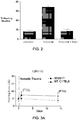
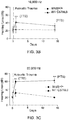
- mice In contrast, the WldS mice exhibited pronounced protection from noise-induced hearing loss. At 24 hours following acoustic trauma, mice exhibited no threshold shift at 8000 and 16,000Hz, and a mild 10dB threshold shift at 32,000Hz ( Figures 3A-3C ). By 14 days, no threshold shift was seen at any frequency. Taken together, these data show that WldS animals exhibit marked resistance to both transient and permanent losses of hearing following acoustic trauma.
- Nicotinamide riboside is a well-tolerated precursor of NAD+.
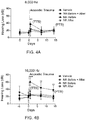
- NR was administered by intraperitoneal injection twice daily at 1000 mg/kg, a dose which increases tissue NAD levels by 50%, either for 5 days prior to noise exposure and 14 days after noise exposure (NR Before + After), 5 days prior to noise exposure (NR Before), or 14 days after noise exposure (NR After).
- NR-treated mice exhibited negligible transient threshold shifts at 24 hours at 8000 Hz and 16,000 Hz (6 and 8 dB respectively), and a reduced threshold shift at 32,000 Hz (16 dB).
- This example demonstrates the effect of nicotinamide riboside on retraction of spiral ganglia neurites from the inner hair cells.
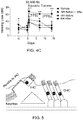
- Noise-induced hearing loss is associated with retraction of spiral ganglia neurites from the inner hair cells. As the most prominent hearing losses are seen in the portion of the auditory spectrum that contains the highest audible frequencies, the basal turn of the cochlea where this portion of the auditory spectrum is detected was focused on. In this part of the cochlea, noise-induced cellular damage is greatest. Immunofluorescence labeling of the cochlea can readily show whether spiral ganglia neurites are forming their proper contacts with the base of inner hair cells. The base of the inner hair cells is demarcated by the location of the nucleus in these cells, since it rests on the base of the cell.
- spiral ganglia neurites are seen adjacent to the base of the inner hair cells.
- the spiral ganglia neurites were retracted from inner hair cells by 29.5 ⁇ 12.9 ⁇ m 24 hr following noise exposure.
- the neurites remained retracted (23 ⁇ 3.6 ⁇ m) 14 d after noise exposure.
- the persistent retraction indicates a permanent loss of synaptic connectivity between hair cells and spiral ganglia neurites in vehicle-treated animals after noise exposure.
Landscapes
- Health & Medical Sciences (AREA)
- Life Sciences & Earth Sciences (AREA)
- Engineering & Computer Science (AREA)
- Chemical & Material Sciences (AREA)
- General Health & Medical Sciences (AREA)
- Medicinal Chemistry (AREA)
- Veterinary Medicine (AREA)
- Pharmacology & Pharmacy (AREA)
- Public Health (AREA)
- Animal Behavior & Ethology (AREA)
- Bioinformatics & Cheminformatics (AREA)
- Biomedical Technology (AREA)
- Molecular Biology (AREA)
- General Chemical & Material Sciences (AREA)
- Chemical Kinetics & Catalysis (AREA)
- Nuclear Medicine, Radiotherapy & Molecular Imaging (AREA)
- Organic Chemistry (AREA)
- Immunology (AREA)
- Hematology (AREA)
- Urology & Nephrology (AREA)
- Cell Biology (AREA)
- Epidemiology (AREA)
- Neurology (AREA)
- Pathology (AREA)
- Neurosurgery (AREA)
- Tropical Medicine & Parasitology (AREA)
- Biotechnology (AREA)
- Toxicology (AREA)
- Microbiology (AREA)
- General Physics & Mathematics (AREA)
- Food Science & Technology (AREA)
- Physics & Mathematics (AREA)
- Analytical Chemistry (AREA)
- Biochemistry (AREA)
- Hospice & Palliative Care (AREA)
- Otolaryngology (AREA)
- Nutrition Science (AREA)
- Diabetes (AREA)
- Obesity (AREA)
- Pharmaceuticals Containing Other Organic And Inorganic Compounds (AREA)
Applications Claiming Priority (2)
| Application Number | Priority Date | Filing Date | Title |
|---|---|---|---|
| US201261672169P | 2012-07-16 | 2012-07-16 | |
| PCT/US2013/050511 WO2014014828A1 (en) | 2012-07-16 | 2013-07-15 | Nicotinamide riboside to treat hearing loss |
Publications (3)
| Publication Number | Publication Date |
|---|---|
| EP2872128A1 EP2872128A1 (en) | 2015-05-20 |
| EP2872128A4 EP2872128A4 (en) | 2016-03-30 |
| EP2872128B1 true EP2872128B1 (en) | 2020-02-19 |
Family
ID=49949192
Family Applications (1)
| Application Number | Title | Priority Date | Filing Date |
|---|---|---|---|
| EP13820653.7A Active EP2872128B1 (en) | 2012-07-16 | 2013-07-15 | Nicotinamide riboside to treat hearing loss |
Country Status (5)
| Country | Link |
|---|---|
| US (1) | US9861651B2 (enExample) |
| EP (1) | EP2872128B1 (enExample) |
| JP (1) | JP6289460B2 (enExample) |
| ES (1) | ES2785303T3 (enExample) |
| WO (1) | WO2014014828A1 (enExample) |
Families Citing this family (22)
| Publication number | Priority date | Publication date | Assignee | Title |
|---|---|---|---|---|
| WO2007061798A2 (en) | 2005-11-18 | 2007-05-31 | Cornell Research Foundation, Inc. | Nicotinoyl riboside compositions and methods of use |
| RU2016149767A (ru) | 2014-06-06 | 2018-07-16 | Глэксосмитклайн Интеллекчуал Проперти (Но.2) Лимитед | Аналоги никотинамидрибозида и фармацевтические композиции и их применение |
| CA2956163C (en) | 2014-07-24 | 2023-01-10 | W.R. Grace & Co.-Conn. | Crystalline form of nicotinamide riboside |
| ES2963057T3 (es) | 2015-03-09 | 2024-03-25 | Grace W R & Co | Forma cristalina de ribósido de nicotinamida |
| SI3297628T1 (sl) | 2015-05-18 | 2021-10-29 | Sensorion | Azasetron za uporabo pri zdravljenju izgube sluha |
| WO2017011788A1 (en) | 2015-07-15 | 2017-01-19 | Cornell University | Syntheses, activities, and methods of use of dihydronicotinamide riboside derivatives |
| US9855289B2 (en) | 2015-08-05 | 2018-01-02 | Metro International Biotech, Llc | Nicotinamide mononucleotide derivatives and their uses |
| GB2542881B (en) | 2015-10-02 | 2020-01-01 | Carr Andrew | Crystal forms of ß-nicotinamide mononucleotide |
| HRP20240453T1 (hr) | 2016-04-14 | 2024-06-21 | Sensorion | (+)-azasetron za uporabu u liječenju poremećaja uha |
| US10576125B2 (en) | 2016-10-31 | 2020-03-03 | Hough Ear Institute | Methods for enhancing synaptogenesis and neuritogenesis |
| NZ803738A (en) | 2016-11-11 | 2024-05-31 | Chromadex Inc | Efficient and scalable syntheses of nicotinoyl ribosides and reduced nicotinoyl ribosides, modified derivatives thereof, phosphorylated analogs thereof, adenylyl dinucleotide conjugates thereof, and novel crystalline forms thereof |
| EP3554285A4 (en) | 2016-11-29 | 2021-01-20 | University of Iowa Research Foundation | USE OF NAD PRECURSORS TO IMPROVE THE HEALTH OF MOTHER AND / OR OFFspring |
| US11071747B2 (en) | 2016-11-29 | 2021-07-27 | University Of Iowa Research Foundation | Use of NAD precursors for breast enhancement |
| US20190328761A1 (en) | 2016-12-21 | 2019-10-31 | Newsouth Innovations Pty Limited | Methods for enhancing vascular density |
| AU2018250242B2 (en) | 2017-04-05 | 2021-07-15 | Cornell University | Beta-nicotinate ester nucleotides and processes for preparing same |
| EP3727400A4 (en) | 2017-12-22 | 2021-10-20 | Elysium Health, Inc. | CRYSTALLINE FORMS OF NICOTINAMIDE RIBOSIDE CHLORIDE |
| WO2019152416A1 (en) | 2018-01-30 | 2019-08-08 | Metro International Biotech, Llc | Nicotinamide riboside analogs, pharmaceutical compositions, and uses thereof |
| US11939348B2 (en) | 2019-03-22 | 2024-03-26 | Metro International Biotech, Llc | Compositions comprising a phosphorus derivative of nicotinamide riboside and methods for modulation of nicotinamide adenine dinucleotide |
| US10618927B1 (en) | 2019-03-22 | 2020-04-14 | Metro International Biotech, Llc | Compositions and methods for modulation of nicotinamide adenine dinucleotide |
| JP7675061B2 (ja) | 2019-07-19 | 2025-05-12 | バイオシント アクチェンゲゼルシャフト | ニコチンアミドリボフラノシド塩の製造方法、ニコチンアミドリボフラノシド塩自体、およびその使用 |
| CA3219033A1 (en) | 2021-05-27 | 2022-12-01 | Metro International Biotech, Llc | Crystalline solids of nicotinic acid mononucleotide and esters thereof and methods of making and use |
| EP4727544A2 (en) | 2023-06-14 | 2026-04-22 | Chromadex Inc. | Nicotinamide riboside and derivatives thereof in intravenous formulations and methods of use thereof |
Family Cites Families (5)
| Publication number | Priority date | Publication date | Assignee | Title |
|---|---|---|---|---|
| CH695593A5 (de) | 2002-12-17 | 2006-06-30 | Granite Trading Ltd | Vorsatzlinse. |
| US20060063802A1 (en) | 2004-03-29 | 2006-03-23 | Matthieu Guitton | Methods for the treatment of tinnitus induced by cochlear excitotoxicity |
| US20070149466A1 (en) * | 2005-07-07 | 2007-06-28 | Michael Milburn | Methods and related compositions for treating or preventing obesity, insulin resistance disorders, and mitochondrial-associated disorders |
| AU2006269459B2 (en) | 2005-07-07 | 2013-02-07 | Sirtris Pharmaceuticals, Inc. | Methods and related compositions for treating or preventing obesity, insulin resistance disorders, and mitochondrial-associated disorders |
| WO2009132050A2 (en) * | 2008-04-21 | 2009-10-29 | Otonomy, Inc. | Auris formulations for treating otic diseases and conditions |
-
2013
- 2013-07-15 EP EP13820653.7A patent/EP2872128B1/en active Active
- 2013-07-15 WO PCT/US2013/050511 patent/WO2014014828A1/en not_active Ceased
- 2013-07-15 JP JP2015523158A patent/JP6289460B2/ja not_active Expired - Fee Related
- 2013-07-15 ES ES13820653T patent/ES2785303T3/es active Active
- 2013-07-15 US US14/414,924 patent/US9861651B2/en active Active
Non-Patent Citations (1)
| Title |
|---|
| None * |
Also Published As
| Publication number | Publication date |
|---|---|
| US9861651B2 (en) | 2018-01-09 |
| JP2015524408A (ja) | 2015-08-24 |
| WO2014014828A1 (en) | 2014-01-23 |
| EP2872128A4 (en) | 2016-03-30 |
| JP6289460B2 (ja) | 2018-03-07 |
| US20150174148A1 (en) | 2015-06-25 |
| EP2872128A1 (en) | 2015-05-20 |
| ES2785303T3 (es) | 2020-10-06 |
Similar Documents
| Publication | Publication Date | Title |
|---|---|---|
| US9861651B2 (en) | Use of nicotinamide riboside to treat hearing loss | |
| US12336974B2 (en) | Methods and compositions for preventing and treating auditory dysfunctions | |
| Lamming | Inhibition of the mechanistic target of rapamycin (mTOR)–rapamycin and beyond | |
| Gonzalez-Gonzalez | The role of mitochondrial oxidative stress in hearing loss | |
| Pusic et al. | Spreading depression requires microglia and is decreased by their M2a polarization from environmental enrichment | |
| JP2021193119A (ja) | N−アセチルシステインアミドによる網膜色素変性症の治療 | |
| Choi et al. | Effectiveness of 4-hydroxy phenyl N-tert-butylnitrone (4-OHPBN) alone and in combination with other antioxidant drugs in the treatment of acute acoustic trauma in chinchilla | |
| S Ambegaokar et al. | Heme oxygenase-1 dysregulation in the brain: implications for HIVassociated neurocognitive disorders | |
| CN111902140A (zh) | 用于预防或治疗瘙痒的含有作为活性成分的hdac6抑制剂的药物组合物 | |
| US20200121629A1 (en) | Composition, containing sarpogrelate as active ingredient, for preventing or treating sensorineural hearing loss | |
| JP7850416B2 (ja) | 細胞外小胞に含まれるenamptの産生および使用 | |
| Kawai et al. | Treatment of cold injury–induced brain edema with a nonspecific matrix metalloproteinase inhibitor MMI270 in rats | |
| JP5788907B2 (ja) | 疾患の治療に使用される化合物 | |
| Cao et al. | Neuroprotection Role of Vitamin C by Upregulating Glutamate Transporter-1 in Auditory Cortex of Noise-Induced Tinnitus Animal Model | |
| KR101901412B1 (ko) | 적포도잎 추출물을 유효성분으로 함유하는 난청의 예방 또는 치료용 조성물 | |
| Wu et al. | Recombinant osteopontin attenuates brain injury after intracerebral hemorrhage in mice | |
| EP4331672A2 (en) | Pharmaceutical composition comprising ibrutinib as effective ingredient for preventing or treating degenerative brain disease | |
| KR20110013388A (ko) | 청력 장애 치료용 sGC 자극제, sGC 활성화제 및 그의 조합물 | |
| Kang et al. | Effects of a zinc-deficient diet on hearing in CBA mice | |
| EP3355909A1 (en) | Methods for treating diseases mediated by erbb4-positive pro-inflammatory macrophages | |
| KR20190002366A (ko) | 아보카도 오일을 유효성분으로 포함하는 난청의 예방 또는 치료용 약학적 조성물 | |
| CN113855803A (zh) | Prmt5抑制剂在用于制备听力保护药物中的用途 | |
| US9763992B2 (en) | Treatment of noise induced hearing loss | |
| JP7138934B2 (ja) | 網膜神経保護作用を有するアペリン受容体アゴニストを含有する医薬組成物 | |
| Kaur et al. | Journal of Anotomy & Physiology |
Legal Events
| Date | Code | Title | Description |
|---|---|---|---|
| PUAI | Public reference made under article 153(3) epc to a published international application that has entered the european phase |
Free format text: ORIGINAL CODE: 0009012 |
|
| 17P | Request for examination filed |
Effective date: 20150115 |
|
| AK | Designated contracting states |
Kind code of ref document: A1 Designated state(s): AL AT BE BG CH CY CZ DE DK EE ES FI FR GB GR HR HU IE IS IT LI LT LU LV MC MK MT NL NO PL PT RO RS SE SI SK SM TR |
|
| AX | Request for extension of the european patent |
Extension state: BA ME |
|
| DAX | Request for extension of the european patent (deleted) | ||
| RA4 | Supplementary search report drawn up and despatched (corrected) |
Effective date: 20160301 |
|
| RIC1 | Information provided on ipc code assigned before grant |
Ipc: A61P 3/02 20060101ALI20160224BHEP Ipc: A61P 27/16 20060101ALI20160224BHEP Ipc: A61K 31/16 20060101AFI20160224BHEP |
|
| STAA | Information on the status of an ep patent application or granted ep patent |
Free format text: STATUS: EXAMINATION IS IN PROGRESS |
|
| 17Q | First examination report despatched |
Effective date: 20180419 |
|
| GRAP | Despatch of communication of intention to grant a patent |
Free format text: ORIGINAL CODE: EPIDOSNIGR1 |
|
| STAA | Information on the status of an ep patent application or granted ep patent |
Free format text: STATUS: GRANT OF PATENT IS INTENDED |
|
| INTG | Intention to grant announced |
Effective date: 20190911 |
|
| GRAS | Grant fee paid |
Free format text: ORIGINAL CODE: EPIDOSNIGR3 |
|
| GRAA | (expected) grant |
Free format text: ORIGINAL CODE: 0009210 |
|
| STAA | Information on the status of an ep patent application or granted ep patent |
Free format text: STATUS: THE PATENT HAS BEEN GRANTED |
|
| AK | Designated contracting states |
Kind code of ref document: B1 Designated state(s): AL AT BE BG CH CY CZ DE DK EE ES FI FR GB GR HR HU IE IS IT LI LT LU LV MC MK MT NL NO PL PT RO RS SE SI SK SM TR |
|
| REG | Reference to a national code |
Ref country code: GB Ref legal event code: FG4D |
|
| REG | Reference to a national code |
Ref country code: CH Ref legal event code: EP |
|
| REG | Reference to a national code |
Ref country code: DE Ref legal event code: R096 Ref document number: 602013065992 Country of ref document: DE |
|
| REG | Reference to a national code |
Ref country code: AT Ref legal event code: REF Ref document number: 1234152 Country of ref document: AT Kind code of ref document: T Effective date: 20200315 |
|
| REG | Reference to a national code |
Ref country code: IE Ref legal event code: FG4D |
|
| REG | Reference to a national code |
Ref country code: NL Ref legal event code: MP Effective date: 20200219 |
|
| PG25 | Lapsed in a contracting state [announced via postgrant information from national office to epo] |
Ref country code: NO Free format text: LAPSE BECAUSE OF FAILURE TO SUBMIT A TRANSLATION OF THE DESCRIPTION OR TO PAY THE FEE WITHIN THE PRESCRIBED TIME-LIMIT Effective date: 20200519 Ref country code: FI Free format text: LAPSE BECAUSE OF FAILURE TO SUBMIT A TRANSLATION OF THE DESCRIPTION OR TO PAY THE FEE WITHIN THE PRESCRIBED TIME-LIMIT Effective date: 20200219 Ref country code: RS Free format text: LAPSE BECAUSE OF FAILURE TO SUBMIT A TRANSLATION OF THE DESCRIPTION OR TO PAY THE FEE WITHIN THE PRESCRIBED TIME-LIMIT Effective date: 20200219 |
|
| REG | Reference to a national code |
Ref country code: LT Ref legal event code: MG4D |
|
| PG25 | Lapsed in a contracting state [announced via postgrant information from national office to epo] |
Ref country code: GR Free format text: LAPSE BECAUSE OF FAILURE TO SUBMIT A TRANSLATION OF THE DESCRIPTION OR TO PAY THE FEE WITHIN THE PRESCRIBED TIME-LIMIT Effective date: 20200520 Ref country code: HR Free format text: LAPSE BECAUSE OF FAILURE TO SUBMIT A TRANSLATION OF THE DESCRIPTION OR TO PAY THE FEE WITHIN THE PRESCRIBED TIME-LIMIT Effective date: 20200219 Ref country code: LV Free format text: LAPSE BECAUSE OF FAILURE TO SUBMIT A TRANSLATION OF THE DESCRIPTION OR TO PAY THE FEE WITHIN THE PRESCRIBED TIME-LIMIT Effective date: 20200219 Ref country code: IS Free format text: LAPSE BECAUSE OF FAILURE TO SUBMIT A TRANSLATION OF THE DESCRIPTION OR TO PAY THE FEE WITHIN THE PRESCRIBED TIME-LIMIT Effective date: 20200619 Ref country code: SE Free format text: LAPSE BECAUSE OF FAILURE TO SUBMIT A TRANSLATION OF THE DESCRIPTION OR TO PAY THE FEE WITHIN THE PRESCRIBED TIME-LIMIT Effective date: 20200219 Ref country code: BG Free format text: LAPSE BECAUSE OF FAILURE TO SUBMIT A TRANSLATION OF THE DESCRIPTION OR TO PAY THE FEE WITHIN THE PRESCRIBED TIME-LIMIT Effective date: 20200519 |
|
| PG25 | Lapsed in a contracting state [announced via postgrant information from national office to epo] |
Ref country code: NL Free format text: LAPSE BECAUSE OF FAILURE TO SUBMIT A TRANSLATION OF THE DESCRIPTION OR TO PAY THE FEE WITHIN THE PRESCRIBED TIME-LIMIT Effective date: 20200219 |
|
| REG | Reference to a national code |
Ref country code: ES Ref legal event code: FG2A Ref document number: 2785303 Country of ref document: ES Kind code of ref document: T3 Effective date: 20201006 |
|
| PG25 | Lapsed in a contracting state [announced via postgrant information from national office to epo] |
Ref country code: LT Free format text: LAPSE BECAUSE OF FAILURE TO SUBMIT A TRANSLATION OF THE DESCRIPTION OR TO PAY THE FEE WITHIN THE PRESCRIBED TIME-LIMIT Effective date: 20200219 Ref country code: SM Free format text: LAPSE BECAUSE OF FAILURE TO SUBMIT A TRANSLATION OF THE DESCRIPTION OR TO PAY THE FEE WITHIN THE PRESCRIBED TIME-LIMIT Effective date: 20200219 Ref country code: EE Free format text: LAPSE BECAUSE OF FAILURE TO SUBMIT A TRANSLATION OF THE DESCRIPTION OR TO PAY THE FEE WITHIN THE PRESCRIBED TIME-LIMIT Effective date: 20200219 Ref country code: DK Free format text: LAPSE BECAUSE OF FAILURE TO SUBMIT A TRANSLATION OF THE DESCRIPTION OR TO PAY THE FEE WITHIN THE PRESCRIBED TIME-LIMIT Effective date: 20200219 Ref country code: RO Free format text: LAPSE BECAUSE OF FAILURE TO SUBMIT A TRANSLATION OF THE DESCRIPTION OR TO PAY THE FEE WITHIN THE PRESCRIBED TIME-LIMIT Effective date: 20200219 Ref country code: CZ Free format text: LAPSE BECAUSE OF FAILURE TO SUBMIT A TRANSLATION OF THE DESCRIPTION OR TO PAY THE FEE WITHIN THE PRESCRIBED TIME-LIMIT Effective date: 20200219 Ref country code: SK Free format text: LAPSE BECAUSE OF FAILURE TO SUBMIT A TRANSLATION OF THE DESCRIPTION OR TO PAY THE FEE WITHIN THE PRESCRIBED TIME-LIMIT Effective date: 20200219 Ref country code: PT Free format text: LAPSE BECAUSE OF FAILURE TO SUBMIT A TRANSLATION OF THE DESCRIPTION OR TO PAY THE FEE WITHIN THE PRESCRIBED TIME-LIMIT Effective date: 20200712 |
|
| REG | Reference to a national code |
Ref country code: AT Ref legal event code: MK05 Ref document number: 1234152 Country of ref document: AT Kind code of ref document: T Effective date: 20200219 |
|
| REG | Reference to a national code |
Ref country code: DE Ref legal event code: R097 Ref document number: 602013065992 Country of ref document: DE |
|
| PLBE | No opposition filed within time limit |
Free format text: ORIGINAL CODE: 0009261 |
|
| STAA | Information on the status of an ep patent application or granted ep patent |
Free format text: STATUS: NO OPPOSITION FILED WITHIN TIME LIMIT |
|
| 26N | No opposition filed |
Effective date: 20201120 |
|
| PG25 | Lapsed in a contracting state [announced via postgrant information from national office to epo] |
Ref country code: IT Free format text: LAPSE BECAUSE OF FAILURE TO SUBMIT A TRANSLATION OF THE DESCRIPTION OR TO PAY THE FEE WITHIN THE PRESCRIBED TIME-LIMIT Effective date: 20200219 Ref country code: AT Free format text: LAPSE BECAUSE OF FAILURE TO SUBMIT A TRANSLATION OF THE DESCRIPTION OR TO PAY THE FEE WITHIN THE PRESCRIBED TIME-LIMIT Effective date: 20200219 |
|
| PG25 | Lapsed in a contracting state [announced via postgrant information from national office to epo] |
Ref country code: MC Free format text: LAPSE BECAUSE OF FAILURE TO SUBMIT A TRANSLATION OF THE DESCRIPTION OR TO PAY THE FEE WITHIN THE PRESCRIBED TIME-LIMIT Effective date: 20200219 Ref country code: PL Free format text: LAPSE BECAUSE OF FAILURE TO SUBMIT A TRANSLATION OF THE DESCRIPTION OR TO PAY THE FEE WITHIN THE PRESCRIBED TIME-LIMIT Effective date: 20200219 Ref country code: SI Free format text: LAPSE BECAUSE OF FAILURE TO SUBMIT A TRANSLATION OF THE DESCRIPTION OR TO PAY THE FEE WITHIN THE PRESCRIBED TIME-LIMIT Effective date: 20200219 |
|
| REG | Reference to a national code |
Ref country code: CH Ref legal event code: PL |
|
| REG | Reference to a national code |
Ref country code: BE Ref legal event code: MM Effective date: 20200731 |
|
| PG25 | Lapsed in a contracting state [announced via postgrant information from national office to epo] |
Ref country code: LI Free format text: LAPSE BECAUSE OF NON-PAYMENT OF DUE FEES Effective date: 20200731 Ref country code: CH Free format text: LAPSE BECAUSE OF NON-PAYMENT OF DUE FEES Effective date: 20200731 Ref country code: LU Free format text: LAPSE BECAUSE OF NON-PAYMENT OF DUE FEES Effective date: 20200715 |
|
| PG25 | Lapsed in a contracting state [announced via postgrant information from national office to epo] |
Ref country code: BE Free format text: LAPSE BECAUSE OF NON-PAYMENT OF DUE FEES Effective date: 20200731 |
|
| PG25 | Lapsed in a contracting state [announced via postgrant information from national office to epo] |
Ref country code: TR Free format text: LAPSE BECAUSE OF FAILURE TO SUBMIT A TRANSLATION OF THE DESCRIPTION OR TO PAY THE FEE WITHIN THE PRESCRIBED TIME-LIMIT Effective date: 20200219 Ref country code: MT Free format text: LAPSE BECAUSE OF FAILURE TO SUBMIT A TRANSLATION OF THE DESCRIPTION OR TO PAY THE FEE WITHIN THE PRESCRIBED TIME-LIMIT Effective date: 20200219 Ref country code: CY Free format text: LAPSE BECAUSE OF FAILURE TO SUBMIT A TRANSLATION OF THE DESCRIPTION OR TO PAY THE FEE WITHIN THE PRESCRIBED TIME-LIMIT Effective date: 20200219 |
|
| PG25 | Lapsed in a contracting state [announced via postgrant information from national office to epo] |
Ref country code: MK Free format text: LAPSE BECAUSE OF FAILURE TO SUBMIT A TRANSLATION OF THE DESCRIPTION OR TO PAY THE FEE WITHIN THE PRESCRIBED TIME-LIMIT Effective date: 20200219 Ref country code: AL Free format text: LAPSE BECAUSE OF FAILURE TO SUBMIT A TRANSLATION OF THE DESCRIPTION OR TO PAY THE FEE WITHIN THE PRESCRIBED TIME-LIMIT Effective date: 20200219 |
|
| P01 | Opt-out of the competence of the unified patent court (upc) registered |
Effective date: 20230519 |
|
| PGFP | Annual fee paid to national office [announced via postgrant information from national office to epo] |
Ref country code: ES Payment date: 20250801 Year of fee payment: 13 |
|
| PGFP | Annual fee paid to national office [announced via postgrant information from national office to epo] |
Ref country code: DE Payment date: 20250729 Year of fee payment: 13 |
|
| PGFP | Annual fee paid to national office [announced via postgrant information from national office to epo] |
Ref country code: GB Payment date: 20250728 Year of fee payment: 13 |
|
| PGFP | Annual fee paid to national office [announced via postgrant information from national office to epo] |
Ref country code: FR Payment date: 20250725 Year of fee payment: 13 |
|
| PGFP | Annual fee paid to national office [announced via postgrant information from national office to epo] |
Ref country code: IE Payment date: 20250728 Year of fee payment: 13 |