EP2867879B1 - Verfahren und anwendung zur erkennung von fahrzeugunfällen - Google Patents
Verfahren und anwendung zur erkennung von fahrzeugunfällen Download PDFInfo
- Publication number
- EP2867879B1 EP2867879B1 EP13756684.0A EP13756684A EP2867879B1 EP 2867879 B1 EP2867879 B1 EP 2867879B1 EP 13756684 A EP13756684 A EP 13756684A EP 2867879 B1 EP2867879 B1 EP 2867879B1
- Authority
- EP
- European Patent Office
- Prior art keywords
- speed
- values
- acceleration
- equal
- temporal
- Prior art date
- Legal status (The legal status is an assumption and is not a legal conclusion. Google has not performed a legal analysis and makes no representation as to the accuracy of the status listed.)
- Active
Links
Images

Classifications
-
- B—PERFORMING OPERATIONS; TRANSPORTING
- B60—VEHICLES IN GENERAL
- B60R—VEHICLES, VEHICLE FITTINGS, OR VEHICLE PARTS, NOT OTHERWISE PROVIDED FOR
- B60R21/00—Arrangements or fittings on vehicles for protecting or preventing injuries to occupants or pedestrians in case of accidents or other traffic risks
- B60R21/01—Electrical circuits for triggering passive safety arrangements, e.g. airbags, safety belt tighteners, in case of vehicle accidents or impending vehicle accidents
- B60R21/013—Electrical circuits for triggering passive safety arrangements, e.g. airbags, safety belt tighteners, in case of vehicle accidents or impending vehicle accidents including means for detecting collisions, impending collisions or roll-over
- B60R21/0132—Electrical circuits for triggering passive safety arrangements, e.g. airbags, safety belt tighteners, in case of vehicle accidents or impending vehicle accidents including means for detecting collisions, impending collisions or roll-over responsive to vehicle motion parameters, e.g. to vehicle longitudinal or transversal deceleration or speed value
- B60R21/01332—Electrical circuits for triggering passive safety arrangements, e.g. airbags, safety belt tighteners, in case of vehicle accidents or impending vehicle accidents including means for detecting collisions, impending collisions or roll-over responsive to vehicle motion parameters, e.g. to vehicle longitudinal or transversal deceleration or speed value by frequency or waveform analysis
- B60R21/01338—Electrical circuits for triggering passive safety arrangements, e.g. airbags, safety belt tighteners, in case of vehicle accidents or impending vehicle accidents including means for detecting collisions, impending collisions or roll-over responsive to vehicle motion parameters, e.g. to vehicle longitudinal or transversal deceleration or speed value by frequency or waveform analysis using vector analysis
-
- B—PERFORMING OPERATIONS; TRANSPORTING
- B60—VEHICLES IN GENERAL
- B60R—VEHICLES, VEHICLE FITTINGS, OR VEHICLE PARTS, NOT OTHERWISE PROVIDED FOR
- B60R21/00—Arrangements or fittings on vehicles for protecting or preventing injuries to occupants or pedestrians in case of accidents or other traffic risks
- B60R21/01—Electrical circuits for triggering passive safety arrangements, e.g. airbags, safety belt tighteners, in case of vehicle accidents or impending vehicle accidents
- B60R21/013—Electrical circuits for triggering passive safety arrangements, e.g. airbags, safety belt tighteners, in case of vehicle accidents or impending vehicle accidents including means for detecting collisions, impending collisions or roll-over
- B60R21/0132—Electrical circuits for triggering passive safety arrangements, e.g. airbags, safety belt tighteners, in case of vehicle accidents or impending vehicle accidents including means for detecting collisions, impending collisions or roll-over responsive to vehicle motion parameters, e.g. to vehicle longitudinal or transversal deceleration or speed value
-
- G—PHYSICS
- G08—SIGNALLING
- G08G—TRAFFIC CONTROL SYSTEMS
- G08G1/00—Traffic control systems for road vehicles
- G08G1/16—Anti-collision systems
- G08G1/161—Decentralised systems, e.g. inter-vehicle communication
- G08G1/162—Decentralised systems, e.g. inter-vehicle communication event-triggered
Definitions
- the present invention relates to a method for detecting accidents of vehicles.
- appliances are commonly used in insurance fields, in order to determine and provide insurance companies with precise data on how accidents involving insured vehicles occur, or to provide "emergency call" (e-call) services which automatically send an emergency call in the event of detecting an accident to provide quick assistance to the drivers involved.
- e-call electronic mail
- the known appliances comprise an accelerometer, generally able to detect accelerations along three distinct axes, which can be fixed using a special support to a portion of the vehicle structure.
- the accelerometer is operationally connected to a processing unit which is able to detect an accident or in any case an anomalous situation based on the acceleration data gathered.
- the processing unit commonly comprises a hardware device, of the type of an integrated circuit or the like, and the recognition of an accident based on the detected acceleration data is done using an appropriate data processing algorithm, implemented by a software programme.
- the comparison of the acceleration values with one or more predefined threshold values lead to a considerably large number of false detections, in which accelerations along one of the three axes considered anomalous by the appliance are not in fact connected to the occurrence of an accident.
- the installation position of the accelerometer must necessarily be assessed carefully according to the type of vehicle, and therefore the specific structure, and this installation position must preferably be identified in correspondence to a metal portion of the vehicle that is integral to the chassis.
- the main aim of the present invention is to provide a method for detecting accidents of vehicles which allows a reliable identification of sudden events such as accidents.
- Another object of the present invention is to provide a method for detecting accidents of vehicles which can be installed on a vehicle simply and with less stringent constraints compared to the background art concerning the position of installation.
- Another object of the present invention is to provide a method for detecting accidents of vehicles which allows to overcome the mentioned drawbacks of the state of the art in the ambit of a simple, rational, easy and effective to use as well as low cost solution.
- the above objects are achieved by the present method according to claim 1.
- the document US 2001/021890 A1 discloses a system and a method for the protection of passengers of a vehicle adapted to detect and identify the extent of an accident.
- the method according to the invention can be used particularly in insurance fields, in order to determine and provide insurance companies with precise data on how accidents involving insured vehicles occur, or to provide "emergency call" (e-call) services which automatically send an emergency call in the event of detecting an accident to provide quick assistance to the drivers involved.
- the method comprises the following preliminary steps, repeated cyclically over time:
- the method comprises the steps of:
- the method provides the step of signalling the detection of an accident on the vehicle.
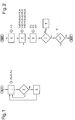
- the method comprises the detection of three acceleration values Ax, Ay, Az respectively along three distinct directions x, y, z (step 1) and the comparison of each of the acceleration values Ax, Ay, Az with the respective predefined acceleration threshold values Athx, Athy and Athz (step2).
- the detection of the three acceleration values Ax, Ay, Az is done using an appropriate three-axis accelerometer installed on the vehicle and comprises the sampling of these acceleration values Ax, Ay, Az detected at a predefined sampling frequency fc which is greater than or equal to 100 Hz.
- the sampling of the acceleration values Ax, Ay, Az detected at a different sampling frequency fc cannot however be ruled out.
- the method comprises the filtering of the acceleration values Ax, Ay, Az, done to eliminate the continuous component due to the acceleration by gravity.
- the filtering can be done after the sampling of the acceleration values Ax, Ay, Az using a FIR (Finite Impulse Response) or IIR (Infinite Impulse Response) type high-pass filter.
- FIR Finite Impulse Response
- IIR Intelligent Impulse Response
- acceleration threshold values Athx, Athy and Athz compared with each of the acceleration values Ax, Ay, Az are preferably between 10 and 40 m/s2.
- the methods provides the activation of a gathered acceleration data processing algorithm suitable for checking the effective presence or not of an accident on the vehicle (step 3).
- the detection (step 1) and comparison steps (step 2) are repeated for a predefined number of times, preferably two.
- the gathered acceleration data processing algorithm is activated only if it is detected that at least one of the acceleration values Ax, Ay, Az is greater than or equal to the respective acceleration threshold value Athx, Athy and Athz for three consecutive times.
- the method provides the comparison of the acceleration module
- the method provides the activation of the acceleration data processing algorithm in order to check the effective presence or not of an accident on the vehicle (step 3).
- helps to increase the precision of the detections made, in particular in the case in which any impact to the vehicle develops along an intermediate direction between the detection axes x, y and z of the acceleration values Ax, Ay, Az.
- the abovementioned processing algorithm comprises the steps described below.
- the method provides a preliminary step (step 4) of initialisation of a temporal variable t, set equal to zero.
- the sampling interval ⁇ t (and therefore the sampling frequency fc) can be dynamically varied according to the state of the algorithm.
- the use of a greater sampling interval ⁇ t (and therefore a lower sampling frequency fc) may be provided when the method only detects the acceleration values Ax, Ay, Az (step 1)
- the use of a lower sampling interval ⁇ t (and therefore a greater sampling frequency fc) may be provided when the methods detects the acceleration values Ax, Ay, Az (step 1) and calculates the speed values Vx(t), Vy(t) and Vz(t) (step 5).
- the method also includes the determination of speed variation values ⁇ Vx, ⁇ Vy and ⁇ Vz starting from the speed values Vx(t), Vy(t) and Vz(t) and from previous speed values Vx(t- ⁇ Tw) Vy(t- ⁇ Tw) and Vz(t- ⁇ Tw) (step 6). Subsequently the method comprises the comparison of the speed variation values ⁇ Vx, ⁇ Vy and ⁇ Vz with the respective predefined speed threshold values ⁇ Vthx, ⁇ Vthy and ⁇ Vthz (step 7).
- the method comprises the step of signalling the detection of an accident on the vehicle (step 8).
- the signalling of an accident (step 8) is activated only in the case in which it is detected that at least one of the speed variation values ⁇ Vx, ⁇ Vy and ⁇ Vz is greater than or equal to the respective speed threshold value ⁇ Vthx, ⁇ Vthy and ⁇ Vthz for a predefined number of consecutive times, preferably three.
- the processing algorithm illustrated in figure 3 ends, while the iterative repetition of the steps to detect the three acceleration values Ax, Ay, Az (step 1) and the comparison with each of the acceleration values Ax, Ay, Az with the respective predefined acceleration threshold values Athx, Athy and Athz (step 2) continues.
- the measurement temporal interval T is equal to 300 ms.
- the method according to the invention comprises the definition of a mobile temporal window ⁇ Tw within the measurement temporal interval T.
- the duration of the mobile temporal window ⁇ Tw is preferably between 30 ms and 150 ms.
- the duration of the mobile temporal window ⁇ Tw is equal to 70 ms.
- the speed threshold values ⁇ Vthx, ⁇ Vthy and ⁇ Vthz are between 0.3 m/s and 3 m/s.
- ⁇ Vth/ ⁇ Tw indicates the average deceleration in the window ⁇ Tw and that this parameter must be higher than the performance of the vehicle in normal road conditions, preferably greater than 14 m/s2.
- a first speed threshold value ⁇ Vth' equal to 0.5 m/s and a second speed threshold value ⁇ Vth" equal to 1 m/s are envisaged.
- the method involves the memorisation of a predefined number of acceleration values Ax, Ay, Az preceding the instant of exceeding the acceleration threshold values Athx, Athy and Athz, in order to be able to also calculate the speed variation values ⁇ Vx, ⁇ Vy and ⁇ Vz immediately preceding said instant.
- the method according to the invention can comprise the automatic calibration of at least one between the acceleration threshold values Athx, Athy and Athz, the measurement temporal interval T, the speed threshold values ⁇ Vthx, ⁇ Vthy and ⁇ Vthz and the mobile temporal window ⁇ Tw.
- This automatic calibration may be implemented by detecting false signalling of accidents and the consequent modification of these parameters.
- acceleration threshold values Athx, Athy and Athz may be modified if the presence of an accident is not signalled following the activation of the processing algorithm shown in figure 2 .
- a further embodiment may include the modification of the acceleration threshold values Athx, Athy and Athz and/or the speed threshold values ⁇ Vthx, ⁇ Vthy and ⁇ Vthz according to the tachometer speed of the vehicle.
- a higher vehicle speed corresponds generally to an increase in vibrations and, therefore, higher threshold values may be set.
- step 6 a further step of determining the speed vector module, calculated by the formula:
- the method involves the comparison of the speed module
- the method envisages the step of signalling the detection of an accident on the vehicle (step 8).
- helps to increase the precision of the detections made, in particular in the case in which any impact to the vehicle develops along an intermediate direction between the detection axes x, y and z of the acceleration values Ax, Ay, Az.
- the appliance O for detecting accidents is illustrated schematically in figure 3 .
- the appliance O does not form part of the claimed invention but it is mentioned in order to aid the understanding of the invention.
- the appliance O comprises one or more electronic devices which can be installed on board a vehicle.
- the appliance O comprises detection means B for detecting the acceleration values Ax, Ay, Az along three respective and distinct directions x, y, z.
- the detection means B are composed of a three-axis accelerometer or a similar device.
- the appliance O comprises sampling means, not illustrated in the figure, operationally connected to the accelerometer B and suitable for sampling the acceleration values Ax, Ay, Az at the predefined sampling frequency fc.
- the appliance O also comprises at least a filter suitable for filtering the acceleration values Ax, Ay, Az detected by the accelerometer B, in order to eliminate the continuous component due to the acceleration by gravity.
- This filter may be made up, e.g., of a high-pass filter, connected downstream of the sampling means, of the FIR (Finite Impulse Response) or IIR (Infinite Impulse Response) type.
- FIR Finite Impulse Response
- IIR Intelligent Impulse Response
- the appliance O also comprises electronic management and control means, indicated generally in figure 3 by reference C, suitable for processing the acceleration values Ax, Ay, Az detected by the accelerometer B for the detection of accidents.
- the electronic management and control means C are implemented by one or more appropriate hardware components and by one or more appropriate software programmes.
- the electronic management and control means C comprise first comparison means D used to compare each of the acceleration values Ax, Ay, Az with the respective predefined acceleration threshold values Athx, Athy and Athz.
- the electronic management and control means C comprise processing means, indicated generally in figure 3 by reference E, which can be activated if the first comparison means D detect that at least one of the acceleration values Ax, Ay, Az is greater than or equal to a respective acceleration threshold value Athx, Athy and Athz.
- processing means E have:
- the processing means E are operationally connected to signalling means I suitable for signalling the detection of an accident on the vehicle if the second comparison means H detect that the speed variation values ⁇ Vx, ⁇ Vy and ⁇ Vz are greater than or equal to the speed threshold values ⁇ Vthx, ⁇ Vthy and ⁇ Vthz.
- the signalling means I are made up of a communication unit suitable for communicating with a remote unit L to send a signal S detecting an accident on the vehicle if the second comparison means H detect that the speed variation values ⁇ Vx, ⁇ Vy and ⁇ Vz are greater than or equal to the speed threshold values ⁇ Vthx, ⁇ Vthy and ⁇ Vthz.
- the remote unit L is connected to a memory unit M for storing the data concerning the detected accident, such as the acceleration values Ax, Ay, Az which activated the processing means E and the subsequent acceleration values and, possibly, previous to that activation, the speed values Vx(t), Vy(t) and Vz(t) which exceeded the speed threshold values ⁇ Vthx, ⁇ Vthy and ⁇ Vthz.
- the second calculation means G comprise means for the definition of the mobile temporal window ⁇ Tw within the measurement temporal interval T and the calculation of the speed variation ⁇ V is done according to the speed values Vx(t), Vy(t) and Vz(t) detected within the mobile temporal window ⁇ Tw.
- the appliance O may also be equipped with automatic calibration means for at least one between the acceleration threshold values Athx, Athy and Athz, the measurement temporal interval T, the speed threshold values ⁇ Vthx, ⁇ Vthy and ⁇ Vthz and the mobile temporal window ⁇ Tw.
- These automatic calibration means may detect the occurrence of false accident signals in order to consequently modify these parameters.
- this check is based on speed values calculated as an integral of the detected acceleration values and, therefore, positive and negative accelerations due to oscillations of the accelerometer or the vehicle only minimally influence the calculated speed variation value.
Landscapes
- Engineering & Computer Science (AREA)
- Mechanical Engineering (AREA)
- Physics & Mathematics (AREA)
- General Physics & Mathematics (AREA)
- Electric Propulsion And Braking For Vehicles (AREA)
- Emergency Alarm Devices (AREA)
Claims (8)
- Verfahren zum Erkennen von Unfällen von Fahrzeugen, das die folgenden Schritte umfasst:- Erfassen einer Vielzahl von Beschleunigungswerten (Ax, Ay, Az) eines Fahrzeugs entlang entsprechender Richtungen;- Vergleichen der Beschleunigungswerte (Ax, Ay, Az) mit mindestens einem vorgegebenen Beschleunigungsschwellenwert (Athx, Athy, Athz);wenn mindestens einer der Beschleunigungswerte (Ax, Ay, Az) größer als oder gleich dem Beschleunigungsschwellenwert (Athx, Athy, Athz) ist:- Initialisieren einer zeitlichen Variablen t=0;- Berechnen einer Vielzahl von Geschwindigkeitswerten mit Hilfe der Formel Vi(t)=Vi(t-Δt)+Ai ∗Δt, wobei:i die Erfassungsrichtungen der Beschleunigungswerte (Ax, Ay, Az) bedeutet; Vi(t) die Geschwindigkeitswerte sind, die zu einem Zeitpunkt gleich t berechnet werden;Vi(t-Δt) die Geschwindigkeitswerte sind, die zu einem Zeitpunkt gleich t-Δt berechnet werden;Ai die Beschleunigungswerte sind;Δt ein vordefinierter Abtastbereich ist;- Bestimmen einer Vielzahl von Geschwindigkeitsänderungswerten (ΔVx, ΔVy, ΔVz) ausgehend von den Geschwindigkeitswerten (Vx(t), Vy(t), Vz(t)) und von mindestens einem vorherigen Geschwindigkeitswert (Vx(t-ΔTw), Vy(t-ΔTw), Vz(t-ΔTw));- Bestimmen eines Geschwindigkeitsvektormoduls (|V(t)|) mit Hilfe der Formel |V(t)|=√(Σ(ΔVi2)), wobei|V(t)| das Geschwindigkeitsvektormodul ist,ΔVi die Geschwindigkeitsänderungswerte sind, wobei i die Erfassungsrichtungen der Beschleunigungswerte (Ax, Ay, Az) angibt;- Vergleichen des Geschwindigkeitsvektormoduls (|V(t)|) mit mindestens einem Geschwindigkeitsschwellenwert (ΔVth) und, wenn das Geschwindigkeitsvektormodul (|V(t)|) größer als oder gleich dem Geschwindigkeitsschwellenwert (ΔVth) ist, Signalisieren des Erkennens eines Unfalls an dem Fahrzeug;- wenn das Geschwindigkeitsvektormodul (|V(t)|) kleiner als der Geschwindigkeitsschwellenwert (ΔVth) ist und wenn die zeitliche Variable (t) kleiner als ein vorgegebenes Messzeitintervall (T) ist, Wiederholen der Schritte des Erfassens, Berechnens, Bestimmens einer Vielzahl von Geschwindigkeitsänderungswerten (ΔVx, ΔVy, ΔVz), des Bestimmens eines Geschwindigkeitsvektormoduls (|V(t)|) und des Vergleichens für t=t+Δt.
- Verfahren nach Anspruch 1, dadurch gekennzeichnet, dass es ein Definieren mindestens eines beweglichen Zeitfensters (ΔTw) innerhalb des Messzeitintervalls (T) umfasst, wobei die Geschwindigkeitsänderungswerte (ΔVx, ΔVy, ΔVz) mittels der folgenden Formel bestimmt werden:
ΔVi=Vi(t)-Vi(t-ΔTw), wobei:ΔVi der Wert der Geschwindigkeitsänderung ist;Vi(t) der berechnete Geschwindigkeitswert ist;ΔTw das bewegliche Zeitfenster ist;Vi(t-ΔTw) der vorherige Geschwindigkeitswert ist, der zu einem Zeitpunkt gleich t-ΔTw berechnet wurde. - Verfahren nach einem oder mehreren der vorhergehenden Ansprüche, dadurch gekennzeichnet, dass die Beschleunigungsschwellenwerte (Ax, Ay, Az) zwischen 10 und 40 m/s2 liegen.
- Verfahren nach einem oder mehreren der vorhergehenden Ansprüche, dadurch gekennzeichnet, dass das Zeitintervall (T) gleich 300 ms ist.
- Verfahren nach einem oder mehreren der vorhergehenden Ansprüche, dadurch gekennzeichnet, dass die Dauer des beweglichen Zeitfensters (ΔTw) zwischen 30 ms und 150 ms liegt.
- Verfahren nach einem oder mehreren der vorangehenden Ansprüche, dadurch gekennzeichnet, dass die Dauer des mobilen Zeitfensters (ΔTw) gleich 70 ms ist.
- Verfahren nach einem oder mehreren der vorhergehenden Ansprüche, dadurch gekennzeichnet, dass der Geschwindigkeitsschwellenwert (ΔVth) zwischen 0,3 m/s und 3 m/s liegt.
- Verfahren nach einem oder mehreren der vorhergehenden Ansprüche, dadurch gekennzeichnet, dass es einen ersten Geschwindigkeitsschwellenwert (ΔVth') von 0,5 m/s und einen zweiten Geschwindigkeitsschwellenwert (ΔVth") von 1 m/s umfasst.
Applications Claiming Priority (2)
| Application Number | Priority Date | Filing Date | Title |
|---|---|---|---|
| IT000166A ITMO20120166A1 (it) | 2012-06-28 | 2012-06-28 | Metodo ed apparecchiatura per il rilevamento di incidenti di veicoli |
| PCT/IB2013/054976 WO2014001958A1 (en) | 2012-06-28 | 2013-06-18 | Method and appliance for detecting accidents of vehicles |
Publications (2)
| Publication Number | Publication Date |
|---|---|
| EP2867879A1 EP2867879A1 (de) | 2015-05-06 |
| EP2867879B1 true EP2867879B1 (de) | 2021-12-01 |
Family
ID=46758884
Family Applications (1)
| Application Number | Title | Priority Date | Filing Date |
|---|---|---|---|
| EP13756684.0A Active EP2867879B1 (de) | 2012-06-28 | 2013-06-18 | Verfahren und anwendung zur erkennung von fahrzeugunfällen |
Country Status (3)
| Country | Link |
|---|---|
| EP (1) | EP2867879B1 (de) |
| IT (1) | ITMO20120166A1 (de) |
| WO (1) | WO2014001958A1 (de) |
Family Cites Families (3)
| Publication number | Priority date | Publication date | Assignee | Title |
|---|---|---|---|---|
| JP3329080B2 (ja) * | 1994-07-29 | 2002-09-30 | 日本電気株式会社 | 車両の衝突判定方法及び衝突判定装置 |
| JPH11334527A (ja) * | 1998-05-25 | 1999-12-07 | Asuko Kk | 乗員保護装置の起動制御方法及び乗員保護装置の起動制御装置並びに乗員保護装置の起動制御プログラムを記録した記録媒体 |
| US6211777B1 (en) * | 1998-11-30 | 2001-04-03 | International Business Machines Corporation | System and method for automatic information exchange between vehicles involved in a collision |
-
2012
- 2012-06-28 IT IT000166A patent/ITMO20120166A1/it unknown
-
2013
- 2013-06-18 EP EP13756684.0A patent/EP2867879B1/de active Active
- 2013-06-18 WO PCT/IB2013/054976 patent/WO2014001958A1/en not_active Ceased
Non-Patent Citations (1)
| Title |
|---|
| None * |
Also Published As
| Publication number | Publication date |
|---|---|
| ITMO20120166A1 (it) | 2013-12-29 |
| EP2867879A1 (de) | 2015-05-06 |
| WO2014001958A1 (en) | 2014-01-03 |
Similar Documents
| Publication | Publication Date | Title |
|---|---|---|
| US10690695B2 (en) | System and method for detecting driving behavior | |
| CN102056774B (zh) | 通过加速度信号和固体声信号确定事故严重程度评判标准的方法 | |
| WO2019185045A1 (zh) | 运输设备碰撞检测及预警防护方法 | |
| CN107757541B (zh) | 事故监控方法及装置 | |
| US7422087B2 (en) | Method and system for detecting vehicle rollover events | |
| EP2591966A1 (de) | Fahrzeugsicherheitssystem und -verfahren mit aktiven und passiven Sicherheitselementen | |
| CN109849904A (zh) | 车辆碰撞识别装置 | |
| KR101907662B1 (ko) | 보복 운전 방지를 위한 차량 제어 방법 및 차량 제어 장치 | |
| CN104044557A (zh) | 一种基于车辆异常情况的联络方法及车辆报警装置 | |
| US9846174B2 (en) | Computer-implemented methods and computer systems/machines for identifying dependent and vehicle independent states | |
| KR20140048727A (ko) | 차량 사고 유형별 대응 시스템 | |
| CN111071258A (zh) | 驾驶行为检测方法、装置、电子设备及可读存储介质 | |
| CN113060095A (zh) | 一种车辆锁定状态检测方法、装置及电子设备 | |
| EP2867879B1 (de) | Verfahren und anwendung zur erkennung von fahrzeugunfällen | |
| CN113727211B (zh) | 数据处理方法、装置、服务器、系统 | |
| US11066029B2 (en) | Method for activating at least one secondary function of an occupant protection system of a vehicle | |
| CN101052549B (zh) | 用于触发被动的乘客安全措施的装置 | |
| CN115092164A (zh) | 一种驾驶行为识别方法、装置及存储介质 | |
| CN105225525A (zh) | 信息处理方法、信息处理装置和服务器 | |
| TW202136780A (zh) | 用於偵測行動終端裝置掉落之方法及裝置 | |
| CN115497295B (zh) | 安全预警方法和装置 | |
| EP3269608B1 (de) | Erkennen von auffahrsituationen | |
| CN109963753B (zh) | 用于识别车辆碰撞的方法和设备 | |
| Kamiński et al. | Collision detection algorithms in the ecall system | |
| JP2018151716A (ja) | 情報処理装置、リスク回避通知方法、およびリスク回避通知プログラム |
Legal Events
| Date | Code | Title | Description |
|---|---|---|---|
| PUAI | Public reference made under article 153(3) epc to a published international application that has entered the european phase |
Free format text: ORIGINAL CODE: 0009012 |
|
| 17P | Request for examination filed |
Effective date: 20150121 |
|
| AK | Designated contracting states |
Kind code of ref document: A1 Designated state(s): AL AT BE BG CH CY CZ DE DK EE ES FI FR GB GR HR HU IE IS IT LI LT LU LV MC MK MT NL NO PL PT RO RS SE SI SK SM TR |
|
| AX | Request for extension of the european patent |
Extension state: BA ME |
|
| DAX | Request for extension of the european patent (deleted) | ||
| RAP1 | Party data changed (applicant data changed or rights of an application transferred) |
Owner name: META SYSTEM S.P.A. |
|
| STAA | Information on the status of an ep patent application or granted ep patent |
Free format text: STATUS: EXAMINATION IS IN PROGRESS |
|
| 17Q | First examination report despatched |
Effective date: 20161212 |
|
| GRAP | Despatch of communication of intention to grant a patent |
Free format text: ORIGINAL CODE: EPIDOSNIGR1 |
|
| STAA | Information on the status of an ep patent application or granted ep patent |
Free format text: STATUS: GRANT OF PATENT IS INTENDED |
|
| INTG | Intention to grant announced |
Effective date: 20210623 |
|
| GRAS | Grant fee paid |
Free format text: ORIGINAL CODE: EPIDOSNIGR3 |
|
| GRAA | (expected) grant |
Free format text: ORIGINAL CODE: 0009210 |
|
| STAA | Information on the status of an ep patent application or granted ep patent |
Free format text: STATUS: THE PATENT HAS BEEN GRANTED |
|
| AK | Designated contracting states |
Kind code of ref document: B1 Designated state(s): AL AT BE BG CH CY CZ DE DK EE ES FI FR GB GR HR HU IE IS IT LI LT LU LV MC MK MT NL NO PL PT RO RS SE SI SK SM TR |
|
| REG | Reference to a national code |
Ref country code: GB Ref legal event code: FG4D |
|
| RIN1 | Information on inventor provided before grant (corrected) |
Inventor name: PRATI, STEFANO |
|
| REG | Reference to a national code |
Ref country code: AT Ref legal event code: REF Ref document number: 1452541 Country of ref document: AT Kind code of ref document: T Effective date: 20211215 Ref country code: CH Ref legal event code: EP |
|
| REG | Reference to a national code |
Ref country code: IE Ref legal event code: FG4D |
|
| REG | Reference to a national code |
Ref country code: DE Ref legal event code: R096 Ref document number: 602013080264 Country of ref document: DE |
|
| REG | Reference to a national code |
Ref country code: LT Ref legal event code: MG9D |
|
| REG | Reference to a national code |
Ref country code: NL Ref legal event code: MP Effective date: 20211201 |
|
| REG | Reference to a national code |
Ref country code: AT Ref legal event code: MK05 Ref document number: 1452541 Country of ref document: AT Kind code of ref document: T Effective date: 20211201 |
|
| PG25 | Lapsed in a contracting state [announced via postgrant information from national office to epo] |
Ref country code: RS Free format text: LAPSE BECAUSE OF FAILURE TO SUBMIT A TRANSLATION OF THE DESCRIPTION OR TO PAY THE FEE WITHIN THE PRESCRIBED TIME-LIMIT Effective date: 20211201 Ref country code: LT Free format text: LAPSE BECAUSE OF FAILURE TO SUBMIT A TRANSLATION OF THE DESCRIPTION OR TO PAY THE FEE WITHIN THE PRESCRIBED TIME-LIMIT Effective date: 20211201 Ref country code: FI Free format text: LAPSE BECAUSE OF FAILURE TO SUBMIT A TRANSLATION OF THE DESCRIPTION OR TO PAY THE FEE WITHIN THE PRESCRIBED TIME-LIMIT Effective date: 20211201 Ref country code: BG Free format text: LAPSE BECAUSE OF FAILURE TO SUBMIT A TRANSLATION OF THE DESCRIPTION OR TO PAY THE FEE WITHIN THE PRESCRIBED TIME-LIMIT Effective date: 20220301 Ref country code: AT Free format text: LAPSE BECAUSE OF FAILURE TO SUBMIT A TRANSLATION OF THE DESCRIPTION OR TO PAY THE FEE WITHIN THE PRESCRIBED TIME-LIMIT Effective date: 20211201 |
|
| PG25 | Lapsed in a contracting state [announced via postgrant information from national office to epo] |
Ref country code: SE Free format text: LAPSE BECAUSE OF FAILURE TO SUBMIT A TRANSLATION OF THE DESCRIPTION OR TO PAY THE FEE WITHIN THE PRESCRIBED TIME-LIMIT Effective date: 20211201 Ref country code: PL Free format text: LAPSE BECAUSE OF FAILURE TO SUBMIT A TRANSLATION OF THE DESCRIPTION OR TO PAY THE FEE WITHIN THE PRESCRIBED TIME-LIMIT Effective date: 20211201 Ref country code: NO Free format text: LAPSE BECAUSE OF FAILURE TO SUBMIT A TRANSLATION OF THE DESCRIPTION OR TO PAY THE FEE WITHIN THE PRESCRIBED TIME-LIMIT Effective date: 20220301 Ref country code: LV Free format text: LAPSE BECAUSE OF FAILURE TO SUBMIT A TRANSLATION OF THE DESCRIPTION OR TO PAY THE FEE WITHIN THE PRESCRIBED TIME-LIMIT Effective date: 20211201 Ref country code: HR Free format text: LAPSE BECAUSE OF FAILURE TO SUBMIT A TRANSLATION OF THE DESCRIPTION OR TO PAY THE FEE WITHIN THE PRESCRIBED TIME-LIMIT Effective date: 20211201 Ref country code: GR Free format text: LAPSE BECAUSE OF FAILURE TO SUBMIT A TRANSLATION OF THE DESCRIPTION OR TO PAY THE FEE WITHIN THE PRESCRIBED TIME-LIMIT Effective date: 20220302 Ref country code: ES Free format text: LAPSE BECAUSE OF FAILURE TO SUBMIT A TRANSLATION OF THE DESCRIPTION OR TO PAY THE FEE WITHIN THE PRESCRIBED TIME-LIMIT Effective date: 20211201 |
|
| PG25 | Lapsed in a contracting state [announced via postgrant information from national office to epo] |
Ref country code: NL Free format text: LAPSE BECAUSE OF FAILURE TO SUBMIT A TRANSLATION OF THE DESCRIPTION OR TO PAY THE FEE WITHIN THE PRESCRIBED TIME-LIMIT Effective date: 20211201 |
|
| PG25 | Lapsed in a contracting state [announced via postgrant information from national office to epo] |
Ref country code: SM Free format text: LAPSE BECAUSE OF FAILURE TO SUBMIT A TRANSLATION OF THE DESCRIPTION OR TO PAY THE FEE WITHIN THE PRESCRIBED TIME-LIMIT Effective date: 20211201 Ref country code: SK Free format text: LAPSE BECAUSE OF FAILURE TO SUBMIT A TRANSLATION OF THE DESCRIPTION OR TO PAY THE FEE WITHIN THE PRESCRIBED TIME-LIMIT Effective date: 20211201 Ref country code: RO Free format text: LAPSE BECAUSE OF FAILURE TO SUBMIT A TRANSLATION OF THE DESCRIPTION OR TO PAY THE FEE WITHIN THE PRESCRIBED TIME-LIMIT Effective date: 20211201 Ref country code: PT Free format text: LAPSE BECAUSE OF FAILURE TO SUBMIT A TRANSLATION OF THE DESCRIPTION OR TO PAY THE FEE WITHIN THE PRESCRIBED TIME-LIMIT Effective date: 20220401 Ref country code: EE Free format text: LAPSE BECAUSE OF FAILURE TO SUBMIT A TRANSLATION OF THE DESCRIPTION OR TO PAY THE FEE WITHIN THE PRESCRIBED TIME-LIMIT Effective date: 20211201 Ref country code: CZ Free format text: LAPSE BECAUSE OF FAILURE TO SUBMIT A TRANSLATION OF THE DESCRIPTION OR TO PAY THE FEE WITHIN THE PRESCRIBED TIME-LIMIT Effective date: 20211201 |
|
| REG | Reference to a national code |
Ref country code: DE Ref legal event code: R097 Ref document number: 602013080264 Country of ref document: DE |
|
| PG25 | Lapsed in a contracting state [announced via postgrant information from national office to epo] |
Ref country code: IS Free format text: LAPSE BECAUSE OF FAILURE TO SUBMIT A TRANSLATION OF THE DESCRIPTION OR TO PAY THE FEE WITHIN THE PRESCRIBED TIME-LIMIT Effective date: 20220401 |
|
| PLBE | No opposition filed within time limit |
Free format text: ORIGINAL CODE: 0009261 |
|
| STAA | Information on the status of an ep patent application or granted ep patent |
Free format text: STATUS: NO OPPOSITION FILED WITHIN TIME LIMIT |
|
| PG25 | Lapsed in a contracting state [announced via postgrant information from national office to epo] |
Ref country code: DK Free format text: LAPSE BECAUSE OF FAILURE TO SUBMIT A TRANSLATION OF THE DESCRIPTION OR TO PAY THE FEE WITHIN THE PRESCRIBED TIME-LIMIT Effective date: 20211201 Ref country code: AL Free format text: LAPSE BECAUSE OF FAILURE TO SUBMIT A TRANSLATION OF THE DESCRIPTION OR TO PAY THE FEE WITHIN THE PRESCRIBED TIME-LIMIT Effective date: 20211201 |
|
| 26N | No opposition filed |
Effective date: 20220902 |
|
| PG25 | Lapsed in a contracting state [announced via postgrant information from national office to epo] |
Ref country code: SI Free format text: LAPSE BECAUSE OF FAILURE TO SUBMIT A TRANSLATION OF THE DESCRIPTION OR TO PAY THE FEE WITHIN THE PRESCRIBED TIME-LIMIT Effective date: 20211201 |
|
| PG25 | Lapsed in a contracting state [announced via postgrant information from national office to epo] |
Ref country code: MC Free format text: LAPSE BECAUSE OF FAILURE TO SUBMIT A TRANSLATION OF THE DESCRIPTION OR TO PAY THE FEE WITHIN THE PRESCRIBED TIME-LIMIT Effective date: 20211201 |
|
| REG | Reference to a national code |
Ref country code: CH Ref legal event code: PL |
|
| REG | Reference to a national code |
Ref country code: BE Ref legal event code: MM Effective date: 20220630 |
|
| PG25 | Lapsed in a contracting state [announced via postgrant information from national office to epo] |
Ref country code: LU Free format text: LAPSE BECAUSE OF NON-PAYMENT OF DUE FEES Effective date: 20220618 Ref country code: LI Free format text: LAPSE BECAUSE OF NON-PAYMENT OF DUE FEES Effective date: 20220630 Ref country code: IE Free format text: LAPSE BECAUSE OF NON-PAYMENT OF DUE FEES Effective date: 20220618 Ref country code: CH Free format text: LAPSE BECAUSE OF NON-PAYMENT OF DUE FEES Effective date: 20220630 |
|
| PG25 | Lapsed in a contracting state [announced via postgrant information from national office to epo] |
Ref country code: BE Free format text: LAPSE BECAUSE OF NON-PAYMENT OF DUE FEES Effective date: 20220630 |
|
| P01 | Opt-out of the competence of the unified patent court (upc) registered |
Effective date: 20230527 |
|
| PG25 | Lapsed in a contracting state [announced via postgrant information from national office to epo] |
Ref country code: HU Free format text: LAPSE BECAUSE OF FAILURE TO SUBMIT A TRANSLATION OF THE DESCRIPTION OR TO PAY THE FEE WITHIN THE PRESCRIBED TIME-LIMIT; INVALID AB INITIO Effective date: 20130618 |
|
| PG25 | Lapsed in a contracting state [announced via postgrant information from national office to epo] |
Ref country code: MK Free format text: LAPSE BECAUSE OF FAILURE TO SUBMIT A TRANSLATION OF THE DESCRIPTION OR TO PAY THE FEE WITHIN THE PRESCRIBED TIME-LIMIT Effective date: 20211201 Ref country code: CY Free format text: LAPSE BECAUSE OF FAILURE TO SUBMIT A TRANSLATION OF THE DESCRIPTION OR TO PAY THE FEE WITHIN THE PRESCRIBED TIME-LIMIT Effective date: 20211201 |
|
| PG25 | Lapsed in a contracting state [announced via postgrant information from national office to epo] |
Ref country code: MT Free format text: LAPSE BECAUSE OF FAILURE TO SUBMIT A TRANSLATION OF THE DESCRIPTION OR TO PAY THE FEE WITHIN THE PRESCRIBED TIME-LIMIT Effective date: 20211201 |
|
| PGFP | Annual fee paid to national office [announced via postgrant information from national office to epo] |
Ref country code: DE Payment date: 20250627 Year of fee payment: 13 |
|
| PGFP | Annual fee paid to national office [announced via postgrant information from national office to epo] |
Ref country code: GB Payment date: 20250627 Year of fee payment: 13 |
|
| PGFP | Annual fee paid to national office [announced via postgrant information from national office to epo] |
Ref country code: FR Payment date: 20250625 Year of fee payment: 13 |
|
| PGFP | Annual fee paid to national office [announced via postgrant information from national office to epo] |
Ref country code: IT Payment date: 20250619 Year of fee payment: 13 |
|
| PG25 | Lapsed in a contracting state [announced via postgrant information from national office to epo] |
Ref country code: TR Free format text: LAPSE BECAUSE OF FAILURE TO SUBMIT A TRANSLATION OF THE DESCRIPTION OR TO PAY THE FEE WITHIN THE PRESCRIBED TIME-LIMIT Effective date: 20211201 |