EP2865862B1 - Betriebssystem und Betriebsverfahren eines Katalysators für ein Fahrzeug - Google Patents
Betriebssystem und Betriebsverfahren eines Katalysators für ein Fahrzeug Download PDFInfo
- Publication number
- EP2865862B1 EP2865862B1 EP14184015.7A EP14184015A EP2865862B1 EP 2865862 B1 EP2865862 B1 EP 2865862B1 EP 14184015 A EP14184015 A EP 14184015A EP 2865862 B1 EP2865862 B1 EP 2865862B1
- Authority
- EP
- European Patent Office
- Prior art keywords
- catalyst
- temperature
- precious metal
- internal temperature
- vehicle
- Prior art date
- Legal status (The legal status is an assumption and is not a legal conclusion. Google has not performed a legal analysis and makes no representation as to the accuracy of the status listed.)
- Not-in-force
Links
Images



Classifications
-
- F—MECHANICAL ENGINEERING; LIGHTING; HEATING; WEAPONS; BLASTING
- F01—MACHINES OR ENGINES IN GENERAL; ENGINE PLANTS IN GENERAL; STEAM ENGINES
- F01N—GAS-FLOW SILENCERS OR EXHAUST APPARATUS FOR MACHINES OR ENGINES IN GENERAL; GAS-FLOW SILENCERS OR EXHAUST APPARATUS FOR INTERNAL-COMBUSTION ENGINES
- F01N9/00—Electrical control of exhaust gas treating apparatus
- F01N9/005—Electrical control of exhaust gas treating apparatus using models instead of sensors to determine operating characteristics of exhaust systems, e.g. calculating catalyst temperature instead of measuring it directly
-
- B—PERFORMING OPERATIONS; TRANSPORTING
- B01—PHYSICAL OR CHEMICAL PROCESSES OR APPARATUS IN GENERAL
- B01D—SEPARATION
- B01D53/00—Separation of gases or vapours; Recovering vapours of volatile solvents from gases; Chemical or biological purification of waste gases, e.g. engine exhaust gases, smoke, fumes, flue gases, aerosols
- B01D53/34—Chemical or biological purification of waste gases
- B01D53/92—Chemical or biological purification of waste gases of engine exhaust gases
- B01D53/94—Chemical or biological purification of waste gases of engine exhaust gases by catalytic processes
- B01D53/9495—Controlling the catalytic process
-
- F—MECHANICAL ENGINEERING; LIGHTING; HEATING; WEAPONS; BLASTING
- F01—MACHINES OR ENGINES IN GENERAL; ENGINE PLANTS IN GENERAL; STEAM ENGINES
- F01N—GAS-FLOW SILENCERS OR EXHAUST APPARATUS FOR MACHINES OR ENGINES IN GENERAL; GAS-FLOW SILENCERS OR EXHAUST APPARATUS FOR INTERNAL-COMBUSTION ENGINES
- F01N3/00—Exhaust or silencing apparatus having means for purifying, rendering innocuous, or otherwise treating exhaust
- F01N3/08—Exhaust or silencing apparatus having means for purifying, rendering innocuous, or otherwise treating exhaust for rendering innocuous
- F01N3/10—Exhaust or silencing apparatus having means for purifying, rendering innocuous, or otherwise treating exhaust for rendering innocuous by thermal or catalytic conversion of noxious components of exhaust
- F01N3/18—Exhaust or silencing apparatus having means for purifying, rendering innocuous, or otherwise treating exhaust for rendering innocuous by thermal or catalytic conversion of noxious components of exhaust characterised by methods of operation; Control
- F01N3/20—Exhaust or silencing apparatus having means for purifying, rendering innocuous, or otherwise treating exhaust for rendering innocuous by thermal or catalytic conversion of noxious components of exhaust characterised by methods of operation; Control specially adapted for catalytic conversion
-
- F—MECHANICAL ENGINEERING; LIGHTING; HEATING; WEAPONS; BLASTING
- F01—MACHINES OR ENGINES IN GENERAL; ENGINE PLANTS IN GENERAL; STEAM ENGINES
- F01N—GAS-FLOW SILENCERS OR EXHAUST APPARATUS FOR MACHINES OR ENGINES IN GENERAL; GAS-FLOW SILENCERS OR EXHAUST APPARATUS FOR INTERNAL-COMBUSTION ENGINES
- F01N11/00—Monitoring or diagnostic devices for exhaust-gas treatment apparatus
- F01N11/002—Monitoring or diagnostic devices for exhaust-gas treatment apparatus the diagnostic devices measuring or estimating temperature or pressure in, or downstream of the exhaust apparatus
- F01N11/005—Monitoring or diagnostic devices for exhaust-gas treatment apparatus the diagnostic devices measuring or estimating temperature or pressure in, or downstream of the exhaust apparatus the temperature or pressure being estimated, e.g. by means of a theoretical model
-
- B—PERFORMING OPERATIONS; TRANSPORTING
- B01—PHYSICAL OR CHEMICAL PROCESSES OR APPARATUS IN GENERAL
- B01D—SEPARATION
- B01D2255/00—Catalysts
- B01D2255/10—Noble metals or compounds thereof
-
- F—MECHANICAL ENGINEERING; LIGHTING; HEATING; WEAPONS; BLASTING
- F01—MACHINES OR ENGINES IN GENERAL; ENGINE PLANTS IN GENERAL; STEAM ENGINES
- F01N—GAS-FLOW SILENCERS OR EXHAUST APPARATUS FOR MACHINES OR ENGINES IN GENERAL; GAS-FLOW SILENCERS OR EXHAUST APPARATUS FOR INTERNAL-COMBUSTION ENGINES
- F01N2560/00—Exhaust systems with means for detecting or measuring exhaust gas components or characteristics
-
- F—MECHANICAL ENGINEERING; LIGHTING; HEATING; WEAPONS; BLASTING
- F01—MACHINES OR ENGINES IN GENERAL; ENGINE PLANTS IN GENERAL; STEAM ENGINES
- F01N—GAS-FLOW SILENCERS OR EXHAUST APPARATUS FOR MACHINES OR ENGINES IN GENERAL; GAS-FLOW SILENCERS OR EXHAUST APPARATUS FOR INTERNAL-COMBUSTION ENGINES
- F01N2900/00—Details of electrical control or of the monitoring of the exhaust gas treating apparatus
- F01N2900/06—Parameters used for exhaust control or diagnosing
- F01N2900/16—Parameters used for exhaust control or diagnosing said parameters being related to the exhaust apparatus, e.g. particulate filter or catalyst
- F01N2900/1602—Temperature of exhaust gas apparatus
-
- F—MECHANICAL ENGINEERING; LIGHTING; HEATING; WEAPONS; BLASTING
- F01—MACHINES OR ENGINES IN GENERAL; ENGINE PLANTS IN GENERAL; STEAM ENGINES
- F01N—GAS-FLOW SILENCERS OR EXHAUST APPARATUS FOR MACHINES OR ENGINES IN GENERAL; GAS-FLOW SILENCERS OR EXHAUST APPARATUS FOR INTERNAL-COMBUSTION ENGINES
- F01N2900/00—Details of electrical control or of the monitoring of the exhaust gas treating apparatus
- F01N2900/06—Parameters used for exhaust control or diagnosing
- F01N2900/16—Parameters used for exhaust control or diagnosing said parameters being related to the exhaust apparatus, e.g. particulate filter or catalyst
- F01N2900/1631—Heat amount provided to exhaust apparatus
-
- Y—GENERAL TAGGING OF NEW TECHNOLOGICAL DEVELOPMENTS; GENERAL TAGGING OF CROSS-SECTIONAL TECHNOLOGIES SPANNING OVER SEVERAL SECTIONS OF THE IPC; TECHNICAL SUBJECTS COVERED BY FORMER USPC CROSS-REFERENCE ART COLLECTIONS [XRACs] AND DIGESTS
- Y02—TECHNOLOGIES OR APPLICATIONS FOR MITIGATION OR ADAPTATION AGAINST CLIMATE CHANGE
- Y02T—CLIMATE CHANGE MITIGATION TECHNOLOGIES RELATED TO TRANSPORTATION
- Y02T10/00—Road transport of goods or passengers
- Y02T10/10—Internal combustion engine [ICE] based vehicles
- Y02T10/40—Engine management systems
Definitions
- the present invention relates to a catalyst of a vehicle, and more particularly, to a system and a method for operating a catalyst of a vehicle that supports an improved prediction of exothermic energy of vehicle catalyst and a corresponding treatment.
- a vehicle is equipped with a catalytic converter for a treatment of exhaust gas of an engine.
- the vehicle controls an amount of fuel with a rich/lean state.
- the catalyst is capable of storing oxygen, and deoxidizes the exhaust gas to discharge water.
- the catalyst may be degraded by a variety of conditions. When the catalyst is degraded, an oxygen storage capacity (OSC) is reduced and a noise is generated. Furthermore, in severe cases, vehicle propulsion can be affected.
- the catalyst is influenced by a certain high-temperature environment. For example, when the catalyst is exposed to above an appropriate temperature, the durability of the catalyst may be deteriorated and, furthermore, may be damaged.
- OSC oxygen storage capacity
- a variety of methods to detect a temperature of the catalyst have been proposed.
- a conventional catalyst temperature measurement method is based on an air intake and an engine speed.
- the catalyst temperature is measured by an external factor regardless of the temperature measurement for a catalyst itself. Accordingly, the reliability of the detection results is low.
- An exhaust catalyst temperature estimating apparatus and an exhaust catalyst temperature estimation method for an internal combustion engine is known from, e.g. WO 2011/055176 A1 .
- the exhaust catalyst temperature estimating apparatus is provided for estimating an exhaust catalyst temperature of an exhaust catalyst in which a catalyst is loaded on a support and arranged in an exhaust system of an internal combustion engine.
- the known exhaust catalyst temperature estimating apparatus estimates the exhaust catalyst temperature using a first model formula to calculate a current exhaust catalyst temperature of the exhaust catalyst based on a parameter corresponding to a current exhaust gas status.
- a method and an apparatus for modelling a temperature of a catalyst is known from, e.g. DE 10 2007 044 863 A1 .
- the present invention provides a system for operating a catalyst of a vehicle according to claim 1 and a method for a system for operating a catalyst of a vehicle according to claim 5. Further embodiments are described in the dependent claims.
- Various aspects of the present invention are directed to providing a system and a method for operating a catalyst of a vehicle that supports to measure an internal temperature of the catalyst more minutely and accurately.
- a system for operating a catalyst of a vehicle includes the catalyst configured to purify an exhaust gas of an engine, and a controller configured to perform a detection of internal temperature of the catalyst, wherein the controller detects the internal temperature of the catalyst by applying a change of precious metal loading of the catalyst to an internal temperature model of the catalyst.
- the system further includes a loading sensor to detect the change of the precious metal loading of the catalyst.
- the controller detects the internal temperature of the catalyst by applying a caloric value of the catalyst according to the change of the precious metal loading to a temperature modeling of the catalyst which is previously stored based on an air intake of the vehicle and a speed of the engine.
- the controller detects the internal temperature of the catalyst from a temperature modeling data corresponding to the air intake, the speed of the engine, and the caloric value of the catalyst which is previously determined according to the change of the precious metal loading of the catalyst.
- the controller adjusts an equivalence ratio when the internal temperature of the catalyst is a predefined certain temperature or more.
- a method for a system for operating a catalyst of a vehicle includes detecting an air intake of an engine of the vehicle, an engine speed, and a precious metal loading of the catalyst, and determining an internal temperature of the catalyst by applying a caloric value of catalyst according to a change of the precious metal loading to a catalyst heat data which is previously stored based on the air intake of the vehicle and the engine speed.
- the method may further include adjusting an equivalence ratio when the internal temperature of the catalyst is a predefined certain temperature or more.
- the system for operating the catalyst may include the catalyst configured to purify an exhaust gas of the engine, and a controller configured to perform detection of the internal temperature of the catalyst, wherein the controller detects the internal temperature of the catalyst by applying the change of the precious metal loading of the catalyst to an internal temperature model of the catalyst.
- the system for operating the catalyst further includes a loading sensor to detect the change of the precious metal loading of the catalyst.
- a method for operating a catalyst of a vehicle may include storing a catalyst heat data corresponding to an internal temperature of the catalyst built based on an air intake of an engine of the vehicle, an engine speed, and a caloric value of the catalyst corresponding to a precious metal loading of the catalyst, and determining an internal temperature of the catalyst in response to the detected value based on the catalyst heat data.
- the method may further include adjusting an equivalence ratio when the internal temperature of the catalyst is a predefined certain temperature or more.
- the system for operating the catalyst may include the catalyst configured to purify an exhaust gas of the engine, and a controller configured to perform detection of the internal temperature of the catalyst, wherein the controller detects the internal temperature of the catalyst by applying a change of the precious metal loading of the catalyst to an internal temperature model of the catalyst
- the system for operating the catalyst may further include a loading sensor to detect the change of the precious metal loading of the catalyst.
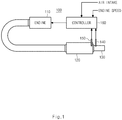
- FIG. 1 is a block diagram illustrating a schematic configuration of a vehicle catalyst operating system 100 according to an exemplary embodiment of the present invention.
- the vehicle catalyst operating system 100 of the present invention includes an engine 110, a catalyst 120, an exhaust port 130, a loading sensor 150, and a controller 160. Additionally, the vehicle catalyst operating system 100 may further include a rear oxygen sensor 140.
- Such a configuration of the vehicle catalyst operating system 100 may calculate an internal temperature of catalyst 120 by using an exhaust gas flow rate, an exhaust gas temperature, an exhaust gas component, and the loading amount of precious metal catalyst obtained through the loading sensor 150.
- the vehicle catalyst operating system 100 may operate protection logic to protect the catalyst based on the obtained internal temperature of the catalyst.
- the vehicle catalyst operating system 100 may adjust a concentration of equivalence ratio to reduce the catalyst temperature. This enables the vehicle catalyst operating system 100 of the present invention to reduce the catalyst temperature by suppressing the oxidation generated in the inside of the catalyst.
- the above-described vehicle catalyst operating system 100 reflects the change of internal oxidation reaction to a control model according to an amount of the precious metal catalyst deposited in the inside of the catalyst 120 to determine the internal catalyst temperature. Based on this model, the vehicle catalyst operating system 100 of the present invention may accurately predict the internal temperature of the catalyst 120 having different characteristics for each regulation in the same engine. In addition, the vehicle catalyst operating system 100 of the present invention may prevent the adjustment of unnecessary rich condition in a high speed region.
- the engine 110 is a configuration to burn the injected fuel to generate a power.
- the engine 110 may be operated in a constant speed according to a control of a motor controller, e.g., the controller 160.
- the engine speed may be feedback again to the controller 160.
- the engine 110 may discharge an exhaust gas due to the fuel combustion to the exhaust port 130 through the catalyst 120.
- the catalyst 120 is disposed between the engine 110 and the exhaust port 130 to perform a purification of exhaust gas discharged from the engine 110.
- This catalyst 120 may be configured with various types to purify exhaust gas.
- the catalysts of the present invention 120 may include precious metals such as palladium, rhodium, platinum, cerium, and the like for a three-way catalytic oxidation reaction.
- the loading of the precious metal included in the catalyst 120 may be changed.
- the change of the loading of the precious metal in the catalyst 120 may be sensed by the loading sensor 150.
- the exhaust port 130 is disposed at the rear end of the catalyst 120 to discharge a material discharged from the catalyst 120. Such an exhaust port 130 guides the exhaust gas output from the catalyst 120.
- the rear oxygen sensor 140 may be disposed at one side of the exhaust port 130.
- the loading sensor 150 is a sensor that detects the change of the precious metal loading in the catalyst 120.
- the rear oxygen sensor 140 is disposed at the outlet side of the catalyst 120, and detects the oxygen concentration which is switched according to rich/lean of a mixing ratio to the controller 160.
- the rear oxygen sensor 140 adds up the exhaust gas discharged through the exhaust port 130 to detect the deterioration of the catalyst.
- the controller 160 may determine the exhaust gas modeling temperature of the catalyst 120 according to an engine speed and an air intake.
- the controller 160 additionally performs a modeling of an internal temperature change of catalyst according to a catalyst loading with respect to a basic logic that performs a modeling of temperature of each part from the exhaust port of the engine 110 to the rear end of the catalyst 120 by modeling a thermodynamics of an exhaust system, such that the internal temperature change of catalyst according to a change of catalyst loading can be predicted accurately.
- the temperature due to the heat generated in the catalyst may be determined by the exhaust gas flow rate, the exhaust gas temperature, the exhaust gas component, and the oxidation reaction generated in the precious metal in the inside of the catalyst.
- the quantity of heat of exhaust gas which is latent in the exhaust gas may be determined by an exhaust flow rate and a heat capacity of the exhaust gas.
- Tcat is an internal temperature of a catalyst
- Q is an internal oxidation reaction energy of a catalytic
- m ⁇ is an exhaust gas flow rate
- Cp is a heat capacity of an exhaust gas.
- the internal oxidation reaction energy Q of a catalyst is changed depending on the precious metal loading deposited in the catalyst 120.
- the controller 160 configures a dependent variable data of precious metal loading of the catalyst 120 with the internal oxidation reaction energy Q of a catalyst to reflect the change of internal temperature of catalyst due to loading of the precious metal.
- the vehicle catalyst operating system 100 of the present invention may apply the change of precious metal loading of catalyst 120 to calculate the quantity of heat according to the internal oxidation reaction of the catalyst 120 such that the catalyst temperature can be measured more accurately.
- FIG. 2 is a flowchart illustrating a vehicle catalyst operating method according to an exemplary embodiment of the present invention.
- the controller 160 detects the loading of precious metal of catalyst 120 in step S101. To this end, the controller 160 may activate the loading sensor 150, and detect the loading of the precious metal of the catalyst 120 at the present point by using the loading sensor 150.
- the controller 160 may calculate the internal temperature of the catalyst in step S103.
- the controller 160 may apply the change value of the loading of precious metal to the temperature modeling provided by using the air intake and the engine speed.
- the controller 160 may previously store a data of temperature modeling corresponding to a heat generation data of the catalyst calculated in response to the change of the air intake and the engine speed.
- the temperature modeling corresponding to the heat generation data of the catalyst in response to the change of the air intake and the engine speed may be provided based on a variety of experiments.
- the controller 160 may determine whether catalyst protection logic is reflected in step S105. That is, the controller 160 may determine whether the current internal temperature of the catalyst is a predefined certain temperature or more. When the internal temperature of the catalyst is a predefined certain temperature or more in step S105, the controller 160 may perform an environment control in accordance with protection logic in step S107. For example, the controller 160 may perform the adjustment of equivalence ratio to reduce the temperature of the catalyst 120. In the meantime, when the internal temperature of the catalytic is below a predefined certain temperature in step S105, the controller 160 may control to skip the step S107.
- FIG. 3 is a diagram illustrating a heat emission quantity according to an internal oxidation reaction of a catalyst according to an exemplary embodiment of the present invention
- FIG. 4 is a diagram illustrating a structure of an internal CO oxidation reaction of three-way catalytic.
- the total energy amount is increased or decreased according to increase or decrease of the loading (Metal Site) of precious metal of the catalyst 120.
- the controller 160 of the vehicle catalyst operating system 100 may apply the measured loading of the precious metal to the energy calculation method of oxidation reaction as shown in FIG. 3 such that the internal temperature of the catalyst can be calculated through a real-time calculation. That is, the controller 160 may calculate a calorific value of catalyst according to a detected loading of precious metal. In addition, the controller 160 may calculate the internal temperature of catalyst by applying the calculated calorific value of catalyst to the temperature modeling corresponding to the heat data of catalyst previously defined according to the air intake and the engine speed.
- the vehicle catalyst operating system 100 of the present invention configures the heat energy data of catalyst by reflecting a reference catalyst, a reference engine speed, a dependent variable data of intake flow rate, and a variable data of heat change due to the loading of precious metal catalyst.
- vehicle catalyst operating system 100 may digitize the calorific value of catalyst according to the change of loading of precious metal as an experimental data with respect to various reference catalysts to store in advance.
- the vehicle catalyst operating system 100 may previously store the temperature modeling corresponding to the heat data of catalyst based on the data for the air intake, the engine speed, and the calorific value of catalyst according to the change of loading of precious metal.
- the vehicle catalyst operating system 100 may detect a corresponding value of internal temperature of catalyst with reference to a corresponding reference data based on the air intake at the time of detection, the engine speed, and the element of loading of precious metal.
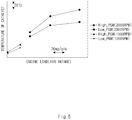
- FIG. 5 is a diagram illustrating an actual measurement temperature difference of catalyst according to a change of loading of precious metal catalyst
- FIG. 6 is a diagram illustrating a suitability of predicted temperature due to a change of heat generation data according to loading of precious metal catalyst.
- the measured temperature of the catalyst 120 may be changed in response to the engine speed according to the change of the loading of the precious metal. Consequently, if the element for the change of loading of precious metal is applied to the temperature change of catalyst 120, temperature can be detected more precisely.
- the present invention dependently reflects a heat generation due to an oxidation reaction occurred in the inside of the catalyst to the loading of the catalyst such that the inner temperature of the catalyst can be predicted more precisely.
- the present invention applies the variation of the inner temperature of the catalyst according to a change of catalyst which is not applied in the previous detection of temperature of the catalyst, such that the inner temperature of the catalyst differentiated in a plurality of vehicles having the same engine can be predicted precisely.
- a development period of engine and vehicle can be shortened, and a quality problem due to a catalyst temperature prediction error can be prevented in advance.
- the present invention precisely predicts the catalyst temperature such that a deterioration of fuel efficiency due to a reflection of unnecessary catalyst protection logic can be prevented.
Landscapes
- Engineering & Computer Science (AREA)
- Chemical & Material Sciences (AREA)
- Chemical Kinetics & Catalysis (AREA)
- Combustion & Propulsion (AREA)
- Mechanical Engineering (AREA)
- General Engineering & Computer Science (AREA)
- Analytical Chemistry (AREA)
- Health & Medical Sciences (AREA)
- Biomedical Technology (AREA)
- Environmental & Geological Engineering (AREA)
- General Chemical & Material Sciences (AREA)
- Oil, Petroleum & Natural Gas (AREA)
- Toxicology (AREA)
- Exhaust Gas After Treatment (AREA)
- Combined Controls Of Internal Combustion Engines (AREA)
- Exhaust Gas Treatment By Means Of Catalyst (AREA)
Claims (7)
- Ein System zum Betreiben eines Katalysators eines Fahrzeugs, das System (100) aufweisend:den Katalysator (120), der konfiguriert ist, um ein Abgas eines Verbrennungsmotors (110) zu reinigen,einen Beladungssensor (150), der konfiguriert ist, um eine Änderung einer Edelmetallbeladung des Katalysators zu ermitteln, undeine Steuereinheit (160), die konfiguriert ist, um eine Ermittlung einer Innentemperatur des Katalysators (120) auszuführen,wobei die Steuereinheit (160) die Innentemperatur des Katalysators (120) durch Anwenden der Änderung der Edelmetallbeladung des Katalysators (120) auf ein Innentemperaturmodell des Katalysators ermittelt.
- Das System (100) nach Anspruch 1, wobei die Steuereinheit (160) die Innentemperatur des Katalysators (120) durch Anwenden eines kalorischen Werts des Katalysators gemäß der Änderung der Edelmetallbeladung auf eine Temperaturmodellierung des Katalysators (120), die zuvor gespeichert wird, basierend auf einer Luftansaugung des Fahrzeugs und einer Drehzahl des Verbrennungsmotors (110) ermittelt.
- Das System (100) nach Anspruch 1, wobei die Steuereinheit (160) die Innentemperatur des Katalysators (120) aus Temperaturmodellierungsdaten ermittelt, die der Luftansaugung, der Drehzahl des Verbrennungsmotors (110) und dem kalorischen Wert der Katalysators (120) entsprechen, der zuvor gemäß der Änderung der Edelmetallbeladung des Katalysators ermittelt wird.
- Das System (100) nach Anspruch 1, wobei die Steuereinheit (160) ein Äquivalentverhältnis einstellt, wenn die Innentemperatur des Katalysators (120) eine vorgegebene bestimmte Temperatur oder mehr ist.
- Ein Verfahren für ein System (100) zum Betreiben eines Katalysators eines Fahrzeugs, das Verfahren aufweisend:Ermitteln (S101) einer Luftansaugung eines Verbrennungsmotors (110) des Fahrzeugs, einer Verbrennungsmotordrehzahl und einer Edelmetallbeladung des Katalysators (120), undErmitteln (S103) einer Innentemperatur des Katalysators (120) durch Anwenden eines kalorischen Werts des Katalysators gemäß einer Änderung der Edelmetallbeladung auf Katalysatorwärmedaten, die vorher gespeichert werden, basierend auf der Luftansaugung des Fahrzeugs und der Verbrennungsmotordrehzahl,wobei das System (100) zum Betreiben des Katalysators ferner aufweist einen Beladungssensor (150) zum Ermitteln der Änderung der Edelmetallbeladung des Katalysators (120).
- Das Verfahren nach Anspruch 5, ferner aufweisend Einstellen eines Äquivalentverhältnisses, wenn die Innentemperatur des Katalysators (120) eine vorgegebene bestimmte Temperatur oder mehr ist.
- Das Verfahren nach Anspruch 5, wobei das System zum Betreiben des Katalysators aufweist:den Katalysator (120), der konfiguriert ist, um ein Abgas des Verbrennungsmotors (110) zu reinigen, undeine Steuereinheit (160), die konfiguriert ist, um eine Ermittlung der Innentemperatur des Katalysators auszuführen,wobei die Steuereinheit (160) die Innentemperatur des Katalysators (120) durch Anwenden der Änderung der Edelmetallbeladung des Katalysators auf ein Innentemperaturmodell des Katalysators ermittelt.
Applications Claiming Priority (1)
| Application Number | Priority Date | Filing Date | Title |
|---|---|---|---|
| KR1020130127119A KR101534933B1 (ko) | 2013-10-24 | 2013-10-24 | 차량 촉매 운용 시스템 및 방법 |
Publications (2)
| Publication Number | Publication Date |
|---|---|
| EP2865862A1 EP2865862A1 (de) | 2015-04-29 |
| EP2865862B1 true EP2865862B1 (de) | 2017-06-14 |
Family
ID=51494152
Family Applications (1)
| Application Number | Title | Priority Date | Filing Date |
|---|---|---|---|
| EP14184015.7A Not-in-force EP2865862B1 (de) | 2013-10-24 | 2014-09-09 | Betriebssystem und Betriebsverfahren eines Katalysators für ein Fahrzeug |
Country Status (4)
| Country | Link |
|---|---|
| US (1) | US20150113954A1 (de) |
| EP (1) | EP2865862B1 (de) |
| KR (1) | KR101534933B1 (de) |
| CN (1) | CN104564261A (de) |
Families Citing this family (2)
| Publication number | Priority date | Publication date | Assignee | Title |
|---|---|---|---|---|
| JP6520971B2 (ja) * | 2017-03-02 | 2019-05-29 | トヨタ自動車株式会社 | 内燃機関の排気浄化装置 |
| US10323561B2 (en) * | 2017-04-19 | 2019-06-18 | GM Global Technology Operations LLC | Methods for monitoring and modelling thermal characteristics of oxidation catalyst devices |
Family Cites Families (11)
| Publication number | Priority date | Publication date | Assignee | Title |
|---|---|---|---|---|
| US7363758B2 (en) * | 2004-11-09 | 2008-04-29 | Ford Global Technologies, Llc | Lean burn engine control NOx purging based on positional loading of oxidants in emission control device |
| DE102005015998B4 (de) * | 2005-04-07 | 2014-07-10 | Robert Bosch Gmbh | Katalysatordiagnoseverfahren |
| EP1994982A1 (de) * | 2007-03-30 | 2008-11-26 | Fujifilm Corporation | Katalysatorkörper mit eloxierter Schicht |
| DE102007044863B4 (de) * | 2007-09-20 | 2012-08-09 | Continental Automotive Gmbh | Verfahren und Vorrichtung zur Modellierung der Temperatur eines Katalysators |
| KR100986071B1 (ko) * | 2008-06-09 | 2010-10-07 | 현대자동차주식회사 | 차량의 배기가스 정화장치 및 제어방법 |
| KR100993369B1 (ko) * | 2008-07-18 | 2010-11-09 | 현대자동차주식회사 | 차량의 촉매 진단장치 및 방법 |
| US8584445B2 (en) * | 2009-02-04 | 2013-11-19 | GM Global Technology Operations LLC | Method and system for controlling an electrically heated particulate filter |
| US7942043B2 (en) * | 2009-02-19 | 2011-05-17 | Detroit Diesel Corporation | On-board aftertreatment device tail pipe hydrocarbon slip calculation |
| US8135535B2 (en) * | 2009-06-09 | 2012-03-13 | Ford Global Technologies, Llc | Modeling catalyst exotherm due to blowthrough |
| JP5604852B2 (ja) * | 2009-11-06 | 2014-10-15 | トヨタ自動車株式会社 | 内燃機関の触媒装置温度推定装置 |
| JP2013044283A (ja) * | 2011-08-24 | 2013-03-04 | Toyota Industries Corp | 排気ガス浄化用触媒 |
-
2013
- 2013-10-24 KR KR1020130127119A patent/KR101534933B1/ko not_active Expired - Fee Related
-
2014
- 2014-09-09 EP EP14184015.7A patent/EP2865862B1/de not_active Not-in-force
- 2014-09-17 US US14/489,142 patent/US20150113954A1/en not_active Abandoned
- 2014-09-29 CN CN201410515379.XA patent/CN104564261A/zh active Pending
Also Published As
| Publication number | Publication date |
|---|---|
| KR101534933B1 (ko) | 2015-07-07 |
| KR20150047260A (ko) | 2015-05-04 |
| EP2865862A1 (de) | 2015-04-29 |
| US20150113954A1 (en) | 2015-04-30 |
| CN104564261A (zh) | 2015-04-29 |
Similar Documents
| Publication | Publication Date | Title |
|---|---|---|
| JP4645984B2 (ja) | 排出ガスセンサの劣化検出装置 | |
| US6202406B1 (en) | Method and apparatus for catalyst temperature control | |
| US6990800B2 (en) | Diesel aftertreatment systems | |
| JP4530081B2 (ja) | 内燃機関の触媒劣化診断装置及び触媒劣化診断方法 | |
| JP5455909B2 (ja) | 車両に搭載された状態で触媒の老化状態を検査するための方法 | |
| US6990854B2 (en) | Active lean NOx catalyst diagnostics | |
| US9181841B2 (en) | Method and apparatus for monitoring the light-off temperature of a diesel oxidation catalyst | |
| JPH06307233A (ja) | 触媒劣化診断システム | |
| US9234474B2 (en) | Control oriented model for LNT regeneration | |
| US12436065B2 (en) | Method and device for measuring nitrogen oxide and ammonia emissions from an exhaust gas aftertreatment system for combustion exhaust gases | |
| CN102400753A (zh) | 预测排气温度的方法 | |
| US5822979A (en) | Catalyst monitoring using a hydrocarbon sensor | |
| EP2865862A1 (de) | Betriebssystem und betriebsverfahren eines Katalysators für ein Fahrzeug | |
| JP5604852B2 (ja) | 内燃機関の触媒装置温度推定装置 | |
| CN108150251A (zh) | 废气净化装置及其控制方法 | |
| JP2005090479A (ja) | エンジン排気ガス温度予測方法 | |
| KR100993369B1 (ko) | 차량의 촉매 진단장치 및 방법 | |
| JP5862497B2 (ja) | 触媒劣化判定装置 | |
| JP4747984B2 (ja) | 触媒劣化量推定方法及び触媒劣化量推定装置 | |
| US11384674B2 (en) | Reuse evaluation system for catalyst | |
| EP4253734A1 (de) | Erkennung der qualität eines reduktionsmittels mithilfe eines virtuellen sensors | |
| JP2006077738A (ja) | 内燃機関の触媒劣化検出装置 | |
| JP2001317345A (ja) | エンジンの排気浄化装置 |
Legal Events
| Date | Code | Title | Description |
|---|---|---|---|
| PUAI | Public reference made under article 153(3) epc to a published international application that has entered the european phase |
Free format text: ORIGINAL CODE: 0009012 |
|
| 17P | Request for examination filed |
Effective date: 20140909 |
|
| AK | Designated contracting states |
Kind code of ref document: A1 Designated state(s): AL AT BE BG CH CY CZ DE DK EE ES FI FR GB GR HR HU IE IS IT LI LT LU LV MC MK MT NL NO PL PT RO RS SE SI SK SM TR |
|
| AX | Request for extension of the european patent |
Extension state: BA ME |
|
| R17P | Request for examination filed (corrected) |
Effective date: 20150723 |
|
| RBV | Designated contracting states (corrected) |
Designated state(s): AL AT BE BG CH CY CZ DE DK EE ES FI FR GB GR HR HU IE IS IT LI LT LU LV MC MK MT NL NO PL PT RO RS SE SI SK SM TR |
|
| GRAP | Despatch of communication of intention to grant a patent |
Free format text: ORIGINAL CODE: EPIDOSNIGR1 |
|
| RIC1 | Information provided on ipc code assigned before grant |
Ipc: F01N 9/00 20060101AFI20161221BHEP Ipc: F01N 11/00 20060101ALI20161221BHEP |
|
| INTG | Intention to grant announced |
Effective date: 20170113 |
|
| RIN1 | Information on inventor provided before grant (corrected) |
Inventor name: MOK, JONG SOO |
|
| GRAS | Grant fee paid |
Free format text: ORIGINAL CODE: EPIDOSNIGR3 |
|
| GRAA | (expected) grant |
Free format text: ORIGINAL CODE: 0009210 |
|
| AK | Designated contracting states |
Kind code of ref document: B1 Designated state(s): AL AT BE BG CH CY CZ DE DK EE ES FI FR GB GR HR HU IE IS IT LI LT LU LV MC MK MT NL NO PL PT RO RS SE SI SK SM TR |
|
| REG | Reference to a national code |
Ref country code: GB Ref legal event code: FG4D |
|
| REG | Reference to a national code |
Ref country code: CH Ref legal event code: EP Ref country code: AT Ref legal event code: REF Ref document number: 901195 Country of ref document: AT Kind code of ref document: T Effective date: 20170615 |
|
| REG | Reference to a national code |
Ref country code: IE Ref legal event code: FG4D |
|
| REG | Reference to a national code |
Ref country code: DE Ref legal event code: R096 Ref document number: 602014010690 Country of ref document: DE |
|
| REG | Reference to a national code |
Ref country code: NL Ref legal event code: MP Effective date: 20170614 |
|
| REG | Reference to a national code |
Ref country code: LT Ref legal event code: MG4D |
|
| PG25 | Lapsed in a contracting state [announced via postgrant information from national office to epo] |
Ref country code: LT Free format text: LAPSE BECAUSE OF FAILURE TO SUBMIT A TRANSLATION OF THE DESCRIPTION OR TO PAY THE FEE WITHIN THE PRESCRIBED TIME-LIMIT Effective date: 20170614 Ref country code: GR Free format text: LAPSE BECAUSE OF FAILURE TO SUBMIT A TRANSLATION OF THE DESCRIPTION OR TO PAY THE FEE WITHIN THE PRESCRIBED TIME-LIMIT Effective date: 20170915 Ref country code: NO Free format text: LAPSE BECAUSE OF FAILURE TO SUBMIT A TRANSLATION OF THE DESCRIPTION OR TO PAY THE FEE WITHIN THE PRESCRIBED TIME-LIMIT Effective date: 20170914 Ref country code: FI Free format text: LAPSE BECAUSE OF FAILURE TO SUBMIT A TRANSLATION OF THE DESCRIPTION OR TO PAY THE FEE WITHIN THE PRESCRIBED TIME-LIMIT Effective date: 20170614 Ref country code: HR Free format text: LAPSE BECAUSE OF FAILURE TO SUBMIT A TRANSLATION OF THE DESCRIPTION OR TO PAY THE FEE WITHIN THE PRESCRIBED TIME-LIMIT Effective date: 20170614 |
|
| PGFP | Annual fee paid to national office [announced via postgrant information from national office to epo] |
Ref country code: DE Payment date: 20170822 Year of fee payment: 4 |
|
| REG | Reference to a national code |
Ref country code: AT Ref legal event code: MK05 Ref document number: 901195 Country of ref document: AT Kind code of ref document: T Effective date: 20170614 |
|
| PG25 | Lapsed in a contracting state [announced via postgrant information from national office to epo] |
Ref country code: RS Free format text: LAPSE BECAUSE OF FAILURE TO SUBMIT A TRANSLATION OF THE DESCRIPTION OR TO PAY THE FEE WITHIN THE PRESCRIBED TIME-LIMIT Effective date: 20170614 Ref country code: NL Free format text: LAPSE BECAUSE OF FAILURE TO SUBMIT A TRANSLATION OF THE DESCRIPTION OR TO PAY THE FEE WITHIN THE PRESCRIBED TIME-LIMIT Effective date: 20170614 Ref country code: LV Free format text: LAPSE BECAUSE OF FAILURE TO SUBMIT A TRANSLATION OF THE DESCRIPTION OR TO PAY THE FEE WITHIN THE PRESCRIBED TIME-LIMIT Effective date: 20170614 Ref country code: SE Free format text: LAPSE BECAUSE OF FAILURE TO SUBMIT A TRANSLATION OF THE DESCRIPTION OR TO PAY THE FEE WITHIN THE PRESCRIBED TIME-LIMIT Effective date: 20170614 Ref country code: BG Free format text: LAPSE BECAUSE OF FAILURE TO SUBMIT A TRANSLATION OF THE DESCRIPTION OR TO PAY THE FEE WITHIN THE PRESCRIBED TIME-LIMIT Effective date: 20170914 |
|
| PG25 | Lapsed in a contracting state [announced via postgrant information from national office to epo] |
Ref country code: AT Free format text: LAPSE BECAUSE OF FAILURE TO SUBMIT A TRANSLATION OF THE DESCRIPTION OR TO PAY THE FEE WITHIN THE PRESCRIBED TIME-LIMIT Effective date: 20170614 Ref country code: EE Free format text: LAPSE BECAUSE OF FAILURE TO SUBMIT A TRANSLATION OF THE DESCRIPTION OR TO PAY THE FEE WITHIN THE PRESCRIBED TIME-LIMIT Effective date: 20170614 Ref country code: CZ Free format text: LAPSE BECAUSE OF FAILURE TO SUBMIT A TRANSLATION OF THE DESCRIPTION OR TO PAY THE FEE WITHIN THE PRESCRIBED TIME-LIMIT Effective date: 20170614 Ref country code: SK Free format text: LAPSE BECAUSE OF FAILURE TO SUBMIT A TRANSLATION OF THE DESCRIPTION OR TO PAY THE FEE WITHIN THE PRESCRIBED TIME-LIMIT Effective date: 20170614 Ref country code: RO Free format text: LAPSE BECAUSE OF FAILURE TO SUBMIT A TRANSLATION OF THE DESCRIPTION OR TO PAY THE FEE WITHIN THE PRESCRIBED TIME-LIMIT Effective date: 20170614 |
|
| PG25 | Lapsed in a contracting state [announced via postgrant information from national office to epo] |
Ref country code: IT Free format text: LAPSE BECAUSE OF FAILURE TO SUBMIT A TRANSLATION OF THE DESCRIPTION OR TO PAY THE FEE WITHIN THE PRESCRIBED TIME-LIMIT Effective date: 20170614 Ref country code: ES Free format text: LAPSE BECAUSE OF FAILURE TO SUBMIT A TRANSLATION OF THE DESCRIPTION OR TO PAY THE FEE WITHIN THE PRESCRIBED TIME-LIMIT Effective date: 20170614 Ref country code: PL Free format text: LAPSE BECAUSE OF FAILURE TO SUBMIT A TRANSLATION OF THE DESCRIPTION OR TO PAY THE FEE WITHIN THE PRESCRIBED TIME-LIMIT Effective date: 20170614 Ref country code: SM Free format text: LAPSE BECAUSE OF FAILURE TO SUBMIT A TRANSLATION OF THE DESCRIPTION OR TO PAY THE FEE WITHIN THE PRESCRIBED TIME-LIMIT Effective date: 20170614 Ref country code: IS Free format text: LAPSE BECAUSE OF FAILURE TO SUBMIT A TRANSLATION OF THE DESCRIPTION OR TO PAY THE FEE WITHIN THE PRESCRIBED TIME-LIMIT Effective date: 20171014 |
|
| REG | Reference to a national code |
Ref country code: DE Ref legal event code: R097 Ref document number: 602014010690 Country of ref document: DE |
|
| PLBE | No opposition filed within time limit |
Free format text: ORIGINAL CODE: 0009261 |
|
| STAA | Information on the status of an ep patent application or granted ep patent |
Free format text: STATUS: NO OPPOSITION FILED WITHIN TIME LIMIT |
|
| PG25 | Lapsed in a contracting state [announced via postgrant information from national office to epo] |
Ref country code: DK Free format text: LAPSE BECAUSE OF FAILURE TO SUBMIT A TRANSLATION OF THE DESCRIPTION OR TO PAY THE FEE WITHIN THE PRESCRIBED TIME-LIMIT Effective date: 20170614 |
|
| REG | Reference to a national code |
Ref country code: CH Ref legal event code: PL |
|
| 26N | No opposition filed |
Effective date: 20180315 |
|
| PG25 | Lapsed in a contracting state [announced via postgrant information from national office to epo] |
Ref country code: MC Free format text: LAPSE BECAUSE OF FAILURE TO SUBMIT A TRANSLATION OF THE DESCRIPTION OR TO PAY THE FEE WITHIN THE PRESCRIBED TIME-LIMIT Effective date: 20170614 |
|
| REG | Reference to a national code |
Ref country code: IE Ref legal event code: MM4A |
|
| REG | Reference to a national code |
Ref country code: BE Ref legal event code: MM Effective date: 20170930 |
|
| PG25 | Lapsed in a contracting state [announced via postgrant information from national office to epo] |
Ref country code: LU Free format text: LAPSE BECAUSE OF NON-PAYMENT OF DUE FEES Effective date: 20170909 |
|
| REG | Reference to a national code |
Ref country code: FR Ref legal event code: ST Effective date: 20180531 |
|
| PG25 | Lapsed in a contracting state [announced via postgrant information from national office to epo] |
Ref country code: CH Free format text: LAPSE BECAUSE OF NON-PAYMENT OF DUE FEES Effective date: 20170930 Ref country code: LI Free format text: LAPSE BECAUSE OF NON-PAYMENT OF DUE FEES Effective date: 20170930 Ref country code: IE Free format text: LAPSE BECAUSE OF NON-PAYMENT OF DUE FEES Effective date: 20170909 |
|
| PG25 | Lapsed in a contracting state [announced via postgrant information from national office to epo] |
Ref country code: FR Free format text: LAPSE BECAUSE OF NON-PAYMENT OF DUE FEES Effective date: 20171002 Ref country code: BE Free format text: LAPSE BECAUSE OF NON-PAYMENT OF DUE FEES Effective date: 20170930 Ref country code: SI Free format text: LAPSE BECAUSE OF FAILURE TO SUBMIT A TRANSLATION OF THE DESCRIPTION OR TO PAY THE FEE WITHIN THE PRESCRIBED TIME-LIMIT Effective date: 20170614 |
|
| PG25 | Lapsed in a contracting state [announced via postgrant information from national office to epo] |
Ref country code: MT Free format text: LAPSE BECAUSE OF NON-PAYMENT OF DUE FEES Effective date: 20170909 |
|
| REG | Reference to a national code |
Ref country code: DE Ref legal event code: R119 Ref document number: 602014010690 Country of ref document: DE |
|
| GBPC | Gb: european patent ceased through non-payment of renewal fee |
Effective date: 20180909 |
|
| PG25 | Lapsed in a contracting state [announced via postgrant information from national office to epo] |
Ref country code: HU Free format text: LAPSE BECAUSE OF FAILURE TO SUBMIT A TRANSLATION OF THE DESCRIPTION OR TO PAY THE FEE WITHIN THE PRESCRIBED TIME-LIMIT; INVALID AB INITIO Effective date: 20140909 |
|
| PG25 | Lapsed in a contracting state [announced via postgrant information from national office to epo] |
Ref country code: DE Free format text: LAPSE BECAUSE OF NON-PAYMENT OF DUE FEES Effective date: 20190402 |
|
| PG25 | Lapsed in a contracting state [announced via postgrant information from national office to epo] |
Ref country code: GB Free format text: LAPSE BECAUSE OF NON-PAYMENT OF DUE FEES Effective date: 20180909 Ref country code: CY Free format text: LAPSE BECAUSE OF FAILURE TO SUBMIT A TRANSLATION OF THE DESCRIPTION OR TO PAY THE FEE WITHIN THE PRESCRIBED TIME-LIMIT Effective date: 20170614 |
|
| PG25 | Lapsed in a contracting state [announced via postgrant information from national office to epo] |
Ref country code: MK Free format text: LAPSE BECAUSE OF FAILURE TO SUBMIT A TRANSLATION OF THE DESCRIPTION OR TO PAY THE FEE WITHIN THE PRESCRIBED TIME-LIMIT Effective date: 20170614 |
|
| PG25 | Lapsed in a contracting state [announced via postgrant information from national office to epo] |
Ref country code: TR Free format text: LAPSE BECAUSE OF FAILURE TO SUBMIT A TRANSLATION OF THE DESCRIPTION OR TO PAY THE FEE WITHIN THE PRESCRIBED TIME-LIMIT Effective date: 20170614 |
|
| PG25 | Lapsed in a contracting state [announced via postgrant information from national office to epo] |
Ref country code: PT Free format text: LAPSE BECAUSE OF FAILURE TO SUBMIT A TRANSLATION OF THE DESCRIPTION OR TO PAY THE FEE WITHIN THE PRESCRIBED TIME-LIMIT Effective date: 20170614 |
|
| PG25 | Lapsed in a contracting state [announced via postgrant information from national office to epo] |
Ref country code: AL Free format text: LAPSE BECAUSE OF FAILURE TO SUBMIT A TRANSLATION OF THE DESCRIPTION OR TO PAY THE FEE WITHIN THE PRESCRIBED TIME-LIMIT Effective date: 20170614 |