EP2852399B1 - Ledgf peptides and formulations thereof for treatment of degenerative disorders - Google Patents
Ledgf peptides and formulations thereof for treatment of degenerative disorders Download PDFInfo
- Publication number
- EP2852399B1 EP2852399B1 EP13794410.4A EP13794410A EP2852399B1 EP 2852399 B1 EP2852399 B1 EP 2852399B1 EP 13794410 A EP13794410 A EP 13794410A EP 2852399 B1 EP2852399 B1 EP 2852399B1
- Authority
- EP
- European Patent Office
- Prior art keywords
- ledgf
- peptide
- composition
- protein
- day
- Prior art date
- Legal status (The legal status is an assumption and is not a legal conclusion. Google has not performed a legal analysis and makes no representation as to the accuracy of the status listed.)
- Active
Links
Images




Classifications
-
- C—CHEMISTRY; METALLURGY
- C07—ORGANIC CHEMISTRY
- C07K—PEPTIDES
- C07K14/00—Peptides having more than 20 amino acids; Gastrins; Somatostatins; Melanotropins; Derivatives thereof
- C07K14/435—Peptides having more than 20 amino acids; Gastrins; Somatostatins; Melanotropins; Derivatives thereof from animals; from humans
- C07K14/475—Growth factors; Growth regulators
-
- A—HUMAN NECESSITIES
- A61—MEDICAL OR VETERINARY SCIENCE; HYGIENE
- A61K—PREPARATIONS FOR MEDICAL, DENTAL OR TOILETRY PURPOSES
- A61K38/00—Medicinal preparations containing peptides
- A61K38/16—Peptides having more than 20 amino acids; Gastrins; Somatostatins; Melanotropins; Derivatives thereof
- A61K38/17—Peptides having more than 20 amino acids; Gastrins; Somatostatins; Melanotropins; Derivatives thereof from animals; from humans
- A61K38/18—Growth factors; Growth regulators
-
- A—HUMAN NECESSITIES
- A61—MEDICAL OR VETERINARY SCIENCE; HYGIENE
- A61K—PREPARATIONS FOR MEDICAL, DENTAL OR TOILETRY PURPOSES
- A61K47/00—Medicinal preparations characterised by the non-active ingredients used, e.g. carriers or inert additives; Targeting or modifying agents chemically bound to the active ingredient
- A61K47/50—Medicinal preparations characterised by the non-active ingredients used, e.g. carriers or inert additives; Targeting or modifying agents chemically bound to the active ingredient the non-active ingredient being chemically bound to the active ingredient, e.g. polymer-drug conjugates
- A61K47/51—Medicinal preparations characterised by the non-active ingredients used, e.g. carriers or inert additives; Targeting or modifying agents chemically bound to the active ingredient the non-active ingredient being chemically bound to the active ingredient, e.g. polymer-drug conjugates the non-active ingredient being a modifying agent
- A61K47/52—Medicinal preparations characterised by the non-active ingredients used, e.g. carriers or inert additives; Targeting or modifying agents chemically bound to the active ingredient the non-active ingredient being chemically bound to the active ingredient, e.g. polymer-drug conjugates the non-active ingredient being a modifying agent the modifying agent being an inorganic compound, e.g. an inorganic ion that is complexed with the active ingredient
-
- A—HUMAN NECESSITIES
- A61—MEDICAL OR VETERINARY SCIENCE; HYGIENE
- A61K—PREPARATIONS FOR MEDICAL, DENTAL OR TOILETRY PURPOSES
- A61K47/00—Medicinal preparations characterised by the non-active ingredients used, e.g. carriers or inert additives; Targeting or modifying agents chemically bound to the active ingredient
- A61K47/50—Medicinal preparations characterised by the non-active ingredients used, e.g. carriers or inert additives; Targeting or modifying agents chemically bound to the active ingredient the non-active ingredient being chemically bound to the active ingredient, e.g. polymer-drug conjugates
- A61K47/69—Medicinal preparations characterised by the non-active ingredients used, e.g. carriers or inert additives; Targeting or modifying agents chemically bound to the active ingredient the non-active ingredient being chemically bound to the active ingredient, e.g. polymer-drug conjugates the conjugate being characterised by physical or galenical forms, e.g. emulsion, particle, inclusion complex, stent or kit
- A61K47/6921—Medicinal preparations characterised by the non-active ingredients used, e.g. carriers or inert additives; Targeting or modifying agents chemically bound to the active ingredient the non-active ingredient being chemically bound to the active ingredient, e.g. polymer-drug conjugates the conjugate being characterised by physical or galenical forms, e.g. emulsion, particle, inclusion complex, stent or kit the form being a particulate, a powder, an adsorbate, a bead or a sphere
- A61K47/6927—Medicinal preparations characterised by the non-active ingredients used, e.g. carriers or inert additives; Targeting or modifying agents chemically bound to the active ingredient the non-active ingredient being chemically bound to the active ingredient, e.g. polymer-drug conjugates the conjugate being characterised by physical or galenical forms, e.g. emulsion, particle, inclusion complex, stent or kit the form being a particulate, a powder, an adsorbate, a bead or a sphere the form being a solid microparticle having no hollow or gas-filled cores
- A61K47/6929—Medicinal preparations characterised by the non-active ingredients used, e.g. carriers or inert additives; Targeting or modifying agents chemically bound to the active ingredient the non-active ingredient being chemically bound to the active ingredient, e.g. polymer-drug conjugates the conjugate being characterised by physical or galenical forms, e.g. emulsion, particle, inclusion complex, stent or kit the form being a particulate, a powder, an adsorbate, a bead or a sphere the form being a solid microparticle having no hollow or gas-filled cores the form being a nanoparticle, e.g. an immuno-nanoparticle
-
- A—HUMAN NECESSITIES
- A61—MEDICAL OR VETERINARY SCIENCE; HYGIENE
- A61P—SPECIFIC THERAPEUTIC ACTIVITY OF CHEMICAL COMPOUNDS OR MEDICINAL PREPARATIONS
- A61P21/00—Drugs for disorders of the muscular or neuromuscular system
- A61P21/02—Muscle relaxants, e.g. for tetanus or cramps
-
- A—HUMAN NECESSITIES
- A61—MEDICAL OR VETERINARY SCIENCE; HYGIENE
- A61P—SPECIFIC THERAPEUTIC ACTIVITY OF CHEMICAL COMPOUNDS OR MEDICINAL PREPARATIONS
- A61P25/00—Drugs for disorders of the nervous system
-
- A—HUMAN NECESSITIES
- A61—MEDICAL OR VETERINARY SCIENCE; HYGIENE
- A61P—SPECIFIC THERAPEUTIC ACTIVITY OF CHEMICAL COMPOUNDS OR MEDICINAL PREPARATIONS
- A61P25/00—Drugs for disorders of the nervous system
- A61P25/14—Drugs for disorders of the nervous system for treating abnormal movements, e.g. chorea, dyskinesia
-
- A—HUMAN NECESSITIES
- A61—MEDICAL OR VETERINARY SCIENCE; HYGIENE
- A61P—SPECIFIC THERAPEUTIC ACTIVITY OF CHEMICAL COMPOUNDS OR MEDICINAL PREPARATIONS
- A61P25/00—Drugs for disorders of the nervous system
- A61P25/14—Drugs for disorders of the nervous system for treating abnormal movements, e.g. chorea, dyskinesia
- A61P25/16—Anti-Parkinson drugs
-
- A—HUMAN NECESSITIES
- A61—MEDICAL OR VETERINARY SCIENCE; HYGIENE
- A61P—SPECIFIC THERAPEUTIC ACTIVITY OF CHEMICAL COMPOUNDS OR MEDICINAL PREPARATIONS
- A61P25/00—Drugs for disorders of the nervous system
- A61P25/28—Drugs for disorders of the nervous system for treating neurodegenerative disorders of the central nervous system, e.g. nootropic agents, cognition enhancers, drugs for treating Alzheimer's disease or other forms of dementia
-
- A—HUMAN NECESSITIES
- A61—MEDICAL OR VETERINARY SCIENCE; HYGIENE
- A61P—SPECIFIC THERAPEUTIC ACTIVITY OF CHEMICAL COMPOUNDS OR MEDICINAL PREPARATIONS
- A61P27/00—Drugs for disorders of the senses
- A61P27/02—Ophthalmic agents
-
- A—HUMAN NECESSITIES
- A61—MEDICAL OR VETERINARY SCIENCE; HYGIENE
- A61P—SPECIFIC THERAPEUTIC ACTIVITY OF CHEMICAL COMPOUNDS OR MEDICINAL PREPARATIONS
- A61P39/00—General protective or antinoxious agents
- A61P39/02—Antidotes
-
- A—HUMAN NECESSITIES
- A61—MEDICAL OR VETERINARY SCIENCE; HYGIENE
- A61P—SPECIFIC THERAPEUTIC ACTIVITY OF CHEMICAL COMPOUNDS OR MEDICINAL PREPARATIONS
- A61P9/00—Drugs for disorders of the cardiovascular system
- A61P9/10—Drugs for disorders of the cardiovascular system for treating ischaemic or atherosclerotic diseases, e.g. antianginal drugs, coronary vasodilators, drugs for myocardial infarction, retinopathy, cerebrovascula insufficiency, renal arteriosclerosis
-
- A—HUMAN NECESSITIES
- A61—MEDICAL OR VETERINARY SCIENCE; HYGIENE
- A61K—PREPARATIONS FOR MEDICAL, DENTAL OR TOILETRY PURPOSES
- A61K38/00—Medicinal preparations containing peptides
Definitions
- the present invention relates generally to peptides of lens epithelium derived grown factor (LEDGF) and compositions thereof for use in treating degenerative diseases and diseases with various cellular stresses including oxidative stress and protein-aggregation stress. More specifically, the present inventions relates to novel formulations of LEDGF 1-326 with enhanced stability and sustained delivery profiles and their use in treating protein aggregation-mediated diseases, age-related diseases, and degenerative diseases.
- LEDGF lens epithelium derived grown factor
- AMD age related macular degeneration
- RP retinitis pigmentosa
- RP is a genetically inherited disease caused by more than 50 different gene mutations.
- RP is a genetically inherited disease caused by more than 50 different gene mutations.
- Rinku Baid and colleagues disclose a composition based on a cell lysate comprising LEDGF1-326 peptide and water but also other ingredients such as SDS.
- SDS is used as detergent in cleaning and hygiene products, and also in lysing cells; ruling out its use as an excipient, carrier or diluent in the preparation of a pharmaceutical composition, which is to be administered to animal or human beings.
- LEDGF peptide fragments consisting of amino acids 1-326 and a His-tag is purified using TALON metal affinity resins under non-denaturing condition, according to the manufacturer's protocol. The resulting product once analysed by Western-blot showed that it was poorly purified, being unsuitable for therapeutic purposes.
- Novel drug delivery systems have gained major attention which could sustain or control the release of drug for extended period of time as well as increase the stability and bioavailability of therapeutic agents such as proteins, genes and other small molecules.
- Biodegradable (PLGA, PCL) and non-biodegradable (e.g Vitraset and Retisert) implants provides a platform for sustaining release of drug over several months to years.
- erratic drug release profile for biodegradable implants and requirement of highly invasive eye surgery are few drawbacks.
- Micro and nanoparticles provide sustained release of encapsulated molecules for weeks to months.
- use of organic solvents such as dichloromethane during preparation denatures and reduces protein efficacy leading to non-effective treatment.
- the present invention is directed to biologically active peptides of LEDGF that can be produced in high quantity, purity, or both.
- the present invention is directed to peptides of LEDGF that can be produced at, or greater than, 20 mg per liter of culture and at, or greater than, 90% purity as quantified by SDS-PAGE and SEC-HPLC.
- the peptide is approximately a 40 kDa monomer, that may exist as an 80 kDa dimer.
- the peptide has primarily a random coil structure and includes an N-terminal stress related binding domain, and optionally a TAT binding domain.
- the peptide consists of amino acids 1-326 of LEDGF (LEDGF 1-326 ). In yet another exemplary embodiment, the peptide consists of SEQ ID NO: 2. In another exemplary embodiment, the peptide consists of an amino acid sequence with at least 85%, at least 90%, or at least 95% sequence identity with SEQ ID NO: 2. Also disclosed herein are nucleic acid sequences encoding SEQ ID NO: 2, or nucleic acid sequences encoding amino acid sequences having at least 70 %, at least 75%, at least 80%, at least 85%, at least 90%, or at least 95% sequence identity with SEQ ID NO: 2. Also disclosed herein are vectors containing such nucleic acid sequences. For example, the vector is a pET-28a(+) vector.
- the present invention comprises compositions containing the LEDGF peptides.
- the composition comprises the LEDGF peptide in combination with a pharmaceutical carrier, diluent, excipient, or combination thereof.
- the composition comprises the LEDGF peptide associated with or bound to colloidal metal particles, such as zinc, to form nano-assemblies.
- the compositions comprise the LEDGF peptide encapsulated or bound to an inner particle loaded into a porous outer particle.
- the LEDGF peptide used in the above compositions is a purified LEDGF peptide of the invention such as purified LEDGF 1-326 .
- the present invention is directed to a purified LEDGF peptide of the invention for use in treating protein aggregation-mediated diseases by administering the above LEDGF peptide compositions to a patient in need thereof.
- the protein aggregation-mediated disease is a retinal degeneration disease.
- Exemplary retinal degeneration diseases include, but are not limited to, age related macular degeneration (AMD) retinitis pigmentosa (RP) and diabetic retinopathy (DR).
- the protein aggregation-mediated diseases are neurodegenerative diseases including, but not limited to, Alzheimer's disease (AD), Parkinson's disease (PD), Huntington's disease (HD), amyotrophic lateral sclerosis, or a prion disease.
- AD Alzheimer's disease
- PD Parkinson's disease
- HD Huntington's disease
- amyotrophic lateral sclerosis or a prion disease.
- retina and retinal refers both to the retina as well as the general posterior segment of the eye adjacent to the retina.
- treating or treatment refers to a complete reversal or elimination of the underlying disease, a temporary or sustained prevention of disease progression, a temporary or sustained regression of the disease, and amelioration of one or more symptoms associated with the disease.
- peptide refers to a polymer having at least two amino acids linked through peptide bounds.
- the terms thus include oligopeptides, protein fragments, analogs, derivatives, glycosylated derivatives, pegylated derivatives, fusion proteins and the like.
- sequence identity/similarity refers to the identity of, or similarity of two or more amino acid sequences. Sequence identity can be measured in terms of percentage identity, the higher the percentage, the more identical the sequences are. Methods of alignment and sequences for comparison are well known in the art. Various programs and alignment algorithms are described in: Smith & Waterman, Adv. Appl. Math. 2:482, 1981 ; Needleman & Wunsch, J. Mol. Biol. 48:443 ; Pearson & Lipman, Proc. Natl. Acad. Sci.
- NCBI Basic Local Alignment Research Tool (BLAST) ( Althoff et l al. J. Mol. Biol. 215:403-10, 1990 ) is available from several sources, including the National Center for Biological Information (NCBI, National Library of Medicine, Building 38A, Room 8N805, Bethesda, MD 20894) and on the internet, for use in connection with the sequence analysis programs blastp, blastn, blastx, tblastn, and tblastx. Blastp is used to compare amino acid sequences. Additional information can be found at the NCBI web site.
- the number of matches is determined by counting the number of positions where an identical amino acid residue is present in both sequences.
- the percent identity is determined by dividing the number of matches either by the length of the sequence set forth in the identified sequences, or by an articulated length (such as 100 consecutive nucleotides or amino acids residues from a sequence set forth in an identified sequence), followed by multiplying the resulting value by 100.
- Full length LEDGF has the ability to rescue retinal pigment epithelial cells from P23H mutant rhodopsin aggregation induced stress ( Baid et al., PLoS One. 6(9): p. e24616 ).
- the use of therapeutic peptides is challenging due to the need of the protein to maintain a specific three-dimensional structure in order to remain biologically active.
- production and biosynthesis often fail because of a lack of protein stability throughout the biosynthesis and purification process.
- the present invention provides peptides of LEDGF that maintain the full-length protein's cell surviving activity while allowing production and purification of LEDGF peptides in high quantity and purity. Further, the LEDGF peptides of the present invention have anti-protein aggregation activity.
- the LEDGF peptides of the present invention demonstrate an ability to treat degenerative diseases and diseases associated with various cellular stresses including oxidative stress and protein-aggregation stress. Accordingly, a molecule like the LEDGF peptides of the present invention may represent a universal therapeutic protein for treating multiple protein-aggregation mediated diseases, including other retinal degenerative and neurodegenerative diseases.
- the present invention further comprises extended release formulations of the LEDGF peptides useful in treating the above diseases.
- the LEDGF peptides of the present invention contain N-terminal peptides of full-length LEDGF.
- the LEDGF peptide comprises the LEDGF N-terminal stress related binding domain. While not limited by the following theory, LEDGF's ability to function as a transcription factor and initiate transcription of other stress response genes may contribute to LEDGF peptide's ability to protect against protein aggregation-mediated diseases.
- LEDGF peptides may bind to mis-folded proteins, either directly or through other intermediary proteins, and facilitate normal folding, or ubiquitnation of mis-folded proteins to ensure proteolytic degradation.
- the LEDGF peptide may further comprise a TAT binding domain.
- the LEDGF peptide is LEDGF 1-326 (SEQ ID NO: 2).
- LEDGF 1-326 was purified to near homogeneity.
- LEDGF 1-326 has a primarily random coiled structure, is stable at room temperature, and exists as a 40 kDa monomer and/or 80 kDa dimer. As described in further detail in the Examples section below, LEDGF 1-326 was able to prevent P23H mutant rhodopsin mediated aggregation stress in ARPE-19 cells. Single intravitreal injection of LEDGF 1-326 reduced the functional loss of photoreceptors in retinal degenerative rat model for over eight weeks.
- LEDGF peptides of the present invention also include LEDGF peptides having at least 85%, at least about 90%, or at least about 95% sequence identity with LEDGF 1-326 .
- LEDGF peptides include peptides encompassing the N-terminal stress related binding domain of full-length LEDGF and at least 85%, at least about 90%, or at least about 95% sequence identity with LEDGF 1-326 .
- LEDGF peptides include peptides with the N-terminal stress related binding domain and a TAT binding domain and at least 85%, at least about 90%, or at least about 95% sequence identity with LEDGF 1-326 .
- the present invention includes peptides encompassing more than or less than the 326 amino acids of SEQ ID NO: 2, wherein the larger or smaller peptides do not result in a significant decrease in LEDGF biological activity or stability during biosynthesis and purification.
- the suitability of an LEDGF peptide for use with the present invention can be determined by one of ordinary skill in the art by assessing the putative peptide's similarity to the biophysical and biochemical properties and biological activity using the assays described in the Examples section below.
- One of ordinary skill can predictably recognize that LEDGF peptides with similar biophysical properties, biochemical properties, and biological activity to LEDGF 1-326 will have similar utility.
- the LEDGF peptides described above may be made synthetically. Alternatively, the LEDGF peptides described above are made recombinantly. Host suitable for expression of the LEDGF peptides include, but are not limited to, E. coli, Saccharomces, Picchia, Bacillus, CHO, BHK, COS, and NSO cells.
- LEDGF peptides described herein can be provided as physiologically acceptable formulations using known techniques. Remington's Pharmaceutical Sciences, by E.W. Martin, Mack Publishing Co., Easton, PA, 19th Edition (1995 ), describes compositions and formulations suitable for pharmaceutical delivery of LEDGF peptides disclosed herein.
- the formulations in accordance with the present invention can be administered in the form of a tablet, a capsule, a lozenge, a cachet, a solution, a suspension, an emulsion, a powder, an aerosol, a suppository, a spray, a pastille, an ointment, a cream, a paste, a foam, a gel, a tampon, a pessary, a granule, a bolus, a mouthwash, an implant, in a device, as an eye drop or a transdermal patch.
- the formulations include those suitable for oral, rectal, nasal, inhalation, topical (including dermal, transdermal, buccal, and eye drops), vaginal, parenteral (including subcutaneous, intramuscular, intravenous, intradermal, intraocular, intratracheal, and epidural), ophthalmic (periocular, intraocular, including suprachoroidal, subretinal, and intravitreal), or inhalation administration.
- the peptides of the present invention are formulated for transcleral, suprachoroidal, subretinal, or intravitreal delivery.
- Transcleral delivery includes subconjunctival, subtenons', and retrobulbar transcleral delivery.
- the formulations can conveniently be presented in unit dosage form and can be prepared by conventional pharmaceutical techniques. Such techniques include the step of bringing into association the active ingredient and a pharmaceutical carrier(s) or excipient(s). In general, the formulations are prepared by uniformly and intimately bringing into association the active ingredient with liquid carriers or finely divided solid carriers or both, and then, if necessary, shaping the product.
- Formulations of the present invention suitable for oral administration may be presented as discrete units such as capsules, cachets or tablets each containing a predetermined amount of the active ingredient; as a powder or granules; as a solution or a suspension in an aqueous liquid or a non-aqueous liquid; or as an oil-in-water liquid emulsion or a water-in-oil emulsion, etc.
- a tablet may be made by compression or molding, optionally with one or more accessory ingredients.
- Compressed tablets may be prepared by compressing, in a suitable machine, the active ingredient in a free-flowing form such as a powder or granules, optionally mixed with a binder, lubricant, inert diluent, preservative, surface-active or dispersing agent.
- Molded tablets may be made by molding, in a suitable machine, a mixture of the powdered compound moistened with an inert liquid diluent.
- the tablets may optionally be coated or scored and may be formulated so as to provide a slow or controlled release of the active ingredient therein.
- Formulations suitable for topical administration in the mouth include lozenges comprising the ingredients in a flavored base, usually sucrose and acacia or tragacanth; pastilles comprising the active ingredient in an inert base such as gelatin and glycerin, or sucrose and acacia; and mouthwashes comprising the ingredient to be administered in a suitable liquid carrier.
- Formulations suitable for topical administration to the skin may be presented as ointments, creams, gels, pastes, and eye drops comprising the ingredient to be administered in a pharmaceutical acceptable carrier.
- Formulations for rectal administration may be presented as a suppository with a suitable base comprising, for example, cocoa butter or a salicylate.
- Formulations suitable for nasal administration include a coarse powder having a particle size, for example, in the range of 20 to 500 microns which is administered in the manner in which snuff is taken; i.e ., by rapid inhalation through the nasal passage from a container of the powder held close up to the nose.
- Suitable formulations, wherein the carrier is a liquid, for administration, as for example, a nasal spray or as nasal drops, include aqueous or oily solutions of the active ingredient.
- Formulations suitable for vaginal administration may be presented as pessaries, tampons, creams, gels, pastes, foams or spray formulations containing, in addition to the active ingredient, ingredients such as carriers as are known in the art to be appropriate.
- Formulation suitable for inhalation may be presented as mists, dusts, powders or spray formulations containing, in addition to the active ingredient, ingredients such as carriers as are known in the art to be appropriate.
- Formulations suitable for parenteral administration include aqueous and non-aqueous sterile injection solutions which may contain anti-oxidants, buffers, bacteriostats and solutes which render the formulation isotonic with the blood of the intended recipient; and aqueous and non-aqueous sterile suspensions which may include suspending agents and thickening agents; gels; and surgically placed implants.
- the LEDGF peptides of the present invention may be delivered as nanoparticle assemblies by binding or otherwise associating the LEDGF peptides with colloidal metal particles.
- Any colloidal metal can be used in the present invention.
- Colloidal metals include any water-insoluble metal particle, metallic compound dispersed in liquid water, a hydrosol, or a metal sol.
- the colloidal metal particle may be selected from the metals in groups IA, IB, IIB, and IIIB of the periodic table, as well as the transition metals, especially those of group VIII.
- Exemplary metals include zinc, gold, silver, aluminum, ruthenium, iron, nickel, and calcium.
- metals include the following in all of their various oxidation states; lithium, sodium, magnesium, potassium, scandium, titanium, vanadium, chromium, manganese, cobalt, copper, gallium, strontium, niobium, molybdenum, palladium, indium, tin, tungsten, rhenium, platinum, and gadolinium.
- the metals are preferably derived from the appropriate metal compound in ionic form, for example A1 3+ , Ru 3+ , Zn 2+ , Fe 3+ , Ni 2+ , and Ca 2+ .
- the nanoparticles are formed by adding the colloidal metal directly to a solution containing the LEDGF peptide.
- nanoparticles refer to one or more peptides bound or adsorbed to the surface of a single colloidal metal particle, or a peptide bound to or adsorbed to multiple colloidal metal particles.
- LEDGF/Zn nanoparticles are formed by adding Zn(II) in a controlled manner of 10 mM at room temperature. Thereafter the nanoassemblies are allowed to form over 24 hours time period at 37 °C. Conditions for formation of other nanoassemblies using other colloidal metals may be readily determined by one of ordinary skill in the art.
- the LEDGF peptides are formulated as particle-in-particle extended release formulations.
- the extended release compositions of the present invention comprise an inner particle contained within a larger porous outer particle, including various architectures such as a nanoparticle in porous microparticle (NPinPMP), small nanoparticle in porous large nanoparticle (SNPinPLNP), and small microparticle in porous large microparticle (SMPinPLMP).
- the inner particle is smaller and relatively non-expandable as compared to the larger particle.
- the outer particle is expandable and forms a significantly porous structure during processing that allows the embedding of the inner particle within the outer particle' porous structure.
- a particle is considered to expand in the presence of a supercritical fluid if the particle's initial surface area increases within a range of approximately 1.25 to approximately 100 times.
- the particle is considered to expand if the particle's initial surface area expands within a range of approximately 1.25 to approximately 5 times, approximately 5 to approximately 25 times, approximately 25 to approximately 50 times, approximately 50 to approximately 75 times, or approximately 75 to 100 times.
- a particle is considered to expand if the particle's initial size increases by at least 5%, 10%, 15%, 20%, 25 %, 30%, 35%, 40%, 45%, or 50%.
- Inner particles of the present invention are made using polymeric or non-polymeric materials that do not expand in the presence of a supercritical fluid.
- the nanoparticle material is a polymeric material that will not expand in the presence of supercritical fluids.
- the polymeric material is a material that will not expand in the presence of supercritical carbon dioxide.
- polymeric and non-polymeric materials examples include polylactide (PLA), poly(glycolic acid), co-polymers of lactic and glycolic acid (PLGA), cellulose derivatives, chitosan, polyethylene (PE), polypropylene, poly(tetrafluoroethylene), poly(ethylene terephathalate), iron oxide, cerium oxide, zinc oxide, gold, silver, other biocompatible metals and crystals, and silica. Crystalline materials or those with large crystalline regions are less likely to expand during supercritical fluid processing.
- Polymeric inner particles may be prepared using conventional emulsion-solvent evaporation methods or other similarly suitable synthesis method.
- LEDGF peptides may be encapsulated in the inner particles during formation or loaded on the surface after formation of the inner particles.
- Outer particles of the present invention are made using materials that expand in the presence of a supercritical fluid.
- the microparticle material is a polymeric material that expands in the presence of a supercritical fluid.
- the material that expands in the presence of supercritical carbon dioxide examples include lactide-co-glycolide, polyamides, polycarbonates, polyakylene glycols, polyalkylene oxides, polyvinyl alcohols, polyvinyl ethers, polyvinyl esters, polyvinylpyrrolidone, polyglycolides, and co-polymers thereof.
- sutiable polymer materials also include alkyl cellulose, hydroxyalkyl celluloses, cellulose eethers, cellulose esters, nitro celluloses, polymers of acrylic and methacrylic esters, methyl cellulose, ethyel cellulose, hydroxypropyl cellulose, hydroxypropyl methyl cellulose, hydroxybutyl methyl cellulose, cellulose acetate cellulose acetate butyrate, cellulose acetate phthalate, carboxylethyl cellulose, cellulose poly(methyl methacrylate), poly(elthylmethacrylate), poly(butymethacrylate), poly(vinyl alcohols), poly(vinyl acetate), and polyvinylpryrrolidone.
- amorphous materials or those with large amorphous regions are suitable for expansion during supercritical fluid processing.
- Polymeric outer particles may be prepared using conventional emulsion-solvent evaporation, or other similarly suitable synthesis method.
- LEDGF peptides may be encapsulated in the outer particles during formation or loaded on the surface after formation of the outer particles.
- LEDGF peptide may be loaded on the surface of the inner particle, the outer particle or both; in the matrix of the inner particle, outer particle or both; present in the pores of the outer particle; or a combination thereof.
- LEDGF peptides may be present on the surface of the inner particle.
- LEDGF peptide may be present on the surface of the inner and outer particle.
- LEDGF peptides may be present in the matrix of the inner particle.
- LEDGF peptides may be present in the matrix of both the inner and outer particle.
- a therapeutic agent may further be present in the porous structure of the outer particle.
- Inner and outer particles are admixed together and exposed to a supercritical fluid under high pressure.
- the supercritical fluid is carbon dioxide.
- the outer particles expand to create a porous structure on the outer surface.
- the supercritical fluid then infuses the inner particles into the outer particles to form particle-in-particle extended release formulations.
- the particle-in-particle extended release formulations comprise the incorporation of inner nanoparticles having a diameter of approximately 1 nm to approximately 900 nm in an outer microparticle having a diameter of approximately 1 ⁇ m to approximately 100 ⁇ m.
- the particle-in-particle extended release formulations comprise the incorporation of an inner nanoparticle having a diameter of approximately 1 nm to approximately 300 nm in an outer nanoparticle having a diameter of approximately 10 nm to approximately 999 nm.
- the particle-in-particle extended release formulations include the incorporation of an inner microparticle having a diameter of approximately 1 ⁇ m to approximately 100 ⁇ m in an outer microparticle having a diameter of approximately 2 ⁇ m to approximately 500 ⁇ m. Selection of an appropriate sized inner and outer particle will depend on the type of material comprising the particles, the expansive ability of the outer particle in the supercritical fluid used, and the size of inner particles to be incorporated within the outer particle.
- the size ratio between the inner and outer particle may vary from approximately 1:5 to approximately 1:100.
- the size ratio may be 1:5, 1:10, 1:15, 1:20, 1:25, 1:30, 1:35, 1:40, 1:45, 1:50, 1:55, 1:60, 1:65, 1:70, 1:75, 1:80, 1:85, 1:90, 1:95, or 1:100
- Formation of NPinPMPs may be achieved by exposure of the nanoparticles and microparticles at approximately 1000 psi to approximately 1400 psi.
- the time of exposure may vary, for example, from approximately 5 minutes to approximately 2 hours.
- the temperature may range from 30°C to 45 °C.
- the selection of an appropriate pressure and temperature range are determined primarily by the range of temperature and pressures near the supercritical point for a given supercritical fluid. Accordingly, one of ordinary skill in the art will be able to select the appropriate time, temperature, and pressure ranged based upon the supercritical fluid used, the size or amount of outer particle expansion desired, and the degree of porosity in the outer particle desired. For example, exposure for longer periods of time and/or at higher pressures followed by pressure quench will result in greater expansion and porosity than shorter exposure times and/or pressures.
- the inner particles and outer particles are mixed at a ratio of approximately 1:3. In one exemplary embodiment, the ratio of inner particles to outer particles used is approximately 1:9. These ratios will influence the extent of nanoparticle incorporation and slow release of the drug. In general, the larger the amount of inner particles relative to outer particles the higher the amount of inner particles incorporated in outer particle, increasing the drug release rates and the dose. The smaller the amount of inner particles relative to the outer particles, the smaller the burst release.
- the LEDGF formulations of the present invention may be used to treat protein-aggregation mediated diseases.
- Protein aggregation-mediated diseases that may be treated with the LEDGF compositions of the present invention include retinal degenerative diseases and neurodegenerative diseases.
- Retinal degenerative diseases include age related macular degeneration retinitis pigmentosa, and diabetic retinopathy.
- Neurodegenerative diseases include Alzheimer's disease (AD), Parkinson's disease (PD), Huntington's disease (HD), amyotrophic lateral sclerosis, and prion diseases.
- the present invention comprises the purified peptide of the invention for use in treating a retinal degenerative disease comprising administering to a patient with a retinal degenerative disease a composition comprising a LEDGF peptide of the present invention.
- the LEDGF peptide is SEQ OD NO: 2.
- the LEDGF composition is delivered transclerrally.
- the LEDGF composition is administered to the eye topically in the form of eye drops.
- the LEDGF composition is implanted or systemically administered in an extended release formulation.
- the extended release formulation is a nanoassembly extended release formulation, such as a LEDGF/zinc nanoassembly formulation.
- the extended release formulation is a particle-in-particle formulation, such as a nanoparticle in porous microparticle (NPinPMP) formulation.
- the present invention comprises the purified peptide of the invention for use in reducing protein aggregation in a retinal degenerative disease comprising administering to a patient with a retinal degenerative disease a composition comprising a LEDGF peptide of the present invention.
- the LEDGF peptide is LEDGF 1-326 .
- the LEDGF composition is delivered transclerrally.
- the LEDGF composition is administered to the eye topically in the form of eye drops.
- the LEDGF composition are implanted or systemically administered in an extended release formulation.
- the extended release formulation is a nanoparticle extended release formulation of the present invention, such as a LEDGF/zinc nanoparticle formulation.
- the extended release formulation is a particle-in-particles formulation, such as a nanoparticle in porous microparticle (NPinPMP) formulation.
- the present invention comprises the purified peptide of the invention for use in treating neurodegenerative diseases comprising administering to a patient with a neurodegenerative disease a composition comprising a LEDGF peptide of the present invention.
- the LEDGF peptide is LEDGF 1-326 .
- the LEDGF composition is delivered intraperitoneally.
- the LEDGF composition is administered orally.
- the LEDGF composition are administered systemically in an extended release formulation.
- the extended release formulation is a nanoparticle extended release formulation of the present invention, such as a LEDGF/zinc nanoparticle formulation.
- the extended release formulation is a particle-in-particle formulation, such as a nanoparticle in porous microparticle (NPinPMP) formulation.
- the present invention comprises the purified peptide of the invention for use in reducing protein aggregation in a neurodegenerative disease comprising administering to a patient with a neurodegenerative disease a composition comprising a LEDGF peptide of the present invention.
- the LEDGF peptide is LEDGF 1-326 .
- the LEDGF composition is delivered intraperitoneally.
- the LEDGF composition is administered orally.
- the LEDGF composition is administered in an extended release formulation.
- the extended release formulation is a nanoparticle extended release formulation of the present invention, such as a LEDGF/zinc nanoparticle formulation.
- the extended release formulation is a particle-in-particle formulation, such as a nanoparticle in porous microparticle (NPinPMP) formulation.
- compositions and methods are further illustrated by the following non-limiting examples, which are not to be construed in any way as imposing limitations upon the scope thereof.
- Plasmid pEGFP-LEDGF was gifted by Dr. Toshimichi Shinohara (University of Kansas Medical Center, Omaha, NE). Forward and reverse primers were obtained from Integrated DNA Technologies (Coralville, IA). DNA polymerase I, T4 DNA ligase, and restriction enzymes were obtained from New England Biolab Inc. (Ipswich, MA). QIAquick gel extraction kit, QIAprep spin miniprep kit, and QIAGEN plasmid mini kit were obtained from Qiagen (Valencia, CA). XK 16/20 column, S-200 gel filtration column, SP sepharose beads were obtained from GE Lifesciences Healthcare (Piscataway, NJ).
- ARPE-19 cells were obtained from ATCC (Manassas, VA).
- DMEM/F12 cell culture medium, fetal bovine serum, Lipofectamine 2000, LB medium, and ultra-pure agarose were obtained from Invitrogen (Carsbad, CA). All other materials unless specified were obtained from Sigma-Aldrich (St. Louis, MO).
- PCR amplification was done using DNA polymerase I at 94 °C denaturation for 5 min followed by 36 cycles of denaturation at 94 °C for 30 secs, annealing at 50 °C for 45 secs, and extension at 72 °C for 2 min, and a final step of extension at 72 °C for 5 min.
- the amplified Ledgf 1- 326 gene was purified using the QIAquick gel extraction kit as per manufacturer's protocol. Thereafter the purified Ledgf 1-326 gene insert and pET-28a(+) vector were serially digested at 5' and 3' end using HindIII and BamHI restriction enzymes respectively.
- LEDGF 1-326 amino acid sequence was submitted to ExPASy bioinformatics resource portal and the molecular weight, theoretical pI, amino acid composition, atomic composition, extinction coefficient, estimated half-life of LEDGF 1-326 was computed.
- pLEDGF 1-326 plasmid was amplified and purified from Escherichia coli DH5 ⁇ colony using QIAGEN plasmid mini kit as per manufacturer's protocol. The plasmid was then transformed in Escherichia coli BL21(DE3) strains as per manufacturer's protocol. Thereafter, a single colony of the bacteria containing the plasmid was inoculated into LB (Luria broth) medium containing 50 ⁇ g/ml of kanamycin overnight. A 1 % inoculum of overnight grown culture was added to one liter of LB medium containing 50 ⁇ g/ml of kanamycin.
- the culture was allowed to grow at 37 °C until the optical density (O.D.) of 0.6 - 0.8 was reached for the culture medium.
- Protein expression was induced by adding IPTG (Isopropyl- ⁇ -D-thio-galactoside) to the final concentration of 200 ⁇ M. Thereafter, cells were further incubated for 3 hours at 37 °C and harvested by centrifugation at 3000 g for 15 min at 4 °C. Harvested cells were resuspended in buffer A (25 mM Tris-HCl pH 7.0, 1 mM EDTA, 1 mM PMSF, and 5 % sucrose).
- Cells were pulse sonicated (Mesonix, Sonicator 3000, Farmingdale, NY) at 70 % output (36 watt) for 5 secs followed by cooling for 15 secs for total of 30 min. Lysed cells were centrifuged at 13000 g for 20 min at 4 °C to separate the soluble and insoluble fractions of the lysate. The soluble (supernatant) and insoluble (pellet) fractions were analyzed on SDS-PAGE for protein content and determination of soluble/insoluble nature of produced protein.
- LEDGF 1-326 was solely expressed in soluble fraction as determined by SDS-PAGE.
- LEDGF 1-326 was purified using fast protein liquid chromatography (FPLC) technique in two steps, first based on charge (cation exchange) and then based on size (gel filtration). Briefly, cation exchange SP sepharose beads were packed in XK 16/20 column and equilibrated using buffer A at 2 ml/min flow rate. Thereafter, the soluble fraction was loaded on the column at flow rate of 1 ml/min. The column was then washed with five column volume of buffer A at 2 ml/min flow rate.
- FPLC fast protein liquid chromatography
- the pooled fractions were dialyzed using dialysis buffer (25 mM Tris pH 7.0, and 0.1 % sucrose) and then lyophilized for 48 hours.
- the lyophilized protein was solubilized in 2 ml of D.I. water.
- pre-packed S-200 gel filtration column was equilibrated using the equilibration buffer B (25 mM Tris-HCl pH 7.0, and 100 mM NaCl) at flow rate of 1 ml/min.
- the LEDGF 1-326 concentrated solution from the cation exchange was then loaded onto the S-200 column. LEDGF 1-326 was eluted using the buffer B at a flow rate of 1 ml/min.
- UV spectroscopy Twelve mg of the lyophilized LEDGF 1-326 was accurately weighed and then dissolved in 1 ml of D.I. water. UV absorbance spectrum was recorded from 200 nm to 400 nm using Spectramax M5 (Molecular Devices, Downingtown, PA). The sample was serially diluted using D.I. water until absorbance of less than 1 was obtained at 280 nm. This absorbance was used to calculate the amount of purified protein present in the sample based on the molar extinction coefficient.
- the molecular weight and the purity of the LEDGF 1-326 protein were determined by SDS-PAGE, SEC-HPLC, and MALDI-TOF.
- SDS-PAGE Briefly 5 ⁇ g of LEDGF 1-326 was boiled for 10 min in SDS-PAGE sample buffer (containing beta-mercaptoethanol). The protein sample was loaded onto 4 - 15 % SDS-PAGE gel (Bio-Rad, Hercules, CA) and electrophoresed for 90 min at 30 mA. The gel was then stained with coomassie brilliant blue and visualized under white light using GelDocTM XR (Biorad, Hercules, CA). For non-reducing SDS-PAGE, LEDGF 1-326 was diluted in non-reducing sample buffer (no beta-mercaptoethanol) and boiling was avoided.
- SEC-HPLC The lyophilized protein was dissolved in D.I. water to final concentration of 500 ⁇ g/ml and filtered through 0.22 um (PVDF) filter. The protein was assessed using Agilent Bio SEC-3 column using 25 mM Tris buffer containing 1 mM CaCl 2 , pH 7.0 at 25 °C with a flow rate of 1 ml/min. The column was calibrated with molecular weight standards (Invitrogen). UV-absorbance was measured at 214 nm.
- MALDI-TOF Protein homogeneity and identity was confirmed by 4800 Plus MALDI TOF/TOFTM (AB Sciex, Framingham, MA) by determining the molecular weight. The protein sample was dissolved into a solution of standard MALDI matrix sinnapinic acid, spotted and dried onto the metal target plate. Data were collected as total ion current (TIC) from 1000 laser shots of 5900 intensity.
- DLS The homogeneity and size of the LEDGF 1-326 protein was analyzed using zetasizer Nano ZS (Malvern, Westborough, MA). Briefly, lyophilized protein sample was dissolved in D.I. water to get final protein concentration of 2.5 mg/ml. Size was measured in terms of number, intensity and volume means using the dynamic light scattering technique with data collection at 173° backscatter angle. Measurement was an average of 13 scans.
- ⁇ ⁇ G ⁇ ⁇ G H 2 O ⁇ m urea
- yF °and yU° are the intercepts
- m F and m U are the slopes of the pre- and post- transition phase baselines
- m-value is the slope of the transition phase.
- ⁇ G is the free energy change at any particular urea concentration and it varies linearly with urea concentration, and is used to estimate ⁇ G(H 2 O).
- ⁇ G(H 2 O) is defined as the conformational stability of a protein in the absence of urea at 25 °C.
- R is universal gas constant and T is the temperature of the sample.
- [urea] 1/2 is the concentration of urea at which LEDGF 1-326 is 50 % folded and 50 % unfolded.
- LEDGF 1-326 For conformational stability of LEDGF 1-326 , chemical denaturation was performed at various urea concentrations. Briefly, 300 ⁇ g/ml of protein was incubated with 0 to 6 M urea in 25 mM phosphate buffer pH 7.0 for 24 hours. CD signal was recorded as mentioned above. The conformational stability parameters of LEDGF 1-326 were determined by plotting the CD signal at 230 nm as a function of urea concentration to obtain the maximum CD signal difference between the folded and unfolded protein spectrum at this wavelength.
- Fluorescence spectroscopy Steady state fluorescence spectroscopy was done to determine the tertiary structure perturbation.
- the protein sample (final concentration 300 ⁇ g/ml) was incubated with various concentration of urea solution (0 to 6 M) in 25 mM phosphate buffer pH 7.0 for 24 hours.
- the intrinsic tryptophan fluorescence spectra were recorded from 300 to 400 nm, at 280 nm excitation wavelength, with an increment of 1 nm using Spectramax M5 (Molecular Devices, Downingtown, PA).
- the conformational stability parameters of LEDGF 1-326 were determined by plotting the fluorescence intensity ratio at 340/356 nm as a function of urea concentration. All intensity values were corrected for buffer effects and inner filter effects.
- ARPE-19 cells were used to determine the cell survival function of LEDGF 1-326 in presence of aggregation mediated stress. Briefly, ARPE-19 cells were maintained as describer earlier ( Baid et al.,. PLoS One. 6(9): p. e24616 ). For cell viability assay, 10,000 cells were plated in 96-well plate and incubated for 24 hours. After 24 hours, the serum containing medium was aspirated out. The test groups (pP23H-Rho+ LEDGF 1-326 ) were transiently transfected with pP23H-Rho plasmid (1 ⁇ g/ml) using 1:3 ratio of lipofectamine 2000 in serum free medium as per manufacturer's protocol.
- the medium were aspirated out and cells were treated with increasing amount of LEDGF 1-326 with the concentration range of 0.001 ⁇ g/ml to 50 ⁇ g/ml for 48 hours. No cells (just the medium), cells with no lipofectamine 2000 and cells with lipofectamine 2000 were also maintained as control.
- the medium was aspirated out and 200 ⁇ l of fresh serum free medium was added. 20 ⁇ l of MTT reagent (3-(4,5-dimethylthiazol-2-yl)-2,5-diphenyl tetrasodium bromide, 5 mg/ml in PBS pH 7.4) was added to each well and further incubation was done for 3 hours at 37 °C.
- MTT reagent 3-(4,5-dimethylthiazol-2-yl)-2,5-diphenyl tetrasodium bromide, 5 mg/ml in PBS pH 7.4
- the MTT containing medium was aspirated out and the formazan crystal formed was dissolved in 200 ⁇ l of DMSO.
- the absorbance of the color developed was measured at 570 nm using Spectramax M5.
- rats were dark adapted for 30 min. Thereafter, the animal was prepared for ERG under dim red light. Briefly, the rat was anaesthetized with intraperitoneal injection of mixture of 80 mg/kg of ketamine and 12 mg/kg of xylazine. The pupil was then dilated with a drop of 0.5 % tropicanamide (Akorn, Lake Forest, IL) and was kept moist using a drop of 2.5% hypromellose (Akorn, Lake Forest, IL). Thereafter, the animal was placed on a heated water jacket stabilized at 37 °C. A reference electrode (LKC Technologies Inc., Gaithersburg, MD) was inserted into the animal's tail and cheek.
- LLC Technologies Inc. Gaithersburg, MD
- a DTL plus electrode (LKC Technologies Inc., Gaithersburg, MD) was placed across the cornea of each eye. Each animal was exposed to brief flashes of 0.4 log cd-s/m2 with interval of 10 secs between each flash and scotopic ERG was recorded. Thereafter, the animal was light adapted for 3 min with a background light of 30 cd/m 2 . Photopic ERG was recorded at same intensity flash but with background light on. At least three ERGs were averaged to get a single ERG for each rat. Thereafter, sterile filtered, 2 ⁇ l of 0.25, 0.5, or 2.5 mg/ml of LEDGF 1-326 was given intravitreally in one eye and vehicle in contralateral eye. ERGs were recorded every two weeks for 8 weeks after intravitreal injection, i.e. till week 12 age of rats.
- DNA fragment of about 1000 base pairs was obtained from the polymerase chain reaction (PCR) amplification of Ledgf 1-326 gene ( Figure 3 , Lane 1) from pEGFP-LEDGF plasmid.
- PCR polymerase chain reaction
- Figure 3 Lane 1
- the undigested pET-28 a (+) vector (Lane 2) showed a positive band at about 4.5 kb, which when digested using BamHI got linearized and shifted upward in between 5 and 6 kb DNA marker (Lane 3).
- Double digest of pLEDGF 1-326 using BamHI and HindIII resulted in two fragments, a bigger fragment of ⁇ 5.4 kb (upper band, Lane 8) and a smaller fragment of ⁇ 1000 bp (lower band, Lane7).
- PCR amplification of Ledgf 1-326 gene from pLEDGF 1-326 resulted in a positive DNA band of about 1000 bases (Lane 8), indicating that LEDGF 1-326 was inserted successfully in pET-28 a (+) vector.
- Bioinformatics analysis of LEDGF 1-326 sequence using SIB ExPASy indicated its theoretical molecular weight of 36.9 kDa.
- the computed isoelectric point (pI) of LEDGF 1-326 was 9.23, with 73 positively charged (arginine and lysine) and 63 negatively charged (aspartic acid and glutamic acid) amino acid residues.
- the theoretical molar extinction coefficient was 15470 M -1 cm -1 at 280 nm in water. Based on its N-terminal amino acid methionine, its half-life in mammalian cells was predicted to be 30 hours.
- LEDGF 1-326 was expressed under specified conditions in BL21(D3B) cells indicating expression of LEDGF 1-326 protein ( Figure 4A , Lane 3). This band appeared in the supernatant fraction after the bacterial cell lysis, indicating that LEDGF 1-326 was expressed as soluble protein in bacterial culture (Lane 4).
- LEDGF 1-326 was purified from the crude cell lysate using fast protein liquid chromatography (FPLC) system. In first step of purification, cation exchange column was used ( Figure 4B ). The unbound protein and other cellular impurities including lipids got eluted during the column washing phase (100-280 ml).
- FPLC fast protein liquid chromatography
- LEDGF 1-326 is purified to near homogeneity
- the purity of LEDGF 1-326 protein was determined by size exclusion chromatography (SEC-HPLC) ( Figure 5A ). Two peaks were observed, first peak had a retention time of 10.5 min and the second peak had the retention time of about 11.5 min. When the area under the curve was integrated, the first peak was only 5 % and the second peak was 95 %, indicating that LEDGF 1-326 protein was about 95 % pure.
- the molecular weight of LEDGF 1-326 was confirmed by matrix assisted laser desorption/ionization (MALDI-TOF). The major peak obtained in MALDI-TOF spectrum was at 40314.32 and 80663.19 m/z (mass to charge) ratio ( Figure 5B ).
- LEDGF 1-326 has a molecular weight of 40 kDa, which was equivalent to theoretical molecular weight. A second peak at 80663 m/z was also seen, which indicated that LEDGF 1-326 may exist as dimer.
- SDS-PAGE of LEDGF 1-326 was run under reducing and non-reducing conditions ( Figure 5D ). Under non-reducing conditions, there was an upward shift of the LEDGF 1-326 band to 95-105 kDa size, indicating that LEDGF 1-326 may exist in dimeric form. Under reducing/denaturing conditions the dimers dissociated into monomers.
- DLS dynamic light scattering
- LEDGF 1-326 is randomly coiled
- LEDGF 1-326 far-UV circular dichroism (CD) spectrum of the native LEDGF 1-326 was analyzed ( Figure 6A ).
- the CD signal remained negative from 280 to 200 nm. After 220 nm, there was a steep decline in the CD signal. There were no characteristic negative bands at 222 nm and 208 nm, neither there was any characteristic positive band near 200 nm indicating that LEDGF 1-326 do not possess predominantly ⁇ -helix or ⁇ -sheets. In fact very low ellipticity above 210 nm and negative band below 200 nm indicated that the LEDGF 1-326 may be composed of primarily random coils.
- LEDGF 1-326 To further dissect the secondary structure of LEDGF 1-326 , the CD spectrum was deconvulated using CDNN 2.1 software. Assuming that the spectrum obtained is the linear combination of the individual spectrum of the component secondary structure elements and noise due to the aromatic chromophores and prosthetic groups, LEDGF 1-326 was predicted to be 45.1% randomly coiled. The ⁇ -turn was about 21.2%, there were 15 % parallel ⁇ -sheets and 16% antiparallel ⁇ -sheets. The contribution from the ⁇ -helix was about only 16%.
- LEDGF 1-326 native protein was predicted using I-Tasser (Iterative Threading Assembly Refinement) protein modeling server ( Figure 6B ).
- LEDGF 1-326 predicted model had the confidence score (C-score) of -3.18, Template modeling (TM- score) of 0.36 ⁇ 0.12, and root mean square deviation (RMSD) was equal to 14.1 ⁇ 8 ⁇ , indicating that the predicted model is reliable.
- TM- score Template modeling
- RMSD root mean square deviation
- LEDGF 1-326 was predominantly a random coiled protein.
- LEDGF 1-326 is conformationally stable
- ⁇ G(H 2 O) of LEDGF 1-326 was estimated to be 3.24 ⁇ 0.48 kcal mol -1 , the m-value to be 1.70 ⁇ 0.22 kcal mol -1 M -1 , and [urea] 1/2 to be 1.81 ⁇ 0.02 M, indicating that LEDGF 1-326 is a stable protein.
- LEDGF 1-326 is thermally stable
- Thermal stability of LEDGF 1-326 was determined using far-UV CD spectroscopy ( Figure 7E and 7F ).
- the CD signal in the presence of heat as a denaturant was measured from 215 - 250 nm ( Figure 7E ).
- the negative dip obtained at about 235 nm was seen to increase.
- the CD signal followed the same pattern as chemical denaturation, a pre-transition phase between ⁇ 30 - 35 °C, followed by transition phase between ⁇ 35 - 55 °C, followed by post-transition phase from ⁇ 55 - 70 °C ( Figure 7F ).
- the T m the melting temperature
- LEDGF 1-326 was 44.82 ⁇ 0.17 °C indicating LEDGF 1-326 will possibly be stable at 25 °C (room temperature).
- LEDGF 1-326 rescues ARPE-19 cells from aggregation mediated stress
- LEDGF 1-326 activity to rescue ARPE-19 cells from protein aggregation mediated stress was measured by cell viability assay ( Figure 8 ).
- Figure 8A the ability of LEDGF 1-326 to increase the viability of ARPE-19 cells in absence of any stress was investigated.
- Figure 8A There was no significant difference in the cell viability in untreated and 0.001 to 50 ⁇ g/ml LEDGF 1-326 treated cells following 48 hr treatment.
- the cell viability was 108.14 ⁇ 5.63 % (right most bar) as compared to 100 ⁇ 13.19 % for untreated cells (left most bar), which was not significant.
- LEDGF 1-326 behaved differently ( Figure 8B ).
- Cells expressing P23H mutant rhodopsin showed a decline in cell viability to 48.25 ⁇ 5.62 % (Bar 2). This loss in cell viability could be attributed to toxic effect of expression and accumulation of aggregation prone P23H mutant rhodopsin protein within the cells.
- Bar 3 - 9 When cells expressing P23H mutant rhodopsin (Bar 3 - 9) were treated with increasing amount of LEDGF 1-326 , an increase in the cell viability was seen.
- LEDGF 1-326 increased the cell viability of ARPE-19 cells at as low concentration as 0.001 ⁇ g/ml from 48.25 ⁇ 5.62 to 77.02 ⁇ 10. 20 %. Beyond this point the cell viability remained significantly higher than the untreated pP23H-Rho transfected group (Bar 2).
- LEDGF 1-326 delays the functional loss of photoreceptors
- LEDGF 1-326 efficacy to delay the loss of visual function of photoreceptors was investigated in RCS rats by monitoring the electroretinograms (ERG).
- ERG electroretinograms
- the b-wave amplitude of untreated and treated rats ranged from 180.17 ⁇ 27.42 to 216.60 ⁇ 35.30 ⁇ V at 4 weeks age (base ERG), before intravitreal injection was administered ( Figure 9A ).
- base ERG base ERG
- the b-wave amplitude of untreated, 0.5, 1.0, and 5 ⁇ g of LEDGF 1-326 treated groups was 9.40 ⁇ 4.57, 32.43 ⁇ 10.34, 37.93 ⁇ 0.60, and 57.63 ⁇ 8.81 ⁇ V, respectively.
- B-wave amplitude of LEDGF 1-326 treated groups were significantly (p ⁇ 0.05) higher than the untreated group.
- a dose dependent delay in the b-wave amplitude decline was seen for the LEDGF 1-326 treated groups. With increasing dose of LEDGF 1-326 , the loss of b-wave amplitude was reduced.
- the base b-wave amplitude, before intravitreal injection, at week 4 was in range of 69.83 ⁇ 16.49 to 80.97 ⁇ 8.60 ⁇ V, with no significant difference between the untreated and LEDGF 1-326 treated groups ( Figures 9B ).
- the b-wave amplitude of untreated group declined from 80.97 ⁇ 8.60 to 10.90 ⁇ 5.64 ⁇ V, whereas the decline was from 79.63 ⁇ 20.30 to 41.33 ⁇ 9.20, 69.83 ⁇ 16.49 to 28.00 ⁇ 7.23, and 68.75 ⁇ 15.93 to 45.78 ⁇ 15.18 ⁇ V for 0.5, 1.0, and 5.0 ⁇ g of LEDGF 1-326 treated groups, respectively.
- B-wave amplitude of LEDGF 1-326 treated groups were significantly (p ⁇ 0.05) higher than the untreated group after eight weeks of single intravitreal injection of LEDGF 1-326 similar to scotopic ERG.
- IPTG Isopropyl- ⁇ -D-thio-galactoside
- EDTA ethylene diamine tetra acetic acid
- Tween 20 sucrose, sodium azide
- AKTA FLPC was used for protein purification. All chromatograms were analyzed using UNICORN software. All chemicals unless specified was obtained from Sigma Aldrich and were of reagent or higher grade.
- LEDGF 1-326 gene was amplified from pLEDGF 1-326 plasmid using 5'AGCAAGCC ATGGGC ATGACTCGCGATTTCAAACCTGGA3' (SEQ ID NO: 5) and 5' AGCAAG AAGCTT CTACTGCTCAGTTTCCATTTGTTCCTC3' (SEQ ID NO: 6) primers containing Ncol and HindIII sites, respectively.
- the LEDGF 1-326 gene was thereafter ligated into pET-28a (+) after digesting with Ncol and HindIII enzymes.
- the ligated product was transformed in competent Escherichia coli DH5 ⁇ cells as per user's manual. The insertion of the gene was confirmed by PCR, restriction digestion and sequencing methods.
- LEDGF 1-326 biosynthesis and purification LEDGF 1-326 (His- tag free) was biosynthesized and purified as previously described (Ref-JBC). Briefly, LEDGF 1-326 was expressed in Escherichia coli BL21 (DE3) using 1 mM IPTG. LEDGF 1-326 was purified from cell lysates using two step fast protein liquid chromatography (FPLC), first based on charge (cation exchange) and then based on size (gel filtration). The purified LEDGF 1-326 was extensively dialyzed in citrate-phosphate buffer pH 7.0, concentrated and stored at -80 °C until further use.
- FPLC fast protein liquid chromatography
- Formulation preparation LEDGF 1-326 (1 or 0.5 mg/ml) formulation in citrate-phosphate buffer was made with pH ranging from 6 to 7.5. Additives Tween 20, EDTA, and sucrose was added to the final concentration of 0.1 % (w/v), 1 mM, 10 % (w/v), respectively. Formulation containing 0.02 % sodium azide was tested for any degradation that might happen due to microbial growth. All formulations once prepared were stored at 25 °C in temperature controlled incubator and adequate measure was taken to avoid any evaporation.
- Fluorescence spectroscopy The steady state fluorescence spectroscopy was done to determine the changes in the tertiary structure.
- the intrinsic tryptophan (Trp) fluorescence spectra of formulations were recorded from 300 to 400 nm, at 280 nm excitation, with every 1 nm increment using Spectramax M5 (Molecular Devices, Downingtown, PA).
- Trp tryptophan
- fluorescence intensity at 342 nm was plotted for each pH and each time point. Buffer and inner filter effects were corrected for all fluorescence values.
- Circular dichroism Secondary structural changes of LEDGF 1-326 was determined by far-UV CD spectra. Briefly, the formulation was placed in 1 mm quartz cuvette and spectra was recorded at a scan speed of 0.5 sec per time point, step size of 1 nm and the bandwidth of 4 nm from 200 to 280 nm using Chirascan® CD instrument (Applied Photophysics Ltd, UK).
- DLS Dynamic light scattering
- Sodium dodecyl sulfate-Polyacrylamide gel electrophoresis SDS-PAGE: The LEDGF 1-326 formulation samples (10 ⁇ g) were boiled for 10 min at 75 °C along with 10 ⁇ l of 2x loading buffer. Samples were loaded on 4-15 % mini-PROTEAN TGX gels and proteins were size separated. Proteins were visualized using Coomassie Blue staining as per user's protocol.
- Protein estimation For protein estimation, LEDGF 1-326 formulation was spin down at 10000 g for 5 min and the supernatant was collected. Protein estimation of supernatant was done using BCA assay kit as per user's manual. For insoluble aggregate estimation, the soluble protein measured at each time point was subtracted from the day 0 protein levels of the corresponding formulation.
- ELISA An indirect ELISA method was developed to determine the percentage of immuno reactive LEDGF 1-326 in formulations. Briefly, in 96-well plate, 100 ⁇ l of either standard LEDGF 1-326 (freshly purified) or formulation samples were coated overnight at 4 °C in triplicates. Wells were washed three times with wash buffer (0.1 % w/v Tween 20 in PBS pH 7.0) after each step. The nonspecific binding sites were blocked with blocking solution (0.5 % bovine serum albumin, and 0.1 % Tween 20 in PBS pH 7.0) for 4 hours. LEDGF 1-326 was detected by mouse anti-LEDGF antibody (BD Biosciences, San Diego, CA) which was cross detected with HRP conjugated anti-mouse secondary antibody (source). After through washing of the plate finally 3,3',5,5'-Tetramethylbenzidine (TMB) was added. Immuno reactive LEDGF 1-326 was quantitate by colorimetric absorbance at 650 nm upon development of blue color.
- PCR amplification led to band of 1000 bp of LEDGF 1-326 .
- Restriction digestion, ligation and subsequent PCR amplification from LEDGF 1-326 gene inserted plasmid indicated a positive band of LEDGF 1-326 .
- Purification of LEDGF 1-326 protein indicated a monomer band of 40 kDa along with very faint small molecular weight bands indicating LEDGF 1-326 might have undergone some degradation during purification process.
- LEDGF 1-326 stability was monitored in citrate-phosphate buffer between pH 6.0 - 7.5.
- the tertiary structure perturbation in LEDGF 1-326 was monitored by measuring the fluorescence behavior of tryptophan (Trp) in LEDGF 1-326 ( Figure 11A ).
- LEDGF 1-326 formulation (0.5 mg/ml) indicated no significant difference in fluorescence intensity at 342 nm with respect to pH of the buffer ( Figure 11 A(i)).
- the secondary structure perturbation in LEDGF 1-326 was monitored by CD.
- Figure 11B indicates the ellipticity of LEDGF 1-326 at 208 nm for various formulations in 6.0 - 7.5 pH as function of time.
- CD indicated the secondary structure of LEDGF 1-326 is primarily random coil.
- LEDGF 1-326 indicated an ellipticity of -17.5 ⁇ 0.1 mDeg on day 0 which reduced significantly to -13.9 ⁇ 0.8 mDeg by day 3 ( Figure 11B(i) ).
- the CD signal on day 0 and day 60 was -17.9 ⁇ 0.3 and -19.1 ⁇ 1.4 mDeg, respectively, for all formulations containing additives indicating there were no significant changes.
- the hydrodynamic (particle) size of LEDGF 1-326 was 7 ⁇ 1 nm on day 0 in all formulations with or without additives ( Figure 11C(i) ) as indicated by DLS.
- the particle size of LEDGF 1-326 increased to 200-700 nm in plain buffer formulations pH 6-7.5.
- LEDGF 1-326 indicated a size of ⁇ 1 nm on day 0 and no change in size was indicated until day 60 ( Figure 11C(ii) ).
- LEDGF 1-326 is a 40 kDa protein.
- day 0 there were very faint bands of small molecular weight proteins in all formulations.
- the lower molecular weight fragments intensified as early as in day 1 ( Figure 12(i) ).
- day 3 there was significant amount of visible lower molecular weight bands.
- day 7 there was complete loss of 40 kDa band and other fragments.
- Additives delayed the intensification of lower molecular bands until day 60 ( Figure 12(ii) ).
- lower molecular bands were visible along with the 40 kDa band in additive containing formulation irrespective of buffer pH.
- Additives reduces insoluble aggregates of LEDGF 1-326
- Percentage aggregates present in the formulation was calculated from the soluble protein content ( Figure 13B ). Plain buffer formulations indicated appearance of insoluble aggregates as early as day 3 and by day 7 there was 64.6 ⁇ 14.0 % aggregates ( Figure 13B ). Beyond day 7 there was unpredictable changes in the aggregate content in the formulation, however, presence of aggregates remained significantly high in all pH range. In presence of additives, the percentage aggregates remained below the detections limit for all days until day 60 except on day 30 where there was 22.3 ⁇ 9 % aggregates ( Figure 13B ).
- LEDGF 1-326 remains immunoreactive in presence of additives
- LEDGF 1-326 immuno reactivity was quantified using an indirect ELISA ( Figure 14 ).
- ELISA indicated 76.9 ⁇ 4.8 % immuno reactive LEDGF 1-326 on day 0 in plain buffer formulations pH 6.0 - 7.5.
- By day 60 immunoreactive LEDGF 1-326 was undetectable.
- additives containing formulations indicated 74.8 ⁇ 7.7, 66.2 ⁇ 2.8, and 70.4 ⁇ 24.5 % immunoreactive LEDGF 1-326 on day 0, day 14, and day 60, respectively.
- the immunoreactivity was seen to have pH dependency, while pH 6, and 7.5 indicated 30 ⁇ 4 and 58 ⁇ 1 % immunoreactive LEDGF 1-326 , pH 6.5, 6.75, 7.0, and 7.25 indicated 78 ⁇ 15, 78 ⁇ 45, 76 ⁇ 9, and 102 ⁇ 13 % immunoreactive LEDGF 1-326 on day 60.
- LEDGF 1-326 (1 mg/ml) formulations at pH 7.0 ( Figure 15 , and 16 ). Fluorescence intensity of LEDGF 1-326 at 342 nm decreased from 8410 ⁇ 116 to 2178 ⁇ 22 R.F.U for plain citrate-phosphate buffer formulation by day 30 ( Figure 15A ). While for 0.01 % Tween 20, 1 mM EDTA, and 10 % sucrose containing formulations, the fluorescence intensity was 4925 ⁇ 1249, 4056 ⁇ 979, and 6370 ⁇ 592 R.F.U., respectively on day 30.
- LEDGF 1-326 indicated a mean hydrodynamic size of 7 ⁇ 1 nm one day 0 for all formulations accept sucrose containing formulation ( Figure 15C ). In presence of sucrose LEDGF 1-326 indicated hydrodynamic size of 1 nm. By day 30 particle size increased significantly to 578 ⁇ 366, 726 ⁇ 444, 490 ⁇ 423, and 1052 ⁇ 125 nm, for plain buffer, Tween 20, EDTA, and sucrose containing formulations, respectively. For sodium azide group, instead of increase in size there was decrease in size from 7 to 4 nm.
- the monomeric native LEDGF 1-326 was monitored by SDS-PAGE ( Figure 16 ). Initially on day 0 the band intensity of LEDGF 1-326 at 40 kDa was similar in all groups. By day 7 there was thinning of 40 kda band indicating loss of LEDGF 1-326 monomers. On day 14 appearance of lower molecular weight bands in all groups were more pronounced as compared to day 0.
- ARPE-19 cells were obtained from American Type Culture Collection (ATCC; Manassas, VA). Cell culture materials, reagents and Lipofectamine 2000 were obtained from Invitrogen Corporation (Carlsbad, CA). Chromic acid, HCl, NaOH and other supplies for circular dichroism were obtained from Fisher Scientific (Pittsburgh, PA). Tris base, ZnCl 2 , EDTA (ethylene diamine tera acetic acid) were obtained from Sigma-Aldrich (St. Louis, MO).
- Nanoassemblies homogeneity and size distribution was measured using zeta sizer Nano ZS (Malvern, Westborough, MA) based on dynamic light scattering (DLS). Briefly, sample was placed in 150 ⁇ l quartz cuvette and data was collected at 173° backscatter angle with eleven scans averaged for final size distribution plot. The time dependent variation in sizes of these nanoassemblies and their stability were monitored by measuring the number size distribution profile at different time points.
- the changes in the tertiary structure of LEDGF 1-326 were determined by measuring the steady state intrinsic fluorescence of tryptophan.
- the sample was placed in 150 ⁇ l of quartz cuvette and emission spectra were recorded from 300 to 400 nm, at 280 nm excitation wavelength, with an increment of 1 nm using Spectramax M5 (Molecular Devices, Downingtown, PA). Number of scans per data point was 6.
- ARPE-19 cells were used to determine the cell survival function of LEDGF 1-326 in presence of aggregation mediated stress. Briefly, ARPE-19 cells were maintained as describer earlier ( Baid et al. PLoS One. 6(9):e24616 ). For cell viability assay, 10000 cells were seeded in 96-well plate in serum containing DMEM-F12 media. After 24 hr, the medium was aspirated out and cells were washed with 100 ⁇ l of serum free medium. Thereafter, cells were treated with 200 ⁇ l of either LEDGF 1-326 alone or the LEDGF 1-326 +10 mM zinc nanoassemblies for 48 hr.
- the MTT containing medium was aspirated out and the formazan crystal formed was dissolved in 200 ⁇ l of DMSO.
- the absorbance of the color developed was measured at 570 nm using Spectramax M5.
- ARPE-19 (50,000) cells were seeded in 24-well plate in serum containing DMEM-F12 medium. After 24 hr the medium was aspirated out and cells were washed with 100 ⁇ l of serum free medium. Thereafter, cells were treated with 200 ⁇ l of either LEDGF 1-326 or nano(10) assembly for 1 and 6 hr. Cells with 25 mM Tris buffer as control for LEDGF 1-326 alone, cells with 25 mM Tris +10 mM zinc (equivalent to group containing highest amount of zinc) were maintained as control. After 2 or 6 hr, cells were washed with 500 ⁇ l of cold PBS pH 7.4 twice followed by 2 washes of 500 ⁇ l of acid PBS pH 5. Thereafter, cells were lysed with 1% triton-x for 20 min at room temperature and scrapped and collected. Fluorescence was measured at 488 nm excitation and 519 nm emission.
- nanoassemblies were allowed to be formed for 24 hr at 37 °C as described above.
- EDTA 500 mM stock solution was made using 25 mM Tris-HCl and 100 mM NaCl, pH 7.4.
- EDTA was added to final concentration of 50 mM to either LEDGF 1-326 or nanoassembly. It was incubated for 4 hr at room temperature, thereafter UV, fluorescence, and CD was taken as described above.
- LEDGF 1-326 undergoes structural and conformational changes in presence of ZnCl 2
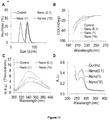
- LEDGF 1-326 indicated a hydrodynamic diameter of 9 ⁇ 1 nm, which did not change significantly within the period of 24 hr as monitored by DLS ( Figure 17A ). LEDGF 1-326 incubated with different concentration of Zn(II) underwent a change in size, indicating formation of nanoassemblies. With 0.1 mM ZnC12 there no change in size until 24 hr.
- LEDGF 1-326 In presence of 1 mM and 10 mM Zn(II) LEDGF 1-326 indicated an increase in size within 30 min of incubation at 37 oC. At 24 hr incubation, LEDGF 1-326 indicated a size of 7 ⁇ 1, 22 ⁇ 5, 26 ⁇ 5, and 28 ⁇ 5 nm for control, nano(0.1), nano(1), and nano(10) assemblies, respectively.
- LEDGF 1-326 To investigate the changes in the secondary structure of LEDGF 1-326 in presence of Zn(II), the far-UV CD spectra of the LEDGF 1-326 was monitored from 200-260 nm ( Figure 17B ). After 24 hr incubation at 37 °C, LEDGF 1-326 indicated a negative ellipticity below 200 nm and a negative dip at 230 nm. Deconvolution of the spectra indicted that LEDGF 1-326 is primarily a random coiled structure. In presence of Zn(II) significant changes in CD spectra was indicated. The negative dip at 230 nm shifted towards left (to lower wavelength). The ellipticity of LEDGF 1-326 indicated increased negative signal as the concentration of Zn(II) increased.
- the change in the CD was dependent on the Zn(II) concentration, being slow for 0.1 mM Zn(II) and fastest for 10 mM Zn(II) formulation (data not shown). There was a shift in the negative dip at 230 nm towards lower wavelength in concentration dependent manner indicating possible formation of ⁇ -helix. However below 200 nm the negative signal also increased depending on the Zn(II) concentration. Deconvulation of CD spectra indicated 2 % increase in the ⁇ -helix as compared to control in nano (10) formulation.
- LEDGF 1-326 showed an A max at 276 nm in UV absorbance spectra. ( Figure 17D ). In presence of Zn(II) there was a decrease in the UV signal for 0.1 and 1 mm Zn(II) formulation but no change was observed for 10 mM zinc formulation. The UV signal at 276 nm (A max ) was 0.47, 0.33, 0.32, and 0.46 for control, nano(0.1), nano(1), and nano(10) assemblies, respectively.
- LEDGF 1-326 forms nanostructures
- LEDGF 1-326 nano (10) assemblies when visualized under transmission electron microscopy (TEM) indicated presence of loosely formed nanostructures as seen by dense negative stain. Some nanoassemblies clung to each other, while others were present as individual particle. In absence of Zn(II), LEDGF 1-326 (middle panel) did not indicate presence of any such structures.
- Nanoassemblies is stable over dilutions
- Nano (10) assemblies once formed did not indicate any change in size when diluted 2 and 4 times. Further, when these diluted nano (10) assemblies were stored at 4 °C for 24 hr and then size taken there was no change in size.
- LEDGF 1-326 stability is increased in nanoassemblies
- LEDGF 1-326 The stability of LEDGF 1-326 in nanoassemblies at 25 °C was monitored for 30 days using DLS, SDS-PAGE, CD, and fluorescence ( Figure 20 ).
- Control LEDGF 1-326 size decreased from 8 ⁇ 1 to 5 ⁇ 1 nm on day 3 ( Figure 20A ).
- Nano (1) assemblies indicated size of 27 ⁇ 1 at day 0 which decreased to 4 ⁇ 3 nm on day 7.
- nano (10) assemblies indicated no change in size until day 30.
- a 40 kDa band was indicated in SDS-PAGE in control LEDGF 1-326 , nano (1) and nano (10) assemblies on day 0 ( Figure 20B ). By day 3 there was complete loss of this band in control LEDGF 1-326 . Nano (1) assemblies lost this band on day 7 while Nano (10) lost it on day 30.
- control LEDGF 1-326 indicated a continuous loss in negative ellipticity from day 1 onwards and complete loss of signal on day 30 ( Figure 20C ).
- Nano (1) assemblies indicated a continuous CD signal loss from day 1 onwards; however until day 30 there was CD signal. There was no significant signal loss in nano (10) assemblies until day 14, on day 30 there was decrease in CD signal, however the negative signal was still seen distinctively.
- ARPE-19 cells take up higher amount of nanoassemblies
- the cellular uptake of LEDGF 1-326 was investigated in ARPE-19 cells using Alexa conjugated LEDGF 1-326 ( Figure 21 ).
- ARPE-19 uptake of Alexa-LEDGF 1-326 was dose dependent. Within 2 hr, 0.5 ⁇ 0.1, 1.0 ⁇ 0.3, and 1.4 ⁇ 0.2 ⁇ g of Alexa-LEDGF 1-326 (control) was taken up by ARPE-19 cells when incubated with 2, 10, and 25 ⁇ g/ml of Alexa-LEDGF 1-326 , respectively.
- Incubation time was increased to 6 hr, there was an increase in the uptake of Alexa- LEDGF 1-326 .
- LEDGF 1-326 uptake increased to 1.2 ⁇ 0.2, 1.2 ⁇ 0.2, and 1.9 ⁇ 0.2 ⁇ g in 6 hr for 2, 10, and 25 ⁇ g/ml of Alexa-LEDGF 1-326 treatment, respectively.
- Alexa- LEDGF 1-326 nano (10) assemblies indicated higher uptake at 2, and 6 hr as compared to corresponding control groups.
- At 2 hr there was 0.7 ⁇ 0.08, 1.0 ⁇ 0.2, and 2.2 ⁇ 0.5 ⁇ g uptake for 2, 10, and 25 ⁇ g/ml of nano (10) assembly treatment, respectively.
- nanoassembly uptake was higher as compared to control, there was no significant difference.
- Increasing the incubation time from 2 hr to 6 hr increased nano (10) assembly uptake significantly.
- the uptake of was 2.0 ⁇ 0.09, 2.9 ⁇ 0.5, and 2.9 ⁇ 0.2 ⁇ g at 6 hr for 2, 10, and 25 ⁇ g/ml of nano (10) assembly treatment, respectively.
- Nanoassemblies survives ARPE-19 cells from serum starvation
- Nanoassembly increases LEDGF 1-326 efficacy in delaying retinal degeneration
- LEDGF1 -326 treatment slowed the loss in the b-wave amplitude and on 14 th week the b-wave amplitude declined from 337 ⁇ 30 to 42 ⁇ 15 ⁇ V, however, there was no significant difference in the buffer, Zn(II) and, control group b-wave amplitude in week 14.
- Nano (10) indicated a significant protection against the loss of b wave amplitude until 14 week.
- the b-wave amplitude declined from 305 ⁇ 36 to 65 ⁇ 15 ⁇ V on week 14 indicating significantly high b-wave as compared corresponding buffer or Zn(II) group.
- the 30 hz flicker amplitude was also measured. ( Figure 23D ).
- the flicker amplitude was on an average 10 ⁇ 2 ⁇ V for all groups.
- the flicker amplitude of nano (10) assembly group was significantly higher than buffer, and Zn(II) group.
- the flicker amplitude values on week 14 was 2 ⁇ 0.4, 3.7 ⁇ 0.4, 2.4 ⁇ 0.6, 5.2 ⁇ 2.2 ⁇ V for buffer, Zn(II), control and nano (10) assemblies, respectively.
- Nanoassembly increases LEDGF 1-326 persistence for days in ocular tissues
- the blank scan indicated autofluorescence of choroid, lens, and cornea at about 24, 50, and 88 data points, respectively. Based on this blank scan data points were assigned to various tissues of the eye. The data points assigned were- Choroid-RPE- 24, vitreous humor ⁇ 40, lens-50, aqueous humor ⁇ 70, and cornea-88.
- Figure 24B and 32C is the standard curve for control and nano (10) assembly.
- the fluorescence signal in vitreous, choroid-RPE, and aqueous humor was obtained from the Flurotron scans ( Figure 24D, and 24E ) and was converted to actual Alexa-LEDGF 1-326 concentration in Figure 24F, 24G, and 24H , respectively.
- Alexa-LEDGF 1-326 The peak concentration after 2 min of injection was 321 ⁇ 54 ⁇ g/ml of Alexa-LEDGF 1-326 , there was initial rapid decline to 100 ⁇ 45 ⁇ g/ml in 30 min; thereafter the decline was slow as compared to control and persistence of nanoassembly in vitreous was indicated until day 14. On day 14 Alexa-LEDGF 1-326 concentration was 0.7 ⁇ 0.1 ⁇ g/ml in the nano (10) assembly group which was significantly higher than control group and the base line.
- Alexa-LEDGF 1-326 Persistence of Alexa-LEDGF 1-326 was also indicated in the choroid-RPE as well as in aqueous humor for the nano (10) assembly group.
- the autofluorescence in the choroid RPE indicated 10 ⁇ 4 ng/ml of NaF, which when converted to Alexa-LEDGF 1-326 concentration was 0.1 ⁇ g/ml.
- 0.1 ⁇ g/ml of Alexa-LEDGF 1-326 was considered as base line for Choroid-RPE ( Figure 24G ).
- 13.2 ⁇ 10.8 ⁇ g/ml of ALexa-LEDGF 1-326 was indicated in choroid-RPE which increased to 30.0 ⁇ 22.6 ⁇ g/ml in 30 min in control group.
- Alexa-LEDGF 1-326 level Thereafter, there was decline in Alexa-LEDGF 1-326 level and was undetectable by day 1.
- Nano (10) assembly on the other hand indicated 14.3 ⁇ 9.8 ⁇ g/ml of Alexa-LEDGF 1-326 in 2 min which increased to 21.5 ⁇ 12.8 ⁇ g/ml in 30 min.
- Alexa-LEDGF 1-326 level dropped to 2.0 ⁇ 1.1 ⁇ g/ml, however it was significantly high from the base line an control group. Alexa-LEDGF 1-326 level remained significantly high until day 14 and was detected to be 0.6 ⁇ 0.2 ⁇ g/ml on day 14.
- Alexa-LEDGF 1-326 In aqueous humor the base line calculated from the blank scan was equivalent to 0 ⁇ g/ml of Alexa-LEDGF 1-326 ( Figure 24A ). At 2 min after intravitreal injection, Alexa-LEDGF 1-326 concentration was 3.4 ⁇ 3 and 4.9 ⁇ 2.4 ⁇ g/ml for control, and nano (10) assembly group ( Figure 24H ). Alexa-LEDGF 1-326 dropped below the base line within 6 hr for the control group, while the nano (10) assembly indicated presence of Alexa-LEDGF 1-326 until day 14, at this time point the concentration of Alexa-LEDGF 1-326 was 0.6 ⁇ 0.1 ⁇ g/ml.
- LEDGF 1-326 remains immune reactive in vivo for days when dosed as a nanoassembly
- Alexa-LEDGF 1-326 immunoreactivity was investigated in various ocular tissues and in blood after14 days of single intravitreal injection by indirect ELISA ( Figure 25 ). There was no detectable level of Alexa-LEDGF 1-326 in the cornea, aqueous humor, lens, vitreous humor, retina, choroid-RPE, sclera and blood for the un-injected blank eye tissues indicating absence of any detectable quantity of endogenous LEDGF 1-326 . Interestingly, Alexa-LEDGF 1-326 was detectable in retina for both control and nano(10) assembly group being 0.2 ⁇ 0.2 and 1.3 ⁇ 0.4 ⁇ g/g of tissue weight, respectively. There was no significant difference in the control and blank group, while nano(10) assembly had significantly higher amount of Alexa-LEDGF 1-326 as compared to control or blank group.
- the test groups (pP23H-Rho+ LEDGF 1-326 ) were transiently transfected with pP23H-Rho plasmid (1 ⁇ g/ml) using 1:3 ratio of lipofectamine 2000 (LP-2000) in serum free medium as per manufacturer's protocol. After six hours of transfection, the medium were aspirated out and cells were treated with increasing amount of LEDGF 1-326 . No cells (just the medium), cells with no LP-2000 and cells with LP-2000 were also maintained as control.
- LEDGF 1-326 At the end of LEDGF 1-326 treatment period, cells were washed with PBS. The cells were labeled with a combination of plasma membrane permeant (Hoechst 33342), a plasma membrane impermeanble molecule (BOBOTM3), and a nuclear dye (4',6-diamidino-2-phenylindole, dihydrochloride; DAPI). Hoechst 33342 labeled cell nuclei, whereas BOBOTM3 labeled dying or dead cells. The cells were visualized using Operetta® high content imaging system. Cell count was obtained using automated software tool in the Operetta® instrument. Number and percentage of live cells were calculated by subtracting the dead cell count from "all cell” count. As shown in Figure 26 , LEDGF 1-326 increases ARPE-19 cell viability.
- Hoechst 33342 plasma membrane permeant
- BOBOTM3 plasma membrane impermeanble molecule
- DAPI nuclear dye
- Imunoblotting For immunoblotting CFP tagged P23H-Rho (pP23H-CFP-Rho) was used instead of P23H-Rho for transfection.
- ARPE-19 cells were plated in 60 mm plates; transfection and drug treatment was up scaled proportionately relative to 96-well plate study. After LEDGF 1-326 treatment is over, cells were washed once with cold PBS and lysed by sonication in RIPA buffer containing protease inhibitor.
- Phagocytic Assay- ARPE-19 cells were seeded in 24-well plates and transfected with 20 pM/ml of MERTK siRNA (Santa Cruz Biotechnology Inc., Dallas, TX), using siRNAtransfecting agent (Santa Cruz Biotechnology Inc., Dallas, TX) for 6 hours. The transfecting medium was removed and cells were further incubated in serum free medium for 24 hours. Cells transfected only with the transfecting medium and no MERTK siRNA were maintained as control. Cells were washed once and treated with 0.05, 0.5, or 5 ⁇ g/ml of LEDGF 1-326 for 24 hours and then phagocytosis of 2 ⁇ m particles were monitored.
- LEDGF 1-326 increases phagocytic activity. Decreased phagocytosis of retinal pigment epithelial cells is a hallmark of several retinal diseases including degenerative diseases. LEDGF 1-326 will be useful in treating diseases with impaired phagocytosis.
- Histology At the end of the study i.e. on 12 th week, eyes were enucleated after ERG measurements and fixed in Davidson's fixative (2 % of 37-40 % formaldehyde, 35 % ethanol, 10 % glacial acetic acid, and 53 % distilled water) for 24 hours at room temperature. The eyes were then stored in 70 % ethanol for subsequent serial dehydration and embedment in paraffin. Three vertical sections of 6 ⁇ m thick were cut from the nasal to the temporal side at the optical nerve (500 ⁇ m apart) on a standard microtome. Gross retinal morphology was assessed by light microscope following hematoxylin/eosin staining of tissue sections.
- outer nuclear layer (ONL) and inner nuclear layer (INL) were measured methodically using Aperio ImageScope software v11.1.2.760. Since the photoreceptor cell protection may be uneven across the retina, every 500 ⁇ m from the superior edge to the inferior edge in each section was analyzed and average of three sections was done for each point. Data represent average of three eyes. As shown in Figure 28 , LEDGF 1-326 delays both retinal nuclear photoreceptors loss.
- Immunofluorescence For immunofluorescence, after removal of paraffin, eye sections were processed through the following sequential steps at room temperature, unless otherwise indicated. Antigen was retrieved by boiling the sections at 80 °C for 15 min. After blocking the nonspecific binding, sections were incubated with mouse anti-rhodopsin (1D4) primary antibody at 4 °C overnight followed by 30 min incubation with Alexa Fluor® 594 conjugated donkey anti-mouse IgG and DAPI. Finally, eye sections were washed and mounted by Supermount H (Biogenex, San Ramon, CA) mounting medium to prevent rapid loss of fluorescence. The fluorescence was visualized using confocal microscope (Nikon Eclipse Cl) at 20X optical zoom.
- the excitation-emission wavelengths used for DAPI and, Alexa Fluor were 408-450/35, and 637-605/75 nm, respectively. Images were captured using Nikon EZ-C1 software version 3.40. As show in Figure 29 , LEDGF 1-326 delays rod outer segment loss.
- His-LEDGF 1-326 encapsulated NPinPMP were evaluated for in vitro release in PBS pH 7.4. Particles (2-3 mg) were weighed and dispersed in 1 ml of PBS pH 7.4 and incubated at 37°C under shaking at 200 rpm (Max Q shaker incubator). At predetermined time points the suspended particles were centrifuged at 13,000 g for 15 min and the supernatant was collected. The pellet comprising particles was resuspended in 1 ml of fresh PBS pH 7.4 and incubated. The His-LEDGF 1-326 content in the samples was estimated using micro BCA assay as per the manufacturer's instructions (Pierce Biotechnology, IL, USA). The in vitro cumulative data showed the sustained release of His-LEDGF 1-326 from NPinPMP. As shown in Figure 30 , a cumulative 60 % release of His-LEDGF 1-326 was observed by the end of 3 months.
- Ocular fluorescence due to the release of Alexa-His-LEDGF 1-326 was monitored periodically using Fluorotron MasterTM (Ocumetrics, CA, USA) until the fluorescence reached the lower detection limit or baseline. Baseline fluorescence values of eyes were monitored before injecting the formulations. At each time point, three fluorometric scans were taken and mean value was used. Standard curve for Alexa- His-LEDGF 1-326 at different concentrations was obtained using a cuvette and ocular flurophotometry with a rat lens adapter. The standard curve was used to convert fluorescein equivalent concentrations provided by fluorophotometer to actual Alexa- His-LEDGF 1-326 concentration.
- the concentrations distribution of His-LEDGF 1-326 along the eye optical axis was determined indirectly by measuring the alexa fluorescence intensity distribution (equivalent of sodium fluoresciene concentration) curve along axial planes, indicated as data points in an anterior to posterior direction.
- the fluorescence scans revealed sustained delivery of Alexa-His-LEDGF 1-326 from NPinPMP compared to solution. Fluorescein equivalent concentrations reported by Fluorotron Master were converted to Alexa- His-LEDGF 1-326 concentrations.
- Alexa- His-LEDGF 1-326 concentration in the vitreous region from solution and NPinPMP group at different time points was plotted. Only the concentrations of the labeled bevacizumab are reported. Before intravitreal injection, the baseline fluorescence readings of normal eyes were taken and the baseline fluorescence concentration was found to be 2.03 ⁇ g/ml. As show in Figure 31 , the Alexa-His-LEDGF 1-326 solution injected group showed Alexa-His-LEDGF 1-326 concentration of 2.02 ⁇ g/ml on day 1 indicating rapid elimination from vitreous region.
- the initial concentration in the vitreous was found to be 18.23 ⁇ g/ml and the Alexa- His-LEDGF 1-326 concentration above the baseline was maintained until 35th day and reached normal base line levels by end of 50 days.
- the observed data indicate the ability to achieve sustained in vivo release of Alexa- His-LEDGF 1-326 from an exemplary PinP composition.
Landscapes
- Health & Medical Sciences (AREA)
- Chemical & Material Sciences (AREA)
- Life Sciences & Earth Sciences (AREA)
- General Health & Medical Sciences (AREA)
- Medicinal Chemistry (AREA)
- Engineering & Computer Science (AREA)
- Bioinformatics & Cheminformatics (AREA)
- Animal Behavior & Ethology (AREA)
- Pharmacology & Pharmacy (AREA)
- Public Health (AREA)
- Veterinary Medicine (AREA)
- Organic Chemistry (AREA)
- Chemical Kinetics & Catalysis (AREA)
- General Chemical & Material Sciences (AREA)
- Nuclear Medicine, Radiotherapy & Molecular Imaging (AREA)
- Epidemiology (AREA)
- Neurology (AREA)
- Zoology (AREA)
- Gastroenterology & Hepatology (AREA)
- Proteomics, Peptides & Aminoacids (AREA)
- Biomedical Technology (AREA)
- Neurosurgery (AREA)
- Immunology (AREA)
- Toxicology (AREA)
- Molecular Biology (AREA)
- Genetics & Genomics (AREA)
- Biophysics (AREA)
- Biochemistry (AREA)
- Inorganic Chemistry (AREA)
- Nanotechnology (AREA)
- Psychology (AREA)
- Psychiatry (AREA)
- Hospice & Palliative Care (AREA)
- Orthopedic Medicine & Surgery (AREA)
- Cardiology (AREA)
- Vascular Medicine (AREA)
- Pain & Pain Management (AREA)
- Physical Education & Sports Medicine (AREA)
- Heart & Thoracic Surgery (AREA)
- Ophthalmology & Optometry (AREA)
Applications Claiming Priority (3)
| Application Number | Priority Date | Filing Date | Title |
|---|---|---|---|
| US201261649847P | 2012-05-21 | 2012-05-21 | |
| PCT/US2012/065620 WO2013074988A1 (en) | 2011-11-17 | 2012-11-16 | Methods and compositions for enhanced drug delivery to the eye and extended delivery formulations |
| PCT/US2013/042074 WO2013177198A1 (en) | 2012-05-21 | 2013-05-21 | Ledgf peptides and formulations thereof for treatment of degenerative disorders |
Publications (3)
| Publication Number | Publication Date |
|---|---|
| EP2852399A1 EP2852399A1 (en) | 2015-04-01 |
| EP2852399A4 EP2852399A4 (en) | 2016-03-23 |
| EP2852399B1 true EP2852399B1 (en) | 2020-02-19 |
Family
ID=49624295
Family Applications (1)
| Application Number | Title | Priority Date | Filing Date |
|---|---|---|---|
| EP13794410.4A Active EP2852399B1 (en) | 2012-05-21 | 2013-05-21 | Ledgf peptides and formulations thereof for treatment of degenerative disorders |
Country Status (12)
| Country | Link |
|---|---|
| US (2) | US9526760B2 (enExample) |
| EP (1) | EP2852399B1 (enExample) |
| JP (2) | JP6632376B2 (enExample) |
| CN (2) | CN110054677A (enExample) |
| AU (1) | AU2013266468B2 (enExample) |
| BR (1) | BR112014028951A8 (enExample) |
| CA (1) | CA2873771A1 (enExample) |
| DK (1) | DK2852399T3 (enExample) |
| ES (1) | ES2791251T3 (enExample) |
| IN (1) | IN2014MN02461A (enExample) |
| RU (1) | RU2617964C2 (enExample) |
| WO (1) | WO2013177198A1 (enExample) |
Families Citing this family (4)
| Publication number | Priority date | Publication date | Assignee | Title |
|---|---|---|---|---|
| AU2013266468B2 (en) * | 2012-05-21 | 2017-11-09 | The Regents Of The University Of Colorado, A Body Corporate | LEDGF peptides and formulations thereof for treatment of degenerative disorders |
| KR101748120B1 (ko) * | 2015-07-13 | 2017-06-16 | 서울대학교산학협력단 | 나노입자-유리체 기반 단백질 복합체를 유효성분으로 포함하는 혈관신생억제용 조성물 및 이의 용도 |
| US20180207293A1 (en) * | 2017-01-25 | 2018-07-26 | 2C Tech Corp. | Nanoparticles for sustained ophthalmic drug delivery and methods of use |
| US11793758B2 (en) | 2018-06-22 | 2023-10-24 | Bioralix B.V. | Formulations of biological polymers for oral administration |
Citations (1)
| Publication number | Priority date | Publication date | Assignee | Title |
|---|---|---|---|---|
| WO2013006156A1 (en) * | 2011-07-01 | 2013-01-10 | Inova Diagnostics, Inc. | Method for increasing specificity of diagnostic tests for autoimmune diseases |
Family Cites Families (18)
| Publication number | Priority date | Publication date | Assignee | Title |
|---|---|---|---|---|
| US4221787A (en) | 1978-03-28 | 1980-09-09 | Interx Research Corporation | Esteramide prodrugs of anti-inflammatory corticosteroids |
| US4469689A (en) | 1983-03-30 | 1984-09-04 | The Upjohn Company | Sulfonate containing ester prodrugs of corticosteroids |
| US6750052B1 (en) | 1997-07-23 | 2004-06-15 | The Brigham And Women's Hospital, Inc. | Lens epithelial cell derived growth factor |
| US7708915B2 (en) | 2004-05-06 | 2010-05-04 | Castor Trevor P | Polymer microspheres/nanospheres and encapsulating therapeutic proteins therein |
| US20040142325A1 (en) * | 2001-09-14 | 2004-07-22 | Liat Mintz | Methods and systems for annotating biomolecular sequences |
| EP1562627A4 (en) | 2002-08-23 | 2006-11-02 | Mclean Hospital Corp | CORTICOSTEROID CONJUGATES AND ITS USES |
| AU2003273633A1 (en) * | 2002-09-26 | 2004-04-19 | K.U.Leuven Research And Development | Integrase cofactor |
| AU2003298786A1 (en) * | 2002-11-26 | 2004-06-18 | Protein Design Labs, Inc. | Methods of detecting soft tissue sarcoma, compositions and methods of screening for soft tissue sarcoma modulators |
| US20060166879A1 (en) | 2002-12-20 | 2006-07-27 | Chakshu Research Inc | Treatment of conditions associated with the presence of macromolecular aggregates, particularly ophthalmic disorders |
| US20050181375A1 (en) * | 2003-01-10 | 2005-08-18 | Natasha Aziz | Novel methods of diagnosis of metastatic cancer, compositions and methods of screening for modulators of metastatic cancer |
| JP2008512984A (ja) * | 2004-05-28 | 2008-05-01 | ダナ−ファーバー キャンサー インスティチュート,インコーポレイテッド | 癌の同定、評価、予防および治療のための組成物、キットおよび方法 |
| EP1971288B1 (en) | 2005-12-30 | 2013-02-13 | Neurotech USA, Inc. | Micronized device for the delivery of biologically active molecules and methods of use thereof |
| CA2660286A1 (en) * | 2006-08-09 | 2008-02-21 | Homestead Clinical Corporation | Organ-specific proteins and methods of their use |
| WO2008053478A2 (en) | 2006-10-30 | 2008-05-08 | Yissum Research Development Company Of The Hebrew University Of Jerusalem | Compositions and methods for inhibiting hiv-1 replication and integrase activity |
| US8168393B2 (en) * | 2007-02-16 | 2012-05-01 | The Brigham And Women's Hospital, Inc. | Compositions and methods for diagnosing tumors using LEDGF/p75 |
| JP5616336B2 (ja) * | 2008-06-26 | 2014-10-29 | オルファザイム エーピーエスOrphazyme Aps | 酵素活性の調節因子としてのHsp70の使用 |
| GB0812742D0 (en) * | 2008-07-11 | 2008-08-20 | Critical Pharmaceuticals Ltd | Process |
| AU2013266468B2 (en) * | 2012-05-21 | 2017-11-09 | The Regents Of The University Of Colorado, A Body Corporate | LEDGF peptides and formulations thereof for treatment of degenerative disorders |
-
2013
- 2013-05-21 AU AU2013266468A patent/AU2013266468B2/en active Active
- 2013-05-21 CN CN201811628163.9A patent/CN110054677A/zh active Pending
- 2013-05-21 DK DK13794410.4T patent/DK2852399T3/da active
- 2013-05-21 WO PCT/US2013/042074 patent/WO2013177198A1/en not_active Ceased
- 2013-05-21 IN IN2461MUN2014 patent/IN2014MN02461A/en unknown
- 2013-05-21 EP EP13794410.4A patent/EP2852399B1/en active Active
- 2013-05-21 JP JP2015514127A patent/JP6632376B2/ja not_active Expired - Fee Related
- 2013-05-21 BR BR112014028951A patent/BR112014028951A8/pt not_active IP Right Cessation
- 2013-05-21 RU RU2014151603A patent/RU2617964C2/ru active
- 2013-05-21 CA CA2873771A patent/CA2873771A1/en not_active Abandoned
- 2013-05-21 ES ES13794410T patent/ES2791251T3/es active Active
- 2013-05-21 US US14/402,426 patent/US9526760B2/en active Active
- 2013-05-21 CN CN201380038504.6A patent/CN104470534A/zh active Pending
-
2016
- 2016-11-10 US US15/348,970 patent/US10221226B2/en active Active
-
2018
- 2018-05-23 JP JP2018098420A patent/JP2018172386A/ja active Pending
Patent Citations (1)
| Publication number | Priority date | Publication date | Assignee | Title |
|---|---|---|---|---|
| WO2013006156A1 (en) * | 2011-07-01 | 2013-01-10 | Inova Diagnostics, Inc. | Method for increasing specificity of diagnostic tests for autoimmune diseases |
Non-Patent Citations (3)
| Title |
|---|
| OGAWA Y ET AL: "Autoantigenicity of DFS70 is restricted to the conformational epitope of C-terminal alpha-helical domain", JOURNAL OF AUTOIMMUNITY, LONDON, GB, vol. 23, no. 3, 1 November 2004 (2004-11-01), pages 221 - 231, XP004616796, ISSN: 0896-8411, DOI: 10.1016/J.JAUT.2004.07.003 * |
| Talon Metal Affinity Resins User Manual * |
| WAKELIN S J ET AL: ""Dirty little secrets"-Endotoxin contamination of recombinant proteins", IMMUNOLOGY LETTERS 20060715 NL, vol. 106, no. 1, 15 July 2006 (2006-07-15), pages 1 - 7, ISSN: 0165-2478 * |
Also Published As
| Publication number | Publication date |
|---|---|
| CN104470534A (zh) | 2015-03-25 |
| WO2013177198A1 (en) | 2013-11-28 |
| IN2014MN02461A (enExample) | 2015-07-10 |
| US9526760B2 (en) | 2016-12-27 |
| JP2018172386A (ja) | 2018-11-08 |
| EP2852399A1 (en) | 2015-04-01 |
| AU2013266468B2 (en) | 2017-11-09 |
| DK2852399T3 (da) | 2020-05-04 |
| US20170129929A1 (en) | 2017-05-11 |
| JP2015519343A (ja) | 2015-07-09 |
| AU2013266468A1 (en) | 2014-12-18 |
| BR112014028951A8 (pt) | 2021-09-14 |
| US10221226B2 (en) | 2019-03-05 |
| CA2873771A1 (en) | 2013-11-28 |
| RU2617964C2 (ru) | 2017-04-28 |
| US20150147404A1 (en) | 2015-05-28 |
| CN110054677A (zh) | 2019-07-26 |
| RU2014151603A (ru) | 2016-07-10 |
| JP6632376B2 (ja) | 2020-01-22 |
| ES2791251T3 (es) | 2020-11-03 |
| BR112014028951A2 (pt) | 2017-07-25 |
| EP2852399A4 (en) | 2016-03-23 |
Similar Documents
| Publication | Publication Date | Title |
|---|---|---|
| Liu et al. | Penetratin, a potentially powerful absorption enhancer for noninvasive intraocular drug delivery | |
| JP6585720B2 (ja) | 眼疾患治療のペプチド及びこれを含む眼疾患治療用組成物 | |
| CN114796451B (zh) | 使用多肽治疗白内障的方法 | |
| EP2968471B1 (en) | Peptides for use in the topical treatment of retinal neurodegenerative diseases, in particular in early stages of diabetic retinopathy and other retinal diseases in which neurodegeneration plays an essential role | |
| US10221226B2 (en) | LEDGF peptides and formulations thereof for treatment of degenerative disorders | |
| Zhou et al. | Aflibercept loaded eye‐drop hydrogel mediated with cell‐penetrating peptide for corneal neovascularization treatment | |
| WO2013016578A2 (en) | Controlled release of ocular biopharmaceuticals using bioresponsive protein polymers | |
| EP4197558A1 (en) | Composition of drug and wild-type cell-penetrating peptide derivative | |
| CA2837858C (en) | Blockade of inflammatory proteases with theta - defensins | |
| WO2012135575A2 (en) | Compositions and methods for introduction of macromolecules into cells | |
| US20220133849A1 (en) | Compositions and methods for the treatment of smooth muscle dysfunction | |
| JP2017530989A (ja) | 眼疾患を治療するためのシリビニンおよび他の有効成分を送達するためのナノ構造製剤 | |
| CN116710474A (zh) | 肽制剂及其眼科用途 | |
| WO2010138123A1 (en) | P53 fusion proteins and methods of making and using thereof | |
| EP2448594B1 (fr) | La dermaseptine b2 comme inhibiteur de la croissance tumorale | |
| HK40073385B (en) | Methods for treating cataracts using polypeptides | |
| HK40073385A (en) | Methods for treating cataracts using polypeptides | |
| Nan et al. | Cell-penetrating peptide Penetratin-modified liposomes for ophthalmic application: construction and in vitro evaluation. | |
| HK40103205A (en) | Methods for treating cataracts using polypeptides | |
| HK40091461A (en) | Methods for treating cataracts using polypeptides | |
| WO2024115767A1 (en) | Nomacopan-pas fusion proteins | |
| HK40087448A (en) | Composition of drug and wild-type cell-penetrating peptide derivative | |
| Delgado et al. | DEXTRAN-PROTAMINE-SOLID LIPID NANOPARTICLES AS POTENTIAL VECTORS FOR THE TREATMENT OF X LINKED JUVENILE RETINOSCHISIS. | |
| Mackay et al. | Treatment of the Cornea Using Transcytotic Delivery into the Tear Film |
Legal Events
| Date | Code | Title | Description |
|---|---|---|---|
| PUAI | Public reference made under article 153(3) epc to a published international application that has entered the european phase |
Free format text: ORIGINAL CODE: 0009012 |
|
| 17P | Request for examination filed |
Effective date: 20141127 |
|
| AK | Designated contracting states |
Kind code of ref document: A1 Designated state(s): AL AT BE BG CH CY CZ DE DK EE ES FI FR GB GR HR HU IE IS IT LI LT LU LV MC MK MT NL NO PL PT RO RS SE SI SK SM TR |
|
| AX | Request for extension of the european patent |
Extension state: BA ME |
|
| RIN1 | Information on inventor provided before grant (corrected) |
Inventor name: KOMPELLA, UDAY, B. Inventor name: BAID, RINKU Inventor name: UPADHYAY, ARUN, K. Inventor name: YANDRAPU, SARATH |
|
| DAX | Request for extension of the european patent (deleted) | ||
| RA4 | Supplementary search report drawn up and despatched (corrected) |
Effective date: 20160219 |
|
| RIC1 | Information provided on ipc code assigned before grant |
Ipc: C07K 14/475 20060101ALI20160215BHEP Ipc: A61K 38/18 20060101AFI20160215BHEP Ipc: C12N 15/63 20060101ALI20160215BHEP |
|
| STAA | Information on the status of an ep patent application or granted ep patent |
Free format text: STATUS: EXAMINATION IS IN PROGRESS |
|
| 17Q | First examination report despatched |
Effective date: 20170504 |
|
| RIC1 | Information provided on ipc code assigned before grant |
Ipc: C07K 14/475 20060101ALI20190301BHEP Ipc: A61K 38/18 20060101AFI20190301BHEP |
|
| GRAP | Despatch of communication of intention to grant a patent |
Free format text: ORIGINAL CODE: EPIDOSNIGR1 |
|
| STAA | Information on the status of an ep patent application or granted ep patent |
Free format text: STATUS: GRANT OF PATENT IS INTENDED |
|
| INTG | Intention to grant announced |
Effective date: 20191108 |
|
| GRAS | Grant fee paid |
Free format text: ORIGINAL CODE: EPIDOSNIGR3 |
|
| GRAA | (expected) grant |
Free format text: ORIGINAL CODE: 0009210 |
|
| STAA | Information on the status of an ep patent application or granted ep patent |
Free format text: STATUS: THE PATENT HAS BEEN GRANTED |
|
| AK | Designated contracting states |
Kind code of ref document: B1 Designated state(s): AL AT BE BG CH CY CZ DE DK EE ES FI FR GB GR HR HU IE IS IT LI LT LU LV MC MK MT NL NO PL PT RO RS SE SI SK SM TR |
|
| REG | Reference to a national code |
Ref country code: GB Ref legal event code: FG4D |
|
| REG | Reference to a national code |
Ref country code: CH Ref legal event code: EP |
|
| REG | Reference to a national code |
Ref country code: DE Ref legal event code: R096 Ref document number: 602013066152 Country of ref document: DE |
|
| REG | Reference to a national code |
Ref country code: AT Ref legal event code: REF Ref document number: 1234178 Country of ref document: AT Kind code of ref document: T Effective date: 20200315 |
|
| REG | Reference to a national code |
Ref country code: IE Ref legal event code: FG4D |
|
| REG | Reference to a national code |
Ref country code: DK Ref legal event code: T3 Effective date: 20200430 |
|
| REG | Reference to a national code |
Ref country code: FI Ref legal event code: FGE |
|
| REG | Reference to a national code |
Ref country code: NL Ref legal event code: FP |
|
| REG | Reference to a national code |
Ref country code: SE Ref legal event code: TRGR |
|
| PG25 | Lapsed in a contracting state [announced via postgrant information from national office to epo] |
Ref country code: NO Free format text: LAPSE BECAUSE OF FAILURE TO SUBMIT A TRANSLATION OF THE DESCRIPTION OR TO PAY THE FEE WITHIN THE PRESCRIBED TIME-LIMIT Effective date: 20200519 Ref country code: RS Free format text: LAPSE BECAUSE OF FAILURE TO SUBMIT A TRANSLATION OF THE DESCRIPTION OR TO PAY THE FEE WITHIN THE PRESCRIBED TIME-LIMIT Effective date: 20200219 |
|
| REG | Reference to a national code |
Ref country code: LT Ref legal event code: MG4D |
|
| PG25 | Lapsed in a contracting state [announced via postgrant information from national office to epo] |
Ref country code: GR Free format text: LAPSE BECAUSE OF FAILURE TO SUBMIT A TRANSLATION OF THE DESCRIPTION OR TO PAY THE FEE WITHIN THE PRESCRIBED TIME-LIMIT Effective date: 20200520 Ref country code: LV Free format text: LAPSE BECAUSE OF FAILURE TO SUBMIT A TRANSLATION OF THE DESCRIPTION OR TO PAY THE FEE WITHIN THE PRESCRIBED TIME-LIMIT Effective date: 20200219 Ref country code: IS Free format text: LAPSE BECAUSE OF FAILURE TO SUBMIT A TRANSLATION OF THE DESCRIPTION OR TO PAY THE FEE WITHIN THE PRESCRIBED TIME-LIMIT Effective date: 20200619 Ref country code: HR Free format text: LAPSE BECAUSE OF FAILURE TO SUBMIT A TRANSLATION OF THE DESCRIPTION OR TO PAY THE FEE WITHIN THE PRESCRIBED TIME-LIMIT Effective date: 20200219 Ref country code: BG Free format text: LAPSE BECAUSE OF FAILURE TO SUBMIT A TRANSLATION OF THE DESCRIPTION OR TO PAY THE FEE WITHIN THE PRESCRIBED TIME-LIMIT Effective date: 20200519 |
|
| PG25 | Lapsed in a contracting state [announced via postgrant information from national office to epo] |
Ref country code: LT Free format text: LAPSE BECAUSE OF FAILURE TO SUBMIT A TRANSLATION OF THE DESCRIPTION OR TO PAY THE FEE WITHIN THE PRESCRIBED TIME-LIMIT Effective date: 20200219 Ref country code: EE Free format text: LAPSE BECAUSE OF FAILURE TO SUBMIT A TRANSLATION OF THE DESCRIPTION OR TO PAY THE FEE WITHIN THE PRESCRIBED TIME-LIMIT Effective date: 20200219 Ref country code: SK Free format text: LAPSE BECAUSE OF FAILURE TO SUBMIT A TRANSLATION OF THE DESCRIPTION OR TO PAY THE FEE WITHIN THE PRESCRIBED TIME-LIMIT Effective date: 20200219 Ref country code: CZ Free format text: LAPSE BECAUSE OF FAILURE TO SUBMIT A TRANSLATION OF THE DESCRIPTION OR TO PAY THE FEE WITHIN THE PRESCRIBED TIME-LIMIT Effective date: 20200219 Ref country code: RO Free format text: LAPSE BECAUSE OF FAILURE TO SUBMIT A TRANSLATION OF THE DESCRIPTION OR TO PAY THE FEE WITHIN THE PRESCRIBED TIME-LIMIT Effective date: 20200219 Ref country code: PT Free format text: LAPSE BECAUSE OF FAILURE TO SUBMIT A TRANSLATION OF THE DESCRIPTION OR TO PAY THE FEE WITHIN THE PRESCRIBED TIME-LIMIT Effective date: 20200712 Ref country code: SM Free format text: LAPSE BECAUSE OF FAILURE TO SUBMIT A TRANSLATION OF THE DESCRIPTION OR TO PAY THE FEE WITHIN THE PRESCRIBED TIME-LIMIT Effective date: 20200219 |
|
| REG | Reference to a national code |
Ref country code: ES Ref legal event code: FG2A Ref document number: 2791251 Country of ref document: ES Kind code of ref document: T3 Effective date: 20201103 |
|
| REG | Reference to a national code |
Ref country code: AT Ref legal event code: MK05 Ref document number: 1234178 Country of ref document: AT Kind code of ref document: T Effective date: 20200219 |
|
| REG | Reference to a national code |
Ref country code: DE Ref legal event code: R097 Ref document number: 602013066152 Country of ref document: DE |
|
| PLBE | No opposition filed within time limit |
Free format text: ORIGINAL CODE: 0009261 |
|
| STAA | Information on the status of an ep patent application or granted ep patent |
Free format text: STATUS: NO OPPOSITION FILED WITHIN TIME LIMIT |
|
| 26N | No opposition filed |
Effective date: 20201120 |
|
| PG25 | Lapsed in a contracting state [announced via postgrant information from national office to epo] |
Ref country code: MC Free format text: LAPSE BECAUSE OF FAILURE TO SUBMIT A TRANSLATION OF THE DESCRIPTION OR TO PAY THE FEE WITHIN THE PRESCRIBED TIME-LIMIT Effective date: 20200219 Ref country code: CH Free format text: LAPSE BECAUSE OF NON-PAYMENT OF DUE FEES Effective date: 20200531 Ref country code: AT Free format text: LAPSE BECAUSE OF FAILURE TO SUBMIT A TRANSLATION OF THE DESCRIPTION OR TO PAY THE FEE WITHIN THE PRESCRIBED TIME-LIMIT Effective date: 20200219 Ref country code: LI Free format text: LAPSE BECAUSE OF NON-PAYMENT OF DUE FEES Effective date: 20200531 |
|
| PG25 | Lapsed in a contracting state [announced via postgrant information from national office to epo] |
Ref country code: SI Free format text: LAPSE BECAUSE OF FAILURE TO SUBMIT A TRANSLATION OF THE DESCRIPTION OR TO PAY THE FEE WITHIN THE PRESCRIBED TIME-LIMIT Effective date: 20200219 Ref country code: PL Free format text: LAPSE BECAUSE OF FAILURE TO SUBMIT A TRANSLATION OF THE DESCRIPTION OR TO PAY THE FEE WITHIN THE PRESCRIBED TIME-LIMIT Effective date: 20200219 |
|
| REG | Reference to a national code |
Ref country code: BE Ref legal event code: MM Effective date: 20200531 |
|
| PG25 | Lapsed in a contracting state [announced via postgrant information from national office to epo] |
Ref country code: LU Free format text: LAPSE BECAUSE OF NON-PAYMENT OF DUE FEES Effective date: 20200521 |
|
| PG25 | Lapsed in a contracting state [announced via postgrant information from national office to epo] |
Ref country code: IE Free format text: LAPSE BECAUSE OF NON-PAYMENT OF DUE FEES Effective date: 20200521 |
|
| PG25 | Lapsed in a contracting state [announced via postgrant information from national office to epo] |
Ref country code: BE Free format text: LAPSE BECAUSE OF NON-PAYMENT OF DUE FEES Effective date: 20200531 |
|
| PG25 | Lapsed in a contracting state [announced via postgrant information from national office to epo] |
Ref country code: MT Free format text: LAPSE BECAUSE OF FAILURE TO SUBMIT A TRANSLATION OF THE DESCRIPTION OR TO PAY THE FEE WITHIN THE PRESCRIBED TIME-LIMIT Effective date: 20200219 Ref country code: CY Free format text: LAPSE BECAUSE OF FAILURE TO SUBMIT A TRANSLATION OF THE DESCRIPTION OR TO PAY THE FEE WITHIN THE PRESCRIBED TIME-LIMIT Effective date: 20200219 |
|
| PG25 | Lapsed in a contracting state [announced via postgrant information from national office to epo] |
Ref country code: MK Free format text: LAPSE BECAUSE OF FAILURE TO SUBMIT A TRANSLATION OF THE DESCRIPTION OR TO PAY THE FEE WITHIN THE PRESCRIBED TIME-LIMIT Effective date: 20200219 Ref country code: AL Free format text: LAPSE BECAUSE OF FAILURE TO SUBMIT A TRANSLATION OF THE DESCRIPTION OR TO PAY THE FEE WITHIN THE PRESCRIBED TIME-LIMIT Effective date: 20200219 |
|
| P01 | Opt-out of the competence of the unified patent court (upc) registered |
Effective date: 20230523 |
|
| PGFP | Annual fee paid to national office [announced via postgrant information from national office to epo] |
Ref country code: NL Payment date: 20260526 Year of fee payment: 14 |
|
| PGFP | Annual fee paid to national office [announced via postgrant information from national office to epo] |
Ref country code: ES Payment date: 20260601 Year of fee payment: 14 |
|
| PGFP | Annual fee paid to national office [announced via postgrant information from national office to epo] |
Ref country code: DK Payment date: 20260525 Year of fee payment: 14 Ref country code: GB Payment date: 20260527 Year of fee payment: 14 |
|
| PGFP | Annual fee paid to national office [announced via postgrant information from national office to epo] |
Ref country code: IT Payment date: 20260520 Year of fee payment: 14 |
|
| PGFP | Annual fee paid to national office [announced via postgrant information from national office to epo] |
Ref country code: DE Payment date: 20260528 Year of fee payment: 14 |
|
| PGFP | Annual fee paid to national office [announced via postgrant information from national office to epo] |
Ref country code: SE Payment date: 20260527 Year of fee payment: 14 Ref country code: FI Payment date: 20260525 Year of fee payment: 14 |
|
| PGFP | Annual fee paid to national office [announced via postgrant information from national office to epo] |
Ref country code: TR Payment date: 20260511 Year of fee payment: 14 |
|
| PGFP | Annual fee paid to national office [announced via postgrant information from national office to epo] |
Ref country code: FR Payment date: 20260525 Year of fee payment: 14 |