EP2841650B1 - Elektroisolationspapier - Google Patents
Elektroisolationspapier Download PDFInfo
- Publication number
- EP2841650B1 EP2841650B1 EP13724178.2A EP13724178A EP2841650B1 EP 2841650 B1 EP2841650 B1 EP 2841650B1 EP 13724178 A EP13724178 A EP 13724178A EP 2841650 B1 EP2841650 B1 EP 2841650B1
- Authority
- EP
- European Patent Office
- Prior art keywords
- weight
- insulating paper
- electrical insulating
- paper according
- electrical
- Prior art date
- Legal status (The legal status is an assumption and is not a legal conclusion. Google has not performed a legal analysis and makes no representation as to the accuracy of the status listed.)
- Active
Links
- 239000000123 paper Substances 0.000 claims description 107
- 239000010445 mica Substances 0.000 claims description 19
- 229910052618 mica group Inorganic materials 0.000 claims description 19
- 239000000454 talc Substances 0.000 claims description 19
- 229910052623 talc Inorganic materials 0.000 claims description 19
- 239000003921 oil Substances 0.000 claims description 17
- XLYOFNOQVPJJNP-UHFFFAOYSA-N water Substances O XLYOFNOQVPJJNP-UHFFFAOYSA-N 0.000 claims description 17
- 238000000034 method Methods 0.000 claims description 16
- 239000000945 filler Substances 0.000 claims description 15
- 239000012764 mineral filler Substances 0.000 claims description 15
- 239000000835 fiber Substances 0.000 claims description 14
- 239000003795 chemical substances by application Substances 0.000 claims description 13
- 238000004519 manufacturing process Methods 0.000 claims description 13
- 238000010292 electrical insulation Methods 0.000 claims description 11
- 229920002451 polyvinyl alcohol Polymers 0.000 claims description 8
- 239000011230 binding agent Substances 0.000 claims description 7
- 238000009413 insulation Methods 0.000 claims description 7
- 229920002472 Starch Polymers 0.000 claims description 6
- 239000000463 material Substances 0.000 claims description 6
- 235000019698 starch Nutrition 0.000 claims description 6
- 239000000725 suspension Substances 0.000 claims description 6
- 239000004372 Polyvinyl alcohol Substances 0.000 claims description 5
- 239000003990 capacitor Substances 0.000 claims description 5
- 239000000284 extract Substances 0.000 claims description 5
- 244000007835 Cyamopsis tetragonoloba Species 0.000 claims description 4
- 239000001913 cellulose Substances 0.000 claims description 4
- 229920002678 cellulose Polymers 0.000 claims description 4
- 239000008107 starch Substances 0.000 claims description 4
- 150000001875 compounds Chemical class 0.000 claims description 3
- 238000009826 distribution Methods 0.000 claims description 3
- 238000001035 drying Methods 0.000 claims description 3
- 238000005470 impregnation Methods 0.000 claims description 3
- 239000002245 particle Substances 0.000 claims description 3
- 239000002657 fibrous material Substances 0.000 claims description 2
- QJGQUHMNIGDVPM-UHFFFAOYSA-N nitrogen group Chemical group [N] QJGQUHMNIGDVPM-UHFFFAOYSA-N 0.000 claims description 2
- 229920000620 organic polymer Polymers 0.000 claims 1
- 238000007792 addition Methods 0.000 description 15
- 235000012222 talc Nutrition 0.000 description 15
- 230000015556 catabolic process Effects 0.000 description 12
- 239000000047 product Substances 0.000 description 11
- 230000035515 penetration Effects 0.000 description 10
- 230000001965 increasing effect Effects 0.000 description 8
- 230000008569 process Effects 0.000 description 8
- 239000010410 layer Substances 0.000 description 7
- -1 nitrogen-containing basic compound Chemical class 0.000 description 7
- 235000019422 polyvinyl alcohol Nutrition 0.000 description 7
- BPQQTUXANYXVAA-UHFFFAOYSA-N Orthosilicate Chemical compound [O-][Si]([O-])([O-])[O-] BPQQTUXANYXVAA-UHFFFAOYSA-N 0.000 description 5
- 239000000654 additive Substances 0.000 description 5
- 239000011810 insulating material Substances 0.000 description 5
- 239000002655 kraft paper Substances 0.000 description 5
- 239000000203 mixture Substances 0.000 description 5
- 229920000642 polymer Polymers 0.000 description 5
- 229920005989 resin Polymers 0.000 description 5
- 239000011347 resin Substances 0.000 description 5
- 238000012360 testing method Methods 0.000 description 5
- 229920000881 Modified starch Polymers 0.000 description 4
- 229910052500 inorganic mineral Inorganic materials 0.000 description 4
- 238000005259 measurement Methods 0.000 description 4
- 239000011707 mineral Substances 0.000 description 4
- 235000010755 mineral Nutrition 0.000 description 4
- 235000019426 modified starch Nutrition 0.000 description 4
- 239000000523 sample Substances 0.000 description 4
- 239000000126 substance Substances 0.000 description 4
- VTYYLEPIZMXCLO-UHFFFAOYSA-L Calcium carbonate Chemical compound [Ca+2].[O-]C([O-])=O VTYYLEPIZMXCLO-UHFFFAOYSA-L 0.000 description 3
- 238000000227 grinding Methods 0.000 description 3
- 238000009499 grossing Methods 0.000 description 3
- 230000002209 hydrophobic effect Effects 0.000 description 3
- ZLNQQNXFFQJAID-UHFFFAOYSA-L magnesium carbonate Chemical compound [Mg+2].[O-]C([O-])=O ZLNQQNXFFQJAID-UHFFFAOYSA-L 0.000 description 3
- 239000001095 magnesium carbonate Substances 0.000 description 3
- 229910000021 magnesium carbonate Inorganic materials 0.000 description 3
- 235000014380 magnesium carbonate Nutrition 0.000 description 3
- 229910052615 phyllosilicate Inorganic materials 0.000 description 3
- 229920005862 polyol Polymers 0.000 description 3
- 150000003077 polyols Chemical class 0.000 description 3
- 238000012545 processing Methods 0.000 description 3
- 150000004760 silicates Chemical class 0.000 description 3
- 229920003002 synthetic resin Polymers 0.000 description 3
- 239000000057 synthetic resin Substances 0.000 description 3
- YAXXOCZAXKLLCV-UHFFFAOYSA-N 3-dodecyloxolane-2,5-dione Chemical class CCCCCCCCCCCCC1CC(=O)OC1=O YAXXOCZAXKLLCV-UHFFFAOYSA-N 0.000 description 2
- 241000408529 Libra Species 0.000 description 2
- 229920000877 Melamine resin Polymers 0.000 description 2
- 239000004368 Modified starch Substances 0.000 description 2
- 239000004952 Polyamide Substances 0.000 description 2
- 239000002253 acid Substances 0.000 description 2
- 230000032683 aging Effects 0.000 description 2
- 238000004378 air conditioning Methods 0.000 description 2
- 239000004760 aramid Substances 0.000 description 2
- 229920003235 aromatic polyamide Polymers 0.000 description 2
- 150000007514 bases Chemical class 0.000 description 2
- 230000008901 benefit Effects 0.000 description 2
- 230000005540 biological transmission Effects 0.000 description 2
- 229910000019 calcium carbonate Inorganic materials 0.000 description 2
- 239000007795 chemical reaction product Substances 0.000 description 2
- 230000000052 comparative effect Effects 0.000 description 2
- 230000001143 conditioned effect Effects 0.000 description 2
- 230000001419 dependent effect Effects 0.000 description 2
- 239000002274 desiccant Substances 0.000 description 2
- 238000004090 dissolution Methods 0.000 description 2
- 230000005684 electric field Effects 0.000 description 2
- 239000004744 fabric Substances 0.000 description 2
- 239000011521 glass Substances 0.000 description 2
- LEQAOMBKQFMDFZ-UHFFFAOYSA-N glyoxal Chemical compound O=CC=O LEQAOMBKQFMDFZ-UHFFFAOYSA-N 0.000 description 2
- 230000006872 improvement Effects 0.000 description 2
- 239000007788 liquid Substances 0.000 description 2
- JDSHMPZPIAZGSV-UHFFFAOYSA-N melamine Chemical compound NC1=NC(N)=NC(N)=N1 JDSHMPZPIAZGSV-UHFFFAOYSA-N 0.000 description 2
- 239000002480 mineral oil Substances 0.000 description 2
- 235000010446 mineral oil Nutrition 0.000 description 2
- 230000035699 permeability Effects 0.000 description 2
- 229910052628 phlogopite Inorganic materials 0.000 description 2
- 229920002647 polyamide Polymers 0.000 description 2
- 229920001721 polyimide Polymers 0.000 description 2
- 229920001296 polysiloxane Polymers 0.000 description 2
- 238000003825 pressing Methods 0.000 description 2
- 239000002994 raw material Substances 0.000 description 2
- 229920002545 silicone oil Polymers 0.000 description 2
- 238000004513 sizing Methods 0.000 description 2
- 239000007787 solid Substances 0.000 description 2
- 239000007858 starting material Substances 0.000 description 2
- 238000003756 stirring Methods 0.000 description 2
- 230000035882 stress Effects 0.000 description 2
- 238000006467 substitution reaction Methods 0.000 description 2
- NIXOWILDQLNWCW-UHFFFAOYSA-M Acrylate Chemical compound [O-]C(=O)C=C NIXOWILDQLNWCW-UHFFFAOYSA-M 0.000 description 1
- 229910000789 Aluminium-silicon alloy Inorganic materials 0.000 description 1
- 229910021532 Calcite Inorganic materials 0.000 description 1
- OYPRJOBELJOOCE-UHFFFAOYSA-N Calcium Chemical compound [Ca] OYPRJOBELJOOCE-UHFFFAOYSA-N 0.000 description 1
- 239000004593 Epoxy Substances 0.000 description 1
- 229920002488 Hemicellulose Polymers 0.000 description 1
- 239000004698 Polyethylene Substances 0.000 description 1
- 239000004642 Polyimide Substances 0.000 description 1
- 239000004743 Polypropylene Substances 0.000 description 1
- 229910000831 Steel Inorganic materials 0.000 description 1
- XSQUKJJJFZCRTK-UHFFFAOYSA-N Urea Chemical compound NC(N)=O XSQUKJJJFZCRTK-UHFFFAOYSA-N 0.000 description 1
- 229920001807 Urea-formaldehyde Polymers 0.000 description 1
- 238000010521 absorption reaction Methods 0.000 description 1
- 230000001133 acceleration Effects 0.000 description 1
- DHKHKXVYLBGOIT-UHFFFAOYSA-N acetaldehyde Diethyl Acetal Chemical group CCOC(C)OCC DHKHKXVYLBGOIT-UHFFFAOYSA-N 0.000 description 1
- 230000002378 acidificating effect Effects 0.000 description 1
- 150000007513 acids Chemical class 0.000 description 1
- 230000000996 additive effect Effects 0.000 description 1
- WYTGDNHDOZPMIW-RCBQFDQVSA-N alstonine Natural products C1=CC2=C3C=CC=CC3=NC2=C2N1C[C@H]1[C@H](C)OC=C(C(=O)OC)[C@H]1C2 WYTGDNHDOZPMIW-RCBQFDQVSA-N 0.000 description 1
- 229910052782 aluminium Inorganic materials 0.000 description 1
- XAGFODPZIPBFFR-UHFFFAOYSA-N aluminium Chemical compound [Al] XAGFODPZIPBFFR-UHFFFAOYSA-N 0.000 description 1
- 229910000323 aluminium silicate Inorganic materials 0.000 description 1
- 239000012496 blank sample Substances 0.000 description 1
- 229910052599 brucite Inorganic materials 0.000 description 1
- 238000003490 calendering Methods 0.000 description 1
- 239000004202 carbamide Substances 0.000 description 1
- 206010061592 cardiac fibrillation Diseases 0.000 description 1
- 150000001768 cations Chemical class 0.000 description 1
- 239000002800 charge carrier Substances 0.000 description 1
- 238000006243 chemical reaction Methods 0.000 description 1
- QBWCMBCROVPCKQ-UHFFFAOYSA-N chlorous acid Chemical class OCl=O QBWCMBCROVPCKQ-UHFFFAOYSA-N 0.000 description 1
- 239000002734 clay mineral Substances 0.000 description 1
- 238000003776 cleavage reaction Methods 0.000 description 1
- 238000005056 compaction Methods 0.000 description 1
- 239000002131 composite material Substances 0.000 description 1
- 238000007906 compression Methods 0.000 description 1
- 230000006835 compression Effects 0.000 description 1
- 239000004020 conductor Substances 0.000 description 1
- 239000000470 constituent Substances 0.000 description 1
- 229920001577 copolymer Polymers 0.000 description 1
- 239000007857 degradation product Substances 0.000 description 1
- 238000013461 design Methods 0.000 description 1
- HNPSIPDUKPIQMN-UHFFFAOYSA-N dioxosilane;oxo(oxoalumanyloxy)alumane Chemical compound O=[Si]=O.O=[Al]O[Al]=O HNPSIPDUKPIQMN-UHFFFAOYSA-N 0.000 description 1
- YGANSGVIUGARFR-UHFFFAOYSA-N dipotassium dioxosilane oxo(oxoalumanyloxy)alumane oxygen(2-) Chemical compound [O--].[K+].[K+].O=[Si]=O.O=[Al]O[Al]=O YGANSGVIUGARFR-UHFFFAOYSA-N 0.000 description 1
- 239000006185 dispersion Substances 0.000 description 1
- 239000010459 dolomite Substances 0.000 description 1
- 229910000514 dolomite Inorganic materials 0.000 description 1
- 230000000694 effects Effects 0.000 description 1
- 239000012772 electrical insulation material Substances 0.000 description 1
- 239000003623 enhancer Substances 0.000 description 1
- 230000002708 enhancing effect Effects 0.000 description 1
- 230000002255 enzymatic effect Effects 0.000 description 1
- 238000011156 evaluation Methods 0.000 description 1
- 230000002600 fibrillogenic effect Effects 0.000 description 1
- 239000012467 final product Substances 0.000 description 1
- 238000009472 formulation Methods 0.000 description 1
- 239000007789 gas Substances 0.000 description 1
- 150000004676 glycans Chemical class 0.000 description 1
- 229940015043 glyoxal Drugs 0.000 description 1
- 150000002373 hemiacetals Chemical group 0.000 description 1
- QYFRTHZXAGSYGT-UHFFFAOYSA-L hexaaluminum dipotassium dioxosilane oxygen(2-) difluoride hydrate Chemical compound O.[O--].[O--].[O--].[O--].[O--].[O--].[O--].[O--].[O--].[F-].[F-].[Al+3].[Al+3].[Al+3].[Al+3].[Al+3].[Al+3].[K+].[K+].O=[Si]=O.O=[Si]=O.O=[Si]=O.O=[Si]=O.O=[Si]=O.O=[Si]=O QYFRTHZXAGSYGT-UHFFFAOYSA-L 0.000 description 1
- 229920001519 homopolymer Polymers 0.000 description 1
- 230000007062 hydrolysis Effects 0.000 description 1
- 238000006460 hydrolysis reaction Methods 0.000 description 1
- 230000003301 hydrolyzing effect Effects 0.000 description 1
- 150000003949 imides Chemical class 0.000 description 1
- 239000012535 impurity Substances 0.000 description 1
- 229920000592 inorganic polymer Polymers 0.000 description 1
- 230000003993 interaction Effects 0.000 description 1
- 239000011229 interlayer Substances 0.000 description 1
- 238000002955 isolation Methods 0.000 description 1
- NLYAJNPCOHFWQQ-UHFFFAOYSA-N kaolin Chemical compound O.O.O=[Al]O[Si](=O)O[Si](=O)O[Al]=O NLYAJNPCOHFWQQ-UHFFFAOYSA-N 0.000 description 1
- 229910052622 kaolinite Inorganic materials 0.000 description 1
- 238000010030 laminating Methods 0.000 description 1
- 230000002045 lasting effect Effects 0.000 description 1
- 230000007774 longterm Effects 0.000 description 1
- 239000000391 magnesium silicate Substances 0.000 description 1
- 235000012243 magnesium silicates Nutrition 0.000 description 1
- 238000002844 melting Methods 0.000 description 1
- 230000008018 melting Effects 0.000 description 1
- WSFSSNUMVMOOMR-NJFSPNSNSA-N methanone Chemical compound O=[14CH2] WSFSSNUMVMOOMR-NJFSPNSNSA-N 0.000 description 1
- 238000002156 mixing Methods 0.000 description 1
- 238000012986 modification Methods 0.000 description 1
- 230000004048 modification Effects 0.000 description 1
- 229910052627 muscovite Inorganic materials 0.000 description 1
- 230000001590 oxidative effect Effects 0.000 description 1
- 239000003973 paint Substances 0.000 description 1
- 239000003208 petroleum Substances 0.000 description 1
- ISWSIDIOOBJBQZ-UHFFFAOYSA-N phenol group Chemical group C1(=CC=CC=C1)O ISWSIDIOOBJBQZ-UHFFFAOYSA-N 0.000 description 1
- 229920003023 plastic Polymers 0.000 description 1
- 239000004033 plastic Substances 0.000 description 1
- 239000000088 plastic resin Substances 0.000 description 1
- 229920000728 polyester Polymers 0.000 description 1
- 229920006149 polyester-amide block copolymer Polymers 0.000 description 1
- 229920000573 polyethylene Polymers 0.000 description 1
- 238000006116 polymerization reaction Methods 0.000 description 1
- 229920001155 polypropylene Polymers 0.000 description 1
- 229920001282 polysaccharide Polymers 0.000 description 1
- 239000005017 polysaccharide Substances 0.000 description 1
- 239000000843 powder Substances 0.000 description 1
- 125000002924 primary amino group Chemical group [H]N([H])* 0.000 description 1
- 238000009790 rate-determining step (RDS) Methods 0.000 description 1
- 238000011084 recovery Methods 0.000 description 1
- 230000003763 resistance to breakage Effects 0.000 description 1
- 238000005096 rolling process Methods 0.000 description 1
- 230000007017 scission Effects 0.000 description 1
- 238000012216 screening Methods 0.000 description 1
- 238000007619 statistical method Methods 0.000 description 1
- 239000010959 steel Substances 0.000 description 1
- 230000003746 surface roughness Effects 0.000 description 1
- 239000012209 synthetic fiber Substances 0.000 description 1
- 229920002994 synthetic fiber Polymers 0.000 description 1
- 239000012780 transparent material Substances 0.000 description 1
- 229910052902 vermiculite Inorganic materials 0.000 description 1
- 239000010455 vermiculite Substances 0.000 description 1
- 235000019354 vermiculite Nutrition 0.000 description 1
- 238000009736 wetting Methods 0.000 description 1
Images
Classifications
-
- H—ELECTRICITY
- H01—ELECTRIC ELEMENTS
- H01B—CABLES; CONDUCTORS; INSULATORS; SELECTION OF MATERIALS FOR THEIR CONDUCTIVE, INSULATING OR DIELECTRIC PROPERTIES
- H01B3/00—Insulators or insulating bodies characterised by the insulating materials; Selection of materials for their insulating or dielectric properties
- H01B3/18—Insulators or insulating bodies characterised by the insulating materials; Selection of materials for their insulating or dielectric properties mainly consisting of organic substances
- H01B3/48—Insulators or insulating bodies characterised by the insulating materials; Selection of materials for their insulating or dielectric properties mainly consisting of organic substances fibrous materials
- H01B3/52—Insulators or insulating bodies characterised by the insulating materials; Selection of materials for their insulating or dielectric properties mainly consisting of organic substances fibrous materials wood; paper; press board
-
- D—TEXTILES; PAPER
- D21—PAPER-MAKING; PRODUCTION OF CELLULOSE
- D21H—PULP COMPOSITIONS; PREPARATION THEREOF NOT COVERED BY SUBCLASSES D21C OR D21D; IMPREGNATING OR COATING OF PAPER; TREATMENT OF FINISHED PAPER NOT COVERED BY CLASS B31 OR SUBCLASS D21G; PAPER NOT OTHERWISE PROVIDED FOR
- D21H11/00—Pulp or paper, comprising cellulose or lignocellulose fibres of natural origin only
- D21H11/02—Chemical or chemomechanical or chemothermomechanical pulp
- D21H11/04—Kraft or sulfate pulp
-
- D—TEXTILES; PAPER
- D21—PAPER-MAKING; PRODUCTION OF CELLULOSE
- D21H—PULP COMPOSITIONS; PREPARATION THEREOF NOT COVERED BY SUBCLASSES D21C OR D21D; IMPREGNATING OR COATING OF PAPER; TREATMENT OF FINISHED PAPER NOT COVERED BY CLASS B31 OR SUBCLASS D21G; PAPER NOT OTHERWISE PROVIDED FOR
- D21H13/00—Pulp or paper, comprising synthetic cellulose or non-cellulose fibres or web-forming material
- D21H13/36—Inorganic fibres or flakes
- D21H13/38—Inorganic fibres or flakes siliceous
-
- D—TEXTILES; PAPER
- D21—PAPER-MAKING; PRODUCTION OF CELLULOSE
- D21H—PULP COMPOSITIONS; PREPARATION THEREOF NOT COVERED BY SUBCLASSES D21C OR D21D; IMPREGNATING OR COATING OF PAPER; TREATMENT OF FINISHED PAPER NOT COVERED BY CLASS B31 OR SUBCLASS D21G; PAPER NOT OTHERWISE PROVIDED FOR
- D21H13/00—Pulp or paper, comprising synthetic cellulose or non-cellulose fibres or web-forming material
- D21H13/36—Inorganic fibres or flakes
- D21H13/38—Inorganic fibres or flakes siliceous
- D21H13/44—Flakes, e.g. mica, vermiculite
-
- D—TEXTILES; PAPER
- D21—PAPER-MAKING; PRODUCTION OF CELLULOSE
- D21H—PULP COMPOSITIONS; PREPARATION THEREOF NOT COVERED BY SUBCLASSES D21C OR D21D; IMPREGNATING OR COATING OF PAPER; TREATMENT OF FINISHED PAPER NOT COVERED BY CLASS B31 OR SUBCLASS D21G; PAPER NOT OTHERWISE PROVIDED FOR
- D21H17/00—Non-fibrous material added to the pulp, characterised by its constitution; Paper-impregnating material characterised by its constitution
- D21H17/20—Macromolecular organic compounds
- D21H17/33—Synthetic macromolecular compounds
- D21H17/46—Synthetic macromolecular compounds obtained otherwise than by reactions only involving carbon-to-carbon unsaturated bonds
- D21H17/54—Synthetic macromolecular compounds obtained otherwise than by reactions only involving carbon-to-carbon unsaturated bonds obtained by reactions forming in the main chain of the macromolecule a linkage containing nitrogen
- D21H17/55—Polyamides; Polyaminoamides; Polyester-amides
-
- D—TEXTILES; PAPER
- D21—PAPER-MAKING; PRODUCTION OF CELLULOSE
- D21H—PULP COMPOSITIONS; PREPARATION THEREOF NOT COVERED BY SUBCLASSES D21C OR D21D; IMPREGNATING OR COATING OF PAPER; TREATMENT OF FINISHED PAPER NOT COVERED BY CLASS B31 OR SUBCLASS D21G; PAPER NOT OTHERWISE PROVIDED FOR
- D21H17/00—Non-fibrous material added to the pulp, characterised by its constitution; Paper-impregnating material characterised by its constitution
- D21H17/63—Inorganic compounds
- D21H17/67—Water-insoluble compounds, e.g. fillers, pigments
-
- D—TEXTILES; PAPER
- D21—PAPER-MAKING; PRODUCTION OF CELLULOSE
- D21H—PULP COMPOSITIONS; PREPARATION THEREOF NOT COVERED BY SUBCLASSES D21C OR D21D; IMPREGNATING OR COATING OF PAPER; TREATMENT OF FINISHED PAPER NOT COVERED BY CLASS B31 OR SUBCLASS D21G; PAPER NOT OTHERWISE PROVIDED FOR
- D21H17/00—Non-fibrous material added to the pulp, characterised by its constitution; Paper-impregnating material characterised by its constitution
- D21H17/63—Inorganic compounds
- D21H17/67—Water-insoluble compounds, e.g. fillers, pigments
- D21H17/68—Water-insoluble compounds, e.g. fillers, pigments siliceous, e.g. clays
-
- D—TEXTILES; PAPER
- D21—PAPER-MAKING; PRODUCTION OF CELLULOSE
- D21H—PULP COMPOSITIONS; PREPARATION THEREOF NOT COVERED BY SUBCLASSES D21C OR D21D; IMPREGNATING OR COATING OF PAPER; TREATMENT OF FINISHED PAPER NOT COVERED BY CLASS B31 OR SUBCLASS D21G; PAPER NOT OTHERWISE PROVIDED FOR
- D21H21/00—Non-fibrous material added to the pulp, characterised by its function, form or properties; Paper-impregnating or coating material, characterised by its function, form or properties
- D21H21/14—Non-fibrous material added to the pulp, characterised by its function, form or properties; Paper-impregnating or coating material, characterised by its function, form or properties characterised by function or properties in or on the paper
- D21H21/18—Reinforcing agents
- D21H21/20—Wet strength agents
Definitions
- the invention relates to a simple and inexpensive producible Elektroisolierpapier with improved electrical strength or dielectric strength and improved dielectric properties or impedance or permittivity, a method for its production and cables, transformers, capacitors or electrical equipment, with this Insulating material are equipped.
- the papers with a proportion of hydrophobic fillers such as mica or talc, for example, have an increased dielectric strength at low electrical loss factor (tan ⁇ ) compared to unfilled papers of the same type.
- the dielectric loss factor tan ⁇ is an important factor for evaluating an insulating medium.
- the magnitude of the loss factor depends on the temperature, electrical frequency and voltage and is important for the use of a dielectric in alternating electric fields.
- the dielectric loss factor tan ⁇ is defined as the ratio of active power to reactive power and is therefore a measure of how much energy an insulating material absorbs in the alternating electric field and converts it into heat loss. It is therefore desirable to keep the tan ⁇ as small as possible.
- the material sought for processing reasons must have a certain minimum strength and for impregnation with an electrically insulating impregnating agent, for example oil, the highest possible permeability for rapid penetration of the impregnating agent used for the insulation.
- an electrically insulating impregnating agent for example oil
- the papers used for cable insulation must also allow due to their mechanical properties preferably the wrapping of the conductor in a technologically meaningful way.
- insulating materials are z.
- B resin-impregnated glass fleeces or glass cloth, flat structures made of special blends with pulp, films of polyester or polyamides, and paper-like products of aromatic polyamides.
- these insulating materials usually have good electrical and usually also good mechanical properties, however, their production is cost-intensive, so that the electrical machines are not significantly more expensive.
- this object is achieved by the use of 15 to 95 wt.% Of synthetic resin fibers in the presence of polymer fibrils, synthetic resin powder and mineral fillers.
- pulps or other renewable fiber raw materials are not used in contrast to the process according to the invention and the products produced therefrom.
- the object of the present invention is to at least partially overcome the disadvantages known in the prior art and in particular to provide a paper which, when manufactured inexpensively, has both a high dielectric strength and a low dielectric loss factor and a good permeability to oil.
- Synthetic resin fibers here are predominantly renewable raw materials without the use of petroleum-based fibers are used and the process and the products over the prior art have increased efficiency.
- This object of the invention is achieved by an electrical insulation paper according to claim 1.
- Preferred embodiments of the electrical insulation paper are the subject of the dependent claims.
- the object is also achieved by a method for producing the electrical insulation paper and its use.
- the electrical insulating paper according to the invention has an electrical breakdown strength of greater than 40 kV / mm, preferably greater than 60 kV / mm and in particular greater than 80 kV / mm, this being achieved in that the paper according to the invention contains 20 to 99% by weight of cellulose and 1 to 80 wt .-% mineral fillers, wherein the mineral filler comprises at least one layered silicate, which preferably contains talc and / or mica.
- the proportion of cellulose according to a particularly preferred embodiment is in a range between 30 to 80 wt .-%, preferably 45 to 70 wt .-% and in particular about 65 wt .-%.
- the proportion of mineral fillers is moreover preferably in a range between 3 to 65 wt .-%, preferably 5 to 45 wt .-% and in particular about 30 wt .-%.
- the proportion of talc in the mineral filler of the electrical insulating paper according to the invention is between 1% and 100%, preferably between 25% and 75%, in particular between 35% and 60% and particularly preferably over 50%.
- Talcum is a hydrophobic mineral that has many applications due to its chemical and thermal stability and its lamellar morphology. Talcum can be considered as a kind of inorganic polymer, which consists of two "monomeric" structures, namely tetrahedral silicate layers and octahedral network layers (brucite type). On the outside, this is covered on both sides by a continuous silicate layer.
- Talcum can have different amounts of associated minerals include, among which chlorites (hydrous aluminum and magnesium silicates), magnesite (magnesium carbonate), calcite (calcium carbonate) and dolomite (calcium and magnesium carbonate) prevail. Due to its low dissipation factor, the good dielectric properties, the high thermal conductivity and low electrical conductivity, as well as the comparatively high oil absorption and at the same time a low tendency to absorb water combined with relative chemical inertness, talcum is particularly suitable as a filler according to the invention.
- the mineral filler may also contain mica as a constituent, the proportion of which is preferably between 1% and 80%, in particular between 10 and 50%, and particularly preferably greater than 20%. It is also within the meaning of the present invention to use as mineral filler exclusively mica.
- Mica is a clear transparent material (aluminosilicate) with a high electrical resistance. It is resistant to a constant working temperature of 550 ° C and has a melting point of about 1250 ° C. In addition, mica is resistant to almost all media, e.g. Alkalis, chemicals, gases, oils and acids. Mica are a mineral group of monoclinic or pseudohexagonal, complex silicates, which are characterized by a perfect basal cleavage.
- the mineral filler in particular also the phyllosilicates to be used, preferably have an average particle size distribution of from 0.5 to 400 ⁇ m and in particular from 1 to 200 ⁇ m and / or flakes with an average thickness of from 0.01 to 100 ⁇ m and in particular from 0.1 to 50 ⁇ m.
- the addition of fillers can reduce the mechanical strength of the paper due to less fiber-to-fiber interaction.
- native or modified starch in proportions of from 0.1 to 10% by weight, in particular from 2 to 8% by weight, and more preferably about 4 wt.%, or other polyols, such as native or modified guar.
- polyols such as native or modified guar.
- such polyols can also be used in combination with each other.
- modified or unmodified guar between 0.1 to 5 wt.%, In particular 2 to 4 wt.% And in particular about 2.5 wt.% are.
- organic binders may be used in combination or alone, the proportion of which may be between 0.1 to 20% by weight, in particular 3 to 12% by weight and preferably about 5 to 8% by weight.
- 0.1 to 20% by weight, in particular 1 to 14% by weight and in particular about 5 to 8% by weight, of a wet strength agent can be added.
- hydrophobizing agent in combination or alone in the range of 0.01 to 5 wt.%, In particular 0.1 to 3 wt.% And preferably about 0.5 wt.% Within the meaning of the present invention.
- nitrogen-containing basic compound in a proportion of between 0.01 to 5 wt.%, In particular 0.1 to 3 wt.% And in particular about 0.5 wt.%, May also be added in combination or alone with the electrical insulating paper according to the invention.
- a further improvement may be the addition of polymers with binder or cobinder capabilities, such as the addition of 0.1 to 10 wt%, especially 1 to 6 wt% of polyvinyl alcohol (PVA).
- PVA polyvinyl alcohol
- the paper produced according to the invention has excellent mechanical strength and can be exposed to high voltage in high voltage equipment.
- the loss factor in the insulating paper is uniformly reduced at each point and the paper can be made trouble-free and economically even significantly cheaper than comparable papers without filler, since expensive pulp fibers are replaced by cheaper natural occurring fillers.
- the dielectric strength measured according to DIN 53481 of the invention Elektroisolierpapiers greater than 40 kV / mm, preferably greater than 60 kV / mm and in particular greater than 80 kV / mm and / or the conductivity in the hot water extract measured according to TAPPI Standard T 252 is less than 5 mS / m, preferably less than 3 mS / m and in particular less than 1 mS / m.
- the conductivity 53481 of the inventive electrical insulating paper in the hot-water extract according to TAPPI Standard T 252 is preferably less than 5 mS / m, in particular 3 mS / m and in particular less than 1 mS / m.
- kraft pulps are preferred here.
- the degree of fibrillation should be on the one hand as high as possible for reasons of insulation effect, that is, the pulp is high ground before with a Schopper-Riegler value of preferably 40 to 80 ° SR.
- a highly ground pulp forms a denser paper with a lower penetration rate of the oil required for isolation, so that the rate of penetration of the oil into the paper becomes too slow for the purposes of economically meaningful production. For this reason, the expert will adjust the grinding of the pulp from the above point of view and settle as possible in a range of 20 to 60 ° SR, preferably at 25 to 40 ° SR.
- the pulps used can also be mixed with other plastic fibers in order either to increase the mechanical strength of the end product or to label the end product for reasons of marketing or product safety.
- fillers finely ground solids can be used, which are insoluble in the process of the manufacturing process.
- phyllosilicates such as, for example, mica or talcum with the highest possible hydrophobicity, measured, for example, by the contact angle with respect to water.
- the addition of water in the finished paper is made more difficult and thus facilitates the drying of the paper to very low water contents of preferably less than 1%.
- water content in the finished insulation paper deteriorates the dielectric strength and there is an accelerated aging processes of the insulation paper used.
- Layer silicates in particular two- or three-layer silicates, are in particular minerals such as mica, talc, serpentine and clay minerals such as vermiculite, muscovite (a three-layer silicate) (KAl 2 [(OH) 2
- minerals such as mica, talc, serpentine and clay minerals such as vermiculite, muscovite (a three-layer silicate) (KAl 2 [(OH) 2
- the added starch can be used in the chemically unmodified form as gelatinized or unverkleisterte starch. But chemically modified starches, hydrolytic or oxidative or enzymatic or degraded by physical agents starches can be used here.
- the starches may also be in modified form, hydrophobically or ionically modified. Low degrees of substitution are preferred in the case of ionically modified starches, since otherwise the dielectric loss factor may deteriorate.
- hemicelluloses or polyols such as native or modified guar, may be added to the strength enhancer or, if desired, completely replace it. These may also be hydrophobic or ionically modified, and here again analogously to starch, a low average degree of substitution is preferred.
- polyvinyl alcohol PVA
- the polyvinyl alcohols can be present here in fully hydrolyzed or partially hydrolyzed form with different degrees of polymerization and chain lengths, branched or unbranched, as homopolymers or copolymers.
- the dissolution behavior of polyvinyl alcohols is known to be highly dependent on both its structure and the degree of branching, the molecular weight, as well as the degree of hydrolysis. Of particular importance here are the dissolution temperature, the stirring speed and the stirring time and the geometric design of the mixing vessel, stirrer and possibly existing Flow resistances. The person skilled in the art will adapt his procedure to the respective product.
- a sizing agent may be added to the paper during production or else optionally in a separate step.
- Particularly suitable for this purpose are the already known products such as alkyl ketene dimers (AKD) with different chain lengths. But alkenylsuccinic anhydrides (ASA) and also, for example, paraffins can be used for this purpose.
- Strength increases in electrical insulating paper can also by the addition of wet strength agents such as melamine or urea-formaldehyde resins, amidoamine or polyamine-epichlorohydrin resins or wet strength agents based on hemiacetal and acetal bonds, such as glyoxal be achieved.
- wet strength agents such as melamine or urea-formaldehyde resins, amidoamine or polyamine-epichlorohydrin resins or wet strength agents based on hemiacetal and acetal bonds, such as glyoxal be achieved.
- nitrogen-containing basic compounds such as dicyandiamides, melamine-containing compounds, urea-containing compounds or amino-containing polymers or polyamides.
- Insulating paper is classified into a wide variety of types and qualities, including coil insulating paper, condenser tissue paper, high voltage condenser paper, cable insulating paper, high voltage cable insulating paper, and the like. Papers of all these types can be treated according to the invention to increase the dielectric strength and to reduce the loss factor and the aging processes.
- the electrical insulating papers according to the invention are produced according to the methods customary in the paper industry.
- the fibrous or powdery starting materials are slurried in water and produce a suspension having a solids content of preferably 0.1 to 10 wt .-%. This process takes place in conventional papermaking processes in the range of pH 4 to 10, preferably pH 7 to 9.
- the resulting suspension is prepared on conventional paper machines, e.g. Four-wire or rotary screening machines or gap former machines are applied, where they are distributed over a large area and the majority of the water is dewatered and removed by pressing and drying.
- the fibrils hold the paper fibers together, so that the resulting base paper receives sufficient initial wet strength.
- the strength of the paper may be enhanced by strength enhancing additives such as native or modified starch, natural or organic binders, and polyvinyl alcohols.
- This base paper is then dried at temperatures between 100 and 180 ° C, preferably between 80 and 180 ° C, for example, by passing it over heated cylinders. It is then smoothed and compressed at elevated temperature, optionally under pressure. This can be done on conventional smoothing rollers and / or rolling mills, wherein a relatively high pressure is exerted on the paper.
- the temperatures in this smoothing or pressing are according to the invention in a range of greater than 80 ° C or 100 ° C, preferably greater than 160 ° C or 180 ° C.
- the paper can also be further solidified by subsequent impregnation with resins, for example with epoxy, formaldehyde, polyester, silicone, phenolic or acrylate resins or with polyimides or, if appropriate, by impregnating with paints based on, for example Alkylphenols, imides or silicones. It is also possible to produce composite materials by laminating the electrical insulating paper with films, for example with polyethylene, polypropylene or polyimide films.
- the paper according to the invention can be post-treated after the production by means of a compaction and smoothing process (calendering). This can lead to a further improved breakdown resistance.
- the invention also encompasses the use of the electrical insulating paper according to the invention for the electrical insulation of components or electrical current-carrying products such as printed circuit boards, batteries and capacitors, cables, in particular cables with a layered and impregnated dielectric in which, for example, the insulation overlapped and / or helically wound, transformers, in particular oil-filled or dry types of transformers, combinations thereof, and the like.
- the determination of the dielectric strength is based on DIN EN 60212 and DIN EN 60243-1. Unlike in DIN EN 60243-1, section 4.1.2 mentioned, however, steel ball electrodes of 6.3 mm diameter were used for the breakdown test.
- the tensile strength or resistance to breakage was determined according to EN ISO 1924-2.
- the determination of the conductivity was based on a hot water extract according to the TAPPI Standard T 252.
- the parts and percentages given in the examples are by weight.
- the pulp used was ground before use to a Schopper-Riegler value of 32 to 34 ° SR.
- Examples 1 to 32 in Table 1 relate to the evaluation of various papers to blank samples, which were prepared from the specified pulp with / without the addition of fillers and with / without the addition of additives. This paper was carefully dried and conditioned in a desiccator over a desiccant at a constant temperature of 25 ° C.
- As the wet strength agent a polyamidoamine-epichlorohydrin resin was used.
- Examples 33 to 35 in Table 1 show measurement results of commercially available electrical insulating papers.
- Table 1 shows the influence of the pulp fibers and the respectively used fillers and / or additives on the dielectric strength and mechanical strength. It can be seen that unbleached kraft pulp has the best properties here.
- the thus obtained electrical insulating paper has the characteristics shown in Table 1.
- OS means the top of the paper and SS the side facing the wire in papermaking.
- transverse measurement means transverse to the direction of the paper machine and along the paper machine direction.
- the reference papers produced on a Rapid-Köthen lab-sheet former omit this indication, since there is no preferred direction of movement and fiber orientation.
- Table 2 shows examples 36-43 of comparative paper of the prior art kraft pulp (# 36).
- the comparative paper is made with papers of the invention made with modified fabric formulations, i. compared with / without the addition of fillers (talcum and / or mica) and with or without the addition of additives. These papers were all carefully dried and conditioned in a desiccator over a desiccant at a constant temperature of 25 ° C.
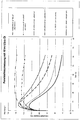
- illustration 1 shows the oil consumption history for different papers as a function of time.
- papers without filler with papers with 20% mica and 20% talc as filler came to about 40 ° SR ground kraft pulp is used.
- This figure shows the rate of penetration versus time as measured by an ultrasonic based measuring instrument (DPA Tester). The faster the turn-off after reaching the maximum, the greater the penetration rate of the liquid. The highest penetration rate shows the filled with talc insulating paper with the highest porosity.
- Fig.1 It can be clearly seen that the addition of the filler directly results in accelerated penetration of the insulating oil into the paper. Due to the penetration of the insulating oil in the production process of transformers lasting up to several days, an acceleration of this rate-determining step is a great advantage of the papers according to the invention.
Landscapes
- Chemical & Material Sciences (AREA)
- Inorganic Chemistry (AREA)
- Chemical Kinetics & Catalysis (AREA)
- Physics & Mathematics (AREA)
- Spectroscopy & Molecular Physics (AREA)
- Life Sciences & Earth Sciences (AREA)
- Wood Science & Technology (AREA)
- Engineering & Computer Science (AREA)
- Dispersion Chemistry (AREA)
- General Chemical & Material Sciences (AREA)
- Paper (AREA)
- Organic Insulating Materials (AREA)
- Insulating Bodies (AREA)
Applications Claiming Priority (2)
| Application Number | Priority Date | Filing Date | Title |
|---|---|---|---|
| DE102012103775A DE102012103775A1 (de) | 2012-04-27 | 2012-04-27 | Elektroisolationspapier |
| PCT/EP2013/058910 WO2013160484A1 (de) | 2012-04-27 | 2013-04-29 | Elektroisolationspapier |
Publications (2)
| Publication Number | Publication Date |
|---|---|
| EP2841650A1 EP2841650A1 (de) | 2015-03-04 |
| EP2841650B1 true EP2841650B1 (de) | 2018-12-05 |
Family
ID=48470908
Family Applications (1)
| Application Number | Title | Priority Date | Filing Date |
|---|---|---|---|
| EP13724178.2A Active EP2841650B1 (de) | 2012-04-27 | 2013-04-29 | Elektroisolationspapier |
Country Status (9)
| Country | Link |
|---|---|
| US (1) | US20150083353A1 (enExample) |
| EP (1) | EP2841650B1 (enExample) |
| CN (1) | CN104334797A (enExample) |
| BR (1) | BR112014026694A2 (enExample) |
| CA (1) | CA2871206A1 (enExample) |
| DE (1) | DE102012103775A1 (enExample) |
| IN (1) | IN2014DN09318A (enExample) |
| RU (1) | RU2014144899A (enExample) |
| WO (1) | WO2013160484A1 (enExample) |
Families Citing this family (20)
| Publication number | Priority date | Publication date | Assignee | Title |
|---|---|---|---|---|
| CN104947513A (zh) * | 2015-06-09 | 2015-09-30 | 铜陵华洋特种线材有限责任公司 | 阻燃高压电缆纸的制备方法 |
| CN105355264A (zh) * | 2015-11-04 | 2016-02-24 | 铜陵三佳变压器有限责任公司 | 一种耐油耐溶剂的变压器用绝缘纸 |
| CN105336396A (zh) * | 2015-11-04 | 2016-02-17 | 铜陵三佳变压器有限责任公司 | 一种导热效果好的用于变压器的绝缘材料 |
| CN105355263A (zh) * | 2015-11-04 | 2016-02-24 | 铜陵三佳变压器有限责任公司 | 一种阻燃热老化性能高的变压器用绝缘纸 |
| CN105350393A (zh) * | 2015-11-04 | 2016-02-24 | 铜陵三佳变压器有限责任公司 | 一种防霉防污染的变压器绝缘纸 |
| CN105336471A (zh) * | 2015-11-04 | 2016-02-17 | 铜陵三佳变压器有限责任公司 | 一种低膨胀系数的变压器用绝缘纸 |
| CN105350388A (zh) * | 2015-11-04 | 2016-02-24 | 铜陵三佳变压器有限责任公司 | 一种耐热等级高的变压器用绝缘纸 |
| CN105350392A (zh) * | 2015-11-04 | 2016-02-24 | 铜陵三佳变压器有限责任公司 | 一种低损耗的变压器用绝缘纸 |
| CN105336393A (zh) * | 2015-11-04 | 2016-02-17 | 铜陵三佳变压器有限责任公司 | 一种防潮阻燃效果好的变压器用绝缘纸 |
| CN105336395A (zh) * | 2015-11-04 | 2016-02-17 | 铜陵三佳变压器有限责任公司 | 一种稳定性高的变压器用绝缘纸 |
| CN105336394A (zh) * | 2015-11-04 | 2016-02-17 | 铜陵三佳变压器有限责任公司 | 一种含有三元乙丙橡胶的变压器用绝缘纸 |
| EP3288041A1 (de) * | 2016-08-23 | 2018-02-28 | Wicor Holding AG | Isolationselement mit chemiefasern zur elektrischen isolation im hochspannungsbereich |
| CN106498810B (zh) * | 2016-12-16 | 2018-11-16 | 南京林业大学 | 一种高导热电气绝缘纸的制备方法 |
| CN107059465A (zh) * | 2017-03-28 | 2017-08-18 | 常州大学 | 一种高抗张强度纤维云母纸的制备方法 |
| EP3882928B1 (en) * | 2020-03-17 | 2023-11-15 | Hitachi Energy Ltd | Mfc/nc in transformer boards used in power transformers |
| CN113445350A (zh) * | 2020-03-24 | 2021-09-28 | 中国制浆造纸研究院有限公司 | 一种特高压变压器用高油中击穿强度绝缘纸及其制造方法 |
| US11732419B2 (en) * | 2020-05-11 | 2023-08-22 | Mativ Holdings, Inc. | Oil resistant article |
| CN112116583B (zh) * | 2020-09-25 | 2023-07-11 | 华北电力大学(保定) | 一种基于sem图像处理的绝缘纸板老化判别检验方法 |
| EP4325526A1 (en) * | 2022-08-19 | 2024-02-21 | Ahlstrom Oyj | Electrical insulation paper |
| CN120776617B (zh) * | 2025-07-14 | 2026-04-24 | 仙鹤股份有限公司 | 一种高抗压低爆炸率电解电容器纸及其生产工艺 |
Family Cites Families (10)
| Publication number | Priority date | Publication date | Assignee | Title |
|---|---|---|---|---|
| US2842183A (en) * | 1956-09-24 | 1958-07-08 | Gen Electric | Mica paper |
| US3555377A (en) * | 1969-08-01 | 1971-01-12 | Kimberly Clark Co | Capacitor having talc scavenger |
| SU444850A1 (ru) * | 1973-01-15 | 1974-09-30 | Марийский Филиал Всесоюзного Научно-Производственного Объединения Целлюлозно-Бумажной Промышленности | Волокниста масса дл изготовлени электроизол ционной бумаги и картона |
| US4180434A (en) * | 1976-01-27 | 1979-12-25 | Schweizerische Isola-Werke | Mica paper containing cellulose |
| DE3232255A1 (de) * | 1982-08-30 | 1984-03-08 | Frenzelit Werke GmbH & Co KG, 8582 Bad Berneck | Weichstoffflachdichtungsmaterial, insbesondere fuer die herstellung von hoch beanspruchbaren flachdichtungen |
| EP0623935A1 (en) | 1993-05-03 | 1994-11-09 | Du Pont De Nemours International S.A. | Conductive composition |
| DE4314620A1 (de) | 1993-05-04 | 1994-11-10 | Basf Ag | Elektroisolationspapier |
| US6991845B2 (en) * | 2002-12-13 | 2006-01-31 | E. I. Du Pont De Nemours And Company | Mica sheet and tape |
| EP2000213B1 (en) * | 2007-06-08 | 2018-01-24 | Mondo Minerals B.V. | Treatment of talc in a solvent |
| JP4881899B2 (ja) * | 2008-02-29 | 2012-02-22 | 大王製紙株式会社 | 電線巻紙用クラフト紙 |
-
2012
- 2012-04-27 DE DE102012103775A patent/DE102012103775A1/de not_active Withdrawn
-
2013
- 2013-04-29 RU RU2014144899A patent/RU2014144899A/ru unknown
- 2013-04-29 CN CN201380027330.3A patent/CN104334797A/zh active Pending
- 2013-04-29 US US14/396,834 patent/US20150083353A1/en not_active Abandoned
- 2013-04-29 IN IN9318DEN2014 patent/IN2014DN09318A/en unknown
- 2013-04-29 CA CA2871206A patent/CA2871206A1/en not_active Abandoned
- 2013-04-29 BR BR112014026694A patent/BR112014026694A2/pt not_active IP Right Cessation
- 2013-04-29 EP EP13724178.2A patent/EP2841650B1/de active Active
- 2013-04-29 WO PCT/EP2013/058910 patent/WO2013160484A1/de not_active Ceased
Non-Patent Citations (1)
| Title |
|---|
| None * |
Also Published As
| Publication number | Publication date |
|---|---|
| DE102012103775A1 (de) | 2013-10-31 |
| CN104334797A (zh) | 2015-02-04 |
| US20150083353A1 (en) | 2015-03-26 |
| CA2871206A1 (en) | 2013-10-31 |
| EP2841650A1 (de) | 2015-03-04 |
| BR112014026694A2 (pt) | 2017-06-27 |
| RU2014144899A (ru) | 2016-06-20 |
| IN2014DN09318A (enExample) | 2015-07-10 |
| WO2013160484A1 (de) | 2013-10-31 |
Similar Documents
| Publication | Publication Date | Title |
|---|---|---|
| EP2841650B1 (de) | Elektroisolationspapier | |
| Huang et al. | Enhancement of mechanical and electrical performances of insulating presspaper by introduction of nanocellulose | |
| EP2588304B1 (en) | Multilayer structure useful for electrical insulation | |
| DE60120164T2 (de) | Elektrisches gerät mit synthetischen fasern und mit bindemittel verstärktem zellulose-isolierpapier | |
| WO2009000769A1 (de) | Vorimprägnat | |
| EP2888405A1 (en) | Method for making a paper product by multilayer technique, and paper product | |
| WO2012041715A1 (de) | Elektrisch isolierender nanokomposit mit halbleitenden oder nichtleitenden nanopartikeln, verwendung dieses nanokomposits und verfahren zu dessen herstellung | |
| FI118092B (fi) | Kuitupitoinen rata ja menetelmä sen valmistamiseksi | |
| DE60102082T2 (de) | Verfahren zur adsorption von kationischen und anionischen polymeren auf die oberfläche von partikeln und solche partikel enthaltendes papier- oder vliesstoffprodukt | |
| EP0623936B1 (de) | Elektroisolationspapier | |
| El-Saied et al. | Electrical insulated paper from cotton linter | |
| DE2815451B2 (de) | Verfahren zur Herstellung von ölimprägnierbarer Isolierpappe | |
| EP3259762B1 (de) | Isolationselement mit geringer elektrischer leitfähigkeit zur elektrischen isolation im hochspannungsbereich | |
| Hollertz et al. | Dielectric response of kraft paper from fibres modified by silica nanoparticles | |
| CN117802832A (zh) | 一种高耐压复合电容器纸及其制备方法 | |
| DE3786335T2 (de) | Pressspan mit niedriger dielektrischer Konstante für ölimpregnierte Isolierung. | |
| Umair et al. | Physical and Electrical Breakdown Characteristics of Oil-Impregnated Kenaf Paper with the Introduction of External PVA for Transformer Application. | |
| Huang et al. | Enhancing mechanical strength and breakdown behavior of insulating presspaper by introduction of nanofibrillated cellulose | |
| EP3504718B1 (de) | Isolationselement mit chemiefasern zur elektrischen isolation im hochspannungsbereich | |
| JP2634589B2 (ja) | 低誘電率油浸絶縁用プレスボード | |
| EP4163436A1 (de) | Zusammensetzung mit einem polyelektrolytsystem und verfahren zur herstellung | |
| DE69704947T2 (de) | Dichtungspapier | |
| RU154247U1 (ru) | Бумага кабельная | |
| JPH02257522A (ja) | 変圧器用プレスボード | |
| Niu et al. | Preparation and characterization of nano-filler hybrid polymeric fibrids and its application |
Legal Events
| Date | Code | Title | Description |
|---|---|---|---|
| PUAI | Public reference made under article 153(3) epc to a published international application that has entered the european phase |
Free format text: ORIGINAL CODE: 0009012 |
|
| 17P | Request for examination filed |
Effective date: 20141127 |
|
| AK | Designated contracting states |
Kind code of ref document: A1 Designated state(s): AL AT BE BG CH CY CZ DE DK EE ES FI FR GB GR HR HU IE IS IT LI LT LU LV MC MK MT NL NO PL PT RO RS SE SI SK SM TR |
|
| AX | Request for extension of the european patent |
Extension state: BA ME |
|
| DAX | Request for extension of the european patent (deleted) | ||
| TPAA | Information related to observations by third parties modified |
Free format text: ORIGINAL CODE: EPIDOSCTIPA |
|
| TPAC | Observations filed by third parties |
Free format text: ORIGINAL CODE: EPIDOSNTIPA |
|
| 17Q | First examination report despatched |
Effective date: 20151028 |
|
| TPAC | Observations filed by third parties |
Free format text: ORIGINAL CODE: EPIDOSNTIPA |
|
| STAA | Information on the status of an ep patent application or granted ep patent |
Free format text: STATUS: EXAMINATION IS IN PROGRESS |
|
| GRAP | Despatch of communication of intention to grant a patent |
Free format text: ORIGINAL CODE: EPIDOSNIGR1 |
|
| STAA | Information on the status of an ep patent application or granted ep patent |
Free format text: STATUS: GRANT OF PATENT IS INTENDED |
|
| INTG | Intention to grant announced |
Effective date: 20180130 |
|
| GRAS | Grant fee paid |
Free format text: ORIGINAL CODE: EPIDOSNIGR3 |
|
| GRAA | (expected) grant |
Free format text: ORIGINAL CODE: 0009210 |
|
| STAA | Information on the status of an ep patent application or granted ep patent |
Free format text: STATUS: THE PATENT HAS BEEN GRANTED |
|
| AK | Designated contracting states |
Kind code of ref document: B1 Designated state(s): AL AT BE BG CH CY CZ DE DK EE ES FI FR GB GR HR HU IE IS IT LI LT LU LV MC MK MT NL NO PL PT RO RS SE SI SK SM TR |
|
| REG | Reference to a national code |
Ref country code: GB Ref legal event code: FG4D Free format text: NOT ENGLISH |
|
| REG | Reference to a national code |
Ref country code: CH Ref legal event code: EP |
|
| REG | Reference to a national code |
Ref country code: AT Ref legal event code: REF Ref document number: 1073226 Country of ref document: AT Kind code of ref document: T Effective date: 20181215 |
|
| REG | Reference to a national code |
Ref country code: IE Ref legal event code: FG4D Free format text: LANGUAGE OF EP DOCUMENT: GERMAN |
|
| REG | Reference to a national code |
Ref country code: DE Ref legal event code: R096 Ref document number: 502013011763 Country of ref document: DE |
|
| REG | Reference to a national code |
Ref country code: NL Ref legal event code: MP Effective date: 20181205 |
|
| REG | Reference to a national code |
Ref country code: LT Ref legal event code: MG4D |
|
| PG25 | Lapsed in a contracting state [announced via postgrant information from national office to epo] |
Ref country code: FI Free format text: LAPSE BECAUSE OF FAILURE TO SUBMIT A TRANSLATION OF THE DESCRIPTION OR TO PAY THE FEE WITHIN THE PRESCRIBED TIME-LIMIT Effective date: 20181205 Ref country code: HR Free format text: LAPSE BECAUSE OF FAILURE TO SUBMIT A TRANSLATION OF THE DESCRIPTION OR TO PAY THE FEE WITHIN THE PRESCRIBED TIME-LIMIT Effective date: 20181205 Ref country code: LT Free format text: LAPSE BECAUSE OF FAILURE TO SUBMIT A TRANSLATION OF THE DESCRIPTION OR TO PAY THE FEE WITHIN THE PRESCRIBED TIME-LIMIT Effective date: 20181205 Ref country code: LV Free format text: LAPSE BECAUSE OF FAILURE TO SUBMIT A TRANSLATION OF THE DESCRIPTION OR TO PAY THE FEE WITHIN THE PRESCRIBED TIME-LIMIT Effective date: 20181205 Ref country code: NO Free format text: LAPSE BECAUSE OF FAILURE TO SUBMIT A TRANSLATION OF THE DESCRIPTION OR TO PAY THE FEE WITHIN THE PRESCRIBED TIME-LIMIT Effective date: 20190305 Ref country code: ES Free format text: LAPSE BECAUSE OF FAILURE TO SUBMIT A TRANSLATION OF THE DESCRIPTION OR TO PAY THE FEE WITHIN THE PRESCRIBED TIME-LIMIT Effective date: 20181205 Ref country code: BG Free format text: LAPSE BECAUSE OF FAILURE TO SUBMIT A TRANSLATION OF THE DESCRIPTION OR TO PAY THE FEE WITHIN THE PRESCRIBED TIME-LIMIT Effective date: 20190305 |
|
| PG25 | Lapsed in a contracting state [announced via postgrant information from national office to epo] |
Ref country code: AL Free format text: LAPSE BECAUSE OF FAILURE TO SUBMIT A TRANSLATION OF THE DESCRIPTION OR TO PAY THE FEE WITHIN THE PRESCRIBED TIME-LIMIT Effective date: 20181205 Ref country code: SE Free format text: LAPSE BECAUSE OF FAILURE TO SUBMIT A TRANSLATION OF THE DESCRIPTION OR TO PAY THE FEE WITHIN THE PRESCRIBED TIME-LIMIT Effective date: 20181205 Ref country code: GR Free format text: LAPSE BECAUSE OF FAILURE TO SUBMIT A TRANSLATION OF THE DESCRIPTION OR TO PAY THE FEE WITHIN THE PRESCRIBED TIME-LIMIT Effective date: 20190306 Ref country code: RS Free format text: LAPSE BECAUSE OF FAILURE TO SUBMIT A TRANSLATION OF THE DESCRIPTION OR TO PAY THE FEE WITHIN THE PRESCRIBED TIME-LIMIT Effective date: 20181205 |
|
| PG25 | Lapsed in a contracting state [announced via postgrant information from national office to epo] |
Ref country code: NL Free format text: LAPSE BECAUSE OF FAILURE TO SUBMIT A TRANSLATION OF THE DESCRIPTION OR TO PAY THE FEE WITHIN THE PRESCRIBED TIME-LIMIT Effective date: 20181205 |
|
| PG25 | Lapsed in a contracting state [announced via postgrant information from national office to epo] |
Ref country code: CZ Free format text: LAPSE BECAUSE OF FAILURE TO SUBMIT A TRANSLATION OF THE DESCRIPTION OR TO PAY THE FEE WITHIN THE PRESCRIBED TIME-LIMIT Effective date: 20181205 Ref country code: PT Free format text: LAPSE BECAUSE OF FAILURE TO SUBMIT A TRANSLATION OF THE DESCRIPTION OR TO PAY THE FEE WITHIN THE PRESCRIBED TIME-LIMIT Effective date: 20190405 Ref country code: PL Free format text: LAPSE BECAUSE OF FAILURE TO SUBMIT A TRANSLATION OF THE DESCRIPTION OR TO PAY THE FEE WITHIN THE PRESCRIBED TIME-LIMIT Effective date: 20181205 Ref country code: IT Free format text: LAPSE BECAUSE OF FAILURE TO SUBMIT A TRANSLATION OF THE DESCRIPTION OR TO PAY THE FEE WITHIN THE PRESCRIBED TIME-LIMIT Effective date: 20181205 |
|
| PG25 | Lapsed in a contracting state [announced via postgrant information from national office to epo] |
Ref country code: EE Free format text: LAPSE BECAUSE OF FAILURE TO SUBMIT A TRANSLATION OF THE DESCRIPTION OR TO PAY THE FEE WITHIN THE PRESCRIBED TIME-LIMIT Effective date: 20181205 Ref country code: IS Free format text: LAPSE BECAUSE OF FAILURE TO SUBMIT A TRANSLATION OF THE DESCRIPTION OR TO PAY THE FEE WITHIN THE PRESCRIBED TIME-LIMIT Effective date: 20190405 Ref country code: SM Free format text: LAPSE BECAUSE OF FAILURE TO SUBMIT A TRANSLATION OF THE DESCRIPTION OR TO PAY THE FEE WITHIN THE PRESCRIBED TIME-LIMIT Effective date: 20181205 Ref country code: RO Free format text: LAPSE BECAUSE OF FAILURE TO SUBMIT A TRANSLATION OF THE DESCRIPTION OR TO PAY THE FEE WITHIN THE PRESCRIBED TIME-LIMIT Effective date: 20181205 Ref country code: SK Free format text: LAPSE BECAUSE OF FAILURE TO SUBMIT A TRANSLATION OF THE DESCRIPTION OR TO PAY THE FEE WITHIN THE PRESCRIBED TIME-LIMIT Effective date: 20181205 |
|
| REG | Reference to a national code |
Ref country code: DE Ref legal event code: R097 Ref document number: 502013011763 Country of ref document: DE |
|
| PLBE | No opposition filed within time limit |
Free format text: ORIGINAL CODE: 0009261 |
|
| STAA | Information on the status of an ep patent application or granted ep patent |
Free format text: STATUS: NO OPPOSITION FILED WITHIN TIME LIMIT |
|
| PG25 | Lapsed in a contracting state [announced via postgrant information from national office to epo] |
Ref country code: DK Free format text: LAPSE BECAUSE OF FAILURE TO SUBMIT A TRANSLATION OF THE DESCRIPTION OR TO PAY THE FEE WITHIN THE PRESCRIBED TIME-LIMIT Effective date: 20181205 Ref country code: SI Free format text: LAPSE BECAUSE OF FAILURE TO SUBMIT A TRANSLATION OF THE DESCRIPTION OR TO PAY THE FEE WITHIN THE PRESCRIBED TIME-LIMIT Effective date: 20181205 |
|
| 26N | No opposition filed |
Effective date: 20190906 |
|
| REG | Reference to a national code |
Ref country code: BE Ref legal event code: MM Effective date: 20190430 |
|
| PG25 | Lapsed in a contracting state [announced via postgrant information from national office to epo] |
Ref country code: MC Free format text: LAPSE BECAUSE OF FAILURE TO SUBMIT A TRANSLATION OF THE DESCRIPTION OR TO PAY THE FEE WITHIN THE PRESCRIBED TIME-LIMIT Effective date: 20181205 Ref country code: LU Free format text: LAPSE BECAUSE OF NON-PAYMENT OF DUE FEES Effective date: 20190429 |
|
| PG25 | Lapsed in a contracting state [announced via postgrant information from national office to epo] |
Ref country code: BE Free format text: LAPSE BECAUSE OF NON-PAYMENT OF DUE FEES Effective date: 20190430 |
|
| PG25 | Lapsed in a contracting state [announced via postgrant information from national office to epo] |
Ref country code: TR Free format text: LAPSE BECAUSE OF FAILURE TO SUBMIT A TRANSLATION OF THE DESCRIPTION OR TO PAY THE FEE WITHIN THE PRESCRIBED TIME-LIMIT Effective date: 20181205 |
|
| REG | Reference to a national code |
Ref country code: CH Ref legal event code: PCOW Free format text: NEW ADDRESS: FLURWEG 15, 82402 SEESHAUPT (DE) |
|
| REG | Reference to a national code |
Ref country code: DE Ref legal event code: R081 Ref document number: 502013011763 Country of ref document: DE Owner name: PACON LIMITED & CO. KG, DE Free format text: FORMER OWNER: PACON LIMITED & CO. KG, 82057 ICKING, DE |
|
| PG25 | Lapsed in a contracting state [announced via postgrant information from national office to epo] |
Ref country code: IE Free format text: LAPSE BECAUSE OF NON-PAYMENT OF DUE FEES Effective date: 20190429 |
|
| PG25 | Lapsed in a contracting state [announced via postgrant information from national office to epo] |
Ref country code: CY Free format text: LAPSE BECAUSE OF FAILURE TO SUBMIT A TRANSLATION OF THE DESCRIPTION OR TO PAY THE FEE WITHIN THE PRESCRIBED TIME-LIMIT Effective date: 20181205 |
|
| PG25 | Lapsed in a contracting state [announced via postgrant information from national office to epo] |
Ref country code: HU Free format text: LAPSE BECAUSE OF FAILURE TO SUBMIT A TRANSLATION OF THE DESCRIPTION OR TO PAY THE FEE WITHIN THE PRESCRIBED TIME-LIMIT; INVALID AB INITIO Effective date: 20130429 Ref country code: MT Free format text: LAPSE BECAUSE OF FAILURE TO SUBMIT A TRANSLATION OF THE DESCRIPTION OR TO PAY THE FEE WITHIN THE PRESCRIBED TIME-LIMIT Effective date: 20181205 |
|
| PG25 | Lapsed in a contracting state [announced via postgrant information from national office to epo] |
Ref country code: MK Free format text: LAPSE BECAUSE OF FAILURE TO SUBMIT A TRANSLATION OF THE DESCRIPTION OR TO PAY THE FEE WITHIN THE PRESCRIBED TIME-LIMIT Effective date: 20181205 |
|
| REG | Reference to a national code |
Ref country code: FR Ref legal event code: PLFP Year of fee payment: 11 |
|
| PGFP | Annual fee paid to national office [announced via postgrant information from national office to epo] |
Ref country code: GB Payment date: 20230326 Year of fee payment: 11 |
|
| PGFP | Annual fee paid to national office [announced via postgrant information from national office to epo] |
Ref country code: FR Payment date: 20230413 Year of fee payment: 11 Ref country code: DE Payment date: 20230413 Year of fee payment: 11 |
|
| PGFP | Annual fee paid to national office [announced via postgrant information from national office to epo] |
Ref country code: AT Payment date: 20230413 Year of fee payment: 11 |
|
| PGFP | Annual fee paid to national office [announced via postgrant information from national office to epo] |
Ref country code: CH Payment date: 20231023 Year of fee payment: 11 |
|
| REG | Reference to a national code |
Ref country code: DE Ref legal event code: R119 Ref document number: 502013011763 Country of ref document: DE |
|
| REG | Reference to a national code |
Ref country code: CH Ref legal event code: PL |
|
| REG | Reference to a national code |
Ref country code: AT Ref legal event code: MM01 Ref document number: 1073226 Country of ref document: AT Kind code of ref document: T Effective date: 20240429 |
|
| GBPC | Gb: european patent ceased through non-payment of renewal fee |
Effective date: 20240429 |
|
| PG25 | Lapsed in a contracting state [announced via postgrant information from national office to epo] |
Ref country code: DE Free format text: LAPSE BECAUSE OF NON-PAYMENT OF DUE FEES Effective date: 20241105 |
|
| PG25 | Lapsed in a contracting state [announced via postgrant information from national office to epo] |
Ref country code: GB Free format text: LAPSE BECAUSE OF NON-PAYMENT OF DUE FEES Effective date: 20240429 |
|
| PG25 | Lapsed in a contracting state [announced via postgrant information from national office to epo] |
Ref country code: FR Free format text: LAPSE BECAUSE OF NON-PAYMENT OF DUE FEES Effective date: 20240430 |
|
| PG25 | Lapsed in a contracting state [announced via postgrant information from national office to epo] |
Ref country code: AT Free format text: LAPSE BECAUSE OF NON-PAYMENT OF DUE FEES Effective date: 20240429 |
|
| PG25 | Lapsed in a contracting state [announced via postgrant information from national office to epo] |
Ref country code: GB Free format text: LAPSE BECAUSE OF NON-PAYMENT OF DUE FEES Effective date: 20240429 Ref country code: FR Free format text: LAPSE BECAUSE OF NON-PAYMENT OF DUE FEES Effective date: 20240430 Ref country code: DE Free format text: LAPSE BECAUSE OF NON-PAYMENT OF DUE FEES Effective date: 20241105 Ref country code: AT Free format text: LAPSE BECAUSE OF NON-PAYMENT OF DUE FEES Effective date: 20240429 Ref country code: CH Free format text: LAPSE BECAUSE OF NON-PAYMENT OF DUE FEES Effective date: 20240430 |