EP2834253B1 - Composés thiol et leur utilisation pour la synthèse d'oligonucléotides modifiés - Google Patents
Composés thiol et leur utilisation pour la synthèse d'oligonucléotides modifiés Download PDFInfo
- Publication number
- EP2834253B1 EP2834253B1 EP13713922.6A EP13713922A EP2834253B1 EP 2834253 B1 EP2834253 B1 EP 2834253B1 EP 13713922 A EP13713922 A EP 13713922A EP 2834253 B1 EP2834253 B1 EP 2834253B1
- Authority
- EP
- European Patent Office
- Prior art keywords
- groups
- compound
- oligonucleotide
- formula
- carbon
- Prior art date
- Legal status (The legal status is an assumption and is not a legal conclusion. Google has not performed a legal analysis and makes no representation as to the accuracy of the status listed.)
- Active
Links
- 0 *O**(*OC(CCC(NO)=O)=O)*S* Chemical compound *O**(*OC(CCC(NO)=O)=O)*S* 0.000 description 7
Images






Classifications
-
- C—CHEMISTRY; METALLURGY
- C07—ORGANIC CHEMISTRY
- C07H—SUGARS; DERIVATIVES THEREOF; NUCLEOSIDES; NUCLEOTIDES; NUCLEIC ACIDS
- C07H21/00—Compounds containing two or more mononucleotide units having separate phosphate or polyphosphate groups linked by saccharide radicals of nucleoside groups, e.g. nucleic acids
- C07H21/04—Compounds containing two or more mononucleotide units having separate phosphate or polyphosphate groups linked by saccharide radicals of nucleoside groups, e.g. nucleic acids with deoxyribosyl as saccharide radical
-
- C—CHEMISTRY; METALLURGY
- C07—ORGANIC CHEMISTRY
- C07C—ACYCLIC OR CARBOCYCLIC COMPOUNDS
- C07C323/00—Thiols, sulfides, hydropolysulfides or polysulfides substituted by halogen, oxygen or nitrogen atoms, or by sulfur atoms not being part of thio groups
- C07C323/50—Thiols, sulfides, hydropolysulfides or polysulfides substituted by halogen, oxygen or nitrogen atoms, or by sulfur atoms not being part of thio groups containing thio groups and carboxyl groups bound to the same carbon skeleton
- C07C323/51—Thiols, sulfides, hydropolysulfides or polysulfides substituted by halogen, oxygen or nitrogen atoms, or by sulfur atoms not being part of thio groups containing thio groups and carboxyl groups bound to the same carbon skeleton having the sulfur atoms of the thio groups bound to acyclic carbon atoms of the carbon skeleton
- C07C323/52—Thiols, sulfides, hydropolysulfides or polysulfides substituted by halogen, oxygen or nitrogen atoms, or by sulfur atoms not being part of thio groups containing thio groups and carboxyl groups bound to the same carbon skeleton having the sulfur atoms of the thio groups bound to acyclic carbon atoms of the carbon skeleton the carbon skeleton being acyclic and saturated
-
- C—CHEMISTRY; METALLURGY
- C07—ORGANIC CHEMISTRY
- C07F—ACYCLIC, CARBOCYCLIC OR HETEROCYCLIC COMPOUNDS CONTAINING ELEMENTS OTHER THAN CARBON, HYDROGEN, HALOGEN, OXYGEN, NITROGEN, SULFUR, SELENIUM OR TELLURIUM
- C07F9/00—Compounds containing elements of Groups 5 or 15 of the Periodic Table
- C07F9/02—Phosphorus compounds
- C07F9/06—Phosphorus compounds without P—C bonds
- C07F9/22—Amides of acids of phosphorus
- C07F9/24—Esteramides
- C07F9/2404—Esteramides the ester moiety containing a substituent or a structure which is considered as characteristic
- C07F9/2408—Esteramides the ester moiety containing a substituent or a structure which is considered as characteristic of hydroxyalkyl compounds
-
- C—CHEMISTRY; METALLURGY
- C08—ORGANIC MACROMOLECULAR COMPOUNDS; THEIR PREPARATION OR CHEMICAL WORKING-UP; COMPOSITIONS BASED THEREON
- C08F—MACROMOLECULAR COMPOUNDS OBTAINED BY REACTIONS ONLY INVOLVING CARBON-TO-CARBON UNSATURATED BONDS
- C08F257/00—Macromolecular compounds obtained by polymerising monomers on to polymers of aromatic monomers as defined in group C08F12/00
- C08F257/02—Macromolecular compounds obtained by polymerising monomers on to polymers of aromatic monomers as defined in group C08F12/00 on to polymers of styrene or alkyl-substituted styrenes
-
- C—CHEMISTRY; METALLURGY
- C12—BIOCHEMISTRY; BEER; SPIRITS; WINE; VINEGAR; MICROBIOLOGY; ENZYMOLOGY; MUTATION OR GENETIC ENGINEERING
- C12N—MICROORGANISMS OR ENZYMES; COMPOSITIONS THEREOF; PROPAGATING, PRESERVING, OR MAINTAINING MICROORGANISMS; MUTATION OR GENETIC ENGINEERING; CULTURE MEDIA
- C12N15/00—Mutation or genetic engineering; DNA or RNA concerning genetic engineering, vectors, e.g. plasmids, or their isolation, preparation or purification; Use of hosts therefor
- C12N15/09—Recombinant DNA-technology
- C12N15/11—DNA or RNA fragments; Modified forms thereof; Non-coding nucleic acids having a biological activity
Definitions
- the present invention relates to a thiol compound capable of forming an oligomer chain capable of being grafted onto an oligonucleotide.
- the invention also relates to an oligonucleotide grafted with such a compound, thus having one or more thiol functions, capable of being immobilized on a gold surface or on a grafted surface, in particular a surface grafted with maleimide or acrylamide groups.
- the invention also relates to a test kit for detecting the interaction between nucleotides and other molecules using, as surface, the gold surface or the grafted surface, in particular by maleimide or acrylamide groups on which the oligonucleotides are immobilized according to the invention. 'invention.
- oligonucleotides are molecules comprising a short chain of nucleotides, the number of nucleotides may vary from 1 to about 100. These are fragments of RNA (ribonucleic acid) or DNA (deoxyribonucleic acid). Oligonucleotides are synthesized generally as single strands.
- the oligonucleotides can be synthesized enzymatically or by chemical synthesis methods.
- the oligonucleotides are usually synthesized on a solid support by methods well known to those skilled in the art, for example by using a method using phosphoramidites, H-phosphonates, phosphodiesters or phosphotriesters, the last two compounds being derivatives of phosphoric acid, while phosphoramidites are derivatives of phosphorous acid.
- oligonucleotides An important property of oligonucleotides is their ability to control the genes and function of proteins in a specific sequence. This property makes oligonucleotides and their derivatives compounds widely used in research in molecular biology and in many pharmaceutical and diagnostic applications.
- the field of research requires the availability of large quantities of oligonucleotides. Thus, a process for producing large quantities of oligonucleotides having a very high purity is necessary.
- Nucleic acids having a given sequence of nucleotides are widely used for the detection of DNA in biological samples.
- the principle of this detection test is based on the complementarity of the nucleotide sequence with the target sequence, thus forming a double strand. This double strand is formed during a process called hybridization.
- This hybridization phenomenon can then be detected by various methods, in particular by marking the nucleotide sequence intended to bind to the sequence initially present.
- Fluorescent or radioactive labeling methods for the detection of the hybridization phenomenon have certain drawbacks.
- the labeling requires an additional step during the synthesis of the nucleotide sequence, this step being sometimes difficult to implement.
- the test based on this hybridization phenomenon detected by labeling requires, after the hybridization step, to eliminate the labeled nucleotide sequences that have not been linked to the target sequence of the sample.
- electrochemical methods are increasingly used. These methods are based on the immobilization of oligonucleotides on an electrode, for example a gold electrode.
- an electrode for example a gold electrode.
- the hybridization of the single-stranded oligonucleotides immobilized on the gold electrode is quantified by the measurement of the electric current, which depends on the number of double strands formed between the immobilized single-stranded oligonucleotide and the oligonucleotide of the sample.
- the oligonucleotide is immobilized on the metal surface, and in particular on a gold surface.
- This immobilization can in particular be obtained through a bond between a gold atom and a sulfur atom.
- the Au-S bond is moderately strong.
- a single gold-sulfur bond is not sufficient to immobilize an oligonucleotide on the gold surface very stably.
- the test methods involve steps, especially washing, which cause high mechanical stress likely to destabilize the Au-S bond.
- EP 0 523 978 discloses phosphoramidite or phosphonate compounds useful for the production of thiol-modified oligonucleotides. They can be introduced only once and only on the 5 'end of an oligonucleotide.
- the document US 7,601,848 discloses a polyfunctional compound comprising two sulfur atoms for incorporation into oligomers to create at least two gold-sulfur bonds and thereby stabilize the oligonucleotide on the gold surface. Some of these compounds have a phosphoramidite function. Compounds used in this document are made from very expensive compounds and the coupling of the polyfunctional compound to the oligonucleotides does not have a satisfactory yield because of the steric hindrance of this compound. In this document, a linker is required to link the thiol compounds to one another and thereby effect multiple introduction of thiol compounds into an oligonucleotide.
- nucleoside modified by a phosphoramidite function and a thiol function describe a nucleoside modified by a phosphoramidite function and a thiol function. Modified nucleosides are used to introduce biophysical probes into RNA. The modified nucleoside is synthesized in 9 steps with an overall yield of 12.5%.
- A. Hatano et al., Tetrahedron, 61, 2005, 1723-1730 describe DNA synthesis involving a nucleoside base comprising a phosphoramidite function and a thiophenol function.
- the modified nucleoside is synthesized in 7 steps with insufficient yield, less than 5%.
- the phosphoramidite compound is a modified nucleoside for incorporation into an oligonucleotide via this phosphoramidite function.
- the starting reagents are expensive, the syntheses are long and complex and the synthesis yields of these phosphoramidite compounds are low.
- the steric bulk of these osidic compounds is not conducive to satisfactory grafting on a surface.
- AA Rowe et al., Anal. Chem. 2011, 83, 9462-9466 describe a nucleoside compound that can be immobilized on a gold surface for the detection of DNA.
- the nucleoside compound is incorporated once for immobilization on a gold surface via a single thiol function.
- the starting reagent is expensive, and the thiol compound is complex to manufacture.
- the object of the present invention is to provide a thiol compound at least partially overcoming the aforementioned drawbacks, that is to say a thiol compound, easy to manufacture, which can be oligomerized simply and economically, and intended to be incorporated into an oligonucleotide and immobilized on a surface.
- the invention aims to provide a method for easily and efficiently introducing one or more thiol functions into an oligonucleotide.
- the group T is a group -OP (OR 1 ) N (R 2 ) 2 where R 2 is an isopropyl group and R 1 is chosen from 2-cyanoethyl, 2- (trimethylsilyl) ethyl groups, 2- (triphenylsilyl) ethyl, 2- (diphenylmethylsilyl) ethyl.
- the group T is the group - OC (O) JC (O) NH- ⁇
- ⁇ is a solid support chosen from resins, in particular from resins based on polystyrene, polyacrylamide, polyethylene glycol, cellulose , polyethylene, polyester, latex, polyamide, polydimethylacrylamide, synthetic or natural hydrophilic polymers, glass beads, silica gels.
- Another subject of the invention relates to a substrate grafted with at least one modified oligonucleotide according to the invention, said substrate comprising at least one receiving zone coated with a gold or platinum film or grafted with groups comprising at least a carbon-carbon double bond or a carbon-carbon triple bond or haloacetamide groups, preferably maleimide and / or acrylamide groups, said substrate being metal in the case of gold film and plastic in the case of grafting by groups comprising at least one carbon-carbon double bond or a carbon-carbon triple bond or haloacetamide groups, preferably maleimide and / or acrylamide groups.
- the groups comprising at least one carbon-carbon double bond or a carbon-carbon triple bond are chosen from alkenes activated by an alpha carbonyl function, preferably the alkenes are chosen from groups maleimide, acrylamide.
- the haloacetamide groups are chosen from bromoacetamido and iodoacetamido groups.
- the groups comprising at least one carbon-carbon triple bond are chosen from alkynes activated by an alpha carbonyl function, preferably the alkynes are chosen from 2-propynamide groups.
- the metal substrate is made of copper or titanium and / or the plastic substrate is made of polystyrene.
- Another object of the invention relates to a use of a substrate according to the invention for performing affinity tests between an oligonucleotide and another molecule.
- the present invention relates to the preparation and use of compounds of structure phosphoramidite, H-phosphonate or compounds bound to a solid support having a protected thiol function. These thiol compounds are intended to be introduced into oligonucleotides. The oligonucleotides thus obtained may have several thiol functions.
- alkane tri-yl means linear, branched or cyclic triethyl alkanes, optionally substituted by one or more alkyl groups.
- aryl tri-yl groups which may be present in the compound according to the invention, mention may be made of benzene tri-yl, naphthalene tri-yl.
- aralkane tri-yl groups which may be present in the compound according to the invention, there may be mentioned 1,3,5-trimethylbenzene tri-yl, trimethylnaphthalene tri-yl.
- the compound (I) can be distinguished into three sub-compounds (Ia), (Ib) and (Ic) corresponding to formulas (Ia), (Ib) and (Ic) below in which the parameters X, Y, Z , R, R 1 , R 2 and D have the same definition as explained above for the formula (I):
- R 1 is chosen from 2-cyanoethyl groups and R ' 1 R' 2 R ' 3 SiCH 2 CH 2 , and R' 1 , R ' 2 , R' 3, which may be identical or different, represent a group chosen from groups linear or branched alkyls having from 1 to 6 carbon atoms, phenyl; preferably, R 1 is chosen from 2-cyanoethyl groups and R ' 1 R' 2 R ' 3 SiCH 2 CH 2 , and R' 1 , R ' 2 , R' 3, which may be identical or different, represent a group chosen from linear alkyl groups or branched having from 1 to 3 carbon atoms, phenyl; still more preferably R 1 is selected from 2-cyanoethyl, 2- (trimethylsilyl) ethyl, 2- (triphenylsilyl) ethyl, 2- (diphenylmethylsilyl) ethyl.
- R 2 is chosen from linear or branched alkyl groups containing from 1 to 6 carbon atoms.
- R 2 is an isopropyl group (iPr).
- the solid support ⁇ is chosen from resins, in particular from resins based on polystyrene, polyacrylamide, polyethylene glycol, cellulose, polyethylene, polyester, latex, polyamide, polydimethylacrylamide, synthetic or natural hydrophilic polymers, glass beads, silica gels.
- W is selected from CH, CCH 3 , CCH 2 CH 3 , cyclohexane triyl, and benzene triyl.
- D is chosen from 4,4'-dimethoxytrityl (DMTr), 9-phenylxanthen-9-yl (pixyl) or fluorenylmethyloxycarbonyl (Fmoc).
- DMTr 4,4'-dimethoxytrityl
- pixyl 9-phenylxanthen-9-yl
- Fmoc fluorenylmethyloxycarbonyl
- the pixyl protecting group is described in particular in the document Chattopadhyaya and Reese, Chem. Soc. Chem. Comm., 1978, 639-640 .
- Another protecting group of the alcohols may be a tert-butyl-dimethylsilyl group, in which case a polystyrene support will be particularly preferred.
- Z is chosen from C1-C6 aminoalkyl, C1-C6alkoxy, C3-C6 oxygenated or nitrogenous cycloheteroalkyl, C -C -nalkyl-C1-C6alkyl, and C1-C6alkyl groups.
- Y is chosen from linear or branched C1-C6 alkyl, C1-C6 aminoalkyl, C1-C6 alkoxy, C3-C6 cycloalkyl, and C3-C6 oxygenated or nitrogen-containing cycloheteroalkyl groups.
- X is chosen from linear or branched C1-C6 alkyl, C1-C6 aminoalkyl, C1-C6 alkoxy, C3-C6 cycloalkyl, and C3-C6 oxygenated or nitrogen-containing cycloheteroalkyl groups.
- R is chosen from C 1 -C 12 -alkyl, C-C 6 -alkyl, C 6 -alkyl-S-aryl groups, oxygenated-C 6, C-5-heteroalkyl and C 6 -cycloalkyl-oxygenated or nitrogen-containing N-cycloalkyl radicals. in C6.
- the linear or branched alkyls are chosen from methyl, ethyl, propyl, butyl, pentyl, hexyl, heptyl, octyl, nonyl, decyl, undecyl, dodecyl, isopropyl, isobutyl and tert- butyl groups.
- the aminoalkyl are selected from aminomethyl groups, aminoethyl, aminopropyl, aminobutyl, aminopentyl, aminohexyl, aminoheptyle, aminooctyl, aminononyle, aminodécyle, aminoundécyle, aminododécyle, aminoisopropyle, aminoisobutyl, amino- tert -butyl comprising one or more nitrogen atoms.
- the alkoxy are chosen from methoxy, ethoxy, propyloxy, oxybutyloxy, pentyloxy, hexyloxy, heptyloxy and octyloxy groups, nonyloxy, decyloxy, undecyloxy, dodecyloxy, isopropyloxy, isobutyloxy, tert- butyloxy comprising one or more oxygen atoms.
- the cycloalkyls are chosen from rings, optionally comprising one or more unsaturations, comprising between 3 and 12 carbon atoms, preferably 6 carbon atoms.
- the cycloheteroalkyls are chosen from rings substituted with one or more nitrogen and / or oxygen atoms, optionally comprising one or more unsaturations and comprising between 3 and 12 carbon atoms, preferably 5 carbon atoms. carbon and a nitrogen or oxygen atom.
- the NCO-alkyls and CON-alkyls are groups in which the alkyls can be linear or branched alkyls chosen from the methyl, ethyl, propyl, butyl, pentyl, hexyl, heptyl, octyl and nonyl groups, decyl, undecyl, dodecyl, isopropyl, isobutyl, tert- butyl.
- R 2 is an isopropyl group (iPr) and / or R 1 is a cyanoethyl group.
- R 2 is an isopropyl group (iPr) and R 1 is a cyanoethyl group.
- R is an acetyl group.
- D is 4,4'-dimethoxytrityl.
- R 2 is an isopropyl group (iPr) and R 1 is a cyanoethyl group.
- R is an acetyl group.
- D is 4,4'-dimethoxytrityl.
- R is an acetyl group.
- J is an ethyl group.
- D is 4,4'-dimethoxytrityl.
- R 2 is an isopropyl group (iPr) and R 1 is a cyanoethyl group.
- R is an acetyl group.
- D is 4,4'-dimethoxytrityl.
- R 2 is an isopropyl group (iPr) and R 1 is a cyanoethyl group.
- R is an acetyl group.
- D is 4,4'-dimethoxytrityl.
- R 2 is an isopropyl group (iPr) and R 1 is a cyanoethyl group.
- R 2 is an isopropyl group (iPr) and R 1 is a cyanoethyl group.
- R is an acetyl group.
- D is 4,4'-dimethoxytrityl.
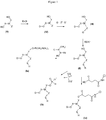
- the manufacturing process of the compounds (Ia), (Ib) and (Ic) is represented in the diagram of the figure 1 .
- the compounds (Ia), (Ib) and (Ic) are obtained from the same compound (II) having the following formula: wherein, D, X, W, Y, Z and R have the same definition as in the thiol compound (I).
- the compound of formula (Ia) can be obtained according to the reaction shown in the following scheme: or according to the reaction shown in the following scheme, preferably in the presence of the diisopropylamine tetrazolide salt:
- the compound of formula (Ib) can be obtained according to the reaction shown in the following scheme: in which Q and Q 'represent, independently of each other, a substituted or unsubstituted benzene group.
- the preceding reaction for obtaining compound (Ia) or (Ib) is carried out starting from compound (II), preferably in the presence of a base, for example diisopropylethylamine (DIEA), in an anhydrous solvent, such as anhydrous dichloromethane.
- a base for example diisopropylethylamine (DIEA)
- DIEA diisopropylethylamine
- the preceding reaction for obtaining the compound (Ic) is preferably carried out in an anhydrous solvent, such as pyridine, in the presence of a base, such as triethylamine.
- the compound (Ic) can also be obtained according to the following reaction scheme:
- An object of the present invention is the compound (II) of formula above in which the groups D, X, W, Z, Y and R have the same definition as in the compound (I).
- the compound of formula (II) can be obtained from compound (III) according to the reaction step described below: wherein G is halogen, preferably bromine or iodine.
- reaction described above is preferably carried out in an anhydrous solvent, such as anhydrous toluene and in the presence of a crown ether.
- the step of obtaining the compound (III) is preferably carried out in the presence of an alkaline hydride, such as NaH.
- the compound (IV) can be obtained from the commercial compound (V) by protecting the alcohol function, according to the following reaction step:
- This step of protecting the alcohol function is carried out under conditions well known to those skilled in the art, depending on the choice of D.
- the compound (IV) is obtained from the compound (V) by reaction with 4,4'-dimethoxytrityl chloride (DMTr-Cl) preferably in a solvent, such as pyridine to protect the alcohol function.
- DMTr-Cl 4,4'-dimethoxytrityl chloride
- the compound (IV) is obtained from the compound (V) from 9-phenylxanten-9-yl chloride (pixyl-Cl) under the conditions described in document Chattopadhyaya and Reese, Chem. Soc. Chem. Comm., 1978, 639-640 .
- the compound (IV) is obtained from the compound (V) by reaction with fluorenylmethyloxycarbonyl chloride (Fmoc-Cl) under conditions well known to those skilled in the art.
- the starting compound (V) is 1,1,1-tris (hydroxymethyl) ethane or 2,2-bis (hydroxymethyl) propionic acid or 1,3,5-tris (hydroxyethoxy) benzene or 1,3,5-tris (hydroxymethyl) cyclohexane or 2-amino-1,3-propanediol.
- An object of the present invention relates to an oligomer formed from thiol compounds of formula (I) previously described.
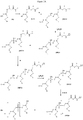
- the process for synthesizing such oligomers is described in the diagram of the Figure 2A for the oligomerization of compounds of formula (Ia) and on the scheme of the Figure 2B for the oligomerization of compounds of formula (Ib).
- a first step the alcohol function of the compound (Ic) is deprotected to yield the compound (Ic.1).
- This deprotection step is carried out by means well known to those skilled in the art, preferably in the presence of di or trichloroacetic acid for the groups DMTr and Pixyl and piperidine for the Fmoc group.
- the compound (Ic.1) reacts with the compound (Ia) or (Ib) to lead respectively to the compound phosphitetriester (XIV ') 1 or H-phosphonate diester (XV') 1
- the compound (XIV ') 1 is preferably oxidized in the presence of a diiodode, the diode then being displaced by water supplying the oxygen atom of the phosphate triester bond, to yield the phosphotriester compound (XIV) 1.
- This oxidation step is carried out after each coupling step between a compound (XIV) i and a compound (Ia).
- the compound (XV ') k is oxidized, preferably in the presence of diiod and water to yield the phosphodiester compound (XV) k .
- a last optional step consists in deprotecting the compounds (XIV) k or (XV) k to yield the same compound (I) k .
- the oligomer results from the oligomerization of 2 to 12 compounds (I), in particular between 2 and 8 compounds (I), that is to say that the oligomer may comprise 2, 3, 4, 5, 6, 7 or 8 compounds (I).
- the thiol oligomer intended to be grafted onto a gold surface comprises between 3 and 8, advantageously between 4 and 8 compounds (I) and the thiol oligomer intended for conjugation with a substrate grafted with a group comprising at least at least one carbon-carbon double bond or a carbon-carbon triple bond or a haloacetamide group, in particular maleimide or acrylamide, comprises between 2 and 6 compounds (I).
- the oligomer is manufactured solely from compounds of formula (Ia) or compounds of formula (Ib).
- the oligomerization is carried out by reaction between the deprotected alcohol function of a first compound (I) and the phosphoramidite or H-phosphonate function of a second compound (I).
- the oligomer is manufactured using phosphoramidite chemistry, i.e., oligomerization of type (Ia) compounds.
- the oligomerization may be carried out on a solid support or in solution.
- the oligomerization is carried out on a solid support.
- oligomerization in solution involves purification steps by chromatography, non-economically viable steps, particularly for small quantities required in diagnostic applications.
- the oligomer on a solid support ⁇ formed from a compound (Ic) and compounds of formula (Ia) has the following formula (XIV) k : wherein ⁇ , D, X, Y, W, Z, J, R and R 1 have the same definition as above and R can further represent H, k is an integer from 1 to 11.
- the solid support oligomer formed from a compound (Ic) and compounds of formula (Ib) has the following formula (XV) k : wherein ⁇ , D, X, Y, W, Z, J and R have the same definition as above and R can further represent H, k is an integer from 1 to 11.
- the compound obtained (XV) k has the same formula as the compound (XIV) k but in which R 1 is a hydrogen atom after oxidation of the H-phosphonate diester bonds.
- Another object of the present invention relates to a modified oligonucleotide comprising at least one nucleotide, preferably at least two nucleotides and at least one thiol compound (I) previously described.
- an oligonucleotide designates a chain comprising between 2 and 100 nucleotides.
- the grafting of the thiol compound according to the invention is carried out at the 3 'position, in the chain, or at the 5' position of an oligonucleotide.
- the modified oligonucleotide (XIIa) has one or more thiol compounds in the 5 'position of an N-oligonucleotide or in the nucleotide chain.
- a scheme for obtaining the compound (XIIa) is described on the figure 3 on which the thiol compounds are of type (Ia) and p is equal to 0.
- the first three manufacturing steps of the compound (XIIa) allow the synthesis of an oligonucleotide.
- the synthesis of the oligonucleotide is carried out on a solid support by a conventional method well known to those skilled in the art.
- a first nucleotide is grafted onto a solid support, then the other nucleotides are grafted according to synthetic methods well known to those skilled in the art.
- the following compound is obtained: ⁇ -N 1 -N 2 ⁇ N n-1 (XIIa.1)
- a thiol compound according to the invention of type (Ia) is grafted at the 5 'position of the oligonucleotide (XIIa.2) to yield compound (XIIa.3): ⁇ - N1 - N 2 - ... - N n-1 - N n (I'a) (XIIa.3)
- the grafting is done conventionally by reaction of the phosphoramidite function of the compound (Ia) with the alcohol function at the 5 'position of the terminal nucleotide of the compound (XIIa.2).
- the modified oligonucleotide has a structure similar to that of the modified oligonucleotide (XIIa.4) but in which R 1 represents H .
- This grafting step is carried out conventionally by methods known to those skilled in the art.
- a scheme representing a synthetic mode of the compound (XIIIc) is described on the figure 4 using an oligomer formed from a compound of type (Ic) where J is an ethyl group, and compounds of type (Ib).
- a first nucleotide N 1 is grafted onto the oligomer of formula (XIIIa.1) to yield the compound of formula (XIIIa.2) below: (Ic) - (I ') y-1 - N 1 (XIIIa.2)
- This grafting step is carried out by reaction between the deprotected alcohol function at the end of the oligomer chain of the compound (XIIIa.1) and the phosphoramidite or H-phosphonate function of the first nucleotide N 1 .
- the modified oligonucleotide is then synthesized by any method known to those skilled in the art, including a conventional method well known to those skilled in the art by reaction between the alcohol function 5 'of the first nucleotide present on the oligomer of the thiol compound and the phosphoramidite or H-phosphonate function at the 3 'position of a second nucleotide.
- the synthesis is continued by similar successive steps of elongation of the nucleotide chain well known to those skilled in the art to yield the compound of formula (XIIIa).
- Another object of the present invention relates to the compounds obtained from the compounds of formulas (XIIa) and (XIIIa) above after cleavage of the bond which connects the modified oligonucleotide to the solid support.
- the link is broken at the ester function.
- the removal of the support is carried out in two stages with firstly a strong non-nucleophilic base (piperidine or DBU) to eliminate the cyanoethyl groups if present (phosphoramidites case) and secondly by a conventional method known to those skilled in the art, preferably by treatment of the compound (XIIa) with ammonium hydroxide (NH 4 OH). It is necessary to eliminate the cyanoethyl groups before the deprotection of the thiol groups because they form acrylonitrile during their elimination which reacts strongly with the thiol functions.
- a strong non-nucleophilic base piperidine or DBU
- the removal of the support is carried out by a conventional method known to those skilled in the art, preferably by treatment of the compound (XIIIa) with ammonium hydroxide (NH 4 OH).
- Another subject of the present invention relates to the modified oligonucleotides (XIIc) and (XIIIc) obtained respectively from the compounds (XIIa) and (XIIIa) by deprotection of the thiol function and cleavage of the bond connecting the compound to the solid support ( Figures 3 and 4 respectively).
- the thiol function is preferably protected. Indeed, the thiol function can react with the incoming phosphoramidite function.
- the step of deprotection of the thiol functions and elimination of the solid support takes place in a single step of treatment of the modified oligonucleotide (XIIa) or (XIIIa).
- the elimination of the solid support takes place in a first step and the deprotection of the thiol functions is carried out in a second step.
- the final oligonucleotide (XIIc) (respectively the final oligonucleotide (XIIIc)) is obtained independently of the starting thiol compound, whether from the compound (Ia) or the compound (Ib). Indeed, regardless of the monomer (Ia) or (Ib) used, the thiol monomer unit resulting from the oligomerization reaction corresponds to the compound (I ") described above.
- the grafted supports of formulas (XVI) k according to the invention allow to prime the synthesis of oligonucleotides.
- Such a solid support grafted with a first oligomer (Ic) - (I ') k may advantageously be used in a modified oligonucleotide synthesis kit.
- a kit it may be associated with a support comprising reception zones such as the wells of a multi-well plate in which synthesis reactions are made by methods such as those known for carrying out the reactions. oligomerization of nucleotides.
- Such an automaton also comprises mechanical sampling means in the various tanks and distribution means for these samples in the tank comprising the solid support.
- Such means may consist of a set of fluid circulation pipes and valves, possibly arranged in microfluidic circuits, or articulated arms equipped with sampling pipettes.
- the automated device also comprises computer means (software) for the controlled implementation of these mechanical means, allowing the implementation of sequenced reactions.
- the modified oligonucleotides according to the invention may be deposited on a substrate in order to functionalize the surface of this substrate.
- the substrate may be metallic or in polymer.
- the substrate is metallic, for example copper or titanium, and is covered partially or over its entire surface with a gold or platinum film, preferably gold.
- the polymer substrate for example polystyrene
- the polymer substrate is grafted with alkenyl or alkynyl functions or bromoacetamides or iodoacetamides.
- the polymer substrate is a conductive polymer.
- the alkenyl or alkynyl functions are activated by an alpha carbonyl function, preferably the alkenyl or alkynyl functional groups are chosen from the maleimide, acrylamide, iodoacetamido or bromoacetamido, 2-propynamide or N-alkyl-2 groups. propynamide.
- the substrate may comprise reception zones covered with a gold or platinum film or covered with alkenyl or alkynyl functions, such as maleimide or acrylamide functions on which the modified oligonucleotide is deposited.
- alkenyl or alkynyl functions such as maleimide or acrylamide functions on which the modified oligonucleotide is deposited.
- the thiol function reacts with the carbon-carbon double bond or the carbon-carbon triple bond activated by a alpha carbonyl function.
- the first functionalization reaction corresponds to a maleimide grafted surface
- the second reaction corresponds to an acrylamide grafted surface
- the third reaction corresponds to a grafted iodoacetamido or bromoacetamido surface
- the fourth reaction corresponds to a 2-propynamide grafted surface made in the case an oligonucleotide (XIIc) or (XIIIc) modified with two thiol compounds according to the invention.
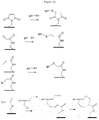
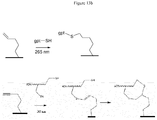
- the surface is grafted with alkenyl groups (1 st reaction) and alkynyl (2 nd reaction) not activated.
- the first functionalization reaction is carried out using a monothiol modified oligonucleotide schematically represented by gpt-SH and the second reaction is carried out using a modified dithiol oligonucleotide.
- the surface functionalization with a modified polythiol oligonucleotide is very interesting because it leads to a cyclic structure thanks to two successive reactions between a first thiol function and the -yne function in a first one. step then between a second thiol function and the resulting -ene function in a second step ( figures 13a and 13b ).
- the substrate is grafted with maleimide or acrylamide groups.
- the invention makes it possible, for example, to functionalize a gold surface by creating gold-sulfur bond (s) between the surface of the substrate and the modified oligonucleotide, or to functionalize a grafted surface with maleimide or acrylamide functions by creation. binding (s) thioether.
- Fixation of the modified oligonucleotides on the surface of the substrate is carried out by contact of the surface to be treated with a solution comprising the modified oligonucleotide, such as those represented by the formulas (XIIc) and (XIIIc). Generally one or more steps of washing and drying are subsequently provided.
- the solution of modified oligonucleotides is at a concentration of between 0.10 ⁇ M and 500 ⁇ M, preferably between 0.50 ⁇ M and 100 ⁇ M for the gold surface and between 50 and 200 nM, preferably between 75 nM and 150 nM for the maleimide or acrylamide followed by washing to remove unreacted.
- the substrate is non-planar, for example in the form of microparticles or nanoparticles.
- the modified oligonucleotides according to the invention can then be grafted onto these microparticles or nanoparticles.
- these particles are magnetic. Indeed, these magnetic particles can then be easily brought to the surface of an electrode or the bottom of the wells of a microplate, for a detection test, by applying a magnet.
- the oligomers of the present invention can also be used to link one or more attachment points of the markers or ligands to molecules or polymers.
- the markers or ligands may be, for example, enzymatic, chromogenic, fluorogenic, radioactive, or chemiluminescent markers, metals, metal ions, hormones, proteins, peptides, saccharides, oligosaccharides, nucleolytic agents or the like. proteolytics, binding agents, such as a biotin, an antigen, a hapten, an antibody or a receptor.
- the markers or ligands may all be compounds of biological interest that can influence the transport of oligonucleotides across biological membranes and / or that can alter the solubility of oligonucleotides.
- Another subject of the invention consists of a test and / or diagnostic kit comprising at least one support comprising at least one receiving zone, on which at least one modified oligonucleotide according to the invention is placed.
- the test kit can be used for the screening of biologically active molecules or for diagnostic or sequencing tests.
- the diagnostic kit comprises a plurality of distinct reception zones, on which a solid support grafted with identical or distinct oligonucleotides is deposited.
- solid supports grafted with identical or distinct oligonucleotides may be placed on distinct reception zones of a substrate coated with a gold film or a substrate grafted with functions comprising at least one carbon double bond. carbon or a carbon-carbon triple bond or haloacetamide functions, preferably maleimide or acrylamide functions so as to form a test and / or diagnostic support.
- the support can in particular be a gold electrode.
- the test kit may include an electrochemical cell having a working electrode, a counter electrode and a reference electrode.
- the working electrode can be made of gold and the platinum counter electrode and the silver reference electrode.
- the study of the interaction of a modified oligonucleotide with a test molecule may comprise a cyclic voltammetry step.
- Grafting with alkenyl, alkynyl or haloacetamide functional groups, such as maleimide or acrylamide may for example be used for applications in the field of microplate format diagnostics and / or for the implementation of ELOSA type tests ("Enzyme- Linked OligoSorbent Assay "in English or” bound enzyme oligoadsorption assay "in French).
- ELOSA type tests Enzyme- Linked OligoSorbent Assay "in English or” bound enzyme oligoadsorption assay "in French).
- the surface of the wells is grafted with alkenyl, alkynyl or haloacetamide functional groups, such as maleimide or acrylamide functions. Then, the surface is brought into contact with modified oligonucleotides according to the invention.
- one or more thioether bonds are formed by virtue of the presence of one or more thiol compounds according to the invention on the oligonucleotides.
- the test consists of putting a test sample in contact with the wells thus functionalized, for particular measure hybridization of oligonucleotides.
- the measurement can for example be made by fluorescence by labeling the oligonucleotide chains.
- probe means an oligonucleotide chain comprising at least one thiol compound according to the invention intended to be immobilized on a surface.
- target is intended to mean an oligonucleotide chain intended to hybridize with the probe, for example, during a diagnostic test.
- Compound 3 is obtained from compound 1 by following the protocol described in Trace, G., Meyer, A., Vasseur, JJ, and Morvan, F., Journal of Organic Chemistry 74, 2009, 1218-1222 .
- the excess reagent is neutralized by the addition of 500 ⁇ L of water and then the mixture is diluted with dichloromethane (150 mL). The organic phase is washed with a saturated aqueous solution of NaHCO 3 (100 mL) and then dried over Na 2 SO 4 . After evaporation, the crude is purified by chromatography on silica (0 to 30% ethyl acetate in cyclohexane containing 4% of triethylamine) to compound 5 desired as a colorless oil (400 mg, 72%) .
- 1-O- (4,4'-dimethoxytrityl) -2- (6-S-acetylthiohexyloxymethyl) -2-methyl-1,3-propanediol 4 (178 mg, 0.3 mmol) and the dimethylaminopyridine (DMAP 36 mg, 0.3 mmol) are coevaporated with 3 mL of anhydrous pyridine.
- succinyl-long chain alkylamine -CPG Controled Pore Glass
- anhydrous pyridine 5 ml
- anhydrous triethylamine 160 ml, 1.2 mmol
- ethyldimethylaminopropyl carbodiimide EDC, 280 mg
- the mixture is filtered and washed with CH 2 Cl 2 (10 mL) and then dried in a desiccator.
- the solid support thiol compound is treated with a solution of acetic anhydride, N-methylimidazole, 2,6-lutidine in THF for 3 hours with stirring.
- the mixture is filtered and washed with CH 2 Cl 2 (10 mL) and then dried in a desiccator to give the solid support thiol 6 (940 mg) with a functionalisation of 29 ⁇ mol / g.
- oligonucleotides comprising a 5 'ferrocene group and a growing number of thiol compounds of type (Ia) according to the invention (1, 2 and 4 thiol compounds) were synthesized on a DNA synthesizer.
- the ferrocene group was used to visualize the immobilization of the oligonucleotide on the gold surface by cyclic voltammetry.
- One, two or four thiol groups were introduced on a propanediol solid support and the DNA sequence SEQ ID NO: 3 was grafted.
- an alpha-thymidine phosphoramidite bearing a ferrocene group was introduced at the 5 'position of the modified oligonucleotide.
- the following deprotection takes place in two stages. First, the medium is treated with 10% piperidine in acetonitrile for 10 minutes to remove the cyanoethyl group by beta-elimination and the resulting acrylonitrile is removed from the medium by washing with acetonitrile. Then, a concentrated ammonium hydroxide treatment makes it possible to eliminate the acyl protecting groups on the nucleobases and on the thiol functions and makes it possible to hydrolyze the succinyl linker (solid support). This protocol makes it possible to avoid the addition of Michael between deprotected thiol functions and acrilonitrile. After evaporation, the unsupported modified oligonucleotide is purified by reverse phase HPLC chromatography on a C18 column.
- Tetrathiol modified oligonucleotide with 4 thiol compounds
- VMP3 biologic potentiostat Biologic (Biologic Science Instruments, Claix Bridge) was used. The results were recorded using Biologic Science Instruments' EC-Lab software.
- the electrochemical cell consists of a gold electrode of 0.28 cm 2 surface, a platinum counter electrode and a reference electrode Ag / AgCl.
- Step 1 Reduction of thiol groups
- ODN-thiol oligonucleotides modified with one or more thiol compounds
- TCEP Tris (2-carboxyethyl) phosphine hydrochloride
- ie a concentration in the 20 mM solution in TCEP, HCl, at 20 ° C, for 2h under argon.
- a grafting solution containing 4nmol ODN, 90mM sodium phosphate, 2mM TCEP, HCl is obtained.
- Step 2 Activation of the gold electrode
- the gold working electrode is cleaned by a first wash in acetone for 10 minutes with ultrasound. Once dried the surface is dipped in a "piranha” solution (H 2 SO 4 0.7mL, H 2 O 2 0.3mL) for 1 minute to remove any organic residue from the surface.
- a "piranha” solution H 2 SO 4 0.7mL, H 2 O 2 0.3mL
- the basic activation of the electrode consists in cleaning the gold surface by producing hydrogen at the electrode by hydrolysis of water in 0.5M sodium hydroxide in the negative potentials (-1.4V vs Ag / AgCl) for several cycles.
- the grafting solution containing the thiol oligonucleotide is brought into contact with the activated gold electrode for three days under an inert atmosphere.
- the electrochemical cell After rinsing, the electrochemical cell is filled with the analysis electrolyte (10mM dibasic sodium phosphate, 10mM monobasic potassium phosphate, 250mM sodium perchlorate, pH 6.5).
- the surface is passivated with a 1mM mercaptopropanol solution for 30 minutes, after rinsing the cell is placed in the analysis electrolyte for 2 hours in order to stabilize the grafted layer.
- Step 4 Analysis of the stability of surface grafted compounds
- the analyzes are carried out by cyclic voltammetry (CV) at 50mV / s; between -0.1V and 0.45V.
- the stability studies of the grafted layer are carried out after stabilization of the electrochemical signal for 2 hours by cycling every 30 minutes.
- the cell is filled with distilled water degassed at 60 ° C or 80 ° C for 1 or 5 minutes, after rinsing the cell is filled with 1.5mL of phosphate analysis electrolyte (20mM) perchlorate (250mM). After 30 minutes of stabilization a CV is achieved.
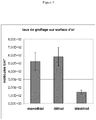
- a comparison of the degree of grafting of the 3 oligonucleotides modified with thiol compounds (tetrathiol, dithiol and monothiol) was carried out.
- the degree of grafting was determined by integration of the peak of oxidation of ferrocene. Indeed, the transferred electron charge is directly related to the number of ferrocenes present on the surface of the electrode, and therefore to the number of probes grafted on gold.
- a histogram of the results is shown on the figure 5 .
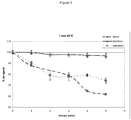
- the tetrathiol molecule is very stable with respect to successive treatments in water at 60.degree. figure 6 ). Indeed, after 5 times one minute of this treatment, 97% of the starting signal remains, unlike monothiol (70% of starting signal) and dithiol (62% of starting signal).
- the loss of signal is greater ( figure 7 ).
- 83% of the starting signal is still quantifiable for tetrathiol.
- the stability of tetrathiol is much greater than that of monothiol (45% of residual signal) and that of dithiol (18% of residual signal).
- HCV Hepatitis C Virus
- 401bp HCV amplicons are produced in the NS5b viral region by RT-PCR from the previously described plasma samples.
- the RNA is extracted from 200 ⁇ L of human plasma using the High Pure Viral Nucleic Acid kit (Roche) according to the manufacturer's recommendations.
- the RNA is eluted in 50 ⁇ l of sterile water (DNase / RNase free).
- RT reverse transcription step
- 11 ⁇ l of RNA are denatured at 72 ° C. for 10 minutes and retro-transcribed in the presence of 4 ⁇ l of 5 ⁇ First Strand Buffer (Invitrogen), 2 ⁇ l of 10 ⁇ hexanucleotide mix.
- cDNA Five microliters of cDNA are then amplified by PCR (polymerase chain reaction) using the primers "biotinylated VHCsens” (SEQ ID NO: 1 [Btn] TgggA TCC CgT Atg ATA CCC gCT gCT TTg A) and “HCVanti sense "(SEQ ID NO: 2 ggC ggA ATT CCT ggT CAT AgC CTC CgT gAA) (see Catherine Tamalet, Philippe Colson, Herve Tissot-Dupont, Mireille Henry, Christian Tourres, Natacha Tivoli, Danielle Botta, Isabelle Ravaux, Isabelle Poizot-Martin and Nouara Yahi.
- biotinylated VHCsens SEQ ID NO: 1 [Btn] TgggA TCC CgT Atg ATA CCC gCT gCT TTg A
- HCVanti sense (SEQ ID NO: 2 ggC gg
- reaction mixture 1X PCR Buffer without MgCl2 (Invitrogen), 0.2 ⁇ M of each primer, 1.5mM MgCl2 (Invitrogen), 0.2mM dNTP mix (Invitrogen) and 1.3U Taq Polymerase (Invitrogen).
- the PCR conditions are as follows: 5 min at 95 ° C, 40 cycles (denaturation: 40 sec, 95 ° C, hybridization: 40 sec, 56 ° C, elongation: 50 sec, 72 ° C), and a final extension from 10 minutes to 72 ° C.
- the HCV amplicons obtained are analyzed by agarose gel electrophoresis, aliquoted and stored at -20 ° C. before use.
- Biotinylated 15-mer oligonucleotides at the 5 'end were synthesized. These oligonucleotides are strictly complementary to the HCV probes chosen as follows.
- the NS5b region of HCV has been targeted for the design of oligonucleotide probes.
- thiol probe alpha or beta anomer oligonucleotides, linear or structured probes (for example stem-loop)
- WB1 buffer 0.1M Na2HPO4, 0.15M NaCl, 0.05% Tween 20 (w / v), pH 7.2
- Functionalization of the wells is performed with 100nM multi-thiol probes in BB buffer (0.1M).
- Hybridization assays can be performed with 15-mer short synthetic targets or with real long HCV amplicons (401 nucleotides) described above.
- the synthetic targets and the amplicons are diluted in 150 ⁇ l of hybridization buffer (TH: 0.9 M NaCl, 60 mM NaH 2 PO 4, 6 mM EDTA, pH 7.4, Denhardt 5X) before being deposited in the wells.
- An additional denaturation step of 10 min at 95 ° C. is carried out on the amplicons before transfer into the microwells.
- Hybridization is carried out overnight at 37 ° C.
- Wells are washed with WB2 buffer (0.75M NaCl, 50mM NaH2PO4, 5mM EDTA, pH 7.4, 0.1% SDS) three times 2 min at RT and once 30 min at 50 ° C.
- the detection step is carried out after incubation for 30 min at RT of the wells in the presence of 100 ⁇ l / well Streptavidin-Europium diluted in 100 ⁇ l of test buffer ("Assay Buffer", Perkin Elmer).
- the wells are finally washed six times with WB3 buffer (WB1X, Perkin Elmer) and 200 ⁇ L of amplification buffer ("Enhancement Buffer", Perkin Elmer) are added to each well for 5 min at RT.
- the time-resolved fluorescence is measured on a Victor3TM 1420 multi-label detector ("multilabel counter", Perkin Elmer) according to the manufacturer's protocol (excitation at 340 nm and emission at 615 nm).
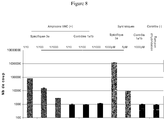
- the ELOSA test is carried out with specific amplicons of the genotype VHC 3a (dilutions 1/10, 1/100 and 1/1000) and specific amplicons of the genotype VHC 1a1b (and therefore not specific genotype 3a).
- the hybridization control is carried out with synthetic targets (15-mer) specific for genotype 3a (complementary to the probe), tested at 1000 ⁇ M and 5 ⁇ M and synthetic targets specific for genotype 1a1b, tested at 1000 ⁇ M.
- the graph of the figure 8 illustrates the results of the ELOSA test and quantifies the hybridization with the tetrathiol probe corresponding to the genotype HCV 3a.
- the "control 1a1b” tests correspond to the background noise; the "specific 3a” results must therefore exceed the background for the test to quantify the hybridization.
- the same ELOSA test is performed by varying the concentration of the probe solution (monothiol, dithiol and tetrathiol) to vary from 1 nM to 100 nM.
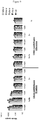
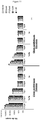
- the ELOSA test is performed with 1a1b and 3a short-chain (15-mer) and medium-chain (105-mer) targets.
- the tests carried out with the genotype 1a1b specific probes show a very good specificity of hybridization with the specific targets 1a1b and no hybridization with non-complementary targets of genotype 3a.
- Detection of probe / target hybridization is effected by fluorescence as before ( figure 8 ).
- the results for each type of probe are shown in the graphs of the figures 9 , 10 and 11 .
- the TH control corresponds to a test carried out in the wells but without the presence of the probes.
- Other probes including 6 and 8 thiols have also been tested and are represented on the figure 14 .
- the figure 9 illustrates the results obtained for the monothiol probe, that is to say comprising a single thiol compound according to the invention.
- the monothiol probe is not effective for 105-mer target detection, the signal for the 105-mer targets being identical to the TH control signal.
- the figure 9 also shows that the probe concentration used for grafting between 10 nM and 100 nM has no effect on the efficiency of the hybridization, indeed, there is no significant difference between the test carried out with 10 nM of probes and that performed with 100 nM probes. On the other hand, the use of a concentration of 1 nM in probe leads to a fall in the efficiency of the hybridization.
- the figure 10 illustrates the results obtained for the dithiol probe, that is to say comprising two thiol compounds according to the invention.
- the dithiol probe proves to be ineffective for the detection of 105-mer targets, a detection of hybridization being observed for a target concentration of 1000 ⁇ M 1a1b.
- the figure 10 shows that the graft density slightly influences the detection of hybridization. Indeed, the fluorescence signal is greater when the probe concentration goes from 1 nM to 100 nM with little difference between 25 nM and 100 nM.
- the figure 11 illustrates the results obtained for the tetrathiol probe, that is to say comprising four thiol compounds according to the invention.
- the tetrathiol probe proves very effective for the detection of 105-mer targets, the fluorescence signal is much greater than the fluorescence signal of the TH control, in particular for a target concentration of 100 ⁇ M and 1000 ⁇ M.
- the figure 11 shows that the graft density influences the detection of hybridization for 105-mer. Indeed, for the same target concentration, for example 1000 ⁇ M, the fluorescence signal is greater when the probe concentration is 100 nM, compared to a probe concentration of 1 nM. This effect, also called "dose dependence" is very marked for the detection of 105-mer targets.
- the figure 14 shows that 6 or 8 thiol probes give satisfactory hybridization results. Indeed, the fluorescence signal for these two probes is similar to that of the tetrathiol probe.
- the figure 12 illustrates the results of a hybridization test conducted with the sequence allowing the genotype 1a / 1b of HCV.
- the test is conducted at three target concentrations, 100 ⁇ M, 10 ⁇ M and 1 ⁇ M, with synthetic targets of 105 bases in length. Negative control is conducted with non-complementary target 3a.
- the tetrathiol probe 1a / 1b is grafted onto the gold surface working electrode of the electrochemical cell.
- the recognition reaction is followed by differential pulse voltammetry.
- the values indicated on the ordinate correspond to the normalized values of current variation.
- This electrochemical test is sensitive and specific to a target concentration of 1 ⁇ M. The signal variation appears to be stronger than for the test conducted at 100pM.
Landscapes
- Chemical & Material Sciences (AREA)
- Organic Chemistry (AREA)
- Health & Medical Sciences (AREA)
- Life Sciences & Earth Sciences (AREA)
- Molecular Biology (AREA)
- Biochemistry (AREA)
- Engineering & Computer Science (AREA)
- Genetics & Genomics (AREA)
- General Health & Medical Sciences (AREA)
- Biotechnology (AREA)
- Biomedical Technology (AREA)
- Zoology (AREA)
- Bioinformatics & Cheminformatics (AREA)
- General Engineering & Computer Science (AREA)
- Wood Science & Technology (AREA)
- Physics & Mathematics (AREA)
- Microbiology (AREA)
- Plant Pathology (AREA)
- Biophysics (AREA)
- Chemical Kinetics & Catalysis (AREA)
- Medicinal Chemistry (AREA)
- Polymers & Plastics (AREA)
- Measuring Or Testing Involving Enzymes Or Micro-Organisms (AREA)
- Organic Low-Molecular-Weight Compounds And Preparation Thereof (AREA)
- Investigating Or Analysing Biological Materials (AREA)
- Apparatus Associated With Microorganisms And Enzymes (AREA)
Applications Claiming Priority (2)
| Application Number | Priority Date | Filing Date | Title |
|---|---|---|---|
| FR1253121A FR2989086B1 (fr) | 2012-04-04 | 2012-04-04 | Composes thiol et leur utilisation pour la synthese d'oligonucleotides modifies |
| PCT/EP2013/057122 WO2013150106A1 (fr) | 2012-04-04 | 2013-04-04 | Composés thiol et leur utilisation pour la synthèse d'oligonucléotides modifiés |
Publications (2)
| Publication Number | Publication Date |
|---|---|
| EP2834253A1 EP2834253A1 (fr) | 2015-02-11 |
| EP2834253B1 true EP2834253B1 (fr) | 2017-03-29 |
Family
ID=48045562
Family Applications (1)
| Application Number | Title | Priority Date | Filing Date |
|---|---|---|---|
| EP13713922.6A Active EP2834253B1 (fr) | 2012-04-04 | 2013-04-04 | Composés thiol et leur utilisation pour la synthèse d'oligonucléotides modifiés |
Country Status (7)
| Country | Link |
|---|---|
| US (2) | US9896473B2 (enExample) |
| EP (1) | EP2834253B1 (enExample) |
| JP (1) | JP6152415B2 (enExample) |
| CA (1) | CA2869429C (enExample) |
| ES (1) | ES2628322T3 (enExample) |
| FR (1) | FR2989086B1 (enExample) |
| WO (1) | WO2013150106A1 (enExample) |
Families Citing this family (5)
| Publication number | Priority date | Publication date | Assignee | Title |
|---|---|---|---|---|
| JP2909632B2 (ja) | 1989-12-29 | 1999-06-23 | 基礎地盤コンサルタンツ株式会社 | 地下水採取器及びこれを用いた地下水水質測定法 |
| FR2989089B1 (fr) | 2012-04-04 | 2020-02-07 | Etablissement Francais Du Sang | Oligonucleotides modifies comprenant des fonctions thiol et leur utilisation pour la detection d'acides nucleiques |
| JP7282379B2 (ja) * | 2017-08-22 | 2023-05-29 | 国立大学法人東海国立大学機構 | 修飾ポリヌクレオチド |
| EP4305198A1 (en) | 2021-03-09 | 2024-01-17 | Etablissement Français du Sang | Detection of infectious agent based on recombinase polymerase amplification combined with a magnetic field-enhanced agglutination |
| CN113289587B (zh) * | 2021-05-10 | 2023-11-28 | 苏州君盟生物医药科技有限公司 | 巯基修饰的磁性纳米微球及其制备方法、应用 |
Family Cites Families (4)
| Publication number | Priority date | Publication date | Assignee | Title |
|---|---|---|---|---|
| IE922292A1 (en) * | 1991-07-15 | 1993-01-27 | Jolla Pharma | Modified phosphorous intermediates for providing functional¹groups on the 5' end of oligonucleotides |
| DE10163836A1 (de) * | 2001-12-22 | 2003-07-10 | Friz Biochem Gmbh | Multifunktionales Reagenz zur Synthese von thiolmodifizierten Oligomeren |
| CA2650668A1 (en) * | 2006-04-28 | 2007-11-08 | Centre National De La Recherche Scientifique | Method for the synthesis of triazole-containing oligonucleotide deratives |
| WO2009061941A2 (en) * | 2007-11-06 | 2009-05-14 | Osmetech Molecular Diagnostics | Baseless nucleotide analogues and uses thereof |
-
2012
- 2012-04-04 FR FR1253121A patent/FR2989086B1/fr active Active
-
2013
- 2013-04-04 EP EP13713922.6A patent/EP2834253B1/fr active Active
- 2013-04-04 JP JP2015503881A patent/JP6152415B2/ja active Active
- 2013-04-04 ES ES13713922.6T patent/ES2628322T3/es active Active
- 2013-04-04 WO PCT/EP2013/057122 patent/WO2013150106A1/fr not_active Ceased
- 2013-04-04 US US14/390,747 patent/US9896473B2/en active Active
- 2013-04-04 CA CA2869429A patent/CA2869429C/fr active Active
-
2018
- 2018-01-04 US US15/862,485 patent/US11078229B2/en active Active
Non-Patent Citations (1)
| Title |
|---|
| None * |
Also Published As
| Publication number | Publication date |
|---|---|
| FR2989086A1 (fr) | 2013-10-11 |
| WO2013150106A1 (fr) | 2013-10-10 |
| CA2869429C (fr) | 2022-11-01 |
| FR2989086B1 (fr) | 2017-03-24 |
| US11078229B2 (en) | 2021-08-03 |
| JP2015515471A (ja) | 2015-05-28 |
| US9896473B2 (en) | 2018-02-20 |
| EP2834253A1 (fr) | 2015-02-11 |
| JP6152415B2 (ja) | 2017-06-21 |
| US20180265538A1 (en) | 2018-09-20 |
| CA2869429A1 (fr) | 2013-10-10 |
| US20150158964A1 (en) | 2015-06-11 |
| ES2628322T3 (es) | 2017-08-02 |
Similar Documents
| Publication | Publication Date | Title |
|---|---|---|
| CA2958135C (fr) | Nucleotides modifies pour la synthese d'acides nucleiques, un kit renfermant de tels nucleotides et leur utilisation pour la production de genes ou sequences d'acides nucleiques synthetiques | |
| EP0691978B1 (fr) | Copolymere nucleotide(s)/polymere conducteur electronique, son procede de preparation et son utilisation | |
| EP3504340B1 (en) | Tagged nucleotides useful for nanopore detection | |
| JP5646172B2 (ja) | リポーター分子の製造のためのクリックケミストリー | |
| KR101028980B1 (ko) | 포스페이트 모방체를 함유하는 폴리뉴클레오티드 | |
| EP2834253B1 (fr) | Composés thiol et leur utilisation pour la synthèse d'oligonucléotides modifiés | |
| EP0206913B1 (fr) | Nouveaux supports, la préparation de ces supports, les intermédiaires nouveaux obtenus, leur application à la synthèse d'oligonucléotides et les nouveaux nécléosides et oligonucléotides reliés aux supports ainsi obtenus | |
| WO1994023064A1 (fr) | Nouveaux derives utilisables en sequençage d'acides nucleiques | |
| EP2859008B1 (fr) | Oligonucleotides modifies compenant des fonctions thiol et leur utilisation pour la detection d'acides nucleiques | |
| EP1248859B1 (fr) | Procedes de synthese et d'immobilisation d'acides nucleiques sur un support solide silanise | |
| FR2750435A1 (fr) | Procede de formation de complexes d'hybridation dont la stabilite depend peu de la composition en base des deux molecules d'acides nucleiques hybridees | |
| HK1126224B (en) | Polynucleotide containing a phosphate mimetic |
Legal Events
| Date | Code | Title | Description |
|---|---|---|---|
| PUAI | Public reference made under article 153(3) epc to a published international application that has entered the european phase |
Free format text: ORIGINAL CODE: 0009012 |
|
| 17P | Request for examination filed |
Effective date: 20141007 |
|
| AK | Designated contracting states |
Kind code of ref document: A1 Designated state(s): AL AT BE BG CH CY CZ DE DK EE ES FI FR GB GR HR HU IE IS IT LI LT LU LV MC MK MT NL NO PL PT RO RS SE SI SK SM TR |
|
| AX | Request for extension of the european patent |
Extension state: BA ME |
|
| RIN1 | Information on inventor provided before grant (corrected) |
Inventor name: LEREAU, MYRIAM Inventor name: FOURNIER-WIRTH, CHANTAL Inventor name: CANTALOUBE, JEAN-FRANCOIS Inventor name: FARRE, CAROLE Inventor name: MORVAN, FRANCOIS Inventor name: VASSEUR, JEAN-JACQUES Inventor name: MAYEN, JULIE Inventor name: MEYER, ALBERT Inventor name: CHAIX, CAROLE |
|
| DAX | Request for extension of the european patent (deleted) | ||
| 17Q | First examination report despatched |
Effective date: 20151113 |
|
| GRAP | Despatch of communication of intention to grant a patent |
Free format text: ORIGINAL CODE: EPIDOSNIGR1 |
|
| INTG | Intention to grant announced |
Effective date: 20161028 |
|
| GRAS | Grant fee paid |
Free format text: ORIGINAL CODE: EPIDOSNIGR3 |
|
| GRAA | (expected) grant |
Free format text: ORIGINAL CODE: 0009210 |
|
| AK | Designated contracting states |
Kind code of ref document: B1 Designated state(s): AL AT BE BG CH CY CZ DE DK EE ES FI FR GB GR HR HU IE IS IT LI LT LU LV MC MK MT NL NO PL PT RO RS SE SI SK SM TR |
|
| REG | Reference to a national code |
Ref country code: GB Ref legal event code: FG4D Free format text: NOT ENGLISH |
|
| REG | Reference to a national code |
Ref country code: CH Ref legal event code: EP |
|
| REG | Reference to a national code |
Ref country code: AT Ref legal event code: REF Ref document number: 879660 Country of ref document: AT Kind code of ref document: T Effective date: 20170415 |
|
| REG | Reference to a national code |
Ref country code: IE Ref legal event code: FG4D Free format text: LANGUAGE OF EP DOCUMENT: FRENCH |
|
| REG | Reference to a national code |
Ref country code: DE Ref legal event code: R096 Ref document number: 602013019149 Country of ref document: DE |
|
| REG | Reference to a national code |
Ref country code: FR Ref legal event code: PLFP Year of fee payment: 5 |
|
| REG | Reference to a national code |
Ref country code: NL Ref legal event code: FP |
|
| PG25 | Lapsed in a contracting state [announced via postgrant information from national office to epo] |
Ref country code: HR Free format text: LAPSE BECAUSE OF FAILURE TO SUBMIT A TRANSLATION OF THE DESCRIPTION OR TO PAY THE FEE WITHIN THE PRESCRIBED TIME-LIMIT Effective date: 20170329 Ref country code: FI Free format text: LAPSE BECAUSE OF FAILURE TO SUBMIT A TRANSLATION OF THE DESCRIPTION OR TO PAY THE FEE WITHIN THE PRESCRIBED TIME-LIMIT Effective date: 20170329 Ref country code: LT Free format text: LAPSE BECAUSE OF FAILURE TO SUBMIT A TRANSLATION OF THE DESCRIPTION OR TO PAY THE FEE WITHIN THE PRESCRIBED TIME-LIMIT Effective date: 20170329 Ref country code: NO Free format text: LAPSE BECAUSE OF FAILURE TO SUBMIT A TRANSLATION OF THE DESCRIPTION OR TO PAY THE FEE WITHIN THE PRESCRIBED TIME-LIMIT Effective date: 20170629 Ref country code: GR Free format text: LAPSE BECAUSE OF FAILURE TO SUBMIT A TRANSLATION OF THE DESCRIPTION OR TO PAY THE FEE WITHIN THE PRESCRIBED TIME-LIMIT Effective date: 20170630 |
|
| REG | Reference to a national code |
Ref country code: ES Ref legal event code: FG2A Ref document number: 2628322 Country of ref document: ES Kind code of ref document: T3 Effective date: 20170802 |
|
| REG | Reference to a national code |
Ref country code: CH Ref legal event code: NV Representative=s name: WEINMANN ZIMMERLI, CH |
|
| PG25 | Lapsed in a contracting state [announced via postgrant information from national office to epo] |
Ref country code: SE Free format text: LAPSE BECAUSE OF FAILURE TO SUBMIT A TRANSLATION OF THE DESCRIPTION OR TO PAY THE FEE WITHIN THE PRESCRIBED TIME-LIMIT Effective date: 20170329 Ref country code: BG Free format text: LAPSE BECAUSE OF FAILURE TO SUBMIT A TRANSLATION OF THE DESCRIPTION OR TO PAY THE FEE WITHIN THE PRESCRIBED TIME-LIMIT Effective date: 20170629 Ref country code: LV Free format text: LAPSE BECAUSE OF FAILURE TO SUBMIT A TRANSLATION OF THE DESCRIPTION OR TO PAY THE FEE WITHIN THE PRESCRIBED TIME-LIMIT Effective date: 20170329 Ref country code: RS Free format text: LAPSE BECAUSE OF FAILURE TO SUBMIT A TRANSLATION OF THE DESCRIPTION OR TO PAY THE FEE WITHIN THE PRESCRIBED TIME-LIMIT Effective date: 20170329 |
|
| RAP2 | Party data changed (patent owner data changed or rights of a patent transferred) |
Owner name: ETABLISSEMENT FRANCAIS DU SANG Owner name: UNIVERSITE DE MONTPELLIER Owner name: UNIVERSITE CLAUDE BERNARD LYON 1 Owner name: CENTRE NATIONAL DE LA RECHERCHE SCIENTIFIQUE (C.N. |
|
| PG25 | Lapsed in a contracting state [announced via postgrant information from national office to epo] |
Ref country code: SK Free format text: LAPSE BECAUSE OF FAILURE TO SUBMIT A TRANSLATION OF THE DESCRIPTION OR TO PAY THE FEE WITHIN THE PRESCRIBED TIME-LIMIT Effective date: 20170329 Ref country code: EE Free format text: LAPSE BECAUSE OF FAILURE TO SUBMIT A TRANSLATION OF THE DESCRIPTION OR TO PAY THE FEE WITHIN THE PRESCRIBED TIME-LIMIT Effective date: 20170329 Ref country code: RO Free format text: LAPSE BECAUSE OF FAILURE TO SUBMIT A TRANSLATION OF THE DESCRIPTION OR TO PAY THE FEE WITHIN THE PRESCRIBED TIME-LIMIT Effective date: 20170329 Ref country code: CZ Free format text: LAPSE BECAUSE OF FAILURE TO SUBMIT A TRANSLATION OF THE DESCRIPTION OR TO PAY THE FEE WITHIN THE PRESCRIBED TIME-LIMIT Effective date: 20170329 |
|
| PG25 | Lapsed in a contracting state [announced via postgrant information from national office to epo] |
Ref country code: PL Free format text: LAPSE BECAUSE OF FAILURE TO SUBMIT A TRANSLATION OF THE DESCRIPTION OR TO PAY THE FEE WITHIN THE PRESCRIBED TIME-LIMIT Effective date: 20170329 Ref country code: SM Free format text: LAPSE BECAUSE OF FAILURE TO SUBMIT A TRANSLATION OF THE DESCRIPTION OR TO PAY THE FEE WITHIN THE PRESCRIBED TIME-LIMIT Effective date: 20170329 Ref country code: IS Free format text: LAPSE BECAUSE OF FAILURE TO SUBMIT A TRANSLATION OF THE DESCRIPTION OR TO PAY THE FEE WITHIN THE PRESCRIBED TIME-LIMIT Effective date: 20170729 Ref country code: PT Free format text: LAPSE BECAUSE OF FAILURE TO SUBMIT A TRANSLATION OF THE DESCRIPTION OR TO PAY THE FEE WITHIN THE PRESCRIBED TIME-LIMIT Effective date: 20170731 |
|
| REG | Reference to a national code |
Ref country code: DE Ref legal event code: R097 Ref document number: 602013019149 Country of ref document: DE |
|
| REG | Reference to a national code |
Ref country code: IE Ref legal event code: MM4A |
|
| REG | Reference to a national code |
Ref country code: DE Ref legal event code: R082 Ref document number: 602013019149 Country of ref document: DE |
|
| PG25 | Lapsed in a contracting state [announced via postgrant information from national office to epo] |
Ref country code: MC Free format text: LAPSE BECAUSE OF FAILURE TO SUBMIT A TRANSLATION OF THE DESCRIPTION OR TO PAY THE FEE WITHIN THE PRESCRIBED TIME-LIMIT Effective date: 20170329 Ref country code: DK Free format text: LAPSE BECAUSE OF FAILURE TO SUBMIT A TRANSLATION OF THE DESCRIPTION OR TO PAY THE FEE WITHIN THE PRESCRIBED TIME-LIMIT Effective date: 20170329 |
|
| PLBE | No opposition filed within time limit |
Free format text: ORIGINAL CODE: 0009261 |
|
| STAA | Information on the status of an ep patent application or granted ep patent |
Free format text: STATUS: NO OPPOSITION FILED WITHIN TIME LIMIT |
|
| PG25 | Lapsed in a contracting state [announced via postgrant information from national office to epo] |
Ref country code: LU Free format text: LAPSE BECAUSE OF NON-PAYMENT OF DUE FEES Effective date: 20170404 |
|
| 26N | No opposition filed |
Effective date: 20180103 |
|
| REG | Reference to a national code |
Ref country code: FR Ref legal event code: PLFP Year of fee payment: 6 |
|
| PG25 | Lapsed in a contracting state [announced via postgrant information from national office to epo] |
Ref country code: IE Free format text: LAPSE BECAUSE OF NON-PAYMENT OF DUE FEES Effective date: 20170404 |
|
| PG25 | Lapsed in a contracting state [announced via postgrant information from national office to epo] |
Ref country code: SI Free format text: LAPSE BECAUSE OF FAILURE TO SUBMIT A TRANSLATION OF THE DESCRIPTION OR TO PAY THE FEE WITHIN THE PRESCRIBED TIME-LIMIT Effective date: 20170329 |
|
| PG25 | Lapsed in a contracting state [announced via postgrant information from national office to epo] |
Ref country code: MT Free format text: LAPSE BECAUSE OF FAILURE TO SUBMIT A TRANSLATION OF THE DESCRIPTION OR TO PAY THE FEE WITHIN THE PRESCRIBED TIME-LIMIT Effective date: 20170329 |
|
| PG25 | Lapsed in a contracting state [announced via postgrant information from national office to epo] |
Ref country code: HU Free format text: LAPSE BECAUSE OF FAILURE TO SUBMIT A TRANSLATION OF THE DESCRIPTION OR TO PAY THE FEE WITHIN THE PRESCRIBED TIME-LIMIT; INVALID AB INITIO Effective date: 20130404 |
|
| PG25 | Lapsed in a contracting state [announced via postgrant information from national office to epo] |
Ref country code: CY Free format text: LAPSE BECAUSE OF FAILURE TO SUBMIT A TRANSLATION OF THE DESCRIPTION OR TO PAY THE FEE WITHIN THE PRESCRIBED TIME-LIMIT Effective date: 20170329 |
|
| PG25 | Lapsed in a contracting state [announced via postgrant information from national office to epo] |
Ref country code: MK Free format text: LAPSE BECAUSE OF FAILURE TO SUBMIT A TRANSLATION OF THE DESCRIPTION OR TO PAY THE FEE WITHIN THE PRESCRIBED TIME-LIMIT Effective date: 20170329 |
|
| REG | Reference to a national code |
Ref country code: AT Ref legal event code: UEP Ref document number: 879660 Country of ref document: AT Kind code of ref document: T Effective date: 20170329 |
|
| PG25 | Lapsed in a contracting state [announced via postgrant information from national office to epo] |
Ref country code: TR Free format text: LAPSE BECAUSE OF FAILURE TO SUBMIT A TRANSLATION OF THE DESCRIPTION OR TO PAY THE FEE WITHIN THE PRESCRIBED TIME-LIMIT Effective date: 20170329 |
|
| PG25 | Lapsed in a contracting state [announced via postgrant information from national office to epo] |
Ref country code: AL Free format text: LAPSE BECAUSE OF FAILURE TO SUBMIT A TRANSLATION OF THE DESCRIPTION OR TO PAY THE FEE WITHIN THE PRESCRIBED TIME-LIMIT Effective date: 20170329 |
|
| PGFP | Annual fee paid to national office [announced via postgrant information from national office to epo] |
Ref country code: NL Payment date: 20220329 Year of fee payment: 10 |
|
| PGFP | Annual fee paid to national office [announced via postgrant information from national office to epo] |
Ref country code: IT Payment date: 20220411 Year of fee payment: 10 Ref country code: ES Payment date: 20220503 Year of fee payment: 10 |
|
| PGFP | Annual fee paid to national office [announced via postgrant information from national office to epo] |
Ref country code: AT Payment date: 20220317 Year of fee payment: 10 |
|
| REG | Reference to a national code |
Ref country code: NL Ref legal event code: MM Effective date: 20230501 |
|
| REG | Reference to a national code |
Ref country code: AT Ref legal event code: MM01 Ref document number: 879660 Country of ref document: AT Kind code of ref document: T Effective date: 20230404 |
|
| PG25 | Lapsed in a contracting state [announced via postgrant information from national office to epo] |
Ref country code: NL Free format text: LAPSE BECAUSE OF NON-PAYMENT OF DUE FEES Effective date: 20230501 Ref country code: AT Free format text: LAPSE BECAUSE OF NON-PAYMENT OF DUE FEES Effective date: 20230404 |
|
| PG25 | Lapsed in a contracting state [announced via postgrant information from national office to epo] |
Ref country code: IT Free format text: LAPSE BECAUSE OF NON-PAYMENT OF DUE FEES Effective date: 20230404 |
|
| REG | Reference to a national code |
Ref country code: ES Ref legal event code: FD2A Effective date: 20240531 |
|
| PG25 | Lapsed in a contracting state [announced via postgrant information from national office to epo] |
Ref country code: ES Free format text: LAPSE BECAUSE OF NON-PAYMENT OF DUE FEES Effective date: 20230405 |
|
| PG25 | Lapsed in a contracting state [announced via postgrant information from national office to epo] |
Ref country code: ES Free format text: LAPSE BECAUSE OF NON-PAYMENT OF DUE FEES Effective date: 20230405 |
|
| PGFP | Annual fee paid to national office [announced via postgrant information from national office to epo] |
Ref country code: FR Payment date: 20250311 Year of fee payment: 13 |
|
| PGFP | Annual fee paid to national office [announced via postgrant information from national office to epo] |
Ref country code: DE Payment date: 20250411 Year of fee payment: 13 |
|
| PGFP | Annual fee paid to national office [announced via postgrant information from national office to epo] |
Ref country code: GB Payment date: 20250417 Year of fee payment: 13 |
|
| PGFP | Annual fee paid to national office [announced via postgrant information from national office to epo] |
Ref country code: BE Payment date: 20250423 Year of fee payment: 13 |
|
| PGFP | Annual fee paid to national office [announced via postgrant information from national office to epo] |
Ref country code: CH Payment date: 20250501 Year of fee payment: 13 |