EP2831227B1 - Microorganisme recombinant - Google Patents
Microorganisme recombinant Download PDFInfo
- Publication number
- EP2831227B1 EP2831227B1 EP13712789.0A EP13712789A EP2831227B1 EP 2831227 B1 EP2831227 B1 EP 2831227B1 EP 13712789 A EP13712789 A EP 13712789A EP 2831227 B1 EP2831227 B1 EP 2831227B1
- Authority
- EP
- European Patent Office
- Prior art keywords
- microorganism
- pla
- lactic acid
- monomer
- synthesizing
- Prior art date
- Legal status (The legal status is an assumption and is not a legal conclusion. Google has not performed a legal analysis and makes no representation as to the accuracy of the status listed.)
- Not-in-force
Links
- 244000005700 microbiome Species 0.000 title claims description 99
- JVTAAEKCZFNVCJ-UHFFFAOYSA-N lactic acid Chemical compound CC(O)C(O)=O JVTAAEKCZFNVCJ-UHFFFAOYSA-N 0.000 claims description 103
- 239000000178 monomer Substances 0.000 claims description 56
- 239000004310 lactic acid Substances 0.000 claims description 51
- 235000014655 lactic acid Nutrition 0.000 claims description 51
- 229920000642 polymer Polymers 0.000 claims description 40
- 108010067770 Endopeptidase K Proteins 0.000 claims description 32
- OKTJSMMVPCPJKN-UHFFFAOYSA-N Carbon Chemical compound [C] OKTJSMMVPCPJKN-UHFFFAOYSA-N 0.000 claims description 26
- 229910052799 carbon Inorganic materials 0.000 claims description 26
- 238000000034 method Methods 0.000 claims description 22
- 239000004626 polylactic acid Substances 0.000 claims description 15
- 230000002194 synthesizing effect Effects 0.000 claims description 15
- 102000004190 Enzymes Human genes 0.000 claims description 14
- 108090000790 Enzymes Proteins 0.000 claims description 14
- 241000894006 Bacteria Species 0.000 claims description 12
- 229920000747 poly(lactic acid) Polymers 0.000 claims description 11
- 230000008569 process Effects 0.000 claims description 10
- 239000004215 Carbon black (E152) Substances 0.000 claims description 9
- 229930195733 hydrocarbon Natural products 0.000 claims description 9
- 150000002430 hydrocarbons Chemical class 0.000 claims description 9
- 108090001060 Lipase Proteins 0.000 claims description 7
- 102000004882 Lipase Human genes 0.000 claims description 7
- 102000003855 L-lactate dehydrogenase Human genes 0.000 claims description 6
- 108700023483 L-lactate dehydrogenases Proteins 0.000 claims description 6
- 239000004367 Lipase Substances 0.000 claims description 6
- 235000019421 lipase Nutrition 0.000 claims description 6
- 230000006652 catabolic pathway Effects 0.000 claims description 2
- 230000000116 mitigating effect Effects 0.000 claims 1
- 238000004519 manufacturing process Methods 0.000 description 36
- 239000001963 growth medium Substances 0.000 description 28
- WQZGKKKJIJFFOK-GASJEMHNSA-N Glucose Natural products OC[C@H]1OC(O)[C@H](O)[C@@H](O)[C@@H]1O WQZGKKKJIJFFOK-GASJEMHNSA-N 0.000 description 25
- 239000008103 glucose Substances 0.000 description 25
- 244000057717 Streptococcus lactis Species 0.000 description 17
- 241000588724 Escherichia coli Species 0.000 description 15
- PEDCQBHIVMGVHV-UHFFFAOYSA-N Glycerine Chemical compound OCC(O)CO PEDCQBHIVMGVHV-UHFFFAOYSA-N 0.000 description 15
- 238000000855 fermentation Methods 0.000 description 15
- 230000004151 fermentation Effects 0.000 description 15
- 239000002609 medium Substances 0.000 description 15
- 239000002028 Biomass Substances 0.000 description 13
- 229940088598 enzyme Drugs 0.000 description 13
- JVTAAEKCZFNVCJ-UHFFFAOYSA-M Lactate Chemical compound CC(O)C([O-])=O JVTAAEKCZFNVCJ-UHFFFAOYSA-M 0.000 description 12
- 230000000875 corresponding effect Effects 0.000 description 12
- 108090000623 proteins and genes Proteins 0.000 description 10
- KDYFGRWQOYBRFD-UHFFFAOYSA-N succinic acid Chemical compound OC(=O)CCC(O)=O KDYFGRWQOYBRFD-UHFFFAOYSA-N 0.000 description 10
- 239000013598 vector Substances 0.000 description 10
- 208000034530 PLAA-associated neurodevelopmental disease Diseases 0.000 description 9
- 230000015572 biosynthetic process Effects 0.000 description 9
- 241000193401 Clostridium acetobutylicum Species 0.000 description 8
- 230000015556 catabolic process Effects 0.000 description 8
- 238000006731 degradation reaction Methods 0.000 description 8
- 239000013612 plasmid Substances 0.000 description 8
- 238000003786 synthesis reaction Methods 0.000 description 8
- 108020004414 DNA Proteins 0.000 description 7
- 240000004808 Saccharomyces cerevisiae Species 0.000 description 6
- 235000014680 Saccharomyces cerevisiae Nutrition 0.000 description 6
- 239000012228 culture supernatant Substances 0.000 description 6
- 230000007062 hydrolysis Effects 0.000 description 6
- 238000006460 hydrolysis reaction Methods 0.000 description 6
- YPFDHNVEDLHUCE-UHFFFAOYSA-N 1,3-propanediol Substances OCCCO YPFDHNVEDLHUCE-UHFFFAOYSA-N 0.000 description 5
- 235000014897 Streptococcus lactis Nutrition 0.000 description 5
- 238000004128 high performance liquid chromatography Methods 0.000 description 5
- 239000000758 substrate Substances 0.000 description 5
- 239000001384 succinic acid Substances 0.000 description 5
- 235000000346 sugar Nutrition 0.000 description 5
- DNIAPMSPPWPWGF-VKHMYHEASA-N (+)-propylene glycol Chemical compound C[C@H](O)CO DNIAPMSPPWPWGF-VKHMYHEASA-N 0.000 description 4
- QTBSBXVTEAMEQO-UHFFFAOYSA-M Acetate Chemical compound CC([O-])=O QTBSBXVTEAMEQO-UHFFFAOYSA-M 0.000 description 4
- 241000694959 Cryptococcus sp. Species 0.000 description 4
- 241000203780 Thermobifida fusca Species 0.000 description 4
- 238000004458 analytical method Methods 0.000 description 4
- 230000037361 pathway Effects 0.000 description 4
- 229920000166 polytrimethylene carbonate Polymers 0.000 description 4
- 229920002215 polytrimethylene terephthalate Polymers 0.000 description 4
- 239000000243 solution Substances 0.000 description 4
- 150000008163 sugars Chemical class 0.000 description 4
- QTBSBXVTEAMEQO-UHFFFAOYSA-N Acetic acid Chemical compound CC(O)=O QTBSBXVTEAMEQO-UHFFFAOYSA-N 0.000 description 3
- 241001522168 Amycolatopsis sp. Species 0.000 description 3
- 102100027122 RNA transcription, translation and transport factor protein Human genes 0.000 description 3
- HEMHJVSKTPXQMS-UHFFFAOYSA-M Sodium hydroxide Chemical compound [OH-].[Na+] HEMHJVSKTPXQMS-UHFFFAOYSA-M 0.000 description 3
- 238000010367 cloning Methods 0.000 description 3
- RMRCNWBMXRMIRW-BYFNXCQMSA-M cyanocobalamin Chemical compound N#C[Co+]N([C@]1([H])[C@H](CC(N)=O)[C@]\2(CCC(=O)NC[C@H](C)OP(O)(=O)OC3[C@H]([C@H](O[C@@H]3CO)N3C4=CC(C)=C(C)C=C4N=C3)O)C)C/2=C(C)\C([C@H](C/2(C)C)CCC(N)=O)=N\C\2=C\C([C@H]([C@@]/2(CC(N)=O)C)CCC(N)=O)=N\C\2=C(C)/C2=N[C@]1(C)[C@@](C)(CC(N)=O)[C@@H]2CCC(N)=O RMRCNWBMXRMIRW-BYFNXCQMSA-M 0.000 description 3
- 238000004520 electroporation Methods 0.000 description 3
- 238000002474 experimental method Methods 0.000 description 3
- 238000012239 gene modification Methods 0.000 description 3
- 230000005017 genetic modification Effects 0.000 description 3
- 235000013617 genetically modified food Nutrition 0.000 description 3
- 239000000203 mixture Substances 0.000 description 3
- 238000012544 monitoring process Methods 0.000 description 3
- 239000013642 negative control Substances 0.000 description 3
- 230000003287 optical effect Effects 0.000 description 3
- 229920003023 plastic Polymers 0.000 description 3
- 239000004033 plastic Substances 0.000 description 3
- -1 polyethylene terephthalate Polymers 0.000 description 3
- 238000003752 polymerase chain reaction Methods 0.000 description 3
- 239000000047 product Substances 0.000 description 3
- 102000004169 proteins and genes Human genes 0.000 description 3
- LXNHXLLTXMVWPM-UHFFFAOYSA-N pyridoxine Chemical compound CC1=NC=C(CO)C(CO)=C1O LXNHXLLTXMVWPM-UHFFFAOYSA-N 0.000 description 3
- 239000006228 supernatant Substances 0.000 description 3
- 230000009466 transformation Effects 0.000 description 3
- YBJHBAHKTGYVGT-ZKWXMUAHSA-N (+)-Biotin Chemical compound N1C(=O)N[C@@H]2[C@H](CCCCC(=O)O)SC[C@@H]21 YBJHBAHKTGYVGT-ZKWXMUAHSA-N 0.000 description 2
- ALYNCZNDIQEVRV-UHFFFAOYSA-N 4-aminobenzoic acid Chemical compound NC1=CC=C(C(O)=O)C=C1 ALYNCZNDIQEVRV-UHFFFAOYSA-N 0.000 description 2
- LRFVTYWOQMYALW-UHFFFAOYSA-N 9H-xanthine Chemical compound O=C1NC(=O)NC2=C1NC=N2 LRFVTYWOQMYALW-UHFFFAOYSA-N 0.000 description 2
- 241000228245 Aspergillus niger Species 0.000 description 2
- IJGRMHOSHXDMSA-UHFFFAOYSA-N Atomic nitrogen Chemical compound N#N IJGRMHOSHXDMSA-UHFFFAOYSA-N 0.000 description 2
- 241000222120 Candida <Saccharomycetales> Species 0.000 description 2
- 241000423302 Clostridium acetobutylicum ATCC 824 Species 0.000 description 2
- SRBFZHDQGSBBOR-IOVATXLUSA-N D-xylopyranose Chemical compound O[C@@H]1COC(O)[C@H](O)[C@H]1O SRBFZHDQGSBBOR-IOVATXLUSA-N 0.000 description 2
- VZCYOOQTPOCHFL-OWOJBTEDSA-N Fumaric acid Chemical compound OC(=O)\C=C\C(O)=O VZCYOOQTPOCHFL-OWOJBTEDSA-N 0.000 description 2
- 241001523956 Parengyodontium album Species 0.000 description 2
- 239000004698 Polyethylene Substances 0.000 description 2
- 108010076504 Protein Sorting Signals Proteins 0.000 description 2
- 229930006000 Sucrose Natural products 0.000 description 2
- CZMRCDWAGMRECN-UGDNZRGBSA-N Sucrose Chemical compound O[C@H]1[C@H](O)[C@@H](CO)O[C@@]1(CO)O[C@@H]1[C@H](O)[C@@H](O)[C@H](O)[C@@H](CO)O1 CZMRCDWAGMRECN-UGDNZRGBSA-N 0.000 description 2
- QAOWNCQODCNURD-UHFFFAOYSA-N Sulfuric acid Chemical compound OS(O)(=O)=O QAOWNCQODCNURD-UHFFFAOYSA-N 0.000 description 2
- KKEYFWRCBNTPAC-UHFFFAOYSA-N Terephthalic acid Chemical compound OC(=O)C1=CC=C(C(O)=O)C=C1 KKEYFWRCBNTPAC-UHFFFAOYSA-N 0.000 description 2
- IQFYYKKMVGJFEH-XLPZGREQSA-N Thymidine Chemical compound O=C1NC(=O)C(C)=CN1[C@@H]1O[C@H](CO)[C@@H](O)C1 IQFYYKKMVGJFEH-XLPZGREQSA-N 0.000 description 2
- ISAKRJDGNUQOIC-UHFFFAOYSA-N Uracil Chemical compound O=C1C=CNC(=O)N1 ISAKRJDGNUQOIC-UHFFFAOYSA-N 0.000 description 2
- 150000001413 amino acids Chemical group 0.000 description 2
- 230000001580 bacterial effect Effects 0.000 description 2
- WQZGKKKJIJFFOK-VFUOTHLCSA-N beta-D-glucose Chemical compound OC[C@H]1O[C@@H](O)[C@H](O)[C@@H](O)[C@@H]1O WQZGKKKJIJFFOK-VFUOTHLCSA-N 0.000 description 2
- 230000001925 catabolic effect Effects 0.000 description 2
- 238000012512 characterization method Methods 0.000 description 2
- 238000010276 construction Methods 0.000 description 2
- 108010005400 cutinase Proteins 0.000 description 2
- 238000001514 detection method Methods 0.000 description 2
- 230000029087 digestion Effects 0.000 description 2
- 230000000694 effects Effects 0.000 description 2
- OVBPIULPVIDEAO-LBPRGKRZSA-N folic acid Chemical compound C=1N=C2NC(N)=NC(=O)C2=NC=1CNC1=CC=C(C(=O)N[C@@H](CCC(O)=O)C(O)=O)C=C1 OVBPIULPVIDEAO-LBPRGKRZSA-N 0.000 description 2
- 235000011389 fruit/vegetable juice Nutrition 0.000 description 2
- UYTPUPDQBNUYGX-UHFFFAOYSA-N guanine Chemical compound O=C1NC(N)=NC2=C1N=CN2 UYTPUPDQBNUYGX-UHFFFAOYSA-N 0.000 description 2
- 229940030980 inova Drugs 0.000 description 2
- 229930027917 kanamycin Natural products 0.000 description 2
- SBUJHOSQTJFQJX-NOAMYHISSA-N kanamycin Chemical compound O[C@@H]1[C@@H](O)[C@H](O)[C@@H](CN)O[C@@H]1O[C@H]1[C@H](O)[C@@H](O[C@@H]2[C@@H]([C@@H](N)[C@H](O)[C@@H](CO)O2)O)[C@H](N)C[C@@H]1N SBUJHOSQTJFQJX-NOAMYHISSA-N 0.000 description 2
- 229960000318 kanamycin Drugs 0.000 description 2
- 229930182823 kanamycin A Natural products 0.000 description 2
- 238000004949 mass spectrometry Methods 0.000 description 2
- 239000000463 material Substances 0.000 description 2
- 238000010369 molecular cloning Methods 0.000 description 2
- PXQPEWDEAKTCGB-UHFFFAOYSA-N orotic acid Chemical compound OC(=O)C1=CC(=O)NC(=O)N1 PXQPEWDEAKTCGB-UHFFFAOYSA-N 0.000 description 2
- 238000004806 packaging method and process Methods 0.000 description 2
- 229920000573 polyethylene Polymers 0.000 description 2
- 229920000139 polyethylene terephthalate Polymers 0.000 description 2
- 239000005020 polyethylene terephthalate Substances 0.000 description 2
- 238000000746 purification Methods 0.000 description 2
- NHZMQXZHNVQTQA-UHFFFAOYSA-N pyridoxamine Chemical compound CC1=NC=C(CO)C(CN)=C1O NHZMQXZHNVQTQA-UHFFFAOYSA-N 0.000 description 2
- 238000011084 recovery Methods 0.000 description 2
- 238000004064 recycling Methods 0.000 description 2
- 108091008146 restriction endonucleases Proteins 0.000 description 2
- KDYFGRWQOYBRFD-UHFFFAOYSA-L succinate(2-) Chemical compound [O-]C(=O)CCC([O-])=O KDYFGRWQOYBRFD-UHFFFAOYSA-L 0.000 description 2
- 239000005720 sucrose Substances 0.000 description 2
- AGBQKNBQESQNJD-ZETCQYMHSA-N (S)-lipoic acid Chemical compound OC(=O)CCCC[C@H]1CCSS1 AGBQKNBQESQNJD-ZETCQYMHSA-N 0.000 description 1
- 108091032973 (ribonucleotides)n+m Proteins 0.000 description 1
- 102000040650 (ribonucleotides)n+m Human genes 0.000 description 1
- OZZQHCBFUVFZGT-UHFFFAOYSA-N 2-(2-hydroxypropanoyloxy)propanoic acid Chemical compound CC(O)C(=O)OC(C)C(O)=O OZZQHCBFUVFZGT-UHFFFAOYSA-N 0.000 description 1
- PKAUICCNAWQPAU-UHFFFAOYSA-N 2-(4-chloro-2-methylphenoxy)acetic acid;n-methylmethanamine Chemical compound CNC.CC1=CC(Cl)=CC=C1OCC(O)=O PKAUICCNAWQPAU-UHFFFAOYSA-N 0.000 description 1
- FWMNVWWHGCHHJJ-SKKKGAJSSA-N 4-amino-1-[(2r)-6-amino-2-[[(2r)-2-[[(2r)-2-[[(2r)-2-amino-3-phenylpropanoyl]amino]-3-phenylpropanoyl]amino]-4-methylpentanoyl]amino]hexanoyl]piperidine-4-carboxylic acid Chemical compound C([C@H](C(=O)N[C@H](CC(C)C)C(=O)N[C@H](CCCCN)C(=O)N1CCC(N)(CC1)C(O)=O)NC(=O)[C@H](N)CC=1C=CC=CC=1)C1=CC=CC=C1 FWMNVWWHGCHHJJ-SKKKGAJSSA-N 0.000 description 1
- UHPMCKVQTMMPCG-UHFFFAOYSA-N 5,8-dihydroxy-2-methoxy-6-methyl-7-(2-oxopropyl)naphthalene-1,4-dione Chemical compound CC1=C(CC(C)=O)C(O)=C2C(=O)C(OC)=CC(=O)C2=C1O UHPMCKVQTMMPCG-UHFFFAOYSA-N 0.000 description 1
- AUNGANRZJHBGPY-MBNYWOFBSA-N 7,8-dimethyl-10-[(2R,3R,4S)-2,3,4,5-tetrahydroxypentyl]benzo[g]pteridine-2,4-dione Chemical compound OC[C@H](O)[C@H](O)[C@H](O)CN1C=2C=C(C)C(C)=CC=2N=C2C1=NC(=O)NC2=O AUNGANRZJHBGPY-MBNYWOFBSA-N 0.000 description 1
- 229930024421 Adenine Natural products 0.000 description 1
- GFFGJBXGBJISGV-UHFFFAOYSA-N Adenine Chemical compound NC1=NC=NC2=C1N=CN2 GFFGJBXGBJISGV-UHFFFAOYSA-N 0.000 description 1
- 241000607534 Aeromonas Species 0.000 description 1
- 241000607528 Aeromonas hydrophila Species 0.000 description 1
- 235000001674 Agaricus brunnescens Nutrition 0.000 description 1
- 241000609240 Ambelania acida Species 0.000 description 1
- VHUUQVKOLVNVRT-UHFFFAOYSA-N Ammonium hydroxide Chemical compound [NH4+].[OH-] VHUUQVKOLVNVRT-UHFFFAOYSA-N 0.000 description 1
- 239000004475 Arginine Substances 0.000 description 1
- DCXYFEDJOCDNAF-UHFFFAOYSA-N Asparagine Natural products OC(=O)C(N)CC(N)=O DCXYFEDJOCDNAF-UHFFFAOYSA-N 0.000 description 1
- 241000228212 Aspergillus Species 0.000 description 1
- 241000193830 Bacillus <bacterium> Species 0.000 description 1
- 241000194107 Bacillus megaterium Species 0.000 description 1
- 244000063299 Bacillus subtilis Species 0.000 description 1
- 235000014469 Bacillus subtilis Nutrition 0.000 description 1
- DWRXFEITVBNRMK-UHFFFAOYSA-N Beta-D-1-Arabinofuranosylthymine Natural products O=C1NC(=O)C(C)=CN1C1C(O)C(O)C(CO)O1 DWRXFEITVBNRMK-UHFFFAOYSA-N 0.000 description 1
- 101100263837 Bovine ephemeral fever virus (strain BB7721) beta gene Proteins 0.000 description 1
- 241001453380 Burkholderia Species 0.000 description 1
- 241000722910 Burkholderia mallei Species 0.000 description 1
- 241001136175 Burkholderia pseudomallei Species 0.000 description 1
- 241001508395 Burkholderia sp. Species 0.000 description 1
- 241000222178 Candida tropicalis Species 0.000 description 1
- 108010059892 Cellulase Proteins 0.000 description 1
- 229920000324 Cellulosome Polymers 0.000 description 1
- 241000193403 Clostridium Species 0.000 description 1
- 241000186216 Corynebacterium Species 0.000 description 1
- 241000186226 Corynebacterium glutamicum Species 0.000 description 1
- 241001337994 Cryptococcus <scale insect> Species 0.000 description 1
- 241000003367 Cryptococcus sp. S-2 Species 0.000 description 1
- 241001528480 Cupriavidus Species 0.000 description 1
- 241001528539 Cupriavidus necator Species 0.000 description 1
- 102000012410 DNA Ligases Human genes 0.000 description 1
- 108010061982 DNA Ligases Proteins 0.000 description 1
- 241000222175 Diutina rugosa Species 0.000 description 1
- 241000196324 Embryophyta Species 0.000 description 1
- 101100316840 Enterobacteria phage P4 Beta gene Proteins 0.000 description 1
- 241000588722 Escherichia Species 0.000 description 1
- 241000620209 Escherichia coli DH5[alpha] Species 0.000 description 1
- 241000233866 Fungi Species 0.000 description 1
- 241000223218 Fusarium Species 0.000 description 1
- 241000427940 Fusarium solani Species 0.000 description 1
- 229930010555 Inosine Natural products 0.000 description 1
- UGQMRVRMYYASKQ-KQYNXXCUSA-N Inosine Chemical compound O[C@@H]1[C@H](O)[C@@H](CO)O[C@H]1N1C2=NC=NC(O)=C2N=C1 UGQMRVRMYYASKQ-KQYNXXCUSA-N 0.000 description 1
- 241000235058 Komagataella pastoris Species 0.000 description 1
- ONIBWKKTOPOVIA-BYPYZUCNSA-N L-Proline Chemical compound OC(=O)[C@@H]1CCCN1 ONIBWKKTOPOVIA-BYPYZUCNSA-N 0.000 description 1
- QNAYBMKLOCPYGJ-REOHCLBHSA-N L-alanine Chemical compound C[C@H](N)C(O)=O QNAYBMKLOCPYGJ-REOHCLBHSA-N 0.000 description 1
- DCXYFEDJOCDNAF-REOHCLBHSA-N L-asparagine Chemical compound OC(=O)[C@@H](N)CC(N)=O DCXYFEDJOCDNAF-REOHCLBHSA-N 0.000 description 1
- AGPKZVBTJJNPAG-WHFBIAKZSA-N L-isoleucine Chemical compound CC[C@H](C)[C@H](N)C(O)=O AGPKZVBTJJNPAG-WHFBIAKZSA-N 0.000 description 1
- ROHFNLRQFUQHCH-YFKPBYRVSA-N L-leucine Chemical compound CC(C)C[C@H](N)C(O)=O ROHFNLRQFUQHCH-YFKPBYRVSA-N 0.000 description 1
- FFEARJCKVFRZRR-BYPYZUCNSA-N L-methionine Chemical compound CSCC[C@H](N)C(O)=O FFEARJCKVFRZRR-BYPYZUCNSA-N 0.000 description 1
- COLNVLDHVKWLRT-QMMMGPOBSA-N L-phenylalanine Chemical compound OC(=O)[C@@H](N)CC1=CC=CC=C1 COLNVLDHVKWLRT-QMMMGPOBSA-N 0.000 description 1
- QIVBCDIJIAJPQS-VIFPVBQESA-N L-tryptophane Chemical compound C1=CC=C2C(C[C@H](N)C(O)=O)=CNC2=C1 QIVBCDIJIAJPQS-VIFPVBQESA-N 0.000 description 1
- OUYCCCASQSFEME-QMMMGPOBSA-N L-tyrosine Chemical compound OC(=O)[C@@H](N)CC1=CC=C(O)C=C1 OUYCCCASQSFEME-QMMMGPOBSA-N 0.000 description 1
- KZSNJWFQEVHDMF-BYPYZUCNSA-N L-valine Chemical compound CC(C)[C@H](N)C(O)=O KZSNJWFQEVHDMF-BYPYZUCNSA-N 0.000 description 1
- 241000194036 Lactococcus Species 0.000 description 1
- ROHFNLRQFUQHCH-UHFFFAOYSA-N Leucine Natural products CC(C)CC(N)C(O)=O ROHFNLRQFUQHCH-UHFFFAOYSA-N 0.000 description 1
- 102000003960 Ligases Human genes 0.000 description 1
- 108090000364 Ligases Proteins 0.000 description 1
- 101710098556 Lipase A Proteins 0.000 description 1
- 239000006142 Luria-Bertani Agar Substances 0.000 description 1
- KDXKERNSBIXSRK-UHFFFAOYSA-N Lysine Natural products NCCCCC(N)C(O)=O KDXKERNSBIXSRK-UHFFFAOYSA-N 0.000 description 1
- 239000004472 Lysine Substances 0.000 description 1
- 101710099648 Lysosomal acid lipase/cholesteryl ester hydrolase Proteins 0.000 description 1
- 102100026001 Lysosomal acid lipase/cholesteryl ester hydrolase Human genes 0.000 description 1
- 241001465754 Metazoa Species 0.000 description 1
- 102000016397 Methyltransferase Human genes 0.000 description 1
- 108060004795 Methyltransferase Proteins 0.000 description 1
- OVBPIULPVIDEAO-UHFFFAOYSA-N N-Pteroyl-L-glutaminsaeure Natural products C=1N=C2NC(N)=NC(=O)C2=NC=1CNC1=CC=C(C(=O)NC(CCC(O)=O)C(O)=O)C=C1 OVBPIULPVIDEAO-UHFFFAOYSA-N 0.000 description 1
- 108091028043 Nucleic acid sequence Proteins 0.000 description 1
- 108010038807 Oligopeptides Proteins 0.000 description 1
- 102000015636 Oligopeptides Human genes 0.000 description 1
- 241001509383 Paraburkholderia xenovorans Species 0.000 description 1
- 108091005804 Peptidases Proteins 0.000 description 1
- 102000035195 Peptidases Human genes 0.000 description 1
- 239000001888 Peptone Substances 0.000 description 1
- 108010080698 Peptones Proteins 0.000 description 1
- 241000235648 Pichia Species 0.000 description 1
- 239000004952 Polyamide Substances 0.000 description 1
- ONIBWKKTOPOVIA-UHFFFAOYSA-N Proline Natural products OC(=O)C1CCCN1 ONIBWKKTOPOVIA-UHFFFAOYSA-N 0.000 description 1
- 239000004365 Protease Substances 0.000 description 1
- 241000589516 Pseudomonas Species 0.000 description 1
- 241000589517 Pseudomonas aeruginosa Species 0.000 description 1
- 241001253546 Pseudomonas entomophila Species 0.000 description 1
- 241000589781 Pseudomonas oleovorans Species 0.000 description 1
- 241000589776 Pseudomonas putida Species 0.000 description 1
- LCTONWCANYUPML-UHFFFAOYSA-M Pyruvate Chemical compound CC(=O)C([O-])=O LCTONWCANYUPML-UHFFFAOYSA-M 0.000 description 1
- 238000012181 QIAquick gel extraction kit Methods 0.000 description 1
- 101000966369 Rhizopus oryzae Lipase Proteins 0.000 description 1
- 241000235070 Saccharomyces Species 0.000 description 1
- 240000000111 Saccharum officinarum Species 0.000 description 1
- 235000007201 Saccharum officinarum Nutrition 0.000 description 1
- MTCFGRXMJLQNBG-UHFFFAOYSA-N Serine Natural products OCC(N)C(O)=O MTCFGRXMJLQNBG-UHFFFAOYSA-N 0.000 description 1
- 108010022999 Serine Proteases Proteins 0.000 description 1
- 102000012479 Serine Proteases Human genes 0.000 description 1
- 108020004459 Small interfering RNA Proteins 0.000 description 1
- VMHLLURERBWHNL-UHFFFAOYSA-M Sodium acetate Chemical compound [Na+].CC([O-])=O VMHLLURERBWHNL-UHFFFAOYSA-M 0.000 description 1
- 229920013627 Sorona Polymers 0.000 description 1
- 229920002472 Starch Polymers 0.000 description 1
- 102000019259 Succinate Dehydrogenase Human genes 0.000 description 1
- 108010012901 Succinate Dehydrogenase Proteins 0.000 description 1
- 241001647802 Thermobifida Species 0.000 description 1
- JZRWCGZRTZMZEH-UHFFFAOYSA-N Thiamine Natural products CC1=C(CCO)SC=[N+]1CC1=CN=C(C)N=C1N JZRWCGZRTZMZEH-UHFFFAOYSA-N 0.000 description 1
- AYFVYJQAPQTCCC-UHFFFAOYSA-N Threonine Natural products CC(O)C(N)C(O)=O AYFVYJQAPQTCCC-UHFFFAOYSA-N 0.000 description 1
- 239000004473 Threonine Substances 0.000 description 1
- 108091023040 Transcription factor Proteins 0.000 description 1
- 102000040945 Transcription factor Human genes 0.000 description 1
- QIVBCDIJIAJPQS-UHFFFAOYSA-N Tryptophan Natural products C1=CC=C2C(CC(N)C(O)=O)=CNC2=C1 QIVBCDIJIAJPQS-UHFFFAOYSA-N 0.000 description 1
- KZSNJWFQEVHDMF-UHFFFAOYSA-N Valine Natural products CC(C)C(N)C(O)=O KZSNJWFQEVHDMF-UHFFFAOYSA-N 0.000 description 1
- 241000235013 Yarrowia Species 0.000 description 1
- 241000235015 Yarrowia lipolytica Species 0.000 description 1
- 238000002835 absorbance Methods 0.000 description 1
- 238000009825 accumulation Methods 0.000 description 1
- 229960000643 adenine Drugs 0.000 description 1
- 238000005273 aeration Methods 0.000 description 1
- 238000013019 agitation Methods 0.000 description 1
- 235000004279 alanine Nutrition 0.000 description 1
- WQZGKKKJIJFFOK-PHYPRBDBSA-N alpha-D-galactose Chemical compound OC[C@H]1O[C@H](O)[C@H](O)[C@@H](O)[C@H]1O WQZGKKKJIJFFOK-PHYPRBDBSA-N 0.000 description 1
- 229960004050 aminobenzoic acid Drugs 0.000 description 1
- 235000011114 ammonium hydroxide Nutrition 0.000 description 1
- 230000000692 anti-sense effect Effects 0.000 description 1
- PYMYPHUHKUWMLA-UHFFFAOYSA-N arabinose Natural products OCC(O)C(O)C(O)C=O PYMYPHUHKUWMLA-UHFFFAOYSA-N 0.000 description 1
- ODKSFYDXXFIFQN-UHFFFAOYSA-N arginine Natural products OC(=O)C(N)CCCNC(N)=N ODKSFYDXXFIFQN-UHFFFAOYSA-N 0.000 description 1
- 229960001230 asparagine Drugs 0.000 description 1
- 235000009582 asparagine Nutrition 0.000 description 1
- 238000003556 assay Methods 0.000 description 1
- 239000012298 atmosphere Substances 0.000 description 1
- 239000010905 bagasse Substances 0.000 description 1
- 235000015191 beet juice Nutrition 0.000 description 1
- SRBFZHDQGSBBOR-UHFFFAOYSA-N beta-D-Pyranose-Lyxose Natural products OC1COC(O)C(O)C1O SRBFZHDQGSBBOR-UHFFFAOYSA-N 0.000 description 1
- IQFYYKKMVGJFEH-UHFFFAOYSA-N beta-L-thymidine Natural products O=C1NC(=O)C(C)=CN1C1OC(CO)C(O)C1 IQFYYKKMVGJFEH-UHFFFAOYSA-N 0.000 description 1
- 229920000704 biodegradable plastic Polymers 0.000 description 1
- 229920002988 biodegradable polymer Polymers 0.000 description 1
- 239000004621 biodegradable polymer Substances 0.000 description 1
- 229960002685 biotin Drugs 0.000 description 1
- 235000020958 biotin Nutrition 0.000 description 1
- 239000011616 biotin Substances 0.000 description 1
- 229940074375 burkholderia mallei Drugs 0.000 description 1
- 239000006227 byproduct Substances 0.000 description 1
- 238000004364 calculation method Methods 0.000 description 1
- 210000004027 cell Anatomy 0.000 description 1
- 229940106157 cellulase Drugs 0.000 description 1
- 210000000166 cellulosome Anatomy 0.000 description 1
- 238000005119 centrifugation Methods 0.000 description 1
- 210000000349 chromosome Anatomy 0.000 description 1
- 238000012411 cloning technique Methods 0.000 description 1
- 230000000295 complement effect Effects 0.000 description 1
- 150000001875 compounds Chemical class 0.000 description 1
- 239000000470 constituent Substances 0.000 description 1
- 230000002596 correlated effect Effects 0.000 description 1
- 229960002104 cyanocobalamin Drugs 0.000 description 1
- 235000000639 cyanocobalamin Nutrition 0.000 description 1
- 239000011666 cyanocobalamin Substances 0.000 description 1
- 235000018417 cysteine Nutrition 0.000 description 1
- XUJNEKJLAYXESH-UHFFFAOYSA-N cysteine Natural products SCC(N)C(O)=O XUJNEKJLAYXESH-UHFFFAOYSA-N 0.000 description 1
- 230000001461 cytolytic effect Effects 0.000 description 1
- 230000007423 decrease Effects 0.000 description 1
- 238000012217 deletion Methods 0.000 description 1
- 230000037430 deletion Effects 0.000 description 1
- 238000013461 design Methods 0.000 description 1
- 239000000539 dimer Substances 0.000 description 1
- AIUDWMLXCFRVDR-UHFFFAOYSA-N dimethyl 2-(3-ethyl-3-methylpentyl)propanedioate Chemical class CCC(C)(CC)CCC(C(=O)OC)C(=O)OC AIUDWMLXCFRVDR-UHFFFAOYSA-N 0.000 description 1
- 238000009826 distribution Methods 0.000 description 1
- 230000007613 environmental effect Effects 0.000 description 1
- 238000011156 evaluation Methods 0.000 description 1
- 239000012530 fluid Substances 0.000 description 1
- 230000004907 flux Effects 0.000 description 1
- 229960000304 folic acid Drugs 0.000 description 1
- 235000019152 folic acid Nutrition 0.000 description 1
- 239000011724 folic acid Substances 0.000 description 1
- 235000013305 food Nutrition 0.000 description 1
- 239000002803 fossil fuel Substances 0.000 description 1
- 239000012634 fragment Substances 0.000 description 1
- 230000008014 freezing Effects 0.000 description 1
- 238000007710 freezing Methods 0.000 description 1
- 239000001530 fumaric acid Substances 0.000 description 1
- 229930182830 galactose Natural products 0.000 description 1
- 239000000499 gel Substances 0.000 description 1
- 150000002303 glucose derivatives Chemical class 0.000 description 1
- ZDXPYRJPNDTMRX-UHFFFAOYSA-N glutamine Natural products OC(=O)C(N)CCC(N)=O ZDXPYRJPNDTMRX-UHFFFAOYSA-N 0.000 description 1
- 208000037824 growth disorder Diseases 0.000 description 1
- 229920000140 heteropolymer Polymers 0.000 description 1
- HNDVDQJCIGZPNO-UHFFFAOYSA-N histidine Natural products OC(=O)C(N)CC1=CN=CN1 HNDVDQJCIGZPNO-UHFFFAOYSA-N 0.000 description 1
- 230000006801 homologous recombination Effects 0.000 description 1
- 238000002744 homologous recombination Methods 0.000 description 1
- 238000002347 injection Methods 0.000 description 1
- 239000007924 injection Substances 0.000 description 1
- 229960003786 inosine Drugs 0.000 description 1
- 230000002452 interceptive effect Effects 0.000 description 1
- AGPKZVBTJJNPAG-UHFFFAOYSA-N isoleucine Natural products CCC(C)C(N)C(O)=O AGPKZVBTJJNPAG-UHFFFAOYSA-N 0.000 description 1
- 229960000310 isoleucine Drugs 0.000 description 1
- BPHPUYQFMNQIOC-NXRLNHOXSA-N isopropyl beta-D-thiogalactopyranoside Chemical compound CC(C)S[C@@H]1O[C@H](CO)[C@H](O)[C@H](O)[C@H]1O BPHPUYQFMNQIOC-NXRLNHOXSA-N 0.000 description 1
- 239000002029 lignocellulosic biomass Substances 0.000 description 1
- 238000005259 measurement Methods 0.000 description 1
- 238000012269 metabolic engineering Methods 0.000 description 1
- 230000037353 metabolic pathway Effects 0.000 description 1
- 230000004060 metabolic process Effects 0.000 description 1
- 239000002207 metabolite Substances 0.000 description 1
- 229930182817 methionine Natural products 0.000 description 1
- 210000003632 microfilament Anatomy 0.000 description 1
- 239000007003 mineral medium Substances 0.000 description 1
- 235000013379 molasses Nutrition 0.000 description 1
- 229910052757 nitrogen Inorganic materials 0.000 description 1
- 239000012299 nitrogen atmosphere Substances 0.000 description 1
- 150000007523 nucleic acids Chemical group 0.000 description 1
- 229920001778 nylon Polymers 0.000 description 1
- 239000003921 oil Substances 0.000 description 1
- 239000005416 organic matter Substances 0.000 description 1
- 229960005010 orotic acid Drugs 0.000 description 1
- 150000002972 pentoses Chemical class 0.000 description 1
- 235000019319 peptone Nutrition 0.000 description 1
- 229940066779 peptones Drugs 0.000 description 1
- 239000003208 petroleum Substances 0.000 description 1
- COLNVLDHVKWLRT-UHFFFAOYSA-N phenylalanine Natural products OC(=O)C(N)CC1=CC=CC=C1 COLNVLDHVKWLRT-UHFFFAOYSA-N 0.000 description 1
- 239000013502 plastic waste Substances 0.000 description 1
- 101150066372 pld gene Proteins 0.000 description 1
- 229920001432 poly(L-lactide) Polymers 0.000 description 1
- 229920002647 polyamide Polymers 0.000 description 1
- 229920000728 polyester Polymers 0.000 description 1
- 238000006116 polymerization reaction Methods 0.000 description 1
- 238000002360 preparation method Methods 0.000 description 1
- 235000018102 proteins Nutrition 0.000 description 1
- 235000008151 pyridoxamine Nutrition 0.000 description 1
- 239000011699 pyridoxamine Substances 0.000 description 1
- 235000008160 pyridoxine Nutrition 0.000 description 1
- 239000011677 pyridoxine Substances 0.000 description 1
- 238000011002 quantification Methods 0.000 description 1
- 239000002994 raw material Substances 0.000 description 1
- 230000006798 recombination Effects 0.000 description 1
- 238000005215 recombination Methods 0.000 description 1
- 239000011347 resin Substances 0.000 description 1
- 229920005989 resin Polymers 0.000 description 1
- 239000007320 rich medium Substances 0.000 description 1
- 238000005070 sampling Methods 0.000 description 1
- 238000012163 sequencing technique Methods 0.000 description 1
- 239000001632 sodium acetate Substances 0.000 description 1
- 235000017281 sodium acetate Nutrition 0.000 description 1
- 239000002689 soil Substances 0.000 description 1
- 239000008107 starch Substances 0.000 description 1
- 235000019698 starch Nutrition 0.000 description 1
- 229920001187 thermosetting polymer Polymers 0.000 description 1
- 235000019157 thiamine Nutrition 0.000 description 1
- KYMBYSLLVAOCFI-UHFFFAOYSA-N thiamine Chemical compound CC1=C(CCO)SCN1CC1=CN=C(C)N=C1N KYMBYSLLVAOCFI-UHFFFAOYSA-N 0.000 description 1
- 229960003495 thiamine Drugs 0.000 description 1
- 239000011721 thiamine Substances 0.000 description 1
- 229940104230 thymidine Drugs 0.000 description 1
- VZCYOOQTPOCHFL-UHFFFAOYSA-N trans-butenedioic acid Natural products OC(=O)C=CC(O)=O VZCYOOQTPOCHFL-UHFFFAOYSA-N 0.000 description 1
- 238000013518 transcription Methods 0.000 description 1
- 230000035897 transcription Effects 0.000 description 1
- 230000002103 transcriptional effect Effects 0.000 description 1
- 238000011282 treatment Methods 0.000 description 1
- 150000003626 triacylglycerols Chemical class 0.000 description 1
- YWYZEGXAUVWDED-UHFFFAOYSA-N triammonium citrate Chemical compound [NH4+].[NH4+].[NH4+].[O-]C(=O)CC(O)(CC([O-])=O)C([O-])=O YWYZEGXAUVWDED-UHFFFAOYSA-N 0.000 description 1
- 239000013638 trimer Substances 0.000 description 1
- OUYCCCASQSFEME-UHFFFAOYSA-N tyrosine Natural products OC(=O)C(N)CC1=CC=C(O)C=C1 OUYCCCASQSFEME-UHFFFAOYSA-N 0.000 description 1
- 229940035893 uracil Drugs 0.000 description 1
- 239000004474 valine Substances 0.000 description 1
- 229940011671 vitamin b6 Drugs 0.000 description 1
- 239000003643 water by type Substances 0.000 description 1
- 229940075420 xanthine Drugs 0.000 description 1
Images

Classifications
-
- C—CHEMISTRY; METALLURGY
- C12—BIOCHEMISTRY; BEER; SPIRITS; WINE; VINEGAR; MICROBIOLOGY; ENZYMOLOGY; MUTATION OR GENETIC ENGINEERING
- C12P—FERMENTATION OR ENZYME-USING PROCESSES TO SYNTHESISE A DESIRED CHEMICAL COMPOUND OR COMPOSITION OR TO SEPARATE OPTICAL ISOMERS FROM A RACEMIC MIXTURE
- C12P7/00—Preparation of oxygen-containing organic compounds
- C12P7/62—Carboxylic acid esters
- C12P7/625—Polyesters of hydroxy carboxylic acids
-
- C—CHEMISTRY; METALLURGY
- C12—BIOCHEMISTRY; BEER; SPIRITS; WINE; VINEGAR; MICROBIOLOGY; ENZYMOLOGY; MUTATION OR GENETIC ENGINEERING
- C12N—MICROORGANISMS OR ENZYMES; COMPOSITIONS THEREOF; PROPAGATING, PRESERVING, OR MAINTAINING MICROORGANISMS; MUTATION OR GENETIC ENGINEERING; CULTURE MEDIA
- C12N9/00—Enzymes; Proenzymes; Compositions thereof; Processes for preparing, activating, inhibiting, separating or purifying enzymes
- C12N9/14—Hydrolases (3)
- C12N9/48—Hydrolases (3) acting on peptide bonds (3.4)
- C12N9/50—Proteinases, e.g. Endopeptidases (3.4.21-3.4.25)
- C12N9/52—Proteinases, e.g. Endopeptidases (3.4.21-3.4.25) derived from bacteria or Archaea
- C12N9/54—Proteinases, e.g. Endopeptidases (3.4.21-3.4.25) derived from bacteria or Archaea bacteria being Bacillus
-
- C—CHEMISTRY; METALLURGY
- C12—BIOCHEMISTRY; BEER; SPIRITS; WINE; VINEGAR; MICROBIOLOGY; ENZYMOLOGY; MUTATION OR GENETIC ENGINEERING
- C12P—FERMENTATION OR ENZYME-USING PROCESSES TO SYNTHESISE A DESIRED CHEMICAL COMPOUND OR COMPOSITION OR TO SEPARATE OPTICAL ISOMERS FROM A RACEMIC MIXTURE
- C12P39/00—Processes involving microorganisms of different genera in the same process, simultaneously
-
- C—CHEMISTRY; METALLURGY
- C12—BIOCHEMISTRY; BEER; SPIRITS; WINE; VINEGAR; MICROBIOLOGY; ENZYMOLOGY; MUTATION OR GENETIC ENGINEERING
- C12P—FERMENTATION OR ENZYME-USING PROCESSES TO SYNTHESISE A DESIRED CHEMICAL COMPOUND OR COMPOSITION OR TO SEPARATE OPTICAL ISOMERS FROM A RACEMIC MIXTURE
- C12P7/00—Preparation of oxygen-containing organic compounds
- C12P7/40—Preparation of oxygen-containing organic compounds containing a carboxyl group including Peroxycarboxylic acids
- C12P7/56—Lactic acid
-
- Y—GENERAL TAGGING OF NEW TECHNOLOGICAL DEVELOPMENTS; GENERAL TAGGING OF CROSS-SECTIONAL TECHNOLOGIES SPANNING OVER SEVERAL SECTIONS OF THE IPC; TECHNICAL SUBJECTS COVERED BY FORMER USPC CROSS-REFERENCE ART COLLECTIONS [XRACs] AND DIGESTS
- Y02—TECHNOLOGIES OR APPLICATIONS FOR MITIGATION OR ADAPTATION AGAINST CLIMATE CHANGE
- Y02P—CLIMATE CHANGE MITIGATION TECHNOLOGIES IN THE PRODUCTION OR PROCESSING OF GOODS
- Y02P20/00—Technologies relating to chemical industry
- Y02P20/50—Improvements relating to the production of bulk chemicals
- Y02P20/52—Improvements relating to the production of bulk chemicals using catalysts, e.g. selective catalysts
Definitions
- the invention relates to a recombinant microorganism for the production of hydrocarbon monomers useful for the synthesis of polymers. More specifically, the invention relates to a microorganism genetically modified so as to produce such monomers from a carbon source but also through the depolymerization of polymers present in the culture medium. The invention also relates to a process for producing monomers using such recombinant microorganisms, as well as to a process for synthesizing polymers from the monomers produced.
- Polymers are used in a large number of technical fields, especially in the form of plastic, from food packaging to the medical field, through clothing, the automotive industry, etc.
- polyamides and more particularly nylons, are used both for the manufacture of shoe soles and in the form of microfilaments for surgical sutures.
- some polyesters eg polyethylene terephthalate - PET, polylactic acid - PLA, etc.
- thermosetting resin for the manufacture of automotive parts or other.
- Polylactic acid for example, is a biodegradable polymer produced from lactic acid and has mechanical properties comparable to those of polymers from the petrochemical industry. of the Microorganisms have been isolated and / or developed for their ability to produce hydrocarbon monomers and / or polymers from a suitable renewable carbon source.
- lactic acid from carbon sources such as starch, pentoses, etc.
- recombinant yeasts expressing a lactate dehydrogenase, have been produced to synthesize lactic acid in an appropriate culture medium ( WO03102152 ).
- Yeasts have also been genetically modified to express a fumarate reductase and produce succinic acid from fumaric acid ( WO2009065778 ).
- these microorganisms Most often, these microorganisms, recombinant or not, must be cultured in a suitable culture medium comprising expensive substrates (glucose, sucrose, etc.). To improve the production performance of these microorganisms, it is also necessary to optimize the culture conditions (temperature, agitation, nature of the carbon source, etc.), which tends to increase production costs.
- hydrocarbon monomer production titers and / or microorganism associated polymers are still relatively low and associated costs too high to be a real alternative to polyethylene (PE) and other petrochemical polymers.
- PE polyethylene
- other petrochemical polymers Although the idea of producing polymers from renewable resources is attractive, there is currently no fermentation production system that overcomes cost and / or yield issues and satisfies demand.
- the object of the invention is to at least partially solve at least one of the problems set out above, by proposing a recombinant microorganism capable of producing large quantities of lactic acid monomers, useful for the synthesis of polymers.
- the invention proposes a microorganism, and in particular a bacterium, a yeast or a mushroom, genetically modified so as to be able to synthesize one or more lactic acid monomer (s) by fermentation of a carbon source and to depolymerize, simultaneously or not , polylactic acid present in the culture medium so as to release the monomers that compose it.
- the monomers thus produced by the same microorganism come from two different and independent sources.
- the use of such a microorganism of the invention makes it possible to recycle the polymers and thus to solve the problems of accumulation of plastic waste.
- the polymers capable of being depolymerized by the microorganism according to the invention may as well be integrated into a plastic manufactured product, that they are directly available in the culture medium in solution or otherwise.
- the microorganism according to the invention is capable of depolymerizing polymers of high molecular weight not only in oligomers of lower molecular weight, but up to the form synthon, or monomer.
- the invention also relates to a coculture of microorganisms comprising at least a first microorganism according to the invention and at least one second microorganism, possibly genetically modified, capable of synthesizing a polymer consisting of at least monomers produced by the first microorganism.
- microorganism means any unicellular eukaryotic organism, such as yeasts, microalgae and fungi, or prokaryotic, such as bacteria.
- the microorganism is a microorganism of a genus selected from Aspergillus, Cupriavidus, Clostridium, Corynebacterium, Escherichia, Pseudomonas, Yarrowia, Aeromonas, Candida, Burkholderia, Thermobifida, Fusarium, Pichia, Saccharomyces and Bacillus.
- a genus selected from Aspergillus, Cupriavidus, Clostridium, Corynebacterium, Escherichia, Pseudomonas, Yarrowia, Aeromonas, Candida, Burkholderia, Thermobifida, Fusarium, Pichia, Saccharomyces and Bacillus.
- the microorganism is chosen from Aspergillus Niger, Cupriavidus necator, Clostridium acetobutylicum, Corynebacterium glutamicum, Escherichia coli, Pseudomonas aeruginosa, Pseudomonas putida, Pseudomonas entomophila, Pseudomonas oleovorans, Yarrowia lipolytica, Aeromonas hydrophila, Candida tropicalis, Candida antartica, Burkholderia xenovorans, Burkholderia mallei, Burkholderia pseudomallei, Thermobifida fusca, Fusarium solani, Pichia pastoris, Saccharomyces cerevisiae, Bacillus subtilis and Bacillus megaterium.
- microorganism that the genome of the microorganism has been modified in such a way that said microorganism has both synthesis and depolymerization routes.
- the microorganism may for example be a microorganism naturally capable of synthesizing a monomer of interest from a carbon source and which is genetically modified to express the enzyme or enzymes necessary for the desired depolymerization, or vice versa.
- the microorganism may otherwise not naturally present any of the desired synthesis and depolymerization routes, and be genetically modified for these two pathways.
- the microorganism may also naturally present one and / or the other of these pathways, and be genetically modified to promote and / or increase the expression of the genes involved.
- the genome of the microorganism is modified so as to integrate at least one nucleic sequence encoding at least one enzyme involved in the pathway of biosynthesis of a hydrocarbon monomer and / or in the depolymerization of a polymer, or coding a biologically active fragment thereof.
- Said nucleic sequence may have been introduced into the genome of said microorganism or one of its ascendants, by means of any suitable molecular cloning method.
- the genome of the microorganism refers to all the genetic material contained in said microorganism, including the genetic material in plasmids, episomes, synthetic chromosomes, etc.
- the nucleic acid sequence introduced may be a heterologous sequence, that is to say one that does not exist in the natural state in said microorganism, or a homologous sequence.
- a transcriptional unit containing the nucleic sequence of interest placed under the control of one or more promoter (s) is introduced into the genome of the microorganism.
- the carbon source used by the microorganism according to the invention preferably comprises refined sugars, such as glucose, galactose, xylose, sucrose, etc., but also any organic matter of plant or animal origin, or biomass, capable of be degraded by the microorganism to produce fermentable sugars.
- the carbon source may comprise hemicellulosic, cellulosic, lignocellulosic biomass, etc., for example molasses and / or sugarcane bagasse, juices or sugar poor waters, crystalline mother liquors, sugars, etc.
- the carbon source may also include glycerol or oils (triglycerides). In all cases, the carbon source does not include the monomer produced by depolymerization of the polymer according to the invention.
- the simultaneous nature of the fermentation and the depolymerization in the present invention is defined by the fact that the microorganism is brought into contact at the same time (or in a very short period of time, for example of the order of 15 minutes maximum) with the carbon source and with the polymer, under the same physicochemical conditions (for example temperature, pH and / or culture medium).
- the hydrocarbon monomer produced by the two routes can be recovered simultaneously in the culture medium.
- hydrocarbon monomer lactic acid
- Oligomer means a succession of monomers according to the invention comprising more than one monomer, and fewer monomers than the polymer supplied to the microorganism.
- the invention relates to the depolymerization of polylactic acid (PLA) and the synthesis of lactic acid
- the same microorganism is able to synthesize at least one lactic acid monomer and to depolymerize polylactic acid.
- the microorganism is capable of depolymerizing said polymer so as to recover the monomer of interest.
- the microorganism is also genetically modified to attenuate at least one degradation pathway of the lactic acid monomer that it is capable of synthesizing.
- the microorganism according to the invention may naturally be able to use the monomer that it synthesizes as a carbon source for its growth.
- these monomers may be of particular industrial interest, especially for the subsequent synthesis of polymers, and it may be advantageous to avoid their degradation.
- nucleic sequences coding regulators such as transcription factors, interfering RNAs, siRNA etc.
- transcription factors such as transcription factors, interfering RNAs, siRNA etc.
- siRNA siRNA
- the microorganism according to the invention may also be genetically modified so as to be able to synthesize a polymer consisting, in whole or in part, of the monomer that it is capable of synthesizing.
- the microorganism can be genetically engineered to integrate and express a nucleic sequence encoding a particular polymer synthase.
- the same microorganism can, according to the invention, produce a monomer through fermentation and targeted depolymerization of a polymer to recycle / degrade, and produce a new polymer using the monomers produced.
- the polymer of interest is a heteropolymer, it is possible to enrich the culture medium with the other constituent monomers of said polymer.
- the microorganism according to the invention is genetically modified to depolymerize PLA and thus obtain lactic acid, and concomitantly synthesize lactic acid from a carbon source.
- the enzyme for depolymerizing PLA is advantageously selected from a serine protease, a lipase and a PLA depolymerase.
- the enzyme for depolymerizing PLA is selected from Tritirachium album proteinase K , Aspergillus niger lipase A , Candida rugosa lipase AY , Rhizopus oryzae lipase F , Burkholderia sp. or the cutase-like lipase enzyme of Cryptococcus sp. strain S-2.
- the enzyme for the synthesis of lactic acid is advantageously a lactate dehydrogenase.
- the microorganism is a lactic microorganism, for example a lactic acid bacterium, naturally expressing, that is to say in the wild, a lactate dehydrogenase.
- the lactic acid monomer produced both by fermentation and by depolymerization is advantageously found in the culture medium. It is then possible to treat the culture medium enriched in these monomers, by any known technique, so as to isolate and / or purify them.
- the conditions for bringing the microorganism into contact with the carbon source and the polymer may be adapted by those skilled in the art to optimize / promote both the production of the monomer by depolymerization of the polymer and the production of the monomer by fermentation from the carbon source.
- the invention also proposes a coculture, for example in a fermenter, of at least two microorganisms, one of which is a genetically modified microorganism according to the invention, the second microorganism being able to synthesize a polymer consisting of at least one monomer produced by the microorganism according to the invention.
- the monomer produced by the microorganism according to the invention and excreted in the culture medium is used by the second microorganism, to produce a polymer of interest, which can be subsequently exploited in any kind of industry.
- the method according to the invention thus allows a complete recycling of PLA, since their depolymerization into reusable monomers, until their reuse in the form of new polymers that can be used in the form of plastics for new applications.
- the microorganism according to the invention is a genetically modified lactic acid bacterium which expresses at least one lactate dehydrogenase and at least one enzyme capable of depolymerizing the PLA chosen from PLA depolymerases, proteases and lipases.
- This lactic acid bacterium can be co-cultivated with another microorganism, possibly genetically modified, capable of synthesizing PLA.
- the two co-cultivated microorganisms are chosen so as not to compete for the carbon source, preferably the sugars, present in the culture medium.
- the term "understand May mean "consist essentially of", or "consist of”.
- the Amycolatopsis sp. K104-1 of sequence SEQ ID No. 1 ( Nakamura et al. 2001 - Appl. About. Microbiol. 67: 345-353 ) is introduced by homologous recombination into the plasmid pNZ8048 ( Kuipers et al. 1998 - J.Biotechnol. 64: 15-21 ).
- the recombinant plasmid integrating the pld gene is called "pNZ-pld”.
- the wild strain Lactococcus lactis MG1363 is transformed with the plasmid pNZ-pld introduced into the cell by electroporation according to the method described in US Pat. Ho et al. of 1995 ("Transformation of Lactococcus by electroporation” Methods Mol Biol 47: 195-199 ).
- the recombinant bacterium incorporating the plasmid pNZ-pld is called "MG1363-pNZ-pld”.
- the negative control "MG1363-pNZ8048” corresponds to the wild-type strain Lactococcus lactis MG1363 transformed with the empty plasmid pNZ8048.
- Strains MG1363-pNZ-pld and MG1363-pNZ8048 are grown in parallel in 2L fermenters in CDM (" Chemically Defined Medium ”) at 30 ° C under anaerobic conditions.
- Glucose is added to the culture medium to reach a final concentration of 1% (w / v), and the pH is maintained at 6.5 by automatic addition of NaOH.
- the cultures are each divided into two subcultures, each batch of two subcultures (MG1363-pNZ-pld-1 / MG1363-pNZ8048-1 and MG1363-pNZ-pld-2 / MG1363-pNZ8048-2) being maintained in identical conditions.
- the PLA depolymerase activity is measured after 2 days of culture, by applying the method described in Nakamura et al. -2001 ("Purification and characterization of an extracellular poly (L-lactic acid) depolymerasefrom a soil isolate Amycolatopsis sp.Strain K104-1" Appl., Environ., Microbiol., 67: 345-353. ).
- Culture supernatant from the first batch is taken after two days of culture and analyzed by mass spectrometry (Varian Inova 500) to evaluate the level of lactic acid.
- mass spectrometry Variable Inova 500
- a single peak at 90 Da corresponding to the lactic acid produced by the bacteria by fermentation is observed.
- the recombinant strain MG1363-pNZ-pld is well capable of producing lactic acid by fermentation of the glucose present in the culture medium.
- culture supernatant of the second batch is taken and analyzed by mass spectrometry (Varian Inova 500) in order to evaluate the level of lactic acid oligomers (essentially dimers and trimers) present.
- mass spectrometry Variable Inova 500
- a peak at 220,000 Da corresponding to the PLA present in the culture medium and a peak at 90 Da corresponding to lactic acid are observed.
- the presence of several peaks of intermediate molecular weight, absent for MG1363-pNZ8048-1 is observed.
- These intermediate peaks correspond to oligomers of lactic acid of variable sizes, which confirms that PLA of the culture medium has been degraded by the recombinant strain MG1363-pNZ-pld-2.
- the recombinant strain MG1363-pNZ-pld, expressing a PLA depolymerase, is well able to produce lactic acid by fermentation and to depolymerize PLA of high molecular weight present in the culture medium.
- Example 1 The culture supernatants of Example 1 corresponding to lots MG1363-pNZ-pld-1, MG1363-pNZ-pld-2, MG1363-pNZ8048-1 and MG1363-pNZ8048-2 are analyzed by HPLC in order to determine the amount of lactic acid released.
- HPLC HPLC
- an Aminex HPX-87H column thermostated at 50 ° C. and eluted at 0.5 mL / min with a 5 mM sulfuric acid solution, is used for quantification.
- a complementary analysis on a C18 column is carried out according to the method described by Vu et al., 2005 ("Oligomer distribution in concentrated lactic acid solutions", Fluid Phase Equilibria, 236, 125-135 ). Analysis of the culture supernatant from lot MG1363-pNZ-pld-2 confirms the presence of lactic acid oligomers up to a degree of polymerization of 6.
- Proteinase K is the proteinase K of Tritirachium album, available from EUROMEDEX under the reference EU0090.
- the strain used is the strain Lactococcus lactis IL 1403. This strain was cultured on a chemically defined medium (MCD medium) supplemented with 5 g / l of glucose and buffered to pH 8. A rich medium (containing sources of peptones, proteins or oligopeptides) has been discarded so as not to include in the culture medium substrates preferential proteinase K that could compete with the PLA that is desired to degrade.
- Table 1 Composition of chemically defined medium (MCD) at pH 8 compounds Concentration (g / L) glucose 5 sodium acetate 1 ammonium citrate 0.6 KH 2 PO 4 0.9 K 2 HPO 4 31.2 MgCl 2 . 6H 2 O 0.2 FeSO 4 .
- the objective was to determine the growth rate of L. lactis IL 1403 at 4 pH values: 6.6, 7.0, 7.5 and 8.0.
- the experiments were carried out in tubes containing 15 ml of chemically defined medium with 5 g / l of glucose at 30 ° C. These experiments were performed under anaerobic conditions and under aerobic conditions.
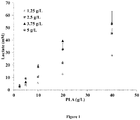
- the figure 1 compares the degradation of PLA to lactic acid in the presence of 4 levels of proteinase K concentrations.
- PLA was autoclaved dry in fermentors.
- the medium and proteinase K were added sterile.
- a kinetic monitoring of the cultures was carried out: sampling every half-hour, measurement of the optical densities at 580 nm, freezing of the culture supernatants after centrifugation for later analysis of the substrate and by-products by HPLC.
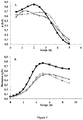
- the growth rate profiles of L. lactis IL 1403 grown in the absence and presence of PLA are similar.
- the ⁇ max are 0.65 h-1 (without PLA) and 0.70 h-1 (with PLA).
- the profile of the growth rate when proteinase K is added to the medium, in addition to PLA is very different.
- the ⁇ max is 0.85 h-1 ( Figure 2A ).
- This observation is correlated with the monitoring of biomass ( Figure 2B ).
- the addition of PLA does not alter biomass production.
- the presence of proteinase K makes it possible to reach a maximum biomass clearly higher is 0.75 g / L. This increase in biomass is not related to an interference of the hydrolysis of PLA by proteinase K with OD.
- Lactate is the major fermentation product.
- the addition of PLA and proteinase K does not alter the homolactic nature of the strain. More than 90% of the pyruvate flux leads to the production of lactic acid, while less than 7% is directed to the production of acetic acid.
- the catabolic carbon balances are balanced between 89 and 95%, taking into account the CO2 theoretically produced by the metabolism.
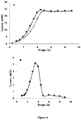
- lactate concentrations generally follows the same pattern in the three culture conditions, with, however, shades at the beginning of culture during the presence of PLA with or without proteinase K ( Figure 4A ). Indeed, the PLA has been autoclaved, resulting in a possible thermal embrittlement or autohydrolysis. This difference in concentration (less than 5 mM, cf. Figure 4B ) compared to the condition without adding PLA is not very significant. It is also rigorously identical in the presence or absence of proteinase K and can therefore in no way be attributed to the hydrolysis of PLA by proteinase K. As for the specific lactate production rates ( Figure 5 ), no major difference between the three conditions was observed.
- lactate In the controlled pH fermentor assays, degradation of PLA to lactic acid by proteinase K could not be detected.
- the production of lactate can be considered as coming exclusively from glucose consumption: 1.66 to 1.74 mmol of lactate produced per mmol of glucose, a value conventionally encountered for this strain.
- a strain of Escherichia coli SBS 550 MG-PHL413 expressing a PBS-depolymerase (Cutinase-like enzyme (CLE) of Cryptococcus sp.S-2) is constructed.
- the sequence of the CLE gene is shown in SEQ ID NO: 2, the corresponding amino acid sequence is presented in SEQ ID NO: 3.
- the CLE gene is amplified by PCR from the genomic DNA of the Cryptococcus sp. Strain . S-2 ( Masaki et al., 2005: Kazuo Masaki, Numbi Ramudu Kamini, Hiroko Ikeda, and Haruyuki Iefuji, "Cutinase-Like Enzyme from the Yeast Cryptococcus Strain S-2 Hydrolyzes Polylactic Acid and Other Biodegradable Plastics", AEM, 71, 7548 -7550 ).
- the vector pET26b (+) (Novagen) is linearized by digestion with the restriction enzymes BamHI and XhoI.
- the insert and the linearized vector are gel purified using the QIAquick Gel Extraction kit (Qiagen). Ligation is performed with T4 ligase (T4 DNA ligase, New England Biolabs). The ligation product is transformed into E. coli DH5 ⁇ and then spread on LB-agar medium containing 40 ⁇ g / mL of kanamycin. After one night at 37 ° C., a colony is removed and cultured in 5 ml of LB medium containing 40 ⁇ g / ml of kanamycin at 37 ° C. overnight (16 to 18 h). The amplified vector is purified using the QIAprep Spin Miniprep Kit (Qiagen) and verified by sequencing.
- QiAquick Gel Extraction kit Qiagen
- the vector thus obtained is called pET26b-CLE.
- the vector pET26b-CLE is transformed into the E. coli strain SBS 550 MG - PHL413 ( Sanchez et al., 2005: Ailen M. Sanchez, George N. Bennett, Ka-Yiu San, "Novel pathway engineering design of the anaerobic central metabolic pathway in Escherichia coli to increase succinate yield and productivity," Metabolic Engineering 7 (2005) 229-239 ).
- a negative control is constructed by transformation of the empty pET26b vector into E. coli SBS 550 MG - PHL413. The two strains thus obtained are respectively called E. coli SBS 550 MG CLE and E. coli SBS 550 MG pET26b.
- the E. coli strains SBS 550 MG -CLE and E. coli SBS 550 MG pET26b are cultured in a 2 L fermenter in a mineral medium supplemented with glucose at 20 g / L and PBS at 20 g / L (Bionolle 1001, Showa Highpolymer Corp. Ltd. (Tokyo, Japan) micronized at 500 ⁇ m).
- the temperature is maintained at 37 ° C., the pH at 6.5 by adding KOH.
- a first phase of growing under aerobic conditions allows the production of biomass.
- Samples of the culture medium are taken at regular intervals in order to measure the bacterial growth and to analyze the composition of the supernatant.
- the glucose concentration as well as the succinic acid production is measured by HPLC on a Bio-rad HPX 87H column. The detection is carried out by refractometry.
- the fermenter corresponding to the culture of the E. coli strain SBS 550 MG -CLE shows a greater production of succinic acid corresponding to the depolymerization of PBS by the CLE (PBS-depolymerase) expressed by the strain E. coli SBS 550 MG -KEY.
- the Btal gene corresponding to cutinase TfH is amplified from the genomic DNA derived from the strain Thermobifida fusca DSM 43793.
- the sequence of the Bta1 gene of cutinase TfH is presented in SEQ ID No. 4, the amino acid sequence corresponding is presented in SEQ ID No. 5.
- the signal peptide PS-Ce148A of the cellulase of Clostridium acetobutylicum ATCC 824 (Ce148A, Sabathé, F., A. Belaich, and P. Soucaille. 2002. Characterization of the cellulolytic complex (cellulosome) of Clostridium acetobutylicum. FEMS Microbiol. Lett. 217: 15-22 ) is amplified by PCR (polymerase chain reaction).
- the expression vector pSOS952 ( Perret, S., Casalot, L., Fierobe, HP, Tardif, C., Sabathe, F., Belaich, JP, and Belaich, A., 2004. "Production of heterologous and chimeric scaffoldins by Clostridium acetobutylicum ATCC 824. J. Bacteriol 186, 253-257 ) is linearized by digestion with restriction enzymes BamHI and Nar I.
- cloning of the beta gene preceded by the PS-Cel48A signal peptide is cloned into the linearized vector using the In-Fusion cloning kit (In-Fusion® HD Cloning Kit, Clontech).
- the vector thus obtained is called pSOS952-btal.
- the vector pSOS952-bta1 is transformed into E. coli ER2275 (pAN1) to be methylated by the ⁇ 3T I methyltransferase according to the method described by Mermelstein and Papoutsakis, 1993 and Green et al., 1996. After purification, the plasmid is transformed by electroporation. in the strain Clostridium acetobutylicum DG1 (pSPD5) (Gonzalez et al., 2005). The recombinant strain obtained is called C. acetobutylicum DG1-pSOS952-beta1.
- a control strain (negative control) is constructed by transformation of the vector pSOS952 into Clostridium acetobutylicum DG1 (pSPD5).
- a preculture of the two strains thus obtained is carried out at 35 ° C. on a synthetic medium containing 10 g / l of glycerol as a carbon source and under anaerobic conditions (crimped vial and under a nitrogen atmosphere, Gonzalez et al., 2005). .
- Each preculture is used to seed a 250 mL fermentor so as to have an absorbance at 600 nm equal to 0.05 at t0.
- the culture medium consists of the synthetic medium described by Gonzalez et al., 2005 supplemented with glycerol at 50 g / L and PTT (Polytrimethylene terephthalate, Sorona micronized at 500 ⁇ m, DuPont) and maintained in anaerobic condition by an atmosphere of 'nitrogen.
- the pH of the fermenter is maintained at 6.5 by addition of NH4OH.
- Samples of the culture medium are taken at regular intervals in order to measure the bacterial growth and to analyze the composition of the supernatant.
- the glycerol concentration as well as the 1,3-propanediol production is measured by HPLC on a Bio-rad HPX 97H column. The detection is carried out by refractometry.
- glycerol is well consumed by each strain and 1,3-propanediol and acetate are produced.
- the fermenter corresponding to the cultivation of the strain C. acetobutylicum DG1-pSOS952-beta1 shows a higher production of 1.3 propanediol, as well as a production of terephthalic acid, which corresponds to the depolymerization of PTT by the PTT-depolymerase secreted in the culture medium.
Landscapes
- Chemical & Material Sciences (AREA)
- Organic Chemistry (AREA)
- Life Sciences & Earth Sciences (AREA)
- Engineering & Computer Science (AREA)
- Zoology (AREA)
- Wood Science & Technology (AREA)
- Health & Medical Sciences (AREA)
- Genetics & Genomics (AREA)
- Bioinformatics & Cheminformatics (AREA)
- General Health & Medical Sciences (AREA)
- Biochemistry (AREA)
- General Engineering & Computer Science (AREA)
- Microbiology (AREA)
- Biotechnology (AREA)
- Chemical Kinetics & Catalysis (AREA)
- General Chemical & Material Sciences (AREA)
- Medicinal Chemistry (AREA)
- Molecular Biology (AREA)
- Biomedical Technology (AREA)
- Preparation Of Compounds By Using Micro-Organisms (AREA)
- Micro-Organisms Or Cultivation Processes Thereof (AREA)
Description
- L'invention concerne un microorganisme recombinant pour la production de monomères hydrocarbonés utiles à la synthèse de polymères. Plus précisément, l'invention porte sur un microorganisme génétiquement modifié de manière à produire de tels monomères à partir d'une source de carbone mais également par le biais de la dépolymérisation de polymères présents dans le milieu de culture. L'invention concerne également un procédé de production de monomères utilisant de tels microorganismes recombinants, ainsi qu'un procédé de synthèse de polymères à partir des monomères produits.
- Les polymères sont utilisés dans un grand nombre de domaines techniques, notamment sous forme de matière plastique, depuis les emballages alimentaires jusqu'au domaine médical, en passant par l'habillement, l'industrie automobile, etc. Par exemple les polyamides, et plus particulièrement les nylons, sont utilisés aussi bien pour la fabrication de semelles de chaussures que sous forme de microfilaments pour les sutures chirurgicales. De même, certains polyesters (par exemple le polyéthylène téréphthalate - PET, l'acide polylactique - PLA, etc.) sont utilisés dans la confection de vêtements et d'emballages, mais également sous forme de résine thermodurcissable pour la fabrication de pièces automobiles ou autres.
- Jusqu'à récemment, les polymères utilisés dans la plupart des industries étaient issus d'énergies fossiles non renouvelables, telles que le pétrole. Cependant, les difficultés associées au recyclage de ces matériaux polymères et la pénurie croissante en énergie fossile non renouvelable rendent leur emploi de plus en plus critiquable.
- Aussi, depuis quelques années, la fabrication de polymères à partir de matières premières renouvelables ou biomasse s'est développée. L'acide polylactique (PLA), par exemple, est un polymère biodégradable produit à partir d'acide lactique et qui présente des propriétés mécaniques comparables à celles de polymères issus de l'industrie pétrochimique. Des microorganismes ont été isolés et/ou développés pour leur capacité à produire des monomères hydrocarbonés et/ou des polymères à partir d'une source de carbone renouvelable adaptée.
- Par exemple, différents microorganismes ont été développés pour produire de l'acide lactique à partir de sources de carbone comme l'amidon, les pentoses, etc. Notamment, des levures recombinantes, exprimant une lactate déshydrogénase, ont été produites pour synthétiser de l'acide lactique dans un milieu de culture approprié (
WO03102152 - De même, des levures ont été génétiquement modifiées pour exprimer une fumarate réductase et produire de l'acide succinique à partir d'acide fumarique (
WO2009065778 ). - Le plus souvent, ces microorganismes, recombinants ou non, doivent être cultivés dans un milieu de culture approprié comprenant des substrats onéreux (glucose, saccharose, etc.). Pour améliorer les performances de production de ces microorganismes, il est en outre nécessaire d'optimiser les conditions de culture (température, agitation, nature de la source de carbone etc.), ce qui tend encore à augmenter les coûts de production.
- Afin de réduire les coûts de production, on a cherché à produire ces métabolites directement à partir de biomasse non directement valorisable, comme le jus de betterave (
WO2008000699 ), le jus de dattes (Boudjelal et al. - Rev. Energ. Ren,: Production et Valorisation-Biomasse (2001) 41-46), etc. Cependant, les traitements préalables de la biomasse, pour y favoriser la croissance des microorganismes, sont complexes et longs, ce qui ne permet pas de réduire les coûts de production de manière satisfaisante. - Par ailleurs, le titre de production de monomères hydrocarbonés par des microorganismes dépasse difficilement les 30g/litre, et ce dans des conditions de culture optimales.
- Aussi, les titres de production de monomères hydrocarbonés et/ou des polymères associés par des microorganismes restent encore relativement faibles et les coûts associés trop élevés pour être une réelle alternative au polyéthylène (PE) et autres polymères pétrochimiques. Bien que l'idée de produire des polymères à partir de ressources renouvelables séduise, il n'existe pas actuellement de système de production par fermentation qui pallie les problèmes de coût et/ou rendement et qui permette de répondre de manière satisfaisante à la demande.
- L'invention a pour objet de résoudre au moins partiellement au moins un des problèmes énoncés ci-dessus, en proposant un microorganisme recombinant susceptible de produire des quantités importantes de monomères d'acide lactique, utiles à la synthèse de polymères.
- Pour cela l'invention propose un microorganisme, et notamment une bactérie, une levure ou un champignon, génétiquement modifié pour pouvoir synthétiser un ou plusieurs monomère(s) d'acide lactique par fermentation d'une source de carbone et dépolymériser, simultanément ou non, de l'acide polylactique présent dans le milieu de culture de manière à en libérer les monomères qui le composent. Les monomères ainsi produits par un même microorganisme proviennent de deux sources différentes et indépendantes. En outre, l'utilisation d'un tel microorganisme de l'invention permet de recycler les polymères et de résoudre ainsi les problèmes d'accumulation des déchets plastiques. En effet, les polymères susceptibles d'être dépolymérisés par le microorganisme selon l'invention peuvent aussi bien être intégrés dans un produit manufacturé en matière plastique, qu'être directement disponibles dans le milieu de culture en solution ou autre. Avantageusement, le microorganisme selon l'invention est apte à dépolymériser des polymères de haut poids moléculaire pas seulement en des oligomères de plus faible poids moléculaire, mais jusqu'à la forme synthon, ou monomère.
- L'invention a donc pour objet un microorganisme génétiquement modifié de manière à
- i) synthétiser un monomère d'acide lactique par fermentation d'une source de carbone, et ii) dépolymériser de l'acide polylactique (PLA), dans lequel ledit microorganisme exprime au moins une enzyme pour dépolymériser le PLA choisie parmi une protéinase K, une lipase et une PLA dépolymérase, et/ou une lactate déshydrogénase pour la synthèse d'acide lactique. L'invention a également pour objet un procédé de production d'un monomère d'acide lactique comprenant les étapes de
- mise en contact d'un microorganisme selon l'invention avec une source de carbone et avec du PLA susceptible d'être dépolymérisé par ledit microorganisme, et optionnellement
- récupération du monomère hydrocarboné produit.
- L'invention vise également une coculture de microorganismes comprenant au moins un premier microorganisme selon l'invention et au moins un second microorganisme, éventuellement génétiquement modifié, apte à synthétiser un polymère constitué au moins des monomères produits par le premier microorganisme.
- L'invention concerne également un procédé de synthèse de polymères utilisant une coculture de microorganismes selon l'invention, comprenant les étapes de
- mise en contact de la coculture de microorganismes avec une source de carbone et avec un polymère susceptible d'être dégradé par le premier microorganisme, et optionnellement
- récupération du polymère produit par le second microorganisme.
-
- Figure 1 :
- Dégradation du PLA en acide lactique en présence de quatre niveaux de concentration de protéinase K (1.25 g/L,
 2.5 g/L, ▲ 3.75 g/L,
 5 g/L).

- Figure 2 :
- Evolution des taux de croissance (A) et de la biomasse (B) de L. lactis IL 1403 dans du MCD sans autre rajout (), avec 20 g/L de PLA et 3.75 g/L de protéinase K (■) ou avec 20 g/L de PLA (
 ).

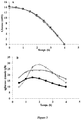
- Figure 3 :
- Evolution des concentrations en glucose (A) et des vitesses spécifiques de consommation du glucose (B) de L. lactis IL 1403 dans du MCD sans autre rajout (◆), avec 20 g/L de PLA et 3.75 g/L de protéinase K (■) ou avec 20 g/L de PLA (▲).
- Figure 4 :
- Evolution des concentrations en lactate (A) de L. lactis IL 1403 dans du MCD sans autre rajout (◆), avec 20 g/L de PLA et 3.5 g/L de protéinase K (■) ou avec 20 g/L de PLA (▲) et calcul du différentiel en lactate (B) entre la condition sans PLA et les conditions avec PLA.
- Figure 5 :
- Evolution des vitesses spécifiques de production du lactate de L. lactis IL 1403 dans du MCD sans autre rajout (◆), avec 20 g/L de PLA et 3.75 g/L de protéinase K (■) ou avec 20 g/L de PLA (▲).
- Dans le contexte de l'invention, on entend par microorganisme tout organisme unicellulaire eucaryote, tel que les levures, les microalgues et les champignons, ou procaryote, tel que les bactéries.
- De préférence, le microorganisme est un microorganisme d'un genre choisi parmi Aspergillus, Cupriavidus, Clostridium, Corynebacterium, Escherichia, Pseudomonas, Yarrowia, Aeromonas, Candida, Burkholderia, Thermobifida, Fusarium, Pichia, Saccharomyces et Bacillus. De préférence, le microorganisme est choisi parmi Aspergillus Niger, Cupriavidus necator, Clostridium acetobutylicum, Corynebacterium glutamicum, Escherichia coli, Pseudomonas aeruginosa, Pseudomonas putida, Pseudomonas entomophila, Pseudomonas oleovorans, Yarrowia lipolytica, Aeromonas hydrophila, Candida tropicalis, Candida antartica, Burkholderia xenovorans, Burkholderia mallei, Burkholderia pseudomallei, Thermobifida fusca, Fusarium solani, Pichia pastoris, Saccharomyces Cerevisiae, Bacillus subtilis et Bacillus megaterium.
- Par microorganisme « génétiquement modifié », on entend que le génome du microorganisme a été modifié de telle manière que ledit microorganisme présente les deux voies de synthèse et de dépolymérisation. Le microorganisme peut par exemple être un microorganisme apte naturellement à synthétiser un monomère d'intérêt à partir d'une source de carbone et qui est génétiquement modifié pour exprimer la ou les enzymes nécessaires à la dépolymérisation souhaitée, ou inversement. Le microorganisme peut autrement ne présenter naturellement aucune des voies de synthèse et de dépolymérisation recherchées, et être génétiquement modifié pour ces deux voies. Le microorganisme peut également présenter naturellement l'une et/ou l'autre de ces voies, et être génétiquement modifié pour favoriser et/ou augmenter l'expression des gènes impliqués. Selon l'invention, le génome du microorganisme est modifié de manière à intégrer au moins une séquence nucléique codant au moins une enzyme intervenant dans la voie de biosynthèse d'un monomère hydrocarboné et/ou dans la dépolymérisation d'un polymère, ou codant un fragment biologiquement actif de celle-ci. Ladite séquence nucléique peut avoir été introduite dans le génome dudit microorganisme ou d'un de ses ascendants, par le biais de toute méthode de clonage moléculaire adaptée. Dans le contexte de l'invention, le génome du microorganisme s'entend de l'ensemble du matériel génétique contenu dans ledit microorganisme, y compris le matériel génétique dans des plasmides, épisomes, chromosomes synthétiques, etc. La séquence nucléique introduite peut être une séquence hétérologue, c'est-à-dire qui n'existe pas à l'état naturel dans ledit microorganisme, ou une séquence homologue. Avantageusement, on introduit dans le génome du microorganisme une unité transcriptionelle comportant la séquence nucléique d'intérêt, placée sous le contrôle d'un ou plusieurs promoteur(s).
- La source de carbone utilisée par le microorganisme selon l'invention comprend de préférence des sucres raffinés, comme le glucose, galactose, xylose, saccharose, etc., mais également toute matière organique d'origine végétale ou animale, ou biomasse, susceptible d'être dégradée par le microorganisme pour produire des sucres fermentescibles. Ainsi, la source de carbone peut comporter de la biomasse hémicellulosique, cellulosique, lignocellulosique, etc., par exemple de la mélasse et/ou de la bagasse de canne à sucre, les jus ou eaux pauvres de sucrerie, les eaux mères de cristallisation des sucres, etc. La source de carbone peut également comporter du glycérol ou des huiles (triglycérides). Dans tous les cas, la source de carbone ne comprend pas le monomère produit par dépolymérisation du polymère selon l'invention.
- Le caractère simultané de la fermentation et la dépolymérisation dans la présente invention est défini par le fait que le microorganisme est mis en contact en même temps (ou dans un laps de temps très court, par exemple de l'ordre de 15 minutes maximum) avec la source de carbone et avec le polymère, dans les mêmes conditions physico-chimiques (par exemple température, pH et/ou milieu de culture). Ainsi, le monomère hydrocarboné produit par les deux voies (fermentation et dépolymérisation) peut être récupéré simultanément dans le milieu de culture.
- Par monomère hydrocarboné, on entend l'acide lactique.
- Par oligomère, on entend une succession de monomères selon l'invention comportant plus d'un monomère, et moins de monomères que le polymère fourni au microorganisme.
- L'invention vise la dépolymérisation de l'acide polylactique (PLA) et la synthèse d'acide lactique
- Selon l'invention, un même microorganisme est apte à synthétiser au moins un monomère d'acide lactique et à dépolymériser de l'acide polylactique. Selon l'invention, le microorganisme est apte à dépolymériser ledit polymère de manière à en récupérer le monomère d'intérêt.
- Dans un exemple particulier de réalisation de l'invention, le microorganisme est également génétiquement modifié pour atténuer au moins une voie de dégradation du monomère d'acide lactique qu'il est apte à synthétiser.
- En effet, dans certains cas, le microorganisme selon l'invention peut être naturellement apte à utiliser le monomère qu'il synthétise comme source de carbone pour sa croissance. Or, ces monomères peuvent présenter un intérêt industriel particulier, notamment pour la synthèse ultérieure de polymères, et il peut être intéressant d'éviter leur dégradation. Pour cela, selon l'invention il est possible de déléter tout ou partie des gènes codant la ou les enzymes impliquées dans la dégradation du monomère d'intérêt, par toute technique de recombinaison/délétion appropriée. Il est également possible d'atténuer l'expression de tout ou partie des gènes impliqués dans la dégradation du monomère d'intérêt. Pour cela, il est par exemple possible d'introduire une ou plusieurs séquences nucléiques codant des régulateurs, tels que des facteurs de transcription, des ARN interférents, de siARN etc., susceptibles d'atténuer l'expression de ces gènes. De même, il est possible de modifier la séquence promotrice d'au moins un des gènes impliqués dans la dégradation du monomère d'intérêt, de manière à en atténuer/empêcher la transcription.
- Afin d'éviter la dégradation des monomères synthétisés, il est également possible, à la place ou en complément des modifications génétiques ci-dessus, d'enrichir régulièrement le milieu de culture du microorganisme en substrats facilement assimilables par le microorganisme, afin qu'il utilise préférentiellement ces substrats plutôt que le monomère synthétisé.
- Le microorganisme selon l'invention peut également être génétiquement modifié de manière à pouvoir synthétiser un polymère constitué, en tout ou partie, du monomère qu'il est apte à synthétiser. Par exemple, le microorganisme peut être génétiquement modifié de manière à intégrer et exprimer une séquence nucléique codant une polymère synthase particulière. Ainsi, un même microorganisme peut, selon l'invention, produire un monomère par le biais d'une fermentation et d'une dépolymérisation ciblée d'un polymère à recycler/dégrader, et produire un nouveau polymère en utilisant les monomères produits. Dans le cas où le polymère d'intérêt est un hétéropolymère, il est possible d'enrichir le milieu de culture du ou des autres monomères constitutifs dudit polymère.
- Ainsi, dans un premier exemple de réalisation, le microorganisme selon l'invention est génétiquement modifié pour dépolymériser le PLA et ainsi obtenir l'acide lactique, et concomitamment synthétiser de l'acide lactique à partir d'une source de carbone.
- L'enzyme pour dépolymériser le PLA est avantageusement choisie parmi une serine protéase, une lipase et une PLA dépolymérase. De préférence, l'enzyme pour dépolymériser le PLA est choisie parmi la protéinase K de Tritirachium album, la lipase A d'Aspergillus niger, la lipase AY de Candida rugosa, la lipase F de Rhizopus oryzae, la lipase PS de Burkholderia sp. ou la lipase cutinase-like enzyme de la souche S-2 de Cryptococcus sp. De même, l'enzyme pour la synthèse d'acide lactique est avantageusement une lactate déshydrogénase. Dans un exemple particulier, le microorganisme est un microorganisme lactique, par exemple une bactérie lactique, exprimant naturellement, c'est-à-dire à l'état sauvage, une lactate déshydrogénase.
- L'invention a également pour objet un procédé de production d'un monomère d'acide lactique comprenant les étapes de
- mise en contact d'un microorganisme selon l'invention avec une source de carbone et avec du PLA susceptible d'être dépolymérisé par ledit microorganisme, et optionnellement
- récupération du monomère d'acide lactique produit.
- Le monomère d'acide lactique produit tant par fermentation que par dépolymérisation se retrouve avantageusement dans le milieu de culture. Il est alors possible de traiter le milieu de culture enrichi en ces monomères, par toute technique connue, de manière à les isoler et/ou les purifier.
- Il est possible de produire toutes sortes de monomères, en adaptant simplement le microorganisme utilisé et les modifications génétiques introduites. Le choix du microorganisme ainsi que les modifications génétiques à apporter sont à la portée de l'homme du métier, au vu de l'enseignement de la présente demande.
- Les conditions de la mise en contact du microorganisme avec la source de carbone et le polymère, telles que la température, le pH, etc., peuvent être adaptées par l'homme du métier pour optimiser/favoriser à la fois la production du monomère par dépolymérisation du polymère et la production du monomère par fermentation à partir de la source de carbone.
- L'invention propose également une coculture, par exemple dans un fermenteur, d'au moins deux microorganismes, dont l'un est un microorganisme génétiquement modifié selon l'invention, le second microorganisme étant lui apte à synthétiser un polymère constitué au moins du monomère produit par le microorganisme selon l'invention.
- Ainsi, le monomère produit par le microorganisme selon l'invention et excrété dans le milieu de culture est utilisé par le second microorganisme, pour produire un polymère d'intérêt, qui pourra être par la suite exploité dans tout genre d'industrie. Le procédé selon l'invention permet ainsi un recyclage complet du PLA, depuis leur dépolymérisation en monomères à nouveau exploitables, jusqu'à leur réutilisation sous forme de nouveaux polymères susceptibles d'être utilisés sous forme de plastiques pour de nouvelles applications.
- Ainsi par exemple, le microorganisme selon l'invention est une bactérie lactique génétiquement modifiée qui exprime au moins une lactate déshydrogénase et au moins une enzyme susceptible de dépolymériser le PLA choisie parmi les PLA dépolymérases, les protéases et les lipases. Cette bactérie lactique peut être co-cultivée avec un autre microorganisme, éventuellement génétiquement modifié, apte à synthétiser du PLA. Avantageusement, les deux microorganismes co-cultivés sont choisis de manière à ne pas entrer en compétition pour la source de carbone, de préférence les sucres, présente dans le milieu de culture.Dans certains modes de réalisation de la présente invention, le terme « comprendre » peut signifier « consister essentiellement en », ou « consister en ».
- L'invention sera mieux comprise à la lecture des exemples ci-dessous, donnés à titre illustratif et nullement limitatif de l'invention.
- Les techniques de clonage mises en oeuvre pour la préparation du plasmide recombinant sont conformes aux techniques décrites dans la publication de Sambrook et al. de 1989 («Molecular cloning : a laboratory manual. Cold spring Harbor Laboratory Press, Cold spring Harbor, NY. » ).
- Le gène pld d'Amycolatopsis sp. K104-1 de séquence SEQ ID N°1 (Nakamura et al. 2001 - Appl. Environ. Microbiol. 67 :345-353) est introduit par recombinaison homologue dans le plasmide pNZ8048 (Kuipers et al. 1998 - J.Biotechnol. 64 :15-21). Le plasmide recombinant intégrant le gène pld est appelé « pNZ-pld ».
- La souche sauvage Lactococcus lactis MG1363 est transformée par le plasmide pNZ-pld introduit dans la cellule par électroporation conformément au procédé décrit dans Ho et al. de 1995 («Transformation of Lactococcus by electroporation » Methods Mol. Biol. 47 :195-199). La bactérie recombinante intégrant le plasmide pNZ-pld est appelée « MG1363-pNZ-pld ». Le témoin négatif « MG1363-pNZ8048 » correspond à la souche sauvage Lactococcus lactis MG1363 transformée par le plasmide vide pNZ8048.
- Les souches MG1363-pNZ-pld et MG1363-pNZ8048 sont cultivées en parallèle dans des fermenteurs de 2L en CDM («Chemically Defined Medium») à 30°C, en condition anaérobie.
- Du glucose est ajouté dans le milieu de culture pour atteindre une concentration finale de 1% (poids/volume), et le pH est maintenu à 6.5 par ajout automatique de NaOH. Les cultures sont chacune divisées en deux sous-cultures, chaque lot de deux sous-cultures (MG1363-pNZ-pld-1/MG1363-pNZ8048-1 et MG1363-pNZ-pld-2/MG1363-pNZ8048-2) étant maintenu dans des conditions identiques.
Seul le second lot (MG1363-pNZ-pld-2/MG1363-pNZ8048-2) reçoit du PLA de masse moléculaire 220,000 Da (Shimadzu Co. -Kyoto, Japon), émulsionné dans le milieu de culture à 0.1% (poids/volume). - L'activité PLA dépolymérase est mesurée après 2 jours de culture, en appliquant la méthode décrite dans Nakamura et al. -2001 («Purification and characterization of an extracellular poly(L-lactic-acid) depolymerasefrom a soil isolate Amycolatopsis sp. Strain K104-1 » Appl. Environ. Microbiol. 67 :345-353).
- Du surnageant de culture du premier lot est prélevé après deux jours de culture et analysé par spectrométrie de masse (Varian Inova 500) afin d'évaluer le taux d'acide lactique.
On observe pour les deux échantillons (MG1363-pNZ-pld-1 et MG1363-pNZ8048-1) un unique pic à 90 Da correspondant à l'acide lactique produit par les bactéries par fermentation. Ainsi, la souche recombinante MG1363-pNZ-pld est bien apte à produire de l'acide lactique par fermentation du glucose présent dans le milieu de culture. - En parallèle, du surnageant de culture du second lot est prélevé et analysé par spectrométrie de masse (Varian Inova 500) afin d'évaluer le taux d'oligomères d'acide lactique (essentiellement dimères et trimères) présents.
On observe pour les deux échantillons (MG1363-pNZ-pld-2 et MG1363-pNZ8048-2) un pic à 220,000 Da correspondant au PLA présent dans le milieu de culture et un pic à 90 Da correspondant à l'acide lactique. Par ailleurs, pour l'échantillon correspondant au milieu de culture de MG1363-pNZ-pld-2, on observe la présence de plusieurs pics de poids moléculaire intermédiaire, absents pour MG1363-pNZ8048-1. Ces pics intermédiaires correspondent à des oligomères d'acide lactique de tailles variables, ce qui confirme que du PLA du milieu de culture a bien été dégradé par la souche recombinante MG1363-pNZ-pld-2. - La souche recombinante MG1363-pNZ-pld, exprimant une PLA dépolymérase, est bien apte à produire de l'acide lactique par fermentation et à dépolymériser du PLA de haut poids moléculaire présent dans le milieu de culture.
- Les surnageants de culture de l'exemple 1 correspondant aux lots MG1363-pNZ-pld-1, MG1363-pNZ-pld-2, MG1363-pNZ8048-1 et MG1363-pNZ8048-2 sont analysés par HPLC afin de déterminer la quantité d'acide lactique libéré. Pour cela, une colonne Aminex HPX-87H, thermostatée à 50°C et éluée à 0,5 mL/min par une solution d'acide sulfurique à 5 mM est utilisée pour la quantification.
- Cette analyse permet de démontrer que la quantité d'acide lactique dans le surnageant du lot MG1363-pNZ-pld-2 est supérieure à la quantité d'acide lactique des 3 autres conditions (MG1363-pNZ-pld-1, MG1363-pNZ8048-1 et MG1363-pNZ8048-2). De même, la présence d'un dimère d'acide lactique est observée uniquement dans le surnageant de culture du lot MG 1363-pNZ-pld-2.
- Une analyse complémentaire sur une colonne C18 est réalisée selon la méthode décrite par Vu et al., 2005 («Oligomer distribution in concentrated lactic acid solutions », Fluid Phase Equilibria, 236,125-135). L'analyse du surnageant de culture du lot MG1363-pNZ-pld-2 confirme la présence d'oligomères d'acide lactique jusqu'à un degré de polymérisation de 6.
- L'exemple ci-dessous traite de la combinaison de la souche Lactococcus lactis IL 1403 et de la protéinase K pour la production d'acide lactique. La protéinase K est la protéinase K de Tritirachium album, disponible chez EUROMEDEX sous la référence EU0090.
- La souche utilisée est la souche Lactococcus lactis IL 1403. Cette souche a été cultivée sur milieu chimiquement défini (milieu MCD) additionné de 5 g/L de glucose et tamponné à pH 8. Un milieu riche (contenant des sources de peptones, de protéines ou d'oligopeptides) a été écarté afin de ne pas inclure dans le milieu de culture des substrats préférentiels à la protéinase K qui pourraient entrer en compétition avec le PLA que l'on souhaite dégrader.
Tableau 1 : Composition du milieu chimiquement défini (MCD) à pH 8 Composés Concentration (g/L) glucose 5 sodium acetate 1 ammonium citrate 0.6 KH2PO4 0.9 K2HPO4 31.2 MgCl2. 6H2O 0.2 FeSO4. 0H2O 0.011 CaCl2. 2H2O 0.05 ZnSO4. 7H2O 0.005 COCl2. 6H2O 0.0025 Alanine 0.24 arginine 0.12 asparagine 0.34 glutamine 0.51 Glycine 0.17 histidine 0.11 lysine 0.35 methionine 0.12 Proline 0.68 Serine 0.34 thréonine 0.23 tryptophane 0.05 isoleucine 0.2 Leucine 0.47 Valine 0.33 phénylalanine 0.28 tyrosine 0.29 Adenine 0.01 Guanine 0.01 Uracile 0.01 xanthine 0.01 acide P-aminobenzoique 0.01 Biotine 0.01 cyano-cobalamine (B12) 0.001 acide folique 0.001 Inosine 0.005 Acide orotique 0.005 Ca panthotenate 0.001 pyridoxamine 0.005 pyridoxine (B6) 0.002 riboflavine (B2) 0.001 thiamine 0.001 Acide D,L-6,8-thioctique 0.0025 thymidine 0.005 cystéine 0.17 - L'objectif a consisté à déterminer le taux de croissance de L. lactis IL 1403 pour 4 valeurs de pH : 6.6, 7.0, 7.5 et 8.0. Les expérimentations ont été réalisées en tube contenant 15 mL de milieu chimiquement défini avec 5 g/L de glucose à 30 °C. Ces expérimentations ont été effectuées en condition d'anaérobiose et en condition d'aérobiose.
- La croissance a été suivie par mesure de la densité optique à 580 nm pendant 24 h, et le taux de croissance moyen a pu être déterminé.
Tableau 2 : Paramètres de croissance de L. lactis IL 1403 à différents pH en condition d'anaérobiose et d'aérobiose anérobiose aérobiose IL1403 µmoyen (h-1) µ (%) µmoyen (h-1) µ (%) 6.6 0.52 100 0.64 100 7.0 0.55 106 0.59 93 7.5 0.47 90 0.59 93 8.0 0.36 69 0.48 75 - Si la condition à pH 6.6 correspond à la condition de référence pour L. lactis IL 1403, le taux de croissance maximal décroit faiblement à pH 7.5 mais de façon un peu plus importante à pH 8 (25-30 %). Il y a peu d'influence des conditions d'aération.
- Ces résultats montrent que L. lactis IL 1403 peut être cultivée à pH 8 avec peu d'influence sur son taux de croissance.
- Une première étude a été réalisée afin de déterminer l'efficacité d'hydrolyse de la protéinase K à différentes concentrations (1.25, 2.5, 3.75 et 5 g/L) dans le milieu chimiquement défini (milieu de croissance de L. lactis IL 1403) à 30°C (température de croissance de la bactérie lactique) et à pH 8 (pH optimal de la protéinase K). La concentration en acide lactique libéré après 24 h d'hydrolyse a été mesurée par HPLC pour 5 concentrations de PLA initial : 2.5, 5, 10, 20 et 40 g/L et 4 concentrations de protéinase K : 1.25, 2.5, 3.75 et 5 g/L (
Figure 1 ). - La
figure 1 compare la dégradation du PLA en acide lactique en présence de 4 niveaux de concentrations de protéinase K. - Cette étude montre qu'au bout de 24 h entre 27 et 54 mM d'acide lactique peuvent être obtenus par hydrolyse du PLA par la protéinase K en MCD à un pH initial de 8.0. Le meilleur rendement d'hydrolyse est obtenu pour des concentrations de PLA et de protéinase K de 20 g/L et de 3.75 g/L respectivement.
- Les expérimentations ont été réalisées dans des fermenteurs 2 L (Biostat B plus, Sartorius ; 1 L de volume de travail) pilotés par ordinateur. Trois conditions de culture ont été testées à partir d'un milieu chimiquement défini contenant seulement 2.5 g/L de glucose. Le pH a été régulé à une valeur de 8.0 par ajout de KOH 10 N. La température était de 30°C. Les trois conditions sont décrites ci-dessous :
- A. MCD + IL 1403
- B. MCD + IL 1403 + PLA 20 g/L + Protéinase K (3.75 g/L)
- C. MCD + IL 1403 + PLA 20 g/L
- Le PLA a été autoclavé à sec directement dans les fermenteurs. Le milieu et la protéinase K ont été rajoutés stérilement.
- Un suivi cinétique des cultures a été effectué : prélèvement toutes les demi-heures, mesure des densités optiques à 580 nm, congélation des surnageants de culture après centrifugation pour analyse ultérieure du substrat et co-produits par HPLC. La corrélation entre DO et poids sec pour la souche L. lactis IL 1403 est connue : 1 g/L = 0.3 UDO.
- Les profils des taux de croissance de L. lactis IL 1403 cultivée en l'absence et en présence de PLA sont similaires. Les µmax sont de 0.65 h-1 (sans PLA) et 0.70 h-1(avec PLA). En revanche, le profil du taux de croissance lorsque de la protéinase K est rajoutée dans le milieu, en supplément du PLA, est très différent. Le µmax est de 0.85 h-1 (
Figure 2A ). Cette observation est en corrélation avec le suivi de la biomasse (Figure 2B ). L'ajout de PLA ne modifie pas la production de biomasse. Nous pouvons observer des profils pratiquement identiques et une biomasse maximale de 0.52 et 0.47 g/L, respectivement sans ou avec ajout du PLA. La présence de protéinase K permet d'atteindre une biomasse maximale nettement plus élevée soit 0.75 g/L. Cette augmentation de biomasse n'est pas liée à une interférence de l'hydrolyse du PLA par la protéinase K avec la DO. - Quelles que soient les conditions de milieu, l'arrêt de croissance est effectif après 4h30 de culture et correspond à la consommation totale du glucose.
- Le suivi dynamique des différentes conditions de culture de L. lactis IL 1403 a été réalisé durant 9 heures, puis deux prélèvements finaux ont été réalisés à 15 heures, et à 24 heures.
- L'évolution des concentrations en glucose dans le milieu de culture est strictement similaire dans les trois conditions de culture. Le glucose est totalement consommé au bout de 4h de culture (
Figure 3A ). Quant aux vitesses spécifiques de consommation du glucose lors de la phase exponentielle de croissance (lh-3h), elles sont très proches en milieu sans PLA et avec PLA. Les valeurs maximales des vitesses spécifiques de consommation de glucose (qglucose) sont respectivement de 27 et 24 mmole/g/h. Lorsque la protéinase K est rajoutée dans le milieu, ce qglucose est seulement de 17 mmole/g/h. Cette différence de qglucose est en concordance avec une biomasse plus importance dans le fermenteur contenant de la protéinase K. - Le lactate est le produit de fermentation majoritaire. L'ajout de PLA et de protéinase K ne modifie en rien le caractère homolactique de la souche. Plus de 90% du flux de pyruvate conduisent à la production d'acide lactique, tandis que moins de 7% sont dirigés vers la production d'acide acétique. Les bilans carbones cataboliques sont équilibrés entre 89 et 95 %, en prenant en compte le CO2 théoriquement produit par le métabolisme. Les bilans stoechiométriques globaux en mM de carbone, calculés après 24 h de culture sont les suivants :
* IL 14030-24 h : 14.2 Glucose → 24.7 Lactate + 2.1 Acétate + 2.1 CO2
* IL 1403 avec PLA0-24 h : 14.3 Glucose → 23.8 Lactate + 1.5 Acétate + 1.5 CO2
* IL 1403 avec PLA et protéinase K0-24 h : 14 .3 Glucose → 23.8 Lactate + 1.5 Acétate + 1.5 CO2 - L'évolution des concentrations en lactate suit globalement le même profil dans les trois conditions de culture, avec cependant des nuances en début de culture lors de la présence de PLA avec ou sans protéinase K (
Figure 4A ). En effet, le PLA a été autoclavé, entrainant une possible fragilisation thermique ou une autohydrolyse. Cette différence de concentration (moins de 5 mM, cfFigure 4B ) par rapport à la condition sans ajout de PLA n'est pas très significative. Elle est d'autre part rigoureusement identique en présence ou non de la protéinase K et ne peut donc en aucun cas être attribuée à l'hydrolyse du PLA par la protéinase K. Quant aux vitesses spécifiques de production de lactate (Figure 5 ), aucune différence majeure entre les trois conditions n'a été observée. - Dans les essais réalisés en fermenteur à pH régulé, la dégradation de PLA en acide lactique par la protéinase K n'a pas pu être détectée. La production de lactate peut être considérée comme provenant exclusivement de la consommation du glucose : 1.66 à 1.74 mmole de lactate produit par mmole de glucose, valeur classiquement rencontrée pour cette souche.
- Ceci démontre que le simple ajout de la PLA-dépolymérase dans une culture de bactérie lactique ne permet pas une augmentation de l'acide lactique produit dans le procédé.
- Une souche d'Escherichia coli SBS 550 MG- PHL413 exprimant une PBS-dépolymérase (Cutinase-like enzyme (CLE) de Cryptococcus sp. S-2) est construite. La séquence du gène de la CLE est présentée dans SEQ ID N° 2, la séquence d'acides aminés correspondante est présentée dans SEQ ID N°3.
- Pour cela, le gène de la CLE est amplifié par PCR à partir de l'ADN génomique de la souche Cryptococcus sp. S-2 (Masaki et al., 2005 : Kazuo Masaki, Numbi Ramudu Kamini, Hiroko Ikeda, and Haruyuki Iefuji, "Cutinase-Like Enzyme from the Yeast Cryptococcus sp. Strain S-2 Hydrolyzes Polylactic Acid and Other Biodegradable Plastics", AEM, 71, 7548-7550).
- Les amorces utilisées sont les suivantes :
- Amorce sens portant un site de restriction BamHI :
GATCGGATCCGCCACGTCCAGCGCTTGTCCG (SEQ ID N°6) - Amorce anti-sens portant un site de restriction XhoI :
CCGGAACTCGAGGGCCGACCCGCCAAGCTTGTTG (SEQ ID N°7) - Parallèlement, le vecteur pET26b(+) (Novagen) est linéarisé par digestion par les enzymes de restriction BamHI et XhoI.
- L'insert et le vecteur linéarisé sont purifiés sur gel à l'aide du QIAquick Gel Extraction kit (Qiagen). Une ligation est réalisée avec la ligase T4 (T4 DNA ligase, New England Biolabs). Le produit de ligation est transformé dans E. coli DH5a puis étalé sur milieu LB-Agar contenant 40 µg/mL de kanamycine. Après une nuit à 37°C, une colonie est prélevée et cultivée dans 5 mL de milieu LB contenant 40 µg/mL de kanamycine à 37°C pendant une nuit (16 à 18 h). Le vecteur amplifié est purifié à l'aide du kit QIAprep Spin Miniprep Kit (Qiagen) et vérifié par séquençage.
- Le vecteur ainsi obtenu est appelé pET26b-CLE.
- Le vecteur pET26b-CLE est transformé dans la souche E. coli SBS 550 MG - PHL413 (Sanchez et al., 2005 : Ailen M. Sanchez, George N. Bennett, Ka-Yiu San, « Novel pathway engineering design of the anaerobic central metabolic pathway in Escherichia coli to increase succinate yield and productivity», Metabolic Engineering 7 (2005) 229-239). Un témoin négatif est construit par transformation du vecteur pET26b vide dans E. coli SBS 550 MG - PHL413. Les deux souches ainsi obtenues sont respectivement appelées E. coli SBS 550 MG CLE et E. coli SBS 550 MG pET26b.
- Les souches E. coli SBS 550 MG -CLE et E. coli SBS 550 MG pET26b sont cultivées en fermenteur de 2 L dans un milieu minéral additionné de glucose à 20 g/L et de PBS à 20 g/L (Bionolle 1001, Showa Highpolymer Corp. Ltd. (Tokyo, Japan) micronisé à 500 µm). La température est maintenue à 37°C, le pH à 6,5 par ajout de KOH. Une première phase de culture en conditions aérobies permet la production de biomasse. Lorsque la densité optique à 600 nm atteint 0,6, une solution d'IPTG est ajoutée dans chaque fermenteur de manière à obtenir une concentration finale de 1 mM et d'induire la production de la PBS-dépolymérase dans le fermenteur correspondant à la culture de la souche E. coli SBS 550 MG -CLE. La culture est poursuivie en condition anaérobie par injection continue de CO2 à 0,4 vvm jusqu'à consommation totale du glucose.
- Des prélèvements du milieu de culture sont réalisés à intervalle régulier afin de mesurer la croissance bactérienne et d'analyser la composition du surnageant. La concentration en glucose ainsi que la production d'acide succinique est mesurée par HPLC sur une colonne Bio-rad HPX 87H. La détection est effectuée par réfractométrie.
- Au cours de la fermentation, le glucose est bien consommé par chacune des souches et de l'acide succinique est produit. Le fermenteur correspondant à la culture de la souche E. coli SBS 550 MG -CLE montre une production plus importante d'acide succinique correspondant à la dépolymérisation du PBS par la CLE (PBS-dépolymérase) exprimée par la souche E. coli SBS 550 MG -CLE.
- Le gène Btal correspondant à la cutinase TfH est amplifié à partir de l'ADN génomique issu de la souche Thermobifida fusca DSM 43793. La séquence du gène Bta1 de la cutinase TfH est présentée dans SEQ ID N° 4, la séquence d'acides aminés correspondante est présentée dans SEQ ID N°5. Parallèlement, le peptide signal PS-Ce148A de la cellulase de Clostridium acetobutylicum ATCC 824 (Ce148A, Sabathé, F., A. Belaich, and P. Soucaille. 2002. Characterization of the cellulolytic complex (cellulosome) of Clostridium acetobutylicum. FEMS Microbiol. Lett. 217:15-22) est amplifié par PCR (Réaction en chaîne par polymérase).
- Le vecteur d'expression pSOS952 (Perret, S., Casalot, L., Fierobe, H. P., Tardif, C., Sabathe, F., Belaich, J. P., and Belaich, A., 2004. "Production of heterologous and chimeric scaffoldins by Clostridium acetobutylicum ATCC 824". J. Bacteriol. 186, 253-257) est linéarisé par digestion avec les enzymes de restriction BamHI et Nar I.
- Finalement, le clonage du gène btal précédé du peptide signal PS-Cel48A est cloné dans le vecteur linéarisé par utilisation du kit de clonage In-Fusion (In-Fusion® HD Cloning Kit, Clontech). Le vecteur ainsi obtenu est appelé pSOS952-btal.
- Le vecteur pSOS952-bta1 est transformé dans E. coli ER2275 (pAN1) pour être méthylé par la méthyltransférase φ3T I selon la méthode décrite par Mermelstein et Papoutsakis, 1993 et Green et al., 1996. Après purification, le plasmide est transformé par électroporation dans la souche Clostridium acetobutylicum DG1 (pSPD5) (Gonzalez et al., 2005). La souche recombinante obtenue est appelée C. acetobutylicum DG1-pSOS952-bta1.
- Une souche contrôle (témoin négatif) est construite par transformation du vecteur pSOS952 dans Clostridium acetobutylicum DG1 (pSPD5).
- Une pré-culture des deux souches ainsi obtenues est réalisée à 35°C sur milieu synthétique contenant 10 g/L de glycérol comme source de carbone et en condition anaérobie (fiole sertie et sous atmosphère d'azote, Gonzalez et al., 2005). Chaque pré-culture est utilisée pour ensemencer un fermenteur de 250 mL de manière à avoir une absorbance à 600 nm égale à 0,05 à t0. Le milieu de culture est constitué du milieu synthétique décrit par Gonzalez et al., 2005 supplémenté par du glycérol à 50 g/L et du PTT (Polytriméthylène terephthalate, Sorona micronisé à 500 µm, DuPont) et maintenu en condition anaérobie par une atmosphère d'azote. Le pH du fermenteur est maintenu à 6,5 par ajout de NH4OH.
- Des prélèvements du milieu de culture sont réalisés à intervalle régulier afin de mesurer la croissance bactérienne et d'analyser la composition du surnageant. La concentration en glycérol ainsi que la production de 1,3-propanediol est mesurée par HPLC sur une colonne Bio-rad HPX 97H. La détection est effectuée par réfractométrie.
- Au cours de la fermentation, le glycérol est bien consommé par chacune des souches et du 1,3-propanediol et de l'acétate sont produits. Le fermenteur correspondant à la culture de la souche C. acetobutylicum DG1-pSOS952-bta1 montre une production plus importante de 1,3 propanediol, ainsi qu'une production d'acide téréphtalique, ce qui correspond à la dépolymérisation du PTT par la PTT-dépolymérase sécrétée dans le milieu de culture.
-
- <110> Carbios
- <120> Microorganisme recombinant
- <130> B1321PC00
- <160> 7
- <170> PatentIn version 3.5
- <210> 1
<211> 717
<212> DNA
<213> Amycolatopsis sp. K104-1 - <400> 1

- <210> 2
<211> 1881
<212> DNA
<213> Cryptococcus sp. S-2 - <220>
<221> misc_feature
<222> (1004)..(1594) - <220>
<221> misc_feature
<222> (1642)..(1770) - <400> 2


- <210> 3
<211> 239
<212> PRT
<213> Cryptococcus sp. S-2 - <400> 3

- <210> 4
<211> 4451
<212> DNA
<213> Thermobifida fusca - <220>
<221> CDS
<222> (2027)..(2932) - <400> 4


- <210> 5
<211> 301
<212> PRT
<213> Thermobifida fusca - <400> 5


- <210> 6
<211> 31
<212> DNA
<213> artificial sequence - <220>
<223> Amorce sens_site de restriction BamHI - <400> 6
gatcggatcc gccacgtcca gcgcttgtcc g 31 - <210> 7
<211> 34
<212> DNA
<213> artificial sequence - <220>
<223> Amorce anti-sens_site de restriction XhoI - <400> 7
ccggaactcg agggccgacc cgccaagctt gttg 34
Claims (10)
- Microorganisme génétiquement modifié de manière ài) synthétiser un monomère d'acide lactique par fermentation d'une source de carbone, etii) dépolymériser de l'acide polylactique (PLA),dans lequel ledit microorganisme exprime au moins une enzyme pour dépolymériser le PLA choisie parmi une protéinase K, une lipase et une PLA dépolymérase, et une lactate déshydrogénase pour la synthèse d'acide lactique.
- Microorganisme selon la revendication 1, génétiquement modifié de manière àiii) atténuer les voies de dégradation du monomère d'acide lactique qu'il est apte à synthétiser.
- Microorganisme selon l'une des revendications 1 à 2, génétiquement modifié de manière àiv) synthétiser du PLA constitué au moins du monomère d'acide lactique qu'il est apte à synthétiser.
- Microorganisme selon l'une des revendications 1-3, selon lequel ledit microorganisme est un microorganisme lactique, préférentiellement une bactérie lactique.
- Procédé de production d'un monomère d'acide lactique comprenant l'étape de- mise en contact d'un microorganisme selon l'une des revendications 1 à 4, avec une source de carbone et avec du PLA susceptible d'être dépolymérisé par ledit microorganisme.
- Procédé de production d'un monomère hydrocarboné selon la revendication 5, comprenant en outre l'étape de- récupération du monomère d'acide lactique produit.
- Coculture de microorganismes comprenant au moins un premier microorganisme selon l'une des revendications 1 à 4 et au moins un second microorganisme, éventuellement génétiquement modifié, apte à synthétiser un polymère constitué au moins des monomères d'acide lactique produits par le premier microorganisme.
- Procédé de synthèse de polymères utilisant une coculture de microorganismes selon la revendication 7, comprenant l'étape de- mise en contact de la coculture de microorganismes avec une source de carbone et avec un polymère susceptible d'être dégradé par le premier microorganisme.
- Procédé de synthèse de polymères utilisant une coculture de microorganismes selon la revendication 8, comprenant en outre l'étape de- récupération du PLA produit par le second microorganisme.
- Procédé de synthèse selon la revendication 9, pour la production de PLA, selon lequel le premier microorganisme est un microorganisme selon l'une des revendications 1 à 4, et le second microorganisme est génétiquement modifié pour synthétiser du PLA à partir de monomères d'acide lactique.
Applications Claiming Priority (2)
| Application Number | Priority Date | Filing Date | Title |
|---|---|---|---|
| FR1252733A FR2988733B1 (fr) | 2012-03-27 | 2012-03-27 | Microorganisme recombinant |
| PCT/EP2013/056583 WO2013144239A1 (fr) | 2012-03-27 | 2013-03-27 | Microorganisme recombinant |
Publications (2)
| Publication Number | Publication Date |
|---|---|
| EP2831227A1 EP2831227A1 (fr) | 2015-02-04 |
| EP2831227B1 true EP2831227B1 (fr) | 2018-09-05 |
Family
ID=46754540
Family Applications (1)
| Application Number | Title | Priority Date | Filing Date |
|---|---|---|---|
| EP13712789.0A Not-in-force EP2831227B1 (fr) | 2012-03-27 | 2013-03-27 | Microorganisme recombinant |
Country Status (8)
| Country | Link |
|---|---|
| US (1) | US9476073B2 (fr) |
| EP (1) | EP2831227B1 (fr) |
| JP (1) | JP2015511496A (fr) |
| CN (1) | CN104364372A (fr) |
| BR (1) | BR112014023750A2 (fr) |
| CA (1) | CA2868678A1 (fr) |
| FR (1) | FR2988733B1 (fr) |
| WO (1) | WO2013144239A1 (fr) |
Families Citing this family (12)
| Publication number | Priority date | Publication date | Assignee | Title |
|---|---|---|---|---|
| TR201900782T4 (tr) | 2012-11-20 | 2019-02-21 | Carbios | Plastik ürünlerin geri dönüştürülmesine yönelik yöntem. |
| ES2924896T3 (es) | 2014-05-16 | 2022-10-11 | Carbios | Procedimiento para reciclar artículos de plástico mixto con PET |
| EP3778883A1 (fr) | 2014-10-21 | 2021-02-17 | Carbios | Polypeptides ayant une activité de dégradation de polyester et leurs utilisations |
| US10626242B2 (en) | 2014-12-19 | 2020-04-21 | Carbios | Plastic compound and preparation process |
| CN104480027B (zh) * | 2015-01-04 | 2016-09-21 | 青岛蔚蓝生物集团有限公司 | 一种高产蛋白酶k的黑曲霉菌株及其应用 |
| CN107532153A (zh) | 2015-03-13 | 2018-01-02 | 卡比奥斯公司 | 具有聚酯降解活性的新多肽及其用途 |
| CA2987842C (fr) | 2015-06-12 | 2024-01-02 | Carbios | Composition de polyester biodegradable et utilisations de celle-ci |
| EP3394264A1 (fr) | 2015-12-21 | 2018-10-31 | Carbios | Cellules de levure recombinantes produisant de l'acide polylactique et leurs utilisations |
| PL3458508T3 (pl) | 2016-05-19 | 2026-02-23 | Carbios | Sposób degradowania produktów z tworzyw sztucznych |
| CN114891768B (zh) | 2016-07-12 | 2024-09-24 | 卡比奥斯公司 | 新酯酶及其用途 |
| CA3199344A1 (fr) | 2019-10-28 | 2021-05-06 | The Royal Institution For The Advancement Of Learning / Mcgill University | Degradation mecano-enzymatique de polymeres |
| KR20240089066A (ko) | 2021-09-30 | 2024-06-20 | 킴벌리-클라크 월드와이드, 인크. | 폴리하이드록시알카노에이트의 탈중합 및 대사 과정을 통해 수득된 하이드록시알카노에이트 단량체의 재활용 |
Family Cites Families (17)
| Publication number | Priority date | Publication date | Assignee | Title |
|---|---|---|---|---|
| JP3294288B2 (ja) * | 1991-02-22 | 2002-06-24 | 明治乳業株式会社 | 乳酸桿菌由来の新規なプラスミドpBUL1 及びその誘導体 |
| BR9711341A (pt) * | 1996-08-22 | 1999-08-17 | Hansens Lab | BactïÕïrias do cido l ctico metabolicamente manipuladas e seu uso |
| IT1294728B1 (it) * | 1997-09-12 | 1999-04-12 | Biopolo S C A R L | Ceppi di lievito per la riproduzione di acido lattico |
| ATE367436T1 (de) | 2002-05-30 | 2007-08-15 | Natureworks Llc | Verfahren und materialien zur produktion von d- milchsäure in hefe |
| US20060106120A1 (en) * | 2002-10-23 | 2006-05-18 | Tohopku Techno Arch Co., Ltd. | Method of degrading plastic and process for producing useful substance using the same |
| EP1849859B1 (fr) * | 2005-01-21 | 2014-03-12 | Japan Science and Technology Agency | Micro-organisme degradant les polyesters, enzyme de degradation des polyesters et polynucleotide codant pour ladite enzyme |
| JP5121070B2 (ja) * | 2005-11-23 | 2013-01-16 | ネイチャーワークス・エル・エル・シー | L−又はd−ラクタート:フェリチトクロームc酸化還元酵素遺伝子が機能しない乳酸産生酵母 |
| JP2007319092A (ja) * | 2006-06-01 | 2007-12-13 | Toyo Seikan Kaisha Ltd | 生分解性樹脂の分解方法 |
| EP1870474A1 (fr) | 2006-06-22 | 2007-12-26 | PURAC Biochem BV | Acide lactique à partir de jus de betterave sucrière brut et concentré |
| KR101037354B1 (ko) * | 2007-09-07 | 2011-05-26 | 한국과학기술원 | 수크로스로부터 폴리락틱산 또는 폴리락틱산 공중합체를제조할 수 있는 재조합 미생물 및 이러한 미생물을이용하여 수크로스로부터 폴리락틱산 또는 락틱산공중합체를 제조하는 방법 |
| US9340804B2 (en) | 2007-11-20 | 2016-05-17 | Dsm Ip Assets B.V. | Dicarboxylic acid production in eukaryotes |
| BRPI0818979A2 (pt) * | 2007-12-07 | 2014-10-14 | Toray Industries | "cassete de expressão de lactato desidrogenase, cepa de levedura transformante e método de produzir ácido láctico" |
| EP2338979A4 (fr) * | 2008-09-16 | 2012-12-19 | Mitsui Chemicals Inc | Bactérie capable de produire de l'acide lactique et méthode de production d'acide lactique |
| CN101457218A (zh) * | 2008-12-12 | 2009-06-17 | 山东大学 | 一类具有蛋白质降解活性的聚乳酸降解酶 |
| FR2950900B1 (fr) * | 2009-10-02 | 2011-11-25 | Centre Nat Rech Scient | Souches bacteriennes et leurs variants capables de degrader l'acide polylactique et leurs utilisations |
| JP2013000099A (ja) * | 2011-06-21 | 2013-01-07 | National Univ Corp Shizuoka Univ | ポリ乳酸分解酵素及びそれを産生する微生物 |
| TR201900782T4 (tr) | 2012-11-20 | 2019-02-21 | Carbios | Plastik ürünlerin geri dönüştürülmesine yönelik yöntem. |
-
2012
- 2012-03-27 FR FR1252733A patent/FR2988733B1/fr not_active Expired - Fee Related
-
2013
- 2013-03-27 CA CA2868678A patent/CA2868678A1/fr not_active Abandoned
- 2013-03-27 US US14/387,285 patent/US9476073B2/en not_active Expired - Fee Related
- 2013-03-27 WO PCT/EP2013/056583 patent/WO2013144239A1/fr not_active Ceased
- 2013-03-27 BR BR112014023750A patent/BR112014023750A2/pt not_active IP Right Cessation
- 2013-03-27 CN CN201380027534.7A patent/CN104364372A/zh active Pending
- 2013-03-27 EP EP13712789.0A patent/EP2831227B1/fr not_active Not-in-force
- 2013-03-27 JP JP2015502337A patent/JP2015511496A/ja active Pending
Also Published As
| Publication number | Publication date |
|---|---|
| CN104364372A (zh) | 2015-02-18 |
| BR112014023750A2 (pt) | 2017-07-18 |
| FR2988733B1 (fr) | 2016-02-05 |
| FR2988733A1 (fr) | 2013-10-04 |
| US9476073B2 (en) | 2016-10-25 |
| US20150056673A1 (en) | 2015-02-26 |
| WO2013144239A1 (fr) | 2013-10-03 |
| JP2015511496A (ja) | 2015-04-20 |
| CA2868678A1 (fr) | 2013-10-03 |
| EP2831227A1 (fr) | 2015-02-04 |
Similar Documents
| Publication | Publication Date | Title |
|---|---|---|
| EP2831227A1 (fr) | Microorganisme recombinant | |
| US8980594B2 (en) | Use of a protein homologous to a MeaB protein for increasing the enzymatic activity of a 3-hydroxycarboxylic acid-CoA mutase | |
| JP2011522557A5 (fr) | ||
| JP2009225662A (ja) | C.necatorにグルコース資化性を付与する方法及びそれを用いたPHAの製造方法 | |
| CZ2012571A3 (cs) | Zpusob produkce polyhydroxyalkanoátu (PHA) na olejovém substrátu | |
| FR3040395A1 (fr) | Souches de levure co-exprimant des glucoamylases exogenes, leur procede d'obtention et leur utilisation pour produire du bioethanol | |
| US20240093249A1 (en) | Systems for co-culture of ralstonia eutropha strains | |
| JP2008029329A (ja) | 酵母及びl−乳酸の製造方法 | |
| CA2854450C (fr) | Production microbienne de n-butyraldehyde | |
| US9328359B2 (en) | Fermentation process for producing chemicals | |
| US20190256880A1 (en) | METHOD FOR PRODUCING METHACRYLYL-CoA | |
| EP3574120B1 (fr) | Obtention de souches de levure performantes pour la metabolisation de l'arabinose | |
| Pienasthika et al. | A study of the effect of calcium chloride (CaCl2) and pH on the flocculation ability of Saccharomyces cerevisiae (NCYC 1195) | |
| Sawai et al. | Membrane-integrated fermentation system for improving the optical purity of D-lactic acid produced during continuous fermentation | |
| US11697831B2 (en) | Cell able to produce poly l-lactic acid | |
| JP7163659B2 (ja) | グルカル酸生産能を有する高耐酸性微生物、及びそれを用いたグルカル酸の製造方法 | |
| Nath et al. | Enhanced production of 3-hydroxybutyric acid (3-HB) by in vivo depolymerization of polyhydroxybutyric acid in 3-HB dehydrogenase mutants of Methylobaterium sp. ZP24 | |
| FR3116063A1 (fr) | Utilisation et procédé de production d’acide hydroxycarboxylique intégré à la dépolymérisation biotechnologique de poly(téréphtalate d'éthylène) | |
| WO1995033063A1 (fr) | Composition de microorganismes et procede pour la production de xylitol | |
| Kim et al. | Production of lipase and oxygenated fatty acids from vegetable oils | |
| Gonzalez | Modeling and robust control of biological systems: example of lactic acid production in industrial fermenter | |
| Bellini | Biopolymer production through bacterial fermentation using circular economy approaches | |
| EP2986721A1 (fr) | Polypeptides codant pour des mannanases mutees ayant une efficacite catalytique amelioree | |
| WO2019185861A1 (fr) | Microorganisme modifié à activité rubisco améliorée | |
| Samansoranakun et al. | Statistical screening of medium components for lactic acid production from tapioca starch hydrolysate byLactobacillus caseiTISTR 453 using Plackett-Burman design |
Legal Events
| Date | Code | Title | Description |
|---|---|---|---|
| PUAI | Public reference made under article 153(3) epc to a published international application that has entered the european phase |
Free format text: ORIGINAL CODE: 0009012 |
|
| 17P | Request for examination filed |
Effective date: 20140930 |
|
| AK | Designated contracting states |
Kind code of ref document: A1 Designated state(s): AL AT BE BG CH CY CZ DE DK EE ES FI FR GB GR HR HU IE IS IT LI LT LU LV MC MK MT NL NO PL PT RO RS SE SI SK SM TR |
|
| AX | Request for extension of the european patent |
Extension state: BA ME |
|
| DAX | Request for extension of the european patent (deleted) | ||
| 17Q | First examination report despatched |
Effective date: 20161007 |
|
| STAA | Information on the status of an ep patent application or granted ep patent |
Free format text: STATUS: EXAMINATION IS IN PROGRESS |
|
| GRAP | Despatch of communication of intention to grant a patent |
Free format text: ORIGINAL CODE: EPIDOSNIGR1 |
|
| STAA | Information on the status of an ep patent application or granted ep patent |
Free format text: STATUS: GRANT OF PATENT IS INTENDED |
|
| INTG | Intention to grant announced |
Effective date: 20180412 |
|
| GRAS | Grant fee paid |
Free format text: ORIGINAL CODE: EPIDOSNIGR3 |
|
| GRAA | (expected) grant |
Free format text: ORIGINAL CODE: 0009210 |
|
| STAA | Information on the status of an ep patent application or granted ep patent |
Free format text: STATUS: THE PATENT HAS BEEN GRANTED |
|
| AK | Designated contracting states |
Kind code of ref document: B1 Designated state(s): AL AT BE BG CH CY CZ DE DK EE ES FI FR GB GR HR HU IE IS IT LI LT LU LV MC MK MT NL NO PL PT RO RS SE SI SK SM TR |
|
| REG | Reference to a national code |
Ref country code: GB Ref legal event code: FG4D Free format text: NOT ENGLISH |
|
| REG | Reference to a national code |
Ref country code: CH Ref legal event code: EP |
|
| REG | Reference to a national code |
Ref country code: AT Ref legal event code: REF Ref document number: 1037838 Country of ref document: AT Kind code of ref document: T Effective date: 20180915 |
|
| REG | Reference to a national code |
Ref country code: IE Ref legal event code: FG4D Free format text: LANGUAGE OF EP DOCUMENT: FRENCH |
|
| REG | Reference to a national code |
Ref country code: DE Ref legal event code: R096 Ref document number: 602013043085 Country of ref document: DE |
|
| REG | Reference to a national code |
Ref country code: NL Ref legal event code: MP Effective date: 20180905 |
|
| REG | Reference to a national code |
Ref country code: LT Ref legal event code: MG4D |
|
| PG25 | Lapsed in a contracting state [announced via postgrant information from national office to epo] |
Ref country code: LT Free format text: LAPSE BECAUSE OF FAILURE TO SUBMIT A TRANSLATION OF THE DESCRIPTION OR TO PAY THE FEE WITHIN THE PRESCRIBED TIME-LIMIT Effective date: 20180905 Ref country code: FI Free format text: LAPSE BECAUSE OF FAILURE TO SUBMIT A TRANSLATION OF THE DESCRIPTION OR TO PAY THE FEE WITHIN THE PRESCRIBED TIME-LIMIT Effective date: 20180905 Ref country code: RS Free format text: LAPSE BECAUSE OF FAILURE TO SUBMIT A TRANSLATION OF THE DESCRIPTION OR TO PAY THE FEE WITHIN THE PRESCRIBED TIME-LIMIT Effective date: 20180905 Ref country code: NO Free format text: LAPSE BECAUSE OF FAILURE TO SUBMIT A TRANSLATION OF THE DESCRIPTION OR TO PAY THE FEE WITHIN THE PRESCRIBED TIME-LIMIT Effective date: 20181205 Ref country code: BG Free format text: LAPSE BECAUSE OF FAILURE TO SUBMIT A TRANSLATION OF THE DESCRIPTION OR TO PAY THE FEE WITHIN THE PRESCRIBED TIME-LIMIT Effective date: 20181205 Ref country code: GR Free format text: LAPSE BECAUSE OF FAILURE TO SUBMIT A TRANSLATION OF THE DESCRIPTION OR TO PAY THE FEE WITHIN THE PRESCRIBED TIME-LIMIT Effective date: 20181206 Ref country code: SE Free format text: LAPSE BECAUSE OF FAILURE TO SUBMIT A TRANSLATION OF THE DESCRIPTION OR TO PAY THE FEE WITHIN THE PRESCRIBED TIME-LIMIT Effective date: 20180905 |
|
| REG | Reference to a national code |
Ref country code: AT Ref legal event code: MK05 Ref document number: 1037838 Country of ref document: AT Kind code of ref document: T Effective date: 20180905 |
|
| PG25 | Lapsed in a contracting state [announced via postgrant information from national office to epo] |
Ref country code: HR Free format text: LAPSE BECAUSE OF FAILURE TO SUBMIT A TRANSLATION OF THE DESCRIPTION OR TO PAY THE FEE WITHIN THE PRESCRIBED TIME-LIMIT Effective date: 20180905 Ref country code: LV Free format text: LAPSE BECAUSE OF FAILURE TO SUBMIT A TRANSLATION OF THE DESCRIPTION OR TO PAY THE FEE WITHIN THE PRESCRIBED TIME-LIMIT Effective date: 20180905 Ref country code: AL Free format text: LAPSE BECAUSE OF FAILURE TO SUBMIT A TRANSLATION OF THE DESCRIPTION OR TO PAY THE FEE WITHIN THE PRESCRIBED TIME-LIMIT Effective date: 20180905 |
|
| PG25 | Lapsed in a contracting state [announced via postgrant information from national office to epo] |
Ref country code: CZ Free format text: LAPSE BECAUSE OF FAILURE TO SUBMIT A TRANSLATION OF THE DESCRIPTION OR TO PAY THE FEE WITHIN THE PRESCRIBED TIME-LIMIT Effective date: 20180905 Ref country code: IT Free format text: LAPSE BECAUSE OF FAILURE TO SUBMIT A TRANSLATION OF THE DESCRIPTION OR TO PAY THE FEE WITHIN THE PRESCRIBED TIME-LIMIT Effective date: 20180905 Ref country code: AT Free format text: LAPSE BECAUSE OF FAILURE TO SUBMIT A TRANSLATION OF THE DESCRIPTION OR TO PAY THE FEE WITHIN THE PRESCRIBED TIME-LIMIT Effective date: 20180905 Ref country code: NL Free format text: LAPSE BECAUSE OF FAILURE TO SUBMIT A TRANSLATION OF THE DESCRIPTION OR TO PAY THE FEE WITHIN THE PRESCRIBED TIME-LIMIT Effective date: 20180905 Ref country code: EE Free format text: LAPSE BECAUSE OF FAILURE TO SUBMIT A TRANSLATION OF THE DESCRIPTION OR TO PAY THE FEE WITHIN THE PRESCRIBED TIME-LIMIT Effective date: 20180905 Ref country code: IS Free format text: LAPSE BECAUSE OF FAILURE TO SUBMIT A TRANSLATION OF THE DESCRIPTION OR TO PAY THE FEE WITHIN THE PRESCRIBED TIME-LIMIT Effective date: 20190105 Ref country code: PL Free format text: LAPSE BECAUSE OF FAILURE TO SUBMIT A TRANSLATION OF THE DESCRIPTION OR TO PAY THE FEE WITHIN THE PRESCRIBED TIME-LIMIT Effective date: 20180905 Ref country code: ES Free format text: LAPSE BECAUSE OF FAILURE TO SUBMIT A TRANSLATION OF THE DESCRIPTION OR TO PAY THE FEE WITHIN THE PRESCRIBED TIME-LIMIT Effective date: 20180905 Ref country code: RO Free format text: LAPSE BECAUSE OF FAILURE TO SUBMIT A TRANSLATION OF THE DESCRIPTION OR TO PAY THE FEE WITHIN THE PRESCRIBED TIME-LIMIT Effective date: 20180905 |
|
| PG25 | Lapsed in a contracting state [announced via postgrant information from national office to epo] |
Ref country code: PT Free format text: LAPSE BECAUSE OF FAILURE TO SUBMIT A TRANSLATION OF THE DESCRIPTION OR TO PAY THE FEE WITHIN THE PRESCRIBED TIME-LIMIT Effective date: 20190105 Ref country code: SM Free format text: LAPSE BECAUSE OF FAILURE TO SUBMIT A TRANSLATION OF THE DESCRIPTION OR TO PAY THE FEE WITHIN THE PRESCRIBED TIME-LIMIT Effective date: 20180905 Ref country code: SK Free format text: LAPSE BECAUSE OF FAILURE TO SUBMIT A TRANSLATION OF THE DESCRIPTION OR TO PAY THE FEE WITHIN THE PRESCRIBED TIME-LIMIT Effective date: 20180905 |
|
| REG | Reference to a national code |
Ref country code: DE Ref legal event code: R097 Ref document number: 602013043085 Country of ref document: DE |
|
| PLBE | No opposition filed within time limit |
Free format text: ORIGINAL CODE: 0009261 |
|
| STAA | Information on the status of an ep patent application or granted ep patent |
Free format text: STATUS: NO OPPOSITION FILED WITHIN TIME LIMIT |
|
| PG25 | Lapsed in a contracting state [announced via postgrant information from national office to epo] |
Ref country code: DK Free format text: LAPSE BECAUSE OF FAILURE TO SUBMIT A TRANSLATION OF THE DESCRIPTION OR TO PAY THE FEE WITHIN THE PRESCRIBED TIME-LIMIT Effective date: 20180905 |
|
| 26N | No opposition filed |
Effective date: 20190606 |
|
| PG25 | Lapsed in a contracting state [announced via postgrant information from national office to epo] |
Ref country code: SI Free format text: LAPSE BECAUSE OF FAILURE TO SUBMIT A TRANSLATION OF THE DESCRIPTION OR TO PAY THE FEE WITHIN THE PRESCRIBED TIME-LIMIT Effective date: 20180905 |
|
| REG | Reference to a national code |
Ref country code: DE Ref legal event code: R119 Ref document number: 602013043085 Country of ref document: DE |
|
| PG25 | Lapsed in a contracting state [announced via postgrant information from national office to epo] |
Ref country code: MC Free format text: LAPSE BECAUSE OF FAILURE TO SUBMIT A TRANSLATION OF THE DESCRIPTION OR TO PAY THE FEE WITHIN THE PRESCRIBED TIME-LIMIT Effective date: 20180905 |
|
| REG | Reference to a national code |
Ref country code: CH Ref legal event code: PL |
|
| GBPC | Gb: european patent ceased through non-payment of renewal fee |
Effective date: 20190327 |
|
| PG25 | Lapsed in a contracting state [announced via postgrant information from national office to epo] |
Ref country code: LU Free format text: LAPSE BECAUSE OF NON-PAYMENT OF DUE FEES Effective date: 20190327 |
|
| REG | Reference to a national code |
Ref country code: BE Ref legal event code: MM Effective date: 20190331 |
|
| PG25 | Lapsed in a contracting state [announced via postgrant information from national office to epo] |
Ref country code: IE Free format text: LAPSE BECAUSE OF NON-PAYMENT OF DUE FEES Effective date: 20190327 Ref country code: DE Free format text: LAPSE BECAUSE OF NON-PAYMENT OF DUE FEES Effective date: 20191001 Ref country code: CH Free format text: LAPSE BECAUSE OF NON-PAYMENT OF DUE FEES Effective date: 20190331 Ref country code: GB Free format text: LAPSE BECAUSE OF NON-PAYMENT OF DUE FEES Effective date: 20190327 Ref country code: LI Free format text: LAPSE BECAUSE OF NON-PAYMENT OF DUE FEES Effective date: 20190331 |
|
| PG25 | Lapsed in a contracting state [announced via postgrant information from national office to epo] |
Ref country code: BE Free format text: LAPSE BECAUSE OF NON-PAYMENT OF DUE FEES Effective date: 20190331 |
|
| PG25 | Lapsed in a contracting state [announced via postgrant information from national office to epo] |
Ref country code: TR Free format text: LAPSE BECAUSE OF FAILURE TO SUBMIT A TRANSLATION OF THE DESCRIPTION OR TO PAY THE FEE WITHIN THE PRESCRIBED TIME-LIMIT Effective date: 20180905 |
|
| PG25 | Lapsed in a contracting state [announced via postgrant information from national office to epo] |
Ref country code: MT Free format text: LAPSE BECAUSE OF FAILURE TO SUBMIT A TRANSLATION OF THE DESCRIPTION OR TO PAY THE FEE WITHIN THE PRESCRIBED TIME-LIMIT Effective date: 20180905 |
|
| PGFP | Annual fee paid to national office [announced via postgrant information from national office to epo] |
Ref country code: FR Payment date: 20210315 Year of fee payment: 9 |
|
| PG25 | Lapsed in a contracting state [announced via postgrant information from national office to epo] |
Ref country code: CY Free format text: LAPSE BECAUSE OF FAILURE TO SUBMIT A TRANSLATION OF THE DESCRIPTION OR TO PAY THE FEE WITHIN THE PRESCRIBED TIME-LIMIT Effective date: 20180905 |
|
| PG25 | Lapsed in a contracting state [announced via postgrant information from national office to epo] |
Ref country code: HU Free format text: LAPSE BECAUSE OF FAILURE TO SUBMIT A TRANSLATION OF THE DESCRIPTION OR TO PAY THE FEE WITHIN THE PRESCRIBED TIME-LIMIT; INVALID AB INITIO Effective date: 20130327 |
|
| PG25 | Lapsed in a contracting state [announced via postgrant information from national office to epo] |
Ref country code: MK Free format text: LAPSE BECAUSE OF FAILURE TO SUBMIT A TRANSLATION OF THE DESCRIPTION OR TO PAY THE FEE WITHIN THE PRESCRIBED TIME-LIMIT Effective date: 20180905 |
|
| PG25 | Lapsed in a contracting state [announced via postgrant information from national office to epo] |
Ref country code: FR Free format text: LAPSE BECAUSE OF NON-PAYMENT OF DUE FEES Effective date: 20220331 |