EP2829609A1 - Human CTLA-4 antibodies and their uses - Google Patents
Human CTLA-4 antibodies and their uses Download PDFInfo
- Publication number
- EP2829609A1 EP2829609A1 EP14180954.1A EP14180954A EP2829609A1 EP 2829609 A1 EP2829609 A1 EP 2829609A1 EP 14180954 A EP14180954 A EP 14180954A EP 2829609 A1 EP2829609 A1 EP 2829609A1
- Authority
- EP
- European Patent Office
- Prior art keywords
- human
- antibody
- ctla
- antibodies
- cells
- Prior art date
- Legal status (The legal status is an assumption and is not a legal conclusion. Google has not performed a legal analysis and makes no representation as to the accuracy of the status listed.)
- Withdrawn
Links
Images


Classifications
-
- C—CHEMISTRY; METALLURGY
- C07—ORGANIC CHEMISTRY
- C07K—PEPTIDES
- C07K16/00—Immunoglobulins [IG], e.g. monoclonal or polyclonal antibodies
- C07K16/18—Immunoglobulins [IG], e.g. monoclonal or polyclonal antibodies against material from animals or humans
-
- C—CHEMISTRY; METALLURGY
- C12—BIOCHEMISTRY; BEER; SPIRITS; WINE; VINEGAR; MICROBIOLOGY; ENZYMOLOGY; MUTATION OR GENETIC ENGINEERING
- C12N—MICROORGANISMS OR ENZYMES; COMPOSITIONS THEREOF; PROPAGATING, PRESERVING, OR MAINTAINING MICROORGANISMS; MUTATION OR GENETIC ENGINEERING; CULTURE MEDIA
- C12N15/00—Mutation or genetic engineering; DNA or RNA concerning genetic engineering, vectors, e.g. plasmids, or their isolation, preparation or purification; Use of hosts therefor
- C12N15/09—Recombinant DNA-technology
- C12N15/63—Introduction of foreign genetic material using vectors; Vectors; Use of hosts therefor; Regulation of expression
- C12N15/79—Vectors or expression systems specially adapted for eukaryotic hosts
- C12N15/85—Vectors or expression systems specially adapted for eukaryotic hosts for animal cells
- C12N15/8509—Vectors or expression systems specially adapted for eukaryotic hosts for animal cells for producing genetically modified animals, e.g. transgenic
-
- A—HUMAN NECESSITIES
- A01—AGRICULTURE; FORESTRY; ANIMAL HUSBANDRY; HUNTING; TRAPPING; FISHING
- A01K—ANIMAL HUSBANDRY; AVICULTURE; APICULTURE; PISCICULTURE; FISHING; REARING OR BREEDING ANIMALS, NOT OTHERWISE PROVIDED FOR; NEW BREEDS OF ANIMALS
- A01K67/00—Rearing or breeding animals, not otherwise provided for; New or modified breeds of animals
- A01K67/027—New or modified breeds of vertebrates
- A01K67/0275—Genetically modified vertebrates, e.g. transgenic
- A01K67/0276—Knock-out vertebrates
-
- A—HUMAN NECESSITIES
- A01—AGRICULTURE; FORESTRY; ANIMAL HUSBANDRY; HUNTING; TRAPPING; FISHING
- A01K—ANIMAL HUSBANDRY; AVICULTURE; APICULTURE; PISCICULTURE; FISHING; REARING OR BREEDING ANIMALS, NOT OTHERWISE PROVIDED FOR; NEW BREEDS OF ANIMALS
- A01K67/00—Rearing or breeding animals, not otherwise provided for; New or modified breeds of animals
- A01K67/027—New or modified breeds of vertebrates
- A01K67/0275—Genetically modified vertebrates, e.g. transgenic
- A01K67/0278—Knock-in vertebrates, e.g. humanised vertebrates
-
- A—HUMAN NECESSITIES
- A61—MEDICAL OR VETERINARY SCIENCE; HYGIENE
- A61P—SPECIFIC THERAPEUTIC ACTIVITY OF CHEMICAL COMPOUNDS OR MEDICINAL PREPARATIONS
- A61P13/00—Drugs for disorders of the urinary system
- A61P13/08—Drugs for disorders of the urinary system of the prostate
-
- A—HUMAN NECESSITIES
- A61—MEDICAL OR VETERINARY SCIENCE; HYGIENE
- A61P—SPECIFIC THERAPEUTIC ACTIVITY OF CHEMICAL COMPOUNDS OR MEDICINAL PREPARATIONS
- A61P25/00—Drugs for disorders of the nervous system
- A61P25/28—Drugs for disorders of the nervous system for treating neurodegenerative disorders of the central nervous system, e.g. nootropic agents, cognition enhancers, drugs for treating Alzheimer's disease or other forms of dementia
-
- A—HUMAN NECESSITIES
- A61—MEDICAL OR VETERINARY SCIENCE; HYGIENE
- A61P—SPECIFIC THERAPEUTIC ACTIVITY OF CHEMICAL COMPOUNDS OR MEDICINAL PREPARATIONS
- A61P31/00—Antiinfectives, i.e. antibiotics, antiseptics, chemotherapeutics
-
- A—HUMAN NECESSITIES
- A61—MEDICAL OR VETERINARY SCIENCE; HYGIENE
- A61P—SPECIFIC THERAPEUTIC ACTIVITY OF CHEMICAL COMPOUNDS OR MEDICINAL PREPARATIONS
- A61P31/00—Antiinfectives, i.e. antibiotics, antiseptics, chemotherapeutics
- A61P31/04—Antibacterial agents
-
- A—HUMAN NECESSITIES
- A61—MEDICAL OR VETERINARY SCIENCE; HYGIENE
- A61P—SPECIFIC THERAPEUTIC ACTIVITY OF CHEMICAL COMPOUNDS OR MEDICINAL PREPARATIONS
- A61P31/00—Antiinfectives, i.e. antibiotics, antiseptics, chemotherapeutics
- A61P31/10—Antimycotics
-
- A—HUMAN NECESSITIES
- A61—MEDICAL OR VETERINARY SCIENCE; HYGIENE
- A61P—SPECIFIC THERAPEUTIC ACTIVITY OF CHEMICAL COMPOUNDS OR MEDICINAL PREPARATIONS
- A61P31/00—Antiinfectives, i.e. antibiotics, antiseptics, chemotherapeutics
- A61P31/12—Antivirals
-
- A—HUMAN NECESSITIES
- A61—MEDICAL OR VETERINARY SCIENCE; HYGIENE
- A61P—SPECIFIC THERAPEUTIC ACTIVITY OF CHEMICAL COMPOUNDS OR MEDICINAL PREPARATIONS
- A61P31/00—Antiinfectives, i.e. antibiotics, antiseptics, chemotherapeutics
- A61P31/12—Antivirals
- A61P31/14—Antivirals for RNA viruses
- A61P31/18—Antivirals for RNA viruses for HIV
-
- A—HUMAN NECESSITIES
- A61—MEDICAL OR VETERINARY SCIENCE; HYGIENE
- A61P—SPECIFIC THERAPEUTIC ACTIVITY OF CHEMICAL COMPOUNDS OR MEDICINAL PREPARATIONS
- A61P33/00—Antiparasitic agents
-
- A—HUMAN NECESSITIES
- A61—MEDICAL OR VETERINARY SCIENCE; HYGIENE
- A61P—SPECIFIC THERAPEUTIC ACTIVITY OF CHEMICAL COMPOUNDS OR MEDICINAL PREPARATIONS
- A61P35/00—Antineoplastic agents
-
- A—HUMAN NECESSITIES
- A61—MEDICAL OR VETERINARY SCIENCE; HYGIENE
- A61P—SPECIFIC THERAPEUTIC ACTIVITY OF CHEMICAL COMPOUNDS OR MEDICINAL PREPARATIONS
- A61P37/00—Drugs for immunological or allergic disorders
- A61P37/02—Immunomodulators
-
- A—HUMAN NECESSITIES
- A61—MEDICAL OR VETERINARY SCIENCE; HYGIENE
- A61P—SPECIFIC THERAPEUTIC ACTIVITY OF CHEMICAL COMPOUNDS OR MEDICINAL PREPARATIONS
- A61P37/00—Drugs for immunological or allergic disorders
- A61P37/02—Immunomodulators
- A61P37/04—Immunostimulants
-
- A—HUMAN NECESSITIES
- A61—MEDICAL OR VETERINARY SCIENCE; HYGIENE
- A61P—SPECIFIC THERAPEUTIC ACTIVITY OF CHEMICAL COMPOUNDS OR MEDICINAL PREPARATIONS
- A61P37/00—Drugs for immunological or allergic disorders
- A61P37/02—Immunomodulators
- A61P37/06—Immunosuppressants, e.g. drugs for graft rejection
-
- C—CHEMISTRY; METALLURGY
- C07—ORGANIC CHEMISTRY
- C07K—PEPTIDES
- C07K16/00—Immunoglobulins [IG], e.g. monoclonal or polyclonal antibodies
- C07K16/18—Immunoglobulins [IG], e.g. monoclonal or polyclonal antibodies against material from animals or humans
- C07K16/28—Immunoglobulins [IG], e.g. monoclonal or polyclonal antibodies against material from animals or humans against receptors, cell surface antigens or cell surface determinants
- C07K16/2803—Immunoglobulins [IG], e.g. monoclonal or polyclonal antibodies against material from animals or humans against receptors, cell surface antigens or cell surface determinants against the immunoglobulin superfamily
- C07K16/2818—Immunoglobulins [IG], e.g. monoclonal or polyclonal antibodies against material from animals or humans against receptors, cell surface antigens or cell surface determinants against the immunoglobulin superfamily against CD28 or CD152
-
- A—HUMAN NECESSITIES
- A01—AGRICULTURE; FORESTRY; ANIMAL HUSBANDRY; HUNTING; TRAPPING; FISHING
- A01K—ANIMAL HUSBANDRY; AVICULTURE; APICULTURE; PISCICULTURE; FISHING; REARING OR BREEDING ANIMALS, NOT OTHERWISE PROVIDED FOR; NEW BREEDS OF ANIMALS
- A01K2207/00—Modified animals
- A01K2207/15—Humanized animals
-
- A—HUMAN NECESSITIES
- A01—AGRICULTURE; FORESTRY; ANIMAL HUSBANDRY; HUNTING; TRAPPING; FISHING
- A01K—ANIMAL HUSBANDRY; AVICULTURE; APICULTURE; PISCICULTURE; FISHING; REARING OR BREEDING ANIMALS, NOT OTHERWISE PROVIDED FOR; NEW BREEDS OF ANIMALS
- A01K2217/00—Genetically modified animals
-
- A—HUMAN NECESSITIES
- A01—AGRICULTURE; FORESTRY; ANIMAL HUSBANDRY; HUNTING; TRAPPING; FISHING
- A01K—ANIMAL HUSBANDRY; AVICULTURE; APICULTURE; PISCICULTURE; FISHING; REARING OR BREEDING ANIMALS, NOT OTHERWISE PROVIDED FOR; NEW BREEDS OF ANIMALS
- A01K2217/00—Genetically modified animals
- A01K2217/05—Animals comprising random inserted nucleic acids (transgenic)
-
- A—HUMAN NECESSITIES
- A01—AGRICULTURE; FORESTRY; ANIMAL HUSBANDRY; HUNTING; TRAPPING; FISHING
- A01K—ANIMAL HUSBANDRY; AVICULTURE; APICULTURE; PISCICULTURE; FISHING; REARING OR BREEDING ANIMALS, NOT OTHERWISE PROVIDED FOR; NEW BREEDS OF ANIMALS
- A01K2217/00—Genetically modified animals
- A01K2217/07—Animals genetically altered by homologous recombination
- A01K2217/075—Animals genetically altered by homologous recombination inducing loss of function, i.e. knock out
-
- A—HUMAN NECESSITIES
- A01—AGRICULTURE; FORESTRY; ANIMAL HUSBANDRY; HUNTING; TRAPPING; FISHING
- A01K—ANIMAL HUSBANDRY; AVICULTURE; APICULTURE; PISCICULTURE; FISHING; REARING OR BREEDING ANIMALS, NOT OTHERWISE PROVIDED FOR; NEW BREEDS OF ANIMALS
- A01K2227/00—Animals characterised by species
- A01K2227/10—Mammal
- A01K2227/105—Murine
-
- A—HUMAN NECESSITIES
- A01—AGRICULTURE; FORESTRY; ANIMAL HUSBANDRY; HUNTING; TRAPPING; FISHING
- A01K—ANIMAL HUSBANDRY; AVICULTURE; APICULTURE; PISCICULTURE; FISHING; REARING OR BREEDING ANIMALS, NOT OTHERWISE PROVIDED FOR; NEW BREEDS OF ANIMALS
- A01K2267/00—Animals characterised by purpose
- A01K2267/01—Animal expressing industrially exogenous proteins
-
- A—HUMAN NECESSITIES
- A01—AGRICULTURE; FORESTRY; ANIMAL HUSBANDRY; HUNTING; TRAPPING; FISHING
- A01K—ANIMAL HUSBANDRY; AVICULTURE; APICULTURE; PISCICULTURE; FISHING; REARING OR BREEDING ANIMALS, NOT OTHERWISE PROVIDED FOR; NEW BREEDS OF ANIMALS
- A01K2267/00—Animals characterised by purpose
- A01K2267/03—Animal model, e.g. for test or diseases
- A01K2267/0306—Animal model for genetic diseases
- A01K2267/0325—Animal model for autoimmune diseases
-
- A—HUMAN NECESSITIES
- A61—MEDICAL OR VETERINARY SCIENCE; HYGIENE
- A61K—PREPARATIONS FOR MEDICAL, DENTAL OR TOILETRY PURPOSES
- A61K39/00—Medicinal preparations containing antigens or antibodies
- A61K2039/505—Medicinal preparations containing antigens or antibodies comprising antibodies
-
- C—CHEMISTRY; METALLURGY
- C07—ORGANIC CHEMISTRY
- C07K—PEPTIDES
- C07K2317/00—Immunoglobulins specific features
- C07K2317/20—Immunoglobulins specific features characterized by taxonomic origin
- C07K2317/21—Immunoglobulins specific features characterized by taxonomic origin from primates, e.g. man
-
- C—CHEMISTRY; METALLURGY
- C07—ORGANIC CHEMISTRY
- C07K—PEPTIDES
- C07K2317/00—Immunoglobulins specific features
- C07K2317/70—Immunoglobulins specific features characterized by effect upon binding to a cell or to an antigen
- C07K2317/73—Inducing cell death, e.g. apoptosis, necrosis or inhibition of cell proliferation
- C07K2317/732—Antibody-dependent cellular cytotoxicity [ADCC]
-
- C—CHEMISTRY; METALLURGY
- C07—ORGANIC CHEMISTRY
- C07K—PEPTIDES
- C07K2319/00—Fusion polypeptide
-
- Y—GENERAL TAGGING OF NEW TECHNOLOGICAL DEVELOPMENTS; GENERAL TAGGING OF CROSS-SECTIONAL TECHNOLOGIES SPANNING OVER SEVERAL SECTIONS OF THE IPC; TECHNICAL SUBJECTS COVERED BY FORMER USPC CROSS-REFERENCE ART COLLECTIONS [XRACs] AND DIGESTS
- Y02—TECHNOLOGIES OR APPLICATIONS FOR MITIGATION OR ADAPTATION AGAINST CLIMATE CHANGE
- Y02A—TECHNOLOGIES FOR ADAPTATION TO CLIMATE CHANGE
- Y02A50/00—TECHNOLOGIES FOR ADAPTATION TO CLIMATE CHANGE in human health protection, e.g. against extreme weather
- Y02A50/30—Against vector-borne diseases, e.g. mosquito-borne, fly-borne, tick-borne or waterborne diseases whose impact is exacerbated by climate change
Definitions
- the present invention relates generally to molecular immunology and the treatment of human diseases.
- it relates to novel human sequence antibodies against human CTLA-4 and methods of treating human diseases and infections using these antibodies.
- T lymphocytes T cells
- APC antigen presenting cells
- T cell immune response is a complex process that involves cell-cell interactions ( Springer et al.., A. Rev. Immunol. 5:223-252 (1987 )), particularly between T and accessory cells such as APC's, and production of soluble immune mediators (cytokines or lymphokines) ( Dinarello (1987) New Engl. Jour. Med 317:940-945 ; Sallusto (1997) J. Exp. Med. 179:1109-1118 ).
- This response is regulated by several T-cell surface receptors, including the T-cell receptor complex ( Weiss (1986) Ann. Rev. Immunol. 4:593-619 ) and other "accessory" surface molecules ( Allison (1994) Curr. Opin. Immunol.
- CD cell surface differentiation
- COS cells transfected with this cDNA have been shown to stain by both labeled MAb B7 and MAb BB-1 ( Clark (1986) Human Immunol. 16:100-113 ; Yokochi (1981) J. Immunol. 128:823 ; Freeman et al.., (1989) supra ; Freeman et al.. (1987), supra ).
- expression of this antigen has been detected on cells of other lineages, such as monocytes (Freeman et al.., supra ).
- T helper cell (Th) antigenic response requires signals provided by APC's.
- the first signal is initiated by interaction of the T cell receptor complex ( Weiss, J. Clin. Invest. 86:1015 (1990 )) with antigen presented in the context of class II major histocompatibility complex (MHC) molecules on the APC ( Allen, Immunol. Today 8:270 (1987 )).
- MHC major histocompatibility complex
- This antigen-specific signal is not sufficient to generate a full response, and in the absence of a second signal may actually lead to clonal inactivation or anergy ( Schwartz, Science 248:1349 (1990 )).
- CD28 antigen a homodimeric glycoprotein of the immunoglobulin superfamily ( Aruffo and Seed, Proc. Natl. Acad. Sci. 84:8573-8577 (1987 )), is an accessory molecule found on most mature human T cells ( Damle et al.., J. Immunol. 131:2296-2300 (1983 )). Current evidence suggests that this molecule functions in an alternative T cell activation pathway distinct from that initiated by the T-cell receptor complex ( June et al.., Mol. Cell. Biol. 7:4472-4481 (1987 )).
- MAbs Monoclonal antibodies reactive with CD28 antigen can augment T cell responses initiated by various polyclonal stimuli (reviewed by June et al.., supra ). These stimulatory effects may result from MAb-induced cytokine production ( Thompson et al.., Proc. Natl. Acad. Sci 86:1333-1337 (1989 ); and Lindsten et al.., Science 244:339-343 (1989 )) as a consequence of increased mRNA stabilization (Lindsten et al.. (1989), supra ).
- Anti-CD28 mAbs can also have inhibitory effects, i.e., they can block autologous mixed lymphocyte reactions ( Damle et al.., Proc. Natl. Acad. Sci. 78:5096-6001 (1981 )) and activation of antigen-specific T cell clones ( Lesslauer et al.., Eur. J. Immunol. 16:1289-1296 (1986 )).
- CD28 is a counter-receptor for the B cell activation antigen, B7/BB-1 ( Linsley et al., Proc. Natl. Acad. Sci. USA 87:5031-5035 (1990 )).
- B7/BB-1 antigen is hereafter referred to as the "B7 antigen”.
- the B7 ligands are also members of the immunoglobulin superfamily but have, in contrast to CD28, two Ig domains in their extracellular region, an N-terminal variable (V)-like domain followed by a constant (C)-like domain.
- B7-1 also called B7, B7.1, or CD80
- B7-2 also called B7.2 or CD86
- T cell stimulation with B7 positive CHO cells also specifically stimulates increased levels of transcripts for IL-2. Additional studies have shown that anti-CD28 MAb inhibited IL-2 production induced in certain T cell leukemia cell lines by cellular interactions with a B cell leukemia line ( Kohno et al.., Cell. Immunol. 131-1-10 (1990 )).
- CD28 has a single extracellular variable region (V)-like domain (Aruffo and Seed, supra ).
- V variable region
- a homologous molecule, CTLA-4 has been identified by differential screening of a murine cytolytic-T cell cDNA library ( Brunet (1987) Nature 328:267-270 ).
- CTLA-4 is a T cell surface molecule that was originally identified by differential screening of a murine cytolytic T cell cDNA library ( Brunet et al.., Nature 328:267-270(1987 )). CTLA-4 is also a member of the immunoglobulin (Ig) superfamily; CTLA-4 comprises a single extracellular Ig domain. CTLA-4 transcripts have been found in T cell populations having cytotoxic activity, suggesting that CTLA-4 might function in the cytolytic response (Brunet et al.., supra ; Brunet et al.., Immunol. Rev. 103-21-36 (1988 )).
- Ig immunoglobulin
- CTLA-4 has an analogous function as a secondary costimulator ( Linsley et al., J Exp. Med. 176:1595-1604 (1992 ); Wu et al.., J Exp. Med. 185:1327-1335 (1997 ) Lindsley, P. et al.. U.S. Patent Nos. 5,977,318 ; 5,968,510 ; 5,885,796 ; and 5,885,579 ).
- CTLA-4 has an opposing role as a dampener of T cell activation ( Krummel (1995) J. Exp. Med. 182:459-465 ); Krummel et al.., Int'l Immunol.
- CTLA-4 deficient mice suffer from massive lymphoproliferation (Chambers et al.., supra ). It has been reported that CTLA-4 blockade augments T cell responses in vitro ( Walunas et al.., Immunity. 1:405-413 (1994 )) and in vivo ( Kearney (1995) J. Immunol. 155:1032-1036 ), exacerbates antitumor immunity ( Leach (1996) Science. 271:1734-1736 ), and enhances an induced autoimmune disease ( Luhder (1998) J Exp. Med.
- CTLA-4 has an alternative or additional impact on the initial character of the T cell immune response ( Chambers (1997) Curr. Opin. Immunol. 9:396-404 ; Bluestone (1997) J. Immunol. 158:1989-1993 ; Thompson (1997) Immunity 7:445-450 ). This is consistent with the observation that some autoimmune patients have autoantibodies to CTLA-4. It is possible that CTLA-4 blocking antibodies have a pathogenic role in these patients ( Matsui (1999) J. Immunol. 162:4328-4335 ).
- Non-human CTLA-4 antibodies have be used in the various studies discussed above.
- one of the major impediments facing the development of in vivo therapeutic and diagnostic applications for antibodies in humans is the intrinsic immunogenicity of non-human immunoglobulins.
- HAMA human anti-mouse antibodies
- the present invention provides a human sequence antibody that specifically binds to human CTLA-4 and a human sequence antibody that specifically binds to human CTLA-4 which is substantially free of non-immunoglobulin associated human proteins.
- the invention also provides a therapeutically-effective human sequence antibody that specifically binds to human CTLA-4.
- the therapeutically-effective human sequence antibody binds to CTLA-4 on the cell surface of normal human T cells.
- the T cell subpopulations marked by CD antigens CD4, CD8, CD25, and CD69 remain stable during and subsequent to the administration of the therapeutically-effective human sequence antibody.
- the therapeutically-effective human sequence antibody binds CTLA-4 on the cell surface of normal human T cells.
- the human sequence antibody well-tolerated in a patient.
- composition of polyclonal antibodies comprising a plurality of human sequence antibodies that specifically bind to human CTLA-4.
- the composition of polyclonal antibodies can comprise at least about 2, 5, 10, 50, 100, 500 or 1000 different human sequence antibodies that specifically bind to human CTLA-4.
- the invention also provides human sequence antibodies that specifically bind to human CTLA-4 and which block binding of human CTLA-4 to human B7 or do not block binding of human CTLA-4 to human B7.
- the invention also provides human sequence antibodies that bind to human CTLA-4 with an equilibrium association constant (Ka) of at least 10 8 M -1 . Also provided are human sequence antibodies that bind to human CTLA-4 with an equilibrium association constant (Ka) of at least 10 9 M -1 .
- the invention also provides human sequence antibodies that specifically bind to human CTLA-4 that block binding of human CTLA-4 to human B7 by at least about 10%, 20%, 30%, 40%, 50%, 60%, 70%, 80%, 90%, 99%, or 100%.
- the invention also provides human sequence antibodies that specifically bind to human CTLA-4 having an antibody heavy chain of either IgG or IgM.
- the IgG antibody heavy chain can be IgG1, IgG2, IgG3 or IgG4.
- the invention also provides human sequence antibodies wherein the antibody light chain is a kappa light chain.
- the human sequence antibody can be encoded by human IgG heavy chain and human kappa light chain nucleic acids that comprise nucleotide sequences in their variable regions as set forth in SEQ ID NO:2 through SEQ ID NO:23, respectively.
- the invention also provides a human sequence antibody wherein the human sequence antibody is encoded by human IgG heavy chain and human kappa light chain nucleic acids that comprise nucleotide sequences in their variable regions as set forth in SEQ ID NO:16 and SEQ ID NO:6, respectively.
- the invention also provides a human sequence antibody wherein the human sequence antibody is encoded by human IgG heavy chain and human kappa light chain nucleic acids that comprise nucleotide sequences in their variable regions as set forth in SEQ ID NO:18 and SEQ ID NO:8, respectively.
- the invention also provides a human sequence antibody wherein the human sequence antibody is encoded by human IgG heavy chain and human kappa light chain nucleic acids that comprise nucleotide sequences in their variable regions as set forth in SEQ ID NO:22 and SEQ ID NO:12, respectively.
- the invention also provides a human sequence antibody wherein the human sequence antibody is encoded by heavy chain and light chain variable region amino acid sequences as set for the in SEQ ID NO:17 and SEQ ID NO:7, respectively.
- the invention provides a human sequence antibody wherein the human sequence antibody is encoded by heavy chain and light chain variable region amino acid sequences as set for the in SEQ ID NO:19 and SEQ ID NO:9, respectively.
- the invention also provides a human sequence antibody wherein the human sequence antibody is encoded by heavy chain and light chain variable region amino acid sequences as set for the in SEQ ID NO:23 and SEQ ID NO: 13, respectively.
- the invention provides a human sequence antibody wherein the human sequence antibody is encoded by human IgG heavy chain and human kappa light chain nucleic acids comprising variable heavy and light chain sequences from V gene segments VH 3-30.3 and VK A-27, respectively.
- the invention also provides a human sequence antibody wherein the human sequence antibody is encoded by human IgG heavy chain and human kappa light chain nucleic acids comprising variable heavy and light chain sequences from V gene segments VH 3-33 and VK L-15, respectively.
- Some human sequence antibodies of the invention comprise heavy chain CDR1, CDR2, and CDR3 sequences, SYTMH (SEQ ID NO:27), FISYDGNNKYYADSVKG (SEQ ID NO:32) and TGWLGPFDY (SEQ ID NO:37), respectively, and light chain CDR1, CDR2, and CDR3 sequences, RASQSVGSSYLA (SEQ ID NO:24), GAFSRAT (SEQ ID NO:29), and QQYGSSPWT (SEQ ID NO:35), respectively.
- Some human sequence antibodies of the invention comprise heavy chain CDR1, CDR2, and CDR3 sequences, SYTMH (SEQ ID NO:27), FISYDGSNKHYADSVKG (SEQ ID NO:33) and TGWLGPFDY (SEQ ID NO:38), respectively, and light chain CDR1, CDR2, and CDR3 sequences, RASQSVSSSFLA (SEQ ID NO:25), GASSRAT (SEQ ID NO:30), and QQYGSSPWT (SEQ ID NO:35), respectively.
- human sequence antibodies of the invention comprise heavy chain CDR1, CDR2, and CDR3 sequences, SYGMH (SEQ ID NO:28), VIWYDGSNKYYADSVKG (SEQ ID NO:34) and APNYIGAFDV (SEQ ID NO:39), respectively, and light chain CDR1, CDR2, and CDR3 sequences, RASQGISSWLA (SEQ ID NO:26), AASSLQS (SEQ ID NO:31), and QQYNSYPPT (SEQ ID NO:36), respectively.
- the invention also provides human sequence antibodies that specifically bind to human CTLA-4, wherein said human sequence antibody is produced by a transgenic non-human animal.
- the transgenic non-human animal can be a mouse.
- the invention also provides a human sequence antibody that specifically bind to human CTLA-4 that is a Fab fragment.
- the invention provides a polyvalent complex comprising at least two human sequence antibodies each of which specifically binds to human CTLA-4.
- the two different antibodies can be linked to each other covalently or non-covalently.
- the invention provides a nucleic acid encoding a heavy chain of a human sequence antibody.
- the nucleic acid can comprise a nucleotide sequence as set forth in SEQ ID NO: 1.
- the invention provides a transgenic non-human animal having a genome comprising a human sequence heavy chain transgene and a human sequence light chain transgene, which animal has been immunized with a human CTLA-4, or a fragment or an analog thereof, whereby the animal expresses human sequence antibodies to the human CTLA-4.
- the transgenic non-human animal can be a transgenic mouse.
- the transgenic mouse can comprise HCo7 or HCo12.
- the invention provides a hybridoma cell line comprising a B cell obtained from a transgenic non-human animal having a genome comprising a human sequence heavy chain transgene and a human sequence light chain transgene, wherein the hybridoma produces a human sequence antibody that specifically binds to human CTLA-4.
- the hybridoma secretes a human sequence antibody that specifically binds human CTLA-4 or binding fragment thereof, wherein the antibody is selected from the group consisting of: a human sequence antibody comprising heavy chain heavy chain CDR1, CDR2, and CDR3 sequences, SYTMH (SEQ ID NO:27), FISYDGNNKYYADSVKG (SEQ ID NO:32) and TGWLGPFDY (SEQ ID NO:37), respectively, and light chain CDR1, CDR2, and CDR3 sequences, RASQSVGSSYLA (SEQ ID NO:24), GAFSRAT (SEQ ID NO:29), and QQYGSSPWT (SEQ ID NO:35), respectively, and heavy chain and light chain variable region amino acid sequences as set forth in SEQ ID NO:17 and SEQ ID NO:7, respectively; a human sequence antibody comprising heavy chain CDR1, CDR2, and CDR3 sequences, SYTMH (SEQ ID NO:27), FISYDGSNKHYADSVKG (SEQ ID NO:
- the invention provides a pharmaceutical composition
- a pharmaceutical composition comprising a human sequence antibody that specifically binds to human CTLA-4 and a pharmaceutically acceptable carrier.
- the pharmaceutical composition can further comprise an agent effective to induce an immune response against a target antigen.
- chemotherapeutic agents are also provided.
- antibodies to immunosuppressive molecules are also provided.
- the invention provides a method for inducing, augmenting or prolonging an immune response to an antigen in a patient, comprising administering to the patient an effective dosage of a human sequence antibody that specifically binds to human CTLA-4, wherein the antibody blocks binding of human CTLA-4 to human B7.
- the antigen can be a tumor antigen, or the antigen can be from a pathogen.
- the tumor antigen can also be telomerase.
- the pathogen can be a virus, a bacterium, a fungus or a parasite.
- the pathogen can also be an HIV.
- This method can further comprise administering the antigen, or a fragment or an analog thereof, to the patient, whereby the antigen in combination with the human sequence antibody induces, augments or prolongs the immune response.
- the antigen can be a tumor antigen or a component of an amyloid formation in the patient, such as a patient suffering from Alzheimer's disease and the antigen is AB peptide.
- This method can further comprise
- the invention provides a method of suppressing an immune response in a patient, comprising administering to the patient an effective dosage of a polyvalent preparation comprising at least two human sequence antibodies to human CTLA-4 linked to each other.
- the invention also provides a method of suppressing an immune response in a patient, comprising administering to the patient an effective dosage of a polyclonal preparation comprising at least two human sequence antibodies to human CTLA-4.
- the present invention further provides isolated or recombinant human sequence antibodies and human monoclonal antibodies which specifically bind to human CTLA-4, as well as compositions containing one or a combination of such antibodies.
- Some of the human sequence antibodies of the invention are characterized by binding to human CTLA-4 with high affinity, and/or by blocking the interaction of human CTLA-4 with its ligand, the human B7-1 and B7-2 molecules. Accordingly, the human sequence antibodies and the human monoclonal antibodies of the invention can be used as diagnostic or therapeutic agents in vivo and in vitro.
- the human sequence antibodies of the invention can encompass various antibody isotypes, or mixtures thereof, such as IgG1, IgG2, IgG3, IgG4, IgM, IgA1, IgA2, IgAsec, IgD, and IgE. Typically, they include IgG1 ( e.g., IgG1k) and IgM isotypes.
- the human sequence antibodies can be full-length ( e.g ., an IgG1 or IgG4 antibody) or can include only an antigen-binding portion ( e.g ., a Fab, F(ab')2, Fv or a single chain Fv fragment). Some human sequence antibodies are recombinant human sequence antibodies.
- Some human sequence antibodies are produced by a hybridoma which includes a B cell obtained from a transgenic non-human animal, e.g., a transgenic mouse, having a genome comprising a human heavy chain transgene and a human light chain transgene.
- the hybridoma can be made by, e.g., fusing the B cell to an immortalized cell.
- Some human sequence antibodies of the invention are produced by hybridomas referred to as 4C8, 4E10, 4E10.5, 5A8, 5C4, 5C4.1.3, 5D7, 5D7.1, 5E10, 5E10.12, 5G1, 501.4, 6A10, 6C9, 6C9.6, 6D9, 6D9.7, 6G4, 7E4, 7E4.4, 7E6, 7H8, 8E8, 8E8.4, 8F8, 8F8.19, 8H1, 9810, 9A10.1, 9B9, 9C1, 9G5, 105B, 10B5.8, 10B9, 10B9.2, 10D1, 10D1.3, 10E11, 10E4, 10E4.5, 11B4, 11D10, 11E4, 11E4.1, 11E8, 11F10, 11F11, 11F9, 11G1, 11G1.5, 1C7, 1H8.8, 2A7, 2A7.6, 2E2, 2E2.7, 2E7, 2E7.2, 2G1, 2G1.2, 3C12, 3E10, 3
- Some human sequence anti-CTLA-4 antibodies of the present invention can be characterized by one or more of the following properties: a) specificity for human CTLA-4 (specifically binding to human CTLA-4); b) a binding affinity to human CTLA-4 with an equilibrium association constant (K a ) of at least about 16 7 M -1 , or about 10 9 M -1 , or about 10 10 M -1 to 10 11 M -1 or higher; c) a kinetic association constant (k a ) of at least about 10 3 , about 10 4 , or about 105 m -1 s -1 ; and/or, d) a kinetic disassociation constant (k d ) of at least about 10 3 , about 10 4 , or about 10 5 m -1 s -1 .
- the invention provides nucleic acid molecules encoding the human sequence antibodies, or antigen-binding portions, of the invention. Accordingly, recombinant expression vectors that include the antibody-encoding nucleic acids of the invention, and host cells transfected with such vectors, are also encompassed by the invention, as are methods of making the antibodies of the invention by culturing these host cells.
- the invention provides isolated B-cells from a transgenic non-human animal, e.g., a transgenic mouse, which are capable of expressing various isotypes (e.g., IgG, IgA and/or IgM) of human monoclonal antibodies that specifically bind to human CTLA-4.
- the isolated B cells can be obtained from a transgenic non-human animal, e.g., a transgenic mouse, which has been immunized with a purified or enriched preparation of human CTLA-4 antigen (or antigenic fragment thereof) and/or cells expressing human CTLA-4.
- the transgenic non-human animal e.g., a transgenic mouse
- the isolated B-cells can be immortalized to provide a source (e.g., a hybridoma) of human monoclonal antibodies to human CTLA-4.
- the present invention also provides a hybridoma capable of producing human monoclonal antibodies that specifically bind to human CTLA-4.
- the hybridoma can include a B cell obtained from a transgenic non-human animal, e.g., a transgenic mouse, having a genome comprising a human heavy chain transgene and a human light chain transgene fused to an immortalized cell.
- the transgenic non-human animal can be immunized with a purified or enriched preparation of human CTLA-4 antigen and/or cells expressing human CTLA-4 to generate antibody-producing hybridomas.
- the invention provides a transgenic non-human animal, such as a transgenic mouse, which express human monoclonal antibodies (also referred to herein as a "HuMAb-MouseTM") that specifically bind to human CTLA-4.
- the transgenic non-human animal can be a transgenic mouse having a genome comprising a human heavy chain transgene and a human light chain transgene.
- the transgenic non-human animal can be immunized with a purified or enriched preparation of CTLA-4 antigen (or antigenic fragment thereof) and/or cells expressing the human CTLA-4.
- the transgenic non-human animal e.g., the transgenic mouse
- Isotype switching may occur by, e.g., classical or non-classical isotype switching.
- the present invention provides methods for producing human sequence antibodies and human sequence monoclonal antibodies that specifically react with human CTLA-4.
- Some methods of the invention include immunizing a transgenic non-human animal, e.g., a transgenic mouse, having a genome comprising a human heavy chain transgene and a human light chain transgene, with a purified or enriched preparation of human CTLA-4 antigen and/or cells expressing human CTLA-4.
- B cells e.g., splenic B cells
- myeloma cells to form immortal, hybridoma cells that secrete human monoclonal antibodies against human CTLA-4.
- Anti- human CTLA-4 human monoclonal antibodies of the invention can be derivatized or linked to another functional molecule, e.g., another peptide or protein (e.g., an Fab' fragment).
- another functional molecule e.g., another peptide or protein (e.g., an Fab' fragment).
- an antibody or antigen-binding portion of the invention can be functionally linked (e.g., by chemical coupling, genetic fusion, noncovalent association or otherwise) to one or more other molecular entities.
- the human sequence anti-CTLA-4 antibody, or antigen binding fragment thereof can be conjugated to a therapeutic moiety, e.g., a cytotoxic drug, an enzymatically active toxin, or a fragment thereof, a radioisotope, or a small molecule anti-cancer drug.
- the antibodies of the invention can also be conjugated to cytotoxic pharmaceuticals, e.g., radiolabeled with a cytotoxic agents, such as, e.g., 131 I ( e.g., Shen (1997) Cancer 80(12 Suppl):2553-2557 ), copper-67 (e.g., Deshpande (1988) J. Nucl. Med. 29:217-225 ) or, e.g., conjugation to the ribosome inactivating protein gelonin ( e.g., Boyle (1996) J. of Immunol. 18:221-230 ).
- a cytotoxic drug e.g., an enzymatically active to
- compositions e.g., pharmaceutical and diagnostic compositions, comprising a pharmaceutically acceptable carrier and at least one human monoclonal antibody of the invention, or an antigen-binding portion thereof, which specifically binds to human CTLA-4.
- Some compositions comprise a combination of the human sequence antibodies or antigen-binding portions thereof, preferably each of which binds to a distinct epitope.
- Compositions e.g., pharmaceutical compositions, comprising a combination of at least one human sequence antibodies or at least one human monoclonal antibody of the invention, or antigen-binding portions thereof, and at least one bispecific or multispecific molecule of the invention, are also within the scope of the invention.
- the antibody, or antigen-binding portion thereof can be administered to a human subject suffering from a T-cell-related disease, or a disease that can be ameliorated or prevented by augmenting or suppressing or prolonging an immune response.
- Human sequence monoclonal antibody and human sequence antibody compositions of the invention also can be administered in combination with other known therapies, e.g., an anti-cancer therapy.
- the invention provides a method for treating cancer in a subject comprising administering a therapeutically effective amount of a pharmaceutical composition of a human sequence antibody together with a pharmaceutical carrier to the subject.
- Some such methods include a vaccine.
- Some such vaccines include a tumor cell vaccine, a GM-CSF-modified tumor cell vaccine, or an antigen-loaded dendritic cell vaccine.
- the cancer is prostate cancer, melanoma, or epithelial cancer.
- Human sequence antibodies to human CTLA-4 can be used in methods of treatment requiring either stimulation of immune responses or suppression.
- the former indication is treated using antibodies that block binding of human CTLA-4 to human B7.
- Immunosuppression is achieved using a polyvalent preparation comprising at least two different antibodies to human CTLA-4 that are linked to each other.
- Diseases amenable to treatment include graft versus host disease, host versus graft disease, autoimmune diseases and inflammation.
- the present invention provides a method for detecting in vitro or in vivo the presence of human CTLA-4 antigen in a sample, e.g., for diagnosing a human CTLA-4-related disease.
- this is achieved by contacting a sample to be tested, along with a control sample, with a human sequence antibody or a human monoclonal antibody of the invention, or an antigen-binding portion thereof (or a bispecific or multispecific molecule), under conditions that allow for formation of a complex between the antibody and human CTLA-4.
- Complex formation is then detected (e.g.; using an ELISA) in both samples, and any statistically significant difference in the formation of complexes between the samples is indicative the presence of human CTLA-4 antigen in the test sample.
- the present invention provides novel antibody-based therapies for treating and diagnosing diseases characterized by expression, particularly over-expression, or activation of, particularly overactivation, of human CTLA-4 and/or related molecules.
- Therapies of the invention employ human sequence antibodies, human sequence monoclonal antibodies, or antigen-binding portions thereof, which bind to an epitope present on human CTLA-4.
- These human sequence anti-CTLA-4 antibodies can act as functional antagonists (e.g., inhibiting the ability of CTLA-4 to bind ligand or to activate the cell, e.g., by inhibiting its ability to transmit a signal to the cell) or agonists (e.g., to simulate the effect of ligand).
- the human sequence antibodies of the invention can be produced in a non-human transgenic animal, e.g., a transgenic mouse, capable of producing multiple isotypes of human (e.g., monoclonal or polyclonal) antibodies to human CTLA-4 (e.g., IgG, IgA and/or IgE) by undergoing V-D-J recombination and isotype switching.
- a non-human transgenic animal e.g., a transgenic mouse
- multiple isotypes of human (e.g., monoclonal or polyclonal) antibodies to human CTLA-4 (e.g., IgG, IgA and/or IgE) by undergoing V-D-J recombination and isotype switching.
- CTLA-4 e.g., IgG, IgA and/or IgE
- various aspects of the invention include antibodies and antibody fragments, and pharmaceutical compositions thereof, as well as non-human transgenic animals, and B-cells and
- Methods of using the antibodies of the invention to detect a cell expressing human CTLA-4 or a related, cross-reactive growth factor receptor, or to inhibit growth, differentiation and/or motility of a cell expressing human CTLA-4, either in vitro or in vivo, are also encompassed by the invention.
- patient or “subject” are used interchangeably and refer to mammals such as human patients and non-human primates, as well as experimental animals such as rabbits, rats, and mice, and other animals.
- treating includes the administration of the compounds or agents of the present invention to prevent or delay the onset of the symptoms, complications, or biochemical indicia of a disease, alleviating the symptoms or arresting or inhibiting further development of the disease, condition, or disorder (e.g., autoimmune disease).
- Treatment may be prophylactic (to prevent or delay the onset of the disease, or to prevent the manifestation of clinical or subclinical symptoms thereof) or therapeutic suppression or alleviation of symptoms after the manifestation of the disease.
- the phrase “well tolerated” refers to the absence of adverse changes in health status that occur as a result of the treatment and would affect treatment decisions.
- lymphocyte as used herein has the normal meaning in the art, and refers to any of the mononuclear, nonphagocytic leukocytes, found in the blood, lymph, and lymphoid tissues, i.e., B and T lymphocytes.
- T lymphocytes or "T cell subset(s)” refers to T lymphocytes or T cells characterized by the expression of particular cell surface markers (see Barclay, A. N. et al.. (eds.), 1997, The Leukocyte Antigen Facts Book, 2nd. edition, Academic Press, London, United Kingdom ).
- stable in reference to T cells refers to the fact that the frequency or percentage of a T cell subset does not change over the course or duration of the administration of an agent.
- cytotoxic T lymphocyte-associated antigen-4 "CTLA-4,” “CTLA4,” “CTLA-4 antigen” and “CD152” (see, e.g., Murata (1999) Am. J. Pathol. 155:453-460 ) are used interchangeably, and include variants, isoforms, species homologs of human CTLA-4, and analogs having at least one common epitope with CTLA-4 ( see, e.g., Balzano (1992) Int. J. Cancer Suppl. 7:28-32 ).
- the complete cDNA sequence of human CTLA-4 has the Genbank accession number L15006.
- the region of amino acids 1-37 is the leader peptide; 38-161 is the extracellular V-like domain; 162-187 is the transmembrane domain; and 188-223 is the cytoplasmic domain. Variants of the nucleotide sequence have been reported, including a G to A transition at position 49, a C to T transition at position 272, and an A to G transition at position 439.
- the complete DNA sequence of mouse CTLA-4 has the EMBL accession number X05719 ( Brunet et al. (1987) Nature 328:267-270 ).
- the region of amino acids 1-35 is the leader peptide.
- the complete DNA sequence of human B7-1 (CD80) has the Genbank accession number X60958; the accession number for the mouse sequence is X60958; the accession number for the rat sequence is U05593.
- the complete cDNA sequence of human B7-2 (CD86) has the Genbank accession number L25259; the accession number for the mouse sequence is L25606.
- the genes encoding CD28 have been extensively characterized.
- the chicken mRNA sequence has the Genbank accession number X67915.
- the rat mRNA sequence has the Genbank accession number X55288.
- the human mRNA sequence has the Genbank accession number J02988.
- the mouse mRNA sequence has the Genbank accession number M34536.
- epitope means a protein determinant capable of specific binding to an antibody.
- Epitopes usually consist of chemically active surface groupings of molecules such as amino acids or sugar side chains and usually have specific three dimensional structural characteristics, as well as specific charge characteristics. Conformational and nonconformational epitopes are distinguished in that the binding to the former but not the latter is lost in the presence of denaturing solvents.
- An intact "antibody” comprises at least two heavy (H) chains and two light (L) chains inter-connected by disulfide bonds.
- Each heavy chain is comprised of a heavy chain variable region (abbreviated herein as HCVR or VH) and a heavy chain constant region.
- the heavy chain constant region is comprised of three domains, CH1, CH2 and CH3.
- Each light chain is comprised of a light chain variable region (abbreviated herein as LCVR or VL) and a light chain constant region.
- the light chain constant region is comprised of one domain, CL.
- the VH and VL regions can be further subdivided into regions of hypervariability, termed complementarity determining regions (CDR), interspersed with regions that are more conserved, termed framework regions (FR).
- CDR complementarity determining regions
- Each VH and VL is composed of three CDRs and four FRs, arranged from amino-terminus to carboxyl-terminus in the following order: FR1, CDR1, FR2, CDR2, FR3, CDR3, FR4.
- the variable regions of the heavy and light chains contain a binding domain that interacts with an antigen.
- the constant regions of the antibodies may mediate the binding of the immunoglobulin to host tissues or factors, including various cells of the immune system (e.g., effector cells) and the first component (Clq) of the classical complement system.
- the term antibody includes antigen-binding portions of an intact antibody that retain capacity to bind CTLA-4.
- binding examples include (i) a Fab fragment, a monovalent fragment consisting of the VL, VH, CL and CH1 domains; (ii) a F(ab')2 fragment, a bivalent fragment comprising two Fab fragments linked by a disulfide bridge at the hinge region; (iii) a Fd fragment consisting of the VH and CH1 domains; (iv) a Fv fragment consisting of the VL and VH domains of a single arm of an antibody, (v) a dAb fragment ( Ward et al.., (1989) Nature 341:544-546 ), which consists of a VH domain; and (vi) an isolated complementarity determining region (CDR).
- a Fab fragment a monovalent fragment consisting of the VL, VH, CL and CH1 domains
- a F(ab')2 fragment a bivalent fragment comprising two Fab fragments linked by a disulfide bridge at the hinge region
- a Fd fragment
- the two domains of the Fv fragment, VL and VH are coded for by separate genes, they can be joined, using recombinant methods, by a synthetic linker that enables them to be made as a single protein chain in which the VL and VH regions pair to form monovalent molecules (known as single chain Fv (scFv); See, e.g., Bird et al.. (1988) Science 242:423-426 ; and Huston et al.. (1988) Proc. Natl. Acad. Sci. USA 85:5879-5883 ).
- single chain Fv single chain Fv
- Such single chain antibodies are included by reference to the term "antibody” Fragments can be prepared by recombinant techniques or enzymatic or chemical cleavage of intact antibodies.
- bispecific antibody has two different binding specificities, see. e.g ., U.S. Patents. 5,922,845 and 5,837,243 ; Zeilder (1999) J. Immunol. 163:1246-1252 ; Somasundaram (1999) Hum. Antibodies 9:47-54 ; Keler (1997) Cancer Res. 57:4008-4014 .
- the invention provides bispecific antibodies having one binding site for a cell surface antigen, such as human CTLA-4, and a second binding site for an Fc receptor on the surface of an effector cell.
- the invention also provides multispecific antibodies, which have at least three binding sites.
- the term "bispecific antibodies" further includes diabodies.
- Diabodies are bivalent, bispecific antibodies in which the VH and VL domains are expressed on a single polypeptide chain, but using a linker that is too short to allow for pairing between the two domains on the same chain, thereby forcing the domains to pair with complementary domains of another chain and creating two antigen binding sites ( See, e.g., Holliger, P., et al. (1993) Proc. Natl. Acad. Sci. USA 90:6444-6448 ; Poljak, R.J., et al.. (1994) Structure 2:1121-1123 ).
- human sequence antibody includes antibodies having variable and constant regions (if present) derived from human germline immunoglobulin sequences.
- the human sequence antibodies of the invention may include amino acid residues not encoded by human germline immunoglobulin sequences (e.g., mutations introduced by random or site-specific mutagenesis in vitro or by somatic mutation in vivo ).
- the term "human sequence antibody”, as used herein, is not intended to include antibodies in which CDR sequences derived from the germline of another mammalian species, such as a mouse, have been grafted onto human framework sequences ( i.e., humanized antibodies).
- the terms “monoclonal antibody” or “monoclonal antibody composition” refer to a preparation of antibody molecules of single molecular composition.
- a monoclonal antibody composition displays a single binding specificity and affinity for a particular epitope.
- the term “human monoclonal antibody” refers to antibodies displaying a single binding specificity which have variable and constant regions (if present) derived from human germline immunoglobulin sequences.
- the human monoclonal antibodies are produced by a hybridoma which includes a B cell obtained from a transgenic non-human animal, e.g., a transgenic mouse, having a genome comprising a human heavy chain transgene and a light chain transgene fused to an immortalized cell.
- the term "diclonal antibody” refers to a preparation of at least two antibodies to human CTLA-4. Typically, the different antibodies bind different epitopes.
- oligoclonal antibody refers to a preparation of 3 to 100 different antibodies to human CTLA-4. Typically, the antibodies in such a preparation bind to a range of different epitopes.
- polyclonal antibody refers to a preparation of more than 1 (two or more) different antibodies to human CTLA-4. Such a preparation includes antibodies binding to a range of different epitopes.
- the invention provides human sequence antibodies to human CTLA-4 which block or antagonize signals transduced by the human CTLA-4 receptor. Some of these antibodies can bind to an epitope on human CTLA-4 so as to inhibit CTLA-4 from interacting with a human B7 counterreceptor. Because interaction of human CTLA-4 with human B7 transduces a signal leading to inactivation of T-cells bearing the human CTLA-4 receptor, antagonism of the interaction effectively induces, augments or prolongs the activation of T cells bearing the human CTLA-4 receptor, thereby prolonging or augmenting an immune response.
- blocking antibody refers to an antibody that reduces the binding of soluble human CTLA-4 to cell-expressed human B7 ligand by at least 10%, 20%, 30%, 40%, 50%, 60%, 70%, 80%, 90%, 99% or 99.9% under conditions in which the ratio of antibody combining site to human CTLA-4 ligand binding site is greater than 1:1 and the concentration of antibody is greater than 10 -8 M.
- Cross-linking can also be accomplished by combining soluble divalent antibodies having different epitope specificities.
- These polyclonal antibody preparations comprise at least two pairs of heavy and light chains binding to different epitopes on human CTLA-4 such that an immunosuppressing signal can be transduced as a result of human CTLA-4 crosslinking.
- recombinant human antibody includes all human sequence antibodies of the invention that are prepared, expressed, created or isolated by recombinant means, such as antibodies isolated from an animal (e.g., a mouse) that is transgenic for human immunoglobulin genes (described further in Section I, below); antibodies expressed using a recombinant expression vector transfected into a host cell, antibodies isolated from a recombinant, combinatorial human antibody library, or antibodies prepared, expressed, created or isolated by any other means that involves splicing of human immunoglobulin gene sequences to other DNA sequences.
- Such recombinant human antibodies have variable and constant regions (if present) derived from human germline immunoglobulin sequences.
- Such antibodies can, however, be subjected to in vitro mutagenesis (or, when an animal trarisgenic for human Ig sequerices is used, in vivo somatic mutagenesis) and thus the amino acid sequences of the VH and VL regions of the recombinant antibodies are sequences that, while derived from and related to human germline VH and VL sequences, may not naturally exist within the human antibody germline repertoire in vivo.
- a “heterologous antibody” is defined in relation to the transgenic non-human organism producing such an antibody. This term refers to an antibody having an amino acid sequence or an encoding nucleic acid sequence corresponding to that found in an organism not consisting of the transgenic non-human animal, and generally from a species other than that of the transgenic non-human animal.
- heterohybrid antibody refers to an antibody having a light and heavy chains of different organismal origins.
- an antibody having a human heavy chain associated with a murine light chain is a heterohybrid antibody.
- heterohybrid antibodies include chimeric and humanized antibodies, discussed supra.
- substantially pure or isolated means an object species (e.g., an antibody of the invention) has been identified and separated and/or recovered from a component of its natural environment such that the object species is the predominant species present ( i.e., on a molar basis it is more abundant than any other individual species in the composition); a "substantially pure” or “isolated” composition also means where the object species comprises at least about 50 percent (on a molar basis) of all macromolecular species present.
- a substantially pure or isolated composition can also comprise more than about 80 to 90 percent by weight of all macromolecular species present in the composition.
- An isolated object species e.g., antibodies of the invention
- An isolated antibody to human CTLA-4 can be substantially free of other antibodies that lack binding to human CTLA-4 and bind to a different antigen.
- An isolated antibody that specifically binds to an epitope, isoform or variant of human CTLA-4 may, however, have cross-reactivity to other related antigens, e.g., from other species (e.g., CTLA-4 species homologs).
- an isolated antibody of the invention be substantially free of other cellular material (e.g., non-immunoglobulin associated proteins) and/or chemicals.
- Specific binding refers to antibody binding to a predetermined antigen.
- the phrase “specifically (or selectively) binds” to an antibody refers to a binding reaction that is determinative of the presence of the protein in a heterogeneous population of proteins and other biologics.
- the antibody binds with an association constant (K a ) of at least about 1 x 10 6 M -1 or 10 7 M -1 , or about 10 8 M -1 to 10 9 M -1 , or about 10 10 M -1 to 10 11 M -1 or higher, and binds to the predetermined antigen with an affinity that is at least two-fold greater than its affinity for binding to a non-specific antigen (e.g., BSA, casein) other than the predetermined antigen or a closely-related antigen.
- K a association constant
- telomere binding reaction which is determinative of the presence of a target protein in the presence of a heterogeneous population of proteins and other biologics.
- the specified binding moieties bind preferentially to a particular target protein and do not bind in a significant amount to other components present in a test sample. Specific binding to a target protein under such conditions may require a binding moiety that is selected for its specificity for a particular target antigen.
- a variety of assay formats may be used to select ligands that are specifically reactive with a particular protein.
- solid-phase ELISA immunoassays, immunoprecipitation, Biacore and Western blot are used to identify peptides that specifically react with CTLA-4.
- a specific or selective reaction will be at least twice background signal or noise and more typically more than 10 times background.
- high affinity for an IgG antibody refers to an equilibrium association constant (K a ) of at least about 10 7 M -1 , at least about 10 8 M -1 , at least about 10 9 M -1 , at least about 10 10 M -1 , at least about 10 11 M -1 , or at least about 10 12 M -1 or greater, e.g., up to 10 13 M -1 or 10 14 M -1 or greater.
- K a equilibrium association constant
- "high affinity" binding can vary for other antibody isotypes.
- K a is intended to refer to the equilibrium association constant of a particular antibody-antigen interaction. This constant has units of 1/M.
- K d is intended to refer to the equilibrium dissociation constant of a particular antibody-antigen interaction. This constant has units ofM.
- k a is intended to refer to the kinetic association constant of a particular antibody-antigen interaction. This constant has units of 1/Ms
- k d is intended to refer to the kinetic dissociation constant of a particular antibody-antigen interaction. This constant has units of 1/s.
- Particular antibody-antigen interactions refers to the experimental conditions under which the equilibrium and kinetic constants are measured.
- Immunotype refers to the antibody class (e.g., IgM or IgG1) that is encoded by heavy chain constant region genes.
- Isotype switching refers to the phenomenon by which the class, or isotype, of an antibody changes from one Ig class to one of the other Ig classes.
- Nonswitched isotype refers to the isotypic class of heavy chain that is produced when no isotype switching has taken place; the CH gene encoding the nonswitched isotype is typically the first CH gene immediately downstream from the functionally rearranged VDJ gene. Isotype switching has been classified as classical or non-classical isotype switching. Classical isotype switching occurs by recombination events which involve at least one switch sequence region in the transgene. Non-classical isotype switching may occur by, for example, homologous recombination between human ⁇ ⁇ and human ⁇ ⁇ ( ⁇ -associated deletion). Alternative non-classical switching mechanisms, such as intertransgene and/or interchromosomal recombination, among others, may occur and effectuate isotype switching.
- switch sequence refers to those DNA sequences responsible for switch recombination.
- a "switch donor” sequence typically a ⁇ switch region, are 5' ( i.e., upstream) of the construct region to be deleted during the switch recombination.
- the "switch acceptor” region are between the construct region to be deleted and the replacement constant region (e.g., ⁇ , ⁇ , etc.). As there is no specific site where recombination always occurs, the final gene sequence is not typically predictable from the construct.
- glycosylation pattern is defined as the pattern of carbohydrate units that are covalently attached to a protein, more specifically to an immunoglobulin protein.
- a glycosylation pattern of a heterologous antibody can be characterized as being substantially similar to glycosylation patterns which occur naturally on antibodies produced by the species of the non-human transgenic animal, when one of ordinary skill in the art would recognize the glycosylation pattern of the heterologous antibody as being more similar to said pattern of glycosylation in the species of the non-human transgenic animal than to the species from which the CH genes of the transgene were derived.
- naturally-occurring refers to the fact that an object can be found in nature.
- a polypeptide or polynucleotide sequence that is present in an organism (including viruses) that can be isolated from a source in nature and which has not been intentionally modified by man in the laboratory is naturally-occurring.
- rearranged refers to a configuration of a heavy chain or light chain immunoglobulin locus wherein a V segment is positioned immediately adjacent to a D-J or J segment in a conformation encoding essentially a complete VH or VL domain, respectively.
- a rearranged immunoglobulin gene locus can be identified by comparison to germline DNA; a rearranged locus has at least one recombined heptamer/nonamer homology element.
- V segment configuration in reference to a V segment refers to the configuration wherein the V segment is not recombined so as to be immediately adjacent to a D or J segment.
- nucleic acid is intended to include DNA molecules and RNA molecules.
- a nucleic acid can be single-stranded or double-stranded.
- isolated nucleic acid in reference to nucleic acids encoding antibodies or antibody portions (e.g., VH, VL, CDR3) that bind to CTLA-4, is intended to refer to a nucleic acid in which the nucleotide sequences encoding the antibody or antibody portion are free of other nucleotide sequences encoding antibodies or antibody portions that bind antigens other than CTLA-4, which other sequences may naturally flank the nucleic acid in human genomic DNA.
- SEQ ID NOs: 4-23 comprise the nucleotide and amino acid sequences comprising the heavy chain (VH) and light chain (VL) variable regions of the 10D1, 4B6 and 1E2 human anti-CTLA-4 monoclonal antibodies of the invention.
- nucleic acids or polypeptides refers to two or more sequences or subsequences that have at least about 80%, about 90, about 95% or higher nucleotide or amino acid residue identity, when compared and aligned for maximum correspondence, as measured using the following sequence comparison method and/or by visual inspection.
- the invention provides nucleic acids having sequences that are substantially identical to SEQ ID NO:1, SEQ ID NO:2. Such "substantially identical" sequences are typically considered to be homologous.
- the "substantial identity” can exist over a region of sequence that is at least about 50 residues in length, over a region of at least about 100 residues, or over a region at least about 150 residues, or over the full length of the two sequences to be compared. As described below, any two antibody sequences can only be aligned in one way, by using the numbering scheme in Kabat. Therefore, for antibodies, percent identity has a unique and well-defined meaning.
- Hx and Lx Amino acids from the variable regions of the mature heavy and light chains of immunoglobulins are designated Hx and Lx respectively, where x is a number designating the position of an amino acid according to the scheme of Kabat, Sequences of Proteins of Immunological Interest (National Institutes of Health, Bethesda, MD, 1987 and 1991 ). Kabat lists many amino acid sequences for antibodies for each subgroup, and lists the most commonly occurring amino acid for each residue position in that subgroup to generate a consensus sequence. Kabat uses a method for assigning a residue number to each amino acid in a listed sequence, and this method for assigning residue numbers has become standard in the field.
- Kabat's scheme is extendible to other antibodies not included in his compendium by aligning the antibody in question with one of the consensus sequences in Kabat by reference to conserved amino acids.
- the use of the Kabat numbering system readily identifies amino acids at equivalent positions in different antibodies. For example, an amino acid at the L50 position of a human antibody occupies the equivalent position to an amino acid position L50 of a mouse antibody.
- nucleic acids encoding antibody chains are aligned when the amino acid sequences encoded by the respective nucleic acids are aligned according to the Kabat numbering convention.
- a nucleic acid can be determined to be within the scope of the invention (e.g., is substantially identical to SEQ ID NO:1 or SEQ ID NO:2) by its ability to hybridize under stringent conditions to a nucleic acid otherwise determined to be within the scope of the invention (such as the exemplary sequences described herein).
- stringent hybridization conditions refers to conditions under which a probe will hybridize to its target subsequence, typically in a complex mixture of nucleic acid, but not to other sequences in significant amounts (a positive signal (e.g., identification of a nucleic acid of the invention) is about 10 times background hybridization). Stringent conditions are sequence-dependent and will be different in different circumstances. Longer sequences hybridize specifically at higher temperatures. An extensive guide to the hybridization of nucleic acids is found An extensive guide to the hybridization of nucleic acids is found in e.g., Sambrook, ed., MOLECULAR CLONING: A LABORATORY MANUAL (2ND ED.), Vols.
- stringent conditions are selected to be about 5-10°C lower than the thermal melting point (T m ) for the specific sequence at a defined ionic strength pH.
- T m is the temperature (under defined ionic strength, pH, and nucleic concentration) at which 50% of the probes complementary to the target hybridize to the target sequence at equilibrium (as the target sequences are present in excess, at T m , 50% of the probes are occupied at equilibrium).
- Stringent conditions will be those in which the salt concentration is less than about 1.0 M sodium ion, typically about 0.01 to 1.0 M sodium ion concentration (or other salts) at pH 7.0 to 8.3 and the temperature is at least about 30°C for short probes ( e.g., 10 to 50 nucleotides) and at least about 60°C for long probes ( e.g., greater than 50 nucleotides).
- Stringent conditions may also be achieved with the addition of destabilizing agents such as formamide as described in Sambrook (cited below).
- destabilizing agents such as formamide as described in Sambrook (cited below).
- a positive signal is at least two times background, preferably 10 times background hybridization.
- Exemplary high stringency or stringent hybridization conditions include: 50% formamide, 5x SSC and 1% SDS incubated at 42° C or 5x SSC and 1% SDS incubated at 65° C, with a wash in 0.2x SSC and 0.1% SDS at 65° C..
- a positive signal e.g., identification of a nucleic acid of the invention is about 10 times background hybridization.
- Stringent hybridization conditions that are used to identify nucleic acids within the scope of the invention include, e.g., hybridization in a buffer comprising 50% formamide, 5x SSC, and 1% SDS at 42°C, or hybridization in a buffer comprising 5x SSC and 1% SDS at 65°C, both with a wash of 0.2x SSC and 0.1% SDS at 65°C.
- genomic DNA or cDNA comprising nucleic acids of the invention can be identified in standard Southern blots under stringent conditions using the nucleic acid sequences disclosed here. Additional stringent conditions for such hybridizations (to identify nucleic acids within the scope of the invention) are those which include a hybridization in a buffer of 40% formamide, 1 M NaCl, 1% SDS at 37°C.
- wash conditions used to identify nucleic acids within the scope of the invention include, e.g.: a salt concentration of about 0.02 molar at pH 7 and a temperature of at least about 50°C or about 55°C to about 60°C; or, a salt concentration of about 0.15 M NaCl at 72°C for about 15 minutes; or, a salt concentration of about 0.2X SSC at a temperature of at least about 50°C or about 55°C to about 60°C for abut 15 to about 20 minutes; or, the hybridization complex is washed twice with a solution with a salt concentration of about 2X SSC containing 0.1% SDS at room temperature for 15 minutes and then washed twice by 0.1X SSC containing 0.1% SDS at 68°C for 15 minutes; or, equivalent conditions. See Sambrook, Tijssen and Ausubel for
- nucleic acids of the invention be present in whole cells, in a cell lysate, or in a partially purified or substantially pure form.
- a nucleic acid is "isolated” or “rendered substantially pure” when purified away from other cellular components or other contaminants, e.g., other cellular nucleic acids or proteins, by standard techniques, including alkaline/SDS treatment, CsCl banding, column chromatography, agarose gel electrophoresis and others well known in the art. see, e.g., Sambrook, Tijssen and Ausubel.
- nucleic acid sequences of the invention and other nucleic acids used to practice this invention may be isolated from a variety of sources, genetically engineered, amplified, and/or expressed recombinantly. Any recombinant expression system can be used, including, in addition to bacterial, e.g., yeast, insect or mammalian systems. Alternatively, these nucleic acids can be chemically synthesized in vitro. Techniques for the manipulation of nucleic acids, such as, e.g., subcloning into expression vectors, labeling probes, sequencing, and hybridization are well described in the scientific and patent literature, see, e.g., Sambrook, Tijssen and Ausubel.
- Nucleic acids can be analyzed and quantified by any of a number of general means well known to those of skill in the art. These include, e.g., analytical biochemical methods such as NMR, spectrophotometry, radiography, electrophoresis, capillary electrophoresis, high performance liquid chromatography (HPLC), thin layer chromatography (TLC), and hyperdiffusion chromatography, various immunological methods, such as fluid or gel precipitin reactions, immunodiffusion (single or double), immunoelectrophoresis, radioimmunoassays (RIAs), enzyme-linked immunosorbent assays (ELISAs), immuno-fluorescent assays, Southern analysis, Northern analysis, dot-blot analysis, gel electrophoresis (e.g., SDS-PAGE), RT-PCR, quantitative PCR, other nucleic acid or target or signal amplification methods, radiolabeling, scintillation counting, and affinity chromatography.
- analytical biochemical methods such as NMR, spect
- nucleic acid compositions of the present invention while often in a native sequence (except for modified restriction sites and the like), from either cDNA, genomic or mixtures may be mutated, thereof in accordance with standard techniques to provide gene sequences. For coding sequences, these mutations, may affect amino acid sequence as desired.
- DNA sequences substantially homologous to or derived from native V, D, J, constant, switches and other such sequences described herein are contemplated (where "derived" indicates that a sequence is identical or modified from another sequence).
- a nucleic acid is "operably linked" when it is placed into a functional relationship with another nucleic acid sequence.
- a promoter or enhancer is operably linked to a coding sequence if it affects the transcription of the sequence.
- operably linked means that the DNA sequences being linked are contiguous and, where necessary to join two protein coding regions, contiguous and in reading frame.
- operably linked indicates that the sequences are capable of effecting switch recombination.
- vector is intended to refer to a nucleic acid molecule capable of transporting another nucleic acid to which it has been linked.
- plasmid refers to a circular double stranded DNA loop into which additional DNA segments may be ligated.
- viral vector Another type of vector is a viral vector, wherein additional DNA segments may be ligated into the viral genome.
- Certain vectors are capable of autonomous replication in a host cell into which they are introduced (e.g., bacterial vectors having a bacterial origin of replication and episomal mammalian vectors).
- vectors e.g., non-episomal mammalian vectors
- vectors can be integrated into the genome of a host cell upon introduction into the host cell, and thereby are replicated along with the host genome.
- certain vectors are capable of directing the expression of genes to which they are operatively linked.
- Such vectors are referred to herein as "recombinant expression vectors" (or simply, "expression vectors”).
- expression vectors of utility in recombinant DNA techniques are often in the form of plasmids.
- plasmid and vector may be used interchangeably as the plasmid is the most commonly used form of vector.
- the invention is intended to include such other forms of expression vectors, such as viral vectors (e.g., replication defective retroviruses, adenoviruses and adeno-associated viruses), which serve equivalent functions.
- recombinant host cell refers to a cell into which a recombinant expression vector has been introduced. It should be understood that such terms are intended to refer not only to the particular subject cell but to the progeny of such a cell. Because certain modifications may occur in succeeding generations due to either mutation or environmental influences, such progeny may not, in fact, be identical to the parent cell, but are still included within the scope of the term “host cell” as used herein.
- minilocus transgene refers to a transgene that comprises a portion of the genomic immunoglobulin locus having at least one internal ( i.e., not at a terminus of the portion) deletion of a non-essential DNA portion (e.g., intervening sequence; intron or portion thereof) as compared to the naturally-occurring germline Ig locus.
- a “label” is a composition detectable by spectroscopic, photochemical, biochemical, immunochemical, or chemical means.
- useful labels include 32 P, fluorescent dyes, electron-dense reagents, enzymes ( e.g., as commonly used in an ELISA), biotin, digoxigenin, or haptens and proteins for which antisera or monoclonal antibodies are available (e.g., the polypeptides of the invention can be made detectable, e.g., by incorporating a radiolabel into the peptide, and used to detect antibodies specifically reactive with the peptide).
- sorting in the context of cells as used herein to refers to both physical sorting of the cells, as can be accomplished using, e.g., a fluorescence activated cell sorter, as well as to analysis of cells based on expression of cell surface markers, e.g., FACS analysis in the absence of sorting.
- immune cell response refers to the response of immune system cells to external or internal stimuli (e.g., antigen, cytokines, chemokines, and other cells) producing biochemical changes in the immune cells that result in immune cell migration, killing of target cells, phagocytosis, production of antibodies, other soluble effectors of the immune response, and the like.
- external or internal stimuli e.g., antigen, cytokines, chemokines, and other cells
- T lymphocyte response and "T lymphocyte activity” are used here interchangeably to refer to the component of immune response dependent on T lymphocytes (i.e., the proliferation and/or differentiation of T lymphocytes into helper, cytotoxic killer, or suppressor T lymphocytes, the provision of signals by helper T lymphocytes to B lymphocytes that cause or prevent antibody production, the killing of specific target cells by cytotoxic T lymphocytes, and the release of soluble factors such as cytokines that modulate the function of other immune cells).
- T lymphocyte response i.e., the proliferation and/or differentiation of T lymphocytes into helper, cytotoxic killer, or suppressor T lymphocytes, the provision of signals by helper T lymphocytes to B lymphocytes that cause or prevent antibody production, the killing of specific target cells by cytotoxic T lymphocytes, and the release of soluble factors such as cytokines that modulate the function of other immune cells).
- immune response refers to the concerted action of lymphocytes, antigen presenting cells, phagocytic cells, granulocytes, and soluble macromolecules produced by the above cells or the liver (including antibodies, cytokines, and complement) that results in selective damage to, destruction of, or elimination from the human body of invading pathogens, cells or tissues infected with pathogens, cancerous cells, or, in cases of autoimmunity or pathological inflammation, normal human cells or tissues.
- Components of an immune response may be detected in vitro by various methods that are well known to those of ordinary skill in the art. For example, (1) cytotoxic T lymphocytes can be incubated with radioactively labeled target cells and the lysis of these target cells detected by the release of radioactivity, (2) helper T lymphocytes can be incubated with antigens and antigen presenting cells and the synthesis and secretion of cytokines measured by standard methods ( Windhagen A; et al.., 1995, Immunity 2(4): 373-80 ), (3) antigen presenting cells can be incubated with whole protein antigen and the presentation of that antigen on MHC detected by either T lymphocyte activation assays or biophysical methods ( Harding et al.., 1989, Proc.
- mast cells can be incubated with reagents that cross-link their Fc-epsilon receptors and histamine release measured by enzyme immunoassay ( Siraganian, et al.., 1983, TIPS 4: 432-437 ).
- products of an immune response in either a model organism (e.g., mouse) or a human patient can also be detected by various methods that are well known to those of ordinary skill in the art.
- a model organism e.g., mouse
- a human patient can also be detected by various methods that are well known to those of ordinary skill in the art.
- the production of antibodies in response to vaccination can be readily detected by standard methods currently used in clinical laboratories, e.g., an ELISA
- the migration of immune cells to sites of inflammation can be detected by scratching the surface of skin and placing a sterile container to capture the migrating cells over scratch site ( Peters et al.., 1988, Blood 72: 1310-5 )
- the proliferation of peripheral blood mononuclear cells in response to mitogens or mixed lymphocyte reaction can be measured using 3 H-thymidine
- the phagocitic capacity of granulocytes, macrophages, and other phagocytes in PBMCs can be measured by placing PMBCs in wells
- signal transduction pathway or “signal transduction event” refers to at least one biochemical reaction, but more commonly a series of biochemical reactions, which result from interaction of a cell with a stimulatory compound or agent.
- the interaction of a stimulatory compound with a cell generates a "signal” that is transmitted through the signal transduction pathway, ultimately resulting in a cellular response, e.g., an immune response described above.
- a signal transduction pathway refers to the biochemical relationship between a variety of signal transduction molecules that play a role in the transmission of a signal from one portion of a cell to another portion of a cell.
- Signal transduction molecules of the present invention include, for example, MAb 147.1 of the invention.
- the phrase "cell surface receptor” includes molecules and complexes of molecules capable of receiving a signal and the transmission of such a signal across the plasma membrane of a cell.
- An example of a "cell surface receptor" of the present invention is the T cell receptor (TCR) or the B7 ligands of CTLA-4.
- a signal transduction pathway in a cell can be initiated by interaction of a cell with a stimulator that is inside or outside of the cell. If an exterior (i.e., outside of the cell) stimulator (e.g., an MHC-antigen complex on an antigen presenting cell) interacts with a cell surface receptor (e.g., a T cell receptor), a signal transduction pathway can transmit a signal across the cell's membrane, through the cytoplasm of the cell, and in some instances into the nucleus.
- a stimulator e.g., an MHC-antigen complex on an antigen presenting cell
- a cell surface receptor e.g., a T cell receptor
- a signal transduction pathway can result in transmission of a signal through the cell's cytoplasm, and in some instances into the cell's nucleus.
- Signal transduction can occur through, e.g., the phosphorylation of a molecule; non-covalent allosteric interactions; complexing of molecules; the conformational change of a molecule; calcium release; inositol phosphate production; proteolytic cleavage; cyclic nucleotide production and diacylglyceride production.
- signal transduction occurs through phosphorylating a signal transduction molecule.
- nonspecific T cell activation refers to the stimulation of T cells independent of their antigenic specificity.
- the monoclonal antibodies (mAbs) and the human sequence antibodies of the invention can be produced by a variety of techniques, including conventional monoclonal antibody methodology e.g., the standard somatic cell hybridization technique of Kohler and Milstein, Nature 256: 495 (1975 ). Any technique for producing monoclonal antibody can be employed e.g., viral or oncogenic transformation of B lymphocytes.
- One animal system for preparing hybridomas is the murine system.
- Hybridoma production in the mouse is a very well-established procedure.
- Immunization protocols and techniques for isolation of immunized splenocytes for fusion are known in the art. Fusion partners (e.g., murine myeloma cells) and fusion procedures are also known ( see, e.g., Harlow and Lane (1988), Antibodies, A Laboratory Manual, Cold Spring Harbor Laboratory Press, Cold Spring Harbor New York ).
- Human monoclonal antibodies and human sequence antibodies directed against human CTLA-4 can be generated using transgenic mice carrying a human immune system rather than the mouse system.
- transgenic mice also referred to herein as "HuMAb-MouseTM”
- Human immunoglobulin gene miniloci that encodes unrearranged human heavy ( ⁇ and ⁇ ) and ⁇ light chain immunoglobulin sequences, together with targeted mutations that inactivate the endogenous ⁇ and ⁇ chain loci ( Lonberg, N. et al. (1994) Nature 368(6474): 856-859 and US patent 5,770,429 ).
- mice exhibit reduced expression of mouse IgM or ⁇ , and in response to immunization, the introduced human heavy and light chain transgenes undergo class switching and somatic mutation to generate high affinity human IgG ⁇ monoclonal (Lonberg, N. et al.. (1994), supra ; reviewed in Lonberg, N. (1994) Handbook of Experimental Pharmacology 113:49-101 ; Lonberg, N. and Huszar, D. (1995) Intern. Rev. Immunol. Vol. 13: 65-93 , and Harding, F. and Lonberg, N. (1995) Ann. N.Y. Acad. Sci 764:536-546 ).
- the preparation of transgenic mice is described in detail Section II below and in Taylor, L.
- mice with sufficient titers of anti-CTLA-4 human immunoglobulin can be used for fusions.
- Mice can be boosted intravenously with antigen 3 days before sacrifice and removal of the spleen. It is expected that 2-3 fusions for each immunization may need to be performed. Between 6 and 24 mice are typically immunized for each antigen. Usually both HCo7 and HCo 12 strains are used. In addition, both HCo7 and HCo12 transgene can be bred together into a single mouse having two different human heavy chain transgenes.
- selected hybridomas can be grown in two-liter spinner-flasks for monoclonal antibody purification.
- Supernatants can be filtered and concentrated before affinity chromatography with protein A-sepharose (Pharmacia, Piscataway, NJ).
- Eluted IgG can be checked by gel electrophoresis and high performance liquid chromatography to ensure purity.
- the buffer solution can be exchanged into PBS, and the concentration can be determined by OD280 using 1.43 extinction coefficient.
- the monoclonal antibodies can be aliquoted and stored at -80 °C.
- each antibody can be biotinylated using commercially available reagents (Pierce, Rockford, IL). Competition studies using unlabeled monoclonal antibodies and biotinylated monoclonal antibodies can be performed using CTLA-4 coated-ELISA plates as described above. Biotinylated MAb binding can be detected with a strep-avidin-alkaline phosphatase probe.
- isotype ELISAs can be performed. Wells of microtiter plates can be coated with 1 ⁇ g/ml of anti-human IgG overnight at 4°C. After blocking with 1% BSA, the plates are reacted with 1 ⁇ g/ml or less of monoclonal antibodies or purified isotype controls, at ambient temperature for one to two hours. The wells can then be reacted with either human IgG1 or human IgM-specific alkaline phosphatase-conjugated probes. Plates are developed and analyzed as described above.
- flow cytometry can be used. Briefly, cell lines expressing CTLA-4 (grown under standard growth conditions) are mixed with various concentrations of monoclonal antibodies in PBS containing 0.1% BSA and 10% fetal calf serum, and incubated at 37°C for 1 hour. After washing, the cells are reacted with Fluorescein-labeled anti-human IgG antibody under the same conditions as the primary antibody staining. The samples can be analyzed by FACScan instrument using light and side scatter properties to gate on single cells. An alternative assay using fluorescence microscopy may be used (in addition to or instead of) the flow cytometry assay. Cells can be stained exactly as described above and examined by fluorescence microscopy. This method allows visualization of individual cells, but may have diminished sensitivity depending on the density of the antigen.
- Anti-CTLA-4 human IgGs can be further tested for reactivity with CTLA-4 antigen by Western blotting. Briefly, cell extracts from cells expressing CTLA-4 can be prepared and subjected to sodium dodecyl sulfate polyacrylamide gel electrophoresis. After electrophoresis, the separated antigens are transferred to nitrocellulose membranes, blocked with 10% fetal calf serum, and probed with the monoclonal antibodies to be tested. Human IgG binding can be detected using anti-human IgG alkaline phosphatase and developed with BCIP/NBT substrate tablets (Sigma Chem. Co., St. Louis, MO).
- the present invention also provides transgenic non-human animals, e.g., a transgenic mice, which are capable of expressing human monoclonal antibodies that specifically bind to CTLA-4. High affinity human sequence antibodies are also provided.
- Some transgenic non-human animals, e.g., the transgenic mice have a genome comprising a human heavy chain transgene and a light chain transgene.
- Some transgenic non-human animals are immunized with a purified or enriched preparation of CTLA-4 antigen and/or cells expressing CTLA-4.
- transgenic non-human animals are capable of producing multiple isotypes of human monoclonal antibodies to CTLA-4 (e.g., IgG, IgA and/or IgE) by undergoing V-D-J recombination and isotype switching.
- Isotype switching may occur by, e.g., classical or non-classical isotype switching.
- transgenic non-human animal that responds to foreign antigen stimulation with a heterologous antibody repertoire, requires that the heterologous immunoglobulin transgenes contained within the transgenic animal function correctly throughout the pathway of B-cell development.
- correct function of a heterologous heavy chain transgene includes isotype switching.
- the transgenes of the invention are constructed so as to produce isotype switching and one or more of the following: (1) high level and cell-type specific expression, (2) functional gene rearrangement, (3) activation of and response to allelic exclusion, (4) expression of a sufficient primary repertoire, (5) signal transduction, (6) somatic hypermutation, and (7) domination of the transgene antibody locus during the immune response.
- transgenic animal in which the endogenous immunoglobulin loci of the transgenic animals are functionally disrupted the transgene need not activate allelic exclusion.
- transgenic animals in which the transgene comprises a functionally rearranged heavy and/or light chain immunoglobulin gene the second criteria of functional gene rearrangement is unnecessary, at least for that transgene which is already rearranged.
- Some transgenic non-human animals used to generate the human monoclonal antibodies of the invention contain rearranged, unrearranged or a combination of rearranged and unreananged heterologous immunoglobulin heavy and light chain transgenes in the germline of the transgenic animal.
- Each of the heavy chain transgenes comprises at least one CH gene.
- the heavy chain transgene can contain functional isotype switch sequences, which are capable of supporting isotype switching of a heterologous transgene encoding multiple CH genes in the B-cells of the transgenic animal.
- switch sequences can be those which occur naturally in the germline immunoglobulin locus from the species that serves as the source of the transgene CH genes, or such switch sequences can be derived from those which occur in the species that is to receive the transgene construct (the transgenic animal).
- a human transgene construct that is used to produce a transgenic mouse may produce a higher frequency of isotype switching events if it incorporates switch sequences similar to those that occur naturally in the mouse heavy chain locus, as presumably the mouse switch sequences are optimized to function with the mouse switch recombinase enzyme system, whereas the human switch sequences are not.
- Switch sequences can be isolated and cloned by conventional cloning methods, or can be synthesized de novo from overlapping synthetic oligonucleotides designed on the basis of published sequence information relating to immunoglobulin switch region sequences ( Mills et al.., Nucl. Acids Res. 15:7305-7316 (1991 ); Sideras et al.., Intl. Immunol. 1:631-642 (1989 ).
- heterologous heavy and light chain immunoglobulin transgenes are found in a significant fraction of the B-cells of the transgenic animal (at least 10 percent).
- the transgenes used to generate the transgenic animals of the invention include a heavy chain transgene comprising DNA encoding at least one variable gene segment, one diversity gene segment, one joining gene segment and at least one constant region gene segment.
- the immunoglobulin light chain transgene comprises DNA encoding at least one variable gene segment, one joining gene segment and at least one constant region gene segment.
- the gene segments encoding the light and heavy chain gene segments are heterologous to the transgenic non-human animal in that they are derived from, or correspond to, DNA encoding immunoglobulin heavy and light chain gene segments from a species not consisting of the transgenic non-human animal.
- the transgene is constructed such that the individual gene segments are unrearranged, i.e., not rearranged so as to encode a functional immunoglobulin light or heavy chain.
- Such unrearranged transgenes support recombination of the V, D, and J gene segments (functional rearrangement) and preferably support incorporation of all or a portion of a D region gene segment in the resultant rearranged immunoglobulin heavy chain within the transgenic non-human animal when exposed to CTLA-4 antigen.
- transgenes typically comprise a substantial portion of the C, D, and J segments as well as a subset of the V gene segments.
- the various regulatory sequences e.g. promoters, enhancers, class switch regions, splice-donor and splice-acceptor sequences for RNA processing, recombination signals and the like, comprise corresponding sequences derived from the heterologous DNA.
- Such regulatory sequences may be incorporated into the transgene from the same or a related species of the non-human animal used in the invention.
- human immunoglobulin gene segments may be combined in a transgene with a rodent immunoglobulin enhancer sequence for use in a transgenic mouse.
- synthetic regulatory sequences may be incorporated into the transgene, wherein such synthetic regulatory sequences are not homologous to a functional DNA sequence that is known to occur naturally in the genomes of mammals.
- Synthetic regulatory sequences are designed according to consensus rules, such as, for example, those specifying the permissible sequences of a splice-acceptor site or a promoter/enhancer motif.
- the transgene may comprise a minilocus.
- transgenic animals used to generate human antibodies to CTLA-4 contain at least one, typically 2-10, and sometimes 25-50 or more copies of the transgene described in Example 37 of US patent 5,770,429 , or the transgene described in Example 2 below (e.g., HCo12), at least one copy of a light chain transgene described in Examples 38 of US patent 5,770,429 , two copies of the Cmu deletion described in Example 1 below, and two copies of the Jkappa deletion described in Example 9 of US patent 5,770,429 .
- the resultant animals are injected with antigens and used for production of human monoclonal antibodies against these antigens.
- transgenic animals exhibit immunoglobulin production with a significant repertoire, ideally substantially similar to that of a native mouse.
- the total immunoglobulin levels range from about 0.1 to about 10 mg/ml of serum.
- the immunoglobulins expressed by the transgenic mice typically recognize about one-half or more of highly antigenic proteins, e.g., staphylococcus protein A.
- the immunoglobulins exhibit an association constant for preselected antigens of at least about 10 7 M -1 , 10 8 M -1 , 10 9 M -1 , 10 10 M -1 , 10 11 M -1 , 10 12 M -1 , 10 13 M -1 , or greater.
- the transgenic mice of the present invention can be immunized with a purified or enriched preparation of human CTLA-4 antigen (or antigenic fragment thereof) and/or cells expressing human CTLA-4 as described previously.
- the mice produce B cells that undergo class-switching via intratransgene switch recombination ( cis -switching) and express immunoglobulins reactive with CTLA-4.
- the immunoglobulins can be human sequence antibodies, wherein the heavy and light chain polypeptides are encoded by human transgene sequences, which may include sequences derived by somatic mutation and V region recombinatorial joints, as well as germline-encoded sequences; these human sequence immunoglobulins can be referred to as being substantially identical to a polypeptide sequence encoded by a human VL or VH gene segment and a human JL or JH segment, even though other non-germline sequences may be present as a result of somatic mutation and differential V-J and V-D-J recombination joints.
- variable regions of each chain are typically at least 80 percent encoded by human germline V, J, and, in the case of heavy chains, D, gene segments; frequently at least 85 percent of the variable regions are encoded by human germline sequences present on the transgene; often 90 or 95 percent or more of the variable region sequences are encoded by human germline sequences present on the transgene.
- non-germline sequences are introduced by somatic mutation and VJ and VDJ joining
- the human sequence antibodies frequently have some variable region sequences (and less frequently constant region sequences) which are not encoded by human V, D, or J gene segments as found in the human transgene(s) in the germline of the mice.
- non-germline sequences or individual nucleotide positions
- cluster in or near CDRs, or in regions where somatic mutations are known to cluster.
- the human sequence antibodies which bind to the predetermined antigen can result from isotype switching, such that human antibodies comprising a human sequence ⁇ chain (such as ⁇ 1, ⁇ 2, ⁇ 3, or ⁇ 4) and a human sequence light chain (such as kappa or lambda) are produced.
- Such isotype-switched human sequence antibodies often contain one or more somatic mutation(s), typically in the variable region and often in or within about 10 residues of a CDR) as a result of affinity maturation and selection of B cells by antigen, particularly subsequent to secondary (or subsequent) antigen challenge.
- Some high affinity human sequence antibodies have equilibrium association constants of at least about 1 x 10 7 M -1 , or at least about 1 x 10 8 M -1 , or more than about 1 x 10 9 M -1 , or 5 x 10 9 M -1 to 1 x 10 11 M -1 or greater.
- Another aspect of the invention pertains to the B cells from such mice which can be used to generate hybridomas expressing human monoclonal antibodies which bind with high affinity (e.g., having association constant of greater than 10 7 M -1 ) to CTLA-4. These hybridomas are used to generate a composition comprising an immunoglobulin having an association constant (Ka) of at least 10 7 M -1 for binding CTLA-4.
- Ka association constant
- Such immunoglobulin contains a human sequence light chain composed of a light chain variable region having a polypeptide sequence which is substantially identical to a polypeptide sequence encoded by a human Vk or V ⁇ gene segment and a human Jk or J ⁇ segment, and a light chain constant region having a polypeptide sequence which is substantially identical to a polypeptide sequence encoded by a human Ck or C ⁇ gene segment.
- It also contains a human sequence heavy chain composed of a heavy chain variable region having a polypeptide sequence which is substantially identical to a polypeptide sequence encoded by a human VH gene segment, optionally a D region, and a human JH segment, and a constant region having a polypeptide sequence which is substantially identical to a polypeptide sequence encoded by a human CH gene segment.
- the invention also provides human monoclonal antibodies and human sequence antibodies to human CTLA-4 derivatized or linked to another functional molecule, e.g., another peptide or protein (e.g., a cytokine, a cytotoxic agent, an immune stimulatory or inhibitory agent, a Fab' fragment, and the like, as discussed above) to generate a bispecific or multispecific molecule which binds to multiple binding sites or target epitopes.
- another functional molecule e.g., another peptide or protein (e.g., a cytokine, a cytotoxic agent, an immune stimulatory or inhibitory agent, a Fab' fragment, and the like, as discussed above) to generate a bispecific or multispecific molecule which binds to multiple binding sites or target epitopes.
- another functional molecule e.g., another peptide or protein (e.g., a cytokine, a cytotoxic agent, an immune stimulatory or inhibitory agent, a Fab' fragment
- the present invention includes bispecific and multispecific composition
- the second target epitope can be an Fc receptor, e.g., human Fc ⁇ RI or a human Fc ⁇ receptor. Therefore, the invention includes bispecific and multispecific molecules capable of binding both to Fc ⁇ R1, Fc ⁇ R or Fc ⁇ R expressing effector cells (e.g., monocytes, macrophages or polymorphonuclear cells (PMNs)), and to target cells expressing human CTLA-4.
- effector cells e.g., monocytes, macrophages or polymorphonuclear cells (PMNs)
- multi-specific (e.g., bispecific or multispecific) molecules target human CTLA-4 expressing cells to effector cells, and trigger Fc receptor-mediated effector cell activities, such as phagocytosis of a human CTLA-4-expressing cells, antibody dependent cell-mediated cytotoxicity (ADCC), cytokine release, or generation of superoxide anion.
- ADCC antibody dependent cell-mediated cytotoxicity
- the bispecific and multispecific molecules of the invention can comprise a binding specificity at least one antibody, or an antibody fragment thereof, including, e.g., an Fab, Fab', F(ab') 2 , Fv, or a single chain Fv.
- the antibody may also be a light chain or heavy chain dimer, or any minimal fragment thereof such as a Fv or a single chain construct as described in, e.g, Ladner et al.. U.S. Patent No. 4,946,778 .
- Bispecific and multispecific molecules of the invention can comprise a binding specificity for an Fc ⁇ R or an Fc ⁇ R present on the surface of an effector cell, and a second binding specificity for a target cell antigen, e.g., human CTLA-4.
- the binding specificity for an Fc receptor is provided by a monoclonal antibody, the binding of which is not blocked by human immunoglobulin G (IgG).
- IgG receptor refers to any of the eight ⁇ -chain genes located on chromosome 1. These genes encode a total of twelve transmembrane or soluble receptor isoforms which are grouped into three Fc ⁇ receptor classes: Fc ⁇ RI (CD64), Fc ⁇ RII (CD32), and Fc ⁇ RIII (CD16).
- the Fc ⁇ receptor can be a human high affinity Fc ⁇ RI.
- the human Fc ⁇ RI is a 72 kDa molecule, which shows high affinity for monomeric IgG (10 8 to 10 1 M -1 ).
- the anti-Fc ⁇ receptor antibody is a humanized form of monoclonal antibody 22 (H22).
- H22 monoclonal antibody 22
- the production and characterization of the H22 antibody is described in Graziano (1995) J. Immunol 155:4996-5002 and PCT/US93/10384 .
- the H22 antibody producing cell line was deposited at the American Type Culture Collection on November 4, 1992 under the designation HA022CL1 and has the accession no. CRL 11177.
- the binding specificity for an Fc receptor can also be provided by an antibody that binds to a human IgA receptor, e.g., an Fc-alpha receptor (Fc ⁇ R (CD89)).
- a human IgA receptor e.g., an Fc-alpha receptor (Fc ⁇ R (CD89)
- the antibody binds to a human IgA receptor at a site that is not blocked by endogenous IgA.
- the term "IgA receptor” is intended to include the gene product of one ⁇ -gene (Fc ⁇ RI) located on chromosome 19. This gene is known to encode several alternatively spliced transmembrane isoforms of 55 to 110 kDa.
- Fc ⁇ RI (CD89) is constitutively expressed on monocytes/ macrophages, eosinophilic and neutrophilic granulocytes, but not on non-effector cell populations.
- Fc ⁇ RI has medium affinity ( ⁇ 5 x 10 1 M -1 ) for both IgA1 and IgA2, which is increased upon exposure to cytokines such as G-CSF or GM-CSF ( Morton (1996) Critical Reviews in Immunology 16:423-440 ).
- cytokines such as G-CSF or GM-CSF
- Bispecific and multispecific molecules of the invention can further comprise a binding specificity which recognizes, e.g., binds to, a target cell antigen, e.g. human CTLA-4.
- the binding specificity is provided by a human sequence antibody or a human monoclonal antibody of the present invention.
- effector cell specific antibody refers to an antibody or functional antibody fragment that binds the Fc receptor of effector cells.
- Preferred antibodies for use in the subject invention bind the Fc receptor of effector cells at a site which is not bound by endogenous immunoglobulin.
- effector cell refers to an immune cell which is involved in the effector phase of an immune response, as opposed to the cognitive and activation phases of an immune response.
- exemplary immune cells include a cell of a myeloid or lymphoid origin, e.g., lymphocytes (e.g., B cells and T cells including cytolytic T cells (CTLs)), killer cells, natural killer cells, macrophages, monocytes, eosinophils, neutrophils, polymorphonuclear cells, granulocytes, mast cells, and basophils. Effector cells express specific Fc receptors and carry out specific immune functions.
- An effector cell can induce antibody-dependent cell-mediated cytotoxicity (ADCC), e.g., a neutrophil capable of inducing ADCC.
- ADCC antibody-dependent cell-mediated cytotoxicity
- monocytes, macrophages, neutrophils, eosinophils, and lymphocytes which express Fc ⁇ R are involved in specific killing of target cells and presenting antigens to other components of the immune system, or binding to cells that present antigens.
- An effector cell can also phagocytose a target antigen, target cell, or microorganism.
- FcR The expression of a particular FcR on an effector cell can be regulated by humoral factors such as cytokines.
- humoral factors such as cytokines.
- Fc ⁇ RI has been found to be up-regulated by interferon gamma (IFN- ⁇ ). This enhanced expression increases cytotoxic activity (including, e.g., phagocytosis) by Fc ⁇ RI-bearing cells against target cells.
- IFN- ⁇ interferon gamma
- Target cell shall mean any undesirable cell in a subject (e.g., a human or animal) that can be targeted by a composition (e.g., a human sequence antibody or a human monoclonal antibody of the invention, a bispecific or a multispecific molecule of the invention).
- the target cell can be a cell expressing or overexpressing human CTLA-4.
- Cells expressing human CTLA-4 can include tumor cells, e.g. lymphomas.
- antibodies can be also be employed in the bispecific or multispecific molecules of the invention, including, e.g., murine, chimeric and humanized monoclonal antibodies.
- Chimeric mouse-human monoclonal antibodies can be produced by recombinant DNA techniques known in the art. For example, a gene encoding the Fc constant region of a murine (or other species) monoclonal antibody molecule is digested with restriction enzymes to remove the region encoding the murine Fc, and the equivalent portion of a gene encoding a human Fc constant region is substituted.
- a gene encoding the Fc constant region of a murine (or other species) monoclonal antibody molecule is digested with restriction enzymes to remove the region encoding the murine Fc, and the equivalent portion of a gene encoding a human Fc constant region is substituted.
- the chimeric antibody can be further humanized by replacing sequences of the Fv variable region which are not directly involved in antigen binding with equivalent sequences from human Fv variable regions.
- General reviews of humanized chimeric antibodies are provided by Morrison (1985) Science 229:1202-1207 and by Oi (1986) BioTechniques 4:214 . Those methods include isolating, manipulating, and expressing the nucleic acid sequences that encode all or part of immunoglobulin Fv variable regions from at least one of a heavy or light chain. Sources of such nucleic acid are well known to those skilled in the art and, for example, may be obtained from 7E3, an anti-GPII b III a antibody producing hybridoma.
- Suitable humanized antibodies can alternatively be produced by CDR substitution U.S. Patent 5,225,539 ; Jones (1986) Nature 321:552-525 ; Verhoeyan et al.. 1988 Science 239:1534 ; and Beidler (1988) J. Immunol. 141:4053-4060 .
- All of the CDRs of a particular human antibody may be replaced with at least a portion of a non-human CDR or only some of the CDRs may be replaced with non-human CDRs. It is only necessary to replace the number of CDRs required for binding of the humanized antibody to the Fc receptor.
- An antibody can be humanized by any method, which is capable of replacing at least a portion of a CDR of a human antibody with a CDR derived from a non-human antibody. Winter describes a method which may be used to prepare the humanized antibodies of the present invention, see UK Patent Application GB 2188638A, filed on March 26, 1987 .
- the human CDRs may be replaced with non-human CDRs using oligonucleotide site-directed mutagenesis as described in, e.g., WO 94/10332 entitled, Humanized Antibodies to Fc Receptors for Immunoglobulin G on Human Mononuclear Phagocytes.
- Chimeric and humanized antibodies in which specific amino acids have been substituted, deleted or added are also within the scope of the invention.
- humanized antibodies can have amino acid substitutions in the framework region, such as to improve binding to the antigen.
- amino acids located in the human framework region can be replaced with the amino acids located at the corresponding positions in the mouse antibody. Such substitutions are known to improve binding of humanized antibodies to the antigen in some instances.
- Antibodies in which amino acids have been added, deleted, or substituted are referred to herein as modified antibodies or altered antibodies.
- Bispecific and multispecific molecules of the invention can further include a third binding specificity, in addition to an anti-Fc binding specificity and an anti-human CTLA-4 binding specificity.
- the third binding specificity can be an anti-enhancement factor (EF) portion, e.g ., a molecule which binds to a surface protein involved in cytotoxic activity and thereby increases the immune response against the target cell.
- EF anti-enhancement factor
- the "anti-enhancement factor portion” can be an antibody, functional antibody fragment or a ligand that binds to a given molecule, e.g ., an antigen or a receptor, and thereby results in an enhancement of the effect of the binding determinants for the Fc receptor or target cell antigen.
- the "anti-enhancement factor portion” can bind an Fc receptor or a target cell antigen.
- the anti-enhancement factor portion can bind to an entity that is different from the entity to which the first and second binding specificities bind.
- the anti-enhancement factor portion can bind a cytotoxic T-cell via, e.g ., CD2, CD3, CD8, CD28, CD4, CD40, ICAM-1 or other immune cell molecules that are involved in an increased immune response against the target cell.
- Bispecific and multispecific molecules of the present invention can be made using chemical techniques (see, e.g., Kranz (1981) Proc. Natl. Acad. Sci. USA 78:5807 ), "polydoma” techniques ( see, e.g., U.S. Patent 4,474,893 ), or recombinant DNA techniques.
- Bispecific and multispecific molecules of the present invention can also be prepared by conjugating the constituent binding specificities, e.g ., the anti-FcR and anti-human CTLA-4 binding specificities, using methods known in the art and as described herein. For example, each binding specificity of the bispecific and multispecific molecule can be generated separately and then conjugated to one another.
- cross-linking agents include protein A, carbodiimide, N-succinimidyl-S-acetyl-thioacetate (SATA), N-succinimidyl-3-(2-pyridyldithio)propionate (SPDP), and sulfosuccinimidyl 4-(N-maleimidomethyl) cyclohaxane-1-carboxylate (sulfo-SMCC) (see, e.g. , Karpovsky (1984) J. Exp. Med. 160:1686 ; Liu (1985) Proc. Natl.
- the binding specificities are antibodies (e.g. , two humanized antibodies), they can be conjugated via sulfhydryl bonding of the C-terminus hinge regions of the two heavy chains.
- the hinge region can be modified to contain an odd number of sulfhydryl residues, e.g ., one, prior to conjugation.
- both binding specificities can be encoded in the same vector and expressed and assembled in the same host cell.
- This method is particularly useful where the bispecific and multispecific molecule is a MAb x MAb, MAb x Fab, Fab x F(ab') 2 or ligand x Fab fusion protein.
- a bispecific and multispecific molecule of the invention e.g. , a bispecific molecule can be a single chain molecule, such as a single chain bispecific antibody, a single chain bispecific molecule comprising one single chain antibody and a binding determinant, or a single chain bispecific molecule comprising two binding determinants.
- Bispecific and multispecific molecules can also be single chain molecules or may comprise at least two single chain molecules.
- Binding of the bispecific and multispecific molecules to their specific targets can be confirmed by enzyme-linked immunosorbent assay (ELISA), a radioimmunoassay (RIA), or a Western Blot Assay.
- ELISA enzyme-linked immunosorbent assay
- RIA radioimmunoassay
- Western Blot Assay Each of these assays generally detects the presence of protein-antibody complexes of particular interest by employing a labeled reagent (e.g., an antibody) specific for the complex of interest.
- a labeled reagent e.g., an antibody
- the FcR-antibody complexes can be detected using e.g ., an enzyme-linked antibody or antibody fragment which recognizes and specifically binds to the antibody-FcR complexes.
- the complexes can be detected using any of a variety of other immunoassays.
- the antibody can be radioactively labeled and used in a radioimmunoassay (RIA) (see, for example, Weintraub, B., Principles of Radioimmunoassays, Seventh Training Course on Radioligand Assay Techniques, The Endocrine Society, March, 1986 , which is incorporated by reference herein).
- RIA radioimmunoassay
- the radioactive isotope can be detected by such means as the use of a ⁇ counter or a scintillation counter or by autoradiography.
- modified antibodies include antibodies, such as monoclonal antibodies, chimeric antibodies, and humanized antibodies which have been modified by, e.g. , deleting, adding, or substituting portions of the antibody.
- an antibody can be modified by deleting the constant region and replacing it with a constant region meant to increase half-life, e.g ., serum half-life, stability or affinity of the antibody.
- the antibody conjugates of the invention can be used to modify a given biological response or create a biological response (e.g ., to recruit effector cells).
- the drug moiety is not to be construed as limited to classical chemical therapeutic agents.
- the drug moiety may be a protein or polypeptide possessing a desired biological activity.
- Such proteins may include, for example, an enzymatically active toxin, or active fragment thereof, such as abrin, ricin A, pseudomonas exotoxin, or diphtheria toxin; a protein such as tumor necrosis factor or interferon-alpha; or, biological response modifiers such as, for example, lymphokines, interleukin-1 ("IL-1”), interleukin-2 (“IL-2”), interleukin-6 (“IL-6”), granulocyte macrophage colony stimulating factor (“GM-CSF”), granulocyte colony stimulating factor (“G-CSF”), or other growth factors.
- IL-1 interleukin-1
- IL-2 interleukin-2
- IL-6 interleukin-6
- GM-CSF granulocyte macrophage colony stimulating factor
- G-CSF granulocyte colony stimulating factor
- compositions comprising one or a combination of human monoclonal antibodies and/or human sequence antibodies (intact or binding fragments) formulated together with a pharmaceutically acceptable carrier.
- Some compositions include a combination of multiple ( e.g ., two or more) isolated human antibodies and/or human sequence antibody or antigen-binding portions thereof of the invention.
- each of the antibodies or antigen-binding portions thereof of the composition is a monoclonal antibody or a human sequence antibody that binds to a distinct, pre-selected epitope of human CTLA-4.
- Dosage regimens are adjusted to provide the optimum desired response (e.g., a therapeutic response). For example, a single bolus may be administered, several divided doses may be administered over time or the dose may be proportionally reduced or increased as indicated by the exigencies of the therapeutic situation. It is especially advantageous to formulate parenteral compositions in dosage unit form for ease of administration and uniformity of dosage.
- Dosage unit form as used herein refers to physically discrete units suited as unitary dosages for the subjects to be treated; each unit contains a predetermined quantity of active compound calculated to produce the desired therapeutic effect in association with the required pharmaceutical carrier.
- the specification for the dosage unit forms of the invention are dictated by and directly dependent on (a) the unique characteristics of the active compound and the particular therapeutic effect to be achieved, and (b) the limitations inherent in the art of compounding such an active compound for the treatment of sensitivity in individuals.
- antioxidants examples include: (1) water soluble antioxidants, such as ascorbic acid, cysteine hydrochloride, sodium bisulfate, sodium metabisulfite, sodium sulfite and the like; (2) oil-soluble antioxidants, such as ascorbyl palmitate, butylated hydroxyanisole (BHA), butylated hydroxytoluene (BHT), lecithin, propyl gallate, alpha-tocopherol, and the like; and (3) metal chelating agents, such as citric acid, ethylenediamine tetraacetic acid (EDTA), sorbitol, tartaric acid, phosphoric acid, and the like.
- water soluble antioxidants such as ascorbic acid, cysteine hydrochloride, sodium bisulfate, sodium metabisulfite, sodium sulfite and the like
- oil-soluble antioxidants such as ascorbyl palmitate, butylated hydroxyanisole (BHA), butylated hydroxytoluene (BHT), le
- the compounds of the present invention which may be used in a suitable hydrated form, and/or the pharmaceutical compositions of the present invention, are formulated into pharmaceutically acceptable dosage forms by conventional methods known to those of skill in the art.
- Actual dosage levels of the active ingredients in the pharmaceutical compositions of the present invention can be varied so as to obtain an amount of the active ingredient which is effective to achieve the desired therapeutic response for a particular patient, composition, and mode of administration, without being toxic to the patient.
- the selected dosage level depends upon a variety of pharmacokinetic factors including the activity of the particular compositions of the present invention employed, or the ester, salt or amide thereof, the route of administration, the time of administration, the rate of excretion of the particular compound being employed, the duration of the treatment, other drugs, compounds and/or materials used in combination with the particular compositions employed, the age, sex, weight, condition, general health and prior medical history of the patient being treated, and like factors.
- a physician or veterinarian can start doses of the compounds of the invention employed in the pharmaceutical composition at levels lower than that required to achieve the desired therapeutic effect and gradually increase the dosage until the desired effect is achieved.
- a suitable daily dose of a compositions of the invention is that amount of the compound which is the lowest dose effective to produce a therapeutic effect. Such an effective dose generally depends upon the factors described above. It is preferred that administration be intravenous, intramuscular, intraperitoneal, or subcutaneous, or administered proximal to the site of the target. If desired, the effective daily dose of a therapeutic compositions can be administered as two, three, four, five, six or more sub-doses administered separately at appropriate intervals throughout the day, optionally, in unit dosage forms. While it is possible for a compound of the present invention to be administered alone, it is preferable to administer the compound as a pharmaceutical formulation (composition).
- Effective doses of the compositions of the present invention, for the treatment of immune-related conditions and diseases described herein vary depending upon many different factors, including means of administration, target site, physiological state of the patient, whether the patient is human or an animal, other medications administered, and whether treatment is prophylactic or therapeutic. Treatment dosages need to be titrated to optimize safety and efficacy.
- the dosage ranges from about 0.0001 to 100 mg/kg, and more usually 0.01 to 5 mg/kg, of the host body weight.
- dosages can be 1 mg/kg body weight or 10 mg/kg body weight or within the range of 1-10 mg/kg.
- An exemplary treatment regime entails administration once per every two weeks or once a month or once every 3 to 6 months.
- two or more monoclonal antibodies with different binding specificities are administered simultaneously, in which case the dosage of each antibody administered falls within the ranges indicated.
- Antibody is usually administered on multiple occasions. Intervals between single dosages can be weekly, monthly or yearly. Intervals can also be irregular as indicated by measuring blood levels of antibody to CTLA-4 in the patient.
- dosage is adjusted to achieve a plasma antibody concentration of 1-1000 ⁇ g/ml and in some methods 25 - 300 ⁇ g/ml.
- antibody can be administered as a sustained release formulation, in which case less frequent administration is required. Dosage and frequency vary depending on the half-life of the antibody in the patient. In general, human antibodies show the longest half life, followed by humanized antibodies, chimeric antibodies, and nonhuman antibodies. The dosage and frequency of administration can vary depending on whether the treatment is prophylactic or therapeutic. In prophylactic applications, a relatively low dosage is administered at relatively infrequent intervals over a long period of time. Some patients continue to receive treatment for the rest of their lives. In therapeutic applications, a relatively high dosage at relatively short intervals is sometimes required until progression of the disease is reduced or terminated, and preferably until the patient shows partial or complete amelioration of symptoms of disease. Thereafter, the patent can be administered a prophylactic regime.
- Doses for nucleic acids encoding immunogens range from about 10 ng to 1 g, 100 ng to 100 mg, 1 ⁇ g to 10 mg, or 30-300 ⁇ g DNA per patient.
- Doses for infectious viral vectors vary from 10-100, or more, virions per dose.
- the blood-brain barrier excludes many highly hydrophilic compounds.
- the therapeutic compounds of the invention can be formulated, for example, in liposomes.
- liposomes For methods of manufacturing liposomes, See, e.g., U.S. Patents 4,522,811 ; 5,374,548 ; and 5,399,331 .
- the liposomes may comprise one or more moieties which are selectively transported into specific cells or organs, thus enhance targeted drug delivery ( See, e.g., V.V. Ranade (1989) J. Clin. Pharmacol. 29:685 ).
- Exemplary targeting moieties include folate or biotin ( See, e.g., U.S. Patent 5,416,016 to Low et al. .); mannosides ( Umezawa et al.., (1988) Biochem. Biophys. Res. Commun. 153:1038 ); antibodies ( P.G. Bloeman et al.. (1995) FEBS Lett. 357:140 ; M. Owais et al.. (1995) Antimicrob. Agents Chemother. 39:180 ); surfactant protein A receptor ( Briscoe et al.. (1995) Am. J. Physiol.
- the therapeutic compounds of the invention are formulated in liposomes; in a more preferred embodiment, the liposomes include a targeting moiety.
- the therapeutic compounds in the liposomes are delivered by bolus injection to a site proximal to the tumor or infection.
- the composition should be fluid to the extent that easy syringability exists. It should be stable under the conditions of manufacture and storage and should be preserved against the contaminating action of microorganisms such as bacteria and fungi.
- the pharmaceutical compositions are administered to a patient suffering from established disease in an amount sufficient to arrest or inhibit further development or reverse or eliminate, the disease, its symptoms or biochemical markers.
- the pharmaceutical compositions are administered to a patient susceptible or at risk of a disease in an amount sufficient to delay, inhibit or prevent development of the disease, its symptoms and biochemical markers.
- An amount adequate to accomplish this is defined as a "therapeutically-" or “prophylactically-effective dose.” Dosage depends on the disease being treated, the subject's size, the severity of the subject's symptoms, and the particular composition or route of administration selected.
- a "therapeutically effective dosage” in treatment of tumors, can inhibit tumor growth by at least about 20%, or at least about 40%, or at least about 60%, or at least about 80% relative to untreated subjects.
- the ability of a compound to inhibit cancer can be evaluated in an animal model system predictive of efficacy in human tumors. Alternatively, this property of a composition can be evaluated by examining the ability of the compound to inhibit by conventional assays in vitro.
- a therapeutically effective amount of a therapeutic compound can decrease tumor size, or otherwise ameliorate symptoms in a subject.
- the composition should be sterile and fluid to the extent that the composition is deliverable by syringe.
- the carrier can be an isotonic buffered saline solution, ethanol, polyol (for example, glycerol, propylene glycol, and liquid polyetheylene glycol, and the like), and suitable mixtures thereof. Proper fluidity can be maintained, for example, by use of coating such as lecithin, by maintenance of required particle size in the case of dispersion and by use of surfactants.
- isotonic agents for example, sugars, polyalcohols such as mannitol or sorbitol, and sodium chloride in the composition. Long-term absorption of the injectable compositions can be brought about by including in the composition an agent which delays absorption, for example, aluminum monostearate or gelatin.
- the compound When the active compound is suitably protected, as described above, the compound may be orally administered, for example, with an inert diluent or an assimilable edible carrier.
- compositions of the invention also can be administered in combination therapy, i.e., combined with other agents.
- the combination therapy can include a composition of the present invention with at least one anti-tumor agent or other conventional therapy, such as radiation treatment.
- Pharmaceutically acceptable carriers includes solvents, dispersion media, coatings, antibacterial and antifungal agents, isotonic and absorption delaying agents, and the like that are physiologically compatible.
- the carrier can be suitable for intravenous, intramuscular, subcutaneous, parenteral, spinal or epidermal administration ( e.g ., by injection or infusion).
- the active compound i.e. , antibody, bispecific and multispecific molecule, may be coated in a material to protect the compound from the action of acids and other natural conditions that may inactivate the compound.
- a “pharmaceutically acceptable salt” refers to a salt that retains the desired biological activity of the parent compound and does not impart any undesired toxicological effects ( See, e.g. , Berge, S.M., et al.. (1977) J. Pharm. Sci. 66:1-19 ). Examples of such salts include acid addition salts and base addition salts.
- Acid addition salts include those derived from nontoxic inorganic acids, such as hydrochloric, nitric, phosphoric, sulfuric, hydrobromic, hydroiodic, phosphorous and the like, as well as from nontoxic organic acids such as aliphatic mono- and dicarboxylic acids, phenyl-substituted alkanoic acids, hydroxy alkanoic acids, aromatic acids, aliphatic and aromatic sulfonic acids and the like.
- nontoxic inorganic acids such as hydrochloric, nitric, phosphoric, sulfuric, hydrobromic, hydroiodic, phosphorous and the like
- nontoxic organic acids such as aliphatic mono- and dicarboxylic acids, phenyl-substituted alkanoic acids, hydroxy alkanoic acids, aromatic acids, aliphatic and aromatic sulfonic acids and the like.
- Base addition salts include those derived from alkaline earth metals, such as sodium, potassium, magnesium, calcium and the like, as well as from nontoxic organic amines, such as N,N'-dibenzylethylenediamine, N-methylglucamine, chloroprocaine, choline, diethanolamine, ethylenediamine, procaine and the like.
- a composition of the present invention can be administered by a variety of methods known in the art.
- the route and/or mode of administration vary depending upon the desired results.
- the active compounds can be prepared with carriers that protect the compound against rapid release, such as a controlled release formulation, including implants, transdermal patches, and microencapsulated delivery systems.
- Biodegradable, biocompatible polymers can be used, such as ethylene vinyl acetate, polyanhydrides, polyglycolic acid, collagen, polyorthoesters, and polylactic acid. Many methods for the preparation of such formulations are described by e.g., Sustained and Controlled Release Drug Delivery Systems, J.R. Robinson, ed., Marcel Dekker, Inc., New York, 1978 .
- Pharmaceutical compositions are preferably manufactured under GMP conditions.
- the compound may be administered to a subject in an appropriate carrier, for example, liposomes, or a diluent.
- suitable diluents include saline and aqueous buffer solutions.
- Liposomes include water-in-oil-in-water CGF emulsions as well as conventional liposomes ( Strejan et al.. (1984) J. Neuroimmunol. 7:27 ).
- Pharmaceutically acceptable carriers include sterile aqueous solutions or dispersions and sterile powders for the extemporaneous preparation of sterile injectable solutions or dispersion.
- sterile aqueous solutions or dispersions and sterile powders for the extemporaneous preparation of sterile injectable solutions or dispersion.
- the use of such media and agents for pharmaceutically active substances is known in the art. Except insofar as any conventional media or agent is incompatible with the active compound, use thereof in the pharmaceutical compositions of the invention is contemplated. Supplementary active compounds can also be incorporated into the compositions.
- compositions typically must be sterile, substantially isotonic, and stable under the conditions of manufacture and storage.
- the composition can be formulated as a solution, microemulsion, liposome, or other ordered structure suitable to high drug concentration.
- the carrier can be a solvent or dispersion medium containing, for example, water, ethanol, polyol (for example, glycerol, propylene glycol, and liquid polyethylene glycol, and the like), and suitable mixtures thereof.
- the proper fluidity can be maintained, for example, by the use of a coating such as lecithin, by the maintenance of the required particle size in the case of dispersion and by the use of surfactants.
- isotonic agents for example, sugars, polyalcohols such as mannitol, sorbitol, or sodium chloride in the composition.
- Prolonged absorption of the injectable compositions can be brought about by including in the composition an agent that delays absorption, for example, monostearate salts and gelatin.
- Sterile injectable solutions can be prepared by incorporating the active compound in the required amount in an appropriate solvent with one or a combination of ingredients enumerated above, as required, followed by sterilization microfiltration.
- dispersions are prepared by incorporating the active compound into a sterile vehicle that contains a basic dispersion medium and the required other ingredients from those enumerated above.
- the preferred methods of preparation are vacuum drying and freeze-drying (lyophilization) that yield a powder of the active ingredient plus any additional desired ingredient from a previously sterile-filtered solution thereof.
- Therapeutic compositions can also be administered with medical devices known in the art.
- a therapeutic composition of the invention can be administered with a needleless hypodermic injection device, such as the devices disclosed in, e.g ., U.S. Patent Nos. 5,399,163 , 5,383,851 , 5,312,335 , 5,064,413 , 4,941,880 , 4,790,824 , or 4,596,556 .
- a needleless hypodermic injection device such as the devices disclosed in, e.g ., U.S. Patent Nos. 5,399,163 , 5,383,851 , 5,312,335 , 5,064,413 , 4,941,880 , 4,790,824 , or 4,596,556 .
- implants and modules useful in the present invention include: U.S. Patent No. 4,487,603 , which discloses an implantable micro-infusion pump for dispensing medication at a controlled rate; U.S. Patent No. 4.,486,194 , which discloses a therapeutic device for
- formulations of the present invention include those suitable for oral, nasal, topical (including buccal and sublingual), rectal, vaginal and/or parenteral administration.
- the formulations can conveniently be presented in unit dosage form and may be prepared by any methods known in the art of pharmacy.
- the amount of active ingredient which can be combined with a carrier material to produce a single dosage form vary depending upon the subject being treated, and the particular mode of administration.
- the amount of active ingredient which can be combined with a carrier material to produce a single dosage form generally be that amount of the composition which produces a therapeutic effect. Generally, out of one hundred per cent, this amount range from about 0.01 per cent to about ninety-nine percent of active ingredient, from about 0.1 per cent to about 70 per cent, or from about 1 per cent to about 30 per cent.
- Formulations of the present invention which are suitable for vaginal administration also include pessaries, tampons, creams, gels, pastes, foams or spray formulations containing such carriers as are known in the art to be appropriate.
- Dosage forms for the topical or transdermal administration of compositions of this invention include powders, sprays, ointments, pastes, creams, lotions, gels, solutions, patches and inhalants.
- the active compound may be mixed under sterile conditions with a pharmaceutically acceptable carrier, and with any preservatives, buffers, or propellants which may be required.
- parenteral administration and “administered parenterally” mean modes of administration other than enteral and topical administration, usually by injection, and includes, without limitation, intravenous, intramuscular, intraarterial, intrathecal, intracapsular, intraorbital, intracardiac, intradermal, intraperitoneal, transtracheal, subcutaneous, subcuticular, intraarticular, subcapsular, subarachnoid, intraspinal, epidural and intrasternal injection and infusion.
- aqueous and nonaqueous carriers examples include water, ethanol, polyols (such as glycerol, propylene glycol, polyethylene glycol, and the like), and suitable mixtures thereof, vegetable oils, such as olive oil, and injectable organic esters, such as ethyl oleate.
- polyols such as glycerol, propylene glycol, polyethylene glycol, and the like
- vegetable oils such as olive oil
- injectable organic esters such as ethyl oleate.
- Proper fluidity can be maintained, for example, by the use of coating materials, such as lecithin, by the maintenance of the required particle size in the case of dispersions, and by the use of surfactants.
- compositions may also contain adjuvants such as preservatives, wetting agents, emulsifying agents and dispersing agents. Prevention of presence of microorganisms may be ensured both by sterilization procedures, supra, and by the inclusion of various antibacterial and antifungal agents, for example, paraben, chlorobutanol, phenol sorbic acid, and the like. It may also be desirable to include isotonic agents, such as sugars, sodium chloride, and the like into the compositions. In addition, prolonged absorption of the injectable pharmaceutical form may be brought about by the inclusion of agents which delay absorption such as aluminum monostearate and gelatin.
- the compounds of the present invention are administered as pharmaceuticals, to humans and animals, they can be given alone or as a pharmaceutical composition containing, for example, 0.01 to 99.5% (or 0.1 to 90%) of active ingredient in combination with a pharmaceutically acceptable carrier.
- the pharmaceutical compositions are generally formulated as sterile, substantially isotonic and in full compliance with all Good Manufacturing Practice (GMP) regulations of the U.S. Food and Drug Administration.
- GMP Good Manufacturing Practice
- compositions e.g. , human sequence antibodies and human monoclonal antibodies to human CTLA-4 and derivatives/conjugates thereof
- these molecules can be administered to cells in culture, e.g. in vitro or ex vivo, or in a subject, e.g. , in vivo, to treat, prevent or diagnose a variety of disorders.
- subject includes human and non-human animals.
- Non-human animals includes all vertebrates, e.g ., mammals and non-mammals, such as non-human primates, sheep, dog, cow, chickens, amphibians, and reptiles.
- the methods are particularly suitable for treating human patients having a disorder that can be treated by augmenting or reducing the T-cell mediated immune response.
- the methods can be used to treat any kind of cancer including melanoma, colon cancer, prostate cancer, and renal cancer.
- latex microspheres coated with anti-CTLA-4 can inhibit T cell proliferation and activation.
- Agents having the same antibody combining site may act as a CTLA-4 antagonist when presented as an Fab or a soluble IgG, and a CTLA-4 agonist when highly cross-linked.
- multivalent forms of anti-CTLA-4 antibodies are useful therapeutic agents for down-modulating immune responses.
- the antibodies can be cross-linked to each other or genetically engineered to form multimers.
- Cross-linking can be by direct chemical linkage, or by indirect linkage such as an antibody-biotin-avidin complex.
- Cross-linking can be covalent, where chemical linking groups are employed, or non-covalent, where protein-protein or other protein-ligand interactions are employed.
- Genetic engineering approaches for linking include, e.g ., the re-expression of the variable regions of high-affinity IgG antibodies in IgM expression vectors or any protein moiety ( e.g. , polylysine, and the like).
- IgA 2 expression vectors may also be used to produce multivalent antibody complexes.
- IgA 2 can form polymers together with J chain and secretory component.
- IgA 2 may have the added advantage that it can be additionally crosslinked by the IgA receptor CD89, which is expressed on neutrophils, macrophages, and monocytes.
- Agonism can also be obtained using some preparations of polyclonal antibodies to CTLA-4 comprising antibodies to at least two non-overlapping epitopes on CTLA-4.
- One antibody in such a preparation containing two binding sites can bind to two molecules of CTLA-4 to form a small cluster.
- a second antibody possessing different binding sites can then link (aggregate) these small clusters to form large clusters, thereby forming a complex of CTLA-4 (on the cell surface) that can transduce a signal to the T cell to inhibit, reduce or prevent activation of the T-cell bearing (expressing) CTLA-4.
- some preparations of polyclonal antibodies show similar agonism to the polyvalent preparations described above.
- polyvalent or polyclonal preparations of anti CTLA-4 antibodies are useful for agonizing the CTLA-4 receptor, thereby suppressing immune responses otherwise mediated by T cells bearing the CTLA-4 receptor.
- Some examples of diseases that can be treated using such polyvalent or polyclonal preparations of antibodies induce autoimmune disease, transplant rejection, and inflammation.
- CTLA-4 Blockade of CTLA-4 by antibodies can enhance the immune response to cancerous cells in the patient.
- antibodies to CTLA-4 can be combined with an immunogenic agent, such as cancerous cells, purified tumor antigens (including recombinant proteins, peptides, and carbohydrate molecules), cells, and cells transfected with genes encoding immune stimulating cytokines and cell surface antigens such as B7 (see, e.g., Hurwitz, A. et al. (1998) Proc. Natl. Acad. Sci U.S.A.. 95, 10067-10071 ).
- an immunogenic agent such as cancerous cells, purified tumor antigens (including recombinant proteins, peptides, and carbohydrate molecules), cells, and cells transfected with genes encoding immune stimulating cytokines and cell surface antigens such as B7 (see, e.g., Hurwitz, A. et al. (1998) Proc. Natl. Acad. Sci U.S.A..
- CTLA-4 blockade is effective against immunogenic tumors. Operationally this is defined as those tumors for which vaccination using the tumor itself can lead to immunity to tumor challenge. In humans, some tumors have been shown to be immunogenic such as melanomas. It is anticipated that by raising the threshold of T cell activation by CTLA-4 blockade, we may expect to activate tumor responses in the host.
- CTLA-4 blockade is most effective when combined with a vaccination protocol.
- Many experimental strategies for vaccination against tumors have been devised ( see Rosenberg, S., 2000, Development of Cancer Vaccines, ASCO Educational Book Spring: 60-62 ; Logothetis, C., 2000, ASCO Educational Book Spring: 300-302 ; Khayat, D. 2000, ASCO Educational Book Spring: 414-428 ; Foon, K. 2000, ASCO Educational Book Spring: 730-738 ; see also Restifo, N. and Sznol, M., Cancer Vaccines, Ch. 61, pp. 3023-3043 in DeVita, V. et al..
- a vaccine is prepared using autologous or allogeneic tumor cells. These cellular vaccines have been shown to be most effective when the tumor cells are transduced to express GM-CSF. GM-CSF has been shown to be a potent activator of antigen presentation for tumor vaccination ( Dranoff et al. (1993) Proc. Natl. Acad. Sci U.S.A. 90 (80: 3539-43 ).
- Anti-CTLA-4 blockade together with the use of GMCSF-modified tumor cell vaccines has been shown to be effective in a number of experimental tumor models such as mammary carcinoma (Hurwitz et al.. (1998) supra ), primary prostate cancer ( Hurwitz A. et al.. (2000) Cancer Research 60 (9): 2444-8 ) and melanoma ( van Elsas, A et al. (1999) J. Exp. Med. 190: 355-66 ).
- non-immunogenic tumors such as the B16 melanoma, have been rendered susceptible to destruction by the immune system.
- the tumor cell vaccine may also be modified to express other immune activators such as IL2, and costimulatory molecules, among others.
- tumor specific antigens are differentiation antigens expressed in the tumors and in the cell from which the tumor arose, for example melanocyte antigens gp 100, MAGE antigens, Trp-2. More importantly, many of these antigens can be shown to be the targets of tumor specific T cells found in the host.
- CTLA-4 blockade may be used in conjunction with a collection of recombinant proteins and/or peptides expressed in a tumor in order to generate an immune response to these proteins.
- the tumor antigen may also include the protein telomerase, which is required for the synthesis of telomeres of chromosomes and which is expressed in more than 85% of human cancers and in only a limited number of somatic tissues ( Kim, N et al. (1994) Science 266, 2011-2013 ). (These somatic tissues may be protected from immune attack by various means).
- Tumor antigen may also be "neo-antigens" expressed in cancer cells because of somatic mutations that alter protein sequence or create fusion proteins between two unrelated sequences (ie. bcr-abl in the Philadelphia chromosome), or idiotype from B cell tumors.
- tumor vaccines may include the proteins from viruses implicated in human cancers such a Human Papilloma Viruses (HPV), Hepatitis Viruses (HBV and HCV) and Kaposi's Herpes Sarcoma Virus (KHSV).
- HPV Human Papilloma Viruses
- HBV Hepatitis Viruses
- KHSV Kaposi's Herpes Sarcoma Virus
- Another form of tumor specific antigen which may be used in conjunction with CTLA-4 blockade is purified heat shock proteins (HSP) isolated from the tumor tissue itself. These heat shock proteins contain fragments of proteins from the tumor cells and these HSPs are highly efficient at delivery to antigen presenting cells for eliciting tumor immunity ( Suot, R & Srivastava, P (1995) Science 269: 1585-1588 ; Tamura, Y. et al.. (1997) Science 278: 117-120 .
- HSP heat shock proteins
- DC Dendritic cells
- DC's can be produced ex vivo and loaded with various protein and peptide antigens as well as tumor cell extracts ( Nestle, F. et al.. (1998) Nature Medicine 4: 328-332 ). DCs may also be transduced by genetic means to express these tumor antigens as well. DCs have also been fused directly to tumor cells for the purposes of immunization ( Kugler, A. et al. (2000) Nature Medicine 6:332-336 ). As a method of vaccination, DC immunization may be effectively combined with CTLA-4 blockade to activate more potent anti-tumor responses.
- CTLA-4 blockade may also be combined with standard cancer treatments.
- CTLA-4 blockade may be effectively combined with chemotherapeutic regimes. In these instances, it may be possible to reduce the dose of chemotherapeutic reagent administered ( Mokyr, M. et al. (1998) Cancer Research 58: 5301-5304 ).
- the scientific rationale behind the combined use of CTLA-4 blockade and chemotherapy is that cell death, that is a consequence of the cytotoxic action of most chemotherapeutic compounds, should result in increased levels of tumor antigen in the antigen presentation pathway.
- Other combination therapies that may result in synergy with CTLA-4 blockade through cell death are radiation, surgery, and hormone deprivation ( Kwon, E. et al. (1999) Proc. Natl.
- CTLA-4 blocking antibodies can also be used in combination with bispecific antibodies that target Fc alpha or Fc gamma receptor-expressing effectors cells to tumor cells (see, e.g., U.S. Patent Nos. 5,922,845 and 5,837,243 ).
- Bispecific antibodies can be used to target two separate antigens.
- anti-Fc receptor/anti tumor antigen i.e ., Her-2/neu
- bispecific antibodies have been used to target macrophages to sites of tumor. This targeting may more effectively activate tumor specific responses.
- the T cell arm of these responses would by augmented by the use of CTLA-4 blockade.
- antigen may be delivered directly to DCs by the use of bispecific antibodies which bind to tumor antigen and a dendritic cell specific cell surface marker.
- Tumors evade host immune surveillance by a large variety of mechanisms. Many of these mechanisms may be overcome by the inactivation of proteins which are expressed by the tumors and which are immunosuppressive. These include among others Tgf ⁇ ( Kehrl, J. et al.. (1986) J. Exp. Med. 163: 1037-1050 ), IL-10 ( Howard, M. & O'Garra, A. (1992) Immunology Today 13: 198-200 ), and Fas ligand ( Hahne, M. et al.. (1996) Science 274: 1363-1365 ). Antibodies to each of these entities maybe used in combination with anti-CTLA-4 to counteract the effects of the immunosuppressive agent and favor tumor immune responses by the host.
- Anti-CD40 antibodies are able to substitute effectively for T cell helper activity ( Ridge, J. et al.. (1998) Nature 393: 474-478 ). and can be used in conjuction with CTLA-4 antibodies ( Ito, N. et al. (2000) Immunobiology 201 (5) 527-40 ).
- Activating antibodies to T cell costimulatory molecules such as OX-40 ( Weinberg, A. et al. (2000) J Immunol 164: 2160-2169 ), 4-1BB ( Melero, I. et al. (1997) Nature Medicine 3: 682-685 (1997 ), and ICOS ( Hutloff, A. et al.. (1999) Nature 397: 262-266 ) may also provide for increased levels of T cell activation.
- Bone marrow transplantation is currently being used to treat a variety of tumors of hematopoietic origin. While graft versus host disease is a consequence of this treatment, therapeutic benefit may be obtained from graft vs. tumor responses.
- CTLA-4 blockade can be used to increase the effectiveness of the donor engrafted tumor specific T cells ( Blazar, B. et al.. (1999) J Immunol 162: 6368-6377 ).
- CTLA-4 blockade can be used alone, or as an adjuvant, in combination with vaccines, to stimulate the immune response to pathogens, toxins, and self-antigens.
- CTLA-4 blockade has been shown to be effective in the acute phase of infections of Nippostrongylus brasiliensis (McCoy, K. et al.. (1997) 186(2); 183-187) and Leishmania donovani ( Murphy, M. et al. (1998) J. Immunol. 161:4153-4160 ).
- pathogens for which this therapeutic approach may be particularly useful include pathogens for which there is currently no effective vaccine, or pathogens for which conventional vaccines are less than completely effective. These include, but are not limited to HIV, Hepatitis (A, B, & C), Influenza, Herpes, Giardia, Malaria, Leishmania, Staphylococcus Aureus, Pseudomonas aeruginosa.
- CTLA-4 blockade is particularly useful against established infections by agents such as HIV that present altered antigens over the course of the infections. These novel epitopes are recognized as foreign at the time of anti-human CTLA-4 administration, thus provoking a strong T cell response that is not dampened by negative signals through CTLA-4.
- pathogenic viruses causing infections treatable by methods of the invention include hepatitis (A, B, or C), herpes virus (e.g., VZV, HSV-1, HAV-6, HSV-II, and CMV, Epstein Barr virus), adenovirus, influenza virus, flaviviruses, echovirus, rhinovirus, coxsackie virus, cornovirus, respiratory syncytial virus, mumps virus, rotavirus, measles virus, rubella virus, parvovirus, vaccinia virus, HTLV virus, dengue virus, papillomavirus, molluscum virus, poliovirus, rabies virus, JC virus and arboviral encephalitis virus.
- herpes virus e.g., VZV, HSV-1, HAV-6, HSV-II, and CMV, Epstein Barr virus
- adenovirus e.g., influenza virus, flaviviruses, echovirus, rhinovirus, coxsackie virus,
- pathogenic bacteria causing infections treatable by methods of the invention include chlamydia, rickettsial bacteria, mycobacteria, staphylococci, streptococci, pneumonococci, meningococci and conococci, klebsiella, proteus, serratia, pseudomonas, legionella, diphtheria, salmonella, bacilli, cholera, tetanus, botulism, anthrax, plague, leptospirosis, and Lymes disease bacteria.
- pathogenic fungi causing infections treatable by methods of the invention include Candida ( albicans, krusei, glabrata, tropicalis, etc. ) , Cryptococcus neoformans, Aspergillus ( fumigatus, niger, etc. ) , Genus Mucorales (Mucor, Absidia, Rhizophus), Sporothrix schenkii, Blastomyces dermatitidis, Paracoccidioides brasiliensis, Coccidioides immitis and Histoplasma capsulatum.
- Candida albicans, krusei, glabrata, tropicalis, etc.
- Cryptococcus neoformans Aspergillus ( fumigatus, niger, etc. )
- Genus Mucorales Macor, Absidia, Rhizophus
- Sporothrix schenkii Blastomyces dermatitidis
- Paracoccidioides brasiliensis Coccidioides immitis
- pathogenic parasites causing infections treatable by methods of the invention include Entamoeba histolytica, Balantidium coli, Naegleria fowleri, Acanthamoeba sp., Giardia lambia, Cryptosporidium sp., Pneumocystis carinii, Plasmodium vivax, Babesia microti, Trypanosoma brucei, Trypanosoma cruzi, Leishmania donovani, Toxoplasma gondi, Nippostrongylus brasiliensis.
- a CTLA-4 blockade can be combined with other forms of immunotherapy such as cytokine treatment (e.g. interferons, GM-CSF, GCSF, IL-2), or bispecific antibody therapy, which provides for enhanced presentation of tumor antigens (see, e.g., Holliger (1993) Proc. Natl. Acad. Sci. USA 90:6444-6448 ; Poljak (1994) Structure 2:1121-1123 ).
- cytokine treatment e.g. interferons, GM-CSF, GCSF, IL-2
- bispecific antibody therapy which provides for enhanced presentation of tumor antigens
- Trp-2 vaccinated mice Overwijk, W. et al. (1999) Proc. Natl. Acad. Sci. U.S.A. 96: 2982-2987 ); autoimmune prostatitis evoked by TRAMP tumor cell vaccines (Hurwitz, A. (2000) supra ), melanoma peptide antigen vaccination and vitilago observed in human clinical trials ( Rosenberg, SA and White, DE (1996) J Immunother Emphasis Tumor Immunol 19 (1): 81-4 ).
- anti-CTLA-4 blockade in conjunction with various self proteins in order to devise vaccination protocols to efficiently generate immune responses against these self proteins for disease treatment.
- Alzheimers disease involves inappropriate accumulation of Ap peptide in amyloid deposits in the brain; antibody responses against amyloid are able to clear these amyloid deposits ( Schenk et al.., (1999) Nature 400: 173-177 ).
- Analogous methods as described above for the use of anti-CTLA-4 antibody can be used for induction of therapeutic autoimmune responses to treat patients having an inappropriate accumulation of other self-antigens, such as amyloid deposits, including A ⁇ in Alzheimer's disease, cytokines such as TNF ⁇ , and IgE.
- Hypersensitivity diseases can also result from uncontrolled or excessive responses against foreign antigens, such as microbes.
- CTLA-4 function e.g. , binding to ligand
- the antibodies are antagonists to CTLA-4 function
- increasing the valency of these same antibodies produces the opposite effect (where now, in contrast, the antibodies are acting as agonists of CTLA-4 to suppress the immune response) (see, e.g., Krummel and Allison, 1996, J. Exp. Med. 183,2533-2540 ).
- the target antigen which is specific for these T cells ie.antigen and/or MHC/antigen complexes
- the target antigen which is specific for these T cells ie.antigen and/or MHC/antigen complexes
- Inflammation represents the consequence of capillary dilation with accumulation of fluid and migration of phagocytic leukocytes, such as granulocytes and monocytes. Inflammation is important in defending a host against a variety of infections but can also have undesirable consequences in inflammatory disorders, such as anaphylactic shock, arthritis, gout and ischemia-reperfusion.
- Activated T-cells have an important modulatory role in inflammation, releasing interferon ⁇ and colony stimulating factors that in turn activate phagocytic leukocytes.
- the activated phagocytic leukocytes are induced to express a number of specific cells surface molecules termed homing receptors, which serve to attach the phagocytes to target endothelial cells.
- Inflammatory responses can be reduced or eliminated by treatment with the therapeutic agents of the present invention.
- polyvalent preparations of antibodies against CTLA-4 block activation of activated T-cells, thereby preventing these cells from releasing molecules required for activation of phagocytic cell types
- a further situation in which immune suppression is desirable is in treatment of autoimmune diseases such as insulin-dependent diabetes mellitus, multiple sclerosis, stiff man syndrome, rheumatoid arthritis, myasthenia gravis and lupus erythematosus.
- autoimmune diseases such as insulin-dependent diabetes mellitus, multiple sclerosis, stiff man syndrome, rheumatoid arthritis, myasthenia gravis and lupus erythematosus.
- the body develops a cellular and/or humoral immune response against one of its own antigens leading to destruction of that antigen, and potentially crippling and/or fatal consequences.
- Activated T-cells are believed to play a major role in many autoimmune diseases such as diabetes mellitus.
- Autoimmune diseases are treated by administering one of the therapeutic agents of the invention that inhibits activation of T cells.
- the autoantigen, or a fragment thereof, against which the autoimmune disease is targeted can be administered shortly before, concurrently with, or shortly after the immunosuppressive agent.
- tolerance can be induced to the autoantigen under cover of the suppressive treatment, thereby obviating the need for continued immunosuppression. See, e.g., Cobbold et al.., WO 90/15152 (1990 ).
- a related use for the therapeutic agents of the present invention is in modulating the immune response involved in "graft versus host” disease (GVHD).
- GVHD is a potentially fatal disease that occurs when immunologically competent cells are transferred to an allogeneic recipient. In this situation, the donor's immunocompetent cells may attack tissues in the recipient. Tissues of the skin, gut epithelia and liver are frequent targets and may be destroyed during the course of GVHD.
- the disease presents an especially severe problem when immune tissue is being transplanted, such as in bone marrow transplantation; but less severe GVHD has also been reported in other cases as well, including heart and liver transplants.
- the therapeutic agents of the present invention are used to inhibit activation of donor leukocytes, thereby inhibiting their ability to lyse target cells in the host.
- the invention further provides methods for detecting the presence of human CTLA-4 antigen in a sample, or measuring the amount of human CTLA-4 antigen, comprising contacting the sample, and a control sample, with a human monoclonal antibody, or an antigen binding portion thereof, which specifically binds to human CTLA-4, under conditions that allow for formation of a complex between the antibody or portion thereof and human CTLA-4. The formation of a complex is then detected, wherein a difference complex formation between the sample compared to the control sample is indicative the presence of human CTLA-4 antigen in the sample.
- kits comprising the compositions (e.g. , human sequence antibodies, human antibodies, multispecific and bispecific molecules) of the invention and instructions for use.
- the kit can further contain a least one additional reagent, or one or more additional human antibodies of the invention (e.g. , a human antibody having a complementary activity which binds to an epitope in CTLA-4 antigen distinct from the first human antibody).
- Kits typically include a label indicating the intended use of the contents of the kit.
- the term label includes any writing, or recorded material supplied on or with the kit, or which otherwise accompanies the kit.
- the plasmid pICEmu contains an EcoRI/XhoI fragment of the murine Ig heavy chain locus, spanning the mu gene, that was obtained from a Balb/C genomic lambda phage library ( Marcu et al.. Cell 22: 187, 1980 ). This genomic fragment was subcloned into the XhoI/EcoRI sites of the plasmid pICEMI9H ( Marsh et al.; Gene 32, 481-485,1984 ).
- the heavy chain sequences included in pICEmu extend downstream of the EcoRI site located just 3' of the mu intronic enhancer, to the XhoI site located approximately 1 kb downstream of the last transmembrane exon of the mu gene; however, much of the mu switch repeat region has been deleted by passage in E. coli.
- the targeting vector was constructed as follows (see Figure 1 ) .
- a 1.3 kb HindIII/SmaI fragment was excised from pICEmu and subcloned into HindIII/SmaI digested pBluescript (Stratagene, La Jolla, CA). This pICEmu fragment extends from the HindIII site located approximately 1 kb 5' of Cmu1 to the SmaI site located within Cmu1.
- the resulting plasmid was digested with SmaI/SpeI and the approximately 4 kb SmaI/XbaI fragment from pICEmu, extending from the Sma I site in Cmu1 3' to the XbaI site located just downstream of the last Cmu exon, was inserted.
- the resulting plasmid, pTAR1 was linearized at the SmaI site, and a neo expression cassette inserted.
- This cassette consists of the neo gene under the transcriptional control of the mouse phosphoglycerate kinase (pgk) promoter (XbaI/TaqI fragment; Adra et al..
- the neo cassette was excised from pGEM-7 (KJ1) by EcoRI/SaII digestion, blunt ended and subcloned into the SmaI site of the plasmid pTAR1, in the opposite orientation of the genomic Cmu sequences.
- the resulting plasmid was linearized with Not I, and a herpes simplex virus thymidine kinase (tk) cassette was inserted to allow for enrichment of ES clones bearing homologous recombinants, as described by Mansour et al.. (1988) Nature 336: 348-352 .
- This cassette consists of the coding sequences of the tk gene bracketed by the mouse pgk promoter and polyadenylation site, as described by Tybulewicz et al.. (1991) Cell 65: 1153-1163 .
- the resulting CMD targeting vector contains a total of approximately 5.3 kb of homology to the heavy chain locus and is designed to generate a mutant mu gene into which has been inserted a neo expression cassette in the unique SmaI site of the first Cmu exon.
- the targeting vector was linearized with PvuI, which cuts within plasmid sequences, prior to electroporation into ES cells.
- AB-1 ES cells McMahon, A. P. and Bradley, A., (1990) Cell 62: 1073-1085 ) were grown on mitotically inactive SNL76/7 cell feeder layers (ibid.) essentially as described ( Robertson, E. J. (1987) in Teratocarcinomas and Embryonic Stem Cells: a Practical Approach (E. J. Robertson, ed.) Oxford: IRL Press, p. 71-112 ).
- the linearized CMD targeting vector was electroporated into AB-1 cells by the methods described Hasty et al.. ( Hasty, P. R. et al.. (1991) Nature 350: 243-246 ).
- Electroporated cells were plated into 100 mm dishes at a density of 1-2 x 10⁶ cells/dish. After 24 hours, G418 (200 micrograms/ml of active component) and FIAU (5 x 10⁻⁷ M) were added to the medium, and drug-resistant clones were allowed to develop over 8-9 days. Clones were picked, trypsinized, divided into two portions, and further expanded. Half of the cells derived from each clone were then frozen and the other half analyzed for homologous recombination between vector and target sequences.
- DNA analysis was carried out by Southern blot hybridization. DNA was isolated from the clones as described Laird et al.. ( Laird, P. W. et al.., (1991) Nucleic Acids Res. 19 : 4293 ). Isolated genomic DNA was digested with SpeI and probed with a 915 bp SacI fragment, probe A ( Figure 1 ), which hybridizes to a sequence between the mu intronic enhancer and the mu switch region. Probe A detects a 9.9 kb SpeI fragment from the wild type locus, and a diagnostic 7.6 kb band from a mu locus which has homologously recombined with the CMD targeting vector (the neo expression cassette contains a SpeI site).
- mice bearing the mutated mu gene were generated by the mutated mu gene.
- the three targeted ES clones designated number 264, 272, and 408, were thawed and injected into C57BL/6J blastocysts as described by Bradley ( Bradley, A. (1987) in Teratocarcinomas and Embryonic Stem Cells: a Practical Approach. (E. J. Robertson, ed.) Oxford: IRL Press, p. 113-151 ). Injected blastocysts were transferred into the uteri of pseudopregnant females to generate chimeric mice representing a mixture of cells derived from the input ES cells and the host blastocyst.
- ES cell contribution to the chimera can be visually estimated by the amount of agouti coat coloration, derived from the ES cell line, on the black C57BL/6J background.
- Clones 272 and 408 produced only low percentage chimeras (i.e. low percentage of agouti pigmentation) but clone 264 produced high percentage male chimeras. These chimeras were bred with C57BL/6J females and agouti offspring were generated, indicative of germline transmission of the ES cell genome.
- Screening for the targeted mu gene was carried out by Southern blot analysis of BglI digested DNA from tail biopsies (as described above for analysis of ES cell DNA). Approximately 50% of the agouti offspring showed a hybridizing BglI band of 7.7 kb in addition to the wild type band of 15.7 kb, demonstrating a germline transmission of the targeted mu gene.
- a clone 264 chimera was bred with a mouse homozygous for the JHD mutation, which inactivates heavy chain expression as a result of deletion of the JH gene segments ( Chen et al., (1993) Immunol. 5: 647-656 ).
- Four agouti offspring were generated. Serum was obtained from these animals at the age of 1 month and assayed by ELISA for the presence of murine IgM. Two of the four offspring were completely lacking IgM (Table 1).
- the HCo12 human heavy chain transgene The HCo12 human heavy chain transgene.
- the HCo12 transgene was generated by coinjection of the 80 kb insert of pHC2 ( Taylor et al.., 1994, Int. Immunol., 6: 579-591 ) and the 25 kb insert of pVx6.
- the plasmid pVx6 was constructed as described below.
- the resulting plasmid, p112.2RR.7 was digested with BamHI/SalI and ligated with the 7 kb purified BamHI/SalI insert of p251f.
- pVx4 The resulting plasmid, pVx4, was digested with XhoI and ligated with the 8.5 kb XhoI/SalI insert of p343.7.16.
- a clone was obtained with the VH1-18 gene in the same orientation as the other two V genes.
- This clone, designated pVx6, was then digested with NotI and the purified 26 kb insert coinjectedtogether with the purified 80 kb NotI insert of pHC2 at a 1:1 molar ratio--into the pronuclei of one-half day (C57BL/6J x DBA/2J)F2 embryos as described by Hogan et al.. ( B.
- mice Hogan et al.., Manipulating the Mouse Embryo, A Laboratory Manual, 2nd edition, 1994, Cold Spring Harbor Laboratory Press, Plainview NY ).
- Three independent lines of transgenic mice comprising sequences from both Vx6 and HC2 were established from mice that developed from the injected embryos. These lines are designated (HCo12)14881, (HCo12)15083, and (HCo12)15087.
- Each of the three lines were then bred with mice comprising the CMD mutation described in Example 1, the JKD mutation ( Chen et al.. 1993, EMBO J. 12: 811-820 ), and the (KCo5)9272 transgene ( Fishwild et al.. 1996, Nature Biotechnology 14: 845-851 ).
- the resulting mice express human heavy and kappa light chain transgenes in a background homozygous for disruption of the endogenous mouse heavy and kappa light chain loci.
- a DNA segment encoding a fusion protein comprising sequences from the human CTLA-4 and the murine CD3zeta genes was constructed by PCR amplification of cDNA clones together with bridging synthetic oligonucleotides.
- the encoded fusion protein contains the following sequences: i. human CTLA-4 encoding amino acids 1-190 (containing the signal peptide, the extracellular domain of human CTLA-4 and the entirety of the presumed transmembrane sequence of human CTLA-4) and ii. murine CD3zeta from amino acid 52 to the carboxy terminus ( Weissman et al.. (1988) Science 239: 1018-1021 ).
- the amplified PCR product was cloned into a plasmid vector and the DNA sequence was determined.
- the cloned insert was then subcloned into the vector pBABE (which contains a gene encoding for puromycin resistance ( Morganstern, JP and Land, H Nucl. Acids Res. 18: 3587-96 (1990 )) to create pBABE-huCTLA-4/CD3z.
- pBABE-huCTLA-4/CD3z was transfected into the retroviral packaging line, ⁇ -2, and a pool of puromycin resistant cells were selected. These cells were co-cultured with the murine T cell hybridoma BW5147 (ATCC #TIB-47).
- the non-adherent BW5147 cells were removed and selected for resistance to puromycin.
- the puromycin resistant cell pool was subcloned by limiting dilution and tested for surface expression of human CTLA-4 by FACS. A clone expressing high levels of human CTLA-4 at the cell surface was selected.
- Recombinant CTLA-4 fusion protein comprising the extracellular domain of human CTLA-4 was purchased from R&D Systems (Cat. #325-CT-200).
- Extracellular CTLA-4 fragment was prepared by proteolytic cleavage of the CTLA-4 fusion protein at a Factor Xa protease cleavage site located after the C-terminus of the CTLA-4 extracellular domain. Fusion protein was treated with Factor Xa at a ratio of 50:1 of fusion protein to Factor Xa, and the CTLA-4 fragment was isolated by passage over protein G-Sepharose and Mono Q HPLC.
- mice Two different strains of mice were used to generate CTLA-4 reactive monoclonal antibodies. Strain ((CMD)++; (JKD)++; (HCo7)11952+/++; (KCo5)9272+/++), and strain ((CMD)++; (JKD)++; (HCo12)15087+/++; (KCo5)9272+/++). Each of these strains are homozygous for disruptions of the endogenous heavy chain (CMD) and kappa light chain (JKD) loci. Both strains also comprise a human kappa light chain transgene (KCo5), with individual animals either hemizygous or homozygous for insertion #11952. The two strains differ in the human heavy chain transgene used.
- CMD endogenous heavy chain
- mice were hemizygous or homozygous for either the HCo7 or the HCo12 transgene.
- the CMD mutation is described above in Example 1.
- the generation of (HCo12)15087 mice is described in Example 2.
- the JKD mutation Chen et al.. 1993, EMBO J. 12: 811-820
- the (KCo5)9272 Fishwild et al.. 1996, Nature Biotechnology 14: 845-851
- (HCo7)11952 mice are described in U.S. Patent No. 5,770,429 (Lonberg & Kay, 6/23/98 ).
- mice were initially immunized i.p. with 1 - 3 x 10 7 cells in PBS, or with 10 - 50 ug soluble fusion protein in adjuvant (either complete Freund's or Ribi). Immunized mice were subsequently boosted every 2 to 4 weeks i.p. with 1 - 3 x 10 7 cells in PBS. Animals were kept on protocol for 2 to 5 months. Prior to fusion, animals were boosted i.v. on days -3 and -2 with approximately 10 6 cells, or with 10 - 20 ug soluble antigen (fusion protein or fusion protein and extracellular fragment). Some animals also received fusion protein i.v. on day -4.
- Spleen cells were fused to mouse myeloma cells (line P3 X63 Ag8.6.53, ATCC CRL 1580, or SP2/0-Agl4, ATCC CRL 1581) by standard procedures ( Harlow and Lane, 1988, Antibodies, A Laboratory Manual, Cold Spring Harbor Laboratory Press, Cold Spring Harbor New York ; Kennett et al.. 1980, Monoclonal Antibodies, Hybridomas: A New Dimension in Biological Analysis. Plenum, New York ; Oi and Hertzenberg, 1980, Immunoglobulin Producing Hybrid Cell Lines, in Selected Methods In Cellular Immunology, ed. Mishell and Shiigi, pp. 357-372.
- ELISA plates (Nunc MaxiSorp) were coated overnight at 4°C with 100 ul/well goat anti-human Fcgamma specific antibody (Jackson Immuno Research #109-006-098) at 1 ug/ml in PBS. Plates were washed and blocked with 100 ul/well PBS-Tween containing 1% BSA. Fifty ul cell culture supernatant was added followed by a 1 - 2 hour incubation.
- MCF Mean channel fluorescence
- Purified recombinant CTLA-4 extracellular fragment was coupled to the CM5 sensor chip @ 1200 RU. Binding was measured by adding antibody at concentrations of 0.25, 0.5, 1, 2.5, and 5 ug/ml at a flow rate of 5 ul/min. The binding curves were fit to a Langmuir binding model using BIAevaluation software (Biacore AB, Uppsala, Sweden).
- Antibodies were purified by protein-A Sepharose chromatography.
- Human immunoglobulin heavy and kappa light chain V region fragments were amplified by PCR using pfu polymerase (Stratagene, La Jolla, CA), degenerate FR1 primers and unique constant region primers. The resulting PCR fragments were cloned into the pCR-Blunt vector (Invitrogen, Carlsbad, CA) and the sequence of the insert determined.
- the preliminary sequences for the heavy and light chain fragment of hybridoma 10D1.3 are shown in Figure 4 .
- the determined sequences for the heavy and light chain fragment of hybridoma 10D1.3 are shown in Figure 5 through Figure 8 .
- Table 3. CDR sequences of light and heavy chains for MAbs 10D1, 4B6, and 1E2.
- Antibodies interact with target antigens predominantly through amino acid residues that are located in the six heavy and light chain complimentarity determining regions (CDR's). For this reason, the amino acid sequences within CDR's are more diverse between individual antibodies than sequences outside of CDR's. Because CDR sequences are responsible for most antibody-antigen interactions, it is possible to express recombinant antibodies that mimic the properties of specific naturally occurring antibodies by constructing expression vectors that include CDR sequences from the specific naturally occurring antibody grafted onto framework sequences from a different antibody with different properties ( Jones et al.. 1986, Nature 321, 522-525 ). Such framework sequences can be obtained from public DNA databases that include germline antibody gene sequences.
- germline sequences will differ from mature antibody gene sequences because they will not include completely assembled variable genes, which are formed by V(D)J joining during B cell maturation. Germline gene sequences will also differ from the sequence of a high affinity secondary repertoire antibody at individual nucleotides because of somatic mutations. However, somatic mutations are not distributed evenly across the variable region. For example, somatic mutations are relatively infrequent in the amino-terminal portion of framework region 1 and in the carboxy-terminal portion of framework region 4. Furthermore, many somatic mutations do not significantly alter the binding properties of the antibody.
- Partial heavy and light chain sequence spanning the CDR regions is typically sufficient for this purpose.
- the partial sequence is used to determine which germline variable and joining gene segments contributed to the recombined antibody variable genes.
- the germline sequence is then used to fill in missing portions of the variable region.
- Heavy and light chain leader sequences are cleaved during protein maturation and do not contribute to the properties of the final antibody. For this reason it is not necessary to use the corresponding germline leader sequence for expression constructs.
- variable region can be synthesized as a set of short, overlapping, oligonucleotides and combined by PCR amplification to create an entirely synthetic variable region clone. This process has certain advantages such as elimination or inclusion of particular restriction sites, or optimization of particular codons.
- the nucleotide sequences of heavy and light chain transcripts from a hybridomas are used to design an overlapping set of synthetic oligonucleotides to create synthetic V sequences with identical amino acid coding capacities as the natural sequences.
- the synthetic heavy and kappa light chain sequences can differ from the natural sequences in three ways: strings of repeated nucleotide bases are interrupted to facilitate oligonucleotide synthesis and PCR amplification; optimal translation initiation sites are incorporated according to Kozak's rules ( Kozak, 1991, J. Biol. Chem. 266, 19867-19870 ); and, HindIII sites are engineered upstream of the translation initiation sites.
- the optimized coding, and corresponding non-coding, strand sequences are broken down into 30 - 50 nucleotide segments such that the breaks between nucleotides for the coding strand sequence occur at approximately the midpoint of the corresponding non-coding oligonucleotide.
- the oligonucleotides can be assemble into overlapping double stranded sets that completely span the desired sequence. These oligonucleotides are combined into pools that span segments of 150 - 400 nucleotides. The pools are then used as templates to produce PCR amplification products of 150 - 400 nucleotides.
- variable region oligonucleotide set will be broken down into two pools which are separately amplified to generate two overlapping PCR products. These overlapping products are then combined by PCR amplification to form the complete variable region. It may also be desirable to include an overlapping fragment of the heavy or light chain constant region (including the BbsI site of the kappa light chain, or the AgeI site if the gamma heavy chain) in the PCR amplification to generate fragments that can easily be cloned into the expression vector constructs.
- the heavy or light chain constant region including the BbsI site of the kappa light chain, or the AgeI site if the gamma heavy chain
- the reconstructed heavy and light chain variable regions are then combined with cloned promoter, translation initiation, constant region, 3' untranslated, polyadenylation, and transcription termination, sequences to form expression vector constructs.
- the heavy and light chain expression constructs can be combined into a single vector, co-transfected, serially transfected, or separately transfected into host cells which are then fused to form a host cell expressing both chains.
- Plasmids for use in construction of expression vectors for human IgGk are described below.
- the plasmids were constructed so that PCR amplified V heavy and V kappa light chain cDNA sequences could be used to reconstruct complete heavy and light chain minigenes.
- These plasmids can be used to express completely human, or chimeric IgGlk or IgG4k antibodies. Similar plasmids can be constructed for expression of other heavy chain isotypes, or for expression of antibodies comprising lambda light chains.
- the kappa light chain plasmid, pCK7-96 (SEQ ID NO:40), includes the kappa constant region and polyadenylation site, such that kappa sequences amplified with 5' primers that include HindIII sites upstream of the initiator methionine can be digested with HindIII and BbsI, and cloned into pCK7-96 digested with HindIII and BbsI to reconstruct a complete light chain coding sequence together with a polyadenylation site.
- This cassette can be isolated as a HindIII/NotI fragment and ligated to transcription promoter sequences to create a functional minigene for transfection into cells.
- the gamma1 heavy chain plasmid, pCG7-96 includes the human gamma1 constant region and polyadenylation site, such that gamma sequences amplified with 5' primers that include HindIII sites upstream of the initiator methionine can be digested with HindIII and Agel, and cloned into pCG7-96 digested with HindIII and AgeI to reconstruct a complete gamma1 heavy chain coding sequence together with a polyadenylation site.
- This cassette can be isolated as a HindIII/SalI fragment and ligated to transcription promoter sequences to create a functional minigene for transfection into cells.
- the gamma4 heavy chain plasmid, pG4HE includes the human gamma4 constant region and polyadenylation site, such that gamma sequences amplified with 5' primers that include HindIII sites upstream of the initiator methionine can be digested with HindIII and Agel, and cloned into pG4HE digested with HindIII and AgeI to reconstruct a complete gamma4 heavy chain coding sequence together with a polyadenylation site.
- This cassette can be isolated as a HindIII/EcoRI fragment and ligated to transcription promoter sequences to create a functional minigene for transfection into cells.
- a number of different promoters can be used to express the reconstructed heavy and light chain genes.
- the vector pCDNA3.1+ (Invitrogen, Carlsbad, CA) can be cleaved with HindIII and either NotI, XhoI, or EcoRI, for ligation with either the kappa, gamma1, or gamma4 cassettes described above, to form expression vectors that can be directly transfected into mammalian cells.
- FIG. 10 In order to demonstrate binding of 10D1 to CTLA-4 expressed on the plasma membrane of T-cells, the results in Figure 10 from a flow cytometric assay are shown.
- the flow cytometric assay was used with a T-cell line transfected to express high levels of human CTLA-4 (designated 58 ⁇ CTLA-4/CD3zeta cells). Varying concentrations of fluoresceinated 10D1 (10D1-FITC) were incubated with 58 ⁇ CTLA-4 cells. The cell associated fluorescence was determined by flow cytometry.
- 10D1 bound to CTLA4-expressing cells in a dose-dependent manner that was well fit to a 4-paramater equation (correlation coefficient is -.999).
- 10D1 did not bind to any CTLA4-negative cell lines tested, including SKBR-3, BT474 and MCF10A breast epithelial tumors and L540 Hodgkin's tumor cells, nor did it bind to cells expressing murine CTLA-4. These data indicate the specificity of 10D1 for human CTLA. However, 10D1 was shown to cross-react with macaque CTLA-4 (see below).
- the human tissue panel included all the tissue on the "suggested list of human tissues to be used for immunohistochemical investigations of cross reactivity' in Annex II of the EC CPMP Guideline III/5271/94, "Production and quality control of monoclonal antibodies” and all the tissues recommended in the 1997 US FDA/CBER "Points to Consider in the Manufacture and Testing of Monclonal Antibody Products for Human Use".
- 10D1-FITC specifically stained positive control, human CTLA4-expressing, 58 ⁇ CTLA4CD3zeta cells as well as positive control lymphocytes in human tonsil.
- 10D1-FITC reactivity was moderate to intense and two concentrations of antibody were examined (10 ⁇ g/ml and 2.5 ⁇ g/ml).
- 10D1-FITC specifically stained discrete, round, granules at membrane and in the cytoplasm immediately below the membrane. Reactivity was observed with occasional follicular, interfollicular, and subepithelial lymphocytes. Less than 1-2% of all tonsillar lymphocytes were reactive with 10D1-FITC.
- 10D1-FITC did not react with negative control human brain (cerebellum).
- An isotype-matched negative control antibody (HulgG1-k-FITC) did not specifically bind to either the positive control human CTLA4-expresing 58 ⁇ CTLA4CD3zeta or human tonsil; nor did it bind specifically to negative control human brain (cerebellum).
- 10D1-FITC was applied to a panel of normal human tissues at two concentrations (10 ⁇ g/ml and 2.5 ⁇ g/ml). Specific 10D1-FITC reactivity was observed for lymphocytes in the tonsil (3/3 donors), submucosal lymphoid nodule in the colon (gastrointestinal tract-colon [1/3 donors]), and blood smears (2/3 donors).
- Immunoreactive cells were identified as lymphocytes based on typical morphology (round molecular cells with large nucleus: cytoplasm ratio and scant cytoplasm, lack of dendritic processes, 10-15 ⁇ m in diameter) and location within the tissues (e.g. , typical location within lymphoid tissues).
- lymphocytes 10D1-FITC specifically stained discrete, round, granules at membrane and in the cytoplasm immediately below the membrane. Reactivity was observed with occasional follicular, interfollicular and subepithelial lymphocytes. Less than 1-2% of all tonsillar lymphcytes were reactive with 10D1-FITC.
- 10D1-FITC also specifically stained discrete granules in occasional follicular and interfollicular lymphocytes located in submucosal lymphoid nodules in the colon (gastrointestinal tract-colon [large intestine]). Again, discrete membrane granules were stained.
- 10D1-FITC specifically stained discrete granules approximately 1 ⁇ m in diameter associated with the membrane of rare lymphocytes. The granules were arranged in a ring or in a curved pattern. Less than 1-2% of all peripheral blood leukocytes were reactive with 10D1-FITC. Table 4.
- MAb 10D1 (10 ⁇ g/ml) was incubated with cell lines expressing recombinant CTLA-4 from various species, and detected by FITC-anti human IgG. The cell-associated fluorescence was determined by FACScan and reported as mean fluorescence intensity (MFI). These data show that MAb 10D1 reacts well with macaque and human CTLA-4, but not with murine CTLA-4.
- the competition assays demonstrate the ability of 10D1 to efficiently inhibit CTLA4-B7 interactions at low concentrations (1-10 ⁇ g/ml). The effective concentration would likely be much lower under physiological conditions, which would have far lower concentrations of CTLA-4 and B7 molecules. Similar data was obtained using biotinylated reagents in ELISA assays.
- Antibodies in anti-CTLA-4 epitope binding groups 4a and 4b have similar binding characteristics, and additionally are strong blockers of CTLA-4-Ig binding to cell surface expressed B7.1 (Table 6).
- Figure 3 shows results with biotin labeled 11E8 antibody and 10 unlabeled antibodies (3A4,9A5,2E2, 2E7,4B6,4E10, 5C4, 5G1, 11E8 and 11G1).
- Antibody 11E8 binding was blocked by itself and 7 of the other human antibodies in epitope groups 4a and 4b. However, binding of 11E8 was not blocked by antibodies 3A4 or 9A5(epitope groups 1 and 2).
- CTLA-4 MABs Epitope and CTLA-4/B7.1 Blocking Properties Epitope Monoclonal Antibody Competition for CTLA-4 Binding Blocks binding of CTLA-4-Ig to B7.1 on Ltk mB7.1 1 9A5 No competition from groups 3,4a, 4b, 5, and 6 No Weak Competition form group 2 2 3A4 One way competition from groups 1,4b, 5 and 6 No 1E2 No competition with 4a. Weak competition form group 3 3 5A8 Competes with 4a and 4b. Some competition with 2. Yes No competition form 1 and 5. 4a 10D1 Cross competes with all members of 4b. Yes 147* Competition from 6 (non-reciprocal) 11E8 No competition with 1, 2, and 5. 11G1 Weak competition with 3.
- Example 7 10D1 binds to human activated T cells
- lymphocytes After incubation for 1 hr., cells were washed and stained with rabbit anti-FITC IgG followed by goat anti-rabbit-PE. Analysis was performed on lymphocytes gated by forward versus side scatter. As shown in Figure 14 , resting lymphocytes do not bind 10D1 antibody, while PHA-activated T cells express low levels of CTLA-4 at the cell surface
- Example 8.10D1 does not mediate complement-dependent or antibody-dependent lysis of activated T-cells
- CDC complement-dependent cellular cytotoxicity
- ADCC antibody-dependent cellular cytotoxicity
- rabbit serum was used as a source of compliment, in order to provide optimal conditions for CDCC.
- Rabbit complement has been shown to be more effective in mediating CDCC with human IgG 1 than human complement (Jurianz, Maslak et al.. 1999).
- PHA-stimulated T-cells were labeled with 51 Cr and incubated with various concentrations of anti-CTLA4 MAb 10D1 or anti-CD3 MAb with or without rabbit serum as a source of complement. After a 1 hour incubation, the 51 Cr released by dying cells was determined using a gamma counter. Target cells incubated with 2% SDS served as 100% lysis controls.
- the anti-CTLA-4 MAb 10D1 did not mediate CDCC of the activated T-cells ( Figure 15 ). Under the same conditions, the murine IgG2 a anti-CD3 MAb led to significant CDCC. Both murine IgG2 a and human IgG 1 efficiently fix rabbit complement; therefore these differences most likely reflect the greatly reduced expression of CTLA-4 as compared to CD3 on activated T-cells.
- MAb 10D1 is a human IgG 1 , an isotype generally capable of mediating CDCC and ADCC, the lack of these activities is likely due to the very low expression of CTLA-4 on activated T-cells. Furthermore, the observation of increased numbers of activated T-cells in the primate toxicology studies (see below) is consistent with the lack of ADCC and CDCC activity of activated T-cells by MAb 10D1 in vivo.
- the animals were observed for any adverse reactions, weight loss/gain, and morbidity and mortality up to 14 days post administration of the first dose. Seven days after the last dose the animals were sacrificed and necropsied to examine their organs individually.. Blood samples were collected before each dose and before necropsy for examination of T-cell populations and expression of activation markers by flow cytometry. Plasma was also collected from blood samples to determine 10D1 antibody levels and anti-10D1 antibody responses by ELISA.
- Immunotoxicology was investigated by flow cytometric analysis of lymphocyte populations during the course of the study.
- the lymphocyte subsets examined included CD3 as a marker for total T-cells and CD20 as a marker for total B-cells.
- T-cells were further subdivided for expression of CD4 (helper T-cell marker) and CD8 (cytotoxic T-cell marker), as well as for activtion markers CD25, CD29, CD69 and HLA-DR. No remarkable changes in T-cell populations or expression of activation markers was noted. The results are summarized in Table 8 below. Table 8.
- %CD3 and %CD20 are based on a lymphocyte gate.
- the additional T-cell markers and activation markers are all based on CD3-positive cells.
- Table 9 Group No. Number of Males/Females Dose Level (mg/kg) Dose Vol. (ml/kg) Dose Solution Conc. mg/ml) 1 2/0 3 0.6 5.0 2 2/2 10 2.0 5.0
- Each animal received a dose of human anti-CTLA4 (5 mg/ml concentration) by intravenous injection (i.e ., "slow-push” bolus injection) every three days for one week ( i.e ., on Days 1,4 and 7).
- Detailed clinical observations were conducted at least twice daily ("cageside observations"), and a thorough physical examination was performed on each animal prior to the study and on Day 12.
- Body weights were measured weekly (prestudy and Days 7 and 14), and ophthalmoscopic examination was conducted on all animals prior to the study and on Day 12. Blood samples for evaluation of serum chemistry, hematology and coagulation parameters were collected from all animals prestudy and on Day 14.
- Additional samples for selected hematology parameters were collected prior to dosing on each dosing day (Days 1, 4, and 7).
- Urine samples for standard urinalysis were obtained by drainage from specially designed cage-pans prior to dosing and on Day 13. Blood samples were also collected prior to each dose (Days 1, 4 and 7) and prior to termination (Day 14) for various analyses conducted by Medarex. These included analysis of test article concentration (pharmacokinetics), determination of the presence of antibodies to the test article, and flow cytometry analysis. All animals were euthanized on Day 14, at which time, a complete gross necropsy was conducted, major organs were weighed, and a standard complete set of tissues was collected from each animal and processed for examination by light microscopy.
- Intravenous administration of human anti-CTLA4 at dose levels of 3 mg/kg and 10 mg/kg given every three days for a total of three doses was very well tolerated by cynomolgus monkeys. There were no clinical signs of toxicity from the cageside observations and physical examinations, and no effects on body weight, ocular examination findings, clinical pathology parameters, gross necropsy findings, organ weights or tissue histomorphology.
- test article concentration in serum samples i.e., trough levels measured in samples obtained prior to dosing on Days 4 and 7, and prior to necropsy on Day 14
- predose mean concentrations were approximately 84 and 240 ⁇ g/ml for the 3- and 10-mg/kg dose groups, respectively.
- a potential for accumulation of the test article in serum with the every-three-day dosing schedule in monkeys was evident from the difference between the Day 4 and Day 7 trough levels (i.e., means concentrations on Day 7 were approximately twice as high as on Day 4), as well as from the high residual levels on Day 14 (one week after the last dose), which were similar to the Day 7 trough levels.
- Evidence of antibody formation against the test article was detected in two of the six study animals (one from Group 1 and another from Group 2). In the former case, it appeared that the antibody response might have affected the clearance of the test article from circulation.
- Flow cytometric analysis of lymphocyte subsets revealed a modest increase in total CD3-positive cells between Days 1 and Day 14, which correlated with an increase in CD3/CD4-positive cells, and a respective decrease in CD3/CD8-positive cells (Group 2 only).
- the percentage of CD3 cells expressing CD29 and HLA-DR moderately increased over the course of the study, which was consistent with previous findings that anti-CTLA4 antibodies can enhance antigen-specific T-cells.
- Example 10 A Phase I human clinical trial of MAb 10D1 in prostate cancer (MDXCTLA4-01) and melanoma (MDXCTLA4-02)
- MDXCTLA4-01 is an open-label study of anti-cytotoxic T-lymphocyte-associated antigen-4 (anti-CTLA-4) monoclonal antibody 10D1 (MAb 10D1) in patients with progressive, metastatic, hormone-refractory prostate cancer.
- Treatment is a single dose of MAb 10D1 that is administered intravenously, as an infusion, at a dosage of 3.0 mg/Kg.
- the objectives of this trial are to determine if i. administration of MAb 10D1 causes nonspecific T-cell activation, ii. to establish a safety/tolerability profile for MAb 10D1 in these patients and, iii. to determine the pharmacokinetic profile of MAb 10D1 and assess the development of a host immune response to MAb 10D1.
- the study will attempt to identify preliminary evidence of efficacy.
- the study is a multicenter, open-label study of a single dose of MAb 10D1 in 14 subjects. The study consists of four phases: Screening, Infusion, Post-infusion, and Follow-up (see Table 10 below).
- Table 10 Phase Screen Infusion Post-intusion Follow-up Time days -14 to 0 -30 to 130 min 145 min 160 min 190 min 250 min 370 min 24 hrs 48 hrs 72 hrs day 7 day 14 day 21 day 28 monthly
- Subjects undergo physical examination, ECG, chest radiography, diagnostic imaging, and blood sampling for hematological, biochemical, and immune function assessments, and have vital signs monitored.
- Monthly telephone interviews are used to collect and record information on a subset of adverse events, including autoimmune adverse events after disease progression, until six months after treatment.
- PSA decline, duration of decline, progression, time to progression
- disease response complete, partial, stable, progressive
- Plasma concentrations of MAb 10D1 are being assessed immediately prior to, during, and up to two months after, infusion.
- the entry criteria in this study included minimum levels of CD4 and CD8 T cells of ⁇ 500/ml and ⁇ 500/ml respectively.
- the apparent reduced T cell counts observed is a previously undocumented observation in prostate cancer patients that may have relevance in treatments involving cancer vaccination in these patients. Subsequent to these observations, the entry criteria were amended to include patients having CD4 and CD8 count of ⁇ 300/ml and ⁇ 200/ml respectively.
- peripheral blood lymphocytes from the prostate cancer subjects were analyzed by flow cytometry for each of the following markers: CD4, CD8, CD25, CD44, CD69 and HLA-DR. Blood samples were taken at time points indicated in Table 10. No significant change in the frequency of any of these markers was observed during the course of the treatment for each of the prostate cancer subjects treated thus far.
- Table 12 shows the frequency of CD4, CD25,CD69-positive cells and CD8, CD25,CD69-positive cells at times prior to, during, and subsequent to MAb 10D1 administration in two of the subjects.
- a second clinical trial using MAb 10D1 in subjects with Stage IV malignant melanoma has also been initiated.
- a single dose of MAb 10D1 will be administered intravenously, as an infusion, at a dosage of 3.0 mg/Kg.
- This study also consists of four phases (Screening, Infusion, Post-Infusion and Follow-up) as described in Table 9, above.
- the invention relates to the following embodiments E-1 to E-68.
Landscapes
- Health & Medical Sciences (AREA)
- Life Sciences & Earth Sciences (AREA)
- Chemical & Material Sciences (AREA)
- Organic Chemistry (AREA)
- General Health & Medical Sciences (AREA)
- Veterinary Medicine (AREA)
- Engineering & Computer Science (AREA)
- Animal Behavior & Ethology (AREA)
- Medicinal Chemistry (AREA)
- Immunology (AREA)
- Chemical Kinetics & Catalysis (AREA)
- General Chemical & Material Sciences (AREA)
- Nuclear Medicine, Radiotherapy & Molecular Imaging (AREA)
- Pharmacology & Pharmacy (AREA)
- Public Health (AREA)
- Genetics & Genomics (AREA)
- Bioinformatics & Cheminformatics (AREA)
- Zoology (AREA)
- Biotechnology (AREA)
- Environmental Sciences (AREA)
- Molecular Biology (AREA)
- Biomedical Technology (AREA)
- Biophysics (AREA)
- Biochemistry (AREA)
- Oncology (AREA)
- Communicable Diseases (AREA)
- General Engineering & Computer Science (AREA)
- Biodiversity & Conservation Biology (AREA)
- Animal Husbandry (AREA)
- Wood Science & Technology (AREA)
- Virology (AREA)
- Proteomics, Peptides & Aminoacids (AREA)
- Plant Pathology (AREA)
- Physics & Mathematics (AREA)
- Tropical Medicine & Parasitology (AREA)
- Neurosurgery (AREA)
- Neurology (AREA)
- Microbiology (AREA)
- Hospice & Palliative Care (AREA)
- AIDS & HIV (AREA)
Abstract
Description
- This application claims the benefit of
U.S. provisional patent application Serial No. 60/150,452 , the disclosure of which is incorporated herein in its entirety. - The present invention relates generally to molecular immunology and the treatment of human diseases. In particular, it relates to novel human sequence antibodies against human CTLA-4 and methods of treating human diseases and infections using these antibodies.
- The vertebrate immune system requires multiple signals to achieve optimal immune activation; see, e.g., Janeway, Cold Spring Harbor Symp. Quant. Biol. 54:1-14 (1989); Paul William E., ed. Raven Press, N.Y., Fundamental Immunology, 4th edition (1998), particularly . Interactions between T lymphocytes (T cells) and antigen presenting cells (APC) are essential to the immune response. Levels of many cohesive molecules found on T cells and APC's increase during an immune response (Springer et al.., A. Rev. Immunol. 5:223-252 (1987); Shaw and Shimuzu, Current Opinion in Immunology, Eds. Kindt and Long, 1:92-97 (1988)); and Hemler, Immunology Today 9:109-113 (1988)). Increased levels of these molecules may help explain why activated APC's are more effective at stimulating antigen-specific T cell proliferation than are resting APC's (Kaiuchi et al.., J. Immunol. 131:109-114 (1983); Kreiger et al.., J. Immunol. 135:2937-2945 (1985); McKenzie, J. Immunol. 141:2907-2911 (1988); and Hawrylowicz and Unanue, J. Immunol. 141:4083-4088 (1988)).
- T cell immune response is a complex process that involves cell-cell interactions (Springer et al.., A. Rev. Immunol. 5:223-252 (1987)), particularly between T and accessory cells such as APC's, and production of soluble immune mediators (cytokines or lymphokines) (Dinarello (1987) New Engl. Jour. Med 317:940-945; Sallusto (1997) J. Exp. Med. 179:1109-1118). This response is regulated by several T-cell surface receptors, including the T-cell receptor complex (Weiss (1986) Ann. Rev. Immunol. 4:593-619) and other "accessory" surface molecules (Allison (1994) Curr. Opin. Immunol. 6:414-419; Springer (1987) supra). Many of these accessory molecules are naturally occurring cell surface differentiation (CD) antigens defined by the reactivity of monoclonal antibodies on the surface of cells (McMichael, Ed., Leukocyte Typing III, Oxford Univ. Press, Oxford, N.Y. (1987)).
- Early studies suggested that B lymphocyte activation requires two signals (Bretscher (1970) Science 169:1042-1049) and now it is believed that all lymphocytes require two signals for their optimal activation, an antigen specific or clonal signal, as well as a second, antigen non-specific signal. (Janeway, supra). Freeman (1989) J. Immunol. 143:2714-2722) isolated and sequenced a cDNA clone encoding a B cell activation antigen recognized by MAb B7 (Freeman (1987) J. Immunol. 138:3260). COS cells transfected with this cDNA have been shown to stain by both labeled MAb B7 and MAb BB-1 (Clark (1986) Human Immunol. 16:100-113; Yokochi (1981) J. Immunol. 128:823; Freeman et al.., (1989) supra; Freeman et al.. (1987), supra). In addition, expression of this antigen has been detected on cells of other lineages, such as monocytes (Freeman et al.., supra).
- T helper cell (Th) antigenic response requires signals provided by APC's. The first signal is initiated by interaction of the T cell receptor complex (Weiss, J. Clin. Invest. 86:1015 (1990)) with antigen presented in the context of class II major histocompatibility complex (MHC) molecules on the APC (Allen, Immunol. Today 8:270 (1987)). This antigen-specific signal is not sufficient to generate a full response, and in the absence of a second signal may actually lead to clonal inactivation or anergy (Schwartz, Science 248:1349 (1990)). The requirement for a second "costimulatory" signal provided by the MHC has been demonstrated in a number of experimental systems (Schwartz, supra; Weaver and Unanue, Immunol. Today 11:49 (1990)). The molecular nature of this second signal is not completely understood, although it is clear in some cases that both soluble molecules such as interleukin (IL)-1 (Weaver and Unanue, supra) and membrane receptors involved in intercellular adhesion (Springer, Nature 346:425 (1990)) can provide costimulatory signals.
- CD28 antigen, a homodimeric glycoprotein of the immunoglobulin superfamily (Aruffo and Seed, Proc. Natl. Acad. Sci. 84:8573-8577 (1987)), is an accessory molecule found on most mature human T cells (Damle et al.., J. Immunol. 131:2296-2300 (1983)). Current evidence suggests that this molecule functions in an alternative T cell activation pathway distinct from that initiated by the T-cell receptor complex (June et al.., Mol. Cell. Biol. 7:4472-4481 (1987)). Monoclonal antibodies (MAbs) reactive with CD28 antigen can augment T cell responses initiated by various polyclonal stimuli (reviewed by June et al.., supra). These stimulatory effects may result from MAb-induced cytokine production (Thompson et al.., Proc. Natl. Acad. Sci 86:1333-1337 (1989); and Lindsten et al.., Science 244:339-343 (1989)) as a consequence of increased mRNA stabilization (Lindsten et al.. (1989), supra). Anti-CD28 mAbs can also have inhibitory effects, i.e., they can block autologous mixed lymphocyte reactions (Damle et al.., Proc. Natl. Acad. Sci. 78:5096-6001 (1981)) and activation of antigen-specific T cell clones (Lesslauer et al.., Eur. J. Immunol. 16:1289-1296 (1986)).
- Some studies have indicated that CD28 is a counter-receptor for the B cell activation antigen, B7/BB-1 (Linsley et al., Proc. Natl. Acad. Sci. USA 87:5031-5035 (1990)). The B7/BB-1 antigen is hereafter referred to as the "B7 antigen". The B7 ligands are also members of the immunoglobulin superfamily but have, in contrast to CD28, two Ig domains in their extracellular region, an N-terminal variable (V)-like domain followed by a constant (C)-like domain.
- Delivery of a non-specific costimulatory signal to the T cell requires at least two homologous B7 family members found on APC's, B7-1 (also called B7, B7.1, or CD80) and B7-2 (also called B7.2 or CD86), both of which can deliver costimulatory signals to T cells via CD28. Costimulation through CD28 promotes T cell activation.
- Using genetic fusions of the extracellular portions of B7 antigen and CD28 receptor, and Immunoglobulin (Ig) C.gamma.1 (constant region heavy chains), interactions between CD28 and B7 antigen have been characterized (Linsley et al., J. Exp. Med. 173:721-730 (1991)). Immobilized B7Ig fusion protein, as well as B7 positive CHO cells, have been shown to costimulate T cell proliferation.
- T cell stimulation with B7 positive CHO cells also specifically stimulates increased levels of transcripts for IL-2. Additional studies have shown that anti-CD28 MAb inhibited IL-2 production induced in certain T cell leukemia cell lines by cellular interactions with a B cell leukemia line (Kohno et al.., Cell. Immunol. 131-1-10 (1990)).
- CD28 has a single extracellular variable region (V)-like domain (Aruffo and Seed, supra). A homologous molecule, CTLA-4 has been identified by differential screening of a murine cytolytic-T cell cDNA library (Brunet (1987) Nature 328:267-270).
- CTLA-4 is a T cell surface molecule that was originally identified by differential screening of a murine cytolytic T cell cDNA library (Brunet et al.., Nature 328:267-270(1987)). CTLA-4 is also a member of the immunoglobulin (Ig) superfamily; CTLA-4 comprises a single extracellular Ig domain. CTLA-4 transcripts have been found in T cell populations having cytotoxic activity, suggesting that CTLA-4 might function in the cytolytic response (Brunet et al.., supra ; Brunet et al.., Immunol. Rev. 103-21-36 (1988)). Researchers have reported the cloning and mapping of a gene for the human counterpart of CTLA-4 (Dariavach et al.., Eur. J. Immunol. 18:1901-1905 (1988)) to the same chromosomal region (2q33-34) as CD28 (Lafage-Pochitaloff et al.., Immunogenetics 31:198-201 (1990)). Sequence comparison between this human CTLA-4 DNA and that encoding CD28 proteins reveals significant homology of sequence, with the greatest degree of homology in the juxtamembrane and cytoplasmic regions (Brunet et al.., 1988, supra; Dariavach et al.., 1988, supra).
- Some studies have suggested that CTLA-4 has an analogous function as a secondary costimulator (Linsley et al., J Exp. Med. 176:1595-1604 (1992); Wu et al.., J Exp. Med. 185:1327-1335 (1997)
Lindsley, P. et al.. U.S. Patent Nos. 5,977,318 ;5,968,510 ;5,885,796 ; and5,885,579 ). However, others have reported that CTLA-4 has an opposing role as a dampener of T cell activation (Krummel (1995) J. Exp. Med. 182:459-465); Krummel et al.., Int'l Immunol. 8:519-523(1996); Chambers et al.., Immunity. 7:885-895(1997)). It has been reported that CTLA-4 deficient mice suffer from massive lymphoproliferation (Chambers et al.., supra). It has been reported that CTLA-4 blockade augments T cell responses in vitro (Walunas et al.., Immunity. 1:405-413 (1994)) and in vivo (Kearney (1995) J. Immunol. 155:1032-1036), exacerbates antitumor immunity (Leach (1996) Science. 271:1734-1736), and enhances an induced autoimmune disease (Luhder (1998) J Exp. Med. 187:427-432). It has also been reported that CTLA-4 has an alternative or additional impact on the initial character of the T cell immune response (Chambers (1997) Curr. Opin. Immunol. 9:396-404; Bluestone (1997) J. Immunol. 158:1989-1993; Thompson (1997) Immunity 7:445-450). This is consistent with the observation that some autoimmune patients have autoantibodies to CTLA-4. It is possible that CTLA-4 blocking antibodies have a pathogenic role in these patients (Matsui (1999) J. Immunol. 162:4328-4335). - Non-human CTLA-4 antibodies have be used in the various studies discussed above. However, one of the major impediments facing the development of in vivo therapeutic and diagnostic applications for antibodies in humans is the intrinsic immunogenicity of non-human immunoglobulins. For example, when immunocompetent human patients are administered therapeutic doses of rodent monoclonal antibodies, the patients produce antibodies against the rodent immunoglobulin sequences; these human anti-mouse antibodies (HAMA) neutralize the therapeutic antibodies and can cause acute toxicity. These and other deficiencies in the previous antibodies are overcome by the provision of human antibodies to CTLA-4 by the present invention.
- The present invention provides a human sequence antibody that specifically binds to human CTLA-4 and a human sequence antibody that specifically binds to human CTLA-4 which is substantially free of non-immunoglobulin associated human proteins.
- In a related aspect, the invention also provides a therapeutically-effective human sequence antibody that specifically binds to human CTLA-4. In some embodiments, the therapeutically-effective human sequence antibody binds to CTLA-4 on the cell surface of normal human T cells. In other embodiments, the T cell subpopulations marked by CD antigens CD4, CD8, CD25, and CD69 remain stable during and subsequent to the administration of the therapeutically-effective human sequence antibody. In other embodiments, the therapeutically-effective human sequence antibody binds CTLA-4 on the cell surface of normal human T cells. In other embodiments, the human sequence antibody well-tolerated in a patient. In a related embodiment,
- Also provided is a composition of polyclonal antibodies comprising a plurality of human sequence antibodies that specifically bind to human CTLA-4. The composition of polyclonal antibodies can comprise at least about 2, 5, 10, 50, 100, 500 or 1000 different human sequence antibodies that specifically bind to human CTLA-4.
- The invention also provides human sequence antibodies that specifically bind to human CTLA-4 and which block binding of human CTLA-4 to human B7 or do not block binding of human CTLA-4 to human B7.
- The invention also provides human sequence antibodies that bind to human CTLA-4 with an equilibrium association constant (Ka) of at least 108 M-1. Also provided are human sequence antibodies that bind to human CTLA-4 with an equilibrium association constant (Ka) of at least 109 M-1.
- The invention also provides human sequence antibodies that specifically bind to human CTLA-4 that block binding of human CTLA-4 to human B7 by at least about 10%, 20%, 30%, 40%, 50%, 60%, 70%, 80%, 90%, 99%, or 100%.
- The invention also provides human sequence antibodies that specifically bind to human CTLA-4 having an antibody heavy chain of either IgG or IgM. The IgG antibody heavy chain can be IgG1, IgG2, IgG3 or IgG4. The invention also provides human sequence antibodies wherein the antibody light chain is a kappa light chain. The human sequence antibody can be encoded by human IgG heavy chain and human kappa light chain nucleic acids that comprise nucleotide sequences in their variable regions as set forth in SEQ ID NO:2 through SEQ ID NO:23, respectively.
- The invention also provides a human sequence antibody wherein the human sequence antibody is encoded by human IgG heavy chain and human kappa light chain nucleic acids that comprise nucleotide sequences in their variable regions as set forth in SEQ ID NO:16 and SEQ ID NO:6, respectively.
- The invention also provides a human sequence antibody wherein the human sequence antibody is encoded by human IgG heavy chain and human kappa light chain nucleic acids that comprise nucleotide sequences in their variable regions as set forth in SEQ ID NO:18 and SEQ ID NO:8, respectively.
- The invention also provides a human sequence antibody wherein the human sequence antibody is encoded by human IgG heavy chain and human kappa light chain nucleic acids that comprise nucleotide sequences in their variable regions as set forth in SEQ ID NO:22 and SEQ ID NO:12, respectively.
- The invention also provides a human sequence antibody wherein the human sequence antibody is encoded by heavy chain and light chain variable region amino acid sequences as set for the in SEQ ID NO:17 and SEQ ID NO:7, respectively.
- The invention provides a human sequence antibody wherein the human sequence antibody is encoded by heavy chain and light chain variable region amino acid sequences as set for the in SEQ ID NO:19 and SEQ ID NO:9, respectively.
- The invention also provides a human sequence antibody wherein the human sequence antibody is encoded by heavy chain and light chain variable region amino acid sequences as set for the in SEQ ID NO:23 and SEQ ID NO: 13, respectively.
- The invention provides a human sequence antibody wherein the human sequence antibody is encoded by human IgG heavy chain and human kappa light chain nucleic acids comprising variable heavy and light chain sequences from V gene segments VH 3-30.3 and VK A-27, respectively.
- The invention also provides a human sequence antibody wherein the human sequence antibody is encoded by human IgG heavy chain and human kappa light chain nucleic acids comprising variable heavy and light chain sequences from V gene segments VH 3-33 and VK L-15, respectively.
- Some human sequence antibodies of the invention comprise heavy chain CDR1, CDR2, and CDR3 sequences, SYTMH (SEQ ID NO:27), FISYDGNNKYYADSVKG (SEQ ID NO:32) and TGWLGPFDY (SEQ ID NO:37), respectively, and light chain CDR1, CDR2, and CDR3 sequences, RASQSVGSSYLA (SEQ ID NO:24), GAFSRAT (SEQ ID NO:29), and QQYGSSPWT (SEQ ID NO:35), respectively.
- Some human sequence antibodies of the invention comprise heavy chain CDR1, CDR2, and CDR3 sequences, SYTMH (SEQ ID NO:27), FISYDGSNKHYADSVKG (SEQ ID NO:33) and TGWLGPFDY (SEQ ID NO:38), respectively, and light chain CDR1, CDR2, and CDR3 sequences, RASQSVSSSFLA (SEQ ID NO:25), GASSRAT (SEQ ID NO:30), and QQYGSSPWT (SEQ ID NO:35), respectively.
- Other human sequence antibodies of the invention comprise heavy chain CDR1, CDR2, and CDR3 sequences, SYGMH (SEQ ID NO:28), VIWYDGSNKYYADSVKG (SEQ ID NO:34) and APNYIGAFDV (SEQ ID NO:39), respectively, and light chain CDR1, CDR2, and CDR3 sequences, RASQGISSWLA (SEQ ID NO:26), AASSLQS (SEQ ID NO:31), and QQYNSYPPT (SEQ ID NO:36), respectively.
- The invention also provides human sequence antibodies that specifically bind to human CTLA-4, wherein said human sequence antibody is produced by a transgenic non-human animal. The transgenic non-human animal can be a mouse.
- The invention also provides a human sequence antibody that specifically bind to human CTLA-4 that is a Fab fragment.
- The invention provides a polyvalent complex comprising at least two human sequence antibodies each of which specifically binds to human CTLA-4. The two different antibodies can be linked to each other covalently or non-covalently.
- The invention provides a nucleic acid encoding a heavy chain of a human sequence antibody. The nucleic acid can comprise a nucleotide sequence as set forth in SEQ ID NO: 1.
- The invention provides a transgenic non-human animal having a genome comprising a human sequence heavy chain transgene and a human sequence light chain transgene, which animal has been immunized with a human CTLA-4, or a fragment or an analog thereof, whereby the animal expresses human sequence antibodies to the human CTLA-4. The transgenic non-human animal can be a transgenic mouse. The transgenic mouse can comprise HCo7 or HCo12.
- The invention provides a hybridoma cell line comprising a B cell obtained from a transgenic non-human animal having a genome comprising a human sequence heavy chain transgene and a human sequence light chain transgene, wherein the hybridoma produces a human sequence antibody that specifically binds to human CTLA-4. In a related embodiment,the hybridoma secretes a human sequence antibody that specifically binds human CTLA-4 or binding fragment thereof, wherein the antibody is selected from the group consisting of: a human sequence antibody comprising heavy chain heavy chain CDR1, CDR2, and CDR3 sequences, SYTMH (SEQ ID NO:27), FISYDGNNKYYADSVKG (SEQ ID NO:32) and TGWLGPFDY (SEQ ID NO:37), respectively, and light chain CDR1, CDR2, and CDR3 sequences, RASQSVGSSYLA (SEQ ID NO:24), GAFSRAT (SEQ ID NO:29), and QQYGSSPWT (SEQ ID NO:35), respectively, and heavy chain and light chain variable region amino acid sequences as set forth in SEQ ID NO:17 and SEQ ID NO:7, respectively; a human sequence antibody comprising heavy chain CDR1, CDR2, and CDR3 sequences, SYTMH (SEQ ID NO:27), FISYDGSNKHYADSVKG (SEQ ID NO:33) and TGWLGPFDY (SEQ ID NO:38), respectively, and light chain CDR1, CDR2, and CDR3 sequences, RASQSVSSSFLA (SEQ ID NO:25), GASSRAT (SEQ ID NO:30), and QQYGSSPWT (SEQ ID NO:35), respectively, and heavy chain and light chain variable region amino acid sequences as set forth in SEQ ID NO: 19 and SEQ ID NO:9, respectively; or a human sequence antibody of claim 1, comprising heavy chain CDR1, CDR2, and CDR3 sequences, SYGMH (SEQ ID NO:28), VIWYDGSNKYYADSVKG (SEQ ID NO:34) and APNYIGAFDV (SEQ ID NO:39), respectively, and light chain CDR1, CDR2, and CDR3 sequences, RASQGISSWLA (SEQ ID NO:26), AASSLQS (SEQ ID NO:31), and QQYNSYPPT (SEQ ID NO:36), respectively, and heavy chain and light chain variable region amino acid sequences as set forth in SEQ ID NO:23 and SEQ ID NO: 13, respectively.
- The invention provides a pharmaceutical composition comprising a human sequence antibody that specifically binds to human CTLA-4 and a pharmaceutically acceptable carrier. The pharmaceutical composition can further comprise an agent effective to induce an immune response against a target antigen. Also provided are chemotherapeutic agents. In addition, antibodies to immunosuppressive molecules are also provided.
- The invention provides a method for inducing, augmenting or prolonging an immune response to an antigen in a patient, comprising administering to the patient an effective dosage of a human sequence antibody that specifically binds to human CTLA-4, wherein the antibody blocks binding of human CTLA-4 to human B7. The antigen can be a tumor antigen, or the antigen can be from a pathogen. The tumor antigen can also be telomerase. The pathogen can be a virus, a bacterium, a fungus or a parasite. The pathogen can also be an HIV. This method can further comprise administering the antigen, or a fragment or an analog thereof, to the patient, whereby the antigen in combination with the human sequence antibody induces, augments or prolongs the immune response. The antigen can be a tumor antigen or a component of an amyloid formation in the patient, such as a patient suffering from Alzheimer's disease and the antigen is AB peptide. This method can further comprise administering a cytokine to the patient.
- The invention provides a method of suppressing an immune response in a patient, comprising administering to the patient an effective dosage of a polyvalent preparation comprising at least two human sequence antibodies to human CTLA-4 linked to each other. The invention also provides a method of suppressing an immune response in a patient, comprising administering to the patient an effective dosage of a polyclonal preparation comprising at least two human sequence antibodies to human CTLA-4.
- The present invention further provides isolated or recombinant human sequence antibodies and human monoclonal antibodies which specifically bind to human CTLA-4, as well as compositions containing one or a combination of such antibodies. Some of the human sequence antibodies of the invention are characterized by binding to human CTLA-4 with high affinity, and/or by blocking the interaction of human CTLA-4 with its ligand, the human B7-1 and B7-2 molecules. Accordingly, the human sequence antibodies and the human monoclonal antibodies of the invention can be used as diagnostic or therapeutic agents in vivo and in vitro.
- The human sequence antibodies of the invention can encompass various antibody isotypes, or mixtures thereof, such as IgG1, IgG2, IgG3, IgG4, IgM, IgA1, IgA2, IgAsec, IgD, and IgE. Typically, they include IgG1 (e.g., IgG1k) and IgM isotypes. The human sequence antibodies can be full-length (e.g., an IgG1 or IgG4 antibody) or can include only an antigen-binding portion (e.g., a Fab, F(ab')2, Fv or a single chain Fv fragment). Some human sequence antibodies are recombinant human sequence antibodies. Some human sequence antibodies are produced by a hybridoma which includes a B cell obtained from a transgenic non-human animal, e.g., a transgenic mouse, having a genome comprising a human heavy chain transgene and a human light chain transgene. The hybridoma can be made by, e.g., fusing the B cell to an immortalized cell. Some human sequence antibodies of the invention are produced by hybridomas referred to as 4C8, 4E10, 4E10.5, 5A8, 5C4, 5C4.1.3, 5D7, 5D7.1, 5E10, 5E10.12, 5G1, 501.4, 6A10, 6C9, 6C9.6, 6D9, 6D9.7, 6G4, 7E4, 7E4.4, 7E6, 7H8, 8E8, 8E8.4, 8F8, 8F8.19, 8H1, 9810, 9A10.1, 9B9, 9C1, 9G5, 105B, 10B5.8, 10B9, 10B9.2, 10D1, 10D1.3, 10E11, 10E4, 10E4.5, 11B4, 11D10, 11E4, 11E4.1, 11E8, 11F10, 11F11, 11F9, 11G1, 11G1.5, 1C7, 1H8.8, 2A7, 2A7.6, 2E2, 2E2.7, 2E7, 2E7.2, 2G1, 2G1.2, 3C12, 3E10, 3E10.5, 3E6, 3E6.0, 3F10, 4A1, 4B6 and 4B6.12. Suffixes after the decimal point indicate different clonal isolates of the same hybridoma cell lines.
- Some human sequence anti-CTLA-4 antibodies of the present invention can be characterized by one or more of the following properties: a) specificity for human CTLA-4 (specifically binding to human CTLA-4); b) a binding affinity to human CTLA-4 with an equilibrium association constant (Ka) of at least about 167 M-1, or about 109 M-1, or about 1010 M-1 to 1011 M-1 or higher; c) a kinetic association constant (ka) of at least about 103, about 104, or about 105 m-1s-1; and/or, d) a kinetic disassociation constant (kd) of at least about 103, about 104, or about 105 m-1s-1.
- In another aspect, the invention provides nucleic acid molecules encoding the human sequence antibodies, or antigen-binding portions, of the invention. Accordingly, recombinant expression vectors that include the antibody-encoding nucleic acids of the invention, and host cells transfected with such vectors, are also encompassed by the invention, as are methods of making the antibodies of the invention by culturing these host cells.
- In yet another aspect, the invention provides isolated B-cells from a transgenic non-human animal, e.g., a transgenic mouse, which are capable of expressing various isotypes (e.g., IgG, IgA and/or IgM) of human monoclonal antibodies that specifically bind to human CTLA-4. The isolated B cells can be obtained from a transgenic non-human animal, e.g., a transgenic mouse, which has been immunized with a purified or enriched preparation of human CTLA-4 antigen (or antigenic fragment thereof) and/or cells expressing human CTLA-4. The transgenic non-human animal, e.g., a transgenic mouse, can have a genome comprising a human heavy chain transgene and a human light chain transgene. The isolated B-cells can be immortalized to provide a source (e.g., a hybridoma) of human monoclonal antibodies to human CTLA-4.
- Accordingly, the present invention also provides a hybridoma capable of producing human monoclonal antibodies that specifically bind to human CTLA-4. The hybridoma can include a B cell obtained from a transgenic non-human animal, e.g., a transgenic mouse, having a genome comprising a human heavy chain transgene and a human light chain transgene fused to an immortalized cell. The transgenic non-human animal can be immunized with a purified or enriched preparation of human CTLA-4 antigen and/or cells expressing human CTLA-4 to generate antibody-producing hybridomas.
- In yet another aspect, the invention provides a transgenic non-human animal, such as a transgenic mouse, which express human monoclonal antibodies (also referred to herein as a "HuMAb-Mouse™") that specifically bind to human CTLA-4. The transgenic non-human animal can be a transgenic mouse having a genome comprising a human heavy chain transgene and a human light chain transgene. The transgenic non-human animal can be immunized with a purified or enriched preparation of CTLA-4 antigen (or antigenic fragment thereof) and/or cells expressing the human CTLA-4. The transgenic non-human animal, e.g., the transgenic mouse, can be capable of producing multiple isotypes of human monoclonal antibodies to human CTLA-4 (e.g., IgG, IgA and/or IgM) by undergoing V-D-J recombination and isotype switching. Isotype switching may occur by, e.g., classical or non-classical isotype switching.
- In another aspect, the present invention provides methods for producing human sequence antibodies and human sequence monoclonal antibodies that specifically react with human CTLA-4. Some methods of the invention include immunizing a transgenic non-human animal, e.g., a transgenic mouse, having a genome comprising a human heavy chain transgene and a human light chain transgene, with a purified or enriched preparation of human CTLA-4 antigen and/or cells expressing human CTLA-4. B cells (e.g., splenic B cells) of the animal can then be obtained and fused with myeloma cells to form immortal, hybridoma cells that secrete human monoclonal antibodies against human CTLA-4.
- Anti- human CTLA-4 human monoclonal antibodies of the invention, or antigen binding portions thereof (e.g., Fab), can be derivatized or linked to another functional molecule, e.g., another peptide or protein (e.g., an Fab' fragment). For example, an antibody or antigen-binding portion of the invention can be functionally linked (e.g., by chemical coupling, genetic fusion, noncovalent association or otherwise) to one or more other molecular entities. For example, the human sequence anti-CTLA-4 antibody, or antigen binding fragment thereof, can be conjugated to a therapeutic moiety, e.g., a cytotoxic drug, an enzymatically active toxin, or a fragment thereof, a radioisotope, or a small molecule anti-cancer drug. The antibodies of the invention can also be conjugated to cytotoxic pharmaceuticals, e.g., radiolabeled with a cytotoxic agents, such as, e.g., 131I (e.g., Shen (1997) Cancer 80(12 Suppl):2553-2557), copper-67 (e.g., Deshpande (1988) J. Nucl. Med. 29:217-225) or, e.g., conjugation to the ribosome inactivating protein gelonin (e.g., Boyle (1996) J. of Immunol. 18:221-230).
- In another aspect, the present invention provides compositions, e.g., pharmaceutical and diagnostic compositions, comprising a pharmaceutically acceptable carrier and at least one human monoclonal antibody of the invention, or an antigen-binding portion thereof, which specifically binds to human CTLA-4. Some compositions comprise a combination of the human sequence antibodies or antigen-binding portions thereof, preferably each of which binds to a distinct epitope. Compositions, e.g., pharmaceutical compositions, comprising a combination of at least one human sequence antibodies or at least one human monoclonal antibody of the invention, or antigen-binding portions thereof, and at least one bispecific or multispecific molecule of the invention, are also within the scope of the invention.
- For in vivo methods, the antibody, or antigen-binding portion thereof (or a bispecific or multispecific molecule of the invention), can be administered to a human subject suffering from a T-cell-related disease, or a disease that can be ameliorated or prevented by augmenting or suppressing or prolonging an immune response.
- Human sequence monoclonal antibody and human sequence antibody compositions of the invention also can be administered in combination with other known therapies, e.g., an anti-cancer therapy. Accordingly, the invention provides a method for treating cancer in a subject comprising administering a therapeutically effective amount of a pharmaceutical composition of a human sequence antibody together with a pharmaceutical carrier to the subject. Some such methods include a vaccine. Some such vaccines include a tumor cell vaccine, a GM-CSF-modified tumor cell vaccine, or an antigen-loaded dendritic cell vaccine. In some such methods, the cancer is prostate cancer, melanoma, or epithelial cancer.
- Human sequence antibodies to human CTLA-4 can be used in methods of treatment requiring either stimulation of immune responses or suppression. The former indication is treated using antibodies that block binding of human CTLA-4 to human B7. Diseases amenable to treatment by stimulation, augmentation of prolonging of immune responses including cancer, including cancers of the prostate, kidney or colon, pathogenic infections, diseases associated with auto-antigens, e.g., amyloidogenic diseases, including Alzheimer's disease, and diseases with inflammatory or allergic components. Immunosuppression is achieved using a polyvalent preparation comprising at least two different antibodies to human CTLA-4 that are linked to each other. Diseases amenable to treatment include graft versus host disease, host versus graft disease, autoimmune diseases and inflammation.
- In yet another aspect, the present invention provides a method for detecting in vitro or in vivo the presence of human CTLA-4 antigen in a sample, e.g., for diagnosing a human CTLA-4-related disease. In some methods, this is achieved by contacting a sample to be tested, along with a control sample, with a human sequence antibody or a human monoclonal antibody of the invention, or an antigen-binding portion thereof (or a bispecific or multispecific molecule), under conditions that allow for formation of a complex between the antibody and human CTLA-4. Complex formation is then detected (e.g.; using an ELISA) in both samples, and any statistically significant difference in the formation of complexes between the samples is indicative the presence of human CTLA-4 antigen in the test sample.
- A further understanding of the nature and advantages of the present invention may be realized by reference to the remaining portions of the specification, the figures and claims.
- All publications, figures, GenBank Accession references (sequences), ATCC Deposits, patents and patent applications cited herein are hereby expressly incorporated by reference for all purposes to the same extent as if each was so individually denoted.
-
-
Figure 1 shows schematics illustrating the targeted insertion of a neo cassette into the Sma I site of the µl exon.Fig. 1A ) Schematic diagram of the genomic structure of the µ locus. The filled boxes represent the µ exons;Fig. 1B ) Schematic diagram of the CmD targeting vector. The dotted lines denotes those genomic µ sequences included in the construct. Plasmid sequences are not shown;Fig. 1C ) Schematic diagram of the targeted µ locus in which the neo cassette has been inserted into µl. The box at the lower right shows those RFLP's diagnostic of homologous recombination between the targeting construct and the µ locus. The RFLP's were detected by Southern blot hybridization using probe A, the 915 bp Sac I fragment is shown inFig. 1C . -
Figure 2 shows the results of experiments demonstrating that soluble human sequence antibodies against human CTLA-4 inhibit the binding of recombinant soluble human CTLA-4 to cells expressing mouse B7.1, as described in detail, below. -
Figure 3 shows the results of a competitive binding assay to identify human sequence antibodies of the invention that recognize non-overlapping epitopes on human CTLA-4, as described in detail, below. -
Figure 4 shows preliminary nucleotide sequence data for the heavy and light chain fragment of the anti-CTLA-4 antibody 10D1.3. -
Figure 5 shows the nucleotide sequences of the light chain variable Regions (VK) of Anti-Human CTLA-4 Antibodies. The anti-CTLA-4 antibodies 10D1 (SEQ ID NO:6) and 4B6 (SEQ ID NO:8) derived from the VK A-27 germline sequence (SEQ ID NO:4) are depicted at the top of the Figure. The anti-CTLA-4 antibody 1E2 (SEQ ID NO:12) derived from the VK L-15 germline sequence (SEQ ID NO:10) is shown at the bottom of the Figure. The VK sequences of three anti-CTLA-4 antibodies are aligned with their germline encoded VK gene sequences. The complementary determining residues (CDR) are labeled. Dashes denote sequence identity. -
Figure 6 shows the nucleotide sequences of the heavy chain variable Regions (VH) of Anti-Human CTLA-4 Antibodies. The anti-CTLA-4 antibodies 10D1 (SEQ ID NO:16) and 4B6 (SEQ ID NO:18) derived from the VH 3-30.3 germline sequence (SEQ ID NO:14) are depicted at the top of the Figure. The anti-CTLA-4 antibody 1E2 (SEQ ID NO:22) derived from the VH 3-33 germline sequence (SEQ ID NO:20) is shown at the bottom of the Figure. The VH sequences of three anti-CTLA-4 antibodies are aligned with their germline encoded sequences. The complementary determining residues (CDR) are labeled. Dashes denote sequence identity. -
Figure 7 shows the predicted amino acid sequences of the light chain Variable Regions of Anti-Human CTLA-4 Antibodies. The predicted amino acid VK sequences of the anti-CTLA-4 antibodies described inFigure 5 are shown. The anti-CTLA-4 antibodies 10D1 (SEQ ID NO:7) and 4B6 (SEQ ID NO:9) derived from the VK A-27 germline sequence (SEQ ID NO:5) are depicted at the top of the Figure. The anti-CTLA-4 antibody 1E2 (SEQ ID NO: 13) derived from the VK L-15 germline sequence (SEQ ID NO: 11) is shown at the bottom of the Figure. -
Figure 8 shows the predicted amino acid sequences of the heavy chain Variable Regions of Anti-Human CTLA-4 Antibodies. The predicted amino acid VH sequences of the anti-CTLA-4 antibodies described inFigure 6 are shown. The anti-CTLA-4 antibodies 10D1 (SEQ ID NO:17) and 4B6 (SEQ ID NO: 19) derived from the VH 3-30.3 germline sequence (SEQ ID NO:15) are depicted at the top of the Figure. The anti-CTLA-4 antibody 1E2 (SEQ ID NO:23) derived from the VH 3-33 germline sequence (SEQ ID NO:21) is shown at the bottom of the Figure. -
Figure 9 shows the results of binding experiments of MAb 10D1 to recombinant human CTLA-4 by ELISA. MAb 10D1 binds with dose-dependent and saturating kinetics to purified recombinant CTLA-4. -
Figure 10 shows the binding of 10D1 to a CTLA4-expressing T-cell line. These data show that MAb 10D1 binds with dose-dependent and saturating kinetics to cells expressing CTLA-4. -
Figure 11 shows inhibition of binding of human B7.2 Ig to CTLA4-expressing T-cells. These data show that MAb 10D1 can efficiently block B7.2 binding to CTLA-4 as compared to a control human MAb. -
Figure 12 shows the results for blocking CTLA4-FITC binding to murine B7.1-expressing cells. These data show that MAb 10D1 can efficiently block CTLA-4 binding to B7.1 as compared to a control human MAb. -
Figure 13 shows competitive ELISAs of anti-CTLA-4 human MAbs demonstrating epitope group classifications. -
Figure 14 shows CTLA-4 expression on PHA-stimulated T-cells. Activated, but not resting T cells, express low but detectable levels of CTLA-4 at the cell surface. -
Figure 15 shows the results of MAb 10D1 in Complement Dependent Lysis of Activated T Cells. No lysis of PHA-activated T cells is observed. -
Figure 16 shows the results of MAb 10D1 in Antibody-Dependent Lysis of Activated T Cells. No lysis of PHA-activated T cells is observed with 10D1 and mononuclear cells. -
Figure 17 shows anti-10D1 IgM and IgG responses in cynomolgus monkeys injected with 10D1 antibody. No significant antibody response to 10D1 is observed. - The present invention provides novel antibody-based therapies for treating and diagnosing diseases characterized by expression, particularly over-expression, or activation of, particularly overactivation, of human CTLA-4 and/or related molecules. Therapies of the invention employ human sequence antibodies, human sequence monoclonal antibodies, or antigen-binding portions thereof, which bind to an epitope present on human CTLA-4. These human sequence anti-CTLA-4 antibodies can act as functional antagonists (e.g., inhibiting the ability of CTLA-4 to bind ligand or to activate the cell, e.g., by inhibiting its ability to transmit a signal to the cell) or agonists (e.g., to simulate the effect of ligand).
- The human sequence antibodies of the invention can be produced in a non-human transgenic animal, e.g., a transgenic mouse, capable of producing multiple isotypes of human (e.g., monoclonal or polyclonal) antibodies to human CTLA-4 (e.g., IgG, IgA and/or IgE) by undergoing V-D-J recombination and isotype switching. Accordingly, various aspects of the invention include antibodies and antibody fragments, and pharmaceutical compositions thereof, as well as non-human transgenic animals, and B-cells and hybridomas for making such monoclonal antibodies. Methods of using the antibodies of the invention to detect a cell expressing human CTLA-4 or a related, cross-reactive growth factor receptor, or to inhibit growth, differentiation and/or motility of a cell expressing human CTLA-4, either in vitro or in vivo, are also encompassed by the invention.
- Except when noted, the terms "patient" or "subject" are used interchangeably and refer to mammals such as human patients and non-human primates, as well as experimental animals such as rabbits, rats, and mice, and other animals.
- The term "treating" includes the administration of the compounds or agents of the present invention to prevent or delay the onset of the symptoms, complications, or biochemical indicia of a disease, alleviating the symptoms or arresting or inhibiting further development of the disease, condition, or disorder (e.g., autoimmune disease). Treatment may be prophylactic (to prevent or delay the onset of the disease, or to prevent the manifestation of clinical or subclinical symptoms thereof) or therapeutic suppression or alleviation of symptoms after the manifestation of the disease.
- In general, the phrase "well tolerated" refers to the absence of adverse changes in health status that occur as a result of the treatment and would affect treatment decisions.
- The term "lymphocyte" as used herein has the normal meaning in the art, and refers to any of the mononuclear, nonphagocytic leukocytes, found in the blood, lymph, and lymphoid tissues, i.e., B and T lymphocytes.
- The phrase "subpopulations of T lymphocytes" or "T cell subset(s)" refers to T lymphocytes or T cells characterized by the expression of particular cell surface markers (see Barclay, A. N. et al.. (eds.), 1997, The Leukocyte Antigen Facts Book, 2nd. edition, Academic Press, London, United Kingdom). The term "stable" in reference to T cells refers to the fact that the frequency or percentage of a T cell subset does not change over the course or duration of the administration of an agent.
- The terms "cytotoxic T lymphocyte-associated antigen-4," "CTLA-4," "CTLA4," "CTLA-4 antigen" and "CD152" (see, e.g., Murata (1999) Am. J. Pathol. 155:453-460) are used interchangeably, and include variants, isoforms, species homologs of human CTLA-4, and analogs having at least one common epitope with CTLA-4 (see, e.g., Balzano (1992) Int. J. Cancer Suppl. 7:28-32).
- The complete cDNA sequence of human CTLA-4 has the Genbank accession number L15006. The region of amino acids 1-37 is the leader peptide; 38-161 is the extracellular V-like domain; 162-187 is the transmembrane domain; and 188-223 is the cytoplasmic domain. Variants of the nucleotide sequence have been reported, including a G to A transition at position 49, a C to T transition at position 272, and an A to G transition at
position 439. The complete DNA sequence of mouse CTLA-4 has the EMBL accession number X05719 (Brunet et al. (1987) Nature 328:267-270). The region of amino acids 1-35 is the leader peptide. - The complete DNA sequence of human B7-1 (CD80) has the Genbank accession number X60958; the accession number for the mouse sequence is X60958; the accession number for the rat sequence is U05593. The complete cDNA sequence of human B7-2 (CD86) has the Genbank accession number L25259; the accession number for the mouse sequence is L25606.
- The genes encoding CD28 have been extensively characterized. The chicken mRNA sequence has the Genbank accession number X67915. The rat mRNA sequence has the Genbank accession number X55288. The human mRNA sequence has the Genbank accession number J02988. The mouse mRNA sequence has the Genbank accession number M34536.
- The term "epitope" means a protein determinant capable of specific binding to an antibody. Epitopes usually consist of chemically active surface groupings of molecules such as amino acids or sugar side chains and usually have specific three dimensional structural characteristics, as well as specific charge characteristics. Conformational and nonconformational epitopes are distinguished in that the binding to the former but not the latter is lost in the presence of denaturing solvents.
- An intact "antibody" comprises at least two heavy (H) chains and two light (L) chains inter-connected by disulfide bonds. Each heavy chain is comprised of a heavy chain variable region (abbreviated herein as HCVR or VH) and a heavy chain constant region. The heavy chain constant region is comprised of three domains, CH1, CH2 and CH3. Each light chain is comprised of a light chain variable region (abbreviated herein as LCVR or VL) and a light chain constant region. The light chain constant region is comprised of one domain, CL. The VH and VL regions can be further subdivided into regions of hypervariability, termed complementarity determining regions (CDR), interspersed with regions that are more conserved, termed framework regions (FR). Each VH and VL is composed of three CDRs and four FRs, arranged from amino-terminus to carboxyl-terminus in the following order: FR1, CDR1, FR2, CDR2, FR3, CDR3, FR4. The variable regions of the heavy and light chains contain a binding domain that interacts with an antigen. The constant regions of the antibodies may mediate the binding of the immunoglobulin to host tissues or factors, including various cells of the immune system (e.g., effector cells) and the first component (Clq) of the classical complement system. The term antibody includes antigen-binding portions of an intact antibody that retain capacity to bind CTLA-4. Examples of binding include (i) a Fab fragment, a monovalent fragment consisting of the VL, VH, CL and CH1 domains; (ii) a F(ab')2 fragment, a bivalent fragment comprising two Fab fragments linked by a disulfide bridge at the hinge region; (iii) a Fd fragment consisting of the VH and CH1 domains; (iv) a Fv fragment consisting of the VL and VH domains of a single arm of an antibody, (v) a dAb fragment (Ward et al.., (1989) Nature 341:544-546), which consists of a VH domain; and (vi) an isolated complementarity determining region (CDR). Furthermore, although the two domains of the Fv fragment, VL and VH, are coded for by separate genes, they can be joined, using recombinant methods, by a synthetic linker that enables them to be made as a single protein chain in which the VL and VH regions pair to form monovalent molecules (known as single chain Fv (scFv); See, e.g., Bird et al.. (1988) Science 242:423-426; and Huston et al.. (1988) Proc. Natl. Acad. Sci. USA 85:5879-5883). Such single chain antibodies are included by reference to the term "antibody" Fragments can be prepared by recombinant techniques or enzymatic or chemical cleavage of intact antibodies.
- A bispecific antibody has two different binding specificities, see. e.g.,
U.S. Patents. 5,922,845 and5,837,243 ; Zeilder (1999) J. Immunol. 163:1246-1252; Somasundaram (1999) Hum. Antibodies 9:47-54; Keler (1997) Cancer Res. 57:4008-4014. For example, the invention provides bispecific antibodies having one binding site for a cell surface antigen, such as human CTLA-4, and a second binding site for an Fc receptor on the surface of an effector cell. The invention also provides multispecific antibodies, which have at least three binding sites. The term "bispecific antibodies" further includes diabodies. Diabodies are bivalent, bispecific antibodies in which the VH and VL domains are expressed on a single polypeptide chain, but using a linker that is too short to allow for pairing between the two domains on the same chain, thereby forcing the domains to pair with complementary domains of another chain and creating two antigen binding sites (See, e.g., Holliger, P., et al. (1993) Proc. Natl. Acad. Sci. USA 90:6444-6448; Poljak, R.J., et al.. (1994) Structure 2:1121-1123). - The term "human sequence antibody" includes antibodies having variable and constant regions (if present) derived from human germline immunoglobulin sequences. The human sequence antibodies of the invention may include amino acid residues not encoded by human germline immunoglobulin sequences (e.g., mutations introduced by random or site-specific mutagenesis in vitro or by somatic mutation in vivo). However, the term "human sequence antibody", as used herein, is not intended to include antibodies in which CDR sequences derived from the germline of another mammalian species, such as a mouse, have been grafted onto human framework sequences (i.e., humanized antibodies).
- The terms "monoclonal antibody" or "monoclonal antibody composition" refer to a preparation of antibody molecules of single molecular composition. A monoclonal antibody composition displays a single binding specificity and affinity for a particular epitope. Accordingly, the term "human monoclonal antibody" refers to antibodies displaying a single binding specificity which have variable and constant regions (if present) derived from human germline immunoglobulin sequences. In one embodiment, the human monoclonal antibodies are produced by a hybridoma which includes a B cell obtained from a transgenic non-human animal, e.g., a transgenic mouse, having a genome comprising a human heavy chain transgene and a light chain transgene fused to an immortalized cell.
- The term "diclonal antibody" refers to a preparation of at least two antibodies to human CTLA-4. Typically, the different antibodies bind different epitopes.
- The term "oligoclonal antibody" refers to a preparation of 3 to 100 different antibodies to human CTLA-4. Typically, the antibodies in such a preparation bind to a range of different epitopes.
- The term "polyclonal antibody" refers to a preparation of more than 1 (two or more) different antibodies to human CTLA-4. Such a preparation includes antibodies binding to a range of different epitopes.
- The invention provides human sequence antibodies to human CTLA-4 which block or antagonize signals transduced by the human CTLA-4 receptor. Some of these antibodies can bind to an epitope on human CTLA-4 so as to inhibit CTLA-4 from interacting with a human B7 counterreceptor. Because interaction of human CTLA-4 with human B7 transduces a signal leading to inactivation of T-cells bearing the human CTLA-4 receptor, antagonism of the interaction effectively induces, augments or prolongs the activation of T cells bearing the human CTLA-4 receptor, thereby prolonging or augmenting an immune response. A "blocking antibody" refers to an antibody that reduces the binding of soluble human CTLA-4 to cell-expressed human B7 ligand by at least 10%, 20%, 30%, 40%, 50%, 60%, 70%, 80%, 90%, 99% or 99.9% under conditions in which the ratio of antibody combining site to human CTLA-4 ligand binding site is greater than 1:1 and the concentration of antibody is greater than 10-8 M.
- Other antibody preparations, sometimes referred to as multivalent preparations, bind to human CTLA-4 in such a manner as to crosslink multiple human CTLA-4 receptors on the same cell. Cross-linking of receptor has the same or similar effect to binding of human CTLA-4 to human B7. Thus, cross-linking of receptors effectively agonizes the human CTLA-4 response resulting in immunosuppression.
- Cross-linking can also be accomplished by combining soluble divalent antibodies having different epitope specificities. These polyclonal antibody preparations comprise at least two pairs of heavy and light chains binding to different epitopes on human CTLA-4 such that an immunosuppressing signal can be transduced as a result of human CTLA-4 crosslinking.
- The term "recombinant human antibody" includes all human sequence antibodies of the invention that are prepared, expressed, created or isolated by recombinant means, such as antibodies isolated from an animal (e.g., a mouse) that is transgenic for human immunoglobulin genes (described further in Section I, below); antibodies expressed using a recombinant expression vector transfected into a host cell, antibodies isolated from a recombinant, combinatorial human antibody library, or antibodies prepared, expressed, created or isolated by any other means that involves splicing of human immunoglobulin gene sequences to other DNA sequences. Such recombinant human antibodies have variable and constant regions (if present) derived from human germline immunoglobulin sequences. Such antibodies can, however, be subjected to in vitro mutagenesis (or, when an animal trarisgenic for human Ig sequerices is used, in vivo somatic mutagenesis) and thus the amino acid sequences of the VH and VL regions of the recombinant antibodies are sequences that, while derived from and related to human germline VH and VL sequences, may not naturally exist within the human antibody germline repertoire in vivo.
- A "heterologous antibody" is defined in relation to the transgenic non-human organism producing such an antibody. This term refers to an antibody having an amino acid sequence or an encoding nucleic acid sequence corresponding to that found in an organism not consisting of the transgenic non-human animal, and generally from a species other than that of the transgenic non-human animal.
- A "heterohybrid antibody" refers to an antibody having a light and heavy chains of different organismal origins. For example, an antibody having a human heavy chain associated with a murine light chain is a heterohybrid antibody. Examples of heterohybrid antibodies include chimeric and humanized antibodies, discussed supra.
- The term "substantially pure" or "isolated" means an object species (e.g., an antibody of the invention) has been identified and separated and/or recovered from a component of its natural environment such that the object species is the predominant species present (i.e., on a molar basis it is more abundant than any other individual species in the composition); a "substantially pure" or "isolated" composition also means where the object species comprises at least about 50 percent (on a molar basis) of all macromolecular species present. A substantially pure or isolated composition can also comprise more than about 80 to 90 percent by weight of all macromolecular species present in the composition. An isolated object species (e.g., antibodies of the invention) can also be purified to essential homogeneity (contaminant species cannot be detected in the composition by conventional detection methods) wherein the composition consists essentially of derivatives of a single macromolecular species. An isolated antibody to human CTLA-4 can be substantially free of other antibodies that lack binding to human CTLA-4 and bind to a different antigen. An isolated antibody that specifically binds to an epitope, isoform or variant of human CTLA-4 may, however, have cross-reactivity to other related antigens, e.g., from other species (e.g., CTLA-4 species homologs). Moreover, an isolated antibody of the invention be substantially free of other cellular material (e.g., non-immunoglobulin associated proteins) and/or chemicals.
- "Specific binding" refers to antibody binding to a predetermined antigen. The phrase "specifically (or selectively) binds" to an antibody refers to a binding reaction that is determinative of the presence of the protein in a heterogeneous population of proteins and other biologics.Typically, the antibody binds with an association constant (Ka) of at least about 1 x 10⁶ M-1 or 107 M-1, or about 108 M-1 to 109 M-1, or about 1010 M-1 to 1011 M-1 or higher, and binds to the predetermined antigen with an affinity that is at least two-fold greater than its affinity for binding to a non-specific antigen (e.g., BSA, casein) other than the predetermined antigen or a closely-related antigen. The phrases "an antibody recognizing an antigen" and " an antibody specific for an antigen" are used interchangeably herein with the term "an antibody which binds specifically to an antigen".
- The phrase "specifically bind(s)" or "bind(s) specifically" when referring to a peptide refers to a peptide molecule which has intermediate or high binding affinity, exclusively or predominately, to a target molecule. The phrases "specifically binds to" refers to a binding reaction which is determinative of the presence of a target protein in the presence of a heterogeneous population of proteins and other biologics. Thus, under designated assay conditions, the specified binding moieties bind preferentially to a particular target protein and do not bind in a significant amount to other components present in a test sample. Specific binding to a target protein under such conditions may require a binding moiety that is selected for its specificity for a particular target antigen. A variety of assay formats may be used to select ligands that are specifically reactive with a particular protein. For example, solid-phase ELISA immunoassays, immunoprecipitation, Biacore and Western blot are used to identify peptides that specifically react with CTLA-4. Typically a specific or selective reaction will be at least twice background signal or noise and more typically more than 10 times background.
- The term "high affinity" for an IgG antibody refers to an equilibrium association constant (Ka) of at least about 107M-1, at least about 108M-1, at least about 109M-1, at least about 1010M-1, at least about 1011M-1, or at least about 1012M-1 or greater, e.g., up to 1013M-1 or 1014M-1 or greater. However, "high affinity" binding can vary for other antibody isotypes.
- The term "Ka", as used herein, is intended to refer to the equilibrium association constant of a particular antibody-antigen interaction. This constant has units of 1/M.
- The term "Kd", as used herein, is intended to refer to the equilibrium dissociation constant of a particular antibody-antigen interaction. This constant has units ofM.
- The term "ka", as used herein, is intended to refer to the kinetic association constant of a particular antibody-antigen interaction. This constant has units of 1/Ms
- The term "kd", as used herein, is intended to refer to the kinetic dissociation constant of a particular antibody-antigen interaction. This constant has units of 1/s.
- "Particular antibody-antigen interactions" refers to the experimental conditions under which the equilibrium and kinetic constants are measured.
- "Isotype" refers to the antibody class (e.g., IgM or IgG1) that is encoded by heavy chain constant region genes.
- "Isotype switching" refers to the phenomenon by which the class, or isotype, of an antibody changes from one Ig class to one of the other Ig classes.
- "Nonswitched isotype" refers to the isotypic class of heavy chain that is produced when no isotype switching has taken place; the CH gene encoding the nonswitched isotype is typically the first CH gene immediately downstream from the functionally rearranged VDJ gene. Isotype switching has been classified as classical or non-classical isotype switching. Classical isotype switching occurs by recombination events which involve at least one switch sequence region in the transgene. Non-classical isotype switching may occur by, for example, homologous recombination between human σµ and human ∑µ (δ-associated deletion). Alternative non-classical switching mechanisms, such as intertransgene and/or interchromosomal recombination, among others, may occur and effectuate isotype switching.
- The term "switch sequence" refers to those DNA sequences responsible for switch recombination. A "switch donor" sequence, typically a µ switch region, are 5' (i.e., upstream) of the construct region to be deleted during the switch recombination. The "switch acceptor" region are between the construct region to be deleted and the replacement constant region (e.g., γ, ε, etc.). As there is no specific site where recombination always occurs, the final gene sequence is not typically predictable from the construct.
- "Glycosylation pattern" is defined as the pattern of carbohydrate units that are covalently attached to a protein, more specifically to an immunoglobulin protein. A glycosylation pattern of a heterologous antibody can be characterized as being substantially similar to glycosylation patterns which occur naturally on antibodies produced by the species of the non-human transgenic animal, when one of ordinary skill in the art would recognize the glycosylation pattern of the heterologous antibody as being more similar to said pattern of glycosylation in the species of the non-human transgenic animal than to the species from which the CH genes of the transgene were derived.
- The term "naturally-occurring" as applied to an object refers to the fact that an object can be found in nature. For example, a polypeptide or polynucleotide sequence that is present in an organism (including viruses) that can be isolated from a source in nature and which has not been intentionally modified by man in the laboratory is naturally-occurring.
- The term "rearranged" refers to a configuration of a heavy chain or light chain immunoglobulin locus wherein a V segment is positioned immediately adjacent to a D-J or J segment in a conformation encoding essentially a complete VH or VL domain, respectively. A rearranged immunoglobulin gene locus can be identified by comparison to germline DNA; a rearranged locus has at least one recombined heptamer/nonamer homology element.
- The term "unrearranged" or "germline configuration" in reference to a V segment refers to the configuration wherein the V segment is not recombined so as to be immediately adjacent to a D or J segment.
- The term "nucleic acid" is intended to include DNA molecules and RNA molecules. A nucleic acid can be single-stranded or double-stranded.
- The term "isolated nucleic acid" in reference to nucleic acids encoding antibodies or antibody portions (e.g., VH, VL, CDR3) that bind to CTLA-4, is intended to refer to a nucleic acid in which the nucleotide sequences encoding the antibody or antibody portion are free of other nucleotide sequences encoding antibodies or antibody portions that bind antigens other than CTLA-4, which other sequences may naturally flank the nucleic acid in human genomic DNA. SEQ ID NOs: 4-23 comprise the nucleotide and amino acid sequences comprising the heavy chain (VH) and light chain (VL) variable regions of the 10D1, 4B6 and 1E2 human anti-CTLA-4 monoclonal antibodies of the invention.
- The term "substantially identical," in the context of two nucleic acids or polypeptides refers to two or more sequences or subsequences that have at least about 80%, about 90, about 95% or higher nucleotide or amino acid residue identity, when compared and aligned for maximum correspondence, as measured using the following sequence comparison method and/or by visual inspection. For example, the invention provides nucleic acids having sequences that are substantially identical to SEQ ID NO:1, SEQ ID NO:2. Such "substantially identical" sequences are typically considered to be homologous. The "substantial identity" can exist over a region of sequence that is at least about 50 residues in length, over a region of at least about 100 residues, or over a region at least about 150 residues, or over the full length of the two sequences to be compared. As described below, any two antibody sequences can only be aligned in one way, by using the numbering scheme in Kabat. Therefore, for antibodies, percent identity has a unique and well-defined meaning.
- Amino acids from the variable regions of the mature heavy and light chains of immunoglobulins are designated Hx and Lx respectively, where x is a number designating the position of an amino acid according to the scheme of Kabat, Sequences of Proteins of Immunological Interest (National Institutes of Health, Bethesda, MD, 1987 and 1991). Kabat lists many amino acid sequences for antibodies for each subgroup, and lists the most commonly occurring amino acid for each residue position in that subgroup to generate a consensus sequence. Kabat uses a method for assigning a residue number to each amino acid in a listed sequence, and this method for assigning residue numbers has become standard in the field. Kabat's scheme is extendible to other antibodies not included in his compendium by aligning the antibody in question with one of the consensus sequences in Kabat by reference to conserved amino acids. The use of the Kabat numbering system readily identifies amino acids at equivalent positions in different antibodies. For example, an amino acid at the L50 position of a human antibody occupies the equivalent position to an amino acid position L50 of a mouse antibody. Likewise, nucleic acids encoding antibody chains are aligned when the amino acid sequences encoded by the respective nucleic acids are aligned according to the Kabat numbering convention.
- The phrase "selectively (or specifically) hybridizes to" refers to the binding, duplexing, or hybridizing of a molecule to a particular nucleotide sequence under stringent hybridization conditions when that sequence is present in a complex mixture (e.g., total cellular or library DNA or RNA), wherein the particular nucleotide sequence is detected at least at about 10 times background. In one embodiment, a nucleic acid can be determined to be within the scope of the invention (e.g., is substantially identical to SEQ ID NO:1 or SEQ ID NO:2) by its ability to hybridize under stringent conditions to a nucleic acid otherwise determined to be within the scope of the invention (such as the exemplary sequences described herein).
- The phrase "stringent hybridization conditions" refers to conditions under which a probe will hybridize to its target subsequence, typically in a complex mixture of nucleic acid, but not to other sequences in significant amounts (a positive signal (e.g., identification of a nucleic acid of the invention) is about 10 times background hybridization). Stringent conditions are sequence-dependent and will be different in different circumstances. Longer sequences hybridize specifically at higher temperatures. An extensive guide to the hybridization of nucleic acids is found An extensive guide to the hybridization of nucleic acids is found in e.g., Sambrook, ed., MOLECULAR CLONING: A LABORATORY MANUAL (2ND ED.), Vols. 1-3, Cold Spring Harbor Laboratory, (1989); CURRENT PROTOCOLS IN MOLECULAR BIOLOGY, Ausubel, ed. John Wiley & Sons, Inc., New York (1997); LABORATORY TECHNIQUES IN BIOCHEMISTRY AND MOLECULAR BIOLOGY: HYBRIDIZATION WITH NUCLEIC ACID PROBES, Part I. Theory and Nucleic Acid Preparation, Tijssen, ed. Elsevier, N.Y. (1993).
- Generally, stringent conditions are selected to be about 5-10°C lower than the thermal melting point (Tm) for the specific sequence at a defined ionic strength pH. The Tm is the temperature (under defined ionic strength, pH, and nucleic concentration) at which 50% of the probes complementary to the target hybridize to the target sequence at equilibrium (as the target sequences are present in excess, at Tm, 50% of the probes are occupied at equilibrium). Stringent conditions will be those in which the salt concentration is less than about 1.0 M sodium ion, typically about 0.01 to 1.0 M sodium ion concentration (or other salts) at pH 7.0 to 8.3 and the temperature is at least about 30°C for short probes (e.g., 10 to 50 nucleotides) and at least about 60°C for long probes (e.g., greater than 50 nucleotides). Stringent conditions may also be achieved with the addition of destabilizing agents such as formamide as described in Sambrook (cited below). For high stringency hybridization, a positive signal is at least two times background, preferably 10 times background hybridization. Exemplary high stringency or stringent hybridization conditions include: 50% formamide, 5x SSC and 1% SDS incubated at 42° C or 5x SSC and 1% SDS incubated at 65° C, with a wash in 0.2x SSC and 0.1% SDS at 65° C.. For selective or specific hybridization, a positive signal (e.g., identification of a nucleic acid of the invention) is about 10 times background hybridization. Stringent hybridization conditions that are used to identify nucleic acids within the scope of the invention include, e.g., hybridization in a buffer comprising 50% formamide, 5x SSC, and 1% SDS at 42°C, or hybridization in a buffer comprising 5x SSC and 1% SDS at 65°C, both with a wash of 0.2x SSC and 0.1% SDS at 65°C. In the present invention, genomic DNA or cDNA comprising nucleic acids of the invention can be identified in standard Southern blots under stringent conditions using the nucleic acid sequences disclosed here. Additional stringent conditions for such hybridizations (to identify nucleic acids within the scope of the invention) are those which include a hybridization in a buffer of 40% formamide, 1 M NaCl, 1% SDS at 37°C.
- However, the selection of a hybridization format is not critical - it is the stringency of the wash conditions that set forth the conditions which determine whether a nucleic acid is within the scope of the invention. Wash conditions used to identify nucleic acids within the scope of the invention include, e.g.: a salt concentration of about 0.02 molar at
pH 7 and a temperature of at least about 50°C or about 55°C to about 60°C; or, a salt concentration of about 0.15 M NaCl at 72°C for about 15 minutes; or, a salt concentration of about 0.2X SSC at a temperature of at least about 50°C or about 55°C to about 60°C for abut 15 to about 20 minutes; or, the hybridization complex is washed twice with a solution with a salt concentration of about 2X SSC containing 0.1% SDS at room temperature for 15 minutes and then washed twice by 0.1X SSC containing 0.1% SDS at 68°C for 15 minutes; or, equivalent conditions. See Sambrook, Tijssen and Ausubel for a description of SSC buffer and equivalent conditions. - The nucleic acids of the invention be present in whole cells, in a cell lysate, or in a partially purified or substantially pure form. A nucleic acid is "isolated" or "rendered substantially pure" when purified away from other cellular components or other contaminants, e.g., other cellular nucleic acids or proteins, by standard techniques, including alkaline/SDS treatment, CsCl banding, column chromatography, agarose gel electrophoresis and others well known in the art. see, e.g., Sambrook, Tijssen and Ausubel. The nucleic acid sequences of the invention and other nucleic acids used to practice this invention, whether RNA, cDNA, genomic DNA, or hybrids thereof, may be isolated from a variety of sources, genetically engineered, amplified, and/or expressed recombinantly. Any recombinant expression system can be used, including, in addition to bacterial, e.g., yeast, insect or mammalian systems. Alternatively, these nucleic acids can be chemically synthesized in vitro. Techniques for the manipulation of nucleic acids, such as, e.g., subcloning into expression vectors, labeling probes, sequencing, and hybridization are well described in the scientific and patent literature, see, e.g., Sambrook, Tijssen and Ausubel. Nucleic acids can be analyzed and quantified by any of a number of general means well known to those of skill in the art. These include, e.g., analytical biochemical methods such as NMR, spectrophotometry, radiography, electrophoresis, capillary electrophoresis, high performance liquid chromatography (HPLC), thin layer chromatography (TLC), and hyperdiffusion chromatography, various immunological methods, such as fluid or gel precipitin reactions, immunodiffusion (single or double), immunoelectrophoresis, radioimmunoassays (RIAs), enzyme-linked immunosorbent assays (ELISAs), immuno-fluorescent assays, Southern analysis, Northern analysis, dot-blot analysis, gel electrophoresis (e.g., SDS-PAGE), RT-PCR, quantitative PCR, other nucleic acid or target or signal amplification methods, radiolabeling, scintillation counting, and affinity chromatography.
- The nucleic acid compositions of the present invention, while often in a native sequence (except for modified restriction sites and the like), from either cDNA, genomic or mixtures may be mutated, thereof in accordance with standard techniques to provide gene sequences. For coding sequences, these mutations, may affect amino acid sequence as desired. In particular, DNA sequences substantially homologous to or derived from native V, D, J, constant, switches and other such sequences described herein are contemplated (where "derived" indicates that a sequence is identical or modified from another sequence).
- A nucleic acid is "operably linked" when it is placed into a functional relationship with another nucleic acid sequence. For instance, a promoter or enhancer is operably linked to a coding sequence if it affects the transcription of the sequence. With respect to transcription regulatory sequences, operably linked means that the DNA sequences being linked are contiguous and, where necessary to join two protein coding regions, contiguous and in reading frame. For switch sequences, operably linked indicates that the sequences are capable of effecting switch recombination.
- The term "vector" is intended to refer to a nucleic acid molecule capable of transporting another nucleic acid to which it has been linked. One type of vector is a "plasmid", which refers to a circular double stranded DNA loop into which additional DNA segments may be ligated. Another type of vector is a viral vector, wherein additional DNA segments may be ligated into the viral genome. Certain vectors are capable of autonomous replication in a host cell into which they are introduced (e.g., bacterial vectors having a bacterial origin of replication and episomal mammalian vectors). Other vectors (e.g., non-episomal mammalian vectors) can be integrated into the genome of a host cell upon introduction into the host cell, and thereby are replicated along with the host genome. Moreover, certain vectors are capable of directing the expression of genes to which they are operatively linked. Such vectors are referred to herein as "recombinant expression vectors" (or simply, "expression vectors"). In general, expression vectors of utility in recombinant DNA techniques are often in the form of plasmids. In the present specification, "plasmid" and "vector" may be used interchangeably as the plasmid is the most commonly used form of vector. However, the invention is intended to include such other forms of expression vectors, such as viral vectors (e.g., replication defective retroviruses, adenoviruses and adeno-associated viruses), which serve equivalent functions.
- The term "recombinant host cell" (or simply "host cell") refers to a cell into which a recombinant expression vector has been introduced. It should be understood that such terms are intended to refer not only to the particular subject cell but to the progeny of such a cell. Because certain modifications may occur in succeeding generations due to either mutation or environmental influences, such progeny may not, in fact, be identical to the parent cell, but are still included within the scope of the term "host cell" as used herein.
- The term "minilocus transgene" refers to a transgene that comprises a portion of the genomic immunoglobulin locus having at least one internal (i.e., not at a terminus of the portion) deletion of a non-essential DNA portion (e.g., intervening sequence; intron or portion thereof) as compared to the naturally-occurring germline Ig locus.
- A "label" is a composition detectable by spectroscopic, photochemical, biochemical, immunochemical, or chemical means. For example, useful labels include 32P, fluorescent dyes, electron-dense reagents, enzymes (e.g., as commonly used in an ELISA), biotin, digoxigenin, or haptens and proteins for which antisera or monoclonal antibodies are available (e.g., the polypeptides of the invention can be made detectable, e.g., by incorporating a radiolabel into the peptide, and used to detect antibodies specifically reactive with the peptide).
- The term "sorting" in the context of cells as used herein to refers to both physical sorting of the cells, as can be accomplished using, e.g., a fluorescence activated cell sorter, as well as to analysis of cells based on expression of cell surface markers, e.g., FACS analysis in the absence of sorting.
- The phrase "immune cell response" refers to the response of immune system cells to external or internal stimuli (e.g., antigen, cytokines, chemokines, and other cells) producing biochemical changes in the immune cells that result in immune cell migration, killing of target cells, phagocytosis, production of antibodies, other soluble effectors of the immune response, and the like.
- The terms "T lymphocyte response" and "T lymphocyte activity" are used here interchangeably to refer to the component of immune response dependent on T lymphocytes (i.e., the proliferation and/or differentiation of T lymphocytes into helper, cytotoxic killer, or suppressor T lymphocytes, the provision of signals by helper T lymphocytes to B lymphocytes that cause or prevent antibody production, the killing of specific target cells by cytotoxic T lymphocytes, and the release of soluble factors such as cytokines that modulate the function of other immune cells).
- The term "immune response" refers to the concerted action of lymphocytes, antigen presenting cells, phagocytic cells, granulocytes, and soluble macromolecules produced by the above cells or the liver (including antibodies, cytokines, and complement) that results in selective damage to, destruction of, or elimination from the human body of invading pathogens, cells or tissues infected with pathogens, cancerous cells, or, in cases of autoimmunity or pathological inflammation, normal human cells or tissues.
- Components of an immune response may be detected in vitro by various methods that are well known to those of ordinary skill in the art. For example, (1) cytotoxic T lymphocytes can be incubated with radioactively labeled target cells and the lysis of these target cells detected by the release of radioactivity, (2) helper T lymphocytes can be incubated with antigens and antigen presenting cells and the synthesis and secretion of cytokines measured by standard methods (Windhagen A; et al.., 1995, Immunity 2(4): 373-80), (3) antigen presenting cells can be incubated with whole protein antigen and the presentation of that antigen on MHC detected by either T lymphocyte activation assays or biophysical methods (Harding et al.., 1989, Proc. Natl. Acad. Sci., 86: 4230-4), (4) mast cells can be incubated with reagents that cross-link their Fc-epsilon receptors and histamine release measured by enzyme immunoassay (Siraganian, et al.., 1983, TIPS 4: 432-437).
- Similarly, products of an immune response in either a model organism (e.g., mouse) or a human patient can also be detected by various methods that are well known to those of ordinary skill in the art. For example, (1) the production of antibodies in response to vaccination can be readily detected by standard methods currently used in clinical laboratories, e.g., an ELISA; (2) the migration of immune cells to sites of inflammation can be detected by scratching the surface of skin and placing a sterile container to capture the migrating cells over scratch site (Peters et al.., 1988, Blood 72: 1310-5); (3) the proliferation of peripheral blood mononuclear cells in response to mitogens or mixed lymphocyte reaction can be measured using 3H-thymidine; (4) the phagocitic capacity of granulocytes, macrophages, and other phagocytes in PBMCs can be measured by placing PMBCs in wells together with labeled particles (Peters et al.., 1988); and (5) the differentation of immune system cells can be measured by labeling PBMCs with antibodies to CD molecules such as CD4 and CD8 and measuring the fraction of the PBMCs expressing these markers.
- As used herein, the phrase "signal transduction pathway" or "signal transduction event" refers to at least one biochemical reaction, but more commonly a series of biochemical reactions, which result from interaction of a cell with a stimulatory compound or agent. Thus, the interaction of a stimulatory compound with a cell generates a "signal" that is transmitted through the signal transduction pathway, ultimately resulting in a cellular response, e.g., an immune response described above.
- A signal transduction pathway refers to the biochemical relationship between a variety of signal transduction molecules that play a role in the transmission of a signal from one portion of a cell to another portion of a cell. Signal transduction molecules of the present invention include, for example, MAb 147.1 of the invention. As used herein, the phrase "cell surface receptor" includes molecules and complexes of molecules capable of receiving a signal and the transmission of such a signal across the plasma membrane of a cell. An example of a "cell surface receptor" of the present invention is the T cell receptor (TCR) or the B7 ligands of CTLA-4.
- A signal transduction pathway in a cell can be initiated by interaction of a cell with a stimulator that is inside or outside of the cell. If an exterior (i.e., outside of the cell) stimulator (e.g., an MHC-antigen complex on an antigen presenting cell) interacts with a cell surface receptor (e.g., a T cell receptor), a signal transduction pathway can transmit a signal across the cell's membrane, through the cytoplasm of the cell, and in some instances into the nucleus. If an interior (e.g., inside the cell) stimulator interacts with an intracellular signal transduction molecule, a signal transduction pathway can result in transmission of a signal through the cell's cytoplasm, and in some instances into the cell's nucleus.
- Signal transduction can occur through, e.g., the phosphorylation of a molecule; non-covalent allosteric interactions; complexing of molecules; the conformational change of a molecule; calcium release; inositol phosphate production; proteolytic cleavage; cyclic nucleotide production and diacylglyceride production. Typically, signal transduction occurs through phosphorylating a signal transduction molecule.
- The term "nonspecific T cell activation" refers to the stimulation of T cells independent of their antigenic specificity.
- The monoclonal antibodies (mAbs) and the human sequence antibodies of the invention can be produced by a variety of techniques, including conventional monoclonal antibody methodology e.g., the standard somatic cell hybridization technique of Kohler and Milstein, Nature 256: 495 (1975). Any technique for producing monoclonal antibody can be employed e.g., viral or oncogenic transformation of B lymphocytes. One animal system for preparing hybridomas is the murine system. Hybridoma production in the mouse is a very well-established procedure. Immunization protocols and techniques for isolation of immunized splenocytes for fusion are known in the art. Fusion partners (e.g., murine myeloma cells) and fusion procedures are also known (see, e.g., Harlow and Lane (1988), Antibodies, A Laboratory Manual, Cold Spring Harbor Laboratory Press, Cold Spring Harbor New York).
- Human monoclonal antibodies and human sequence antibodies directed against human CTLA-4 can be generated using transgenic mice carrying a human immune system rather than the mouse system. These transgenic mice, also referred to herein as "HuMAb-Mouse™", contain a human immunoglobulin gene miniloci that encodes unrearranged human heavy (µ and γ) and κ light chain immunoglobulin sequences, together with targeted mutations that inactivate the endogenous µ and κ chain loci (Lonberg, N. et al. (1994) Nature 368(6474): 856-859 and
US patent 5,770,429 ). Accordingly, the mice exhibit reduced expression of mouse IgM or κ, and in response to immunization, the introduced human heavy and light chain transgenes undergo class switching and somatic mutation to generate high affinity human IgGκ monoclonal (Lonberg, N. et al.. (1994), supra; reviewed in Lonberg, N. (1994) Handbook of Experimental Pharmacology 113:49-101; Lonberg, N. and Huszar, D. (1995) Intern. Rev. Immunol. Vol. 13: 65-93, and Harding, F. and Lonberg, N. (1995) Ann. N.Y. Acad. Sci 764:536-546). The preparation of transgenic mice is described in detail Section II below and in Taylor, L. et al.. (1992) Nucleic Acids Research 20:6287-6295; Chen, J. et al.. (1993) International Immunology 5: 647-656; Tuaillon et al.. (1993) Proc. Natl. Acad. Sci USA 90:3720-3724; Choi et al.. (1993) Nature Genetics 4:117-123; Chen, J. et al.. (1993) EMBO J. 12: 821-830; Tuaillon et al.. (1994) J. Immunol. 152:2912-2920; Lonberg et al.., (1994) Nature 368(6474): 856-859; Lonberg, N. (1994) Handbook of Experimental Pharmacology 113:49-101; Taylor, L. et al.. (1994) International Immunology 6: 579-591; Lonberg, N. and Huszar, D. (1995) Intern. Rev. Immunol. Vol. 13: 65-93; Harding, F. and Lonberg, N. (1995) Ann. N.Y. Acad. Sci 764:536-546; Fishwild, D. et al.. (1996) Nature Biotechnology 14: 845-851. See further,U.S. Patent Nos. 5,625,126 and5,770,429, both to Lonberg and Kay , and GenPharm International;U.S. Patent No. 5,545,807 to Surani et al.. ;International Publication Nos. WO 98/24884, published on June 11, 1998 WO 94/25585, published November 10,1994 WO 93/1227, published June 24, 1993 WO 92/22645, published December 23, 1992 WO 92/03918, published March 19, 1992 HCo 12 transgenes, described in Examples 1 and 2, below, can be used to generate human anti-CTLA-4 antibodies. - Detailed procedures to generate fully human monoclonal antibodies to CTLA-4 are described in the Examples below. Cumulative experience with various antigens has shown that the transgenic mice respond when initially immunized intraperitoneally (IP) with antigen in complete Freund's adjuvant, followed by every other week IP immunizations (up to a total of 6) with antigen in incomplete Freund's adjuvant. However, adjuvants other than Freund's are also found to be effective. In addition, whole cells in the absence of adjuvant are found to be highly immunogenic. The immune response can be monitored over the course of the immunization protocol with plasma samples being obtained by retroorbital bleeds. The plasma can be screened by ELISA (as described below), and mice with sufficient titers of anti-CTLA-4 human immunoglobulin can be used for fusions. Mice can be boosted intravenously with
antigen 3 days before sacrifice and removal of the spleen. It is expected that 2-3 fusions for each immunization may need to be performed. Between 6 and 24 mice are typically immunized for each antigen. Usually both HCo7 andHCo 12 strains are used. In addition, both HCo7 and HCo12 transgene can be bred together into a single mouse having two different human heavy chain transgenes. - To purify human anti-CTLA-4 antibodies, selected hybridomas can be grown in two-liter spinner-flasks for monoclonal antibody purification. Supernatants can be filtered and concentrated before affinity chromatography with protein A-sepharose (Pharmacia, Piscataway, NJ). Eluted IgG can be checked by gel electrophoresis and high performance liquid chromatography to ensure purity. The buffer solution can be exchanged into PBS, and the concentration can be determined by OD280 using 1.43 extinction coefficient. The monoclonal antibodies can be aliquoted and stored at -80 °C.
- To determine if the selected human anti-CTLA-4 monoclonal antibodies bind to unique epitopes, each antibody can be biotinylated using commercially available reagents (Pierce, Rockford, IL). Competition studies using unlabeled monoclonal antibodies and biotinylated monoclonal antibodies can be performed using CTLA-4 coated-ELISA plates as described above. Biotinylated MAb binding can be detected with a strep-avidin-alkaline phosphatase probe.
- To determine the isotype of purified antibodies, isotype ELISAs can be performed. Wells of microtiter plates can be coated with 1 µg/ml of anti-human IgG overnight at 4°C. After blocking with 1% BSA, the plates are reacted with 1 µg/ml or less of monoclonal antibodies or purified isotype controls, at ambient temperature for one to two hours. The wells can then be reacted with either human IgG1 or human IgM-specific alkaline phosphatase-conjugated probes. Plates are developed and analyzed as described above.
- To demonstrate binding of monoclonal antibodies to live cells expressing the CTLA-4, flow cytometry can be used. Briefly, cell lines expressing CTLA-4 (grown under standard growth conditions) are mixed with various concentrations of monoclonal antibodies in PBS containing 0.1% BSA and 10% fetal calf serum, and incubated at 37°C for 1 hour. After washing, the cells are reacted with Fluorescein-labeled anti-human IgG antibody under the same conditions as the primary antibody staining. The samples can be analyzed by FACScan instrument using light and side scatter properties to gate on single cells. An alternative assay using fluorescence microscopy may be used (in addition to or instead of) the flow cytometry assay. Cells can be stained exactly as described above and examined by fluorescence microscopy. This method allows visualization of individual cells, but may have diminished sensitivity depending on the density of the antigen.
- Anti-CTLA-4 human IgGs can be further tested for reactivity with CTLA-4 antigen by Western blotting. Briefly, cell extracts from cells expressing CTLA-4 can be prepared and subjected to sodium dodecyl sulfate polyacrylamide gel electrophoresis. After electrophoresis, the separated antigens are transferred to nitrocellulose membranes, blocked with 10% fetal calf serum, and probed with the monoclonal antibodies to be tested. Human IgG binding can be detected using anti-human IgG alkaline phosphatase and developed with BCIP/NBT substrate tablets (Sigma Chem. Co., St. Louis, MO).
- The present invention also provides transgenic non-human animals, e.g., a transgenic mice, which are capable of expressing human monoclonal antibodies that specifically bind to CTLA-4. High affinity human sequence antibodies are also provided. Some transgenic non-human animals, e.g., the transgenic mice, have a genome comprising a human heavy chain transgene and a light chain transgene. Some transgenic non-human animals are immunized with a purified or enriched preparation of CTLA-4 antigen and/or cells expressing CTLA-4. Some transgenic non-human animals are capable of producing multiple isotypes of human monoclonal antibodies to CTLA-4 (e.g., IgG, IgA and/or IgE) by undergoing V-D-J recombination and isotype switching. Isotype switching may occur by, e.g., classical or non-classical isotype switching.
- The design of a transgenic non-human animal that responds to foreign antigen stimulation with a heterologous antibody repertoire, requires that the heterologous immunoglobulin transgenes contained within the transgenic animal function correctly throughout the pathway of B-cell development. In some mice, correct function of a heterologous heavy chain transgene includes isotype switching. Accordingly, the transgenes of the invention are constructed so as to produce isotype switching and one or more of the following: (1) high level and cell-type specific expression, (2) functional gene rearrangement, (3) activation of and response to allelic exclusion, (4) expression of a sufficient primary repertoire, (5) signal transduction, (6) somatic hypermutation, and (7) domination of the transgene antibody locus during the immune response.
- Not all of the foregoing criteria need be met. For example, in transgenic animal in which the endogenous immunoglobulin loci of the transgenic animals are functionally disrupted, the transgene need not activate allelic exclusion. Further, in transgenic animals in which the transgene comprises a functionally rearranged heavy and/or light chain immunoglobulin gene, the second criteria of functional gene rearrangement is unnecessary, at least for that transgene which is already rearranged. For background on molecular immunology, See, e.g., Fundamental Immunology, 4th edition (1998), Paul, William E., ed. Lippencott-Raven Press, N.Y.
- Some transgenic non-human animals used to generate the human monoclonal antibodies of the invention contain rearranged, unrearranged or a combination of rearranged and unreananged heterologous immunoglobulin heavy and light chain transgenes in the germline of the transgenic animal. Each of the heavy chain transgenes comprises at least one CH gene. In addition, the heavy chain transgene can contain functional isotype switch sequences, which are capable of supporting isotype switching of a heterologous transgene encoding multiple CH genes in the B-cells of the transgenic animal. Such switch sequences can be those which occur naturally in the germline immunoglobulin locus from the species that serves as the source of the transgene CH genes, or such switch sequences can be derived from those which occur in the species that is to receive the transgene construct (the transgenic animal). For example, a human transgene construct that is used to produce a transgenic mouse may produce a higher frequency of isotype switching events if it incorporates switch sequences similar to those that occur naturally in the mouse heavy chain locus, as presumably the mouse switch sequences are optimized to function with the mouse switch recombinase enzyme system, whereas the human switch sequences are not. Switch sequences can be isolated and cloned by conventional cloning methods, or can be synthesized de novo from overlapping synthetic oligonucleotides designed on the basis of published sequence information relating to immunoglobulin switch region sequences (Mills et al.., Nucl. Acids Res. 15:7305-7316 (1991); Sideras et al.., Intl. Immunol. 1:631-642 (1989).
- For each of the foregoing transgenic animals, functionally rearranged heterologous heavy and light chain immunoglobulin transgenes are found in a significant fraction of the B-cells of the transgenic animal (at least 10 percent).
- The transgenes used to generate the transgenic animals of the invention include a heavy chain transgene comprising DNA encoding at least one variable gene segment, one diversity gene segment, one joining gene segment and at least one constant region gene segment. The immunoglobulin light chain transgene comprises DNA encoding at least one variable gene segment, one joining gene segment and at least one constant region gene segment. The gene segments encoding the light and heavy chain gene segments are heterologous to the transgenic non-human animal in that they are derived from, or correspond to, DNA encoding immunoglobulin heavy and light chain gene segments from a species not consisting of the transgenic non-human animal. In one aspect of the invention, the transgene is constructed such that the individual gene segments are unrearranged, i.e., not rearranged so as to encode a functional immunoglobulin light or heavy chain. Such unrearranged transgenes support recombination of the V, D, and J gene segments (functional rearrangement) and preferably support incorporation of all or a portion of a D region gene segment in the resultant rearranged immunoglobulin heavy chain within the transgenic non-human animal when exposed to CTLA-4 antigen.
- Such transgenes typically comprise a substantial portion of the C, D, and J segments as well as a subset of the V gene segments. In such transgene constructs, the various regulatory sequences, e.g. promoters, enhancers, class switch regions, splice-donor and splice-acceptor sequences for RNA processing, recombination signals and the like, comprise corresponding sequences derived from the heterologous DNA. Such regulatory sequences may be incorporated into the transgene from the same or a related species of the non-human animal used in the invention. For example, human immunoglobulin gene segments may be combined in a transgene with a rodent immunoglobulin enhancer sequence for use in a transgenic mouse. Alternatively, synthetic regulatory sequences may be incorporated into the transgene, wherein such synthetic regulatory sequences are not homologous to a functional DNA sequence that is known to occur naturally in the genomes of mammals. Synthetic regulatory sequences are designed according to consensus rules, such as, for example, those specifying the permissible sequences of a splice-acceptor site or a promoter/enhancer motif. The transgene may comprise a minilocus.
- Some transgenic animals used to generate human antibodies to CTLA-4 contain at least one, typically 2-10, and sometimes 25-50 or more copies of the transgene described in Example 37 of
US patent 5,770,429 , or the transgene described in Example 2 below (e.g., HCo12), at least one copy of a light chain transgene described in Examples 38 ofUS patent 5,770,429 , two copies of the Cmu deletion described in Example 1 below, and two copies of the Jkappa deletion described in Example 9 ofUS patent 5,770,429 . The resultant animals are injected with antigens and used for production of human monoclonal antibodies against these antigens. - Some transgenic animals exhibit immunoglobulin production with a significant repertoire, ideally substantially similar to that of a native mouse. Thus, for example, animals in which the endogenous Ig genes have been inactivated, the total immunoglobulin levels range from about 0.1 to about 10 mg/ml of serum.
- The immunoglobulins expressed by the transgenic mice typically recognize about one-half or more of highly antigenic proteins, e.g., staphylococcus protein A. Typically, the immunoglobulins exhibit an association constant for preselected antigens of at least about 107M-1, 108M-1, 109M-1, 1010M-1, 1011M-1, 1012M-1, 1013M-1, or greater.
- The transgenic mice of the present invention can be immunized with a purified or enriched preparation of human CTLA-4 antigen (or antigenic fragment thereof) and/or cells expressing human CTLA-4 as described previously. The mice produce B cells that undergo class-switching via intratransgene switch recombination (cis-switching) and express immunoglobulins reactive with CTLA-4. The immunoglobulins can be human sequence antibodies, wherein the heavy and light chain polypeptides are encoded by human transgene sequences, which may include sequences derived by somatic mutation and V region recombinatorial joints, as well as germline-encoded sequences; these human sequence immunoglobulins can be referred to as being substantially identical to a polypeptide sequence encoded by a human VL or VH gene segment and a human JL or JH segment, even though other non-germline sequences may be present as a result of somatic mutation and differential V-J and V-D-J recombination joints. With respect to such human sequence antibodies, the variable regions of each chain are typically at least 80 percent encoded by human germline V, J, and, in the case of heavy chains, D, gene segments; frequently at least 85 percent of the variable regions are encoded by human germline sequences present on the transgene; often 90 or 95 percent or more of the variable region sequences are encoded by human germline sequences present on the transgene. However, since non-germline sequences are introduced by somatic mutation and VJ and VDJ joining, the human sequence antibodies frequently have some variable region sequences (and less frequently constant region sequences) which are not encoded by human V, D, or J gene segments as found in the human transgene(s) in the germline of the mice. Typically, such non-germline sequences (or individual nucleotide positions) cluster in or near CDRs, or in regions where somatic mutations are known to cluster.
- The human sequence antibodies which bind to the predetermined antigen can result from isotype switching, such that human antibodies comprising a human sequence γ chain (such as γ1, γ2, γ3, or γ4) and a human sequence light chain (such as kappa or lambda) are produced. Such isotype-switched human sequence antibodies often contain one or more somatic mutation(s), typically in the variable region and often in or within about 10 residues of a CDR) as a result of affinity maturation and selection of B cells by antigen, particularly subsequent to secondary (or subsequent) antigen challenge. Some high affinity human sequence antibodies have equilibrium association constants of at least about 1 x 10⁷ M-1, or at least about 1 x 10⁸ M-1, or more than about 1 x 10⁹ M-1, or 5 x 10⁹ M-1 to 1 x 10¹¹ M-1 or greater.
- Another aspect of the invention pertains to the B cells from such mice which can be used to generate hybridomas expressing human monoclonal antibodies which bind with high affinity (e.g., having association constant of greater than 107M-1) to CTLA-4. These hybridomas are used to generate a composition comprising an immunoglobulin having an association constant (Ka) of at least 107 M-1 for binding CTLA-4. Such immunoglobulin contains a human sequence light chain composed of a light chain variable region having a polypeptide sequence which is substantially identical to a polypeptide sequence encoded by a human Vk or Vλ gene segment and a human Jk or Jλ segment, and a light chain constant region having a polypeptide sequence which is substantially identical to a polypeptide sequence encoded by a human Ck or Cλ gene segment. It also contains a human sequence heavy chain composed of a heavy chain variable region having a polypeptide sequence which is substantially identical to a polypeptide sequence encoded by a human VH gene segment, optionally a D region, and a human JH segment, and a constant region having a polypeptide sequence which is substantially identical to a polypeptide sequence encoded by a human CH gene segment.
- The invention also provides human monoclonal antibodies and human sequence antibodies to human CTLA-4 derivatized or linked to another functional molecule, e.g., another peptide or protein (e.g., a cytokine, a cytotoxic agent, an immune stimulatory or inhibitory agent, a Fab' fragment, and the like, as discussed above) to generate a bispecific or multispecific molecule which binds to multiple binding sites or target epitopes. For example, an antibody or antigen-binding portion of the invention can be functionally linked (e.g., by chemical coupling, genetic fusion, noncovalent association or otherwise) to one or more other binding molecules, such as another antibody, antibody fragment, peptide or binding mimetic.
- Accordingly, the present invention includes bispecific and multispecific composition comprising at least one human sequence antibody or antigen binding fragment with a first binding specificity for human CTLA-4 and a second binding specificity for a second target epitope. The second target epitope can be an Fc receptor, e.g., human FcγRI or a human Fcγ receptor. Therefore, the invention includes bispecific and multispecific molecules capable of binding both to FcγR1, FcγR or FcεR expressing effector cells (e.g., monocytes, macrophages or polymorphonuclear cells (PMNs)), and to target cells expressing human CTLA-4. These multi-specific (e.g., bispecific or multispecific) molecules target human CTLA-4 expressing cells to effector cells, and trigger Fc receptor-mediated effector cell activities, such as phagocytosis of a human CTLA-4-expressing cells, antibody dependent cell-mediated cytotoxicity (ADCC), cytokine release, or generation of superoxide anion.
- The bispecific and multispecific molecules of the invention can comprise a binding specificity at least one antibody, or an antibody fragment thereof, including, e.g., an Fab, Fab', F(ab')2, Fv, or a single chain Fv. The antibody may also be a light chain or heavy chain dimer, or any minimal fragment thereof such as a Fv or a single chain construct as described in, e.g,
Ladner et al.. U.S. Patent No. 4,946,778 . Bispecific and multispecific molecules of the invention can comprise a binding specificity for an FcγR or an FcγR present on the surface of an effector cell, and a second binding specificity for a target cell antigen, e.g., human CTLA-4. - The binding specificity for an Fc receptor is provided by a monoclonal antibody, the binding of which is not blocked by human immunoglobulin G (IgG). As used herein, the term "IgG receptor" refers to any of the eight γ-chain genes located on
chromosome 1. These genes encode a total of twelve transmembrane or soluble receptor isoforms which are grouped into three Fcγ receptor classes: FcγRI (CD64), FcγRII (CD32), and FcγRIII (CD16). For example, the Fcγ receptor can be a human high affinity FcγRI. The human FcγRI is a 72 kDa molecule, which shows high affinity for monomeric IgG (108 to 101 M-1). - The production and characterization of these preferred monoclonal antibodies are described by
Fanger et al.. in PCT application WO 88/00052 U.S. Patent No. 4,954,617 . These antibodies bind to an epitope of FcγRI, FcγRII or FcγRIII at a site which is distinct from the Fcγ binding site of the receptor and, thus, their binding is not blocked substantially by physiological levels of IgG. Specific anti-FcγRI antibodies useful in this invention areMAb 22,MAb 32, MAb 44, MAb 62 and MAb 197. Thehybridoma producing MAb 32 is available from the American Type Culture Collection, ATCC Accession No. HB9469.Anti-FcγRI MAb 22, F(ab')2 fragments ofMAb 22, and can be obtained from Medarex, Inc. (Annandale, N.J.). In other embodiments, the anti-Fc γ receptor antibody is a humanized form of monoclonal antibody 22 (H22). The production and characterization of the H22 antibody is described in Graziano (1995) J. Immunol 155:4996-5002 andPCT/US93/10384 - The binding specificity for an Fc receptor can also be provided by an antibody that binds to a human IgA receptor, e.g., an Fc-alpha receptor (FcαR (CD89)). Preferably, the antibody binds to a human IgA receptor at a site that is not blocked by endogenous IgA. The term "IgA receptor" is intended to include the gene product of one α-gene (FcαRI) located on
chromosome 19. This gene is known to encode several alternatively spliced transmembrane isoforms of 55 to 110 kDa. FcαRI (CD89) is constitutively expressed on monocytes/ macrophages, eosinophilic and neutrophilic granulocytes, but not on non-effector cell populations. FcαRI has medium affinity (≈ 5 x 101 M-1) for both IgA1 and IgA2, which is increased upon exposure to cytokines such as G-CSF or GM-CSF (Morton (1996) Critical Reviews in Immunology 16:423-440). Four FcαRI-specific monoclonal antibodies, identified as A3, A59, A62 and A77, which bind FcαRI outside the IgA ligand binding domain, have been described by, e.g, Monteiro (1992) J. Immunol. 148:1764. - Bispecific and multispecific molecules of the invention can further comprise a binding specificity which recognizes, e.g., binds to, a target cell antigen, e.g. human CTLA-4. The binding specificity is provided by a human sequence antibody or a human monoclonal antibody of the present invention.
- An "effector cell specific antibody" as used herein refers to an antibody or functional antibody fragment that binds the Fc receptor of effector cells. Preferred antibodies for use in the subject invention bind the Fc receptor of effector cells at a site which is not bound by endogenous immunoglobulin.
- As used herein, the term "effector cell" refers to an immune cell which is involved in the effector phase of an immune response, as opposed to the cognitive and activation phases of an immune response. Exemplary immune cells include a cell of a myeloid or lymphoid origin, e.g., lymphocytes (e.g., B cells and T cells including cytolytic T cells (CTLs)), killer cells, natural killer cells, macrophages, monocytes, eosinophils, neutrophils, polymorphonuclear cells, granulocytes, mast cells, and basophils. Effector cells express specific Fc receptors and carry out specific immune functions. An effector cell can induce antibody-dependent cell-mediated cytotoxicity (ADCC), e.g., a neutrophil capable of inducing ADCC. For example, monocytes, macrophages, neutrophils, eosinophils, and lymphocytes which express FcαR are involved in specific killing of target cells and presenting antigens to other components of the immune system, or binding to cells that present antigens. An effector cell can also phagocytose a target antigen, target cell, or microorganism.
- The expression of a particular FcR on an effector cell can be regulated by humoral factors such as cytokines. For example, expression of FcγRI has been found to be up-regulated by interferon gamma (IFN-γ). This enhanced expression increases cytotoxic activity (including, e.g., phagocytosis) by FcγRI-bearing cells against target cells.
- "Target cell" shall mean any undesirable cell in a subject (e.g., a human or animal) that can be targeted by a composition (e.g., a human sequence antibody or a human monoclonal antibody of the invention, a bispecific or a multispecific molecule of the invention). The target cell can be a cell expressing or overexpressing human CTLA-4. Cells expressing human CTLA-4 can include tumor cells, e.g. lymphomas.
- In addition to human sequence antibodies and human monoclonal antibodies of the invention, other antibodies can be also be employed in the bispecific or multispecific molecules of the invention, including, e.g., murine, chimeric and humanized monoclonal antibodies.
- Chimeric mouse-human monoclonal antibodies (i.e., chimeric antibodies) can be produced by recombinant DNA techniques known in the art. For example, a gene encoding the Fc constant region of a murine (or other species) monoclonal antibody molecule is digested with restriction enzymes to remove the region encoding the murine Fc, and the equivalent portion of a gene encoding a human Fc constant region is substituted. (See, e.g.,
Robinson et al.., International Patent Publication PCT/US86/02269 ; Akira, et al.., European Patent Application184, 187 171,496 173,494 Neuberger et al.., International Application WO 86/01533 Cabilly et al.. U.S. Patent No. 4,816,567 ; Cabilly et al.., European Patent Application125,023 - The chimeric antibody can be further humanized by replacing sequences of the Fv variable region which are not directly involved in antigen binding with equivalent sequences from human Fv variable regions. General reviews of humanized chimeric antibodies are provided by Morrison (1985) Science 229:1202-1207 and by Oi (1986) BioTechniques 4:214. Those methods include isolating, manipulating, and expressing the nucleic acid sequences that encode all or part of immunoglobulin Fv variable regions from at least one of a heavy or light chain. Sources of such nucleic acid are well known to those skilled in the art and, for example, may be obtained from 7E3, an anti-GPIIbIIIa antibody producing hybridoma. The recombinant DNA encoding the chimeric antibody, or fragment thereof, can then be cloned into an appropriate expression vector. Suitable humanized antibodies can alternatively be produced by CDR substitution
U.S. Patent 5,225,539 ; Jones (1986) Nature 321:552-525; Verhoeyan et al.. 1988 Science 239:1534; and Beidler (1988) J. Immunol. 141:4053-4060. - All of the CDRs of a particular human antibody may be replaced with at least a portion of a non-human CDR or only some of the CDRs may be replaced with non-human CDRs. It is only necessary to replace the number of CDRs required for binding of the humanized antibody to the Fc receptor. An antibody can be humanized by any method, which is capable of replacing at least a portion of a CDR of a human antibody with a CDR derived from a non-human antibody. Winter describes a method which may be used to prepare the humanized antibodies of the present invention, see UK Patent Application
GB 2188638A, filed on March 26, 1987 WO 94/10332 - Chimeric and humanized antibodies in which specific amino acids have been substituted, deleted or added are also within the scope of the invention. For example, humanized antibodies can have amino acid substitutions in the framework region, such as to improve binding to the antigen. In a humanized antibody having mouse CDRs, amino acids located in the human framework region can be replaced with the amino acids located at the corresponding positions in the mouse antibody. Such substitutions are known to improve binding of humanized antibodies to the antigen in some instances. Antibodies in which amino acids have been added, deleted, or substituted are referred to herein as modified antibodies or altered antibodies.
- Bispecific and multispecific molecules of the invention can further include a third binding specificity, in addition to an anti-Fc binding specificity and an anti-human CTLA-4 binding specificity. The third binding specificity can be an anti-enhancement factor (EF) portion, e.g., a molecule which binds to a surface protein involved in cytotoxic activity and thereby increases the immune response against the target cell. The "anti-enhancement factor portion" can be an antibody, functional antibody fragment or a ligand that binds to a given molecule, e.g., an antigen or a receptor, and thereby results in an enhancement of the effect of the binding determinants for the Fc receptor or target cell antigen. The "anti-enhancement factor portion" can bind an Fc receptor or a target cell antigen. Alternatively, the anti-enhancement factor portion can bind to an entity that is different from the entity to which the first and second binding specificities bind. For example, the anti-enhancement factor portion can bind a cytotoxic T-cell via, e.g., CD2, CD3, CD8, CD28, CD4, CD40, ICAM-1 or other immune cell molecules that are involved in an increased immune response against the target cell.
- Bispecific and multispecific molecules of the present invention can be made using chemical techniques (see, e.g., Kranz (1981) Proc. Natl. Acad. Sci. USA 78:5807), "polydoma" techniques (see, e.g.,
U.S. Patent 4,474,893 ), or recombinant DNA techniques. Bispecific and multispecific molecules of the present invention can also be prepared by conjugating the constituent binding specificities, e.g., the anti-FcR and anti-human CTLA-4 binding specificities, using methods known in the art and as described herein. For example, each binding specificity of the bispecific and multispecific molecule can be generated separately and then conjugated to one another. When the binding specificities are proteins or peptides, a variety of coupling or cross-linking agents can be used for covalent conjugation. Examples of cross-linking agents include protein A, carbodiimide, N-succinimidyl-S-acetyl-thioacetate (SATA), N-succinimidyl-3-(2-pyridyldithio)propionate (SPDP), and sulfosuccinimidyl 4-(N-maleimidomethyl) cyclohaxane-1-carboxylate (sulfo-SMCC) (see, e.g., Karpovsky (1984) J. Exp. Med. 160:1686; Liu (1985) Proc. Natl. Acad. Sci. USA 82:8648). Other methods include those described by Paulus (Behring Ins. Mitt. (1985) No. 78, 118-132; Brennan (1985) Science 229:81-83), Glennie (1987) J. Immunol. 139: 2367-2375). Other conjugating agents are SATA and sulfo-SMCC, both available from Pierce Chemical Co. (Rockford, IL). - When the binding specificities are antibodies (e.g., two humanized antibodies), they can be conjugated via sulfhydryl bonding of the C-terminus hinge regions of the two heavy chains. The hinge region can be modified to contain an odd number of sulfhydryl residues, e.g., one, prior to conjugation.
- Alternatively, both binding specificities can be encoded in the same vector and expressed and assembled in the same host cell. This method is particularly useful where the bispecific and multispecific molecule is a MAb x MAb, MAb x Fab, Fab x F(ab')2 or ligand x Fab fusion protein. A bispecific and multispecific molecule of the invention, e.g., a bispecific molecule can be a single chain molecule, such as a single chain bispecific antibody, a single chain bispecific molecule comprising one single chain antibody and a binding determinant, or a single chain bispecific molecule comprising two binding determinants. Bispecific and multispecific molecules can also be single chain molecules or may comprise at least two single chain molecules. Methods for preparing bi- and multispecific molecules are described for example in
U.S. Patent Number 5,260,203 ;U.S. Patent Number 5,455,030 ;U.S. Patent Number 4,881,175 ;U.S. Patent Number 5,132,405 ;U.S. Patent Number 5,091,513 ;U.S. Patent Number 5,476,786 ;U.S. Patent Number 5,013,653 ;U.S. Patent Number 5,258,498 ; andU.S. Patent Number 5,482,858 . - Binding of the bispecific and multispecific molecules to their specific targets can be confirmed by enzyme-linked immunosorbent assay (ELISA), a radioimmunoassay (RIA), or a Western Blot Assay. Each of these assays generally detects the presence of protein-antibody complexes of particular interest by employing a labeled reagent (e.g., an antibody) specific for the complex of interest. For example, the FcR-antibody complexes can be detected using e.g., an enzyme-linked antibody or antibody fragment which recognizes and specifically binds to the antibody-FcR complexes. Alternatively, the complexes can be detected using any of a variety of other immunoassays. For example, the antibody can be radioactively labeled and used in a radioimmunoassay (RIA) (see, for example, Weintraub, B., Principles of Radioimmunoassays, Seventh Training Course on Radioligand Assay Techniques, The Endocrine Society, March, 1986, which is incorporated by reference herein). The radioactive isotope can be detected by such means as the use of a γ counter or a scintillation counter or by autoradiography.
- Also included in the invention are modified antibodies. The term "modified antibody" includes antibodies, such as monoclonal antibodies, chimeric antibodies, and humanized antibodies which have been modified by, e.g., deleting, adding, or substituting portions of the antibody. For example, an antibody can be modified by deleting the constant region and replacing it with a constant region meant to increase half-life, e.g., serum half-life, stability or affinity of the antibody.
- The antibody conjugates of the invention can be used to modify a given biological response or create a biological response (e.g., to recruit effector cells). The drug moiety is not to be construed as limited to classical chemical therapeutic agents. For example, the drug moiety may be a protein or polypeptide possessing a desired biological activity. Such proteins may include, for example, an enzymatically active toxin, or active fragment thereof, such as abrin, ricin A, pseudomonas exotoxin, or diphtheria toxin; a protein such as tumor necrosis factor or interferon-alpha; or, biological response modifiers such as, for example, lymphokines, interleukin-1 ("IL-1"), interleukin-2 ("IL-2"), interleukin-6 ("IL-6"), granulocyte macrophage colony stimulating factor ("GM-CSF"), granulocyte colony stimulating factor ("G-CSF"), or other growth factors.
- Techniques for conjugating such therapeutic moiety to antibodies are well known, see, e.g., Arnon et al.., "Monoclonal Antibodies For Immunotargeting Of Drugs In Cancer Therapy", in Monoclonal Antibodies And Cancer Therapy, Reisfeld et al.. (eds.), pp. 243-56 (Alan R. Liss, Inc. 1985); Hellstrom et al.., "Antibodies For Drug Delivery", in Controlled Drug Delivery (2nd Ed.), Robinson et al.. (eds.), pp. 623-53 (Marcel Dekker, Inc. 1987); Thorpe, "Antibody Carriers Of Cytotoxic Agents In Cancer Therapy: A Review", in Monoclonal Antibodies '84: Biological And Clinical Applications, Pinchera et al.. (eds.), pp. 475-506 (1985); "Analysis, Results, And Future Prospective Of The Therapeutic Use Of Radiolabeled Antibody In Cancer Therapy", in Monoclonal Antibodies For Cancer Detection And Therapy, Baldwin et al.. (eds.), pp. 303-16 (Academic Press 1985), and Thorpe et al.., "The Preparation And Cytotoxic Properties Of Antibody-Toxin Conjugates", Immunol. Rev., 62:119-58 (1982).
- The invention provides pharmaceutical compositions comprising one or a combination of human monoclonal antibodies and/or human sequence antibodies (intact or binding fragments) formulated together with a pharmaceutically acceptable carrier. Some compositions include a combination of multiple (e.g., two or more) isolated human antibodies and/or human sequence antibody or antigen-binding portions thereof of the invention. In some compositions, each of the antibodies or antigen-binding portions thereof of the composition is a monoclonal antibody or a human sequence antibody that binds to a distinct, pre-selected epitope of human CTLA-4.
- Dosage regimens are adjusted to provide the optimum desired response (e.g., a therapeutic response). For example, a single bolus may be administered, several divided doses may be administered over time or the dose may be proportionally reduced or increased as indicated by the exigencies of the therapeutic situation. It is especially advantageous to formulate parenteral compositions in dosage unit form for ease of administration and uniformity of dosage. Dosage unit form as used herein refers to physically discrete units suited as unitary dosages for the subjects to be treated; each unit contains a predetermined quantity of active compound calculated to produce the desired therapeutic effect in association with the required pharmaceutical carrier. The specification for the dosage unit forms of the invention are dictated by and directly dependent on (a) the unique characteristics of the active compound and the particular therapeutic effect to be achieved, and (b) the limitations inherent in the art of compounding such an active compound for the treatment of sensitivity in individuals.
- Examples of pharmaceutically-acceptable antioxidants include: (1) water soluble antioxidants, such as ascorbic acid, cysteine hydrochloride, sodium bisulfate, sodium metabisulfite, sodium sulfite and the like; (2) oil-soluble antioxidants, such as ascorbyl palmitate, butylated hydroxyanisole (BHA), butylated hydroxytoluene (BHT), lecithin, propyl gallate, alpha-tocopherol, and the like; and (3) metal chelating agents, such as citric acid, ethylenediamine tetraacetic acid (EDTA), sorbitol, tartaric acid, phosphoric acid, and the like.
- Regardless of the route of administration selected, the compounds of the present invention, which may be used in a suitable hydrated form, and/or the pharmaceutical compositions of the present invention, are formulated into pharmaceutically acceptable dosage forms by conventional methods known to those of skill in the art.
- Actual dosage levels of the active ingredients in the pharmaceutical compositions of the present invention can be varied so as to obtain an amount of the active ingredient which is effective to achieve the desired therapeutic response for a particular patient, composition, and mode of administration, without being toxic to the patient. The selected dosage level depends upon a variety of pharmacokinetic factors including the activity of the particular compositions of the present invention employed, or the ester, salt or amide thereof, the route of administration, the time of administration, the rate of excretion of the particular compound being employed, the duration of the treatment, other drugs, compounds and/or materials used in combination with the particular compositions employed, the age, sex, weight, condition, general health and prior medical history of the patient being treated, and like factors.
- A physician or veterinarian can start doses of the compounds of the invention employed in the pharmaceutical composition at levels lower than that required to achieve the desired therapeutic effect and gradually increase the dosage until the desired effect is achieved. In general, a suitable daily dose of a compositions of the invention is that amount of the compound which is the lowest dose effective to produce a therapeutic effect. Such an effective dose generally depends upon the factors described above. It is preferred that administration be intravenous, intramuscular, intraperitoneal, or subcutaneous, or administered proximal to the site of the target. If desired, the effective daily dose of a therapeutic compositions can be administered as two, three, four, five, six or more sub-doses administered separately at appropriate intervals throughout the day, optionally, in unit dosage forms. While it is possible for a compound of the present invention to be administered alone, it is preferable to administer the compound as a pharmaceutical formulation (composition).
- Effective doses of the compositions of the present invention, for the treatment of immune-related conditions and diseases described herein vary depending upon many different factors, including means of administration, target site, physiological state of the patient, whether the patient is human or an animal, other medications administered, and whether treatment is prophylactic or therapeutic. Treatment dosages need to be titrated to optimize safety and efficacy.
- For administration with an antibody, the dosage ranges from about 0.0001 to 100 mg/kg, and more usually 0.01 to 5 mg/kg, of the host body weight. For example dosages can be 1 mg/kg body weight or 10 mg/kg body weight or within the range of 1-10 mg/kg. An exemplary treatment regime entails administration once per every two weeks or once a month or once every 3 to 6 months. In some methods, two or more monoclonal antibodies with different binding specificities are administered simultaneously, in which case the dosage of each antibody administered falls within the ranges indicated. Antibody is usually administered on multiple occasions. Intervals between single dosages can be weekly, monthly or yearly. Intervals can also be irregular as indicated by measuring blood levels of antibody to CTLA-4 in the patient. In some methods, dosage is adjusted to achieve a plasma antibody concentration of 1-1000 µg/ml and in some methods 25 - 300 µg/ml. Alternatively, antibody can be administered as a sustained release formulation, in which case less frequent administration is required. Dosage and frequency vary depending on the half-life of the antibody in the patient. In general, human antibodies show the longest half life, followed by humanized antibodies, chimeric antibodies, and nonhuman antibodies. The dosage and frequency of administration can vary depending on whether the treatment is prophylactic or therapeutic. In prophylactic applications, a relatively low dosage is administered at relatively infrequent intervals over a long period of time. Some patients continue to receive treatment for the rest of their lives. In therapeutic applications, a relatively high dosage at relatively short intervals is sometimes required until progression of the disease is reduced or terminated, and preferably until the patient shows partial or complete amelioration of symptoms of disease. Thereafter, the patent can be administered a prophylactic regime.
- Doses for nucleic acids encoding immunogens range from about 10 ng to 1 g, 100 ng to 100 mg, 1 µg to 10 mg, or 30-300 µg DNA per patient. Doses for infectious viral vectors vary from 10-100, or more, virions per dose.
- Some human sequence antibodies and human monoclonal antibodies of the invention can be formulated to ensure proper distribution in vivo. For example, the blood-brain barrier (BBB) excludes many highly hydrophilic compounds. To ensure that the therapeutic compounds of the invention cross the BBB (if desired), they can be formulated, for example, in liposomes. For methods of manufacturing liposomes, See, e.g.,
U.S. Patents 4,522,811 ;5,374,548 ; and5,399,331 . The liposomes may comprise one or more moieties which are selectively transported into specific cells or organs, thus enhance targeted drug delivery (See, e.g., V.V. Ranade (1989) J. Clin. Pharmacol. 29:685). Exemplary targeting moieties include folate or biotin (See, e.g.,U.S. Patent 5,416,016 to Low et al. .); mannosides (Umezawa et al.., (1988) Biochem. Biophys. Res. Commun. 153:1038); antibodies (P.G. Bloeman et al.. (1995) FEBS Lett. 357:140; M. Owais et al.. (1995) Antimicrob. Agents Chemother. 39:180); surfactant protein A receptor (Briscoe et al.. (1995) Am. J. Physiol. 1233:134), different species of which may comprise the formulations of the inventions, as well as components of the invented molecules; p120 (Schreier et al.. (1994) J. Biol. Chem. 269:9090); See also K. Keinanen; M.L. Laukkanen (1994) FEBS Lett. 346:123; J.J. Killion; I.J. Fidler (1994) Immunomethods 4:273. In some methods, the therapeutic compounds of the invention are formulated in liposomes; in a more preferred embodiment, the liposomes include a targeting moiety. In some methods, the therapeutic compounds in the liposomes are delivered by bolus injection to a site proximal to the tumor or infection. The composition should be fluid to the extent that easy syringability exists. It should be stable under the conditions of manufacture and storage and should be preserved against the contaminating action of microorganisms such as bacteria and fungi. - For therapeutic applications, the pharmaceutical compositions are administered to a patient suffering from established disease in an amount sufficient to arrest or inhibit further development or reverse or eliminate, the disease, its symptoms or biochemical markers. For prophylactic applications, the pharmaceutical compositions are administered to a patient susceptible or at risk of a disease in an amount sufficient to delay, inhibit or prevent development of the disease, its symptoms and biochemical markers.. An amount adequate to accomplish this is defined as a "therapeutically-" or "prophylactically-effective dose." Dosage depends on the disease being treated, the subject's size, the severity of the subject's symptoms, and the particular composition or route of administration selected. Specifically, in treatment of tumors, a "therapeutically effective dosage" can inhibit tumor growth by at least about 20%, or at least about 40%, or at least about 60%, or at least about 80% relative to untreated subjects. The ability of a compound to inhibit cancer can be evaluated in an animal model system predictive of efficacy in human tumors. Alternatively, this property of a composition can be evaluated by examining the ability of the compound to inhibit by conventional assays in vitro. A therapeutically effective amount of a therapeutic compound can decrease tumor size, or otherwise ameliorate symptoms in a subject.
- The composition should be sterile and fluid to the extent that the composition is deliverable by syringe. In addition to water, the carrier can be an isotonic buffered saline solution, ethanol, polyol (for example, glycerol, propylene glycol, and liquid polyetheylene glycol, and the like), and suitable mixtures thereof. Proper fluidity can be maintained, for example, by use of coating such as lecithin, by maintenance of required particle size in the case of dispersion and by use of surfactants. In many cases, it is preferable to include isotonic agents, for example, sugars, polyalcohols such as mannitol or sorbitol, and sodium chloride in the composition. Long-term absorption of the injectable compositions can be brought about by including in the composition an agent which delays absorption, for example, aluminum monostearate or gelatin.
- When the active compound is suitably protected, as described above, the compound may be orally administered, for example, with an inert diluent or an assimilable edible carrier.
- Pharmaceutical compositions of the invention also can be administered in combination therapy, i.e., combined with other agents. For example, in treatment of cancer, the combination therapy can include a composition of the present invention with at least one anti-tumor agent or other conventional therapy, such as radiation treatment.
- Pharmaceutically acceptable carriers includes solvents, dispersion media, coatings, antibacterial and antifungal agents, isotonic and absorption delaying agents, and the like that are physiologically compatible. The carrier can be suitable for intravenous, intramuscular, subcutaneous, parenteral, spinal or epidermal administration (e.g., by injection or infusion). Depending on the route of administration, the active compound, i.e., antibody, bispecific and multispecific molecule, may be coated in a material to protect the compound from the action of acids and other natural conditions that may inactivate the compound.
- A "pharmaceutically acceptable salt" refers to a salt that retains the desired biological activity of the parent compound and does not impart any undesired toxicological effects (See, e.g., Berge, S.M., et al.. (1977) J. Pharm. Sci. 66:1-19). Examples of such salts include acid addition salts and base addition salts. Acid addition salts include those derived from nontoxic inorganic acids, such as hydrochloric, nitric, phosphoric, sulfuric, hydrobromic, hydroiodic, phosphorous and the like, as well as from nontoxic organic acids such as aliphatic mono- and dicarboxylic acids, phenyl-substituted alkanoic acids, hydroxy alkanoic acids, aromatic acids, aliphatic and aromatic sulfonic acids and the like. Base addition salts include those derived from alkaline earth metals, such as sodium, potassium, magnesium, calcium and the like, as well as from nontoxic organic amines, such as N,N'-dibenzylethylenediamine, N-methylglucamine, chloroprocaine, choline, diethanolamine, ethylenediamine, procaine and the like.
- A composition of the present invention can be administered by a variety of methods known in the art. The route and/or mode of administration vary depending upon the desired results. The active compounds can be prepared with carriers that protect the compound against rapid release, such as a controlled release formulation, including implants, transdermal patches, and microencapsulated delivery systems. Biodegradable, biocompatible polymers can be used, such as ethylene vinyl acetate, polyanhydrides, polyglycolic acid, collagen, polyorthoesters, and polylactic acid. Many methods for the preparation of such formulations are described by e.g., Sustained and Controlled Release Drug Delivery Systems, J.R. Robinson, ed., Marcel Dekker, Inc., New York, 1978. Pharmaceutical compositions are preferably manufactured under GMP conditions.
- To administer a compound of the invention by certain routes of administration, it may be necessary to coat the compound with, or co-administer the compound with, a material to prevent its inactivation. For example, the compound may be administered to a subject in an appropriate carrier, for example, liposomes, or a diluent. Pharmaceutically acceptable diluents include saline and aqueous buffer solutions. Liposomes include water-in-oil-in-water CGF emulsions as well as conventional liposomes (Strejan et al.. (1984) J. Neuroimmunol. 7:27).
- Pharmaceutically acceptable carriers include sterile aqueous solutions or dispersions and sterile powders for the extemporaneous preparation of sterile injectable solutions or dispersion. The use of such media and agents for pharmaceutically active substances is known in the art. Except insofar as any conventional media or agent is incompatible with the active compound, use thereof in the pharmaceutical compositions of the invention is contemplated. Supplementary active compounds can also be incorporated into the compositions.
- Therapeutic compositions typically must be sterile, substantially isotonic, and stable under the conditions of manufacture and storage. The composition can be formulated as a solution, microemulsion, liposome, or other ordered structure suitable to high drug concentration. The carrier can be a solvent or dispersion medium containing, for example, water, ethanol, polyol (for example, glycerol, propylene glycol, and liquid polyethylene glycol, and the like), and suitable mixtures thereof. The proper fluidity can be maintained, for example, by the use of a coating such as lecithin, by the maintenance of the required particle size in the case of dispersion and by the use of surfactants. In many cases, it is preferable to include isotonic agents, for example, sugars, polyalcohols such as mannitol, sorbitol, or sodium chloride in the composition. Prolonged absorption of the injectable compositions can be brought about by including in the composition an agent that delays absorption, for example, monostearate salts and gelatin.
- Sterile injectable solutions can be prepared by incorporating the active compound in the required amount in an appropriate solvent with one or a combination of ingredients enumerated above, as required, followed by sterilization microfiltration. Generally, dispersions are prepared by incorporating the active compound into a sterile vehicle that contains a basic dispersion medium and the required other ingredients from those enumerated above. In the case of sterile powders for the preparation of sterile injectable solutions, the preferred methods of preparation are vacuum drying and freeze-drying (lyophilization) that yield a powder of the active ingredient plus any additional desired ingredient from a previously sterile-filtered solution thereof. Therapeutic compositions can also be administered with medical devices known in the art. For example, in a preferred embodiment, a therapeutic composition of the invention can be administered with a needleless hypodermic injection device, such as the devices disclosed in, e.g.,
U.S. Patent Nos. 5,399,163 ,5,383,851 ,5,312,335 ,5,064,413 ,4,941,880 ,4,790,824 , or4,596,556 . Examples of implants and modules useful in the present invention include:U.S. Patent No. 4,487,603 , which discloses an implantable micro-infusion pump for dispensing medication at a controlled rate;U.S. Patent No. 4.,486,194 , which discloses a therapeutic device for administering medicants through the skin;U.S. Patent No. 4,447,233 , which discloses a medication infusion pump for delivering medication at a precise infusion rate;U.S. Patent No. 4,447,224 , which discloses a variable flow implantable infusion apparatus for continuous drug delivery;U.S. Patent No. 4,439,196 , which discloses an osmotic drug delivery system having multi-chamber compartments; andU.S. Patent No. 4,475,196 , which discloses an osmotic drug delivery system. Many other such implants, delivery systems, and modules are known. - For the therapeutic compositions, formulations of the present invention include those suitable for oral, nasal, topical (including buccal and sublingual), rectal, vaginal and/or parenteral administration. The formulations can conveniently be presented in unit dosage form and may be prepared by any methods known in the art of pharmacy. The amount of active ingredient which can be combined with a carrier material to produce a single dosage form vary depending upon the subject being treated, and the particular mode of administration. The amount of active ingredient which can be combined with a carrier material to produce a single dosage form generally be that amount of the composition which produces a therapeutic effect. Generally, out of one hundred per cent, this amount range from about 0.01 per cent to about ninety-nine percent of active ingredient, from about 0.1 per cent to about 70 per cent, or from about 1 per cent to about 30 per cent.
- Formulations of the present invention which are suitable for vaginal administration also include pessaries, tampons, creams, gels, pastes, foams or spray formulations containing such carriers as are known in the art to be appropriate. Dosage forms for the topical or transdermal administration of compositions of this invention include powders, sprays, ointments, pastes, creams, lotions, gels, solutions, patches and inhalants. The active compound may be mixed under sterile conditions with a pharmaceutically acceptable carrier, and with any preservatives, buffers, or propellants which may be required.
- The phrases "parenteral administration" and "administered parenterally" mean modes of administration other than enteral and topical administration, usually by injection, and includes, without limitation, intravenous, intramuscular, intraarterial, intrathecal, intracapsular, intraorbital, intracardiac, intradermal, intraperitoneal, transtracheal, subcutaneous, subcuticular, intraarticular, subcapsular, subarachnoid, intraspinal, epidural and intrasternal injection and infusion.
- Examples of suitable aqueous and nonaqueous carriers which may be employed in the pharmaceutical compositions of the invention include water, ethanol, polyols (such as glycerol, propylene glycol, polyethylene glycol, and the like), and suitable mixtures thereof, vegetable oils, such as olive oil, and injectable organic esters, such as ethyl oleate. Proper fluidity can be maintained, for example, by the use of coating materials, such as lecithin, by the maintenance of the required particle size in the case of dispersions, and by the use of surfactants.
- These compositions may also contain adjuvants such as preservatives, wetting agents, emulsifying agents and dispersing agents. Prevention of presence of microorganisms may be ensured both by sterilization procedures, supra, and by the inclusion of various antibacterial and antifungal agents, for example, paraben, chlorobutanol, phenol sorbic acid, and the like. It may also be desirable to include isotonic agents, such as sugars, sodium chloride, and the like into the compositions. In addition, prolonged absorption of the injectable pharmaceutical form may be brought about by the inclusion of agents which delay absorption such as aluminum monostearate and gelatin.
- When the compounds of the present invention are administered as pharmaceuticals, to humans and animals, they can be given alone or as a pharmaceutical composition containing, for example, 0.01 to 99.5% (or 0.1 to 90%) of active ingredient in combination with a pharmaceutically acceptable carrier.
- The pharmaceutical compositions are generally formulated as sterile, substantially isotonic and in full compliance with all Good Manufacturing Practice (GMP) regulations of the U.S. Food and Drug Administration.
- The compositions (e.g., human sequence antibodies and human monoclonal antibodies to human CTLA-4 and derivatives/conjugates thereof) of the present invention have in vitro and in vivo diagnostic and therapeutic utilities. For example, these molecules can be administered to cells in culture, e.g. in vitro or ex vivo, or in a subject, e.g., in vivo, to treat, prevent or diagnose a variety of disorders. The term "subject" includes human and non-human animals. Non-human animals includes all vertebrates, e.g., mammals and non-mammals, such as non-human primates, sheep, dog, cow, chickens, amphibians, and reptiles. The methods are particularly suitable for treating human patients having a disorder that can be treated by augmenting or reducing the T-cell mediated immune response.
- When antibodies to CTLA-4 are administered together with another agent, the two can be administered in either order or simultaneously. The methods can be used to treat any kind of cancer including melanoma, colon cancer, prostate cancer, and renal cancer.
- For example, latex microspheres coated with anti-CTLA-4 (to increase the valency of the antibody) can inhibit T cell proliferation and activation. Agents having the same antibody combining site may act as a CTLA-4 antagonist when presented as an Fab or a soluble IgG, and a CTLA-4 agonist when highly cross-linked. Thus multivalent forms of anti-CTLA-4 antibodies are useful therapeutic agents for down-modulating immune responses.
- In addition to linking to latex microspheres or other insoluble particles, the antibodies can be cross-linked to each other or genetically engineered to form multimers. Cross-linking can be by direct chemical linkage, or by indirect linkage such as an antibody-biotin-avidin complex. Cross-linking can be covalent, where chemical linking groups are employed, or non-covalent, where protein-protein or other protein-ligand interactions are employed. Genetic engineering approaches for linking include, e.g., the re-expression of the variable regions of high-affinity IgG antibodies in IgM expression vectors or any protein moiety (e.g., polylysine, and the like). Converting a high affinity IgG antibody to an IgM antibody can create a decavalent complex with very high avidity. IgA2 expression vectors may also be used to produce multivalent antibody complexes. IgA2 can form polymers together with J chain and secretory component. IgA2 may have the added advantage that it can be additionally crosslinked by the IgA receptor CD89, which is expressed on neutrophils, macrophages, and monocytes.
- Agonism can also be obtained using some preparations of polyclonal antibodies to CTLA-4 comprising antibodies to at least two non-overlapping epitopes on CTLA-4. One antibody in such a preparation containing two binding sites can bind to two molecules of CTLA-4 to form a small cluster. A second antibody possessing different binding sites can then link (aggregate) these small clusters to form large clusters, thereby forming a complex of CTLA-4 (on the cell surface) that can transduce a signal to the T cell to inhibit, reduce or prevent activation of the T-cell bearing (expressing) CTLA-4. Thus, some preparations of polyclonal antibodies show similar agonism to the polyvalent preparations described above.
- Therefore, polyvalent or polyclonal preparations of anti CTLA-4 antibodies are useful for agonizing the CTLA-4 receptor, thereby suppressing immune responses otherwise mediated by T cells bearing the CTLA-4 receptor. Some examples of diseases that can be treated using such polyvalent or polyclonal preparations of antibodies induce autoimmune disease, transplant rejection, and inflammation.
- Some therapeutic methods treat patients with cancer. Blockade of CTLA-4 by antibodies can enhance the immune response to cancerous cells in the patient. Optionally, antibodies to CTLA-4 can be combined with an immunogenic agent, such as cancerous cells, purified tumor antigens (including recombinant proteins, peptides, and carbohydrate molecules), cells, and cells transfected with genes encoding immune stimulating cytokines and cell surface antigens such as B7 (see, e.g., Hurwitz, A. et al. (1998) Proc. Natl. Acad. Sci U.S.A.. 95, 10067-10071).
- In murine experimental systems, implantation of some tumors followed by the administration of anti-CTLA-4 antibodies can result in the rejection of tumors. In some cases tumor rejection of established tumors occurs; in other cases the growth of the tumor is slowed by the use of anti-CTLA-4 antibodies. In general CTLA-4 blockade is effective against immunogenic tumors. Operationally this is defined as those tumors for which vaccination using the tumor itself can lead to immunity to tumor challenge. In humans, some tumors have been shown to be immunogenic such as melanomas. It is anticipated that by raising the threshold of T cell activation by CTLA-4 blockade, we may expect to activate tumor responses in the host.
- CTLA-4 blockade is most effective when combined with a vaccination protocol. Many experimental strategies for vaccination against tumors have been devised (see Rosenberg, S., 2000, Development of Cancer Vaccines, ASCO Educational Book Spring: 60-62; Logothetis, C., 2000, ASCO Educational Book Spring: 300-302; Khayat, D. 2000, ASCO Educational Book Spring: 414-428; Foon, K. 2000, ASCO Educational Book Spring: 730-738; see also Restifo, N. and Sznol, M., Cancer Vaccines, Ch. 61, pp. 3023-3043 in DeVita, V. et al.. (eds.), 1997, Cancer: Principles and Practice of Oncology, Fifth Edition). In one of these strategies, a vaccine is prepared using autologous or allogeneic tumor cells. These cellular vaccines have been shown to be most effective when the tumor cells are transduced to express GM-CSF. GM-CSF has been shown to be a potent activator of antigen presentation for tumor vaccination (Dranoff et al. (1993) Proc. Natl. Acad. Sci U.S.A. 90 (80: 3539-43).
- Anti-CTLA-4 blockade together with the use of GMCSF-modified tumor cell vaccines has been shown to be effective in a number of experimental tumor models such as mammary carcinoma (Hurwitz et al.. (1998) supra), primary prostate cancer (Hurwitz A. et al.. (2000) Cancer Research 60 (9): 2444-8) and melanoma (van Elsas, A et al. (1999) J. Exp. Med. 190: 355-66). In these instances, non-immunogenic tumors, such as the B16 melanoma, have been rendered susceptible to destruction by the immune system. The tumor cell vaccine may also be modified to express other immune activators such as IL2, and costimulatory molecules, among others.
- The study of gene expression and large scale gene expression patterns in various tumors has led to the definition of so called tumor specific antigens (Rosenberg, SA (1999) Immunity 10: 281-7). In many cases, these tumor specific antigens are differentiation antigens expressed in the tumors and in the cell from which the tumor arose, for example
melanocyte antigens gp 100, MAGE antigens, Trp-2. More importantly, many of these antigens can be shown to be the targets of tumor specific T cells found in the host. CTLA-4 blockade may be used in conjunction with a collection of recombinant proteins and/or peptides expressed in a tumor in order to generate an immune response to these proteins. These proteins are normally viewed by the immune system as self antigens and are therefore tolerant to them. The tumor antigen may also include the protein telomerase, which is required for the synthesis of telomeres of chromosomes and which is expressed in more than 85% of human cancers and in only a limited number of somatic tissues (Kim, N et al. (1994) Science 266, 2011-2013). (These somatic tissues may be protected from immune attack by various means). Tumor antigen may also be "neo-antigens" expressed in cancer cells because of somatic mutations that alter protein sequence or create fusion proteins between two unrelated sequences (ie. bcr-abl in the Philadelphia chromosome), or idiotype from B cell tumors. Other tumor vaccines may include the proteins from viruses implicated in human cancers such a Human Papilloma Viruses (HPV), Hepatitis Viruses (HBV and HCV) and Kaposi's Herpes Sarcoma Virus (KHSV). Another form of tumor specific antigen which may be used in conjunction with CTLA-4 blockade is purified heat shock proteins (HSP) isolated from the tumor tissue itself. These heat shock proteins contain fragments of proteins from the tumor cells and these HSPs are highly efficient at delivery to antigen presenting cells for eliciting tumor immunity (Suot, R & Srivastava, P (1995) Science 269: 1585-1588; Tamura, Y. et al.. (1997) Science 278: 117-120. - Dendritic cells (DC) are potent antigen presenting cells that can be used to prime antigen-specific responses. DC's can be produced ex vivo and loaded with various protein and peptide antigens as well as tumor cell extracts (Nestle, F. et al.. (1998) Nature Medicine 4: 328-332). DCs may also be transduced by genetic means to express these tumor antigens as well. DCs have also been fused directly to tumor cells for the purposes of immunization (Kugler, A. et al. (2000) Nature Medicine 6:332-336). As a method of vaccination, DC immunization may be effectively combined with CTLA-4 blockade to activate more potent anti-tumor responses.
- CTLA-4 blockade may also be combined with standard cancer treatments. CTLA-4 blockade may be effectively combined with chemotherapeutic regimes. In these instances, it may be possible to reduce the dose of chemotherapeutic reagent administered (Mokyr, M. et al. (1998) Cancer Research 58: 5301-5304). The scientific rationale behind the combined use of CTLA-4 blockade and chemotherapy is that cell death, that is a consequence of the cytotoxic action of most chemotherapeutic compounds, should result in increased levels of tumor antigen in the antigen presentation pathway. Other combination therapies that may result in synergy with CTLA-4 blockade through cell death are radiation, surgery, and hormone deprivation (Kwon, E. et al. (1999) Proc. Natl. Acad. Sci U.S.A. 96 (26): 15074-9. Each of these protocols creates a source of tumor antigen in the host. Angiogenesis inhibitors may also be combined with CTLA-4 blockade. Inhibition of angiogenesis leads to tumor cell death which may feed tumor antigen into host antigen presentation pathways.
- CTLA-4 blocking antibodies can also be used in combination with bispecific antibodies that target Fc alpha or Fc gamma receptor-expressing effectors cells to tumor cells (see, e.g.,
U.S. Patent Nos. 5,922,845 and5,837,243 ). Bispecific antibodies can be used to target two separate antigens. For example anti-Fc receptor/anti tumor antigen (i.e., Her-2/neu) bispecific antibodies have been used to target macrophages to sites of tumor. This targeting may more effectively activate tumor specific responses. The T cell arm of these responses would by augmented by the use of CTLA-4 blockade. Alternatively, antigen may be delivered directly to DCs by the use of bispecific antibodies which bind to tumor antigen and a dendritic cell specific cell surface marker. - Tumors evade host immune surveillance by a large variety of mechanisms. Many of these mechanisms may be overcome by the inactivation of proteins which are expressed by the tumors and which are immunosuppressive. These include among others Tgfβ (Kehrl, J. et al.. (1986) J. Exp. Med. 163: 1037-1050), IL-10 (Howard, M. & O'Garra, A. (1992) Immunology Today 13: 198-200), and Fas ligand (Hahne, M. et al.. (1996) Science 274: 1363-1365). Antibodies to each of these entities maybe used in combination with anti-CTLA-4 to counteract the effects of the immunosuppressive agent and favor tumor immune responses by the host.
- Other antibodies which may be used to activate host immune responsiveness can be used in combination with anti-CTLA-4. These include molecules on the surface of dendritic cells which activate DC function and antigen presentation. Anti-CD40 antibodies are able to substitute effectively for T cell helper activity (Ridge, J. et al.. (1998) Nature 393: 474-478). and can be used in conjuction with CTLA-4 antibodies (Ito, N. et al. (2000) Immunobiology 201 (5) 527-40). Activating antibodies to T cell costimulatory molecules such as OX-40 (Weinberg, A. et al. (2000) J Immunol 164: 2160-2169), 4-1BB (Melero, I. et al. (1997) Nature Medicine 3: 682-685 (1997), and ICOS (Hutloff, A. et al.. (1999) Nature 397: 262-266) may also provide for increased levels of T cell activation.
- Bone marrow transplantation is currently being used to treat a variety of tumors of hematopoietic origin. While graft versus host disease is a consequence of this treatment, therapeutic benefit may be obtained from graft vs. tumor responses. CTLA-4 blockade can be used to increase the effectiveness of the donor engrafted tumor specific T cells (Blazar, B. et al.. (1999) J Immunol 162: 6368-6377).
- There are also several experimental treatment protocols that involve ex vivo activation and expansion of antigen specific T cells and adoptive transfer of these cells into recipients in order to antigen-specific T cells against tumor (Greenberg, R. & Riddell, S. (1999) 285: 546-51). These methods may also be used to activate T cell responses to infectious agents such as CMV (see below). Ex vivo activation in the presence of anti-CTLA-4 antibodies may be expected to increase the frequency and activity of the adoptively transferred T cells.
- Other methods of the invention are used to treat patients that have been exposed to particular toxins or pathogens. Similar to its application to tumors as discussed above, antibody mediated CTLA-4 blockade can be used alone, or as an adjuvant, in combination with vaccines, to stimulate the immune response to pathogens, toxins, and self-antigens. CTLA-4 blockade has been shown to be effective in the acute phase of infections of Nippostrongylus brasiliensis (McCoy, K. et al.. (1997) 186(2); 183-187) and Leishmania donovani (Murphy, M. et al. (1998) J. Immunol. 161:4153-4160). Examples of pathogens for which this therapeutic approach may be particularly useful, include pathogens for which there is currently no effective vaccine, or pathogens for which conventional vaccines are less than completely effective. These include, but are not limited to HIV, Hepatitis (A, B, & C), Influenza, Herpes, Giardia, Malaria, Leishmania, Staphylococcus Aureus, Pseudomonas aeruginosa. CTLA-4 blockade is particularly useful against established infections by agents such as HIV that present altered antigens over the course of the infections. These novel epitopes are recognized as foreign at the time of anti-human CTLA-4 administration, thus provoking a strong T cell response that is not dampened by negative signals through CTLA-4.
- Some examples of pathogenic viruses causing infections treatable by methods of the invention include hepatitis (A, B, or C), herpes virus (e.g., VZV, HSV-1, HAV-6, HSV-II, and CMV, Epstein Barr virus), adenovirus, influenza virus, flaviviruses, echovirus, rhinovirus, coxsackie virus, cornovirus, respiratory syncytial virus, mumps virus, rotavirus, measles virus, rubella virus, parvovirus, vaccinia virus, HTLV virus, dengue virus, papillomavirus, molluscum virus, poliovirus, rabies virus, JC virus and arboviral encephalitis virus.
- Some examples of pathogenic bacteria causing infections treatable by methods of the invention include chlamydia, rickettsial bacteria, mycobacteria, staphylococci, streptococci, pneumonococci, meningococci and conococci, klebsiella, proteus, serratia, pseudomonas, legionella, diphtheria, salmonella, bacilli, cholera, tetanus, botulism, anthrax, plague, leptospirosis, and Lymes disease bacteria.
- Some examples of pathogenic fungi causing infections treatable by methods of the invention include Candida (albicans, krusei, glabrata, tropicalis, etc.), Cryptococcus neoformans, Aspergillus (fumigatus, niger, etc.), Genus Mucorales (Mucor, Absidia, Rhizophus), Sporothrix schenkii, Blastomyces dermatitidis, Paracoccidioides brasiliensis, Coccidioides immitis and Histoplasma capsulatum.
- Some examples of pathogenic parasites causing infections treatable by methods of the invention include Entamoeba histolytica, Balantidium coli, Naegleria fowleri, Acanthamoeba sp., Giardia lambia, Cryptosporidium sp., Pneumocystis carinii, Plasmodium vivax, Babesia microti, Trypanosoma brucei, Trypanosoma cruzi, Leishmania donovani, Toxoplasma gondi, Nippostrongylus brasiliensis.
- In all of the above methods, a CTLA-4 blockade can be combined with other forms of immunotherapy such as cytokine treatment (e.g. interferons, GM-CSF, GCSF, IL-2), or bispecific antibody therapy, which provides for enhanced presentation of tumor antigens (see, e.g., Holliger (1993) Proc. Natl. Acad. Sci. USA 90:6444-6448; Poljak (1994) Structure 2:1121-1123).
- The ability of anti-CTLA-4 antibodies to provoke and amplify autoimmune responses has been documented in a number of experimental systems (EAE - Experimental Autoimmune Encephalomyelitis, a murine model for MS (Perrin, P. et al. (1996) J Immunol 157 (4): 1333-1336); diabetes (Luhder, F. et al.. (1998) supra). Indeed, induction of anti-tumor responses using tumor cell and peptide vaccines reveals that many anti-tumor responses involve anti-self reactivities (depigmentation observed in anti-CTLA-4 + GM-CSF modified B16 melanoma in van Elsas et al.. supra; depigmentation in Trp-2 vaccinated mice (Overwijk, W. et al. (1999) Proc. Natl. Acad. Sci. U.S.A. 96: 2982-2987); autoimmune prostatitis evoked by TRAMP tumor cell vaccines (Hurwitz, A. (2000) supra), melanoma peptide antigen vaccination and vitilago observed in human clinical trials (Rosenberg, SA and White, DE (1996) J Immunother Emphasis Tumor Immunol 19 (1): 81-4).
- Therefore, it is possible to consider using anti-CTLA-4 blockade in conjunction with various self proteins in order to devise vaccination protocols to efficiently generate immune responses against these self proteins for disease treatment. For example, Alzheimers disease involves inappropriate accumulation of Ap peptide in amyloid deposits in the brain; antibody responses against amyloid are able to clear these amyloid deposits (Schenk et al.., (1999) Nature 400: 173-177).
- Other self proteins may also be used as targets such as IgE for the treatment of allergy and asthma, and TNF for rhematoid arthritis. Finally, antibody responses to various hormones may be induced by the use of anti-CTLA-4 antibody. Neutralizing antibody responses to reproductive hormones may be used for contraception. Neutralizing antibody response to hormones and other soluble factors that are required for the growth of particular tumors may also be considered as possible vaccination targets.
- Analogous methods as described above for the use of anti-CTLA-4 antibody can be used for induction of therapeutic autoimmune responses to treat patients having an inappropriate accumulation of other self-antigens, such as amyloid deposits, including Aβ in Alzheimer's disease, cytokines such as TNFα, and IgE.
- Disorders caused by immune responses are called hypersensitivity diesease. Diseases caused by failure of self-tolerance and subsequent immune responses against self, or autologous, antigens are called autoimmune diseases. Hypersensitivity diseases can also result from uncontrolled or excessive responses against foreign antigens, such as microbes.
- Although soluble antibodies to human CTLA-4 have been shown to promote the expansion and activation of T cells (i.e., where CTLA-4 function (e.g., binding to ligand) is inhibited; in this scenario the antibodies are antagonists to CTLA-4 function), increasing the valency of these same antibodies produces the opposite effect (where now, in contrast, the antibodies are acting as agonists of CTLA-4 to suppress the immune response) (see, e.g., Krummel and Allison, 1996, J. Exp. Med. 183,2533-2540). For the purposes of inactivating antigen specific T cell responses, such as those that are the targets of pathogenic autoreactive T cells, the target antigen which is specific for these T cells (ie.antigen and/or MHC/antigen complexes) must be administered with the polyvalent form of anti-CTLA-4 antibody.
- Inflammation represents the consequence of capillary dilation with accumulation of fluid and migration of phagocytic leukocytes, such as granulocytes and monocytes. Inflammation is important in defending a host against a variety of infections but can also have undesirable consequences in inflammatory disorders, such as anaphylactic shock, arthritis, gout and ischemia-reperfusion. Activated T-cells have an important modulatory role in inflammation, releasing interferon γ and colony stimulating factors that in turn activate phagocytic leukocytes. The activated phagocytic leukocytes are induced to express a number of specific cells surface molecules termed homing receptors, which serve to attach the phagocytes to target endothelial cells. Inflammatory responses can be reduced or eliminated by treatment with the therapeutic agents of the present invention. For example, polyvalent preparations of antibodies against CTLA-4 block activation of activated T-cells, thereby preventing these cells from releasing molecules required for activation of phagocytic cell types
- A further situation in which immune suppression is desirable is in treatment of autoimmune diseases such as insulin-dependent diabetes mellitus, multiple sclerosis, stiff man syndrome, rheumatoid arthritis, myasthenia gravis and lupus erythematosus. In these diseases, the body develops a cellular and/or humoral immune response against one of its own antigens leading to destruction of that antigen, and potentially crippling and/or fatal consequences. Activated T-cells are believed to play a major role in many autoimmune diseases such as diabetes mellitus. Autoimmune diseases are treated by administering one of the therapeutic agents of the invention that inhibits activation of T cells. Optionally, the autoantigen, or a fragment thereof, against which the autoimmune disease is targeted can be administered shortly before, concurrently with, or shortly after the immunosuppressive agent. In this manner, tolerance can be induced to the autoantigen under cover of the suppressive treatment, thereby obviating the need for continued immunosuppression. See, e.g.,
Cobbold et al.., WO 90/15152 (1990 - A related use for the therapeutic agents of the present invention is in modulating the immune response involved in "graft versus host" disease (GVHD). GVHD is a potentially fatal disease that occurs when immunologically competent cells are transferred to an allogeneic recipient. In this situation, the donor's immunocompetent cells may attack tissues in the recipient. Tissues of the skin, gut epithelia and liver are frequent targets and may be destroyed during the course of GVHD. The disease presents an especially severe problem when immune tissue is being transplanted, such as in bone marrow transplantation; but less severe GVHD has also been reported in other cases as well, including heart and liver transplants. The therapeutic agents of the present invention are used to inhibit activation of donor leukocytes, thereby inhibiting their ability to lyse target cells in the host.
- Over recent years there has been a considerable improvement in the efficiency of surgical techniques for transplanting tissues and organs such as skin, kidney, liver, heart, lung, pancreas and bone marrow. Perhaps the principal outstanding problem is the lack of satisfactory agents for inducing immune-tolerance in the recipient to the transplanted allograft or organ. When allogeneic cells or organs are transplanted into a host (i.e., the donor and donee are different individual from the same species), the host immune system is likely to mount an immune response to foreign antigens in the transplant (host-versus-graft disease) leading to destruction of the transplanted tissue. CD8+ cells, CD4+ cells and monocytes are all involved in the rejection of transplant tissues. The therapeutic agents of the present invention are useful to inhibit T-cell mediated alloantigen-induced immune responses in the donee thereby preventing such cells from participating in the destruction of the transplanted tissue or organ.
- The invention further provides methods for detecting the presence of human CTLA-4 antigen in a sample, or measuring the amount of human CTLA-4 antigen, comprising contacting the sample, and a control sample, with a human monoclonal antibody, or an antigen binding portion thereof, which specifically binds to human CTLA-4, under conditions that allow for formation of a complex between the antibody or portion thereof and human CTLA-4. The formation of a complex is then detected, wherein a difference complex formation between the sample compared to the control sample is indicative the presence of human CTLA-4 antigen in the sample.
- Also within the scope of the invention are kits comprising the compositions (e.g., human sequence antibodies, human antibodies, multispecific and bispecific molecules) of the invention and instructions for use. The kit can further contain a least one additional reagent, or one or more additional human antibodies of the invention (e.g., a human antibody having a complementary activity which binds to an epitope in CTLA-4 antigen distinct from the first human antibody). Kits typically include a label indicating the intended use of the contents of the kit. The term label includes any writing, or recorded material supplied on or with the kit, or which otherwise accompanies the kit.
- The plasmid pICEmu contains an EcoRI/XhoI fragment of the murine Ig heavy chain locus, spanning the mu gene, that was obtained from a Balb/C genomic lambda phage library (Marcu et al.. Cell 22: 187, 1980). This genomic fragment was subcloned into the XhoI/EcoRI sites of the plasmid pICEMI9H (Marsh et al.; ). The heavy chain sequences included in pICEmu extend downstream of the EcoRI site located just 3' of the mu intronic enhancer, to the XhoI site located approximately 1 kb downstream of the last transmembrane exon of the mu gene; however, much of the mu switch repeat region has been deleted by passage in E. coli.
- The targeting vector was constructed as follows (see
Figure 1 ). A 1.3 kb HindIII/SmaI fragment was excised from pICEmu and subcloned into HindIII/SmaI digested pBluescript (Stratagene, La Jolla, CA). This pICEmu fragment extends from the HindIII site located approximately 1 kb 5' of Cmu1 to the SmaI site located within Cmu1. The resulting plasmid was digested with SmaI/SpeI and the approximately 4 kb SmaI/XbaI fragment from pICEmu, extending from the Sma I site in Cmu1 3' to the XbaI site located just downstream of the last Cmu exon, was inserted. The resulting plasmid, pTAR1, was linearized at the SmaI site, and a neo expression cassette inserted. This cassette consists of the neo gene under the transcriptional control of the mouse phosphoglycerate kinase (pgk) promoter (XbaI/TaqI fragment; Adra et al.. (1987) Gene 60: 65-74) and containing the pgk polyadenylation site (PvuII/HindIII fragment; Boer et al.. (1990) Biochemical Genetics 28: 299-308). This cassette was obtained from the plasmid pKJ1 (described by Tybulewicz et al.. (1991) Cell 65: 1153-1163) from which the neo cassette was excised as an EcoRI/HindIII fragment and subcloned into EcoRI/HindIII digested pGEM-7Zf (+) to generate pGEM-7 (KJ1). The neo cassette was excised from pGEM-7 (KJ1) by EcoRI/SaII digestion, blunt ended and subcloned into the SmaI site of the plasmid pTAR1, in the opposite orientation of the genomic Cmu sequences. The resulting plasmid was linearized with Not I, and a herpes simplex virus thymidine kinase (tk) cassette was inserted to allow for enrichment of ES clones bearing homologous recombinants, as described by Mansour et al.. (1988) Nature 336: 348-352. This cassette consists of the coding sequences of the tk gene bracketed by the mouse pgk promoter and polyadenylation site, as described by Tybulewicz et al.. (1991) Cell 65: 1153-1163. The resulting CMD targeting vector contains a total of approximately 5.3 kb of homology to the heavy chain locus and is designed to generate a mutant mu gene into which has been inserted a neo expression cassette in the unique SmaI site of the first Cmu exon. The targeting vector was linearized with PvuI, which cuts within plasmid sequences, prior to electroporation into ES cells. - AB-1 ES cells (McMahon, A. P. and Bradley, A., (1990) Cell 62: 1073-1085) were grown on mitotically inactive SNL76/7 cell feeder layers (ibid.) essentially as described (Robertson, E. J. (1987) in Teratocarcinomas and Embryonic Stem Cells: a Practical Approach (E. J. Robertson, ed.) Oxford: IRL Press, p. 71-112). The linearized CMD targeting vector was electroporated into AB-1 cells by the methods described Hasty et al.. (Hasty, P. R. et al.. (1991) Nature 350: 243-246). Electroporated cells were plated into 100 mm dishes at a density of 1-2
x 106 cells/dish. After 24 hours, G418 (200 micrograms/ml of active component) and FIAU (5 x 10⁻⁷ M) were added to the medium, and drug-resistant clones were allowed to develop over 8-9 days. Clones were picked, trypsinized, divided into two portions, and further expanded. Half of the cells derived from each clone were then frozen and the other half analyzed for homologous recombination between vector and target sequences. - DNA analysis was carried out by Southern blot hybridization. DNA was isolated from the clones as described Laird et al.. (Laird, P. W. et al.., (1991) Nucleic Acids Res. 19 : 4293). Isolated genomic DNA was digested with SpeI and probed with a 915 bp SacI fragment, probe A (
Figure 1 ), which hybridizes to a sequence between the mu intronic enhancer and the mu switch region. Probe A detects a 9.9 kb SpeI fragment from the wild type locus, and a diagnostic 7.6 kb band from a mu locus which has homologously recombined with the CMD targeting vector (the neo expression cassette contains a SpeI site). Of 1132 G418 and FIAU resistant clones screened by Southern blot analysis, 3 displayed the 7.6 kb Spe I band indicative of homologous recombination at the mu locus. These 3 clones were further digested with the enzymes BglI, BstXI, and EcoRI to verify that the vector integrated homologously into the mu gene. When hybridized with probe A, Southern blots of wild type DNA digested with BglI, BstXI, or EcoRI produce fragments of 15.7, 7.3, and 12.5 kb, respectively, whereas the presence of a targeted mu allele is indicated by fragments of 7.7, 6.6, and 14.3 kb, respectively. All 3 positive clones detected by the SpeI digest showed the expected BglI, BstXI, and EcoRI restriction fragments diagnostic of insertion of the neo cassette into the Cmu1 exon. - The three targeted ES clones, designated
number 264, 272, and 408, were thawed and injected into C57BL/6J blastocysts as described by Bradley (Bradley, A. (1987) in Teratocarcinomas and Embryonic Stem Cells: a Practical Approach. (E. J. Robertson, ed.) Oxford: IRL Press, p. 113-151). Injected blastocysts were transferred into the uteri of pseudopregnant females to generate chimeric mice representing a mixture of cells derived from the input ES cells and the host blastocyst. The extent of ES cell contribution to the chimera can be visually estimated by the amount of agouti coat coloration, derived from the ES cell line, on the black C57BL/6J background. Clones 272 and 408 produced only low percentage chimeras (i.e. low percentage of agouti pigmentation) butclone 264 produced high percentage male chimeras. These chimeras were bred with C57BL/6J females and agouti offspring were generated, indicative of germline transmission of the ES cell genome. Screening for the targeted mu gene was carried out by Southern blot analysis of BglI digested DNA from tail biopsies (as described above for analysis of ES cell DNA). Approximately 50% of the agouti offspring showed a hybridizing BglI band of 7.7 kb in addition to the wild type band of 15.7 kb, demonstrating a germline transmission of the targeted mu gene. - To determine whether the insertion of the neo cassette into Cmu1 has inactivated the Ig heavy chain gene, a
clone 264 chimera was bred with a mouse homozygous for the JHD mutation, which inactivates heavy chain expression as a result of deletion of the JH gene segments (Chen et al., (1993) Immunol. 5: 647-656). Four agouti offspring were generated. Serum was obtained from these animals at the age of 1 month and assayed by ELISA for the presence of murine IgM. Two of the four offspring were completely lacking IgM (Table 1). Genotyping of the four animals by Southern blot analysis of DNA from tail biopsies by BglI digestion and hybridization with probe A (Figure 1 ), and by StuI digestion and hybridization with a 475 bp EcoRI/StuI fragment (ibid.) demonstrated that the animals which fail to express serum IgM are those in which one allele of the heavy chain locus carries the JHD mutation, the other allele the Cmu1 mutation. Mice heterozygous for the JHD mutation display wild type levels of serum Ig. These data demonstrate that the Cmu1 mutation inactivates expression of the mu gene.Table 1. Level of serum IgM, detected by ELISA, for mice carrying both the CMD and JHD mutations (CMD/JHD), for mice heterozygous for the JHD mutation (+/JHD), for wild type (129Sv x C57BL/6J)F1 mice (+/+), and for B cell deficient mice homozygous for the JHD mutation (JHD/JHD). Mouse Serum IgM (micrograms/ml) Ig H chain genotype 42 <0.002 CMD/ JHD 43 196 +/JHD 44 <0.002 CMD/ JHD 45 174 +/JHD 129 x BL6 F1 153 +/+ JHD <0.002 JHD/JHD - The HCo12 transgene was generated by coinjection of the 80 kb insert of pHC2 (Taylor et al.., 1994, Int. Immunol., 6: 579-591) and the 25 kb insert of pVx6. The plasmid pVx6 was constructed as described below.
- An 8.5 kb HindIII/SalI DNA fragment, comprising the germline human VH1-18 (DP-14) gene together with approximately 2.5 kb of 5' flanking, and 5 kb of 3' flanking genomic sequence was subcloned into the plasmid vector pSP72 (Promega, Madison, WI) to generate the plasmid p343.7.16. A 7 kb BamHI/HindIII DNA fragment, comprising the germline human VH5-51 (DP-73) gene together with approximately 5 kb of 5' flanking and 1 kb of 3' flanking genomic sequence, was cloned into the pBR322 based plasmid cloning vector pGP1f (Taylor et al.. 1992, Nucleic Acids Res. 20: 6287-6295), to generate the plasmid p251f. A new cloning vector derived from pGP1f, pGP1k (Seq. ID #1), was digested with EcoRV/BamHI, and ligated to a 10 kb EcoRV/BamHI DNA fragment, comprising the germline human VH3-23 (DP47) gene together with approximately 4 kb of 5' flanking and 5 kb of 3' flanking genomic sequence. The resulting plasmid, p112.2RR.7, was digested with BamHI/SalI and ligated with the 7 kb purified BamHI/SalI insert of p251f. The resulting plasmid, pVx4, was digested with XhoI and ligated with the 8.5 kb XhoI/SalI insert of p343.7.16. A clone was obtained with the VH1-18 gene in the same orientation as the other two V genes. This clone, designated pVx6, was then digested with NotI and the purified 26 kb insert coinjectedtogether with the purified 80 kb NotI insert of pHC2 at a 1:1 molar ratio--into the pronuclei of one-half day (C57BL/6J x DBA/2J)F2 embryos as described by Hogan et al.. (B. Hogan et al.., Manipulating the Mouse Embryo, A Laboratory Manual, 2nd edition, 1994, Cold Spring Harbor Laboratory Press, Plainview NY). Three independent lines of transgenic mice comprising sequences from both Vx6 and HC2 were established from mice that developed from the injected embryos. These lines are designated (HCo12)14881, (HCo12)15083, and (HCo12)15087. Each of the three lines were then bred with mice comprising the CMD mutation described in Example 1, the JKD mutation (Chen et al.. 1993, EMBO J. 12: 811-820), and the (KCo5)9272 transgene (Fishwild et al.. 1996, Nature Biotechnology 14: 845-851). The resulting mice express human heavy and kappa light chain transgenes in a background homozygous for disruption of the endogenous mouse heavy and kappa light chain loci.
- A DNA segment encoding a fusion protein comprising sequences from the human CTLA-4 and the murine CD3zeta genes was constructed by PCR amplification of cDNA clones together with bridging synthetic oligonucleotides. The encoded fusion protein contains the following sequences: i. human CTLA-4 encoding amino acids 1-190 (containing the signal peptide, the extracellular domain of human CTLA-4 and the entirety of the presumed transmembrane sequence of human CTLA-4) and ii. murine CD3zeta from amino acid 52 to the carboxy terminus (Weissman et al.. (1988) Science 239: 1018-1021). The amplified PCR product was cloned into a plasmid vector and the DNA sequence was determined. The cloned insert was then subcloned into the vector pBABE (which contains a gene encoding for puromycin resistance (Morganstern, JP and Land, H Nucl. Acids Res. 18: 3587-96 (1990)) to create pBABE-huCTLA-4/CD3z. pBABE-huCTLA-4/CD3z was transfected into the retroviral packaging line, ψ-2, and a pool of puromycin resistant cells were selected. These cells were co-cultured with the murine T cell hybridoma BW5147 (ATCC #TIB-47). After 2 days of co-culture the non-adherent BW5147 cells were removed and selected for resistance to puromycin. The puromycin resistant cell pool was subcloned by limiting dilution and tested for surface expression of human CTLA-4 by FACS. A clone expressing high levels of human CTLA-4 at the cell surface was selected.
- Recombinant CTLA-4 fusion protein comprising the extracellular domain of human CTLA-4 was purchased from R&D Systems (Cat. #325-CT-200). Extracellular CTLA-4 fragment was prepared by proteolytic cleavage of the CTLA-4 fusion protein at a Factor Xa protease cleavage site located after the C-terminus of the CTLA-4 extracellular domain. Fusion protein was treated with Factor Xa at a ratio of 50:1 of fusion protein to Factor Xa, and the CTLA-4 fragment was isolated by passage over protein G-Sepharose and Mono Q HPLC. Fractions were tested for the presence of human CTLA-4 dimer were by SDS-PAGE and by binding to cells expressing mouse B7 molecules (LtkmB7.1: mouse Ltk(-) cells transfected with a mouse B7.1 cDNA clone expression vector). Positive fractions were pooled and dialyzed into PBS buffer.
- Two different strains of mice were used to generate CTLA-4 reactive monoclonal antibodies. Strain ((CMD)++; (JKD)++; (HCo7)11952+/++; (KCo5)9272+/++), and strain ((CMD)++; (JKD)++; (HCo12)15087+/++; (KCo5)9272+/++). Each of these strains are homozygous for disruptions of the endogenous heavy chain (CMD) and kappa light chain (JKD) loci. Both strains also comprise a human kappa light chain transgene (KCo5), with individual animals either hemizygous or homozygous for insertion #11952. The two strains differ in the human heavy chain transgene used. Mice were hemizygous or homozygous for either the HCo7 or the HCo12 transgene. The CMD mutation is described above in Example 1. The generation of (HCo12)15087 mice is described in Example 2. The JKD mutation (Chen et al.. 1993, EMBO J. 12: 811-820) and the (KCo5)9272 (Fishwild et al.. 1996, Nature Biotechnology 14: 845-851) and (HCo7)11952 mice, are described in
U.S. Patent No. 5,770,429 (Lonberg & Kay, 6/23/98 ). - Transgenic mice were initially immunized i.p. with 1 - 3
x 107 cells in PBS, or with 10 - 50 ug soluble fusion protein in adjuvant (either complete Freund's or Ribi). Immunized mice were subsequently boosted every 2 to 4 weeks i.p. with 1 - 3x 10⁷ cells in PBS. Animals were kept on protocol for 2 to 5 months. Prior to fusion, animals were boosted i.v. on days -3 and -2 with approximately 106 cells, or with 10 - 20 ug soluble antigen (fusion protein or fusion protein and extracellular fragment). Some animals also received fusion protein i.v. on day -4. Successful fusions resulting in CTLA-4 reactive IgG kappa monoclonal antibodies were obtained from mice immunized by a variety of different protocols, including cells only, soluble antigen only, and cell immunizations followed by soluble antigen given i.v. prior to fusion. - Spleen cells were fused to mouse myeloma cells (line P3 X63 Ag8.6.53, ATCC CRL 1580, or SP2/0-Agl4, ATCC CRL 1581) by standard procedures (Harlow and Lane, 1988, Antibodies, A Laboratory Manual, Cold Spring Harbor Laboratory Press, Cold Spring Harbor New York; Kennett et al.. 1980, Monoclonal Antibodies, Hybridomas: A New Dimension in Biological Analysis. Plenum, New York; Oi and Hertzenberg, 1980, Immunoglobulin Producing Hybrid Cell Lines, in Selected Methods In Cellular Immunology, ed. Mishell and Shiigi, pp. 357-372. Freeman, San Francisco; Halk, 1984, Methods in Enzymology: Plant Molecular Biology, ed. Weissbach and Weissbach, pp. 766-780, Academic Press, Orlando, FL). Cells were cultured in DMEM, 10% FBS, OPI (Sigma O-5003), BME (Gibco 21985-023), 3% Origen Hybridoma Cloning Factor (Igen IG50-0615), and 5% P388d1 (ATCC TIB 63) conditioned media. HAT or HT supplement was added to the medium during initial growth and selection.
- To identify hybridomas secreting human IgG kappa antibodies, ELISA plates (Nunc MaxiSorp) were coated overnight at 4°C with 100 ul/well goat anti-human Fcgamma specific antibody (Jackson Immuno Research #109-006-098) at 1 ug/ml in PBS. Plates were washed and blocked with 100 ul/well PBS-Tween containing 1% BSA. Fifty ul cell culture supernatant was added followed by a 1 - 2 hour incubation. Plates were washed and then incubated for one hour with 100 ul/well goat anti-Kappa light chain conjugated to alkaline phosphatase or horseradish peroxidase (Sigma #A-3813, or #A-7164). Plates were washed three times in PBS-Tween between each step. An analogous assay was used to identify hybridomas that secrete human antibodies reactive with human CTLA-4. This assay was identical except that the ELISA plates were coated with recombinant CTLA-4 fusion protein instead of goat anti-human Fcgamma antibody.
- Seventy two hybridomas that were shown by ELISA to secrete human IgG kappa binding to human CTLA-4 were subcloned. Forty seven of these subclones were tested to determine if the secreted human antibodies bind to CTLA-4 expressing cells, and if the antibodies inhibit soluble CTLA-4 from binding to cells expressing B7. Binding was determined by flow cytometry. To measure inhibition, 50 microliters of each supernatant was incubated with 105 LtkmB7.1 cells and 25 ng recombinant CTLA-4 fusion protein. Mean channel fluorescence was then determined by flow cytometry.
Figure 2 shows inhibition of soluble CTLA-4 binding to cells expressing B7.1. Mean channel fluorescence (MCF) of LtkmB7.1 cells stained with recombinant human CTLA-4 fusion protein was determined in the presence of hybridoma supernatant. Hybridomas that secrete blocking antibodies resulted in lower MCF values. BNI3.1 (Cat.#34580D, Pharmingen, San Diego, CA) was used as a positive control mouse monoclonal antibody that blocks CTLA-4B7 binding. - Approximately 40% of the hybridomas appear to strongly inhibit CTLA-4 binding to the B7 ligand.
- Antibodies from clones 10D1.3,4B6.12, and 11E8, were then assayed by BIAcore (Biacore AB, Uppsala, Sweden) to determine binding kinetics. Purified recombinant CTLA-4 extracellular fragment was coupled to the CM5 sensor chip @ 1200 RU. Binding was measured by adding antibody at concentrations of 0.25, 0.5, 1, 2.5, and 5 ug/ml at a flow rate of 5 ul/min. The binding curves were fit to a Langmuir binding model using BIAevaluation software (Biacore AB, Uppsala, Sweden). Antibodies were purified by protein-A Sepharose chromatography. Determined on and off rates are shown in Table 2:
Table 2. Kinetics of binding of human IgG kappa antibodies to recombinant CTLA-4 immobilized on a surface. Hybridoma ka (1/Ms) kd (1/s) Ka (1/M) 10D1.3 4.1 x 10⁵ 1.0 x 10⁻⁴ 4 x 10⁹ 4B6.12 5.1 x 10⁵ 1.3 x 10⁻⁴ 4 x 10⁹ 11E8 4.3 x 10⁵ 1.8 x 10⁻⁴ 2 x 10⁹ - Serial dilutions of 10 different human IgG kappa anti-human CTLA-4 monoclonal antibodies (3A4, 9A5, 2E2, 2E7, 4B6, 4E10, 5C4, 5G1, 11E8, and 11G1) were added to microtiter wells coated with recombinant CTLA-4 fusion protein. After a 2 hour incubation, biotinylated antibody 11E8 was added to each well at a concentration of 0.1 ug/ml. The samples were incubated for 30 minutes, washed, and bound antibody detected with alkaline phosphatase/streptavidin conjugate. The titrations are shown in
Figure 3 . Antibody 11E8 binding was blocked by itself and 7 of the other human antibodies. However, binding was not blocked by antibodies 3A4 or 9A5. Reciprocal binding experiments showed that 11E8 binding did not block either 3A4 or 9A5 binding to CTLA-4. - RNA was extracted from approximately 2 x 10⁶ cells of each subcloned hybridoma cell line and used to synthesize cDNA using reagents and protocols from Invitrogen (Micro-FastTrack and cDNA Cycle: Cat. #L1310-01, and #K1520-02, Invitrogen, Carlsbad, CA). Human immunoglobulin heavy and kappa light chain V region fragments were amplified by PCR using pfu polymerase (Stratagene, La Jolla, CA), degenerate FR1 primers and unique constant region primers. The resulting PCR fragments were cloned into the pCR-Blunt vector (Invitrogen, Carlsbad, CA) and the sequence of the insert determined. The preliminary sequences for the heavy and light chain fragment of hybridoma 10D1.3 are shown in
Figure 4 . The determined sequences for the heavy and light chain fragment of hybridoma 10D1.3 are shown inFigure 5 through Figure 8 .Table 3. CDR sequences of light and heavy chains for MAbs 10D1, 4B6, and 1E2. Chain HuMAb CDR1 SEQ ID NO: CDR2 SEQ ID NO: CDR3 SEQ ID NO: Light Chain 10D1 RASQSVGSSYLA 24 GAFSRAT 29 QQYGSSPWT 35 4B6 RASQSVSSSFLA 25 GASSRAT 30 QQYGSSPWT 35 1E2 RASQGISSWLA 26 AASSLQS 31 QQYNSYPPT 36 Heavy Chain 10D1 SYTMH 27 FISYDGNNKYYADSVKG 32 TGWLGPFDY 37 4B6 SYTMH 27 FISYDGSNKHYADSVKG 33 TGWLGPFDY 38 1E2 SYGMH 28 VIWYDGSNKYYADSVKG 34 APNYIGAFDV 39 - Antibodies interact with target antigens predominantly through amino acid residues that are located in the six heavy and light chain complimentarity determining regions (CDR's). For this reason, the amino acid sequences within CDR's are more diverse between individual antibodies than sequences outside of CDR's. Because CDR sequences are responsible for most antibody-antigen interactions, it is possible to express recombinant antibodies that mimic the properties of specific naturally occurring antibodies by constructing expression vectors that include CDR sequences from the specific naturally occurring antibody grafted onto framework sequences from a different antibody with different properties (Jones et al.. 1986, ). Such framework sequences can be obtained from public DNA databases that include germline antibody gene sequences. These germline sequences will differ from mature antibody gene sequences because they will not include completely assembled variable genes, which are formed by V(D)J joining during B cell maturation. Germline gene sequences will also differ from the sequence of a high affinity secondary repertoire antibody at individual nucleotides because of somatic mutations. However, somatic mutations are not distributed evenly across the variable region. For example, somatic mutations are relatively infrequent in the amino-terminal portion of
framework region 1 and in the carboxy-terminal portion offramework region 4. Furthermore, many somatic mutations do not significantly alter the binding properties of the antibody. For this reason, it is not necessary to obtain the entire DNA sequence of a particular antibody in order to recreate an intact recombinant antibody having binding properties similar to those of the original antibody (seePCT/US99/05535 filed on March 12, 1999 - The nucleotide sequences of heavy and light chain transcripts from a hybridomas are used to design an overlapping set of synthetic oligonucleotides to create synthetic V sequences with identical amino acid coding capacities as the natural sequences. The synthetic heavy and kappa light chain sequences can differ from the natural sequences in three ways: strings of repeated nucleotide bases are interrupted to facilitate oligonucleotide synthesis and PCR amplification; optimal translation initiation sites are incorporated according to Kozak's rules (Kozak, 1991, J. Biol. Chem. 266, 19867-19870); and, HindIII sites are engineered upstream of the translation initiation sites.
- For both the heavy and light chain variable regions, the optimized coding, and corresponding non-coding, strand sequences are broken down into 30 - 50 nucleotide segments such that the breaks between nucleotides for the coding strand sequence occur at approximately the midpoint of the corresponding non-coding oligonucleotide. Thus, for each chain, the oligonucleotides can be assemble into overlapping double stranded sets that completely span the desired sequence. These oligonucleotides are combined into pools that span segments of 150 - 400 nucleotides. The pools are then used as templates to produce PCR amplification products of 150 - 400 nucleotides. Typically, a single variable region oligonucleotide set will be broken down into two pools which are separately amplified to generate two overlapping PCR products. These overlapping products are then combined by PCR amplification to form the complete variable region. It may also be desirable to include an overlapping fragment of the heavy or light chain constant region (including the BbsI site of the kappa light chain, or the AgeI site if the gamma heavy chain) in the PCR amplification to generate fragments that can easily be cloned into the expression vector constructs.
- The reconstructed heavy and light chain variable regions are then combined with cloned promoter, translation initiation, constant region, 3' untranslated, polyadenylation, and transcription termination, sequences to form expression vector constructs. The heavy and light chain expression constructs can be combined into a single vector, co-transfected, serially transfected, or separately transfected into host cells which are then fused to form a host cell expressing both chains.
- Plasmids for use in construction of expression vectors for human IgGk are described below. The plasmids were constructed so that PCR amplified V heavy and V kappa light chain cDNA sequences could be used to reconstruct complete heavy and light chain minigenes. These plasmids can be used to express completely human, or chimeric IgGlk or IgG4k antibodies. Similar plasmids can be constructed for expression of other heavy chain isotypes, or for expression of antibodies comprising lambda light chains.
- The kappa light chain plasmid, pCK7-96 (SEQ ID NO:40), includes the kappa constant region and polyadenylation site, such that kappa sequences amplified with 5' primers that include HindIII sites upstream of the initiator methionine can be digested with HindIII and BbsI, and cloned into pCK7-96 digested with HindIII and BbsI to reconstruct a complete light chain coding sequence together with a polyadenylation site. This cassette can be isolated as a HindIII/NotI fragment and ligated to transcription promoter sequences to create a functional minigene for transfection into cells.
- The gamma1 heavy chain plasmid, pCG7-96 (SEQ ID NO:41), includes the human gamma1 constant region and polyadenylation site, such that gamma sequences amplified with 5' primers that include HindIII sites upstream of the initiator methionine can be digested with HindIII and Agel, and cloned into pCG7-96 digested with HindIII and AgeI to reconstruct a complete gamma1 heavy chain coding sequence together with a polyadenylation site. This cassette can be isolated as a HindIII/SalI fragment and ligated to transcription promoter sequences to create a functional minigene for transfection into cells.
- The gamma4 heavy chain plasmid, pG4HE (SEQ ID NO:42), includes the human gamma4 constant region and polyadenylation site, such that gamma sequences amplified with 5' primers that include HindIII sites upstream of the initiator methionine can be digested with HindIII and Agel, and cloned into pG4HE digested with HindIII and AgeI to reconstruct a complete gamma4 heavy chain coding sequence together with a polyadenylation site. This cassette can be isolated as a HindIII/EcoRI fragment and ligated to transcription promoter sequences to create a functional minigene for transfection into cells.
- A number of different promoters (including but not limited to CMV, ubiquitin, SRalpha, and beta-actin) can be used to express the reconstructed heavy and light chain genes. For example the vector pCDNA3.1+ (Invitrogen, Carlsbad, CA), can be cleaved with HindIII and either NotI, XhoI, or EcoRI, for ligation with either the kappa, gamma1, or gamma4 cassettes described above, to form expression vectors that can be directly transfected into mammalian cells.
- Binding of 10D1 to purified recombinant human CTLA-4 was shown by ELISA using standard methods and procedures (
Figure 9 andFigure 10 ). Microtiter plates coated with purified CTLA-4 were incubated with varying concentration of 10D1, and then developed with goat anti-human IgG F(ab')2 conjugated to alkaline phosphatase. The data demonstrate dose-dependent binding of 10D1 that is well fit to a 4-parameter curve (correlation coefficient is -1.0). The half-maximal binding at 15 ng/ml reflects the high binding capacity of 10D1 to CTLA-4. Saturation of binding was observed at approximately 0.1 µg/ml. - In order to demonstrate binding of 10D1 to CTLA-4 expressed on the plasma membrane of T-cells, the results in
Figure 10 from a flow cytometric assay are shown. The flow cytometric assay was used with a T-cell line transfected to express high levels of human CTLA-4 (designated 58αβCTLA-4/CD3zeta cells). Varying concentrations of fluoresceinated 10D1 (10D1-FITC) were incubated with 58αβCTLA-4 cells. The cell associated fluorescence was determined by flow cytometry. As seen with the purified CTLA4, 10D1 bound to CTLA4-expressing cells in a dose-dependent manner that was well fit to a 4-paramater equation (correlation coefficient is -.999). The half-maximal binding was 190 ng/ml, and saturation was achieved at 2 µg/ml. 10D1 did not bind to any CTLA4-negative cell lines tested, including SKBR-3, BT474 and MCF10A breast epithelial tumors and L540 Hodgkin's tumor cells, nor did it bind to cells expressing murine CTLA-4. These data indicate the specificity of 10D1 for human CTLA. However, 10D1 was shown to cross-react with macaque CTLA-4 (see below). - In this study, a fluoresceinated form of the test article (10D1-FITC) was used to evaluate binding. The objective of the study was to evaluate potential cross-reactivity of 10D1-FITC with cryosections of normal human tissues. No unanticipated cross-reactivity was observed.
- The study was conducted in accordance with the Food and Drug Administration's Good Laboratory Practice (GLP) Regulations (21 CFR Part 58). The human tissue panel included all the tissue on the "suggested list of human tissues to be used for immunohistochemical investigations of cross reactivity' in Annex II of the EC CPMP Guideline III/5271/94, "Production and quality control of monoclonal antibodies" and all the tissues recommended in the 1997 US FDA/CBER "Points to Consider in the Manufacture and Testing of Monclonal Antibody Products for Human Use".
- Using an indirect immunoperoxidase method, 10D1-FITC specifically stained positive control, human CTLA4-expressing, 58αβCTLA4CD3zeta cells as well as positive control lymphocytes in human tonsil. 10D1-FITC reactivity was moderate to intense and two concentrations of antibody were examined (10 µg/ml and 2.5 µg/ml). In both positive control 58αβCTLA4CD3zeta and positive control human tonsillar lymphocytes, 10D1-FITC specifically stained discrete, round, granules at membrane and in the cytoplasm immediately below the membrane. Reactivity was observed with occasional follicular, interfollicular, and subepithelial lymphocytes. Less than 1-2% of all tonsillar lymphocytes were reactive with 10D1-FITC.
- 10D1-FITC did not react with negative control human brain (cerebellum). An isotype-matched negative control antibody (HulgG1-k-FITC) did not specifically bind to either the positive control human CTLA4-expresing 58αβCTLA4CD3zeta or human tonsil; nor did it bind specifically to negative control human brain (cerebellum).
- To determine cross-reactivity, 10D1-FITC was applied to a panel of normal human tissues at two concentrations (10 µg/ml and 2.5µg/ml). Specific 10D1-FITC reactivity was observed for lymphocytes in the tonsil (3/3 donors), submucosal lymphoid nodule in the colon (gastrointestinal tract-colon [1/3 donors]), and blood smears (2/3 donors).
- Immunoreactive cells were identified as lymphocytes based on typical morphology (round molecular cells with large nucleus: cytoplasm ratio and scant cytoplasm, lack of dendritic processes, 10-15 µm in diameter) and location within the tissues (e.g., typical location within lymphoid tissues). In the tonsils from all three donors (test tissues), lymphocytes, 10D1-FITC specifically stained discrete, round, granules at membrane and in the cytoplasm immediately below the membrane. Reactivity was observed with occasional follicular, interfollicular and subepithelial lymphocytes. Less than 1-2% of all tonsillar lymphcytes were reactive with 10D1-FITC.
- In 1/3 donors examined, 10D1-FITC also specifically stained discrete granules in occasional follicular and interfollicular lymphocytes located in submucosal lymphoid nodules in the colon (gastrointestinal tract-colon [large intestine]). Again, discrete membrane granules were stained.
- In peripheral blood smears from two of the three donors examined, 10D1-FITC specifically stained discrete granules approximately 1 µm in diameter associated with the membrane of rare lymphocytes. The granules were arranged in a ring or in a curved pattern. Less than 1-2% of all peripheral blood leukocytes were reactive with 10D1-FITC.
Table 4. Cross-Reactivity of MAb 10D1 With Normal Human Tissues Test Article 10D1-FITC Negative Control Antibody HulgG1-k-FITC Tissue 10 µg/ml 2.5 µg/ml 10 µg/ml 2.5 µg/ml Assay Control * β2-microglobulin Positive Control 58αβCTLA4CD3zeta cells 3-4+ 2-4+ Neg Neg Neg Pos Positive Control Lymphocytes in human tonsil 2-3+ 2-3+ Neg Neg Neg Pos Negative Control Human brain - cerebellum Neg Neg Neg Neg Neg Pos Adrenal Neg Neg Neg Neg Neg Pos Blood Pos Neutrophils Neg Neg Neg Neg Neg Pos Lymphocytes 2+ (rare) Neg Neg Neg Neg Pos Eosinophils Neg Neg Neg Neg Neg Pos Monocytes Neg Neg Neg Neg Neg Pos Platelets Neg Neg Neg Neg Neg Pos Blood Vessel (endothelium) Examined in all tissues Detailed under individual tissues Bone Marrow Neg Neg Neg Neg Neg Pos Brain - Cerebellum Neg Neg Neg Neg Neg Pos Brain - Cerebrum (cortex) Neg Neg Neg Neg Neg Pos Breast (mammary gland) Neg Neg Neg Neg Neg Pos Eye Neg Neg Neg Neg Neg Pos Gastrointestinal Tract - Colon (large intestine) Submucosal lymphoid nodule (occasional follicular and interfollicular lymphocytes) 2-3+ 2-3+ Neg Neg Neg Pos Gastrointestinal Tract - Colon (large intestine) Other elements Neg Neg Neg Neg Neg Pos Gastrointestinal Tract-Esophagus Neg Neg Neg Neg Neg Pos Gastrointestinal Tract - Small intestine Neg Neg Neg Neg Neg Pos Gastrointestinal Tract-Stomach Neg Neg Neg Neg Neg Pos Heart Neg Neg Neg Neg Neg Pos Kidney (glomerulus, tubule) Neg Neg Neg Neg Neg Pos Liver Neg Neg Neg Neg Neg Pos Lung Neg Neg Neg Neg Neg Pos Lymph Node Neg Neg Neg Neg Neg Pos Ovary Neg Neg Neg Neg Neg Pos Fallopian Tube (oviduct) Neg Neg Neg Neg Neg Pos Pancreas Neg Neg Neg Neg Neg Pos Parathyroid Neg Neg Neg Neg Neg Pos Peripheral Nerve Neg Neg Neg Neg Neg Pos Pituitary Neg Neg Neg Neg Neg Pos Placenta Neg Neg Neg Neg Neq Pos Prostate Neg Neg Neg Neg Neg Pos Salivary Gland Neg Neg Neg Neg Neg Pos Skin Neg Neg Neg Neg Neg Pos Spinal Cord Neg Neg Neg Neg Neg Pos Spleen Neg Neq Neg Neg Neg Pos Striated (Skeletal) Muscle Neg Neg Neg Neg Neg Pos Testis Neg Neg Neg Neg Neg Pos Thymus Neg Neg Neg Neg Neg Pos Thyroid Neg Neg Neg Neg Neg Pos Test Article 10D1-FITC Negative Control Antibody HuIgG1-k-FITC Tissue 10 µg/ml 2.5 µg/ml 10µg/ml 2.5 µg/ml Assay Control * β2-microglobulin Tonsil Lymphocytes (occasional follicular interfollicular and subepithelial lymphocytes) 2+ 1-2+ Neg Neg Neg Pos Tonsil Other elements Neg Neg Neg Neg Neg Pos Ureter Neg Neg Neg Neg Neg Pos Urinary Bladder Neg Neg Neg Neg Neg Pos Uterus - Body (endometrium) Neg Neg Neg Neg Neg Pos Uterus - Cervix Neg Neg Neg Neg Neg Pos * omission of test antibody - Specific reactivity with macaque CTLA-4 was demonstrated using T-cells transfected to express the macaque CTLA-4 at high levels (Table 5). These data suggest that the CTLA-4 epitope for 10D1 is conserved between macaque and humans, therefore macaque is a good model to evaluate in vivo safety of anti-CTLA4 HuMAb 10D1.
Table 5 Species reactivity of isotype control (MFI) reactivity of 10D1 (MFI) human CTLA4 3 662 macaque CTLA4 4 606 murine CTLA4 (negative control) 5 5 - MAb 10D1 (10 µg/ml) was incubated with cell lines expressing recombinant CTLA-4 from various species, and detected by FITC-anti human IgG. The cell-associated fluorescence was determined by FACScan and reported as mean fluorescence intensity (MFI). These data show that MAb 10D1 reacts well with macaque and human CTLA-4, but not with murine CTLA-4.
- In order to show that 10D1 binding to CTLA-4 blocks the interaction of CTLA-4 with CTLA-4 ligands, B7.1 and B7.2, competition assays were performed by flow cytometry (
Figure 11 andFigure 12 ). As shown inFigure 11 , FITC-labeled human B7.2-Ig fusion protein was incubated with 58αβCTLA4 T-cells and various concentrations of 10D1 MAb. InFigure 12 , FITC-labeled CTLA4-Ig fusion protein was incubated with murine B7.1 transfected cells and various concentrations of 10D1 MAb. - The competition assays demonstrate the ability of 10D1 to efficiently inhibit CTLA4-B7 interactions at low concentrations (1-10 µg/ml). The effective concentration would likely be much lower under physiological conditions, which would have far lower concentrations of CTLA-4 and B7 molecules. Similar data was obtained using biotinylated reagents in ELISA assays.
- These in vitro studies demonstrate that MAb 10D1 binds human CTLA-4 with high affinity and specificity and that binding of 10D1 abrogates interaction between B7 co-stimulatory molecules and CTLA-4. These data for 10D1 are consistent with the in vitro activity profiles for anti-murine CTLA-4 antibodies that have demonstrated efficacy in murine tumor models.
- Competitive ELISAs were done with biotin labeled and unlabeled antibodies to determine CTLA-4 epitope specificity. Four anti-CTLA-4 epitope binding groups were identified among the human antibodies, and an additional two epitopes were defined by the commercial murine monclonal antibodies BNI3 (Pharmingen, San Diego, Ca), and 8H5 (Ancell Corp. Bayport, Mn).
Figures 3 , and13A-13G show results of competitive binding assays that demonstrate differential competition among the antibodies for binding to CTLA-4. These results are summarized in Table 6. - Antibodies in anti-CTLA-4 epitope binding groups 4a and 4b have similar binding characteristics, and additionally are strong blockers of CTLA-4-Ig binding to cell surface expressed B7.1 (Table 6). For example,
Figure 3 shows results with biotin labeled 11E8 antibody and 10 unlabeled antibodies (3A4,9A5,2E2, 2E7,4B6,4E10, 5C4, 5G1, 11E8 and 11G1). Antibody 11E8 binding was blocked by itself and 7 of the other human antibodies in epitope groups 4a and 4b. However, binding of 11E8 was not blocked by antibodies 3A4 or 9A5(epitope groups 1 and 2). Reciprocal binding experiments showed that 11E8 binding did not block either 9A5 or 3A4 binding to CTLA-4 (Figure 13A and 13B ). Similar results are shown for epitope group 4a antibodies 10D1 and murine antibody 147 (Fig 13D and 13F ). Antibodies in epitope group 4b (Figure 13E ) are similar to group 4a antibodies with the exception that the epitope 4b antibodies compete withepitope group 2 antibodies in reciprocal binding experiments (Figure 13B ). Human antibodies that belong toepitope groups 3, 4a and 4b are effective blockers of CTLA-4B7.1 binding (Figure 3 , and Table 6).Table 5. CTLA-4 MABs: Epitope and CTLA-4/B7.1 Blocking Properties Epitope Monoclonal Antibody Competition for CTLA-4 Binding Blocks binding of CTLA-4-Ig to B7.1 on Ltk mB7.1 1 9A5 No competition from groups No Weak Competition form group 22 3A4 One way competition from groups No 1E2 No competition with 4a. Weak competition form group 33 5A8 Competes with 4a and 4b. Some competition with 2. Yes No competition form 4a 10D1 Cross competes with all members of 4b. Yes 147* Competition from 6 (non-reciprocal) 11E8 No competition with 1, 2, and 5. 11G1 Weak competition with 3. 4E10 5C4 3F10 4b 4B6 Cross competes with all members of 4a Yes 4A1 Competes with 2 2E2 Weak competition with 3. 2E7 No competition with 1, and 5. 2G1 Competition from 6 (non-reciprocal) 5 BNI3** Competes with 6, no competition with groups 1 to 4Yes 6 8H5*** Competes with 5, no competition with groups 1 to 4Yes Competition with group 3 not tested* Murine Monoclonal antibody
** Available from Pharmingen, BNI3 Catalog # 34580 D, San Diego CA.
*** Available from Ancell, ANC 152.2/8H5 Catalog # 359-020, Ancell Corp. Bayport, Mn. - The ability of 10D1 antibody to bind to CTLA-4 expressed by normal human T cells was investigated by flow cytometric analysis of resting and activated T cells (
Figure 14 ). Freshly isolated human peripheral blood mononuclear cells at 2 x 10⁶/ml were incubated in the presence or absence of 2 ug/ml of the T-cell mitogen, phytohemagglutinin (PHA). After four days incubation, the cells were washed and stained with the following antibodies: 1) no antibody; 2) HuIgG1-FITC, a human IgG1 anti EGF receptor antibody; 3) 10D1-FITC, human IgG1 antiCTLA-4 antibody; and 4) 147-FITC - mouse anti-human CTLA-4 antibody. After incubation for 1 hr., cells were washed and stained with rabbit anti-FITC IgG followed by goat anti-rabbit-PE. Analysis was performed on lymphocytes gated by forward versus side scatter. As shown inFigure 14 , resting lymphocytes do not bind 10D1 antibody, while PHA-activated T cells express low levels of CTLA-4 at the cell surface - The ability ofMAb 10D1 to mediate complement-dependent cellular cytotoxicity (CDCC) or antibody-dependent cellular cytotoxicity (ADCC) of CTLA-4 expressing cells was investigated.
- For CDCC experiments, rabbit serum was used as a source of compliment, in order to provide optimal conditions for CDCC. Rabbit complement has been shown to be more effective in mediating CDCC with human IgG1 than human complement (Jurianz, Maslak et al.. 1999). PHA-stimulated T-cells were labeled with 51Cr and incubated with various concentrations of anti-CTLA4 MAb 10D1 or anti-CD3 MAb with or without rabbit serum as a source of complement. After a 1 hour incubation, the 51Cr released by dying cells was determined using a gamma counter. Target cells incubated with 2% SDS served as 100% lysis controls. The anti-CTLA-4 MAb 10D1 did not mediate CDCC of the activated T-cells (
Figure 15 ). Under the same conditions, the murine IgG2a anti-CD3 MAb led to significant CDCC. Both murine IgG2a and human IgG1 efficiently fix rabbit complement; therefore these differences most likely reflect the greatly reduced expression of CTLA-4 as compared to CD3 on activated T-cells. - Similarly, no ADCC activity was observed for MAb 10D1 using autologous mononuclear cells as effector cells (
Figure 16 ). PHA-stimulated T-cells were labeled with 51Cr and incubated with various concentrations of anti-CTLA4 MAb 10D1 or anti-CD3 MAb and fresh autologous mononuclear cells. The effector to target cell ratio was 100:1. After a 4 hour incubation, the 51Cr released by dying cells was determined using a gamma counter. Target cells incubated with 2% SDS served as 100% lysis controls. Although the anti-CD3 MAb is a murine IgG2a, which can mediate efficient ADCC with human effector cells, only low levels of ADCC were observed. These data are consistent with the requirement of high levels of antigen expression on the surface of target cells for efficient ADCC. Since MAb 10D1 is a human IgG1, an isotype generally capable of mediating CDCC and ADCC, the lack of these activities is likely due to the very low expression of CTLA-4 on activated T-cells. Furthermore, the observation of increased numbers of activated T-cells in the primate toxicology studies (see below) is consistent with the lack of ADCC and CDCC activity of activated T-cells by MAb 10D1 in vivo. - Two independent toxicology studies of 10D1 antibody and macaques were performed. A total of eight monkeys were analyzed. Four monkeys (two males and two females) tolerated three bolus i.v. doses of 3 mg/Kg human anti-CTLA4, and four monkeys (two males and two females) tolerated three bolus i.v. doses of 10 mg/Kg human anti-CTLA4 without significant clinical, immunotoxicology, or histopathological findings.
- To investigate the effects of 10D1 in vivo, a primate toxicology study was performed with two macaques. In a multiple dose toxicity study of MAb 10D1, this antibody was administered via intravenous injection of macaques. The objective of this study was to determine the tolerability of MAb 10D1 in two monkeys given at a dose and schedule compatible with efficacious treatment in a murine tumor regression model and proposed dose in human clinical studies. Two female cynomolgus monkeys (Macaca fascicilaris) were treated with three intravenous bolus doses of 3.0 mg/Kg 10D1 on
days - The animals tolerated three doses of antibody 10D1 without any clinical symptoms during the treatment course. The weight of these animals did not change significantly. No gross findings were documented on 47 organs/tissues examined at necropsy for either animal.
- Histopathology studies were performed at Redfield laboratories, Redfield, AR. The results from these studies indicated that multiple doses of MAb 10D1 did not produce acute toxicity in any of the organs and tissues examined.
- Pharmacokinetic analysis revealed the presence of significant levels (up to 97.3 µg/ml) of 10D1 MAb in the plasma of both monkeys (see Table 7). Plasma levels of 10D1 were determined by a competition assay with FITC-10D1 using flow cytometry and 358αβCTLA-4 T-cells.
Table 7. 10D1 plasma levels Time point Monkey # 1 Monkey # 2Pre-1st dose 0.0 (µg/ml plasma) 0.0 (µg/ml plasma) Day 4, pre-2nd dose17.4 (µg/m)plasma) 43.6 (µp/ml plasma) Day 7, pre-3rd dose83.6 (µg/ml plasma) 97.3 (µg/ml plasma) Day 1490.2 (µg/ml plasma) 70.9 (µg/ml plasma) - Evaluation of the anti-10D1-antibody response was performed by ELISA. No significant anti-10D1 response was observed in either animal during the course of study (
Figure 17 ). Microtiter plates were coated with 10D1 MAb (for IgM assay) or 10D1 F(ab')2 (for IgG assay). Dilutions of plasma samples from various time points were incubated with the plates, and anti-10D1 antibodies were detected with either anti-IgM or IgG Fc-specific alkaline phosphatase reagents. IgM anti-10D1 antibodies appear to have developed byday 14, however, the titers are very low. IgM anti-10D1 ant5ibodies appear to have developed byday 14, however, the titers are very low. These data demonstrate that the monkeys did not develop anti-10D1 antibody responses after 3 doses of the antibody. - These data demonstrate that the animals did not develop a significant antibody response against MAb 10D1 during the course of this study.
- Immunotoxicology was investigated by flow cytometric analysis of lymphocyte populations during the course of the study. The lymphocyte subsets examined included CD3 as a marker for total T-cells and CD20 as a marker for total B-cells. T-cells, were further subdivided for expression of CD4 (helper T-cell marker) and CD8 (cytotoxic T-cell marker), as well as for activtion markers CD25, CD29, CD69 and HLA-DR. No remarkable changes in T-cell populations or expression of activation markers was noted. The results are summarized in Table 8 below.
Table 8. Flow cytometric analysis of lymphocyte populations Time point Monkey #1 Monkey #2 Pre-1st dose %CD3 = 61, %CD20 = 16 %CD3 = 54, %CD20 = 22 %CD4 = 43, %CD8 = 50 %CD4 = 59, %CD8 = 36 %CD25 ≤ 1, %CD29 = 41 %CD25 ≤ 1, %CD29 = 29 %CD69 = < 1, %HLA-DR = 4 %CD69 ≤ 1, %HLA-DR = 1 Day 4, pre-2nd dose %CD3 = 58, %CD20 = 13 %CD3 = 56, %CD20 = 16 %CD4 = 38, %CD8 = 52 %CD4 = 62, %CD8 = 37 %CD25 ≤ 1, %CD29 = 52 %CD25 ≤1, %CD29 = 36 %CD69 ≤ 1, %HLA-DR = 2 %CD69 ≤ 1, %HLA-DR ≤ 1 Day 7, pre-3rd dose %CD3 = 59, %CD20 = 15 %CD3 = 51, %CD20 = 17 %CD4 = 47, %CD8 = 59 %CD4 = 51, %CD8 = 39 %GD25 = 2, %CD29 = 44 %CD25 = 1, %CD29 = 39 %CD69 = 1, %HLA-DR = 4 %CD69 = 1, %HLA-DR = 2 Day 14 %CD3 = 64, %CD20 = 14 %CD3 = 59, %CD20 = 20 %CD4 = 49, %CD8 = 44 %CD4 = 60, %CD8 = 35 %CD25 = 1, %CD29 = 44 %CD25 ≤ 1, %CD29 = 34 %CD69 ≤ 1, %HLA-DR = 15 %CD69 1, %HLA-DR = 1 - Heparinized blood samples were analyzed fresh by flow cytometry using FITC- or PE-labeled anti-lymphocyte reagents. %CD3 and %CD20 are based on a lymphocyte gate. The additional T-cell markers and activation markers are all based on CD3-positive cells. These data indicate that multiple doses of MAb 10D1 does not have a significant effect on B and T-cell populations or T-cell activation markers.
- Six cynomolgus monkeys (four males and two females), experimentally non-naïve and weighing 2.4 to 3.8 kg at the outset of the study, were assigned to treatment groups as shown in Table 9 below.
Table 9 Group No. Number of Males/Females Dose Level (mg/kg) Dose Vol. (ml/kg) Dose Solution Conc. mg/ml) 1 2/0 3 0.6 5.0 2 2/2 10 2.0 5.0 - Each animal received a dose of human anti-CTLA4 (5 mg/ml concentration) by intravenous injection (i.e., "slow-push" bolus injection) every three days for one week (i.e., on
Days Day 12. Body weights were measured weekly (prestudy andDays 7 and 14), and ophthalmoscopic examination was conducted on all animals prior to the study and onDay 12. Blood samples for evaluation of serum chemistry, hematology and coagulation parameters were collected from all animals prestudy and onDay 14. Additional samples for selected hematology parameters (total and differential white blood cells only) were collected prior to dosing on each dosing day (Days Day 13. Blood samples were also collected prior to each dose (Days Day 14, at which time, a complete gross necropsy was conducted, major organs were weighed, and a standard complete set of tissues was collected from each animal and processed for examination by light microscopy. - Intravenous administration of human anti-CTLA4 at dose levels of 3 mg/kg and 10 mg/kg given every three days for a total of three doses was very well tolerated by cynomolgus monkeys. There were no clinical signs of toxicity from the cageside observations and physical examinations, and no effects on body weight, ocular examination findings, clinical pathology parameters, gross necropsy findings, organ weights or tissue histomorphology.
- The results of the analysis of test article concentration in serum samples (i.e., trough levels measured in samples obtained prior to dosing on
Days Day 7, predose mean concentrations were approximately 84 and 240 µg/ml for the 3- and 10-mg/kg dose groups, respectively. - A potential for accumulation of the test article in serum with the every-three-day dosing schedule in monkeys was evident from the difference between the
Day 4 andDay 7 trough levels (i.e., means concentrations onDay 7 were approximately twice as high as on Day 4), as well as from the high residual levels on Day 14 (one week after the last dose), which were similar to theDay 7 trough levels. Evidence of antibody formation against the test article was detected in two of the six study animals (one fromGroup 1 and another from Group 2). In the former case, it appeared that the antibody response might have affected the clearance of the test article from circulation. Flow cytometric analysis of lymphocyte subsets revealed a modest increase in total CD3-positive cells betweenDays 1 andDay 14, which correlated with an increase in CD3/CD4-positive cells, and a respective decrease in CD3/CD8-positive cells (Group 2 only). The percentage of CD3 cells expressing CD29 and HLA-DR moderately increased over the course of the study, which was consistent with previous findings that anti-CTLA4 antibodies can enhance antigen-specific T-cells. - In conclusion, apart from the minor changes in circulating lymphocyte subpopulations, the highest dose level tested in this study (i.e., three doses of 10 mg/kg given at three-day intervals) was an absolute no-effect dose level in cynomolgus monkeys.
- MDXCTLA4-01 is an open-label study of anti-cytotoxic T-lymphocyte-associated antigen-4 (anti-CTLA-4) monoclonal antibody 10D1 (MAb 10D1) in patients with progressive, metastatic, hormone-refractory prostate cancer. Treatment is a single dose of MAb 10D1 that is administered intravenously, as an infusion, at a dosage of 3.0 mg/Kg.
- The objectives of this trial are to determine if i. administration of MAb 10D1 causes nonspecific T-cell activation, ii. to establish a safety/tolerability profile for MAb 10D1 in these patients and, iii. to determine the pharmacokinetic profile of MAb 10D1 and assess the development of a host immune response to MAb 10D1. In addition the study will attempt to identify preliminary evidence of efficacy. The study is a multicenter, open-label study of a single dose of MAb 10D1 in 14 subjects. The study consists of four phases: Screening, Infusion, Post-infusion, and Follow-up (see Table 10 below).
Table 10 Phase Screen Infusion Post-intusion Follow-up Time days -14 to 0 -30 to 130 min 145 min 160 min 190 min 250 min 370 min 24 hrs 48 hrs 72 hrs day 7 day 14day 21day 28monthly - Patients with histologic diagnosis of primary adenocarcinoma of the prostate, and progressive metastatic carcinoma of the prostate after androgen deprivation and at least one systemic non-hormonal manipulation, are being screened for participation in this study. Subjects must have progressive measurable disease, progressive PSA, PSA >5 ng/ml, testosterone <50 ng/dl, primary gonadal androgen suppression, life expectancy >12 weeks, and Kamofsky Performance Status ≥ 60%.
- Subjects undergo physical examination, ECG, chest radiography, diagnostic imaging, and blood sampling for hematological, biochemical, and immune function assessments, and have vital signs monitored. Monthly telephone interviews are used to collect and record information on a subset of adverse events, including autoimmune adverse events after disease progression, until six months after treatment. PSA (decline, duration of decline, progression, time to progression) and disease response (complete, partial, stable, progressive)are monitored. Plasma concentrations of MAb 10D1 are being assessed immediately prior to, during, and up to two months after, infusion.
- Data from four prostate cancer subjects that have been treated are shown in Table 11. No adverse events have been recorded. For all of the subjects treated, MAb 10D1 appears to be well tolerated.
- Because of the importance of monitoring the immune status of patients in the trial and the specific goal of monitoring generalized effects on T cell activation by anti-CTLA-4 antibody, the entry criteria in this study included minimum levels of CD4 and CD8 T cells of ≥ 500/ml and ≥ 500/ml respectively. However, it was observed during the initial accrual in the study that prostate cancer patients have significantly reduced T cell numbers although CD4 and CD8 T cells are clearly present. Many patients were initially rejected based on the above entry criteria (see Table 11). The apparent reduced T cell counts observed is a previously undocumented observation in prostate cancer patients that may have relevance in treatments involving cancer vaccination in these patients. Subsequent to these observations, the entry criteria were amended to include patients having CD4 and CD8 count of ≥ 300/ml and ≥ 200/ml respectively.
- In order to evaluate whether administration of MAb 10D1 can induce undesirable non-specific T cell activation, peripheral blood lymphocytes from the prostate cancer subjects were analyzed by flow cytometry for each of the following markers: CD4, CD8, CD25, CD44, CD69 and HLA-DR. Blood samples were taken at time points indicated in Table 10. No significant change in the frequency of any of these markers was observed during the course of the treatment for each of the prostate cancer subjects treated thus far. An example of this analysis is shown in Table 12 which shows the frequency of CD4, CD25,CD69-positive cells and CD8, CD25,CD69-positive cells at times prior to, during, and subsequent to MAb 10D1 administration in two of the subjects. These data demonstrate that MAb 10D1 does not result in non-specific T cell activation.
Table 12. Flow cytometric analysis of T cell activation markers in prostate cancer subjects treated with 3.0 mg/Kg MAb 10D1. Patient Number Time Point CD(4+25+69) % CD (8+25+69) % 3 Screen 1.7 0.8 3 -30MIN (Pre-Infusion) 2.6 0.8 3 40 MIN 2.5 0.7 3 130 MIN 1.9 0.9 3 145 MIN 1.7 0.5 3 160 MIN 1.7 1 3 190 MIN 1.5 1.5 3 250 MIN 2.1 1.2 3 370 MIN 1.3 0.9 3 24 HR 1.6 1.6 3 48 HR 2.7 3 3 72 HR 0.9 0.5 3 Day 70.9 0.1 3 Day 140.4 0.5 3 Day 212.3 1.9 4 Screen 1.4 0.8 4 -30 MIN (Pre-Infusion) 0.5 0.3 4 40 MIN 0.3 0.1 4 130 MIN 0.3 0.1 4 145 MIN 0.4 0.2 4 160 MIN 0.2 0.2 4 190 MIN 0.8 0.3 4 250 MIN 0.1 0 4 370 MIN 0.3 0.1 4 24 HR 0.2 0.3 4 48 HR 0.4 0.6 4 72 HR 0.8 0.3 4 Day 71 0.7 4 Day 141.1 0.8 - A second clinical trial (MDXCTLA4-02) using MAb 10D1 in subjects with Stage IV malignant melanoma has also been initiated. A single dose of MAb 10D1 will be administered intravenously, as an infusion, at a dosage of 3.0 mg/Kg. This study also consists of four phases (Screening, Infusion, Post-Infusion and Follow-up) as described in Table 9, above.
- The goals of this study are as those regarding the above-described study in prostate cancers as well as to specifically establish a safety/tolerability profile for MAb 10D1 in patients with Stage IV malignant melanoma. One patient has been treated in this study (see Table 13). As in the prostate cancer study, MAb 10D1 appears to be well tolerated. Flow cytometric analysis of T cell activation markers in this subject, analogous to that performed for the prostate tumor trial,also showed no evidence of non-specific T cell activation.


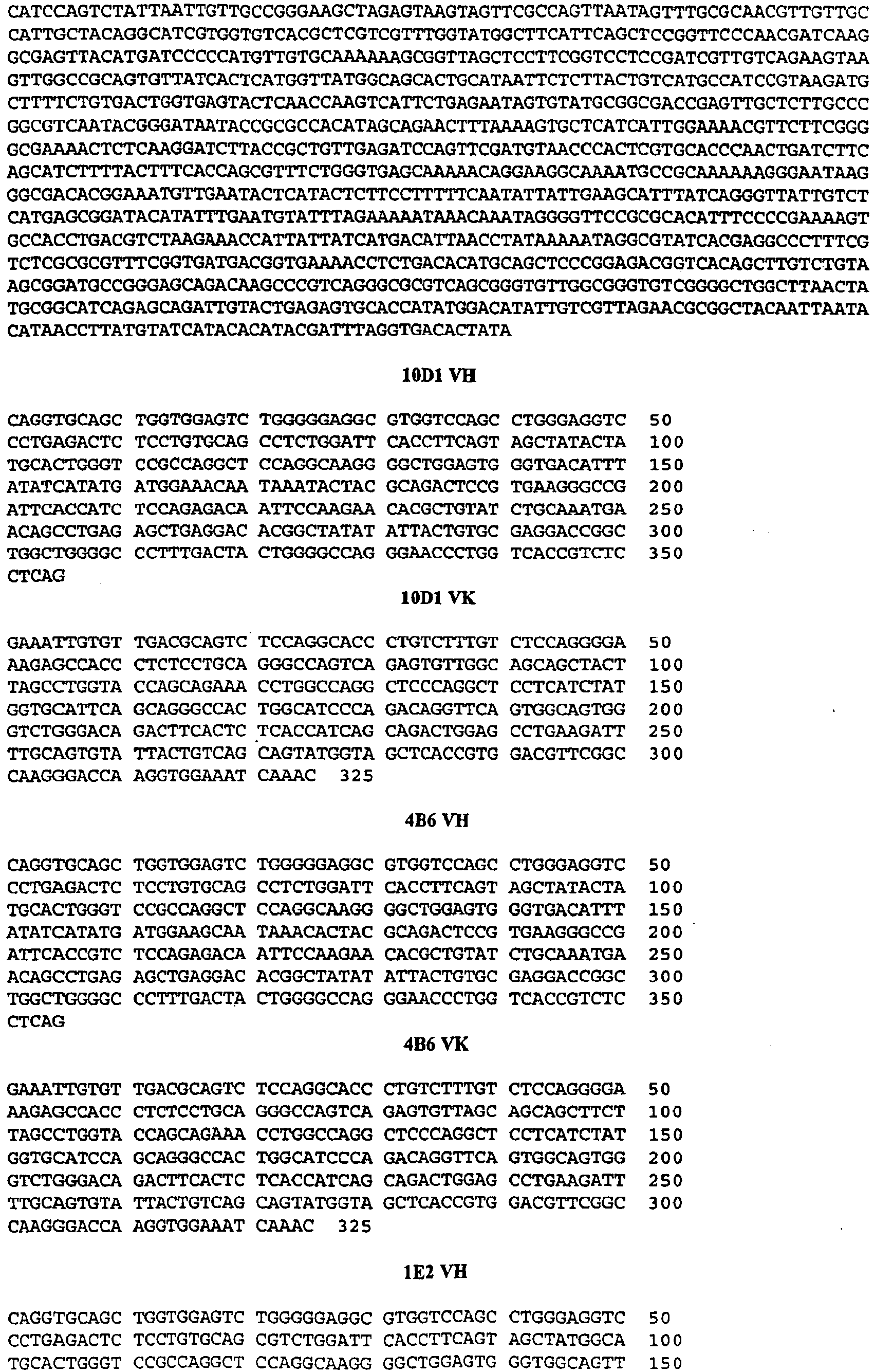

- In particular, the invention relates to the following embodiments E-1 to E-68.
- E-1. A human sequence antibody that specifically binds to human CTLA-4.
- E-2. A therapeutically-effective human sequence antibody that specifically binds to human CTLA-4.
- E-3. The therapeutically-effective human sequence antibody of E-2, wherein the antibody binds CTLA-4 on the cell surface of normal human T cells.
- E-4. The therapeutically-effective human sequence antibody of E-2, wherein the antibody is well-tolerated in a patient.
- E-5. The therapeutically-effective human sequence antibody of E-2, wherein the T cell subpopulations marked by CD antigens CD4, CD8, CD25, and CD69 remain stable during and subsequent to the administration of the antibody.
- E-6. An isolated human sequence antibody that specifically binds to human CTLA-4 which is substantially free of non-immunoglobulin associated human proteins.
- E-7. A composition of polyclonal antibodies comprising a plurality of antibodies according to E-1.
- E-8. The composition of polyclonal antibodies of E-7 comprising at least about 10 different antibodies according to E-1.
- E-9. The composition of polyclonal antibodies of E-7 comprising at least about 100 different antibodies according to E-1.
- E-10. The composition of polyclonal antibodies of E-7 comprising at least about 1000 different antibodies according to E-1.
- E-11. The human sequence antibody of E-1, wherein the human antibody blocks binding of human CTLA-4 to B7 ligands.
- E-12. The human sequence antibody of E-1, wherein the human sequence antibody does not block binding of human CTLA-4 to B7 ligands.
- E-13. The human sequence antibody of E-1, wherein the antibody binds to human CTLA-4 with an equilibrium association constant (K2) of at least 108M-1.
- E-14. The human sequence antibody of E-1, wherein the antibody binds to human CTLA-4 with an equilibrium association constant (K8) of at least 109 M-1.
- E-15. The human sequence antibody of E-1, wherein the antibody blocks binding of human CTLA-4 to B7 ligands by at least about 20 %.
- E-16. The human sequence antibody of E-1, wherein the antibody blocks binding of human CTLA-4 to B7 ligands by at least about 30 %.
- E-17. The human sequence antibody of E-1, wherein the antibody blocks binding of human CTLA-4 to B7 ligands by at least about 40 %.
- E-18. The human sequence antibody of E-1, wherein the antibody blocks binding of human CTLA-4 to B7 ligands by at least about 50 %.
- E-19: The human sequence antibody of E-1, wherein the antibody heavy chain is IgG or IgM.
- E-20: The human sequence antibody of E-19, wherein the IgG antibody heavy chain is IgG1, IgG2, IgG3 or IgG4.
- E-21: The human sequence antibody of E-1, wherein the antibody light chain is a kappa light chain.
- E-22: The human sequence antibody of E-1, wherein the human sequence antibody is encoded by human IgG heavy chain and human kappa light chain nucleic acids that comprise nucleotide sequences in their variable regions as set forth in SEQ ID NO:16 and SEQ ID NO:6, respectively.
- E-23: The human sequence antibody of E-1, wherein the human sequence antibody is encoded by human IgG heavy chain and human kappa light chain nucleic acids that comprise nucleotide sequences in their variable regions as set forth in SEQ ID NO:18 and SEQ ID NO:8, respectively.
- E-24. The human sequence antibody of E-1, wherein the human sequence antibody is encoded by human IgG heavy chain and human kappa light chain nucleic acids that comprise nucleotide sequences in their variable regions as set forth in SEQ ID NO:22 and SEQ ID NO: 12, respectively.
- E-25. A human sequence antibody of E-1, wherein the human sequence antibody is encoded by heavy chain and light chain variable region amino acid sequences as set forth in SEQ ID NO: 17 and SEQ ID NO:7, respectively.
- E-26. A human sequence antibody of E-1, wherein the human sequence antibody is encoded by heavy chain and light chain variable region amino acid sequences as set forth in SEQ ID NO: 19 and SEQ ID NO:9, respectively.
- E-27. A human sequence antibody of E-1, wherein the human sequence antibody is encoded by heavy chain and light chain variable region amino acid sequences as set forth in SEQ ID NO:23 and SEQ ID NO:13, respectively.
- E-28. The human sequence antibody of E-1, wherein the human sequence antibody is encoded by human IgG heavy chain and human kappa light chain nucleic acids comprising variable heavy and light chain sequences from V gene segments VH 3-30.3 and VK A-27, respectively.
- E-29. The human sequence antibody of E-1, wherein the human sequence antibody is encoded by human IgG heavy chain and human kappa light chain nucleic acids comprising variable heavy and light chain sequences from V gene segments VH 3-33 and VK L-15, respectively.
- E-30. The human sequence antibody of E-1, comprising heavy chain CDR1, CDR2, and CDR3 sequences, SYTMH (SEQ ID NO:27), FISYDGNNKYYADSVKG (SEQ ID NO:32) and TGWLGPFDY (SEQ ID NO:37), respectively, and light chain CDR1, CDR2, and CDR3 sequences, RASQSVGSSYLA (SEQ ID NO:24), GAFSRAT (SEQ ID NO:29), and QQYGSSPWT (SEQ ID NO:35), respectively.
- E-31. The human sequence antibody of E-1, comprising heavy chain CDR1, CDR2, and CDR3 sequences, SYTMH (SEQ ID NO:27), FISYDGSNKHYADSVKG (SEQ ID NO:33) and TGWLGPFDY (SEQ ID NO:38), respectively, and light chain CDR1, CDR2, and CDR3 sequences, RASQSVSSSFLA (SEQ ID NO:25), GASSRAT (SEQ ID NO:30), and QQYGSSPWT (SEQ ID NO:35), respectively.
- E-32. The human sequence antibody of E-1, comprising heavy chain CDR1, CDR2, and CDR3 sequences, SYGMH (SEQ ID NO:28), VIWYDGSNKYYADSVKG (SEQ ID NO:34) and APNYIGAFDV (SEQ ID NO:39), respectively, and light chain CDR1, CDR2, and CDR3 sequences, RASQGISSWLA (SEQ ID NO:26), AASSLQS (SEQ ID NO:31), and QQYNSYPPT (SEQ ID NO:36), respectively.
- E-33. The human sequence antibody of E-1, wherein said human sequence antibody is produced by a transgenic non-human animal.
- E-34. The human sequence antibody of E-33, wherein said transgenic non-human animal is a mouse.
- E-35. The human sequence antibody of E-1, wherein the human sequence antibody is a Fab fragment.
- E-36: A polyvalent complex comprising at least two human sequence antibodies each of which specifically binds to human CTLA-4.
- E-37: The polyvalent complex of E-36, wherein the two different antibodies are linked to each other covalently.
- E-38: The polyvalent complex of E-36, wherein the two different antibodies are linked to each other non-covalently.
- E-39: A nucleic acid encoding a heavy chain of a human sequence antibody.
- E-40: The nucleic acid of E-39 comprising the nucleotide sequence as set forth in SEQ ID NO:1.
- E-41: A transgenic non-human animal having a genome comprising a human sequence heavy chain transgene and a human sequence light chain transgene, which animal has been immunized with a human CTLA-4, or a fragment or an analog thereof, whereby the animal expresses human sequence antibodies to the human CTLA-4.
- E-42. The transgenic non-human animal of E-41, wherein the transgenic non-human animal is a transgenic mouse.
- E-43. The transgenic mouse of E-42 comprising HCo7 or HCo12.
- E-44. A cell line comprising a B cell obtained from a transgenic non-human animal having a genome comprising a human sequence heavy chain transgene and a human sequence light chain transgene, wherein the hybridoma produces a human sequence antibody that specifically binds to human CTLA-4.
- E-45. The cell line of E-44, wherein the cell line is a hybridoma.
- E-46. A hybridoma secreting a human sequence antibody that specifically binds human CTLA-4 or binding fragment thereof, wherein the antibody is selected from the group consisting of:
- a human sequence antibody comprising heavy chain heavy chain CDR1, CDR2, and CDR3 sequences, SYTMH (SEQ ID NO:27), FISYDGNNKYYADSVKG (SEQ ID NO:32) and TGWLGPFDY (SEQ ID NO:37), respectively, and light chain CDR1, CDR2, and CDR3 sequences, RASQSVGSSYLA (SEQ ID NO:24), GAFSRAT (SEQ ID NO:29), and QQYGSSPWT (SEQ ID NO:35), respectively, and heavy chain and light chain variable region amino acid sequences as set forth in SEQ ID NO:17 and SEQ ID NO:7, respectively,
- a human sequence antibody comprising heavy chain CDR1, CDR2, and CDR3 sequences, SYTMH (SEQ ID NO:27), FISYDGSNKHYADSVKG (SEQ ID NO:33) and TGWLGPFDY (SEQ ID NO:38), respectively, and light chain CDR1, CDR2, and CDR3 sequences, RASQSVSSSFLA (SEQ ID NO:25), GASSRAT (SEQ ID NO:30), and QQYGSSPWT (SEQ ID NO:35), respectively, and heavy chain and light chain variable region amino acid sequences as set forth in SEQ ID NO: 19 and SEQ ID NO:9, respectively, and
- a human sequence antibody of E-1, comprising heavy chain CDR1, CDR2, and CDR3 sequences, SYGMH (SEQ ID NO:28); VIWYDGSNKYYADSVKG (SEQ ID NO:34) and APNYIGAFDV (SEQ ID NO:39), respectively, and light chain CDR1, CDR2, and CDR3 sequences, RASQGISSWLA (SEQ ID NO:26), AASSLQS (SEQ ID NO:31), and QQYNSYPPT (SEQ ID NO:36), respectively, and heavy chain and light chain variable region amino acid sequences as set forth in SEQ ID NO:23 and SEQ ID NO:13, respectively.
- E-47: A pharmaceutical composition comprising a human sequence antibody of E-1 and a pharmaceutically acceptable carrier.
- E-48: The pharmaceutical composition of E-47, further comprising an agent effective to induce an immune response against a target antigen.
- E-49: The pharmaceutical composition of E-47, further comprising a chemotherapeutic agent.
- E-50: The pharmaceutical composition of E-47, further comprising an antibody to an immunosuppressive molecule.
- E-51: A method for inducing, augmenting or prolonging an immune response to an antigen in a patient, comprising administering a therapeutically effective amount of a pharmaceutical composition of E-47, wherein the pharmaceutical composition blocks binding of human CTLA-4 to human B7 ligands.
- E-52: The method of E-51, wherein the antigen is a tumor antigen or an antigen from a pathogen.
- E-53: The method of E-52, wherein the patient is also treated with a bispecific antibody, said bispecific antibody comprising an antibody sequence having an affinity for an antigen from a tumor or a pathogen.
- E-54: The method of E-52, wherein the pathogen is a virus, a bacterium, a fungus or a parasite.
- E-55: The method of E-54, wherein the pathogen is HIV.
- E-56: The method of E-51, further comprising administering the antigen, or a fragment or an analog thereof, to the patient, whereby the antigen in combination with the human sequence antibody induces, augments or prolongs the immune response.
- E-57: The method of E-56, wherein the antigen is a tumor antigen or an antigen from a pathogen.
- E-58: The method of E-57, wherein the tumor antigen is telomerase.
- E-59. The method of E-56, wherein the antigen is a component of an amyloid formation in the patient.
- E-60. The method of E-56, wherein the patient is suffering from Alzheimer's disease and the antigen is AB peptide.
- E-61. The method of E-51, further comprising administering a cytokine to the patient.
- E-62. A method of suppressing an immune response in a patient, comprising administering to the patient a therapeutically effective dosage of a polyvalent preparation comprising at least two human sequence antibodies to human CTLA-4 linked to each other.
- E-63. A method of suppressing an immune response in a patient, comprising administering to the patient a therapeutically effective dosage of a polyclonal preparation comprising at least two human sequence antibodies to human CTLA-4.
- E-64. A method of treating an autoimmune disease in a subject caused or exacerbated by increased activity of T cells consisting of administering a therapeutically effective amount of a pharmaceutical composition of E-47 to the subject.
- E-65. A method of treating cancer in a subject consisting of administering a therapeutically effective amount of a pharmaceutical composition of E-47 to the subject.
- E-66. The method of E-65, wherein the cancer is prostate cancer, melanoma, or epithelial cancer.
- E-67. The method of E-65, further comprising a vaccine.
- E-68. The method of E-67, wherein the vaccine is a tumor cell vaccine, a GM-CSF-modified tumor cell vaccine, or an antigen-loaded dendritic cell vaccine.


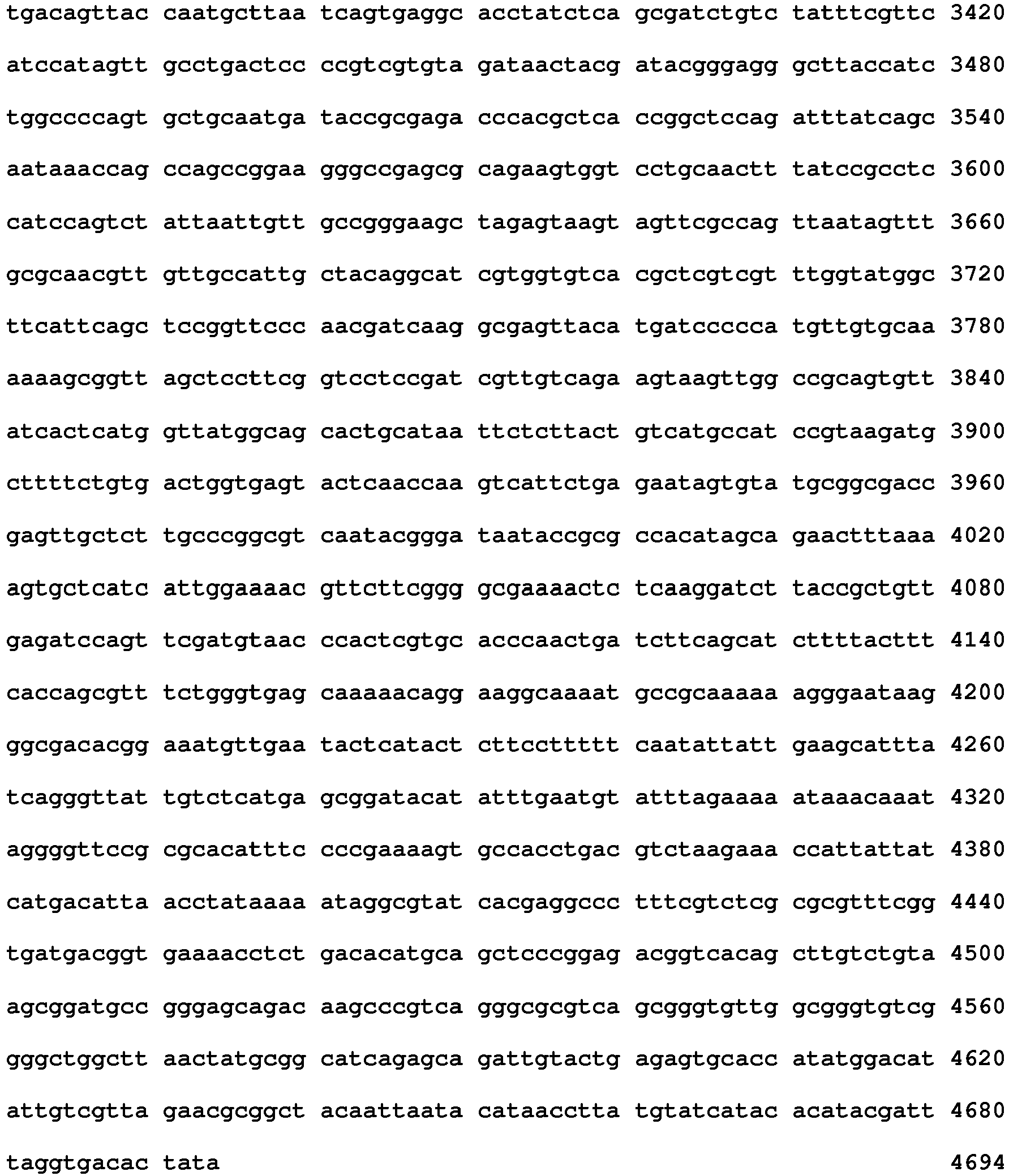
Claims (12)
- A human sequence antibody, or antigen-binding portion thereof, that binds to an epitope present on human CTLA4 so as to inhibit human CTLA-4 from interacting with a human B7 counterreceptor, wherein the epitope is the epitope of a reference antibody comprising a light chain variable region having the amino acid sequence set forth in SEQ ID NO:7 and a heavy chain variable region having the amino acid sequence set forth in SEQ ID NO:17.
- A human sequence antibody, or antigen-binding portion thereof, that cross-competes with a reference antibody for binding to human CTLA-4, wherein the reference antibody comprises a light chain variable region having the amino acid sequence set forth in SEQ ID NO:7 and a heavy chain variable region having the amino acid sequence set forth in SEQ ID NO:17.
- The antibody, or antigen-binding portion thereof, of claim 1 or claim 2, wherein the human B7 counterreceptor is human B7-1 or B7-2.
- The antibody, or antigen-binding portion thereof, of any one of claims 1-3, wherein the antibody or antigen-binding portion blocks binding of human CTLA-4 to human B7 by at least 50%, at least 60%, at least 70%, at least 80% or at least 90%.
- The antibody, or antigen-binding portion thereof, of any one of claims 1-4, wherein the antibody or antigen-binding portion binds human CTLA-4 with an affinity of 108 M-1 or higher affinity.
- The antibody of any one of claims 1-5, wherein the antibody comprises an IgG heavy chain.
- The antibody of claim 6, wherein the IgG antibody heavy chain is an IgG1, IgG2, IgG3 or IgG4 heavy chain.
- A pharmaceutical composition comprising:a) at least one antibody, or antigen-binding portion, according to any one of claims 1-7, andb) a pharmaceutically acceptable carrier.
- The pharmaceutical composition of claim 8 for use in a method of treating cancer, an infectious disease, an autoimmune disease, graft versus host disease, transplant rejection or an amyloidogenic disease.
- The pharmaceutical composition for use according to claim 9, wherein the composition is for being used in combination with a vaccine.
- The pharmaceutical composition for use according to claim 9, wherein the cancer is prostate cancer or melanoma.
- The pharmaceutical composition for use according to claim 9, wherein the infectious disease is HIV infection.
Priority Applications (1)
| Application Number | Priority Date | Filing Date | Title |
|---|---|---|---|
| EP17152917.5A EP3214175A1 (en) | 1999-08-24 | 2000-08-24 | Human ctla-4 antibodies and their uses |
Applications Claiming Priority (3)
| Application Number | Priority Date | Filing Date | Title |
|---|---|---|---|
| US15045299P | 1999-08-24 | 1999-08-24 | |
| EP06077179A EP1792991A1 (en) | 1999-08-24 | 2000-08-24 | Human CTLA-4 antibodies and their uses |
| EP00959399A EP1212422B1 (en) | 1999-08-24 | 2000-08-24 | Human ctla-4 antibodies and their uses |
Related Parent Applications (2)
| Application Number | Title | Priority Date | Filing Date |
|---|---|---|---|
| EP00959399A Division EP1212422B1 (en) | 1999-08-24 | 2000-08-24 | Human ctla-4 antibodies and their uses |
| EP06077179A Division EP1792991A1 (en) | 1999-08-24 | 2000-08-24 | Human CTLA-4 antibodies and their uses |
Related Child Applications (1)
| Application Number | Title | Priority Date | Filing Date |
|---|---|---|---|
| EP17152917.5A Division EP3214175A1 (en) | 1999-08-24 | 2000-08-24 | Human ctla-4 antibodies and their uses |
Publications (1)
| Publication Number | Publication Date |
|---|---|
| EP2829609A1 true EP2829609A1 (en) | 2015-01-28 |
Family
ID=22534598
Family Applications (4)
| Application Number | Title | Priority Date | Filing Date |
|---|---|---|---|
| EP06077179A Withdrawn EP1792991A1 (en) | 1999-08-24 | 2000-08-24 | Human CTLA-4 antibodies and their uses |
| EP00959399A Expired - Lifetime EP1212422B1 (en) | 1999-08-24 | 2000-08-24 | Human ctla-4 antibodies and their uses |
| EP14180954.1A Withdrawn EP2829609A1 (en) | 1999-08-24 | 2000-08-24 | Human CTLA-4 antibodies and their uses |
| EP17152917.5A Withdrawn EP3214175A1 (en) | 1999-08-24 | 2000-08-24 | Human ctla-4 antibodies and their uses |
Family Applications Before (2)
| Application Number | Title | Priority Date | Filing Date |
|---|---|---|---|
| EP06077179A Withdrawn EP1792991A1 (en) | 1999-08-24 | 2000-08-24 | Human CTLA-4 antibodies and their uses |
| EP00959399A Expired - Lifetime EP1212422B1 (en) | 1999-08-24 | 2000-08-24 | Human ctla-4 antibodies and their uses |
Family Applications After (1)
| Application Number | Title | Priority Date | Filing Date |
|---|---|---|---|
| EP17152917.5A Withdrawn EP3214175A1 (en) | 1999-08-24 | 2000-08-24 | Human ctla-4 antibodies and their uses |
Country Status (21)
| Country | Link |
|---|---|
| US (1) | US6984720B1 (en) |
| EP (4) | EP1792991A1 (en) |
| JP (4) | JP4093757B2 (en) |
| KR (3) | KR100942863B1 (en) |
| CN (2) | CN102766210B (en) |
| AT (1) | ATE354655T1 (en) |
| AU (3) | AU784012B2 (en) |
| BE (1) | BE2012C001I2 (en) |
| CA (2) | CA2381770C (en) |
| CY (2) | CY1107628T1 (en) |
| DE (2) | DE60033530T2 (en) |
| DK (1) | DK1212422T3 (en) |
| ES (1) | ES2282133T3 (en) |
| FR (1) | FR12C0004I2 (en) |
| IL (3) | IL148079A0 (en) |
| LU (1) | LU91928I2 (en) |
| MX (1) | MXPA02001911A (en) |
| NZ (1) | NZ517202A (en) |
| PT (1) | PT1212422E (en) |
| WO (1) | WO2001014424A2 (en) |
| ZA (1) | ZA200201190B (en) |
Families Citing this family (1086)
| Publication number | Priority date | Publication date | Assignee | Title |
|---|---|---|---|---|
| US6057287A (en) | 1994-01-11 | 2000-05-02 | Dyax Corp. | Kallikrein-binding "Kunitz domain" proteins and analogues thereof |
| JP5341287B2 (en) * | 1998-12-03 | 2013-11-13 | ザ リージェンツ オブ ザ ユニバーシティ オブ カリフォルニア | Stimulation of T cells against self antigens using CTLA-4 blockers |
| US7109003B2 (en) | 1998-12-23 | 2006-09-19 | Abgenix, Inc. | Methods for expressing and recovering human monoclonal antibodies to CTLA-4 |
| DK2112166T3 (en) * | 1998-12-23 | 2019-02-04 | Pfizer | Human monoclonal antibodies to CTLA-4 |
| EE05627B1 (en) | 1998-12-23 | 2013-02-15 | Pfizer Inc. | Human monoclonal antibodies to CTLA-4 |
| US7605238B2 (en) * | 1999-08-24 | 2009-10-20 | Medarex, Inc. | Human CTLA-4 antibodies and their uses |
| NZ517202A (en) | 1999-08-24 | 2004-05-28 | Medarex Inc | Human CTLA-4 antibodies and their uses |
| EP1261376A1 (en) * | 2000-01-27 | 2002-12-04 | Genetics Institute, LLC | Antibodies against ctla4(cd152), conjugates comprising same, and uses thereof |
| BRPI0108923B8 (en) | 2000-03-03 | 2021-05-25 | Cambridge Antibody Tech Limited | specific binding member, isolated nucleic acid, host cell, methods to produce a specific binding member or antibody vh or vl domain, and, to obtain a specific binding member that binds eotaxin |
| US6946546B2 (en) | 2000-03-06 | 2005-09-20 | Cambridge Antibody Technology Limited | Human antibodies against eotaxin |
| DE16192152T1 (en) | 2000-05-26 | 2020-08-06 | Immunex Corporation | USE OF INTERLEUKIN-4 RECEPTOR (IL-4R) ANTIBODIES AND COMPOSITIONS THEREOF |
| EP1355666B1 (en) | 2000-12-22 | 2012-06-13 | Max-Planck-Gesellschaft zur Förderung der Wissenschaften e.V. | Use of repulsive guidance molecule (RGM) and its modulators |
| US7541512B2 (en) | 2001-03-30 | 2009-06-02 | Synageva Biopharma Corp. | Avians containing a lysozyme promoter transgene |
| WO2002079447A2 (en) | 2001-03-30 | 2002-10-10 | Avigenics, Inc. | Avian lysozyme promoter |
| IL149701A0 (en) * | 2001-05-23 | 2002-11-10 | Pfizer Prod Inc | Use of anti-ctla-4 antibodies |
| AR038568A1 (en) * | 2002-02-20 | 2005-01-19 | Hoffmann La Roche | ANTI-A BETA ANTIBODIES AND ITS USE |
| IL164287A0 (en) | 2002-04-12 | 2005-12-18 | Medarex Inc | Methods of treatment using ctla-4 antibodies |
| JP2005533015A (en) * | 2002-05-02 | 2005-11-04 | ユニバーシティー オブ コネティカット ヘルス センター | Use of heat shock proteins to enhance the effectiveness of antibody therapy |
| CA2488558C (en) | 2002-06-07 | 2013-08-20 | Dyax Corp. | Prevention and reduction of blood loss |
| US7153829B2 (en) | 2002-06-07 | 2006-12-26 | Dyax Corp. | Kallikrein-inhibitor therapies |
| EP2206517B1 (en) | 2002-07-03 | 2023-08-02 | Ono Pharmaceutical Co., Ltd. | Immunopotentiating compositions comprising anti-PD-L1 antibodies |
| ES2709103T3 (en) | 2002-08-28 | 2019-04-15 | Dyax Corp | Methods to preserve organs and tissues |
| AU2003300776A1 (en) * | 2002-09-09 | 2004-05-25 | Omeros Corporation | G protein coupled receptors and uses thereof |
| US20080260744A1 (en) | 2002-09-09 | 2008-10-23 | Omeros Corporation | G protein coupled receptors and uses thereof |
| WO2004029629A1 (en) * | 2002-09-27 | 2004-04-08 | Janssen Pharmaceutica N.V. | N-11 truncated amyloid-beta nomoclonal antibodies, compositions, methods and uses |
| AU2003260871A1 (en) * | 2002-09-30 | 2004-04-19 | Pfizer Products Inc. | Hybridomas producing high levels of human sequence antibody |
| PL216630B1 (en) * | 2002-10-17 | 2014-04-30 | Genmab As | Human monoclonal antibodies against cd20 |
| ES2373947T3 (en) | 2002-12-16 | 2012-02-10 | Genmab A/S | HUMAN MONOCLONAL ANTIBODIES AGAINST INTERLEUCINE 8 (IL-8). |
| DE10303974A1 (en) | 2003-01-31 | 2004-08-05 | Abbott Gmbh & Co. Kg | Amyloid β (1-42) oligomers, process for their preparation and their use |
| CA2518371A1 (en) | 2003-03-14 | 2004-09-30 | Wyeth | Antibodies against human il-21 receptor and uses therefor |
| US7378503B2 (en) | 2003-04-02 | 2008-05-27 | Hoffmann-La Roche Inc. | Antibodies against insulin-like growth factor 1 receptor and uses thereof |
| CA2522957C (en) | 2003-04-23 | 2013-10-22 | Medarex, Inc. | Compositions and methods for the therapy of inflammatory bowel disease |
| US7465446B2 (en) | 2003-05-30 | 2008-12-16 | Medarex, Inc. | Surrogate therapeutic endpoint for anti-CTLA4-based immunotherapy of disease |
| EP1638514A4 (en) * | 2003-06-06 | 2009-11-18 | Medimmune Inc | Use of epha4 and modulator or epha4 for diagnosis, treatment and prevention of cancer |
| US7579157B2 (en) | 2003-07-10 | 2009-08-25 | Hoffmann-La Roche Inc. | Antibody selection method against IGF-IR |
| AR045563A1 (en) * | 2003-09-10 | 2005-11-02 | Warner Lambert Co | ANTIBODIES DIRECTED TO M-CSF |
| US8101720B2 (en) * | 2004-10-21 | 2012-01-24 | Xencor, Inc. | Immunoglobulin insertions, deletions and substitutions |
| EP1531162A1 (en) * | 2003-11-14 | 2005-05-18 | Heinz Vollmers | Adenocarcinoma specific antibody SAM-6, and uses thereof |
| EP1533617A1 (en) | 2003-11-19 | 2005-05-25 | RMF Dictagene S.A. | Angiogenesis inhibiting molecules, their selection, production and their use in the treatment and diagnosis of cancer |
| US7642341B2 (en) | 2003-12-18 | 2010-01-05 | Merck Serono S.A. | Angiogenesis inhibiting molecules, their selection, production and their use in the treatment of cancer |
| KR101333449B1 (en) | 2003-12-10 | 2013-11-26 | 메다렉스, 엘.엘.시. | Ip-10 antibodies and their uses |
| KR101151477B1 (en) | 2003-12-10 | 2012-06-22 | 메다렉스, 인코포레이티드 | Interferon alpha antibodies and their uses |
| NZ548821A (en) | 2004-02-06 | 2009-12-24 | Univ Massachusetts | Antibodies against clostridium difficile toxins and uses thereof |
| CA2560919A1 (en) * | 2004-03-26 | 2005-10-06 | Pfizer Products Inc. | Uses of anti-ctla-4 antibodies |
| CN1942483B (en) | 2004-04-13 | 2012-09-26 | 弗·哈夫曼-拉罗切有限公司 | Anti-P-selectin antibodies |
| WO2006002438A2 (en) | 2004-06-03 | 2006-01-05 | Medarex, Inc. | Human monoclonal antibodies to fc gamma receptor i (cd64) |
| US7494779B2 (en) | 2004-06-14 | 2009-02-24 | Li-Te Chin | Method for producing human antibodies to human CD152 with properties of agonist, antagonist, or inverse agonist |
| AU2005329405A1 (en) * | 2004-06-15 | 2006-09-28 | Centocor, Inc. | Method for screening agents against human prostate disease |
| JP5160887B2 (en) | 2004-06-21 | 2013-03-13 | メダレックス インコーポレイテッド | Interferon alpha receptor 1 antibody and method of use thereof |
| TWI309240B (en) | 2004-09-17 | 2009-05-01 | Hoffmann La Roche | Anti-ox40l antibodies |
| US7235530B2 (en) | 2004-09-27 | 2007-06-26 | Dyax Corporation | Kallikrein inhibitors and anti-thrombolytic agents and uses thereof |
| EP2899277A1 (en) | 2004-11-26 | 2015-07-29 | Pieris AG | Compound with affinity for the cytotoxic T lymphocyte-associated antigen (CTLA-4) |
| AU2005313020A1 (en) * | 2004-12-09 | 2006-06-15 | Neuro Therapeutics Ab | Materials and methods related to Dickkopfs (DKK) and Neurogenesis |
| EP1860120B1 (en) * | 2005-02-08 | 2018-01-24 | The Chemo-Sero-Therapeutic Research Institute | Method for improving antibody |
| AU2012200203B2 (en) * | 2005-03-08 | 2014-07-03 | Pfizer Products Inc. | Anti-CTLA-4 Antibody Compositions |
| WO2006096461A2 (en) | 2005-03-08 | 2006-09-14 | Pharmacia & Upjohn Company Llc | Composition comprising an antibody against macrophage colony-stimulating factor (m-csf) and a chelating agent |
| AU2014240252B2 (en) * | 2005-03-08 | 2016-10-06 | Pfizer Products Inc | Anti-CTLA-4 Antibody Compositions |
| EP3312196B1 (en) | 2005-03-23 | 2019-07-17 | Genmab A/S | Antibodies against cd38 for treatment of multiple myeloma |
| TW200700082A (en) * | 2005-03-23 | 2007-01-01 | Pfizer Prod Inc | Therapy of prostate cancer with ctla4 antibodies and hormonal therapy |
| US20060240006A1 (en) * | 2005-04-20 | 2006-10-26 | Chishih Chu | Novel antibody structures derived from human germline sequences |
| DE102005019845A1 (en) * | 2005-04-28 | 2006-11-02 | Li-Te Chin | New human antibody capable of human CD152 (CTLA-4) binding or an antibody fragment, useful for diagnosing or treating human diseases caused by over- and/or under-expression of CD152 |
| ES2720160T3 (en) * | 2005-05-09 | 2019-07-18 | Ono Pharmaceutical Co | Human monoclonal antibodies against programmed death 1 (PD-1) and methods for treating cancer using antibodies directed against PD-1 alone or together with other immunotherapeutic substances |
| CN104436190A (en) | 2005-06-08 | 2015-03-25 | 达纳-法伯癌症研究院公司 | Methods and compositions for the treatment of persistent infections and cancer by inhibiting the programmed cell death 1 (PD-1) pathway |
| EA019344B1 (en) | 2005-07-01 | 2014-03-31 | МЕДАРЕКС, Эл.Эл.Си. | Human monoclonal antibodies to programmed death ligand 1 (pd-l1) and uses thereof |
| US20090117132A1 (en) * | 2005-07-07 | 2009-05-07 | Pfizer, Inc. | Anti-Ctla-4 Antibody and Cpg-Motif-Containing Synthetic Oligodeoxynucleotide Combination Therapy for Cancer Treatment |
| CN100443503C (en) * | 2005-07-18 | 2008-12-17 | 四川大学华西医院 | Recombinant immunotoxin of humanized CTLA-4 single-chain antibody and human perforin channel forming peptide P34 |
| SG196835A1 (en) * | 2005-07-18 | 2014-02-13 | Amgen Inc | Human anti-b7rp1 neutralizing antibodies |
| NL1029605C2 (en) * | 2005-07-25 | 2007-01-26 | Li-Te Chin | New human antibody capable of human CD152 (CTLA-4) binding or an antibody fragment, useful for diagnosing or treating human diseases caused by over- and/or under-expression of CD152 |
| CA2618796C (en) * | 2005-08-11 | 2018-01-02 | Arpi Matossian-Rogers | Peptides for treatment and diagnosis of autoimmune disease |
| KR20080056167A (en) | 2005-09-26 | 2008-06-20 | 메다렉스, 인코포레이티드 | Human Monoclonal Antibody Against CD70 |
| US7700567B2 (en) | 2005-09-29 | 2010-04-20 | Supergen, Inc. | Oligonucleotide analogues incorporating 5-aza-cytosine therein |
| US8906864B2 (en) * | 2005-09-30 | 2014-12-09 | AbbVie Deutschland GmbH & Co. KG | Binding domains of proteins of the repulsive guidance molecule (RGM) protein family and functional fragments thereof, and their use |
| MY144906A (en) | 2005-10-21 | 2011-11-30 | Novartis Ag | Human antibodies against il13 and therapeutic uses |
| EP1948214A4 (en) * | 2005-11-08 | 2009-12-30 | Medarex Inc | TNF-ALPHA BLOCKER TREATMENT OF ENTEROCOLITIS ASSOCIATED WITH IMMUNOSTIMULATORY THERAPEUTIC ANTIBODIES THERAPY |
| KR20180058863A (en) | 2005-11-30 | 2018-06-01 | 애브비 인코포레이티드 | Monoclonal antibodies against amyloid beta protein and uses thereof |
| PT1954718E (en) | 2005-11-30 | 2014-12-16 | Abbvie Inc | Anti-a globulomer antibodies, antigen-binding moieties thereof, corresponding hybridomas, nucleic acids, vectors, host cells, methods of producing said antibodies, compositions comprising said antibodies, uses of said antibodies and methods of using said antibodies |
| AU2006321593B2 (en) * | 2005-12-07 | 2012-10-04 | E. R. Squibb & Sons, L.L.C. | CTLA-4 antibody dosage escalation regimens |
| HRP20120701T1 (en) | 2005-12-08 | 2012-10-31 | Medarex, Inc. | Human monoclonal antibodies to fucosyl-gm1 and methods for using anti-fucosyl-gm1 |
| WO2007084672A2 (en) | 2006-01-17 | 2007-07-26 | Medarex, Inc. | Monoclonal antibodies against cd30 lacking in fucosyl and xylosyl residues |
| EP2013348A4 (en) | 2006-03-30 | 2009-09-02 | Univ California | METHODS AND COMPOSITIONS FOR LOCALIZED SECRETION OF ANTI-CTLA-4 ANTIBODIES |
| US7919079B2 (en) * | 2006-03-31 | 2011-04-05 | Biosante Pharmaceuticals, Inc. | Cancer immunotherapy compositions and methods of use |
| AU2007235496B2 (en) | 2006-03-31 | 2013-11-21 | E. R. Squibb & Sons, L.L.C. | Transgenic animals expressing chimeric antibodies for use in preparing human antibodies |
| US9044461B2 (en) | 2006-04-07 | 2015-06-02 | The Research Foundation Of State University Of New York | Transcobalamin receptor polypeptides, nucleic acids, and modulators thereof, and related methods of use in modulating cell growth and treating cancer and cobalamin deficiency |
| JP5524610B2 (en) | 2006-04-07 | 2014-06-18 | ザ リサーチ ファウンデーション オブ ステイト ユニバーシティー オブ ニューヨーク | Transcobalamin receptor polypeptides, nucleic acids and modulators thereof, and related methods used to regulate cell growth and to treat cancer and cobalamin deficiency |
| CN101578297A (en) | 2006-04-07 | 2009-11-11 | 美国政府健康及人类服务部 | Antibody compositions and methods for treating neoplastic diseases |
| US7846724B2 (en) | 2006-04-11 | 2010-12-07 | Hoffmann-La Roche Inc. | Method for selecting CHO cell for production of glycosylated antibodies |
| ES2396220T3 (en) | 2006-08-11 | 2013-02-20 | Ono Pharmaceutical Co., Ltd. | Monoclonal antibodies against stromal-derived factor 1 (SDF-1) |
| EA200970250A1 (en) | 2006-09-05 | 2010-02-26 | Медарекс, Инк. | ANTIBODIES TO BONE MORPHOGENETIC PROTEINS AND THEIR RECEPTORS AND METHODS OF THEIR APPLICATION |
| NZ576122A (en) | 2006-09-26 | 2012-09-28 | Genmab As | Anti-cd38 plus corticosteroids plus a non-corticosteroid chemotherapeutic for treating tumors |
| CA2663243A1 (en) | 2006-09-28 | 2008-04-03 | Merck Serono S.A. | Junctional adhesion molecule-c (jam-c) binding compounds and methods of their use |
| EP2486941B1 (en) | 2006-10-02 | 2017-03-15 | E. R. Squibb & Sons, L.L.C. | Human antibodies that bind CXCR4 and uses thereof |
| WO2008060814A2 (en) | 2006-10-19 | 2008-05-22 | Merck & Co., Inc. | ANTI-IL-13Rα1 ANTIBODIES AND THEIR USES THEREOF |
| US8618248B2 (en) | 2006-10-31 | 2013-12-31 | President And Fellows Of Harvard College | Phosphopeptide compositions and anti-phosphopeptide antibody compositions and methods of detecting phosphorylated peptides |
| CL2007003291A1 (en) | 2006-11-15 | 2008-07-04 | Medarex Inc | ISOLATED HUMAN MONOCLONAL ANTIBODY THAT LINKS THE BTLA PROTEIN OR FRAGMENTS OF THE SAME; NUCLEIC ACID THAT CODIFIES IT; METHOD OF PRODUCTION; COMPOSITION AND IMMUNOCUJUGADO THAT UNDERSTANDS THEM; AND METHOD TO INHIBIT THE GROWTH OF TUMOR CELLS AND |
| US8455626B2 (en) | 2006-11-30 | 2013-06-04 | Abbott Laboratories | Aβ conformer selective anti-aβ globulomer monoclonal antibodies |
| BRPI0717902A2 (en) | 2006-12-01 | 2013-10-29 | Medarex Inc | "HUMAN MONOCLONAL ANTIBODY ISOLATED, COMPOSITION, ASSOCIATED ANTIBODY-MOLLECLE PARTNERSHIP, IMMUNOCOUGHTED, ISOLATED NUCLEIC ACID MOLECULES, EXPRESSION VECTOR, HOSPEDIC CELL FOR PREPARING A CDT FOR THE PREPARATION OF A CD22 AND METHOD FOR TREATING INFLAMMATORY DISEASE OR SELF-IMMUNEING AN INDIVIDUAL " |
| CL2007003622A1 (en) | 2006-12-13 | 2009-08-07 | Medarex Inc | Human anti-cd19 monoclonal antibody; composition comprising it; and tumor cell growth inhibition method. |
| JP2010513306A (en) | 2006-12-14 | 2010-04-30 | メダレックス インコーポレーティッド | Human antibodies that bind to CD70 and uses thereof |
| PL2129396T3 (en) | 2007-02-16 | 2014-02-28 | Merrimack Pharmaceuticals Inc | Antibodies against erbb3 and uses thereof |
| US20100311767A1 (en) | 2007-02-27 | 2010-12-09 | Abbott Gmbh & Co. Kg | Method for the treatment of amyloidoses |
| WO2008109075A2 (en) * | 2007-03-05 | 2008-09-12 | Bristol-Myers Squibb Company | Biomarkers and methods for determining sensitivity to ctla-4 antagonists |
| EP2139924B1 (en) | 2007-03-29 | 2016-07-06 | Genmab A/S | Bispecific antibodies and methods for production thereof |
| FI20075278A0 (en) | 2007-04-20 | 2007-04-20 | Biotie Therapies Corp | Novel completely human anti-VAP-1 monoclonal antibodies |
| EP2666787B1 (en) | 2007-05-31 | 2022-02-09 | Genmab A/S | STABLE IgG4 ANTIBODIES |
| JP5588866B2 (en) | 2007-08-10 | 2014-09-10 | メダレックス エル.エル.シー. | HCO 32 and HCO 27 and related examples |
| EP2185188B1 (en) | 2007-08-22 | 2014-08-06 | Medarex, L.L.C. | Site-specific attachment of drugs or other agents to engineered antibodies with c-terminal extensions |
| CA3128656A1 (en) | 2007-08-22 | 2009-02-26 | The Regents Of The University Of California | Activatable binding polypeptides and methods of identification and use thereof |
| HRP20150512T1 (en) | 2007-09-04 | 2015-06-19 | Compugen Ltd. | Polypeptides and polynucleotides, and uses thereof as a drug target for producing drugs and biologics |
| EP2033971A1 (en) * | 2007-09-06 | 2009-03-11 | Abbott GmbH & Co. KG | Bone Morphogenetic Protein (BMP) binding domains of proteins of the Repulsive Guidance Molecule (RGM) protein family and functional fragments thereof and their application |
| TWI489993B (en) | 2007-10-12 | 2015-07-01 | Novartis Ag | Compositions and methods of use for antibodies against sclerostin |
| PL2567709T3 (en) | 2007-11-02 | 2018-06-29 | Novartis Ag | Molecules and methods for modulating low-density-lipoprotein receptor-related protein 6 (LRP6) |
| JP5591712B2 (en) | 2007-12-14 | 2014-09-17 | ノボ・ノルデイスク・エー/エス | Antibodies against human NKG2D and uses thereof |
| ES2558568T3 (en) * | 2008-01-08 | 2016-02-05 | Bristol-Myers Squibb Company | Combination of anti-CTLA4 antibody with tubulin modulating agents for the treatment of proliferative diseases |
| EP2240204A1 (en) | 2008-02-04 | 2010-10-20 | Medarex, Inc. | Anti-clta-4 antibodies with reduced blocking of binding of ctla-4 to b7 and uses thereof |
| RU2528736C2 (en) | 2008-02-05 | 2014-09-20 | Бристоль-Мейерз Сквибб Компани | Alpha5-beta 1 antibodies and using them |
| US8962803B2 (en) | 2008-02-29 | 2015-02-24 | AbbVie Deutschland GmbH & Co. KG | Antibodies against the RGM A protein and uses thereof |
| AU2009255357A1 (en) * | 2008-05-29 | 2009-12-10 | Bristol-Myers Squibb Company | Methods for predicting patient response to modulation of the co-stimulatory pathway |
| US8119129B2 (en) * | 2008-08-01 | 2012-02-21 | Bristol-Myers Squibb Company | Combination of anti-CTLA4 antibody with dasatinib for the treatment of proliferative diseases |
| PY09026846A (en) | 2008-08-05 | 2015-09-01 | Novartis Ag | COMPOSITIONS AND METHODS FOR ANTIBODIES THAT TARGET THE C5 COMPLEMENT PROTEIN |
| AR072999A1 (en) | 2008-08-11 | 2010-10-06 | Medarex Inc | HUMAN ANTIBODIES THAT JOIN GEN 3 OF LYMPHOCYTARY ACTIVATION (LAG-3) AND THE USES OF THESE |
| WO2010042433A1 (en) | 2008-10-06 | 2010-04-15 | Bristol-Myers Squibb Company | Combination of cd137 antibody and ctla-4 antibody for the treatment of proliferative diseases |
| EP2370593B1 (en) * | 2008-11-28 | 2016-03-30 | Emory University | Methods for determining the efficacy of pd-1 antagonists |
| WO2010063785A2 (en) | 2008-12-03 | 2010-06-10 | Genmab A/S | Antibody variants having modifications in the constant region |
| US20110311450A1 (en) | 2008-12-08 | 2011-12-22 | Zurit Levine | Polypeptides and polynucleotides, and uses thereof as a drug target for producing drugs and biologics |
| UA109633C2 (en) | 2008-12-09 | 2015-09-25 | HUMAN ANTIBODY AGAINST TISSUE FACTOR | |
| US8637454B2 (en) | 2009-01-06 | 2014-01-28 | Dyax Corp. | Treatment of mucositis with kallikrein inhibitors |
| EP3543256A1 (en) | 2009-01-12 | 2019-09-25 | Cytomx Therapeutics Inc. | Modified antibody compositions, methods of making and using thereof |
| HUE029424T2 (en) * | 2009-01-15 | 2017-02-28 | Adaptive Biotechnologies Corp | Adaptive immunity profiling and methods for generation of monoclonal antibodies |
| BRPI1011384A2 (en) | 2009-02-23 | 2016-03-15 | Cytomx Therapeutics Inc | proproteins and their methods of use |
| GB0903325D0 (en) | 2009-02-26 | 2009-04-08 | Univ Aberdeen | Antibody molecules |
| ME02842B (en) | 2009-03-05 | 2018-01-20 | Squibb & Sons Llc | CADM1-SPECIFIC COMPLETE HUMAN ANTIBODIES |
| KR20120057563A (en) | 2009-03-31 | 2012-06-05 | 노파르티스 아게 | Composition and methods of use for therapeutic antibodies specific for the il-12 receptore betal subunit |
| WO2010117325A1 (en) | 2009-04-08 | 2010-10-14 | Olle Hernell | New methods for treatment of inflammatory diseases |
| US9062116B2 (en) | 2009-04-23 | 2015-06-23 | Infinity Pharmaceuticals, Inc. | Anti-fatty acid amide hydrolase-2 antibodies and uses thereof |
| EA027071B1 (en) | 2009-04-27 | 2017-06-30 | Новартис Аг | ANTI-ActRIIB ANTIBODY AND COMPOSITION COMPRISING SAME |
| WO2010151632A1 (en) | 2009-06-25 | 2010-12-29 | Bristol-Myers Squibb Company | Protein purifacation by caprylic acid (octanoic acid ) precipitation |
| LT2769737T (en) | 2009-07-20 | 2017-06-26 | Bristol-Myers Squibb Company | Combination of an anti-CTLA4 antibody with etoposide for the synergistic treatment of proliferative diseases |
| US8394922B2 (en) | 2009-08-03 | 2013-03-12 | Medarex, Inc. | Antiproliferative compounds, conjugates thereof, methods therefor, and uses thereof |
| WO2011021146A1 (en) | 2009-08-20 | 2011-02-24 | Pfizer Inc. | Osteopontin antibodies |
| EP2480561B1 (en) | 2009-09-23 | 2016-07-13 | E. R. Squibb & Sons, L.L.C. | Cation exchange chromatography |
| EP2482849B1 (en) | 2009-09-30 | 2018-06-06 | Memorial Sloan-Kettering Cancer Center | Combination immunotherapy for the treatment of cancer |
| US8435516B2 (en) | 2009-10-12 | 2013-05-07 | Pfizer Inc. | Cancer treatment |
| EP4406615A3 (en) | 2009-10-26 | 2024-12-11 | F. Hoffmann-La Roche AG | Method for the production of a glycosylated immunoglobulin |
| SMT201700529T1 (en) | 2009-11-17 | 2018-01-11 | Squibb & Sons Llc | METHODS FOR INCREASED PROTEIN PRODUCTION |
| EP2507265B1 (en) | 2009-12-01 | 2016-05-11 | Compugen Ltd. | Antibody specific for heparanase splice variant T5 and its use. |
| MX2012006560A (en) | 2009-12-08 | 2012-10-05 | Abbott Gmbh & Co Kg | Monoclonal antibodies against the rgm a protein for use in the treatment of retinal nerve fiber layer degeneration. |
| RS62853B1 (en) * | 2010-01-06 | 2022-02-28 | Takeda Pharmaceuticals Co | Plasma kallikrein binding proteins |
| ES2993335T3 (en) | 2010-03-10 | 2024-12-27 | Genmab As | Monoclonal antibodies against c-met |
| CN103038343A (en) | 2010-03-23 | 2013-04-10 | 英特瑞克斯顿股份有限公司 | Vectors for conditionally expressing therapeutic proteins, host cells comprising said vectors, and applications thereof |
| US10745467B2 (en) | 2010-03-26 | 2020-08-18 | The Trustees Of Dartmouth College | VISTA-Ig for treatment of autoimmune, allergic and inflammatory disorders |
| US20150231215A1 (en) | 2012-06-22 | 2015-08-20 | Randolph J. Noelle | VISTA Antagonist and Methods of Use |
| EP2552947A4 (en) | 2010-03-26 | 2013-11-13 | Dartmouth College | VISTA, A T-LYMPHOCYTE REGULATORY MEDIA PROTEIN, VISTA BINDING AGENTS AND USE THEREOF |
| MX336196B (en) | 2010-04-15 | 2016-01-11 | Abbvie Inc | Amyloid-beta binding proteins. |
| WO2011140151A1 (en) | 2010-05-04 | 2011-11-10 | Dyax Corp. | Antibodies against epidermal growth factor receptor (egfr) |
| EP2566512A1 (en) | 2010-05-04 | 2013-03-13 | Merrimack Pharmaceuticals, Inc. | Antibodies against epidermal growth factor receptor (egfr) and uses thereof |
| EA201291180A1 (en) | 2010-05-06 | 2013-05-30 | Новартис Аг | COMPOSITIONS AND METHODS OF APPLICATION OF THERAPEUTIC ANTIBODIES AGAINST PROTEIN RELATED TO LOW DENSITY 6 LIPOPROTEIN RECEPTOR (LRP6) |
| PH12012502193A1 (en) | 2010-05-06 | 2021-08-09 | Novartis Ag | Compositions and methods of use for therapeutic low density lipoprotein - related protein 6 (lrp6) multivalent antibodies |
| EP2571577A1 (en) | 2010-05-17 | 2013-03-27 | Bristol-Myers Squibb Company | Improved immunotherapeutic dosing regimens and combinations thereof |
| CA3051311A1 (en) | 2010-05-27 | 2011-12-01 | Genmab A/S | Monoclonal antibodies against her2 |
| US9714294B2 (en) | 2010-05-27 | 2017-07-25 | Genmab A/S | Monoclonal antibodies against HER2 epitope |
| EP3613774A1 (en) | 2010-06-09 | 2020-02-26 | Genmab A/S | Antibodies against human cd38 |
| AU2011267106B2 (en) | 2010-06-15 | 2015-05-14 | Genmab A/S | Human antibody drug conjugates against tissue factor |
| US20130189268A1 (en) | 2010-06-22 | 2013-07-25 | Precision Biologics, Inc. | Colon and pancreas cancer specific antigens and antibodies |
| US8822663B2 (en) | 2010-08-06 | 2014-09-02 | Moderna Therapeutics, Inc. | Engineered nucleic acids and methods of use thereof |
| EP3533803B1 (en) | 2010-08-14 | 2021-10-27 | AbbVie Inc. | Anti-amyloid-beta antibodies |
| PL2606070T3 (en) | 2010-08-20 | 2017-06-30 | Novartis Ag | Antibodies for epidermal growth factor receptor 3 (her3) |
| EP2616100B1 (en) | 2010-09-17 | 2016-08-31 | Compugen Ltd. | Compositions and methods for treatment of drug resistant multiple myeloma |
| US9068014B2 (en) | 2010-09-23 | 2015-06-30 | Precision Biologics, Inc. | Colon and pancreas cancer peptidomimetics |
| DK4108671T3 (en) | 2010-10-01 | 2025-01-06 | Modernatx Inc | MODIFIED NUCLEOSIDES, NUCLEOTIDES AND NUCLEIC ACIDS AND THEIR USES |
| JP2013543384A (en) | 2010-10-05 | 2013-12-05 | ノバルティス アーゲー | Anti-IL12Rbeta1 antibody and its use in the treatment of autoimmune and inflammatory diseases |
| US20130245233A1 (en) | 2010-11-24 | 2013-09-19 | Ming Lei | Multispecific Molecules |
| DK2646552T3 (en) | 2010-12-02 | 2017-10-23 | Pieris Pharmaceuticals Gmbh | MUTEINES OF HUMAN LIPOCALIN 2 WITH AFFINITY FOR CTLA-4 |
| EP2651975B1 (en) | 2010-12-14 | 2017-08-09 | National University of Singapore | Human monoclonal antibody with specificity for dengue virus serotype 1 e protein and uses thereof |
| JP6093712B2 (en) | 2010-12-22 | 2017-03-08 | ザ ボード オブ トラスティーズ オブ ザ レランド スタンフォード ジュニア ユニバーシティー | Interleukin 2 superagonist and antagonist |
| AU2012204202A1 (en) | 2011-01-06 | 2013-07-11 | Dyax Corp. | Plasma kallikrein binding proteins |
| WO2012118693A1 (en) | 2011-02-28 | 2012-09-07 | Northshore University Healthsystem | Methods of diagnosing clostridium difficile infection |
| GB201103955D0 (en) * | 2011-03-09 | 2011-04-20 | Antitope Ltd | Antibodies |
| JP2014511687A (en) | 2011-03-31 | 2014-05-19 | モデルナ セラピューティクス インコーポレイテッド | Engineered nucleic acid delivery and formulation |
| WO2012136552A1 (en) | 2011-04-08 | 2012-10-11 | H. Lundbeck A/S | ANTIBODIES SPECIFIC TO PYROGLUTAMATED Αβ |
| US9150644B2 (en) | 2011-04-12 | 2015-10-06 | The United States Of America, As Represented By The Secretary, Department Of Health And Human Services | Human monoclonal antibodies that bind insulin-like growth factor (IGF) I and II |
| KR20140029446A (en) | 2011-04-15 | 2014-03-10 | 컴퓨젠 엘티디. | Polypeptides and polynucleotides, and uses thereof for treatment of immune related disorders and cancer |
| EP2699260B1 (en) | 2011-04-20 | 2024-11-20 | Genmab A/S | Bispecifc antibodies against her2 |
| AU2012245116A1 (en) | 2011-04-20 | 2013-11-07 | Genmab A/S | Bispecific antibodies against HER2 and CD3 |
| JP6177231B2 (en) | 2011-04-20 | 2017-08-09 | ゲンマブ エー/エス | Bispecific antibody against HER2 |
| EP2701699B1 (en) | 2011-04-28 | 2019-10-16 | The Broad Institute, Inc. | Inhibitors of histone deacetylase |
| TWI560200B (en) | 2011-05-25 | 2016-12-01 | Innate Pharma Sa | Anti-kir antibodies for the treatment of inflammatory and autoimmune disorders |
| US8852599B2 (en) | 2011-05-26 | 2014-10-07 | Bristol-Myers Squibb Company | Immunoconjugates, compositions for making them, and methods of making and use |
| US8691231B2 (en) | 2011-06-03 | 2014-04-08 | Merrimack Pharmaceuticals, Inc. | Methods of treatment of tumors expressing predominantly high affinity EGFR ligands or tumors expressing predominantly low affinity EGFR ligands with monoclonal and oligoclonal anti-EGFR antibodies |
| WO2012172495A1 (en) | 2011-06-14 | 2012-12-20 | Novartis Ag | Compositions and methods for antibodies targeting tem8 |
| US9890218B2 (en) | 2011-06-30 | 2018-02-13 | Chugai Seiyaku Kabushiki Kaisha | Heterodimerized polypeptide |
| WO2013001517A1 (en) | 2011-06-30 | 2013-01-03 | Compugen Ltd. | Polypeptides and uses thereof for treatment of autoimmune disorders and infection |
| JP6472999B2 (en) | 2011-07-01 | 2019-02-20 | ノバルティス アーゲー | Methods for treating metabolic disorders |
| UA117901C2 (en) | 2011-07-06 | 2018-10-25 | Ґенмаб Б.В. | METHOD FOR STRENGTHENING THE EFFECTORAL FUNCTION OF THE ORIGINAL POLYEPEPTIDE, ITS OPTIONS AND THEIR APPLICATIONS |
| JP2014526886A (en) | 2011-07-15 | 2014-10-09 | モルフォシス・アー・ゲー | Antibodies cross-reactive with macrophage migration inhibitory factor (MIF) and D-dopachrome tomerase (D-DT) |
| US9120858B2 (en) | 2011-07-22 | 2015-09-01 | The Research Foundation Of State University Of New York | Antibodies to the B12-transcobalamin receptor |
| HUE042327T2 (en) | 2011-08-30 | 2019-06-28 | Astex Pharmaceuticals Inc | Decitabine derivative products |
| US9464124B2 (en) | 2011-09-12 | 2016-10-11 | Moderna Therapeutics, Inc. | Engineered nucleic acids and methods of use thereof |
| JP6113737B2 (en) | 2011-10-03 | 2017-04-12 | モデルナティエックス インコーポレイテッドModernaTX,Inc. | Modified nucleosides, nucleotides and nucleic acids and methods for their use |
| EP2579042B1 (en) | 2011-10-04 | 2014-07-09 | Affiris AG | Method for detecting Aß-specific antibodies in a biological sample |
| CN109111523B (en) | 2011-10-14 | 2022-06-07 | 诺华股份有限公司 | Antibodies and methods for Wnt pathway related diseases |
| US20130273029A1 (en) | 2011-12-05 | 2013-10-17 | Novartis Ag | Antibodies for epidermal growth factor receptor 3 (her3) directed to domain ii of her3 |
| AU2012349735B2 (en) | 2011-12-05 | 2016-05-19 | Novartis Ag | Antibodies for epidermal growth factor receptor 3 (HER3) |
| CA2855570A1 (en) | 2011-12-14 | 2013-06-20 | AbbVie Deutschland GmbH & Co. KG | Composition and method for the diagnosis and treatment of iron-related disorders |
| JP6342812B2 (en) | 2011-12-14 | 2018-06-13 | アッヴィ・ドイチュラント・ゲー・エム・ベー・ハー・ウント・コー・カー・ゲー | Compositions and methods for diagnosing and treating iron-related disorders |
| KR20140102759A (en) | 2011-12-16 | 2014-08-22 | 모더나 세라퓨틱스, 인코포레이티드 | Modified nucleoside, nucleotide, and nucleic acid compositions |
| PE20150159A1 (en) | 2011-12-21 | 2015-02-08 | Novartis Ag | COMPOSITIONS AND METHODS FOR ANTIBODIES ACTING ON THE P FACTOR |
| PE20190907A1 (en) | 2012-01-27 | 2019-06-26 | AbbVie Deutschland GmbH and Co KG | COMPOSITION AND METHOD FOR THE DIAGNOSIS AND TREATMENT OF DISEASES ASSOCIATED WITH THE DEGENERATION OF NEURITES |
| US9617336B2 (en) | 2012-02-01 | 2017-04-11 | Compugen Ltd | C10RF32 antibodies, and uses thereof for treatment of cancer |
| SG11201404667XA (en) | 2012-02-13 | 2014-09-26 | Bristol Myers Squibb Co | Enediyne compounds, conjugates thereof, and uses and methods therefor |
| EP2823060B1 (en) | 2012-03-05 | 2018-02-14 | Adaptive Biotechnologies Corporation | Determining paired immune receptor chains from frequency matched subunits |
| WO2013138702A2 (en) | 2012-03-15 | 2013-09-19 | Bristol-Myers Squibb Company | Methods for predicting gastrointestinal immune-related adverse events (gi-irae) in patients treated with modulation of the co-stimulatory pathway |
| WO2013142796A2 (en) | 2012-03-23 | 2013-09-26 | Bristol-Myers Squibb Company | Methods of treatments using ctla4 antibodies |
| EP2834259A4 (en) | 2012-04-02 | 2016-08-24 | Moderna Therapeutics Inc | Modified polynucleotides |
| US9283287B2 (en) | 2012-04-02 | 2016-03-15 | Moderna Therapeutics, Inc. | Modified polynucleotides for the production of nuclear proteins |
| US9254311B2 (en) | 2012-04-02 | 2016-02-09 | Moderna Therapeutics, Inc. | Modified polynucleotides for the production of proteins |
| US9572897B2 (en) | 2012-04-02 | 2017-02-21 | Modernatx, Inc. | Modified polynucleotides for the production of cytoplasmic and cytoskeletal proteins |
| CA2871711A1 (en) | 2012-05-04 | 2013-11-07 | Pfizer Inc. | Prostate-associated antigens and vaccine-based immunotherapy regimens |
| DK2831276T3 (en) | 2012-05-08 | 2016-08-01 | Adaptive Biotechnologies Corp | Compositions and Methods for Measuring and Calibrating Amplification Bias in Multiplex PCR Reactions |
| US20150118244A1 (en) | 2012-05-10 | 2015-04-30 | Bristol-Myers Squibb Company | Anti-tumor antibodies as predictive or prognostic biomarkers of efficacy and survival in ipilimumab-treated patients |
| US9212224B2 (en) | 2012-05-15 | 2015-12-15 | Bristol-Myers Squibb Company | Antibodies that bind PD-L1 and uses thereof |
| US9890215B2 (en) | 2012-06-22 | 2018-02-13 | King's College London | Vista modulators for diagnosis and treatment of cancer |
| TWI705073B (en) | 2012-06-22 | 2020-09-21 | 達特茅斯學院基金會 | Novel vista-ig constructs and the use of vista-ig for treatment of autoimmune, allergic and inflammatory disorders |
| UY34887A (en) | 2012-07-02 | 2013-12-31 | Bristol Myers Squibb Company Una Corporacion Del Estado De Delaware | OPTIMIZATION OF ANTIBODIES THAT FIX THE LYMPHOCYTE ACTIVATION GEN 3 (LAG-3) AND ITS USES |
| EP3632462A1 (en) | 2012-07-06 | 2020-04-08 | Genmab B.V. | Dimeric protein with triple mutations |
| AU2013285355A1 (en) | 2012-07-06 | 2015-01-29 | Genmab B.V. | Dimeric protein with triple mutations |
| JP6337255B2 (en) | 2012-07-27 | 2018-06-06 | ザ ブロード インスティテュート, インコーポレーテッドThe Broad Institute, Inc. | Inhibitors of histone deacetylase |
| US9382329B2 (en) * | 2012-08-14 | 2016-07-05 | Ibc Pharmaceuticals, Inc. | Disease therapy by inducing immune response to Trop-2 expressing cells |
| WO2014036412A2 (en) | 2012-08-30 | 2014-03-06 | Amgen Inc. | A method for treating melanoma using a herpes simplex virus and an immune checkpoint inhibitor |
| US9376489B2 (en) | 2012-09-07 | 2016-06-28 | Novartis Ag | IL-18 binding molecules |
| JP6368308B2 (en) | 2012-09-07 | 2018-08-01 | トラスティーズ・オブ・ダートマス・カレッジ | VISTA modulators for cancer diagnosis and treatment |
| EP2911669B1 (en) | 2012-10-26 | 2024-04-10 | The University of Chicago | Synergistic combination of immunologic inhibitors for the treatment of cancer |
| HK1211599A1 (en) | 2012-11-08 | 2016-05-27 | Eleven Biotherapeutics, Inc. | Il-6 antagonists and uses thereof |
| US9597380B2 (en) | 2012-11-26 | 2017-03-21 | Modernatx, Inc. | Terminally modified RNA |
| WO2014084859A1 (en) | 2012-11-30 | 2014-06-05 | Novartis Ag | Molecules and methods for modulating tmem16a activities |
| WO2014089113A1 (en) | 2012-12-03 | 2014-06-12 | Bristol-Myers Squibb Company | Enhancing anti-cancer activity of immunomodulatory fc fusion proteins |
| HUE053669T2 (en) | 2012-12-05 | 2021-07-28 | Novartis Ag | Compositions and methods for antibodies targeting epo |
| MX2015007931A (en) | 2012-12-18 | 2015-10-05 | Novartis Ag | Compositions and methods that utilize a peptide tag that binds to hyaluronan. |
| JP6576831B2 (en) | 2012-12-28 | 2019-09-18 | プレシジョン・バイオロジクス・インコーポレイテッド | Humanized monoclonal antibodies and methods of use for the diagnosis and treatment of colon and pancreatic cancer |
| KR20240123420A (en) | 2013-01-10 | 2024-08-13 | 젠맵 비. 브이 | Human igg1 fc region variants and uses thereof |
| SI2953969T1 (en) | 2013-02-08 | 2020-01-31 | Novartis Ag | Anti-il-17a antibodies and their use in treating autoimmune and inflammatory disorders |
| SI2956173T1 (en) | 2013-02-14 | 2017-06-30 | Bristol-Myers Squibb Company | Tubulysin compounds, methods of making and use |
| DK2961388T3 (en) | 2013-03-01 | 2019-07-08 | Astex Pharmaceuticals Inc | COMBINATIONS OF MEDICINES |
| US9458246B2 (en) | 2013-03-13 | 2016-10-04 | Amgen Inc. | Proteins specific for BAFF and B7RP1 |
| PH12022550138A1 (en) | 2013-03-13 | 2023-03-06 | Amgen Inc | Proteins specific for baff and b7rp1 and uses thereof |
| WO2014153150A1 (en) * | 2013-03-14 | 2014-09-25 | Lee Delphine J | Methods of predicting anti ctla-4 response and recurrence of cancer |
| CN105246916A (en) | 2013-03-14 | 2016-01-13 | 诺华股份有限公司 | Antibodies against notch 3 |
| US8980864B2 (en) | 2013-03-15 | 2015-03-17 | Moderna Therapeutics, Inc. | Compositions and methods of altering cholesterol levels |
| US9469686B2 (en) | 2013-03-15 | 2016-10-18 | Abbott Laboratories | Anti-GP73 monoclonal antibodies and methods of obtaining the same |
| MX2015014181A (en) | 2013-04-09 | 2016-05-24 | Boston Biomedical Inc | 2-acetylnaphtho[2,3-b]furan -4,9-dione for use on treating cancer. |
| KR101472903B1 (en) | 2013-05-16 | 2014-12-16 | (주)케어젠 | Peptides for Inhibiting an Activity of T Lymphocyte and Uses Thereof |
| CA2922704A1 (en) | 2013-05-24 | 2014-11-27 | Neil R. Cashman | Cell senescence markers as diagnostic and therapeutic targets |
| US10183988B2 (en) | 2013-06-07 | 2019-01-22 | Duke University | Anti-Complement factor H antibodies |
| AR096601A1 (en) | 2013-06-21 | 2016-01-20 | Novartis Ag | ANTIBODIES OF LEXINED OXIDATED LDL RECEIVER 1 AND METHODS OF USE |
| US9708657B2 (en) | 2013-07-01 | 2017-07-18 | Adaptive Biotechnologies Corp. | Method for generating clonotype profiles using sequence tags |
| PT3030262T (en) | 2013-08-08 | 2019-12-11 | Inst Gustave Roussy Igr | PHARMACEUTICAL COMPOSITION OF ASSOCIATION |
| CN105612175B (en) | 2013-08-08 | 2023-05-09 | 赛腾制药 | Modulators based on IL-15 and IL-15Rα sushi domains |
| MX368016B (en) | 2013-08-14 | 2019-09-13 | Univ Rice William M | DERIVATIVES OF UNCIALAMYCIN, METHODS OF SYNTHESIS and THEIR USE AS ANTITUMOR AGENTS. |
| EP3033358A2 (en) | 2013-08-14 | 2016-06-22 | Novartis AG | Methods of treating sporadic inclusion body myositis |
| SI3508502T1 (en) | 2013-09-20 | 2023-07-31 | Bristol-Myers Squibb Company | Combination of anti-lag-3 antibodies and anti-pd-1 antibodies to treat tumors |
| WO2015042707A1 (en) | 2013-09-24 | 2015-04-02 | Medicenna Therapeutics Pte Ltd | Interleukin-2 fusion proteins and uses thereof |
| US10570204B2 (en) | 2013-09-26 | 2020-02-25 | The Medical College Of Wisconsin, Inc. | Methods for treating hematologic cancers |
| US10023626B2 (en) | 2013-09-30 | 2018-07-17 | Modernatx, Inc. | Polynucleotides encoding immune modulating polypeptides |
| EP3052521A1 (en) | 2013-10-03 | 2016-08-10 | Moderna Therapeutics, Inc. | Polynucleotides encoding low density lipoprotein receptor |
| CN105636986B (en) | 2013-10-18 | 2020-05-12 | 瑞泽恩制药公司 | Methods and compositions comprising combinations of VEGF antagonists and anti-CTLA-4 antibodies |
| CA2928908C (en) | 2013-11-01 | 2021-01-12 | Pfizer Inc. | Vectors for expression of prostate-associated antigens |
| US20150273033A1 (en) | 2013-11-05 | 2015-10-01 | Cognate Bioservices, Inc. | Combinations of checkpoint inhibitors and therapeutics to treat cancer |
| US20160264670A1 (en) | 2013-11-06 | 2016-09-15 | Bristol-Myers Squibb Company | Immunotherapeutic dosing regimens and combinations thereof |
| RS63295B1 (en) | 2013-12-24 | 2022-06-30 | Janssen Pharmaceutica Nv | ANTI-VISTA ANTIBODIES AND FRAGMENTS |
| US11014987B2 (en) | 2013-12-24 | 2021-05-25 | Janssen Pharmaceutics Nv | Anti-vista antibodies and fragments, uses thereof, and methods of identifying same |
| WO2015104406A2 (en) | 2014-01-13 | 2015-07-16 | Pieris Ag | Multi-specific polypeptide useful for localized tumor immunomodulation |
| ES2716685T3 (en) | 2014-01-24 | 2019-06-14 | Dana Farber Cancer Inst Inc | Antibody molecules for PD-1 and uses thereof |
| DK3099717T3 (en) | 2014-01-31 | 2019-07-01 | Novartis Ag | ANTISTOF MOLECULES WITH TIME 3 AND THEIR USES |
| GB201403775D0 (en) | 2014-03-04 | 2014-04-16 | Kymab Ltd | Antibodies, uses & methods |
| EP3114144A1 (en) | 2014-03-05 | 2017-01-11 | Bristol-Myers Squibb Company | Treatment of renal cancer using a combination of an anti-pd-1 antibody and another anti-cancer agent |
| TWI777174B (en) | 2014-03-14 | 2022-09-11 | 瑞士商諾華公司 | Antibody molecules to lag-3 and uses thereof |
| US10066265B2 (en) | 2014-04-01 | 2018-09-04 | Adaptive Biotechnologies Corp. | Determining antigen-specific t-cells |
| US11390921B2 (en) | 2014-04-01 | 2022-07-19 | Adaptive Biotechnologies Corporation | Determining WT-1 specific T cells and WT-1 specific T cell receptors (TCRs) |
| CN104974253A (en) * | 2014-04-01 | 2015-10-14 | 上海中信国健药业股份有限公司 | Anti-CTLA-4/PD-1 bispecific antibody as well as preparation method and application thereof |
| KR102380402B1 (en) | 2014-04-03 | 2022-03-31 | 아이쥐엠 바이오사이언스 인코포레이티드 | Modified j-chain |
| EP3132059B1 (en) | 2014-04-17 | 2020-01-08 | Adaptive Biotechnologies Corporation | Quantification of adaptive immune cell genomes in a complex mixture of cells |
| TW201622746A (en) | 2014-04-24 | 2016-07-01 | 諾華公司 | Methods of improving or accelerating physical recovery after surgery for hip fracture |
| WO2015164815A1 (en) | 2014-04-24 | 2015-10-29 | The Board Of Trustees Of The Leland Stanford Junior University | Superagonists, partial agonists and antagonists of interleukin-2 |
| CA2947157A1 (en) | 2014-05-13 | 2015-11-19 | Chugai Seiyaku Kabushiki Kaisha | T cell-redirected antigen-binding molecule for cells having immunosuppression function |
| JP2017515859A (en) | 2014-05-15 | 2017-06-15 | ブリストル−マイヤーズ スクイブ カンパニーBristol−Myers Squibb Company | Treatment of lung cancer using a combination of anti-PD-1 antibodies and other anticancer agents |
| AU2015266958A1 (en) | 2014-05-28 | 2016-12-08 | Agenus Inc. | Anti-GITR antibodies and methods of use thereof |
| JP6449338B2 (en) | 2014-06-06 | 2019-01-09 | ブリストル−マイヤーズ スクイブ カンパニーBristol−Myers Squibb Company | Antibodies against glucocorticoid-induced tumor necrosis factor receptor (GITR) and uses thereof |
| JP6997619B2 (en) | 2014-06-11 | 2022-01-17 | キャシー・エイ・グリーン | Use of VISTA agonists and VISTA antagonists for suppression or enhancement of humoral immunity |
| US20170291939A1 (en) | 2014-06-25 | 2017-10-12 | Novartis Ag | Antibodies specific for il-17a fused to hyaluronan binding peptide tags |
| EP3160990A2 (en) | 2014-06-25 | 2017-05-03 | Novartis AG | Compositions and methods for long acting proteins |
| EP3160991A2 (en) | 2014-06-25 | 2017-05-03 | Novartis AG | Compositions and methods for long acting proteins |
| JP6913018B2 (en) | 2014-07-08 | 2021-08-04 | ニューヨーク・ユニバーシティ | Tau imaging ligands, and their use in the diagnosis and treatment of tau disorders |
| DK3552615T3 (en) | 2014-07-16 | 2022-02-14 | Transgene | ONCOLYTIC VIRUS FOR EXPRESSION OF IMMUNE CHECKPOINT MODULATORS |
| WO2016009017A1 (en) | 2014-07-16 | 2016-01-21 | Institut Gustave-Roussy | Combination of oncolytic virus with immune checkpoint modulators |
| CN105296433B (en) | 2014-08-01 | 2018-02-09 | 中山康方生物医药有限公司 | A kind of CTLA4 antibody, its medical composition and its use |
| WO2016016442A1 (en) | 2014-08-01 | 2016-02-04 | INSERM (Institut National de la Santé et de la Recherche Médicale) | An anti-cd45rc antibody for use as drug |
| WO2016020882A2 (en) | 2014-08-07 | 2016-02-11 | Novartis Ag | Angiopoetin-like 4 (angptl4) antibodies and methods of use |
| PT3177642T (en) | 2014-08-07 | 2022-02-14 | Novartis Ag | Angiopoietin-like 4 antibodies and methods of use |
| CA2957387A1 (en) | 2014-08-07 | 2016-02-11 | Haruki Okamura | Therapeutic agent for cancer which comprises combination of il-18 and molecule-targeting antibody |
| ES2743458T5 (en) * | 2014-08-08 | 2023-06-08 | Us Health | Photocontrolled removal of targets in vitro and in vivo |
| US20170216403A1 (en) | 2014-08-12 | 2017-08-03 | Massachusetts Institute Of Technology | Synergistic tumor treatment with il-2, a therapeutic antibody, and an immune checkpoint blocker |
| CA2957717C (en) | 2014-08-12 | 2021-10-19 | Massachusetts Institute Of Technology | Synergistic tumor treatment with il-2 and integrin-binding-fc-fusion protein |
| HUE043847T2 (en) | 2014-08-28 | 2019-09-30 | Halozyme Inc | Combination therapy with a hyaluronan-degrading enzyme and an immune checkpoint inhibitor |
| EP3191126B1 (en) | 2014-09-13 | 2020-05-13 | Novartis AG | Combination therapies of alk inhibitors |
| KR20170068409A (en) | 2014-09-16 | 2017-06-19 | 이즈 참 리미티드 | Anti-egfr antibody and uses of same |
| US20160101128A1 (en) | 2014-10-10 | 2016-04-14 | Idera Pharmaceuticals, Inc. | Treatment of cancer using tlr9 agonist with checkpoint inhibitors |
| CN108064282A (en) | 2014-10-14 | 2018-05-22 | 哈洛齐梅公司 | Adenosine deaminase -2 (ADA2), its variant composition and use its method |
| WO2016059220A1 (en) | 2014-10-16 | 2016-04-21 | INSERM (Institut National de la Santé et de la Recherche Médicale) | Tcr-activating agents for use in the treatment of t-all |
| CA2966201A1 (en) | 2014-10-29 | 2016-05-06 | Adaptive Biotechnologies Corp. | Highly-multiplexed simultaneous detection of nucleic acids encoding paired adaptive immune receptor heterodimers from many samples |
| US10738078B2 (en) | 2014-11-03 | 2020-08-11 | Bristol-Myers Squibb Company | Use of caprylic acid precipitation for protein purification |
| EP4268843B1 (en) | 2014-11-07 | 2025-09-03 | F. Hoffmann-La Roche Ltd | Improved il-6 antibodies |
| WO2016073894A1 (en) | 2014-11-07 | 2016-05-12 | Eleven Biotherapeutics, Inc. | Therapeutic agents with increased ocular retention |
| US10077287B2 (en) | 2014-11-10 | 2018-09-18 | Bristol-Myers Squibb Company | Tubulysin analogs and methods of making and use |
| US10246701B2 (en) | 2014-11-14 | 2019-04-02 | Adaptive Biotechnologies Corp. | Multiplexed digital quantitation of rearranged lymphoid receptors in a complex mixture |
| LT3221346T (en) | 2014-11-21 | 2020-11-10 | Bristol-Myers Squibb Company | Antibodies comprising modified heavy constant regions |
| HUE050596T2 (en) | 2014-11-21 | 2020-12-28 | Bristol Myers Squibb Co | Antibodies against cd73 and uses thereof |
| CA2967426A1 (en) | 2014-11-26 | 2016-06-02 | Xencor, Inc. | Heterodimeric antibodies that bind cd3 and tumor antigens |
| US20170355768A1 (en) | 2014-12-04 | 2017-12-14 | Bristol-Myers Squibb Company | Combination of anti-cs1 and anti-pd1 antibodies to treat cancer (myeloma) |
| EP3226900A4 (en) | 2014-12-05 | 2018-09-19 | Immunext, Inc. | Identification of vsig8 as the putative vista receptor and its use thereof to produce vista/vsig8 modulators |
| TWI595006B (en) | 2014-12-09 | 2017-08-11 | 禮納特神經系統科學公司 | Anti-PD-1 antibodies and methods of using same |
| IL308119B2 (en) | 2014-12-18 | 2025-11-01 | Amgen Inc | Stable frozen formulation for herpes simplex virus |
| UY36449A (en) | 2014-12-19 | 2016-07-29 | Novartis Ag | COMPOSITIONS AND METHODS FOR ANTIBODIES DIRECTED TO BMP6 |
| AR103268A1 (en) | 2014-12-23 | 2017-04-26 | Bristol Myers Squibb Co | ANTIBODIES AGAINST TIGIT |
| CN104479019B (en) * | 2014-12-26 | 2020-07-21 | 上海复宏汉霖生物技术股份有限公司 | anti-CT L A-4 humanized antibody |
| LT3240801T (en) | 2014-12-31 | 2021-02-25 | Checkmate Pharmaceuticals, Inc. | COMBINED TUMOR IMMUNOTHERAPY |
| ES2747386T3 (en) | 2015-01-14 | 2020-03-10 | Bristol Myers Squibb Co | Heteroarylene-linked benzodiazepine dimers, conjugates thereof and methods of preparation and use |
| MA41414A (en) | 2015-01-28 | 2017-12-05 | Centre Nat Rech Scient | ICOS AGONIST BINDING PROTEINS |
| WO2016123454A1 (en) | 2015-01-29 | 2016-08-04 | Board Of Trustees Of Miching State University | Cryptic polypeptides and uses thereof |
| EP3256156B1 (en) | 2015-02-13 | 2025-02-12 | Transgene | Immunotherapeutic vaccine and antibody combination therapy |
| CA2976446A1 (en) * | 2015-02-13 | 2016-08-18 | Sorrento Therapeutics, Inc. | Antibody therapeutics that bind ctla4 |
| ES2858306T3 (en) | 2015-02-24 | 2021-09-30 | Adaptive Biotechnologies Corp | Method for determining HLA status by sequencing the immune repertoire |
| SG10201908027QA (en) | 2015-03-13 | 2019-10-30 | Bristol Myers Squibb Co | Use of alkaline washes during chromatography to remove impurities |
| WO2016146143A1 (en) | 2015-03-16 | 2016-09-22 | Amal Therapeutics Sa | Cell penetrating peptides and complexes comprising the same |
| US10196445B1 (en) | 2015-03-17 | 2019-02-05 | Bristol-Myers Squibb Company | Ipilimumab variant with enhanced ADCC |
| US20180105554A1 (en) | 2015-03-20 | 2018-04-19 | Bristol-Myers Squibb Company | Use of dextran sulfate to enhance protein a affinity chromatography |
| US20180105555A1 (en) | 2015-03-20 | 2018-04-19 | Bristol-Myers Squibb Company | Use of dextran for protein purification |
| KR20170129902A (en) | 2015-03-23 | 2017-11-27 | 조운스 테라퓨틱스, 인크. | Antibodies to ICOS |
| CA2981068C (en) | 2015-03-26 | 2021-12-14 | Women & Infants Hospital Of Rhode Island | Therapy for malignant disease comprising the inhibition of human epididymal secretory protein e4 and immune checkpoint inhibitors |
| EP3277294B1 (en) | 2015-04-01 | 2024-05-15 | Adaptive Biotechnologies Corp. | Method of identifying human compatible t cell receptors specific for an antigenic target |
| ES2844049T3 (en) | 2015-04-07 | 2021-07-21 | Cytlimic Inc | Cancer vaccine adjuvant |
| WO2016164799A1 (en) | 2015-04-10 | 2016-10-13 | The Regents Of The University Of California | Methods of determining patient populations amenable to immunomodulatory treatment of cancer |
| SG11201708223QA (en) | 2015-04-17 | 2017-11-29 | Bristol Myers Squibb Co | Compositions comprising a combination of an anti-pd-1 antibody and another antibody |
| CN107534262B (en) | 2015-04-20 | 2019-10-15 | 三菱电机株式会社 | Laser device and extreme extreme ultraviolet light generating device |
| JP2018514550A (en) | 2015-04-28 | 2018-06-07 | ブリストル−マイヤーズ スクイブ カンパニーBristol−Myers Squibb Company | Treatment of PD-L1 negative melanoma using anti-PD-1 antibody and anti-CTLA-4 antibody |
| ES2861352T3 (en) | 2015-04-28 | 2021-10-06 | Bristol Myers Squibb Co | Treatment of PD-L1-positive melanoma using an anti-PD-1 antibody |
| PL3291679T3 (en) | 2015-05-06 | 2022-04-25 | Snipr Technologies Limited | CHANGE OF THE MICROBIAL POPULATION AND MODIFYING THE MICROBIOT |
| EP3736287A1 (en) | 2015-05-11 | 2020-11-11 | The Johns Hopkins University | Autoimmune antibodies for use in inhibiting cancer cell growth |
| ES2889906T3 (en) | 2015-05-21 | 2022-01-14 | Harpoon Therapeutics Inc | Trispecific binding proteins and medical uses |
| EP3297674B1 (en) | 2015-05-22 | 2023-01-04 | Translational Drug Development Llc | Benzamide and active compound compositions and methods of use |
| WO2016191751A1 (en) | 2015-05-28 | 2016-12-01 | Bristol-Myers Squibb Company | Treatment of pd-l1 positive lung cancer using an anti-pd-1 antibody |
| UY36687A (en) | 2015-05-29 | 2016-11-30 | Bristol Myers Squibb Company Una Corporación Del Estado De Delaware | ANTIBODIES AGAINST OX40 AND ITS USES |
| SI3303394T1 (en) | 2015-05-29 | 2020-10-30 | Agenus Inc. | Anti-CTLA-4 antibodies and methods of their use |
| WO2016196389A1 (en) | 2015-05-29 | 2016-12-08 | Bristol-Myers Squibb Company | Treatment of renal cell carcinoma |
| JP2018521979A (en) | 2015-06-03 | 2018-08-09 | ボストン バイオメディカル, インコーポレイテッド | Composition comprising a cancer stem cell inhibitor and an immunotherapeutic agent for use in the treatment of cancer |
| CN107614526A (en) | 2015-06-05 | 2018-01-19 | 诺华股份有限公司 | Target the antibody and its method of BMP 9 (BMP9) |
| CN107922497B (en) | 2015-06-24 | 2022-04-12 | 詹森药业有限公司 | Anti-VISTA Antibodies and Fragments |
| PL3313528T3 (en) | 2015-06-29 | 2021-12-13 | Bristol-Myers Squibb Company | Immunotherapeutic dosing regimens comprising pomalidomide and an anti-cs1 antibody for treating cancer |
| KR20180021833A (en) | 2015-06-29 | 2018-03-05 | 더 락커펠러 유니버시티 | Antibodies to CD40 with enhanced agonist activity |
| US10485764B2 (en) | 2015-07-02 | 2019-11-26 | Otsuka Pharmaceutical Co., Ltd. | Lyophilized pharmaceutical compositions |
| EP3316888A1 (en) | 2015-07-02 | 2018-05-09 | Celgene Corporation | Combination therapy for treatment of hematological cancers and solid tumors |
| GB201512203D0 (en) | 2015-07-13 | 2015-08-19 | Lundbeck & Co As H | Agents,uses and methods |
| GB201512215D0 (en) | 2015-07-13 | 2015-08-19 | Lundbeck & Co As H | Agents,uses and methods |
| JO3711B1 (en) | 2015-07-13 | 2021-01-31 | H Lundbeck As | Antibodies specific for hyperphosphorylated tau and methods of use thereof |
| DK3858859T3 (en) | 2015-07-14 | 2025-12-15 | Bristol Myers Squibb Co | METHOD OF TREATING CANCER USING AN IMMUNE CHECKPOINT INHIBITOR; ANTIBODY THAT BINDS TO PROGRAMMED DEATH-1 RECEPTOR (PD-1) OR PROGRAMMED DEATH LIGAND 1 (PD-L1) |
| CN107921087A (en) | 2015-07-16 | 2018-04-17 | 百欧肯治疗有限公司 | Compositions and methods for treating cancer |
| CN116059219A (en) | 2015-07-16 | 2023-05-05 | 比奥克斯塞尔医疗股份有限公司 | Novel method for treating cancer using immunomodulation |
| AU2016303489B2 (en) | 2015-07-31 | 2023-02-16 | University Of Florida Research Foundation, Inc. | Hematopoietic stem cells in combinatorial therapy with immune checkpoint inhibitors against cancer |
| RU2752530C2 (en) | 2015-08-03 | 2021-07-29 | Новартис Аг | Methods for treating fgf21-related disorders |
| EP3331917A1 (en) | 2015-08-04 | 2018-06-13 | GlaxoSmithKline Intellectual Property Development Limited | Combination treatments and uses and methods thereof |
| US20180230431A1 (en) | 2015-08-07 | 2018-08-16 | Glaxosmithkline Intellectual Property Development Limited | Combination Therapy |
| PH12018500284B1 (en) * | 2015-08-11 | 2023-08-16 | Novartis Ag | 5-bromo-2,6-di-(1h-pyrazol-1-yl)pyrimidin-4-amine for use in the treatment of cancer |
| WO2017027691A1 (en) | 2015-08-13 | 2017-02-16 | New York University | Antibody-based molecules selective for the {p}ser404 epitope of tau and their uses in the diagnosis and treatment of tauopathy |
| ES2955775T3 (en) | 2015-08-27 | 2023-12-07 | Inst Nat Sante Rech Med | Methods to predict the survival time of patients suffering from lung cancer |
| CN114605548A (en) | 2015-09-01 | 2022-06-10 | 艾吉纳斯公司 | anti-PD-1 antibodies and methods of use thereof |
| AU2016317378B2 (en) | 2015-09-03 | 2021-11-11 | Ono Pharmaceutical Co., Ltd. | Agent for enhancing immunity to cancer by using Allergin-1 antagonist |
| AU2016320748B2 (en) | 2015-09-09 | 2019-05-02 | Novartis Ag | Thymic stromal lymphopoietin (TSLP)-binding antibodies and methods of using the antibodies |
| PT3347377T (en) | 2015-09-09 | 2021-04-30 | Novartis Ag | Thymic stromal lymphopoietin (tslp)-binding antibodies and methods of using the antibodies |
| EP4548979A3 (en) | 2015-09-11 | 2025-07-23 | Nascent Biotech, Inc. | Enhanced delivery of drugs to the brain |
| RU2638457C2 (en) | 2015-09-28 | 2017-12-13 | Общество С Ограниченной Ответственностью "Онкомакс" | Antibodies specifically binding type 1 receptor of fibroblast growth factor, antibodies application for oncological disease treatment, method for antibodies production |
| WO2017055321A1 (en) | 2015-09-29 | 2017-04-06 | INSERM (Institut National de la Santé et de la Recherche Médicale) | Methods for quantifying the population of fibroblasts in a tissue sample |
| WO2017055325A1 (en) | 2015-09-29 | 2017-04-06 | INSERM (Institut National de la Santé et de la Recherche Médicale) | Methods for quantifying the population of nk cells in a tissue sample |
| WO2017055326A1 (en) | 2015-09-29 | 2017-04-06 | INSERM (Institut National de la Santé et de la Recherche Médicale) | Methods for quantifying the population of myeloid dendritic cells in a tissue sample |
| WO2017055319A1 (en) | 2015-09-29 | 2017-04-06 | INSERM (Institut National de la Santé et de la Recherche Médicale) | Methods for quantifying the population of b cells in a tissue sample |
| WO2017055320A1 (en) | 2015-09-29 | 2017-04-06 | INSERM (Institut National de la Santé et de la Recherche Médicale) | Methods for quantifying the population of cytotoxic lymphocytes in a tissue sample |
| WO2017055324A1 (en) | 2015-09-29 | 2017-04-06 | INSERM (Institut National de la Santé et de la Recherche Médicale) | Methods for quantifying the population of cells of monocytic origin in a tissue sample |
| WO2017055327A1 (en) | 2015-09-29 | 2017-04-06 | INSERM (Institut National de la Santé et de la Recherche Médicale) | Methods for quantifying the population of endothelial cells in a tissue sample |
| WO2017055322A1 (en) | 2015-09-29 | 2017-04-06 | INSERM (Institut National de la Santé et de la Recherche Médicale) | Methods for quantifying the population of neutrophils in a tissue sample |
| US11639389B2 (en) | 2015-09-30 | 2023-05-02 | Igm Biosciences, Inc. | Binding molecules with modified J-chain |
| DK3355913T3 (en) | 2015-09-30 | 2024-12-02 | Igm Biosciences Inc | BINDING MOLECULES WITH MODIFIED J-CHAIN |
| WO2017060397A1 (en) | 2015-10-09 | 2017-04-13 | INSERM (Institut National de la Santé et de la Recherche Médicale) | Methods for predicting the survival time of subjects suffering from melanoma metastases |
| JP6954648B2 (en) | 2015-10-19 | 2021-10-27 | シージー オンコロジー, インコーポレイテッド | Treatment of solid tumors or lymphoid tumors with combination therapy |
| KR20180066236A (en) | 2015-10-22 | 2018-06-18 | 조운스 테라퓨틱스, 인크. | Gene traits for measuring ICOS expression |
| LT3370733T (en) | 2015-11-02 | 2021-10-25 | Board Of Regents, The University Of Texas System | METHODS OF BLOCKING CD40 ACTIVATION AND IMMUNE CONTROL POINTS |
| CN108350077A (en) | 2015-11-03 | 2018-07-31 | 糖模拟物有限公司 | Methods and compositions for producing monoclonal antibodies, hematopoietic stem cells, and methods of utilizing the antibodies and hematopoietic stem cells |
| KR20180104597A (en) | 2015-11-07 | 2018-09-21 | 멀티비르 인코포레이티드 | Compositions comprising tumor suppressor gene therapy and immune blockade for cancer therapy |
| JP6925278B2 (en) | 2015-11-18 | 2021-08-25 | 中外製薬株式会社 | Method of enhancing humoral immune response |
| WO2017086367A1 (en) | 2015-11-18 | 2017-05-26 | 中外製薬株式会社 | Combination therapy using t cell redirection antigen binding molecule against cell having immunosuppressing function |
| CN108350081A (en) | 2015-11-18 | 2018-07-31 | 百时美施贵宝公司 | Use the combined therapy lung cancer of anti-PD-1 antibody and anti-CTLA-4 antibody |
| CN107406504B (en) * | 2015-11-19 | 2021-04-30 | 蔡则玲 | CTLA-4 antibodies and uses thereof |
| CN108738324B (en) | 2015-11-19 | 2022-06-21 | 百时美施贵宝公司 | Anti-glucocorticoid-induced tumor necrosis factor receptor (GITR) antibodies and uses thereof |
| EP3383903A1 (en) | 2015-11-30 | 2018-10-10 | Bristol-Myers Squibb Company | Anti human ip-10 antibodies and their uses |
| US10946106B2 (en) | 2015-11-30 | 2021-03-16 | The Regents Of The University Of California | Tumor-specific payload delivery and immune activation using a human antibody targeting a highly specific tumor cell surface antigen |
| EP4015537A1 (en) | 2015-12-01 | 2022-06-22 | GlaxoSmithKline Intellectual Property Development Limited | Combination treatments and uses and methods thereof |
| SG10201912984WA (en) | 2015-12-02 | 2020-03-30 | Agenus Inc | Antibodies and methods of use thereof |
| CA3006930A1 (en) | 2015-12-03 | 2017-06-08 | Glaxosmithkline Intellectual Property Development Limited | Cyclic purine dinucleotides as modulators of sting |
| CN108699136B (en) | 2015-12-07 | 2022-03-18 | Xencor股份有限公司 | Heterodimeric antibodies that bind CD3 and PSMA |
| WO2017098421A1 (en) | 2015-12-08 | 2017-06-15 | Glaxosmithkline Intellectual Property Development Limited | Benzothiadiazine compounds |
| CN116077648A (en) | 2015-12-11 | 2023-05-09 | 武田药品工业株式会社 | Plasma kallikrein inhibitors and their use for the treatment of hereditary angioedema attacks |
| EA201891178A1 (en) * | 2015-12-14 | 2019-01-31 | Макродженикс, Инк. | Bispecific molecules possessing immunoreactivity with respect to PD-1 and CTLA-4, and methods of their use |
| UY37030A (en) | 2015-12-18 | 2017-07-31 | Novartis Ag | ANTIBODIES DIRECTED TO CD32B AND METHODS OF USE OF THE SAME |
| JP2019505575A (en) | 2015-12-21 | 2019-02-28 | ブリストル−マイヤーズ スクイブ カンパニーBristol−Myers Squibb Company | Mutant antibodies for site-specific binding |
| LT3394093T (en) | 2015-12-23 | 2022-04-25 | Modernatx, Inc. | Methods of using ox40 ligand encoding polynucleotides |
| BR112018013761A2 (en) | 2016-01-08 | 2018-12-11 | Celgene Corp | antiproliferative compounds and their pharmaceutical compositions and uses |
| WO2017120415A1 (en) | 2016-01-08 | 2017-07-13 | Celgene Corporation | Solid forms of 2-(4-chlorophenyl)-n-((2-2,6-dioxopiperidin-3-yl)-1-oxoisoindolin-5-yl) methyl)-2,2-difluoroacetamide, and their pharmaceutical compositions and uses |
| CN108601777B (en) | 2016-01-08 | 2021-08-03 | 细胞基因公司 | 2-(4-Chlorophenyl)-N-((2-(2,6-dioxopiperidin-3-yl)-1-oxoisoindolin-5-yl)methyl)-2 ,2-Difluoroacetamide preparation |
| EP3400023A1 (en) * | 2016-01-10 | 2018-11-14 | ModernaTX, Inc. | Therapeutic mrnas encoding anti ctla-4 antibodies |
| EP3733201A1 (en) | 2016-01-19 | 2020-11-04 | Pfizer Inc | Cancer vaccines |
| EP3851457A1 (en) | 2016-01-21 | 2021-07-21 | Novartis AG | Multispecific molecules targeting cll-1 |
| US10918737B2 (en) | 2016-01-28 | 2021-02-16 | INSERM (Institut National de la Santé et de la Recherche Médicale) | Methods and pharmaceutical composition for the treatment of cancer |
| WO2017129769A1 (en) | 2016-01-28 | 2017-08-03 | INSERM (Institut National de la Santé et de la Recherche Médicale) | Methods for enhancing the potency of the immune checkpoint inhibitors |
| CN109069626A (en) | 2016-02-12 | 2018-12-21 | 詹森药业有限公司 | Anti-VISTA(B7H5) antibody |
| CA3012350A1 (en) | 2016-02-23 | 2017-08-31 | Sesen Bio, Inc. | Il-6 antagonist formulations and uses thereof |
| JP2019513008A (en) | 2016-02-26 | 2019-05-23 | アンスティチュ ナショナル ドゥ ラ サンテ エ ドゥ ラ ルシェルシュ メディカル | Antibody having specificity for BTLA and use thereof |
| IL261602B2 (en) | 2016-03-04 | 2024-06-01 | Univ Rockefeller | CD40 antibodies with increased agonistic activity |
| IL295230A (en) | 2016-03-04 | 2022-10-01 | Bristol Myers Squibb Co | Combination therapy with anti-cd73 antibodies |
| EP3426271B1 (en) | 2016-03-10 | 2025-08-27 | CG Oncology, Inc. | Methods of treating solid tumors by combination therapy |
| WO2017153952A1 (en) | 2016-03-10 | 2017-09-14 | Glaxosmithkline Intellectual Property Development Limited | 5-sulfamoyl-2-hydroxybenzamide derivatives |
| WO2017160599A1 (en) | 2016-03-14 | 2017-09-21 | The United States Of America, As Represented By The Secretary, Department Of Health And Human Services | Use of cd300b antagonists to treat sepsis and septic shock |
| AU2017234163B2 (en) | 2016-03-15 | 2023-01-19 | Mersana Therapeutics, Inc. | NaPi2b-targeted antibody-drug conjugates and methods of use thereof |
| LT3429618T (en) | 2016-03-16 | 2024-05-10 | Amal Therapeutics Sa | Combination of an immune checkpoint modulator and a complex comprising a cell penetrating peptide, a cargo and a tlr peptide agonist for use in medicine |
| US11760803B2 (en) | 2016-03-24 | 2023-09-19 | Takeda Pharmaceutical Company Limited | Methods of treating gastrointestinal immune-related adverse events in immune oncology treatments |
| WO2017165742A1 (en) | 2016-03-24 | 2017-09-28 | Millennium Pharmaceuticals, Inc. | Methods of treating gastrointestinal immune-related adverse events in anti-ctla4 anti-pd-1 combination treatments |
| US11542332B2 (en) | 2016-03-26 | 2023-01-03 | Bioatla, Inc. | Anti-CTLA4 antibodies, antibody fragments, their immunoconjugates and uses thereof |
| WO2017173091A1 (en) | 2016-03-30 | 2017-10-05 | Musc Foundation For Research Development | Methods for treatment and diagnosis of cancer by targeting glycoprotein a repetitions predominant (garp) and for providing effective immunotherapy alone or in combination |
| WO2017176925A1 (en) | 2016-04-05 | 2017-10-12 | Bristol-Myers Squibb Company | Cytokine profiling analysis for predicting prognosis of a patient in need of an anti-cancer treatment |
| PE20181884A1 (en) | 2016-04-07 | 2018-12-07 | Glaxosmithkline Ip Dev Ltd | USEFUL HETEROCYCLIC AMIDES AS PROTEIN MODULATORS |
| ES2781474T3 (en) | 2016-04-07 | 2020-09-02 | Glaxosmithkline Ip Dev Ltd | Heterocyclic amides useful as protein modulators |
| ES3014978T3 (en) | 2016-04-14 | 2025-04-28 | Creatv Microtech Inc | Methods of using pd-l1 expression in treatment decisions for cancer therapy |
| US11649283B2 (en) | 2016-04-15 | 2023-05-16 | Immunext, Inc. | Anti-human vista antibodies and use thereof |
| KR102414558B1 (en) | 2016-04-18 | 2022-06-29 | 셀덱스 쎄라퓨틱스, 인크. | Agonistic antibodies that bind to human CD40 and uses thereof |
| JP7131773B2 (en) | 2016-04-29 | 2022-09-06 | ボード オブ リージェンツ,ザ ユニバーシティ オブ テキサス システム | A targeted measure of transcriptional activity associated with hormone receptors |
| US20190298824A1 (en) | 2016-05-04 | 2019-10-03 | The United States Of America, As Represented By The Secretary, Department Of Health And Human Serv | Albumin-binding immunomodulatory compositions and methods of use thereof |
| JP7012665B6 (en) | 2016-05-09 | 2023-12-14 | ブリストル-マイヤーズ スクイブ カンパニー | TL1A antibody and its use |
| EP3454909A1 (en) | 2016-05-10 | 2019-03-20 | Bristol-Myers Squibb Company | Antibody-drug conjugates of tubulysin analogs with enhanced stability |
| SG10201603721TA (en) | 2016-05-10 | 2017-12-28 | Agency Science Tech & Res | Anti-CTLA-4 Antibodies |
| EP3458083B1 (en) | 2016-05-18 | 2022-11-02 | ModernaTX, Inc. | Polynucleotides encoding interleukin-12 (il12) and uses thereof |
| HRP20221135T8 (en) | 2016-05-18 | 2023-02-03 | Modernatx, Inc. | Combinations of mrnas encoding immune modulating polypeptides and uses thereof |
| MA45037A (en) | 2016-05-18 | 2019-03-27 | Modernatx Inc | RNAM-BASED POLYTHERAPY FOR CANCER TREATMENT |
| EP3458485B1 (en) | 2016-05-19 | 2021-12-29 | The General Hospital Corporation | Tethered interleukin-2 to its receptor il-2rbeta, a platform to enhance natural killer and regulatory t cell activity |
| CN107400166A (en) * | 2016-05-19 | 2017-11-28 | 苏州康宁杰瑞生物科技有限公司 | for CTLA4 single domain antibody and its derived protein |
| CA3024723A1 (en) | 2016-05-20 | 2017-11-23 | Robert B. Dubridge | Single domain serum albumin binding protein |
| US11623958B2 (en) | 2016-05-20 | 2023-04-11 | Harpoon Therapeutics, Inc. | Single chain variable fragment CD3 binding proteins |
| LT3458053T (en) | 2016-05-20 | 2022-02-25 | Biohaven Pharmaceutical Holding Company Ltd. | Use of riluzole, riluzole prodrugs or riluzole analogs with immunotherapies to treat cancers |
| IL305882B2 (en) | 2016-05-25 | 2025-11-01 | Inst Nat Sante Rech Med | Method for creating populations of non-activated pluripotent cells |
| CA3026054A1 (en) | 2016-05-30 | 2017-12-07 | Geovax Inc. | Compositions and methods for generating an immune response to hepatitis b virus |
| US10994033B2 (en) | 2016-06-01 | 2021-05-04 | Bristol-Myers Squibb Company | Imaging methods using 18F-radiolabeled biologics |
| JP7175198B2 (en) | 2016-06-02 | 2022-11-18 | ブリストル-マイヤーズ スクイブ カンパニー | PD-1 Blockade with Nivolumab in Refractory Hodgkin Lymphoma |
| CN109475634A (en) | 2016-06-03 | 2019-03-15 | 百时美施贵宝公司 | Anti-PD-1 Antibodies for Methods of Treating Recurrent Small Cell Lung Cancer |
| EP3988570A1 (en) | 2016-06-03 | 2022-04-27 | Bristol-Myers Squibb Company | Use of anti-pd-1 antibody in the treatment of patients with colorectal cancer |
| GB201609811D0 (en) | 2016-06-05 | 2016-07-20 | Snipr Technologies Ltd | Methods, cells, systems, arrays, RNA and kits |
| US10851053B2 (en) | 2016-06-08 | 2020-12-01 | Glaxosmithkline Intellectual Property Development Limited | Chemical compounds |
| KR20190015748A (en) | 2016-06-08 | 2019-02-14 | 글락소스미스클라인 인털렉츄얼 프로퍼티 디벨로프먼트 리미티드 | Chemical compounds as ATF4 pathway inhibitors |
| EP3468581A1 (en) | 2016-06-13 | 2019-04-17 | Torque Therapeutics, Inc. | Methods and compositions for promoting immune cell function |
| CA3026151A1 (en) | 2016-06-14 | 2017-12-21 | Xencor, Inc. | Bispecific checkpoint inhibitor antibodies |
| AU2017283787B2 (en) | 2016-06-15 | 2020-09-17 | Novartis Ag | Methods for treating disease using inhibitors of bone morphogenetic protein 6 (BMP6) |
| TWI640536B (en) | 2016-06-20 | 2018-11-11 | 克馬伯有限公司 | antibody |
| CA3028718A1 (en) | 2016-06-24 | 2017-12-28 | Infinity Pharmaceuticals, Inc. | Combination therapies |
| BR112019000015A2 (en) | 2016-06-30 | 2019-04-24 | Oncorus, Inc. | pseudotyped oncolytic virus delivery of therapeutic polypeptides |
| WO2018011166A2 (en) | 2016-07-12 | 2018-01-18 | INSERM (Institut National de la Santé et de la Recherche Médicale) | Methods for quantifying the population of myeloid dendritic cells in a tissue sample |
| NZ748983A (en) | 2016-07-12 | 2022-12-23 | H Lundbeck As | Antibodies specific for hyperphosphorylated tau and methods of use thereof |
| JP7027401B2 (en) | 2016-07-14 | 2022-03-01 | ブリストル-マイヤーズ スクイブ カンパニー | Antibodies to TIM3 and its use |
| EP3484516A4 (en) | 2016-07-14 | 2020-03-18 | Fred Hutchinson Cancer Research Center | MULTIPLE CONSTRUCTIONS OF BI-SPECIFIC LINK AREAS HAVING A DIFFERENT EPITOPE LINK TO TREAT CANCER |
| WO2018015879A1 (en) | 2016-07-20 | 2018-01-25 | Glaxosmithkline Intellectual Property Development Limited | Isoquinoline derivatives as perk inhibitors |
| WO2018014260A1 (en) | 2016-07-20 | 2018-01-25 | Nanjing Legend Biotech Co., Ltd. | Multispecific antigen binding proteins and methods of use thereof |
| US20190185567A1 (en) * | 2016-08-01 | 2019-06-20 | Ignyta, Inc. | Combinations for the treatment of cancer |
| NL2017270B1 (en) * | 2016-08-02 | 2018-02-09 | Aduro Biotech Holdings Europe B V | New anti-hCTLA-4 antibodies |
| US11649289B2 (en) | 2016-08-04 | 2023-05-16 | Glaxosmithkline Intellectual Property Development Limited | Anti-ICOS and anti-PD-1 antibody combination therapy |
| CN118108847A (en) | 2016-08-07 | 2024-05-31 | 诺华股份有限公司 | MRNA mediated immune method |
| EP3497128A2 (en) | 2016-08-09 | 2019-06-19 | Kymab Limited | Anti-icos antibodies |
| EP3497112A1 (en) | 2016-08-12 | 2019-06-19 | Bristol-Myers Squibb Company | Methods of purifying proteins |
| WO2018029336A1 (en) | 2016-08-12 | 2018-02-15 | INSERM (Institut National de la Santé et de la Recherche Médicale) | Methods for determining whether a subject was administered with an activator of the ppar beta/delta pathway. |
| ES2902179T3 (en) | 2016-08-19 | 2022-03-25 | Bristol Myers Squibb Co | Seco-cyclopropapyrroloindole compounds, antibody-drug conjugates thereof, and methods of making and use |
| EP3500299B1 (en) | 2016-08-19 | 2023-12-13 | BeiGene Switzerland GmbH | Combination of zanubrutinib with an anti-cd20 or an anti-pd-1 antibody for use in treating cancer |
| WO2018035710A1 (en) * | 2016-08-23 | 2018-03-01 | Akeso Biopharma, Inc. | Anti-ctla4 antibodies |
| WO2018044970A1 (en) | 2016-08-31 | 2018-03-08 | University Of Rochester | Human monoclonal antibodies to human endogenous retrovirus k envelope (herv-k) and uses thereof |
| WO2018046738A1 (en) | 2016-09-12 | 2018-03-15 | INSERM (Institut National de la Santé et de la Recherche Médicale) | Methods for predicting the survival time of patients suffering from cancer |
| WO2018046736A1 (en) | 2016-09-12 | 2018-03-15 | INSERM (Institut National de la Santé et de la Recherche Médicale) | Methods for predicting the survival time of patients suffering from cancer |
| DK3515489T3 (en) | 2016-09-19 | 2026-01-26 | Oncoc4 Inc | CD80 AND CD86 BINDING PROTEIN COMPOSITIONS AND THEIR USE |
| WO2018055060A1 (en) | 2016-09-21 | 2018-03-29 | Amal Therapeutics Sa | Fusion comprising a cell penetrating peptide, a multi epitope and a tlr peptide agonist for treatment of cancer |
| US10428325B1 (en) | 2016-09-21 | 2019-10-01 | Adaptive Biotechnologies Corporation | Identification of antigen-specific B cell receptors |
| US20200016177A1 (en) | 2016-09-22 | 2020-01-16 | Inserm (Institut National De La Sante Et De La Recherche Medicale) | Methods and pharmaceutical compositions for reprograming immune environment in a subject in need thereof |
| CN109983033B (en) | 2016-09-23 | 2023-10-31 | 美勒斯公司 | Biologically active binding molecules that regulate cell expression |
| BR112019006041A2 (en) | 2016-09-27 | 2019-09-03 | Board Of Regents, The University Of Texas System | Methods for Enhancing Microbial Modulation Immune Checkpoint Block Therapy |
| WO2018067468A1 (en) | 2016-10-03 | 2018-04-12 | Abbott Laboratories | Improved methods of assessing uch-l1 status in patient samples |
| JP6976322B2 (en) * | 2016-10-10 | 2021-12-08 | クラウン バイオサイエンス,インコーポレイテッド(タイツァン) | New anti-CTLA4 antibody |
| WO2018068201A1 (en) * | 2016-10-11 | 2018-04-19 | Nanjing Legend Biotech Co., Ltd. | Single-domain antibodies and variants thereof against ctla-4 |
| TW202436356A (en) | 2016-10-11 | 2024-09-16 | 美商艾吉納斯公司 | Anti-lag-3 antibodies and methods of use thereof |
| BR112019006075A2 (en) | 2016-10-11 | 2019-06-18 | Cytlimic Inc | medicine |
| WO2018071668A1 (en) | 2016-10-12 | 2018-04-19 | Board Of Regents, The University Of Texas System | Methods and compositions for tusc2 immunotherapy |
| WO2018075842A1 (en) | 2016-10-20 | 2018-04-26 | Bristol-Myers Squibb Company | Condensed benzodiazepine derivatives and conjugates made therefrom |
| KR20240019398A (en) | 2016-10-28 | 2024-02-14 | 브리스톨-마이어스 스큅 컴퍼니 | Methods of treating urothelial carcinoma using an anti-pd-1 antibody |
| US11779604B2 (en) | 2016-11-03 | 2023-10-10 | Kymab Limited | Antibodies, combinations comprising antibodies, biomarkers, uses and methods |
| WO2018085555A1 (en) | 2016-11-03 | 2018-05-11 | Bristol-Myers Squibb Company | Activatable anti-ctla-4 antibodies and uses thereof |
| CA3042698A1 (en) | 2016-11-04 | 2018-05-11 | Aximmune, Inc. | Beta-alethine, immune modulators, and uses thereof |
| CN110312523B (en) * | 2016-11-08 | 2024-04-26 | 齐鲁皮吉特湾生物治疗有限公司 | Anti-PD1 and anti-CTLA4 antibodies |
| EP3538112B1 (en) | 2016-11-09 | 2026-02-25 | Musc Foundation for Research Development | Cd38-nad+ regulated metabolic axis in anti-tumor immunotherapy |
| EP3538152A4 (en) | 2016-11-09 | 2020-09-30 | Agenus Inc. | ANTI-OX40 ANTIBODIES, ANTI-GITR ANTIBODIES AND METHOD OF USING THEREOF |
| EP3538551A4 (en) | 2016-11-10 | 2020-11-11 | Fortis Therapeutics, Inc. | Cd46-specific effector cells and uses thereof |
| EP3538140A1 (en) | 2016-11-14 | 2019-09-18 | Institut National de la Sante et de la Recherche Medicale (INSERM) | Methods and pharmaceutical compositions for modulating stem cells proliferation or differentiation |
| EP3538546B1 (en) | 2016-11-14 | 2025-01-08 | Novartis AG | Compositions, methods, and therapeutic uses related to fusogenic protein minion |
| US10889635B2 (en) | 2016-11-15 | 2021-01-12 | H. Lundbeck A/S | Agents, uses and methods for the treatment of synucleinopathy |
| US11446302B2 (en) | 2016-11-17 | 2022-09-20 | Board Of Regents, The University Of Texas System | Compounds with anti-tumor activity against cancer cells bearing EGFR or HER2 exon 20 mutations |
| WO2018098352A2 (en) | 2016-11-22 | 2018-05-31 | Jun Oishi | Targeting kras induced immune checkpoint expression |
| US11135307B2 (en) | 2016-11-23 | 2021-10-05 | Mersana Therapeutics, Inc. | Peptide-containing linkers for antibody-drug conjugates |
| CN110234319B (en) | 2016-11-23 | 2022-09-27 | 转化药物开发有限责任公司 | Compositions of benzamide and active compound and methods of use thereof |
| CN106432499A (en) * | 2016-11-24 | 2017-02-22 | 上海美迪西生物医药股份有限公司 | Preparation method of CTLA-4 antibody FAB in insect expression system |
| JP7106563B2 (en) | 2016-11-29 | 2022-07-26 | スミトモ ファーマ オンコロジー, インコーポレイテッド | Naphthofuran derivatives, their preparation and methods of use |
| WO2018099539A1 (en) | 2016-11-29 | 2018-06-07 | Horst Lindhofer | Combination of t-cell redirecting multifunctional antibodies with immune checkpoint modulators and uses thereof |
| JP2020511407A (en) | 2016-12-01 | 2020-04-16 | グラクソスミスクライン、インテレクチュアル、プロパティー、ディベロップメント、リミテッドGlaxosmithkline Intellectual Property Development Limited | Combination therapy |
| WO2018100534A1 (en) | 2016-12-01 | 2018-06-07 | Glaxosmithkline Intellectual Property Development Limited | Combination therapy |
| US11013802B2 (en) * | 2016-12-07 | 2021-05-25 | Agenus Inc. | Anti-CTLA-4 antibodies and methods of use thereof |
| WO2018107178A1 (en) | 2016-12-09 | 2018-06-14 | Regeneron Pharmaceuticals, Inc. | Systems and methods for sequencing t cell receptors and uses thereof |
| JPWO2018110515A1 (en) | 2016-12-12 | 2019-10-24 | 第一三共株式会社 | Combination of antibody-drug conjugate and immune checkpoint inhibitor |
| JP2020510624A (en) | 2016-12-12 | 2020-04-09 | マルチビア インコーポレイテッド | Methods and compositions comprising viral gene therapy and immune checkpoint inhibitors for the treatment and prevention of cancer and infectious diseases |
| WO2018112266A1 (en) | 2016-12-14 | 2018-06-21 | The Board Of Trustees Of The Leland Stanford Junior University | Il-13 superkine: immune cell targeting constructs and methods of use thereof |
| BR112018016717A2 (en) | 2016-12-16 | 2018-12-26 | H Lundbeck As | agents, uses and methods |
| WO2018112360A1 (en) | 2016-12-16 | 2018-06-21 | Evelo Biosciences, Inc. | Combination therapies for treating cancer |
| US10364286B2 (en) | 2016-12-22 | 2019-07-30 | H. Lundbeck A/S | Monoclonal anti-alpha-synuclein antibodies for preventing tau aggregation |
| CN118047864A (en) | 2016-12-23 | 2024-05-17 | 百时美施贵宝公司 | Design of Therapeutic Immunoglobulin G4 for Improved Bioanalytical and Bioprocessing Properties |
| WO2018115458A1 (en) | 2016-12-23 | 2018-06-28 | Virttu Biologics Limited | Treatment of cancer |
| WO2018122249A1 (en) | 2016-12-28 | 2018-07-05 | INSERM (Institut National de la Santé et de la Recherche Médicale) | Methods for predicting the survival time of patients suffering from a microsatellite stable colorectal cancer |
| WO2018122245A1 (en) | 2016-12-28 | 2018-07-05 | INSERM (Institut National de la Santé et de la Recherche Médicale) | Methods of predicting the survival time of patients suffering from cms3 colorectal cancer |
| JP7217710B2 (en) | 2017-01-04 | 2023-02-03 | ハー・ルンドベック・アクチエゼルスカベット | Antibodies specific for hyperphosphorylated tau for the treatment of eye diseases |
| US20180244785A1 (en) | 2017-01-09 | 2018-08-30 | Merrimack Pharmaceuticals, Inc. | Anti-fgfr antibodies and methods of use |
| WO2018132516A1 (en) | 2017-01-10 | 2018-07-19 | Nodus Therapeutics | Combination tumor treatment with an integrin-binding-fc fusion protein and immune modulator |
| US10350266B2 (en) | 2017-01-10 | 2019-07-16 | Nodus Therapeutics, Inc. | Method of treating cancer with a multiple integrin binding Fc fusion protein |
| EP3573979A1 (en) | 2017-01-27 | 2019-12-04 | Celgene Corporation | 3-(1-oxo-4-((4-((3-oxomorpholino) methyl)benzyl)oxy)isoindolin-2-yl)piperidine-2,6-dione and isotopologues thereof |
| WO2018146128A1 (en) | 2017-02-07 | 2018-08-16 | INSERM (Institut National de la Santé et de la Recherche Médicale) | Detection of kit polymorphism for predicting the response to checkpoint blockade cancer immunotherapy |
| US11229668B2 (en) | 2017-02-07 | 2022-01-25 | Nantcell, Inc. | Maximizing T-cell memory and compositions and methods therefor |
| WO2018146148A1 (en) | 2017-02-07 | 2018-08-16 | INSERM (Institut National de la Santé et de la Recherche Médicale) | A method for predicting the response to checkpoint blockade cancer immunotherapy |
| WO2018146594A1 (en) | 2017-02-08 | 2018-08-16 | Novartis Ag | Fgf21 mimetic antibodies and uses thereof |
| BR112019016374A2 (en) | 2017-02-17 | 2020-04-07 | Bristol-Myers Squibb Company | antibodies to alpha-synuclein and uses thereof |
| TWI674261B (en) | 2017-02-17 | 2019-10-11 | 美商英能腫瘤免疫股份有限公司 | Nlrp3 modulators |
| US11693007B2 (en) | 2017-02-24 | 2023-07-04 | Board Of Regents, The University Of Texas System | Assay for detection of early stage pancreatic cancer |
| US20200062735A1 (en) | 2017-02-27 | 2020-02-27 | Glaxosmithkline Intellectual Property Development Limited | Heterocyclic amides as kinase inhibitors |
| CN116440257A (en) | 2017-02-28 | 2023-07-18 | 百时美施贵宝公司 | Use of anti-CTLA-4 antibodies with enhanced ADCC to enhance immune response to vaccine |
| WO2018160538A1 (en) | 2017-02-28 | 2018-09-07 | Mersana Therapeutics, Inc. | Combination therapies of her2-targeted antibody-drug conjugates |
| EP3366703B1 (en) | 2017-02-28 | 2019-04-03 | Ralf Kleef | Immune checkpoint therapy with hyperthermia |
| US20200150125A1 (en) | 2017-03-12 | 2020-05-14 | Yeda Research And Development Co., Ltd. | Methods of diagnosing and prognosing cancer |
| WO2018167780A1 (en) | 2017-03-12 | 2018-09-20 | Yeda Research And Development Co. Ltd. | Methods of prognosing and treating cancer |
| WO2018170133A1 (en) | 2017-03-15 | 2018-09-20 | Amgen Inc. | Use of oncolytic viruses, alone or in combination with a checkpoint inhibitor, for the treatment of cancer |
| CN106916226B (en) * | 2017-03-17 | 2020-01-14 | 信达生物制药(苏州)有限公司 | Application of immunoregulation medicament with CTLA-4 as target spot in treatment of tuberculosis |
| CA3052513A1 (en) | 2017-03-23 | 2018-09-27 | Abbott Laboratories | Methods for aiding in the diagnosis and determination of the extent of traumatic brain injury in a human subject using the early biomarker ubiquitin carboxy-terminal hydrolase l1 |
| CN110461359B (en) | 2017-03-24 | 2025-01-21 | 诺华股份有限公司 | Methods for preventing and treating heart disease |
| EP3601362A4 (en) | 2017-03-30 | 2020-12-16 | The Johns Hopkins University | SYSTEM FOR BINDING SUPRAMOLECULAR HIGH-AFFINITY PROTEIN FOR PURIFYING BIOMACROMOLECULES |
| IL269026B2 (en) | 2017-03-31 | 2024-12-01 | Bristol Myers Squibb Co | Anti-PD-1 antibodies for the treatment of tumors in patients with high tumor mutational burden (TMB) |
| JP2020515637A (en) | 2017-04-03 | 2020-05-28 | オンコロジー、インコーポレイテッド | Method for treating cancer using PS targeting antibody with immunotumor agent |
| TWI788340B (en) | 2017-04-07 | 2023-01-01 | 美商必治妥美雅史谷比公司 | Anti-icos agonist antibodies and uses thereof |
| KR20190134786A (en) | 2017-04-14 | 2019-12-04 | 콜드 제네시스, 인크. | How to treat bladder cancer |
| ES3055047T3 (en) | 2017-04-15 | 2026-02-09 | Abbott Lab | Methods for aiding in the hyperacute diagnosis and determination of traumatic brain injury in a human subject using early biomarkers |
| CN118892540A (en) | 2017-04-21 | 2024-11-05 | 新罗杰股份有限公司 | Oncolytic vaccinia virus combined with immune checkpoint inhibitors |
| CN110621341A (en) | 2017-04-26 | 2019-12-27 | 百时美施贵宝公司 | Antibody production method that minimizes disulfide bond reduction |
| WO2018201028A1 (en) | 2017-04-28 | 2018-11-01 | Merck Sharp & Dohme Corp. | Biomarkers for cancer therapeutics |
| CN110603449A (en) | 2017-04-28 | 2019-12-20 | 雅培实验室 | Method for determining traumatic brain injury using early biomarkers from at least two samples of the same human subject for aiding hyperacute diagnosis |
| US10865238B1 (en) | 2017-05-05 | 2020-12-15 | Duke University | Complement factor H antibodies |
| BR112019023855B1 (en) | 2017-05-12 | 2021-11-30 | Harpoon Therapeutics, Inc | MESOTHELIN BINDING PROTEINS |
| US10646464B2 (en) | 2017-05-17 | 2020-05-12 | Boston Biomedical, Inc. | Methods for treating cancer |
| US11421011B2 (en) | 2017-05-18 | 2022-08-23 | Modernatx, Inc. | Polynucleotides encoding tethered interleukin-12 (IL12) polypeptides and uses thereof |
| JP7173993B2 (en) * | 2017-05-19 | 2022-11-17 | ウーシー バイオロジクス(シャンハイ)カンパニー リミテッド | A novel monoclonal antibody against cytotoxic T-lymphocyte-associated protein 4 (CTLA-4) |
| IL322309A (en) | 2017-05-24 | 2025-09-01 | Novartis Ag | Antibody IL2 engrafted proteins and methods of use in the treatment of cancer” |
| MX2019013132A (en) | 2017-05-25 | 2020-01-27 | Bristol Myers Squibb Co | ANTIBODIES INCLUDING MODIFIED HEAVY CONSTANT REGIONS. |
| WO2018218169A1 (en) | 2017-05-25 | 2018-11-29 | Abbott Laboratories | Methods for aiding in the determination of whether to perform imaging on a human subject who has sustained or may have sustained an injury to the head using early biomarkers |
| WO2018222783A1 (en) | 2017-05-30 | 2018-12-06 | Abbott Laboratories | Methods for aiding in diagnosing and evaluating a mild traumatic brain injury in a human subject using cardiac troponin i and early biomarkers |
| KR20240155979A (en) | 2017-05-30 | 2024-10-29 | 브리스톨-마이어스 스큅 컴퍼니 | Compositions comprising an anti-lag-3 antibody or an anti-lag-3 antibody and an anti-pd-1 or anti-pd-l1 antibody |
| US20210340250A1 (en) | 2017-05-30 | 2021-11-04 | Bristol-Myers Squibb Company | Compositions comprising a combination of an anti-lag-3 antibody, a pd-1 pathway inhibitor, and an immunotherapeutic agent |
| KR102713203B1 (en) | 2017-05-30 | 2024-10-10 | 브리스톨-마이어스 스큅 컴퍼니 | Treatment of LAG-3 positive tumors |
| WO2018225093A1 (en) | 2017-06-07 | 2018-12-13 | Glaxosmithkline Intellectual Property Development Limited | Chemical compounds as atf4 pathway inhibitors |
| CA3061959A1 (en) | 2017-06-09 | 2018-12-13 | Providence Health & Services - Oregon | Utilization of cd39 and cd103 for identification of human tumor reactive t cells for treatment of cancer |
| WO2018229715A1 (en) | 2017-06-16 | 2018-12-20 | Novartis Ag | Compositions comprising anti-cd32b antibodies and methods of use thereof |
| JP7433051B2 (en) | 2017-06-19 | 2024-02-19 | メディシナ セラピューティクス インコーポレイテッド | Uses and methods of IL-2 superagonists, agonists, and fusions thereof |
| GB201709808D0 (en) | 2017-06-20 | 2017-08-02 | Kymab Ltd | Antibodies |
| US20200147099A1 (en) | 2017-06-20 | 2020-05-14 | Institut Curie | Inhibitor of suv39h1 histone methyltransferase for use in cancer combination therapy |
| WO2018237173A1 (en) | 2017-06-22 | 2018-12-27 | Novartis Ag | ANTIBODY MOLECULES DIRECTED AGAINST CD73 AND CORRESPONDING USES |
| IL271491B2 (en) | 2017-06-22 | 2023-09-01 | Celgene Corp | Treatment of hepatocellular carcinoma characterized by hepatitis b virus infection |
| CN110785187B (en) | 2017-06-22 | 2024-04-05 | 诺华股份有限公司 | Antibody molecules against CD73 and uses thereof |
| JP2020525421A (en) | 2017-06-28 | 2020-08-27 | ノバルティス アーゲー | Methods for preventing and treating urinary incontinence |
| EP3644999B1 (en) | 2017-06-30 | 2022-12-14 | Celgene Corporation | Compositions and methods of use of 2-(4-chlorophenyl)-n-((2-(2,6-dioxopiperidin-3-yl)-1-oxoisoindolin-5-yl) methyl) -2,2-difluoroacetamide |
| BR112020000122A2 (en) | 2017-07-03 | 2020-07-07 | Glaxosmithkline Intellectual Property Development Limited | derivatives of n- (3- (2- (4-chlorophenoxy) acetamido) bicyclo [1.1.1] pentan-1-yl) -2-cyclobutane-1-carboxamide and related compounds as inhibitors of atf4 for treatment against cancer and other diseases |
| CA3068395A1 (en) | 2017-07-03 | 2019-01-10 | Glaxosmithkline Intellectual Property Development Limited | 2-(4-chlorophenoxy)-n-((1-(2-(4-chlorophenoxy)ethynazetidin-3-yl)methyl)acetamide derivatives and related compounds as atf4 inhibitors for treating cancer and other diseases |
| EP3649474A1 (en) | 2017-07-03 | 2020-05-13 | Abbott Laboratories | Improved methods for measuring ubiquitin carboxy-terminal hydrolase l1 levels in blood |
| CN107325181A (en) * | 2017-07-05 | 2017-11-07 | 无锡傲锐东源生物科技有限公司 | Anti-CTLA 4 protein monoclonal antibody and application thereof |
| WO2019014100A1 (en) | 2017-07-10 | 2019-01-17 | Celgene Corporation | Antiproliferative compounds and methods of use thereof |
| CA3069363A1 (en) | 2017-07-11 | 2019-01-17 | Pfizer Inc. | Immunogenic compositions comprising cea muc1 and tert |
| CN111793060B (en) | 2017-07-14 | 2023-06-06 | 先天肿瘤免疫公司 | NLRP3 modulators |
| US10894833B2 (en) | 2017-07-20 | 2021-01-19 | H. Lundbeck A/S | Agents, uses and methods for treatment |
| US11926664B2 (en) | 2017-07-25 | 2024-03-12 | INSERM (Institut National de la Santé et de la Recherche Médicale) | Methods and pharmaceutical compositions for modulating monocytopoiesis |
| TWI799432B (en) | 2017-07-27 | 2023-04-21 | 美商再生元醫藥公司 | Anti-ctla-4 antibodies and uses thereof |
| WO2019021208A1 (en) | 2017-07-27 | 2019-01-31 | Glaxosmithkline Intellectual Property Development Limited | Indazole derivatives useful as perk inhibitors |
| CN111182908A (en) | 2017-08-03 | 2020-05-19 | 大塚制药株式会社 | Pharmaceutical compounds and methods for their purification |
| EP3668545A2 (en) | 2017-08-16 | 2020-06-24 | Bristol-Myers Squibb Company | Prodruggable antibodies, prodrugs thereof, and methods of use and making |
| US10494370B2 (en) | 2017-08-16 | 2019-12-03 | Bristol-Myers Squibb Company | Toll-like receptor 7 (TLR7) agonists having a pyridine or pyrazine moiety, conjugates thereof, and methods and uses therefor |
| US10508115B2 (en) | 2017-08-16 | 2019-12-17 | Bristol-Myers Squibb Company | Toll-like receptor 7 (TLR7) agonists having heteroatom-linked aromatic moieties, conjugates thereof, and methods and uses therefor |
| US10472361B2 (en) | 2017-08-16 | 2019-11-12 | Bristol-Myers Squibb Company | Toll-like receptor 7 (TLR7) agonists having a benzotriazole moiety, conjugates thereof, and methods and uses therefor |
| US10457681B2 (en) | 2017-08-16 | 2019-10-29 | Bristol_Myers Squibb Company | Toll-like receptor 7 (TLR7) agonists having a tricyclic moiety, conjugates thereof, and methods and uses therefor |
| US10487084B2 (en) | 2017-08-16 | 2019-11-26 | Bristol-Myers Squibb Company | Toll-like receptor 7 (TLR7) agonists having a heterobiaryl moiety, conjugates thereof, and methods and uses therefor |
| CN111263659A (en) | 2017-08-18 | 2020-06-09 | 约翰霍普金斯大学 | Supramolecular filamentous assemblies for protein purification |
| KR102758037B1 (en) | 2017-08-18 | 2025-01-22 | 코테라 바이오사이언스 인코포레이티드 | Polymorphic forms of TG02 |
| CN111511762B (en) | 2017-08-21 | 2025-05-06 | 天演药业公司 | Anti-CD 137 molecules and uses thereof |
| TW201922721A (en) | 2017-09-07 | 2019-06-16 | 英商葛蘭素史克智慧財產發展有限公司 | Chemical compounds |
| WO2019053617A1 (en) | 2017-09-12 | 2019-03-21 | Glaxosmithkline Intellectual Property Development Limited | Chemical compounds |
| WO2019057744A1 (en) | 2017-09-19 | 2019-03-28 | Institut Curie | Agonist of aryl hydrocarbon receptor for use in cancer combination therapy |
| KR20200059243A (en) | 2017-09-20 | 2020-05-28 | 리제너론 파마슈티칼스 인코포레이티드 | Immunotherapy for patients with tumors with high burden of passenger gene mutation |
| WO2019067913A1 (en) | 2017-09-29 | 2019-04-04 | Bristol-Myers Squibb Company | Compositions and methods of treating cancer |
| CN111417630B (en) | 2017-10-05 | 2023-06-06 | 葛兰素史克知识产权开发有限公司 | Modulator of Stimulator of Interferon Genes (STING) |
| EP3692033A1 (en) | 2017-10-05 | 2020-08-12 | GlaxoSmithKline Intellectual Property Development Limited | Modulators of stimulator of interferon genes (sting) useful in treating hiv |
| KR102823603B1 (en) | 2017-10-12 | 2025-06-23 | 더 보드 오브 리젠츠 오브 더 유니버시티 오브 텍사스 시스템 | T cell receptors for immunotherapy |
| JP7084990B2 (en) | 2017-10-13 | 2022-06-15 | ハープーン セラピューティクス,インク. | Trispecific protein and usage |
| IL315737A (en) | 2017-10-13 | 2024-11-01 | Harpoon Therapeutics Inc | B cell maturation antigen binding proteins |
| KR20200064132A (en) | 2017-10-15 | 2020-06-05 | 브리스톨-마이어스 스큅 컴퍼니 | How to treat a tumor |
| WO2019081983A1 (en) | 2017-10-25 | 2019-05-02 | Novartis Ag | Antibodies targeting cd32b and methods of use thereof |
| JP2021501801A (en) | 2017-11-01 | 2021-01-21 | ブリストル−マイヤーズ スクイブ カンパニーBristol−Myers Squibb Company | Immunostimulatory agonist antibody for use in the treatment of cancer |
| CN111601823B (en) | 2017-11-07 | 2024-09-24 | 德克萨斯大学体系董事会 | Targeting LILRB4 in cancer therapy with CAR-T or CAR-NK cells |
| US20200353050A1 (en) | 2017-11-10 | 2020-11-12 | Armo Biosciences, Inc. | Compositions and methods of use of interleukin-10 in combination with immune check-point pathway inhibitors |
| EP3710057A1 (en) | 2017-11-14 | 2020-09-23 | Pfizer Inc | Ezh2 inhibitor combination therapies |
| CA3083158A1 (en) | 2017-11-24 | 2019-05-31 | Institut National De La Sante Et De La Recherche Medicale (Inserm) | Methods and compositions for treating cancers |
| US11638760B2 (en) | 2017-11-27 | 2023-05-02 | Mersana Therapeutics, Inc. | Pyrrolobenzodiazepine antibody conjugates |
| US11254980B1 (en) | 2017-11-29 | 2022-02-22 | Adaptive Biotechnologies Corporation | Methods of profiling targeted polynucleotides while mitigating sequencing depth requirements |
| US11016105B2 (en) | 2017-12-09 | 2021-05-25 | Abbott Laboratories | Methods for aiding in diagnosing and evaluating a traumatic brain injury in a human subject using a combination of GFAP and UCH-L1 |
| EP3721233A2 (en) | 2017-12-09 | 2020-10-14 | Abbott Laboratories | Methods for aiding in the diagnosis and evaluation of a subject who has sustained an orthopedic injury and that has or may have sustained an injury to the head, such as mild traumatic brain injury (tbi), using glial fibrillary acidic protein (gfap) and/or ubiquitin carboxy-terminal hydrolase l1 (uch-l1) |
| EP3498293A1 (en) | 2017-12-15 | 2019-06-19 | Institut National De La Sante Et De La Recherche Medicale (Inserm) | Treatment of monogenic diseases with an anti-cd45rc antibody |
| KR102923958B1 (en) | 2017-12-15 | 2026-02-06 | 더 보드 오브 리젠츠 오브 더 유니버시티 오브 텍사스 시스템 | Methods and compositions for treating cancer using exosome-related gene editing |
| GB201721338D0 (en) | 2017-12-19 | 2018-01-31 | Kymab Ltd | Anti-icos Antibodies |
| EP3728314A1 (en) | 2017-12-19 | 2020-10-28 | Kymab Limited | Bispecific antibody for icos and pd-l1 |
| DK3710484T5 (en) | 2017-12-20 | 2024-08-26 | Harbour Biomed Shanghai Co Ltd | CTLA-4 BINDING ANTIBODIES AND USES THEREOF |
| JP2021506883A (en) | 2017-12-21 | 2021-02-22 | メルサナ セラピューティクス インコーポレイテッド | Pyrrolobenzodiazepine antibody conjugate |
| CN111788227B (en) | 2017-12-27 | 2025-02-25 | 百时美施贵宝公司 | Anti-CD40 antibodies and uses thereof |
| AU2018396970B2 (en) | 2017-12-28 | 2025-09-25 | Nanjing Legend Biotech Co., Ltd. | Single-domain antibodies and variants thereof against TIGIT |
| US11865081B2 (en) | 2017-12-29 | 2024-01-09 | Virogin Biotech Canada Ltd. | Oncolytic viral delivery of therapeutic polypeptides |
| KR20200108868A (en) | 2018-01-12 | 2020-09-21 | 브리스톨-마이어스 스큅 컴퍼니 | Combination therapy with anti-IL-8 antibody and anti-PD-1 antibody to treat cancer |
| KR20250078626A (en) | 2018-01-12 | 2025-06-02 | 브리스톨-마이어스 스큅 컴퍼니 | Antibodies against tim3 and uses thereof |
| US12128018B2 (en) | 2018-01-12 | 2024-10-29 | KDAc Therapeutics, Inc. | Combination of a selective histone deacetylase 3 (HDAC3) inhibitor and an immunotherapy agent for the treatment of cancer |
| CN111699200B (en) | 2018-01-15 | 2023-05-26 | 南京传奇生物科技有限公司 | Single domain antibodies against PD-1 and variants thereof |
| US20210363242A1 (en) | 2018-01-16 | 2021-11-25 | Bristol-Myers Squibb Company | Methods of treating cancer with antibodies against tim3 |
| CN111629731A (en) | 2018-01-22 | 2020-09-04 | 百时美施贵宝公司 | Compositions and methods for treating cancer |
| WO2019148445A1 (en) | 2018-02-02 | 2019-08-08 | Adagene Inc. | Precision/context-dependent activatable antibodies, and methods of making and using the same |
| BR112020015915A8 (en) * | 2018-02-13 | 2023-01-31 | Merck Sharp & Dohme | USES OF AN ANTI-PD-1 ANTIBODY AND AN ANTI-CTLA4 ANTIBODY OR ANTIGEN-BINDING FRAGMENTS THEREOF, AS WELL AS A KIT FOR TREATMENT OF A PATIENT WITH CANCER |
| US12246031B2 (en) | 2018-02-13 | 2025-03-11 | Checkmate Pharmaceuticals, Inc. | Compositions and methods for tumor immunotherapy |
| EP3759125A4 (en) | 2018-02-28 | 2021-12-08 | Dana-Farber Cancer Institute, Inc. | CANCER TREATMENT METHODS USING COMBINATIONS OF ANTI-BTNL2 BLOCKING AGENTS AND IMMUNE CHECKPOINTS |
| JP2021517127A (en) | 2018-03-06 | 2021-07-15 | アンスティテュ キュリィ | Inhibitor of SETDB1 histone methyltransferase for use in cancer combination therapy |
| EP3765085A1 (en) | 2018-03-12 | 2021-01-20 | Université de Paris | Use of caloric restriction mimetics for potentiating chemo-immunotherapy for the treatment of cancers |
| CN110272490B (en) * | 2018-03-14 | 2021-05-14 | 上海开拓者生物医药有限公司 | Targeted CTLA-4 antibody, preparation method and application thereof |
| BR122022000386B1 (en) | 2018-03-14 | 2022-09-27 | Surface Oncology, Inc | ANTIBODIES THAT BIND CD39, PHARMACEUTICAL COMPOSITION AND KIT THEREOF |
| US12454561B2 (en) | 2018-03-19 | 2025-10-28 | Multivir Inc. | Methods and compositions comprising tumor suppressor gene therapy and CD122/CD132 agonists for the treatment of cancer |
| PE20210290A1 (en) | 2018-03-21 | 2021-02-11 | Five Prime Therapeutics Inc | SIGHT BINDING ANTIBODIES AT ACID pH |
| BR112020018539A2 (en) | 2018-03-23 | 2020-12-29 | Bristol-Myers Squibb Company | ANTIBODIES AGAINST MICA AND / OR MICB AND USES OF THE SAME |
| WO2019185551A1 (en) | 2018-03-25 | 2019-10-03 | Snipr Biome Aps. | Treating & preventing microbial infections |
| US10760075B2 (en) | 2018-04-30 | 2020-09-01 | Snipr Biome Aps | Treating and preventing microbial infections |
| WO2019191279A2 (en) | 2018-03-27 | 2019-10-03 | Board Of Regents, The University Of Texas System | Compounds with anti-tumor activity against cancer cells bearing her2 exon 19 mutations |
| JP2021519752A (en) | 2018-03-29 | 2021-08-12 | ブリストル−マイヤーズ スクイブ カンパニーBristol−Myers Squibb Company | Method for Purifying Monoclonal Monoclonal Antibodies |
| WO2019185792A1 (en) | 2018-03-29 | 2019-10-03 | Philogen S.P.A | Cancer treatment using immunoconjugates and immune check-point inhibitors |
| KR20200139724A (en) | 2018-03-30 | 2020-12-14 | 브리스톨-마이어스 스큅 컴퍼니 | How to treat a tumor |
| WO2019193540A1 (en) | 2018-04-06 | 2019-10-10 | Glaxosmithkline Intellectual Property Development Limited | Heteroaryl derivatives of formula (i) as atf4 inhibitors |
| WO2019193541A1 (en) | 2018-04-06 | 2019-10-10 | Glaxosmithkline Intellectual Property Development Limited | Bicyclic aromatic ring derivatives of formula (i) as atf4 inhibitors |
| TWI863903B (en) | 2018-04-09 | 2024-12-01 | 日商衛材R&D企管股份有限公司 | Certain pladienolide compounds and methods of use |
| MX2020010410A (en) | 2018-04-09 | 2021-01-15 | Checkmate Pharmaceuticals | PACKAGING OF OLIGONUCLEOTIDES INTO VIRUS-LIKE PARTICLES. |
| IL304988B2 (en) | 2018-04-12 | 2025-02-01 | Eisai R&D Man Co Ltd | Pladienolide derivatives as spliceosome targeting agents for treating cancer |
| WO2019209811A1 (en) | 2018-04-24 | 2019-10-31 | Bristol-Myers Squibb Company | Macrocyclic toll-like receptor 7 (tlr7) agonists |
| JP7351850B2 (en) | 2018-04-25 | 2023-09-27 | イネイト・テューマー・イミュニティ・インコーポレイテッド | NLRP3 modifier |
| CA3099547A1 (en) | 2018-05-07 | 2019-11-14 | Reshma Abdulla RANGWALA | Methods of treating cancer with a combination of an anti-pd-1 antibody and an anti-tissue factor antibody-drug conjugate |
| SG11202009986QA (en) | 2018-05-07 | 2020-11-27 | Genmab As | Methods of treating cancer with a combination of an anti-pd-1 antibody and an anti-tissue factor antibody-drug conjugate |
| GB201807924D0 (en) | 2018-05-16 | 2018-06-27 | Ctxt Pty Ltd | Compounds |
| EA202092830A1 (en) | 2018-05-23 | 2021-04-08 | Селджин Корпорейшн | ANTIPROLIFERATIVE COMPOUNDS AND SPECIFIC ANTIBODIES TO BCMA AND CD3 FOR COMBINED USE |
| BR112020023756A2 (en) | 2018-05-23 | 2021-02-09 | Celgene Corporation | treatment of multiple myeloma and use of biomarkers for 4- (4- (4 - (((2- (2,6-dioxopiperidin-3-yl) -1-oxoisoindolin-4-yl) oxy) methyl) benzyl) piperazin- 1-yl) -3-fluorobenzonitrile |
| AU2019277094B2 (en) | 2018-05-29 | 2025-12-18 | Bristol-Myers Squibb Company | Modified self-immolating moieties for use in prodrugs and conjugates and methods of using and making |
| TWI869346B (en) | 2018-05-30 | 2025-01-11 | 瑞士商諾華公司 | Entpd2 antibodies, combination therapies, and methods of using the antibodies and combination therapies |
| KR20210018253A (en) | 2018-05-31 | 2021-02-17 | 오노 야꾸힝 고교 가부시키가이샤 | Biomarkers for determining the effectiveness of immune checkpoint inhibitors |
| TW202017569A (en) | 2018-05-31 | 2020-05-16 | 美商佩樂敦治療公司 | Compositions and methods for inhibiting cd73 |
| WO2019232244A2 (en) | 2018-05-31 | 2019-12-05 | Novartis Ag | Antibody molecules to cd73 and uses thereof |
| WO2019232449A1 (en) | 2018-06-01 | 2019-12-05 | Eisai R&D Management Co., Ltd. | Splicing modulator antibody-drug conjugates and methods of use |
| JP7346466B2 (en) | 2018-06-01 | 2023-09-19 | エーザイ・アール・アンド・ディー・マネジメント株式会社 | How to use splicing modulators |
| GB201809050D0 (en) | 2018-06-01 | 2018-07-18 | E Therapeutics Plc | Modulators of tryptophan catabolism |
| EP3802579A1 (en) | 2018-06-01 | 2021-04-14 | The Board of Trustees of the Leland Stanford Junior University | Il-13/il-4 superkines: immune cell targeting constructs and methods of use thereof |
| CA3103610A1 (en) | 2018-06-12 | 2019-12-19 | The Regents Of The University Of California | Single-chain bispecific chimeric antigen receptors for the treatment of cancer |
| CN112543809A (en) | 2018-06-15 | 2021-03-23 | 米纳治疗有限公司 | Combination therapy comprising C/EBP alpha sarRNA |
| JP7097465B2 (en) | 2018-06-19 | 2022-07-07 | アルモ・バイオサイエンシーズ・インコーポレイテッド | Composition of IL-10 agent to be used in combination with chimeric antigen receptor cell therapy and its usage |
| CA3104530A1 (en) | 2018-07-09 | 2020-01-16 | Five Prime Therapeutics, Inc. | Antibodies binding to ilt4 |
| EP3820843A1 (en) | 2018-07-09 | 2021-05-19 | GlaxoSmithKline Intellectual Property Development Limited | Chemical compounds |
| EP3820992A2 (en) | 2018-07-11 | 2021-05-19 | Actym Therapeutics, Inc. | Engineered immunostimulatory bacterial strains and uses thereof |
| AU2019301120A1 (en) | 2018-07-11 | 2021-02-25 | Bristol-Myers Squibb Company | Antibodies binding to VISTA at acidic pH |
| US20210277135A1 (en) | 2018-07-13 | 2021-09-09 | Bristol-Myers Squibb Company | Ox-40 agonist, pd-1 pathway inhibitor and ctla-4 inhibitor combination for use in a method of treating a cancer or a solid tumor |
| WO2020023702A1 (en) | 2018-07-25 | 2020-01-30 | AskGene Pharma, Inc. | Novel il-21 prodrugs and methods of use thereof |
| US11554120B2 (en) | 2018-08-03 | 2023-01-17 | Bristol-Myers Squibb Company | 1H-pyrazolo[4,3-d]pyrimidine compounds as toll-like receptor 7 (TLR7) agonists and methods and uses therefor |
| CN112703011A (en) | 2018-08-06 | 2021-04-23 | 国家医疗保健研究所 | Methods and compositions for treating cancer |
| WO2020031107A1 (en) | 2018-08-08 | 2020-02-13 | Glaxosmithkline Intellectual Property Development Limited | Chemical compounds |
| JP2021534101A (en) | 2018-08-09 | 2021-12-09 | ヴェルソー セラピューティクス, インコーポレイテッド | Oligonucleotide compositions for targeting CCR2 and CSF1R and their use |
| KR102817037B1 (en) | 2018-08-16 | 2025-06-04 | 인네이트 튜머 이뮤니티, 인코포레이티드 | Imidaz[4,5-c]quinoline-derived NLRP3-modulator |
| WO2020037091A1 (en) | 2018-08-16 | 2020-02-20 | Innate Tumor Immunity, Inc. | Imidazo[4,5-c]quinoline derived nlrp3-modulators |
| WO2020037094A1 (en) | 2018-08-16 | 2020-02-20 | Innate Tumor Immunity, Inc. | Substitued 4-amino-1h-imidazo[4,5-c]quinoline compounds and improved methods for their preparation |
| EP3617230A1 (en) | 2018-09-03 | 2020-03-04 | BioInvent International AB | Novel antibodies and nucleotide sequences, and uses thereof |
| WO2020048942A1 (en) | 2018-09-04 | 2020-03-12 | INSERM (Institut National de la Santé et de la Recherche Médicale) | Methods and pharmaceutical compositions for enhancing cytotoxic t lymphocyte-dependent immune responses |
| WO2020049534A1 (en) | 2018-09-07 | 2020-03-12 | Novartis Ag | Sting agonist and combination therapy thereof for the treatment of cancer |
| US20210371537A1 (en) | 2018-09-18 | 2021-12-02 | Merrimack Pharmaceuticals, Inc. | Anti-tnfr2 antibodies and uses thereof |
| EP3853251A1 (en) | 2018-09-19 | 2021-07-28 | INSERM (Institut National de la Santé et de la Recherche Médicale) | Methods and pharmaceutical composition for the treatment of cancers resistant to immune checkpoint therapy |
| KR20210089146A (en) | 2018-09-19 | 2021-07-15 | 알파인 이뮨 사이언시즈, 인코포레이티드 | Methods and uses of variant CD80 proteins and related constructs |
| WO2020058762A1 (en) * | 2018-09-20 | 2020-03-26 | Tikcro Technologies Ltd | Antibodies specific to ctla-4 and uses thereof |
| US12195544B2 (en) | 2018-09-21 | 2025-01-14 | Harpoon Therapeutics, Inc. | EGFR binding proteins and methods of use |
| AU2019344875B2 (en) | 2018-09-21 | 2021-12-23 | Innovent Biologics (Suzhou) Co., Ltd. | Novel interleukin 2 and use thereof |
| TWI791894B (en) | 2018-09-21 | 2023-02-11 | 大陸商信達生物製藥(蘇州)有限公司 | Novel interleukin 2 and use thereof |
| CN113286817B (en) | 2018-09-25 | 2025-01-28 | 哈普恩治疗公司 | DLL3 binding proteins and methods of use |
| MX2021003435A (en) | 2018-09-28 | 2021-06-15 | Massachusetts Inst Technology | IMMUNOMODULATORY MOLECULES LOCATED IN COLLAGEN AND METHODS THEREOF. |
| WO2020070053A1 (en) | 2018-10-01 | 2020-04-09 | INSERM (Institut National de la Santé et de la Recherche Médicale) | Use of inhibitors of stress granule formation for targeting the regulation of immune responses |
| TWI855000B (en) | 2018-10-11 | 2024-09-11 | 日商小野藥品工業股份有限公司 | Sting agonist compound |
| UY38407A (en) | 2018-10-15 | 2020-05-29 | Novartis Ag | TREM2 STABILIZING ANTIBODIES |
| EP3867269A1 (en) | 2018-10-18 | 2021-08-25 | INSERM (Institut National de la Santé et de la Recherche Médicale) | Combination of a big-h3 antagonist and an immune checkpoint inhibitor for the treatment of solid tumor |
| US12479917B2 (en) | 2018-10-23 | 2025-11-25 | Bristol-Myers Squibb Company | Methods of treating NSCLC comprising administering platinum doublet chemotherapy followed by an anti-PD-1 antibody and an anti-CTLA-4 antibody |
| KR20210084546A (en) | 2018-10-29 | 2021-07-07 | 메르사나 테라퓨틱스, 인코포레이티드 | Cysteine Engineered Antibody-Drug Conjugates with Peptide-Containing Linkers |
| TWI844571B (en) | 2018-10-30 | 2024-06-11 | 丹麥商珍美寶股份有限公司 | Methods of treating cancer with a combination of an anti-vegf antibody and an anti-tissue factor antibody-drug conjugate |
| NZ775959A (en) * | 2018-10-31 | 2022-08-26 | Bioatla Inc | Anti-ctla4 antibodies, antibody fragments, their immunoconjugates and uses thereof |
| WO2020097409A2 (en) | 2018-11-08 | 2020-05-14 | Modernatx, Inc. | Use of mrna encoding ox40l to treat cancer in human patients |
| CN120594829A (en) | 2018-11-09 | 2025-09-05 | 皮埃里亚生物科学有限责任公司 | Methods and compositions for determining the composition of the tumor microenvironment |
| US20220008515A1 (en) | 2018-11-16 | 2022-01-13 | Neoimmunetech, Inc. | Method of treating a tumor with a combination of il-7 protein and an immune checkpoint inhibitor |
| US20200155521A1 (en) | 2018-11-16 | 2020-05-21 | Arqule, Inc. | Pharmaceutical combination for treatment of cancer |
| MY205758A (en) | 2018-11-16 | 2024-11-12 | Bristol Myers Squibb Co | Anti-nkg2a antibodies and uses thereof |
| JP7630832B2 (en) | 2018-11-19 | 2025-02-18 | ボード オブ リージェンツ,ザ ユニバーシティ オブ テキサス システム | Modular polycistronic vectors for CAR and TCR transduction |
| EP3883610A4 (en) | 2018-11-20 | 2022-11-02 | Cornell University | MACROCYCLIC COMPLEXES OF RADIONUKLIDES AND THEIR USE IN CANCER RADIOTHERAPY |
| EP3947715A4 (en) | 2018-11-21 | 2022-11-23 | Board of Regents, The University of Texas System | METHODS AND COMPOSITIONS FOR THE TREATMENT OF CANCER |
| CN113453678A (en) | 2018-11-26 | 2021-09-28 | 德彪药业国际股份公司 | Combination therapy for HIV infection |
| US12447150B2 (en) | 2018-11-27 | 2025-10-21 | Ono Pharmaceutical Co., Ltd. | Treatment of cancer by combination of immune checkpoint inhibitor and folfirinox therapy |
| BR112021010297A2 (en) | 2018-11-28 | 2021-08-24 | Board Of Regents, The University Of Texas System | Editing multiplexing immune cell genomes to enhance functionality and resistance to the suppressive environment |
| US20220018828A1 (en) | 2018-11-28 | 2022-01-20 | Inserm (Institut National De La Santé Et La Recherche Médicale | Methods and kit for assaying lytic potential of immune effector cells |
| US20220106400A1 (en) | 2018-11-28 | 2022-04-07 | Bristol-Myers Squibb Company | Antibodies comprising modified heavy constant regions |
| WO2020112493A1 (en) | 2018-11-29 | 2020-06-04 | Board Of Regents, The University Of Texas System | Methods for ex vivo expansion of natural killer cells and use thereof |
| EP4342473A3 (en) | 2018-11-30 | 2024-05-15 | GlaxoSmithKline Intellectual Property Development Limited | Compounds useful in hiv therapy |
| BR112021010060B1 (en) | 2018-11-30 | 2024-03-12 | Bristol-Myers Squibb Company | ANTIBODY COMPRISING A C-TERMINAL LIGHT CHAIN EXTENSION CONTAINING GLUTAMINE, CONJUGATES THEREOF, AND CONJUGATE PREPARATION METHOD |
| TWI894130B (en) | 2018-12-03 | 2025-08-21 | 美商艾澤西公司 | Pharmaceutical compositions comprising anti-191p4d12 antibody drug conjugates and methods of use thereof |
| EP3891270A1 (en) | 2018-12-07 | 2021-10-13 | Institut National de la Santé et de la Recherche Médicale (INSERM) | Use of cd26 and cd39 as new phenotypic markers for assessing maturation of foxp3+ t cells and uses thereof for diagnostic purposes |
| CN113195467A (en) | 2018-12-11 | 2021-07-30 | 施万生物制药研发Ip有限责任公司 | Naphthyridine and quinoline derivatives useful as ALK5 inhibitors |
| WO2020123425A2 (en) | 2018-12-12 | 2020-06-18 | Bristol-Myers Squibb Company | Antibodies modified for transglutaminase conjugation, conjugates thereof, and methods and uses |
| BR112021010936A2 (en) | 2018-12-13 | 2021-08-31 | Eisai R&D Management Co., Ltd. | HERBOXIDYENE ANTIBODY-DRUG CONJUGATES AND METHODS OF USE |
| US20220047556A1 (en) | 2018-12-17 | 2022-02-17 | INSERM (Institut National de la Santé et de la Recherche Médicale) | Use of sulconazole as a furin inhibitor |
| KR20210141447A (en) | 2018-12-26 | 2021-11-23 | 실리오 디벨럽먼트, 인크. | Anti-CTLA4 antibodies and methods of use thereof |
| IL316757A (en) * | 2018-12-27 | 2025-01-01 | Gigagen Inc | Anti-ctla-4 binding proteins and methods of use thereof |
| MX2021007639A (en) | 2018-12-27 | 2021-08-11 | Amgen Inc | Lyophilized virus formulations. |
| SG11202106898VA (en) | 2018-12-28 | 2021-07-29 | Transgene Sa | M2-defective poxvirus |
| EP3906415A1 (en) | 2019-01-03 | 2021-11-10 | INSERM (Institut National de la Santé et de la Recherche Médicale) | Methods and pharmaceutical compositions for enhancing cd8+ t cell-dependent immune responses in subjects suffering from cancer |
| SG11202107439XA (en) | 2019-01-09 | 2021-08-30 | Celgene Corp | Solid forms comprising (s)-4-(4-(4-(((2-(2,6-dioxopiperidin-3-yl)-1-oxoisoindolin-4-yl)oxy)methyl) benzyl)piperazin-1-yl)-3-fluorobenzonitrile and salts thereof, and compositions comprising and methods of using the same |
| EA202191903A1 (en) | 2019-01-09 | 2021-11-12 | Селджин Корпорейшн | ANTIPROLIFERATIVE COMPOUNDS AND SECOND ACTIVE AGENTS FOR COMBINED USE |
| CA3126067A1 (en) | 2019-01-09 | 2020-07-16 | Celgene Corporation | Pharmaceutical compositions comprising (s)-4-(4-(4-(((2-(2,6-dioxopiperidin-3-yl)-1-oxoisoindolin-4-yl)oxy)methyl) benzyl)piperazin-1-yl)-3-fluorobenzonitrile and methods of using the same |
| CN113301962A (en) | 2019-01-14 | 2021-08-24 | 先天肿瘤免疫公司 | Heterocyclic NLRP3 modulators for the treatment of cancer |
| JP7506080B2 (en) | 2019-01-14 | 2024-06-25 | イネイト・テューマー・イミュニティ・インコーポレイテッド | NLRP3 Modulators |
| JP7373571B2 (en) | 2019-01-14 | 2023-11-02 | イネイト・テューマー・イミュニティ・インコーポレイテッド | Substituted quinazolines as NLRP3 modulators for use in cancer therapy |
| KR102865929B1 (en) | 2019-01-14 | 2025-09-29 | 인네이트 튜머 이뮤니티, 인코포레이티드 | NLRP3 regulator |
| SG11202107606VA (en) | 2019-01-15 | 2021-08-30 | Inst Nat Sante Rech Med | Mutated interleukin-34 (il-34) polypeptides and uses thereof in therapy |
| KR20230128134A (en) | 2019-01-22 | 2023-09-01 | 브리스톨-마이어스 스큅 컴퍼니 | Antibodies against il-7r alpha subunit and uses thereof |
| WO2020154032A1 (en) | 2019-01-23 | 2020-07-30 | Massachusetts Institute Of Technology | Combination immunotherapy dosing regimen for immune checkpoint blockade |
| WO2020160375A1 (en) | 2019-02-01 | 2020-08-06 | Glaxosmithkline Intellectual Property Development Limited | Combination treatments for cancer comprising belantamab mafodotin and an anti ox40 antibody and uses and methods thereof |
| WO2020169472A2 (en) | 2019-02-18 | 2020-08-27 | INSERM (Institut National de la Santé et de la Recherche Médicale) | Methods of inducing phenotypic changes in macrophages |
| CA3131953A1 (en) | 2019-03-01 | 2020-09-10 | Merrimack Pharmaceuticals, Inc. | Anti-tnfr2 antibodies and uses thereof |
| AU2020232264B2 (en) | 2019-03-05 | 2026-02-19 | Amgen Inc. | Use of oncolytic viruses for the treatment of cancer |
| CN113631189A (en) | 2019-03-13 | 2021-11-09 | 默沙东公司 | Anti-cancer combination therapy comprising CTLA-4 and PD-1 blocking agents |
| WO2020183011A1 (en) | 2019-03-14 | 2020-09-17 | Institut Curie | Htr1d inhibitors and uses thereof in the treatment of cancer |
| US20220184121A1 (en) | 2019-03-18 | 2022-06-16 | The Regents Of The University Of California | Augmentation of t-cell activation by oscillatory forces and engineered antigen-presenting cells |
| WO2020198066A1 (en) | 2019-03-22 | 2020-10-01 | Duke University | Compositions and methods for enhancing cancer immune checkpoint therapy |
| US20230083015A1 (en) | 2019-03-26 | 2023-03-16 | The Regents Of The University Of Michigan | Small molecule degraders of stat3 |
| CN113677402A (en) | 2019-03-28 | 2021-11-19 | 百时美施贵宝公司 | Method for treating tumors |
| CN113891748A (en) | 2019-03-28 | 2022-01-04 | 百时美施贵宝公司 | Method for treating tumors |
| TW202102543A (en) | 2019-03-29 | 2021-01-16 | 美商安進公司 | Use of oncolytic viruses in the neoadjuvant therapy of cancer |
| JP7570344B2 (en) | 2019-03-29 | 2024-10-21 | ブリストル-マイヤーズ スクイブ カンパニー | Method for determining the hydrophobicity of chromatography resins |
| EP3946424A1 (en) | 2019-03-29 | 2022-02-09 | Institut Curie | Interleukin-2 variants with modified biological activity |
| WO2020205467A1 (en) | 2019-03-29 | 2020-10-08 | The Regents Of The University Of Michigan | Stat3 protein degraders |
| WO2020201362A2 (en) | 2019-04-02 | 2020-10-08 | INSERM (Institut National de la Santé et de la Recherche Médicale) | Methods of predicting and preventing cancer in patients having premalignant lesions |
| US20200318200A1 (en) | 2019-04-02 | 2020-10-08 | The Brigham And Women's Hospital, Inc. | Methods for Identifying Progression of a Primary Melanoma |
| WO2020208060A1 (en) | 2019-04-09 | 2020-10-15 | INSERM (Institut National de la Santé et de la Recherche Médicale) | Use of sk2 inhibitors in combination with immune checkpoint blockade therapy for the treatment of cancer |
| EP3956446A1 (en) | 2019-04-17 | 2022-02-23 | INSERM (Institut National de la Santé et de la Recherche Médicale) | Methods and compositions for treatment of nlrp3 inflammasome mediated il-1beta dependent disorders |
| JP7720785B2 (en) | 2019-04-18 | 2025-08-08 | ブリストル-マイヤーズ スクイブ カンパニー | Ipilimumab variants with enhanced specificity due to binding at low pH |
| CA3138348A1 (en) | 2019-05-09 | 2020-11-12 | FUJIFILM Cellular Dynamics, Inc. | Methods for the production of hepatocytes |
| CN114302875A (en) | 2019-05-16 | 2022-04-08 | 斯汀塞拉股份有限公司 | Oxoacridinyl acetic acid derivatives and methods of use |
| CN114391015A (en) | 2019-05-16 | 2022-04-22 | 斯汀塞拉股份有限公司 | Benzo [ b ] [1,8] naphthyridineacetic acid derivatives and methods of use |
| EP3968971A1 (en) | 2019-05-17 | 2022-03-23 | Cancer Prevention Pharmaceuticals, Inc. | Methods for treating familial adenomatous polyposis |
| JP2022533791A (en) | 2019-05-20 | 2022-07-25 | マサチューセッツ インスティテュート オブ テクノロジー | Boronic ester prodrugs and their uses |
| CN114174537A (en) | 2019-05-30 | 2022-03-11 | 百时美施贵宝公司 | Cell localization features and combination therapies |
| WO2020243568A1 (en) | 2019-05-30 | 2020-12-03 | Bristol-Myers Squibb Company | Methods of identifying a subject suitable for an immuno-oncology (i-o) therapy |
| WO2020243563A1 (en) | 2019-05-30 | 2020-12-03 | Bristol-Myers Squibb Company | Multi-tumor gene signatures for suitability to immuno-oncology therapy |
| AU2020289485A1 (en) | 2019-06-03 | 2022-02-03 | The University Of Chicago | Methods and compositions for treating cancer with collagen binding drug carriers |
| CA3144533A1 (en) | 2019-06-03 | 2020-12-10 | The University Of Chicago | Methods and compositions for treating cancer with cancer-targeted adjuvants |
| US20210038684A1 (en) | 2019-06-11 | 2021-02-11 | Alkermes Pharma Ireland Limited | Compositions and Methods for Cancer Immunotherapy |
| CA3141405A1 (en) | 2019-06-12 | 2020-12-17 | H. Charles Manning | Amino acid transport inhibitors and the uses thereof |
| WO2020252264A1 (en) | 2019-06-12 | 2020-12-17 | AskGene Pharma, Inc. | Novel il-15 prodrugs and methods of use thereof |
| WO2020252336A1 (en) | 2019-06-12 | 2020-12-17 | Vanderbilt University | Dibenzylamines as amino acid transport inhibitors |
| MA56397A (en) | 2019-06-26 | 2022-05-04 | Glaxosmithkline Ip Dev Ltd | IL1RAP BINDING PROTEINS |
| US11642409B2 (en) | 2019-06-26 | 2023-05-09 | Massachusetts Insttute of Technology | Immunomodulatory fusion protein-metal hydroxide complexes and methods thereof |
| JP2022538284A (en) | 2019-06-27 | 2022-09-01 | ザ ジョージ ワシントン ユニバーシティ, ア コングレッショナリー チャータード ノット-フォー-プロフィット コーポレイション | HDAC6-activated macrophages, compositions and uses thereof |
| SG11202111943UA (en) | 2019-07-02 | 2021-11-29 | Hutchinson Fred Cancer Res | Recombinant ad35 vectors and related gene therapy improvements |
| EP3999510A1 (en) | 2019-07-16 | 2022-05-25 | The Regents Of The University Of Michigan | Imidazopyrimidines as eed inhibitors and the use thereof |
| GB201910304D0 (en) | 2019-07-18 | 2019-09-04 | Ctxt Pty Ltd | Compounds |
| GB201910305D0 (en) | 2019-07-18 | 2019-09-04 | Ctxt Pty Ltd | Compounds |
| WO2021014389A1 (en) | 2019-07-24 | 2021-01-28 | H. Lundbeck A/S | Anti-mglur5 antibodies and uses thereof |
| WO2021024020A1 (en) | 2019-08-06 | 2021-02-11 | Astellas Pharma Inc. | Combination therapy involving antibodies against claudin 18.2 and immune checkpoint inhibitors for treatment of cancer |
| EP3778875A1 (en) | 2019-08-14 | 2021-02-17 | MaxiVax SA | Immortalized myoblast cell lines and uses thereof |
| US11851490B2 (en) | 2019-08-15 | 2023-12-26 | Northwestern University | Methods and compositions for treating, inhibiting, and/or preventing heterotopic ossification |
| GB201912107D0 (en) | 2019-08-22 | 2019-10-09 | Amazentis Sa | Combination |
| AU2020336381A1 (en) | 2019-08-27 | 2022-03-03 | The Regents Of The University Of Michigan | Cereblon E3 ligase inhibitors |
| WO2021042066A1 (en) | 2019-08-30 | 2021-03-04 | Foundation Medicine, Inc. | Kmt2a-maml2 fusion molecules and uses thereof |
| WO2021043961A1 (en) | 2019-09-06 | 2021-03-11 | Glaxosmithkline Intellectual Property Development Limited | Dosing regimen for the treatment of cancer with an anti icos agonistic antibody and chemotherapy |
| WO2021046293A1 (en) | 2019-09-06 | 2021-03-11 | Glaxosmithkline Intellectual Property Development Limited | Dosing regimen for the treatment of cancer with an anti icos agonistic antibody and tremelimumab |
| US20240377413A1 (en) | 2019-09-16 | 2024-11-14 | Bristol-Myers Squibb Company | Dual capture method for analysis of antibody-drug conjugates |
| TW202124444A (en) | 2019-09-16 | 2021-07-01 | 美商表面腫瘤學公司 | Anti-cd39 antibody compositions and methods |
| CN114787135A (en) | 2019-09-17 | 2022-07-22 | 比亚尔R&D投资股份公司 | Substituted imidazole carboxamides and their use in the treatment of medical disorders |
| WO2021055630A1 (en) | 2019-09-17 | 2021-03-25 | Bial- Biotech Investments, Inc. | Substituted, saturated and unsaturated n-heterocyclic carboxamides and related compounds for their use in the treatment of medical disorders |
| WO2021055627A1 (en) | 2019-09-17 | 2021-03-25 | Bial- Biotech Investments, Inc. | Substituted n-heterocyclic carboxamides as acid ceramidase inhibitors and their use as medicaments |
| TW202124446A (en) | 2019-09-18 | 2021-07-01 | 瑞士商諾華公司 | Combination therapies with entpd2 antibodies |
| WO2021053559A1 (en) | 2019-09-18 | 2021-03-25 | Novartis Ag | Entpd2 antibodies, combination therapies, and methods of using the antibodies and combination therapies |
| JP2022548775A (en) | 2019-09-19 | 2022-11-21 | ザ リージェンツ オブ ザ ユニヴァシティ オブ ミシガン | Spirocyclic Androgen Receptor Proteolytic Agent |
| CA3149719A1 (en) | 2019-09-19 | 2021-03-25 | Bristol-Myers Squibb Company | Antibodies binding to vista at acidic ph |
| WO2021055994A1 (en) | 2019-09-22 | 2021-03-25 | Bristol-Myers Squibb Company | Quantitative spatial profiling for lag-3 antagonist therapy |
| KR20220072855A (en) | 2019-09-23 | 2022-06-02 | 더 리젠츠 오브 더 유니버시티 오브 미시건 | Compositions and methods for increasing the efficacy of immunotherapeutic agents and vaccines |
| JP7122354B2 (en) | 2019-09-24 | 2022-08-19 | 財團法人工業技術研究院 | Anti-TIGIT antibody and method of use |
| AU2020353672A1 (en) | 2019-09-25 | 2022-03-31 | Surface Oncology, LLC | Anti-IL-27 antibodies and uses thereof |
| EP3800201A1 (en) | 2019-10-01 | 2021-04-07 | INSERM (Institut National de la Santé et de la Recherche Médicale) | Cd28h stimulation enhances nk cell killing activities |
| WO2021064184A1 (en) | 2019-10-04 | 2021-04-08 | INSERM (Institut National de la Santé et de la Recherche Médicale) | Methods and pharmaceutical composition for the treatment of ovarian cancer, breast cancer or pancreatic cancer |
| WO2021078910A1 (en) | 2019-10-22 | 2021-04-29 | Institut Curie | Immunotherapy targeting tumor neoantigenic peptides |
| WO2021080682A1 (en) | 2019-10-24 | 2021-04-29 | Massachusetts Institute Of Technology | Monoclonal antibodies that bind human cd161 and uses thereof |
| CA3155172A1 (en) | 2019-10-25 | 2021-04-29 | Shinko HAYASHI | Combination of anti-garp antibody and immunomodulator |
| NL2024107B1 (en) | 2019-10-26 | 2021-07-19 | Vitroscan B V | Compositions for Patient Specific Immunotherapy |
| NL2024108B1 (en) | 2019-10-26 | 2021-07-19 | Vitroscan B V | Methods and apparatus for measuring immune-cell mediated anti-tumoroid responses |
| WO2021087105A1 (en) | 2019-10-30 | 2021-05-06 | Duke University | Immunotherapy with combination therapy comprising an immunotoxin |
| US20220380765A1 (en) | 2019-11-02 | 2022-12-01 | Board Of Regents, The University Of Texas System | Targeting nonsense-mediated decay to activate p53 pathway for the treatment of cancer |
| BR112022008557A2 (en) | 2019-11-04 | 2022-08-09 | Seagen Inc | ANTI-CD30 ANTIBODY-DRUG CONJUGATES AND THEIR USE FOR THE TREATMENT OF HIV INFECTION |
| AU2020379680A1 (en) | 2019-11-05 | 2022-05-26 | Celgene Corporation | Combination therapy with 2-(4-chlorophenyl)-N-((2-(2,6-dioxopiperidin-3-yl)-1-oxoisoindolin-5-yl) methyl)-2,2-difluoroacetamide |
| WO2021092221A1 (en) | 2019-11-06 | 2021-05-14 | Bristol-Myers Squibb Company | Methods of identifying a subject with a tumor suitable for a checkpoint inhibitor therapy |
| WO2021092220A1 (en) | 2019-11-06 | 2021-05-14 | Bristol-Myers Squibb Company | Methods of identifying a subject with a tumor suitable for a checkpoint inhibitor therapy |
| MX2022005222A (en) | 2019-11-07 | 2022-06-08 | Genmab As | Methods of treating cancer with a combination of an anti-pd-1 antibody and an anti-tissue factor antibody-drug conjugate. |
| TW202131954A (en) | 2019-11-07 | 2021-09-01 | 丹麥商珍美寶股份有限公司 | Methods of treating cancer with a combination of a platinum-based agent and an anti-tissue factor antibody-drug conjugate |
| CN115942973A (en) | 2019-11-08 | 2023-04-07 | 百时美施贵宝公司 | LAG-3 antagonist therapy for melanoma |
| TWI895295B (en) | 2019-11-12 | 2025-09-01 | 美商方得生醫療公司 | Methods of detecting a fusion gene encoding a neoantigen |
| KR20220100929A (en) * | 2019-11-15 | 2022-07-18 | 젠자임 코포레이션 | Biparatopic CD73 antibody |
| EP4061809A1 (en) | 2019-11-22 | 2022-09-28 | Theravance Biopharma R&D IP, LLC | Substituted 1,5-naphthyridines or quinolines as alk5 inhibitors |
| EP3824954A1 (en) | 2019-11-22 | 2021-05-26 | Centre National de la Recherche Scientifique | Device, apparatus and method for minibeam radiation therapy |
| WO2021106978A1 (en) | 2019-11-27 | 2021-06-03 | サイトリミック株式会社 | Pharmaceutical composition |
| WO2021113644A1 (en) | 2019-12-05 | 2021-06-10 | Multivir Inc. | Combinations comprising a cd8+ t cell enhancer, an immune checkpoint inhibitor and radiotherapy for targeted and abscopal effects for the treatment of cancer |
| CN114981265B (en) | 2019-12-18 | 2025-01-03 | Ctxt私人有限公司 | Compound |
| JP2023510108A (en) | 2019-12-19 | 2023-03-13 | ブリストル-マイヤーズ スクイブ カンパニー | Combination of DGK inhibitor and checkpoint antagonist |
| EP4082570B1 (en) | 2019-12-27 | 2026-02-25 | Chugai Seiyaku Kabushiki Kaisha | Anti-ctla-4 antibody and use thereof |
| US11396647B2 (en) | 2020-01-07 | 2022-07-26 | Board Of Regents, The University Of Texas System | Human methylthioadenosine/adenosine depleting enzyme variants for cancer therapy |
| EP4087842A1 (en) | 2020-01-10 | 2022-11-16 | Innate Tumor Immunity, Inc. | Nlrp3 modulators |
| MX2022008649A (en) | 2020-01-13 | 2022-09-23 | Takeda Pharmaceuticals Co | Plasma kallikrein inhibitors and uses thereof for treating pediatric hereditary angioedema attack. |
| CA3166509A1 (en) | 2020-01-14 | 2021-07-22 | Synthekine, Inc. | Biased il2 muteins methods and compositions |
| US20230067202A1 (en) | 2020-01-28 | 2023-03-02 | Glaxosmithkline Intellectual Property Development Limited | Combination Treatments and Uses and Methods Thereof |
| EP4096789A4 (en) | 2020-01-29 | 2023-10-11 | Board of Regents, The University of Texas System | USE OF POZIOTINIB FOR THE TREATMENT OF CANCERS WITH NRG1 FUSIONS |
| CN115362270A (en) | 2020-01-29 | 2022-11-18 | 得克萨斯州大学系统董事会 | Use of an EGFR/HER2 tyrosine kinase inhibitor and/or a HER2/HER3 antibody in the treatment of cancer with NRG1 fusion |
| EP4100426A1 (en) | 2020-02-06 | 2022-12-14 | Bristol-Myers Squibb Company | Il-10 and uses thereof |
| EP4107173A1 (en) | 2020-02-17 | 2022-12-28 | Board of Regents, The University of Texas System | Methods for expansion of tumor infiltrating lymphocytes and use thereof |
| US20230085724A1 (en) | 2020-03-05 | 2023-03-23 | Neotx Therapeutics Ltd. | Methods and compositions for treating cancer with immune cells |
| WO2021183428A1 (en) | 2020-03-09 | 2021-09-16 | Bristol-Myers Squibb Company | Antibodies to cd40 with enhanced agonist activity |
| US20230093147A1 (en) | 2020-03-09 | 2023-03-23 | President And Fellows Of Harvard College | Methods and compositions relating to improved combination therapies |
| EP3878446A1 (en) | 2020-03-09 | 2021-09-15 | Universite De Geneve | Hsd11b1 inhibitors for use in immunotherapy and uses thereof |
| WO2021195481A1 (en) | 2020-03-26 | 2021-09-30 | The Regents Of The University Of Michigan | Small molecule stat protein degraders |
| WO2021191870A1 (en) | 2020-03-27 | 2021-09-30 | Dcprime B.V. | Ex vivo use of modified cells of leukemic origin for enhancing the efficacy of adoptive cell therapy |
| EP4126824A1 (en) | 2020-03-31 | 2023-02-08 | Theravance Biopharma R&D IP, LLC | Substituted pyrimidines and methods of use |
| JPWO2021205631A1 (en) | 2020-04-10 | 2021-10-14 | ||
| EP4134098A4 (en) | 2020-04-10 | 2024-05-15 | ONO Pharmaceutical Co., Ltd. | CANCER THERAPY METHODS |
| CA3175523A1 (en) | 2020-04-13 | 2021-10-21 | Antti Virtanen | Methods, complexes and kits for detecting or determining an amount of a .beta.-coronavirus antibody in a sample |
| US20230149560A1 (en) | 2020-04-20 | 2023-05-18 | Massachusetts Institute Of Technology | Lipid compositions for delivery of sting agonist compounds and uses thereof |
| WO2021216670A1 (en) | 2020-04-21 | 2021-10-28 | University Of Rochester | Inhibitors of human epididymus protein 4 |
| JP2023524639A (en) | 2020-04-22 | 2023-06-13 | アイオバンス バイオセラピューティクス,インコーポレイテッド | Manufacturing adjustment system and adjustment method of cells for patient-specific immunotherapy |
| WO2021220215A1 (en) | 2020-05-01 | 2021-11-04 | Novartis Ag | Engineered immunoglobulins |
| EP4143224A1 (en) | 2020-05-01 | 2023-03-08 | Novartis AG | Immunoglobulin variants |
| WO2021224186A1 (en) | 2020-05-04 | 2021-11-11 | Institut Curie | New pyridine derivatives as radiosensitizers |
| CA3177830A1 (en) | 2020-05-13 | 2021-11-18 | Maria BECONI | Anti-hemojuvelin (hjv) antibodies for treating myelofibrosis |
| CA3177717A1 (en) | 2020-05-13 | 2021-11-18 | Adagene Ag | Compositions and methods for treating cancer |
| US20230192867A1 (en) | 2020-05-15 | 2023-06-22 | Bristol-Myers Squibb Company | Antibodies to garp |
| WO2021234110A1 (en) | 2020-05-20 | 2021-11-25 | Institut Curie | Single domain antibodies and their use in cancer therapies |
| TW202208418A (en) | 2020-05-21 | 2022-03-01 | 美國德州系統大學評議委員會 | T cell receptors with vgll1 specificity and uses thereof |
| CN115803343A (en) * | 2020-05-26 | 2023-03-14 | 百奥泰生物制药股份有限公司 | Multispecific antibodies and uses thereof |
| EP4157319A1 (en) | 2020-05-28 | 2023-04-05 | Modernatx, Inc. | Use of mrnas encoding ox40l, il-23 and il-36gamma for treating cancer |
| US20230173095A1 (en) | 2020-05-29 | 2023-06-08 | President And Fellows Of Harvard College | Living cells engineered with polyphenol-functionalized biologically active nanocomplexes |
| WO2021247836A1 (en) | 2020-06-03 | 2021-12-09 | Board Of Regents, The University Of Texas System | Methods for targeting shp-2 to overcome resistance |
| AU2021285044A1 (en) | 2020-06-03 | 2022-12-08 | Institute For Research In Biomedicine | Combination of an ATP-hydrolyzing enzyme and an immune checkpoint modulator and uses thereof |
| US20210387983A1 (en) | 2020-06-10 | 2021-12-16 | Theravance Biopharma R&D Ip, Llc | Crystalline alk5 inhibitors and uses thereof |
| US20230293530A1 (en) | 2020-06-24 | 2023-09-21 | Yeda Research And Development Co. Ltd. | Agents for sensitizing solid tumors to treatment |
| BR112022026090A2 (en) | 2020-06-25 | 2023-01-17 | Celgene Corp | METHODS FOR TREATING CANCER WITH COMBINATION THERAPIES |
| JP2023533937A (en) | 2020-06-29 | 2023-08-07 | ジェンマブ エー/エス | Anti-tissue factor antibody-drug conjugates and their use in cancer therapy |
| JP7741831B2 (en) | 2020-06-30 | 2025-09-18 | アンスティチュ ナショナル ドゥ ラ サンテ エ ドゥ ラ ルシェルシュ メディカル | Method for predicting the risk of recurrence and/or death in patients with solid tumors after neoadjuvant therapy and curative surgery - Patent Application 20070122997 |
| JP2023531537A (en) | 2020-06-30 | 2023-07-24 | メンドゥス・ベスローテン・フェンノートシャップ | Use of leukemia-derived cells in ovarian cancer vaccines |
| CN115997123A (en) | 2020-06-30 | 2023-04-21 | 国家医疗保健研究所 | Method for predicting risk of recurrence and/or death in patients with solid cancer following preoperative adjuvant therapy |
| WO2022003156A1 (en) | 2020-07-02 | 2022-01-06 | Oncurious Nv | Ccr8 non-blocking binders |
| US20250262293A1 (en) | 2020-07-07 | 2025-08-21 | BioNTech SE | Therapeutic rna for hpv-positive cancer |
| KR102594083B1 (en) | 2020-07-07 | 2023-10-25 | 칸큐어 엘엘씨 | MIC Antibodies and Binding Agents and Methods of Using the Same |
| EP4438043B1 (en) | 2020-07-07 | 2026-02-25 | Celgene Corporation | Pharmaceutical compositions comprising (s)-4-(4-(4-(((2-(2,6-dioxopiperidin-3-yl)-1-oxoisoindolin-4-yl)oxy)m ethyl) benzyl)piperazin-1-yl)-3-fluorobenzonitrile and methods of using the same |
| US20230233690A1 (en) | 2020-07-10 | 2023-07-27 | The Regents Of The University Of Michigan | Androgen receptor protein degraders |
| WO2022011204A1 (en) | 2020-07-10 | 2022-01-13 | The Regents Of The University Of Michigan | Small molecule androgen receptor protein degraders |
| BR112023000826A2 (en) | 2020-07-21 | 2023-02-07 | Shanghai Junshi Biosciences Co Ltd | ANTI-CTLA-4 ANTIBODY AND USE OF IT |
| US20230295146A1 (en) | 2020-07-24 | 2023-09-21 | The University Of Rochester | Inhibitors of interleukin-1 receptor-associated kinases 1 and 4 |
| KR20230084469A (en) | 2020-08-04 | 2023-06-13 | 애보트 라피드 다이어그노스틱스 인터내셔널 언리미티드 컴퍼니 | Assays to detect SARS-COV-2 |
| CA3188349A1 (en) | 2020-08-04 | 2022-02-10 | A. Scott Muerhoff | Improved methods and kits for detecting sars-cov-2 protein in a sample |
| US11484604B2 (en) | 2020-08-07 | 2022-11-01 | Fortis Therapeutics, Inc. | Immunoconjugates targeting CD46 and methods of use thereof |
| EP4204095A1 (en) | 2020-08-28 | 2023-07-05 | Bristol-Myers Squibb Company | Lag-3 antagonist therapy for hepatocellular carcinoma |
| IL300916A (en) | 2020-08-31 | 2023-04-01 | Bristol Myers Squibb Co | Cell localization signature and immunotherapy |
| US12577621B2 (en) | 2020-09-08 | 2026-03-17 | Duke University | LRRK2 mutations as biomarkers for the prediction of immune checkpoint response in cancer |
| CN116601140A (en) | 2020-10-02 | 2023-08-15 | 羿尊生物医药股份有限公司 | For subcutaneous administration containing (S)-2-((S)-2-acetylamino-3-(1H-indol-3-yl)propionylamino)-6-diazo-5-oxohexyl Freeze-dried composition of isopropyl ester and use thereof |
| US20230372397A1 (en) | 2020-10-06 | 2023-11-23 | Iovance Biotherapeutics, Inc. | Treatment of nsclc patients with tumor infiltrating lymphocyte therapies |
| EP4229090A1 (en) | 2020-10-16 | 2023-08-23 | Université d'Aix-Marseille | Anti-gpc4 single domain antibodies |
| WO2022084325A1 (en) | 2020-10-20 | 2022-04-28 | Institut Curie | Metallic trans-(n-heterocyclic carbene)-amine-platinum complexes and uses thereof for treating cancer |
| AU2021364837A1 (en) | 2020-10-23 | 2023-05-25 | Bristol-Myers Squibb Company | Lag-3 antagonist therapy for lung cancer |
| MX2023005192A (en) | 2020-11-04 | 2023-05-15 | Heidelberg Pharma Res Gmbh | Composition comprising a combination of immune checkpoint inhibitor and antibody-amatoxin conjugate for use in cancer therapy. |
| EP4240377A4 (en) | 2020-11-05 | 2025-01-15 | Board of Regents, The University of Texas System | MANIPULATED T-CELL RECEPTORS DIRECTED AGAINST EGFR ANTIGENS AND METHODS OF USE |
| WO2022097065A2 (en) | 2020-11-06 | 2022-05-12 | Novartis Ag | ANTIBODY Fc VARIANTS |
| EP4240415A1 (en) | 2020-11-08 | 2023-09-13 | Seagen Inc. | Combination-therapy antibody drug conjugate with immune cell inhibitor |
| CA3201499A1 (en) | 2020-11-13 | 2022-05-19 | Catamaran Bio, Inc. | Genetically modified natural killer cells and methods of use thereof |
| EP4245301A4 (en) | 2020-11-13 | 2024-08-21 | ONO Pharmaceutical Co., Ltd. | CANCER TREATMENT BY COMBINED USE OF AN EP4 ANTAGONIST AND AN IMMUNE CHECKPOINT INHIBITOR |
| CN117580859A (en) | 2020-11-17 | 2024-02-20 | 思进股份有限公司 | Methods for treating cancer with the combination of tucatinib and anti-PD-1/anti-PD-L1 antibodies |
| EP4247352A1 (en) | 2020-11-18 | 2023-09-27 | Institut Curie | Dimers of biguanidines and their therapeutic uses |
| WO2022115611A1 (en) | 2020-11-25 | 2022-06-02 | Catamaran Bio, Inc. | Cellular therapeutics engineered with signal modulators and methods of use thereof |
| WO2023102384A1 (en) | 2021-11-30 | 2023-06-08 | Abbott Laboratories | Use of one or more biomarkers to determine traumatic brain injury (tbi) in a subject having received a head computerized tomography scan that is negative for a tbi |
| CA3198161A1 (en) | 2020-12-01 | 2022-06-09 | Beth MCQUISTON | Use of one or more biomarkers to determine traumatic brain injury (tbi) in a subject having received a head computerized tomography scan that is negative for a tbi |
| WO2022120179A1 (en) | 2020-12-03 | 2022-06-09 | Bristol-Myers Squibb Company | Multi-tumor gene signatures and uses thereof |
| PH12023500013A1 (en) | 2020-12-04 | 2024-03-11 | Tidal Therapeutics Inc | Ionizable cationic lipids and lipi nanoparticles, and methods of synthesis and use thereof |
| US20240052042A1 (en) | 2020-12-14 | 2024-02-15 | Novartis Ag | Reversal binding agents for anti-natriuretic peptide receptor i (npri) antibodies and uses thereof |
| WO2022130206A1 (en) | 2020-12-16 | 2022-06-23 | Pfizer Inc. | TGFβr1 INHIBITOR COMBINATION THERAPIES |
| WO2022135667A1 (en) | 2020-12-21 | 2022-06-30 | BioNTech SE | Therapeutic rna for treating cancer |
| WO2022135666A1 (en) | 2020-12-21 | 2022-06-30 | BioNTech SE | Treatment schedule for cytokine proteins |
| TW202245808A (en) | 2020-12-21 | 2022-12-01 | 德商拜恩迪克公司 | Therapeutic rna for treating cancer |
| CA3206304A1 (en) | 2020-12-24 | 2022-06-30 | Vib Vzw | Human ccr8 binders |
| WO2022136650A1 (en) | 2020-12-24 | 2022-06-30 | Oncurious Nv | Murine cross-reactive human ccr8 binders |
| CA3206124A1 (en) | 2020-12-24 | 2022-06-30 | Vib Vzw | Non-blocking human ccr8 binders |
| WO2022146947A1 (en) | 2020-12-28 | 2022-07-07 | Bristol-Myers Squibb Company | Antibody compositions and methods of use thereof |
| MX2023007650A (en) | 2020-12-28 | 2023-09-11 | Bristol Myers Squibb Co | Subcutaneous administration of pd1/pd-l1 antibodies. |
| EP4271998A1 (en) | 2020-12-30 | 2023-11-08 | Abbott Laboratories | Methods for determining sars-cov-2 antigen and anti-sars-cov-2 antibody in a sample |
| WO2022150788A2 (en) | 2021-01-11 | 2022-07-14 | Synthekine, Inc. | Compositions and methods related to receptor pairing |
| IL304031A (en) | 2021-01-14 | 2023-08-01 | Inst Curie | Her2 single domain antibodies variants and cars thereof |
| WO2022159492A1 (en) | 2021-01-19 | 2022-07-28 | William Marsh Rice University | Bone-specific delivery of polypeptides |
| EP4281187A1 (en) | 2021-01-20 | 2023-11-29 | Bioentre LLC | Ctla4-binding proteins and methods of treating cancer |
| EP4281102A1 (en) | 2021-01-22 | 2023-11-29 | Mendus B.V. | Methods of tumor vaccination |
| CA3210196A1 (en) | 2021-01-29 | 2022-08-04 | Board Of Regents, The University Of Texas System | Methods of treating cancer with kinase inhibitors |
| TW202241508A (en) | 2021-01-29 | 2022-11-01 | 美商艾歐凡斯生物治療公司 | Cytokine associated tumor infiltrating lymphocytes compositions and methods |
| US20240166647A1 (en) | 2021-03-03 | 2024-05-23 | The Regents Of The University Of Michigan | Cereblon Ligands |
| WO2022187419A1 (en) | 2021-03-03 | 2022-09-09 | The Regents Of The University Of Michigan | Small molecule degraders of androgen receptor |
| WO2022189618A1 (en) | 2021-03-12 | 2022-09-15 | Institut Curie | Nitrogen-containing heterocycles as radiosensitizers |
| CA3212351A1 (en) | 2021-03-12 | 2022-09-15 | Mendus B.V. | Methods of vaccination and use of cd47 blockade |
| KR20240032711A (en) | 2021-03-25 | 2024-03-12 | 이오반스 바이오테라퓨틱스, 인크. | Methods and compositions for use in T-cell co-culture efficacy assays and cell therapeutics |
| JP2024514530A (en) | 2021-04-02 | 2024-04-02 | ザ リージェンツ オブ ザ ユニバーシティ オブ カリフォルニア | Antibodies against truncated CDCP1 and uses thereof |
| WO2022216979A1 (en) | 2021-04-08 | 2022-10-13 | Board Of Regents, The University Of Texas System | Compounds and methods for theranostic targeting of parp activity |
| EP4070799A1 (en) | 2021-04-08 | 2022-10-12 | Nuvamid SA | Compositions for the improvement of sport performance |
| CA3215049A1 (en) | 2021-04-10 | 2022-10-13 | Baiteng ZHAO | Folr1 binding agents, conjugates thereof and methods of using the same |
| EP4079311B1 (en) | 2021-04-20 | 2025-10-01 | Nuvamid SA | Nmn and derivatives for use in the treatment of depression and/or anxiety in patients having a form of parkinsonism |
| EP4079310A1 (en) | 2021-04-20 | 2022-10-26 | Nuvamid SA | Nmn and derivatives for its use in the treatment of alpha-synucleinopathies |
| WO2022226317A1 (en) | 2021-04-23 | 2022-10-27 | Profoundbio Us Co. | Anti-cd70 antibodies, conjugates thereof and methods of using the same |
| BR112023022439A2 (en) | 2021-04-26 | 2023-12-26 | Celanese Eva Performance Polymers Llc | IMPLANTABLE DEVICE FOR SUSTAINED RELEASE OF A MACROMOLECULAR DRUG COMPOUND |
| EP4329777A1 (en) | 2021-04-28 | 2024-03-06 | MiNA Therapeutics Limited | Combination therapies comprising c/ebp alpha sarna |
| WO2022238386A1 (en) | 2021-05-10 | 2022-11-17 | Institut Curie | Methods for the treatment of cancer, inflammatory diseases and autoimmune diseases |
| AU2022279156A1 (en) | 2021-05-18 | 2023-11-02 | Abbott Laboratories | Methods of evaluating brain injury in a pediatric subject |
| WO2022251359A1 (en) | 2021-05-26 | 2022-12-01 | Theravance Biopharma R&D Ip, Llc | Bicyclic inhibitors of alk5 and methods of use |
| BR112023022097A2 (en) | 2021-06-07 | 2023-12-19 | Agonox Inc | CXCR5, PD-1 AND ICOS EXPRESSING TUMOR-REACTIVE CD4 T CELLS AND THEIR USE |
| CA3222362A1 (en) | 2021-06-10 | 2022-12-15 | Ono Pharmaceutical Co., Ltd. | Cancer treatment method by combined use of cd47 inhibitory substance, immune checkpoint inhibitory substance, and standard therapy |
| EP4356129A1 (en) | 2021-06-14 | 2024-04-24 | Abbott Laboratories | Methods of diagnosing or aiding in diagnosis of brain injury caused by acoustic energy, electromagnetic energy, an over pressurization wave, and/or blast wind |
| CN117616123B (en) | 2021-06-25 | 2024-11-08 | 中外制药株式会社 | Anti-CTLA-4 antibodies |
| CN117545779B (en) | 2021-06-25 | 2025-04-04 | 中外制药株式会社 | Uses of anti-CTLA-4 antibodies |
| US12448451B2 (en) | 2021-06-25 | 2025-10-21 | Chugai Seiyaku Kabushiki Kaisha | Anti-CTLA-4 antibody and use thereof |
| EP4367269A1 (en) | 2021-07-05 | 2024-05-15 | Inserm (Institut National De La Sante Et De La Recherche Medicale) | Gene signatures for predicting survival time in patients suffering from renal cell carcinoma |
| MX2024000674A (en) | 2021-07-13 | 2024-02-07 | BioNTech SE | Multispecific binding agents against cd40 and cd137 in combination therapy for cancer. |
| JP2024529340A (en) | 2021-07-14 | 2024-08-06 | シンセカイン インコーポレイテッド | Methods and compositions for use in cell therapy of neoplastic diseases - Patents.com |
| IL310550A (en) | 2021-08-04 | 2024-03-01 | Univ Colorado Regents | Lat activating chimeric antigen receptor t cells and methods of use thereof |
| WO2023011879A1 (en) | 2021-08-05 | 2023-02-09 | Institut Curie | Scanning dynamic device for minibeams production |
| CA3229448A1 (en) | 2021-08-23 | 2023-03-02 | Immunitas Therapeutics, Inc. | Anti-cd161 antibodies and uses thereof |
| JP2024534849A (en) | 2021-08-31 | 2024-09-26 | アボット・ラボラトリーズ | Method and system for diagnosing brain damage |
| CN118715440A (en) | 2021-08-31 | 2024-09-27 | 雅培实验室 | Method and system for diagnosing brain injury |
| US20240316061A1 (en) | 2021-09-17 | 2024-09-26 | Institut Curie | Bet inhibitors for treating pab1 deficient cancer |
| WO2023056361A1 (en) | 2021-09-29 | 2023-04-06 | Board Of Regents, The University Of Texas System | Anti-hsp70 antibodies and therapeutic uses thereof |
| JP2024538608A (en) | 2021-09-30 | 2024-10-23 | アボット・ラボラトリーズ | Method and system for diagnosing brain damage |
| IL311790A (en) | 2021-10-05 | 2024-05-01 | Chang Hao Ming | Natural killer cells and methods of their use |
| TW202333802A (en) | 2021-10-11 | 2023-09-01 | 德商拜恩迪克公司 | Therapeutic rna for lung cancer |
| TW202330612A (en) | 2021-10-20 | 2023-08-01 | 日商武田藥品工業股份有限公司 | Compositions targeting bcma and methods of use thereof |
| IL312221A (en) | 2021-10-20 | 2024-06-01 | Synthekine Inc | FC heterodimeric cytokines and their uses |
| WO2023076880A1 (en) | 2021-10-25 | 2023-05-04 | Board Of Regents, The University Of Texas System | Foxo1-targeted therapy for the treatment of cancer |
| IL312027A (en) | 2021-10-28 | 2024-06-01 | Lyell Immunopharma Inc | Methods for culture of immune cells |
| AU2022377628A1 (en) | 2021-10-29 | 2024-04-11 | Seagen Inc. | Methods of treating cancer with a combination of an anti-pd-1 antibody and an anti-cd30 antibody-drug conjugate |
| CN118176214A (en) | 2021-10-29 | 2024-06-11 | 百时美施贵宝公司 | LAG-3 antagonist therapy for blood cancers |
| CN113907045B (en) * | 2021-11-09 | 2023-01-06 | 派生特(福州)生物科技有限公司 | Method for breeding new strain of pigs and application thereof |
| EP4433089A1 (en) | 2021-11-19 | 2024-09-25 | Institut Curie | Methods for the treatment of hrd cancer and brca-associated cancer |
| JP2024540536A (en) | 2021-11-19 | 2024-10-31 | アーディアジェン コーポレーション | GPC3 binding agents, conjugates thereof and methods of use thereof |
| CA3238936A1 (en) * | 2021-11-24 | 2023-06-01 | Wayne A. Marasco | Antibodies against ctla-4 and methods of use thereof |
| WO2023099763A1 (en) | 2021-12-03 | 2023-06-08 | Institut Curie | Sirt6 inhibitors for use in treating resistant hrd cancer |
| AU2022413677A1 (en) | 2021-12-17 | 2024-06-27 | Abbott Laboratories | Systems and methods for determining uch-l1, gfap, and other biomarkers in blood samples |
| CN119836296A (en) | 2021-12-30 | 2025-04-15 | 新免疫技术有限公司 | Methods of treating tumors with combinations of IL-7 proteins and VEGF antagonists |
| MX2024008831A (en) | 2022-01-26 | 2024-07-25 | Bristol Myers Squibb Co | Combination therapy for hepatocellular carcinoma. |
| US20250099588A1 (en) | 2022-01-28 | 2025-03-27 | Iovance Biotherapeutics, Inc. | Cytokine associated tumor infiltrating lymphocytes compositions and methods |
| EP4473311A1 (en) | 2022-02-04 | 2024-12-11 | Abbott Laboratories | Lateral flow methods, assays, and devices for detecting the presence or measuring the amount of ubiquitin carboxy-terminal hydrolase l1 and/or glial fibrillary acidic protein in a sample |
| WO2023154799A1 (en) | 2022-02-14 | 2023-08-17 | The United States Of America, As Represented By The Secretary, Department Of Health And Human Services | Combination immunotherapy for treating cancer |
| WO2023161453A1 (en) | 2022-02-24 | 2023-08-31 | Amazentis Sa | Uses of urolithins |
| MX2024010310A (en) | 2022-02-25 | 2024-08-28 | Bristol Myers Squibb Co | COMBINATION THERAPY FOR COLORECTAL CARCINOMA. |
| WO2023168404A1 (en) | 2022-03-04 | 2023-09-07 | Bristol-Myers Squibb Company | Methods of treating a tumor |
| CA3254481A1 (en) | 2022-03-08 | 2023-09-14 | Alentis Therapeutics Ag | Use of anti-claudin-1 antibodies to increase t cell availability |
| PE20251671A1 (en) | 2022-03-15 | 2025-06-30 | Compugen Ltd | IL-18BP ANTAGONIST ANTIBODIES AND THEIR USE IN MONOTHERAPY AND COMBINATION THERAPY IN CANCER TREATMENT |
| CN119031932A (en) | 2022-03-16 | 2024-11-26 | 第一三共株式会社 | Combinations of multispecific molecules and immune checkpoint inhibitors |
| JP2025509749A (en) | 2022-03-18 | 2025-04-11 | ブリストル-マイヤーズ スクイブ カンパニー | Methods for isolating polypeptides |
| EP4499134A1 (en) | 2022-03-24 | 2025-02-05 | Institut Curie | Immunotherapy targeting tumor transposable element derived neoantigenic peptides in glioblastoma |
| WO2023187024A1 (en) | 2022-03-31 | 2023-10-05 | Institut Curie | Modified rela protein for inducing interferon expression and engineered immune cells with improved interferon expression |
| JP2025511383A (en) | 2022-04-07 | 2025-04-15 | アンスティテュ キュリィ | Chimeric antigen receptor modified myeloid cells and their use for anti-cancer therapy - Patents.com |
| WO2023196988A1 (en) | 2022-04-07 | 2023-10-12 | Modernatx, Inc. | Methods of use of mrnas encoding il-12 |
| US20260042840A1 (en) | 2022-04-07 | 2026-02-12 | Bristol-Myers Squibb Company | Methods of treating tumor |
| JP2025514646A (en) | 2022-04-07 | 2025-05-09 | アンスティテュ キュリィ | Myeloid cells modified with chimeric antigen receptor bearing CD40 and their use for anti-cancer therapy - Patents.com |
| CA3248034A1 (en) | 2022-04-15 | 2023-10-19 | Iovance Biotherapeutics, Inc. | Til expansion processes using specific cytokine combinations and/or akti treatment |
| EP4514846A1 (en) | 2022-04-26 | 2025-03-05 | Novartis AG | Multispecific antibodies targeting il-13 and il-18 |
| JP2025515324A (en) | 2022-04-28 | 2025-05-14 | エムユーエスシー ファウンデーション フォー リサーチ ディベロップメント | Chimeric antigen receptor modified regulatory T cells for treating cancer |
| WO2023213764A1 (en) | 2022-05-02 | 2023-11-09 | Transgene | Fusion polypeptide comprising an anti-pd-l1 sdab and a member of the tnfsf |
| WO2023213763A1 (en) | 2022-05-02 | 2023-11-09 | Transgene | Poxvirus encoding a binding agent comprising an anti- pd-l1 sdab |
| EP4518904A1 (en) | 2022-05-06 | 2025-03-12 | Genmab A/S | Methods of treating cancer with anti-tissue factor antibody-drug conjugates |
| AU2023274540A1 (en) | 2022-05-24 | 2024-12-12 | Daiichi Sankyo Company, Limited | Dosage regimen of an anti-cdh6 antibody-drug conjugate |
| AR129423A1 (en) | 2022-05-27 | 2024-08-21 | Viiv Healthcare Co | USEFUL COMPOUNDS IN HIV THERAPY |
| EP4531916A1 (en) | 2022-06-02 | 2025-04-09 | Bristol-Myers Squibb Company | Antibody compositions and methods of use thereof |
| WO2023240156A1 (en) | 2022-06-08 | 2023-12-14 | Tidal Therapeutics, Inc. | Ionizable cationic lipids and lipid nanoparticles, and methods of synthesis and use thereof |
| WO2023240287A1 (en) | 2022-06-10 | 2023-12-14 | Bioentre Llc | Combinations of ctla4 binding proteins and methods of treating cancer |
| GB202209518D0 (en) | 2022-06-29 | 2022-08-10 | Snipr Biome Aps | Treating & preventing E coli infections |
| AU2023298134A1 (en) | 2022-06-29 | 2024-11-28 | Abbott Laboratories | Magnetic point-of-care systems and assays for determining gfap in biological samples |
| US20260015405A1 (en) | 2022-07-01 | 2026-01-15 | Transgene | Fusion protein comprising a surfactant-protein-d and a member of the tnfsf |
| TW202412859A (en) | 2022-07-28 | 2024-04-01 | 英商阿斯特捷利康英國股份有限公司 | Combination of antibody-drug conjugate and bispecific checkpoint inhibitor |
| WO2024028794A1 (en) | 2022-08-02 | 2024-02-08 | Temple Therapeutics BV | Methods for treating endometrial and ovarian hyperproliferative disorders |
| WO2024040175A1 (en) | 2022-08-18 | 2024-02-22 | Pulmatrix Operating Company, Inc. | Methods for treating cancer using inhaled angiogenesis inhibitor |
| WO2024043227A1 (en) | 2022-08-23 | 2024-02-29 | 小野薬品工業株式会社 | Bispecific antibody |
| CN117618555A (en) * | 2022-08-31 | 2024-03-01 | 百奥泰生物制药股份有限公司 | Use of anti-TIGIT antibodies and anti-CTLA-4 antibodies in combination to treat tumors |
| EP4583860A1 (en) | 2022-09-06 | 2025-07-16 | Institut National de la Santé et de la Recherche Médicale | Inhibitors of the ceramide metabolic pathway for overcoming immunotherapy resistance in cancer |
| KR20250068723A (en) | 2022-09-15 | 2025-05-16 | 아보트 러보러터리즈 | Biomarkers and methods for differentiating mild and ultra-mild traumatic brain injury |
| EP4593868A1 (en) | 2022-09-26 | 2025-08-06 | Institut Curie | Myeloid cells expressing il-2 and uses thereof for quick anticancer therapy |
| WO2024084013A1 (en) | 2022-10-20 | 2024-04-25 | INSERM (Institut National de la Santé et de la Recherche Médicale) | Combination therapy for the treatment of cancer |
| EP4605422A2 (en) | 2022-10-20 | 2025-08-27 | Repertoire Immune Medicines, Inc. | Cd8 t cell targeted il2 |
| KR20250099224A (en) | 2022-11-01 | 2025-07-01 | 하이델베르크 파마 리서치 게엠베하 | Anti-GUCY2C antibodies and uses thereof |
| WO2024102722A1 (en) | 2022-11-07 | 2024-05-16 | Neoimmunetech, Inc. | Methods of treating a tumor with an unmethylated mgmt promoter |
| KR20250122544A (en) | 2022-11-21 | 2025-08-13 | 이오반스 바이오테라퓨틱스, 인크. | A two-dimensional process for the expansion of tumor-infiltrating lymphocytes and therapies using the same |
| IL321098A (en) | 2022-12-14 | 2025-07-01 | Astellas Pharma Europe Bv | Combination therapy involving bispecific binding agents binding to cldn18.2 and cd3 and immune checkpoint inhibitors |
| IL321575A (en) | 2022-12-21 | 2025-08-01 | Bristol Myers Squibb Co | Combination therapy for lung cancer |
| EP4658687A1 (en) | 2023-01-31 | 2025-12-10 | University of Rochester | Immune checkpoint blockade therapy for treating staphylococcus aureus infections |
| EP4680285A1 (en) | 2023-03-13 | 2026-01-21 | Heidelberg Pharma Research GmbH | Subcutaneously administered antibody-drug conjugates for use in cancer treatment |
| WO2024196952A1 (en) | 2023-03-20 | 2024-09-26 | Bristol-Myers Squibb Company | Tumor subtype assessment for cancer therapy |
| WO2024194673A1 (en) | 2023-03-21 | 2024-09-26 | Institut Curie | Methods for the treatment of dedifferentiated liposarcoma |
| EP4683630A1 (en) | 2023-03-21 | 2026-01-28 | Institut Curie | Vps4b inhibitor for use in methods for the treatment of hrd cancer |
| WO2024194402A1 (en) | 2023-03-21 | 2024-09-26 | Institut Curie | Farnesyl transferase inhibitor for use in methods for the treatment of hrd cancer |
| EP4692351A1 (en) | 2023-03-29 | 2026-02-11 | Daiichi Sankyo Company, Limited | Anti-cd25 antibody and anti-cd25 antibody-drug conjugate |
| WO2024211475A1 (en) | 2023-04-04 | 2024-10-10 | Abbott Laboratories | Use of biomarkers to determine whether a subject has sustained, may have sustained or is suspected of sustaining a subacute acquired brain injury (abi) |
| WO2024213782A1 (en) | 2023-04-13 | 2024-10-17 | Institut Curie | Methods for the treatment of t-cell acute lymphoblastic leukemia |
| WO2024213767A1 (en) | 2023-04-14 | 2024-10-17 | Institut National de la Santé et de la Recherche Médicale | Engraftment of mesenchymal stromal cells engineered to stimulate immune infiltration in tumors |
| WO2024226969A1 (en) | 2023-04-28 | 2024-10-31 | Abbott Point Of Care Inc. | Improved assays, cartridges, and kits for detection of biomarkers, including brain injury biomarkers |
| WO2024261302A1 (en) | 2023-06-22 | 2024-12-26 | Institut National de la Santé et de la Recherche Médicale | Nlrp3 inhibitors, pak1/2 inhibitors and/or caspase 1 inhibitors for use in the treatment of rac2 monogenic disorders |
| WO2025003193A1 (en) | 2023-06-26 | 2025-01-02 | Institut National de la Santé et de la Recherche Médicale | Sertraline and indatraline for disrupting intracellular cholesterol trafficking and subsequently inducing lysosomal damage and anti-tumor immunity |
| TW202515608A (en) | 2023-06-26 | 2025-04-16 | 以色列商坎布根有限公司 | Il-18bp antagonist antibodies and their use in monotherapy and combination therapy in the treatment of cancer |
| WO2025006811A1 (en) | 2023-06-27 | 2025-01-02 | Lyell Immunopharma, Inc. | Methods for culturing immune cells |
| WO2025012417A1 (en) | 2023-07-13 | 2025-01-16 | Institut National de la Santé et de la Recherche Médicale | Anti-neurotensin long fragment and anti-neuromedin n long fragment antibodies and uses thereof |
| CN121712571A (en) | 2023-08-15 | 2026-03-20 | 百时美施贵宝公司 | Ceramic hydroxyapatite chromatographic flow-through method |
| WO2025050009A2 (en) | 2023-09-01 | 2025-03-06 | Children's Hospital Medical Center | Identification of targets for immunotherapy in melanoma using splicing-derived neoantigens |
| WO2025052098A1 (en) | 2023-09-08 | 2025-03-13 | Mina Therapeutics Limited | Tmem173 sarna compositions and methods of use |
| WO2025061993A1 (en) | 2023-09-21 | 2025-03-27 | Domain Therapeutics | Anti-ccr8 monoclonal antibodies and their therapeutic use |
| WO2025061994A1 (en) | 2023-09-21 | 2025-03-27 | Domain Therapeutics | Anti-ccr8 monoclonal antibodies and their therapeutic use |
| WO2025068393A1 (en) | 2023-09-27 | 2025-04-03 | Institut Curie | Methods for the treatment of fibrotic related diseases |
| WO2026033885A1 (en) | 2024-08-08 | 2026-02-12 | Astellas Pharma Inc. | Combination therapy involving bispecific binding agents binding to cldn18.2 and cd3 and agents stabilizing or increasing expression of cldn18.2 |
| WO2025120866A1 (en) | 2023-12-08 | 2025-06-12 | Astellas Pharma Inc. | Combination therapy involving bispecific binding agents binding to cldn18.2 and cd3 and agents stabilizing or increasing expression of cldn18.2 |
| TW202541837A (en) | 2023-12-08 | 2025-11-01 | 日商安斯泰來製藥公司 | Combination therapy involving bispecific binding agents binding to cldn18.2 and cd3 and agents stabilizing or increasing expression of cldn18.2 |
| WO2025120867A1 (en) | 2023-12-08 | 2025-06-12 | Astellas Pharma Inc. | Combination therapy involving bispecific binding agents binding to cldn18.2 and cd3 and anti-vegfr2 antibodies |
| EP4574165A1 (en) | 2023-12-21 | 2025-06-25 | Egle Therapeutics | Immunocytokine for cancer treatment |
| WO2025133175A1 (en) | 2023-12-21 | 2025-06-26 | Egle Therapeutics | Immunocytokine for cancer treatment |
| US20250215087A1 (en) | 2023-12-29 | 2025-07-03 | Bristol-Myers Squibb Company | Combination therapy of kras inhibitor and treg depleting agent |
| WO2025151487A2 (en) | 2024-01-08 | 2025-07-17 | Regents Of The University Of Michigan | Small-molecule inhibitors of adar1 |
| WO2025158077A1 (en) | 2024-01-26 | 2025-07-31 | Institut Curie | Lipid degraders to trigger ferroptosis in cancer |
| TW202545567A (en) | 2024-01-30 | 2025-12-01 | 美商思進公司 | Anti-pd-l1 antibodies and antibody-drug conjugates and their use in the treatment of cancer |
| WO2025166550A1 (en) * | 2024-02-06 | 2025-08-14 | 香港北恒生物科技有限公司 | Engineered cell and use thereof |
| TW202543581A (en) | 2024-02-12 | 2025-11-16 | 美商艾伊拉醫療公司 | Delivery compositions |
| WO2025184208A1 (en) | 2024-02-27 | 2025-09-04 | Bristol-Myers Squibb Company | Anti-ceacam5 antibodies and uses thereof |
| US12521446B2 (en) | 2024-02-27 | 2026-01-13 | Bristol-Myers Squibb Company | Anti-CEACAM5 antibody drug conjugates |
| US20250282776A1 (en) | 2024-03-05 | 2025-09-11 | Bristol-Myers Squibb Company | Bicyclic TLR7 Agonists and Uses Thereof |
| WO2025188694A1 (en) | 2024-03-05 | 2025-09-12 | Bristol-Myers Squibb Company | Tricyclic tlr7 agonists and uses thereof |
| WO2025191529A1 (en) | 2024-03-14 | 2025-09-18 | Biohaven Therapeutics Ltd. | Next generation riluzole prodrugs |
| WO2025202222A1 (en) | 2024-03-25 | 2025-10-02 | Institut National de la Santé et de la Recherche Médicale | Therapeutic use of sting and tlrs agonists to induce p16 expression in immune cells |
| WO2025202213A1 (en) | 2024-03-26 | 2025-10-02 | Institut National de la Santé et de la Recherche Médicale | Lipid nanoparticle loaded with antitumoral agent and functionnalized to target immosuppressive cells |
| WO2025202450A1 (en) | 2024-03-28 | 2025-10-02 | Institut Curie | Myeloid cells modified by cytokine chimeric receptor and uses thereof |
| EP4624494A1 (en) | 2024-03-29 | 2025-10-01 | Institut Curie | Her2 single domain antibody and uses thereof |
| WO2025210175A1 (en) | 2024-04-04 | 2025-10-09 | Centre National De La Recherche Scientifique | Mutant csf-1r extracellular domain fusion molecules and therapeutic uses thereof |
| WO2025210252A1 (en) | 2024-04-05 | 2025-10-09 | Institut Curie | Modulators of fam118b protein for use in therapy |
| WO2025217096A1 (en) | 2024-04-08 | 2025-10-16 | University Of Rochester | Inhibitors of leucine-rich repeat kinase 2 (lrrk2) and medical uses thereof |
| WO2025217094A1 (en) | 2024-04-08 | 2025-10-16 | University Of Rochester | Interleukin receptor-associated kinase (irak) protac degraders and medical use thereof |
| WO2025219595A1 (en) | 2024-04-19 | 2025-10-23 | Biper Therapeutics | Method for combination treatments using alkynylbenzenesulphonamides for cancer therapy |
| WO2025232879A1 (en) | 2024-05-10 | 2025-11-13 | Cytocares (Shanghai) Inc. | Anti-lilrb2 monospecific and bispecific antibody constructs and uses thereof |
| WO2025245489A1 (en) | 2024-05-24 | 2025-11-27 | Bristol-Myers Squibb Company | Treatment of tumors in subjects having fgl-1 positive samples |
| WO2025248505A1 (en) | 2024-05-31 | 2025-12-04 | Wayne State University | Methods for treating endometrial and ovarian hyperproliferative disorders |
| WO2026006604A1 (en) | 2024-06-26 | 2026-01-02 | Lyell Immunopharma, Inc. | Feeder cell replacement |
| WO2026012976A1 (en) | 2024-07-08 | 2026-01-15 | Institut National de la Santé et de la Recherche Médicale | Use of inhibitor of gasdermind for treatment of rac2 monogenic disorders |
| WO2026039642A1 (en) | 2024-08-16 | 2026-02-19 | Ardeagen Corporation | Anti-mesothelin antibody conjugates and methods of use thereof |
| EP4707295A1 (en) | 2024-09-05 | 2026-03-11 | Egle Therapeutics | Interleukin-2 variants with modified biological activity |
| EP4707296A1 (en) | 2024-09-05 | 2026-03-11 | Egle Therapeutics | Interleukin-2 variants with modified biological activity |
| WO2026052851A2 (en) | 2024-09-09 | 2026-03-12 | Institut National de la Santé et de la Recherche Médicale | Inhibitor of ciliogenesis for use in a method of preventing therapeutic resistance in cancer |
Citations (53)
| Publication number | Priority date | Publication date | Assignee | Title |
|---|---|---|---|---|
| US4439196A (en) | 1982-03-18 | 1984-03-27 | Merck & Co., Inc. | Osmotic drug delivery system |
| US4447233A (en) | 1981-04-10 | 1984-05-08 | Parker-Hannifin Corporation | Medication infusion pump |
| US4447224A (en) | 1982-09-20 | 1984-05-08 | Infusaid Corporation | Variable flow implantable infusion apparatus |
| US4474893A (en) | 1981-07-01 | 1984-10-02 | The University of Texas System Cancer Center | Recombinant monoclonal antibodies |
| US4475196A (en) | 1981-03-06 | 1984-10-02 | Zor Clair G | Instrument for locating faults in aircraft passenger reading light and attendant call control system |
| EP0125023A1 (en) | 1983-04-08 | 1984-11-14 | Genentech, Inc. | Recombinant immunoglobulin preparations, methods for their preparation, DNA sequences, expression vectors and recombinant host cells therefor |
| US4486194A (en) | 1983-06-08 | 1984-12-04 | James Ferrara | Therapeutic device for administering medicaments through the skin |
| US4487603A (en) | 1982-11-26 | 1984-12-11 | Cordis Corporation | Implantable microinfusion pump system |
| US4522811A (en) | 1982-07-08 | 1985-06-11 | Syntex (U.S.A.) Inc. | Serial injection of muramyldipeptides and liposomes enhances the anti-infective activity of muramyldipeptides |
| EP0171496A2 (en) | 1984-08-15 | 1986-02-19 | Research Development Corporation of Japan | Process for the production of a chimera monoclonal antibody |
| EP0173494A2 (en) | 1984-08-27 | 1986-03-05 | The Board Of Trustees Of The Leland Stanford Junior University | Chimeric receptors by DNA splicing and expression |
| WO1986001533A1 (en) | 1984-09-03 | 1986-03-13 | Celltech Limited | Production of chimeric antibodies |
| EP0184187A2 (en) | 1984-12-04 | 1986-06-11 | Teijin Limited | Mouse-human chimaeric immunoglobulin heavy chain, and chimaeric DNA encoding it |
| US4596556A (en) | 1985-03-25 | 1986-06-24 | Bioject, Inc. | Hypodermic injection apparatus |
| GB2188638A (en) | 1986-03-27 | 1987-10-07 | Gregory Paul Winter | Chimeric antibodies |
| WO1988000052A1 (en) | 1986-07-07 | 1988-01-14 | Trustees Of Dartmouth College | Monoclonal antibodies to fc receptor |
| US4790824A (en) | 1987-06-19 | 1988-12-13 | Bioject, Inc. | Non-invasive hypodermic injection device |
| US4881175A (en) | 1986-09-02 | 1989-11-14 | Genex Corporation | Computer based system and method for determining and displaying possible chemical structures for converting double- or multiple-chain polypeptides to single-chain polypeptides |
| US4941880A (en) | 1987-06-19 | 1990-07-17 | Bioject, Inc. | Pre-filled ampule and non-invasive hypodermic injection device assembly |
| US4946778A (en) | 1987-09-21 | 1990-08-07 | Genex Corporation | Single polypeptide chain binding molecules |
| WO1990015152A1 (en) | 1989-05-31 | 1990-12-13 | Cobbold Stephen P | Monoclonal antibodies for inducing tolerance |
| US5013653A (en) | 1987-03-20 | 1991-05-07 | Creative Biomolecules, Inc. | Product and process for introduction of a hinge region into a fusion protein to facilitate cleavage |
| US5064413A (en) | 1989-11-09 | 1991-11-12 | Bioject, Inc. | Needleless hypodermic injection device |
| US5091513A (en) | 1987-05-21 | 1992-02-25 | Creative Biomolecules, Inc. | Biosynthetic antibody binding sites |
| WO1992003918A1 (en) | 1990-08-29 | 1992-03-19 | Genpharm International, Inc. | Transgenic non-human animals capable of producing heterologous antibodies |
| US5132405A (en) | 1987-05-21 | 1992-07-21 | Creative Biomolecules, Inc. | Biosynthetic antibody binding sites |
| WO1992022645A1 (en) | 1991-06-14 | 1992-12-23 | Genpharm International, Inc. | Transgenic immunodeficient non-human animals |
| WO1993001227A1 (en) | 1991-07-08 | 1993-01-21 | University Of Massachusetts At Amherst | Thermotropic liquid crystal segmented block copolymer |
| US5225539A (en) | 1986-03-27 | 1993-07-06 | Medical Research Council | Recombinant altered antibodies and methods of making altered antibodies |
| US5258498A (en) | 1987-05-21 | 1993-11-02 | Creative Biomolecules, Inc. | Polypeptide linkers for production of biosynthetic proteins |
| US5260203A (en) | 1986-09-02 | 1993-11-09 | Enzon, Inc. | Single polypeptide chain binding molecules |
| WO1994010332A1 (en) | 1992-11-04 | 1994-05-11 | Medarex, Inc. | HUMANIZED ANTIBODIES TO Fc RECEPTORS FOR IMMUNOGLOBULIN G ON HUMAN MONONUCLEAR PHAGOCYTES |
| US5312335A (en) | 1989-11-09 | 1994-05-17 | Bioject Inc. | Needleless hypodermic injection device |
| WO1994025585A1 (en) | 1993-04-26 | 1994-11-10 | Genpharm International, Inc. | Transgenic non-human animals capable of producing heterologous antibodies |
| US5374548A (en) | 1986-05-02 | 1994-12-20 | Genentech, Inc. | Methods and compositions for the attachment of proteins to liposomes using a glycophospholipid anchor |
| US5383851A (en) | 1992-07-24 | 1995-01-24 | Bioject Inc. | Needleless hypodermic injection device |
| US5399331A (en) | 1985-06-26 | 1995-03-21 | The Liposome Company, Inc. | Method for protein-liposome coupling |
| US5416016A (en) | 1989-04-03 | 1995-05-16 | Purdue Research Foundation | Method for enhancing transmembrane transport of exogenous molecules |
| WO1995033770A1 (en) * | 1994-06-03 | 1995-12-14 | Repligen Corporation | Ligands for induction of antigen specific apoptosis in t cells |
| US5476786A (en) | 1987-05-21 | 1995-12-19 | Creative Biomolecules, Inc. | Biosynthetic antibody binding sites |
| US5545807A (en) | 1988-10-12 | 1996-08-13 | The Babraham Institute | Production of antibodies from transgenic animals |
| WO1996034096A1 (en) * | 1995-04-28 | 1996-10-31 | Abgenix, Inc. | Human antibodies derived from immunized xenomice |
| US5625126A (en) | 1990-08-29 | 1997-04-29 | Genpharm International, Inc. | Transgenic non-human animals for producing heterologous antibodies |
| WO1998024884A1 (en) | 1996-12-02 | 1998-06-11 | Genpharm International | Transgenic non-human animals capable of producing heterologous antibodies |
| US5770429A (en) | 1990-08-29 | 1998-06-23 | Genpharm International, Inc. | Transgenic non-human animals capable of producing heterologous antibodies |
| WO1998042752A1 (en) * | 1997-03-21 | 1998-10-01 | Brigham And Women's Hospital Inc. | Immunotherapeutic ctla-4 binding peptides |
| US5837243A (en) | 1995-06-07 | 1998-11-17 | Medarex, Inc. | Therapeutic compounds comprised of anti-Fc receptor antibodies |
| US5885796A (en) | 1991-06-27 | 1999-03-23 | Bristol-Myers Squibb Company | CTLA4 receptor and uses thereof |
| US5922845A (en) | 1996-07-11 | 1999-07-13 | Medarex, Inc. | Therapeutic multispecific compounds comprised of anti-Fcα receptor antibodies |
| WO2000037504A2 (en) * | 1998-12-23 | 2000-06-29 | Pfizer Inc. | Human monoclonal antibodies to ctla-4 |
| US8602269B2 (en) | 2009-09-14 | 2013-12-10 | Guala Dispensing S.P.A. | Trigger sprayer |
| US9310384B2 (en) | 2013-03-15 | 2016-04-12 | Applied Food Biotechnology, Inc. | Feline bitter taste receptors and methods |
| US9905535B2 (en) | 2014-11-21 | 2018-02-27 | Samsung Electronics Co., Ltd. | Semiconductor packages and fabrication method thereof |
Family Cites Families (77)
| Publication number | Priority date | Publication date | Assignee | Title |
|---|---|---|---|---|
| US4399216A (en) | 1980-02-25 | 1983-08-16 | The Trustees Of Columbia University | Processes for inserting DNA into eucaryotic cells and for producing proteinaceous materials |
| GB8308235D0 (en) | 1983-03-25 | 1983-05-05 | Celltech Ltd | Polypeptides |
| US4681581A (en) | 1983-12-05 | 1987-07-21 | Coates Fredrica V | Adjustable size diaper and folding method therefor |
| US4740461A (en) | 1983-12-27 | 1988-04-26 | Genetics Institute, Inc. | Vectors and methods for transformation of eucaryotic cells |
| US4683202A (en) | 1985-03-28 | 1987-07-28 | Cetus Corporation | Process for amplifying nucleic acid sequences |
| US4683195A (en) | 1986-01-30 | 1987-07-28 | Cetus Corporation | Process for amplifying, detecting, and/or-cloning nucleic acid sequences |
| DE3668186D1 (en) | 1985-04-01 | 1990-02-15 | Celltech Ltd | TRANSFORMED MYELOMA CELL LINE AND METHOD USING THE SAME FOR EXPRESSING A GENE ENCODING AN EUKARYONTIC POLYPEPTIDE. |
| US5776093A (en) | 1985-07-05 | 1998-07-07 | Immunomedics, Inc. | Method for imaging and treating organs and tissues |
| US4735210A (en) | 1985-07-05 | 1988-04-05 | Immunomedics, Inc. | Lymphographic and organ imaging method and kit |
| US5101827A (en) | 1985-07-05 | 1992-04-07 | Immunomedics, Inc. | Lymphographic and organ imaging method and kit |
| GB8601597D0 (en) | 1986-01-23 | 1986-02-26 | Wilson R H | Nucleotide sequences |
| US4959455A (en) | 1986-07-14 | 1990-09-25 | Genetics Institute, Inc. | Primate hematopoietic growth factors IL-3 and pharmaceutical compositions |
| DE3708238A1 (en) | 1987-03-16 | 1988-09-29 | Motoren Werke Mannheim Ag | POWER AND HEAT COUPLING SYSTEM |
| US5750172A (en) | 1987-06-23 | 1998-05-12 | Pharming B.V. | Transgenic non human mammal milk |
| GB8717430D0 (en) | 1987-07-23 | 1987-08-26 | Celltech Ltd | Recombinant dna product |
| US5648471A (en) | 1987-12-03 | 1997-07-15 | Centocor, Inc. | One vial method for labeling antibodies with Technetium-99m |
| GB8809129D0 (en) | 1988-04-18 | 1988-05-18 | Celltech Ltd | Recombinant dna methods vectors and host cells |
| US5175384A (en) | 1988-12-05 | 1992-12-29 | Genpharm International | Transgenic mice depleted in mature t-cells and methods for making transgenic mice |
| US5530101A (en) | 1988-12-28 | 1996-06-25 | Protein Design Labs, Inc. | Humanized immunoglobulins |
| ATE172879T1 (en) | 1989-08-09 | 1998-11-15 | Rhomed Inc | DIRECT RADIO LABELING OF ANTIBODIES AND OTHER PROTEINS USING TECHNETIUM OR RHENIUM |
| US5633076A (en) | 1989-12-01 | 1997-05-27 | Pharming Bv | Method of producing a transgenic bovine or transgenic bovine embryo |
| US6673986B1 (en) | 1990-01-12 | 2004-01-06 | Abgenix, Inc. | Generation of xenogeneic antibodies |
| US6075181A (en) | 1990-01-12 | 2000-06-13 | Abgenix, Inc. | Human antibodies derived from immunized xenomice |
| US6150584A (en) | 1990-01-12 | 2000-11-21 | Abgenix, Inc. | Human antibodies derived from immunized xenomice |
| ES2087997T3 (en) | 1990-01-12 | 1996-08-01 | Cell Genesys Inc | GENERATION OF XENOGENIC ANTIBODIES. |
| US5151510A (en) | 1990-04-20 | 1992-09-29 | Applied Biosystems, Inc. | Method of synethesizing sulfurized oligonucleotide analogs |
| US5633425A (en) | 1990-08-29 | 1997-05-27 | Genpharm International, Inc. | Transgenic non-human animals capable of producing heterologous antibodies |
| US5789650A (en) | 1990-08-29 | 1998-08-04 | Genpharm International, Inc. | Transgenic non-human animals for producing heterologous antibodies |
| US5661016A (en) | 1990-08-29 | 1997-08-26 | Genpharm International Inc. | Transgenic non-human animals capable of producing heterologous antibodies of various isotypes |
| US6255458B1 (en) | 1990-08-29 | 2001-07-03 | Genpharm International | High affinity human antibodies and human antibodies against digoxin |
| US5814318A (en) | 1990-08-29 | 1998-09-29 | Genpharm International Inc. | Transgenic non-human animals for producing heterologous antibodies |
| WO1992003917A1 (en) | 1990-08-29 | 1992-03-19 | Genpharm International | Homologous recombination in mammalian cells |
| US5874299A (en) | 1990-08-29 | 1999-02-23 | Genpharm International, Inc. | Transgenic non-human animals capable of producing heterologous antibodies |
| US5545806A (en) | 1990-08-29 | 1996-08-13 | Genpharm International, Inc. | Ransgenic non-human animals for producing heterologous antibodies |
| US5877397A (en) | 1990-08-29 | 1999-03-02 | Genpharm International Inc. | Transgenic non-human animals capable of producing heterologous antibodies of various isotypes |
| US5194594A (en) | 1990-09-07 | 1993-03-16 | Techniclone, Inc. | Modified antibodies |
| WO1992022670A1 (en) | 1991-06-12 | 1992-12-23 | Genpharm International, Inc. | Early detection of transgenic embryos |
| US5844095A (en) | 1991-06-27 | 1998-12-01 | Bristol-Myers Squibb Company | CTLA4 Ig fusion proteins |
| US5770197A (en) | 1991-06-27 | 1998-06-23 | Bristol-Myers Squibb Company | Methods for regulating the immune response using B7 binding molecules and IL4-binding molecules |
| KR100238712B1 (en) | 1991-06-27 | 2000-01-15 | 스티븐 비. 데이비스 | CTIA4 Receptor, Associated Protein Containing It and Uses thereof |
| WO1993004169A1 (en) | 1991-08-20 | 1993-03-04 | Genpharm International, Inc. | Gene targeting in animal cells using isogenic dna constructs |
| EP0746609A4 (en) | 1991-12-17 | 1997-12-17 | Genpharm Int | Transgenic non-human animals capable of producing heterologous antibodies |
| US5777085A (en) | 1991-12-20 | 1998-07-07 | Protein Design Labs, Inc. | Humanized antibodies reactive with GPIIB/IIIA |
| WO1993016043A1 (en) | 1992-02-18 | 1993-08-19 | Otsuka Kagaku Kabushiki Kaisha | β-LACTAM COMPOUND AND CEPHEM COMPOUND, AND PRODUCTION THEREOF |
| US5714350A (en) | 1992-03-09 | 1998-02-03 | Protein Design Labs, Inc. | Increasing antibody affinity by altering glycosylation in the immunoglobulin variable region |
| US5733743A (en) | 1992-03-24 | 1998-03-31 | Cambridge Antibody Technology Limited | Methods for producing members of specific binding pairs |
| JPH07509137A (en) | 1992-07-24 | 1995-10-12 | セル ジェネシス,インク. | Production of xenoantibodies |
| US5773253A (en) | 1993-01-22 | 1998-06-30 | Bristol-Myers Squibb Company | MYPPPY variants of CTL A4 and uses thereof |
| DK0804070T3 (en) | 1993-03-09 | 2000-08-07 | Genzyme Corp | Method for isolating proteins from milk |
| JPH10510700A (en) | 1993-06-04 | 1998-10-20 | アメリカ合衆国 | Methods for treating Kaposi's sarcoma with antisense oligonucleotides |
| AU7326594A (en) | 1993-07-09 | 1995-02-06 | Synergen, Inc. | Recombinant ctla4 polypeptides and methods for making the same |
| JPH09500788A (en) | 1993-07-26 | 1997-01-28 | ダナ・ファーバー・キャンサー・インスティテュート・インコーポレイテッド | B7-2: CTLA4 / CD28 counter receptor |
| US5827690A (en) | 1993-12-20 | 1998-10-27 | Genzyme Transgenics Corporatiion | Transgenic production of antibodies in milk |
| WO1995024217A1 (en) | 1994-03-08 | 1995-09-14 | Dana-Farber Cancer Institute | Methods for modulating t cell unresponsiveness |
| US5643763A (en) | 1994-11-04 | 1997-07-01 | Genpharm International, Inc. | Method for making recombinant yeast artificial chromosomes by minimizing diploid doubling during mating |
| WO1996022380A2 (en) | 1995-01-20 | 1996-07-25 | Cell Genesys, Inc. | Method to improve screening efficiency in fused cells |
| US5703057A (en) | 1995-04-07 | 1997-12-30 | Board Of Regents The University Of Texas System | Expression library immunization |
| EP0822830B1 (en) * | 1995-04-27 | 2008-04-02 | Amgen Fremont Inc. | Human anti-IL-8 antibodies, derived from immunized xenomice |
| US5618912A (en) * | 1995-05-04 | 1997-04-08 | Pennzoil Products Company | Tire sealer and inflator compositions |
| US5811097A (en) | 1995-07-25 | 1998-09-22 | The Regents Of The University Of California | Blockade of T lymphocyte down-regulation associated with CTLA-4 signaling |
| US5855887A (en) | 1995-07-25 | 1999-01-05 | The Regents Of The University Of California | Blockade of lymphocyte down-regulation associated with CTLA-4 signaling |
| US6051227A (en) | 1995-07-25 | 2000-04-18 | The Regents Of The University Of California, Office Of Technology Transfer | Blockade of T lymphocyte down-regulation associated with CTLA-4 signaling |
| EP0773288A3 (en) * | 1995-08-29 | 1997-07-09 | Kirin Brewery | Chimeric animal and method for producing the same |
| US6025130A (en) | 1996-04-04 | 2000-02-15 | Mercator Genetics, Inc. | Hereditary hemochromatosis gene |
| US5916771A (en) | 1996-10-11 | 1999-06-29 | Abgenix, Inc. | Production of a multimeric protein by cell fusion method |
| EP2305027B1 (en) | 1996-12-03 | 2014-07-02 | Amgen Fremont Inc. | Transgenic mammals having human Ig loci including plural VH and Vkappa regions and antibodies produced therefrom |
| DE69841452D1 (en) * | 1997-02-28 | 2010-03-04 | Kyowa Hakko Kirin Co Ltd | Human chromosomal fragment and a vector containing it |
| WO1998046996A2 (en) | 1997-04-11 | 1998-10-22 | The John P. Robarts Research Institute | Lck serine phosphorylation assay for t-cell activation and activation-induced cell death |
| US6235883B1 (en) | 1997-05-05 | 2001-05-22 | Abgenix, Inc. | Human monoclonal antibodies to epidermal growth factor receptor |
| CA2205680A1 (en) | 1997-05-16 | 1998-11-16 | The University Of Western Ontario | Clip immunomodulatory peptide |
| US6509057B2 (en) | 1998-04-01 | 2003-01-21 | Sumitomo Osaka Cement, Co., Ltd. | Antibacterial, antifungal or antialgal article and process for producing same |
| CA2241621A1 (en) | 1998-06-26 | 1999-12-26 | National Silicates Ltd. | A lubricating method for silicate drilling fluids |
| TWI255853B (en) | 1998-08-21 | 2006-06-01 | Kirin Brewery | Method for modifying chromosomes |
| JP5341287B2 (en) * | 1998-12-03 | 2013-11-13 | ザ リージェンツ オブ ザ ユニバーシティ オブ カリフォルニア | Stimulation of T cells against self antigens using CTLA-4 blockers |
| EE05627B1 (en) * | 1998-12-23 | 2013-02-15 | Pfizer Inc. | Human monoclonal antibodies to CTLA-4 |
| US7605238B2 (en) | 1999-08-24 | 2009-10-20 | Medarex, Inc. | Human CTLA-4 antibodies and their uses |
| NZ517202A (en) * | 1999-08-24 | 2004-05-28 | Medarex Inc | Human CTLA-4 antibodies and their uses |
-
2000
- 2000-08-24 NZ NZ517202A patent/NZ517202A/en not_active IP Right Cessation
- 2000-08-24 CN CN201210037538.0A patent/CN102766210B/en not_active Expired - Lifetime
- 2000-08-24 US US09/644,668 patent/US6984720B1/en not_active Expired - Lifetime
- 2000-08-24 AU AU70732/00A patent/AU784012B2/en not_active Expired
- 2000-08-24 ES ES00959399T patent/ES2282133T3/en not_active Expired - Lifetime
- 2000-08-24 EP EP06077179A patent/EP1792991A1/en not_active Withdrawn
- 2000-08-24 AT AT00959399T patent/ATE354655T1/en active
- 2000-08-24 DE DE60033530T patent/DE60033530T2/en not_active Expired - Lifetime
- 2000-08-24 EP EP00959399A patent/EP1212422B1/en not_active Expired - Lifetime
- 2000-08-24 JP JP2001518753A patent/JP4093757B2/en not_active Expired - Lifetime
- 2000-08-24 KR KR1020067017019A patent/KR100942863B1/en not_active Expired - Lifetime
- 2000-08-24 EP EP14180954.1A patent/EP2829609A1/en not_active Withdrawn
- 2000-08-24 CA CA002381770A patent/CA2381770C/en not_active Expired - Lifetime
- 2000-08-24 EP EP17152917.5A patent/EP3214175A1/en not_active Withdrawn
- 2000-08-24 WO PCT/US2000/023356 patent/WO2001014424A2/en not_active Ceased
- 2000-08-24 DK DK00959399T patent/DK1212422T3/en active
- 2000-08-24 CN CN008120374A patent/CN1371416B/en not_active Expired - Lifetime
- 2000-08-24 PT PT00959399T patent/PT1212422E/en unknown
- 2000-08-24 KR KR1020027002451A patent/KR20020047132A/en not_active Ceased
- 2000-08-24 KR KR1020097003898A patent/KR100996759B1/en not_active Expired - Lifetime
- 2000-08-24 CA CA002589418A patent/CA2589418A1/en not_active Abandoned
- 2000-08-24 MX MXPA02001911A patent/MXPA02001911A/en active IP Right Grant
- 2000-08-24 IL IL14807900A patent/IL148079A0/en active IP Right Grant
-
2002
- 2002-02-10 IL IL148079A patent/IL148079A/en active Protection Beyond IP Right Term
- 2002-02-12 ZA ZA200201190A patent/ZA200201190B/en unknown
-
2006
- 2006-02-06 JP JP2006029057A patent/JP2006151993A/en not_active Withdrawn
- 2006-04-11 AU AU2006201520A patent/AU2006201520B9/en not_active Expired
-
2007
- 2007-04-19 CY CY20071100636T patent/CY1107628T1/en unknown
-
2008
- 2008-02-20 IL IL189629A patent/IL189629A0/en unknown
-
2009
- 2009-04-30 JP JP2009111655A patent/JP5599158B2/en not_active Expired - Lifetime
- 2009-06-18 AU AU2009202447A patent/AU2009202447B2/en not_active Expired
-
2011
- 2011-12-29 JP JP2011290230A patent/JP2012100674A/en active Pending
-
2012
- 2012-01-05 DE DE201212000001 patent/DE122012000001I1/en active Pending
- 2012-01-09 LU LU91928C patent/LU91928I2/en unknown
- 2012-01-09 BE BE2012C001C patent/BE2012C001I2/fr unknown
- 2012-01-10 FR FR12C0004C patent/FR12C0004I2/en active Active
- 2012-01-10 CY CY2012002C patent/CY2012002I2/en unknown
Patent Citations (61)
| Publication number | Priority date | Publication date | Assignee | Title |
|---|---|---|---|---|
| US4475196A (en) | 1981-03-06 | 1984-10-02 | Zor Clair G | Instrument for locating faults in aircraft passenger reading light and attendant call control system |
| US4447233A (en) | 1981-04-10 | 1984-05-08 | Parker-Hannifin Corporation | Medication infusion pump |
| US4474893A (en) | 1981-07-01 | 1984-10-02 | The University of Texas System Cancer Center | Recombinant monoclonal antibodies |
| US4439196A (en) | 1982-03-18 | 1984-03-27 | Merck & Co., Inc. | Osmotic drug delivery system |
| US4522811A (en) | 1982-07-08 | 1985-06-11 | Syntex (U.S.A.) Inc. | Serial injection of muramyldipeptides and liposomes enhances the anti-infective activity of muramyldipeptides |
| US4447224A (en) | 1982-09-20 | 1984-05-08 | Infusaid Corporation | Variable flow implantable infusion apparatus |
| US4487603A (en) | 1982-11-26 | 1984-12-11 | Cordis Corporation | Implantable microinfusion pump system |
| EP0125023A1 (en) | 1983-04-08 | 1984-11-14 | Genentech, Inc. | Recombinant immunoglobulin preparations, methods for their preparation, DNA sequences, expression vectors and recombinant host cells therefor |
| US4816567A (en) | 1983-04-08 | 1989-03-28 | Genentech, Inc. | Recombinant immunoglobin preparations |
| US4486194A (en) | 1983-06-08 | 1984-12-04 | James Ferrara | Therapeutic device for administering medicaments through the skin |
| EP0171496A2 (en) | 1984-08-15 | 1986-02-19 | Research Development Corporation of Japan | Process for the production of a chimera monoclonal antibody |
| EP0173494A2 (en) | 1984-08-27 | 1986-03-05 | The Board Of Trustees Of The Leland Stanford Junior University | Chimeric receptors by DNA splicing and expression |
| WO1986001533A1 (en) | 1984-09-03 | 1986-03-13 | Celltech Limited | Production of chimeric antibodies |
| EP0184187A2 (en) | 1984-12-04 | 1986-06-11 | Teijin Limited | Mouse-human chimaeric immunoglobulin heavy chain, and chimaeric DNA encoding it |
| US4596556A (en) | 1985-03-25 | 1986-06-24 | Bioject, Inc. | Hypodermic injection apparatus |
| US5399331A (en) | 1985-06-26 | 1995-03-21 | The Liposome Company, Inc. | Method for protein-liposome coupling |
| GB2188638A (en) | 1986-03-27 | 1987-10-07 | Gregory Paul Winter | Chimeric antibodies |
| US5225539A (en) | 1986-03-27 | 1993-07-06 | Medical Research Council | Recombinant altered antibodies and methods of making altered antibodies |
| US5374548A (en) | 1986-05-02 | 1994-12-20 | Genentech, Inc. | Methods and compositions for the attachment of proteins to liposomes using a glycophospholipid anchor |
| WO1988000052A1 (en) | 1986-07-07 | 1988-01-14 | Trustees Of Dartmouth College | Monoclonal antibodies to fc receptor |
| US4954617A (en) | 1986-07-07 | 1990-09-04 | Trustees Of Dartmouth College | Monoclonal antibodies to FC receptors for immunoglobulin G on human mononuclear phagocytes |
| US5455030A (en) | 1986-09-02 | 1995-10-03 | Enzon Labs, Inc. | Immunotheraphy using single chain polypeptide binding molecules |
| US4881175A (en) | 1986-09-02 | 1989-11-14 | Genex Corporation | Computer based system and method for determining and displaying possible chemical structures for converting double- or multiple-chain polypeptides to single-chain polypeptides |
| US5260203A (en) | 1986-09-02 | 1993-11-09 | Enzon, Inc. | Single polypeptide chain binding molecules |
| US5013653A (en) | 1987-03-20 | 1991-05-07 | Creative Biomolecules, Inc. | Product and process for introduction of a hinge region into a fusion protein to facilitate cleavage |
| US5258498A (en) | 1987-05-21 | 1993-11-02 | Creative Biomolecules, Inc. | Polypeptide linkers for production of biosynthetic proteins |
| US5132405A (en) | 1987-05-21 | 1992-07-21 | Creative Biomolecules, Inc. | Biosynthetic antibody binding sites |
| US5482858A (en) | 1987-05-21 | 1996-01-09 | Creative Biomolecules, Inc. | Polypeptide linkers for production of biosynthetic proteins |
| US5091513A (en) | 1987-05-21 | 1992-02-25 | Creative Biomolecules, Inc. | Biosynthetic antibody binding sites |
| US5476786A (en) | 1987-05-21 | 1995-12-19 | Creative Biomolecules, Inc. | Biosynthetic antibody binding sites |
| US4790824A (en) | 1987-06-19 | 1988-12-13 | Bioject, Inc. | Non-invasive hypodermic injection device |
| US4941880A (en) | 1987-06-19 | 1990-07-17 | Bioject, Inc. | Pre-filled ampule and non-invasive hypodermic injection device assembly |
| US4946778A (en) | 1987-09-21 | 1990-08-07 | Genex Corporation | Single polypeptide chain binding molecules |
| US5545807A (en) | 1988-10-12 | 1996-08-13 | The Babraham Institute | Production of antibodies from transgenic animals |
| US5416016A (en) | 1989-04-03 | 1995-05-16 | Purdue Research Foundation | Method for enhancing transmembrane transport of exogenous molecules |
| WO1990015152A1 (en) | 1989-05-31 | 1990-12-13 | Cobbold Stephen P | Monoclonal antibodies for inducing tolerance |
| US5312335A (en) | 1989-11-09 | 1994-05-17 | Bioject Inc. | Needleless hypodermic injection device |
| US5064413A (en) | 1989-11-09 | 1991-11-12 | Bioject, Inc. | Needleless hypodermic injection device |
| WO1992003918A1 (en) | 1990-08-29 | 1992-03-19 | Genpharm International, Inc. | Transgenic non-human animals capable of producing heterologous antibodies |
| US5625126A (en) | 1990-08-29 | 1997-04-29 | Genpharm International, Inc. | Transgenic non-human animals for producing heterologous antibodies |
| US5770429A (en) | 1990-08-29 | 1998-06-23 | Genpharm International, Inc. | Transgenic non-human animals capable of producing heterologous antibodies |
| WO1992022645A1 (en) | 1991-06-14 | 1992-12-23 | Genpharm International, Inc. | Transgenic immunodeficient non-human animals |
| US5885796A (en) | 1991-06-27 | 1999-03-23 | Bristol-Myers Squibb Company | CTLA4 receptor and uses thereof |
| US5977318A (en) | 1991-06-27 | 1999-11-02 | Bristol Myers Squibb Company | CTLA4 receptor and uses thereof |
| US5968510A (en) | 1991-06-27 | 1999-10-19 | Bristol-Myers Squibb Company | CTLA4 receptor and uses thereof |
| US5885579A (en) | 1991-06-27 | 1999-03-23 | Briston-Myers Squibb Company | CTLA4 receptor and uses thereof |
| WO1993001227A1 (en) | 1991-07-08 | 1993-01-21 | University Of Massachusetts At Amherst | Thermotropic liquid crystal segmented block copolymer |
| US5399163A (en) | 1992-07-24 | 1995-03-21 | Bioject Inc. | Needleless hypodermic injection methods and device |
| US5383851A (en) | 1992-07-24 | 1995-01-24 | Bioject Inc. | Needleless hypodermic injection device |
| WO1994010332A1 (en) | 1992-11-04 | 1994-05-11 | Medarex, Inc. | HUMANIZED ANTIBODIES TO Fc RECEPTORS FOR IMMUNOGLOBULIN G ON HUMAN MONONUCLEAR PHAGOCYTES |
| WO1994025585A1 (en) | 1993-04-26 | 1994-11-10 | Genpharm International, Inc. | Transgenic non-human animals capable of producing heterologous antibodies |
| WO1995033770A1 (en) * | 1994-06-03 | 1995-12-14 | Repligen Corporation | Ligands for induction of antigen specific apoptosis in t cells |
| WO1996034096A1 (en) * | 1995-04-28 | 1996-10-31 | Abgenix, Inc. | Human antibodies derived from immunized xenomice |
| US5837243A (en) | 1995-06-07 | 1998-11-17 | Medarex, Inc. | Therapeutic compounds comprised of anti-Fc receptor antibodies |
| US5922845A (en) | 1996-07-11 | 1999-07-13 | Medarex, Inc. | Therapeutic multispecific compounds comprised of anti-Fcα receptor antibodies |
| WO1998024884A1 (en) | 1996-12-02 | 1998-06-11 | Genpharm International | Transgenic non-human animals capable of producing heterologous antibodies |
| WO1998042752A1 (en) * | 1997-03-21 | 1998-10-01 | Brigham And Women's Hospital Inc. | Immunotherapeutic ctla-4 binding peptides |
| WO2000037504A2 (en) * | 1998-12-23 | 2000-06-29 | Pfizer Inc. | Human monoclonal antibodies to ctla-4 |
| US8602269B2 (en) | 2009-09-14 | 2013-12-10 | Guala Dispensing S.P.A. | Trigger sprayer |
| US9310384B2 (en) | 2013-03-15 | 2016-04-12 | Applied Food Biotechnology, Inc. | Feline bitter taste receptors and methods |
| US9905535B2 (en) | 2014-11-21 | 2018-02-27 | Samsung Electronics Co., Ltd. | Semiconductor packages and fabrication method thereof |
Non-Patent Citations (191)
| Title |
|---|
| "MOLECULAR CLONING: A LABORATORY MANUAL,2nd ed.", vol. 1-3, 1989, COLD SPRING HARBOR LABORATORY |
| ADRA ET AL., GENE, vol. 60, 1987, pages 65 - 74 |
| ALLEN, IMMUNOL. TODAY, vol. 8, 1987, pages 270 |
| ALLISON, CURR. OPIN. IMMUNOL., vol. 6, 1994, pages 414 - 419 |
| ARUFFO; SEED, PROC. NATL. ACAD. SCI., vol. 84, 1987, pages 8573 - 8577 |
| AUSUBEL: "CURRENT PROTOCOLS IN MOLECULAR BIOLOGY", 1997, JOHN WILEY & SONS, INC. |
| B. HOGAN ET AL.: "Manipulating the Mouse Embryo, A Laboratory Manual, 2nd ed.", 1994, COLD SPRING HARBOR LABORATORY PRESS |
| BALDWIN ET AL..: "Monoclonal Antibodies For Cancer Detection And Therapy", 1985, ACADEMIC PRESS, article "Analysis, Results, And Future Prospective Of The Therapeutic Use Of Radiolabeled Antibody In Cancer Therapy", pages: 303 - 16 |
| BALZANO, INT. J. CANCER SUPPL., vol. 7, 1992, pages 28 - 32 |
| BARCLAY, A. N. ET AL.: "The Leukocyte Antigen Facts Book, 2nd ed.", 1997, ACADEMIC PRESS |
| BEIDLER, J. IMMUNOL., vol. 141, 1988, pages 4053 - 4060 |
| BERGE, S.M. ET AL., J. PHARM. SCI., vol. 66, 1977, pages 1 - 19 |
| BETTER, SCIENCE, vol. 240, 1988, pages 1041 - 1043 |
| BIRD ET AL., SCIENCE, vol. 242, 1988, pages 423 - 426 |
| BLAZAR, B. ET AL., J IMMUNOL, vol. 162, 1999, pages 6368 - 6377 |
| BLUESTONE, J. IMMUNOL., vol. 158, 1997, pages 1989 - 1993 |
| BOER ET AL., BIOCHEMICAL GENETICS, vol. 28, 1990, pages 299 - 308 |
| BOYLE, J. OF HNMUNOL., vol. 18, 1996, pages 221 - 230 |
| BRENNAN, SCIENCE, vol. 229, 1985, pages 81 - 83 |
| BRETSCHER, SCIENCE, vol. 169, 1970, pages 1042 - 1049 |
| BRISCOE ET AL., AM. J PHYSIOL., vol. 1233, 1995, pages 134 |
| BRUNET ET AL., IMMUNOL. REV., vol. 103, 1988, pages 21 - 36 |
| BRUNET ET AL., NATURE, vol. 328, 1987, pages 267 - 270 |
| BRUNET, NATURE, vol. 328, 1987, pages 267 - 270 |
| CHAMBERS ET AL., IMMUNITY, vol. 7, 1997, pages 885 - 895 |
| CHAMBERS, CURR. OPIN. IMMUNOL., vol. 9, 1997, pages 396 - 404 |
| CHEN ET AL., EMBO J., vol. 12, 1993, pages 811 - 820 |
| CHEN ET AL., IMMUNOL., vol. 5, 1993, pages 647 - 656 |
| CHEN, J. ET AL., EMBO J., vol. 12, 1993, pages 821 - 830 |
| CHEN, J. ET AL., INTERNATIONAL IMMUNOLOGY, vol. 5, 1993, pages 647 - 656 |
| CHOI ET AL., NATURE GENETICS, vol. 4, 1993, pages 117 - 123 |
| CLARK, HUMAN IMMUNOL., vol. 16, 1986, pages 100 - 113 |
| D. FISHWILD ET AL.: "High-avidity human IgGk monoclonal antibodies from a novel strain of minilocus transgenic mice.", NATURE BIOTECHNOLOGY, vol. 14, no. 7, July 1996 (1996-07-01), New York, NY, USA, pages 845 - 851, XP002156617 * |
| DAMLE ET AL., J. IMMUNOL., vol. 131, 1983, pages 2296 - 2300 |
| DAMLE ET AL., PROC. NATL. ACAD. SCI., vol. 78, 1981, pages 5096 - 6001 |
| DARIAVACH ET AL., EUR. J. IMMUNOL., vol. 18, 1988, pages 1901 - 1905 |
| DESHPANDE, J. NUCL. MED., vol. 29, 1988, pages 217 - 225 |
| DEVITA, V. ET AL..: "Cancer: Principles and Practice of Oncology, 5th ed.", 1997, article RESTIFO, N.; SZNOL, M. ET AL.: "Cancer Vaccines (Ch. 61)", pages: 3023 - 3043 |
| DINARELLO, NEW ENGL. JOUR. MED, vol. 317, 1987, pages 940 - 945 |
| DRANOFF ET AL., PROC. NATL. ACAD. SCI U.S.A., vol. 90, no. 80, 1993, pages 3539 - 43 |
| E. J. ROBERTSON: "Teratocarcinomas and Embryonic Stem Cells: a Practical Approach.", 1987, IRL PRESS, article BRADLEY, A., pages: 113 - 151 |
| FISHWILD ET AL., NATURE BIOTECHNOLOGY, vol. 14, 1996, pages 845 - 851 |
| FISHWILD, D. ET AL., NATURE BIOTECHNOLOGY, vol. 14, 1996, pages 845 - 851 |
| FOON, K.: "ASCO Educational , Book", 2000, SPRING, pages: 730 - 738 |
| FREEMAN, J IMMUNOL., vol. 138, 1987, pages 3260 |
| FREEMAN, J. IMMUNOL., vol. 143, 1989, pages 2714 - 2722 |
| GLENNIE, J. IMMUNOL., vol. 139, 1987, pages 2367 - 2375 |
| GRAZIANO, J. IMMUNOL, vol. 155, 1995, pages 4996 - 5002 |
| HAHNE, M. ET AL., SCIENCE, vol. 274, 1996, pages 1363 - 1365 |
| HALK: "Methods in Enzymology: Plant Molecular Biology", 1984, ACADEMIC PRESS, pages: 766 - 780 |
| HARDING ET AL., PROC. NATL. ACAD. SCI., vol. 86, 1989, pages 4230 - 4 |
| HARDING, F.; LONBERG, N., ANN. N ACAD. SCI, vol. 764, 1995, pages 536 - 546 |
| HARDING, F.; LONBERG, N., ANN. N.Y. ACAD. SCI, vol. 764, 1995, pages 536 - 546 |
| HARLOW; LANE: "Antibodies, A Laboratory Manual", 1988, COLD SPRING HARBOR LABORATORY PRESS |
| HASTY, P. R. ET AL., NATURE, vol. 350, 1991, pages 243 - 246 |
| HAWRYLOWICZ; UNANUE, J. IMMUNOL., vol. 141, 1988, pages 4083 - 4088 |
| HEMLER, IMMUNOLOGY TODAY, vol. 9, 1988, pages 109 - 113 |
| HOLLIGER, P., ET AL., PROC. NATL. ACAD. SCI. USA, vol. 90, 1993, pages 6444 - 6448 |
| HOLLIGER, PROC. NATL. ACAD. SCI. USA, vol. 90, 1993, pages 6444 - 6448 |
| HOWARD, M.; O'GARRA, A., IMMUNOLOGY TODAY, vol. 13, 1992, pages 198 - 200 |
| HURWITZ A. ET AL., CANCER RESEARCH, vol. 60, no. 9, 2000, pages 2444 - 8 |
| HURWITZ, A. ET AL., PROC. NATL. ACAD. SCI U.S.A., vol. 95, 1998, pages 10067 - 10071 |
| HUSTON ET AL., PROC. NATL. ACAD. SCI. USA, vol. 85, 1988, pages 5879 - 5883 |
| HUTLOFF, A. ET AL., NATURE, vol. 397, 1999, pages 262 - 266 |
| ITO, N. ET AL., IMMUNOBIOLOGY, vol. 201, no. 5, 2000, pages 527 - 40 |
| J.J. KILLION; I.J. FIDLER, IMMUNOMETHODS, vol. 4, 1994, pages 273 |
| J.R. ROBINSON: "Sustained and Controlled Release Drug Delivery Systems", 1978, MARCEL DEKKER, INC. |
| JANEWAY, COLD SPRING HARBOR SYMP. QUANT. BIOL., vol. 54, 1989, pages 1 - 14 |
| JONES ET AL., NATURE, vol. 321, 1986, pages 522 - 525 |
| JONES, NATURE, vol. 321, 1986, pages 552 - 525 |
| JUNE ET AL., MOL. CELL. BIOL., vol. 7, 1987, pages 4472 - 4481 |
| K. KEINANEN; M.L. LAUKKANEN, FEBS LETT., vol. 346, 1994, pages 123 |
| KABAT: "Sequences of Proteins oflmmunological Interest", 1987, NATIONAL INSTITUTES OF HEALTH |
| KAIUCHI ET AL., J. IMMUNOL., vol. 131, 1983, pages 109 - 114 |
| KARPOVSKY, J. EXP. MED., vol. 160, 1984, pages 1686 |
| KEARNEY, J IMMUNOL., vol. 155, 1995, pages 1032 - 1036 |
| KEHRL, J. ET AL., J EXP. MED., vol. 163, 1986, pages 1037 - 1050 |
| KELER, CANCER RES., vol. 57, 1997, pages 4008 - 4014 |
| KENNETT ET AL.: "Monoclonal Antibodies, Hybridomas: A New Dimension in Biological Analysis", 1980, PLENUM |
| KHAYAT, D.: "ASCO Educational Book", 2000, SPRING, pages: 414 - 428 |
| KIM, N ET AL., SCIENCE, vol. 266, 1994, pages 2011 - 2013 |
| KINDT AND LONG: "Current Opinion in Immunology", vol. 1, 1988, article SHAW; SHIMUZU, pages: 92 - 97 |
| KOHLER; MILSTEIN, NATURE, vol. 256, 1975, pages 495 |
| KOHNO ET AL., CELL. IMMUNOL., 1990, pages 131 - 1,10 |
| KOZAK, J. BIOL. CHEM., vol. 266, 1991, pages 19867 - 19870 |
| KRANZ, PROC. NATL. ACAD. SCI. USA, vol. 78, 1981, pages 5807 |
| KREIGER ET AL., J. IMMUNOL., vol. 135, 1985, pages 2937 - 2945 |
| KRUMMEL ET AL., INT'L IMMUNOL., vol. 8, 1996, pages 519 - 523 |
| KRUMMEL, J EXP. MED., vol. 182, 1995, pages 459 - 465 |
| KRUMMEL; ALLISON, J. EXP. MED., vol. 183, 1996, pages 2533 - 2540 |
| KUGLER, A. ET AL., NATURE MEDICINE, vol. 6, 2000, pages 332 - 336 |
| KWON, E. ET AL., PROC. NATL. ACAD. SCI U.S.A., vol. 96, no. 26, 1999, pages 15074 - 9 |
| LAFAGE-POCHITALOFF ET AL., IMMUNOGENETICS, vol. 31, 1990, pages 198 - 201 |
| LAIRD, P. W. ET AL., NUCLEIC ACIDS RES., vol. 19, 1991, pages 4293 |
| LEACH, SCIENCE, vol. 271, 1996, pages 1734 - 1736 |
| LESSLAUER ET AL., EUR. J. IMMUNOL., vol. 16, 1986, pages 1289 - 1296 |
| LINDSTEN ET AL., SCIENCE, vol. 244, 1989, pages 339 - 343 |
| LINSLEY ET AL., J EXP. MED., vol. 176, 1992, pages 1595 - 1604 |
| LINSLEY ET AL., PROC. NATL. ACAD. SCI. USA, vol. 87, 1990, pages 5031 - 5035 |
| LINSLEYET, J. EXP. MED., vol. 173, 1991, pages 721 - 730 |
| LIU, J. IMMUNOL., vol. 139, 1987, pages 3521 - 3526 |
| LIU, PNAS, vol. 84, 1987, pages 3439 - 3443 |
| LIU, PROC. NATL. ACAD. SCI. USA, vol. 82, 1985, pages 8648 |
| LOGOTHETIS, C.: "ASCO Educational Book", 2000, SPRING, pages: 300 - 302 |
| LONBERG ET AL., NATURE, vol. 368, no. 6474, 1994, pages 856 - 859 |
| LONBERG, N. ET AL., NATURE, vol. 368, no. 6474, 1994, pages 856 - 859 |
| LONBERG, N.: "Handbook of Experimental Pharmacology", vol. 113, 1994, pages: 49 - 101 |
| LONBERG, N.: "Handbook ofExperimental Pharmacology", vol. 113, 1994, pages: 49 - 101 |
| LONBERG, N.; HUSZAR, D., INTERN. REV. IMMUNOL., vol. 13, 1995, pages 65 - 93 |
| LUHDER, JEXP. MED., vol. 187, 1998, pages 427 - 432 |
| M. OWAIS ET AL., ANTIMICROB. AGENTS CHEMOTHER., vol. 39, 1995, pages 180 |
| MANSOUR ET AL., NATURE, vol. 336, 1988, pages 348 - 352 |
| MARCU ET AL., CELL, vol. 22, 1980, pages 187 |
| MARSH ET AL., GENE, vol. 32, 1984, pages 481 - 485 |
| MATSUI, J. IMMUNOL., vol. 162, 1999, pages 4328 - 4335 |
| MCKENZIE, J. IMMUNOL., vol. 141, 1988, pages 2907 - 2 11 |
| MCMAHON, A. P.; BRADLEY, A., CELL, vol. 62, 1990, pages 1073 - 1085 |
| MCMICHAEL: "Leukocyte Typing III", 1987, OXFORD UNIV. PRESS |
| MELERO, I. ET AL., NATURE MEDICINE, vol. 3, 1997, pages 682 - 685 |
| MILLS ET AL., NUCL. ACIDS RES., vol. 15, 1991, pages 7305 - 7316 |
| MISHELL AND SHIIGI: "Selected Methods In Cellular Immunology", 1980, FREEMAN, article OI; HERTZENBERG: "Immunoglobulin Producing Hybrid Cell Lines", pages: 357 - 372 |
| MOKYR, M. ET AL., CANCER RESEARCH, vol. 58, 1998, pages 5301 - 5304 |
| MONTEIRO, 1. IMMUNOL., vol. 148, 1992, pages 1764 |
| MORGANSTERN, JP; LAND, H, NUCL. ACIDS RES., vol. 18, 1990, pages 3587 - 96 |
| MORRISON, SCIENCE, vol. 229, 1985, pages 1202 - 1207 |
| MORTON, CRITICAL REVIEWS IN IMMUNOLOGY, vol. 16, 1996, pages 423 - 440 |
| MURATA, AM. J. PATHOL., vol. 155, 1999, pages 453 - 460 |
| MURPHY, M. ET AL., 1. IMMUNOL., vol. 161, 1998, pages 4153 - 4160 |
| NESTLE, F. ET AL., NATURE MEDICINE, vol. 4, 1998, pages 328 - 332 |
| NISHIMURA, CANC. RES., vol. 47, 1987, pages 999 - 1005 |
| OI, BIOTECHNIQUES, vol. 4, 1986, pages 214 |
| OVERWIJK, W. ET AL., PROC. NATL. ACAD. SCI. U.S.A., vol. 96, 1999, pages 2982 - 2987 |
| P.G. BLOEMAN ET AL., FEBSLETT., vol. 357, 1995, pages 140 |
| PAUL WILLIAM E.: "Fundamental Immunology, 4th ed.", 1998, RAVEN PRESS, article "chapters 12 and 13", pages: 411 - 478 |
| PAUL, WILLIAM E: "Fundamental Immunology, 4th ed.", 1998, LIPPENCOTT-RAVEN PRESS |
| PAULUS, BEHRING INS. MITT., 1985, pages 118 - 132 |
| PERRIN, P. ET AL., J IMMUNOL, vol. 157, no. 4, 1996, pages 1333 - 1336 |
| PETERS ET AL., BLOOD, vol. 72, 1988, pages 1310 - 5 |
| PINCHERA ET AL..: "Monoclonal Antibodies '84: Biological And Clinical Applications", 1985, article THORPE ET AL.: "Antibody Carriers Of Cytotoxic Agents In Cancer Therapy: A Review", pages: 475 - 506 |
| POLJAK, R.J. ET AL., STRUCTURE, vol. 2, 1994, pages 1121 - 1123 |
| POLJAK, STRUCTURE, vol. 2, 1994, pages 1121 - 1123 |
| REISFELD ET AL..: "Monoclonal Antibodies And Cancer Therapy", 1985, ALAN R. LISS, INC., article ARNON ET AL.: "Monoclonal Antibodies For Immunotargeting Of Drugs In Cancer Therapy", pages: 243 - 56 |
| RIDGE, J. ET AL., NATURE, vol. 393, 1998, pages 474 - 478 |
| ROBERTSON, E. J.: "Teratocarcinomas and Embryonic Stem Cells: a Practical Approach", 1987, IRL PRESS, pages: 71 - 112 |
| ROBINSON ET AL..: "Controlled Drug Delivery", 1987, MARCEL DEKKER, INC., article HELLSTROM ET AL.: "Antibodies For Drug Delivery", pages: 623 - 53 |
| ROSENBERG, S.: "ASCO Educational Book", 2000, SPRING, article "Development of Cancer Vaccines", pages: 60 - 62 |
| ROSENBERG, SA, IMMUNITY, vol. 10, 1999, pages 281 - 7 |
| ROSENBERG, SA; WHITE, DE, JLMMUNOTHER EMPHASIS TUMOR IMMUNOL, vol. 19, no. 1, 1996, pages 81 - 4 |
| SALLUSTO, J. EXP. MED., vol. 179, 1997, pages 1109 - 1118 |
| SCHENK ET AL., NATURE, vol. 400, 1999, pages 173 - 177 |
| SCHREIER ET AL., J. BIOL. CHEM., vol. 269, 1994, pages 9090 |
| SCHWARTZ, SCIENCE, vol. 248, 1990, pages 1349 |
| SHAW, J. NATL. CANCER INST., vol. 80, 1988, pages 1553 - 1559 |
| SHEN, CANCER, vol. 80, no. 12, 1997, pages 2553 - 2557 |
| SIDERAS ET AL., INTI. IMMUNOL., vol. 1, 1989, pages 631 - 642 |
| SIRAGANIAN ET AL., TIPS, vol. 4, 1983, pages 432 - 437 |
| SOMASUNDARAM, HUM. ANTIBODIES, vol. 9, 1999, pages 47 - 54 |
| SPRINGER ET AL., A. REV. IMMUNOL., vol. 5, 1987, pages 223 - 252 |
| SPRINGER, NATURE, vol. 346, 1990, pages 425 |
| STREJAN ET AL., J. NEUROIMMUNOL., vol. 7, 1984, pages 27 |
| SUN, PNAS, vol. 84, 1987, pages 214 - 218 |
| SUOT, R; SRIVASTAVA, P, SCIENCE, vol. 269, 1995, pages 1585 - 1588 |
| TAMURA, Y. ET AL., SCIENCE, vol. 278, 1997, pages 117 - 120 |
| TAYLOR ET AL., INT. IMMUNOL., vol. 6, 1994, pages 579 - 591 |
| TAYLOR ET AL., NUCLEIC ACIDS RES., vol. 20, 1992, pages 6287 - 6295 |
| TAYLOR, L. ET AL., INTERNATIONAL IMMUNOLOGY, vol. 6, 1994, pages 579 - 591 |
| TAYLOR, L. ET AL., NUCLEIC ACIDS RESEARCH, vol. 20, 1992, pages 6287 - 6295 |
| THOMPSON ET AL., PROC. NATL. ACAD. SCI, vol. 86, 1989, pages 1333 - 1337 |
| THOMPSON, IMMUNITY, vol. 7, 1997, pages 445 - 450 |
| THORPE ET AL.: "The Preparation And Cytotoxic Properties Of Antibody-Toxin Conjugates", IMMUNOL. REV., vol. 62, 1982, pages 119 - 58, XP001179872, DOI: doi:10.1111/j.1600-065X.1982.tb00392.x |
| TIJSSEN: "LABORATORY TECHNIQUES IN BIOCHEMISTRY AND MOLECULAR BIOLOGY: HYBRIDIZATION WITH NUCLEIC ACID PROBES", 1993, ELSEVIER, article "Part I. Theory and Nucleic Acid J Preparation" |
| TUAILLON ET AL., J IMMUNOL., vol. 152, 1994, pages 2912 - 2920 |
| TUAILLON ET AL., PROC. NATL. ACAD. SCI USA, vol. 90, 1993, pages 3720 - 3724 |
| TYBULEWICZ ET AL., CELL, vol. 65, 1991, pages 1153 - 1163 |
| UMEZAWA ET AL., BIOCHEM. BIOPHYS. RES. COMMUN., vol. 153, 1988, pages 1038 |
| V.V. RANADE, J CLIN. PHARMACOL., vol. 29, 1989, pages 685 |
| VAN ELSAS, A ET AL., J. EXP. MED., vol. 190, 1999, pages 355 - 66 |
| VERHOEYAN ET AL., SCIENCE, vol. 239, 1988, pages 1534 |
| WALUNAS ET AL., IMMUNITY., vol. 1, 1994, pages 405 - 413 |
| WARD ET AL., NATURE, vol. 341, 1989, pages 544 - 546 |
| WEAVER; UNANUE, IMMUNOL. TODAY, vol. 11, 1990, pages 49 |
| WEINBERG, A. ET AL., JIMMUNOL, vol. 164, 2000, pages 2160 - 2169 |
| WEINTRAUB, B.: "Principles of Radioimmunoassays, Seventh Training Course on Radioligand Assay Techniques", March 1986, THE ENDOCRINE SOCIETY |
| WEISS, ANN. REV. IMMUNOL., vol. 4, 1986, pages 593 - 619 |
| WEISS, J. CLIN. INVEST., vol. 86, 1990, pages 1015 |
| WEISSMAN ET AL., SCIENCE, vol. 239, 1988, pages 1018 - 1021 |
| WINDHAGEN A ET AL., IMMUNITY, vol. 2, no. 4, 1995, pages 373 - 80 |
| WOOD, NATURE, vol. 314, 1985, pages 446 - 449 |
| WU ET AL., J EXP. MED., vol. 185, 1997, pages 1327 - 1335 |
| YOKOCHI, J. IMMUNOL., vol. 128, 1981, pages 823 |
| ZEILDER, J. IMMUNOL., vol. 163, 1999, pages 1246 - 1252 |
Also Published As
Similar Documents
| Publication | Publication Date | Title |
|---|---|---|
| EP1212422B1 (en) | Human ctla-4 antibodies and their uses | |
| US8318916B2 (en) | Human CTLA-4 antibodies and their uses | |
| JP4298498B2 (en) | Human monoclonal antibody against epidermal growth factor receptor (EGFR) | |
| EP1210372B1 (en) | Human monoclonal antibodies to her2/neu | |
| HK1105303A (en) | Human ctla-4 antibodies and their uses |
Legal Events
| Date | Code | Title | Description |
|---|---|---|---|
| 17P | Request for examination filed |
Effective date: 20140814 |
|
| AC | Divisional application: reference to earlier application |
Ref document number: 1212422 Country of ref document: EP Kind code of ref document: P Ref document number: 1792991 Country of ref document: EP Kind code of ref document: P |
|
| AK | Designated contracting states |
Kind code of ref document: A1 Designated state(s): AT BE CH CY DE DK ES FI FR GB GR IE IT LI LU MC NL PT SE |
|
| PUAI | Public reference made under article 153(3) epc to a published international application that has entered the european phase |
Free format text: ORIGINAL CODE: 0009012 |
|
| R17P | Request for examination filed (corrected) |
Effective date: 20150727 |
|
| RBV | Designated contracting states (corrected) |
Designated state(s): AT BE CH CY DE DK ES FI FR GB GR IE IT LI LU MC NL PT SE |
|
| RIN1 | Information on inventor provided before grant (corrected) |
Inventor name: HALK, EDWARD L. Inventor name: LONBERG, NILS Inventor name: KORMAN, ALAN J. Inventor name: DEO, YASHWANT M. Inventor name: KELER, TIBOR P. |
|
| RIN1 | Information on inventor provided before grant (corrected) |
Inventor name: KORMAN, ALAN J. Inventor name: DEO, YASHWANT M. Inventor name: HALK, EDWARD L. Inventor name: LONBERG, NILS Inventor name: KELER, TIBOR P. |
|
| 17Q | First examination report despatched |
Effective date: 20151203 |
|
| STAA | Information on the status of an ep patent application or granted ep patent |
Free format text: STATUS: EXAMINATION IS IN PROGRESS |
|
| STAA | Information on the status of an ep patent application or granted ep patent |
Free format text: STATUS: THE APPLICATION IS DEEMED TO BE WITHDRAWN |
|
| 18D | Application deemed to be withdrawn |
Effective date: 20170126 |