EP2814329B1 - Ph-eingestelltes süssungsmittel - Google Patents
Ph-eingestelltes süssungsmittel Download PDFInfo
- Publication number
- EP2814329B1 EP2814329B1 EP13703810.5A EP13703810A EP2814329B1 EP 2814329 B1 EP2814329 B1 EP 2814329B1 EP 13703810 A EP13703810 A EP 13703810A EP 2814329 B1 EP2814329 B1 EP 2814329B1
- Authority
- EP
- European Patent Office
- Prior art keywords
- weight
- mixed composition
- aqueous solution
- total
- composition according
- Prior art date
- Legal status (The legal status is an assumption and is not a legal conclusion. Google has not performed a legal analysis and makes no representation as to the accuracy of the status listed.)
- Revoked
Links
Images

Classifications
-
- A—HUMAN NECESSITIES
- A23—FOODS OR FOODSTUFFS; TREATMENT THEREOF, NOT COVERED BY OTHER CLASSES
- A23G—COCOA; COCOA PRODUCTS, e.g. CHOCOLATE; SUBSTITUTES FOR COCOA OR COCOA PRODUCTS; CONFECTIONERY; CHEWING GUM; ICE-CREAM; PREPARATION THEREOF
- A23G3/00—Sweetmeats; Confectionery; Marzipan; Coated or filled products
- A23G3/34—Sweetmeats, confectionery or marzipan; Processes for the preparation thereof
- A23G3/36—Sweetmeats, confectionery or marzipan; Processes for the preparation thereof characterised by the composition containing organic or inorganic compounds
- A23G3/38—Sucrose-free products
-
- A—HUMAN NECESSITIES
- A23—FOODS OR FOODSTUFFS; TREATMENT THEREOF, NOT COVERED BY OTHER CLASSES
- A23G—COCOA; COCOA PRODUCTS, e.g. CHOCOLATE; SUBSTITUTES FOR COCOA OR COCOA PRODUCTS; CONFECTIONERY; CHEWING GUM; ICE-CREAM; PREPARATION THEREOF
- A23G3/00—Sweetmeats; Confectionery; Marzipan; Coated or filled products
- A23G3/32—Processes for preparing caramel or sugar colours
-
- A—HUMAN NECESSITIES
- A23—FOODS OR FOODSTUFFS; TREATMENT THEREOF, NOT COVERED BY OTHER CLASSES
- A23G—COCOA; COCOA PRODUCTS, e.g. CHOCOLATE; SUBSTITUTES FOR COCOA OR COCOA PRODUCTS; CONFECTIONERY; CHEWING GUM; ICE-CREAM; PREPARATION THEREOF
- A23G3/00—Sweetmeats; Confectionery; Marzipan; Coated or filled products
- A23G3/34—Sweetmeats, confectionery or marzipan; Processes for the preparation thereof
- A23G3/36—Sweetmeats, confectionery or marzipan; Processes for the preparation thereof characterised by the composition containing organic or inorganic compounds
-
- A—HUMAN NECESSITIES
- A23—FOODS OR FOODSTUFFS; TREATMENT THEREOF, NOT COVERED BY OTHER CLASSES
- A23G—COCOA; COCOA PRODUCTS, e.g. CHOCOLATE; SUBSTITUTES FOR COCOA OR COCOA PRODUCTS; CONFECTIONERY; CHEWING GUM; ICE-CREAM; PREPARATION THEREOF
- A23G3/00—Sweetmeats; Confectionery; Marzipan; Coated or filled products
- A23G3/34—Sweetmeats, confectionery or marzipan; Processes for the preparation thereof
- A23G3/36—Sweetmeats, confectionery or marzipan; Processes for the preparation thereof characterised by the composition containing organic or inorganic compounds
- A23G3/42—Sweetmeats, confectionery or marzipan; Processes for the preparation thereof characterised by the composition containing organic or inorganic compounds characterised by the carbohydrates used, e.g. polysaccharides
-
- A—HUMAN NECESSITIES
- A23—FOODS OR FOODSTUFFS; TREATMENT THEREOF, NOT COVERED BY OTHER CLASSES
- A23L—FOODS, FOODSTUFFS OR NON-ALCOHOLIC BEVERAGES, NOT OTHERWISE PROVIDED FOR; PREPARATION OR TREATMENT THEREOF
- A23L27/00—Spices; Flavouring agents or condiments; Artificial sweetening agents; Table salts; Dietetic salt substitutes; Preparation or treatment thereof
- A23L27/30—Artificial sweetening agents
- A23L27/33—Artificial sweetening agents containing sugars or derivatives
- A23L27/34—Sugar alcohols
-
- A—HUMAN NECESSITIES
- A23—FOODS OR FOODSTUFFS; TREATMENT THEREOF, NOT COVERED BY OTHER CLASSES
- A23L—FOODS, FOODSTUFFS OR NON-ALCOHOLIC BEVERAGES, NOT OTHERWISE PROVIDED FOR; PREPARATION OR TREATMENT THEREOF
- A23L29/00—Foods or foodstuffs containing additives; Preparation or treatment thereof
- A23L29/30—Foods or foodstuffs containing additives; Preparation or treatment thereof containing carbohydrate syrups; containing sugars; containing sugar alcohols, e.g. xylitol; containing starch hydrolysates, e.g. dextrin
- A23L29/37—Sugar alcohols
Definitions
- the invention relates to processes for the production of hard caramels from isomalt while maintaining strict pH values and mixture compositions containing isomalt and optionally pH buffer substances with a defined pH value.
- Isomalt belongs to the group of disaccharide alcohols and is used as a sugar substitute. Conventional production takes place in two process steps: enzymatic isomerization of sucrose to isomaltulose and hydrogenation of the isomaltulose to isomalt.
- the product isomalt is a mixture of isomers of 1-O- ⁇ -D-glucopyranosyl-D-mannitol (1,1-GPM) and 6-O- ⁇ -D-glucopyranosyl-D-sorbitol (1,6-GPS).
- J. Kowalczyk. Isomalt, pp. 340-359 in K. Rosenplenter, U. Nöhle (ed.), Handbuch der sweeteners, 2007, B.
- Classic hard caramels are essentially sugar confectionery consisting of sucrose and glucose, which are manufactured using odor and taste-imparting, coloring and texture-influencing substances. Hard caramels have a hard, glassy consistency.
- isomalt Due to its low caloric content, good heat stability and the inert properties of isomalt in connection with other ingredients used in hard caramel production, isomalt can be used as a direct substitute for sucrose for "sugar-free" hard caramels ( H. Schiweck, et al. (2005) Sugar Alcohols, in Ullmann's Encyclopedia of Industrial Chemistry, Wiley-VCH ).
- Hard caramels are now mostly produced using processes in which the sugar or sugar substitute is first dissolved in water as granules. The mass is then reduced to a water content of 2% in a vacuumed cooking process and cooled, so that the mass with appropriate Additives (flavors, acids, colors) can be added. The hard caramel mass is then embossed or cast into the desired shape.
- An alternative process is the injection molding process, in which the sugar or sugar substitute granules are processed directly without going through the aqueous solution.
- the raw material is plasticized in a pickable cavity in an injection molding machine and homogenized thermally and materially. After cooling to the demolding temperature, the molded part can be removed.
- the EP1217898 discloses hard caramel containing 1,1-GPM (1-O-alpha-D-glucopyranosyl-D-mannitol) in an amount of 52 to 60% by weight (based on the total dry matter of the hard caramel) and sorbitol in an amount of 0, 5 to 3.5% by weight and a process for producing a hard caramel, an aqueous solution or suspension of a mixture comprising 52 to 60% by weight of 1,1-GPM and 0.5 to 3.5% by weight % Sorbitol evaporated under the influence of heat, cooled, shaped and a hard caramel is obtained.
- WO 2010/031527 A1 discloses filled hard caramels, the coating being made by mixing isomalt, sucralose and water.
- the solid caramels obtained consist of 15% by weight of the mixture containing fructans and 85% by weight of the moldable mass.
- the alleged final composition of the hard caramel has a pH of 4.9, whereby no measuring method or measuring temperature is specified for the pH determination. It is also pointed out that the fructans which are always present in the compositions are not hydrolyzed under acidic conditions, but should preferably be operated at the highest possible pH.
- WO 2004/049815 A2 discloses the use of surface-active agents, in particular emulsifiers, and / or edible acids, to improve the surface quality of hard caramels, working either below the pH range from pH 4.0 or above pH 5.0.
- the present invention therefore relates to aqueous isomalt solutions with a certain pH, mixture compositions containing isomalt and certain pH buffer substances.
- Another object of the invention is a process for the production of hard caramels based on isomalt, in which the aqueous isomalt solution has a specific pH range.
- Another object of the invention is a process for the production of hard caramels based on isomalt, in which solid mixture compositions containing isomalt and certain pH buffer substances are melted and plasticized.
- An advantage of the present invention is that the controlled pH control during the process allows hard caramels based on isomalt to be produced reproducibly with a low hygroscopicity and without increased color values.
- Another advantage of the present invention is that clear hard candies can be reproducibly represented.
- Another advantage of the present invention is that hard caramels can be produced which have a low and therefore good tendency to recrystallize.
- An advantage of the mixture composition according to the invention is its homogeneous meltability.
- Another advantage of the mixture composition according to the invention is its ability to stably preserve dyes in the hard caramel.
- Another advantage is that the mixture composition according to the invention has good flowability.
- Another advantage of the mixture composition according to the invention is its good compressibility.
- Another advantage of the solid mixture composition according to the invention is its good demolding behavior.
- pH value in the context of the present invention is defined as the value which is measured for corresponding compounds dissolved in demineralized water at 25 ° C. after stirring for five minutes with a calibrated pH electrode according to ISO 4319 (1977).
- aqueous solution in connection with the present invention is to be understood as meaning at least one corresponding substance at least partially dissolved in water, the solution preferably containing at least 5% by weight of water, based on the total composition under consideration.
- buffer capacity in the context of the present invention is defined as that a value of "1" corresponds to a buffer solution whose pH changes by one pH unit when 1 mol of base is added per liter of buffer solution Conditions as described above for pH measurement.
- the subject of the present invention is thus containing an aqueous solution 20% by weight to 75% by weight, preferably 40% by weight to 65% by weight, particularly preferably 45% by weight to 60% by weight of 6-O- ⁇ -D-glucopyranosyl-D- Sorbitol, 25% by weight to 80% by weight, preferably 35% by weight to 60% by weight, particularly preferably 40% by weight to 55% by weight of 1-O- ⁇ -D-glucopyranosyl-D- Mannitol, wherein the wt .-% refer to the total amount of sugar and sugar alcohols of the entire solution, characterized in that the solution has a pH of 4.0 to 4.5, preferably 4.1 to at a temperature of 25 ° C. 4.5, particularly preferably 4.2 to 4.3.
- aqueous solutions are also used, additionally containing 0.02% by weight to 15% by weight, preferably 0.1% by weight to 10% by weight, particularly preferably 0.2% by weight to 5% by weight 1-O- ⁇ - D-glucopyranosyl-D-sorbitol, 0.02% by weight to 15% by weight, preferably 0.1% by weight to 8% by weight, particularly preferably 0.2% by weight to 3.5% by weight of sorbitol and 0.02% by weight to 15% by weight, preferably 0.1% by weight to 10% by weight, particularly preferably 0.2% by weight to 2.9% by weight of mannitol, wherein the wt .-% refer to the total amount of sugar and sugar alcohols in the entire solution.
- Solutions preferred according to the invention have a total amount of sugars and sugar alcohols of 40% by weight to 90% by weight, preferably 70% by weight to 80% by weight, based on the total aqueous solution.
- aqueous solutions of alkali hydroxides such as NaOH (aq) are suitable as bases; Suitable acids are, for example, mineral acids such as HCl or organic acids such as acetic acid.
- a mixture composition is also claimed, preferably consisting of 20% by weight to 75% by weight, preferably 40% by weight to 65% by weight, particularly preferably 45% by weight to 60% by weight of 6-O- ⁇ -D-glucopyranosyl-D- Sorbitol, 25% by weight to 80% by weight, preferably 35% by weight to 60% by weight, particularly preferably 40% by weight to 55% by weight of 1-O- ⁇ -D-glucopyranosyl-D- Mannitol, and 0.02% by weight to 15% by weight, preferably 0.5% by weight to 5% by weight, particularly preferably 0.5% by weight to 2% by weight of pH buffer substance, wherein the% by weight relates to the total amount of sugar and sugar alcohols of the total mixture composition, characterized in that that in the form of an aqueous solution containing 40% by weight of dry substance, the% by weight relating to the entire aqueous solution, a pH of 4.0 to 4.5, preferably at a temperature of 25.degree 4.1 to 4.5, particularly preferably
- pH buffer substance is to be understood as meaning one or more chemical compounds which, owing to a trapping reaction of hydrogen or hydroxide ions to form weak acids or bases, are based on the dissociation equilibrium, the pH value of one to keep the aqueous solution constant. Unless stated otherwise, all percentages (%) are percentages by mass.
- mixture compositions are also claimed, additionally containing 0.02% by weight to 15% by weight, preferably 0.1% by weight to 10% by weight, particularly preferably 0.2% by weight to 5% by weight 1-O- ⁇ - D-glucopyranosyl-D-sorbitol, 0.02% by weight to 15% by weight, preferably 0.1% by weight to 8% by weight, particularly preferably 0.2% by weight to 3.5% by weight of sorbitol and 0.02% by weight to 15% by weight, preferably 0.1% by weight to 10% by weight, particularly preferably 0.2% by weight to 2.9% by weight of mannitol, wherein the wt .-% refer to the total amount of sugar and sugar alcohols of the total mixture composition.
- preferred mixture compositions according to the invention have at a temperature of 25 ° C. in the form of an aqueous solution containing 40% by weight of dry substance, the% by weight relating to the entire aqueous solution, at a temperature of 25 ° C. and at a pH -Value of 4.2 a buffer capacity of at least 0.01 mmol / l, in particular of at least 0.05 mmol / l, particularly preferably of at least 0.1 mmol / l.
- the mixture compositions according to the invention are characterized in that they are solid at 25 ° C., preferably crystalline. These can be used advantageously in the injection molding process. These mixture compositions preferably have a cylindrical or lenticular granule shape. Solid mixture compositions preferred according to the invention are characterized in that they have a water content of less than 2% by weight, preferably less than 1.5% by weight, in particular less than 0.5% by weight, based on the total Have mixture composition.
- the mixture compositions according to the invention are in the form of aqueous solutions which can advantageously be used for the production of hard caramels in classic processes.
- This object of the present invention is represented by an aqueous solution containing 40% by weight to 90% by weight, preferably 70% by weight to 80% by weight, of a mixture composition according to the invention, the% by weight representing the amount of dry substance specify based on the total aqueous solution.
- Preferred aqueous solutions according to the invention have a pH of 4.0 to 5.0, preferably 4.1 to 4.5, particularly preferably 4.2 to 4.3 at a temperature of 25 ° C.
- Another object of the present invention is the use of the aqueous solutions or mixture compositions according to the invention for the production of hard caramels.
- aqueous solution in process step A) is heated, preferably to from 70 ° C. to 100 ° C., in particular 80 ° C. to 90 ° C.
- Process step B) can be carried out on all common types of set cookers, semi-continuous and continuous cooking systems.
- the melt should preferably be boiled down to a water content of less than 5, in particular less than 2 percent.
- temperatures between 135 ° C. to 185 ° C., preferably from 145 ° C. to 175 ° C., in particular 155 ° C. to 165 ° C., are generally used. It is preferred according to the invention if process step B) is carried out under vacuum, in particular at 0.05 bar to 0.2 bar.
- the discharge devices such as rollers or screws should not be heated too much. A lower temperature increases the adhesion of the mass and thus ensures a constant discharge.
- further ingredients in process step C) such as flavorings, sweeteners, acids or minerals can be carried out in a continuous process using a mixing device. Since some flavorings are sensitive to temperature and evaporate quickly at higher temperatures, the mass must be cooled beforehand in semi-continuous or batch production.
- the aqueous solutions used in the second method according to the invention preferably contain, preferably consist of 20% by weight to 75% by weight, preferably 40% by weight to 65% by weight, particularly preferably 45% by weight to 60% by weight of 6-O- ⁇ -D-glucopyranosyl-D- Sorbitol, 25% by weight to 80% by weight, preferably 35% by weight to 60% by weight, particularly preferably 40% by weight to 55% by weight of 1-O- ⁇ -D-glucopyranosyl-D- Mannitol, if appropriate 0.02% by weight to 15% by weight, preferably 0.1% by weight to 10% by weight, particularly preferably 0.2% by weight to 5% by weight 1-O- ⁇ - D-glucopyranosyl-D-sorbitol, optionally 0.02% by weight to 15% by weight, preferably 0.1% by weight to 8% by weight, particularly preferably 0.2% by weight to 3.5% by weight of sorbitol and optionally 0.02% by weight to 15% by weight, preferably 0.1% by weight to 10% by
- This second method according to the invention corresponds to the first method according to the invention, only in this second the pH is not determined in advance by the use of the mixture composition, but is checked online in the current method via a titration in method step A1).
- Preferred embodiments of the second method according to the invention correspond to those of the first method according to the invention.
- This third method according to the invention corresponds to an injection molding method of the first method according to the invention, in which the solid mixture composition according to the invention is used. This process also benefits from the advantageous properties of pH buffering of the isomalt.
- Solid mixture compositions according to the invention preferably used in the third method according to the invention correspond to the preferred solid mixture compositions of the present invention.
- Another object of the present invention is a hard caramel containing a mixture composition according to the invention.
- Hard caramels are also claimed, which can be obtained by one of the methods according to the invention.
- Example 1 pH value and buffer capacity determination of commercial isomalt
- Example 2 Caramels according to the invention with reduced water absorption by adjusting the pH
- Example 2 For the production of the hard caramel, 40 g of commercial isomalt (Isomaltidex, Cargill) were dissolved in 60 g of completely deionized water as described in Example 1. The pH of the solution was gradually raised to a pH of 5.0 by adding defined volumes of 1 N NaOH (aq) or gradually reduced to a defined value by adding 1 N HCl (aq) to a pH -Value of 3.6. The solutions obtained were heated in a beaker in a 170 ° C.-180 ° C. hot oil bath with constant stirring on a magnetic stirrer. The temperature was monitored in the isomalt solution using a rod thermometer.
- the melt was heated further until a temperature of 165 ° C. was reached.
- the beaker was then allowed to cool to 130 ° C - 135 ° C at room temperature.
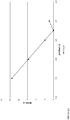
- candy bodies were poured into petri dishes ( ⁇ 3.5 cm) and allowed to cool at room temperature until solidified. The storage took place for 5 days at 25 ° C and 80% humidity. The water absorption was assessed on the basis of the weight gain of the candy bodies. Surprisingly, at pH 4.0 the result was a sudden relative reduction in weight gain and thus hygroscopicity (see illustration 1 ).
- Example 3 Caramels according to the invention with improved color stability by adjusting the pH
- Example 2 As described in Example 2, starting from commercial isomalt, previously defined pH values were set by adding 1 N NaOH or 1 N HCl, and caramels were produced. To determine the color number according to ICUMSA, a 10% by weight solution in deionized water was prepared by dissolving 90 g of water and 10 g of melt. This showed an optimum of the color value and thus the transparency of the caramel at a pH of 4.1 to 4.2 (see Figure 2 )
Landscapes
- Life Sciences & Earth Sciences (AREA)
- Chemical & Material Sciences (AREA)
- Engineering & Computer Science (AREA)
- Food Science & Technology (AREA)
- Polymers & Plastics (AREA)
- Health & Medical Sciences (AREA)
- Inorganic Chemistry (AREA)
- Molecular Biology (AREA)
- Nutrition Science (AREA)
- Proteomics, Peptides & Aminoacids (AREA)
- Confectionery (AREA)
- Medicinal Preparation (AREA)
- Seasonings (AREA)
Description
- Gegenstand der Erfindung sind Verfahren zur Herstellung von Hartkaramellen aus Isomalt unter Einhalt strikter pH-Werte sowie Mischungszusammensetzungen enthaltend Isomalt und gegebenenfalls pH-Puffersubstanzen mit definiertem pH-Wert.
- Isomalt gehört zu der Gruppe der Disaccharidalkohole und findet Verwendung als Zuckeraustauschstoff. Die herkömmliche Herstellung erfolgt in zwei Verfahrensschritten: Enzymatische Isomerisierung von Saccharose zu Isomaltulose und Hydrierung der Isomaltulose zu Isomalt. Das Produkt Isomalt stellt ein Isomerengemisch von 1-O-α-D-glucopyranosyl-D-mannit (1,1-GPM) und 6-O-α-D-glucopyranosyl-D-sorbit (1,6-GPS) dar. (Siehe auch: J. Kowalczyk., Isomalt, S. 340-359 in K. Rosenplenter, U. Nöhle (Hrsg.), Handbuch der Süßungsmittel, 2007, B. Behr's Verlag GmbH & Co. KG)
Klassische Hartkaramellen sind im Wesentlichen aus Saccharose und Glukose bestehende Zuckerwaren, die unter Verwendung von geruch- und geschmacksgebenden, färbenden und die Beschaffenheit beeinflussenden Substanzen hergestellt werden. Hartkaramellen besitzen eine harte, glasartige Konsistenz. - Isomalt kann aufgrund seines niedrigen kalorischen Gehaltes, der guten Hitzestabilität, sowie der inerten Eigenschaften von Isomalt im Zusammenhang mit anderen bei der Hartkaramellenherstellung verwendeten Ingredienzien als direkter Ersatz von Saccharose für "zuckerfreie" Hartkaramellen verwendet werden (H. Schiweck, et al. (2005) Sugar Alcohols, in Ullmann's Encyclopedia of Industrial Chemistry, Wiley-VCH).
- Hartkaramellen werden heute meist mit Verfahren hergestellt, bei denen der Zucker beziehungsweise der Zuckeraustauschstoff als Granulat mit Wasser zuerst in Lösung gebracht wird. Anschließend wird die Masse in einem vakuumierten Kochprozess auf einen Wassergehalt von 2 % reduziert und abgekühlt, so dass die Masse mit entsprechenden Zusätzen (Aromen, Säuren, Farben) versetzt werden kann. Die Hartkaramellenmasse wird anschließend in die gewünschte Form geprägt oder gegossen.
- Ein alternatives Verfahren stellt das Spritzgießverfahren dar, bei dem das Zuckerbeziehungsweise Zuckeraustauschstoffgranulat direkt ohne den Umweg über die wässrige Lösung verarbeitet wird. Der Rohstoff wird in einer Spritzgießmaschine in einer beizbaren Kavität plastifiziert und thermisch sowie stofflich homogenisiert. Nach Abkühlen auf Entformungstemperatur kann das Formteil entnommen werden.
- Mit dem wachsendem Ernährungsbewusstsein des Konsumenten steigt der Bedarf an zuckerfreien bzw. kalorienreduzierten Süßwaren ständig. Daher wurden in den letzten Jahren verstärkt Hartkaramellen basierend auf Isomalt angeboten.
- Verfahren zur Herstellung von Hartkaramellen basierend auf Isomalt sind im Stand der Technik beschrieben:
DieEP1217898 offenbart Hartkaramelle, enthaltend 1,1-GPM (1-O- alpha -D-Glucopyranosyl-D-mannit) in einer Menge von 52 bis 60 Gew.-% (bezogen auf Gesamttrockensubstanz der Hartkaramelle) und Sorbit in einer Menge von 0,5 bis 3,5 Gew.-% sowie ein Verfahren zur Herstellung einer Hartkaramelle, wobei eine wässrige Lösung oder Suspension eines Gemisches, enthaltend 52 bis 60 Gew.-% 1,1-GPM und 0,5 bis 3,5 Gew.-% Sorbit unter Hitzeeinwirkung evaporiert, abgekühlt, geformt und eine Hartkaramelle erhalten wird. - Die
WO01/03513 - a) Herstellung eines Sirups (1) mit einer Trockensubstanz von 60 bis 80%, bestehend aus einer Mischung aus hydriertem Stärkehydrolysatsirup (2) und Isomaltpulver oder Isomaltsirup (3), dadurch gekennzeichnet, daß die Trockensubstanz des Sirups (1) aus 14 bis 25% w/w hydriertem Stärkehydrolysatsirup (2) (Trockensubstanz) besteht, wobei die Trockensubstanz des hydrierten Stärkehydrolysatsirups (2) zwischen 22 und 55% w/w höhere Polyole umfasst, und die Trockensubstanz des Sirups (1) aus 75 bis 86% w/w Isomalt besteht, und die Trockensubstanz des Sirups (1) aus 7 bis 52% w/w 6-O-α-D-Glukopyranosyl-D-sorbit (1,6 GPS), 24,5 bis 52% w/w 1-O-α-D-Glukopyranosyl-D-mannit (1,1 GPM), 0 bis 52% w/w 1-O-α-Glukopyranosyl-D-sorbit (1,1 GPS), 0 bis 1,3% w/w Sorbit (DP1), 2,8 bis 13,8% w/w Maltit (DP2), 1,5 bis 4,2% w/w Maltotriitol (DP3), 3,0 bis 13,5% w/w höhere Polyole (DPn) besteht,
- b) Kochen bei einer Temperatur zwischen 145 und 170°C und geringem Vakuum, und
- c) Formen durch Stempel- oder Ablagerungsmethode.
-
WO 2010/031527 A1 offenbart gefüllte Hartkaramellen, wobei die Umhüllung durch Mischen von Isomalt, Sucralose und Wasser hergestellt wird. Die erhaltenen, festen Hartkaramellen bestehen zu 15 Gew.-% aus der Fruktane enthaltenden Mischung und zu 85 Gew-% aus der formbaren Masse. Die vorgebliche finale Zusammensetzung der Hartkaramellen weisen einen pH-Wert von 4,9 auf, wobei keine Messmethode oder Messtemperatur für die pH-Wertbestimmung angegeben ist. Es wird außerdem darauf hingewiesen, dass die in den Zusammensetzungen immer enthaltenen Fruktane nicht sauer hydrolisiert werden, sondern man bevorzugt bei möglichst hohem pH-Wert arbeiten sollte. - Das Dokument
WO 2004/049815 A2 offenbart die Verwendung von oberflächenaktiven Mitteln, insbesondere Emulgatoren, und/oder Genusssäuren, zur Verbesserung der Oberflächenbeschaffenheit von Hartkaramellen, wobei entweder unterhalb des pH-Bereichs von pH 4,0 oder oberhalb pH 5,0 gearbeitet wird. - In der Praxis hat sich gezeigt, dass herkömmliches Isomalt aus bisher nicht geklärten Gründen in den Standardverfahren zum trüben Einfrieren und somit zur Ausbildung opaker Hartkaramellen neigt. Des Weiteren ist in manchen Chargen eine erhöhte Hygroskopizität der Hartkaramellen zu verzeichnen, welche nach kurzer Lagerzeit zu klebrigen Hartkaramellen führt. Diese negativen Produkteigenschaften werden im großtechnischen Herstellprozess ansatzweise dadurch reduziert, dass in dem Prozess für Isomalt-Hartkaramellen nur vollentsalztes Wasser eingesetzt wird. Der Einsatz dieses vorbehandelten Wassers stellt im Vergleich zu herkömmlichen Verfahren mit Zucker unnötigen Aufwand dar, da dort mit dem gerade verfügbaren Leitungswasser gearbeitet wird.
- Weil Transparenz, Farblosigkeit und Klebrigkeit einer Hartkaramelle ein eindeutiges und ins Auge fallendes Merkmal der Produktqualität darstellen, ist es wünschenswert, ein Verfahren bereitzustellen, welches ausschließlich hochwertige Hartkaramellen basierend auf Isomalt liefert.
- Aufgabe der Erfindung war es daher, ein Verfahren bereitzustellen, welches verlässlich und störunanfällig ausschließlich hochwertige, auf Isomalt basierende Hartkaramellen liefert.
- Überraschenderweise wurde gefunden, dass die im Folgenden beschriebenen Verfahren zur Herstellung von auf Isomalt basierenden Hartkaramellen, bei dem das Isomalt in einer Umgebung mit einem bestimmten pH-Bereich vorliegt, und Mischungszusammensetzungen enthaltend Isomalt und pH-Puffersubstanzen die der Erfindung gestellt Aufgabe zu lösen vermögen.
- Gegenstand der vorliegenden Erfindung sind daher wässrige Isomalt-Lösungen mit einem bestimmten pH-Wert, Mischungszusammensetzungen enthaltend Isomalt und bestimmte pH-Puffersubstanzen.
- Ein weiterer Gegenstand der Erfindung ist ein Verfahren zur Herstellung von auf Isomalt basierenden Hartkaramellen, bei dem die wässrige Isomaltlösung einen bestimmten pH-Bereich aufweist.
- Noch ein Gegenstand der Erfindung ist ein Verfahren zur Herstellung von auf Isomalt basierenden Hartkaramellen, bei dem feste Mischungszusammensetzungen enthaltend Isomalt und bestimmte pH-Puffersubstanzen aufgeschmolzen und plastifiziert werden.
- Ein Vorteil der vorliegenden Erfindung ist es, dass durch die gesteuerte pH-Wert-Führung im Laufe des Verfahrens auf Isomalt basierende Hartkaramellen mit einer niedrigen Hygroskopizität und ohne erhöhte Farbwerte reproduzierbar herstellen lassen.
- Noch ein Vorteil der vorliegenden Erfindung ist es, dass sich klare Hartkaramellen reproduzierbar darstellen lassen.
- Noch ein Vorteil der vorliegenden Erfindung ist es, dass sich Hartkaramellen darstellen lassen, welche eine geringe und damit gute Rekristallisationsneigung aufweisen.
- Ein Vorteil der erfindungsgemäßen Mischungszusammensetzung ist ihre homogene Aufschmelzbarkeit.
- Ein weiterer Vorteil der erfindungsgemäßen Mischungszusammensetzung ist ihr Vermögen, Farbstoffe stabil in der Hartkaramelle zu konservieren.
- Noch ein Vorteil ist es, dass die erfindungsgemäße Mischungszusammensetzung eine gute Fließfähigkeit aufweist.
- Ein weiterer Vorteil der erfindungsgemäßen Mischungszusammensetzung ist ihre gute Komprimierbarkeit.
- Noch ein Vorteil der erfindungsgemäßen festen Mischungszusammensetzung ist ihr gutes Entformungsverhalten.
- Der "pH-Wert" im Zusammenhang mit der vorliegenden Erfindung ist definiert als der Wert, welcher für entsprechende Verbindungen gelöst in demineralisiertem Wasser bei 25 °C nach fünf Minuten Rühren gemessen wird mit einer kalibrierten pH-Elektrode gemäß ISO 4319 (1977).
- Unter dem Begriff "wässrige Lösung" im Zusammenhang mit der vorliegenden Erfindung ist mindestens eine mindestens teilweise in Wasser gelöste, entsprechende Substanz zu verstehen, wobei die Lösung bevorzugt mindestens 5 Gew.-% Wasser, bezogen auf die betrachte Gesamtzusammensetzung, enthält.
- Die "Puffer-Kapazität" im Zusammenhang mit der vorliegenden Erfindung ist definiert, als dass ein Wert von "1" einer Pufferlösung, deren pH-Wert sich bei Zugabe von 1 mol Base pro Liter Pufferlösung um eine pH-Einheit ändert, entspricht, unter Bedingungen wie oben für die pH-Messung beschrieben.
- Gegenstand der vorliegenden Erfindung ist somit
eine wässrige Lösung enthaltend
20 Gew.-% bis 75 Gew.-%, bevorzugt 40 Gew.-% bis 65 Gew.-%, besonders bevorzugt 45 Gew.-% bis 60 Gew.-% 6-O-α-D-Glucopyranosyl-D-Sorbitol,
25 Gew.-% bis 80 Gew.-%, bevorzugt 35 Gew.-% bis 60 Gew.-%, besonders bevorzugt 40 Gew.-% bis 55 Gew.-% 1-O-α-D-Glucopyranosyl-D-Mannitol,
wobei sich die Gew.-% auf die Gesamtmenge der Zucker und Zuckeralkohole der gesamten Lösung beziehen, dadurch gekennzeichnet, dass die Lösung bei einer Temperatur von 25 °C einen pH-Wert von 4,0 bis 4,5, bevorzugt 4,1 bis 4,5, besonders bevorzugt 4,2 bis 4,3, aufweist. - Da es verschiedene Qualitäten von Isomalt gibt, welche je nach Herstellungsverfahren weitere Produkte enthalten können, werden außerdem wässrige Lösungen beansprucht, zusätzlich enthaltend,
0,02 Gew.-% bis 15 Gew.-%, bevorzugt 0,1 Gew.-% bis 10 Gew.-%, besonders bevorzugt 0,2 Gew.-% bis 5 Gew.-% 1-O-α-D-Glucopyranosyl-D-Sorbitol,
0,02 Gew.-% bis 15 Gew.-%, bevorzugt 0,1 Gew.-% bis 8 Gew.-%, besonders bevorzugt 0,2 Gew.-% bis 3,5 Gew.-% Sorbitol und
0,02 Gew.-% bis 15 Gew.-%, bevorzugt 0,1 Gew.-% bis 10 Gew.-%, besonders bevorzugt 0,2 Gew.-% bis 2,9 Gew.-% Mannitol,
wobei sich die Gew.-% auf die Gesamtmenge der Zucker und Zuckeralkohole der gesamten Lösung beziehen. - Erfindungsgemäß bevorzugte Lösungen weisen eine Gesamtmenge von Zuckern und Zuckeralkoholen von 40 Gew.-% bis 90 Gew.-%, bevorzugt 70 Gew.-% bis 80 Gew.-%, bezogen auf die gesamte wässrige Lösung auf.
- Dem Fachmann ist bekannt, wie man den pH-Wert einer wässrigen Lösung beeinflussen kann; so kann dieser durch Zufügen von Basen oder Säuren angehoben oder gesenkt werden. Insbesondere wässrige Lösungen von Alkali-Hydroxiden wie beispielsweise NaOH (aq) sind als Basen geeignet; als Säuren bieten sich beispielsweise mineralische Säuren wie zum Beispiel HCl oder organische Säuren wie beispielsweise Essigsäure an.
- Beansprucht wird außerdem eine Mischungszusammensetzung enthaltend, bevorzugt bestehend aus,
20 Gew.-% bis 75 Gew.-%, bevorzugt 40 Gew.-% bis 65 Gew.-%, besonders bevorzugt 45 Gew.-% bis 60 Gew.-% 6-O-α-D-Glucopyranosyl-D-Sorbitol,
25 Gew.-% bis 80 Gew.-%, bevorzugt 35 Gew.-% bis 60 Gew.-%, besonders bevorzugt 40 Gew.-% bis 55 Gew.-% 1-O-α-D-Glucopyranosyl-D-Mannitol, und
0,02 Gew.-% bis 15 Gew.-%, bevorzugt 0,5 Gew.-% bis 5 Gew.-%, besonders bevorzugt 0,5 Gew.-% bis 2 Gew.-% pH-Puffersubstanz,
wobei sich die Gew.-% auf die Gesamtmenge der Zucker und Zuckeralkohole der gesamten Mischungszusammensetzung beziehen, dadurch gekennzeichnet,
dass sie in Form einer 40 Gew.-% Trockensubstanz enthaltenden wässrigen Lösung, wobei sich die Gew.-% auf die gesamte wässrige Lösung beziehen, bei einer Temperatur von 25 °C einen pH-Wert von 4,0 bis 4,5, bevorzugt 4,1 bis 4,5, besonders bevorzugt 4,2 bis 4,3, aufweist. - Unter dem Begriff "pH-Puffersubstanz" sind eine oder mehrere chemische Verbindungen zu verstehen, die in der Lage sind, aufgrund einer Abfangreaktion von Wasserstoff- bzw. Hydroxid-Ionen unter Bildung schwacher Säuren bzw. Basen begründet im Dissoziationsgleichgewicht, den pH-Wert einer wässrigen Lösung konstant zu halten.
Alle angegebenen Prozent (%) sind, wenn nicht anders angegeben, Massenprozent. - Da es verschiedene Qualitäten von Isomalt gibt, welche je nach Herstellungsverfahren weitere Produkte enthalten können, werden außerdem Mischungszusammensetzungen beansprucht, zusätzlich enthaltend
0,02 Gew.-% bis 15 Gew.-%, bevorzugt 0,1 Gew.-% bis 10 Gew.-%, besonders bevorzugt 0,2 Gew.-% bis 5 Gew.-% 1-O-α-D-Glucopyranosyl-D-Sorbitol,
0,02 Gew.-% bis 15 Gew.-%, bevorzugt 0,1 Gew.-% bis 8 Gew.-%, besonders bevorzugt 0,2 Gew.-% bis 3,5 Gew.-% Sorbitol und
0,02 Gew.-% bis 15 Gew.-%, bevorzugt 0,1 Gew.-% bis 10 Gew.-%, besonders bevorzugt 0,2 Gew.-% bis 2,9 Gew.-% Mannitol,
wobei sich die Gew.-% auf die Gesamtmenge der Zucker und Zuckeralkohole der gesamten Mischungszusammensetzung beziehen. - Diese zusätzlichen Komponenten können vorteilhaft die Eigenschaften der Hartkaramellen bezüglich ihrer Glassübergangstemperatur und Komprimabilität beeinflussen.
- Insbesondere weisen erfindungsgemäß bevorzugte Mischungszusammensetzungen bei einer Temperatur von 25 °C in Form einer 40 Gew.-% Trockensubstanz enthaltenden wässrigen Lösung, wobei sich die Gew.-% auf die gesamte wässrige Lösung beziehen, bei einer Temperatur von 25 °C und bei einem pH-Wert von 4,2 eine Pufferkapazität von mindestens 0,01 mmol/l, insbesondere von mindestens 0,05 mmol/l, besonders bevorzugt von mindestens 0,1 mmol/l, auf.
- Erfindungsgemäß bevorzugte Mischungszusammensetzungen sind dadurch gekennzeichnet, dass sie eine pH-Puffersubstanz enthalten, welches bei einer Temperatur von 25 °C ein Puffermaximum in einem Bereich von pH 4,0 bis 4,5 aufweist.
Erfindungsgemäß besonders bevorzugt enthaltene pH-Puffersubstanzen sind ausgewählt aus der Gruppe umfassend, bevorzugt bestehend aus: - Citrat-Puffer, Acetat-Puffer, Citrat-Phosphat-Puffer.
- Eine erfindungsgemäß besonders bevorzugte Mischungszusammensetzung enthält als pH-Puffersubstanz Acetat-Puffer, wobei dieser 0,12-Gew.% Eisessig und 0,08-Gew.% Natrium-Acetat Trihydrat enthält, wobei sich die Gew.-% auf die Trockensubstanz der gesamten Mischungszusammensetzung beziehen.
- Eine erfindungsgemäß besonders bevorzugte Mischungszusammensetzung enthält als pH-Puffersubstanz Citrat-Puffer, wobei dieser 0,30-Gew.% Zitronensäure und 0,31-Gew.% Natrium-Citrat enthält, wobei sich die Gew.-% auf die Trockensubstanz der gesamten Mischungszusammensetzung beziehen.
- In einer bevorzugten Ausführungsform sind die erfindungsgemäßen Mischungszusammensetzungen dadurch gekennzeichnet, dass sie bei 25 °C fest, bevorzugt kristallin, sind.
Diese lassen sich vorteilhaft im Spritzgussverfahren einsetzen.
Bevorzugt weisen diese Mischungszusammensetzungen eine zylindrische oder linsenförmige Granulatform auf.
Erfindungsgemäß bevorzugte feste Mischungszusammensetzungen sind dadurch gekennzeichnet, dass sie einen Wassergehalt von kleiner 2 Gew.-%, bevorzugt kleiner 1,5 Gew.-%, insbesondere kleiner 0,5 Gew.-%, bezogen auf die gesamte
Mischungszusammensetzung aufweisen. - In einer bevorzugten alternativen Ausführungsform liegen die erfindungsgemäßen Mischungszusammensetzungen in Form von wässrigen Lösungen vor, welche sich vorteilhaft zur Herstellung von Hartkaramellen in klassischen Verfahren einsetzen lassen.
Dieser Gegenstand der vorliegenden Erfindung wird abgebildet durch eine wässrige Lösung enthaltend 40 Gew.-% bis 90 Gew.-%, bevorzugt 70 Gew.-% bis 80 Gew.-%, einer erfindungsgemäßen Mischungszusammensetzung, wobei die Gew.-% die Menge Trockensubstanz bezogen auf die gesamte wässrige Lösung angeben.
Bevorzugte erfindungsgemäße wässrige Lösung weisen bei einer Temperatur von 25 °C einen pH-Wert von 4,0 bis 5,0, bevorzugt 4,1 bis 4,5, besonders bevorzugt 4,2 bis 4,3, auf. - Ein weiterer Gegenstand der vorliegenden Erfindung ist die Verwendung der erfindungsgemäßen wässrigen Lösungen oder Mischungszusammensetzungen zur Herstellung von Hartkaramellen.
- Ein weiterer Gegenstand der vorliegenden Erfindung ist ein erstes Verfahren zur Herstellung einer Hartkaramelle umfassend die Verfahrensschritte
- A) Bereitstellen einer erfindungsgemäßen Mischungszusammensetzung in Form einer 40 Gew.-% bis 90 Gew.-%, bevorzugt 70 Gew.-% bis 80 Gew.-%, wässrigen Lösung, wobei die Gew.-% die Menge Trockensubstanz bezogen auf die gesamte wässrige Lösung angeben,
- B) Erhitzen der wässrigen Mischungszusammensetzung und Reduzieren des Wassergehaltes auf kleiner 2 Gew.-%, bevorzugt kleiner 1,5 Gew.-%, insbesondere kleiner 0,5 Gew.-%, bezogen auf die gesamte Mischungszusammensetzung,
- C) Abkühlen der Mischungszusammensetzung auf eine Temperatur von 100 °C bis 130 °C, insbesondere 110 °C bis 120 °C und gegebenenfalls Hinzufügen weiterer Zusätze wie beispielsweise Aromen, Farben und Säuren, und gegebenenfalls Homogenisieren und
- D) Formen und weiteres Abkühlen der Mischungszusammensetzung zu der gewünschten Hartkaramelle.
- Es ist vorteilhaft, alle Bestandteile der Mischungszusammensetzung in Verfahrensschritt A) vollständig aufzulösen, um unkontrollierter Rekristallisation während des Produktionsprozesses vorzubeugen. Dies kann bevorzugt durch höhere Temperatur während des Auflösevorgangs erreicht werden, so dass hier die wässrige Lösung in Verfahrensschritt A) erhitzt wird, bevorzugt auf von 70 °C bis 100 °C, insbesondere 80 °C bis 90 °C.
- Verfahrensschritt B) kann auf allen gängigen Typen von Satzkochern, semikontinuierlichen und kontinuierlichen Kochanlagen durchgeführt werden. Zur idealen Einstellung des Kochvorgangs und anschließender Messung des Wassergehalts muss beachtet werden, dass die Kochkurven anlagenspezifisch und damit nur bedingt übertragbar sind. Um eine gute Lagerstabilität zu erzielen, sollte die Schmelze bevorzugt auf einen Wassergehalt von weniger als 5, insbesondere weniger 2 Prozent eingekocht werden. Dazu werden in der Regel Temperaturen zwischen 135 °C bis 185 °C, bevorzugt von 145 °C bis 175 °C, insbesondere 155 °C bis 165 °C eingesetzt.
Es ist erfindungsgemäß bevorzugt, wenn Verfahrensschritt B) unter Vakuum, insbesondere bei 0,05 bar bis 0,2 bar, durchgeführt wird.
Im Fall von kontinuierlichen Kocheranlagen, beispielsweise Schlangenkochern,
sollten die Austragvorrichtungen wie Walzen oder Schnecken nicht allzu stark beheizt werden. Eine niedrigere Temperatur erhöht die Adhäsion der Masse und stellt so einen konstanten Austrag sicher.
Die Einarbeitung weiterer Zutaten in Verfahrensschritt C) wie Aromastoffe, Süßstoffe, Säure oder auch Mineralstoffe kann im kontinuierlichen Prozess über eine Mischvorrichtung erfolgen. Da manche Aromastoffe temperaturempfindlich sind und sich bei höheren Temperaturen rasch verflüchtigen, muss die Masse in der semikontinuierlichen oder chargenweisen Produktion vorher gekühlt werden. - Ein weiterer Gegenstand der vorliegenden Erfindung ist ein zweites Verfahren zur Herstellung einer Hartkaramelle umfassend die Verfahrensschritte
- A) Bereitstellen einer wässrigen Lösung enthaltend
20 Gew.-% bis 75 Gew.-% 6-O-α-D-Glucopyranosyl-D-Sorbitol,
25 Gew.-% bis 80 Gew 1-O-α-D-Glucopyranosyl-D-Mannitol Gew.-%, gegebenenfalls
0,02 Gew.-% bis 15 Gew.-% α-D-Glucopyranosyl-1,1-D-Sorbitol, gegebenenfalls
0,02 Gew.-% bis 15 Gew.-% Sorbitol und gegebenenfalls
0,02 Gew.-% bis 15 Gew.-% Mannitol,
wobei sich die Gew.-% auf die Gesamtmenge der Zucker und Zuckeralkohole der wässrigen Lösung beziehen,
in Form einer 40 Gew.-% bis 90 Gew.-%, bevorzugt 70 Gew.-% bis 80 Gew.-%, wässrigen
Lösung, wobei die Gew.-% die Menge Trockensubstanz bezogen auf die gesamte wässrige Lösung angeben,
A1) Einstellen des pH-Wertes, dass die wässrige Lösung bei einer Temperatur von 25 °C einen pH-Wert von 4,0 bis 4,5, bevorzugt 4,1 bis 4,5, besonders bevorzugt 4,2 bis 4,3, aufweist, - B) Erhitzen der wässrigen Lösung und Reduzieren des Wassergehaltes auf kleiner 2 Gew.-%, bevorzugt kleiner 1,5 Gew.-%, insbesondere kleiner 0,5 Gew.-%, bezogen auf die gesamte wässrige Lösung,
- C) Abkühlen auf eine Temperatur von 100 °C bis 130 °C, insbesondere 110 °C bis 120 °C und gegebenenfalls Hinzufügen weiterer Zusätze wie beispielsweise Aromen, Farben und Säuren, und gegebenenfalls Homogenisieren und
- D) Formen und weiteres Abkühlen zu der gewünschten Hartkaramelle.
- Die in dem zweiten erfindungsgemäßen Verfahren eingesetzten wässrigen Lösungen enthalten bevorzugt, bevorzugt bestehen aus
20 Gew.-% bis 75 Gew.-%, bevorzugt 40 Gew.-% bis 65 Gew.-%, besonders bevorzugt 45 Gew.-% bis 60 Gew.-% 6-O-α-D-Glucopyranosyl-D-Sorbitol,
25 Gew.-% bis 80 Gew.-%, bevorzugt 35 Gew.-% bis 60 Gew.-%, besonders bevorzugt 40 Gew.-% bis 55 Gew.-% 1-O-α-D-Glucopyranosyl-D-Mannitol, gegebenenfalls
0,02 Gew.-% bis 15 Gew.-%, bevorzugt 0,1 Gew.-% bis 10 Gew.-%, besonders bevorzugt 0,2 Gew.-% bis 5 Gew.-% 1-O-α-D-Glucopyranosyl-D-Sorbitol, gegebenenfalls
0,02 Gew.-% bis 15 Gew.-%, bevorzugt 0,1 Gew.-% bis 8 Gew.-%, besonders bevorzugt 0,2 Gew.-% bis 3,5 Gew.-% Sorbitol und gegebenenfalls
0,02 Gew.-% bis 15 Gew.-%, bevorzugt 0,1 Gew.-% bis 10 Gew.-%, besonders bevorzugt 0,2 Gew.-% bis 2,9 Gew.-% Mannitol,
wobei sich die Gew.-% auf die Gesamtmenge der Zucker und Zuckeralkohole der wässrigen Lösung beziehen. - Dieses zweite erfindungsgemäße Verfahren entspricht dem ersten, erfindungsgemäßen Verfahren, nur wird in diesem zweiten der pH-Wert nicht im Vorfeld durch den Einsatz der Mischungszusammensetzung bestimmt, sondern online im laufenden Verfahren über eine Titration in Verfahrensschritt A1) kontrolliert.
Bevorzugte Ausführungen des zweiten erfindungsgemäßen Verfahrens entsprechen denen des ersten erfindungsgemäßen Verfahrens. - Ein weiterer Gegenstand der vorliegenden Erfindung ist ein drittes Verfahren zur Herstellung einer Hartkaramelle umfassend die Verfahrensschritte
- A) Bereitstellen einer festen erfindungsgemäßen Mischungszusammensetzung,
- B) Aufschmelzen der Mischungszusammensetzung,
- C) Abkühlen der Mischungszusammensetzung auf eine Temperatur von 120 °C bis 150 °C, insbesondere 130 °C bis 140 °C, und gegebenenfalls Hinzufügen weiterer Zusätze wie beispielsweise Aromen, Farben und Säuren, und gegebenenfalls Homogenisieren und
- D) Formen und weiteres Abkühlen der Mischungszusammensetzung zu der gewünschten Hartkaramelle.
- Dieses dritte erfindungsgemäße Verfahren entspricht einem Spritzgießverfahren des ersten erfindungsgemäßen Verfahrens, bei dem die feste erfindungsgemäße Mischungszusammensetzung eingesetzt wird.
Dieses Verfahren profitiert ebenfalls von den vorteilhaften Eigenschaften der pH-Pufferung des Isomaltes.
Bevorzugt in dem dritten erfindungsgemäßen Verfahren eingesetzte, feste, erfindungsgemäße Mischungszusammensetzungen entsprechen den bevorzugten festen Mischungszusammensetzungen der vorliegenden Erfindung. - Ein weiterer Gegenstand der vorliegenden Erfindung ist eine Hartkaramelle enthaltend eine erfindungsgemäße Mischungszusammensetzung.
Ebenso werden Hartkaramellen beansprucht, welche nach einem der erfindungsgemäßen Verfahren erhältlich sind. - In den nachfolgend aufgeführten Beispielen wird die vorliegende Erfindung beispielhaft beschrieben, ohne dass die Erfindung, deren Anwendungsbreite sich aus der gesamten Beschreibung und den Ansprüchen ergibt, auf die in den Beispielen genannten Ausführungsformen beschränkt sein soll.
Folgende Abbildungen sind Bestandteil der Beispiele: -
Abbildung 1 : Darstellung der Wasseraufnahme der Bonbonkörper in Gew.-% in Abhängigkeit vom pH-Wert der Ausgangslösung Isomalt -
Abbildung 2 : Darstellung der ICUMSA-Farbzahl IE420 der Bonbonkörper in Abhängigkeit vom pH-Wert der Ausgangslösung Isomalt - Es wurden 40 g kommerzielles Isomalt (Isomalt ST, Südzucker AG) unter stetem Rühren aufgelöst in 60 g vollentsalztem Wasser durch Inkubation bei 80 °C für 30 min. Die Lösung wurde abgekühlt auf 25 °C, und der pH-Wert ermittelt unter Verwendung einer pH-Glaselektrode, die zuvor mit Standard-Puffern pH 4,01 und pH 7,00 kalibriert wurde. Ausgehend von dieser Lösung wurde mittels automatisiertem Titrationsverfahren durch Zudosierung von 0,01 N NaOH bis zu einem pH-Wert von 7,0 zu einem definierten Volumen an Isomaltlösung die Pufferkapazität ermittelt anhand der verbrauchten Menge an Lauge an einem definierten Punkt. Folgende Werte wurden hierbei ermittelt:
pH-Wert 3,9 Pufferkapazität pH 5 0,1 mmol/l - Für die Herstellung der Hartkaramelle wurden 40 g kommerzielles Isomalt (Isomaltidex, Cargill) in 60 g vollentsalztem Wasser wie in Beispiel 1 beschrieben aufgelöst.
Durch Zugabe definierter Volumina an 1 N NaOH (aq) wurde der pH-Wert der Lösung schrittweise angehoben bis zu einem pH-Wert von 5,0 oder durch Zugabe von 1 N HCl (aq) schrittweise auf einen definierten Wert abgesenkt bis zu einem pH-Wert von 3,6.
Die erhaltenen Lösungen wurden in einem Becherglas in einem 170 °C - 180 °C heißen Ölbad unter stetem Rühren auf einem Magnetrührer erhitzt. Die Temperatur wurde mittels Stabthermometer in der Isomaltlösung überwacht. Nach vollständigem Abdampfen des Wasseranteils bei 100 °C - 105 °C wurde die Schmelze weiter erhitzt bis zum Erreichen einer Temperatur von 165 °C. Das Becherglas wurde im Anschluss bei Raumtemperatur auf 130 °C - 135 °C abkühlen gelassen. - Zur Beurteilung der Wasseraufnahme des Materials wurden Bonbonkörper in Petrischalen (Ø 3,5 cm) gegossen und bei Raumtemperatur bis zum Erstarren abkühlen gelassen. Die Lagerung erfolgte für 5 Tage bei 25 °C und 80 % Luftfeuchte. Die Wasseraufnahme wurde anhand der Gewichtszunahme der Bonbonkörper beurteilt.
Überraschenderweise zeigte sich bei einem pH-Wert von 4,0 im Ergebnis eine sprunghafte relative Verringerung der Gewichtszunahme und damit der Hygroskopizität (sieheAbbildung 1 ). - Wie beschrieben in Beispiel 2 wurden ausgehend von kommerziellem Isomalt durch Zugabe von 1 N NaOH bzw. 1 N HCl zuvor definierte pH-Werte eingestellt und Karamellen hergestellt. Zur Bestimmung der Farbzahl nach ICUMSA wurde eine 10 Gew.-% Lösung in vollentsalztem Wasser hergestellt durch Auflösen von 90 g Wasser und 10 g Schmelze.
Hierbei zeigte sich ein Optimum des Farbwerts und damit der Transparenz der Karamellen bei einem pH-Wert von 4,1 bis 4,2 (sieheAbbildung 2 )
Claims (17)
- Wässrige Lösung enthaltend
20 Gew.-% bis 75 Gew.-%, 6-O-α-D-Glucopyranosyl-D-Sorbitol,
25 Gew.-% bis 80 Gew.-% 1-O-α-D-Glucopyranosyl-D-Mannitol,
wobei sich die Gew.-% auf die Gesamtmenge der Zucker und Zuckeralkohole der gesamten Lösung beziehen, dadurch gekennzeichnet, dass die Lösung bei einer Temperatur von 25 °C einen pH-Wert von 4,0 bis 4,5 aufweist. - Wässrige Lösung gemäß Anspruch 1 zusätzlich enthaltend
0,02 Gew.-% bis 15 Gew.-% 1-O-α-D-Glucopyranosyl-D-Sorbitol, gegebenenfalls
0,02 Gew.-% bis 15 Gew.-% Sorbitol und gegebenenfalls
0,02 Gew.-% bis 15 Gew.-% Mannitol,
wobei sich die Gew.-% auf die Gesamtmenge der Zucker und Zuckeralkohole der gesamten Lösung beziehen. - Wässrige Lösung gemäß Anspruch 1 oder 2 aufweisend eine Gesamtmenge von Zuckern und Zuckeralkoholen von 40 Gew.-% bis 90 Gew.-% bezogen auf die gesamte wässrige Lösung.
- Mischungszusammensetzung enthaltend
20 Gew.-% bis 75 Gew.-% 6-O-α-D-Glucopyranosyl-D-Sorbitol,
25 Gew.-% bis 80 Gew.-% 1-O-α-D-Glucopyranosyl-D-Mannitol und
0,02 Gew.-% bis 15 Gew.-% pH-Puffersubstanz,
wobei sich die Gew.-% auf die Gesamtmenge der Zucker und Zuckeralkohole der gesamten Mischungszusammensetzung beziehen, dadurch gekennzeichnet,
dass sie in Form einer 40 Gew.-% Trockensubstanz enthaltenden wässrigen Lösung, wobei sich die Gew.-% auf die gesamte wässrige Lösung beziehen, bei einer Temperatur von 25 °C einen pH-Wert von 4,0 bis 4,5 aufweist. - Mischungszusammensetzung gemäß Anspruch 4 zusätzlich enthaltend
0,02 Gew.-% bis 15 Gew.-% 1-O-α-D-Glucopyranosyl-D-Sorbitol, gegebenenfalls
0,02 Gew.-% bis 15 Gew.-% Sorbitol und gegebenenfalls
0,02 Gew.-% bis 15 Gew.-% Mannitol,
wobei sich die Gew.-% auf die Gesamtmenge der Zucker und Zuckeralkohole der gesamten Mischungszusammensetzung beziehen. - Mischungszusammensetzung gemäß Anspruch 4 oder 5,
dadurch gekennzeichnet,
dass sie in Form einer 40 Gew.-% Trockensubstanz enthaltenden wässrigen Lösung, wobei sich die Gew.-% auf die gesamte wässrige Lösung beziehen, bei einer Temperatur von 25 °C und bei einem pH-Wert von 4,2 eine Pufferkapazität von mindestens 0,01 mmol/l, insbesondere von mindestens 0,05 mmol/l, besonders bevorzugt von mindestens 0,1 mmol/l aufweist. - Mischungszusammensetzung gemäß mindestens einem der Ansprüche 4 bis 6,
dadurch gekennzeichnet,
dass die pH-Puffersubstanz ausgewählt ist aus mindestens einem der Gruppe umfassend Citrat-Puffer, Acetat-Puffer, Citrat-Phosphat-Puffer. - Mischungszusammensetzung gemäß mindestens einem der Ansprüche 4 bis 7,
dadurch gekennzeichnet,
dass die pH-Puffersubstanz einen Acetat-Puffer enthält, wobei dieser 0,12-Gew.% Eisessig und 0,08-Gew.% Natrium-Acetat Trihydrat enthält, wobei sich die Gew.-% auf die Trockensubstanz der gesamten Mischungszusammensetzung beziehen, oder einen Citrat-Puffer enthält, wobei dieser 0,30-Gew.% Zitronensäure und 0,31-Gew.% Natrium-Citrat enthält, wobei sich die Gew.-% auf die Trockensubstanz der gesamten Mischungszusammensetzung beziehen. - Mischungszusammensetzung gemäß mindestens einem der Ansprüche 4 bis 8,
dadurch gekennzeichnet,
dass sie bei 25 °C fest, bevorzugt kristallin, ist. - Mischungszusammensetzung gemäß Anspruch 8 oder 9,
dadurch gekennzeichnet,
dass sie einen Wassergehalt von kleiner 2 Gew.-% bezogen auf die gesamte Mischungszusammensetzung aufweist. - Mischungszusammensetzung gemäß mindestens einem der Ansprüche 4 bis 8 in Form einer wässrigen Lösung enthaltend 40 Gew.-% bis 90 Gew.-% Trockensubstanz bezogen auf die gesamte wässrige Lösung.
- Mischungszusammensetzung gemäß Anspruch 11 bei einer Temperatur von 25 °C einen pH-Wert von 4,0 bis 5,0 aufweisend.
- Verwendung einer wässrigen Lösung gemäß mindestens einem der Ansprüche 1 bis 3 oder einer Mischungszusammensetzung gemäß mindestens einem der Ansprüche 4 bis 12 zur Herstellung von Hartkaramellen.
- Verfahren zur Herstellung einer Hartkaramelle umfassend die VerfahrensschritteA) Bereitstellen einer Mischungszusammensetzung gemäß Anspruch 11 oder 12,B) Erhitzen der wässrigen Mischungszusammensetzung und Reduzieren des Wassergehaltes auf kleiner 2 Gew.-% bezogen auf die gesamte Mischungszusammensetzung,C) Abkühlen der Mischungszusammensetzung auf eine Temperatur von 100 °C bis 120 °C und gegebenenfalls Hinzufügen weiterer Zusätze wie beispielsweise Aromen, Farben und Säuren, und gegebenenfalls Homogenisieren undD) Formen der Mischungszusammensetzung zu der gewünschten Hartkaramelle.
- Verfahren zur Herstellung einer Hartkaramelle umfassend die VerfahrensschritteA) Bereitstellen einer wässrigen Lösung gemäß mindestens einem der Ansprüche 1 bis 3 enthaltend 40 Gew.-% bis 90 Gew.-% Trockensubstanz bezogen auf die gesamte wässrige Lösung,A1) Einstellen des pH-Wertes, dass die wässrige Lösung bei einer Temperatur von 25 °C einen pH-Wert von 4,0 bis 4,5 aufweist,B) Erhitzen der wässrigen Lösung und Reduzieren des Wassergehaltes auf kleiner 2 Gew.-% bezogen auf die gesamte Mischungszusammensetzung,C) Abkühlen auf eine Temperatur von 100 °C bis 120 °C und gegebenenfalls Hinzufügen weiterer Zusätze wie beispielsweise Aromen, Farben und Säuren, und gegebenenfalls Homogenisieren undD) Formen zu der gewünschten Hartkaramelle.
- Verfahren zur Herstellung einer Hartkaramelle umfassend die VerfahrensschritteA) Bereitstellen einer Mischungszusammensetzung gemäß Anspruch 9 oder 10,B) Aufschmelzen der Mischungszusammensetzung,C) Abkühlen der Mischungszusammensetzung auf eine Temperatur von 100 °C bis 120 °C und gegebenenfalls Hinzufügen weiterer Zusätze wie beispielsweise Aromen, Farben und Säuren, und gegebenenfalls HomogenisierenD) Formen der Mischungszusammensetzung zu der gewünschten Hartkaramelle.
- Hartkaramelle enthaltend eine Mischungszusammensetzung gemäß mindestens einem der Ansprüche 4 bis 12 oder erhältlich nach einem der Verfahren gemäß Anspruch 14 bis 16.
Priority Applications (1)
| Application Number | Priority Date | Filing Date | Title |
|---|---|---|---|
| PL13703810T PL2814329T3 (pl) | 2012-02-14 | 2013-02-12 | ŚRODEK SŁODZĄCY O USTAWIANEJ WARTOŚCI pH |
Applications Claiming Priority (2)
| Application Number | Priority Date | Filing Date | Title |
|---|---|---|---|
| DE102012202193A DE102012202193A1 (de) | 2012-02-14 | 2012-02-14 | pH-eingestelltes Süßungsmittel |
| PCT/EP2013/052759 WO2013120838A1 (de) | 2012-02-14 | 2013-02-12 | Ph-eingestelltes süssungsmittel |
Publications (2)
| Publication Number | Publication Date |
|---|---|
| EP2814329A1 EP2814329A1 (de) | 2014-12-24 |
| EP2814329B1 true EP2814329B1 (de) | 2020-04-15 |
Family
ID=47710152
Family Applications (1)
| Application Number | Title | Priority Date | Filing Date |
|---|---|---|---|
| EP13703810.5A Revoked EP2814329B1 (de) | 2012-02-14 | 2013-02-12 | Ph-eingestelltes süssungsmittel |
Country Status (9)
| Country | Link |
|---|---|
| US (1) | US20150024106A1 (de) |
| EP (1) | EP2814329B1 (de) |
| JP (1) | JP2015506714A (de) |
| KR (3) | KR20210072134A (de) |
| DE (1) | DE102012202193A1 (de) |
| DK (1) | DK2814329T3 (de) |
| ES (1) | ES2798183T3 (de) |
| PL (1) | PL2814329T3 (de) |
| WO (1) | WO2013120838A1 (de) |
Families Citing this family (10)
| Publication number | Priority date | Publication date | Assignee | Title |
|---|---|---|---|---|
| DE102012200907A1 (de) | 2012-01-23 | 2013-07-25 | Evonik Industries Ag | Verfahren und Absorptionsmedium zur Absorption von CO2 aus einer Gasmischung |
| DE102012207509A1 (de) | 2012-05-07 | 2013-11-07 | Evonik Degussa Gmbh | Verfahren zur Absorption von CO2 aus einer Gasmischung |
| DE102015212749A1 (de) | 2015-07-08 | 2017-01-12 | Evonik Degussa Gmbh | Verfahren zur Entfeuchtung von feuchten Gasgemischen |
| DE102016210478A1 (de) | 2016-06-14 | 2017-12-14 | Evonik Degussa Gmbh | Verfahren zur Entfeuchtung von feuchten Gasgemischen |
| DE102016210484A1 (de) | 2016-06-14 | 2017-12-14 | Evonik Degussa Gmbh | Verfahren zur Entfeuchtung von feuchten Gasgemischen |
| EP3257568B1 (de) | 2016-06-14 | 2019-09-18 | Evonik Degussa GmbH | Verfahren zur entfeuchtung von feuchten gasgemischen mit ionischen flüssigkeiten |
| DE102016210483A1 (de) | 2016-06-14 | 2017-12-14 | Evonik Degussa Gmbh | Verfahren und Absorptionsmittel zur Entfeuchtung von feuchten Gasgemischen |
| DE102016210481B3 (de) | 2016-06-14 | 2017-06-08 | Evonik Degussa Gmbh | Verfahren zum Reinigen einer ionischen Flüssigkeit |
| EP3257843A1 (de) | 2016-06-14 | 2017-12-20 | Evonik Degussa GmbH | Verfahren zur herstellung von hochreinem imidazoliumsalz |
| CN111107753A (zh) * | 2017-08-02 | 2020-05-05 | 赢创运营有限公司 | 基于异麦芽酮糖的甜味剂 |
Citations (14)
| Publication number | Priority date | Publication date | Assignee | Title |
|---|---|---|---|---|
| US4971798A (en) | 1989-11-30 | 1990-11-20 | Miles Inc. | Hard confections containing hydrogenated isomaltulose and medicinally active ingredient |
| DE19523008A1 (de) | 1994-06-26 | 1996-01-04 | Gadot Biochemical Ind Ltd | Verfahren zur Herstellung von Isomaltit |
| WO1997030598A1 (de) | 1996-02-24 | 1997-08-28 | Südzucker Aktiengesellschaft | Karamellen enthaltend ein süssungsmittel |
| WO1998039978A1 (de) | 1997-03-07 | 1998-09-17 | Südzucker Aktiengesellschaft Mannheim/Ochsenfurt | Verfahren zur herstellung von hartkaramellen und tabletten |
| WO2001003513A1 (en) | 1999-07-08 | 2001-01-18 | Cerestar Holding B.V. | Preparation of sugar-free hard candy |
| WO2001021005A1 (de) | 1999-09-22 | 2001-03-29 | Südzucker Aktiengesellschaft Mannheim/Ochsenfurt | Hartkaramellen mit verbesserter lagerstabilität |
| WO2003104473A2 (de) | 2002-06-07 | 2003-12-18 | Südzucker Aktiengesellschaft | Galactosyl-isomalt, verfahren zu seiner herstellung und verwendung |
| WO2004019925A1 (en) | 2002-08-28 | 2004-03-11 | Pharmacia Corporation | Oral liquid tolterodine composition |
| WO2004049815A2 (de) | 2002-12-04 | 2004-06-17 | Südzucker Aktiengesellschaft Mannheim/Ochsenfurt | Oberflächenmodifizierte hartkaramellen mit verbesserter lagerstabilität |
| WO2005075066A1 (en) | 2004-02-06 | 2005-08-18 | Basf Aktiengesellschaft | Aqueous dispersion and its use |
| US20090182052A1 (en) | 2008-01-15 | 2009-07-16 | Jelena Djordjevic | Taste-masked docusate compositions |
| WO2010031527A1 (en) | 2008-09-16 | 2010-03-25 | Tiense Suikerraffinaderij N.V. | Confectionery product |
| US20120189560A1 (en) | 2011-01-24 | 2012-07-26 | Healthy Sweet Beverages, LLC. | Sugar-free Beverage Composition |
| WO2013008237A1 (en) | 2011-07-13 | 2013-01-17 | Akerman, Emanuel | Food product and method of preserving same |
Family Cites Families (5)
| Publication number | Priority date | Publication date | Assignee | Title |
|---|---|---|---|---|
| DE9321600U1 (de) * | 1993-05-06 | 2000-04-06 | Südzucker Aktiengesellschaft Mannheim/Ochsenfurt, 68165 Mannheim | Süssungsmittel |
| DE19943491B4 (de) * | 1999-09-10 | 2010-04-01 | Südzucker AG Mannheim/Ochsenfurt | Verbesserte Komprimate |
| DE102004038689A1 (de) * | 2004-08-10 | 2006-03-02 | Südzucker AG Mannheim/Ochsenfurt | Organoleptisch verbesserte besonders lagerstabile Hartkaramellen |
| DE102005022601A1 (de) * | 2005-05-11 | 2006-11-23 | Südzucker AG Mannheim/Ochsenfurt | Hartkaramellen mit Isomaltulose |
| WO2009051219A1 (ja) * | 2007-10-19 | 2009-04-23 | Kabushiki Kaisha Hayashibara Seibutsu Kagaku Kenkyujo | 「ナキ」の抑制されたラクトスクロース含有ハードキャンディとその製造方法 |
-
2012
- 2012-02-14 DE DE102012202193A patent/DE102012202193A1/de not_active Withdrawn
-
2013
- 2013-02-12 KR KR1020217017502A patent/KR20210072134A/ko not_active Ceased
- 2013-02-12 WO PCT/EP2013/052759 patent/WO2013120838A1/de not_active Ceased
- 2013-02-12 ES ES13703810T patent/ES2798183T3/es active Active
- 2013-02-12 US US14/378,565 patent/US20150024106A1/en not_active Abandoned
- 2013-02-12 PL PL13703810T patent/PL2814329T3/pl unknown
- 2013-02-12 EP EP13703810.5A patent/EP2814329B1/de not_active Revoked
- 2013-02-12 KR KR1020197037197A patent/KR20200003211A/ko not_active Ceased
- 2013-02-12 JP JP2014557009A patent/JP2015506714A/ja active Pending
- 2013-02-12 DK DK13703810.5T patent/DK2814329T3/da active
- 2013-02-12 KR KR1020147022351A patent/KR20140125375A/ko not_active Ceased
Patent Citations (15)
| Publication number | Priority date | Publication date | Assignee | Title |
|---|---|---|---|---|
| US4971798A (en) | 1989-11-30 | 1990-11-20 | Miles Inc. | Hard confections containing hydrogenated isomaltulose and medicinally active ingredient |
| DE19523008A1 (de) | 1994-06-26 | 1996-01-04 | Gadot Biochemical Ind Ltd | Verfahren zur Herstellung von Isomaltit |
| WO1997030598A1 (de) | 1996-02-24 | 1997-08-28 | Südzucker Aktiengesellschaft | Karamellen enthaltend ein süssungsmittel |
| DE19709304C2 (de) | 1997-03-07 | 2002-08-14 | Suedzucker Ag | Verfahren zur Herstellung von Hartkaramellen und Tabletten |
| WO1998039978A1 (de) | 1997-03-07 | 1998-09-17 | Südzucker Aktiengesellschaft Mannheim/Ochsenfurt | Verfahren zur herstellung von hartkaramellen und tabletten |
| WO2001003513A1 (en) | 1999-07-08 | 2001-01-18 | Cerestar Holding B.V. | Preparation of sugar-free hard candy |
| WO2001021005A1 (de) | 1999-09-22 | 2001-03-29 | Südzucker Aktiengesellschaft Mannheim/Ochsenfurt | Hartkaramellen mit verbesserter lagerstabilität |
| WO2003104473A2 (de) | 2002-06-07 | 2003-12-18 | Südzucker Aktiengesellschaft | Galactosyl-isomalt, verfahren zu seiner herstellung und verwendung |
| WO2004019925A1 (en) | 2002-08-28 | 2004-03-11 | Pharmacia Corporation | Oral liquid tolterodine composition |
| WO2004049815A2 (de) | 2002-12-04 | 2004-06-17 | Südzucker Aktiengesellschaft Mannheim/Ochsenfurt | Oberflächenmodifizierte hartkaramellen mit verbesserter lagerstabilität |
| WO2005075066A1 (en) | 2004-02-06 | 2005-08-18 | Basf Aktiengesellschaft | Aqueous dispersion and its use |
| US20090182052A1 (en) | 2008-01-15 | 2009-07-16 | Jelena Djordjevic | Taste-masked docusate compositions |
| WO2010031527A1 (en) | 2008-09-16 | 2010-03-25 | Tiense Suikerraffinaderij N.V. | Confectionery product |
| US20120189560A1 (en) | 2011-01-24 | 2012-07-26 | Healthy Sweet Beverages, LLC. | Sugar-free Beverage Composition |
| WO2013008237A1 (en) | 2011-07-13 | 2013-01-17 | Akerman, Emanuel | Food product and method of preserving same |
Non-Patent Citations (7)
| Title |
|---|
| "Leatherhead food research Ingredients handbook", 1 January 1996, article FERGUSON TONY, ET AL: "Isomalt", pages: 21 - 48, XP055963332 |
| "SWEETENERS AND SUGAR ALTERNATIVES IN FOOD TECHNOLOGY", 2006, article H. MITCHELL: "10 Isomalt", pages: 177 - 204, XP055781595 |
| "Untersuchung von Lebensmitteln (Zusatzstoffen)", AMTLICHE SAMMLUNG VON UNTERSUCHUNGSVERFAHREN NACH § 35 LMBG, May 1982 (1982-05-01), XP055781599 |
| ANONYMOUS: "Isomalt", SICHERHEITSDATENBLATT ISOMALT (LIQUID) (D3A) MIT PRODUKTSPEZIFIKATION ISOMALT ST (LIQUID) (D3B) UND ISOMALT ST (D3C, 1 June 2003 (2003-06-01), pages 1 - 6, XP055963268 |
| BOLLINGER HARTMUT: "Palatinit (Isomalt) - ein kalorienreduzierter Zuckeraustauschstoff", GORDIAN, 1 June 1987 (1987-06-01), pages 111 - 114, XP055963347 |
| ERKLÄRUNG DR. RALPH CARTARIUS, OFFENKUNDIGE VORBENUTZUNGEN |
| FRITZSCHING B.: "ISOMALT IN HARD CANDY APPLICATIONS.", THE MANUFACTURING CONFECTIONER, CHICAGO, IL., US, vol. 75., no. 11., 1 January 1995 (1995-01-01), US , pages 65 - 73., XP000862872, ISSN: 0163-4364 |
Also Published As
| Publication number | Publication date |
|---|---|
| KR20210072134A (ko) | 2021-06-16 |
| ES2798183T3 (es) | 2020-12-09 |
| KR20200003211A (ko) | 2020-01-08 |
| US20150024106A1 (en) | 2015-01-22 |
| KR20140125375A (ko) | 2014-10-28 |
| WO2013120838A1 (de) | 2013-08-22 |
| PL2814329T3 (pl) | 2020-12-28 |
| DE102012202193A1 (de) | 2013-08-14 |
| EP2814329A1 (de) | 2014-12-24 |
| DK2814329T3 (da) | 2020-07-13 |
| JP2015506714A (ja) | 2015-03-05 |
Similar Documents
| Publication | Publication Date | Title |
|---|---|---|
| WO2013120838A1 (de) | Ph-eingestelltes süssungsmittel | |
| DE69207259T2 (de) | Hypokalorische Schokolade | |
| DE69403356T2 (de) | Süsssirup auf Basis von Maltitol, mit Hilfe dieses Sirup hergestellte Konfekte und die Anwendung eines Mittels zur Regulierung des Kristallisationsablaufes bei der Herstellung dieser Produkte | |
| DE69033534T2 (de) | Xylit enthaltende hartbonbons und verfahren zu ihrer herstellung | |
| DE3873445T2 (de) | Harter kandiszucker und verfahren zu seiner herstellung. | |
| DE19705664B4 (de) | Verfahren zur Herstellung 1,1-GPM angereicherter Phasen mit über 75 Gew.-% a.TS bis über 99 Gew.-% a.TS 1,1-GPM und 1,6-GPS angereicherter Phasen mit über 80 Gew.-% a.TS bis über 99 Gew.-% a.TS 1,6 GPS | |
| EP2787833B1 (de) | ZUCKERSÜßWARE AUF BASIS EINES GELATINEGELS UND VERFAHREN ZUR HERSTELLUNG | |
| DE60001503T2 (de) | Verfahren zur herstellung von zuckerfreien süsswaren | |
| EP1217898B1 (de) | Hartkaramellen mit verbesserter lagerstabilität | |
| DE60033117T2 (de) | Verhinderung des Festklebens von Hartkonfekten | |
| CH623995A5 (en) | Process for producing hard caramels | |
| EP1776015B1 (de) | Organoleptisch verbesserte und besonders lagerstabile hartkaramellen | |
| EP1895855A1 (de) | Hartkaramellen mit isomaltulose | |
| EP2410865B1 (de) | Tieftemperatur-mogulverfahren sowie mit diesem verfahren herstellbare konfektartikel | |
| DE4411584C1 (de) | Zuckerfreier Fondant | |
| DE60119309T2 (de) | Sirup-enthaltende zusammensetzungen und verfahren zu deren herstellung | |
| EP2628397B1 (de) | Sucralosehaltige Süßstoffzusammensetzungen | |
| EP2138051B1 (de) | Mischungen verschiedener Stärken und Verwendung derselben | |
| DE1692721B2 (de) | Verwendung eines produkts, das aus staerke durch hydrolyse und hydrierung hergestellt worden ist, als zuckerersatzmittel | |
| DE4411595C1 (de) | Nicht-auskristallisierender Sirup | |
| EP4072305B1 (de) | Isomaltulose-haltige hartkaramellen und verfahren zu deren herstellung | |
| WO1995012985A1 (de) | Fondant und verfahren zu seiner herstellung | |
| EP4329505A1 (de) | ZUCKERREDUZIERTE SÜßUNGSMITTELZUSAMMENSETZUNG UND VERFAHREN ZU IHRER HERSTELLUNG | |
| WO2022029010A1 (de) | Verbesserte rübenzucker-saccharosepräparation | |
| CH712626A1 (de) | Schokolademasse. |
Legal Events
| Date | Code | Title | Description |
|---|---|---|---|
| PUAI | Public reference made under article 153(3) epc to a published international application that has entered the european phase |
Free format text: ORIGINAL CODE: 0009012 |
|
| 17P | Request for examination filed |
Effective date: 20140807 |
|
| AK | Designated contracting states |
Kind code of ref document: A1 Designated state(s): AL AT BE BG CH CY CZ DE DK EE ES FI FR GB GR HR HU IE IS IT LI LT LU LV MC MK MT NL NO PL PT RO RS SE SI SK SM TR |
|
| AX | Request for extension of the european patent |
Extension state: BA ME |
|
| DAX | Request for extension of the european patent (deleted) | ||
| STAA | Information on the status of an ep patent application or granted ep patent |
Free format text: STATUS: EXAMINATION IS IN PROGRESS |
|
| 17Q | First examination report despatched |
Effective date: 20170320 |
|
| TPAC | Observations filed by third parties |
Free format text: ORIGINAL CODE: EPIDOSNTIPA |
|
| REG | Reference to a national code |
Ref country code: DE Ref legal event code: R079 Ref document number: 502013014582 Country of ref document: DE Free format text: PREVIOUS MAIN CLASS: A23G0003320000 Ipc: A23L0027300000 |
|
| RIC1 | Information provided on ipc code assigned before grant |
Ipc: A23G 3/42 20060101ALI20190920BHEP Ipc: A23L 29/30 20160101ALI20190920BHEP Ipc: A23G 3/32 20060101ALI20190920BHEP Ipc: A23L 27/30 20160101AFI20190920BHEP Ipc: A23G 3/36 20060101ALI20190920BHEP Ipc: A23G 3/38 20060101ALI20190920BHEP |
|
| GRAP | Despatch of communication of intention to grant a patent |
Free format text: ORIGINAL CODE: EPIDOSNIGR1 |
|
| STAA | Information on the status of an ep patent application or granted ep patent |
Free format text: STATUS: GRANT OF PATENT IS INTENDED |
|
| INTG | Intention to grant announced |
Effective date: 20191104 |
|
| RAP1 | Party data changed (applicant data changed or rights of an application transferred) |
Owner name: EVONIK OPERATIONS GMBH Owner name: PFEIFER & LANGEN GMBH & CO. KG |
|
| GRAS | Grant fee paid |
Free format text: ORIGINAL CODE: EPIDOSNIGR3 |
|
| GRAA | (expected) grant |
Free format text: ORIGINAL CODE: 0009210 |
|
| STAA | Information on the status of an ep patent application or granted ep patent |
Free format text: STATUS: THE PATENT HAS BEEN GRANTED |
|
| AK | Designated contracting states |
Kind code of ref document: B1 Designated state(s): AL AT BE BG CH CY CZ DE DK EE ES FI FR GB GR HR HU IE IS IT LI LT LU LV MC MK MT NL NO PL PT RO RS SE SI SK SM TR |
|
| REG | Reference to a national code |
Ref country code: GB Ref legal event code: FG4D Free format text: NOT ENGLISH Ref country code: CH Ref legal event code: EP |
|
| REG | Reference to a national code |
Ref country code: DE Ref legal event code: R096 Ref document number: 502013014582 Country of ref document: DE |
|
| RAP2 | Party data changed (patent owner data changed or rights of a patent transferred) |
Owner name: EVONIK OPERATIONS GMBH |
|
| REG | Reference to a national code |
Ref country code: IE Ref legal event code: FG4D Free format text: LANGUAGE OF EP DOCUMENT: GERMAN |
|
| REG | Reference to a national code |
Ref country code: AT Ref legal event code: REF Ref document number: 1256248 Country of ref document: AT Kind code of ref document: T Effective date: 20200515 |
|
| REG | Reference to a national code |
Ref country code: DK Ref legal event code: T3 Effective date: 20200708 |
|
| REG | Reference to a national code |
Ref country code: SE Ref legal event code: TRGR |
|
| REG | Reference to a national code |
Ref country code: NL Ref legal event code: FP |
|
| REG | Reference to a national code |
Ref country code: NO Ref legal event code: T2 Effective date: 20200415 |
|
| REG | Reference to a national code |
Ref country code: LT Ref legal event code: MG4D |
|
| PG25 | Lapsed in a contracting state [announced via postgrant information from national office to epo] |
Ref country code: IS Free format text: LAPSE BECAUSE OF FAILURE TO SUBMIT A TRANSLATION OF THE DESCRIPTION OR TO PAY THE FEE WITHIN THE PRESCRIBED TIME-LIMIT Effective date: 20200815 Ref country code: PT Free format text: LAPSE BECAUSE OF FAILURE TO SUBMIT A TRANSLATION OF THE DESCRIPTION OR TO PAY THE FEE WITHIN THE PRESCRIBED TIME-LIMIT Effective date: 20200817 Ref country code: LT Free format text: LAPSE BECAUSE OF FAILURE TO SUBMIT A TRANSLATION OF THE DESCRIPTION OR TO PAY THE FEE WITHIN THE PRESCRIBED TIME-LIMIT Effective date: 20200415 Ref country code: GR Free format text: LAPSE BECAUSE OF FAILURE TO SUBMIT A TRANSLATION OF THE DESCRIPTION OR TO PAY THE FEE WITHIN THE PRESCRIBED TIME-LIMIT Effective date: 20200716 Ref country code: FI Free format text: LAPSE BECAUSE OF FAILURE TO SUBMIT A TRANSLATION OF THE DESCRIPTION OR TO PAY THE FEE WITHIN THE PRESCRIBED TIME-LIMIT Effective date: 20200415 |
|
| REG | Reference to a national code |
Ref country code: SK Ref legal event code: T3 Ref document number: E 35163 Country of ref document: SK |
|
| PG25 | Lapsed in a contracting state [announced via postgrant information from national office to epo] |
Ref country code: HR Free format text: LAPSE BECAUSE OF FAILURE TO SUBMIT A TRANSLATION OF THE DESCRIPTION OR TO PAY THE FEE WITHIN THE PRESCRIBED TIME-LIMIT Effective date: 20200415 Ref country code: LV Free format text: LAPSE BECAUSE OF FAILURE TO SUBMIT A TRANSLATION OF THE DESCRIPTION OR TO PAY THE FEE WITHIN THE PRESCRIBED TIME-LIMIT Effective date: 20200415 Ref country code: RS Free format text: LAPSE BECAUSE OF FAILURE TO SUBMIT A TRANSLATION OF THE DESCRIPTION OR TO PAY THE FEE WITHIN THE PRESCRIBED TIME-LIMIT Effective date: 20200415 Ref country code: BG Free format text: LAPSE BECAUSE OF FAILURE TO SUBMIT A TRANSLATION OF THE DESCRIPTION OR TO PAY THE FEE WITHIN THE PRESCRIBED TIME-LIMIT Effective date: 20200715 |
|
| REG | Reference to a national code |
Ref country code: ES Ref legal event code: FG2A Ref document number: 2798183 Country of ref document: ES Kind code of ref document: T3 Effective date: 20201209 |
|
| PG25 | Lapsed in a contracting state [announced via postgrant information from national office to epo] |
Ref country code: AL Free format text: LAPSE BECAUSE OF FAILURE TO SUBMIT A TRANSLATION OF THE DESCRIPTION OR TO PAY THE FEE WITHIN THE PRESCRIBED TIME-LIMIT Effective date: 20200415 |
|
| REG | Reference to a national code |
Ref country code: DE Ref legal event code: R026 Ref document number: 502013014582 Country of ref document: DE |
|
| PG25 | Lapsed in a contracting state [announced via postgrant information from national office to epo] |
Ref country code: SM Free format text: LAPSE BECAUSE OF FAILURE TO SUBMIT A TRANSLATION OF THE DESCRIPTION OR TO PAY THE FEE WITHIN THE PRESCRIBED TIME-LIMIT Effective date: 20200415 Ref country code: RO Free format text: LAPSE BECAUSE OF FAILURE TO SUBMIT A TRANSLATION OF THE DESCRIPTION OR TO PAY THE FEE WITHIN THE PRESCRIBED TIME-LIMIT Effective date: 20200415 Ref country code: EE Free format text: LAPSE BECAUSE OF FAILURE TO SUBMIT A TRANSLATION OF THE DESCRIPTION OR TO PAY THE FEE WITHIN THE PRESCRIBED TIME-LIMIT Effective date: 20200415 Ref country code: CZ Free format text: LAPSE BECAUSE OF FAILURE TO SUBMIT A TRANSLATION OF THE DESCRIPTION OR TO PAY THE FEE WITHIN THE PRESCRIBED TIME-LIMIT Effective date: 20200415 |
|
| PLBI | Opposition filed |
Free format text: ORIGINAL CODE: 0009260 |
|
| PLAX | Notice of opposition and request to file observation + time limit sent |
Free format text: ORIGINAL CODE: EPIDOSNOBS2 |
|
| 26 | Opposition filed |
Opponent name: CARGILL, INCORPORATED Effective date: 20210113 Opponent name: SUEDZUCKER AG Effective date: 20210114 |
|
| PG25 | Lapsed in a contracting state [announced via postgrant information from national office to epo] |
Ref country code: SI Free format text: LAPSE BECAUSE OF FAILURE TO SUBMIT A TRANSLATION OF THE DESCRIPTION OR TO PAY THE FEE WITHIN THE PRESCRIBED TIME-LIMIT Effective date: 20200415 |
|
| PLAF | Information modified related to communication of a notice of opposition and request to file observations + time limit |
Free format text: ORIGINAL CODE: EPIDOSCOBS2 |
|
| PLBB | Reply of patent proprietor to notice(s) of opposition received |
Free format text: ORIGINAL CODE: EPIDOSNOBS3 |
|
| PG25 | Lapsed in a contracting state [announced via postgrant information from national office to epo] |
Ref country code: MC Free format text: LAPSE BECAUSE OF FAILURE TO SUBMIT A TRANSLATION OF THE DESCRIPTION OR TO PAY THE FEE WITHIN THE PRESCRIBED TIME-LIMIT Effective date: 20200415 |
|
| PG25 | Lapsed in a contracting state [announced via postgrant information from national office to epo] |
Ref country code: LU Free format text: LAPSE BECAUSE OF NON-PAYMENT OF DUE FEES Effective date: 20210212 |
|
| PGFP | Annual fee paid to national office [announced via postgrant information from national office to epo] |
Ref country code: IE Payment date: 20220216 Year of fee payment: 10 Ref country code: GB Payment date: 20220223 Year of fee payment: 10 Ref country code: DK Payment date: 20220218 Year of fee payment: 10 Ref country code: DE Payment date: 20220217 Year of fee payment: 10 Ref country code: CH Payment date: 20220216 Year of fee payment: 10 Ref country code: AT Payment date: 20220217 Year of fee payment: 10 |
|
| PGFP | Annual fee paid to national office [announced via postgrant information from national office to epo] |
Ref country code: SK Payment date: 20220223 Year of fee payment: 10 Ref country code: SE Payment date: 20220216 Year of fee payment: 10 Ref country code: PL Payment date: 20220204 Year of fee payment: 10 Ref country code: NO Payment date: 20220218 Year of fee payment: 10 Ref country code: NL Payment date: 20220216 Year of fee payment: 10 Ref country code: IT Payment date: 20220218 Year of fee payment: 10 Ref country code: FR Payment date: 20220216 Year of fee payment: 10 Ref country code: BE Payment date: 20220216 Year of fee payment: 10 |
|
| PGFP | Annual fee paid to national office [announced via postgrant information from national office to epo] |
Ref country code: ES Payment date: 20220426 Year of fee payment: 10 |
|
| REG | Reference to a national code |
Ref country code: DE Ref legal event code: R103 Ref document number: 502013014582 Country of ref document: DE Ref country code: DE Ref legal event code: R064 Ref document number: 502013014582 Country of ref document: DE |
|
| RDAF | Communication despatched that patent is revoked |
Free format text: ORIGINAL CODE: EPIDOSNREV1 |
|
| PG25 | Lapsed in a contracting state [announced via postgrant information from national office to epo] |
Ref country code: HU Free format text: LAPSE BECAUSE OF FAILURE TO SUBMIT A TRANSLATION OF THE DESCRIPTION OR TO PAY THE FEE WITHIN THE PRESCRIBED TIME-LIMIT; INVALID AB INITIO Effective date: 20130212 |
|
| RDAG | Patent revoked |
Free format text: ORIGINAL CODE: 0009271 |
|
| STAA | Information on the status of an ep patent application or granted ep patent |
Free format text: STATUS: PATENT REVOKED |
|
| PG25 | Lapsed in a contracting state [announced via postgrant information from national office to epo] |
Ref country code: CY Free format text: LAPSE BECAUSE OF FAILURE TO SUBMIT A TRANSLATION OF THE DESCRIPTION OR TO PAY THE FEE WITHIN THE PRESCRIBED TIME-LIMIT Effective date: 20200415 |
|
| REG | Reference to a national code |
Ref country code: CH Ref legal event code: PL |
|
| REG | Reference to a national code |
Ref country code: SK Ref legal event code: MC4A Ref document number: E 35163 Country of ref document: SK Effective date: 20230117 |
|
| 27W | Patent revoked |
Effective date: 20230117 |
|
| GBPR | Gb: patent revoked under art. 102 of the ep convention designating the uk as contracting state |
Effective date: 20230117 |
|
| REG | Reference to a national code |
Ref country code: NO Ref legal event code: MMEP |
|
| REG | Reference to a national code |
Ref country code: SE Ref legal event code: ECNC |
|
| REG | Reference to a national code |
Ref country code: AT Ref legal event code: MA03 Ref document number: 1256248 Country of ref document: AT Kind code of ref document: T Effective date: 20230117 |
|
| PG25 | Lapsed in a contracting state [announced via postgrant information from national office to epo] |
Ref country code: MK Free format text: LAPSE BECAUSE OF FAILURE TO SUBMIT A TRANSLATION OF THE DESCRIPTION OR TO PAY THE FEE WITHIN THE PRESCRIBED TIME-LIMIT Effective date: 20200415 |
|
| PG25 | Lapsed in a contracting state [announced via postgrant information from national office to epo] |
Ref country code: MT Free format text: LAPSE BECAUSE OF FAILURE TO SUBMIT A TRANSLATION OF THE DESCRIPTION OR TO PAY THE FEE WITHIN THE PRESCRIBED TIME-LIMIT Effective date: 20200415 |
|
| PG25 | Lapsed in a contracting state [announced via postgrant information from national office to epo] |
Ref country code: TR Free format text: LAPSE BECAUSE OF FAILURE TO SUBMIT A TRANSLATION OF THE DESCRIPTION OR TO PAY THE FEE WITHIN THE PRESCRIBED TIME-LIMIT Effective date: 20200415 |