EP2809704B1 - Verfahren zur herstellung von olefinoxidpolymerisierungskatalysatoren - Google Patents
Verfahren zur herstellung von olefinoxidpolymerisierungskatalysatoren Download PDFInfo
- Publication number
- EP2809704B1 EP2809704B1 EP13702554.0A EP13702554A EP2809704B1 EP 2809704 B1 EP2809704 B1 EP 2809704B1 EP 13702554 A EP13702554 A EP 13702554A EP 2809704 B1 EP2809704 B1 EP 2809704B1
- Authority
- EP
- European Patent Office
- Prior art keywords
- range
- alkaline earth
- vessel
- kpa
- temperature
- Prior art date
- Legal status (The legal status is an assumption and is not a legal conclusion. Google has not performed a legal analysis and makes no representation as to the accuracy of the status listed.)
- Active
Links
Images

Classifications
-
- C—CHEMISTRY; METALLURGY
- C08—ORGANIC MACROMOLECULAR COMPOUNDS; THEIR PREPARATION OR CHEMICAL WORKING-UP; COMPOSITIONS BASED THEREON
- C08G—MACROMOLECULAR COMPOUNDS OBTAINED OTHERWISE THAN BY REACTIONS ONLY INVOLVING UNSATURATED CARBON-TO-CARBON BONDS
- C08G65/00—Macromolecular compounds obtained by reactions forming an ether link in the main chain of the macromolecule
- C08G65/02—Macromolecular compounds obtained by reactions forming an ether link in the main chain of the macromolecule from cyclic ethers by opening of the heterocyclic ring
- C08G65/26—Macromolecular compounds obtained by reactions forming an ether link in the main chain of the macromolecule from cyclic ethers by opening of the heterocyclic ring from cyclic ethers and other compounds
- C08G65/2642—Macromolecular compounds obtained by reactions forming an ether link in the main chain of the macromolecule from cyclic ethers by opening of the heterocyclic ring from cyclic ethers and other compounds characterised by the catalyst used
- C08G65/2645—Metals or compounds thereof, e.g. salts
- C08G65/2651—Alkaline earth metals or compounds thereof
-
- C—CHEMISTRY; METALLURGY
- C08—ORGANIC MACROMOLECULAR COMPOUNDS; THEIR PREPARATION OR CHEMICAL WORKING-UP; COMPOSITIONS BASED THEREON
- C08G—MACROMOLECULAR COMPOUNDS OBTAINED OTHERWISE THAN BY REACTIONS ONLY INVOLVING UNSATURATED CARBON-TO-CARBON BONDS
- C08G65/00—Macromolecular compounds obtained by reactions forming an ether link in the main chain of the macromolecule
- C08G65/02—Macromolecular compounds obtained by reactions forming an ether link in the main chain of the macromolecule from cyclic ethers by opening of the heterocyclic ring
- C08G65/04—Macromolecular compounds obtained by reactions forming an ether link in the main chain of the macromolecule from cyclic ethers by opening of the heterocyclic ring from cyclic ethers only
- C08G65/06—Cyclic ethers having no atoms other than carbon and hydrogen outside the ring
- C08G65/08—Saturated oxiranes
- C08G65/10—Saturated oxiranes characterised by the catalysts used
Definitions
- This invention relates to catalysts for use in the polymerization of olefin oxides and to a process for preparing those catalysts.
- the catalytic polymerization of olefin oxides has been practiced for the past decades, one of the commercial processes being the suspension polymerization of ethylene oxide in a hydrocarbon solvent such as isopentane using as a catalyst calcium hexammine (Ca(NH 3 ) 6 ) modified with a mixture of propylene oxide and acetonitrile.
- a catalyst calcium hexammine (Ca(NH 3 ) 6 ) modified with a mixture of propylene oxide and acetonitrile In this process, it is believed that a living polymer is generated and is eventually terminated by impurities which build up in the medium.
- the actual structure of the catalytically active species and the mechanism of the polymerization are still unknown.
- US 2,969,402 and US 3,037,943 teach the reaction of alkaline earth metal hexammine with an alkylene oxide and a saturated aliphatic hydrocarbon nitrile in excess liquid ammonia.
- the process is conducted in a batch type mode by dissolving the calcium metal in liquid ammonia, adding the aliphatic nitrile and the alkylene oxide and subsequently evaporating the ammonia to obtain a solid residue.
- Said solid product is used as a catalyst in the polymerization of ethylene oxide to produce a relatively low molecular weight poly(ethylene oxide).
- US 3,627,702 is directed to a process for the production of high molecular weight polymers of 1,2-alkylene oxides using a catalyst prepared by reacting an alkaline earth metal hexammine and/or alkaline earth metal amide in liquid ammonia with a 1,2-alkylene oxide and cyanamide and/or dicyandiamide.
- the catalysts are prepared in a one-pot reaction by dissolving calcium in liquid ammonia and then adding ethylene oxide, cyanamide or its dimer, and an organic solvent, i.e. heptane. After evaporation of ammonia and part of the organic solvent the catalyst is obtained in the form of a suspension in heptane which is directly employed in the polymerization of ethylene oxide.
- a combination of ethylene oxide/acetonitrile is used as modifier in the preparation of the catalyst instead of ethylene oxide in combination with cyanamide or its dimer.
- the ethylene oxide polymer obtained when using this catalyst has a lower viscosity than those polymers obtained by using the ethylene oxide/cyanamide-modified catalyst. This indicates that the described ethylene oxide/acetonitrile-modified catalyst does not serve to produce exceptionally high molecular polymers.
- US 4,193,892 and US 4,267,309 describe a further development of the catalyst preparation disclosed in US 2,969,402 and US 3,037,943 to obtain an olefin oxide polymerization catalyst providing an improvement in the productivity and/or in the molecular weight picture of the polymer.
- the modification includes aging the resulting catalyst following admixing of calcium metal, ammonia, an alkylene oxide and an organic nitrile, which aging is performed at a temperature of from 150 °C to 225 °C for up to 15 h after evaporation of ammonia.
- a high or intermediate boiling organic diluent is preferably added after or concurrently with evaporation of ammonia.
- the complete reaction including the evaporation of ammonia, addition of diluent and aging is conducted in a single vessel.
- the ethylene oxide polymers that are prepared by catalytic polymerization in the examples have 1 weight % solution viscosities at 25 °C of up to 17,000 mPa ⁇ s.
- CN 1740209 A teaches the preparation of an ethylene oxide polymerization catalyst by dissolving calcium in liquid ammonia, adding propylene oxide modifier, acetonitrile and a carrier of a nanoscalic silica or nanoscalic mesoporous molecular sieve, evaporating excessive ammonia after complete reaction and adding a high boiling alkane solvent to form a catalyst slurry.
- the catalyst is used in the polymerization of ethylene oxide and results in ethylene oxide polymers having molecular weight ranges of from 50,000 to 2,000,000.
- Poly(ethylene oxide)s having a weight molecular weight within the range of from 100,000 to 9,000,000 are commercially available from the Dow Chemical Company and various grades are sold under the trade names POLYOX Water-Soluble Resins (POLYOX WSR) and UCARFLOC Polymers (see Bulletin Form No. 326-00001-0302 AMS, published March 2002 by the Dow Chemical Company and entitled "POLYOX Water-Soluble Resins ").
- POLYOX WSR POLYOX Water-Soluble Resins
- UCARFLOC Polymers see Bulletin Form No. 326-00001-0302 AMS, published March 2002 by the Dow Chemical Company and entitled "POLYOX Water-Soluble Resins ").
- US 3,729,441 teaches how to inhibit degradation of poly(ethylene oxide) and discloses that polymers having a molecular weight such as 10,000,000 and even higher can be employed. However, in the examples only polymers having a molecular weight of up to 250,000 are used.
- US 5,186,942 , US 3,281,312 and US 2007/0269491 refer to the use of poly(ethylene oxide) having a wide molecular weight range of up to 10,000,000 Dalton in various applications. These references do not describe the production of poly(ethylene oxide) but generally refer to commercial availability of the poly(ethylene oxide). In all three cases only Union Carbide Corporation is mentioned as a supplier of the poly(ethylene oxide). However, Union Carbide Corporation which is now a wholly owned subsidiary of The Dow Chemical Company has never offered a poly(ethylene oxide) having a molecular weight of 10,000,000 Dalton or above. In addition, there are no known other commercial suppliers claiming to offer a poly(ethylene oxide) having a molecular weight of 10,000,000 Dalton.
- olefin oxide polymers having a weight average molecular weight of more than 9,000,000 are not known und thus, the problem addressed by the present invention is to provide a method for preparing extremely high molecular weight olefin oxide polymers, i.e. olefin oxide polymers such as poly(ethylene oxide) having a weight average molecular weight of more than 9,000,000.
- the present invention is also directed to the catalyst obtainable by the above process and to its use in the polymerization of an epoxide monomer.
- the catalyst is referred to as "modified alkaline earth hexammine” and "modified calcium hexammine” or “modified alkaline earth hexammoniate” and “modified calcium hexammoniate”, the technical terms “ammine” and “ammoniate” being synonymous.
- modified alkaline earth hexammine and “modified calcium hexammine” or “modified alkaline earth hexammoniate” and “modified calcium hexammoniate” being synonymous.
- the catalyst is complex, pyrophoric, air sensitive, and insoluble in, or reactive with, most organic solvents makes chemical as well as spectroscopic analysis difficult. Consequently, it is not surprising that the structure of the catalyst prepared by either the conventional process or the improved process of the present invention is unknown.
- the improved new catalyst of the present invention catalyst will have to be, therefore, defined by the process by which it is made.
- a slurry of the modified alkaline earth hexammine in liquid ammonia is prepared by admixing the at least one alkaline earth metal, liquid ammonia, the alkylene oxide and the organic nitrile. This step is carried out in the liquid phase with ammonia in the liquid state under suitable pressure, preferably it is carried out with agitation.
- the alkaline earth metal used to prepare the alkaline earth hexammine is typically selected from calcium, strontium, barium and its mixtures; most preferably it is calcium.
- the liquid ammonia employed in the process is preferably essentially anhydrous. Reacting the alkaline earth metal, preferably calcium, with excessive liquid ammonia results in the formation of alkaline earth hexammine dissolved in liquid ammonia. As two modifiers are also introduced in this step the product of this reaction is a modified alkaline earth hexammine.
- One of the modifiers is an alkylene oxide which is optionally substituted by aromatic radicals.
- the optionally substituted alkylene oxides for use in the present invention consist of carbon, hydrogen, and oxirane oxygen atoms.
- the oxirane oxygen is bonded to vicinal or adjacent carbon atoms to form an epoxy group.
- the alkylene oxide can be an aliphatic, cycloaliphatic or mixed aliphatic/cycloaliphatic alkylene oxide.
- the alkylene oxide is substituted by one or more aromatic radicals, preferably aromatic radicals having 6 to 12 carbon atoms, e.g. phenyl.
- Illustrative alkylene oxides include ethylene oxide, propylene oxide, 1,2-epoxybutane, 2,3-epoxybutane, the epoxypentanes, the epoxyhexanes, the epoxyoctanes, the epoxydecanes, the epoxydodecanes, 2,4,4-trimethyl-1,2-epoxypentane, 2,4,4-trimethyl-2,3-epoxypentane, cyclohexylepoxythane, 7-oxabicyclo[4.1.0]heptane, 6-oxabicyclo[3.1.0]hexane, 3-methyl-6-oxabicyclo[3.1.0]hexane, and 4-ethyl-6-oxabicyclo[3.1.0]hexane.
- Exemplary alkylene oxides having aromatic substituents are styrene oxide and 1-phenyl-1,2-epoxypropane.
- the number of carbon atoms in the optionally substituted alkylene oxide ranges from 2 to 20, alkylene oxides having 2 to 5 carbon atoms are preferred, e.g. ethylene oxide, propylene oxide, 1,2-epoxybutane, and 2,3-epoxybutane.
- a single alkylene oxide or mixtures of two or more different alkylene oxides can be used. Propylene oxide is most preferred.
- the second modifier is an organic nitrile consisting of carbon, nitrogen, and hydrogen atoms, at least one hydrogen atom being acidic.
- the nitrile is a mononitrile.
- the nitrile is preferably a saturated aliphatic mononitrile, more preferably a saturated aliphatic mononitrile wherein the organic moiety has 2 to 10 carbon atoms, e.g. acetonitrile, propionitrile, and butyronitrile, valeronitrile, isovaleronitrile, capronitrile, caprylonitrile and caprinitrile.
- Aromatic nitriles preferably mononitriles such as benzonitrile and ortho-toluenenitrile are also useful. Acetonitrile is most preferred.
- the order of introduction of the alkaline earth metal, the ammonia, and the modifiers can vary.
- the preferred procedure is to conduct the preparation of the slurry of modified alkaline earth hexammine in liquid ammonia in two steps. More preferably, the first step is to add the alkaline earth metal to the ammonia to form a solution of alkaline earth hexammine and the second step is to add the modifiers.
- the modifiers may be added subsequently in either sequence or simultaneously as two separate feeds or preferably as a mixture.
- the mixture of alkylene oxide and organic nitrile comprises 10 to 98 mol % of alkylene oxide and 2 to 90 mol % of organic nitrile, more preferably it is a mixture of 40 to 80 mol % of alkylene oxide and 20 to 40 mol % of organic nitrile, and most preferably a mixture of about 60 mol % of alkylene oxide and about 40 mol % of organic nitrile.
- One alternative mode of preparation is to introduce the alkaline earth metal and modifiers first together with a low boiling (and low freezing) organic diluent and then add the ammonia.
- Another alternative mode is to add the alkaline earth metal to a mixture of the ammonia and the modifiers.
- the preparation of the slurry of modified alkaline earth hexammine in liquid ammonia is conducted in a continuous manner and comprises continually feeding the alkaline earth metal and liquid ammonia and continuously feeding the alkylene oxide and the organic nitrile.
- Continuous feeding the alkaline earth metal includes both continuously feeding the alkaline earth metal or constantly feeding the alkaline earth metal in repeated single portions (multiple charges).
- continuous feeding or adding applies to “continually” feeding or adding ammonia. Feeding the alkaline earth metal and ammonia in multiple charges is sometimes practicable in a small scale production process to mimic or approximate a continuous addition.
- the continuous mode transforms to a process wherein the slurry of the modified alkaline earth hexammine is prepared in two different vessels: a first vessel ("dissolver vessel") where the alkaline earth metal and ammonia are combined to form alkaline earth hexammine dissolved in liquid ammonia and a second vessel (“modifier vessel”) where the modifiers are added and the modified alkaline earth hexammine slurried in liquid ammonia is formed.
- a first vessel where the alkaline earth metal and ammonia are combined to form alkaline earth hexammine dissolved in liquid ammonia
- modifier vessel a second vessel
- the continuous process to prepare the slurry of modified alkaline earth hexammine, preferably modified calcium hexammine, in liquid ammonia in two vessels comprises:
- the alkaline earth metal is fed to the dissolver vessel continuously over the duration of the reaction in order to maintain an appropriate level in the dissolver vessel.
- Appropriate dosing and feeding systems for solids are well known to the person skilled in the art. It is preferred to use a system that avoids backwash of the pressurized ammonia from the dissolver.
- the liquid ammonia is added simultaneously with the alkaline earth metal to maintain the desired alkaline earth metal concentration in liquid ammonia. If the alkaline earth metal is fed in multiple charges over the duration of the reaction each alkaline earth metal charge is typically immediately followed by the addition of sufficient liquid ammonia to maintain the desired alkaline earth metal concentration. In all embodiments agitation (stirring) of the dissolver vessel is advantageous.
- alkaline earth metal preferably calcium
- the mole fraction of alkaline earth metal, preferably calcium in the liquid ammonia in the dissolver vessel within the range of from 0.1 to 16 mol %, more preferably from 1 to 8 mol %, and most preferably from 2 to 6 mol %.
- the dissolver vessel is held at a temperature within the range of from -50 to 25 °C and at a pressure within the range of from 8 to 1100 kPa, preferably at a temperature within the range of from -25 to 15 °C and at a pressure within the range of from 120 to 750 kPa, more preferably at a temperature within the range of from -15 to 5 °C and at a pressure within the range of from 200 to 600 kPa, and most preferably at a temperature within the range of from -11 to 1 °C and at a pressure within the range of from 250 to 520 kPa.
- the alkaline earth hexammine solution is continuously drained off from the dissolver vessel and introduced in the modifier vessel simultaneously with the two modifiers, alkylene oxide and organic nitrile, to form the slurry of modified alkaline earth hexammine in liquid ammonia.
- the modifiers can be added as separate feeds or as a mixture (including preferred mixing ratios described above), the latter being the preferred mode. Agitation (stirring) of the modifier vessel is advantageous.
- the alkaline earth hexammine solution is transferred to the modifier vessel at a controlled rate.
- Methods to control the rate are well known to the person skilled in the art.
- the alkylene oxide and the organic nitrile are fed into the modifier vessel at a rate to provide 0.5 to 1.5 mol of total alkylene oxide and organic nitrile, preferably 0.7 to 1.3 mol of total alkylene oxide and organic nitrile, more preferably 0.9 to 1.1 mol of total alkylene oxide and organic nitrile, and most preferably 1 mol of total alkylene oxide and organic nitrile for 1 mol of alkaline earth hexammine flowing in from the dissolver vessel.
- the modifier vessel is held at a temperature within the range of from -45 to 30 °C and at a pressure within the range of from 1 to 1200 kPa, preferably at a temperature within the range of from -20 to 20 °C and at a pressure within the range of from 90 to 900 kPa, more preferably at a temperature within the range of from -10 to 10 °C and at a pressure within the range of from 190 to 620 kPa, and most preferably at a temperature within the range of from -6 to 6 °C and at a pressure within the range of from 240 to 540 kPa.
- the slurry of modified alkaline earth hexammine in liquid ammonia either prepared in a batch type mode or by a continuous process as described directly above is transferred into a further vessel ("stripping vessel") and the ammonia is continuously evaporated.
- the modified catalyst accumulates in the stripping vessel. Agitation (stirring) of the stripping vessel is advantageous.
- the simultaneous introduction of the ammoniacal slurry of modified alkaline earth hexammine into the stripper vessel and evaporation of the ammonia results in an immediate removal of ammonia from the catalyst. In preferred embodiments of the present invention an accumulation of ammonia in the stripper vessel is avoided.
- the stripper vessel is held at a temperature of at least 30 °C, preferably at least 40 °C above the boiling point of ammonia at the system pressure.
- the stripper vessel is held at a temperature within the range of from 0 to 100 °C and at a pressure within the range of from 30 to 6300 kPa, preferably at a temperature within the range of from 25 to 100 °C and at a pressure within the range of from 100 to 3300 kPa, more preferably at a temperature within the range of from 25 to 70 °C and at a pressure within the range of from 200 to 520 kPa, and most preferably at a temperature within the range of from 29 to 41 °C and at a pressure within the range of from 240 to 420 kPa.
- the modified catalyst Upon complete transfer of the ammoniacal slurry of modified alkaline earth hexammine into the stripper vessel the modified catalyst is aged to obtain the final olefin oxide polymerization catalyst.
- the transfer into the stripper vessel is completed when after a predetermined amount of alkaline earth metal has been used up all feeds are terminated and the dissolver vessel (via the modifier vessel) and modifier vessel are emptied into the stripper vessel.
- the stripper vessel is heated to reach the aging temperature.
- the aging is carried out at a temperature within the range of from 150 to 225 °C and at a pressure within the range of from 30 to 650 kPa, preferably at a temperature within the range of from 175 to 225 °C and at a pressure within the range of from 100 to 450 kPa, and more preferably at a temperature within the range of from 190 to 217 °C and at a pressure within the range of from 125 to 380 kPa.
- the aging is carried out for 0.1 to 15 h, preferably for 1 to 10 h, more preferably for 2 to 5 h, and most preferably for about 3 h.
- the catalyst is cooled to room temperature by air quenching or any other conventional quenching means.
- the organic diluent is one which is inert to any of the reactants or the catalyst product and will not be affected by operating conditions including evaporation of ammonia.
- the diluent will be used to form the slurry used in the polymerization, it also should be inert to the polymerization reactants and product and the polymerization operating conditions.
- One advantage of using an inert diluent is in the realm of safety in view of the pyrophoric and air sensitive nature of the catalyst.
- the inert organic diluent has a boiling point within the range of from 25 to 330 °C and more preferably it is a C 12 to C 19 hydrocarbon diluent such as for example dodecane, tridecane, tetradecane, pentadecane and hexadecane.
- a single inert organic diluent or mixtures of two or more different organic diluent can be used.
- An exemplary inert organic diluent is a mixture of dodecane, tridecane and tetradecane such as NORPAR 13 ® hydrocarbon.
- the inert organic diluent is contained in the stripper vessel into which the slurry of the modified catalyst in liquid ammonia is introduced and since the organic diluent does not or not completely evaporate under stripping conditions a slurry of the modified catalyst in the diluent is formed.
- the weight ratio of inert organic diluent in the stripper vessel to total alkaline earth metal charged, preferably total calcium charged is within a range of from 1:1 to 20:1, preferably from 2:1 to 15:1, and more preferably from 4:1 to 9:1.
- the catalyst is aged in the form of a slurry in the organic diluent.
- the stripping and aging conditions described above are applicable for both cases: a dry catalyst product (no organic diluent present) and the catalyst product in slurry form. However, if no organic diluent is present the applicable pressure ranges in the stripping and aging steps are even broadened and include lower pressures up to 0 kPa.
- the finished catalyst in dry or preferably in slurry form can then used in a conventional process for polymerizing an epoxide, typically in a suspension polymerization process.
- the novel catalysts of this invention are useful in effecting the polymerization of epoxide monomers which contain a cyclic group composed of two carbon atoms and one oxygen atom.
- these epoxide monomers can be characterized by the following formula: wherein each R 1 , individually, can be hydrogen, haloaryl, or a hydrocarbon radical free from ethylenic and acetylenic unsaturation such as, for example, alkyl, aryl, cycloalkyl, aralkyl, or alkaryl radicals.
- both R 1 variables together with the epoxy carbon atoms can represent a saturated cycloaliphatic hydrocarbon nucleus which contains from 4 to 10 carbon atoms, preferably from 4 to 8 carbon atoms, for example, a saturated cycloaliphatic hydrocarbon nucleus derived from cycloalkane, alkyl substituted cycloalkane, cyclobutane, cyclopentane, cyclohexane, cycloheptane, cyclooctane, methylcyclopentane, or amylcyclohexane.
- R 1 radicals include, among others, methyl, ethyl, propyl, butyl, isobutyl, hexyl, isohexyl, 3-propylheptyl, dodecyl, octadecyl, phenyl, halophenyl, chlorophenyl, bromophenyl, benzyl, tolyl, ethylphenyl, butylphenyl, phenethyl, phenylpropyl, cyclopentyl, cyclobexyl, 2-methylcyclohexyl, and cycloheptyl.
- a single epoxide monomer or an admixture of at least two different epoxide monomers can be employed as the monomeric feed.
- a broad range of epoxide monomers can be used in the polymerization process and representative expoxide monomers include, for example, ethylene oxide, propylene oxide, 1,2-butylene oxide, 2,3-butylene oxide, the epoxypentanes, the epoxyhexanes, 2,3-epoxyheptane, nonene oxide, 5-butyl-3,4-epoxyoctane, 1,2-epoxydodecane, 1,2-epoxyhexadecane, 1,2-epoxyoctadecane, 5-benzyl-2,3-epoxyheptane, 4-cyclo-hexyl-2,3-epoxypentane, chlorostyrene oxide, styrene oxide, ortho-, meta-, and para-ethylstyrene oxide, glycidyl
- the epoxide monomer is an olefin oxide, more preferably an olefin oxide having 2 to 20 carbon atoms, such as for example ethylene oxide, propylene oxide, 1,2-epoxy-butane, or 2,3-epoxybutane.
- the most preferred monomer is ethylene oxide. Outstanding results are achieved in polymerizing ethylene oxide via that suspension polymerization route.
- the novel catalyst can be used in a concentration in the range of 0.02 to 10 percent by weight based on the weight of the epoxide monomer feed, preferably olefin oxide feed.
- the catalyst is used in an amount corresponding to 0.0004 to 0.0040 g of alkaline earth metal per g of epoxide monomer, such as 0.0004 to 0.0040 g of calcium per g of olefin oxide, preferably 0.0007 to 0.0021 g of alkaline earth metal per g of epoxide monomer, such as 0.0007 to 0.0021 g of calcium per g of olefin oxide, more preferably 0.0010 to 0.0017 g of alkaline earth metal per g of epoxide monomer, such as 0.0010 to 0.0017 g of calcium per g of olefin oxide, and most preferably 0.0012 to 0.0015 g of alkaline earth metal per g of epoxide monomer, such as 0.0012 to
- Polymerization temperatures can be in the range of from -30 to 150 °C, a preferred range for ethylene oxide monomer being 0 to 60 °C.
- Polymerization is generally carried out in an inert atmosphere such as nitrogen to exclude oxygen and carbon dioxide and in case of suspension polymerization in an inorganic diluent with agitation. Polymerization times can be run from minutes to days depending on the conditions used. Preferred times are 1 to 10 h. If suspension polymerization is performed the polymer product is typically obtained as a granular powder.
- novel catalysts in the polymerization of epoxide monomers allows for the preparation of exceptionally high molecular weight polymers. Without being bound by theory it is believed that the unique capability of the novel catalysts to produce longer polymer chains than are otherwise obtained in the same polymerization system using the same raw materials is due to the combination of higher reactive site density (which is considered activity) and the ability to internally bind catalyst poisons.
- the olefin oxide polymers that are obtained by using the novel catalysts according to the present invention have extremely high (ultrahigh) molecular weight.
- the approximate weight average molecular weight is preferably equal to or greater than 10,000,000 Dalton.
- Current technology to directly determine the molecular weight of ultrahigh molecular weight poly(ethylene oxide) is limited and thus, only the approximate weight average molecular weight can be measured by an indirect method.
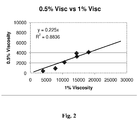
- Poly(ethylene oxide) is water-soluble and the 1 % and 0.5 % solution viscosities of the inventive ethylene oxide polymers are compared with the solution viscosities of commercially available high molecular weight ethylene oxide polymers with known weight average molecular weight.
- the term "1 % aqueous solution viscosity" as used herein means the dynamic viscosity of a 1 weight % solution of the polymer in a mixture of water and isopropyl alcohol in a weight ratio of about 6:1.
- the term "0.5 % aqueous solution viscosity” means the dynamic viscosity of a 0.5 weight % solution of the polymer in a mixture of water and isopropyl alcohol in a weight ratio of about 6:1. In both cases the weight percentage of polymer is based on the weight of water only, i.e. not including the isopropyl alcohol.
- the 1 % aqueous solution viscosities of the ethylene oxide polymers according to the present invention are preferably greater than 20,000 mPa ⁇ s at 25 °C.
- the 0.5 % aqueous solution viscosities of the ethylene oxide polymers according to the present invention are preferably greater than 5,000 mPa ⁇ s at 25 °C.
- the 1 % and 0.5 % aqueous solution viscosities of the ethylene oxide polymers are determined at 25 °C using a Brookfield@ DV-II + digital viscometer.
- the Brookfield@ guard leg is in place when making the measurement.
- RV spindle #2 and a speed of 2 RPM are employed to make the measurement.
- the spindle is immersed in the polymer solution, avoiding entrapping air bubbles, and attached to the viscometer shaft. The height is adjusted to allow the solution level to meet the notch on the spindle.
- the viscometer motor is activated, and the viscosity reading is taken 5 min after the viscometer motor was started.
- the ultrahigh molecular weight olefin oxide polymers find application in a variety of technical fields and any application requiring high solution thickening properties at low polymer concentration would benefit from the use of the present ultrahigh molecular weight olefin polymers, especially the ultrahigh molecular weight ethylene oxide polymers.
- the primary applications of those new ultrahigh molecular polymers are in the area of flocculation (as flocculation agent), for applications such as tissue paper production, waste treatment and clay sedimentation. They are, for example, able to improve the yield in papermaking.
- the new polymers can also be used in pharmaceuticals e.g.
- the semi-continuous stirred tank reaction system shown in Fig. 1 was utilized to produce a calcium based catalyst using parallel processing.
- a K-Tron single screw loss in weight gravimetric solids feeder (model # KCL-24-KQX) fed calcium metal to a lock hopper.
- the lock hopper was made up of two 1" Kitz ball valves.
- the lock hopper was operated as follows: A charge of approximately 2.5 g of calcium was fed on top of the top lock hoper ball valve. The top ball valve opened, allowing the calcium metal charge to fall into the lock hopper.
- the top lock hopper valve immediately closed and the lock hopper was purged with nitrogen gas to remove any traces of oxygen.
- the bottom valve was opened and the calcium metal charge dropped into the liquid ammonia contained in the agitated dissolver vessel.
- the dissolver vessel was maintained at a temperature range of -10 °C to 0 °C, and a pressure of 482 to 515 kPa (55-60 psig).
- Calcium metal was fed in multiple charges over the duration of the reaction in order to maintain an appropriate liquid level in the dissolver vessel. Each calcium charge was immediately followed by the addition of sufficient liquid ammonia to maintain a calcium concentration of approximately 2 mol %.
- the resulting reaction of calcium metal and liquid ammonia was formation of calcium hexammine, dissolved in liquid ammonia.
- the calcium hexammine solution was continuously transferred into the modifier vessel, at a controlled rate using a variable speed peristaltic pump. Simultaneously, a mixture of 60 mol % propylene oxide and 40 mol % acetonitrile was added to the modifier vessel. The propylene oxide/acetonitrile mixture was added to the agitated modifier vessel at a rate targeting 1 mol total propylene oxide/acetonitrile for 1 mol of calcium hexammine flowing in from the dissolver vessel. Reaction of the calcium hexammine with the propylene oxide/acetonitrile mixture produced a gray/white precipitate suspended in liquid ammonia. The resulting slurry was continuously pressure transferred from the modifier vessel to the agitated stripper vessel.
- the modifier vessel was maintained at a temperature of -5 °C to 5 °C and a pressure of 446 to 482 kPa (50-55 psig).
- the stripper vessel was charged with approximately 1000 mL of NORPAR13 ® hydrocarbon (dodecane/tridecane/tetradecane mixture) prior to initiation of the reaction.
- the slurry formed in the modifier vessel was continuously transferred to the stripper vessel over the duration of the reaction.
- the stripper was maintained at a pressure of 377 to 411 kPa (40-45 psig) and a temperature of 30 °C to 40 °C.
- a laboratory reaction system for the polymerization of ethylene oxide under pressure was utilized to polymerize ethylene oxide employing the catalyst slurry prepared as described in the above example.
- To the polymerization reactor were charged 443 g of isopentane, 28 g of ethylene oxide and 2 g of hydrophilic silica followed by a quantity of the catalyst slurry containing 0.26 g of calcium, calculated as the metal.
- Ethylene oxide flow into the reactor was set to maintain a 6 wt % concentration of ethylene oxide in isopentane and the reaction temperature was maintained at 38 °C.
- the reaction was run at a varying pressure around 170 kPa.
- the reaction system was kept under agitation and ethylene oxide flow was continued until a total of 190 g was fed into the reactor.
- the resulting finely divided polymer was recovered following vacuum evaporation of the hydrocarbon diluent. A white, granular polymer was obtained and prepared for aqueous dissolution.
- the resulting granular ethylene oxide polymer was dissolved to form a 0.5 % aqueous solution in water/isopropyl alcohol to determine the dynamic viscosity in the following manner:
- the polymer was screened through a 20 US Mesh screen prior to dissolution. 3.00 g of polymer were weighed into an 800 mL low-form glass beaker and 125 mL anhydrous isopropyl alcohol were added. The mixture was slurried by agitating at 300-400 RPM for 30-60 s.
- the stirrer consisted of a shaft with four propellers spaced equidistant. The bottom propeller was positioned to just clear the bottom of the beaker, while the top cleared the surface of the solution.
- the solution was covered and placed in a 25 °C water bath for a minimum of 30 minutes, until reaching a temperature of 25 °C and then the 0.5 % aqueous solution viscosity was determined using a Brookfield@ DV-II + digital viscometer as described before in the general part of the description (Spindle #2 @ 2 RPM).
- the 1 % aqueous solution viscosity measurement was performed as above with the exception that the amount of polymer was increased to 6.00 g and the amount of water decreased to 594 g.
- 0.5 % and 1 % aqueous solutions of several commercial poly(ethylene oxide) products were prepared as above and their viscosities were determined accordingly.
- Table 1 Comparison of 0.5 % and 1 % aqueous solution Brookfield@ viscosities of commercially available poly(ethylene oxide)s and inventive poly(ethylene oxide).
- Table 1 lists POLYOX® Water-Soluble Resins from The Dow Chemical Company including the highest molecular weight UCARFLOW Polymers commercially available.
- the approximate weight average molecular weights (M w ) indicated are the values as claimed by the manufacturer (see for example Bulletin Form No. 326-00001-0302 AMS, published March 2002 by the Dow Chemical Company and entitled "POLYOX Water-Soluble Resins ").
- the individual commercial grades marketed under the trade names mentioned in the table cover relatively broad viscosity ranges. In Examples 3*, 4* and 5* different lots of POLYOX® WSR UCARFLOC® 309 polymer were used.
- the inventive poly(ethylene oxide) demonstrated a 38 % higher 0.5 % aqueous solution viscosity than commercially available UCARFLOC® 310. Viscosity of a 1 % aqueous solution of the inventive poly(ethylene oxide) was off scale (>20,000 mPa ⁇ s) of the Brookfield@ viscometer spindle speed combination of RV spindle #2 at 2 RPM. Based upon the correlation of the solution viscosity of commercial ethylene oxide polymers (Samples 1* to 6*) to molecular weight the estimated molecular weight of the inventive ethylene oxide polymer is greater than 10,000,000 Dalton.
Landscapes
- Chemical & Material Sciences (AREA)
- Health & Medical Sciences (AREA)
- Chemical Kinetics & Catalysis (AREA)
- Medicinal Chemistry (AREA)
- Polymers & Plastics (AREA)
- Organic Chemistry (AREA)
- Polyethers (AREA)
- Organic Low-Molecular-Weight Compounds And Preparation Thereof (AREA)
- Epoxy Compounds (AREA)
Claims (15)
- Verfahren zur Herstellung eines Olefinoxidpolymerisationskatalysators, umfassend:Mischen von mindestens einem Erdalkalimetall, flüssigem Ammoniak, einem Alkylenoxid, das optional mit aromatischen Resten substituiert ist, und einem organischen Nitril mit mindestens einem sauren Wasserstoffatom, um eine Aufschlämmung von modifiziertem Erdalkalihexammin in flüssigem Ammoniak herzustellen,kontinuierliches Überführen der Aufschlämmung von modifiziertem Erdalkalihexammin in flüssigem Ammoniak in ein Strippergefäß und kontinuierliches Verdampfen von Ammoniak und dabei Anreichern des modifizierten Katalysators in dem Strippergefäß undnach vollständiger Überführung der Aufschlämmung des modifizierten Erdalkalihexammins in das Strippergefäß Altern des modifizierten Katalysators, um den endgültigen Olefinoxidpolymerisationskatalysator zu erhalten.
- Verfahren nach Anspruch 1, wobei die Anreicherung von Ammoniak in dem Strippergefäß vermieden wird.
- Verfahren nach Anspruch 1 oder 2, wobei das Strippergefäß bei einer Temperatur von mindestens 30°C, vorzugsweise mindestens 40°C oberhalb des Siedepunkts von Ammoniak bei Systemdruck gehalten wird.
- Verfahren nach einem der Ansprüche 1 bis 3, wobei das Strippergefäß bei einer Temperatur innerhalb des Bereichs von 0 bis 100°C und bei einem Druck innerhalb des Bereichs von 30 bis 6.300 kPa, vorzugsweise bei einer Temperatur innerhalb des Bereichs von 25 bis 100°C und bei einem Druck innerhalb des Bereichs von 100 bis 3.300 kPa, bevorzugter bei einer Temperatur innerhalb des Bereichs von 25 bis 70°C und einem Druck innerhalb des Bereichs von 200 bis 520 kPa und am meisten bevorzugt bei einer Temperatur innerhalb des Bereichs von 25 bis 41°C und bei einem Druck innerhalb des Bereichs von 200 bis 520 kPa gehalten wird.
- Verfahren nach einem der Ansprüche 1 bis 4, wobei ein inertes organisches Verdünnungsmittel, vorzugsweise ein inertes organisches Verdünnungsmittel mit einem Siedepunkt innerhalb des Bereichs von 25 bis 330°C und bevorzugter ein C12-C19-Kohlenwasserstoffverdünnungsmittel in dem Strippergefäß enthalten ist und eine Aufschlämmung des modifizierten Katalysators in dem Verdünnungsmittel gebildet und gealtert wird.
- Verfahren nach Anspruch 5, wobei das Gewichtsverhältnis von inertem organischem Verdünnungsmittel in dem Strippergefäß zu dem gesamten zugeführten Erdalkalimetall innerhalb eines Bereichs von 1:1 bis 20:1, vorzugsweise von 2:1 bis 15:1 und bevorzugter von 4:1 bis 9:1 liegt.
- Verfahren nach einem der Ansprüche 1 bis 6, wobei die Herstellung der Aufschlämmung des modifizierten Erdalkalihexammin in flüssigem Ammoniak in einer kontinuierlichen Art und Weise durchgeführt wird und fortwährendes Zuführen von Erdalkalimetall und flüssigem Ammoniak, kontinuierliches Zuführen des Alkylenoxids und des organischen Nitrils und kontinuierliches Überführen der Aufschlämmung von modifiziertem Erdalkalihexammin in flüssigem Ammoniak in das Strippergefäß umfasst.
- Verfahren nach einem der Ansprüche 1 bis 7, umfassend:(1a) fortwährendes Zuführen einer vorbestimmten Menge an Erdalkalimetall in ein Lösungsgefäß, das flüssigen Ammoniak enthält, und(1b) fortwährendes Zugeben von flüssigem Ammoniak, um Erdalkalihexammin gelöst in flüssigem Ammoniak, zu bilden,(2a) kontinuierliches Überführen der Erdalkalihexamminlösung in ein Modifiziergefäß,(2b) kontinuierliches Zuführen des Alkylenoxids und des organischen Nitrils in das Modifiziergefäß, um eine Aufschlämmung von modifiziertem Erdalkalihexammin in flüssigem Ammoniak zu bilden,(3a) kontinuierliches Überführen der Aufschlämmung von modifiziertem Erdalkalihexammin in flüssigem Ammoniak in das Strippergefäß und(3b) kontinuierliches Verdampfen von Ammoniak und dadurch Anreichern des modifizierten Katalysators in dem Strippergefäß,(4b) nach Verbrauch des Erdalkalimetalls allmähliches Einstellen aller Zuläufe und Entleeren des Lösungsgefäßes über das Modifiziergefäß in das Strippergefäß und(4c) Altern des modifizierten Katalysators in dem Strippergefäß, um den endgültigen Olefinoxidpolymerisationskatalysator zu erhalten.
- Verfahren nach Anspruch 8, wobei das Lösungsgefäß bei einer Temperatur innerhalb des Bereichs von -50 bis 25°C und einem Druck innerhalb des Bereichs von 8 bis 1.100 kPa, vorzugsweise bei einer Temperatur innerhalb des Bereich von -25 bis 15°C und einem Druck innerhalb des Bereichs von 120 bis 750 kPa, bevorzugter bei einer Temperatur innerhalb eines Bereichs von -15 bis 5°C und einem Druck innerhalb des Bereichs von 200 bis 600 kPa und am meisten bevorzugt bei einer Temperatur innerhalb des Bereichs von -11 bis 1°C und einem Druck innerhalb des Bereichs von 250 bis 520 kPa gehalten wird.
- Verfahren nach einem der Ansprüche 8 oder 9, wobei das Modifiziergefäß bei einer Temperatur innerhalb des Bereichs von -45 bis 30°C und einem Druck innerhalb des Bereichs von 1 bis 1.200 kPa, vorzugsweise bei einer Temperatur innerhalb des ,Bereichs von -20 bis 20°C und einem Druck innerhalb des Bereichs von 90 bis 900 kPa, bevorzugter bei einer Temperatur innerhalb des Bereichs von -10 bis 10°C und einem Druck innerhalb des Bereichs von 190 bis 620 kPa und am meisten bevorzugt bei einer Temperatur innerhalb des Bereichs von -6 bis 6°C und einem Druck innerhalb des Bereichs von 250 bis 540 kPa gehalten wird.
- Verfahren nach einem der vorstehenden Ansprüche, wobei das Erdalkalimetall Calcium ist.
- Verfahren nach einem der vorstehenden Ansprüche, wobei das Alkylenoxid Propylenoxid ist.
- Verfahren nach einem der vorstehenden Ansprüche, wobei das organische Nitril Acetonitril ist.
- Katalysator erhältlich nach dem Verfahren gemäß einem der vorstehenden Ansprüche.
- Verwendung des Katalysators gemäß Anspruch 14 bei der Polymerisation eines Epoxidmonomers, vorzugsweise Ethylenoxid.
Applications Claiming Priority (2)
| Application Number | Priority Date | Filing Date | Title |
|---|---|---|---|
| US201261592201P | 2012-01-30 | 2012-01-30 | |
| PCT/US2013/022383 WO2013116026A1 (en) | 2012-01-30 | 2013-01-21 | Process for preparing olefin oxide polymerization catalysts |
Publications (2)
| Publication Number | Publication Date |
|---|---|
| EP2809704A1 EP2809704A1 (de) | 2014-12-10 |
| EP2809704B1 true EP2809704B1 (de) | 2020-07-15 |
Family
ID=47633581
Family Applications (1)
| Application Number | Title | Priority Date | Filing Date |
|---|---|---|---|
| EP13702554.0A Active EP2809704B1 (de) | 2012-01-30 | 2013-01-21 | Verfahren zur herstellung von olefinoxidpolymerisierungskatalysatoren |
Country Status (6)
| Country | Link |
|---|---|
| US (1) | US20150018514A1 (de) |
| EP (1) | EP2809704B1 (de) |
| JP (1) | JP2015508108A (de) |
| CN (1) | CN104080835A (de) |
| CA (1) | CA2861325C (de) |
| WO (1) | WO2013116026A1 (de) |
Families Citing this family (1)
| Publication number | Priority date | Publication date | Assignee | Title |
|---|---|---|---|---|
| CN115109246B (zh) * | 2022-07-01 | 2023-07-14 | 佳化化学科技发展(上海)有限公司 | 一种炔基醇醚及其制备方法与应用 |
Family Cites Families (15)
| Publication number | Priority date | Publication date | Assignee | Title |
|---|---|---|---|---|
| US1539650A (en) * | 1923-12-20 | 1925-05-26 | Dombeck Kazimer | Bush trimmer |
| US3037943A (en) | 1958-12-29 | 1962-06-05 | Union Carbide Corp | Preparation of catalysts for the polymerization of epoxides |
| US2969402A (en) | 1958-12-29 | 1961-01-24 | Union Carbide Corp | Preparation of catalysts for the polymerization of epoxides |
| US3281312A (en) | 1961-07-05 | 1966-10-25 | Mead Corp | Fibrous product containing resinous material and polyethylene oxide and process thereof |
| AT285950B (de) | 1968-08-12 | 1970-11-25 | Basf Ag | Verfahren zur Herstellung von hochmolekularen Polyäthern |
| US3729441A (en) | 1971-11-04 | 1973-04-24 | Jefferson Chem Co Inc | Stabilized high molecular weight poly(ethylene oxide) |
| US4193892A (en) | 1976-11-11 | 1980-03-18 | Union Carbide Corporation | Process for preparing olefin oxide polymerization catalysts by aging the catalysts |
| CA1111409A (en) * | 1976-11-11 | 1981-10-27 | George L. Goeke | Process for preparing olefin oxide polymerization catalysts |
| US4267309A (en) * | 1978-07-28 | 1981-05-12 | Union Carbide Corporation | Process for preparing olefin oxide polymerization catalysts |
| US4211681A (en) * | 1978-08-16 | 1980-07-08 | Union Carbide Corporation | Poly(ethylene oxide) compositions |
| US5186942A (en) | 1989-01-30 | 1993-02-16 | Alza Corporation | Nicardipine therapy |
| CN1114644C (zh) * | 2000-12-29 | 2003-07-16 | 中国科学院长春应用化学研究所 | 氧化乙烯开环聚合催化剂的合成方法 |
| US20050100515A1 (en) | 2002-09-11 | 2005-05-12 | The Procter & Gamble Company | Tooth whitening products |
| CN1324068C (zh) | 2004-08-24 | 2007-07-04 | 上海化工研究院 | 环氧乙烷开环聚合催化剂的制备方法 |
| US8038989B2 (en) * | 2007-05-25 | 2011-10-18 | Conopco, Inc. | Hair conditioning compositions |
-
2013
- 2013-01-21 EP EP13702554.0A patent/EP2809704B1/de active Active
- 2013-01-21 CN CN201380005407.7A patent/CN104080835A/zh active Pending
- 2013-01-21 JP JP2014554762A patent/JP2015508108A/ja active Pending
- 2013-01-21 US US14/371,188 patent/US20150018514A1/en not_active Abandoned
- 2013-01-21 WO PCT/US2013/022383 patent/WO2013116026A1/en not_active Ceased
- 2013-01-21 CA CA2861325A patent/CA2861325C/en active Active
Non-Patent Citations (1)
| Title |
|---|
| None * |
Also Published As
| Publication number | Publication date |
|---|---|
| EP2809704A1 (de) | 2014-12-10 |
| JP2015508108A (ja) | 2015-03-16 |
| CN104080835A (zh) | 2014-10-01 |
| US20150018514A1 (en) | 2015-01-15 |
| CA2861325A1 (en) | 2013-08-08 |
| WO2013116026A1 (en) | 2013-08-08 |
| CA2861325C (en) | 2020-03-24 |
Similar Documents
| Publication | Publication Date | Title |
|---|---|---|
| EP2809703B1 (de) | Verfahren zur herstellung von polymeren mit hohem molekulargewicht durch polymerisierung von epoxidmonomeren | |
| ES2200939T3 (es) | Copolimeros en bloques de poliester-polieter. | |
| CN1208426A (zh) | 用双金属氰化物配合物催化剂制备的过渡金属含量低的聚亚氧烷基聚醚多元醇的制备方法 | |
| HU221060B1 (hu) | Poliéter-tartalmú, javított kettős fém-cianid-katalizátorok és eljárás ezek előállítására, valamint eljárás ezek jelenlétében epoxid polimerek előállítására | |
| BR0109677B1 (pt) | processo para a preparação de um catalisador de dmc, e, catalisador de dmc. | |
| CN103635506B (zh) | 制备高分子量聚醚多元醇的方法 | |
| EP2809704B1 (de) | Verfahren zur herstellung von olefinoxidpolymerisierungskatalysatoren | |
| EP3415234A2 (de) | Organischer zinkkatalysator, herstellungsverfahren dafür und verfahren zur herstellung eines polyalkylencarbonatharzes mit diesem katalysator | |
| KR20180044908A (ko) | 고분자량 폴리옥시알킬렌 폴리올의 제조 방법 | |
| EP3778022B1 (de) | Verfahren zur herstellung eines organischen zinkkatalysators | |
| US3127358A (en) | Polymerization of epoxides | |
| US20050059798A1 (en) | Polyether polymer and process for producing the same | |
| US20220403087A1 (en) | Method for producing polyoxymethylene polyoxyalkylene copolymers | |
| EP3106221A1 (de) | Verfahren zur herstellung von doppelmetallcyanidkatalysatoren und deren verwendung in polymerisierungsreaktionen | |
| US20110077419A1 (en) | Double metal cyanide catalyst having a controlled reactivity for preparing a polyol and preparation thereof | |
| EP1483309B1 (de) | Verfahren zur herstellung von poly(3-hydroxyalkanoaten) in gegenwart eines nucleophils | |
| JP2884614B2 (ja) | 複合金属シアン化物錯体触媒の製造方法 | |
| SU887584A1 (ru) | Способ получени олигоэфирдиолов | |
| US3365404A (en) | Process for polymerizing epoxides using as catalyst the reaction product of calcium hexammoniate and triphenylmethane or fluorene | |
| WO2022258570A1 (de) | Verfahren zur herstellung von polyoxymethylen-polyoxyalkylen-copolymeren | |
| EP4640745A1 (de) | Doppelmetallcyanidkatalysator und verfahren zur herstellung davon | |
| KR20160089382A (ko) | 에폭사이드 모노머의 중합용 아연 촉매/첨가제 시스템 | |
| HK1097866A (en) | Continuous process and system of producing polyether polyols |
Legal Events
| Date | Code | Title | Description |
|---|---|---|---|
| PUAI | Public reference made under article 153(3) epc to a published international application that has entered the european phase |
Free format text: ORIGINAL CODE: 0009012 |
|
| 17P | Request for examination filed |
Effective date: 20140815 |
|
| AK | Designated contracting states |
Kind code of ref document: A1 Designated state(s): AL AT BE BG CH CY CZ DE DK EE ES FI FR GB GR HR HU IE IS IT LI LT LU LV MC MK MT NL NO PL PT RO RS SE SI SK SM TR |
|
| AX | Request for extension of the european patent |
Extension state: BA ME |
|
| DAX | Request for extension of the european patent (deleted) | ||
| GRAP | Despatch of communication of intention to grant a patent |
Free format text: ORIGINAL CODE: EPIDOSNIGR1 |
|
| STAA | Information on the status of an ep patent application or granted ep patent |
Free format text: STATUS: GRANT OF PATENT IS INTENDED |
|
| INTG | Intention to grant announced |
Effective date: 20200130 |
|
| GRAS | Grant fee paid |
Free format text: ORIGINAL CODE: EPIDOSNIGR3 |
|
| GRAA | (expected) grant |
Free format text: ORIGINAL CODE: 0009210 |
|
| STAA | Information on the status of an ep patent application or granted ep patent |
Free format text: STATUS: THE PATENT HAS BEEN GRANTED |
|
| AK | Designated contracting states |
Kind code of ref document: B1 Designated state(s): AL AT BE BG CH CY CZ DE DK EE ES FI FR GB GR HR HU IE IS IT LI LT LU LV MC MK MT NL NO PL PT RO RS SE SI SK SM TR |
|
| REG | Reference to a national code |
Ref country code: GB Ref legal event code: FG4D Ref country code: CH Ref legal event code: EP |
|
| REG | Reference to a national code |
Ref country code: IE Ref legal event code: FG4D |
|
| REG | Reference to a national code |
Ref country code: DE Ref legal event code: R096 Ref document number: 602013070677 Country of ref document: DE |
|
| REG | Reference to a national code |
Ref country code: AT Ref legal event code: REF Ref document number: 1290966 Country of ref document: AT Kind code of ref document: T Effective date: 20200815 |
|
| REG | Reference to a national code |
Ref country code: NL Ref legal event code: FP |
|
| REG | Reference to a national code |
Ref country code: SE Ref legal event code: TRGR |
|
| REG | Reference to a national code |
Ref country code: LT Ref legal event code: MG4D |
|
| REG | Reference to a national code |
Ref country code: AT Ref legal event code: MK05 Ref document number: 1290966 Country of ref document: AT Kind code of ref document: T Effective date: 20200715 |
|
| PG25 | Lapsed in a contracting state [announced via postgrant information from national office to epo] |
Ref country code: FI Free format text: LAPSE BECAUSE OF FAILURE TO SUBMIT A TRANSLATION OF THE DESCRIPTION OR TO PAY THE FEE WITHIN THE PRESCRIBED TIME-LIMIT Effective date: 20200715 Ref country code: ES Free format text: LAPSE BECAUSE OF FAILURE TO SUBMIT A TRANSLATION OF THE DESCRIPTION OR TO PAY THE FEE WITHIN THE PRESCRIBED TIME-LIMIT Effective date: 20200715 Ref country code: HR Free format text: LAPSE BECAUSE OF FAILURE TO SUBMIT A TRANSLATION OF THE DESCRIPTION OR TO PAY THE FEE WITHIN THE PRESCRIBED TIME-LIMIT Effective date: 20200715 Ref country code: PT Free format text: LAPSE BECAUSE OF FAILURE TO SUBMIT A TRANSLATION OF THE DESCRIPTION OR TO PAY THE FEE WITHIN THE PRESCRIBED TIME-LIMIT Effective date: 20201116 Ref country code: LT Free format text: LAPSE BECAUSE OF FAILURE TO SUBMIT A TRANSLATION OF THE DESCRIPTION OR TO PAY THE FEE WITHIN THE PRESCRIBED TIME-LIMIT Effective date: 20200715 Ref country code: AT Free format text: LAPSE BECAUSE OF FAILURE TO SUBMIT A TRANSLATION OF THE DESCRIPTION OR TO PAY THE FEE WITHIN THE PRESCRIBED TIME-LIMIT Effective date: 20200715 Ref country code: BG Free format text: LAPSE BECAUSE OF FAILURE TO SUBMIT A TRANSLATION OF THE DESCRIPTION OR TO PAY THE FEE WITHIN THE PRESCRIBED TIME-LIMIT Effective date: 20201015 Ref country code: GR Free format text: LAPSE BECAUSE OF FAILURE TO SUBMIT A TRANSLATION OF THE DESCRIPTION OR TO PAY THE FEE WITHIN THE PRESCRIBED TIME-LIMIT Effective date: 20201016 Ref country code: NO Free format text: LAPSE BECAUSE OF FAILURE TO SUBMIT A TRANSLATION OF THE DESCRIPTION OR TO PAY THE FEE WITHIN THE PRESCRIBED TIME-LIMIT Effective date: 20201015 |
|
| REG | Reference to a national code |
Ref country code: NL Ref legal event code: PD Owner name: NUTRITION & BIOSCIENCES USA 1, LLC; US Free format text: DETAILS ASSIGNMENT: CHANGE OF OWNER(S), ASSIGNMENT; FORMER OWNER NAME: THE DOW CHEMICAL COMPANY Effective date: 20210119 |
|
| REG | Reference to a national code |
Ref country code: DE Ref legal event code: R081 Ref document number: 602013070677 Country of ref document: DE Owner name: NUTRITION & BIOSCIENCES USA 1, LLC, ROCHESTER, US Free format text: FORMER OWNER: DOW GLOBAL TECHNOLOGIES LLC, MIDLAND, MICH., US |
|
| PG25 | Lapsed in a contracting state [announced via postgrant information from national office to epo] |
Ref country code: IS Free format text: LAPSE BECAUSE OF FAILURE TO SUBMIT A TRANSLATION OF THE DESCRIPTION OR TO PAY THE FEE WITHIN THE PRESCRIBED TIME-LIMIT Effective date: 20201115 Ref country code: PL Free format text: LAPSE BECAUSE OF FAILURE TO SUBMIT A TRANSLATION OF THE DESCRIPTION OR TO PAY THE FEE WITHIN THE PRESCRIBED TIME-LIMIT Effective date: 20200715 Ref country code: RS Free format text: LAPSE BECAUSE OF FAILURE TO SUBMIT A TRANSLATION OF THE DESCRIPTION OR TO PAY THE FEE WITHIN THE PRESCRIBED TIME-LIMIT Effective date: 20200715 Ref country code: LV Free format text: LAPSE BECAUSE OF FAILURE TO SUBMIT A TRANSLATION OF THE DESCRIPTION OR TO PAY THE FEE WITHIN THE PRESCRIBED TIME-LIMIT Effective date: 20200715 |
|
| REG | Reference to a national code |
Ref country code: GB Ref legal event code: 732E Free format text: REGISTERED BETWEEN 20210318 AND 20210324 |
|
| REG | Reference to a national code |
Ref country code: DE Ref legal event code: R097 Ref document number: 602013070677 Country of ref document: DE |
|
| REG | Reference to a national code |
Ref country code: GB Ref legal event code: 732E Free format text: REGISTERED BETWEEN 20210325 AND 20210331 |
|
| REG | Reference to a national code |
Ref country code: BE Ref legal event code: PD Owner name: NUTRITION & BIOSCIENCES USA 1, LLC; US Free format text: DETAILS ASSIGNMENT: CHANGE OF OWNER(S), ASSIGNMENT Effective date: 20210222 |
|
| PG25 | Lapsed in a contracting state [announced via postgrant information from national office to epo] |
Ref country code: RO Free format text: LAPSE BECAUSE OF FAILURE TO SUBMIT A TRANSLATION OF THE DESCRIPTION OR TO PAY THE FEE WITHIN THE PRESCRIBED TIME-LIMIT Effective date: 20200715 Ref country code: SM Free format text: LAPSE BECAUSE OF FAILURE TO SUBMIT A TRANSLATION OF THE DESCRIPTION OR TO PAY THE FEE WITHIN THE PRESCRIBED TIME-LIMIT Effective date: 20200715 Ref country code: IT Free format text: LAPSE BECAUSE OF FAILURE TO SUBMIT A TRANSLATION OF THE DESCRIPTION OR TO PAY THE FEE WITHIN THE PRESCRIBED TIME-LIMIT Effective date: 20200715 Ref country code: DK Free format text: LAPSE BECAUSE OF FAILURE TO SUBMIT A TRANSLATION OF THE DESCRIPTION OR TO PAY THE FEE WITHIN THE PRESCRIBED TIME-LIMIT Effective date: 20200715 Ref country code: CZ Free format text: LAPSE BECAUSE OF FAILURE TO SUBMIT A TRANSLATION OF THE DESCRIPTION OR TO PAY THE FEE WITHIN THE PRESCRIBED TIME-LIMIT Effective date: 20200715 Ref country code: EE Free format text: LAPSE BECAUSE OF FAILURE TO SUBMIT A TRANSLATION OF THE DESCRIPTION OR TO PAY THE FEE WITHIN THE PRESCRIBED TIME-LIMIT Effective date: 20200715 |
|
| PLBE | No opposition filed within time limit |
Free format text: ORIGINAL CODE: 0009261 |
|
| STAA | Information on the status of an ep patent application or granted ep patent |
Free format text: STATUS: NO OPPOSITION FILED WITHIN TIME LIMIT |
|
| PG25 | Lapsed in a contracting state [announced via postgrant information from national office to epo] |
Ref country code: AL Free format text: LAPSE BECAUSE OF FAILURE TO SUBMIT A TRANSLATION OF THE DESCRIPTION OR TO PAY THE FEE WITHIN THE PRESCRIBED TIME-LIMIT Effective date: 20200715 |
|
| 26N | No opposition filed |
Effective date: 20210416 |
|
| PG25 | Lapsed in a contracting state [announced via postgrant information from national office to epo] |
Ref country code: SK Free format text: LAPSE BECAUSE OF FAILURE TO SUBMIT A TRANSLATION OF THE DESCRIPTION OR TO PAY THE FEE WITHIN THE PRESCRIBED TIME-LIMIT Effective date: 20200715 |
|
| PG25 | Lapsed in a contracting state [announced via postgrant information from national office to epo] |
Ref country code: SI Free format text: LAPSE BECAUSE OF FAILURE TO SUBMIT A TRANSLATION OF THE DESCRIPTION OR TO PAY THE FEE WITHIN THE PRESCRIBED TIME-LIMIT Effective date: 20200715 Ref country code: MC Free format text: LAPSE BECAUSE OF FAILURE TO SUBMIT A TRANSLATION OF THE DESCRIPTION OR TO PAY THE FEE WITHIN THE PRESCRIBED TIME-LIMIT Effective date: 20200715 |
|
| REG | Reference to a national code |
Ref country code: CH Ref legal event code: PL |
|
| PG25 | Lapsed in a contracting state [announced via postgrant information from national office to epo] |
Ref country code: LU Free format text: LAPSE BECAUSE OF NON-PAYMENT OF DUE FEES Effective date: 20210121 |
|
| PG25 | Lapsed in a contracting state [announced via postgrant information from national office to epo] |
Ref country code: CH Free format text: LAPSE BECAUSE OF NON-PAYMENT OF DUE FEES Effective date: 20210131 Ref country code: LI Free format text: LAPSE BECAUSE OF NON-PAYMENT OF DUE FEES Effective date: 20210131 |
|
| PG25 | Lapsed in a contracting state [announced via postgrant information from national office to epo] |
Ref country code: IE Free format text: LAPSE BECAUSE OF NON-PAYMENT OF DUE FEES Effective date: 20210121 |
|
| PG25 | Lapsed in a contracting state [announced via postgrant information from national office to epo] |
Ref country code: HU Free format text: LAPSE BECAUSE OF FAILURE TO SUBMIT A TRANSLATION OF THE DESCRIPTION OR TO PAY THE FEE WITHIN THE PRESCRIBED TIME-LIMIT; INVALID AB INITIO Effective date: 20130121 |
|
| PG25 | Lapsed in a contracting state [announced via postgrant information from national office to epo] |
Ref country code: CY Free format text: LAPSE BECAUSE OF FAILURE TO SUBMIT A TRANSLATION OF THE DESCRIPTION OR TO PAY THE FEE WITHIN THE PRESCRIBED TIME-LIMIT Effective date: 20200715 |
|
| PG25 | Lapsed in a contracting state [announced via postgrant information from national office to epo] |
Ref country code: MK Free format text: LAPSE BECAUSE OF FAILURE TO SUBMIT A TRANSLATION OF THE DESCRIPTION OR TO PAY THE FEE WITHIN THE PRESCRIBED TIME-LIMIT Effective date: 20200715 |
|
| PG25 | Lapsed in a contracting state [announced via postgrant information from national office to epo] |
Ref country code: MT Free format text: LAPSE BECAUSE OF FAILURE TO SUBMIT A TRANSLATION OF THE DESCRIPTION OR TO PAY THE FEE WITHIN THE PRESCRIBED TIME-LIMIT Effective date: 20200715 |
|
| PG25 | Lapsed in a contracting state [announced via postgrant information from national office to epo] |
Ref country code: TR Free format text: LAPSE BECAUSE OF FAILURE TO SUBMIT A TRANSLATION OF THE DESCRIPTION OR TO PAY THE FEE WITHIN THE PRESCRIBED TIME-LIMIT Effective date: 20200715 |
|
| PGFP | Annual fee paid to national office [announced via postgrant information from national office to epo] |
Ref country code: NL Payment date: 20260126 Year of fee payment: 14 |
|
| PGFP | Annual fee paid to national office [announced via postgrant information from national office to epo] |
Ref country code: SE Payment date: 20260127 Year of fee payment: 14 |
|
| PGFP | Annual fee paid to national office [announced via postgrant information from national office to epo] |
Ref country code: GB Payment date: 20260127 Year of fee payment: 14 |
|
| PGFP | Annual fee paid to national office [announced via postgrant information from national office to epo] |
Ref country code: DE Payment date: 20260128 Year of fee payment: 14 |
|
| PGFP | Annual fee paid to national office [announced via postgrant information from national office to epo] |
Ref country code: BE Payment date: 20260127 Year of fee payment: 14 |
|
| PGFP | Annual fee paid to national office [announced via postgrant information from national office to epo] |
Ref country code: FR Payment date: 20260126 Year of fee payment: 14 |