EP2808965B1 - Anordnung zum Anschluss isolierter Ableitungen im äußeren Blitzschutz mit Potentialausgleich im Endverschlussbereich und trennungsabstandsgerechter Aufständerung - Google Patents
Anordnung zum Anschluss isolierter Ableitungen im äußeren Blitzschutz mit Potentialausgleich im Endverschlussbereich und trennungsabstandsgerechter Aufständerung Download PDFInfo
- Publication number
- EP2808965B1 EP2808965B1 EP14169274.9A EP14169274A EP2808965B1 EP 2808965 B1 EP2808965 B1 EP 2808965B1 EP 14169274 A EP14169274 A EP 14169274A EP 2808965 B1 EP2808965 B1 EP 2808965B1
- Authority
- EP
- European Patent Office
- Prior art keywords
- spacer
- semiconducting
- conductor
- separation distance
- conductive
- Prior art date
- Legal status (The legal status is an assumption and is not a legal conclusion. Google has not performed a legal analysis and makes no representation as to the accuracy of the status listed.)
- Not-in-force
Links
- 238000000926 separation method Methods 0.000 title claims description 19
- 239000004020 conductor Substances 0.000 title claims description 9
- 125000006850 spacer group Chemical group 0.000 claims description 64
- 238000010276 construction Methods 0.000 claims description 10
- 239000011248 coating agent Substances 0.000 claims description 6
- 238000000576 coating method Methods 0.000 claims description 6
- 238000009434 installation Methods 0.000 claims description 6
- 239000000463 material Substances 0.000 claims description 6
- 239000002184 metal Substances 0.000 description 4
- 239000011152 fibreglass Substances 0.000 description 3
- 238000009413 insulation Methods 0.000 description 2
- 230000006978 adaptation Effects 0.000 description 1
- 230000015572 biosynthetic process Effects 0.000 description 1
- 230000008878 coupling Effects 0.000 description 1
- 238000010168 coupling process Methods 0.000 description 1
- 238000005859 coupling reaction Methods 0.000 description 1
- 230000001419 dependent effect Effects 0.000 description 1
- 238000011161 development Methods 0.000 description 1
- 230000018109 developmental process Effects 0.000 description 1
- 239000011810 insulating material Substances 0.000 description 1
- 230000002028 premature Effects 0.000 description 1
- 239000004065 semiconductor Substances 0.000 description 1
Images

Classifications
-
- H—ELECTRICITY
- H02—GENERATION; CONVERSION OR DISTRIBUTION OF ELECTRIC POWER
- H02G—INSTALLATION OF ELECTRIC CABLES OR LINES, OR OF COMBINED OPTICAL AND ELECTRIC CABLES OR LINES
- H02G13/00—Installations of lightning conductors; Fastening thereof to supporting structure
Definitions
- the invention relates to an arrangement for connecting isolated leads in external lightning protection with equipotential bonding in the end closure region and separation distance-oriented elevation according to claim 1.
- the isolated lead When connecting an isolated lead to a loop or attic of a building, it is functionally necessary that the isolated lead, e.g. a so-called HVI derivative of the company DEHN + S ⁇ HNE GmbH + Co. KG, is elevated in the end closure area in order to comply with the insulation required for the respective specified separation distance can.
- the isolated lead e.g. a so-called HVI derivative of the company DEHN + S ⁇ HNE GmbH + Co. KG
- This spacer for ensuring the separation distance for partially insulated lightning protection systems previously known.
- This spacer comprises a tube, a rod, a profile or hollow profile with means provided at opposite ends for fastening in each case the lightning current leading line on the one hand and fixing to the structural system of the object to be protected on the other. With the help of such a spacer, the required separation distance between the lightning current leading line and the object to be protected the structural system can be maintained.
- the spacer has a coating, which ensures a uniform field distribution at typical high flash, short-term pulse voltages.
- This coating has semiconducting properties or is semiconductive.
- the proposed semiconductive layer or the semiconducting material improves the sliding discharge resistance and thus the factor between the geometrical length of the spacer and the equivalent air gap.
- an isolated, field controlled elevation of the actual isolated drain in the end closure region is realized to maintain the necessary separation distance.
- a metallic holder comes as additional equipotential bonding in the end closure area for contacting the semiconductively coated or semiconducting distance rod or spacer used, which is still connected to the not lightning current potential equalization.
- the above measure suppresses the formation of sliding discharges along the insulated drain and the actual spacer, especially in the soiled or wet condition.
- the required elevated height can be reduced.
- the elevated height corresponds to the required or calculated separation distance at the installation site, so that a simple dimensioning while avoiding incorrect installation is given.
- the arrangement for the connection of isolated leads in the external lightning protection with potential equalization in Endver gleich Hoch and separation distance-oriented elevation thus provides a spacer, which is provided between the connection head of the isolated derivative and the actual equipotential bonding.
- This spacer is on the one hand with the isolated derivative and on the other hand with the equipotential bonding in connection.
- the spacer can, as in the DE 10 2006 056 563 B4 disclosed, as a spacer in the form of a tube, rod, profile or hollow profile and be provided at the opposite ends provided means for fixing the isolated lead and for fixing to the structural system of the object to be protected.
- the tube, the rod, the profile or the hollow profile consists of at least portions of its longitudinal extent and at least on the surface of a material or has a coating which has semiconducting properties and ensures a uniform field distribution at high typical, short-term pulse voltages.
- the semiconductive material or the aforementioned coating may have an ohmic resistance in the range of a few ⁇ / m to M ⁇ / m, preferably between 500 ⁇ / m and 500 k ⁇ / m, and galvanically with the isolated Discharge or the means for fixing to the building system in connection.
- the base material of the spacer may be glass fiber reinforced plastic, which has, for example, a coating of a semiconductive material.
- the insulating material may contain conductive components.
- the semiconducting or semiconducting properties having spacers can be used with its pointing to the structural system end in a socket, which includes a connection to the equipotential bonding, which is not lightning current.
- the base in turn is preferably part of a tripod or similar tripod-like structure, wherein the tripod comprises a Y-shaped metallic construction, which receives a conductive, second spacer to form the actual potential equalization.
- the distance between the attachment points of the first, semiconductive spacer and the second conductive spacer on the tripod or the Y-shaped metallic construction is variable or adjustable.
- the second spacer may be variable in length, e.g. be formed via a telescopic guide.
- the spacer or spacers each have a conductive clamp or the like means for receiving the respective isolated lead.
- the semiconductive spacer has a conductive clip which is in electrical contact with the semiconductive jacket of the corresponding isolated drain.
- the semiconducting spacer has a length which corresponds to the required or calculated separation distance at the respective installation location of the corresponding structural system.
- a coated semiconducting spacer designed as a spacer bar 6, with a metal holder, for example formed as a clamp 2, as an additional potential equalization in the end closure region of an isolated derivative (see also Fig. 2 ) used.
- the spacer bar 6 serves at the same time to elevate the isolated derivative.
- the semiconducting spacer bar 6 is fixed in a three-legged tripod 13 at a distance of about 15 cm from the connection head 18 of the isolated lead 1.
- This tripod 13 also provides a second mounting option, which also serves as a connection for the necessary equipotential bonding of the isolated lead 1 and which limits the end closure region of the isolated lead 1, wherein the length of the second conductive spacer 15, which preferably consists of a metal, is variable.
- the appropriately selected length of the telescopically extended or retracted conductive spacer 15 can be fixed by means of clamping screws 19.
- the additional field-controlling element in the form of the spacer bar 6 can be dispensed with the usual further reduction of the separation distance when using conventional highly insulated rods.
- the actual isolated derivative 1 is then elevated in height, which corresponds exactly to the calculated separation distance.
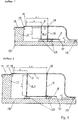
- FIG. 1 The sectional views after Fig. 1 show the semiconductive jacket 1.1 of the isolated lead 1 and the clamp-like metallic holder 2.
- the metallic holder 2 is connected via a screw 3 with an upper socket 4.
- the spacer bar 6 has a semiconducting layer 7 and is at the upper end of a conductive cap 5 includes, which may be part of the upper sleeve 4.
- the lower end of the spacer bar 6 with semiconductive layer 7 is received by the lower bushing 8, which has a Klemmarret mich.
- a Metallattika 10 is connected via a terminal lug 17 to the conductor of the isolated lead 1.
- a connection head 18 is formed.
- the distance of the first spacer or spacer rod 6 from the second, conductive spacer rod 15 is about the configuration of the tripod assembly (see Fig. 3 ) variable.
- the Fig. 2 further shows the equipotential bonding lead 9 and a building wall 11 of the object 12 to be protected.
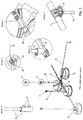
- the basic structure of a tripod for receiving the first and second spacers 6; 15 is in the perspective view after Fig. 3 and the corresponding detailed representations.
- the tripod is realized as a substantially Y-shaped metallic construction.
- the conductive spacer 15 is, as in the Fig. 3 , Detail A shown, telescopically formed, provided with an inner tubular element, which is guided in an outer tubular element, and fixed by means of locking screws 19 with respect to the length or height dimension.
- the lower end of the variably adjustable conductive spacer 15 is received by a bush and is conductively connected to the metal structure of the Y-shaped tripod.
- the semiconductive spacer 6 is also received by a lower bushing 8, as shown in detail B, with the lower bushing 8 mounted on an element 20 of the Y-construction of the tripod.
- the distance between the respective sockets for receiving the first semiconducting spacer 6 and the second conductive spacer 15 is variable.
- corresponding recesses may be present in a corresponding rod construction or else it is a hollow profile guide with corresponding locking and clamping elements or a similar adjustment conceivable.
- the potential equalization to the connecting line 9 is realized on a foot part of the Y-shaped metal construction, for example with the aid of a so-called Doppelüberlegers as clamping half clamp.
- the potential equalization connection element 16 on the variably adjustable, conductive spacer 15 has the form of a clamp and in this respect surrounds the isolated lead 1.
Landscapes
- Elimination Of Static Electricity (AREA)
Description
- Die Erfindung betrifft eine Anordnung zum Anschluss isolierter Ableitungen im äußeren Blitzschutz mit Potentialausgleich im Endverschlussbereich und trennungsabstandsgerechter Aufständerung gemäß Anspruch 1.
- Beim Anschluss einer isolierten Ableitung an einer Ringleitung oder einer Attika eines Gebäudes ist es funktionsbedingt notwendig, dass die eingesetzte isolierte Ableitung, z.B. eine sogenannte HVI-Ableitung der Firma DEHN + SÖHNE GmbH + Co. KG, im Endverschlussbereich aufgeständert wird, um das für den jeweiligen ausgewiesenen Trennungsabstand erforderliche Isoliervermögen einhalten zu können.
- Weiterhin muss eine gute und ausreichende Standfestigkeit sowie Verlegesicherheit gewährleistet werden. Durch das Aufständern isolierter Ableitungen mit Hilfe von an sich bekannten Distanzhaltern aus glasfaserverstärkten Kunststoffmaterialien wird im Endverschlussbereich die Feldsteuerung der isolierten Ableitung in nachteiliger Weise gestört. Hierdurch kann nur noch ein reduzierter Trennungsabstand eingehalten werden. Ursächlich für dieses Verhalten ist das vorzeitige Einsetzen von Gleitentladungen, insbesondere im nassen und/oder verschmutzten Zustand der Distanzhalter unter Hochspannungsbelastungen, wodurch ein vermindertes Isolationsvermögen entsteht und die entsprechende Blitzschutzanlage versagen kann.
- Aus der
DE 10 2006 056 563 B4 ist ein Distanzhalter zur Sicherstellung des Trennungsabstands für teilisolierte Blitzschutzanlagen vorbekannt. Dieser Distanzhalter umfasst ein Rohr, einen Stab, ein Profil oder Hohlprofil mit an den gegenüberliegenden Enden vorgesehenen Mitteln zum Befestigen jeweils der blitzstromführenden Leitung einerseits und Fixieren an der baulichen Anlage des zu schützenden Objekts andererseits. Mit Hilfe eines solchen Distanzhalters kann der benötigte Trennungsabstand zwischen der blitzstromführenden Leitung und dem zu schützenden Objekt der baulichen Anlage eingehalten werden. - Mit dem Distanzhalter nach
DE 10 2006 056 563 B4 ist eine hohe Gleitentladungsfestigkeit gegeben und der Faktor zwischen der geometrischen Länge des Distanzhalter und der äquivalenten Luftstrecke verbessert. Diesbezüglich weist der Distanzhalter eine Beschichtung auf, welche eine gleichmäßige Feldverteilung bei blitztypischen hohen, kurzzeitigen Impulsspannungen gewährleistet. Diese Beschichtung besitzt halbleitende Eigenschaften bzw. ist halbleitfähig. - Durch die vorgesehene halbleitfähige Schicht bzw. das halbleitende Material verbessert sich die Gleitentladungsfestigkeit und damit der Faktor zwischen der geometrischen Länge des Distanzhalters und der äquivalenten Luftstrecke.
- Weiterer Stand der Technik wird in
DE 202 07 416 U1 ,DE 20 2004 007977 U1 undDE 20 2008 001258 U1 offenbart. - Aus dem Vorgenannten ist es daher Aufgabe der Erfindung, den Anschluss isolierter Ableitungen für den äußeren Blitzschutz an eine Ringleitung einer Attika eines Gebäudes oder dergleichen leitfähiger Teile so zu verbessern, dass einerseits eine sichere Aufständerung im Endverschlussbereich der isolierten Ableitung gegeben ist sowie andererseits das für den benötigten Trennungsabstand erforderliche Isoliervermögen unter allen Umständen eingehalten wird. Dabei gilt es darüber hinaus zu verhindern, dass durch die Aufständerung die optimale Feldsteuerung der isolierten Ableitung gestört wird und insofern Gleitentladungen sicher vermeidbar sind.
- Die Lösung der Aufgabe der Erfindung erfolgt durch eine Anordnung gemäß der Merkmalskombination nach Anspruch 1, wobei die Unteransprüche mindestens zweckmäßige Ausgestaltungen und Weiterbildungen darstellen.
- Diesbezüglich wird erfindungsgemäß eine isolierte, feldgesteuerte Aufständerung der eigentlichen isolierten Ableitung im Endverschlussbereich zum Einhalten des nötigen Trennungsabstands realisiert. Diesbezüglich kommt ein metallischer Halter als zusätzlicher Potentialausgleich im Endverschlussbereich zur Kontaktierung des halbleitend beschichteten oder halbleitenden Distanzstabs oder Distanzhalters zum Einsatz, der weiterhin am nicht blitzstrombehafteten Potentialausgleich angebunden wird.
- Durch die vorstehende Maßnahme wird die Ausbildung von Gleitentladungen entlang der isolierten Ableitung und des eigentlichen Distanzhalters, vor allem auch im verschmutzten oder feuchten Zustand unterdrückt.
- Durch den Einsatz eines halbleitend beschichteten oder halbleitenden Distanzhalters oder Distanzstabs kann die notwendige aufgeständerte Höhe reduziert werden. Die aufgeständerte Höhe entspricht hierbei dem geforderten bzw. berechneten Trennungsabstand am Installationsort, so dass eine einfache Dimensionierung unter Vermeidung von Fehlinstallationen gegeben ist.
- Die Anordnung zum Anschluss isolierter Ableitungen im äußeren Blitzschutz mit Potentialausgleich im Endverschlussbereich und trennungsabstandsgerechter Aufständerung sieht also einen Distanzhalter vor, der zwischen dem Anschlusskopf der isolierten Ableitung und dem eigentlichen Potentialausgleichsanschluss vorgesehen ist.
- Dieser Distanzhalter ist einerseits mit der isolierten Ableitung und andererseits mit dem Potentialausgleich in Verbindung stehend.
- Der Distanzhalter kann dabei, wie in der
DE 10 2006 056 563 B4 offenbart, als Distanzhalter in Form eines Rohres, Stabes, Profils oder Hohlprofils ausgebildet sein und an den gegenüberliegenden Enden vorgesehene Mittel zum Befestigen der isolierten Ableitung und zum Fixieren an der baulichen Anlage des zu schützenden Objekts besitzen. - Das Rohr, der Stab, das Profil oder das Hohlprofil besteht mindestens über Abschnitte seiner Längsausdehnung und mindestens an der Oberfläche aus einem Material oder weist eine Beschichtung auf, die halbleitende Eigenschaften besitzt und eine gleichmäßige Feldverteilung bei blitztypischen hohen, kurzzeitigen Impulsspannungen gewährleistet.
- Das halbleitende Material oder die vorerwähnte Beschichtung kann einen ohmschen Widerstand im Bereich von einigen Ω/m bis MΩ/m, bevorzugt zwischen 500 Ω/m und 500 kΩ/m besitzen und galvanisch mit der isolierten Ableitung bzw. der Mittel zum Fixieren an der baulichen Anlage in Verbindung stehen.
- Denkbar ist aber auch eine kapazitive Ankopplung mit der isolierten Ableitung bzw. den Mitteln zum Fixieren an der baulichen Anlage.
- Das Basismaterial des Distanzhalters kann glasfaserverstärkter Kunststoff sein, der beispielsweise eine Beschichtung aus einem halbleitenden Material besitzt. Auch kann der Isolierstoff leitfähige Komponenten enthalten.
- Der halbleitende oder halbleitende Eigenschaften aufweisende Distanzhalter ist mit seinem zur baulichen Anlage weisenden Ende in einen Sockel einsetzbar, welcher eine Verbindung zum Potentialausgleich, der nicht blitzstrombehaftet ist, umfasst.
- Der Sockel wiederum ist in bevorzugter Weise Bestandteil eines Dreibeins oder eines ähnlichen stativartigen Gebildes, wobei das Dreibein eine Y-förmige metallische Konstruktion umfasst, welche einen leitfähigen, zweiten Distanzhalter zur Ausbildung des eigentlichen Potentialausgleichs aufnimmt.
- Der Abstand zwischen den Befestigungspunkten des ersten, halbleitenden Distanzhalters und des zweiten, leitfähigen Distanzhalters am Dreibein bzw. der Y-förmigen metallischen Konstruktion ist veränderbar bzw. einstellbar.
- Der zweite Distanzhalter kann längenvariabel, z.B. über eine Teleskopführung, ausgebildet sein.
- Der oder die Distanzhalter besitzen jeweils eine leitfähige Klemmschelle oder dergleichen Mittel zum Aufnehmen der jeweiligen isolierten Ableitung.
- Der halbleitende Distanzhalter besitzt eine leitfähige Klemmschelle, die mit dem halbleitenden Mantel der entsprechenden isolierten Ableitung in elektrischem Kontakt steht.
- Der halbleitende Distanzhalter weist darüber hinaus eine Länge auf, die dem geforderten bzw. berechneten Trennungsabstand am jeweiligen Installationsort der entsprechenden baulichen Anlage entspricht.
- Die Erfindung soll nachstehend anhand eines Ausführungsbeispiels sowie unter Zuhilfenahme von Figuren näher erläutert werden.
- Hierbei zeigen:
- Fig. 1
- Schnittdarstellungen des oberen A-A und unteren B-B Endes des ersten, halbleitenden Distanzhalters mit Klemmschelle zur Aufnahme der isolierten Ableitung und zu deren Kontaktierung sowie einer unteren Befestigungsbuchse, die zum Sockel bzw. Dreibein (siehe
Fig. 2 und3 ) reicht; - Fig. 2
- beispielhafte Darstellungen umgesetzter Trennungsabstände, wobei gilt Länge C1 = errechneter Trennungsabstand Aufbau 1 = Endverschlusslänge A1/2; Länge C2 = errechneter Trennungsabstand Aufbau 2 = Endverschlusslänge A2/2 und Länge D = 50 cm als beispielhafte feste Länge und
- Fig. 3
- eine prinzipielle Ausgestaltung des Dreibeins mit drei Sockelsteinen oder Sockelkörpern, die die Enden der Dreibeinfüße aufnehmen, verschiedene Positionierungsvarianten hinsichtlich unterschiedlich realisierbare Abstände zwischen erstem und zweitem Distanzhalter und in den Details A bis E spezielle Ansichten von konstruktiven Einzelheiten der Dreibeinanordnung mit Distanzhaltern.
- Um das Entstehen von Gleitentladungen zu unterdrücken, wird ein beschichteter, halbleitender Distanzhalter, ausgebildet als Distanzstab 6, mit einem Metallhalter, z.B. ausgebildet als Schelle 2, als zusätzlicher Potentialausgleich im Endverschlussbereich einer isolierten Ableitung (siehe auch
Fig. 2 ) eingesetzt. Der Distanzstab 6 dient dabei gleichzeitig zur Aufständerung der isolierten Ableitung 1. - Um die entsprechende Standfestigkeit zu gewährleisten, wird der halbleitende Distanzstab 6 in einem dreibeinähnlichen Stativ 13 in einem Abstand von ca. 15 cm vom Anschlusskopf 18 der isolierten Ableitung 1 fixiert.
- Dieses Dreibeinstativ 13 sieht darüber hinaus eine zweite Befestigungsmöglichkeit vor, die gleichzeitig als Anbindung für den notwendigen Potentialausgleichsanschluss der isolierten Ableitung 1 dient und welche den Endverschlussbereich der isolierten Ableitung 1 begrenzt, wobei die Länge des zweiten leitfähigen Distanzhalters 15, der vorzugsweise aus einem Metall besteht, variabel ist. Die entsprechend gewählte Länge des teleskopartig aus- oder eingefahrenen leitfähigen Distanzhalters 15 kann mit Hilfe von Klemmschrauben 19 fixiert werden.
- Durch den Einsatz des dreibeinähnlichen Stativs 13, welches mit variabel verstellbaren Füßen 20 versehen ist, kann sowohl ein variabler Endverschlussbereich als auch ein gleichzeitiges Aufständern realisiert werden.
- Bei der Montage ist lediglich eine Anpassung der Länge des halbleitend beschichteten glasfaserverstärkten Kunststoff-Distanzstabs 6 entsprechend dem errechneten Trennungsabstand erforderlich.
- Für die Verwendung des zusätzlichen feldsteuernden Elements in Form des Distanzstabs 6 kann auf die übliche weitere Reduzierung des Trennungsabstands bei Verwendung herkömmlicher hochisolierter Stäbe verzichtet werden. Die eigentliche isolierte Ableitung 1 wird dann in der Höhe, die genau dem errechneten Trennungsabstand entspricht, aufgeständert.
- Die Schnittdarstellungen nach
Fig. 1 zeigen den halbleitenden Mantel 1.1 der isolierten Ableitung 1 und den schellenartigen metallischen Halter 2. Der metallische Halter 2 ist über eine Schraubverbindung 3 mit einer oberen Buchse 4 verbunden. Der Distanzstab 6 weist eine halbleitende Schicht 7 auf und ist am oberen Ende von einer leitfähigen Kappe 5 umfasst, die Bestandteil der oberen Buchse 4 sein kann. - Das untere Ende des Distanzstabs 6 mit halbleitender Schicht 7 wird von der unteren Buchse 8 aufgenommen, die über eine Klemmarretierung verfügt.
- Die verschiedenen beispielhaften möglichen Aufbauten der aufgeständert verlegten isolierten Ableitung 1 nach
Fig. 2 gehen von einem zu schützenden Objekt 12 aus, auf dem Sockel 13 mit entsprechender Unterlegplatte als Halteeinheit für ein Dreibein befindlich sind. Weitere Halter 14 nehmen Abschnitte der isolierten Ableitung 1 auf. - Eine Metallattika 10 ist über eine Anschlusslasche 17 mit dem Leiter der isolierten Ableitung 1 verbunden. Diesbezüglich ist ein Anschlusskopf 18 ausgebildet.
- Der Abstand des ersten Distanzhalters oder Distanzstabs 6 vom zweiten, leitfähigen Distanzstab 15 ist über die Ausgestaltung der Dreibeinanordnung (siehe
Fig. 3 ) variabel. DieFig. 2 zeigt weiterhin die Potentialausgleichsanschlussleitung 9 und eine Gebäudewand 11 des zu schützenden Objekts 12. - Der prinzipielle Aufbau eines Dreibeins zur Aufnahme des ersten und zweiten Distanzhalters 6; 15 ist in der perspektivischen Darstellung nach
Fig. 3 und den entsprechenden Detaildarstellungen gezeigt. - Das Dreibein ist als im Wesentlichen Y-förmige metallische Konstruktion realisiert. Der leitfähige Distanzhalter 15 ist, wie in der
Fig. 3 , Detail A gezeigt, teleskopartig ausgebildet, mit einem inneren Rohrelement, das in einem äußeren Rohrelement geführt ist, versehen und mit Hilfe von Feststellschrauben 19 bezüglich des Längen- oder Höhenmaßes festlegbar. - Das untere Ende des variabel einstellbaren leitfähigen Distanzhalters 15 wird von einer Buchse aufgenommen und steht leitfähig mit der Metallkonstruktion des Y-förmigen Dreibeins in Verbindung.
- Der Distanzhalter mit halbleitenden Eigenschaften 6 ist, wie im Detail B gezeigt, ebenfalls von einer unteren Buchse 8 aufgenommen, wobei die untere Buchse 8 auf einem Element 20 der Y-Konstruktion des Dreibeins montiert ist.
- Der Abstand zwischen den jeweiligen Buchsen zur Aufnahme des ersten, halbleitenden Distanzhalters 6 und des zweiten, leitfähigen Distanzhalters 15 ist variabel. Hier können entsprechende Aussparungen (siehe Detail D) in einer entsprechenden Stangenkonstruktion vorhanden sein oder aber es ist eine Hohlprofilführung mit entsprechenden Rast- und Klemmelementen oder eine ähnliche Verstellmöglichkeit denkbar.
- Der Potentialausgleich zur Anschlussleitung 9 wird an einem Fußteil der Y-förmigen Metallkonstruktion beispielsweise mit Hilfe eines sogenannten Doppelüberlegers als Klemm-Halbschelle realisiert.
- Das Potentialausgleichsanschlusselement 16 am variabel einstellbaren, leitfähigen Distanzhalter 15 weist die Form einer Schelle auf und umgreift diesbezüglich die isolierte Ableitung 1.
Claims (4)
- Anordnung zum Anschluss isolierter Ableitungen (1) im äußeren Blitzschutz mit Potentialausgleich (9) im Endverschlussbereich und trennungsabstandsgerechter Aufständerung, mit einem Distanzhalter (6), der ein Rohr, Stab, Profil oder Hohlprofil mit an den gegenüberliegenden Enden vorgesehenen Mitteln (2; 3; 4; 5; 8) zum Befestigen der isolierten Ableitung (1) und Fixieren an einer baulichen Anlage (12) des zu schützenden Objekts ist, weiterhin das Rohr, der Stab, das Profil oder das Hohlprofil mindestens über Abschnitte seiner Längenausdehnung und mindestens an der Oberfläche aus einem Material besteht und/oder eine Beschichtung aufweist, die halbleitende Eigenschaften besitzt und eine gleichmäßige Feldverteilung bei blitztypischen hohen, kurzzeitigen Impulsspannungen gewährleistet, zwischen einem Anschlusskopf (18) der isolierten Ableitung (1) und einem Potentialausgleichsanschluss der halbleitende Distanzhalter (6) im Endverschlussbereich der isolierten Ableitung (1) vorgesehen ist, wobei der halbleitende Distanzhalter (6) einerseits mit dem halbleitenden Mantel (1.1) der isolierten Ableitung (1) und andererseits mit dem Potentialausgleich (9) in Verbindung steht, dadurch gekennzeichnet, dass weiterhin in Abstand zum halbleitenden Distanzhalter (6) ein leitfähiger Distanzhalter (15) vorgesehen und dieser Abstand zwischen dem halbleitenden und dem leitfähigen Distanzhalter (6; 15) einstellbar ist sowie der leitfähige Distanzhalter (15) ein Potentialausgleichselement (16) in Form einer Schelle aufweist, welche die isolierte Ableitung (1) umgreift,
weiterhin der halbleitende Distanzhalter (6) mit seinem zur baulichen Anlage (12) weisenden Ende in einen Sockel (13) eingesetzt ist, welcher eine Verbindung zum Potentialausgleich (9) umfasst, der Sockel (13) Bestandteil eines Dreibeins ist, wobei das Dreibein eine Y-förmige metallische Konstruktion umfasst, welche den leitfähigen Distanzhalter (15) zur Ausbildung des Potentialausgleichs aufnimmt, wobei der Abstand zwischen den Befestigungspunkten der Distanzhalter (6; 15) an der Y-förmigen metallischen Konstruktion veränderbar oder einstellbar ist. - Anordnung nach Anspruch 1,
dadurch gekennzeichnet, dass
der leitfähige Distanzhalter (15) längen- bzw. höhenvariabel ist. - Anordnung nach einem der vorangegangenen Ansprüche,
dadurch gekennzeichnet, dass
der oder die Distanzhalter (6; 15) jeweils eine leitfähige Klemmschelle zum Aufnehmen der jeweiligen isolierten Ableitung (1) besitzen, - Anordnung nach einem der vorangegangenen Ansprüche,
dadurch gekennzeichnet, dass
der halbleitende Distanzhalter (6) eine Länge besitzt, die dem erforderlichen bzw. berechneten Trennungsabstand am jeweiligen Installationsort entspricht.
Applications Claiming Priority (1)
| Application Number | Priority Date | Filing Date | Title |
|---|---|---|---|
| DE202013004927U DE202013004927U1 (de) | 2013-05-28 | 2013-05-28 | Anordnung zum Anschluss isolierter Ableitungen im äußeren Blitzschutz mit Potentialausgleich im Endverschlussbereich und trennungsabstandsgerechter Aufständerung |
Publications (2)
| Publication Number | Publication Date |
|---|---|
| EP2808965A1 EP2808965A1 (de) | 2014-12-03 |
| EP2808965B1 true EP2808965B1 (de) | 2018-09-19 |
Family
ID=48915616
Family Applications (1)
| Application Number | Title | Priority Date | Filing Date |
|---|---|---|---|
| EP14169274.9A Not-in-force EP2808965B1 (de) | 2013-05-28 | 2014-05-21 | Anordnung zum Anschluss isolierter Ableitungen im äußeren Blitzschutz mit Potentialausgleich im Endverschlussbereich und trennungsabstandsgerechter Aufständerung |
Country Status (2)
| Country | Link |
|---|---|
| EP (1) | EP2808965B1 (de) |
| DE (1) | DE202013004927U1 (de) |
Families Citing this family (3)
| Publication number | Priority date | Publication date | Assignee | Title |
|---|---|---|---|---|
| DE102015003056A1 (de) | 2014-11-07 | 2016-05-12 | DEHN + SÖHNE GmbH + Co. KG. | Verfahren zur Zustandsbestimmung und Fehlerortung an installierten isolierten Ableitungen im äußeren Blitzschutz |
| DE102015009426A1 (de) | 2015-03-11 | 2016-09-15 | Dehn + Söhne Gmbh + Co. Kg | Verfahren zur Zustandsbestimmung und Fehlerortung an installierten isolierten Ableitungen im äußeren Blitzschutz |
| DE102023133989B4 (de) * | 2023-12-05 | 2025-06-12 | Eugen Forschner Gmbh | Hochvolt-Verbindungsanordnung und entsprechendes Hochvoltsystem |
Family Cites Families (6)
| Publication number | Priority date | Publication date | Assignee | Title |
|---|---|---|---|---|
| DE1088568B (de) * | 1955-08-31 | 1960-09-08 | Siemens Ag | Stabfoermiger Hochspannungsisolator mit Stellen verschiedener Leitfaehigkeit, vorzugsweise aus Giessharz |
| DE3836620C2 (de) * | 1988-10-27 | 1999-08-12 | Dehn & Soehne | Blitzschutzanlage an Gebäuden |
| DE20207416U1 (de) * | 2002-05-10 | 2002-08-29 | Dehn + Söhne GmbH + Co. KG, 92318 Neumarkt | Vorrichtung zur Halterung mindestens einer Blitzfangstange auf einem Flachdach o.dgl. zu schützendem Objekt |
| DE202004007977U1 (de) * | 2004-05-18 | 2004-07-15 | Obo Bettermann Gmbh & Co. Kg | Abstandhalter für Leitungen oder Fangstangen von Blitzschutzinstallationen |
| DE102006056563B4 (de) | 2006-11-08 | 2010-04-15 | Dehn + Söhne Gmbh + Co. Kg | Distanzhalter zur Sicherstellung des Trennungsabstands für teilisolierte Blitzschutzanlagen |
| DE202008001258U1 (de) * | 2008-01-29 | 2008-03-27 | B-S-Blitzschutz-Bauteile-Technic Gmbh | Fangmastständer |
-
2013
- 2013-05-28 DE DE202013004927U patent/DE202013004927U1/de not_active Expired - Lifetime
-
2014
- 2014-05-21 EP EP14169274.9A patent/EP2808965B1/de not_active Not-in-force
Non-Patent Citations (1)
| Title |
|---|
| None * |
Also Published As
| Publication number | Publication date |
|---|---|
| DE202013004927U1 (de) | 2013-07-01 |
| EP2808965A1 (de) | 2014-12-03 |
Similar Documents
| Publication | Publication Date | Title |
|---|---|---|
| EP2429856B1 (de) | Stromschienenanordnung | |
| DE102009044693A1 (de) | Montagemittel zur beabstandeten Anbringung und Ausrichtung insbesondere einer Führungsschiene an einer Bauwerkswand | |
| EP3073588A1 (de) | Isolatoranordnung für eine freileitung | |
| EP2808965A1 (de) | Anordnung zum Anschluss isolierter Ableitungen im äußeren Blitzschutz mit Potentialausgleich im Endverschlussbereich und trennungsabstandsgerechter Aufständerung | |
| DE102013005393B4 (de) | Blitzschutzeinrichtung mit isolierter Ableitung | |
| WO2011086033A1 (de) | Hochspannungsdurchführung | |
| DE102013000194B4 (de) | Einrichtung zum Kontaktieren einer Feldsteuerschicht einer isolierten Ableitung im äußeren Blitzschutz | |
| EP1760855B1 (de) | Blitzstromableitvorrichtung | |
| EP3721516B1 (de) | Leiterseilüberbrückungsvorrichtung und verwendung in einem umrüst- oder herstellungsverfahren für freileitungsmasten | |
| EP3818602B1 (de) | Verbindungsmuffe mit elastomerem verbindungskörper für hochspannungsgleichstromkabeln | |
| EP3763559B1 (de) | Stromschienensystem | |
| EP1921724B1 (de) | Distanzhalter zur Sicherstellung des Trennungsabstands für teilisolierte Blitzschutzanlagen | |
| EP3369607B1 (de) | Stromschienensystem | |
| DE102023208707B3 (de) | Blitzschutzanordnung mit Berührungsschutz | |
| EP1861908A1 (de) | Blitzstromableiteinrichtung | |
| DE202004003233U1 (de) | Blitzschutzeinrichtung für ein äußeres Blitzschutzsystem | |
| EP3579253A1 (de) | Kettenanordnung für eine hoch- oder höchstspannungs-freileitung | |
| EP0054115B1 (de) | Drahtstütze, insbesondere für kapazitive Schutzzäune | |
| DE102011108391A1 (de) | Anordnung zum Verbinden von Enden isolierter Ableitungen eines äußeren Blitzschutzsystems | |
| DE957956C (de) | Rohrformiger Isolator fur Elektroweidezaundrahte | |
| DE202020103482U1 (de) | Markisengestell und Markise | |
| DE10261915B4 (de) | Blitzschutz-Leiterelement und Blitzschutzanordnung umfassend eine Mehrzahl derartiger Leiterelemente | |
| DE1516904C (de) | Selbststrahlender, durch Isolatoren unterteilter Antennenmast mit Fußpunktiso lator | |
| DE10128842A1 (de) | Isolator für eine gasisolierte Leitung | |
| DE2529839A1 (de) | Erdungsvorrichtung |
Legal Events
| Date | Code | Title | Description |
|---|---|---|---|
| PUAI | Public reference made under article 153(3) epc to a published international application that has entered the european phase |
Free format text: ORIGINAL CODE: 0009012 |
|
| 17P | Request for examination filed |
Effective date: 20140521 |
|
| AK | Designated contracting states |
Kind code of ref document: A1 Designated state(s): AL AT BE BG CH CY CZ DE DK EE ES FI FR GB GR HR HU IE IS IT LI LT LU LV MC MK MT NL NO PL PT RO RS SE SI SK SM TR |
|
| AX | Request for extension of the european patent |
Extension state: BA ME |
|
| R17P | Request for examination filed (corrected) |
Effective date: 20141111 |
|
| RBV | Designated contracting states (corrected) |
Designated state(s): AL AT BE BG CH CY CZ DE DK EE ES FI FR GB GR HR HU IE IS IT LI LT LU LV MC MK MT NL NO PL PT RO RS SE SI SK SM TR |
|
| 17Q | First examination report despatched |
Effective date: 20160315 |
|
| STAA | Information on the status of an ep patent application or granted ep patent |
Free format text: STATUS: EXAMINATION IS IN PROGRESS |
|
| GRAP | Despatch of communication of intention to grant a patent |
Free format text: ORIGINAL CODE: EPIDOSNIGR1 |
|
| STAA | Information on the status of an ep patent application or granted ep patent |
Free format text: STATUS: GRANT OF PATENT IS INTENDED |
|
| INTG | Intention to grant announced |
Effective date: 20180525 |
|
| GRAS | Grant fee paid |
Free format text: ORIGINAL CODE: EPIDOSNIGR3 |
|
| GRAA | (expected) grant |
Free format text: ORIGINAL CODE: 0009210 |
|
| STAA | Information on the status of an ep patent application or granted ep patent |
Free format text: STATUS: THE PATENT HAS BEEN GRANTED |
|
| AK | Designated contracting states |
Kind code of ref document: B1 Designated state(s): AL AT BE BG CH CY CZ DE DK EE ES FI FR GB GR HR HU IE IS IT LI LT LU LV MC MK MT NL NO PL PT RO RS SE SI SK SM TR |
|
| REG | Reference to a national code |
Ref country code: GB Ref legal event code: FG4D Free format text: NOT ENGLISH |
|
| REG | Reference to a national code |
Ref country code: CH Ref legal event code: EP |
|
| REG | Reference to a national code |
Ref country code: AT Ref legal event code: REF Ref document number: 1044360 Country of ref document: AT Kind code of ref document: T Effective date: 20181015 |
|
| REG | Reference to a national code |
Ref country code: IE Ref legal event code: FG4D Free format text: LANGUAGE OF EP DOCUMENT: GERMAN |
|
| REG | Reference to a national code |
Ref country code: DE Ref legal event code: R096 Ref document number: 502014009501 Country of ref document: DE |
|
| REG | Reference to a national code |
Ref country code: CH Ref legal event code: NV Representative=s name: ISLER AND PEDRAZZINI AG, CH |
|
| REG | Reference to a national code |
Ref country code: NL Ref legal event code: MP Effective date: 20180919 |
|
| PG25 | Lapsed in a contracting state [announced via postgrant information from national office to epo] |
Ref country code: FI Free format text: LAPSE BECAUSE OF FAILURE TO SUBMIT A TRANSLATION OF THE DESCRIPTION OR TO PAY THE FEE WITHIN THE PRESCRIBED TIME-LIMIT Effective date: 20180919 Ref country code: NO Free format text: LAPSE BECAUSE OF FAILURE TO SUBMIT A TRANSLATION OF THE DESCRIPTION OR TO PAY THE FEE WITHIN THE PRESCRIBED TIME-LIMIT Effective date: 20181219 Ref country code: RS Free format text: LAPSE BECAUSE OF FAILURE TO SUBMIT A TRANSLATION OF THE DESCRIPTION OR TO PAY THE FEE WITHIN THE PRESCRIBED TIME-LIMIT Effective date: 20180919 Ref country code: BG Free format text: LAPSE BECAUSE OF FAILURE TO SUBMIT A TRANSLATION OF THE DESCRIPTION OR TO PAY THE FEE WITHIN THE PRESCRIBED TIME-LIMIT Effective date: 20181219 Ref country code: SE Free format text: LAPSE BECAUSE OF FAILURE TO SUBMIT A TRANSLATION OF THE DESCRIPTION OR TO PAY THE FEE WITHIN THE PRESCRIBED TIME-LIMIT Effective date: 20180919 Ref country code: GR Free format text: LAPSE BECAUSE OF FAILURE TO SUBMIT A TRANSLATION OF THE DESCRIPTION OR TO PAY THE FEE WITHIN THE PRESCRIBED TIME-LIMIT Effective date: 20181220 Ref country code: LT Free format text: LAPSE BECAUSE OF FAILURE TO SUBMIT A TRANSLATION OF THE DESCRIPTION OR TO PAY THE FEE WITHIN THE PRESCRIBED TIME-LIMIT Effective date: 20180919 |
|
| REG | Reference to a national code |
Ref country code: LT Ref legal event code: MG4D |
|
| PG25 | Lapsed in a contracting state [announced via postgrant information from national office to epo] |
Ref country code: AL Free format text: LAPSE BECAUSE OF FAILURE TO SUBMIT A TRANSLATION OF THE DESCRIPTION OR TO PAY THE FEE WITHIN THE PRESCRIBED TIME-LIMIT Effective date: 20180919 Ref country code: LV Free format text: LAPSE BECAUSE OF FAILURE TO SUBMIT A TRANSLATION OF THE DESCRIPTION OR TO PAY THE FEE WITHIN THE PRESCRIBED TIME-LIMIT Effective date: 20180919 Ref country code: HR Free format text: LAPSE BECAUSE OF FAILURE TO SUBMIT A TRANSLATION OF THE DESCRIPTION OR TO PAY THE FEE WITHIN THE PRESCRIBED TIME-LIMIT Effective date: 20180919 |
|
| PG25 | Lapsed in a contracting state [announced via postgrant information from national office to epo] |
Ref country code: ES Free format text: LAPSE BECAUSE OF FAILURE TO SUBMIT A TRANSLATION OF THE DESCRIPTION OR TO PAY THE FEE WITHIN THE PRESCRIBED TIME-LIMIT Effective date: 20180919 Ref country code: NL Free format text: LAPSE BECAUSE OF FAILURE TO SUBMIT A TRANSLATION OF THE DESCRIPTION OR TO PAY THE FEE WITHIN THE PRESCRIBED TIME-LIMIT Effective date: 20180919 Ref country code: PL Free format text: LAPSE BECAUSE OF FAILURE TO SUBMIT A TRANSLATION OF THE DESCRIPTION OR TO PAY THE FEE WITHIN THE PRESCRIBED TIME-LIMIT Effective date: 20180919 Ref country code: IS Free format text: LAPSE BECAUSE OF FAILURE TO SUBMIT A TRANSLATION OF THE DESCRIPTION OR TO PAY THE FEE WITHIN THE PRESCRIBED TIME-LIMIT Effective date: 20190119 Ref country code: RO Free format text: LAPSE BECAUSE OF FAILURE TO SUBMIT A TRANSLATION OF THE DESCRIPTION OR TO PAY THE FEE WITHIN THE PRESCRIBED TIME-LIMIT Effective date: 20180919 Ref country code: CZ Free format text: LAPSE BECAUSE OF FAILURE TO SUBMIT A TRANSLATION OF THE DESCRIPTION OR TO PAY THE FEE WITHIN THE PRESCRIBED TIME-LIMIT Effective date: 20180919 Ref country code: EE Free format text: LAPSE BECAUSE OF FAILURE TO SUBMIT A TRANSLATION OF THE DESCRIPTION OR TO PAY THE FEE WITHIN THE PRESCRIBED TIME-LIMIT Effective date: 20180919 Ref country code: IT Free format text: LAPSE BECAUSE OF FAILURE TO SUBMIT A TRANSLATION OF THE DESCRIPTION OR TO PAY THE FEE WITHIN THE PRESCRIBED TIME-LIMIT Effective date: 20180919 |
|
| PG25 | Lapsed in a contracting state [announced via postgrant information from national office to epo] |
Ref country code: SM Free format text: LAPSE BECAUSE OF FAILURE TO SUBMIT A TRANSLATION OF THE DESCRIPTION OR TO PAY THE FEE WITHIN THE PRESCRIBED TIME-LIMIT Effective date: 20180919 Ref country code: SK Free format text: LAPSE BECAUSE OF FAILURE TO SUBMIT A TRANSLATION OF THE DESCRIPTION OR TO PAY THE FEE WITHIN THE PRESCRIBED TIME-LIMIT Effective date: 20180919 Ref country code: PT Free format text: LAPSE BECAUSE OF FAILURE TO SUBMIT A TRANSLATION OF THE DESCRIPTION OR TO PAY THE FEE WITHIN THE PRESCRIBED TIME-LIMIT Effective date: 20190119 |
|
| REG | Reference to a national code |
Ref country code: DE Ref legal event code: R097 Ref document number: 502014009501 Country of ref document: DE |
|
| PLBE | No opposition filed within time limit |
Free format text: ORIGINAL CODE: 0009261 |
|
| STAA | Information on the status of an ep patent application or granted ep patent |
Free format text: STATUS: NO OPPOSITION FILED WITHIN TIME LIMIT |
|
| REG | Reference to a national code |
Ref country code: DE Ref legal event code: R081 Ref document number: 502014009501 Country of ref document: DE Owner name: DEHN SE, DE Free format text: FORMER OWNER: DEHN + SOEHNE GMBH + CO. KG., 92318 NEUMARKT, DE Ref country code: DE Ref legal event code: R082 Ref document number: 502014009501 Country of ref document: DE Representative=s name: MEISSNER BOLTE PATENTANWAELTE RECHTSANWAELTE P, DE Ref country code: DE Ref legal event code: R081 Ref document number: 502014009501 Country of ref document: DE Owner name: DEHN SE + CO KG, DE Free format text: FORMER OWNER: DEHN + SOEHNE GMBH + CO. KG., 92318 NEUMARKT, DE Ref country code: DE Ref legal event code: R082 Ref document number: 502014009501 Country of ref document: DE Representative=s name: PRINZ & PARTNER MBB PATENTANWAELTE RECHTSANWAE, DE |
|
| PG25 | Lapsed in a contracting state [announced via postgrant information from national office to epo] |
Ref country code: DK Free format text: LAPSE BECAUSE OF FAILURE TO SUBMIT A TRANSLATION OF THE DESCRIPTION OR TO PAY THE FEE WITHIN THE PRESCRIBED TIME-LIMIT Effective date: 20180919 |
|
| 26N | No opposition filed |
Effective date: 20190620 |
|
| PG25 | Lapsed in a contracting state [announced via postgrant information from national office to epo] |
Ref country code: SI Free format text: LAPSE BECAUSE OF FAILURE TO SUBMIT A TRANSLATION OF THE DESCRIPTION OR TO PAY THE FEE WITHIN THE PRESCRIBED TIME-LIMIT Effective date: 20180919 |
|
| GBPC | Gb: european patent ceased through non-payment of renewal fee |
Effective date: 20190521 |
|
| PG25 | Lapsed in a contracting state [announced via postgrant information from national office to epo] |
Ref country code: MC Free format text: LAPSE BECAUSE OF FAILURE TO SUBMIT A TRANSLATION OF THE DESCRIPTION OR TO PAY THE FEE WITHIN THE PRESCRIBED TIME-LIMIT Effective date: 20180919 |
|
| REG | Reference to a national code |
Ref country code: BE Ref legal event code: MM Effective date: 20190531 |
|
| PG25 | Lapsed in a contracting state [announced via postgrant information from national office to epo] |
Ref country code: LU Free format text: LAPSE BECAUSE OF NON-PAYMENT OF DUE FEES Effective date: 20190521 |
|
| REG | Reference to a national code |
Ref country code: CH Ref legal event code: PFA Owner name: DEHN SE + CO KG, DE Free format text: FORMER OWNER: DEHN + SOEHNE GMBH + CO KG, DE |
|
| PG25 | Lapsed in a contracting state [announced via postgrant information from national office to epo] |
Ref country code: TR Free format text: LAPSE BECAUSE OF FAILURE TO SUBMIT A TRANSLATION OF THE DESCRIPTION OR TO PAY THE FEE WITHIN THE PRESCRIBED TIME-LIMIT Effective date: 20180919 |
|
| PG25 | Lapsed in a contracting state [announced via postgrant information from national office to epo] |
Ref country code: GB Free format text: LAPSE BECAUSE OF NON-PAYMENT OF DUE FEES Effective date: 20190521 Ref country code: IE Free format text: LAPSE BECAUSE OF NON-PAYMENT OF DUE FEES Effective date: 20190521 |
|
| PG25 | Lapsed in a contracting state [announced via postgrant information from national office to epo] |
Ref country code: BE Free format text: LAPSE BECAUSE OF NON-PAYMENT OF DUE FEES Effective date: 20190531 |
|
| REG | Reference to a national code |
Ref country code: AT Ref legal event code: HC Ref document number: 1044360 Country of ref document: AT Kind code of ref document: T Owner name: DEHN SE + CO KG, DE Effective date: 20200624 |
|
| REG | Reference to a national code |
Ref country code: DE Ref legal event code: R082 Ref document number: 502014009501 Country of ref document: DE Representative=s name: PRINZ & PARTNER MBB PATENT- UND RECHTSANWAELTE, DE Ref country code: DE Ref legal event code: R082 Ref document number: 502014009501 Country of ref document: DE Representative=s name: PRINZ & PARTNER MBB PATENTANWAELTE RECHTSANWAE, DE |
|
| PG25 | Lapsed in a contracting state [announced via postgrant information from national office to epo] |
Ref country code: CY Free format text: LAPSE BECAUSE OF FAILURE TO SUBMIT A TRANSLATION OF THE DESCRIPTION OR TO PAY THE FEE WITHIN THE PRESCRIBED TIME-LIMIT Effective date: 20180919 |
|
| PG25 | Lapsed in a contracting state [announced via postgrant information from national office to epo] |
Ref country code: HU Free format text: LAPSE BECAUSE OF FAILURE TO SUBMIT A TRANSLATION OF THE DESCRIPTION OR TO PAY THE FEE WITHIN THE PRESCRIBED TIME-LIMIT; INVALID AB INITIO Effective date: 20140521 Ref country code: MT Free format text: LAPSE BECAUSE OF FAILURE TO SUBMIT A TRANSLATION OF THE DESCRIPTION OR TO PAY THE FEE WITHIN THE PRESCRIBED TIME-LIMIT Effective date: 20180919 |
|
| REG | Reference to a national code |
Ref country code: DE Ref legal event code: R081 Ref document number: 502014009501 Country of ref document: DE Owner name: DEHN SE, DE Free format text: FORMER OWNER: DEHN SE + CO KG, 92318 NEUMARKT, DE |
|
| PG25 | Lapsed in a contracting state [announced via postgrant information from national office to epo] |
Ref country code: MK Free format text: LAPSE BECAUSE OF FAILURE TO SUBMIT A TRANSLATION OF THE DESCRIPTION OR TO PAY THE FEE WITHIN THE PRESCRIBED TIME-LIMIT Effective date: 20180919 |
|
| PGFP | Annual fee paid to national office [announced via postgrant information from national office to epo] |
Ref country code: FR Payment date: 20220523 Year of fee payment: 9 Ref country code: DE Payment date: 20220519 Year of fee payment: 9 |
|
| PGFP | Annual fee paid to national office [announced via postgrant information from national office to epo] |
Ref country code: CH Payment date: 20220523 Year of fee payment: 9 Ref country code: AT Payment date: 20220517 Year of fee payment: 9 |
|
| REG | Reference to a national code |
Ref country code: DE Ref legal event code: R119 Ref document number: 502014009501 Country of ref document: DE |
|
| REG | Reference to a national code |
Ref country code: CH Ref legal event code: PL |
|
| REG | Reference to a national code |
Ref country code: AT Ref legal event code: MM01 Ref document number: 1044360 Country of ref document: AT Kind code of ref document: T Effective date: 20230521 |
|
| PG25 | Lapsed in a contracting state [announced via postgrant information from national office to epo] |
Ref country code: LI Free format text: LAPSE BECAUSE OF NON-PAYMENT OF DUE FEES Effective date: 20230531 Ref country code: CH Free format text: LAPSE BECAUSE OF NON-PAYMENT OF DUE FEES Effective date: 20230531 Ref country code: AT Free format text: LAPSE BECAUSE OF NON-PAYMENT OF DUE FEES Effective date: 20230521 |
|
| PG25 | Lapsed in a contracting state [announced via postgrant information from national office to epo] |
Ref country code: DE Free format text: LAPSE BECAUSE OF NON-PAYMENT OF DUE FEES Effective date: 20231201 |
|
| PG25 | Lapsed in a contracting state [announced via postgrant information from national office to epo] |
Ref country code: FR Free format text: LAPSE BECAUSE OF NON-PAYMENT OF DUE FEES Effective date: 20230531 |