EP2802348B1 - Kit zur herstellung eines impfstoffs - Google Patents
Kit zur herstellung eines impfstoffs Download PDFInfo
- Publication number
- EP2802348B1 EP2802348B1 EP13702734.8A EP13702734A EP2802348B1 EP 2802348 B1 EP2802348 B1 EP 2802348B1 EP 13702734 A EP13702734 A EP 13702734A EP 2802348 B1 EP2802348 B1 EP 2802348B1
- Authority
- EP
- European Patent Office
- Prior art keywords
- container
- starting material
- vaccine
- adapter device
- weight
- Prior art date
- Legal status (The legal status is an assumption and is not a legal conclusion. Google has not performed a legal analysis and makes no representation as to the accuracy of the status listed.)
- Active
Links
Images


Classifications
-
- A—HUMAN NECESSITIES
- A61—MEDICAL OR VETERINARY SCIENCE; HYGIENE
- A61D—VETERINARY INSTRUMENTS, IMPLEMENTS, TOOLS, OR METHODS
- A61D1/00—Surgical instruments for veterinary use
- A61D1/02—Trocars or cannulas for teats; Vaccination appliances
- A61D1/025—Vaccination appliances
-
- A—HUMAN NECESSITIES
- A61—MEDICAL OR VETERINARY SCIENCE; HYGIENE
- A61J—CONTAINERS SPECIALLY ADAPTED FOR MEDICAL OR PHARMACEUTICAL PURPOSES; DEVICES OR METHODS SPECIALLY ADAPTED FOR BRINGING PHARMACEUTICAL PRODUCTS INTO PARTICULAR PHYSICAL OR ADMINISTERING FORMS; DEVICES FOR ADMINISTERING FOOD OR MEDICINES ORALLY; BABY COMFORTERS; DEVICES FOR RECEIVING SPITTLE
- A61J1/00—Containers specially adapted for medical or pharmaceutical purposes
- A61J1/14—Details; Accessories therefor
- A61J1/20—Arrangements for transferring or mixing fluids, e.g. from vial to syringe
- A61J1/2089—Containers or vials which are to be joined to each other in order to mix their contents
-
- A—HUMAN NECESSITIES
- A61—MEDICAL OR VETERINARY SCIENCE; HYGIENE
- A61K—PREPARATIONS FOR MEDICAL, DENTAL OR TOILETRY PURPOSES
- A61K39/00—Medicinal preparations containing antigens or antibodies
- A61K39/02—Bacterial antigens
- A61K39/0241—Mollicutes, e.g. Mycoplasma, Erysipelothrix
-
- A—HUMAN NECESSITIES
- A61—MEDICAL OR VETERINARY SCIENCE; HYGIENE
- A61K—PREPARATIONS FOR MEDICAL, DENTAL OR TOILETRY PURPOSES
- A61K39/00—Medicinal preparations containing antigens or antibodies
- A61K39/12—Viral antigens
-
- A—HUMAN NECESSITIES
- A61—MEDICAL OR VETERINARY SCIENCE; HYGIENE
- A61P—SPECIFIC THERAPEUTIC ACTIVITY OF CHEMICAL COMPOUNDS OR MEDICINAL PREPARATIONS
- A61P37/00—Drugs for immunological or allergic disorders
- A61P37/02—Immunomodulators
- A61P37/04—Immunostimulants
-
- A—HUMAN NECESSITIES
- A61—MEDICAL OR VETERINARY SCIENCE; HYGIENE
- A61D—VETERINARY INSTRUMENTS, IMPLEMENTS, TOOLS, OR METHODS
- A61D7/00—Devices or methods for introducing solid, liquid, or gaseous remedies or other materials into or onto the bodies of animals
-
- A—HUMAN NECESSITIES
- A61—MEDICAL OR VETERINARY SCIENCE; HYGIENE
- A61K—PREPARATIONS FOR MEDICAL, DENTAL OR TOILETRY PURPOSES
- A61K39/00—Medicinal preparations containing antigens or antibodies
- A61K2039/55—Medicinal preparations containing antigens or antibodies characterised by the host/recipient, e.g. newborn with maternal antibodies
- A61K2039/552—Veterinary vaccine
-
- A—HUMAN NECESSITIES
- A61—MEDICAL OR VETERINARY SCIENCE; HYGIENE
- A61K—PREPARATIONS FOR MEDICAL, DENTAL OR TOILETRY PURPOSES
- A61K39/00—Medicinal preparations containing antigens or antibodies
- A61K2039/70—Multivalent vaccine
-
- C—CHEMISTRY; METALLURGY
- C12—BIOCHEMISTRY; BEER; SPIRITS; WINE; VINEGAR; MICROBIOLOGY; ENZYMOLOGY; MUTATION OR GENETIC ENGINEERING
- C12N—MICROORGANISMS OR ENZYMES; COMPOSITIONS THEREOF; PROPAGATING, PRESERVING, OR MAINTAINING MICROORGANISMS; MUTATION OR GENETIC ENGINEERING; CULTURE MEDIA
- C12N2750/00—MICROORGANISMS OR ENZYMES; COMPOSITIONS THEREOF; PROPAGATING, PRESERVING, OR MAINTAINING MICROORGANISMS; MUTATION OR GENETIC ENGINEERING; CULTURE MEDIA ssDNA viruses
- C12N2750/00011—Details
- C12N2750/10011—Circoviridae
- C12N2750/10034—Use of virus or viral component as vaccine, e.g. live-attenuated or inactivated virus, VLP, viral protein
Definitions
- the present invention relates to a kit for producing a vaccine, a use of the kit for producing a vaccine and a method for providing a vaccine.
- the present invention relates in particular to the production and provision of vaccines, also called vaccines, in particular in the veterinary field.
- the present invention primarily relates to vaccines for immunization against the disease of pigs with porcine circovirus, in particular type 2, also called porcine circovirus disease or PCVD, and / or with bacteria of the Mycoplasma hyopneumoniae strain, also called enzootic pneumonia or EP.
- Vaccines are usually intended for injection and must therefore be sterile. Furthermore, every single injection represents stress for the living being treated, which is why the number of vaccinations should be kept as low as possible.
- a known possibility for reducing the number of vaccination processes is represented by so-called combined vaccinations, which make it possible to immunize against different diseases in just a few or even just a single session.
- a combined vaccination is not possible due to incompatibilities between different vaccines or components of these.
- the vaccines then have to be prepared and / or applied outdoors.
- the problem here is that the combination vaccine can become contaminated, for example contamination with pathogens and especially if a mixing vessel has to be pierced several times.
- Vista 3 VL 5 SQ accessed from the URL: http: //www.merck-animal-health-usa.com/products/vista3vI5sq/overview.aspx relates to a kit with two containers, one of which is a dry substance and a container the other container has a liquid for rehydrating the dry matter. A transfer needle is also included to connect the containers.
- the U.S. 5,466,220 A relates to a mixing and transfer device by means of which contents of different ampoules can be drawn into the same syringe depending on a lever position.
- the EP 1 829 518 A 1 relates to a mixing device with a container which contains a solvent, a further container which contains a dry substance and a connection part which has a double needle for producing a connection between the containers.
- the Anonymous "PigProgress - Intervet / Schering-Plow Animal Health: Efficacy of simultaneous use of vaccines in swine", July 26, 2010 , relates to the simultaneous use of pig vaccines against PCV2 and Mycoplasma hyopneumoniae in pigs.
- the WO 2009/126356 A2 relates to the production of a combination vaccine for pigs, which has both a PCV2 antigen and an antigen for Mycoplasma Hyopneumoniae and can thus be used for vaccination against the diseases PCVD and EP.
- the JTravel Med 2005; 12: 319-326 relates to a combination vaccine for vaccination against hepatitis A and typhoid.
- the combination vaccine is stored in a two-chamber bypass syringe, one chamber containing a typhoid vaccine and the other chamber containing a hepatitis A vaccine.
- the U.S. 3,303,846 relates to a syringe with several chambers, within which two liquids can be stored separately from one another and mixed with one another.
- the present invention is based on the object of specifying a kit for the production of a vaccine, a use of this kit for the production of a vaccine, the use of two starting materials for the production of a vaccine and a method for providing a vaccine, with the simplest, least error-prone and At the same time, a vaccine can be produced in a hygienic manner from starting materials that are only stable with one another for a short time.
- a first aspect of the present invention relates to a kit for producing a vaccine, in particular for producing a vaccine for use in immunization against the disease Porcine Circovirus Disease "PCVD” and / or Enzootic Pneumonia "EP” or against infections with Porcine Circovirus, especially type 2, and / or Mycoplasma hyopneumoniae.
- PCVD Porcine Circovirus Disease
- EP Enzootic Pneumonia
- the kit according to the invention has a first starting material and a second starting material that is different from the first starting material.
- a starting material in the context of the present invention is preferably any starting material, in particular a vaccine, a starting material containing a vaccine and / or a component or starting material for a vaccine, preferably an antigen or a composition containing an antigen.
- the kit has a first container, which is only partially filled with the first educt, and a second container, which has the second educt.
- a container within the meaning of the present invention is preferably a structure enclosing volume, preferably designed to hold a liquid, in particular a vessel, a bottle, a bag or the like.
- the kit also has an adapter device for establishing a fluid connection, wherein the fluid connection can be established between the first and the second container. It is therefore preferred that the adapter device is designed to produce a fluid connection between the interior spaces of the first container and the second container.
- At least one of the containers is closed at the factory with a closure device.
- Both containers are preferably closed at the factory with a closure device.
- an airtight and / or sterile closure is provided.
- it can be a seal, a rubber stopper or the like, with the closure device preferably being breakable and / or pierceable, in particular reversible.
- the containers that is to say at least one of the containers, can be closed in a sterile manner.
- the second container can be connected to the first container by means of the adapter device with the first and / or only one break through of the closure device in such a way that the second educt enters the first container, in particular is transported, and there with the first educt Vaccine forms.
- the closure device or closure devices are therefore preferably designed to be broken through or pierced by means of the adapter device.
- the adapter device is preferably designed in such a way that it can break through and / or pierce the closure device or closure devices. In this way, a fluid connection can be provided between the first and the second container.
- the kit according to the invention it is thus possible to produce a vaccine with only two containers and an adapter device from two educts, in particular for use in immunization against diseases caused by infections with Porcinem Circovirus and / or Mycoplasma hyopneumoniae, preferably for use in the immunization against diseases caused by infections with Porcinem Circovirus and Mycoplasma hyopneumoniae.
- the kit prevents other, incompatible educts from being used, in particular through the administration of the educts and containers as a kit.
- the vaccine can be formed in the only partially filled, first container, which prevents additional containers and / or additional adapter devices must be used. This allows the simplest possible application. In addition, the use of materials is minimized because the number of components required is reduced to a minimum.
- vaccines as possible constituents of one or more starting materials and the vaccine as a product made from the starting materials.
- the vaccine is particularly preferably a combination vaccine, preferably containing at least two different vaccines or at least two different antigens or two antigen-containing compositions, the antigen-containing compositions differing at least in their antigens.
- Vaccines even if they are vaccines, preferably mean starting materials or components thereof, in particular antigens or compositions containing antigens.
- an “antigen” or an “antigen-containing composition” is preferably understood to mean a substance or a composition containing the substance which, after administration, can induce an immune response in an animal or intensify an already existing immune response.
- the differentiation between the terms “vaccine” and “vaccine” thus serves in particular only to clarify or differentiate the product from possible constituents of one or more of the starting materials. It is therefore possible to replace the term “vaccine” with the term “vaccine” or vice versa.
- a kit within the meaning of the present invention is in particular a composite and / or system with the first container, the second container and preferably the adapter device, which form components of the kit.
- the components of the kit are preferably placed on the market in a composite, in particular in a common package or the like. However, it is also possible for the components mentioned to form a loose composite for joint use.
- a common or connecting component can be provided, for example a common instruction manual, recommendations for action, references in the labels of one or more of the components of the kit or the like.
- Another aspect of the present invention relates to the use of a preferably proposed kit for the production and / or provision of a vaccine, in particular for immunization against the disease (s) Porcine Circovirus Disease "PCVD” and / or enzootic pneumonia “EP” or .
- Another aspect of the present invention that can also be implemented independently relates to the use of at least two starting materials for the production of a vaccine, in particular for simultaneous immunization against the disease (s) Porcine Circovirus Disease “PCVD” and / or Enzootic Pneumonia "EP”, preferably for simultaneous immunization against the diseases Porcine Circovirus Disease “PCVD” and Enzootic Pneumonia "EP”, or against infections with Porcine Circovirus, in particular Porcine Circovirus Type 2 and infection with bacteria of the Mycoplasma strain, in particular Mycoplasma hyopneumoniae, with the preparation of the vaccine Educts are used in containers and with an adapter device.
- a proposed kit can be used for this.
- a first educt is formed in a first container only partially filled with the first educt and a second educt, which is different from the first, in a second container having the second educt and an adapter device for establishing a fluid connection between the first and second Container. At least one of the containers is closed at the factory with a closure device. A fluid connection between the first and second container is established by means of the adapter device with the first and / or only one breakthrough of the closure device in order to transfer the second educt through the adapter device and the closure device into the first container and to produce the vaccine in the first container.
- Another aspect of the present invention relates to a method for providing a vaccine from a first starting material and a second starting material different from the first, in particular for simultaneous immunization against the disease Porcine Circovirus Disease "PCVD” and / or enzootic pneumonia " EP ", especially for simultaneous immunization against the diseases Porcine Circovirus Disease” PCVD “and Enzootic Pneumonia” EP ".
- a proposed kit can be used to prepare the vaccine.
- a fluid connection is established by an adapter device between a first container, which is only partially filled with the first educt, and a second container, which has the second educt, so that by means of the adapter device with initial and / or only one opening and / or piercing at the factory provided closure device, which preferably closes at least one of the containers, the fluid connection between the first and the second container is established.
- the second educt is transferred or conveyed through the adapter device and the closure device into the first container.
- the vaccine is formed from the first starting material and the second starting material in the first container.
- the first and / or second educt is or has a vaccine, an antigen and / or an antigen-containing composition. Furthermore, the first can differ from the second educt.
- the first educt can that is, a first vaccine, a first antigen and / or a composition containing a first antigen and the second educt a second vaccine different from the first, a second antigen different from the first and / or a composition containing an antigen whose antigen differs from the of the first antigen-containing composition differs, be or have.
- the first vaccine and the second vaccine, or the first antigen and the second antigen, or the compositions containing the various antigens serve for simultaneous immunization against different diseases or pathogens, such as, for example, against the disease Porcine Circovirus Disease "PCVD” and enzootic pneumonia "EP”, or for immunization against porcine circovirus, preferably porcine circovirus type 2 and against mycoplasmas, preferably against Mycoplasma hyopneumoniae.
- porcine circovirus preferably porcine circovirus type 2 and against mycoplasmas, preferably against Mycoplasma hyopneumoniae.
- the starting materials can contain other substances, in particular water, adjuvants and / or auxiliaries.
- the first starting material has only a first of the components Mycoplasma vaccine or Mycoplasma antigen and circovirus vaccine or circovirus antigen (and optionally further substances).
- the first starting material can therefore either have Mycoplasma vaccine or one or more Mycoplasma antigens or, alternatively, circovirus vaccine or one or more circovirus antigens.
- the first educt is preferably stored separately from the second educt, especially if the educts together are not long-term stable.
- the second educt preferably only has the other of the components Mycoplasma vaccine or one or more Mycoplasma antigens and circovirus vaccine or one or more circovirus Antigens on (and optionally other substances).
- the second educt has circovirus vaccine or one or more circovirus antigens, or vice versa.
- the Mycoplasma vaccine can have attenuated and / or inactivated bacteria, fragments of bacteria or recombinantly produced parts of Mycoplasma hyopneumoniae, but at least one or more Mycoplasma hyopneumoniae antigens.
- the Mycoplasma hyopneumoniae antigen is derived from the Mycoplasma hyopneumoniae J strain or the inactivated Mycoplasma hyopneumoniae bacteria are those of the J strain.
- the Mycoplasma vaccine can be one of the following vaccines or the Mycoplasma hyopneumoniae antigen can be the antigen (s) which are contained in one of the following vaccines: Ingelvac®MycoFlex (Boehringer Ingelheim Vetmedica Inc, St Joseph, MO, USA), Porcilis M.
- the circovirus vaccine can have attenuated and / or inactivated porcine circovirus, preferably type 2, in particular the ORF2 protein of type 2.
- ORF2 proteins of the procinic circovirus type 2 are, inter alia, in the international patent application WO2006-072065 described. These have proven to be particularly advantageous for effective vaccination.
- the circovirus vaccine can be one of the following vaccines, or the circovirus antigen can be the antigen or antigens that are contained in one of the following vaccines: Ingelvac®CircoFLEX, (Boehringer Ingelheim Vetmedica Inc, St Joseph, MO, USA), CircoVac® (Merial SAS, Lyon, France), CircoVent (Intervet Inc., Millsboro, DE, USA), or Suvaxyn PCV-2 One Dose® (Fort Dodge Animal Health, Kansas City, KA , USA).
- the circovirus vaccine if it contains the ORF2 protein, preferably contains between 2 ⁇ g and 150 ⁇ g, preferably between 2 ⁇ g and 60 ⁇ g, more preferably between 2 ⁇ g and 50 ⁇ g, more preferably between 2 ⁇ g and 40 ⁇ g, more preferably between 2 ⁇ g and 30 ⁇ g, more preferably between 2 ⁇ g and 25 ⁇ g, more preferably between 2 ⁇ g and 20 ⁇ g, more preferably between 4 ⁇ g and 20 ⁇ g, more preferably between 4 ⁇ g and 16 ⁇ g of ORF2 protein per dose to be administered.
- the circovirus vaccine is preferably produced or prepared in such a way that 1 ml of the vaccine corresponds to a dose of 1.
- the circovirus vaccine ORF2 protein can be used in amounts greater than 2 ⁇ g / ml, preferably greater than 4 ⁇ g / ml and / or less than 150 ⁇ g / ml, preferably less than 60 ⁇ g / ml, 50 ⁇ g / ml, 40 ⁇ g / ml, 30 ⁇ g / ml or 25 ⁇ g / ml, in particular less than 20 ⁇ g / ml. This is conducive to reliable applicability.
- the Mycoplasma vaccine if it contains inactivated Mycoplasma bacteria, preferably inactivated Mycoplasma hyopneumoniae bacteria, preferably contains between 10 3 and 10 9 colony forming units (CFU), preferably between 10 4 and 10 8 (CFU), more preferably between 10 5 and 10 6 (CFU) per dose to be administered, the corresponding CFU being set before the bacteria are inactivated.
- CFU colony forming units
- the Mycoplasma vaccine is preferably manufactured or prepared in such a way that 1 ml of the vaccine corresponds to a dose of 1.
- the Mycoplasma vaccine can be more than 10 3 CFU / ml, preferably more than 10 4 CFU / ml, in particular more than 10 5 CFU / ml and / or less than 10 9 CFU / ml, preferably less than 10 8 CFU / ml, in particular less than 10 7 CFU / ml or 10 6 CFU / ml of inactivated Mycoplasma bacteria, preferably inactivated Mycoplasma hyponeumoniae bacteria, in particular before inactivation of the bacteria.
- At least one of the starting materials and / or the vaccine can contain an adjuvant, preferably a polymeric adjuvant, in particular carbomer.
- an adjuvant preferably a polymeric adjuvant, in particular carbomer.
- at least or exactly one of the two starting materials, preferably both starting materials contains an amount of adjuvant of 500 ⁇ g to 5 mg, preferably 750 ⁇ g to 2.5 mg, more preferably about 1 mg of adjuvant per dose to be administered.
- the starting materials are preferably produced or prepared in such a way that 1 ml of the respective starting material corresponds to a dose of 1.
- an adjuvant, preferably a polymeric adjuvant, such as, for example, carbomer has proven to be advantageous with regard to the efficiency of the immunization or the duration of action. However, the use of alternative and / or additional adjuvants is not excluded.
- the total volume of the first container exceeds the volume of the first starting material by at least the volume of the second starting material, in particular by more than 2%, preferably more than 5%, in particular more than 8%. This makes it possible to ensure that a sufficient volume for the second educt is available in the first container.
- the volume of the first container the sum of the volumes of the first and second educt goes beyond, an effective mixing of the educts is ensured, in particular if the first container is moved into the first container after the transfer of the second educt.
- the total volume of the first container exceeds the sum of the volumes of the starting materials.
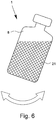
- the first container is moved during and / or after the transfer of the second starting material into the first container in order to achieve or accelerate homogeneous mixing and / or reaction.
- the first container can be used for use in or with an injection device.
- an injection device for example an injection pistol, a pressure injector and / or a self-filling syringe, such as those used, for example, for vaccinating larger animal populations.
- the number of openings in the closure device of the first container can be minimized again.
- the number of perforations can be reduced to two, namely one opening for the preparation and a second opening for the withdrawal of the vaccine.
- the adapter device can be used to connect to the injection device, so that the number of openings can be reduced to one.
- the kit according to the invention can have an injection device or be assigned to one.
- an opening, a flange or some other connecting or closing element of the first container and / or the adapter device can be designed in such a way that it can be used directly in or with an injection device.
- the opening, the flange or the other connection and / or closure element can be specifically designed for connection to a specific injection device. This can once again reduce the probability of incorrect use, in particular incorrect amounts of active ingredient or application methods.
- one or more of the containers can contain a gas, in particular a protective gas, whereby the long-term stability of the respective educt can be improved.
- the adapter device can be designed to transfer the gas from the first container into the second container when the second starting material is transferred from the second container into the first container, in particular with the exclusion of the surrounding atmosphere. In this way it can be ensured that an influencing of one or more of the starting materials and / or the vaccine, in particular by oxidation or the like, is excluded and / or pressure equalization is made possible.
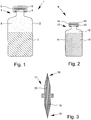
- Fig. 1 shows a first container 1 with a wall 2 delimiting a volume.
- the container 1 has an opening area 3 which can have a flange 4, for example an annular shoulder.
- the container 1 is preferably closed by a closure device 5, in particular sterile and / or airtight.
- a closure device 5 it can be provided that the closure device 5 rests firmly against the flange 4, in particular is pressed against it.
- a clamping element 6, in particular a clamping ring, can be provided which presses the closure device 5 against the flange 4.
- the clamping element 6 can be metallic and in particular comprise aluminum or stainless steel.
- the clamping element 6 has plastic or consists of plastic.
- the clamping element 6 is preferably designed in such a way that it presses the closure device 5 against the flange 4 and thereby enables the first container 1 to be sealed, in particular against the environment and / or atmosphere.
- the closure device 5 closes or seals the first container 1.
- the closure device 5 is preferably breakable or pierceable, for example with a mandrel, a needle, a hollow needle, a double mandrel or the like.
- the closure device 5 is designed to be breakable or pierceable in such a way that a reversible closure is achieved, i.e. the closure device 5 again enables an especially airtight and / or sterile closure after piercing or breaking and removing the corresponding agent.
- the closure device 5 can comprise rubber, in particular halobutyl type rubber, and / or be designed as a rubber stopper.
- the closure device 5 can, however, also consist of other materials, in particular of materials that are also used for the wall 2, or have such materials.
- the wall 2 of the first container 1 preferably has a sterilizable material, preferably glass, polyethylene, high density polyethylene (HDPE), ethylene vinyl acetate (EVA), halobutyl type rubber and / or siliconized chlorobutyl.
- the wall 2 can be rigid or flexible.
- the first container 1 can in particular be used as a bottle, bag, can or the like be trained.
- the first container 1 can be a cartridge, a cartridge, an insert or an insertion or attachment device for an injection device 22 (cf. Figure 7 ), which will be discussed in more detail later.
- the container 1 is only partially filled with a first educt 7.
- the container 1 is, for example, less than 70%, preferably less than 50%, in particular less than 45% and / or more than 10%, preferably more than 20%, in particular more than 30% filled with the first educt.
- the first container 1 can have a gas 8, in particular a protective gas, noble gas, inert gas or the like. This can improve the durability of the first educt 7.
- the sum of the volumes of the first educt 7 and the gas 8 preferably results in the total volume of the first container 1, preferably the volume enclosed by the wall 2 of the first container 1, in particular with the closure device 5, or a smaller volume.
- Figure 2 shows a second container 9 with a second educt 10.
- the second container 9 can have a wall 11, an opening area 12, a flange 13, a closure device 14, and / or a clamping element 15, which preferably have the same or similar properties as the corresponding elements of the first container 1, which is why a repeated description is dispensed with at this point. Therefore, only possible differences between the second container 9 and the first container 1 are referred to below.
- the second container 11 is preferably designed with an at least partially flexible wall 11, in particular wherein pressure can be exerted on the second educt 10 by pressing in the wall 11. This can promote the discharge or transfer of the second educt 10.
- the volume of the gas 8 preferably corresponds to or exceeds the volume of the second starting material 10.
- the volume of the gas exceeds 8 in the first container 1 the volume of the second educt 10 by more than 2%, preferably more than 5%, in particular more than 8% and / or less than 80%, preferably less than 50%, in particular less than 40% or 30 %.
- a minimal space requirement for the first container 1 can be achieved while at the same time producing the vaccine 21 homogeneously (cf. Figure 5 ) in the first container 1 can be achieved.
- a sufficient volume of gas 8 remains in the first container 1, as a result of which homogeneous mixing can be achieved by moving the first container 1.
- the second container 9 is at least substantially filled with the second educt 10.
- the second container 9 it is also possible for the second container 9 to be completely filled with the second educt 10 or only partially filled with the second educt 10. If only a partial filling of the second container 9 with the second educt 10 is provided, a gas 16, in particular a protective gas, can be provided which, preferably together with the second educt 10, is enclosed by the wall 11, in particular with the closure device 14 Volume of the second container 9 fills.
- the total volume of the first container 1 exceeds the volume of the first starting material 7 by at least the volume of the second starting material 10.
- the volume of the first container 1 therefore preferably exceeds the sum of the volumes of the first starting material 7 and the second starting material 10.
- Figure 3 shows an adapter device 17 for establishing a fluidic connection between the first container 1 and the second container 9.
- the adapter device 17 can have at least one, preferably two, but also more than two adapter elements 18, in particular needles, hollow needles, mandrels, wedges or the like.
- the adapter device 17 preferably has a fluid channel 19, in particular for the fluidic connection of the interiors of the containers 1 and 9.
- the adapter device 17 is designed as a double mandrel or hollow needle in the example shown.
- the adapter device 17 can be designed in such a way that during the transport of the second educt 10 into the first container 1, the gas 8 or protective gas from the first container 1 into the second container 9, in particular is transported.
- the adapter device 17 can have a ventilation and / or ventilation device 20.
- the aeration and / or venting device 20 is preferably designed as a channel, in particular at least substantially parallel to the fluid channel 19.
- other solutions are also possible.
- the adapter device 17 preferably has a channel as a ventilation and / or venting device 20, the openings of which are arranged so that when the second educt 10 flows out of the second container 9 under the influence of gravity, a backflow for the gas 8 from the first Container 1 in the second container 9 is made possible.
- the opening of the aeration and / or venting device 20 facing the first container 1 can spring back in the direction of the longitudinal extension of the adapter device 17 opposite the opening of the fluid channel 19 facing the first container 1 or on the side of the opening facing away from the open end of the adapter device 17 of the fluid channel 19 can be arranged.
- the opening of the aeration and / or ventilation device 20 facing the second container 9, on the other hand, is preferably arranged closer to the open end of the adapter device 17 with respect to the opening of the fluid channel 19 facing the second container 9.
- the adapter device 17 in the illustrated example according to Figure 3 is formed in one piece.
- a hose, a pipe, some other flexible or rigid transition or the like it is also possible for a hose, a pipe, some other flexible or rigid transition or the like to be arranged between the adapter elements 18.
- the fluid channel 19 and / or the aeration and / or ventilation device 20 connects the adapter elements 18 without interruption.
- a hose, pipe or the like to be provided, in particular molded, between the adapter elements 18. This enables flexible handling and / or lengthening of the adapter device 17.
- the adapter device 17, in particular one or more of the adapter elements 18, can be designed specifically for the first container 1 and / or for the second container 9. This can in particular be achieved in this way that at least one of the adapter elements 18 is mechanically specific to one of the containers 1, 9, in particular to one of the containers 1, 9 assigned to the respective adapter element 18, for example by a specific thread 3, 12, a specific projection, undercut, a specific nose or other structure. This can prevent substances other than the first educt 7 and / or the second educt 10 from being introduced into the first container 1 and / or the second container 9. It is further preferred that the opening area of at least one or both containers 1, 9 is designed specifically for the adapter device 17, in particular for an adapter element 18.
- a connection is established only between the containers 1, 9, preferably with the exclusion of the surrounding atmosphere.
- the atmosphere is preferably already excluded even if a small residual volume of atmospheric origin remains in the adapter device 17, for example less than 10 ml or 5 ml.
- the first educt 7 and / or the second educt 10 preferably have a vaccine. It is also preferred that the starting materials 7, 10 are different, in particular have different vaccines.
- a fluid connection between the first container 1 and the second container 9 can be established with the adapter device 17, the second educt 10 preferably with the aid of gravity and / or by exerting pressure on the second educt 10 via the wall 11 of the second Container 9 can be transported into the first container 1 in order to form the vaccine 21 with the first starting material 7 there.
- the vaccine 21 is preferably designed for the prevention of diseases in pigs due to infections with Mycoplasma hyopneumoniae and / or porcine circovirus, in particular type 2, preferably for the prevention of diseases in pigs due to infections with Mycoplasma hyopneumoniae and porcine circovirus type 2, so it is shown in the illustration a combination vaccine.
- the first container 1, the second container 9 and, preferably, the adapter device 17 preferably form a kit or composite, and in the sense of the present invention therefore preferably have at least one common connection.
- This common feature can be that the first container 1, the second container 9 and / or the adapter device 17 are packaged together.
- the first container 1, the second container 9 and / or the adapter device 17 it is possible for the first container 1, the second container 9 and / or the adapter device 17 to have a common handling instruction, a common package insert, a common manufacturing recommendation or the like. It is also possible that inscriptions, labels, markings, symbols or other designations of the containers 1, 9 refer to one another or the like.
- the kit can optionally also have further components. Examples of this are one or more injection devices 22, adapters for connecting the first container 1 to an injection device 22, another device or another container.
- the kit is preferably intended for the production of a vaccine 21 for the prevention of diseases caused by infections with porcine circovirus type 2 and / or Mycoplasma hyopneumoniae, preferably for the prevention of diseases caused by infections with porcine circovirus type 2 and / or Mycoplasma hyopneumoniae in pigs.
- a vaccine 21 for the prevention of diseases caused by infections with porcine circovirus type 2 and / or Mycoplasma hyopneumoniae, preferably for the prevention of diseases caused by infections with porcine circovirus type 2 and / or Mycoplasma hyopneumoniae in pigs.
- different applications are not excluded.
- it can alternatively be provided to use other than the mentioned vaccines or other substances or mixtures of substances as starting materials 7, 10 and / or to achieve similar advantages in terms of simple handling and the reduced probability of foreign substances, pathogens or the like being introduced.
- the alternative starting materials can be one or more antigens of the following pathogens: Actinobacillus pleuropneumonia (A1); Adenovirus (A2); Alphavirus such as Eastern Equine Encephalomyelitis Virus (A3); Bordetella bronchiseptica (A4); Brachyspira spp. (A5), preferably B. hyodyentheriae (A6); B. piosicoli (A7), Brucella suis, preferably of biovars 1, 2, and 3 (A8); Classical Swine Fever Virus (A9); Clostridium spp. (A10), preferably Cl. difficile (A11), Cl.
- pathogens Actinobacillus pleuropneumonia (A1); Adenovirus (A2); Alphavirus such as Eastern Equine Encephalomyelitis Virus (A3); Bordetella bronchiseptica (A4); Brachyspira spp. (A5), preferably B.
- perfringens of types A, B, and C (A12), Cl. novyi (A13), Cl. septicum (A14), Cl. tetani (A15); Coronavirus (A16), preferably Porcine Respiratory Corona Virus (A17); Eperythrozoonosis suis (A18); Erysipelothrix rhusiopathiae (A19) Escherichia coli (A20); Haemophilus parasuis, preferably of subtypes 1, 7 and 14 (A21) Hemagglutinating Encephalomyelitis Virus (A22); Japanese Encephalitis Virus (A23); Lawsonia intracellularis (A24) Leptospira spp.
- A25 preferably Leptospira australis (A26), Leptospira canicola (A27), Leptospira grippotyphosa (A28), Leptospira icterohaemorrhagicae (A29), Leptospira interrogans (A30), Leptospira pomona (A31), Leptospira hardospi (A32) A33); Mycobacterium spp. (A34) preferably M. avium (A35) and M.
- A36 intracellulare
- A37 Pasteurella multocida
- A38 Porcine cytomegalovirus
- A39 Porcine parvovirus
- PRRS Porcine Reproductive and Respiratory Syndrome
- A40 Pseudorabies virus
- A41 Porcine Rotavirus
- A42 Salmonella spp.
- A43 Salmonella spp.
- A44 preferably S. thyphimurium
- Staphylococcus spp. preferably Staph. hicus
- Streptococcus spp. A48, preferably Strep.
- the starting materials 7 and 10 are preferably different antigens of the pathogens listed here, so that the vaccine 21 can be used after mixing the different starting materials to prevent diseases caused by at least two of the pathogens listed here.
- the adapter device 17 can be pushed with an adapter element 18 through the closure device 14 of the second container 9 into the interior thereof.
- the closure device 14 is therefore preferably penetrated by the adapter device 17, in particular an adapter element 18 thereof.
- the composite of the second container 9 and adapter device 17, in particular with a further adapter element 18 of the adapter device 17, can be pushed through the closure device 5 of the first container 1 into its interior. It is preferred here that the adapter device 17 or the adapter element 18 penetrate the closure device 5 of the first container 1. This makes it possible to achieve a fluid connection by means of the adapter device 17 20 is produced between the interiors of the first container 1 and the second container 9.
- the second educt 10 can be transferred by the adapter device 17 into the first container 1, preferably using gravity and / or by compression of the preferably flexible second container 9.
- Alternative and / or additional methods or procedures for transporting the second Educt 10 in the first container 1 are also possible.
- the adapter device 17 is first used to penetrate the closure device 5 of the first container 1.
- the second container 9 is then attached to the adapter device 17 already inserted in the first container 1 or connected to the adapter device 17 in some other way in such a way that a fluidic connection 20 between the first container 1 and the second container 9 will be produced.
- the container 1, 9 not yet connected to the adapter device 17 is plugged onto the upright assembly of adapter device 17 and the other of the containers 1, 9 becomes. This can prevent one of the educts 7, 10 from flowing out.
- One aspect of the present invention relates to the first and / or one-time penetration of at least one of the closure devices 5, 14 by means of the adapter device 17.
- Both containers 1, 9 particularly preferably have closure devices 5, 14 that are penetrated, pierced or respectively penetrated for the first time and / or once be perforated. In the illustrated example, this is made possible by the fact that the first container 1 is only partially filled with the first educt 7. In this way, it is advantageously possible to produce the vaccine 21, in particular a combination vaccine, without working with several adapter devices 17 or with more than two containers 1, 9 must become. This results in simple, safe and unambiguous handling in which only one adapter device 17 has to be used to produce the vaccine 21, which effectively prevents mix-ups with other starting materials and the entry of impurities or pathogens.
- the first container 1, optionally with the adapter device 17, is designed to be placed directly in the injection device 22, in particular in an injection gun, in a pressure injector and / or in a self-filling syringe (cf. Figure 7 ) or to be used with it.
- the first container 1 can therefore be used in or with an injection device 22 that can preferably be used multiple times. In this way it can be achieved that each closure device 5, 14 only has to be pierced or broken through for the first time and once. This enables a high level of application safety, simple handling and hygiene.
- the first container 1 is designed for use in or with an injection device 22 in a neck or mouth area, in particular in the opening area 3, for connection to an injection device 22, in particular that can be used repeatedly.
- the injection device 22 can have a receptacle 23 for the first container 1.
- the longitudinal extent and / or the diameter of the first container 1 is designed for use in an injection device 22, in particular that can be used repeatedly.
- the first container 1 can have a diameter greater than 1 cm, preferably greater than 2 cm, in particular greater than 3 cm and / or less than 10 cm, preferably less than 8 cm, in particular less than 6 cm.
- vaccine 21 can be formed.
- the vaccine 21 by mixing the starting materials 7, 10, by dissolving the starting materials 7, 10 is generated in one another and / or by reaction of the starting materials 7, 10 or parts thereof with one another.
- the first container 1 with the educts 7, 10 is set in motion, in particular shaken, pivoted, set in rotation or the like. In this way, homogeneous and / or accelerated mixing, reaction and / or solution can be achieved or promoted.
- the first educt 7 and / or the second educt 10 contains vaccine preferably in amounts greater than 30 percent by weight, preferably greater than 40 percent by weight, in particular greater than 50 percent by weight; and / or less than 90 percent by weight, preferably less than 80 percent by weight, in particular less than 70 percent by weight.
- the first educt 7, the second educt 10, and / or the vaccine 21 formed thereby can be a suspension, preferably with vaccines and / or insoluble proteins, preferably in amounts greater than 30 percent by weight, preferably greater than 40 percent by weight, in particular greater than 50 percent by weight; and / or less than 90 percent by weight, preferably less than 80 percent by weight, in particular less than 70 percent by weight. This achieves effectiveness with small amounts of vaccine and, at the same time, sufficiently low viscosity, which favors the applicability.
- the second educt 10 preferably only has the other of the components Mycoplasma vaccine or Mycoplasma antigen and circovirus vaccine or circovirus antigen. It is therefore preferred that if the first educt 7 has Mycoplasma vaccine or one or more Mycoplasma antigens, the first educt 7 has no circovirus vaccine or no circovirus antigen, but the second educt 10 has circovirus vaccine or one or more Circovirus antigens, but not Mycoplasma vaccine or Mycoplasma antigen. However, it is not excluded for any of the educts 7, 10 that the respective educt does not contain additional substances. These can include water, auxiliaries, adjuvants, preservatives or the like.
- the volume ratio of the first starting material 7 to the second starting material 10 is 3: 1 to 1: 3, preferably 2: 1 to 1: 2, in particular about 1: 1.
- the first educt 7 and / or the second educt 10 and / or the vaccine 21 can have a viscosity that is less than 10,000 mPas, preferably less than 1000 mPa ⁇ s, in particular less than 500 mPa ⁇ s; and / or more than 5 mPas, preferably more than 10 mPas, in particular more than 20 mPas, measured with a Brookfield viscometer according to EN ISO 2555 at 5 ° C.
- the first starting material 7 and / or the second starting material 10 are preferably liquid at 2 ° C.
- the vaccine 21 has a characteristic color different from the two starting materials 7, 10.
- the specific color of the vaccine can arise, for example, from the mixture of the differently colored starting materials 7 and 10.
- the mixture of a yellow-colored educt 7 with a red-colored educt 10 leads to an orange coloring of the vaccine 21.
- dye components in the educts 7, 10 produce the characteristic color through reaction or other interactions when the vaccine 21 is produced.
- the vaccine 21, in contrast to at least one of the educts 7, 10, has one or no color. In this way it can be ensured on the basis of the characteristic color that the vaccine 21 has been successfully produced.
- the same is also possible if at least one of the starting materials has a color, but the vaccine 21 no longer has a color after it has been produced.
- the Mycoplasma vaccine can have attenuated and / or inactivated bacteria, fragments of bacteria or recombinantly produced parts of Mycoplasma hyopneumoniae, but at least one or more Mycoplasma hyopneumoniae antigens.
- the Mycoplasma hyopneumoniae antigen is derived from the Mycoplasma hyopneumoniae J strain or the inactivated Mycoplasma hyopneumoniae bacteria are those of the J strain.
- the Mycoplasma vaccine can be one of the following vaccines or the Mycoplasma hyopneumoniae antigen can be the antigen (s) which are contained in one of the following vaccines: Ingelvac®MycoFlex (Boehringer Ingelheim Vetmedica Inc, St Joseph, MO, USA), Porcilis M.
- the circovirus vaccine can have attenuated and / or inactivated porcine circovirus, preferably type 2, in particular the ORF2 protein of type 2.
- ORF2 proteins of the procinic circovirus type 2 are, inter alia, in the international patent application WO2006-072065 described, these have been found to be particularly beneficial for effective vaccination.
- the circovirus vaccine can be one of the following vaccines, or the circovirus antigen can be the antigen or antigens that are contained in one of the following vaccines: Ingelvac®CircoFLEX, (Boehringer Ingelheim Vetmedica Inc, St Joseph, MO, USA), CircoVac® (Merial SAS, Lyon, France), CircoVent (Intervet Inc., Millsboro, DE, USA), or Suvaxyn PCV-2 One Dose® (Fort Dodge Animal Health, Kansas City, KA , USA).
- the circovirus vaccine if it contains the ORF2 protein, preferably contains between 2 ⁇ g and 150 ⁇ g, preferably between 2 ⁇ g and 60 ⁇ g, more preferably between 2 ⁇ g and 50 ⁇ g, more preferably between 2 ⁇ g and 40 ⁇ g, more preferably between 2 ⁇ g and 30 ⁇ g, more preferably between 2 ⁇ g and 25 ⁇ g, more preferably between 2 ⁇ g and 20 ⁇ g, more preferably between 4 ⁇ g and 20 ⁇ g, more preferably between 4 ⁇ g and 16 ⁇ g of ORF2 protein per dose to be administered.
- the circovirus vaccine is preferably produced or prepared in such a way that 1 ml of the vaccine corresponds to a dose of 1.
- the Mycoplasma vaccine if it contains inactivated Mycoplasma bacteria, preferably inactivated Mycoplasma hyopneumoniae bacteria, preferably contains between 10 3 and 10 9 colony forming units (CFU), preferably between 10 4 and 10 8 (CFU), more preferably between 10 5 and 10 6 (CFU) per dose to be administered, with the corresponding CFU before inactivation the bacteria is stopped.
- CFU colony forming units
- the Mycoplasma vaccine is preferably manufactured or prepared in such a way that 1 ml of the vaccine corresponds to a dose of 1.
- the Mycoplasma vaccine can preferably have attenuated and / or inactivated bacteria or fragments of bacteria of the Mycoplasma hyopneumoniae strain or corresponding antigens, preferably in amounts greater than 30 percent by weight, preferably greater than 40 percent by weight, in particular greater than 50 percent by weight; and / or less than 90 percent by weight, preferably less than 80 percent by weight, in particular less than 70 percent by weight.
- the circovirus vaccine can preferably have attenuated and / or inactivated porcine circovirus, preferably type 2, in particular porcine circovirus type 2 ORF2 protein or corresponding antigens, preferably in amounts greater than 30 percent by weight, preferably greater than 40 percent by weight, in particular greater than 50 percent by weight; and / or less than 90 percent by weight, preferably less than 80 percent by weight, in particular less than 70 percent by weight.
- At least one of the starting materials 7, 10 and / or the vaccine 21 can contain a, preferably polymeric, adjuvant, in particular a carbomer.
- a, preferably polymeric, adjuvant in particular a carbomer.
- One of the two educts, or more preferably both educts preferably contains an amount of adjuvant of 500 ⁇ g to 5 mg, preferably 750 ⁇ g to 2.5 mg, further preferably about 1 mg per dose to be administered.
- the educts are preferably produced or prepared in this way that 1 ml of the respective educt corresponds to a dose of 1.
- At least one of the starting materials 7, 10 can contain one or more adjuvants in a total amount of more than 500 ⁇ g / ml, preferably more than 750 ⁇ g / ml and / or less than 5 mg / ml, preferably less than 2.5 mg / ml exhibit.
- At least one of the starting materials 7, 10 and / or the vaccine 21 is an adjuvant in amounts greater than 0.1 percent by weight, preferably greater than 1 percent by weight, in particular greater than 2 percent by weight; and / or less than 20 percent by weight, preferably less than 10 percent by weight, in particular less than 5 percent by weight. It is too possible that a preferably polymeric adjuvant, in particular carbomer, is formed in the vaccine 21.
- the Mycoplasma vaccine and / or the circovirus vaccine or at least one of the starting materials 7, 10 and / or the vaccine 21 can contain formaldehyde, preferably with a concentration of less than 2.5 mg / m 3 , preferably less than 1.5 mg / m 3 , in particular 0.74 mg / m 3 or less.
- the first educt 7, the second educt 10 and / or the vaccine 21 can contain one or more auxiliaries, in particular a preservative, an antioxidant and / or an emulsifier, preferably in a concentration of at least 0.1 percent by weight, preferably at least 0.2 percent by weight, in particular at least 0.3 percent by weight; and / or at most 10 percent by weight, preferably at most 5 percent by weight, in particular at most 3 percent by weight.
- auxiliaries in particular a preservative, an antioxidant and / or an emulsifier, preferably in a concentration of at least 0.1 percent by weight, preferably at least 0.2 percent by weight, in particular at least 0.3 percent by weight; and / or at most 10 percent by weight, preferably at most 5 percent by weight, in particular at most 3 percent by weight.
- the preferred application of the present invention relates to the production of the vaccine 21 from two vaccines, particularly preferably to the production of a vaccine 21 for use in the particular simultaneous immunization against the disease Porcine Circovirus Disease "PCVD” and / or enzootic pneumonia “EP” or against infection with Porcine Circovirus and / or with Mycoplasma bacteria, preferably for use in immunization against Porcine Circovirus Disease "PCVD” and Enzootic Pneumonia "EP” or for infection with Porcine Circovirus, in particular type 2 and with Mycoplasma bacteria, especially Mycoplasma hyopneumoniae.
- the present invention relates primarily to vaccines for veterinary medicine, in particular for use in pigs.
- the present invention is not limited to this combination.
- the proposed kit with other starting materials, in particular vaccines or antigens to be used, for example with antigens of the pathogens described above.
- the vaccine 21 produced has a color different from that of the starting materials 7, 10, whereby an effective, simple and effective control over the successful production of the vaccine 21 is made possible.
- the specific color of the vaccine can arise, for example, from the mixture of the differently colored starting materials 7 and 10.
- the mixture of a yellow-colored educt 7 with a red-colored educt 10 leads to an orange coloring of the vaccine 21.
- the usability of the first container 1 with an injection device 22 can also be used successfully and advantageously in other areas, with similar advantages in particular in Regarding improved hygiene and / or reduced use of materials are possible.
- at least one combination of the kit according to the proposal with a characteristic color of the vaccine 21 produced, which differs from the colors of the starting materials 7, 10, is particularly preferred. This leads to an extremely high degree of application security.
- the individual aspects of the present invention can also be combined in any other desired manner.
Landscapes
- Health & Medical Sciences (AREA)
- Life Sciences & Earth Sciences (AREA)
- Veterinary Medicine (AREA)
- Immunology (AREA)
- Public Health (AREA)
- General Health & Medical Sciences (AREA)
- Animal Behavior & Ethology (AREA)
- Pharmacology & Pharmacy (AREA)
- Chemical & Material Sciences (AREA)
- Medicinal Chemistry (AREA)
- Mycology (AREA)
- Microbiology (AREA)
- Epidemiology (AREA)
- Engineering & Computer Science (AREA)
- Chemical Kinetics & Catalysis (AREA)
- Bioinformatics & Cheminformatics (AREA)
- Virology (AREA)
- Organic Chemistry (AREA)
- General Chemical & Material Sciences (AREA)
- Nuclear Medicine, Radiotherapy & Molecular Imaging (AREA)
- Surgery (AREA)
- Wood Science & Technology (AREA)
- Zoology (AREA)
- Medicines Containing Antibodies Or Antigens For Use As Internal Diagnostic Agents (AREA)
- Medicinal Preparation (AREA)
Description
- Die vorliegende Erfindung betrifft ein Kit zur Herstellung eines Impfstoffes, eine Verwendung des Kits zur Herstellung eines Impfstoffes sowie ein Verfahren zur Bereitstellung eines Impfstoffes.
- Die vorliegende Erfindung betrifft insbesondere die Herstellung und Bereitstellung von Impfstoffen, auch Vakzine genannt, insbesondere im veterinärmedizinischen Bereich. Primär betrifft die vorliegende Erfindung Impfstoffe zur Immunisierung gegen die Erkrankung des Schweins mit Porcinem Circovirus, insbesondere Typ 2, auch Porcine Circovirus Disease oder PCVD genannt, und/oder mit Bakterien des Stamms Mycoplasma hyopneumoniae, auch Enzootische Pneumonie oder EP genannt.
- Es ist bekannt, dass eine Vorbeugung gegen die vorgenannten Krankheiten durch Immunisierung mit Vakzinen möglich ist. Impfstoffe sind meist für die Injektion vorgesehen und müssen entsprechend steril sein. Ferner stellt jede einzelne Injektion Stress für das behandelte Lebewesen dar, weshalb die Anzahl der Impfvorgänge so gering wie möglich gehalten werden sollte.
- Eine bekannte Möglichkeit zur Reduktion der Anzahl von Impfvorgängen stellen sogenannte Kombiimpfungen dar, die es ermöglichen, eine Immunisierung gegen unterschiedliche Erkrankungen in nur wenigen oder sogar nur einer einzelnen Sitzung durchzuführen. Oftmals ist eine Kombiimpfung jedoch bedingt durch Inkompatibilitäten unterschiedlicher Vakzine oder Bestandteile dieser untereinander nicht möglich. Selbst wenn eine zumindest kurzzeitige Kompatibilität erreicht werden kann, ist es notwendig, solche Kombiimpfstoffe vor Ort zu erzeugen. Insbesondere im veterinärmedizinischen Bereich müssen die Impfstoffe dann im Außenbereich zubereitet und/oder appliziert werden. Problematisch ist hier, dass es zu Verunreinigungen des Kombiimpfstoffs kommen kann, beispielsweise zu einer Kontamination mit Krankheitserregern und insbesondere wenn ein Mischgefäß mehrfach angestochen werden muss.
- "Vista 3 VL 5 SQ", abgerufen unter der URL:http://www.merck-animal-health-usa.com/products/vista3vI5sq/overview.aspx betrifft ein Kit mit zwei Behältnissen, von denen ein Behältnis eine Trockensubstanz und das andere Behältnis eine Flüssigkeit zur Rehydration der Trockensubstanz aufweist. Ferner liegt eine Transfernadel zur Verbindung der Behältnisse bei.
- Die
US 5 466 220 A betrifft eine Misch- und Übertragungsvorrichtung, mittels derer abhängig von einer Hebelstellung Inhalte unterschiedlicher Ampullen in dieselbe Spritze aufgezogen werden können. - Die
EP 1 829 518 A 1 betrifft eine Mischeinrichtung mit einem Behältnis, das ein Lösungsmittel enthält, einem weiteren Behältnis, das eine Trockensubstanz enthält und einem Verbindungsteil, das eine Doppelnadel zur Herstellung einer Verbindung zwischen den Behältnissen aufweist. - Die Anonymous: "PigProgress - Intervet/Schering-Plough Animal Health: Efficacy of simultaneous use of vaccines in swine", 26. Juli 2010, betrifft die gleichzeitige Verwendung von Schweine-Vakzinen gegen PCV2 und Mycoplasma hyopneumoniae in Schweinen.
- Die
WO 2009/126356 A2 betrifft die Herstellung eines Kombinationsimpfstoffes für Schweine, der sowohl ein PCV2-Antigen als auch ein Antigen für Mycoplasma Hyopneumoniae aufweist und somit zur Impfung gegen die Erkrankungen PCVD und EP verwendet werden kann. - Die JTravel Med 2005; 12: 319-326 betrifft einen Kombinationsimpfstoff zur Impfung gegen Hepatitis A und Typhus. Der Kombinationsimpfstoff ist in einer Zweikammer-Bypass-Spritze gelagert, bei der eine Kammer einen Impfstoff gegen Typhus und die andere Kammer einen Impfstoff gegen Hepatitis A enthält.
- Die
US 3,303,846 betrifft eine Spritze mit mehreren Kammern, innerhalb der zwei Flüssigkeiten getrennt voneinander gelagert und miteinander gemischt werden können. - Der vorliegenden Erfindung liegt die Aufgabe zu Grunde, ein Kit zur Herstellung eines Impfstoffes, eine Verwendung dieses Kit zur Herstellung eines Impfstoffes, eine Verwendung zweier Edukte zur Herstellung eines Impfstoffes sowie ein Verfahren zur Bereitstellung eines Impfstoffes anzugeben, wobei auf möglichst einfache, wenig fehleranfällige und gleichzeitig hygienische Weise auch aus nur kurzzeitig miteinander stabilen Edukten ein Impfstoff hergestellt werden kann.
- Die obige Aufgabe wird gelöst durch ein Kit zur Herstellung eines Impfstoffes gemäß Anspruch 1, durch eine Verwendung eines solchen Kits zur Herstellung eines Impfstoffes gemäß Anspruch 14, oder durch ein Verfahren zur Bereitstellung eines Impfstoffes gemäß Anspruch 15. Vorteilhafte Weiterbildungen sind Gegenstand der Unteransprüche.
- Ein erster Aspekt der vorliegenden Erfindung betrifft ein Kit zur Herstellung eines Impfstoffes, insbesondere zur Herstellung eines Impfstoffes zur Verwendung bei der Immunisierung gegen die Erkrankung Porcine Circovirus Disease "PCVD" und/oder Enzootische Pneumonie "EP" bzw. gegen die Infektionen mit Porcinem Circovirus, insbesondere Typ 2, und/oder Mycoplasma hyopneumoniae.
- Das erfindungsgemäße Kit weist ein erstes Edukt und ein von dem ersten Edukt verschiedenes zweites Edukt auf. Ein Edukt im Sinne der vorliegenden Erfindung ist vorzugsweise jeglicher Ausgangsstoff, insbesondere ein Vakzin, ein Vakzin aufweisender Ausgangsstoff und/oder eine Komponente oder ein Ausgangsstoff für einen Impfstoff, vorzugsweise ein Antigen oder eine ein Antigen enthaltende Zusammensetzung.
- Ferner weist das Kit ein erstes, mit dem ersten Edukt lediglich teilweise gefülltes Behältnis und ein zweites, das zweite Edukt aufweisendes Behältnis auf. Ein Behältnis im Sinne der vorliegenden Erfindung ist bevorzugt ein Volumen umschließendes Gebilde, vorzugsweise ausgebildet zur Aufnahme einer Flüssigkeit, insbesondere ein Gefäß, eine Flasche, ein Beutel oder dergleichen.
- Das Kit weist ferner eine Adaptereinrichtung zur Herstellung einer Fluidverbindung auf, wobei die Fluidverbindung zwischen dem ersten und dem zweiten Behältnis hergestellt werden kann. Es ist also bevorzugt, dass die Adaptereinrichtung dazu ausgebildet ist, eine Fluidverbindung zwischen den Innenräumen des ersten Behältnisses und des zweiten Behältnisses herzustellen.
- Ferner ist in dem vorschlagsgemäßen Kit mindestens eins der Behältnisse werkseitig mit einer Verschlusseinrichtung verschlossenen. Vorzugsweise sind beide Behältnisse werkseitig mit einer Verschlusseinrichtung verschlossenen. Es ist bevorzugt, dass ein luftdichter und/oder steriler Verschluss vorgesehen ist. Insbesondere kann es sich um eine Versiegelung, einen Gummistopfen oder dergleichen handeln, wobei die Verschlusseinrichtung bevorzugt durchbrechbar und/oder durchstoßbar ist, insbesondere reversibel. Hierdurch können die Behältnisse, also mindestens eines der Behältnisse, steril verschlossen werden.
- Es ist vorgesehen, dass das zweite Behältnis mittels der Adaptereinrichtung unter erstmaligem und/oder lediglich einmaligem Durchbrechen der Verschlusseinrichtung derart mit dem ersten Behältnis verbindbar ist, dass das zweite Edukt in das erste Behältnis gelangt, insbesondere transportiert wird, und dort mit dem ersten Edukt den Impfstoff bildet. Die Verschlusseinrichtung oder Verschlusseinrichtungen sind also bevorzugt dazu ausgebildet, mittels der Adaptereinrichtung durchbrochen oder durchstoßen zu werden. Die Adaptereinrichtung ist bevorzugt derart ausgebildet, dass diese die Verschlusseinrichtung oder Verschlusseinrichtungen durchbrechen und/oder durchstoßen kann. Hierdurch kann eine Fluidverbindung zwischen dem ersten und dem zweiten Behältnis bereitgestellt werden.
- Mit dem erfindungsgemäßen Kit ist es also möglich, mit lediglich zwei Behältnissen und einer Adaptereinrichtung aus zwei Edukten einen Impfstoff herzustellen, insbesondere zur Verwendung bei der Immunisierung gegen die Erkrankungen die durch Infektionen mit Porcinem Circovirus und/oder Mycoplasma hyopneumoniae verursacht werden, vorzugsweise zur Verwendung bei der Immunisierung gegen die Erkrankungen die durch Infektionen mit Porcinem Circovirus und Mycoplasma hyopneumoniae verursacht werden. Ferner wird mit dem Kit verhindert, dass andere, inkompatibele Edukte verwendet werden, insbesondere durch die Darreichung der Edukte und Behältnisse als Kit.
- In vorteilhafter Weise kann der Impfstoff in dem lediglich teilweise gefüllten, ersten Behältnis gebildet werden, was verhindert, dass zusätzliche Behältnisse und/oder zusätzliche Adaptereinrichtungen verwendet werden müssen. Dies erlaubt eine möglichst einfache Anwendung. Zusätzlich wird der Materialeinsatz minimiert, da die Anzahl der benötigten Komponenten auf ein Mindestmaß reduziert wird.
- Ferner ist es insbesondere vorteilhaft, dass lediglich ein einmaliges oder erstes Durchbrechen oder Durchstoßen der Verschlusseinrichtung ausreichend ist, um den Impfstoff herzustellen. Hierdurch wird nämlich vermieden, dass bei mehrfachem Durchbrechen bzw. Durchstoßen der Verschlusseinrichtung Fremdstoffe oder Krankheitserreger in den Impfstoff gelangen können.
- In der vorliegenden Erfindung wird aus Gründen der Klarheit zwischen Vakzinen als mögliche Bestandteile eines oder mehrerer Edukte und dem Impfstoff als aus den Edukten hergestelltes Produkt differenziert.
- Es ist also vorzugsweise so, dass mit dem Begriff "Impfstoff", auch wenn es sich hierbei ebenfalls um ein Vakzin handelt, das Endprodukt bezeichnet wird, welches vorzugsweise aus den beiden Edukten erzeugt oder hergestellt wird und/oder zur Behandlung verwendet wird. Besonders bevorzugt handelt es sich bei dem Impfstoff um einen Kombiimpfstoff, vorzugsweise enthaltend zumindest zwei von einander verschiedene Vakzine oder zumindest zwei von einander verschiedene Antigene oder zwei Antigen enthaltende Zusammensetzungen, wobei sich die die Antigen enthaltenden Zusammensetzungen zumindest in ihren Antigenen unterscheiden. Mit "Vakzinen" sind, auch wenn es sich hierbei um Impfstoffe handelt, vorzugsweise Edukte oder Bestandteile dieser gemeint, insbesondere Antigene oder Antigen enthaltenden Zusammensetzungen. Unter einem "Antigen" oder einer "Antigen enthaltende Zusammensetzung", wird vorzugsweise eine Substanz oder eine die Substanz enthaltende Zusammensetzung verstanden, die in einem Tier nach Verabreichung eine Immunantwort hervorrufen oder eine bereits bestehende Immunantwort verstärken kann. Die Differenzierung zwischen den Begriffen "Impfstoff" und "Vakzin" dient also insbesondere lediglich der Klarheit bzw. Unterscheidung des Produkts von möglichen Bestandteilen eines oder mehrerer der Edukte. Es ist folglich möglich, den Begriff "Impfstoff" durch den Begriff "Vakzin" zu ersetzen oder umgekehrt.
- Ein Kit im Sinne der vorliegenden Erfindung ist insbesondere ein Verbund und/oder System mit dem ersten Behältnis, dem zweiten Behältnis und vorzugsweise der Adaptereinrichtung, die Komponenten des Kits bilden. Die Komponenten des Kits werden bevorzugt in einem Verbund in Verkehr gebracht, insbesondere in einer gemeinsamen Verpackung oder dergleichen. Es ist jedoch auch möglich, dass die genannten Komponenten einen losen Verbund zum gemeinsamen Einsatz bilden. Hierbei kann eine gemeinsame bzw. verbindende Komponente vorgesehen sein, beispielsweise eine gemeinsame Gebrauchsanleitung, Handlungsempfehlungen, Verweise in den Beschriftungen eines oder mehrerer der Komponenten des Kits oder dergleichen.
- Ein weiterer, auch unabhängig realisierbarer Aspekt der vorliegenden Erfindung betrifft die Verwendung eines vorzugsweise vorschlagsgemäßen Kits zur Herstellung und/oder Bereitstellung eines Impfstoffes, insbesondere zur Immunisierung gegen die Erkrankung(en) Porcine Circovirus Disease "PCVD" und/oder Enzootische Pneumonie "EP" bzw. die Infektionen mit Porcinem Circovirus und/oder die Infektion mit Bakterien des Stammes Mycoplasma, insbesondere Mycoplasma hyopneumoniae, vorzugsweise zur Immunisierung gegen die Erkrankungen Porcine Circovirus Disease "PCVD" und/oder Enzootische Pneumonie "EP" bzw. gegen die Infektionen mit Porcinem Circovirus, insbesondere Porcinem Circovirus Typ 2 und die Infektion mit Bakterien des Stammes Mycoplasma, insbesondere Mycoplasma hyopneumoniae.
- Ein weiterer, auch unabhängig realisierbarer Aspekt der vorliegenden Erfindung betrifft die Verwendung mindestens zweier Edukte zur Herstellung eines Impfstoffes, insbesondere zur insbesondere gleichzeitigen Immunisierung gegen die Erkrankung(en) Porcine Circovirus Disease "PCVD" und/oder Enzootische Pneumonie "EP", vorzugsweise zur insbesondere gleichzeitigen Immunisierung gegen die Erkrankungen Porcine Circovirus Disease "PCVD" und Enzootische Pneumonie "EP", bzw. gegen die Infektionen mit Porcinem Circovirus, insbesondere Porcinem Circovirus Typ 2 und die Infektion mit Bakterien des Stammes Mycoplasma, insbesondere Mycoplasma hyopneumoniae, wobei zur Herstellung des Impfstoffes Edukte in Behältnissen und mit einer Adaptereinrichtung eingesetzt werden. Hierbei kann ein vorschlagsgemäßes Kit eingesetzt werden.
- Weiter ist vorgesehen, dass ein erstes Edukt in einem ersten, lediglich teilweise mit dem ersten Edukt gefüllten Behältnis und ein von dem ersten verschiedenes zweites Edukt in einem zweiten, das zweite Edukt aufweisenden Behältnis und eine Adaptereinrichtung ausgebildet zur Herstellung einer Fluidverbindung zwischen dem ersten und zweiten Behältnis, verwendet werden. Mindestens eines der Behältnisse ist werkseitig mit einer Verschlusseinrichtung verschlossen. Eine Fluidverbindung zwischen dem ersten und zweiten Behältnis wird mittels der Adaptereinrichtung unter erstmaligem und/oder lediglich einmaligem Durchbrechen der Verschlusseinrichtung hergestellt, um das zweite Edukt durch die Adaptereinrichtung und die Verschlusseinrichtung hindurch in das erste Behältnis zu transferieren und in dem ersten Behältnis den Impfstoff herzustellen.
- Ein weiterer, auch unabhängig realisierbarer Aspekt der vorliegenden Erfindung betrifft ein Verfahren zur Bereitstellung eines Impfstoffes aus einem ersten Edukt und einem zweiten, vom ersten verschiedenen Edukt, insbesondere zur insbesondere gleichzeitigen Immunisierung gegen die Erkrankung Porcine Circovirus Disease "PCVD" und/oder Enzootische Pneumonie "EP", vorzugsweise zur insbesondere gleichzeitigen Immunisierung gegen die Erkrankungen Porcine Circovirus Disease "PCVD" und Enzootische Pneumonie "EP". Zur Herstellung des Impfstoffes kann ein vorschlagsgemäßes Kit verwendet werden.
- Zwischen einem ersten, mit dem ersten Edukt lediglich teilweise gefüllten Behältnis und einem zweiten, das zweite Edukt aufweisenden Behältnis, wird durch eine Adaptereinrichtung eine Fluidverbindung derart hergestellt, dass mittels der Adaptereinrichtung unter erstmaligem und/oder lediglich einmaligem Durchbrechen und/oder Durchstechen mindestens einer werkseitig vorgesehenen Verschlusseinrichtung, die vorzugsweise mindestens eines der Behältnisse verschließt, die Fluidverbindung zwischen dem ersten und dem zweiten Behältnis hergestellt wird. Das zweite Edukt wird durch die Adaptereinrichtung und die Verschlusseinrichtung hindurch in das erste Behältnis transferiert bzw. befördert. In dem ersten Behältnis wird aus dem ersten Edukt und dem zweiten Edukt der Impfstoff gebildet.
- Es ist bevorzugt, dass das erste und/oder zweite Edukt ein Vakzin, ein Antigen und/oder eine antigenenthaltende Zusammensetzung ist oder aufweist. Ferner kann sich das erste von dem zweiten Edukt unterscheiden. Das erste Edukt kann also ein erstes Vakzin, ein erstes Antigen und/oder eine ein erstes Antigen enthaltende Zusammensetzung und das zweite Edukt ein zweites, von dem ersten unterschiedliches Vakzin, ein zweites von dem ersten unterschiedliches Antigen und/oder eine Antigen enthaltende Zusammensetzung, dessen Antigen sich von dem der ersten Antigen enthaltenden Zusammensetzung unterscheidet, sein oder aufweisen. Vorzugsweise dienen das erste Vakzin und das zweite Vakzin, bzw. das erste Antigen und das zweite Antigen, bzw. die die verschiedenen Antigene enthaltenden Zusammensetzungen zur insbesondere gleichzeitigen Immunisierung gegen unterschiedliche Erkrankung oder Krankheitserreger, wie zum Beispiel gegen die Erkrankung Porcine Circovirus Disease "PCVD" und Enzootische Pneumonie "EP", bzw. zur Immunisierung gegen Porcines Circovirus, vorzugsweise Porcines Circovirus Typ 2 und gegen Mycoplasmen, vorzugsweise gegen Mycoplasma hyopneumoniae. Dadurch wird ermöglicht, einen Kombiimpfstoff zu erzeugen. Die Edukte können über Vakzine hinaus weitere Stoffe aufweisen, insbesondere Wasser, Adjuvantien und/oder Hilfsstoffe.
- Es ist insbesondere bevorzugt, dass das erste Edukt lediglich eine erste der Komponenten Mycoplasma Vakzin bzw. Mycoplasma Antigen und Circovirus Vakzin bzw. Circovirus Antigen (und optional weitere Stoffe) aufweist. Das erste Edukt kann also entweder Mycoplasma Vakzin, bzw. ein oder mehrere Mycoplasma Antigene aufweisen oder alternativ Circovirus Vakzin oder ein oder mehrere Circovirus Antigene. Das erste Edukt wird bevorzugt getrennt von dem zweiten Edukt gelagert, insbesondere wenn die Edukte gemeinsam nicht langzeitstabil sind.. Das zweite Edukt weist bevorzugt lediglich die andere der Komponenten Mycoplasma Vakzin bzw. ein oder mehrere Mycoplasma Antigene und Circovirus Vakzin bzw. ein oder mehrere Circovirus Antigene auf (und optional weitere Stoffe). Wenn also das erste Edukt Mycoplasma Vakzin bzw. ein oder mehrere Maycoplasma Antigene aufweist, weist das zweite Edukt Circovirus Vakzin bzw. ein oder mehrere Circovirus Antigene auf oder umgekehrt.
- Das Mycoplasma Vakzin kann attenuierte und/oder inaktivierte Bakterien, Fragmente von Bakterien oder rekombinant herstellte Teile von Mycoplasma hyopneumoniae, zumindest aber ein oder mehrere Mycoplasma hyopneumoniae Antigene aufweisen. Vorzugsweise, stammt das Mycoplasma hyopneumoniae Antigen von dem Mycoplasma hyopneumoniae J-Stamm ab bzw. handelt es sich bei dem inaktivierten Mycoplasma hyopneumoniae Bakterien um solche des J-Stamms. Weiterhin kann es sich bei dem Mycoplasma Vakzin um einen der nachfolgenden Vakzine handeln bzw. kann es sich bei dem Mycoplasma hyopneumoniae Antigen um das oder die Antigene handeln, welche in einem der nachfolgenden Vakzinen enthalten sind: Ingelvac®MycoFlex (Boehringer Ingelheim Vetmedica Inc, St Joseph, MO, USA), Porcilis M. hyo, Myco Silencer® BPM, Myco Silencer® BPME, Myco Silencer® ME, Myco Silencer® M, Myco Silencer® Once, Myco Silencer® MEH (alle von Intervet Inc., Millsboro, USA) Stellamune Mycoplasma (Pfizer Inc., New York, NY, USA), Suvaxyn Mycoplasma, Suvaxyn M. hyo, Suvaxyn MH-One (alle ehemals Fort Dodge Animal Health, Overland Park, KS, USA (jetzt Pfizer Animal Health).
- Das Circovirus Vakzin kann attenuiertes und/oder inaktiviertes porcines Circovirus, vorzugsweise Typ 2, insbesondere das ORF2 Protein von Typ 2 aufweisen. Besonders bevorzugt ist die Verwendung von recombinant exprimierten ORF2 Protein des Prorcinen Circovirus Typ 2, vorzugsweise exprimiert in und gewonnen aus in vitro Zellkultur. Beispiele von ORF2 Proteinen des Procinen Circovirus Typ 2 sind unter anderem in der internationalen Patentanmeldung
WO2006-072065 beschrieben. Diese haben sich als besonders vorteilhaft für eine effektive Impfung herausgestellt. Weiterhin kann es sich bei dem Circovirus Vakzin um einen der nachfolgenden Impfstoffe handeln, bzw. kann es sich bei dem Circovirus Antigen um das oder die Antigene handeln, welche in einem der nachfolgenden Vakzinen enthalten sind: Ingelvac®CircoFLEX, (Boehringer Ingelheim Vetmedica Inc, St Joseph, MO, USA), CircoVac® (Merial SAS, Lyon, France), CircoVent (Intervet Inc., Millsboro, DE, USA), or Suvaxyn PCV-2 One Dose® (Fort Dodge Animal Health, Kansas City, KA, USA). - Das Circovirus Vakzin, sofern es das ORF2 Protein enthält, beinhaltet vorzugsweise zwischen 2 µg und 150 µg, vorzugsweise zwischen 2 µg und 60 µg, weiterhin bevorzugt zwischen 2 µg und 50 µg, weiterhin bevorzugt zwischen 2µg und 40 µg, weiterhin bevorzugt zwischen 2 µg und 30 µg, weiterhin bevorzugt zwischen 2µg und 25 µg, weiterin bevorzugt zwischen 2µg und 20 µg, weiterhin bevorzugt zwischen 4 µg und 20 µg, weiterhin bevorzugt zwischen 4µg und 16 µg ORF2 Protein pro zu verabreichenden Dosis auf. Das Circovirus Vakzin ist vorzugsweise so hergestellt bzw. hergerichtet, dass 1 ml des Vakzins einer Dosis von 1 entspricht. Insbesondere kann das Circovirus Vakzin ORF2 Protein in Mengen größer als 2 µg/ml, vorzugsweise größer als 4 µg/ml und/oder weniger als 150 µg/ml, vorzugsweise weniger als 60 µg/ml, 50 µg/ml, 40 µg/ml, 30 µg/ml oder 25 µg/ml, insbesondere weniger als 20 µg/ml aufweisen. Dies ist einer zuverlässigen Applizierbarkeit zuträglich.
- Das Mycoplasma Vakzin, sofern es inaktivierte Mycoplasma Bakterien, vorzugsweise inaktivierte Mycoplasma hyopneumoniae Bakterien enthält, beinhaltet vorzugsweise zwischen 103 und 109 colony forming units (CFU), vorzugsweise zwischen 104 und 108 (CFU), weiterhin bevorzugt zwischen 105 und 106 (CFU) pro zu verabreichenden Dosis, wobei die entsprechende CFU vor Inaktivierung der Bakterien eingestellt wird. Das Mycoplasma Vakzin ist vorzugsweise so hergestellt bzw. hergerichtet, dass 1 ml des Vakzins einer Dosis von 1 entspricht. Insbesondere kann das Mycoplasma Vakzin mehr als 103 CFU/ml, vorzugsweise mehr als 104 CFU/ml, insbesondere mehr als 105 CFU/ml und/oder weniger als 109 CFU/ml, vorzugsweise weniger 108 CFU/ml, insbesondere weniger als 107 CFU/ml oder 106 CFU/ml inaktivierte Mycoplasma Bakterien, vorzugsweise inaktivierte Mycoplasma hyponeumoniae Bakterien, aufweisen, insbesondere vor Inaktivierung der Bakterien.
- Mindestens eines der Edukte und/oder der Impfstoff kann ein Adjuvans, vorzugsweise ein polymeres Adjuvans, insbesondere Carbomer aufweisen. Vorzugsweise enthält mindestens oder genau eines der beiden Edukte, bevorzugt beide Edukte, eine Adjuvanzmenge von 500 µg bis 5 mg, vorzugsweise von 750 µg bis 2.5 mg, weiterhin bevorzugt von ungefähr 1 mg Adjuvanz pro zu verabreichenden Dosis. Die Edukte sind vorzugsweise so hergestellt bzw. hergerichtet, dass 1 ml des jeweiligen Edukts einer Dosis von 1 entspricht. Die Verwendung eines Adjuvanz, vorzugsweise eine polymeren Adjuvanz, wie beispielsweise Carbomer hat sich in Bezug auf die Effizienz der Immunisierung bzw. die Wirkdauer als vorteilhaft erwiesen. Der Einsatz alternativer und/oder zusätzlicher Adjuvantien ist jedoch nicht ausgeschlossen.
- Es hat sich ferner als vorteilhaft erwiesen, wenn das Gesamtvolumen des ersten Behältnisses das Volumen des ersten Edukts mindestens um das Volumen des zweiten Edukts übersteigt, insbesondere um mehr als 2 %, vorzugsweise mehr als 5 %, insbesondere mehr als 8 %. Hierdurch kann sichergestellt werden, dass in dem ersten Behältnis ein ausreichendes Volumen für das zweite Edukt zur Verfügung steht. Zudem wird durch das Volumen des ersten Behältnisses, dasüber die Summe der Volumina des ersten und zweiten Edukts hinausgeht, eine effektive Vermischung der Edukte sichergestellt, insbesondere wenn das erste Behältnis nach dem Transfer des zweiten Edukts in das erste Behältnis bewegt wird.
- Es ist also einerseits bevorzugt, dass das Gesamtvolumen des ersten Behältnisses die Summe der Volumina der Edukte überschreitet. Andererseits wird das erste Behältnis während und/oder nach dem Transfer des zweiten Edukts in das erste Behältnis bewegt, um ein homogene Vermischung und/oder Reaktion zu erreichen oder zu beschleunigen.
- Gemäß eines weiteren Aspekts der vorliegenden Erfindung kann das erste Behältnis zum Einsatz in oder mit einer Injektionseinrichtung verwendet werden. Insbesondere handelt es sich um eine mehrfach verwendbare Injektionseinrichtung, beispielsweise eine Injektionspistole, ein Druckinjektor und/oder eine Selbstfüllerspritze, wie sie beispielsweise bei Impfungen größerer Tierbestände zum Einsatz kommen. Hierdurch kann nochmals die Anzahl der Durchbrechungen der Verschlusseinrichtung des ersten Behältnisses minimiert werden. Insbesondere kann die Anzahl der Durchbrechungen auf zwei reduziert werden, und zwar eine Durchbrechung für die Zubereitung und eine zweite Durchbrechung für die Entnahme des Impfstoffes. In besonders vorteilhafter Weise kann die Adaptereinrichtung zur Verbindung mit der Injektionseinrichtung verwendet werden, womit die Anzahl der Durchbrechungen auf eins reduziert werden kann.
- Das erfindungsgemäße Kit kann eine Injektionseinrichtung aufweisen oder einer solchen zugeordnet sein. Insbesondere kann eine Öffnung, ein Flansch oder ein sonstiges Anschluss- oder Abschlusselement des ersten Behältnisses und/oder der Adaptereinrichtung derart ausgebildet sein, dass ein unmittelbarer Einsatz in einer oder mit einer Injektionseinrichtung ermöglicht wird. Ferner kann die Öffnung, der Flansch oder das sonstige Anschluss- und/oder Abschlusselement spezifisch für den Anschluss an eine bestimmte Injektionseinrichtung ausgebildet sein. Hierdurch kann abermals die Wahrscheinlichkeit einer fehlerhaften Anwendung, insbesondere falscher Wirkstoffmengen oder Applikationsmethoden, verringert werden.
- Eines oder mehrere der Behältnisse können neben dem jeweiligen Edukt ein Gas, insbesondere Schutzgas aufweisen, wodurch die Langzeitstabilität des jeweiligen Edukts verbessert werden kann. Ferner kann die Adaptereinrichtung dazu ausgebildet sein, das Gas aus dem ersten Behältnis in das zweite Behältnis zu überführen, wenn das zweite Edukt aus dem zweiten Behältnis in das erste Behältnis transferiert wird, insbesondere unter Ausschluss der umgebenden Atmosphäre. Hierdurch kann sichergestellt werden, dass eine Beeinflussung eines oder mehrerer der Edukte und/oder des Impfstoffes, insbesondere durch Oxidation oder dergleichen, ausgeschlossen ist und/oder ein Druckausgleich ermöglicht wird.
- Weitere Aspekte, Einzelheiten, Merkmale, Eigenschaften und Vorteile der vorliegenden Erfindung ergeben sich aus dem Patentansprüchen und aus der zeichnerischen Darstellung und nachfolgenden Beschreibung einer bevorzugten Ausführungsform des vorschlagsgemäßen Kits zur Herstellung eines Impfstoffes. Es zeigt:
- Fig. 1
- ein erstes Behältnis, teilweise gefüllt mit einem ersten Edukt;
- Fig. 2
- ein zweites Behältnis mit einem zweiten Edukt;
- Fig. 3
- eine Adaptereinrichtung zur fluidischen Verbindung der Behältnisse;
- Fig. 4
- ein zweites Behältnis mit eingesetzter Adaptereinrichtung;
- Fig. 5
- ein erstes und ein zweites Behältnis, die über eine Adaptereinrichtung verbunden sind;
- Fig. 6
- ein erstes Behältnis mit Impfstoff;
- Fig. 7
- eine Injektionseinrichtung mit angesetzten ersten Behältnis.
- In den Figuren werden für gleiche oder ähnliche Teile dieselben Bezugszeichen verwendet, wobei entsprechende oder vergleichbare Eigenschaften und Vorteile erreicht werden können, auch wenn von einer wiederholten Beschreibung abgesehen worden ist.
-
Fig. 1 zeigt ein erstes Behältnis 1 mit einer ein Volumen begrenzenden Wandung 2. Das Behältnis 1 weist einen Öffnungsbereich 3 auf, der einen Flansch 4 aufweisen kann, beispielsweise eine Ringschulter. Bevorzugt ist das Behältnis 1 durch eine Verschlusseinrichtung 5 verschlossenen, insbesondere steril und/oder luftdicht. Hierzu kann es vorgesehen sein, dass die Verschlusseinrichtung 5 fest an dem Flansch 4 anliegt, insbesondere an diesen angedrückt wird. - Beispielsweise kann ein Klemmelement 6, insbesondere ein Klemmring, vorgesehen sein, der die Verschlusseinrichtung 5 gegen den Flansch 4 presst. Das Klemmelement 6 kann metallisch sein und insbesondere Aluminium oder Edelstahl aufweisen. Alternativ oder zusätzlich ist es möglich, dass das Klemmelement 6 Kunststoff aufweist oder aus Kunststoff besteht. Das Klemmelement 6 ist bevorzugt derart ausgebildet, dass es die Verschlusseinrichtung 5 gegen den Flansch 4 drückt und hierdurch eine Abdichtung des ersten Behältnisses 1, insbesondere gegen die Umgebung und/oder Atmosphäre, ermöglicht.
- Im Darstellungsbeispiel verschließt bzw. versiegelt die Verschlusseinrichtung 5 das erste Behältnis 1. Die Verschlusseinrichtung 5 ist vorzugsweise durchbrechbar bzw. durchstoßbar, beispielsweise mit einem Dorn, einer Nadel, einer Hohlnadel, einem Doppeldorn oder dergleichen. Besonders bevorzugt ist die Verschlusseinrichtung 5 dermaßen durchbrechbar bzw. durchstoßbar ausgebildet, dass ein reversibler Verschluss erreicht wird, die Verschlusseinrichtung 5 also insbesondere auch nach Durchstoßen bzw. Durchbrechen und Entfernen des entsprechenden Mittels wieder einen insbesondere luftdichten und/oder sterilen Verschluss ermöglicht. Die Verschlusseinrichtung 5 kann Gummi, insbesondere Halobutyl-Typl-Gummi aufweisen und/oder als Gummistopfen ausgebildet sein. Die Verschlusseinrichtung 5 kann aber auch aus anderen Materialien, insbesondere aus Materialien, die auch für die Wandung 2 eingesetzt werden, bestehen oder solche Materialien aufweisen.
- Die Wandung 2 des ersten Behältnisses 1 weist vorzugsweise einen sterilisierbaren Werkstoff auf, vorzugsweise Glas, Polyethylen, Polyethylen hoher Dichte (HDPE), Ethylenvinylacetat (EVA), Halobutyl-Typl-Gummi und/oder silikonisiertes Chlorbutyl. Die Wandung 2 kann starr oder flexibel ausgebildet sein. Das erste Behältnis 1 kann insbesondere als Flasche, Beutel, Dose oder dergleichen ausgebildet sein. Insbesondere kann das erste Behältnis 1 eine Kartusche, eine Patrone, ein Einsatz oder eine Ein- oder Ansatzeinrichtung für eine Injektionsvorrichtung 22 sein (vergleiche
Figur 7 ), worauf später noch näher eingegangen wird. - Im Darstellungsbeispiel aus
Figur 1 ist das Behältnis 1 lediglich teilweise mit einem ersten Edukt 7 gefüllt. Das Behältnis 1 ist beispielsweise mit dem ersten Edukt zu weniger als 70 %, vorzugsweise weniger als 50 %, insbesondere weniger als 45 % und/oder zu mehr als 10 %, vorzugsweise mehr als 20 %, insbesondere mehr als 30 % gefüllt. - Neben dem ersten Edukt kann das erste Behältnis 1 ein Gas 8 aufweisen, insbesondere ein Schutzgas, Edelgas, inertes Gas oder dergleichen. Hierdurch kann die Haltbarkeit des ersten Edukts 7 verbessert werden.
- Vorzugsweise ergibt die Summe der Volumina des ersten Edukts 7 und des Gases 8 das Gesamtvolumen des ersten Behältnisses 1, vorzugsweise also das von der Wandung 2 des ersten Behältnisses 1, insbesondere mit der Verschlusseinrichtung 5, umschlossene Volumen, oder ein geringeres Volumen.
-
Figur 2 zeigt ein zweites Behältnis 9 mit einem zweiten Edukt 10. Das zweite Behältnis 9 kann eine Wandung 11, einen Öffnungsbereich 12, einen Flansch 13, eine Verschlusseinrichtung 14, und/oder ein Klemmelement 15 aufweisen, welche vorzugsweise gleiche oder ähnliche Eigenschaften wie die entsprechenden Elemente des ersten Behältnisses 1 aufweisen können, weshalb an dieser Stelle von einer wiederholten Beschreibung abgesehen wird. Daher wird im Folgenden lediglich auf mögliche Unterschiede des zweiten Behältnisses 9 zum ersten Behältnis 1 Bezug genommen. - Das zweite Behältnis 11 ist bevorzugt mit einer zumindest teilweise flexiblen Wandung 11 ausgebildet, insbesondere wobei durch Eindrücken der Wandung 11 Druck auf das zweite Edukt 10 ausgeübt werden kann. Dies kann den Austrag bzw. Transfer des zweiten Edukts 10 begünstigen.
- Vorzugsweise entspricht oder überschreitet das Volumen des Gases 8 das Volumen des zweiten Edukts 10. Insbesondere überschreitet das Volumen des Gases 8 in dem ersten Behältnis 1 das Volumen des zweiten Edukts 10 um mehr als 2 %, vorzugsweise mehr als 5 %, insbesondere mehr als 8 % und/oder weniger als 80 %, vorzugsweise weniger als 50 %, insbesondere weniger als 40 % oder 30 %. Hierdurch kann ein minimaler Platzbedarf des ersten Behältnisses 1 bei gleichzeitig homogener Herstellung des Impfstoffes 21 (vergleiche
Figur 5 ) in dem ersten Behältnis 1 erreicht werden. Insbesondere verbleibt ein ausreichendes Volumen an Gas 8 in dem ersten Behältnis 1, wodurch ein homogenes Vermischen mittels Bewegung des ersten Behältnisses 1 erreicht werden kann. - Im Darstellungsbeispiel gemäß
Figur 2 ist das zweite Behältnis 9 zumindest im Wesentlichen mit dem zweiten Edukt 10 angefüllt. Alternativ oder zusätzlich ist es jedoch auch möglich, dass das zweite Behältnis 9 vollkommen mit dem zweiten Edukt 10 aufgefüllt oder lediglich teilweise mit dem zweiten Edukt 10 gefüllt ist. Wenn lediglich eine teilweise Füllung des zweiten Behältnisses 9 mit dem zweiten Edukt 10 vorgesehen ist, kann ein Gas 16, insbesondere ein Schutzgas, vorgesehen sein, das vorzugsweise gemeinsam mit dem zweiten Edukt 10 das von der Wandung 11, insbesondere mit der Verschlusseinrichtung 14, umschlossene Volumen des zweiten Behältnisses 9 ausfüllt. - Es ist besonders bevorzugt, dass das Gesamtvolumen des ersten Behältnisses 1 das Volumen des ersten Edukts 7 mindestens um das Volumen des zweiten Edukts 10 übersteigt. Das Volumen des ersten Behältnisses 1 überschreitet also vorzugsweise die Summe der Volumina des ersten Edukts 7 und des zweiten Edukts 10.
-
Figur 3 zeigt eine Adaptereinrichtung 17 zur Herstellung einer fluidischen Verbindung zwischen dem ersten Behältnis 1 und dem zweiten Behältnis 9. Die Adaptereinrichtung 17 kann mindestens ein, bevorzugt zwei, aber auch mehr als zwei Adapterelemente 18 aufweisenden, insbesondere Nadeln, Hohlnadeln, Dorne, Keile oder dergleichen. - Die Adaptereinrichtung 17 weist vorzugsweise einen Fluidkanal 19 auf, insbesondere zur fluidischen Verbindung der Innenräume der Behältnisse 1 und 9. Die Adaptereinrichtung 17 ist im Darstellungsbeispiel als Doppeldorn bzw. Hohlnadel ausgebildet.
- Die Adaptereinrichtung 17 kann derart ausgebildet sein, dass während des Transportes des zweiten Edukts 10 in das erste Behältnis 1 das Gas 8 bzw. Schutzgas aus dem ersten Behältnis 1 in das zweite Behältnis 9 gelangt, insbesondere transportiert wird. Hierzu kann die Adaptereinrichtung 17 eine Be- und/oder Entlüftungseinrichtung 20 aufweisen. Die Be- und/oder Entlüftungseinrichtung 20 ist vorzugsweise als Kanal ausgebildet, insbesondere zumindest im Wesentlichen parallel zu dem Fluidkanal 19. Es sind aber auch andere Lösungen möglich.
- Bevorzugt weist die Adaptereinrichtung 17 einen Kanal als Be- und/oder Entlüftungseinrichtung 20 auf, dessen Öffnungen so angeordnet sind, dass bei ausflie-ßen des zweiten Edukts 10 aus dem zweiten Behältnis 9 unter Einfluss der Schwerkraft ein Rückstrom für das Gas 8 aus dem ersten Behältnis 1 in das zweite Behältnis 9 ermöglicht wird. Insbesondere kann die dem ersten Behältnis 1 zugewandte Öffnung der Be- und/oder Entlüftungseinrichtung 20 gegenüber der dem ersten Behältnis 1 zugewandten Öffnung des Fluidkanals 19 in Richtung der Längserstreckung der Adaptereinrichtung 17 zurückspringen bzw. auf der dem offenen Ende der Adaptereinrichtung 17 abgewandten Seite der Öffnung des Fluidkanals 19 angeordnet sein. Die dem zweiten Behältnis 9 zugewandte Öffnung der Be- und/oder Entlüftungseinrichtung 20 ist hingegen vorzugsweise näher am offenen Ende der Adaptereinrichtung 17 in Bezug auf die dem zweiten Behältnis 9 zugewandte Öffnung des Fluidkanals 19 angeordnet.
- Die Adaptereinrichtung 17 im Darstellungsbeispiel gemäß
Figur 3 ist einstückig ausgebildet. Es ist jedoch alternativ oder zusätzlich auch möglich, dass zwischen den Adapterelementen 18 ein Schlauch, ein Rohr, ein sonstiger flexibler oder steifer Übergang oder dergleichen angeordnet ist. Hierbei ist bevorzugt, dass der Fluidkanal 19 und/oder die Be- und/oder Entlüftungseinrichtung 20 ununterbrochen die Adapterelemente 18 verbindet. Insbesondere es möglich, dass zwischen den Adapterelementen 18 ein Schlauch, Rohr oder dergleichen vorgesehen, insbesondere angeformt ist. Dies ermöglicht eine flexible Handhabung und/oder Verlängerung der Adaptereinrichtung 17. - Die Adaptereinrichtung 17, insbesondere eines oder mehrere der Adapterelemente 18 kann bzw. können zu dem ersten Behältnis 1 und/oder zu dem zweiten Behältnis 9 spezifisch ausgebildet sein. Dies kann insbesondere dadurch realisiert werden, dass mindestens eines der Adapterelemente 18 mechanisch spezifisch zu einem der Behältnisse 1, 9, insbesondere zu einem dem jeweiligen Adapterelement 18 zugeordneten der Behältnisse 1, 9, ausgebildet ist, beispielsweise durch ein spezifisches Gewinde 3, 12, einen spezifischen Vorsprung, Hinterschnitt, eine spezifische Nase oder eine sonstige Strukturen. Hierdurch kann verhindert werden, dass andere Stoffe als das erste Edukt 7 und/oder das zweite Edukt 10 in das erste Behältnis 1 und/oder das zweite Behältnis 9 eingebracht werden. Ferner ist bevorzugt, das der Öffnungsbereich zumindest eines oder beider Behältnisse 1, 9 spezifisch für die Adaptereinrichtung 17, insbesondere für ein Adapterelement 18, ausgebildet ist.
- Ferner ist bevorzugt, dass eine Verbindung lediglich zwischen den Behältnissen 1, 9, bevorzugt unter Ausschluss der umgebenden Atmosphäre hergestellt wird. Im Sinne der vorliegenden Erfindung gilt die Atmosphäre vorzugsweise bereits dann als ausgeschlossen, auch wenn ein geringes Restvolumen atmosphärischen Ursprungs in der Adaptereinrichtung 17 verbleibt, bespielsweise weniger als 10 ml oder 5 ml.
- Das erste Edukt 7 und/oder das zweite Edukt 10 weisen vorzugsweise ein Vakzin auf. Ferner ist bevorzugt, dass die Edukte 7, 10 unterschiedlich sind, insbesondere unterschiedliche Vakzine aufweisen.
- Wie in
Figur 4 und 5 ersichtlich, kann mit der Adaptereinrichtung 17 eine Fluidverbindung zwischen dem ersten Behältnis 1 und dem zweiten Behältnis 9 hergestellt werden, wobei das zweite Edukt 10 bevorzugt unter Mitwirkung der Schwerkraft und/oder durch Ausübung von Druck auf das zweite Edukt 10 über die Wandung 11 des zweiten Behältnisses 9 in das erste Behältnis 1 transportiert werden kann, um dort mit dem ersten Edukt 7 den Impfstoff 21 zu bilden. Der Impfstoff 21 ist bevorzugt zur Prävention der Erkrankung von Schweinen durch Infektionen mit Mycoplasma hyopneumoniae und/oder Porcinem Circovirus, insbesondere Typ 2, vorzugsweise zur Prävention der Erkrankungen von Schweinen durch Infektionen mit Mycoplasma hyopneumoniae und Porcinem Circovirus Typ 2, ausgebildet, stellt also im Darstellungsbeispiel einen Kombiimpfstoff dar. - Das erste Behältnis 1, das zweite Behältnis 9 und vorzugsweise, die Adaptereinrichtung 17 bilden bevorzugt ein Kit bzw. Verbund, haben im Sinne der vorliegenden Erfindung also vorzugsweise mindestens eine verbindende Gemeinsamkeit. Diese Gemeinsamkeit kann darin bestehen, dass das erste Behältnis 1, das zweite Behältnis 9 und/oder die Adaptereinrichtung 17 gemeinsam verpackt sind. Alternativ oder zusätzlich ist es möglich, dass das erste Behältnis 1, das zweite Behältnis 9 und/oder die Adaptereinrichtung 17 eine gemeinsame Handlungsanweisung, einen gemeinsamen Beipackzettel, eine gemeinsame Herstellungsempfehlung oder dergleichen aufweisen. Auch ist es möglich, dass Beschriftungen, Etiketten Markierungen, Symbole oder sonstige Bezeichnungen der Behältnisse 1, 9 aufeinander verweisen oder dergleichen.
- Das Kit kann optional auch weitere Komponenten aufweisen. Beispiele hierfür sind ein oder mehrere Injektionseinrichtungen 22, Adapter zum Anschluss des ersten Behältnisses 1 an eine Injektionseinrichtung 22, eine sonstige Einrichtung oder ein weiteres Behältnis.
- Das Kit ist bevorzugt zur Herstellung eines Impfstoffes 21 zur Vorbeugung von Erkrankungen verursacht durch Infektionen mit Porcinem Circovirus Typ 2 und/oder Mycoplasma hyopneumoniae, vorugsweise zur Vorbeugung von Erkrankungen verursacht durch Infektionen mit Porcinem Circovirus Typ 2 und/oder Mycoplasma hyopneumoniae beim Schwein vorgesehen. Abweichende Anwendungen sind jedoch nicht ausgeschlossen. Insbesondere kann alternativ vorgesehen sein, andere als die genannten Vakzine oder sonstige Stoffe oder Stoffgemische als Edukte 7, 10 zu verwenden und/oder ähnliche Vorteile bezüglich der einfachen Handhabung und der verminderten Wahrscheinlichkeit eines Eintrags von Fremdstoffen, Krankheitserregern oder dergleichen zu erreichen. Insbesondere kann es sich bei den alternativen Edukten um ein oder mehrere Antigene der nachfolgenden Krankheitserreger handeln: Actinobacillus pleuropneumonia (A1); Adenovirus (A2); Alphavirus wie zum Beispiel Eastern Equine Encephalomyelitis Virus (A3); Bordetella bronchiseptica (A4); Brachyspira spp. (A5), vorzugsweise B. hyodyentheriae (A6); B. piosicoli (A7), Brucella suis, vorzugsweise der Biovaren 1, 2, und 3 (A8); Classical Swine Fever Virus (A9); Clostridium spp. (A10), vorzugsweise Cl. difficile (A11), Cl. perfringens der Typen A, B, und C (A12), Cl. novyi (A13), Cl. septicum (A14), Cl. tetani (A15); Coronavirus (A16), vorzugsweise Porcine Respiratory Corona Virus (A17); Eperythrozoonosis suis (A18); Erysipelothrix rhusiopathiae (A19) Escherichia coli (A20); Haemophilus parasuis, vorzugsweise der Subtypen 1, 7 and 14 (A21) Hemagglutinating Encephalomyelitis Virus (A22); Japanese Encephalitis Virus (A23); Lawsonia intracellularis (A24) Leptospira spp. (A25), vorzugsweise Leptospira australis (A26), Leptospira canicola (A27), Leptospira grippotyphosa (A28), Leptospira icterohaemorrhagicae (A29), Leptospira interrogans (A30), Leptospira pomona (A31), Leptospira hardjo (A32) und Leptospira tarassovi (A33); Mycobacterium spp. (A34) vorzugsweise M. avium (A35) und M. intracellulare (A36); Pasteurella multocida (A37); Porcine Cytomegalovirus (A38); Porcine Parvovirus (A39); Porcine Reproductive and Respiratory Syndrome (PRRS) Virus (A40); Pseudorabies Virus (A41); Rotavirus (A42); Salmonella spp. (A43), vorzugsweise S. thyphimurium (A44) und S. choleraesuis (A45); Staphylococcus spp. (A46) vorzugsweise Staph. hicus (A47); Streptococcus spp. (A48), vorzugsweise Strep. suis (A49); Swine Herpes Virus (A50); Swine Influenza Virus (A51); Swine Pox Virus (A52); Vesicular Stomatitis Virus (A53); Virus vom Vesicularem Exanthema vom Schwein (A54); und Mycoplasma hyosynoviae (A55). Vorzugsweise handelt es sich bei den Edukten 7 und 10 um unterschiedliche Antigene der hier aufgeführten Krankheitserreger, so dass der Impfstoff 21 nach Vermischung der verschiedenen Edukte zur Vorbeugung von Erkrankungen verursacht durch mindestens zwei der hier aufgeführten Krankheitserreger verwendet werden kann.
- Zur Herstellung des Impfstoffes 21 kann, insbesondere wie in
Figur 4 dargestellt, die Adaptereinrichtung 17 mit einem Adapterelement 18 durch die Verschlusseinrichtung 14 des zweiten Behältnisses 9 in dessen Innenraum eingeschoben werden. Die Verschlusseinrichtung 14 wird also vorzugsweise durch die Adaptereinrichtung 17, insbesondere ein Adapterelement 18 dieser, durchdrungen. - Weiter kann insbesondere, wie in
Figur 5 dargestellt, der Verbund aus zweitem Behältnis 9 und Adaptereinrichtung 17, insbesondere mit einem weiteren Adapterelement 18 der Adaptereinrichtung 17, durch die Verschlusseinrichtung 5 des ersten Behältnisses 1 hindurch in dessen Innenraum eingeschoben werden. Hierbei ist bevorzugt, dass die Adaptereinrichtung 17 bzw. das Adapterelement 18 die Verschlusseinrichtung 5 des ersten Behältnisses 1 durchdringt. Hierdurch kann erreicht werden, dass mittels der Adaptereinrichtung 17 eine Fluidverbindung 20 zwischen den Innenräumen des ersten Behältnisses 1 und des zweiten Behältnisses 9 hergestellt wird. - In den
Figuren 4 und 5 sind aus Gründen der Übersichtlichkeit Details der Öffnungsbereiche 3, 12 der Behältnisse 1, 9 sowie der Adaptereinrichtung 17 nicht dargestellt. Hierzu wird auf dieFiguren 1 bis 3 verwiesen. - Wie in
Figur 5 dargestellt, kann das zweite Edukt 10 durch die Adaptereinrichtung 17 in das erste Behältnis 1 transferiert werden, vorzugsweise unter Verwendung der Schwerkraft und/oder durch Kompression des bevorzugt flexibel ausgebildeten zweiten Behältnisses 9. Alternative und/oder zusätzliche Methoden bzw. Verfahrensweisen zum Transport des zweiten Edukts 10 in das erste Behältnis 1 sind ebenfalls möglich. - In einem weiteren, nicht dargestellten Beispiel wird die Adaptereinrichtung 17 zuerst dazu verwendet, die Verschlusseinrichtung 5 des ersten Behältnisses 1 zu durchdringen. In einem zweiten Schritt wird dann das zweite Behältnis 9 auf die bereits in das erste Behältnis 1 eingesetzte Adaptereinrichtung 17 aufgesteckt oder auf sonstige Weise derartig mit der Adaptereinrichtung 17 in Verbindung gebracht, dass eine fluidische Verbindung 20 zwischen dem ersten Behältnis 1 und dem zweiten Behältnis 9 hergestellt wird. In jedem Falle ist bevorzugt, nach Einbringen der Adaptereinrichtung 17 in ein erstes der Behältnisse 1, 9, das noch nicht mit der Adaptereinrichtung 17 verbundene der Behältnisse 1, 9 auf den aufrecht stehenden Verbund aus Adaptereinrichtung 17 und dem anderen der Behältnisse 1, 9 aufgesteckt wird. Hierdurch kann ein Ausfließen eines der Edukte 7, 10 verhindert werden.
- Ein Aspekt der vorliegenden Erfindung betrifft das erstmalige und/oder einmalige Durchdringen mindestens einer der Verschlusseinrichtungen 5, 14 mittels der Adaptereinrichtung 17. Besonders bevorzugt weisen beide Behältnisse 1, 9 Verschlusseinrichtungen 5, 14 auf, die jeweils erstmalig und/oder einmalig durchdrungen, durchstochen bzw. perforiert werden. Dies wird im Darstellungsbeispiel, dadurch ermöglicht, dass das erste Behältnis 1 lediglich teilweise mit dem ersten Edukt 7 gefüllt ist. In vorteilhafter Weise ist es hierdurch möglich, den Impfstoff 21, insbesondere Kombiimpfstoff, herzustellen, ohne dass mit mehreren Adaptereinrichtungen 17 bzw. mit mehr als zwei Behältnissen 1, 9 gearbeitet werden muss. Hieraus resultiert eine einfache, sichere und eindeutige Handhabung, bei der zur Herstellung des Impfstoffes 21 nur eine Adaptereinrichtung 17 verwendet werden muss, wodurch Verwechslungen mit anderen Edukten sowie dem Eintrag von Verunreinigungen oder Krankheitserregern wirksam vorgebeugt wird.
- Diese positiven Eigenschaften können dadurch verstärkt werden, dass das erste Behältnis 1, gegebenenfalls mit der Adaptereinrichtung 17, dazu ausgebildet ist, unmittelbar in der Injektionseinrichtung 22, insbesondere in einer Injektionspistole, in einem Druckinjektor und/oder in einer Selbstfüllerspritze (vgl.
Figur 7 ) oder hiermit eingesetzt zu werden. Das erste Behältnis 1 kann also in oder mit einer vorzugsweise mehrfach verwendbaren Injektionseinrichtung 22 eingesetzt werden. Hierdurch kann erreicht werden, dass jede Verschlusseinrichtung 5, 14 lediglich erstmalig und einmalig durchstoßen bzw. durchbrochen werden muss. Dies ermöglicht ein Höchstmaß an Anwendungssicherheit, einfacher Handhabung sowie Hygiene. - Es kann vorgesehen sein, dass das erste Behältnis 1 zum Einsatz in oder mit einer Injektionseinrichtung 22 in einem Hals- bzw. Mündungsbereich, insbesondere im Öffnungsbereich 3, zur Verbindung mit einer insbesondere mehrfach verwendbaren Injektionseinrichtung 22 ausgebildet ist. Die Injektionseinrichtung 22 kann eine Aufnahme 23 für das erste Behältnis 1 aufweisen. Hierbei kann vorgesehen sein, dass die Längserstreckung und/oder der Durchmesser des ersten Behältnisses 1 für den Einsatz in einer, insbesondere mehrfach verwendbaren, Injektionseinrichtung 22 ausgebildet ist. Beispielsweise kann das erste Behältnis 1 einen Durchmesser größer als 1 cm, vorzugsweise größer als 2 cm, insbesondere größer als 3 cm und/oder geringer als 10 cm, vorzugsweise geringer als 8 cm, insbesondere geringer als 6 cm aufweisen. Alternativ oder zusätzlich ist es möglich, dass das erste Behältnis 1 eine Längserstreckung aufweist, die größer als 3 cm, vorzugsweise größer als 5 cm, insbesondere größer als 6 cm und/oder geringer als 30 cm, vorzugsweise geringer als 25 cm, insbesondere geringer als 20 cm ist.
- Sobald das zweite Edukt 10 durch die Adaptereinrichtung 17 in das erste Behältnis 1 gelangt ist, kann Impfstoff 21 gebildet werden. Hierbei ist es möglich, dass der Impfstoff 21 durch Mischung der Edukte 7, 10, durch Lösung der Edukte 7, 10 ineinander und/oder durch Reaktion der Edukte 7, 10 oder Teile hiervon mit einander erzeugt wird. Es ist bevorzugt, dass, wie in
Figur 6 mit dem Pfeil angedeutet, das erste Behältnis 1 mit den Edukten 7, 10 in Bewegung versetzt wird, insbesondere geschüttelt, geschwenkt, in Rotation versetzt wird oder dergleichen. Hierdurch kann eine homogene und/oder beschleunigte Durchmischung, Reaktion und/oder Lösung erreicht oder begünstigt werden. - Im Darstellungsbeispiel weist das erste Edukt 7 und/oder das zweite Edukt 10 Vakzin vorzugsweise in Mengen größer als 30 Gewichtsprozent, vorzugsweise größer als 40 Gewichtsprozent, insbesondere größer als 50 Gewichtsprozent; und/oder geringer als 90 Gewichtsprozent, vorzugsweise geringer als 80 Gewichtsprozent, insbesondere geringer als 70 Gewichtsprozent auf. Ferner kann das erste Edukt 7, das zweite Edukt 10, und/oder der hierdurch gebildete Impfstoff 21 eine Suspension sein, vorzugsweise mit Vakzinen und/oder unlöslichen Proteinen, vorzugsweise in Mengen größer als 30 Gewichtsprozent, vorzugsweise größer als 40 Gewichtsprozent, insbesondere größer als 50 Gewichtsprozent; und/oder geringer als 90 Gewichtsprozent, vorzugsweise geringer als 80 Gewichtsprozent, insbesondere geringer als 70 Gewichtsprozent. Hierdurch wird eine Wirksamkeit bei geringen Impfstoffmengen und gleichzeitig ausreichend geringer Viskosität erreicht, was die Applizierbarkeit begünstigt.
- Das zweite Edukt 10 weist vorzugsweise lediglich die andere der Komponenten Mycoplasma Vakzin bzw. Mycoplasma Antigen und Circovirus Vakzin bzw. Circovirus Antigen auf. Es ist also bevorzugt, dass, wenn das erste Edukt 7 Mycoplasma Vakzin bzw. ein oder mehrere Mycoplasma Antigene aufweist, das erste Edukt 7 kein Circovirus Vakzin bzw. kein Circovirus Antigen aufweist, dafür jedoch das zweite Edukt 10 Circovirus Vakzin bzw. ein oder mehrere Circovirus Antigene aufweist, nicht hingegen Mycoplasma Vakzin bzw. Mycoplasma Antigen. Es ist jedoch für keines der Edukte 7, 10 ausgeschlossen, dass das jeweilige Edukt nicht noch zusätzliche Stoffe aufweist. Hierzu können Wasser, Hilfsstoffe, Adjuvantien, Konservierungsmittel oder dergleichen zählen.
- In einem Beispiel beträgt das Volumenverhältnis des ersten Edukts 7 zu dem zweiten Edukt 10 3:1 bis 1:3, vorzugsweise 2:1 bis 1:2, insbesondere etwa 1:1. Das erste Edukt 7 und/oder das zweite Edukt 10 und/oder der Impfstoff 21 kann eine Viskosität aufweisen, die weniger als 10.000 mPa·s, vorzugsweise weniger als 1000 mPa·s, insbesondere weniger als 500 mPa·s; und/oder mehr als 5 mPa·s, vorzugsweise mehr als 10 mPa·s, insbesondere mehr als 20 mPa·s beträgt, und zwar gemessen mit einem Brookfield Viskosimeter nach EN ISO 2555 bei 5 °C. Vorzugsweise sind das erste Edukt 7 und/oder das zweite Edukt 10 bei 2 °C bis 8 °C flüssig und/oder weisen einen Schmelzpunkt auf, der geringer als 1 °C, vorzugsweise geringer als 0 °C, insbesondere geringer als -0,2 °C und/oder höher als -1,5 °C, vorzugsweise höher als -1 °C, insbesondere höher als -0,8 °C ist.
- Gemäß einem weiteren Aspekt der vorliegenden Erfindung ist bevorzugt, dass der Impfstoff 21 eine charakteristische und von den beiden Edukten 7, 10 verschiedene Farbe aufweist. Die spezifische Farbe des Impfstoffs kann beispielsweise aus der Mischung der verschieden gefärbten Edukte 7 und 10 entstehen. Beispielswese führt die Mischung eines gelb gefärbten Edukts 7 mit einem rot gefärbten Edukt 10 zu einer orangen Färbung des Impfstoffs 21. Es ist möglich, dass Farbstoffkomponenten in den Edukten 7, 10 bei Herstellung des Impfstoffs 21 die charakteristische Farbe durch Reaktion oder sonstige Wechselwirkungen erzeugen. Alternativ oder zusätzlich kann vorgesehen sein, dass der Impfstoff 21 im Gegensatz zu mindestens einem der Edukte 7, 10 eine oder keine Farbe aufweist. Hierdurch kann anhand der charakteristischen Farbe sichergestellt werden, dass der Impfstoff 21 erfolgreich hergestellt worden ist. Entsprechendes ist auch möglich, wenn zumindest eines der Edukte eine Farbe aufweist, der Impfstoff 21 nach seiner Herstellung jedoch nicht mehr.
- Wie bereits oben ausgeführt, kann das Mycoplasma Vakzin attenuierte und/oder inaktivierte Bakterien, Fragmente von Bakterien oder rekombinant herstellte Teile von Mycoplasma hyopneumoniae, zumindest aber ein oder mehrere Mycoplasma hyopneumoniae Antigene aufweisen. Vorzugsweise, stammt das Mycoplasma hyopneumoniae Antigen von dem Mycoplasma hyopneumoniae J-Stamm ab bzw. handelt es sich bei dem inaktivierten Mycoplasma hyopneumoniae Bakterien um solche des J-Stamms. Weiterhin kann es sich bei dem Mycoplasma Vakzin um einen der nachfolgenden Vakzine handeln bzw. kann es sich bei dem Mycoplasma hyopneumoniae Antigen um das oder die Antigene handeln, welche in einem der nachfolgenden Vakzinen enthalten sind: Ingelvac®MycoFlex (Boehringer Ingelheim Vetmedica Inc, St Joseph, MO, USA), Porcilis M. hyo, Myco Silencer® BPM, Myco Silencer® BPME, Myco Silencer® ME, Myco Silencer® M, Myco Silencer® Once, Myco Silencer® MEH (alle von Intervet Inc., Millsboro, USA) Stellamune Mycoplasma (Pfizer Inc., New York, NY, USA), Suvaxyn Mycoplasma, Suvaxyn M. hyo, Suvaxyn MH-One (alle ehemals Fort Dodge Animal Health, Overland Park, KS, USA (jetzt Pfizer Animal Health).
- Das Circovirus Vakzin kann attenuiertes und/oder inaktiviertes porcines Circovirus, vorzugsweise Typ 2, insbesondere das ORF2 Protein von Typ 2 aufweisen. Besonders bevorzugt ist die Verwendung von recombinant exprimierten ORF2 Protein des Prorcinen Circovirus Typ 2, vorzugsweise exprimiert in und/oder gewonnen aus in vitro Zellkultur. Beispiele von ORF2 Proteinen des Procinen Circovirus Typ 2 sind unter anderem in der internationalen Patentanmeldung
WO2006-072065 beschrieben, Diese haben sich als besonders vorteilhaft für eine effektive Impfung herausgestellt. Weiterhin kann es sich bei dem Circovirus Vakzin um einen der nachfolgenden Impfstoffe handeln, bzw. kann es sich bei dem Circovirus Antigen um das oder die Antigene handeln, welche in einem der nachfolgenden Vakzinen enthalten sind: Ingelvac®CircoFLEX, (Boehringer Ingelheim Vetmedica Inc, St Joseph, MO, USA), CircoVac® (Merial SAS, Lyon, France), CircoVent (Intervet Inc., Millsboro, DE, USA), or Suvaxyn PCV-2 One Dose® (Fort Dodge Animal Health, Kansas City, KA, USA). - Das Circovirus Vakzin, sofern es das ORF2 Protein enthält, beinhaltet vorzugsweise zwischen 2 µg und 150 µg, vorzugsweise zwischen 2 µg und 60 µg, weiterhin bevorzugt zwischen 2 µg und 50 µg, weiterhin bevorzugt zwischen 2µg und 40 µg, weiterhin bevorzugt zwischen 2 µg und 30 µg, weiterhin bevorzugt zwischen 2µg und 25 µg, weiterin bevorzugt zwischen 2µg und 20 µg, weiterhin bevorzugt zwischen 4 µg und 20 µg, weiterhin bevorzugt zwischen 4µg und 16 µg ORF2 Protein pro zu verabreichenden Dosis auf. Das Circovirus Vakzin ist vorzugsweise so hergestellt bzw. hergerichtet, dass 1 ml des Vakzins einer Dosis von 1 entspricht.
- Das Mycoplasma Vakzin, sofern es inaktivierte Mycoplasma Bakterien, vorzugsweise inaktivierte Mycoplasma hyopneumoniae Bakterien enthält, beinhaltet vorzugsweise zwischen 103 und 109 colony forming units (CFU), vorzugsweise zwischen 104 und 108 (CFU), weiterhin bevorzugt zwischen 105 und 106 (CFU) pro zu verabreichenden Dosis, wobei die entsprechende CFU vor Inaktivierung der Bakterien eingestellt wird. Das Mycoplasma Vakzin ist vorzugsweise so hergestellt bzw. hergerichtet, dass 1 ml des Vakzins einer Dosis von 1 entspricht.
- Das Mycoplasma Vakzin kann vorzugsweise attenuierte und/oder inaktivierte Bakterien oder Fragmente von Bakterien des Stamms Mycoplasma hyopneumoniae bzw. korrespondierende Antigene aufweisen, vorzugsweise in Mengen größer als 30 Gewichtsprozent, vorzugsweise größer als 40 Gewichtsprozent, insbesondere größer als 50 Gewichtsprozent; und/oder geringer als 90 Gewichtsprozent, vorzugsweise geringer als 80 Gewichtsprozent, insbesondere geringer als 70 Gewichtsprozent.
- Das Circovirus Vakzin kann vorzugsweise attenuiertes und/oder inaktiviertes Porcines Circovirus, vorzugsweise Typ 2 , insbesondere Porcines Circovirustyp 2 ORF2 Protein bzw. korrespondierende Antigene aufweisen, vorzugsweise in Mengen größer als 30 Gewichtsprozent, vorzugsweise größer als 40 Gewichtsprozent, insbesondere größer als 50 Gewichtsprozent; und/oder geringer als 90 Gewichtsprozent, vorzugsweise geringer als 80 Gewichtsprozent, insbesondere geringer als 70 Gewichtsprozent.
- Ferner kann mindestens eines der Edukte 7, 10 und/oder der Impfstoff 21 ein, vorzugsweise polymeres, Adjuvans, insbesondere Carbomer, aufweisen. Vorzugsweise enthält eines der beiden Edukte oder weiterhin bevorzugt beide Edukte eine Adjuvanzmenge von 500 µg bis 5 mg, vorzugsweise von 750 µg bis 2,5 mg, weiterhin bevorzugt von ungefähr 1 mg pro zu verabreichenden Dosis auf Die Edukte sind vorzugsweise so hergestellt bzw. hergerichtet, dass 1 ml des jeweiligen Edukts einer Dosis von 1 entspricht. Insbesondere kann also mindestens eines der Edukte 7, 10 ein oder mehrere Adjuvanzien einer Gesamtmenge von mehr als 500 µg/ml, vorzugsweise mehr als 750 µg/ml und/oder weniger als 5 mg/ml, vorzugsweise weniger als 2,5 mg/ml aufweisen.
- Auch ist es möglich, dass mindestens eines der Edukte 7, 10 und/oder der Impfstoff 21 ein Adjuvans in Mengen größer als 0,1 Gewichtsprozent, vorzugsweise größer als 1 Gewichtsprozent, insbesondere größer als 2 Gewichtsprozent; und/oder weniger als 20 Gewichtsprozent, vorzugsweise weniger als 10 Gewichtsprozent, insbesondere weniger als 5 Gewichtsprozent aufweist. Auch ist es möglich, dass in dem Impfstoff 21 ein vorzugsweise polymeres Adjuvans, insbesondere Carbomer, gebildet wird.
- Das Mycoplasma Vakzin und/oder das Circovirus Vakzin bzw. zumindest eines der Edukte 7, 10, und/oder der Impfstoff 21 kann Formaldehyd aufweisen, vorzugsweise mit einer Konzentration geringer als 2,5 mg/m3, vorzugsweise weniger als 1,5 mg/m3, insbesondere 0,74 mg/m3 oder weniger. Alternativ oder zusätzlich kann zumindest eines der Edukte 7, 10, vorzugsweise beide Edukte 7, 10, Wasser in einer Konzentration von mindestens 20 Gewichtsprozent, vorzugsweise mindestens 30 Gewichtsprozent, insbesondere mindestens 40 Gewichtsprozent; und/oder höchstens 80 Gewichtsprozent, vorzugsweise höchstens 70 Gewichtsprozent, insbesondere höchstens 60 Gewichtsprozent aufweisen.
- Das erste Edukt 7, das zweite Edukt 10 und/oder der Impfstoff 21 kann einen oder mehrere Hilfsstoffe aufweisenden, insbesondere ein Konservierungsmittel, ein Antioxidanz und/oder einen Emulgator, und zwar vorzugsweise jeweils in einer Konzentration von mindestens 0,1 Gewichtsprozent, vorzugsweise mindestens 0,2 Gewichtsprozent, insbesondere mindestens 0,3 Gewichtsprozent; und/oder höchstens 10 Gewichtsprozent, vorzugsweise höchstens 5 Gewichtsprozent, insbesondere höchstens 3 Gewichtsprozent.
- Die bevorzugte Anwendung der vorliegenden Erfindung bezieht sich auf die Herstellung des Impfstoffes 21 aus zwei Vakzinen, besonders bevorzugt auf die Herstellung eines Impfstoffes 21 zur Verwendung bei der insbesondere gleichzeitigen Immunisierung gegen die Erkrankung Porcine Circovirus Disease "PCVD" und/oder Enzootische Pneumonie "EP" bzw. gegen die Infektion mit Porcinem Circovirus und/oder mit Mycoplasma Bakterien, vorzugsweise zur Verwendung bei der Immunisierung gegen die Erkrankung Porcine Circovirus Disease "PCVD" und Enzootische Pneumonie "EP" bzw. zur gegen die Infektion mit Porcinem Circovirus, insbesonder Typ 2 und mit Mycoplasma Bakterien, insbesondere Mycoplasma hyopneumoniae. Ferner bezieht sich die vorliegende Erfindung primär auf Impfstoffe für die Veterinärmedizin, insbesondere zur Anwendung beim Schwein.
- Die vorliegende Erfindung ist jedoch nicht beschränkt auf diese Kombination. Insbesondere ist es möglich, das vorschlagsgemäße Kit auch mit anderen Edukten, insbesondere Vakzinen oder Antigenen, wie beispielsweise mit Antigen der oben beschriebenen Krankheitserreger zu verwenden. Auch in diesem Fall kann es möglich sein, zumindest in Bezug auf die einfache und besonders hygienische Anwendbarkeit ähnliche Vorteile zu erzielen. Entsprechendes gilt auch für den Aspekt der vorliegenden Erfindung, dass der hergestellte Impfstoff 21 eine von den Edukten 7, 10 unterschiedliche Farbe aufweist, wodurch eine wirksame, einfache und effektive Kontrolle über die erfolgreiche Herstellung des Impfstoffs 21 ermöglicht wird. Die spezifische Farbe des Impfstoffs kann beispielsweise aus der Mischung der verschieden gefärbten Edukte 7 und 10 entstehen. Beispielsweise führt die Mischung eines gelb gefärbten Edukts 7 mit einem rot gefärbten Edukt 10 zu einer orangen Färbung des Impfstoffs 21. Auch die Verwendbarkeit des ersten Behältnisses 1 mit einer Injektionseinrichtung 22 kann auch in anderen Bereichen erfolgreich und vorteilhaft angewendet werden, wobei insbesondere ähnliche Vorteile in Bezug auf verbesserte Hygiene und/oder verminderten Materialeinsatz möglich sind. Besonders bevorzugt ist jedoch zumindest eine Kombination des Vorschlagsgemäßen Kits mit einer charakteristischen Farbe des hergestellten Impfstoffes 21, die von den Farben der Edukte 7, 10 abweicht. Dies führt zu einem ausgesprochen hohen Grad an Anwendungssicherheit. Die einzelnen Aspekte der vorliegenden Erfindung können jedoch auch in sonstiger, beliebiger Weise kombiniert werden.
-
- 1
- Erstes Behältnis
- 2
- Wandung
- 3
- Öffnungsbereich
- 4
- Flansch
- 5
- Verschlusseinrichtung
- 6
- Klemmelement
- 7
- Erstes Edukt
- 8
- Gas
- 9
- Zweites Behältnis
- 10
- Zweites Edukt
- 11
- Wandung
- 12
- Öffnungsbereich
- 13
- Flansch
- 14
- Verschlusseinrichtung
- 15
- Klemmelement
- 16
- Gas
- 17
- Adaptereinrichtung
- 18
- Adapterelement
- 19
- Fluidkanal
- 20
- Be- und/oder Entlüftungseinrichtung
- 21
- Impfstoff
- 22
- Injektionseinrichtung
- 23
- Aufnahme
- 24
- Lebewesen
Claims (15)
- Kit zur Herstellung eines Impfstoffes (21) zur Verwendung bei der Immunisierung gegen die Erkrankungen Porcine Circovirus Disease "PCVD" und Enzootische Pneumonie "EP", wobei das Kit ein erstes Edukt (7), ein vom ersten verschiedenes zweites Edukt (10), ein erstes, mit dem ersten Edukt (7) lediglich teilweise gefülltes Behältnis (1), ein zweites, das zweite Edukt (10) aufweisendes Behältnis (9) und eine Adaptereinrichtung (17) zur Herstellung einer Fluidverbindung zwischen dem ersten und zweiten Behältnis (1, 9) aufweist,
wobei die Behältnisse (1, 9)jeweils als Flasche ausgebildet sind,
wobei mindestens eines der Behältnisse (1, 9) werkseitig mit einer Verschlusseinrichtung (5) verschlossen ist und das zweite Behältnis (9) mittels der Adaptereinrichtung (17) unter erstmaligem und/oder lediglich einmaligem Durchbrechen der Verschlusseinrichtung (5) derart mit dem ersten Behältnis (1) verbindbar ist, dass das zweite Edukt (10) in das erste Behältnis (1) gelangt und dort mit dem ersten Edukt (7) den Impfstoff (21) bildet,
wobei beide Edukte (7, 10) bei 2 °C bis 8 °C flüssig sind und/oder einen Schmelzpunkt aufweisen, der geringer als 1 °C ist, wobei das erste Edukt (7) lediglich eine erste der Komponenten Mycoplasma Vakzin und Circovirus Vakzin aufweist, das zweite Edukt (10) lediglich die andere der Komponenten Mycoplasma Vakzin und Circovirus Vakzin aufweist, und, zur homogenen Herstellung des Impfstoffs (21) in dem ersten Behältnis (1), das Gesamtvolumen des ersten Behältnisses (1) das Volumen des ersten Edukts (7) mindestens um das Volumen des zweiten Edukts (10) übersteigt. - Kit nach Anspruch 1, dadurch gekennzeichnet, dass das erste Edukt (7), das zweite Edukt (10) und/oder der Impfstoff (21) eine Suspension ist, vorzugsweise mit Vakzinen und/oder unlöslichen Proteinen, vorzugsweise in Mengen größer als 30 Gew.-%, vorzugsweise größer als 40 Gew.-%, insbesondere größer als 50 Gew.-%; und/oder geringer als 90 Gew.-%, vorzugsweise geringer als 80 Gew.-%, insbesondere geringer als 70 Gew.-%.
- Kit nach einem der voranstehenden Ansprüche, dadurch gekennzeichnet, dass das Volumenverhältnis des ersten Edukts (7) zum zweiten Edukt (10) 3:1 bis 1:3, vorzugsweise 2:1 bis 1:2, insbesondere etwa 1:1 beträgt.
- Kit nach einem der voranstehenden Ansprüche, dadurch gekennzeichnet, dass das erste Edukt (7) und/oder das zweite Edukt (10) und/oder der Impfstoff (21) eine Viskosität aufweist, die geringer als 10000 mPa·s, vorzugsweise geringer als 1000 mPa·s, insbesondere geringer als 500 mPa·s; und/oder höher als 5 mPa·s, vorzugsweise höher als 10 mPa·s, insbesondere höher als 20 mPa·s ist, gemessen mit einem Brookfield-Viskosimeter nach EN ISO 2555 bei 5 °C.
- Kit nach einem der voranstehenden Ansprüche, dadurch gekennzeichnet, dass der Impfstoff (21) eine charakteristische und von beiden Edukten (7, 10) verschiedene Farbe aufweist; und/oder dass der Impfstoff (21) im Gegensatz zu mindestens einem der Edukte (7, 10) eine oder keine Farbe aufweist.
- Kit nach einem der voranstehenden Ansprüche, dadurch gekennzeichnet, dass mindestens eines der Edukte (7, 10) und/oder der Impfstoff (21) ein vorzugsweise polymeres Adjuvans, insbesondere Carbomer, aufweist, und/oder
dass in dem Impfstoff (21) ein vorzugsweise polymeres Adjuvans, insbesondere Carbomer, gebildet wird; und/oder
dass das Mycoplasma Vakzin und/oder das Circovirus Vakzin Formaldehyd mit einer Konzentration geringer als 2,5 mg/m3, vorzugsweise geringer als 1,5 mg/m3, insbesondere 0.74 mg/m3 oder weniger aufweist. - Kit nach einem der voranstehenden Ansprüche, dadurch gekennzeichnet, dass das erste und/oder zweite Edukt (7, 10) Wasser in einer Konzentration von mindestens 20 Gew.-%, vorzugsweise mindestens 30 Gew.-%, insbesondere mindestens 40 Gew.-%; und/oder höchstens 80 Gew.-%, vorzugsweise höchstens 70 Gew.-%, insbesondere höchstens 60 Gew.-% aufweist; und/oder
dass das erste Edukt (7) und/oder zweite Edukt (10) ein oder mehrere Hilfsstoffe, insbesondere Konservierungsmittel, Antioxidanzien und/oder Emulgator, aufweist. - Kit nach einem der voranstehenden Ansprüche, dadurch gekennzeichnet, dass das erste Behältnis (1) mit dem ersten Edukt (7) zu weniger als 70 %, vorzugsweise weniger als 50 % , insbesondere weniger als 45 % gefüllt ist; und/oder
dass das erste Behältnis (1) Gas (8), vorzugsweise Schutzgas, aufweist, vorzugsweise wobei das Volumen des Gases (8) mindestens dem Volumen des zweiten Edukts (10) in dem zweiten Behältnis (9) entspricht, insbesondere wobei das Volumen des Gases (8) in dem ersten Behältnis (1) das Volumen des zweiten Edukts (10) um mehr als 2 %, vorzugsweise mehr als 5 %, insbesondere mehr als 8 % und/oder weniger als 80 %, vorzugsweise weniger 50 %, insbesondere weniger als 40 % oder 30 % übersteigt. - Kit nach Anspruch 8, dadurch gekennzeichnet, dass die Adaptereinrichtung (17) derart ausgebildet ist, dass während des Transportes des zweiten Edukts (10) in das erste Behältnis (1) das Gas (8) bzw. Schutzgas aus dem ersten Behältnis (1) in das zweite Behältnis (9) gelangt, insbesondere transportiert wird; und/oder
dass das zweite Edukt (10) unter Einfluss der Schwerkraft in das erste Behältnis (1) gelangt. - Kit nach einem der voranstehenden Ansprüche, dadurch gekennzeichnet, dass die Adaptereinrichtung (17) zum fluidischen Verbinden der von den Behältnissen (1, 9) gebildeten Innenräume ausgebildet ist, wobei die Adaptereinrichtung (17) einen Fluidkanal (19) zum Herstellen der Fluidverbindung zwischen den von den Behältnissen (1, 9) gebildeten Innenräumen aufweist, vorzugsweise wobei die Adaptereinrichtung (17) einen Kanal zur Be- bzw. Entlüftung aufweist, der zusätzlich zu dem Fluidkanal (19) der Adaptereinrichtung (17) vorgesehen ist, insbesondere parallel hierzu.
- Kit nach Anspruch 10, dadurch gekennzeichnet, dass eine Öffnung des Kanals zur Be- bzw. Entlüftung in Bezug auf die Auslassöffnung des Fluidkanals (19) auf der dem ersten Behältnis (1) zugewandten Seite in Richtung der Haupterstreckung der Adaptereinrichtung (17) zurückgesetzt ist, und/oder
dass eine dem zweiten Behältnis (9) zugewandte Öffnung des Kanals zur Be- bzw. Entlüftung auf der dem zweiten Behältnis (9) zugewandten, offenen Ende der Adaptereinrichtung (17) zugewandten Seite der dem zweiten Behältnis (9) zugewandten Auslassöffnung des Fluidkanals (19) angeordnet ist. - Kit nach einem der voranstehenden Ansprüche, dadurch gekennzeichnet, dass die Adaptereinrichtung (17) zwei einen Fluidkanal (19) und/oder eine Be- bzw. Entlüftungseinrichtung bildende, den Behältnissen (1, 9) zugeordnete Adapterelemente (18) aufweist, vorzugsweise ausgebildet als Transfernadel, Hohlnadel und/oder Dorn; und/oder
dass die Adaptereinrichtung (17) zu dem ersten Behältnis (1) und/oder zweiten Behältnis (9) spezifisch, vorzugsweise mechanisch spezifisch, ausgebildet ist, vorzugsweise wobei das Einbringen anderer Stoffe als das erste und/oder zweite Edukt (7, 10) in das erste und/oder zweite Behältnis (1, 9) verhindert wird; und/oder
dass die Adaptereinrichtung (17) dazu ausgebildet ist, eine Verbindung lediglich zwischen dem ersten und zweiten Behältnis (1, 9), insbesondere unter Ausschluss der umgebenden Atmosphäre, herzustellen - Kit nach einem der voranstehenden Ansprüche, dadurch gekennzeichnet, dass für die Darreichungsform das erste Behältnis (1), das zweite Behältnis (9) sowie die Adaptereinrichtung (17) einen geschlossenen Verbund bilden, vorzugsweise mit einer gemeinsamen Verpackung.
- Verwendung eines Kits gemäß einem der voranstehenden Ansprüche, zur Herstellung und/oder Bereitstellung eines Impfstoffs (21) zur gleichzeitigen Immunisierung gegen die Erkrankungen Porcine Circovirus Disease "PCVD" und Enzootische Pneumonie "EP".
- Verfahren zur Bereitstellung eines Impfstoffes (21) aus einem ersten Edukt (7) und mit einem zweiten, vom ersten verschiedenen Edukt (10), zur gleichzeitigen Immunisierung gegen die Erkrankungen Porcine Circovirus Disease "PCVD" und Enzootische Pneumonie "EP" mit einem Kit nach einem der Ansprüche 1 bis 13, wobei zwischen dem mit dem ersten Edukt (7) lediglich teilweise gefüllten Behältnis (1) und einem zweiten Behältnis (9) durch die Adaptereinrichtung (17) eine Fluidverbindung derart hergestellt wird, dass mittels der Adaptereinrichtung (17) unter erstmaligem und/oder lediglich einmaligem Durchbrechen mindestens einer werkseitig vorgesehenen Verschlusseinrichtung (14) mindestens eines der Behältnisse (1, 9) eine Fluidverbindung zwischen dem ersten und zweiten Behältnis (1, 9) hergestellt wird, wobei das zweite Edukt (10) durch die Adaptereinrichtung (17) und die Verschlusseinrichtung (5) hindurch in das erste Behältnis (1) befördert wird, und wobei in dem ersten Behältnis (1) aus dem ersten und zweiten Edukt (7, 10) der Impfstoff (21) gebildet wird.
Priority Applications (1)
| Application Number | Priority Date | Filing Date | Title |
|---|---|---|---|
| PL13702734T PL2802348T3 (pl) | 2012-01-13 | 2013-01-14 | Zestaw do wytwarzania szczepionki |
Applications Claiming Priority (3)
| Application Number | Priority Date | Filing Date | Title |
|---|---|---|---|
| US201261586353P | 2012-01-13 | 2012-01-13 | |
| DE102012000507 | 2012-01-13 | ||
| PCT/EP2013/000090 WO2013104550A1 (de) | 2012-01-13 | 2013-01-14 | Kit zur herstellung eines impfstoffs |
Publications (2)
| Publication Number | Publication Date |
|---|---|
| EP2802348A1 EP2802348A1 (de) | 2014-11-19 |
| EP2802348B1 true EP2802348B1 (de) | 2020-10-07 |
Family
ID=48781064
Family Applications (1)
| Application Number | Title | Priority Date | Filing Date |
|---|---|---|---|
| EP13702734.8A Active EP2802348B1 (de) | 2012-01-13 | 2013-01-14 | Kit zur herstellung eines impfstoffs |
Country Status (13)
| Country | Link |
|---|---|
| EP (1) | EP2802348B1 (de) |
| JP (1) | JP2015508312A (de) |
| KR (1) | KR20140112508A (de) |
| CN (1) | CN104039347A (de) |
| AU (1) | AU2013209081B2 (de) |
| BR (1) | BR112014017031B1 (de) |
| CA (1) | CA2860631C (de) |
| CL (1) | CL2014001798A1 (de) |
| DE (1) | DE202013007396U1 (de) |
| EA (1) | EA033354B1 (de) |
| PL (1) | PL2802348T3 (de) |
| SG (1) | SG11201403957WA (de) |
| WO (1) | WO2013104550A1 (de) |
Cited By (1)
| Publication number | Priority date | Publication date | Assignee | Title |
|---|---|---|---|---|
| US12050232B2 (en) | 2021-12-31 | 2024-07-30 | Instrumentation Laboratory Company | Systems and methods for probe tip heating |
Families Citing this family (10)
| Publication number | Priority date | Publication date | Assignee | Title |
|---|---|---|---|---|
| CN104207937B (zh) * | 2014-09-19 | 2018-07-06 | 山东众邦医疗设备有限公司 | 一种无菌配药器及使用该无菌配药器的配药方法 |
| KR102607491B1 (ko) | 2015-06-16 | 2023-11-30 | 베링거잉겔하임베트메디카게엠베하 | 연결 및 용기 시스템 |
| WO2016202467A2 (en) | 2015-06-16 | 2016-12-22 | Boehringer Ingelheim Vetmedica Gmbh | Connecting and container system |
| AU2016279558B2 (en) | 2015-06-16 | 2020-06-25 | Boehringer Ingelheim Vetmedica Gmbh | Connecting and container system |
| CN110144001B (zh) * | 2016-08-29 | 2021-02-09 | 中牧实业股份有限公司 | 制备猪圆环合成肽疫苗的抗原多肽及应用 |
| WO2018065122A2 (en) * | 2016-10-07 | 2018-04-12 | Boehringer Ingelheim International Gmbh | System and method for medication adherence management |
| EA201991429A1 (ru) | 2016-12-16 | 2019-12-30 | Бёрингер Ингельхайм Ветмедика Гмбх | Система емкостей и способ |
| DE102017106149A1 (de) | 2017-03-22 | 2018-09-27 | Henke-Sass, Wolf Gmbh | Flaschenhalter für eine Spritze |
| AU2018298672B2 (en) | 2017-07-11 | 2024-02-15 | Boehringer Ingelheim Vetmedica Gmbh | Container system |
| EP4617198A3 (de) | 2020-01-24 | 2025-12-10 | Boehringer Ingelheim Vetmedica GmbH | Verbindungsanordnung, verbindungssystem, behälter und behältersystem |
Citations (3)
| Publication number | Priority date | Publication date | Assignee | Title |
|---|---|---|---|---|
| US3303846A (en) * | 1963-10-08 | 1967-02-14 | Functional Container Corp | Mixing syringe having separate compartments for incompatible medicaments |
| US4405047A (en) * | 1981-07-22 | 1983-09-20 | Sterling Drug, Inc. | Unit package for poultry vaccination |
| WO2009126356A2 (en) * | 2008-01-23 | 2009-10-15 | Boehringer Ingelheim Vetmedica, Inc. | Pcv2 mycoplasma hyopneumoniae immunogenic compositions and methods of producing such compositions |
Family Cites Families (8)
| Publication number | Priority date | Publication date | Assignee | Title |
|---|---|---|---|---|
| JPS6019724Y2 (ja) * | 1979-06-09 | 1985-06-13 | 株式会社八光電機製作所 | アダプタ−付混合針用針基 |
| JPS5930243U (ja) * | 1982-08-21 | 1984-02-24 | 株式会社ニツシヨ− | 導液針 |
| JPH0335299Y2 (de) * | 1985-09-02 | 1991-07-26 | ||
| US5466220A (en) * | 1994-03-08 | 1995-11-14 | Bioject, Inc. | Drug vial mixing and transfer device |
| US5637087A (en) * | 1995-03-22 | 1997-06-10 | Abbott Laboratories | Prefilled, two-constituent syringe |
| EP1829518A4 (de) * | 2004-12-16 | 2009-08-19 | Zhongshan Botai Pharmaceutic I | Medikamentenmixer zur verabreichung von arzneimitteln |
| US7833707B2 (en) * | 2004-12-30 | 2010-11-16 | Boehringer Ingelheim Vetmedica, Inc. | Methods of overexpression and recovery of porcine circovirus type 2 ORF2 |
| TWI449533B (zh) * | 2008-04-18 | 2014-08-21 | Intervet Int Bv | 防備胞內勞森菌(Lawsonia intracellularis)、豬肺炎黴漿菌(Mycoplasma hyopneumoniae)及豬環狀病毒(Porcine circo virus)用疫苗 |
-
2013
- 2013-01-14 WO PCT/EP2013/000090 patent/WO2013104550A1/de not_active Ceased
- 2013-01-14 BR BR112014017031-2A patent/BR112014017031B1/pt active IP Right Grant
- 2013-01-14 EA EA201400812A patent/EA033354B1/ru not_active IP Right Cessation
- 2013-01-14 CN CN201380005248.0A patent/CN104039347A/zh active Pending
- 2013-01-14 AU AU2013209081A patent/AU2013209081B2/en active Active
- 2013-01-14 SG SG11201403957WA patent/SG11201403957WA/en unknown
- 2013-01-14 PL PL13702734T patent/PL2802348T3/pl unknown
- 2013-01-14 JP JP2014551574A patent/JP2015508312A/ja active Pending
- 2013-01-14 KR KR1020147019381A patent/KR20140112508A/ko not_active Ceased
- 2013-01-14 DE DE201320007396 patent/DE202013007396U1/de not_active Expired - Lifetime
- 2013-01-14 CA CA2860631A patent/CA2860631C/en active Active
- 2013-01-14 EP EP13702734.8A patent/EP2802348B1/de active Active
-
2014
- 2014-07-04 CL CL2014001798A patent/CL2014001798A1/es unknown
Patent Citations (3)
| Publication number | Priority date | Publication date | Assignee | Title |
|---|---|---|---|---|
| US3303846A (en) * | 1963-10-08 | 1967-02-14 | Functional Container Corp | Mixing syringe having separate compartments for incompatible medicaments |
| US4405047A (en) * | 1981-07-22 | 1983-09-20 | Sterling Drug, Inc. | Unit package for poultry vaccination |
| WO2009126356A2 (en) * | 2008-01-23 | 2009-10-15 | Boehringer Ingelheim Vetmedica, Inc. | Pcv2 mycoplasma hyopneumoniae immunogenic compositions and methods of producing such compositions |
Non-Patent Citations (5)
| Title |
|---|
| "ANNEX I SUMMARY OF PRODUCT CHARACTERISTICS: Ingelvac CircoFLEX suspensions for injections for pigs; EPAR product information; European Medical Agency", 13 February 2008 (2008-02-13), XP055165805, Retrieved from the Internet <URL:http://www.ema.europa.eu/docs/en_GB/document_library/EPAR_-_Product_Information/veterinary/000126/WC500062388.pdf> [retrieved on 20150129] * |
| ANONYMOUS: "ANNEX I SUMMARY OF PRODUCT CHARACTERISTICS", 29 November 2011 (2011-11-29), XP055637129, Retrieved from the Internet <URL:https://ec.europa.eu/health/documents/community-register/2011/20111124113749/anx_113749_en.pdf> [retrieved on 20191029] * |
| ANONYMOUS: "PigProgress - Intervet/Schering-Plough Animal Health: Efficacy of simultaneous use of vaccines in swine", 26 July 2010 (2010-07-26), XP055339547, Retrieved from the Internet <URL:http://www.pigprogress.net/Home/General/2010/7/IntervetSchering-Plough-Animal-Health-Efficacy-of-simultaneous-use-of-vaccines-in-swine-PP004420W/> [retrieved on 20170126] * |
| ANONYMOUS: "VISTA 3 VL SQ", 1 January 2009 (2009-01-01), XP055062079, Retrieved from the Internet <URL:http://www.merck-animal-health-usa.com/products/vista3vl5sq/overview.aspx> [retrieved on 20130507] * |
| DAVID OVERBOSCH ET AL: "Combined Typhoid Fever and Hepatitis A Vaccine: Comparison of Immunogenicity and Safety to Concomitant Monovalent Vaccine over 3 Years", JOURNAL OF TRAVEL MEDICINE, vol. 12, no. 6, 1 November 2005 (2005-11-01), CA, pages 319 - 326, XP055442156, ISSN: 1195-1982, DOI: 10.2310/7060.2005.12604 * |
Cited By (1)
| Publication number | Priority date | Publication date | Assignee | Title |
|---|---|---|---|---|
| US12050232B2 (en) | 2021-12-31 | 2024-07-30 | Instrumentation Laboratory Company | Systems and methods for probe tip heating |
Also Published As
| Publication number | Publication date |
|---|---|
| WO2013104550A1 (de) | 2013-07-18 |
| BR112014017031B1 (pt) | 2022-03-15 |
| KR20140112508A (ko) | 2014-09-23 |
| EA201400812A1 (ru) | 2015-02-27 |
| BR112014017031A8 (pt) | 2017-07-04 |
| BR112014017031A2 (pt) | 2017-06-13 |
| EP2802348A1 (de) | 2014-11-19 |
| AU2013209081A1 (en) | 2014-08-14 |
| AU2013209081B2 (en) | 2017-10-05 |
| CL2014001798A1 (es) | 2014-12-05 |
| PL2802348T3 (pl) | 2021-05-31 |
| DE202013007396U1 (de) | 2013-09-25 |
| EA033354B1 (ru) | 2019-10-31 |
| JP2015508312A (ja) | 2015-03-19 |
| CA2860631A1 (en) | 2013-07-18 |
| CA2860631C (en) | 2020-11-03 |
| CN104039347A (zh) | 2014-09-10 |
| SG11201403957WA (en) | 2014-09-26 |
Similar Documents
| Publication | Publication Date | Title |
|---|---|---|
| DE202013007396U1 (de) | Kit zur Herstellung eines Impfstoffs | |
| AT500930B1 (de) | Verfahren und vorrichtung zum lyophilisieren, rekonstituieren und verabreichen eines rekonstituierten wirkstoffes | |
| DE69807924T2 (de) | Flüssigkeitsübertragungsvorrichtung verbindend einen medizinischen behälter und ein iv- beutel im geschlossenen system | |
| DE3885018T2 (de) | Injektionsspritze. | |
| DE69302188T2 (de) | Vorrichtung zum Vermischen | |
| DE102005038495A1 (de) | Doppelkammer-Behälter und Verfahren zu dessen Befüllung | |
| DE102012024371A1 (de) | Vorrichtung zur Aufbewahrung Lagerung von flüssigen Medien, insbesondere Arzneimitteln und Verfahren zum Ausbringen von flüssigen Medien | |
| WO2007020238A2 (de) | Doppelkammer-behälter ohne bypass | |
| DE212017000337U1 (de) | Vorrichtung zum Überfüllen von Arzneimittelbehältern | |
| EP3806938B1 (de) | System, kartusche und verfahren | |
| EP2435111B1 (de) | Zweikammer zylinder-kolben-einheit zur lyophilisation, lagerung, rekonstitution und applikation von injektionslösungen für einen injektor und verfahren zum befüllen der zylinder-kolben-einheit | |
| EP3750580A1 (de) | Mit einem fluid vorfüllbarer oder vorgefüllter behälter sowie kanülenbaugruppe und verschlusssystem für einen mit einem fluid vorfüllbaren oder vorgefüllten behälter | |
| EP2559414A1 (de) | Adapter für eine Transfervorrichtung für ein Fluid sowie Transfervorrichtung | |
| US10143624B2 (en) | Method for the preparation of a vaccinating agent | |
| DE19927201A1 (de) | Spritze für medizinische Zwecke | |
| EP0355456B1 (de) | Blutbegasungsvorrichtung | |
| DE102007015010A1 (de) | System zum Enthalten und/oder Vorbereiten eines injizierbaren Produkts, das eine Flüssigkeit und eine pharmazeutische Zusammenfassung enthält | |
| EP3976139A1 (de) | Medizinischer hohlkörper, medizinischer hohlkörper mit einer verschlusskappe, verfahren zum herstellen eines medizinischen hohlkörpers, und kit | |
| DE3004539A1 (de) | Ventilanordnung | |
| EP2465557A1 (de) | Vorrichtung für die Abgabe einer Flüssigkeit aus einem Behälter | |
| DE19604113A1 (de) | Geschlossenes Transfersystem für Wirksubstanzen, der fertig montierte geschlossene Transferbehälter und Verfahren zu seiner Befüllung mit einer lyophilisierten Wirksubstanz | |
| DE10028829A1 (de) | Behältnis zum Aufbewahren, Vermischen und Verabreichen von Lösungen | |
| MX2014008113A (es) | Kit para la produccion de un inoculante. | |
| EP4279054A1 (de) | Wirkstoffampulle für eine medizinische spritze und verfahren zum befüllen einer solchen wirkstoffampulle | |
| DE202022000076U1 (de) | 50 ml Spritze mit Adapter und Kombiverschluss befüllt mit Trägerlösung (z. B. NaCl 0,9 % oder Glucose 5 %) zu 40,0 ml, 45,0 ml, 49,0 ml oder 50,0 ml zur Herstellung von standardisierten, wirkstoffhaltigen und applikationsfertigen Arzneimittellösungen |
Legal Events
| Date | Code | Title | Description |
|---|---|---|---|
| PUAI | Public reference made under article 153(3) epc to a published international application that has entered the european phase |
Free format text: ORIGINAL CODE: 0009012 |
|
| 17P | Request for examination filed |
Effective date: 20140610 |
|
| AK | Designated contracting states |
Kind code of ref document: A1 Designated state(s): AL AT BE BG CH CY CZ DE DK EE ES FI FR GB GR HR HU IE IS IT LI LT LU LV MC MK MT NL NO PL PT RO RS SE SI SK SM TR |
|
| DAX | Request for extension of the european patent (deleted) | ||
| 17Q | First examination report despatched |
Effective date: 20160202 |
|
| STAA | Information on the status of an ep patent application or granted ep patent |
Free format text: STATUS: EXAMINATION IS IN PROGRESS |
|
| GRAP | Despatch of communication of intention to grant a patent |
Free format text: ORIGINAL CODE: EPIDOSNIGR1 |
|
| STAA | Information on the status of an ep patent application or granted ep patent |
Free format text: STATUS: GRANT OF PATENT IS INTENDED |
|
| RIC1 | Information provided on ipc code assigned before grant |
Ipc: A61K 39/12 20060101AFI20200211BHEP Ipc: A61J 1/20 20060101ALI20200211BHEP Ipc: A61D 7/00 20060101ALI20200211BHEP Ipc: A61K 39/02 20060101ALI20200211BHEP Ipc: A61D 1/02 20060101ALI20200211BHEP Ipc: A61K 39/00 20060101ALI20200211BHEP |
|
| INTG | Intention to grant announced |
Effective date: 20200306 |
|
| GRAJ | Information related to disapproval of communication of intention to grant by the applicant or resumption of examination proceedings by the epo deleted |
Free format text: ORIGINAL CODE: EPIDOSDIGR1 |
|
| STAA | Information on the status of an ep patent application or granted ep patent |
Free format text: STATUS: EXAMINATION IS IN PROGRESS |
|
| STAA | Information on the status of an ep patent application or granted ep patent |
Free format text: STATUS: GRANT OF PATENT IS INTENDED |
|
| GRAS | Grant fee paid |
Free format text: ORIGINAL CODE: EPIDOSNIGR3 |
|
| INTC | Intention to grant announced (deleted) | ||
| GRAA | (expected) grant |
Free format text: ORIGINAL CODE: 0009210 |
|
| STAA | Information on the status of an ep patent application or granted ep patent |
Free format text: STATUS: THE PATENT HAS BEEN GRANTED |
|
| AK | Designated contracting states |
Kind code of ref document: B1 Designated state(s): AL AT BE BG CH CY CZ DE DK EE ES FI FR GB GR HR HU IE IS IT LI LT LU LV MC MK MT NL NO PL PT RO RS SE SI SK SM TR |
|
| REG | Reference to a national code |
Ref country code: GB Ref legal event code: FG4D Free format text: NOT ENGLISH |
|
| REG | Reference to a national code |
Ref country code: AT Ref legal event code: REF Ref document number: 1320444 Country of ref document: AT Kind code of ref document: T Effective date: 20201015 Ref country code: CH Ref legal event code: EP |
|
| REG | Reference to a national code |
Ref country code: IE Ref legal event code: FG4D Free format text: LANGUAGE OF EP DOCUMENT: GERMAN |
|
| REG | Reference to a national code |
Ref country code: DE Ref legal event code: R096 Ref document number: 502013015187 Country of ref document: DE |
|
| REG | Reference to a national code |
Ref country code: PT Ref legal event code: SC4A Ref document number: 2802348 Country of ref document: PT Date of ref document: 20201221 Kind code of ref document: T Free format text: AVAILABILITY OF NATIONAL TRANSLATION Effective date: 20201214 Ref country code: RO Ref legal event code: EPE |
|
| REG | Reference to a national code |
Ref country code: DK Ref legal event code: T3 Effective date: 20210104 |
|
| PG25 | Lapsed in a contracting state [announced via postgrant information from national office to epo] |
Ref country code: RS Free format text: LAPSE BECAUSE OF FAILURE TO SUBMIT A TRANSLATION OF THE DESCRIPTION OR TO PAY THE FEE WITHIN THE PRESCRIBED TIME-LIMIT Effective date: 20201007 Ref country code: FI Free format text: LAPSE BECAUSE OF FAILURE TO SUBMIT A TRANSLATION OF THE DESCRIPTION OR TO PAY THE FEE WITHIN THE PRESCRIBED TIME-LIMIT Effective date: 20201007 Ref country code: NO Free format text: LAPSE BECAUSE OF FAILURE TO SUBMIT A TRANSLATION OF THE DESCRIPTION OR TO PAY THE FEE WITHIN THE PRESCRIBED TIME-LIMIT Effective date: 20210107 Ref country code: GR Free format text: LAPSE BECAUSE OF FAILURE TO SUBMIT A TRANSLATION OF THE DESCRIPTION OR TO PAY THE FEE WITHIN THE PRESCRIBED TIME-LIMIT Effective date: 20210108 |
|
| REG | Reference to a national code |
Ref country code: LT Ref legal event code: MG4D |
|
| REG | Reference to a national code |
Ref country code: HU Ref legal event code: AG4A Ref document number: E052963 Country of ref document: HU |
|
| PG25 | Lapsed in a contracting state [announced via postgrant information from national office to epo] |
Ref country code: BG Free format text: LAPSE BECAUSE OF FAILURE TO SUBMIT A TRANSLATION OF THE DESCRIPTION OR TO PAY THE FEE WITHIN THE PRESCRIBED TIME-LIMIT Effective date: 20210107 Ref country code: SE Free format text: LAPSE BECAUSE OF FAILURE TO SUBMIT A TRANSLATION OF THE DESCRIPTION OR TO PAY THE FEE WITHIN THE PRESCRIBED TIME-LIMIT Effective date: 20201007 Ref country code: IS Free format text: LAPSE BECAUSE OF FAILURE TO SUBMIT A TRANSLATION OF THE DESCRIPTION OR TO PAY THE FEE WITHIN THE PRESCRIBED TIME-LIMIT Effective date: 20210207 Ref country code: LV Free format text: LAPSE BECAUSE OF FAILURE TO SUBMIT A TRANSLATION OF THE DESCRIPTION OR TO PAY THE FEE WITHIN THE PRESCRIBED TIME-LIMIT Effective date: 20201007 |
|
| REG | Reference to a national code |
Ref country code: ES Ref legal event code: FG2A Ref document number: 2836828 Country of ref document: ES Kind code of ref document: T3 Effective date: 20210628 |
|
| PG25 | Lapsed in a contracting state [announced via postgrant information from national office to epo] |
Ref country code: HR Free format text: LAPSE BECAUSE OF FAILURE TO SUBMIT A TRANSLATION OF THE DESCRIPTION OR TO PAY THE FEE WITHIN THE PRESCRIBED TIME-LIMIT Effective date: 20201007 |
|
| REG | Reference to a national code |
Ref country code: DE Ref legal event code: R097 Ref document number: 502013015187 Country of ref document: DE |
|
| PG25 | Lapsed in a contracting state [announced via postgrant information from national office to epo] |
Ref country code: SK Free format text: LAPSE BECAUSE OF FAILURE TO SUBMIT A TRANSLATION OF THE DESCRIPTION OR TO PAY THE FEE WITHIN THE PRESCRIBED TIME-LIMIT Effective date: 20201007 Ref country code: LT Free format text: LAPSE BECAUSE OF FAILURE TO SUBMIT A TRANSLATION OF THE DESCRIPTION OR TO PAY THE FEE WITHIN THE PRESCRIBED TIME-LIMIT Effective date: 20201007 Ref country code: EE Free format text: LAPSE BECAUSE OF FAILURE TO SUBMIT A TRANSLATION OF THE DESCRIPTION OR TO PAY THE FEE WITHIN THE PRESCRIBED TIME-LIMIT Effective date: 20201007 Ref country code: SM Free format text: LAPSE BECAUSE OF FAILURE TO SUBMIT A TRANSLATION OF THE DESCRIPTION OR TO PAY THE FEE WITHIN THE PRESCRIBED TIME-LIMIT Effective date: 20201007 |
|
| PLBE | No opposition filed within time limit |
Free format text: ORIGINAL CODE: 0009261 |
|
| STAA | Information on the status of an ep patent application or granted ep patent |
Free format text: STATUS: NO OPPOSITION FILED WITHIN TIME LIMIT |
|
| PG25 | Lapsed in a contracting state [announced via postgrant information from national office to epo] |
Ref country code: MC Free format text: LAPSE BECAUSE OF FAILURE TO SUBMIT A TRANSLATION OF THE DESCRIPTION OR TO PAY THE FEE WITHIN THE PRESCRIBED TIME-LIMIT Effective date: 20201007 |
|
| 26N | No opposition filed |
Effective date: 20210708 |
|
| PG25 | Lapsed in a contracting state [announced via postgrant information from national office to epo] |
Ref country code: LU Free format text: LAPSE BECAUSE OF NON-PAYMENT OF DUE FEES Effective date: 20210114 |
|
| REG | Reference to a national code |
Ref country code: NL Ref legal event code: FP |
|
| PG25 | Lapsed in a contracting state [announced via postgrant information from national office to epo] |
Ref country code: AL Free format text: LAPSE BECAUSE OF FAILURE TO SUBMIT A TRANSLATION OF THE DESCRIPTION OR TO PAY THE FEE WITHIN THE PRESCRIBED TIME-LIMIT Effective date: 20201007 |
|
| PG25 | Lapsed in a contracting state [announced via postgrant information from national office to epo] |
Ref country code: SI Free format text: LAPSE BECAUSE OF FAILURE TO SUBMIT A TRANSLATION OF THE DESCRIPTION OR TO PAY THE FEE WITHIN THE PRESCRIBED TIME-LIMIT Effective date: 20201007 |
|
| PG25 | Lapsed in a contracting state [announced via postgrant information from national office to epo] |
Ref country code: IS Free format text: LAPSE BECAUSE OF FAILURE TO SUBMIT A TRANSLATION OF THE DESCRIPTION OR TO PAY THE FEE WITHIN THE PRESCRIBED TIME-LIMIT Effective date: 20210207 |
|
| P01 | Opt-out of the competence of the unified patent court (upc) registered |
Effective date: 20230509 |
|
| PG25 | Lapsed in a contracting state [announced via postgrant information from national office to epo] |
Ref country code: CY Free format text: LAPSE BECAUSE OF FAILURE TO SUBMIT A TRANSLATION OF THE DESCRIPTION OR TO PAY THE FEE WITHIN THE PRESCRIBED TIME-LIMIT Effective date: 20201007 |
|
| PG25 | Lapsed in a contracting state [announced via postgrant information from national office to epo] |
Ref country code: MK Free format text: LAPSE BECAUSE OF FAILURE TO SUBMIT A TRANSLATION OF THE DESCRIPTION OR TO PAY THE FEE WITHIN THE PRESCRIBED TIME-LIMIT Effective date: 20201007 |
|
| PG25 | Lapsed in a contracting state [announced via postgrant information from national office to epo] |
Ref country code: TR Free format text: LAPSE BECAUSE OF FAILURE TO SUBMIT A TRANSLATION OF THE DESCRIPTION OR TO PAY THE FEE WITHIN THE PRESCRIBED TIME-LIMIT Effective date: 20201007 |
|
| PG25 | Lapsed in a contracting state [announced via postgrant information from national office to epo] |
Ref country code: MT Free format text: LAPSE BECAUSE OF FAILURE TO SUBMIT A TRANSLATION OF THE DESCRIPTION OR TO PAY THE FEE WITHIN THE PRESCRIBED TIME-LIMIT Effective date: 20201007 |
|
| REG | Reference to a national code |
Ref country code: CH Ref legal event code: U11 Free format text: ST27 STATUS EVENT CODE: U-0-0-U10-U11 (AS PROVIDED BY THE NATIONAL OFFICE) Effective date: 20260201 |
|
| PGFP | Annual fee paid to national office [announced via postgrant information from national office to epo] |
Ref country code: NL Payment date: 20260121 Year of fee payment: 14 |
|
| PGFP | Annual fee paid to national office [announced via postgrant information from national office to epo] |
Ref country code: HU Payment date: 20260123 Year of fee payment: 14 |
|
| PGFP | Annual fee paid to national office [announced via postgrant information from national office to epo] |
Ref country code: GB Payment date: 20260123 Year of fee payment: 14 |
|
| PGFP | Annual fee paid to national office [announced via postgrant information from national office to epo] |
Ref country code: ES Payment date: 20260227 Year of fee payment: 14 |
|
| PGFP | Annual fee paid to national office [announced via postgrant information from national office to epo] |
Ref country code: DK Payment date: 20260126 Year of fee payment: 14 Ref country code: IE Payment date: 20260122 Year of fee payment: 14 Ref country code: DE Payment date: 20260121 Year of fee payment: 14 |
|
| PGFP | Annual fee paid to national office [announced via postgrant information from national office to epo] |
Ref country code: AT Payment date: 20260122 Year of fee payment: 14 |
|
| PGFP | Annual fee paid to national office [announced via postgrant information from national office to epo] |
Ref country code: RO Payment date: 20260108 Year of fee payment: 14 Ref country code: BE Payment date: 20260121 Year of fee payment: 14 Ref country code: IT Payment date: 20260126 Year of fee payment: 14 |
|
| PGFP | Annual fee paid to national office [announced via postgrant information from national office to epo] |
Ref country code: FR Payment date: 20260123 Year of fee payment: 14 |
|
| PGFP | Annual fee paid to national office [announced via postgrant information from national office to epo] |
Ref country code: PT Payment date: 20260102 Year of fee payment: 14 Ref country code: CH Payment date: 20260201 Year of fee payment: 14 Ref country code: CZ Payment date: 20260109 Year of fee payment: 14 |
|
| PGFP | Annual fee paid to national office [announced via postgrant information from national office to epo] |
Ref country code: PL Payment date: 20260102 Year of fee payment: 14 |