EP2788762B1 - Graphene-biomolecule bioelectronic devices - Google Patents
Graphene-biomolecule bioelectronic devices Download PDFInfo
- Publication number
- EP2788762B1 EP2788762B1 EP12855675.0A EP12855675A EP2788762B1 EP 2788762 B1 EP2788762 B1 EP 2788762B1 EP 12855675 A EP12855675 A EP 12855675A EP 2788762 B1 EP2788762 B1 EP 2788762B1
- Authority
- EP
- European Patent Office
- Prior art keywords
- graphene
- protein
- fluorescent protein
- biomolecule
- graphene body
- Prior art date
- Legal status (The legal status is an assumption and is not a legal conclusion. Google has not performed a legal analysis and makes no representation as to the accuracy of the status listed.)
- Not-in-force
Links
Images






Classifications
-
- G—PHYSICS
- G01—MEASURING; TESTING
- G01N—INVESTIGATING OR ANALYSING MATERIALS BY DETERMINING THEIR CHEMICAL OR PHYSICAL PROPERTIES
- G01N33/00—Investigating or analysing materials by specific methods not covered by groups G01N1/00 - G01N31/00
- G01N33/48—Biological material, e.g. blood, urine; Haemocytometers
- G01N33/50—Chemical analysis of biological material, e.g. blood, urine; Testing involving biospecific ligand binding methods; Immunological testing
- G01N33/53—Immunoassay; Biospecific binding assay; Materials therefor
- G01N33/543—Immunoassay; Biospecific binding assay; Materials therefor with an insoluble carrier for immobilising immunochemicals
- G01N33/54306—Solid-phase reaction mechanisms
-
- G—PHYSICS
- G01—MEASURING; TESTING
- G01N—INVESTIGATING OR ANALYSING MATERIALS BY DETERMINING THEIR CHEMICAL OR PHYSICAL PROPERTIES
- G01N33/00—Investigating or analysing materials by specific methods not covered by groups G01N1/00 - G01N31/00
- G01N33/48—Biological material, e.g. blood, urine; Haemocytometers
- G01N33/50—Chemical analysis of biological material, e.g. blood, urine; Testing involving biospecific ligand binding methods; Immunological testing
- G01N33/53—Immunoassay; Biospecific binding assay; Materials therefor
- G01N33/543—Immunoassay; Biospecific binding assay; Materials therefor with an insoluble carrier for immobilising immunochemicals
- G01N33/54353—Immunoassay; Biospecific binding assay; Materials therefor with an insoluble carrier for immobilising immunochemicals with ligand attached to the carrier via a chemical coupling agent
-
- G—PHYSICS
- G01—MEASURING; TESTING
- G01N—INVESTIGATING OR ANALYSING MATERIALS BY DETERMINING THEIR CHEMICAL OR PHYSICAL PROPERTIES
- G01N33/00—Investigating or analysing materials by specific methods not covered by groups G01N1/00 - G01N31/00
- G01N33/48—Biological material, e.g. blood, urine; Haemocytometers
- G01N33/50—Chemical analysis of biological material, e.g. blood, urine; Testing involving biospecific ligand binding methods; Immunological testing
- G01N33/53—Immunoassay; Biospecific binding assay; Materials therefor
- G01N33/543—Immunoassay; Biospecific binding assay; Materials therefor with an insoluble carrier for immobilising immunochemicals
- G01N33/54366—Apparatus specially adapted for solid-phase testing
- G01N33/54373—Apparatus specially adapted for solid-phase testing involving physiochemical end-point determination, e.g. wave-guides, FETS, gratings
-
- G—PHYSICS
- G01—MEASURING; TESTING
- G01N—INVESTIGATING OR ANALYSING MATERIALS BY DETERMINING THEIR CHEMICAL OR PHYSICAL PROPERTIES
- G01N33/00—Investigating or analysing materials by specific methods not covered by groups G01N1/00 - G01N31/00
- G01N33/48—Biological material, e.g. blood, urine; Haemocytometers
- G01N33/50—Chemical analysis of biological material, e.g. blood, urine; Testing involving biospecific ligand binding methods; Immunological testing
- G01N33/58—Chemical analysis of biological material, e.g. blood, urine; Testing involving biospecific ligand binding methods; Immunological testing involving labelled substances
- G01N33/582—Chemical analysis of biological material, e.g. blood, urine; Testing involving biospecific ligand binding methods; Immunological testing involving labelled substances with fluorescent label
Definitions
- the present disclosure relates to the fields of graphene materials, bioelectronic devices, and proteins.
- Hu et al. review detection of chemical and biological entities using carbon-nanostructure-based transistor sensors.
- the present disclosure provides devices, comprising a biomolecule in electronic communication with a graphene body, the biomolecule having an optical absorption peak at around a particular wavelength of excitation illumination.
- the disclosure also provides methods, the methods including contacting a biomolecule to a graphene body such that the biomolecule and graphene body are placed into electronic communication with one another.
- the present invention provides a device, comprising: a biomolecule comprising a protein in electronic communication with a graphene body defining a GFET hybrid body, the graphene body in the form of a single-atom thick sheet, wherein the protein comprises a fluorescent protein; the GFET hybrid body having a photocurrent response determined by the optical absorption peak in a wavelength range determined by the absorption spectrum of the bound fluorescent protein.
- the methods including illuminating a device with a wavelength of illumination, the device comprising a photosensitive protein having an optical absorption peak at around a particular wavelength of illumination, the photosensitive protein being in electronic communication with a body of graphene; and detecting a change in an electronic characteristic of the device.
- biomolecules e.g., proteins
- biomolecules include olfactory receptors, antibodies or even antibody fragments capable of detection of disease biomarkers.
- Enzymes are also suitable biomolecules for use in the disclosed devices and methods. The specificity of the interaction between enzymes and their substrates makes enzymes particularly suitable for use in the disclosed devices and methods.
- the present invention presents a device, comprising: a biomolecule comprising a protein in electronic communication with a graphene body defining a GFET hybrid body, the graphene body in the form of a single-atom thick sheet, wherein the protein comprises a fluorescent protein; the GFET hybrid body having a photocurrent response determined by the optical absorption peak in a wavelength range determined by the absorption spectrum of the bound fluorescent protein.
- biomolecules are considered particularly suitable biomolecules for the disclosed devices.
- the biomolecule e.g., protein
- the biomolecule may be on that preferentially binds to one or more binding partners.
- Antibodies, enzymes, ligands, and receptors are considered particularly suitable for this purpose. It should be understood that biomolecules used the disclosed devices and methods may be isolated from nature or be synthetic in nature.
- a protein or other biomolecule used in the devices may include a histidine tag. Histitine-facilitated binding between proteins and graphene is considered especially suitable, but is not the only way in which biomolecules and graphene may be placed into electronic communication with one another.
- electronic communication between the biomolecule and the graphene body includes an interaction between a nickel-nitriloacetic acid group and a histidine residue.
- a protein may be bound to graphene by a peptide sequence.
- a protein may be attached to graphene by adding a specific peptide sequence, such as one that is identified using a phase display peptide library.
- Graphene may itself be modified to comprise a moiety to facilitate attachment.
- moieties include sugars, antibodies, a chitin binding protein, a maltose binding protein, glutathione-S-transferase (GST), an epitope tag, and the like.
- Suitable epitope tags include a V5-tag, a c-myc-tag, a HA-tag, or any combination thereof.
- Proteins used in the disclosed devices may include a reactive amino acid, which includes photoreactive amino acids.
- the graphene of the disclosed devices may include a diimide-activated amidation between the graphene and biomolecules.
- the devices may also include a cysteine-graphene linkage between the graphene and biomolecules. Such a linkage may be effected by treatment with diazonium, EDC NHS, PDEA aka 2-(2-pyrdinyldithio) ethaneamine, with a thiol-bearing region of the protein.
- linkages may be used to connect a biomolecule to graphene.
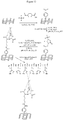
- Certain exemplary linkages and chemistries are shown in Figure 13 , and include an amide bond between the biomolecules and graphene, an imine bond between the biomolecule and graphene, a thiourea bond between the biomolecule and graphene, an aminoalcohol bond between the biomolecule and graphene.
- the biomolecule comprises a fluorescent protein.
- a fluorescent protein may be a green fluorescent protein, a yellow fluorescent protein, a red fluorescent protein, a cyan fluorescent protein, or any combination thereof.
- a protein may include a fluorescent redox cofactor.
- a protein may include a flavoprotein, a heme containing protein wherein an iron has been substituted by zinc, and the like.
- a protein may include tryptophan, which is known to fluoresce.
- the wavelength of excitation illumination may be between 1 nm and about 1500 nm, or even between about 200 and 900 nm, or between 300 and 700 nm.
- Various proteins have different excitation peak wavelengths: Green fluorescent protein: 400 nm; Enhanced green fluorescent protein: 488 nm; Yellow fluorescent protein: 525 nm; Red fluorescent protein: 557 nm; Cyan fluorescent protein: 458 nm; Tryptophan containing proteins: 280 nm; flavin mononucleotide containing proteins: 450 nm. Proteins may have one, two, or more wavelengths.
- the graphene body of the invention is in the form of a single-atom thick sheet.
- the graphene of the devices is suitably in electronic communication with a device that monitors an electronic characteristic of the graphene body.
- biomolecule e.g., protein
- histidine residue which histidine residue may interact with one or more molecules associated with the graphene, which molecule may be a metal.
- the methods may include one or more carboxylic acid groups on the graphene body.
- the user may also attach a sugar, an antibody, a chitin binding protein, a maltose binding protein, glutathione-S-transferase (GST), an epitope tag, and the like to graphene.
- the electronic communication between the protein and the graphene body includes an interaction between a nickel-nitriloacetic acid group and a histidine residue.
- the present disclosure also provides additional devices. These devices suitably include a graphene body in electronic communication with a biomolecule that preferentially binds a binding partner, with the graphene body being in electronic communication with a device capable of detecting a change in an electronic characteristic of the biomolecule.
- the biomolecule is suitably a protein.
- the protein suitably features recognition capabilities for other proteins (e.g., cancer biomarkers) or for molecules in the environment.
- Olfactory receptors or other proteins that bind small molecules are considered especially suitable for such applications.
- Receptors, ligands, antibodies, antigens, enzymes, or even antibody fragments are all considered suitable biomolecules for these devices.
- the user may place the graphene into electronic communication with a device that monitors changes in an electronic characteristic of the device. In this way, when a target binds to the biomolecule that is in electronic communication with the graphene, an associated change in an electronic characteristic of the device (e.g., conductivity/resistance) is detected and registered.
- an electronic characteristic of the device e.g., conductivity/resistance
- a device according to the present disclosure that includes an antibody complementary to antigen X may be contacted to a sample that may or may not contain antigen X. If antigen X is present, the antigen will bind to the antibody. The binding will in turn change an electronic characteristic of the device, which will then be registered by the device. If the antigen is not present in the sample, the electronic characteristics of the device will remain constant, and the user will understand that the analyte is not present.
- the devices may be constructed so as to include one, two, or more biomolecule detectors in electronic communication with graphene.
- the biomolecules may differ in terms of their binding affinities for different analytes, thus allowing for the construction of devices capable of simultaneously detecting the presence of two or more analytes.
- the devices are also capable of providing multiple biomolecules for detecting the same analyte, thus providing some redundancy in the device.
- Suitable proteins are described elsewhere herein; fluorescent proteins are considered especially suitable.
- the user may also contact the protein to a sample. Such samples may include a binding partner complementary to the protein, such as other proteins and other analytes.
- the user may contact a device having an antibody bound to graphene to a sample that may contain an analyte complementary to the antibody. The user may then detect a change in an electronic characteristic (e.g., conductivity) related to binding between the antibody and analyte.
- an electronic characteristic e.g., conductivity
- a user may also contact a sample to a device comprising graphene body in electronic communication with a biomolecule that preferentially binds a binding partner, the graphene body being in electronic communication with a device capable of detecting a change in an electronic characteristic of the protein; and monitoring a change in an electronic characteristic of the device related to binding between the biomolecule and binding partner.
- the graphene field effect transistor provides sensitive all-electronic readout of the protein's optical excitation.
- the approach thus enables creation of a family of bio/nano hybrid photodetectors, each sensitive to a wavelength range defined by proteinaceous components.
- proteins with different functionalities e.g., chemical affinity for particular biomarkers or small molecules in the liquid or vapor phase
- Exemplary experiments were performed on graphene produced by mechanical exfoliation onto oxidized silicon substrates.
- Graphene monolayers were selected by inspection with Atomic Force Microscopy (AFM) and Raman spectroscopy.
- AFM Atomic Force Microscopy
- Raman spectroscopy Devices were functionalized with carboxylated diazonium salts, which readily form covalent bonds with graphene. Additional information relevant to functionalization is found in international patent application PCT/US2011/042290 and in United States patent application 61/529,341 .
- the resulting carboxylic acid groups were activated with 1-ethyl-3-[3-dimethylaminopropyl]carbodiimide hydrochloride/sulfo- N -hydroxysuccinimide (EDC/sNHS), followed by attachment of nitrilotriacetic (NTA).
- NTA nitrilotriacetic
- Device fabrication was completed by adding Ni ions to the NTA complex, and incubation in protein solution (see Fig. 1(d) ).
- Histidine-tagged proteins obtained commercially (protein-G (26.1 kDa), green fluorescent protein (GFP), and yellow fluorescent protein (YFP)) and a fusion protein were all successfully attached to graphene devices, illustrating the robustness and versatility of the approach.
- the His-tagged (recombinant) fusion protein is comprised of glutathione S-transferase (GST), 6 histidine residues, and "BT5", an artificial heme binding protein.
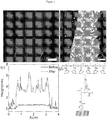
- Figure 1(a) and 1(b) are AFM images of the same graphene monolayer before and after functionalization with His-tagged protein-G, while Fig 1(c) shows height profiles along the indicated linescans. Two changes are observed: a ⁇ 2-nm increase in baseline height of the functionalized graphene, and the appearance of particles of height 3.4 ⁇ 0.4 nm above the new baseline.
- AFM of graphene monolayers before and after incubation in diazonium solution showed height increases of ⁇ 0.5-nm height, in agreement with earlier reports.
- a ⁇ 2-nm height increase was found upon attachment of NTA, with no particles observed (data not shown). Without being bound to any single theory, one may associate the increased baseline height in Fig.
- FIG. 2 shows current-gate voltage (I-V G ) data from a GFET before and after subsequent processing steps resulting in attachment of fusion protein GST-BT5.
- Annealed GFET I-V G shows ambipolar behavior and carrier mobility of -2000 cm 2 /V-s for holes and electrons.
- the device After diazonium treatment (dashed data), the device appears p-type with hole mobility ⁇ 300 cm 2 /Vs; and V N exceeds 80V, the maximum gate voltage used.
- the carrier mobility decrease is attributed to defects formed by sp 2 bond breaking and attached carboxybenzene groups; increased D-band intensity seen in the Raman spectrum supports this picture.
- the V N shift is consistent with increased negative charge in the graphene environment, due to deprotonation of bound carboxybenzene groups in a nanoscale water layer formed under ambient. Subsequent attachment of Ni-NTA (blue dashed line) and GST-BT5 (green dotted line) does not affect the carrier mobility but the GFET conductance drops by ⁇ 25%, consistent with increased carrier scattering by bound molecules.
- Protein-GFET bio/nano hybrid combines functionality of both components. Integration of photoactive proteins create hybridss with photoresponses tuned to desired wavelength ranges.
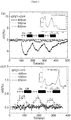
- Fig. 2 shows I-V G data for GFP-GFET hybrid measured in the dark and when exposed to light of three different wavelengths (405 nm, 532 nm and 632 nm, referred to as violet, green, and red) at 70 mW/cm 2 intensity.
- a significant I-V G shift is observed only for violet illumination, with negligible change for green or red light.
- This wavelength-dependent photoresponse is consistent with the optical absorption spectrum of GFP, which is peaked near 400 nm with little absorption for wavelengths greater than 500 nm (inset to Fig. 3a ; colored dots indicate wavelengths used).
- One may attribute the I-V G shift to a GFET electronic response to the photoexcitation of GFP.
- the observed current decrease may reflect a net dipole associated with charge redistribution in GFP upon photoexcitation, or GFP-GFET charge transfer since GFP is reported to be a light induced electron donor.
- Fig. 3(a) starting at time 100 sec GFP-GFET hybrid was illuminated for 50 sec with light of a particular wavelength, and then the light was quenched for 50 sec; three cycles were used to gauge reproducibility. The response is shown as fractional change in DC current from the dark current baseline. For green and red illumination, the photoresponse is within the system noise ( ⁇ 0.1%). In contrast, violet illumination induces a clear response of approximately -6%. It was shown that the wavelength of maximum hybrid device photoresponse is controlled by choice of fluorescent protein.
- FP-GFET devices For a yellow fluorescent protein (YFP)-GFET hybrid ( FIG. 3(b) ), strong conduction modulation occurs when the device is illuminated in the green, while excitation with violet or red light produces negligible response, as anticipated by the absorption spectrum of YFP ( Fig. 3b , inset). FP-GFET devices are stable, with lifetimes exceeding two weeks.
- the disclosed methods are robust and reproducible processes for bind His-Tagged proteins to graphene FETs. This in turn provides a pathway for construction of bio/nano hybrids integrating desirable functionalities of both components. AFM, Raman spectroscopy, and control experiments were used to confirm the hybrid structure, and transport measurements to assess electronic effects of protein attachment.
- FP-GFET hybrids present a new class of tunable photodetectors with photocurrent responses in a wavelength range determined by the absorption spectrum of the bound FP.
- FIG. 12 illustrates an exemplary functionalization process.
- Monolayer graphene on an oxidized silicon substrate was decorated with covalently bound carboxybenzene groups by immersion in a solution of 10.76 mM 4-carboxybenzene diazonium tetrafluoroborate (Best West Laboratories, Inc) at 55 oC for 1 h, followed by rising with acetone, methanol, and deionized (DI) water in sequence.
- 10.76 mM 4-carboxybenzene diazonium tetrafluoroborate Best West Laboratories, Inc
- DI deionized
- the chips were then incubated in a solution of 2 mM EDC (Sigma) /5 mM Sulfo-NHS (Thermo Scientific) activation buffer (0.1 M 2-(N-Morpholino)ethanesulfonic acid (MES) sodium salt, 0.5 M NaCl, pH adjusted to 6.0 with HCl) at room temperature for 15 min to activate the carboxylic acid of the carboxybenzene.
- EDC 2-(N-Morpholino)ethanesulfonic acid
- MES 2-(N-Morpholino)ethanesulfonic acid
- NTA-NH2 N ⁇ ,N ⁇ -Bis(carboxymethyl)-L-lysine hydrate
- PBS phosphate buffered saline
- NiCl2 NiCl2
- His-tagged protein solution was pipetted onto the surface of the chips, followed by incubation for 30 min at room temperature.
- the solution droplet was large enough so that any volume change over the 30 min period due to evaporation was negligible.
- the chip was then rinsed with DI water to remove non-specifically bound proteins and blown dry.
- GFP was purchased from Millipore Corporation, and YFP was purchased from MBL International. His-tagged protein G was purchased from bio-World, and non his-tagged protein G for control experiments was purchased from ProSpec-Tany TechnoGene Ltd.
- FIG. 4 (a) (4 (b)) is a AFM image of graphene before (after) functionalization.
- the apparent height of the graphene is increased by ⁇ 0.5 nm (associated with the carboxybenzene group; see Figure 12 ), and the surface is somewhat rougher.
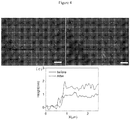
- Figure 5 (a) is an AFM scan of a graphene monolayer before (after) all steps of attachment chemistry except for incubation in protein solution.
- the apparent height of the graphene in Fig. S2(b) is increased by ⁇ 1.8 nm, reflecting attachment of the NTA molecular layer, motivating the assignment in the main text, Fig. 1 (c) and Figure 12 .
- Only a few particle-like features are observed, in agreement with the interpretation that particle like features in Fig. 1(b) are proteins linked to the graphene by their His-tag.
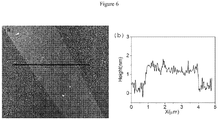
- FIG. 6(a) is an AFM image of the sample and Fig. 6 (b) the associated line scan.
- the apparent graphene height is about 1.5 nm, only a slight increase above that expected for monolayer graphene (typically ⁇ 0.8 - 1 nm), perhaps due to a low-density residual layer of Ni-NTA molecules. No protein features are apparent.
- This control experiment demonstrates the necessity of the diazonium incubation for creation of active attachment sites on the graphene surface.
- FIG. 7 (a) is an AFM scan of graphene before (after) scan after functionalization.
- the apparent height of the graphene increased by ⁇ 1.8 nm, indicating the presence of an NTA monolayer (see Fig. 5 , 6 above). No protein-like features were observed, providing evidence that protein attachment with controlled orientation occurs via the His-tag as indicated in Figure 12 .
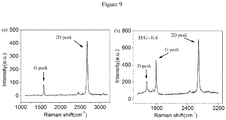
- Figure 8 (a) is the Raman spectrum of a graphene monolayer, which shows essentially no D peak.
- Figure 9 (b) is the Raman spectrum of the same graphene layer after diazonium incubation. D/G ratio has increased by more than an order of magnitude after diazonium functionalization, indicative of a significant level of sp3 bonded carbon due to the decoration with carboxybenzene groups (see Figure 12 ). similar to the result of graphene functionalized with protein.
- Figure 9 shows the Raman spectra of a pristine graphene monolayer (Fig. S6 (a)) and that of the same sample after functionalization with His-tagged protein G ( Fig. 9 (b) ).
- the spectrum after functionalization is very similar to that after diazonium incubation ( Fig. 8(b) ), supporting the interpretation that the enhanced D peak reflects bond breaking of the sp2 graphene network.
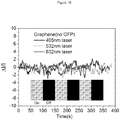
- FIG. 10 shows that the device had no detectable photocurrent response at any of the wavelengths used in these experiments. This provides confirmation of the interpretation in the text that photocurrent responses are derived from the optical absorption spectra of the fluorescent proteins used.
- Figure 11 shows the measured photocurrent responses of the same device in Fig 3 (a) in main text measured two weeks later.
- Device responses to violet illumination were essentially identical to those observed immediately after the device was fabricated, indicating little change in the behavior of the GFP-GFET hybrid on the two week timescale.
Landscapes
- Health & Medical Sciences (AREA)
- Life Sciences & Earth Sciences (AREA)
- Immunology (AREA)
- Engineering & Computer Science (AREA)
- Chemical & Material Sciences (AREA)
- Molecular Biology (AREA)
- Biomedical Technology (AREA)
- Hematology (AREA)
- Urology & Nephrology (AREA)
- Food Science & Technology (AREA)
- Biochemistry (AREA)
- Cell Biology (AREA)
- Biotechnology (AREA)
- Medicinal Chemistry (AREA)
- Physics & Mathematics (AREA)
- Analytical Chemistry (AREA)
- Microbiology (AREA)
- General Health & Medical Sciences (AREA)
- General Physics & Mathematics (AREA)
- Pathology (AREA)
- Chemical Kinetics & Catalysis (AREA)
- Investigating, Analyzing Materials By Fluorescence Or Luminescence (AREA)
- Investigating Or Analysing Biological Materials (AREA)
- Investigating Or Analysing Materials By The Use Of Chemical Reactions (AREA)
Applications Claiming Priority (2)
| Application Number | Priority Date | Filing Date | Title |
|---|---|---|---|
| US201161566782P | 2011-12-05 | 2011-12-05 | |
| PCT/US2012/066064 WO2013085715A1 (en) | 2011-12-05 | 2012-11-20 | Graphene-biomolecule bioelectronic devices |
Publications (3)
| Publication Number | Publication Date |
|---|---|
| EP2788762A1 EP2788762A1 (en) | 2014-10-15 |
| EP2788762A4 EP2788762A4 (en) | 2015-09-30 |
| EP2788762B1 true EP2788762B1 (en) | 2018-08-15 |
Family
ID=48574776
Family Applications (1)
| Application Number | Title | Priority Date | Filing Date |
|---|---|---|---|
| EP12855675.0A Not-in-force EP2788762B1 (en) | 2011-12-05 | 2012-11-20 | Graphene-biomolecule bioelectronic devices |
Country Status (4)
| Country | Link |
|---|---|
| US (2) | US11119097B2 (https=) |
| EP (1) | EP2788762B1 (https=) |
| JP (1) | JP2015500482A (https=) |
| WO (1) | WO2013085715A1 (https=) |
Cited By (1)
| Publication number | Priority date | Publication date | Assignee | Title |
|---|---|---|---|---|
| CN107955006A (zh) * | 2017-11-29 | 2018-04-24 | 温州医科大学 | 一种氨基喹啉改性的氮参杂石墨烯量子点及其制备方法与制备组氨酸荧光检测试剂上的应用 |
Families Citing this family (10)
| Publication number | Priority date | Publication date | Assignee | Title |
|---|---|---|---|---|
| JP2015500482A (ja) * | 2011-12-05 | 2015-01-05 | ザ トラスティーズ オブ ザ ユニバーシティ オブ ペンシルバニア | グラフェン−生体分子バイオ電子デバイス |
| EP2848929A1 (en) * | 2013-09-11 | 2015-03-18 | AIT Austrian Institute of Technology GmbH | Graphene FET-based biosensor |
| JP6516248B2 (ja) * | 2014-12-08 | 2019-05-22 | 国立大学法人福井大学 | 導電性炭素材料への分子識別機能を有する生体分子の固定化方法 |
| EP3070741B1 (en) * | 2015-03-18 | 2020-07-29 | Emberion Oy | An apparatus comprising a sensor arrangemenet and associated fabrication method |
| US10097281B1 (en) | 2015-11-18 | 2018-10-09 | Hypres, Inc. | System and method for cryogenic optoelectronic data link |
| KR101763142B1 (ko) | 2015-12-17 | 2017-07-31 | 한국화학연구원 | 신규 가시광선 흡수 그레핀 박막 광촉매, 이를 이용한 산화환원효소 보조인자의 재생방법 및 이를 이용한 효소반응으로 이산화탄소로부터 포름산을 제조하는 방법 |
| EP3206235B1 (en) | 2016-02-12 | 2021-04-28 | Nokia Technologies Oy | Method of forming an apparatus comprising a two dimensional material |
| CN108458749A (zh) * | 2017-02-20 | 2018-08-28 | 台湾生捷科技股份有限公司 | 用于在线测量微阵列的质量的方法 |
| EP4121762A1 (en) * | 2020-03-20 | 2023-01-25 | Graphene-Dx, Inc. | Graphene-based sensor for detecting sars-cov-2 virus in a biological sample |
| JP2024013943A (ja) * | 2022-07-21 | 2024-02-01 | 株式会社東芝 | プローブ分子の検査方法 |
Family Cites Families (28)
| Publication number | Priority date | Publication date | Assignee | Title |
|---|---|---|---|---|
| AU2002219971A1 (en) | 2000-11-01 | 2002-05-15 | Minerva Biotechnologies Corporation | Detection of binding species with colloidal and non-colloidal structures |
| WO2003021247A1 (en) | 2001-08-28 | 2003-03-13 | Duke University | Biosensor |
| US20040058457A1 (en) * | 2002-08-29 | 2004-03-25 | Xueying Huang | Functionalized nanoparticles |
| JP2004215514A (ja) | 2003-01-09 | 2004-08-05 | Canon Inc | 有機物固定化基体 |
| AU2003304085A1 (en) | 2003-02-07 | 2004-11-26 | Wisconsin Alumni Research Foundation | Nanocylinder-modified surfaces |
| KR100549103B1 (ko) | 2003-06-05 | 2006-02-06 | 한국과학기술원 | 탄소나노튜브 어레이의 제작방법 |
| US7670831B2 (en) | 2003-06-13 | 2010-03-02 | Korea Advanced Institute Of Science And Technology | Conductive carbon nanotubes dotted with metal and method for fabricating a biosensor using the same |
| WO2005070828A1 (en) | 2004-01-21 | 2005-08-04 | William Marsh Rice University | Nanotube-amino acids and methods for preparing same |
| US7645592B2 (en) * | 2004-04-29 | 2010-01-12 | Otsuka Pharmaceutical Co., Ltd. | Glycoprotein VI antibodies and methods of use thereof |
| JP2006342040A (ja) | 2005-05-09 | 2006-12-21 | Kumamoto Univ | 筒状分子構造およびその製造方法、並びに前処理基板およびその製造方法 |
| JP2008083042A (ja) | 2006-08-30 | 2008-04-10 | National Institute Of Advanced Industrial & Technology | 分子認識素子及び該分子認識素子を用いたバイオセンサ並びに該バイオセンサを用いた測定方法。 |
| EP2127008B1 (en) | 2006-12-29 | 2013-06-05 | 3M Innovative Properties Company | Method of making durable polymer electrolyte membranes |
| JP2008258594A (ja) * | 2007-03-09 | 2008-10-23 | Hokkaido Univ | カーボンナノチューブ電界効果トランジスタの製造方法およびバイオセンサ装置 |
| EP2171081B1 (de) | 2007-06-27 | 2012-02-29 | Technische Universität Dresden | Einrichtung und verfahren zum nachweis einer substanz mittels partikel-plasmonen- resonanz (ppr) oder partikel-vermittelter fluoreszenz auf der basis von zelloberflächenpolarisierungen |
| EP2182799A4 (en) | 2007-07-27 | 2015-01-21 | Univ Leland Stanford Junior | SUPRAMOLECULAR FUNCTIONALIZATION OF GRAPHITE NANOPARTICLES FOR ACTIVE EXTRACTION |
| KR101867606B1 (ko) | 2007-11-07 | 2018-06-18 | 제넨테크, 인크. | 미생물 질환의 치료를 위한 조성물 및 방법 |
| US8951473B2 (en) * | 2008-03-04 | 2015-02-10 | Massachusetts Institute Of Technology | Devices and methods for determination of species including chemical warfare agents |
| US20100143887A1 (en) | 2008-12-05 | 2010-06-10 | Electronics And Telecommunications Research Institute | Biosensor and method for detecting biomolecules by using the biosensor |
| WO2010096828A1 (en) | 2009-02-23 | 2010-08-26 | The Regents Of The University Of California | Multi-modality nanoparticles having optically responsive shape |
| FI122511B (fi) | 2009-02-26 | 2012-02-29 | Valtion Teknillinen | Grafeenia sisältävät hiutaleet ja menetelmä grafeenin eksfoliaatiota varten |
| JP2011097930A (ja) | 2009-10-07 | 2011-05-19 | Hokkaido Univ | 光活性化生理機能センサータンパク質 |
| WO2011081884A1 (en) * | 2009-12-14 | 2011-07-07 | Massachusetts Institute Of Technology | Systems and methods related to optical nanosensors including photoluminescent nanostructures |
| EP2362459A1 (en) | 2010-02-24 | 2011-08-31 | University College Cork-National University of Ireland, Cork | Modified graphene structure and method of manufacture thereof |
| WO2011123513A1 (en) * | 2010-03-30 | 2011-10-06 | The Trustees Of The University Of Pennsylvania | Dna-decorated graphene chemical sensors |
| WO2012050646A2 (en) | 2010-06-29 | 2012-04-19 | The Trustees Of The University Of Pennsylvania | Biomimetic chemical sensors using nanoelectronic readout of olfactory receptors |
| JP2015500482A (ja) * | 2011-12-05 | 2015-01-05 | ザ トラスティーズ オブ ザ ユニバーシティ オブ ペンシルバニア | グラフェン−生体分子バイオ電子デバイス |
| EP2989440A4 (en) * | 2013-04-25 | 2017-01-04 | The Trustees Of The University Of Pennsylvania | Opioid detection based on high quality graphene transistor arrays and a synthetic mu receptor |
| US9618476B2 (en) * | 2014-04-28 | 2017-04-11 | Nanomedical Diagnostics, Inc. | System and method for electronic biological sample analysis |
-
2012
- 2012-11-20 JP JP2014545925A patent/JP2015500482A/ja not_active Ceased
- 2012-11-20 WO PCT/US2012/066064 patent/WO2013085715A1/en not_active Ceased
- 2012-11-20 US US14/362,798 patent/US11119097B2/en active Active
- 2012-11-20 EP EP12855675.0A patent/EP2788762B1/en not_active Not-in-force
-
2021
- 2021-09-13 US US17/473,412 patent/US12546769B2/en active Active
Non-Patent Citations (5)
| Title |
|---|
| CHRISTOPHER CHIDLEY ET AL: "A Designed Protein for the Specific and Covalent Heteroconjugation of Biomolecules", BIOCONJUGATE CHEMISTRY, vol. 19, no. 9, 17 September 2008 (2008-09-17), pages 1753 - 1756, XP055349033, ISSN: 1043-1802, DOI: 10.1021/bc800268j * |
| GUANGFENG WANG ET AL: "Gold nanoparticles/l-cysteine/graphene composite based immobilization strategy for an electrochemical immunosensor", ANALYTICAL METHODS, vol. 2, no. 11, 1 November 2010 (2010-11-01), GBR, pages 1692 - 1697, XP055349036, ISSN: 1759-9660, DOI: 10.1039/c0ay00389a * |
| PINGAN HU ET AL: "Carbon Nanostructure-Based Field-Effect Transistors for Label-Free Chemical/Biological Sensors", SENSORS, vol. 10, no. 5, 25 May 2010 (2010-05-25), pages 5133 - 5159, XP055348947, DOI: 10.3390/s100505133 * |
| YAPING DAN ET AL: "Intrinsic Response of Graphene Vapor Sensors", NANO LETTERS, vol. 9, no. 4, 8 April 2009 (2009-04-08), pages 1472 - 1475, XP055136668, ISSN: 1530-6984, DOI: 10.1021/nl8033637 * |
| YI FU ET AL: "Metal-enhanced fluorescence of single green fluorescent protein (GFP)", BIOCHEMICAL AND BIOPHYSICAL RESEARCH COMMUNICATIONS, vol. 376, no. 4, 1 November 2008 (2008-11-01), AMSTERDAM, NL, pages 712 - 717, XP055349038, ISSN: 0006-291X, DOI: 10.1016/j.bbrc.2008.09.062 * |
Cited By (2)
| Publication number | Priority date | Publication date | Assignee | Title |
|---|---|---|---|---|
| CN107955006A (zh) * | 2017-11-29 | 2018-04-24 | 温州医科大学 | 一种氨基喹啉改性的氮参杂石墨烯量子点及其制备方法与制备组氨酸荧光检测试剂上的应用 |
| CN107955006B (zh) * | 2017-11-29 | 2020-03-10 | 温州医科大学 | 一种氨基喹啉改性的氮参杂石墨烯量子点及其制备方法与制备组氨酸荧光检测试剂上的应用 |
Also Published As
| Publication number | Publication date |
|---|---|
| EP2788762A4 (en) | 2015-09-30 |
| US12546769B2 (en) | 2026-02-10 |
| WO2013085715A1 (en) | 2013-06-13 |
| JP2015500482A (ja) | 2015-01-05 |
| EP2788762A1 (en) | 2014-10-15 |
| US11119097B2 (en) | 2021-09-14 |
| US20140308682A1 (en) | 2014-10-16 |
| US20220011302A1 (en) | 2022-01-13 |
Similar Documents
| Publication | Publication Date | Title |
|---|---|---|
| US12546769B2 (en) | Graphene-biomolecule bioelectronic devices | |
| Shkodra et al. | Electrolyte-gated carbon nanotube field-effect transistor-based biosensors: Principles and applications | |
| Rabbani et al. | Synthesis of carbon nanotubes-chitosan nanocomposite and immunosensor fabrication for myoglobin detection: An acute myocardial infarction biomarker | |
| Clapp et al. | Fluorescence resonance energy transfer between quantum dot donors and dye-labeled protein acceptors | |
| Gruner | Carbon nanotube transistors for biosensing applications | |
| Lu et al. | Graphene-protein bioelectronic devices with wavelength-dependent photoresponse | |
| TWI760377B (zh) | 半導體感測器及其製造方法以及複合感測器 | |
| Noyce et al. | Electronic stability of carbon nanotube transistors under long-term bias stress | |
| Chen et al. | A protein transistor made of an antibody molecule and two gold nanoparticles | |
| Lee et al. | Bioelectronic nose with high sensitivity and selectivity using chemically functionalized carbon nanotube combined with human olfactory receptor | |
| An et al. | Low‐dimensional black phosphorus in sensor applications: advances and challenges | |
| Lerner et al. | Toward quantifying the electrostatic transduction mechanism in carbon nanotube molecular sensors | |
| Xiao et al. | Molecular mechanisms of interactions between monolayered transition metal dichalcogenides and biological molecules | |
| US10983117B2 (en) | Carbon nanotube biosensors and related methods | |
| Sun et al. | Magnetic graphene field-effect transistor biosensor for single-strand DNA detection | |
| JP2008258594A (ja) | カーボンナノチューブ電界効果トランジスタの製造方法およびバイオセンサ装置 | |
| Tereshchenko et al. | Interaction mechanism between TiO 2 nanostructures and bovine leukemia virus proteins in photoluminescence-based immunosensors | |
| Lee et al. | Fabrication and functionalisation of nanocarbon‐based field‐effect transistor biosensors | |
| Brill et al. | Modulating the optoelectronic properties of MoS2 by highly oriented dipole-generating monolayers | |
| Wu et al. | An enhanced SPR immunosensing platform for human IgG based on the use of silver nanocubes and carboxy-functionalized graphene oxide | |
| Wang et al. | Organic field-effect transistor-based biosensors with enhanced sensitivity and reliability under illumination for carcinoembryonic antigen bioassay | |
| WO2006103872A1 (ja) | カーボンナノチューブ電界効果トランジスタ | |
| Ziv et al. | Chirality nanosensor with direct electric readout by coupling of nanofloret localized plasmons with electronic transport | |
| Han et al. | Optimization and analysis of pyrene-maltose functionalized graphene surfaces for Con A detection | |
| Rinaldi et al. | Electronic nanodevices based on self-assembled metalloproteins |
Legal Events
| Date | Code | Title | Description |
|---|---|---|---|
| PUAI | Public reference made under article 153(3) epc to a published international application that has entered the european phase |
Free format text: ORIGINAL CODE: 0009012 |
|
| 17P | Request for examination filed |
Effective date: 20140704 |
|
| AK | Designated contracting states |
Kind code of ref document: A1 Designated state(s): AL AT BE BG CH CY CZ DE DK EE ES FI FR GB GR HR HU IE IS IT LI LT LU LV MC MK MT NL NO PL PT RO RS SE SI SK SM TR |
|
| DAX | Request for extension of the european patent (deleted) | ||
| RIC1 | Information provided on ipc code assigned before grant |
Ipc: G01N 33/543 20060101AFI20150428BHEP Ipc: G01N 33/58 20060101ALI20150428BHEP |
|
| REG | Reference to a national code |
Ref country code: DE Ref legal event code: R079 Ref document number: 602012049926 Country of ref document: DE Free format text: PREVIOUS MAIN CLASS: G01N0033530000 Ipc: G01N0033543000 |
|
| RA4 | Supplementary search report drawn up and despatched (corrected) |
Effective date: 20150831 |
|
| RIC1 | Information provided on ipc code assigned before grant |
Ipc: G01N 33/543 20060101AFI20150825BHEP Ipc: G01N 33/58 20060101ALI20150825BHEP |
|
| RIN1 | Information on inventor provided before grant (corrected) |
Inventor name: DISCHER, BOHDANA Inventor name: GOLDSMITH, BRETT R. Inventor name: LU, YE Inventor name: MITALA, JOSEPH, J. Inventor name: JOHNSON, ALAN, T. |
|
| 17Q | First examination report despatched |
Effective date: 20170301 |
|
| GRAP | Despatch of communication of intention to grant a patent |
Free format text: ORIGINAL CODE: EPIDOSNIGR1 |
|
| INTG | Intention to grant announced |
Effective date: 20180213 |
|
| GRAS | Grant fee paid |
Free format text: ORIGINAL CODE: EPIDOSNIGR3 |
|
| GRAJ | Information related to disapproval of communication of intention to grant by the applicant or resumption of examination proceedings by the epo deleted |
Free format text: ORIGINAL CODE: EPIDOSDIGR1 |
|
| GRAL | Information related to payment of fee for publishing/printing deleted |
Free format text: ORIGINAL CODE: EPIDOSDIGR3 |
|
| GRAR | Information related to intention to grant a patent recorded |
Free format text: ORIGINAL CODE: EPIDOSNIGR71 |
|
| GRAA | (expected) grant |
Free format text: ORIGINAL CODE: 0009210 |
|
| INTC | Intention to grant announced (deleted) | ||
| INTG | Intention to grant announced |
Effective date: 20180703 |
|
| AK | Designated contracting states |
Kind code of ref document: B1 Designated state(s): AL AT BE BG CH CY CZ DE DK EE ES FI FR GB GR HR HU IE IS IT LI LT LU LV MC MK MT NL NO PL PT RO RS SE SI SK SM TR |
|
| REG | Reference to a national code |
Ref country code: CH Ref legal event code: EP Ref country code: GB Ref legal event code: FG4D Ref country code: AT Ref legal event code: REF Ref document number: 1030377 Country of ref document: AT Kind code of ref document: T Effective date: 20180815 |
|
| REG | Reference to a national code |
Ref country code: IE Ref legal event code: FG4D |
|
| REG | Reference to a national code |
Ref country code: DE Ref legal event code: R096 Ref document number: 602012049926 Country of ref document: DE |
|
| REG | Reference to a national code |
Ref country code: NL Ref legal event code: MP Effective date: 20180815 |
|
| REG | Reference to a national code |
Ref country code: LT Ref legal event code: MG4D |
|
| REG | Reference to a national code |
Ref country code: AT Ref legal event code: MK05 Ref document number: 1030377 Country of ref document: AT Kind code of ref document: T Effective date: 20180815 |
|
| PG25 | Lapsed in a contracting state [announced via postgrant information from national office to epo] |
Ref country code: FI Free format text: LAPSE BECAUSE OF FAILURE TO SUBMIT A TRANSLATION OF THE DESCRIPTION OR TO PAY THE FEE WITHIN THE PRESCRIBED TIME-LIMIT Effective date: 20180815 Ref country code: NO Free format text: LAPSE BECAUSE OF FAILURE TO SUBMIT A TRANSLATION OF THE DESCRIPTION OR TO PAY THE FEE WITHIN THE PRESCRIBED TIME-LIMIT Effective date: 20181115 Ref country code: IS Free format text: LAPSE BECAUSE OF FAILURE TO SUBMIT A TRANSLATION OF THE DESCRIPTION OR TO PAY THE FEE WITHIN THE PRESCRIBED TIME-LIMIT Effective date: 20181215 Ref country code: AT Free format text: LAPSE BECAUSE OF FAILURE TO SUBMIT A TRANSLATION OF THE DESCRIPTION OR TO PAY THE FEE WITHIN THE PRESCRIBED TIME-LIMIT Effective date: 20180815 Ref country code: NL Free format text: LAPSE BECAUSE OF FAILURE TO SUBMIT A TRANSLATION OF THE DESCRIPTION OR TO PAY THE FEE WITHIN THE PRESCRIBED TIME-LIMIT Effective date: 20180815 Ref country code: BG Free format text: LAPSE BECAUSE OF FAILURE TO SUBMIT A TRANSLATION OF THE DESCRIPTION OR TO PAY THE FEE WITHIN THE PRESCRIBED TIME-LIMIT Effective date: 20181115 Ref country code: SE Free format text: LAPSE BECAUSE OF FAILURE TO SUBMIT A TRANSLATION OF THE DESCRIPTION OR TO PAY THE FEE WITHIN THE PRESCRIBED TIME-LIMIT Effective date: 20180815 Ref country code: LT Free format text: LAPSE BECAUSE OF FAILURE TO SUBMIT A TRANSLATION OF THE DESCRIPTION OR TO PAY THE FEE WITHIN THE PRESCRIBED TIME-LIMIT Effective date: 20180815 Ref country code: GR Free format text: LAPSE BECAUSE OF FAILURE TO SUBMIT A TRANSLATION OF THE DESCRIPTION OR TO PAY THE FEE WITHIN THE PRESCRIBED TIME-LIMIT Effective date: 20181116 Ref country code: RS Free format text: LAPSE BECAUSE OF FAILURE TO SUBMIT A TRANSLATION OF THE DESCRIPTION OR TO PAY THE FEE WITHIN THE PRESCRIBED TIME-LIMIT Effective date: 20180815 |
|
| PG25 | Lapsed in a contracting state [announced via postgrant information from national office to epo] |
Ref country code: AL Free format text: LAPSE BECAUSE OF FAILURE TO SUBMIT A TRANSLATION OF THE DESCRIPTION OR TO PAY THE FEE WITHIN THE PRESCRIBED TIME-LIMIT Effective date: 20180815 Ref country code: LV Free format text: LAPSE BECAUSE OF FAILURE TO SUBMIT A TRANSLATION OF THE DESCRIPTION OR TO PAY THE FEE WITHIN THE PRESCRIBED TIME-LIMIT Effective date: 20180815 Ref country code: HR Free format text: LAPSE BECAUSE OF FAILURE TO SUBMIT A TRANSLATION OF THE DESCRIPTION OR TO PAY THE FEE WITHIN THE PRESCRIBED TIME-LIMIT Effective date: 20180815 |
|
| PG25 | Lapsed in a contracting state [announced via postgrant information from national office to epo] |
Ref country code: ES Free format text: LAPSE BECAUSE OF FAILURE TO SUBMIT A TRANSLATION OF THE DESCRIPTION OR TO PAY THE FEE WITHIN THE PRESCRIBED TIME-LIMIT Effective date: 20180815 Ref country code: PL Free format text: LAPSE BECAUSE OF FAILURE TO SUBMIT A TRANSLATION OF THE DESCRIPTION OR TO PAY THE FEE WITHIN THE PRESCRIBED TIME-LIMIT Effective date: 20180815 Ref country code: RO Free format text: LAPSE BECAUSE OF FAILURE TO SUBMIT A TRANSLATION OF THE DESCRIPTION OR TO PAY THE FEE WITHIN THE PRESCRIBED TIME-LIMIT Effective date: 20180815 Ref country code: IT Free format text: LAPSE BECAUSE OF FAILURE TO SUBMIT A TRANSLATION OF THE DESCRIPTION OR TO PAY THE FEE WITHIN THE PRESCRIBED TIME-LIMIT Effective date: 20180815 Ref country code: EE Free format text: LAPSE BECAUSE OF FAILURE TO SUBMIT A TRANSLATION OF THE DESCRIPTION OR TO PAY THE FEE WITHIN THE PRESCRIBED TIME-LIMIT Effective date: 20180815 Ref country code: CZ Free format text: LAPSE BECAUSE OF FAILURE TO SUBMIT A TRANSLATION OF THE DESCRIPTION OR TO PAY THE FEE WITHIN THE PRESCRIBED TIME-LIMIT Effective date: 20180815 |
|
| REG | Reference to a national code |
Ref country code: DE Ref legal event code: R097 Ref document number: 602012049926 Country of ref document: DE |
|
| PG25 | Lapsed in a contracting state [announced via postgrant information from national office to epo] |
Ref country code: SM Free format text: LAPSE BECAUSE OF FAILURE TO SUBMIT A TRANSLATION OF THE DESCRIPTION OR TO PAY THE FEE WITHIN THE PRESCRIBED TIME-LIMIT Effective date: 20180815 Ref country code: DK Free format text: LAPSE BECAUSE OF FAILURE TO SUBMIT A TRANSLATION OF THE DESCRIPTION OR TO PAY THE FEE WITHIN THE PRESCRIBED TIME-LIMIT Effective date: 20180815 Ref country code: SK Free format text: LAPSE BECAUSE OF FAILURE TO SUBMIT A TRANSLATION OF THE DESCRIPTION OR TO PAY THE FEE WITHIN THE PRESCRIBED TIME-LIMIT Effective date: 20180815 |
|
| REG | Reference to a national code |
Ref country code: DE Ref legal event code: R119 Ref document number: 602012049926 Country of ref document: DE |
|
| PLBE | No opposition filed within time limit |
Free format text: ORIGINAL CODE: 0009261 |
|
| STAA | Information on the status of an ep patent application or granted ep patent |
Free format text: STATUS: NO OPPOSITION FILED WITHIN TIME LIMIT |
|
| REG | Reference to a national code |
Ref country code: CH Ref legal event code: PL |
|
| 26N | No opposition filed |
Effective date: 20190516 |
|
| GBPC | Gb: european patent ceased through non-payment of renewal fee |
Effective date: 20181120 |
|
| PG25 | Lapsed in a contracting state [announced via postgrant information from national office to epo] |
Ref country code: LU Free format text: LAPSE BECAUSE OF NON-PAYMENT OF DUE FEES Effective date: 20181120 Ref country code: MC Free format text: LAPSE BECAUSE OF FAILURE TO SUBMIT A TRANSLATION OF THE DESCRIPTION OR TO PAY THE FEE WITHIN THE PRESCRIBED TIME-LIMIT Effective date: 20180815 |
|
| REG | Reference to a national code |
Ref country code: BE Ref legal event code: MM Effective date: 20181130 |
|
| REG | Reference to a national code |
Ref country code: IE Ref legal event code: MM4A |
|
| PG25 | Lapsed in a contracting state [announced via postgrant information from national office to epo] |
Ref country code: SI Free format text: LAPSE BECAUSE OF FAILURE TO SUBMIT A TRANSLATION OF THE DESCRIPTION OR TO PAY THE FEE WITHIN THE PRESCRIBED TIME-LIMIT Effective date: 20180815 Ref country code: LI Free format text: LAPSE BECAUSE OF NON-PAYMENT OF DUE FEES Effective date: 20181130 Ref country code: CH Free format text: LAPSE BECAUSE OF NON-PAYMENT OF DUE FEES Effective date: 20181130 |
|
| PG25 | Lapsed in a contracting state [announced via postgrant information from national office to epo] |
Ref country code: DE Free format text: LAPSE BECAUSE OF NON-PAYMENT OF DUE FEES Effective date: 20190601 Ref country code: FR Free format text: LAPSE BECAUSE OF NON-PAYMENT OF DUE FEES Effective date: 20181130 Ref country code: IE Free format text: LAPSE BECAUSE OF NON-PAYMENT OF DUE FEES Effective date: 20181120 |
|
| PG25 | Lapsed in a contracting state [announced via postgrant information from national office to epo] |
Ref country code: BE Free format text: LAPSE BECAUSE OF NON-PAYMENT OF DUE FEES Effective date: 20181130 |
|
| PG25 | Lapsed in a contracting state [announced via postgrant information from national office to epo] |
Ref country code: GB Free format text: LAPSE BECAUSE OF NON-PAYMENT OF DUE FEES Effective date: 20181120 |
|
| PG25 | Lapsed in a contracting state [announced via postgrant information from national office to epo] |
Ref country code: MT Free format text: LAPSE BECAUSE OF NON-PAYMENT OF DUE FEES Effective date: 20181120 |
|
| PG25 | Lapsed in a contracting state [announced via postgrant information from national office to epo] |
Ref country code: TR Free format text: LAPSE BECAUSE OF FAILURE TO SUBMIT A TRANSLATION OF THE DESCRIPTION OR TO PAY THE FEE WITHIN THE PRESCRIBED TIME-LIMIT Effective date: 20180815 |
|
| PG25 | Lapsed in a contracting state [announced via postgrant information from national office to epo] |
Ref country code: PT Free format text: LAPSE BECAUSE OF FAILURE TO SUBMIT A TRANSLATION OF THE DESCRIPTION OR TO PAY THE FEE WITHIN THE PRESCRIBED TIME-LIMIT Effective date: 20180815 |
|
| PG25 | Lapsed in a contracting state [announced via postgrant information from national office to epo] |
Ref country code: CY Free format text: LAPSE BECAUSE OF FAILURE TO SUBMIT A TRANSLATION OF THE DESCRIPTION OR TO PAY THE FEE WITHIN THE PRESCRIBED TIME-LIMIT Effective date: 20180815 Ref country code: HU Free format text: LAPSE BECAUSE OF FAILURE TO SUBMIT A TRANSLATION OF THE DESCRIPTION OR TO PAY THE FEE WITHIN THE PRESCRIBED TIME-LIMIT; INVALID AB INITIO Effective date: 20121120 Ref country code: MK Free format text: LAPSE BECAUSE OF NON-PAYMENT OF DUE FEES Effective date: 20180815 |