EP2755680B1 - Particulate vaccine formulations - Google Patents
Particulate vaccine formulations Download PDFInfo
- Publication number
- EP2755680B1 EP2755680B1 EP12831495.2A EP12831495A EP2755680B1 EP 2755680 B1 EP2755680 B1 EP 2755680B1 EP 12831495 A EP12831495 A EP 12831495A EP 2755680 B1 EP2755680 B1 EP 2755680B1
- Authority
- EP
- European Patent Office
- Prior art keywords
- antigen
- seq
- clauses
- vaccine formulation
- peptide
- Prior art date
- Legal status (The legal status is an assumption and is not a legal conclusion. Google has not performed a legal analysis and makes no representation as to the accuracy of the status listed.)
- Active
Links
Images



Classifications
-
- A—HUMAN NECESSITIES
- A61—MEDICAL OR VETERINARY SCIENCE; HYGIENE
- A61K—PREPARATIONS FOR MEDICAL, DENTAL OR TOILETRY PURPOSES
- A61K39/00—Medicinal preparations containing antigens or antibodies
- A61K39/39—Medicinal preparations containing antigens or antibodies characterised by the immunostimulating additives, e.g. chemical adjuvants
-
- A—HUMAN NECESSITIES
- A61—MEDICAL OR VETERINARY SCIENCE; HYGIENE
- A61K—PREPARATIONS FOR MEDICAL, DENTAL OR TOILETRY PURPOSES
- A61K39/00—Medicinal preparations containing antigens or antibodies
- A61K39/0005—Vertebrate antigens
- A61K39/0011—Cancer antigens
-
- A—HUMAN NECESSITIES
- A61—MEDICAL OR VETERINARY SCIENCE; HYGIENE
- A61K—PREPARATIONS FOR MEDICAL, DENTAL OR TOILETRY PURPOSES
- A61K39/00—Medicinal preparations containing antigens or antibodies
- A61K39/12—Viral antigens
-
- A—HUMAN NECESSITIES
- A61—MEDICAL OR VETERINARY SCIENCE; HYGIENE
- A61P—SPECIFIC THERAPEUTIC ACTIVITY OF CHEMICAL COMPOUNDS OR MEDICINAL PREPARATIONS
- A61P35/00—Antineoplastic agents
-
- A—HUMAN NECESSITIES
- A61—MEDICAL OR VETERINARY SCIENCE; HYGIENE
- A61K—PREPARATIONS FOR MEDICAL, DENTAL OR TOILETRY PURPOSES
- A61K39/00—Medicinal preparations containing antigens or antibodies
- A61K2039/555—Medicinal preparations containing antigens or antibodies characterised by a specific combination antigen/adjuvant
- A61K2039/55511—Organic adjuvants
-
- A—HUMAN NECESSITIES
- A61—MEDICAL OR VETERINARY SCIENCE; HYGIENE
- A61K—PREPARATIONS FOR MEDICAL, DENTAL OR TOILETRY PURPOSES
- A61K39/00—Medicinal preparations containing antigens or antibodies
- A61K2039/555—Medicinal preparations containing antigens or antibodies characterised by a specific combination antigen/adjuvant
- A61K2039/55511—Organic adjuvants
- A61K2039/55555—Liposomes; Vesicles, e.g. nanoparticles; Spheres, e.g. nanospheres; Polymers
-
- A—HUMAN NECESSITIES
- A61—MEDICAL OR VETERINARY SCIENCE; HYGIENE
- A61K—PREPARATIONS FOR MEDICAL, DENTAL OR TOILETRY PURPOSES
- A61K39/00—Medicinal preparations containing antigens or antibodies
- A61K2039/555—Medicinal preparations containing antigens or antibodies characterised by a specific combination antigen/adjuvant
- A61K2039/55511—Organic adjuvants
- A61K2039/55566—Emulsions, e.g. Freund's adjuvant, MF59
-
- A—HUMAN NECESSITIES
- A61—MEDICAL OR VETERINARY SCIENCE; HYGIENE
- A61K—PREPARATIONS FOR MEDICAL, DENTAL OR TOILETRY PURPOSES
- A61K39/00—Medicinal preparations containing antigens or antibodies
- A61K2039/58—Medicinal preparations containing antigens or antibodies raising an immune response against a target which is not the antigen used for immunisation
- A61K2039/585—Medicinal preparations containing antigens or antibodies raising an immune response against a target which is not the antigen used for immunisation wherein the target is cancer
-
- A—HUMAN NECESSITIES
- A61—MEDICAL OR VETERINARY SCIENCE; HYGIENE
- A61K—PREPARATIONS FOR MEDICAL, DENTAL OR TOILETRY PURPOSES
- A61K39/00—Medicinal preparations containing antigens or antibodies
- A61K2039/60—Medicinal preparations containing antigens or antibodies characteristics by the carrier linked to the antigen
- A61K2039/6018—Lipids, e.g. in lipopeptides
-
- C—CHEMISTRY; METALLURGY
- C12—BIOCHEMISTRY; BEER; SPIRITS; WINE; VINEGAR; MICROBIOLOGY; ENZYMOLOGY; MUTATION OR GENETIC ENGINEERING
- C12N—MICROORGANISMS OR ENZYMES; COMPOSITIONS THEREOF; PROPAGATING, PRESERVING, OR MAINTAINING MICROORGANISMS; MUTATION OR GENETIC ENGINEERING; CULTURE MEDIA
- C12N2710/00—MICROORGANISMS OR ENZYMES; COMPOSITIONS THEREOF; PROPAGATING, PRESERVING, OR MAINTAINING MICROORGANISMS; MUTATION OR GENETIC ENGINEERING; CULTURE MEDIA dsDNA viruses
- C12N2710/00011—Details
- C12N2710/20011—Papillomaviridae
- C12N2710/20034—Use of virus or viral component as vaccine, e.g. live-attenuated or inactivated virus, VLP, viral protein
Definitions
- a vaccine formulation includes an antigen to stimulate a targeted immune response.
- some developmental vaccines are ineffective because they are weak stimulators of an immune response in a broad mammalian population.
- the antigen in the vaccine formulation may be poorly immunogenic in the mammal.
- some vaccines may not efficiently deliver antigens to the antigen presenting cells ("APCs") of the mammal's immune system.
- APCs antigen presenting cells
- antigens in vaccine formulations are known to be poor stimulators of an immune response in mammals.
- Other antigens may require processing by the mammalian immune system into a specific antigenic epitope in order to be effective.
- delivery of larger amounts of these antigens is necessary.
- delivery of such larger amounts may not be effectively and safely accomplished using nanoparticle delivery systems.
- Administering protein and peptide antigens in an aqueous solution may also not be beneficial because such antigens are typically weakly immunogenic and poorly taken up by APCs.
- VLPs virus-like particles
- Vaccines also typically include adjuvants in an attempt to enhance the efficacy of antigens in the vaccine formulation.
- adjuvants such as water-in-oil emulsions, alum (e.g., aluminum salts), and other chemicals are typically utilized to enhance antigen response in a mammal.
- alum e.g., aluminum salts
- other adjuvants with intrinsic immune effects e.g., influenza virosomes and Chiron's MF59
- these adjuvants are also undesirable because evidence from animal models (according to clinical trial reports on HSV and influenza vaccines) suggests that they merely enhance production of neutralizing antibodies rather than enhancing T-cell responses in animals.
- the present disclosure provides vaccine formulations and method of using the formulations that exhibit desirable properties and provide related advantages for improvement in simplicity, antigen uptake, and the induction of an immune response in a mammal.
- the present disclosure provides vaccine formulations comprising at least one peptide antigen assembly and at least one adjuvant.
- the disclosure also provides methods of inducing an immune response in a mammal and methods of treating a disease in a mammal utilizing the vaccine formulations.
- the vaccine formulations and methods according to the present disclosure provide several advantages compared to other formulations and methods in the art.
- the vaccine formulations include an adjuvant that is an immunomodulator to enhance, direct, or promote an appropriate immune response in a mammal.
- Immunomodulators have the potential to effectively boost a mammal's immune response to antigens if they are included in a vaccine formulation.
- an immunomodulator may advantageously accomplish one or more of the following: (1) improve antigen delivery and/or processing in the APC, (2) induce the production of immunomodulatory cytokines that favor the development of immune responses to the antigen, thus promoting cell mediated immunity, including cytotoxic T-lymphocytes ("CTL"), (3) reduce the number of immunizations or the amount of antigen required for an effective vaccine, (4) increase the biological or immunological half-life of the vaccine antigen, and (5) overcome immune tolerance to antigen by inhibiting immune suppressive factors.
- CTL cytotoxic T-lymphocytes
- cationic lipid-based adjuvants may be utilized potent immunomodifying adjuvants and can elicit superior T-cell and antibody immune responses in vaccine formulations.
- the vaccine formulations such as particulate vaccine formulations, include a naturally or self-forming antigen assembly, such as a micelle structure or a bilayer structure, which effectively promotes larger amounts of antigen uptake by APCs compared to traditional vaccine formulations.
- a naturally or self-forming antigen assembly such as a micelle structure or a bilayer structure, which effectively promotes larger amounts of antigen uptake by APCs compared to traditional vaccine formulations.
- Such an antigen assembly allows for formulation of antigens in a suitable form to be taken up and processed by APCs in a mammal, resulting in a more potent antigen-specific immune response.
- the spontaneous formation of the protein or peptide antigens into simple organized particulate structures such as micellar or bilayer structures in aqueous media allows for structures that can be effectively taken up and processed by APCs. Consequently, potent vaccines formulations can be administered in a mixture or in combination with adjuvants.
- the peptides or proteins utilized in the antigen assemblies may be modified such that the ratio of hydrophilic to lipophilic groups enables the formation of bilayer or micellar structures.
- Modification of the protein or peptide antigen may be achieved by various means, such as by attaching a lipophilic group (e.g., a hydrocarbon chain or a hydrophobic amino acid sequence) to a hydrophilic peptide and vice versa with a hydrophobic protein or peptide.
- a lipophilic group e.g., a hydrocarbon chain or a hydrophobic amino acid sequence
- the size of the attached groups may also be modified based on the size of the peptide and extent of hydrophobicity or hydrophilicity desired.
- vaccine formulations result in significantly improved immunogenicity of vaccines compared to administration of identical amounts of antigen and adjuvant via traditional lioposome or micelle encapsulated vaccine formulations.
- the present invention relates to a vaccine formulation according to the set of claims.
- a vaccine formulation is provided.
- the vaccine formulation comprises an adjuvant and an antigen assembly.
- a method of inducing an immune response in a mammal comprises the step of administering an effective amount of a vaccine formulation to the mammal, wherein the vaccine formulation comprises an adjuvant and an antigen assembly
- a method of treating a disease in a mammal comprises the step of administering an effective amount of a vaccine formulation to the mammal, wherein the vaccine formulation comprises an adjuvant and an antigen assembly.
- the vaccine formulation comprises an adjuvant and an antigen assembly.
- adjuvant refers to a substance that enhances, augments and/or potentiates a mammal's immune response to an antigen.
- antigen assembly refers to a composition containing one or more antigens.
- the vaccine formulation is a particulate vaccine formulation.
- the adjuvant and the antigen assembly are a mixture.
- the adjuvant is an immunomodulator.
- immunomodulator refers to an immunologic modifier that enhances, directs, and/or promotes an immune response in a mammal.
- the adjuvant is a nanoparticle.
- nanoparticle refers to a particle having a size measured on the nanometer scale.
- nanoparticle refers to a particle having a structure with a size of less than about 1,000 nanometers.
- the nanoparticle is a liposome.
- the adjuvant is a cationic lipid.
- cationic lipid refers to any of a number of lipid species which carry a net positive charge at physiological pH or have a protonatable group and are positively charged at pH lower than the pKa.
- Suitable cationic lipid according to the present disclosure include, but are not limited to: 3-.beta.[.sup.4N-(.sup.lN, .sup.8-diguanidino spermidine)-carbamoyl]cholesterol (BGSC); 3-.beta. [N,N-diguanidinoethyl-aminoethane)-carbamoyl]cholesterol (BGTC); N,N.sup.
- the cationic lipid is selected from the group consisting of DOTAP, DOTMA, DOEPC, and combinations thereof. In other embodiments, the cationic lipid is DOTAP. In yet other embodiments, the cationic lipid is DOTMA. In other embodiments, the cationic lipid is DOEPC. In some embodiments, the cationic lipid is purified.
- the cationic lipid is an enantiomer of a cationic lipid.
- the term "enantiomer" refers to a stereoisomer of a cationic lipid which is a non-superimposable mirror image of its counterpart stereoisomer, for example R and S enantiomers.
- the enantiomer is R-DOTAP or S-DOTAP.
- the enantiomer is R-DOTAP.
- the enantiomer is S-DOTAP.
- the enantiomer is purified.
- the antigen assembly is a self-assembling structure. In various embodiments described herein, the antigen assembly is a micellar structure. As used herein, the term “micellar” refers to an aggregation of molecules, such as in a colloidal system. In other embodiments, the antigen assembly is a lipid bilayer structure. In some embodiments, the antigen assembly is a tubular structure. In yet other embodiments, the antigen assembly is a spherical structure.
- the antigen assembly comprises one or more antigens.
- the term "antigen” refers to any agent (e.g., protein, peptide, polysaccharide, glycoprotein, glycolipid, nucleic acid, or combination thereof) that, when introduced into a mammal having an immune system (directly or upon expression as in, e.g., DNA vaccines), is recognized by the immune system of the mammal and is capable of eliciting an immune response.
- the antigen-induced immune response can be humoral or cell-mediated, or both.
- An agent is termed "antigenic” when it is capable of specifically interacting with an antigen recognition molecule of the immune system, such as an immunoglobulin (antibody) or T cell antigen receptor (TCR).
- one or more antigens is a protein-based antigen. In other embodiments, one or more antigens is a peptide-based antigen. In various embodiments, one or more antigens is selected from the group consisting of a cancer antigen, a viral antigen, a bacterial antigen, and a pathogenic antigen.
- a "microbial antigen,” as used herein, is an antigen of a microorganism and includes, but is not limited to, infectious virus, infectious bacteria, infectious parasites and infectious fungi.
- Microbial antigens may be intact microorganisms, and natural isolates, fragments, or derivatives thereof, synthetic compounds which are identical to or similar to naturally-occurring microbial antigens and, preferably, induce an immune response specific for the corresponding microorganism (from which the naturally-occurring microbial antigen originated).
- the antigen is a viral antigen.
- the antigen is a bacterial antigen.
- the antigen is a pathogenic antigen.
- the pathogenic antigen is a synthetic or recombinant antigen.
- the antigen is a cancer antigen.
- a “cancer antigen,” as used herein, is a molecule or compound (e.g., a protein, peptide, polypeptide, lipoprotein, lipopeptide, glycoprotein, glycopeptides, lipid, glycolipid, carbohydrate, RNA, and/or DNA) associated with a tumor or cancer cell and which is capable of provoking an immune response (humoral and/or cellular) when expressed on the surface of an antigen presenting cell in the context of an MHC molecule.
- a cancer antigen may be a tumor-associated antigen.
- Tumor-associated antigens include self antigens, as well as other antigens that may not be specifically associated with a cancer, but nonetheless enhance an immune response to and/or reduce the growth of a tumor or cancer cell when administered to a mammal.
- at least one antigen is an HPV protein or peptide.
- At least one antigen is a melanoma antigen.
- the melanoma antigen is selected from the group comprising of gp100 (KVPRNQDWL [SEQ. ID. No. 8]), TRP2 (SYVDFFVWL [SEQ. ID. No. 9]), and p53 (KYICNSSCM [SEQ. ID. No. 10]), and combinations thereof.
- At least one antigen is selected from the group consisting of a lipoprotein, a lipopeptide, and a protein or peptide modified with an amino acid sequence having an increased hydrophobicity or a decreased hydrophobicity.
- one or more antigens is an antigen modified to increase hydrophobicity of the antigen.
- at least one antigen is a modified protein or peptide.
- the modified protein or peptide is bonded to a hydrophobic group.
- the modified protein or peptide bonded to a hydrophobic group further comprises a linker sequence between the antigen and the hydrophobic group.
- the hydrophobic group is a palmitoyl group.
- at least one antigen is an unmodified protein or peptide.
- At least one antigen is selected from the group consisting of RAHYNIVTF (SEQ. ID. NO: 1), GQAEPDRAHYNIVTF (SEQ. ID. NO: 2), KSSGQAEPDRAHYNIVTF (SEQ. ID. NO: 3), YMLDLQPETT (SEQ. ID. NO: 4), KSSYMLDLQPETT (SEQ. ID. NO: 5), KSSMHGDTPTLHEYMLDLQPETT (SEQ. ID. NO: 6), KSSLLMGTLGIVCPICSQKP (SEQ. ID. NO: 7), KVPRNQDWL (SEQ. ID. NO: 8), SYVDFFVWL (SEQ. ID.
- At least one antigen is RAHYNIVTF (SEQ. ID. NO: 1).
- at least one antigen is GQAEPDRAHYNIVTF (SEQ. ID. NO: 2).
- at least one antigen is KSSGQAEPDRAHYNIVTF (SEQ. ID. NO: 3).
- KSSGQAEPDRAHYNIVTF (SEQ. ID. NO: 3) is modified to further comprise a hydrophobic group. In one embodiment, the hydrophobic group is a palmitoyl group.
- At least one antigen is YMLDLQPETT (SEQ. ID. NO: 4). In another embodiment, at least one antigen is KSSYMLDLQPETT (SEQ. ID. NO: 5). In yet another embodiment, KSSYMLDLQPETT (SEQ. ID. NO: 5) is modified to further comprise a hydrophobic group. In one embodiment, the hydrophobic group is a palmitoyl group.
- At least one antigen is KSSMHGDTPTLHEYMLDLQPETT (SEQ. ID. NO: 6).
- KSSMHGDTPTLHEYMLDLQPETT (SEQ. ID. NO: 6) is modified to further comprise a hydrophobic group.
- the hydrophobic group is a palmitoyl group.
- At least one antigen is KSSLLMGTLGIVCPICSQKP (SEQ. ID. NO: 7).
- KSSLLMGTLGIVCPICSQKP (SEQ. ID. NO: 7) is modified to further comprise a hydrophobic group.
- the hydrophobic group is a palmitoyl group.
- At least one antigen is KVPRNQDWL (SEQ. ID. NO: 8). In other embodiments, at least one antigen is SYVDFFVWL (SEQ. ID. NO: 9). In yet other embodiments, at least one antigen is KYICNSSCM (SEQ. ID. NO: 10). In another embodiment, at least one antigen is KSSKVPRNQDWL (SEQ. ID. NO: 11). In some embodiments, KSSKVPRNQDWL (SEQ. ID. NO: 11) is modified to further comprise a hydrophobic group. In one embodiment, the hydrophobic group is a palmitoyl group.
- the vaccine formulation induces an immune response in a mammal by activating the mitogen-activated protein (MAP) kinase signaling pathway.
- MAP mitogen-activated protein
- Induction of an immune response by adjuvants such as cationic lipids are described, for example, in PCT/US2008/057678 ( WO/2008/116078 ; "Stimulation of an Immune Response by Cationic Lipids") and PCT/US2009/040500 ( WO/2009/129227 ; "Stimulation of an Immune Response by Enantiomers of Cationic Lipids”),.
- the MAP kinase signaling pathway is activated by stimulating at least one of extracellular signal-regulated kinase ("ERK")-1, ERK-2, and p38.
- the formulation enhances functional antigen-specific CD8+ T lymphocyte response.
- ERK extracellular signal-regulated kinase
- the mammal is well known to those of skill in the art. In one embodiment, the mammal is a human.
- a method of inducing an immune response in a mammal comprises the step of administering an effective amount of a vaccine formulation to the mammal, wherein the vaccine formulation comprises an adjuvant and an antigen assembly.
- the vaccine formulation comprises an adjuvant and an antigen assembly.
- the immune response is activated via the MAP kinase signaling pathway in cells of the immune system of the mammal.
- the MAP kinase signaling pathway is activated by stimulating at least one of ERK-1, ERK-2, and p38.
- the immune response activates cytotoxic T lymphocytes in the mammal.
- the cytotoxic T lymphocytes are CD8+ T cells.
- the administration enhances functional antigen-specific CD8+ T lymphocyte response.
- the immune response activates an antibody response in the mammal.
- the immune response activates interferon-gamma (IFN- ⁇ ) in the mammal.
- IFN- ⁇ interferon-gamma
- a method of treating a disease in a mammal comprises the step of administering an effective amount of a vaccine formulation to the mammal, wherein the vaccine formulation comprises an adjuvant and an antigen assembly.
- the previously described embodiments of the vaccine formulation and of the method of inducing an immune response in a mammal are applicable to the method of treating a disease in an mammal described herein.
- treatment refers to a prophylactic treatment which increases the resistance of a subject to infection with a pathogen or decreases the likelihood that the subject will become infected with the pathogen; and/or treatment after the subject has become infected in order to fight the infection, e.g., reduce or eliminate the infection or prevent it from becoming worse.
- the method is a prophylactic treatment.
- Adjuvants may be prepared using cationic lipids alone. Alternatively, adjuvants may be prepared using mixtures of cationic lipids and other immunomodulators. Vaccine formulations may be prepared using a cationic lipid-based formulation incorporating an antigen. In the present example, DOTAP was used as an exemplary cationic lipid and HPV protein E7 peptide antigen was used as an exemplary antigen.
- Sterile water for injection (WFI) or a buffer was used in all procedures in which cationic lipids were prepared into liposomes.
- liposomes were prepared using lipid films.
- the E7 antigen used for incorporation into the liposomes was an H-2D b restricted CTL epitope (amino acid 49-57, RAHYNIVTF [SEQ. ID. NO. 1]) derived from HPV 16 E7 protein.
- Lipid films were made in glass vials by (1) dissolving the lipids in an organic solvent such as chloroform, and (2) evaporating the chloroform solution under a steady stream of dry nitrogen gas. Traces of organic solvent were removed by keeping the films under vacuum overnight. The lipid films were then hydrated by adding the required amount of WFI or buffer to make a final concentration of 4-10 mg/mL. The suspensions were then extruded to a size of 200 nm and stored at 4°C.
- the DOTAP lipid film was rehydrated by an aqueous solution of E7 peptide.
- Other methods used in general liposome preparation that are well known to those skilled in the art may also be used.
- Peptide sequences may be prepared as antigens for use with the present invention.
- HPV protein E7 peptide antigen was used as an exemplary antigen.
- Peptide sequences may be selected for suitable hydrophilicity and may be modified by attaching a hydrophobic molecule or sequence to an N-terminal amino acid residue.
- a hydrophobic chain such as a palmitic acid moiety may be covalently linked to the N-terminal amino acid residue of a peptide.
- the resulting antigen peptide particulate structures may be, for example, micelles or bilayers.
- peptide sequences were selected and suspended in a suitable solvent at concentrations ranging from 20 to 50 ⁇ g/ ⁇ l. Other concentrations may be suitable based on the desired characteristics of a specific vaccine.
- micelles or bilayers were made by diluting the stock solution of the lipidated peptide in a selected aqueous medium. These dilutions typically contain 0.5-2 mg/ml of a given peptide, but may vary depending on the amount of antigen required for the desired characteristics of a specific vaccine.
- the peptide particulate structure may then be mixed 1:1 (v/v) with an empty liposome nanoparticle comprising cationic lipids.
- the anti-tumor efficacy of cationic lipids used as adjuvants may be compared with traditional, well-known adjuvants known to induce antigen specific CTL activity.
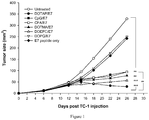
- various lipid adjuvants were formulated as liposomes with HPV Protein E7 peptide antigen RAHYNIVTF (SEQ. ID. NO: 1) (aka "E7").
- HPV Protein E7 peptide antigen RAHYNIVTF SEQ. ID. NO: 1
- Various cationic lipids included DOTAP, DOTMA, and DOEPC.
- An anionic lipid included DOPG.
- the traditional, well-known adjuvants CpG and complete Freund adjuvant (“CFA”) were also formulated with E7.
- the cationic lipid adjuvant formulations comprised cationic lipids (DOTAP, DOEPC and DOTMA) at 100 nmole dose composition of cationic lipid.
- the anionic lipid adjuvant formulation comprised DOPG.
- the traditional, well-known adjuvant formulations comprised well established strong adjuvants CFA or CpG ODN1826. Control groups included no treatment and e7 antigen only (i.e., no adjuvant).
- Subcutaneous HPV-positive tumors were established in mice by injecting 10 5 TC-1 cells into the flank of each mouse on day 0. On day 6, the mice received a single subcutaneous injection of the formulations in a 0.10 ml injection.
- mice receiving the CFA or the CpG formulation and the various the cationic lipid formulations all demonstrated effective inhibition of tumor growth compared to the control groups on day 26.
- Mice that received the anionic lipid formulation did not show tumor regression.
- Mice receiving the cationic lipid-based formulations DOTAP/E7, DOTMA/E7 and DOEPC/E7 formulations exhibited better anti-cancer activity (p ⁇ 0.01) compared to those formulated with the established adjuvant-based formulations CpG/E7 or CFA/E7.
- the vaccine formulation comprises cationic lipid nanoparticles and a peptide antigen assembly in a tubular structure.
- the exemplary cationic lipid in the present example is R-DOTAP and the exemplary antigen assembly is an HPV-16 E7 micelle.
- H-2D b restricted CTL epitope (amino acid 49-57, RAHYNIVTF [SEQ. ID. NO. 1]) derived from HPV 16 E7 protein was extended to amino acids 43-57, GQAEPDRAHYNIVTF, [SEQ. ID. No. 2].
- SEQ. ID. No. 2 was then further extended with the amino acids KSS, and a hydrophobic palmitoyl chain was attached to the elongated peptide.
- micelle or bilayer formation was effectively promoted (i.e., palmitoyl-KSSGQAEPDRAHYNIVTF [SEQ. ID. No. 3].
- SEQ. ID. No. 2 was observed to be a weak antigen when formulated and evaluated, similar to SEQ. ID. No. 1.
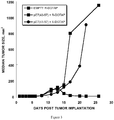
- peptide antigen Approximately 0.2-0.4mg/ml (0.1-0.2mM) of the peptide antigen was encapsulated into 2mg/ml (2.9mM) of the liposome nanoparticles comprising R-DOTAP, resulting in a weak immune responses and a lack of effective tumor regression (see Figure 2 ).
- formulating the peptide antigen sequence into a particulate structure comprised only of SEQ. ID. No. 3 allows higher doses of the antigen to be delivered compared to delivery via a cationic lipid adjuvant delivery system.
- an effective means of overcoming the weak antigenicity of the peptide can be obtained.
- Figure 3 shows an effective tumor regression in mice injected with Formulation 2.
- Negative stain scanning electron microscopy shows the presence of a mixture of an antigen assembly in tubular micelle structures and an adjuvant in spherical R-DOTAP liposome nanoparticles co-existing in the formulated vaccine mixture ( Figure 4 ).
- the present example demonstrates that a vaccine formulation comprising an adjuvant (e.g., R-DOTAP liposomal nanoparticles) and an antigen assembly (e.g., HPV E7 peptide antigen as micelle particles) can effectively promote tumor regression in an animal.
- an adjuvant e.g., R-DOTAP liposomal nanoparticles
- an antigen assembly e.g., HPV E7 peptide antigen as micelle particles
- IFN- ⁇ interferon-y
- CD8+ T-cells activated antigen-specific cytotoxic T-lymphocytes
- ELISPOT enzyme-linked immunosorbent spot
- the vaccine formulation comprises cationic lipid nanoparticles (e.g., R-DOTAP) and a peptide antigen assembly of various compositions and structures.
- Formulation 1 comprised the cationic lipid R-DOTAP adjuvant nanoparticles and utilized the well established HPV-16 E7 HLA-A2 antigenic human peptide antigen YMLDLQPETT [SEQ. ID. No. 4].
- SEQ. ID. No. 4 was modified by attaching 3 amino acids and palmitic acid to obtain the sequence palmitoyl-KSSYMLDLQPETT [SEQ. ID. No. 5].
- Particulate peptide structures were spontaneously formed according to the methods described herein.
- Formulation 1 contained an adjuvant of approximately 2.8mg/ml of R-DOTAP adjuvant nanoparticles and an antigen assembly of approximately 0.83mg/ml of SEQ. ID. No. 5 peptide.
- mice were injected with 0.1ml of Formulation 1 on days 0 and 7. The mice were sacrificed and splenocytes removed from each mouse for evaluation on day 14. The splenocytes were harvested from the immunized mice and seeded into wells of a 96-well plate (approximately 250,000 splenocytes per well). The individual wells were then exposed to peptide antigen YMLDLQPETT [SEQ. ID. No. 4] and the immune response was analyzed. Each spot that developed in the assay represents a single reactive splenocyte cell, and the readout of the analysis provides the number of spots formed on the 96-well plate.
- the ELISPOT assay provided a quantitative assay to effectively determine the resulting immune response to the antigen YMLDLQPETT.
- the results of the ELISPOT assay, demonstrating a high efficacy of Formulation 1, are shown in Table 1.
- Table 1 Immune Response as Measured by ELISPOT Formulation Number Peptide Antigen Sequence/Composition Resulting Antigen Particle Structure Average # of IFN- ⁇ Spots per 250,000 splenocytes #1 - Palmitoyl- KSSYMLDLQPETT Spherical 262.2 #2 - Palmitoyl-KSSMHGDTPTLHEYMLDLQPETT Tubular 122.4
- Formulation 2 comprised the cationic lipid R-DOTAP adjuvant nanoparticles and utilized a peptide that selected the first 20 amino acids from the N-terminus of the HPV-16 E7 protein. This peptide was modified to palmitoyl-KSSMHGDTPTLHEYMLDLQPETT [SEQ. ID. No. 6]. Particulate peptide structures were spontaneously formed according to the methods described herein. Formulation 2 contained an adjuvant of approximately 2.8mg/ml of R-DOTAP adjuvant nanoparticles and an antigen assembly of approximately 0.95mg/ml of SEQ. ID. No. 6 peptide.
- mice were injected with 0.1ml of Formulation 2 on days 0 and 7. The mice were sacrificed and splenocytes removed from each mouse for evaluation on day 14. Again, as shown in Table 1, a strong immune response was demonstrated in response to immunization with Formulation 2.
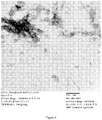
- Negative stain scanning electron microscopy showed the presence of a mixture of an antigen assembly in spherical micelle structures comprising palmitoyl-KSSYMLDLQPETT and an adjuvant comprising spherical R-DOTAP liposome nanoparticles (i.e. Formulation 1), co-existing in the formulated mixture (see Figure 5 ).
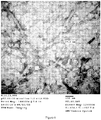
- Figure 6 shows an antigen assembly in tubular micelle structures comprising palmitoyl-KSSMHGDTPTLHEYMLDLQPETT and an adjuvant comprising spherical R-DOTAP liposome nanoparticles (i.e. Formulation 2), co-existing in the formulated mixture.
- Formulation 2 spherical R-DOTAP liposome nanoparticles
- ELIPSOT can be utilized to evaluate the efficacy of a vaccine formulation comprising cationic lipid nanoparticles and antigen assemblies.
- the vaccine formulation comprises cationic lipid nanoparticles (e.g., R-DOTAP) and a peptide antigen assembly comprising three peptide antigens.
- the formulation in the present example comprised the cationic lipid R-DOTAP adjuvant nanoparticles and an antigen assembly of a mixed micellar structure comprising three peptide antigens.
- An immune response to the peptide sequence YMLDLQPETT was evaluated.
- the mixed peptide particles were composed of SEQ. ID. No. 5, SEQ. ID. No. 6, and palmitoyl-KSSLLMGTLGIVCPICSQKP [SEQ. ID. No. 7].
- This formulation contained an adjuvant of approximately 2.8mg/ml of R-DOTAP adjuvant nanoparticles and an antigen assembly of approximately 1mg/mL of each peptide.
- mice were injected with 0.1ml of the formulation on days 0 and 7. The mice were sacrificed and splenocytes removed from each mouse for evaluation on day 14. As shown in Table 2, a strong immune response was demonstrated in response to immunization with this formulation.
- Table 2 Immune Response as Measured by ELISPOT Peptide Antigen Sequence/Composition Resulting Antigen Particle Structure Average # of IFN- ⁇ Spots per 250,000 splenocytes - Palmitoyl-KSSGQAEPDRAHYNIVTF, - Palmitoyl-KSSMHGDTPTLHEYMLDLQPETT, and - Palmitoyl-KSSLLMGTLGIVCPICSQKP Tubular 447.1
- the vaccine formulation comprises cationic lipid nanoparticles (e.g., R-DOTAP) and a peptide antigen assembly of melanoma antigens in a micellar structure.
- Formulation A comprised the cationic lipid R-DOTAP adjuvant nanoparticles and an antigen assembly encapsulating three melanoma antigens: gp100 (KVPRNQDWL [SEQ. ID. No. 8]), TRP2 (SYVDFFVWL [SEQ. ID. No. 9]), and p53 (KYICNSSCM [SEQ. ID. No. 10]).
- Formulation A contained an adjuvant of approximately 4.3mM of R-DOTAP adjuvant nanoparticles and approximately 0.25mM of gp100 peptide.
- micellar formulation In order to deliver larger amounts of gp100 antigen, a micellar formulation was developed.
- Formulation B comprised about 4.4mM of liposomal R-DOTAP encapsulated TRP2 and a micellar formulation of approximately 0.46mM of gp100.
- Micelles made from the modified antigen were prepared as described in Example 2. The effectiveness of the vaccines were evaluated in C57/BL6 mice by ELISPOT as described in Example 5.
- Figure 7 shows a greater than 20-fold increase in immune response to the formulation comprising gp100 antigen in a micellar formulation compared to gp100 antigen that was liposomally encapsulated.
- the immune response is believed to be enhanced due to the approximate doubling of the amount of gp100antigen delivered via the micellar formulation.
- Immune response using vaccine formulations comprising varying cationic lipid nanoparticles and varying antigen assemblies can be evaluated by ELISPOT.
- the vaccine formulations can be formulated using various cationic lipid nanoparticles (e.g., DOEPC or DOTMA) or the emulsion adjuvant Montanide.
- the vaccine formulations can be formulated using an antigen assembly in either a micellar structure or a liposomally encapsulated structure.
- the antigen assembly comprised the peptide antigen [SEQ. ID. No. 2] (0.11mM) and the cationic lipid adjuvant DOEPC (ImM).
- the antigen assembly comprised the modified peptide antigen [SEQ. ID. No. 3] (0.11mM) to enable micelle formation, and the cationic lipid adjuvant DOEPC (1mM).
- the antigen assembly comprised the peptide antigen [SEQ. ID. No. 2] (0.11mM) and the cationic lipid adjuvant DOTMA (ImM).
- the antigen assembly comprised the modified peptide antigen [SEQ. ID. No. 3] (0.11mM) and the cationic lipid adjuvant DOTMA (1mM).
- the antigen assembly comprised the peptide antigen [SEQ. ID. No. 2] (0.11mM) and the emulsion adjuvant Montanide.
- the antigen assembly comprised the modified peptide antigen [SEQ. ID. No. 3] (0.11mM) and the emulsion adjuvant Montanide.
- the antigen assembly comprised the unmodified peptide antigen [SEQ. ID. No. 2] the antigen assembly was formulated as liposomally encapsulated.
- the antigen assembly was formulated as micellar and was mixed with the adjuvant at a 1:1 ratio in order to maintain identical antigen and adjuvant content compared to the corresponding liposomal formulations.
- the liposomally encapsulated antigen assemblies and the micellar antigen assemblies were made according to the protocols of Example 1 and Example 2, respectively. Potency of the various vaccine formulations was evaluated by determining the antigen-specific immune response via ELISPOT.
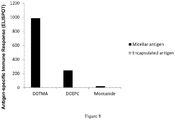
- Figure 8 shows the results of the present example. Identical doses of antigen and adjuvant lead to vastly superior antigen-specific immune responses when the antigen assembly is delivered in micellar form with a specific adjuvant. Importantly, the observed immune response is very weak when using antigen assembly delivered in the liposomally encapsulated form.
- the observed immune response is also dependent on the specific adjuvant administered with the micellar antigen as seen with DOTMA, DOEPC and Montanide.
- the DOTMA formulations demonstrated superior immune response to the DOEPC formulations, and both cationic lipid formulations were superior to the emulsion adjuvant Montanide.
Landscapes
- Health & Medical Sciences (AREA)
- Life Sciences & Earth Sciences (AREA)
- Chemical & Material Sciences (AREA)
- Animal Behavior & Ethology (AREA)
- Veterinary Medicine (AREA)
- Medicinal Chemistry (AREA)
- Public Health (AREA)
- General Health & Medical Sciences (AREA)
- Pharmacology & Pharmacy (AREA)
- Mycology (AREA)
- Immunology (AREA)
- Microbiology (AREA)
- Epidemiology (AREA)
- General Chemical & Material Sciences (AREA)
- Chemical Kinetics & Catalysis (AREA)
- Virology (AREA)
- Oncology (AREA)
- Organic Chemistry (AREA)
- Nuclear Medicine, Radiotherapy & Molecular Imaging (AREA)
- Medicines Containing Antibodies Or Antigens For Use As Internal Diagnostic Agents (AREA)
- Peptides Or Proteins (AREA)
Priority Applications (1)
| Application Number | Priority Date | Filing Date | Title |
|---|---|---|---|
| PL12831495T PL2755680T3 (pl) | 2011-09-12 | 2012-09-12 | Preparaty szczepionkowe w postaci cząstek |
Applications Claiming Priority (2)
| Application Number | Priority Date | Filing Date | Title |
|---|---|---|---|
| US201161533512P | 2011-09-12 | 2011-09-12 | |
| PCT/US2012/054786 WO2013039989A1 (en) | 2011-09-12 | 2012-09-12 | Particluate vaccine formulations |
Publications (3)
| Publication Number | Publication Date |
|---|---|
| EP2755680A1 EP2755680A1 (en) | 2014-07-23 |
| EP2755680A4 EP2755680A4 (en) | 2015-04-15 |
| EP2755680B1 true EP2755680B1 (en) | 2018-07-04 |
Family
ID=47883670
Family Applications (1)
| Application Number | Title | Priority Date | Filing Date |
|---|---|---|---|
| EP12831495.2A Active EP2755680B1 (en) | 2011-09-12 | 2012-09-12 | Particulate vaccine formulations |
Country Status (8)
| Country | Link |
|---|---|
| US (2) | US20150110823A1 (enExample) |
| EP (1) | EP2755680B1 (enExample) |
| JP (2) | JP6600459B2 (enExample) |
| CN (2) | CN104066444A (enExample) |
| ES (1) | ES2689799T3 (enExample) |
| PL (1) | PL2755680T3 (enExample) |
| TW (1) | TWI673062B (enExample) |
| WO (1) | WO2013039989A1 (enExample) |
Cited By (1)
| Publication number | Priority date | Publication date | Assignee | Title |
|---|---|---|---|---|
| WO2023203214A1 (en) | 2022-04-22 | 2023-10-26 | Universitat Autònoma De Barcelona | Immunogenic composition with protein micro- and nanoparticles |
Families Citing this family (12)
| Publication number | Priority date | Publication date | Assignee | Title |
|---|---|---|---|---|
| US8877206B2 (en) | 2007-03-22 | 2014-11-04 | Pds Biotechnology Corporation | Stimulation of an immune response by cationic lipids |
| AU2009236306B2 (en) | 2008-04-17 | 2015-04-02 | Pds Biotechnology Corporation | Stimulation of an immune response by enantiomers of cationic lipids |
| WO2013039989A1 (en) * | 2011-09-12 | 2013-03-21 | Pds Biotechnology Corporation | Particluate vaccine formulations |
| US10286064B2 (en) | 2012-06-15 | 2019-05-14 | Pds Biotechnology Corporation | Cationic lipid vaccine compositions and methods of use |
| AU2013317805B2 (en) | 2012-09-21 | 2018-07-26 | Pds Biotechnology Corporation | Improved vaccine compositions and methods of use |
| US11612652B2 (en) | 2015-11-13 | 2023-03-28 | Pds Biotechnology Corporation | Lipids as synthetic vectors to enhance antigen processing and presentation ex-vivo in dendritic cell therapy |
| WO2018067822A1 (en) * | 2016-10-05 | 2018-04-12 | Pds Biotechnology Corporation | Methods to alter the tumor microenvironment for effective cancer immunotherapy |
| CN119033925A (zh) * | 2016-10-05 | 2024-11-29 | Pds生物科技公司 | 新型hpv16非hla限制性t细胞疫苗、组合物及其使用方法 |
| TW201924722A (zh) | 2017-12-05 | 2019-07-01 | 美商Pds生技公司 | 用於刺激第i型干擾素基因之方法及包含陽離子脂質的組合物 |
| AU2020207087A1 (en) * | 2019-01-12 | 2021-08-12 | The Methodist Hospital | Self-assembled peptide nanoparticle and use thereof |
| WO2021085696A1 (ko) * | 2019-11-01 | 2021-05-06 | 한국과학기술원 | 작은 지질 나노 입자 및 이를 포함하는 암 백신 |
| WO2023145749A1 (ja) * | 2022-01-27 | 2023-08-03 | 一般財団法人阪大微生物病研究会 | 免疫賦活剤 |
Citations (1)
| Publication number | Priority date | Publication date | Assignee | Title |
|---|---|---|---|---|
| US20080248044A1 (en) * | 1999-06-03 | 2008-10-09 | Institut National De La Sante Et De La Recherche Medicale Inserm | Polyepitopic protein fragments of the e6 and e7 proteins of hpv, their production and their use particularly in vaccination |
Family Cites Families (16)
| Publication number | Priority date | Publication date | Assignee | Title |
|---|---|---|---|---|
| US6183745B1 (en) * | 1990-12-12 | 2001-02-06 | The University Of Queensland | Subunit papilloma virus vaccine and peptides for use therein |
| AUPM500494A0 (en) * | 1994-04-12 | 1994-05-05 | Minister For Agriculture & Rural Affairs For The State Of New South Wales, The | Composition for use in increasing mucosal immunity |
| JPH11510046A (ja) * | 1995-07-21 | 1999-09-07 | ローヌ−プーラン ローラー ファーマシューティカルズ インコーポレイテッド | アデノ関連ウイルスリポソーム及び樹状細胞をトランスフェクトして特異性免疫を刺激することにおけるそれらの使用 |
| WO2002060412A2 (en) * | 2001-02-01 | 2002-08-08 | Board Of Regents | Stabilised polymeric aerosols for pulmonary gene delivery |
| US20050031587A1 (en) * | 2002-10-04 | 2005-02-10 | Yamanouchi Pharmaceutical Co., Ltd. | Immune response induction method |
| WO2005037190A2 (en) * | 2003-09-03 | 2005-04-28 | Dendritherapeutics, Inc. | Multiplex vaccines |
| CN1559607A (zh) * | 2004-02-20 | 2005-01-05 | �й�ũҵ��ѧ | 一种核酸物质与蛋白质类组合物及其生产方法和在免疫调节中的应用 |
| US7303881B2 (en) * | 2004-04-30 | 2007-12-04 | Pds Biotechnology Corporation | Antigen delivery compositions and methods of use |
| DE102004057303A1 (de) * | 2004-11-26 | 2006-06-01 | Merck Patent Gmbh | Stabile Kristallmodifikationen von DOTAP Chlorid |
| WO2007022152A2 (en) * | 2005-08-15 | 2007-02-22 | The Research Foundation Of State University Of New York | Lipid nano particulates containing antigens as cancer vaccines |
| WO2007081447A2 (en) * | 2005-11-22 | 2007-07-19 | Novartis Vaccines And Diagnostics, Inc. | Norovirus and sapovirus antigens |
| JP2007238559A (ja) * | 2006-03-10 | 2007-09-20 | Nagoya City Univ | 未成熟樹状細胞活性化剤及びその使用 |
| US8877206B2 (en) * | 2007-03-22 | 2014-11-04 | Pds Biotechnology Corporation | Stimulation of an immune response by cationic lipids |
| AU2009236306B2 (en) * | 2008-04-17 | 2015-04-02 | Pds Biotechnology Corporation | Stimulation of an immune response by enantiomers of cationic lipids |
| WO2011109294A1 (en) * | 2010-03-01 | 2011-09-09 | Dicerna Pharmaceuticals, Inc. | Lipid delivery formulations |
| WO2013039989A1 (en) * | 2011-09-12 | 2013-03-21 | Pds Biotechnology Corporation | Particluate vaccine formulations |
-
2012
- 2012-09-12 WO PCT/US2012/054786 patent/WO2013039989A1/en not_active Ceased
- 2012-09-12 CN CN201280055234.5A patent/CN104066444A/zh active Pending
- 2012-09-12 JP JP2014529976A patent/JP6600459B2/ja active Active
- 2012-09-12 EP EP12831495.2A patent/EP2755680B1/en active Active
- 2012-09-12 PL PL12831495T patent/PL2755680T3/pl unknown
- 2012-09-12 ES ES12831495.2T patent/ES2689799T3/es active Active
- 2012-09-12 US US14/344,327 patent/US20150110823A1/en not_active Abandoned
- 2012-09-12 CN CN201910145079.XA patent/CN110075292A/zh active Pending
- 2012-09-12 TW TW101133392A patent/TWI673062B/zh not_active IP Right Cessation
-
2017
- 2017-11-13 JP JP2017218514A patent/JP2018065821A/ja active Pending
-
2019
- 2019-03-21 US US16/360,278 patent/US20190275145A1/en not_active Abandoned
Patent Citations (1)
| Publication number | Priority date | Publication date | Assignee | Title |
|---|---|---|---|---|
| US20080248044A1 (en) * | 1999-06-03 | 2008-10-09 | Institut National De La Sante Et De La Recherche Medicale Inserm | Polyepitopic protein fragments of the e6 and e7 proteins of hpv, their production and their use particularly in vaccination |
Non-Patent Citations (3)
| Title |
|---|
| E. KOKKOLI ET AL.: "Self-assembly and applications of biomimetic and bioactive peptide-amphiphiles", SOFT MATTER, vol. 2, 2006, pages 1015 - 1024 * |
| I.W. HAMLEY: "Self-assembly of amphiphilic peptides", SOFT MATTER, vol. 7, 2011, pages 4122 - 4138 * |
| ZHANG L ET AL: "Converting Peptides into Drug Leads by Lipidation", CURRENT MEDICINAL CHEMISTRY, vol. 19, no. 11, April 2012 (2012-04-01), pages 1602 - 1618, ISSN: 0929-8673(print) * |
Cited By (1)
| Publication number | Priority date | Publication date | Assignee | Title |
|---|---|---|---|---|
| WO2023203214A1 (en) | 2022-04-22 | 2023-10-26 | Universitat Autònoma De Barcelona | Immunogenic composition with protein micro- and nanoparticles |
Also Published As
| Publication number | Publication date |
|---|---|
| JP2014527965A (ja) | 2014-10-23 |
| TW201317001A (zh) | 2013-05-01 |
| EP2755680A4 (en) | 2015-04-15 |
| JP2018065821A (ja) | 2018-04-26 |
| CN104066444A (zh) | 2014-09-24 |
| PL2755680T3 (pl) | 2019-03-29 |
| JP6600459B2 (ja) | 2019-10-30 |
| WO2013039989A1 (en) | 2013-03-21 |
| ES2689799T3 (es) | 2018-11-15 |
| US20150110823A1 (en) | 2015-04-23 |
| TWI673062B (zh) | 2019-10-01 |
| EP2755680A1 (en) | 2014-07-23 |
| US20190275145A1 (en) | 2019-09-12 |
| CN110075292A (zh) | 2019-08-02 |
Similar Documents
| Publication | Publication Date | Title |
|---|---|---|
| US20190275145A1 (en) | Particulate vaccine formulations | |
| US11911465B2 (en) | Vaccine compositions and methods of use | |
| US12201685B2 (en) | Methods of modulating immune responses with cationic lipid vaccine compositions | |
| US20210308157A1 (en) | Stimulation of an immune response by enantiomers of cationic lipids |
Legal Events
| Date | Code | Title | Description |
|---|---|---|---|
| PUAI | Public reference made under article 153(3) epc to a published international application that has entered the european phase |
Free format text: ORIGINAL CODE: 0009012 |
|
| 17P | Request for examination filed |
Effective date: 20140320 |
|
| AK | Designated contracting states |
Kind code of ref document: A1 Designated state(s): AL AT BE BG CH CY CZ DE DK EE ES FI FR GB GR HR HU IE IS IT LI LT LU LV MC MK MT NL NO PL PT RO RS SE SI SK SM TR |
|
| RIN1 | Information on inventor provided before grant (corrected) |
Inventor name: JACOBSON, ERIC Inventor name: CONN, GREGORY Inventor name: JOHNSON, KENYA Inventor name: BEDU-ADDO, FRANK Inventor name: MERCER, CAROL |
|
| DAX | Request for extension of the european patent (deleted) | ||
| RA4 | Supplementary search report drawn up and despatched (corrected) |
Effective date: 20150316 |
|
| RIC1 | Information provided on ipc code assigned before grant |
Ipc: A61K 45/00 20060101ALI20150310BHEP Ipc: A61K 39/00 20060101AFI20150310BHEP |
|
| 17Q | First examination report despatched |
Effective date: 20151217 |
|
| STAA | Information on the status of an ep patent application or granted ep patent |
Free format text: STATUS: EXAMINATION IS IN PROGRESS |
|
| GRAP | Despatch of communication of intention to grant a patent |
Free format text: ORIGINAL CODE: EPIDOSNIGR1 |
|
| STAA | Information on the status of an ep patent application or granted ep patent |
Free format text: STATUS: GRANT OF PATENT IS INTENDED |
|
| INTG | Intention to grant announced |
Effective date: 20180216 |
|
| GRAS | Grant fee paid |
Free format text: ORIGINAL CODE: EPIDOSNIGR3 |
|
| GRAA | (expected) grant |
Free format text: ORIGINAL CODE: 0009210 |
|
| STAA | Information on the status of an ep patent application or granted ep patent |
Free format text: STATUS: THE PATENT HAS BEEN GRANTED |
|
| AK | Designated contracting states |
Kind code of ref document: B1 Designated state(s): AL AT BE BG CH CY CZ DE DK EE ES FI FR GB GR HR HU IE IS IT LI LT LU LV MC MK MT NL NO PL PT RO RS SE SI SK SM TR |
|
| REG | Reference to a national code |
Ref country code: GB Ref legal event code: FG4D |
|
| REG | Reference to a national code |
Ref country code: CH Ref legal event code: EP |
|
| REG | Reference to a national code |
Ref country code: AT Ref legal event code: REF Ref document number: 1013784 Country of ref document: AT Kind code of ref document: T Effective date: 20180715 |
|
| REG | Reference to a national code |
Ref country code: IE Ref legal event code: FG4D |
|
| REG | Reference to a national code |
Ref country code: DE Ref legal event code: R096 Ref document number: 602012048192 Country of ref document: DE |
|
| REG | Reference to a national code |
Ref country code: FR Ref legal event code: PLFP Year of fee payment: 7 |
|
| REG | Reference to a national code |
Ref country code: NL Ref legal event code: FP |
|
| REG | Reference to a national code |
Ref country code: CH Ref legal event code: NV Representative=s name: VOSSIUS AND PARTNER PATENTANWAELTE RECHTSANWAE, CH |
|
| REG | Reference to a national code |
Ref country code: SE Ref legal event code: TRGR |
|
| REG | Reference to a national code |
Ref country code: ES Ref legal event code: FG2A Ref document number: 2689799 Country of ref document: ES Kind code of ref document: T3 Effective date: 20181115 |
|
| REG | Reference to a national code |
Ref country code: LT Ref legal event code: MG4D |
|
| REG | Reference to a national code |
Ref country code: AT Ref legal event code: MK05 Ref document number: 1013784 Country of ref document: AT Kind code of ref document: T Effective date: 20180704 |
|
| PG25 | Lapsed in a contracting state [announced via postgrant information from national office to epo] |
Ref country code: CZ Free format text: LAPSE BECAUSE OF FAILURE TO SUBMIT A TRANSLATION OF THE DESCRIPTION OR TO PAY THE FEE WITHIN THE PRESCRIBED TIME-LIMIT Effective date: 20180704 Ref country code: FI Free format text: LAPSE BECAUSE OF FAILURE TO SUBMIT A TRANSLATION OF THE DESCRIPTION OR TO PAY THE FEE WITHIN THE PRESCRIBED TIME-LIMIT Effective date: 20180704 Ref country code: AT Free format text: LAPSE BECAUSE OF FAILURE TO SUBMIT A TRANSLATION OF THE DESCRIPTION OR TO PAY THE FEE WITHIN THE PRESCRIBED TIME-LIMIT Effective date: 20180704 Ref country code: BG Free format text: LAPSE BECAUSE OF FAILURE TO SUBMIT A TRANSLATION OF THE DESCRIPTION OR TO PAY THE FEE WITHIN THE PRESCRIBED TIME-LIMIT Effective date: 20181004 Ref country code: IS Free format text: LAPSE BECAUSE OF FAILURE TO SUBMIT A TRANSLATION OF THE DESCRIPTION OR TO PAY THE FEE WITHIN THE PRESCRIBED TIME-LIMIT Effective date: 20181104 Ref country code: LT Free format text: LAPSE BECAUSE OF FAILURE TO SUBMIT A TRANSLATION OF THE DESCRIPTION OR TO PAY THE FEE WITHIN THE PRESCRIBED TIME-LIMIT Effective date: 20180704 Ref country code: NO Free format text: LAPSE BECAUSE OF FAILURE TO SUBMIT A TRANSLATION OF THE DESCRIPTION OR TO PAY THE FEE WITHIN THE PRESCRIBED TIME-LIMIT Effective date: 20181004 Ref country code: GR Free format text: LAPSE BECAUSE OF FAILURE TO SUBMIT A TRANSLATION OF THE DESCRIPTION OR TO PAY THE FEE WITHIN THE PRESCRIBED TIME-LIMIT Effective date: 20181005 Ref country code: RS Free format text: LAPSE BECAUSE OF FAILURE TO SUBMIT A TRANSLATION OF THE DESCRIPTION OR TO PAY THE FEE WITHIN THE PRESCRIBED TIME-LIMIT Effective date: 20180704 |
|
| PG25 | Lapsed in a contracting state [announced via postgrant information from national office to epo] |
Ref country code: HR Free format text: LAPSE BECAUSE OF FAILURE TO SUBMIT A TRANSLATION OF THE DESCRIPTION OR TO PAY THE FEE WITHIN THE PRESCRIBED TIME-LIMIT Effective date: 20180704 Ref country code: LV Free format text: LAPSE BECAUSE OF FAILURE TO SUBMIT A TRANSLATION OF THE DESCRIPTION OR TO PAY THE FEE WITHIN THE PRESCRIBED TIME-LIMIT Effective date: 20180704 Ref country code: AL Free format text: LAPSE BECAUSE OF FAILURE TO SUBMIT A TRANSLATION OF THE DESCRIPTION OR TO PAY THE FEE WITHIN THE PRESCRIBED TIME-LIMIT Effective date: 20180704 |
|
| REG | Reference to a national code |
Ref country code: DE Ref legal event code: R097 Ref document number: 602012048192 Country of ref document: DE |
|
| PG25 | Lapsed in a contracting state [announced via postgrant information from national office to epo] |
Ref country code: EE Free format text: LAPSE BECAUSE OF FAILURE TO SUBMIT A TRANSLATION OF THE DESCRIPTION OR TO PAY THE FEE WITHIN THE PRESCRIBED TIME-LIMIT Effective date: 20180704 Ref country code: RO Free format text: LAPSE BECAUSE OF FAILURE TO SUBMIT A TRANSLATION OF THE DESCRIPTION OR TO PAY THE FEE WITHIN THE PRESCRIBED TIME-LIMIT Effective date: 20180704 Ref country code: MC Free format text: LAPSE BECAUSE OF FAILURE TO SUBMIT A TRANSLATION OF THE DESCRIPTION OR TO PAY THE FEE WITHIN THE PRESCRIBED TIME-LIMIT Effective date: 20180704 |
|
| PLBE | No opposition filed within time limit |
Free format text: ORIGINAL CODE: 0009261 |
|
| STAA | Information on the status of an ep patent application or granted ep patent |
Free format text: STATUS: NO OPPOSITION FILED WITHIN TIME LIMIT |
|
| PG25 | Lapsed in a contracting state [announced via postgrant information from national office to epo] |
Ref country code: SM Free format text: LAPSE BECAUSE OF FAILURE TO SUBMIT A TRANSLATION OF THE DESCRIPTION OR TO PAY THE FEE WITHIN THE PRESCRIBED TIME-LIMIT Effective date: 20180704 Ref country code: DK Free format text: LAPSE BECAUSE OF FAILURE TO SUBMIT A TRANSLATION OF THE DESCRIPTION OR TO PAY THE FEE WITHIN THE PRESCRIBED TIME-LIMIT Effective date: 20180704 Ref country code: SK Free format text: LAPSE BECAUSE OF FAILURE TO SUBMIT A TRANSLATION OF THE DESCRIPTION OR TO PAY THE FEE WITHIN THE PRESCRIBED TIME-LIMIT Effective date: 20180704 |
|
| 26N | No opposition filed |
Effective date: 20190405 |
|
| PG25 | Lapsed in a contracting state [announced via postgrant information from national office to epo] |
Ref country code: LU Free format text: LAPSE BECAUSE OF NON-PAYMENT OF DUE FEES Effective date: 20180912 |
|
| PG25 | Lapsed in a contracting state [announced via postgrant information from national office to epo] |
Ref country code: SI Free format text: LAPSE BECAUSE OF FAILURE TO SUBMIT A TRANSLATION OF THE DESCRIPTION OR TO PAY THE FEE WITHIN THE PRESCRIBED TIME-LIMIT Effective date: 20180704 |
|
| PG25 | Lapsed in a contracting state [announced via postgrant information from national office to epo] |
Ref country code: MT Free format text: LAPSE BECAUSE OF NON-PAYMENT OF DUE FEES Effective date: 20180912 |
|
| PG25 | Lapsed in a contracting state [announced via postgrant information from national office to epo] |
Ref country code: TR Free format text: LAPSE BECAUSE OF FAILURE TO SUBMIT A TRANSLATION OF THE DESCRIPTION OR TO PAY THE FEE WITHIN THE PRESCRIBED TIME-LIMIT Effective date: 20180704 |
|
| PG25 | Lapsed in a contracting state [announced via postgrant information from national office to epo] |
Ref country code: HU Free format text: LAPSE BECAUSE OF FAILURE TO SUBMIT A TRANSLATION OF THE DESCRIPTION OR TO PAY THE FEE WITHIN THE PRESCRIBED TIME-LIMIT; INVALID AB INITIO Effective date: 20120912 Ref country code: PT Free format text: LAPSE BECAUSE OF FAILURE TO SUBMIT A TRANSLATION OF THE DESCRIPTION OR TO PAY THE FEE WITHIN THE PRESCRIBED TIME-LIMIT Effective date: 20180704 |
|
| PG25 | Lapsed in a contracting state [announced via postgrant information from national office to epo] |
Ref country code: MK Free format text: LAPSE BECAUSE OF NON-PAYMENT OF DUE FEES Effective date: 20180704 Ref country code: CY Free format text: LAPSE BECAUSE OF FAILURE TO SUBMIT A TRANSLATION OF THE DESCRIPTION OR TO PAY THE FEE WITHIN THE PRESCRIBED TIME-LIMIT Effective date: 20180704 |
|
| P01 | Opt-out of the competence of the unified patent court (upc) registered |
Effective date: 20230426 |
|
| PGFP | Annual fee paid to national office [announced via postgrant information from national office to epo] |
Ref country code: NL Payment date: 20250820 Year of fee payment: 14 |
|
| REG | Reference to a national code |
Ref country code: CH Ref legal event code: U11 Free format text: ST27 STATUS EVENT CODE: U-0-0-U10-U11 (AS PROVIDED BY THE NATIONAL OFFICE) Effective date: 20251001 |
|
| PGFP | Annual fee paid to national office [announced via postgrant information from national office to epo] |
Ref country code: DE Payment date: 20250820 Year of fee payment: 14 |
|
| PGFP | Annual fee paid to national office [announced via postgrant information from national office to epo] |
Ref country code: PL Payment date: 20250825 Year of fee payment: 14 Ref country code: IT Payment date: 20250820 Year of fee payment: 14 |
|
| PGFP | Annual fee paid to national office [announced via postgrant information from national office to epo] |
Ref country code: BE Payment date: 20250820 Year of fee payment: 14 Ref country code: GB Payment date: 20250822 Year of fee payment: 14 |
|
| PGFP | Annual fee paid to national office [announced via postgrant information from national office to epo] |
Ref country code: FR Payment date: 20250821 Year of fee payment: 14 |
|
| PGFP | Annual fee paid to national office [announced via postgrant information from national office to epo] |
Ref country code: SE Payment date: 20250820 Year of fee payment: 14 |
|
| PGFP | Annual fee paid to national office [announced via postgrant information from national office to epo] |
Ref country code: IE Payment date: 20250822 Year of fee payment: 14 |
|
| PGFP | Annual fee paid to national office [announced via postgrant information from national office to epo] |
Ref country code: CH Payment date: 20251001 Year of fee payment: 14 |
|
| PGFP | Annual fee paid to national office [announced via postgrant information from national office to epo] |
Ref country code: ES Payment date: 20251001 Year of fee payment: 14 |