EP2747588B1 - Scavenging oxygen - Google Patents
Scavenging oxygen Download PDFInfo
- Publication number
- EP2747588B1 EP2747588B1 EP12756543.0A EP12756543A EP2747588B1 EP 2747588 B1 EP2747588 B1 EP 2747588B1 EP 12756543 A EP12756543 A EP 12756543A EP 2747588 B1 EP2747588 B1 EP 2747588B1
- Authority
- EP
- European Patent Office
- Prior art keywords
- catalyst
- less
- closure
- layer
- oss
- Prior art date
- Legal status (The legal status is an assumption and is not a legal conclusion. Google has not performed a legal analysis and makes no representation as to the accuracy of the status listed.)
- Active
Links
Images

Classifications
-
- A—HUMAN NECESSITIES
- A23—FOODS OR FOODSTUFFS; TREATMENT THEREOF, NOT COVERED BY OTHER CLASSES
- A23B—PRESERVATION OF FOODS, FOODSTUFFS OR NON-ALCOHOLIC BEVERAGES; CHEMICAL RIPENING OF FRUIT OR VEGETABLES
- A23B2/00—Preservation of foods or foodstuffs, in general
- A23B2/70—Preservation of foods or foodstuffs, in general by treatment with chemicals
- A23B2/704—Preservation of foods or foodstuffs, in general by treatment with chemicals in the form of gases, e.g. fumigation; Compositions or apparatus therefor
- A23B2/708—Preservation of foods or foodstuffs, in general by treatment with chemicals in the form of gases, e.g. fumigation; Compositions or apparatus therefor in a controlled atmosphere, e.g. partial vacuum, comprising only CO2, N2, O2 or H2O
- A23B2/712—Preservation of foods or foodstuffs, in general by treatment with chemicals in the form of gases, e.g. fumigation; Compositions or apparatus therefor in a controlled atmosphere, e.g. partial vacuum, comprising only CO2, N2, O2 or H2O in which an absorbent is placed or used
- A23B2/717—Oxygen absorbent
-
- A—HUMAN NECESSITIES
- A23—FOODS OR FOODSTUFFS; TREATMENT THEREOF, NOT COVERED BY OTHER CLASSES
- A23B—PRESERVATION OF FOODS, FOODSTUFFS OR NON-ALCOHOLIC BEVERAGES; CHEMICAL RIPENING OF FRUIT OR VEGETABLES
- A23B70/00—Preservation of non-alcoholic beverages
-
- A—HUMAN NECESSITIES
- A23—FOODS OR FOODSTUFFS; TREATMENT THEREOF, NOT COVERED BY OTHER CLASSES
- A23B—PRESERVATION OF FOODS, FOODSTUFFS OR NON-ALCOHOLIC BEVERAGES; CHEMICAL RIPENING OF FRUIT OR VEGETABLES
- A23B70/00—Preservation of non-alcoholic beverages
- A23B70/10—Preservation of non-alcoholic beverages by addition of preservatives
-
- B—PERFORMING OPERATIONS; TRANSPORTING
- B65—CONVEYING; PACKING; STORING; HANDLING THIN OR FILAMENTARY MATERIAL
- B65D—CONTAINERS FOR STORAGE OR TRANSPORT OF ARTICLES OR MATERIALS, e.g. BAGS, BARRELS, BOTTLES, BOXES, CANS, CARTONS, CRATES, DRUMS, JARS, TANKS, HOPPERS, FORWARDING CONTAINERS; ACCESSORIES, CLOSURES, OR FITTINGS THEREFOR; PACKAGING ELEMENTS; PACKAGES
- B65D51/00—Closures not otherwise provided for
- B65D51/24—Closures not otherwise provided for combined or co-operating with auxiliary devices for non-closing purposes
- B65D51/244—Closures not otherwise provided for combined or co-operating with auxiliary devices for non-closing purposes provided with oxygen absorbers
-
- B—PERFORMING OPERATIONS; TRANSPORTING
- B65—CONVEYING; PACKING; STORING; HANDLING THIN OR FILAMENTARY MATERIAL
- B65D—CONTAINERS FOR STORAGE OR TRANSPORT OF ARTICLES OR MATERIALS, e.g. BAGS, BARRELS, BOTTLES, BOXES, CANS, CARTONS, CRATES, DRUMS, JARS, TANKS, HOPPERS, FORWARDING CONTAINERS; ACCESSORIES, CLOSURES, OR FITTINGS THEREFOR; PACKAGING ELEMENTS; PACKAGES
- B65D81/00—Containers, packaging elements, or packages, for contents presenting particular transport or storage problems, or adapted to be used for non-packaging purposes after removal of contents
- B65D81/24—Adaptations for preventing deterioration or decay of contents; Applications to the container or packaging material of food preservatives, fungicides, pesticides or animal repellants
- B65D81/26—Adaptations for preventing deterioration or decay of contents; Applications to the container or packaging material of food preservatives, fungicides, pesticides or animal repellants with provision for draining away, or absorbing, or removing by ventilation, fluids, e.g. exuded by contents; Applications of corrosion inhibitors or desiccators
-
- B—PERFORMING OPERATIONS; TRANSPORTING
- B65—CONVEYING; PACKING; STORING; HANDLING THIN OR FILAMENTARY MATERIAL
- B65D—CONTAINERS FOR STORAGE OR TRANSPORT OF ARTICLES OR MATERIALS, e.g. BAGS, BARRELS, BOTTLES, BOXES, CANS, CARTONS, CRATES, DRUMS, JARS, TANKS, HOPPERS, FORWARDING CONTAINERS; ACCESSORIES, CLOSURES, OR FITTINGS THEREFOR; PACKAGING ELEMENTS; PACKAGES
- B65D81/00—Containers, packaging elements, or packages, for contents presenting particular transport or storage problems, or adapted to be used for non-packaging purposes after removal of contents
- B65D81/24—Adaptations for preventing deterioration or decay of contents; Applications to the container or packaging material of food preservatives, fungicides, pesticides or animal repellants
- B65D81/26—Adaptations for preventing deterioration or decay of contents; Applications to the container or packaging material of food preservatives, fungicides, pesticides or animal repellants with provision for draining away, or absorbing, or removing by ventilation, fluids, e.g. exuded by contents; Applications of corrosion inhibitors or desiccators
- B65D81/266—Adaptations for preventing deterioration or decay of contents; Applications to the container or packaging material of food preservatives, fungicides, pesticides or animal repellants with provision for draining away, or absorbing, or removing by ventilation, fluids, e.g. exuded by contents; Applications of corrosion inhibitors or desiccators for absorbing gases, e.g. oxygen absorbers or desiccants
-
- C—CHEMISTRY; METALLURGY
- C12—BIOCHEMISTRY; BEER; SPIRITS; WINE; VINEGAR; MICROBIOLOGY; ENZYMOLOGY; MUTATION OR GENETIC ENGINEERING
- C12H—PASTEURISATION, STERILISATION, PRESERVATION, PURIFICATION, CLARIFICATION OR AGEING OF ALCOHOLIC BEVERAGES; METHODS FOR ALTERING THE ALCOHOL CONTENT OF FERMENTED SOLUTIONS OR ALCOHOLIC BEVERAGES
- C12H1/00—Pasteurisation, sterilisation, preservation, purification, clarification, or ageing of alcoholic beverages
- C12H1/12—Pasteurisation, sterilisation, preservation, purification, clarification, or ageing of alcoholic beverages without precipitation
- C12H1/14—Pasteurisation, sterilisation, preservation, purification, clarification, or ageing of alcoholic beverages without precipitation with non-precipitating compounds, e.g. sulfiting; Sequestration, e.g. with chelate-producing compounds
-
- A—HUMAN NECESSITIES
- A23—FOODS OR FOODSTUFFS; TREATMENT THEREOF, NOT COVERED BY OTHER CLASSES
- A23V—INDEXING SCHEME RELATING TO FOODS, FOODSTUFFS OR NON-ALCOHOLIC BEVERAGES AND LACTIC OR PROPIONIC ACID BACTERIA USED IN FOODSTUFFS OR FOOD PREPARATION
- A23V2002/00—Food compositions, function of food ingredients or processes for food or foodstuffs
-
- Y—GENERAL TAGGING OF NEW TECHNOLOGICAL DEVELOPMENTS; GENERAL TAGGING OF CROSS-SECTIONAL TECHNOLOGIES SPANNING OVER SEVERAL SECTIONS OF THE IPC; TECHNICAL SUBJECTS COVERED BY FORMER USPC CROSS-REFERENCE ART COLLECTIONS [XRACs] AND DIGESTS
- Y02—TECHNOLOGIES OR APPLICATIONS FOR MITIGATION OR ADAPTATION AGAINST CLIMATE CHANGE
- Y02E—REDUCTION OF GREENHOUSE GAS [GHG] EMISSIONS, RELATED TO ENERGY GENERATION, TRANSMISSION OR DISTRIBUTION
- Y02E60/00—Enabling technologies; Technologies with a potential or indirect contribution to GHG emissions mitigation
- Y02E60/30—Hydrogen technology
- Y02E60/36—Hydrogen production from non-carbon containing sources, e.g. by water electrolysis
-
- Y—GENERAL TAGGING OF NEW TECHNOLOGICAL DEVELOPMENTS; GENERAL TAGGING OF CROSS-SECTIONAL TECHNOLOGIES SPANNING OVER SEVERAL SECTIONS OF THE IPC; TECHNICAL SUBJECTS COVERED BY FORMER USPC CROSS-REFERENCE ART COLLECTIONS [XRACs] AND DIGESTS
- Y10—TECHNICAL SUBJECTS COVERED BY FORMER USPC
- Y10T—TECHNICAL SUBJECTS COVERED BY FORMER US CLASSIFICATION
- Y10T428/00—Stock material or miscellaneous articles
- Y10T428/12—All metal or with adjacent metals
- Y10T428/12014—All metal or with adjacent metals having metal particles
- Y10T428/12028—Composite; i.e., plural, adjacent, spatially distinct metal components [e.g., layers, etc.]
-
- Y—GENERAL TAGGING OF NEW TECHNOLOGICAL DEVELOPMENTS; GENERAL TAGGING OF CROSS-SECTIONAL TECHNOLOGIES SPANNING OVER SEVERAL SECTIONS OF THE IPC; TECHNICAL SUBJECTS COVERED BY FORMER USPC CROSS-REFERENCE ART COLLECTIONS [XRACs] AND DIGESTS
- Y10—TECHNICAL SUBJECTS COVERED BY FORMER USPC
- Y10T—TECHNICAL SUBJECTS COVERED BY FORMER US CLASSIFICATION
- Y10T428/00—Stock material or miscellaneous articles
- Y10T428/13—Hollow or container type article [e.g., tube, vase, etc.]
-
- Y—GENERAL TAGGING OF NEW TECHNOLOGICAL DEVELOPMENTS; GENERAL TAGGING OF CROSS-SECTIONAL TECHNOLOGIES SPANNING OVER SEVERAL SECTIONS OF THE IPC; TECHNICAL SUBJECTS COVERED BY FORMER USPC CROSS-REFERENCE ART COLLECTIONS [XRACs] AND DIGESTS
- Y10—TECHNICAL SUBJECTS COVERED BY FORMER USPC
- Y10T—TECHNICAL SUBJECTS COVERED BY FORMER US CLASSIFICATION
- Y10T428/00—Stock material or miscellaneous articles
- Y10T428/24—Structurally defined web or sheet [e.g., overall dimension, etc.]
- Y10T428/24942—Structurally defined web or sheet [e.g., overall dimension, etc.] including components having same physical characteristic in differing degree
- Y10T428/2495—Thickness [relative or absolute]
- Y10T428/24967—Absolute thicknesses specified
-
- Y—GENERAL TAGGING OF NEW TECHNOLOGICAL DEVELOPMENTS; GENERAL TAGGING OF CROSS-SECTIONAL TECHNOLOGIES SPANNING OVER SEVERAL SECTIONS OF THE IPC; TECHNICAL SUBJECTS COVERED BY FORMER USPC CROSS-REFERENCE ART COLLECTIONS [XRACs] AND DIGESTS
- Y10—TECHNICAL SUBJECTS COVERED BY FORMER USPC
- Y10T—TECHNICAL SUBJECTS COVERED BY FORMER US CLASSIFICATION
- Y10T428/00—Stock material or miscellaneous articles
- Y10T428/31504—Composite [nonstructural laminate]
- Y10T428/31855—Of addition polymer from unsaturated monomers
- Y10T428/31909—Next to second addition polymer from unsaturated monomers
- Y10T428/31928—Ester, halide or nitrile of addition polymer
Definitions
- Both the first and second evolution ratios may apply.
- the first, second and third evolution ratios apply.
- said control means comprises a material, for example a polymeric material, which has a water vapour permeability (g.mm/m 2 .day) which is the same or less than the water vapour permeability of said matrix material (preferably a said polymeric matrix material present in the greatest amount if more than one polymeric matrix material is included in said matrix) of said hydrogen generating means.
- the ratio of the water vapour permeability of the material, for example polymeric material, of said control means to the water vapour permeability of a said matrix material (preferably a said polymeric matrix material present in the greatest amount if more than one polymeric matrix material is included in said matrix) of said hydrogen generating means may be 1 or less, preferably 0.75 or less, more preferably 0.5 or less.
- Said control means may comprise a layer of material, for example polymeric material, having a water vapour permeability of less than 5.0 g.mm/m 2 .day, suitably less than 4.0 g.mm/m 2 .day, preferably less than 3.0 g.mm/m 2 .day, more preferably less than 2.0 g.mm/m 2 .day.
- Said OSS may include less than 0.15 ⁇ g, preferably less than 0.10 ⁇ g, more preferably less than 0.08 ⁇ g, especially less than 0.06 ⁇ g of catalyst per unit of said sum-vol in mm 3 .
- said first or second layers may include 0.00000050g to 0.000040g, preferably 0.0000010g to 0.000020g of catalyst.
- At least one of said first or second layers (preferably both the first and second layers) may include less than 100ppm, less than 80ppm or less than 60ppm of said catalyst.
- Said first layer preferably includes at least some of said catalyst.
- Said first layer suitably includes at least 50 wt%, preferably at least 70 wt%, especially at least 90 wt% of the total amount of catalyst in said OSS.
- Said catalyst-containing structure suitably has a surface area which is exposed to the inside of a container body, in use.
- Said surface area may be less than 5000mm 2 , less than 4000mm 2 or less than 3000mm 2 . It may be less than 1500mm 2 , suitably less than 1200mm 2 , more preferably less than 900mm 2 . In some cases, the surface area may be less than 800mm 2 or less than 700mm 2 .
- the surface area is suitably greater than 150mm 2 , preferably greater than 300mm 2 , more preferably greater than 400mm 2 .
- the maximum thickness of said catalyst-containing structure measured in a direction which is perpendicular to the maximum dimension (e.g. diameter) of the structure, is suitably less than 4mm, preferably less than 3mm, more preferably less than 2.5mm.
- the minimum thickness measured as aforesaid may be at least 0.10mm, suitably at least 0.20mm.
- said catalyst-containing structure suitably incorporates said first volume.
- an additional layer or layers may be provided between said first and second layer, wherein said additional layer(s) may act as tie layers.
- Said first layer may be closer to the contents of the container body in use, than said second layer. Said first layer may overlie said second layer. Said second layer may be encapsulated, at least in part by said first layer. Said second layer is preferably not exposed to the inside of a container body in use.
- Said catalyst is selected to catalyse the reaction between molecular hydrogen and molecular oxygen, to produce water.
- a large number of catalysts are known to catalyze the reaction of hydrogen with oxygen, including many transition metals, metal borides (such as nickel boride), metal carbides (such as titanium carbide), metal nitrides (such as titanium nitride), and transition metal salts and complexes.
- Group VIII metals are particularly efficacious.
- palladium and platinum are especially preferred because of their low toxicity and extreme efficiency in catalyzing the conversion of hydrogen and oxygen to water with little or no byproduct formation.
- the catalyst is preferably a redox catalyst.
- references to catalyst for catalysing a reaction between hydrogen and oxygen refer to all such catalysts, even if different types of such catalyst are included in said closure.
- said closure includes a single type of catalyst.
- the hydrogen generating means includes a matrix material with which said active material is associated and preferably the ratio of the weight of active material to matrix material may be at least 0.01, preferably at least 0.02.
- the matrix comprises a polymeric matrix and said active material is dispersed therein.
- the rate of release of hydrogen is limited by the permeation rate of water into the polymeric matrix and/or by the solubility of water in the chosen matrix.
- selection of polymeric materials based on the permeability or solubility of water in the polymer allows one to control the rate of release of molecular hydrogen from active materials.
- the rate determining step for release of hydrogen may be determined by properties of said control means, as described herein.
- the matrix may include at least 1 wt% of active material, preferably at least 2 wt%.
- the matrix may include less than 70 wt% of active material.
- the matrix includes 1-60 wt%, preferably 2-40 wt% of active material, more preferably 4-30 wt% of active material.
- the balance of material in the matrix may predominantly comprise a said polymeric material. It may include other additives, for example fillers (e.g. oils) and materials to make the appearance of the matrix appear more visually uniform.
- Said active material may comprise a metal and/or a hydride.
- a said metal may be selected from sodium, lithium, potassium, magnesium, zinc or aluminum.
- a hydride may be inorganic, for example it may comprise a metal hydride or borohydride; or it may be organic.
- Active materials suitable for the release of molecular hydrogen as a result of contact with water include but are not limited to: sodium metal, lithium metal, potassium metal, calcium metal, sodium hydride, lithium hydride, potassium hydride, calcium hydride, magnesium hydride, sodium borohydride, and lithium borohydride. While in a free state, all of these substances react very rapidly with water; however, once embedded into a polymeric matrix, the rate of reaction proceeds with a half-life measured in weeks to months, for example when stored at ambient temperature.
- active substances may include organic hydrides such as tetramethyl disiloxane and trimethyl tin hydride, as well as metals such as magnesium, zinc, or aluminum.
- organic hydrides such as tetramethyl disiloxane and trimethyl tin hydride
- metals such as magnesium, zinc, or aluminum.
- hydrolysis catalysts and/or agents are explicitly contemplated.
- the rate of hydrolysis of silicon hydrides may be enhanced by the use of hydroxide or fluoride ions, transition metal salts, or noble metal catalysts.
- the active material may also be the polymeric matrix.
- polymeric silicon hydrides such as poly(methylhydro)siloxane provide both a polymeric matrix and an active substance capable of releasing molecular hydrogen when in contact with moisture.
- suitable active substances for incorporation into a polymeric matrix can be based on a number of criteria, including but not limited to cost per kilogram, grams of H 2 generated per gram of active substance, thermal and oxidative stability of the active substance, perceived toxicity of the material and its reaction byproducts, and ease of handling prior to incorporation into a polymeric matrix.
- suitable active substances hydrides are preferred; sodium borohydride is exemplary because it is commercially available, thermally stable, of relatively low cost, has a low equivalent molecular weight, and produces innocuous byproducts (sodium metaborate).
- said OSS is a part of a closure for a container body, the closure comprising:
- Said closure preferably includes a first closure area which is the area defined within a perimeter of the closure which perimeter extends around an opening in a container body in use, to close the opening.
- Said closure may include less than 0.10 ⁇ g (e.g. less than 0.08 ⁇ g or less than 0.06 ⁇ g) of catalyst per unit area in (mm 2 ) of said first closure area.
- the closure may include at least 0.01 ⁇ g, for example at least 0.02 ⁇ g of catalyst per unit area (in mm 2 ) of said first closure area.
- Said closure preferably includes an endless seal means which is arranged to engage a container body for sealing the closure to the container body.
- a second closure area is defined by an innermost perimeter of the endless seal means.
- the closure area is the area within the sealing well 46.
- Said closure may include less than 0.10 ⁇ g (e.g. less than 0.08 ⁇ g or less than 0.06 ⁇ g) of catalyst per unit area (in mm 2 ) of said second closure area.
- the closure may include at least 0.01 ⁇ g, for example at least 0.02 ⁇ g of catalyst per unit area (in mm 2 ) of said second closure area.
- Said closure may include less than 0.000200g, preferably less than 0.000150g, more preferably less than 0.000100g of catalyst.
- said closure may include less than 0.000040g, suitably less than 0.000035g, preferably less than 0.000030g, more preferably less than 0.000025g, especially less than 0.000020g of catalyst.
- the closure may include less than 0.000015g, less than 0.000010g or even less than 0.000008g of catalyst.
- Said closure may include at least 0.00000050g or at least 0.0000010g of catalyst.
- Said closure may include less than 10ppm, suitably less than 8ppm, preferably less than 6ppm, more preferably less than 5ppm of catalyst, based on the total weight of said closure.
- Said closure may include at least 1ppm of catalyst.
- the closures as described may be of different sizes (e.g. diameters) and thereby arranged to be secured to container bodies of different sizes to sealingly close openings in such container bodies.
- a wide mouth container e.g. wide mouth jar
- a first type of bottle may have a closure of about 38mm
- a second bottle type may have a closure of about 28mm.
- Said catalyst is preferably dispersed within one or more (e.g. two) materials which are associated with, for example integral parts of said closure.
- the material or materials within which the catalyst is dispersed preferably occupy a first volume within the closure. (This may be the total volume defined by the layers 50 and/or 52 in the specific embodiments which follow).
- the first volume may be less than 15000mm 3 , suitably less than 10,000mm 3 .
- the aforementioned may apply to said wide mouth containers, for example if the thickness of the material(s) in which the catalyst is dispersed is 3mm thick.
- Closures for wide mouth containers may in some cases have a first volume of less than 8000mm 3 ; less than 7000mm 3 or less than 6000mm 3 , for example if the thickness of the material(s) in which the catalyst is dispersed is 2mm thick.
- Closures for wide mouth containers may have a first volume of less than 5000mm 3 , or less than 4000mm 3 , for example wherein the thickness of the material(s) in which the catalyst is dispersed is 1mm thick.
- said first volume may be less than 1500mm 3 , suitably less than 1200mm 3 , preferably less than 1000mm 3 .
- said first volume may be less than 1000mm 3 , for example if the thickness of the material(s) in which the catalyst is dispersed is 3mm thick.
- the first volume may be less than 800mm 3 or less than 700mm 3 , for example of the thickness of the material(s) in which the catalyst is dispersed is 2mm thick; or may be less than 500mm 3 or less than 400mm 3 , where said thickness is 1mm.
- the first volume may be at least 100mm 3 , or at least 150mm 3 or at least 200mm 3 .
- the area of said face preferably has a substantially circular perimeter. Said area may be annular or circular.
- Said CVR for said closure is suitably in the range 0.2 to 1.5, suitably 0.8 to 1.5, preferably 0.8 to 1.2, more preferably 0.9 to 1.1.
- the material or materials in which the catalyst is dispersed may include at least 0.05 ⁇ g, suitably at least 0.010 ⁇ g, preferably at least 0.015 ⁇ g of catalyst per unit volume (in mm 3 ) of said material or materials.
- the ⁇ g per unit volume values suitably refer to the total catalyst in the two (or more) layers divided by the total volume (in mm 3 ) occupied by the layers.
- Said material or materials in which the catalyst is dispersed may include less than 0.20 ⁇ g, suitably less than 0.15 ⁇ g, preferably less than 0.10 ⁇ g, more preferably less than 0.08 ⁇ g, especially less than 0.06 ⁇ g of catalyst per unit volume (in mm 3 ).
- Said first volume may include 0.00000050g to 0.000160g, suitably 0.00000050g to 0.00010g of catalyst.
- said first volume may include 0.00000050g to 0.000040g, for example 0.0000010g to 0.000020g of catalyst.
- Said hydrogen generating means of said closure suitably includes a matrix material with which said active material is associated, as described for said OSS.
- Said closure preferably includes a control means for controlling the passage of moisture, for example water vapour (e.g. from material held in use in a container body) to said active material arranged to generate molecular hydrogen, as described for said OSS.
- moisture for example water vapour (e.g. from material held in use in a container body)
- said active material arranged to generate molecular hydrogen, as described for said OSS.
- At least part of said control means of said closure is preferably provided in a first layer, and a second layer may comprise said hydrogen generating means, as described for said OSS.
- Catalyst may be dispersed in said first layer or said second layer. At least some catalyst is preferably provided in said first layer.
- the sum of the volume of the first and second layers is referred to as the "sum-vol", in mm 3 .
- Said closure may include less than 0.20 ⁇ g, suitably less than 0.15 ⁇ g, preferably less than 0.10 ⁇ g, more preferably less than 0.08 ⁇ g, especially less than 0.06 ⁇ g of catalyst per unit of said sum-vol in mm 3 .
- at least one of said first or second layers (preferably said first layer) may include 0.00000050g to 0.000040g, preferably 0.0000010g to 0.000020g of catalyst.
- At least one of said first or second layers may include less than 100ppm, less than 80ppm or less than 60ppm of said catalyst. In some cases, at least one of said first or second layers (preferably both of said first and second layers) may include less than 50ppm, suitably less than 45ppm, preferably less than 35ppm, more preferably less than 30ppm, especially less than 25ppm of said catalyst. At least one of said first or second layers (preferably said first layer) may include at least 5ppm, at least 10ppm, at least 12ppm or at least 15ppm of said catalyst.
- the maximum thickness of said first layer of said closure is suitably less than 5mm, preferably less than 4mm, more preferably less than 3mm.
- the minimum thickness of said first layer is suitably at least 0.1mm, preferably at least 0.2mm.
- Said first layer may have different thicknesses across its extent.
- at least 50%, preferably at least 60% of the area of said first layer which faces in the direction of the container body in use has a thickness measured perpendicular to a main plane or area thereof in the range 0.1 to 1.5mm, suitably 0.1 to 1.0mm, preferably 0.15 to 0.50mm.
- Said first and second layers of said closure together suitably include less than 50ppm of catalyst (i.e. calculated based on the total weight of catalyst dispersed in the total weight defined by said first and second layer).
- Said first and second layers together suitably include less than 45ppm, preferably less than 35ppm, more preferably less than 30ppm, especially less than 25ppm of catalyst.
- Said first and second layers together may include at least 5ppm, at least 10ppm, at least 12ppm or at least 15ppm of said catalyst.
- Said second layer may have a maximum thickness of less than 3mm or less than 2mm.
- the minimum thickness of said second layer may be at least 0.1mm, at least 0.2mm, at least 0.5mm or at least 0.8mm.
- Said second layer may have different thicknesses across its extent.
- at least 50%, preferably at least 60% of the area of said second layer which faces in the direction of the interior of the container body in use has a thickness measured perpendicular to a main plane or area of the second layer in the range 0.1 to 2mm, for example 0.2 to 2mm.
- Said container suitably includes a catalyst-containing structure which is suitably fixed (preferably substantially permanently fixed) in position relative to a closure body, for example a closure shell referred to in the specific embodiments which follow.
- Said catalyst-containing structure preferably includes three or fewer layers. It preferably includes the first and second layers described. It preferably includes only two layers - i.e. only the first and second layers described.
- Said closure body is suitably arranged to overlie an opening in a container body.
- the closure body suitably includes means for securing, preferably releasably securing, the closure on a container body.
- Said means for securing may comprise a screw-threaded area suitably associated with an inwardly facing wall of the closure body.
- Said means for securing may be arranged to cooperate with a corresponding region on an outside wall of a neck of a container body.
- the closure body suitably includes a top wall which is suitably circular in cross-section (although it may have another shape, such as a hexagonal shape) and is suitably arranged to be superimposed and/or overlie in use an opening in a container body with which the closure may cooperate.
- the closure body preferably includes a skirt (suitably having a circular cross-section) depending from the top wall, wherein preferably an inwardly facing wall of the skirt includes the aforementioned means for securing.
- said means for securing for example said screw-threaded area, extends from a free edge of the skirt towards the top wall.
- said closure body including said skirt and said means for securing define a unitary member.
- Said closure body may be produced in a moulding process, for example an injection moulding or compression moulding process, using a polymeric material such as a polyolefin.
- the closure body suitably defines a cap arranged to be secured, preferably releasably secured, to a container body.
- closure is a cap, for example for a container such as a bottle
- closures which are not releasably securable - e.g. they are single use closures and may comprise laminates and/or lidding foils, sheets or patches.
- closures may be arranged to be secured to a tray, cup or other receptacle and are removable, wholly or in part, to provide access to the contents of the receptacle in use.
- the receptacle may be made from CPET.
- Such closures may include first and second layers as described herein mutatis mutandis.
- closure bodies may include an additional relatively impermeable layer over the second layer and/or being arranged to define an outermost layer of the closure in use, suitably to limit and prevent passage of oxygen into the container via the closure.
- the closure body for example the shell, fulfils this function.
- a closure may comprise a laminate comprising first and second layers as described. Such a closure may be arranged to be removed and discarded after initial opening; and it may be replaced by a further closure which may be as described herein.
- Closures which comprise laminates or lidding foils (and which may not be arranged to be releasably securable to a container body), may be arranged to be secured to a container body by heat sealing, glueing or welding.
- Said catalyst-containing structure suitably has a surface area which is exposed to the inside of a container body, in use, when the closure is attached to a container body.
- Said surface area may be less than 7000mm 2 , suitably less than 1500mm 2 , preferably less than 1200mm 2 , more preferably less than 900mm 2 . In some cases, the surface area may be less than 800mm 2 or less than 700mm 2 .
- the surface area is suitably greater than 150mm 2 , preferably greater than 300mm 2 , more preferably greater than 400mm 2 .
- the maximum thickness of said catalyst-containing structure measured in a direction which is perpendicular to the maximum dimension (e.g. diameter) of the structure, is suitably less than 4mm, preferably less than 3mm, more preferably less than 2.5mm.
- the minimum thickness measured as aforesaid may be at least 0.10mm, suitably at least 0.20mm.
- Said catalyst-containing structure may have a volume of less than 10000mm 3 , less than 8000mm 3 or less than 6000mm 3 . In some cases, it may be less than 4000mm 3 or less than 2000mm 3 . It may have a volume of at least 100mm 3 or at least 150mm 3 .
- said catalyst-containing structure suitably incorporates said first volume.
- said catalyst-containing structure suitably incorporates said first and second layers.
- an additional layer or layers may be provided between said first and second layer, wherein said additional layer(s) may act as tie layers.
- said first layer may be closer to the contents of the container body in use, than said second layer.
- Said first layer may overlie said second layer.
- Said second layer may be encapsulated, at least in part by said first layer.
- Said second layer may be positioned between a closure body and said first layer.
- Said second layer is preferably wholly encapsulated; it may be separated from the contents of the container body in use by said first layer.
- the hydrogen generating means suitably in the form of a hydride, is preferably provided in a said second layer as described and, suitably, the ratio of the weight of hydrogen generating means (e.g. hydride compound) divided by the weight of polymeric matrix, is in the range 0.02 to 0.25, preferably in the range 0.06 to 0.12.
- the ratio of the weight of hydrogen generating means (e.g. hydride compound) divided by the weight of catalyst (e.g. palladium) in said closure is preferably in the range 50-20000, more preferably in the range 800-15000, especially in the range 2000-12000.
- said OSS is a closure
- said second layer (which includes said active material) is preferably encapsulated and/or is not exposed to the inside of the container body. It is suitably encapsulated between a part of a closure shell of the closure and said first layer.
- Said container body may be either of a monolayer or a multilayer construction.
- one or more of the layers may be a barrier layer.
- a nonlimiting example of materials which may be included in the composition of the barrier layer are polyethylene co-vinyl alcohols (EVOH), poly(glycolic acid), and poly(metaxylylenediamine adipamide).
- polyester including but not limited to PET
- poly(lactic) acid including but not limited to PET
- polyetheresters polyesteramides, polyurethanes, polyimides, polyureas, polyamideimides, polyphenyleneoxide, phenoxy resins, epoxy resins, polyolefins (including but not limited to polypropylene and polyethylene), polyacrylates, polystyrene, polyvinyls (including but not limited to poly(vinyl chloride)) and combinations thereof.
- glassy interior and/or exterior coatings SiO x and/or amorphous carbon
- All of the aforementioned polymers may be in any desired combination thereof.
- the container body includes walls defined by a polymer suitable for use in the type of packaging being formed, for example, because of its cost, physical properties and/or organoleptic properties.
- the container body includes walls defined by a polyolefin layer (or layers), for example, of polypropylene or polyethylene.
- the container body includes walls defined by polyester, for example PET.
- the shape, construction, or application of a container body is not critical. In general, there is no limit to the size or shape of the container body.
- the container body may be smaller than 1 milliliter or greater than 1000 liter capacity.
- the container body preferably has a volume in the range 20ml to 100 liter, more preferably 100ml to 5 liter. In an especially preferred embodiment, the container body has a volume of 0.25 to 2.5 litres, especially 0.3 to 1 litres.
- a container body may be of sachet, bottle, jar, bag, pouch, pail, tub, barrel, or other like containers.
- Said container body may include a permeable wall comprising of one or more polymers that have in the absence of any oxygen scavenging a permeability between about 6.5 ⁇ 10 -7 cm 3 -cm/(m 2 -atm-day) and about 1 ⁇ 10 4 cm 3 -cm/(m 2 -atm-day).
- Said container body suitably includes no palladium catalyst for catalysing a reaction between hydrogen and oxygen and preferably includes no catalyst added for catalysing a reaction between hydrogen and oxygen.
- the container may contain a product, for example a consumable, such as a food or beverage.
- the product may be relatively oxygen sensitive.
- the amount of oxygen that a product, for example food, can tolerate before it is out of specification with respect to taste, colour, odour etc. is given by an oxygen specification in w/v ppm, wherein the following foods have oxygen specifications in w/v ppm as indicated in brackets: beer (1-3), low acid foods (1-3), fine wine (2-5), coffee (2-5), tomato-based products (3-8), high acid fruit juices (8-20), carbonated soft drinks (10-40), oil and shortening (20-50), salad dressing (30-100), peanut butter (30-100), liquor (50-100+), jams and jellies (50-100+).
- a container as described is surprisingly effective even in relation to foods which are very oxygen sensitive.
- said container may include a product having an oxygen specification of 20 or less.
- Said product may be selected from wine, tea, fruit juices, vitamin enhanced water, sauces (e.g. apple) and tomato based drinks and foods.
- Said container may contain a vitamin C-containing product, for example which contains at least 10mg/l, suitably at least 25mg/l, preferably at least 50mg/l, more preferably at least 100mg/l, especially at least 200mg/l of vitamin C.
- the level of vitamin C may be less than 700mg/l vitamin C.
- the ratio of the weight (in g) of catalyst in said container body to the weight (in g) of catalyst in said OSS, for example said closure, is less than 0.10, suitably less than 0.05, preferably less than 0.01.
- said container body suitably includes no catalyst added for catalysing a reaction between hydrogen and oxygen.
- Said container body has an internal volume for containing products.
- Said OSS may include less than 0.001 ⁇ g (preferably less than 0.0005 ⁇ g, more preferably less than 0.00001 ⁇ g) of catalyst per unit (internal) volume (in mm 3 ).
- an insert for a container or part thereof comprising hydrogen generating means which includes active material arranged to generate molecular hydrogen on reaction with moisture, where said hydrogen generating means is fully enclosed in a material which preferably does not include hydrogen generating means and wherein said insert includes catalyst for catalysing a reaction between hydrogen and oxygen.
- Said hydrogen generating means may be as described according to the first aspect.
- Said hydrogen generating means is preferably provided in a second layer as described according to the first aspect.
- Said material which fully encloses said hydrogen generating means preferably defines a said control means as described according to the first aspect.
- Said material which fully encloses said hydrogen generating means may be defined by a said first layer as described according to said first aspect.
- Said catalyst is preferably dispersed within one or more (e.g. two) materials which define said insert and said material(s) suitably occupy a first volume which may have any feature of the first volume of the first aspect.
- Said insert preferably includes a said catalyst-containing structure as described according to said first aspect, wherein suitably said structure includes said first and second layers described.
- the maximum thickness of the layer which encloses the hydrogen generating means may be as described according to the first aspect for that of said first layer.
- the maximum thickness of the layer which includes said hydrogen generating means may be as described according to the first aspect for that of said second layer.
- the ratio of the thickness of said first layer divided by the thickness of the second layer is suitably in the range 0.1 to 4, preferably 0.1 to 2, more preferably 0.1 to 1, especially 0.2 to 0.5.
- the thickness referred to is that of one layer of said material which encloses said part of the material which full encloses the hydrogen generating means, it being appreciated that the cross-section referred to will include layers on opposite sides of said hydrogen generating means.
- Said insert being part of a closure of a container
- a container or part thereof which includes an insert of the third aspect.
- Said insert may be secured to the container or part thereof.
- it may be moulded to said container or part thereof or may be adhered for example glued, heat sealed or welded to said part.
- the insert may be arranged within the container but not fixed - e.g. it may be freely moveable such as free-floating within the container.
- the insert may be adhered to a closure body (e.g. a closure shell).
- an oxygen scavenging structure being part of a closure according to the invention the method comprising:
- the method may include securing, for example adhering an insert of the third aspect to other materials, a closure body or to a film which may define an impermeable layer which may define an outermost layer of a closure in use.
- the selected material in step (b), may be moulded with another material or materials to define the OSS, for example a closure.
- the first material selected in step (a) preferably includes matrix material and active material as described according to the first aspect and optionally includes a catalyst as described according to the first aspect.
- the first material is suitably arranged to define the second layer described according to the first aspect.
- the method preferably comprises selecting a second material arranged to define the control means and/or first layer of the first aspect, which may optionally include a catalyst as described according to the first aspect.
- a second material arranged to define the control means and/or first layer of the first aspect, which may optionally include a catalyst as described according to the first aspect.
- at least one of either the first material or the second material includes a catalyst for catalysing a reaction between hydrogen and oxygen as described.
- the method may include moulding, for example injection moulding, the first and second materials to define a structure in which the first and second materials are contiguous.
- the second material may be moulded at least partially around the first material.
- the method may include selecting a third material arranged to define a closure body (or closure shell).
- the method may comprise moulding the first, second and third materials so the third material defines a closure body, in which the first and second materials are arranged, with the closure body and second material encapsulating the first material.
- the invention extends to a method of protecting an oxygen sensitive consumable against deterioration as a result of contact with oxygen, the method being as described in claim 15.
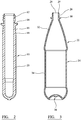
- a preform 10 illustrated in Figure 2 can be blow molded to form a container 22 illustrated in figure 3 .
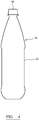
- the container 22 comprises a shell 24 comprising a threaded neck finish 26 defining a mouth 28, a capping flange 30 below the threaded neck finish, a tapered section 32 extending from the capping flange, a body section 34 extending below the tapered section, and a base 36 at the bottom of the container.
- the container 22 is suitably used to make a packaged beverage 38, as illustrated in figure 4 .
- the packaged beverage 38 includes a beverage.
- the beverage is an oxygen sensitive beverage.
- It may be a vitamin C containing beverage such as a vitamin C containing fruit juice, a beverage which has been fortified with vitamin C, or a combination of juices in which at least one of the juices includes vitamin C.
- the beverage is disposed in the container 22 and a closure 40 seals the mouth 28 of container 22.
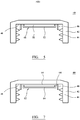
- a circular cross-section aseptic closure 40 which includes a closure shell 42 with a screw-threaded portion 44 for screw-threadedly engaging the closure with a threaded neck finish 26.
- a sealing well 46 Within the diameter of a sealing well 46 is a disc-shaped insert 48 which is moulded to inwardly facing wall 49 of shell 42.
- the insert 48 may include an inner layer 50 and an outer layer 52.
- the outer layer is suitably overmoulded around layer 50 suitably so that layer 50 is fully encapsulated.
- Layer 50 may have a thickness of 1mm; and layer 52 may have a thickness of 0.3mm.
- Example No. Container/Closure construction 1 (comparative) Container: standard (no palladium catalyst) Standard closure including no hydrogen generation means or catalyst 2 (comparative) Container: Ti818 resin containing 2ppm palladium Closure: Layer 50 - includes sodium borohydride - 8 Wt. % in EVA (Elvax 760) Layer 52: EVA (Elvax 550) 3 Container: Flow resin (no palladium catalyst) Closure: Layer 50 - includes sodium borohydride 8 Wt.
- HyCat-1 was blended with PET at 0.1 wt. % to provide 2ppm palladium in the resin.
- the blend was injection moulded into 21g preforms and 330ml bottles were blown from the preforms.
- Example 8 Moulding of sodium borohvdride/EVA compounds (with and without Pd) into discs (e.g. laver 50 of figure 5)
- the 8 wt% sodium borohydride/EVA compound of example 7 was moulded into discs (26mm diameter and 1mm thick) using a Boy 22M injection moulding machine.
- the feed zone temperature was set at 160°C and the other zones were set at 200°C.
- Both the hopper and collection vessel were continuously purged with a dry nitrogen atmosphere.
- the moulded discs were stored in a dry nitrogen atmosphere in a sealed foil bag.
- HyCat Base-1 To incorporate palladium into the 8 wt% sodium borohydride/EVA moulded discs HyCat Base-1 was blended with the 8 wt% sodium borohydride/EVA compound of example 7 by tumble mixing the liquid onto the pellets prior to moulding. The quantity added was modified depending on the amount of Pd required in the final part: for 20ppm in the final part 0.422 wt% was added, and for 40ppm in the final part 0.844 wt% was added.
- the sodium borohydride/EVA injection moulded discs 50 of example 8 (with and without Pd) were incorporated into a closure using a Netstal Synergy 1750-600/230 injection moulding machine fitted with two injection moulding units and a linear indexing mould.
- One injection moulding unit injected an HDPE closure shell (42 in figure 5 ) and one injection moulding unit injected the EVA layer (52 in figure 5 ) to fully encompass the disc 50 containing the sodium borohydride. All injection zones were set at 200°C.
- HyCat Base-1 was blended with the EVA by tumble mixing the liquid onto the pellets prior to moulding to fully encompass disc 50.
- the quantity added was modified depending on the amount of Pd required in the final part: for 20ppm in the final part 0.422 wt% was added, and for 40ppm in the final part 0.844 wt. % was added.
- the moulded closures were stored in a dry nitrogen atmosphere in a sealed foil bag.
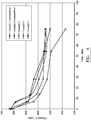
- Example 10 General procedure for testing constructions of Examples 1 to 5
- example 2 includes more palladium catalyst (in g - see Table above) distributed throughout the bottle wall over a far greater area than in the closure of examples 3 to 5 and it would be expected that example 2 would be far superior in oxygen scavenging compared to examples 3 to 5.
- the cost of catalyst and other manufacturing costs can be reduced by adopting arrangements as in examples 3 to 5, whilst achieving excellent oxygen scavenging ability.
- FIG 7 shows an alternative closure 60 which differs from the closure 40 of Figure 5 primarily in the design of insert 60.
- Insert 60 includes an inner layer 62 (which may be made from material(s) as described above for layer 50).
- Layer 62 is disc-shaped and is fully encapsulated by a layer 64 (which may be made from material(s) as described above for layer 50).
- layer 64 defines a core which is fully enclosed within a shell defined by layer 64.
- the insert 60 is adhered to wall 49.
- the insert 60 could be heat sealed, welded or glued to wall 49.
- the closure 60 may be made in two separate parts (i.e. insert 60 on the one hand and the shell etc on the other hand) and the parts secured together to define the closure 60 for oxygen scavenging.
- an insert similar to insert 60 of figure 7 but not associated with a closure may be attached to an internal wall of a container body, for example a lower wall or a side wall.
- a container body e.g. a cup or tray.
- it may be added after the container body and/or container has been formed and in some cases could be free flowing within the container body (e.g. when an opening used to dispense products from the container is too small for the insert to pass through).
- a free floating or fixed insert which may be in the form of a disc, patch or sachet, may be associated with various types of containers, such as cups, trays or bottles.
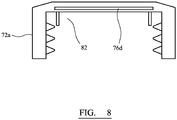
- closure shell 72a itself acts as a barrier material to control passage of moisture to hydrogen generator 76d which includes active material for generating hydrogen.
- Closure shell 72a additionally includes 50ppm of palladium catalyst for catalysing the oxygen scavenging reaction.
- catalyst may be associated with the hydrogen generator 76d, for example by being mixed therewith.
Landscapes
- Engineering & Computer Science (AREA)
- Life Sciences & Earth Sciences (AREA)
- Chemical & Material Sciences (AREA)
- Food Science & Technology (AREA)
- Zoology (AREA)
- Wood Science & Technology (AREA)
- Polymers & Plastics (AREA)
- Organic Chemistry (AREA)
- Mechanical Engineering (AREA)
- Biochemistry (AREA)
- Genetics & Genomics (AREA)
- General Health & Medical Sciences (AREA)
- General Engineering & Computer Science (AREA)
- Bioinformatics & Cheminformatics (AREA)
- Health & Medical Sciences (AREA)
- Packages (AREA)
- Catalysts (AREA)
- Closures For Containers (AREA)
- Food Preservation Except Freezing, Refrigeration, And Drying (AREA)
- Non-Alcoholic Beverages (AREA)
- Packging For Living Organisms, Food Or Medicinal Products That Are Sensitive To Environmental Conditiond (AREA)
- Laminated Bodies (AREA)
- Compositions Of Macromolecular Compounds (AREA)
Priority Applications (1)
| Application Number | Priority Date | Filing Date | Title |
|---|---|---|---|
| PL12756543T PL2747588T3 (pl) | 2011-08-25 | 2012-08-21 | Wychwytywanie tlenu |
Applications Claiming Priority (2)
| Application Number | Priority Date | Filing Date | Title |
|---|---|---|---|
| US201161527225P | 2011-08-25 | 2011-08-25 | |
| PCT/GB2012/052040 WO2013027049A1 (en) | 2011-08-25 | 2012-08-21 | Scavenging oxygen |
Publications (2)
| Publication Number | Publication Date |
|---|---|
| EP2747588A1 EP2747588A1 (en) | 2014-07-02 |
| EP2747588B1 true EP2747588B1 (en) | 2021-11-24 |
Family
ID=46826860
Family Applications (1)
| Application Number | Title | Priority Date | Filing Date |
|---|---|---|---|
| EP12756543.0A Active EP2747588B1 (en) | 2011-08-25 | 2012-08-21 | Scavenging oxygen |
Country Status (14)
| Country | Link |
|---|---|
| US (1) | US10405566B2 (enExample) |
| EP (1) | EP2747588B1 (enExample) |
| JP (3) | JP2014531198A (enExample) |
| KR (2) | KR20140060313A (enExample) |
| CN (2) | CN106173794A (enExample) |
| AR (1) | AR087692A1 (enExample) |
| BR (1) | BR112014004426A2 (enExample) |
| CA (1) | CA2845799C (enExample) |
| ES (1) | ES2902656T3 (enExample) |
| MX (1) | MX2014002001A (enExample) |
| PL (1) | PL2747588T3 (enExample) |
| RU (1) | RU2624436C2 (enExample) |
| TW (1) | TW201309562A (enExample) |
| WO (1) | WO2013027049A1 (enExample) |
Families Citing this family (6)
| Publication number | Priority date | Publication date | Assignee | Title |
|---|---|---|---|---|
| US9428292B2 (en) | 2013-03-13 | 2016-08-30 | Silgan White Cap LLC | Fluid injection system and method for supporting container walls |
| JP6466052B2 (ja) * | 2013-03-14 | 2019-02-06 | 小林製薬株式会社 | キャップ付き容器 |
| WO2019032565A1 (en) * | 2017-08-07 | 2019-02-14 | HyVida Brands, Inc. | PROCESS FOR THE PRODUCTION OF HYDROGEN-INFERTED BEVERAGE IN CANNET |
| JP7158459B2 (ja) * | 2018-02-19 | 2022-10-21 | サントリーホールディングス株式会社 | 酸素遮断性を有する容器蓋 |
| CN116583405A (zh) * | 2020-12-23 | 2023-08-11 | 彩色矩阵控股公司 | 清除氧 |
| WO2022266747A1 (en) * | 2021-06-25 | 2022-12-29 | Husky Injection Molding Systems Ltd. | Insert for a closure device for a container and method of manufacture thereof |
Family Cites Families (12)
| Publication number | Priority date | Publication date | Assignee | Title |
|---|---|---|---|---|
| US3419400A (en) * | 1965-10-22 | 1968-12-31 | Swift & Co | Packaging foods-production of oxygen-free packages |
| JPS5594641A (en) | 1979-01-13 | 1980-07-18 | Toyo Pulp Kk | Deoxidizing agent |
| US4279350A (en) * | 1979-10-11 | 1981-07-21 | Ethyl Corporation | Closure with oxygen scavenging system |
| JPH03284347A (ja) | 1990-03-30 | 1991-12-16 | Mitsubishi Gas Chem Co Inc | 脱酸素剤 |
| US6194042B1 (en) | 1997-07-10 | 2001-02-27 | Tri-Seal Holdings, Inc. | High barrier closure liner with oxygen absorbing capabilities |
| GB9725387D0 (en) | 1997-12-02 | 1998-01-28 | Alutech Limited | Oxygen-scavenging compositions |
| WO2008090354A1 (en) | 2007-01-24 | 2008-07-31 | Colormatrix Holdings, Inc | Scavenging oxygen |
| JP2010210171A (ja) | 2009-03-11 | 2010-09-24 | Panasonic Corp | 保管庫および酸素濃度調整方法および食品保存空間の保管方法 |
| CH700741A2 (de) | 2009-04-02 | 2010-10-15 | Alcan Tech & Man Ltd | Mehrschichtfilm. |
| BRPI1014933A2 (pt) * | 2009-04-09 | 2016-04-26 | Colormatrix Holdings Inc | tampa e método de fabricação da mesma |
| EP2417037B1 (en) | 2009-04-09 | 2013-06-05 | Colormatrix Holdings, Inc. | Container, assembly and method of making thereof |
| JP5671002B2 (ja) | 2009-04-09 | 2015-02-18 | カラーマトリックス ホールディングス インコーポレイテッドColormatrix Holdings,Inc. | 酸素を捕捉する組成物を収容する容器、およびクロージャ |
-
2012
- 2012-08-21 RU RU2014109896A patent/RU2624436C2/ru active
- 2012-08-21 EP EP12756543.0A patent/EP2747588B1/en active Active
- 2012-08-21 JP JP2014526553A patent/JP2014531198A/ja active Pending
- 2012-08-21 BR BR112014004426A patent/BR112014004426A2/pt not_active IP Right Cessation
- 2012-08-21 KR KR20147006922A patent/KR20140060313A/ko not_active Ceased
- 2012-08-21 MX MX2014002001A patent/MX2014002001A/es active IP Right Grant
- 2012-08-21 US US14/240,548 patent/US10405566B2/en active Active
- 2012-08-21 PL PL12756543T patent/PL2747588T3/pl unknown
- 2012-08-21 CN CN201610543180.7A patent/CN106173794A/zh active Pending
- 2012-08-21 KR KR1020197003187A patent/KR102038258B1/ko not_active Expired - Fee Related
- 2012-08-21 ES ES12756543T patent/ES2902656T3/es active Active
- 2012-08-21 CA CA2845799A patent/CA2845799C/en active Active
- 2012-08-21 CN CN201280045571.6A patent/CN103857301B/zh not_active Expired - Fee Related
- 2012-08-21 WO PCT/GB2012/052040 patent/WO2013027049A1/en not_active Ceased
- 2012-08-22 TW TW101130369A patent/TW201309562A/zh unknown
- 2012-08-27 AR ARP120103160 patent/AR087692A1/es active IP Right Grant
-
2017
- 2017-06-14 JP JP2017116615A patent/JP2017176192A/ja active Pending
-
2019
- 2019-08-01 JP JP2019142006A patent/JP2019194109A/ja active Pending
Non-Patent Citations (1)
| Title |
|---|
| None * |
Also Published As
| Publication number | Publication date |
|---|---|
| RU2624436C2 (ru) | 2017-07-03 |
| BR112014004426A2 (pt) | 2017-03-28 |
| MX2014002001A (es) | 2014-05-14 |
| CN103857301A (zh) | 2014-06-11 |
| US20140295028A1 (en) | 2014-10-02 |
| US10405566B2 (en) | 2019-09-10 |
| JP2019194109A (ja) | 2019-11-07 |
| CA2845799C (en) | 2020-01-28 |
| JP2017176192A (ja) | 2017-10-05 |
| PL2747588T3 (pl) | 2022-03-21 |
| ES2902656T3 (es) | 2022-03-29 |
| JP2014531198A (ja) | 2014-11-27 |
| KR102038258B1 (ko) | 2019-12-02 |
| CA2845799A1 (en) | 2013-02-28 |
| KR20140060313A (ko) | 2014-05-19 |
| EP2747588A1 (en) | 2014-07-02 |
| AR087692A1 (es) | 2014-04-09 |
| KR20190015604A (ko) | 2019-02-13 |
| WO2013027049A1 (en) | 2013-02-28 |
| CN103857301B (zh) | 2016-08-24 |
| TW201309562A (zh) | 2013-03-01 |
| RU2014109896A (ru) | 2015-11-27 |
| CN106173794A (zh) | 2016-12-07 |
Similar Documents
| Publication | Publication Date | Title |
|---|---|---|
| KR101539439B1 (ko) | 수소 생성 수단을 포함하는 용기 | |
| EP2417037B1 (en) | Container, assembly and method of making thereof | |
| KR101373356B1 (ko) | 산소 흡수성 수지 조성물, 산소 흡수 다층체 및 산소 흡수 중공 용기 | |
| EP2747588B1 (en) | Scavenging oxygen | |
| EP2417056B1 (en) | Composition for scavenging oxygen, container, package and closure containing said composition | |
| JP2011126270A (ja) | 酸素吸収多層体 | |
| JP2010013638A (ja) | 酸素吸収樹脂組成物 | |
| JP5601118B2 (ja) | 酸素吸収多層体および容器 | |
| JP2011131581A (ja) | 過酸化水素殺菌処理用酸素吸収多層体 | |
| HK1131598B (en) | Scavenging oxygen |
Legal Events
| Date | Code | Title | Description |
|---|---|---|---|
| PUAI | Public reference made under article 153(3) epc to a published international application that has entered the european phase |
Free format text: ORIGINAL CODE: 0009012 |
|
| 17P | Request for examination filed |
Effective date: 20140318 |
|
| AK | Designated contracting states |
Kind code of ref document: A1 Designated state(s): AL AT BE BG CH CY CZ DE DK EE ES FI FR GB GR HR HU IE IS IT LI LT LU LV MC MK MT NL NO PL PT RO RS SE SI SK SM TR |
|
| DAX | Request for extension of the european patent (deleted) | ||
| STAA | Information on the status of an ep patent application or granted ep patent |
Free format text: STATUS: EXAMINATION IS IN PROGRESS |
|
| 17Q | First examination report despatched |
Effective date: 20170329 |
|
| REG | Reference to a national code |
Ref country code: DE Ref legal event code: R079 Ref document number: 602012077217 Country of ref document: DE Free format text: PREVIOUS MAIN CLASS: A23L0003343600 Ipc: A23L0002440000 |
|
| GRAP | Despatch of communication of intention to grant a patent |
Free format text: ORIGINAL CODE: EPIDOSNIGR1 |
|
| STAA | Information on the status of an ep patent application or granted ep patent |
Free format text: STATUS: GRANT OF PATENT IS INTENDED |
|
| RIC1 | Information provided on ipc code assigned before grant |
Ipc: B65D 51/24 20060101ALI20210326BHEP Ipc: C12H 1/14 20060101ALI20210326BHEP Ipc: A23L 3/3436 20060101ALI20210326BHEP Ipc: A23L 2/44 20060101AFI20210326BHEP |
|
| INTG | Intention to grant announced |
Effective date: 20210421 |
|
| GRAJ | Information related to disapproval of communication of intention to grant by the applicant or resumption of examination proceedings by the epo deleted |
Free format text: ORIGINAL CODE: EPIDOSDIGR1 |
|
| STAA | Information on the status of an ep patent application or granted ep patent |
Free format text: STATUS: EXAMINATION IS IN PROGRESS |
|
| GRAP | Despatch of communication of intention to grant a patent |
Free format text: ORIGINAL CODE: EPIDOSNIGR1 |
|
| STAA | Information on the status of an ep patent application or granted ep patent |
Free format text: STATUS: GRANT OF PATENT IS INTENDED |
|
| INTC | Intention to grant announced (deleted) | ||
| INTG | Intention to grant announced |
Effective date: 20210916 |
|
| GRAS | Grant fee paid |
Free format text: ORIGINAL CODE: EPIDOSNIGR3 |
|
| GRAA | (expected) grant |
Free format text: ORIGINAL CODE: 0009210 |
|
| STAA | Information on the status of an ep patent application or granted ep patent |
Free format text: STATUS: THE PATENT HAS BEEN GRANTED |
|
| AK | Designated contracting states |
Kind code of ref document: B1 Designated state(s): AL AT BE BG CH CY CZ DE DK EE ES FI FR GB GR HR HU IE IS IT LI LT LU LV MC MK MT NL NO PL PT RO RS SE SI SK SM TR |
|
| REG | Reference to a national code |
Ref country code: GB Ref legal event code: FG4D |
|
| REG | Reference to a national code |
Ref country code: DE Ref legal event code: R096 Ref document number: 602012077217 Country of ref document: DE |
|
| REG | Reference to a national code |
Ref country code: AT Ref legal event code: REF Ref document number: 1449155 Country of ref document: AT Kind code of ref document: T Effective date: 20211215 |
|
| REG | Reference to a national code |
Ref country code: IE Ref legal event code: FG4D |
|
| REG | Reference to a national code |
Ref country code: NL Ref legal event code: FP |
|
| REG | Reference to a national code |
Ref country code: LT Ref legal event code: MG9D |
|
| REG | Reference to a national code |
Ref country code: ES Ref legal event code: FG2A Ref document number: 2902656 Country of ref document: ES Kind code of ref document: T3 Effective date: 20220329 |
|
| PG25 | Lapsed in a contracting state [announced via postgrant information from national office to epo] |
Ref country code: RS Free format text: LAPSE BECAUSE OF FAILURE TO SUBMIT A TRANSLATION OF THE DESCRIPTION OR TO PAY THE FEE WITHIN THE PRESCRIBED TIME-LIMIT Effective date: 20211124 Ref country code: LT Free format text: LAPSE BECAUSE OF FAILURE TO SUBMIT A TRANSLATION OF THE DESCRIPTION OR TO PAY THE FEE WITHIN THE PRESCRIBED TIME-LIMIT Effective date: 20211124 Ref country code: FI Free format text: LAPSE BECAUSE OF FAILURE TO SUBMIT A TRANSLATION OF THE DESCRIPTION OR TO PAY THE FEE WITHIN THE PRESCRIBED TIME-LIMIT Effective date: 20211124 Ref country code: BG Free format text: LAPSE BECAUSE OF FAILURE TO SUBMIT A TRANSLATION OF THE DESCRIPTION OR TO PAY THE FEE WITHIN THE PRESCRIBED TIME-LIMIT Effective date: 20220224 |
|
| PG25 | Lapsed in a contracting state [announced via postgrant information from national office to epo] |
Ref country code: IS Free format text: LAPSE BECAUSE OF FAILURE TO SUBMIT A TRANSLATION OF THE DESCRIPTION OR TO PAY THE FEE WITHIN THE PRESCRIBED TIME-LIMIT Effective date: 20220324 Ref country code: SE Free format text: LAPSE BECAUSE OF FAILURE TO SUBMIT A TRANSLATION OF THE DESCRIPTION OR TO PAY THE FEE WITHIN THE PRESCRIBED TIME-LIMIT Effective date: 20211124 Ref country code: PT Free format text: LAPSE BECAUSE OF FAILURE TO SUBMIT A TRANSLATION OF THE DESCRIPTION OR TO PAY THE FEE WITHIN THE PRESCRIBED TIME-LIMIT Effective date: 20220324 Ref country code: NO Free format text: LAPSE BECAUSE OF FAILURE TO SUBMIT A TRANSLATION OF THE DESCRIPTION OR TO PAY THE FEE WITHIN THE PRESCRIBED TIME-LIMIT Effective date: 20220224 Ref country code: LV Free format text: LAPSE BECAUSE OF FAILURE TO SUBMIT A TRANSLATION OF THE DESCRIPTION OR TO PAY THE FEE WITHIN THE PRESCRIBED TIME-LIMIT Effective date: 20211124 Ref country code: HR Free format text: LAPSE BECAUSE OF FAILURE TO SUBMIT A TRANSLATION OF THE DESCRIPTION OR TO PAY THE FEE WITHIN THE PRESCRIBED TIME-LIMIT Effective date: 20211124 Ref country code: GR Free format text: LAPSE BECAUSE OF FAILURE TO SUBMIT A TRANSLATION OF THE DESCRIPTION OR TO PAY THE FEE WITHIN THE PRESCRIBED TIME-LIMIT Effective date: 20220225 |
|
| PG25 | Lapsed in a contracting state [announced via postgrant information from national office to epo] |
Ref country code: SM Free format text: LAPSE BECAUSE OF FAILURE TO SUBMIT A TRANSLATION OF THE DESCRIPTION OR TO PAY THE FEE WITHIN THE PRESCRIBED TIME-LIMIT Effective date: 20211124 Ref country code: SK Free format text: LAPSE BECAUSE OF FAILURE TO SUBMIT A TRANSLATION OF THE DESCRIPTION OR TO PAY THE FEE WITHIN THE PRESCRIBED TIME-LIMIT Effective date: 20211124 Ref country code: RO Free format text: LAPSE BECAUSE OF FAILURE TO SUBMIT A TRANSLATION OF THE DESCRIPTION OR TO PAY THE FEE WITHIN THE PRESCRIBED TIME-LIMIT Effective date: 20211124 Ref country code: EE Free format text: LAPSE BECAUSE OF FAILURE TO SUBMIT A TRANSLATION OF THE DESCRIPTION OR TO PAY THE FEE WITHIN THE PRESCRIBED TIME-LIMIT Effective date: 20211124 Ref country code: DK Free format text: LAPSE BECAUSE OF FAILURE TO SUBMIT A TRANSLATION OF THE DESCRIPTION OR TO PAY THE FEE WITHIN THE PRESCRIBED TIME-LIMIT Effective date: 20211124 Ref country code: CZ Free format text: LAPSE BECAUSE OF FAILURE TO SUBMIT A TRANSLATION OF THE DESCRIPTION OR TO PAY THE FEE WITHIN THE PRESCRIBED TIME-LIMIT Effective date: 20211124 |
|
| REG | Reference to a national code |
Ref country code: DE Ref legal event code: R097 Ref document number: 602012077217 Country of ref document: DE |
|
| PLBE | No opposition filed within time limit |
Free format text: ORIGINAL CODE: 0009261 |
|
| STAA | Information on the status of an ep patent application or granted ep patent |
Free format text: STATUS: NO OPPOSITION FILED WITHIN TIME LIMIT |
|
| PG25 | Lapsed in a contracting state [announced via postgrant information from national office to epo] |
Ref country code: AL Free format text: LAPSE BECAUSE OF FAILURE TO SUBMIT A TRANSLATION OF THE DESCRIPTION OR TO PAY THE FEE WITHIN THE PRESCRIBED TIME-LIMIT Effective date: 20211124 |
|
| 26N | No opposition filed |
Effective date: 20220825 |
|
| PG25 | Lapsed in a contracting state [announced via postgrant information from national office to epo] |
Ref country code: SI Free format text: LAPSE BECAUSE OF FAILURE TO SUBMIT A TRANSLATION OF THE DESCRIPTION OR TO PAY THE FEE WITHIN THE PRESCRIBED TIME-LIMIT Effective date: 20211124 |
|
| REG | Reference to a national code |
Ref country code: AT Ref legal event code: UEP Ref document number: 1449155 Country of ref document: AT Kind code of ref document: T Effective date: 20211124 |
|
| PG25 | Lapsed in a contracting state [announced via postgrant information from national office to epo] |
Ref country code: MC Free format text: LAPSE BECAUSE OF FAILURE TO SUBMIT A TRANSLATION OF THE DESCRIPTION OR TO PAY THE FEE WITHIN THE PRESCRIBED TIME-LIMIT Effective date: 20211124 |
|
| REG | Reference to a national code |
Ref country code: CH Ref legal event code: PL |
|
| PG25 | Lapsed in a contracting state [announced via postgrant information from national office to epo] |
Ref country code: LU Free format text: LAPSE BECAUSE OF NON-PAYMENT OF DUE FEES Effective date: 20220821 Ref country code: LI Free format text: LAPSE BECAUSE OF NON-PAYMENT OF DUE FEES Effective date: 20220831 Ref country code: CH Free format text: LAPSE BECAUSE OF NON-PAYMENT OF DUE FEES Effective date: 20220831 |
|
| P01 | Opt-out of the competence of the unified patent court (upc) registered |
Effective date: 20230523 |
|
| PG25 | Lapsed in a contracting state [announced via postgrant information from national office to epo] |
Ref country code: IE Free format text: LAPSE BECAUSE OF NON-PAYMENT OF DUE FEES Effective date: 20220821 |
|
| PGFP | Annual fee paid to national office [announced via postgrant information from national office to epo] |
Ref country code: PL Payment date: 20230614 Year of fee payment: 12 Ref country code: NL Payment date: 20230719 Year of fee payment: 12 |
|
| PGFP | Annual fee paid to national office [announced via postgrant information from national office to epo] |
Ref country code: TR Payment date: 20230818 Year of fee payment: 12 Ref country code: IT Payment date: 20230711 Year of fee payment: 12 Ref country code: GB Payment date: 20230629 Year of fee payment: 12 Ref country code: ES Payment date: 20230908 Year of fee payment: 12 Ref country code: AT Payment date: 20230725 Year of fee payment: 12 |
|
| PGFP | Annual fee paid to national office [announced via postgrant information from national office to epo] |
Ref country code: FR Payment date: 20230703 Year of fee payment: 12 Ref country code: DE Payment date: 20230627 Year of fee payment: 12 Ref country code: BE Payment date: 20230719 Year of fee payment: 12 |
|
| PG25 | Lapsed in a contracting state [announced via postgrant information from national office to epo] |
Ref country code: HU Free format text: LAPSE BECAUSE OF FAILURE TO SUBMIT A TRANSLATION OF THE DESCRIPTION OR TO PAY THE FEE WITHIN THE PRESCRIBED TIME-LIMIT; INVALID AB INITIO Effective date: 20120821 |
|
| PG25 | Lapsed in a contracting state [announced via postgrant information from national office to epo] |
Ref country code: CY Free format text: LAPSE BECAUSE OF FAILURE TO SUBMIT A TRANSLATION OF THE DESCRIPTION OR TO PAY THE FEE WITHIN THE PRESCRIBED TIME-LIMIT Effective date: 20211124 |
|
| PG25 | Lapsed in a contracting state [announced via postgrant information from national office to epo] |
Ref country code: MK Free format text: LAPSE BECAUSE OF FAILURE TO SUBMIT A TRANSLATION OF THE DESCRIPTION OR TO PAY THE FEE WITHIN THE PRESCRIBED TIME-LIMIT Effective date: 20211124 |
|
| PG25 | Lapsed in a contracting state [announced via postgrant information from national office to epo] |
Ref country code: MT Free format text: LAPSE BECAUSE OF FAILURE TO SUBMIT A TRANSLATION OF THE DESCRIPTION OR TO PAY THE FEE WITHIN THE PRESCRIBED TIME-LIMIT Effective date: 20211124 |
|
| REG | Reference to a national code |
Ref country code: DE Ref legal event code: R079 Ref document number: 602012077217 Country of ref document: DE Free format text: PREVIOUS MAIN CLASS: A23L0002440000 Ipc: A23B0070100000 |
|
| REG | Reference to a national code |
Ref country code: DE Ref legal event code: R119 Ref document number: 602012077217 Country of ref document: DE |
|
| REG | Reference to a national code |
Ref country code: NL Ref legal event code: MM Effective date: 20240901 |
|
| REG | Reference to a national code |
Ref country code: AT Ref legal event code: MM01 Ref document number: 1449155 Country of ref document: AT Kind code of ref document: T Effective date: 20240821 |
|
| GBPC | Gb: european patent ceased through non-payment of renewal fee |
Effective date: 20240821 |
|
| PG25 | Lapsed in a contracting state [announced via postgrant information from national office to epo] |
Ref country code: AT Free format text: LAPSE BECAUSE OF NON-PAYMENT OF DUE FEES Effective date: 20240821 |
|
| PG25 | Lapsed in a contracting state [announced via postgrant information from national office to epo] |
Ref country code: NL Free format text: LAPSE BECAUSE OF NON-PAYMENT OF DUE FEES Effective date: 20240901 |
|
| REG | Reference to a national code |
Ref country code: BE Ref legal event code: MM Effective date: 20240831 |
|
| PG25 | Lapsed in a contracting state [announced via postgrant information from national office to epo] |
Ref country code: DE Free format text: LAPSE BECAUSE OF NON-PAYMENT OF DUE FEES Effective date: 20250301 |
|
| PG25 | Lapsed in a contracting state [announced via postgrant information from national office to epo] |
Ref country code: GB Free format text: LAPSE BECAUSE OF NON-PAYMENT OF DUE FEES Effective date: 20240821 |
|
| PG25 | Lapsed in a contracting state [announced via postgrant information from national office to epo] |
Ref country code: BE Free format text: LAPSE BECAUSE OF NON-PAYMENT OF DUE FEES Effective date: 20240831 Ref country code: IT Free format text: LAPSE BECAUSE OF NON-PAYMENT OF DUE FEES Effective date: 20240821 |
|
| PG25 | Lapsed in a contracting state [announced via postgrant information from national office to epo] |
Ref country code: FR Free format text: LAPSE BECAUSE OF NON-PAYMENT OF DUE FEES Effective date: 20240831 |
|
| REG | Reference to a national code |
Ref country code: ES Ref legal event code: FD2A Effective date: 20250929 |
|
| PG25 | Lapsed in a contracting state [announced via postgrant information from national office to epo] |
Ref country code: ES Free format text: LAPSE BECAUSE OF NON-PAYMENT OF DUE FEES Effective date: 20240822 |