EP2744644B1 - Verfahren, vorrichtung und verbundteil zur herstellung einer hybridlinse - Google Patents
Verfahren, vorrichtung und verbundteil zur herstellung einer hybridlinse Download PDFInfo
- Publication number
- EP2744644B1 EP2744644B1 EP12758536.2A EP12758536A EP2744644B1 EP 2744644 B1 EP2744644 B1 EP 2744644B1 EP 12758536 A EP12758536 A EP 12758536A EP 2744644 B1 EP2744644 B1 EP 2744644B1
- Authority
- EP
- European Patent Office
- Prior art keywords
- hydration
- rigid
- disc
- flexible
- composite part
- Prior art date
- Legal status (The legal status is an assumption and is not a legal conclusion. Google has not performed a legal analysis and makes no representation as to the accuracy of the status listed.)
- Active
Links
Images


Classifications
-
- B—PERFORMING OPERATIONS; TRANSPORTING
- B29—WORKING OF PLASTICS; WORKING OF SUBSTANCES IN A PLASTIC STATE IN GENERAL
- B29C—SHAPING OR JOINING OF PLASTICS; SHAPING OF MATERIAL IN A PLASTIC STATE, NOT OTHERWISE PROVIDED FOR; AFTER-TREATMENT OF THE SHAPED PRODUCTS, e.g. REPAIRING
- B29C66/00—General aspects of processes or apparatus for joining preformed parts
- B29C66/90—Measuring or controlling the joining process
- B29C66/95—Measuring or controlling the joining process by measuring or controlling specific variables not covered by groups B29C66/91 - B29C66/94
- B29C66/953—Measuring or controlling the joining process by measuring or controlling specific variables not covered by groups B29C66/91 - B29C66/94 by measuring or controlling the humidity
- B29C66/9532—Measuring or controlling the joining process by measuring or controlling specific variables not covered by groups B29C66/91 - B29C66/94 by measuring or controlling the humidity of the parts to be joined, i.e. taking the humidity of the parts to be joined into account
-
- B—PERFORMING OPERATIONS; TRANSPORTING
- B29—WORKING OF PLASTICS; WORKING OF SUBSTANCES IN A PLASTIC STATE IN GENERAL
- B29C—SHAPING OR JOINING OF PLASTICS; SHAPING OF MATERIAL IN A PLASTIC STATE, NOT OTHERWISE PROVIDED FOR; AFTER-TREATMENT OF THE SHAPED PRODUCTS, e.g. REPAIRING
- B29C65/00—Joining or sealing of preformed parts, e.g. welding of plastics materials; Apparatus therefor
- B29C65/48—Joining or sealing of preformed parts, e.g. welding of plastics materials; Apparatus therefor using adhesives, i.e. using supplementary joining material; solvent bonding
-
- B—PERFORMING OPERATIONS; TRANSPORTING
- B29—WORKING OF PLASTICS; WORKING OF SUBSTANCES IN A PLASTIC STATE IN GENERAL
- B29D—PRODUCING PARTICULAR ARTICLES FROM PLASTICS OR FROM SUBSTANCES IN A PLASTIC STATE
- B29D11/00—Producing optical elements, e.g. lenses or prisms
-
- B—PERFORMING OPERATIONS; TRANSPORTING
- B29—WORKING OF PLASTICS; WORKING OF SUBSTANCES IN A PLASTIC STATE IN GENERAL
- B29D—PRODUCING PARTICULAR ARTICLES FROM PLASTICS OR FROM SUBSTANCES IN A PLASTIC STATE
- B29D11/00—Producing optical elements, e.g. lenses or prisms
- B29D11/00009—Production of simple or compound lenses
- B29D11/00038—Production of contact lenses
-
- B—PERFORMING OPERATIONS; TRANSPORTING
- B29—WORKING OF PLASTICS; WORKING OF SUBSTANCES IN A PLASTIC STATE IN GENERAL
- B29D—PRODUCING PARTICULAR ARTICLES FROM PLASTICS OR FROM SUBSTANCES IN A PLASTIC STATE
- B29D11/00—Producing optical elements, e.g. lenses or prisms
- B29D11/00009—Production of simple or compound lenses
- B29D11/00038—Production of contact lenses
- B29D11/00048—Production of contact lenses composed of parts with dissimilar composition
-
- B—PERFORMING OPERATIONS; TRANSPORTING
- B29—WORKING OF PLASTICS; WORKING OF SUBSTANCES IN A PLASTIC STATE IN GENERAL
- B29D—PRODUCING PARTICULAR ARTICLES FROM PLASTICS OR FROM SUBSTANCES IN A PLASTIC STATE
- B29D11/00—Producing optical elements, e.g. lenses or prisms
- B29D11/00009—Production of simple or compound lenses
- B29D11/00038—Production of contact lenses
- B29D11/00067—Hydrating contact lenses
-
- B—PERFORMING OPERATIONS; TRANSPORTING
- B29—WORKING OF PLASTICS; WORKING OF SUBSTANCES IN A PLASTIC STATE IN GENERAL
- B29D—PRODUCING PARTICULAR ARTICLES FROM PLASTICS OR FROM SUBSTANCES IN A PLASTIC STATE
- B29D11/00—Producing optical elements, e.g. lenses or prisms
- B29D11/00009—Production of simple or compound lenses
- B29D11/00038—Production of contact lenses
- B29D11/00259—Plants for the production of contact lenses
-
- G—PHYSICS
- G02—OPTICS
- G02B—OPTICAL ELEMENTS, SYSTEMS OR APPARATUS
- G02B1/00—Optical elements characterised by the material of which they are made; Optical coatings for optical elements
- G02B1/04—Optical elements characterised by the material of which they are made; Optical coatings for optical elements made of organic materials, e.g. plastics
- G02B1/041—Lenses
- G02B1/043—Contact lenses
-
- G—PHYSICS
- G02—OPTICS
- G02C—SPECTACLES; SUNGLASSES OR GOGGLES INSOFAR AS THEY HAVE THE SAME FEATURES AS SPECTACLES; CONTACT LENSES
- G02C7/00—Optical parts
- G02C7/02—Lenses; Lens systems ; Methods of designing lenses
- G02C7/04—Contact lenses for the eyes
- G02C7/049—Contact lenses having special fitting or structural features achieved by special materials or material structures
-
- Y—GENERAL TAGGING OF NEW TECHNOLOGICAL DEVELOPMENTS; GENERAL TAGGING OF CROSS-SECTIONAL TECHNOLOGIES SPANNING OVER SEVERAL SECTIONS OF THE IPC; TECHNICAL SUBJECTS COVERED BY FORMER USPC CROSS-REFERENCE ART COLLECTIONS [XRACs] AND DIGESTS
- Y10—TECHNICAL SUBJECTS COVERED BY FORMER USPC
- Y10T—TECHNICAL SUBJECTS COVERED BY FORMER US CLASSIFICATION
- Y10T156/00—Adhesive bonding and miscellaneous chemical manufacture
- Y10T156/12—Surface bonding means and/or assembly means with cutting, punching, piercing, severing or tearing
- Y10T156/125—Plural severing means each acting on a different work piece
Definitions
- the present invention relates to a method according to claim 1 for manufacturing a hybrid contact lens of the type formed of a rigid central portion connected to a flexible peripheral portion by an adhesive material.
- the goal is to obtain the excellent optical results of a rigid lens, which make it possible to compensate for corneal irregularities, with the comfort of soft lenses.
- the document GB 1,417,650 thus describes a hybrid lens of the above type, according to the preamble of claim 17.
- the lenses Because of the difficulties of polymerizing a hydrophilic material in the presence of a non-hydrophilic material, the lenses have problems of connection with one another.
- the present invention aims at providing a method, a device, an intermediate manufacturing matrix or composite part, for obtaining a hybrid lens, as well as such a lens, which responds better than those previously known to the requirements of the practice, particularly in that that it allows an extremely simple and fast manufacturing of quality hybrid lenses for a low cost and with a great modularity, by overcoming the various disadvantages mentioned above.
- palet means a small cylinder of determined diameter and height, for example and generally 12.7 mm in diameter and 5.5 mm thick.
- the hydrophilic flexible part modifies its volume and its surface according to its degree of hydration.
- the flexible lens when, after having glued a rigid portion of lens on a flexible part, the flexible lens being dry to allow the adhesive to take, it puts the latter in the nominal operating condition (ie hydrated), a change in the volume of the flexible portion causes a curl thereof and / or an embrittlement at its attachment with the rigid portion, which makes it impossible to pose on the eye of a patient.
- the invention proposes in particular an initial step of gluing palets, that is to say the puck of rigid material permeable to gas on one side and the hydrophilic soft puck on the other, but after hydration of the soft puck. Subsequent drying of the composite part thus formed is then carried out before machining by means of conventional tools, and subsequent delivery in nominal operating configuration of the lens obtained by appropriate humidification.
- the lens then has a final curve adaptable to the eye of a patient.
- Another important advantage of the invention is related to the unexpected possibility of simply determining the final diameter of the rigid part by a single operation, that is to say by the size of the composite part at a corresponding chosen depth.
- the present invention notably proposes a method of manufacturing a hybrid contact lens formed of a rigid central part connected to a part flexible device by an adhesive material, characterized in that from a rigid, oxygen-permeable puck and a hydrophilic flexible puck previously hydrated at a first determined hydration rate, a composite pellet comprising three superimposed layers is formed by gluing one puck onto the other, namely a first layer formed by the rigid puck, a second bonding layer formed by the adhesive material and a third layer formed by the flexible puck, said composite part is dried for a predetermined time sufficient to allow dehydration of the flexible puck at a second determined hydration rate lower than the first, and then the said composite part is dry-cut by a machining tool (turning-polishing) by presenting the face of the hydrophilic flexible part on the tool side (diamond-size) to obtain the hybrid lens, by providing a clearance strip on the outer periphery of the rigid peripheral part.
- a machining tool turning-polishing
- disengagement band means a peripheral ring of the rigid portion arranged to create a space between said rigid portion of the lens and the cornea, space that will allow the easy detachment of the lens by avoiding a suction effect between the two.
- the unexpected quality of the wet-in situ result from the composite part sometimes has the side effect that some lenses stick to the cornea due to significant capillary forces on the eye, which is avoided by the existence of the release band.
- hydration rate is meant a% in which a level of 100% corresponds to the maximum water absorption percentage for the material (saturation) and 0% a complete desiccation of said material.
- the coefficient of expansion of the hydrophilic material makes it possible to calculate the dimensions of the hydrophilic puck (diameter and thickness) for a hydration rate of 100%.
- the evolution of the dimensions of the hydrophilic puck according to the degree of hydration according to a linear law it is possible to determine the dimensions of the hydrophilic puck (diameter and thickness) for any hydration rate, noted ⁇ and between 0 and 100%. For a given hydration rate ⁇ , knowing then the diameter and the thickness of the hydrophilic puck, the volume of the Hydrated hydrophilic puck can be calculated.
- the evaluation of the drying of the composite material is carried out by monitoring the loss of water mass over time (in comparison with the water mass initially used for the hydration of the puck).
- the invention also proposes a device for manufacturing a hybrid contact lens implementing the method described above.
- US 2225040A describes a device according to the preamble of claim 13.
- the hydration means comprise a weighing scale of the average weight of a flexible puck, a volumetric pipette for supplying physiological saline to a leaktight enclosure for retaining said flexible puck, and means for calculating the hydration time. from the average weight of said flexible puck and the desired hydration rate.
- the device comprises means for preparing the surfaces of said pallets by a cold plasma treatment.
- Such a treatment makes it possible to create hydrophilic sites on the surface by increasing the surface energy of the materials thus ensuring better wettability.
- drying means of the composite part comprise hermetic containers for holding the pallets with desiccant material.
- the invention also proposes a composite part for manufacturing a hybrid contact lens formed of a rigid central part connected to a flexible peripheral part by an adhesive material, characterized in that it comprises a rigid oxygen permeable puck. forming a first layer, a hydrophilic soft pad hydrated at a first determined hydration rate, forming a third layer, and a bonding adhesive material between first and third layers, forming a second, intermediate, bonding layer.
- the adhesive material is arranged to degrade after a determined period of time.
- the adhesive material containing cyanoacrylate represents between 1% and 2.5% by weight relative to the total mass of the composite material.
- the first level of hydration, for the 49% hydrophilic GM Advance material supplied by (step 15) the Contamac company (or its equivalent) is between 54% and 60% and / or the rigid puck has a convex shaped bonding surface and the flexible puck a concave shaped bonding surface complementary to said convex shape, which allows attachment angles between the two flexible and rigid parts more effective at the level of the holding.
- the invention also proposes a hybrid lens manufactured from the method and / or using the device as described above, by the size of a composite part as also specified above.
- such a lens has its rigid portion diameter determined by the machining depth of the composite part.
- the figure 1 shows (in section) a composite part 1 implemented in the manufacturing process as will be specified with reference to the flowchart of the figure 2 .
- the piece 1 is formed from a puck 2 of rigid material and a pallet 3 of hydrophilic flexible material previously moistened as will be described below, at a determined hydration rate.
- the rigid puck 2 comprises a convex surface 4 for example spherical and the flexible puck 3 a concave surface 5 complementary to the surface 4.
- the composite part furthermore comprises an intermediate layer 6 of glue or adhesive material thickness of a few microns, for example between 20 and 30 microns, shown magnified in the figure by way of illustration, between the respective surfaces 4 and 5 of the pallets 2 and 3, for example previously plasma treated.
- the lens After drying of the part, the lens can be machined to form said hybrid lens 7 provided with a rigid part 8 and a flexible outer ring 9 connected to the rigid part by the adhesive bead 10.
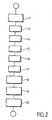
- the figure 2 shows a manufacturing flowchart of a lens according to the embodiment and invention more particularly described here.
- step 11 From the rigid cylindrical pallets 2 and commercial cylindrical soft cylinders 3 hydrophilic previously assembled (step 11), for example those sold under the references GM Advance 49% of the company Contamac for the flexible puck and Optimum extra DK 100 of the same Contamac company for the rigid puck, and with conventional computer-aided machining tools and known to those skilled in the art, one works on the one hand a hollow or concave surface 5 (step 12) on the puck 3 and on the other hand a curved or convex surface 4 (step 13) on the puck 2.
- the rigid portion is here machined to create a convex inner surface whose or radii of curvature correspond to that (those) of the hydrophilic flexible portion in the hydrated state, previously calculated in a manner known in itself in depending on the geometry of the dry puck and its degree of hydration (swelling).
- the suture zone is here subject to the adhesion forces F perpendicular to the adhesion surface.
- the slope P of the suture surface is small relative to the axis of the lens and the projected slope P PROJ is in the example about 0.5 mm.
- the vertical component of the adhesion force is important, it can cause the formation of a bead during hydration of the lens at the suture.
- the hollow-geometry assembly is useful for minimizing the modulus of the vertical component of the bonding force.
- the slope of the suture surface relative to the axis of the lens is greater than in the case of flat assembly, but its projection P PROJ is smaller, for example here equal to 0.19 mm for a radius of curvature R variable between 6 and 7 mm.
- the projected band would be and in the dimensional example taken without limitation, of 0.22 mm.
- the surfaces 4 and 5 are then plasma treated (step 15) to further increase the adhesion faces that will be used.
- a cold plasma treatment of the palets is used, for example with simple gases such as Ar, H 2 , O 2 , CO 2 , N 2 , NH 3 ... under conditions known to the human being. job.
- the contact angle (wettability) will for example go from 110 ° to 15 ° immediately after treatment, even if it goes back up to 35 ° after aging in the preservative liquid.
- the next step (16) is a step of partial hydration of the hydrophilic puck.
- the value of the volume of water to be taken is calculated taking into account the volume of physiological saline necessary for the hydration of a whole puck, and this so as to achieve the fixed hydration rate, and the ratio between the mass of the whole puck and the mass of the hollow puck.
- the hydration is done in cases for example for waterproof polypropylene contact lenses.
- the next step is the step 17 of bonding between the rigid puck and the hydrated flexible puck.
- the next step is the drying step 17.
- a volume of 750 mm 3 containing silica gel (for example a product known under the name CHAMELON from the company BDH pro lab) is used in order to tend towards the complete dehydration which is substantially reached after 14-. 18 days.
- the volume of silica gel used to dry about 100 pallets under these conditions is of the order of one third of the volume of the jar.
- the mass expected for complete drying corresponds to the mass of hybrid composite parts devoid of the mass of water used for hydration.
- the pieces are held for three or four weeks in the jars and then packaged in empty jars or in sealed aluminum bags.
- the pucks can be dried in a ventilated oven at 40 ° C to obtain a complete drying after seven days.
- the lens machining operation will obviously depend on the corrections that one wants to perform, so as in itself.
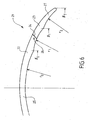
- a hybrid lens 21 having a rigid portion 22 connected to a flexible portion 23 by an adhesive material 24.
- r 1 can be constant to give a spherical portion-shaped wall, or variable with an eccentricity factor e.
- the flexible portion is in turn terminated by a cut end 27 with a radius r 2 to dry, to form a more arched portion than that obtained with the radius r 1 , for example less than 4 to 8 mm, to compensate for the flattening of this area at the moment of ultimate hydration of the finished lens.
- the soft zone flattens with a variable factor according to the first hydration rate used for the manufacture of the hybrid puck.
- the choice of the dry size radius of this zone r 2 is dependent on the desired flattening depending on the morphology of the cornea of the equipped eye.
- the contactologist determines the profile of the hybrid lens according to the measurements and observations made on his patient using the principles known in the art of the adaptation of contact lenses.
- This clearance strip creates a gap between the lens and the cornea that prevents a sucking of the lens.
- the small uniform space between the rigid zone and the cornea in fact creates an excessive capillary force at the level of the rigid zone, which prevents easy removal of the lens in certain eye configurations.
- step 18 of size there is provided an intermediate storage step 19 of short duration, then rehydration 20, the hybrid lenses being then packaged in a decontamination solution for contact lenses (for example in the solution known under the Nitilens GP name manufactured by the company Avizor) before being delivered to the patient for installation.
- a decontamination solution for contact lenses for example in the solution known under the Nitilens GP name manufactured by the company Avizor
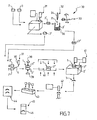
- the figure 7 schematically shows an embodiment of device 30 according to the invention.
- the rigid and flexible pallets 3 are brought to first cutting means 31 known in themselves, for example a lathe referenced under the name Optaform of the company STARLING, to obtain the pallets 2 'and 3' respectively machined curved and hollow.
- the hydrophilic pallets 3 ' are then hydrated by hydration means 32 comprising a balance 33, a volumetric pipette 34 for supplying physiological saline 35 with a sealed chamber 36 for retaining said flexible puck 3'.
- Drying means 40 are then provided, for example formed by a protected support located in a room at controlled ambient temperature for a sufficient time.
- a final refining (polishing, refining edges, ...) is optionally provided on a machine 43 of known type, before dry storage at 44, for a short time (1 to 2 days), then wet storage at 45, in use condition, for example in conventional antiseptic tanks.
- the adhesive material may also be chosen from adhesive materials, resins or other mixtures of monomers and their derivatives, alone or in combination as follows: Cyanoacrylates and all derivatives of cyanoacrylates; ethylcyanoacrylates; Butylcyanoacrylates; Vinylacetate; trifluoroethanol; methacrylates (C1 to C6); acrylate (C1 to C6); ethanediamine; 2-hydroxyethyl methacrylate (HEMA) and other methacrylic acid esters formulated from bases bases; fluorite; silicone; fluorite / silicone; styrene and resulting polymers such as polystyrene; fluorine / styrene; silicone / styrene.
Landscapes
- Engineering & Computer Science (AREA)
- Health & Medical Sciences (AREA)
- Ophthalmology & Optometry (AREA)
- Mechanical Engineering (AREA)
- Manufacturing & Machinery (AREA)
- Physics & Mathematics (AREA)
- General Physics & Mathematics (AREA)
- Optics & Photonics (AREA)
- General Health & Medical Sciences (AREA)
- Eyeglasses (AREA)
- Moulds For Moulding Plastics Or The Like (AREA)
Claims (22)
- Verfahren zur Herstellung einer Hybridkontaktlinse (7, 21), die durch einen harten mittigen Teil gebildet ist, welcher durch ein Haftmaterial (10, 24) mit einem weichen umfänglichen Teil (9, 23) verbunden ist,
dadurch gekennzeichnet,
dass- aus einer sauerstoffdurchlässigen harten Scheibe (2) und einer hydrophilen weichen Scheibe (3), die zuvor bis zu einem ersten Hydratationsgrad hydratisiert wurde, durch Kleben einer Scheibe auf die andere ein Verbundteil (1) gebildet wird, das drei aufeinander liegende Schichten aufweist, und zwar eine erste, durch die harte Scheibe (2) gebildete Schicht, eine zweite Schicht, die eine Verbindungsschicht darstellt und durch das Haftmaterial (6) gebildet ist, und eine dritte, durch die weiche Scheibe (3) gebildete Schicht,- das Verbundteil (1) während einer bestimmten Zeit getrocknet wird, die ausreichend ist, um die Dehydratation der weichen Scheibe bis zu einem zweiten bestimmten Hydratationsgrad, der geringer ist als der erste, zu ermöglichen, und anschließend- das Verbundteil mit einem Bearbeitungswerkzeug trocken geschliffen wird und dabei die Fläche des hydrophilen weichen Teils (3) dem Werkzeug zugewandt wird, um die Hybridlinse zu erhalten, wobei ein Ablösestreifen (26) auf dem Außenumfang (27) des harten umfänglichen Teils ausgebildet wird. - Verfahren nach Anspruch 1,
dadurch gekennzeichnet,
dass der Durchmesser (D) des harten Teils (8, 22) durch die mehr oder weniger tiefe Bearbeitung des Verbundteils bestimmt wird. - Verfahren nach einem der vorhergehenden Ansprüche,
dadurch gekennzeichnet,
dass das Haftmaterial (10, 24) Cyanoacrylat enthält. - Verfahren nach einem der vorhergehenden Ansprüche,
dadurch gekennzeichnet,
dass vor dem Kleben eine Oberflächenbehandlung der harten Scheibe (2) erfolgt. - Verfahren nach einem der vorhergehenden Ansprüche,
dadurch gekennzeichnet,
dass vor dem Kleben eine Oberflächenbehandlung der weichen trockenen Scheibe (3) erfolgt. - Verfahren nach einem der Ansprüche 4 oder 5,
dadurch gekennzeichnet,
dass es sich bei der Oberflächenbehandlung um eine Plasmabehandlung handelt. - Verfahren nach einem der vorhergehenden Ansprüche,
dadurch gekennzeichnet,
dass vorab die harte Scheibe (2) so geschliffen wird, dass ihre Klebefläche (4) eine konvexe Form aufweist und die weiche Scheibe (3) so geschliffen wird, dass ihre Klebefläche (5) eine konkave, zu der konvexen Form komplementäre Form aufweist, wenn die Scheibe hydratisiert ist. - Verfahren nach einem beliebigen der vorhergehenden Ansprüche, dadurch gekennzeichnet, dass der erste Hydratationsgrad zwischen 50 % und 100 % liegt.
- Verfahren nach Anspruch 8,
dadurch gekennzeichnet,
dass der erste Hydratationsgrad zwischen 54 % und 70 % liegt. - Verfahren nach Anspruch 9,
dadurch gekennzeichnet,
dass der erste Hydratationsgrad zwischen 55 % und 60 % liegt. - Verfahren nach einem der vorhergehenden Ansprüche,
dadurch gekennzeichnet,
dass der zweite Hydratationsgrad geringer als 10 % ist. - Verfahren nach Anspruch 11,
dadurch gekennzeichnet,
dass der zweite Hydratationsgrad geringer als 2 % ist. - Vorrichtung (30) zur Herstellung einer Hybridkontaktlinse (7), die durch einen harten mittigen Teil gebildet ist, welcher durch ein Haftmaterial mit einem weichen umfänglichen Teil verbunden ist, aus einer sauerstoffdurchlässigen harten Scheibe (2) und einer hydrophilen weichen Scheibe (3), umfassend eine Vorrichtung mit Mitteln (31) zum Schleifen einer konkaven Fläche auf der hydrophilen weichen Scheibe, Mitteln (31) zum Schleifen einer konvexen, zur konkaven Fläche komplementären Fläche auf einer harten Scheibe, dadurch gekennzeichnet, dass sie Mittel (32), um die hydrophile Scheibe teilweise bis zu einem ersten bestimmten Hydratationsgrad zu hydratisieren, Mittel (37) zum Zusammenkleben der zwei Scheiben zur Bildung eines Verbundteils (1), Mittel (40) zum Trocknen des Verbundteils während einer bestimmten Zeit, die ausreichend ist, um die Dehydratation der weichen Scheibe bis zu einem zweiten bestimmten Hydratationsgrad, der geringer ist als der erste, zu ermöglichen, und Mittel (41) zum Trockenschleifen durch Drehschleifen des Verbundteils zur Erzielung der Hybridlinse aufweist.
- Vorrichtung nach Anspruch 13,
dadurch gekennzeichnet,
dass die Hydratationsmittel (32) eine Waage (33) zum Messen des mittleren Gewichts einer weichen Scheibe, eine Dosierpipette (34) für die Speisung eines dichten Behälters (36) für die Aufnahme der weichen Scheibe mit physiologischer Kochsalzlösung (35) und Mittel zur Berechnung der Hydratationszeit ausgehend von dem mittleren Gewicht der weichen Scheibe und des angestrebten Hydratationsgrades aufweisen. - Vorrichtung nach einem der Ansprüche 13 und 14,
dadurch gekennzeichnet,
dass sie Mittel zur Vorbereitung der Oberflächen der Scheiben durch eine Kaltplasmabehandlung. - Vorrichtung nach einem der Ansprüche 13 bis 15,
dadurch gekennzeichnet,
dass die Mittel zur Trocknung des Verbundteils dichte Behälter mit Trockenmittel für die Aufnahme der Scheiben aufweisen. - Verbundteil (1) zur Herstellung einer Hybridkontaktlinse (7, 21), die durch einen harten mittigen Teil (8, 12) gebildet ist, welcher durch ein Haftmaterial (10, 24) mit einem weichen umfänglichen Teil (9, 23) verbunden ist,
dadurch gekennzeichnet,
dass es eine sauerstoffdurchlässige harte Scheibe (2) umfasst, die eine erste Schicht bildet, eine hydrophile weiche Scheibe (3), die bis zu einem ersten bestimmten Hydratationsgrad hydratisiert ist und eine dritte Schicht bildet, und ein Haftmaterial (6) zur Verbindung der ersten und der dritten Schicht, welches eine zweite Schicht bildet, die eine Verbindungszwischenschicht darstellt. - Teil nach Anspruch 17,
dadurch gekennzeichnet,
dass das Haftmaterial (6) Cyanoacrylat enthält. - Teil nach einem der Ansprüche 17 und 18,
dadurch gekennzeichnet,
dass der erste Hydratationsgrad zwischen 54 % und 60 % liegt. - Teil nach einem der Ansprüche 17 bis 19,
dadurch gekennzeichnet,
dass die harte Scheibe (2) eine konvex ausgebildete Klebefläche (4) aufweist und die weiche Scheibe (3) eine konkav, zu der konvexen Form komplementär ausgebildete Klebefläche (5) aufweist. - Hybridlinse (7, 21), die durch Schleifen eines Verbundteils (1) nach einem der Ansprüche 17 bis 20 nach Trocknung bis zu einem Hydratationsgrad, der geringer als ein bestimmter Wert ist, erzielt wird.
- Hybridlinse nach Anspruch 21,
dadurch gekennzeichnet,
dass sie einen Durchmesser (D) ihres harten Teils mit einem Wert aufweist, der durch die Bearbeitungstiefe des Verbundteils bestimmt ist.
Applications Claiming Priority (2)
| Application Number | Priority Date | Filing Date | Title |
|---|---|---|---|
| FR1102519A FR2979072B1 (fr) | 2011-08-16 | 2011-08-16 | Procede, dispositif et piece composite pour la fabrication d'une lentille hybride |
| PCT/FR2012/000338 WO2013024213A1 (fr) | 2011-08-16 | 2012-08-14 | Procede, dispositif et piece composite pour la fabrication d'une lentille hybride |
Publications (2)
| Publication Number | Publication Date |
|---|---|
| EP2744644A1 EP2744644A1 (de) | 2014-06-25 |
| EP2744644B1 true EP2744644B1 (de) | 2015-05-27 |
Family
ID=46832462
Family Applications (1)
| Application Number | Title | Priority Date | Filing Date |
|---|---|---|---|
| EP12758536.2A Active EP2744644B1 (de) | 2011-08-16 | 2012-08-14 | Verfahren, vorrichtung und verbundteil zur herstellung einer hybridlinse |
Country Status (9)
| Country | Link |
|---|---|
| US (1) | US9539761B2 (de) |
| EP (1) | EP2744644B1 (de) |
| JP (1) | JP6371218B2 (de) |
| CN (1) | CN103732384B (de) |
| AU (1) | AU2012296766A1 (de) |
| BR (1) | BR112014002978A2 (de) |
| CA (1) | CA2843695C (de) |
| FR (1) | FR2979072B1 (de) |
| WO (1) | WO2013024213A1 (de) |
Families Citing this family (2)
| Publication number | Priority date | Publication date | Assignee | Title |
|---|---|---|---|---|
| CN112414273B (zh) * | 2020-11-11 | 2022-02-15 | 江西弘耀光学水晶有限公司 | 一种红外镜片磨削用刚盘的弧面校核基准件 |
| CN112630990B (zh) * | 2020-12-21 | 2022-10-21 | 浙江清华柔性电子技术研究院 | 智能隐形眼镜及其制备方法 |
Family Cites Families (16)
| Publication number | Priority date | Publication date | Assignee | Title |
|---|---|---|---|---|
| US2225040A (en) * | 1938-12-31 | 1940-12-17 | Bausch & Lomb | Apparatus for finishing contact lenses |
| US3984506A (en) * | 1970-01-19 | 1976-10-05 | Tsuetaki George F | Method of forming a composite bifocal contact lens blank |
| DE2309933C2 (de) * | 1973-02-28 | 1983-02-24 | Söhnges Optik Wilhelm P. Söhnges, 8000 München | Mikrokontaktlinse mit einem optischen harten lInsenkern und einem flexiblen Ringteil |
| US4166255A (en) * | 1976-06-14 | 1979-08-28 | Minnesota Mining And Manufacturing Company | Hybrid corneal contact lens |
| US4558931A (en) * | 1982-04-02 | 1985-12-17 | Color Optics, Ltd. (Partnership) | Colored soft contact lens |
| US4943150A (en) * | 1988-03-22 | 1990-07-24 | Bausch & Lomb Incorporated | Method of making variable modulus lenses |
| US5433898A (en) * | 1992-09-11 | 1995-07-18 | Pilkington Barnes Hind, Inc. | Method of manufacturing a contact lens |
| WO1995031223A1 (en) * | 1994-05-13 | 1995-11-23 | Kuraray Co., Ltd. | Medical polymer gel |
| US6783721B2 (en) * | 2001-10-30 | 2004-08-31 | Howmedica Osteonics Corp. | Method of making an ion treated hydrogel |
| US7322694B2 (en) * | 2002-09-06 | 2008-01-29 | Synergeyes, Inc. | Hybrid contact lens system and method |
| CN1930513A (zh) * | 2004-02-13 | 2007-03-14 | 科特尔兰巴达技术公司 | 混合隐形眼镜系统和方法 |
| JP4614271B2 (ja) * | 2004-12-27 | 2011-01-19 | Hoya株式会社 | 複合コンタクトレンズ及びレンズ素材の製造方法 |
| US7748844B2 (en) * | 2006-06-15 | 2010-07-06 | Lai Shui T | High visual acuity contact lenses |
| US7828432B2 (en) * | 2007-05-25 | 2010-11-09 | Synergeyes, Inc. | Hybrid contact lenses prepared with expansion controlled polymeric materials |
| EP2453292B1 (de) * | 2009-07-08 | 2016-09-07 | Menicon Co., Ltd. | Weiche hybrid-kontaktlinse, verfahren zu ihrer herstellung und hydrierungsverfahren |
| FR2956752B1 (fr) | 2010-02-25 | 2012-07-27 | Lentilles | Procede de fabrication d'une lentille de contact hybride |
-
2011
- 2011-08-16 FR FR1102519A patent/FR2979072B1/fr active Active
-
2012
- 2012-08-14 WO PCT/FR2012/000338 patent/WO2013024213A1/fr not_active Ceased
- 2012-08-14 EP EP12758536.2A patent/EP2744644B1/de active Active
- 2012-08-14 AU AU2012296766A patent/AU2012296766A1/en not_active Abandoned
- 2012-08-14 US US14/234,858 patent/US9539761B2/en active Active
- 2012-08-14 BR BR112014002978A patent/BR112014002978A2/pt not_active Application Discontinuation
- 2012-08-14 JP JP2014525475A patent/JP6371218B2/ja active Active
- 2012-08-14 CA CA2843695A patent/CA2843695C/fr active Active
- 2012-08-14 CN CN201280039752.8A patent/CN103732384B/zh active Active
Also Published As
| Publication number | Publication date |
|---|---|
| EP2744644A1 (de) | 2014-06-25 |
| CA2843695C (fr) | 2019-03-05 |
| WO2013024213A1 (fr) | 2013-02-21 |
| JP2014522002A (ja) | 2014-08-28 |
| AU2012296766A1 (en) | 2014-01-30 |
| CA2843695A1 (fr) | 2013-02-21 |
| CN103732384B (zh) | 2016-07-13 |
| BR112014002978A2 (pt) | 2017-03-01 |
| CN103732384A (zh) | 2014-04-16 |
| FR2979072A1 (fr) | 2013-02-22 |
| US20140152954A1 (en) | 2014-06-05 |
| US9539761B2 (en) | 2017-01-10 |
| JP6371218B2 (ja) | 2018-08-08 |
| FR2979072B1 (fr) | 2013-09-27 |
Similar Documents
| Publication | Publication Date | Title |
|---|---|---|
| EP0035309B1 (de) | Verfahren zum Herstellen von Kontaktlinsen durch Formen und erhaltene Linsen | |
| EP1362246B1 (de) | Optischer artikel mit einer viertelwellenlängenplatte und verfahren zu seiner herstellung | |
| EP0035310B1 (de) | Verfahren zum Herstellen von Kontaktlinsen durch Formen und erhaltene Linsen | |
| EP1987380B1 (de) | Optisches polarisierungselement mit polarisierungsfilm und herstellungsverfahren dafür | |
| FR2902105A1 (fr) | Procede de collage d'un film sur un substrat courbe | |
| CH625458A5 (en) | Method for manufacturing a lens, and apparatus for implementing the method | |
| CA2843695C (fr) | Procede, dispositif et piece composite pour la fabrication d'une lentille hybride | |
| EP2616235B1 (de) | Verfahren zur herstellung einer segmentierten optischen struktur | |
| EP0504011B1 (de) | Verfahren zur Herstellung eines Gegenstands aus Kunststoff mit einem Brechnungsindexgradient | |
| CH639561A5 (fr) | Element de separation, notamment pour rein artificiel. | |
| EP2652545B1 (de) | Brillenglas mit einem basisglas und einer dünnen struktur | |
| EP0993930A1 (de) | Verfahren zum Herstellen eines Gegenstandes bestehend aus einem Träger und einer darauf geschweissten Membran, insbesondere eines Stopfens für ein Röhrchen und eine dadurch hergestellte Membran-Trägergruppe | |
| JP5272732B2 (ja) | 光学部材及びその製造方法 | |
| EP3177455B1 (de) | Verfahren zur verminderung oder vermeidung des abbaus einer fäulnisverhindernden schicht eines optischen artikels | |
| EP0001954B1 (de) | Verfahren zur Herstellung von Verbundsicherheitsglas und ein gemäss diesem Verfahren erhaltenes Produkt | |
| FR3037963A1 (fr) | Film diffusant pour oled | |
| EP2539138B1 (de) | Verfahren zur herstellung einer hybridkontaktlinse | |
| BE495628A (de) | ||
| FR3077995A1 (fr) | Procede de fluoration d'un filtre d'embout de pipette, embout de pipette, son procede de fabrication et pipette associes | |
| FR2880566A1 (fr) | Coupage laser avec une lentille revetue de baf2 |
Legal Events
| Date | Code | Title | Description |
|---|---|---|---|
| PUAI | Public reference made under article 153(3) epc to a published international application that has entered the european phase |
Free format text: ORIGINAL CODE: 0009012 |
|
| 17P | Request for examination filed |
Effective date: 20140214 |
|
| AK | Designated contracting states |
Kind code of ref document: A1 Designated state(s): AL AT BE BG CH CY CZ DE DK EE ES FI FR GB GR HR HU IE IS IT LI LT LU LV MC MK MT NL NO PL PT RO RS SE SI SK SM TR |
|
| DAX | Request for extension of the european patent (deleted) | ||
| RIC1 | Information provided on ipc code assigned before grant |
Ipc: G02C 7/04 20060101ALI20141208BHEP Ipc: B29D 11/00 20060101AFI20141208BHEP Ipc: B29C 65/48 20060101ALI20141208BHEP |
|
| GRAP | Despatch of communication of intention to grant a patent |
Free format text: ORIGINAL CODE: EPIDOSNIGR1 |
|
| INTG | Intention to grant announced |
Effective date: 20150119 |
|
| GRAS | Grant fee paid |
Free format text: ORIGINAL CODE: EPIDOSNIGR3 |
|
| GRAA | (expected) grant |
Free format text: ORIGINAL CODE: 0009210 |
|
| AK | Designated contracting states |
Kind code of ref document: B1 Designated state(s): AL AT BE BG CH CY CZ DE DK EE ES FI FR GB GR HR HU IE IS IT LI LT LU LV MC MK MT NL NO PL PT RO RS SE SI SK SM TR |
|
| REG | Reference to a national code |
Ref country code: GB Ref legal event code: FG4D Free format text: NOT ENGLISH |
|
| REG | Reference to a national code |
Ref country code: CH Ref legal event code: EP |
|
| REG | Reference to a national code |
Ref country code: AT Ref legal event code: REF Ref document number: 728597 Country of ref document: AT Kind code of ref document: T Effective date: 20150615 |
|
| REG | Reference to a national code |
Ref country code: IE Ref legal event code: FG4D Free format text: LANGUAGE OF EP DOCUMENT: FRENCH |
|
| REG | Reference to a national code |
Ref country code: DE Ref legal event code: R096 Ref document number: 602012007635 Country of ref document: DE |
|
| REG | Reference to a national code |
Ref country code: CH Ref legal event code: NV Representative=s name: CRONIN INTELLECTUAL PROPERTY, CH |
|
| REG | Reference to a national code |
Ref country code: NL Ref legal event code: T3 |
|
| REG | Reference to a national code |
Ref country code: AT Ref legal event code: MK05 Ref document number: 728597 Country of ref document: AT Kind code of ref document: T Effective date: 20150527 |
|
| REG | Reference to a national code |
Ref country code: LT Ref legal event code: MG4D |
|
| PG25 | Lapsed in a contracting state [announced via postgrant information from national office to epo] |
Ref country code: HR Free format text: LAPSE BECAUSE OF FAILURE TO SUBMIT A TRANSLATION OF THE DESCRIPTION OR TO PAY THE FEE WITHIN THE PRESCRIBED TIME-LIMIT Effective date: 20150527 Ref country code: NO Free format text: LAPSE BECAUSE OF FAILURE TO SUBMIT A TRANSLATION OF THE DESCRIPTION OR TO PAY THE FEE WITHIN THE PRESCRIBED TIME-LIMIT Effective date: 20150827 Ref country code: LT Free format text: LAPSE BECAUSE OF FAILURE TO SUBMIT A TRANSLATION OF THE DESCRIPTION OR TO PAY THE FEE WITHIN THE PRESCRIBED TIME-LIMIT Effective date: 20150527 Ref country code: PT Free format text: LAPSE BECAUSE OF FAILURE TO SUBMIT A TRANSLATION OF THE DESCRIPTION OR TO PAY THE FEE WITHIN THE PRESCRIBED TIME-LIMIT Effective date: 20150928 Ref country code: ES Free format text: LAPSE BECAUSE OF FAILURE TO SUBMIT A TRANSLATION OF THE DESCRIPTION OR TO PAY THE FEE WITHIN THE PRESCRIBED TIME-LIMIT Effective date: 20150527 Ref country code: FI Free format text: LAPSE BECAUSE OF FAILURE TO SUBMIT A TRANSLATION OF THE DESCRIPTION OR TO PAY THE FEE WITHIN THE PRESCRIBED TIME-LIMIT Effective date: 20150527 |
|
| PG25 | Lapsed in a contracting state [announced via postgrant information from national office to epo] |
Ref country code: GR Free format text: LAPSE BECAUSE OF FAILURE TO SUBMIT A TRANSLATION OF THE DESCRIPTION OR TO PAY THE FEE WITHIN THE PRESCRIBED TIME-LIMIT Effective date: 20150828 Ref country code: LV Free format text: LAPSE BECAUSE OF FAILURE TO SUBMIT A TRANSLATION OF THE DESCRIPTION OR TO PAY THE FEE WITHIN THE PRESCRIBED TIME-LIMIT Effective date: 20150527 Ref country code: RS Free format text: LAPSE BECAUSE OF FAILURE TO SUBMIT A TRANSLATION OF THE DESCRIPTION OR TO PAY THE FEE WITHIN THE PRESCRIBED TIME-LIMIT Effective date: 20150527 Ref country code: AT Free format text: LAPSE BECAUSE OF FAILURE TO SUBMIT A TRANSLATION OF THE DESCRIPTION OR TO PAY THE FEE WITHIN THE PRESCRIBED TIME-LIMIT Effective date: 20150527 Ref country code: IS Free format text: LAPSE BECAUSE OF FAILURE TO SUBMIT A TRANSLATION OF THE DESCRIPTION OR TO PAY THE FEE WITHIN THE PRESCRIBED TIME-LIMIT Effective date: 20150927 Ref country code: BG Free format text: LAPSE BECAUSE OF FAILURE TO SUBMIT A TRANSLATION OF THE DESCRIPTION OR TO PAY THE FEE WITHIN THE PRESCRIBED TIME-LIMIT Effective date: 20150827 |
|
| PG25 | Lapsed in a contracting state [announced via postgrant information from national office to epo] |
Ref country code: DK Free format text: LAPSE BECAUSE OF FAILURE TO SUBMIT A TRANSLATION OF THE DESCRIPTION OR TO PAY THE FEE WITHIN THE PRESCRIBED TIME-LIMIT Effective date: 20150527 Ref country code: EE Free format text: LAPSE BECAUSE OF FAILURE TO SUBMIT A TRANSLATION OF THE DESCRIPTION OR TO PAY THE FEE WITHIN THE PRESCRIBED TIME-LIMIT Effective date: 20150527 |
|
| PG25 | Lapsed in a contracting state [announced via postgrant information from national office to epo] |
Ref country code: RO Free format text: LAPSE BECAUSE OF NON-PAYMENT OF DUE FEES Effective date: 20150527 Ref country code: PL Free format text: LAPSE BECAUSE OF FAILURE TO SUBMIT A TRANSLATION OF THE DESCRIPTION OR TO PAY THE FEE WITHIN THE PRESCRIBED TIME-LIMIT Effective date: 20150527 Ref country code: SK Free format text: LAPSE BECAUSE OF FAILURE TO SUBMIT A TRANSLATION OF THE DESCRIPTION OR TO PAY THE FEE WITHIN THE PRESCRIBED TIME-LIMIT Effective date: 20150527 Ref country code: CZ Free format text: LAPSE BECAUSE OF FAILURE TO SUBMIT A TRANSLATION OF THE DESCRIPTION OR TO PAY THE FEE WITHIN THE PRESCRIBED TIME-LIMIT Effective date: 20150527 |
|
| REG | Reference to a national code |
Ref country code: DE Ref legal event code: R097 Ref document number: 602012007635 Country of ref document: DE |
|
| PG25 | Lapsed in a contracting state [announced via postgrant information from national office to epo] |
Ref country code: LU Free format text: LAPSE BECAUSE OF FAILURE TO SUBMIT A TRANSLATION OF THE DESCRIPTION OR TO PAY THE FEE WITHIN THE PRESCRIBED TIME-LIMIT Effective date: 20150814 Ref country code: MC Free format text: LAPSE BECAUSE OF FAILURE TO SUBMIT A TRANSLATION OF THE DESCRIPTION OR TO PAY THE FEE WITHIN THE PRESCRIBED TIME-LIMIT Effective date: 20150527 |
|
| PLBE | No opposition filed within time limit |
Free format text: ORIGINAL CODE: 0009261 |
|
| STAA | Information on the status of an ep patent application or granted ep patent |
Free format text: STATUS: NO OPPOSITION FILED WITHIN TIME LIMIT |
|
| PG25 | Lapsed in a contracting state [announced via postgrant information from national office to epo] |
Ref country code: IT Free format text: LAPSE BECAUSE OF FAILURE TO SUBMIT A TRANSLATION OF THE DESCRIPTION OR TO PAY THE FEE WITHIN THE PRESCRIBED TIME-LIMIT Effective date: 20150527 |
|
| 26N | No opposition filed |
Effective date: 20160301 |
|
| PG25 | Lapsed in a contracting state [announced via postgrant information from national office to epo] |
Ref country code: SI Free format text: LAPSE BECAUSE OF FAILURE TO SUBMIT A TRANSLATION OF THE DESCRIPTION OR TO PAY THE FEE WITHIN THE PRESCRIBED TIME-LIMIT Effective date: 20150527 |
|
| REG | Reference to a national code |
Ref country code: IE Ref legal event code: MM4A |
|
| PG25 | Lapsed in a contracting state [announced via postgrant information from national office to epo] |
Ref country code: IE Free format text: LAPSE BECAUSE OF NON-PAYMENT OF DUE FEES Effective date: 20150814 |
|
| REG | Reference to a national code |
Ref country code: FR Ref legal event code: PLFP Year of fee payment: 5 |
|
| PG25 | Lapsed in a contracting state [announced via postgrant information from national office to epo] |
Ref country code: MT Free format text: LAPSE BECAUSE OF FAILURE TO SUBMIT A TRANSLATION OF THE DESCRIPTION OR TO PAY THE FEE WITHIN THE PRESCRIBED TIME-LIMIT Effective date: 20150527 |
|
| PG25 | Lapsed in a contracting state [announced via postgrant information from national office to epo] |
Ref country code: SM Free format text: LAPSE BECAUSE OF FAILURE TO SUBMIT A TRANSLATION OF THE DESCRIPTION OR TO PAY THE FEE WITHIN THE PRESCRIBED TIME-LIMIT Effective date: 20150527 Ref country code: HU Free format text: LAPSE BECAUSE OF FAILURE TO SUBMIT A TRANSLATION OF THE DESCRIPTION OR TO PAY THE FEE WITHIN THE PRESCRIBED TIME-LIMIT; INVALID AB INITIO Effective date: 20120814 |
|
| PG25 | Lapsed in a contracting state [announced via postgrant information from national office to epo] |
Ref country code: SE Free format text: LAPSE BECAUSE OF FAILURE TO SUBMIT A TRANSLATION OF THE DESCRIPTION OR TO PAY THE FEE WITHIN THE PRESCRIBED TIME-LIMIT Effective date: 20150527 Ref country code: CY Free format text: LAPSE BECAUSE OF FAILURE TO SUBMIT A TRANSLATION OF THE DESCRIPTION OR TO PAY THE FEE WITHIN THE PRESCRIBED TIME-LIMIT Effective date: 20150527 |
|
| PG25 | Lapsed in a contracting state [announced via postgrant information from national office to epo] |
Ref country code: BE Free format text: LAPSE BECAUSE OF NON-PAYMENT OF DUE FEES Effective date: 20150831 |
|
| REG | Reference to a national code |
Ref country code: FR Ref legal event code: PLFP Year of fee payment: 6 |
|
| REG | Reference to a national code |
Ref country code: CH Ref legal event code: PCAR Free format text: NEW ADDRESS: CHEMIN DE LA VUARPILLIERE 29, 1260 NYON (CH) |
|
| PG25 | Lapsed in a contracting state [announced via postgrant information from national office to epo] |
Ref country code: MK Free format text: LAPSE BECAUSE OF FAILURE TO SUBMIT A TRANSLATION OF THE DESCRIPTION OR TO PAY THE FEE WITHIN THE PRESCRIBED TIME-LIMIT Effective date: 20150527 Ref country code: TR Free format text: LAPSE BECAUSE OF FAILURE TO SUBMIT A TRANSLATION OF THE DESCRIPTION OR TO PAY THE FEE WITHIN THE PRESCRIBED TIME-LIMIT Effective date: 20150527 |
|
| REG | Reference to a national code |
Ref country code: FR Ref legal event code: PLFP Year of fee payment: 7 |
|
| PG25 | Lapsed in a contracting state [announced via postgrant information from national office to epo] |
Ref country code: AL Free format text: LAPSE BECAUSE OF FAILURE TO SUBMIT A TRANSLATION OF THE DESCRIPTION OR TO PAY THE FEE WITHIN THE PRESCRIBED TIME-LIMIT Effective date: 20150527 |
|
| PGFP | Annual fee paid to national office [announced via postgrant information from national office to epo] |
Ref country code: NL Payment date: 20250724 Year of fee payment: 14 |
|
| PGFP | Annual fee paid to national office [announced via postgrant information from national office to epo] |
Ref country code: DE Payment date: 20250812 Year of fee payment: 14 |
|
| PGFP | Annual fee paid to national office [announced via postgrant information from national office to epo] |
Ref country code: GB Payment date: 20250826 Year of fee payment: 14 |
|
| PGFP | Annual fee paid to national office [announced via postgrant information from national office to epo] |
Ref country code: FR Payment date: 20250828 Year of fee payment: 14 |
|
| PGFP | Annual fee paid to national office [announced via postgrant information from national office to epo] |
Ref country code: CH Payment date: 20250901 Year of fee payment: 14 |