EP2708599A1 - Lactobacillus plantarum able to relieve lead toxicity and use thereof - Google Patents
Lactobacillus plantarum able to relieve lead toxicity and use thereof Download PDFInfo
- Publication number
- EP2708599A1 EP2708599A1 EP12869827.1A EP12869827A EP2708599A1 EP 2708599 A1 EP2708599 A1 EP 2708599A1 EP 12869827 A EP12869827 A EP 12869827A EP 2708599 A1 EP2708599 A1 EP 2708599A1
- Authority
- EP
- European Patent Office
- Prior art keywords
- lead
- lactobacillus plantarum
- plantarum ccfm8661
- ccfm8661
- culture medium
- Prior art date
- Legal status (The legal status is an assumption and is not a legal conclusion. Google has not performed a legal analysis and makes no representation as to the accuracy of the status listed.)
- Granted
Links
Images

Classifications
-
- A—HUMAN NECESSITIES
- A61—MEDICAL OR VETERINARY SCIENCE; HYGIENE
- A61K—PREPARATIONS FOR MEDICAL, DENTAL OR TOILETRY PURPOSES
- A61K35/00—Medicinal preparations containing materials or reaction products thereof with undetermined constitution
- A61K35/66—Microorganisms or materials therefrom
- A61K35/74—Bacteria
- A61K35/741—Probiotics
- A61K35/744—Lactic acid bacteria, e.g. enterococci, pediococci, lactococci, streptococci or leuconostocs
- A61K35/747—Lactobacilli, e.g. L. acidophilus or L. brevis
-
- A—HUMAN NECESSITIES
- A23—FOODS OR FOODSTUFFS; TREATMENT THEREOF, NOT COVERED BY OTHER CLASSES
- A23C—DAIRY PRODUCTS, e.g. MILK, BUTTER OR CHEESE; MILK OR CHEESE SUBSTITUTES; PREPARATION THEREOF
- A23C11/00—Milk substitutes, e.g. coffee whitener compositions
- A23C11/02—Milk substitutes, e.g. coffee whitener compositions containing at least one non-milk component as source of fats or proteins
- A23C11/10—Milk substitutes, e.g. coffee whitener compositions containing at least one non-milk component as source of fats or proteins containing or not lactose but no other milk components as source of fats, carbohydrates or proteins
- A23C11/103—Milk substitutes, e.g. coffee whitener compositions containing at least one non-milk component as source of fats or proteins containing or not lactose but no other milk components as source of fats, carbohydrates or proteins containing only proteins from pulses, oilseeds or nuts, e.g. nut milk
- A23C11/106—Addition of, or treatment with, microorganisms
-
- A—HUMAN NECESSITIES
- A23—FOODS OR FOODSTUFFS; TREATMENT THEREOF, NOT COVERED BY OTHER CLASSES
- A23C—DAIRY PRODUCTS, e.g. MILK, BUTTER OR CHEESE; MILK OR CHEESE SUBSTITUTES; PREPARATION THEREOF
- A23C13/00—Cream; Cream preparations; Making thereof
- A23C13/12—Cream preparations
- A23C13/16—Cream preparations containing, or treated with, microorganisms, enzymes, or antibiotics; Sour cream
-
- A—HUMAN NECESSITIES
- A23—FOODS OR FOODSTUFFS; TREATMENT THEREOF, NOT COVERED BY OTHER CLASSES
- A23C—DAIRY PRODUCTS, e.g. MILK, BUTTER OR CHEESE; MILK OR CHEESE SUBSTITUTES; PREPARATION THEREOF
- A23C19/00—Cheese; Cheese preparations; Making thereof
- A23C19/02—Making cheese curd
- A23C19/032—Making cheese curd characterised by the use of specific microorganisms, or enzymes of microbial origin
-
- A—HUMAN NECESSITIES
- A23—FOODS OR FOODSTUFFS; TREATMENT THEREOF, NOT COVERED BY OTHER CLASSES
- A23C—DAIRY PRODUCTS, e.g. MILK, BUTTER OR CHEESE; MILK OR CHEESE SUBSTITUTES; PREPARATION THEREOF
- A23C9/00—Milk preparations; Milk powder or milk powder preparations
- A23C9/12—Fermented milk preparations; Treatment using microorganisms or enzymes
- A23C9/123—Fermented milk preparations; Treatment using microorganisms or enzymes using only microorganisms of the genus lactobacteriaceae; Yoghurt
- A23C9/1234—Fermented milk preparations; Treatment using microorganisms or enzymes using only microorganisms of the genus lactobacteriaceae; Yoghurt characterised by using a Lactobacillus sp. other than Lactobacillus Bulgaricus, including Bificlobacterium sp.
-
- A—HUMAN NECESSITIES
- A23—FOODS OR FOODSTUFFS; TREATMENT THEREOF, NOT COVERED BY OTHER CLASSES
- A23L—FOODS, FOODSTUFFS OR NON-ALCOHOLIC BEVERAGES, NOT OTHERWISE PROVIDED FOR; PREPARATION OR TREATMENT THEREOF
- A23L11/00—Pulses, i.e. fruits of leguminous plants, for production of food; Products from legumes; Preparation or treatment thereof
- A23L11/60—Drinks from legumes, e.g. lupine drinks
- A23L11/65—Soy drinks
-
- A—HUMAN NECESSITIES
- A23—FOODS OR FOODSTUFFS; TREATMENT THEREOF, NOT COVERED BY OTHER CLASSES
- A23L—FOODS, FOODSTUFFS OR NON-ALCOHOLIC BEVERAGES, NOT OTHERWISE PROVIDED FOR; PREPARATION OR TREATMENT THEREOF
- A23L19/00—Products from fruits or vegetables; Preparation or treatment thereof
-
- A—HUMAN NECESSITIES
- A23—FOODS OR FOODSTUFFS; TREATMENT THEREOF, NOT COVERED BY OTHER CLASSES
- A23L—FOODS, FOODSTUFFS OR NON-ALCOHOLIC BEVERAGES, NOT OTHERWISE PROVIDED FOR; PREPARATION OR TREATMENT THEREOF
- A23L2/00—Non-alcoholic beverages; Dry compositions or concentrates therefor; Preparation or treatment thereof
- A23L2/38—Other non-alcoholic beverages
- A23L2/382—Other non-alcoholic beverages fermented
-
- A—HUMAN NECESSITIES
- A23—FOODS OR FOODSTUFFS; TREATMENT THEREOF, NOT COVERED BY OTHER CLASSES
- A23L—FOODS, FOODSTUFFS OR NON-ALCOHOLIC BEVERAGES, NOT OTHERWISE PROVIDED FOR; PREPARATION OR TREATMENT THEREOF
- A23L33/00—Modifying nutritive qualities of foods; Dietetic products; Preparation or treatment thereof
- A23L33/10—Modifying nutritive qualities of foods; Dietetic products; Preparation or treatment thereof using additives
- A23L33/135—Bacteria or derivatives thereof, e.g. probiotics
-
- A—HUMAN NECESSITIES
- A61—MEDICAL OR VETERINARY SCIENCE; HYGIENE
- A61P—SPECIFIC THERAPEUTIC ACTIVITY OF CHEMICAL COMPOUNDS OR MEDICINAL PREPARATIONS
- A61P39/00—General protective or antinoxious agents
- A61P39/02—Antidotes
-
- C—CHEMISTRY; METALLURGY
- C12—BIOCHEMISTRY; BEER; SPIRITS; WINE; VINEGAR; MICROBIOLOGY; ENZYMOLOGY; MUTATION OR GENETIC ENGINEERING
- C12N—MICROORGANISMS OR ENZYMES; COMPOSITIONS THEREOF; PROPAGATING, PRESERVING, OR MAINTAINING MICROORGANISMS; MUTATION OR GENETIC ENGINEERING; CULTURE MEDIA
- C12N1/00—Microorganisms; Compositions thereof; Processes of propagating, maintaining or preserving microorganisms or compositions thereof; Processes of preparing or isolating a composition containing a microorganism; Culture media therefor
- C12N1/20—Bacteria; Culture media therefor
-
- C—CHEMISTRY; METALLURGY
- C12—BIOCHEMISTRY; BEER; SPIRITS; WINE; VINEGAR; MICROBIOLOGY; ENZYMOLOGY; MUTATION OR GENETIC ENGINEERING
- C12N—MICROORGANISMS OR ENZYMES; COMPOSITIONS THEREOF; PROPAGATING, PRESERVING, OR MAINTAINING MICROORGANISMS; MUTATION OR GENETIC ENGINEERING; CULTURE MEDIA
- C12N1/00—Microorganisms; Compositions thereof; Processes of propagating, maintaining or preserving microorganisms or compositions thereof; Processes of preparing or isolating a composition containing a microorganism; Culture media therefor
- C12N1/20—Bacteria; Culture media therefor
- C12N1/205—Bacterial isolates
-
- A—HUMAN NECESSITIES
- A23—FOODS OR FOODSTUFFS; TREATMENT THEREOF, NOT COVERED BY OTHER CLASSES
- A23V—INDEXING SCHEME RELATING TO FOODS, FOODSTUFFS OR NON-ALCOHOLIC BEVERAGES AND LACTIC OR PROPIONIC ACID BACTERIA USED IN FOODSTUFFS OR FOOD PREPARATION
- A23V2002/00—Food compositions, function of food ingredients or processes for food or foodstuffs
-
- A—HUMAN NECESSITIES
- A23—FOODS OR FOODSTUFFS; TREATMENT THEREOF, NOT COVERED BY OTHER CLASSES
- A23V—INDEXING SCHEME RELATING TO FOODS, FOODSTUFFS OR NON-ALCOHOLIC BEVERAGES AND LACTIC OR PROPIONIC ACID BACTERIA USED IN FOODSTUFFS OR FOOD PREPARATION
- A23V2400/00—Lactic or propionic acid bacteria
- A23V2400/11—Lactobacillus
- A23V2400/169—Plantarum
-
- C—CHEMISTRY; METALLURGY
- C12—BIOCHEMISTRY; BEER; SPIRITS; WINE; VINEGAR; MICROBIOLOGY; ENZYMOLOGY; MUTATION OR GENETIC ENGINEERING
- C12R—INDEXING SCHEME ASSOCIATED WITH SUBCLASSES C12C - C12Q, RELATING TO MICROORGANISMS
- C12R2001/00—Microorganisms ; Processes using microorganisms
- C12R2001/01—Bacteria or Actinomycetales ; using bacteria or Actinomycetales
- C12R2001/225—Lactobacillus
- C12R2001/25—Lactobacillus plantarum
Definitions
- the invention particularly relates to a Lactobacillus plantarum capable of relieving lead toxicity and the application thereof.
- Lead is one kind of heavy metals extremely harmful to human health and is applied widely due to its unique physicochemical properties. As an important industrial material, lead has penetrated in all fields of human life; however, lead is one kind of metal elements poisonous to many organs without any physiological function in a human body, and the ideal blood lead level should be zero. With the rapid development of industry, agriculture, transportation, paint, press and electronic industry, air, soil, water and food are polluted by lead at different levels. Increasing lead contact and absorption because of long-time lead exposure causes lead accumulation in vivo.
- Lead can act on all systems and organs throughout the body, and its toxicity is related to forms and solubility of plumbic compound, but mainly injuries hemopoietic system, angiocarpy, digestive system, urinary system and immunologic system, thus having direct damage to human health, especially to nervous system, kidney, hemopoietic system and blood vessel.
- Lead-poisoned patients will develop symptoms of bellyache, diarrhea, vomiting, headache, dizziness, coma, etc., and take physical diseases such as vasospasm, liver and kidney damage, etc.
- EDTANa2Ca acts as an antidote for heavy metal poisoning caused by lead, cadmium, etc.
- EDTANa2Ca is a wide-adaptability complexing agent with stronger renal toxicity and will expel via urine indispensable trace elements such as zinc, cuprum, manganese, ferrum and the like which are related to the activity of many enzymes, and therefore the high doses of EDTANa2Ca will endanger health.
- Sodium dimercaptosuccinate may cause disorder of the digestive system and symptoms of headache, nausea, aching limbs, etc. In view of many defects existing in traditional therapies, it is very necessary to develop a new intervention or therapy for lead accumulation and lead poisoning.
- Lactobacillus is a general term for bacteria capable of fermenting carbohydrate to produce lactic acid and widely exits in naturally fermented dairy products, fermented plant food such as pickled vegetables, Chinese sauerkraut, silage and human intestines.
- results of long-time scientific research show that probiotics represented by Llactobacillus are essential to a human body and have important physiological functions which mainly include preventing lactose intolerance, recovering intestinal colony balance and keeping health, anti-tumor and cancer prevention, controlling toxin levels in human bodies, protecting livers and enhancing detoxification functions of livers, etc. Therefore, the research on effects of Lactobacillus in relieving lead poisoning can further tap functions of Lactobacillus, develop Lactobacillus with higher health-protecting value and open up new ways and solutions for relieving lead poisoning by dietary methods.
- patent documents relate to lead-excretion health food and preparation methods thereof, for instance, the patent CN101933937A discloses a low molecular citrus pectin extract having natural chelating function and capable of expelling lead out of animal bodies; the patent CN101011432 relates to the use of extract of bracken flavones as medicament for lead expelling and lead poisoning alleviation; the patent CN 1506070 provides a lead-expelling health product containing stachyose.
- the patent CN101134945A discloses Klebsiella pneumoniae Z-KAE15 which has high lead tolerance and high lead adsorbability and can be applied to environmental bioengineering.
- the patent CN101252943A discloses some Lactobacillus plantarum strains used for increasing the absorption of Fe, Zn, Ca and Mg ions in a mammal model.
- the object of the invention is to provide a Lactobacillus plantarum CCFM8661.
- the other object of the invention is to provide the application of the Lactobacillus plantarum CCFM8661.
- the invention is realized by the following technical scheme.
- the invention relates to a Lactobacillus strain which is identified as Lactobacillus plantarum CCFM8661 according to microbiological characteristics of morphological characteristics, culture characteristics and physiological and biochemical characteristics.
- the Lactobacillus plantarum strain has been deposited by China General Microbiological Culture Collection Center of Institute of Microbiology of Chinese Academy of Sciences located at NO. 1 Beichen West Road, Chaoyang District, Beijing, China, with the preservation number of CGMCC No.5494.
- the Lactobacillus plantarum CCFM8661 has the following characteristics:
- the invention further relates to the application of the Lactobacillus plantarum CCFM8661 to preparation of pharmaceutical compositions and fermented foods capable of relieving lead toxicity.
- said pharmaceutical composition is composed of the Lactobacillus plantarum CCFM8661 cells and a pharmaceutically acceptable carrier.
- said Lactobacillus plantarum CCFM8661 preparation is powder prepared with bacterial culture containing the Lactobacillus plantarum CCFM8661 via the conventional freeze-drying preparation method or other methods and contains viable Lactobacillus plantarum CCFM8661 beyond 106CFU/mL.
- the pharmaceutically acceptable carrier is one or more carriers pharmaceutically used in common from the group consisting of filler, adhesive, wetting agent, disintegrant, lubricant and flavoring.
- said pharmaceutical composition is from the group consisting of granules, capsules, tablets, pills and oral liquid.
- said fermented foods include dairy products, soy bean products and fruit and vegetable products produced with starter containing the Lactobacillus plantarum CCFM8661.
- said starter is obtained as follows:
- said dairy products include cow milk, sour cream and cheese; said soy bean products include soy milk, lobster sauce and soybean sauce; and said fruit and vegetable products include products of cucumber, carrot, beet, celery and cabbage.
- the invention relates to a Lactobacillus plantarum CCFM8661, and the Lactobacillus plantarum strain has been deposited by China General Microbiological Culture Collection Center of Institute of Microbiology of Chinese Academy of Sciences located at No.3, Courtyard 1, Beichen West Road, Chaoyang District, Beijing, China, with the preservation number of CGMCC No.5494.
- the inventor screens out the said Lactobacillus plantarum CCFM8661 from Chinese traditional foods such as pickle and fermented kumiss based on a lot of screening experiments and analysis and validation.
- Lactobacillus plantarum CCFM8661 The characteristics of the Lactobacillus plantarum CCFM8661will be described in details by combining related experiments and analysis and validation. 1. Acid resistance; the Lactobacillus plantarum grows well in the environment condition of pH3.0-9.0 and survives well under the condition of pH2.5.
- the cryopreserved Lactobacillus plantarum CCFM8661 of the invention is inoculated into a MRS culture medium (e.g. product of Qingdao Hope Bio-Technology Co.,Ltd) and cultured for 24h at 37°C, after 2-3 subcultures in MRS culture medium 1mL of Lactobacillus plantarum CCFM8661 culture is respectively inoculated into 19mL of MRS liquid medium with different pH values (3.0-9.0) and cultured for 24h at 37°C, determination of initial OD600 value and final OD600 value is carried out by which the strain concentration in the culture medium is measured so as to estimate the growth of the strain.
- the experimental results show that the Lactobacillus plantarum CCFM8661 grows well in the condition of pH3.0-9.0, and thus subsequent experiments can be carried out.
- Lactobacillus plantarum CCFM8661 culture is obtained in the same way as above.
- the cells are washed with 1.0mL of pH7.2 PBS (phosphate buffer solution) twice and then resuspended in 1.0mL of pH7.2 PBS, the suspension is mixed with 9.0mL of pH2.5 artificial gastric juice and cultured at 37°C.
- Different samples are collected at the start (0h) and 3h for plate colony count via pour plate method using MRS agar culture medium. Afterwards the viable count is determined and the survival rate is calculated.
- the survival rate is the percentage of logarithmic values of viable counts at the third hour to the zero hour. In the invention, the strains with survival rate higher than 80% are screened for subsequent study.
- the experimental result shows that the Lactobacillus plantarum CCFM8661 has survival rate over 90% in the environment of artificial gastric juice.
- the Lactobacillus plantarum CCFM8661 has acid resistance and can survive well in the condition of pH2.5.
- the tolerance to lead ions in vitro of Lactobacillus strains can be studied through growth curves of the Lactobacillus strains in mediums with different lead contents.
- 0.20g of lead chloride is added into 1L of water in sterile conditions, obtaining lead aqueous solution with the concentration of 150mg/L.
- Such lead aqueous solution is used to dissolve MRS solid culture medium powder, obtaining MRS liquid culture medium with lead ion concentration of 150mg/L.
- MRS liquid culture mediums with lead ion concentrations of 50mg/L and 500mg/L are prepared respectively.
- the Lactobacillus plantarum CCFM8661 solution in stationary phase is inoculated into the MRS liquid culture medium containing lead by 2% weight of the MRS liquid culture medium containing lead.
- standard plate count is carried out at 0h, 2h, 4h, 6h, 8h, 12h, 16h, 20h and 24h respectively to obtain the growth curves of the Lactobacillus plantarum CCFM8661 shown in FIG.1 .
- FIG.1 shows that the Lactobacillus plantarum CCFM8661 of the invention has an excellent tolerance to lead ions.
- Seven Lactobacillus strains are screened from Chinese traditional foods such as pickle and fermented kumiss in sterile conditions according to the screening standard of acid resistance (viable in condition of pH3.0).
- the seven Lactobacillus strains are purified and activated along with control strains of one Escherichia coli strain and one Bacillus subtilis strain.
- the above strains are moved in 150mg/L lead solution until the finial concentration of the strains reaches to 1g/L.
- the sample containing the strains is cultured at 37°Cfor 1h, then centrifuged for 20min at 6000r/min by a centrifuge, and washed with sterile water and centrifuged once.
- Lactobacillus plantarum CCFM8661 of the invention has the maximal lead adsorption amount, and therefore having strong lead ions binding capacity.
- a negative control group is fed with normal drinking water; the rest of the three groups are fed with 1g/L lead acetate solution to establish lead-exposure poisoned models, and then the Lactobacillus plantarum CCFM8661 treatment group is daily fed via gavage with 2.0 ⁇ 109CFU/mL CCFM8661 skim milk suspension prepared in the embodiment 3 of the specification, and the positive treatment control group is injected intraperitoneally with 5g/L EDTANa2Ca daily.
- Lactobacillus plantarum CCFM8661 of the invention can lower the lead contents in blood, livers, kidneys and stomachs of the mice and significantly recover the antioxidant index of the mice.
- the term "relieving lead toxicity" should be interpreted as a course of lightening or eliminating lead poisoning phenomena in a body. According to the Technical Standard for Testing & Assessment of Health Food issued by the Ministry of Health of China in 2003, experimental study proves that pharmaceutical composition containing the Lactobacillus plantarum CCFM8661 of the invention can reduce lead contents in blood, livers and kidneys of lead-poisoned mice, alleviate body's oxidative stress, relieve the pathological symptoms of lead-poisoned mice, increase the glutathione content in a mouse, and reduce the malondialdehyde content, thereby having the health function of promoting lead excretion.
- Lactobacillus plantarum CCFM8661 of the invention has the following characteristics:
- Lactobacillus plantarum CCFM8661 of the invention has the following biological characteristics:
- the Lactobacillus plantarum CCFM8661 strain of the invention has relatively short lag phase, and comes into the exponential phase after about 4h and reaches to the stationary phase after 12h.
- the preservation method of the Lactobacillus plantarum of the invention is the preservation method of the Lactobacillus plantarum of the invention.
- the culture method and conditions of the Lactobacillus plantarum CCFM8661 can be used after cultured in MRS culture medium for 18-36h under facultative anaerobic condition and at 37°C.
- the invention further relates to the application of the Lactobacillus plantarum CCFM8661 to the preparations of pharmaceutical composition and fermented food capable of relieving lead toxicity.
- the pharmaceutical composition is composed of the Lactobacillus plantarum CCFM8661 culture and a pharmaceutically acceptable carrier.
- the Lactobacillus plantarum CCFM8661 culture is frozen dry powder prepared with the Lactobacillus plantarum liquid suspension via the conventional freeze-drying preparation method, or powder prepared via other methods such as a spray-drying method.
- the Lactobacillus plantarum CCFM8661 culture contains viable Lactobacillus plantarum CCFM8661 beyond 106CFU/mL.
- the content determination method of the Lactobacillus plantarum CCFM8661 adopts the MRS standard plate count method well known by those skilled in the art.
- the amount of the Lactobacillus plantarum CCFM8661 accounts for 15-35% of the pharmaceutical composition by weight, preferably 18-32%, most preferably 20-30%.
- the pharmaceutically acceptable carrier should be the conventional drug carrier, e.g. one or more carriers from the group consisting of filler, adhesive, wetting agent, disintegrant, lubricant and flavoring pharmaceutically used in common.
- said filler should be interpreted in the sense of supplementary material diluent used for increasing the weight and volume of tablets to facilitate tabletting; or supplementary material absorbent used for absorbing surplus liquid in raw material.
- Said filler is selected from the group consisting of starch, sucrose, lactose, calcium sulphate and microcrystalline cellulose.
- said filler is selected from the group consisting of starch, sucrose and microcrystalline cellulose.
- said filler is selected from the group consisting of starch and microcrystalline cellulose.
- said wetting agent should be interpreted in the sense of liquid capable of wetting raw and supplementary materials of inviscid medicant and inducing viscosity of the medicant for granulation.
- Said wetting agent is selected from the group consisting of water, ethanol, starch and syrup.
- said wetting agent is selected from the group consisting of water, ethanol and starch.
- the amount of the wetting agent used in the invention is 0.1-3.0% of the total weight of the pharmaceutical composition.
- said adhesive should be interpreted in the sense of a viscous substance added into raw medicant having no viscosity or insufficient viscosity for granulation.
- Said adhesive is selected from the group consisting of cellulose derivatives, alginate, gelatin and polyvinyl pyrrolidone.
- said adhesive is selected from the group consisting of cellulose derivatives, gelatin and polyvinyl pyrrolidone.
- said adhesive is selected from the group of consisting of gelatin and polyvinyl pyrrolidone.
- the amount of the adhesive used in the invention is 0.5-5.0% of the total weight of the pharmaceutical composition.
- said disintegrant should be interpreted in the sense of a kind of supplementary material which can be added in tablets to promote the tablets to be rapidly disintegrated into fine particles in gastrointestinal fluid. It is well known that tablets due to being harder after compress are disintegrated very slowly to decrease therapeutic effects unless containing supplementary material having the function of promoting disintegration.
- Said disintegrant is selected from the group consisting of sodium carboxymethyl starch, hydroxypropyl, crosslinked carboxymethyl cellulose, agar, calcium carbonate and sodium bicarbonate.
- said disintegrant is selected from the group consisting of sodium carboxymethyl starch, hydroxypropyl, crosslinked carboxymethyl cellulose, agar and sodium bicarbonate.
- said disintegrant is selected from the group consisting of sodium carboxymethyl starch, hydroxypropyl, crosslinked carboxymethyl cellulose and sodium bicarbonate.
- the disintegrant used in the invention is 5.0-15.0% of the total weight of the pharmaceutical composition.
- said lubricant should be interpreted in the sense of a kind of chemical substances capable of helping the increase of fluidity of tablets during granulation to prevent tablet material from adhering to the mold of a tablet machine, thereby being favorable of demoulding of tablets.
- Said lubricant is selected from the group consisting of talc powder, calcium stearate, magnesium stearate, micropowder silica gel and polyethylene glycol.
- said lubricant is selected from the group consisting of talc powder, calcium stearate, magnesium stearate and polyethylene glycol.
- said lubricant is selected from the group consisting of talc powder and calcium stearate.
- the lubricant used in the invention is 0.5-3.0% of the total weight of the pharmaceutical position.
- said flavoring should be interpreted in the sense of medicinal auxiliary material used in medicine for improving or covering unpleasant smell or flavor to make strong bitterness or other peculiar smells such as pungency, irritation and the like imperceptible to patients.
- Said flavoring is selected from the group consisting of sweetener of simple syrup, sucrose, lecithin, orange syrup or cherry syrup; aromatic of lemon, fennel or peppermint oil; mucilage of sodium alginate, arabic gum, gelatin, methyl cellulose or sodium carboxymethyl cellulose; and effervescent of the mixture of citric acid, tartaric acid and sodium bicarbonate.
- said flavoring is selected from the group consisting of sweetener of simple syrup, sucrose, orange syrup or cherry syrup; aromatic of lemon or peppermint oil; mucilage of sodium alginate, arabic gum, gelatin or sodium carboxymethyl cellulose; and effervescent of the mixture of tartaric acid and sodium bicarbonate.
- said flavoring is selected from the group consisting of sweetener of sucrose, orange syrup or cherry syrup; lemon oil aromatic; mucilage of sodium alginate or arabic gum; and effervescent of the mixture of tartaric acid and sodium bicarbonate.
- the flavoring used in the invention is 0.5-2.0% of the total weight of the pharmaceutical composition.
- Lactobacillus plantarum CCFM8661 culture of the invention can be combined with pharmaceutically acceptable carrier or excipient to be prepared into various medicament forms such as granules, capsules, tablets, pills or oral liquid, wherein the pharmaceutically acceptable carrier or excipient can be selected depending on different medicament forms, and the carrier or excipient and the amount thereof are apparent and easy to determine for those skilled in the art of pharmacy.
- the invention adopts methods and devices which are well-known and commonly used by those skilled in the art of pharmacy to prepare the granules, capsules, tablets, pills or oral liquid of the medicament of the invention.
- said "medicament form" should be interpreted in the sense of applying to human being, and single medicament form contains specific active components with required content, such as the Lactobacillus plantarum CCFM8661 culture of the invention.
- said fermented foods include dairy products, soy bean products and fruit and vegetable products produced with starter containing the Lactobacillus plantarum CCFM8661.
- Said dairy products include milk, sour cream and cheese.
- said milk should be interpreted in the sense of cow milk, mare milk or reconstituted milk.
- Said reconstituted milk is prepared with milk powder and softened water accounting for 10-15% and 85-90% of the weight of the reconstituted milk respectively.
- Said milk powder is the product widely sold on market at present.
- Said sour cream is prepared by fermented cream with Lactobacillus strain. Sour cream has more advantages than sweet cream of stronger aroma, higher yield of cream and lower risk of recontamination of microorganisms after sterilization because of harmful microorganisms being inhibited by the Lactobacillus strain.
- Said cheese is a kind of foods having high nutritional value prepared by fermented milk.
- Said soy bean products include soy milk, lobster sauce and soybean sauce which all are Chinese traditional foods or condiments.
- Said fruit and vegetable products include products of cucumber, carrot, beet, celery and cabbage.
- the starter of the Lactobacillus plantarum CCFM8661 of the invention is used according to the following method:
- the Lactobacillus plantarum CCFM8661 of the invention has acid resistance, excellent tolerance to lead ions in vitro with capability of tolerating initial concentration of 150mg/L of lead ion solution and good binding capacity of lead ions, and can thus lower the lead contents in blood, livers, kidneys and stomachs of mice, significantly recover the antioxidant index of the mice and relieve the pathological symptoms of lead-poisoned mice.
- the Lactobacillus plantarum CCFM8661 is used for preparing pharmaceutical compositions and fermented foods capable of relieving lead poisoning, and has a very wide application prospect.
- MRS culture medium is the culture medium familiar to those skilled in the art and contains tryptone , yeast extract , glucose , sodium acetate, dibasic ammonium citrate, tween-80, magnesium sulfate and manganese sulfate, and pH value is 6.2-6.4.
- MRS liquid culture mediums with lead ion concentrations of 50mg/L and 500mg/L are prepared respectively in the same way described above.
- the Lactobacillus plantarum CCFM8661 culture in stationary phase is inoculated into the MRS liquid culture medium containing lead by 2% weight of the MRS liquid culture medium containing lead, cultured at 37°C, sampled at 0h, 2h, 4h, 6h, 8h, 12h, 16h, 20h and 24h respectively for colony counting.
- the obtained growth curves of the Lactobacillus plantarum CCFM8661 are shown in FIG.1 .
- 1mL of the Lactobacillus plantarum solution is inoculated into lead-free MRS culture medium and cultured in the same condition, and the result is of a blank control group and also listed in FIG.1 .
- FIG.1 shows that in the environment of lead ion concentration of 150mg/L, the growth of the Lactobacillus plantarum CCFM8661 is inhibited in the beginning but rapidly increases subsequently to even exceed the blank control group at 24h, indicating that the Lactobacillus plantarum CCFM8661 has an excellent tolerance to lead ions.
- seven Lactobacillus strains are screened from Chinese traditional foods such as pickle and fermented kumiss.
- the seven Lactobacillus strains are purified and activated in sterile conditions along with control strains of one Escherichia coli strain and one Bacillus subtilis strain, wherein the Lactobacillus strains are purified and activated in MRS culture medium, and the Escherichia coli and Bacillus subtilis in LB culture medium which is well known by those skilled in the art and contains tryptone , yeast extract , NaCl and agar, with pH7.0.
- the Escherichia coli and Bacillus subtilis further need to be placed in a shaking incubator for aerobic culture for 12h and 16h at 37°C respectively.
- the activated bacteria solution is oscillated and centrifuged for 15min at 6000r/min.
- the obtained cells are moved into a container containing the solution with lead ion concentration of 150mg/L, while a blank control group is moved into deionized water.
- the volume of liquid is determined according to the mass of the cells to obtain final concentration of the cells of 1g/L.
- the sample is cultured for 1h at 37°C, centrifuged for 20min at 6000r/min by a Beckman centrifuge, washed with sterile water and centrifuged again.
- FIG.2 shows that there is a large difference in lead adsorption capacity among different strains.
- the Lactobacillus plantarum CCFM8661 has the strongest binding capacity of 4955.1 ⁇ g/g lead ions, and the Escherichia coli has the poorest adsorption capacity for lead ions of only 398 ⁇ g/g lead ions, which is far lower than the Lactobacillus plantarum CCFM8661.
- the frozen dried powder of the Lactobacillus plantarum CCFM8661 is suspended in skim milk powder to form suspension with the concentration of 2.0 ⁇ 109CFU/mL.
- the strain suspension is administered to ten healthy male Kunming mice with weights at about 20g daily via gavage. Observation is carried out daily for one week, and the death and weight are recorded.
- the experimental result is listed in Table 1.
- mice Forty 20-25g healthy male Kunming mice are randomly divided into four groups: a negative control group, a lead acetate model control group, a Lactobacillus plantarum CCFM8661 treatment group and a calcium disodium edetate positive treatment control group.
- the negative control group is fed with normal drinking water; the rest of the three groups are fed with 1g/L lead acetate solution to establish lead-exposure poisoned models, and then the Lactobacillus plantarum CCFM8661 treatment group is daily fed to mice via gavage with 2.0 ⁇ 109 CFU/mL CCFM8661 suspension prepared by the embodiment 3 of the specification, and the positive treatment control group is injected intraperitoneally with 5g/L EDTANa2Ca medicament daily. Blood is collected when the experiment is finished and the mice are killed, livers, stomachs and kidneys are taken out respectively and digested in the same way as described above, and then lead content is determined with the atomic absorption spectrophotometry used in embodiment 2.
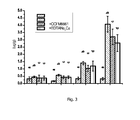
- the experimental result is shown in FIG.3 . From FIG.3 we can see that lead contents in blood, livers, stomachs and kidneys of the mice of the Lactobacillus plantarum CCFM8661 treatment group and the EDTANa2Ca positive treatment control group are higher than the negative control group but lower than that of the lead model control group. Compared with the lead model control group, the lead contents in blood and organs of mice of the Lactobacillus plantarum CCFM8661 treatment group decrease significantly (P ⁇ 0.05), which indicates the interference of the Lactobacillus plantarum CCFM8661 has the function of reducing lead contents in mice exposed to lead.
- mice Forty 20-25g healthy male Kunming mice are randomly divided into four groups: a negative control group, a lead acetate model control group, a Lactobacillus plantarum CCFM8661 treatment group and an EDTANa2Ca positive treatment control group.
- the negative control group is fed with normal drinking water; the rest of the three groups are fed with 1g/L lead acetate solution to establish lead poisoned models, and then the Lactobacillus plantarum CCFM8661 treatment group is daily administered to mice via gavage with 2.0 ⁇ 109 CFU/mL CCFM8661 suspension prepared in the embodiment 3 of the specification, and the positive treatment control group is injected intraperitoneally with 5g/L EDTANa2Ca medicament daily.
- Table 2 Recovery effect of the Lactobacillus plantarum CCFM8661 of the invention on oxidative damage caused by lead poisoning Group (liver) GSH(mg/g protein) MDA(nmol/mg protein) Control group 2.69 ⁇ 0.4. 0.11 ⁇ 0.04 Lead only 1.63 ⁇ 0.75a 0.18 ⁇ 0.03a Lead+CCFM8661 2.46 ⁇ 0.71b 0.16 ⁇ 0.04b Lead+ EDTANa2Ca 2.15 ⁇ 0.50c 0.15 ⁇ 0.03c Note: a: compared with the blank control group P ⁇ 0.05; compared with the lead model group P ⁇ 0.05; compared with the lead model P ⁇ 0.05; compared with the lead model P ⁇ 0.05
- the glutathione (GSH) concentration of the lead model group is significantly reduced, and the malondialdehyde (MDA) content increases obviously, which fully proves that lead exposure causes oxidative stress reaction in the mouse body.
- the glutathione content increases significantly, and the malondialdehyde content decreases obviously, which clearly indicates that the treatment with the Lactobacillus plantarum CCFM8661 of the invention really relieves oxidative damage caused by lead poisoning.
- Lactobacillus plantarum CCFM8661 of the invention can significantly reduce lead content in blood and organs of mice exposed to lead and recover the antioxidant index of the mice, thus effectively relieving lead toxicity effects.
- Raw skim milk is sterilized at 95°C for 20 min and then cooled to 4°C, in which starter of the Lactobacillus plantarum CCFM8661 described in the specification is added subsequently until the concentration is beyond 106CFU/ml, and is refrigerated at 4°C, obtaining the cow milk containing the Lactobacillus plantarum CCFM8661.
- Soybeans are soaked in soft water for 2h at 80°C, and then soybean skin is removed. Subsequently, draining off soaking water is followed, then adding boiling water for pulping, and the temperature is kept beyond 80°C for 12min.
- the obtained slurry is filtered with a 150-mesh sieve and centrifuged for separation, the centrifugal liquid obtained is crude soy milk which then is heated to 140-150°C, the hot soy milk is rapidly led into a vacuum cooling chamber for vacuum pumping, and odorous substance in the crude soy milk is rapidly discharged along with steam.
- the crude soy milk is cooled to about 37°C, in which the Lactobacillus plantarum CCFM8661 starter of the invention is inoculated subsequently until the concentration thereof is beyond 106CFU/ml, and is refrigerated at 4°C, obtaining the soy milk containing the Lactobacillus plantarum CCFM8661.
- Fresh vegetable is selected to be washed and juiced, then undergoes high-temperature instant sterilization at the high temperature of 140°C for 2 seconds and immediately cooled to about 37°C, in which the Lactobacillus plantarum CCFM8661 starter prepared according to the invention is inoculated subsequently until the concentration thereof is beyond 106CFU/ml, and is refrigerated at 4°C, obtaining the fruit and vegetable drinks containing the Lactobacillus plantarum CCFM8661.
- the Lactobacillus plantarum CCFM8661 of the invention is cultured in MRS culture medium for 24h, then centrifuged for 20min in the condition of 4°C and 40000r/min and washed with pH7.2 PBS twice, and the cells thereof is resuspended in sterilized skim milk until the final concentration of the cells reaches to 1 ⁇ 1010-3 ⁇ 1010CFU/mL.
- the bacterial suspension is added in sodium alginate solution with weight percentage of 3% for fully agitation until the cells are evenly dispersed in the sodium alginate solution, and the mixture liquid is squeezed into calcium chloride solution with weight percentage of 2% to form colloidal granules which is then filtered and collected after static solidification for 30min.
- the collected colloidal granules undergoes freeze-drying for 48h to form powder containing the Lactobacillus plantarum CCFM8661 which is then enclosed in pharmaceutical capsules now available on the market, obtaining the said capsule products.
- the Lactobacillus plantarum CCFM8661 accounting for 3% of the weight of the culture medium is inoculated in the culture medium sterilized for 10min at 115°C, wherein the culture medium consists of 10% of enzymatic hydrolysis skim milk, 0.5% of glucose, 1.5% of tryptone , 0.3% of yeast extract and the rest of water in the percentage of the total weight of the culture medium, with pH value of 6.8. Subsequently, the culture medium inoculated with the Lactobacillus plantarum CCFM8661 is cultured for 18h in the condition of 37°C, then washed with pH7.2 PBS twice, and resuspended in the protectant to 1010CFU/ml. Said protectant contains 100g/L skim milk powder, 30mg/L glycerol, 100g/L maltodextrin, 150g/L trehalose and 10g/L L-sodium glutamate.
- the suspension is pre-cultured for 60min at 37°C and then prepared into the starter of the dairy products, soy bean products and fruit and vegetable products via the freeze-drying method.
- the milk After added sugar is melted in fresh milk, the milk is homogenized in the condition of 65°C and 20MPa and sterilized for 5min at 95°C and then cooled to 35°C, and mixed bacteria is added into the milk.
- Said mixed bacteria consists of the Lactobacillus plantarum CCFM8661 of the invention, commercial powder starter Lactobacillus bulgaricus and commercial powder starter Streptococcus thermophilus in the mass ratio of 1:1:1, with the inoculum size being 0.03% of the total weight of the fresh milk.
- the milk After well mixing, the milk is fermented by keeping the temperature of 35°C, and refrigerated for 24h at 4°C after curding, obtaining the fermented milk.
Landscapes
- Life Sciences & Earth Sciences (AREA)
- Chemical & Material Sciences (AREA)
- Health & Medical Sciences (AREA)
- Engineering & Computer Science (AREA)
- Microbiology (AREA)
- Food Science & Technology (AREA)
- Polymers & Plastics (AREA)
- Organic Chemistry (AREA)
- Zoology (AREA)
- Bioinformatics & Cheminformatics (AREA)
- Wood Science & Technology (AREA)
- Biotechnology (AREA)
- Genetics & Genomics (AREA)
- Nutrition Science (AREA)
- Medicinal Chemistry (AREA)
- General Health & Medical Sciences (AREA)
- Mycology (AREA)
- Biomedical Technology (AREA)
- Biochemistry (AREA)
- General Engineering & Computer Science (AREA)
- Virology (AREA)
- Tropical Medicine & Parasitology (AREA)
- Veterinary Medicine (AREA)
- Public Health (AREA)
- Animal Behavior & Ethology (AREA)
- Pharmacology & Pharmacy (AREA)
- Epidemiology (AREA)
- Molecular Biology (AREA)
- Oil, Petroleum & Natural Gas (AREA)
- Botany (AREA)
- Agronomy & Crop Science (AREA)
- Nuclear Medicine, Radiotherapy & Molecular Imaging (AREA)
- General Chemical & Material Sciences (AREA)
- Chemical Kinetics & Catalysis (AREA)
- Toxicology (AREA)
- Medicines Containing Material From Animals Or Micro-Organisms (AREA)
- Coloring Foods And Improving Nutritive Qualities (AREA)
- Micro-Organisms Or Cultivation Processes Thereof (AREA)
- Medicinal Preparation (AREA)
Abstract
Description
- The invention particularly relates to a Lactobacillus plantarum capable of relieving lead toxicity and the application thereof.
- Lead is one kind of heavy metals extremely harmful to human health and is applied widely due to its unique physicochemical properties. As an important industrial material, lead has penetrated in all fields of human life; however, lead is one kind of metal elements poisonous to many organs without any physiological function in a human body, and the ideal blood lead level should be zero. With the rapid development of industry, agriculture, transportation, paint, press and electronic industry, air, soil, water and food are polluted by lead at different levels. Increasing lead contact and absorption because of long-time lead exposure causes lead accumulation in vivo. Lead can act on all systems and organs throughout the body, and its toxicity is related to forms and solubility of plumbic compound, but mainly injuries hemopoietic system, angiocarpy, digestive system, urinary system and immunologic system, thus having direct damage to human health, especially to nervous system, kidney, hemopoietic system and blood vessel. Lead-poisoned patients will develop symptoms of bellyache, diarrhea, vomiting, headache, dizziness, coma, etc., and take physical diseases such as vasospasm, liver and kidney damage, etc.
- Various physiological diseases caused by lead accumulation and lead poisoning are usually treated by injecting chelating agents such as calcium disodium edetate, sodium dimercaptosuccinate and the like to expel lead in traditional therapies. For example, the Second version of Chinese Pharmacopoeia (2010) records that EDTANa2Ca acts as an antidote for heavy metal poisoning caused by lead, cadmium, etc. However, such medicant has certain toxicity and side effects. EDTANa2Ca is a wide-adaptability complexing agent with stronger renal toxicity and will expel via urine indispensable trace elements such as zinc, cuprum, manganese, ferrum and the like which are related to the activity of many enzymes, and therefore the high doses of EDTANa2Ca will endanger health. Sodium dimercaptosuccinate may cause disorder of the digestive system and symptoms of headache, nausea, aching limbs, etc. In view of many defects existing in traditional therapies, it is very necessary to develop a new intervention or therapy for lead accumulation and lead poisoning.
- Lactobacillus is a general term for bacteria capable of fermenting carbohydrate to produce lactic acid and widely exits in naturally fermented dairy products, fermented plant food such as pickled vegetables, Chinese sauerkraut, silage and human intestines. Results of long-time scientific research show that probiotics represented by Llactobacillus are essential to a human body and have important physiological functions which mainly include preventing lactose intolerance, recovering intestinal colony balance and keeping health, anti-tumor and cancer prevention, controlling toxin levels in human bodies, protecting livers and enhancing detoxification functions of livers, etc. Therefore, the research on effects of Lactobacillus in relieving lead poisoning can further tap functions of Lactobacillus, develop Lactobacillus with higher health-protecting value and open up new ways and solutions for relieving lead poisoning by dietary methods.
- Currently, some patent documents relate to lead-excretion health food and preparation methods thereof, for instance, the patent
CN101933937A discloses a low molecular citrus pectin extract having natural chelating function and capable of expelling lead out of animal bodies; the patentCN101011432 relates to the use of extract of bracken flavones as medicament for lead expelling and lead poisoning alleviation; the patentCN 1506070 provides a lead-expelling health product containing stachyose. However, there are less patent documents relating lactobacilli capable of relieving lead poisoning effects at present, for example, the patentCN101134945A discloses Klebsiella pneumoniae Z-KAE15 which has high lead tolerance and high lead adsorbability and can be applied to environmental bioengineering. In addition, the patentCN101252943A discloses some Lactobacillus plantarum strains used for increasing the absorption of Fe, Zn, Ca and Mg ions in a mammal model. - Therefore, it is very necessary to screen a Lactobacillus strain having function of relieving lead poisoning, prove that it has an excellent effect of relieving lead poisoning in animal models and develop the practical application thereof. The inventor eventually finishes the invention based on the prior art and a lot of experiments.
- The object of the invention is to provide a Lactobacillus plantarum CCFM8661.
- The other object of the invention is to provide the application of the Lactobacillus plantarum CCFM8661.
- The invention is realized by the following technical scheme.
- The invention relates to a Lactobacillus strain which is identified as Lactobacillus plantarum CCFM8661 according to microbiological characteristics of morphological characteristics, culture characteristics and physiological and biochemical characteristics. The Lactobacillus plantarum strain has been deposited by China General Microbiological Culture Collection Center of Institute of Microbiology of Chinese Academy of Sciences located at NO. 1 Beichen West Road, Chaoyang District, Beijing, China, with the preservation number of CGMCC No.5494.
- The Lactobacillus plantarum CCFM8661 has the following characteristics:
- (1) Acid resistance; growing well in the environment condition of pH3.0-9.0 and surviving well under the condition of pH2.5;
- (2) Excellent tolerance to lead ions after culture in lead-containing medium in vitro;
- (3) High lead ions binding capacity after incubation in lead-containing aqueous solution in vitro;
- (4) Effect of reducing lead contents in mice exposed to lead and relieving lead toxicity for mice exposed to lead.
- The invention further relates to the application of the Lactobacillus plantarum CCFM8661 to preparation of pharmaceutical compositions and fermented foods capable of relieving lead toxicity.
- According to one preferred embodiment of the invention, said pharmaceutical composition is composed of the Lactobacillus plantarum CCFM8661 cells and a pharmaceutically acceptable carrier.
- According to another preferred embodiment of the invention, said Lactobacillus plantarum CCFM8661 preparation is powder prepared with bacterial culture containing the Lactobacillus plantarum CCFM8661 via the conventional freeze-drying preparation method or other methods and contains viable Lactobacillus plantarum CCFM8661 beyond 106CFU/mL.
- According to another preferred embodiment of the invention, the pharmaceutically acceptable carrier is one or more carriers pharmaceutically used in common from the group consisting of filler, adhesive, wetting agent, disintegrant, lubricant and flavoring.
- According to another preferred embodiment of the invention, said pharmaceutical composition is from the group consisting of granules, capsules, tablets, pills and oral liquid.
- According to another preferred embodiment of the invention, said fermented foods include dairy products, soy bean products and fruit and vegetable products produced with starter containing the Lactobacillus plantarum CCFM8661.
- According to another preferable embodiment of the invention, said starter is obtained as follows:
- A. Preparation of culture medium: dissolving 10% of enzymatic hydrolysis skim milk, 0.5% of glucose, 1.5% of tryptone and 0.3% of yeast extract in water accounting for 87.7% of the total weight of the culture medium, adjusting the pH value to 6.8, and obtaining the culture medium;
- B. Preparation of protectant: using water and material of protectant to prepare protectant containing 100g/L skim milk powder, 30mg/L glycerol, 100g/L maltodextrin, 150g/L trehalose and 10g/L L-sodium glutamate;
- C. Inoculating the Lactobacillus plantarum CCFM8661 strains accounting for 2-4% of the weight of the culture medium in the culture medium sterilized for 8-12min at 110-120°C, culturing for 18h in the condition of 37°C, then washing with pH7.2 PBS 2-4 times , and resuspending in the protectant until reaching the concentration of 1010CFU/ml; and subsequently, pre-culturing the suspension for 60min at 37°C and then obtaining said starter via the freeze-drying method.
- According to another preferred embodiment of the invention, said dairy products include cow milk, sour cream and cheese; said soy bean products include soy milk, lobster sauce and soybean sauce; and said fruit and vegetable products include products of cucumber, carrot, beet, celery and cabbage.
- The invention relates to a Lactobacillus plantarum CCFM8661, and the Lactobacillus plantarum strain has been deposited by China General Microbiological Culture Collection Center of Institute of Microbiology of Chinese Academy of Sciences located at No.3, Courtyard 1, Beichen West Road, Chaoyang District, Beijing, China, with the preservation number of CGMCC No.5494.
- According to the following screening standard, the inventor screens out the said Lactobacillus plantarum CCFM8661 from Chinese traditional foods such as pickle and fermented kumiss based on a lot of screening experiments and analysis and validation.
- The characteristics of the Lactobacillus plantarum CCFM8661will be described in details by combining related experiments and analysis and validation. 1. Acid resistance; the Lactobacillus plantarum grows well in the environment condition of pH3.0-9.0 and survives well under the condition of pH2.5.
- The cryopreserved Lactobacillus plantarum CCFM8661 of the invention is inoculated into a MRS culture medium (e.g. product of Qingdao Hope Bio-Technology Co.,Ltd) and cultured for 24h at 37°C, after 2-3 subcultures in MRS culture medium 1mL of Lactobacillus plantarum CCFM8661 culture is respectively inoculated into 19mL of MRS liquid medium with different pH values (3.0-9.0) and cultured for 24h at 37°C, determination of initial OD600 value and final OD600 value is carried out by which the strain concentration in the culture medium is measured so as to estimate the growth of the strain. The experimental results show that the Lactobacillus plantarum CCFM8661 grows well in the condition of pH3.0-9.0, and thus subsequent experiments can be carried out.
- Then the Lactobacillus plantarum CCFM8661 culture is obtained in the same way as above. The cells are washed with 1.0mL of pH7.2 PBS (phosphate buffer solution) twice and then resuspended in 1.0mL of pH7.2 PBS, the suspension is mixed with 9.0mL of pH2.5 artificial gastric juice and cultured at 37°C. Different samples are collected at the start (0h) and 3h for plate colony count via pour plate method using MRS agar culture medium. Afterwards the viable count is determined and the survival rate is calculated. The survival rate is the percentage of logarithmic values of viable counts at the third hour to the zero hour. In the invention, the strains with survival rate higher than 80% are screened for subsequent study.
- The experimental result shows that the Lactobacillus plantarum CCFM8661 has survival rate over 90% in the environment of artificial gastric juice. Thus it can be seen that the Lactobacillus plantarum CCFM8661 has acid resistance and can survive well in the condition of pH2.5.
- The tolerance to lead ions in vitro of Lactobacillus strains can be studied through growth curves of the Lactobacillus strains in mediums with different lead contents. 0.20g of lead chloride is added into 1L of water in sterile conditions, obtaining lead aqueous solution with the concentration of 150mg/L. Such lead aqueous solution is used to dissolve MRS solid culture medium powder, obtaining MRS liquid culture medium with lead ion concentration of 150mg/L. Likewise, MRS liquid culture mediums with lead ion concentrations of 50mg/L and 500mg/L are prepared respectively. The Lactobacillus plantarum CCFM8661 solution in stationary phase is inoculated into the MRS liquid culture medium containing lead by 2% weight of the MRS liquid culture medium containing lead. During culture, standard plate count is carried out at 0h, 2h, 4h, 6h, 8h, 12h, 16h, 20h and 24h respectively to obtain the growth curves of the Lactobacillus plantarum CCFM8661 shown in
FIG.1 . - The result of
FIG.1 shows that the Lactobacillus plantarum CCFM8661 of the invention has an excellent tolerance to lead ions. - Seven Lactobacillus strains are screened from Chinese traditional foods such as pickle and fermented kumiss in sterile conditions according to the screening standard of acid resistance (viable in condition of pH3.0). The seven Lactobacillus strains are purified and activated along with control strains of one Escherichia coli strain and one Bacillus subtilis strain. The above strains are moved in 150mg/L lead solution until the finial concentration of the strains reaches to 1g/L. The sample containing the strains is cultured at 37°Cfor 1h, then centrifuged for 20min at 6000r/min by a centrifuge, and washed with sterile water and centrifuged once. Supernatant is separated and removed, pure nitric acid is added to the obtained cells, digestion is carried out for 20min in a microwave digestion oven, lead ion content in the obtained digestion solution is determined with an atomic absorption spectrometry according to the method proposed by Yeager et al (Yeager D.W. , Cholak J. , Henderson E.W. Determination of lead in biological and related materials by atomic absorption spectrometry. Environmental Science and Technology 1971 ; 5 : 1020-1022.) so as to define the lead binding capacity of each strain. The determination result is shown in
FIG.2 . - It is clear from
FIG.2 that compared with other tested strains and control strains the Lactobacillus plantarum CCFM8661 of the invention has the maximal lead adsorption amount, and therefore having strong lead ions binding capacity. - Forty 20-25g healthy male Kunming mice are randomly divided into four groups: a negative control group, a lead acetate model control group, a Lactobacillus plantarum CCFM8661 treatment group and an EDTANa2Ca positive treatment control group. The negative control group is fed with normal drinking water; the rest of the three groups are fed with 1g/L lead acetate solution to establish lead-exposure poisoned models, and then the Lactobacillus plantarum CCFM8661 treatment group is daily fed via gavage with 2.0×10⁹CFU/mL CCFM8661 skim milk suspension prepared in the embodiment 3 of the specification, and the positive treatment control group is injected intraperitoneally with 5g/L EDTANa2Ca daily. Blood is collected when the experiment is finished and the mice are killed. Livers, stomachs and kidneys are taken out respectively and digested in the same way as described above, and then lead content is determined with the above mentioned atomic absorption spectrophotometry described by Yeager et al. The determination result is shown in
FIG.3 . - Through comparing lead contents in blood, livers, kidneys and stomachs of mice of lead-exposure poisoning model groups with that of mice of the group fed with lead and Lactobacillus plantarum CCFM8661 and comparing body antioxidant index (SOD and MDA), it is found that the Lactobacillus plantarum CCFM8661 of the invention can lower the lead contents in blood, livers, kidneys and stomachs of the mice and significantly recover the antioxidant index of the mice.
- Lead in the environment usually enters in a human body via food and breath to cause acute or chronic toxic effects on digestive system, nervous system, respiratory system and immune system and frequently brings on diseases such as intestinal colic, anaemia and muscle paralysis, etc., and in severe cases encephalopathy occurs, sometimes leading to death. Therefore, diagnostic Criteria of Occupational Chronic Lead Poisoning GBZ37-2002 is usually used to determine whether a body is lead-poisoned or not at present.
- In the invention the term "relieving lead toxicity" should be interpreted as a course of lightening or eliminating lead poisoning phenomena in a body. According to the Technical Standard for Testing & Assessment of Health Food issued by the Ministry of Health of China in 2003, experimental study proves that pharmaceutical composition containing the Lactobacillus plantarum CCFM8661 of the invention can reduce lead contents in blood, livers and kidneys of lead-poisoned mice, alleviate body's oxidative stress, relieve the pathological symptoms of lead-poisoned mice, increase the glutathione content in a mouse, and reduce the malondialdehyde content, thereby having the health function of promoting lead excretion.
- The research results indicate that Lactobacillus plantarum CCFM8661 of the invention has the following characteristics:
- (1) Acid resistance; growing well in the environment condition of pH3.0-9.0 and surviving well under the condition of pH2.5;
- (2) Excellent tolerance to lead ions after culture in lead-containing medium in vitro;
- (3) High lead ions binding capacity after incubation in lead-containing aqueous solution in vitro;
- (4) Effect of reducing lead contents in mice exposed to lead and relieving lead toxicity for mice exposed to lead.
- The Lactobacillus plantarum CCFM8661 of the invention has the following biological characteristics:
- Strain characteristics: gram-positive, rod-shaped, 0.5-1.0µm in wide, 2-4µm in length, single, in pairs or chains, no spore formed, and round at both ends.
- Colony characteristics: clear colonies formed on MRS culture medium, 0.3-2.0mm in diameter, round, regular edge, milk white, opaque, wet and smooth surface, and no generation of pigment.
- Growth characteristics: the lowest growth temperature of the strain being 20°C, the highest growth temperature being 40°C, the prefer temperature for growth ranging between 30°C and 37°C, the lowest and the highest initial growth pH values being 9.0 and 2.5 respectively, and the prefer initial pH value for growth being 6.0.
- The Lactobacillus plantarum CCFM8661 strain of the invention has relatively short lag phase, and comes into the exponential phase after about 4h and reaches to the stationary phase after 12h.
- The preservation method of the Lactobacillus plantarum of the invention:
- The original strain of the Lactobacillus plantarum is preserved in the form of 30% weight of glycerol suspension at -75°C, or in the form of frozen dry powder at 4°C for use.
- The culture method and conditions of the Lactobacillus plantarum CCFM8661: it can be used after cultured in MRS culture medium for 18-36h under facultative anaerobic condition and at 37°C.
- The invention further relates to the application of the Lactobacillus plantarum CCFM8661 to the preparations of pharmaceutical composition and fermented food capable of relieving lead toxicity.
- The pharmaceutical composition is composed of the Lactobacillus plantarum CCFM8661 culture and a pharmaceutically acceptable carrier.
- According to the invention, the Lactobacillus plantarum CCFM8661 culture is frozen dry powder prepared with the Lactobacillus plantarum liquid suspension via the conventional freeze-drying preparation method, or powder prepared via other methods such as a spray-drying method.
- The Lactobacillus plantarum CCFM8661 culture contains viable Lactobacillus plantarum CCFM8661 beyond 106CFU/mL.
- The content determination method of the Lactobacillus plantarum CCFM8661 adopts the MRS standard plate count method well known by those skilled in the art.
- In the pharmaceutical composition, the amount of the Lactobacillus plantarum CCFM8661 accounts for 15-35% of the pharmaceutical composition by weight, preferably 18-32%, most preferably 20-30%.
- According to the invention, the pharmaceutically acceptable carrier should be the conventional drug carrier, e.g. one or more carriers from the group consisting of filler, adhesive, wetting agent, disintegrant, lubricant and flavoring pharmaceutically used in common.
- According to the invention, said filler should be interpreted in the sense of supplementary material diluent used for increasing the weight and volume of tablets to facilitate tabletting; or supplementary material absorbent used for absorbing surplus liquid in raw material.
- Said filler is selected from the group consisting of starch, sucrose, lactose, calcium sulphate and microcrystalline cellulose.
- Preferably, said filler is selected from the group consisting of starch, sucrose and microcrystalline cellulose.
- More preferably, said filler is selected from the group consisting of starch and microcrystalline cellulose.
- According to the invention, said wetting agent should be interpreted in the sense of liquid capable of wetting raw and supplementary materials of inviscid medicant and inducing viscosity of the medicant for granulation.
- Said wetting agent is selected from the group consisting of water, ethanol, starch and syrup.
- Preferably, said wetting agent is selected from the group consisting of water, ethanol and starch.
- The amount of the wetting agent used in the invention is 0.1-3.0% of the total weight of the pharmaceutical composition.
- According to the invention, said adhesive should be interpreted in the sense of a viscous substance added into raw medicant having no viscosity or insufficient viscosity for granulation.
- Said adhesive is selected from the group consisting of cellulose derivatives, alginate, gelatin and polyvinyl pyrrolidone.
- Preferably, said adhesive is selected from the group consisting of cellulose derivatives, gelatin and polyvinyl pyrrolidone.
- More preferably, said adhesive is selected from the group of consisting of gelatin and polyvinyl pyrrolidone.
- The amount of the adhesive used in the invention is 0.5-5.0% of the total weight of the pharmaceutical composition.
- According to the invention, said disintegrant should be interpreted in the sense of a kind of supplementary material which can be added in tablets to promote the tablets to be rapidly disintegrated into fine particles in gastrointestinal fluid. It is well known that tablets due to being harder after compress are disintegrated very slowly to decrease therapeutic effects unless containing supplementary material having the function of promoting disintegration.
- Said disintegrant is selected from the group consisting of sodium carboxymethyl starch, hydroxypropyl, crosslinked carboxymethyl cellulose, agar, calcium carbonate and sodium bicarbonate.
- Preferably, said disintegrant is selected from the group consisting of sodium carboxymethyl starch, hydroxypropyl, crosslinked carboxymethyl cellulose, agar and sodium bicarbonate.
- More preferably, said disintegrant is selected from the group consisting of sodium carboxymethyl starch, hydroxypropyl, crosslinked carboxymethyl cellulose and sodium bicarbonate.
- The disintegrant used in the invention is 5.0-15.0% of the total weight of the pharmaceutical composition.
- According to the invention, said lubricant should be interpreted in the sense of a kind of chemical substances capable of helping the increase of fluidity of tablets during granulation to prevent tablet material from adhering to the mold of a tablet machine, thereby being favorable of demoulding of tablets.
- Said lubricant is selected from the group consisting of talc powder, calcium stearate, magnesium stearate, micropowder silica gel and polyethylene glycol.
- Preferably, said lubricant is selected from the group consisting of talc powder, calcium stearate, magnesium stearate and polyethylene glycol.
- More preferably, said lubricant is selected from the group consisting of talc powder and calcium stearate.
- The lubricant used in the invention is 0.5-3.0% of the total weight of the pharmaceutical position.
- According to the invention, said flavoring should be interpreted in the sense of medicinal auxiliary material used in medicine for improving or covering unpleasant smell or flavor to make strong bitterness or other peculiar smells such as pungency, irritation and the like imperceptible to patients.
- Said flavoring is selected from the group consisting of sweetener of simple syrup, sucrose, lecithin, orange syrup or cherry syrup; aromatic of lemon, fennel or peppermint oil; mucilage of sodium alginate, arabic gum, gelatin, methyl cellulose or sodium carboxymethyl cellulose; and effervescent of the mixture of citric acid, tartaric acid and sodium bicarbonate.
- Preferably, said flavoring is selected from the group consisting of sweetener of simple syrup, sucrose, orange syrup or cherry syrup; aromatic of lemon or peppermint oil; mucilage of sodium alginate, arabic gum, gelatin or sodium carboxymethyl cellulose; and effervescent of the mixture of tartaric acid and sodium bicarbonate.
- More preferably, said flavoring is selected from the group consisting of sweetener of sucrose, orange syrup or cherry syrup; lemon oil aromatic; mucilage of sodium alginate or arabic gum; and effervescent of the mixture of tartaric acid and sodium bicarbonate.
- The flavoring used in the invention is 0.5-2.0% of the total weight of the pharmaceutical composition.
- The Lactobacillus plantarum CCFM8661 culture of the invention can be combined with pharmaceutically acceptable carrier or excipient to be prepared into various medicament forms such as granules, capsules, tablets, pills or oral liquid, wherein the pharmaceutically acceptable carrier or excipient can be selected depending on different medicament forms, and the carrier or excipient and the amount thereof are apparent and easy to determine for those skilled in the art of pharmacy.
- The invention adopts methods and devices which are well-known and commonly used by those skilled in the art of pharmacy to prepare the granules, capsules, tablets, pills or oral liquid of the medicament of the invention.
- Generally, said "medicament form" should be interpreted in the sense of applying to human being, and single medicament form contains specific active components with required content, such as the Lactobacillus plantarum CCFM8661 culture of the invention.
- In the invention, said fermented foods include dairy products, soy bean products and fruit and vegetable products produced with starter containing the Lactobacillus plantarum CCFM8661.
- One of preferable embodiments of the starter preparation method is as follows:
- A. Preparation of culture medium: dissolving 10% of enzymatic hydrolysis skim milk, 0.5% of glucose, 1.5% of tryptone and 0.3% of yeast extract in water accounting for 87.7% of the total weight of the culture medium, adjusting the pH value to 6.8, and obtaining the culture medium;
- B. Preparation of protectant: using water and material of protectant to prepare protectant containing 100g/L skim milk powder, 30mg/L glycerol, 100g/L maltodextrin, 150g/L trehalose and 10g/L L-sodium glutamate;
- C. Inoculating the Lactobacillus plantarum CCFM8661 accounting for 2-4% of the weight of the culture medium in the culture medium sterilized for 8-12min at 110-120°C, culturing for 18h in the condition of 37°C, then washing with pH7.2 PBS 2-4 times , and resuspending in the protectant until reaching the concentration of 1010CFU/ml; and subsequently, pre-culturing the suspension for 60min at 37°C and then obtaining said starter via the freeze-drying method.
- Said dairy products include milk, sour cream and cheese.
- In the invention, said milk should be interpreted in the sense of cow milk, mare milk or reconstituted milk. Said reconstituted milk is prepared with milk powder and softened water accounting for 10-15% and 85-90% of the weight of the reconstituted milk respectively. Said milk powder is the product widely sold on market at present.
- Said sour cream is prepared by fermented cream with Lactobacillus strain. Sour cream has more advantages than sweet cream of stronger aroma, higher yield of cream and lower risk of recontamination of microorganisms after sterilization because of harmful microorganisms being inhibited by the Lactobacillus strain.
- Said cheese is a kind of foods having high nutritional value prepared by fermented milk.
- Said soy bean products include soy milk, lobster sauce and soybean sauce which all are Chinese traditional foods or condiments.
- Said fruit and vegetable products include products of cucumber, carrot, beet, celery and cabbage.
- In the production of dairy products, soy bean products and fruit and vegetable products, the starter of the Lactobacillus plantarum CCFM8661 of the invention is used according to the following method:
- Generally, in the conventional production of dairy products, soy bean products and fruit and vegetable products, the Lactobacillus plantarum CCFM8661 starter of the invention is inoculated in material to be treated at a conventional dosage and is fermented or survived at the temperature and pressure suitable for propagation of the Lactobacillus plantarum CCFM8661, the produced metabolites causes fermented products to process excellent properties of certain acidity, aroma or the like, thereby prolonging the storage time and improving the nutritional value and digestibility of the products.
- The Lactobacillus plantarum CCFM8661 of the invention has acid resistance, excellent tolerance to lead ions in vitro with capability of tolerating initial concentration of 150mg/L of lead ion solution and good binding capacity of lead ions, and can thus lower the lead contents in blood, livers, kidneys and stomachs of mice, significantly recover the antioxidant index of the mice and relieve the pathological symptoms of lead-poisoned mice. The Lactobacillus plantarum CCFM8661 is used for preparing pharmaceutical compositions and fermented foods capable of relieving lead poisoning, and has a very wide application prospect.
-
-
FIG.1 shows the growth curves of the Lactobacillus plantarum CCFM8661 in the culture medium containing lead ions with the initial concentration of 50mg/L, 150mg/L and 500mg/L; -
FIG.2 shows the binding capacities of Lactobacillus strains, Bacillus subtilis and Escherichia coli to lead ions; wherein CCFM8661, 14 and ST-III represent Lactobacillus plantarum; 2-2 represents Lactobacillus buchneri; 2-3 represents Lactobacillus rhamnosus LGG; 22 represents Bifidobacterium; 23 represents Lactobacillus delbrueckii; Bacillus subtilis and Escherichia coli act as experimental control strains. -
FIG.3 shows the effect of the Lactobacillus plantarum CCFM8661 on reducing the lead levels in blood, livers, kidneys and stomachs of mice exposed to lead; a, b, c, d, mean that groups represented by different letters have significant differences (P < 0.05). - 0.20g of lead chloride is added into 1L of water in sterile conditions, obtaining lead aqueous solution with the concentration of 150mg/L. Such lead aqueous solution is used to dissolve MRS solid culture medium mixture, obtaining MRS liquid culture medium with lead ion concentration of 150mg/L. MRS culture medium is the culture medium familiar to those skilled in the art and contains tryptone , yeast extract , glucose , sodium acetate, dibasic ammonium citrate, tween-80, magnesium sulfate and manganese sulfate, and pH value is 6.2-6.4.
- MRS liquid culture mediums with lead ion concentrations of 50mg/L and 500mg/L are prepared respectively in the same way described above. The Lactobacillus plantarum CCFM8661 culture in stationary phase is inoculated into the MRS liquid culture medium containing lead by 2% weight of the MRS liquid culture medium containing lead, cultured at 37°C, sampled at 0h, 2h, 4h, 6h, 8h, 12h, 16h, 20h and 24h respectively for colony counting. The obtained growth curves of the Lactobacillus plantarum CCFM8661 are shown in
FIG.1 . In addition, 1mL of the Lactobacillus plantarum solution is inoculated into lead-free MRS culture medium and cultured in the same condition, and the result is of a blank control group and also listed inFIG.1 . -
FIG.1 shows that in the environment of lead ion concentration of 150mg/L, the growth of the Lactobacillus plantarum CCFM8661 is inhibited in the beginning but rapidly increases subsequently to even exceed the blank control group at 24h, indicating that the Lactobacillus plantarum CCFM8661 has an excellent tolerance to lead ions. - According the screening standard of acid resistance (viable under the condition of pH3.0), seven Lactobacillus strains are screened from Chinese traditional foods such as pickle and fermented kumiss. The seven Lactobacillus strains are purified and activated in sterile conditions along with control strains of one Escherichia coli strain and one Bacillus subtilis strain, wherein the Lactobacillus strains are purified and activated in MRS culture medium, and the Escherichia coli and Bacillus subtilis in LB culture medium which is well known by those skilled in the art and contains tryptone , yeast extract , NaCl and agar, with pH7.0. In addition, the Escherichia coli and Bacillus subtilis further need to be placed in a shaking incubator for aerobic culture for 12h and 16h at 37°C respectively. The activated bacteria solution is oscillated and centrifuged for 15min at 6000r/min. The obtained cells are moved into a container containing the solution with lead ion concentration of 150mg/L, while a blank control group is moved into deionized water. The volume of liquid is determined according to the mass of the cells to obtain final concentration of the cells of 1g/L. Then the sample is cultured for 1h at 37°C, centrifuged for 20min at 6000r/min by a Beckman centrifuge, washed with sterile water and centrifuged again. Supernatant is separated and removed, pure nitric acid is added to the obtained cells, and the digestion is carried out for 20min in a microwave digestion oven. Lead ion content in the obtained digestion solution is determined with an atomic absorption spectrometry according to the method proposed by Yeager et al (Yeager D.W. , Cholak J. , Henderson E.W. Determination of lead in biological and related materials by atomic absorption spectrometry. Environmental Science and Technology 1971 ; 5 : 1020-1022.) so as to define the adsorption capacity of each strain.
- The experiment result is shown in
FIG.2. FIG.2 shows that there is a large difference in lead adsorption capacity among different strains. The Lactobacillus plantarum CCFM8661 has the strongest binding capacity of 4955.1µg/g lead ions, and the Escherichia coli has the poorest adsorption capacity for lead ions of only 398µg/g lead ions, which is far lower than the Lactobacillus plantarum CCFM8661. - The frozen dried powder of the Lactobacillus plantarum CCFM8661 is suspended in skim milk powder to form suspension with the concentration of 2.0×10⁹CFU/mL. The strain suspension is administered to ten healthy male Kunming mice with weights at about 20g daily via gavage. Observation is carried out daily for one week, and the death and weight are recorded. The experimental result is listed in Table 1.
Table 1: The change of mice weight fed with the Lactobacillus plantarum CCFM8661 with the concentration of 2.0×10⁹ CFU/mL Time(days) 1 2 3 4 5 6 7 Weight(g) 21.2±1.5 21.9±2.1 22.5±2.2 23.5±2.1 24.2±1.9 24.9±1.9 25.7±1.8 Death rate - - - - - - - Note: "-": no death - The result in the Table 1 shows that the Lactobacillus plantarum CCFM8661 with the concentration of 2.0×10⁹ CFU/mL has no significant effect on mice, while the weight of mice increases and no death is observed. The mice have no remarkable pathological symptoms in appearance.
- Forty 20-25g healthy male Kunming mice are randomly divided into four groups: a negative control group, a lead acetate model control group, a Lactobacillus plantarum CCFM8661 treatment group and a calcium disodium edetate positive treatment control group. The negative control group is fed with normal drinking water; the rest of the three groups are fed with 1g/L lead acetate solution to establish lead-exposure poisoned models, and then the Lactobacillus plantarum CCFM8661 treatment group is daily fed to mice via gavage with 2.0×10⁹ CFU/mL CCFM8661 suspension prepared by the embodiment 3 of the specification, and the positive treatment control group is injected intraperitoneally with 5g/L EDTANa2Ca medicament daily. Blood is collected when the experiment is finished and the mice are killed, livers, stomachs and kidneys are taken out respectively and digested in the same way as described above, and then lead content is determined with the atomic absorption spectrophotometry used in
embodiment 2. - The experimental result is shown in
FIG.3 . FromFIG.3 we can see that lead contents in blood, livers, stomachs and kidneys of the mice of the Lactobacillus plantarum CCFM8661 treatment group and the EDTANa2Ca positive treatment control group are higher than the negative control group but lower than that of the lead model control group. Compared with the lead model control group, the lead contents in blood and organs of mice of the Lactobacillus plantarum CCFM8661 treatment group decrease significantly (P < 0.05), which indicates the interference of the Lactobacillus plantarum CCFM8661 has the function of reducing lead contents in mice exposed to lead. - Forty 20-25g healthy male Kunming mice are randomly divided into four groups: a negative control group, a lead acetate model control group, a Lactobacillus plantarum CCFM8661 treatment group and an EDTANa2Ca positive treatment control group. The negative control group is fed with normal drinking water; the rest of the three groups are fed with 1g/L lead acetate solution to establish lead poisoned models, and then the Lactobacillus plantarum CCFM8661 treatment group is daily administered to mice via gavage with 2.0×10⁹ CFU/mL CCFM8661 suspension prepared in the embodiment 3 of the specification, and the positive treatment control group is injected intraperitoneally with 5g/L EDTANa2Ca medicament daily. Blood is collected when the experiment is finished and the mice are killed. Livers are taken out, and levels of glutathione (GSH) and malondialdehyde (MDA) are determined by the method of Ellmam (Ellmam, G.C. Tissue sulfhydryl groups. Archives of biochemistry and biophysics 82(1) : 70-77.) and with a malondialdehyde kit produced by Nanjing Jiancheng Bioengineering Institute.
- The experimental result is shown in Table 2.
Table 2: Recovery effect of the Lactobacillus plantarum CCFM8661 of the invention on oxidative damage caused by lead poisoning Group (liver) GSH(mg/g protein) MDA(nmol/mg protein) Control group 2.69±0.4. 0.11±0.04 Lead only 1.63±0.75a 0.18±0.03a Lead+CCFM8661 2.46±0.71b 0.16±0.04b Lead+ EDTANa2Ca 2.15±0.50c 0.15±0.03c Note: a: compared with the blank control group P < 0.05; compared with the lead model group P <0.05; compared with the lead model P <0.05 - The result in Table 2 shows that in the sample of mice liver of the Lactobacillus plantarum CCFM8661 treatment group, GSH content is higher than that of the lead model group but lower than the blank control group; MDA content is lower than the lead model control group but higher than the blank control group. Compared with the lead model control group, both GSH content and MDA content of the Lactobacillus plantarum CCFM8661 treatment group have significant differences (P < 0.05). Glutathione (GSH) is an important antioxidant in a living body, while malondialdehyde (MDA) is an end product of peroxidation between free radicals and lipid and acts as a marker of oxidative stress injury in the host. As shown in Table 2, compared with the blank control group, the glutathione (GSH) concentration of the lead model group is significantly reduced, and the malondialdehyde (MDA) content increases obviously, which fully proves that lead exposure causes oxidative stress reaction in the mouse body. However, compared with the lead model group, in the Lactobacillus plantarum CCFM8661 treatment group the glutathione content increases significantly, and the malondialdehyde content decreases obviously, which clearly indicates that the treatment with the Lactobacillus plantarum CCFM8661 of the invention really relieves oxidative damage caused by lead poisoning.
- The above animal experiments show that the Lactobacillus plantarum CCFM8661 of the invention can significantly reduce lead content in blood and organs of mice exposed to lead and recover the antioxidant index of the mice, thus effectively relieving lead toxicity effects.
- Raw skim milk is sterilized at 95°C for 20 min and then cooled to 4°C, in which starter of the Lactobacillus plantarum CCFM8661 described in the specification is added subsequently until the concentration is beyond 106CFU/ml, and is refrigerated at 4°C, obtaining the cow milk containing the Lactobacillus plantarum CCFM8661.
- Soybeans are soaked in soft water for 2h at 80°C, and then soybean skin is removed. Subsequently, draining off soaking water is followed, then adding boiling water for pulping, and the temperature is kept beyond 80°C for 12min. The obtained slurry is filtered with a 150-mesh sieve and centrifuged for separation, the centrifugal liquid obtained is crude soy milk which then is heated to 140-150°C, the hot soy milk is rapidly led into a vacuum cooling chamber for vacuum pumping, and odorous substance in the crude soy milk is rapidly discharged along with steam. After vacuum degassing, the crude soy milk is cooled to about 37°C, in which the Lactobacillus plantarum CCFM8661 starter of the invention is inoculated subsequently until the concentration thereof is beyond 106CFU/ml, and is refrigerated at 4°C, obtaining the soy milk containing the Lactobacillus plantarum CCFM8661.
- Fresh vegetable is selected to be washed and juiced, then undergoes high-temperature instant sterilization at the high temperature of 140°C for 2 seconds and immediately cooled to about 37°C, in which the Lactobacillus plantarum CCFM8661 starter prepared according to the invention is inoculated subsequently until the concentration thereof is beyond 106CFU/ml, and is refrigerated at 4°C, obtaining the fruit and vegetable drinks containing the Lactobacillus plantarum CCFM8661.
- The Lactobacillus plantarum CCFM8661 of the invention is cultured in MRS culture medium for 24h, then centrifuged for 20min in the condition of 4°C and 40000r/min and washed with pH7.2 PBS twice, and the cells thereof is resuspended in sterilized skim milk until the final concentration of the cells reaches to 1×10¹⁰-3×10¹⁰CFU/mL. The bacterial suspension is added in sodium alginate solution with weight percentage of 3% for fully agitation until the cells are evenly dispersed in the sodium alginate solution, and the mixture liquid is squeezed into calcium chloride solution with weight percentage of 2% to form colloidal granules which is then filtered and collected after static solidification for 30min. The collected colloidal granules undergoes freeze-drying for 48h to form powder containing the Lactobacillus plantarum CCFM8661 which is then enclosed in pharmaceutical capsules now available on the market, obtaining the said capsule products.
- The Lactobacillus plantarum CCFM8661 accounting for 3% of the weight of the culture medium is inoculated in the culture medium sterilized for 10min at 115°C, wherein the culture medium consists of 10% of enzymatic hydrolysis skim milk, 0.5% of glucose, 1.5% of tryptone , 0.3% of yeast extract and the rest of water in the percentage of the total weight of the culture medium, with pH value of 6.8. Subsequently, the culture medium inoculated with the Lactobacillus plantarum CCFM8661 is cultured for 18h in the condition of 37°C, then washed with pH7.2 PBS twice, and resuspended in the protectant to 1010CFU/ml. Said protectant contains 100g/L skim milk powder, 30mg/L glycerol, 100g/L maltodextrin, 150g/L trehalose and 10g/L L-sodium glutamate.
- Subsequently, the suspension is pre-cultured for 60min at 37°C and then prepared into the starter of the dairy products, soy bean products and fruit and vegetable products via the freeze-drying method.
- After added sugar is melted in fresh milk, the milk is homogenized in the condition of 65°C and 20MPa and sterilized for 5min at 95°C and then cooled to 35°C, and mixed bacteria is added into the milk. Said mixed bacteria consists of the Lactobacillus plantarum CCFM8661 of the invention, commercial powder starter Lactobacillus bulgaricus and commercial powder starter Streptococcus thermophilus in the mass ratio of 1:1:1, with the inoculum size being 0.03% of the total weight of the fresh milk. After well mixing, the milk is fermented by keeping the temperature of 35°C, and refrigerated for 24h at 4°C after curding, obtaining the fermented milk.
- 25.7 weight portion of bacteria powder of the Lactobacillus plantarum CCFM8661 of the invention prepared by the freeze-drying method, 55.0 weight portion of starch, 4.5 weight portion of cellulose derivatives , 12.0 weight portion of sodium carboxymethyl starch, 0.8 weight portion of talc powder, 1.0 weight portion of sucrose and 1.0 weight portion of water are respectively weighed and mixed to be prepared into wet granules in the conventional way, then tabulated with a tablet press machine for example produced by Zhongnan Pharmaceutical Machinery Factory, and dried in a small-sized drug dryer produced for example by Qingzhou City Yikong Chinese Traditional Medicine Co., Ltd , obtaining the tablets of the invention after repacking.
- 32.2 weight portion of bacteria powder of the Lactobacillus plantarum CCFM8661 of the invention prepared by the freeze-drying method, 48.0 weight portion of microcrystalline cellulose, 4.5 weight portion of polyvinyl pyrrolidone, 10.0 weight portion of calcium carbonate, 2.8 weight portion of magnesium stearate, 1.3 weight portion of lecithin and 1.2 weight portion of ethanol are respectively weighed and mixed evenly, and conventional dose of refined honey is added in the mixture, obtaining the pills of the invention.
Claims (10)
- A Lactobacillus plantarum CCFM8661 which has been deposited on November 29, 2011 by China General Microbiological Culture Collection Center of Institute of Microbiology, with the preservation number of CGMCC No.5494.
- The Lactobacillus plantarum CCFM8661 according to claim 1, characterized by the following characteristics:(1) Acid resistance; growing well in the environment condition of pH3.0-9.0 and surviving well under the condition of pH2.5;(2) Excellent tolerance to lead ions after culture in lead-containing medium in vitro;(3) High lead ions binding capacity after incubation in lead-containing aqueous solution in vitro;(4) Effect of reducing lead contents in mice exposed to lead and relieving lead toxicity for mice exposed to lead.
- The application of the Lactobacillus plantarum CCFM8661 according to claim 1 to the preparation of pharmaceutical compositions and fermented foods capable of relieving lead toxicity.
- The application according to claim 3, characterized in that said pharmaceutical composition is composed of the Lactobacillus plantarum CCFM8661 and a pharmaceutically acceptable carrier.
- The application according to claim 4, characterized in that said Lactobacillus plantarum CCFM8661 culture is powder prepared with bacterial suspension containing the Lactobacillus plantarum CCFM8661 via the conventional freeze-drying preparation method or other methods and contains viable Lactobacillus plantarum CCFM8661 beyond 106CFU/mL.
- The application according to claim 4, characterized in that the pharmaceutically acceptable carrier is one or more carriers pharmaceutically used in common from the group consisting of filler, adhesive, wetting agent, disintegrant, lubricant and flavoring.
- The application according to claim 3 or 4, characterized in that said pharmaceutical composition is from the group consisting of granules, capsules, tablets, pills and oral liquid.
- The application according to claim 2, characterized in that said fermented foods include dairy products, soy bean products and fruit and vegetable products produced with starter containing the Lactobacillus plantarum CCFM8661.
- The application according to claim 8, characterized in that the preparation of said starter comprises the following steps of:A. Preparation of culture medium: 10% of enzymatic hydrolysis skim milk, 0.5% of glucose, 1.5% of tryptone and 0.3% of yeast extract are dissolved in water accounting for 87.7% of the total weight of the culture medium, the pH value is adjusted to 6.8, and saidculture medium is obtained;B. Preparation of protectant: using water and material of protectant to prepare protectant containing 100g/L skim milk powder, 30mg/L glycerol, 100g/L maltodextrin, 150g/L trehalose and 10g/L L-sodium glutamate;C. Inoculating the Lactobacillus plantarum CCFM8661 accounting for 2-4% of the weight of the culture medium in the culture medium sterilized for 8-12min at 110-120°C, culturing for 18h in the condition of 37°C, then washing with pH7.2 PBS 2-4 times , and resuspending in the protectant until reaching the concentration of 1010CFU/ml; and subsequently, pre-culturing the suspension for 60min at 37°C and then obtaining said starter via the freeze-drying method.
- The application according to claim 8, characterized in that said dairy products include cow milk, sour cream and cheese; said soy bean products include soy milk, lobster sauce and soybean sauce; and said fruit and vegetable products include products of cucumber, carrot, beet, celery and cabbage.
Applications Claiming Priority (2)
| Application Number | Priority Date | Filing Date | Title |
|---|---|---|---|
| CN2012100463235A CN102586148B (en) | 2012-02-28 | 2012-02-28 | Plant lactobacillus capable of relieving lead toxicity and application thereof |
| PCT/CN2012/078799 WO2013127146A1 (en) | 2012-02-28 | 2012-07-18 | Lactobacillus plantarum able to relieve lead toxicity and use thereof |
Publications (3)
| Publication Number | Publication Date |
|---|---|
| EP2708599A1 true EP2708599A1 (en) | 2014-03-19 |
| EP2708599A4 EP2708599A4 (en) | 2015-09-09 |
| EP2708599B1 EP2708599B1 (en) | 2016-05-04 |
Family
ID=46475387
Family Applications (1)
| Application Number | Title | Priority Date | Filing Date |
|---|---|---|---|
| EP12869827.1A Active EP2708599B1 (en) | 2012-02-28 | 2012-07-18 | Lactobacillus plantarum able to relieve lead toxicity and use thereof |
Country Status (4)
| Country | Link |
|---|---|
| US (1) | US9320766B2 (en) |
| EP (1) | EP2708599B1 (en) |
| CN (1) | CN102586148B (en) |
| WO (1) | WO2013127146A1 (en) |
Families Citing this family (40)
| Publication number | Priority date | Publication date | Assignee | Title |
|---|---|---|---|---|
| CN102827796B (en) * | 2012-09-03 | 2013-10-30 | 江南大学 | Lactobacillus plantarum with cadmium removing function and usage thereof |
| CN102960620B (en) * | 2012-12-12 | 2013-09-11 | 江南大学 | Direct-throwing type sour dough fermenting agent as well as preparation method and application thereof |
| JP6643984B2 (en) * | 2013-07-02 | 2020-02-12 | オーストリアノヴァ シンガポール プライベート リミテッド | Methods for lyophilizing encapsulated cells, lyophilized encapsulated cells, compositions comprising lyophilized encapsulated cells, and uses of such cells and compositions |
| CN104611278B (en) * | 2015-02-27 | 2017-07-14 | 江南大学 | It is a kind of to alleviate Lactobacillus plantarum of aluminium toxicity and application thereof |
| CN104938627A (en) * | 2015-06-12 | 2015-09-30 | 柳陈坚 | Method for preparing functional yoghurt through lactobacillus fermentation |
| CN105274044A (en) * | 2015-11-05 | 2016-01-27 | 胡文锋 | Inactivated lactic acid bacterium cell and application thereof to food |
| CN105285514A (en) * | 2015-11-24 | 2016-02-03 | 江南大学 | Plant lactobacillus feed capable of relieving tilapia lead toxicity |
| CN105724985B (en) * | 2016-01-29 | 2019-03-05 | 江南大学 | Juice modification method that is a kind of while delaying ascorbate degradation and removal heavy metal lead |
| CN105831771B (en) * | 2016-03-23 | 2019-04-23 | 江南大学 | A dietary supplement of probiotics and trace elements with the function of relieving lead toxicity |
| CN105901741B (en) * | 2016-03-23 | 2019-03-19 | 江南大学 | A kind of dietary supplements with the probiotics and plant extracts of alleviating lead poisoning sexual function |
| CN105969700B (en) * | 2016-07-15 | 2019-05-17 | 江南大学 | A kind of lactobacillus plantarum and its application with absorption manganese ion function |
| CN107129951B (en) * | 2017-06-19 | 2020-07-07 | 青岛科拓恒通乳酸菌产业化开发研究院有限公司 | Compound lactobacillus preparation for improving utilization rate of trace nutrients of peanuts in saline-alkali soil and application thereof |
| TWI632236B (en) * | 2017-08-03 | 2018-08-11 | 光晟生物科技股份有限公司 | Lactobacillus gasseri br-0121 and use thereof |
| CN107699503B (en) * | 2017-11-22 | 2020-06-09 | 内蒙古农业大学 | Abnormal yeast Weikehan yeast BT-1-1 and application thereof |
| CN108277179B (en) * | 2018-03-07 | 2021-08-03 | 武汉生物样本库有限公司 | High-density fermentation and spray drying method of bacillus subtilis |
| CN108753307A (en) * | 2018-06-08 | 2018-11-06 | 合肥净龙环保科技有限公司 | A kind of renovation agent for administering lead-contaminated soil |
| TWI689584B (en) * | 2018-11-17 | 2020-04-01 | 原生生物醫學股份有限公司 | Novel lactic acid bacteria and their use for treating or preventing heavy metal related diseases |
| CN110089666B (en) * | 2019-05-16 | 2024-01-12 | 内蒙古大学 | Lactobacillus plantarum and its extracellular polysaccharide |
| CN110122764A (en) * | 2019-06-11 | 2019-08-16 | 深圳保时健生物工程有限公司 | A kind of infant's diatery supplement and its application |
| CN110575816B (en) * | 2019-06-19 | 2022-04-05 | 北京工商大学 | Lactobacillus plantarum YW11 with high adsorption and high heavy metal lead tolerance |
| CN111040960B (en) * | 2019-11-19 | 2022-02-01 | 西南大学 | Lactobacillus plantarum LP33 and application thereof in preparation of product for promoting lead excretion |
| CN111096459B (en) * | 2019-11-19 | 2022-08-02 | 西南大学 | Application of Lactobacillus plantarum LP33 in the preparation of products for preventing lead poisoning |
| CN111012804B (en) * | 2019-12-16 | 2022-05-17 | 南京大学 | Application of probiotic-mineral material composite preparation and mineral material in the preparation of drugs for inhibiting the growth of malignant tumors |
| CN111334455B (en) * | 2020-03-13 | 2022-04-15 | 江南大学 | Filamentous fungus inhibitor and application thereof |
| EP4144832A4 (en) * | 2020-03-26 | 2024-01-17 | Native Biomedicals Ltd. | Novel lactobacillus plantarum and lactic acid bacteria composition and use thereof for treating or preventing heavy metal related diseases |
| CN111826324A (en) * | 2020-08-05 | 2020-10-27 | 厦门惠盈动物科技有限公司 | Preparation method of lactobacillus rhamnosus powder |
| CN111758940A (en) * | 2020-08-18 | 2020-10-13 | 眉山市产品质量监督检验所 | Method for reducing lead content of leaf and bean pickle |
| CN112111430B (en) * | 2020-09-27 | 2022-10-21 | 吉林农业大学 | Anti-oxidation and anti-aging double-effect probiotics and application thereof |
| CN112708583B (en) * | 2021-01-29 | 2022-05-17 | 重庆第二师范学院 | Lactobacillus fermentum LF-SCHY34 and application thereof |
| CN113262242B (en) * | 2021-07-16 | 2021-11-05 | 山东中科嘉亿生物工程有限公司 | Application of bifidobacterium lactis JYBR-190 in removing in-vivo heavy metal products |
| CN114317621B (en) * | 2021-10-15 | 2024-03-12 | 重庆医药高等专科学校附属第一医院(重庆市职业病防治院重庆市第六人民医院重庆市中毒控制中心) | Lactobacillus metabolite and preparation method and application thereof |
| CN114164149B (en) * | 2021-11-29 | 2023-10-03 | 南昌大学 | Lactobacillus plantarum P101 for relieving obesity and lead toxicity and application thereof |
| WO2022038588A2 (en) * | 2021-12-23 | 2022-02-24 | Novozymes A/S | Process for producing dried lactobacillus cells |
| CN115838650A (en) * | 2022-05-06 | 2023-03-24 | 佛山市孛特碧欧微生物科技有限公司 | Lactobacillus plantarum and application thereof |
| CN115975856B (en) * | 2022-09-30 | 2025-03-14 | 成都大学 | Application of Weissella mesenteroides in adsorption of metallic lead |
| CN115479798A (en) * | 2022-10-31 | 2022-12-16 | 南京大学 | Method for reducing bioavailability of lead in soil of children |
| CN116327659A (en) * | 2023-04-08 | 2023-06-27 | 河北圣奥化妆品有限公司 | Preparation method of cucumber plant enzyme and mask containing enzyme |
| CN117653673A (en) * | 2023-11-16 | 2024-03-08 | 江南大学 | A strain of Lactobacillus plantarum that can alleviate the symptoms of aging and its application |
| CN119662476A (en) * | 2024-12-20 | 2025-03-21 | 宁波希诺亚海洋生物科技有限公司 | Lactobacillus rhamnosus from ocean and application thereof |
| CN119506172A (en) * | 2025-01-15 | 2025-02-25 | 青岛农业大学 | A strain of Lactobacillus plantarum capable of effectively enriching and removing cadmium under high salt and low pH conditions and its application |
Family Cites Families (7)
| Publication number | Priority date | Publication date | Assignee | Title |
|---|---|---|---|---|
| CN100441198C (en) | 2002-12-10 | 2008-12-10 | 西安大鹏生物科技股份有限公司 | Lead-removing health article containing stachyose |
| SE529199C2 (en) | 2005-07-05 | 2007-05-29 | Probi Ab | Increased absorption |
| CN101011432B (en) | 2007-01-26 | 2010-11-10 | 陈乃富 | Use of extract of bracken flavone as medicament for lead expelling and lead poisioning alleviation |
| CN101134945B (en) | 2007-05-21 | 2011-05-04 | 大连民族学院 | Ascendant bacterium and for lead waste water treatment |
| CN101368165B (en) * | 2008-08-12 | 2011-01-12 | 辽宁医学院 | Probiotic composition for livestock and poultry |
| CN101933937A (en) | 2010-07-13 | 2011-01-05 | 范晓青 | Application of low molecular citrus pectin in clinic lead discharge and heavy metal discharge |
| CN102296046B (en) * | 2011-09-16 | 2013-08-14 | 广州市暨源生物科技有限公司 | Recombinant food lactic acid bacteria for preventing chronic heavy metal poisioning and preparation method and use thereof |
-
2012
- 2012-02-28 CN CN2012100463235A patent/CN102586148B/en active Active
- 2012-07-18 WO PCT/CN2012/078799 patent/WO2013127146A1/en not_active Ceased
- 2012-07-18 US US14/118,867 patent/US9320766B2/en not_active Expired - Fee Related
- 2012-07-18 EP EP12869827.1A patent/EP2708599B1/en active Active
Also Published As
| Publication number | Publication date |
|---|---|
| WO2013127146A1 (en) | 2013-09-06 |
| CN102586148B (en) | 2013-05-08 |
| EP2708599B1 (en) | 2016-05-04 |
| US20140369981A1 (en) | 2014-12-18 |
| US9320766B2 (en) | 2016-04-26 |
| EP2708599A4 (en) | 2015-09-09 |
| CN102586148A (en) | 2012-07-18 |
Similar Documents
| Publication | Publication Date | Title |
|---|---|---|
| EP2708599B1 (en) | Lactobacillus plantarum able to relieve lead toxicity and use thereof | |
| US9451781B2 (en) | Strain of cadmium-removing Lactobacillus plantarum bacterium, and uses of the same | |
| CN112244299B (en) | Probiotic composition with function of relieving nonalcoholic fatty liver and preparation method thereof | |
| KR101040721B1 (en) | Hangover elimination composition containing Kami Ssanghwa-tang containing the earth as an active ingredient | |
| US20160037811A1 (en) | Fruit and vegetable product for curing oral ulcer, and preparation method therefor | |
| CN109628358A (en) | A kind of compound probiotic and its application | |
| CN117487683A (en) | Probiotic composition with effects of resisting claustration, protecting stomach, promoting digestion and removing food retention and application thereof | |
| CN112569323A (en) | Composition for dispelling effects of alcohol and protecting liver and application thereof | |
| JP2023544655A (en) | Compositions that promote defecation and their uses | |
| CN104611278B (en) | It is a kind of to alleviate Lactobacillus plantarum of aluminium toxicity and application thereof | |
| CN103756926A (en) | Lactobacillus plantarum capable of alleviating copper toxicity and purpose thereof | |
| CN105580883A (en) | Biological fresh-keeping agent effervescent granules or tablets | |
| CN105462887B (en) | It is a kind of that there is the lactobacillus plantarum for alleviating PFOA murder by poisoning functions and its application | |
| CN108936628A (en) | A kind of specific full nutritional formulas and preparation method thereof that patients with cerebral apoplexy is edible | |
| CN105462899B (en) | It is a kind of that there is the lactobacillus plantarum for alleviating PFOS murder by poisoning functions and its application | |
| KR101640070B1 (en) | Novel Bacillus licheniformis and Uses thereof | |
| CN105802876B (en) | A kind of composite probiotics ferment clover tender shoots powder preparation and its preparation method and application | |
| JP2005013211A (en) | Lactic acid bacteria-containing food composition | |
| CN105969700B (en) | A kind of lactobacillus plantarum and its application with absorption manganese ion function | |
| CN104921238A (en) | Toxin-removing and beauty-maintaining health-care beverage and preparation method thereof | |
| KR102305931B1 (en) | A food composition for improving circulation of blood and increasing functions of immune comprising natural extracts | |
| KR20040037011A (en) | Food Composition Containing a Lactic Acid Bacteria | |
| CN101574375B (en) | Lactobacillus health-care capsule and preparation method thereof | |
| KR100527103B1 (en) | Composition comprising microorganism having lipid metabolism-improving activity for prevention and treatement of geriatric diseases and the use thereof | |
| KR102366898B1 (en) | Compositions including natural extracts and probiotics that support stomach and intestinal health |
Legal Events
| Date | Code | Title | Description |
|---|---|---|---|
| PUAI | Public reference made under article 153(3) epc to a published international application that has entered the european phase |
Free format text: ORIGINAL CODE: 0009012 |
|
| 17P | Request for examination filed |
Effective date: 20131128 |
|
| AK | Designated contracting states |
Kind code of ref document: A1 Designated state(s): AL AT BE BG CH CY CZ DE DK EE ES FI FR GB GR HR HU IE IS IT LI LT LU LV MC MK MT NL NO PL PT RO RS SE SI SK SM TR |
|
| DAX | Request for extension of the european patent (deleted) | ||
| RIC1 | Information provided on ipc code assigned before grant |
Ipc: A23L 1/212 20060101ALI20150730BHEP Ipc: A23C 11/10 20060101ALI20150730BHEP Ipc: A61P 39/02 20060101ALI20150730BHEP Ipc: A61K 35/74 20150101ALI20150730BHEP Ipc: C12R 1/25 20060101ALI20150730BHEP Ipc: C12P 1/04 20060101ALI20150730BHEP Ipc: A23C 19/032 20060101ALI20150730BHEP Ipc: A23C 13/16 20060101ALI20150730BHEP Ipc: C12N 15/03 20060101AFI20150730BHEP |
|
| RA4 | Supplementary search report drawn up and despatched (corrected) |
Effective date: 20150807 |
|
| GRAP | Despatch of communication of intention to grant a patent |
Free format text: ORIGINAL CODE: EPIDOSNIGR1 |
|
| INTG | Intention to grant announced |
Effective date: 20160105 |
|
| RIN1 | Information on inventor provided before grant (corrected) |
Inventor name: GUO, MIN Inventor name: ZHANG, HAO Inventor name: WANG, GANG Inventor name: ZHAI, QIXIAO Inventor name: TIAN, FENGWEI Inventor name: ZHAO, JIANXIN Inventor name: FAN, DAMING Inventor name: LIU, XIAOMING Inventor name: CHEN, WEI Inventor name: ZHANG, QIUXIANG Inventor name: SONG, YUANDA |
|
| GRAS | Grant fee paid |
Free format text: ORIGINAL CODE: EPIDOSNIGR3 |
|
| GRAA | (expected) grant |
Free format text: ORIGINAL CODE: 0009210 |
|
| RIC1 | Information provided on ipc code assigned before grant |
Ipc: C12P 1/04 20060101ALI20160322BHEP Ipc: C12R 1/25 20060101ALI20160322BHEP Ipc: A23C 13/16 20060101ALI20160322BHEP Ipc: C12N 15/03 20060101AFI20160322BHEP Ipc: A23C 11/10 20060101ALI20160322BHEP Ipc: A61P 39/02 20060101ALI20160322BHEP Ipc: A23L 19/00 20160101ALI20160322BHEP Ipc: A61K 35/74 20150101ALI20160322BHEP Ipc: A23C 19/032 20060101ALI20160322BHEP |
|
| AK | Designated contracting states |
Kind code of ref document: B1 Designated state(s): AL AT BE BG CH CY CZ DE DK EE ES FI FR GB GR HR HU IE IS IT LI LT LU LV MC MK MT NL NO PL PT RO RS SE SI SK SM TR |
|
| REG | Reference to a national code |
Ref country code: GB Ref legal event code: FG4D |
|
| REG | Reference to a national code |
Ref country code: CH Ref legal event code: EP |
|
| REG | Reference to a national code |
Ref country code: AT Ref legal event code: REF Ref document number: 796945 Country of ref document: AT Kind code of ref document: T Effective date: 20160515 |
|
| REG | Reference to a national code |
Ref country code: IE Ref legal event code: FG4D |
|
| REG | Reference to a national code |
Ref country code: DE Ref legal event code: R096 Ref document number: 602012018211 Country of ref document: DE |
|
| REG | Reference to a national code |
Ref country code: FR Ref legal event code: PLFP Year of fee payment: 5 |
|
| REG | Reference to a national code |
Ref country code: NL Ref legal event code: MP Effective date: 20160504 |
|
| REG | Reference to a national code |
Ref country code: LT Ref legal event code: MG4D |
|
| PG25 | Lapsed in a contracting state [announced via postgrant information from national office to epo] |
Ref country code: NO Free format text: LAPSE BECAUSE OF FAILURE TO SUBMIT A TRANSLATION OF THE DESCRIPTION OR TO PAY THE FEE WITHIN THE PRESCRIBED TIME-LIMIT Effective date: 20160804 Ref country code: LT Free format text: LAPSE BECAUSE OF FAILURE TO SUBMIT A TRANSLATION OF THE DESCRIPTION OR TO PAY THE FEE WITHIN THE PRESCRIBED TIME-LIMIT Effective date: 20160504 Ref country code: NL Free format text: LAPSE BECAUSE OF FAILURE TO SUBMIT A TRANSLATION OF THE DESCRIPTION OR TO PAY THE FEE WITHIN THE PRESCRIBED TIME-LIMIT Effective date: 20160504 Ref country code: FI Free format text: LAPSE BECAUSE OF FAILURE TO SUBMIT A TRANSLATION OF THE DESCRIPTION OR TO PAY THE FEE WITHIN THE PRESCRIBED TIME-LIMIT Effective date: 20160504 |
|
| REG | Reference to a national code |
Ref country code: AT Ref legal event code: MK05 Ref document number: 796945 Country of ref document: AT Kind code of ref document: T Effective date: 20160504 |
|
| PG25 | Lapsed in a contracting state [announced via postgrant information from national office to epo] |
Ref country code: RS Free format text: LAPSE BECAUSE OF FAILURE TO SUBMIT A TRANSLATION OF THE DESCRIPTION OR TO PAY THE FEE WITHIN THE PRESCRIBED TIME-LIMIT Effective date: 20160504 Ref country code: GR Free format text: LAPSE BECAUSE OF FAILURE TO SUBMIT A TRANSLATION OF THE DESCRIPTION OR TO PAY THE FEE WITHIN THE PRESCRIBED TIME-LIMIT Effective date: 20160805 Ref country code: PT Free format text: LAPSE BECAUSE OF FAILURE TO SUBMIT A TRANSLATION OF THE DESCRIPTION OR TO PAY THE FEE WITHIN THE PRESCRIBED TIME-LIMIT Effective date: 20160905 Ref country code: HR Free format text: LAPSE BECAUSE OF FAILURE TO SUBMIT A TRANSLATION OF THE DESCRIPTION OR TO PAY THE FEE WITHIN THE PRESCRIBED TIME-LIMIT Effective date: 20160504 Ref country code: SE Free format text: LAPSE BECAUSE OF FAILURE TO SUBMIT A TRANSLATION OF THE DESCRIPTION OR TO PAY THE FEE WITHIN THE PRESCRIBED TIME-LIMIT Effective date: 20160504 Ref country code: LV Free format text: LAPSE BECAUSE OF FAILURE TO SUBMIT A TRANSLATION OF THE DESCRIPTION OR TO PAY THE FEE WITHIN THE PRESCRIBED TIME-LIMIT Effective date: 20160504 Ref country code: ES Free format text: LAPSE BECAUSE OF FAILURE TO SUBMIT A TRANSLATION OF THE DESCRIPTION OR TO PAY THE FEE WITHIN THE PRESCRIBED TIME-LIMIT Effective date: 20160504 |
|
| PG25 | Lapsed in a contracting state [announced via postgrant information from national office to epo] |
Ref country code: IT Free format text: LAPSE BECAUSE OF FAILURE TO SUBMIT A TRANSLATION OF THE DESCRIPTION OR TO PAY THE FEE WITHIN THE PRESCRIBED TIME-LIMIT Effective date: 20160504 Ref country code: BE Free format text: LAPSE BECAUSE OF NON-PAYMENT OF DUE FEES Effective date: 20160731 |
|
| PG25 | Lapsed in a contracting state [announced via postgrant information from national office to epo] |
Ref country code: EE Free format text: LAPSE BECAUSE OF FAILURE TO SUBMIT A TRANSLATION OF THE DESCRIPTION OR TO PAY THE FEE WITHIN THE PRESCRIBED TIME-LIMIT Effective date: 20160504 Ref country code: SK Free format text: LAPSE BECAUSE OF FAILURE TO SUBMIT A TRANSLATION OF THE DESCRIPTION OR TO PAY THE FEE WITHIN THE PRESCRIBED TIME-LIMIT Effective date: 20160504 Ref country code: DK Free format text: LAPSE BECAUSE OF FAILURE TO SUBMIT A TRANSLATION OF THE DESCRIPTION OR TO PAY THE FEE WITHIN THE PRESCRIBED TIME-LIMIT Effective date: 20160504 Ref country code: RO Free format text: LAPSE BECAUSE OF FAILURE TO SUBMIT A TRANSLATION OF THE DESCRIPTION OR TO PAY THE FEE WITHIN THE PRESCRIBED TIME-LIMIT Effective date: 20160504 Ref country code: CZ Free format text: LAPSE BECAUSE OF FAILURE TO SUBMIT A TRANSLATION OF THE DESCRIPTION OR TO PAY THE FEE WITHIN THE PRESCRIBED TIME-LIMIT Effective date: 20160504 |
|
| REG | Reference to a national code |
Ref country code: DE Ref legal event code: R097 Ref document number: 602012018211 Country of ref document: DE |
|
| PG25 | Lapsed in a contracting state [announced via postgrant information from national office to epo] |
Ref country code: BE Free format text: LAPSE BECAUSE OF FAILURE TO SUBMIT A TRANSLATION OF THE DESCRIPTION OR TO PAY THE FEE WITHIN THE PRESCRIBED TIME-LIMIT Effective date: 20160504 Ref country code: AT Free format text: LAPSE BECAUSE OF FAILURE TO SUBMIT A TRANSLATION OF THE DESCRIPTION OR TO PAY THE FEE WITHIN THE PRESCRIBED TIME-LIMIT Effective date: 20160504 Ref country code: PL Free format text: LAPSE BECAUSE OF FAILURE TO SUBMIT A TRANSLATION OF THE DESCRIPTION OR TO PAY THE FEE WITHIN THE PRESCRIBED TIME-LIMIT Effective date: 20160504 Ref country code: SM Free format text: LAPSE BECAUSE OF FAILURE TO SUBMIT A TRANSLATION OF THE DESCRIPTION OR TO PAY THE FEE WITHIN THE PRESCRIBED TIME-LIMIT Effective date: 20160504 |
|
| REG | Reference to a national code |
Ref country code: CH Ref legal event code: PL |
|
| PLBE | No opposition filed within time limit |
Free format text: ORIGINAL CODE: 0009261 |
|
| STAA | Information on the status of an ep patent application or granted ep patent |
Free format text: STATUS: NO OPPOSITION FILED WITHIN TIME LIMIT |
|
| PG25 | Lapsed in a contracting state [announced via postgrant information from national office to epo] |
Ref country code: MC Free format text: LAPSE BECAUSE OF FAILURE TO SUBMIT A TRANSLATION OF THE DESCRIPTION OR TO PAY THE FEE WITHIN THE PRESCRIBED TIME-LIMIT Effective date: 20160504 |
|
| 26N | No opposition filed |
Effective date: 20170207 |
|
| PG25 | Lapsed in a contracting state [announced via postgrant information from national office to epo] |
Ref country code: LI Free format text: LAPSE BECAUSE OF NON-PAYMENT OF DUE FEES Effective date: 20160731 Ref country code: CH Free format text: LAPSE BECAUSE OF NON-PAYMENT OF DUE FEES Effective date: 20160731 |
|
| REG | Reference to a national code |
Ref country code: IE Ref legal event code: MM4A |
|
| PG25 | Lapsed in a contracting state [announced via postgrant information from national office to epo] |
Ref country code: SI Free format text: LAPSE BECAUSE OF FAILURE TO SUBMIT A TRANSLATION OF THE DESCRIPTION OR TO PAY THE FEE WITHIN THE PRESCRIBED TIME-LIMIT Effective date: 20160504 |
|
| PG25 | Lapsed in a contracting state [announced via postgrant information from national office to epo] |
Ref country code: IE Free format text: LAPSE BECAUSE OF NON-PAYMENT OF DUE FEES Effective date: 20160718 |
|
| REG | Reference to a national code |
Ref country code: FR Ref legal event code: PLFP Year of fee payment: 6 |
|
| PG25 | Lapsed in a contracting state [announced via postgrant information from national office to epo] |
Ref country code: LU Free format text: LAPSE BECAUSE OF NON-PAYMENT OF DUE FEES Effective date: 20160718 |
|
| PG25 | Lapsed in a contracting state [announced via postgrant information from national office to epo] |
Ref country code: HU Free format text: LAPSE BECAUSE OF FAILURE TO SUBMIT A TRANSLATION OF THE DESCRIPTION OR TO PAY THE FEE WITHIN THE PRESCRIBED TIME-LIMIT; INVALID AB INITIO Effective date: 20120718 Ref country code: CY Free format text: LAPSE BECAUSE OF FAILURE TO SUBMIT A TRANSLATION OF THE DESCRIPTION OR TO PAY THE FEE WITHIN THE PRESCRIBED TIME-LIMIT Effective date: 20160504 |
|
| PG25 | Lapsed in a contracting state [announced via postgrant information from national office to epo] |
Ref country code: IS Free format text: LAPSE BECAUSE OF FAILURE TO SUBMIT A TRANSLATION OF THE DESCRIPTION OR TO PAY THE FEE WITHIN THE PRESCRIBED TIME-LIMIT Effective date: 20160504 Ref country code: MT Free format text: LAPSE BECAUSE OF NON-PAYMENT OF DUE FEES Effective date: 20160731 Ref country code: MK Free format text: LAPSE BECAUSE OF FAILURE TO SUBMIT A TRANSLATION OF THE DESCRIPTION OR TO PAY THE FEE WITHIN THE PRESCRIBED TIME-LIMIT Effective date: 20160504 |
|
| REG | Reference to a national code |
Ref country code: FR Ref legal event code: PLFP Year of fee payment: 7 |
|
| PG25 | Lapsed in a contracting state [announced via postgrant information from national office to epo] |
Ref country code: BG Free format text: LAPSE BECAUSE OF FAILURE TO SUBMIT A TRANSLATION OF THE DESCRIPTION OR TO PAY THE FEE WITHIN THE PRESCRIBED TIME-LIMIT Effective date: 20160504 |
|
| PG25 | Lapsed in a contracting state [announced via postgrant information from national office to epo] |
Ref country code: TR Free format text: LAPSE BECAUSE OF FAILURE TO SUBMIT A TRANSLATION OF THE DESCRIPTION OR TO PAY THE FEE WITHIN THE PRESCRIBED TIME-LIMIT Effective date: 20160504 Ref country code: AL Free format text: LAPSE BECAUSE OF FAILURE TO SUBMIT A TRANSLATION OF THE DESCRIPTION OR TO PAY THE FEE WITHIN THE PRESCRIBED TIME-LIMIT Effective date: 20160504 |
|
| PGFP | Annual fee paid to national office [announced via postgrant information from national office to epo] |
Ref country code: DE Payment date: 20250711 Year of fee payment: 14 |
|
| PGFP | Annual fee paid to national office [announced via postgrant information from national office to epo] |
Ref country code: GB Payment date: 20250723 Year of fee payment: 14 |
|
| PGFP | Annual fee paid to national office [announced via postgrant information from national office to epo] |
Ref country code: FR Payment date: 20250730 Year of fee payment: 14 |