EP2666356A1 - Rasagiline for parkinson's disease modification - Google Patents
Rasagiline for parkinson's disease modification Download PDFInfo
- Publication number
- EP2666356A1 EP2666356A1 EP20130176166 EP13176166A EP2666356A1 EP 2666356 A1 EP2666356 A1 EP 2666356A1 EP 20130176166 EP20130176166 EP 20130176166 EP 13176166 A EP13176166 A EP 13176166A EP 2666356 A1 EP2666356 A1 EP 2666356A1
- Authority
- EP
- European Patent Office
- Prior art keywords
- rasagiline
- parkinson
- disease
- pharmaceutically acceptable
- acceptable salt
- Prior art date
- Legal status (The legal status is an assumption and is not a legal conclusion. Google has not performed a legal analysis and makes no representation as to the accuracy of the status listed.)
- Withdrawn
Links
Images







Classifications
-
- A—HUMAN NECESSITIES
- A61—MEDICAL OR VETERINARY SCIENCE; HYGIENE
- A61K—PREPARATIONS FOR MEDICAL, DENTAL OR TOILETRY PURPOSES
- A61K31/00—Medicinal preparations containing organic active ingredients
- A61K31/13—Amines
- A61K31/135—Amines having aromatic rings, e.g. ketamine, nortriptyline
-
- A—HUMAN NECESSITIES
- A61—MEDICAL OR VETERINARY SCIENCE; HYGIENE
- A61P—SPECIFIC THERAPEUTIC ACTIVITY OF CHEMICAL COMPOUNDS OR MEDICINAL PREPARATIONS
- A61P25/00—Drugs for disorders of the nervous system
- A61P25/14—Drugs for disorders of the nervous system for treating abnormal movements, e.g. chorea, dyskinesia
- A61P25/16—Anti-Parkinson drugs
-
- A—HUMAN NECESSITIES
- A61—MEDICAL OR VETERINARY SCIENCE; HYGIENE
- A61P—SPECIFIC THERAPEUTIC ACTIVITY OF CHEMICAL COMPOUNDS OR MEDICINAL PREPARATIONS
- A61P25/00—Drugs for disorders of the nervous system
- A61P25/28—Drugs for disorders of the nervous system for treating neurodegenerative disorders of the central nervous system, e.g. nootropic agents, cognition enhancers, drugs for treating Alzheimer's disease or other forms of dementia
Definitions
- Parkinson's disease is the second most common age-related neurodegenerative disorder, affecting 1-2% of persons over the age of 60 years.
- Current therapies are primarily based on a dopamine replacement strategy ( Olanow CW, Watts RL, Koller WC.
- Treatment interventions for Parkinson's disease an evidence based assessment. Lancet. 2002 359:1589-1598 ).
- chronic levodopa treatment is associated with the development of potentially disabling motor complications in up to 90% of patients ( Ahlskog JE, Muenter MD.
- TCH346 a novel propargylamine
- TCH346 did not inhibit Type-B Monoamine Oxidase (MAO-B), there was optimism that the drug would not be confounded by symptomatic effects.
- the drug was tested in a prospective, double-blind, placebo-controlled multi-center trial using time to need for levodopa as the primary endpoint ( Olanow CW, Schapira AH, LeWitt PA, Kieburtz K, Sauer D, Olivieri G, Pohlmann H, Hubble J. TCH346 as a neuroprotective drug in Parkinson's disease: a double-blind, randomised, controlled trial. Lancet Neurol. 2006, 5:1013-1020 ). At the three doses tested, TCH346 did not demonstrate a positive effect on any of the primary or secondary endpoints, and did not demonstrate a disease modifying effect.
- the subject invention provides a method of reducing the rate of progression of Parkinson's disease symptoms in an early stage Parkinson's disease patient, the method comprising identifying an early stage Parkinson's disease patient, and periodically administering to the early stage Parkinson's disease patient so identified an amount of rasagiline, or a pharmaceutically acceptable salt of rasagiline effective to reduce the rate of progression of Parkinson's disease symptoms.
- the subject invention also provides a method of reducing the rate of progression of Parkinson's disease symptoms in a Parkinson's disease patient, the method comprising periodically administering to the Parkinson's disease patient for more than 52 weeks an amount of rasagiline, or a pharmaceutically acceptable salt of rasagiline effective to reduce the rate of progression of Parkinson's disease symptoms.
- the subject invention further provides a method for delaying the need for symptomatic anti-Parkinsonian therapy in an early stage Parkinson's disease patient, comprising identifying a patient to be an early stage Parkinson's disease patient, and periodically administering to the patient so identified an amount of rasagiline or a pharmaceutically acceptable salt of rasagiline effective to delay the need for symptomatic anti-Parkinsonian therapy.
- the subject invention yet further provides a method for reducing the risk of a Parkinson's disease patient requiring symptomatic anti-Parkinsonian therapy, comprising periodically administering to the patient for 36 weeks an amount of rasagiline or a pharmaceutically acceptable salt of rasagiline effective to reduce the risk of requiring symptomatic anti-Parkinsonian therapy.
- the subject invention yet further provides a method of reducing the functional decline of an early stage Parkinson's disease patient, comprising identifying a patient to be an early stage Parkinson's disease patient, and periodically administering to the patient so identified an amount of rasagiline or a pharmaceutically acceptable salt of rasagiline effective to reduce the functional decline.
- the subject invention yet further provides a method of reducing the functional decline in a Parkinson's disease patient, comprising periodically administering to the patient for more than 52 weeks an amount of rasagiline or a pharmaceutically acceptable salt of rasagiline effective to reduce the functional decline.
- the subject invention yet further provides a method of treating a patient exhibiting early signs of Parkinson's disease, comprising identifying a patient exhibiting early signs of Parkinson's disease, and periodically administering to the patient so identified an amount of rasagiline or a pharmaceutically acceptable salt of rasagiline effective to treat the patient.
- the subject invention yet further provides a method of reducing the fatigue in an early stage Parkinson's disease patient, comprising identifying a patient to be an early stage Parkinson's disease patient, and periodically administering to the patient so identified an amount of rasagiline or a pharmaceutically acceptable salt of rasagiline effective to reduce fatigue.
- the subject invention yet further provides a method of reducing the severity of non-motor symptoms in an early stage Parkinson's disease patient, comprising identifying a patient to be an early stage Parkinson's disease patient, and periodically administering to the patient so identified an amount of rasagiline or a pharmaceutically acceptable salt of rasagiline effective to reduce the severity of non-motor symptoms.
- the subject invention further provides a method of reducing fatigue in an early stage Parkinson's disease patient, comprising periodically administering to an early stage Parkinson's disease patient an amount of rasagiline or a pharmaceutically acceptable salt of rasagiline effective to reduce fatigue.
- the subject invention further provides a method of reducing severity of non-motor symptoms in an early stage Parkinson's disease patient, comprising periodically administering to an early stage Parkinson's disease patient an amount of rasagiline or a pharmaceutically acceptable salt of rasagiline effective to reduce the severity of non-motor symptoms.
- the subject invention further provides a method of slowing clinical progression and treating symptoms of Parkinson's disease in a Parkinson's disease patient comprising periodically administering to the Parkinson's disease patient an amount of rasagiline or a pharmaceutically acceptable salt of rasagiline, effective to slow clinical progression and treat the signs and symptoms of Parkinson's disease in the patient.
- the subject invention further provides rasagiline or a pharmaceutically acceptable salt of rasagiline for use in reducing the rate of progression of Parkinson's disease symptoms in an early stage Parkinson's disease patient.
- the subject invention further provides rasagiline or a pharmaceutically acceptable salt of rasagiline for use in delaying the need for symptomatic anti-Parkinsonian therapy in an early stage Parkinson's disease patient.
- the subject invention further provides rasagiline or a pharmaceutically acceptable salt of rasagiline for use in reducing the risk of an early stage Parkinson's disease patient requiring symptomatic anti-Parkinsonian therapy.
- the subject invention further provides rasagiline or a pharmaceutically acceptable salt of rasagiline for use in reducing the functional decline in an early stage Parkinson's disease patient.
- the subject invention further provides rasagiline or a pharmaceutically acceptable salt of rasagiline for use in treating a patient exhibiting early signs of Parkinson's disease.
- the subject invention further provides rasagiline or a pharmaceutically acceptable salt of rasagiline for use in reducing the fatigue in an early stage Parkinson's disease patient.
- the subject invention further provides rasagiline or a pharmaceutically acceptable salt of rasagiline for use in reducing the severity of non-motor symptoms in an early stage Parkinson's disease patient.
- the subject invention yet further provides a pharmaceutical composition comprising a pharmaceutically effective amount of rasagiline or a pharmaceutically acceptable salt of rasagiline for use in reducing the rate of progression of Parkinson's disease symptoms in an early stage Parkinson's disease patient.
- the subject invention yet further provides a pharmaceutical composition comprising a pharmaceutically effective amount of rasagiline or a pharmaceutically acceptable salt of rasagiline for use in delaying the need for symptomatic anti-Parkinsonian therapy in an early stage Parkinson's disease patient.
- the subject invention yet further provides a pharmaceutical composition comprising a pharmaceutically effective amount of rasagiline or a pharmaceutically acceptable salt of rasagiline for use in reducing the risk of an early stage Parkinson's disease patient requiring symptomatic anti-Parkinsonian therapy.
- the subject invention yet further provides a pharmaceutical composition comprising a pharmaceutically effective amount of rasagiline or a pharmaceutically acceptable salt of rasagiline for use in reducing the functional decline in an early stage Parkinson's disease patient.
- the subject invention yet further provides a pharmaceutical composition comprising a pharmaceutically effective amount of rasagiline or a pharmaceutically acceptable salt of rasagiline for use in treating a patient exhibiting early signs of Parkinson's disease.
- the subject invention yet further provides a pharmaceutical composition comprising a pharmaceutically effective amount of rasagiline or a pharmaceutically acceptable salt of rasagiline for use in reducing the fatigue in an early stage Parkinson's disease patient.
- the subject invention yet further provides a pharmaceutical composition comprising a pharmaceutically effective amount of rasagiline or a pharmaceutically acceptable salt of rasagiline for use in reducing the severity of non-motor symptoms in an early stage Parkinson's disease patient.
- the subject invention provides a method of reducing the rate of progression of Parkinson's disease symptoms in an early stage Parkinson's disease patient, the method comprising identifying an early stage Parkinson's disease patient, and periodically administering to the early stage Parkinson's disease patient so identified an amount of rasagiline, or a pharmaceutically acceptable salt of rasagiline effective to reduce the rate of progression of Parkinson's disease symptoms.
- the patient is not receiving bromocriptine, benztropine, levodopa, ropinirole, pramipexole, rotigotine, cabergoline, entacapone, tolcapone, amantadine or selegiline.
- the patient is not receiving any therapy for Parkinson's disease other than rasagiline or a pharmaceutically acceptable salt of rasagiline.
- the Parkinson's disease symptoms are quantified by the Total Unified Parkinson's Disease Rating Scale (Total UPDRS) score, an increase in the Total UPDRS score represents progression of Parkinson's disease symptoms, and the increment of the increase in Total UPDRS score over a period of time represents the rate of progression of Parkinson's disease symptoms.
- Total UPDRS Total Unified Parkinson's Disease Rating Scale
- the period of time is 12, 24, or 36 weeks after initiation of administration of rasagiline or a pharmaceutically acceptable salt of rasagiline.
- the rate of progression is an average Total UPDRS score increase of less than less than 0.15 units per week after the initial symptomatic effect period of the administration of rasagiline or a pharmaceutically acceptable salt of rasagiline.
- the period of time is from week 12 to week 36.
- the rate of progression is an average Total UPDRS score increase of between 0.15 and 0.05 units per week after the initial symptomatic effect period of the administration of rasagiline or a pharmaceutically acceptable salt of rasagiline.
- the rate of progression is an average Total UPDRS score increase of between 0.15 and 0.07 units per week after the initial symptomatic effect period of the administration of rasagiline or a pharmaceutically acceptable salt of rasagiline.
- the rate of progression is an average Total UPDRS score increase of between 0.11 and 0.07 units per week after the initial symptomatic effect period of the administration of rasagiline or a pharmaceutically acceptable salt of rasagiline.
- the period of time is 48, 54, 60, 66 or 72 weeks after initiation of administration of rasagiline or a pharmaceutically acceptable salt of rasagiline.
- the amount of rasagiline administered is 1 mg per day.
- the amount of rasagiline administered is 2 mg per day.
- the pharmaceutically acceptable salt of rasagiline is rasagiline mesylate.
- the early stage Parkinson's disease patient is a Stage I patient according to Hoehn and Yahr rating.
- the early stage Parkinson's disease patient is a patient whose symptoms result in a UPDRS total score of less than 30; less than 25; less than 23; less than 21; or less than 20.
- the early stage Parkinson's disease patient is a patient whose symptoms result in a UPDRS motor score of less than 17.5; less than 17; less than 16; less than 15; less than 14.5; or less than 14.
- the early stage Parkinson's disease patient is a patient whose symptoms have been diagnosed to indicate Parkinson's disease within the prior 12; 11; 10; 9; 8; 7; 6; 5; 4; 3; 2; or 1 month(s).
- the subject invention also provides a method of reducing the rate of progression of Parkinson's disease symptoms in a Parkinson's disease patient, the method comprising periodically administering to the Parkinson's disease patient for more than 52 weeks an amount of rasagiline, or a pharmaceutically acceptable salt of rasagiline effective to reduce the rate of progression of Parkinson's disease symptoms.
- the patient is an early stage Parkinson's disease patient.
- the subject invention further provides a method for delaying the need for symptomatic anti-Parkinsonian therapy in an early stage Parkinson's disease patient, comprising identifying a patient to be an early stage Parkinson's disease patient, and periodically administering to the patient so identified an amount of rasagiline or a pharmaceutically acceptable salt of rasagiline effective to delay the need for symptomatic anti-Parkinsonian therapy.
- the delay in the need for symptomatic anti-Parkinsonian therapy is more than 34 weeks, more than 36 weeks, or more than 42 weeks after initiation of administration of rasagiline or a pharmaceutically acceptable salt of rasagiline.
- the subject invention further provides a method for reducing the risk of a Parkinson's disease patient requiring symptomatic anti-Parkinsonian therapy, comprising periodically administering to the patient for 36 weeks an amount of rasagiline or a pharmaceutically acceptable salt of rasagiline effective to reduce the risk of requiring symptomatic anti-Parkinsonian therapy.
- the risk is reduced by 40-60%. In particular, the risk is reduced by at least 50%.
- the administration is for more than 52 weeks.
- the subject invention further provides a method of reducing the functional decline of an early stage Parkinson's disease patient, comprising identifying a patient to be an early stage Parkinson's disease patient, and periodically administering to the patient so identified an amount of rasagiline or a pharmaceutically acceptable salt of rasagiline effective to reduce the functional decline.
- the increase in Total Unified Parkinson's Disease Rating Scale (Total UPDRS) score is less than 3.97 units or less than 3.35 units at 72 weeks after initiation of administration of rasagiline or a pharmaceutically acceptable salt of rasagiline.
- the subject invention further provides a method of treating a patient exhibiting early signs of Parkinson's disease, comprising identifying a patient exhibiting early signs of Parkinson's disease, and periodically administering to the patient so identified an amount of rasagiline or a pharmaceutically acceptable salt of rasagiline effective to treat the patient.
- the subject invention further provides a method of reducing fatigue in an early stage Parkinson's disease patient, comprising periodically administering to an early stage Parkinson's disease patient an amount of rasagiline or a pharmaceutically acceptable salt of rasagiline effective to reduce fatigue.
- the Parkinson's Fatigue Scale is reduced by between 0.05 and 0.23 compared to a patient who is not being treated by rasagiline.
- the subject invention further provides a method of reducing severity of non-motor symptoms in an early stage Parkinson's disease patient, comprising periodically administering to an early stage Parkinson's disease patient an amount of rasagiline or a pharmaceutically acceptable salt of rasagiline effective to reduce the severity of non-motor symptoms.
- the non-motor symptoms are defined by UPDRS Version 4 part 1.
- the change in UPDRS score as defined in Version 4 part 1 is at least 0.23 in comparison to a patient who did not undergo treatment with rasagiline.
- the subject invention further provides a method of slowing clinical progression and treating symptoms of Parkinson's disease in a Parkinson's disease patient comprising periodically administering to the Parkinson's disease patient an amount of rasagiline or a pharmaceutically acceptable salt of rasagiline effective to slow clinical progression and treat the signs and symptoms of Parkinson's disease in the patient.
- the patient is not receiving bromocriptine, benztropine, levodopa, ropinirole, pramipexole, rotigotine, cabergoline, entacapone, tolcapone, amantadine or selegiline.
- the patient is not receiving any therapy for Parkinson's disease other than rasagiline or a pharmaceutically acceptable salt of rasagiline.
- an average Total UPDRS score of the patient increases less than 0.15 units per week after the initial symptomatic effect period of the administration of rasagiline or a pharmaceutically acceptable salt of rasagiline.
- an average Total UPDRS score of the patient increases between 0.15 and 0.05 units per week after the initial symptomatic effect period of the administration of rasagiline or a pharmaceutically acceptable salt of rasagiline.
- an average Total UPDRS score of the patient increases between 0.15 and 0.07 units per week after the initial symptomatic effect period of the administration of rasagiline or a pharmaceutically acceptable salt of rasagiline.
- an average Total UPDRS score of the patient increases between 0.11 and 0.07 units per week after the initial symptomatic effect period of the administration of rasagiline or a pharmaceutically acceptable salt of rasagiline.
- the pharmaceutically acceptable salt of rasagiline is rasagiline mesylate.
- the patient is an early stage Parkinson's disease patient.
- the Parkinson's disease patient is a patient whose Total UPDRS score is more than 25.5.
- an average Total UPDRS score of the patient increases less than 0.28 units per week after the initial symptomatic effect period of the administration of rasagiline or a pharmaceutically acceptable salt of rasagiline.
- an average Total UPDRS score of the patient increases between 0.28 and 0.01 units per week after the initial symptomatic effect period of the administration of rasagiline or a pharmaceutically acceptable salt of rasagiline.
- an average Total UPDRS score of the patient increases between 0.09 and 0.01 units per week after the initial symptomatic effect period of the administration of rasagiline or a pharmaceutically acceptable salt of rasagiline.
- an average Total UPDRS score of the patient increases between 0.18 and 0.10 units per week after the initial symptomatic effect period of the administration of rasagiline or a pharmaceutically acceptable salt of rasagiline.
- the increase in Total Unified Parkinson's Disease Rating Scale (Total UPDRS) score is less than 3.10 units or less than 2.61 units at 72 weeks after initiation of administration of rasagiline or a pharmaceutically acceptable salt of rasagiline.
- the subject invention further provides rasagiline or a pharmaceutically acceptable salt of rasagiline for use in reducing the rate of progression of Parkinson's disease symptoms in an early stage Parkinson's disease patient.
- the subject invention further provides rasagiline or a pharmaceutically acceptable salt of rasagiline for use in delaying the need for symptomatic anti-Parkinsonian therapy in an early stage Parkinson's disease patient.
- the subject invention further provides rasagiline or a pharmaceutically acceptable salt of rasagiline for use in reducing the risk of an early stage Parkinson's disease patient requiring symptomatic anti-Parkinsonian therapy. Additional embodiments of this use are described throughout the specification.
- the subject invention further provides rasagiline or a pharmaceutically acceptable salt of rasagiline for use in reducing the functional decline in an early stage Parkinson's disease patient.
- the subject invention further provides rasagiline or a pharmaceutically acceptable salt of rasagiline for use in treating a patient exhibiting early signs of Parkinson's disease.
- the subject invention further provides rasagiline or a pharmaceutically acceptable salt of rasagiline for use in reducing the fatigue in an early stage Parkinson's disease patient.
- the subject invention further provides rasagiline or a pharmaceutically acceptable salt of rasagiline for use in reducing the severity of non-motor symptoms in an early stage Parkinson's disease patient.
- the subject invention further provides rasagiline or a pharmaceutically acceptable salt of rasagiline for use in slowing clinical progression and treating symptoms of Parkinson's disease in a Parkinson's disease patient.
- the subject invention yet further provides a pharmaceutical composition comprising a pharmaceutically effective amount of rasagiline or a pharmaceutically acceptable salt of rasagiline for use in reducing the rate of progression of Parkinson's disease symptoms in a Parkinson's disease patient.
- the subject invention yet further provides a pharmaceutical composition comprising a pharmaceutically effective amount of rasagiline or a pharmaceutically acceptable salt of rasagiline for use in delaying the need for symptomatic anti-Parkinsonian therapy in an early stage Parkinson's disease patient.
- the subject invention yet further provides a pharmaceutical composition comprising a pharmaceutically effective amount of rasagiline or a pharmaceutically acceptable salt of rasagiline for use in reducing the risk of a Parkinson's disease patient requiring symptomatic anti-Parkinsonian therapy.
- the subject invention yet further provides a pharmaceutical composition comprising a pharmaceutically effective amount of rasagiline or a pharmaceutically acceptable salt of rasagiline for use in reducing the functional decline in a Parkinson's disease patient.
- the subject invention yet further provides a pharmaceutical composition comprising a pharmaceutically effective amount of rasagiline or a pharmaceutically acceptable salt of rasagiline for use in treating a patient exhibiting early signs of Parkinson's disease.
- the subject invention yet further provides a pharmaceutical composition comprising a pharmaceutically effective amount of rasagiline or a pharmaceutically acceptable salt of rasagiline for use in reducing the fatigue in an early stage Parkinson's disease patient.
- the subject invention yet further provides a pharmaceutical composition comprising a pharmaceutically effective amount of rasagiline or a pharmaceutically acceptable salt of rasagiline for use in reducing the severity of non-motor symptoms in an early stage Parkinson's disease patient.
- the subject invention yet further provides a pharmaceutical composition comprising a pharmaceutically effective amount of rasagiline or a pharmaceutically acceptable salt of rasagiline for use in slowing clinical progression and treating symptoms of Parkinson's disease in a Parkinson's disease patient.
- numeric values and ranges of average and total UPDRS scores can also be as follows:
- the rate of progression is an average Total UPDRS score increase of between 0.129 and 0.059 per week after initiation of administration of rasagiline or a pharmaceutically acceptable salt of rasagiline.
- the rate of progression is an average Total UPDRS score increase of between 0.099 and 0.029 per week after initiation of administration of rasagiline or a pharmaceutically acceptable salt of rasagiline.
- the rate of progression is an average Total UPDRS score increase of between 0.125 and 0.045 per week after initiation of administration of rasagiline or a pharmaceutically acceptable salt of rasagiline.
- the rate of progression is an average Total UPDRS score increase of less than 0.125 per week after initiation of administration of rasagiline or a pharmaceutically acceptable salt of rasagiline.
- the rate of progression is an average Total UPDRS score increase of between 0.108 and 0.078 per week after initiation of administration of rasagiline or a pharmaceutically acceptable salt of rasagiline.
- the rate of progression is an average Total UPDRS score increase of between 0.082 and 0.050 per week after initiation of administration of rasagiline or a pharmaceutically acceptable salt of rasagiline.
- the rate of progression is an average Total UPDRS score increase of between 0.101 and 0.069 per week after initiation of administration of rasagiline or a pharmaceutically acceptable salt of rasagiline.
- the increase in Total Unified Parkinson's Disease Rating Scale (Total UPDRS) score is less than 3.0, less than 2.0, less than 1.7, between 1.3-3.0, or between 1.3-2.5 at 72 weeks after initiation of administration of rasagiline or a pharmaceutically acceptable salt of rasagiline.
- Examples of pharmaceutically acceptable salts include, but are not limited to, mineral or organic acid salts of basic residues such as amines; alkali or organic salts of acidic residues such as carboxcylic acids.
- the salts can be made using an organic or inorganic acid.
- Such acid salts are bromides, sulfates, nitrates, phosphates, sulfonates, formates, tartrates, maleates, malates, citrates, benzoates, salicylates, ascorbates, tannate, and the like.
- Carboxylate salts are the alkaline earth metal salts, sodium, potassium or lithium.
- Rasagiline can also be in its free base form.
- a process of manufacture of the crystalline rasagiline base is described in PCT publication WO 2008/076348 , the contents of which are hereby incorporated by reference.
- Rasagiline may be used alone to treat Parkinson's disease, or alternatively, it may be used as an adjunct to other Parkinson's disease treatment agents, such as any of bromocriptine, benztropine, levodopa, ropinirole, pramipexole, rotigotine, cabergoline, entacapone, tolcapone, amantidine and selegiline.
- Parkinson's disease treatment agents such as any of bromocriptine, benztropine, levodopa, ropinirole, pramipexole, rotigotine, cabergoline, entacapone, tolcapone, amantidine and selegiline.
- symptomatic anti-Parkinsonian therapy includes any of bromocriptine, benztropine, levodopa, ropinirole, pramipexole, rotigotine, cabergoline, entacapone, tolcapone, amantidine and selegiline.
- initial symptomatic effect period is the period beginning immediately after a patient is administered rasagiline during which the total UPDRS score declines and ending when the total UPDRS score no longer declines, and in a preferred embodiment when the total UPDRS score starts to rise.
- the initial symptomatic effect period is from week 0 to week 12 for the 1 mg early start group.
- reducing the rate of progression of Parkinson's disease means reducing the deterioration experienced by a PD patient, e.g. as quantified by UPDRS score, as compared to the deterioration experienced by a PD patient not receiving rasagiline over a period of time.
- delaying the need for symptomatic anti-Parkinsonian therapy means delaying the need for symptomatic anti-Parkinsonian therapy for a Parkinson's disease patient who receives rasagiline, as compared to a patient not receiving rasagiline.
- eye signs of Parkinson's disease includes one or more of the followings:
- stages of a PD patient is described by Hoehn and Yahr in following five distinct stages depending on the symptoms ( Hoehn MM, Yahr MD, Parkinsonism: onset, progression and mortality. Neurology 1967, 17:427-42 ).
- Stage I (mild or early disease): Symptoms affect only one side of the body.
- Stage II Both sides of the body are affected, but posture remains normal.
- Stage III (moderate disease): Both sides of the body are affected, and there is mild imbalance during standing or walking. However, the person remains independent.
- Stage IV (advanced disease): Both sides of the body are affected, and there is disabling instability while standing or walking. The person in this stage requires substantial help.
- Stage V Severe, fully developed disease is present. The person is restricted to a bed or chair.
- an "early stage PD patient” is a PD patient at Stage I or II of the Parkinson's Disease as defined by Hoehn and Yahr, and who does not require symptomatic anti-Parkinsonian therapy. Preferably such PD patient does not require symptomatic treatment for at least the next 9 months.
- An early stage PD patient may be identified as such by performing relevant testing.
- the first of the primary end points is a slower rate of Total UPDRS score increase during the period after the full symptomatic effect of rasagiline had been attained, e.g. after week 12 of rasagiline administration, as compared to a subject not receiving rasagiline.
- the second of the primary end points is a lower deterioration in Total UPDRS score after a period of time sufficient to eliminate variations caused by a delayed start of rasagiline treatment when compared to a subject whose rasagiline treatment was delayed.
- Such period of time necessarily being more than 52 weeks after initiation of rasagiline treatment; and preferably being at least 72 weeks after initiation of rasagiline administration.
- the third of the primary end points is a substantially similar rate of deterioration in Total UPDRS score, e.g. within 0.15 Total UPDRS units/week, during a period of time after the full symptomatic effect of a delayed start rasagiline administration have been attained, as compared to a subject whose rasagiline treatment was delayed.
- Such a period of time in the third primary endpoint is preferably 24 weeks or longer.
- the Total UPDRS (Unified Parkinson's Disease Rating Scale) score represents the level or severity of Parkinson's disease symptoms. It is used for measuring the change from baseline in efficacy variables during the treatment. UPDRS consists of a three-part test. A total of 31 items are included in Parts I, II and III test. Each item receives a score ranging from 0 to 4 where 0 represents the absence of impairment and 4 represents the highest degree of impairment. The sum of Parts I, II and III at each study visit provides a Total UPDRS score. Part I is designed to rate mentation, behavior and mood (items 1-4). It is collected as historical information. Part II (items 5-17) is also historical information. Part III (items 18-31) is a motor examination at the time of a visit.
- TEMPO study A clinical study for the development of rasagiline as a symptomatic anti-PD agent has been completed.
- TEMPO employed a randomized start design, and TEMPO results can be viewed to suggest that subjects treated with 1 and 2 mg/d rasagiline for one year show less functional decline than subjects whose treatment is delayed for 6 months.
- the primary hierarchal endpoints based on Total UPDRS score were set to confirm a disease modifying effect.
- the first endpoint compared slope estimates (change in UPDRS units/week) between the rasagiline (1 or 2 mg/day) and placebo groups from weeks 12- 36.
- the second endpoint compared estimated change in total UPDRS score between baseline and week 72 in the rasagiline (1 or 2 mg/day) early-start and delayed-start groups. This determines if benefits observed in the early-start group at the end of phase I were still present at the end of the study when subjects in early- and delayed-start groups were receiving the same treatment.
- the third endpoint tested for non-inferiority of UPDRS slope estimates between weeks 48-72 in the early- and delayed-start groups.
- a non-inferiority margin of 0.15 UPDRS units/week was pre-specified. This endpoint was designed to determine if the difference between groups was enduring (as would be expected with a disease-modifying effect) and not diminishing (as would be expected with a symptomatic agent). For each dose, all three endpoints have to be met to declare the study positive. Baseline characteristics of patients enrolled in ADAGIO vs.
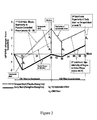
- This invention is illustrated in the following diagram where introduction of study intervention to patients in the placebo group (delayed start) did not provide benefit equal to that observed in subjects in the early start group and this difference persisted over several study visits.
- the delayed start group did not catch up to the early start group and the slopes of the rate of progression did not converge (i.e. lines remain parallel). This result cannot be readily explained by a symptomatic benefit and is consistent with the study intervention having a neuroprotective or disease modifying effect.
- ADAGIO placebo-controlled, double-blind clinical trial
- Phase I Phase I - a 36-week double-blind, placebo-controlled phase
- Phase II Phase II - a 36-week double-blind, active-treatment phase.
- subjects were allocated in a 1:1:1:1 ratio into one of the following four treatment groups based on a randomization scheme with blocks stratified by centers:
- 'early-start' patients receive 72 weeks of treatment with rasagiline (1 or 2 mg once daily) and 'delayed-start' patients receive 36 weeks of placebo followed by 36 weeks of rasagiline (1 or 2 mg once daily).
- the 36-week duration of Phase I was estimated to be long enough to establish a difference between active treatment and placebo, and a time period during which the average patient could remain on placebo without needing symptomatic therapy. If subjects in either treatment group required additional anti-parkinsonian medication during the placebo-controlled stage of the trial, they could proceed directly to Phase II. Once in Phase II, no additional anti-PD therapy is permitted. If the patient requires additional medication in this stage they are discontinued from the study.
- the investigator determines that a subject needs additional anti-PD therapy, the subject will proceed to Phase II of the study.
- the investigator aided by a questionnaire, will give careful consideration to the issue of a subject's need for additional anti-PD therapy.
- Scheduled in-clinic visits will be conducted at baseline and at weeks 4, 12, 24 and 36. Therefore, altogether there will be 5 scheduled visits during this phase. Unscheduled visits may be conducted at any time to assess a subject's need for additional anti-PD therapy, for safety reasons or for any other reason.
- the investigator determines that a subject needs additional anti-PD therapy during Phase II, the subject will be prematurely withdrawn from the study.
- the investigator aided by a questionnaire, will give careful consideration to the issue of a subject's need for additional anti-PD therapy.
- Scheduled in-clinic visits will be conducted every 6 weeks. Therefore, altogether there will be 6 visits during this phase - at weeks 42, 48, 54, 60, 66 and 72. Unscheduled visits may be conducted at any time to assess a subject's need for additional anti-PD therapy, for safety reasons or for any other reason.
- the primary efficacy endpoint for this trial will be the change from baseline in Total UPDRS score.
- the principal efficacy analysis will consist of three hierarchical statistical hypothesis testing that will be applied on the primary efficacy endpoint.
- slope is the model estimate of the change from baseline in total UPDRS per week.
- all available post baseline observations in the PC phase of the trial will be analyzed (ITT data analysis set, weeks 12, 24 and 36).
- the placebo groups for rasagiline 1mg and 2 mg will be combined to one placebo group.
- the statistical model will be a Repeated Measures Mixed Linear Model with random intercept and slope (SAS® MIXED procedure with RANDOM sub-command).
- the model will include the following fixed effects: treatment group, continuous week in trial by treatment interaction, center and baseline Total UPDRS score.
- the individual subject intercept and the week effects will also be included in the model as random effects.
- the unstructured covariance matrix between the intercept and slopes estimates will be used.
- the statistical model will be a Repeated Measures model (SAS® MIXED procedure with REPEATED subcommand).
- the model will include the following fixed effects: categorical week in trial by treatment interaction, center, and baseline Total UPDRS score.
- the unstructured covariance matrix for repeated observations within subjects will be used. In case that the model will not converge, a simpler covariance structure with less parameters will be used, e.g. Heterogeneous Autoregressive(1) (ARH(1)) or autoregressive(1) (AR(1)).
- ARH(1) Heterogeneous Autoregressive(1)
- AR(1) Autoregressive(1)
- the LSM at week 72 of the change from baseline in Total UPDRS will be compared between the rasagiline 1mg early-start group and the rasagiline 1mg delayed-start group and between the rasagiline 2mg early-start group and the rasagiline 2mg delayed-start group.
- the statistical model will be a Repeated Measures Mixed Linear Model with random intercept and slope (SAS® MIXED procedure with RANDOM sub-command).
- the model will include the following fixed effects: treatment group, continuous week in trial by treatment interaction, center and baseline Total UPDRS score.
- the individual subject intercept and the week effects will also be included in the model as random effects.
- the unstructured covariance matrix between the intercept and slopes estimates will be used.
- Non-inferiority test for the difference in slopes between the treatment groups will be performed.
- the one sided 95% Confidence Interval (CI) will be calculated for the difference between the slopes of the rasagiline 1mg early-start group and the rasagiline 1mg delayed-start group and between the slopes of the rasagiline 2mg early-start group and the rasagiline 2mg delayed-start rasagiline group.
- the inferiority null hypothesis of the early-start group slope over the delayed-start group slope will be rejected, if the upper limit of the one sided 95% CI for the difference in slopes will not cross the non-inferiority margin of 0.15 UPDRS points per week.
- Table 1 Baseline Demographics (1176 patients) Mean SD Min Median Max Age (years) - All 62.2 9.6 31.2 63.0 80.9 Time from PD diagnosis (months) 4.5 4.6 0.0 2.7 18.0 UPDRS Total (range: 0 - 176) 20.4 8.5 3.0 19.0 53.0 UPDRS Part I (range: 0 - 16) 1.0 1.2 0.0 1.0 8.0 UPDRS Part II (range: 0 - 52) 5.2 3.0 0.0 5.0 17.0 UPDRS Part III (range: 0 - 108) 14.2 6.4 2.0 13.5 39.5 Modified Hoehn and Yahr 1.5 0.5 1.0 1.5 2.5
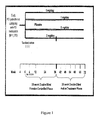
- Visits are performed at time points indicated in Figure 1 . At each visit except at week 4, a UPDRS evaluation is performed. Other evaluations performed at each visit included measures of quality of life, adverse events reporting, and standard laboratory assessments. Subjects were assessed on the Total UPDRS by the same investigator at all study visits.
- Safety assessments include incidence of adverse events, laboratory values, vital signs, home blood pressure monitoring, ECG, physical and neurological examination and skin examination by a qualified dermatologist.
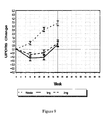
- Figure 9 shows the changes in Total UPDRS scores from baseline in each of visit weeks 12, 24 and 36 during Phase I of the study.
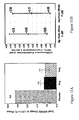
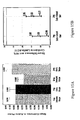
- Figure 10A and 10B show comparison of the slopes during Weeks 12-36 of Phase I of the study.
- Table 2 compares the slopes in the PC phase (weeks 12 - 36) for placebo, 1mg, and 2mg groups. Table 2 - Comparison of Slopes in the PC phase (weeks 12 - 36) - Results for ITT CO and PP Data Analyses Sets Model that assumes linearity Data Analysis Set No.
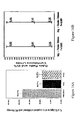
- Figure 11A and 11B show the total UPDRS changes to LOV at Week 36 for placebo, 1mg, and 2mg groups.
- Figure 12 shows the change in total UPDRS score at Weeks 12, 24, 36, 42, 48, 54, 60, 66 and 72 for 1mg Delayed Start and 1mg Early Start groups.
- Figure 13 shows the change in total UPDRS score at Weeks 12, 24, 36, 42, 48, 54, 60, 66 and 72 for 2mg Delayed Start and 2mg Early Start groups.
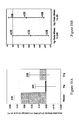
- Figure 14A and 14B show Adjusted Means at Week 72 for 1mg Delayed Start, 1mg Early Start groups, 2mg Delayed Start, and 2mg Early Start groups.
- Table 3 below shows comparison of at Week 72 for 1mg Delayed Start, 1mg Early Start groups, 2mg Delayed Start, and 2mg Early Start groups.
- Table 3 Comparison at Week 72 (end of the Active Phase) Data Analysis Set No. of Subjects Comparison Estimate SE P-Value Lower 95% CI Limit Upper 95% CI Limit ACTE 489 1mg Early-Delayed Start at week 72 -1.680 0.747 0.0250 -3.148 -0.212 507 2mg Early-Delayed Start at week 72 0.356 0.684 0.6028 -0.989 1.702 CO 409 1mg Early-Delayed Start at week 72 -1.592 0.762 0.0374 -3.090 -0.093 431 2mg Early-Delayed Start at week 72 -0.088 0.681 0.8974 -1.426 1.250 PP 405 1mg Early-Delayed Start at week 72 -1.594 0.770 0.0392 -3.108 -0.079 429 2mg Early-De
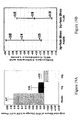
- Figure 15A and 15B show slope estimates during Weeks 48-72 for 1mg Delayed Start, 1mg Early Start groups, 2mg Delayed Start, and 2mg Early Start groups.
- Table 4 shows non-Inferiority of slopes in the active phase during Weeks 48-72 for 1mg Delayed Start, 1mg Early Start groups, 2mg Delayed Start, and 2mg Early Start groups.
- Table 4 - Non-Inferiority of Slopes (0.15 margin) in the Active Phase Week 48-72 - Results for ITT CO and PP Data Analyses Sets Estimate Lower 95% CI Limit Upper 95% CI Limit Data Analysis Set No.
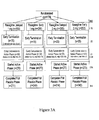
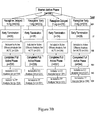
- Figure 16A and 16B show % of subjects who required additional anti-PD therapy during PD Phase for placebo, 1mg and 2mg groups.
- Figure 17 shows time to additional anti-PD therapy during PD Phase for placebo, 1mg and 2mg groups.
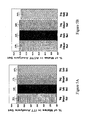
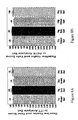
- Figure 18A and 18B show adjusted means of the change from baseline to Last Observed Value ("LOV") in Part I of UPDRS version 4 (Non-Motor Aspects of Experiences of Daily Living) in PC Phase for placebo, 1mg and 2mg groups.
- LOV Last Observed Value
- Figure 19A and 19B show adjusted means of the change from baseline to LOV in Parkinson Fatigue Scale (PFS) in PC Phase for placebo, 1mg and 2mg groups.
- PFS Parkinson Fatigue Scale
- Table 5 below compares time to additional anti-PD therapy in the PC Phase for placebo, 1mg and 2mg groups. Table 5. Time to additional anti-PD therapy in the PC Phase - Kaplan Meier Curves and Cox Proportional Hazards Model Results Hazard Ratio 95% Lower Confidence Limit for Hazard Ratio 95% Upper Confidence Limit for Hazard Ratio P-Value Comparison 0.385 0.247 0.602 ⁇ .0001 1mg-Placebo Difference 2mg-Placebo Difference 0.379 0.243 0.591 ⁇ .0001
- the results described herein further show that administration of rasagiline to Early Stage PD patients delays the rate of progression of PD.
- the rate of progression has improved from 0.139 score (change in Total UPDRS)/week to 0.066 score (change in Total UPDRS)/week.
- the results herein also show that administration of rasagiline to Early Stage PD patients maintain the initial difference in change in Total UPDRS score when compared to early stage PD patients receiving delayed treatment.
- the difference in change in Total UPDRS score is maintained at 1.7 score between Week 48 and Week 72.
- the results herein also show that administration of rasagiline to Early Stage PD patients reduces the change in Total UPDRS score at week 72.
- the change in Total UPDRS score at week 72 was 2.8 corresponding to a reduction of 62.2% in Total UPDRS score.
- the primary analysis was comprised of three hierarchal endpoints based on total UPDRS score.
- the first endpoint compared slope estimates (change in UPDRS units/week) between the rasagiline (1 or 2 mg/day) and placebo groups from weeks 12-36. This determined if there was a difference in the rate of progression of UPDRS score between each rasagiline group and placebo after week 12, when it was assumed that the full symptomatic effect of rasagiline had been established. A disease modifying agent would be expected to slow the rate of progression compared to placebo.
- the second endpoint compared estimated change in total UPDRS score between baseline and week 72 in the rasagiline (1 or 2 mg/day) early-start and delayed-start groups.
- first primary endpoint all patients with evaluations at baseline and week 12 or later were included in the analysis.
- second and third primary endpoints all subjects with at least 24 weeks of treatment during phase I and an evaluation at the week 48 visit or later were included.
- Primary 1 (rate of change in UPDRS units/wk, weeks 12-36) Placebo 0.14 0.01 1 mg/day 0.09 0.02 2 mg/day 0.07 0.02 1 mg/day - placebo -0.05 0.02 0.01 -0.08,-0.01 2 mg/day - placebo -0.07 0.019 ⁇ 0.001 -0.11,-0.04
- Primary 2 (estimated change in total UPDRS from baseline to week 72) 1 mg/day early-start 2.82 0.53 1 mg/day delayed-start 4.50 0.56 2 mg/day early-start 3.47 0.50 2 mg/day delayed-start 3.11 0.50 1 mg/day early-start - delayed-start -1.68 0.75 0.025 -3.15,-0.21 2 mg/day early-start - delayed-start 0.36 0.68 0.60 -0.99, 1.70
- Primary 3 (rate of change in UPDRS units/wk, weeks 48-72) 1 mg/day early-start 0.085 0.02 1 mg/day delayed-start 0.085 0.02 2 mg/
- There was non-inferiority of slope estimates between weeks 48-72 for the early- and delayed-start groups (0.00; P ⁇ 0.001; 90%CI:[-0.04,0.04]).
- the model for the first primary endpoint assumed linearity in change in UPDRS units/week; results were confirmed by an alternative categorical model.
- the results of the second primary endpoint were confirmed by several predefined sensitivity and confirmatory analyses.
- Primary 1 (rate of change in UPDRS units/wk; weeks 12-36) Placebo 0.11 0.01 1 mg/day 0.08 0.02 2 mg/day 0.07 0.02 1 mg/day - placebo -0.03 0.02 0.13 -0.07, 0.01 2 mg/day - placebo -0.03 0.02 0.07 -0.07, 0.003
- Primary 2 (estimated change in total UPDRS from baseline to week 72) 1 mg/day early-start 2.94 0.47 1 mg/day delayed-start 4.03 0.51 2 mg/day early-start 3.70 0.49 2 mg/day delayed-start 2.60 0.51 1 mg/day early-start- delayed-start -1.08 0.66 0.10 -2.39, 0.22 2 mg/day early-start - delayed-start 1.10 0.68 0.11 -0.24, 2.44
- Primary 3 (rate if change in UPDRS units/wk; weeks 48-72) 1 mg/day early-start 0.09 0.02 1 mg/day delayed-start 0.08 0.02 2 mg/day early-start 0.09
Landscapes
- Health & Medical Sciences (AREA)
- Public Health (AREA)
- Life Sciences & Earth Sciences (AREA)
- Pharmacology & Pharmacy (AREA)
- Animal Behavior & Ethology (AREA)
- General Health & Medical Sciences (AREA)
- Medicinal Chemistry (AREA)
- Chemical & Material Sciences (AREA)
- Veterinary Medicine (AREA)
- Biomedical Technology (AREA)
- Neurosurgery (AREA)
- Neurology (AREA)
- Bioinformatics & Cheminformatics (AREA)
- Engineering & Computer Science (AREA)
- Epidemiology (AREA)
- Organic Chemistry (AREA)
- Nuclear Medicine, Radiotherapy & Molecular Imaging (AREA)
- General Chemical & Material Sciences (AREA)
- Chemical Kinetics & Catalysis (AREA)
- Hospice & Palliative Care (AREA)
- Psychiatry (AREA)
- Psychology (AREA)
- Acyclic And Carbocyclic Compounds In Medicinal Compositions (AREA)
- Organic Low-Molecular-Weight Compounds And Preparation Thereof (AREA)
Applications Claiming Priority (3)
| Application Number | Priority Date | Filing Date | Title |
|---|---|---|---|
| US13193608P | 2008-06-13 | 2008-06-13 | |
| US18972408P | 2008-08-22 | 2008-08-22 | |
| EP09762921A EP2296462A4 (en) | 2008-06-13 | 2009-06-12 | RASAGILINE FOR INFLUENCING MORBUS PARKINSON |
Related Parent Applications (1)
| Application Number | Title | Priority Date | Filing Date |
|---|---|---|---|
| EP09762921.6 Division | 2009-06-12 |
Publications (1)
| Publication Number | Publication Date |
|---|---|
| EP2666356A1 true EP2666356A1 (en) | 2013-11-27 |
Family
ID=41415378
Family Applications (2)
| Application Number | Title | Priority Date | Filing Date |
|---|---|---|---|
| EP20130176166 Withdrawn EP2666356A1 (en) | 2008-06-13 | 2009-06-12 | Rasagiline for parkinson's disease modification |
| EP09762921A Withdrawn EP2296462A4 (en) | 2008-06-13 | 2009-06-12 | RASAGILINE FOR INFLUENCING MORBUS PARKINSON |
Family Applications After (1)
| Application Number | Title | Priority Date | Filing Date |
|---|---|---|---|
| EP09762921A Withdrawn EP2296462A4 (en) | 2008-06-13 | 2009-06-12 | RASAGILINE FOR INFLUENCING MORBUS PARKINSON |
Country Status (13)
| Country | Link |
|---|---|
| US (2) | US20090312436A1 (enExample) |
| EP (2) | EP2666356A1 (enExample) |
| JP (3) | JP2011522892A (enExample) |
| CN (2) | CN102065687A (enExample) |
| AU (2) | AU2009258151A1 (enExample) |
| BR (1) | BRPI0909894A2 (enExample) |
| CA (1) | CA2727022A1 (enExample) |
| EA (1) | EA201170018A1 (enExample) |
| IL (1) | IL209131A0 (enExample) |
| MX (1) | MX2010013766A (enExample) |
| NZ (1) | NZ589445A (enExample) |
| WO (1) | WO2009151625A1 (enExample) |
| ZA (1) | ZA201008484B (enExample) |
Families Citing this family (28)
| Publication number | Priority date | Publication date | Assignee | Title |
|---|---|---|---|---|
| WO2006014973A2 (en) * | 2004-07-26 | 2006-02-09 | Teva Pharmaceutical Industries, Ltd. | Pharmaceutical dosage forms including rasagiline |
| US20090111892A1 (en) * | 2004-11-24 | 2009-04-30 | Shulamit Patashnik | Rasagiline Orally Disintegrating Compositions |
| JP5701485B2 (ja) * | 2006-02-21 | 2015-04-15 | テバ ファーマシューティカル インダストリーズ リミティド | 多系統萎縮症の治療のためのラサギリンの使用 |
| CA2646250A1 (en) * | 2006-04-03 | 2007-10-18 | Teva Pharmaceutical Industries Ltd. | Use of rasagiline for the treatment of restless legs syndrome |
| EP1892233A1 (de) | 2006-08-18 | 2008-02-27 | Ratiopharm GmbH | Neue Salze des Wirkstoffs Rasagilin |
| EP1987816A1 (de) * | 2007-04-30 | 2008-11-05 | Ratiopharm GmbH | Adsorbate eines Rasagilinsalzes mit einem wasserlöslichen Hilfsstoff |
| AU2008296908B2 (en) * | 2007-09-05 | 2014-01-09 | Teva Pharmaceutical Industries, Ltd. | Method of treating glaucoma using rasagiline |
| US8188149B2 (en) * | 2007-09-17 | 2012-05-29 | Teva Pharmaceutical Industries, Ltd. | Use of R(+)-N-propargy1-1-aminoindan to treat or prevent hearing loss |
| US20090181086A1 (en) * | 2008-01-11 | 2009-07-16 | Muhammad Safadi | Rasagiline formulations, their preparation and use |
| WO2009151594A1 (en) * | 2008-06-10 | 2009-12-17 | Teva Pharmaceutical Industries, Ltd. | Rasagiline soft gelatin capsules |
| MX2010013875A (es) | 2008-06-19 | 2011-01-20 | Teva Pharma | Proceso para preparar y secar base de rasagilina solida. |
| AU2009260733B2 (en) * | 2008-06-19 | 2015-01-29 | Teva Pharmaceutical Industries, Ltd. | Process for purifying rasagiline base |
| US20100189790A1 (en) * | 2009-01-23 | 2010-07-29 | Teva Pharmaceutical Industries, Ltd. | Delayed release rasagiline formulation |
| SI2451771T1 (sl) | 2009-07-09 | 2014-10-30 | Ratiopharm Gmbh | Soli rasagilina in njihovi farmacevtski pripravki |
| AU2010341499A1 (en) * | 2009-12-22 | 2012-08-09 | Teva Pharmaceutical Industries Ltd. | 3-keto-N-propargyl-1-aminoindan |
| AU2011282716A1 (en) * | 2010-07-27 | 2013-03-14 | Teva Pharmaceutical Industries Ltd. | Dispersions of rasagiline citrate |
| CA2806740A1 (en) | 2010-07-27 | 2012-02-02 | Teva Pharmaceutical Industries Ltd. | Use of rasagiline for the treatment of olfactory dysfunction |
| US20120101168A1 (en) * | 2010-10-26 | 2012-04-26 | Eliezer Bahar | Deuterium enriched rasagiline |
| CA2732440C (en) * | 2011-02-23 | 2017-10-31 | Universite Laval | Cystamine analogues for the treatment of parkinson`s disease |
| WO2013055687A2 (en) | 2011-10-10 | 2013-04-18 | Teva Pharmaceutical Industries Ltd. | R(+)-n-formyl-propargyl-aminoindan |
| CN103857389A (zh) * | 2011-10-10 | 2014-06-11 | 泰华制药工业有限公司 | 雷沙吉兰柠檬酰胺 |
| JP2014534197A (ja) | 2011-10-10 | 2014-12-18 | テバ ファーマシューティカル インダストリーズ リミティド | R(+)−n−メチル−プロパルギルアミノインダン |
| US9308182B2 (en) | 2012-08-17 | 2016-04-12 | Teva Pharmaceutical Industries, Ltd. | Parenteral formulations of rasagiline |
| EP3126527A4 (en) * | 2014-04-01 | 2017-10-04 | Teva Pharmaceutical Industries Ltd. | Determination of single nucleotide polymorphisms useful to predict response for rasagiline |
| US10292947B2 (en) * | 2016-03-26 | 2019-05-21 | Dr. Reddy's Laboratories Ltd. | Pharmaceutical compositions for N-propargylamine derivative |
| EP3606541A1 (en) * | 2017-04-05 | 2020-02-12 | Crestovo Holdings LLC | Compositions and methods for treating parkinson's disease (pd) and related disorders |
| AU2019427489B2 (en) * | 2019-01-28 | 2025-03-13 | Mitochondria Emotion, Inc. | Mitofusin activators and methods of use thereof |
| GB202109826D0 (en) * | 2021-07-07 | 2021-08-18 | Bial Portela & Ca Sa | Treatment regimens for early idiopathic parkinson's disease |
Citations (3)
| Publication number | Priority date | Publication date | Assignee | Title |
|---|---|---|---|---|
| US20050031651A1 (en) * | 2002-12-24 | 2005-02-10 | Francine Gervais | Therapeutic formulations for the treatment of beta-amyloid related diseases |
| US20060211675A1 (en) * | 2001-12-28 | 2006-09-21 | Yuji Ishihara | Preventives/remedies for urinary disturbance |
| WO2008076348A1 (en) | 2006-12-14 | 2008-06-26 | Teva Pharmaceutical Industries, Ltd. | Crystalline solid rasagiline base |
Family Cites Families (33)
| Publication number | Priority date | Publication date | Assignee | Title |
|---|---|---|---|---|
| IL92952A (en) * | 1990-01-03 | 1994-06-24 | Teva Pharma | R-enantiomers of n-propargyl-1-aminoindan compounds, their preparation and pharmaceutical compositions containing them |
| US5744500A (en) * | 1990-01-03 | 1998-04-28 | Teva Pharmaceutical Industries, Ltd. | Use of R-enantiomer of N-propargyl-1-aminoindan, salts, and compositions thereof |
| CN1031995C (zh) * | 1991-01-02 | 1996-06-12 | 奥韦特有限公司 | N-炔丙基-1-氨基茚满的r-对映体的制法 |
| IL99759A (en) * | 1991-10-16 | 1997-06-10 | Teva Pharma | Mono-fluorinated derivatives of n-propargyl-1-aminoindan, their preparation and pharmaceutical compositions containing them |
| IL115357A (en) * | 1995-09-20 | 2000-01-31 | Teva Pharma | Stable compositions containing N-propargyl-1-aminoindan and polyhydric alcohols |
| IL118836A (en) * | 1996-07-11 | 2001-01-11 | Teva Pharma | Pharmaceutical compositions comprising s-(-)-n-propargyl-1-aminoindan |
| DE69738275T2 (de) * | 1996-12-18 | 2008-08-28 | Teva Pharmaceutical Industries Ltd. | Aminoindanderivate |
| EP1418834A4 (en) * | 2001-07-20 | 2007-04-04 | Sinai School Medicine | METHOD FOR DIAGNOSIS AND TREATMENT OF ALZHEIMER DISEASE AND PARKINSON DISEASE |
| SI1567152T1 (sl) * | 2002-11-15 | 2013-10-30 | Teva Pharmaceutical Industries Ltd. | Uporaba rasagilina z riluzolom za zdravljenje amiotrofične lateralne skleroze |
| AR044007A1 (es) * | 2003-04-11 | 2005-08-24 | Newron Pharmaceuticals Inc | Metodos para el tratamiento de la enfermedad de parkinson |
| WO2006014973A2 (en) * | 2004-07-26 | 2006-02-09 | Teva Pharmaceutical Industries, Ltd. | Pharmaceutical dosage forms including rasagiline |
| US20090111892A1 (en) * | 2004-11-24 | 2009-04-30 | Shulamit Patashnik | Rasagiline Orally Disintegrating Compositions |
| CA2901244A1 (en) * | 2005-02-23 | 2006-08-31 | Teva Pharmaceutical Industries, Ltd. | Rasagiline formulations of improved content uniformity |
| EP1954667B1 (en) * | 2005-11-17 | 2017-02-08 | Teva Pharmaceutical Industries Ltd | Methods for isolating propargylated aminoindans |
| US7572834B1 (en) * | 2005-12-06 | 2009-08-11 | Teva Pharmaceutical Industries, Ltd. | Rasagiline formulations and processes for their preparation |
| JP5701485B2 (ja) * | 2006-02-21 | 2015-04-15 | テバ ファーマシューティカル インダストリーズ リミティド | 多系統萎縮症の治療のためのラサギリンの使用 |
| US9066903B2 (en) * | 2006-02-28 | 2015-06-30 | The United States Of America As Represented By The Department Of Veterans Affairs | Pharmacological treatment of Parkinson's disease |
| CN101032474B (zh) * | 2006-03-06 | 2011-02-16 | 重庆医药工业研究院有限责任公司 | 一种治疗或预防神经系统疾病的雷沙吉兰透皮贴片及其制备方法 |
| CA2646250A1 (en) * | 2006-04-03 | 2007-10-18 | Teva Pharmaceutical Industries Ltd. | Use of rasagiline for the treatment of restless legs syndrome |
| EP1892233A1 (de) * | 2006-08-18 | 2008-02-27 | Ratiopharm GmbH | Neue Salze des Wirkstoffs Rasagilin |
| JP5356248B2 (ja) * | 2006-12-14 | 2013-12-04 | テバ ファーマシューティカル インダストリーズ リミティド | ラサギリンのタンニン酸塩 |
| EP1987816A1 (de) * | 2007-04-30 | 2008-11-05 | Ratiopharm GmbH | Adsorbate eines Rasagilinsalzes mit einem wasserlöslichen Hilfsstoff |
| US20090143388A1 (en) * | 2007-08-29 | 2009-06-04 | Mohanakumar Kochupurackal Para | Treatment of brain disorders |
| AU2008296908B2 (en) * | 2007-09-05 | 2014-01-09 | Teva Pharmaceutical Industries, Ltd. | Method of treating glaucoma using rasagiline |
| US8188149B2 (en) * | 2007-09-17 | 2012-05-29 | Teva Pharmaceutical Industries, Ltd. | Use of R(+)-N-propargy1-1-aminoindan to treat or prevent hearing loss |
| US20090181086A1 (en) * | 2008-01-11 | 2009-07-16 | Muhammad Safadi | Rasagiline formulations, their preparation and use |
| WO2009151594A1 (en) * | 2008-06-10 | 2009-12-17 | Teva Pharmaceutical Industries, Ltd. | Rasagiline soft gelatin capsules |
| AU2009260733B2 (en) * | 2008-06-19 | 2015-01-29 | Teva Pharmaceutical Industries, Ltd. | Process for purifying rasagiline base |
| MX2010013875A (es) * | 2008-06-19 | 2011-01-20 | Teva Pharma | Proceso para preparar y secar base de rasagilina solida. |
| DE102008064061A1 (de) * | 2008-12-19 | 2010-06-24 | Ratiopharm Gmbh | Feste Zusammensetzung mit dem Wirkstoff Rasagilin |
| US20100189790A1 (en) * | 2009-01-23 | 2010-07-29 | Teva Pharmaceutical Industries, Ltd. | Delayed release rasagiline formulation |
| JP2013507352A (ja) * | 2009-10-09 | 2013-03-04 | テバ ファーマシューティカル インダストリーズ リミティド | 進行性核上性麻痺の治療のためのラサギリンの使用 |
| AU2010341499A1 (en) * | 2009-12-22 | 2012-08-09 | Teva Pharmaceutical Industries Ltd. | 3-keto-N-propargyl-1-aminoindan |
-
2009
- 2009-06-12 JP JP2011513503A patent/JP2011522892A/ja active Pending
- 2009-06-12 EP EP20130176166 patent/EP2666356A1/en not_active Withdrawn
- 2009-06-12 EA EA201170018A patent/EA201170018A1/ru unknown
- 2009-06-12 MX MX2010013766A patent/MX2010013766A/es not_active Application Discontinuation
- 2009-06-12 WO PCT/US2009/003528 patent/WO2009151625A1/en not_active Ceased
- 2009-06-12 CN CN2009801230031A patent/CN102065687A/zh active Pending
- 2009-06-12 NZ NZ589445A patent/NZ589445A/xx unknown
- 2009-06-12 BR BRPI0909894-1A patent/BRPI0909894A2/pt not_active IP Right Cessation
- 2009-06-12 EP EP09762921A patent/EP2296462A4/en not_active Withdrawn
- 2009-06-12 CA CA2727022A patent/CA2727022A1/en not_active Abandoned
- 2009-06-12 US US12/456,166 patent/US20090312436A1/en not_active Abandoned
- 2009-06-12 AU AU2009258151A patent/AU2009258151A1/en not_active Abandoned
- 2009-06-12 CN CN201310714021.5A patent/CN103893160A/zh active Pending
-
2010
- 2010-11-04 IL IL209131A patent/IL209131A0/en unknown
- 2010-11-25 ZA ZA2010/08484A patent/ZA201008484B/en unknown
-
2013
- 2013-11-27 US US14/092,526 patent/US20140243418A1/en not_active Abandoned
-
2014
- 2014-12-17 JP JP2014255148A patent/JP2015096532A/ja active Pending
-
2016
- 2016-11-15 AU AU2016259315A patent/AU2016259315A1/en not_active Abandoned
- 2016-12-02 JP JP2016234976A patent/JP2017081938A/ja not_active Withdrawn
Patent Citations (3)
| Publication number | Priority date | Publication date | Assignee | Title |
|---|---|---|---|---|
| US20060211675A1 (en) * | 2001-12-28 | 2006-09-21 | Yuji Ishihara | Preventives/remedies for urinary disturbance |
| US20050031651A1 (en) * | 2002-12-24 | 2005-02-10 | Francine Gervais | Therapeutic formulations for the treatment of beta-amyloid related diseases |
| WO2008076348A1 (en) | 2006-12-14 | 2008-06-26 | Teva Pharmaceutical Industries, Ltd. | Crystalline solid rasagiline base |
Non-Patent Citations (25)
| Title |
|---|
| "A Controlled Trial of Rasagiline in Early Parkinson Disease", THE TEMPO STUDY. ARCH NEUROL, vol. 59, December 2002 (2002-12-01), pages 1937 - 1943 |
| "A controlled trial of rasagiline in early Parkinson disease: the TEMPO Study", ARCH NEUROL, vol. 59, 2002, pages 1937 - 1943 |
| "A randomized placebo-controlled trial of rasagiline in levodopa- treated patients with Parkinson disease and motor fluctuations: the PRESTO study", ARCH NEUROL, vol. 62, 2005, pages 241 - 248 |
| "N Engl JMed", vol. 328, 1993, PARKINSON'S STUDY GROUP, article "Effects of tocopherol and deprenyl on the progression of disability in early Parkinson's disease", pages: 176 - 183 |
| AHLSKOG JE; MUENTER MD: "Frequency of levodopa-related dyskinesias and motor fluctuations as estimated from the cumulative literature", MOV DISORD., vol. 16, 2001, pages 448 - 58 |
| ANDRINGA G; ESHUIS S; PERENTES E: "TCH346 prevents motor symptoms and loss of striatal FDOPA uptake in bilaterally MPTP-treated primates", NEUROBIOL DIS, vol. 14, 2003, pages 205 - 217 |
| ANDRINGA G; VAN OOSTEN RV; UNGER W ET AL.: "Systemic administration of the propargylamine CGP 3466B (TCH346) prevents behavioural and morphological deficits in rats with 6-hydroxydopamine-induced lesions in the substantia nigra", EUR J NEUROSCI, vol. 12, 2000, pages 3033 - 3043 |
| BLANDINI F ET AL: "Neuroprotective effect of rasagiline in a rodent model of Parkinson's disease", EXPERIMENTAL NEUROLOGY, ACADEMIC PRESS, NEW YORK, NY, US, vol. 187, no. 2, 1 June 2004 (2004-06-01), pages 455 - 459, XP004620621, ISSN: 0014-4886, DOI: 10.1016/J.EXPNEUROL.2004.03.005 * |
| BRAAK H; TREDICI KD; RUB U; DE VOS RA; JANSEN STEUR EN; BRAAK E: "Staging of brain pathology related to sporadic Parkinson's disease", NEUROBIOL AGING, vol. 24, 2003, pages 197 - 211 |
| FORNO LS.: "Neuropathology of Parkinson's disease", J NEUROPATHOL EXP NEUROL., vol. 996, no. 55, pages 259 - 272 |
| HELY MA; MORRIS JG; TRAFICANTE R; REID WG; O'SULLIVAN DJ; WILLIAMSON PM: "The Sydney multicentre study of Parkinson's disease: progression and mortality at 10 years", J NEUROL NEUROSURG PSYCHIATRY, vol. 67, 1999, pages 300 - 307 |
| HOEHN MM; YAHR MD: "Parkinsonism: onset, progression and mortality", NEUROLOGY, vol. 17, 1967, pages 427 - 42 |
| LANG AE; OBESO JA: "Time to move beyond nigrostriatal dopamine deficiency in Parkinson's disease", ANN NEUROL, vol. 55, 2004, pages 761 - 765 |
| LARGO: "Lasting effect in Adjunct therapy with Rasagiline Given Once daily, study): a randomised, double-blind, parallel-group trial", LANCET, vol. 365, 2005, pages 947 - 54 |
| OLANOW CW; CALNE D: "Does selegiline mono therapy in Parkinson's Disease act by symptomatic or protective mechanisms?", NEUROLOGY, vol. 42, 1991, pages 41 - 48 |
| OLANOW CW; HAUSER RA; GAUGER L ET AL.: "The effect of deprenyl and levodopa on the progression of signs and symptoms in Parkinson's disease", ANN NEUROL, vol. 38, 1995, pages 771 - 777 |
| OLANOW CW; SCHAPIRA AH; LEWITT PA; KIEBURTZ K; SAUER D; OLIVIERI G; POHLMANN H; HUBBLE J: "TCH346 as a neuroprotective drug in Parkinson's disease: a double-blind, randomised, controlled trial", LANCET NEUROL., vol. 5, 2006, pages 1013 - 1020 |
| OLANOW CW; WATTS RL; KOLLER WC: "An algorithm (decision tree) for the management of Parkinson's disease (2001): treatment guidelines", NEUROLOGY, vol. 56, no. 5, 2001, pages 1 - 88 |
| OLANOW GW: "Rationale for considering that propargylamines might be neuroprotective in Parkinson's disease", NEUROLOGY, vol. 66, no. 10, 2006, pages S69 - 79 |
| OLDFIELD VICKI ET AL: "Rasagiline - A review of its use in the management of Parkinson's disease", DRUGS, ADIS INTERNATIONAL LTD, NZ, vol. 67, no. 12, 1 January 2007 (2007-01-01), pages 1725 - 1747, XP009147802, ISSN: 0012-6667 * |
| PARKINSON STUDY GROUP: "A controlled, randomized, delayed-start study of rasagiline in early Parkinson disease", ARCHIVES OF NEUROLOGY, vol. 61, no. 4, April 2004 (2004-04-01), pages 561 - 566, XP009147783, ISSN: 0003-9942 * |
| RASCOL 0; GOETZ C; KOLLER W; POEWE W; SAMPAIO C: "Treatment interventions for Parkinson's disease: an evidence based assessment", LANCET, vol. 359, 2002, pages 1589 - 1598 |
| SCHAPIRA AH; OLANOW CW: "Neuroprotection in Parkinson disease: mysteries, myths, and misconceptions", JAMA, vol. 291, 2004, pages 358 - 364 |
| SIMPINS N; JANKOVIC J: "Neuroprotection in Parkinson Disease", ARCH INTERN MED, vol. 163, 28 July 2003 (2003-07-28), pages 1650 - 1654 |
| WALDMEIER PC; BOULTON AA; COOLS AR; KATO AC; TATTON WG: "Neurorescuing effects of the GAPDH ligand CGP 3466B", J NEURAL TRANSM SUPPL., 2000, pages 197 - 214 |
Also Published As
| Publication number | Publication date |
|---|---|
| IL209131A0 (en) | 2011-01-31 |
| NZ589445A (en) | 2013-06-28 |
| JP2017081938A (ja) | 2017-05-18 |
| EP2296462A4 (en) | 2011-06-15 |
| ZA201008484B (en) | 2012-05-30 |
| CA2727022A1 (en) | 2009-12-17 |
| MX2010013766A (es) | 2011-03-15 |
| AU2009258151A1 (en) | 2009-12-17 |
| JP2011522892A (ja) | 2011-08-04 |
| JP2015096532A (ja) | 2015-05-21 |
| US20090312436A1 (en) | 2009-12-17 |
| EP2296462A1 (en) | 2011-03-23 |
| AU2016259315A1 (en) | 2016-12-01 |
| US20140243418A1 (en) | 2014-08-28 |
| CN102065687A (zh) | 2011-05-18 |
| WO2009151625A1 (en) | 2009-12-17 |
| EA201170018A1 (ru) | 2011-08-30 |
| CN103893160A (zh) | 2014-07-02 |
| BRPI0909894A2 (pt) | 2015-07-28 |
Similar Documents
| Publication | Publication Date | Title |
|---|---|---|
| EP2666356A1 (en) | Rasagiline for parkinson's disease modification | |
| Reimherr et al. | A multicenter evaluation of the efficacy and safety of 150 and 300 mg/d sustained-release bupropion tablets versus placebo in depressed outpatients | |
| US20110130466A1 (en) | Use of rasagiline for the treatment of progressive supranuclear palsy | |
| Citrome | Reprint of: Clinical management of tardive dyskinesia: Five steps to success | |
| HUP0302897A2 (hu) | Kiváló hatású transzdermális terápiás készítmény a Parkinson-kór kezelésére | |
| EP4322960A1 (en) | Treatment of essential tremor | |
| Shopsin et al. | Dopamine receptor stimulation in the treatment of depression: piribedil (ET-495) | |
| US20230270738A1 (en) | Methods of treating agitation associated with alzheimer's disease | |
| CN118284412A (zh) | 伴中度至重度焦虑和/或社交回避的自闭症谱系障碍受试者易怒症的治疗 | |
| EP4228646A1 (en) | Treatment of cognitive impairment with a cns-penetrant sgc stimulator | |
| WO2024216061A1 (en) | Methods of treating depression and anhedonia | |
| WO2024216046A1 (en) | Methods of treating anhedonia | |
| HK1192112A (en) | Rasagiline for parkinson's disease modification | |
| TW200916091A (en) | Neramexane for the treatment of nystagmus | |
| US20250295648A1 (en) | Method for treating l-dopa-induced dyskinesia, parkinson's disease, or parkinson's disease motor disability using befiradol | |
| US20250275953A1 (en) | Vodobatinib for reducing progression of parkinson's disease | |
| WO2024184180A1 (en) | Minzasolmin for use in the treatment of parkinson's disease | |
| WO2024184179A1 (en) | Minzasolmin for use in the treatment of parkinson's disease | |
| WO2024196957A1 (en) | Method for treating l-dopa-induced dyskinesia using befiradol | |
| Jiang et al. | Treatment of Depression in the Medically Ill | |
| Friedman | Neuroleptic parkinsonism | |
| Dubow et al. | Baseline disease severity not predictive of sublingual apomorphine (APL-130277) dose needed to convert a PD patient from the off to on state | |
| William Shakespeare | Too often pharmacists focus only on the medicines for Parkinson’s disease, but there are many complex issues which may arise when counselling patients and their carers. | |
| JP2007511577A (ja) | (2s,3s)−2−(3−クロロフェニル)−3,5,5−トリメチル−2−モルホリノールの使用 | |
| TW200814989A (en) | Milnacipran for the treatment of cognitive dysfunction associated with fibromyalgia |
Legal Events
| Date | Code | Title | Description |
|---|---|---|---|
| PUAI | Public reference made under article 153(3) epc to a published international application that has entered the european phase |
Free format text: ORIGINAL CODE: 0009012 |
|
| 17P | Request for examination filed |
Effective date: 20130711 |
|
| AC | Divisional application: reference to earlier application |
Ref document number: 2296462 Country of ref document: EP Kind code of ref document: P |
|
| AK | Designated contracting states |
Kind code of ref document: A1 Designated state(s): AT BE BG CH CY CZ DE DK EE ES FI FR GB GR HR HU IE IS IT LI LT LU LV MC MK MT NL NO PL PT RO SE SI SK TR |
|
| AX | Request for extension of the european patent |
Extension state: AL BA RS |
|
| 17Q | First examination report despatched |
Effective date: 20131126 |
|
| RIN1 | Information on inventor provided before grant (corrected) |
Inventor name: SAYAG, NAIM Inventor name: BEN-AMI, MIRI Inventor name: WEISS, YONATAN Inventor name: LEVY, RUTH Inventor name: GOREN, TAMAR Inventor name: OREN, SHEILA Inventor name: EYAL, ELI |
|
| REG | Reference to a national code |
Ref country code: HK Ref legal event code: DE Ref document number: 1192112 Country of ref document: HK |
|
| STAA | Information on the status of an ep patent application or granted ep patent |
Free format text: STATUS: EXAMINATION IS IN PROGRESS |
|
| STAA | Information on the status of an ep patent application or granted ep patent |
Free format text: STATUS: THE APPLICATION IS DEEMED TO BE WITHDRAWN |
|
| 18D | Application deemed to be withdrawn |
Effective date: 20170617 |
|
| REG | Reference to a national code |
Ref country code: HK Ref legal event code: WD Ref document number: 1192112 Country of ref document: HK |