EP2644208B1 - Verfahren zur herstellung eines implantatmaterials - Google Patents
Verfahren zur herstellung eines implantatmaterials Download PDFInfo
- Publication number
- EP2644208B1 EP2644208B1 EP11843553.6A EP11843553A EP2644208B1 EP 2644208 B1 EP2644208 B1 EP 2644208B1 EP 11843553 A EP11843553 A EP 11843553A EP 2644208 B1 EP2644208 B1 EP 2644208B1
- Authority
- EP
- European Patent Office
- Prior art keywords
- container
- ceramic material
- porous ceramic
- cell
- cells
- Prior art date
- Legal status (The legal status is an assumption and is not a legal conclusion. Google has not performed a legal analysis and makes no representation as to the accuracy of the status listed.)
- Not-in-force
Links
Images
Classifications
-
- A—HUMAN NECESSITIES
- A61—MEDICAL OR VETERINARY SCIENCE; HYGIENE
- A61L—METHODS OR APPARATUS FOR STERILISING MATERIALS OR OBJECTS IN GENERAL; DISINFECTION, STERILISATION OR DEODORISATION OF AIR; CHEMICAL ASPECTS OF BANDAGES, DRESSINGS, ABSORBENT PADS OR SURGICAL ARTICLES; MATERIALS FOR BANDAGES, DRESSINGS, ABSORBENT PADS OR SURGICAL ARTICLES
- A61L27/00—Materials for grafts or prostheses or for coating grafts or prostheses
- A61L27/50—Materials characterised by their function or physical properties, e.g. injectable or lubricating compositions, shape-memory materials, surface modified materials
- A61L27/56—Porous materials, e.g. foams or sponges
-
- A—HUMAN NECESSITIES
- A61—MEDICAL OR VETERINARY SCIENCE; HYGIENE
- A61L—METHODS OR APPARATUS FOR STERILISING MATERIALS OR OBJECTS IN GENERAL; DISINFECTION, STERILISATION OR DEODORISATION OF AIR; CHEMICAL ASPECTS OF BANDAGES, DRESSINGS, ABSORBENT PADS OR SURGICAL ARTICLES; MATERIALS FOR BANDAGES, DRESSINGS, ABSORBENT PADS OR SURGICAL ARTICLES
- A61L27/00—Materials for grafts or prostheses or for coating grafts or prostheses
- A61L27/02—Inorganic materials
- A61L27/10—Ceramics or glasses
-
- A—HUMAN NECESSITIES
- A61—MEDICAL OR VETERINARY SCIENCE; HYGIENE
- A61L—METHODS OR APPARATUS FOR STERILISING MATERIALS OR OBJECTS IN GENERAL; DISINFECTION, STERILISATION OR DEODORISATION OF AIR; CHEMICAL ASPECTS OF BANDAGES, DRESSINGS, ABSORBENT PADS OR SURGICAL ARTICLES; MATERIALS FOR BANDAGES, DRESSINGS, ABSORBENT PADS OR SURGICAL ARTICLES
- A61L27/00—Materials for grafts or prostheses or for coating grafts or prostheses
- A61L27/36—Materials for grafts or prostheses or for coating grafts or prostheses containing ingredients of undetermined constitution or reaction products thereof, e.g. transplant tissue, natural bone, extracellular matrix
- A61L27/3604—Materials for grafts or prostheses or for coating grafts or prostheses containing ingredients of undetermined constitution or reaction products thereof, e.g. transplant tissue, natural bone, extracellular matrix characterised by the human or animal origin of the biological material, e.g. hair, fascia, fish scales, silk, shellac, pericardium, pleura, renal tissue, amniotic membrane, parenchymal tissue, fetal tissue, muscle tissue, fat tissue, enamel
- A61L27/3616—Blood, e.g. platelet-rich plasma
-
- A—HUMAN NECESSITIES
- A61—MEDICAL OR VETERINARY SCIENCE; HYGIENE
- A61L—METHODS OR APPARATUS FOR STERILISING MATERIALS OR OBJECTS IN GENERAL; DISINFECTION, STERILISATION OR DEODORISATION OF AIR; CHEMICAL ASPECTS OF BANDAGES, DRESSINGS, ABSORBENT PADS OR SURGICAL ARTICLES; MATERIALS FOR BANDAGES, DRESSINGS, ABSORBENT PADS OR SURGICAL ARTICLES
- A61L27/00—Materials for grafts or prostheses or for coating grafts or prostheses
- A61L27/36—Materials for grafts or prostheses or for coating grafts or prostheses containing ingredients of undetermined constitution or reaction products thereof, e.g. transplant tissue, natural bone, extracellular matrix
- A61L27/38—Materials for grafts or prostheses or for coating grafts or prostheses containing ingredients of undetermined constitution or reaction products thereof, e.g. transplant tissue, natural bone, extracellular matrix containing added animal cells
- A61L27/3804—Materials for grafts or prostheses or for coating grafts or prostheses containing ingredients of undetermined constitution or reaction products thereof, e.g. transplant tissue, natural bone, extracellular matrix containing added animal cells characterised by specific cells or progenitors thereof, e.g. fibroblasts, connective tissue cells, kidney cells
-
- A—HUMAN NECESSITIES
- A61—MEDICAL OR VETERINARY SCIENCE; HYGIENE
- A61L—METHODS OR APPARATUS FOR STERILISING MATERIALS OR OBJECTS IN GENERAL; DISINFECTION, STERILISATION OR DEODORISATION OF AIR; CHEMICAL ASPECTS OF BANDAGES, DRESSINGS, ABSORBENT PADS OR SURGICAL ARTICLES; MATERIALS FOR BANDAGES, DRESSINGS, ABSORBENT PADS OR SURGICAL ARTICLES
- A61L27/00—Materials for grafts or prostheses or for coating grafts or prostheses
- A61L27/50—Materials characterised by their function or physical properties, e.g. injectable or lubricating compositions, shape-memory materials, surface modified materials
- A61L27/54—Biologically active materials, e.g. therapeutic substances
-
- A—HUMAN NECESSITIES
- A61—MEDICAL OR VETERINARY SCIENCE; HYGIENE
- A61L—METHODS OR APPARATUS FOR STERILISING MATERIALS OR OBJECTS IN GENERAL; DISINFECTION, STERILISATION OR DEODORISATION OF AIR; CHEMICAL ASPECTS OF BANDAGES, DRESSINGS, ABSORBENT PADS OR SURGICAL ARTICLES; MATERIALS FOR BANDAGES, DRESSINGS, ABSORBENT PADS OR SURGICAL ARTICLES
- A61L2300/00—Biologically active materials used in bandages, wound dressings, absorbent pads or medical devices
- A61L2300/60—Biologically active materials used in bandages, wound dressings, absorbent pads or medical devices characterised by a special physical form
- A61L2300/64—Animal cells
-
- A—HUMAN NECESSITIES
- A61—MEDICAL OR VETERINARY SCIENCE; HYGIENE
- A61L—METHODS OR APPARATUS FOR STERILISING MATERIALS OR OBJECTS IN GENERAL; DISINFECTION, STERILISATION OR DEODORISATION OF AIR; CHEMICAL ASPECTS OF BANDAGES, DRESSINGS, ABSORBENT PADS OR SURGICAL ARTICLES; MATERIALS FOR BANDAGES, DRESSINGS, ABSORBENT PADS OR SURGICAL ARTICLES
- A61L2430/00—Materials or treatment for tissue regeneration
- A61L2430/02—Materials or treatment for tissue regeneration for reconstruction of bones; weight-bearing implants
-
- A—HUMAN NECESSITIES
- A61—MEDICAL OR VETERINARY SCIENCE; HYGIENE
- A61L—METHODS OR APPARATUS FOR STERILISING MATERIALS OR OBJECTS IN GENERAL; DISINFECTION, STERILISATION OR DEODORISATION OF AIR; CHEMICAL ASPECTS OF BANDAGES, DRESSINGS, ABSORBENT PADS OR SURGICAL ARTICLES; MATERIALS FOR BANDAGES, DRESSINGS, ABSORBENT PADS OR SURGICAL ARTICLES
- A61L2430/00—Materials or treatment for tissue regeneration
- A61L2430/06—Materials or treatment for tissue regeneration for cartilage reconstruction, e.g. meniscus
Definitions
- the present invention relates to a production method of an implant material, and an implant material produced by said method.
- calcium phosphate-based ceramic material is a main component of bone and tooth, has superior biocompatibility, and is superior in the safety. Therefore, it is widely utilized and studied as a biomaterial such as a medical or dental implant material to be implanted in the living body such as artificial bone, artificial dental root and the like, scaffold for cell culture to be used for regenerative medicine and the like, a drug carrier for drug delivery system (DDS) and the like.
- a biomaterial such as a medical or dental implant material to be implanted in the living body such as artificial bone, artificial dental root and the like, scaffold for cell culture to be used for regenerative medicine and the like, a drug carrier for drug delivery system (DDS) and the like.
- DDS drug carrier for drug delivery system
- patent documents 1 - 4 describe seeding methods using a centrifugal force. In 1 and 4, cells collected from the patient and cultured was seeded and, in 2 and 3, all the cells were seeded on a material, where the cell distribution state in a liquid cannot be controlled.
- WO 99/59500 A2 discloses a porous ceramic which is impregnated by bone marrow aspirate comprising cells in a specific container.
- patent document 5 a method including placing a porous body in coexistence with a liquid in a container, sliding a piston on the inner face of the container to allow penetration of the liquid into the porous body in advance, and seeding the cultured cells is disclosed.
- this method cannot control the distribution state of the cells. Therefore, it is difficult by a conventionally-known method to selectively seed cells in a liquid, which are in a concentration state.
- the present invention has been made in view of the above-mentioned situation, and the problem to be solved thereby is provision of a method of producing an implant material, comprising seeding useful cells on a porous ceramic material while controlling the distribution state of useful cells in a cell-containing liquid such as bone marrow blood, peripheral blood and the like (particularly useful cells in the cell-containing liquid in a concentrated state) to rapidly introduce a tissue (particularly bone tissue or cartilage tissue) into the porous ceramic material, without collecting and cultivating the useful cell in advance.
- a cell-containing liquid such as bone marrow blood, peripheral blood and the like
- the present invention adopts the following constitution.
- a tool for producing an implant material comprising
- a kit for producing an implant material comprising
- porous ceramic material is a porous ceramic material having substantially unidirectionally arrayed pores.
- an implant material particularly suitable as an osteochondral filling material and the like can be produced conveniently and efficiently.
- the porous ceramic material to be used in the present invention is preferably a porous calcium phosphate-based ceramic material.
- Examples of calcium phosphate-based ceramics include hydroxyapatite, fluorapatite, chlorapatite, tricalcium phosphate, calcium metaphosphate, tetracalcium phosphate, calcium hydrogen phosphate, calcium hydrogen phosphate dihydrate and the like. A mixture of any two or more selected from these can also be used.
- a part of Ca component of the calcium phosphate may be substituted by one or more kinds selected from Sr, Ba, Mg, Fe, Al, Y, La, Li, Na, K, Ag, Pd, Zn, Pb, Cd, H and other rare earth elements.
- a part of (PO 4 ) component may be substituted by one or more kinds selected from VO 4 , BO 3 , SO 4 , CO 3 , SiO 4 and the like.
- a part of (OH) component may be substituted by one or more kinds selected from F, Cl, O, CO 3 , I and Br.
- the calcium phosphate is preferably selected from hydroxyapatite, fluorapatite, chlorapatite and tricalcium phosphate, more preferably hydroxyapatite and/or tricalcium phosphate.
- the porous ceramic material to be used in the present invention has a porosity of preferably 40 - 90%, more preferably 50 - 90%, further preferably 60 - 90%.
- porosity preferably 40 - 90%, more preferably 50 - 90%, further preferably 60 - 90%.
- the porosity is not less than 40%, many cells penetrate into and are adhered to the material, which is expected to result in the formation of a sufficient tissue, for example, a bone tissue.
- the porosity is not more than 90%, the material is sufficient for general handling and is not broken by a centrifugation operation.
- the porous ceramic material to be used in the present invention has pores which are arrayed substantially unidirectionally.
- the "pores being arrayed substantially unidirectionally” means that plural pores extending in the uniaxial direction are present and, for example, not less than half, preferably not less than 80%, of such pores have the long axis direction with an angle of not more than 30°.
- the "angle” here means an intersectional angle shown by orthogonal projection of the long axis of respective pores on any flat plane. Since the porous ceramic material has substantially unidirectionally arrayed pores, it has cell-containing liquid permeability, which allows a cell-containing liquid such as blood, bone marrow fluid and the like to pass through the inside of the material by going through the pores.
- the "cell-containing liquid going through the pores” here means that a liquid component (tissue fluid) and cells in the cell-containing liquid pass through.
- the cross-sectional area of each pore in the ceramic material is preferably 0.05 ⁇ 10 -3 - 100 ⁇ 10 -3 mm 2 , more preferably 0.05 ⁇ 10 -3 - 50 ⁇ 10 -3 mm 2 .
- a size within the above-mentioned range is sufficient for blood and bone marrow fluid to pass through, and causes a capillary phenomenon that allows easy passage of a tissue fluid such as blood, bone marrow fluid and the like. To solve the problems of the present invention, however, it is not entirely necessary to ensure the above-mentioned cross-sectional area of every pore inside the material.
- the porous ceramic material to be used in the present invention can be produced by a known method. Specific examples include a method of forming pores in a ceramics slurry by a foaming agent, a method of forming pores by mixing a substance that carbonizes on firing and eliminating the substance as a gas such as CO 2 and the like in a sintering process, a method of using an ice sublimation mark, which is produced during coagulation of a slurry, as a pore and the like.
- the porous ceramic material having substantially unidirectionally arrayed pores which is preferable as the porous ceramic material of the present invention, can be obtained by unidirectionally freezing a ceramic slurry to form needle-like ice grown unidirectionally, and sublimating the ice, followed by firing.
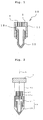
- Fig. 1 is a schematic view of one embodiment of a porous ceramic material positioning means for setting a porous ceramic material at any depth position inside a container (hereinafter to be also simply abbreviated as "positioning means") and Fig. 2 is a schematic view of a porous ceramic material set at any depth position inside a container by using the positioning means of Fig. 1 .
- a porous ceramic material positioning means 10 consists of a stopper 11 and an adapter 12, and has a structure wherein the fixed stopper 11 is attached like a cap on the adapter 12.
- the stopper 11 is a tube having a top board on one side thereof in the axis-edge direction
- the adapter 12 is a member for adjusting the height position of the top board 1 of the stopper 11 in conjunction with the stopper 11.
- the surface of the top board 1 of the stopper 11 is a surface on which a porous ceramic material 22 is placed.
- Plural through holes 2 permitting the cells to pass through are formed in the top board 1 of the stopper 11, and the cells can freely move to the bottom (that is, adapter 12 side) by passing through holes 2.
- the sectional size of the through holes 2 (that is, the section orthogonal to the long axis of the through hole) only needs to allow the cells to pass through.
- the sectional shape of the through hole is not particularly limited and when, for example, the section of the through hole is a circle, the pore size (diameter) thereof is preferably not less than 0.5 mm, more preferably not less than 1.5 mm, from the aspect of cell permeability.
- the pore size is preferably not more than 6 mm, more preferably not more than 4 mm, to disperse and support the centrifugal force acting on the top board. Furthermore, the size of every through holes does not need to be uniform, and a small-sized through hole may be disposed in the clearance between large-sized through holes in an attempt to increase the proportion (area ratio) of the through hole in the section of the top board (i.e., the section orthogonal to the thickness direction of the top board).
- the size of the section of the through hole preferably corresponds to the area of a circle having a diameter within the above-mentioned range.
- the area ratio ([total sectional area of through holes present in the section of top board/sectional area of top board] ⁇ 100) is preferably about 50 - 95%, more preferably about 60 - 90%.
- the thickness of the top board is not particularly limited, it is preferably about 1 - 7 mm, since a top board which is too thin tends to show a weak strength and a top board which is too thick reduces the movement range for positioning.
- Adapter 12 is used to dispose the top board 1 of the stopper 11 at an intermediate position in the depth direction of a container 21, and movably support the top board 11 in the depth direction of the container 21.
- Stopper 11 and adapter 12 are connected in a manner that permits change of the height of the top board 1 of the stopper 11 relative to the adapter 12 (i.e., separation distance between the upper end of adapter 12 and top board 1).
- Positioning means 10 in Fig. 1 is constituted with the stopper 11 and the adapter 12 connected by such screw mechanism, wherein the inside wall of the stopper 11 and the outside wall of the adapter 12 are screwed together.
- the porous ceramic material-positioning means 10 (stopper 11 and adapter 12) have resistance to sterilization and strength standing the centrifugal force.
- it is preferably formed with a metal such as stainless steel and the like, or a resin such as PEEK (polyetheretherketone) and the like.
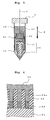
- a porous ceramic material is first set at any depth position inside a container (step A). That is, in step (A), the porous ceramic material positioning means 10 (stopper 11 and adapter 12) is inserted inside a container 21 and a porous ceramic material 22 is placed on the top board 1 of the stopper 11. By setting the height of the top board 1 of the stopper 11 relative to the adapter 12 to a desired level in advance, the porous ceramic material 22 can be set at any depth position inside the container 21 ( Fig. 2 ).
- the container 21 is filled with, as mentioned below, a cell-containing liquid such as bone marrow blood, peripheral blood and the like, it is important to form the container from a transparent material so that the cell distribution state in the cell-containing liquid can be visually observed.
- a transparent material such as polypropylene, polystyrene, acrylic resin and the like, glass and the like.
- the shape of the container 21 is not particularly limited, a centrifugal force is applied on the container 21 in a centrifuge as mentioned below.
- a cylindrically-shaped container is preferably used to facilitate setting in a centrifuge.
- a porous ceramic material positioning means 10 wherein the height of the top board 1 of the stopper 11 relative to the adapter 12 changes, is inserted into the inside of the container 21 as mentioned above, the part in the container 21, which corresponds to at least the movable range of the stopper 11, preferably has the same shape and size of the cross section.
- the cell-containing liquid to be used in the present invention basically includes bone marrow blood and/or peripheral blood.
- the bone marrow blood and peripheral blood used are those derived from human or animal (particularly mammal).
- the cell-containing liquid may be a mixture of the peripheral blood and/or bone marrow blood and other new cells or other cell-containing liquid.
- the cell sauce to be newly added include cord blood; stem cells collected from bone marrow blood, peripheral blood, fat, cord blood, embryo, cancellous bone, periosteum and the like; differentiated stem cells and the like.
- an anticoagulant such as heparin, citric acid and the like can also be added to the cell-containing liquid to prevent coagulation of fibrin.
- the porous ceramic material 22 to be used in the present invention has substantially unidirectionally arrayed pores. As shown in Fig. 2 , the porous ceramic material 22 is placed such that the long axis of the substantially unidirectionally arrayed pores 22a is along axis L of the container 21, whereby the cells in the cell-containing liquid filled in the container 21 pass through the pores by the action of centrifugal force in the below-mentioned step (C).
- the "long axis of substantially unidirectionally arrayed pores 22a is along axis L of the container” means that the intersection angle of the major axis of not less than half (preferably 60% or more, more preferably 70% or more) of the substantially unidirectionally arrayed pores and the axis of the container (intersection angle of the orthogonal projection of the major axis of the pores and the axis of the container on any flat plane) is within 30°, where a smaller possible intersection angle is more preferable.
- step (B) a cell-containing liquid is filled in the container 21 obtained in step (A), wherein the porous ceramic material 22 is set at any depth position inside the container.
- the insertion opening (entrance) of the container 21 is installed with, for example, a removable cap 4 made of polyethylene and the like to tightly seal the container 21, so that entry of foreign substances such as dust and the like into the container can be prevented during transfer from step (A) to step (B) and/or from step (B) to step (C) described below and the like.
- a centrifugal force is applied to the container 21 filled with the cell-containing liquid and sealed with cap 4, which was obtained in step (B).
- the centrifugal force can be applied using a general centrifugal separator (centrifugal force applying means), wherein the rotating part of the centrifugal separator is rotated to apply, on the container 21, a centrifugal force heading toward the depth direction (that is, centrifugal force in the direction along axis L of the container 21 (arrow F in Fig. 3 )).
- the centrifugal force in this case is preferably 100 ⁇ g - 2000xg, more preferably 100 ⁇ g - 1500xg.
- the buffy coat layer is known to contain concentrates of nucleated cells such as stem cells having an ability to differentiate into bone and cartilage, platelets, cytokines useful for tissue repair, and the like.
- nucleated cells such as stem cells having an ability to differentiate into bone and cartilage, platelets, cytokines useful for tissue repair, and the like.
- erythrocytes are scarcely involved in tissue repair of bone and cartilage.
- Fig. 3 is a schematic view showing a preferable condition inside the container 21 after filling a cell-containing liquid such as peripheral blood, bone marrow and the like and centrifuging the container 21 with a centrifugal force within the above-mentioned range.
- the cell-containing liquid is centrifuged, and an erythrocyte layer 31, a buffy coat layer 32 and a serum layer 33 are formed from the bottom to the upper part of the container 21.
- the serum layer 33 does not contain nucleated cells and cytokines at concentrations as high as those of the buffy coat layer 32, it contains proteins, cytokines and the like useful for adhesion, growth and differentiation of the cells.
- the centrifugation time varies depending on the size of the container 21, a cell-containing liquid to be used and the like, it is generally 1 - 20 min, preferably 5 - 15 min.
- the temperature of the cell-containing liquid in the container during centrifugation is preferably 3 - 6°C.
- both the porous ceramic material 22 and the positioning means 10 (top board 1 of stopper 11) in the container 21 have pores permitting cells in the cell-containing liquid to pass through (pores 22a, through hole 2), when a centrifugal force is applied to the container 21 filled with a cell-containing liquid, the cell-containing liquid is centrifuged to form a buffy coat layer in the same manner as when a centrifugal force is applied to the container in the absence of the porous ceramic material 22 and the positioning means 10 (container 21 filled only with a cell-containing liquid).
- Fig. 4 is a magnified view of the main part of Fig. 3 .
- the depth position of the porous ceramic material 22 in the container 21 (position in depth direction of container) in step (A) is set such that at least a part of the porous ceramic material 22 contacts (overlaps with) a buffy coat layer 32 produced in step (C)
- the buffy coat layer 32 enters and is encapsulated in the pores 22a of the porous ceramic material 22, as shown in Fig. 4
- a buffy coat component attaches to the inner surface of the pores 22a of the porous ceramic material 22.
- the buffy coat component contains concentrates of nucleated cells, cytokines and the like, which function extremely effectively for the regeneration of bone tissue and cartilage tissue.
- Fig. 4 shows a preferable embodiment of the setting position of the porous ceramic material 22 in the container, wherein the lower end of the porous ceramic material 22 contacts (overlaps with) the buffy coat layer 32, and the rest of the porous ceramic material 22 contacts (overlaps with) a serum layer, so that the component of the serum layer that acts on the regeneration of bone tissue and cartilage tissue also attaches to the porous ceramic material 22.
- porous ceramic material 22 having a thickness equivalent to that of the buffy coat layer 32
- the above-mentioned lower end of the porous ceramic material 22 means the end on the side to be in contact with the positioning means 10 in the porous ceramic material 22.
- step (C) While the position of the buffy coat layer 32 to be formed in step (C) varies depending on the individual from whom a cell-containing liquid such as bone marrow blood, peripheral blood and the like is collected, it can be clarified in advance by applying a centrifugal force in absence of only the porous ceramic material 22 (i.e., in the state that positioning means 10 is inserted in container 21 and the container is filled with cell-containing liquid).
- a cell-containing liquid such as bone marrow blood, peripheral blood and the like
- an implant material wherein useful cells in a cell-containing liquid are concentrated and seeded on porous ceramic material 22, is produced.
- the thus-obtained implant material of the present invention is useful as a bone graft material, an osteochondral graft material, a material for regenerative medicine and the like.
- the implant material of the present invention may be used after an operation to cultivate the seeded cells.
- a substance having an action to promote growth of a tissue for example, bone tissue and cartilage tissue, such as a transforming growth factor (TGF- ⁇ ), bone morphogenetic protein (BMP) and the like may be impregnated in, adsorbed onto or immobilized onto the implant material of the present invention.
- TGF- ⁇ transforming growth factor
- BMP bone morphogenetic protein
- the above-mentioned container 21 capable of accommodating a cell-containing liquid and a porous ceramic material, and the porous ceramic material positioning means 10 constitute the tool for producing an implant material of the present invention.
- the kit for producing an implant material of the present invention is constituted by providing the aforementioned porous ceramic material 22 together with such tool for producing an implant material.
- the position of the upper surface of the top board of the stopper 11 was adjusted to be the 5 mL-scale position of the container 21 by the screw mechanism of the stopper 11 and the adapter 12.
- a porous ceramic material comprised of hydroxyapatite (porosity 75%, average cross-sectional area of pores 18.6 ⁇ 10 -3 mm 2 , cylindrical shape with diameter: 11 mm, height 10 mm, containing pores arrayed in one direction (height direction of the material) was placed on the top board of the stopper 11 such that the arrayed direction of the pores was perpendicular to the top board.
- the container 21 was filled with rabbit heart blood to the 8 mL scale of the container 21. At this point, the blood rapidly penetrated into the porous ceramic material due to the capillary action. Thereafter, the blood was centrifuged at 4°C and 1500xg for 10 min.
- the porous ceramic material was set on the inside bottom of the container 21, rabbit heart blood was filled in the container 21 up to the 8 mL scale and the container was left standing for 10 min to allow the rabbit heart blood to penetrate into the porous ceramic material.
- a stopper and an adapter same as the container 21, stopper 11 and adapter 12 used in Example 1 the position of the upper surface of the top board of the stopper 11 was adjusted to be the 5 mL-scale position of the container 21 by the screw mechanism of the stopper 11 and the adapter 12. Then, a porous ceramic material comprised of hydroxyapatite (porosity 55%, average cross-sectional area of pores 43.2 ⁇ 10 -3 mm 2 , cylindrical shape with diameter: 11 mm, height 10 mm, having a three-dimensional net pore structure (no communication between pores) was placed on the top board of the stopper 11. The container 21 was filled with rabbit heart blood to the 8 mL scale of the container 21. At this point, penetration of blood into the porous ceramic material due to the capillary action was not observed. Thereafter, the blood was centrifuged at 4°C and 1500xg for 10 min.
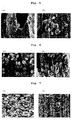
- Fig. 5 shows SEM-observed images of the cross section of the material prepared in Example 1.
- Fig. 5(A) is an observation image of the upper part
- Fig. 5(B) is an observation image of the lower part.
- Fig. 5(A) showing the upper part scarcely contains the cells, whereas the presence of the nucleated cells can be confirmed in Fig. 5(B) showing the lower part.
- erythrocytes unnecessary for tissue regeneration are small in number.
- Fig. 6 shows SEM-observed images of the cross section of the material prepared in Comparative Example 1.
- Fig. 6(A) is an observation image of the upper part
- Fig. 6(B) is an observation image of the lower part.
- Fig. 6(A) showing the upper part and Fig. 6(B) showing the lower part many cells can be confirmed, though most of them are erythrocytes unnecessary for tissue regeneration.
- Example 1 A comparison of Example 1 and Comparative Example 1 reveals that the method of the present invention eliminates erythrocytes, concentrates cells useful for tissue repair and adheres them to porous ceramics.
- Fig. 7 shows SEM-observed images of the cross section of the material prepared in Comparative Example 2.
- Fig. 7(A) is an observation image of the upper part
- Fig. 7(B) is an observation image of the lower part. While both upper and lower parts mainly contain erythrocytes unnecessary for tissue regeneration, which entered the inside by the centrifugation operation, the number thereof is higher in Fig. 8(A) showing the upper part than in Fig. 8(B) showing the lower part.
- the present invention provides a production method of an implant material, which simultaneously achieves, without using an additive such as medicament and the like, a high repair effect of bone tissue and cartilage tissue and convenience of preparation, particularly in the regeneration of bone defects or cartilage defects, in the orthopedic field.
Landscapes
- Health & Medical Sciences (AREA)
- Chemical & Material Sciences (AREA)
- Life Sciences & Earth Sciences (AREA)
- Engineering & Computer Science (AREA)
- Biomedical Technology (AREA)
- Medicinal Chemistry (AREA)
- Oral & Maxillofacial Surgery (AREA)
- Animal Behavior & Ethology (AREA)
- General Health & Medical Sciences (AREA)
- Public Health (AREA)
- Veterinary Medicine (AREA)
- Transplantation (AREA)
- Epidemiology (AREA)
- Dermatology (AREA)
- Chemical Kinetics & Catalysis (AREA)
- Zoology (AREA)
- Botany (AREA)
- Urology & Nephrology (AREA)
- Molecular Biology (AREA)
- Cell Biology (AREA)
- Ceramic Engineering (AREA)
- Inorganic Chemistry (AREA)
- Dispersion Chemistry (AREA)
- Hematology (AREA)
- Materials For Medical Uses (AREA)
- Orthopedic Medicine & Surgery (AREA)
- Cardiology (AREA)
- Heart & Thoracic Surgery (AREA)
- Vascular Medicine (AREA)
- Prostheses (AREA)
- Dentistry (AREA)
- Apparatus Associated With Microorganisms And Enzymes (AREA)
Claims (6)
- Verfahren der Herstellung eines Implantatmaterials, umfassendSchritt (A): einen Schritt des Einsetzens eines porösen Keramikmaterials, aufweisend im Wesentlichen unidirektional angeordnete Poren, in jeglicher Tiefenposition innen in einem Behälter,Schritt (B): einen Schritt des Befüllens des Behälters mit einer zellhaltigen Flüssigkeit, enthaltend mindestens Knochenmarkblut und/oder peripheres Blut, undSchritt (C): einen Schritt des Anwendens einer Zentrifugalkraft auf den Behälter in der Richtung entlang der Achse des Behälters.
- Herstellungsverfahren nach Anspruch 1, wobei im Schritt (A) das poröse Keramikmaterial derart eingesetzt wird, dass die Längsachse der im Wesentlichen unidirektional angeordneten Poren entlang der Achse des Behälters ist.
- Herstellungsverfahren nach Anspruch 1 oder 2, wobei die Zentrifugalkraft im Schritt (C) auf 100xg - 2000xg reguliert ist.
- Herstellungsverfahren nach Anspruch 1 oder 2, wobei die zellhaltige Flüssigkeit im Schritt (C) zentrifugiert wird, um eine Leukozytenschicht zu bilden.
- Herstellungsverfahren nach Anspruch 4, wobei im Schritt (A) das poröse Keramikmaterial derart eingesetzt wird, dass mindestens ein Teil davon mit der im Schritt (C) hergestellten Leukozytenschicht in Kontakt kommt.
- Implantatmaterial, erhalten durch das Herstellungsverfahren nach einem der Ansprüche 1 bis 5.
Applications Claiming Priority (2)
| Application Number | Priority Date | Filing Date | Title |
|---|---|---|---|
| JP2010262538 | 2010-11-25 | ||
| PCT/JP2011/075973 WO2012070400A1 (ja) | 2010-11-25 | 2011-11-10 | インプラント材料の製造方法 |
Publications (3)
| Publication Number | Publication Date |
|---|---|
| EP2644208A1 EP2644208A1 (de) | 2013-10-02 |
| EP2644208A4 EP2644208A4 (de) | 2014-09-24 |
| EP2644208B1 true EP2644208B1 (de) | 2016-06-29 |
Family
ID=46145748
Family Applications (1)
| Application Number | Title | Priority Date | Filing Date |
|---|---|---|---|
| EP11843553.6A Not-in-force EP2644208B1 (de) | 2010-11-25 | 2011-11-10 | Verfahren zur herstellung eines implantatmaterials |
Country Status (7)
| Country | Link |
|---|---|
| US (1) | US9782518B2 (de) |
| EP (1) | EP2644208B1 (de) |
| JP (1) | JP5924693B2 (de) |
| KR (2) | KR101667515B1 (de) |
| CN (1) | CN103384535B (de) |
| CA (1) | CA2818657C (de) |
| WO (1) | WO2012070400A1 (de) |
Families Citing this family (6)
| Publication number | Priority date | Publication date | Assignee | Title |
|---|---|---|---|---|
| CN103690999B (zh) * | 2013-12-10 | 2015-08-05 | 北京大学口腔医学院 | 一种prf前体液固化为凝胶膜的植入材料 |
| CN103690998B (zh) * | 2013-12-10 | 2015-12-09 | 北京大学口腔医学院 | 一种prf中嵌入骨材料凝胶的植骨材料 |
| IL259125B2 (en) * | 2015-11-03 | 2023-11-01 | Health Corp Of Galilee Medical Center | Device and method for treating an artificial bone graft in blood |
| JP7455302B2 (ja) * | 2019-07-18 | 2024-03-26 | Orbray株式会社 | 歯科用インプラント体及び歯科用インプラント体の製造方法 |
| CN114432499B (zh) * | 2021-12-20 | 2023-02-17 | 浙江脉通智造科技(集团)有限公司 | 人工血管及其制备方法 |
| US20250257468A1 (en) * | 2024-02-12 | 2025-08-14 | U.S. Army DEVCOM, Army Research Laboratory | Methods for infiltrating gallium into porous scaffolds |
Family Cites Families (13)
| Publication number | Priority date | Publication date | Assignee | Title |
|---|---|---|---|---|
| US6200606B1 (en) | 1996-01-16 | 2001-03-13 | Depuy Orthopaedics, Inc. | Isolation of precursor cells from hematopoietic and nonhematopoietic tissues and their use in vivo bone and cartilage regeneration |
| US5824084A (en) * | 1996-07-03 | 1998-10-20 | The Cleveland Clinic Foundation | Method of preparing a composite bone graft |
| JP5007476B2 (ja) | 2001-03-23 | 2012-08-22 | オリンパス株式会社 | 人工骨材 |
| JP4217421B2 (ja) | 2002-04-30 | 2009-02-04 | オリンパス株式会社 | 生体組織補填体の製造用容器 |
| US20060278588A1 (en) * | 2002-05-24 | 2006-12-14 | Woodell-May Jennifer E | Apparatus and method for separating and concentrating fluids containing multiple components |
| CN1565644A (zh) | 2003-06-27 | 2005-01-19 | 中国人民解放军军事医学科学院基础医学研究所 | 一种组织工程化骨的制造方法 |
| CN101072572B (zh) | 2003-07-09 | 2013-12-11 | 华沙整形外科股份有限公司 | 富含结缔组织生长成分的骨髓组分的分离及其促进结缔组织形成的用途 |
| JP2005040060A (ja) * | 2003-07-23 | 2005-02-17 | National Institute Of Advanced Industrial & Technology | 細胞を多孔性生体親和性材料に高効率で播種する方法 |
| JP2005137478A (ja) | 2003-11-05 | 2005-06-02 | Olympus Corp | 骨補填材の製造方法 |
| JP2006025635A (ja) | 2004-07-13 | 2006-02-02 | Kaneka Corp | 多孔質の支持体に細胞を内在化させる方法、器具または装置 |
| WO2007148788A1 (ja) * | 2006-06-23 | 2007-12-27 | Kuraray Co., Ltd. | 多孔質セラミックス材料およびその製造方法 |
| KR101212433B1 (ko) * | 2007-03-12 | 2012-12-13 | 가부시키가이샤 구라레 | 다공질 세라믹스 재료의 제조 방법 |
| JP5045943B2 (ja) * | 2008-07-09 | 2012-10-10 | 国立大学法人京都大学 | 多孔質セラミックス材料の製造方法 |
-
2011
- 2011-11-10 US US13/989,606 patent/US9782518B2/en not_active Expired - Fee Related
- 2011-11-10 CN CN201180056884.7A patent/CN103384535B/zh not_active Expired - Fee Related
- 2011-11-10 WO PCT/JP2011/075973 patent/WO2012070400A1/ja not_active Ceased
- 2011-11-10 EP EP11843553.6A patent/EP2644208B1/de not_active Not-in-force
- 2011-11-10 KR KR1020167004410A patent/KR101667515B1/ko not_active Expired - Fee Related
- 2011-11-10 KR KR1020137016268A patent/KR20130102101A/ko not_active Ceased
- 2011-11-10 CA CA2818657A patent/CA2818657C/en not_active Expired - Fee Related
- 2011-11-10 JP JP2012545681A patent/JP5924693B2/ja not_active Expired - Fee Related
Also Published As
| Publication number | Publication date |
|---|---|
| JP5924693B2 (ja) | 2016-05-25 |
| US20130253657A1 (en) | 2013-09-26 |
| CN103384535A (zh) | 2013-11-06 |
| CA2818657A1 (en) | 2012-05-31 |
| KR20160025041A (ko) | 2016-03-07 |
| KR20130102101A (ko) | 2013-09-16 |
| CN103384535B (zh) | 2015-02-11 |
| EP2644208A1 (de) | 2013-10-02 |
| JPWO2012070400A1 (ja) | 2014-05-19 |
| WO2012070400A1 (ja) | 2012-05-31 |
| CA2818657C (en) | 2016-01-05 |
| KR101667515B1 (ko) | 2016-10-18 |
| US9782518B2 (en) | 2017-10-10 |
| EP2644208A4 (de) | 2014-09-24 |
Similar Documents
| Publication | Publication Date | Title |
|---|---|---|
| EP1464307B1 (de) | Zwischenwirbelfusionsimplantat | |
| US9782518B2 (en) | Method for producing implant material | |
| JP4481566B2 (ja) | 複合型骨髄移植材、その調製法およびキット | |
| Anitua et al. | A novel drilling procedure and subsequent bone autograft preparation: a technical note | |
| EP3294306B1 (de) | Knochenfragment und gewebeverarbeitungssystem | |
| KR101212433B1 (ko) | 다공질 세라믹스 재료의 제조 방법 | |
| JP2001502561A (ja) | 複合骨移植片の調製方法 | |
| US20250169926A1 (en) | Device and method for treatment of an artificial bone implant with blood | |
| NZ524219A (en) | Bone replacement material | |
| CN108025113A (zh) | 制备成骨性骨移植物的方法 | |
| US11931087B2 (en) | Bone fragment and tissue processing system | |
| Flautre et al. | Histological aspects in bone regeneration of an association with porous hydroxyapatite and bone marrow cells | |
| KR100853635B1 (ko) | 다공성 합성 뼈이식편과 그것의 제조방법 | |
| EP2974753A1 (de) | Knochenregenerierende Biomaterialien mit ausgewählten Zellen aus peripherem Blut | |
| JP2004187846A (ja) | 生体用部材 | |
| KR20260017138A (ko) | 합성골 이식재 | |
| RU2003117748A (ru) | Регенератор костной ткани |
Legal Events
| Date | Code | Title | Description |
|---|---|---|---|
| PUAI | Public reference made under article 153(3) epc to a published international application that has entered the european phase |
Free format text: ORIGINAL CODE: 0009012 |
|
| 17P | Request for examination filed |
Effective date: 20130620 |
|
| AK | Designated contracting states |
Kind code of ref document: A1 Designated state(s): AL AT BE BG CH CY CZ DE DK EE ES FI FR GB GR HR HU IE IS IT LI LT LU LV MC MK MT NL NO PL PT RO RS SE SI SK SM TR |
|
| DAX | Request for extension of the european patent (deleted) | ||
| A4 | Supplementary search report drawn up and despatched |
Effective date: 20140822 |
|
| RIC1 | Information provided on ipc code assigned before grant |
Ipc: A61L 27/54 20060101ALI20140818BHEP Ipc: A61L 27/36 20060101ALI20140818BHEP Ipc: A61L 27/10 20060101AFI20140818BHEP Ipc: A61L 27/56 20060101ALI20140818BHEP Ipc: A61L 27/38 20060101ALI20140818BHEP |
|
| REG | Reference to a national code |
Ref country code: DE Ref legal event code: R079 Ref document number: 602011027835 Country of ref document: DE Free format text: PREVIOUS MAIN CLASS: A61L0027000000 Ipc: A61L0027100000 |
|
| GRAP | Despatch of communication of intention to grant a patent |
Free format text: ORIGINAL CODE: EPIDOSNIGR1 |
|
| RIC1 | Information provided on ipc code assigned before grant |
Ipc: A61L 27/56 20060101ALI20151217BHEP Ipc: A61L 27/38 20060101ALI20151217BHEP Ipc: A61L 27/10 20060101AFI20151217BHEP Ipc: A61L 27/54 20060101ALI20151217BHEP Ipc: A61L 27/36 20060101ALI20151217BHEP |
|
| INTG | Intention to grant announced |
Effective date: 20160114 |
|
| GRAS | Grant fee paid |
Free format text: ORIGINAL CODE: EPIDOSNIGR3 |
|
| GRAA | (expected) grant |
Free format text: ORIGINAL CODE: 0009210 |
|
| AK | Designated contracting states |
Kind code of ref document: B1 Designated state(s): AL AT BE BG CH CY CZ DE DK EE ES FI FR GB GR HR HU IE IS IT LI LT LU LV MC MK MT NL NO PL PT RO RS SE SI SK SM TR |
|
| REG | Reference to a national code |
Ref country code: GB Ref legal event code: FG4D |
|
| REG | Reference to a national code |
Ref country code: CH Ref legal event code: EP |
|
| REG | Reference to a national code |
Ref country code: AT Ref legal event code: REF Ref document number: 808562 Country of ref document: AT Kind code of ref document: T Effective date: 20160715 |
|
| REG | Reference to a national code |
Ref country code: IE Ref legal event code: FG4D |
|
| REG | Reference to a national code |
Ref country code: DE Ref legal event code: R096 Ref document number: 602011027835 Country of ref document: DE |
|
| REG | Reference to a national code |
Ref country code: LT Ref legal event code: MG4D |
|
| PG25 | Lapsed in a contracting state [announced via postgrant information from national office to epo] |
Ref country code: NO Free format text: LAPSE BECAUSE OF FAILURE TO SUBMIT A TRANSLATION OF THE DESCRIPTION OR TO PAY THE FEE WITHIN THE PRESCRIBED TIME-LIMIT Effective date: 20160929 Ref country code: FI Free format text: LAPSE BECAUSE OF FAILURE TO SUBMIT A TRANSLATION OF THE DESCRIPTION OR TO PAY THE FEE WITHIN THE PRESCRIBED TIME-LIMIT Effective date: 20160629 Ref country code: LT Free format text: LAPSE BECAUSE OF FAILURE TO SUBMIT A TRANSLATION OF THE DESCRIPTION OR TO PAY THE FEE WITHIN THE PRESCRIBED TIME-LIMIT Effective date: 20160629 |
|
| REG | Reference to a national code |
Ref country code: NL Ref legal event code: MP Effective date: 20160629 |
|
| REG | Reference to a national code |
Ref country code: FR Ref legal event code: PLFP Year of fee payment: 6 |
|
| PG25 | Lapsed in a contracting state [announced via postgrant information from national office to epo] |
Ref country code: LV Free format text: LAPSE BECAUSE OF FAILURE TO SUBMIT A TRANSLATION OF THE DESCRIPTION OR TO PAY THE FEE WITHIN THE PRESCRIBED TIME-LIMIT Effective date: 20160629 Ref country code: NL Free format text: LAPSE BECAUSE OF FAILURE TO SUBMIT A TRANSLATION OF THE DESCRIPTION OR TO PAY THE FEE WITHIN THE PRESCRIBED TIME-LIMIT Effective date: 20160629 Ref country code: RS Free format text: LAPSE BECAUSE OF FAILURE TO SUBMIT A TRANSLATION OF THE DESCRIPTION OR TO PAY THE FEE WITHIN THE PRESCRIBED TIME-LIMIT Effective date: 20160629 Ref country code: SE Free format text: LAPSE BECAUSE OF FAILURE TO SUBMIT A TRANSLATION OF THE DESCRIPTION OR TO PAY THE FEE WITHIN THE PRESCRIBED TIME-LIMIT Effective date: 20160629 Ref country code: GR Free format text: LAPSE BECAUSE OF FAILURE TO SUBMIT A TRANSLATION OF THE DESCRIPTION OR TO PAY THE FEE WITHIN THE PRESCRIBED TIME-LIMIT Effective date: 20160930 Ref country code: HR Free format text: LAPSE BECAUSE OF FAILURE TO SUBMIT A TRANSLATION OF THE DESCRIPTION OR TO PAY THE FEE WITHIN THE PRESCRIBED TIME-LIMIT Effective date: 20160629 |
|
| REG | Reference to a national code |
Ref country code: AT Ref legal event code: MK05 Ref document number: 808562 Country of ref document: AT Kind code of ref document: T Effective date: 20160629 |
|
| PG25 | Lapsed in a contracting state [announced via postgrant information from national office to epo] |
Ref country code: SK Free format text: LAPSE BECAUSE OF FAILURE TO SUBMIT A TRANSLATION OF THE DESCRIPTION OR TO PAY THE FEE WITHIN THE PRESCRIBED TIME-LIMIT Effective date: 20160629 Ref country code: IT Free format text: LAPSE BECAUSE OF FAILURE TO SUBMIT A TRANSLATION OF THE DESCRIPTION OR TO PAY THE FEE WITHIN THE PRESCRIBED TIME-LIMIT Effective date: 20160629 Ref country code: IS Free format text: LAPSE BECAUSE OF FAILURE TO SUBMIT A TRANSLATION OF THE DESCRIPTION OR TO PAY THE FEE WITHIN THE PRESCRIBED TIME-LIMIT Effective date: 20161029 Ref country code: CZ Free format text: LAPSE BECAUSE OF FAILURE TO SUBMIT A TRANSLATION OF THE DESCRIPTION OR TO PAY THE FEE WITHIN THE PRESCRIBED TIME-LIMIT Effective date: 20160629 Ref country code: RO Free format text: LAPSE BECAUSE OF FAILURE TO SUBMIT A TRANSLATION OF THE DESCRIPTION OR TO PAY THE FEE WITHIN THE PRESCRIBED TIME-LIMIT Effective date: 20160629 Ref country code: EE Free format text: LAPSE BECAUSE OF FAILURE TO SUBMIT A TRANSLATION OF THE DESCRIPTION OR TO PAY THE FEE WITHIN THE PRESCRIBED TIME-LIMIT Effective date: 20160629 |
|
| PGFP | Annual fee paid to national office [announced via postgrant information from national office to epo] |
Ref country code: DE Payment date: 20161129 Year of fee payment: 6 Ref country code: GB Payment date: 20161109 Year of fee payment: 6 Ref country code: FR Payment date: 20161109 Year of fee payment: 6 |
|
| PG25 | Lapsed in a contracting state [announced via postgrant information from national office to epo] |
Ref country code: ES Free format text: LAPSE BECAUSE OF FAILURE TO SUBMIT A TRANSLATION OF THE DESCRIPTION OR TO PAY THE FEE WITHIN THE PRESCRIBED TIME-LIMIT Effective date: 20160629 Ref country code: SM Free format text: LAPSE BECAUSE OF FAILURE TO SUBMIT A TRANSLATION OF THE DESCRIPTION OR TO PAY THE FEE WITHIN THE PRESCRIBED TIME-LIMIT Effective date: 20160629 Ref country code: PL Free format text: LAPSE BECAUSE OF FAILURE TO SUBMIT A TRANSLATION OF THE DESCRIPTION OR TO PAY THE FEE WITHIN THE PRESCRIBED TIME-LIMIT Effective date: 20160629 Ref country code: BE Free format text: LAPSE BECAUSE OF FAILURE TO SUBMIT A TRANSLATION OF THE DESCRIPTION OR TO PAY THE FEE WITHIN THE PRESCRIBED TIME-LIMIT Effective date: 20160629 Ref country code: PT Free format text: LAPSE BECAUSE OF FAILURE TO SUBMIT A TRANSLATION OF THE DESCRIPTION OR TO PAY THE FEE WITHIN THE PRESCRIBED TIME-LIMIT Effective date: 20161031 Ref country code: AT Free format text: LAPSE BECAUSE OF FAILURE TO SUBMIT A TRANSLATION OF THE DESCRIPTION OR TO PAY THE FEE WITHIN THE PRESCRIBED TIME-LIMIT Effective date: 20160629 |
|
| REG | Reference to a national code |
Ref country code: DE Ref legal event code: R097 Ref document number: 602011027835 Country of ref document: DE |
|
| PLBE | No opposition filed within time limit |
Free format text: ORIGINAL CODE: 0009261 |
|
| STAA | Information on the status of an ep patent application or granted ep patent |
Free format text: STATUS: NO OPPOSITION FILED WITHIN TIME LIMIT |
|
| PG25 | Lapsed in a contracting state [announced via postgrant information from national office to epo] |
Ref country code: DK Free format text: LAPSE BECAUSE OF FAILURE TO SUBMIT A TRANSLATION OF THE DESCRIPTION OR TO PAY THE FEE WITHIN THE PRESCRIBED TIME-LIMIT Effective date: 20160629 |
|
| 26N | No opposition filed |
Effective date: 20170330 |
|
| REG | Reference to a national code |
Ref country code: CH Ref legal event code: PL |
|
| PG25 | Lapsed in a contracting state [announced via postgrant information from national office to epo] |
Ref country code: CH Free format text: LAPSE BECAUSE OF NON-PAYMENT OF DUE FEES Effective date: 20161130 Ref country code: LI Free format text: LAPSE BECAUSE OF NON-PAYMENT OF DUE FEES Effective date: 20161130 |
|
| REG | Reference to a national code |
Ref country code: IE Ref legal event code: MM4A |
|
| PG25 | Lapsed in a contracting state [announced via postgrant information from national office to epo] |
Ref country code: SI Free format text: LAPSE BECAUSE OF FAILURE TO SUBMIT A TRANSLATION OF THE DESCRIPTION OR TO PAY THE FEE WITHIN THE PRESCRIBED TIME-LIMIT Effective date: 20160629 Ref country code: BG Free format text: LAPSE BECAUSE OF FAILURE TO SUBMIT A TRANSLATION OF THE DESCRIPTION OR TO PAY THE FEE WITHIN THE PRESCRIBED TIME-LIMIT Effective date: 20160929 |
|
| PG25 | Lapsed in a contracting state [announced via postgrant information from national office to epo] |
Ref country code: LU Free format text: LAPSE BECAUSE OF NON-PAYMENT OF DUE FEES Effective date: 20161130 |
|
| PG25 | Lapsed in a contracting state [announced via postgrant information from national office to epo] |
Ref country code: IE Free format text: LAPSE BECAUSE OF NON-PAYMENT OF DUE FEES Effective date: 20161110 |
|
| PG25 | Lapsed in a contracting state [announced via postgrant information from national office to epo] |
Ref country code: CY Free format text: LAPSE BECAUSE OF FAILURE TO SUBMIT A TRANSLATION OF THE DESCRIPTION OR TO PAY THE FEE WITHIN THE PRESCRIBED TIME-LIMIT Effective date: 20160629 Ref country code: HU Free format text: LAPSE BECAUSE OF FAILURE TO SUBMIT A TRANSLATION OF THE DESCRIPTION OR TO PAY THE FEE WITHIN THE PRESCRIBED TIME-LIMIT; INVALID AB INITIO Effective date: 20111110 |
|
| REG | Reference to a national code |
Ref country code: DE Ref legal event code: R119 Ref document number: 602011027835 Country of ref document: DE |
|
| PG25 | Lapsed in a contracting state [announced via postgrant information from national office to epo] |
Ref country code: MK Free format text: LAPSE BECAUSE OF FAILURE TO SUBMIT A TRANSLATION OF THE DESCRIPTION OR TO PAY THE FEE WITHIN THE PRESCRIBED TIME-LIMIT Effective date: 20160629 Ref country code: MC Free format text: LAPSE BECAUSE OF FAILURE TO SUBMIT A TRANSLATION OF THE DESCRIPTION OR TO PAY THE FEE WITHIN THE PRESCRIBED TIME-LIMIT Effective date: 20160629 |
|
| GBPC | Gb: european patent ceased through non-payment of renewal fee |
Effective date: 20171110 |
|
| REG | Reference to a national code |
Ref country code: FR Ref legal event code: ST Effective date: 20180731 |
|
| PG25 | Lapsed in a contracting state [announced via postgrant information from national office to epo] |
Ref country code: MT Free format text: LAPSE BECAUSE OF NON-PAYMENT OF DUE FEES Effective date: 20161110 |
|
| PG25 | Lapsed in a contracting state [announced via postgrant information from national office to epo] |
Ref country code: FR Free format text: LAPSE BECAUSE OF NON-PAYMENT OF DUE FEES Effective date: 20171130 Ref country code: DE Free format text: LAPSE BECAUSE OF NON-PAYMENT OF DUE FEES Effective date: 20180602 Ref country code: TR Free format text: LAPSE BECAUSE OF FAILURE TO SUBMIT A TRANSLATION OF THE DESCRIPTION OR TO PAY THE FEE WITHIN THE PRESCRIBED TIME-LIMIT Effective date: 20160629 Ref country code: AL Free format text: LAPSE BECAUSE OF FAILURE TO SUBMIT A TRANSLATION OF THE DESCRIPTION OR TO PAY THE FEE WITHIN THE PRESCRIBED TIME-LIMIT Effective date: 20160629 |
|
| PG25 | Lapsed in a contracting state [announced via postgrant information from national office to epo] |
Ref country code: GB Free format text: LAPSE BECAUSE OF NON-PAYMENT OF DUE FEES Effective date: 20171110 |