EP2635257B1 - RABIES GLYCOPROTEIN VIRUS-LIKE PARTICLES (VLPs) - Google Patents
RABIES GLYCOPROTEIN VIRUS-LIKE PARTICLES (VLPs) Download PDFInfo
- Publication number
- EP2635257B1 EP2635257B1 EP11838942.8A EP11838942A EP2635257B1 EP 2635257 B1 EP2635257 B1 EP 2635257B1 EP 11838942 A EP11838942 A EP 11838942A EP 2635257 B1 EP2635257 B1 EP 2635257B1
- Authority
- EP
- European Patent Office
- Prior art keywords
- protein
- proteins
- vlps
- virus
- micelles
- Prior art date
- Legal status (The legal status is an assumption and is not a legal conclusion. Google has not performed a legal analysis and makes no representation as to the accuracy of the status listed.)
- Active
Links
Images
Classifications
-
- A—HUMAN NECESSITIES
- A61—MEDICAL OR VETERINARY SCIENCE; HYGIENE
- A61K—PREPARATIONS FOR MEDICAL, DENTAL OR TOILETRY PURPOSES
- A61K9/00—Medicinal preparations characterised by special physical form
- A61K9/10—Dispersions; Emulsions
- A61K9/127—Synthetic bilayered vehicles, e.g. liposomes or liposomes with cholesterol as the only non-phosphatidyl surfactant
-
- A—HUMAN NECESSITIES
- A61—MEDICAL OR VETERINARY SCIENCE; HYGIENE
- A61K—PREPARATIONS FOR MEDICAL, DENTAL OR TOILETRY PURPOSES
- A61K39/00—Medicinal preparations containing antigens or antibodies
- A61K39/12—Viral antigens
- A61K39/205—Rhabdoviridae, e.g. rabies virus
-
- A—HUMAN NECESSITIES
- A61—MEDICAL OR VETERINARY SCIENCE; HYGIENE
- A61K—PREPARATIONS FOR MEDICAL, DENTAL OR TOILETRY PURPOSES
- A61K39/00—Medicinal preparations containing antigens or antibodies
- A61K39/12—Viral antigens
-
- A—HUMAN NECESSITIES
- A61—MEDICAL OR VETERINARY SCIENCE; HYGIENE
- A61P—SPECIFIC THERAPEUTIC ACTIVITY OF CHEMICAL COMPOUNDS OR MEDICINAL PREPARATIONS
- A61P31/00—Antiinfectives, i.e. antibiotics, antiseptics, chemotherapeutics
- A61P31/12—Antivirals
-
- A—HUMAN NECESSITIES
- A61—MEDICAL OR VETERINARY SCIENCE; HYGIENE
- A61P—SPECIFIC THERAPEUTIC ACTIVITY OF CHEMICAL COMPOUNDS OR MEDICINAL PREPARATIONS
- A61P31/00—Antiinfectives, i.e. antibiotics, antiseptics, chemotherapeutics
- A61P31/12—Antivirals
- A61P31/14—Antivirals for RNA viruses
-
- A—HUMAN NECESSITIES
- A61—MEDICAL OR VETERINARY SCIENCE; HYGIENE
- A61P—SPECIFIC THERAPEUTIC ACTIVITY OF CHEMICAL COMPOUNDS OR MEDICINAL PREPARATIONS
- A61P31/00—Antiinfectives, i.e. antibiotics, antiseptics, chemotherapeutics
- A61P31/12—Antivirals
- A61P31/14—Antivirals for RNA viruses
- A61P31/16—Antivirals for RNA viruses for influenza or rhinoviruses
-
- A—HUMAN NECESSITIES
- A61—MEDICAL OR VETERINARY SCIENCE; HYGIENE
- A61P—SPECIFIC THERAPEUTIC ACTIVITY OF CHEMICAL COMPOUNDS OR MEDICINAL PREPARATIONS
- A61P37/00—Drugs for immunological or allergic disorders
- A61P37/02—Immunomodulators
- A61P37/04—Immunostimulants
-
- C—CHEMISTRY; METALLURGY
- C07—ORGANIC CHEMISTRY
- C07K—PEPTIDES
- C07K14/00—Peptides having more than 20 amino acids; Gastrins; Somatostatins; Melanotropins; Derivatives thereof
- C07K14/005—Peptides having more than 20 amino acids; Gastrins; Somatostatins; Melanotropins; Derivatives thereof from viruses
-
- A—HUMAN NECESSITIES
- A61—MEDICAL OR VETERINARY SCIENCE; HYGIENE
- A61K—PREPARATIONS FOR MEDICAL, DENTAL OR TOILETRY PURPOSES
- A61K39/00—Medicinal preparations containing antigens or antibodies
- A61K2039/51—Medicinal preparations containing antigens or antibodies comprising whole cells, viruses or DNA/RNA
- A61K2039/525—Virus
- A61K2039/5258—Virus-like particles
-
- A—HUMAN NECESSITIES
- A61—MEDICAL OR VETERINARY SCIENCE; HYGIENE
- A61K—PREPARATIONS FOR MEDICAL, DENTAL OR TOILETRY PURPOSES
- A61K39/00—Medicinal preparations containing antigens or antibodies
- A61K2039/555—Medicinal preparations containing antigens or antibodies characterised by a specific combination antigen/adjuvant
- A61K2039/55505—Inorganic adjuvants
-
- C—CHEMISTRY; METALLURGY
- C12—BIOCHEMISTRY; BEER; SPIRITS; WINE; VINEGAR; MICROBIOLOGY; ENZYMOLOGY; MUTATION OR GENETIC ENGINEERING
- C12N—MICROORGANISMS OR ENZYMES; COMPOSITIONS THEREOF; PROPAGATING, PRESERVING, OR MAINTAINING MICROORGANISMS; MUTATION OR GENETIC ENGINEERING; CULTURE MEDIA
- C12N2760/00—MICROORGANISMS OR ENZYMES; COMPOSITIONS THEREOF; PROPAGATING, PRESERVING, OR MAINTAINING MICROORGANISMS; MUTATION OR GENETIC ENGINEERING; CULTURE MEDIA ssRNA viruses negative-sense
- C12N2760/00011—Details
- C12N2760/20011—Rhabdoviridae
- C12N2760/20111—Lyssavirus, e.g. rabies virus
- C12N2760/20134—Use of virus or viral component as vaccine, e.g. live-attenuated or inactivated virus, VLP, viral protein
-
- C—CHEMISTRY; METALLURGY
- C12—BIOCHEMISTRY; BEER; SPIRITS; WINE; VINEGAR; MICROBIOLOGY; ENZYMOLOGY; MUTATION OR GENETIC ENGINEERING
- C12N—MICROORGANISMS OR ENZYMES; COMPOSITIONS THEREOF; PROPAGATING, PRESERVING, OR MAINTAINING MICROORGANISMS; MUTATION OR GENETIC ENGINEERING; CULTURE MEDIA
- C12N2799/00—Uses of viruses
- C12N2799/02—Uses of viruses as vector
- C12N2799/021—Uses of viruses as vector for the expression of a heterologous nucleic acid
- C12N2799/026—Uses of viruses as vector for the expression of a heterologous nucleic acid where the vector is derived from a baculovirus
Definitions
- the present invention is generally related to methods of making micelles comprising rabies virus glycoproteins (G proteins).
- Rabies virus is a non-segmented negative-stranded RNA virus of the Rhabdoviridae family and induces a fatal neurological disease in humans and animals. More than 70,000 human fatalities are reported annually and millions of others require post-exposure treatment. Although significant advances have been made in rabies prevention and control, the disease remains a major threat to public health and continues to cause numerous human deaths around the world. Canines remain the most important reservoir in Asia, Africa and Latin America where most human rabies cases occur. In the developed countries, human rabies has declined significantly during the past 50 years, primarily as a result of routine vaccination of pet animals. However, rabies transmission via exposure to wild-life has emerged as a major cause of the disease. In the United States, more than 90% of animal rabies cases have been reported in wildlife, representing continual public health threats. Most human cases in the past decade have been associated with RV found in bats, particularly silver-haired bats.
- Rhabdoviruses have two major structural components: a helical ribonuclcoprotein core (RNP) and a surrounding envelope.
- the rabies genome encodes five proteins: nucleoprotein (N), phosphoprotein (P), matrix protein (M), glycoprotein (G) and polymerase (large protein) (L).
- the order of the genes in the wild-type rabies genome is 3'-N-P-M-G-L-5'.
- the N, L and P proteins are associated with the core RNP complex.
- the RNP complex consists of the RNA genome encapsidated by the N in combination with polymerase L and the P protein. This complex serves as a template for virus transcription and replication.
- the viral envelope component of RV is composed of a transmembrane glycoprotein (G) and a matrix (M) protein.
- G transmembrane glycoprotein
- M matrix
- the glycoproteins forms approximately 400 trimeric spikes which are tightly arranged on the surface of the virus.
- the M protein is associated both with the envelope and the RNP and may be the central protein of rhabdovirus assembly.
- rabies remains a major public health threat around the world. Controlling rabies and protecting humans from rabies requires several control strategies, such as routine immunization of pet animals and wildlife carriers, pre-exposure immunization of people at risk, and post-exposure treatment of people bitten by rabid animals.
- RV rabies virus
- inactivated rabies virus (RV) vaccines prepared from cell culture are safe and well-tolerated, they have multiple disadvantages. They are difficult to manufacture, difficult to store, have low immunogenicity, and require multiple injections. Moreover, they are expensive and thus beyond the reach of most people who need the vaccines in the developing countries. In addition, these inactivated vaccines typically include adjuvants which may cause unwanted side effects. Thus, safer, cheaper, and more efficacious RV vaccines arc needed.
- VLPs virus-like particles
- G rabies glycoprotein
- Perrin et al (Vaccine, Vol. 3, September 1985, page 325-332 ) describes the protein of rabies immunosomes, comprising glycoproteins anchored onto pre-formed liposomes.
- EP0237686 describes DNA sequences derived from the rabies virus genome.
- RV virus virus-like particles VLPs
- the present application describes rabies virus (RV) virus-like particles (VLPs) for use in vaccines for the treatment and prevention of rabies infection.
- RV VLPs described herein have the potential to induce potent immune responses in mammalian subjects against the rabies virus.
- the present invention provides a method of making micelles comprising rabies virus (RV) glycoproteins (G proteins), wherein the G proteins form a trimer, comprising:
- the present invention provides a method of making a vaccine or antigenic composition, comprising making micelles comprising rabies virus glycoproteins by the method as described above, and further comprising a step of formulating the micelles as a vaccine or antigenic composition by adding an effective dose of the micelles to the composition.
- RV VLPs comprising one or more RV glycoproteins (G proteins).
- the RV G proteins may be derived from any suitable RV strain, including, but not limited to, human, canine, bat, raccoon, skunk, and fox strains of RV.
- RV VLPs comprising one or more RV G proteins producing according to the invention are in the form of micelles.
- the RV VLPs may comprise one or more additional RV proteins, selected from the nucleoprotein (N), phosphoprotein (P), matrix protein (M), and polymerase (large protein) (L).
- the RV VLPs produced by the present invention may comprise the RV matrix protein (M).
- the M protein is derived from a human strain of RV.
- the M protein is derived from a canine strain of RV. In yet another embodiment, the M protein is derived from a bat strain of RV. In other embodiments, the matrix protein may be an M1 protein from an influenza virus strain. In one embodiment, the influenza virus strain is an avian influenza virus strain. In other embodiments, the M protein may be derived from a Newcastle Disease Virus (NDV) strain.
- NDV Newcastle Disease Virus
- the coding sequence of the RV G protein is further optimized to enhance its expression in a suitable host cell.
- the host cell is an Sf9 insect cell.
- the RV VLPs obtained by the present invention may be used for the prevention and/or treatment of RV infection.
- a method for eliciting an immune response against RV involves administering an immunologically effective amount of a composition containing a RV VLP to a subject, such as a human or animal subject.
- the application also describes pharmaceutically acceptable vaccine compositions comprising an RV VLP which comprises one or more RV glycoprotein (G proteins).
- RV VLP which comprises one or more RV glycoprotein (G proteins).
- the application also describes an immunogenic formulation comprising at least one effective dose of an RV VLP which comprises one or more RV glycoprotein (G proteins)
- the application also describes a pharmaceutical pack or kit comprising one or more containers filled with one or more of the ingredients of the vaccine formulations of the invention.
- the invention provides a method of formulating a vaccine or antigenic composition that induces immunity to an infection or at least one disease symptom thereof to a mammal, comprising adding to the formulation an effective dose of an RV VLP which comprises one or more RV glycoproteins (G proteins).
- the infection is an RV infection.
- the RV VLPs obtained herein are useful for preparing compositions that stimulate an immune response that confers immunity or substantial immunity to infectious agents.
- the application describes a method of inducing immunity to infections or at least one disease symptom thereof in a subject, comprising administering at least one effective dose of an RV VLP which comprises one or more RV glycoproteins (G proteins).
- the application further describes a method of inducing substantial immunity to RV infection or at least one disease symptom in a subject, comprising administering at least one effective dose of an RV VLP which comprises one or more RV glycoproteins (G proteins).
- RV VLP which comprises one or more RV glycoproteins (G proteins).
- compositions described herein can induce substantial immunity in a vertebrate (e.g . a human or a canine) when administered to the vertebrate.
- a vertebrate e.g . a human or a canine
- the application describes a method of inducing substantial immunity to RV infection or at least one disease symptom in a subject, comprising administering at least one effective dose of an RV VLP which comprises one or more RV glycoproteins (G proteins).
- the application also describes a method of vaccinating a mammal against RV comprising administering to the mammal a protection-inducing amount of an RV VLP which comprises one or more RV glycoproteins (G proteins).
- the prophylactic vaccine formulation is systemically administered, e . g ., by subcutaneous or intramuscular injection using a needle and syringe, or a needle-less injection device. In an exemplary embodiment, the vaccine formulation is administered intramuscularly.
- the application also describes a method of inducing a protective antibody response to an infection or at least one symptom thereof in a subject, comprising administering at least one effective dose of an RV VLP which comprises one or more RV glycoproteins (G proteins).
- RV VLP which comprises one or more RV glycoproteins (G proteins).
- the application also describes a method of inducing a protective cellular response to RV infection or at least one disease symptom in a subject, comprising administering at least one effective dose of an RV VLP which comprises one or more RV glycoproteins (G proteins).
- RV VLP which comprises one or more RV glycoproteins (G proteins).
- the application also describes an isolated nucleic acid encoding a rabies glycoprotein (G protein).
- G protein rabies glycoprotein
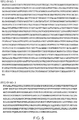
- the isolated nucleic acid encoding a rabies glycoprotein (G protein) protein is SEQ ID NO: 1.
- the application also describes an isolated cell comprising a nucleic acid encoding a rabies glycoprotein (G protein).
- G protein rabies glycoprotein
- the isolated nucleic acid encoding a rabies glycoproteins (G protein) protein is SEQ ID NO: 1.
- the application also describes a vector comprising a nucleic acid encoding a rabies glycoprotein (G protein).
- the isolated nucleic acid encoding a rabies glycoprotein (G protein) protein is SEQ ID NO: 1.
- the vector is a baculovirus vector.
- adjuvant refers to a compound that, when used in combination with a specific immunogen (e.g . an RV VLP which comprises one or more RV glycoproteins (G proteins)) in a formulation, will augment or otherwise alter or modify the resultant immune response.
- a specific immunogen e.g . an RV VLP which comprises one or more RV glycoproteins (G proteins)
- Modification of the immune response includes intensification or broadening the specificity of either or both antibody and cellular immune responses. Modification of the immune response can also mean decreasing or suppressing certain antigen-specific immune responses.
- antigenic formulation or “antigenic composition” refers to a preparation which, when administered to a vertebrate, especially a bird or a mammal, will induce an immune response.
- avian influenza virus refers to influenza viruses found chiefly in birds but that can also infect humans or other animals. In some instances, avian influenza viruses may be transmitted or spread from one human to another. An avian influenza virus that infects humans has the potential to cause an influenza pandemic, i.e., morbidity and/or morality in humans. A pandemic occurs when a new strain of influenza virus (a virus in which human have no natural immunity) emerges, spreading beyond individual localities, possibly around the globe, and infecting many humans at once.
- an "effective dose” generally refers to that amount of an RV VLP which comprises one or more RV glycoproteins (G proteins) sufficient to induce immunity, to prevent and/or ameliorate an infection or to reduce at least one symptom of an infection or disease, and/or to enhance the efficacy of another dose of an RV VLP which comprises one or more RV glycoproteins (G proteins).
- An effective dose may refer to the amount of an RV VLP which comprises one or more RV glycoproteins (G proteins) sufficient to delay or minimize the onset of an infection or disease.
- An effective dose may also refer to the amount of an RV VLP which comprises one or more RV glycoproteins (G proteins) that provides a therapeutic benefit in the treatment or management of an infection or disease.
- an effective dose is the amount with respect to an RV VLP which comprises one or more RV glycoproteins (G proteins) alone, or in combination with other therapies, that provides a therapeutic benefit in the treatment or management of an infection or disease.
- An effective dose may also be the amount sufficient to enhance a subject's (e.g ., a human's) own immune response against a subsequent exposure to an infectious agent or disease.
- Levels of immunity can be monitored, e.g ., by measuring amounts of neutralizing secretory and/or serum antibodies, e .
- T cell responses can be monitored, e.g., by measuring, for example, the amount of CD4 + and CD8 + cells present using specific markers by fluorescent flow cytometry or T cell assays, such as but not limited to T-cell proliferation assay, T-cell cytotoxic assay, TETRAMER assay, and/or ELISPOT assay.
- an "affective dose" is one that prevents disease and/or reduces the severity of symptoms.
- an effective amount refers to an amount of an RV VLP which comprises one or more RV glycoproteins (G proteins) necessary or sufficient to realize a desired biologic effect.
- An effective amount of the composition would be the amount that achieves a selected result, and such an amount could be determined as a matter of routine experimentation by a person skilled in the art.
- an effective amount for preventing, treating and/or ameliorating an infection could be that amount necessary to cause activation of the immune system, resulting in the development of an antigen specific immune response upon exposure to an RV VLP which comprises one or more RV glycoproteins (G proteins).
- the effective amount is the amount by weight of a RV G micelle that enduces seroprotection in a relevant animal model, animal or human patient in a desired number of days, e.g. 7, 10, 14 or more days.
- the term "expression” refers to the process by which polynucleic acids are transcribed into mRNA and translated into peptides, polypeptides, or proteins. If the polynucleic acid is derived from genomic DNA, expression may, if an appropriate eukaryotic host cell or organism is selected, include splicing of the mRNA. In the context of the present invention, the term also encompasses the yield of RV G gene mRNA and RV G proteins achieved following expression thereof.
- G protein or "G glycoprotein” or “G protein polypeptide” refers to a polypeptide or protein having all or part of an amino acid sequence of an RV G protein polypeptide.
- immunogens or “antigens” refer to substances such as proteins, peptides, peptides, nucleic acids that are capable of eliciting an immune response. Both terms also encompass epitopes, and are used interchangeably.
- immune stimulator refers to a compound that enhances an immune response via the body's own chemical messengers (cytokines). These molecules comprise various cytokines, lymphokines and chemokines with immunostimulatory, immunopotentiating, and pro-inflammatory activities, such as interferons (IFN- ⁇ ), interleukins (e.g ., IL-1, IL-2, IL-3, IL-4, IL-13); growth factors (e.g ., granulocyte-macrophage (GM)-colony stimulating factor (CSF)); and other immunostimulatory molecules, such as macrophage inflammatory factor, Flt3 ligand, B7.1; B7.2, etc.
- the immune stimulator molecules can be administered in the same formulation as VLPs of the invention, or can be administered separately. Either the protein or an expression vector encoding the protein can be administered to produce an immunostimulatory effect.
- immunogenic formulation refers to a preparation which, when administered to a vertebrate, e . g . a mammal, will induce an immune response.
- infectious agent refers to microorganisms that cause an infection in a vertebrate.
- the organisms are viruses, bacteria, parasites, protozoa and/or fungi.
- multivalent refers to compositions which have one or more antigenic proteins/peptides or immunogens against multiple types or strains of infectious agents or diseases, e.g. more than one RV G protein type, strain, sequence, etc.
- the term "pharmaceutical” acceptable vaccine” refers to a formulation which contains an RV VLP which comprises one or more RV glycoproteins (G proteins), which is in a form that is capable of being administered to a vertebrate and which induces a protective immune response sufficient to induce immunity to prevent and/or ameliorate an infection or disease, and/or to reduce at least one symptom of an infection or disease, and/or to enhance the efficacy of another dose of an RV VLP which comprises one or more RV glycoproteins (G proteins).
- the vaccine comprises a conventional saline or buffered aqueous solution medium in which the composition of the present invention is suspended or dissolved.
- the composition of the present invention can be used conveniently to prevent, ameliorate, or otherwise treat an infection.
- the vaccine Upon introduction into a host, the vaccine is able to provoke an immune response including, but not limited to, the production of antibodies and/or cytokines and/or the activation of cytotoxic T cells, antigen presenting cells, helper T cells, dendritic cells and/or other cellular responses.
- protecting immune response refers to an immune response mediated by antibodies against an infectious agent or disease, which is exhibited by a vertebrate (e.g ., a human), that prevents or ameliorates an infection or reduces at least one disease symptom thereof.
- An RV VLP of the present invention which comprises one or more RV glycoproteins (G proteins) can stimulate the production of antibodies that, for example, neutralize infections agents, blocks infectious agents from entering cells, blocks replication of the infectious agents, and/or protect host cells from injection and destruction.
- the term can also refer to an immune response that is mediated by T-lymphocytes and/or other white blood cells against an infectious agent or disease, exhibited by a vertebrate ( e.g ., a human), that prevents or ameliorates infection or disease, or reduces at least one symptom thereof.
- a vertebrate e.g ., a human
- the term "vertebrate'' or "subject” or “patient” refers to any member of the subphylum cordata, including, without limitation, humans and other primates, including non-human primates such as chimpanzees and other apes and monkey species.
- Farm animals such as cattle, sheep, pigs, goats and horses; domestic mammals such as dogs and cats; laboratory animals including rodents such as mice, rats (including cotton rats) and guinea pigs; birds, including domestic, wild and game birds such as chickens, turkeys and other gallinaceous birds, ducks, geese are also non-limiting examples.
- the terms "mammals” and “animals” are included in this definition. Both adult and newborn individuals are intended to be covered. In particular, humans, domestic mammals, and farm animals arc appropriate recipients of an RV vaccine or therapeutic.
- virus-like particle refers to a structure that in at least one attribute resembles a virus but which has not been demonstrated to be infectious.
- Virus-like particles in accordance with the invention do not carry genetic information encoding for the proteins of the virus-like particles. In general, virus-like particles lack a viral genome and, therefore, are noninfectious. In addition, virus-like particles can often be produced in large quantities by heterologous expression and can be easily purified.
- chimeric VLP refers to VLPs that contain proteins, or portions thereof, from at least two different infectious agents (heterologous proteins). Usually, one of the proteins is derived from a virus that can drive the formation of VLPs from host cells. Examples, for illustrative purposes, are the avian influenza M protein and/or the RV G protein. The terms RV VLPs and chimeric VLPs can be used interchangeably where appropriate.
- the term "vaccine” refers to a preparation of dead or weakened pathogens, or of derived antigenic determinants that is used to induce formation of antibodies or immunity against the pathogen.
- a vaccine is given to provide immunity to the disease, for example, influenza, which is caused by influenza viruses.
- the term “vaccine” also refers to a suspension or solution of an immunogen (e.g . an RV VLP which comprises one or more RV glycoproteins (G proteins)) that is administered to a vertebrate to produce protective immunity, i.e., immunity that prevents or reduces the severity of disease associated with infection.
- an immunogen e.g . an RV VLP which comprises one or more RV glycoproteins (G proteins)
- the present invention provides for vaccine compositions that arc immunogenic and may provide protection against a disease associated with infection.
- VLPs Rabies Virus (RV) Virus-Like Particles
- the invention relates to methods of producing RV virus-like particles (VLPs) comprising one or more RV glycoproteins (G proteins) that can be formulated into vaccines or antigenic formulations for protecting vertebrates (e . g . humans and domestic animals) against RV infection or at least one disease symptom thereof.
- the VLP comprising one or more RV glycoproteins (G proteins) further comprises additional RV proteins, such as N, P, M, and L.
- the VLP comprising one or more RV glycoproteins (G proteins) further comprises proteins from heterologous strains of virus, such as influenza virus proteins HA, NA, and M1.
- the influenza virus protein M1 is derived from an avian influenza virus strain (see U.S. application 13/280,043 ).
- a vaccine comprising an RV VLP which comprises one or more RV glycoproteins (G proteins) may induce, when administered to a vertebrate, neutralizing antibodies in vivo .
- the RV VLPs which comprise one or more RV glycoproteins (G proteins) are favorably used for the prevention and/or treatment of RV infection.
- another aspect of this disclosure concerns a method for eliciting an immune response against RV. The method involves administering an immunologically effective amount of a composition containing an RV VLP which comprises one or more RV glycoproteins (G proteins) to a subject (such as a human or animal subject).
- an immunologically effective amount of the composition elicits an immune response specific for epitopes present on the RV G protein.
- an immune response can include B cell responses (e.g., the production of neutralizing antibodies) and/or T cell responses (e.g., the production of cytokines).
- the immune response elicited by the RV G protein includes elements that are specific for at least one conformational epitope present on the RV G protein.
- the immune response is specific for an epitope present on an RV G protein found in the micelle conformation.
- the RV G proteins and compositions can be administered to a subject without enhancing viral disease following contact with RV.
- the RV G proteins disclosed herein and suitably formulated immunogenic compositions elicit a Th1 biased immune response that reduces or prevents infection with a RV and/or reduces or prevents a pathological response following infection with a RV.
- the RV G proteins produced by the present invention are found in the form of micelles (e.g . rosettes). See example 2.
- the micelles are purified following expression in a host cell.
- the micelles of the present invention preferably induce neutralizing antibodies.
- the micelles may be administered with an adjuvant. In other embodiments, the micelles may be administered without an adjuvant.
- the application also describes RV virus-like particles (VLPs) comprising a RV G protein that can be formulated into vaccines or antigenic formulations for protecting vertebrates (e . g . humans) against RV infection or at least one disease symptom thereof.
- VLPs RV virus-like particles
- the present application also relates to RV VLPs and vectors comprising wild-type and mutated RV genes or a combination thereof derived from different strains of RV virus, which when transfected into host cells, will produce virus like particles (VLPs) comprising RV proteins.
- RV virus-like particles may further comprise at least one viral matrix protein (e.g . an RV M protein).
- the M protein is derived from a human strain of RV.
- the M protein is derived from an alternative strain of RV, such as a canine, bat, raccoon, or skunk strain of RV.
- the matrix protein may be an M1 protein from a strain of influenza virus.
- the strain of influenza virus is an avian influenza strain.
- the avian influenza strain is the H5N1 strain A/Indonesia/5/05.
- the matrix protein may be from Newcastle Disease Virus (NDV).
- NDV Newcastle Disease Virus
- VLPs produced by the invention may comprise one or more heterologous immunogens, such as influenza hemagglutinin (HA) and/or neuraminidase (NA).
- heterologous immunogens such as influenza hemagglutinin (HA) and/or neuraminidase (NA).
- the invention also relates to production of combinations of different RV G, N, P, M, and L proteins from the same and/or different strains in one or more VLPs.
- the VLPs can include one or more additional molecules for the enhancement of an immune response.
- the RV VLPs produced by the invention can carry agents such as nucleic acids, siRNA, microRNA, chemotherapeutic agents, imaging agents, and/or other agents that need to be delivered to a patient.
- VLPs produced by the invention are useful for preparing vaccines and immunogenic compositions.
- One important feature of VLPs is the ability to express surface proteins of interest so that the immune system of a vertebrate induces an immune response against the protein of interest.
- not all proteins can be expressed on the surface of VLPs.
- certain proteins are not expressed, or be poorly expressed, on the surface of VLPs.
- One reason is that the protein is not directed to the membrane of a host cell or that the protein does not have a transmembrane domain.
- sequences near the carboxyl terminus of influenza hemagglutinin may be important for incorporation of HA into the lipid bilayer of the mature influenza enveloped nucleocapsids and for the assembly of HA trimer interaction with the influenza matrix protein M1 ( Ali, et al., (2000) J. Virol. 74, 8709-19 ).
- VLPs may be chimeric VLPs comprising a G protein from RV and at least one immunogen which is not normally efficiently expressed on the cell surface or is not a normal RV protein.
- the RV G protein may be fused with an immunogen of interest.
- the RV G protein associates with the immunogen via the transmembrane domain and cytoplasmic tail of a heterologous viral surface membrane protein, e . g ., MMTV envelope protein.
- VLPs comprising a RV G protein and at least one protein from a heterologous infectious agent.
- heterologous infectious agent include but are not limited to a virus, a bacterium, a protozoan, a fungi and/or a parasite.
- the immunogen from another infectious agent is a heterologous viral protein.
- the protein from a heterologous infectious agent is an envelope-associated protein.
- the protein from another heterologous infectious agent is expressed on the surface of VLPs.
- the protein from an infectious agent comprises an epitope that will generate a protective immune response in a vertebrate.
- the protein from another infections agent is co-expressed with a RV G protein.
- the protein from another infectious agent is fused to a RV G protein. In another embodiment, only a portion of a protein from another infectious agent is fused to a RV G protein. In another embodiment, only a portion of a protein from another infectious agent is fused to a portion of a RV G protein. In another embodiment, the portion of the protein from another infectious agent fused to a RV G protein is expressed on the surface of VLPs.
- variants of the proteins expressed on or in the VLPs of the invention may contain alterations in the amino acid sequences of the constituent proteins.
- variant with respect to a protein refers to an amino acid sequence that is altered by one or more amino acids with respect to a reference sequence.
- the variant can have "conservative" changes, wherein a substituted amino acid has similar structural or chemical properties, e . g ., replacement of leucine with isoleucine.
- a variant can have "nonconservative" changes, e.g ., replacement of a glycine with a tryptophan.
- Analogous minor variations can also include amino acid deletion or insertion, or both. Guidance in determining which amino acid residues can be substituted, inserted, or deleted without eliminating biological or immunological activity can be found using computer programs well known in the art, for example, DNASTAR software.
- Natural variants can occur due to mutations in the proteins. These mutations may lead to antigenic variability within individual groups of infectious agents, for example influenza. Thus, a person infected with, for example, an influenza strain develops antibody against that virus, as newer virus strains appear, the antibodies against the older strains no longer recognize the newer virus and re-infection can occur.
- the present disclosure encompasses all antigenic and genetic variability of proteins from infectious agents for making VLPs.
- mutagenesis the use of vectors, promoters and many other relevant topics related to, e . g ., the cloning and mutating of RV G molecules, etc.
- known methods of protein engineering and recombinant DNA technology may be used to improve or alter the characteristics of the proteins expressed on or in the VLPs.
- mutagenesis can be used to produce and/or isolate variant nucleic acids that encode for protein molecules and/or to further modify/mutate the proteins in or on the VLPs.
- mutagenesis include but are not limited to site-directed, random point mutagenesis, homologous recombination (DNA shuffling), mutagenesis using uracil containing templates, oligonucleotide-directed mutagenesis, phosphorothioate-modified DNA mutagenesis and mutagenesis using gapped duplex DNA. Additional suitable methods include point mismatch repair, mutagenesis, using repair-deficient host strains, reduction-selection and restriction-purification, deletion mutagenesis, mutagenesis by total gene synthesis or double-strand break repair. Mutagenesis, e . g ., involving chimeric constructs, is also envisaged.
- mutagenesis can be guided by known information of the naturally occurring molecule or altered or mutated naturally occurring molecule, e . g ., sequence, sequence comparisons, physical properties or crystal structure.
- the application further describes protein variants which show substantial biological activity, e . g ., able to elicit an effective antibody response when expressed on or in VLPs produced by the invention.
- Such variants include deletions, insertions, inversions, repeats, and substitutions selected according to general rules known in the art so as have little effect on activity.
- the gene encoding a specific RV protein can be isolated by RT-PCR from polyadenylated mRNA extracted from cells which had been infected with rabies virus.
- the resulting product gene can be cloned as a DNA insert into a vector.
- vector refers to the means by which a nucleic acid can be propagated and/or transferred between organisms, cells, or cellular components.
- Vectors include plasmids, viruses, bacteriophages, pro-viruses, phagemids, transposons, and artificial chromosomes, that replicate autonomously or can integrate into a chromosome of a host cell.
- a vector can also be a naked RNA polynucleotide, a naked DNA polynucleotide, a polynucleotide composed of both DNA and RNA within the same strand, a poly-lysine-conjugated DNA or RNA, a peptide-conjugated DNA or RNA or a liposome-conjugated DNA, that is not autonomously replicating.
- the vectors used in methods of the present invention are baculovirus vectors.
- an "expression vector” is a vector, such as a plasmid that is capable of promoting expression, as well as replication of a nucleic acid incorporated therein.
- the nucleic acid to be expressed is “operably linked" to a promoter and/or enhancer, and is subject to transcription regulatory control by the promoter and/or enhancer.
- the nucleotides encode for a RV G protein (as discussed above).
- the vector further comprises nucleotides that encode the RV M protein.
- the vector further comprises nucleotides that encode the M and/or N RV proteins. In another embodiment, the vector further comprises nucleotides that encode the M, L and/or N RV proteins. In an exemplary embodiment, the expression vector is a baculovirus vector.
- proteins may comprise mutations containing alterations which produce silent substitutions, additions, or deletions, but do not alter the properties or activities of the encoded protein or how the proteins are made.
- Nucleotide variants can be produced for a variety of reasons, e.g ., to optimize codon expression for a particular host (change codons in the human mRNA to those preferred by insect cells such as Sf9 cells. See U.S. Patient Publication 2005/0118191 .
- nucleotides can be sequenced to ensure that the correct coding regions were cloned and do not contain any unwanted mutations.
- the nucleotides can be subcloned into an expression vector (e.g. baculovirus) for expression in any cell.
- an expression vector e.g. baculovirus
- the above is only one example of how the RV viral proteins can be cloned. A person with skill in the art understands that additional methods are available and are possible.
- the application also describes constructs and/or vectors that comprise RV nucleotides that encode for RV structural genes, including G, M, N, L, P, or portions thereof, and/or any chimeric molecule described above.
- the vector may be, for example, a phage, plasmid, viral, or retroviral vector.
- the constructs and/or vectors that comprise RV structural genes, including G, M, N, L, P, or portions thereof, and/or any chimeric molecule described above, should be operatively linked to an appropriate promoter, such as the AcMNPV polyhedrin promoter (or other baculovirus), phage lambda PL promoter, the E .
- the expression constructs will further contain sites for transcription initiation, termination, and, in the transcribed region, a ribosome-binding site for translation.
- the coding portion of the transcripts expressed by the constructs will preferably include a translation initiating codon at the beginning and a termination codon appropriately positioned at the end of the polypeptide to be translated.
- Expression vectors will preferably include at least one selectable marker.
- markers include dihydrofolate reductase, G418 or neomycin resistance for eukaryotic cell culture and tetracycline, kanamycin or ampicillin resistance genes for culturing in E. coli and other bacteria.
- virus vectors such as baculovirus, poxvirus (e.g ., vaccinia virus, avipox virus, canarypox virus, fowlpox virus, raccoonpox virus, swinepox virus, etc.), adenovirus (e.g ., canine adenovirus), herpesvirus, and retrovirus.
- vectors for use in bacteria comprise vectors for use in bacteria, which comprise pQE70, pQE60 and pQE-9, pBlucscript vectors, Phagescript vectors, pNH8A, pNH16a, pNH18A, pNH46A, ptrc99a, pKK223-3, pKK233-3, pDR540, pRIT5.
- preferred eukaryotic vectors are pFastBac1 pW1NEO, pSV2CAT, pOG44, pXT1 and pSG, pSVK3, pBPV, pMSG, and pSVL.
- Other suitable vectors will be readily apparent to the skilled artisan.
- the vector that comprises nucleotides encoding for RV genes is pFastBac.
- the recombinant constructs mentioned above could be used to transfect, infect, or transform and can express RV proteins, including a RV G protein and at least one immunogen.
- the recombinant construct comprises a RV G, M, N, L, P, or portions thereof, and/or any molecule described above, into eukaryotic cells and/or prokaryotic cells.
- the application describes host cells which comprise a vector (or vectors) that contain nucleic acids which code for RV structural genes, including a RV G; and at least one immunogen such as but not limited to RV N, L, and P, or portions thereof, and/or any molecule described above, and permit the expression of genes, including RV G, N, L, or P or portions thereof, and/or any molecule described above in the host cell under conditions which allow the formation of VLPs.
- a vector or vectors
- nucleic acids which code for RV structural genes including a RV G
- at least one immunogen such as but not limited to RV N, L, and P, or portions thereof, and/or any molecule described above, and permit the expression of genes, including RV G, N, L, or P or portions thereof, and/or any molecule described above in the host cell under conditions which allow the formation of VLPs.
- yeast yeast
- insect avian
- plant C . elegans (or nematode)
- mammalian host cells Non limiting examples of insect cells are, Spodoptera frugiperda (Sf) cells, e . g . Sf9, Sf21, Trichoplusia ni cells, e.g. High Five cells, and Drosophila S2 cells.
- Sf Spodoptera frugiperda
- Sf Spodoptera frugiperda
- Sf9 Sf9
- Sf21 Trichoplusia ni cells
- Drosophila S2 cells Drosophila S2 cells.
- fungi (including yeast) host cells are S . cerevisiae , Kluyveromyces lactis ( K . lactis ), species of Candida including C . albicans and C .
- mammalian cells are COS cells, baby hamster kidney cells, mouse L cells, LNCaP cells, Chinese harnster ovary (CHO) cells, human embryonic kidney (HEK) cells, and African green monkey cells, CV1 cells, HcLa cells, MDCK cells, Vero and Hcp-2 cells. Xenopus laevis oocytes, or other cells of amphibian origin, may also be used.
- prokaryotic host cells include bacterial cells, for example, E. coli, B. subtilis, Salmonella typhi and mycobacteria.
- Vectors e . g ., vectors comprising polynucleotides of a RV G protein and at least one immunogen including but not limited to RV N, L, P, or portions thereof, and/or any chimeric molecule described above, can be transfected into host cells according to methods well known in the art.
- introducing nucleic acids into eukaryotic cells can be by calcium phosphate co-precipitation, electroporation, microinjection, lipofection, and transfection employing polyamine transfection reagents.
- the vector is a recombinant baculovirus.
- the recombinant baculovirus is transfected into a Sf9 cell.
- a heterologous signal sequence can be fused to the RV G, M, N, L, P, or portions thereof, and/or any chimeric or heterologous molecule described above.
- the signal sequence can be derived from the gene of an insect cell and fused to the RV G, M, N, L, P, or portions thereof, and/or any chimeric or heterologous molecules described above.
- the signal peptide is the chitinase signal sequence, which works efficiently in baculovirus expression systems.
- Another method to increase efficiency of VLP production is to codon optimize the nucleotides that encode RV including a RV G protein, M, N, L, P, or portions thereof, and/or any chimeric or heterologous molecules described above for a specific cell type.
- nucleic acids are codon optimized for expression in Sf9 insect cells.
- the invention provides for methods of producing a VLP in the form of a micelle, according to the claims, comprising transfecting vectors encoding at least RV G protein into a Sf9 host cell and expressing the RV G protein under conditions that allow VLP formation.
- the selection of the appropriate growth conditions is within the skill of one of ordinary skill in the art.
- Methods to grow cells engineered to produce VLPs of the invention include, but are not limited to, batch, batch-fed, continuous and perfusion cell culture techniques.
- Cell culture means the growth and propagation of cells in a biorcactor (a fermentation chamber) where cells propagate and express protein (e.g . recombinant proteins) for purification and isolation. Topically, cell culture is performed under sterile, controlled temperature and atmospheric conditions in a bioreactor.
- a bioreactor is a chamber used to culture cells in which environmental conditions such as temperature, atmosphere, agitation and/or pH can be monitored.
- the bioreactor is a stainless steel chamber.
- the bioreactor is a pre-sterilized plastic bag (e.g. Cellbag ® , Wave Biotech, Bridgewater, NJ). In other embodiment, the pre-sterilized plastic bags are about 50 L to 1000 L bags.
- VLPs arc then isolated using methods that preserve the integrity thereof, such as by gradient centrifugation, e.g., cesium chloride, sucrose and iodixanol, as well as standard purification techniques including, e.g., ion exchange and gel filtration chromatography.
- gradient centrifugation e.g., cesium chloride, sucrose and iodixanol
- standard purification techniques including, e.g., ion exchange and gel filtration chromatography.
- VLPs of the invention can be made, isolated and purified.
- a person of skill in the art would understand that there arc additional methods that can be utilized to make and purity VLPs of the invention, thus the invention is not limited to the method described below.
- Production of VLPs of the invention can start by seeding Sf9 cells (non-infected) into shaker flasks, allowing the cells to expand and scaling up as the cells grow and multiply (for example from a 125-ml flask to a 50 L Wave bag).
- the medium used to grow the cell is formulated for the appropriate cell line (preferably serum free media, e . g . insect medium ExCell-420, JRH).
- the cells are infected with recombinant baculovirus at the most efficient multiplicity of infection (e.g . from about 1 to about 3 plaque forming units per cell).
- the RV G protein, and/or any chimeric or heterologous molecule described above are expressed from the virus genome, self assemble into VLPs and are secreted from the cells approximately 24 to 72 hours post infection. Usually, infection is most efficient when the cells are in mid-log phase of growth (4-8 ⁇ 10 6 cells/ml) and are at least about 90% viable.
- VLPs can be harvested approximately 48 to 96 hours post infection, when the levels of VLPs in the cell culture medium are near the maximum but before extensive cell lysis.
- the Sf9 cell density and viability at the time of harvest can be about 0.5 ⁇ 10 6 cells/ml to about 1.5 ⁇ 10 6 cells/ml with at least 20% viability, as shown by dye exclusion assay.
- the medium is removed and clarified. NaCl can be added to the medium to a concentration of about 0.4 to about 1.0 M, preferably to about 0.5 M, to avoid VLP aggregation.
- the removal of cell and cellular debris from the cell culture medium containing VLPs of the invention can be accomplished by tangential flow filtration (TFF) with a single use, pre-sterilized hollow fiber 0.5 or 1.00 ⁇ m filter cartridge or a similar device.
- TMF tangential flow filtration
- VLPs in the clarified culture medium can be concentrated by ultra-filtration using a disposable, pre-sterilized 500,000 molecular weight cut off hollow fiber cartridge.
- the concentrated VLPs can be diafiltrated against 10 volumes pH 7.0 to 8.0 phosphate-buffered saline (PBS) containing 0.5 M NaCl to remove residual medium components.
- PBS phosphate-buffered saline
- the concentrated, diafiltered VLPs can be furthered purified on a 20% to 60% discontinuous sucrose gradient in pH 7.2 PBS buffer with 0.5 M NaCl by centrifugation at 6,500 ⁇ g for 18 hours at about 4° C to about 10° C.
- VLPs will form a distinctive visible band between about 30% to about 40% sucrose or at the interface (in a 20% and 60% step gradient) that can be collected from the gradient and stored.
- This product can be diluted to comprise 200 mM of NaCl in preparation for the next step in the purification process.
- This product contains VLPs and may contain intact baculovirus particles.
- VLPs can be achieved by anion exchange chromatography, or 44% isopycnic sucrose cushion centrifugation.
- anion exchange chromatography the sample from the sucrose gradient (see above) is loaded into column containing a medium with an anion (e.g . Matrix Fractogel EMD TMAE) and eluded via a salt gradient (from about 0.2 M to about 1.0 M of NaCl) that can separate the VLP from other contaminates (e.g . baculovirus and DNA/RNA).
- the sucrose cushion method the sample comprising the VLPs is added to a 44% sucrose cushion and centrifuged for about 18 hours at 30,000 g.
- VLPs form a band at the top of 44% sucrose, while baculovirus precipitates at the bottom and other contaminating proteins stay in the 0% sucrose layer at the top. The VLP peak or band is collected.
- the intact baculovirus can be inactivated, if desired. Inactivation can be accomplished by chemical methods, for example, formalin or ⁇ -propiolactone (BPL). Removal and/or inactivation of intact baculovirus can also be largely accomplished by using selective precipitation and chromatographic methods known in the art, as exemplified above. Methods of inactivation comprise incubating the sample containing the VLPs in 0.2%) of BPL for 3 hours at about 25°C to about 27°C. The baculovirus can also be inactivated by incubating the sample containing the VLPs at 0.05% BPL at 4°C for 3 days, then at 37 °C for one hour.
- BPL formalin or ⁇ -propiolactone
- the product comprising VLPs can be run through another diafiltration step to remove any reagent from the inactivation step and/or any residual sucrose, and to place the VLPs into the desired buffer (e.g . PBS).
- the solution comprising VLPs can be sterilized by methods known in the art (e.g . sterile filtration) and stored in the refrigerator or freezer.
- the above techniques can be practiced across a variety of scales. For example, T-flask, shake-flasks, spinner bottles, up to industrial sized bioreactors.
- the bioreactors can comprise either a stainless steel tank or a pre-sterilized plastic bag (for example, the system sold by Wave Biotech, Bridgewater, NJ). A person with skill in the art will know what is most desirable for their purposes.
- Expansion and production of baculovirus expression vectors can be accomplished in insect cells, for example Sf9 insect cells as previously described.
- the cells are Sf9 infected with recombinant baculovirus engineered to produce RV VLPs.
- compositions useful herein contain a pharmaceutically acceptable carrier, including any suitable diluent or excipient, which includes any pharmaceutical agent that does not itself induce the production of an immune response harmful to the vertebrate receiving the composition, and which may be administered without undue toxicity and an RV VLP which comprises one or more RV glycoproteins (G proteins).
- a pharmaceutically acceptable carrier including any suitable diluent or excipient, which includes any pharmaceutical agent that does not itself induce the production of an immune response harmful to the vertebrate receiving the composition, and which may be administered without undue toxicity and an RV VLP which comprises one or more RV glycoproteins (G proteins).
- the term "pharmaceutically acceptable” means being approved by a regulatory agency of the Federal or a state government or listed in the U.S. Pharmacopia, European Pharmacopia or other generally recognized pharmacopia for use in mammals, and more particularly in humans.
- These compositions can be useful as a vaccine and/or antigenic compositions for inducing a protective immune response in a vertebrate.
- the application describes a pharmaceutically acceptable vaccine composition comprising an RV VLP which comprises one or more RV glycoproteins (G proteins).
- the pharmaceutically acceptable vaccine composition comprises VLPs comprising at least one RV G protein and at least one additional immunogen.
- the pharmaceutically acceptable vaccine composition comprises VLPs comprising at least one RV G protein and at least one RV M protein.
- the pharmaceutically acceptable vaccine composition comprises VLPs comprising at least one RV G protein and at least one influenza M protein.
- the pharmaceutically acceptable vaccine composition comprises VLPs comprising at least one RV G protein and at least one avian influenza M1 protein.
- the application also describes a kit for immunizing a vertebrate, such as a human subject, comprising VLPs that comprise at least one RV G protein.
- the application also describes an immunogenic formulation comprising at least one effective dose of an RV VLP which comprises one or more RV glycoproteins (G proteins).
- RV VLP which comprises one or more RV glycoproteins (G proteins).
- the immunogenic formulation comprises an RV VLP which comprises one or more RV glycoproteins (G proteins), and a pharmaceutically acceptable carrier or excipient.
- Pharmaceutically acceptable carriers include but are not limited to saline, buffered saline, dextrose, water, glycerol, sterile isotonic aqueous buffer, and combinations thereof.
- saline a pharmaceutically acceptable carrier
- diluents a pharmaceutically acceptable carriers
- sterile isotonic aqueous buffer and combinations thereof.
- the formulation should suit the mode of administration.
- the formulation is suitable for administration to humans, preferably is sterile, non-particulate and/or non-pyrogenic.
- composition if desired, can also contain minor amounts of wetting or emulsifying agents, or pH buffering agents.
- the composition can be a solid form, such as a lyophilized powder suitable for reconstitution, a liquid solution, suspension, emulsion, tablet, pill, capsule, sustained release formulation, or powder.
- Oral formulation can include standard carriers such as pharmaceutical grades of mannitol, lactose, starch, magnesium stearate, sodium saccharine, cellulose, magnesium carbonate, etc.
- kits comprising one or more containers filled with one or more of the ingredients of the vaccine formulations.
- the kit comprises two containers, one containing an RV VLP which comprises one or more RV glycoproteins (G proteins), and the other containing an adjuvant.
- RV VLP which comprises one or more RV glycoproteins (G proteins)
- G proteins RV glycoproteins
- Associated with such container(s) can be a notice in the form prescribed by a governmental agency regulating the manufacture, use or sale of pharmaceuticals or biological products, which notice reflects approval by the agency of manufacture, use or sale for human administration.
- the formulation be packaged in a hermetically sealed container such as an ampoule or sachette indicating the quantity of composition.
- the composition is supplied as a liquid, in another embodiment, as a dry sterilized lyophilized powder or water free concentrate in a hermetically sealed container and can be reconstituted, e.g ., with water or saline to the appropriate concentration for administration to a subject.
- the composition is supplied in liquid form in a hermetically scalded container indicating the quantity and concentration of the composition.
- the liquid form of the composition is supplied in a hermetically sealed container at least about 50 ⁇ g/ml, more preferably at least about 100 ⁇ g/ml, at least about 200 ⁇ g/ml, at least 500 ⁇ g/ml, or at least 1 mg/ml.
- RV VLPs comprising one or more RV G proteins are administered in an effective amount or quantity (as defined above) sufficient to stimulate an immune response, each a response against one or more strains of RV.
- Administration of the RV VLP which comprises one or more RV glycoproteins (G proteins) elicits immunity against RV.
- the dose can be adjusted within this range based on, e.g ., age, physical condition, body weight, sex, diet, time of administration, and other clinical factors.
- the prophylactic vaccine formulation is systemically administered, e.g ., by subcutaneous or intramuscular injection using a needle and syringe, or a needle-less injection device.
- the vaccine formulation is administered intramuscularly.
- the invention also comprises a method of formulating a vaccine, or antigenic composition that induces immunity to an infection or at least one disease symptom thereof to a mammal, comprising making micelles as previously described and then adding to the formulation an effective dose of the micelles which comprise one or more RV glycoproteins (G proteins).
- the infection is an RV infection.
- While stimulation of immunity with a single dose is possible, additional dosages can be administered, by the same or different route, to achieve the desired effect.
- multiple administrations may be required to elicit sufficient levels of immunity.
- Administration can continue at intervals throughout childhood, as necessary to maintain sufficient levels of protection against infections, e.g . RV infection.
- adults who are particularly susceptible to repeated or serious infections such as, for example, health care workers, day care workers, family members of young children, the elderly, and individuals with compromised cardiopulmonary function may require multiple immunizations to establish and/or maintain protective immune responses.
- Levels of induced immunity can be monitored, for example, by measuring amounts of neutralizing secretory and serum antibodies, and dosages adjusted or vaccinations repeated as necessary to elicit and maintain desired levels of protection.
- compositions comprising an RV VLP which comprises one or more RV glycoproteins (G proteins) include, but are not limited to, parenteral administration (e.g ., intradermal, intramuscular, intravenous and subcutaneous), epidural, and mucosal (e.g ., intranasal and oral or pulmonary routes or by suppositories).
- parenteral administration e.g ., intradermal, intramuscular, intravenous and subcutaneous
- epidural e.g ., epidural and mucosal
- compositions of the present invention are administered intramuscularly, intravenously, subcutaneously, transdermally or intradermally.
- compositions may be administered by any convenient route, for example by infusion or bolus injection, by absorption through epithelial or mucocutaneous linings (e.g ., oral mucous, colon, conjunctiva, nasopharynx, oropharynx, vagina, urethra, urinary bladder and intestinal mucosa, etc.) and may be administered together with other biologically active agents.
- epithelial or mucocutaneous linings e.g ., oral mucous, colon, conjunctiva, nasopharynx, oropharynx, vagina, urethra, urinary bladder and intestinal mucosa, etc.
- Vaccines and/or immunogenic formulations may also be administered on a dosage schedule, for example, an initial administration of the vaccine composition with subsequent booster administrations.
- a second dose of the composition is administered anywhere from two weeks to one year, preferably from about 1, about 2, about 3, about 4, about 5 to about 6 months, after the initial administration.
- a third dose may be administered after the second dose and from about three months to about two years, or even longer, preferably about 4, about 5, or about 6 months, or about 7 months to about one year after the initial administration.
- the third dose may be optionally administered when no or low levels of specific immunoglobulins are detected in the serum and/or urine or mucosal secretions of the subject after the second dose.
- a second dose is administered about one month after the first administration and a third dose is administered about six months after the first administration.
- the second dose is administered about six months after the first administration.
- the compositions can be administered as part of a combination therapy.
- compositions produced herein can be formulated with other immunogenic compositions, antivirals and/or antibiotics.
- the dosage of the pharmaceutical composition can be determined readily by the skilled artisan, for example, by first identifying doses effective to elicit a prophylactic or therapeutic immune response, e.g ., by measuring the scrum titer of virus specific immunoglobulins or by measuring the inhibitory ratio of antibodies in serum samples, or urine samples, or mucosal secretions.
- the dosages can be determined from animal studies.
- a non-limiting list of animals used to study the efficacy of vaccines include the guinea pig, hamster, ferrets, chinchilla, mouse and cotton rat. Most animals are not natural hosts to infectious agents but can still serve in studies of various aspects of the disease.
- any of the above animals can be dosed with a vaccine candidate, e.g .
- an RV VLP which comprises one or more RV glycoproteins (G proteins), to partially characterize the immune response induced, and/or to determined if any neutralizing antibodies have been produced.
- RV glycoproteins G proteins
- the immunogenicity of a particular composition can be enhanced by the use of non-specific stimulators of the immune response, known as adjuvants.
- adjuvants have been used experimentally to promote a generalized increase in immunity against unknown antigens (e.g ., U.S. Pat. No. 4,877,611 ). Immunization protocols have used adjuvants to stimulate responses for many years, and as such, adjuvants are well known to one of ordinary skill in the art. Some adjuvants affect the way in which antigens are presented. For example, the immune response is increased when protein antigens are precipitated by alum. Emulsification of antigens also prolongs the duration of antigen presentation. The inclusion of any adjuvant described in Vogel et al., "A Compendium of Vaccine Adjuvants and Excipients (2nd Edition),” is envisioned within the scope of this inventi on.
- adjuvants include complete Freund's adjuvant (a non-specific stimulator of the immune response containing killed Mycobacterium tuberculosis), incomplete Freund's adjuvants and aluminum hydroxide adjuvant.
- Other adjuvants comprise GMCSP, BCG, aluminum hydroxide, MDP compounds, such as thur-MDP and nor-MDP, CGP (MTP-PE), lipid A, and monophosphoryl lipid A (MPL).
- RIBI which contains three components extracted from bacteria, MPL, trehalose dimycolate (TDM) and cell wall skeleton (CWS) in a 2% squalene/Tween 80 emulsion also is contemplated.
- MF-59, Novasomes ® , MHC antigens may also be used.
- the adjuvant is a paucilamellar lipid vesicle having about two to ten bilayers arranged in the form of substantially spherical shells separated by aqueous layers surrounding a large amorphous central cavity free of lipid bilayers.
- Paucilamellar lipid vesicles may act to stimulate the immune response several ways, as non-specific stimulators, as carriers for the antigen, as carriers of additional adjuvants, and combinations thereof.
- Paucilamellar lipid vesicles act as non-specific immune stimulators when, for example, a vaccine is prepared by intermixing the antigen with the preformed vesicles such that the antigen remains extracellular to the vesicles.
- the vesicle acts both as an immune stimulator and a carrier for the antigen.
- the vesicles are primarily made of nonphospholipid vesicles.
- the vesicles are Novasomes ® .
- Novasomes ® are paucilamellar nonphospholipid vesicles ranging from about 100 nm to about 500 nm. They comprise Brij 72, cholesterol, oleic acid and squalene. Novasomes have been shown to be an effective adjuvant for influenza antigens ( see , U.S. Patents 5,629,021 , 6,387,373 , and 4,911,928 ).
- compositions produced by the invention can also be formulated with "immune stimulators.” These are the body's own chemical messengers (cytokines) to increase the immune system's response. Immune stimulators include, but not limited to, various cytokines, lymphokines and chemokines with immunostimulatory, immunopotentiating, and pro-inflammatory activities, such as interleukins (e.g ., IL-1, IL-2, IL-3, IL-4, IL-12, IL-13); growth factors (e.g ., granulocyte-macrophage (GM)-colony stimulating factor (CSF)); and other immunostimulatory molecules, such as macrophage inflammatory factor, Flt3 ligand, B7.1; B7.2, etc.
- interleukins e.g IL-1, IL-2, IL-3, IL-4, IL-12, IL-13
- growth factors e.g granulocyte-macrophage (GM)-colony stimulating factor (CSF)
- the immunostimulatory molecules can be administered in the same formulation as the compositions produced by the invention, or can be administered separately. Either the protein or an expression vector encoding the protein can be administered to produce an immunostimulatory effect.
- the invention produces antigenic and vaccine formulation comprising an adjuvant and/or an immune stimulator.
- the RV VLPs which comprise one or more RV glycoproteins (G proteins) are useful for preparing compositions that stimulate an immune response that confers immunity or substantial immunity to infectious agents. Accordingly, there is described herein a method of inducing immunity to infections or at least one disease symptom thereof in a subject, comprising administering at least one effective dose of an RV VLP which comprises one or more RV glycoproteins (G proteins).
- a method to induce immunity to RV infection or at least one disease symptom thereof in a subject comprising administering at least one effective dose of an RV VLP which comprises one or more RV glycoproteins (G proteins).
- the subject is a vertebrate.
- the vertebrate is a mammal.
- the mammal is a human.
- the mammal is a domestic animal.
- the method comprises inducing immunity to RV infection or at least one disease symptom by administering the formulation in one dose.
- the method comprises inducing immunity to RV infection or at least one disease symptom by administering the formulation in multiple doses.
- compositions produced by the invention can induce substantial immunity in a vertebrate (e.g . a human) when administered to the vertebrate.
- the substantial immunity results from an immune response against compositions of the invention that protects or ameliorates infection or at least reduces a symptom of infection in the vertebrate.
- the infection will be asymptomatic.
- the response may not be a fully protective response.
- the vertebrate will experience reduced symptoms or a shorter duration of symptoms compared to a non-immunized vertebrate.
- the application describes a method of inducing a protective antibody response to an infection or at least one symptom thereof in a subject, comprising administering at least one effective dose of an RV VLP which comprises one or more RV glycoproteins (G proteins).
- an RV VLP which comprises one or more RV glycoproteins (G proteins).
- an "antibody” is a protein comprising one or more polypeptides substantially or partially encoded by immunoglobulin genes or fragments of immunoglobulin genes.
- the recognized immunoglobulin genes include the kappa, lambda, alpha, gamma, delta, epsilon and mu constant region genes, as well as myriad immunoglobulin variable region genes.
- Light chains are classified as either kappa or lambda.
- Heavy chains are classified as gamma, mu, alpha, delta, or epsilon, which in turn define the immunoglobulin classes, IgG, IgM, IgA, IgD and IgE, respectively.
- a typical immunoglobulin (antibody) structural unit comprises a tetramer.
- Each tetramer is composed of two identical pairs of polypeptide chains, each pair having one "light” (about 25 kD) and one "heavy” chain (about 50-70 kD).
- the N-terminus of each chain defines a variable region of about 100 to 110 or more amino acids primarily responsible for antigen recognition.
- Antibodies exist as intact immunoglobulins or as a number of well-characterized fragments produced by digestion with various peptidases.
- the application describes a method of inducing a protective cellular response to RV infection or at least one disease symptom in a subject, comprising administering at least one effective dose of RV VLP which comprises one or more RV glycoproteins (G proteins).
- RV VLP which comprises one or more RV glycoproteins (G proteins).
- the immunogenic compositions produced by the invention prevent or reduce at least one symptom of RV infection in a subject.
- Symptoms of RV are well known in the art. They include fever, headache, and general weakness or discomfort. As the disease progresses, more specific symptoms appear and may include insomnia, anxiety, confusion, slight or partial paralysis, excitation, hallucinations, agitation, hypersalivation (increase in saliva), difficulty swallowing, and hydrophobia (fear of water).
- the method described herein comprises the prevention or reduction of at least one symptom associated with RV infection.
- a reduction in a symptom may be determined subjectively or objectively, e.g ., self assessment by a subject, by a clinician's assessment or by conducting an appropriate assay or measurement ( e.g .
- the objective assessment comprises both animal and human assessments.
- the purpose of this Example is to demonstrate how RV G virus-like particles were purified following expression from baculovirus vectors in Sf9 insect cells.
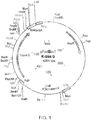
- RV VLPs the nucleic acid sequence encoding the RV G protein (SEQ ID NO: 2) was expressed from the baculovirus vector (pFastBac1 Rabies G) shown in Figure 1 .
- Sf9 insect cells were infected at 2.5 x 10 6 cell/ml with a MOI of 0.2. Cells where harvested at 69 hrs post-infection by centrifuge at 4000g for 15 mins. Cells were washed with 1X PBS, spun again, and frozen at -70°C.
- a 23 gram cell pellet was used obtained from an approximately 2L cell culture.
- the cell pellet was resuspended with 200 ml 2.5 mM TrisCL pH 8.0, 50 mM NaCl, 0.5% NP9, 4 ug/mL leupeptin. It was stirred at room temperature for 1 hr, spun at 7000g for 60 mins at 4°C, and 200 ml supernatent was saved for chromatography.
- the soluble proteins were loaded onto a Fractoge1 EMD TMAE Hicap (M) chromatography column.
- the specifications of the column were as follows: Column manufacturer: GE Healthcare; Column type: XK50f20; Resin manufacturer: EMD Chemicals; Resin type: Fractoge1 EMD TMAE Hicap (M); Packed column dimensions: approximately 10 cm height x 5.0 cm diameter; Packed column volume: 200 ml; Packing flow rate: 30 ml/min; Packing buffer: 25 mM Tris pH 8.0/300 mM NaCl.
- the specifications of the anion exchange process were as follows: Running flow rate: 20 ml/min; Column equilibration buffer: 25 mM Tris pH 8.0, 50 mM NaCl, 0.02% NP9; Eluent A: 25 mM Tris pH 8.0, 50 mM NaCl, 0.02% NP9; Eluent B1: 25 mM Tris pH 8.0, 180 mM NaCl, 0.02% NP9; Eluent B2: 25 mM Tris pH 8.0, 500 mM NaCl, 0.02% NP9; Eluent B3: 25 mM Tris pH 8.0, 1500 mM NaCl, 0.02% NP9; Column load: 200 ml of Rabies G VLP extraction supernatant; Column wash after load: 2 CV eluent A; Column elution: 2 CV eluent BI, 2 CV eluent B2, 2 CV eluent B3.
- the major fraction collection and volumes were as follows: Flow-through fraction: 250 mL; B1 180 mM NaCl elution: 175ml (product); B2 500 mM NaCl elution: 100 ml; B3 1500 mM NaCl elution: 100 ml.
- the 180 mM NaCl elution fraction of the TMAE column was loaded onto a lentil lectin column.
- the specifications of the column were as follows: Column manufacturer: GE Healthcare; Column type: XKI6/20; Resin manufacturer: GE Healthcare; Resin type: Lentil Lectin Sepharose 4B; Resin catalog #: 17-0444-01; Packed column dimensions: 2.5 cm height x 1.6 cm diameter; Packed column volume: approximately 5 ml; Packing flow rate: 2.5 ml/min; Packing buffer: 25 mM NaHPO 4 pH6.8, 50 mM NaCI, 0.02% NP9; Running flow rate: 2 mL/min; Column equilibration buffer: 25 mM NaHPO 4 pH6.8, 50 mM NaCl, 0.02% NP9; Eluent A: 25 mM NaHPO 4 pH6.8, 50 mM NaCl, 0.02% NP9, Eluent B: 25 mM NaHPO 4 pH6.
- the lentil lectin elution was loaded onto a Fractoge1 EMD SO3 - Hicap (M) chromatography column.
- the specifications of the column were as follows: Column manufacturer: GE Healthcare; Column type: XK16/20; Resin manufacturer: EMD Chemicals; Resin type: Fractoge1 EMD SO3 - Hicap (M); Packed column dimensions: 5 cm height x 1.6 cm diameter; Packed column volume: 10 ml; Packing flow rate: 7.5 ml/min; Packing buffer: 25 mM NaHPO 4 pH 6.8, 50 mM NaCl, 0.02% NP9
- the specifications of the cation exchange process were as follows: Running flow rate: 5 mL/min; Column equilibration buffer: 25 mM NaHPO 4 pH 6.8, 50 mM NaCl, 0.02% NP9; Eluent A: 25 mM NaHPO 4 pH 6.8, 50 mM NaCl, 0.02% NP9; Eluent B: 25 mM NaHPO 4 pH 6.8, 300 mM NaCl, 0.02% NP9; Column load: 30 mL of Rabies G839 lectin lectin elution; Column wash after load: 3 CV with eluent A; Column elution: 4 CV step elution eluent B; Major fraction collection and volumes: Elution fraction: 9 ml (final product); Filter 9 ml SO3 - column 300 mM NaCl elution product with 0.2 ⁇ m filter: Filter manufacture (0.2 ⁇ m): Corning; Filter type: 28 mm syringe filter
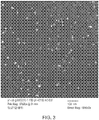
- RV G protein was analyzed by negative stain electron microscopy (see Figure 3 ).
- the average molecular weight of the RV G particles with 0.02% NP9 was 1.04 x 10 -6 .
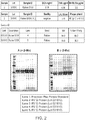
- the protein trimers exhibited a molecular weight of 175.5 kDa and the average number of trimers in a particle was 5.9.
- the RV G proteins aggregated in the form of micelles (rosettes). The fact that the G spikes exhibit micelle morphology under electron microscopy suggests that the G protein particles have the correct 3-dimensional structure of a native protein.
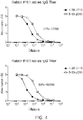
- RV G particles were administered RV G particles at varying concentrations. The results of these experiments are illustrated in Figure 4 . RV G particles were able to induce high levels of antibodies in rabbits.
- RV VLPs comprising one or more G proteins
- neutralization assays are conducted in mice. Briefly, groups of mice are injected intramuscularly with RV VLPs or RV VLPs + an adjuvant, such as aluminum.
- mice are injected with Rabipur®, a commercially available inactivated rabies virus vaccine, which is used as a comparative vaccine agent.
- RV VLPs comprising one or more G proteins i.e . RV G micelles
- RV G micelles are generally expected to induce higher titers of neutralizing antibodies when compared with Rabipur®.
- VLPs of the present invention were compared to the commercial rabies vaccine Rabipur® in a Balb/c mouse model.
- RV G VLP particles were constructed and purified as described in Example 1.
- the VLPs aggregated in the form of micelles ( Figure 3 ).
- Group I positive control (commercial rabies vaccine Rabipur®)
- Group II RV G VLP (5 ⁇ g)
- Group III RV G VLP (2 ⁇ g)
- Group IV RV G VLP (1 ⁇ g)
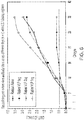
- mice were administered the respective immunogen at 0.1 mL at days 0, 3 and 7. Serum samples were taken from the mice at days 0, 4, 7, 10, 14, 21, 28, 35. Serum was tested for neutralizing anti-rabies antibodies by ELISA.
- the VLP micelles of the present invention provide more rapid and higher antibody titers than the commercially available vaccine, Rabipur®.
- the RV G VLP provided a sero-protection titer (0.5 EU/mL) days earlier than the Rabipur® vaccine ( Figure 6 , Table 2).
- Table 2 also shows the percent sero-protection (i.e., a neutralizing antibody titer of ⁇ 0.5 EU/mL) for each immunization group.
- the table indicates that sero-protection occurs more rapidly in animals treated with the RV G VLP of the present invention (at all three dosages), compared to animals administered Rabipur® vaccine.
Landscapes
- Health & Medical Sciences (AREA)
- Life Sciences & Earth Sciences (AREA)
- Chemical & Material Sciences (AREA)
- Virology (AREA)
- Medicinal Chemistry (AREA)
- General Health & Medical Sciences (AREA)
- Animal Behavior & Ethology (AREA)
- Veterinary Medicine (AREA)
- Public Health (AREA)
- Pharmacology & Pharmacy (AREA)
- Immunology (AREA)
- Organic Chemistry (AREA)
- Epidemiology (AREA)
- Microbiology (AREA)
- Mycology (AREA)
- General Chemical & Material Sciences (AREA)
- Chemical Kinetics & Catalysis (AREA)
- Nuclear Medicine, Radiotherapy & Molecular Imaging (AREA)
- Molecular Biology (AREA)
- Oncology (AREA)
- Communicable Diseases (AREA)
- Tropical Medicine & Parasitology (AREA)
- Proteomics, Peptides & Aminoacids (AREA)
- Gastroenterology & Hepatology (AREA)
- Biochemistry (AREA)
- Biophysics (AREA)
- Genetics & Genomics (AREA)
- Pulmonology (AREA)
- Engineering & Computer Science (AREA)
- Bioinformatics & Cheminformatics (AREA)
- Dispersion Chemistry (AREA)
- Medicines Containing Antibodies Or Antigens For Use As Internal Diagnostic Agents (AREA)
- Micro-Organisms Or Cultivation Processes Thereof (AREA)
- Peptides Or Proteins (AREA)
- Preparation Of Compounds By Using Micro-Organisms (AREA)
Priority Applications (6)
| Application Number | Priority Date | Filing Date | Title |
|---|---|---|---|
| SM20170392T SMT201700392T1 (it) | 2010-11-05 | 2011-11-07 | Particelle simil-virali (vlp) di glicoproteina della rabbia |
| RS20170786A RS56157B1 (sr) | 2010-11-05 | 2011-11-07 | Glikoproteinske čestice nalik virusu (vlp) besnila |
| PL11838942T PL2635257T3 (pl) | 2010-11-05 | 2011-11-07 | Cząstki wirusopodobne (vlp) glikoproteiny wirusa wścieklizny |
| EP17179212.0A EP3246019B1 (en) | 2010-11-05 | 2011-11-07 | Rabies glycoprotein virus-like particles (vlps) |
| HRP20171213TT HRP20171213T1 (hr) | 2010-11-05 | 2011-11-07 | Glikoproteinske čestice nalik virusu (vlp) bjesnoće |
| SI201131258T SI2635257T1 (en) | 2010-11-05 | 2011-11-07 | RABIES GLYCOPROTEIN VIRUS-LIKE PARTICLES (VLPs) |
Applications Claiming Priority (2)
| Application Number | Priority Date | Filing Date | Title |
|---|---|---|---|
| US41076710P | 2010-11-05 | 2010-11-05 | |
| PCT/US2011/059602 WO2012061815A2 (en) | 2010-11-05 | 2011-11-07 | RABIES GLYCOPROTEIN VIRUS-LIKE PARTICLES (VLPs) |
Related Child Applications (1)
| Application Number | Title | Priority Date | Filing Date |
|---|---|---|---|
| EP17179212.0A Division EP3246019B1 (en) | 2010-11-05 | 2011-11-07 | Rabies glycoprotein virus-like particles (vlps) |
Publications (3)
| Publication Number | Publication Date |
|---|---|
| EP2635257A2 EP2635257A2 (en) | 2013-09-11 |
| EP2635257A4 EP2635257A4 (en) | 2014-04-02 |
| EP2635257B1 true EP2635257B1 (en) | 2017-07-05 |
Family
ID=46025156
Family Applications (2)
| Application Number | Title | Priority Date | Filing Date |
|---|---|---|---|
| EP11838942.8A Active EP2635257B1 (en) | 2010-11-05 | 2011-11-07 | RABIES GLYCOPROTEIN VIRUS-LIKE PARTICLES (VLPs) |
| EP17179212.0A Active EP3246019B1 (en) | 2010-11-05 | 2011-11-07 | Rabies glycoprotein virus-like particles (vlps) |
Family Applications After (1)
| Application Number | Title | Priority Date | Filing Date |
|---|---|---|---|
| EP17179212.0A Active EP3246019B1 (en) | 2010-11-05 | 2011-11-07 | Rabies glycoprotein virus-like particles (vlps) |
Country Status (22)
| Country | Link |
|---|---|
| US (3) | US9724405B2 (https=) |
| EP (2) | EP2635257B1 (https=) |
| JP (2) | JP6158088B2 (https=) |
| KR (1) | KR101847908B1 (https=) |
| CN (2) | CN109157658A (https=) |
| AU (1) | AU2011323090B2 (https=) |
| BR (1) | BR112013011194B1 (https=) |
| CA (1) | CA2817005C (https=) |
| CY (1) | CY1119284T1 (https=) |
| DK (1) | DK2635257T3 (https=) |
| ES (1) | ES2636965T3 (https=) |
| HR (1) | HRP20171213T1 (https=) |
| HU (1) | HUE034247T2 (https=) |
| LT (1) | LT2635257T (https=) |
| MX (1) | MX354750B (https=) |
| PL (1) | PL2635257T3 (https=) |
| PT (1) | PT2635257T (https=) |
| RS (1) | RS56157B1 (https=) |
| SG (1) | SG190140A1 (https=) |
| SI (1) | SI2635257T1 (https=) |
| SM (1) | SMT201700392T1 (https=) |
| WO (1) | WO2012061815A2 (https=) |
Families Citing this family (39)
| Publication number | Priority date | Publication date | Assignee | Title |
|---|---|---|---|---|
| WO2009076778A1 (en) | 2007-11-27 | 2009-06-25 | Medicago Inc. | Recombinant influenza virus-like particles (vlps) produced in transgenic plants expressing hemagglutinin |
| CA2615372A1 (en) | 2007-07-13 | 2009-01-13 | Marc-Andre D'aoust | Influenza virus-like particles (vlps) comprising hemagglutinin |
| PL2370099T3 (pl) | 2008-12-09 | 2016-10-31 | Zmodyfikowane białka F RSV i sposoby ich zastosowania | |
| US11446374B2 (en) | 2008-12-09 | 2022-09-20 | Novavax, Inc. | Modified RSV F proteins and methods of their use |
| KR101773431B1 (ko) | 2009-09-22 | 2017-09-12 | 메디카고 인코포레이티드 | 식물-유래 vlp의 제조방법 |
| KR101847908B1 (ko) * | 2010-11-05 | 2018-04-11 | 노바백스, 인코포레이티드 | 광견병 당단백질 바이러스-유사 입자(VLPs) |
| TWI620816B (zh) | 2011-03-23 | 2018-04-11 | 苜蓿股份有限公司 | 植物衍生蛋白回收方法 |
| KR101963792B1 (ko) * | 2011-06-13 | 2019-07-31 | 메디카고 인코포레이티드 | 식물에서 광견병 바이러스 유사 입자 생성 |
| KR101479668B1 (ko) | 2012-07-31 | 2015-01-12 | 대한민국 | 광견병 바이러스 유전자를 발현하는 재조합 아데노바이러스 및 이를 포함하는 광견병의 예방 또는 치료용 백신 조성물 |
| CN103777021B (zh) * | 2012-10-18 | 2016-03-02 | 辽宁成大生物股份有限公司 | 狂犬疫苗糖蛋白含量的检测方法 |
| US9228207B2 (en) | 2013-09-06 | 2016-01-05 | President And Fellows Of Harvard College | Switchable gRNAs comprising aptamers |
| US9322037B2 (en) | 2013-09-06 | 2016-04-26 | President And Fellows Of Harvard College | Cas9-FokI fusion proteins and uses thereof |
| US10077453B2 (en) | 2014-07-30 | 2018-09-18 | President And Fellows Of Harvard College | CAS9 proteins including ligand-dependent inteins |
| CA2996007A1 (en) * | 2015-09-03 | 2017-03-09 | Novavax, Inc. | Vaccine compositions having improved stability and immunogenicity |
| CN106905434B (zh) * | 2017-02-28 | 2021-01-26 | 国药中生生物技术研究院有限公司 | 一种包含蹄蝠肝炎病毒核心蛋白的重组融合蛋白及其制备方法和应用 |
| EP3420076B1 (en) * | 2017-03-06 | 2024-02-21 | Guangzhou Realbenefitspot Pharmaceutical Co., Ltd. | Methods of producing and characterizing virus vaccine and virus vaccine composition |
| WO2018161858A1 (en) | 2017-03-06 | 2018-09-13 | Guangzhou Realbenefitspot Pharmaceutical Co., Ltd. | Methods of producing and characterizing virus vaccine and virus vaccine composition |
| US12390514B2 (en) | 2017-03-09 | 2025-08-19 | President And Fellows Of Harvard College | Cancer vaccine |
| EP3592853A1 (en) | 2017-03-09 | 2020-01-15 | President and Fellows of Harvard College | Suppression of pain by gene editing |
| US11542496B2 (en) | 2017-03-10 | 2023-01-03 | President And Fellows Of Harvard College | Cytosine to guanine base editor |
| JP7317796B2 (ja) | 2017-07-24 | 2023-07-31 | ノババックス,インコーポレイテッド | 呼吸器疾患を治療するための方法および組成物 |
| CN111801345A (zh) | 2017-07-28 | 2020-10-20 | 哈佛大学的校长及成员们 | 使用噬菌体辅助连续进化(pace)的进化碱基编辑器的方法和组合物 |
| US11992526B2 (en) | 2017-11-06 | 2024-05-28 | Intervet Inc. | Rabies virus vaccine |
| US12406749B2 (en) | 2017-12-15 | 2025-09-02 | The Broad Institute, Inc. | Systems and methods for predicting repair outcomes in genetic engineering |
| CN120227451A (zh) | 2018-03-19 | 2025-07-01 | 诺瓦瓦克斯股份有限公司 | 多价流感纳米颗粒疫苗 |
| US12522807B2 (en) | 2018-07-09 | 2026-01-13 | The Broad Institute, Inc. | RNA programmable epigenetic RNA modifiers and uses thereof |
| WO2020092453A1 (en) | 2018-10-29 | 2020-05-07 | The Broad Institute, Inc. | Nucleobase editors comprising geocas9 and uses thereof |
| KR102077772B1 (ko) | 2018-11-29 | 2020-02-17 | 주식회사 바이오앱 | 광견병 예방용 백신 조성물 및 이의 제조 방법 |
| KR102211077B1 (ko) * | 2019-01-16 | 2021-02-02 | 충남대학교 산학협력단 | 바이러스 유사 입자를 이용한 슈도-타입 광견병 백신 |
| US12351837B2 (en) | 2019-01-23 | 2025-07-08 | The Broad Institute, Inc. | Supernegatively charged proteins and uses thereof |
| WO2020191233A1 (en) | 2019-03-19 | 2020-09-24 | The Broad Institute, Inc. | Methods and compositions for editing nucleotide sequences |
| CN109959789B (zh) * | 2019-04-12 | 2022-08-16 | 长春西诺生物科技有限公司 | 一种狂犬病毒抗体检测试纸及其制备方法与检测方法 |
| CN110007080B (zh) * | 2019-04-12 | 2022-09-23 | 长春西诺生物科技有限公司 | 一种狂犬病毒抗体定量检测试剂盒及其制备方法与检测方法 |
| US12473543B2 (en) | 2019-04-17 | 2025-11-18 | The Broad Institute, Inc. | Adenine base editors with reduced off-target effects |
| US12435330B2 (en) | 2019-10-10 | 2025-10-07 | The Broad Institute, Inc. | Methods and compositions for prime editing RNA |
| US20240425550A1 (en) * | 2021-10-15 | 2024-12-26 | La Jolla Institute For Immunology | Engineered rabies virus glycoprotein, compositions, and methods of use thereof |
| CN114272367B (zh) * | 2021-12-03 | 2023-07-07 | 华东理工大学 | 一种口服狂犬病病毒样颗粒疫苗及其制备方法 |
| KR102566969B1 (ko) | 2021-12-14 | 2023-08-16 | 안희철 | 근거리 통신 과정에서 충전 가능한 모바일 단말 |
| CN117867029B (zh) * | 2023-12-29 | 2024-12-20 | 复百澳(苏州)生物医药科技有限公司 | 一种狂犬亚型假病毒的制备方法及应用 |
Family Cites Families (25)
| Publication number | Priority date | Publication date | Assignee | Title |
|---|---|---|---|---|
| EP0237686A1 (en) * | 1986-03-18 | 1987-09-23 | Institut Pasteur | DNA sequences derived from the rabies virus genome |
| US4877611A (en) | 1986-04-15 | 1989-10-31 | Ribi Immunochem Research Inc. | Vaccine containing tumor antigens and adjuvants |
| US4911928A (en) | 1987-03-13 | 1990-03-27 | Micro-Pak, Inc. | Paucilamellar lipid vesicles |
| US5667782A (en) | 1992-07-16 | 1997-09-16 | Oxford University | Multiple particulate antigen delivery system |
| US6387373B1 (en) | 1993-01-15 | 2002-05-14 | Novavax, Inc. | Vaccines containing paucilsmellar lipid vesicles as immunological adjuvants |
| US5629021A (en) | 1995-01-31 | 1997-05-13 | Novavax, Inc. | Micellar nanoparticles |
| US6589533B1 (en) * | 1997-09-18 | 2003-07-08 | Research Development Foundation | Genetically-engineered alphaviruses, flaviviruses, and bunyaviruses with modified envelope transmembrane glycoproteins and altered host-range phenotype |
| US6673601B1 (en) * | 1999-04-15 | 2004-01-06 | Institut Pasteur | Chimeric lyssavirus nucleic acids and polypeptides |
| AUPR011700A0 (en) | 2000-09-14 | 2000-10-05 | Austin Research Institute, The | Composition comprising immunogenic virus sized particles (VSP) |
| AU2002362039B2 (en) * | 2001-12-03 | 2007-07-26 | Soligenix, Inc | Stabilized reverse micelle compositions and uses thereof |
| US7211378B2 (en) | 2002-01-31 | 2007-05-01 | Wisconsin Alumni Research Foundation | Filovirus vectors and noninfectious filovirus-based particles |
| US20040121465A1 (en) | 2002-02-14 | 2004-06-24 | Novavax, Inc. | Optimization of gene sequences of virus-like particles for expression in insect cells |
| US8592197B2 (en) * | 2003-07-11 | 2013-11-26 | Novavax, Inc. | Functional influenza virus-like particles (VLPs) |
| US9216212B2 (en) | 2005-08-05 | 2015-12-22 | University Of Massachusetts | Virus-like particles as vaccines for paramyxovirus |
| KR20080094910A (ko) | 2006-01-17 | 2008-10-27 | 디나벡크 가부시키가이샤 | 신규 단백질 발현계 |
| WO2007144886A2 (en) | 2006-06-15 | 2007-12-21 | Ben-Gurion University Of The Negev Research And Development Authority | Virus-like particles for treatment of viral infections |
| US20100143406A1 (en) | 2006-06-30 | 2010-06-10 | Gale Smith | Methods of enhancing protein incorporation into virus like particles |
| US8980281B2 (en) * | 2006-09-05 | 2015-03-17 | Academia Sinica | High-yield transgenic mammalian expression system for generating virus-like particles |
| TW200907058A (en) | 2007-05-30 | 2009-02-16 | Wyeth Corp | Raccoon poxvirus expressing rabies glycoproteins |
| EP2175882A4 (en) * | 2007-07-19 | 2011-11-30 | Novavax Inc | VARICELLA ZOSTER VIRUS VIRUS LIKE PARTICLES (VLP) AND ANTIGENE |
| KR100961280B1 (ko) * | 2008-05-21 | 2010-06-03 | 한국생명공학연구원 | 형광특성이 향상된 풀러렌-실리카 나노입자, 이의 제조방법및 이의 용도 |
| WO2009153801A1 (en) | 2008-06-17 | 2009-12-23 | Manpreet Kaur | Dna vaccine based on glycoprotein gene of rabies virus conjugated to lamp-1 signal sequence at the c-terminus and an adjuvant; and method of its preparation thereof |
| US9296790B2 (en) | 2008-10-03 | 2016-03-29 | The United States Of America, As Represented By The Secretary, Department Of Health And Human Services | Methods and compositions for protein delivery |
| PL2370099T3 (pl) | 2008-12-09 | 2016-10-31 | Zmodyfikowane białka F RSV i sposoby ich zastosowania | |
| KR101847908B1 (ko) | 2010-11-05 | 2018-04-11 | 노바백스, 인코포레이티드 | 광견병 당단백질 바이러스-유사 입자(VLPs) |
-
2011
- 2011-11-07 KR KR1020137014262A patent/KR101847908B1/ko active Active
- 2011-11-07 CA CA2817005A patent/CA2817005C/en active Active
- 2011-11-07 BR BR112013011194-1A patent/BR112013011194B1/pt active IP Right Grant
- 2011-11-07 JP JP2013537909A patent/JP6158088B2/ja active Active
- 2011-11-07 HU HUE11838942A patent/HUE034247T2/en unknown
- 2011-11-07 SI SI201131258T patent/SI2635257T1/en unknown
- 2011-11-07 LT LTEP11838942.8T patent/LT2635257T/lt unknown
- 2011-11-07 RS RS20170786A patent/RS56157B1/sr unknown
- 2011-11-07 US US13/883,745 patent/US9724405B2/en active Active
- 2011-11-07 PT PT118389428T patent/PT2635257T/pt unknown
- 2011-11-07 CN CN201810963479.7A patent/CN109157658A/zh active Pending
- 2011-11-07 EP EP11838942.8A patent/EP2635257B1/en active Active
- 2011-11-07 AU AU2011323090A patent/AU2011323090B2/en active Active
- 2011-11-07 CN CN201180064287.9A patent/CN103282023B/zh active Active
- 2011-11-07 EP EP17179212.0A patent/EP3246019B1/en active Active
- 2011-11-07 SM SM20170392T patent/SMT201700392T1/it unknown
- 2011-11-07 DK DK11838942.8T patent/DK2635257T3/en active
- 2011-11-07 HR HRP20171213TT patent/HRP20171213T1/hr unknown
- 2011-11-07 MX MX2013005090A patent/MX354750B/es active IP Right Grant
- 2011-11-07 ES ES11838942.8T patent/ES2636965T3/es active Active
- 2011-11-07 SG SG2013034178A patent/SG190140A1/en unknown
- 2011-11-07 WO PCT/US2011/059602 patent/WO2012061815A2/en not_active Ceased
- 2011-11-07 PL PL11838942T patent/PL2635257T3/pl unknown
-
2016
- 2016-09-27 JP JP2016188777A patent/JP6195965B2/ja active Active
-
2017
- 2017-06-30 US US15/638,955 patent/US10086065B2/en active Active
- 2017-08-11 CY CY20171100873T patent/CY1119284T1/el unknown
-
2018
- 2018-08-30 US US16/116,990 patent/US20190224307A1/en not_active Abandoned
Also Published As
Similar Documents
| Publication | Publication Date | Title |
|---|---|---|
| US10086065B2 (en) | Rabies glycoprotein virus-like particles (VLPS) | |
| US20230293667A1 (en) | Modified rsv f proteins and methods of their use | |
| US20140227309A1 (en) | Combination vaccine for respiratory syncytial virus and influenza | |
| US20100143393A1 (en) | Novel influenza m2 vaccines | |
| US20100247574A1 (en) | CHIMERIC NEWCASTLE DISEASE VIRUS VLPs | |
| US20160000902A1 (en) | Combination vaccine for respiratory syncytial virus and influenza | |
| RU2575800C2 (ru) | Вирусоподобные частицы (vlp) из гликопротеина вируса бешенства | |
| HK1188728B (en) | Rabies glycoprotein virus-like particles (vlps) | |
| HK1188728A (en) | Rabies glycoprotein virus-like particles (vlps) |
Legal Events
| Date | Code | Title | Description |
|---|---|---|---|
| PUAI | Public reference made under article 153(3) epc to a published international application that has entered the european phase |
Free format text: ORIGINAL CODE: 0009012 |
|
| 17P | Request for examination filed |
Effective date: 20130521 |
|
| AK | Designated contracting states |
Kind code of ref document: A2 Designated state(s): AL AT BE BG CH CY CZ DE DK EE ES FI FR GB GR HR HU IE IS IT LI LT LU LV MC MK MT NL NO PL PT RO RS SE SI SK SM TR |
|
| DAX | Request for extension of the european patent (deleted) | ||
| A4 | Supplementary search report drawn up and despatched |
Effective date: 20140303 |
|
| RIC1 | Information provided on ipc code assigned before grant |
Ipc: A61K 9/127 20060101AFI20140225BHEP Ipc: A61K 39/12 20060101ALI20140225BHEP Ipc: A61K 39/205 20060101ALI20140225BHEP |
|
| REG | Reference to a national code |
Ref country code: HK Ref legal event code: DE Ref document number: 1188728 Country of ref document: HK |
|
| 17Q | First examination report despatched |
Effective date: 20150319 |
|
| RIC1 | Information provided on ipc code assigned before grant |
Ipc: A61K 39/12 20060101ALI20161116BHEP Ipc: A61K 9/127 20060101AFI20161116BHEP Ipc: C07K 14/005 20060101ALI20161116BHEP Ipc: A61K 39/205 20060101ALI20161116BHEP Ipc: A61K 39/00 20060101ALI20161116BHEP |
|
| GRAJ | Information related to disapproval of communication of intention to grant by the applicant or resumption of examination proceedings by the epo deleted |
Free format text: ORIGINAL CODE: EPIDOSDIGR1 |
|
| STAA | Information on the status of an ep patent application or granted ep patent |
Free format text: STATUS: GRANT OF PATENT IS INTENDED |
|
| GRAP | Despatch of communication of intention to grant a patent |
Free format text: ORIGINAL CODE: EPIDOSNIGR1 |
|
| INTG | Intention to grant announced |
Effective date: 20170127 |
|
| GRAS | Grant fee paid |
Free format text: ORIGINAL CODE: EPIDOSNIGR3 |
|
| GRAA | (expected) grant |
Free format text: ORIGINAL CODE: 0009210 |
|
| STAA | Information on the status of an ep patent application or granted ep patent |
Free format text: STATUS: THE PATENT HAS BEEN GRANTED |
|
| AK | Designated contracting states |
Kind code of ref document: B1 Designated state(s): AL AT BE BG CH CY CZ DE DK EE ES FI FR GB GR HR HU IE IS IT LI LT LU LV MC MK MT NL NO PL PT RO RS SE SI SK SM TR |
|
| REG | Reference to a national code |
Ref country code: GB Ref legal event code: FG4D |
|
| REG | Reference to a national code |
Ref country code: CH Ref legal event code: EP |
|
| REG | Reference to a national code |
Ref country code: AT Ref legal event code: REF Ref document number: 906092 Country of ref document: AT Kind code of ref document: T Effective date: 20170715 |
|
| REG | Reference to a national code |
Ref country code: IE Ref legal event code: FG4D |
|
| REG | Reference to a national code |
Ref country code: HR Ref legal event code: TUEP Ref document number: P20171213 Country of ref document: HR |
|
| REG | Reference to a national code |
Ref country code: RO Ref legal event code: EPE |
|
| REG | Reference to a national code |
Ref country code: PT Ref legal event code: SC4A Ref document number: 2635257 Country of ref document: PT Date of ref document: 20170816 Kind code of ref document: T Free format text: AVAILABILITY OF NATIONAL TRANSLATION Effective date: 20170808 |
|
| REG | Reference to a national code |
Ref country code: DE Ref legal event code: R096 Ref document number: 602011039376 Country of ref document: DE |
|
| REG | Reference to a national code |
Ref country code: NL Ref legal event code: FP |
|
| REG | Reference to a national code |
Ref country code: SE Ref legal event code: TRGR |
|
| REG | Reference to a national code |
Ref country code: CH Ref legal event code: NV Representative=s name: MICHELI AND CIE SA, CH |
|
| REG | Reference to a national code |
Ref country code: DK Ref legal event code: T3 Effective date: 20170828 |
|
| REG | Reference to a national code |
Ref country code: ES Ref legal event code: FG2A Ref document number: 2636965 Country of ref document: ES Kind code of ref document: T3 Effective date: 20171010 |
|
| REG | Reference to a national code |
Ref country code: EE Ref legal event code: FG4A Ref document number: E014092 Country of ref document: EE Effective date: 20170810 |
|
| REG | Reference to a national code |
Ref country code: HR Ref legal event code: T1PR Ref document number: P20171213 Country of ref document: HR |
|
| REG | Reference to a national code |
Ref country code: NO Ref legal event code: T2 Effective date: 20170705 |
|
| REG | Reference to a national code |
Ref country code: FR Ref legal event code: PLFP Year of fee payment: 7 |
|
| REG | Reference to a national code |
Ref country code: SK Ref legal event code: T3 Ref document number: E 24974 Country of ref document: SK |
|
| REG | Reference to a national code |
Ref country code: HU Ref legal event code: AG4A Ref document number: E034247 Country of ref document: HU |
|
| REG | Reference to a national code |
Ref country code: DE Ref legal event code: R097 Ref document number: 602011039376 Country of ref document: DE |
|
| REG | Reference to a national code |
Ref country code: HK Ref legal event code: GR Ref document number: 1188728 Country of ref document: HK |
|
| PLBE | No opposition filed within time limit |
Free format text: ORIGINAL CODE: 0009261 |
|
| STAA | Information on the status of an ep patent application or granted ep patent |
Free format text: STATUS: NO OPPOSITION FILED WITHIN TIME LIMIT |
|
| 26N | No opposition filed |
Effective date: 20180406 |
|
| REG | Reference to a national code |
Ref country code: HR Ref legal event code: ODRP Ref document number: P20171213 Country of ref document: HR Payment date: 20191021 Year of fee payment: 9 |
|
| REG | Reference to a national code |
Ref country code: AT Ref legal event code: UEP Ref document number: 906092 Country of ref document: AT Kind code of ref document: T Effective date: 20170705 |
|
| REG | Reference to a national code |
Ref country code: HR Ref legal event code: ODRP Ref document number: P20171213 Country of ref document: HR Payment date: 20201021 Year of fee payment: 10 |
|
| REG | Reference to a national code |
Ref country code: HR Ref legal event code: ODRP Ref document number: P20171213 Country of ref document: HR Payment date: 20211019 Year of fee payment: 11 |
|
| REG | Reference to a national code |
Ref country code: HR Ref legal event code: ODRP Ref document number: P20171213 Country of ref document: HR Payment date: 20221018 Year of fee payment: 12 |
|
| P01 | Opt-out of the competence of the unified patent court (upc) registered |
Effective date: 20230427 |
|
| REG | Reference to a national code |
Ref country code: HR Ref legal event code: ODRP Ref document number: P20171213 Country of ref document: HR Payment date: 20231019 Year of fee payment: 13 |
|
| REG | Reference to a national code |
Ref country code: HR Ref legal event code: ODRP Ref document number: P20171213 Country of ref document: HR Payment date: 20241022 Year of fee payment: 14 |
|
| REG | Reference to a national code |
Ref country code: HR Ref legal event code: ODRP Ref document number: P20171213 Country of ref document: HR Payment date: 20251021 Year of fee payment: 15 |
|
| REG | Reference to a national code |
Ref country code: CH Ref legal event code: U11 Free format text: ST27 STATUS EVENT CODE: U-0-0-U10-U11 (AS PROVIDED BY THE NATIONAL OFFICE) Effective date: 20251201 |
|
| PGFP | Annual fee paid to national office [announced via postgrant information from national office to epo] |
Ref country code: PT Payment date: 20251024 Year of fee payment: 15 |
|
| PGFP | Annual fee paid to national office [announced via postgrant information from national office to epo] |
Ref country code: HU Payment date: 20251029 Year of fee payment: 15 |
|
| PGFP | Annual fee paid to national office [announced via postgrant information from national office to epo] |
Ref country code: LU Payment date: 20251126 Year of fee payment: 15 Ref country code: NL Payment date: 20251126 Year of fee payment: 15 |
|
| PGFP | Annual fee paid to national office [announced via postgrant information from national office to epo] |
Ref country code: IS Payment date: 20251107 Year of fee payment: 15 Ref country code: DE Payment date: 20251128 Year of fee payment: 15 |
|
| PGFP | Annual fee paid to national office [announced via postgrant information from national office to epo] |
Ref country code: GB Payment date: 20251127 Year of fee payment: 15 Ref country code: LT Payment date: 20251020 Year of fee payment: 15 |
|
| PGFP | Annual fee paid to national office [announced via postgrant information from national office to epo] |
Ref country code: NO Payment date: 20251128 Year of fee payment: 15 Ref country code: MC Payment date: 20251023 Year of fee payment: 15 |
|
| PGFP | Annual fee paid to national office [announced via postgrant information from national office to epo] |
Ref country code: SM Payment date: 20251027 Year of fee payment: 15 Ref country code: MK Payment date: 20251021 Year of fee payment: 15 Ref country code: AT Payment date: 20251128 Year of fee payment: 15 |
|
| PGFP | Annual fee paid to national office [announced via postgrant information from national office to epo] |
Ref country code: IT Payment date: 20251119 Year of fee payment: 15 Ref country code: FI Payment date: 20251125 Year of fee payment: 15 Ref country code: DK Payment date: 20251125 Year of fee payment: 15 |
|
| PGFP | Annual fee paid to national office [announced via postgrant information from national office to epo] |
Ref country code: HR Payment date: 20251021 Year of fee payment: 15 Ref country code: FR Payment date: 20251125 Year of fee payment: 15 |
|
| PGFP | Annual fee paid to national office [announced via postgrant information from national office to epo] |
Ref country code: AL Payment date: 20251106 Year of fee payment: 15 Ref country code: TR Payment date: 20251023 Year of fee payment: 15 Ref country code: GR Payment date: 20251126 Year of fee payment: 15 Ref country code: BE Payment date: 20251127 Year of fee payment: 15 |
|
| PGFP | Annual fee paid to national office [announced via postgrant information from national office to epo] |
Ref country code: CH Payment date: 20251201 Year of fee payment: 15 Ref country code: SE Payment date: 20251127 Year of fee payment: 15 |
|
| PGFP | Annual fee paid to national office [announced via postgrant information from national office to epo] |
Ref country code: CY Payment date: 20251029 Year of fee payment: 15 Ref country code: CZ Payment date: 20251023 Year of fee payment: 15 Ref country code: IE Payment date: 20251127 Year of fee payment: 15 |
|
| PGFP | Annual fee paid to national office [announced via postgrant information from national office to epo] |
Ref country code: MT Payment date: 20251020 Year of fee payment: 15 Ref country code: LV Payment date: 20251021 Year of fee payment: 15 |
|
| PGFP | Annual fee paid to national office [announced via postgrant information from national office to epo] |
Ref country code: BG Payment date: 20251113 Year of fee payment: 15 Ref country code: PL Payment date: 20251021 Year of fee payment: 15 |
|
| PGFP | Annual fee paid to national office [announced via postgrant information from national office to epo] |
Ref country code: EE Payment date: 20251024 Year of fee payment: 15 |
|
| PGFP | Annual fee paid to national office [announced via postgrant information from national office to epo] |
Ref country code: SK Payment date: 20251020 Year of fee payment: 15 Ref country code: RO Payment date: 20251028 Year of fee payment: 15 |
|
| PGFP | Annual fee paid to national office [announced via postgrant information from national office to epo] |
Ref country code: RS Payment date: 20251020 Year of fee payment: 15 |
|
| PGFP | Annual fee paid to national office [announced via postgrant information from national office to epo] |
Ref country code: SI Payment date: 20251017 Year of fee payment: 15 Ref country code: ES Payment date: 20251201 Year of fee payment: 15 |