EP2634845B1 - Beschichtung und Lithiierung von anorganischen Oxidantien durch Reaktion mit lithiierten Reduktionsmitteln - Google Patents
Beschichtung und Lithiierung von anorganischen Oxidantien durch Reaktion mit lithiierten Reduktionsmitteln Download PDFInfo
- Publication number
- EP2634845B1 EP2634845B1 EP12157429.7A EP12157429A EP2634845B1 EP 2634845 B1 EP2634845 B1 EP 2634845B1 EP 12157429 A EP12157429 A EP 12157429A EP 2634845 B1 EP2634845 B1 EP 2634845B1
- Authority
- EP
- European Patent Office
- Prior art keywords
- coating
- reductant
- transition metal
- metallated
- reaction
- Prior art date
- Legal status (The legal status is an assumption and is not a legal conclusion. Google has not performed a legal analysis and makes no representation as to the accuracy of the status listed.)
- Active
Links
Images



Classifications
-
- H—ELECTRICITY
- H01—ELECTRIC ELEMENTS
- H01M—PROCESSES OR MEANS, e.g. BATTERIES, FOR THE DIRECT CONVERSION OF CHEMICAL ENERGY INTO ELECTRICAL ENERGY
- H01M4/00—Electrodes
- H01M4/02—Electrodes composed of, or comprising, active material
- H01M4/36—Selection of substances as active materials, active masses, active liquids
- H01M4/48—Selection of substances as active materials, active masses, active liquids of inorganic oxides or hydroxides
- H01M4/485—Selection of substances as active materials, active masses, active liquids of inorganic oxides or hydroxides of mixed oxides or hydroxides for inserting or intercalating light metals, e.g. LiTi2O4 or LiTi2OxFy
-
- C—CHEMISTRY; METALLURGY
- C01—INORGANIC CHEMISTRY
- C01G—COMPOUNDS CONTAINING METALS NOT COVERED BY SUBCLASSES C01D OR C01F
- C01G31/00—Compounds of vanadium
-
- C—CHEMISTRY; METALLURGY
- C01—INORGANIC CHEMISTRY
- C01G—COMPOUNDS CONTAINING METALS NOT COVERED BY SUBCLASSES C01D OR C01F
- C01G45/00—Compounds of manganese
- C01G45/20—Compounds containing manganese, with or without oxygen or hydrogen, and containing one or more other elements
- C01G45/22—Compounds containing manganese, with or without oxygen or hydrogen, and containing two or more other elements
-
- C—CHEMISTRY; METALLURGY
- C01—INORGANIC CHEMISTRY
- C01G—COMPOUNDS CONTAINING METALS NOT COVERED BY SUBCLASSES C01D OR C01F
- C01G49/00—Compounds of iron
- C01G49/009—Compounds containing iron, with or without oxygen or hydrogen, and containing two or more other elements
-
- H—ELECTRICITY
- H01—ELECTRIC ELEMENTS
- H01M—PROCESSES OR MEANS, e.g. BATTERIES, FOR THE DIRECT CONVERSION OF CHEMICAL ENERGY INTO ELECTRICAL ENERGY
- H01M10/00—Secondary cells; Manufacture thereof
- H01M10/05—Accumulators with non-aqueous electrolyte
- H01M10/052—Li-accumulators
-
- H—ELECTRICITY
- H01—ELECTRIC ELEMENTS
- H01M—PROCESSES OR MEANS, e.g. BATTERIES, FOR THE DIRECT CONVERSION OF CHEMICAL ENERGY INTO ELECTRICAL ENERGY
- H01M4/00—Electrodes
- H01M4/02—Electrodes composed of, or comprising, active material
- H01M4/36—Selection of substances as active materials, active masses, active liquids
- H01M4/48—Selection of substances as active materials, active masses, active liquids of inorganic oxides or hydroxides
- H01M4/50—Selection of substances as active materials, active masses, active liquids of inorganic oxides or hydroxides of manganese
- H01M4/505—Selection of substances as active materials, active masses, active liquids of inorganic oxides or hydroxides of manganese of mixed oxides or hydroxides containing manganese for inserting or intercalating light metals, e.g. LiMn2O4 or LiMn2OxFy
-
- H—ELECTRICITY
- H01—ELECTRIC ELEMENTS
- H01M—PROCESSES OR MEANS, e.g. BATTERIES, FOR THE DIRECT CONVERSION OF CHEMICAL ENERGY INTO ELECTRICAL ENERGY
- H01M4/00—Electrodes
- H01M4/02—Electrodes composed of, or comprising, active material
- H01M4/36—Selection of substances as active materials, active masses, active liquids
- H01M4/58—Selection of substances as active materials, active masses, active liquids of inorganic compounds other than oxides or hydroxides, e.g. sulfides, selenides, tellurides, halogenides or LiCoFy; of polyanionic structures, e.g. phosphates, silicates or borates
- H01M4/5825—Oxygenated metallic salts or polyanionic structures, e.g. borates, phosphates, silicates, olivines
-
- H—ELECTRICITY
- H01—ELECTRIC ELEMENTS
- H01M—PROCESSES OR MEANS, e.g. BATTERIES, FOR THE DIRECT CONVERSION OF CHEMICAL ENERGY INTO ELECTRICAL ENERGY
- H01M4/00—Electrodes
- H01M4/02—Electrodes composed of, or comprising, active material
- H01M4/62—Selection of inactive substances as ingredients for active masses, e.g. binders, fillers
- H01M4/624—Electric conductive fillers
-
- H—ELECTRICITY
- H01—ELECTRIC ELEMENTS
- H01M—PROCESSES OR MEANS, e.g. BATTERIES, FOR THE DIRECT CONVERSION OF CHEMICAL ENERGY INTO ELECTRICAL ENERGY
- H01M4/00—Electrodes
- H01M4/02—Electrodes composed of, or comprising, active material
- H01M4/62—Selection of inactive substances as ingredients for active masses, e.g. binders, fillers
- H01M4/624—Electric conductive fillers
- H01M4/625—Carbon or graphite
-
- C—CHEMISTRY; METALLURGY
- C01—INORGANIC CHEMISTRY
- C01P—INDEXING SCHEME RELATING TO STRUCTURAL AND PHYSICAL ASPECTS OF SOLID INORGANIC COMPOUNDS
- C01P2002/00—Crystal-structural characteristics
- C01P2002/70—Crystal-structural characteristics defined by measured X-ray, neutron or electron diffraction data
- C01P2002/72—Crystal-structural characteristics defined by measured X-ray, neutron or electron diffraction data by d-values or two theta-values, e.g. as X-ray diagram
-
- C—CHEMISTRY; METALLURGY
- C01—INORGANIC CHEMISTRY
- C01P—INDEXING SCHEME RELATING TO STRUCTURAL AND PHYSICAL ASPECTS OF SOLID INORGANIC COMPOUNDS
- C01P2002/00—Crystal-structural characteristics
- C01P2002/80—Crystal-structural characteristics defined by measured data other than those specified in group C01P2002/70
- C01P2002/82—Crystal-structural characteristics defined by measured data other than those specified in group C01P2002/70 by IR- or Raman-data
-
- C—CHEMISTRY; METALLURGY
- C01—INORGANIC CHEMISTRY
- C01P—INDEXING SCHEME RELATING TO STRUCTURAL AND PHYSICAL ASPECTS OF SOLID INORGANIC COMPOUNDS
- C01P2002/00—Crystal-structural characteristics
- C01P2002/80—Crystal-structural characteristics defined by measured data other than those specified in group C01P2002/70
- C01P2002/84—Crystal-structural characteristics defined by measured data other than those specified in group C01P2002/70 by UV- or VIS- data
-
- C—CHEMISTRY; METALLURGY
- C01—INORGANIC CHEMISTRY
- C01P—INDEXING SCHEME RELATING TO STRUCTURAL AND PHYSICAL ASPECTS OF SOLID INORGANIC COMPOUNDS
- C01P2004/00—Particle morphology
- C01P2004/01—Particle morphology depicted by an image
- C01P2004/04—Particle morphology depicted by an image obtained by TEM, STEM, STM or AFM
-
- C—CHEMISTRY; METALLURGY
- C01—INORGANIC CHEMISTRY
- C01P—INDEXING SCHEME RELATING TO STRUCTURAL AND PHYSICAL ASPECTS OF SOLID INORGANIC COMPOUNDS
- C01P2006/00—Physical properties of inorganic compounds
- C01P2006/40—Electric properties
-
- Y—GENERAL TAGGING OF NEW TECHNOLOGICAL DEVELOPMENTS; GENERAL TAGGING OF CROSS-SECTIONAL TECHNOLOGIES SPANNING OVER SEVERAL SECTIONS OF THE IPC; TECHNICAL SUBJECTS COVERED BY FORMER USPC CROSS-REFERENCE ART COLLECTIONS [XRACs] AND DIGESTS
- Y02—TECHNOLOGIES OR APPLICATIONS FOR MITIGATION OR ADAPTATION AGAINST CLIMATE CHANGE
- Y02E—REDUCTION OF GREENHOUSE GAS [GHG] EMISSIONS, RELATED TO ENERGY GENERATION, TRANSMISSION OR DISTRIBUTION
- Y02E60/00—Enabling technologies; Technologies with a potential or indirect contribution to GHG emissions mitigation
- Y02E60/10—Energy storage using batteries
Definitions
- the present invention concerns conductive microparticles suitable for being used in electrodes of lithium ion batteries as well as methods for the production of such miroparticles and electrodes.
- the electroactive materials of electrodes of lithium ion batteries comprise at least one transition metal providing exchangeable valence electrons, said material also allowing insertion and removal or intercalation and deintercalation, respectively, of alkaline metal ions in order to keep neutrality of the material in case of exchange of valence electrons.
- electroactive materials are not or not adequately conductive per se. Such materials are used in the form of microparticles (also termed microparticulate form) or nanoparticles (also termed nanoparticulate form) and in combination with a conductive matrix. Additional improvement is obtained if the particles are conductively coated.
- conductive coatings add to the structural integrity of the particels because of improved regularity of electric field distribution on the surface of the particles and therewith connected improved structural integrity.
- the carbon coating proved advantageous. This may be due to encapsulation of the disintegrated particles and - if breaking apart - in partially conductively coated fragments.
- Methods for providing microparticles with a conductive coating are known.
- the preferred coating is a coating with carbonaceous material.
- Carbon and carbonaceous materials are known as good electrical conductors and are already used to increase the electronic conductivity of electroactive materials.
- carbon coating of oxide materials is carried out using a pyrolysis process that forms a thin layer of carbonaceous material such as pyrolitic graphite on the surface of particles provided that the electroactive core material is sufficiently stable in reducing atmosphere (see US 6,962,666 ).
- the carbonaceous coating may be obtained through thermal decomposition or through dehydrogenation, e.g. by partial oxidation of organic materials such as hydrocarbons and their derivatives like polycyclic aromatic moieties, sugars, carbon hydride and polymers.
- a lithium salt of carboxylic acids is used for simultaneous lithiation and pyrolytic carbonatious coating formation.
- carbon coated particles prepared by a combination of flame spray an diffusion flame (see T.J. Patey et al., Flame co-synthesis of LiMn2O4 and carbon nanocomposites for high power batteries, J. Power Sources 189 (2009), 149-154 ).
- EP 2 098 483 teaches a one-step process for the preparation of crystalline lithium metal phosphate/carbon nanocomposites by mixing a metal source, an organophosphate, preferably phytic acid, as combined source of phosphate and carbon and a lithium source in aqueous solution to produce a mixture and then heating the mixture in an inert atmosphere at a temperature and for a time sufficient for form the desired lithium metal phosphate / carbon nanocomposite.
- carbon-coated crystalline metal oxide or metal phosphate particles prepared by reacting one or more solid, solvent-free chemical precursor materials comprising the elements making up the material in an enclosed autogenic pressure reactor in which the precursor materials are dissociated and reacted at elevated temperature, thereby creating self-generated pressure within the reactor ( US2011/0104553 ).
- this reaction does not allow (partial) lithiation during the coating step.
- the problem with the coatings of the state of the art is that the pyrolysis reaction is not well defined and that the chemical reactions are much limited with regard to the starting materials (common phosphate and carbon source or starting material decomposing into EAM and coating).
- the hydrocarbon or carboxylic acid deposits may release compounds in different stats of oxidation/reduction like hydrogen or water and carbon oxides or dioxides resulting in an inhomogeneous coating of not clearly defined composition and possibly in affected EAMs.
- the synthesis using a common phosphate and carbon source also involves a separate lithium source thereby involving several possible redox systems making the reaction poorly predictable and the method using decomposition has the drawback that no partial lithiation takes place prior to carbon coating.
- the method for producing conductively coated particles comprising an at least partially metallated electroactive core material is manifested by comprising the steps of premixing an oxidant electroactive material with a metallated reductant followed by chemically reacting the oxidant electroactive material with the metallated reductant, said reductant being a coating precursor, said metal being at least one alkaline and/or at least one alkaline earth metal, and said chemically reacting being performed under conditions allowing reduction and metallation of the electroactive material via insertion/intercalation of the alkalinemetal cation(s) and/or the alkaline earth metal cation(s) and coating of the metallated electroactive material with a coating formed from the metallated elctroactive material with a coating formed from the metallated reductant via a redox reaction.
- the conditions under which the redox reaction takes place comprise applying energy in form of heat, tribological
- insertion and intercalation or deinsertion and deintercalation are used interchangeably for both crystalline and amorphous materials.
- a metal comprising compound is termed metallated.
- Insertion or intercalation, respectively, of different alkaline and/or alkaline earth metals at the same time like Li and Na and/or K can lead to a more stable system.
- mixed metallated reductants like Li 2-x Na x C 2 (x ⁇ 1) and/or Li 2-x K x C 2 (x ⁇ 1) is also of interest.
- the metallated reductant comprises or consists of alkaline metal(s), wherein the alkaline metal(s) comprises at least 50 % lithium, preferably at least 95 % lithium, more preferred at least 99 % lithium.
- lithium is mentioned although besides of lithium sodium and potassium may also be present, or alkaline earth metals alone or in combination with alkaline metals.
- the method of the present invention is a one step method that allows simultaneous lithiation and coating of inorganic oxidants.
- the coating is not limited to carbon although carbon is preferred but may e.g. also be a boron nitride or a carbon nitride coating.
- the conditions allowing reduction and lithiation comprise applying energy in the form of
- the chemical reaction can be induced either via thermal treatment of via tribological treatment, e.g. by ball milling. Both methods lead to conductively coated particles comprising an at least partially lithiated electroactive core material, but to different core materials. While heat treatment produces a crystalline at least partially lithiated electroactive core material, ball milling results in an almost amorphous at least partially lithiated electroactive core material. This difference in the at least partially lithiated electroactive core material, i.e. whether it is crystalline or amorphous, has a strong influence on the electrochemical behavior.
- the reaction is a redox reaction of the form M x reductant + oxidant ⁇ M x oxidant reduced + reductant surface (reductant oxidized )
- the electroactive material or electroactive core material or oxidant is abbreviated as EAM and the at least partially lithiated electroactive core material as LiEAM.
- the carbon coating takes place via a stoichiometric reaction according to the equation 1: x Li 2 C 2 + Oxidant ⁇ Li 2x Oxidant reduced + 2x C surface
- Boron nitride coating and lithiation of formally inorganic oxidants may be obtained by reaction with Li 3 BN 2 according to the following equation 2: x Li 3 BN 2 + Oxidant ⁇ Li 3x Oxidant reduced + x BN surface + x/2 N 2
- Carbon nitride coating and lithiation of formally inorganic oxidants may be obtained by reaction with Li 2 CN 2 according to the following equation 3: x Li 2 CN 2 +Oxid ant ⁇ Li 2x Oxidant reduced + x CN 2x-y surface y/2 N 2
- the EAMs preferably are in the form of microparticles or even nanoparticles. Usually they have average diameters below 10 ⁇ m, preferably below 5 ⁇ m, more preferred below 1 ⁇ m and especially below 500 nm, in particular they are nanoparticles having an average particle size in the range of 5 to 500 nm, preferably in the range of 5 to 400 nm, more preferred in the range of 20 to 300 nm.
- the lithium providing reductants are preferably of small size.
- lithium carbide (Li 2 C 2 ) after synthesis has a particle size of 10 to 100 ⁇ m. Since an as small as possible particle size is assumed to improve homogeneity of the coating, it is reduced in size, e.g. by ball milling for 1 hour with 500rpm, to end up with a homogeneous particle size of 1-5 ⁇ m. Particle sizes of ⁇ 10 ⁇ m, preferably 100 nm to 5 ⁇ m, more preferred 0.5 to 1.5 ⁇ m are generally preferred for all Li and coating providing reductants.
- carbon is presently preferred due to its conductivity that is better than the one of CN and BN and because of the good availability of suitable metallated precursors.
- the thickness of the coating can only be varied by variation of the particle size of the EAM or - for thinner coatings - by starting from an EAM that has already been partially lithiated.
- the amount of surface carbon corresponds to the amount of lithium taken up by the EAM. Since big particles have a higher ratio between volume and surface, as a rule the coating will be much thicker for big particles. The minimal thickness of 2 nm so far was observed for a 40 nm particle of LiFePO 4 and a maximum thickness of 30 nm for a 5 ⁇ m large particle of LiV 2 O 5 .
- the thickness of a coating is assumed to be below 1 nm but presumably above 0.5 nm because the product deposited is not graphene.
- the coating is protecting the EAM and therewith enhancing the cycle stability.
- the average thickness of the coating is preferably between 0.5 to 30 nm, more preferred between 0.5 to 2 nm.
- the ideal thickness of the carbon coating is just thick enough to
- the reactants preferably are carefully premixed, in order to ensure that the reaction is started with homogeneously mixed starting materials.
- the whole reaction, also the premixing can and preferably is performed in the absence of any solvent thereby avoiding any solvent removal step.
- reaction starts directly.
- Suitable reaction conditions for this tribochemical step are e.g. a rotation speed of 200-1500rpm during 15 to 45 minutes, such as around 30 minutes or 30 minutes. Hitherto optimal products were obtained with 400 rpm during 30 minutes.
- the ratio between the weight of the balls and the weight of the sample which with the presently used equipment was found to be in the range from 6 : 1 to 4 : 1, preferably around 5 : 1 like 5.2 : 1 to 4.8 : 1.
- the material of the balls is irrelevant, provided that it is sufficiently hard.
- suitable materials are: Agate, a modification of silica, steal, Cr 2 O 3 , and Al 2 O 3
- the ball milling method therefore is also applicable for heat sensitive materials as H 2 V 3 O 8 without risking decomposition.
- the disadvantage of the ballmilling method is that the conditions are more difficult to adjust and that therefore it is more difficult to avoid side reactions (see below).
- the ball milling method results in an amorphous material.
- Heat treatment can be performed with fast heating rate of for example between 150 to 200 K/h like 180 K/h.
- heat treatment is performed either with a slow heating rate or with high heating rate for an initial phase followed by a slow heating rate.
- a slow heating rate of e.g. between 50 to 70 K/h should be applied for about at least the last hour, i.e. starting at 50 to 70 K below the reaction temperature.
- a presently preferred heating rate is around 60 K/h starting at about 60 K before reaching the reaction temperature.
- the fast heating rate for example may be between 150 to 200 K/h such as 180 K/h.
- the reaction temperature depends on the EAM and can easily be determined by thermogravimetry at a heating rate of e.g. 10K/min.
- the advantage of the heat treatment are the very precisely adjustable conditions so that side reactions can be avoided.
- the heat treatment leads to crystalline coated LiEAMs.
- electrodes can be prepared by mixing the coated LiEAM with an optionally electronically conducting binder, optionally in particulate form and optionally in the presence of conductive additives like conductive carbon.
- the binding of the particulate coated LiEAM can be performed in a solvent followed by drying.
- Suitable binders are polyvinylidene fluoride (PVDF), poly(3,4-ethylenedioxythiophene) (PEDOT),1-cyclohexyl-3-(2-morpholinoethyl)carbodiimide metho-p-toluenesulfonate or 1-cyclohexyl-3-(2-morpholinoethyl)carbodiimide methyl-p-toluenesulfonate (CMC), polytetrafluoroethylene (PTFE), fluoro polymer rubber (FKS), styrenebutadiene rubber (SBR), polyacrylnitrile(PAN), polyurethane, polyacrylic acid, polyamide, polyacrylate, and polyvinylether.
- PVDF polyvinylidene fluoride
- PEDOT poly(3,4-ethylenedioxythiophene)
- PEDOT poly(3,4-ethylenedioxythiophene)
- CMC 1-cyclohexyl-3
- Suitable conductive carbons are SuperP® or Super P Li® Carbon (obtainable from TIMCAL) or nanofibers or nanotubes.
- Suitable solvents are a mixture of aprotic polar and aprotic apolar solvents like THF/Toluene 4 : 1.
- thermostability drying is preferably either performed at temperatures well above 100°C like 180°C under air, or at temperatures below 100°C like 80°C under vacuum.
- Such electrodes can be used together with any suitable anode, and an electrolyte like LiPF 6 or Li(C 2 F 5 ) 3 PF 3 (e.g. 1M in ethylene carbonate : dimethyl carbonate 1 : 1 (w/w))
- an electrolyte like LiPF 6 or Li(C 2 F 5 ) 3 PF 3 (e.g. 1M in ethylene carbonate : dimethyl carbonate 1 : 1 (w/w))
- one advantage of the present method is also that due to the inventive reactions no pyrolysis takes place. Another advantage is the enhanced purity and reproducibility due to the use of metallated reductants.
- these reductants may be free from oxygen and optionally free from oxygen and hydrogen which may result in better defined coatings and insertion/intercalation products.
- the method of the invention is a surface contact reaction.
- the EAM is coated.
- Possible non-EAM side-products e.g. impurities from EAM production, can be found during the coating reaction (e.g. optically due to having a colour different from black) and separated from the product if desired.
- the atom economy of the reaction is 100 % or at least close to 100 %, i.e. no metal or surface coating atom is wasted during the reaction.
- the method of the invention is a very environment friendly reaction due to the lower energy consumption and the about 100% atom economy. Especially if oxygen free reductants are used, no waste management of the exhaust (CO, NO x ) is needed.
- Another advantage of the method of the invention is that no solvent is needed in the inventive coating reaction although in some cases use of a solvent might be useful.
- the methods of the present invention lead to a predictable conversion of the coating precursor to the desired coating and predictable Li ions insertion since the reactions are stoichiometric.
- the invention also provides reactions that can be performed at low temperature and therefore are also suitable for coating temperature sensitive EAMs.
- a further advantage of the inventive methods is that they can be used to produce a variety of conductive non carbonaceous coatings.
- Galvanostatic measurements were monitored by Astrol, a program from Astrol Electronic AG.
- a potentiostat (BAT-SMAL, battery cycler) was connected using a serial cable to a personal computer (running Windows XP) via a serial/analog converter.
- the composition of all electrodes was 73% active material, 15% Super P® Carbon (obtainable from TIMCAL) and 2 % polyvinylidene fluoride (PVDF).
- the materials were mixed in a THF/Toluene 4 : 1 mixture.
- the electrodes were dried at 180°C under air. The only exception was the LiFePO 4 electrode that was dried at 80°C under vacuum. The measurements were done with fixed currents of 50A/kg.
- the electrolyte was LP30 (obtainable from Merck Chemicals), 1.4 mol/L LiPF 6 in ethylene carbonate/dimethyl carbonate 1/1 by weight. and the counter electrode was a disk of metallic lithium with a diameter of 13 mm and 0.5 mm thickness.
- the measurements were performed with a Netzsch STA 409 using corundum crucibles using a heating rate of 10K/min.
- the reference powder was corundum, too.
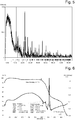
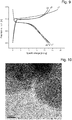
- the measurements show (see Figures 6 and 15 ) that there is no significant mass loss below the reaction temperature of 600°C for V 2 O 5 and 400 °C for MoO 3 . Thus the reactions are completely proceeding to the lithiated oxidants reduced and carbon.
- the starting materials indicated below were premixed in a mortar before reacted in a Fritsch Pulverisette 6 with 400 rpm for 0.5 hours and at a ratio between the weight of the balls and the weight of the sample of 1 : 5.
- Electrodes were prepared by mixing 73% coated LiEAM 15% Super P® Carbon (obtainable from TIMCAL) and 2 % polyvinylidene fluoride (PVDF) in a THF/Toluene 4 : 1 mixture and then drying at 180°C under air, except for the LiFePO 4 electrode that was dried at 80°C under vacuum.
- coated LiEAM 15% Super P® Carbon obtainable from TIMCAL
- PVDF polyvinylidene fluoride
Landscapes
- Chemical & Material Sciences (AREA)
- Inorganic Chemistry (AREA)
- Organic Chemistry (AREA)
- Chemical Kinetics & Catalysis (AREA)
- Electrochemistry (AREA)
- General Chemical & Material Sciences (AREA)
- Crystallography & Structural Chemistry (AREA)
- Engineering & Computer Science (AREA)
- Manufacturing & Machinery (AREA)
- Battery Electrode And Active Subsutance (AREA)
Claims (10)
- Verfahren zum Erzeugen von leitfähig beschichteten Partikeln umfassend ein mindestens teilweise metalliertes elektroaktives Kernmaterial, wobei das Verfahren die Schritte zum Vormischen eines elektroaktiven Oxidationsmaterials, "Oxidationsmittel", mit einem metallierten Reduktionsmittel, "MxReduktionsmittel", umfasst, gefolgt von einer chemischen Reaktion des elektroaktiven Oxidationsmaterials mit dem metallierten Reduktionsmittel, wobei das Reduktionsmittel eine Beschichtungsvorstufe ist, das Metall mindestens ein Alkalimetall und/oder mindestens ein Erdalkalimetall ist, und die chemische Reaktion unter Bedingungen durchgeführt wird, die eine Reduktion und Metallierung des elektroaktiven Materials durch Einfügen oder Interkalation des Alkalimetallkations oder der Alkalimetallkationen und/oder des Erdalkalimetallkations oder der Erdalkalimetallkationen und eine Beschichtung des metallierten elektroaktiven Materials mit einer Beschichtung ermöglichen, die aus dem metallierten Reduktionsmittel über eine Redoxreaktion in der Form gebildet wird:
MxReduktionsmittel + Oxidationsmittel → MxOxidationsmittelreduziert + ReduktionsmittelOberfläche(Reduktionsmitteloxidiert),
wobei die Bedingungen das Anwenden von Energie in der Form von- Wärme- tribologischer Energie- Ultraschall- Mikrowellenumfassen. - Verfahren nach Anspruch 1, wobei die Bedingungen das Anwenden von Energie in der Form von- Wärme- Kugelmahlen als tribologische Energie umfassen.
- Verfahren nach einem der vorangehenden Ansprüche, wobei das Metall des metallierten Reduktionsmittels ein Alkalimetall ist, das Lithium und optional Natrium und/oder Kalium enthält oder daraus besteht.
- Verfahren nach einem der vorangehenden Ansprüche, wobei das Reduktionsmittel des metallierten Reduktionsmittels sauerstofffrei ist.
- Verfahren nach einem der vorangehenden Ansprüche, wobei die Beschichtung und/oder die Reduktionsmittel ausgewählt werden aus
Beschichtung metallierte Beschichtung-Vorstufe/Reduktionsmittel Kohlenstoff Li2C2 BN Li3BN2 Kohlenstoffnitrid (CNx) Li2CN2 CBx Li4BCB CBxNy Lithiumpyrazin-Vorstufe (SyN)x Li9NS3 (CH)x(Polyacetylen) LiHC2 - Verfahren nach einem der vorangehenden Ansprüche, wobei die Oxidationsmittel ausgewählt werden aus Übergangsmetalloxiden, hydratisierten Übergangsmetalloxiden, Übergangsmetalloxinitriden, Übergangsmetallphosphaten, Übergangsmetalloxid-Gläsern, Elementen, vorzugsweise von Übergangsmetalloxiden, ausgewählt aus MoO3, MnO2, LiMn2O4, V2O5, oder hydratisierten Übergangsmetalloxiden, ausgewählt aus H2V3O8, oder Übergangsmetalloxinitriden, ausgewählt aus NbNO, oder Übergangsmetallphosphaten, ausgewählt aus FePO4 (Co, Mn, Ni), oder Übergangsmetalloxid-Gläsern ausgewählt aus Gläsern, die V2O5 und MoO3 enthalten, oder von aus S, Se, Si ausgewählten Elementen.
- Verfahren nach einem der vorangehenden Ansprüche, wobei die Beschichtung eine durchschnittliche Dicke von 0,5 nm bis 30 nm, vorzugsweise zwischen 0,5 bis 2 nm aufweist.
- Verfahren nach einem der vorangehenden Ansprüche, wobei die Bedingungen, die Reduktion und Lithiierung des elektroaktiven Materials und eine Beschichtungsaufbringung ermöglichen, einen tribochemischen Schritt umfassen, der durch Kugelmahlen mit einer Drehgeschwindigkeit von 200-1500 UPM während 15 bis 45 Minuten, wie beispielsweise 30 Minuten, vorzugsweise mit 400 UPM während 30 Minuten und/oder bei einem Verhältnis zwischen dem Gewicht der Kugeln und dem Gewicht der Probe im Bereich von 6 : 1 bis 4 ; 1, vorzugsweise etwa 5 : 1, wie etwa 5,2 : 1 bis 4,8 : 1, durchgeführt wird.
- Verfahren nach einem der Ansprüche 1 bis 7, wobei die Bedingungen, die eine Reduktion und Lithiierung des elektroaktiven Materials und eine Beschichtungsaufbringung ermöglichen, eine Wärmebehandlung mit einem Heizprofil, das eine langsame Heizrate von zwischen 50 bis 70 K für etwa mindestens der letzten Stunde, d.h. beginnend mindestens bei 50 bis 70 K unterhalb der Reaktionstemperatur, vorzugsweise eine Heizrate von etwa 60 K/h beginnend bei etwa 60 K vor Erreichen der Reaktionstemperatur umfassen.
- Verfahren nach 9, wobei das Heizprofil eine schnelle Heizrate von 180 K/h, vorzugsweise eine schnelle Heizrate von 180 K/h bis etwa 60 K unterhalb der Reaktionstemperatur gefolgt von einer langsamen Heizrate von etwa 60K/h umfasst.
Priority Applications (4)
| Application Number | Priority Date | Filing Date | Title |
|---|---|---|---|
| EP12157429.7A EP2634845B1 (de) | 2012-02-29 | 2012-02-29 | Beschichtung und Lithiierung von anorganischen Oxidantien durch Reaktion mit lithiierten Reduktionsmitteln |
| US13/724,748 US9099716B2 (en) | 2011-12-22 | 2012-12-21 | Coating and lithiation of inorganic oxidants by reaction with lithiated reductants |
| US14/741,641 US20150283532A1 (en) | 2011-12-22 | 2015-06-17 | Coating and lithiation of inorganic oxidants by reaction with lithiated reductants |
| US15/848,745 US11031583B2 (en) | 2011-12-22 | 2017-12-20 | Coating and lithiation of inorganic oxidants by reaction with lithiated reductants |
Applications Claiming Priority (1)
| Application Number | Priority Date | Filing Date | Title |
|---|---|---|---|
| EP12157429.7A EP2634845B1 (de) | 2012-02-29 | 2012-02-29 | Beschichtung und Lithiierung von anorganischen Oxidantien durch Reaktion mit lithiierten Reduktionsmitteln |
Publications (2)
| Publication Number | Publication Date |
|---|---|
| EP2634845A1 EP2634845A1 (de) | 2013-09-04 |
| EP2634845B1 true EP2634845B1 (de) | 2020-09-16 |
Family
ID=45774054
Family Applications (1)
| Application Number | Title | Priority Date | Filing Date |
|---|---|---|---|
| EP12157429.7A Active EP2634845B1 (de) | 2011-12-22 | 2012-02-29 | Beschichtung und Lithiierung von anorganischen Oxidantien durch Reaktion mit lithiierten Reduktionsmitteln |
Country Status (1)
| Country | Link |
|---|---|
| EP (1) | EP2634845B1 (de) |
Families Citing this family (4)
| Publication number | Priority date | Publication date | Assignee | Title |
|---|---|---|---|---|
| DE102015217809A1 (de) * | 2015-09-17 | 2017-03-23 | Robert Bosch Gmbh | Vorlithiiertes, kohlenstoffbeschichtetes Anodenaktivmaterial |
| EP3163655B1 (de) * | 2015-10-28 | 2019-02-27 | Renata AG | Elektroaktives material einer kathode für primärbatterie |
| CN107516730A (zh) * | 2016-06-17 | 2017-12-26 | 珠海泰坦储能科技有限公司 | 一种含磷酸铁的锂硫电池正极材料及含此正极材料的锂硫电池的制备 |
| CN110808375B (zh) * | 2019-11-07 | 2020-11-20 | 深圳市德方纳米科技股份有限公司 | 石墨烯碳纳米管复合导电液的制备方法、装置及导电液 |
Citations (1)
| Publication number | Priority date | Publication date | Assignee | Title |
|---|---|---|---|---|
| US20100261063A1 (en) * | 2007-12-10 | 2010-10-14 | Sumitomo Osaka Cement Co., Ltd. | Electrode material, method for producing the same, electrode and battery |
Family Cites Families (8)
| Publication number | Priority date | Publication date | Assignee | Title |
|---|---|---|---|---|
| US4675260A (en) | 1984-11-12 | 1987-06-23 | Nippon Telegraph And Telephone Corporation | Lithium battery including vanadium pentoxide base amorphous cathode active material |
| CA2270771A1 (fr) | 1999-04-30 | 2000-10-30 | Hydro-Quebec | Nouveaux materiaux d'electrode presentant une conductivite de surface elevee |
| US6706445B2 (en) * | 2001-10-02 | 2004-03-16 | Valence Technology, Inc. | Synthesis of lithiated transition metal titanates for lithium cells |
| US6962266B2 (en) | 2002-10-04 | 2005-11-08 | Ecolab Inc. | Method and apparatus for using a unit dose dispenser |
| WO2004069768A1 (de) | 2003-02-03 | 2004-08-19 | Eidgenössische Technische Hochschule Zürich | VERFAHREN ZUR HERSTELLUNG EINER B/N/C/Si-KERAMIK AUS EINEM BORAZINPRECURSOR, NACH DIESEM VERFAHREN HERGESTELLTE KERAMIK SOWIE VERWENDUNG DER NACH DIESEM VERFAHREN HERGESTELLTEN KERAMIK |
| EP2098483A1 (de) * | 2008-03-05 | 2009-09-09 | High Power Lithium S.A. | Synthese von Lithiummetallphosphat/Kohlennanoverbundstoffen mit Phytinsäure |
| US8568914B2 (en) * | 2009-10-29 | 2013-10-29 | Uchicago Argonne, Llc | Autogenic pressure reactions for battery materials manufacture |
| AU2011201595A1 (en) | 2010-04-12 | 2011-10-27 | Belenos Clean Power Holding Ag | Transition metal oxidenitrides |
-
2012
- 2012-02-29 EP EP12157429.7A patent/EP2634845B1/de active Active
Patent Citations (1)
| Publication number | Priority date | Publication date | Assignee | Title |
|---|---|---|---|---|
| US20100261063A1 (en) * | 2007-12-10 | 2010-10-14 | Sumitomo Osaka Cement Co., Ltd. | Electrode material, method for producing the same, electrode and battery |
Non-Patent Citations (1)
| Title |
|---|
| LIJUAN WANG ET AL: "Pressure-Induced Polymerization and Disproportionation of Li 2 C 2 Accompanied with Irreversible Conductivity Enhancement", JOURNAL OF PHYSICAL CHEMISTRY LETTERS, vol. 8, no. 17, 7 September 2017 (2017-09-07), US, pages 4241 - 4245, XP055431806, ISSN: 1948-7185, DOI: 10.1021/acs.jpclett.7b01779 * |
Also Published As
| Publication number | Publication date |
|---|---|
| EP2634845A1 (de) | 2013-09-04 |
Similar Documents
| Publication | Publication Date | Title |
|---|---|---|
| US11031583B2 (en) | Coating and lithiation of inorganic oxidants by reaction with lithiated reductants | |
| JP5113081B2 (ja) | リチウム二次電池用リチウムマンガンリン酸塩正極材料 | |
| Aravindan et al. | LiMnPO 4–A next generation cathode material for lithium-ion batteries | |
| CN1833328B (zh) | 蓄电池的阴极材料,生产方法和蓄电池 | |
| CN100340018C (zh) | 充电电池用锂过渡金属磷酸盐粉末 | |
| CN102630215B (zh) | 用于生产LiFePO4粉末的水热方法 | |
| KR101519325B1 (ko) | 2차 리튬 배터리용 캐쏘드 활물질로서의 리튬 망간 포스페이트/탄소 나노복합체 | |
| EP2860800B1 (de) | Positivelektrodenmaterial für natriumbatterien und verfahren zu seiner herstellung | |
| CN103548189B (zh) | 用于可充电锂电池的正极活性物质 | |
| KR101655859B1 (ko) | 복합 전극 재료 | |
| CN103636035B (zh) | 锂离子二次电池用正极活性物质的制造方法 | |
| US9620783B2 (en) | Mesoporous metal oxide microsphere electrode compositions and their methods of making | |
| EP2615671A1 (de) | Lithium-salz-graphen-haltiger verbundstoff und verfahren zu seiner herstellung | |
| CN101675001B (zh) | LiMPO4化合物的合成以及作为锂蓄电池中电极材料的用途 | |
| CN102315444B (zh) | 一种纳米改性聚阴离子正极活性材料的制备方法 | |
| CN104619643A (zh) | 碳涂敷磷酸铁锂纳米粉末的制备方法 | |
| KR20100044727A (ko) | 전극 효율 및 에너지 밀도 특성이 개선된 양극 활물질 | |
| KR20220065124A (ko) | 코어-쉘 복합체를 포함하는 음극 활물질 및 이의 제조방법 | |
| CN104781957B (zh) | 电极材料的制造方法、电极材料及具备该电极材料的蓄电装置 | |
| JP2018142420A (ja) | リチウムイオン二次電池用電極、リチウムイオン二次電池 | |
| CN114551878A (zh) | 包封在纳米结构的钛酸锂或铝酸锂中的过渡金属氧化物颗粒,及其在锂离子电池中的用途 | |
| EP2634845A1 (de) | Beschichtung und Lithiierung von anorganischen Oxidantien durch Reaktion mit lithiierten Reduktionsmitteln | |
| RU2444815C1 (ru) | СПОСОБ ПОЛУЧЕНИЯ ВЫСОКОДИСПЕРСНЫХ КАТОДНЫХ МАТЕРИАЛОВ LixFeyMzPO4/C СО СТРУКТУРОЙ ОЛИВИНА | |
| Lan et al. | Preparation and characterization of carbon-coated LiFePO4 cathode materials for lithium-ion batteries with resorcinol–formaldehyde polymer as carbon precursor | |
| JPWO2014188996A1 (ja) | ポリアニオン系正極活物質複合体粒子の製造方法およびポリアニオン系正極活物質前駆体−酸化グラファイト複合造粒体 |
Legal Events
| Date | Code | Title | Description |
|---|---|---|---|
| PUAI | Public reference made under article 153(3) epc to a published international application that has entered the european phase |
Free format text: ORIGINAL CODE: 0009012 |
|
| AK | Designated contracting states |
Kind code of ref document: A1 Designated state(s): AL AT BE BG CH CY CZ DE DK EE ES FI FR GB GR HR HU IE IS IT LI LT LU LV MC MK MT NL NO PL PT RO RS SE SI SK SM TR |
|
| AX | Request for extension of the european patent |
Extension state: BA ME |
|
| 17P | Request for examination filed |
Effective date: 20140304 |
|
| RBV | Designated contracting states (corrected) |
Designated state(s): AL AT BE BG CH CY CZ DE DK EE ES FI FR GB GR HR HU IE IS IT LI LT LU LV MC MK MT NL NO PL PT RO RS SE SI SK SM TR |
|
| STAA | Information on the status of an ep patent application or granted ep patent |
Free format text: STATUS: EXAMINATION IS IN PROGRESS |
|
| 17Q | First examination report despatched |
Effective date: 20171212 |
|
| RIC1 | Information provided on ipc code assigned before grant |
Ipc: C01G 31/00 20060101ALI20191129BHEP Ipc: H01M 4/62 20060101ALI20191129BHEP Ipc: H01M 4/58 20100101ALI20191129BHEP Ipc: H01M 4/485 20100101AFI20191129BHEP Ipc: C01G 45/00 20060101ALI20191129BHEP Ipc: C01G 49/00 20060101ALI20191129BHEP Ipc: H01M 4/505 20100101ALI20191129BHEP Ipc: H01M 10/052 20100101ALI20191129BHEP |
|
| GRAP | Despatch of communication of intention to grant a patent |
Free format text: ORIGINAL CODE: EPIDOSNIGR1 |
|
| STAA | Information on the status of an ep patent application or granted ep patent |
Free format text: STATUS: GRANT OF PATENT IS INTENDED |
|
| INTG | Intention to grant announced |
Effective date: 20200414 |
|
| GRAS | Grant fee paid |
Free format text: ORIGINAL CODE: EPIDOSNIGR3 |
|
| GRAA | (expected) grant |
Free format text: ORIGINAL CODE: 0009210 |
|
| STAA | Information on the status of an ep patent application or granted ep patent |
Free format text: STATUS: THE PATENT HAS BEEN GRANTED |
|
| AK | Designated contracting states |
Kind code of ref document: B1 Designated state(s): AL AT BE BG CH CY CZ DE DK EE ES FI FR GB GR HR HU IE IS IT LI LT LU LV MC MK MT NL NO PL PT RO RS SE SI SK SM TR |
|
| REG | Reference to a national code |
Ref country code: GB Ref legal event code: FG4D |
|
| REG | Reference to a national code |
Ref country code: CH Ref legal event code: EP |
|
| REG | Reference to a national code |
Ref country code: DE Ref legal event code: R096 Ref document number: 602012072327 Country of ref document: DE |
|
| REG | Reference to a national code |
Ref country code: IE Ref legal event code: FG4D |
|
| REG | Reference to a national code |
Ref country code: AT Ref legal event code: REF Ref document number: 1314956 Country of ref document: AT Kind code of ref document: T Effective date: 20201015 |
|
| REG | Reference to a national code |
Ref country code: CH Ref legal event code: NV Representative=s name: ICB INGENIEURS CONSEILS EN BREVETS SA, CH |
|
| PG25 | Lapsed in a contracting state [announced via postgrant information from national office to epo] |
Ref country code: FI Free format text: LAPSE BECAUSE OF FAILURE TO SUBMIT A TRANSLATION OF THE DESCRIPTION OR TO PAY THE FEE WITHIN THE PRESCRIBED TIME-LIMIT Effective date: 20200916 Ref country code: HR Free format text: LAPSE BECAUSE OF FAILURE TO SUBMIT A TRANSLATION OF THE DESCRIPTION OR TO PAY THE FEE WITHIN THE PRESCRIBED TIME-LIMIT Effective date: 20200916 Ref country code: SE Free format text: LAPSE BECAUSE OF FAILURE TO SUBMIT A TRANSLATION OF THE DESCRIPTION OR TO PAY THE FEE WITHIN THE PRESCRIBED TIME-LIMIT Effective date: 20200916 Ref country code: GR Free format text: LAPSE BECAUSE OF FAILURE TO SUBMIT A TRANSLATION OF THE DESCRIPTION OR TO PAY THE FEE WITHIN THE PRESCRIBED TIME-LIMIT Effective date: 20201217 Ref country code: BG Free format text: LAPSE BECAUSE OF FAILURE TO SUBMIT A TRANSLATION OF THE DESCRIPTION OR TO PAY THE FEE WITHIN THE PRESCRIBED TIME-LIMIT Effective date: 20201216 Ref country code: NO Free format text: LAPSE BECAUSE OF FAILURE TO SUBMIT A TRANSLATION OF THE DESCRIPTION OR TO PAY THE FEE WITHIN THE PRESCRIBED TIME-LIMIT Effective date: 20201216 |
|
| REG | Reference to a national code |
Ref country code: AT Ref legal event code: MK05 Ref document number: 1314956 Country of ref document: AT Kind code of ref document: T Effective date: 20200916 |
|
| REG | Reference to a national code |
Ref country code: NL Ref legal event code: MP Effective date: 20200916 |
|
| PG25 | Lapsed in a contracting state [announced via postgrant information from national office to epo] |
Ref country code: LV Free format text: LAPSE BECAUSE OF FAILURE TO SUBMIT A TRANSLATION OF THE DESCRIPTION OR TO PAY THE FEE WITHIN THE PRESCRIBED TIME-LIMIT Effective date: 20200916 Ref country code: RS Free format text: LAPSE BECAUSE OF FAILURE TO SUBMIT A TRANSLATION OF THE DESCRIPTION OR TO PAY THE FEE WITHIN THE PRESCRIBED TIME-LIMIT Effective date: 20200916 |
|
| REG | Reference to a national code |
Ref country code: LT Ref legal event code: MG4D |
|
| PG25 | Lapsed in a contracting state [announced via postgrant information from national office to epo] |
Ref country code: RO Free format text: LAPSE BECAUSE OF FAILURE TO SUBMIT A TRANSLATION OF THE DESCRIPTION OR TO PAY THE FEE WITHIN THE PRESCRIBED TIME-LIMIT Effective date: 20200916 Ref country code: SM Free format text: LAPSE BECAUSE OF FAILURE TO SUBMIT A TRANSLATION OF THE DESCRIPTION OR TO PAY THE FEE WITHIN THE PRESCRIBED TIME-LIMIT Effective date: 20200916 Ref country code: NL Free format text: LAPSE BECAUSE OF FAILURE TO SUBMIT A TRANSLATION OF THE DESCRIPTION OR TO PAY THE FEE WITHIN THE PRESCRIBED TIME-LIMIT Effective date: 20200916 Ref country code: PT Free format text: LAPSE BECAUSE OF FAILURE TO SUBMIT A TRANSLATION OF THE DESCRIPTION OR TO PAY THE FEE WITHIN THE PRESCRIBED TIME-LIMIT Effective date: 20210118 Ref country code: LT Free format text: LAPSE BECAUSE OF FAILURE TO SUBMIT A TRANSLATION OF THE DESCRIPTION OR TO PAY THE FEE WITHIN THE PRESCRIBED TIME-LIMIT Effective date: 20200916 Ref country code: EE Free format text: LAPSE BECAUSE OF FAILURE TO SUBMIT A TRANSLATION OF THE DESCRIPTION OR TO PAY THE FEE WITHIN THE PRESCRIBED TIME-LIMIT Effective date: 20200916 Ref country code: CZ Free format text: LAPSE BECAUSE OF FAILURE TO SUBMIT A TRANSLATION OF THE DESCRIPTION OR TO PAY THE FEE WITHIN THE PRESCRIBED TIME-LIMIT Effective date: 20200916 |
|
| PG25 | Lapsed in a contracting state [announced via postgrant information from national office to epo] |
Ref country code: PL Free format text: LAPSE BECAUSE OF FAILURE TO SUBMIT A TRANSLATION OF THE DESCRIPTION OR TO PAY THE FEE WITHIN THE PRESCRIBED TIME-LIMIT Effective date: 20200916 Ref country code: ES Free format text: LAPSE BECAUSE OF FAILURE TO SUBMIT A TRANSLATION OF THE DESCRIPTION OR TO PAY THE FEE WITHIN THE PRESCRIBED TIME-LIMIT Effective date: 20200916 Ref country code: IS Free format text: LAPSE BECAUSE OF FAILURE TO SUBMIT A TRANSLATION OF THE DESCRIPTION OR TO PAY THE FEE WITHIN THE PRESCRIBED TIME-LIMIT Effective date: 20210116 Ref country code: AT Free format text: LAPSE BECAUSE OF FAILURE TO SUBMIT A TRANSLATION OF THE DESCRIPTION OR TO PAY THE FEE WITHIN THE PRESCRIBED TIME-LIMIT Effective date: 20200916 Ref country code: AL Free format text: LAPSE BECAUSE OF FAILURE TO SUBMIT A TRANSLATION OF THE DESCRIPTION OR TO PAY THE FEE WITHIN THE PRESCRIBED TIME-LIMIT Effective date: 20200916 |
|
| REG | Reference to a national code |
Ref country code: DE Ref legal event code: R097 Ref document number: 602012072327 Country of ref document: DE |
|
| PG25 | Lapsed in a contracting state [announced via postgrant information from national office to epo] |
Ref country code: SK Free format text: LAPSE BECAUSE OF FAILURE TO SUBMIT A TRANSLATION OF THE DESCRIPTION OR TO PAY THE FEE WITHIN THE PRESCRIBED TIME-LIMIT Effective date: 20200916 |
|
| PLBE | No opposition filed within time limit |
Free format text: ORIGINAL CODE: 0009261 |
|
| STAA | Information on the status of an ep patent application or granted ep patent |
Free format text: STATUS: NO OPPOSITION FILED WITHIN TIME LIMIT |
|
| 26N | No opposition filed |
Effective date: 20210617 |
|
| PG25 | Lapsed in a contracting state [announced via postgrant information from national office to epo] |
Ref country code: SI Free format text: LAPSE BECAUSE OF FAILURE TO SUBMIT A TRANSLATION OF THE DESCRIPTION OR TO PAY THE FEE WITHIN THE PRESCRIBED TIME-LIMIT Effective date: 20200916 Ref country code: DK Free format text: LAPSE BECAUSE OF FAILURE TO SUBMIT A TRANSLATION OF THE DESCRIPTION OR TO PAY THE FEE WITHIN THE PRESCRIBED TIME-LIMIT Effective date: 20200916 |
|
| PG25 | Lapsed in a contracting state [announced via postgrant information from national office to epo] |
Ref country code: MC Free format text: LAPSE BECAUSE OF FAILURE TO SUBMIT A TRANSLATION OF THE DESCRIPTION OR TO PAY THE FEE WITHIN THE PRESCRIBED TIME-LIMIT Effective date: 20200916 |
|
| REG | Reference to a national code |
Ref country code: BE Ref legal event code: MM Effective date: 20210228 |
|
| PG25 | Lapsed in a contracting state [announced via postgrant information from national office to epo] |
Ref country code: IT Free format text: LAPSE BECAUSE OF FAILURE TO SUBMIT A TRANSLATION OF THE DESCRIPTION OR TO PAY THE FEE WITHIN THE PRESCRIBED TIME-LIMIT Effective date: 20200916 Ref country code: LU Free format text: LAPSE BECAUSE OF NON-PAYMENT OF DUE FEES Effective date: 20210228 |
|
| PG25 | Lapsed in a contracting state [announced via postgrant information from national office to epo] |
Ref country code: IE Free format text: LAPSE BECAUSE OF NON-PAYMENT OF DUE FEES Effective date: 20210228 |
|
| PG25 | Lapsed in a contracting state [announced via postgrant information from national office to epo] |
Ref country code: BE Free format text: LAPSE BECAUSE OF NON-PAYMENT OF DUE FEES Effective date: 20210228 |
|
| PG25 | Lapsed in a contracting state [announced via postgrant information from national office to epo] |
Ref country code: HU Free format text: LAPSE BECAUSE OF FAILURE TO SUBMIT A TRANSLATION OF THE DESCRIPTION OR TO PAY THE FEE WITHIN THE PRESCRIBED TIME-LIMIT; INVALID AB INITIO Effective date: 20120229 Ref country code: CY Free format text: LAPSE BECAUSE OF FAILURE TO SUBMIT A TRANSLATION OF THE DESCRIPTION OR TO PAY THE FEE WITHIN THE PRESCRIBED TIME-LIMIT Effective date: 20200916 |
|
| P01 | Opt-out of the competence of the unified patent court (upc) registered |
Effective date: 20230718 |
|
| PG25 | Lapsed in a contracting state [announced via postgrant information from national office to epo] |
Ref country code: MK Free format text: LAPSE BECAUSE OF FAILURE TO SUBMIT A TRANSLATION OF THE DESCRIPTION OR TO PAY THE FEE WITHIN THE PRESCRIBED TIME-LIMIT Effective date: 20200916 |
|
| PG25 | Lapsed in a contracting state [announced via postgrant information from national office to epo] |
Ref country code: TR Free format text: LAPSE BECAUSE OF FAILURE TO SUBMIT A TRANSLATION OF THE DESCRIPTION OR TO PAY THE FEE WITHIN THE PRESCRIBED TIME-LIMIT Effective date: 20200916 |
|
| PG25 | Lapsed in a contracting state [announced via postgrant information from national office to epo] |
Ref country code: MT Free format text: LAPSE BECAUSE OF FAILURE TO SUBMIT A TRANSLATION OF THE DESCRIPTION OR TO PAY THE FEE WITHIN THE PRESCRIBED TIME-LIMIT Effective date: 20200916 |
|
| REG | Reference to a national code |
Ref country code: CH Ref legal event code: U11 Free format text: ST27 STATUS EVENT CODE: U-0-0-U10-U11 (AS PROVIDED BY THE NATIONAL OFFICE) Effective date: 20260301 |
|
| PGFP | Annual fee paid to national office [announced via postgrant information from national office to epo] |
Ref country code: GB Payment date: 20260122 Year of fee payment: 15 |
|
| PGFP | Annual fee paid to national office [announced via postgrant information from national office to epo] |
Ref country code: DE Payment date: 20260121 Year of fee payment: 15 |
|
| PGFP | Annual fee paid to national office [announced via postgrant information from national office to epo] |
Ref country code: FR Payment date: 20260121 Year of fee payment: 15 |
|
| PGFP | Annual fee paid to national office [announced via postgrant information from national office to epo] |
Ref country code: CH Payment date: 20260301 Year of fee payment: 15 |