EP2618927B1 - Procédé de fabrication de microcapsules polysiloxane fonctionnalisées et peu poreuses. - Google Patents
Procédé de fabrication de microcapsules polysiloxane fonctionnalisées et peu poreuses. Download PDFInfo
- Publication number
- EP2618927B1 EP2618927B1 EP11773742.9A EP11773742A EP2618927B1 EP 2618927 B1 EP2618927 B1 EP 2618927B1 EP 11773742 A EP11773742 A EP 11773742A EP 2618927 B1 EP2618927 B1 EP 2618927B1
- Authority
- EP
- European Patent Office
- Prior art keywords
- silane
- silanol
- encapsulated
- membrane
- teos
- Prior art date
- Legal status (The legal status is an assumption and is not a legal conclusion. Google has not performed a legal analysis and makes no representation as to the accuracy of the status listed.)
- Not-in-force
Links
- 238000000034 method Methods 0.000 title claims description 41
- -1 polysiloxane Polymers 0.000 title claims description 12
- 229920001296 polysiloxane Polymers 0.000 title claims description 7
- 239000003094 microcapsule Substances 0.000 title description 23
- 230000008569 process Effects 0.000 title description 12
- 238000004519 manufacturing process Methods 0.000 title description 4
- BOTDANWDWHJENH-UHFFFAOYSA-N Tetraethyl orthosilicate Chemical compound CCO[Si](OCC)(OCC)OCC BOTDANWDWHJENH-UHFFFAOYSA-N 0.000 claims description 38
- 229910000077 silane Inorganic materials 0.000 claims description 36
- BLRPTPMANUNPDV-UHFFFAOYSA-N Silane Chemical compound [SiH4] BLRPTPMANUNPDV-UHFFFAOYSA-N 0.000 claims description 35
- 239000012528 membrane Substances 0.000 claims description 35
- SCPYDCQAZCOKTP-UHFFFAOYSA-N silanol Chemical compound [SiH3]O SCPYDCQAZCOKTP-UHFFFAOYSA-N 0.000 claims description 19
- RTZKZFJDLAIYFH-UHFFFAOYSA-N Diethyl ether Chemical compound CCOCC RTZKZFJDLAIYFH-UHFFFAOYSA-N 0.000 claims description 14
- 238000009833 condensation Methods 0.000 claims description 14
- 230000005494 condensation Effects 0.000 claims description 14
- HXLAEGYMDGUSBD-UHFFFAOYSA-N 3-[diethoxy(methyl)silyl]propan-1-amine Chemical compound CCO[Si](C)(OCC)CCCN HXLAEGYMDGUSBD-UHFFFAOYSA-N 0.000 claims description 13
- CPUDPFPXCZDNGI-UHFFFAOYSA-N triethoxy(methyl)silane Chemical compound CCO[Si](C)(OCC)OCC CPUDPFPXCZDNGI-UHFFFAOYSA-N 0.000 claims description 10
- QTBSBXVTEAMEQO-UHFFFAOYSA-N Acetic acid Chemical compound CC(O)=O QTBSBXVTEAMEQO-UHFFFAOYSA-N 0.000 claims description 9
- 239000002253 acid Substances 0.000 claims description 9
- 150000003973 alkyl amines Chemical class 0.000 claims description 8
- 125000002877 alkyl aryl group Chemical group 0.000 claims description 8
- 125000000217 alkyl group Chemical group 0.000 claims description 8
- 125000003118 aryl group Chemical group 0.000 claims description 8
- YYLGKUPAFFKGRQ-UHFFFAOYSA-N dimethyldiethoxysilane Chemical compound CCO[Si](C)(C)OCC YYLGKUPAFFKGRQ-UHFFFAOYSA-N 0.000 claims description 8
- 150000002148 esters Chemical class 0.000 claims description 8
- 125000002887 hydroxy group Chemical group [H]O* 0.000 claims description 8
- 239000012071 phase Substances 0.000 claims description 8
- 150000004756 silanes Chemical class 0.000 claims description 8
- 239000008346 aqueous phase Substances 0.000 claims description 7
- 229910052801 chlorine Inorganic materials 0.000 claims description 7
- HZAXFHJVJLSVMW-UHFFFAOYSA-N 2-Aminoethan-1-ol Chemical compound NCCO HZAXFHJVJLSVMW-UHFFFAOYSA-N 0.000 claims description 6
- QGZKDVFQNNGYKY-UHFFFAOYSA-N Ammonia Chemical compound N QGZKDVFQNNGYKY-UHFFFAOYSA-N 0.000 claims description 6
- 230000015572 biosynthetic process Effects 0.000 claims description 6
- 230000007062 hydrolysis Effects 0.000 claims description 6
- 238000006460 hydrolysis reaction Methods 0.000 claims description 6
- BDAGIHXWWSANSR-UHFFFAOYSA-N methanoic acid Natural products OC=O BDAGIHXWWSANSR-UHFFFAOYSA-N 0.000 claims description 6
- NHBRUUFBSBSTHM-UHFFFAOYSA-N n'-[2-(3-trimethoxysilylpropylamino)ethyl]ethane-1,2-diamine Chemical compound CO[Si](OC)(OC)CCCNCCNCCN NHBRUUFBSBSTHM-UHFFFAOYSA-N 0.000 claims description 6
- 230000002378 acidificating effect Effects 0.000 claims description 5
- 229910052794 bromium Inorganic materials 0.000 claims description 5
- 229910052740 iodine Inorganic materials 0.000 claims description 5
- 239000004094 surface-active agent Substances 0.000 claims description 5
- WYTZZXDRDKSJID-UHFFFAOYSA-N (3-aminopropyl)triethoxysilane Chemical compound CCO[Si](OCC)(OCC)CCCN WYTZZXDRDKSJID-UHFFFAOYSA-N 0.000 claims description 4
- MSRJTTSHWYDFIU-UHFFFAOYSA-N octyltriethoxysilane Chemical compound CCCCCCCC[Si](OCC)(OCC)OCC MSRJTTSHWYDFIU-UHFFFAOYSA-N 0.000 claims description 4
- JCVQKRGIASEUKR-UHFFFAOYSA-N triethoxy(phenyl)silane Chemical compound CCO[Si](OCC)(OCC)C1=CC=CC=C1 JCVQKRGIASEUKR-UHFFFAOYSA-N 0.000 claims description 4
- QWOVEJBDMKHZQK-UHFFFAOYSA-N 1,3,5-tris(3-trimethoxysilylpropyl)-1,3,5-triazinane-2,4,6-trione Chemical compound CO[Si](OC)(OC)CCCN1C(=O)N(CCC[Si](OC)(OC)OC)C(=O)N(CCC[Si](OC)(OC)OC)C1=O QWOVEJBDMKHZQK-UHFFFAOYSA-N 0.000 claims description 3
- KSCAZPYHLGGNPZ-UHFFFAOYSA-N 3-chloropropyl(triethoxy)silane Chemical compound CCO[Si](OCC)(OCC)CCCCl KSCAZPYHLGGNPZ-UHFFFAOYSA-N 0.000 claims description 3
- RWLDCNACDPTRMY-UHFFFAOYSA-N 3-triethoxysilyl-n-(3-triethoxysilylpropyl)propan-1-amine Chemical compound CCO[Si](OCC)(OCC)CCCNCCC[Si](OCC)(OCC)OCC RWLDCNACDPTRMY-UHFFFAOYSA-N 0.000 claims description 3
- SJECZPVISLOESU-UHFFFAOYSA-N 3-trimethoxysilylpropan-1-amine Chemical compound CO[Si](OC)(OC)CCCN SJECZPVISLOESU-UHFFFAOYSA-N 0.000 claims description 3
- UUEWCQRISZBELL-UHFFFAOYSA-N 3-trimethoxysilylpropane-1-thiol Chemical compound CO[Si](OC)(OC)CCCS UUEWCQRISZBELL-UHFFFAOYSA-N 0.000 claims description 3
- XDLMVUHYZWKMMD-UHFFFAOYSA-N 3-trimethoxysilylpropyl 2-methylprop-2-enoate Chemical compound CO[Si](OC)(OC)CCCOC(=O)C(C)=C XDLMVUHYZWKMMD-UHFFFAOYSA-N 0.000 claims description 3
- OSWFIVFLDKOXQC-UHFFFAOYSA-N 4-(3-methoxyphenyl)aniline Chemical compound COC1=CC=CC(C=2C=CC(N)=CC=2)=C1 OSWFIVFLDKOXQC-UHFFFAOYSA-N 0.000 claims description 3
- 150000001408 amides Chemical class 0.000 claims description 3
- 229910021529 ammonia Inorganic materials 0.000 claims description 3
- 229920002678 cellulose Polymers 0.000 claims description 3
- 239000001913 cellulose Substances 0.000 claims description 3
- FWDBOZPQNFPOLF-UHFFFAOYSA-N ethenyl(triethoxy)silane Chemical compound CCO[Si](OCC)(OCC)C=C FWDBOZPQNFPOLF-UHFFFAOYSA-N 0.000 claims description 3
- NKSJNEHGWDZZQF-UHFFFAOYSA-N ethenyl(trimethoxy)silane Chemical compound CO[Si](OC)(OC)C=C NKSJNEHGWDZZQF-UHFFFAOYSA-N 0.000 claims description 3
- 235000019253 formic acid Nutrition 0.000 claims description 3
- 238000010438 heat treatment Methods 0.000 claims description 3
- PHQOGHDTIVQXHL-UHFFFAOYSA-N n'-(3-trimethoxysilylpropyl)ethane-1,2-diamine Chemical compound CO[Si](OC)(OC)CCCNCCN PHQOGHDTIVQXHL-UHFFFAOYSA-N 0.000 claims description 3
- 125000005372 silanol group Chemical group 0.000 claims description 3
- 239000000126 substance Substances 0.000 claims description 3
- JXUKBNICSRJFAP-UHFFFAOYSA-N triethoxy-[3-(oxiran-2-ylmethoxy)propyl]silane Chemical compound CCO[Si](OCC)(OCC)CCCOCC1CO1 JXUKBNICSRJFAP-UHFFFAOYSA-N 0.000 claims description 3
- HQYALQRYBUJWDH-UHFFFAOYSA-N trimethoxy(propyl)silane Chemical compound CCC[Si](OC)(OC)OC HQYALQRYBUJWDH-UHFFFAOYSA-N 0.000 claims description 3
- BIGOJJYDFLNSGB-UHFFFAOYSA-N 3-isocyanopropyl(trimethoxy)silane Chemical group CO[Si](OC)(OC)CCC[N+]#[C-] BIGOJJYDFLNSGB-UHFFFAOYSA-N 0.000 claims description 2
- 150000001412 amines Chemical class 0.000 claims description 2
- 239000000839 emulsion Substances 0.000 claims description 2
- 125000001301 ethoxy group Chemical group [H]C([H])([H])C([H])([H])O* 0.000 claims description 2
- 150000002576 ketones Chemical group 0.000 claims description 2
- BFXIKLCIZHOAAZ-UHFFFAOYSA-N methyltrimethoxysilane Chemical compound CO[Si](C)(OC)OC BFXIKLCIZHOAAZ-UHFFFAOYSA-N 0.000 claims description 2
- 239000007764 o/w emulsion Substances 0.000 claims description 2
- 230000020477 pH reduction Effects 0.000 claims description 2
- LFQCEHFDDXELDD-UHFFFAOYSA-N tetramethyl orthosilicate Chemical compound CO[Si](OC)(OC)OC LFQCEHFDDXELDD-UHFFFAOYSA-N 0.000 claims description 2
- CDBYLPFSWZWCQE-UHFFFAOYSA-L Sodium Carbonate Chemical compound [Na+].[Na+].[O-]C([O-])=O CDBYLPFSWZWCQE-UHFFFAOYSA-L 0.000 claims 1
- ZBCBWPMODOFKDW-UHFFFAOYSA-N diethanolamine Chemical compound OCCNCCO ZBCBWPMODOFKDW-UHFFFAOYSA-N 0.000 claims 1
- 238000003756 stirring Methods 0.000 claims 1
- 239000002775 capsule Substances 0.000 description 17
- 150000001875 compounds Chemical class 0.000 description 11
- ZCTQGTTXIYCGGC-UHFFFAOYSA-N Benzyl salicylate Chemical compound OC1=CC=CC=C1C(=O)OCC1=CC=CC=C1 ZCTQGTTXIYCGGC-UHFFFAOYSA-N 0.000 description 8
- HEMHJVSKTPXQMS-UHFFFAOYSA-M Sodium hydroxide Chemical compound [OH-].[Na+] HEMHJVSKTPXQMS-UHFFFAOYSA-M 0.000 description 6
- 238000005538 encapsulation Methods 0.000 description 6
- XMGQYMWWDOXHJM-UHFFFAOYSA-N limonene Chemical compound CC(=C)C1CCC(C)=CC1 XMGQYMWWDOXHJM-UHFFFAOYSA-N 0.000 description 6
- 229920000642 polymer Polymers 0.000 description 6
- FZHAPNGMFPVSLP-UHFFFAOYSA-N silanamine Chemical compound [SiH3]N FZHAPNGMFPVSLP-UHFFFAOYSA-N 0.000 description 6
- 150000007513 acids Chemical class 0.000 description 4
- 238000006243 chemical reaction Methods 0.000 description 4
- 239000000460 chlorine Substances 0.000 description 4
- 238000002360 preparation method Methods 0.000 description 4
- 238000007789 sealing Methods 0.000 description 4
- 235000019486 Sunflower oil Nutrition 0.000 description 3
- 230000000052 comparative effect Effects 0.000 description 3
- 229940087305 limonene Drugs 0.000 description 3
- 235000001510 limonene Nutrition 0.000 description 3
- 239000003921 oil Substances 0.000 description 3
- 235000019198 oils Nutrition 0.000 description 3
- 239000002002 slurry Substances 0.000 description 3
- 239000002600 sunflower oil Substances 0.000 description 3
- FMGBDYLOANULLW-UHFFFAOYSA-N 3-isocyanatopropyl(trimethoxy)silane Chemical compound CO[Si](OC)(OC)CCCN=C=O FMGBDYLOANULLW-UHFFFAOYSA-N 0.000 description 2
- KRHYYFGTRYWZRS-UHFFFAOYSA-N Fluorane Chemical compound F KRHYYFGTRYWZRS-UHFFFAOYSA-N 0.000 description 2
- 239000007983 Tris buffer Substances 0.000 description 2
- XSQUKJJJFZCRTK-UHFFFAOYSA-N Urea Chemical compound NC(N)=O XSQUKJJJFZCRTK-UHFFFAOYSA-N 0.000 description 2
- 230000003416 augmentation Effects 0.000 description 2
- 230000008901 benefit Effects 0.000 description 2
- 239000004202 carbamide Substances 0.000 description 2
- 125000002091 cationic group Chemical group 0.000 description 2
- 239000002537 cosmetic Substances 0.000 description 2
- 238000011161 development Methods 0.000 description 2
- 230000018109 developmental process Effects 0.000 description 2
- LBZKAZLWNCYGOX-UHFFFAOYSA-N diethoxy(dimethyl)silane triethoxy(phenyl)silane Chemical compound CCO[Si](C)(C)OCC.CCO[Si](OCC)(OCC)c1ccccc1 LBZKAZLWNCYGOX-UHFFFAOYSA-N 0.000 description 2
- 230000006872 improvement Effects 0.000 description 2
- 239000000203 mixture Substances 0.000 description 2
- 239000002304 perfume Substances 0.000 description 2
- 125000001436 propyl group Chemical group [H]C([*])([H])C([H])([H])C([H])([H])[H] 0.000 description 2
- 239000000725 suspension Substances 0.000 description 2
- 239000004753 textile Substances 0.000 description 2
- 239000003039 volatile agent Substances 0.000 description 2
- XMGQYMWWDOXHJM-JTQLQIEISA-N (+)-α-limonene Chemical compound CC(=C)[C@@H]1CCC(C)=CC1 XMGQYMWWDOXHJM-JTQLQIEISA-N 0.000 description 1
- QNRATNLHPGXHMA-XZHTYLCXSA-N (r)-(6-ethoxyquinolin-4-yl)-[(2s,4s,5r)-5-ethyl-1-azabicyclo[2.2.2]octan-2-yl]methanol;hydrochloride Chemical compound Cl.C([C@H]([C@H](C1)CC)C2)CN1[C@@H]2[C@H](O)C1=CC=NC2=CC=C(OCC)C=C21 QNRATNLHPGXHMA-XZHTYLCXSA-N 0.000 description 1
- WLBVZQOVKHJNNG-UHFFFAOYSA-N 1,8,8,8-tetraethoxyoctylsilane Chemical compound C(C)OC(CCCCCCC(OCC)(OCC)OCC)[SiH3] WLBVZQOVKHJNNG-UHFFFAOYSA-N 0.000 description 1
- 229920000742 Cotton Polymers 0.000 description 1
- LFQSCWFLJHTTHZ-UHFFFAOYSA-N EtOH Substances CCO LFQSCWFLJHTTHZ-UHFFFAOYSA-N 0.000 description 1
- 208000033962 Fontaine progeroid syndrome Diseases 0.000 description 1
- 239000004354 Hydroxyethyl cellulose Substances 0.000 description 1
- 229920000663 Hydroxyethyl cellulose Polymers 0.000 description 1
- 229910008051 Si-OH Inorganic materials 0.000 description 1
- 229910006358 Si—OH Inorganic materials 0.000 description 1
- 230000009471 action Effects 0.000 description 1
- 239000004480 active ingredient Substances 0.000 description 1
- 238000013019 agitation Methods 0.000 description 1
- 125000003277 amino group Chemical group 0.000 description 1
- 238000003556 assay Methods 0.000 description 1
- 235000014121 butter Nutrition 0.000 description 1
- 239000003795 chemical substances by application Substances 0.000 description 1
- 125000001309 chloro group Chemical group Cl* 0.000 description 1
- TXWBGBWBCWNNPI-UHFFFAOYSA-N diethoxy(dimethyl)silane;triethoxy(octyl)silane Chemical compound CCO[Si](C)(C)OCC.CCCCCCCC[Si](OCC)(OCC)OCC TXWBGBWBCWNNPI-UHFFFAOYSA-N 0.000 description 1
- CMKNAQCGCBCKRL-UHFFFAOYSA-N diethoxy(dimethyl)silane;triethoxy(phenyl)silane;3-triethoxysilylpropan-1-amine Chemical compound CCO[Si](C)(C)OCC.CCO[Si](OCC)(OCC)CCCN.CCO[Si](OCC)(OCC)C1=CC=CC=C1 CMKNAQCGCBCKRL-UHFFFAOYSA-N 0.000 description 1
- 239000003814 drug Substances 0.000 description 1
- 229940079593 drug Drugs 0.000 description 1
- 230000007613 environmental effect Effects 0.000 description 1
- 125000001033 ether group Chemical group 0.000 description 1
- 238000002474 experimental method Methods 0.000 description 1
- 239000004744 fabric Substances 0.000 description 1
- IVJISJACKSSFGE-UHFFFAOYSA-N formaldehyde;1,3,5-triazine-2,4,6-triamine Chemical compound O=C.NC1=NC(N)=NC(N)=N1 IVJISJACKSSFGE-UHFFFAOYSA-N 0.000 description 1
- 238000007306 functionalization reaction Methods 0.000 description 1
- 238000002290 gas chromatography-mass spectrometry Methods 0.000 description 1
- 125000003563 glycoside group Chemical group 0.000 description 1
- 235000019447 hydroxyethyl cellulose Nutrition 0.000 description 1
- 229960003493 octyltriethoxysilane Drugs 0.000 description 1
- 239000011368 organic material Substances 0.000 description 1
- 229920005597 polymer membrane Polymers 0.000 description 1
- 239000000843 powder Substances 0.000 description 1
- 239000002243 precursor Substances 0.000 description 1
- 229920005989 resin Polymers 0.000 description 1
- 239000011347 resin Substances 0.000 description 1
- YGSDEFSMJLZEOE-UHFFFAOYSA-M salicylate Chemical compound OC1=CC=CC=C1C([O-])=O YGSDEFSMJLZEOE-UHFFFAOYSA-M 0.000 description 1
- 229960001860 salicylate Drugs 0.000 description 1
- 150000004819 silanols Chemical class 0.000 description 1
- DAHWFTWPSFSFMS-UHFFFAOYSA-N trihydroxysilane Chemical compound O[SiH](O)O DAHWFTWPSFSFMS-UHFFFAOYSA-N 0.000 description 1
- XLYOFNOQVPJJNP-UHFFFAOYSA-N water Substances O XLYOFNOQVPJJNP-UHFFFAOYSA-N 0.000 description 1
Images

Classifications
-
- B—PERFORMING OPERATIONS; TRANSPORTING
- B01—PHYSICAL OR CHEMICAL PROCESSES OR APPARATUS IN GENERAL
- B01J—CHEMICAL OR PHYSICAL PROCESSES, e.g. CATALYSIS OR COLLOID CHEMISTRY; THEIR RELEVANT APPARATUS
- B01J13/00—Colloid chemistry, e.g. the production of colloidal materials or their solutions, not otherwise provided for; Making microcapsules or microballoons
- B01J13/02—Making microcapsules or microballoons
- B01J13/06—Making microcapsules or microballoons by phase separation
- B01J13/14—Polymerisation; cross-linking
- B01J13/18—In situ polymerisation with all reactants being present in the same phase
-
- A—HUMAN NECESSITIES
- A61—MEDICAL OR VETERINARY SCIENCE; HYGIENE
- A61K—PREPARATIONS FOR MEDICAL, DENTAL OR TOILETRY PURPOSES
- A61K8/00—Cosmetics or similar toiletry preparations
- A61K8/02—Cosmetics or similar toiletry preparations characterised by special physical form
- A61K8/11—Encapsulated compositions
-
- A—HUMAN NECESSITIES
- A61—MEDICAL OR VETERINARY SCIENCE; HYGIENE
- A61K—PREPARATIONS FOR MEDICAL, DENTAL OR TOILETRY PURPOSES
- A61K8/00—Cosmetics or similar toiletry preparations
- A61K8/18—Cosmetics or similar toiletry preparations characterised by the composition
- A61K8/72—Cosmetics or similar toiletry preparations characterised by the composition containing organic macromolecular compounds
- A61K8/84—Cosmetics or similar toiletry preparations characterised by the composition containing organic macromolecular compounds obtained by reactions otherwise than those involving only carbon-carbon unsaturated bonds
- A61K8/89—Polysiloxanes
- A61K8/891—Polysiloxanes saturated, e.g. dimethicone, phenyl trimethicone, C24-C28 methicone or stearyl dimethicone
-
- A—HUMAN NECESSITIES
- A61—MEDICAL OR VETERINARY SCIENCE; HYGIENE
- A61K—PREPARATIONS FOR MEDICAL, DENTAL OR TOILETRY PURPOSES
- A61K8/00—Cosmetics or similar toiletry preparations
- A61K8/18—Cosmetics or similar toiletry preparations characterised by the composition
- A61K8/72—Cosmetics or similar toiletry preparations characterised by the composition containing organic macromolecular compounds
- A61K8/84—Cosmetics or similar toiletry preparations characterised by the composition containing organic macromolecular compounds obtained by reactions otherwise than those involving only carbon-carbon unsaturated bonds
- A61K8/89—Polysiloxanes
- A61K8/896—Polysiloxanes containing atoms other than silicon, carbon, oxygen and hydrogen, e.g. dimethicone copolyol phosphate
- A61K8/898—Polysiloxanes containing atoms other than silicon, carbon, oxygen and hydrogen, e.g. dimethicone copolyol phosphate containing nitrogen, e.g. amodimethicone, trimethyl silyl amodimethicone or dimethicone propyl PG-betaine
-
- A—HUMAN NECESSITIES
- A61—MEDICAL OR VETERINARY SCIENCE; HYGIENE
- A61Q—SPECIFIC USE OF COSMETICS OR SIMILAR TOILETRY PREPARATIONS
- A61Q19/00—Preparations for care of the skin
-
- D—TEXTILES; PAPER
- D06—TREATMENT OF TEXTILES OR THE LIKE; LAUNDERING; FLEXIBLE MATERIALS NOT OTHERWISE PROVIDED FOR
- D06M—TREATMENT, NOT PROVIDED FOR ELSEWHERE IN CLASS D06, OF FIBRES, THREADS, YARNS, FABRICS, FEATHERS OR FIBROUS GOODS MADE FROM SUCH MATERIALS
- D06M13/00—Treating fibres, threads, yarns, fabrics or fibrous goods made from such materials, with non-macromolecular organic compounds; Such treatment combined with mechanical treatment
- D06M13/50—Treating fibres, threads, yarns, fabrics or fibrous goods made from such materials, with non-macromolecular organic compounds; Such treatment combined with mechanical treatment with organometallic compounds; with organic compounds containing boron, silicon, selenium or tellurium atoms
- D06M13/51—Compounds with at least one carbon-metal or carbon-boron, carbon-silicon, carbon-selenium, or carbon-tellurium bond
- D06M13/513—Compounds with at least one carbon-metal or carbon-boron, carbon-silicon, carbon-selenium, or carbon-tellurium bond with at least one carbon-silicon bond
-
- D—TEXTILES; PAPER
- D06—TREATMENT OF TEXTILES OR THE LIKE; LAUNDERING; FLEXIBLE MATERIALS NOT OTHERWISE PROVIDED FOR
- D06M—TREATMENT, NOT PROVIDED FOR ELSEWHERE IN CLASS D06, OF FIBRES, THREADS, YARNS, FABRICS, FEATHERS OR FIBROUS GOODS MADE FROM SUCH MATERIALS
- D06M23/00—Treatment of fibres, threads, yarns, fabrics or fibrous goods made from such materials, characterised by the process
- D06M23/12—Processes in which the treating agent is incorporated in microcapsules
Definitions
- the present invention relates to a method for encapsulating products which may have lipophilic or hydrophilic properties in a particularly impermeable polysiloxane membrane.
- a method for evaluating the tightness of such capsules is also described.
- Microcapsules are used in many fields to contain and deliver dosed or even programmed products, for example active products or even drugs, in many cases. Commonly, it is for example to include an active product within a cosmetic.
- applications are proposed to include microcapsules of active products in any type of object, for example in textile objects sometimes called "texticaments", to deliver these active products over the course of their life. use of such objects.
- the microcapsule membrane is made of organic materials such as polymers or oils.
- polymers or oils most polymer membranes have poor chemical properties, low mechanical strength and temperature.
- melamine formalin resins some interesting alternatives such as melamine formalin resins but the legislation, which is increasingly drastic, will prevent their use in the long run.
- the patent EP 2,080,552 proposes a method of encapsulation of lipophilic product in a polysiloxane membrane based on tetraethoxysilane (TEOS) and methyltriethoxysilane (MTES). This method has great advantages in terms of safety components, as well as a good regularity of the microcapsules and improved process times, of the order of 4 to 5 hours.
- TEOS tetraethoxysilane
- MTES methyltriethoxysilane
- microcapsules obtained are quite porous, which makes the encapsulation of volatile products, often lipophilic products, for example perfumes, tricky and unreliable.
- the document FR 2,937,248 discloses a method of encapsulating an active ingredient in a polymeric shell formed from a silsesquioxane-type compound, which uses one or more strong acids for hydrolysis, such as, for example, hydrofluoric acid.
- strong acids for hydrolysis such as, for example, hydrofluoric acid.
- such acids are very troublesome for many applications, for example for products that must be in contact with a user.
- An object of the invention is to overcome the disadvantages of the prior art.
- an object of the invention is to improve the sealing of the capsules while retaining good performance and the good qualities of regularity of the structures obtained and of safety as obtained by the process described in US Pat. EP Patent 2,080,552 .
- microcapsules obtained may be associated with other compounds to which they are mixed or combined.
- Another object of the invention is also to provide capsules comprising on the surface groups for functionalizing these capsules.
- Capsules containing products having hydrophilic properties can also be obtained according to the invention.
- step e) further comprises an addition of at least one silane, for example before the increase in pH, possibly a prehydrolysed silane.
- the silane added during step e) may also be, or comprise, a silane other than the silane (s) added during step b), or even a silane which will not bind with it or with them. It thus forms around the droplets of the product to be encapsulated a second membrane during the new condensation of silanol during step e).
- the invention thus makes it possible to obtain a double-layer or double-membrane membrane, further improving the seal, in particular for containing volatile substances.
- the process according to the invention represents a duration of the same order of magnitude as the previous one described by the document EP 2,080,552 or a little longer than about an hour, or about 5 to 6 hours.
- the duration of production remains well below that allowed by other techniques of the prior art, while retaining good qualities of safety and biocompatibility.
- At least one silane added in step b), or step e), or both is a silane of the type: wherein the four groups R1, R2, R3 and R4 may be different from each other or identical to each other, in whole or in part.
- step b) comprises the addition of at least two silanes, for example on the one hand TEOS and secondly on at least a second other silane.
- step c) is interrupted while there still remain silanol groups.
- At least one silane added in step e) is a functionalized silane comprising for example an amine or chlorine function.
- the presence of functionalizing groups, for example NH 2 provides precursors for the formation of covalent bonds that can bind to other compounds, chosen according to additional characteristics of association or attachment which are sought for the microcapsules produced, by for example to obtain a bond with the hydroxyl functions present in the cotton cellulose and thus obtain a fixing of the capsules to the fabric.
- the invention proposes the preparation of microcapsules containing compounds which may have lipophilic or hydrophilic properties whose double polysiloxane membrane makes them more watertight than in the state of the art. This membrane is tight enough to be used to encapsulate volatile compounds.
- the developments of the invention also include the development of a method for comparing the tightness of the microcapsules between different preparation processes.
- Microcapsules have been manufactured according to the invention, containing a preparation based on an oily phase, a sunflower oil, containing a volatile compound, limonene, and a non-volatile compound, benzyl salicylate.
- the process according to the invention was developed from the encapsulation process described in the patent EP 2,080,552 , and the manufacturing protocol is described here only in its differences.
- This encapsulation according to the invention uses an acidic aqueous phase, with a pH between 2.5 and 4.5, and for example 3, obtained by one or more weak acids, and preferably a mixture of acetic acid and formic acid, which is heated between 40 ° C and 70 ° C, and preferably at 50 ° C.
- surfactants for example cellulose derivatives such as a cationic derivative of hydroxyethylcellulose.
- An oily phase consisting of sunflower oil, benzyl salicylate and limonene, is then added.
- an oil-in-water emulsion comprising oily droplets containing the products to be encapsulated.
- Tetraethoxysilane (TEOS) and another silane, for example dimethyldiethoxysilane, phenyltriethoxysilane, or methyltriethoxysilane (MTES) are then added.
- TEOS Tetraethoxysilane
- MTES methyltriethoxysilane
- the pH is then raised using a base to a value between 4.5 and 6 and preferably 5.5, for example ammonia or sodium hydroxide, or di-ethanol. -amine, or ethanolamine.
- This rise in pH will allow the start of condensation and thus form a first membrane around the droplets containing the product (or products) to be encapsulated.
- the duration of this condensation is adjusted so that silanol (Si-OH) groups remain present on the surface of the formed membrane, at a value of between 20 and 40 minutes, and preferably about 30 minutes.
- the pH is then reduced to between 2.5 and 4.5, and preferably around 3.80, for a period of at least 5 minutes, and preferably about 10 minutes, for example with the aid of one or more weak acids, and preferably a mixture of formic acid and acetic acid.
- This acidification stops the condensation and creates the conditions for a new hydrolysis.
- a silane is then added.
- it may be a prehydrolysed silane, which makes it possible to complete the action of hydrolysis of the acidic medium. This also makes it possible to obtain NH 3 + groups in addition to the hydroxyl groups in the case of functionalization with amine groups.
- a functionalized silane is chosen from those indicated above, for example an aminosilane or a chlorinated silane, the functionalizing groups of which (for example NH 2 ) will promote the subsequent formation of bonds. covalent.
- the prehydrolysis of the aminosilane comprises the reaction:
- R6 and R7 described as previously for R1, R2 and R3.
- R7 which may be an ether group, may also be hydrolysed.
- step e) is taken to raise the pH without adding silane or adding the same silane as in step b).
- the pH is then raised to a value of between 4.5 and 7, and preferably about 5.5, using a base, for example ammonia or sodium hydroxide. , or di-ethanolamine, or ethanolamine.
- a base for example ammonia or sodium hydroxide.
- di-ethanolamine or ethanolamine.
- the condensation is carried out between the still present silanol groups of the first membrane and those of the silane (or aminosilane) possibly added, with for example the following reaction:
- the hydroxyl group obtained can also give rise to a polymer chain during the condensation, which gives additional possibilities of choice of structure.
- a tight membrane is thus formed around the droplets containing the product (s) to be encapsulated, which is also functionalized in the case of an aminosilane.
- a "slurry” that is to say a suspension of microcapsules in an aqueous phase.
- This suspension may, for example, be converted according to known methods to provide a microcapsule powder, a form for which the process according to the invention is particularly efficient.
- microcapsules prepared as described above were then tested for their tightness, according to the following method.
- samples of slurries are heated at different temperatures and during different durations, and a GCMS assay based on peak areas of limonene and benzyl salicylate is made to know the amounts of these two bodies present in the capsules.
- This batch of microcapsules is passed to the oven, at a temperature of, for example, 80 ° C. and / or 120 ° C. or between the two, and even up to 160 ° C.
- the ratio between the ratios X and Y, ie before and after baking gives a value indicating the porosity of the capsules.
- a ratio Y / X 100% indicates that the capsules are tight. A value smaller than 100% indicates that some of the volatile compounds have escaped, and therefore the capsules are porous. The more porous the capsules, the smaller the Y / X ratio.
- the Y / X ratios are determined for different heating times T for different microcapsules.
- the double membrane according to the invention makes it possible to obtain a much better seal, in particular at 60 min and 90 min.
- the process according to the invention makes it possible to obtain a real seal, even at times when the capsules according to the prior art lose 55% of the volatile compounds they contain.
Landscapes
- Health & Medical Sciences (AREA)
- Life Sciences & Earth Sciences (AREA)
- Chemical & Material Sciences (AREA)
- Animal Behavior & Ethology (AREA)
- Veterinary Medicine (AREA)
- General Health & Medical Sciences (AREA)
- Public Health (AREA)
- Organic Chemistry (AREA)
- Birds (AREA)
- Epidemiology (AREA)
- Engineering & Computer Science (AREA)
- Textile Engineering (AREA)
- Dispersion Chemistry (AREA)
- Chemical Kinetics & Catalysis (AREA)
- Inorganic Chemistry (AREA)
- Dermatology (AREA)
- Manufacturing Of Micro-Capsules (AREA)
- Silicon Polymers (AREA)
Description
- La présente invention concerne un procédé d'encapsulation de produits pouvant présenter des propriétés lipophiles ou hydrophiles dans une membrane polysiloxane particulièrement étanche. Une méthode d'évaluation de l'étanchéité de telles capsules est aussi décrite. Des microcapsules sont utilisées dans beaucoup de domaines pour contenir et délivrer de façon dosée voire programmée des produits, par exemple des produits actifs voire des médicaments, dans de nombreux cas. De façon courante, il s'agit par exemple d'inclure un produit actif au sein d'un cosmétique. De plus en plus, des applications sont proposées pour inclure des microcapsules de produits actifs dans tout type d'objet, par exemple dans des objets textiles parfois appelés alors « texticaments », pour délivrer ces produits actifs au cours de la vie et de l'utilisation de tels objets.
- La plupart du temps, la membrane des microcapsules est constituée de matériaux organiques comme des polymères ou des huiles. Cependant, la plupart des membranes polymères ont de mauvaises propriétés chimiques, une faible résistance mécanique et à la température. Il existe cependant quelques alternatives intéressantes telles que les résines mélamine formol mais la législation, de plus en plus drastique les concernant, empêchera à terme leur utilisation.
- L'utilisation d'une membrane à base de polysiloxane permet de résoudre un certain nombre de ces inconvénients, comme proposé par exemple par le brevet
US 6 855 335 qui décrit la fabrication de microcapsules par hydrolyse basique de TEOS en présence d'APS. Ces techniques présentent cependant des temps de process relativement long, par exemple de l'ordre de 15 à 24 heures, et des problèmes de fiabilité au niveau des structures obtenues. - Le brevet
EP 2 080 552 propose une méthode d'encapsulation de produit lipophile dans une membrane polysiloxane à base de tetraethoxysilane (TEOS) et de methyltriethoxysilane (MTES). Cette méthode présente de grands avantages en matière d'innocuité des composants, ainsi qu'une bonne régularité des microcapsules et des temps de process améliorés, de l'ordre de 4 à 5 heures. - Toutefois, les microcapsules obtenues sont assez poreuses, ce qui rend délicate et peu fiable l'encapsulation de produits volatils, souvent des produits lipophiles, par exemple des parfums.
- Le document
FR 2 937 248 - Un but de l'invention est de pallier les inconvénients de l'art antérieur.
- Plus particulièrement, un but de l'invention est d'améliorer l'étanchéité des capsules tout en conservant de bonnes performances et les bonnes qualités de régularité des structures obtenues et d'innocuité telles qu'obtenues par le procédé décrit dans le
brevet EP 2 080 552 . - Par ailleurs, il peut être utile d'associer les microcapsules obtenues avec d'autres composés auxquels elles sont mélangées ou combinées.
- Un autre but de l'invention est aussi de fournir des capsules comprenant en surface des groupements permettant une fonctionnalisation de ces capsules.
- L'invention propose pour cela un procédé d'encapsulation d'un produit lipophile dans une membrane polysiloxane, par exemple des huiles, des beurres, des parfums. Selon l'invention, le procédé d'encapsulation comprend les étapes suivantes :
- a)- formation de gouttelettes par une émulsion entre une phase huileuse contenant le produit à encapsuler et une phase aqueuse acide chauffée aux environs de 50°C et en présence d'agents tensio-actifs ;
- b)- ajout et hydrolyse d'au moins un silane pour obtenir un silanol ;
- c)- augmentation du pH pour obtenir un début de condensation du silanol pour former une première membrane autour des gouttelettes du produit à encapsuler ;
- d)- baisse du pH ;
- e)- augmentation du pH pour obtenir une nouvelle ou meilleure condensation du ou des silanol(s) autour des gouttelettes du produit à encapsuler.
- Des capsules contenant des produits présentant des propriétés hydrophiles peuvent aussi être obtenues selon l'invention.
- Selon une particularité de l'invention, l'étape e) comprend en outre un ajout d'au moins un silane, par exemple avant l'augmentation du pH, possiblement un silane préhydrolysé.
- De façon optionnelle, le silane ajouté lors de l'étape e) peut en outre être, ou comprendre, un silane différent du ou des silanes ajoutés lors de l'étape b), voire un silane qui ne se liera pas avec lui ou avec eux. Il se forme ainsi autour des gouttelettes du produit à encapsuler une deuxième membrane lors de la nouvelle condensation de silanol au cours de l'étape e).
- L'invention permet ainsi d'obtenir une membrane à double couche, ou double membrane, améliorant encore l'étanchéité, en particulier pour contenir des substances volatiles.
- Le procédé selon l'invention représente une durée du même ordre de grandeur que l'antérieur décrit par le document
EP 2 080 552 , voire un peu plus longue d'environ une heure, soit de l'ordre de 5 à 6 heures. La durée d'obtention reste ainsi bien inférieure que celles permises par d'autres techniques de l'art antérieur, tout en conservant de bonnes qualités d'innocuité et de biocompatibilité. - De préférence, au moins un silane ajouté dans l'étape b), ou l'étape e), ou les deux, est un silane du type :

- Dans ce silane, ces quatre groupements R1, R2, R3 et R4 sont choisis parmi : alkyl, aryl, alkylaryl, alkylamine, hydroxyl, éther, ester, acide, Cl, Br, I, F, ou un groupement ethoxy possiblement hydrolisé (pour R4), ou un groupement du type :

- n1 = 0 à 8 et n 2 = 0 à 10 ; et
- Y est choisi parmi : O, NH, S, Si, NR' ; et
- Z est choisi parmi : CH3, NH2, SH, Cl, Br, I, Cl, groupement glycosidique, hydroxyl, acide, ether,ester, amide, NH-R', NR'-R"
- ▪ R' est choisi parmi alkyl, aryl, alkylaryl, alkylamine, éther, ester, cétone, cycle ramifié, et
- ▪ R" est choisi parmi : alkyl, aryl, alkylaryl, alkylamine
- A titre d'exemple, un ou plusieurs des silanes utilisés dans l'étape b), ou l'étape e), ou les deux, peut être choisi parmi les corps suivants :
- (3-(Trimethoxysilyl)propyl)diethylenetriamine, (3-chloropropyl)triethoxysilane, 1-[3-(trimethoxysilyl)]-propylurea, 3-[2-(2-Aminoethylamino)ethylamino]propyl-trimethoxysilane, 3-aminopropyl-diethoxy-methylsilane, 3-Aminopropylméthyldiéthoxysilane, 3-aminopropyltriéthoxysilane, 3-Aminopropyltriméthoxysilane, 3-Glycidyloxypropyltriéthoxysilane, 3-Mercaptopropyltriméthoxysilane, 3-Méthacryloxypropyltriméthoxysilane, Aminopropylméthyldiéthoxysilane, Bis(3-triéthoxysilylpropyl)amine, diethoxydimethylsilane, methyltriethoxysilane (MTES), Méthyltriméthoxysilane, N-(2-Aminoéthyl)-3-aminopropyltriméthoxysilane, Phényltriéthoxysilane, Propyltriméthoxysilane, Tétraéthoxysilane, tetraethylorthosilicate (TEOS), Tétraméthylorthosilicate, triethoxy(octyl)silane, Tris[3-(trimethoxysilyl)-propyl]isocyanurate, Vinyltriéthoxysilane, Vinyltriméthoxysilane.
- Le tableau suivant présente plusieurs combinaisons de choix de silanes qui ont été expérimentées par les inventeurs :
étape b) étape e) TEOS tétraéthoxy(octyl)silane TEOS MTES TEOS 3-aminopropyl diethoxymethylsilane TEOS MTES 3-aminopropyl diethoxymethylsilane TEOS phenyltriethoxysilane TEOS 1-[3-(trimethoxysylil)-propyl]urée TEOS triethoxyoctylsilane TEOS diethoxydimethylsilane TEOS 3-aminopropyltriethoxysilane TEOS tris(3-trimethoxysilyl-propyl)isocyanate TEOS phenyltriethoxysilane diethoxydimethylsilane TEOS phenyltriethoxysilane diethoxydimethylsilane 3-aminopropyl triethoxysilane TEOS diethoxydimethylsilane 3-aminopropyl diethoxymethylsilane TEOS diethoxydimethylsilane TEOS 3-aminopropyldiethoxymethylsilane TEOS diethoxydimethylsilane tris(3-trimethoxysilyl-propyl)isocyanate TEOS diethoxydimethylsilane triethoxyoctylsilane TEOS diethoxydimethylsilane phenyltriethoxy silane TEOS diethoxydimethylsilane 1-[3-(trimethoxysylil)-propyl]urée TEOS MTES 3-aminopropyl diethoxymethylsilane TEOS diethoxydimethylsilane 3-[2-(2-aminoethyl amino)ethylamino]propyl -trimethoxysilane TEOS diethoxydimethylsilane (3-chloropropyl) triethoxysilane) TEOS diethoxydimethylsilane triethoxy(octyl)silane - De préférence, mais non obligatoirement, l'étape b) comprend l'ajout d'au moins deux silanes, par exemple d'une part de TEOS et d'autre part d'au moins un deuxième autre silane.
- De préférence, l'étape c) est interrompue alors qu'il subsiste encore des groupes silanol.
- En outre, selon une particularité optionnelle de l'invention, au moins un silane ajouté dans l'étape e) est un silane fonctionnalisé comprenant par exemple une fonction amine ou chlorée. La présence de groupements fonctionnalisants, par exemple NH2, fournit des précurseurs à la formation de liaisons covalentes pouvant se fixer à d'autres composés, choisis en fonction de caractéristiques supplémentaires d'association ou de fixation qui sont recherchées pour les microcapsules produites, par exemple pour obtenir une liaison avec les fonctions hydroxyl présentes dans la cellulose du coton et ainsi obtenir une fixation des capsules au tissu.
- L'invention propose la préparation de microcapsules contenant des composés pouvant présenter des propriétés lipophiles ou hydrophiles dont la double membrane en polysiloxane leur permet d'être plus étanches que dans l'état de la technique. Cette membrane est assez étanche pour être utilisée pour encapsuler des composés volatils. Les développements de l'invention comprennent aussi la mise au point d'une méthode pour pouvoir comparer l'étanchéité des microcapsules entre différents procédés de préparation.
- Des microcapsules ont été fabriquées selon l'invention, contenant une préparation à base d'une phase huileuse, une huile de tournesol, contenant un composé volatil, le limonène, et un composé non volatil, le salicylate de benzyle. Le procédé selon l'invention a été développé à partir du procédé d'encapsulation décrit dans le brevet
EP 2 080 552 , et le protocole de fabrication n'est décrit ici que dans ses différences. - Cette encapsulation selon l'invention utilise une phase aqueuse acide, avec un pH entre 2,5 et 4,5, et par exemple de 3, obtenu par un ou plusieurs acides faibles, et de préférence un mélange d'acide acétique et d'acide formique, et qui est chauffée entre 40°C et 70°C, et de préférence à 50°C.
- A cette phase aqueuse on ajoute des tensio-actifs, dont au moins un cationique, par exemple des dérivés de cellulose comme par exemple un dérivé cationique de l'hydroxyéthylcellulose. On ajoute ensuite une phase huileuse, composée d'huile de tournesol, de salicylate de benzyle et de limonène.
- Sous forte agitation, une émulsion huile dans eau est formée comprenant des gouttelettes huileuses renfermant les produits à encapsuler.
- On ajoute alors du tetraethoxysilane (TEOS) et un autre silane, par exemple du dimethyldiethoxysilane, du phenyltriethoxysilane, ou du methyltriethoxysilane (MTES). La présence d'acide va hydrolyser les silanes qui vont former des silanols et migrer à l'interface eau/huile autour des gouttelettes, avec par exemple les réactions :

- On effectue alors une remontée du pH à l'aide d'une base jusqu'à une valeur située entre 4,5 et 6 et de préférence 5,5, par exemple de l'ammoniaque ou de la soude, ou du di-éthanol-amine, ou de l'éthanolamine. Cette remontée du pH va permettre le début de la condensation et former ainsi une première membrane autour des gouttelettes renfermant le produit (ou les produits) à encapsuler. On ajuste la durée de cette condensation pour que des groupes silanol (Si-OH) restent présents à la surface de la membrane formée, à une valeur située entre 20 et 40 minutes, et de préférence environ 30 minutes.
- On obtient ainsi une condensation partielle et une formation d'une membrane, avec par exemple la réaction suivante avec un silane trihydroxylé :

- X1, X2, X3 = chaînes polymériques silylées ou H ; et
- X4 = chaînes polymériques silylées, H ou R1.
- Le pH est alors ensuite redescendu entre 2,5 et 4,5, et de préférence aux alentours de 3,80, pendant une durée d'au moins 5 minutes, et de préférence environ 10 minutes, par exemple à l'aide d'un ou plusieurs acides faibles, et de préférence un mélange d'acide formique et d'acide acétique. Cette acidification stoppe la condensation et crée les conditions pour une nouvelle hydrolyse.
- Dans un premier mode de réalisation, on ajoute alors un silane. Optionnellement, il peut s'agir d'un silane préhydrolysé, ce qui permet de compléter l'action d'hydrolyse du milieu acide. Cela permet aussi d'obtenir des groupements NH3 + en plus des groupements hydroxyl dans le cas d'une fonctionnalisation par groupements amine. Dans le cas où l'on recherche une membrane fonctionnalisée, on choisit un silane fonctionnalisé parmi ceux-ci indiqués précédemment, par exemple un aminosilane ou un silane chloré, dont les groupements fonctionnalisant (par exemple NH2) vont favoriser la formation ultérieure de liaisons covalentes.
- Par exemple, des expérimentations ont donné de bons résultats réalisées avec un silane non fonctionnalisé pour l'étape b) (pour la première membrane) et un silane fonctionnalisé pour l'étape e) (pour la deuxième membrane).
- A titre de d'exemple, la préhydrolyse de l'aminosilane comprend la réaction :

- Avec R5, R6 et R7 décrits comme précédemment pour R1, R2 et R3.
- Remarque : R7, qui peut être un groupement éther, peut également être hydrolysé.
- Dans un deuxième mode de réalisation donnant lui aussi de bons résultats d'étanchéité, on effectue l'étape e) de remontée du pH sans ajouter de silane ou en ajoutant le même silane que dans l'étape b)
- Dans les deux modes de réalisation, le pH est ensuite remonté à une valeur comprise entre 4,5 et 7, et de préférence environ 5,5, à l'aide d'une base, par exemple de l'ammoniaque ou de la soude, ou du di-éthanol-amine, ou de l'éthanolamine. La condensation se réalise entre les groupements silanol encore présents de la première membrane et ceux du silane (ou aminosilane) possiblement rajouté, avec par exemple la réaction suivante :

- Avec :
- X5 à X14 = chaine polymérique silylée ou H ;
- Ou X11 = chaine polymérique silylée, H ou R1.
- Si R7 est hydrolysé, le groupement hydroxyl obtenu peut alors également donner lieu à une chaine polymérique lors de la condensation, ce qui donne des possibilités supplémentaires de choix de structure.
- Une membrane étanche est ainsi formée autour des gouttelettes contenant le ou les produit(s) à encapsuler, qui est aussi fonctionnalisée dans le cas d'un aminosilane.
- Au final, on obtient un « slurry », c'est-à-dire une suspension de microcapsules dans une phase aqueuse. Cette suspension peut par exemple être transformée selon des procédés connus pour fournir une poudre de microcapsules, forme pour laquelle le procédé selon l'invention est particulièrement performant.
- Les microcapsules préparées comme décrits ci-dessus ont alors été testées pour vérifier leur étanchéité, selon la méthode suivante.
- Ces microcapsules préparées contiennent, au sein de leur phase d'huile de tournesol :
- un composé chimique pur lipophile et volatil : du (R)-limonène, et
- un composé chimique pur lipophile et non volatil : du salicylate de benzyle.
- Pour évaluer la porosité des microcapsules, des échantillons de slurries sont mis à chauffer à différentes températures et pendant différentes durées, et un dosage par GCMS basé sur les aires des pics du limonène et du salicylate de benzyle est fait pour connaître les quantités de ces deux corps présentes dans les capsules.
- A un instant T0, pour un lot déterminé de microcapsules, on mesure le ratio des quantités de composés volatil et non volatil pour obtenir le ratio :

- Ce lot de microcapsules est passé au four, à une température par exemple de 80°C et/ou 120°C ou entre les deux, voire jusqu'à 160°C.
- Après passage au four, on mesure à nouveau le ratio des quantités de composés volatil et non volatil, pour obtenir le ratio :

- Le rapport entre les ratios X et Y, c'est à dire avant et après passage au four, donne une valeur indiquant la porosité des capsules.
- Un rapport Y/X=100% indique que les capsules sont bien étanches. Une valeur plus petite que 100% indique qu'une partie des composés volatils s'est échappée, et donc que les capsules sont poreuses. Plus les capsules sont poreuses, plus le rapport Y/X sera petit.
- Les rapports Y/X sont déterminés pour différents temps T de chauffage pour différentes microcapsules.
- En reportant Y/X = f(T) pour chaque slurry, on obtient des courbes comparatives de la porosité.
- Il est ainsi possible d'évaluer l'étanchéité des capsules obtenues par différents protocoles.
- La
FIGURE 1 illustre ainsi des résultats d'essais de porosité comparée, selon la durée de chauffage, entre : - d'une part des capsules à membrane simple obtenues selon l'art antérieur tel que décrit dans le document
EP 2 080 552 , représentées par la courbe descendante avec losanges, et - d'autre part des capsules à membrane double réalisées selon l'invention avec un aminosilane, représentées par la courbe stable avec carrés.
- Cette courbe est tracée à partir des résultats suivants :
durée membrane simple selon l'art antérieur membrane double selon l'invention 0 min 100% 100% 30 min 90% 97% 60 min 51% 95% 90 min 45% 96% - On voit que la membrane double selon l'invention permet d'obtenir une bien meilleure étanchéité, en particulier à 60 min et 90 min.
- De la même façon, le tableau suivant présente les résultats des mêmes essais de porosité comparée réalisés pour des microcapsules à membrane simple selon l'invention, tel que décrit ci-dessus pour le deuxième mode de réalisation :
durée membrane simple selon l'invention - essai 1 membrane simple selon l'invention - essai 2 0 min 100% 100% 30 min 88% 92% 60 min 79% 99% 90 min 84% 96% - Par rapport aux microcapsules à membrane simple selon l'art antérieur (résultats dans le tableau précédent), on voit que le procédé selon l'invention permet une amélioration non négligeable même dans le mode de réalisation à membrane simple.
- On voit ainsi que le procédé selon l'invention permet d'obtenir une réelle étanchéité, même à des durées où les capsules selon l'art antérieur perdent 55% des composés volatils qu'elles contiennent. Cela représente un avantage très important, par exemple pour améliorer la durée de vie ou de péremption de nombreux produits tels que par exemple des « texticaments » ou des textiles à composante cosmétique, et ce dans des situations environnementales variées.
- Cette technique a ainsi permis de valider les améliorations d'étanchéité apportées par le procédé d'encapsulation selon l'invention.
- Bien sûr, l'invention n'est pas limitée aux exemples qui viennent d'être décrits et de nombreux aménagements peuvent être apportés à ces exemples sans sortir du cadre de l'invention.
Claims (17)
- Procédé d'encapsulation d'un ou plusieurs produits pouvant présenter des propriétés lipophiles ou hydrophiles dans une membrane polysiloxane, comprenant les étapes suivantes :a)- formation de gouttelettes par une émulsion entre une phase huileuse contenant le produit à encapsuler et une phase aqueuse acide chauffée entre 40°C et 70°C, et en présence d'agents tensio-actifs ;b)- ajout et hydrolyse d'au moins un silane pour obtenir un silanol ;c)- augmentation du pH pour obtenir un début de condensation du silanol pour former une première membrane autour des gouttelettes du produit à encapsuler ;d)- baisse du pH ;e)- augmentation du pH pour obtenir une nouvelle ou meilleure condensation de silanol autour des gouttelettes du produit à encapsuler.
- Procédé selon la revendication précédente, caractérisé en ce que l'étape e) comprend en outre un ajout d'au moins un silane.
- Procédé selon l'une quelconque des revendications précédentes, caractérisé en ce qu'au moins un silane ajouté lors de l'étape e) est un silane différent du ou des silanes ajoutés lors de l'étape b), formant ainsi autour des gouttelettes du produit à encapsuler une deuxième membrane lors de la nouvelle condensation de silanol au cours de l'étape e).
- Procédé selon l'une quelconque des revendications précédentes, caractérisé en ce qu'au moins un silane ajouté dans l'étape b), ou l'étape e), ou les deux, est un silane du type :

et dans lequel, lesdits groupements R1, R2, R3 et R4 sont choisis parmi : alkyl, aryl, alkylaryl, alkylamine, hydroxyl, éther, ester, acide, Cl, Br, I, F, ou un groupement ethoxy possiblement hydrolisé pour R4, ou un groupement du type :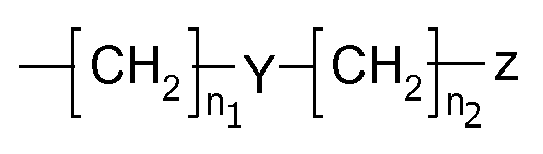 • n1 = 0 à 8 et n2 = 0 à 10 ; et• Y est choisi parmi : O, NH, S, Si, NR' ; et• Z est choisi parmi : CH3, NH2, SH, Cl, Br, I, Cl, groupement glycosidique, hydroxyl, acide, ether,ester, amide, NH-R', NR'-R"et dans lesquels :• R' est choisi parmi alkyl, aryl, alkylaryl, alkylamine, ether, ester, cétone, cycle ramifié, et• R" est choisi parmi : alkyl, aryl, alkylaryl, alkylamine.
 - Procédé selon l'une quelconque des revendications précédentes, caractérisé en ce qu'un ou plusieurs des silanes utilisés dans l'étape b), ou l'étape e), ou les deux, est choisi parmi les corps suivants :(3-(Trimethoxysilyl)propyl)diethylenetriamine, (3-chloropropyl)triethoxysilane, 1-[3-(trimethoxysilyl)]-propylurea, 3-[2-(2-Aminoethylamino)ethylamino]propyl-trimethoxysilane, 3-aminopropyl-diethoxy-methylsilane, 3-Aminopropylméthyldiéthoxysilane, 3-aminopropyltriéthoxysilane, 3-Aminopropyltriméthoxysilane, 3-Glycidyloxypropyltriéthoxysilane, 3-Mercaptopropyltriméthoxysilane, 3-Méthacryloxypropyltriméthoxysilane, Aminopropylméthyldiéthoxysilane, Bis(3-triéthoxysilylpropyl)amine, diethoxydimethylsilane, methyltriethoxysilane (MTES), Méthyltriméthoxysilane, N-(2-Aminoéthyl)-3-aminopropyltriméthoxysilane, Phényltriéthoxysilane, Propyltriméthoxysilane, Tétraéthoxysilane, tetraethylorthosilicate (TEOS), Tétraméthylorthosilicate, triethoxy(octyl)silane, Tris[3-(trimethoxysilyl)-propyl]isocyanurate, Vinyltriéthoxysilane, Vinyltriméthoxysilane.
- Procédé selon l'une quelconque des revendications précédentes, caractérisé en ce que l'étape b) comprend l'ajout de TEOS et d'au moins un deuxième silane.
- Procédé selon l'une quelconque des revendications précédentes, caractérisé en ce que dans l'étape e) au moins un silane ajouté est un silane fonctionnalisé comprenant une fonction amine ou chlorée.
- Procédé selon l'une quelconque des revendications précédentes, caractérisé en ce que le silane ajouté à l'étape e) est préhydrolysé.
- Procédé selon l'une quelconque des revendications précédentes, caractérisé en ce que l'étape a) comprend les sous étapes suivantes :a1)- chauffage entre 40°C et 70°C et de préférence à 50°C d'une phase aqueuse acide ;a2)- ajout d'agent tensio-actif ;a3)- ajout d'une phase huileuse comprenant le produit à encapsuler ;a4)- agitation pour former une émulsion huile dans eau.
- Procédé selon l'une quelconque des revendications précédentes, caractérisé en ce que dans l'étape a) la phase aqueuse présente un pH entre 2,5 et 4,5, et notamment de 3.
- Procédé selon l'une quelconque des revendications précédentes, caractérisé en ce que dans l'étape c), le pH est augmenté de 2 à 3 jusqu'à une valeur allant de 4,5 à 6 et notamment de 5,5.
- Procédé selon l'une quelconque des revendications précédentes, caractérisé en ce que l'étape c) est interrompue alors qu'il subsiste encore des groupes silanol.
- Procédé selon l'une quelconque des revendications précédentes, caractérisé en ce que dans l'étape d), le pH est descendu jusqu'à une valeur allant de 2,5 à 4,5, et notamment à 3,8.
- Procédé selon l'une quelconque des revendications précédentes, caractérisé en ce que dans l'étape e), le pH est augmenté jusqu'à une valeur allant de 4,5 à 7, et notamment de 5,5.
- Procédé selon l'une quelconque des revendications précédentes, caractérisé en ce que dans l'étape a) ou dans l'étape d) ou les deux l'acidification est obtenue à l'aide d'acide acétique ou d'acide formique ou des deux.
- Procédé selon l'une quelconque des revendications précédentes, caractérisé en ce que dans l'étape c) ou l'étape e) le pH est augmenté par ajout d'au moins une base, par exemple de l'ammoniaque, ou de la soude, ou du di-éthanol-amine, ou de l'éthanolamine.
- Procédé selon l'une quelconque des revendications précédentes, caractérisé en ce que les tensio-actifs comprennent un dérivé de cellulose.
Priority Applications (1)
| Application Number | Priority Date | Filing Date | Title |
|---|---|---|---|
| PL11773742T PL2618927T3 (pl) | 2010-09-24 | 2011-09-22 | Sposób wytwarzania funkcjonalizowanych i mało porowatych mikrokapsułek z polisiloksanu |
Applications Claiming Priority (2)
| Application Number | Priority Date | Filing Date | Title |
|---|---|---|---|
| FR1057708A FR2965190B1 (fr) | 2010-09-24 | 2010-09-24 | Procede de fabrication de microcapsules polysiloxane fonctionnalisees et peu poreuses. |
| PCT/FR2011/052192 WO2012038666A1 (fr) | 2010-09-24 | 2011-09-22 | Procédé de fabrication de microcapsules polysiloxane fonctionnalisées et peu poreuses. |
Publications (2)
| Publication Number | Publication Date |
|---|---|
| EP2618927A1 EP2618927A1 (fr) | 2013-07-31 |
| EP2618927B1 true EP2618927B1 (fr) | 2017-05-10 |
Family
ID=43982365
Family Applications (1)
| Application Number | Title | Priority Date | Filing Date |
|---|---|---|---|
| EP11773742.9A Not-in-force EP2618927B1 (fr) | 2010-09-24 | 2011-09-22 | Procédé de fabrication de microcapsules polysiloxane fonctionnalisées et peu poreuses. |
Country Status (8)
| Country | Link |
|---|---|
| US (1) | US9427719B2 (fr) |
| EP (1) | EP2618927B1 (fr) |
| JP (2) | JP2013538683A (fr) |
| ES (1) | ES2633138T3 (fr) |
| FR (1) | FR2965190B1 (fr) |
| PL (1) | PL2618927T3 (fr) |
| PT (1) | PT2618927T (fr) |
| WO (1) | WO2012038666A1 (fr) |
Families Citing this family (19)
| Publication number | Priority date | Publication date | Assignee | Title |
|---|---|---|---|---|
| BR112014013458B1 (pt) * | 2011-12-07 | 2020-09-24 | Givaudan Sa | Microcápsulas, processo de produção de tais microcápsulas e composições utilizando tais microcápsulas |
| US10046291B2 (en) | 2013-12-06 | 2018-08-14 | Kao Corporation | Method for manufacturing microcapsules |
| FR3023852A1 (fr) | 2014-07-21 | 2016-01-22 | Satisloh Ag | Support fibreux comportant des particules contenant un agent actif partiellement soluble dans l'eau, particules et methodes de fabrication des particules |
| JP6733322B2 (ja) * | 2016-06-03 | 2020-07-29 | 株式会社成和化成 | 化粧品基材および該化粧品基材を含有する化粧料 |
| MY199515A (en) * | 2017-04-04 | 2023-11-02 | Swimc Llc | Direct-to-metal coating composition |
| JP7486505B2 (ja) * | 2018-10-16 | 2024-05-17 | ファーマ イン シリカ ラボラトリーズ インコーポレイティド | シリカカプセル/スフェアの調製のためのチューニング可能な方法及びそれらの使用 |
| US11794161B1 (en) | 2018-11-21 | 2023-10-24 | Trucapsol, Llc | Reduced permeability microcapsules |
| US11571674B1 (en) | 2019-03-28 | 2023-02-07 | Trucapsol Llc | Environmentally biodegradable microcapsules |
| GB201904918D0 (en) * | 2019-04-08 | 2019-05-22 | Givaudan Sa | Improvements in or relating to organic compounds |
| US11542392B1 (en) | 2019-04-18 | 2023-01-03 | Trucapsol Llc | Multifunctional particle additive for enhancement of toughness and degradation in biodegradable polymers |
| GB201907053D0 (en) * | 2019-05-20 | 2019-07-03 | Givaudan Sa | Improvements in or relating to organic compounds |
| US11465117B2 (en) | 2020-01-30 | 2022-10-11 | Trucapsol Llc | Environmentally biodegradable microcapsules |
| JP7836796B2 (ja) * | 2021-02-24 | 2026-03-27 | 株式会社カネカ | 中空粒子及びその製造方法、並びに、中空粒子の利用 |
| US12302933B2 (en) | 2021-06-25 | 2025-05-20 | Trucapsol Llc | Flavor delivery system |
| US12187829B2 (en) | 2021-08-12 | 2025-01-07 | Trucapsol Llc | Environmentally biodegradable microcapsules |
| US11878280B2 (en) | 2022-04-19 | 2024-01-23 | Trucapsol Llc | Microcapsules comprising natural materials |
| US11904288B1 (en) | 2023-02-13 | 2024-02-20 | Trucapsol Llc | Environmentally biodegradable microcapsules |
| US11969491B1 (en) | 2023-02-22 | 2024-04-30 | Trucapsol Llc | pH triggered release particle |
| WO2025250899A1 (fr) * | 2024-05-31 | 2025-12-04 | Trustees Of Tufts College | Matériaux de silice à surface modifiée |
Family Cites Families (7)
| Publication number | Priority date | Publication date | Assignee | Title |
|---|---|---|---|---|
| DE19646110A1 (de) * | 1996-11-08 | 1998-05-14 | Bayer Ag | Mikrokapseln unter Verwendung von Iminooxadiazindion-Polyisocyanaten |
| DE69914515T2 (de) | 1998-02-06 | 2004-12-16 | Seiwa Kasei Co., Ltd., Higashi-Osaka | Mikrokapsel mit spezifischer Wand und Verfahren zur Herstellung |
| JP4562050B2 (ja) * | 1998-02-06 | 2010-10-13 | 株式会社成和化成 | 内包済み微小カプセルおよびその製造方法 |
| KR100524820B1 (ko) | 2003-06-17 | 2005-10-31 | 한국화학연구원 | 실리카 마이크로캡슐의 제조방법 |
| FR2926474B1 (fr) | 2008-01-21 | 2010-03-26 | Robert Blondel Ets | Procede d'encapsulation de produit lipophile ou hydrophile dans une membrane polysiloxane |
| GB0818864D0 (en) * | 2008-10-15 | 2008-11-19 | Dow Corning | Fabric and fibre conditioning additives |
| FR2937248B1 (fr) * | 2008-10-20 | 2011-04-08 | Microcapsules Technologies | Microcapsules ayant une enveloppe composee essentiellement d'homopolymeres ou de copolymeres silsesquioxane |
-
2010
- 2010-09-24 FR FR1057708A patent/FR2965190B1/fr not_active Expired - Fee Related
-
2011
- 2011-09-22 WO PCT/FR2011/052192 patent/WO2012038666A1/fr not_active Ceased
- 2011-09-22 PL PL11773742T patent/PL2618927T3/pl unknown
- 2011-09-22 JP JP2013529697A patent/JP2013538683A/ja active Pending
- 2011-09-22 ES ES11773742.9T patent/ES2633138T3/es active Active
- 2011-09-22 US US13/823,328 patent/US9427719B2/en not_active Expired - Fee Related
- 2011-09-22 PT PT117737429T patent/PT2618927T/pt unknown
- 2011-09-22 EP EP11773742.9A patent/EP2618927B1/fr not_active Not-in-force
-
2016
- 2016-07-08 JP JP2016136259A patent/JP2017001031A/ja active Pending
Non-Patent Citations (1)
| Title |
|---|
| None * |
Also Published As
| Publication number | Publication date |
|---|---|
| PT2618927T (pt) | 2017-07-24 |
| ES2633138T3 (es) | 2017-09-19 |
| PL2618927T3 (pl) | 2017-10-31 |
| JP2017001031A (ja) | 2017-01-05 |
| US20130181363A1 (en) | 2013-07-18 |
| FR2965190B1 (fr) | 2013-12-27 |
| JP2013538683A (ja) | 2013-10-17 |
| US9427719B2 (en) | 2016-08-30 |
| EP2618927A1 (fr) | 2013-07-31 |
| WO2012038666A1 (fr) | 2012-03-29 |
| FR2965190A1 (fr) | 2012-03-30 |
Similar Documents
| Publication | Publication Date | Title |
|---|---|---|
| EP2618927A1 (fr) | Procédé de fabrication de microcapsules polysiloxane fonctionnalisées et peu poreuses. | |
| EP3092069B1 (fr) | Procédé de fabrication de microcapsules à double paroi, microcapsules préparées par ce procédé et leur utilisation | |
| EP0403400B1 (fr) | Dispersion aqueuse à base d'huiles silicones fonctionnalisées pouvant réticuler en un élastomère par élimination de l'eau | |
| CA2665619C (fr) | Resine phenolique, procede de preparation, composition d'encollage pour fibres minerales et produits resultants | |
| EP3313797B1 (fr) | Compositions de primaire de revêtement antiadhésif et leurs procédés de préparation | |
| EP3082527B1 (fr) | Compositions aqueuses pour primaire de revêtement antiadhésif et leur procédé de préparation | |
| FR2500842A1 (fr) | Composition de caoutchouc de silicone pour l'enrobage d'elements photovoltaiques | |
| EP2349225A1 (fr) | Microcapsules ayant une enveloppe composée essentiellement d'homopolymères ou de copolymères silsesquioxane | |
| EP2950938B1 (fr) | Procede de recouvrement de surfaces | |
| WO2021023922A1 (fr) | Procédé de fabrication de microcapsules renfermant un actif lipophile, microcapsules préparées par ce procédé et leur utilisation | |
| FR3002745A1 (fr) | Particules de type cœur-ecorce a base de polydopamine et d'huile vegetale | |
| FR2601377A1 (fr) | Composition durcissable en un elastomere silicone, cet elastomere et conducteur electrique isole avec cet elastomere | |
| EP1884542B2 (fr) | Compositions reticulables a base d'organosilicium | |
| DE3780760T2 (de) | Verfahren zur herstellung von silikonmikrokapseln, geliert durch eine michael-additionsreaktion. | |
| JP2000225332A (ja) | 内包済み微小カプセルおよびその製造方法 | |
| EP0781305A1 (fr) | Dispersion silicone aqueuse, reticulable en un elastomere adherent, selon un mecanisme reactionnel de condensation | |
| EP2080552B1 (fr) | Procédé d'encapsulation de produit lipophile ou hydrophile dans une membrane polysiloxane. | |
| EP1254701A1 (fr) | Procédé de fabrication de microcapsules par polycondensation interfaciale avec de la polyoxyalkyleneamine et des chlorures d'acide | |
| EP1034209B1 (fr) | Dispersions silicones aqueuses, formulations notamment de peintures les comprenant et l'un de leur procede de preparation | |
| EP0204641B1 (fr) | Compositions organopolysiloxaniques contenant des polyacyloxysilanes et durcissant très rapidement à la chaleur en élastomères en présence d'accélérateur à groupement carboxy-2 carboxamide | |
| WO2022013250A1 (fr) | Procédé de synthèse de particules de silice poreuse nanométriques et submicroniques par chimie douce | |
| KR20050105567A (ko) | 아미노기를 함유한 알콕시실란 화합물을 이용한폴리실세스퀴옥산 구형 입자의 제조방법 및폴리실세스퀴옥산 구형 입자 | |
| CN120590630B (zh) | 一种高纯度支链硅油及其制备方法和应用 | |
| DE2059112C3 (de) | Bei Raumtemperatur vulkanisierbare Klebstoffe und überzüge | |
| FR3029529A1 (fr) | Encre sol-gel luminescente pour marquer un substrat, procede de realisation d'une encre sol-gel luminescente et procede de marquage d'un substrat par une encre sol-gel luminescente. |
Legal Events
| Date | Code | Title | Description |
|---|---|---|---|
| PUAI | Public reference made under article 153(3) epc to a published international application that has entered the european phase |
Free format text: ORIGINAL CODE: 0009012 |
|
| 17P | Request for examination filed |
Effective date: 20130328 |
|
| AK | Designated contracting states |
Kind code of ref document: A1 Designated state(s): AL AT BE BG CH CY CZ DE DK EE ES FI FR GB GR HR HU IE IS IT LI LT LU LV MC MK MT NL NO PL PT RO RS SE SI SK SM TR |
|
| DAX | Request for extension of the european patent (deleted) | ||
| GRAP | Despatch of communication of intention to grant a patent |
Free format text: ORIGINAL CODE: EPIDOSNIGR1 |
|
| STAA | Information on the status of an ep patent application or granted ep patent |
Free format text: STATUS: GRANT OF PATENT IS INTENDED |
|
| INTG | Intention to grant announced |
Effective date: 20161201 |
|
| GRAJ | Information related to disapproval of communication of intention to grant by the applicant or resumption of examination proceedings by the epo deleted |
Free format text: ORIGINAL CODE: EPIDOSDIGR1 |
|
| STAA | Information on the status of an ep patent application or granted ep patent |
Free format text: STATUS: REQUEST FOR EXAMINATION WAS MADE |
|
| GRAS | Grant fee paid |
Free format text: ORIGINAL CODE: EPIDOSNIGR3 |
|
| STAA | Information on the status of an ep patent application or granted ep patent |
Free format text: STATUS: GRANT OF PATENT IS INTENDED |
|
| GRAP | Despatch of communication of intention to grant a patent |
Free format text: ORIGINAL CODE: EPIDOSNIGR1 |
|
| INTC | Intention to grant announced (deleted) | ||
| INTG | Intention to grant announced |
Effective date: 20170309 |
|
| GRAA | (expected) grant |
Free format text: ORIGINAL CODE: 0009210 |
|
| STAA | Information on the status of an ep patent application or granted ep patent |
Free format text: STATUS: THE PATENT HAS BEEN GRANTED |
|
| AK | Designated contracting states |
Kind code of ref document: B1 Designated state(s): AL AT BE BG CH CY CZ DE DK EE ES FI FR GB GR HR HU IE IS IT LI LT LU LV MC MK MT NL NO PL PT RO RS SE SI SK SM TR |
|
| REG | Reference to a national code |
Ref country code: GB Ref legal event code: FG4D Free format text: NOT ENGLISH |
|
| REG | Reference to a national code |
Ref country code: AT Ref legal event code: REF Ref document number: 891717 Country of ref document: AT Kind code of ref document: T Effective date: 20170515 Ref country code: CH Ref legal event code: EP |
|
| REG | Reference to a national code |
Ref country code: IE Ref legal event code: FG4D Free format text: LANGUAGE OF EP DOCUMENT: FRENCH |
|
| REG | Reference to a national code |
Ref country code: DE Ref legal event code: R096 Ref document number: 602011037862 Country of ref document: DE |
|
| REG | Reference to a national code |
Ref country code: PT Ref legal event code: SC4A Ref document number: 2618927 Country of ref document: PT Date of ref document: 20170724 Kind code of ref document: T Free format text: AVAILABILITY OF NATIONAL TRANSLATION Effective date: 20170718 |
|
| REG | Reference to a national code |
Ref country code: RO Ref legal event code: EPE |
|
| REG | Reference to a national code |
Ref country code: NL Ref legal event code: MP Effective date: 20170510 |
|
| REG | Reference to a national code |
Ref country code: ES Ref legal event code: FG2A Ref document number: 2633138 Country of ref document: ES Kind code of ref document: T3 Effective date: 20170919 |
|
| REG | Reference to a national code |
Ref country code: LT Ref legal event code: MG4D |
|
| REG | Reference to a national code |
Ref country code: FR Ref legal event code: PLFP Year of fee payment: 7 |
|
| REG | Reference to a national code |
Ref country code: AT Ref legal event code: MK05 Ref document number: 891717 Country of ref document: AT Kind code of ref document: T Effective date: 20170510 |
|
| PG25 | Lapsed in a contracting state [announced via postgrant information from national office to epo] |
Ref country code: NO Free format text: LAPSE BECAUSE OF FAILURE TO SUBMIT A TRANSLATION OF THE DESCRIPTION OR TO PAY THE FEE WITHIN THE PRESCRIBED TIME-LIMIT Effective date: 20170810 Ref country code: HR Free format text: LAPSE BECAUSE OF FAILURE TO SUBMIT A TRANSLATION OF THE DESCRIPTION OR TO PAY THE FEE WITHIN THE PRESCRIBED TIME-LIMIT Effective date: 20170510 Ref country code: AT Free format text: LAPSE BECAUSE OF FAILURE TO SUBMIT A TRANSLATION OF THE DESCRIPTION OR TO PAY THE FEE WITHIN THE PRESCRIBED TIME-LIMIT Effective date: 20170510 Ref country code: LT Free format text: LAPSE BECAUSE OF FAILURE TO SUBMIT A TRANSLATION OF THE DESCRIPTION OR TO PAY THE FEE WITHIN THE PRESCRIBED TIME-LIMIT Effective date: 20170510 Ref country code: GR Free format text: LAPSE BECAUSE OF FAILURE TO SUBMIT A TRANSLATION OF THE DESCRIPTION OR TO PAY THE FEE WITHIN THE PRESCRIBED TIME-LIMIT Effective date: 20170811 Ref country code: FI Free format text: LAPSE BECAUSE OF FAILURE TO SUBMIT A TRANSLATION OF THE DESCRIPTION OR TO PAY THE FEE WITHIN THE PRESCRIBED TIME-LIMIT Effective date: 20170510 |
|
| PG25 | Lapsed in a contracting state [announced via postgrant information from national office to epo] |
Ref country code: BG Free format text: LAPSE BECAUSE OF FAILURE TO SUBMIT A TRANSLATION OF THE DESCRIPTION OR TO PAY THE FEE WITHIN THE PRESCRIBED TIME-LIMIT Effective date: 20170810 Ref country code: SE Free format text: LAPSE BECAUSE OF FAILURE TO SUBMIT A TRANSLATION OF THE DESCRIPTION OR TO PAY THE FEE WITHIN THE PRESCRIBED TIME-LIMIT Effective date: 20170510 Ref country code: RS Free format text: LAPSE BECAUSE OF FAILURE TO SUBMIT A TRANSLATION OF THE DESCRIPTION OR TO PAY THE FEE WITHIN THE PRESCRIBED TIME-LIMIT Effective date: 20170510 Ref country code: NL Free format text: LAPSE BECAUSE OF FAILURE TO SUBMIT A TRANSLATION OF THE DESCRIPTION OR TO PAY THE FEE WITHIN THE PRESCRIBED TIME-LIMIT Effective date: 20170510 Ref country code: IS Free format text: LAPSE BECAUSE OF FAILURE TO SUBMIT A TRANSLATION OF THE DESCRIPTION OR TO PAY THE FEE WITHIN THE PRESCRIBED TIME-LIMIT Effective date: 20170910 Ref country code: LV Free format text: LAPSE BECAUSE OF FAILURE TO SUBMIT A TRANSLATION OF THE DESCRIPTION OR TO PAY THE FEE WITHIN THE PRESCRIBED TIME-LIMIT Effective date: 20170510 |
|
| PG25 | Lapsed in a contracting state [announced via postgrant information from national office to epo] |
Ref country code: DK Free format text: LAPSE BECAUSE OF FAILURE TO SUBMIT A TRANSLATION OF THE DESCRIPTION OR TO PAY THE FEE WITHIN THE PRESCRIBED TIME-LIMIT Effective date: 20170510 Ref country code: SK Free format text: LAPSE BECAUSE OF FAILURE TO SUBMIT A TRANSLATION OF THE DESCRIPTION OR TO PAY THE FEE WITHIN THE PRESCRIBED TIME-LIMIT Effective date: 20170510 Ref country code: CZ Free format text: LAPSE BECAUSE OF FAILURE TO SUBMIT A TRANSLATION OF THE DESCRIPTION OR TO PAY THE FEE WITHIN THE PRESCRIBED TIME-LIMIT Effective date: 20170510 Ref country code: EE Free format text: LAPSE BECAUSE OF FAILURE TO SUBMIT A TRANSLATION OF THE DESCRIPTION OR TO PAY THE FEE WITHIN THE PRESCRIBED TIME-LIMIT Effective date: 20170510 |
|
| REG | Reference to a national code |
Ref country code: DE Ref legal event code: R097 Ref document number: 602011037862 Country of ref document: DE |
|
| PG25 | Lapsed in a contracting state [announced via postgrant information from national office to epo] |
Ref country code: SM Free format text: LAPSE BECAUSE OF FAILURE TO SUBMIT A TRANSLATION OF THE DESCRIPTION OR TO PAY THE FEE WITHIN THE PRESCRIBED TIME-LIMIT Effective date: 20170510 |
|
| PLBE | No opposition filed within time limit |
Free format text: ORIGINAL CODE: 0009261 |
|
| STAA | Information on the status of an ep patent application or granted ep patent |
Free format text: STATUS: NO OPPOSITION FILED WITHIN TIME LIMIT |
|
| 26N | No opposition filed |
Effective date: 20180213 |
|
| PG25 | Lapsed in a contracting state [announced via postgrant information from national office to epo] |
Ref country code: SI Free format text: LAPSE BECAUSE OF FAILURE TO SUBMIT A TRANSLATION OF THE DESCRIPTION OR TO PAY THE FEE WITHIN THE PRESCRIBED TIME-LIMIT Effective date: 20170510 |
|
| REG | Reference to a national code |
Ref country code: IE Ref legal event code: MM4A |
|
| PG25 | Lapsed in a contracting state [announced via postgrant information from national office to epo] |
Ref country code: LU Free format text: LAPSE BECAUSE OF NON-PAYMENT OF DUE FEES Effective date: 20170922 |
|
| PG25 | Lapsed in a contracting state [announced via postgrant information from national office to epo] |
Ref country code: IE Free format text: LAPSE BECAUSE OF NON-PAYMENT OF DUE FEES Effective date: 20170922 |
|
| REG | Reference to a national code |
Ref country code: FR Ref legal event code: PLFP Year of fee payment: 8 |
|
| PG25 | Lapsed in a contracting state [announced via postgrant information from national office to epo] |
Ref country code: MT Free format text: LAPSE BECAUSE OF FAILURE TO SUBMIT A TRANSLATION OF THE DESCRIPTION OR TO PAY THE FEE WITHIN THE PRESCRIBED TIME-LIMIT Effective date: 20170510 |
|
| PGFP | Annual fee paid to national office [announced via postgrant information from national office to epo] |
Ref country code: IT Payment date: 20180925 Year of fee payment: 8 Ref country code: RO Payment date: 20180827 Year of fee payment: 8 Ref country code: MC Payment date: 20180913 Year of fee payment: 8 Ref country code: FR Payment date: 20180924 Year of fee payment: 8 Ref country code: DE Payment date: 20180920 Year of fee payment: 8 |
|
| PGFP | Annual fee paid to national office [announced via postgrant information from national office to epo] |
Ref country code: GB Payment date: 20180919 Year of fee payment: 8 Ref country code: PL Payment date: 20180914 Year of fee payment: 8 Ref country code: CH Payment date: 20180919 Year of fee payment: 8 Ref country code: BE Payment date: 20180919 Year of fee payment: 8 Ref country code: TR Payment date: 20180914 Year of fee payment: 8 |
|
| PGFP | Annual fee paid to national office [announced via postgrant information from national office to epo] |
Ref country code: PT Payment date: 20180918 Year of fee payment: 8 |
|
| PGFP | Annual fee paid to national office [announced via postgrant information from national office to epo] |
Ref country code: ES Payment date: 20181022 Year of fee payment: 8 |
|
| PG25 | Lapsed in a contracting state [announced via postgrant information from national office to epo] |
Ref country code: HU Free format text: LAPSE BECAUSE OF FAILURE TO SUBMIT A TRANSLATION OF THE DESCRIPTION OR TO PAY THE FEE WITHIN THE PRESCRIBED TIME-LIMIT; INVALID AB INITIO Effective date: 20110922 |
|
| PG25 | Lapsed in a contracting state [announced via postgrant information from national office to epo] |
Ref country code: CY Free format text: LAPSE BECAUSE OF NON-PAYMENT OF DUE FEES Effective date: 20170510 |
|
| PG25 | Lapsed in a contracting state [announced via postgrant information from national office to epo] |
Ref country code: MK Free format text: LAPSE BECAUSE OF FAILURE TO SUBMIT A TRANSLATION OF THE DESCRIPTION OR TO PAY THE FEE WITHIN THE PRESCRIBED TIME-LIMIT Effective date: 20170510 |
|
| REG | Reference to a national code |
Ref country code: DE Ref legal event code: R119 Ref document number: 602011037862 Country of ref document: DE |
|
| PG25 | Lapsed in a contracting state [announced via postgrant information from national office to epo] |
Ref country code: RO Free format text: LAPSE BECAUSE OF NON-PAYMENT OF DUE FEES Effective date: 20190922 |
|
| PG25 | Lapsed in a contracting state [announced via postgrant information from national office to epo] |
Ref country code: MC Free format text: LAPSE BECAUSE OF NON-PAYMENT OF DUE FEES Effective date: 20190930 |
|
| REG | Reference to a national code |
Ref country code: CH Ref legal event code: PL |
|
| PG25 | Lapsed in a contracting state [announced via postgrant information from national office to epo] |
Ref country code: LI Free format text: LAPSE BECAUSE OF NON-PAYMENT OF DUE FEES Effective date: 20190930 Ref country code: PT Free format text: LAPSE BECAUSE OF NON-PAYMENT OF DUE FEES Effective date: 20200424 Ref country code: CH Free format text: LAPSE BECAUSE OF NON-PAYMENT OF DUE FEES Effective date: 20190930 Ref country code: DE Free format text: LAPSE BECAUSE OF NON-PAYMENT OF DUE FEES Effective date: 20200401 Ref country code: AL Free format text: LAPSE BECAUSE OF FAILURE TO SUBMIT A TRANSLATION OF THE DESCRIPTION OR TO PAY THE FEE WITHIN THE PRESCRIBED TIME-LIMIT Effective date: 20170510 |
|
| REG | Reference to a national code |
Ref country code: BE Ref legal event code: MM Effective date: 20190930 |
|
| PG25 | Lapsed in a contracting state [announced via postgrant information from national office to epo] |
Ref country code: BE Free format text: LAPSE BECAUSE OF NON-PAYMENT OF DUE FEES Effective date: 20190930 Ref country code: IT Free format text: LAPSE BECAUSE OF NON-PAYMENT OF DUE FEES Effective date: 20190922 |
|
| GBPC | Gb: european patent ceased through non-payment of renewal fee |
Effective date: 20190922 |
|
| PG25 | Lapsed in a contracting state [announced via postgrant information from national office to epo] |
Ref country code: GB Free format text: LAPSE BECAUSE OF NON-PAYMENT OF DUE FEES Effective date: 20190922 Ref country code: FR Free format text: LAPSE BECAUSE OF NON-PAYMENT OF DUE FEES Effective date: 20190930 |
|
| REG | Reference to a national code |
Ref country code: ES Ref legal event code: FD2A Effective date: 20210129 |
|
| PG25 | Lapsed in a contracting state [announced via postgrant information from national office to epo] |
Ref country code: ES Free format text: LAPSE BECAUSE OF NON-PAYMENT OF DUE FEES Effective date: 20190923 |
|
| PG25 | Lapsed in a contracting state [announced via postgrant information from national office to epo] |
Ref country code: PL Free format text: LAPSE BECAUSE OF NON-PAYMENT OF DUE FEES Effective date: 20190922 |
|
| PG25 | Lapsed in a contracting state [announced via postgrant information from national office to epo] |
Ref country code: TR Free format text: LAPSE BECAUSE OF NON-PAYMENT OF DUE FEES Effective date: 20190922 |