EP2604645B1 - Bürstenpolymer und medizinische Verwendung dafür - Google Patents
Bürstenpolymer und medizinische Verwendung dafür Download PDFInfo
- Publication number
- EP2604645B1 EP2604645B1 EP12193442.6A EP12193442A EP2604645B1 EP 2604645 B1 EP2604645 B1 EP 2604645B1 EP 12193442 A EP12193442 A EP 12193442A EP 2604645 B1 EP2604645 B1 EP 2604645B1
- Authority
- EP
- European Patent Office
- Prior art keywords
- polymer
- peg
- medical device
- pva
- brush
- Prior art date
- Legal status (The legal status is an assumption and is not a legal conclusion. Google has not performed a legal analysis and makes no representation as to the accuracy of the status listed.)
- Active
Links
Images



Classifications
-
- A—HUMAN NECESSITIES
- A61—MEDICAL OR VETERINARY SCIENCE; HYGIENE
- A61L—METHODS OR APPARATUS FOR STERILISING MATERIALS OR OBJECTS IN GENERAL; DISINFECTION, STERILISATION OR DEODORISATION OF AIR; CHEMICAL ASPECTS OF BANDAGES, DRESSINGS, ABSORBENT PADS OR SURGICAL ARTICLES; MATERIALS FOR BANDAGES, DRESSINGS, ABSORBENT PADS OR SURGICAL ARTICLES
- A61L27/00—Materials for grafts or prostheses or for coating grafts or prostheses
- A61L27/50—Materials characterised by their function or physical properties, e.g. injectable or lubricating compositions, shape-memory materials, surface modified materials
-
- A—HUMAN NECESSITIES
- A61—MEDICAL OR VETERINARY SCIENCE; HYGIENE
- A61L—METHODS OR APPARATUS FOR STERILISING MATERIALS OR OBJECTS IN GENERAL; DISINFECTION, STERILISATION OR DEODORISATION OF AIR; CHEMICAL ASPECTS OF BANDAGES, DRESSINGS, ABSORBENT PADS OR SURGICAL ARTICLES; MATERIALS FOR BANDAGES, DRESSINGS, ABSORBENT PADS OR SURGICAL ARTICLES
- A61L15/00—Chemical aspects of, or use of materials for, bandages, dressings or absorbent pads
- A61L15/16—Bandages, dressings or absorbent pads for physiological fluids such as urine or blood, e.g. sanitary towels, tampons
- A61L15/22—Bandages, dressings or absorbent pads for physiological fluids such as urine or blood, e.g. sanitary towels, tampons containing macromolecular materials
-
- A—HUMAN NECESSITIES
- A61—MEDICAL OR VETERINARY SCIENCE; HYGIENE
- A61L—METHODS OR APPARATUS FOR STERILISING MATERIALS OR OBJECTS IN GENERAL; DISINFECTION, STERILISATION OR DEODORISATION OF AIR; CHEMICAL ASPECTS OF BANDAGES, DRESSINGS, ABSORBENT PADS OR SURGICAL ARTICLES; MATERIALS FOR BANDAGES, DRESSINGS, ABSORBENT PADS OR SURGICAL ARTICLES
- A61L15/00—Chemical aspects of, or use of materials for, bandages, dressings or absorbent pads
- A61L15/16—Bandages, dressings or absorbent pads for physiological fluids such as urine or blood, e.g. sanitary towels, tampons
- A61L15/42—Use of materials characterised by their function or physical properties
-
- A—HUMAN NECESSITIES
- A61—MEDICAL OR VETERINARY SCIENCE; HYGIENE
- A61L—METHODS OR APPARATUS FOR STERILISING MATERIALS OR OBJECTS IN GENERAL; DISINFECTION, STERILISATION OR DEODORISATION OF AIR; CHEMICAL ASPECTS OF BANDAGES, DRESSINGS, ABSORBENT PADS OR SURGICAL ARTICLES; MATERIALS FOR BANDAGES, DRESSINGS, ABSORBENT PADS OR SURGICAL ARTICLES
- A61L27/00—Materials for grafts or prostheses or for coating grafts or prostheses
- A61L27/28—Materials for coating prostheses
- A61L27/34—Macromolecular materials
-
- A—HUMAN NECESSITIES
- A61—MEDICAL OR VETERINARY SCIENCE; HYGIENE
- A61L—METHODS OR APPARATUS FOR STERILISING MATERIALS OR OBJECTS IN GENERAL; DISINFECTION, STERILISATION OR DEODORISATION OF AIR; CHEMICAL ASPECTS OF BANDAGES, DRESSINGS, ABSORBENT PADS OR SURGICAL ARTICLES; MATERIALS FOR BANDAGES, DRESSINGS, ABSORBENT PADS OR SURGICAL ARTICLES
- A61L29/00—Materials for catheters, medical tubing, cannulae, or endoscopes or for coating catheters
- A61L29/08—Materials for coatings
- A61L29/085—Macromolecular materials
-
- A—HUMAN NECESSITIES
- A61—MEDICAL OR VETERINARY SCIENCE; HYGIENE
- A61L—METHODS OR APPARATUS FOR STERILISING MATERIALS OR OBJECTS IN GENERAL; DISINFECTION, STERILISATION OR DEODORISATION OF AIR; CHEMICAL ASPECTS OF BANDAGES, DRESSINGS, ABSORBENT PADS OR SURGICAL ARTICLES; MATERIALS FOR BANDAGES, DRESSINGS, ABSORBENT PADS OR SURGICAL ARTICLES
- A61L29/00—Materials for catheters, medical tubing, cannulae, or endoscopes or for coating catheters
- A61L29/14—Materials characterised by their function or physical properties, e.g. lubricating compositions
-
- A—HUMAN NECESSITIES
- A61—MEDICAL OR VETERINARY SCIENCE; HYGIENE
- A61L—METHODS OR APPARATUS FOR STERILISING MATERIALS OR OBJECTS IN GENERAL; DISINFECTION, STERILISATION OR DEODORISATION OF AIR; CHEMICAL ASPECTS OF BANDAGES, DRESSINGS, ABSORBENT PADS OR SURGICAL ARTICLES; MATERIALS FOR BANDAGES, DRESSINGS, ABSORBENT PADS OR SURGICAL ARTICLES
- A61L31/00—Materials for other surgical articles, e.g. stents, stent-grafts, shunts, surgical drapes, guide wires, materials for adhesion prevention, occluding devices, surgical gloves, tissue fixation devices
- A61L31/08—Materials for coatings
- A61L31/10—Macromolecular materials
-
- A—HUMAN NECESSITIES
- A61—MEDICAL OR VETERINARY SCIENCE; HYGIENE
- A61L—METHODS OR APPARATUS FOR STERILISING MATERIALS OR OBJECTS IN GENERAL; DISINFECTION, STERILISATION OR DEODORISATION OF AIR; CHEMICAL ASPECTS OF BANDAGES, DRESSINGS, ABSORBENT PADS OR SURGICAL ARTICLES; MATERIALS FOR BANDAGES, DRESSINGS, ABSORBENT PADS OR SURGICAL ARTICLES
- A61L31/00—Materials for other surgical articles, e.g. stents, stent-grafts, shunts, surgical drapes, guide wires, materials for adhesion prevention, occluding devices, surgical gloves, tissue fixation devices
- A61L31/14—Materials characterised by their function or physical properties, e.g. injectable or lubricating compositions, shape-memory materials, surface modified materials
-
- C—CHEMISTRY; METALLURGY
- C08—ORGANIC MACROMOLECULAR COMPOUNDS; THEIR PREPARATION OR CHEMICAL WORKING-UP; COMPOSITIONS BASED THEREON
- C08G—MACROMOLECULAR COMPOUNDS OBTAINED OTHERWISE THAN BY REACTIONS ONLY INVOLVING UNSATURATED CARBON-TO-CARBON BONDS
- C08G18/00—Polymeric products of isocyanates or isothiocyanates
- C08G18/06—Polymeric products of isocyanates or isothiocyanates with compounds having active hydrogen
- C08G18/08—Processes
- C08G18/10—Prepolymer processes involving reaction of isocyanates or isothiocyanates with compounds having active hydrogen in a first reaction step
-
- C—CHEMISTRY; METALLURGY
- C08—ORGANIC MACROMOLECULAR COMPOUNDS; THEIR PREPARATION OR CHEMICAL WORKING-UP; COMPOSITIONS BASED THEREON
- C08G—MACROMOLECULAR COMPOUNDS OBTAINED OTHERWISE THAN BY REACTIONS ONLY INVOLVING UNSATURATED CARBON-TO-CARBON BONDS
- C08G18/00—Polymeric products of isocyanates or isothiocyanates
- C08G18/06—Polymeric products of isocyanates or isothiocyanates with compounds having active hydrogen
- C08G18/28—Polymeric products of isocyanates or isothiocyanates with compounds having active hydrogen characterised by the compounds used containing active hydrogen
- C08G18/30—Low-molecular-weight compounds
- C08G18/32—Polyhydroxy compounds; Polyamines; Hydroxyamines
- C08G18/3203—Polyhydroxy compounds
- C08G18/3206—Polyhydroxy compounds aliphatic
-
- C—CHEMISTRY; METALLURGY
- C08—ORGANIC MACROMOLECULAR COMPOUNDS; THEIR PREPARATION OR CHEMICAL WORKING-UP; COMPOSITIONS BASED THEREON
- C08G—MACROMOLECULAR COMPOUNDS OBTAINED OTHERWISE THAN BY REACTIONS ONLY INVOLVING UNSATURATED CARBON-TO-CARBON BONDS
- C08G18/00—Polymeric products of isocyanates or isothiocyanates
- C08G18/06—Polymeric products of isocyanates or isothiocyanates with compounds having active hydrogen
- C08G18/28—Polymeric products of isocyanates or isothiocyanates with compounds having active hydrogen characterised by the compounds used containing active hydrogen
- C08G18/40—High-molecular-weight compounds
- C08G18/48—Polyethers
- C08G18/4833—Polyethers containing oxyethylene units
-
- C—CHEMISTRY; METALLURGY
- C08—ORGANIC MACROMOLECULAR COMPOUNDS; THEIR PREPARATION OR CHEMICAL WORKING-UP; COMPOSITIONS BASED THEREON
- C08G—MACROMOLECULAR COMPOUNDS OBTAINED OTHERWISE THAN BY REACTIONS ONLY INVOLVING UNSATURATED CARBON-TO-CARBON BONDS
- C08G18/00—Polymeric products of isocyanates or isothiocyanates
- C08G18/06—Polymeric products of isocyanates or isothiocyanates with compounds having active hydrogen
- C08G18/28—Polymeric products of isocyanates or isothiocyanates with compounds having active hydrogen characterised by the compounds used containing active hydrogen
- C08G18/40—High-molecular-weight compounds
- C08G18/48—Polyethers
- C08G18/4854—Polyethers containing oxyalkylene groups having four carbon atoms in the alkylene group
-
- C—CHEMISTRY; METALLURGY
- C08—ORGANIC MACROMOLECULAR COMPOUNDS; THEIR PREPARATION OR CHEMICAL WORKING-UP; COMPOSITIONS BASED THEREON
- C08G—MACROMOLECULAR COMPOUNDS OBTAINED OTHERWISE THAN BY REACTIONS ONLY INVOLVING UNSATURATED CARBON-TO-CARBON BONDS
- C08G18/00—Polymeric products of isocyanates or isothiocyanates
- C08G18/06—Polymeric products of isocyanates or isothiocyanates with compounds having active hydrogen
- C08G18/28—Polymeric products of isocyanates or isothiocyanates with compounds having active hydrogen characterised by the compounds used containing active hydrogen
- C08G18/40—High-molecular-weight compounds
- C08G18/48—Polyethers
- C08G18/487—Polyethers containing cyclic groups
- C08G18/4879—Polyethers containing cyclic groups containing aromatic groups
-
- C—CHEMISTRY; METALLURGY
- C08—ORGANIC MACROMOLECULAR COMPOUNDS; THEIR PREPARATION OR CHEMICAL WORKING-UP; COMPOSITIONS BASED THEREON
- C08G—MACROMOLECULAR COMPOUNDS OBTAINED OTHERWISE THAN BY REACTIONS ONLY INVOLVING UNSATURATED CARBON-TO-CARBON BONDS
- C08G18/00—Polymeric products of isocyanates or isothiocyanates
- C08G18/06—Polymeric products of isocyanates or isothiocyanates with compounds having active hydrogen
- C08G18/28—Polymeric products of isocyanates or isothiocyanates with compounds having active hydrogen characterised by the compounds used containing active hydrogen
- C08G18/65—Low-molecular-weight compounds having active hydrogen with high-molecular-weight compounds having active hydrogen
- C08G18/66—Compounds of groups C08G18/42, C08G18/48, or C08G18/52
- C08G18/6666—Compounds of group C08G18/48 or C08G18/52
- C08G18/667—Compounds of group C08G18/48 or C08G18/52 with compounds of group C08G18/32 or polyamines of C08G18/38
- C08G18/6674—Compounds of group C08G18/48 or C08G18/52 with compounds of group C08G18/32 or polyamines of C08G18/38 with compounds of group C08G18/3203
-
- C—CHEMISTRY; METALLURGY
- C08—ORGANIC MACROMOLECULAR COMPOUNDS; THEIR PREPARATION OR CHEMICAL WORKING-UP; COMPOSITIONS BASED THEREON
- C08G—MACROMOLECULAR COMPOUNDS OBTAINED OTHERWISE THAN BY REACTIONS ONLY INVOLVING UNSATURATED CARBON-TO-CARBON BONDS
- C08G18/00—Polymeric products of isocyanates or isothiocyanates
- C08G18/06—Polymeric products of isocyanates or isothiocyanates with compounds having active hydrogen
- C08G18/28—Polymeric products of isocyanates or isothiocyanates with compounds having active hydrogen characterised by the compounds used containing active hydrogen
- C08G18/67—Unsaturated compounds having active hydrogen
- C08G18/671—Unsaturated compounds having only one group containing active hydrogen
- C08G18/6735—Unsaturated compounds containing the unsaturation at least partially in a non-aromatic carbocyclic ring
-
- C—CHEMISTRY; METALLURGY
- C08—ORGANIC MACROMOLECULAR COMPOUNDS; THEIR PREPARATION OR CHEMICAL WORKING-UP; COMPOSITIONS BASED THEREON
- C08G—MACROMOLECULAR COMPOUNDS OBTAINED OTHERWISE THAN BY REACTIONS ONLY INVOLVING UNSATURATED CARBON-TO-CARBON BONDS
- C08G81/00—Macromolecular compounds obtained by interreacting polymers in the absence of monomers, e.g. block polymers
- C08G81/02—Macromolecular compounds obtained by interreacting polymers in the absence of monomers, e.g. block polymers at least one of the polymers being obtained by reactions involving only carbon-to-carbon unsaturated bonds
-
- A—HUMAN NECESSITIES
- A61—MEDICAL OR VETERINARY SCIENCE; HYGIENE
- A61L—METHODS OR APPARATUS FOR STERILISING MATERIALS OR OBJECTS IN GENERAL; DISINFECTION, STERILISATION OR DEODORISATION OF AIR; CHEMICAL ASPECTS OF BANDAGES, DRESSINGS, ABSORBENT PADS OR SURGICAL ARTICLES; MATERIALS FOR BANDAGES, DRESSINGS, ABSORBENT PADS OR SURGICAL ARTICLES
- A61L2300/00—Biologically active materials used in bandages, wound dressings, absorbent pads or medical devices
- A61L2300/40—Biologically active materials used in bandages, wound dressings, absorbent pads or medical devices characterised by a specific therapeutic activity or mode of action
- A61L2300/404—Biocides, antimicrobial agents, antiseptic agents
-
- A—HUMAN NECESSITIES
- A61—MEDICAL OR VETERINARY SCIENCE; HYGIENE
- A61L—METHODS OR APPARATUS FOR STERILISING MATERIALS OR OBJECTS IN GENERAL; DISINFECTION, STERILISATION OR DEODORISATION OF AIR; CHEMICAL ASPECTS OF BANDAGES, DRESSINGS, ABSORBENT PADS OR SURGICAL ARTICLES; MATERIALS FOR BANDAGES, DRESSINGS, ABSORBENT PADS OR SURGICAL ARTICLES
- A61L2420/00—Materials or methods for coatings medical devices
- A61L2420/02—Methods for coating medical devices
-
- Y—GENERAL TAGGING OF NEW TECHNOLOGICAL DEVELOPMENTS; GENERAL TAGGING OF CROSS-SECTIONAL TECHNOLOGIES SPANNING OVER SEVERAL SECTIONS OF THE IPC; TECHNICAL SUBJECTS COVERED BY FORMER USPC CROSS-REFERENCE ART COLLECTIONS [XRACs] AND DIGESTS
- Y10—TECHNICAL SUBJECTS COVERED BY FORMER USPC
- Y10T—TECHNICAL SUBJECTS COVERED BY FORMER US CLASSIFICATION
- Y10T428/00—Stock material or miscellaneous articles
- Y10T428/31504—Composite [nonstructural laminate]
- Y10T428/31511—Of epoxy ether
-
- Y—GENERAL TAGGING OF NEW TECHNOLOGICAL DEVELOPMENTS; GENERAL TAGGING OF CROSS-SECTIONAL TECHNOLOGIES SPANNING OVER SEVERAL SECTIONS OF THE IPC; TECHNICAL SUBJECTS COVERED BY FORMER USPC CROSS-REFERENCE ART COLLECTIONS [XRACs] AND DIGESTS
- Y10—TECHNICAL SUBJECTS COVERED BY FORMER USPC
- Y10T—TECHNICAL SUBJECTS COVERED BY FORMER US CLASSIFICATION
- Y10T428/00—Stock material or miscellaneous articles
- Y10T428/31504—Composite [nonstructural laminate]
- Y10T428/31551—Of polyamidoester [polyurethane, polyisocyanate, polycarbamate, etc.]
-
- Y—GENERAL TAGGING OF NEW TECHNOLOGICAL DEVELOPMENTS; GENERAL TAGGING OF CROSS-SECTIONAL TECHNOLOGIES SPANNING OVER SEVERAL SECTIONS OF THE IPC; TECHNICAL SUBJECTS COVERED BY FORMER USPC CROSS-REFERENCE ART COLLECTIONS [XRACs] AND DIGESTS
- Y10—TECHNICAL SUBJECTS COVERED BY FORMER USPC
- Y10T—TECHNICAL SUBJECTS COVERED BY FORMER US CLASSIFICATION
- Y10T428/00—Stock material or miscellaneous articles
- Y10T428/31504—Composite [nonstructural laminate]
- Y10T428/31551—Of polyamidoester [polyurethane, polyisocyanate, polycarbamate, etc.]
- Y10T428/31554—Next to second layer of polyamidoester
-
- Y—GENERAL TAGGING OF NEW TECHNOLOGICAL DEVELOPMENTS; GENERAL TAGGING OF CROSS-SECTIONAL TECHNOLOGIES SPANNING OVER SEVERAL SECTIONS OF THE IPC; TECHNICAL SUBJECTS COVERED BY FORMER USPC CROSS-REFERENCE ART COLLECTIONS [XRACs] AND DIGESTS
- Y10—TECHNICAL SUBJECTS COVERED BY FORMER USPC
- Y10T—TECHNICAL SUBJECTS COVERED BY FORMER US CLASSIFICATION
- Y10T428/00—Stock material or miscellaneous articles
- Y10T428/31504—Composite [nonstructural laminate]
- Y10T428/31551—Of polyamidoester [polyurethane, polyisocyanate, polycarbamate, etc.]
- Y10T428/31573—Next to addition polymer of ethylenically unsaturated monomer
- Y10T428/31576—Ester monomer type [polyvinylacetate, etc.]
-
- Y—GENERAL TAGGING OF NEW TECHNOLOGICAL DEVELOPMENTS; GENERAL TAGGING OF CROSS-SECTIONAL TECHNOLOGIES SPANNING OVER SEVERAL SECTIONS OF THE IPC; TECHNICAL SUBJECTS COVERED BY FORMER USPC CROSS-REFERENCE ART COLLECTIONS [XRACs] AND DIGESTS
- Y10—TECHNICAL SUBJECTS COVERED BY FORMER USPC
- Y10T—TECHNICAL SUBJECTS COVERED BY FORMER US CLASSIFICATION
- Y10T428/00—Stock material or miscellaneous articles
- Y10T428/31504—Composite [nonstructural laminate]
- Y10T428/31551—Of polyamidoester [polyurethane, polyisocyanate, polycarbamate, etc.]
- Y10T428/31573—Next to addition polymer of ethylenically unsaturated monomer
- Y10T428/3158—Halide monomer type [polyvinyl chloride, etc.]
-
- Y—GENERAL TAGGING OF NEW TECHNOLOGICAL DEVELOPMENTS; GENERAL TAGGING OF CROSS-SECTIONAL TECHNOLOGIES SPANNING OVER SEVERAL SECTIONS OF THE IPC; TECHNICAL SUBJECTS COVERED BY FORMER USPC CROSS-REFERENCE ART COLLECTIONS [XRACs] AND DIGESTS
- Y10—TECHNICAL SUBJECTS COVERED BY FORMER USPC
- Y10T—TECHNICAL SUBJECTS COVERED BY FORMER US CLASSIFICATION
- Y10T428/00—Stock material or miscellaneous articles
- Y10T428/31504—Composite [nonstructural laminate]
- Y10T428/31551—Of polyamidoester [polyurethane, polyisocyanate, polycarbamate, etc.]
- Y10T428/31573—Next to addition polymer of ethylenically unsaturated monomer
- Y10T428/31587—Hydrocarbon polymer [polyethylene, polybutadiene, etc.]
-
- Y—GENERAL TAGGING OF NEW TECHNOLOGICAL DEVELOPMENTS; GENERAL TAGGING OF CROSS-SECTIONAL TECHNOLOGIES SPANNING OVER SEVERAL SECTIONS OF THE IPC; TECHNICAL SUBJECTS COVERED BY FORMER USPC CROSS-REFERENCE ART COLLECTIONS [XRACs] AND DIGESTS
- Y10—TECHNICAL SUBJECTS COVERED BY FORMER USPC
- Y10T—TECHNICAL SUBJECTS COVERED BY FORMER US CLASSIFICATION
- Y10T428/00—Stock material or miscellaneous articles
- Y10T428/31504—Composite [nonstructural laminate]
- Y10T428/31855—Of addition polymer from unsaturated monomers
- Y10T428/31931—Polyene monomer-containing
-
- Y—GENERAL TAGGING OF NEW TECHNOLOGICAL DEVELOPMENTS; GENERAL TAGGING OF CROSS-SECTIONAL TECHNOLOGIES SPANNING OVER SEVERAL SECTIONS OF THE IPC; TECHNICAL SUBJECTS COVERED BY FORMER USPC CROSS-REFERENCE ART COLLECTIONS [XRACs] AND DIGESTS
- Y10—TECHNICAL SUBJECTS COVERED BY FORMER USPC
- Y10T—TECHNICAL SUBJECTS COVERED BY FORMER US CLASSIFICATION
- Y10T428/00—Stock material or miscellaneous articles
- Y10T428/31504—Composite [nonstructural laminate]
- Y10T428/31855—Of addition polymer from unsaturated monomers
- Y10T428/31938—Polymer of monoethylenically unsaturated hydrocarbon
Definitions
- the present disclosure relates to a functional polymer and its applications in medical devices, and particularly relates to a brush polymer and its applications in medical wound dressings and medical catheters.
- nonspecific protein adsorption in the body fluid may occur. If such nonspecific protein adsorption occurs at the injured area, a large amount of proteins will accumulate to the surface of a medical device or a biomedical material, and begin to attract adjacent cells of tissue to migrate onto surface of medical devices during the tissue regeneration. Then, a large amount of cells will continuously accumulate in the spacing between the wound dressing matrix and dressing matrix to form an alternate construction. This phenomenon is called wound adhesion.
- the proteins or bacteria in urine may adhere to the surface of a medical device or a biomedical material, and then the bacteria will proliferate to form a biofilm, and it probably causes infection and blockage due to "encrustation" of the medical device, such as a catheter.
- the proteins or bacteria in blood may adhere to the surface of a medical device or a biomedical material, and then the nonspecific proteins will induce adhesion and activation of platelet in blood to form a thrombus.
- Polyethylene glycol (PEG) is a well known hydrophilic material capable of inhibiting protein absorption and is typically chemically shifted onto a surface of a medical device or a biomedical material after the surface is activated by plasma, ozone, or corona.
- PEG Polyethylene glycol
- a multifunctional polymer material capable of being formed into a uniformly hydrophilic surface and inhibiting nonspecific protein or bacteria adsorption.
- the present disclosure provides a brush polymer, comprising: a linear polymer main chain; and brush structural side chains, comprising: a hydrophobic molecular branch, and a hydrophilic molecular branch and/or an anti-biofilm or an anti-microbial molecular branch, wherein the linear polymer main chain is conjugated to the brush structural side chains by covalent bonds formed between a hydroxyl group and a reactive functional group, wherein the reactive functional group comprises: isocyanate, carboxyl, or epoxy.
- the present disclosure also provides a method for modifying a medical device, comprising: providing the above described brush polymer; dissolving the brush polymer in a solution; and coating or dipping a medical device with the solution containing the brush polymer followed by a drying process, such that the brush polymer is attached to a surface of the medical device.
- the present disclosure further provides a medical device, wherein the medical device has the above described brush polymer adhered to its surface and/or mixed therein.
- the above-mentioned brush polymer is processed onto the surface of a medical device or a biomedical material by a method, such as coating, immersion, or the like, after dissolved in a solvent.
- a method such as coating, immersion, or the like
- the hydrophobic molecular branch of the side chain is then physically adhered to the surface of a medical device or a biomedical material.
- the brush polymer may be adhered to the surface of the medical device/ biomedical material or blended into the medical device/ biomedical material by melt blending or solvent blending.
- the hydrophilic molecular branch improves the hydrophilicity of the surface of the medical device/biomedical material as well as forms a spacial barrier on the surface of the medical device/biomedical material.
- the hydrophilic molecules are arranged into a cilia structure by the entropic repulsion of the hydrophilic molecules in order to repulse the approaching protein and therefore inhibit the protein adsorption.
- the brush polymer may have an anti-biofilm or the anti-microbial molecular branch conjugated therein by covalent bonding.
- the brush polymer may have antimicrobial activity and suppress bacterial growth and biofilm formation.
- the brush polymer of the present disclosure provided for medical devices or biomedical materials can be simply prepared in comparison with a conventional hydrophilic component. Moreover, the medical devices or biomedical materials have their surface hydrophilicity improved to decrease friction coefficient, inhibit protein adsorption, suppress attachment of cells of the living body, and prevent adhesion of the biological tissues.
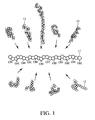
- FIG. 1 illustrates the structure of the brush polymer according to an embodiment of the present disclosure.
- the brush polymer of the present disclosure generally includes: (a) a linear polymer main chain; and (b) brush structural side chains.
- the linear polymer main chain (a) is for example, a hydroxyl-containing linear main chain 11.
- the brush structural side chains (b) include: (b1) a hydrophobic molecular branch 12, and (b2) a hydrophilic molecular branch 13 and/or an anti-biofilm or an anti-microbial molecular branch 14.
- the linear polymer main chain is conjugated to the brush structural side chains by covalent bonds formed between a hydroxyl group and a reactive functional group, wherein the reactive functional group may include: isocyanate, carboxyl, or epoxy.
- the hydrophobic molecular branch 12 may couple to a hydrophobic surface of a medical device by physical adhesion, and the hydrophilic molecular branch 13 may increase the hydrophilicity of surface of a medical device to decrease friction coefficient, inhibit protein adsorption, suppress attachment of cells of the living body, and prevent adhesion of the biological tissues.
- the anti-biofilm or the anti-microbial molecular branch 14 may have antimicrobial activity and suppress bacterial growth and biofilm formation.
- the brush polymer may further contain a free hydroxyl group for further chemical modifications to improve the practical utility of the brush polymer for other surface modifications of medical devices.
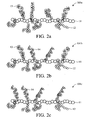
- Figure 2a illustrates a schematic view of a structure of the brush polymer 101a according to an embodiment of the present disclosure, wherein the brush polymer comprises: a linear polymer main chain 11; and brush structural side chains comprising a hydrophobic molecular branch 12, and a hydrophilic molecular branch 13.
- Figure 2b illustrates a schematic view of a structure of the brush polymer 101b according to an embodiment of the present disclosure, wherein the brush polymer comprises: a linear polymer main chain 11; and brush structural side chains comprising a hydrophobic molecular branch 12, a hydrophilic molecular branch 13 and/or an anti-biofilm or an anti-microbial molecular branch 14.
- Figure 2c illustrates a schematic view of a structure of the brush polymer 101c according to the embodiments of the present disclosure, wherein the brush polymer comprises: a linear polymer main chain 11; and brush structural side chains comprising a hydrophobic molecular branch 12 and/or an anti-biofilm or an anti-microbial molecular branch 14.
- FIG. 2d illustrates a schematic view of a structure of the brush polymer 101d according to the embodiments of the present disclosure.
- the brush polymer comprises: a linear polymer main chain 11; and brush structural side chains comprising a hydrophobic molecular branch 12, a hydrophilic molecular branch 13 and/or an anti-biofilm or an anti-microbial molecular branch 14, wherein the anti-biofilm or the anti-microbial molecular branch 14 conjugates onto the hydrophilic molecular branch 13 by a covalent bond, and the hydrophilic molecular branch 13 conjugates onto the linear polymer main chain 11.
- Figure 2d illustrates a schematic view of a composition of the brush polymer 101d according to the embodiments of the present disclosure.
- the brush polymer comprises: a linear polymer main chain 11; and brush structural side chains comprising a hydrophobic molecular branch 12, a hydrophilic molecular branch 13 and/or an anti-biofilm or an anti-microbial molecular branch 14, wherein the hydrophilic molecular branch 13 conjugates onto the anti-biofilm or the anti-microbial molecular branch 14 by a covalent bond, and the anti-biofilm or the anti-microbial molecular branch 14 conjugates onto the linear polymer main chain 11.
- the linear polymer main chain containing a hydroxyl group may be selected from a linear or a branched polymer which is either synthetic or natural, preferably a linear synthetic polymer.
- the linear synthetic polymer may include, but is not limited to: polyvinyl alcohol (PVA), polyvinyl acetate (PVAc), poly(vinyl alcohol-co-vinyl acetate), poly(ethylene vinyl-co-alcohol) (EVOH), polysaccharide, or combinations thereof.
- the natural polymer may be a polysaccharide including, but not limited to: hyaluronic acid, cellulose, dextran, chitin, chitosan, alginate, carrageenan, starch, pectin, gum Arabic, guar gum, pullulan, scleroglucan, gellan, chondroitin sulfate, heparin, keratin sulfate, derivatives thereof, or combinations thereof.
- the linear polymer main chain has a weight-average molecular weight of about 500 to 2000,000 dalton, preferably 5,000 to 1000,000.
- the hydrophobic molecular branch includes, but is not limited to: a polymer segment containing urethane repeating units, a polymer segment containing polypropylene oxide (PPO) repeating units, a polymer segment containing ethylene repeating units, a polymer segment containing propylene repeating units, a polymer segment containing styrene repeating units, a polymer segment containing sulfone repeating units, or combinations thereof, wherein the polymer segment containing urethane repeating units comprises: aliphatic polyurethane, aromatic polyurethane, or combinations thereof.
- the hydrophobic molecular branch has a weight-average molecular weight of about 500 to 50,000 dalton.
- the hydrophilic molecular branch includes, but is not limited to: polyethylene glycol (PEG), polyethylene oxide (PEO), polyvinylpyrrolidone (PVP), polyacrylic acid (PAA), polymethacrylic acid (PMA), or combinations thereof, preferably including: polyethylene glycol, (PEG), polyethylene oxide (PEO), polyvinylpyrrolidone (PVP), or combinations thereof, wherein the hydrophilic molecular branch has a weight-average molecular weight of about 500 to 100,000 dalton, preferably about 500 to 50,000 dalton, and more preferably about 500 to 30,000 dalton.
- an anti-biofilm or an anti-microbial molecular branch may further be conjugated thereto by chemical bonding or physical adhesion, wherein the anti-biofilm or the anti-microbial molecular branch includes, but is not limited to: farnesol, xylitol, lactoferrin, ethylene diamine tetraacetic acid (EDTA), gallium, PNAG-degrading enzyme, RNA-III inhibiting peptide, furanone C30, silver, iodine, zinc, copper, an antibiotic, medicine or combinations thereof, preferably includes farnesol or xylitol, and more preferably includes farnesol.
- farnesol farnesol
- xylitol lactoferrin
- EDTA ethylene diamine tetraacetic acid
- gallium PNAG-degrading enzyme
- RNA-III inhibiting peptide furanone C30, silver, iodine, zinc, copper, an antibiotic, medicine or combinations thereof, preferably
- the anti-biofilm or the anti-microbial molecular branch may be conjugated directly onto the linear polymer main chain by chemical bonding or physical adhesion, or be conjugated onto the hydrophilic molecular branch or the hydrophobic molecular branch by chemical bonding or physical adhesion.
- the hydrophobic molecular branch, the hydrophilic molecular branch, or an anti-biofilm or an anti-microbial molecular branch may be conjugated to the linear polymer main chain by a covalent bond to form the brush polymer through a reaction between its intrinsic or modified functional group (such as isocyanate, carboxyl, or epoxy) with main chain's functional group (such as hydroxyl).
- its intrinsic or modified functional group such as isocyanate, carboxyl, or epoxy
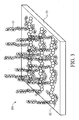
- the present disclosure also provides a method for modifying a surface 23 of a medical device, including: providing a brush polymer 101; dissolving the brush polymer 101 in a solution; and coating or dipping a medical device with the solution containing the brush polymer 101 followed by a drying process, such that the brush polymer 101 is attached to a surface 23 of the medical device to achieve surface modification.
- the hydrophobic molecular branch 12 of the brush polymer 101 is attached to the hydrophobic surface 23 of the medical device by physical adhesion, while the hydrophilic molecular branch is arranged in a brush structure.
- the solution for dissolving the brush polymer includes, but is not limited to: N,N-dimethylformamide (DMF), N,N-dimethylacetamide (DMAc), dimethyl sulfoxid (DMSO), tetrahydrofuran (THF), alcohols, ketones, water, or combinations thereof.
- Preferable solutions includes: N,N-dimethylacetamide (DMAc), ketones, water, or combinations thereof.
- More preferable solutions includes the following combinations: (a) butanone and water, (b) acetone and N,N-dimethylacetamide (DMAc), (c) acetone, water, and N,N-dimethylacetamide (DMAc), or (d) acetone, N,N-dimethylacetamide (DMAc), and dimethyl sulfoxid (DMSO).
- DMAc N,N-dimethylacetamide
- DMAc acetone, water, and N,N-dimethylacetamide
- DMSO dimethyl sulfoxid
- the solid content of the brush polymer dissolved in the solution is between 0.01 wt% and 50 wt%, preferably between 0.1 wt% and 30 w%t, more preferably between 0.1 wt% and 20 wt%.
- a medical device is coated or dipped with the solution containing the brush polymer followed by a drying process, such as by hot air or under vacuum, at a temperature of room temperature to 200°C, preferably 30°C to 100°C.
- the brush polymer may be blended with the polymer of the medical device.
- the method for blending the brush polymer with the polymer may include, but is not limited to: melt blending or solvent blending.
- the polymer includes, but is not limited to: thermoplastic polyurethane (TPU), polyurethane (PU), polyvinyl alcohol (PVA), polyethylene (PE), polypropylene (PP), polyvinyl chloride (PVC), polystyrene, polyvinyl acetate (PVAc), poly(vinyl alcohol-co-vinyl acetate, poly(ethylene vinyl-co-alcohol) (EVOH), polysulfone, poly ether sulfone, derivatives thereof or combinations thereof.
- TPU thermoplastic polyurethane
- PU polyurethane
- PVA polyvinyl alcohol
- PE polyethylene
- PP polypropylene
- PVC polyvinyl chloride
- PVC polystyrene
- PVAc poly(vinyl alcohol-co-vinyl acetate
- EVOH ethylene vinyl-co-alcohol
- polysulfone polyether sulfone, derivatives thereof or combinations thereof.
- the brush polymer may be dissolved in the solution to physically adhere to a hydrophobic material or a surface of a medical device; or it may be distributed in a hydrophobic material or an interior and an outer surface of a medical device by blending.
- the hydrophilic molecular branches of the brush polymer may form a steric hindrance on the surface, and arrange into a cilia structure due to entropic repulsion to expel the approaching protein molecules, thereby inhibiting the protein adsorption with the substrate, as well as promoting the hydrophilicity of a modified surface of a medical device to decrease friction coefficient, suppressing attachment of cells of the living body, preventing adhesion of the biological tissues, and inhibiting microbial adhesion.
- the anti-biofilm or the anti-microbial molecular branch may be conjugated to the side chain of the brush polymer by a covalent bond, such that the modified surface of the medical device or the biomedical material have antimicrobial activity and an ability to suppress bacterial growth and biofilm formation.
- the brush polymer may be distributed in a hydrophobic material or an interior and an outer surface of a medical device by physical adhesion or blending.
- the medical device may include, but is not limited to: a wound dressing, a catheter, a vascular access device, a hemodialyzer, a stent, a biliary stent, or an implantable device.
- the hydrophobic molecular branch prepolymer (A) was prepared as follows: 1.53 g of 1,4-butanediol (1,4-BDO) was placed in a round-bottom flask. 7.65 ml of an N,N-dimethylacetamide (DMAc) solvent was added thereto and slowly heated to a temperature of 60°C followed by thorough mixing. Then 8.42 g of diphenylmethane-4,4'-diisocyanate (MDI) was dissolved in 42.35 ml of N,N-dimethylacetamide (DMAc) and the solution was dripped slowly into the flask under nitrogen at a temperature of 50°C for 3 hours.
- DMAc N,N-dimethylacetamide
- the hydrophobic molecular branch prepolymer (B) was prepared as follows: 19.5 g of PolyTetramethylene-ether-Glycol (PTMEG1000) and 36 ml of N,N-dimethylacetamide (DMAc) were placed in a 150 ml two-neck flask. 2.325 g of diphenylmethane-4,4'-diisocyanate (MDI) was added into 4 ml of DMAc using an isobaric funnel. The mixture was uniformly mixed and heated to a temperature of 65°C for reaction for 2 hours to obtain the prepolymer.
- PTMEG1000 PolyTetramethylene-ether-Glycol
- DMAc N,N-dimethylacetamide
- MDI diphenylmethane-4,4'-diisocyanate
- the prepolymer was cooled to room temperature and C 8 -NCO and a catalyst were added into the prepolymer, uniformly mixed and heated followed by heating to a temperature of 65°C for reaction for 2 hours to obtain a mC 8 -prepolymer.
- modified polyphenylene oxide mPPO, weight-average molecular weight of 2,500
- DMAc N,N-dimethylacetamide
- MDI diphenylmethane-4,4'-diisocyanate
- 2 ml of DMAc 2 ml of DMAc
- N,N-dimethylacetamide (DMAc) solvent, 1,4-butanediol (BDO), and modified polyphenylene oxide (mPPO, weight-average molecular weight of 2,500) were dehydrated by a molecular sieve for one day in advance.
- the hydrophobic molecular branch prepolymer (D) was prepared as follows: 5.32 g of diphenylmethane-4,4'-diisocyanate (MDI) and 26.6 ml of DMAc were added into a 250 ml two-neck flask and stirred to dissolve at room temperature. 0.58 g of 1,4-butanediol (BDO) was added into 2.9 ml of DMAc with thorough mixing.
- MDI diphenylmethane-4,4'-diisocyanate
- BDO 1,4-butanediol
- the mixture of 1,4-butanediol (BDO) and DMAc was added into the MDI solution, and uniformly mixed and heated to a temperature of between 60 ⁇ 5°C for reaction for 3 hours to obtain a prepolymer.
- the weight-average molecular weight of the prepolymer measured by gel permeation chromatography (GPC) was about 1,447 dalton.
- the weight-average molecular weight of the mPPO 2,500 - b -PU 1,447 -NCO (mPPU-NCO) prepolymer measured by gel permeation chromatography (GPC) was about 4,923 dalton (mPPU 4,923 -NCO).
- N,N-dimethylacetamide (DMAc) solvent, 1,4-butanediol (BDO), and modified polyphenylene oxide (mPPO, weight-average molecular weight of 2,500) were dehydrated by a molecular sieve for one day in advance.
- the hydrophobic molecular branch prepolymer (E) was prepared as follows: 25.16 g of diphenylmethane-4,4'-diisocyanate (MDI) and 126 ml of DMAc were added into a 250 ml two-neck flask and stirred to dissolve at room temperature. 5.44 g of 1,4-butanediol (BDO) was added into 27 ml of DMAc with thorough mixing.
- MDI diphenylmethane-4,4'-diisocyanate
- BDO 1,4-butanediol
- the mixture of 1,4-butanediol (BDO) and DMAc was added into the MDI solution, and uniformly mixed and heated to a temperature of between 60 ⁇ 5°C for reaction for 3 hours to obtain a prepolymer.
- the weight-average molecular weight of the prepolymer measured by gel permeation chromatography (GPC) was about 4,581 dalton.
- the weight-average molecular weight of mPPO 2,500 - b -PU 4,581 -NCO (mPPU-NCO) prepolymer measured by gel permeation chromatography (GPC) was about 9,764 dalton (mPPU 9,764 -NCO).
- N,N-dimethylacetamide (DMAc) solvent was dehydrated by a molecular sieve for one day and modified PEG (mPEG, weight-average molecular weight of 5000) was subjected to vacuum drying for 24 hours in advance. 80 g of mPEG 5000 and 120 ml N,N-dimethylacetamide (DMAc) solvent were added in a 500 ml two-neck flask and preheated to 60°C for dissolution.
- DMAc N,N-dimethylacetamide
- MDI diphenylmethane-4,4'-diisocyanate
- Anti-microbial molecular branch prepolymer (A) (Farnesol-HDI-NCO)
- N,N-dimethylacetamide (DMAc) solvent was dehydrated by a molecular sieve for one day and 3,7,11-Trimethyl-2,6,10-dodecatrien-1-ol (Farnesol) was subjected to vacuum drying for 24 hours in advance. 5.818 g of Farnesol and 80 ml N,N-dimethylacetamide (DMAc) solvent were added in a 250 ml two-neck flask and stirred for dissolution.
- Anti-microbial molecular branch prepolymer (B) (Farnesol-IPDI-NCO)
- N,N-dimethylacetamide (DMAc) solvent was dehydrated by a molecular sieve for one day in advance. 0.72 g of Farnesol and 14 ml of N,N-dimethylacetamide (DMAc) solvent were added in a 500 ml two-neck flask and stirred for dissolution.
- DABCO 1,4-diazabicyclo-(2,2,2) octane
- Sn(Oct) 2 stannous octoate, Sn(II)
- B anti-microbial molecular branch prepolymer
- Anti-microbial molecular branch prepolymer (C) (Farnesol-b-PEG 10,000 -NCO)
- N,N-dimethylacetamide (DMAc) solvent and PEG diol were vacuum dried for 24 hours in advance. 30.76g of PEG diol 10,000 and 307.6 ml of DMAc were added into a 500 ml two-neck flask and dissolved.
- the anti-microbial molecular branch prepolymer (B), Farnesol-IPDI-NCO obtained from Example 8 was then added into the 500 ml two-neck flask with thorough mixing and heated to a temperature of 65°C for reaction for 16 hours to obtain the hydrophilic anti-microbial molecular branch prepolymer, Farnesol- b -PEG 10,000 -NCO.
- Anti -microbial molecular branch prepolymer (D) (Farnesol- b- PEG 2,000 -NCO)
- N,N-dimethylacetamide (DMAc) solvent and PEG diol were vacuum dried for 24 hours in advance. 15.47g of PEG diol 10,000 and 154.7 ml of DMAc were added into a 250 ml two-neck flask and dissolved.
- the anti-microbial molecular branch prepolymer (B), Farnesol-IPDI-NCO obtained from Example 8 is then added into the 500 ml two-neck flask with thorough mixing and heated to a temperature of 65°C for reaction for 16 hours to obtain the hydrophilic anti-microbial molecular branch prepolymer, Farnesol- b -PEG 2,000 -NCO.
- Example 11 Brush polymer (A) (PVA 10,000 -g-( 60% PEG 5,000 -co- 30% mC 8 PU))
- PVA polyvinyl alcohol
- DMAc N,N-dimethylacetamide
- hydrophobic molecular branch prepolymer (B) (mC8PU8,000-NCO) of Example 2 was added to the above mentioned PVA 10,000 -g-mPEG 5,000 product to obtain PVA 10,000 -g-(60%PEG 5,000 -co-30%mC 8 PU).
- the graft ratio (moles of single bond/ total moles of hydroxyl) of hydrophilic PEG molecular branch was 60%, and that of the hydrophobic molecular branch (mC 8 PU) was 30%.
- the brush polymer was purified by a process as follows: the reacted product was dialysed in N,N-dimethylacetamide (DMAc) solution by MWCO:12K-14K dialysis membrane for 2 days, then dialysed in dimethyl sulfoxide (DMSO) solution by MWCO:12K-14K dialysis membrane for 2 days, and finally dialysed in water by MWCO:12K-14K dialysis membrane for 2 day and then freeze dried.
- DMAc N,N-dimethylacetamide
- DMSO dimethyl sulfoxide
- Example 12 Brush polymer (B) (PVA 10,000 -g-( 60% PEG 5,000 -co- 10% mC 8 PU))
- PVA polyvinyl alcohol
- DMAc N,N-dimethylacetamide
- hydrophobic molecular branch prepolymer (B) (mC 8 PU 8,000 -NCO) of Example 2 was added to the above mentioned PVA 10,000 -g-mPEG 5,000 product, and the mixture was heated to a temperature of 60°C for carrying out a reaction for 3 hours to obtain PVA 10,000 -g-( 60% PEG 5,000 -co- 10% mC 8 PU).
- the graft ratio of the hydrophilic PEG molecular branch was 60%, and that of the hydrophobic molecular branch (mC 8 PU) was 10%.
- the brush polymer was purified by a process as follows: the reacted product was dialysed in N,N-dimethylacetamide (DMAc) solution by MWCO:12K-14K dialysis membrane for 2 days, then dialysed in dimethyl sulfoxide (DMSO) solution by MWCO:12K-14K dialysis membrane for 2 days, and finally dialysed in water by MWCO:12K-14K dialysis membrane for 2 day and then freeze dried.
- DMAc N,N-dimethylacetamide
- DMSO dimethyl sulfoxide
- Example 13 Brush polymer (C) (PVA 10,000 -g-( 30% PEG 5,000 -co- 10% mC 8 PU))
- PVA polyvinyl alcohol
- DMAc N,N-dimethylacetamide
- hydrophobic molecular branch prepolymer (B) (mC 8 PU 8,000 -NCO) of Example 2 was added to the above mentioned PVA 10,000 -g-mPEG 5,000 product, and the mixture was heated to a temperature of 60°C for carrying out a reaction for 3 hours to obtain PVA 10,000 -g-( 30% PEG 5,000 -co- 10% mC 8 PU).
- the graft ratio of the hydrophilic PEG molecular branch was 30%, and that of the hydrophobic molecular branch (mC 8 PU) was 10%.
- the brush polymer was purified by a process as follows: the reacted product was dialysed in N,N-dimethylacetamide (DMAc) solution by MWCO:12K-14K dialysis membrane for 2 days, then dialysed in dimethyl sulfoxide (DMSO) solution by MWCO:12K-14K dialysis membrane for 2 days, and finally dialysed in water by MWCO:12K-14K dialysis membrane for 2 day and then freeze dried.
- DMAc N,N-dimethylacetamide
- DMSO dimethyl sulfoxide
- Example 14 Brush polymer (D) (PVA 10,000 -g-( 60% PEG 5,000 -co- 10% mC 8 PU) same as Example 12
- PVA polyvinyl alcohol
- DMAc N,N-dimethylacetamide
- hydrophobic molecular branch prepolymer (B) (mC 8 PU 8,000 -NCO) of Example 2 was added to the above mentioned PVA 10,000 -g-mPEG 5,000 product, and the mixture was heated to a temperature of 60°C for carrying out a reaction for 3 hours to obtain PVA 10,000 -g-( 60% PEG 5,000 -co- 10% mC 8 PU).
- the graft ratio of the hydrophilic PEG molecular branch was 60%, and that of the hydrophobic molecular branch (mC 8 PU) was 10%.
- the brush polymer was purified by a process as follows: the reacted product was dialysed in N,N-dimethylacetamide (DMAc) solution by MWCO:12K-14K dialysis membrane for 2 days, then dialysed in dimethyl sulfoxide (DMSO) solution by MWCO:12K-14K dialysis membrane for 2 days, and finally dialysed in water by MWCO:12K-14K dialysis membrane for 2 day and then freeze dried.
- DMAc N,N-dimethylacetamide
- DMSO dimethyl sulfoxide
- Example 15 Brush polymer (E) (PVA 10,000 -g-( 90% PEG 5,000 -co- 10% mC 8 PU))
- PVA polyvinyl alcohol
- DMAc N,N-dimethylacetamide
- hydrophobic molecular branch prepolymer (B) (mC 8 PU 8,000 -NCO) of Example 2 was added to the above mentioned PVA 10,000 -g-mPEG 5,000 product, and the mixture was heated to a temperature of 60°C for carrying out a reaction for 3 hours to obtain PVA 10,000 -g-( 90% PEG 5,000 -co- 10% PU).
- the graft ratio of the hydrophilic PEG molecular branch was 90%, and that of the hydrophobic molecular branch (mC 8 PU) was 10%.
- the brush polymer was purified by a process as follows: the reacted product was dialysed in N,N-dimethylacetamide (DMAc) solution by MWCO:12K-14K dialysis membrane for 2 days, then dialysed in dimethyl sulfoxide (DMSO) solution by MWCO:12K-14K dialysis membrane for 2 days, and finally dialysed in water by MWCO:12K-14K dialysis membrane for 2 day and then freeze dried.
- DMAc N,N-dimethylacetamide
- DMSO dimethyl sulfoxide
- Example 16 Brush polymer (F) (PVA 10,000 -g-( 30% PEG 5,000 -co- 10% PPO))
- PVA polyvinyl alcohol
- DMAc N,N-dimethylacetamide
- hydrophobic molecular branch prepolymer (C) (mPPO 2500 -NCO) of Example 3 was added to the above mentioned PVA 10,000 -g-PEG 5,000 product to obtain PVA 10,000 -g-( 30% PEG 5,000 -co- 10% PPO).
- the graft ratio of the hydrophilic PEG molecular branch was 60%, and that of the hydrophobic molecular branch (mPPO) was 10%.
- the brush polymer was purified by a process as follows: the reacted product was dialysed in N,N-dimethylacetamide (DMAc) solution by MWCO:12K-14K dialysis membrane for 2 days, then dialysed in dimethyl sulfoxide (DMSO) solution by MWCO:12K-14K dialysis membrane for 2 days, and finally dialysed in water by MWCO:12K-14K dialysis membrane for 2 day and then freeze dried.
- DMAc N,N-dimethylacetamide
- DMSO dimethyl sulfoxide
- Example 17 Brush polymer (G) (PVA 10,000 -g-(PEG 5,000 -co-PPU 4,923 ))
- Step 1 Hydrophilic molecular branch prepolymer (mPEG 5,000 -NCO)
- N,N-dimethylacetamide (DMAc) solvent was dehydrated by a molecular sieve for one day in advance and modified PEG (mPEG, weight-average molecular weight of 5000) was subjected to vacuum drying for 24 hours.
- modified PEG mPEG, weight-average molecular weight of 5000
- mPEG 5000 and 856 ml of N,N-dimethylacetamide (DMAc) solvent were added in a 1000 ml two-neck flask and preheated to 60°C for dissolution.
- N,N-dimethylacetamide (DMAc) solvent, 1,4-butanediol (BDO), and modified polyphenylene oxide (mPPO, weight-average molecular weight of 2,500) were dehydrated by a molecular sieve for one day in advance.
- the prepolymer was prepared as follows: 5.32 g of diphenylmethane-4,4'-diisocyanate (MDI) and 26.6 ml of DMAc were added into a 250 ml two-neck flask and stirred to dissolve at room temperature. 0.58 g of 1,4-butanediol (BDO) was added into 2.9 ml of DMAc with thorough mixing.
- MDI diphenylmethane-4,4'-diisocyanate
- BDO 1,4-butanediol
- the mixture of 1,4-butanediol (BDO) and DMAc was added into the MDI solution with thorough mixing. Thereafter, the solution was heated to a temperature of between 60 ⁇ 5°C for reaction for 3 hours to obtain a prepolymer.
- the weight-average molecular weight of the prepolymer measured by gel permeation chromatography (GPC) was about 1,447 dalton.
- PVA polyvinyl alcohol
- DMAc N,N-dimethylacetamide
- the obtained solution was respectively added 338 ml, 300ml, and 263ml of the above mentioned hydrophilic molecular branch prepolymer, mPEG 5000 -NCO, and the mixture was heated to a temperature of between 60 ⁇ 5°C for reaction for 3 hours to obtain the product, PVA 10,000 -g-PEG 5,000 .
- hydrophobic molecular branch prepolymer mPPO 2500 -NCO
- PVA 10,000 -g-PEG 5,000 product and 0.054 g, 0.01 g, and 0.0016 g of 1,4-diazabicyclo-(2,2,2) octane (DABCO) and 0.027 g, 0.0054 g, and 0.0008 g of Sn(Oct) 2 were respectively added with thorough mixing.
- DABCO 1,4-diazabicyclo-(2,2,2) octane
- Sn(Oct) 2 were respectively added with thorough mixing.
- the solution was heated to 65°C for reaction for 16 hours to obtain PVA 10,000 -g-(PEG 5,000 -co-PPU).
- the graft ratios of the hydrophilic PEG molecular branch were 70%, 80%, and 90% respectively, and that of the hydrophobic molecular branch (mPPU) were 30%, 20%, and 10% respectively.
- the brush polymer was purified by a process as follows: the reacted product was dialysed in a dimethyl sulfoxide (DMSO) solution by MWCO : 25K dialysis membrane for 2 days, and finally dialysed in deionized water (DI water) by MWCO : 25K dialysis membrane for 2 day and then freeze dried.
- DMSO dimethyl sulfoxide
- DI water deionized water
- Example 18 Brush polymer (H) (PVA-g-(PEG 5,000 -co-PPU 9,764 ))
- Step 1 Hydrophilic molecular branch prepolymer (mPEG 5,000 -NCO)
- N,N-dimethylacetamide (DMAc) solvent was dehydrated by a molecular sieve for one day in advance, and modified PEG (mPEG, weight-average molecular weight of 5000) was subjected to vacuum drying for 24 hours.
- modified PEG mPEG, weight-average molecular weight of 5000
- 86.12 g of mPEG 5000 and 856 ml of N,N-dimethylacetamide (DMAc) solvent were added in a 1000 ml two-neck flask and preheated to 60°C for dissolution.
- N,N-dimethylacetamide (DMAc) solvent, 1,4-butanediol (BDO), and modified polyphenylene oxide (mPPO, weight-average molecular weight of 2,500) were dehydrated by a molecular sieve for one day in advance.
- the prepolymer was prepared as follows: 25.16 g of diphenylmethane-4,4'-diisocyanate (MDI) and 126 ml of DMAc were added into a 250 ml two-neck flask and stirred to dissolve at room temperature. 5.44 g of 1,4-butanediol (BDO) was added into 27 ml of DMAc with thorough mixing.
- PVA polyvinyl alcohol
- DMAc N,N-dimethylacetamide
- the obtained solution was respectively added 338 ml, 300ml, and 263ml of the above mentioned hydrophilic molecular branch prepolymer, mPEG 5000 -NCO, and the mixture was heated to a temperature of between 60 ⁇ 5°C for reaction for 3 hours to obtain the product, PVA 10,000 -g-PEG 5,000 .
- hydrophobic molecular branch prepolymer PPU 9,764 -NCO
- PVA 10,000 -g-PEG 5,000 product 0.01 g, 0.02 g, and 0.03 g of 1,4-diazabicyclo-(2,2,2) octane (DABCO) and 0.005 g, 0.01 g, and 0.015 g of Sn(Oct) 2 were respectively added with thorough mixing.
- DABCO 1,4-diazabicyclo-(2,2,2) octane
- Sn(Oct) 2 Sn(Oct) 2 were respectively added with thorough mixing.
- the solution was heated to 65°C for reaction for 16 hours to obtain PVA 10,000 -g-(PEG 5,000 -co-PPU 9,764 ).
- the graft ratios of the hydrophilic PEG molecular branch were 70%, 80%, and 90% respectively, and that of the hydrophobic molecular branch (mPPU) were 30%, 20%, and 10% respectively.
- the brush polymer was purified by a process as follows: the reacted product was dialysed in a dimethyl sulfoxide (DMSO) solution by MWCO : 25K dialysis membrane for 2 days, and finally dialysed in deionized water (DI water) by MWCO : 25K dialysis membrane for 2 day and then freeze dried.
- DMSO dimethyl sulfoxide
- DI water deionized water
- Step 1 Hydrophobic molecular branch prepolymer (PPO- b -PU-NCO, PPU-NCO)
- N,N-dimethylacetamide (DMAc) solvent, 1,4-butanediol (BDO), and modified polyphenylene oxide (mPPO, weight-average molecular weight of 2,500) were dehydrated by a molecular sieve for one day in advance.
- the prepolymer was prepared as follows: 5.32 g of diphenylmethane-4,4'-diisocyanate (MDI) and 26.6 ml of DMAc were added into a 250 ml two-neck flask and stirred to dissolve at room temperature. 0.58 g of 1,4-butanediol (BDO) was added into 2.9 ml of DMAc with thorough mixing.
- MDI diphenylmethane-4,4'-diisocyanate
- BDO 1,4-butanediol
- the mixture of 1,4-butanediol (BDO) and DMAc were added into the MDI solution with thorough mixing. Thereafter, the solution was heated to a temperature of between 60 ⁇ 5°C for reaction for 3 hours to obtain a prepolymer.
- the weight-average molecular weight of the prepolymer measured by gel permeation chromatography (GPC) was about 1,447 dalton.
- Step 2 Brush prepolymer (PVA-g-(Farnesol-co-PPU 4,923 ))
- N,N-dimethylacetamide (DMAc) solvent was dehydrated by a molecular sieve for one day in advance, and PVA was subjected to vacuum drying for 24 hours. 1 g of polyvinyl alcohol (PVA, weight-average molecular weight of 10,000) was added in to 2 ml of N,N-dimethylacetamide (DMAc) solvent in a 50 ml two-neck flask, and dissolved at a temperature of 60°C in a drying oven.
- PVA polyvinyl alcohol
- PVA-g-Farnesol prepolymer was added into the above mentioned 13.5 ml of hydrophobic molecular branch prepolymer and mixed uniformly. A heating reaction was then carried out for 6 hours to heat up the mixture to 60°C. PVA-g-(Farnesol-co-PPU 4,923 ) was obtained after the reaction. The graft ratios of the hydrophilic Farnesol molecular branch were 30% and 60% respectively, and that of the hydrophobic molecular branch (PU) were 30% and 30% respectively.
- Anti -microbial molecular branch prepolymer (D) (Farnesol- b- PEG 2,000 -NCO))
- Step 1 Hydrophobic molecular branch prepolymer (PPO- b -PU-NCO, PPU-NCO)
- N,N-dimethylacetamide (DMAc) solvent, 1,4-butanediol (BDO), and modified polyphenylene oxide (mPPO, weight-average molecular weight of 2,500) were dehydrated by a molecular sieve for one day.
- the prepolymer was prepared as follows: 4.86 g diphenylmethane-4,4'-diisocyanate (MDI) and 24.3 ml DMAc were added into a 250 ml two-neck flask and stirred to dissolve at room temperature. 0.34 g 1,4-butanediol (BDO) was added into 1.7 ml DMAc with thorough mixing.
- the mixture of 1,4-butanediol (BDO) and DMAc were added into the MDI solution with thorough mixing. Thereafter, the solution was heated to a temperature of between 60 ⁇ 5°C for reaction for 3 hours to obtain a prepolymer.
- the weight-average molecular weight of the prepolymer measured by gel permeation chromatography (GPC) was about 2,254 dalton.
- modified polyphenylene oxide mPPO, weight-average molecular weight of 2,500
- 28.83 ml DMAc were added into a 150 ml single-neck flask and shaken to dissolve at room temperature.
- the mPPO solution was placed in an isobaric funnel and dripped slowly into the 60 ⁇ 5°C prepolymer solution for about 30 minutes. After the addition of the mPPO solution was completed, the solution was stirred at 60 ⁇ 5 for 2.5 hours to obtain the PPU-NCO prepolymer.
- the weight-average molecular weight of the PPU-NCO prepolymer measured by gel permeation chromatography (GPC) was about 10,171 dalton.
- Step 2 Brush prepolymer (PVA-g-(Farnesol- b -PEG-co-PPU 10,171 ))
- N,N-dimethylacetamide (DMAc) solvent was dehydrated by a molecular sieve for one day in advance, and PVA was subjected to vacuum drying for 24 hours.
- the prepolymer was prepared as follows: 0.027 g polyvinyl alcohol (PVA, weight-average molecular weight of 10,000) was added in to 0.1 ml N,N-dimethylacetamide (DMAc) solvent in a 50 ml two-neck flask, and dissolved at a temperature of 60°C in a drying oven.
- the anti-microbial molecular branch prepolymer of Example 8 was added into 49.73 ml DMAc and stirred followed by added into the above mentioned PVA solution and mixed uniformly. Then, 0.0034 g 1,4-diazabicyclo-(2,2,2) octane (DABCO) and 0.0017 g Sn(Oct) 2 were added, followed by being heated-up to a temperature of between 65 ⁇ 5°C for reaction for 16 hours to obtain the prepolymer, PVA-g-(Farnesol- b -PEG 200 ).
- DABCO 1,4-diazabicyclo-(2,2,2) octane
- Sn(Oct) 2 0.0017 g Sn(Oct) 2
- N,N-dimethylacetamide (DMAc) solvent was dehydrated by a molecular sieve for one day in advance, and PVA was subjected to vacuum drying for 24 hours.
- the prepolymer was prepared as follows: 0.08 g polyvinyl alcohol (PVA, weight-average molecular weight of 10,000) was added in to 0.8 ml N,N-dimethylacetamide (DMAc) solvent in a 50 ml two-neck flask, and dissolved at a temperature of 60°C in a drying oven.
- the anti-microbial molecular branch prepolymer of Example 8 was added into 102.2 ml DMAc and stirred followed by added into the above mentioned PVA solution. Then, 0.0038 g 1,4-diazabicyclo-(2,2,2) octane (DABCO) and 0.0019 g Sn(Oct) 2 were added, followed by being heated-up to a temperature of between 65 ⁇ 5°C for reaction for 16 hours to obtain the prepolymer, PVA-g-(Farnesol- b -PEG 10,000 ).
- DABCO 1,4-diazabicyclo-(2,2,2) octane
- Sn(Oct) 2 0.0019 g Sn(Oct) 2
- the dipping procedure of a hydrophobic substrate in a brush polymer solution was as follows.
- the brush polymers of Examples 11-20 were agitated in solutions in accordance with the compositions and ratios listed in Table 1 for dissolution, and the resulting brush polymer solution was placed in a glass container.
- a hydrophobic film substrate thermoplastic polyurethane film, TPU film
- TPU film thermoplastic polyurethane film
- the un-coated thermoplastic polyurethane film (un-coated TPU film, aromatic type, hardness: shore 95A) and the film coated with the brush polymer solution of Example 20 were tested.
- the test samples had a thickness of 0.3 mm and a surface area of 5 cm ⁇ 2 cm (length ⁇ width).
- the samples were agitated, washed with DD water for 30 minutes, dipped in phosphate buffer saline (PBS buffer) at a temperature of 37°C for 3 days and 7 days, and then washed with DD water and air dried at room temperature for testing.
- the test samples had a thickness of 0.3 mm and a surface area of 5 cmx2 cm (lengthxwidth).
- thermoplastic polyurethane films (aromatic type, hardness: shore 85A and 65D) were coated with the brush polymer solution.
- the standard solution and the standard curve were prepared as follows: 2mg/ml fibrinogen solution was diluted to 50, 100, 250, 500, 1000, and 2000 ⁇ g/ml of fibrinogen solution with DD water. The standard solution was diluted to 5, 10, 25, 50, 100, and 200 ⁇ g/ml of fibrinogen solution with 1% sodium dodecyl sulfate (1% SDS), and then absorption of each solution was obtained with an ELISA reader for plotting the standard curve.
- 1% SDS sodium dodecyl sulfate
- the samples were cut into a size of 2 cmx 1.5 cm and put in a 15 ml centrifuge tube followed by adding 15 ml (4.5mg/ml) of fibrinogen solution respectively, and then placed in an incubator at a temperature of 37°C for 24 hours of adhesion. After 24 hours of adhesion, the fibrinogen solution was removed, and the samples were washed by dipping in PBS buffer twice. Then, each sample was placed in a microcentrifuge tube containing 5ml 1.0 % SDS and ultrasonicated for 20 minutes, and the SDS solution extracted fibrinogen was collected.
- thermoplastic polyurethane films (aromatic type, hardness: shore 85A and 65D) were coated with the brush polymer solution.
- each sample was placed in a 24-well plate and fixed by a glass tube and a nontoxic ring.
- Mice fibroblast L929 cells and human dermal fibroblast CCD-966SK cells solutions were respectively put in each well with a concentration of 1 ⁇ 10 5 cell/well and cultured in an incubator at a temperature of 37°C for 24 and 48 hours, followed by dipping in PBS for several times to wash each sample. Then, the adhered cells were fixed with 4% paraformaldehyde, and the samples were washed with PBS after removing paraformaldehyde.
- Anti-adhesion test was performed in vivo with Wistar rats (National Experimental Animals Production Center, Taiwan) by wound adhesion test.
- the area of the opened wound on the back of rat's body was 6cm ⁇ 5cm (full-thickness wound).
- each sample gauge; un-coated TPU dressing; TPU dressing coated Example (17); TPU dressing coated Example (18)
- was fixed onto the wound, and the surface was covered with a breathable waterproof dressing transparent TegadermTM, 3M HealthCare, Borken, Germany.
- the maximum strength required for peeling off the dressing and the total wound area were recorded by a tension tester with a steady tension speed of 4 mm/s.
- the microbial used here was Pseudomonas aeruginosa.
- the samples were illuminated by UV for 20 minutes for sterilization. The qualitative description of each sample was based on the relative bacterial growth level between control (Un-coated TPU film) and the films coated with the brush polymer solutions. The results are illustrated in Table 6. Table 7. Anti-microbial effect of sample Sample No.
Landscapes
- Health & Medical Sciences (AREA)
- Chemical & Material Sciences (AREA)
- Medicinal Chemistry (AREA)
- Chemical Kinetics & Catalysis (AREA)
- Polymers & Plastics (AREA)
- Organic Chemistry (AREA)
- Epidemiology (AREA)
- Life Sciences & Earth Sciences (AREA)
- Animal Behavior & Ethology (AREA)
- General Health & Medical Sciences (AREA)
- Public Health (AREA)
- Veterinary Medicine (AREA)
- Heart & Thoracic Surgery (AREA)
- Surgery (AREA)
- Vascular Medicine (AREA)
- Dermatology (AREA)
- Oral & Maxillofacial Surgery (AREA)
- Transplantation (AREA)
- Hematology (AREA)
- Engineering & Computer Science (AREA)
- Materials Engineering (AREA)
- Materials For Medical Uses (AREA)
- Other Resins Obtained By Reactions Not Involving Carbon-To-Carbon Unsaturated Bonds (AREA)
Claims (19)
- Bürstenpolymer (101, 101a, 101b, 101c, 101d und 101e), umfassend:(a) eine lineare Polymerhauptkette (11); und(b) Bürstenstruktur-Seitenketten, umfassend:wobei die lineare Polymerhauptkette (11) an die Bürstenstruktur-Seitenketten durch kovalente Bindungen konjugiert ist, die zwischen einer Hydroxylgruppe und einer reaktiven funktionellen Gruppe gebildet werden, wobei die reaktive funktionelle Gruppe umfasst: Isocyanat, Carboxyl oder Epoxy.(b1) eine hydrophobe Molekülverzweigung (12), und(b2) eine hydrophile Molekülverzweigung (13) und/oder eine Antibiofilm- oder eine antimikrobielle Molekülverzweigung (14),
- Bürstenpolymer nach Anspruch 1, wobei die lineare Polymerhauptkette (11) umfasst: Polyvinylalkohol (PVA), Polyvinylacetat (PVAc), Poly(vinylalkohol-co-vinylacetat), Poly(ethylenvinyl-co-alkohol) (EVOH), Polysaccharid oder Kombinationen davon.
- Bürstenpolymer nach einem der vorhergehenden Ansprüche, wobei die hydrophobe Molekülverzweigung (13) umfasst: ein Polymersegment, das Urethan-Wiederholungseinheiten enthält, ein Polymersegment, das Polypropylenoxid (PPO)-Wiederholungseinheiten enthält, ein Polymersegment, das Ethylen-Wiederholungseinheiten enthält, ein Polymersegment, das Propylen-Wiederholungseinheiten enthält, ein Polymersegment, das Styren-Wiederholungseinheiten enthält, ein Polymersegment, das Sulfon-Wiederholungseinheiten enthält, oder Kombinationen davon.
- Bürstenpolymer nach Anspruch 3, wobei das Polymersegment, das Urethan-Wiederholungseinheiten enthält, umfasst: aliphatisches Polyurethan, aromatisches Polyurethan oder Kombinationen davon.
- Bürstenpolymer nach einem der vorhergehenden Ansprüche, wobei die hydrophobe Molekülverzweigung (12) ein gewichtsgemitteltes Molekulargewicht von etwa 500 bis 50.000 Dalton aufweist.
- Bürstenpolymer nach einem der vorhergehenden Ansprüche, wobei die hydrophile Molekülverzweigung (13) umfasst: Polyethylenglycol (PEG), Polyethylenoxid (PEO), Polyvinylpyrrolidon (PVP), Polyacrylsäure (PAA), Polymethacrylsäure (PMA) oder Kombinationen davon.
- Bürstenpolymer nach einem der vorhergehenden Ansprüche, wobei die hydrophile Molekülverzweigung (13) umfasst: Polyethylenglycol (PEG), Polyethylenoxid (PEO), Polyvinylpyrrolidon (PVP) oder Kombinationen davon.
- Bürstenpolymer nach einem der vorhergehenden Ansprüche, wobei die hydrophile Molekülverzweigung (13) ein gewichtsgemitteltes Molekulargewicht von etwa 500 bis 100.000 Dalton aufweist.
- Bürstenpolymer nach einem der vorhergehenden Ansprüche, wobei die Antibiofilm- oder eine antimikrobielle Molekülverzweigung (14) umfasst: Farnesol, Xylitol, Lactoferrin, Ethylendiamintetraessigsäure (EDTA), Gallium, PNAG-abbauendes Enzym, RNA-III-inhibierendes Peptid, Furanon C30, Silber, Iod, Zink, Kupfer, ein Antibiotikum, Pharmakon oder Kombinationen davon.
- Bürstenpolymer nach einem der vorhergehenden Ansprüche, wobei die lineare Polymerhauptkette (11) an die Bürstenstruktur-Seitenketten durch eine kovalente Bindung konjugiert ist, die eine Urethan-Verknüpfung umfasst.
- Verfahren zum Modifizieren einer medizinischen Vorrichtung (23), umfassend:Bereitstellen eines Bürstenpolymers (101, 101a, 101b, 101c, 101d und 101e) nach Anspruch 1;Lösen des Bürstenpolymers (101, 101a, 101h, 101c, 101d und 101e) in einer Lösung; undBeschichten oder Tauchen einer medizinischen Vorrichtung (23) mit der bzw. in die Lösung, die das Bürstenpolymer (101, 101a, 101b, 101c, 101d und 101e) enthält, gefolgt von einem Trocknungsverfahren, so dass das Bürstenpolymer (101, 101a, 101b, 101c, 101d und 101e) an einer Oberfläche der medizinischen Vorrichtung (23) angebracht wird.
- Verfahren zum Modifizieren einer medizinischen Vorrichtung (23) nach Anspruch 11, wobei die Lösung umfasst: N,N-Dimethylformamid (DMF), N,N-Dimethylacetamid (DMAc), Dimethylsulfoxid (DMSO), Tetrahydrofuran (THF), Alkohole, Ketone, Wasser oder Kombinationen davon.
- Verfahren zum Modifizieren einer medizinischen Vorrichtung (23) nach den Ansprüchen 11 oder 12, wobei die Lösung umfasst: (a) Butanon und Wasser, (b) Aceton und N,N-Dimethylacetamid (DMAc), (c) Aceton, Wasser und N,N-Dimethylacetamid (DMAc) oder (d) Aceton, N,N-Dimethylacetamid (DMAc) und Dimethylsulfoxid (DMSO).
- Verfahren zum Modifizieren einer medizinischen Vorrichtung (23) nach einem der Ansprüche 11 bis 13, wobei das Trocknungsverfahren durch Heißluft oder unter Vakuum bei einer Temperatur von Raumtemperatur bis 200°C durchgeführt wird.
- Verfahren zum Modifizieren einer medizinischen Vorrichtung (23) nach einem der Ansprüche 11 bis 14, wobei die medizinische Vorrichtung (23) ein Polymer umfasst, umfassend: thermoplastisches Polyurethan (TPU), Polyurethan (PU), Polyvinylalkohol (PVA), Polyethylen (PE), Polypropylen (PP), Polyvinylchlorid (PVC), Polystyrol, Polyvinylacetat (PVAc), Poly(vinylalkohol-co-vinylacetat, Poly(ethylenvinyl-co-alkohol) (EVOH), Polysulfon, Polyethersulfon oder Kombinationen davon.
- Verfahren zum Modifizieren einer medizinischen Vorrichtung (23) nach einem der Ansprüche 11 bis 15, wobei die medizinische Vorrichtung (23) umfasst: einen Wundverband, einen Katheter, eine Gefäßzugangsvorrichtung, einen Blutdialysator, einen Stent, einen Gallenstent oder eine implantierbare Vorrichtung.
- Medizinische Vorrichtung (23), wobei die medizinische Vorrichtung (23) das Bürstenpolymer (101, 101a, 101b, 101c, 101d und 101e) nach Anspruch 1, angehaftet an ihrer Oberfläche und/oder beigemischt darin, aufweist.
- Medizinische Vorrichtung (23) nach Anspruch 17, wobei die medizinische Vorrichtung (23) ein Polymer umfasst, umfassend: thermoplastisches Polyurethan (TPU), Polyurethan (PU), Polyvinylalkohol (PVA), Polyethylen (PE), Polypropylen (PP), Polyvinylchlorid (PVC), Polystyrol, Polyvinylacetat (PVAc), Poly(vinylalkohol-co-vinylacetat), Poly(ethylenvinyl-co-alkohol) (EVOH), Polysulfon, Polyethersulfon oder Kombinationen davon.
- Medizinische Vorrichtung (23) nach den Ansprüchen 17 oder 18, wobei die medizinische Vorrichtung (23) ein Wundverband, ein Katheter, eine Gefäßzugangsvorrichtung, ein Blutdialysator, ein Stent, ein Gallenstent oder eine implantierbare Vorrichtung ist.
Applications Claiming Priority (1)
| Application Number | Priority Date | Filing Date | Title |
|---|---|---|---|
| TW100145724A TWI487543B (zh) | 2011-12-12 | 2011-12-12 | 梳狀結構高分子、醫療裝置的改質方法及醫療裝置 |
Publications (3)
| Publication Number | Publication Date |
|---|---|
| EP2604645A1 EP2604645A1 (de) | 2013-06-19 |
| EP2604645B1 true EP2604645B1 (de) | 2015-07-22 |
| EP2604645B8 EP2604645B8 (de) | 2015-11-18 |
Family
ID=47216126
Family Applications (1)
| Application Number | Title | Priority Date | Filing Date |
|---|---|---|---|
| EP12193442.6A Active EP2604645B8 (de) | 2011-12-12 | 2012-11-20 | Bürstenpolymer und medizinische Verwendung dafür |
Country Status (4)
| Country | Link |
|---|---|
| US (1) | US8968765B2 (de) |
| EP (1) | EP2604645B8 (de) |
| CN (1) | CN103159958B (de) |
| TW (1) | TWI487543B (de) |
Families Citing this family (14)
| Publication number | Priority date | Publication date | Assignee | Title |
|---|---|---|---|---|
| US8513305B2 (en) | 2007-05-14 | 2013-08-20 | Research Foundation Of State University Of New York | Induction of a physiological dispersion response in bacterial cells in a biofilm |
| TWI525110B (zh) * | 2014-12-24 | 2016-03-11 | 財團法人工業技術研究院 | 聚合物、及包含其之醫藥組合物 |
| CN105983140A (zh) * | 2015-02-11 | 2016-10-05 | 北京迪玛克医药科技有限公司 | 一种用于亲水润滑介入导管的涂料及其制备和使用方法 |
| TWI547308B (zh) * | 2015-06-10 | 2016-09-01 | 聚和國際股份有限公司 | 聚電解質膠囊的製備方法及所製得的聚電解質膠囊 |
| US20170027881A1 (en) * | 2015-07-30 | 2017-02-02 | Neil A. Shah | Composition and related methods for treatment of pilosebaceous diseases |
| US10733023B1 (en) * | 2015-08-06 | 2020-08-04 | D2Iq, Inc. | Oversubscription scheduling |
| CN105542183B (zh) * | 2016-03-09 | 2018-04-17 | 山东理工大学 | 一种聚乙烯醇‑聚己内酯‑聚三亚甲基碳酸酯双接枝共聚物胶束的制备方法 |
| US11395804B2 (en) | 2018-02-01 | 2022-07-26 | Texas Tech University System | Hydrophilic nanostructured membrane active antimicrobials with high activity, selectivity and biodegradability |
| US11541105B2 (en) | 2018-06-01 | 2023-01-03 | The Research Foundation For The State University Of New York | Compositions and methods for disrupting biofilm formation and maintenance |
| CN112469371B (zh) * | 2018-07-29 | 2024-08-16 | Bvw控股公司 | 胆道支架 |
| CN109177406A (zh) * | 2018-09-27 | 2019-01-11 | 安徽金日包装有限公司 | 一种bopp抗菌食品珠光膜及其制造方法 |
| CN109966551A (zh) * | 2019-03-15 | 2019-07-05 | 易敏(浙江)生物医药科技有限公司 | 一种生物粘合剂的新应用 |
| EP3952919A2 (de) | 2019-04-11 | 2022-02-16 | Northeastern University | Oligonukleotid-polymer-miktoarm-konjugate und verfahren zur verwendung |
| CN113045759A (zh) * | 2019-12-26 | 2021-06-29 | 财团法人工业技术研究院 | 接枝高分子与包含其的复合材料 |
Family Cites Families (15)
| Publication number | Priority date | Publication date | Assignee | Title |
|---|---|---|---|---|
| US6962979B1 (en) | 1995-03-14 | 2005-11-08 | Cohesion Technologies, Inc. | Crosslinkable biomaterial compositions containing hydrophobic and hydrophilic crosslinking agents |
| AU752942B2 (en) | 1998-04-13 | 2002-10-03 | Massachusetts Institute Of Technology | Comb copolymers for regulating cell-surface interactions |
| US6759388B1 (en) | 1999-04-29 | 2004-07-06 | Nanomimetics, Inc. | Surfactants that mimic the glycocalyx |
| US6254634B1 (en) | 1998-06-10 | 2001-07-03 | Surmodics, Inc. | Coating compositions |
| US6673053B2 (en) | 1999-05-07 | 2004-01-06 | Scimed Life Systems, Inc. | Hydrophilic lubricity coating for medical devices comprising an antiblock agent |
| US7682648B1 (en) * | 2000-05-31 | 2010-03-23 | Advanced Cardiovascular Systems, Inc. | Methods for forming polymeric coatings on stents |
| EP2289524A1 (de) | 2001-03-08 | 2011-03-02 | The Trustees Of The University Of Pennsylvania | Facial amphiphile Polymere als Infektionsschutzmittel |
| US6844028B2 (en) | 2001-06-26 | 2005-01-18 | Accelr8 Technology Corporation | Functional surface coating |
| CA2460928A1 (en) | 2001-09-18 | 2003-03-27 | Eidgenossische Technische Hochschule Zurich | Methods and apparatus for coating surfaces |
| US7645504B1 (en) | 2003-06-26 | 2010-01-12 | Advanced Cardiovascular Systems, Inc. | Coatings for implantable medical devices comprising hydrophobic and hydrophilic polymers |
| EP1754731A1 (de) * | 2005-08-16 | 2007-02-21 | Nederlandse Organisatie voor Toegepast-Natuuurwetenschappelijk Onderzoek TNO | Verfahren zur Veränderung von Materialoberflächen |
| US7795326B2 (en) | 2005-12-07 | 2010-09-14 | Rochal Industries, Llp | Conformable bandage and coating material |
| US8545865B2 (en) * | 2006-03-24 | 2013-10-01 | Boston Scientific Scimed, Inc. | Medical devices having polymer brushes |
| US8383156B2 (en) | 2007-04-30 | 2013-02-26 | Cordis Corporation | Coating for a medical device having an anti-thrombotic conjugate |
| US20090155335A1 (en) | 2007-12-05 | 2009-06-18 | Semprus Biosciences Corp. | Non-leaching non-fouling antimicrobial coatings |
-
2011
- 2011-12-12 TW TW100145724A patent/TWI487543B/zh active
- 2011-12-29 CN CN201110461181.4A patent/CN103159958B/zh active Active
-
2012
- 2012-08-27 US US13/595,561 patent/US8968765B2/en active Active
- 2012-11-20 EP EP12193442.6A patent/EP2604645B8/de active Active
Also Published As
| Publication number | Publication date |
|---|---|
| TWI487543B (zh) | 2015-06-11 |
| US8968765B2 (en) | 2015-03-03 |
| TW201323026A (zh) | 2013-06-16 |
| EP2604645B8 (de) | 2015-11-18 |
| CN103159958B (zh) | 2015-08-05 |
| CN103159958A (zh) | 2013-06-19 |
| EP2604645A1 (de) | 2013-06-19 |
| US20130149542A1 (en) | 2013-06-13 |
Similar Documents
| Publication | Publication Date | Title |
|---|---|---|
| US8968765B2 (en) | Brush polymer and medical use thereof | |
| Kamaci | Polyurethane-based hydrogels for controlled drug delivery applications | |
| Hwang et al. | Gentamicin-loaded wound dressing with polyvinyl alcohol/dextran hydrogel: gel characterization and in vivo healing evaluation | |
| Daemi et al. | A robust super-tough biodegradable elastomer engineered by supramolecular ionic interactions | |
| Li et al. | The preparation of hyaluronic acid grafted pullulan polymers and their use in the formation of novel biocompatible wound healing film | |
| US9339586B2 (en) | Modular bioresorbable or biomedical, biologically active supramolecular materials | |
| EP0842207B1 (de) | Fluoroligomere oberflächen modifizierungsmittel für polymere und die hieraus hergestellte gegenstände | |
| Ichi et al. | Controllable erosion time and profile in poly (ethylene glycol) hydrogels by supramolecular structure of hydrolyzable polyrotaxane | |
| Balcioglu et al. | Design of xylose-based semisynthetic polyurethane tissue adhesives with enhanced bioactivity properties | |
| de Souza et al. | Comparative study on complexes formed by chitosan and different polyanions: Potential of chitosan-pectin biomaterials as scaffolds in tissue engineering | |
| CN114040785A (zh) | 具有延长抗微生物活性的透明质酸水凝胶 | |
| WO2019008381A1 (en) | COMPOSITE MATERIAL AND METHOD FOR PRODUCING THE SAME | |
| Corneillie et al. | Polyethylene glycol‐containing polyurethanes for biomedical applications | |
| de Queiroz et al. | Physicochemical and antimicrobial properties of boron-complexed polyglycerol–chitosan dendrimers | |
| Hyung Park et al. | Hydrogels based on poly (ethylene oxide) and poly (tetramethylene oxide) or poly (dimethyl siloxane). III. In vivo biocompatibility and biostability | |
| Kucinska-Lipka et al. | Polyurethanes modified with natural polymers for medical application: Part I. Polyurethane/chitosan and polyurethane/collagen/Poliuretany modyfikowane polimerami naturalnymi do zastosowan medycznych: Cz. I. Poliuretan/chitozan ipoliuretan/kolagen | |
| Yu et al. | Miscibility, mechanical characteristic and platelet adhesion of 6-O-carboxymethylchitosan/polyurethane semi-IPN membranes | |
| Niu et al. | Hyaluronic acid-based ε-polylysine/polyurethane asymmetric sponge for enhanced wound healing | |
| CN107216435A (zh) | 一种新型的侧链为磷脂化聚乙二醇的聚(氨酯‑脲)及其制备方法 | |
| Lee et al. | Carboxymethyl cellulose/polyethylene glycol superabsorbent hydrogel crosslinked with citric acid | |
| CN114748703B (zh) | 一种亲水润滑抗凝水凝胶薄膜及其制备方法和应用 | |
| CN108546321B (zh) | 一种高生物相容性可生物降解骨填充材料的制备及应用 | |
| WO2007058539A2 (en) | Modular supramolecular materials for biomedical uses | |
| KUCIÑSKA-LIPKA et al. | Polyurethanes modified with natural polymers for medical application | |
| JPH066153B2 (ja) | 創傷被覆材 |
Legal Events
| Date | Code | Title | Description |
|---|---|---|---|
| PUAI | Public reference made under article 153(3) epc to a published international application that has entered the european phase |
Free format text: ORIGINAL CODE: 0009012 |
|
| AK | Designated contracting states |
Kind code of ref document: A1 Designated state(s): AL AT BE BG CH CY CZ DE DK EE ES FI FR GB GR HR HU IE IS IT LI LT LU LV MC MK MT NL NO PL PT RO RS SE SI SK SM TR |
|
| AX | Request for extension of the european patent |
Extension state: BA ME |
|
| 17P | Request for examination filed |
Effective date: 20130902 |
|
| RBV | Designated contracting states (corrected) |
Designated state(s): AL AT BE BG CH CY CZ DE DK EE ES FI FR GB GR HR HU IE IS IT LI LT LU LV MC MK MT NL NO PL PT RO RS SE SI SK SM TR |
|
| RIC1 | Information provided on ipc code assigned before grant |
Ipc: C08L 101/00 20060101ALI20141216BHEP Ipc: C09D 167/00 20060101ALI20141216BHEP Ipc: C08G 81/02 20060101AFI20141216BHEP Ipc: C09D 171/00 20060101ALI20141216BHEP Ipc: A61L 33/00 20060101ALI20141216BHEP Ipc: C09D 175/04 20060101ALI20141216BHEP Ipc: A61L 27/34 20060101ALI20141216BHEP |
|
| GRAP | Despatch of communication of intention to grant a patent |
Free format text: ORIGINAL CODE: EPIDOSNIGR1 |
|
| RIC1 | Information provided on ipc code assigned before grant |
Ipc: C08G 18/10 20060101ALI20150115BHEP Ipc: A61L 29/08 20060101ALI20150115BHEP Ipc: C08L 101/00 20060101ALI20150115BHEP Ipc: C09D 171/00 20060101ALI20150115BHEP Ipc: C08G 18/32 20060101ALI20150115BHEP Ipc: A61L 27/34 20060101ALI20150115BHEP Ipc: C08G 18/66 20060101ALI20150115BHEP Ipc: C09D 175/04 20060101ALI20150115BHEP Ipc: A61L 31/10 20060101ALI20150115BHEP Ipc: C08G 81/02 20060101AFI20150115BHEP Ipc: A61L 15/42 20060101ALI20150115BHEP Ipc: A61L 33/00 20060101ALI20150115BHEP Ipc: A61L 27/50 20060101ALI20150115BHEP Ipc: A61L 31/14 20060101ALI20150115BHEP Ipc: C08G 18/67 20060101ALI20150115BHEP Ipc: A61L 15/22 20060101ALI20150115BHEP Ipc: C08G 18/48 20060101ALI20150115BHEP Ipc: A61L 29/14 20060101ALI20150115BHEP Ipc: C09D 167/00 20060101ALI20150115BHEP |
|
| INTG | Intention to grant announced |
Effective date: 20150216 |
|
| GRAS | Grant fee paid |
Free format text: ORIGINAL CODE: EPIDOSNIGR3 |
|
| GRAA | (expected) grant |
Free format text: ORIGINAL CODE: 0009210 |
|
| AK | Designated contracting states |
Kind code of ref document: B1 Designated state(s): AL AT BE BG CH CY CZ DE DK EE ES FI FR GB GR HR HU IE IS IT LI LT LU LV MC MK MT NL NO PL PT RO RS SE SI SK SM TR |
|
| REG | Reference to a national code |
Ref country code: GB Ref legal event code: FG4D |
|
| REG | Reference to a national code |
Ref country code: CH Ref legal event code: EP |
|
| REG | Reference to a national code |
Ref country code: IE Ref legal event code: FG4D |
|
| REG | Reference to a national code |
Ref country code: AT Ref legal event code: REF Ref document number: 737886 Country of ref document: AT Kind code of ref document: T Effective date: 20150815 |
|
| REG | Reference to a national code |
Ref country code: DE Ref legal event code: R096 Ref document number: 602012008909 Country of ref document: DE |
|
| REG | Reference to a national code |
Ref country code: NL Ref legal event code: FP |
|
| REG | Reference to a national code |
Ref country code: AT Ref legal event code: MK05 Ref document number: 737886 Country of ref document: AT Kind code of ref document: T Effective date: 20150722 |
|
| REG | Reference to a national code |
Ref country code: LT Ref legal event code: MG4D |
|
| PG25 | Lapsed in a contracting state [announced via postgrant information from national office to epo] |
Ref country code: GR Free format text: LAPSE BECAUSE OF FAILURE TO SUBMIT A TRANSLATION OF THE DESCRIPTION OR TO PAY THE FEE WITHIN THE PRESCRIBED TIME-LIMIT Effective date: 20151023 Ref country code: NO Free format text: LAPSE BECAUSE OF FAILURE TO SUBMIT A TRANSLATION OF THE DESCRIPTION OR TO PAY THE FEE WITHIN THE PRESCRIBED TIME-LIMIT Effective date: 20151022 Ref country code: LV Free format text: LAPSE BECAUSE OF FAILURE TO SUBMIT A TRANSLATION OF THE DESCRIPTION OR TO PAY THE FEE WITHIN THE PRESCRIBED TIME-LIMIT Effective date: 20150722 Ref country code: FI Free format text: LAPSE BECAUSE OF FAILURE TO SUBMIT A TRANSLATION OF THE DESCRIPTION OR TO PAY THE FEE WITHIN THE PRESCRIBED TIME-LIMIT Effective date: 20150722 Ref country code: LT Free format text: LAPSE BECAUSE OF FAILURE TO SUBMIT A TRANSLATION OF THE DESCRIPTION OR TO PAY THE FEE WITHIN THE PRESCRIBED TIME-LIMIT Effective date: 20150722 |
|
| PG25 | Lapsed in a contracting state [announced via postgrant information from national office to epo] |
Ref country code: HR Free format text: LAPSE BECAUSE OF FAILURE TO SUBMIT A TRANSLATION OF THE DESCRIPTION OR TO PAY THE FEE WITHIN THE PRESCRIBED TIME-LIMIT Effective date: 20150722 Ref country code: AT Free format text: LAPSE BECAUSE OF FAILURE TO SUBMIT A TRANSLATION OF THE DESCRIPTION OR TO PAY THE FEE WITHIN THE PRESCRIBED TIME-LIMIT Effective date: 20150722 Ref country code: SE Free format text: LAPSE BECAUSE OF FAILURE TO SUBMIT A TRANSLATION OF THE DESCRIPTION OR TO PAY THE FEE WITHIN THE PRESCRIBED TIME-LIMIT Effective date: 20150722 Ref country code: RS Free format text: LAPSE BECAUSE OF FAILURE TO SUBMIT A TRANSLATION OF THE DESCRIPTION OR TO PAY THE FEE WITHIN THE PRESCRIBED TIME-LIMIT Effective date: 20150722 Ref country code: IS Free format text: LAPSE BECAUSE OF FAILURE TO SUBMIT A TRANSLATION OF THE DESCRIPTION OR TO PAY THE FEE WITHIN THE PRESCRIBED TIME-LIMIT Effective date: 20151122 Ref country code: PL Free format text: LAPSE BECAUSE OF FAILURE TO SUBMIT A TRANSLATION OF THE DESCRIPTION OR TO PAY THE FEE WITHIN THE PRESCRIBED TIME-LIMIT Effective date: 20150722 Ref country code: PT Free format text: LAPSE BECAUSE OF FAILURE TO SUBMIT A TRANSLATION OF THE DESCRIPTION OR TO PAY THE FEE WITHIN THE PRESCRIBED TIME-LIMIT Effective date: 20151123 Ref country code: ES Free format text: LAPSE BECAUSE OF FAILURE TO SUBMIT A TRANSLATION OF THE DESCRIPTION OR TO PAY THE FEE WITHIN THE PRESCRIBED TIME-LIMIT Effective date: 20150722 |
|
| REG | Reference to a national code |
Ref country code: DE Ref legal event code: R097 Ref document number: 602012008909 Country of ref document: DE |
|
| PG25 | Lapsed in a contracting state [announced via postgrant information from national office to epo] |
Ref country code: SK Free format text: LAPSE BECAUSE OF FAILURE TO SUBMIT A TRANSLATION OF THE DESCRIPTION OR TO PAY THE FEE WITHIN THE PRESCRIBED TIME-LIMIT Effective date: 20150722 Ref country code: CZ Free format text: LAPSE BECAUSE OF FAILURE TO SUBMIT A TRANSLATION OF THE DESCRIPTION OR TO PAY THE FEE WITHIN THE PRESCRIBED TIME-LIMIT Effective date: 20150722 Ref country code: DK Free format text: LAPSE BECAUSE OF FAILURE TO SUBMIT A TRANSLATION OF THE DESCRIPTION OR TO PAY THE FEE WITHIN THE PRESCRIBED TIME-LIMIT Effective date: 20150722 Ref country code: IT Free format text: LAPSE BECAUSE OF FAILURE TO SUBMIT A TRANSLATION OF THE DESCRIPTION OR TO PAY THE FEE WITHIN THE PRESCRIBED TIME-LIMIT Effective date: 20150722 Ref country code: EE Free format text: LAPSE BECAUSE OF FAILURE TO SUBMIT A TRANSLATION OF THE DESCRIPTION OR TO PAY THE FEE WITHIN THE PRESCRIBED TIME-LIMIT Effective date: 20150722 |
|
| PLBE | No opposition filed within time limit |
Free format text: ORIGINAL CODE: 0009261 |
|
| STAA | Information on the status of an ep patent application or granted ep patent |
Free format text: STATUS: NO OPPOSITION FILED WITHIN TIME LIMIT |
|
| PG25 | Lapsed in a contracting state [announced via postgrant information from national office to epo] |
Ref country code: RO Free format text: LAPSE BECAUSE OF FAILURE TO SUBMIT A TRANSLATION OF THE DESCRIPTION OR TO PAY THE FEE WITHIN THE PRESCRIBED TIME-LIMIT Effective date: 20150722 |
|
| 26N | No opposition filed |
Effective date: 20160425 |
|
| PG25 | Lapsed in a contracting state [announced via postgrant information from national office to epo] |
Ref country code: LU Free format text: LAPSE BECAUSE OF FAILURE TO SUBMIT A TRANSLATION OF THE DESCRIPTION OR TO PAY THE FEE WITHIN THE PRESCRIBED TIME-LIMIT Effective date: 20151120 Ref country code: MC Free format text: LAPSE BECAUSE OF FAILURE TO SUBMIT A TRANSLATION OF THE DESCRIPTION OR TO PAY THE FEE WITHIN THE PRESCRIBED TIME-LIMIT Effective date: 20150722 |
|
| REG | Reference to a national code |
Ref country code: CH Ref legal event code: PL |
|
| PG25 | Lapsed in a contracting state [announced via postgrant information from national office to epo] |
Ref country code: LI Free format text: LAPSE BECAUSE OF NON-PAYMENT OF DUE FEES Effective date: 20151130 Ref country code: CH Free format text: LAPSE BECAUSE OF NON-PAYMENT OF DUE FEES Effective date: 20151130 |
|
| REG | Reference to a national code |
Ref country code: IE Ref legal event code: MM4A |
|
| REG | Reference to a national code |
Ref country code: FR Ref legal event code: ST Effective date: 20160729 |
|
| PG25 | Lapsed in a contracting state [announced via postgrant information from national office to epo] |
Ref country code: SI Free format text: LAPSE BECAUSE OF FAILURE TO SUBMIT A TRANSLATION OF THE DESCRIPTION OR TO PAY THE FEE WITHIN THE PRESCRIBED TIME-LIMIT Effective date: 20150722 |
|
| PG25 | Lapsed in a contracting state [announced via postgrant information from national office to epo] |
Ref country code: IE Free format text: LAPSE BECAUSE OF NON-PAYMENT OF DUE FEES Effective date: 20151120 |
|
| PG25 | Lapsed in a contracting state [announced via postgrant information from national office to epo] |
Ref country code: FR Free format text: LAPSE BECAUSE OF NON-PAYMENT OF DUE FEES Effective date: 20151130 |
|
| PG25 | Lapsed in a contracting state [announced via postgrant information from national office to epo] |
Ref country code: BE Free format text: LAPSE BECAUSE OF FAILURE TO SUBMIT A TRANSLATION OF THE DESCRIPTION OR TO PAY THE FEE WITHIN THE PRESCRIBED TIME-LIMIT Effective date: 20150722 |
|
| PG25 | Lapsed in a contracting state [announced via postgrant information from national office to epo] |
Ref country code: HU Free format text: LAPSE BECAUSE OF FAILURE TO SUBMIT A TRANSLATION OF THE DESCRIPTION OR TO PAY THE FEE WITHIN THE PRESCRIBED TIME-LIMIT; INVALID AB INITIO Effective date: 20121120 Ref country code: BG Free format text: LAPSE BECAUSE OF FAILURE TO SUBMIT A TRANSLATION OF THE DESCRIPTION OR TO PAY THE FEE WITHIN THE PRESCRIBED TIME-LIMIT Effective date: 20150722 Ref country code: SM Free format text: LAPSE BECAUSE OF FAILURE TO SUBMIT A TRANSLATION OF THE DESCRIPTION OR TO PAY THE FEE WITHIN THE PRESCRIBED TIME-LIMIT Effective date: 20150722 |
|
| PG25 | Lapsed in a contracting state [announced via postgrant information from national office to epo] |
Ref country code: CY Free format text: LAPSE BECAUSE OF FAILURE TO SUBMIT A TRANSLATION OF THE DESCRIPTION OR TO PAY THE FEE WITHIN THE PRESCRIBED TIME-LIMIT Effective date: 20150722 |
|
| GBPC | Gb: european patent ceased through non-payment of renewal fee |
Effective date: 20161120 |
|
| PG25 | Lapsed in a contracting state [announced via postgrant information from national office to epo] |
Ref country code: MT Free format text: LAPSE BECAUSE OF FAILURE TO SUBMIT A TRANSLATION OF THE DESCRIPTION OR TO PAY THE FEE WITHIN THE PRESCRIBED TIME-LIMIT Effective date: 20150722 |
|
| PG25 | Lapsed in a contracting state [announced via postgrant information from national office to epo] |
Ref country code: GB Free format text: LAPSE BECAUSE OF NON-PAYMENT OF DUE FEES Effective date: 20161120 |
|
| PG25 | Lapsed in a contracting state [announced via postgrant information from national office to epo] |
Ref country code: TR Free format text: LAPSE BECAUSE OF FAILURE TO SUBMIT A TRANSLATION OF THE DESCRIPTION OR TO PAY THE FEE WITHIN THE PRESCRIBED TIME-LIMIT Effective date: 20150722 Ref country code: MK Free format text: LAPSE BECAUSE OF FAILURE TO SUBMIT A TRANSLATION OF THE DESCRIPTION OR TO PAY THE FEE WITHIN THE PRESCRIBED TIME-LIMIT Effective date: 20150722 |
|
| PG25 | Lapsed in a contracting state [announced via postgrant information from national office to epo] |
Ref country code: AL Free format text: LAPSE BECAUSE OF FAILURE TO SUBMIT A TRANSLATION OF THE DESCRIPTION OR TO PAY THE FEE WITHIN THE PRESCRIBED TIME-LIMIT Effective date: 20150722 |
|
| PGFP | Annual fee paid to national office [announced via postgrant information from national office to epo] |
Ref country code: NL Payment date: 20251126 Year of fee payment: 14 |
|
| PGFP | Annual fee paid to national office [announced via postgrant information from national office to epo] |
Ref country code: DE Payment date: 20251128 Year of fee payment: 14 |