EP2590776B1 - Verfahren zur stirnseitigen verbindung zweier stangen mittles elektronstrahlschweissens - Google Patents
Verfahren zur stirnseitigen verbindung zweier stangen mittles elektronstrahlschweissens Download PDFInfo
- Publication number
- EP2590776B1 EP2590776B1 EP11760738.2A EP11760738A EP2590776B1 EP 2590776 B1 EP2590776 B1 EP 2590776B1 EP 11760738 A EP11760738 A EP 11760738A EP 2590776 B1 EP2590776 B1 EP 2590776B1
- Authority
- EP
- European Patent Office
- Prior art keywords
- electron beam
- sleeve
- along
- welding
- eba
- Prior art date
- Legal status (The legal status is an assumption and is not a legal conclusion. Google has not performed a legal analysis and makes no representation as to the accuracy of the status listed.)
- Not-in-force
Links
- 238000010894 electron beam technology Methods 0.000 title claims description 70
- 238000003466 welding Methods 0.000 title claims description 60
- 238000000034 method Methods 0.000 title claims description 19
- 238000005304 joining Methods 0.000 title claims description 7
- 239000000463 material Substances 0.000 claims description 30
- 230000035515 penetration Effects 0.000 claims description 7
- 238000005520 cutting process Methods 0.000 claims description 3
- 230000007547 defect Effects 0.000 description 4
- 238000004519 manufacturing process Methods 0.000 description 3
- JXYWFNAQESKDNC-BTJKTKAUSA-N (z)-4-hydroxy-4-oxobut-2-enoate;2-[(4-methoxyphenyl)methyl-pyridin-2-ylamino]ethyl-dimethylazanium Chemical compound OC(=O)\C=C/C(O)=O.C1=CC(OC)=CC=C1CN(CCN(C)C)C1=CC=CC=N1 JXYWFNAQESKDNC-BTJKTKAUSA-N 0.000 description 2
- 239000000945 filler Substances 0.000 description 2
- 239000000155 melt Substances 0.000 description 2
- 230000007704 transition Effects 0.000 description 2
- 241000209035 Ilex Species 0.000 description 1
- 238000009825 accumulation Methods 0.000 description 1
- 238000001816 cooling Methods 0.000 description 1
- 230000001419 dependent effect Effects 0.000 description 1
- 238000011161 development Methods 0.000 description 1
- 230000018109 developmental process Effects 0.000 description 1
- 230000000694 effects Effects 0.000 description 1
- 238000003801 milling Methods 0.000 description 1
Images

Classifications
-
- B—PERFORMING OPERATIONS; TRANSPORTING
- B23—MACHINE TOOLS; METAL-WORKING NOT OTHERWISE PROVIDED FOR
- B23K—SOLDERING OR UNSOLDERING; WELDING; CLADDING OR PLATING BY SOLDERING OR WELDING; CUTTING BY APPLYING HEAT LOCALLY, e.g. FLAME CUTTING; WORKING BY LASER BEAM
- B23K15/00—Electron-beam welding or cutting
- B23K15/0046—Welding
-
- B—PERFORMING OPERATIONS; TRANSPORTING
- B23—MACHINE TOOLS; METAL-WORKING NOT OTHERWISE PROVIDED FOR
- B23K—SOLDERING OR UNSOLDERING; WELDING; CLADDING OR PLATING BY SOLDERING OR WELDING; CUTTING BY APPLYING HEAT LOCALLY, e.g. FLAME CUTTING; WORKING BY LASER BEAM
- B23K15/00—Electron-beam welding or cutting
- B23K15/0046—Welding
- B23K15/0053—Seam welding
- B23K15/006—Seam welding of rectilinear seams
-
- B—PERFORMING OPERATIONS; TRANSPORTING
- B23—MACHINE TOOLS; METAL-WORKING NOT OTHERWISE PROVIDED FOR
- B23K—SOLDERING OR UNSOLDERING; WELDING; CLADDING OR PLATING BY SOLDERING OR WELDING; CUTTING BY APPLYING HEAT LOCALLY, e.g. FLAME CUTTING; WORKING BY LASER BEAM
- B23K37/00—Auxiliary devices or processes, not specially adapted for a procedure covered by only one of the other main groups of this subclass
- B23K37/04—Auxiliary devices or processes, not specially adapted for a procedure covered by only one of the other main groups of this subclass for holding or positioning work
- B23K37/053—Auxiliary devices or processes, not specially adapted for a procedure covered by only one of the other main groups of this subclass for holding or positioning work aligning cylindrical work; Clamping devices therefor
- B23K37/0533—External pipe alignment clamps
-
- F—MECHANICAL ENGINEERING; LIGHTING; HEATING; WEAPONS; BLASTING
- F01—MACHINES OR ENGINES IN GENERAL; ENGINE PLANTS IN GENERAL; STEAM ENGINES
- F01D—NON-POSITIVE DISPLACEMENT MACHINES OR ENGINES, e.g. STEAM TURBINES
- F01D5/00—Blades; Blade-carrying members; Heating, heat-insulating, cooling or antivibration means on the blades or the members
- F01D5/02—Blade-carrying members, e.g. rotors
- F01D5/06—Rotors for more than one axial stage, e.g. of drum or multiple disc type; Details thereof, e.g. shafts, shaft connections
- F01D5/063—Welded rotors
-
- B—PERFORMING OPERATIONS; TRANSPORTING
- B23—MACHINE TOOLS; METAL-WORKING NOT OTHERWISE PROVIDED FOR
- B23K—SOLDERING OR UNSOLDERING; WELDING; CLADDING OR PLATING BY SOLDERING OR WELDING; CUTTING BY APPLYING HEAT LOCALLY, e.g. FLAME CUTTING; WORKING BY LASER BEAM
- B23K2101/00—Articles made by soldering, welding or cutting
- B23K2101/001—Turbines
-
- B—PERFORMING OPERATIONS; TRANSPORTING
- B23—MACHINE TOOLS; METAL-WORKING NOT OTHERWISE PROVIDED FOR
- B23K—SOLDERING OR UNSOLDERING; WELDING; CLADDING OR PLATING BY SOLDERING OR WELDING; CUTTING BY APPLYING HEAT LOCALLY, e.g. FLAME CUTTING; WORKING BY LASER BEAM
- B23K2101/00—Articles made by soldering, welding or cutting
- B23K2101/04—Tubular or hollow articles
- B23K2101/06—Tubes
-
- B—PERFORMING OPERATIONS; TRANSPORTING
- B23—MACHINE TOOLS; METAL-WORKING NOT OTHERWISE PROVIDED FOR
- B23K—SOLDERING OR UNSOLDERING; WELDING; CLADDING OR PLATING BY SOLDERING OR WELDING; CUTTING BY APPLYING HEAT LOCALLY, e.g. FLAME CUTTING; WORKING BY LASER BEAM
- B23K37/00—Auxiliary devices or processes, not specially adapted for a procedure covered by only one of the other main groups of this subclass
- B23K37/04—Auxiliary devices or processes, not specially adapted for a procedure covered by only one of the other main groups of this subclass for holding or positioning work
- B23K37/053—Auxiliary devices or processes, not specially adapted for a procedure covered by only one of the other main groups of this subclass for holding or positioning work aligning cylindrical work; Clamping devices therefor
-
- F—MECHANICAL ENGINEERING; LIGHTING; HEATING; WEAPONS; BLASTING
- F05—INDEXING SCHEMES RELATING TO ENGINES OR PUMPS IN VARIOUS SUBCLASSES OF CLASSES F01-F04
- F05D—INDEXING SCHEME FOR ASPECTS RELATING TO NON-POSITIVE-DISPLACEMENT MACHINES OR ENGINES, GAS-TURBINES OR JET-PROPULSION PLANTS
- F05D2230/00—Manufacture
- F05D2230/20—Manufacture essentially without removing material
- F05D2230/23—Manufacture essentially without removing material by permanently joining parts together
- F05D2230/232—Manufacture essentially without removing material by permanently joining parts together by welding
- F05D2230/233—Electron beam welding
-
- F—MECHANICAL ENGINEERING; LIGHTING; HEATING; WEAPONS; BLASTING
- F05—INDEXING SCHEMES RELATING TO ENGINES OR PUMPS IN VARIOUS SUBCLASSES OF CLASSES F01-F04
- F05D—INDEXING SCHEME FOR ASPECTS RELATING TO NON-POSITIVE-DISPLACEMENT MACHINES OR ENGINES, GAS-TURBINES OR JET-PROPULSION PLANTS
- F05D2240/00—Components
- F05D2240/60—Shafts
Definitions
- the invention relates to a method for the frontal connection of a first rod to a second rod by means of electron beam welding according to the preamble of claim 1 (see, for example, US Pat. US 4,063,062 ).
- shaft pieces are often butt-end blunt welded together by means of a Elektronenstrahlsch spaapparates without further filler material, the two juxtaposed rod pieces in the region of the abutting ends by means of an entering into the joint electron beam to a melt be brought, which results after cooling in a connection.
- the main difficulty of an electron beam welded radial seam in a shaft or other rod material is the production of the defect-free seam beginning and the seam end. Under the beginning of the seam is to be understood the Einfädel Scheme of the electron beam and below the seam end of the Ausfädel Kunststoff the electron beam from the material.
- the invention has the object to improve the quality of the weld described above without complicating the control of the electron beam additionally complicated.
- the US 4,063,062 describes a conventional electronic beam welding of round shaft sections end to end, wherein a Einfädel Suite and a Ausfädel Suite disturb the homogeneity of the weld.
- the wrapping according to the invention of a joining zone of the two adjoining ends of the connecting rods to be connected by means of a sleeve with the threading and the Ausfädel Stud the electron beam outside of the material actually to be joined makes it possible to produce a completely homogeneous material structure in the joining zone of the actually connected parts.
- the method according to the invention also differs from the state of the art in that actually, as originally intended, only two components are connected to one another, but rather three components are connected to one another by the electron beam welding.
- the sleeve has an inner contour which is adapted to the outer contour of the rods in the region of the weld.
- the manufacture of a fit on the sleeve relative to the two rod ends is useful in the accuracy range of +/- 0,1mm related to the diameter.
- the sleeve has a parting line, which is arranged such that the sleeve can be placed around the profiles of the rods.
- the sleeve may have a rectangular outer cross section.
- the rectangular outer cross-section also has the advantage that in a direction of advance of the electron beam apparatus parallel to the surface of the sleeve, the penetration depth of the electron beam is assumed to be constant, resulting in a homogeneous material structure at the weld.
- the sleeve in the region of the joining zone expediently consists of the same material as the two rods to be joined, at least in the region of the weld, so that a possible material transition between the three parts involved results in a homogeneous material structure in the region of the joining zone or weld.
- a possible lack of material in the joining zone for example, by a minimally remaining axial gap in the region of the two rod ends, which are to be joined together - be compensated by the then available as a filler material of the sleeve.
- a removal of the sleeve is preferably carried out by cutting, in the case of the wave simply by over-turning the weld.
- the electron beam can guide the shaft cross section or rod cross section through a simple electron beam control from left to right or vice versa along the welding point.
- the electron beam end always remains in the sleeve material, if the sleeve material is formed sufficiently thick enough in the direction of the penetration depth of the electron beam.
- the threading area and the Ausfädel Scheme can be selected according to the invention very short be because the occurring welding defects are mechanically processed after welding. Accordingly, regardless of welding errors, the control of the electron beam in the sleeve material can be done.
- the joint welding can be carried out by welding from two sides. These two sides are preferably directly opposite one another, so that there is at least a minimal overlap between the penetration tip of the electron beam or the welding depth at the welding from the first side along a first direction of progress and the penetration depth or the welding depth during the welding along a second Direction of progress.
- the electron beam penetrates into the workpiece, but also arranged from obliquely Side of the sleeve or in a rectangular cross-section of the electron beam simultaneously or successively penetrates from the surfaces of all four sides of the sleeve into the workpieces.
- the shaft cross sections or rod cross sections of the workpieces to be joined can be round, oval, triangular, square, rectangular, hexagonal or otherwise polygonal. Likewise, undercuts or concave contours are possible. In principle, any bar profile can be connected by means of the method according to the invention.
- FIG. 4 shows a longitudinal section through a sleeve according to the invention SL, which is arranged around a joint of two frontally abutting abutting rods, a first rod B1 and a second rod B2.
- SL a sleeve according to the invention
- the very narrow gap SG reduces in areas of the face contact between the bars B1, B2 to a width of up to 0.
- the two bars B1, B2 extend along a common longitudinal axis X and are aligned coaxially with one another.
- an electron beam welding apparatus EBA Radially to the longitudinal axis X, an electron beam welding apparatus EBA is arranged, which emits an electron beam EB radially on the region of the narrow gap SG and in this way connects the two rods B1, B2 at this weld WP with the melt.
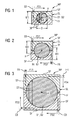
- FIGS. 1 to 3 each represent different diameters D of the rods B1, B2 and associated different embodiments of the welding method according to the invention.
- the diameter D of the bars B1, B2 is in the illustration of FIG. 1 smaller than the maximum welding depth WD of the electron beam EB along a first advancing direction PD1 of the electron beam welding apparatus EBA.
- Decisive for the selection of the welding method according to the invention is the maximum thickness T of a thickness curve DT illustrated in, for example FIG. 1 of the cross section of the bar B1, B2 along a first advancing direction PD1 and further advancing directions PD1, PD2, PD3, PD4 in the region of the weld WP in the FIGS. 2 and 3 ,
- the maximum thickness T is equal to the diameter D of the bars B1, B2.
- the two rods B1, B2 are aligned with one another along a longitudinal axis X.
- the two-part cuff SL is placed around the joint or weld WP of the rods B1, B2, so that the cuff SL surrounds the weld WP in the circumferential direction with respect to the longitudinal axis X.
- this takes place in the FIGS. 1 to 3 illustrated electron beam welding by means along an advancing direction PD1 - PD4 moving electron beam welding apparatus EBA along the surface SF of the cuff SL.
- the cuff has a rectangular outer cross section and has a parting line TF, which is arranged such that the cuff SL can be placed around the bars B1, B2.
- the welding depth WD of the electron beam EB is larger than the diameter D and the maximum thickness T of the bar B1, B2 along the thickness direction DT along the first advancing direction PD1. Accordingly, a single pass through the assembly of the two rods B1, B2 and the cuff SL is sufficient to completely connect the rods together by the weld.
- the material of the cuff SL which is identical to the material of the two rods B1, B2, can serve as an additional material for filling in defects in the region of the weld seam.
- the FIG. 2 shows a case that the maximum penetration depth WD of the electron beam EB is smaller than the maximum thickness T of the bars B1, B2 along the first advancing direction PD1 but greater than half of this maximum thickness T and the diameter D, respectively, because it is a circular Cross section acts. Accordingly, the workpiece is in the in FIG. 2 shown welded in two steps with the electron beam EB.
- the electron beam welding apparatus EBA (or the component moves under an electron beam EB) moves along a first advancing direction PD1 along the weld WP and the surface SF of the sleeve SL
- the electron beam welding apparatus EBA moves (or the component moves under an electron beam EB) in antiparallel second advancing direction PD2 on the opposite side of the rectangular shaped sleeve SL also parallel to the surface SF, so that an overlap occurs between the first welding passage and the second welding passage.
- the maximum thickness T and the diameter D of the round bars B1, B2 is more than twice as large as the maximum welding depth WD of the electron beam EB and accordingly there is a welding in four steps, the steps each by their different progress direction PD1 - Distinguish PD4 of the electron beam welding apparatus EBA and the different orientation of the electron beam EB in the plane of the weld WP.
- these are four progress directions oriented perpendicular to one another, which are each aligned parallel to the respective planar surface section of the sleeve SL.
Landscapes
- Engineering & Computer Science (AREA)
- Mechanical Engineering (AREA)
- Physics & Mathematics (AREA)
- Optics & Photonics (AREA)
- General Engineering & Computer Science (AREA)
- Welding Or Cutting Using Electron Beams (AREA)
Description
- Die Erfindung betrifft ein Verfahren zur stirnseitigen Verbindung einer ersten Stange mit einer zweiten Stange mittels Elektronenstrahlschweißens gemäß dem Oberbegriff des Anspruchs 1 (siehe, z.B.,
US 4 063 062 ). - Insbesondere bei der Fertigung von Wellen für Turbomaschinen, beispielsweise Turboverdichtern, Dampfturbinen oder Gasturbinen werden häufig Wellenstücke stirnseitig stumpf aneinander geschweißt, indem mittels eines Elektronenstrahlschweißapparates ohne weiteren Zusatzwerkstoff die beiden aneinander gelegten Stangenstücke im Bereich der aneinanderstoßenden Enden mittels eines in die Fuge eintretenden Elektronenstrahls zu einer Schmelze gebracht werden, die nach dem Erkalten in einer Verbindung resultiert. Die Hauptschwierigkeit einer elektronenstrahlgeschweißten Radialnaht bei einer Welle oder einem sonstigen Stangenmaterial besteht in der Fertigung des fehlerfreien Nahtanfangs und des Nahtendes. Unter dem Nahtanfang ist der Einfädelbereich des Elektronenstrahls zu verstehen und unter dem Nahtende der Ausfädelbereich des Elektronenstrahls aus dem Werkstoff. Weitere Störungen der Homogenität des Werkstoffgefüges ergeben sich durch etwaige Überschweißungen der bereits geschweißten Schweißnaht bei Überlappungen von Wirkungsbereichen des Elektronenstrahls in dem Werkstoff während unterschiedlicher Schweißvorgänge. Zusätzliche Schwierigkeiten ergeben sich bei kleinen Wellendurchmessers bzw. kleinen Stangendicken durch den Wärmestau im Bereich der Bauteilmitte, wodurch eine fehlerfreie Schweißung im Überlappbereich und im Ausfädelbereich der Schweißverbindung nicht möglich ist.
- Selbst die aufwändigsten modernen Elektronenstrahlsteuerungen vermögen die beschriebenen Schweißfehler nicht gänzlich zu unterbinden.
- Ausgehend von den beschriebenen Problemen und Nachteilen des Standes der Technik hat es sich die Erfindung zur Aufgabe gemacht, die Qualität der eingangs beschriebenen Schweißung zu verbessern ohne die Steuerung des Elektronenstrahls zusätzlich komplizierter zu machen.
- Die
US 4,063,062 beschreibt eine herkömmliche elektronische Strahlschweißung von runden Wellenabschnitten stirnseitig aneinander, wobei ein Einfädelbereich und ein Ausfädelbereich die Homogenität der Schweißung stören. - Zur Lösung wird erfindungsgemäß ein Verfahren der eingangs definierten Art vorgeschlagen mit den zusätzlichen Merkmalen des kennzeichnenden Teils des Hauptanspruchs 1. Die rückbezogenen Unteransprüche beinhalten vorteilhafte Weiterbildungen der Erfindung.
- Die erfindungsgemäße Umhüllung einer Fügezone der beiden aneinander stoßenden Enden der zur verbindenden Stangen mittels einer Manschette mit dem Einfädelbereich und dem Ausfädelbereich des Elektronenstrahls außerhalb des eigentlich zu fügenden Materials anzuordnen ermöglicht es, in der Fügezone der eigentlich zu verbindenden Teile eine vollkommen homogene Materialstruktur zu erzeugen. Das erfindungsgemäße Verfahren unterscheidet sich außerdem von dem Stand der Technik dadurch, dass eigentlich nicht, wie ursprünglich angestrebt nur zwei Bauteile miteinander verbunden werden, sondern vielmehr drei Bauteile miteinander durch die Elektronenstrahlschweißung in Verbindung treten.
- Zweckmäßig weist die Manschette eine Innenkontur auf, die an die Außenkontur der Stangen im Bereich der Schweißstelle angepasst ist. Um einen Effekt ähnlich dem Einfädeln oder dem Ausfädeln des Materialübergangs von der Manschette auf die beiden aneinander stoßenden Enden der Stangen zu verhindern, ist die Fertigung einer Passung an der Manschette relativ zu den beiden Stangenenden zweckmäßig im Genauigkeitsbereich von +/- 0,1mm bezogen auf den Durchmesser. Weiterhin ist es sinnvoll, wenn die Manschette eine Teilfuge aufweist, die derart angeordnet ist, dass die Manschette um die Profile der Stangen herumgelegt werden kann. Dies ist bei einem kreisrunden Querschnitt beispielsweise der Fall, wenn die beiden Teile der Manschette jeweils einen Halbkreis als Ausnehmung im Querschnitt aufweisen. Die zweiteilige oder mehrteilige Manschette wird entweder mechanisch, durch Heftnähte oder durch angeschweißte Bügel zusammengehalten. Im Interesse einer einfachen Handhabung kann die Manschette einen rechteckigen Außenquerschnitt aufweisen. Der rechteckige Außenquerschnitt hat außerdem den Vorteil, dass bei einer Fortschrittsrichtung des Elektronenstrahlapparates parallel zu der Oberfläche der Manschette die Eindringtiefe des Elektronenstrahls als konstant vorausgesetzt, sich ein homogenes Materialgefüge an der Schweißstelle ergibt. Zweckmäßig besteht die Manschette im Bereich der Fügezone aus dem gleichen Material, wie die beiden einander zu fügenden Stangen zumindest im Bereich der Schweißung, so dass ein etwaiger Materialübergang zwischen den drei beteiligten Teilen in einem homogenen Materialgefüge im Bereich der Fügezone bzw. Schweißstelle resultiert. Auf diese Weise kann ein etwaiger Materialmangel in der Fügezone - beispielsweise durch einen minimal verbleibenden axialen Spalt im Bereich der beiden Stangenenden, die miteinander zu verbinden sind - durch den dann als Zusatzwerkstoff bereitstehenden Werkstoff der Manschette ausgeglichen werden.
- Eine Entfernung der Manschette erfolgt bevorzugt spanend, im Falle der Welle schlicht durch Überdrehen der Schweißstelle.
- Bei Wellendurchmessern bzw. Dickenverläufen entlang einer Fortschrittsrichtung des Schweißapparates, die kleiner sind als die maximale Einschweißtiefe des Elektronenstrahls kann der Elektronenstrahl den Wellenquerschnitt bzw. Stangenquerschnitt durch eine einfache Elektronenstrahlsteuerung von links nach rechts oder umgekehrt entlang der Schweißstelle geführt werden. Auf diese Weise bleibt das Elektronenstrahlende immer im Manschettenwerkstoff, wenn der Manschettenwerkstoff in Richtung der Eindringtiefe des Elektronenstrahls entsprechend dick genug ausgebildet ist. Der Einfädelbereich und der Ausfädelbereich können erfindungsgemäß sehr kurz gewählt werden, da die hier auftretenden Schweißfehler nach dem Schweißen mechanisch abgearbeitet werden. Dementsprechend kann ohne Rücksicht auf Schweißfehler die Steuerung des Elektronenstrahls in dem Manschettenwerkstoff erfolgen. Ein zusätzlicher Vorteil ergibt sich bei kleinen Wellendurchmessern, die kleiner sind als die maximale Einschweißtiefe des Elektronenstrahls dadurch, dass unvermeidlich kleine Schweißfehler im Schweißnahtgrund, so genannte Spikes (spitze Schmelznadeln) lediglich im Manschettenwerkstoff vorhanden sind und ebenfalls bei der Endbearbeitung von der Stange oder der Welle mechanisch entfernt werden.
- Wird der Wellendurchmesser größer als die maximale Einschweißtiefe, so kann bis zu einem Wellenradius der ungefähr der maximalen Einschweißtiefe des Elektronenstrahls entspricht, durch eine Schweißung von zwei Seiten die Verbindungsschweißung ausgeführt werden. Diese beiden Seiten liegen sich bevorzugt direkt einander gegenüber, so dass es mindestens eine minimale Überlappung zwischen der Eindringspitze des Elektronenstrahls bzw. der Einschweißtiefe bei der Schweißung von der ersten Seite entlang einer ersten Fortschrittsrichtung und der Eindringtiefe bzw. der Einschweißtiefe bei dem Schweißen entlang einer zweiten Fortschrittsrichtung gibt.
- Bei noch größeren Wellendurchmessern, bei denen der Wellenradius die maximale Einschweißtiefe, die mit dem Elektronenstrahlapparat erreichbar ist, übersteigt, kann es zweckmäßig sein, wenn nicht nur von zwei gegenüberliegenden Seiten während der Schweißungen der Elektronenstrahl in das Werkstück eindringt, sondern auch von dazu schräg angeordneten Seiten der Manschette bzw. bei einem rechteckigen Querschnitt der Elektronenstrahl gleichzeitig oder nacheinander von den Oberflächen aller vier Seiten der Manschette in die Werkstücke eindringt.
- Die Wellenquerschnitte bzw. Stangenquerschnitte der zu verbindenden Werkstücke können rund, oval, dreieckig, quadratisch, rechteckig, sechseckig oder sonst wie vieleckig sein. Ebenso sind Hinterschneidungen oder konkave Konturen möglich. Grundsätzlich ist ein beliebiges Stangenprofil mittels des erfindungsgemäßen Verfahrens verbindbar.
- Im Folgenden ist die Erfindung anhand eines speziellen Ausführungsbeispiels unter Bezugnahme auf Zeichnungen näher beschrieben. Es zeigen:
- Figuren 1 - 3
- jeweils einen Querschnitt durch eine erfindungsgemäße Stange mit einer erfindungsgemäßen Manschette an einer Verbindungsstelle zweier Stangen zur Illustration des erfindungsgemäßen Verfahrens,
- Figur 4
- einen Längsschnitt durch eine Anordnung zweier Stangen und einer Hülse sowie einem Elektronenstrahlschweißapparat.
- Die
Figur 4 zeigt einen Längsschnitt durch eine erfindungsgemäße Hülse SL, die um eine Fügestelle zweier stirnseitig aneinander stumpf anstoßender Stangen, einer ersten Stange B1 und einer zweiten Stange B2 angeordnet ist. Zwischen den beiden Stangen B1, B2 befindet sich eine sehr schmale Fuge SG mit Abmessungen im Bereich der unvermeidlichen Ungenauigkeit. Die sehr schmale Fuge SG reduziert sich in Bereichen des Stirnflächenkontaktes zwischen den Stangen B1, B2 auf eine Breite von bis zu 0. Die beiden Stangen B1, B2 erstrecken sich entlang einer gemeinsamen Längsachse X und sind zueinander koaxial ausgerichtet. Radial zur Längsachse X ist ein Elektronenstrahlschweißapparat EBA angeordnet, der einen Elektronenstrahl EB auf den Bereich der schmalen Fuge SG radial emittiert und auf diese Weise die beiden Stangen B1, B2 an dieser Schweißstelle WP mit der Schmelze verbindet. - Die
Figuren 1 bis 3 stellen jeweils unterschiedliche Durchmesser D der Stangen B1, B2 dar und damit verbundene unterschiedliche erfindungsgemäße Ausführungen des Schweißverfahrens. Der Durchmesser D der Stangen B1, B2 ist bei der Illustration derFigur 1 kleiner als die maximale Einschweißtiefe WD des Elektronenstrahls EB entlang einer ersten Fortschrittsrichtung PD1 des Elektronenstrahlschweißapparates EBA. Entscheidend für die Auswahl des Schweißverfahrens nach der Erfindung ist die maximale Dicke T eines Dickenverlaufs DT illustriert in beispielsweiseFigur 1 des Querschnitts der Stange B1, B2 entlang einer ersten Fortschrittsrichtung PD1 bzw. weiterer Fortschrittsrichtungen PD1, PD2, PD3, PD4 im Bereich der Schweißstelle WP in denFiguren 2 und 3 . In den Fällen eines kreisrunden Querschnittes, wie in denFiguren 1 bis 3 dargestellt ist, ist die maximale Dicke T gleich dem Durchmesser D der Stangen B1, B2. - In einem ersten Schritt des erfindungsgemäßen Verfahrens werden die beiden Stangen B1, B2 zueinander entlang einer Längsachse X ausgerichtet. Anschließend wird die zweiteilige Manschette SL um die Fügestelle bzw. Schweißstelle WP der Stangen B1, B2 gelegt, so dass die Manschette SL die Schweißstelle WP in Umfangsrichtung bezogen auf die Längsachse X umgibt. Anschließend erfolgt das in den
Figuren 1 bis 3 dargestellte Elektronenstrahlschweißen mittels eines entlang einer Fortschrittsrichtung PD1 - PD4 sich bewegenden Elektronenstrahlschweißapparates EBA entlang der Oberfläche SF der Manschette SL. Statt einer Bewegung des Elektronenstrahlschweißapparates EBA entlang der Oberfläche SF der Manschette SL ist es im Sinne der Erfindung auch möglich, dass sich das zu fügende Bauteil selbst (Stangen B1, B2) relativ zu dem Elektronenstrahl EB bewegt. Entscheidend ist hierbei lediglich die Relativbewegung zwischen dem zu fügenden Bauteil und dem Elektronenstrahlschweißapparat EBA. Schließlich wird die Manschette SL von den Stangen B1, B2 entfernt mittels eines mechanischen spanenden Verfahrens, beispielsweise durch Drehen oder Fräsen. - Die Manschette weist einen rechteckigen Außenquerschnitt auf und hat eine Teilfuge TF, die derart angeordnet ist, dass sich die Manschette SL um die Stangen B1, B2 legen lässt. In
Figur 1 ist der Fall dargestellt, dass die Einschweißtiefe WD des Elektronenstrahls EB größer ist als der Durchmesser D bzw. die maximale Dicke T der Stange B1, B2 entlang des Dickenverlaufes DT entlang der ersten Fortschrittsrichtung PD1. Dementsprechend reicht ein einmaliges Durchfahren der Anordnung aus den beiden Stangen B1, B2 und der Manschette SL aus, um die Stangen vollständig miteinander durch die Schweißung zu verbinden. In geringen Mengen kann das Material der Manschette SL, welches mit dem Material der beiden Stangen B1, B2 identisch ist als Zusatzwerkstoff zur Auffüllung von Fehlstellen im Bereich der Schweißnaht dienen. - Die
Figur 2 zeigt einen Fall, dass die maximale Eindringtiefe WD des Elektronenstrahls EB kleiner als die maximale Dicke T der Stangen B1, B2 entlang der ersten Fortschrittsrichtung PD1 ist jedoch größer als die Hälfte dieser maximalen Dicke T bzw. des Durchmessers D, weil es sich um einen kreisrunden Querschnitt handelt. Dementsprechend wird das Werkstück in der inFigur 2 dargestellten Weise in zwei Schritten mit dem Elektronenstrahl EB geschweißt. In einem ersten Schritt verfährt der Elektronenstrahlschweißapparat EBA (oder das Bauteil bewegt sich unter einem Elektronenstrahl EB) entlang einer ersten Fortschrittsrichtung PD1 entlang der Schweißstelle WP und der Oberfläche SF der Hülse SL und in einem zweiten Schritt verfährt der Elektronenstrahlschweißapparat EBA (oder das Bauteil bewegt sich unter einem Elektronenstrahl EB) in antiparalleler zweiter Fortschrittsrichtung PD2 auf der gegenüberliegenden Seite der rechteckig ausgebildeten Hülse SL ebenfalls parallel zur Oberfläche SF, so dass zwischen dem ersten Schweißdurchgang und dem zweiten Schweißdurchgang ein Überlappung geschieht. - Bei dem in
Figur 3 dargestellten Ausführungsbeispiel ist die maximale Dicke T bzw. der Durchmesser D der runden Stangen B1, B2 mehr als zweimal so groß wie die maximale Einschweißtiefe WD des Elektronenstrahls EB und dementsprechend erfolgt eine Schweißung in vier Schritten, wobei die Schritte sich jeweils durch ihre unterschiedliche Fortschrittsrichtung PD1 - PD4 des Elektronenstrahlschweißapparates EBA und die unterschiedliche Ausrichtung des Elektronenstrahls EB in der Ebene der Schweißstelle WP unterscheiden. Im konkreten Beispiel derFigur 3 handelt es sich um vier senkrecht zueinander ausgerichtete Fortschrittsrichtungen, die jeweils parallel zu jeweils ebenen Oberflächenabschnitt der Hülse SL ausgerichtet sind.
Claims (9)
- Verfahren zur stirnseitigen Verbindung einer ersten Stange (B1) mit einer zweiten Stange (B2) mittels Elektronenstrahlschweißens an einer Schweißstelle (WP), mit dem folgenden Schritt:- Ausrichten der beiden Stangen (B1, B2) zueinander entlang einer Längsachse (X), gekennzeichnet durch die folgenden Schritte:- Anlegen einer Manschette (SL), die die Schweißstelle (WP) in Umfangsrichtung bezogen auf die Längsachse (X) umgibt,- Schweißen an der Schweißstelle (WP) mittels Elektronenstrahlschweißens, wobei ein Elektronenstrahlschweißapparat (EBA) mit einem Elektronenstrahl (EB) entlang einer Fortschrittsrichtung (PD), relativ zu einer Oberfläche (SF) der Manschette (SL) und entlang der Schweißstelle (WP) geführt bewegt wird,wobei der Elektronenstrahl derart geführt wird, dass ein Einfädelbereich und ein Ausfädelbereich des Elektronenstrahls außerhalb des eigentlich zu fügenden Materials der ersten Stange (B1) und der zweiten Stange (B2) angeordnet ist,- Entfernen der Manschette (SL).
- Verfahren nach Anspruch 1,
wobei die Manschette (SL) an die Außenkontur der Stangen (B1, B2) im Bereich der Schweißstelle (WP) angepasst ist. - Verfahren nach Anspruch 1 oder 2,
wobei die Manschette (SL) eine rechteckige Außenkontur aufweist. - Verfahren nach Anspruch 1, 2 oder 3,
wobei die Manschette (SL) spanend entfernt wird. - Verfahren nach einem der vorhergehenden Ansprüche 1 bis 4,
wobei die maximale projizierte Einschweißtiefe (WD) des Elektronenstrahls (EB) senkrecht zu einer ersten Fortschrittsrichtung (PD1) eines Elektronenstrahlschweißapparates (EBA) entlang der Schweißstelle (WP) größer als die größte Dicke (T) der Stangen (B1, B2) im Bereich der Schweißstelle (WP) entlang eines Dickenverlaufs (DT) entlang der ersten Fortschrittsrichtung (PD1) des Elektronenschweißapparates (EBA) ist und der Elektronenstrahlschweißapparat (EBA) entlang der ersten Fortschrittsrichtung (PD1) mit dem Elektronenstrahl (EB) in das Material der Manschette (SL) an einem ersten Ende (E1) eintritt und aus dem Material der Manschette (SL) an einem zweiten Ende (E2) austritt. - Verfahren nach einem der vorhergehenden Ansprüche 1 bis 4,
wobei die maximale Einschweißtiefe des Elektronenstrahls (EB) senkrecht zu einer ersten Fortschrittsrichtung (PD1) eines Elektronenstrahlschweißapparates (EBA) entlang der Schweißstelle (WP) kleiner ist als die größte Dicke (T) der Stange (B1, B2) entlang eines Dickenverlaufs (DT) der ersten Fortschrittsrichtung (PD1) des Elektronenstrahlschweißapparates (EBA) und der Elektronenstrahl (EB) in das Material der Manschette (SL) an einem ersten Ende (E1) eintritt und aus dem Material der Manschette (SL) an einem zweiten Ende (E2) austritt, wobei der Elektronenstrahlschweißapparat (EBA) entlang einer zweiten Fortschrittsrichtung (PD2) relativ zu der Oberfläche (SF) auf der gegenüberliegenden Seite der Hülse (SL) an der Schweißstelle (WP) geführt wird, derart, dass der Elektronenstrahl (EB) in das Material der Manschette (SL) an einem dritten Ende eintritt und aus dem Material der Manschette (SL) an einem vierten Ende austritt. - Verfahren nach Anspruch 6,
wobei die erste Fortschrittsrichtung (PD1) parallel zur zweiten Fortschrittsrichtung (PD2) ist. - Verfahren nach Anspruch 6,
wobei die erste Fortschrittsrichtung (PD1) antiparallel zur zweiten Fortschrittsrichtung (PD2) ist. - Verfahren nach Anspruch 6,
wobei der Elektronenstrahlschweißapparat (EBA) von mehreren ebenen Seiten der Hülse (SL) entlang der Schweißstelle (WP) entlang verschiedener Fortschrittsrichtungen (PPI) relativ zu der Oberfläche (SF) über die Oberfläche (SF) geführt wird, derart, dass der Elektronenstrahl (EB) in das Material der Manschette (SL) an einem Ende eintritt und aus dem Material der Manschette (SL) an einem anderen Ende austritt.
Applications Claiming Priority (2)
| Application Number | Priority Date | Filing Date | Title |
|---|---|---|---|
| DE102010040502 | 2010-09-09 | ||
| PCT/EP2011/065599 WO2012032138A1 (de) | 2010-09-09 | 2011-09-09 | Verfahren zur stirnseitigen verbindung zweier stangen mittles elektronstrahlschweissens |
Publications (2)
| Publication Number | Publication Date |
|---|---|
| EP2590776A1 EP2590776A1 (de) | 2013-05-15 |
| EP2590776B1 true EP2590776B1 (de) | 2014-05-14 |
Family
ID=44675560
Family Applications (1)
| Application Number | Title | Priority Date | Filing Date |
|---|---|---|---|
| EP11760738.2A Not-in-force EP2590776B1 (de) | 2010-09-09 | 2011-09-09 | Verfahren zur stirnseitigen verbindung zweier stangen mittles elektronstrahlschweissens |
Country Status (4)
| Country | Link |
|---|---|
| US (1) | US9073144B2 (de) |
| EP (1) | EP2590776B1 (de) |
| CN (1) | CN103097071B (de) |
| WO (1) | WO2012032138A1 (de) |
Families Citing this family (3)
| Publication number | Priority date | Publication date | Assignee | Title |
|---|---|---|---|---|
| DE102011085104B3 (de) * | 2011-10-24 | 2013-03-28 | Siemens Aktiengesellschaft | Verfahren zum Verbinden von Wellenabschnitten einer Welle eines Läufers einer Turbomaschine sowie Welle eines Läufers einer Turbomaschine |
| CN116368324A (zh) * | 2020-11-06 | 2023-06-30 | Dmc全球公司 | 添加剂摩擦搅拌制造过渡接头的方法和装置 |
| CN116727998B (zh) * | 2023-08-14 | 2023-10-13 | 河北宾宏石化设备有限公司 | 一种斜三通管件定位焊接设备 |
Family Cites Families (11)
| Publication number | Priority date | Publication date | Assignee | Title |
|---|---|---|---|---|
| BE669500A (de) * | 1964-09-11 | |||
| US3794807A (en) | 1972-04-10 | 1974-02-26 | Gen Electric | Method of beam welding dissimilar metal parts |
| CH563833A5 (de) * | 1974-10-28 | 1975-07-15 | Bbc Brown Boveri & Cie | |
| CH595011A5 (de) * | 1975-06-19 | 1978-01-31 | Bbc Brown Boveri & Cie | |
| JPH02127986A (ja) * | 1988-11-02 | 1990-05-16 | Toyota Motor Corp | セラミックス製回転体と金属軸の結合構造 |
| JPH0386384A (ja) | 1989-08-25 | 1991-04-11 | Mitsubishi Electric Corp | 電子ビ―ム溶接機の溶接方法 |
| US5085363A (en) * | 1990-11-01 | 1992-02-04 | Westinghouse Electric Corp. | Method of weld repairing of a section of a metallic cylindrical member |
| JP3625239B2 (ja) | 1996-06-24 | 2005-03-02 | 新日本製鐵株式会社 | 液相拡散接合による管の接合方法 |
| JP2006142340A (ja) | 2004-11-22 | 2006-06-08 | Jfe Koken Corp | 管芯出し治具 |
| CN100453241C (zh) | 2006-12-08 | 2009-01-21 | 青特集团有限公司 | 支承桥方轴头与方轴管真空电子束焊焊接工艺 |
| CN101444871B (zh) * | 2008-12-30 | 2010-09-29 | 沈阳黎明航空发动机(集团)有限责任公司 | 一种采用电子束焊深度修理局部缺陷报废件的方法 |
-
2011
- 2011-09-09 WO PCT/EP2011/065599 patent/WO2012032138A1/de not_active Ceased
- 2011-09-09 US US13/821,286 patent/US9073144B2/en not_active Expired - Fee Related
- 2011-09-09 CN CN201180043662.1A patent/CN103097071B/zh not_active Expired - Fee Related
- 2011-09-09 EP EP11760738.2A patent/EP2590776B1/de not_active Not-in-force
Also Published As
| Publication number | Publication date |
|---|---|
| WO2012032138A1 (de) | 2012-03-15 |
| CN103097071A (zh) | 2013-05-08 |
| US9073144B2 (en) | 2015-07-07 |
| US20130168368A1 (en) | 2013-07-04 |
| EP2590776A1 (de) | 2013-05-15 |
| CN103097071B (zh) | 2015-09-02 |
Similar Documents
| Publication | Publication Date | Title |
|---|---|---|
| DE2633829C2 (de) | Vorrichtung zur Herstellung einer volumenarmen Schweißnaht und Verfahren zum Verbinden von Metallteilen mittels Lichtbogen-Schmelzschweißen | |
| EP2215329B1 (de) | Herstellungsprozess für einen rotor | |
| EP2226146B1 (de) | Verfahren zum Verbinden zweier, insbesondere rotationssymmetrischer, Metallteile, mittels eines Wolfram-Inert-Gas (WIG)-Schweissverfahrens sowie Vorrichtung zur Durchführung des Verfahrens | |
| DE19654584B4 (de) | Käfig für Nadellager und Verfahren zu dessen Herstellung | |
| DE19617402A1 (de) | Verfahren zur Ausbildung einer Anrißstelle zum Bruchtrennen eines Bauteils, insbesondere Pleuel für Brennkraftmaschinen | |
| EP2590776B1 (de) | Verfahren zur stirnseitigen verbindung zweier stangen mittles elektronstrahlschweissens | |
| EP2865478B1 (de) | Brenneraggregat für eine Brennschneidmaschine | |
| DE102016221352A1 (de) | Verfahren zur Herstellung eines Kolbens | |
| EP2578347A2 (de) | Fügevorrichtung zum Verbinden von Strukturbauteilen eines Luftfahrzeuges | |
| EP2551050A1 (de) | Verfahren zum Schweißen von dünnwandigen Rohren mittels Spitzentemperaturanlassschweißen | |
| EP3088096B1 (de) | Vorrichtungen und verfahren zum druckumformen von verbindungsstegen zwischen werkstückteilen eines plattenartigen werkstücks | |
| EP0674964B1 (de) | Verfahren zur Herstellung eines Anschlussendes für Wickelschläuche | |
| DE19751640A1 (de) | Geschmiedetes Pleuel für Hubkolbenmaschinen aus Kohlenstoffstahl mit bruchgetrenntem Lagerdeckel | |
| EP1753578A1 (de) | Vorrichtung und verfahren zum bruchtrennen von werkstücken | |
| DE102016205262A1 (de) | Verfahren zur Herstellung eines Drahts aus einem spröden Werkstoff und Verwendung desselben zur generativen Herstellung eines Bauteils | |
| CH647181A5 (en) | Method of producing welded joints between workpieces of different alloys | |
| DE102008057677B4 (de) | Verfahren und Anordnung zur Herstellung einer Schweißnaht sowie Fügestelle von zwei zumindest teilweise mit einem Überlappungsbereich übereinander angeordneten Werkstücken | |
| EP1797987A1 (de) | Bimetallisches Verbindungselement | |
| DE102024136201A1 (de) | Verfahren zum Verbinden von Drahtenden von Drähten von zwei Drahtcoils und Anordnung mit zwei Drahtenden | |
| DE102006038932A1 (de) | Ausgleichsgetriebe und Verfahren zu seiner Herstellung | |
| DE102016009553A1 (de) | Verfahren zum Fügen von zumindest zwei Bauteilen | |
| DE112022003160T5 (de) | Verfahren und System für die Reparatur von Schienenrädern | |
| DE2141513C3 (de) | Vorrichtung zum Herstellen von Drahtabschnitten mit angekuppten Enden | |
| EP4488046A1 (de) | Verschleissplattenvorrichtung und verfahren zur herstellung | |
| DE102015222823B4 (de) | Fügeverfahren, kraftübertragende Winkelanordnung und Längsverstelleinrichtung |
Legal Events
| Date | Code | Title | Description |
|---|---|---|---|
| PUAI | Public reference made under article 153(3) epc to a published international application that has entered the european phase |
Free format text: ORIGINAL CODE: 0009012 |
|
| 17P | Request for examination filed |
Effective date: 20130205 |
|
| AK | Designated contracting states |
Kind code of ref document: A1 Designated state(s): AL AT BE BG CH CY CZ DE DK EE ES FI FR GB GR HR HU IE IS IT LI LT LU LV MC MK MT NL NO PL PT RO RS SE SI SK SM TR |
|
| GRAP | Despatch of communication of intention to grant a patent |
Free format text: ORIGINAL CODE: EPIDOSNIGR1 |
|
| DAX | Request for extension of the european patent (deleted) | ||
| INTG | Intention to grant announced |
Effective date: 20131204 |
|
| GRAS | Grant fee paid |
Free format text: ORIGINAL CODE: EPIDOSNIGR3 |
|
| GRAA | (expected) grant |
Free format text: ORIGINAL CODE: 0009210 |
|
| AK | Designated contracting states |
Kind code of ref document: B1 Designated state(s): AL AT BE BG CH CY CZ DE DK EE ES FI FR GB GR HR HU IE IS IT LI LT LU LV MC MK MT NL NO PL PT RO RS SE SI SK SM TR |
|
| REG | Reference to a national code |
Ref country code: GB Ref legal event code: FG4D Free format text: NOT ENGLISH |
|
| REG | Reference to a national code |
Ref country code: AT Ref legal event code: REF Ref document number: 667867 Country of ref document: AT Kind code of ref document: T Effective date: 20140615 |
|
| REG | Reference to a national code |
Ref country code: IE Ref legal event code: FG4D Free format text: LANGUAGE OF EP DOCUMENT: GERMAN |
|
| REG | Reference to a national code |
Ref country code: DE Ref legal event code: R096 Ref document number: 502011003152 Country of ref document: DE Effective date: 20140626 |
|
| REG | Reference to a national code |
Ref country code: CH Ref legal event code: NV Representative=s name: SIEMENS SCHWEIZ AG, CH |
|
| REG | Reference to a national code |
Ref country code: NL Ref legal event code: T3 |
|
| REG | Reference to a national code |
Ref country code: LT Ref legal event code: MG4D |
|
| PG25 | Lapsed in a contracting state [announced via postgrant information from national office to epo] |
Ref country code: GR Free format text: LAPSE BECAUSE OF FAILURE TO SUBMIT A TRANSLATION OF THE DESCRIPTION OR TO PAY THE FEE WITHIN THE PRESCRIBED TIME-LIMIT Effective date: 20140815 Ref country code: NO Free format text: LAPSE BECAUSE OF FAILURE TO SUBMIT A TRANSLATION OF THE DESCRIPTION OR TO PAY THE FEE WITHIN THE PRESCRIBED TIME-LIMIT Effective date: 20140814 Ref country code: CY Free format text: LAPSE BECAUSE OF FAILURE TO SUBMIT A TRANSLATION OF THE DESCRIPTION OR TO PAY THE FEE WITHIN THE PRESCRIBED TIME-LIMIT Effective date: 20140514 Ref country code: LT Free format text: LAPSE BECAUSE OF FAILURE TO SUBMIT A TRANSLATION OF THE DESCRIPTION OR TO PAY THE FEE WITHIN THE PRESCRIBED TIME-LIMIT Effective date: 20140514 Ref country code: IS Free format text: LAPSE BECAUSE OF FAILURE TO SUBMIT A TRANSLATION OF THE DESCRIPTION OR TO PAY THE FEE WITHIN THE PRESCRIBED TIME-LIMIT Effective date: 20140914 Ref country code: FI Free format text: LAPSE BECAUSE OF FAILURE TO SUBMIT A TRANSLATION OF THE DESCRIPTION OR TO PAY THE FEE WITHIN THE PRESCRIBED TIME-LIMIT Effective date: 20140514 |
|
| PG25 | Lapsed in a contracting state [announced via postgrant information from national office to epo] |
Ref country code: SE Free format text: LAPSE BECAUSE OF FAILURE TO SUBMIT A TRANSLATION OF THE DESCRIPTION OR TO PAY THE FEE WITHIN THE PRESCRIBED TIME-LIMIT Effective date: 20140514 Ref country code: LV Free format text: LAPSE BECAUSE OF FAILURE TO SUBMIT A TRANSLATION OF THE DESCRIPTION OR TO PAY THE FEE WITHIN THE PRESCRIBED TIME-LIMIT Effective date: 20140514 Ref country code: HR Free format text: LAPSE BECAUSE OF FAILURE TO SUBMIT A TRANSLATION OF THE DESCRIPTION OR TO PAY THE FEE WITHIN THE PRESCRIBED TIME-LIMIT Effective date: 20140514 Ref country code: PL Free format text: LAPSE BECAUSE OF FAILURE TO SUBMIT A TRANSLATION OF THE DESCRIPTION OR TO PAY THE FEE WITHIN THE PRESCRIBED TIME-LIMIT Effective date: 20140514 Ref country code: RS Free format text: LAPSE BECAUSE OF FAILURE TO SUBMIT A TRANSLATION OF THE DESCRIPTION OR TO PAY THE FEE WITHIN THE PRESCRIBED TIME-LIMIT Effective date: 20140514 Ref country code: ES Free format text: LAPSE BECAUSE OF FAILURE TO SUBMIT A TRANSLATION OF THE DESCRIPTION OR TO PAY THE FEE WITHIN THE PRESCRIBED TIME-LIMIT Effective date: 20140514 |
|
| PG25 | Lapsed in a contracting state [announced via postgrant information from national office to epo] |
Ref country code: PT Free format text: LAPSE BECAUSE OF FAILURE TO SUBMIT A TRANSLATION OF THE DESCRIPTION OR TO PAY THE FEE WITHIN THE PRESCRIBED TIME-LIMIT Effective date: 20140915 |
|
| PG25 | Lapsed in a contracting state [announced via postgrant information from national office to epo] |
Ref country code: SK Free format text: LAPSE BECAUSE OF FAILURE TO SUBMIT A TRANSLATION OF THE DESCRIPTION OR TO PAY THE FEE WITHIN THE PRESCRIBED TIME-LIMIT Effective date: 20140514 Ref country code: EE Free format text: LAPSE BECAUSE OF FAILURE TO SUBMIT A TRANSLATION OF THE DESCRIPTION OR TO PAY THE FEE WITHIN THE PRESCRIBED TIME-LIMIT Effective date: 20140514 Ref country code: CZ Free format text: LAPSE BECAUSE OF FAILURE TO SUBMIT A TRANSLATION OF THE DESCRIPTION OR TO PAY THE FEE WITHIN THE PRESCRIBED TIME-LIMIT Effective date: 20140514 Ref country code: DK Free format text: LAPSE BECAUSE OF FAILURE TO SUBMIT A TRANSLATION OF THE DESCRIPTION OR TO PAY THE FEE WITHIN THE PRESCRIBED TIME-LIMIT Effective date: 20140514 Ref country code: RO Free format text: LAPSE BECAUSE OF FAILURE TO SUBMIT A TRANSLATION OF THE DESCRIPTION OR TO PAY THE FEE WITHIN THE PRESCRIBED TIME-LIMIT Effective date: 20140514 |
|
| REG | Reference to a national code |
Ref country code: DE Ref legal event code: R097 Ref document number: 502011003152 Country of ref document: DE |
|
| PLBE | No opposition filed within time limit |
Free format text: ORIGINAL CODE: 0009261 |
|
| STAA | Information on the status of an ep patent application or granted ep patent |
Free format text: STATUS: NO OPPOSITION FILED WITHIN TIME LIMIT |
|
| 26N | No opposition filed |
Effective date: 20150217 |
|
| PG25 | Lapsed in a contracting state [announced via postgrant information from national office to epo] |
Ref country code: MC Free format text: LAPSE BECAUSE OF FAILURE TO SUBMIT A TRANSLATION OF THE DESCRIPTION OR TO PAY THE FEE WITHIN THE PRESCRIBED TIME-LIMIT Effective date: 20140514 Ref country code: LU Free format text: LAPSE BECAUSE OF FAILURE TO SUBMIT A TRANSLATION OF THE DESCRIPTION OR TO PAY THE FEE WITHIN THE PRESCRIBED TIME-LIMIT Effective date: 20140909 |
|
| REG | Reference to a national code |
Ref country code: DE Ref legal event code: R097 Ref document number: 502011003152 Country of ref document: DE Effective date: 20150217 |
|
| REG | Reference to a national code |
Ref country code: IE Ref legal event code: MM4A |
|
| PG25 | Lapsed in a contracting state [announced via postgrant information from national office to epo] |
Ref country code: BE Free format text: LAPSE BECAUSE OF NON-PAYMENT OF DUE FEES Effective date: 20140930 |
|
| PG25 | Lapsed in a contracting state [announced via postgrant information from national office to epo] |
Ref country code: SI Free format text: LAPSE BECAUSE OF FAILURE TO SUBMIT A TRANSLATION OF THE DESCRIPTION OR TO PAY THE FEE WITHIN THE PRESCRIBED TIME-LIMIT Effective date: 20140514 |
|
| PG25 | Lapsed in a contracting state [announced via postgrant information from national office to epo] |
Ref country code: IE Free format text: LAPSE BECAUSE OF NON-PAYMENT OF DUE FEES Effective date: 20140909 |
|
| PGFP | Annual fee paid to national office [announced via postgrant information from national office to epo] |
Ref country code: DE Payment date: 20151120 Year of fee payment: 5 Ref country code: CH Payment date: 20151202 Year of fee payment: 5 |
|
| PG25 | Lapsed in a contracting state [announced via postgrant information from national office to epo] |
Ref country code: SM Free format text: LAPSE BECAUSE OF FAILURE TO SUBMIT A TRANSLATION OF THE DESCRIPTION OR TO PAY THE FEE WITHIN THE PRESCRIBED TIME-LIMIT Effective date: 20140514 |
|
| GBPC | Gb: european patent ceased through non-payment of renewal fee |
Effective date: 20150909 |
|
| PG25 | Lapsed in a contracting state [announced via postgrant information from national office to epo] |
Ref country code: MT Free format text: LAPSE BECAUSE OF FAILURE TO SUBMIT A TRANSLATION OF THE DESCRIPTION OR TO PAY THE FEE WITHIN THE PRESCRIBED TIME-LIMIT Effective date: 20140514 Ref country code: BG Free format text: LAPSE BECAUSE OF FAILURE TO SUBMIT A TRANSLATION OF THE DESCRIPTION OR TO PAY THE FEE WITHIN THE PRESCRIBED TIME-LIMIT Effective date: 20140514 |
|
| PG25 | Lapsed in a contracting state [announced via postgrant information from national office to epo] |
Ref country code: TR Free format text: LAPSE BECAUSE OF FAILURE TO SUBMIT A TRANSLATION OF THE DESCRIPTION OR TO PAY THE FEE WITHIN THE PRESCRIBED TIME-LIMIT Effective date: 20140514 Ref country code: GB Free format text: LAPSE BECAUSE OF NON-PAYMENT OF DUE FEES Effective date: 20150909 Ref country code: HU Free format text: LAPSE BECAUSE OF FAILURE TO SUBMIT A TRANSLATION OF THE DESCRIPTION OR TO PAY THE FEE WITHIN THE PRESCRIBED TIME-LIMIT; INVALID AB INITIO Effective date: 20110909 |
|
| REG | Reference to a national code |
Ref country code: FR Ref legal event code: PLFP Year of fee payment: 6 |
|
| PGFP | Annual fee paid to national office [announced via postgrant information from national office to epo] |
Ref country code: NL Payment date: 20160905 Year of fee payment: 6 |
|
| PGFP | Annual fee paid to national office [announced via postgrant information from national office to epo] |
Ref country code: FR Payment date: 20160914 Year of fee payment: 6 |
|
| PGFP | Annual fee paid to national office [announced via postgrant information from national office to epo] |
Ref country code: IT Payment date: 20160928 Year of fee payment: 6 |
|
| REG | Reference to a national code |
Ref country code: DE Ref legal event code: R119 Ref document number: 502011003152 Country of ref document: DE |
|
| REG | Reference to a national code |
Ref country code: CH Ref legal event code: PL |
|
| PG25 | Lapsed in a contracting state [announced via postgrant information from national office to epo] |
Ref country code: CH Free format text: LAPSE BECAUSE OF NON-PAYMENT OF DUE FEES Effective date: 20160930 Ref country code: DE Free format text: LAPSE BECAUSE OF NON-PAYMENT OF DUE FEES Effective date: 20170401 Ref country code: LI Free format text: LAPSE BECAUSE OF NON-PAYMENT OF DUE FEES Effective date: 20160930 |
|
| REG | Reference to a national code |
Ref country code: AT Ref legal event code: MM01 Ref document number: 667867 Country of ref document: AT Kind code of ref document: T Effective date: 20160909 |
|
| PG25 | Lapsed in a contracting state [announced via postgrant information from national office to epo] |
Ref country code: AT Free format text: LAPSE BECAUSE OF NON-PAYMENT OF DUE FEES Effective date: 20160909 |
|
| REG | Reference to a national code |
Ref country code: NL Ref legal event code: MM Effective date: 20171001 |
|
| PG25 | Lapsed in a contracting state [announced via postgrant information from national office to epo] |
Ref country code: MK Free format text: LAPSE BECAUSE OF FAILURE TO SUBMIT A TRANSLATION OF THE DESCRIPTION OR TO PAY THE FEE WITHIN THE PRESCRIBED TIME-LIMIT Effective date: 20140514 Ref country code: NL Free format text: LAPSE BECAUSE OF NON-PAYMENT OF DUE FEES Effective date: 20171001 |
|
| REG | Reference to a national code |
Ref country code: FR Ref legal event code: ST Effective date: 20180531 |
|
| PG25 | Lapsed in a contracting state [announced via postgrant information from national office to epo] |
Ref country code: IT Free format text: LAPSE BECAUSE OF NON-PAYMENT OF DUE FEES Effective date: 20170909 Ref country code: FR Free format text: LAPSE BECAUSE OF NON-PAYMENT OF DUE FEES Effective date: 20171002 |
|
| PG25 | Lapsed in a contracting state [announced via postgrant information from national office to epo] |
Ref country code: AL Free format text: LAPSE BECAUSE OF FAILURE TO SUBMIT A TRANSLATION OF THE DESCRIPTION OR TO PAY THE FEE WITHIN THE PRESCRIBED TIME-LIMIT Effective date: 20140514 |