EP2585413B1 - Verfahren zum verwerten von organischen abfallstoffen - Google Patents
Verfahren zum verwerten von organischen abfallstoffen Download PDFInfo
- Publication number
- EP2585413B1 EP2585413B1 EP11743329.2A EP11743329A EP2585413B1 EP 2585413 B1 EP2585413 B1 EP 2585413B1 EP 11743329 A EP11743329 A EP 11743329A EP 2585413 B1 EP2585413 B1 EP 2585413B1
- Authority
- EP
- European Patent Office
- Prior art keywords
- drying
- waste materials
- exhaust gases
- process according
- clinker production
- Prior art date
- Legal status (The legal status is an assumption and is not a legal conclusion. Google has not performed a legal analysis and makes no representation as to the accuracy of the status listed.)
- Active
Links
Images
Classifications
-
- C—CHEMISTRY; METALLURGY
- C04—CEMENTS; CONCRETE; ARTIFICIAL STONE; CERAMICS; REFRACTORIES
- C04B—LIME, MAGNESIA; SLAG; CEMENTS; COMPOSITIONS THEREOF, e.g. MORTARS, CONCRETE OR LIKE BUILDING MATERIALS; ARTIFICIAL STONE; CERAMICS; REFRACTORIES; TREATMENT OF NATURAL STONE
- C04B7/00—Hydraulic cements
- C04B7/36—Manufacture of hydraulic cements in general
- C04B7/364—Avoiding environmental pollution during cement-manufacturing
-
- C—CHEMISTRY; METALLURGY
- C04—CEMENTS; CONCRETE; ARTIFICIAL STONE; CERAMICS; REFRACTORIES
- C04B—LIME, MAGNESIA; SLAG; CEMENTS; COMPOSITIONS THEREOF, e.g. MORTARS, CONCRETE OR LIKE BUILDING MATERIALS; ARTIFICIAL STONE; CERAMICS; REFRACTORIES; TREATMENT OF NATURAL STONE
- C04B7/00—Hydraulic cements
- C04B7/36—Manufacture of hydraulic cements in general
- C04B7/43—Heat treatment, e.g. precalcining, burning, melting; Cooling
- C04B7/44—Burning; Melting
- C04B7/4407—Treatment or selection of the fuel therefor, e.g. use of hazardous waste as secondary fuel ; Use of particular energy sources, e.g. waste hot gases from other processes
- C04B7/4423—Waste or refuse used as fuel
-
- F—MECHANICAL ENGINEERING; LIGHTING; HEATING; WEAPONS; BLASTING
- F26—DRYING
- F26B—DRYING SOLID MATERIALS OR OBJECTS BY REMOVING LIQUID THEREFROM
- F26B1/00—Preliminary treatment of solid materials or objects to facilitate drying, e.g. mixing or backmixing the materials to be dried with predominantly dry solids
- F26B1/005—Preliminary treatment of solid materials or objects to facilitate drying, e.g. mixing or backmixing the materials to be dried with predominantly dry solids by means of disintegrating, e.g. crushing, shredding, milling the materials to be dried
-
- F—MECHANICAL ENGINEERING; LIGHTING; HEATING; WEAPONS; BLASTING
- F26—DRYING
- F26B—DRYING SOLID MATERIALS OR OBJECTS BY REMOVING LIQUID THEREFROM
- F26B11/00—Machines or apparatus for drying solid materials or objects with movement which is non-progressive
- F26B11/02—Machines or apparatus for drying solid materials or objects with movement which is non-progressive in moving drums or other mainly-closed receptacles
- F26B11/04—Machines or apparatus for drying solid materials or objects with movement which is non-progressive in moving drums or other mainly-closed receptacles rotating about a horizontal or slightly-inclined axis
- F26B11/0404—Machines or apparatus for drying solid materials or objects with movement which is non-progressive in moving drums or other mainly-closed receptacles rotating about a horizontal or slightly-inclined axis with internal subdivision of the drum, e.g. for subdividing or recycling the material to be dried
- F26B11/0413—Machines or apparatus for drying solid materials or objects with movement which is non-progressive in moving drums or other mainly-closed receptacles rotating about a horizontal or slightly-inclined axis with internal subdivision of the drum, e.g. for subdividing or recycling the material to be dried the subdivision consisting of concentric walls, e.g. multi-pass or recirculation systems; the subdivision consisting of spiral-shaped walls
-
- F—MECHANICAL ENGINEERING; LIGHTING; HEATING; WEAPONS; BLASTING
- F26—DRYING
- F26B—DRYING SOLID MATERIALS OR OBJECTS BY REMOVING LIQUID THEREFROM
- F26B21/00—Arrangements for supplying or controlling air or other gases for drying solid materials or objects
- F26B21/20—Circulating air or gases in closed cycles, e.g. wholly within the drying enclosure
- F26B21/25—Circulating air or gases in closed cycles, e.g. wholly within the drying enclosure partly outside the drying enclosure
-
- C—CHEMISTRY; METALLURGY
- C04—CEMENTS; CONCRETE; ARTIFICIAL STONE; CERAMICS; REFRACTORIES
- C04B—LIME, MAGNESIA; SLAG; CEMENTS; COMPOSITIONS THEREOF, e.g. MORTARS, CONCRETE OR LIKE BUILDING MATERIALS; ARTIFICIAL STONE; CERAMICS; REFRACTORIES; TREATMENT OF NATURAL STONE
- C04B2111/00—Mortars, concrete or artificial stone or mixtures to prepare them, characterised by specific function, property or use
- C04B2111/00017—Aspects relating to the protection of the environment
-
- F—MECHANICAL ENGINEERING; LIGHTING; HEATING; WEAPONS; BLASTING
- F26—DRYING
- F26B—DRYING SOLID MATERIALS OR OBJECTS BY REMOVING LIQUID THEREFROM
- F26B2200/00—Drying processes and machines for solid materials characterised by the specific requirements of the drying goods
- F26B2200/18—Sludges, e.g. sewage, waste, industrial processes, cooling towers
-
- Y—GENERAL TAGGING OF NEW TECHNOLOGICAL DEVELOPMENTS; GENERAL TAGGING OF CROSS-SECTIONAL TECHNOLOGIES SPANNING OVER SEVERAL SECTIONS OF THE IPC; TECHNICAL SUBJECTS COVERED BY FORMER USPC CROSS-REFERENCE ART COLLECTIONS [XRACs] AND DIGESTS
- Y02—TECHNOLOGIES OR APPLICATIONS FOR MITIGATION OR ADAPTATION AGAINST CLIMATE CHANGE
- Y02P—CLIMATE CHANGE MITIGATION TECHNOLOGIES IN THE PRODUCTION OR PROCESSING OF GOODS
- Y02P40/00—Technologies relating to the processing of minerals
- Y02P40/10—Production of cement, e.g. improving or optimising the production methods; Cement grinding
- Y02P40/125—Fuels from renewable energy sources, e.g. waste or biomass
Definitions
- the invention relates to a process for recycling organic wastes, in particular cellulosic, wet, organic wastes in a clinker production process in which the waste materials are introduced as fuel into the clinker production process and burned.
- the US 2009/293303 A1 discloses a process for recycling organic waste in a clinker production process wherein the waste is fueled in the clinker production process and burned and dried prior to introduction into a drying step carried out in a drying reactor.
- the US 2005/274067 A1 describes a process for drying organic waste by utilizing the waste heat from a clinker cooler.
- cellulose-containing wastes In addition to organic waste, such as scrap tires and petroleum-contaminated soils and similar materials, which must be comminuted for use in clinker production processes and often also fumigated or gasified in order to use the energy content in the form of synthesis gas in a clinker production process, cellulose-containing wastes also appear as promising to reduce the need for primary fuel in the cement industry. In papermaking and in the coffee and sugar industries, substantial quantities of pulp are produced, the pulp, in addition to its combustible cellulose content, in all Usually involves significant amounts of water. Other such cellulosic, moist, organic waste materials are agricultural wastes such as rice husks, palm kernel oil and soybean residues, as well as wood and rapeseed waste.
- the present invention is therefore based on the object to improve a method of the type mentioned in that the water content of cellulose-containing, moist, organic waste is lowered in order to avoid the disadvantages mentioned, which are associated with a high water content. At the same time, the heat potential of said wastes should be used as fully as possible and the need for landfill be largely avoided.
- a method of the type mentioned is inventively further developed in that the waste materials are brought into contact with the hot exhaust gases of the clinker production process and dried in a drying step before introduction into the clinker production process in a drying step, and that the drying step carried out in a drying reactor is, in which the wet waste materials are passed together with the hot exhaust gases with multiple redirecting the flow direction through 180 ° through a series of concentrically arranged tubes, and the temperature of the hot exhaust gases before the drying step by mixing ambient air and / or air from the Clinker production process is set to a maximum value of 400 ° C.
- the hot exhaust gases of the clinker production process used for drying the moist, cellulose-containing waste
- the hot exhaust gases are passed in accordance with the invention in cocurrent with the wet waste in a drying step.
- the wet waste in co-current with the hot exhaust gases of the clinker production process is cooled during drying of the exhaust gases, so that can be avoided that already relatively strong dried cellulose fractions are exposed to high temperatures, whereby the formation of volatile organic compounds (VOC) or odors in the exhaust is avoided by overheating the organic substances.
- VOC volatile organic compounds
- the drying step must be carried out using the hot exhaust gases from the clinker-making process for a comparatively long period of time.
- the drying step is therefore carried out in a drying reactor, in which the wet waste together with the hot exhaust gases are passed through 180 ° through a series of concentrically arranged tubes by repeatedly deflecting the flow direction.
- a relatively long residence time can be realized in a relatively compact drying reactor, wherein the deflection of the material flow, which takes place around the edges of the concentrically arranged tubes, an additional mixing of the waste to be dried with the hot exhaust gases and crushing he follows.
- the reactor can be operated in a rotating manner, whereby internals for mixing and comminution of the material flow are also conceivable.
- Clinker production processes are extremely energy-intensive, so that such processes produce large quantities of hot exhaust gases.
- the method according to the invention is further developed in that the exhaust gases of the clinker cooler are used as hot exhaust gases and / or the preheater are used, at which points the hot exhaust gases can be removed particularly easily.
- the process according to the invention is developed such that the waste materials are comminuted before the drying step.
- the process according to the invention in which the cellulosic waste materials to be dried and the hot exhaust gases are conducted in cocurrent, can largely prevent the formation of volatile organic substances and interfering odorous substances.
- the method according to the present invention is performed so that the temperature of the hot exhaust gases before the drying step by mixing ambient air and / or air from the clinker production process is set to a maximum value of 400 ° C, so that overheating of the organic waste can be safely avoided.
- the preferred purpose is to set the temperature of the hot exhaust gases at the end of the drying step by controlling the flow through the drying reactor to a maximum value of 150 ° C, the considerably lower temperature at the end of the drying step being necessary because the dried Cellulose-containing wastes are far more susceptible to thermal decomposition reactions than the waste solids in the wet state as they are before the drying step.
- a corresponding control of the flow of substances through the drying reactor can be used, whereby the residence time and / or the ratio of gas flow to material flow, ie the flow of waste and thus the cooling of the exhaust gases can be controlled in the drying reactor.
- the process may be carried out such that the mixture of gas and dried waste discharged from the drying reactor is separated, whereby the hot exhaust gases used for drying of the clinker production process are fed to a further downstream waste gas treatment and the dried waste before it further utilization and in particular prior to their combustion in the clinker production process can be stored or transported in a simple manner.
- the process is preferably further developed such that at least some of the gases from the drying reactor are fed to a dedusting process.
- the method according to the invention in this context can also be further developed such that at least some of the gases from the drying reactor are supplied to the clinker production process as combustion air. In both cases, the escape of possibly arising during drying unpleasant odors or particulate matter into the atmosphere is prevented.
- a further possible favorable further use of the gases leaving the drying reactor is achieved in accordance with a preferred embodiment of the present invention in that at least part of the gases leaving the drying reactor are recirculated into the drying reactor, in which case the proportion of gases recirculated into the drying reactor is selected accordingly, the already described adjustment of the maximum value of the temperature of the exhaust gases before the drying step can be achieved.
- the inventive method may preferably be further developed such that the discharged from the drying reactor gases are fed to a condenser for drying.
- the method is therefore further developed in that the dried waste materials are subjected to comminution. In this way it is ensured that the waste materials can be evenly supplied to a combustion, so that no slow-burning aggregates of waste materials are introduced, and with an effective drying and a sufficient size reduction, the cellulose residues can also be blown into the clinker production process.
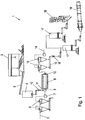
- Fig. 1 a general process scheme of the method according to the invention
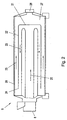
- Fig. 2 a schematic representation partially in section of a drying reactor for use in carrying out the method according to the invention.
- Fig. 1 1 denotes a system for carrying out the method according to the invention.
- a receiving plant 2 for receiving the cellulose communionigen waste the waste materials are stored and placed on a conveyor belt 3 a crushing device 4.
- the cyclones 6 is abandoned for the removal of suspended solids and conveyed via a blower 7 in the exhaust gas inlet 8 of the drying reactor 9.
- the comminuted waste materials are transferred via a metering point 10 into the material feed 11 of the drying reactor, where the drying step is carried out.
- the discharge of the drying reactor 9 is referred to which connect cyclones 13 for separating the mixture of gas and dried waste.
- the exhaust gases may possibly dedusted after drying in a condenser and discharged into the atmosphere or, as already described, be recycled to the clinker production process.
- a return to the drying reactor 9 for adjusting the temperature of the hot exhaust gases before the drying step in the context of the inventive method is conceivable.
- the dried waste is conveyed via a transport device, in this case a conveyor belt 15 and a shredder and metering 16 divided into different bunkers 17, from which they can be supplied, for example, the calciner 18 or a rotary kiln 19 of a clinker production process.
- a transport device in this case a conveyor belt 15 and a shredder and metering 16 divided into different bunkers 17, from which they can be supplied, for example, the calciner 18 or a rotary kiln 19 of a clinker production process.
- Fig. 2 it can be seen that the mixture of hot exhaust gases from the clinker production process and to be dried cellulose-containing waste along the arrow 20 by an inner tube takes place.
- the mixture enters an annular space which is delimited by a concentric further tube 22 located radially outside the first tube, wherein a deflection of the material flow takes place by 180 ° in the direction of the arrow 23.
- a redirection of the material flow takes place so that the flow now flows in the direction of the arrow 25 into a radially outer annular space defined by a further tube 26.
- At the outlet end 27 of the drying reactor 9 takes place at the outlet 28 of the outlet of the mixture of exhaust gases and dried waste, which, as in connection with Fig. 1 described, further processed.
Landscapes
- Engineering & Computer Science (AREA)
- Chemical & Material Sciences (AREA)
- Ceramic Engineering (AREA)
- Mechanical Engineering (AREA)
- General Engineering & Computer Science (AREA)
- Life Sciences & Earth Sciences (AREA)
- Materials Engineering (AREA)
- Structural Engineering (AREA)
- Organic Chemistry (AREA)
- Thermal Sciences (AREA)
- Physics & Mathematics (AREA)
- Sustainable Development (AREA)
- Health & Medical Sciences (AREA)
- Biodiversity & Conservation Biology (AREA)
- Ecology (AREA)
- Environmental & Geological Engineering (AREA)
- Environmental Sciences (AREA)
- Public Health (AREA)
- Processing Of Solid Wastes (AREA)
- Solid Fuels And Fuel-Associated Substances (AREA)
Description
- Die Erfindung betrifft ein Verfahren zum Verwerten von organischen Abfallstoffen, insbesondere von cellulosehältigen, feuchten, organischen Abfallstoffen in einem Klinkerherstellungsverfahren, bei welchem die Abfallstoffe als Brennstoff in das Klinkerherstellungsverfahren eingebracht und verbrannt werden.
- Die
US 2009/293303 A1 offenbart ein Verfahren zum Verwerten von organischen Abfallstoffen in einem Klinkerherstellungsverfahren, wobei die Abfallstoffe als Brennstoff in das Klinkerherstellungsverfahren eingebracht und verbrannt werden und vor dem Einbringen in einem Trocknungsschritt, der in einem Trocknungsreaktor durchgeführt wird, getrocknet werden. - Die
US 2005/274067 A1 beschreibt ein Verfahren zur Trocknung organischer Abfallstoffe mittels Nutzung der Abwärme aus einem Klinkerkühler. - Bei der Zementklinkerherstellung wird Zementrohmehl vorgewärmt und kalziniert, wobei CO2 entweicht. Jedoch erfolgt das eigentliche Brennen in einem Drehrohrofen, woraufhin durch Kühlung des gebrannten Klinkers ein hydraulisches Produkt entsteht. Insgesamt werden für diese Prozesse erhebliche Energiemengen aufgewendet, und es wird beständig versucht, die aufgewendete Energie möglichst zurück zu gewinnen und für den Prozess bestmöglich wieder zu verwenden. Darüber hinaus besteht das Bestreben, für den Zementklinkerherstellungsprozess alternative Brennstoffe zu verwenden, d.h. Brennstoffe mit einem im Vergleich zu hochwertigem Erdgas oder Erdöl verringerten Brennwert, wobei solche alternativen Brennstoffe häufig in Form von Abfällen zur Verfügung stehen. Neben organischen Abfallstoffen, wie beispielsweise Altreifen und mit Erdöl verunreinigten Erden und ähnlichen Stoffen, die zur Verwendung in Klinkerherstellungsverfahren zerkleinert und häufig auch verschwelt bzw. vergast werden müssen, um den Energieinhalt in Form von Synthesegas in einem Klinkerherstellungsverfahren verwenden zu können, erscheinen auch cellulosehältige Abfallstoffe als aussichtsreich, um den Bedarf an Primärbrennstoff in Zementindustrie zu senken. Bei der Papierherstellung und in der Kaffee- und Zuckerindustrie fallen erhebliche Mengen an Pulpe an, wobei die Pulpe neben ihrem Gehalt an brennbarer Cellulose in aller Regel erhebliche Mengen an Wasser beinhaltet. Weitere derartige cellulosehältige, feuchte, organische Abfallstoffe sind Abfälle aus der Landwirtschaft wie zum Beispiel Reisschalen, Palmkernöl- und Sojabohnenrückstände sowie Holz- und Rapsabfälle.
- Bisher wurden derartige cellulosehältige Abfallstoffe zum Teil in Biogasanlagen vergärt, wobei jedoch der Großteil deponiert werden muss. Derartige Deponien haben jedoch neben ihrem erheblichen Platzbedarf den Nachteil, dass Grundwasserprobleme und unangenehme Gerüche das Auffinden neuer Deponiemöglichkeiten zunehmend schwierig machen.
- Aufgrund des erheblichen Verwertungspotentials der Zementindustrie für derartige cellulosehältige Abfallstoffe haben sich in manchen Regionen Betriebe, die derartige Abfallstoffe produzieren, in der Nähe von Zementproduktionsstätten angesiedelt, um einen günstigen Entsorgungsweg für die cellulosehältigen Abfallstoffe nützen zu können.
- Bisher war das Verwertungspotential in der Zementindustrie für derartige Abfallstoffe allerdings aufgrund des erheblichen Feuchtigkeitsgehalts limitiert, da die Abfallstoffe direkt in die Brenneranlagen eingebracht wurden, was aufgrund des Wassergehaltes zu einem erhöhten Wärmebedarf im Klinkerherstellungsverfahren zur Verdampfung des Wassers geführt hat. Darüber hinaus resultiert aus den erheblichen eingebrachten Wassermengen nach der Verdampfung des Wassers ein ungünstig hohes Volumen von Gesamtprozessabgasen, was wiederum zu einem erhöhten Aufwand beim Abgasmanagement führte. Andererseits werden gerade die genannten cellulosehältigen Abfallstoffe als für die Zementindustrie günstiger alternativer Brennstoff angesehen, da die genannten Stoffe aufgrund ihres geringen Gehalts an Chlor und Schwefel relativ günstig für den Gesamtprozess wären.
- Der vorliegenden Erfindung liegt daher die Aufgabe zugrunde, ein Verfahren der eingangs genannten Art dahingehend zu verbessern, dass der Wassergehalt der cellulosehältigen, feuchten, organischen Abfallstoffe gesenkt wird, um die genannten Nachteile, die mit einem hohen Wassergehalt einhergehen, zu vermeiden. Gleichzeitig soll das Wärmepotential der genannten Abfallstoffe möglichst vollständig genützt werden und die Notwendigkeit des Deponierens weitgehend vermieden werden.
- Zur Lösung dieser Aufgabe ist ein Verfahren der eingangs genannten Art erfindungsgemäß dahingehend weitergebildet, dass die Abfallstoffe vor dem Einbringen in das Klinkerherstellungsverfahren in einem Trocknungsschritt im Gleichstrom mit den heißen Abgasen des Klinkerherstellungsverfahrens in Kontakt gebracht und getrocknet werden, und dass der Trocknungsschritt in einem Trocknungsreaktor durchgeführt wird, in welchem die feuchten Abfallstoffe zusammen mit den heißen Abgasen unter mehrmaligem Umlenken der Strömungsrichtung um 180° durch eine Reihe von konzentrisch angeordneten Rohren geleitet werden, und die Temperatur der heißen Abgase vor dem Trocknungsschritt durch Zumischen von Umgebungsluft und/oder von Luft aus dem Klinkerherstellungsverfahren auf einen Maximalwert von 400°C eingestellt wird. Bei dem erfindungsgemäßen Verfahren werden somit die großen Wärmemengen, die in den heißen Abgasen des Klinkerherstellungsverfahrens enthalten sind, zur Trocknung der feuchten, cellulosehältigen Abfallstoffe herangezogen, wobei die heißen Abgase erfindungsgemäß im Gleichstrom mit den feuchten Abfallstoffen in einen Trocknungsschritt geführt werden. Durch das Führen der feuchten Abfallstoffe im Gleichstrom mit den heißen Abgasen des Klinkerherstellungsverfahrens erfolgt während des Trocknens eine Abkühlung der Abgase, sodass vermieden werden kann, dass bereits relativ stark getrocknete Cellulosefraktionen hohen Temperaturen ausgesetzt werden, wodurch die Bildung von volatilen organischen Verbindungen (VOC) oder Gerüchen im Abgas durch Überhitzen der organischen Substanzen vermieden wird.
- Aufgrund des im Normalfall sehr hohen Wassergehaltes der feuchten, cellulosehältigen Abfallstoffe muss der Trocknungsschritt unter Verwendung der heißen Abgase des Klinkerherstellungsverfahrens über eine vergleichsweise lange Dauer durchgeführt werden. Der Trocknungsschritt wird daher in einem Trocknungsreaktor durchgeführt, in welchem die feuchten Abfallstoffe zusammen mit den heißen Abgasen unter mehrmaligem Umlenken der Strömungsrichtung um 180° durch eine Reihe von konzentrisch angeordneten Rohren geleitet werden. Bei Verwendung eines solchen Trocknungsreaktors kann eine relativ lange Verweildauer in einem relativ kompakt aufgebauten Trocknungsreaktor realisiert werden, wobei durch das Umlenken des Materialstroms, welches um die Kanten der konzentrisch angeordneten Rohre erfolgt, eine zusätzliche Durchmischung der zu trocknenden Abfallstoffe mit den heißen Abgasen und eine Zerkleinerung erfolgt. Zusätzlich kann der Reaktor rotierend betrieben werden, wobei auch Einbauten zur Durchmischung und Zerkleinerung des Materialstroms denkbar sind. Klinkerherstellungsverfahren sind ausgesprochen energieaufwendig, sodass derartige Verfahren großen Mengen von heißen Abgasen produzieren. In bevorzugter Weise ist das erfindungsgemäße Verfahren jedoch dahingehend weitergebildet, dass als heiße Abgase die Abgase des Klinkerkühlers und/oder des Vorwärmers verwendet werden, an welchen Stellen die heißen Abgase besonders einfach entnommen werden können.
- Um ein ausreichend großes Verhältnis von Oberfläche zu Volumen der festen Anteile der feuchten, cellulosehältigen Abfallstoffe zu gewährleisten, ist das erfindungsgemäße Verfahren gemäß einer bevorzugten Ausführungsform dahingehend weitergebildet, dass die Abfallstoffe vor dem Trocknungsschritt zerkleinert werden.
- Wie bereits erwähnt, kann durch das erfindungsgemäße Verfahren, bei welchem die zu trocknenden cellulosehältigen Abfallstoffe und die heißen Abgase im Gleichstrom geführt werden, die Bildung von volatilen organischen Substanzen und störenden Geruchsstoffen weitgehend hintangehalten werden. Um dies weiter sicherzustellen, wird das Verfahren gemäß der vorliegenden Erfindung so durchgeführt, dass die Temperatur der heißen Abgase vor dem Trocknungsschritt durch Zumischen von Umgebungsluft und/oder von Luft aus dem Klinkerherstellungsverfahren auf einen Maximalwert von 400°C eingestellt wird, sodass eine Überhitzung der organischen Abfallstoffe sicher vermieden werden kann.
- Demselben Zweck dient die bevorzugte Maßnahme, dass die Temperatur der heißen Abgase am Ende des Trocknungsschrittes durch Steuerung des Stromes durch den Trocknungsreaktor auf einen Maximalwert von 150°C eingestellt wird, wobei die erheblich niedrigere Temperatur am Ende des Trocknungsschrittes deshalb erforderlich ist, da die getrockneten cellulosehältigen Abfallstoffe bei weitem anfälliger gegenüber thermischen Zersetzungsreaktionen sind als die Abfallfallstoffe im feuchten Zustand, wie sie vor dem Trocknungsschritt vorliegen. Zum Einstellen des Maximalwerts der Abgase am Ende des Trocknungsschrittes kann eine entsprechende Steuerung des Stromes der Stoffe durch den Trocknungsreaktor herangezogen werden, womit die Verweilzeit und/oder das Verhältnis von Gasstrom zu Materialstrom, d.h. des Stromes der Abfallstoffe und somit die Abkühlung der Abgase im Trocknungsreaktor gesteuert werden kann.
- Gemäß einer bevorzugten Ausführungsform der vorliegenden Erfindung kann das Verfahren so durchgeführt werden, dass das aus dem Trocknungsreaktor austretende Gemisch aus Gas und getrockneten Abfallstoffen aufgetrennt wird, wodurch die zur Trocknung herangezogenen heißen Abgase des Klinkerherstellungsverfahrens einer weiter unten behandelten Abgasaufbereitung zugeführt und die getrockneten Abfallstoffe vor ihrer weitergehenden Verwertung und insbesondere vor ihrer Verbrennung im Klinkerherstellungsverfahren gelagert bzw. in einfacher Weise transportiert werden können.
- Wie bereits erwähnt, ist es im Normalfall notwendig, die heißen Abgase nach dem Trocknungsschritt einer Abgasaufbereitung zuzuführen. Bevorzugt ist das Verfahren in diesem Zusammenhang dahingehend weitergebildet, dass zumindest ein Teil der Gase aus dem Trocknungsreaktor einer Entstaubung zugeführt wird. Alternativ kann das erfindungsgemäße Verfahren in diesem Zusammenhang jedoch auch dahingehend weitergebildet sein, dass zumindest ein Teil der Gase aus dem Trocknungsreaktor dem Klinkerherstellungsverfahren als Verbrennungsluft zugeführt wird. In beiden Fällen wird das Austreten von möglicherweise bei der Trocknung entstehenden unangenehmen Gerüchen oder Feinstaub in die Atmosphäre verhindert.
- Eine weitere mögliche günstige Weiterverwendung der aus dem Trocknungsreaktor austretenden Gase wird gemäß einer bevorzugten Ausführungsform der vorliegenden Erfindung dadurch erreicht, dass zumindest ein Teil der aus dem Trocknungsreaktor austretenden Gase in den Trocknungsreaktor rezirkuliert werden, wobei dann, wenn der Anteil der in den Trocknungsreaktor rezirkulierten Gase entsprechend gewählt wird, die bereits beschriebene Einstellung des Maximalwertes der Temperatur der Abgase vor dem Trocknungsschritt erreicht werden kann.
- Für den Fall, dass die Abgase als Verbrennungsluft in das Klinkerherstellungsverfahren eingebracht werden sollen, kann das erfindungsgemäße Verfahren bevorzugt dahingehend weitergebildet sein, dass die aus dem Trocknungsreaktor ausgetragenen Gase zur Trocknung einem Kondensator zugeführt werden.
- Um die getrockneten alternativen Brennstoffe effektiv und kontrollierbar in einem Klinkerherstellungsverfahren einsetzen zu können, muss ein gleichmäßiger Abbrand und somit eine gleichmäßige und einschätzbare Wärmeabgabe sichergestellt werden. Gemäß einer bevorzugten Ausführungsform der vorliegenden Erfindung ist das Verfahren daher dahingehend weitergebildet, dass die getrockneten Abfallstoffe einer Zerkleinerung unterworfen werden. Auf diese Weise ist sichergestellt, dass die Abfallstoffe gleichmäßig einer Verbrennung zugeführt werden können, sodass keine langsam abbrennenden Aggregate von Abfallstoffen eingebracht werden, wobei bei einer effektiven Trocknung und einer ausreichenden Zerkleinerung die Cellulosereste auch in das Klinkerherstellungsverfahren eingeblasen werden können.
- Die Erfindung wird nachfolgend anhand eines in der Zeichnung schematisch dargestellten Ausführungsbeispiels näher erläutert. In dieser zeigen
Fig. 1 ein allgemeines Verfahrensschema des erfindungsgemäßen Verfahrens undFig. 2 eine schematische Darstellung teilweise im Schnitt eines Trocknungsreaktors für den Einsatz bei der Durchführung des erfindungsgemäßen Verfahrens. - In
Fig. 1 ist mit 1 eine Anlage zur Durchführung des erfindungsgemäßen Verfahrens bezeichnet. In einer Empfangsanlage 2 zur Entgegennahme der cellulosehältigen Abfallstoffe werden die Abfallstoffe zwischengelagert und über ein Förderband 3 einer Zerkleinerungseinrichtung 4 aufgegeben. Über die strichliert dargestellte Leitung 5 wird heißes Abgas aus dem Klinkerherstellungsverfahren den Zyklonen 6 zur Entfernung von Schwebstoffen aufgegeben und über ein Gebläse 7 in den Abgaseinlass 8 des Trocknungsreaktors 9 gefördert. Die zerkleinerten Abfallstoffe werden über eine Dosierstelle 10 in die Materialaufgabe 11 des Trocknungsreaktors verbracht, wo der Trocknungsschritt durchgeführt wird. Mit 12 ist der Austrag des Trocknungsreaktors 9 bezeichnet, an welchen Zyklone 13 zur Auftrennung des Gemisches aus Gas und getrockneten Abfallstoffen anschließen. Über einen Gasaustrag 14 können die Abgase ggf. nach einer Trocknung in einem Kondensator entstaubt und in die Atmosphäre abgegeben werden oder aber, wie dies bereits beschrieben wurde, in das Klinkerherstellungsverfahren rückgeführt werden. Darüber hinaus ist eine Rückführung in den Trocknungsreaktor 9 zur Einstellung der Temperatur der heißen Abgase vor dem Trocknungsschritt im Rahmen des erfindungsgemäßen Verfahrens denkbar. - Die getrockneten Abfallstoffe werden über eine Transporteinrichtung, in diesem Fall ein Förderband 15 und eine Zerkleinerungs- und Dosierstelle 16 auf verschiedene Bunker 17 aufgeteilt, aus welchem sie beispielsweise dem Kalzinator 18 oder einem Drehrohrofen 19 eines Klinkerherstellungsverfahrens zugeführt werden können.
- In
Fig. 2 ist der Abgaseinlass 8 und der Trocknungsreaktor 9 zu erkennen, wobei zu erkennen ist, dass das Gemisch aus heißen Abgasen aus dem Klinkerherstellungsverfahren und zu trocknenden cellulosehältigen Abfallstoffen entlang des Pfeils 20 durch ein innen liegendes Rohr erfolgt. An der ersten Umlenkungsstelle 21 tritt das Gemisch in einen Ringraum, der von einem konzentrischen, radial außerhalb des ersten Rohres liegenden weiteren Rohr 22 begrenzt wird, wobei eine Umlenkung des Materialstromes um 180° in Richtung des Pfeils 23 erfolgt. An einer weiteren Umlenkungsstelle 24 erfolgt eine erneute Umlenkung des Materialstromes, sodass der Strom nun in Richtung des Pfeils 25 in einen, durch ein weiteres Rohr 26 begrenzten, radial äußeren Ringraum strömt. Am Auslassende 27 des Trocknungsreaktors 9 erfolgt am Auslass 28 der Auslass des Gemisches aus Abgasen und getrockneten Abfallstoffen, welche, wie im Zusammenhang mitFig. 1 beschrieben, weiter verarbeitet werden.
Claims (10)
- Verfahren zum Verwerten von organischen Abfallstoffen, insbesondere von cellulosehältigen, feuchten, organischen Abfallstoffen in einem Klinkerherstellungsverfahren, bei welchem die Abfallstoffe als Brennstoff in das Klinkerherstellungsverfahren eingebracht und verbrannt werden, wobei die Abfallstoffe vor dem Einbringen in das Klinkerherstellungsverfahren in einem Trocknungsschritt im Gleichstrom mit den heißen Abgasen des Klinkerherstellungsverfahrens in Kontakt gebracht und getrocknet werden, dadurch gekennzeichnet, dass der Trocknungsschritt in einem Trocknungsreaktor durchgeführt wird, in welchem die feuchten Abfallstoffe zusammen mit den heißen Abgasen unter mehrmaligem Umlenken der Strömungsrichtung um 180° durch eine Reihe von konzentrisch angeordneten Rohren geleitet werden, und die Temperatur der heißen Abgase vor dem Trocknungsschritt durch Zumischen von Umgebungsluft und/oder von Luft aus dem Klinkerherstellungsverfahren auf einen Maximalwert von 400°C eingestellt wird.
- Verfahren nach Anspruch 1, dadurch gekennzeichnet, dass als heiße Abgase die Abgase des Klinkerkühlers und/oder des Vorwärmers verwendet werden.
- Verfahren nach Anspruch 1 oder 2, dadurch gekennzeichnet, dass die Abfallstoffe vor dem Trocknungsschritt zerkleinert werden.
- Verfahren nach einem Anspruch 1, 2 oder 3, dadurch gekennzeichnet, dass die Temperatur der heißen Abgase am Ende des Trocknungsschrittes durch Steuerung des Stromes durch den Trocknungsreaktor auf einen Maximalwert von 150°C eingestellt wird.
- Verfahren nach einem der Ansprüche 1 bis 4, dadurch gekennzeichnet, dass das aus dem Trocknungsreaktor austretende Gemisch aus Gas und getrockneten Abfallstoffen aufgetrennt wird.
- Verfahren nach einem der Ansprüche 1 bis 5, dadurch gekennzeichnet, dass zumindest ein Teil der Gase aus dem Trocknungsreaktor einer Entstaubung zugeführt wird.
- Verfahren nach einem der Ansprüche 1 bis 6, dadurch gekennzeichnet, dass zumindest ein Teil der Gase aus dem Trocknungsreaktor dem Klinkerherstellungsverfahren als Verbrennungsluft zugeführt wird.
- Verfahren nach einem der Ansprüche 1 bis 7, dadurch gekennzeichnet, dass zumindest ein Teil der aus dem Trocknungsreaktor austretenden Gase in den Trocknungsreaktor rezirkuliert werden.
- Verfahren nach einem der Ansprüche 1 bis 8, dadurch gekennzeichnet, dass die aus dem Trocknungsreaktor ausgetragenen Gase zur Trocknung einem Kondensator zugeführt werden.
- Verfahren nach einem der Ansprüche 1 bis 9, dadurch gekennzeichnet, dass die getrockneten Abfallstoffe einer Zerkleinerung unterworfen werden.
Applications Claiming Priority (2)
| Application Number | Priority Date | Filing Date | Title |
|---|---|---|---|
| ATA1036/2010A AT510106B1 (de) | 2010-06-22 | 2010-06-22 | Verfahren zum verwerten von organischen abfallstoffen |
| PCT/IB2011/001418 WO2011161525A1 (de) | 2010-06-22 | 2011-06-22 | Verfahren zum verwerten von organischen abfallstoffen |
Publications (2)
| Publication Number | Publication Date |
|---|---|
| EP2585413A1 EP2585413A1 (de) | 2013-05-01 |
| EP2585413B1 true EP2585413B1 (de) | 2016-01-20 |
Family
ID=44546020
Family Applications (1)
| Application Number | Title | Priority Date | Filing Date |
|---|---|---|---|
| EP11743329.2A Active EP2585413B1 (de) | 2010-06-22 | 2011-06-22 | Verfahren zum verwerten von organischen abfallstoffen |
Country Status (13)
| Country | Link |
|---|---|
| US (1) | US8636840B2 (de) |
| EP (1) | EP2585413B1 (de) |
| CN (1) | CN103052606B (de) |
| AR (1) | AR084699A1 (de) |
| AT (1) | AT510106B1 (de) |
| BR (1) | BR112012032750A2 (de) |
| CA (1) | CA2803224C (de) |
| CR (1) | CR20130019A (de) |
| EC (1) | ECSP13012401A (de) |
| ES (1) | ES2565346T3 (de) |
| MX (1) | MX2012015122A (de) |
| PH (1) | PH12012502553A1 (de) |
| WO (1) | WO2011161525A1 (de) |
Families Citing this family (2)
| Publication number | Priority date | Publication date | Assignee | Title |
|---|---|---|---|---|
| DE102012105428A1 (de) * | 2012-06-22 | 2013-12-24 | Thyssenkrupp Resource Technologies Gmbh | Verfahren und Anlage zur Erhöhung des Brennwerts eines kohlenstoffhaltigen Stoffstroms |
| KR102214800B1 (ko) * | 2020-05-27 | 2021-02-10 | 에스지이 주식회사 | 아스콘 전용 특정 대기유해물질 비례제어 저감설비 기술 |
Family Cites Families (10)
| Publication number | Priority date | Publication date | Assignee | Title |
|---|---|---|---|---|
| US3442498A (en) * | 1967-06-13 | 1969-05-06 | North American Rockwell | Combined waste treatment and cementmaking method and means |
| US4253405A (en) * | 1979-02-26 | 1981-03-03 | Vfe Corp. | Method and a system for incinerating combustible wastes |
| DE3542004A1 (de) * | 1985-11-28 | 1987-06-04 | Kloeckner Humboldt Deutz Ag | Trocknung und verbrennung von schlaemmen beim brennprozess mineralischer stoffe |
| DK170368B1 (da) * | 1992-08-06 | 1995-08-14 | Smidth & Co As F L | Fremgangsmåde til bortbrænding af affald i et cementovnanlæg, samt anlæg til udøvelse af fremgangsmåden |
| GB2396400B (en) * | 2000-02-08 | 2004-10-13 | Green Island Environmental Tec | Method and process for co-combustion in a waste-to-energy facility |
| US7434332B2 (en) * | 2004-06-14 | 2008-10-14 | Lehigh Cement Company | Method and apparatus for drying wet bio-solids using excess heat from a cement clinker cooler |
| US8607469B2 (en) | 2006-06-28 | 2013-12-17 | Taiheiyo Cement Corporation | Cement burning apparatus and method of drying high-water-content organic waste |
| JP4987428B2 (ja) * | 2006-11-06 | 2012-07-25 | 住友大阪セメント株式会社 | 高含水率有機系廃棄物の処理方法及び処理装置 |
| WO2009105441A1 (en) * | 2008-02-19 | 2009-08-27 | Srivats Srinivasachar | Method of manufacturing carbon-rich product and co-products |
| US20090293303A1 (en) * | 2008-06-03 | 2009-12-03 | Synagro Technologies, Inc. | Biosolid Drying and Utilization in Cement Processes |
-
2010
- 2010-06-22 AT ATA1036/2010A patent/AT510106B1/de active
-
2011
- 2011-06-21 AR ARP110102152A patent/AR084699A1/es not_active Application Discontinuation
- 2011-06-22 US US13/805,821 patent/US8636840B2/en not_active Expired - Fee Related
- 2011-06-22 BR BR112012032750A patent/BR112012032750A2/pt not_active Application Discontinuation
- 2011-06-22 CN CN201180040817.6A patent/CN103052606B/zh not_active Expired - Fee Related
- 2011-06-22 CA CA2803224A patent/CA2803224C/en not_active Expired - Fee Related
- 2011-06-22 MX MX2012015122A patent/MX2012015122A/es active IP Right Grant
- 2011-06-22 PH PH1/2012/502553A patent/PH12012502553A1/en unknown
- 2011-06-22 ES ES11743329.2T patent/ES2565346T3/es active Active
- 2011-06-22 EP EP11743329.2A patent/EP2585413B1/de active Active
- 2011-06-22 WO PCT/IB2011/001418 patent/WO2011161525A1/de not_active Ceased
-
2013
- 2013-01-18 CR CR20130019A patent/CR20130019A/es unknown
- 2013-01-21 EC ECSP13012401 patent/ECSP13012401A/es unknown
Also Published As
| Publication number | Publication date |
|---|---|
| BR112012032750A2 (pt) | 2016-11-08 |
| CN103052606B (zh) | 2015-03-25 |
| ES2565346T3 (es) | 2016-04-04 |
| AT510106A1 (de) | 2012-01-15 |
| AT510106B1 (de) | 2012-09-15 |
| EP2585413A1 (de) | 2013-05-01 |
| CR20130019A (es) | 2013-07-02 |
| US8636840B2 (en) | 2014-01-28 |
| CA2803224C (en) | 2017-02-28 |
| CA2803224A1 (en) | 2011-12-29 |
| US20130152826A1 (en) | 2013-06-20 |
| ECSP13012401A (es) | 2013-03-28 |
| PH12012502553A1 (en) | 2015-07-24 |
| WO2011161525A1 (de) | 2011-12-29 |
| CN103052606A (zh) | 2013-04-17 |
| AR084699A1 (es) | 2013-06-05 |
| MX2012015122A (es) | 2013-05-28 |
Similar Documents
| Publication | Publication Date | Title |
|---|---|---|
| EP0262144B1 (de) | Verfahren zur rückgewinnung von verwertbarem gas aus müll | |
| EP2261560B1 (de) | Verfahren und vorrichtung zur verarbeitung von organischen haus- und industrieabfällen | |
| DE69304842T2 (de) | Abfallverbrennungsverfahren in einem Zementofen | |
| EP0126407B1 (de) | Verfahren zur Gewinnung von verwertbarem Gas aus Müll durch Pyrolyse und Vorrichtung zum Durchführen des Verfahrens | |
| WO2011057822A1 (de) | Vorrichtung und verfahren zur erzeugung eines feinkörnigen brennstoffs aus festen oder pastösen energierohstoffen durch torrefizierung und zerkleinerung | |
| EP0728713B1 (de) | Verfahren zur Verwertung von Reststoffen bei der Zementherstellung | |
| DE102009052902A1 (de) | Niedertemperaturpyrolyse von Biomasse in der Wirbelschicht für eine nachfolgende Flugstromvergasung | |
| EP1060035B1 (de) | Verfahren und vorrichtung zur aufbereitung von reststoffgemengen und zur konversion von kohlenstoffhaltigen rest- oder rohstoffen in den reststoffgemengen | |
| EP1204716B1 (de) | Verfahren und vorrichtung zum beseitigen von abprodukten und abfallstoffen | |
| DD141056A5 (de) | Verfahren und vorrichtung zur aufbereitung und verbrennung von kohle | |
| AT510106B1 (de) | Verfahren zum verwerten von organischen abfallstoffen | |
| DE102012016361B4 (de) | Anlage zur Herstellung von Zementklinker mit einer Brennvorrichtung für schwierige Brennstoffe | |
| EP1244818B1 (de) | Verfahren und anlage zur reduktion von feinerzen in einem mehrstufigen schwebegasstrom mit zyklonabscheider | |
| EP3964646B1 (de) | Verfahren zum aufbereiten von bitumen- und/oder teerhaltigen feststoffen | |
| DE3433238C1 (de) | Verfahren zur Wirbelschichtvergasung vom Müll zusammen mit anderen Brennstoffen und Einrichtung zur Durchführung des Verfahrens | |
| EP3446799B1 (de) | Verfahren zur rückgewinnung aus abfallprodukten | |
| EP0186766B1 (de) | Anlage zur Verwertung von Müll | |
| LU103014B1 (de) | Ausschließliche Verwendung von Ersatzbrennstoffen zur thermischen Behandlung mineralischer Stoffe, insbesondere von Tonen | |
| DE102010001330B4 (de) | Verfahren und Anlage zur thermischen Verwertung von Biomasse | |
| DE102020002533A1 (de) | Schachtofen zur Behandlung von Straßenaufbruchmaterial | |
| DE102012109917A1 (de) | Vorrichtung und Verfahren zur Trocknung und Torrefizierung von Biomasse | |
| EP2909288A2 (de) | Verfahren und vorrichtung zur konversion organischer sekundärrohstoffe zu ölnebel | |
| DE2553862A1 (de) | Verfahren zur pyrolyse von festen, pastoesen und/oder fluessigen stoffen sowie vorrichtung zur durchfuehrung des verfahrens | |
| EP3026337B1 (de) | Verfahren zum aufbereiten von ersatzbrennstoff | |
| EP4352436A1 (de) | Tonkalzinierungsanlage |
Legal Events
| Date | Code | Title | Description |
|---|---|---|---|
| PUAI | Public reference made under article 153(3) epc to a published international application that has entered the european phase |
Free format text: ORIGINAL CODE: 0009012 |
|
| 17P | Request for examination filed |
Effective date: 20130108 |
|
| AK | Designated contracting states |
Kind code of ref document: A1 Designated state(s): AL AT BE BG CH CY CZ DE DK EE ES FI FR GB GR HR HU IE IS IT LI LT LU LV MC MK MT NL NO PL PT RO RS SE SI SK SM TR |
|
| DAX | Request for extension of the european patent (deleted) | ||
| 17Q | First examination report despatched |
Effective date: 20130927 |
|
| REG | Reference to a national code |
Ref country code: DE Ref legal event code: R079 Ref document number: 502011008735 Country of ref document: DE Free format text: PREVIOUS MAIN CLASS: C04B0007440000 Ipc: F26B0001000000 |
|
| GRAP | Despatch of communication of intention to grant a patent |
Free format text: ORIGINAL CODE: EPIDOSNIGR1 |
|
| RIC1 | Information provided on ipc code assigned before grant |
Ipc: F26B 21/04 20060101ALI20150708BHEP Ipc: C04B 7/36 20060101ALI20150708BHEP Ipc: C04B 7/44 20060101ALI20150708BHEP Ipc: F26B 1/00 20060101AFI20150708BHEP Ipc: C04B 111/00 20060101ALI20150708BHEP Ipc: F26B 11/04 20060101ALI20150708BHEP |
|
| INTG | Intention to grant announced |
Effective date: 20150731 |
|
| GRAS | Grant fee paid |
Free format text: ORIGINAL CODE: EPIDOSNIGR3 |
|
| GRAA | (expected) grant |
Free format text: ORIGINAL CODE: 0009210 |
|
| AK | Designated contracting states |
Kind code of ref document: B1 Designated state(s): AL AT BE BG CH CY CZ DE DK EE ES FI FR GB GR HR HU IE IS IT LI LT LU LV MC MK MT NL NO PL PT RO RS SE SI SK SM TR |
|
| REG | Reference to a national code |
Ref country code: GB Ref legal event code: FG4D Free format text: NOT ENGLISH |
|
| REG | Reference to a national code |
Ref country code: CH Ref legal event code: EP |
|
| REG | Reference to a national code |
Ref country code: IE Ref legal event code: FG4D Free format text: LANGUAGE OF EP DOCUMENT: GERMAN |
|
| REG | Reference to a national code |
Ref country code: AT Ref legal event code: REF Ref document number: 771921 Country of ref document: AT Kind code of ref document: T Effective date: 20160215 |
|
| REG | Reference to a national code |
Ref country code: DE Ref legal event code: R096 Ref document number: 502011008735 Country of ref document: DE |
|
| REG | Reference to a national code |
Ref country code: ES Ref legal event code: FG2A Ref document number: 2565346 Country of ref document: ES Kind code of ref document: T3 Effective date: 20160404 |
|
| REG | Reference to a national code |
Ref country code: LT Ref legal event code: MG4D Ref country code: NL Ref legal event code: MP Effective date: 20160120 |
|
| REG | Reference to a national code |
Ref country code: FR Ref legal event code: PLFP Year of fee payment: 6 |
|
| PG25 | Lapsed in a contracting state [announced via postgrant information from national office to epo] |
Ref country code: NL Free format text: LAPSE BECAUSE OF FAILURE TO SUBMIT A TRANSLATION OF THE DESCRIPTION OR TO PAY THE FEE WITHIN THE PRESCRIBED TIME-LIMIT Effective date: 20160120 |
|
| PG25 | Lapsed in a contracting state [announced via postgrant information from national office to epo] |
Ref country code: GR Free format text: LAPSE BECAUSE OF FAILURE TO SUBMIT A TRANSLATION OF THE DESCRIPTION OR TO PAY THE FEE WITHIN THE PRESCRIBED TIME-LIMIT Effective date: 20160421 Ref country code: NO Free format text: LAPSE BECAUSE OF FAILURE TO SUBMIT A TRANSLATION OF THE DESCRIPTION OR TO PAY THE FEE WITHIN THE PRESCRIBED TIME-LIMIT Effective date: 20160420 Ref country code: FI Free format text: LAPSE BECAUSE OF FAILURE TO SUBMIT A TRANSLATION OF THE DESCRIPTION OR TO PAY THE FEE WITHIN THE PRESCRIBED TIME-LIMIT Effective date: 20160120 Ref country code: IT Free format text: LAPSE BECAUSE OF FAILURE TO SUBMIT A TRANSLATION OF THE DESCRIPTION OR TO PAY THE FEE WITHIN THE PRESCRIBED TIME-LIMIT Effective date: 20160120 Ref country code: HR Free format text: LAPSE BECAUSE OF FAILURE TO SUBMIT A TRANSLATION OF THE DESCRIPTION OR TO PAY THE FEE WITHIN THE PRESCRIBED TIME-LIMIT Effective date: 20160120 |
|
| PG25 | Lapsed in a contracting state [announced via postgrant information from national office to epo] |
Ref country code: IS Free format text: LAPSE BECAUSE OF FAILURE TO SUBMIT A TRANSLATION OF THE DESCRIPTION OR TO PAY THE FEE WITHIN THE PRESCRIBED TIME-LIMIT Effective date: 20160520 Ref country code: PT Free format text: LAPSE BECAUSE OF FAILURE TO SUBMIT A TRANSLATION OF THE DESCRIPTION OR TO PAY THE FEE WITHIN THE PRESCRIBED TIME-LIMIT Effective date: 20160520 Ref country code: SE Free format text: LAPSE BECAUSE OF FAILURE TO SUBMIT A TRANSLATION OF THE DESCRIPTION OR TO PAY THE FEE WITHIN THE PRESCRIBED TIME-LIMIT Effective date: 20160120 Ref country code: PL Free format text: LAPSE BECAUSE OF FAILURE TO SUBMIT A TRANSLATION OF THE DESCRIPTION OR TO PAY THE FEE WITHIN THE PRESCRIBED TIME-LIMIT Effective date: 20160120 Ref country code: LT Free format text: LAPSE BECAUSE OF FAILURE TO SUBMIT A TRANSLATION OF THE DESCRIPTION OR TO PAY THE FEE WITHIN THE PRESCRIBED TIME-LIMIT Effective date: 20160120 Ref country code: RS Free format text: LAPSE BECAUSE OF FAILURE TO SUBMIT A TRANSLATION OF THE DESCRIPTION OR TO PAY THE FEE WITHIN THE PRESCRIBED TIME-LIMIT Effective date: 20160120 Ref country code: LV Free format text: LAPSE BECAUSE OF FAILURE TO SUBMIT A TRANSLATION OF THE DESCRIPTION OR TO PAY THE FEE WITHIN THE PRESCRIBED TIME-LIMIT Effective date: 20160120 |
|
| REG | Reference to a national code |
Ref country code: DE Ref legal event code: R097 Ref document number: 502011008735 Country of ref document: DE |
|
| PG25 | Lapsed in a contracting state [announced via postgrant information from national office to epo] |
Ref country code: EE Free format text: LAPSE BECAUSE OF FAILURE TO SUBMIT A TRANSLATION OF THE DESCRIPTION OR TO PAY THE FEE WITHIN THE PRESCRIBED TIME-LIMIT Effective date: 20160120 Ref country code: DK Free format text: LAPSE BECAUSE OF FAILURE TO SUBMIT A TRANSLATION OF THE DESCRIPTION OR TO PAY THE FEE WITHIN THE PRESCRIBED TIME-LIMIT Effective date: 20160120 |
|
| PLBE | No opposition filed within time limit |
Free format text: ORIGINAL CODE: 0009261 |
|
| STAA | Information on the status of an ep patent application or granted ep patent |
Free format text: STATUS: NO OPPOSITION FILED WITHIN TIME LIMIT |
|
| PG25 | Lapsed in a contracting state [announced via postgrant information from national office to epo] |
Ref country code: RO Free format text: LAPSE BECAUSE OF FAILURE TO SUBMIT A TRANSLATION OF THE DESCRIPTION OR TO PAY THE FEE WITHIN THE PRESCRIBED TIME-LIMIT Effective date: 20160120 Ref country code: SK Free format text: LAPSE BECAUSE OF FAILURE TO SUBMIT A TRANSLATION OF THE DESCRIPTION OR TO PAY THE FEE WITHIN THE PRESCRIBED TIME-LIMIT Effective date: 20160120 Ref country code: SM Free format text: LAPSE BECAUSE OF FAILURE TO SUBMIT A TRANSLATION OF THE DESCRIPTION OR TO PAY THE FEE WITHIN THE PRESCRIBED TIME-LIMIT Effective date: 20160120 Ref country code: CZ Free format text: LAPSE BECAUSE OF FAILURE TO SUBMIT A TRANSLATION OF THE DESCRIPTION OR TO PAY THE FEE WITHIN THE PRESCRIBED TIME-LIMIT Effective date: 20160120 |
|
| 26N | No opposition filed |
Effective date: 20161021 |
|
| PG25 | Lapsed in a contracting state [announced via postgrant information from national office to epo] |
Ref country code: BE Free format text: LAPSE BECAUSE OF NON-PAYMENT OF DUE FEES Effective date: 20160630 |
|
| PG25 | Lapsed in a contracting state [announced via postgrant information from national office to epo] |
Ref country code: MC Free format text: LAPSE BECAUSE OF FAILURE TO SUBMIT A TRANSLATION OF THE DESCRIPTION OR TO PAY THE FEE WITHIN THE PRESCRIBED TIME-LIMIT Effective date: 20160120 |
|
| REG | Reference to a national code |
Ref country code: CH Ref legal event code: PL |
|
| PG25 | Lapsed in a contracting state [announced via postgrant information from national office to epo] |
Ref country code: SI Free format text: LAPSE BECAUSE OF FAILURE TO SUBMIT A TRANSLATION OF THE DESCRIPTION OR TO PAY THE FEE WITHIN THE PRESCRIBED TIME-LIMIT Effective date: 20160120 Ref country code: BG Free format text: LAPSE BECAUSE OF FAILURE TO SUBMIT A TRANSLATION OF THE DESCRIPTION OR TO PAY THE FEE WITHIN THE PRESCRIBED TIME-LIMIT Effective date: 20160420 |
|
| GBPC | Gb: european patent ceased through non-payment of renewal fee |
Effective date: 20160622 |
|
| REG | Reference to a national code |
Ref country code: IE Ref legal event code: MM4A |
|
| PG25 | Lapsed in a contracting state [announced via postgrant information from national office to epo] |
Ref country code: CH Free format text: LAPSE BECAUSE OF NON-PAYMENT OF DUE FEES Effective date: 20160630 Ref country code: LI Free format text: LAPSE BECAUSE OF NON-PAYMENT OF DUE FEES Effective date: 20160630 |
|
| PG25 | Lapsed in a contracting state [announced via postgrant information from national office to epo] |
Ref country code: GB Free format text: LAPSE BECAUSE OF NON-PAYMENT OF DUE FEES Effective date: 20160622 Ref country code: IE Free format text: LAPSE BECAUSE OF NON-PAYMENT OF DUE FEES Effective date: 20160622 |
|
| REG | Reference to a national code |
Ref country code: FR Ref legal event code: PLFP Year of fee payment: 7 |
|
| REG | Reference to a national code |
Ref country code: AT Ref legal event code: MM01 Ref document number: 771921 Country of ref document: AT Kind code of ref document: T Effective date: 20160622 |
|
| PG25 | Lapsed in a contracting state [announced via postgrant information from national office to epo] |
Ref country code: AT Free format text: LAPSE BECAUSE OF NON-PAYMENT OF DUE FEES Effective date: 20160622 |
|
| PG25 | Lapsed in a contracting state [announced via postgrant information from national office to epo] |
Ref country code: HU Free format text: LAPSE BECAUSE OF FAILURE TO SUBMIT A TRANSLATION OF THE DESCRIPTION OR TO PAY THE FEE WITHIN THE PRESCRIBED TIME-LIMIT; INVALID AB INITIO Effective date: 20110622 Ref country code: CY Free format text: LAPSE BECAUSE OF FAILURE TO SUBMIT A TRANSLATION OF THE DESCRIPTION OR TO PAY THE FEE WITHIN THE PRESCRIBED TIME-LIMIT Effective date: 20160120 |
|
| REG | Reference to a national code |
Ref country code: FR Ref legal event code: PLFP Year of fee payment: 8 |
|
| PG25 | Lapsed in a contracting state [announced via postgrant information from national office to epo] |
Ref country code: LU Free format text: LAPSE BECAUSE OF NON-PAYMENT OF DUE FEES Effective date: 20160622 Ref country code: TR Free format text: LAPSE BECAUSE OF FAILURE TO SUBMIT A TRANSLATION OF THE DESCRIPTION OR TO PAY THE FEE WITHIN THE PRESCRIBED TIME-LIMIT Effective date: 20160120 Ref country code: MK Free format text: LAPSE BECAUSE OF FAILURE TO SUBMIT A TRANSLATION OF THE DESCRIPTION OR TO PAY THE FEE WITHIN THE PRESCRIBED TIME-LIMIT Effective date: 20160120 Ref country code: MT Free format text: LAPSE BECAUSE OF FAILURE TO SUBMIT A TRANSLATION OF THE DESCRIPTION OR TO PAY THE FEE WITHIN THE PRESCRIBED TIME-LIMIT Effective date: 20160120 |
|
| PG25 | Lapsed in a contracting state [announced via postgrant information from national office to epo] |
Ref country code: AL Free format text: LAPSE BECAUSE OF FAILURE TO SUBMIT A TRANSLATION OF THE DESCRIPTION OR TO PAY THE FEE WITHIN THE PRESCRIBED TIME-LIMIT Effective date: 20160120 |
|
| P01 | Opt-out of the competence of the unified patent court (upc) registered |
Effective date: 20230526 |
|
| PGFP | Annual fee paid to national office [announced via postgrant information from national office to epo] |
Ref country code: DE Payment date: 20250618 Year of fee payment: 15 |
|
| PGFP | Annual fee paid to national office [announced via postgrant information from national office to epo] |
Ref country code: FR Payment date: 20250627 Year of fee payment: 15 |
|
| PGFP | Annual fee paid to national office [announced via postgrant information from national office to epo] |
Ref country code: ES Payment date: 20250718 Year of fee payment: 15 |