EP2575894B1 - Administration de vecteurs lentiviraux au cerveau - Google Patents
Administration de vecteurs lentiviraux au cerveau Download PDFInfo
- Publication number
- EP2575894B1 EP2575894B1 EP11727743.4A EP11727743A EP2575894B1 EP 2575894 B1 EP2575894 B1 EP 2575894B1 EP 11727743 A EP11727743 A EP 11727743A EP 2575894 B1 EP2575894 B1 EP 2575894B1
- Authority
- EP
- European Patent Office
- Prior art keywords
- vector
- lentiviral vector
- cannula
- lentiviral
- infusion
- Prior art date
- Legal status (The legal status is an assumption and is not a legal conclusion. Google has not performed a legal analysis and makes no representation as to the accuracy of the status listed.)
- Active
Links
Images

Classifications
-
- A—HUMAN NECESSITIES
- A61—MEDICAL OR VETERINARY SCIENCE; HYGIENE
- A61K—PREPARATIONS FOR MEDICAL, DENTAL OR TOILETRY PURPOSES
- A61K31/00—Medicinal preparations containing organic active ingredients
- A61K31/70—Carbohydrates; Sugars; Derivatives thereof
- A61K31/7088—Compounds having three or more nucleosides or nucleotides
- A61K31/711—Natural deoxyribonucleic acids, i.e. containing only 2'-deoxyriboses attached to adenine, guanine, cytosine or thymine and having 3'-5' phosphodiester links
-
- A—HUMAN NECESSITIES
- A61—MEDICAL OR VETERINARY SCIENCE; HYGIENE
- A61K—PREPARATIONS FOR MEDICAL, DENTAL OR TOILETRY PURPOSES
- A61K48/00—Medicinal preparations containing genetic material which is inserted into cells of the living body to treat genetic diseases; Gene therapy
- A61K48/0075—Medicinal preparations containing genetic material which is inserted into cells of the living body to treat genetic diseases; Gene therapy characterised by an aspect of the delivery route, e.g. oral, subcutaneous
-
- A—HUMAN NECESSITIES
- A61—MEDICAL OR VETERINARY SCIENCE; HYGIENE
- A61K—PREPARATIONS FOR MEDICAL, DENTAL OR TOILETRY PURPOSES
- A61K48/00—Medicinal preparations containing genetic material which is inserted into cells of the living body to treat genetic diseases; Gene therapy
- A61K48/0083—Medicinal preparations containing genetic material which is inserted into cells of the living body to treat genetic diseases; Gene therapy characterised by an aspect of the administration regime
-
- A—HUMAN NECESSITIES
- A61—MEDICAL OR VETERINARY SCIENCE; HYGIENE
- A61P—SPECIFIC THERAPEUTIC ACTIVITY OF CHEMICAL COMPOUNDS OR MEDICINAL PREPARATIONS
- A61P25/00—Drugs for disorders of the nervous system
-
- A—HUMAN NECESSITIES
- A61—MEDICAL OR VETERINARY SCIENCE; HYGIENE
- A61P—SPECIFIC THERAPEUTIC ACTIVITY OF CHEMICAL COMPOUNDS OR MEDICINAL PREPARATIONS
- A61P25/00—Drugs for disorders of the nervous system
- A61P25/04—Centrally acting analgesics, e.g. opioids
-
- A—HUMAN NECESSITIES
- A61—MEDICAL OR VETERINARY SCIENCE; HYGIENE
- A61P—SPECIFIC THERAPEUTIC ACTIVITY OF CHEMICAL COMPOUNDS OR MEDICINAL PREPARATIONS
- A61P25/00—Drugs for disorders of the nervous system
- A61P25/06—Antimigraine agents
-
- A—HUMAN NECESSITIES
- A61—MEDICAL OR VETERINARY SCIENCE; HYGIENE
- A61P—SPECIFIC THERAPEUTIC ACTIVITY OF CHEMICAL COMPOUNDS OR MEDICINAL PREPARATIONS
- A61P25/00—Drugs for disorders of the nervous system
- A61P25/08—Antiepileptics; Anticonvulsants
-
- A—HUMAN NECESSITIES
- A61—MEDICAL OR VETERINARY SCIENCE; HYGIENE
- A61P—SPECIFIC THERAPEUTIC ACTIVITY OF CHEMICAL COMPOUNDS OR MEDICINAL PREPARATIONS
- A61P25/00—Drugs for disorders of the nervous system
- A61P25/14—Drugs for disorders of the nervous system for treating abnormal movements, e.g. chorea, dyskinesia
-
- A—HUMAN NECESSITIES
- A61—MEDICAL OR VETERINARY SCIENCE; HYGIENE
- A61P—SPECIFIC THERAPEUTIC ACTIVITY OF CHEMICAL COMPOUNDS OR MEDICINAL PREPARATIONS
- A61P25/00—Drugs for disorders of the nervous system
- A61P25/14—Drugs for disorders of the nervous system for treating abnormal movements, e.g. chorea, dyskinesia
- A61P25/16—Anti-Parkinson drugs
-
- A—HUMAN NECESSITIES
- A61—MEDICAL OR VETERINARY SCIENCE; HYGIENE
- A61P—SPECIFIC THERAPEUTIC ACTIVITY OF CHEMICAL COMPOUNDS OR MEDICINAL PREPARATIONS
- A61P25/00—Drugs for disorders of the nervous system
- A61P25/18—Antipsychotics, i.e. neuroleptics; Drugs for mania or schizophrenia
-
- A—HUMAN NECESSITIES
- A61—MEDICAL OR VETERINARY SCIENCE; HYGIENE
- A61P—SPECIFIC THERAPEUTIC ACTIVITY OF CHEMICAL COMPOUNDS OR MEDICINAL PREPARATIONS
- A61P25/00—Drugs for disorders of the nervous system
- A61P25/28—Drugs for disorders of the nervous system for treating neurodegenerative disorders of the central nervous system, e.g. nootropic agents, cognition enhancers, drugs for treating Alzheimer's disease or other forms of dementia
-
- C—CHEMISTRY; METALLURGY
- C12—BIOCHEMISTRY; BEER; SPIRITS; WINE; VINEGAR; MICROBIOLOGY; ENZYMOLOGY; MUTATION OR GENETIC ENGINEERING
- C12N—MICROORGANISMS OR ENZYMES; COMPOSITIONS THEREOF; PROPAGATING, PRESERVING, OR MAINTAINING MICROORGANISMS; MUTATION OR GENETIC ENGINEERING; CULTURE MEDIA
- C12N15/00—Mutation or genetic engineering; DNA or RNA concerning genetic engineering, vectors, e.g. plasmids, or their isolation, preparation or purification; Use of hosts therefor
- C12N15/09—Recombinant DNA-technology
- C12N15/63—Introduction of foreign genetic material using vectors; Vectors; Use of hosts therefor; Regulation of expression
- C12N15/79—Vectors or expression systems specially adapted for eukaryotic hosts
- C12N15/85—Vectors or expression systems specially adapted for eukaryotic hosts for animal cells
- C12N15/86—Viral vectors
-
- A—HUMAN NECESSITIES
- A61—MEDICAL OR VETERINARY SCIENCE; HYGIENE
- A61K—PREPARATIONS FOR MEDICAL, DENTAL OR TOILETRY PURPOSES
- A61K48/00—Medicinal preparations containing genetic material which is inserted into cells of the living body to treat genetic diseases; Gene therapy
- A61K48/005—Medicinal preparations containing genetic material which is inserted into cells of the living body to treat genetic diseases; Gene therapy characterised by an aspect of the 'active' part of the composition delivered, i.e. the nucleic acid delivered
-
- A—HUMAN NECESSITIES
- A61—MEDICAL OR VETERINARY SCIENCE; HYGIENE
- A61M—DEVICES FOR INTRODUCING MEDIA INTO, OR ONTO, THE BODY; DEVICES FOR TRANSDUCING BODY MEDIA OR FOR TAKING MEDIA FROM THE BODY; DEVICES FOR PRODUCING OR ENDING SLEEP OR STUPOR
- A61M5/00—Devices for bringing media into the body in a subcutaneous, intra-vascular or intramuscular way; Accessories therefor, e.g. filling or cleaning devices, arm-rests
- A61M5/178—Syringes
-
- C—CHEMISTRY; METALLURGY
- C12—BIOCHEMISTRY; BEER; SPIRITS; WINE; VINEGAR; MICROBIOLOGY; ENZYMOLOGY; MUTATION OR GENETIC ENGINEERING
- C12N—MICROORGANISMS OR ENZYMES; COMPOSITIONS THEREOF; PROPAGATING, PRESERVING, OR MAINTAINING MICROORGANISMS; MUTATION OR GENETIC ENGINEERING; CULTURE MEDIA
- C12N2740/00—Reverse transcribing RNA viruses
- C12N2740/00011—Details
- C12N2740/10011—Retroviridae
- C12N2740/15011—Lentivirus, not HIV, e.g. FIV, SIV
- C12N2740/15041—Use of virus, viral particle or viral elements as a vector
- C12N2740/15043—Use of virus, viral particle or viral elements as a vector viral genome or elements thereof as genetic vector
Definitions
- the present invention relates to a lentiviral vector for delivery to the brain for use in treating a neurological condition.
- the lentiviral vector is delivered directly to the brain by continuous infusion using a narrow bore delivery device with a reduced number of deposit points compared to previous methods.
- Virus-based approaches are known to treat various neurological diseases, through the introduction of therapeutic genes to tranduce neuronal and/or support cells.
- a multicistronic lentiviral vector product ProSavin ®
- ProSavin ® mediates intrastriatal dopamine production by transduction into non-dopamine cells the genes for aromatic L-amino acid decarboxylase, tyrosine hydroxylase, and GTP cyclohydrolase I ( Azzouz et al (2002) J Neurosci.22: 10302-10312 ).
- Previous methods of lentiviral vector delivery have introduced the vectors to specific regions within the brain through multiple small volume deposits at a low discontinuous flow rate to ensure sufficient transduction of target cells over a wide area ( Azzouz et al (2002) J Neurosci 22: 10302-10312 ).
- ProSavin ® is administered using multiple tracts (up to 5 per hemisphere) using a step-wise delivery method which involves multiple deposits of the vector along each tract ( Jarraya et al (2009) Sci Transl Med 14: 1(2) 2-4 ).
- CED convection-enhanced delivery
- CED uses a pressure gradient established at the tip of an infusion catheter that initially creates bulk flow that "pushes" the therapeutic agent through the space between brain cells.
- the present inventors have surprisingly found that despite the size of lentiviral vectors relative to the extracellular space, it is possible to modify the multiple-tract discontinuous delivery method described for ProSavin ® , increase the volume delivered per tract and the flow rate of infusion for lentiviral vectors which in turn results in a greater volume of vector spread within the brain.
- lentiviral vector based on the equine infectious anaemia virus (EIAV), expressing the reporter gene ⁇ -galactosidase (EIAV-LacZ), they have shown that a single continuous infusion of this genetically modified lentiviral vector distributes effectively within the putamen of cynomolgus macaques.
- EIAV equine infectious anaemia virus
- EIAV-LacZ reporter gene ⁇ -galactosidase
- the continuous infusion system produced no overt neuronal damage in the region of vector spread and no evidence of damage to the blood-brain barrier. Animals did not display any signs of major toxicity or overt inflammatory responses and no abnormal clinical signs or motor disturbances were observed. This is surprising given the relatively large size of lentiviral vectors. In addition there was less evidence of backflow along the outer surface of the infusion cannula, which had previously been observed with the 23-gauge needle using the 5-tract approach.
- the present invention provides a lentiviral vector for delivery to the putamen for use in treating a neurological condition, wherein a composition comprising the lentiviral vector is delivered directly to the putamen by continuous infusion using a cannula and wherein between 10-600 ⁇ L of the vector composition is delivered per tract at a flow rate of at least 2 ⁇ L/min, and wherein the lentiviral vector is delivered using a cannula with a bore equivalent to or narrower than about 28 gauge.
- the flow rate may be constant or increasing during infusion of the lentiviral vector.
- the vector may be an equine infectious anaemia virus (EIAV) vector, for example an EIAV vector which comprises nucleotide sequences encoding Tyrosine Hydroxylase, GTP-cyclohydrolase I and Aromatic Amino Acid Dopa Decarboxylase.
- EIAV equine infectious anaemia virus
- the lentiviral vector may be delivered via a single cannula tract per hemisphere.
- the infusion may have a volume of about 50 ⁇ L.
- the flow rate at which the vector is delivered may be between 2-6 ⁇ L/min, for example about 3 ⁇ L/min.
- the lentiviral vector may be for treating Parkinson's disease.
- kits for delivering a lentiviral vector according to the first aspect of the invention directly to the brain of the subject which comprises one or more cannulas, wherein the cannula(s) is/are about 28 gauge or narrower, and wherein, in use, a composition comprising the lentiviral vector is delivered directly to the putamen by continuous infusion using the cannula and wherein between 10-600 ⁇ l of the vector composition is delivered per tract at a flow rate of at least 2 ⁇ l/min.
- the cannulas may be pre-filled with the lentiviral vector composition at a volume of between 10 and 600 ⁇ L.
- the present invention relates to a lentiviral vector for delivery to the brain.
- the lentiviral vector according to the present invention may be derived from or may be derivable from any suitable lentivirus.
- a recombinant lentiviral particle is capable of transducing a target cell with a nucleotide of interest (NOI). Once within the cell the RNA genome from the vector particle is reverse transcribed into DNA and integrated into the genome of the target cell.
- NOI nucleotide of interest
- Lentiviral vectors are part of a larger group of retroviral vectors.
- a detailed list of lentiviruses may be found in Coffin et al. (1997) "Retroviruses” Cold Spring Harbor Laboratory Press Eds: JM Coffin, SM Hughes, HE Varmus pp 758-763 ).
- lentiviruses can be divided into primate and non-primate groups. Examples of primate lentiviruses include but are not limited to: the human immunodeficiency virus (HIV), the causative agent of human auto-immunodeficiency syndrome (AIDS), and the simian immunodeficiency virus (SIV).
- HAV human immunodeficiency virus
- AIDS causative agent of human auto-immunodeficiency syndrome
- SIV simian immunodeficiency virus
- the non-primate lentiviral group includes the prototype "slow virus” visna/maedi virus (VMV), as well as the related caprine arthritis-encephalitis virus (CAEV), equine infectious anaemia virus (EIAV) and the more recently described feline immunodeficiency virus (FIV) and bovine immunodeficiency virus (BIV).
- VMV visna/maedi virus
- CAEV caprine arthritis-encephalitis virus
- EIAV equine infectious anaemia virus
- FIV feline immunodeficiency virus
- BIV bovine immunodeficiency virus
- Lentiviruses differ from other members of the retrovirus family in that lentiviruses have the capability to infect both dividing and non-dividing cells ( Lewis et al (1992) EMBO J 11(8):3053-3058 ) and Lewis and Emerman (1994) J Virol 68 (1):510-516 ).
- other retroviruses - such as MLV - are unable to infect non-dividing or slowly dividing cells such as those that make up, for example, muscle, brain, lung and liver tissue.
- a lentiviral vector is a vector which comprises at least one component part derivable from a lentivirus. Preferably, that component part is involved in the biological mechanisms by which the vector infects cells, expresses genes or is replicated.
- retrovirus and lentivirus genomes share many common features such as a 5' LTR and a 3' LTR, between or within which are located a packaging signal to enable the genome to be packaged, a primer binding site, integration sites to enable integration into a host cell genome and gag, pol and env genes encoding the packaging components - these are polypeptides required for the assembly of viral particles.
- Lentiviruses have additional features, such as rev and RRE sequences in HIV, which enable the efficient export of RNA transcripts of the integrated provirus from the nucleus to the cytoplasm of an infected target cell.
- LTRs long terminal repeats
- the LTRs are responsible for proviral integration, and transcription. LTRs also serve as enhancer-promoter sequences and can control the expression of the viral genes.
- the LTRs themselves are identical sequences that can be divided into three elements, which are called U3, R and U5.
- U3 is derived from the sequence unique to the 3' end of the RNA.
- R is derived from a sequence repeated at both ends of the RNA and
- U5 is derived from the sequence unique to the 5' end of the RNA.
- the sizes of the three elements can vary considerably among different viruses.
- pol and env may be absent or not functional.
- the R regions at both ends of the RNA are repeated sequences.
- U5 and U3 represent unique sequences at the 5' and 3' ends of the RNA genome respectively.
- a typical lentiviral vector of the present invention at least part of one or more protein coding regions essential for replication may be removed from the virus. This makes the viral vector replication-defective. Portions of the viral genome may also be replaced by an NOI in order to generate a vector comprising an NOI which is capable of transducing a target non-dividing host cell and/or integrating its genome into a host genome.
- the lentiviral vectors are non-integrating vectors as described in WO 2007/071994 .
- the vectors have the ability to deliver a sequence which is devoid of or lacking viral RNA.
- a heterologous binding domain (heterologous to gag) located on the RNA to be delivered and a cognate binding domain on gag or pol can be used to ensure packaging of the RNA to be delivered. Both of these vectors are described in WO 2007/072056 .
- the lentiviral vector may be a "non-primate" vector, i.e., derived from a virus which does not primarily infect primates, especially humans.
- non-primate lentivirus may be any member of the family of lentiviridae which does not naturally infect a primate and may include a feline immunodeficiency virus (FIV), a bovine immunodeficiency virus (BIV), a caprine arthritis encephalitis virus (CAEV), a Maedi visna virus (MVV) or an equine infectious anaemia virus (EIAV).
- FV feline immunodeficiency virus
- BIV bovine immunodeficiency virus
- CAEV caprine arthritis encephalitis virus
- MVV Maedi visna virus
- EIAV equine infectious anaemia virus
- the viral vector is derived from EIAV.
- EIAV has the simplest genomic structure of the lentiviruses and is particularly preferred for use in the present invention.
- EIAV encodes three other genes: tat, rev, and S2.
- Tat acts as a transcriptional activator of the viral LTR ( Derse and Newbold (1993) Virology 194(2):530-536 and Maury et al (1994) Virology 200(2):632-642 ) and Rev regulates and coordinates the expression of viral genes through rev-response elements (RRE) ( Martarano et al. (1994) J Virol 68(5):3102-3111 ).
- RRE rev-response elements
- Ttm an EIAV protein, Ttm, has been identified that is encoded by the first exon of tat spliced to the env coding sequence at the start of the transmembrane protein.
- Preferred vectors of the present invention are recombinant lentiviral vectors.
- recombinant lentiviral vector refers to a vector with sufficient lentiviral genetic information to allow packaging of an RNA genome, in the presence of packaging components, into a viral particle capable of infecting a target cell. Infection of the target cell may include reverse transcription and integration into the target cell genome.
- the recombinant lentiviral vector carries non-viral coding sequences which are to be delivered by the vector to the target cell.
- a recombinant lentiviral vector is incapable of independent replication to produce infectious lentiviral particles within the final target cell.
- the recombinant lentiviral vector lacks a functional gag-pol and/or env gene and/or other genes essential for replication.
- the vector of the present invention may be configured as a split-intron vector. A split intron vector is described in PCT patent application WO 99/15683 .
- the recombinant lentiviral vector of the present invention has a minimal viral genome.
- minimal viral genome means that the viral vector has been manipulated so as to remove the non-essential elements and to retain the essential elements in order to provide the required functionality to infect, transduce and deliver a nucleotide sequence of interest to a target host cell. Further details of this strategy can be found in our WO 98/17815 .
- the vector is a self-inactivating vector.
- self-inactivating retroviral vectors have been constructed by deleting the transcriptional enhancers or the enhancers and promoter in the U3 region of the 3' LTR. After a round of vector reverse transcription and integration, these changes are copied into both the 5' and the 3' LTRs producing a transcriptionally inactive provirus ( Yu et al (1986) Proc. Natl. Acad. Sci. 83:3194-3198 ; Dougherty and Temin et al (1987) Proc. Natl. Acad. Sci. 84:1197-1201 ; Hawley (1987) Proc. Natl. Acad. Sci. 84:2406-2410 and Yee et al (1987) Proc. Natl. Acad.
- any promoter(s) internal to the LTRs in such vectors will still be transcriptionally active.
- This strategy has been employed to eliminate effects of the enhancers and promoters in the viral LTRs on transcription from internally placed genes. Such effects include increased transcription ( Jolly et al (1983) Nucleic Acids Res. 11:1855-1872 ) or suppression of transcription ( Emerman and Temin (1984) Cell 39:449-467 ).
- This strategy can also be used to eliminate downstream transcription from the 3' LTR into genomic DNA ( Herman and Coffin (1987) Science 236:845-848 ). This is of particular concern in human gene therapy where it is of critical importance to prevent the adventitious activation of an endogenous oncogene.
- the plasmid vector used to produce the viral genome within a host cell/packaging cell will also include transcriptional regulatory control sequences operably linked to the lentiviral genome to direct transcription of the genome in a host cell/packaging cell.
- These regulatory sequences may be the natural sequences associated with the transcribed lentiviral sequence, i.e. the 5' U3 region, or they may be a heterologous promoter such as another viral promoter, for example the CMV promoter.
- Some lentiviral genomes require additional sequences for efficient virus production. For example, in the case of HIV, rev and RRE sequence are preferably included. However the requirement for rev and RRE may be reduced or eliminated by codon optimisation. Further details of this strategy can be found in WO 01/79518 .
- CTE constitutive transport element
- RRE-type sequence in the genome which is believed to interact with a factor in the infected cell.
- the cellular factor can be thought of as a rev analogue.
- CTE may be used as an alternative to the rev /RRE system.
- Any other functional equivalents which are known or become available may be relevant to the invention.
- the Rex protein of HTLV-I can functionally replace the Rev protein of HIV-1. It is also known that Rev and Rex have similar effects to IRE-BP.
- the lentiviral vector according to the present invention consists of a self-inactivating minimal lentiviral vector, derived from Equine Infectious Anaemia Virus (EIAV), preferably encoding three enzymes that are involved in the dopamine synthetic pathway.
- the proteins encoded by such a vector may comprise a truncated form of the human tyrosine hydroxylase (TH*) gene (which lacks the N-terminal 160 amino acids involved in feedback regulation of TH), the human aromatic L-amino-acid decarboxylase (AADC), and the human GTP-cyclohydrolase 1 (GTP-CH1) gene.
- TH* human tyrosine hydroxylase
- AADC human aromatic L-amino-acid decarboxylase
- GTP-CH1 GTP-cyclohydrolase 1
- the vector may be produced by the transient transfection of cells (e.g.HEK293T cells) with three plasmids, encoding for: (1) the recombinant EIAV ProSavin® (Oxford BioMedica plc, Oxford UK) vector genome (pONYK1-ORT, WO 02/29065 and Farley et al (2007) J. Gen. Med. 9:345-356 ); (2) the synthetic EIAV gag / pol expression vector (pESGPK, WO 01/79518 and WO 05/29065 ) and (3) the VSV-G envelope expression vector (pHGK)
- cells e.g.HEK293T cells
- three plasmids encoding for: (1) the recombinant EIAV ProSavin® (Oxford BioMedica plc, Oxford UK) vector genome (pONYK1-ORT, WO 02/29065 and Farley et al (2007) J. Gen. Med. 9:345-356 ); (2)
- the term "packaging signal” which is referred to interchangeably as “packaging sequence” or “psi” is used in reference to the non-coding, cis-acting sequence required for encapsidation of lentiviral RNA strands during viral particle formation.
- packetaging sequence or "psi” is used in reference to the non-coding, cis-acting sequence required for encapsidation of lentiviral RNA strands during viral particle formation.
- this sequence has been mapped to loci extending from upstream of the major splice donor site (SD) to at least the gag start codon.
- SD major splice donor site
- extended packaging signal or extended packaging sequence refers to the use of sequences around the psi sequence with further extension into the gag gene. The inclusion of these additional packaging sequences may increase the efficiency of insertion of vector RNA into viral particles.
- the lentiviral vector according to the present invention has been pseudotyped.
- pseudotyping can confer one or more advantages.
- the env gene product of the HIV based vectors would restrict these vectors to infecting only cells that express a protein called CD4.
- the env gene in these vectors has been substituted with env sequences from other RNA viruses, then they may have a broader infectious spectrum ( Verma and Somia (1997) Nature 389(6648):239-242 ).
- Miller et al. pseudotyped an MoMLV vector with the envelope from the amphotropic retrovirus 4070A ( Mol. Cell. Biol. 5:431-437 ) other workers have pseudotyped an HIV based lentiviral vector with the glycoprotein from VSV ( Verma and Somia (1997) Nature 389(6648):239-242 ).
- the Env protein may be a modified Env protein such as a mutant or engineered Env protein. Modifications may be made or selected to introduce targeting ability or to reduce toxicity or for another purpose ( Marin et al (1996) J Virol 70(5):2957-2962 ; Nilson et al (1996) Gene Ther 3(4):280-286 ; and Fielding et al (1998) Blood 91(5):1802-1809 and references cited therein).
- the vector may be pseudotyped, for example with a gene encoding at least part of the rabies G protein or the VSV-G protein.
- VSV-G VSV-G
- the envelope glycoprotein (G) of Vesicular stomatitis virus (VSV), a rhabdovirus is an envelope protein that has been shown to be capable of pseudotyping certain retroviruses including lentiviruses.
- VSV-G pseudotyped vectors have been shown to infect not only mammalian cells, but also cell lines derived from fish, reptiles and insects ( Bums et al (1993) Proc. Natl. Acad. Sci. USA 90:8033-8037 ). They have also been shown to be more efficient than traditional amphotropic envelopes for a variety of cell lines ( Yee et al.(1994) Proc. Natl. Acad. Sci.
- VSV-G protein can also be used to pseudotype certain lentiviruses and retroviruses because its cytoplasmic tail is capable of interacting with the retroviral cores.
- VSV-G protein gives the advantage that vector particles can be concentrated to a high titre without loss of infectivity ( Akkina et al (1996) J. Virol. 70:2581-2585 ).
- Lentivirus and retrovirus envelope proteins are apparently unable to withstand the shearing forces during ultracentrifugation, probably because they consist of two non-covalently linked subunits. The interaction between the subunits may be disrupted by the centrifugation.
- the VSV glycoprotein is composed of a single unit. VSV-G protein pseudotyping can therefore offer potential advantages.
- WO 00/52188 describes the generation of pseudotyped retroviral and lentiviral vectors, from stable producer cell lines, having vesicular stomatitis virus-G protein (VSV-G) as the membrane-associated viral envelope protein, and provides a gene sequence for the VSV-G protein.
- VSV-G vesicular stomatitis virus-G protein
- the Ross River viral envelope has been used to pseudotype a nonprimate lentiviral vector (FIV) and following systemic administration predominantly transduced the liver ( Kang et al (2002) J Virol 76(18):9378-9388 .). Efficiency was reported to be 20-fold greater than obtained with VSV-G pseudotyped vector, and caused less cytotoxicity as measured by serum levels of liver enzymes suggestive of hepatotoxicity.
- FV nonprimate lentiviral vector
- Ross River Virus is an alphavirus spread by mosquitoes which is endemic and epidemic in tropical and temperate regions of Australia. Antibody rates in normal populations in the temperate coastal zone tend to be low (6% to 15%) although sero-prevalence reaches 27 to 37% in the plains of the Murray Valley River system. In 1979 to 1980 Ross River Virus became epidemic in the Pacific Islands. The disease is not contagious between humans and is never fatal, the first symptom being joint pain with fatigue and lethargy in about half of patients ( Fields Virology Fifth Edition (2007) Eds. Knipe and Howley. Lippincott Williams and Wilkins ).
- the baculovirus GP64 protein has been shown to be an attractive alternative to VSV-G for viral vectors used in the large-scale production of high-titre virus required for clinical and commercial applications ( Kumar M, Bradow BP, Zimmerberg J (2003) Hum. Gene Ther. 14(1):67-77 ). Compared with VSV-G-pseudotyped vectors, GP64-pseudotyped vectors have a similar broad tropism and similar native titres. Because, GP64 expression does not kill cells, 293T-based cell lines constitutively expressing GP64 can be generated.
- the vector may be pseudotyped with at least a part of a rabies G protein or a mutant, variant, homologue or fragment thereof.
- envelopes which can be used to pseudotype lentiviral vectors include Mokola, Ebola, 4070A and LCMV (lymphocytic choriomeningitis virus).
- Retroviral and lentiviral vectors have been proposed as a delivery system for the transfer of a nucleotide of interest (NOI) in vivo to one or more sites of interest.
- NOI nucleotide of interest
- the expression products encoded by the NOIs may be proteins which are secreted from the cell. Alternatively the NOI expression products are not secreted and are active within the cell.
- the or each NOI may be prophylactically, therapeutically and/or diagnostically relevant to a neurological disorder.
- Suitable NOIs include, but are not limited to: sequences encoding enzymes, cytokines, chemokines, hormones, antibodies, antioxidant molecules, engineered immunoglobulin-like molecules, a single chain antibody, fusion proteins, immune co-stimulatory molecules, immunomodulatory molecules, anti-sense RNA, microRNA, shRNA, siRNA, ribozymes, a transdomain negative mutant of a target protein, a toxin, a conditional toxin, an antigen, a tumour suppresser protein and growth factors, membrane proteins , vasoactive proteins and peptides, anti-viral proteins and ribozymes, and derivatives thereof (such as with an associated reporter group).
- the NOIs may also encode pro-drug activating enzymes.
- the NOI can be, for example, a synthetic RNA/DNA sequence, a recombinant RNA/DNA sequence (i.e. prepared by use of recombinant DNA techniques), a cDNA sequence or a partial genomic DNA sequence.
- the NOI may be useful in the treatment of a neurodegenerative disorder, for example Parkinson's disease.
- the NOI may encode an enzyme or enzymes involved in dopamine synthesis or storage.
- the enzyme may be one or more of the following: Tyrosine Hydroxylase (TH), GTP-cyclohydrolase I (GTP-CH1) and/or Aromatic Amino Acid Dopa Decarboxylase (AADC).
- TH Tyrosine Hydroxylase
- GTP-CH1 GTP-cyclohydrolase I
- AADC Aromatic Amino Acid Dopa Decarboxylase
- the NOI may encode the vesicular monoamine transporter 2 (VMAT2, Accession number L23205.1).
- the viral genome may comprise an NOI encoding AADC and an NOI encoding VMAT 2. Such a genome may be used in the treatment of Parkinson's disease, in particular in conjunction with peripheral administration of L-DOPA.
- the NOI may encode a growth factor capable of blocking or inhibiting degeneration in the nigrostriatal system or which prevents TH-positive neurones from dying, or which stimulates regeneration and functional recovery.
- the NOI may encode glial cell-line derived neurotrophic factor (GDNF), brain-derived neurotrophic factor (BDNF), nerve growth factor (NGF), persephin growth factor, artemin growth factor, or neurturin growth factor, cilliary neurotrophic factor (CNTF), neurotrophin-3 (NT-3), neurotrophin-4 (NT-4), pantropic neurotrophin, acidic fibroblast growth factor (aFGF), basic fibroblast growth factor (bFGF), interleukin-1 beta (IL-1 ⁇ ), tumor necrosis factor alpha (TNF-a), insulin growth factor-2, VEGF-A, VEGF-B, VEGF-C/VEGF-2, VEGF-D, VEGF-E, PDGF-A, PDGF-B, hetero- and homo-dimers of
- the NOI may also encode an anti-angiogenic protein or anti-angiogenic proteins selected from the group consisting of angiostatin, endostatin; platelet factor 4, pigment epithelium derived factor (PEDF), restin, interferon - alpha, interferon-inducible protein, gro-beta and tubedown-1, Interleukin(IL)-1, IL-12, retinoic acid, anti-VEGF antibodies, aptamers, antisense oligos, siRNA, thrombospondin, VEGF receptor proteins such as those described in US 5,952,199 and US 6,100,071 , and anti-VEGF receptor antibodies.
- angiostatin endostatin
- PEDF pigment epithelium derived factor
- restin interferon - alpha
- interferon-inducible protein gro-beta and tubedown-1
- Interleukin(IL)-1 interferon- alpha
- interferon-inducible protein gro-beta and tubedown-1
- the NOI may encode all or part of the protein of interest ("POI"), or a mutant, homologue or variant thereof.
- POI protein of interest
- the NOI may encode a fragment of the POI which is capable of functioning in vivo in an analogous manner to the wild-type protein.
- One of the NOIs may comprise a truncated form of the TH gene, lacking the regulatory domain. Such an NOI avoids feed-back inhibition by dopamine which may limit expression of the full-length enzyme.
- mutant includes POIs which include one or more amino acid variations from the wild-type sequence.
- a mutant may comprise one or more amino acid additions, deletions or substitutions.
- a mutant may arise naturally, or may be created artificially (for example by site-directed mutagenesis).
- homologue means an entity having a certain homology with the NOI, or which encodes a protein having a degree of homology with the POI.
- homology can be equated with “identity”.
- a homologous sequence may be at least 75, 85 or 90% identical, or at least 95 or 98% identical to the subject sequence at the amino acid or nucleotide level.
- the homologues will comprise or encode the same active sites etc. as the subject sequence.
- NOIs may be used in combination. If the lentiviral vector comprises two or more NOIs, in order for both of the NOIs to be expressed, there may be two or more transcription units within the vector genome, one for each NOI.
- retroviral vectors achieve the highest titres and most potent gene expression properties if they are kept genetically simple, so it is preferable to use one or more internal ribosome entry site(s) (IRES) to initiate translation of the second (and subsequent) coding sequence(s) in a poly-cistronic message ( Adam et al 1991 J.Virol. 65:4985 ).
- IRS internal ribosome entry site
- the lentiviral vector of the present invention may be provided in the form of a pharmaceutical composition.
- the pharmaceutical composition may be used for treating an individual by gene therapy, wherein the composition comprises a therapeutically effective amount of the lentiviral vector.
- the viral preparation may concentrated by ultracentrifugation.
- WO 2009/153563 describes methods for the downstream processing of lentiviral vectors.
- the resulting pharmaceutical composition may have at least 10 7 T.U./mL, for example from 10 7 to 10 9 T.U./mL, or at least 10 9 T.U./mL. (The titer is expressed in transducing units per mL (T.U./mL) as titred on a standard D17 of HEK293T cell lines).
- the pharmaceutical composition may be used to treat a human or animal, for example a primate animal subject or a companion animal subject.
- the composition may optionally comprise a pharmaceutically acceptable carrier, diluent, excipient or adjuvant.
- a pharmaceutically acceptable carrier diluent, excipient or adjuvant.
- the choice of pharmaceutical carrier, excipient or diluent can be selected with regard to the intended route of administration and standard pharmaceutical practice.
- the pharmaceutical compositions may comprise as (or in addition to) the carrier, excipient or diluent, any suitable binder(s), lubricant(s), suspending agent(s), coating agent(s), solubilising agent(s), and other carrier agents that may aid or increase the viral entry into the target site (such as for example a lipid delivery system).
- the lentiviral vector used in the present invention is for use in treating a neurological condition.
- the vector may be useful for the treatment and/or prevention of neurodegenerative diseases.
- Parkinson's disease amyotrophic lateral sclerosis (motor neurone disease); Huntington's disease, and disorders of movement, such as Friedreich's ataxia, cerebellar ataxia, distonias, repetitive motion disorders, restless leg syndrome, tremor and myoclonus; Alzheimer's disease and Pick's disease; stroke; focal and generalised or idiopathic epilepsy; chronic pain, including paresthesias, back pain, and diabetic neuropathy; brain tumours; chronic fatigue syndrome; Creutzfeldt-Jakob disease (CJD) and variant CJD; leukodystrophies, including Tay-Sachs disease, and Wilson's disease; changes to intracranial pressure; cluster headaches and migraine; multiple sclerosis; chronic eating disorders including Prader-Willi disorder; schizophrenia; affective disorders; mania and sleeping disorders including sleep apnea.
- Parkinson's disease amyotrophic lateral sclerosis (motor neurone disease); Huntington's disease, and disorders of movement, such as Fried
- the present invention is useful in treating and/or preventing Parkinson's disease.
- Treatment by gene therapy with vectors capable of delivering, for example, TH, GTP-CH1 and optionally AADC or AADC and VMAT2, is likely to be particularly useful for the late stages of PD patients which do not respond significantly to L-dopa treatment.
- Treatment using AADC or AADC and VMAT2, in combination with L-dopa administered peripherally may also be useful for late stage PD patients.
- the lentiviral vector used in the present invention is administered to the brain by injection into the caudate putamen.
- the vector may be administered via one, two, three, four, five, six or more tracts per hemisphere.
- cannula shall include cannulas, catheters, needle or any other suitable device for the delivery of therapeutics directly to the brain.
- WO 2008/100930 , WO 2008/144585 and WO 2009/101397 describe such cannulas which could be used.
- the vector composition was administered in a discontinuous or "punctate" fashion, by administering an aliquot (4 ⁇ L) at the bottom of the tract, withdrawing the needle a little way, then administering a second aliquot (3 ⁇ L) and withdrawing the needle a little further, (second time); then administering a third aliquot (3 ⁇ L); thus aliquots had been deposited at 3 points along each needle tract delivering a total of 10 ⁇ L.
- Disadvantages associated with this system include the fact that it is very slow and labour-intensive, and that, as there are 5 needle tracts per hemisphere with 3 administration sites per tract, there are fifteen potential sites for tissue damage and inflammation in each hemisphere. Because of this, it is not possible to increase the dose of vector administered to each hemisphere using this method of vector delivery as it would increase the surgery time significantly.
- the vector may be delivered at one deposit point for each tract and larger volumes can be delivered via each tract.
- the vector composition is continuously infused. Continuous administration at a single point overcomes the disadvantages mentioned above in connection with the previous system. Using this method, higher doses of vector can be administered to each hemisphere within a practical surgery time.
- continuous infusion means that infusion of the vector composition does not stop and the needle is not moved during delivery.
- the entire volume of vector composition to be delivered is administered at a single deposit point and in one "push".
- the flow rate of the vector composition may be substantially constant, gradually increased or increased in a stepwise manner.
- Delivery “directly to the brain” means that the lentiviral vector is administered directly to brain tissue using an invasive procedure such as injection.
- the lentiviral vector may be delivered to the putamen, for example the motor putamen.
- the volume of lentiviral vector delivered via each cannula tract may be 10-600 ⁇ L, or about 40-200 ⁇ L may be delivered per tract.
- One to six tracts may be used for each hemisphere.
- the vector may be delivered using a cannula of sufficiently narrow bore to prevent substantial backflow of the vector composition.
- the cannula may be of a bore such that less than 20%, 15%, 10% or 5% of the vector composition flows back up the needle during or after delivery.
- the vector may be delivered using a cannula having an outlet equal to or narrower in diameter than about 28-gauge.
- the device may have an outlet of more than 33-gauge.
- the internal diameter of the cannula may be may be less than 0.25, 0.2 or 0.15 mm.
- Described herein is a method for improving distribution of a lentiviral vector in the medio-lateral and dorso-ventral axes of the putamen when administered directly to the brain of a subject, by delivering the lentiviral vector using a continuous infusion for each cannula tract.
- Adaptation of an existing method in order to improve distribution of the lentiviral vector in the medio-lateral and dorso-ventral axes of the putamen and to allow dose escalation may involve any or all of the following:
- a lentiviral vector is delivered using a cannula or other injection device which is inserted into the brain tissue in the chosen subject.
- the striatum is a suitable area of the brain to target. Other areas would be suitable for the treatment of other neurological disorders.
- Stereotactic maps and positioning devices are available. Positioning may also be conducted by using anatomical maps obtained by CT and/or MR imaging of the subject's brain to help guide the injection device to the chosen target area.
- the vector composition penetrated the brain parenchyma by diffusion. Diffusion depends on the free concentration gradient along with the diffusivity of the agent. Dispersal by diffusion may result in poor penetration, particularly for high molecular weight agents such as lentiviral vectors.
- lentiviral vectors are viral-based nanoparticle delivery systems with diameters of around 100nm.
- the lentiviral vector solution is dispersed by fluid convection. Interstitial infusion is performed using a high flow rate which the inventors have shown to greatly enhance the distribution of the lentiviral vector.
- the flow rate may be maintained at a steady state during continuous infusion of the vector, or it may be increased in order to maintain the convection pressure (see below).
- An increasing pressure gradient may be, for example, steadily increasing or it may follow a ramped procedure characterised by several small step-wise increases of flow rate during the continuous infusion.
- Fluid pressure may be maintained, gradually increased or ramped during delivery using systems known in the art, such as a programmable osmotic, infusion or other pump known to one skilled in the art.
- the high flow rate is maintained for the entire infusion process, delivering the complete volume of vector (e.g. 10 to 600 ⁇ L).
- Infusion pressure is a function of flow rate, viscosity of lentiviral vector preparation, and cannula size.
- the infusion pressure should be selected such that it provides a sufficient pressure gradient to enhance distribution of the lentiviral vector, but insufficient to a) cause significant damage to the tissue surrounding the administration site; and/or b) cause "back-flow" and leakage of the solution out of the cannula tract.
- the lentiviral vector may be infused into the brain at a flow rate of at least 2 ⁇ L/min, or between 2-6 ⁇ L/min, between 2-4 ⁇ L/min or between 2.5-3.5 ⁇ L/min.
- the lentiviral vector may be infused into the brain at a flow rate of about 3 ⁇ L/min.
- the convection pressure (which is the difference between infusion pressure and intracranial pressure) may decrease as the total volume delivered increases.
- the flow rate may be steadily increased during administration. If such a system is employed, the flow rates mentioned in the preceding paragraph may represent the starting flow rates.
- the present invention also provides a kit for delivering a lentiviral vector directly to the brain of the subject, which comprises one to twelve cannulas. Cannulas may be re-used for multiple tracts for each patient or a new cannula may be used for each tract.
- the vector may be delivered for example, using a cannula or catheter or a needle (such as a Hamilton needle).
- cannula as used herein shall include cannulas, catheters, needle or any other suitable device for the delivery of therapeutics directly to the brain.
- WO 2008/100930 , WO 2008/144585 and WO 2009/101397 describe such cannulas which could be used.
- the cannula may be pre-filled with the lentiviral vector composition.
- the cannula may be primed prior to positioning within the brain.
- the delivery device may, for example, be a stainless steel 28-gauge Hamilton syringe or a fused silica 28-gauge infusion cannula.
- the cannula may, for example, be capable of delivering between about 40 ⁇ L, 100 ⁇ L, 150 ⁇ L, 200 ⁇ L, 300 ⁇ L, 400 ⁇ L, 500 ⁇ L or 600 ⁇ L of the lentiviral vector.
- the kit may comprise four cannulas. Alternatively a single cannula may be re-used for each tract, or one cannula may be used to deliver vector to each hemisphere, in which case it would be filled with the lentiviral vector composition and primed before each insertion into the target area.
- the cannula may also be pre-connected or adapted for connection to an infusion device such as a pump described above.
- the cannula may be attached to known systems for vector administration, such as a syringe which is controlled by a micropump such as those distributed by World Precision Instruments, or the microinjector system (Kopf, USA).
- a delivery system may be suitable for use with a stereotactic frame.
- the narrow bore delivery devices used in connection with the method described herein may be implanted in a subject, to remain over a substantial period of time extending at least several hours to days or more, thus allowing infusion of vector to take place outside of an operating room. It may be desirable that such devices are sufficiently resilient that they can be secured with a fixation device to prevent movement away from the target without damaging the cannula infusion system. It is also desirable that such devices can be imaged to confirm the location in the brain and to ensure that the catheter has not moved from the target at any point.
- Narrow bore delivery devices suitable for use as described herein may have a sufficiently small diameter at the distal, infusion end, to minimize local tissue trauma, with a very small dead space yet with the strength of a larger catheter to prevent breakage and permit fixation, and with the ability to visualize the catheter by imaging.
- the narrow bore infusion device described herein is optionally attached to the head of the subject.
- Potential fixation methods include, but are not limited to, fixation to the skull near the burr hole with a metal plate, such as a titanium plate, fixation with a plastic capping system placed within the burr hole, or externalization through the scalp and suturing of the guide catheter to the scalp.
- the kit may also comprise instructions for storage and/or use.
- Example 1 Comparing distribution of a lentiviral vector in the putamen following a) conventional delivery and b) delivery using a single site and a high flow-rate
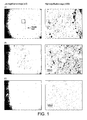
- EIAV-LacZ vector suspension using the previously described technique (50 ⁇ L total volume vector administered to the putamen through 5 needle tracts using a Hamilton syringe and 23-gauge needle, each delivering 10 ⁇ L per tract (via three deposits) provided a moderate spread of vector in the dorso-ventral axis of the putamen that reached between 40 and 50% the depth of this brain structure ( Fig. 1 ).
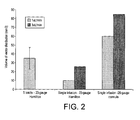
- Vector delivery of 50 ⁇ L vector using a single tract of delivery with the 28-gauge cannula device resulted in a similar rostro-caudal spread than with the five tract paradigm at both flow rates (6.2-8.6mm spread for the 28-gauge cannula and 7.8mm spread with the five tracts and discontinuous flow-rate).
- a lower rostro-caudal spread was observed with a single infusion using the 23-gauge needle and Hamilton syringe (5.0-6.2mm spread).
- the 28-gauge fused silica cannula resulted in a similar spread of vector using both flow rates (1 or 3 ⁇ L/min).
- the finer gauge 28-gauge cannula resulted in less scarring than the 23-gauge Hamilton needle.
- a similar number of cells (>90%) were doubly stained for ⁇ -galactosidase and for NeuN irrespective of the delivery paradigm, confirming neuronal targeting of the vector in all cases.
- the local inflammatory response to infusion of EIAV-LacZ vector was assessed in this study by histological evaluation of inflammatory markers CD4 and CD8 (T-cells) and CD68 (activated microglia). Positive staining for each of the markers was observed in the vicinity of the needle tract for all of the methods of delivery and injection devices, however, there was very little vector-associated inflammatory response and no differences between the administration methods were observed. This result indicates that the there is no increased inflammatory response associated with vector delivery using a single infusion at a higher flow.
- Injection Device Injection volume/ method Injection Flow Rate A-P distribution Volume of distribution (mm 3 )
- lentiviral vectors such as EIAV vectors can be effectively driven through the putamen region using a continuous infusion method that is easily controlled and which provides a volume of transduction that is better than spotting the vector around the target region using multiple cannula placements:
- Animals were fasted prior to surgery and water prevented access to water for approximately 6 hours.
- the animals were administered atropine sulphate (0.04 mg/kg, i.m.), ketamine HCl (10 mg/kg, i.m.) and buprenorphine (0.01 mg/kg, i.m.) and then anaesthetised with propofol (3 mg/kg i.v.) 10 min later.
- Animals were also injected with amoxicillin (30 mg/kg, s.c.) 24 hours prior to surgery and then every 48 hours up to one week after the surgery.
- the animals were inturbated and maintained in anaesthesia with isoflurane inhalant anaesthetic delivered through a volume-regulated respirator.
- the ECG, O 2 saturation and heart rate was monitored and recorded. Body temperature was monitored throughout the surgery using a rectal thermometer.
- the animals were placed in a stereotaxic frame (Unim'ecanique, France) and vector administered into the putamen using the microinjector system (Kopf, USA) for administration of vector as single small deposits in the putamen using a 6.5mm long 23-gauge stainless steel Hamilton needle attached to a 710 Hamilton syringe (Hamilton Bonaduz AG, Bonaduz, Switzerland).
- vector suspensions were infused using either 6.5mm long 23-gauge stainless steel Hamilton needle and syringe, 6.5mm long 28-gauge stainless steel Hamilton needle and syringe or 6.5mm long fused silica injection cannula attached to a Hamilton syringe by a short piece of plastic tubing to minimise the dead volume (Plastics-1, Roanoke, VA, USA).
- a ventriculographic cannula mounted on a glass syringe was introduced into the anterior horn of the lateral ventricle and a contrast medium (Omnipaque, Nycomed, Norway) injected.
- a stereotaxic atlas was used for precise adjustment before insertion into the skull ( Martin & Bowden (1996) Neuroimage 4(2):119-150 ).
- Accurate position of the anterior commissura (AC) was be deduced from ventriculography which was then used to position both left and right putamen.
- the coordinates for placement of the infusion cannulas was AC -1mm (directly centre of the motor area of the putamen).
- vector was injected at 3 depths delivering 4mL at the deepest deposit and then a further two deposits of 3mL each delivered 1mm above one another to deliver 10mL per needle tract.
- the first of five Hamilton needle tracts was at the level of the anterior commissure (AC), i.e.
- the second injection 2 mm caudal to the AC (AC -2mm)
- third injection 3 mm caudal to the AC (AC -3mm)
- forth injection 5 mm caudal to the AC (AC -5mm)
- fifth injection 6 mm caudal to the AC (AC -6mm) to distribute vector along the rostro-caudal length of the putamen.
- the Hamilton syringe and infusion catheter will be left in situ for an additional 2 minutes after each injection/infusion before being removed.
- Vector was infused at a single flow rate of 0.5, 1 or 3 ⁇ L/min using an a programmable small infusion pump (UltraMicroPump III; World Precision Instruments, Sarasota, FL, USA).
- Vector was administered bilaterally into the putamen in a total volume of 50 ⁇ L per hemisphere with each hemisphere receiving vector delivered by a different flow rate or cannula device.
- TSSM formulation buffer was infused into the putamen, in one hemisphere using the 23-gauge Hamilton needle delivering buffer at 1mL/min and in the other hemisphere the vector was delivered by a 28-gauge Hamilton needle at 1mL/min.
- the TSSM-infused animal was used to assess the relative extend on neuronal damage and inflammation response to sterile formulation buffer alone, in the absence of viral vector. surgical records. Following surgery, the animals were closely observed and kept warm until they had regained the righting and swallowing reflexes before being returned to their cages. Buprenorphine analgesia was administered twice daily, for 3 days (0.02 mg/kg, i.m.) and body weights were recorded weekly after surgery.
- ketamine 10 mg/kg
- sodium pentobarbital anaesthesia between 10-30 mg/kg, i.v.
- the animals were exsanginated, perfused with heparinized phosphate buffered saline (0.9% w/v sodium chloride, USP containing approximately 25 U/mL heparin) followed by a solution of 4% buffered paraformaldehyde in phosphate buffered saline (PBS).
- PBS buffered paraformaldehyde in phosphate buffered saline
- the brains (with the dura removed) were carefully dissected and placed in fresh 4% paraformaldehyde overnight at 5 ⁇ 3°C and then transferred to cold filtered 30% sucrose solution in PBS for between 2 and 4 days.
- the brains were then bisected down the midline into two hemispheres and each hemisphere snap frozen in cold isopentane (-40 to -50°C) and stored at -80 ° C before sectioning at forty micron (40 ⁇ m) thickness using a cryostat.
- Brain sections containing the putamen region were collected in pots containing 5 sections equating a distance of two hundred microns (200 ⁇ m) travel in the rostro-caudal axis of brain hemisphere.
- Free-floating brain sections were stained with anti- ⁇ -galactosidase monocloncal antibodies. Secondary and tertiary antibodies were obtained from the Vectastain anti mouse ABC kit (#PK-6102) and the methodology was as per kit instructions. DAB visualisation was achieved using a DAB peroxidise substrate kit (catalogue number SK-4100). Sections were then mounted on glass microscope slides. Alternative brain hemisphere sections were stained with anti-GFAP antibody (Chemicon #MAB3402) at a concentration of 1:200. Selected sections were also stained using H&E and the sections analysed microscopically to assess levels of cell infiltrates and changes in tissue morphology.
- the volume of vector distribution was calculated by measeuring the area of positive ⁇ -galactosidase staining in serial brain sections throughout the injected putamen and applying standard stereology methods (using Cavalieri's principle) to estimate total volume coverage.
- Example 2 Comparing efficacy of a lentiviral vector for Parkinson's disease following administration to the motor putamen of Parkinson's disease patients using a) conventional delivery and b) delivery using a reduced number of injection sites with a narrower gauge device and a high flow-rate
- ProSavin ® is an EIAV lentiviral vector that contains three genes which encode for enzymes in the dopamine biosynthesis pathway.
- the therapeutic potential of ProSavin ® to correct symptoms of Parkinson's disease was evaluated using 1) the conventional method of administration and 2) a continuous method of infusion.
- the conventional method involved injection of a total volume of 125 ⁇ L of vector administered to each putamen through 5 needle tracts using a Hamilton syringe and 23-gauge needle and an administration rate of 1 ⁇ L/min.
- a total of 25 ⁇ L of vector was administered along each injection tract with 5 deposits of 5 ⁇ L of vector distributed along the tract.
- the continuous method of delivery the same total volume of vector was administered (125 ⁇ L) using a Hamilton syringe and a narrower 28-gauge needle.
- Three injections were performed into each putamen and a continuous infusion of vector was made at each injection site using an increased administration rate of 3 ⁇ L/min.
- the volumes of vector delivered were 42 ⁇ L, 42 ⁇ L and 43 ⁇ L at the three injection sites.
- the surgical time for vector administration using the infusion method was almost half of that compared to the conventional method.
- the primary efficacy endpoint of the study was improvement in the motor part (part III) of the Unified Parkinson's Disease Rating Scale (UPDRS) at 6 months post treatment, compared with baseline scores.
- UPDRS Unified Parkinson's Disease Rating Scale
- Table 3 A summary of improvements in motor function to date, is shown in Table 3 (motor function is assessed according to the Unified Parkinson's Disease Rating Scale [UPDRS] in patients' "OFF" state, i.e. after withdrawal of Parkinson's disease medication).
- UPDRS Unified Parkinson's Disease Rating Scale
- the continuous infusion method provides increased efficacy in Parkinson's patients compared to the discontinuous, 5-deposit/tract method previously used.
- the reason for this may be due to an improved distribution of the ProSavin ® vector in the injected putamen, although it is not possible to assess this in living patients.
- the surgical time for vector administration using the continuous infusion method was almost half of that compared to the conventional method.
- a guide tube of 130 mm in length with a bore diameter of 1.2 mm was inserted into the correct position within the brain, using the MRI-derived coordinates, without entering the putamen.
- ProSavin ® was loaded into a Hamilton syringe attached to a 23 gauge point two style bevelled non coring needle, 150 mm in length.
- ProSavin ® was loaded into a Hamilton syringe attached to a 28-gauge needle of the same length. The needle was lowered into the brain through the guide tube and penetrated the motor putamen The guide tube was then withdrawn approximately 10 mm prior to infusion of ProSavin ® .
- a new guide tube, Hamilton syringe and needle were used for each hemisphere of the brain.
- ProSavin ® For the conventional method of administration 25 ⁇ L of ProSavin ® was administered to each of five separate tracts in both brain hemispheres. Each tract received five deposits of 5 ⁇ L of ProSavin ® . The deepest deposit was administered first, the needle was then withdrawn by 1mm and a second deposit of 5 ⁇ L was administered. This was repeated until all five deposits had been made. Administration was performed manually in each of the injection tracts at a rate of 1 ⁇ L per minute (0.5 ⁇ L will be injected, followed by a 30 second pause before the next 0.5 ⁇ L is injected and so on) until 5 ⁇ L was injected into the five deposits along each tract. The needle was left in situ for one minute on completion of all five deposits on a single tract.
- ProSavin ® was administered into three injection tracts per hemisphere. Volumes of 42 ⁇ L, 42 ⁇ L and 43 ⁇ L of ProSavin ® were administered using continuous infusion at a constant delivery rate of 3 ⁇ L/min. The flow rate was controlled by the use of a pump rather than the manual system described above for the conventional method.
Landscapes
- Health & Medical Sciences (AREA)
- Life Sciences & Earth Sciences (AREA)
- Engineering & Computer Science (AREA)
- Chemical & Material Sciences (AREA)
- General Health & Medical Sciences (AREA)
- Bioinformatics & Cheminformatics (AREA)
- Medicinal Chemistry (AREA)
- Pharmacology & Pharmacy (AREA)
- Animal Behavior & Ethology (AREA)
- Public Health (AREA)
- Veterinary Medicine (AREA)
- Biomedical Technology (AREA)
- Genetics & Genomics (AREA)
- Organic Chemistry (AREA)
- Neurology (AREA)
- Neurosurgery (AREA)
- Molecular Biology (AREA)
- Biotechnology (AREA)
- Chemical Kinetics & Catalysis (AREA)
- General Chemical & Material Sciences (AREA)
- Nuclear Medicine, Radiotherapy & Molecular Imaging (AREA)
- Epidemiology (AREA)
- Biochemistry (AREA)
- Zoology (AREA)
- Wood Science & Technology (AREA)
- General Engineering & Computer Science (AREA)
- Pain & Pain Management (AREA)
- Virology (AREA)
- Physics & Mathematics (AREA)
- Biophysics (AREA)
- Plant Pathology (AREA)
- Microbiology (AREA)
- Psychiatry (AREA)
- Psychology (AREA)
- Hospice & Palliative Care (AREA)
- Medicines That Contain Protein Lipid Enzymes And Other Medicines (AREA)
- Medicines Containing Material From Animals Or Micro-Organisms (AREA)
Claims (10)
- Vecteur lentiviral pour administration au putamen pour utilisation dans le traitement d'une affection neurologique, une composition comprenant le vecteur lentiviral étant administrée directement au putamen par perfusion continue au moyen d'une canule et entre 10 et 600 µl de la composition de vecteur étant administrés par voie à un débit d'au moins 2 µl/min, et le vecteur lentiviral étant administré au moyen d'une canule ayant un calibre équivalent à ou plus étroit qu'environ 28 G.
- Vecteur lentiviral selon la revendication 1, un débit constant étant maintenu pendant la perfusion du vecteur lentiviral.
- Vecteur lentiviral selon la revendication 1, le débit étant augmenté pendant la perfusion du vecteur lentiviral.
- Vecteur lentiviral selon l'une quelconque des revendications précédentes, qui est un vecteur du virus de l'anémie infectieuse équine (EIAV).
- Vecteur EIAV selon la revendication 4, qui comprend des séquences nucléotidiques codant pour la tyrosine hydroxylase, la GTP-cyclohydrolase I et l'acide aminé aromatique Dopa décarboxylase.
- Vecteur lentiviral selon l'une quelconque des revendications précédentes, le débit auquel le vecteur est administré étant compris entre 2 et 4 µl/min.
- Vecteur lentiviral selon l'une quelconque des revendications précédentes, le débit auquel le vecteur est administré étant d'environ 3 µl/min.
- Vecteur lentiviral selon l'une quelconque des revendications précédentes, pour traiter la maladie de Parkinson.
- Kit pour administrer un vecteur lentiviral tel que défini dans l'une quelconque des revendications 1 à 8 directement au putamen du sujet pour utilisation dans le traitement d'une affection neurologique, le kit comprenant une ou plusieurs canules, la/les canule(s) étant d'environ 28 G ou plus étroites, et, en utilisation, une composition comprenant le vecteur lentiviral étant administrée directement au putamen par perfusion continue au moyen de la canule et entre 10 et 600 µl de la composition de vecteur étant administrés par voie à un débit d'au moins 2 µl/min.
- Kit selon la revendication 9, dans lequel la/les canule(s) est/sont préremplie(s) avec le vecteur lentiviral à un volume compris entre 10 et 600 µl.
Applications Claiming Priority (4)
| Application Number | Priority Date | Filing Date | Title |
|---|---|---|---|
| GBGB1009052.0A GB201009052D0 (en) | 2010-05-28 | 2010-05-28 | Vector |
| GBGB1100502.2A GB201100502D0 (en) | 2011-01-12 | 2011-01-12 | Vector |
| GBGB1107184.2A GB201107184D0 (en) | 2011-04-28 | 2011-04-28 | Vector |
| PCT/GB2011/051009 WO2011148194A1 (fr) | 2010-05-28 | 2011-05-27 | Administration de vecteurs lentiviraux au cerveau |
Publications (2)
| Publication Number | Publication Date |
|---|---|
| EP2575894A1 EP2575894A1 (fr) | 2013-04-10 |
| EP2575894B1 true EP2575894B1 (fr) | 2015-02-25 |
Family
ID=45003388
Family Applications (1)
| Application Number | Title | Priority Date | Filing Date |
|---|---|---|---|
| EP11727743.4A Active EP2575894B1 (fr) | 2010-05-28 | 2011-05-27 | Administration de vecteurs lentiviraux au cerveau |
Country Status (7)
| Country | Link |
|---|---|
| US (2) | US20110293571A1 (fr) |
| EP (1) | EP2575894B1 (fr) |
| JP (1) | JP5965392B2 (fr) |
| CN (1) | CN102946907A (fr) |
| DK (1) | DK2575894T3 (fr) |
| ES (1) | ES2536791T3 (fr) |
| WO (1) | WO2011148194A1 (fr) |
Families Citing this family (110)
| Publication number | Priority date | Publication date | Assignee | Title |
|---|---|---|---|---|
| US20100183558A1 (en) | 2008-10-17 | 2010-07-22 | Zhennan Lai | Safe lentiviral vectors for targeted delivery of multiple therapeutic molecules |
| GB201118636D0 (en) * | 2011-10-28 | 2011-12-07 | Oxford Biomedica Ltd | Nucleotide sequence |
| WO2014093701A1 (fr) | 2012-12-12 | 2014-06-19 | The Broad Institute, Inc. | Génomique fonctionnelle employant des systèmes crispr-cas, des compositions, des procédés, des banques d'inactivation et leurs applications |
| WO2014093622A2 (fr) | 2012-12-12 | 2014-06-19 | The Broad Institute, Inc. | Délivrance, fabrication et optimisation de systèmes, de procédés et de compositions pour la manipulation de séquences et applications thérapeutiques |
| SG11201510327TA (en) | 2013-06-17 | 2016-01-28 | Broad Inst Inc | Delivery, engineering and optimization of systems, methods and compositions for targeting and modeling diseases and disorders of post mitotic cells |
| KR20240172759A (ko) | 2013-06-17 | 2024-12-10 | 더 브로드 인스티튜트, 인코퍼레이티드 | 간의 표적화 및 치료를 위한 CRISPRCas 시스템, 벡터 및 조성물의 전달 및 용도 |
| EP3597755A1 (fr) | 2013-06-17 | 2020-01-22 | The Broad Institute, Inc. | Administration, utilisation et applications thérapeutiques des systèmes et compositions crispr-cas pour cibler les troubles et les maladies au moyen de composants viraux |
| US10801070B2 (en) | 2013-11-25 | 2020-10-13 | The Broad Institute, Inc. | Compositions and methods for diagnosing, evaluating and treating cancer |
| US11725237B2 (en) | 2013-12-05 | 2023-08-15 | The Broad Institute Inc. | Polymorphic gene typing and somatic change detection using sequencing data |
| EP3080259B1 (fr) | 2013-12-12 | 2023-02-01 | The Broad Institute, Inc. | Ingénierie de systèmes, procédés et compositions guides optimisées avec de nouvelles architectures pour la manipulation de séquences |
| EP3080271B1 (fr) | 2013-12-12 | 2020-02-12 | The Broad Institute, Inc. | Systèmes, procédés et compositions pour manipulation de séquences avec systèmes crispr-cas fonctionnels optimisés |
| EP3653229A1 (fr) | 2013-12-12 | 2020-05-20 | The Broad Institute, Inc. | Distribution, utilisation et applications thérapeutiques des systèmes crispr-cas et compositions pour l'édition du génome |
| WO2015089354A1 (fr) | 2013-12-12 | 2015-06-18 | The Broad Institute Inc. | Compositions et procédés d'utilisation de systèmes crispr-cas dans les maladies dues à une répétition de nucléotides |
| CN105899658B (zh) | 2013-12-12 | 2020-02-18 | 布罗德研究所有限公司 | 针对hbv和病毒性疾病以及障碍的crispr-cas系统和组合物的递送、用途和治疗应用 |
| JP7060324B2 (ja) | 2013-12-20 | 2022-04-26 | ザ・ブロード・インスティテュート・インコーポレイテッド | ネオ抗原ワクチンによる併用療法 |
| EP3686279B1 (fr) | 2014-08-17 | 2023-01-04 | The Broad Institute, Inc. | Édition du génome à l'aide de nickases cas9 |
| WO2016049163A2 (fr) | 2014-09-24 | 2016-03-31 | The Broad Institute Inc. | Utilisation et production d'animaux transgéniques chd8 +/- possédant des phénotypes de comportement caractéristiques d'un trouble du spectre autistique |
| WO2016049258A2 (fr) | 2014-09-25 | 2016-03-31 | The Broad Institute Inc. | Criblage fonctionnel avec systèmes crisp-cas fonctionnels optimisés |
| EP3212788A2 (fr) | 2014-10-27 | 2017-09-06 | The Broad Institute, Inc. | Compositions, procédés et utilisation de criblage létal synthétique |
| EP3889260A1 (fr) | 2014-12-12 | 2021-10-06 | The Broad Institute, Inc. | Arn guides protégés (pgrnas) |
| WO2016094880A1 (fr) | 2014-12-12 | 2016-06-16 | The Broad Institute Inc. | Administration, utilisation et applications thérapeutiques de systèmes crispr et compositions pour l'édition de génome de cellules souches hématopoïétiques (hsc) |
| EP3230452B1 (fr) | 2014-12-12 | 2025-06-11 | The Broad Institute, Inc. | Guides désactivés pour facteurs de transcription crispr |
| WO2016094874A1 (fr) | 2014-12-12 | 2016-06-16 | The Broad Institute Inc. | Guides escortés et fonctionnalisés pour systèmes crispr-cas |
| EP4636401A2 (fr) | 2014-12-19 | 2025-10-22 | The Broad Institute, Inc. | Procédés de profilage du répertoire de récepteurs de lymphocytes t |
| WO2016100974A1 (fr) | 2014-12-19 | 2016-06-23 | The Broad Institute Inc. | Identification non biaisée de cassures bicaténaires et réarrangement génomique par séquençage de capture d'insert à l'échelle du génome |
| WO2016100975A1 (fr) | 2014-12-19 | 2016-06-23 | Massachsetts Institute Ot Technology | Biomarqueurs moléculaires pour l'immunothérapie d'un cancer |
| WO2016106236A1 (fr) | 2014-12-23 | 2016-06-30 | The Broad Institute Inc. | Système de ciblage d'arn |
| CA2970370A1 (fr) | 2014-12-24 | 2016-06-30 | Massachusetts Institute Of Technology | Crispr presentant ou associe avec un domaine de destabilisation |
| US20180271891A1 (en) | 2015-03-11 | 2018-09-27 | The Broad Institute Inc. | Selective treatment of prmt5 dependent cancer |
| MX2017014700A (es) | 2015-05-20 | 2018-08-15 | Broad Inst Inc | Neoantigenos compartidos. |
| WO2016201368A1 (fr) | 2015-06-10 | 2016-12-15 | The Broad Institute Inc. | Anticorps, composés et écrans permettant l'identification et le traitement la cachexie ou pré-cachexie |
| MX392008B (es) | 2015-06-18 | 2025-03-21 | Broad Inst Inc | Mutaciones de la enzima crispr que reducen los efectos fuera del blanco |
| US9790490B2 (en) | 2015-06-18 | 2017-10-17 | The Broad Institute Inc. | CRISPR enzymes and systems |
| WO2016205745A2 (fr) | 2015-06-18 | 2016-12-22 | The Broad Institute Inc. | Tri cellulaire |
| EP4159856A1 (fr) | 2015-06-18 | 2023-04-05 | The Broad Institute, Inc. | Nouvelles enzymes crispr et systèmes |
| WO2016205749A1 (fr) | 2015-06-18 | 2016-12-22 | The Broad Institute Inc. | Nouvelles enzymes crispr et systèmes associés |
| WO2017007994A1 (fr) | 2015-07-08 | 2017-01-12 | American Gene Technologies International Inc. | Pré-immunisation et immunothérapie du vih |
| AU2016308339A1 (en) | 2015-08-18 | 2018-04-12 | Baylor College Of Medicine | Methods and compositions for altering function and structure of chromatin loops and/or domains |
| WO2017069958A2 (fr) | 2015-10-09 | 2017-04-27 | The Brigham And Women's Hospital, Inc. | Modulation de nouvelles cibles de points de contrôle immunitaires |
| WO2017070605A1 (fr) | 2015-10-22 | 2017-04-27 | The Broad Institute Inc. | Enzymes et systèmes crispr de type vi-b |
| WO2017074788A1 (fr) | 2015-10-27 | 2017-05-04 | The Broad Institute Inc. | Compositions et procédés de ciblage de variations de séquences spécifiques du cancer |
| WO2017075465A1 (fr) | 2015-10-28 | 2017-05-04 | The Broad Institute Inc. | Compositions et procédés d'évaluation et de modulation des réponses immunitaires par détection et ciblage de gata3 |
| WO2017075478A2 (fr) | 2015-10-28 | 2017-05-04 | The Broad Institute Inc. | Compositions et méthodes d'évaluation et de modulation des réponses immunitaires à l'aide de signatures génétiques de cellules immunitaires |
| WO2017075451A1 (fr) | 2015-10-28 | 2017-05-04 | The Broad Institute Inc. | Compositions et procédés d'évaluation et de modulation des réponses immunitaires par détection et ciblage de pou2af1 |
| US12110490B2 (en) | 2015-12-18 | 2024-10-08 | The Broad Institute, Inc. | CRISPR enzymes and systems |
| IL310925A (en) * | 2016-01-15 | 2024-04-01 | American Gene Tech Int Inc | Methods and compositons for the activation of gamma-delta t-cells |
| US10137144B2 (en) | 2016-01-15 | 2018-11-27 | American Gene Technologies International Inc. | Methods and compositions for the activation of gamma-delta T-cells |
| US10888613B2 (en) | 2016-02-08 | 2021-01-12 | American Gene Technologies International Inc. | Method of producing cells resistant to HIV infection |
| WO2017156311A2 (fr) | 2016-03-09 | 2017-09-14 | American Gene Technologies International Inc. | Vecteurs de combinaison et méthodes de traitement du cancer |
| EP3446119A1 (fr) | 2016-04-18 | 2019-02-27 | The Broad Institute Inc. | Prédiction améliorée d'épitope hla |
| KR20260004568A (ko) | 2016-04-19 | 2026-01-08 | 더 브로드 인스티튜트, 인코퍼레이티드 | 신규한 crispr 효소 및 시스템 |
| WO2017189308A1 (fr) | 2016-04-19 | 2017-11-02 | The Broad Institute Inc. | Nouvelles enzymes crispr et systèmes associés |
| EP3445853A1 (fr) | 2016-04-19 | 2019-02-27 | The Broad Institute, Inc. | Complexes cpf1 à activité d'indel réduite |
| JP2019519250A (ja) | 2016-05-10 | 2019-07-11 | ユナイテッド ステイツ ガバメント アズ リプレゼンテッド バイ ザ デパートメント オブ ベテランズ アフェアーズUnited States Government As Represented By The Department Of Veterans Affairs | Hiv−1感染と複製に必須な遺伝子を切断するcrispr/casの構築物のレンチウィルスによる送達 |
| WO2017213697A1 (fr) | 2016-06-08 | 2017-12-14 | American Gene Technologies International Inc. | Système d'administration viral sans intégration et procédés associés à ce dernier |
| KR20190019168A (ko) | 2016-06-17 | 2019-02-26 | 더 브로드 인스티튜트, 인코퍼레이티드 | 제vi형 crispr 오솔로그 및 시스템 |
| US20210222164A1 (en) | 2016-06-29 | 2021-07-22 | The Broad Institute, Inc. | Crispr-cas systems having destabilization domain |
| WO2018009246A1 (fr) | 2016-07-08 | 2018-01-11 | American Gene Technologies International Inc. | Pré-immunisation et immunothérapie du vih |
| CN110312799A (zh) | 2016-08-17 | 2019-10-08 | 博德研究所 | 新型crispr酶和系统 |
| WO2018035388A1 (fr) | 2016-08-17 | 2018-02-22 | The Broad Institute, Inc. | Systèmes et nouvelles enzymes crispr et systèmes |
| WO2018049025A2 (fr) | 2016-09-07 | 2018-03-15 | The Broad Institute Inc. | Compositions et procédés pour évaluer et moduler des réponses immunitaires |
| WO2018064208A1 (fr) | 2016-09-28 | 2018-04-05 | The Broad Institute, Inc. | Criblage systématique et cartographie d'éléments régulateurs dans des régions non codantes du génome, ainsi que procédés, compositions et applications associés |
| WO2018067991A1 (fr) | 2016-10-07 | 2018-04-12 | The Brigham And Women's Hospital, Inc. | Modulation de nouvelles cibles de points de contrôle immunitaires |
| CA3040687A1 (fr) | 2016-10-14 | 2018-04-19 | Childrens' Medical Center Corporation | Compositions et procedes pour le traitement de maladies ou de troubles du systeme nerveux central |
| CA3050691A1 (fr) | 2017-01-17 | 2018-07-26 | Dana-Farber Cancer Institute, Inc. | Compositions et procedes de traitement de maladies et de troubles du stockage lysosomial |
| WO2018136434A1 (fr) | 2017-01-17 | 2018-07-26 | Children's Medical Center Corporation | Compositions et méthodes de diagnostic et de traitement des maladies peroxysomales |
| WO2018140391A1 (fr) | 2017-01-24 | 2018-08-02 | The Broad Institute, Inc. | Compositions et procédés de détection d'un variant mutant d'un polynucléotide |
| DK3574101T5 (da) | 2017-01-30 | 2024-09-02 | Kws Saat Se & Co Kgaa | Reparationsskabelonbinding til endonukleaser til genommodifikation |
| SI3580561T1 (sl) | 2017-02-12 | 2024-04-30 | Biontech Us Inc. | Metode, osnovane na hla, in njihove sestave ter uporabe |
| CN120330163A (zh) | 2017-03-15 | 2025-07-18 | 博德研究所 | 新型cas13b直向同源物crispr酶和系统 |
| CA3057142A1 (fr) | 2017-04-03 | 2018-10-11 | American Gene Technologies International Inc. | Compositions et methodes de traitement de la phenylcetonurie |
| CA3059757A1 (fr) | 2017-04-12 | 2018-10-18 | Massachusetts Institute Of Technology | Nouveaux orthologues de crispr de type vi et systemes associes |
| WO2018191750A2 (fr) | 2017-04-14 | 2018-10-18 | The Broad Institute Inc. | Nouvelle distribution de grandes charges utiles |
| US11591601B2 (en) | 2017-05-05 | 2023-02-28 | The Broad Institute, Inc. | Methods for identification and modification of lncRNA associated with target genotypes and phenotypes |
| WO2018213726A1 (fr) | 2017-05-18 | 2018-11-22 | The Broad Institute, Inc. | Systèmes, procédés et compositions d'édition ciblée d'acides nucléiques |
| CN110770338A (zh) | 2017-06-16 | 2020-02-07 | 美国基因技术国际有限公司 | 由人γ-δ T细胞激活肿瘤细胞毒性的方法和组合物 |
| WO2019010422A1 (fr) | 2017-07-07 | 2019-01-10 | The Broad Institute, Inc. | Thérapie antivirale basée sur le système crispr |
| KR20200066616A (ko) | 2017-09-21 | 2020-06-10 | 더 브로드 인스티튜트, 인코퍼레이티드 | 표적화된 핵산 편집을 위한 시스템, 방법 및 조성물 |
| WO2019071054A1 (fr) | 2017-10-04 | 2019-04-11 | The Broad Institute, Inc. | Procédés et compositions permettant de modifier la fonction et la structure de boucles et/ou de domaines de chromatine |
| US12227742B2 (en) | 2017-10-23 | 2025-02-18 | The Broad Institute, Inc. | Nucleic acid modifiers |
| US11547614B2 (en) | 2017-10-31 | 2023-01-10 | The Broad Institute, Inc. | Methods and compositions for studying cell evolution |
| WO2019094984A1 (fr) | 2017-11-13 | 2019-05-16 | The Broad Institute, Inc. | Procédés de détermination de la dynamique d'expression génique spatiale et temporelle pendant la neurogenèse adulte dans des cellules uniques |
| EP3710039A4 (fr) | 2017-11-13 | 2021-08-04 | The Broad Institute, Inc. | Méthodes et compositions de traitement du cancer par ciblage de la voie clec2d-klrb1 |
| US20230193242A1 (en) | 2017-12-22 | 2023-06-22 | The Broad Institute, Inc. | Cas12b systems, methods, and compositions for targeted dna base editing |
| US10968257B2 (en) | 2018-04-03 | 2021-04-06 | The Broad Institute, Inc. | Target recognition motifs and uses thereof |
| EP3833761A1 (fr) | 2018-08-07 | 2021-06-16 | The Broad Institute, Inc. | Nouveaux systèmes et enzymes cas12b |
| WO2020041380A1 (fr) | 2018-08-20 | 2020-02-27 | The Broad Institute, Inc. | Méthodes et compositions de régulation optochimique de crispr-cas9 |
| WO2020072700A1 (fr) | 2018-10-02 | 2020-04-09 | Dana-Farber Cancer Institute, Inc. | Lignées d'allèles uniques d'alh |
| JP2022506515A (ja) | 2018-11-05 | 2022-01-17 | アメリカン ジーン テクノロジーズ インターナショナル インコーポレイテッド | 制御性rnaを発現させるためのベクターシステム |
| CN113544266A (zh) | 2018-12-17 | 2021-10-22 | 博德研究所 | Crispr相关转座酶系统和其使用方法 |
| WO2020131586A2 (fr) | 2018-12-17 | 2020-06-25 | The Broad Institute, Inc. | Méthodes d'identification de néo-antigènes |
| AU2019404547B2 (en) | 2018-12-21 | 2025-01-30 | Biontech Us Inc. | Method and systems for prediction of HLA class II-specific epitopes and characterization of CD4+ T cells |
| US12215382B2 (en) | 2019-03-01 | 2025-02-04 | The General Hospital Corporation | Liver protective MARC variants and uses thereof |
| KR20220034719A (ko) * | 2019-03-10 | 2022-03-18 | 시오 진 테라피스 인코포레이티드 | 파킨슨병을 치료하기 위한 유전자 요법 조성물 및 방법 |
| US12534714B2 (en) | 2019-03-18 | 2026-01-27 | The Broad Institute, Inc. | Type VII CRISPR proteins and systems |
| WO2020236972A2 (fr) | 2019-05-20 | 2020-11-26 | The Broad Institute, Inc. | Systèmes de ciblage d'acides nucléiques à constituants multiples autres que de classe i |
| EP4013873A1 (fr) | 2019-08-16 | 2022-06-22 | Massachusetts Institute Of Technology | Trans-épissage cible utilisant crispr/cas13 |
| US20220378942A1 (en) * | 2019-10-01 | 2022-12-01 | Children's Medical Center Corporation | Compositions and methods for treating alzheimer's disease |
| US12297426B2 (en) | 2019-10-01 | 2025-05-13 | The Broad Institute, Inc. | DNA damage response signature guided rational design of CRISPR-based systems and therapies |
| US12394502B2 (en) | 2019-10-02 | 2025-08-19 | The General Hospital Corporation | Method for predicting HLA-binding peptides using protein structural features |
| MX2023007003A (es) | 2020-12-14 | 2023-08-18 | Biontech Us Inc | Antigenos especificos de tejidos para la inmunoterapia del cancer. |
| CA3255225A1 (fr) | 2022-04-04 | 2023-10-12 | The Regents Of The University Of California | Compositions et procédés de complémentation génétique |
| WO2024015892A1 (fr) | 2022-07-13 | 2024-01-18 | The Broad Institute, Inc. | Procédés et systèmes faisant intervenir l'immunopeptidome hla-ii pour la découverte d'antigènes |
| US12531162B1 (en) * | 2023-05-31 | 2026-01-20 | Northeastern University | Multi-dimensional phenotypic space for genotype to phenotype mapping and intelligent design of cancer drug therapies using a deep learning net |
| WO2025072383A1 (fr) | 2023-09-25 | 2025-04-03 | The Broad Institute, Inc. | Cadres de lecture ouverts de virus, leurs utilisations et leurs procédés de détection |
| WO2025097055A2 (fr) | 2023-11-02 | 2025-05-08 | The Broad Institute, Inc. | Compositions et méthodes d'utilisation de lymphocytes t en immunothérapie |
| US12562256B2 (en) * | 2023-11-07 | 2026-02-24 | New York University | Systems, methods and computer-accessible medium for identifying target pairs for CAR-T therapy |
| WO2025129158A1 (fr) | 2023-12-15 | 2025-06-19 | The Broad Institute, Inc. | Vésicules d'administration contenant des polypeptides arc modifiés et leurs utilisations |
| WO2025151454A1 (fr) * | 2024-01-08 | 2025-07-17 | AskBio Inc. | Procédé ou système de perfusion et/ou de prédiction d'un volume de perfusat |
| WO2025250808A1 (fr) | 2024-05-29 | 2025-12-04 | The Brigham And Women’S Hospital, Inc. | Compositions et méthodes d'administration anti-crispr |
Family Cites Families (26)
| Publication number | Priority date | Publication date | Assignee | Title |
|---|---|---|---|---|
| DE4006630A1 (de) | 1990-03-03 | 1991-09-12 | Behringwerke Ag | Humane monoklonale antikoerper gegen tollwutviren, ihre herstellung und verwendung |
| US5512421A (en) | 1991-02-19 | 1996-04-30 | The Regents Of The University Of California | Generation, concentration and efficient transfer of VSV-G pseudotyped retroviral vectors |
| US6100071A (en) | 1996-05-07 | 2000-08-08 | Genentech, Inc. | Receptors as novel inhibitors of vascular endothelial growth factor activity and processes for their production |
| WO1998017815A1 (fr) | 1996-10-17 | 1998-04-30 | Oxford Biomedica (Uk) Limited | Vecteurs retroviraux |
| GB9720465D0 (en) | 1997-09-25 | 1997-11-26 | Oxford Biomedica Ltd | Dual-virus vectors |
| US6815431B2 (en) * | 1998-04-15 | 2004-11-09 | Regents Of The University Of California | Methods for therapy of neurodegenerative disease of the brain |
| ATE435297T1 (de) | 1998-05-22 | 2009-07-15 | Oxford Biomedica Ltd | Retrovirales verabreichungssystem |
| US6506378B1 (en) * | 1998-12-16 | 2003-01-14 | Arch Development Corporation | Vesicular monoamine transporter gene therapy in Parkinson's disease |
| GB9904905D0 (en) | 1999-03-03 | 1999-04-28 | Oxford Biomedica Ltd | Cells |
| GB0009760D0 (en) | 2000-04-19 | 2000-06-07 | Oxford Biomedica Ltd | Method |
| CA2423871A1 (fr) | 2000-09-29 | 2002-04-11 | Supermarket Online, Inc. | Procede, systeme et progiciel permettant de produire une liste de controle en temps reel des rentrees de promotions clients |
| GB0024550D0 (fr) | 2000-10-06 | 2000-11-22 | Oxford Biomedica Ltd | |
| US6800281B2 (en) * | 2000-11-09 | 2004-10-05 | Oxford Biomedica (Uk) Limited | Lentiviral-mediated growth factor gene therapy for neurodegenerative diseases |
| SE0302509D0 (sv) | 2003-09-19 | 2003-09-19 | Amersham Biosciences Ab | Matrix for separation of polyethers and method of separation |
| US20060129126A1 (en) | 2004-11-19 | 2006-06-15 | Kaplitt Michael G | Infusion device and method for infusing material into the brain of a patient |
| GB0526210D0 (en) | 2005-12-22 | 2006-02-01 | Oxford Biomedica Ltd | Vectors |
| GB0526211D0 (en) | 2005-12-22 | 2006-02-01 | Oxford Biomedica Ltd | Viral vectors |
| US8790317B2 (en) | 2007-02-13 | 2014-07-29 | Cornell University | Convection enhanced delivery apparatus, method, and application |
| RU2442617C2 (ru) | 2007-05-17 | 2012-02-20 | Медженезиз Терапьютикс Инк. | Конвекционный доставляющий катетер со съемным элементом жесткости и способ его применения |
| GB0802634D0 (en) | 2008-02-13 | 2008-03-19 | Renishaw Plc | Catheter |
| WO2009089635A1 (fr) * | 2008-01-16 | 2009-07-23 | Neurodyn, Inc. | Traitement de maladies neurodégénératives avec de la progranuline (pgrn) |
| US20100081707A1 (en) * | 2008-02-21 | 2010-04-01 | Ali Robin R | Devices and methods for delivering polynucleotides into retinal cells of the macula and fovea |
| CA2726128C (fr) * | 2008-05-29 | 2016-10-18 | The Board Of Trustees Of The Leland Stanford Junior University | Lignee cellulaire, systeme et procede pour un controle optique de messagers secondaires |
| DK3192874T3 (da) | 2008-06-18 | 2019-12-16 | Oxford Biomedica Ltd | Virusoprensning |
| US20110214195A1 (en) * | 2008-11-10 | 2011-09-01 | The Regents Of The University Of Colorado, A Body Corporate | Methods For Treating Clinical Conditions Associated With Lipoprotein Lipase Activity |
| WO2010055290A1 (fr) * | 2008-11-11 | 2010-05-20 | Oxford Biomedica (Uk) Limited | Procédé |
-
2011
- 2011-05-27 EP EP11727743.4A patent/EP2575894B1/fr active Active
- 2011-05-27 ES ES11727743.4T patent/ES2536791T3/es active Active
- 2011-05-27 JP JP2013511744A patent/JP5965392B2/ja not_active Expired - Fee Related
- 2011-05-27 WO PCT/GB2011/051009 patent/WO2011148194A1/fr not_active Ceased
- 2011-05-27 CN CN2011800264019A patent/CN102946907A/zh active Pending
- 2011-05-27 DK DK11727743.4T patent/DK2575894T3/en active
- 2011-05-27 US US13/117,451 patent/US20110293571A1/en not_active Abandoned
-
2013
- 2013-05-14 US US13/893,920 patent/US9339512B2/en not_active Expired - Fee Related
Also Published As
| Publication number | Publication date |
|---|---|
| EP2575894A1 (fr) | 2013-04-10 |
| JP5965392B2 (ja) | 2016-08-03 |
| ES2536791T3 (es) | 2015-05-28 |
| US9339512B2 (en) | 2016-05-17 |
| US20110293571A1 (en) | 2011-12-01 |
| CN102946907A (zh) | 2013-02-27 |
| US20130281975A1 (en) | 2013-10-24 |
| JP2013530152A (ja) | 2013-07-25 |
| DK2575894T3 (en) | 2015-05-26 |
| WO2011148194A1 (fr) | 2011-12-01 |
Similar Documents
| Publication | Publication Date | Title |
|---|---|---|
| EP2575894B1 (fr) | Administration de vecteurs lentiviraux au cerveau | |
| EP2829285B1 (fr) | Formulation de vecteur lentiviral recombinant | |
| US20120295960A1 (en) | Treatment regimen for parkinson's disease | |
| US20200040361A1 (en) | Catecholamine enzyme fusions | |
| US20080131400A1 (en) | Vector system | |
| US11583562B2 (en) | Viral vectors for treating Parkinson's disease | |
| EP2361309B1 (fr) | Procédé | |
| Serguera et al. | Gene therapy of the central nervous system: general considerations on viral vectors for gene transfer into the brain | |
| SA519401667B1 (ar) | تركيبة لتخفيف الألم أو علاجه | |
| EP1833975A2 (fr) | Expression regulee de transgenes dans le systeme nerveux central de mammiferes | |
| CA3136646A1 (fr) | Compositions et methodes d'administration de produits therapeutiques | |
| US10400252B2 (en) | Catecholamine enzyme fusions | |
| US11434501B2 (en) | Sprr1A as a genetic target for treating neurodegenerative diseases | |
| Singh et al. | Therapeutic Value of Adeno Associated Virus as a Gene Therapy Vector for Parkinson's Disease–A Focused Review | |
| EP1859813A1 (fr) | Remède pour les maladies associées à la dégénerescence apoptotique du tissu des cellules oculaires, basé sur un vecteur du siv-pedf | |
| JP2006502240A5 (fr) | ||
| US20220175962A1 (en) | Gene therapy compositions and methods for treating parkinson's disease | |
| EP1551974A1 (fr) | Systeme de vecteur | |
| US10144932B2 (en) | Nurr1 as a genetic target for treating levodopa-induced dyskinesias in Parkinson's disease | |
| US20020168760A1 (en) | Retroviral vectors for gene transfer into neuronal cells | |
| WO2025129085A1 (fr) | Utilisation de biocommutateurs thermiques dans une thérapie génique à base d'aav | |
| KR20220114028A (ko) | 파킨슨병을 치료하는 방법 | |
| D’INHIBITEURS et al. | ANTISENSE SDI-1 NUCLEOTIDE SEQUENCES |
Legal Events
| Date | Code | Title | Description |
|---|---|---|---|
| PUAI | Public reference made under article 153(3) epc to a published international application that has entered the european phase |
Free format text: ORIGINAL CODE: 0009012 |
|
| 17P | Request for examination filed |
Effective date: 20121206 |
|
| AK | Designated contracting states |
Kind code of ref document: A1 Designated state(s): AL AT BE BG CH CY CZ DE DK EE ES FI FR GB GR HR HU IE IS IT LI LT LU LV MC MK MT NL NO PL PT RO RS SE SI SK SM TR |
|
| DAX | Request for extension of the european patent (deleted) | ||
| 17Q | First examination report despatched |
Effective date: 20131129 |
|
| GRAP | Despatch of communication of intention to grant a patent |
Free format text: ORIGINAL CODE: EPIDOSNIGR1 |
|
| INTG | Intention to grant announced |
Effective date: 20140922 |
|
| GRAS | Grant fee paid |
Free format text: ORIGINAL CODE: EPIDOSNIGR3 |
|
| GRAA | (expected) grant |
Free format text: ORIGINAL CODE: 0009210 |
|
| AK | Designated contracting states |
Kind code of ref document: B1 Designated state(s): AL AT BE BG CH CY CZ DE DK EE ES FI FR GB GR HR HU IE IS IT LI LT LU LV MC MK MT NL NO PL PT RO RS SE SI SK SM TR |
|
| REG | Reference to a national code |
Ref country code: GB Ref legal event code: FG4D |
|
| REG | Reference to a national code |
Ref country code: CH Ref legal event code: EP |
|
| REG | Reference to a national code |
Ref country code: IE Ref legal event code: FG4D |
|
| REG | Reference to a national code |
Ref country code: DE Ref legal event code: R096 Ref document number: 602011014012 Country of ref document: DE Effective date: 20150409 |
|
| REG | Reference to a national code |
Ref country code: AT Ref legal event code: REF Ref document number: 711376 Country of ref document: AT Kind code of ref document: T Effective date: 20150415 |
|
| REG | Reference to a national code |
Ref country code: DK Ref legal event code: T3 Effective date: 20150521 |
|
| REG | Reference to a national code |
Ref country code: ES Ref legal event code: FG2A Ref document number: 2536791 Country of ref document: ES Kind code of ref document: T3 Effective date: 20150528 |
|
| REG | Reference to a national code |
Ref country code: SE Ref legal event code: TRGR |
|
| REG | Reference to a national code |
Ref country code: NL Ref legal event code: T3 |
|
| REG | Reference to a national code |
Ref country code: LT Ref legal event code: MG4D |
|
| PG25 | Lapsed in a contracting state [announced via postgrant information from national office to epo] |
Ref country code: HR Free format text: LAPSE BECAUSE OF FAILURE TO SUBMIT A TRANSLATION OF THE DESCRIPTION OR TO PAY THE FEE WITHIN THE PRESCRIBED TIME-LIMIT Effective date: 20150225 Ref country code: FI Free format text: LAPSE BECAUSE OF FAILURE TO SUBMIT A TRANSLATION OF THE DESCRIPTION OR TO PAY THE FEE WITHIN THE PRESCRIBED TIME-LIMIT Effective date: 20150225 Ref country code: NO Free format text: LAPSE BECAUSE OF FAILURE TO SUBMIT A TRANSLATION OF THE DESCRIPTION OR TO PAY THE FEE WITHIN THE PRESCRIBED TIME-LIMIT Effective date: 20150525 Ref country code: LT Free format text: LAPSE BECAUSE OF FAILURE TO SUBMIT A TRANSLATION OF THE DESCRIPTION OR TO PAY THE FEE WITHIN THE PRESCRIBED TIME-LIMIT Effective date: 20150225 |
|
| PG25 | Lapsed in a contracting state [announced via postgrant information from national office to epo] |
Ref country code: IS Free format text: LAPSE BECAUSE OF FAILURE TO SUBMIT A TRANSLATION OF THE DESCRIPTION OR TO PAY THE FEE WITHIN THE PRESCRIBED TIME-LIMIT Effective date: 20150625 Ref country code: RS Free format text: LAPSE BECAUSE OF FAILURE TO SUBMIT A TRANSLATION OF THE DESCRIPTION OR TO PAY THE FEE WITHIN THE PRESCRIBED TIME-LIMIT Effective date: 20150225 Ref country code: GR Free format text: LAPSE BECAUSE OF FAILURE TO SUBMIT A TRANSLATION OF THE DESCRIPTION OR TO PAY THE FEE WITHIN THE PRESCRIBED TIME-LIMIT Effective date: 20150526 Ref country code: LV Free format text: LAPSE BECAUSE OF FAILURE TO SUBMIT A TRANSLATION OF THE DESCRIPTION OR TO PAY THE FEE WITHIN THE PRESCRIBED TIME-LIMIT Effective date: 20150225 |
|
| PG25 | Lapsed in a contracting state [announced via postgrant information from national office to epo] |
Ref country code: SK Free format text: LAPSE BECAUSE OF FAILURE TO SUBMIT A TRANSLATION OF THE DESCRIPTION OR TO PAY THE FEE WITHIN THE PRESCRIBED TIME-LIMIT Effective date: 20150225 Ref country code: RO Free format text: LAPSE BECAUSE OF FAILURE TO SUBMIT A TRANSLATION OF THE DESCRIPTION OR TO PAY THE FEE WITHIN THE PRESCRIBED TIME-LIMIT Effective date: 20150225 Ref country code: EE Free format text: LAPSE BECAUSE OF FAILURE TO SUBMIT A TRANSLATION OF THE DESCRIPTION OR TO PAY THE FEE WITHIN THE PRESCRIBED TIME-LIMIT Effective date: 20150225 Ref country code: CZ Free format text: LAPSE BECAUSE OF FAILURE TO SUBMIT A TRANSLATION OF THE DESCRIPTION OR TO PAY THE FEE WITHIN THE PRESCRIBED TIME-LIMIT Effective date: 20150225 |
|
| REG | Reference to a national code |
Ref country code: DE Ref legal event code: R097 Ref document number: 602011014012 Country of ref document: DE |
|
| PG25 | Lapsed in a contracting state [announced via postgrant information from national office to epo] |
Ref country code: PL Free format text: LAPSE BECAUSE OF FAILURE TO SUBMIT A TRANSLATION OF THE DESCRIPTION OR TO PAY THE FEE WITHIN THE PRESCRIBED TIME-LIMIT Effective date: 20150225 |
|
| PLBE | No opposition filed within time limit |
Free format text: ORIGINAL CODE: 0009261 |
|
| STAA | Information on the status of an ep patent application or granted ep patent |
Free format text: STATUS: NO OPPOSITION FILED WITHIN TIME LIMIT |
|
| PG25 | Lapsed in a contracting state [announced via postgrant information from national office to epo] |
Ref country code: MC Free format text: LAPSE BECAUSE OF FAILURE TO SUBMIT A TRANSLATION OF THE DESCRIPTION OR TO PAY THE FEE WITHIN THE PRESCRIBED TIME-LIMIT Effective date: 20150225 |
|
| 26N | No opposition filed |
Effective date: 20151126 |
|
| PG25 | Lapsed in a contracting state [announced via postgrant information from national office to epo] |
Ref country code: SI Free format text: LAPSE BECAUSE OF FAILURE TO SUBMIT A TRANSLATION OF THE DESCRIPTION OR TO PAY THE FEE WITHIN THE PRESCRIBED TIME-LIMIT Effective date: 20150225 |
|
| REG | Reference to a national code |
Ref country code: FR Ref legal event code: PLFP Year of fee payment: 6 |
|
| REG | Reference to a national code |
Ref country code: AT Ref legal event code: UEP Ref document number: 711376 Country of ref document: AT Kind code of ref document: T Effective date: 20150225 |
|
| PG25 | Lapsed in a contracting state [announced via postgrant information from national office to epo] |
Ref country code: MT Free format text: LAPSE BECAUSE OF FAILURE TO SUBMIT A TRANSLATION OF THE DESCRIPTION OR TO PAY THE FEE WITHIN THE PRESCRIBED TIME-LIMIT Effective date: 20150225 |
|
| REG | Reference to a national code |
Ref country code: FR Ref legal event code: PLFP Year of fee payment: 7 |
|
| PG25 | Lapsed in a contracting state [announced via postgrant information from national office to epo] |
Ref country code: HU Free format text: LAPSE BECAUSE OF FAILURE TO SUBMIT A TRANSLATION OF THE DESCRIPTION OR TO PAY THE FEE WITHIN THE PRESCRIBED TIME-LIMIT; INVALID AB INITIO Effective date: 20110527 Ref country code: BG Free format text: LAPSE BECAUSE OF FAILURE TO SUBMIT A TRANSLATION OF THE DESCRIPTION OR TO PAY THE FEE WITHIN THE PRESCRIBED TIME-LIMIT Effective date: 20150225 Ref country code: SM Free format text: LAPSE BECAUSE OF FAILURE TO SUBMIT A TRANSLATION OF THE DESCRIPTION OR TO PAY THE FEE WITHIN THE PRESCRIBED TIME-LIMIT Effective date: 20150225 |
|
| PG25 | Lapsed in a contracting state [announced via postgrant information from national office to epo] |
Ref country code: CY Free format text: LAPSE BECAUSE OF FAILURE TO SUBMIT A TRANSLATION OF THE DESCRIPTION OR TO PAY THE FEE WITHIN THE PRESCRIBED TIME-LIMIT Effective date: 20150225 |
|
| PG25 | Lapsed in a contracting state [announced via postgrant information from national office to epo] |
Ref country code: TR Free format text: LAPSE BECAUSE OF FAILURE TO SUBMIT A TRANSLATION OF THE DESCRIPTION OR TO PAY THE FEE WITHIN THE PRESCRIBED TIME-LIMIT Effective date: 20150225 |
|
| REG | Reference to a national code |
Ref country code: FR Ref legal event code: PLFP Year of fee payment: 8 |
|
| PG25 | Lapsed in a contracting state [announced via postgrant information from national office to epo] |
Ref country code: PT Free format text: LAPSE BECAUSE OF FAILURE TO SUBMIT A TRANSLATION OF THE DESCRIPTION OR TO PAY THE FEE WITHIN THE PRESCRIBED TIME-LIMIT Effective date: 20150225 Ref country code: MK Free format text: LAPSE BECAUSE OF FAILURE TO SUBMIT A TRANSLATION OF THE DESCRIPTION OR TO PAY THE FEE WITHIN THE PRESCRIBED TIME-LIMIT Effective date: 20150225 |
|
| PG25 | Lapsed in a contracting state [announced via postgrant information from national office to epo] |
Ref country code: AL Free format text: LAPSE BECAUSE OF FAILURE TO SUBMIT A TRANSLATION OF THE DESCRIPTION OR TO PAY THE FEE WITHIN THE PRESCRIBED TIME-LIMIT Effective date: 20150225 |
|
| REG | Reference to a national code |
Ref country code: DE Ref legal event code: R082 Ref document number: 602011014012 Country of ref document: DE Representative=s name: D YOUNG & CO LLP, DE |
|
| P01 | Opt-out of the competence of the unified patent court (upc) registered |
Effective date: 20230523 |
|
| PGFP | Annual fee paid to national office [announced via postgrant information from national office to epo] |
Ref country code: LU Payment date: 20230530 Year of fee payment: 13 |
|
| PGFP | Annual fee paid to national office [announced via postgrant information from national office to epo] |
Ref country code: NL Payment date: 20230526 Year of fee payment: 13 Ref country code: IT Payment date: 20230519 Year of fee payment: 13 Ref country code: IE Payment date: 20230529 Year of fee payment: 13 Ref country code: FR Payment date: 20230525 Year of fee payment: 13 Ref country code: ES Payment date: 20230601 Year of fee payment: 13 Ref country code: DK Payment date: 20230530 Year of fee payment: 13 Ref country code: DE Payment date: 20230530 Year of fee payment: 13 Ref country code: CH Payment date: 20230610 Year of fee payment: 13 |
|
| PGFP | Annual fee paid to national office [announced via postgrant information from national office to epo] |
Ref country code: SE Payment date: 20230527 Year of fee payment: 13 Ref country code: AT Payment date: 20230504 Year of fee payment: 13 |
|
| PGFP | Annual fee paid to national office [announced via postgrant information from national office to epo] |
Ref country code: BE Payment date: 20230529 Year of fee payment: 13 |
|
| PGFP | Annual fee paid to national office [announced via postgrant information from national office to epo] |
Ref country code: GB Payment date: 20230529 Year of fee payment: 13 |
|
| REG | Reference to a national code |
Ref country code: DE Ref legal event code: R119 Ref document number: 602011014012 Country of ref document: DE |
|
| REG | Reference to a national code |
Ref country code: CH Ref legal event code: PL |
|
| REG | Reference to a national code |
Ref country code: DK Ref legal event code: EBP Effective date: 20240531 Ref country code: SE Ref legal event code: EUG |
|
| REG | Reference to a national code |
Ref country code: NL Ref legal event code: MM Effective date: 20240601 |
|
| REG | Reference to a national code |
Ref country code: AT Ref legal event code: MM01 Ref document number: 711376 Country of ref document: AT Kind code of ref document: T Effective date: 20240527 |
|
| PG25 | Lapsed in a contracting state [announced via postgrant information from national office to epo] |
Ref country code: LU Free format text: LAPSE BECAUSE OF NON-PAYMENT OF DUE FEES Effective date: 20240527 |
|
| PG25 | Lapsed in a contracting state [announced via postgrant information from national office to epo] |
Ref country code: AT Free format text: LAPSE BECAUSE OF NON-PAYMENT OF DUE FEES Effective date: 20240527 |
|
| GBPC | Gb: european patent ceased through non-payment of renewal fee |
Effective date: 20240527 |
|
| PG25 | Lapsed in a contracting state [announced via postgrant information from national office to epo] |
Ref country code: LU Free format text: LAPSE BECAUSE OF NON-PAYMENT OF DUE FEES Effective date: 20240527 Ref country code: AT Free format text: LAPSE BECAUSE OF NON-PAYMENT OF DUE FEES Effective date: 20240527 Ref country code: CH Free format text: LAPSE BECAUSE OF NON-PAYMENT OF DUE FEES Effective date: 20240531 |
|
| PG25 | Lapsed in a contracting state [announced via postgrant information from national office to epo] |
Ref country code: NL Free format text: LAPSE BECAUSE OF NON-PAYMENT OF DUE FEES Effective date: 20240601 |
|
| REG | Reference to a national code |
Ref country code: BE Ref legal event code: MM Effective date: 20240531 |
|
| PG25 | Lapsed in a contracting state [announced via postgrant information from national office to epo] |
Ref country code: DE Free format text: LAPSE BECAUSE OF NON-PAYMENT OF DUE FEES Effective date: 20241203 |
|
| PG25 | Lapsed in a contracting state [announced via postgrant information from national office to epo] |
Ref country code: DK Free format text: LAPSE BECAUSE OF NON-PAYMENT OF DUE FEES Effective date: 20240531 |
|
| PG25 | Lapsed in a contracting state [announced via postgrant information from national office to epo] |
Ref country code: IE Free format text: LAPSE BECAUSE OF NON-PAYMENT OF DUE FEES Effective date: 20240527 |
|
| PG25 | Lapsed in a contracting state [announced via postgrant information from national office to epo] |
Ref country code: BE Free format text: LAPSE BECAUSE OF NON-PAYMENT OF DUE FEES Effective date: 20240531 |
|
| PG25 | Lapsed in a contracting state [announced via postgrant information from national office to epo] |
Ref country code: FR Free format text: LAPSE BECAUSE OF NON-PAYMENT OF DUE FEES Effective date: 20240531 |
|
| PG25 | Lapsed in a contracting state [announced via postgrant information from national office to epo] |
Ref country code: IT Free format text: LAPSE BECAUSE OF NON-PAYMENT OF DUE FEES Effective date: 20240527 Ref country code: GB Free format text: LAPSE BECAUSE OF NON-PAYMENT OF DUE FEES Effective date: 20240527 |
|
| REG | Reference to a national code |
Ref country code: ES Ref legal event code: FD2A Effective date: 20250704 |
|
| PG25 | Lapsed in a contracting state [announced via postgrant information from national office to epo] |
Ref country code: ES Free format text: LAPSE BECAUSE OF NON-PAYMENT OF DUE FEES Effective date: 20240528 |
|
| PG25 | Lapsed in a contracting state [announced via postgrant information from national office to epo] |
Ref country code: SE Free format text: LAPSE BECAUSE OF NON-PAYMENT OF DUE FEES Effective date: 20240528 |