EP2566972B1 - Compositions for linking zinc finger modules - Google Patents
Compositions for linking zinc finger modules Download PDFInfo
- Publication number
- EP2566972B1 EP2566972B1 EP11777690.6A EP11777690A EP2566972B1 EP 2566972 B1 EP2566972 B1 EP 2566972B1 EP 11777690 A EP11777690 A EP 11777690A EP 2566972 B1 EP2566972 B1 EP 2566972B1
- Authority
- EP
- European Patent Office
- Prior art keywords
- seq
- linkers
- gap
- protein
- binding
- Prior art date
- Legal status (The legal status is an assumption and is not a legal conclusion. Google has not performed a legal analysis and makes no representation as to the accuracy of the status listed.)
- Active
Links
Images






Classifications
-
- C—CHEMISTRY; METALLURGY
- C12—BIOCHEMISTRY; BEER; SPIRITS; WINE; VINEGAR; MICROBIOLOGY; ENZYMOLOGY; MUTATION OR GENETIC ENGINEERING
- C12N—MICROORGANISMS OR ENZYMES; COMPOSITIONS THEREOF; PROPAGATING, PRESERVING, OR MAINTAINING MICROORGANISMS; MUTATION OR GENETIC ENGINEERING; CULTURE MEDIA
- C12N15/00—Mutation or genetic engineering; DNA or RNA concerning genetic engineering, vectors, e.g. plasmids, or their isolation, preparation or purification; Use of hosts therefor
- C12N15/09—Recombinant DNA-technology
- C12N15/11—DNA or RNA fragments; Modified forms thereof; Non-coding nucleic acids having a biological activity
- C12N15/62—DNA sequences coding for fusion proteins
-
- C—CHEMISTRY; METALLURGY
- C07—ORGANIC CHEMISTRY
- C07K—PEPTIDES
- C07K19/00—Hybrid peptides, i.e. peptides covalently bound to nucleic acids, or non-covalently bound protein-protein complexes
-
- A—HUMAN NECESSITIES
- A61—MEDICAL OR VETERINARY SCIENCE; HYGIENE
- A61P—SPECIFIC THERAPEUTIC ACTIVITY OF CHEMICAL COMPOUNDS OR MEDICINAL PREPARATIONS
- A61P31/00—Antiinfectives, i.e. antibiotics, antiseptics, chemotherapeutics
-
- A—HUMAN NECESSITIES
- A61—MEDICAL OR VETERINARY SCIENCE; HYGIENE
- A61P—SPECIFIC THERAPEUTIC ACTIVITY OF CHEMICAL COMPOUNDS OR MEDICINAL PREPARATIONS
- A61P31/00—Antiinfectives, i.e. antibiotics, antiseptics, chemotherapeutics
- A61P31/04—Antibacterial agents
-
- A—HUMAN NECESSITIES
- A61—MEDICAL OR VETERINARY SCIENCE; HYGIENE
- A61P—SPECIFIC THERAPEUTIC ACTIVITY OF CHEMICAL COMPOUNDS OR MEDICINAL PREPARATIONS
- A61P31/00—Antiinfectives, i.e. antibiotics, antiseptics, chemotherapeutics
- A61P31/12—Antivirals
-
- A—HUMAN NECESSITIES
- A61—MEDICAL OR VETERINARY SCIENCE; HYGIENE
- A61P—SPECIFIC THERAPEUTIC ACTIVITY OF CHEMICAL COMPOUNDS OR MEDICINAL PREPARATIONS
- A61P43/00—Drugs for specific purposes, not provided for in groups A61P1/00-A61P41/00
-
- C—CHEMISTRY; METALLURGY
- C07—ORGANIC CHEMISTRY
- C07K—PEPTIDES
- C07K14/00—Peptides having more than 20 amino acids; Gastrins; Somatostatins; Melanotropins; Derivatives thereof
- C07K14/435—Peptides having more than 20 amino acids; Gastrins; Somatostatins; Melanotropins; Derivatives thereof from animals; from humans
- C07K14/46—Peptides having more than 20 amino acids; Gastrins; Somatostatins; Melanotropins; Derivatives thereof from animals; from humans from vertebrates
- C07K14/47—Peptides having more than 20 amino acids; Gastrins; Somatostatins; Melanotropins; Derivatives thereof from animals; from humans from vertebrates from mammals
-
- C—CHEMISTRY; METALLURGY
- C12—BIOCHEMISTRY; BEER; SPIRITS; WINE; VINEGAR; MICROBIOLOGY; ENZYMOLOGY; MUTATION OR GENETIC ENGINEERING
- C12N—MICROORGANISMS OR ENZYMES; COMPOSITIONS THEREOF; PROPAGATING, PRESERVING, OR MAINTAINING MICROORGANISMS; MUTATION OR GENETIC ENGINEERING; CULTURE MEDIA
- C12N15/00—Mutation or genetic engineering; DNA or RNA concerning genetic engineering, vectors, e.g. plasmids, or their isolation, preparation or purification; Use of hosts therefor
- C12N15/09—Recombinant DNA-technology
-
- C—CHEMISTRY; METALLURGY
- C12—BIOCHEMISTRY; BEER; SPIRITS; WINE; VINEGAR; MICROBIOLOGY; ENZYMOLOGY; MUTATION OR GENETIC ENGINEERING
- C12N—MICROORGANISMS OR ENZYMES; COMPOSITIONS THEREOF; PROPAGATING, PRESERVING, OR MAINTAINING MICROORGANISMS; MUTATION OR GENETIC ENGINEERING; CULTURE MEDIA
- C12N15/00—Mutation or genetic engineering; DNA or RNA concerning genetic engineering, vectors, e.g. plasmids, or their isolation, preparation or purification; Use of hosts therefor
- C12N15/09—Recombinant DNA-technology
- C12N15/11—DNA or RNA fragments; Modified forms thereof; Non-coding nucleic acids having a biological activity
- C12N15/52—Genes encoding for enzymes or proenzymes
-
- C—CHEMISTRY; METALLURGY
- C12—BIOCHEMISTRY; BEER; SPIRITS; WINE; VINEGAR; MICROBIOLOGY; ENZYMOLOGY; MUTATION OR GENETIC ENGINEERING
- C12N—MICROORGANISMS OR ENZYMES; COMPOSITIONS THEREOF; PROPAGATING, PRESERVING, OR MAINTAINING MICROORGANISMS; MUTATION OR GENETIC ENGINEERING; CULTURE MEDIA
- C12N15/00—Mutation or genetic engineering; DNA or RNA concerning genetic engineering, vectors, e.g. plasmids, or their isolation, preparation or purification; Use of hosts therefor
- C12N15/09—Recombinant DNA-technology
- C12N15/63—Introduction of foreign genetic material using vectors; Vectors; Use of hosts therefor; Regulation of expression
Definitions
- the present disclosure is in the fields of genome and protein engineering.
- Zinc-finger proteins with recognition regions that are engineered to bind to selected target sites are regularly linked to other zinc-finger proteins as well as to regulatory domains and used to modify gene expression and genomic target sites.
- artificial nucleases comprising DNA binding domains operably linked to cleavage domains have been used for targeted alteration of genomic sequences, including, insertion of exogenous sequences, inactivation of one or more endogenous genes, creation of organisms ( e.g ., animal or crops) and cell lines with altered gene expression patterns, and the like. See, e.g., U.S. Patent Publication Nos. 20050064474 ; 20060063231 ; 20070134796 ; 20080015164 and International Publication No. 2007/139982 .
- Zinc-finger protein modules e.g ., engineered zinc fingers of one or more fingers
- Zinc-finger protein modules are typically linked to each other using "canonical" linker sequences of 5 amino acids such as TGEKP (SEQ ID NO:1) or longer flexible linkers.
- TGEKP SEQ ID NO:1
- zinc-finger protein modules linked via these canonical linkers bind most effectively only when there is no gap between the linked module target subsites in the target nucleic acid molecule.
- Linkers for zinc-finger modules that distinguish between 0, 1, 2, 3 or even more base pair gaps between adjacent module subsites would allow for greater design capability of any zinc-finger fusion proteins, including zinc-finger transcription factors (ZFP-TFs) and zinc finger nucleases (ZFNs).
- ZFP-TFs zinc-finger transcription factors
- ZFNs zinc finger nucleases
- linkers for use in linking DNA-binding modules (e.g ., zinc-finger modules) to each other.
- fusion proteins for example zinc-finger proteins comprising these linkers which are in turn fused to regulatory domains such as transcriptional regulatory domains or to nucleases.
- the disclosure also provides methods of using these fusion proteins and compositions thereof for modulation of gene expression, targeted cleavage of cellular DNA (e.g., endogenous cellular chromatin) in a region of interest and/or homologous recombination at a predetermined region of interest in cells.
- linkers comprising 5 or more amino acids between the last residue of the amino (N)-terminal finger (typically the carboxy (C)-terminal zinc-coordinating residue) and the first residue of the C-terminal finger (typically the first (N-terminal)- conserved aromatic residue), for example 7-17 amino acids.
- the linker comprises an N-terminal residue, a C-terminal residue, and residues internal to the terminal residues, and further wherein the N-terminal residue or internal residues comprises at least one proline residue, for example a linker comprising the amino acid sequence X N-term -X n -X C-term , wherein X is any amino acid residue, X n comprises at least 3 amino acid residues and at least one of X N-term and X n comprises a proline residue.
- the linker comprises at least two proline residues ( e.g ., 2, 3, 4 or more).
- the linker comprises at least one proline residue and at least one basic residue (e.g., Arg, His or Lys). In other embodiments, where the linker comprises at least two basic residue (e.g ., Arg, His or Lys). In certain embodiments, the linker is one shown in any of Tables 4, 5, 6, 9, 10, 11 or 13.
- fusion polypeptides comprising a linker as described herein are provided.
- Subject-matter of the invention are fusion proteins which are multi-finger zinc finger proteins with linkers as claimed.
- polynucleotides encoding any of the linkers or fusion proteins as claimed are provided.
- cells comprising any of the polypeptides (e.g ., fusion polypeptides) and/or polynucleotides as claimed are also provided.
- Organisms e.g . mammals, fungi and plants
- polypeptides e.g . fusion polypeptides
- polynucleotides as described herein are also described.
- a fusion protein can be expressed in a cell, e.g., by delivering the fusion protein to the cell or by delivering a polynucleotide encoding the fusion protein to a cell. If the polynucleotide is DNA, it is then transcribed and translated to generate the fusion protein. If delivered as an RNA molecule, it is then immediately translated, thus generating the fusion protein. Methods for polynucleotide and polypeptide delivery to cells are presented elsewhere in this disclosure.
- compositions for linking DNA-binding domains particularly zinc-finger modules, to other zinc-finger modules.
- the linkers described herein allow preferential and/or selective binding of targets bearing gaps between module subsites of 1 or 2 bp.
- the linkers are also capable of binding targets bearing 1, or 2 bp gaps at higher affinities than current linker designs.
- Exemplary linkers are shown in Tables 11 and 13.
- certain linkers described herein significantly increase the ability to design zinc-finger proteins which bind to specific target sites, thereby increasing the activity of fusion proteins (e.g ., ZFP-TFs or ZFNs) comprising these linkers.
- MOLECULAR CLONING A LABORATORY MANUAL, Second edition, Cold Spring Harbor Laboratory Press, 1989 and Third edition, 2001 ; Ausubel et al., CURRENT PROTOCOLS IN MOLECULAR BIOLOGY, John Wiley & Sons, New York, 1987 and periodic updates; the series METHODS IN ENZYMOLOGY, Academic Press, San Diego ; Wolffe, CHROMATIN STRUCTURE AND FUNCTION, Third edition, Academic Press, San Diego, 1998 ; METHODS IN ENZYMOLOGY, Vol. 304, "Chromatin" (P.M. Wassarman and A. P.
- nucleic acid refers to a deoxyribonucleotide or ribonucleotide polymer, in linear or circular conformation, and in either single- or double-stranded form.
- polynucleotide refers to a deoxyribonucleotide or ribonucleotide polymer, in linear or circular conformation, and in either single- or double-stranded form.
- these terms are not to be construed as limiting with respect to the length of a polymer.
- the terms can encompass known analogues of natural nucleotides, as well as nucleotides that are modified in the base, sugar and/or phosphate moieties ( e.g ., phosphorothioate backbones).
- an analogue of a particular nucleotide has the same base-pairing specificity; i.e., an analogue of A will base-pair with T.
- polypeptide peptide
- protein protein
- amino acid polymers in which one or more amino acids are chemical analogues or modified derivatives of a corresponding naturally-occurring amino acids.
- a polypeptide is typically substantially identical to a second polypeptide, for example, where the two peptides differ only by conservative substitutions.
- “conservatively modified variations" of a particular amino acid sequence refers to amino acid substitutions of those amino acids that are not critical for protein activity or substitution of amino acids with other amino acids having similar properties (e.g ., acidic, basic, positively or negatively charged, polar or non-polar, etc.) such that the substitutions of even critical amino acids do not substantially alter activity.
- Conservative substitution tables providing functionally similar amino acids are well known in the art.
- Binding refers to a sequence-specific, non-covalent interaction between macromolecules (e.g ., between a protein and a nucleic acid). Not all components of a binding interaction need be sequence-specific (e.g ., contacts with phosphate groups in a DNA backbone), as long as the interaction as a whole is sequence-specific. Such interactions are generally characterized by a dissociation constant (K d ) of 10 -6 M -1 or lower. "Affinity” refers to the strength of binding: increased binding affinity being defined by a lower K d .
- a "binding protein” is a protein that is able to bind non-covalently to another molecule.
- a binding protein can bind to, for example, a DNA molecule (a DNA-binding protein), an RNA molecule (an RNA-binding protein) and/or a protein molecule (a protein-binding protein).
- a DNA-binding protein a DNA-binding protein
- an RNA-binding protein an RNA-binding protein
- a protein-binding protein it can bind to itself (to form homodimers, homotrimers, etc .) and/or it can bind to one or more molecules of a different protein or proteins.
- a binding protein can have more than one type of binding activity. For example, zinc finger proteins have DNA-binding, RNA-binding and protein-binding activity.
- a “zinc finger DNA binding protein” (or binding domain) is a protein, or a domain within a larger protein, that binds DNA in a sequence-specific manner through one or more zinc fingers, which are regions of amino acid sequence within the binding domain whose structure is stabilized through coordination of a zinc ion.
- the term zinc finger DNA binding protein is often abbreviated as zinc finger protein or ZFP.
- Zinc finger binding domains can be "engineered” to bind to a predetermined nucleotide sequence.
- methods for engineering zinc finger proteins are design and selection.
- a designed zinc finger protein is a protein not occurring in nature whose design/composition results principally from rational criteria. Rational criteria for design include application of substitution rules and computerized algorithms for processing information in a database storing information of existing ZFP designs and binding data. See, for example, US Patents 6,140,081 ; 6,453,242 ; and 6,534,261 ; see also WO 98/53058 ; WO 98/53059 ; WO 98/53060 ; WO 02/016536 and WO 03/016496 .
- a "selected" zinc finger protein is a protein not found in nature whose production results primarily from an empirical process such as phage display, interaction trap or hybrid selection. See e.g ., US 5,789,538 ; US 5,925,523 ; US 6,007,988 ; US 6,013,453 ; US 6,200,759 ; WO 95/19431 ; WO 96/06166 ; WO 98/53057 ; WO 98/54311 ; WO 00/27878 ; WO 01/60970 WO 01/88197 and WO 02/099084 .
- a “regulatory domain” or “functional domain” refers to a protein or a protein domain that has transcriptional modulation activity when tethered to a DNA binding domain, i.e., a ZFP.
- a regulatory domain is covalently or non-covalently linked to a ZFP ( e.g., to form a fusion molecule) to effect transcription modulation.
- Regulatory domains can be activation domains or repression domains.
- Activation domains include, but are not limited to, VP16, VP64 and the p65 subunit of nuclear factor Kappa-B.
- Repression domains include, but are not limited to, KOX, KRAB MBD2B and v-ErbA.
- Additional regulatory domains include, e.g ., transcription factors and co-factors (e.g ., MAD, ERD, SID, early growth response factor 1, and nuclear hormone receptors), endonucleases, integrases, recombinases, methyltransferases, histone acetyltransferases, histone deacetylases etc.
- Activators and repressors include co-activators and co-repressors (see, e.g., Utley et al., Nature 394:498-502 (1998 )).
- a ZFP can act alone, without a regulatory domain, to effect transcription modulation.
- Regulatory domains also can be nucleases, such as cleavage domains or cleavage half-domains.
- Cleavage refers to the breakage of the covalent backbone of a DNA molecule. Cleavage can be initiated by a variety of methods including, but not limited to, enzymatic or chemical hydrolysis of a phosphodiester bond. Both single-stranded cleavage and double-stranded cleavage are possible, and double-stranded cleavage can occur as a result of two distinct single-stranded cleavage events. DNA cleavage can result in the production of either blunt ends or staggered ends. In certain embodiments, fusion polypeptides are used for targeted double-stranded DNA cleavage.
- a “cleavage half-domain” is a polypeptide sequence which, in conjunction with a second polypeptide (either identical or different) forms a complex having cleavage activity (preferably double-strand cleavage activity).
- first and second cleavage half-domains;" “+ and - cleavage half-domains” and “right and left cleavage half-domains” are used interchangeably to refer to pairs of cleavage half-domains that dimerize.
- An "engineered cleavage half-domain” is a cleavage half-domain that has been modified so as to form obligate heterodimers with another cleavage half-domain (e.g., another engineered cleavage half-domain). See, also, U.S. Patent Publication No. 20050064474 ; and WO 2007/13989 .
- Chromatin is the nucleoprotein structure comprising the cellular genome.
- Cellular chromatin comprises nucleic acid, primarily DNA, and protein, including histones and non-histone chromosomal proteins.
- the majority of eukaryotic cellular chromatin exists in the form of nucleosomes, wherein a nucleosome core comprises approximately 150 base pairs of DNA associated with an octamer comprising two each of histones H2A, H2B, H3 and H4; and linker DNA (of variable length depending on the organism) extends between nucleosome cores.
- a molecule of histone HI is generally associated with the linker DNA.
- chromatin is meant to encompass all types of cellular nucleoprotein, both prokaryotic and eukaryotic.
- Cellular chromatin includes both chromosomal and episomal chromatin.
- a "chromosome,” is a chromatin complex comprising all or a portion of the genome of a cell.
- the genome of a cell is often characterized by its karyotype, which is the collection of all the chromosomes that comprise the genome of the cell.
- the genome of a cell can comprise one or more chromosomes.
- an “episome” is a replicating nucleic acid, nucleoprotein complex or other structure comprising a nucleic acid that is not part of the chromosomal karyotype of a cell.
- Examples of episomes include plasmids and certain viral genomes.
- an "accessible region” is a site in cellular chromatin in which a target site present in the nucleic acid can be bound by an exogenous molecule which recognizes the target site. Without wishing to be bound by any particular theory, it is believed that an accessible region is one that is not packaged into a nucleosomal structure. The distinct structure of an accessible region can often be detected by its sensitivity to chemical and enzymatic probes, for example, nucleases.
- a “target site” or “target sequence” is a nucleic acid sequence that defines a portion of a nucleic acid to which a binding molecule will bind, provided sufficient conditions for binding exist.
- the sequence 5'-GAATTC-3' is a target site for the Eco RI restriction endonuclease.
- a “module subsite” is a nucleic acid sequence that defines a portion of a nucleic acid to which a zinc-finger module (e.g . 1, 2, 3 or more zinc fingers) within a larger zinc-finger DNA binding protein will bind, provided sufficient conditions for binding exist.
- a zinc-finger module e.g . 1, 2, 3 or more zinc fingers
- exogenous molecule is a molecule that is not normally present in a cell, but can be introduced into a cell by one or more genetic, biochemical or other methods. "Normal presence in the cell" is determined with respect to the particular developmental stage and environmental conditions of the cell. Thus, for example, a molecule that is present only during embryonic development of muscle is an exogenous molecule with respect to an adult muscle cell. Similarly, a molecule induced by heat shock is an exogenous molecule with respect to a non-heat-shocked cell.
- An exogenous molecule can comprise, for example, a functioning version of a malfunctioning endogenous molecule, a malfunctioning version of a normally-functioning endogenous molecule or an ortholog (functioning version of endogenous molecule from a different species).
- An exogenous molecule can be, among other things, a small molecule, such as is generated by a combinatorial chemistry process, or a macromolecule such as a protein, nucleic acid, carbohydrate, lipid, glycoprotein, lipoprotein, polysaccharide, any modified derivative of the above molecules, or any complex comprising one or more of the above molecules.
- Nucleic acids include DNA and RNA, can be single- or double-stranded; can be linear, branched or circular; and can be of any length. Nucleic acids include those capable of forming duplexes, as well as triplex-forming nucleic acids. See, for example, U.S. Patent Nos. 5,176,996 and 5,422,251 .
- Proteins include, but are not limited to, DNA-binding proteins, transcription factors, chromatin remodeling factors, methylated DNA binding proteins, polymerases, methylases, demethylases, acetylases, deacetylases, kinases, phosphatases, integrases, recombinases, ligases, topoisomerases, gyrases and helicases.
- exogenous molecule can be the same type of molecule as an endogenous molecule, e.g ., an exogenous protein or nucleic acid.
- an exogenous nucleic acid can comprise an infecting viral genome, a plasmid or episome introduced into a cell, or a chromosome that is not normally present in the cell.
- Methods for the introduction of exogenous molecules into cells include, but are not limited to, lipid-mediated transfer (i.e., liposomes, including neutral and cationic lipids), electroporation, direct injection, cell fusion, particle bombardment, calcium phosphate co-precipitation, DEAE-dextran-mediated transfer and viral vector-mediated transfer.
- an "endogenous" molecule is one that is normally present in a particular cell at a particular developmental stage under particular environmental conditions.
- an endogenous nucleic acid can comprise a chromosome, the genome of a mitochondrion, chloroplast or other organelle, or a naturally-occurring episomal nucleic acid.
- Additional endogenous molecules can include proteins, for example, transcription factors and enzymes.
- a "fusion" molecule is a molecule in which two or more subunit molecules are linked, preferably covalently.
- the subunit molecules can be the same chemical type of molecule, or can be different chemical types of molecules.
- Examples of the first type of fusion molecule include, but are not limited to, fusion proteins (for example, a fusion between a ZFP DNA-binding domain and a cleavage domain) and fusion nucleic acids (for example, a nucleic acid encoding the fusion protein described supra ).
- Examples of the second type of fusion molecule include, but are not limited to, a fusion between a triplex-forming nucleic acid and a polypeptide, and a fusion between a minor groove binder and a nucleic acid.
- Fusion protein in a cell can result from delivery of the fusion protein to the cell or by delivery of a polynucleotide encoding the fusion protein to a cell, wherein the polynucleotide is transcribed, and the transcript is translated, to generate the fusion protein.
- Trans-splicing, polypeptide cleavage and polypeptide ligation can also be involved in expression of a protein in a cell. Methods for polynucleotide and polypeptide delivery to cells are presented elsewhere in this disclosure.
- Gene expression refers to the conversion of the information, contained in a gene, into a gene product.
- a gene product can be the direct transcriptional product of a gene (e.g ., mRNA, tRNA, rRNA, antisense RNA, ribozyme, structural RNA or any other type of RNA) or a protein produced by translation of an mRNA.
- Gene products also include RNAs which are modified, by processes such as capping, polyadenylation, methylation, and editing, and proteins modified by, for example, methylation, acetylation, phosphorylation, ubiquitination, ADP-ribosylation, myristilation, and glycosylation.
- Modulation of gene expression refers to a change in the activity of a gene. Modulation of expression can include, but is not limited to, gene activation and gene repression. Gene inactivation refers to any reduction in gene expression as compared to a cell that does not include a ZFP as described herein. Thus, gene inactivation may be partial or complete.
- Eukaryotic cells include, but are not limited to, fungal cells (such as yeast), plant cells, animal cells, mammalian cells and human cells (e.g ., T-cells).
- a "region of interest” is any region of cellular chromatin, such as, for example, a gene or a non-coding sequence within or adjacent to a gene, in which it is desirable to bind an exogenous molecule. Binding can be for the purposes of targeted DNA cleavage and/or targeted recombination.
- a region of interest can be present in a chromosome, an episome, an organellar genome ( e.g ., mitochondrial, chloroplast), or an infecting viral genome, for example.
- a region of interest can be within the coding region of a gene, within transcribed non-coding regions such as, for example, leader sequences, trailer sequences or introns, or within non-transcribed regions, either upstream or downstream of the coding region.
- a region of interest can be as small as a single nucleotide pair or up to 20,000 nucleotide pairs in length, or any integral value of nucleotide pairs, or up to the length of a chromosome.
- a region is interest does not need to comprise only contiguous nucleic acid sequences.
- operative linkage and "operatively linked” (or “operably linked”) are used interchangeably with reference to a juxtaposition of two or more components (such as sequence elements), in which the components are arranged such that both components function normally and allow the possibility that at least one of the components can mediate a function that is exerted upon at least one of the other components.
- a transcriptional regulatory sequence such as a promoter
- a transcriptional regulatory sequence is generally operatively linked in cis with a coding sequence, but need not be directly adjacent to it.
- an enhancer is a transcriptional regulatory sequence that is operatively linked to a coding sequence, even though they are not contiguous.
- the term "operatively linked" can refer to the fact that each of the components performs the same function in linkage to the other component as it would if it were not so linked.
- the ZFP DNA-binding domain and the cleavage domain are in operative linkage if, in the fusion polypeptide, the ZFP DNA-binding domain portion is able to bind its target site and/or its binding site, while the cleavage domain is able to cleave DNA in the vicinity of the target site.
- a "functional fragment" of a protein, polypeptide or nucleic acid is a protein, polypeptide or nucleic acid whose sequence is not identical to the full-length protein, polypeptide or nucleic acid, yet retains one of more of the functions of the full-length protein, polypeptide or nucleic acid.
- a functional fragment can possess more, fewer, or the same number of residues as the corresponding native molecule, and/or can contain one ore more amino acid or nucleotide substitutions.
- DNA-binding function of a polypeptide can be determined, for example, by filter-binding, electrophoretic mobility-shift, or immunoprecipitation assays. DNA cleavage can be assayed by gel electrophoresis. See Ausubel et al., supra.
- the ability of a protein to interact with another protein can be determined, for example, by co-immunoprecipitation, two-hybrid assays or complementation, both genetic and biochemical. See, for example, Fields et al. (1989) Nature 340:245-246 ; U.S. Patent No. 5,585,245 and PCT WO 98/44350 .
- Described herein are amino acid sequences that fuse (link) DNA-binding modules (e.g. , zinc-finger modules) to each other.
- the zinc-finger modules fused using the linkers described herein may contain 1, 2, 3, 4 or even more zinc fingers.
- the zinc-finger modules contain 1, 2, or 3 zinc fingers, which when linked together form a 3 or more finger zinc-finger protein.
- the linker sequences described herein extend between the last residue of the ⁇ -helix in a zinc finger and the first residue of the ⁇ -sheet in the next zinc finger .
- the linker sequence therefore joins together two zinc fingers.
- the last (C-terminal) amino acid in a zinc finger is the C-terminal zinc-coordinating residue
- an aromatic residue e.g ., Phe
- threonine is the first residue in the linker
- proline is the last residue of the linker.
- the canonical linker sequence for Zif268 is TG(E/Q)(K/R)P (SEQ ID NO:129). See, e.g., U.S. Patent Nos. 6,479,626 ; 6,903,185 and 7,153,949 .
- linkers including multiple glycine residues (e.g ., TGGGGSQKP (SEQ ID NO:2), TGGGGSGGSQKP (SEQ ID NO:14) and TGGGGSGGSGGSQKP (SEQ ID NO:15), TGGEKP (SEQ ID NO:16), TGGQKP (SEQ ID NO:17), TGGSGEKP (SEQ ID NO:18), TGGSGQKP (SEQ ID NO:19), TGGSGGSGEKP (SEQ ID NO:20), and TGGSGGSGQKP (SEQ ID NO:21).
- TGGGGSQKP SEQ ID NO:2
- TGGGGSGGSQKP SEQ ID NO:14
- TGGGGSGGSGGSQKP SEQ ID NO:15
- TGGEKP SEQ ID NO:16
- TGGQKP SEQ ID NO:17
- TGGSGEKP SEQ ID NO:18
- TGGSGQKP SEQ ID NO
- the linkers are made using recombinant nucleic acids encoding the linker and the nucleic acid binding modules, which are fused via the linker amino acid sequence.
- the linkers may also be made using peptide synthesis and then linked to the nucleic acid binding modules. Methods of manipulating nucleic acids and peptide synthesis methods are known in the art (see, for example, Maniatis, et al., 1991. Molecular Cloning: A Laboratory Manual. Cold Spring Harbor, N.Y., Cold Spring Harbor Laboratory Press ).
- linkers described herein are more rigid than the linkers previously used, and allow efficient binding of each zinc finger module to its target site only when subsites are separated by a specific number of base pairs.
- the linkers described herein include at least one internal or N-terminal proline residue, namely a proline residue not at the C-terminal of the linker.
- the linkers described herein have the following general amino acid structure: X N-term -X n -X C-term where X is any amino acid residue, X n comprises at least 3 amino acid residues and at least one of X N-term and X n comprises a proline residue.
- Non-limiting examples of such linkers are shown in Tables 4, 5, 6, 9, 10, 11 or 13.
- the linkers described herein also typically include at least two basic residues, for example one or more arginine residues, one or more histidine residues, one or more lysine residues or combinations thereof.
- the linkers of the invention can be 5 to 20 amino acids in length. In certain embodiments, the linkers are 5, 6, 7, 8, 9, 10, 11, 12, 13, 14, 15, 16, 17, 18, 19, 20 amino acids length.
- Subject-matter of the invention are linker-sequences as defined in the multi-finger zinc finger proteins of the claims.
- linker sequences described herein are advantageously used to link DNA-binding modules.
- the DNA binding domain comprises a zinc-finger protein.
- the zinc-finger protein is non-naturally occurring in that it is engineered to bind to a target site of choice. See, for example, Beerli et al. (2002) Nature Biotechnol. 20:135-141 ; Pabo et al. (2001) Ann. Rev. Biochem. 70:313-340 ; Isalan et al. (2001) Nature Biotechnol. 19:656-660 ; Segal et al. (2001) Curr. Opin. Biotechnol. 12:632-637 ; Choo et al. (2000) Curr.
- An engineered zinc-finger binding domain can have a novel binding specificity, compared to a naturally-occurring zinc-finger protein.
- Engineering methods include, but are not limited to, rational design and various types of selection. Rational design includes, for example, using databases comprising triplet (or quadruplet) nucleotide sequences and individual zinc finger amino acid sequences, in which each triplet or quadruplet nucleotide sequence is associated with one or more amino acid sequences of zinc fingers which bind the particular triplet or quadruplet sequence. See, for example, co-owned U.S. Patents 6,453,242 and 6,534,261 .
- Exemplary selection methods including phage display and two-hybrid systems, are disclosed in US Patents 5,789,538 ; 5,925,523 ; 6,007,988 ; 6,013,453 ; 6,410,248 ; 6,140,466 ; 6,200,759 ; and 6,242,568 ; as well as WO 98/37186 ; WO 98/53057 ; WO 00/27878 ; WO 01/88197 and GB 2,338,237 .
- enhancement of binding specificity for zinc finger binding domains has been described, for example, in co-owned WO 02/077227 .
- zinc-finger domains and/or multi-finger zinc-finger proteins may be linked together using any suitable linker sequences, including for example, linkers of 5 to 20 amino acids in length. See, also, U.S. Patent Nos. 6,479,626 ; 6,903,185 ; and 7,153,949 for exemplary linker sequences 6 or more amino acids in length.
- the proteins described herein may include any combination of suitable linkers between the individual zinc fingers of the protein.
- the DNA-binding domain may be derived from a nuclease.
- the recognition sequences of homing endonucleases and meganucleases such as I- Sce I, I -Ceu I , PI -Psp I , PI -Sce, I -Sce IV, I -Csm I , I -Pan I , I- Sce II, I -Ppo I , I -Sce III, I -Cre I, I -Tev I, I- Tev II and I- Tev III are known. See also U.S. Patent No. 5,420,032 ; U.S. Patent No.
- the DNA binding domain is an engineered domain from a TAL effector (TALE) derived from the plant pathogen Xanthomonas (see, Miller et al. (2010) Nature Biotechnology, Dec 22 [Epub ahead of print]; Boch et al, (2009) Science 29 Oct 2009 (10.1126/science.117881 ) and Moscou and Bogdanove, (2009) Science 29 Oct 2009 (10.1126/science.1178817 ); see, also, U.S. Provisional Application Nos. 61/395,836, filed May 17, 2010 ; 61/409,421, filed August 21, 2010 ; 61/45,121, filed October 13, 2010 ; 61/459,891, filed December 20, 2010 ; Application No. 61/462,482, filed February 2, 2011 ; Application No. 61/465,869, filed March 24, 2011 .
- TALE TAL effector
- Zinc-finger modules linked as described herein are often expressed with an exogenous domain (or functional fragment thereof) as fusion proteins.
- Common regulatory domains for addition to the ZFP include, e.g ., transcription factor domains (activators, repressors, co-activators, co-repressors), silencers, oncogenes (e.g., myc, jun, fos, myb, max, mad, rel, ets, bcl, myb, mos family members etc.); DNA repair enzymes and their associated factors and modifiers; DNA rearrangement enzymes and their associated factors and modifiers; chromatin associated proteins and their modifiers (e.g .
- kinases e.g. , methyltransferases, topoisomerases, helicases, ligases, kinases, phosphatases, polymerases, endonucleases
- DNA modifying enzymes e.g. , methyltransferases, topoisomerases, helicases, ligases, kinases, phosphatases, polymerases, endonucleases
- An exemplary functional domain for fusing with a DNA-binding domain such as, for example, a ZFP, to be used for repressing expression of a gene is a KRAB repression domain from the human KOX-1 protein (see, e.g., Thiesen et al., New Biologist 2, 363-374 (1990 ); Margolin et al., Proc. Natl. Acad. Sci. USA 91, 4509-4513 (1994 ); Pengue et al., Nucl. Acids Res. 22:2908-2914 (1994 ); Witzgall et al., Proc. Natl. Acad. Sci. USA 91, 4514-4518 (1994 ).
- MBD-2B methyl binding domain protein 2B
- Another useful repression domain is that associated with the v-ErbA protein. See, for example, Damm, et al. (1989) Nature 339:593-597 ; Evans (1989) Int. J. Cancer Suppl. 4:26-28 ; Pain et al. (1990) New Biol. 2:284-294 ; Sap et al. (1989) Nature 340:242-244 ; Zenke et al. (1988) Cell 52:107-119 ; and Zenke et al. (1990) Cell 61:1035-1049 .
- MBD-2B methyl binding domain protein 2B
- Additional exemplary repression domains include, but are not limited to, KRAB (also referred to as "KOX"), SID, MBD2, MBD3, members of the DNMT family (e.g., DNMT1, DNMT3A, DNMT3B), Rb, and MeCP2. See, for example, Bird et al. (1999) Cell 99:451-454 ; Tyler et al. (1999) Cell 99:443-446 ; Knoepfler et al. (1999) Cell 99:447-450 ; and Robertson et al. (2000) Nature Genet. 25:338-342 .
- Additional exemplary repression domains include, but are not limited to, ROM2 and AtHD2A. See, for example, Chem et al. (1996) Plant Cell 8:305-321 ; and Wu et al. (2000) Plant J. 22:19-27 .
- Suitable domains for achieving activation include the HSV VP16 activation domain (see, e.g., Hagmann et al., J. Virol. 71, 5952-5962 (1997 )) nuclear hormone receptors (see, e.g., Torchia et al., Curr. Opin. Cell. Biol. 10:373-383 (1998 )); the p65 subunit of nuclear factor kappa B ( Bitko and Barik, J. Virol. 72:5610-5618 (1998 ) and Doyle and Hunt, Neuroreport 8:2937-2942 (1997 )); Liu et al., Cancer Gene Ther.
- HSV VP16 activation domain see, e.g., Hagmann et al., J. Virol. 71, 5952-5962 (1997 )
- nuclear hormone receptors see, e.g., Torchia et al., Curr. Opin. Cell. Biol. 10:373-383
- VP64 Seifpal et al., EMBO J. 11, 4961-4968 (1992 )
- Additional exemplary activation domains include, but are not limited to, VP16, VP64, p300, CBP, PCAF, SRC1 PvALF, AtHD2A and ERF-2. See, for example, Robyr et al. (2000) Mol. Endocrinol. 14:329-347 ; Collingwood et al. (1999) J. Mol. Endocrinol. 23:255-275 ; Leo et al.
- Additional exemplary activation domains include, but are not limited to, OsGAI, HALF-1, C1, API, ARF-5,-6,-7, and -8, CPRF1, CPRF4, MYC-RP/GP, and TRAB1.
- the regulatory domain comprises a nuclease (e.g., cleavage domain).
- a nuclease e.g., cleavage domain
- Such engineered nucleases can be used to create a double-strand break (DSB) in a target nucleotide sequence, which increases the frequency of donor nucleic acid introduction via homologous recombination at the targeted locus (targeted integration) more than 1000-fold.
- DSB double-strand break
- NHEJ non-homologous end joining
- Nucleases can be used for a wide variety of purposes such as for cell line engineering as well as for therapeutic applications.
- Cleavage domains of the fusion proteins disclosed herein can be obtained from any endonuclease or exonuclease.
- Exemplary endonucleases from which a cleavage domain can be derived include, but are not limited to, restriction endonucleases and homing endonucleases. See, for example, 2002-2003 Catalogue, New England Biolabs, Beverly, MA; and Belfort et al. (1997) Nucleic Acids Res. 25:3379-3388 . Additional enzymes which cleave DNA are known (e.g.
- a cleavage half-domain can be derived from any nuclease or portion thereof, as set forth above, that requires dimerization for cleavage activity.
- two fusion proteins are required for cleavage if the fusion proteins comprise cleavage half-domains.
- a single protein comprising two cleavage half-domains can be used.
- the two cleavage half-domains can be derived from the same endonuclease (or functional fragments thereof), or each cleavage half-domain can be derived from a different endonuclease (or functional fragments thereof).
- the target sites for the two fusion proteins are preferably disposed, with respect to each other, such that binding of the two fusion proteins to their respective target sites places the cleavage half-domains in a spatial orientation to each other that allows the cleavage half-domains to form a functional cleavage domain, e.g ., by dimerizing.
- the near edges of the target sites are separated by 5-8 nucleotides or by 15-18 nucleotides.
- any integral number of nucleotides or nucleotide pairs can intervene between two target sites ( e.g ., from 2 to 50 nucleotide pairs or more).
- the site of cleavage lies between the target sites.
- Restriction endonucleases are present in many species and are capable of sequence-specific binding to DNA (at a recognition site), and cleaving DNA at or near the site of binding.
- Certain restriction enzymes e.g ., Type IIS
- Fok I catalyzes double-stranded cleavage of DNA, at 9 nucleotides from its recognition site on one strand and 13 nucleotides from its recognition site on the other. See, for example, US Patents 5,356,802 ; 5,436,150 and 5,487,994 ; as well as Li et al.
- fusion proteins comprise the cleavage domain (or cleavage half-domain) from at least one Type IIS restriction enzyme and one or more zinc finger binding domains, which may or may not be engineered.
- Fok I An exemplary Type IIS restriction enzyme, whose cleavage domain is separable from the binding domain, is Fok I.
- This particular enzyme is active as a dimer. Bitinaite et al. (1998) Proc. Natl. Acad. Sci. USA 95: 10,570-10,575 . Accordingly, for the purposes of the present disclosure, the portion of the Fok I enzyme used in the disclosed fusion proteins is considered a cleavage half-domain.
- two fusion proteins, each comprising a Fok I cleavage half-domain can be used to reconstitute a catalytically active cleavage domain.
- a single polypeptide molecule containing a zinc finger binding domain and two Fok I cleavage half-domains can also be used. Parameters for targeted cleavage and targeted sequence alteration using zinc finger- Fok I fusions are provided elsewhere in this disclosure.
- a cleavage domain or cleavage half-domain can be any portion of a protein that retains cleavage activity, or that retains the ability to multimerize ( e.g., dimerize) to form a functional cleavage domain.
- Type IIS restriction enzymes are described in International Publication WO 07/014275 . Additional restriction enzymes also contain separable binding and cleavage domains, and these are contemplated by the present disclosure. See, for example, Roberts et al. (2003) Nucleic Acids Res. 31:418-420 .
- the cleavage domain comprises one or more engineered cleavage half-domain (also referred to as dimerization domain mutants) that minimize or prevent homodimerization, as described, for example, in U.S. Patent Publication Nos. 20050064474 and 20060188987 and in U.S. Application No. 11/805,850 (filed May 23, 2007 ), Amino acid residues at positions 446, 447, 479, 483, 484, 486, 487, 490, 491, 496, 498, 499, 500, 531, 534, 537, and 538 of Fok I are all targets for influencing dimerization of the Fok I cleavage half-domains.
- engineered cleavage half-domain also referred to as dimerization domain mutants
- Exemplary engineered cleavage half-domains of Fok I that form obligate heterodimers include a pair in which a first cleavage half-domain includes mutations at amino acid residues at positions 490 and 538 of Fok I and a second cleavage half-domain includes mutations at amino acid residues 486 and 499.
- a mutation at 490 replaces Glu (E) with Lys (K); the mutation at 538 replaces Iso (I) with Lys (K); the mutation at 486 replaced Gln (Q) with Glu (E); and the mutation at position 499 replaces Iso (I) with Lys (K).
- the engineered cleavage half-domains described herein were prepared by mutating positions 490 (E ⁇ K) and 538 (I ⁇ K) in one cleavage half-domain to produce an engineered cleavage half-domain designated "E490K:I538K” and by mutating positions 486 (Q ⁇ E) and 499 (I ⁇ L) in another cleavage half-domain to produce an engineered cleavage half-domain designated "Q486E:I499L".
- the engineered cleavage half-domains described herein are obligate heterodimer mutants in which aberrant cleavage is minimized or abolished. See, e.g., Example 1 of WO 07/139898 .
- the engineered cleavage half-domain comprises mutations at positions 486, 499 and 496 (numbered relative to wild-type Fok I), for instance mutations that replace the wild type Gln (Q) residue at position 486 with a Glu (E) residue, the wild type Iso (I) residue at position 499 with a Leu (L) residue and the wild-type Asn (N) residue at position 496 with an Asp (D) or Glu (E) residue (also referred to as a "ELD” and "ELE” domains, respectively).
- the engineered cleavage half-domain comprises mutations at positions 490, 538 and 537 (numbered relative to wild-type Fok I), for instance mutations that replace the wild type Glu (E) residue at position 490 with a Lys (K) residue, the wild type Iso (I) residue at position 538 with a Lys (K) residue, and the wild-type His (H) residue at position 537 with a Lys (K) residue or a Arg (R) residue (also referred to as "KKK” and "KKR” domains, respectively).
- the engineered cleavage half-domain comprises mutations at positions 490 and 537 (numbered relative to wild-type Fok I), for instance mutations that replace the wild type Glu (E) residue at position 490 with a Lys (K) residue and the wild-type His (H) residue at position 537 with a Lys (K) residue or a Arg (R) residue (also referred to as "KIK” and "KIR” domains, respectively).
- E wild type Glu
- H His
- R Arg
- Engineered cleavage half-domains described herein can be prepared using any suitable method, for example, by site-directed mutagenesis of wild-type cleavage half-domains ( Fok I) as described in U.S. Patent Publication No. 20050064474 (see, e.g. , Example 5); and WO 07/139898 .
- nucleases may be assembled in vivo at the nucleic acid target site using so-called "split-enzyme” technology (see e.g. U.S. Patent Publication No. 20090068164 ).
- split-enzyme e.g. U.S. Patent Publication No. 20090068164 .
- Components of such split enzymes may be expressed either on separate expression constructs, or can be linked in one open reading frame where the individual components are separated, for example, by a self-cleaving 2A peptide or IRES sequence.
- Components may be individual zinc finger binding domains or domains of a meganuclease nucleic acid binding domain.
- Fusion molecules are constructed by methods of cloning and biochemical conjugation that are well known to those of skill in the art. Fusion molecules comprise a DNA-binding domain and a functional domain (e.g ., a transcriptional activation or repression domain). Fusion molecules also optionally comprise nuclear localization signals (such as, for example, that from the SV40 medium T-antigen) and epitope tags (such as, for example, FLAG and hemagglutinin). Fusion proteins (and nucleic acids encoding them) are designed such that the translational reading frame is preserved among the components of the fusion.
- nuclear localization signals such as, for example, that from the SV40 medium T-antigen
- epitope tags such as, for example, FLAG and hemagglutinin
- the fusion molecule is typically formulated with a pharmaceutically acceptable carrier, as is known to those of skill in the art. See, for example, Remington's Pharmaceutical Sciences, 17th ed., 1985 ; and co-owned WO 00/42219 .
- kits comprising any one of the linkers are described herein and/or for performing any of the above methods.
- the kits typically contain a linker sequence as described herein (or a polynucleotide encoding a linker as described herein).
- the kit may supply the linker alone or may provide vectors into which a DNA-binding domain and/or nuclease of choice can be readily inserted into.
- the kits can also contain cells, buffers for transformation of cells, culture media for cells, and/or buffers for performing assays.
- the kits also contain a label which includes any material such as instructions, packaging or advertising leaflet that is attached to or otherwise accompanies the other components of the kit.
- the disclosed linkers are advantageously used to enhance the repertoire of target sites for engineered zinc-finger proteins.
- the linkers described herein facilitate binding to desired target sites when the module subsites are not adjacent.
- the linkers described distinguish between various module subsite separations ( e.g ., 0,1 and 2 base pair gaps), they reduce binding of ZFPs to improper target sites.
- a ZFP with a flexible linker designed to skip 2 basepairs e.g .
- TGGGGSGGSQKP (SEQ ID NO:14) is able to bind to target sites with either 0, 1, or 2 basepairs between the module subsites.
- This same ZFP with a 2bp-skipping linker as described herein should bind well to a target with 2 basepairs between the module subsites, but should not be able to bind efficiently to targets with 0 or 1 basepairs between module subsites (improper or unintended target sites).
- linkers described herein can be used in any application for which zinc-finger proteins are currently used, including, but not limited to zinc-finger transcription factors (ZFP-TFs) for modulation of gene expression and/or in zinc-finger nucleases (ZFNs) for cleavage.
- ZFP-TFs zinc-finger transcription factors
- ZFNs zinc-finger nucleases
- the disclosed linkers can be used in any ZFP or ZFN for any method in which specifically targeted modulation or cleavage is desirable.
- ZFP-TFs and ZFNs can be used to treat genetic diseases, infections (viral or bacterial), to generate cell lines, animals and or plants in which desired genes are activated, repressed, targeted by homologous recombination and/or knocked-in or out.
- the linkers described herein can also be used to more efficiently clone DNA and in genome modifications facilitated by ZFNs, which is broadly applicable in many areas of biotechnology and basic science.
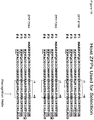
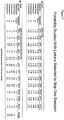
- Linker selections were performed in the context of three different host ZFPs: "ZFP7263”, “ZFP7264” and “ZFP8196” (see U.S. Patent Publication Nos. 20050064474 for 7263 and 7264 and 20080159996 for 8196), which each contained four fingers. Recognition helices of each finger for each host ZFP are provided in Table 1, while the full sequence of each host ZFP is provided in Figure 1A .
- Insertions comprised a gap between the binding sequences for the second and third fingers of the host protein that must be bridged by a longer linker to enable efficient binding (Table 2A). Insertions consisted of a mixture of bases in order to favor the selection of linkers with no intrinsic base specificity. Five selection cycles were performed. During the final four cycles, a counterselection was employed with a 1000-fold molar excess of binding sites that were nonbiotinylated and that contained non-targeted gap lengths (i.e.
- the counterselection comprised targets with 0, 2, 3 and 4 bp gaps; if phage were selected using a target sequence with a 2bp gap length, the counterselection comprised targets with 0, 1 and 3 and 4 bp gaps- see Table 2B).
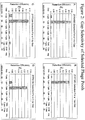
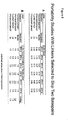
- Phage pools from the fifth round of selection were screened for the ability to selectively bind sequences bearing the targeted gap length, and these studies revealed gap selective binding ( Figure 2 ).
- phage pools selected to skip a 1 bp gap in the context of ZFP8196 showed a 25-fold preference for targets bearing a 1bp gap as compared to no gap.
- Phage pools selected to skip a 1 bp gap in the context of ZFP7263 showed a 26-fold preference for targets bearing a 1bp gap as compared to no gap.
- Phage pools selected to skip a 1 bp gap in the context of ZFP7264 showed a 5.5-fold preference targets bearing a 1bp gap as compared to no gap.
- Each of these pools also exhibited little or no binding to targets bearing longer gap lengths (2, 3 or 4 bp).
- Phage pools selected to skip a 2 bp gap in the context of ZFP8196 showed a 7-fold preference for targets bearing 2 bp gap as compared to a 1bp gap as well as a >30-fold preference over targets bearing 0,3 and 4 bp gaps.
- Table 1 Host ZFP recognition helices ZFP Finger 1 Finger 2 Finger 3 Finger 4 8196 RSDNLSV (SEQ ID NO:22) QKINLQV (SEQ ID NO:23) RSDVLSE (SEQ ID NO:24) QRNHRTT (SEQ ID NO:25 7264 RSDTLSE (SEQ ID NO:26) ARSTRTT (SEQ ID NO:27) RSDSLSK (SEQ ID NO:28) QRSNLKV (SEQ ID NO:29) 7263 RSDNLSV (SEQ ID NO:22) RNAHRIN (SEQ ID NO:30 RSDTLSE (SEQ ID NO:26) ARSTRTN (SEQ ID NO:31) Table 2A: Target sites used for selection ZFP w/randomized linker Target sites 8196 AT AAACTG d CAAAAG GC (SEQ ID NO:33) AT AAACTG db CAAAAG GC (SEQ ID NO:34) 7264 TT AAAGCG h GCTCCG AA (SEQ ID NO:38) TT
- Duplex DNA target sites used for selections had the general form of: TATAAT(X) 17-18 T TCACAGTCAGTCCACACGTC , (SEQ ID NO:67) where (X) 17-18 was replaced with sequences listed in the table.
- DNA duplexes were made by extending a primer that annealed to the italicized sequence and which was biotinylated at its 5' end. Underlined bases indicate the binding sequences for the four fingers of each host ZFP, while lowercase bases indicate inserted nucleotides (or "gap" bases) that must be spanned by the selected linkers.
- Degeneracy codes for gap bases are as follows: “d” denotes a mix of A, G, and T; “b” denotes a mix of C, G, and T; “h” denotes a mix of A, C, and T; and “v” denotes a mix of A, C, and G.
- Table 2B Competitor sites used during selection ZFP w/randomized linker Competitor sites 8196 AT AAACTGCAAAAG GC (SEQ ID NO:32) AT AAACTG d CAAAAG GC(SEQ ID NO:33) AT AAACTG db CAAAAG GC (SEQ ID NO:34) AT AAACTG dbb CAAAAG GC (SEQ ID NO:35) AT AAACTG dbbb CAAAAG GC (SEQ ID NO:36) 7264 TT AAAGCGGCTCCG AA (SEQ ID NO:37) TT AAAGCG h GCTCCG AA (SEQ ID NO:38) TT AAAGCG hd GCTCCG AA (SEQ ID NO:39) TT AAAGCG hdv GCTCCG AA (SEQ ID NO:40) TT AAAGCG hdvd GCTCCG AA (SEQ ID NO:41) 7263 CC ACTCTGTGGAAG TG (SEQ ID NO:42)
- Duplex DNA competitor sites had the general form of:TATAAT(X) 16-20 T TCACAGTCAGTCCACACGTC, (SEQ ID NO:67) where (X) 16-20 was replaced with sequences listed in the table.
- DNA duplexes were made by extending a (non-biotinylated) primer that annealed to the italicized sequence. Underlined bases indicate the binding sequences for the four fingers of each host ZFP, while lowercase bases indicate inserted nucleotides (or "gap" bases).
- Degeneracy codes for gap bases are as follows: “d” denotes a mix of A, G, and T; “b” denotes a mix of C, G, and T; “h” denotes a mix of A, C, and T; and “v” denotes a mix of A, C, and G.
- Table 2C Targets used for phage pool gap selectivity studies ZFP w/randomized linker Gap Target sites 8196 0 gap AT AAACTGCAAAAG GC (SEQ ID NO:32) 1 gap AT AAACTG d CAAAAG GC(SEQ ID NO:33) 2 gap AT AAACTG db CAAAAG GC (SEQ ID NO:34) 3 gap AT AAACTG dbb CAAAAG GC (SEQ ID NO:35) 4 gap AT AAACTG dbbb CAAAAG GC (SEQ ID NO:36) 7264 0 gap TT AAAGCGGCTCCG AA (SEQ ID NO:37) 1 gap TT AAAGCG h GCTCCG AA (SEQ ID NO:38) 2 gap TT AAAGCG hd GCTCCG AA (SEQ ID NO:39) 3 gap TT AAAGCG hdv GCTCCG AA (SEQ ID NO:40) 4 gap TT AAAGCG hdvd GCTCCG AA (S
- Duplex DNA sites used in phage pool gap selectivity studies had the general form of: TATAAT(X) 16-20 T TCACAGTCAGTCCACACGTC, (SEQ ID NO:67) where (X) 16-20 was replaced with sequences listed in the table.
- DNA duplexes were made by extending a biotinylated primer that annealed to the italicized sequence. Underlined bases indicate the binding sequences for the four fingers of each host ZFP, while lowercase bases indicate inserted nucleotides (or "gap" bases).
- Degeneracy codes for gap bases are as follows: “d” denotes a mix of A, G, and T; “b” denotes a mix of C, G, and T; “h” denotes a mix of A, C, and T; and “v” denotes a mix of A, C, and G.
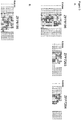
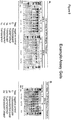
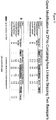
- Figure 3A presents linkers selected for skipping 1 bp gaps in the context of all three host proteins
- Figure 3B shows linkers selected for skipping 2 bp in the context of the "ZFP8196" host.
- the sequencing results revealed a strong compositional bias in the selected linkers towards proline- and arginine-rich sequences. Clear linker length trends were also apparent: although the starting libraries encoded approximately equal proportions of 11 different linker lengths (2-12 residues), selected linkers featured narrower distributions of from 5-8 residues (for the 1bp gap) or 9-11 residues (for the 2bp gap).
- ZFPs bearing the linkers listed in Figure 3A were subcloned, expressed as free protein using an in vitro transcription-translation kit, and evaluated by ELISA for binding to targets bearing insertions of 0, 1 or 2 bp opposite the selected linker.
- Targets for these studies are listed in Table 3.
- Nine additional control proteins were generated by replacing the central linker of each host ZFP with three alternative, previously characterized, linker sequences which collectively represented the state of the art for spanning 1bp.
- the sequences of these control linkers were LRQKDERP (SEQ ID NO:3) ( see, U.S. Patent No. 6,479,626 ), TGEGGKP (SEQ ID NO:48), TGGGGSQKP (SEQ ID NO:2),.
- Table 3 shows the targets used for ELISA studies of ZFPs selected to skip a 1bp gap.
- Duplex DNA sites used these studies had the general form TTAG(X) 16-18 TATC, (SEQ ID NO:94) where (X) 16-18 was replaced with sequences listed in the table.
- Each duplex DNA target was made by annealing a complementary oligonucleotide bearing a biotin at its 5' end. Underlines indicate the binding sequences for the four fingers of each host ZFP, while lowercase letters indicate inserted nucleotides (or "gap" bases).
- Tables 4, 5 and 6 The results of these studies are provided in Tables 4, 5 and 6, with each table listing data for proteins derived from a different host ZFP.
- Table 4 provides data for ZFP8196-derived proteins;
- Table 5 provides data for ZFP7263-derived proteins;
- Table 6 provides data for ZFP7264-derived proteins.
- binding data for the host ZFP is listed in the top row, followed by binding data for three control proteins in rows 2-4, followed by data for the ZFPs selected from the phage display libraries. The values are normalized to the ELISA signal obtained from the binding of the parent ZFP to its unmodified target.
- each parent ZFP bound well to its unmodified target (the "0-bp gap” target in Tables 4, 5 and 6) but not to any variant bearing inserts of 1 or 2 bp. This was expected since the parental linkers (either TGEKP (SEQ ID NO:1) (for ZFP8196) or TGSQKP (SEQ ID NO:72) (for ZFP7263 and ZFP7264)) are too short to span any additional inserted base.
- the phage-selected ZFPs bound with much higher affinity to targets bearing a 1 bp insert as well as with a much higher level of discrimination against binding targets containing no inserted base. These proteins were also very selective for binding targets with a 1bp insert vs targets bearing a 2bp insert.
- Table 3 Targets used for ELISA studies of ZFPs selected to skip a 1bp gap ZFP w/randomized linker Gap Sequence Target sites 8196 - AT AAACTGCAAAAG GC (SEQ ID NO:32) A AT AAACTG a CAAAAG GC (SEQ ID NO:73) C AT AAACTG c CAAAAG GC (SEQ ID NO:74) G AT AAACTG g CAAAAG GC (SEQ ID NO:75) T AT AAACTG t CAAAAG GC (SEQ ID NO:76) TC AT AAACTG tc CAAAAG GC (SEQ ID NO:77) AC AT AAACTG ac CAAAAG GC (SEQ ID NO:78) TG AT AAACTG tg CAAAAG GC (SEQ ID NO:79) 7264 - TT AAAGCGGCTCCG AA (SEQ ID NO:37) A TT AAAGCG a GCTCCG AA (SEQ ID NO:80) C TT AAAGCG
- ZFPs with selected linkers were evaluated for in vivo cleavage activity at various target sites using the yeast screening assay described in International Patent Publication WO 2009/042163 . As these experiments are more labor intensive, they were performed on fewer ZFPs. For these studies, six ZFPs from Table 5 and five ZFPs from Table 6 were assembled into constructs that enabled expression as zinc finger nucleases (ZFNs) as described in WO 2007/139982 . In vivo activity was then measured by evaluating MEL-1 secretion from yeast strains having various target sites.
- Targets used for yeast screening assay of ZFPs selected to skip a 1bp gap in ZFP7263 ZFP w/randomized linker Gap Sequence Target sites 7263 - ACTCTGTGGAAG (SEQ ID NO:95)
- a ACTCTGaTGGAAG (SEQ ID NO:96)
- C ACTCTGcTGGAAG (SEQ ID NO:97)
- G ACTCTGgTGGAAG (SEQ ID NO:98)
- T ACTCTGtTGGAAG SEQ ID NO:99)
- AC ACTCTGacTGGAAG AC ACTCTGacTGGAAG (SEQ ID NO:100) AT ACTCTGatTGGAAG (SEQ ID NO:101)
- CT ACTCTGctTGGAAG (SEQ ID NO:102)
- nuclease target cassettes bearing nuclease target sites were constructed essentially as described in International Patent Publication WO 2009/042163 , except that nuclease target cassettes had the general form of GATC TGTT CGGAGCCGCTTT AACCC(X) 12-14 TGCT CGCG (SEQ ID NO:103) where (1) the four underlined bases at either end represent the overhangs used for cloning into the BamHI/BssHII digested reporter plasmid, (2) the italicized sequence represents the binding site for the 7264 ZFN which binds to the antisense strand and was invariant for these screens, and (3) (X) 12-14 was replaced with sequences listed in the table.
- Table 8 Targets used for yeast screening assay of ZFPs selected to skip a 1bp gap in ZFP7264 ZFP w/randomized linker Gap Sequence Target sites 7264 - AAAGCGGCTCCG (SEQ ID NO:104)
- a AAAGCGaGCTCCG (SEQ ID NO:105)
- C AAAGCGcGCTCCG (SEQ ID NO:106)
- G AAAGCGgGCTCCG (SEQ ID NO:107) T AAAGCGtGCTCCG (SEQ ID NO:108) TT AAAGCGttGCTCCG (SEQ ID NO:109) TA AAAGCGtaGCTCCG (SEQ ID NO:110) CT AAAGCGctGCTCCG (SEQ ID NO:111)
- nuclease target cassettes bearing nuclease target sites were constructed essentially as described in International Patent Publication WO 2009/042163 , except that nuclease target cassettes had the general form of GATC TGTT(X) 12-14 AACCC ACTCTGTGGAAG TGCT CGCG (SEQ ID NO:112) where (1) the four underlined bases at either end represent the overhangs used for cloning into the BamHI/BssHII digested reporter plasmid, (2) the italicized sequence represents the binding site for the 7263 ZFN which was invariant for these screens, and (3) (X) 12-14 was replaced with sequences listed in the table.
- Tables 9 and 10 Data for these experiments are shown in Tables 9 and 10, with each table listing data for proteins derived from a different host ZFN.
- Table 9 provides data for 7263-derived ZFNs and Table 10 provides data for 7264-derived ZFNs.
- nuclease activity data for the host ZFN is listed in the top row, followed by nuclease activity data for one control protein in row 2, followed by data for the ZFPs selected from the phage display libraries. Since ZFP7263 and ZFP7264 are two halves of the same zinc-finger nuclease dimer, the data for the host ZFN is the same in each table.
- Table 11 Exemplary linker designs Linker Sequence Linker Designation Number of Bases Skipped THPRAPIPKP (SEQ ID NO:55) 1c 1 TPNRRPAPKP (SEQ ID NO:56) Id 1 TVPRPTPPKP (SEQ ID NO:12) 1e 1 TYPRPIAAKP (SEQ ID NO:54 ) If 1
- target sites used for selection contained degenerate bases in the gap in order to favor the selection of linkers that exhibited no inherent preference for particular gap sequences.
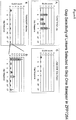
- the data shown in figures 4 and 5 suggest that this selection strategy was successful: proteins bearing the exemplary linkers exhibit little variation in binding among targets with gap bases of A, G, C or T. Moreover, the minor amount of variation that is observed is mirrored in the results obtained with control flexible liners (see, e.g., Figure 5D for flexible linker (TGGGGSQKP) (SEQ ID NO:2)) indicating that variation is a property of the flanking fingers.
- ELISA scores were normalized to the score of the 8196 ZFP bound to its non-gapped target site.
- Exemplary linkers were chosen based on their ELISA behavior in a similar fashion to the 1bp-skipping linkers. These exemplary linkers were designated “2d”, “2e”, and “2f”.
- the ELISA results for the exemplary linkers in the 8196 ZFP and control ZFPs are shown in Figure 6 . As seen in Figure 6 , neither of the ZFPs bearing the control linkers shows a preference for a target site with a 2 basepair gap. However, the ZFPs with the selected linkers showed clear preferences for a 2 basepair gap over both the 1 basepair and non-gapped target sites.
- DNA duplexes were made by annealing complementary oligonucleotides. Oligonucleotides complementary to the sequences listed in the table contained a 5' biotin. Underlined bases indicate the binding sequences for the four fingers of each host ZFP, while lowercase bases indicate inserted nucleotides (or "gap" bases).
- target sites used for selection contained degenerate bases in the gap in order to favor the selection of linkers that exhibited no inherent preference for particular gap sequences.
- Shown in Figure 6 is an expansion of the scale for one of the flexible linkers (TGGGGSGGSQKP (SEQ ID NO:14)).
- This flexible linker should not have any interaction with the target site, and thus the pattern seen is likely due to the binding of the zinc finger proteins.
- the fact that the exemplary linkers show a similar pattern of binding to 2 basepair gap target sites suggests that the selected linkers also should not impose any gap compositional bias in ZFP binding.
- Table 13 Summary of ELISA data for 2-bp skipping linkers Average Normalized ELISA Score (gap) 2bp-Gap Selectivity vs: Linker Sequence Designation 0bp 1bp 2bp 0bp 1bp TGGGGSGGSQKP (SEQ ID NO: 14) flexible 0.019 0.041 0.010 0.6 0.2 LRQKDGGGSERP (SEQ ID NO:68) Kim,Pabo 0.010 0.047 0.003 0.4 0.1 TPNPHRRTDPSHKP (SEQ ID NO:69) 2f 0.003 0.046 0.219 64.6 4.7 TLAPRPYRPPKP (SEQ ID NO:70) 2d 0.005 0.035 0.127 24.4 3.6 TPGGKSSRTDRNKP (SEQ ID NO:71) 2e 0.005 0.099 0.100 22.0 1.0
- the four 1bp-skipping linkers listed in Table 11 (1c-1f) were cloned into twelve different host ZFPs.
- the host ZFPs were designated ZFP1, ZFP2 etc.
- the resultant proteins were expressed via in vitro transcription and translation and tested via ELISA, as described above.
- ZFNs were then tested for their ability to induce double-stranded breaks at endogenous loci. Briefly, a plasmid encoding the 18 ZFNs (ZFP- Fok I fusions) described above (Example 3) were paired with their appropriate partner ZFNs and introduced into K562 cells by transfection using the AmaxaTM Nucleofection kit as specified by the manufacturer. To determine the ZFN activity at the target locus as measured by the level of non-homologous end joining (NHEJ), CEL-I mismatch assays were performed essentially as per the manufacturer's instructions (Transgenomic SURVEYORTM). Cells were harvested and chromosomal DNA prepared using a QuickextractTM Kit according to manufacturer's directions (Epicentre®). The appropriate region of the target locus was PCR amplified using AccuprimeTM Taq High-fidelity DNA polymerase (Invitrogen) followed by treatment with the CEL-I enzyme.
- NHEJ non-homologous end joining
- Example gels generated for the CEL-1 assay are shown in Figure 9.
- Figure 9A shows screening data for ZFN3 and ZFN4 (ZFNs skipping 1 basepair) as the host ZFN
- Figure 9B shows the screening data for ZFN14 (ZFN skipping 2 basepairs) as the host ZFN.
- the data for all the 1 bp skipping exemplary linkers is summarized in Figure 10 (ZFN1-ZFN12).
- Some of the ZFNs were expressed using a high expression condition. The high expression is obtained post-transfection by incubating cells at 37°C for 24 hours and then incubating at 30°C for 48 hours before genomic DNA was isolated. The ZFNs utilizing this condition are highlighted in Figure 10 .
- Example 5 Secondary selections for a 2-bp skipping linker
- a secondary set of libraries were constructed based on information obtained from the initial selections for a 2-bp skipping linker (Example 3 and Figure 3 ). These libraries fixed the three carboxy-terminal residues of the linker as RPP (lysine, proline, proline) and randomized the remaining amino-terminal residues.
- RPP lysine, proline, proline
- the library design is shown in Figure 12 .
- Table 14 Summary of ELISA data for 2-bp skipping linkers Average Normalized ELISA Score (gap) 2bp-Gap Selectivity vs: Linker Sequence Obp 1bp 2bp 0bp 1bp TETTRPFRPPKP (SEQ ID NO:183) 0.001 0.001 0.570 570.0 570.0 TGSLRPYRRPKP (SEQ ID NO:177) 0.001 0.010 0.310 310.0 31.0 TSINRPFRRPKP (SEQ ID NO:184) 0.010 0.020 0.570 57.0 28.5 TNTTRPYRPPKP (SEQ ID NO:175) 0.001 0.010 0.410 410.0 41.0 TASCPRPFRPPKP (SEQ ID NO:194) 0.010 0.020 0.370 37.0 18.5 TGEARPYRPPKP (SEQ ID NO:178) 0.001 0.010 0.610 610.0 61.0
- ZFPs with the selected linkers showed clear preferences for a 2 basepair gap over both the 1 basepair and non-gapped target sites.
Landscapes
- Health & Medical Sciences (AREA)
- Life Sciences & Earth Sciences (AREA)
- Genetics & Genomics (AREA)
- Chemical & Material Sciences (AREA)
- Engineering & Computer Science (AREA)
- Organic Chemistry (AREA)
- Biomedical Technology (AREA)
- Zoology (AREA)
- Bioinformatics & Cheminformatics (AREA)
- General Health & Medical Sciences (AREA)
- Molecular Biology (AREA)
- Wood Science & Technology (AREA)
- General Engineering & Computer Science (AREA)
- Biotechnology (AREA)
- Biochemistry (AREA)
- Biophysics (AREA)
- Medicinal Chemistry (AREA)
- Physics & Mathematics (AREA)
- Microbiology (AREA)
- Plant Pathology (AREA)
- General Chemical & Material Sciences (AREA)
- Chemical Kinetics & Catalysis (AREA)
- Animal Behavior & Ethology (AREA)
- Nuclear Medicine, Radiotherapy & Molecular Imaging (AREA)
- Veterinary Medicine (AREA)
- Public Health (AREA)
- Pharmacology & Pharmacy (AREA)
- Oncology (AREA)
- Communicable Diseases (AREA)
- Proteomics, Peptides & Aminoacids (AREA)
- Toxicology (AREA)
- Gastroenterology & Hepatology (AREA)
- Virology (AREA)
- Peptides Or Proteins (AREA)
- Micro-Organisms Or Cultivation Processes Thereof (AREA)
- Pharmaceuticals Containing Other Organic And Inorganic Compounds (AREA)
- Medicines That Contain Protein Lipid Enzymes And Other Medicines (AREA)
- Saccharide Compounds (AREA)
- Contacts (AREA)
- Solid-Sorbent Or Filter-Aiding Compositions (AREA)
Priority Applications (4)
| Application Number | Priority Date | Filing Date | Title |
|---|---|---|---|
| SI201131844T SI2566972T1 (sl) | 2010-05-03 | 2011-05-02 | Sestavki za povezovanje modulov cinkovega prsta |
| PL11777690T PL2566972T3 (pl) | 2010-05-03 | 2011-05-02 | Kompozycje do wiązania modułów z motywem palca cynkowego |
| EP19211724.0A EP3636766A1 (en) | 2010-05-03 | 2011-05-02 | Compositions for linking zinc finger modules |
| HRP20200254TT HRP20200254T1 (hr) | 2010-05-03 | 2011-05-02 | Pripravci za povezivanje modula cink fingera |
Applications Claiming Priority (2)
| Application Number | Priority Date | Filing Date | Title |
|---|---|---|---|
| US34372910P | 2010-05-03 | 2010-05-03 | |
| PCT/US2011/000758 WO2011139349A1 (en) | 2010-05-03 | 2011-05-02 | Compositions for linking zinc finger modules |
Related Child Applications (2)
| Application Number | Title | Priority Date | Filing Date |
|---|---|---|---|
| EP19211724.0A Division-Into EP3636766A1 (en) | 2010-05-03 | 2011-05-02 | Compositions for linking zinc finger modules |
| EP19211724.0A Division EP3636766A1 (en) | 2010-05-03 | 2011-05-02 | Compositions for linking zinc finger modules |
Publications (3)
| Publication Number | Publication Date |
|---|---|
| EP2566972A1 EP2566972A1 (en) | 2013-03-13 |
| EP2566972A4 EP2566972A4 (en) | 2014-01-01 |
| EP2566972B1 true EP2566972B1 (en) | 2020-01-15 |
Family
ID=44903931
Family Applications (2)
| Application Number | Title | Priority Date | Filing Date |
|---|---|---|---|
| EP11777690.6A Active EP2566972B1 (en) | 2010-05-03 | 2011-05-02 | Compositions for linking zinc finger modules |
| EP19211724.0A Pending EP3636766A1 (en) | 2010-05-03 | 2011-05-02 | Compositions for linking zinc finger modules |
Family Applications After (1)
| Application Number | Title | Priority Date | Filing Date |
|---|---|---|---|
| EP19211724.0A Pending EP3636766A1 (en) | 2010-05-03 | 2011-05-02 | Compositions for linking zinc finger modules |
Country Status (18)
| Country | Link |
|---|---|
| US (2) | US8772453B2 (enExample) |
| EP (2) | EP2566972B1 (enExample) |
| JP (1) | JP5898179B2 (enExample) |
| KR (2) | KR101974036B1 (enExample) |
| CN (1) | CN102959087B (enExample) |
| AU (1) | AU2011249019B2 (enExample) |
| CA (1) | CA2797189C (enExample) |
| CY (1) | CY1122636T1 (enExample) |
| DK (1) | DK2566972T3 (enExample) |
| ES (1) | ES2773052T3 (enExample) |
| HR (1) | HRP20200254T1 (enExample) |
| HU (1) | HUE048072T2 (enExample) |
| IL (1) | IL222632B (enExample) |
| LT (1) | LT2566972T (enExample) |
| PL (1) | PL2566972T3 (enExample) |
| PT (1) | PT2566972T (enExample) |
| SI (1) | SI2566972T1 (enExample) |
| WO (1) | WO2011139349A1 (enExample) |
Families Citing this family (80)
| Publication number | Priority date | Publication date | Assignee | Title |
|---|---|---|---|---|
| US20120196370A1 (en) | 2010-12-03 | 2012-08-02 | Fyodor Urnov | Methods and compositions for targeted genomic deletion |
| CA2805442C (en) | 2010-07-21 | 2020-05-12 | Sangamo Biosciences, Inc. | Methods and compositions for modification of an hla locus |
| WO2012094132A1 (en) | 2011-01-05 | 2012-07-12 | Sangamo Biosciences, Inc. | Methods and compositions for gene correction |
| CA2841541C (en) | 2011-07-25 | 2019-11-12 | Sangamo Biosciences, Inc. | Methods and compositions for alteration of a cystic fibrosis transmembrane conductance regulator (cftr) gene |
| US9222105B2 (en) | 2011-10-27 | 2015-12-29 | Sangamo Biosciences, Inc. | Methods and compositions for modification of the HPRT locus |
| US9528107B2 (en) | 2012-01-31 | 2016-12-27 | Pacific Biosciences Of California, Inc. | Compositions and methods for selection of nucleic acids |
| CA2865011C (en) | 2012-02-29 | 2021-06-15 | Sangamo Biosciences, Inc. | Methods and compositions for treating huntington's disease |
| US10648001B2 (en) | 2012-07-11 | 2020-05-12 | Sangamo Therapeutics, Inc. | Method of treating mucopolysaccharidosis type I or II |
| WO2014011901A2 (en) | 2012-07-11 | 2014-01-16 | Sangamo Biosciences, Inc. | Methods and compositions for delivery of biologics |
| EP2890780B8 (en) | 2012-08-29 | 2020-08-19 | Sangamo Therapeutics, Inc. | Methods and compositions for treatment of a genetic condition |
| US9290800B2 (en) | 2013-03-15 | 2016-03-22 | Pacific Biosciences Of California, Inc. | Targeted rolling circle amplification |
| CN105263312A (zh) | 2013-04-05 | 2016-01-20 | 美国陶氏益农公司 | 用于在植物基因组内整合外源序列的方法和组合物 |
| CA2920899C (en) | 2013-08-28 | 2023-02-28 | Sangamo Biosciences, Inc. | Compositions for linking dna-binding domains and cleavage domains |
| EP3058072B1 (en) | 2013-10-17 | 2021-05-19 | Sangamo Therapeutics, Inc. | Delivery methods and compositions for nuclease-mediated genome engineering |
| US10117899B2 (en) | 2013-10-17 | 2018-11-06 | Sangamo Therapeutics, Inc. | Delivery methods and compositions for nuclease-mediated genome engineering in hematopoietic stem cells |
| MX391904B (es) | 2013-11-11 | 2025-03-12 | Sangamo Biosciences Inc | Un represor genetico para usarse en el tratamiento de la enfermedad de huntington. |
| ES2721936T3 (es) | 2013-11-13 | 2019-08-06 | Childrens Medical Center | Regulación de la expresión genética mediada por las nucleasas |
| PT3102673T (pt) | 2014-02-03 | 2020-05-21 | Sangamo Biosciences Inc | Métodos e composições para tratamento de beta-talassemia |
| EP3929279A1 (en) | 2014-03-18 | 2021-12-29 | Sangamo Therapeutics, Inc. | Methods and compositions for regulation of zinc finger protein expression |
| US10435685B2 (en) | 2014-08-19 | 2019-10-08 | Pacific Biosciences Of California, Inc. | Compositions and methods for enrichment of nucleic acids |
| SG10202112057QA (en) | 2015-05-12 | 2021-12-30 | Sangamo Therapeutics Inc | Nuclease-mediated regulation of gene expression |
| US9957501B2 (en) | 2015-06-18 | 2018-05-01 | Sangamo Therapeutics, Inc. | Nuclease-mediated regulation of gene expression |
| CA2991301A1 (en) | 2015-07-13 | 2017-01-19 | Sangamo Therapeutics, Inc. | Delivery methods and compositions for nuclease-mediated genome engineering |
| US11352631B2 (en) | 2015-12-18 | 2022-06-07 | Sangamo Therapeutics, Inc. | Targeted disruption of the T cell receptor |
| AU2016374253B2 (en) | 2015-12-18 | 2021-10-21 | Sangamo Therapeutics, Inc. | Targeted disruption of the MHC cell receptor |
| EP3402533B1 (en) | 2016-01-15 | 2021-08-04 | Sangamo Therapeutics, Inc. | Methods and compositions for the treatment of neurologic disease |
| JP7012650B2 (ja) | 2016-02-02 | 2022-01-28 | サンガモ セラピューティクス, インコーポレイテッド | Dna結合ドメインと切断ドメインとを連結するための組成物 |
| WO2018039440A1 (en) | 2016-08-24 | 2018-03-01 | Sangamo Therapeutics, Inc. | Regulation of gene expression using engineered nucleases |
| IL264792B2 (en) | 2016-08-24 | 2023-10-01 | Sangamo Therapeutics Inc | Engineered target-specific zinc-finger nucleases |
| KR102712926B1 (ko) | 2016-10-20 | 2024-10-07 | 상가모 테라퓨틱스, 인코포레이티드 | 파브리병의 치료를 위한 방법 및 조성물 |
| WO2018081775A1 (en) | 2016-10-31 | 2018-05-03 | Sangamo Therapeutics, Inc. | Gene correction of scid-related genes in hematopoietic stem and progenitor cells |
| CN110214184B (zh) | 2016-12-01 | 2024-07-02 | 桑格摩生物治疗股份有限公司 | τ蛋白调节剂以及用于其递送的方法和组合物 |
| CN117821509A (zh) | 2017-04-03 | 2024-04-05 | 编码治疗公司 | 组织选择性转基因表达 |
| US11820728B2 (en) | 2017-04-28 | 2023-11-21 | Acuitas Therapeutics, Inc. | Carbonyl lipids and lipid nanoparticle formulations for delivery of nucleic acids |
| JP2020518245A (ja) | 2017-05-03 | 2020-06-25 | サンガモ セラピューティクス, インコーポレイテッド | 嚢胞性線維症膜貫通コンダクタンス制御因子(cftr)遺伝子の改変のための方法および組成物 |
| US11512287B2 (en) | 2017-06-16 | 2022-11-29 | Sangamo Therapeutics, Inc. | Targeted disruption of T cell and/or HLA receptors |
| JP2020530997A (ja) | 2017-08-08 | 2020-11-05 | サンガモ セラピューティクス, インコーポレイテッド | キメラ抗原受容体媒介性細胞標的化 |
| WO2019094725A2 (en) | 2017-11-09 | 2019-05-16 | Sangamo Therapeutics, Inc. | Genetic modification of cytokine inducible sh2-containing protein (cish) gene |
| CN118345115A (zh) | 2017-12-01 | 2024-07-16 | 编码治疗公司 | 工程化的dna结合蛋白 |
| BR112020015488A2 (pt) | 2018-02-08 | 2020-12-08 | Sangamo Therapeutics, Inc. | Nucleases alvo-específicas modificadas |
| JP7332622B2 (ja) * | 2018-04-18 | 2023-08-23 | サンガモ セラピューティクス, インコーポレイテッド | ハンチンチン(htt)の調節のためのジンクフィンガータンパク質組成物 |
| US11690921B2 (en) | 2018-05-18 | 2023-07-04 | Sangamo Therapeutics, Inc. | Delivery of target specific nucleases |
| JP7541508B2 (ja) | 2018-08-23 | 2024-08-28 | サンガモ セラピューティクス, インコーポレイテッド | 操作された標的特異的な塩基エディター |
| EP4234570A3 (en) | 2018-09-18 | 2023-12-13 | Sangamo Therapeutics, Inc. | Programmed cell death 1 (pd1) specific nucleases |
| EP3852911B1 (en) | 2018-09-21 | 2025-01-22 | Acuitas Therapeutics, Inc. | Systems and methods for manufacturing lipid nanoparticles and liposomes |
| KR20210069692A (ko) * | 2018-10-02 | 2021-06-11 | 상가모 테라퓨틱스, 인코포레이티드 | 조작된 유전자 조정제 |
| IL326834A (en) | 2018-10-02 | 2026-04-01 | Sangamo Therapeutics Inc | Artificial zinc finger protein transcription factors repressing mapt expression for the prevention and/or treatment of tauopathies |
| CA3116576A1 (en) | 2018-10-18 | 2020-04-23 | Acuitas Therapeutics, Inc. | Lipids for lipid nanoparticle delivery of active agents |
| CN113423419A (zh) | 2019-01-04 | 2021-09-21 | 桑格摩生物治疗股份有限公司 | 用于治疗法布里病的方法和组合物 |
| PL3908568T3 (pl) | 2019-01-11 | 2024-12-02 | Acuitas Therapeutics, Inc. | Lipidy do dostarczania środków czynnych w nanocząstkach lipidowych |
| CA3106693A1 (en) | 2019-02-06 | 2020-08-13 | Sangamo Therapeutics, Inc. | Method for the treatment of mucopolysaccharidosis type i |
| WO2020205838A1 (en) | 2019-04-02 | 2020-10-08 | Sangamo Therapeutics, Inc. | Methods for the treatment of beta-thalassemia |
| JP7618581B2 (ja) | 2019-04-23 | 2025-01-21 | サンガモ セラピューティクス, インコーポレイテッド | 9番染色体オープンリーディングフレーム72遺伝子発現のモジュレーターおよびその使用 |
| JP2022533713A (ja) | 2019-05-21 | 2022-07-25 | サンガモ セラピューティクス, インコーポレイテッド | 調節性t細胞における制御された導入遺伝子発現 |
| SG11202113048SA (en) | 2019-05-29 | 2021-12-30 | Encoded Therapeutics Inc | Compositions and methods for selective gene regulation |
| WO2021028359A1 (en) | 2019-08-09 | 2021-02-18 | Sangamo Therapeutics France | Controlled expression of chimeric antigen receptors in t cells |
| WO2021067871A1 (en) | 2019-10-02 | 2021-04-08 | Sangamo Therapeutics, Inc. | Zinc finger protein transcription factors for repressing alpha-synuclein expression |
| US20230002459A1 (en) | 2019-10-02 | 2023-01-05 | Sangamo Therapeutics, Inc. | Zinc Finger Protein Transcription Factors for Treatment of Prion Disease |
| WO2021087366A1 (en) | 2019-11-01 | 2021-05-06 | Sangamo Therapeutics, Inc. | Compositions and methods for genome engineering |
| TW202134288A (zh) | 2020-01-22 | 2021-09-16 | 美商聖加莫治療股份有限公司 | 用於抑制tau蛋白表現之鋅指蛋白轉錄因子 |
| WO2021206910A1 (en) * | 2020-04-09 | 2021-10-14 | The Regents Of The University Of California | Notch receptors with zinc finger-containing transcriptional effector |
| KR20230051172A (ko) | 2020-07-16 | 2023-04-17 | 아퀴타스 테라퓨틱스 인크. | 지질 나노 입자에 사용하기 위한 양이온성 지질 |
| EP4501951A3 (en) | 2020-08-25 | 2025-04-30 | Kite Pharma, Inc. | T cells with improved functionality |
| JP2023542705A (ja) | 2020-09-25 | 2023-10-11 | サンガモ セラピューティクス, インコーポレイテッド | 核酸塩基編集のためのジンクフィンガー融合タンパク質 |
| KR20230080439A (ko) | 2020-10-02 | 2023-06-07 | 상가모 테라퓨틱스, 인코포레이티드 | 알파-시누클레인 발현을 억제시키기 위한 신규 아연 핑거 단백질 전사 인자 |
| AU2021409729A1 (en) | 2020-12-22 | 2023-07-13 | Nchroma Bio, Inc. | Compositions and methods for epigenetic editing |
| US20250043269A1 (en) | 2021-11-03 | 2025-02-06 | The J. David Gladstone Institutes, a testamentary trust established under the Will of J. David Glad | Precise Genome Editing Using Retrons |
| WO2023114943A2 (en) | 2021-12-16 | 2023-06-22 | Acuitas Therapeutics, Inc. | Lipids for use in lipid nanoparticle formulations |
| EP4453202A1 (en) | 2021-12-22 | 2024-10-30 | Sangamo Therapeutics, Inc. | Novel zinc finger fusion proteins for nucleobase editing |
| WO2023141602A2 (en) | 2022-01-21 | 2023-07-27 | Renagade Therapeutics Management Inc. | Engineered retrons and methods of use |
| CN119836432A (zh) | 2022-05-01 | 2025-04-15 | 恩科洛玛生物公司 | 用于pcsk9表达的表观遗传调节的组合物和方法 |
| EP4544058A1 (en) | 2022-06-23 | 2025-04-30 | Chroma Medicine, Inc. | Compositions and methods for epigenetic regulation of ciita expression |
| CA3260474A1 (en) | 2022-06-23 | 2023-12-28 | Chroma Medicine, Inc. | COMPOSITIONS AND METHODS OF EPIGENETIC REGULATION OF B2M EXPRESSION |
| WO2023250490A1 (en) | 2022-06-23 | 2023-12-28 | Chroma Medicine, Inc. | Compositions and methods for epigenetic regulation of trac expression |
| AU2023329392A1 (en) | 2022-08-25 | 2025-02-27 | Renagade Therapeutics Management Inc. | Engineered retrons and methods of use |
| KR20250110209A (ko) | 2022-09-23 | 2025-07-18 | 엔크로마 바이오, 인크. | Hbv 유전자 발현의 에피제네틱 조절을 위한 조성물 및 방법 |
| WO2024081879A1 (en) | 2022-10-14 | 2024-04-18 | Chroma Medicine, Inc. | Compositions and methods for epigenetic regulation of cd247 expression |
| JP2026523341A (ja) | 2023-05-15 | 2026-07-14 | エヌクロマ・バイオ,インコーポレーテッド | Hbv遺伝子発現のエピジェネティック調節のための組成物および方法 |
| EP4771154A2 (en) | 2023-09-01 | 2026-07-08 | Renagade Therapeutics Management Inc. | Gene editing systems, compositions, and methods for treatment of vexas syndrome |
| WO2025174765A1 (en) | 2024-02-12 | 2025-08-21 | Renagade Therapeutics Management Inc. | Lipid nanoparticles comprising coding rna molecules for use in gene editing and as vaccines and therapeutic agents |
Family Cites Families (59)
| Publication number | Priority date | Publication date | Assignee | Title |
|---|---|---|---|---|
| US4512110A (en) | 1981-12-10 | 1985-04-23 | Timesavers, Inc. | Endless abrasive belts |
| US5422251A (en) | 1986-11-26 | 1995-06-06 | Princeton University | Triple-stranded nucleic acids |
| US5176996A (en) | 1988-12-20 | 1993-01-05 | Baylor College Of Medicine | Method for making synthetic oligonucleotides which bind specifically to target sites on duplex DNA molecules, by forming a colinear triplex, the synthetic oligonucleotides and methods of use |
| US5420032A (en) | 1991-12-23 | 1995-05-30 | Universitge Laval | Homing endonuclease which originates from chlamydomonas eugametos and recognizes and cleaves a 15, 17 or 19 degenerate double stranded nucleotide sequence |
| US5436150A (en) | 1992-04-03 | 1995-07-25 | The Johns Hopkins University | Functional domains in flavobacterium okeanokoities (foki) restriction endonuclease |
| US5487994A (en) | 1992-04-03 | 1996-01-30 | The Johns Hopkins University | Insertion and deletion mutants of FokI restriction endonuclease |
| US5356802A (en) | 1992-04-03 | 1994-10-18 | The Johns Hopkins University | Functional domains in flavobacterium okeanokoites (FokI) restriction endonuclease |
| US5792632A (en) | 1992-05-05 | 1998-08-11 | Institut Pasteur | Nucleotide sequence encoding the enzyme I-SceI and the uses thereof |
| US6140466A (en) | 1994-01-18 | 2000-10-31 | The Scripps Research Institute | Zinc finger protein derivatives and methods therefor |
| JP4012243B2 (ja) | 1994-01-18 | 2007-11-21 | ザ スクリップス リサーチ インスティチュート | 亜鉛フィンガータンパク質誘導体およびそのための方法 |
| US6242568B1 (en) | 1994-01-18 | 2001-06-05 | The Scripps Research Institute | Zinc finger protein derivatives and methods therefor |
| US5585245A (en) | 1994-04-22 | 1996-12-17 | California Institute Of Technology | Ubiquitin-based split protein sensor |
| US7285416B2 (en) | 2000-01-24 | 2007-10-23 | Gendaq Limited | Regulated gene expression in plants |
| CA2196419C (en) | 1994-08-20 | 2007-08-21 | Yen Choo | Improvements in or relating to binding proteins for recognition of dna |
| GB9824544D0 (en) | 1998-11-09 | 1999-01-06 | Medical Res Council | Screening system |
| US5789538A (en) | 1995-02-03 | 1998-08-04 | Massachusetts Institute Of Technology | Zinc finger proteins with high affinity new DNA binding specificities |
| US5925523A (en) | 1996-08-23 | 1999-07-20 | President & Fellows Of Harvard College | Intraction trap assay, reagents and uses thereof |
| GB9703369D0 (en) | 1997-02-18 | 1997-04-09 | Lindqvist Bjorn H | Process |
| GB2338237B (en) | 1997-02-18 | 2001-02-28 | Actinova Ltd | In vitro peptide or protein expression library |
| US6342345B1 (en) | 1997-04-02 | 2002-01-29 | The Board Of Trustees Of The Leland Stanford Junior University | Detection of molecular interactions by reporter subunit complementation |
| GB9710809D0 (en) | 1997-05-23 | 1997-07-23 | Medical Res Council | Nucleic acid binding proteins |
| GB9710807D0 (en) | 1997-05-23 | 1997-07-23 | Medical Res Council | Nucleic acid binding proteins |
| US6410248B1 (en) | 1998-01-30 | 2002-06-25 | Massachusetts Institute Of Technology | General strategy for selecting high-affinity zinc finger proteins for diverse DNA target sites |
| DE69942334D1 (de) | 1998-03-02 | 2010-06-17 | Massachusetts Inst Technology | Poly-zinkfinger-proteine mit verbesserten linkern |
| US6140081A (en) | 1998-10-16 | 2000-10-31 | The Scripps Research Institute | Zinc finger binding domains for GNN |
| US6599692B1 (en) | 1999-09-14 | 2003-07-29 | Sangamo Bioscience, Inc. | Functional genomics using zinc finger proteins |
| US6453242B1 (en) | 1999-01-12 | 2002-09-17 | Sangamo Biosciences, Inc. | Selection of sites for targeting by zinc finger proteins and methods of designing zinc finger proteins to bind to preselected sites |
| US6534261B1 (en) | 1999-01-12 | 2003-03-18 | Sangamo Biosciences, Inc. | Regulation of endogenous gene expression in cells using zinc finger proteins |
| US6794136B1 (en) | 2000-11-20 | 2004-09-21 | Sangamo Biosciences, Inc. | Iterative optimization in the design of binding proteins |
| US7151201B2 (en) | 2000-01-21 | 2006-12-19 | The Scripps Research Institute | Methods and compositions to modulate expression in plants |
| WO2001053480A1 (en) | 2000-01-24 | 2001-07-26 | Sangamo Biosciences, Inc. | Nucleic acid binding polypeptides characterized by flexible linkers connected nucleic acid binding modules |
| AU2001250774B2 (en) | 2000-02-08 | 2005-01-27 | Sangamo Biosciences, Inc. | Cells expressing zinc finger proteins for drug discovery |
| US20020061512A1 (en) | 2000-02-18 | 2002-05-23 | Kim Jin-Soo | Zinc finger domains and methods of identifying same |
| AU2001263155A1 (en) | 2000-05-16 | 2001-11-26 | Massachusetts Institute Of Technology | Methods and compositions for interaction trap assays |
| US20060268407A1 (en) | 2000-07-07 | 2006-11-30 | Fergason James L | Display system using two displays and polarization direction rotation for showing high-resolution and three-dimensional images and method and use of a DBEF beam splitter |
| JP2002060786A (ja) | 2000-08-23 | 2002-02-26 | Kao Corp | 硬質表面用殺菌防汚剤 |
| US7067317B2 (en) | 2000-12-07 | 2006-06-27 | Sangamo Biosciences, Inc. | Regulation of angiogenesis with zinc finger proteins |
| GB0108491D0 (en) | 2001-04-04 | 2001-05-23 | Gendaq Ltd | Engineering zinc fingers |
| US20040197892A1 (en) | 2001-04-04 | 2004-10-07 | Michael Moore | Composition binding polypeptides |
| US20040224385A1 (en) | 2001-08-20 | 2004-11-11 | Barbas Carlos F | Zinc finger binding domains for cnn |
| US7262054B2 (en) | 2002-01-22 | 2007-08-28 | Sangamo Biosciences, Inc. | Zinc finger proteins for DNA binding and gene regulation in plants |
| EP1532178A4 (en) * | 2002-06-11 | 2006-10-25 | Scripps Research Inst | Artificial transcription factors |
| US7888121B2 (en) | 2003-08-08 | 2011-02-15 | Sangamo Biosciences, Inc. | Methods and compositions for targeted cleavage and recombination |
| US8409861B2 (en) | 2003-08-08 | 2013-04-02 | Sangamo Biosciences, Inc. | Targeted deletion of cellular DNA sequences |
| CA2539439C (en) * | 2003-09-19 | 2012-10-23 | Sangamo Biosciences, Inc. | Engineered zinc finger proteins for regulation of gene expression |
| WO2005061705A1 (en) | 2003-12-23 | 2005-07-07 | Toolgen, Inc. | Regulation of prokaryotic gene expression with zinc finger proteins |
| US7972854B2 (en) | 2004-02-05 | 2011-07-05 | Sangamo Biosciences, Inc. | Methods and compositions for targeted cleavage and recombination |
| US7253273B2 (en) | 2004-04-08 | 2007-08-07 | Sangamo Biosciences, Inc. | Treatment of neuropathic pain with zinc finger proteins |
| KR20070060115A (ko) | 2004-09-16 | 2007-06-12 | 상가모 바이오사이언스 인코포레이티드 | 단백질 생산을 위한 조성물 및 방법 |
| WO2006121866A2 (en) | 2005-05-05 | 2006-11-16 | The Arizona Board Of Regents On Behalf Of The University Of Arizona | Sequence enabled reassembly (seer) - a novel method for visualizing specific dna sequences |
| EP1913149A4 (en) | 2005-07-26 | 2009-08-05 | Sangamo Biosciences Inc | TARGETED INTEGRATION AND EXPRESSION OF EXOGENOUS NUCLEIC ACID SEQUENCES |
| DK3246403T3 (da) | 2005-10-18 | 2020-10-26 | Prec Biosciences | Rationelt designede meganucleaser med ændret sekvens-specificitet og dna-bindende affinitet |
| WO2007136685A2 (en) | 2006-05-19 | 2007-11-29 | Sangamo Biosciences, Inc. | Methods and compositions for inactivation of dihydrofolate reductase |
| US7951925B2 (en) | 2006-05-25 | 2011-05-31 | Sangamo Biosciences, Inc. | Methods and compositions for gene inactivation |
| EP2027262B1 (en) | 2006-05-25 | 2010-03-31 | Sangamo Biosciences Inc. | Variant foki cleavage half-domains |
| WO2008060510A2 (en) | 2006-11-13 | 2008-05-22 | Sangamo Biosciences, Inc. | Zinc finger nuclease for targeting the human glucocorticoid receptor locus |
| US8110379B2 (en) | 2007-04-26 | 2012-02-07 | Sangamo Biosciences, Inc. | Targeted integration into the PPP1R12C locus |
| JP5763341B2 (ja) | 2007-09-27 | 2015-08-12 | サンガモ バイオサイエンシーズ, インコーポレイテッド | 生物学的活性のあるヌクレアーゼの迅速なインビボ同定法 |
| KR20120097483A (ko) | 2009-07-24 | 2012-09-04 | 시그마-알드리치 컴퍼니., 엘엘씨 | 게놈 편집을 위한 방법 |
-
2011
- 2011-05-02 EP EP11777690.6A patent/EP2566972B1/en active Active
- 2011-05-02 WO PCT/US2011/000758 patent/WO2011139349A1/en not_active Ceased
- 2011-05-02 EP EP19211724.0A patent/EP3636766A1/en active Pending
- 2011-05-02 KR KR1020187017770A patent/KR101974036B1/ko active Active
- 2011-05-02 HR HRP20200254TT patent/HRP20200254T1/hr unknown
- 2011-05-02 LT LTEP11777690.6T patent/LT2566972T/lt unknown
- 2011-05-02 JP JP2013509041A patent/JP5898179B2/ja not_active Expired - Fee Related
- 2011-05-02 PL PL11777690T patent/PL2566972T3/pl unknown
- 2011-05-02 ES ES11777690T patent/ES2773052T3/es active Active
- 2011-05-02 CN CN201180022329.2A patent/CN102959087B/zh active Active
- 2011-05-02 AU AU2011249019A patent/AU2011249019B2/en active Active
- 2011-05-02 CA CA2797189A patent/CA2797189C/en active Active
- 2011-05-02 PT PT117776906T patent/PT2566972T/pt unknown
- 2011-05-02 KR KR1020127028770A patent/KR20130073887A/ko not_active Ceased
- 2011-05-02 US US13/068,102 patent/US8772453B2/en active Active
- 2011-05-02 HU HUE11777690A patent/HUE048072T2/hu unknown
- 2011-05-02 SI SI201131844T patent/SI2566972T1/sl unknown
- 2011-05-02 DK DK11777690.6T patent/DK2566972T3/da active
-
2012
- 2012-10-23 IL IL222632A patent/IL222632B/en active IP Right Grant
-
2014
- 2014-06-04 US US14/296,159 patent/US9163245B2/en active Active
-
2020
- 2020-02-14 CY CY20201100140T patent/CY1122636T1/el unknown
Non-Patent Citations (1)
| Title |
|---|
| R. RYAN ET AL: "The role of zinc finger linkers in p43 and TFIIIA binding to 5S rRNA and DNA", NUCLEIC ACIDS RESEARCH, vol. 26, no. 3, 1 February 1998 (1998-02-01), pages 703 - 709, XP055280430, DOI: 10.1093/nar/26.3.703 * |
Also Published As
| Publication number | Publication date |
|---|---|
| AU2011249019B2 (en) | 2015-01-22 |
| CY1122636T1 (el) | 2021-03-12 |
| CN102959087B (zh) | 2015-04-29 |
| US8772453B2 (en) | 2014-07-08 |
| IL222632A0 (en) | 2012-12-31 |
| ES2773052T3 (es) | 2020-07-09 |
| HUE048072T2 (hu) | 2020-05-28 |
| WO2011139349A1 (en) | 2011-11-10 |
| PT2566972T (pt) | 2020-03-02 |
| KR20130073887A (ko) | 2013-07-03 |
| KR101974036B1 (ko) | 2019-04-30 |
| EP2566972A4 (en) | 2014-01-01 |
| CA2797189A1 (en) | 2011-11-10 |
| CA2797189C (en) | 2020-05-26 |
| US20140287500A1 (en) | 2014-09-25 |
| LT2566972T (lt) | 2020-03-10 |
| EP3636766A1 (en) | 2020-04-15 |
| IL222632B (en) | 2018-12-31 |
| SI2566972T1 (sl) | 2020-04-30 |
| CN102959087A (zh) | 2013-03-06 |
| JP5898179B2 (ja) | 2016-04-06 |
| US20110287512A1 (en) | 2011-11-24 |
| US9163245B2 (en) | 2015-10-20 |
| DK2566972T3 (da) | 2020-02-17 |
| KR20180077284A (ko) | 2018-07-06 |
| JP2013527765A (ja) | 2013-07-04 |
| EP2566972A1 (en) | 2013-03-13 |
| HRP20200254T1 (hr) | 2020-05-29 |
| PL2566972T3 (pl) | 2020-06-29 |
Similar Documents
| Publication | Publication Date | Title |
|---|---|---|
| US9163245B2 (en) | Compositions for linking zinc finger modules | |
| AU2011249019A1 (en) | Compositions for linking zinc finger modules | |
| US20230414710A1 (en) | Methods and compositions for treating huntington's disease | |
| US10646543B2 (en) | Methods and compositions for treating trinucleotide repeat disorders | |
| US9522936B2 (en) | Engineered transcription activator like effector (TALE) proteins | |
| KR102431079B1 (ko) | 헌팅턴병을 치료하기 위한 방법 및 조성물 | |
| EP3119878A2 (en) | Methods and compositions for regulation of zinc finger protein expression | |
| HK40026462A (en) | Compositions for linking zinc finger modules | |
| HK1182417B (en) | Compositions for linking zinc finger modules | |
| HK1182417A (en) | Compositions for linking zinc finger modules | |
| HK1193768A (en) | Zinc finger fusion proteins for repressing a huntington gene | |
| HK1193768B (en) | Zinc finger fusion proteins for repressing a huntington gene |
Legal Events
| Date | Code | Title | Description |
|---|---|---|---|
| PUAI | Public reference made under article 153(3) epc to a published international application that has entered the european phase |
Free format text: ORIGINAL CODE: 0009012 |
|
| 17P | Request for examination filed |
Effective date: 20121120 |
|
| AK | Designated contracting states |
Kind code of ref document: A1 Designated state(s): AL AT BE BG CH CY CZ DE DK EE ES FI FR GB GR HR HU IE IS IT LI LT LU LV MC MK MT NL NO PL PT RO RS SE SI SK SM TR |
|
| DAX | Request for extension of the european patent (deleted) | ||
| REG | Reference to a national code |
Ref country code: HK Ref legal event code: DE Ref document number: 1182417 Country of ref document: HK |
|
| A4 | Supplementary search report drawn up and despatched |
Effective date: 20131129 |
|
| RIC1 | Information provided on ipc code assigned before grant |
Ipc: A61K 38/04 20060101ALI20131125BHEP Ipc: C12N 5/00 20060101ALI20131125BHEP Ipc: C07H 21/04 20060101ALI20131125BHEP Ipc: C12P 21/06 20060101AFI20131125BHEP |
|
| 17Q | First examination report despatched |
Effective date: 20160621 |
|
| STAA | Information on the status of an ep patent application or granted ep patent |
Free format text: STATUS: EXAMINATION IS IN PROGRESS |
|
| RAP1 | Party data changed (applicant data changed or rights of an application transferred) |
Owner name: SANGAMO THERAPEUTICS, INC. |
|
| GRAP | Despatch of communication of intention to grant a patent |
Free format text: ORIGINAL CODE: EPIDOSNIGR1 |
|
| STAA | Information on the status of an ep patent application or granted ep patent |
Free format text: STATUS: GRANT OF PATENT IS INTENDED |
|
| INTG | Intention to grant announced |
Effective date: 20190307 |
|
| GRAJ | Information related to disapproval of communication of intention to grant by the applicant or resumption of examination proceedings by the epo deleted |
Free format text: ORIGINAL CODE: EPIDOSDIGR1 |
|
| STAA | Information on the status of an ep patent application or granted ep patent |
Free format text: STATUS: EXAMINATION IS IN PROGRESS |
|
| GRAP | Despatch of communication of intention to grant a patent |
Free format text: ORIGINAL CODE: EPIDOSNIGR1 |
|
| STAA | Information on the status of an ep patent application or granted ep patent |
Free format text: STATUS: GRANT OF PATENT IS INTENDED |
|
| INTC | Intention to grant announced (deleted) | ||
| INTG | Intention to grant announced |
Effective date: 20190606 |
|
| GRAS | Grant fee paid |
Free format text: ORIGINAL CODE: EPIDOSNIGR3 |
|
| GRAJ | Information related to disapproval of communication of intention to grant by the applicant or resumption of examination proceedings by the epo deleted |
Free format text: ORIGINAL CODE: EPIDOSDIGR1 |
|
| GRAL | Information related to payment of fee for publishing/printing deleted |
Free format text: ORIGINAL CODE: EPIDOSDIGR3 |
|
| STAA | Information on the status of an ep patent application or granted ep patent |
Free format text: STATUS: EXAMINATION IS IN PROGRESS |
|
| GRAP | Despatch of communication of intention to grant a patent |
Free format text: ORIGINAL CODE: EPIDOSNIGR1 |
|
| STAA | Information on the status of an ep patent application or granted ep patent |
Free format text: STATUS: GRANT OF PATENT IS INTENDED |
|
| INTC | Intention to grant announced (deleted) | ||
| INTG | Intention to grant announced |
Effective date: 20191105 |
|
| GRAJ | Information related to disapproval of communication of intention to grant by the applicant or resumption of examination proceedings by the epo deleted |
Free format text: ORIGINAL CODE: EPIDOSDIGR1 |
|
| GRAP | Despatch of communication of intention to grant a patent |
Free format text: ORIGINAL CODE: EPIDOSNIGR1 |
|
| GRAA | (expected) grant |
Free format text: ORIGINAL CODE: 0009210 |
|
| STAA | Information on the status of an ep patent application or granted ep patent |
Free format text: STATUS: THE PATENT HAS BEEN GRANTED |
|
| AK | Designated contracting states |
Kind code of ref document: B1 Designated state(s): AL AT BE BG CH CY CZ DE DK EE ES FI FR GB GR HR HU IE IS IT LI LT LU LV MC MK MT NL NO PL PT RO RS SE SI SK SM TR |
|
| INTG | Intention to grant announced |
Effective date: 20191105 |
|
| REG | Reference to a national code |
Ref country code: CH Ref legal event code: EP Ref country code: GB Ref legal event code: FG4D |
|
| REG | Reference to a national code |
Ref country code: IE Ref legal event code: FG4D |
|
| REG | Reference to a national code |
Ref country code: DE Ref legal event code: R096 Ref document number: 602011064644 Country of ref document: DE |
|
| REG | Reference to a national code |
Ref country code: CH Ref legal event code: NV Representative=s name: BOVARD AG PATENT- UND MARKENANWAELTE, CH Ref country code: HR Ref legal event code: TUEP Ref document number: P20200254T Country of ref document: HR |
|
| REG | Reference to a national code |
Ref country code: AT Ref legal event code: REF Ref document number: 1225169 Country of ref document: AT Kind code of ref document: T Effective date: 20200215 |
|
| REG | Reference to a national code |
Ref country code: DK Ref legal event code: T3 Effective date: 20200211 Ref country code: FI Ref legal event code: FGE |
|
| REG | Reference to a national code |
Ref country code: RO Ref legal event code: EPE |
|
| REG | Reference to a national code |
Ref country code: SE Ref legal event code: TRGR |
|
| REG | Reference to a national code |
Ref country code: PT Ref legal event code: SC4A Ref document number: 2566972 Country of ref document: PT Date of ref document: 20200302 Kind code of ref document: T Free format text: AVAILABILITY OF NATIONAL TRANSLATION Effective date: 20200219 |
|
| REG | Reference to a national code |
Ref country code: NL Ref legal event code: FP |
|
| REG | Reference to a national code |
Ref country code: NO Ref legal event code: T2 Effective date: 20200115 |
|
| REG | Reference to a national code |
Ref country code: EE Ref legal event code: FG4A Ref document number: E018818 Country of ref document: EE Effective date: 20200218 |
|
| REG | Reference to a national code |
Ref country code: GR Ref legal event code: EP Ref document number: 20200400429 Country of ref document: GR Effective date: 20200511 |
|
| REG | Reference to a national code |
Ref country code: HU Ref legal event code: AG4A Ref document number: E048072 Country of ref document: HU |
|
| REG | Reference to a national code |
Ref country code: HR Ref legal event code: T1PR Ref document number: P20200254 Country of ref document: HR |
|
| REG | Reference to a national code |
Ref country code: SK Ref legal event code: T3 Ref document number: E 33610 Country of ref document: SK |
|
| REG | Reference to a national code |
Ref country code: ES Ref legal event code: FG2A Ref document number: 2773052 Country of ref document: ES Kind code of ref document: T3 Effective date: 20200709 |
|
| REG | Reference to a national code |
Ref country code: HR Ref legal event code: ODRP Ref document number: P20200254 Country of ref document: HR Payment date: 20200522 Year of fee payment: 10 |
|
| PG25 | Lapsed in a contracting state [announced via postgrant information from national office to epo] |
Ref country code: RS Free format text: LAPSE BECAUSE OF FAILURE TO SUBMIT A TRANSLATION OF THE DESCRIPTION OR TO PAY THE FEE WITHIN THE PRESCRIBED TIME-LIMIT Effective date: 20200115 |
|
| PG25 | Lapsed in a contracting state [announced via postgrant information from national office to epo] |
Ref country code: IS Free format text: LAPSE BECAUSE OF FAILURE TO SUBMIT A TRANSLATION OF THE DESCRIPTION OR TO PAY THE FEE WITHIN THE PRESCRIBED TIME-LIMIT Effective date: 20200515 |
|
| REG | Reference to a national code |
Ref country code: DE Ref legal event code: R097 Ref document number: 602011064644 Country of ref document: DE |
|
| PG25 | Lapsed in a contracting state [announced via postgrant information from national office to epo] |
Ref country code: SM Free format text: LAPSE BECAUSE OF FAILURE TO SUBMIT A TRANSLATION OF THE DESCRIPTION OR TO PAY THE FEE WITHIN THE PRESCRIBED TIME-LIMIT Effective date: 20200115 |
|
| PLBE | No opposition filed within time limit |
Free format text: ORIGINAL CODE: 0009261 |
|
| STAA | Information on the status of an ep patent application or granted ep patent |
Free format text: STATUS: NO OPPOSITION FILED WITHIN TIME LIMIT |
|
| 26N | No opposition filed |
Effective date: 20201016 |
|
| PG25 | Lapsed in a contracting state [announced via postgrant information from national office to epo] |
Ref country code: MC Free format text: LAPSE BECAUSE OF FAILURE TO SUBMIT A TRANSLATION OF THE DESCRIPTION OR TO PAY THE FEE WITHIN THE PRESCRIBED TIME-LIMIT Effective date: 20200115 |
|
| REG | Reference to a national code |
Ref country code: HK Ref legal event code: CORR Ref document number: 1182417 Country of ref document: HK Free format text: CORRECTION OF THE ADDRESS OF PROPRIETOR: (73) SANGAMO THERAPEUTICS, INC. POINT RICHMOND TECH CENTER 501 CANAL BLVD., SUITE A100, RICHMOND, CA 94804, US |
|
| REG | Reference to a national code |
Ref country code: HR Ref legal event code: ODRP Ref document number: P20200254 Country of ref document: HR Payment date: 20210421 Year of fee payment: 11 |
|
| REG | Reference to a national code |
Ref country code: HR Ref legal event code: ODRP Ref document number: P20200254 Country of ref document: HR Payment date: 20220419 Year of fee payment: 12 |
|
| PG25 | Lapsed in a contracting state [announced via postgrant information from national office to epo] |
Ref country code: MK Free format text: LAPSE BECAUSE OF FAILURE TO SUBMIT A TRANSLATION OF THE DESCRIPTION OR TO PAY THE FEE WITHIN THE PRESCRIBED TIME-LIMIT Effective date: 20200115 Ref country code: AL Free format text: LAPSE BECAUSE OF FAILURE TO SUBMIT A TRANSLATION OF THE DESCRIPTION OR TO PAY THE FEE WITHIN THE PRESCRIBED TIME-LIMIT Effective date: 20200115 |
|
| REG | Reference to a national code |
Ref country code: HR Ref legal event code: ODRP Ref document number: P20200254 Country of ref document: HR Payment date: 20230419 Year of fee payment: 13 |
|
| PGFP | Annual fee paid to national office [announced via postgrant information from national office to epo] |
Ref country code: LU Payment date: 20230530 Year of fee payment: 13 |
|
| PGFP | Annual fee paid to national office [announced via postgrant information from national office to epo] |
Ref country code: RO Payment date: 20230426 Year of fee payment: 13 Ref country code: PT Payment date: 20230418 Year of fee payment: 13 Ref country code: NO Payment date: 20230530 Year of fee payment: 13 Ref country code: LT Payment date: 20230418 Year of fee payment: 13 Ref country code: EE Payment date: 20230418 Year of fee payment: 13 Ref country code: DK Payment date: 20230530 Year of fee payment: 13 Ref country code: CZ Payment date: 20230420 Year of fee payment: 13 Ref country code: CY Payment date: 20230421 Year of fee payment: 13 Ref country code: BG Payment date: 20230511 Year of fee payment: 13 |
|
| REG | Reference to a national code |
Ref country code: AT Ref legal event code: UEP Ref document number: 1225169 Country of ref document: AT Kind code of ref document: T Effective date: 20200115 |
|
| PGFP | Annual fee paid to national office [announced via postgrant information from national office to epo] |
Ref country code: TR Payment date: 20230419 Year of fee payment: 13 Ref country code: SK Payment date: 20230418 Year of fee payment: 13 Ref country code: SI Payment date: 20230419 Year of fee payment: 13 Ref country code: SE Payment date: 20230527 Year of fee payment: 13 Ref country code: PL Payment date: 20230419 Year of fee payment: 13 Ref country code: LV Payment date: 20230420 Year of fee payment: 13 Ref country code: HU Payment date: 20230502 Year of fee payment: 13 Ref country code: HR Payment date: 20230419 Year of fee payment: 13 Ref country code: GR Payment date: 20230530 Year of fee payment: 13 Ref country code: FI Payment date: 20230525 Year of fee payment: 13 Ref country code: AT Payment date: 20230419 Year of fee payment: 13 |
|
| PGFP | Annual fee paid to national office [announced via postgrant information from national office to epo] |
Ref country code: MT Payment date: 20230418 Year of fee payment: 13 |
|
| REG | Reference to a national code |
Ref country code: HR Ref legal event code: PBON Ref document number: P20200254 Country of ref document: HR Effective date: 20240502 |
|
| REG | Reference to a national code |
Ref country code: LT Ref legal event code: MM4D Effective date: 20240502 |
|
| PG25 | Lapsed in a contracting state [announced via postgrant information from national office to epo] |
Ref country code: PT Free format text: LAPSE BECAUSE OF NON-PAYMENT OF DUE FEES Effective date: 20241104 |
|
| REG | Reference to a national code |
Ref country code: EE Ref legal event code: MM4A Ref document number: E018818 Country of ref document: EE Effective date: 20240531 |
|
| REG | Reference to a national code |
Ref country code: SK Ref legal event code: MM4A Ref document number: E 33610 Country of ref document: SK Effective date: 20240502 |
|
| PG25 | Lapsed in a contracting state [announced via postgrant information from national office to epo] |
Ref country code: PT Free format text: LAPSE BECAUSE OF NON-PAYMENT OF DUE FEES Effective date: 20241104 |
|
| REG | Reference to a national code |
Ref country code: DK Ref legal event code: EBP Effective date: 20240531 Ref country code: SE Ref legal event code: EUG |
|
| PG25 | Lapsed in a contracting state [announced via postgrant information from national office to epo] |
Ref country code: LT Free format text: LAPSE BECAUSE OF NON-PAYMENT OF DUE FEES Effective date: 20240502 |
|
| PG25 | Lapsed in a contracting state [announced via postgrant information from national office to epo] |
Ref country code: NO Free format text: LAPSE BECAUSE OF NON-PAYMENT OF DUE FEES Effective date: 20240531 |
|
| REG | Reference to a national code |
Ref country code: AT Ref legal event code: MM01 Ref document number: 1225169 Country of ref document: AT Kind code of ref document: T Effective date: 20240502 |
|
| PG25 | Lapsed in a contracting state [announced via postgrant information from national office to epo] |
Ref country code: GR Free format text: LAPSE BECAUSE OF NON-PAYMENT OF DUE FEES Effective date: 20241204 Ref country code: LU Free format text: LAPSE BECAUSE OF NON-PAYMENT OF DUE FEES Effective date: 20240502 Ref country code: FI Free format text: LAPSE BECAUSE OF NON-PAYMENT OF DUE FEES Effective date: 20240502 |
|
| PG25 | Lapsed in a contracting state [announced via postgrant information from national office to epo] |
Ref country code: BG Free format text: LAPSE BECAUSE OF NON-PAYMENT OF DUE FEES Effective date: 20240502 |
|
| PG25 | Lapsed in a contracting state [announced via postgrant information from national office to epo] |
Ref country code: LV Free format text: LAPSE BECAUSE OF NON-PAYMENT OF DUE FEES Effective date: 20240502 Ref country code: EE Free format text: LAPSE BECAUSE OF NON-PAYMENT OF DUE FEES Effective date: 20240531 |
|
| PG25 | Lapsed in a contracting state [announced via postgrant information from national office to epo] |
Ref country code: AT Free format text: LAPSE BECAUSE OF NON-PAYMENT OF DUE FEES Effective date: 20240502 |
|
| PG25 | Lapsed in a contracting state [announced via postgrant information from national office to epo] |
Ref country code: HR Free format text: LAPSE BECAUSE OF NON-PAYMENT OF DUE FEES Effective date: 20240502 Ref country code: CZ Free format text: LAPSE BECAUSE OF NON-PAYMENT OF DUE FEES Effective date: 20240502 |
|
| PG25 | Lapsed in a contracting state [announced via postgrant information from national office to epo] |
Ref country code: RO Free format text: LAPSE BECAUSE OF NON-PAYMENT OF DUE FEES Effective date: 20240502 Ref country code: SK Free format text: LAPSE BECAUSE OF NON-PAYMENT OF DUE FEES Effective date: 20240502 |
|
| PG25 | Lapsed in a contracting state [announced via postgrant information from national office to epo] |
Ref country code: CY Free format text: LAPSE BECAUSE OF NON-PAYMENT OF DUE FEES Effective date: 20240502 |
|
| PG25 | Lapsed in a contracting state [announced via postgrant information from national office to epo] |
Ref country code: SK Free format text: LAPSE BECAUSE OF NON-PAYMENT OF DUE FEES Effective date: 20240502 Ref country code: RO Free format text: LAPSE BECAUSE OF NON-PAYMENT OF DUE FEES Effective date: 20240502 Ref country code: NO Free format text: LAPSE BECAUSE OF NON-PAYMENT OF DUE FEES Effective date: 20240531 Ref country code: LV Free format text: LAPSE BECAUSE OF NON-PAYMENT OF DUE FEES Effective date: 20240502 Ref country code: LU Free format text: LAPSE BECAUSE OF NON-PAYMENT OF DUE FEES Effective date: 20240502 Ref country code: LT Free format text: LAPSE BECAUSE OF NON-PAYMENT OF DUE FEES Effective date: 20240502 Ref country code: HR Free format text: LAPSE BECAUSE OF NON-PAYMENT OF DUE FEES Effective date: 20240502 Ref country code: GR Free format text: LAPSE BECAUSE OF NON-PAYMENT OF DUE FEES Effective date: 20241204 Ref country code: FI Free format text: LAPSE BECAUSE OF NON-PAYMENT OF DUE FEES Effective date: 20240502 Ref country code: EE Free format text: LAPSE BECAUSE OF NON-PAYMENT OF DUE FEES Effective date: 20240531 Ref country code: CZ Free format text: LAPSE BECAUSE OF NON-PAYMENT OF DUE FEES Effective date: 20240502 Ref country code: CY Free format text: LAPSE BECAUSE OF NON-PAYMENT OF DUE FEES Effective date: 20240502 Ref country code: BG Free format text: LAPSE BECAUSE OF NON-PAYMENT OF DUE FEES Effective date: 20240502 Ref country code: AT Free format text: LAPSE BECAUSE OF NON-PAYMENT OF DUE FEES Effective date: 20240502 |
|
| PG25 | Lapsed in a contracting state [announced via postgrant information from national office to epo] |
Ref country code: HU Free format text: LAPSE BECAUSE OF NON-PAYMENT OF DUE FEES Effective date: 20240503 |
|
| PG25 | Lapsed in a contracting state [announced via postgrant information from national office to epo] |
Ref country code: DK Free format text: LAPSE BECAUSE OF NON-PAYMENT OF DUE FEES Effective date: 20240531 |
|
| PG25 | Lapsed in a contracting state [announced via postgrant information from national office to epo] |
Ref country code: PL Free format text: LAPSE BECAUSE OF NON-PAYMENT OF DUE FEES Effective date: 20240502 |
|
| REG | Reference to a national code |
Ref country code: SI Ref legal event code: KO00 Effective date: 20240503 |
|
| PG25 | Lapsed in a contracting state [announced via postgrant information from national office to epo] |
Ref country code: SE Free format text: LAPSE BECAUSE OF NON-PAYMENT OF DUE FEES Effective date: 20240503 |
|
| REG | Reference to a national code |
Ref country code: CH Ref legal event code: U11 Free format text: ST27 STATUS EVENT CODE: U-0-0-U10-U11 (AS PROVIDED BY THE NATIONAL OFFICE) Effective date: 20260601 |
|
| PG25 | Lapsed in a contracting state [announced via postgrant information from national office to epo] |
Ref country code: SI Free format text: LAPSE BECAUSE OF NON-PAYMENT OF DUE FEES Effective date: 20240503 |
|
| PGFP | Annual fee paid to national office [announced via postgrant information from national office to epo] |
Ref country code: NL Payment date: 20260526 Year of fee payment: 16 |
|
| PG25 | Lapsed in a contracting state [announced via postgrant information from national office to epo] |
Ref country code: TR Free format text: LAPSE BECAUSE OF NON-PAYMENT OF DUE FEES Effective date: 20240502 |
|
| PGFP | Annual fee paid to national office [announced via postgrant information from national office to epo] |
Ref country code: ES Payment date: 20260601 Year of fee payment: 16 |
|
| PGFP | Annual fee paid to national office [announced via postgrant information from national office to epo] |
Ref country code: GB Payment date: 20260527 Year of fee payment: 16 |
|
| PGFP | Annual fee paid to national office [announced via postgrant information from national office to epo] |
Ref country code: IT Payment date: 20260520 Year of fee payment: 16 |
|
| PGFP | Annual fee paid to national office [announced via postgrant information from national office to epo] |
Ref country code: DE Payment date: 20260528 Year of fee payment: 16 |
|
| PGFP | Annual fee paid to national office [announced via postgrant information from national office to epo] |
Ref country code: CH Payment date: 20260601 Year of fee payment: 16 Ref country code: IE Payment date: 20260527 Year of fee payment: 16 Ref country code: BE Payment date: 20260527 Year of fee payment: 16 |
|
| PGFP | Annual fee paid to national office [announced via postgrant information from national office to epo] |
Ref country code: FR Payment date: 20260525 Year of fee payment: 16 |