EP2560987B1 - Biokatalytisches oxidationsverfahren mit alkl-genprodukt - Google Patents
Biokatalytisches oxidationsverfahren mit alkl-genprodukt Download PDFInfo
- Publication number
- EP2560987B1 EP2560987B1 EP11713717.4A EP11713717A EP2560987B1 EP 2560987 B1 EP2560987 B1 EP 2560987B1 EP 11713717 A EP11713717 A EP 11713717A EP 2560987 B1 EP2560987 B1 EP 2560987B1
- Authority
- EP
- European Patent Office
- Prior art keywords
- gene product
- alkl
- group
- seq
- gene
- Prior art date
- Legal status (The legal status is an assumption and is not a legal conclusion. Google has not performed a legal analysis and makes no representation as to the accuracy of the status listed.)
- Active
Links
Images
Classifications
-
- C—CHEMISTRY; METALLURGY
- C07—ORGANIC CHEMISTRY
- C07K—PEPTIDES
- C07K14/00—Peptides having more than 20 amino acids; Gastrins; Somatostatins; Melanotropins; Derivatives thereof
- C07K14/195—Peptides having more than 20 amino acids; Gastrins; Somatostatins; Melanotropins; Derivatives thereof from bacteria
- C07K14/21—Peptides having more than 20 amino acids; Gastrins; Somatostatins; Melanotropins; Derivatives thereof from bacteria from Pseudomonadaceae (F)
-
- C—CHEMISTRY; METALLURGY
- C12—BIOCHEMISTRY; BEER; SPIRITS; WINE; VINEGAR; MICROBIOLOGY; ENZYMOLOGY; MUTATION OR GENETIC ENGINEERING
- C12N—MICROORGANISMS OR ENZYMES; COMPOSITIONS THEREOF; PROPAGATING, PRESERVING, OR MAINTAINING MICROORGANISMS; MUTATION OR GENETIC ENGINEERING; CULTURE MEDIA
- C12N9/00—Enzymes; Proenzymes; Compositions thereof; Processes for preparing, activating, inhibiting, separating or purifying enzymes
- C12N9/0004—Oxidoreductases (1.)
- C12N9/0071—Oxidoreductases (1.) acting on paired donors with incorporation of molecular oxygen (1.14)
- C12N9/0077—Oxidoreductases (1.) acting on paired donors with incorporation of molecular oxygen (1.14) with a reduced iron-sulfur protein as one donor (1.14.15)
-
- C—CHEMISTRY; METALLURGY
- C12—BIOCHEMISTRY; BEER; SPIRITS; WINE; VINEGAR; MICROBIOLOGY; ENZYMOLOGY; MUTATION OR GENETIC ENGINEERING
- C12P—FERMENTATION OR ENZYME-USING PROCESSES TO SYNTHESISE A DESIRED CHEMICAL COMPOUND OR COMPOSITION OR TO SEPARATE OPTICAL ISOMERS FROM A RACEMIC MIXTURE
- C12P7/00—Preparation of oxygen-containing organic compounds
- C12P7/02—Preparation of oxygen-containing organic compounds containing a hydroxy group
-
- C—CHEMISTRY; METALLURGY
- C12—BIOCHEMISTRY; BEER; SPIRITS; WINE; VINEGAR; MICROBIOLOGY; ENZYMOLOGY; MUTATION OR GENETIC ENGINEERING
- C12P—FERMENTATION OR ENZYME-USING PROCESSES TO SYNTHESISE A DESIRED CHEMICAL COMPOUND OR COMPOSITION OR TO SEPARATE OPTICAL ISOMERS FROM A RACEMIC MIXTURE
- C12P7/00—Preparation of oxygen-containing organic compounds
- C12P7/24—Preparation of oxygen-containing organic compounds containing a carbonyl group
-
- C—CHEMISTRY; METALLURGY
- C12—BIOCHEMISTRY; BEER; SPIRITS; WINE; VINEGAR; MICROBIOLOGY; ENZYMOLOGY; MUTATION OR GENETIC ENGINEERING
- C12P—FERMENTATION OR ENZYME-USING PROCESSES TO SYNTHESISE A DESIRED CHEMICAL COMPOUND OR COMPOSITION OR TO SEPARATE OPTICAL ISOMERS FROM A RACEMIC MIXTURE
- C12P7/00—Preparation of oxygen-containing organic compounds
- C12P7/40—Preparation of oxygen-containing organic compounds containing a carboxyl group including Peroxycarboxylic acids
- C12P7/42—Hydroxy-carboxylic acids
-
- C—CHEMISTRY; METALLURGY
- C12—BIOCHEMISTRY; BEER; SPIRITS; WINE; VINEGAR; MICROBIOLOGY; ENZYMOLOGY; MUTATION OR GENETIC ENGINEERING
- C12P—FERMENTATION OR ENZYME-USING PROCESSES TO SYNTHESISE A DESIRED CHEMICAL COMPOUND OR COMPOSITION OR TO SEPARATE OPTICAL ISOMERS FROM A RACEMIC MIXTURE
- C12P7/00—Preparation of oxygen-containing organic compounds
- C12P7/62—Carboxylic acid esters
-
- C—CHEMISTRY; METALLURGY
- C12—BIOCHEMISTRY; BEER; SPIRITS; WINE; VINEGAR; MICROBIOLOGY; ENZYMOLOGY; MUTATION OR GENETIC ENGINEERING
- C12P—FERMENTATION OR ENZYME-USING PROCESSES TO SYNTHESISE A DESIRED CHEMICAL COMPOUND OR COMPOSITION OR TO SEPARATE OPTICAL ISOMERS FROM A RACEMIC MIXTURE
- C12P7/00—Preparation of oxygen-containing organic compounds
- C12P7/64—Fats; Fatty oils; Ester-type waxes; Higher fatty acids, i.e. having at least seven carbon atoms in an unbroken chain bound to a carboxyl group; Oxidised oils or fats
- C12P7/6436—Fatty acid esters
-
- C—CHEMISTRY; METALLURGY
- C12—BIOCHEMISTRY; BEER; SPIRITS; WINE; VINEGAR; MICROBIOLOGY; ENZYMOLOGY; MUTATION OR GENETIC ENGINEERING
- C12Y—ENZYMES
- C12Y114/00—Oxidoreductases acting on paired donors, with incorporation or reduction of molecular oxygen (1.14)
- C12Y114/15—Oxidoreductases acting on paired donors, with incorporation or reduction of molecular oxygen (1.14) with reduced iron-sulfur protein as one donor, and incorporation of one atom of oxygen (1.14.15)
- C12Y114/15003—Alkane 1-monooxygenase (1.14.15.3)
Definitions
- the invention relates to a biocatalytic process for the oxidation of organic compounds with the aid of an alkL gene product and microorganisms used in this process.
- the OCT plasmid of Pseudomonas putida contains an alkL gene.
- This plasmid further encodes gene products responsible for alkane degradation.
- These alkane degradation genes are located on the Pseudomonas OCT plasmid in two alk operons; the first encodes the gene products AlkB, AlkF, AlkG, AlkH, AlkJ, AlkK, and AlkL, the second for AlkS and AlkT, with AlkS exerting a regulatory function on the expression of the first alk operon.
- the WO2002022845 describes a process for the preparation of N-benzyl-4-hydroxypiperidine by hydroxylation of N-benzyl-4-piperidine by E. coli cells carrying the above-mentioned plasmid pGEc47.
- the EP0502524 describes a microbiological process for the terminal hydroxylation of ethyl groups on aromatic 5 or 6-membered ring heterocycles by means of the production of various gene products of the alk operon, such.
- Via the plasmid pGEc41 which codes for the gene products of alkB, alkG, alkH, alkT and alkS, but not of alkL.
- plasmid pGMK921 which, like pGEc41, contains the genes for alkB, alkG, alkH, alkT and alkS-but not alkL-but whose expression is not only due to alkane induction from the native promoter but also by IPTG induction from the tac promoter is possible (see also US5306625 ).
- Favre-Bulle et al. describe in Nature Bio / Technology 9, 367-371 (April 1991 ) a process for the preparation of 1-octanoic acid by biotransformation of octane with a used as biocatalyst pGEc47 carrying E. coli bacterium. Both alk operons are completely expressed in the described method.
- the unnecessarily co-synthesized alk gene products may harbor undesirable enzyme activities that are detrimental to the desired product formation, such as by bleeding off the intermediate into unwanted by-products.
- the alkJ gene product leads to the formation of the corresponding aldehyde.
- the resulting aldehyde is further oxidized to the carboxylic acid.
- alkJ for example, is a FAD-containing enzyme ( Chen et al., J. Bacteriol, (1995), 6894-6901 ).
- the FAD pool of the host is already burdened by the indispensable production of alkT, which also contains FAD. Since the FAD synthesis capacity is limited in eg E. coli and is also needed for the existential cell metabolism, the cell is unnecessarily burdened with unnecessary alkJ production.
- alkB, alkJ and alkH are cytoplasmic membrane-associated or cytoplasmic membrane associated.
- the respiratory chain is also located in this area.
- Excessive membrane protein production results from changes in the cell membrane to the detachment of membrane vesicles that migrate into the cytosol. ( Nieboer et al., Molecular Microbiology (1993) 8 (6), 1039-1051 ) This ultimately leads to premature lysis of the cells ( Wubbolts et al., Biotechnolgy and Bioengineering (1996), Vol 52, 301-308 ), especially in the indispensable for industrial processes high-cell density fermentation.
- the smallest possible construct is also beneficial for the genomic stability of the host organism.
- the object of the invention was to provide a method which is able to overcome at least one of the mentioned disadvantages of the prior art.
- the present invention therefore provides a process for preparing an oxidized, organic substance using an alkL gene product as described in claim 1 and the recombinant cells used in this process.
- Another object of the invention is the use of an alkL gene product to increase the rate of oxidation.
- Advantages are the optimal utilization of the resources present in the process, for example with regard to the cell metabolism, in particular under high cell density fermentation conditions.
- the present invention describes a process for the oxidation of an organic substance using at least one oxidizing enzyme and at least one alkL gene product, characterized in that the alkL gene product is independent of at least one further gene product encoded by the alkL gene-containing alk operon, characterized in that the further gene product is selected from at least one selected from the group consisting of AlkF, AlkG, and AlkH and AlkJ, and that the alkL- Gene product is selected from the group consisting of proteins encoded by the alkL genes from Pseudomonas putida GPO1 and P1, which are represented by SEQ ID NO: 1 and SEQ ID NO: 3, and proteins having polypeptide sequence SEQ ID NO: 2 or SEQ ID NO: 1 4.
- alk genes described in connection with this invention encode protein sequences analogously designated as AlkX. If several genes alkX, alkY and alkZ are described simultaneously, the nomenclature alkXYZ or analogously for proteins AlkXYZ is used.
- oxidation of an organic substance is understood as meaning, for example, hydroxylation or epoxidation, the reaction of an alcohol to form an aldehyde or ketone, the reaction of an aldehyde into a carboxylic acid or the hydration of a double bond.
- multistage oxidation processes as can be achieved in particular by the use of several oxidizing enzymes, such as the hydroxylation of an alkyl radical at multiple sites, eg ⁇ -constant and ⁇ -1-constant, catalyzed by various monooxygenases.
- This can be done, for example, by heterologous production or overproduction of the proteins used in a cell or by providing at least partially purified proteins;
- this also includes a changed environment in comparison to the naturally occurring enzyme, for example, in the form that the natural Cell containing the enzyme has been modified so that it produces, for example, certain other proteins in a modified form, such as attenuated or amplified or provided with point mutations.
- alkL gene-containing alk operon-encoded gene product independent of at least one additional, provided by the alkL gene-containing alk operon-encoded gene product.
- a provision of the alkL gene product, which of at least one further alk gene product, which in naturally occurring form is coupled to the emergence of the alkL gene product is independent.
- an operon comprising the genes alkBFGHJKL the alk gene products of each alkBFGHJ and K to the emergence of alkL gene product, since these are provided via the same promoter.
- the process according to the invention can be used for the oxidation of any organic substances which are accepted by this oxidizing enzyme as a substrate; preferred organic substances are selected from the group containing, preferably consisting of, branched or unbranched, preferably unbranched, saturated or unsaturated, preferably saturated, optionally substituted Alkanes, alkenes, alkynes, alcohols, aldehydes, ketones, carboxylic acids, carboxylic esters, amines and epoxides, these preferably having from 3 to 22, in particular from 6 to 18, more preferably from 8 to 14, in particular 12, carbon atoms.
- Particularly preferred organic substances in the process according to the invention are selected from the group comprising, preferably consisting of, Carboxylic acids and their corresponding esters, in particular with 3 to 22, preferably 6 to 18, particularly preferably 8 to 14, carbon atoms in particular carboxylic acids of alkanes, in particular unbranched carboxylic acids of alkanes, in particular lauric acid and its esters, in particular Laurinklaremethyl- and Laurinklareethylester, decanoic acid, decanoic acid , Myristic and myristic,
- unsubstituted alkanes having 3 to 22, preferably 6 to 18, particularly preferably 8 to 14 carbon atoms are preferred unbranched, in particular selected from the group, preferably consisting of, octane, decane, dodecane and tetradecane,
- unsubstituted aldehydes having 3 to 22, preferably 6 to 18, particularly preferably 8 to 14, carbon atoms, preferably unbranched, in particular selected from the group, preferably consisting of octanal, nonanal, decanal, dodecanal and tetradecanal,
- various oxidation products can be prepared by the process according to the invention, in particular alcohols, aldehydes, ketones and carboxylic acids.
- the oxidizing enzyme used in the process according to the invention is preferably an alkane monooxygenase, a xylene monooxygenase, an aldehyde dehydrogenase, an alcohol oxidase or an alcohol dehydrogenase, preferably an alkane monooxygenase.
- a suitable gene for a xylene monooxygenase is, for example, the xylM or the xylA gene, wherein a plasmid containing these two genes has the GENBANK accession no. Owns M37480.
- a particularly preferred alkane monooxygenase in this context is characterized in that it comprises a cytochrome P450 monoxygenases, in particular a cytochrome P450 monoxygenases from yeasts, in particular Pichia, Yarrowia and Candida, for example from Candida tropicalis or Candida maltosa, or from plants, for example from Cicer arietinum L., or from mammals, for example from Rattus norvegicus, in particular CYP4A1.
- the gene sequences of suitable cytochrome P450 monoxygenases from Candida tropicalis are, for example, in WO-A-00/20566 while the gene sequences of suitable chickpea cytochrome P450 monoxygenases include, for example Barz et al.
- alkane monooxygenase is encoded by the alkB gene of the alk operon from Pseudomonas putida GPo1.
- alkB gene sequence is, for example, from van Beilen et al. in "Functional Analysis of Alkane Hydroxylases from Gram-Negative and Gram-Positive Bacteria", Journal of Bacteriology, Vol. 184 (6), pages 1733-1, 742 (2002 ).
- Other homologues of the alkB gene can also van Beilen et al. in “Oil & Gas Science and Technology", Vol. 58 (4), pages 427-440 (2003 ).
- alkane monooxygenases are those alkB gene products which are encoded by alkB genes from organisms selected from the group of gram-negative bacteria, in particular from the group of pseudomonads, there from the genus Pseudomonas, especially Pseudomonas mendocina, the genus Oceanicaulis preferred Oceanicaulis alexandrii HTCC2633, of the genus Caulobacter, prefers Caulobacter sp.
- the genus Marinobacter preferably Marinobacter aquaeolei, particularly preferably Marinobacter aquaeolei VT8, the genus Alcanivorax, preferably Alcanivorax borkumensis, the genus Acetobacter, Achromobacter, Acidiphilium, Acidovorax, Aeromicrobium, Alkalilimnicola, Alteromonadales, Anabaena, Aromatoleum, Azoarcus, Azospirillum, Azotobacter, Bordetella, Bradyrhizobium, Burkholderia, Chlorobium, Citreicella, Clostridium, Colwellia, Comamonas, Conexibacter, Congregibacter, Corynebacterium, Cupriavidus, Cyanothece, Delftia, Desulfomicrobium, Desulfonatronospira, Dethiobacter, Dinoroseobacter, Erythrobacter, Francisella, Glaciecola, Gordonia,
- alkG and alkT gene products are provided in addition to AlkB; these may either be the gene products isolatable from the organism contributing the alkB gene product, or else the alkG and alkT from Pseudomonas putida GPo1 .
- a preferred alcohol dehydrogenase is, for example, the enzyme encoded by the alk J gene (EC 1.1.99.8), in particular the enzyme encoded by the alk J gene from Pseudomonas putida GPo1 ( van Beilen et al., Molecular Microbiology, (1992) 6 (21), 3121-3136 ).
- the gene sequences of the alk J genes from Pseudomonas putida GPo1, Alcanivorax borkumensis, Bordetella parapertussis, Bordetella bronchiseptica or from Roseobacter denitrificans for example, the KEGG gene database (Kyoto Encyclopedia of Genes and Genomes) are removed.
- Further preferred alcohol dehydrogenases are those which are encoded by alkJ genes from organisms selected from the group of gram-negative bacteria, in particular from the group of Pseudomonas, there from the genus Pseudomonas, especially Pseudomonas mendocina, the genus Oceanicaulis, preferably Oceanicaulis alexandrii HTCC2633, the genus Caulobacter, preferably Caulobacter sp.
- the genus Marinobacter preferably Marinobacter aquaeolei, particularly preferably Marinobacter aquaeolei VT8, the genus Alcanivorax, preferably Alcanivorax borkumensis, the genus Acetobacter, Achromobacter, Acidiphilium, Acidovorax, Aeromicrobium, Alkalilimnicola, Alteromonadales, Anabaena, Aromatoleum, Azoarcus, Azospirillum, Azotobacter, Bordetella, Bradyrhizobium, Burkholderia, Chlorobium, Citreicella, Clostridium, Colwellia, Comamonas, Conexibacter, Congregibacter, Corynebacterium, Cupriavidus, Cyanothece, Delftia, Desulfomicrobium, Desulfonatronospira, Dethiobacter, Dinoroseobacter, Erythrobacter, Francisella, Glaciecola, Gordonia,
- Preferred alkL gene products used in the method according to the invention are characterized in that the production of the alkL gene product is induced in the native host by dicyclopropyl ketone; In this context it is further preferred that the expression of the alkL gene takes place as part of a group of genes, for example in a regulon such as an operon.
- AlkL gene products used in the method according to the invention are preferably encoded by alkL genes from organisms selected from the group of gram-negative bacteria, in particular the group containing, preferably consisting of, pseudomonads, especially Pseudomonas putida, in particular Pseudomonas putida GPo1 and P1, Azotobacter , Desulfitobacterium, Burkholderia, preferably Burkholderia cepacia, Xanthomonas, Rhodobacter, Ralstonia, Delftia and Rickettsia, the genus Oceanicaulis, preferably Oceanicaulis alexandriii HTCC2633, the genus Caulobacter, preferably Caulobacter sp. K31, the genus Marinobacter, preferably Marinobacter aquaeolei, more preferably Marinobacter aquaeolei VT8 and the genus Rhodopseudomonas.
- the alkL gene product originates from an organism other than the oxidizing enzyme used according to the invention.
- alkL gene products are encoded by the alkL genes from Pseudomonas putida GPo1 and P1, which are represented by SEQ ID NO: 1 and SEQ ID NO: 3, as well as proteins having polypeptide sequence SEQ ID NO: 2 or SEQ ID No. 4
- activity of the reference protein is the increase in the activity of the cells used as biocatalyst, ie the amount of substance reacted per unit time in relation to the amount of cells used (units per gram of cell dry weight [U / gCDW]) compared to the activity of the biocatalyst without the presence of the reference protein, in a system such as that described in US Pat Embodiments will be described in which as the oxidizing enzymes, the gene products of alkBGT from P. putida GPo1 for the conversion of lauric acid methyl ester to 12-Hydroxylaurinklametylester in an E. coli cell are used.
- a method of choice for determining the oxidation rate can be taken from the exemplary embodiments.
- amino acid residues of a given polypeptide sequence which do not result in significant changes in the properties and function of the given polypeptide are known to those skilled in the art.
- some amino acids can often be easily exchanged for each other; Examples of such suitable amino acid substitutions are: Ala versus Ser; Arg against Lys; Asn versus Gln or His; Asp against Glu; Cys versus Ser; Gln against Asn; Glu vs Asp; Gly vs Pro; His against Asn or Gln; Ile vs Leu or Val; Leu vs Met or Val; Lys versus Arg or Gln or Glu; Mead against Leu or Ile; Phe versus Met or Leu or Tyr; Ser against Thr; Thr against Ser; Trp against Tyr; Tyr against Trp or Phe; Val against Ile or
- an inventively preferred method is characterized in that the further gene product is selected from at least one of the group consisting of AlkF, AlkG, and AlkH, in particular consisting of AlkF, AlkG, and AlkH, wherein further gene products are in particular selected from the group containing, preferably consisting of the gene combinations: alkFH, alkGH, and alkFGH ,.
- oxidizing enzyme and the alkL gene product are provided by a microorganism.
- the two enzymes can be provided separately in each case in a microorganism or together in a microorganism, the latter being preferred. Therefore, a preferred method according to the invention is characterized in that it is carried out in at least one microorganism or in a medium surrounding the at least one microorganism which provides the oxidizing enzyme and the alkL gene product.
- the oxidizing enzyme and the alkL gene product be recombinantly provided in the at least one microorganism.
- a recombinant production can be achieved by increasing the copy number of the gene sequence (s) encoding the protein, using a modified promoter, changing the codon usage of the gene, in various ways, the half-life of the mRNA or enzyme increases, modifies the regulation of the expression of the gene or uses a gene or allele which codes for a corresponding protein and optionally combines these measures.
- Cells with such gene endowment are generated, for example, by transformation, transduction, conjugation, or a combination of these methods with a vector containing the desired gene, an allele of this gene or parts thereof, and a promoter that enables expression of the gene.
- heterologous expression is facilitated by integration of the gene or alleles into the chromosome of the cell or an extrachromosomally replicating vector.
- the protein concentration can also be determined by Western blot hybridization with an antibody specific for the protein to be detected ( Sambrook et al., Molecular Cloning: a laboratory manual, 2nd ed. Cold Spring Harbor Laboratory Press, Cold Spring Harbor, NY USA, 1989 ) and subsequent optical evaluation with appropriate software for concentration determination ( Lohaus and Meyer (1989) Biospektrum, 5: 32-39 ; Lottspeich (1999), Angewandte Chemie 111: 2630-2647 ) to be analyzed.
- the recombinant expression is accomplished by increasing the synthesis of a protein, one increases, for example, the copy number of the corresponding genes or mutates the promoter and regulatory region or the ribosome binding site, which is located upstream of the structural gene. Inducible promoters also make it possible to increase expression at any time.
- the protein gene can also be assigned as regulatory sequences but also what are termed "enhancers" which likewise bring about increased gene expression via an improved interaction between RNA polymerase and DNA. By measures for extension The lifetime of mRNA also improves expression.
- episomal plasmids are used, for example.
- all embodiments which are available to the person skilled in the art for this purpose are suitable as plasmids or vectors.
- Such plasmids and vectors may, for. B. the brochures of the companies Novagen, Promega, New England Biolabs, Clontech or Gibco BRL be removed. Further preferred plasmids and vectors can be found in: Glover, DM (1985), DNA cloning: a practical approach, Vol. I-III, IRL Press Ltd.
- the plasmid vector containing the gene to be amplified is then converted by conjugation or transformation into the desired strain.
- the method of conjugation is for example at Shufer et al., Applied and Environmental Microbiology 60: 756-759 (1994 ).
- Methods for transformation are for example Thierbach et al., Applied Microbiology and Biotechnology 29: 356-362 (1988 ) Dunican and Shivnan, Bio / Technology 7: 1067-1070 (1989 ) and Tauch et al., FEMS Microbiology Letters 123: 343-347 (1994 ).
- the resulting strain contains at least two copies of the gene of interest.
- recombinant microorganisms are used, because of the good genetic accessibility of the microorganism is preferably selected from the group of bacteria, in particular the gram-negative, especially from the group containing, preferably consisting of, E.
- the cells used in the method according to the invention are also part of the present invention.
- microorganisms genetically engineered to synthesize at least one organic substance oxidizing enzyme and at least one alkL gene product, wherein the alkL gene product independently of at least one further encoded by the alkL gene containing alk operon Gene product, which is coupled in naturally occurring form to the formation of the alkL gene product is synthesized, that the further gene product is selected from at least one of the group consisting of AlkF, AlkG, and AlkH and that the alkL gene product is selected from the A group consisting of proteins encoded by the alkL genes from Pseudomonas putida GPO1 and P1, which are represented by SEQ ID NO: 1 and SEQ ID NO: 3 and proteins having polypeptide sequence SEQ ID NO: 2 or SEQ ID NO: 4, respectively present invention.
- Preferred oxidizing enzymes in this context are the same oxidizing enzymes which are preferably used in the process according to the invention; The same applies to preferred alkL gene products, preferred by the alkL gene-containing alk operon encoded gene products, preferred organic substances, and preferred microorganisms.
- Another object of the present invention is the use of an alkL gene product, preferably in a microorganism, for increasing the oxidation rate of at least one organic substance oxidizing enzyme in that the use of the alkL gene product is carried out independently of at least one further gene product which is encoded by the alk operon-containing alk operon and which is coupled in a naturally occurring form to the formation of the alkL gene product in that the further gene product is selected is from at least one of the group consisting of AlkF, AlkG, and AlkH, and that the alkL gene product is selected from the group consisting of proteins encoded by the alkL genes from Pseudomonas putida GPO1 and P1, which are represented by SEQ ID NO 1 and SEQ ID NO: 3 and polypeptide sequence proteins SEQ ID NO: 2 or SEQ ID NO: 4, and that the oxidizing enzyme and the alkL gene product are recombinantly synthesized in a microorganism.
- the oxidation is preferably the oxidation of an organic substance to an aldehyde or an alcohol, in particular to an alcohol.
- the hydroxylation rate is preferably increased, especially in the ⁇ -position in carboxylic acids, preferably with respect to the reaction of carboxylic acids and their esters to the corresponding ⁇ -hydroxylated compounds, in particular methyl dodecanoate to Hydroxydodecanklander,
- oxidizing enzymes are the same in this context oxidizing enzymes which are preferably used in the method according to the invention; The same applies analogously to preferred alkL gene products, preferred gene products encoded by the alk-operon-containing alk operon, preferred organic substances and preferred microorganisms.
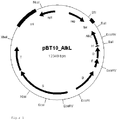
- FIG. 1 E. coli Plasmid "pBT10_alkL"
- Comparative Example 1 Expression vector for the alkBGT alkane hydroxylase system from Pseudomonas putida GPo1 without alkL
- the construct pBT10 (SEQ ID NO: 5) was prepared containing the three components alkane hydroxylase (AlkB), rubredoxin (AlkG) and rubredoxin reductase (AlkT) from Pseudomonas putida .
- AlkB alkane hydroxylase
- AlkG rubredoxin
- AlkT rubredoxin reductase
- alkB and alkG alkF intermediate were amplified together with alkB and alkG and cloned.
- AlkF is of no importance for the reaction to be catalyzed.
- Example 1 Expression vector for the alkBGT alkane hydroxylase system from Pseudomonas putida GPo1 with alkL
- the alkL gene was purposely cloned into the alkBFG operon in order to be able to synthesize it together with the minimum amount of enzymes necessary for the oxidation.
- alkL gene of pGEc47 ( Eggink et al., 1987, J Biol Chem 262, 17712-17718 ) amplified by PCR.
- PCR program was programmed as suggested by the polymerase manufacturer: 98 ° C / 30 sec . 98 ° C / 10 sec 72 ° C / 60 sec 30 ⁇ x . 72 ° C / 10 min
- the resulting 754 bp PCR product was purified by the "peqGOLD cycle pure kit" (PEQLAB Biotechnology GmbH, Erlangen) according to the manufacturer's supervision and phosphorylated with T4 polynucleotide kinase.
- 15 ⁇ l of the PCR product solution obtained from the purification were mixed with 2 ⁇ l of ATP solution (100 mM), 2 ⁇ l of kinase buffer and 1 ⁇ l of T4 polynucleotide kinase and incubated for 20 minutes at 37 ° C. Subsequently, the enzyme was killed by heating to 75 ° C for 10 minutes.
- the PCR product prepared in this way was then ligated according to the manufacturer's instructions into the pSMART vector from the company Lucigen. 2 ⁇ L of the ligation mixture was transformed by heat shock (42 ° C for 45 sec) into chemically competent DH5 ⁇ E. coli cells.
- Such a plasmid was prepared in larger quantities and cleaved with SalI.
- the resulting 693 bp fragment was isolated by purification from the agarose gel (peqGOLD Gel Extraction Kit).
- the plasmid pBT10 was also prepared in a larger amount, cleaved with SalI and the ends dephosphorylated with alkaline phosphatase (CAL intestinal [alkaline] phosphatase, CIP) (NEB).
- CAL intestinal [alkaline] phosphatase, CIP alkaline phosphatase
- the concentrations of the corresponding DNA solutions were determined by agarose gel electrophoresis.
- Kanamycin resistant colonies were grown in 5 mL of LB medium with antibiotic overnight and the plasmids were prepared as described above.
- the resulting plasmid was pBT10_alkL (see FIG. 1 ) and has Seq ID No. 8.
- the plasmids pBT10 or pBT10_alkL were transformed by heat shock at 42 ° C. for 2 min into the chemically competent strain E. coli W3110 ( Hanahan D, DNA cloning: A practicable approach. IRL Press, Oxford, 109-135 ).
- E. coli W3110-pBT10 and W3110-pBT10_alkL were incubated overnight at 30 ° C.
- the expression of the alk genes was induced after a growth time of 4 h by addition of 0.025% (v / v) dicyclopropyl ketone and shaking the culture under the same conditions for 4 more hours.
- the cells were then centrifuged off, the cell pellet was resuspended in KPi buffer (50 mM, pH 7.4) and placed in a bioreactor at 30 ° C tempered.
- a biomass concentration of about 1.8 g CDW / L was set.
- Under vigorous stirring (1500 min-1) and an air flow of 2 vvm (volume per volume and minute) the substrate lauric acid methyl ester in the ratio 1: 2 was added to the cell suspension (100 ml cell suspension, 50 ml lauric acid methyl ester). The temperature was kept constant at 30 ° C.
- the formation of the hydroxylauric acid methyl ester was detected by GC analysis of the reaction mixture. For this purpose, after 0 min as a negative control and after 150 min with a syringe, a sample was taken through the riser of the reactor and centrifuged in a 2 mL Eppendorf vessel in an Eppendorf table centrifuge at 13200 rpm for phase separation for 5 minutes. The organic phase was analyzed by gas chromatography (Thermo Trace GC Ultra). The column used was a Varian Inc. FactorFour TM VF-5m, length: 30 m, film thickness: 0.25 ⁇ m, inner diameter: 0.25 mm.
- This enzyme-standard unit "U” is a measure of the performance of such a biocatalyst at the beginning of the reaction. tribe Initial activity [U / g CDW ] W3110 pBT10 1, 82 W3110 pBT10_alkL 48.6
Landscapes
- Chemical & Material Sciences (AREA)
- Organic Chemistry (AREA)
- Life Sciences & Earth Sciences (AREA)
- Zoology (AREA)
- Wood Science & Technology (AREA)
- Engineering & Computer Science (AREA)
- Health & Medical Sciences (AREA)
- Genetics & Genomics (AREA)
- General Health & Medical Sciences (AREA)
- Biochemistry (AREA)
- Bioinformatics & Cheminformatics (AREA)
- General Engineering & Computer Science (AREA)
- Biotechnology (AREA)
- Microbiology (AREA)
- Chemical Kinetics & Catalysis (AREA)
- General Chemical & Material Sciences (AREA)
- Molecular Biology (AREA)
- Medicinal Chemistry (AREA)
- Gastroenterology & Hepatology (AREA)
- Biophysics (AREA)
- Proteomics, Peptides & Aminoacids (AREA)
- Oil, Petroleum & Natural Gas (AREA)
- Biomedical Technology (AREA)
- Preparation Of Compounds By Using Micro-Organisms (AREA)
- Micro-Organisms Or Cultivation Processes Thereof (AREA)
- Immobilizing And Processing Of Enzymes And Microorganisms (AREA)
Description
- Gegenstand der Erfindung ist ein biokatalytisches Verfahren zur Oxidation von organischen Verbindungen unter Zuhilfenahme eines alkL-Genproduktes sowie in diesem Verfahren eingesetzte Mikroorganismen.
- Beispielsweise das OCT-Plasmid von Pseudomonas putida enthält ein alkL-Gen. Dieses Plasmid kodiert des Weiteren für Genprodukte, die für die Alkan-Degradation verantwortlich sind. Diese Alkan-Degradationsgene sind auf dem Pseudomonas OCT-Plasmid in zwei alk-Operons angeordnet; das erste kodiert für die Genprodukte AlkB, AlkF, AlkG, AlkH, AlkJ, AlkK, und AlkL, das zweite für AlkS und AlkT, wobei AlkS eine regulatorische Funktion auf die Expression des ersten alk-Operons ausübt. Für eine detaillierte Übersicht und die Funktion weiterer Gene dieser alk-Operons siehe Chen et al., J Bacteriol. 1995 Dec, 177 (23) : 6894-901.
- Weiterhin ist aus der
EP277674 - Die
WO2002022845 beschreibt ein Verfahren zur Herstellung von N-Benzyl-4-Hydroxypiperidin durch Hydroxylierung von N-Benzyl-4-Piperidin durch E. coli Zellen, die das oben genannte Plasmid pGEc47 tragen. - Die
EP0502524 beschreibt ein mikrobiologisches Verfahren zur terminalen Hydroxylierung von Ethylgruppen an aromatischen 5-oder 6-Ring-Heterocyclen mit Hilfe der Produktion verschiedener Genprodukte der alk-Operons, so z. B. über das Plasmid pGEc41, welches für die Genprodukte von alkB, alkG, alkH, alkT und alkS, aber nicht von alkL kodiert. Die gleiche Anmeldung, beschreibt darüber hinaus ein Plasmid pGMK921, das wie pGEc41 die Gene für alkB, alkG, alkH, alkT und alkS - aber nicht alkL - enthält, deren Expression aber nicht nur durch Alkaninduktion vom nativen Promotor, sondern auch durch IPTG-Induktion vom tac-Promotor aus möglich ist (vgl. auchUS5306625 ). - Schneider et al. beschreiben in Appl Environ Microbiol. 1998 Oct; 64(10):3784-90 eine Biokonversion von gesättigten Fettsäuren zu deren ω-1-, ω-2- und ω-3-Hydroxy-Fettsäuren in E. coli mit Hilfe einer Cytochrom P-450BM-3 Monooxygenase und dem oben genannte Plasmid pGEc47.
- Favre-Bulle et al. beschreiben in Nature Bio/Technology 9, 367-371 (April 1991) ein Verfahren zur Herstellung von 1-Oktansäure durch Biotransformation von Oktan mit einem als Biokatalysator eingesetzten pGEc47 tragenden E. coli-Bakterium. Beide alk-Operons werden im beschriebenen Verfahren komplett exprimiert.
- Den gleichen Ansatz verfolgen Rothen et al., in Biotechnol Bioeng. 1998 May 20;58(4):356-65.
- Nachteil des beschriebenen Standes der Technik ist, dass Genprodukte, die keinen wesentlichen Beitrag zu dem gewünschten Oxidationsprozess leisten, überflüssigerweise von der als Biokatalysator eingesetzten Zelle produziert werden und somit deren Leistungsfähigkeit herabsetzen.
- Darüber hinaus bergen die unnötig co-synthetisierten alk-Genprodukte gegebenenfalls unerwünschte Enzymaktivitäten, die der gewünschten Produktbildung abträglich sind, etwa dadurch, dass Zwischenprodukt in unerwünschte Nebenprodukte abfließt. Bei gewünschter ω-Hydroxylierung eines organischen Restes führt das alkJ-Genprodukt zur Bildung des korrespondierenden Aldehyds. Bei beispielsweise gleichzeitiger Anwesenheit des alkH-Genprodukts wird der entstehende Aldehyd weiter zur Carbonsäure oxidiert.
- So werden in der
EP0502524 für die Erzeugung des gewünschten hydroxylierten Verfahrensproduktes lediglich die Genprodukte von alkB, alkG und alkT benötigt, wodurch z.B. die Gene alkF, alkJ, alkH und alkS überflüssig sind. Nachteilig ist hier außerdem, dass die Synthese weiterer alk-Genprodukte hohe Anforderungen an die Stoffwechselkapazität des Wirts stellt. AlkJ z.B. ist ein FAD-haltiges Enzym (Chen et al., J. Bacteriol, (1995), 6894-6901). Der FAD-Pool des Wirtes ist jedoch schon durch die unverzichtbare Produktion von alkT belastet, welches ebenfalls FAD enthält. Da die FAD-Synthese-Kapazität in z.B. E. coli begrenzt ist und ebenfalls für den existentiellen Zellstoffwechsel benötigt wird, wird die Zelle bei unnötiger alkJ-Produktion vermeidbar belastet. - Des Weiteren sind die Genprodukte von alkB, alkJ und alkH Cytoplasma-Membran-ständig oder Cytoplasma-Membran-assoziiert. In diesem Bereich ist auch die Atmungskette angesiedelt. Eine übermäßige Produktion von Membranproteinen führt von Veränderungen in der Zellmembran bis zur Ablösung von Membranvesikeln, die ins Cytosol abwandern. (Nieboer et al., Molecular Microbiology (1993) 8(6), 1039-1051)
Dies führt letztlich zu einer vorzeitigen Lyse der Zellen (Wubbolts et al., Biotechnolgy and Bioengineering (1996), Vol 52, 301-308), erst recht in der für industrielle Prozesse unverzichtbaren Hochzelldichte-Fermentation. - Analog werden in Schneider et al. die Genprodukte von alkB, alkF, alkG, alkH, alkJ, alkK, alkS und alkT überflüssigerweise mit synthetisiert, da das eigentliche zur gewünschten Reaktion eingesetzte Enzym die Cytochrom P-450BM-3 Monooxygenase ist.
- Im Hinblick auf industrielle Prozesse ist die Verwendung von plasmidkodierten Stoffwechselwegen schwierig. Mit steigender Größe der Fermentervolumen wird die Verwendung von Antibiotika zur Aufrechterhaltung eines Selektionsdrucks, der die Plasmidstabilität verbessert, zum einen sehr teuer und zum anderen abwasserkritisch. Großfermentationen laufen daher fast immer ohne jede Antibiotikumsgabe ab.
- Um die genetische Stabilität des artifiziellen oxidativen Stoffwechselweges dennoch zu gewährleisten ist eine Integration der verwendeten Gene ins Genom des Wirtsorganismus wünschenswert. Ein solcher Ansatz gelingt umso besser, je kleiner das zu integrierende Genkonstrukt ist. Da das hier betrachtete Minimal-Gen-Set alkBGTL schon eine beachtliche Größe hat, ist jede weitere, nicht unbedingt notwendige Nukleotidsequenz zu vermeiden.
- Neben der Reduktion des Umfangs der nötigen molekularbiologischen Arbeiten und der Erhöhung ihrer Erfolgswahrscheinlichkeit ist ein möglichst kleines Konstrukt auch der genomischen Stabilität des Wirtsorganismus zuträglich.
- Aufgabe der Erfindung war es, ein Verfahren bereitzustellen, welches zumindest einen der genannten Nachteile des Standes der Technik zu überwinden vermag.
- Überraschenderweise wurde gefunden, dass das im Folgenden beschriebene Verfahren und die gentechnisch veränderten Zellen einen Beitrag zur Lösung der gestellten Aufgabe leisten.
- Gegenstand der vorliegenden Erfindung sind daher ein Verfahren zur Herstellung einer oxidierten, organischen Substanz unter Nutzung eines alkL-Genproduktes wie in Anspruch 1 beschrieben sowie die in diesem Verfahren eingesetzten, rekombinanten Zellen.
- Ein weiterer Gegenstand der Erfindung ist die Verwendung eines alkL-Genproduktes zur Erhöhung der Oxidationsrate.
- Vorteile sind die optimale Ausnutzung der im Verfahren vorhandenen Ressourcen, beispielsweise hinsichtlich des Zellstoffwechsels, insbesondere unter Hochzelldichtefermentations-Bedingungen.
- Die vorliegende Erfindung beschreibt ein Verfahren zur Oxidation einer organischen Substanz unter Einsatz mindestens eines oxidierenden Enzyms und mindestens eines alkL-Genproduktes, dadurch gekennzeichnet, dass das alkL-Genprodukt unabhängig von mindestens einem weiteren, durch das das alkL-Gen enthaltende alk-Operon kodierten Genprodukt bereitgestellt wird, dadurch gekennzeichnet, dass das weitere Genprodukt ausgewählt ist aus mindestens einem aus der Gruppe bestehend aus AlkF, AlkG, und AlkH und AlkJ, und dass das alkL-Genprodukt ausgewählt ist aus der Gruppe bestehend aus Proteine kodiert durch die alkL-Gene aus Pseudomonas putida GPO1 und P1, welche wiedergegebenen werden durch Seq ID Nr. 1 und Seq ID Nr. 3 und Proteine mit Polypeptidsequenz Seq ID Nr. 2 oder Seq ID Nr. 4.
- Die im Zusammenhang mit dieser Erfindung beschriebenen alk-Gene kodieren für Proteinsequenzen, die analog als AlkX bezeichnet werden. Werden mehrere Gene alkX, alkY und alkZ gleichzeitig beschrieben so wird die Nomenklatur alkXYZ bzw. analog bei Proteinen AlkXYZ verwendet.
- Unter dem Begriff "Oxidation einer organischen Substanz" wird im Zusammenhang mit der vorliegenden Erfindung beispielsweise eine Hydroxylierung oder Epoxidierung, die Umsetzung eines Alkohols zu einem Aldehyd oder Keton, die Umsetzung eines Aldehydes zu einer Carbonsäure oder die Hydratisierung einer Doppelbindung verstanden. Ebenso sind hierunter auch mehrstufige Oxidationsprozesse zusammengefasst, wie man sie insbesondere durch den Einsatz mehrerer oxidierender Enzyme erreichen kann, wie beispielsweise die Hydroxylierung eines Alkyl-Restes an mehren Stellen, z.B. ω-ständig und ω-1-ständig, katalysiert durch verschiedene Monooxygenasen. Unter dem Begriff "unter Einsatz mindestens eines oxidierenden Enzyms und mindestens eines alkL-Genproduktes" wird im Zusammenhang mit der vorliegenden Erfindung das gezielte Bereitstellen der Enzyme und Genprodukte verstanden, und zwar in einer Form, wie man jedes einzelne Enzym oder Genprodukt für sich selber betrachtet in der freien Natur nicht vorfindet. Dies kann beispielsweise durch heterologe Produktion oder Überproduktion der eingesetzten Proteine in einer Zelle oder durch Bereitstellen von mindestens teilweise aufgereinigten Proteinen erfolgen,; eingeschlossen sind hier aber auch eine geänderte Umgebung im Vergleich zu dem in freier Natur vorkommenden Enzym, etwa in der Gestalt, dass die natürliche Zelle beinhaltend das Enzym modifiziert wurde, so dass sie beispielsweise bestimmte andere Proteine in geänderter Form, wie beispielsweise abgeschwächt oder verstärkt oder mit Punktmutationen versehen, produziert.
- Unter dem Begriff "alkL-Genprodukt" werden im Zusammenhang mit der vorliegenden Erfindung Proteine verstanden, die mindestens eine der nachfolgenden beiden Bedingungen erfüllen:
- 1.) Das Protein wird als ein Mitglied der Superfamilie der OmpW-Proteine (Proteinfamilie 3922 in der "Conserved Domain Database" (CDD) des "National Center for Biotechnology Information" (NCBI)) identifiziert, wobei diese Zuordnung durch ein Alignment der Aminosäuresequenz des Proteins mit den in der CDD des NCBI vorhandenen Datenbankeinträgen, die bis zum 22.03.2010 hinterlegt wurden, unter Nutzung der Standardsuchparameter, einem E-Wert (englisch "e-value") kleiner 0,01 und unter Verwendung des Algorithmus "blastp 2.2.23+", erfolgt,
- 2.) bei einer Suche nach in der betreffenden Aminosäuresequenz enthaltenen konservierten Proteindomänen in der NCBI CDD (Version 2.20) mittels RPS-BLAST wird die Präsenz der konservierten Domäne "OmpW, Outer membrane protein W" (COG3047) mit einem E-Wert (englisch "e-value") kleiner 1 x 10⁻⁵ festgestellt (englisch "domain hit").
- Unter dem Begriff "unabhängig von mindestens einem weiteren, durch das das alkL-Gen enthaltende alk-Operon kodierten Genprodukt bereitgestellt" wird im Zusammenhang mit der vorliegenden Erfindung eine Bereitstellung des alkL-Genproduktes verstanden, welche von mindestens einem weiteren alk-Genprodukt, welches in natürlich vorkommender Form an das Entstehen des alkL-Genproduktes gekoppelt ist, unabhängig ist. Beispielsweise sind in einem Operon umfassend die Gene alkBFGHJKL die alk-Genprodukte von jeweils alkBFGHJ und K an die Entstehung des alkL-Genproduktes gekoppelt, da diese über denselben Promotor bereitgestellt werden.
- Alle angegebenen Prozent (%) sind wenn nicht anders angegeben Massenprozent.
- Das erfindungsgemäße Verfahren lässt sich in Abhängigkeit des eingesetzten oxidierenden Enzyms für die Oxidation jeglicher organischer Substanzen einsetzen, welche von diesem oxidierenden Enzym als Substrat akzeptiert werden; bevorzugte organische Substanzen sind ausgewählt aus der Gruppe enthaltend, bevorzugt bestehend aus,
verzweigte oder unverzweigte, bevorzugt unverzweigte, gesättigte oder ungesättigte, bevorzugt gesättigte, gegebenenfalls substituierte
Alkane, Alkene, Alkine, Alkohole, Aldehyde, Ketone, Carbonsäuren, Carbonsäureester, Amine und Epoxide,
wobei diese bevorzugt 3 bis 22, insbesondere 6 bis 18, weiterhin bevorzugt 8 bis 14, insbesondere 12 Kohlenstoffatome aufweisen. - Besonders bevorzugte organische Substanzen im erfindungsgemäßen Verfahren sind ausgewählt aus der Gruppe enthaltend, bevorzugt bestehend aus,
Carbonsäuren und deren korrespondierenden Ester, insbesondere mit 3 bis 22, bevorzugt 6 bis 18, besonders bevorzugt 8 bis 14, Kohlenstoffatomen insbesondere Carbonsäuren der Alkane, insbesondere unverzweigte Carbonsäuren der Alkane, insbesondere Laurinsäure und ihre Ester, insbesondere Laurinsäuremethyl- und Laurinsäureethylester, Decansäure, Decansäureester, Myristinsäure und Myristinsäureester, - unsubstituierte Alkane mit 3 bis 22, bevorzugt 6 bis 18, besonders bevorzugt 8 bis 14 Kohlenstoffatomen, bevorzugt unverzweigte, insbesondere ausgewählt aus der Gruppe enthaltend, bevorzugt bestehend aus, Octan, Decan, Dodecan und Tetradecan,
- unsubstituierte Alkene mit 3 bis 22, bevorzugt 6 bis 18, besonders bevorzugt 8 bis 14, Kohlenstoffatomen, bevorzugt unverzweigte, insbesondere ausgewählt aus der Gruppe enthaltend, bevorzugt bestehend aus, trans-Oct-1-en, trans-Non-1-en, trans-Dec-1-en, trans-Undec-1-en, trans-Dodec-1-en, trans-Tridec-1-en, trans-Tetrade-1-cen, cis-Oct-1-en, cis-Non-1-en, cis-Dec-1-en, cis-Undec-1-en, cis-Dodec-1-en, cis-Tridec-1-en, cis-Tetrade-1-cen, trans-Oct-2-en, trans-Non-2-en, trans-Dec-2-en, trans-Undec-2-en, trans-Dodec-2-en, trans-Tridec-2-en und trans-Tetradec-2-en, trans-Oct-3-en, trans-Non-3-en, trans-Dec-3-en, trans-Undec-3-en, trans-Dodec-3-en, trans-Tridec-3-en und trans-Tetradec-3-en, trans-Oct-4-en, trans-Non-4-en, trans-Dec-4-en, trans-Undec-4-en, trans-Dodec-4-en, trans-Tridec-4-en, trans-Tetradec-4-en, trans-Dec-5-en, trans-Undec-5-en, trans-Dodec-5-en, trans-Tridec-5-en, trans-Tetradec-5-en, trans-Dodec-6-en, trans-Tridec-6-en, trans-Tetradec-6-en und trans-Tetradec-7-en, besonders bevorzugt bestehend aus, trans-Oct-1-en, trans-Dec-1-en, trans-Dodec-1-en, trans-Tetrade-1-cen, cis-Oct-1-en, cis-Dec-1-en, cis-Dodec-1-en, cis-Tetrade-1-cen, trans-Oct-2-en, trans-Dec-2-en, trans-Dodec-2-en und trans-Tetradec-2-en, trans-Oct-3-en, trans-Dec-3-en, trans-Dodec-3-en und trans-Tetradec-3-en, trans-Oct-4-en, trans-Dec-4-en, trans-Dodec-4-en, trans-Tetradec-4-en, trans-Dec-5-en, trans-Dodec-5-en, trans-Tetradec-5-en, trans-Dodec-6-en, trans-Tetradec-6-en und trans-Tetradec-7-en,
- unsubstituierte, einwertige Alkohole mit 3 bis 22, bevorzugt 6 bis 18, besonders bevorzugt 8 bis 14, Kohlenstoffatomen, bevorzugt unverzweigte, insbesondere ausgewählt aus der Gruppe enthaltend, bevorzugt bestehend aus, 1-Octanol, 1-Nonanol, 1-Decanol,1-Undecanol, 1-Dodecanol, 1-Tridecanol und 1-Tetradecanol,
besonders bevorzugt bestehend aus 1-Octanol, 1-Decanol, 1-Dodecanol und 1-Tetradecanol - unsubstituierte Aldehyde mit 3 bis 22, bevorzugt 6 bis 18, besonders bevorzugt 8 bis 14, Kohlenstoffatomen, bevorzugt unverzweigte, insbesondere ausgewählt aus der Gruppe enthaltend, bevorzugt bestehend aus, Octanal, Nonanal, Decanal, Dodecanal und Tetradecanal,
- unsubstituierte, einwertige Amine mit 3 bis 22, bevorzugt 6 bis 18, besonders bevorzugt 8 bis 14, Kohlenstoffatomen, bevorzugt unverzweigte, insbesondere ausgewählt aus der Gruppe enthaltend, bevorzugt bestehend aus, 1-Amino-Octan, 1-Amino-Nonan, 1-Amino-Decan, 1-Amino-Undecan, 1-Amino-Dodecan, 1-Amino-Tridecan und 1-Amino-Tetradecan,
besonders bevorzugt bestehend aus, 1-Amino-Octan, 1-Amino-Decan, 1-Amino-Dodecan und 1-Amino-Tetradecan,
sowie substituierte Verbindungen, die insbesondere als weitere Substituenten einen oder mehrer Hydroxy-, Amin-, Keto-, Carboxyl-, Cyclopropylreste oder Epoxy-Funktionen tragen, insbesondere ausgewählt aus der Gruppe enthaltend, bevorzugt bestehend aus, 1,8-Octandiol, 1,9-Nonandiol, 1,10-Decandiol, 1,11-Undecandiol, 1,12-Dodecandiol, 1,13-tridecandiol, 1,14-Tetradecandiol, 8-Amino-[1-Octanol], 9-Amino-[1-Nonanol], 10-Amino-[1-Dodecanol], 11-Amino-[1- Undecanol], 12-Amino-[1-Dodecanol], 13-Amino-[1-Tridecanol], 14-Amino-[1-Tetradecanol], 8-Hydroxy-[1-Octanal], 9-hydroxy-[1-Nonanal], 10-Hydroxy-[1-Decanal], 11-Hydroxy-[1-Undecanal], 12-Hydroxy-[1-Dodecanal], 13-Hydroxy-[1-Tridecanal], 14-Hydroxy-[1-Tetradecanal], 8-Amino-[1-Octanal], 9-Amino-[1-Nonanal], 10-Amino-[1-Decanal], 11-Amino-[1-Undecanal], 12-Amino-[1-Dodecanal], 13-Amino-[1-Tridecanal], 14-Amino-[1-Tetradecanal],
8-Hydroxy-[1-Octansäure], 9-Hydroxy-[1-Nonansäure], 10-Hydroxy-[1-Decansäure], 11-Hydroxy-[1-Undecansäure], 12-Hydroxy-[1-Dodecansäure], 13-Hydroxy-[1-Undecansäure], 14-Hydroxy-[1-Tetradecansäure], 8-Hydroxy-[1-Octansäure-Methylester], 9-Hydroxy-[1-Nonansäure-Methylester], 10-Hydroxy-[1-Decansäure-Methylester], 11-Hydroxy-[1-Undecansäure-Methylester], 12-Hydroxy-[1-Dodecansäure-Methylester], 13-Hydroxy-[1-Undecansäure-Methylester], 14-Hydroxy-[1-Tetradecansäure-Methylester], 8-Hydroxy-[1-Octansäure-Ethylester], 9-Hydroxy-[1-Nonansäure-Ethylester], 10-Hydroxy-[1-Decansäure-Ethylester], 11-Hydroxy-[1-Undecansäure-Ethylester], 12-Hydroxy-[1-Dodecansäure-Ethylester], 13-Hydroxy-[1-Undecansäure-Ethylester] und 14-Hydroxy-[1-Tetradecansäure-Ethylester],
besonders bevorzugt bestehend aus, 1,8-Octandiol, 1,10-Decandiol, 1,12-Dodecandiol, 1,14-Tetradecandiol, 8-Amino-[1-Octanol], 10-Amino-[1-Dodecanol], 12-Amino-[1-Dodecanol], 14-Amino-[1-Tetradecanol], 8-Hydroxy-[1-Octanal], 10-Hydroxy-[1-Decanal], 12-Hydroxy-[1-Dodecanal], 14-Hydroxy-[1-Tetradecanal], 8-Amino-[1-Octanal], 10-Amino-[1-Decanal], 12-Amino-[1-Dodecanal], 14-Amino-[1-Tetradecanal],
8-Hydroxy-[1-Octansäure], 10-Hydroxy-[1-Decansäure], 12-Hydroxy-[1-Dodecansäure], 14-Hydroxy-[1-Tetradecansäure], 8-Hydroxy-[1-Octansäure-Methylester], 10-Hydroxy-[1-Decansäure-Methylester], 12-Hydroxy-[1-Dodecansäure-Methylester], 14-Hydroxy-[1-Tetradecansäure-Methylester], 8-Hydroxy-[1-Octansäure-Ethylester], 10-Hydroxy-[1-Decansäure-Ethylester], 12-Hydroxy-[1-Dodecansäure-Ethylester] und 14-Hydroxy-[1-Tetradecansäure-Ethylester],
wobei Laurinsäure und ihre Ester, insbesondere Laurinsäuremethyl- und Laurinsäureethylester, besonders bevorzugt sind. - Mit dem erfindungsgemäßen Verfahren lassen sich in Abhängigkeit des eingesetzten oxidierenden Enzyms und der eingesetzten organischen Substanz verschiedene Oxidationsprodukte herstellen, insbesondere Alkohole, Aldehyde, Ketone und Carbonsäuren.
- Diese Oxidationsprodukte lassen sich beispielsweise durch das erfindungsgemäße Verfahren erhalten durch die Umsetzung einer im Folgenden gelisteten organischen Substanz zu:
- Alkan/Alken/Alkin zu Alkohol (beispielsweise mit einer Monooxygenase)
- Alkohol zu Aldehyd (beispielsweise mit einer Alkoholdehydrogenase oder Alkoholoxidase)
- Alkohol zu Keton (beispielsweise mit einer Alkoholdehydrogenase oder Alkoholoxidase)
- Aldehyd zu Carbonsäure (beispielsweise mit einer Aldehyddehydrogenase)
- Epoxid zum Cyanhydrin (beispielsweise mit einer Halohydrin-Dehalogenase)
- In diesem Zusammenhang ist die Herstellung von Alkoholen und Aldehyden bevorzugt von Alkoholen, insbesondere von ω-Alkoholen, ganz besonders von ω-Hydroxy-Carbonsäuren mit dem erfindungsgemäßen Verfahren, insbesondere in Form einer Hydroxylierungsreaktion, bevorzugt.
- In dem erfindungsgemäßen Verfahren lassen sich organische Substanzen, insbesondere Carbonsäuren und Carbonsäureester, vorteilhaft an der ω-Position oxidieren.
- In dem erfindungsgemäßen Verfahren lassen sich alle dem Fachmann bekannten oxidierenden Enzyme einsetzen, da die Funktion des bereitgestellten alkL-Genproduktes hiervon unabhängig ist. Solche Enzyme sind dem Fachmann hinlänglich unter dem Begriff Oxidoreduktase bekannt und sind in der Enzymklasse EC 1.X.X.X der systematischen Nomenklatur der Enzymkommission der International Union of Biochemistry and Molecular Biology zu finden.
- Bevorzugt werden in dem erfindungsgemäßen Verfahren als oxidierendes Enzym eine Alkanmonooxygenase, eine Xylolmonooxygenase, eine Aldehyddehydrogenase, eine Alkoholoxidase oder eine Alkoholdehydrogenase, vorzugsweise eine Alkanmonooxygenase eingesetzt.
- Ein geeignetes Gen für eine Xylolmonooxygenase ist beispielsweise das xylM- oder das xylA-Gen, wobei ein Plasmid beinhaltend diese beiden Gene die GENBANK-Accession-Nr. M37480 besitzt.
- Eine besonders bevorzugte Alkanmonooxygenase ist in diesem Zusammenhang dadurch gekennzeichnet, dass sie eine Cytochrom-P450-Monoxygenasen, insbesondere eine Cytochrom-P450-Monoxygenasen aus Hefen, insbesondere Pichia, Yarrowia und Candida, beispielsweise aus Candida tropicalis oder Candida maltosa, oder aus Pflanzen, beispielsweise aus der Cicer arietinum L., oder aus Säugern, beispielsweise aus Rattus norvegicus, insbesondere CYP4A1, ist. Die Gensequenzen geeigneter Cytochrom-P450-Monoxygenasen aus Candida tropicalis sind beispielsweise in
WO-A-00/20566 - Eine weitere bevorzugte Alkanmonooxygenase wird vom alkB-Gen des alk-Operons aus Pseudomonas putida GPo1 kodiert.
- Die Isolierung der alkB-Gensequenz ist beispielsweise von van Beilen et al. in "Functional Analysis of Alkane Hydroxylases from Gram-Negative and Gram-Positive Bacteria", Journal of Bacteriology, Vol. 184 (6), Seiten 1.733-1.742 (2002) beschrieben. Weitere Homologe des alkB-Gens können auch van Beilen et al. in "Oil & Gas Science and Technology", Vol. 58 (4), Seiten 427-440 (2003) entnommen werden.
- Weiterhin bevorzugte Alkanmonooxygenasen sind solche alkB-Genprodukte, welche kodiert werden von alkB-Genen aus Organismen ausgewählt aus der Gruppe der gram-negativen Bakterien, insbesondere aus der Gruppe der Pseudomonaden, dort aus der Gattung Pseudomonas, besonders Pseudomonas mendocina, der Gattung Oceanicaulis, bevorzugt Oceanicaulis alexandrii HTCC2633, der Gattung Caulobacter, bevorzugt Caulobacter sp. K31, der Gattung Marinobacter, bevorzugt Marinobacter aquaeolei, besonders bevorzugt Marinobacter aquaeolei VT8, der Gattung Alcanivorax, bevorzugt Alcanivorax borkumensis, der Gattung Acetobacter, Achromobacter, Acidiphilium, Acidovorax, Aeromicrobium, Alkalilimnicola, Alteromonadales, Anabaena, Aromatoleum, Azoarcus, Azospirillum, Azotobacter, Bordetella, Bradyrhizobium, Burkholderia, Chlorobium, Citreicella, Clostridium, Colwellia, Comamonas, Conexibacter, Congregibacter, Corynebacterium, Cupriavidus, Cyanothece, Delftia, Desulfomicrobium, Desulfonatronospira, Dethiobacter, Dinoroseobacter, Erythrobacter, Francisella, Glaciecola, Gordonia, Grimontia, Hahella, Haloterrigena, Halothiobacillus, Hoeflea, Hyphomonas, Janibacter, Jannaschia, Jonquetella, Klebsiella, Legionella, Limnobacter, Lutiella, Magnetospirillum, Mesorhizobium, Methylibium, Methylobacterium, Methylophaga, Mycobacterium, Neisseria, Nitrosomonas, Nocardia, Nostoc, Novosphingobium, Octadecabacter, Paracoccus, Parvibaculum, Parvularcula, Peptostreptococcus, Phaeobacter, Phenylobacterium, Photobacterium, Polaromonas, Prevotella, Pseudoalteromonas, Pseudovibrio, Psychrobacter, Psychroflexus, Ralstonia, Rhodobacter, Rhodococcus, Rhodoferax, Rhodomicrobium, Rhodopseudomonas, Rhodospirillum, Roseobacter, Roseovarius, Ruegeria, Sagittula, Shewanella, Silicibacter, Stenotrophomonas, Stigmatella, Streptomyces, Sulfitobacter, Sulfurimonas, Sulfurovum, Synechococcus, Thalassiobium, Thermococcus, Thermomonospora, Thioalkalivibrio, Thiobacillus, Thiomicrospira, Thiomonas, Tsukamurella, Vibrio oder Xanthomonas, wobei die aus Alcanivorax borkumensis, Oceanicaulis alexandrii HTCC2633, Caulobacter sp. K31 und Marinobacter aquaeolei VT8 besonders bevorzugt sind. Es ist in diesem Zusammenahng vorteilhaft wenn zusätzlich zu AlkB alkG- und alkT-Genprodukte bereitgestellt werden; diese können entweder die Genprodukte isolierbar aus dem das alkB-Genprodukt beisteuernden Organismus sein, oder aber das alkG und alkT aus Pseudomonas putida GPo1 sein.
- Eine bevorzugte Alkoholdehydrogenase ist beispielsweise das vom alkJ-Gen kodierte Enzym (EC 1.1.99.8), insbesondere das vom alkJ-Gen kodierte Enzym aus Pseudomonas putida GPo1 (van Beilen et al., Molecular Microbiology, (1992) 6(21), 3121-3136). Die Gensequenzen der alkJ-Gene aus Pseudomonas putida GPo1, Alcanivorax borkumensis, Bordetella parapertussis, Bordetella bronchiseptica oder aus Roseobacter denitrificans können beispielsweise der KEGG-Gendatenbank (Kyoto Encyclopedia of Genes and Genomes) entnommen werden. Weiterhin bevorzugte Alkoholdehydrogenasen sind solche, die kodiert werden von alkJ-Genen aus Organismen ausgewählt aus der Gruppe der gram-negativen Bakterien, insbesondere aus der Gruppe der Pseudomonaden, dort aus der Gattung Pseudomonas, besonders Pseudomonas mendocina, der Gattung Oceanicaulis, bevorzugt Oceanicaulis alexandrii HTCC2633, der Gattung Caulobacter, bevorzugt Caulobacter sp. K31, der Gattung Marinobacter, bevorzugt Marinobacter aquaeolei, besonders bevorzugt Marinobacter aquaeolei VT8, der Gattung Alcanivorax, bevorzugt Alcanivorax borkumensis, der Gattung Acetobacter, Achromobacter, Acidiphilium, Acidovorax, Aeromicrobium, Alkalilimnicola, Alteromonadales, Anabaena, Aromatoleum, Azoarcus, Azospirillum, Azotobacter, Bordetella, Bradyrhizobium, Burkholderia, Chlorobium, Citreicella, Clostridium, Colwellia, Comamonas, Conexibacter, Congregibacter, Corynebacterium, Cupriavidus, Cyanothece, Delftia, Desulfomicrobium, Desulfonatronospira, Dethiobacter, Dinoroseobacter, Erythrobacter, Francisella, Glaciecola, Gordonia, Grimontia, Hahella, Haloterrigena, Halothiobacillus, Hoeflea, Hyphomonas, Janibacter, Jannaschia, Jonquetella, Klebsiella, Legionella, Limnobacter, Lutiella, Magnetospirillum, Mesorhizobium, Methylibium, Methylobacterium, Methylophaga, Mycobacterium, Neisseria, Nitrosomonas, Nocardia, Nostoc, Novosphingobium, Octadecabacter, Paracoccus, Parvibaculum, Parvularcula, Peptostreptococcus, Phaeobacter, Phenylobacterium, Photobacterium, Polaromonas, Prevotella, Pseudoalteromonas, Pseudovibrio, Psychrobacter, Psychroflexus, Ralstonia, Rhodobacter, Rhodococcus, Rhodoferax, Rhodomicrobium, Rhodopseudomonas, Rhodospirillum, Roseobacter, Roseovarius, Ruegeria, Sagittula, Shewanella, Silicibacter, Stenotrophomonas, Stigmatella, Streptomyces, Sulfitobacter, Sulfurimonas, Sulfurovum, Synechococcus, Thalassiobium, Thermococcus, Thermomonospora, Thioalkalivibrio, Thiobacillus, Thiomicrospira, Thiomonas, Tsukamurella, Vibrio oder Xanthomonas.
- Bevorzugte in dem erfindungsgemäßen Verfahren eingesetzte alkL-Genprodukte sind dadurch gekennzeichnet, dass die Produktion des alkL-Genproduktes im nativen Wirt durch Dicyclopropylketon induziert wird; in diesem Zusammenhang ist weiterhin bevorzugt, dass die Expression des alkL-Gens als Teil einer Gruppe von Genen, beispielsweise in einem Regulon wie etwa einem Operon, stattfindet.
- In dem erfindungsgemäßen Verfahren eingesetzte alkL-Genprodukte werden bevorzugt kodiert von alkL-Genen aus Organismen ausgewählt aus der Gruppe der gram-negativen Bakterien, insbesondere der Gruppe enthaltend, bevorzugt bestehend aus, Pseudomonaden, besonders Pseudomonas putida, insbesondere Pseudomonas putida GPo1 und P1, Azotobacter, Desulfitobacterium, Burkholderia, bevorzugt Burkholderia cepacia, Xanthomonas, Rhodobacter, Ralstonia, Delftia und Rickettsia, die Gattung Oceanicaulis, bevorzugt Oceanicaulis alexandriii HTCC2633, die Gattung Caulobacter, bevorzugt Caulobacter sp. K31, die Gattung Marinobacter, bevorzugt Marinobacter aquaeolei, besonders bevorzugt Marinobacter aquaeolei VT8 und die Gattung Rhodopseudomonas.
- Es ist vorteilhaft, wenn das alkL-Genprodukt aus einem anderen Organismus stammt, als das erfindungsgemäß eingesetzte oxidierende Enzym.
- In diesem Zusammenhang sind ganz besonders bevorzugte alkL-Genprodukte kodiert durch die alkL-Gene aus Pseudomonas putida GPo1 und P1, welche wiedergegeben werden durch Seq ID Nr. 1 und Seq ID Nr. 3, sowie Proteine mit Polypeptidsequenz Seq ID Nr. 2 oder Seq ID Nr. 4
- Wobei unter 100% Aktivität des Bezugsprotein die Erhöhung der Aktivität der als Biokatalysator verwendeten Zellen, also die pro Zeiteinheit umgesetzte Stoffmenge bezogen auf die eingesetzte Zellmenge (Units pro Gramm Zelltrockenmasse (cell dry weight) [U/gCDW]) im Vergleich zur Aktivität des Biokatalysators ohne Anwesenheit des Bezugsproteins verstanden wird, und zwar in einem System, wie es in den Ausführungsbeispielen beschrieben wird, bei dem als oxidierende Enzyme die Genprodukte von alkBGT aus P. putida GPo1 zur Umsetzung von Laurinsäuremethylester zu 12-Hydroxylaurinsäuremetylester in einer E. coli-Zelle eingesetzt werden. Eine Methode der Wahl zur Bestimmung der Oxidationsrate ist den Ausführungsbeispielen zu entnehmen.
- Für die Definition des Units gilt hier die in der Enzymkinetik übliche Definition. 1 Unit Biokatalysator setzt 1 µmol Substrat in einer Minute zum Produkt um.
1 U = 1 µmol/min - Änderungen von Aminosäureresten einer gegebenen Polypeptidsequenz, die zu keinen wesentlichen Änderungen der Eigenschaften und Funktion des gegebenen Polypeptides führen, sind dem Fachmann bekannt. So können beispielsweise manche Aminosäuren oft problemlos gegeneinander ausgetauscht werden; Beispiele für solche geeigneten Aminosäuresubstitutionen sind: Ala gegen Ser; Arg gegen Lys; Asn gegen Gln oder His; Asp gegen Glu; Cys gegen Ser; Gln gegen Asn; Glu gegen Asp; Gly gegen Pro; His gegen Asn oder Gln; Ile gegen Leu oder Val; Leu gegen Met oder Val; Lys gegen Arg oder Gln oder Glu; Met gegen Leu oder Ile; Phe gegen Met oder Leu oder Tyr; Ser gegen Thr; Thr gegen Ser; Trp gegen Tyr; Tyr gegen Trp oder Phe; Val gegen Ile oder
- Leu. Ebenso ist bekannt, dass Änderungen besonders am N- oder C-Terminus eines Polypeptides in Form von beispielsweise Aminosäureinsertionen oder -deletionen oft keinen wesentlichen Einfluss auf die Funktion des Polypeptides ausüben.
- Ein erfindungsgemäß bevorzugtes Verfahren ist dadurch gekennzeichnet, dass das weitere Genprodukt ausgewählt ist aus mindestens einem aus der Gruppe bestehend aus
AlkF, AlkG, und AlkHinsbesondere bestehend aus AlkF, AlkG,und AlkH,
wobei weitere Genprodukte insbesondere ausgewählt sind aus der Gruppe enthaltend, bevorzugt bestehend aus den Genkombinationen: alkFH, alkGH, und alkFGH,. - Es ist für das erfindungsgemäße Verfahren vorteilhaft, wenn das oxidierende Enzym und das alkL-Genprodukt durch einen Mikroorganismus bereitgestellt werden. Dabei können die beiden Enzyme jeweils getrennt in jeweils einem Mikroorganismus oder gemeinsam in einem Mikroorganismus bereitgestellt werden, wobei letzteres bevorzugt ist. Daher ist ein bevorzugtes erfindungsgemäßes Verfahren dadurch gekennzeichnet, dass es in mindestens einem Mikroorganismus oder in einem den mindestens einen Mikroorganismus, der das oxidierende Enzym und das alkL-Genprodukt bereitstellt, umgebenden Medium durchgeführt wird.
- In diesem Zusammenhang ist es bevorzugt, dass das oxidierende Enzym und das alkL-Genprodukt in dem mindestens einen Mikroorganismus rekombinant bereitgestellt werden.
- Die nun folgenden Ausführungen zur rekombinanten Produktion beziehen sich sowohl auf das oxidierende Enzym als auch auf das alkL-Genprodukt.
- Grundsätzlich lässt sich eine rekombinante Produktion dadurch erzielen, dass man die Kopienzahl der Gensequenz bzw. der Gensequenzen erhöht, welche für das Protein kodieren, einen modifizierten Promotor verwendet, die Kodonnutzung des Gens verändert, auf verschiedene Art und Weise die Halbwertszeit der mRNA oder des Enzyms erhöht, die Regulation der Expression des Gens modifiziert oder ein Gen oder Allel nutzt, das für ein entsprechendes Protein kodiert und gegebenenfalls diese Maßnahmen kombiniert. Zellen mit solcher Genausstattung werden beispielsweise durch Transformation, Transduktion, Konjugation oder eine Kombination dieser Methoden mit einem Vektor erzeugt, der das gewünschte Gen, ein Allel dieses Gens oder Teile davon und einen die Expression des Gens ermöglichenden Promotor enthält. Die heterologe Expression wird insbesondere durch Integration des Gens oder der Allele in das Chromosom der Zelle oder einen extrachromosomal replizierenden Vektor ermöglicht. Einen Überblick über die Möglichkeiten zur rekombinanten Produktion in Zellen am Beispiel der Isocitratlyase gibt
EP0839211 , die hiermit als Referenz eingeführt wird und deren Offenbarungsgehalt hinsichtlich der Möglichkeiten zur rekombinanten Produktion in Zellen einen Teil der Offenbarung der vorliegenden Erfindung bildet. - Die Bereitstellung bzw. Produktion bzw. Expression der vorstehend und aller nachfolgend genannten Proteine bzw. Gene ist mit Hilfe von 1- und 2-dimensionaler Gelelektrophorese und anschließender optischer Identifizierung der Proteinkonzentration mit entsprechender Auswertesoftware im Gel nachweisbar. Wenn die gefundene Expressionsleistung ausschließlich auf einer Erhöhung der Expression des entsprechenden Gens basiert, so kann die Quantifizierung der rekombinante Expression in einfacher Weise durch einen Vergleich der 1- oder 2-dimensionalen Proteinauftrennungen zwischen Wildtyp und gentechnisch veränderter Zelle bestimmt werden. Eine gebräuchliche Methode zur Präparation der Proteingele bei coryneformen Bakterien und zur Identifizierung der Proteine ist die von Hermann et al. (Electrophoresis, 22: 1712.23 (2001) beschriebene Vorgehensweise. Die Proteinkonzentration kann ebenfalls durch Western-Blot-Hybridisierung mit einem für das nachzuweisende Protein spezifischen Antikörper (Sambrook et al., Molecular Cloning: a laboratory manual, 2nd Ed. Cold Spring Harbor Laboratory Press, Cold Spring Harbor, N.Y. USA, 1989) und anschließender optische Auswertung mit entsprechender Software zur Konzentrationsbestimmung (Lohaus und Meyer (1989) Biospektrum, 5: 32-39; Lottspeich (1999), Angewandte Chemie 111: 2630-2647) analysiert werden.
- Wird die rekombinante Expression durch Erhöhung der Synthese eines Proteins bewerkstelligt, so erhöht man beispielsweise die Kopienzahl der entsprechenden Gene oder mutiert die Promotor- und Regulationsregion oder die Ribosomenbindungsstelle, die sich stromaufwärts des Strukturgens befindet. Durch induzierbare Promotoren ist es zusätzlich möglich, die Expression zu jedem beliebigen Zeitpunkt zu steigern. Des Weiteren können dem Protein-Gen als regulatorische Sequenzen aber auch sogenannte "Enhancer" zugeordnet sein, die über eine verbesserte Wechselwirkung zwischen RNA-Polymerase und DNA ebenfalls eine erhöhte Genexpression bewirken. Durch Maßnahmen zur Verlängerung der Lebensdauer der mRNA wird ebenfalls die Expression verbessert.
- Zur Erhöhung der rekombinante Expression der jeweiligen Gene werden zum Beispiel episomale Plasmide eingesetzt. Als Plasmide bzw. Vektoren kommen im Prinzip alle dem Fachmann für diesen Zweck zur Verfügung stehenden Ausführungsformen in Frage. Derartige Plasmide und Vektoren können z. B. den Broschüren der Firmen Novagen, Promega, New England Biolabs, Clontech oder Gibco BRL entnommen werden. Weitere bevorzugte Plasmide und Vektoren können gefunden werden in: Glover, D. M. (1985), DNA cloning: a practical approach, Vol. I-III, IRL Press Ltd. , Oxford; Rodriguez, R.L. und Denhardt, D. T (eds) (1988), Vectors : a survey of molecular cloning vectors and their uses, 179-204, Butterworth, Stoneham; Goeddel, D. V. (1990), Systems for heterologous gene expression, Methods Enzymol. 185, 3-7; Sambrook, J.; Fritsch, E. F. und Maniatis, T. (1989), Molecular cloning: a laboratory manual, 2nd ed., Cold Spring Harbour Laboratory Press, New York.
- Der Plasmidvektor, der das zu amplifizierende Gen enthält, wird anschließend durch Konjugation oder Transformation in den gewünschten Stamm überführt. Die Methode der Konjugation ist beispielsweise bei Schäfer et al., Applied and Environmental Microbiology 60: 756-759 (1994) beschrieben. Methoden zur Transformation sind beispielsweise bei Thierbach et al., Applied Microbiology and Biotechnology 29: 356-362 (1988), Dunican und Shivnan, Bio/Technology 7: 1067-1070 (1989) und Tauch et al., FEMS Microbiology Letters 123: 343-347 (1994) beschrieben. Nach homologer Rekombination mittels eines "cross-over"-Ereignisses enthält der resultierende Stamm mindestens zwei Kopien des betreffenden Gens.
- Es ist daher in dem erfindungsgemäßen Verfahren bevorzugt, dass rekombinante Mikroorganismen eingesetzt werden, aufgrund der guten genetischen Zugänglichkeit ist der Mikroorganismus bevorzugt ausgewählt aus der Gruppe der Bakterien, insbesondere der gram-negativen, besonders aus der Gruppe enthaltend, bevorzugt bestehend aus, E. coli, Pseudomonas sp., Pseudomonas fluorescens, Pseudomonas putida, Pseudomonas acidovorans, Pseudomonas aeruginosa, Acidovorax sp., Acidovorax temperans, Acinetobacter sp., Burkholderia sp., Cyanobakterien, Klebsiella sp., Salmonella sp., Rhizobium sp. und Rhizobium meliloti, wobei E. coli besonders bevorzugt ist.
- Die in dem erfindungsgemäßen Verfahren eingesetzten Zellen sind ebenso Bestandteil der vorliegenden Erfindung.
- Somit sind Mikroorganismen, die derart gentechnisch verändert wurden, dass sie mindestens ein eine organische Substanz oxidierendes Enzym und mindestens ein alkL-Genprodukt verstärkt synthetisieren, wobei das alkL-Genprodukt unabhängig von mindestens einem weiteren, durch das das alkL-Gen enthaltende alk-Operon kodierten Genprodukt, welches in natürlich vorkommender Form an das Entstehen des alkL-Genproduktes gekoppelt ist, synthetisiert wird, dass das weitere Genprodukt ausgewählt ist aus mindestens einem aus der Gruppe bestehend aus AlkF, AlkG, und AlkH und dass das alkL-Genprodukt ausgewählt ist aus der Gruppe bestehend aus Proteine kodiert durch die alkL-Gene aus Pseudomonas putida GPO1 und P1, welche wiedergegebenen werden durch Seq ID Nr. 1 und Seq ID Nr. 3 und Proteine mit Polypeptidsequenz Seq ID Nr. 2 oder Seq ID Nr. 4,Gegenstand der vorliegenden Erfindung.
- Bevorzugte oxidierende Enzyme sind in diesem Zusammenhang dieselben oxidierenden Enzyme, die in dem erfindungsgemäßen Verfahren bevorzugt eingesetzt werden; analoges gilt für bevorzugte alkL-Genprodukte, bevorzugte durch das das alkL-Gen enthaltende alk-Operon kodierte Genprodukte, bevorzugte organische Substanzen, sowie bevorzugte Mikroorganismen.
- Noch ein Gegenstand der vorliegenden Erfindung ist die Verwendung eines alkL-Genproduktes, bevorzugt in einem Mikroorganismus, zur Erhöhung der Oxidationsrate mindestens eines eine organische Substanz oxidierenden Enzyms, dadurch gekennzeichnet, dass die Verwendung des alkL-Genproduktes unabhängig von mindestens einem weiteren, durch das das alkL-Gen enthaltende alk-Operon kodierten Genprodukt, welches in natürlich vorkommender Form an das Entstehen des alkL-Genproduktes gekoppelt ist, erfolgt, dass das weitere Genprodukt ausgewählt ist aus mindestens einem aus der Gruppe bestehend aus AlkF, AlkG, und AlkH, und dass das alkL-Genprodukt ausgewählt ist aus der Gruppe bestehend aus Proteine kodiert durch die alkL-Gene aus Pseudomonas putida GPO1 und P1, welche wiedergegebenen werden durch Seq ID Nr. 1 und Seq ID Nr. 3 und Proteine mit Polypeptidsequenz Seq ID Nr. 2 oder Seq ID Nr. 4, und dass das oxidierende Enzym und das alkL-Genprodukt in einem Mikroorganismus rekombinant synthetisiert werden.
- In diesem Zusammenhang handelt es sich bei der Oxidation bevorzugt um die Oxidation einer organischen Substanz zu einem Aldehyd oder einem Alkohol, insbesondere zu einem Alkohol. Somit wird in diesem Zusammenhang bevorzugt die Hydroxylierungsrate erhöht, insbesondere in ω-Position bei Carbonsäuren, bevorzugt in Bezug auf die Umsetzung von Carbonsäuren und deren Estern zu den entsprechenden ω-hydroxylierten Verbindungen, insbesondere Dodecansäuremethylester zu Hydroxydodecansäuremethylester, Bevorzugt oxidierende Enzyme sind in diesem Zusammenhang dieselben oxidierenden Enzyme, die in dem erfindungsgemäßen Verfahren bevorzugt eingesetzt werden; analoges gilt für bevorzugte alkL-Genprodukte, bevorzugte durch das das alkL-Gen enthaltende alk-Operon kodierte Genprodukte, bevorzugte organische Substanzen und bevorzugte Mikroorganismen.
- In den nachfolgend aufgeführten Beispielen wird die vorliegende Erfindung beispielhaft beschrieben, ohne dass die Erfindung, deren Anwendungsbreite sich aus der gesamten Beschreibung und den Ansprüchen ergibt, auf die in den Beispielen genannten Ausführungsformen beschränkt sein soll.
- Folgende Figuren sind Bestandteil der Beispiele:
Figur 1 : E. coli Plasmid "pBT10_alkL" - Ausgehend von den pCOM Systemen (Smits et al., 2001 Plasmid 64:16-24) wurde das Konstrukt pBT10 (Seq ID Nr. 5) hergestellt, das die drei Komponenten Alkan-Hydroxylase (AlkB), Rubredoxin (AlkG) und Rubredoxin-Reduktase (AlkT) aus Pseudomonas putida enthält. Für die Expression der drei Gene wurde die alkBFG Gensequenz unter die Kontrolle des alkB-Promotors gestellt und das alkT-Gen unter die des alkS-Promotors.
- Zur Vereinfachung der Klonierung von alkB und alkG wurde das dazwischen liegende Gen alkF gemeinsam mit alkB und alkG amplifiziert und kloniert. AlkF ist für die zu katalysierende Reaktion ohne Bedeutung.
- Eine detaillierte Beschreibung der Herstellung des Vektors pBT10 ist der
WO2009077461 zu entnehmen. - In einem weiteren Ansatz wurde gezielt das alkL-Gen in das alkBFG-Operon kloniert, um es zusammen mit dem zur Oxidation nötigen Minimalsatz an Enzymen synthetisieren zu können.
- Dazu wurde das alkL-Gen vom pGEc47 (Eggink et al., 1987, J Biol Chem 262, 17712-17718) per PCR amplifiziert.
- Die dazu verwendeten Primer P1 und P2 enthalten zur Klonierung in die SalI Schnittstelle des Plasmids pBT10 außerhalb der Zielsequenz ebenfalls SalI Schnittstellen. In den forward-primer P1 wurde darüber hinaus ein Stop-Codon hinter der SalI Schnittstelle eingebaut, um eine mögliche Translation der alkH Reste zu beenden.
- P1 ACGCGTCGACCTGTAACGACAACAAAACGAGGGTAG (Seq ID Nr. 6)
- P2 ACGCGTCGACCTGCGACAGTGACAGACCTG (Seq ID Nr. 7)
- Zur Amplifiktation wurde die Finnzyme Phusion Polymerase (New England Biolabs) verwendet.
- Nach Herstellervorschrift wurden 34 µL H2O, 10 µL 5x Phusion HF Puffer, 1 µL dNTPs (10 mM each), 1,25 µL P1, 1,25 µL P2 (für eine End-Primer-Konzentration von 0,5 µM), 2µL pGEc47 Plasmidlösung (150 ng/µL) und 0,5 µL Phusion Polymerase gemischt und in dünnwandigen PCR-Eppendorf-Gefäßen zur PCR verwendet.
- Folgendes PCR Programm wurde nach Vorschlag des Polymeraseherstellers programmiert:

- Das entstandene PCR-Produkt mit 754 bp Länge wurde mit Hilfe des "peqGOLD cycle pure Kits" (PEQLAB Biotechnology GmbH, Erlangen) nach Herstellervorschirft aufgereinigt und mit T4 Polynucleotidkinase phosphoryliert. Dazu wurden 15 µL der aus der Aufreinigung erhaltenen PCR-Produkt-Lösung mit 2 µL ATP-Lösung (100 mM), 2 µL Kinase-Puffer und 1 µL T4 Polynukleotidkinase gemischt und für 20 Minuten bei 37°C inkubiert. Anschließend wurde das Enzym durch Erhitzen auf 75°C für 10 Minuten abgetötet.
- Das so vorbereitete PCR-Produkt wurde nun nach Herstellervorschrift in den pSMART Vektor der Firma lucigen ligiert. 2µL des Ligationsansatzes wurden durch Hitzeschock (42°C für 45sec) in chemisch kompetente DH5α E. coli Zellen transformiert.
- Nach Über-Nacht-Inkubation auf Kanamycin-Platten selektionierte Kolonien wurden in Flüssigkultur (5 mL LB Medium mit 30 µg/mL Kanamycin) über Nacht bei 37°C angezüchtet und die Plasmide mit Hilfe des peqGOLD Miniprep Kits (PEQLAB Biotechnologie GmbH (Erlangen)) isoliert.
- Durch Restriktionsspaltung mit SalI und anschließender Gelelektrophorese wurden korrekt ligierte Plasmide identifiziert.
- Ein solches Plasmid wurde in größerer Menge präpariert und mit SalI gespalten. Das entstehende 693 bp Fragment wurde durch Aufreinigung aus dem Agarosegel (peqGOLD Gel Extraction Kit) isoliert.
- Das Plasmid pBT10 wurde ebenfalls in größerer Menge präpariert, mit SalI gespalten und die Enden mit Alkalischer Phosphatase (calf intestin [alkaline] phosphatase, CIP)(NEB) dephosphoryliert.
- Diese Prozeduren wurden gleichzeitig in einem Reaktionsgefäß durchgeführt. Dazu wurden 13,3 µL Plasmid-DNA mit 4 µL Puffer, 19,2 µL Wasser, 2 µL Alkalische Phosphatase und 1,5 µL SalI (NEB) gemischt und für 2h bei 37°C inkubiert. Der geschnittene und dephosphorylierte Vektor wurde ebenfalls wie oben beschrieben über ein Agarosegel aufgereinigt.
- Zur Einstellung der korrekten Verhältnisse von Vektor und Insert in der Ligation wurden die Konzentrationen der entsprechenden DNA-Lösungen per Agarose-Gelelektrophorese festgestellt.
- Zur Ligation wurden 10 µL geschnittener Vektor-DNA-Lösung mit 5 µL Insert-DNA-Lösung gemischt so dass das DNA-Massenverhältnis 1:5 betrug, mit 2 µL Ligasepuffer, 1 µL Wasser sowie 1 µL Ligase versetzt, anschließend 2h bei 22°C und danach über Nacht bei 4°C inkubiert. 5 µL dieses Ansatzes wurden per Elektroporation in DH5α E. coli Zellen transformiert.
- Kanamycinresistente Kolonien wurden in 5 mL LB-Medium mit Antibiotikum über Nacht angezüchtet und die Plasmide wie oben beschrieben präpariert.
- Restriktionsspaltung der Plasmid-DNA aus 5 Klonen durch EcoRV zeigte in drei Fällen jeweils Banden bei 8248Bp, 2234Bp und 1266Bp. Dieses Muster bestätigt die korrekte Einklonierung von alkL.
- Das erhaltene Plasmid wurde pBT10_alkL (siehe
Figur 1 ) genannt und weist Seq ID Nr. 8 auf. - Für die Biotransformation wurden die Plasmide pBT10 oder pBT10_alkL durch Hitzschock bei 42°C für 2 min in den chemisch kompetenten Stamm E. coli W3110 transformiert (Hanahan D, DNA cloning: A practival approach. IRL Press, Oxford, 109-135). Für die Synthese von Hydroxylaurinsäure-methylester wurden E. coli W3110-pBT10 und W3110-pBT10_alkL über Nacht bei 30°C und 180 rpm in 100 mL M9 Medium (Na2HPO4 6g/L, KH2PO4 3 g/L, NaCl 0.5 g/L, NH4Cl 1 g/L, 2 mM MgSO4, 0,1 mM CaCl2, 0,5 % Glukose) mit 30 mg/L Kanamycin kultiviert und durch Zentrifugation geerntet. Ein Teil der Biomasse wurde steril in 250 mL M9 Medium mit 0,5 % Glucose und 30 mg/L Kanamycin zu einer OD450 = 0,2 resuspendiert und im Schüttelkolben bei 30°C und 180 rpm weiter kultiviert. Die Expression der alk-Gene wurde nach einer Wachstumszeit von 4 h durch Zugabe von 0,025% (v/v) Dicyclopropylketon induziert und die Kultur unter den gleichen Bedingungen für 4 weitere Stunden geschüttelt. Die Zellen wurden anschließend abzentrifugiert, das Zellpellet in KPi-Puffer (50 mM, pH 7,4) resuspendiert und in einen auf 30°C temperierten Bioreaktor gegeben. Es wurde eine Biomassekonzentration von etwa 1,8 g CDW/L eingestellt. Unter kräftigem Rühren (1500 min-1) und einem Luftzufluss von 2 vvm (Volumen pro Volumen und Minute) wurde das Substrat Laurinsäure-Methylester im Verhältnis 1:2 zur Zellsuspension zugesetzt (100 ml Zellsuspension, 50 ml Laurinsäure-Methylester). Die Temperatur wurde bei 30°C konstant gehalten.
- Die Bildung des Hydroxylaurinsäure-Methylesters wurde durch GC-Analyse des Reaktionsansatzes nachgewiesen. Dazu wurde nach 0 min als Negativkontrolle und nach 150 min mit einer Spritze eine Probe durch das Steigrohr des Reaktors genommen und in einem 2 mL Eppendorf Gefäß in einer Eppendorf Tischzentrifuge bei 13200 rpm zur Phasentrennung 5 Minuten lang zentrifugiert. Die organische Phase wurde mittels Gaschromatographie (Thermo Trace GC Ultra) analysiert. Als Säule diente eine Varian Inc. FactorFourTM VF-5m, Länge: 30 m, Filmdicke: 0,25 µm, Innendurchmesser: 0,25 mm.
-
Ofentemperatur 80 - 280 °C Rampe 15°C/min Splitratio 15 Injektionsvolumen 1 µl Carrierflow 1,5 ml/min PTV Injektor 80 - 280°C bei 15°C/s Detektorbasistemperatur: 320 °C - Die gemessenen Bildungsraten für 12-Hydroxylaurinsäuremethylester können nun auf die Aktivität des Biokatalysators umgerechnet und auf die eingesetzte Zellmasse bezogen werden.
- Im linearen Bereich der Umsatzkinetik gilt für die Aktivität

- Diese zur Enzymbeschreibung übliche Einheit "U" ist ein Maß für die Leistungsfähigkeit eines solchen Biokatalysators am Anfang der Reaktion.
Stamm Anfangsaktivität [U/gCDW] W3110 pBT10 1, 82 W3110 pBT10_alkL 48,6 - Die Anfangsaktivität konnte durch das zusätzlich exprimierte alkL um den Faktor 26,7 gesteigert werden.
- <110> Evonik Degussa GmbH
- <120> Biokatalytisches Oxidationsverfahren mit alkL-Genprodukt
- <130> 201000056
- <160> 8
- <170> PatentIn version 3.4
- <210> 1
<211> 693
<212> DNA
<213> Pseudomonas putida - <220>
<221> AlkL
<222> (1)..(693) - <220>
<221> CDS
<222> (1)..(693) - <400> 1


- <210> 2
<211> 230
<212> PRT
<213> Pseudomonas putida - <400> 2


- <210> 3
<211> 693
<212> DNA
<213> Pseudomonas putida - <220>
<221> AlkL
<222> (1)..(693) - <220>
<221> CDS
<222> (1)..(693) - <400> 3


- <210> 4
<211> 230
<212> PRT
<213> Pseudomonas putida - <400> 4


- <210> 5
<211> 11539
<212> DNA
<213> Artificial - <220>
<223> Vector - <400> 5



- <210> 6
<211> 36
<212> DNA
<213> Artificial - <220>
<223> Primer - <400> 6
acgcgtcgac ctgtaacgac aacaaaacga gggtag 36 - <210> 7
<211> 30
<212> DNA
<213> Artificial - <220>
<223> Primer - <400> 7
acgcgtcgac ctgcgacagt gacagacctg 30 - <210> 8
<211> 12348
<212> DNA
<213> Artificial - <220>
<223> Vector - <400> 8




Claims (13)
- Verfahren zur Oxidation einer organischen Substanz unter Einsatz mindestens eines oxidierenden Enzyms und mindestens eines alkL-Genproduktes, dadurch gekennzeichnet, dass das alkL-Genprodukt unabhängig von mindestens einem weiteren, durch das das alkL-Gen enthaltende alk-Operon kodierten Genprodukt, welches in natürlich vorkommender Form an das Entstehen des alkL-Genproduktes gekoppelt ist, bereitgestellt wird,
dass das weitere Genprodukt ausgewählt ist aus mindestens einem aus der Gruppe bestehend aus AlkF, AlkG, und AlkH, und
dass das alkL-Genprodukt ausgewählt ist aus der Gruppe bestehend aus
Proteine kodiert durch die alkL-Gene aus Pseudomonas putida GPO1 und P1, welche wiedergegebenen werden durch Seq ID Nr. 1 und Seq ID Nr. 3 und
Proteine mit Polypeptidsequenz Seq ID Nr. 2 oder Seq ID Nr. 4. - Verfahren gemäß Anspruch 1, dadurch gekennzeichnet, dass die organische Substanz ausgewählt ist aus der Gruppe enthaltend,
verzweigte oder unverzweigte, gesättigte oder ungesättigte, gegebenenfalls substituierte Alkane, Alkene, Alkine, Alkohole, Aldehyde, Ketone, Carbonsäuren, Carbonsäureester, Amine und Epoxide, wobei diese bevorzugt 3 bis 22, insbesondere 6 bis 18, weiterhin bevorzugt 8 bis 14, insbesondere 12 Kohlenstoffatome aufweisen. - Verfahren gemäß Anspruch 1 oder 2, dadurch gekennzeichnet, dass die organische Substanz ausgewählt ist aus der Gruppe enthaltend,
Carbonsäuren und deren korrespondierenden Ester, unsubstituierte Alkane mit 3 bis 22 Kohlenstoffatomen, unsubstituierte Alkene mit 3 bis 22 Kohlenstoffatomen, unsubstituierte, einwertige Alkohole mit 3 bis 22 Kohlenstoffatomen,
unsubstituierte Aldehyde mit 3 bis 22 Kohlenstoffatomen unsubstituierte, einwertige Amine mit 3 bis 22 Kohlenstoffatomen
sowie substituierte Verbindungen, die insbesondere als weitere Substituenten einen oder mehrer Hydroxy-, Amin-, Keto-, Carboxyl-, Cyclopropylreste oder Epoxy-Funktionen tragen. - Verfahren gemäß mindestens einem der Ansprüche 1 bis 3, dadurch gekennzeichnet, dass die organische Substanz zu einem Alkohol, zu einem Aldehyd, zu einem Keton oder zu einer Säure oxidiert wird.
- Verfahren gemäß mindestens einem der Ansprüche 1 bis 4, dadurch gekennzeichnet, dass die organische Substanz, insbesondere eine Carbonsäure oder ein
Carbonsäureester, an der ω-Position oxidiert wird. - Verfahren gemäß mindestens einem der Ansprüche 1 bis 5, dadurch gekennzeichnet, dass das oxidierende Enzym eine Alkanmonooxygenase, eine Xylolmonooxygenase, eine Aldehyddehydrogenase, eine Alkoholoxidase oder eine Alkoholdehydrogenase, vorzugsweise eine Alkanmonooxygenase ist.
- Verfahren gemäß Anspruch 6, dadurch gekennzeichnet, dass die Alkanmonooxygenase eine Cytochrom-P450-Monoxygenase, insbesondere eine Cytochrom-P450-Monoxygenase aus Candida, beispielsweise aus Candida tropicalis, oder aus Pflanzen, beispielsweise aus Cicer arietinum L. ist.
- Verfahren gemäß Anspruch 6, dadurch gekennzeichnet, dass die Alkanmonooxygenase ein alkB-Genprodukt ist, welches kodiert wird von einem alkB-Gen aus Organismen ausgewählt aus der Gruppe der gram-negativen Bakterien, insbesondere aus der Gruppe der Pseudomonaden, insbesondere Pseudomonas putida GPo1.
- Verfahren gemäß Anspruch 6, dadurch gekennzeichnet, dass die Alkoholdehydrogenase die vom alkJ-Gen kodierte Alkoholdehydrogenase, insbesondere die vom alkJ-Gen kodierte Alkoholdehydrogenase aus der Gruppe der gram-negativen Bakterien, insbesondere aus der Gruppe der Pseudomonaden, insbesondere aus Pseudomonas putida GPo1 ist.
- Verfahren gemäß mindestens einem der Ansprüche 1 bis 9, dadurch gekennzeichnet, dass es in mindestens einem Mikroorganismus oder in einem den mindestens einen Mikroorganismus umgebenden Medium durchgeführt wird.
- Verfahren gemäß Anspruch 10, dadurch gekennzeichnet, dass der Mikroorganismus ausgewählt ist aus der Gruppe der Bakterien, insbesondere der gram-negativen, besonders aus der Gruppe enthaltend E. coli, Pseudomonas sp., Pseudomonas fluorescens, Pseudomonas putida, Pseudomonas acidovorans, Pseudomonas aeruginosa, Acidovorax sp., Acidovorax temperans, Acinetobacter sp., Burkholderia sp., Cyanobakterien, Klebsiella sp., Salmonella sp., Rhizobium sp. und Rhizobium meliloti.
- Mikroorganismus, der derart gentechnisch verändert wurde, dass er mindestens ein eine organische Substanz oxidierendes Enzym und mindestens ein alkL-Genprodukt verstärkt synthetisiert, dadurch gekennzeichnet, dass das alkL-Genprodukt unabhängig von mindestens einem weiteren, durch das das alkL-Gen enthaltende alk-Operon kodierten Genprodukt, welches in natürlich vorkommender Form an das Entstehen des alkL-Genproduktes gekoppelt ist, synthetisiert wird,
dass das weitere Genprodukt ausgewählt ist aus mindestens einem aus der Gruppe bestehend aus AlkF, AlkG, und AlkH und
dass das alkL-Genprodukt ausgewählt ist aus der Gruppe bestehend aus
Proteine kodiert durch die alkL-Gene aus Pseudomonas putida GPO1 und P1, welche wiedergegebenen werden durch Seq ID Nr. 1 und Seq ID Nr. 3 und
Proteine mit Polypeptidsequenz Seq ID Nr. 2 oder Seq ID Nr. 4. - Verwendung eines alkL-Genproduktes zur Erhöhung der Oxidationsrate mindestens eines eine organische Substanz oxidierenden Enzyms, dadurch gekennzeichnet dass die Verwendung des alkL-Genproduktes unabhängig von mindestens einem weiteren, durch das das alkL-Gen enthaltende alk-Operon kodierten Genprodukt, welches in natürlich vorkommender Form an das Entstehen des alkL-Genproduktes gekoppelt ist, erfolgt,
dass das weitere Genprodukt ausgewählt ist aus mindestens einem aus der Gruppe bestehend aus AlkF, AlkG, und AlkH , und
dass das alkL-Genprodukt ausgewählt ist aus der Gruppe bestehend aus
Proteine kodiert durch die alkL-Gene aus Pseudomonas putida GPO1 und P1, welche wiedergegebenen werden durch Seq ID Nr. 1 und Seq ID Nr. 3 und
Proteine mit Polypeptidsequenz Seq ID Nr. 2 oder Seq ID Nr. 4, und
dass das oxidierende Enzym und das alkL-Genprodukt in einem Mikroorganismus rekombinant synthetisiert werden.
Applications Claiming Priority (2)
| Application Number | Priority Date | Filing Date | Title |
|---|---|---|---|
| DE102010015807A DE102010015807A1 (de) | 2010-04-20 | 2010-04-20 | Biokatalytisches Oxidationsverfahren mit alkL-Genprodukt |
| PCT/EP2011/053834 WO2011131420A1 (de) | 2010-04-20 | 2011-03-15 | Biokatalytisches oxidationsverfahren mit alkl-genprodukt |
Publications (2)
| Publication Number | Publication Date |
|---|---|
| EP2560987A1 EP2560987A1 (de) | 2013-02-27 |
| EP2560987B1 true EP2560987B1 (de) | 2019-02-20 |
Family
ID=44148543
Family Applications (1)
| Application Number | Title | Priority Date | Filing Date |
|---|---|---|---|
| EP11713717.4A Active EP2560987B1 (de) | 2010-04-20 | 2011-03-15 | Biokatalytisches oxidationsverfahren mit alkl-genprodukt |
Country Status (13)
| Country | Link |
|---|---|
| US (1) | US9200043B2 (de) |
| EP (1) | EP2560987B1 (de) |
| JP (1) | JP5936601B2 (de) |
| CN (2) | CN102947328A (de) |
| BR (1) | BR112012027051B1 (de) |
| CA (1) | CA2796777C (de) |
| DE (1) | DE102010015807A1 (de) |
| ES (1) | ES2725823T3 (de) |
| HU (1) | HUE044453T2 (de) |
| MY (1) | MY169996A (de) |
| RU (1) | RU2573900C2 (de) |
| TW (1) | TWI588257B (de) |
| WO (1) | WO2011131420A1 (de) |
Families Citing this family (43)
| Publication number | Priority date | Publication date | Assignee | Title |
|---|---|---|---|---|
| DE102006025821A1 (de) * | 2006-06-02 | 2007-12-06 | Degussa Gmbh | Ein Enzym zur Herstellung von Mehylmalonatsemialdehyd oder Malonatsemialdehyd |
| DE102009009580A1 (de) | 2009-02-19 | 2010-08-26 | Evonik Degussa Gmbh | Verfahren zur Herstellung freier Säuren aus ihren Salzen |
| DE102009046626A1 (de) | 2009-11-11 | 2011-05-12 | Evonik Degussa Gmbh | Candida tropicalis Zellen und deren Verwendung |
| DE102009046623A1 (de) | 2009-11-11 | 2011-05-12 | Evonik Röhm Gmbh | Verwendung eines zu einem MeaB-Protein homologen Proteins zur Erhöhung der enzymatischen Aktivität einer 3-Hydroxycarbonsäure-CoA-Mutase |
| DE102010014680A1 (de) | 2009-11-18 | 2011-08-18 | Evonik Degussa GmbH, 45128 | Zellen, Nukleinsäuren, Enzyme und deren Verwendung sowie Verfahren zur Herstellung von Sophorolipiden |
| DE102011004465A1 (de) | 2010-09-10 | 2012-03-15 | Evonik Degussa Gmbh | Verfahren zur direkten Aminierung sekundärer Alkohole mit Ammoniak zu primären Aminen |
| DE102010043470A1 (de) | 2010-11-05 | 2012-05-10 | Evonik Degussa Gmbh | Zusammensetzung aus Polyamiden mit niedriger Konzentration an Carbonsäureamidgruppen und elektrisch leitfähigem Kohlenstoff |
| DE102011075162A1 (de) | 2010-12-08 | 2012-06-14 | Evonik Degussa Gmbh | Verfahren zur homogen-katalysierte, hochselektiven direkten Aminierung von primären Alkoholen mit Ammoniak zu primären Aminen bei hohem Volumenverhältnis von Flüssig- zu Gasphase und/oder hohen Drücken |
| UA112980C2 (uk) | 2011-02-16 | 2016-11-25 | Евонік Дегусса Гмбх | Рідкі катіоніти |
| EP2678306B1 (de) | 2011-02-21 | 2017-06-21 | Evonik Degussa GmbH | Verfahren zur direkten aminierung von alkoholen mit ammoniak zu primären aminen mittels eines xantphos katalysatorsystems |
| JP6021892B2 (ja) | 2011-04-12 | 2016-11-09 | エボニック デグサ ゲーエムベーハーEvonik Degussa GmbH | ニトロキシルラジカルを含む触媒を用いてカルボニル化合物を製造する、連続運転可能な方法 |
| CN107217078A (zh) | 2011-07-20 | 2017-09-29 | 赢创德固赛有限公司 | 伯醇的氧化和胺化 |
| DE102011110945A1 (de) * | 2011-08-15 | 2013-02-21 | Evonik Degussa Gmbh | Biotechnologisches Syntheseverfahren von organischen Verbindungen mit alkIL-Genprodukt |
| DE102011084518A1 (de) | 2011-10-14 | 2013-04-18 | Evonik Industries Ag | Verwendung einer Mehrschichtfolie mit Polyamid- und Polyesterschichten fürdie Herstellung photovoltaischer Module |
| EP2602328A1 (de) * | 2011-12-05 | 2013-06-12 | Evonik Industries AG | Verfahren zur Oxidation von Alkanen unter Verwendung einer AlkB Alkan 1-Monooxygenase |
| EP2607479A1 (de) | 2011-12-22 | 2013-06-26 | Evonik Industries AG | Biotechnologische Herstellung von Alkoholen und Derivaten davon |
| EP2607490A1 (de) | 2011-12-22 | 2013-06-26 | Evonik Industries AG | Verfahren zur verbesserten Abtrennung einer hydrophoben organischen Lösung von einem wässrigen Kulturmedium |
| EP2620504A1 (de) * | 2012-01-25 | 2013-07-31 | Evonik Industries AG | Verfahren zur Oxidation von Alkenen unter Verwendung der Pseudomonas putida GPo1 AlkB Monooxygenase |
| EP2631298A1 (de) | 2012-02-22 | 2013-08-28 | Evonik Industries AG | Biotechnologisches Verfahren zur Herstellung von Butanol und Buttersäure |
| EP2639308A1 (de) * | 2012-03-12 | 2013-09-18 | Evonik Industries AG | Enzymatische omega-Oxidation und -Aminierung von Fettsäuren |
| EP2647696A1 (de) * | 2012-04-02 | 2013-10-09 | Evonik Degussa GmbH | Verfahren zur aeroben Herstellung von Alanin oder einer unter Verbrauch von Alanin entstehenden Verbindung |
| DE102012207921A1 (de) | 2012-05-11 | 2013-11-14 | Evonik Industries Ag | Mehrstufiges Syntheseverfahren mit Synthesegas |
| EP2700448A1 (de) | 2012-08-21 | 2014-02-26 | Evonik Industries AG | Verzweigte Fettsäuren als flüssige Kationenaustauscher |
| ES2531144T3 (es) | 2012-09-07 | 2015-03-11 | Evonik Industries Ag | Composiciones curables a base de resinas epoxídicas sin alcohol bencílico |
| EP2730655A1 (de) | 2012-11-12 | 2014-05-14 | Evonik Industries AG | Verfahren zur Umsetzung eines Carbonsäureesters unter Verwendung BioH-defizienter Zellen |
| EP2733215A1 (de) | 2012-11-20 | 2014-05-21 | Evonik Industries AG | Verfahren zur Herstellung von alpha,omega-Diolen aus Alkanen oder 1-Alkanolen unter Verwendung einer CYP153 Alkanhydroxylase |
| EP2746397A1 (de) * | 2012-12-21 | 2014-06-25 | Evonik Industries AG | Herstellung von Omega-Aminofettsäuren |
| EP2746400A1 (de) * | 2012-12-21 | 2014-06-25 | Evonik Industries AG | Herstellung von Aminen und Diaminen aus einer Carbonsäure oder Dicarbonsäure oder eines Monoesters davon |
| EP2759598A1 (de) * | 2013-01-24 | 2014-07-30 | Evonik Industries AG | Verfahren zur Herstellung von alpha, omega-Alkandiol |
| CN103757019B (zh) * | 2013-12-23 | 2015-12-30 | 青岛蔚蓝生物集团有限公司 | 一种启动子及表达外源蛋白的重组表达系统 |
| US9487804B2 (en) | 2014-02-13 | 2016-11-08 | William Marsh Rice University | Hydroxy- and dicarboxylic-fat synthsis by microbes |
| EP2944697A1 (de) | 2014-05-13 | 2015-11-18 | Evonik Degussa GmbH | Verfahren zur Herstellung von Nylon |
| WO2016053648A1 (en) * | 2014-09-29 | 2016-04-07 | Ciris Energy, Inc. | Expression of heterologous microbial oxidative enzymes to increase the amount of biologically labile organic carbon from pretreated coal |
| CA2937594A1 (en) | 2015-02-26 | 2016-08-26 | Evonik Degussa Gmbh | Alkene production |
| CN107636158B (zh) * | 2015-11-17 | 2022-02-01 | 赢创运营有限公司 | 生物催化氧化 |
| EP3173478A1 (de) | 2015-11-25 | 2017-05-31 | Evonik Degussa GmbH | Biotechnologische herstellung von omega-funktionalisierten carbonsäuren und ester davon |
| WO2017102952A1 (en) | 2015-12-17 | 2017-06-22 | Evonik Degussa Gmbh | A genetically modified acetogenic cell |
| EP3336180A1 (de) * | 2016-07-04 | 2018-06-20 | Evonik Degussa GmbH | Mutantes alkb-gen |
| EP3490969B1 (de) | 2016-07-27 | 2020-07-22 | Evonik Operations GmbH | N-acetylhomoserin |
| DE102017104648B4 (de) * | 2017-03-06 | 2019-05-09 | Helmholtz-Zentrum Für Umweltforschung Gmbh - Ufz | Verfahren zur bioreaktiven Extraktion erzeugten Sauerstoffs aus einem Reaktionsraum, sowie Verwendung von phototrophen Mikroorganismen bei der Gewinnung von Wasserstoff |
| CN107022513A (zh) * | 2017-03-17 | 2017-08-08 | 河北美邦工程科技股份有限公司 | 一种重组大肠杆菌菌株生产长链二元酸的方法 |
| TWI701040B (zh) * | 2018-03-19 | 2020-08-11 | 國立臺灣大學 | 蛋白質的用途及包含該蛋白質之全細胞催化系統及其應用 |
| KR102289044B1 (ko) | 2020-03-23 | 2021-08-11 | 건국대학교 산학협력단 | 수산화 지방산 메틸 에스터 생산용 유전자 컨스트럭트 및 이를 이용한 수산화 지방산 메틸 에스터의 생산방법 |
Family Cites Families (62)
| Publication number | Priority date | Publication date | Assignee | Title |
|---|---|---|---|---|
| NL8700085A (nl) | 1987-01-15 | 1988-08-01 | Rijksuniversiteit | Werkwijze voor het bereiden van verbindingen met eindstandige hydroxyl- of epoxygroep; daarvoor bruikbare microorganismen. |
| US5242816A (en) * | 1990-07-10 | 1993-09-07 | Lonza Ltd. | Microbiological oxidation of alkyl groups in heterocycles |
| IE75349B1 (en) | 1991-03-07 | 1997-08-27 | Lonza Ag | A process for the terminal hydroxylation of ethyl groups on aromatic 5- or 6-membered heterocyclic compounds |
| DK0839211T3 (da) | 1995-07-13 | 2001-09-03 | Basf Ag | Fremgangsmåde til fremstilling af riboflavin ved hjælp af mikroorganismer med ændret isocitratlyaseaktivitet |
| AU8498298A (en) * | 1997-07-21 | 1999-02-10 | E.I. Du Pont De Nemours And Company | Transformed yeast strains and their use for the production of monoterminal and diterminal aliphatic carboxylates |
| CA2349868C (en) | 1998-10-05 | 2010-07-20 | Cognis Corporation | Cytochrome p450 monooxygenase and nadph cytochrome p450 oxidoreductase genes and proteins related to the omega hydroxylase complex of candida tropicalis and methods relating thereto |
| DE19951768A1 (de) * | 1999-10-27 | 2001-05-03 | Basf Ag | Mikrobiologisches Verfahren zur Herstellung aromatischer Aldehyde und/oder Carbonsäuren |
| EP1188837A1 (de) * | 2000-09-18 | 2002-03-20 | Eidgenössische Technische Hochschule Zürich | Verfahren zur Herstellung von N-substituierten 4-Hydroxypiperidinen durch enzymatische Hydroxylierung |
| DE10054347A1 (de) | 2000-11-02 | 2002-05-08 | Degussa | Verfahren zur katalytischen Hydrierung organischer Verbindungen und Trägerkatalysatoren hierfür |
| DE10142621A1 (de) | 2001-08-31 | 2003-03-20 | Degussa | Aufarbeitung der Ammoximationsprodukte von Ketonen durch Flüssig-Flüssig-Extraktion in einem ternären Lösemittelsystem |
| DE10142620A1 (de) | 2001-08-31 | 2003-03-20 | Degussa | Ammoximation von Ketonen und Aufarbeitung durch Pervaporation/Dampfpermeation |
| EP1350788A3 (de) | 2002-03-28 | 2003-11-12 | Degussa AG | Verfahren zur Herstellung von Hexamethylendiamin aus Butadien |
| EP1350761A1 (de) | 2002-03-28 | 2003-10-08 | Degussa AG | Verfahren zur Herstellung von Wasserstoffperoxid |
| EP1366812B1 (de) | 2002-05-31 | 2009-02-18 | Evonik Degussa GmbH | Geträgerter Rutheniumkatalysator und Verfahren zur Hydrierung eines aromatischen Amins in Gegenwart dieses Katalysators |
| DE10231119A1 (de) | 2002-07-10 | 2004-02-05 | Degussa Ag | Verfahren zur Selektivitätserhöhung der Hydrierung von 4,4'-Diaminodiphenylmethan zu 4,4'-Diaminodicyclohexylmethan in Gegenwart eines N-Alkyl-4,4'-Diaminodiphenylmethans |
| DE10247495A1 (de) | 2002-10-11 | 2004-04-22 | Degussa Ag | Verfahren zur Epoxidierung cyclischer Alkene |
| EP1424332A1 (de) | 2002-11-26 | 2004-06-02 | Degussa AG | Verfahren zur Reinigung rohen Propenoxids |
| US6878836B2 (en) | 2003-06-18 | 2005-04-12 | Degussa Ag | Process for the epoxidation of propene |
| ES2301080T3 (es) | 2004-12-20 | 2008-06-16 | Evonik Degussa Gmbh | Procedimiento para la recuperacion de metanol. |
| DE102006017760A1 (de) | 2006-03-24 | 2007-09-27 | Ufz-Umweltforschungszentrum Leipzig-Halle Gmbh | Verfahren zur enzymatischen Herstellung von 2-Hydroxy-2-methylcarbonsäuren |
| EP2024501B1 (de) | 2006-05-11 | 2016-11-16 | Evonik Degussa GmbH | Verbesserte produktion von sphingoid-basen mittles gentechnisch veränderten mikrobiellen stämmen |
| DE102006025821A1 (de) | 2006-06-02 | 2007-12-06 | Degussa Gmbh | Ein Enzym zur Herstellung von Mehylmalonatsemialdehyd oder Malonatsemialdehyd |
| DE102007021199B4 (de) | 2006-07-17 | 2016-02-11 | Evonik Degussa Gmbh | Zusammensetzungen aus organischem Polymer als Matrix und anorganischen Partikeln als Füllstoff, Verfahren zu deren Herstellung sowie deren Verwendung und damit hergestellte Formkörper |
| DE102007005072A1 (de) | 2007-02-01 | 2008-08-07 | Evonik Degussa Gmbh | Verfahren zur fermentativen Herstellung von Cadaverin |
| DE102007015583A1 (de) | 2007-03-29 | 2008-10-02 | Albert-Ludwigs-Universität Freiburg | Ein Enzym zur Herstellung von Methylmalonyl-Coenzym A oder Ethylmalonyl-Coenzym A sowie dessen Verwendung |
| DE102007031689A1 (de) | 2007-07-06 | 2009-01-08 | Evonik Goldschmidt Gmbh | Enzympräparate |
| DE102007035646A1 (de) | 2007-07-27 | 2009-01-29 | Evonik Goldschmidt Gmbh | Über SIC- und über Carbonsäureestergruppen verknüpfte lineare Polydimethylsiloxan-Polyoxyalkylen-Blockcopolymere, ein Verfahren zur ihrer Herstellung und ihre Verwendung |
| DE102007052463A1 (de) | 2007-11-02 | 2009-05-07 | Evonik Degussa Gmbh | Fermentative Gewinnung von Aceton aus erneuerbaren Rohstoffen mittels neuen Stoffwechselweges |
| DE102007060705A1 (de) * | 2007-12-17 | 2009-06-18 | Evonik Degussa Gmbh | ω-Aminocarbonsäuren oder ihre Lactame, herstellende, rekombinante Zellen |
| DE102008004726A1 (de) | 2008-01-16 | 2009-07-23 | Evonik Goldschmidt Gmbh | Verfahren zur enzymatischen Herstellung von Carbonsäureestern |
| DE102008004725A1 (de) | 2008-01-16 | 2009-07-23 | Evonik Goldschmidt Gmbh | Verfahren zur heterogenkatalysierten Herstellung von Carbonsäurederivaten |
| DE102008000266A1 (de) | 2008-02-11 | 2009-08-13 | Evonik Goldschmidt Gmbh | Die Erfindung betrifft die Verwendung von Schaumstabilisatoren, die auf Basis nachwachsender Rohstoffe hergestellt werden, zur Herstellung von Polyurethanschäumen |
| DE102008002090A1 (de) | 2008-05-30 | 2009-12-03 | Evonik Degussa Gmbh | Ungesättigte Dicarbonsäuren aus ungesättigten cyclischen Kohlenwasserstoffen und Acrylsäure mittels Metathese, deren Verwendung als Monomere für Polyamide, Polyester, Polyurethane sowie weitere Umsetzung zu DIolen und Diaminen |
| DE102008002715A1 (de) | 2008-06-27 | 2009-12-31 | Evonik Röhm Gmbh | 2-Hydroxyisobuttersäure produzierende rekombinante Zelle |
| DE102008040193A1 (de) | 2008-07-04 | 2010-01-07 | Evonik Röhm Gmbh | Verfahren zur Herstellung freier Carbonsäuren |
| DE102008040415A1 (de) | 2008-07-15 | 2010-01-21 | Evonik Röhm Gmbh | Thermisches Salzspalten von Ammoniumcarboxylaten |
| DE102008041754A1 (de) | 2008-09-02 | 2010-03-04 | Evonik Goldschmidt Gmbh | Enzympräparate |
| DE102009000592A1 (de) | 2009-02-04 | 2010-08-05 | Evonik Degussa Gmbh | Verfahren zur Herstellung von Aminogruppen tragenden, multizyklischen Ringsystemen |
| DE102009000662A1 (de) | 2009-02-06 | 2010-08-12 | Evonik Degussa Gmbh | Verfahren zur Herstellung von Aldehyden und Ketonen aus primären und sekundären Alkoholen |
| DE102009000661A1 (de) | 2009-02-06 | 2010-08-12 | Evonik Degussa Gmbh | Verfahren zur Herstellung von 2,6-Dioxabicyclo-(3.3.0)-octan-4,8-dion[1S,5S] |
| DE102009009580A1 (de) | 2009-02-19 | 2010-08-26 | Evonik Degussa Gmbh | Verfahren zur Herstellung freier Säuren aus ihren Salzen |
| DE102009015211A1 (de) | 2009-03-31 | 2010-10-14 | Evonik Goldschmidt Gmbh | Selbstvernetzende Polysiloxane in Beschichtungen von Enzymimmobilisaten |
| DE102009002371A1 (de) | 2009-04-15 | 2010-10-21 | Evonik Goldschmidt Gmbh | Verfahren zur Herstellung von geruchlosen Polyetheralkoholen mittels DMC-Katalysatoren und deren Verwendung in kosmetischen und/oder dermatologischen Zubereitungen |
| DE102009002811A1 (de) | 2009-05-05 | 2010-11-11 | Evonik Degussa Gmbh | Enzymatisches Verfahren zur Herstellung von Aldehyden |
| DE102009027394A1 (de) | 2009-07-01 | 2011-01-05 | Evonik Degussa Gmbh | Verwendung von Isocyanaten auf der Basis von nachwachsenden Rohstoffen |
| DE102009027392A1 (de) | 2009-07-01 | 2011-01-05 | Evonik Degussa Gmbh | Zusammensetzung auf der Basis von Diisocyanaten aus nachwachsenden Rohstoffen |
| DE102009046623A1 (de) | 2009-11-11 | 2011-05-12 | Evonik Röhm Gmbh | Verwendung eines zu einem MeaB-Protein homologen Proteins zur Erhöhung der enzymatischen Aktivität einer 3-Hydroxycarbonsäure-CoA-Mutase |
| DE102009046626A1 (de) | 2009-11-11 | 2011-05-12 | Evonik Degussa Gmbh | Candida tropicalis Zellen und deren Verwendung |
| DE102010014680A1 (de) | 2009-11-18 | 2011-08-18 | Evonik Degussa GmbH, 45128 | Zellen, Nukleinsäuren, Enzyme und deren Verwendung sowie Verfahren zur Herstellung von Sophorolipiden |
| DE102009046910A1 (de) | 2009-11-20 | 2011-05-26 | Evonik Degussa Gmbh | Verfahren zur Aufarbeitung eines Laurinlactam enthaltenen Stoffstroms für die Rückgewinnung aller enthaltene Wertstoffkomponenten durch Kombination von Kristallisation mit nachgeschalteter Destillation |
| US20120315366A1 (en) | 2009-12-23 | 2012-12-13 | Evonik Degussa Gmbh | Sweetener and method of production thereof |
| DE102010002809A1 (de) | 2010-03-12 | 2011-11-17 | Evonik Degussa Gmbh | Verfahren zur Herstellung von linearen alpha,omega-Dicarbonsäurediestern |
| DE102010026196A1 (de) | 2010-06-25 | 2011-12-29 | Evonik Degussa Gmbh | Synthese von omega-Aminocarbonsäuren und deren Estern aus ungesättigten Fettsäurederivaten |
| DE102010032484A1 (de) | 2010-07-28 | 2012-02-02 | Evonik Goldschmidt Gmbh | Zellen und Verfahren zur Herstellung von Rhamnolipiden |
| DE102011004465A1 (de) | 2010-09-10 | 2012-03-15 | Evonik Degussa Gmbh | Verfahren zur direkten Aminierung sekundärer Alkohole mit Ammoniak zu primären Aminen |
| DE102010043470A1 (de) | 2010-11-05 | 2012-05-10 | Evonik Degussa Gmbh | Zusammensetzung aus Polyamiden mit niedriger Konzentration an Carbonsäureamidgruppen und elektrisch leitfähigem Kohlenstoff |
| DE102011075162A1 (de) | 2010-12-08 | 2012-06-14 | Evonik Degussa Gmbh | Verfahren zur homogen-katalysierte, hochselektiven direkten Aminierung von primären Alkoholen mit Ammoniak zu primären Aminen bei hohem Volumenverhältnis von Flüssig- zu Gasphase und/oder hohen Drücken |
| EP2678306B1 (de) | 2011-02-21 | 2017-06-21 | Evonik Degussa GmbH | Verfahren zur direkten aminierung von alkoholen mit ammoniak zu primären aminen mittels eines xantphos katalysatorsystems |
| DE102011015150A1 (de) | 2011-03-25 | 2012-09-27 | Evonik Degussa Gmbh | Syntese von alpha, omega-Dicarbonsäuren und deren Estern aus ungesättigten Fettsäurederivaten |
| DE102011110959A1 (de) | 2011-08-18 | 2013-02-21 | Evonik Degussa Gmbh | Pichia ciferrii Zellen und deren Verwendung |
| DE102011084518A1 (de) | 2011-10-14 | 2013-04-18 | Evonik Industries Ag | Verwendung einer Mehrschichtfolie mit Polyamid- und Polyesterschichten fürdie Herstellung photovoltaischer Module |
| DE102013203470A1 (de) | 2013-03-01 | 2014-09-04 | Evonik Industries Ag | Verfahren zur Herstellung von Ketonen aus Epoxiden |
-
2010
- 2010-04-20 DE DE102010015807A patent/DE102010015807A1/de not_active Withdrawn
-
2011
- 2011-03-15 RU RU2012148996/10A patent/RU2573900C2/ru active
- 2011-03-15 US US13/642,412 patent/US9200043B2/en active Active
- 2011-03-15 BR BR112012027051-6A patent/BR112012027051B1/pt active IP Right Grant
- 2011-03-15 WO PCT/EP2011/053834 patent/WO2011131420A1/de not_active Ceased
- 2011-03-15 CA CA2796777A patent/CA2796777C/en active Active
- 2011-03-15 JP JP2013505377A patent/JP5936601B2/ja active Active
- 2011-03-15 MY MYPI2012004656A patent/MY169996A/en unknown
- 2011-03-15 CN CN2011800304656A patent/CN102947328A/zh active Pending
- 2011-03-15 EP EP11713717.4A patent/EP2560987B1/de active Active
- 2011-03-15 CN CN201610803910.2A patent/CN106279380B/zh active Active
- 2011-03-15 ES ES11713717T patent/ES2725823T3/es active Active
- 2011-03-15 HU HUE11713717 patent/HUE044453T2/hu unknown
- 2011-04-15 TW TW100113211A patent/TWI588257B/zh active
Non-Patent Citations (1)
| Title |
|---|
| None * |
Also Published As
| Publication number | Publication date |
|---|---|
| DE102010015807A1 (de) | 2011-10-20 |
| EP2560987A1 (de) | 2013-02-27 |
| RU2573900C2 (ru) | 2016-01-27 |
| RU2012148996A (ru) | 2014-05-27 |
| ES2725823T3 (es) | 2019-09-27 |
| US20130052700A1 (en) | 2013-02-28 |
| US9200043B2 (en) | 2015-12-01 |
| TW201207105A (en) | 2012-02-16 |
| BR112012027051B1 (pt) | 2021-05-18 |
| CN102947328A (zh) | 2013-02-27 |
| WO2011131420A1 (de) | 2011-10-27 |
| MY169996A (en) | 2019-06-19 |
| CA2796777A1 (en) | 2011-10-27 |
| BR112012027051A2 (pt) | 2016-12-06 |
| HUE044453T2 (hu) | 2019-10-28 |
| JP5936601B2 (ja) | 2016-06-22 |
| CN106279380A (zh) | 2017-01-04 |
| TWI588257B (zh) | 2017-06-21 |
| CN106279380B (zh) | 2021-05-28 |
| CA2796777C (en) | 2018-08-28 |
| JP2013528361A (ja) | 2013-07-11 |
Similar Documents
| Publication | Publication Date | Title |
|---|---|---|
| DE102010015807A1 (de) | Biokatalytisches Oxidationsverfahren mit alkL-Genprodukt | |
| AU2020294235B2 (en) | Methods of producing omega-hydroxylated fatty acid derivatives | |
| EP3749680B1 (de) | Lipidherstellung | |
| EP2744819A1 (de) | Biotechnologisches syntheseverfahren von organischen verbindungen mit alkl-genprodukt | |
| EP1292682A2 (de) | Verfahren zur herstellung von p-hydroxybenzoat in pseudomonas und agrobacterium spezies | |
| CN112424338B (zh) | γ-内酯的生物合成制备 | |
| WO2019056071A1 (en) | RECOMBINANT MICROORGANISMS | |
| EP3529258A1 (de) | Zellen und verfahren zur herstellung von rhamnolipiden mithilfe alternativer glucosetransporter | |
| US20220112526A1 (en) | Biosynthesis of vanillin from isoeugenol | |
| CN113557259B (zh) | 使用具有亚末端羟化酶活性的细胞色素P450酶生物合成生产γ-内酯和δ-内酯 | |
| JP7387194B2 (ja) | イソオイゲノールからのバニリンの生合成 | |
| KR102648170B1 (ko) | 높은 글리세린 함량을 갖는 배양 배지 상에서의 발효에 의한 개선된 1,3-프로판디올 생산을 위한 미생물 및 방법 | |
| US20240052381A1 (en) | Biosynthesis of vanillin from isoeugenol | |
| US20240052380A1 (en) | Biosynthesis of vanillin from isoeugenol | |
| JP2024509930A (ja) | 脂肪酸からの大環状ムスクラクトンの生合成生成 | |
| US20240368639A1 (en) | Systems, compositions, and methods for biocatalyzed production of a grease thickener | |
| HK1176944A (en) | Biocatalytical oxidation process with alkl gene product | |
| HK40054240B (en) | Biosynthetic production of gamma-lactone and delta-lactone using cytochrome p450 enzymes having subterminal hydroxylase activity | |
| HK1176944B (en) | Biocatalytical oxidation process with alkl gene product | |
| KR20220048140A (ko) | 신규한 스테노트로포모나스 균주 및 이를 이용하는 수산화 지방산의 제조방법 | |
| HK40039247B (en) | Biosynthetic production of gamma-lactones | |
| HK40061253A (en) | Biosynthesis of vanillin from isoeugenol | |
| HK40058263A (en) | Biosynthesis of vanillin from isoeugenol | |
| WO2011055715A1 (ja) | ヒドロキシ脂肪酸類縁体およびそれらの製造方法 |
Legal Events
| Date | Code | Title | Description |
|---|---|---|---|
| PUAI | Public reference made under article 153(3) epc to a published international application that has entered the european phase |
Free format text: ORIGINAL CODE: 0009012 |
|
| 17P | Request for examination filed |
Effective date: 20121010 |
|
| AK | Designated contracting states |
Kind code of ref document: A1 Designated state(s): AL AT BE BG CH CY CZ DE DK EE ES FI FR GB GR HR HU IE IS IT LI LT LU LV MC MK MT NL NO PL PT RO RS SE SI SK SM TR |
|
| DAX | Request for extension of the european patent (deleted) | ||
| REG | Reference to a national code |
Ref country code: HK Ref legal event code: DE Ref document number: 1176944 Country of ref document: HK |
|
| 17Q | First examination report despatched |
Effective date: 20150831 |
|
| STAA | Information on the status of an ep patent application or granted ep patent |
Free format text: STATUS: EXAMINATION IS IN PROGRESS |
|
| GRAP | Despatch of communication of intention to grant a patent |
Free format text: ORIGINAL CODE: EPIDOSNIGR1 |
|
| STAA | Information on the status of an ep patent application or granted ep patent |
Free format text: STATUS: GRANT OF PATENT IS INTENDED |
|
| INTG | Intention to grant announced |
Effective date: 20180831 |
|
| INTG | Intention to grant announced |
Effective date: 20180831 |
|
| GRAS | Grant fee paid |
Free format text: ORIGINAL CODE: EPIDOSNIGR3 |
|
| GRAA | (expected) grant |
Free format text: ORIGINAL CODE: 0009210 |
|
| STAA | Information on the status of an ep patent application or granted ep patent |
Free format text: STATUS: THE PATENT HAS BEEN GRANTED |
|
| AK | Designated contracting states |
Kind code of ref document: B1 Designated state(s): AL AT BE BG CH CY CZ DE DK EE ES FI FR GB GR HR HU IE IS IT LI LT LU LV MC MK MT NL NO PL PT RO RS SE SI SK SM TR |
|
| REG | Reference to a national code |
Ref country code: GB Ref legal event code: FG4D Free format text: NOT ENGLISH |
|
| REG | Reference to a national code |
Ref country code: CH Ref legal event code: EP |
|
| REG | Reference to a national code |
Ref country code: DE Ref legal event code: R096 Ref document number: 502011015369 Country of ref document: DE |
|
| REG | Reference to a national code |
Ref country code: AT Ref legal event code: REF Ref document number: 1098041 Country of ref document: AT Kind code of ref document: T Effective date: 20190315 |
|
| REG | Reference to a national code |
Ref country code: IE Ref legal event code: FG4D Free format text: LANGUAGE OF EP DOCUMENT: GERMAN |
|
| REG | Reference to a national code |
Ref country code: NL Ref legal event code: MP Effective date: 20190220 |
|
| REG | Reference to a national code |
Ref country code: LT Ref legal event code: MG4D |
|
| PG25 | Lapsed in a contracting state [announced via postgrant information from national office to epo] |
Ref country code: NO Free format text: LAPSE BECAUSE OF FAILURE TO SUBMIT A TRANSLATION OF THE DESCRIPTION OR TO PAY THE FEE WITHIN THE PRESCRIBED TIME-LIMIT Effective date: 20190520 Ref country code: LT Free format text: LAPSE BECAUSE OF FAILURE TO SUBMIT A TRANSLATION OF THE DESCRIPTION OR TO PAY THE FEE WITHIN THE PRESCRIBED TIME-LIMIT Effective date: 20190220 Ref country code: PT Free format text: LAPSE BECAUSE OF FAILURE TO SUBMIT A TRANSLATION OF THE DESCRIPTION OR TO PAY THE FEE WITHIN THE PRESCRIBED TIME-LIMIT Effective date: 20190620 Ref country code: SE Free format text: LAPSE BECAUSE OF FAILURE TO SUBMIT A TRANSLATION OF THE DESCRIPTION OR TO PAY THE FEE WITHIN THE PRESCRIBED TIME-LIMIT Effective date: 20190220 Ref country code: FI Free format text: LAPSE BECAUSE OF FAILURE TO SUBMIT A TRANSLATION OF THE DESCRIPTION OR TO PAY THE FEE WITHIN THE PRESCRIBED TIME-LIMIT Effective date: 20190220 |
|
| PG25 | Lapsed in a contracting state [announced via postgrant information from national office to epo] |
Ref country code: LV Free format text: LAPSE BECAUSE OF FAILURE TO SUBMIT A TRANSLATION OF THE DESCRIPTION OR TO PAY THE FEE WITHIN THE PRESCRIBED TIME-LIMIT Effective date: 20190220 Ref country code: RS Free format text: LAPSE BECAUSE OF FAILURE TO SUBMIT A TRANSLATION OF THE DESCRIPTION OR TO PAY THE FEE WITHIN THE PRESCRIBED TIME-LIMIT Effective date: 20190220 Ref country code: BG Free format text: LAPSE BECAUSE OF FAILURE TO SUBMIT A TRANSLATION OF THE DESCRIPTION OR TO PAY THE FEE WITHIN THE PRESCRIBED TIME-LIMIT Effective date: 20190520 Ref country code: GR Free format text: LAPSE BECAUSE OF FAILURE TO SUBMIT A TRANSLATION OF THE DESCRIPTION OR TO PAY THE FEE WITHIN THE PRESCRIBED TIME-LIMIT Effective date: 20190521 Ref country code: IS Free format text: LAPSE BECAUSE OF FAILURE TO SUBMIT A TRANSLATION OF THE DESCRIPTION OR TO PAY THE FEE WITHIN THE PRESCRIBED TIME-LIMIT Effective date: 20190620 Ref country code: NL Free format text: LAPSE BECAUSE OF FAILURE TO SUBMIT A TRANSLATION OF THE DESCRIPTION OR TO PAY THE FEE WITHIN THE PRESCRIBED TIME-LIMIT Effective date: 20190220 Ref country code: HR Free format text: LAPSE BECAUSE OF FAILURE TO SUBMIT A TRANSLATION OF THE DESCRIPTION OR TO PAY THE FEE WITHIN THE PRESCRIBED TIME-LIMIT Effective date: 20190220 |
|
| REG | Reference to a national code |
Ref country code: SK Ref legal event code: T3 Ref document number: E 31149 Country of ref document: SK |
|
| REG | Reference to a national code |
Ref country code: ES Ref legal event code: FG2A Ref document number: 2725823 Country of ref document: ES Kind code of ref document: T3 Effective date: 20190927 |
|
| REG | Reference to a national code |
Ref country code: HU Ref legal event code: AG4A Ref document number: E044453 Country of ref document: HU |
|
| PG25 | Lapsed in a contracting state [announced via postgrant information from national office to epo] |
Ref country code: DK Free format text: LAPSE BECAUSE OF FAILURE TO SUBMIT A TRANSLATION OF THE DESCRIPTION OR TO PAY THE FEE WITHIN THE PRESCRIBED TIME-LIMIT Effective date: 20190220 Ref country code: AL Free format text: LAPSE BECAUSE OF FAILURE TO SUBMIT A TRANSLATION OF THE DESCRIPTION OR TO PAY THE FEE WITHIN THE PRESCRIBED TIME-LIMIT Effective date: 20190220 Ref country code: RO Free format text: LAPSE BECAUSE OF FAILURE TO SUBMIT A TRANSLATION OF THE DESCRIPTION OR TO PAY THE FEE WITHIN THE PRESCRIBED TIME-LIMIT Effective date: 20190220 Ref country code: CZ Free format text: LAPSE BECAUSE OF FAILURE TO SUBMIT A TRANSLATION OF THE DESCRIPTION OR TO PAY THE FEE WITHIN THE PRESCRIBED TIME-LIMIT Effective date: 20190220 Ref country code: EE Free format text: LAPSE BECAUSE OF FAILURE TO SUBMIT A TRANSLATION OF THE DESCRIPTION OR TO PAY THE FEE WITHIN THE PRESCRIBED TIME-LIMIT Effective date: 20190220 |
|
| REG | Reference to a national code |
Ref country code: DE Ref legal event code: R097 Ref document number: 502011015369 Country of ref document: DE |
|
| PG25 | Lapsed in a contracting state [announced via postgrant information from national office to epo] |
Ref country code: SM Free format text: LAPSE BECAUSE OF FAILURE TO SUBMIT A TRANSLATION OF THE DESCRIPTION OR TO PAY THE FEE WITHIN THE PRESCRIBED TIME-LIMIT Effective date: 20190220 Ref country code: LU Free format text: LAPSE BECAUSE OF NON-PAYMENT OF DUE FEES Effective date: 20190315 Ref country code: PL Free format text: LAPSE BECAUSE OF FAILURE TO SUBMIT A TRANSLATION OF THE DESCRIPTION OR TO PAY THE FEE WITHIN THE PRESCRIBED TIME-LIMIT Effective date: 20190220 |
|
| REG | Reference to a national code |
Ref country code: BE Ref legal event code: MM Effective date: 20190331 |
|
| RAP2 | Party data changed (patent owner data changed or rights of a patent transferred) |
Owner name: EVONIK OPERATIONS GMBH |
|
| REG | Reference to a national code |
Ref country code: DE Ref legal event code: R081 Ref document number: 502011015369 Country of ref document: DE Owner name: EVONIK OPERATIONS GMBH, DE Free format text: FORMER OWNER: EVONIK DEGUSSA GMBH, 45128 ESSEN, DE |
|
| PLBE | No opposition filed within time limit |
Free format text: ORIGINAL CODE: 0009261 |
|
| STAA | Information on the status of an ep patent application or granted ep patent |
Free format text: STATUS: NO OPPOSITION FILED WITHIN TIME LIMIT |
|
| PG25 | Lapsed in a contracting state [announced via postgrant information from national office to epo] |
Ref country code: MC Free format text: LAPSE BECAUSE OF FAILURE TO SUBMIT A TRANSLATION OF THE DESCRIPTION OR TO PAY THE FEE WITHIN THE PRESCRIBED TIME-LIMIT Effective date: 20190220 |
|
| 26N | No opposition filed |
Effective date: 20191121 |
|
| PG25 | Lapsed in a contracting state [announced via postgrant information from national office to epo] |
Ref country code: IE Free format text: LAPSE BECAUSE OF NON-PAYMENT OF DUE FEES Effective date: 20190315 |
|
| PG25 | Lapsed in a contracting state [announced via postgrant information from national office to epo] |
Ref country code: BE Free format text: LAPSE BECAUSE OF NON-PAYMENT OF DUE FEES Effective date: 20190331 Ref country code: SI Free format text: LAPSE BECAUSE OF FAILURE TO SUBMIT A TRANSLATION OF THE DESCRIPTION OR TO PAY THE FEE WITHIN THE PRESCRIBED TIME-LIMIT Effective date: 20190220 |
|
| PG25 | Lapsed in a contracting state [announced via postgrant information from national office to epo] |
Ref country code: TR Free format text: LAPSE BECAUSE OF FAILURE TO SUBMIT A TRANSLATION OF THE DESCRIPTION OR TO PAY THE FEE WITHIN THE PRESCRIBED TIME-LIMIT Effective date: 20190220 |
|
| REG | Reference to a national code |
Ref country code: HU Ref legal event code: HC9C Owner name: EVONIK OPERATIONS GMBH, DE Free format text: FORMER OWNER(S): EVONIK DEGUSSA GMBH, DE |
|
| PG25 | Lapsed in a contracting state [announced via postgrant information from national office to epo] |
Ref country code: MT Free format text: LAPSE BECAUSE OF FAILURE TO SUBMIT A TRANSLATION OF THE DESCRIPTION OR TO PAY THE FEE WITHIN THE PRESCRIBED TIME-LIMIT Effective date: 20190220 |
|
| REG | Reference to a national code |
Ref country code: AT Ref legal event code: MM01 Ref document number: 1098041 Country of ref document: AT Kind code of ref document: T Effective date: 20190315 |
|
| PG25 | Lapsed in a contracting state [announced via postgrant information from national office to epo] |
Ref country code: AT Free format text: LAPSE BECAUSE OF NON-PAYMENT OF DUE FEES Effective date: 20190315 |
|
| PG25 | Lapsed in a contracting state [announced via postgrant information from national office to epo] |
Ref country code: CY Free format text: LAPSE BECAUSE OF FAILURE TO SUBMIT A TRANSLATION OF THE DESCRIPTION OR TO PAY THE FEE WITHIN THE PRESCRIBED TIME-LIMIT Effective date: 20190220 |
|
| REG | Reference to a national code |
Ref country code: SK Ref legal event code: TC4A Ref document number: E 31149 Country of ref document: SK Owner name: EVONIK OPERATIONS GMBH, ESSEN, DE Effective date: 20210721 |
|
| PG25 | Lapsed in a contracting state [announced via postgrant information from national office to epo] |
Ref country code: MK Free format text: LAPSE BECAUSE OF FAILURE TO SUBMIT A TRANSLATION OF THE DESCRIPTION OR TO PAY THE FEE WITHIN THE PRESCRIBED TIME-LIMIT Effective date: 20190220 |
|
| P01 | Opt-out of the competence of the unified patent court (upc) registered |
Effective date: 20230524 |
|
| REG | Reference to a national code |
Ref country code: CH Ref legal event code: U11 Free format text: ST27 STATUS EVENT CODE: U-0-0-U10-U11 (AS PROVIDED BY THE NATIONAL OFFICE) Effective date: 20260401 |
|
| PGFP | Annual fee paid to national office [announced via postgrant information from national office to epo] |
Ref country code: GB Payment date: 20260324 Year of fee payment: 16 |
|
| PGFP | Annual fee paid to national office [announced via postgrant information from national office to epo] |
Ref country code: DE Payment date: 20260319 Year of fee payment: 16 |
|
| PGFP | Annual fee paid to national office [announced via postgrant information from national office to epo] |
Ref country code: IT Payment date: 20260324 Year of fee payment: 16 |
|
| PGFP | Annual fee paid to national office [announced via postgrant information from national office to epo] |
Ref country code: HU Payment date: 20260323 Year of fee payment: 16 |
|
| PGFP | Annual fee paid to national office [announced via postgrant information from national office to epo] |
Ref country code: FR Payment date: 20260320 Year of fee payment: 16 |
|
| PGFP | Annual fee paid to national office [announced via postgrant information from national office to epo] |
Ref country code: SK Payment date: 20260310 Year of fee payment: 16 |
|
| PGFP | Annual fee paid to national office [announced via postgrant information from national office to epo] |
Ref country code: ES Payment date: 20260424 Year of fee payment: 16 |
|
| PGFP | Annual fee paid to national office [announced via postgrant information from national office to epo] |
Ref country code: CH Payment date: 20260401 Year of fee payment: 16 |
|
| REG | Reference to a national code |
Ref country code: DE Ref legal event code: R081 Ref document number: 502011015369 Country of ref document: DE Owner name: EVONIK OPERATIONS GMBH, DE Free format text: FORMER OWNER: EVONIK OPERATIONS GMBH, 45128 ESSEN, DE |